
 AI Overview
🪴 In This Guide 🪴

A Note From Our Plant Expert
Anastasia here. We now have full care guides for thirty-one air plants, and they are not thirty-one versions of the same plant. A frosty Tectorum and a glossy green Bulbosa want almost opposite care, and most air plant deaths I hear about come from treating one like the other. This page sorts all thirty-one into seven groups, with a quick table for each, so you can match a plant to your window before you buy. The basics every air plant shares live in our air plant care guide.

🔍 How to Read an Air Plant
Air plants drink and feed through their leaves, using tiny scales called trichomes. How many trichomes a plant carries tells you most of what it needs.
Silver and Fuzzy: More Light, Less Water
A thick coat of trichomes makes a leaf look grey, white or furry. These are the xeric air plants, from drier, sunnier country. The coat works as sunscreen, so they take brighter light and some direct sun, and they need less water than the green species. Tectorum, Xerographica and Harris's Air Plant sit at this end.
Green and Smooth: More Water, Softer Light
Smooth green leaves carry far fewer trichomes. These mesic air plants come from shadier, damper forest branches. They want bright filtered light and more frequent water, often a weekly soak plus misting. Brachycaulos, Bulbosa, Tenuifolia and Stricta sit at this end.
The Exceptions
Plenty of air plants sit in between, silvery green rather than white or grass green, and the rule bends in a few places. Pruinosa is as fuzzy as anything here but comes from shady, humid forest and wants filtered light. Fuchsii and Funkiana look silver, but their leaves are so fine that they dry within hours and need watering more often than you would guess.
Check the Base Too
Bulbous air plants have a hollow or swollen base that holds water like a cup, and a few others have tightly packed leaf sheaths that do the same. Water trapped there is how these plants rot. They get quick dunks or mists instead of long soaks, then a hard shake and an upside-down dry. Every air plant, whatever its type, should be dry again within about four hours. The air plant care guide covers the shared basics: soaking versus misting, feeding, and separating pups.
📋 All 31 Air Plants at a Glance
The plants are numbered in the order they appear below. Every name links to its section, and every section links to the full care guide.
Starter Rosettes
Small, widely sold and forgiving. Start here.
| # | Plant | Size | Light | Watering | Difficulty |
|---|---|---|---|---|---|
| 1 | Ionantha | 2-4 in | Bright indirect, a little sun | Weekly soak | Easy |
| 2 | Kolbii | 2-4 in | Bright filtered | Weekly soak | Easy |
| 3 | Capitata Peach | 3-6 in | Bright, morning sun | Weekly soak | Easy |
| 4 | Sky Plant | 4-8 in | Bright, gentle sun | Weekly soak | Easy |
| 5 | Stricta | 4-8 in | Bright indirect | Weekly soak plus misting | Easy |
Green, Thirsty Air Plants
Mesic species that want more water and softer light.
| # | Plant | Size | Light | Watering | Difficulty |
|---|---|---|---|---|---|
| 6 | Brachycaulos | 6-10 in | Bright filtered | Weekly soak | Easy |
| 7 | Tenuifolia | 3-5 in per rosette | Bright indirect | Weekly soak plus misting | Easy |
| 8 | Filifolia | About 6 in | Bright indirect | Weekly soak plus midweek rinse | Easy |
| 9 | Tricolor | 9-12 in | Bright, morning sun | Weekly 30-60 min soak | Easy |
Silver and Fuzzy
Xeric species that take the most sun and the least water.
| # | Plant | Size | Light | Watering | Difficulty |
|---|---|---|---|---|---|
| 10 | Harris's Air Plant | 5-8 in | Bright to part sun | Weekly soak | Easy |
| 11 | Fuchsii | 3-5 in | Bright, some sun | Short dunks, 2-3 times a week | Easy |
| 12 | Magnusiana | 3-5 in | Bright, gentle sun | Quick dunk or mist | Moderate |
| 13 | Tectorum | 3-8 in | Very bright, direct sun | Mist only, never soak | Moderate |
Bulbs and Tentacles
Swollen or hollow bases. Quick water, hard shake, dry upside down.
| # | Plant | Size | Light | Watering | Difficulty |
|---|---|---|---|---|---|
| 14 | Streptophylla | 6-8 in in bloom | Bright, gentle sun | Quick dunk every 7-10 days | Easy |
| 15 | Medusa's Head | 6-10 in | Bright, gentle sun | Heavy mist or quick dunk | Easy |
| 16 | Bulbosa | 4-8 in | Bright indirect | Dunk 2-3 times a week | Easy |
| 17 | Butzii | 6-10 in | Bright indirect | Dunk or mist 2-3 times a week | Easy |
| 18 | Potbelly | 4-8 in | Very bright, some sun | Quick dunk, 1-2 times a week | Easy |
| 19 | Pruinosa | 2-4 in | Bright filtered | Brief dunk, 1-2 times a week | Moderate |
| 20 | Seleriana | 4-10 in | Bright filtered | Weekly 5-10 min soak | Moderate |
| 21 | Baileyi | 6-12 in | Bright, some sun | 10-20 min dunk, 1-2 times a week | Easy |
Air Plants on Stems
Leaves set along a stem instead of in a flat rosette.
| # | Plant | Size | Light | Watering | Difficulty |
|---|---|---|---|---|---|
| 22 | Funkiana | 4-6 in stems | Bright, no midday sun | Weekly soak plus misting | Easy |
| 23 | Jonesii | 2-8 in | Bright, morning sun | Weekly soak | Easy |
| 24 | Neglecta | 3-5 in | Bright, some sun | Weekly soak, twice in summer | Easy |
| 25 | Edithae | 4-6 in stems | Very bright, direct sun | Weekly 10-20 min soak | Moderate |
| 26 | Duratii | 1-2 ft long | Very bright, gentle sun | Weekly dunk | Easy |
Big Statement Plants
Plants that fill a table or a window on their own.
| # | Plant | Size | Light | Watering | Difficulty |
|---|---|---|---|---|---|
| 27 | Xerographica | 1-3 ft across at full size | Bright to full sun | 1-2 hr soak every 2-3 weeks | Easy |
| 28 | Cacticola | 8-10 in across | Very bright, some sun | Weekly dunk | Moderate |
| 29 | Juncea | 10-20 in tall | Bright, some direct sun | Soak every 7-10 days | Easy |
| 30 | Spanish Moss | 1-6 ft hanging | Bright indirect | Dunk 1-2 times a week | Moderate |
The Potted Cousin
One plant that grows in a pot, with roots, and needs different care.
| # | Plant | Size | Light | Watering | Difficulty |
|---|---|---|---|---|---|
| 31 | Pink Quill | 10-18 in in bloom | Bright indirect | Bark mix kept lightly moist | Easy |
🟢 1. Ionantha Air Plant (Tillandsia ionantha)
Why It's Popular
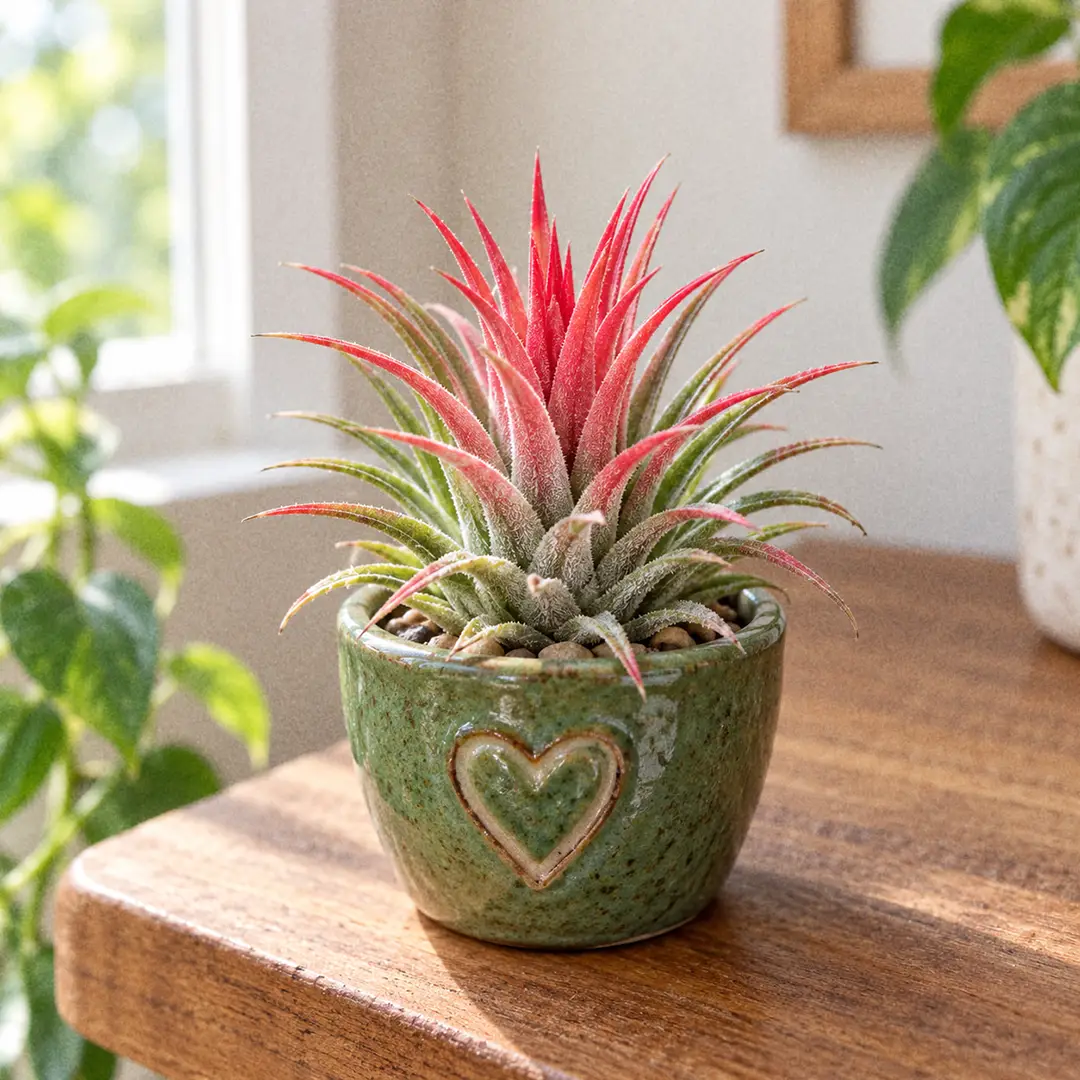
The small, spiky classic most people picture when they hear "air plant". It is barely two inches tall, yet the whole rosette flushes scarlet before violet flowers push out of the middle, and it blooms on a windowsill more readily than most of the genus. Then it pups into a clump on its own. Shops sometimes call it Sky Plant, a name our guides use for T. aeranthos.
Care Notes
- Light: Bright indirect light with an hour or two of gentle sun, such as an east window.
- Water: Soak 20 to 30 minutes weekly, then dry it upside down within four hours.
Full details in our 👉 Ionantha Air Plant care guide.
🟢 2. Kolbii Air Plant (Tillandsia kolbii)
Why It's Popular
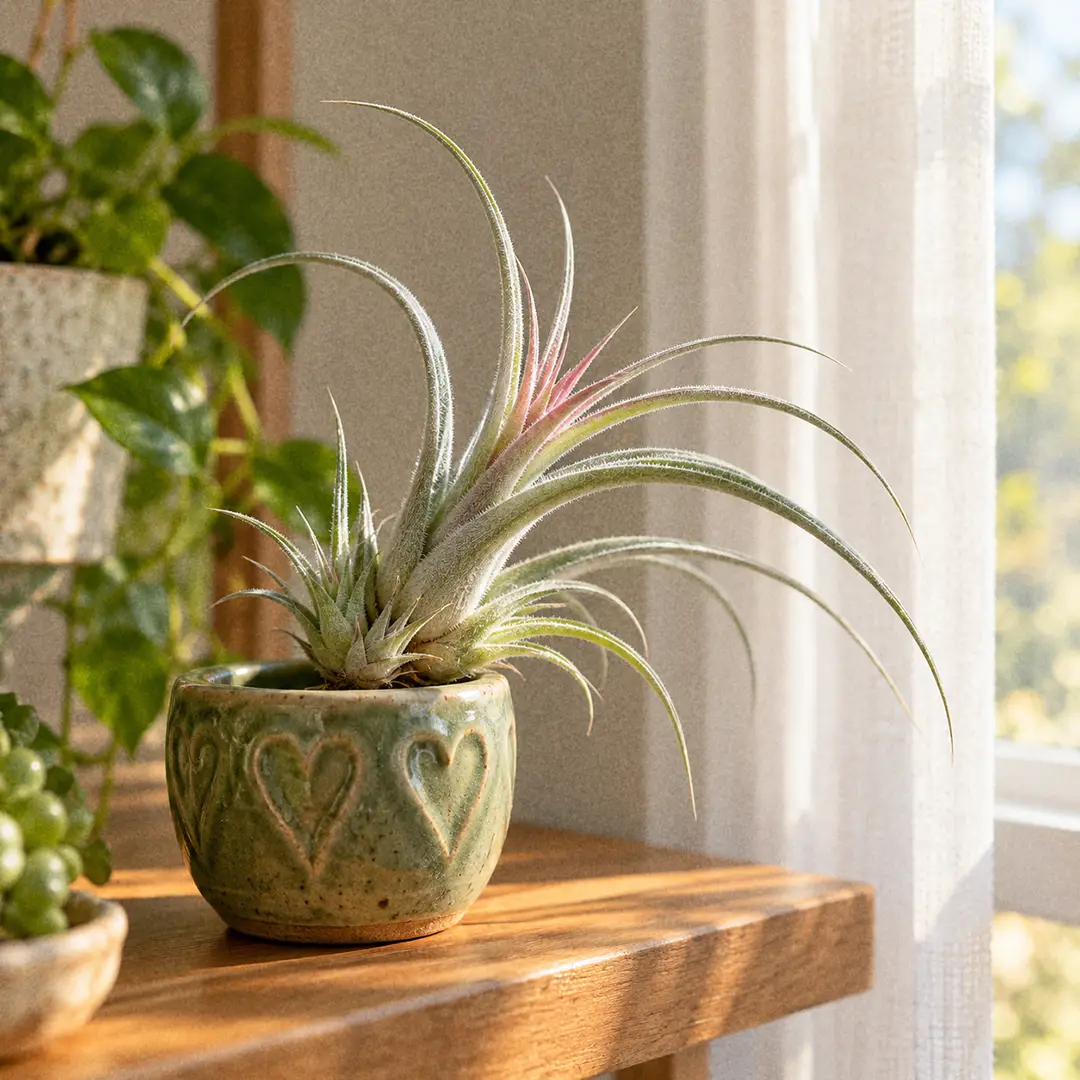
Ionantha's looser cousin, with longer, thinner leaves that curve out like a small fountain and a pink to red blush in the center. The easy way to tell them apart is at bloom: Kolbii lifts its blue-violet flowers on a short stalk, while Ionantha's sit down in the leaves. It pups so freely that one plant becomes a clump within a few years. It is also sold as Scaposa.
Care Notes
- Light: Bright, filtered light. It wants a little more shade than Ionantha.
- Water: Soak 15 to 20 minutes weekly, shake hard and dry upside down.
Full details in our 👉 Kolbii Air Plant care guide.
🟢 3. Capitata Peach Air Plant (Tillandsia capitata 'Peach')
Why It's Popular
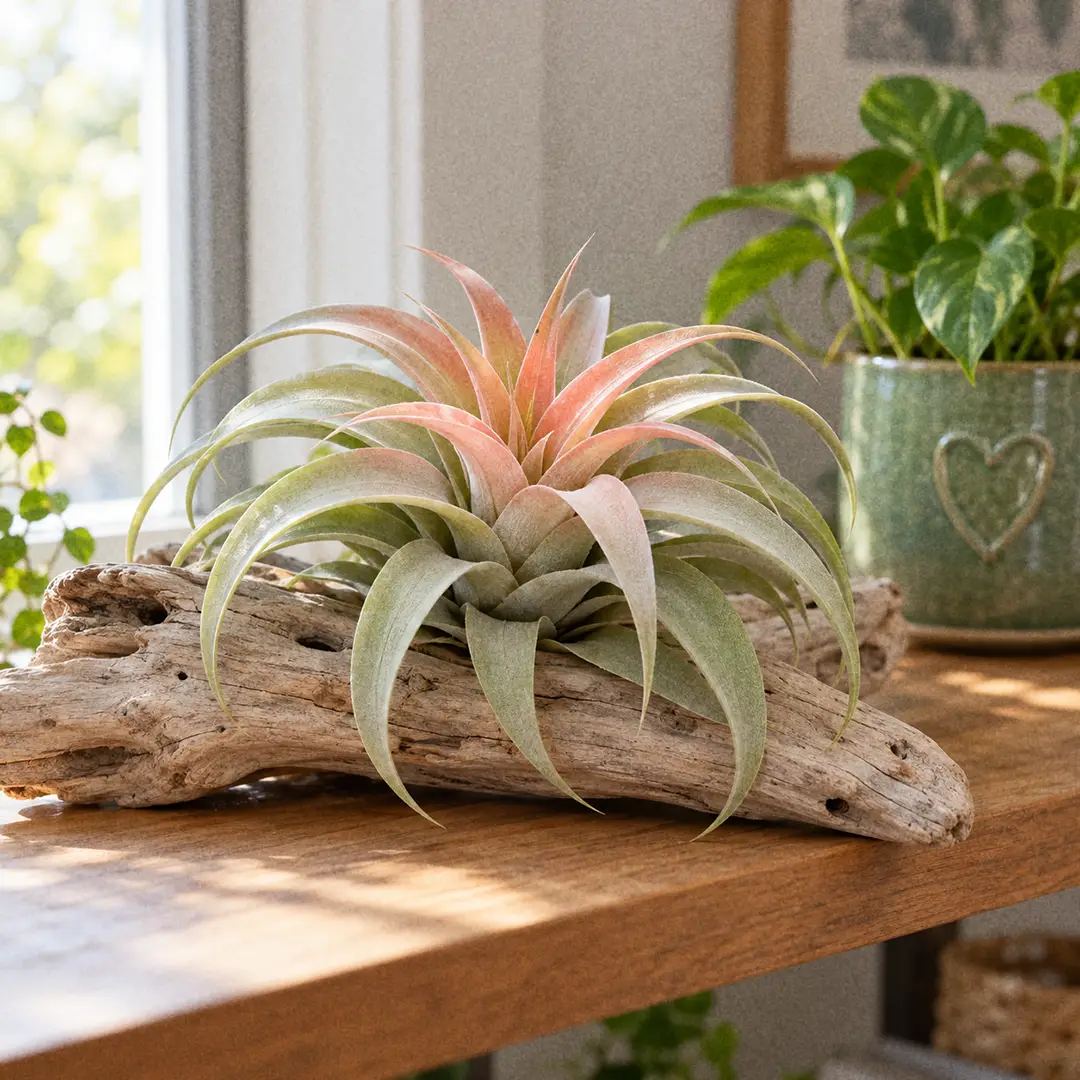
Color without waiting on a flower. The soft, silvery-green rosette blushes peach to pink in strong light and as a bloom approaches, then opens purple flowers. The peach is not permanent. In a dim room the plant fades back to silvery green, so its color doubles as a reading of your light.
Care Notes
- Light: Bright indirect light with some morning sun.
- Water: Soak 20 to 30 minutes about weekly, shake the center out and dry it upside down within four hours.
Full details in our 👉 Capitata Peach Air Plant care guide.
🟢 4. Sky Plant (Tillandsia aeranthos)
Why It's Popular
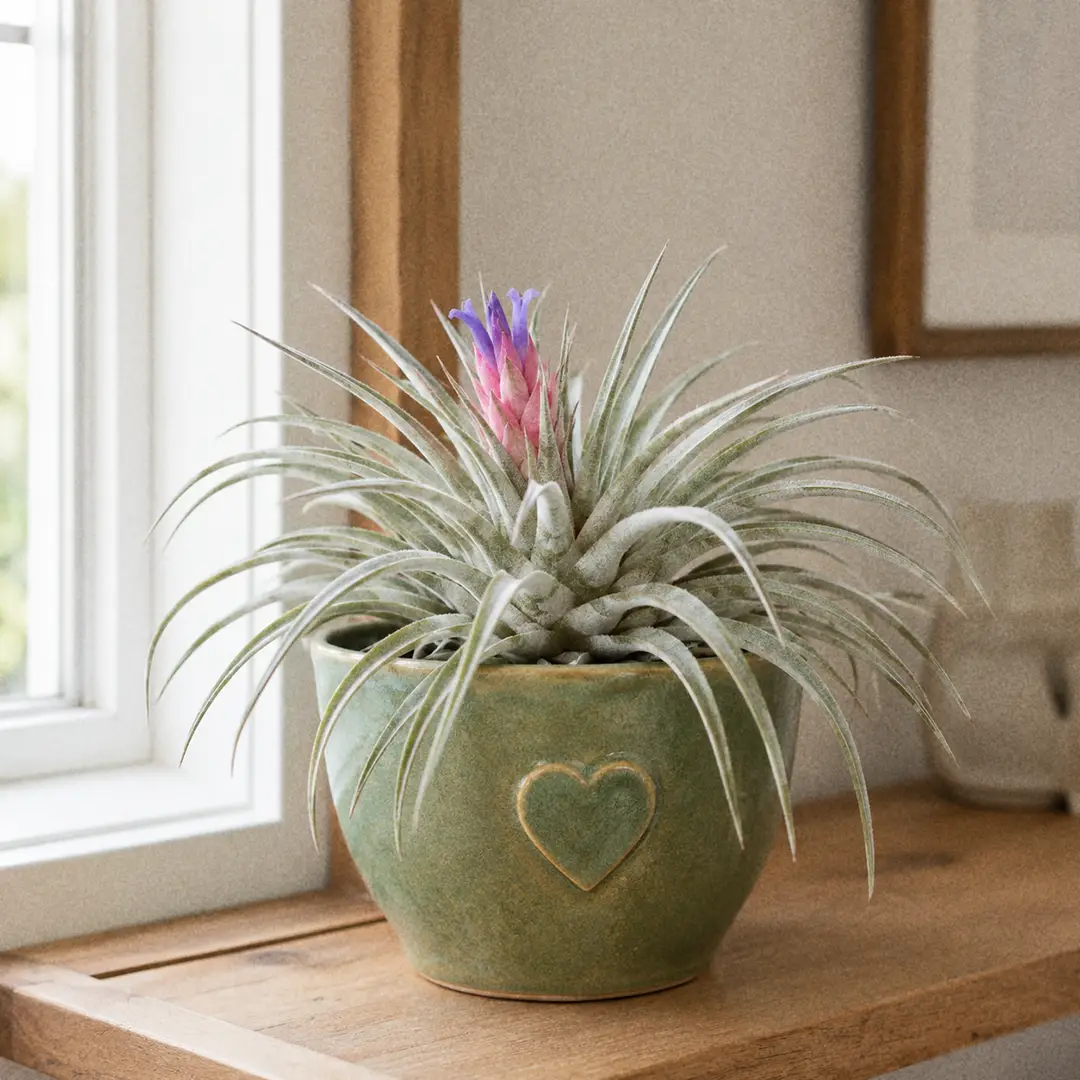
The one I recommend to people who have already killed an air plant. Its stiff, wiry leaves forgive a missed soak, and it flowers on schedule with a hot pink bract and deep violet petals, then makes two or three pups. It also handles cold better than almost any other air plant: established plants survive brief dips to around 20 to 25°F.
Care Notes
- Light: More than average. An east window with two or three hours of morning sun is close to perfect.
- Water: Soak 20 to 30 minutes weekly. Water left in the center is the one thing it will not forgive.
Full details in our 👉 Sky Plant care guide.
🟢 5. Stricta Air Plant (Tillandsia stricta)
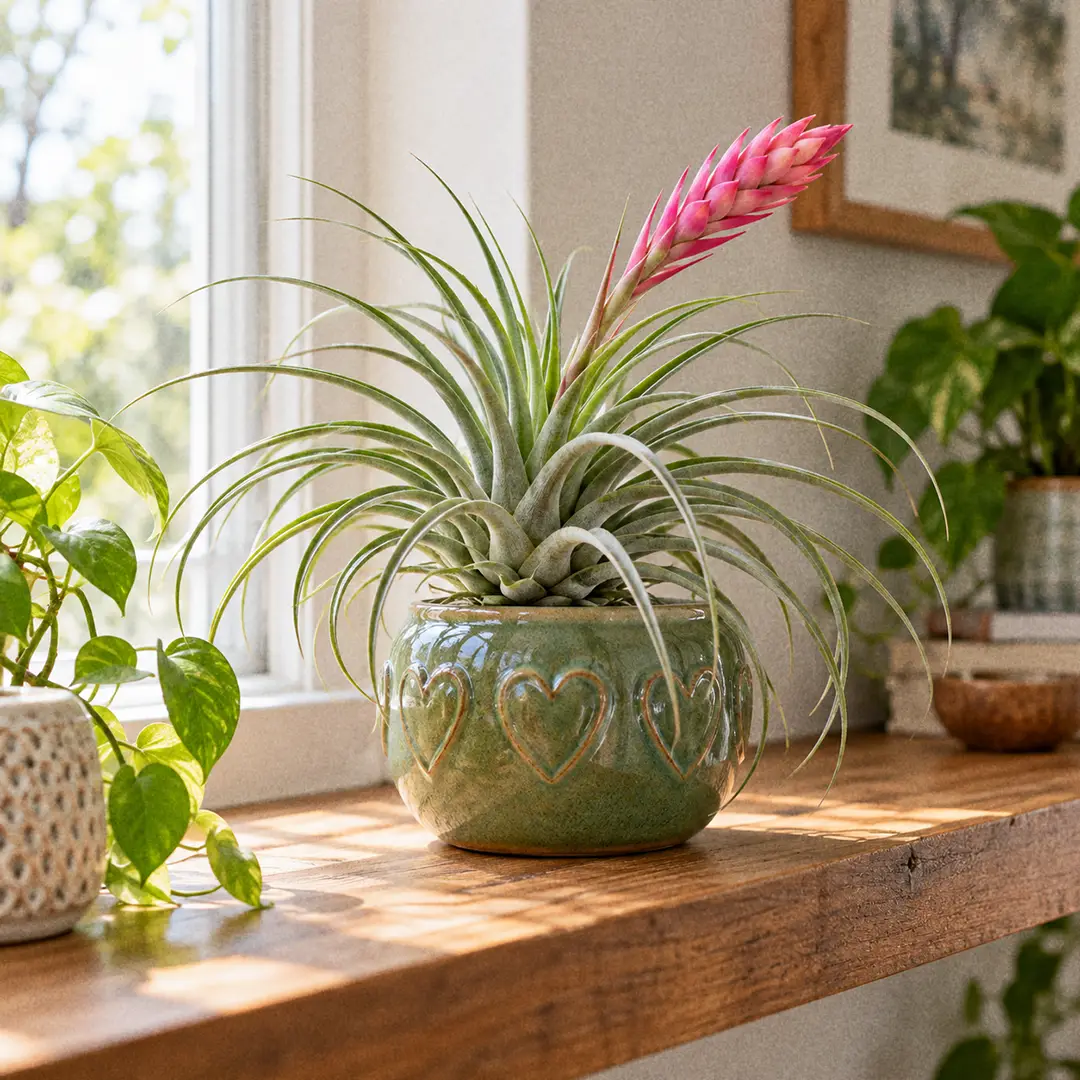
Why It's Popular
My usual answer when someone asks which air plant will flower for them first. It blooms young, raising a fat pink bract with small blue to violet flowers, then pups readily into a clump. Its huge wild range in eastern South America means a lot of variation, from soft green forms to stiff silvery ones, sold as Soft Leaf and Hard Leaf.
Care Notes
- Light: Bright light with the harshest sun taken off. An east window is the easiest win.
- Water: Weekly 20 to 30 minute soak, plus misting in dry rooms. The odd mist that keeps a Xerographica alive slowly starves a Stricta.
Full details in our 👉 Stricta Air Plant care guide.
🌿 6. Brachycaulos Air Plant (Tillandsia brachycaulos)
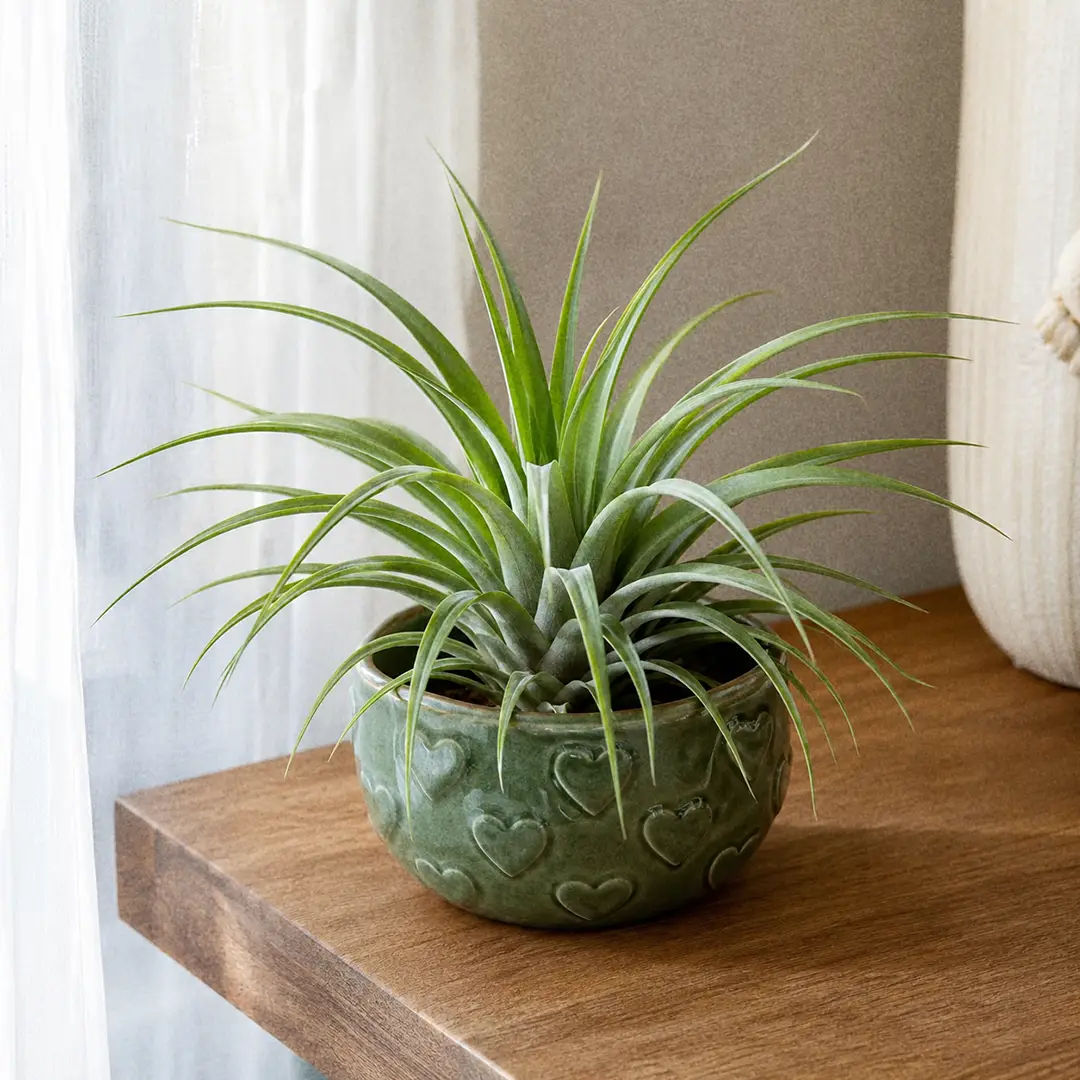
Why It's Popular
The blusher. A soft, open rosette of grass-green leaves turns scarlet across the entire plant weeks before its violet flowers appear, and it reaches blooming size at two or three years old. Most air plants make you wait far longer. Being mesic, it drinks much more than the silvery species most people start with.
Care Notes
- Light: Bright filtered light, two to four feet back from an east window.
- Water: Soak 20 to 30 minutes weekly, then dry it upside down. It likes 50 to 70 percent humidity with steady airflow.
Full details in our 👉 Brachycaulos Air Plant care guide.
🌿 7. Tenuifolia Air Plant (Tillandsia tenuifolia)
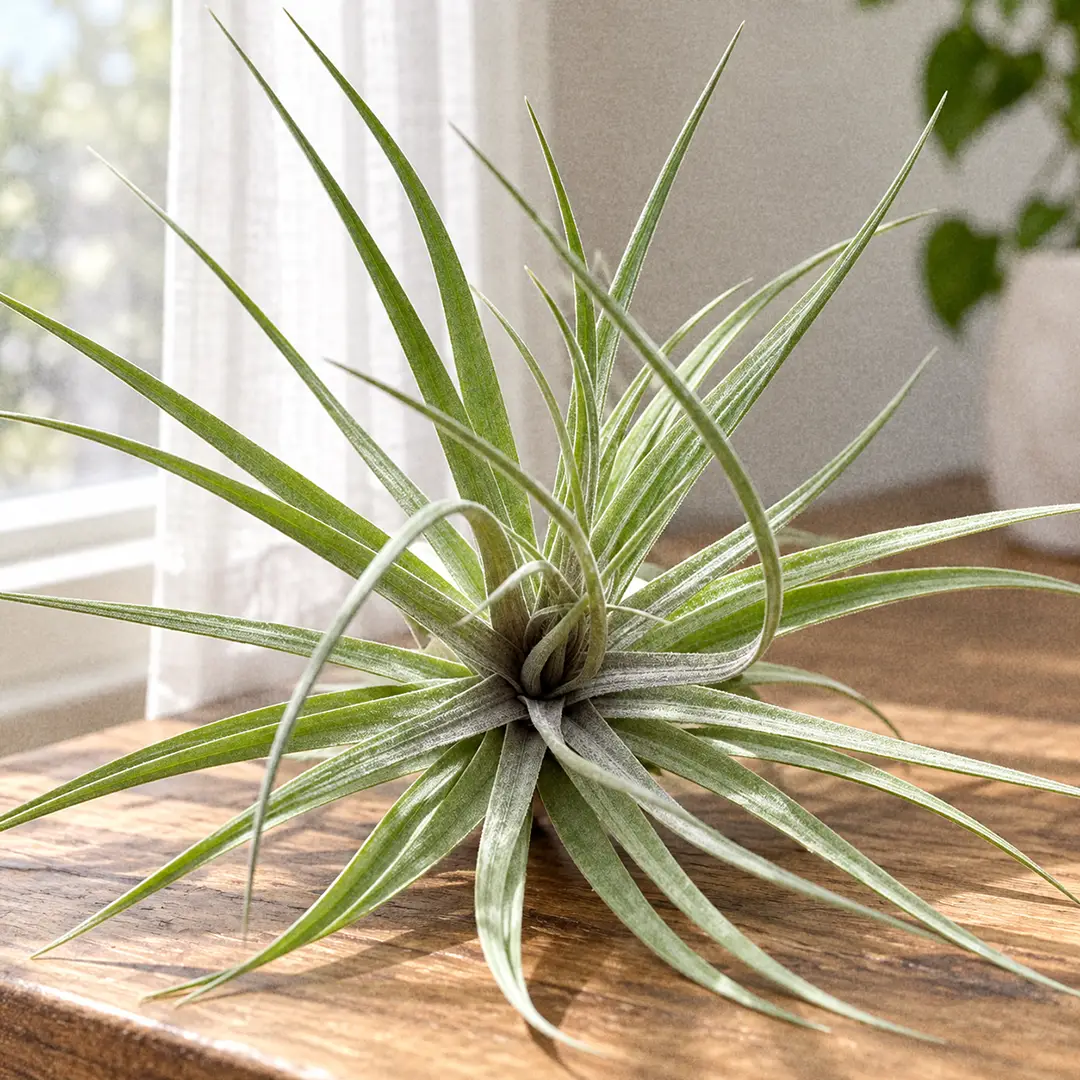
Why It's Popular
The clumper. One small, spiky green rosette pups quickly, and within a couple of years you have a full cushion sending up pink spikes with light blue or white petals, without paying clump prices. Forms with a bronze or purple blush are sold as Bronze, Amethyst and Emerald Forest. Linnaeus named it in 1753, so it is one of the first air plants ever described.
Care Notes
- Light: Bright indirect light. An east window keeps the rosettes tight.
- Water: Weekly 20 to 30 minute soak, plus a mist or two between soaks in a heated room.
Full details in our 👉 Tenuifolia Air Plant care guide.
🌿 8. Filifolia Air Plant (Tillandsia filifolia)
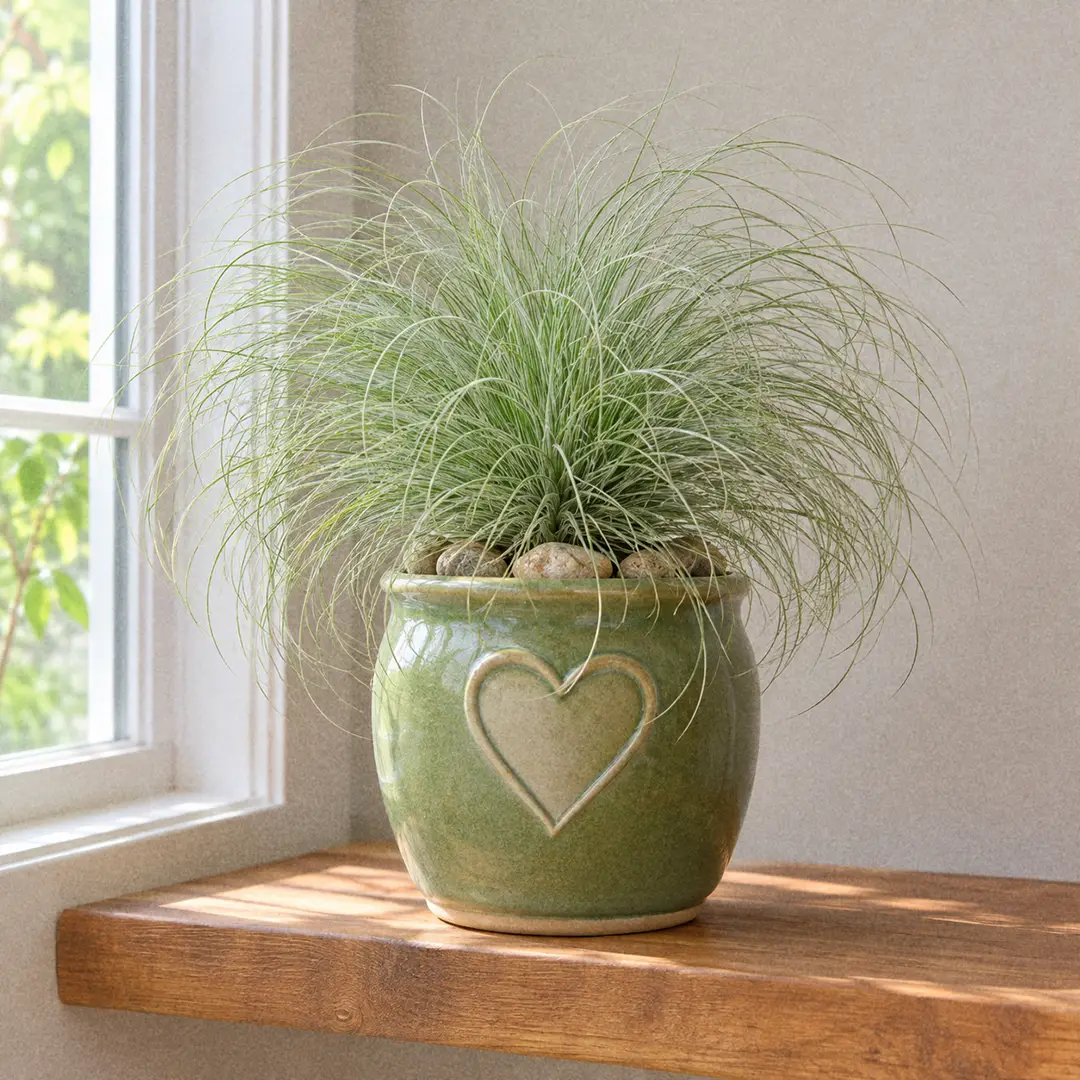
Why It's Popular
An airy tuft of hundreds of thread-fine green leaves with no bulb, softer to the touch than most air plants. Kept well watered, it fills out and sends up a branched spike of small lavender flowers. Water it like a silver plant, though, and in a heated room its tips crisp within a week or two.
Care Notes
- Light: Bright, filtered light, on or near an east sill.
- Water: Soak 15 to 20 minutes weekly and rinse or mist heavily midweek, then dry it upside down.
Full details in our 👉 Filifolia Air Plant care guide.
🌿 9. Tricolor Air Plant (Tillandsia tricolor var. melanocrater)
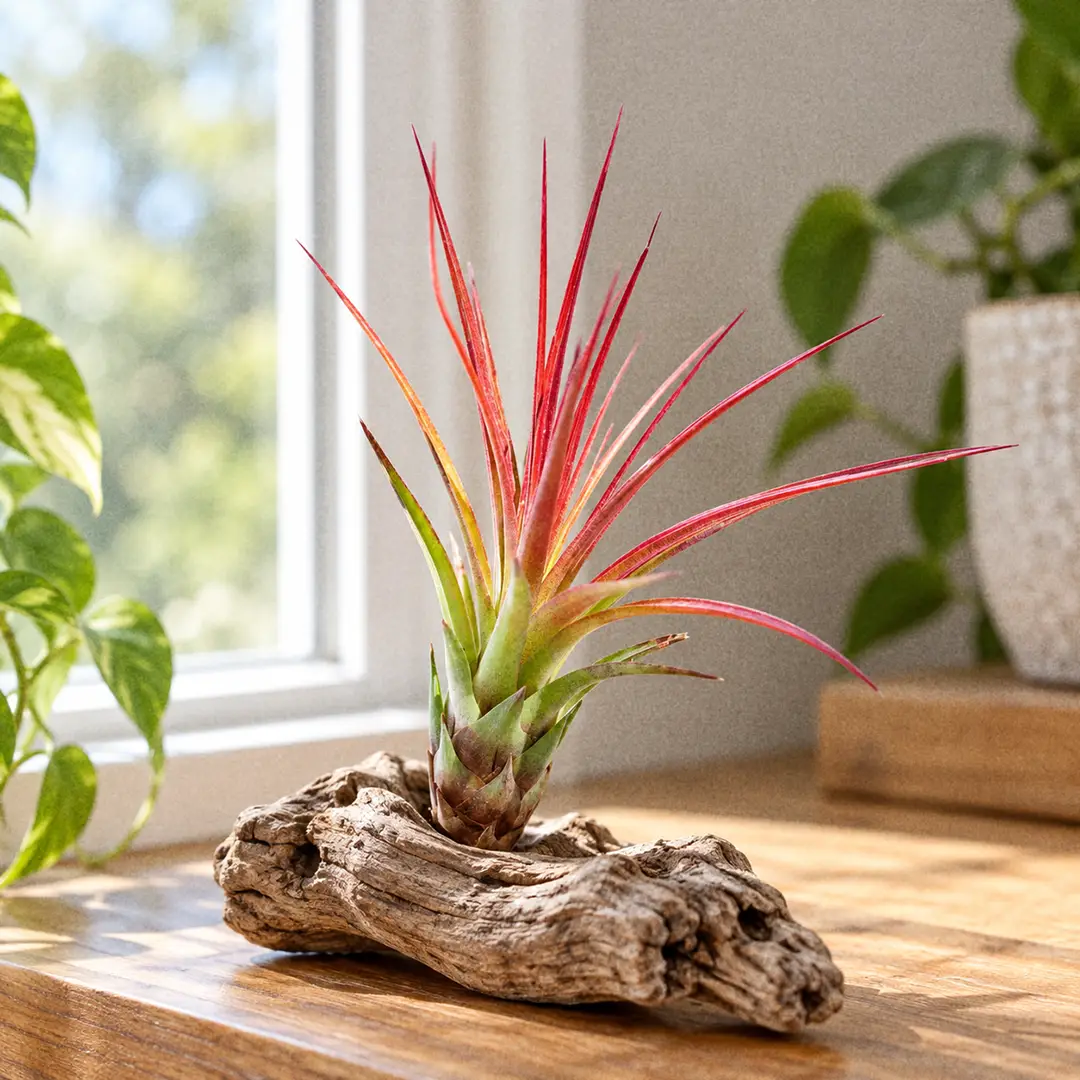
Why It's Popular
Smooth green strap leaves blush red and purple in strong light and arch out of a base so dark it looks inked. It flowers indoors more willingly than most air plants, raising a yellow to orange bract spike with violet tubes that holds its color for weeks. The name melanocrater means black bowl, after that dark cup of leaf sheaths.
Care Notes
- Light: Bright light with a couple of hours of gentle morning sun.
- Water: Soak 30 to 60 minutes weekly, then shake the base out hard. It holds water long after the leaves look dry.
Full details in our 👉 Tricolor Air Plant care guide.
⚪ 10. Harris's Air Plant (Tillandsia harrisii)
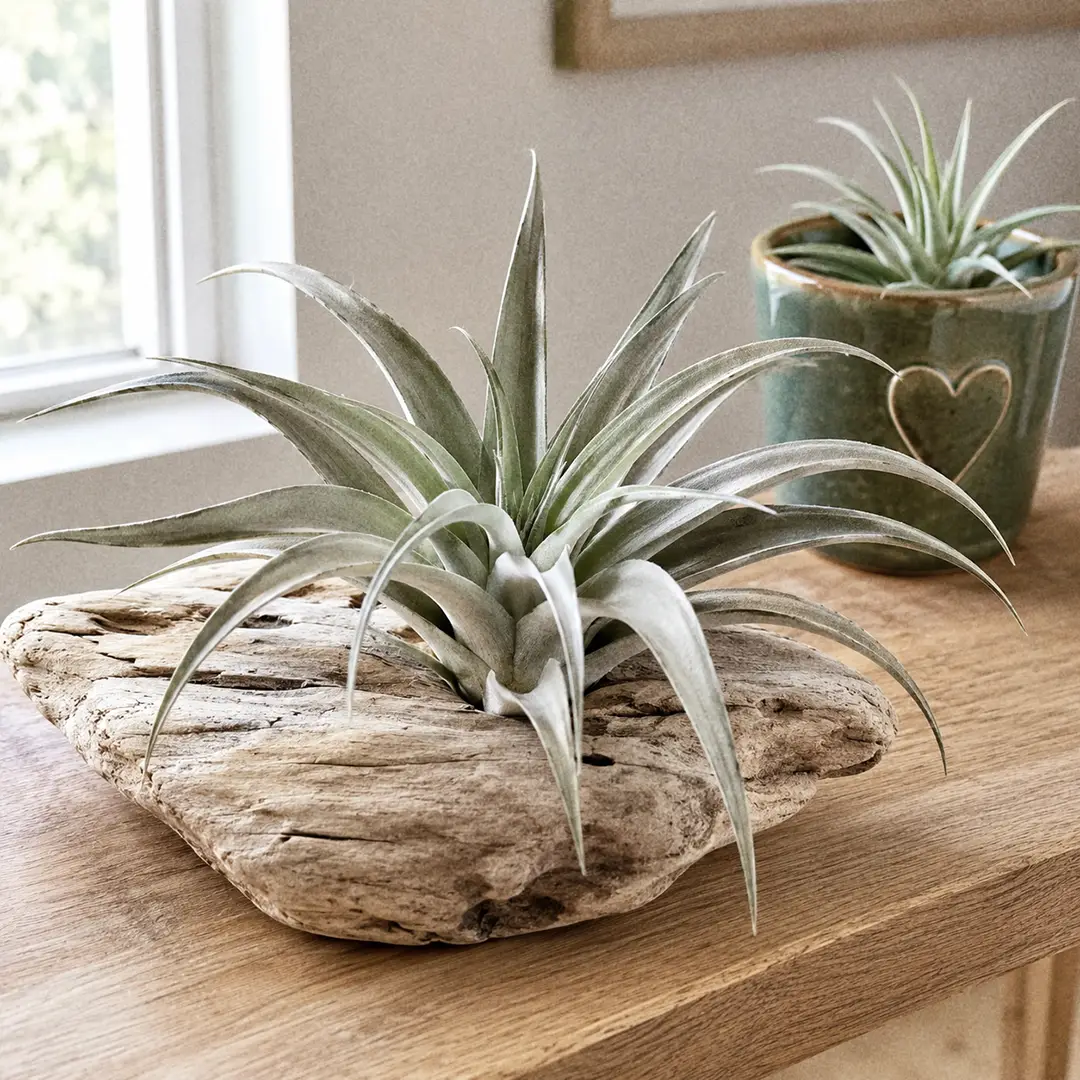
Why It's Popular
The one for people who killed their first air plant by fussing over it. Thick, felted grey leaves on a short woody stem take real sun, drink less than the green species and shrug off a missed week. It is slow, and its orange-red spike with violet-blue petals takes two or three years to arrive. It is one of only three air plants protected under CITES, so buy nursery-grown.
Care Notes
- Light: Bright light to part sun, including some direct morning sun.
- Water: Soak 20 to 30 minutes weekly, shake it hard and dry it upside down within two hours.
Full details in our 👉 Harris's Air Plant care guide.
⚪ 11. Fuchsii Air Plant (Tillandsia fuchsii f. gracilis)
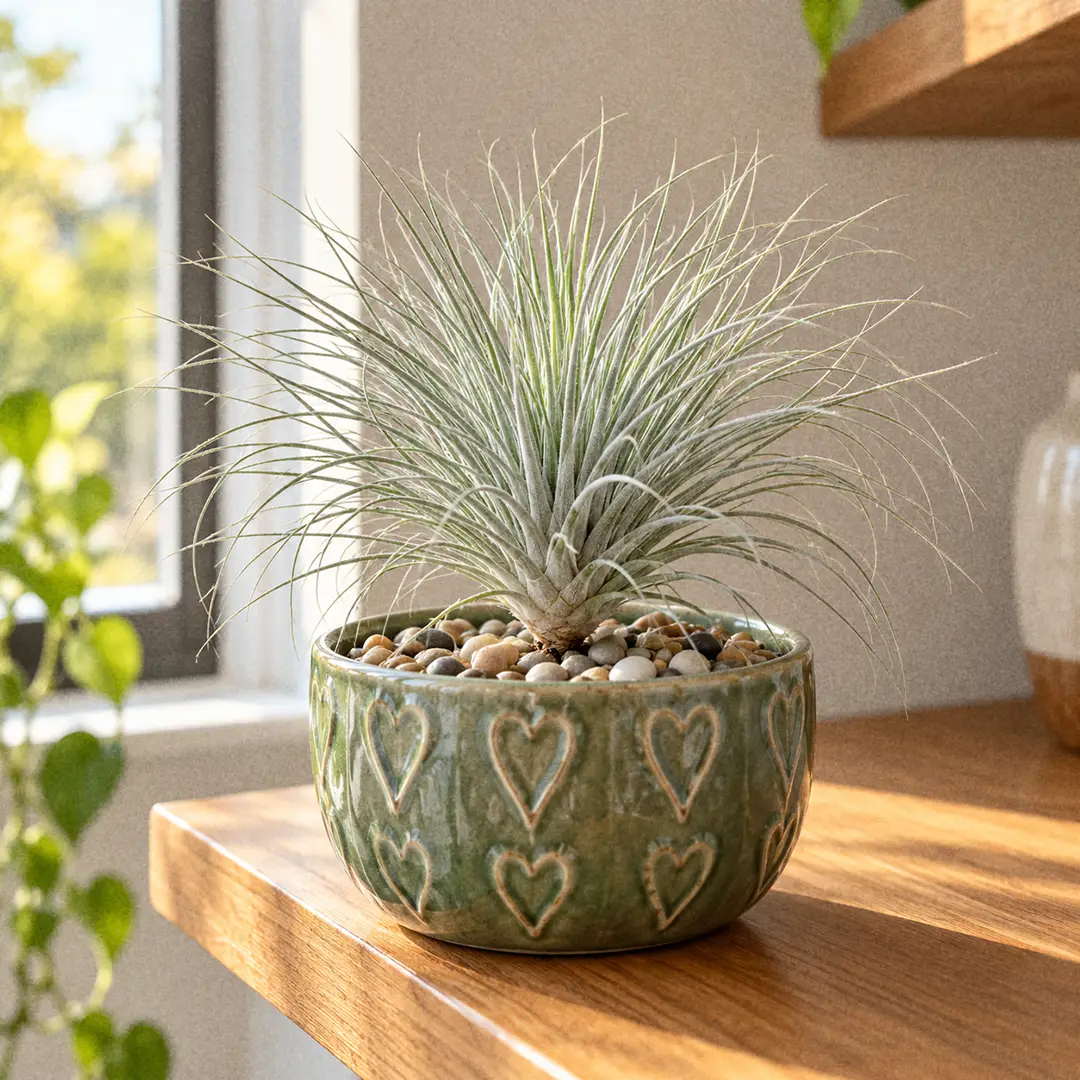
Why It's Popular
A silver pincushion about the size of a golf ball, made of thread-thin leaves on a tiny bulb-like base, with a long red flower stem and purple petals when it blooms. It suits a desk. Shops often sell it as "Argentea", because for more than a century the Mexican plants were filed under that Caribbean species.
Care Notes
- Light: Bright light with a few hours of morning or late-afternoon sun.
- Water: Short dunks two or three times a week in warm months. Wet it before handling, because crisp leaves snap.
Full details in our 👉 Fuchsii Air Plant care guide.
⚪ 12. Magnusiana Air Plant (Tillandsia magnusiana)
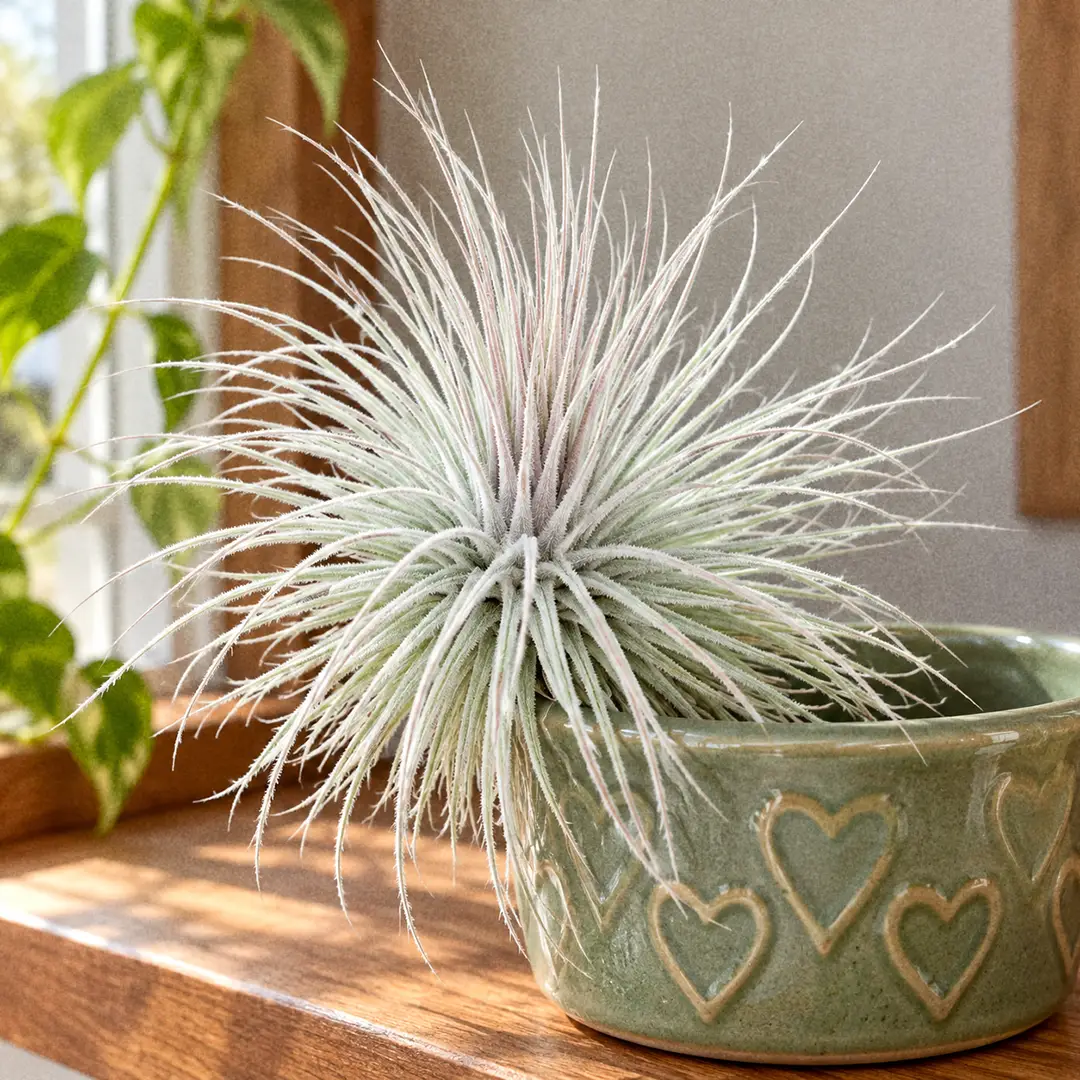
Why It's Popular
A silver puffball so densely fuzzed it looks like a pocket-sized Tectorum, in a smaller and easier package. It has one of the softest textures of any air plant, and violet flowers open from a short red to maroon spike in the center. Its weak spot is that packed center, which holds water.
Care Notes
- Light: An east sill, or a foot or two back from a south or west window.
- Water: A quick dunk or thorough misting once or twice a week, then dry it upside down or on its side.
Full details in our 👉 Magnusiana Air Plant care guide.
⚪ 13. Tectorum Air Plant (Tillandsia tectorum)
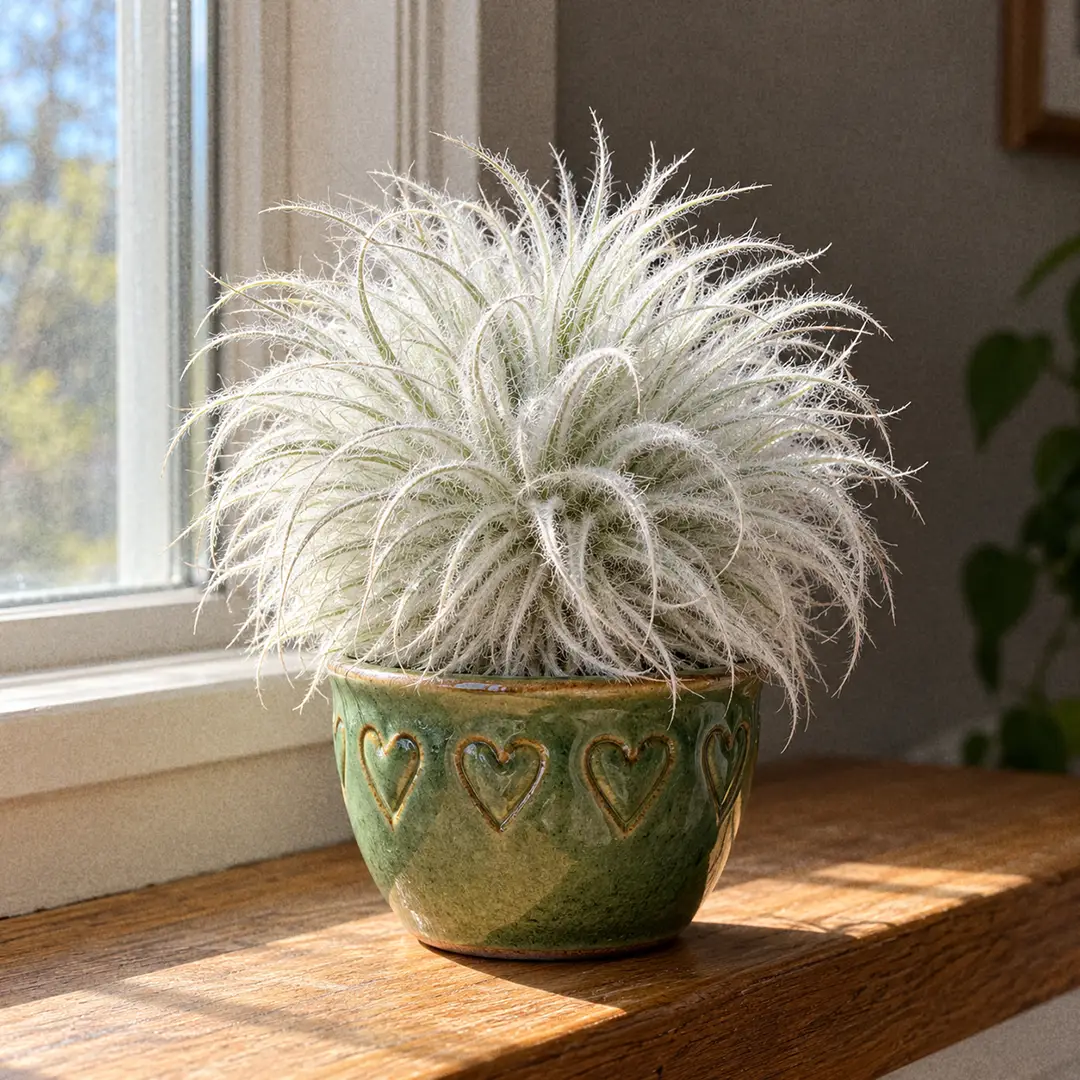
Why It's Popular
The white, feathery snowball that makes people ask whether it is real. Its trichomes are far longer than most and stand out from the leaf like tiny feathers. In the wild it sits on bare rock in the dry Andes of Ecuador and northern Peru and drinks fog, which makes it the one air plant here that should never be soaked.
Care Notes
- Light: Right on a south or west sill with several hours of direct sun.
- Water: Mist thoroughly about once a week in a dry heated home. Humid, still air is where it rots.
Full details in our 👉 Tectorum Air Plant care guide.
🐙 14. Streptophylla Air Plant (Tillandsia streptophylla)
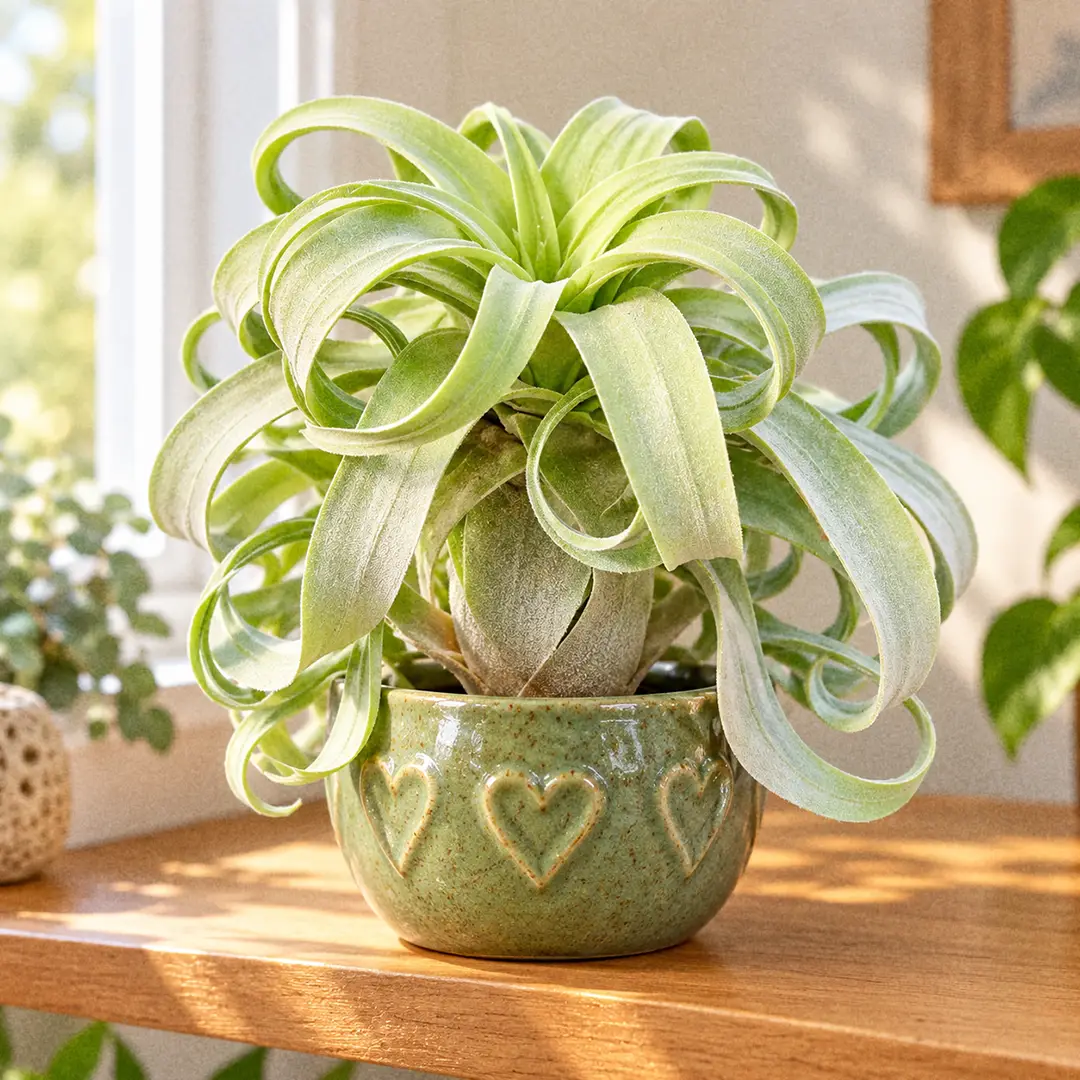
Why It's Popular
Nicknamed the Shirley Temple, because its thick silver leaves screw into tight ringlets when it is thirsty and relax into loose arcs after a drink. It reads out its own water level, which makes it a good first air plant. Before flowering it blushes pink to red, then opens mauve to purple flowers.
Care Notes
- Light: Bright light with one to three hours of soft direct sun.
- Water: Dunk or mist every 7 to 10 days and shake the bulb hard. Long soaks rot the hollow bulb.
Full details in our 👉 Streptophylla Air Plant care guide.
🐙 15. Medusa's Head Air Plant (Tillandsia caput-medusae)
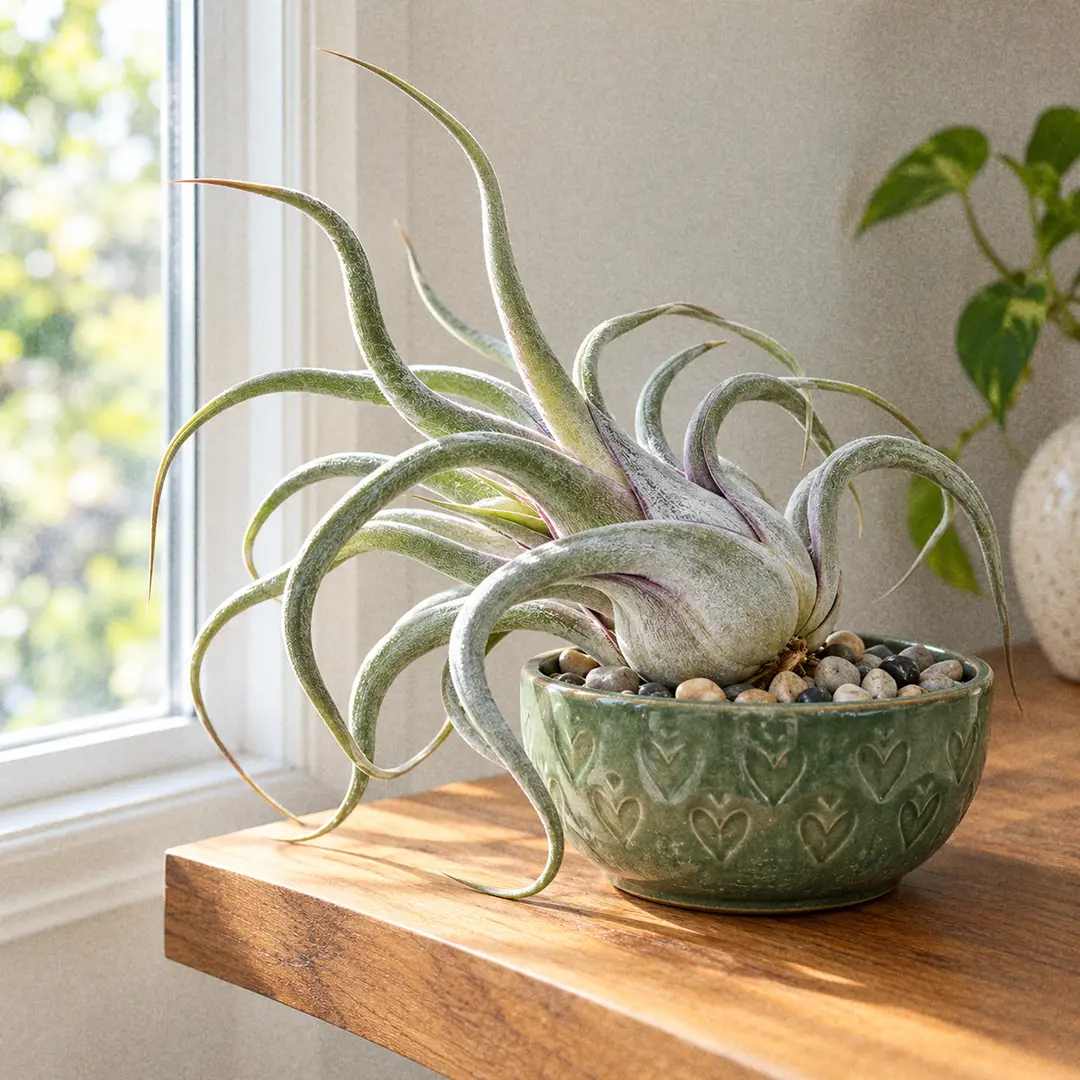
Why It's Popular
A tiny silver octopus, with thick snake-like leaves twisting out of a bulb that is an ant house in the wild. Dry air, some direct sun and a missed week barely bother it. Labels often swap it with the Potbelly, but Medusa's leaves are longer and thicker and reach out in every direction.
Care Notes
- Light: Bright light with some gentle sun.
- Water: Mist heavily two or three times a week, or dunk briefly once a week, then dry it upside down.
Full details in our 👉 Medusa's Head Air Plant care guide.
🐙 16. Bulbosa Air Plant (Tillandsia bulbosa)
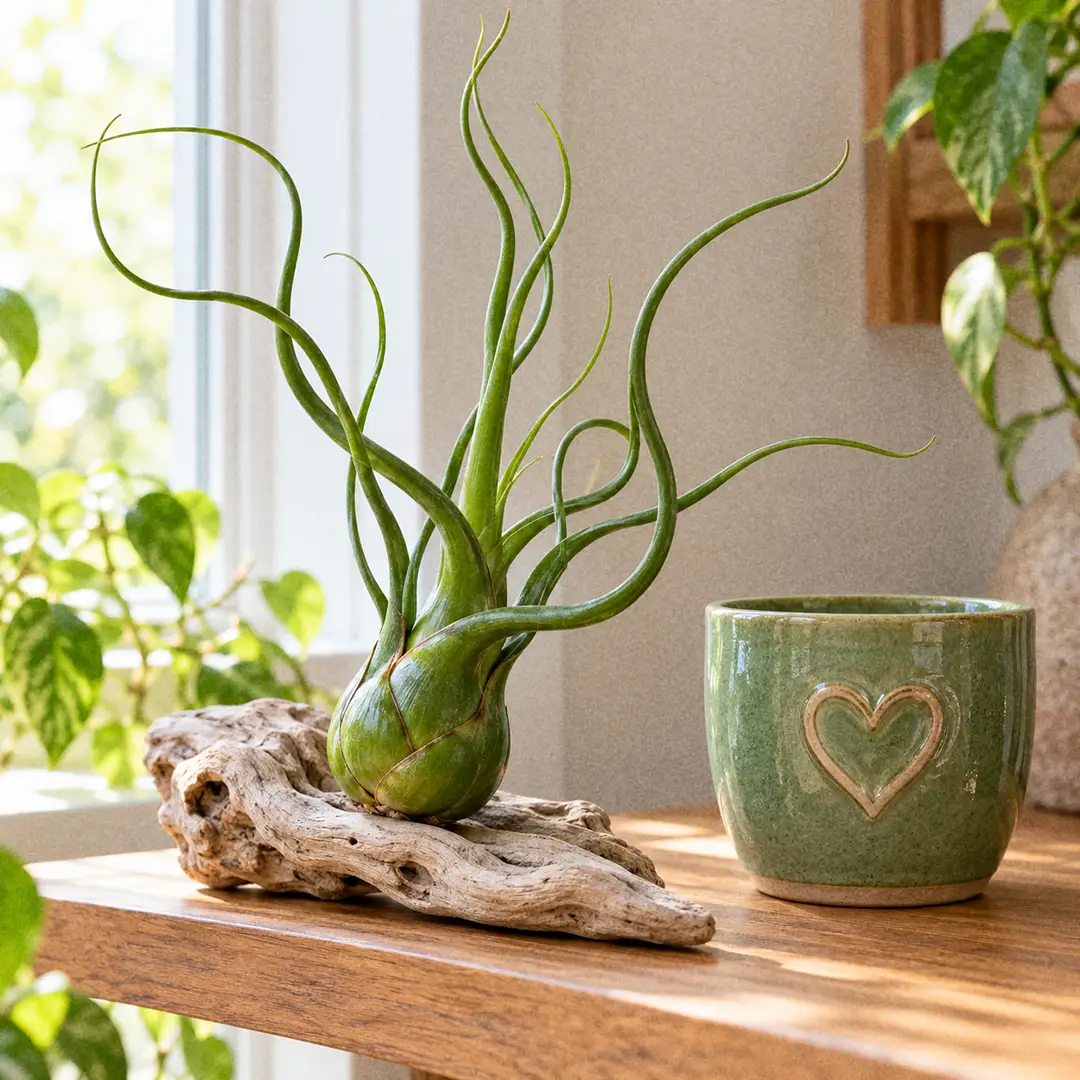
Why It's Popular
The green member of the bulb group, like a small onion that sprouted tentacles. Its glossy leaves flush red to purple at the top before violet flowers appear. It is the rare air plant that likes steam more than sun, so it is the one I keep in a bathroom, and it drinks far more than its silver cousins.
Care Notes
- Light: Bright indirect light. A bathroom with a window works well.
- Water: Dunk two to three times a week, shake out the bulb and dry it upside down. Avoid closed terrariums.
Full details in our 👉 Bulbosa Air Plant care guide.
🐙 17. Butzii Air Plant (Tillandsia butzii)
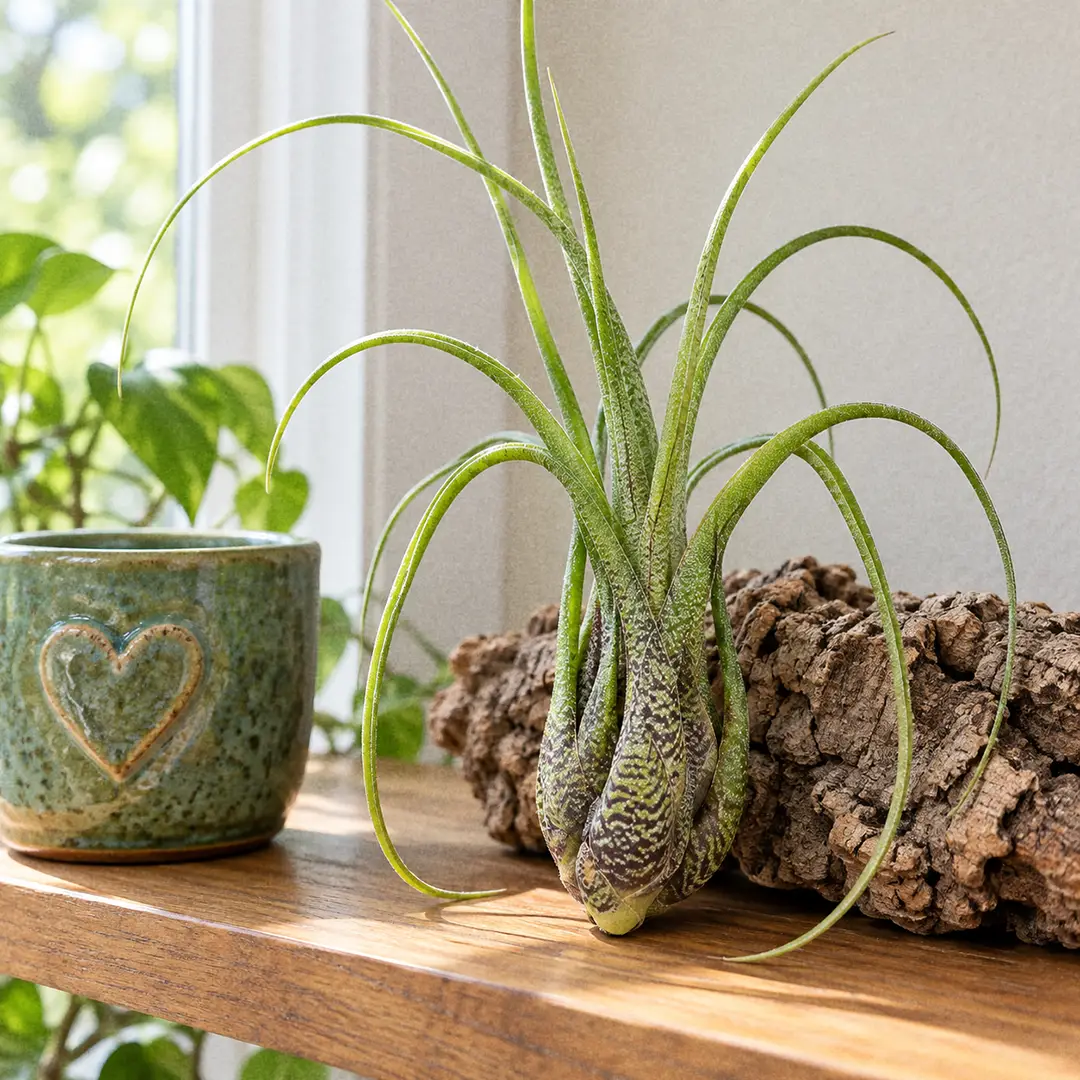
Why It's Popular
The plant for people who think all air plants look the same. Wiry green tentacles, speckled all over in chocolate purple, rise from a fat hollow bulb that ants nest inside in Central American cloud forests. It is mesic, so it drinks more often than the silver types.
Care Notes
- Light: Bright indirect light.
- Water: Dunk or mist two to three times a week, shake the bulb out hard and dry it upside down. Airflow matters more than humidity.
Full details in our 👉 Butzii Air Plant care guide.
🐙 18. Potbelly Air Plant (Tillandsia paucifolia)
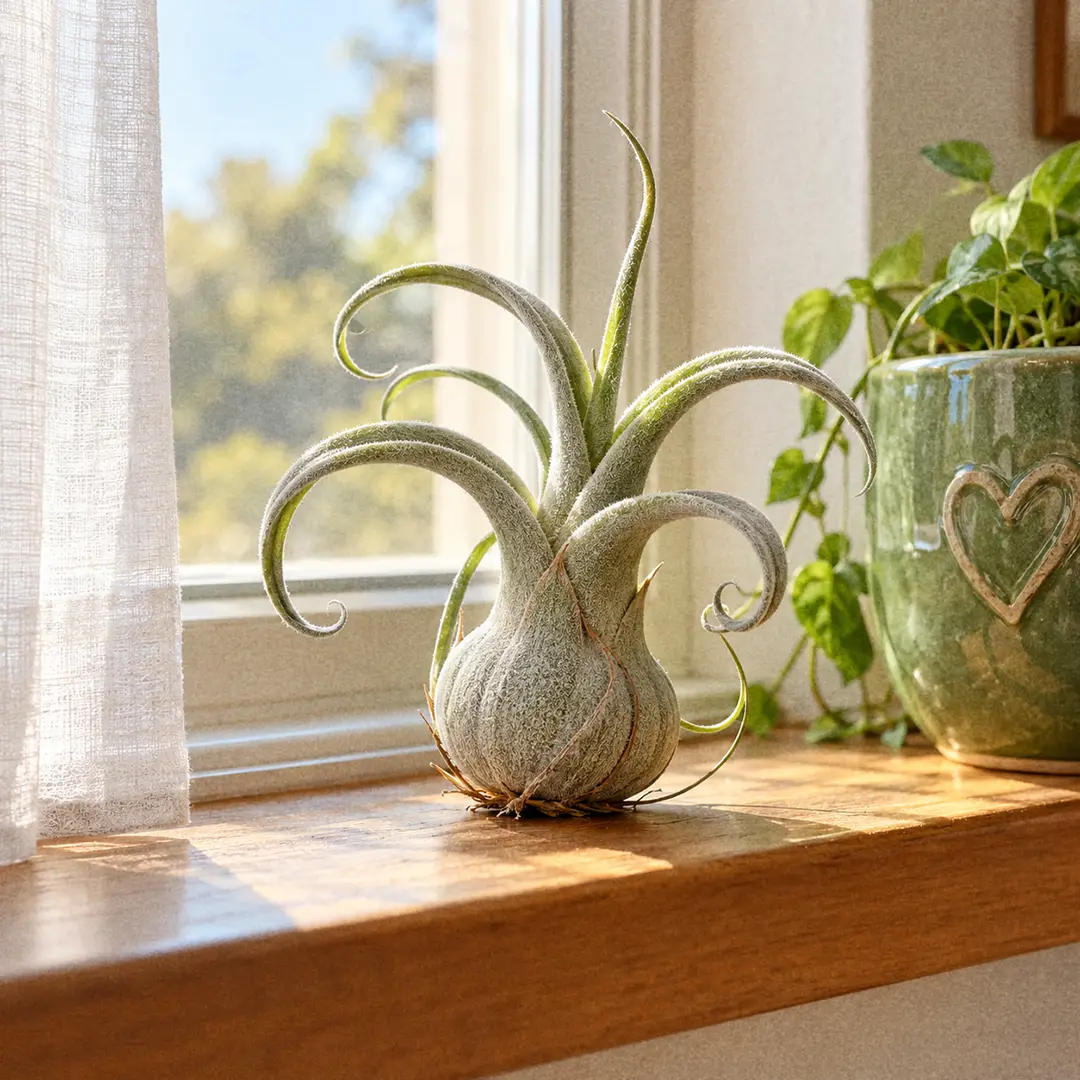
Why It's Popular
A little silver gourd with only a handful of fuzzy, curling leaves. It is the sun lover of the bulb group, and a good fit if your air plants keep dying in a dim corner. It grows wild in South Florida and the Caribbean, and for decades it was sold as T. circinata. If your tag says circinata, it is the same plant.
Care Notes
- Light: Very bright, with some direct sun.
- Water: A quick dunk once or twice a week, shaking the water out of the base. Do not water it like a green Bulbosa.
Full details in our 👉 Potbelly Air Plant care guide.
🐙 19. Pruinosa Air Plant (Tillandsia pruinosa)
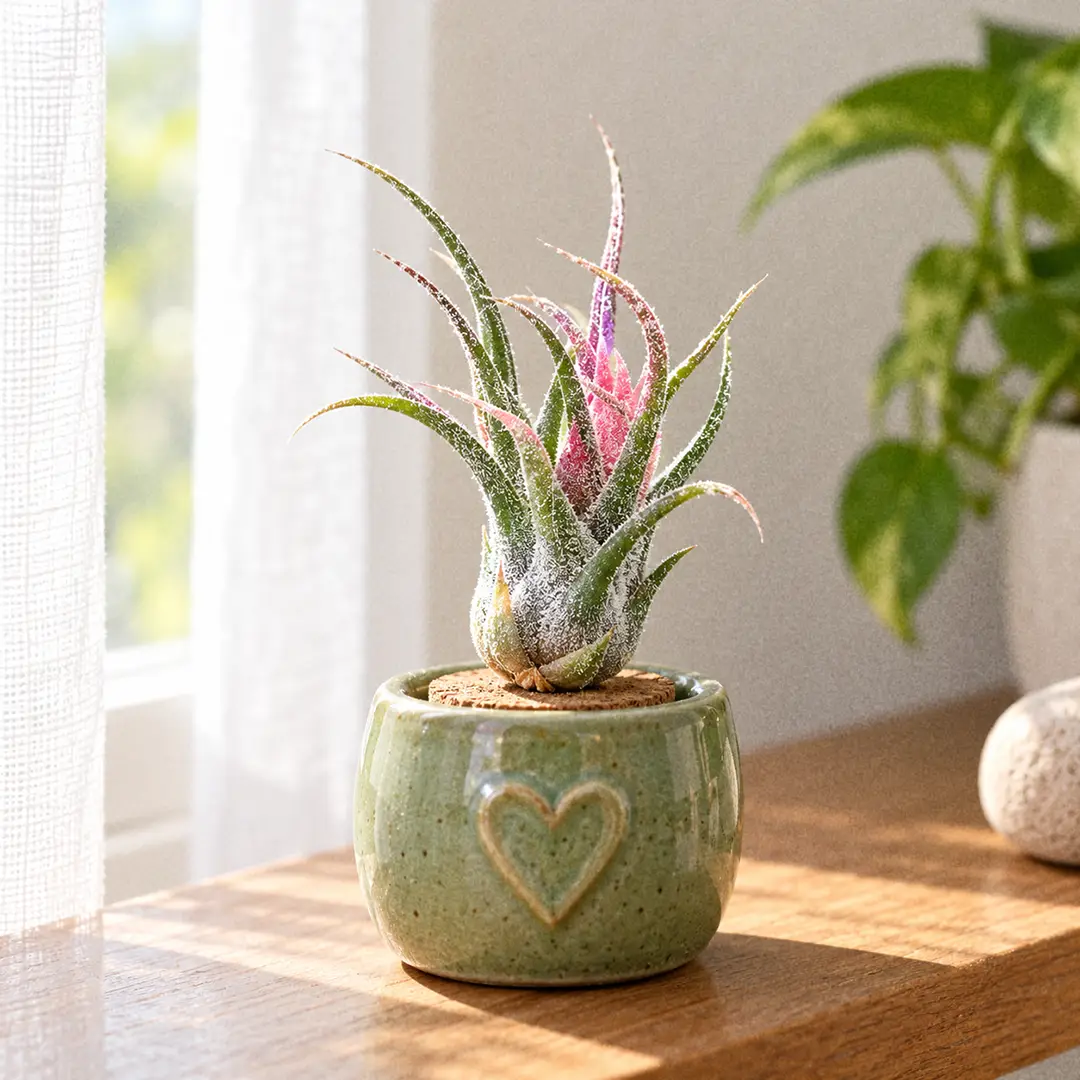
Why It's Popular
Nicknamed Fuzzy Wuzzy, and the one everybody reaches out to touch. A plump little bulb with twisting arms is wrapped in frosty silver fuzz, and it rewards good care with pink bracts and violet flowers. Despite the desert look, it grows in shady, humid forests and swamps, and it is listed as endangered in the wild in Florida.
Care Notes
- Light: Bright, filtered light, two to three feet from an east window.
- Water: A brief dunk once or twice a week, drained upside down. A long soak rots the hollow bulb.
Full details in our 👉 Pruinosa Air Plant care guide.
🐙 20. Seleriana Air Plant (Tillandsia seleriana)
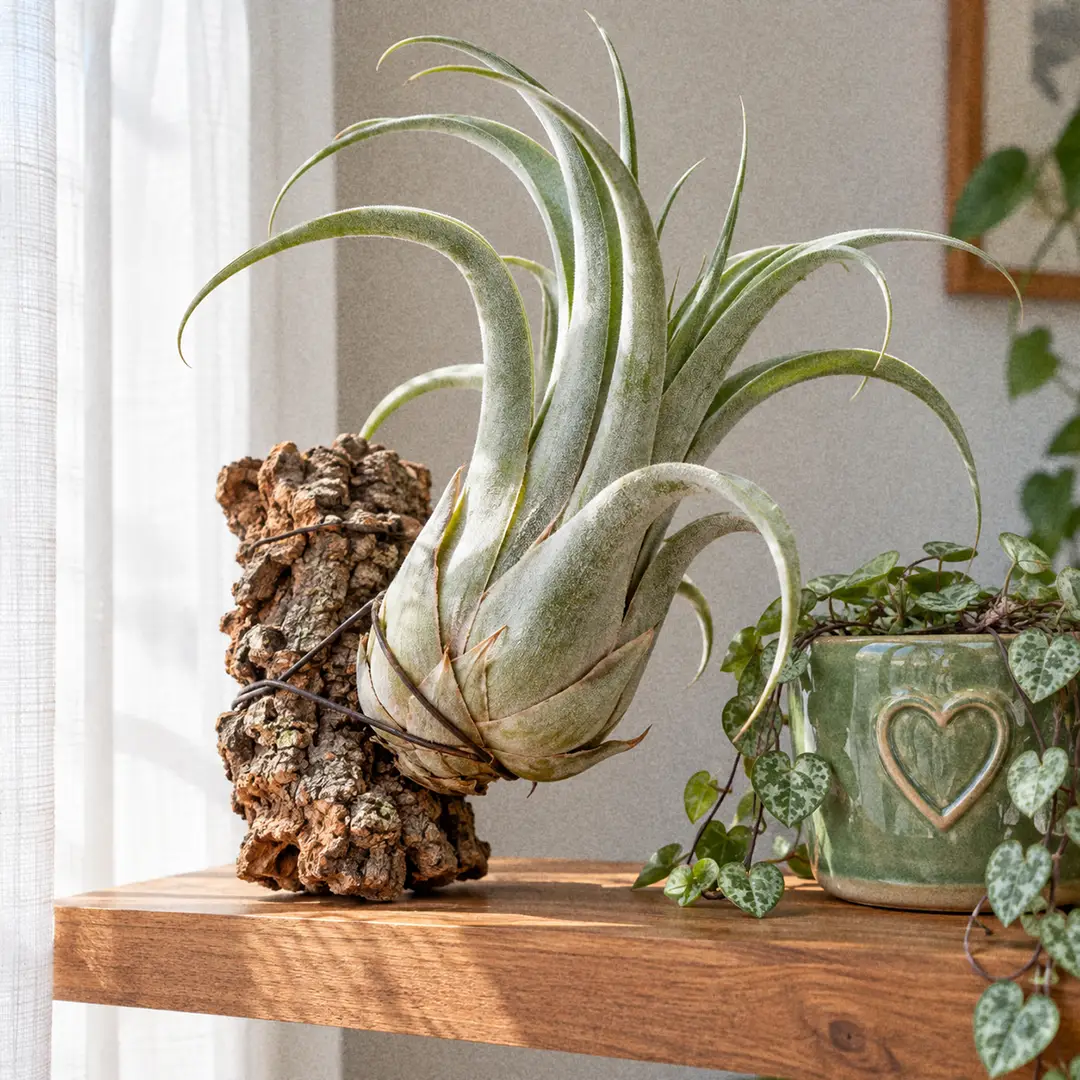
Why It's Popular
The heavyweight of the bulbous air plants, a fat, velvety grey bulb that looks more like a small sculpture than a houseplant. Sold at 4 to 6 inches, it reaches about 8 to 10 inches when mature. It is slow and calm, and eventually sends up a branched spike with red to pink bracts and purple flowers.
Care Notes
- Light: Bright, filtered light.
- Water: A short 5 to 10 minute soak about weekly, a hard shake and an upside-down dry.
Full details in our 👉 Seleriana Air Plant care guide.
🐙 21. Baileyi Air Plant (Tillandsia baileyi)
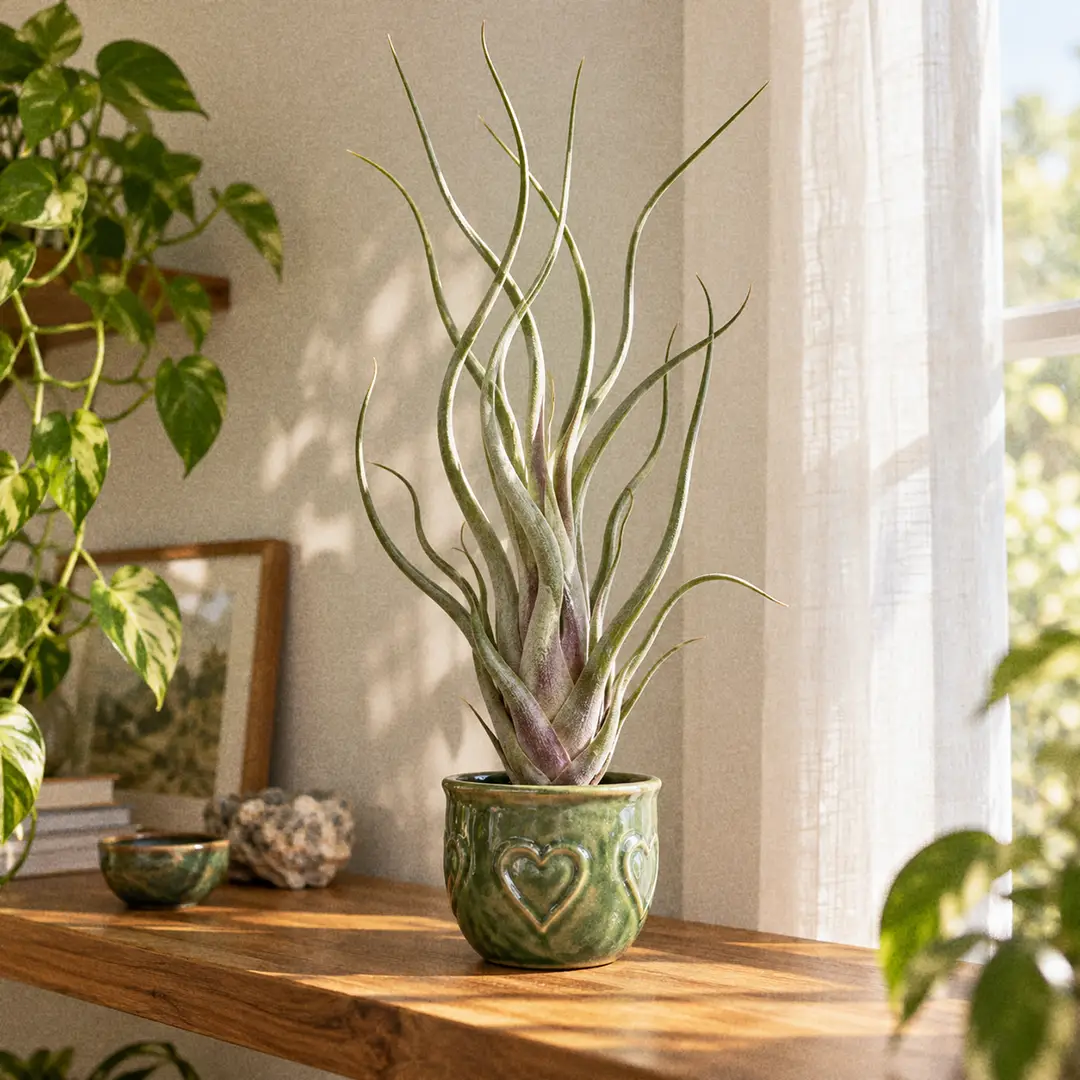
Why It's Popular
A tough little Texan, with tall, twisting silver-green arms that handle bright light and dry rooms better than most. It is one of the few air plants native to the US outside Florida. Many plants sold as baileyi are really T. pseudobaileyi, with a fat onion-shaped bulb, while true baileyi has a slim base. Both get the same care.
Care Notes
- Light: Bright light with some sun, behind a sheer curtain at a south or west window.
- Water: Dunk or soak 10 to 20 minutes once or twice a week and dry it upside down.
Full details in our 👉 Baileyi Air Plant care guide.
🌱 22. Funkiana Air Plant (Tillandsia funckiana)
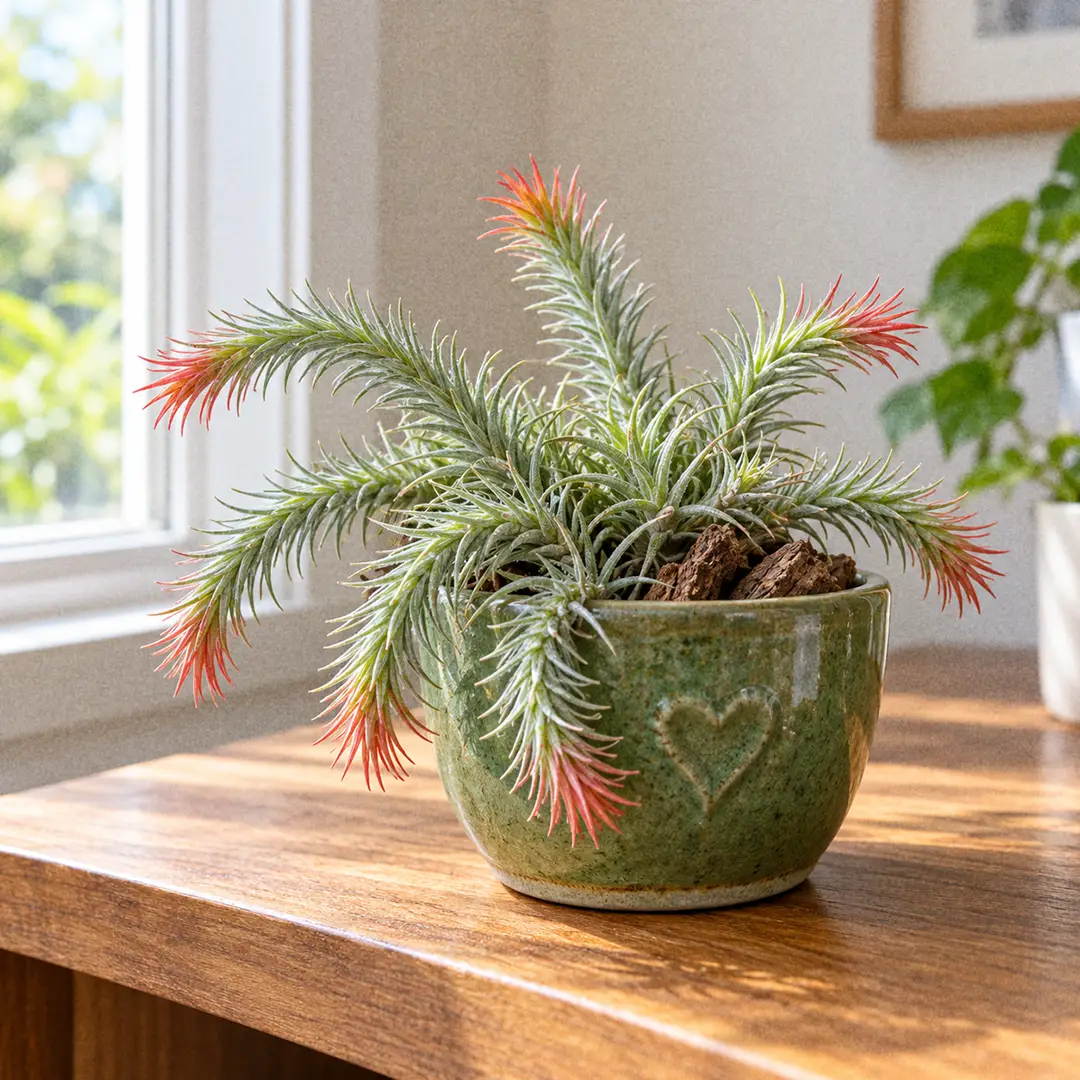
Why It's Popular
For anyone who thinks every air plant is a spiky ball. Short silvery-green needle leaves pack along curving stems like tiny pine branches and turn red at the tips in strong light. Each stem caps itself with a scarlet tube flower, then branches into a clump. The correct spelling is funckiana, after the collector Nicolas Funck.
Care Notes
- Light: As bright as possible without hot midday sun. An east window is ideal.
- Water: Soak 15 to 20 minutes weekly and mist two or three times between. It is thirstier than it looks.
Full details in our 👉 Funkiana Air Plant care guide.
🌱 23. Jonesii Air Plant (Tillandsia jonesii)
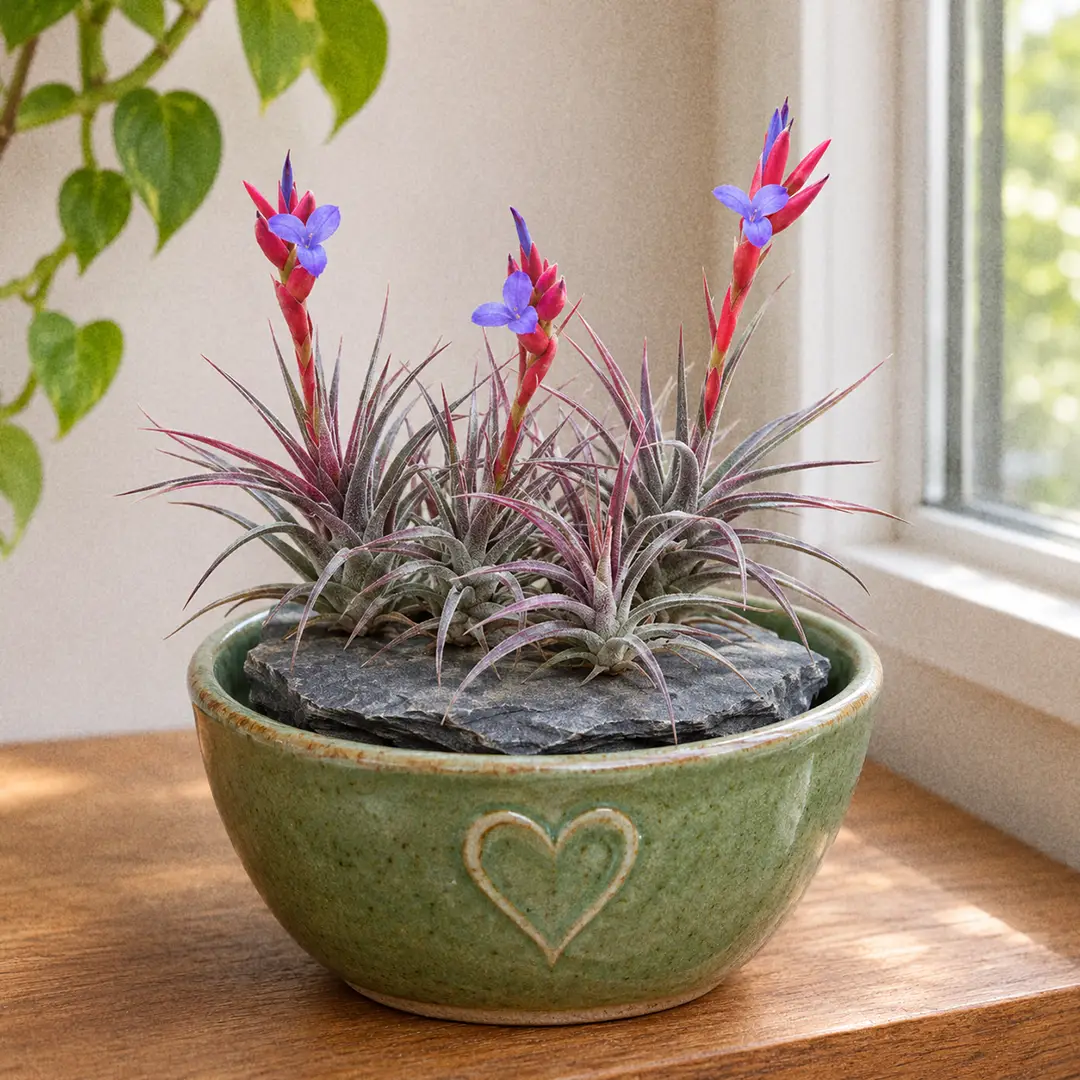
Why It's Popular
A collector's plant rather than a common one: a rare rock dweller from southern Brazil, sold by only a few specialists. It looks like a Sky Plant on a longer stem, with stiff, twisted leaves that flush purple to ruby red in good light. Little has been written about it, so treat a "Jonesii" from a mixed bin with suspicion.
Care Notes
- Light: Bright light with gentle morning sun.
- Water: Soak 15 to 20 minutes weekly, and make sure it dries within about four hours.
Full details in our 👉 Jonesii Air Plant care guide.
🌱 24. Neglecta Air Plant (Tillandsia neglecta)
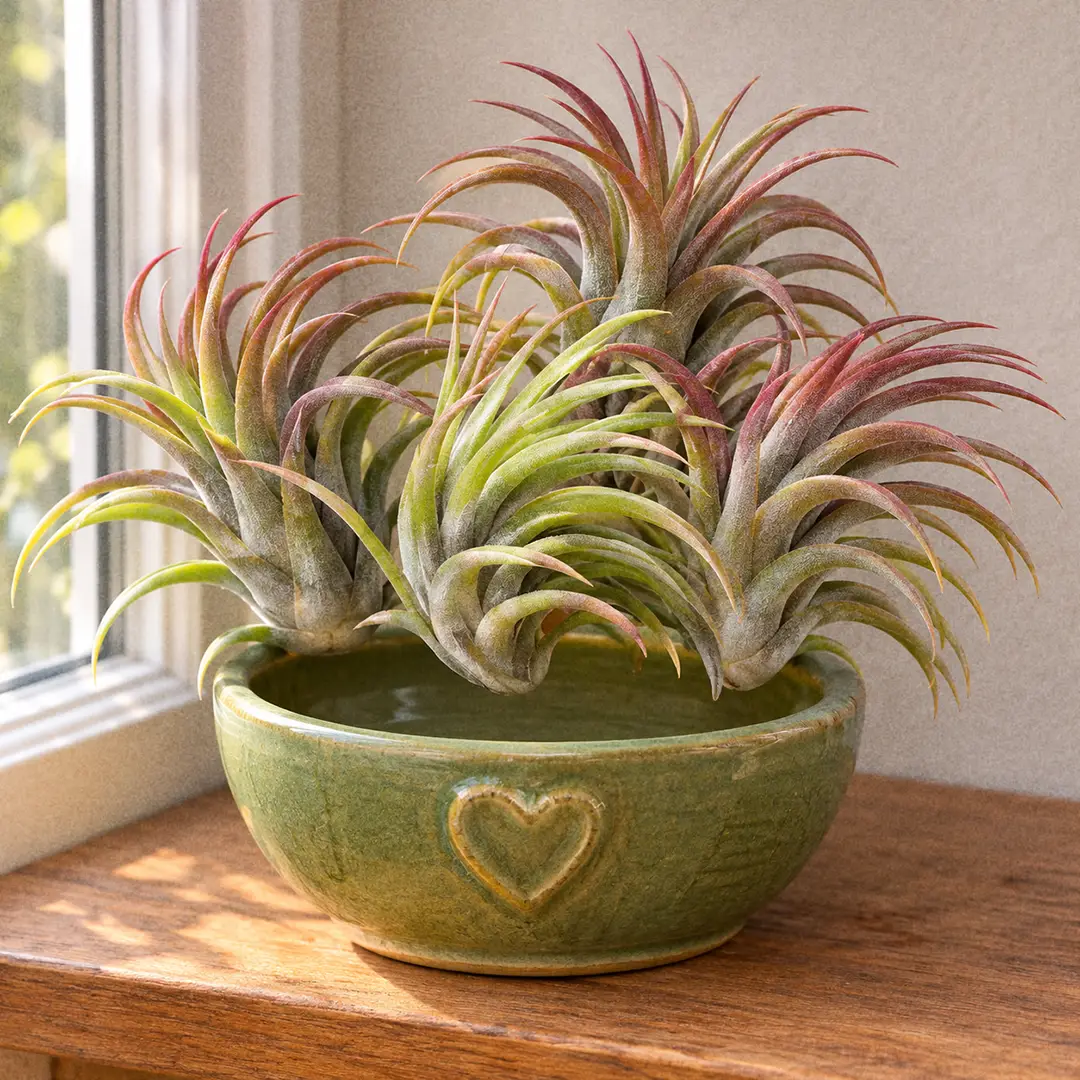
Why It's Popular
A small, tough rosette from the sunny coastal rocks around Cabo Frio in Brazil. Its short, thick leaves blush bronze to wine red in good light, and it blooms with pink to salmon bracts and violet-blue flowers much like a Stricta's. Offsets grow along its short stems, so it builds a dense clump that looks best hung up whole. It is close to the Sky Plant in look, but greener and less silver.
Care Notes
- Light: Bright light with a few hours of morning sun. Color is the sign it is getting enough.
- Water: Soak 15 to 20 minutes weekly, twice a week in hot summer weather, and dry it within about four hours.
Full details in our 👉 Neglecta Air Plant care guide.
🌱 25. Edithae Air Plant (Tillandsia edithae)
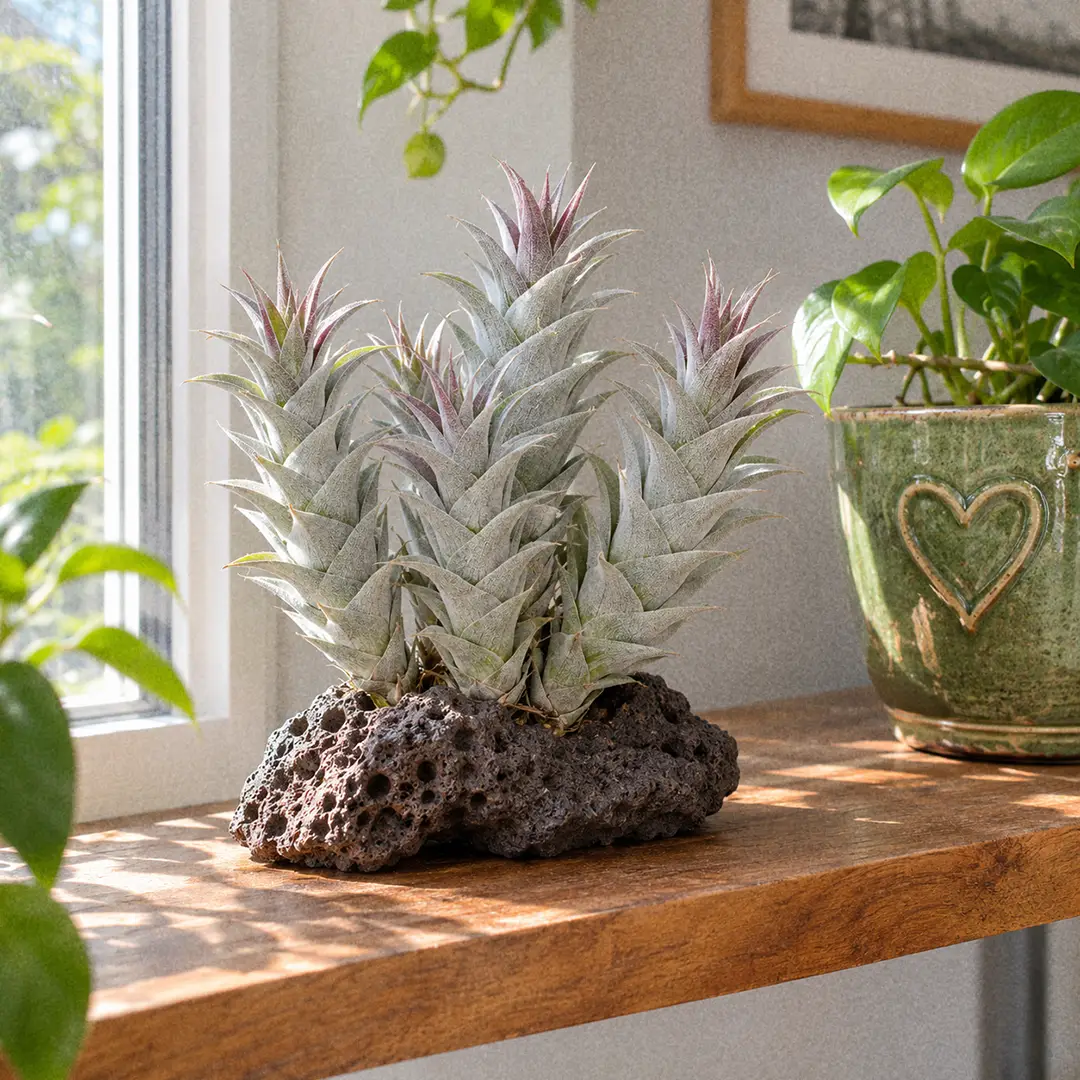
Why It's Popular
The pick for red flowers. Most air plants bloom violet or purple, and this one opens crimson bracts with red to coral petals. It grows on Bolivian cliffs, stacking short, thick silver leaves up compact stems until each becomes a small clump. It is slow to flower and wants more light than most air plants get indoors.
Care Notes
- Light: Within a foot or two of a south or west window, with a few hours of direct sun.
- Water: Soak 10 to 20 minutes weekly, with an extra short soak or heavy misting in hot weather.
Full details in our 👉 Edithae Air Plant care guide.
🌱 26. Duratii Air Plant (Tillandsia duratii)
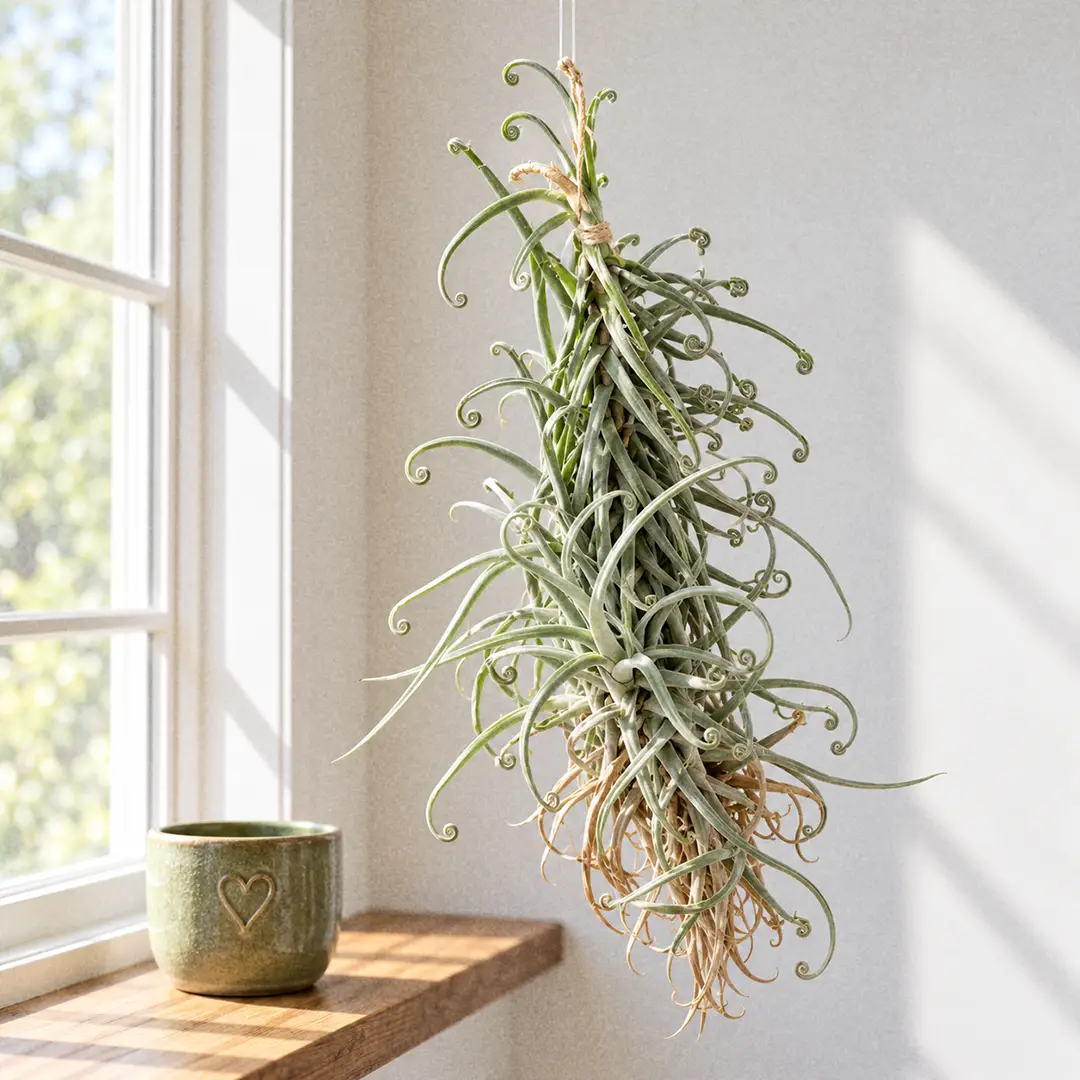
Why It's Popular
A big silver climber with few or no roots. It holds on by curling its leaf tips into hooks around twigs, so you can hang it from a loop of fishing line and be done. Most indoor plants are 1 to 2 feet long, and its lavender to violet flowers are among the most fragrant in the genus.
Care Notes
- Light: The brightest spot you have, with a few hours of direct sun.
- Water: Dunk about once a week in spring and summer, every 10 to 14 days in winter.
Full details in our 👉 Duratii Air Plant care guide.
🏆 27. Xerographica Air Plant (Tillandsia xerographica)
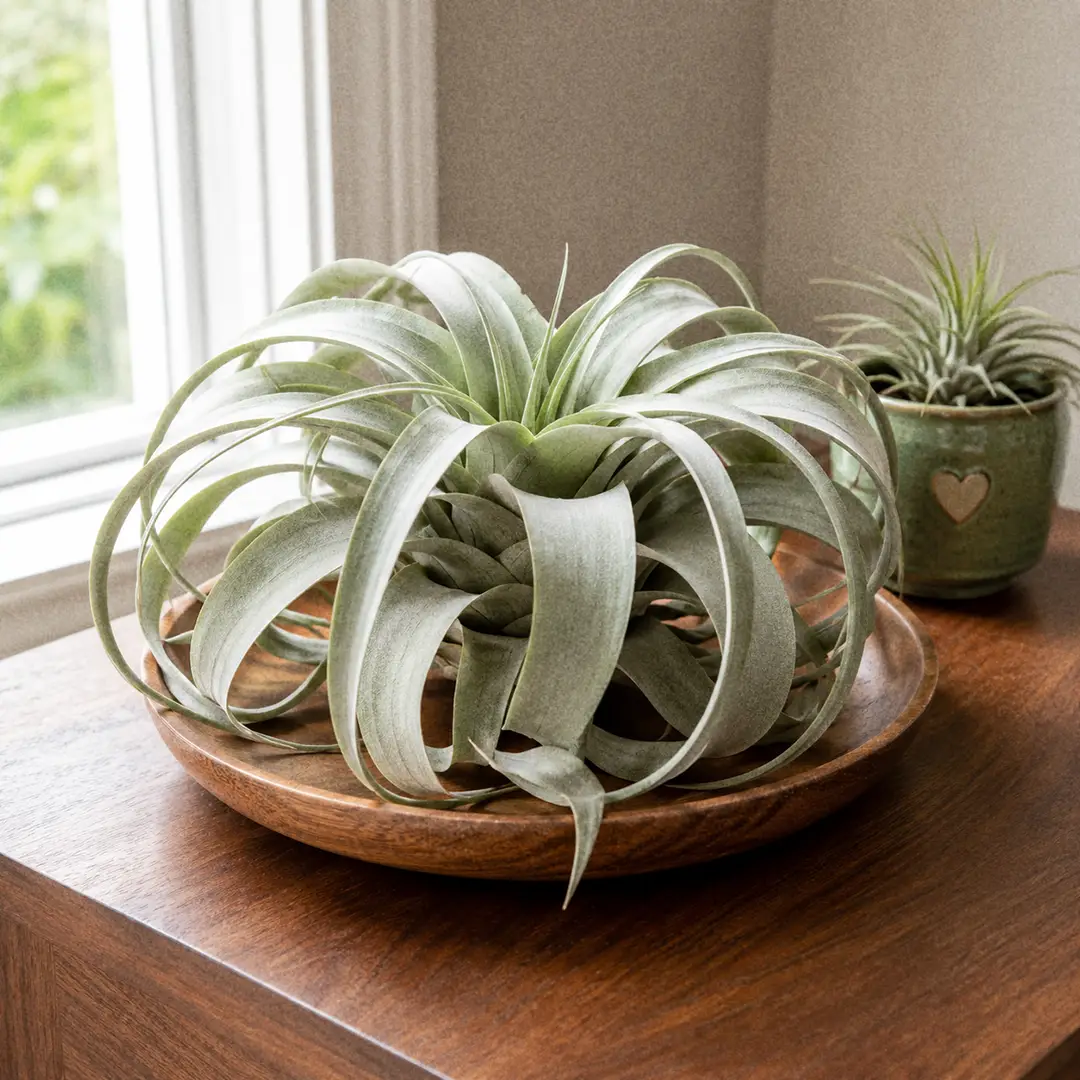
Why It's Popular
The King of Air Plants, a wide silver spiral that works as a sculpture on a bare table. Most plants for sale are 5 to 10 inches, but a full-sized one spans 1 to 3 feet. It is also easy to kill, almost always by watering it like the little green ones. It is listed on CITES Appendix II, so buy from a seller who states the plant is nursery-grown.
Care Notes
- Light: Bright light to full sun.
- Water: A one to two hour soak every two to three weeks, then a real dry. That is less often than anything else here.
Full details in our 👉 Xerographica Air Plant care guide.
🏆 28. Cacticola Air Plant (Tillandsia cacticola)
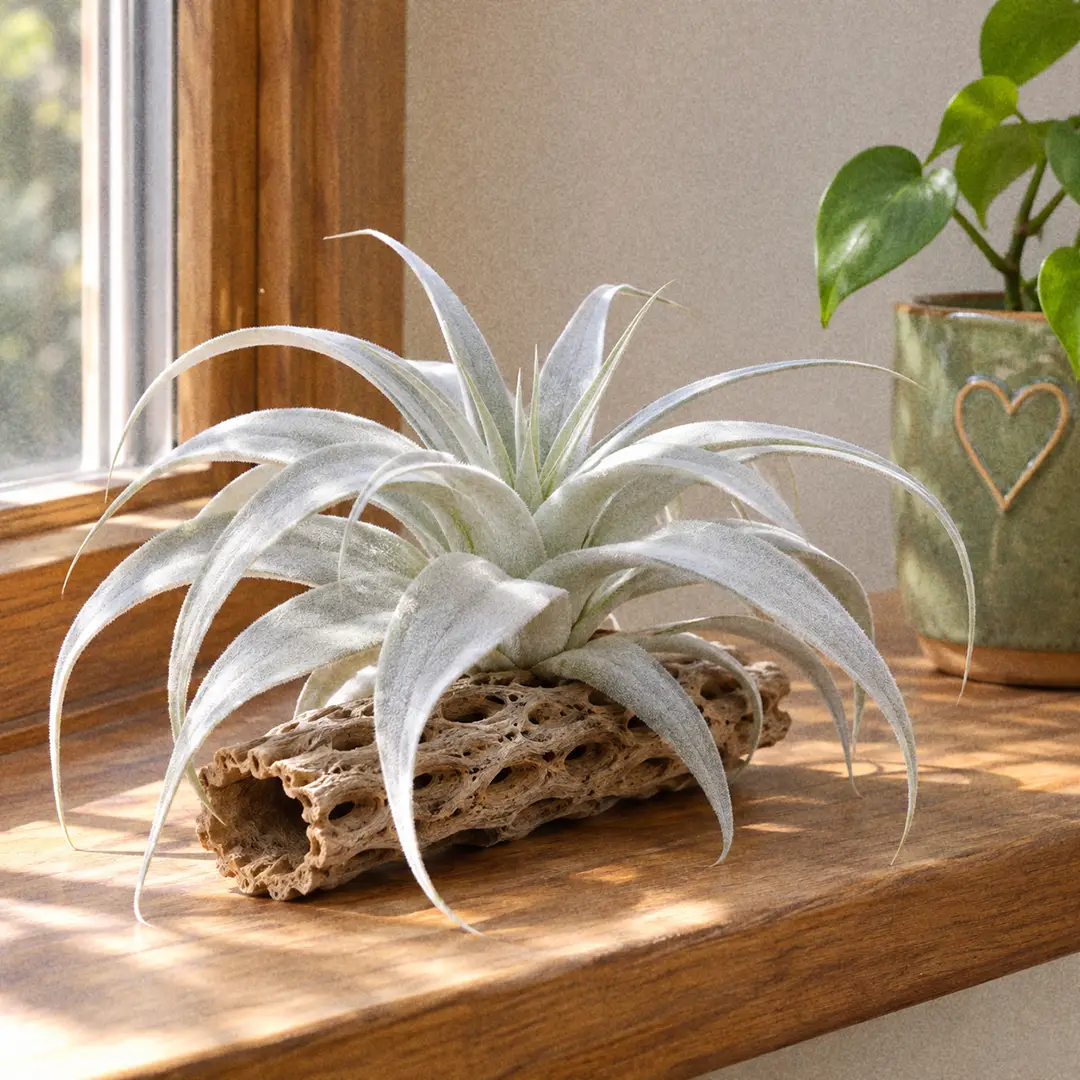
Why It's Popular
A soft, silvery white rosette from dry valleys in northern Peru, where it perches on cacti. It is often mixed up with Xerographica, but its leaves are softer and more pliable. The reason to grow it is a tall spike of pale lavender bracts that stays in color for months. It suits someone who already keeps a few air plants alive.
Care Notes
- Light: Your brightest window, with some direct sun.
- Water: A dunk or brief soak about weekly, with a fast dry. Rare long soaks suit Xerographica, not this one.
Full details in our 👉 Cacticola Air Plant care guide.
🏆 29. Juncea Air Plant (Tillandsia juncea)
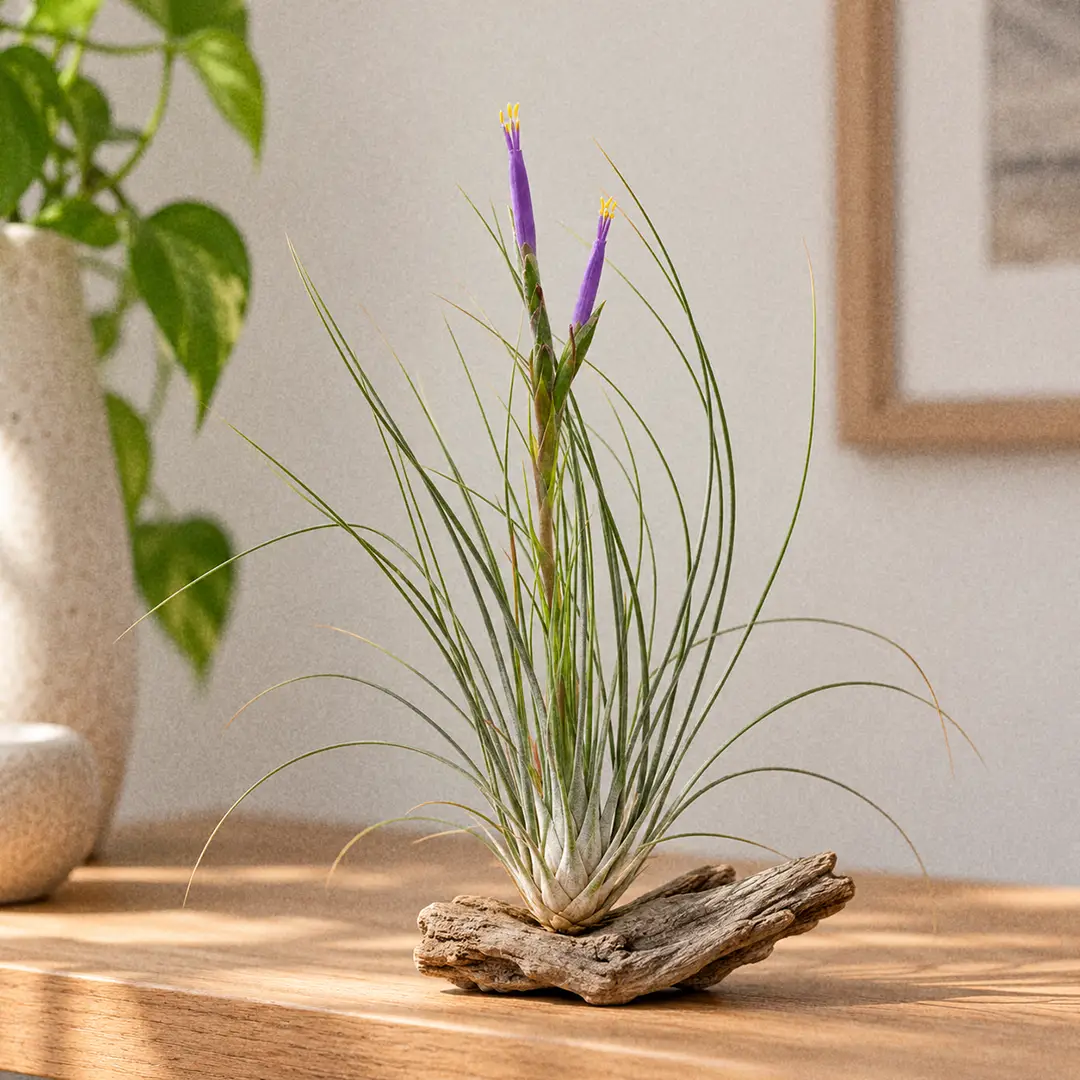
Why It's Popular
A fountain of needle-fine silver-green leaves, 10 to 20 inches tall on no stem at all. People regularly mistake it for ornamental grass until it flowers from carmine red bracts. It gives a flat shelf real height without a pot, blushes bronze in strong light, and copes with dry indoor air.
Care Notes
- Light: Bright light plus one to three hours of gentle direct sun.
- Water: Soak every 7 to 10 days, then shake hard. The packed brown sheaths at the base hold water.
Full details in our 👉 Juncea Air Plant care guide.
🏆 30. Spanish Moss (Tillandsia usneoides)
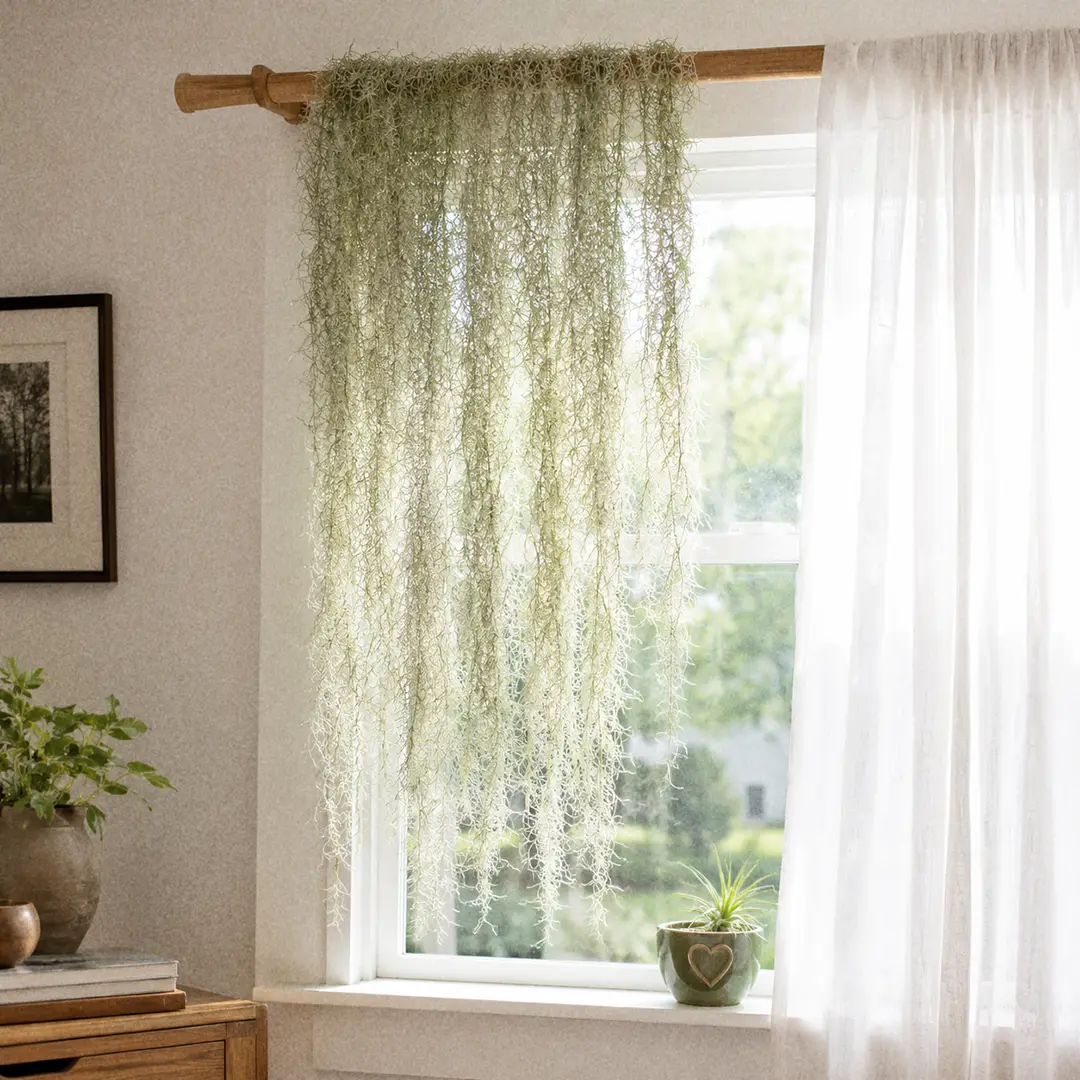
Why It's Popular
Neither Spanish nor a moss. It is a bromeliad that grows as long silver strands, hanging 1 to 6 feet from a curtain rod with no pot or soil. It has the widest natural range of any bromeliad. The hard part is drying: a bundle that stays wet in the middle for a day blackens from the inside before you notice.
Care Notes
- Light: Bright, filtered light. A bathroom window is often the best spot.
- Water: Dunk the bundle 15 to 20 minutes once or twice a week and hang it where it dries within four hours.
Full details in our 👉 Spanish Moss care guide.
🪴 31. Pink Quill Plant (Wallisia cyanea)
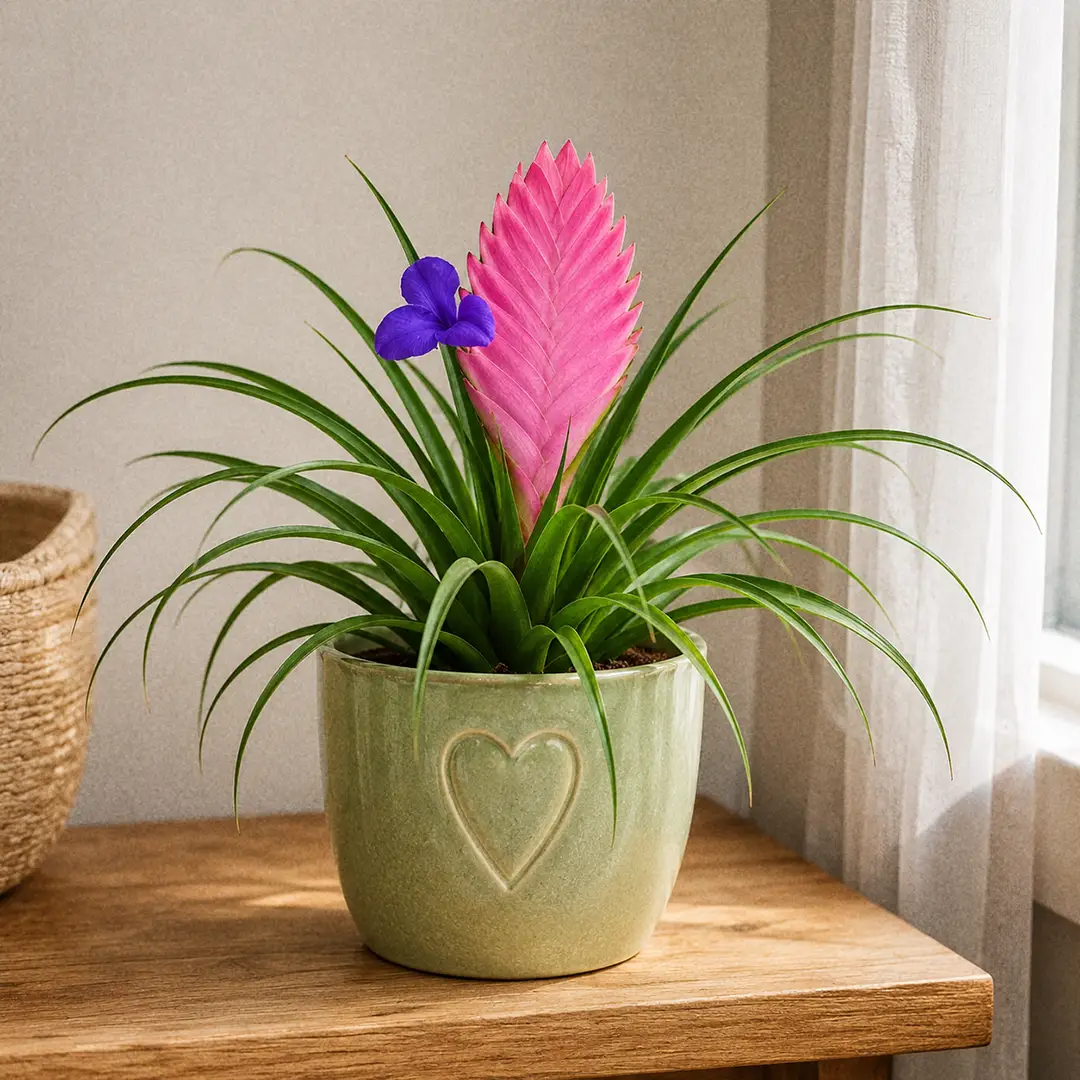
Why It's Popular
The odd one out. Long sold as Tillandsia cyanea and moved into Wallisia in 2016, it has real working roots and grows in a pot of chunky bark mix. You buy it for the flat rose-pink paddle, which holds its color for two to four months while violet flowers open from it. The rosette dies after flowering and leaves pups.
Care Notes
- Light: Bright indirect light.
- Water: Keep the bark mix lightly moist with soft water, and mist the leaves instead of filling the center cup.
Full details in our 👉 Pink Quill Plant care guide.
🟢 Best Air Plants for Beginners
Start With One of These
The Sky Plant is the most forgiving air plant here: stiff leaves, cold tolerance and flowers on schedule. Ionantha is the tiny classic and blooms readily on a windowsill. Streptophylla curls tight when it is thirsty, which takes the guessing out of watering. Harris's Air Plant suits people who tend to overwater.
Easy If You Water More
The green plants are easy once you accept how much they drink. Stricta blooms young, Brachycaulos blushes red at two or three years old, and Tenuifolia builds a clump quickly. If your first air plant was a silver one, expect to water these more often.
Wait on These
Seven guides here rate their plant as moderate: Tectorum, Magnusiana, Pruinosa, Seleriana, Edithae, Cacticola and Spanish Moss. None is hard, but each has one rule beginners break: no soaking for Tectorum, careful drying for the fuzzy bulbs and puffballs, a very sunny window for Edithae and Cacticola, and real airflow for Spanish Moss.
🏷️ Names, Lookalikes and Protected Plants
Old Names Still on the Labels
The same plant often turns up under two names. The Potbelly is T. paucifolia but is still sold as T. circinata. Kolbii is sold as Scaposa or Ionantha Scaposa, and Fuchsii as Argentea. Funkiana is correctly spelled funckiana. Pink Quill is now Wallisia cyanea, and some treatments move Duratii into Wallisia too. Shops also use "Sky Plant" for Ionantha, while our Sky Plant guide covers T. aeranthos.
Common Mix-Ups
Kolbii and Ionantha are told apart by where the flowers sit. True Baileyi has a slim base, and the bulbous pseudobaileyi is often sold under its name. Potbelly and Medusa's Head are both silver, so a mix-up costs little, but Potbelly and the green Bulbosa need different care. Cacticola has softer leaves than Xerographica and a different watering routine. No published key reliably separates Jonesii from the Sky Plant, so buy it from a specialist that names the species.
Protected and Rare Plants
Harris's Air Plant and Xerographica are both listed under CITES, so buy nursery-grown plants of each. In the wild, Pruinosa is listed as endangered in Florida, and true Baileyi is ranked as imperiled along its small stretch of the Texas and Mexican Gulf coast.
❓ Frequently Asked Questions
How many types of air plants are there?
The genus Tillandsia has over 650 species. This page covers the 31 air plants we have full care guides for: 30 Tillandsias plus the Pink Quill, a close relative that botanists now place in Wallisia.
Which air plant is easiest for a beginner?
The Sky Plant is the most forgiving. Its stiff leaves cope with a missed soak, it handles cold better than almost any other air plant, and it flowers on schedule. Ionantha is the other classic first plant, and Streptophylla helps with watering because its leaves curl tight when it is thirsty.
How can I tell if my air plant needs more light or more water?
Look at the leaves. Silver, grey or fuzzy leaves are covered in trichomes, and those xeric air plants take brighter light and less water. Smooth green leaves have few trichomes, and those mesic air plants want softer light and more frequent watering. See how to read an air plant for the exceptions.
Should I soak or mist my air plant?
Most air plants do well on a weekly soak followed by an upside-down dry. Plants with a bulb or a tightly packed center get short dunks or heavy mists instead, because long soaks leave water inside them. Tectorum should be misted and never soaked, and Xerographica gets a long soak only every two to three weeks. Our watering guide covers technique.
Are air plants safe for cats and dogs?
Every guide on this page lists its plant as non-toxic to pets. The ASPCA does not list Tillandsia as toxic, but for many of the rarer species there is no species-specific data, so the rating is a genus-level call. The practical risk is a cat batting a loose plant around or chewing it to pieces. Our pet-safe houseplants roundup has more options.
Do air plants die after they bloom?
Each rosette flowers once and then slowly fades, but before it goes it makes pups at its base. Leave them attached and you get a clump, or separate them once they are a third of the mother's size. The air plant care guide walks through separating pups.
Which air plants have red flowers?
Can air plants live in a terrarium?
Only an open one. Air plants need moving air and have to dry within a few hours of watering, and a closed terrarium stops both. Bulbous types like Bulbosa rot fastest in still, enclosed air.
🪴 See also 🪴
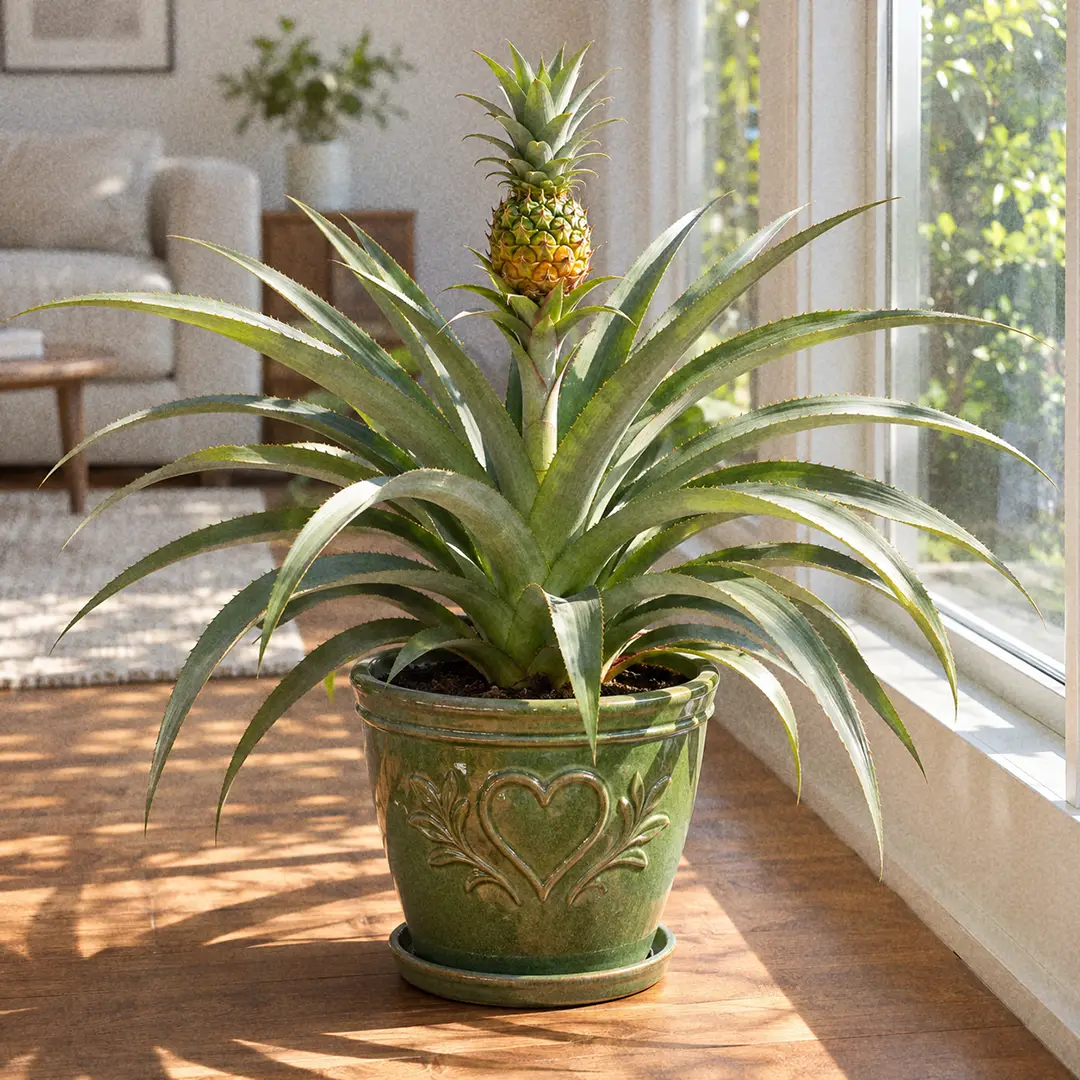
Complete Guide to Pineapple Plant Care and Growth
Complete Guide to Jonesii Air Plant Care and Growth
Complete Guide to Pink Quill Plant Care and Growth
Complete Guide to Kolbii Air Plant Care and Growth
Complete Guide to Capitata Peach Air Plant Care and Growth
Complete Guide to Baileyi Air Plant Care and Growth
Complete Guide to Harris's Air Plant Care and Growth
Complete Guide to Pruinosa Air Plant Care and Growth
Complete Guide to Ionantha Air Plant Care and Growth
Complete Guide to Spanish Moss Care and Growth
Complete Guide to Xerographica Air Plant Care and Growth
Complete Guide to Silver Vase Plant Care and Growth
Complete Guide to Sky Plant Care and Growth
Complete Guide to Brachycaulos Air Plant Care and Growth

Houseplant101 Forum
Questions & Comments
Ask a question, share your plant experience, or help other plant owners.
Comments are temporarily unavailable.
Open the Houseplant101 ForumNo comments yet
Be the first to ask a question or share your experience about this page.
Log in or create an account
Comments use your Houseplant101 Forum account, but you can stay on this page.
Create a new account