
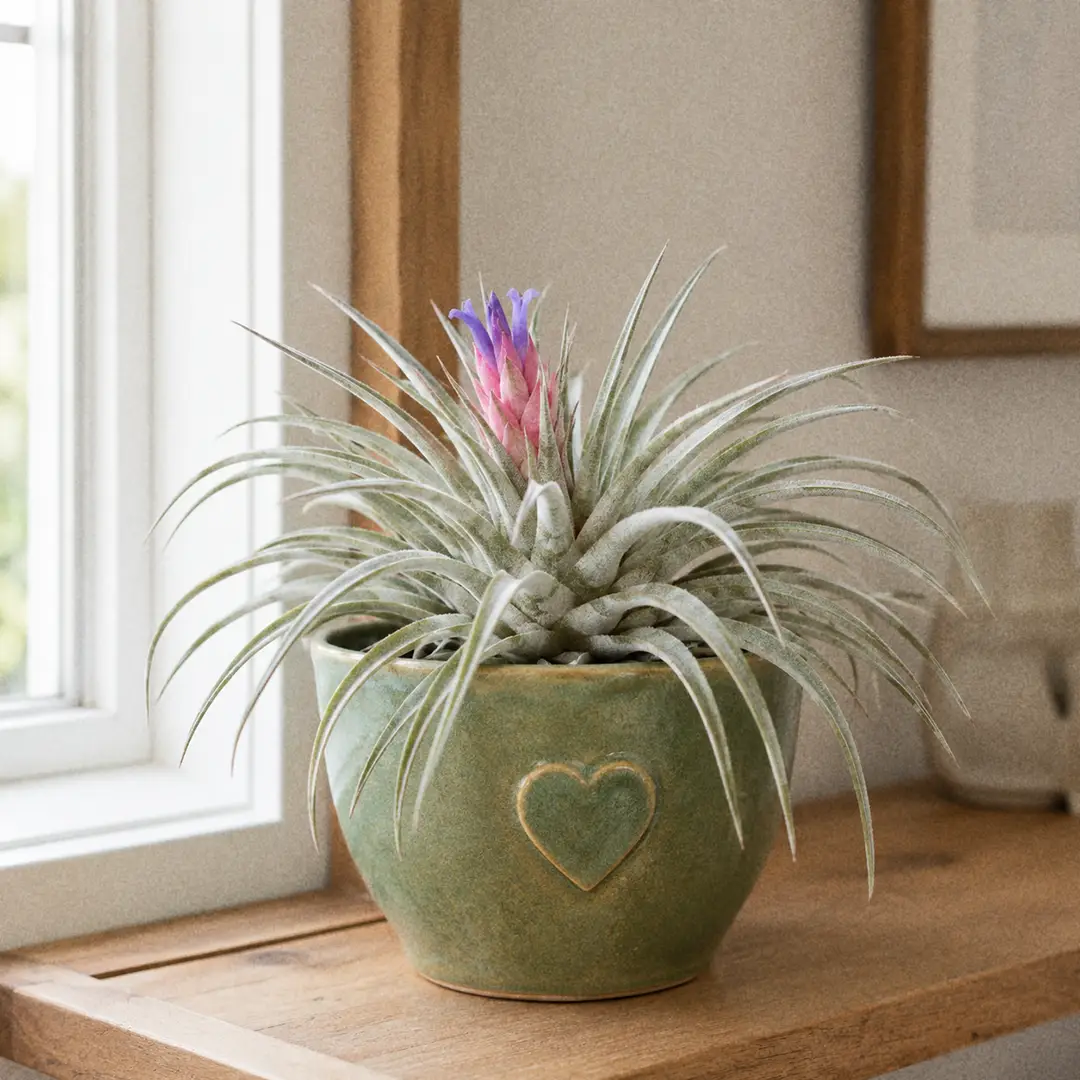
Sky Plant
Tillandsia aeranthos
Aeranthos, Air Carnation, Carnation of the Air, Cravo-do-mato


Sky Plant is the toughest, most cold-hardy air plant most people can buy, and it pays you back with a hot pink bract full of deep violet flowers. Learn how to grow Tillandsia aeranthos indoors, get it to bloom, and turn one plant into a clump.
📝 Sky Plant Care Notes
🌿 Care Instructions
⚠️ Common Pests
📊 Growth Information
🪴 In This Guide 🪴

☀️ Sky Plant Light Requirements (Bright Light and Gentle Sun)
The Sweet Spot
Sky Plant wants more light than the average air plant, and it takes direct sun better than almost anything else in the genus. An east window with two or three hours of morning sun is close to perfect. A west window works too, though the leaves may pick up a reddish flush from the harder afternoon light. That flush is not damage, and some growers chase it on purpose.
Set it within about three feet of the glass. Trichomes, the silvery scales that give the plant its dusty color, bounce back a good deal of light before it ever reaches the leaf tissue, so a spot that feels bright to you is often merely adequate to the plant.
Too Little Light
A Sky Plant in dim light goes soft, greener, and floppier than it should. The leaves lose their stiff outward spread and start drooping toward the base. Blooming stops entirely, and pups either fail to form or come out small and weak. Since the plant depends on light rather than soil for its energy, a dark corner causes a slow decline rather than a quick collapse, and people often blame their watering when the real problem is a north-facing wall.
If your brightest window is genuinely dim, a small grow light eight to twelve inches above the plant for ten hours a day covers it easily.
Too Much Light
Real scorch is possible but takes work. Summer afternoon sun through unshaded south-facing glass will bleach pale patches on the sun-facing side of the rosette and dry the leaf tips to a papery brown. Outdoors, a plant moved straight from indoors into full sun burns within days, so make the move in stages over two weeks. Indoors, a sheer curtain during July and August is all the protection it needs.
💧 Sky Plant Watering Guide (Soaking Method)
Watering Frequency
Soak your Sky Plant once a week, year-round, adjusting for how fast it dries. In a warm, breezy room, twice a week is fine. In a cool winter room where it takes a full day to dry, stretch to every ten days.
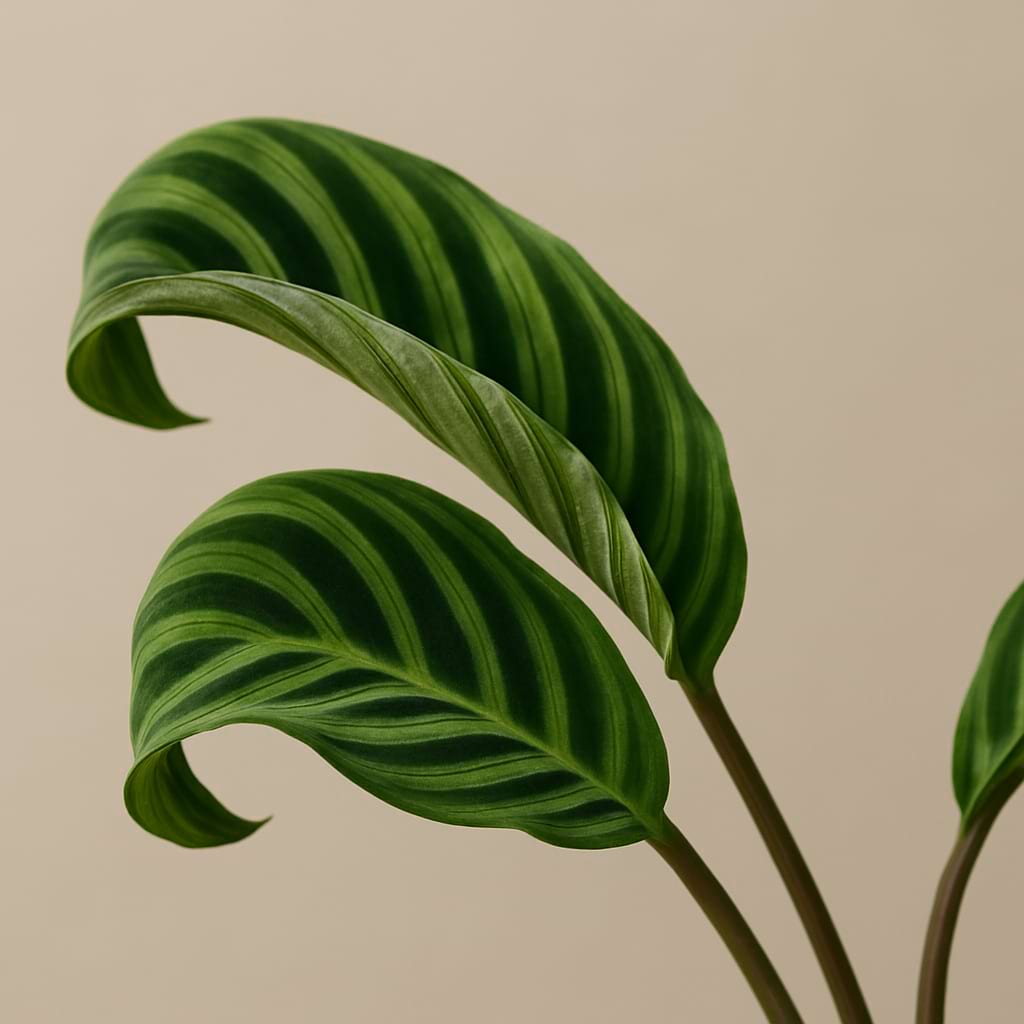
The plant tells you plainly when it is thirsty. Well-hydrated leaves are firm and spread outward. A thirsty rosette curls its leaves inward and lengthwise, exaggerating the natural curve, and the whole plant looks tighter and more silver. Once you have seen that a few times, you will stop needing a schedule.
How to Water
Fill a bowl with room-temperature water and submerge the whole plant for 20 to 30 minutes. Rainwater or filtered water is ideal, since heavily softened water carries salts that build up on the trichomes over time. Tap water is fine if you let it sit out overnight.
Then comes the part that matters more than the soak itself. Lift the plant, shake it hard upside down two or three times to knock water out of the leaf bases, and rest it upside down or on its side on a towel until it feels completely dry. It should get there within four hours. A fan or an open window speeds this along.
Misting is not a substitute. A misted plant gets damp at the tips and stays thirsty at the base, which is how people end up with a plant that is somehow both crispy and rotting.
Signs of Trouble
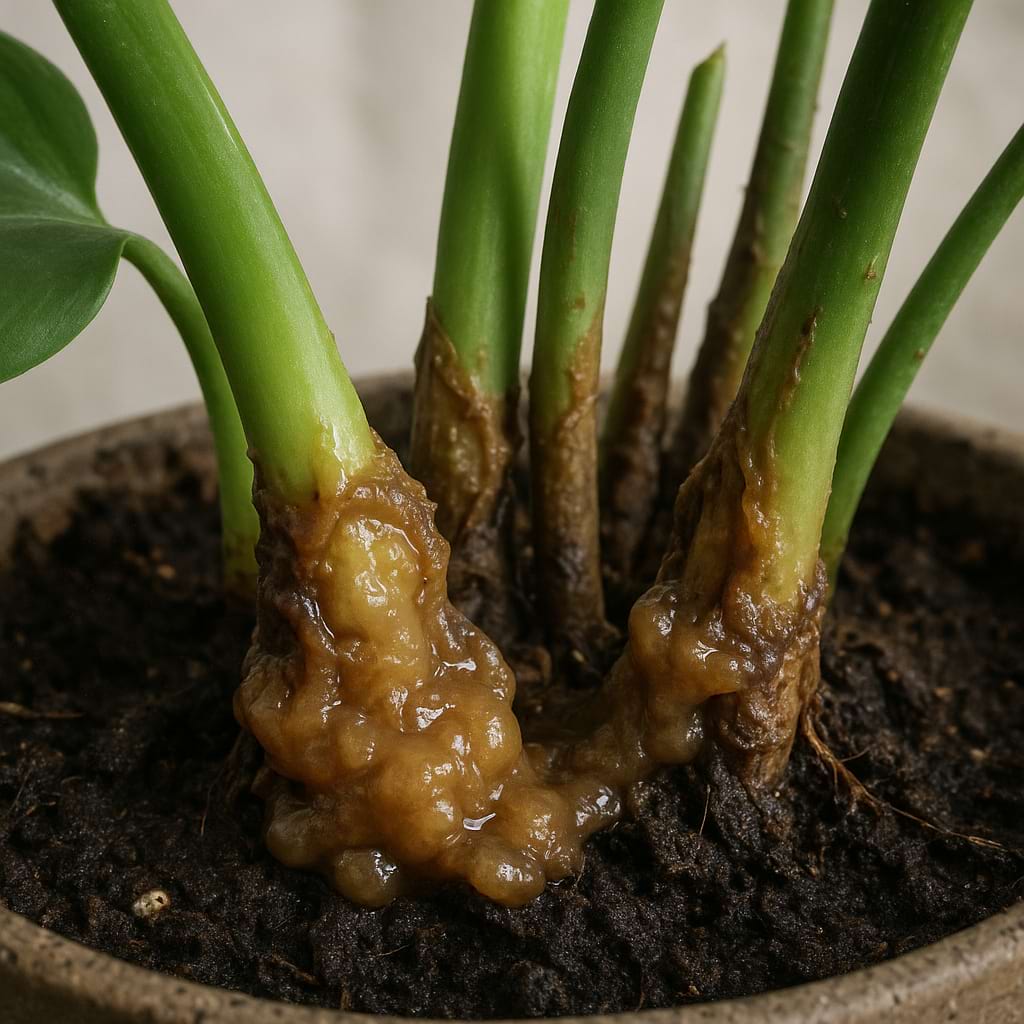
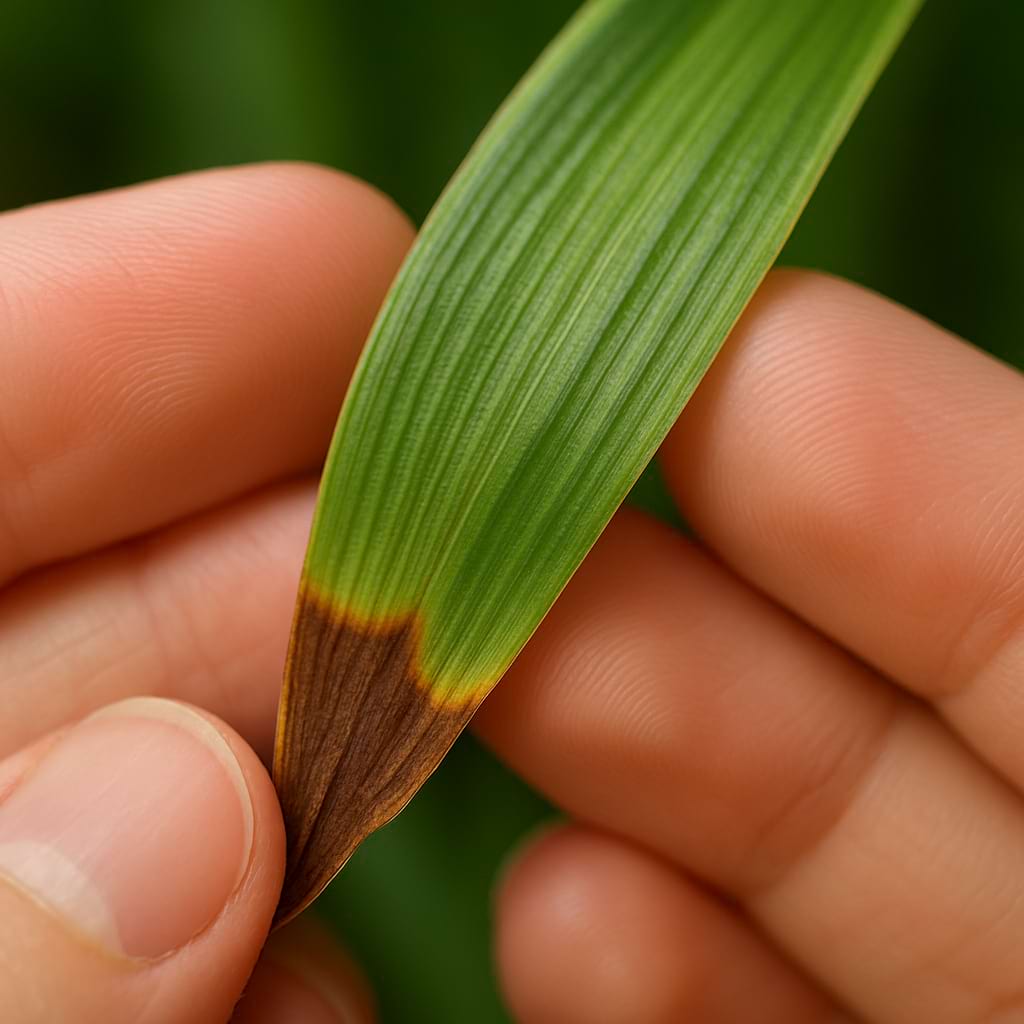
Curled, hard leaves with brown crispy tips mean it is not getting enough water, and a one-hour rehydrating soak fixes that. A base that has gone brown, soft, or dark, with leaves that pull free from the center with no resistance, means rot, which comes from water left sitting after a soak. Rot at the core is usually fatal, but if any healthy pups are attached, twist them off immediately and treat them as separate plants.
🪴 Best Growing Medium for Sky Plant (Why It Needs No Soil)
What the Plant Actually Needs
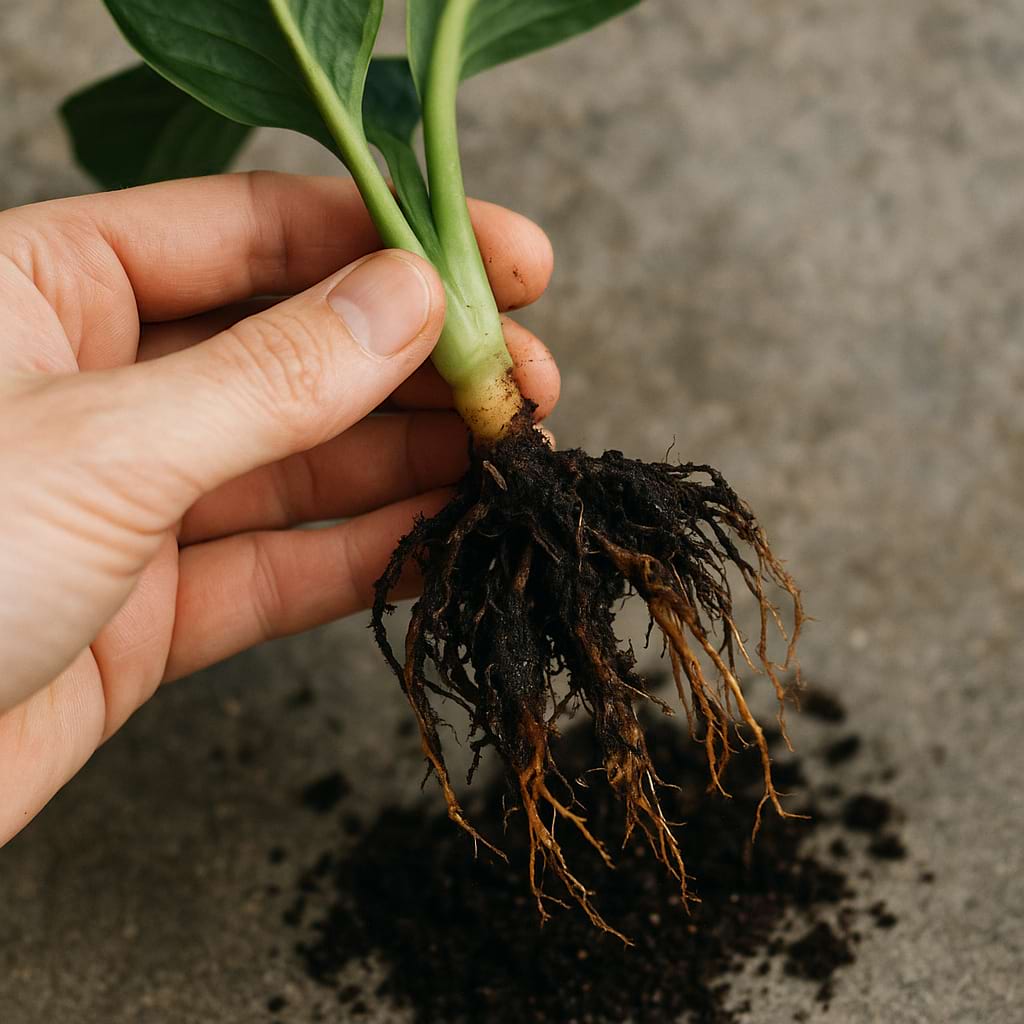
Sky Plant has no functional feeding roots. In the wild it clings to tree branches, rock faces, and in southern Brazil even to telephone wires, absorbing water and nutrients directly through the trichomes on its leaves. The few short roots it does grow are anchors, nothing more.
That makes potting mix genuinely dangerous here. Set a Sky Plant in potting soil and the base stays damp between waterings, and the plant rots from the inside within a couple of months. This is the most common way beginners lose one, usually with the kindest intentions.
What to Mount It On
Cork bark is the classic choice: it does not rot, it holds no water, and the texture suits the plant. Driftwood, grapevine, manzanita branches, and hardwood slices all work equally well. Attach with a plant-safe adhesive or by winding a loop of fishing line or nylon thread around the base, and remember that the base will thicken as it clumps, so leave slack.
Loose Displays
Mounting is optional. A Sky Plant sits happily in a wire holder, an open glass globe, a shallow bowl, or a shell, and lifts straight out for its weekly soak. If you like the look of a container, keep the vessel open on at least one side, and put nothing at the bottom that holds moisture: no moss, no soil, no pebbles kept wet.
🍼 Fertilizing Sky Plant (Feeding Schedule)
When and How Often
Feed once a month from early spring through late summer, and skip it entirely in winter. Sky Plant grows fine unfed, but a fed plant blooms sooner, produces more pups, and colors up better, so it is worth the small effort.
What to Use
Use a bromeliad or air plant fertilizer at a quarter of the label strength, and add it to the soak water rather than applying it directly. A low-urea, low-copper formula matters here, since copper is toxic to Tillandsia and shows up in some general-purpose feeds. A balanced 17-8-22 bromeliad blend is the standard recommendation.
Add the diluted feed to the bowl, soak as usual for 20 minutes, then rinse the plant briefly under plain water before drying it upside down. The rinse stops residue from building up on the trichomes.
Over-Fertilizing Signs
Too much feed burns leaf tips brown, sometimes with a chalky white crust at the base of the leaves. Growth may also turn loose and stretched rather than compact. If you see this, soak in plain water for a full hour to flush the leaves, then wait two months before feeding again. Undershooting on food is always safer than overshooting.
🌡️ Sky Plant Temperature Range
Ideal Range
Sky Plant grows best between 60 and 85°F, which is ordinary room temperature all year. It is one of the few Tillandsias that genuinely enjoys a cool spell, and a winter stretch in the low sixties tends to improve the following season's flowering.
Cold tolerance is this plant's party trick. Established plants survive brief dips to around 20 to 25°F, which puts it in USDA zones 8b and up. That means it can live outdoors year-round across a good part of the American South and the Pacific Northwest coast, mounted on a tree in dappled shade. Just keep it dry going into a cold night, because a wet plant freezes far more easily than a dry one.
Drafts and Heat Sources
Cold drafts are not the threat here that they are for tropical foliage plants. Hot, dry drafts are. A spot directly above a radiator or in the path of forced-air heating dries the plant faster than weekly soaks can keep up with, and you will see the tips brown while the plant looks otherwise healthy. Move it a few feet away, or soak twice a week during heating season.
💦 Sky Plant Humidity Requirements
Ideal Humidity
Anything from 40% up suits it, which covers most homes without any intervention. Sky Plant comes from open, breezy habitats rather than steamy jungle, so it is far less humidity-dependent than the smooth green mesic Tillandsias.
Airflow Beats Humidity
If you have to choose between the two, choose airflow. Stagnant humid air is what kills this plant, because the rosette stays damp and rot follows. A closed terrarium is the worst possible home for one.
Higher humidity does let you stretch the interval between soaks, so a bright bathroom with a window and a working extractor fan is a genuinely good spot. Just do not run a humidifier pointed at a plant sitting in still air.
🌸 Sky Plant Flowers (Bloom Guide)
What the Flowers Look Like
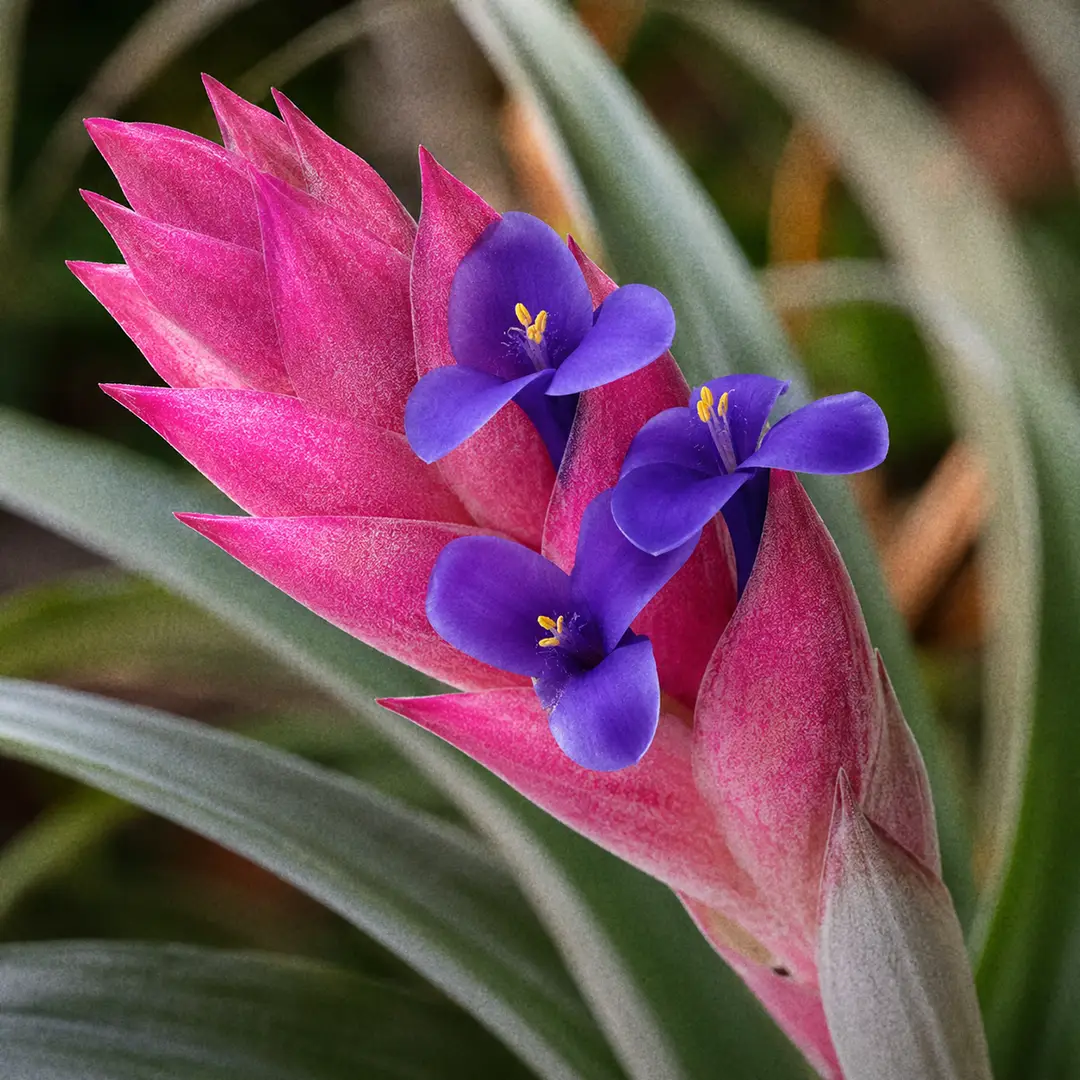
A short stalk pushes out from the center of the rosette carrying a flattened bract in rose to hot pink, and from it open small three-petaled flowers in a violet-blue so saturated it looks almost artificial. The bract holds its color for several weeks. The individual flowers open a few at a time across roughly two weeks, and each one lasts a couple of days.
The whole rosette often blushes pink or coppery in the weeks before the stalk appears, which is your early warning. For the effort involved, this is one of the best-value blooms in the genus.
How to Trigger Bloom
Most Sky Plants flower in late spring or early summer once the rosette reaches full size, usually at three to four years old. Three things move it along: strong light, monthly feeding during the growing season, and a cool, bright winter rather than a warm dark one.
If it stubbornly refuses, the trick that works is ethylene gas. Seal the dry plant in a clear bag with a ripe apple for two or three days, then unbag it. Flowering usually follows within six to ten weeks.
After the Bloom
Each rosette flowers only once. That sounds grim, but flowering is the trigger for pups, and a Sky Plant typically produces two to four of them from the base while the mother stays green and presentable for another year or more. Cut the spent stalk at its base once it dries and let the plant get on with it.
🏷️ Sky Plant Types and Varieties
Tillandsia aeranthos (The Standard Form)
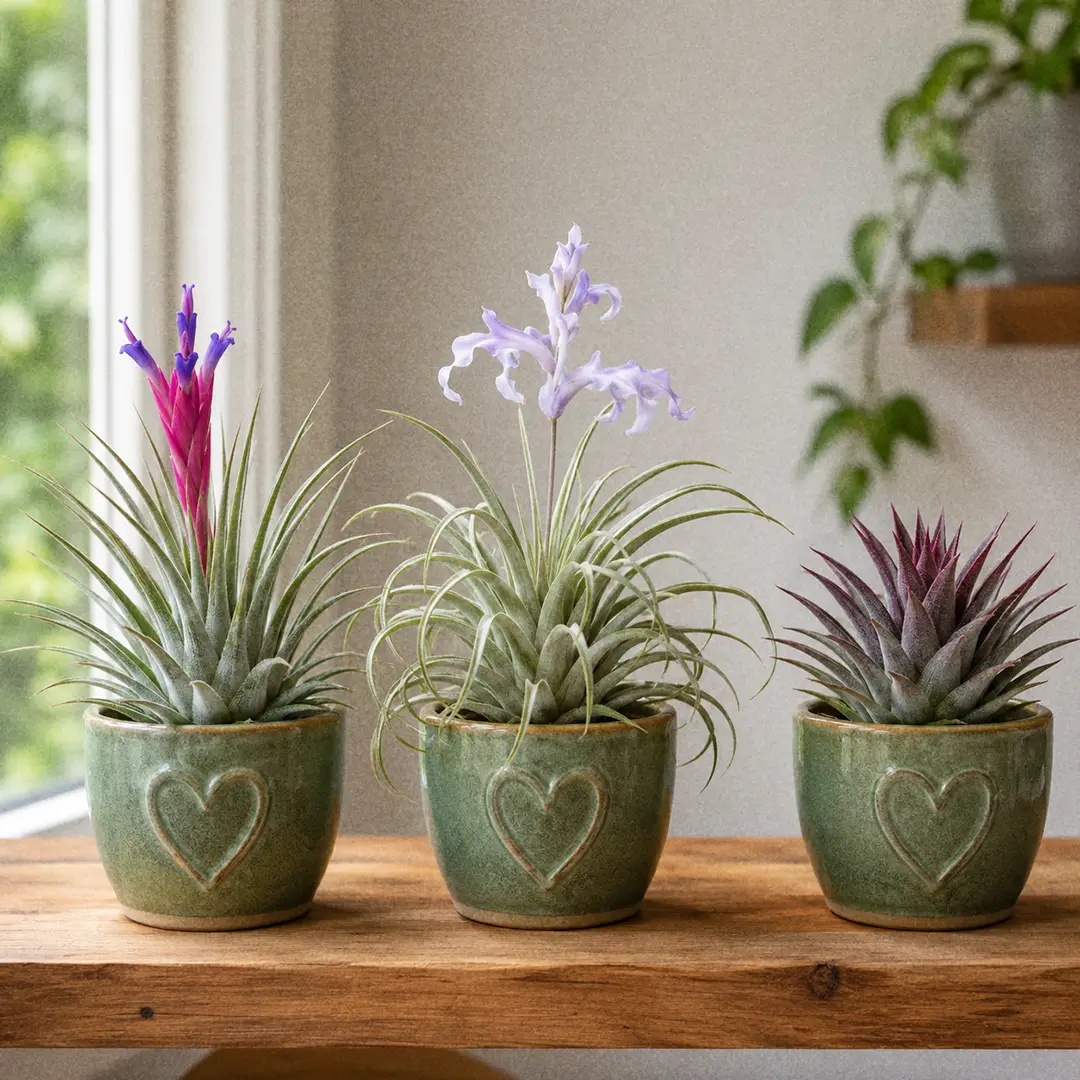
The plant most sellers ship: a dense rosette four to eight inches across, stiff triangular gray-green leaves that curve outward, and the classic pink-and-violet bloom. It clumps readily, and all the care above assumes this form.
'Mini Purple' and Compact Forms
A smaller, tighter selection at two to four inches across, with leaves that take on a distinct purple cast in strong light. Care is identical, but the smaller mass dries out faster, so check it a day or two sooner than a full-size plant.
Sky Plant vs Tillandsia bergeri
These two get mixed up constantly, and sellers mislabel them freely. T. bergeri has softer, paler, more flexible leaves, and its flowers are pale lavender-white with wavy, twisted petals rather than the flat violet triangles of aeranthos. Bergeri also flowers without the vivid pink bract. If the bloom is pale and ruffled, you have bergeri. Hybrids between the two are common in the trade, and they behave like aeranthos in care terms.
How It Compares to Other Air Plants
Against the general Air Plant crowd, Sky Plant is stiffer, sun-tougher, and much more cold-tolerant. Against a Brachycaulos Air Plant, it drinks noticeably less and blushes less dramatically, but flowers more predictably. Harris's Air Plant is the closest match in look, since both are stiff silver rosettes that shrug off strong light, but harrisii grows on a visible woody stem, takes years longer to reach its first bloom, and has no cold tolerance to speak of. The Xerographica Air Plant is the size upgrade if you want one big sculptural silver rosette instead of a clump, though it drinks on a three-week cycle rather than a weekly one. Going the other way, the Ionantha Air Plant is the miniature version of the same idea: a two-inch silver rosette that turns fire-engine scarlet all over before it flowers, on the same weekly soak schedule, though it has none of Sky Plant's cold tolerance. And unlike a Pink Quill Plant, Sky Plant never wants a pot.
🪴 Mounting and Containers for Sky Plant
Why There Is No Repotting
Sky Plant is never potted, so it is never repotted. What replaces that job is re-mounting. As a single rosette turns into a clump, it outgrows its perch and gets top-heavy. Every two or three years, move it to a larger piece of bark or a wider holder.
Choosing a Mount or Holder
Match the mount to the eventual clump, not the plant in your hand. A rosette that fits a two-inch cork chip today will be a six-inch cluster in three years. Cork bark, driftwood, and hardwood slices all last well. For holders, wire frames, open globes, shallow ceramic dishes, and shells all work as long as air moves underneath and nothing pools.
How to Mount It
Hold the base of the rosette flat against the bark and wind clear fishing line or nylon thread around it two or three times, tying off at the back. Leave the loop slightly loose. Alternatively use a dot of plant-safe adhesive such as E6000 on the base, holding it in place for a minute until it sets. Never use hot glue on a hot setting, and never bury the base in moss.
✂️ Pruning Sky Plant
Trimming Leaf Tips
Dried brown tips are normal on older leaves and do not spread. Trim them with clean scissors, cutting at a slant that mimics the natural taper of the leaf, so the trim does not read as a blunt chop. Only cut into the brown, never into green tissue.
Removing Spent Growth
Lower leaves dry out and turn papery as the rosette matures. Pull them away with a gentle downward tug, and stop if there is real resistance. Cut the flower stalk at its base once it has dried and browned, which redirects energy into pup production.
What Not to Cut
Do not trim the leaf tips of a healthy plant just to tidy up the shape, and never cut into the center of the rosette. The growing point sits down in there, and damaging it ends the plant.
🌱 How to Propagate Sky Plant (Pups and Clumps)
The Only Method Worth Using
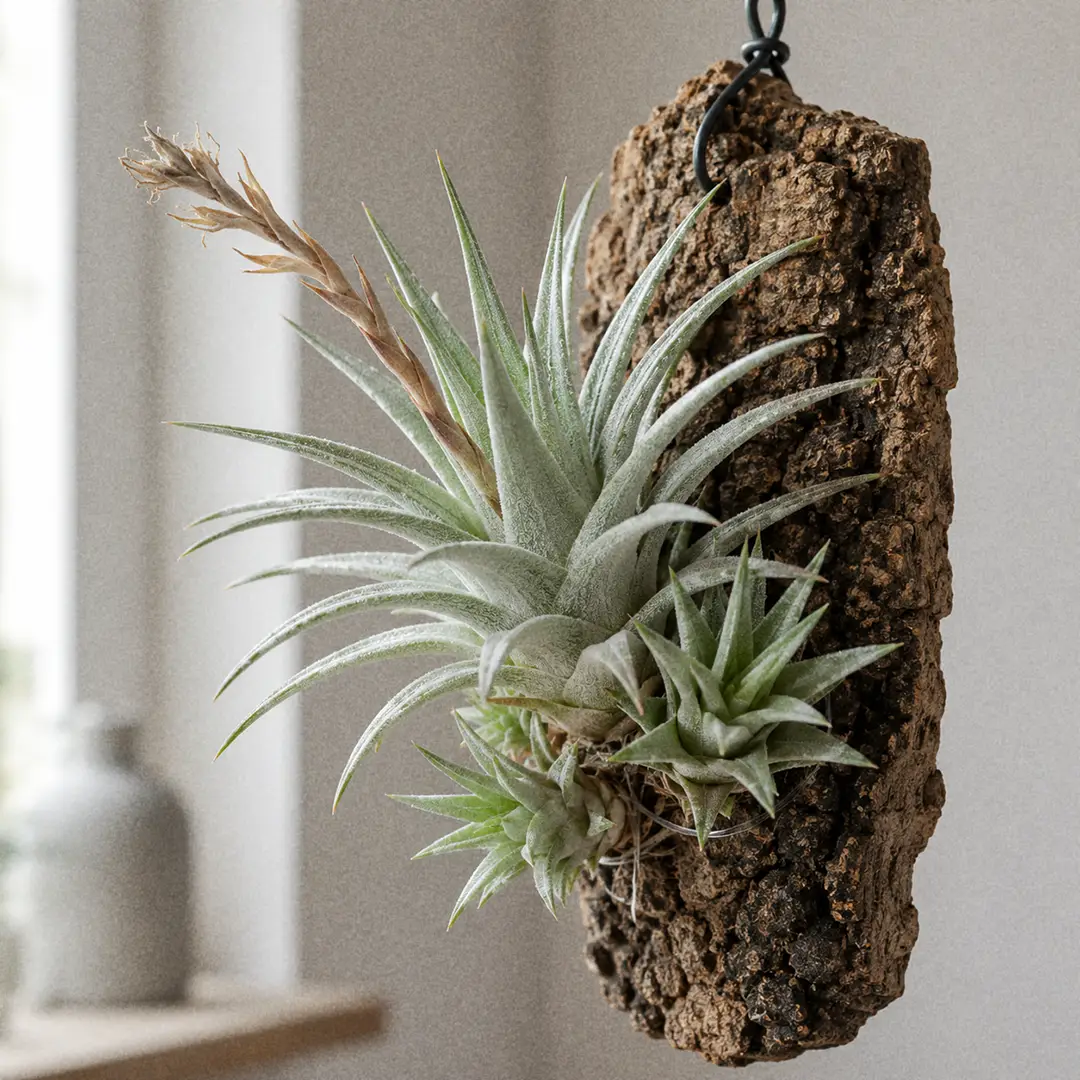
Sky Plant multiplies by pups, the offsets that appear at the base after flowering. Seed propagation exists, but it takes five years or more to reach a plant worth looking at. Cuttings do not work at all, since there is no stem to cut. Pups are the whole story, and this species is generous with them: two to four per flowering rosette is typical, sometimes more.
Step-by-Step Separation
- Wait until the pup is at least a third the size of the mother, which usually takes six months to a year. Separating early kills more pups than anything else.
- Hold the mother firmly at her base, grip the pup low down, and twist while pulling gently. A ready pup releases with a soft snap. If it fights you, it is not ready.
- If you must cut, use clean sharp scissors and cut as close to the mother's base as you can without slicing into the pup's own base.
- Let both plants dry for a day before the next soak. This is a form of plant division, and the cut surfaces want time to callus.
- Care for the pup exactly as you would an adult. It will reach flowering size in two to three years.
Or Build a Clump Instead
The alternative is to do nothing. Leave every pup attached and the plant builds itself into a dense ball of rosettes, which is how the species grows in the wild and how it looks best. A mature clump can throw several bloom spikes at once, and it makes a far more impressive object than any single rosette. Clumps also dry more slowly at the center, so shake them harder after each soak and give them a genuinely breezy spot.
🐛 Sky Plant Pests and Treatment
Pests are uncommon on Sky Plant, partly because there is no soil to harbor them. When they do show up, they hide down in the tight leaf bases where you cannot easily see them.
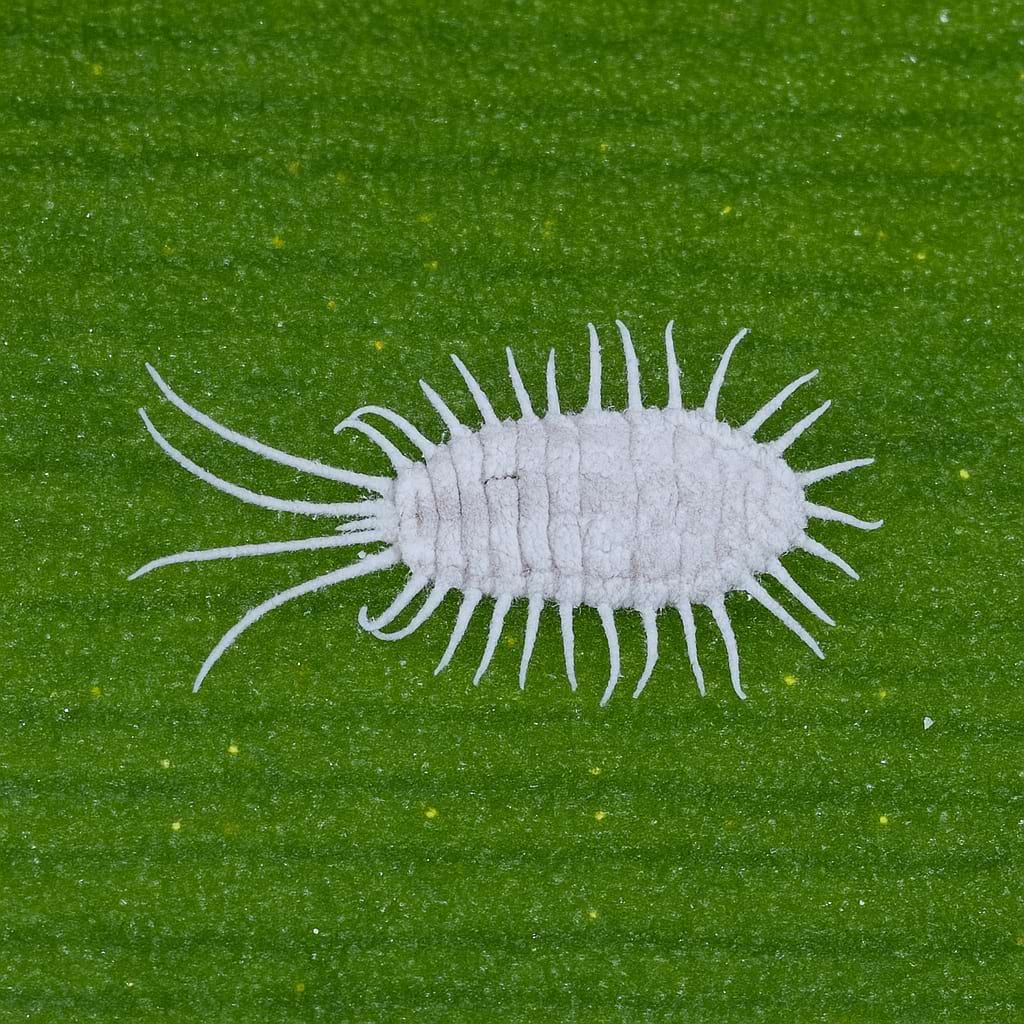
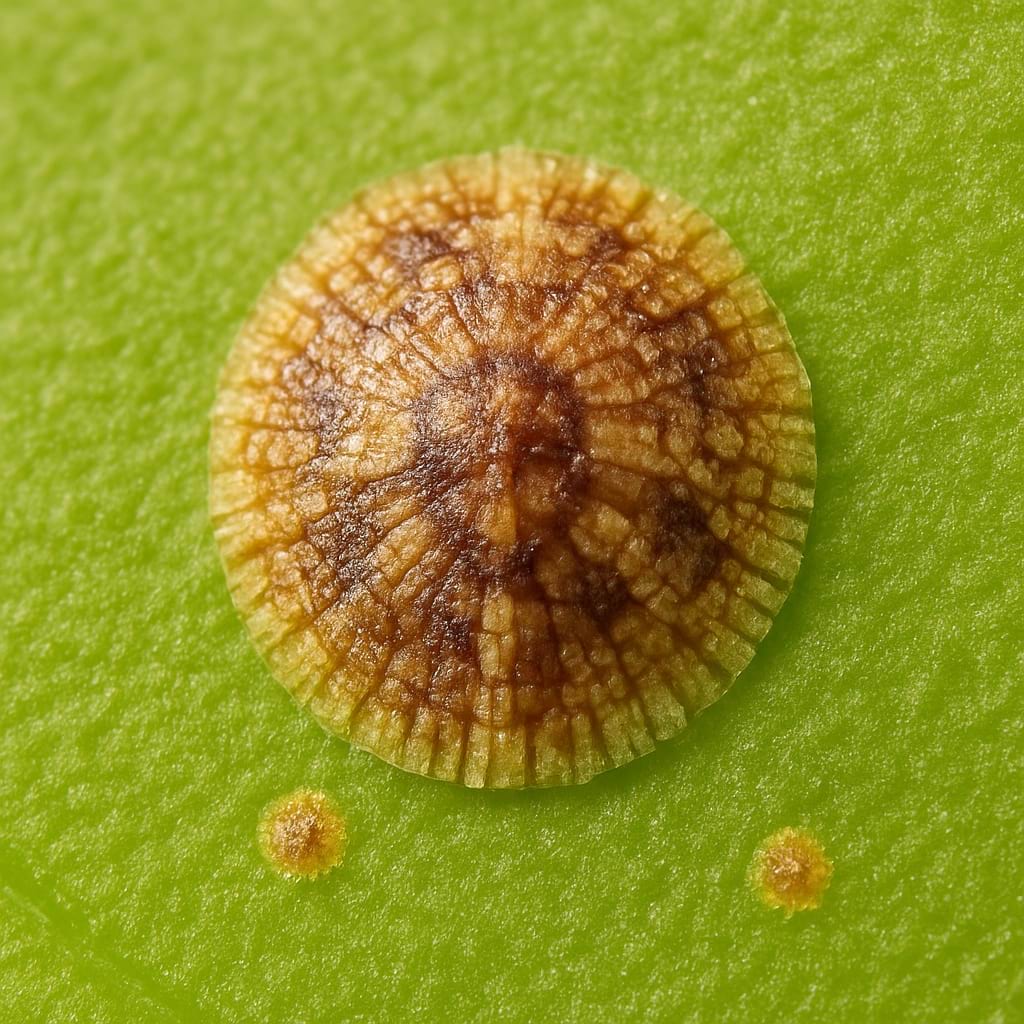
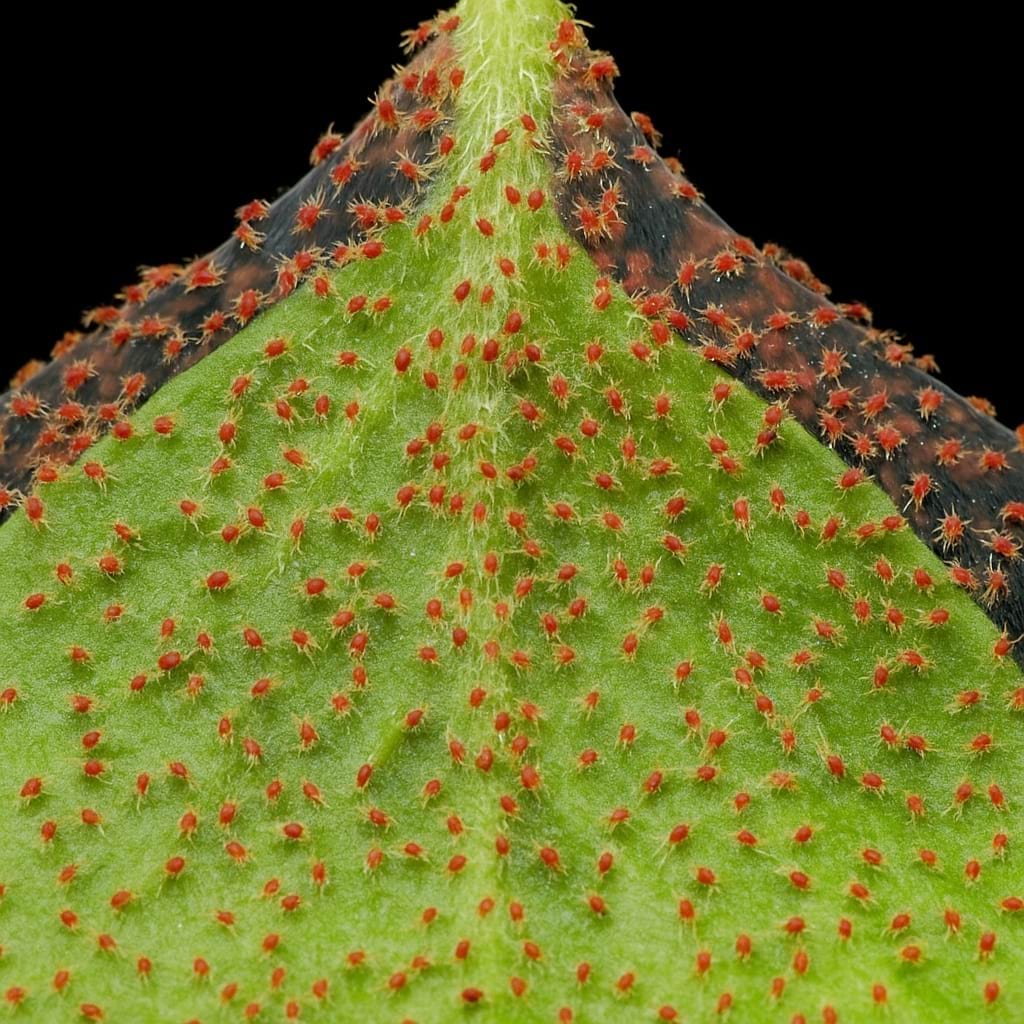
Mealybugs are the most likely visitor, appearing as small white cottony specks wedged between the leaves. Scale insects look like flat brown bumps stuck to the leaf surface, easy to mistake for damage until you scrape one off. Spider mites turn up mostly on plants kept too dry in hot rooms, leaving fine webbing between the leaves and a dusty, stippled look.
Treatment is straightforward. Quarantine the plant first, away from any other Tillandsias. For a light infestation, dab each pest with a cotton swab dipped in rubbing alcohol. For anything worse, submerge the whole plant in water with a few drops of insecticidal soap for 15 to 20 minutes, rinse thoroughly in clean water, then dry it upside down as usual. Repeat after ten days to catch anything that hatched. Avoid oil-based sprays, which clog the trichomes and suffocate the leaf surface.
🩺 Common Sky Plant Problems
Nearly every problem with this plant traces back to water, either too much sitting in the wrong place or too little reaching the leaves.
Rot at the base is the serious one. The center goes dark and soft, leaves pull out with no resistance, and the plant smells faintly sour. It comes from water left standing after a soak, or from a plant set in soil or damp moss. Once the core is gone the plant cannot be saved, so rescue any firm pups and start over.
Brown crispy tips and tightly curled leaves are the opposite problem: not enough water, or a spot too close to a heat source. A one-hour soak rehydrates the plant, and shortening the interval prevents a repeat.
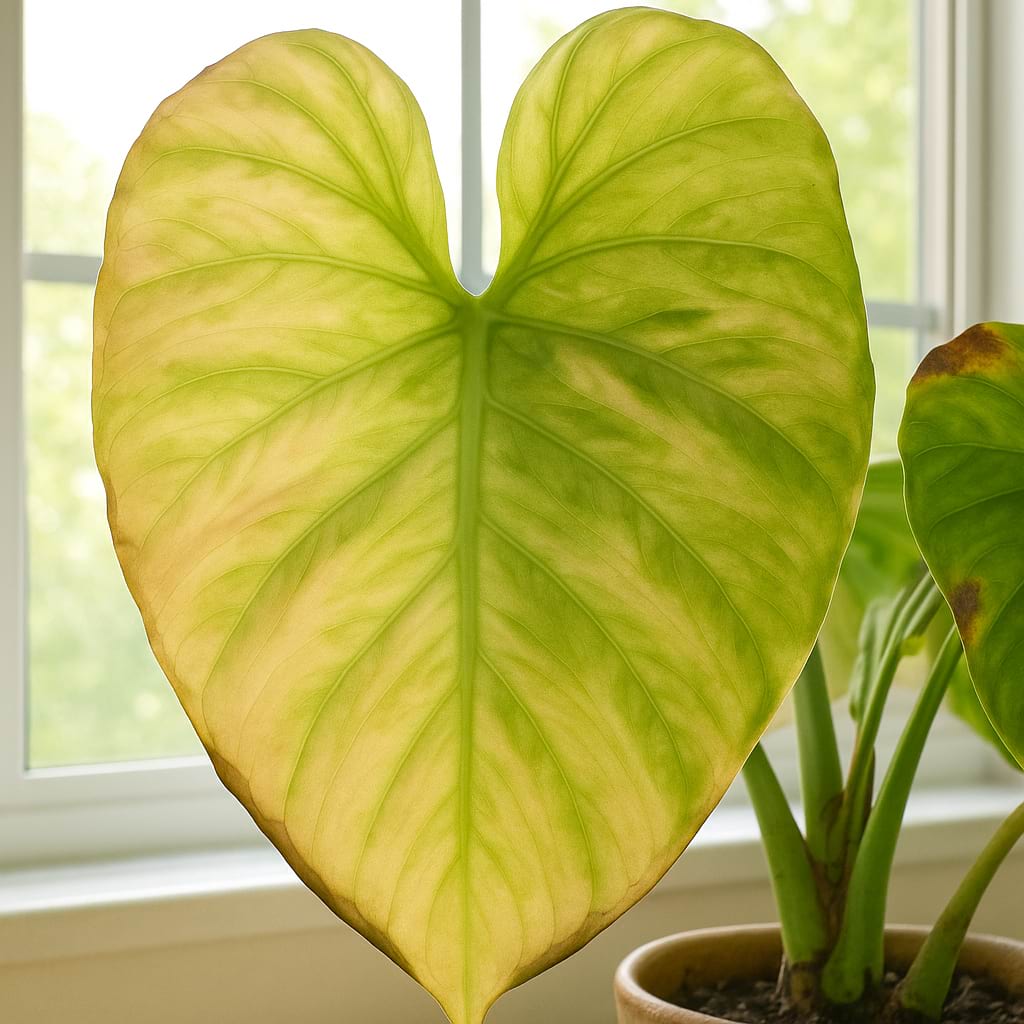
Pale, washed-out color with a loose, floppy shape means the light is too weak. Bleached patches on one side only mean the opposite, usually unshaded summer glass. And a plant that simply refuses to bloom is almost always either too young, too dim, or kept too warm through winter.

🖼️ Sky Plant Display and Styling Ideas
Mounted Displays
Cork bark on a wall is where a Sky Plant looks most like itself, and the mount solves airflow at the same time. Angle it so the rosette faces outward and slightly up, because the bloom spike leans out sideways rather than standing tall, and a flat-mounted plant hides its best feature against the board.
Groups and Vessels
Hanging glass globes, wire frames, shallow bowls, and driftwood arrangements all suit it. Three plants at staggered heights read better than a row at one level. Set a stiff silver Sky Plant next to a softer green Brachycaulos Air Plant and each one makes the other look more like itself. Outdoors in zone 8b and warmer, wire a clump into the fork of a tree branch in dappled shade and leave it there.
Where Not to Put It
Not in a sealed terrarium, not in a jar with damp moss at the bottom, and not resting in a dish where water collects underneath. Also skip the shelf directly above a radiator. Every one of these is a slow way to lose an otherwise indestructible plant.
🌟 Sky Plant Pro Care Tips
☀️ Give it more light than you think. This is one of the few Tillandsias that genuinely wants direct morning sun, and it blooms far better for it.
💧 Upside down, every time. Four hours from soak to fully dry is the target. Shake it hard, and add a fan if your room is still.
🌡️ Let it get cold in winter. A bright room in the low sixties from December through February sets up a much better spring bloom than a warm living room.
🍏 The apple trick works. A ripe apple sealed in a bag with the plant for three days will push a stubborn mature rosette into flower.
🐾 Safe around pets. Non-toxic to cats and dogs, though a cat will happily bat a loose plant off a shelf, so mount it if you have one.
🍼 Underfeed rather than overfeed. Quarter strength once a month in the soak water, then rinse. More than that burns the tips.
❓ Frequently Asked Questions
How often should I water a Sky Plant?
Soak it for 20 to 30 minutes once a week as a baseline, then adjust to your room. Warm, breezy, or sunny conditions may call for twice a week, while a cool winter room can stretch to every ten days. The leaves curl inward and look more silver when the plant is thirsty, which is a more reliable signal than any calendar.
Why is the base of my Sky Plant brown and mushy?
That is rot, caused by water sitting in the rosette after a soak, or by the plant being set in soil or damp moss. Rot at the core cannot be reversed. Check for firm pups at the base, twist off any healthy ones, and going forward always shake the plant out and dry it upside down within four hours.
Can a Sky Plant survive outside in winter?
In USDA zone 8b and warmer, yes. Established plants handle brief dips to roughly 20 to 25°F, which is exceptional for a Tillandsia. Mount it in dappled shade on a tree or fence, and make sure it goes into cold nights dry rather than freshly soaked.
How is Tillandsia aeranthos different from Tillandsia bergeri?
Sky Plant has stiffer, more silvery leaves, and it flowers with flat violet-blue petals emerging from a bright pink bract. T. bergeri has softer, paler, more flexible leaves and pale lavender-white flowers with wavy, twisted petals and no vivid bract. The two are mislabeled constantly in shops, but the bloom settles it every time.
Does a Sky Plant need soil?
No, and soil will kill it. It is an epiphyte that absorbs water and nutrients through its leaves, and the few roots it grows are anchors only. Mount it on cork or wood, or rest it in an open holder that lets air circulate underneath.
My Sky Plant has never bloomed. What am I doing wrong?
Usually one of three things: the plant is under three years old, the light is too weak, or it stays warm all winter. Move it to your brightest window, feed monthly through spring and summer, and let it run cool in winter. To force the issue, seal it in a bag with a ripe apple for three days and expect flowers within a couple of months.
What are the silvery fuzzy scales on the leaves?
Those are trichomes, not a pest or a disease. They are the specialized cells the plant uses to absorb water and nutrients from the air, and they give the leaves their gray-silver cast. Never scrub or wipe them off, and skip leaf-shine products entirely.
Will my Sky Plant die after flowering?
The rosette that flowered will slowly decline over the following year or two, but it produces two to four pups from its base first. Leave them attached and you end up with a clump that outlives the mother indefinitely, or separate them once each is a third of her size to make new plants.
Can I mist my Sky Plant instead of soaking it?
Misting alone is not enough. It wets the leaf tips while the base stays dry, so the plant slowly dehydrates even though it looks like it is being watered. Soak properly once a week and treat misting as a between-soaks top-up in a very dry room.
ℹ️ Sky Plant Info
Care and Maintenance
🪴 Soil Type and pH: No soil. Mounted on bark, wood, or cork, or displayed loose in an open holder.
💧 Humidity and Misting: Fine in average household air, as long as it dries out quickly after every soak.
✂️ Pruning: Snip dried leaf tips at an angle and cut the spent flower stalk at the base.
🧼 Cleaning: Rinse dust off during the weekly soak. Never wipe the leaves, because that rubs off the silver trichomes that absorb water.
🌱 Repotting: Not applicable. Re-mount or move to a larger holder when the clump outgrows its perch, roughly every 2-3 years.
🔄 Repotting Frequency: Not required
❄️ Seasonal Changes in Care: Weekly soaks and monthly feeding from spring through summer, then fewer soaks and a cooler, brighter winter that helps set flower spikes.
Growing Characteristics
💥 Growth Speed: Moderate
🔄 Life Cycle: Evergreen epiphytic perennial. Each rosette flowers once, then produces pups and slowly fades.
💥 Bloom Time: Late spring into summer, occasionally again in autumn
🌡️ Hardiness Zones: 8b-11
🗺️ Native Area: Southern Brazil, Uruguay, Paraguay, and northern Argentina, on trees and rocks in open, breezy positions
🚘 Hibernation: No true dormancy, but growth slows in winter and it wants less water and more light.
Propagation and Health
📍 Suitable Locations: East and west windowsills, bright bathrooms with a window, cork mounts, hanging holders, covered porches in mild climates
🪴 Propagation Methods: Twist off pups once they reach a third of the mother's size, or leave them on to build a clump.
🐛 Common Pests: Mealybugs, Scale Insects, Spider Mites
🦠 Possible Diseases: Basal rot, crown rot, fungal spotting from water left standing in the rosette
Plant Details
🌿 Plant Type: Epiphytic bromeliad
🍃 Foliage Type: Evergreen stiff silvery-green rosette
🎨 Color of Leaves: Gray-green to silver-green, blushing pinkish at the center before bloom
🌸 Flower Color: Deep violet-blue petals from a rose-pink bract
🌼 Blooming: Yes, reliably indoors once the rosette reaches full size
🍽️ Edibility: Not edible.
📏 Mature Size: 4-8 inches tall
Additional Info
🌻 General Benefits: Pet-safe, needs no soil, tolerates cold and direct sun better than almost any other air plant, and multiplies into clumps on its own
💊 Medical Properties: No documented medicinal uses.
🧿 Feng Shui: A rootless, airborne plant that suits high shelves and hanging spots where a potted plant would feel heavy.
⭐ Zodiac Sign Compatibility: Aquarius
🌈 Symbolism or Folklore: Freedom, adaptability, thriving without foundations
📝 Interesting Facts: The name aeranthos comes from the Greek for air flower, and in Brazil it is called cravo-do-mato, the carnation of the woods, for the shape of its violet blooms. It survives frosts that kill most of the genus, which is why it turns up growing on fence wires and power lines across parts of southern Brazil.
Buying and Usage
🛒 What to Look for When Buying: Look for stiff leaves that spring back when bent gently, a firm pale base, and ideally a pup or two already attached. Avoid plants with a dark, soft center or leaves that pull away with no resistance.
🪴 Other Uses: Cork and driftwood mounts, wreaths, wire wall art, hanging globes, and outdoor tree branches in frost-free climates.
Decoration and Styling
🖼️ Display Ideas: Cork bark mounts, hanging glass globes, wire frames, shallow bowls, driftwood arrangements, grouped clumps at mixed heights
🧵 Styling Tips: The bloom spike leans outward rather than standing straight up, so mount it at or slightly above eye level where you can see the bract in profile.
🪴 See also 🪴
Complete Guide to Capitata Peach Air Plant Care and Growth
Complete Guide to Baileyi Air Plant Care and Growth
Complete Guide to Harris's Air Plant Care and Growth
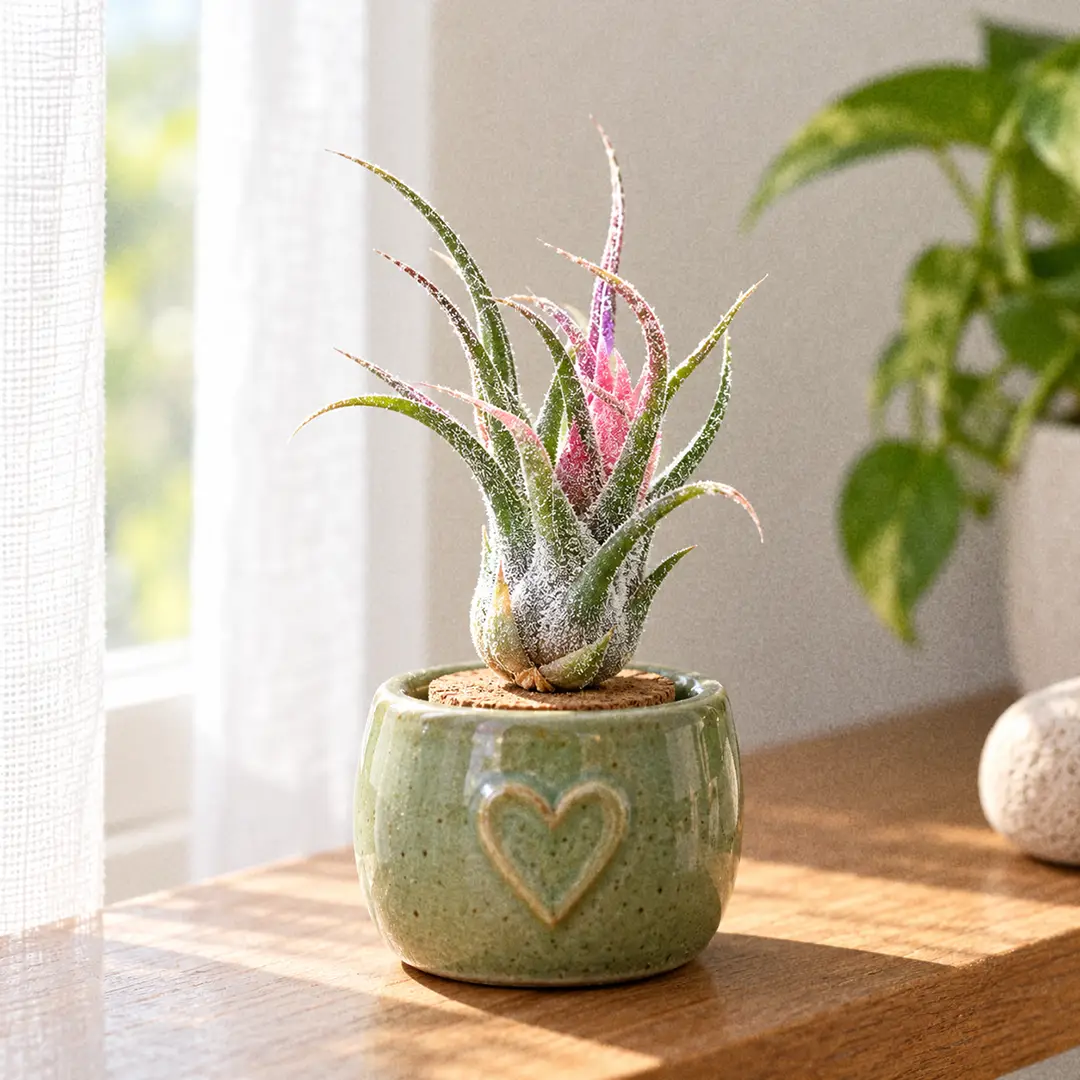
Complete Guide to Pruinosa Air Plant Care and Growth
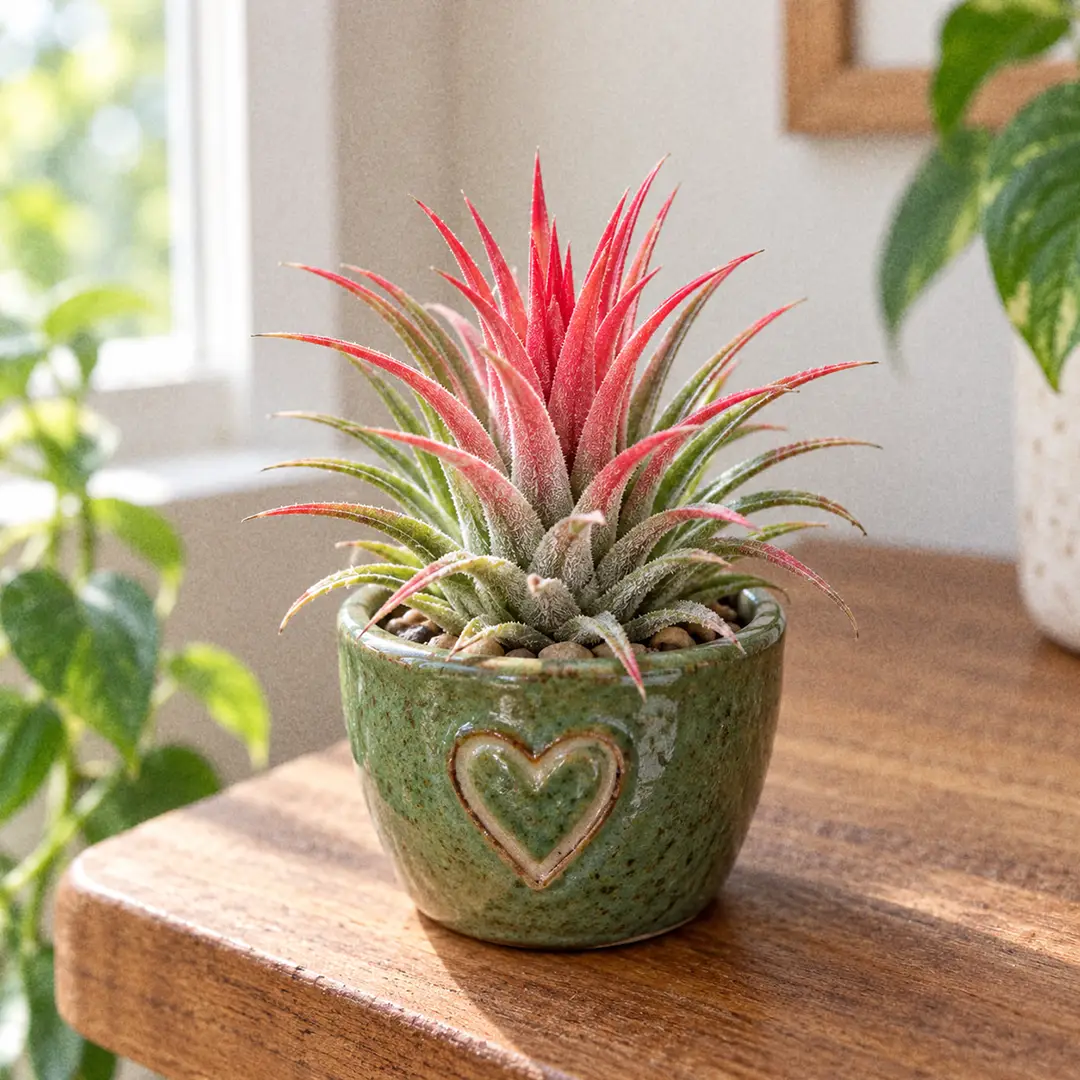
Complete Guide to Ionantha Air Plant Care and Growth
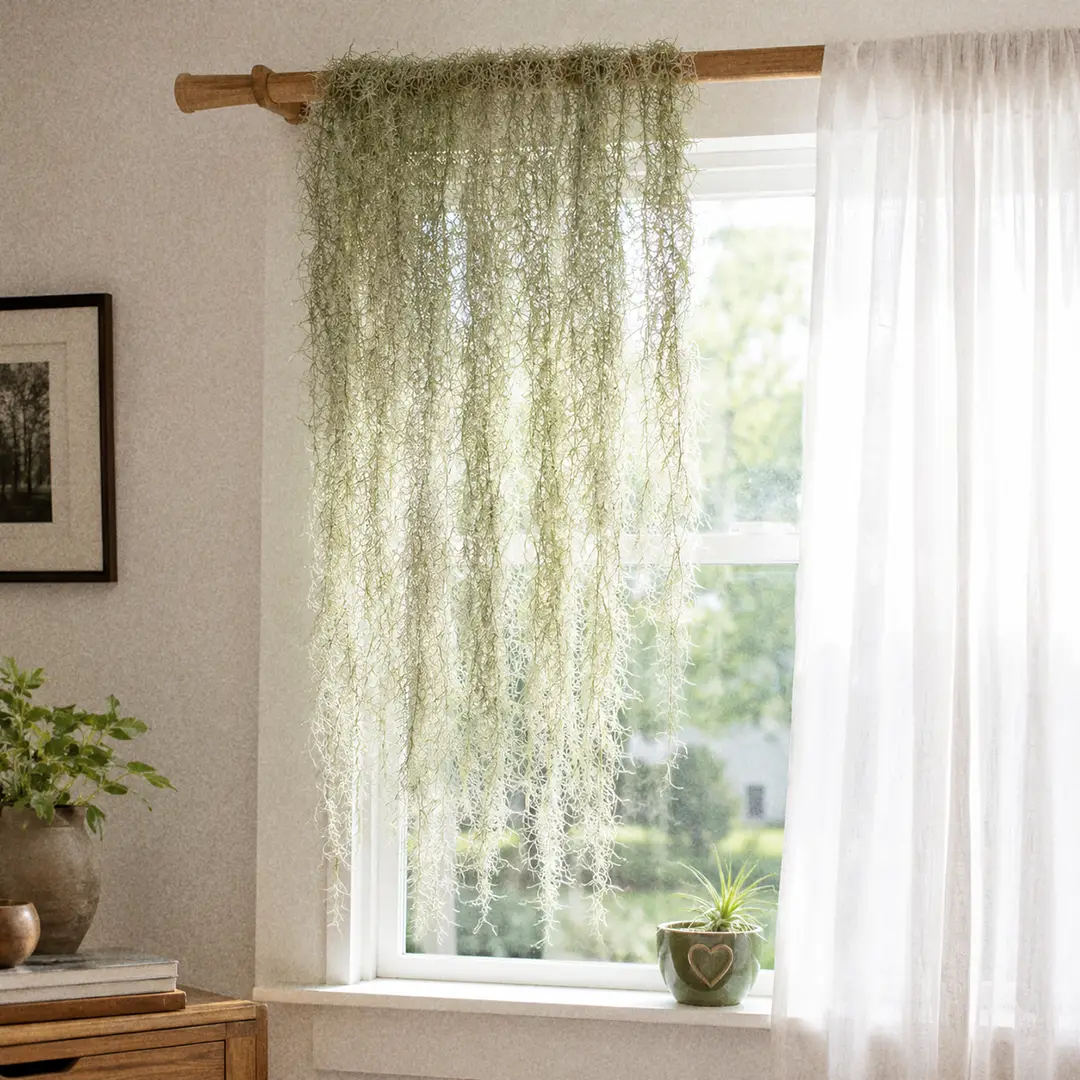
Complete Guide to Spanish Moss Care and Growth
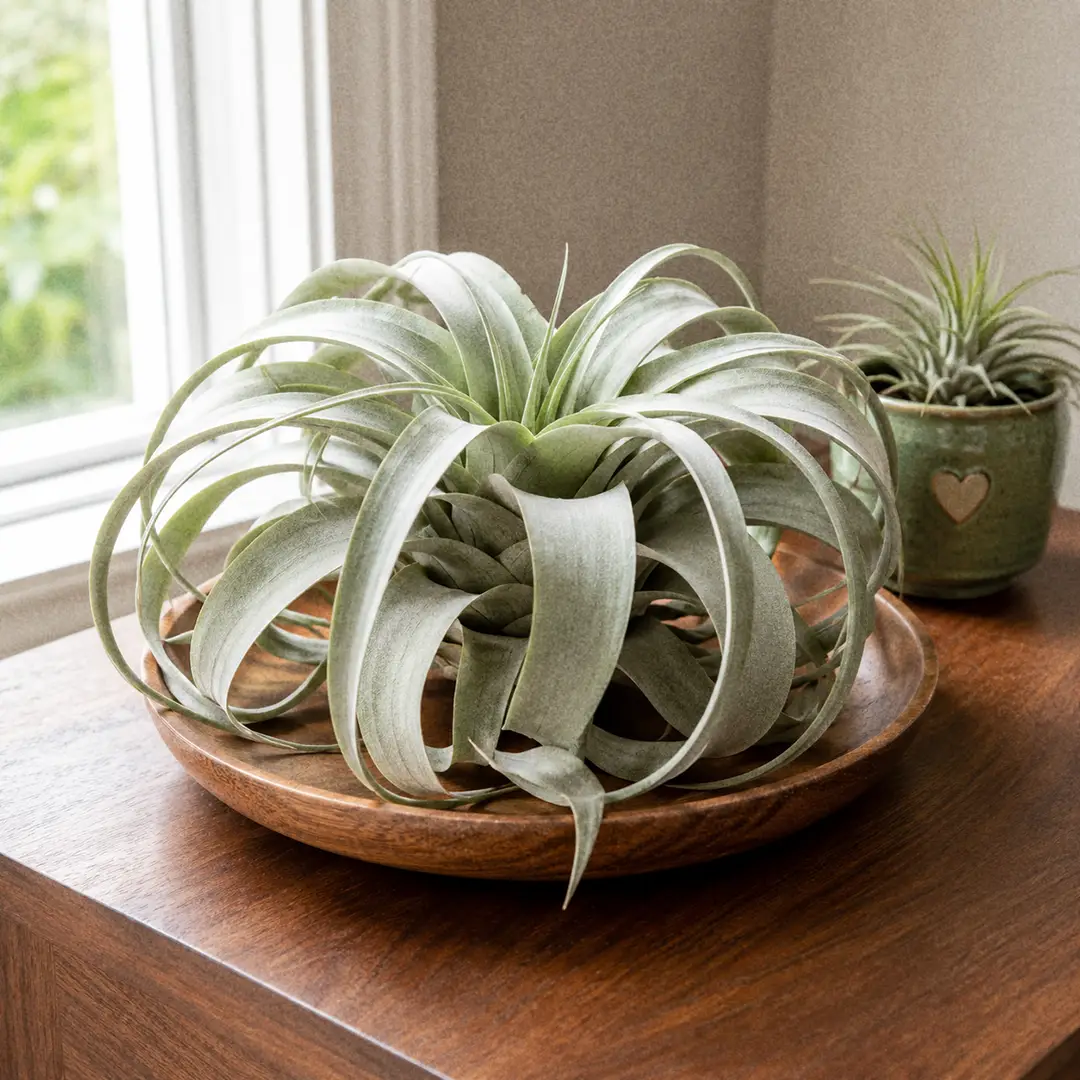
Complete Guide to Xerographica Air Plant Care and Growth
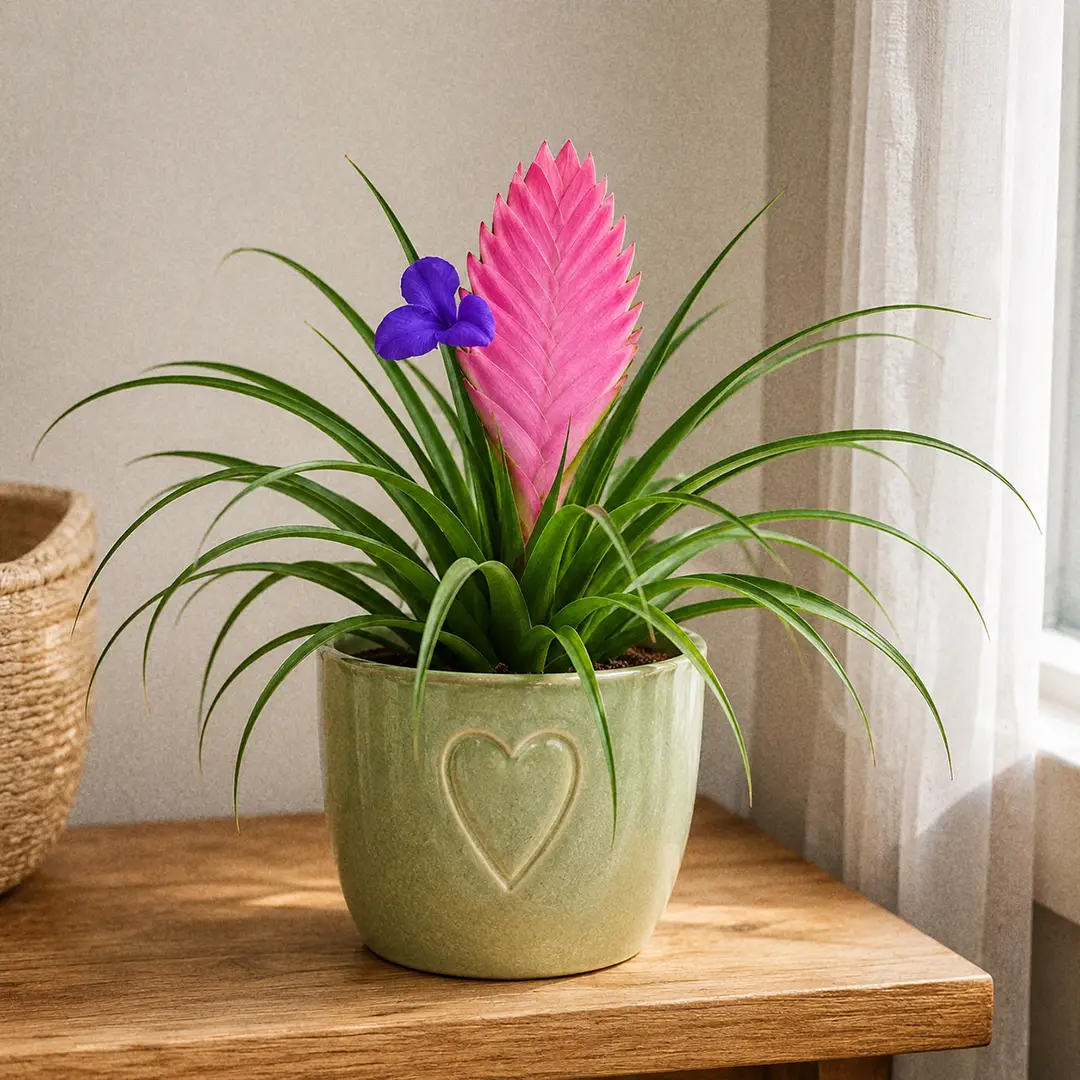
Complete Guide to Pink Quill Plant Care and Growth
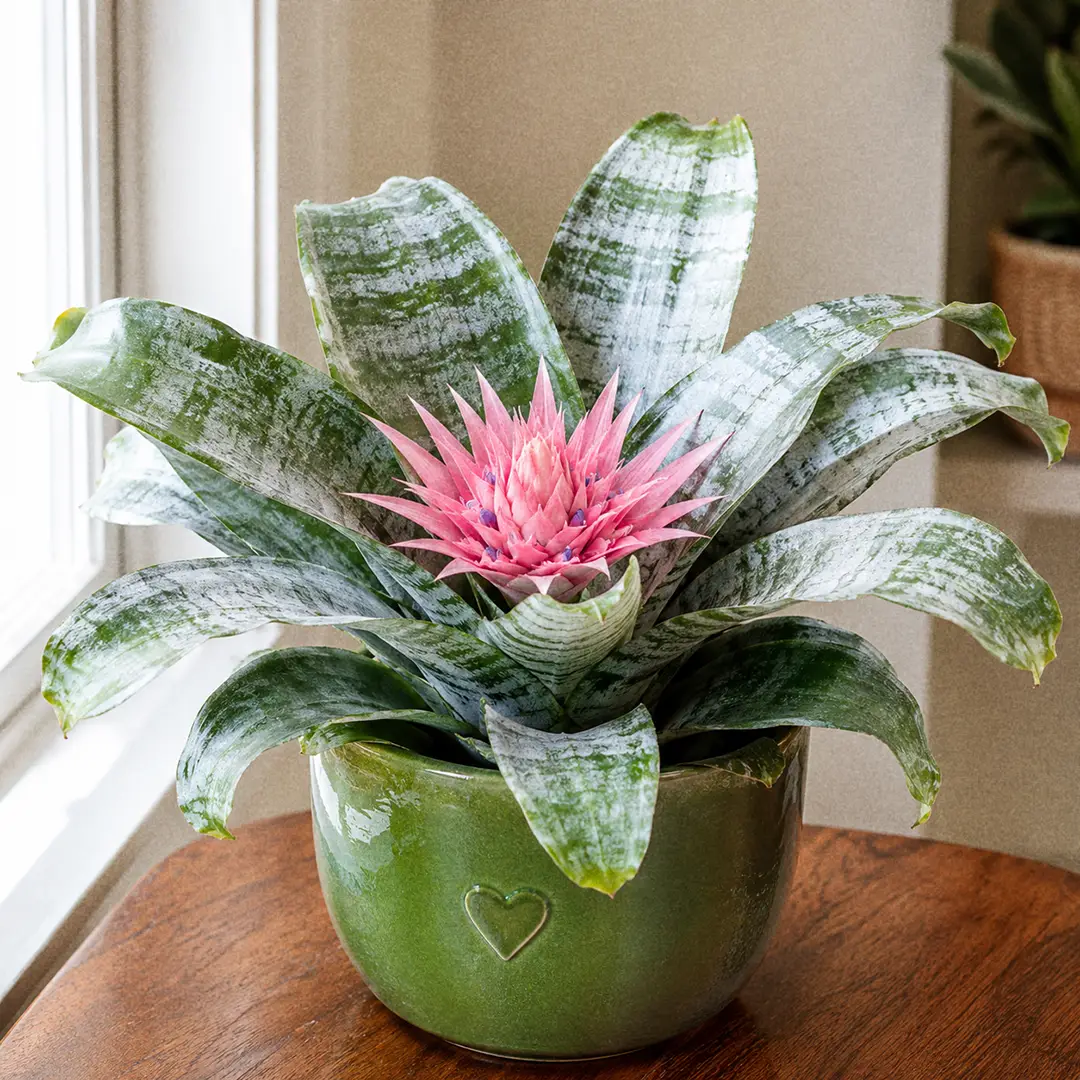
Complete Guide to Silver Vase Plant Care and Growth
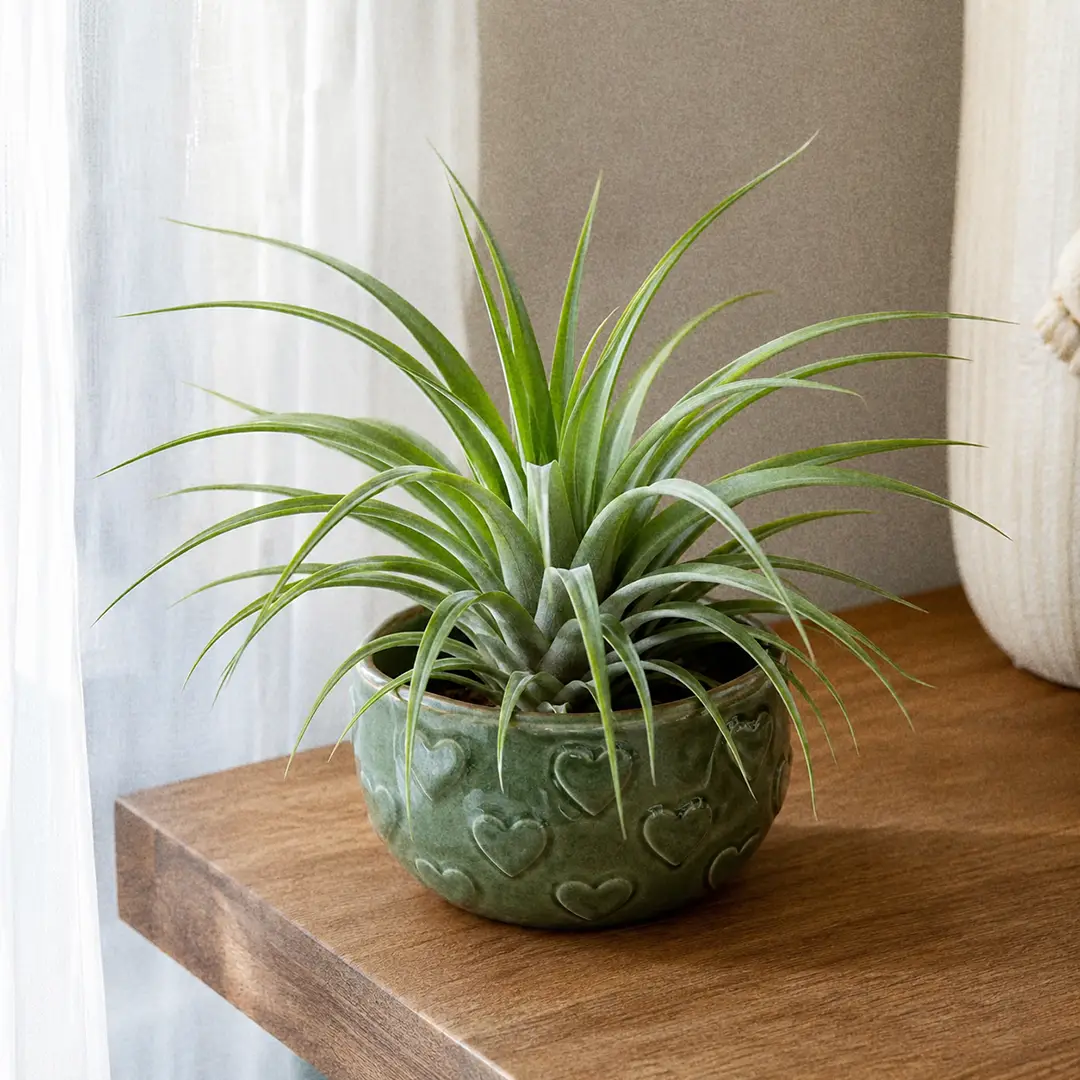
Complete Guide to Brachycaulos Air Plant Care and Growth

Houseplant101 Forum
Questions & Comments
Ask a question, share your plant experience, or help other plant owners.
Comments are temporarily unavailable.
Open the Houseplant101 ForumNo comments yet
Be the first to ask a question or share your experience about this page.
Log in or create an account
Comments use your Houseplant101 Forum account, but you can stay on this page.
Create a new account