
Kolbii Air Plant
Tillandsia kolbii (sold as T. scaposa)
Tillandsia Scaposa, Scaposa Air Plant, Ionantha Scaposa, Kolbii


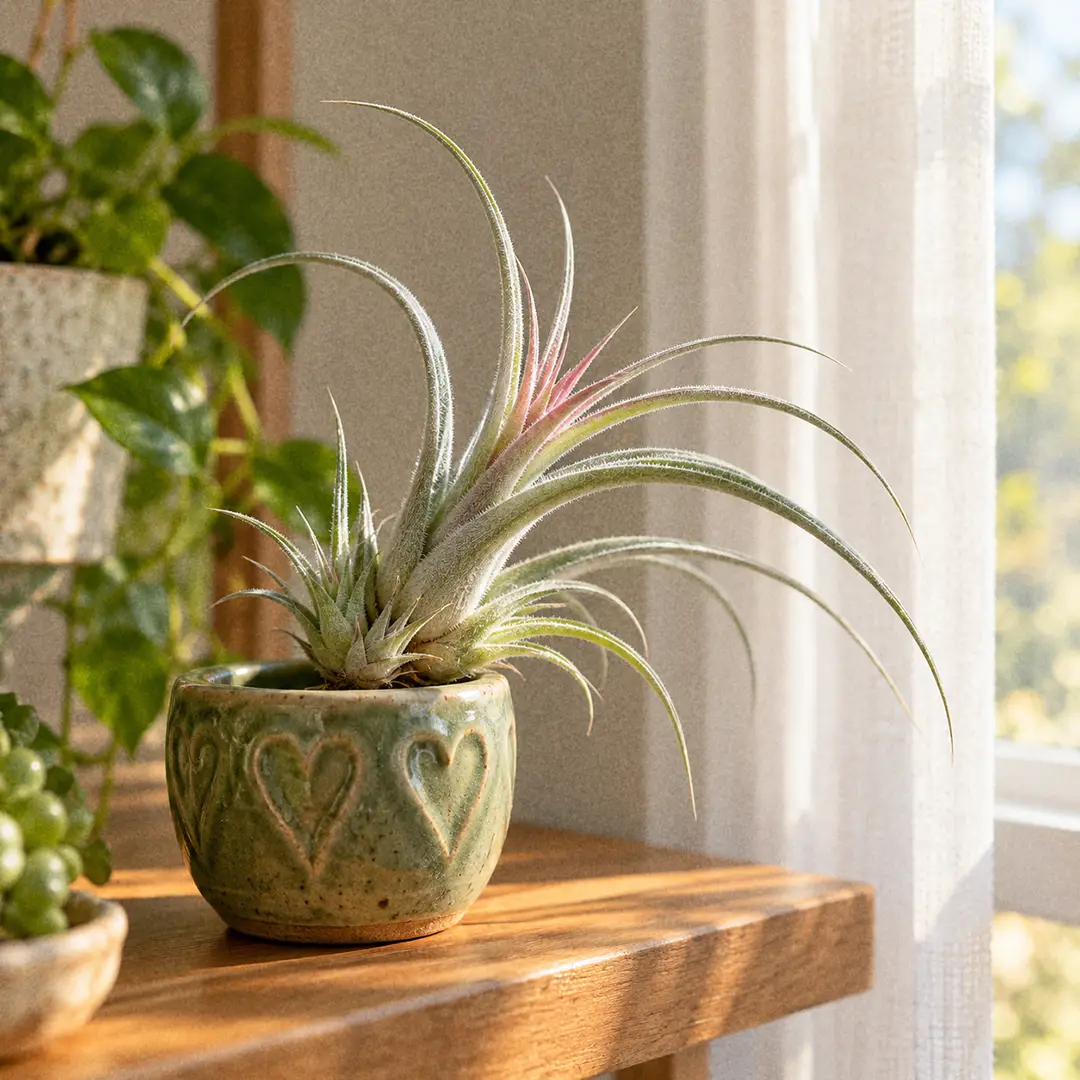
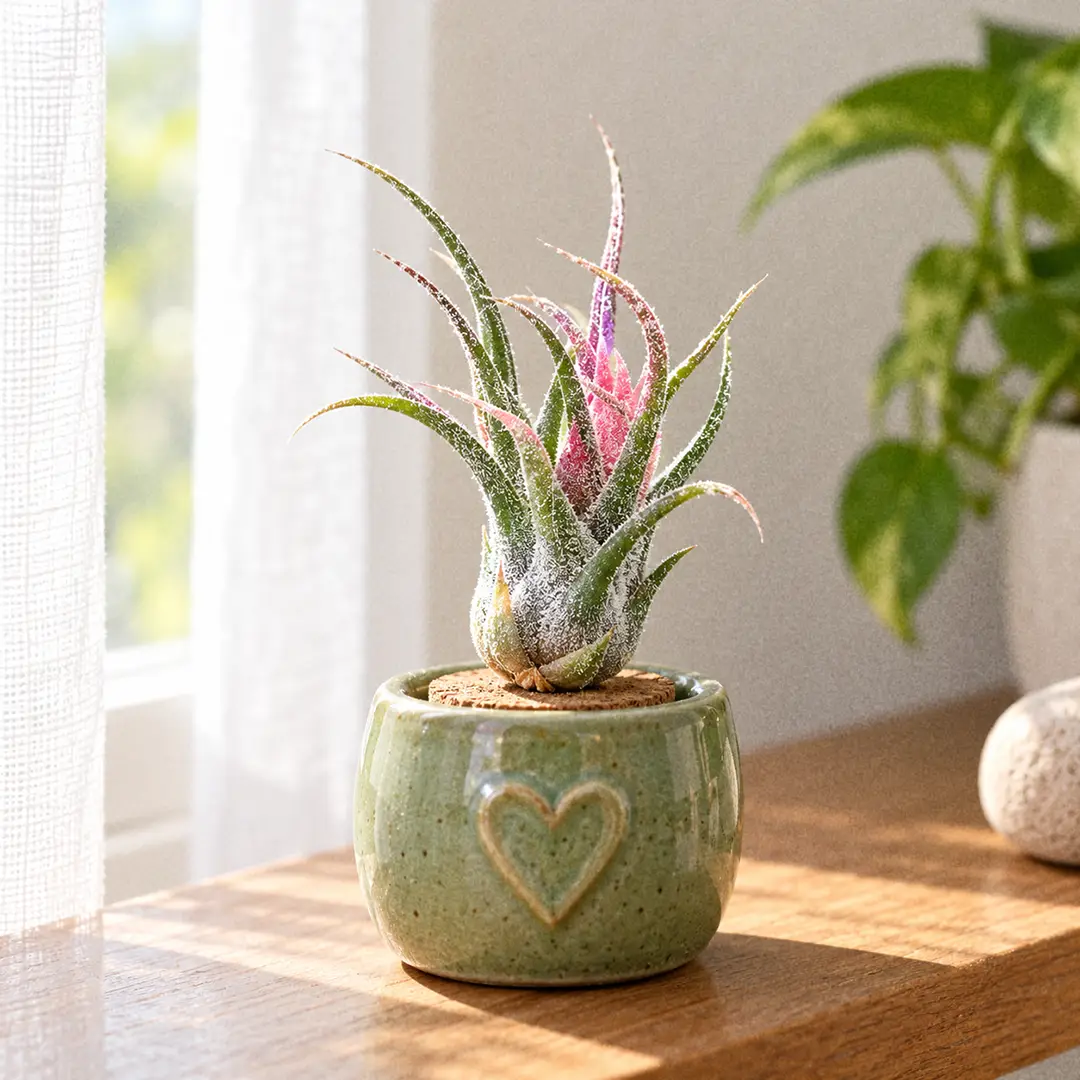
Kolbii Air Plant is a small silvery-green rosette with long, arching leaves that blush pink to red before purple flowers rise on a short stalk. Learn how to grow Tillandsia kolbii (sold as T. scaposa) indoors, get it to bloom, and turn one plant into a clump.
📝 Kolbii Air Plant Care Notes
🌿 Care Instructions
⚠️ Common Pests
📊 Growth Information
🪴 In This Guide 🪴

☀️ Kolbii Air Plant Light Requirements (Bright, Filtered)
The Sweet Spot
Kolbii does best in bright, filtered light, with a little gentle morning sun if you can give it. An east-facing window, with the plant about two to three feet from the glass, is close to ideal. A bright north window can work too, especially in summer.
In the wild it grows on oak and pine branches in cool, moist highland forest in Guatemala and southern Mexico, where the light comes through a canopy rather than straight down. Growers in Australia have long noted that it wants a bit more shade than a tough Ionantha. So think bright and dappled, not baking.
Too Little Light
A Kolbii in a dim spot does not die quickly. It just stalls. The leaves stay plain grey-green with no pink at the center, new growth gets softer and longer, and the plant never builds up enough energy to flower or make pups.
If your brightest window is still dull, a small grow light about a foot above the plant for ten to twelve hours a day does the job. Our indoor light guide explains how to judge a spot by eye.
Too Much Light
Hot afternoon sun through a south or west window is the main risk. It can bleach pale patches on the leaves and dry the tips brown, which is sunburn and does not grow back. Use a sheer curtain on those windows, or move the plant a few feet back.
A soft pink to red tint at the center is a different thing. That is the plant coloring up, and it means the light is good.

💧 Kolbii Air Plant Watering Guide (Soak, Shake, Dry)
Watering Frequency
Start with one soak a week and adjust from there. In a warm, dry room or a hot summer, two soaks a week may be needed. In a cool, humid room where the plant takes a long time to dry, every ten days can be plenty.
Kolbii is covered in dense grey scales called trichomes, which hold moisture well, so it forgives a late soak better than the thin green air plants do. It tells you when it is thirsty. The leaves roll inward along their length and the rosette looks tighter and greyer than usual. After a good soak they relax and open slightly again.
How to Water
Submerge the whole plant in a bowl of room-temperature water for 15 to 20 minutes. Rainwater or filtered water is best. Tap water is fine in most homes, but skip water from a salt-based softener, because the sodium builds up on the leaves.
Then comes the part that matters most. Kolbii has tightly packed leaf bases, and water caught between them is how this plant rots. Lift it out, turn it upside down, and give it a few firm shakes. Leave it base-up on a towel or a dish rack somewhere with moving air until it is completely dry, which should take no more than about four hours. Only then put it back in its holder.
Misting alone is not enough to keep it hydrated. A light mist between soaks is fine in a very dry room, but it is a bonus, not a replacement. Our watering guide covers the basics if you are juggling different plant types.
Signs of Trouble
Crispy brown tips and leaves that stay rolled even after a soak mean it is drying out too much between drinks. Add a soak each week and move it away from heat vents.
A dark base, a soft center, or inner leaves that slide out with a wet pull mean rot, almost always from water left sitting in the rosette. A rotted base cannot be saved, so look for firm pups and start fresh with a better drying routine.
🪴 Best Soil for Kolbii Air Plant (None at All)
Why It Skips Soil
Kolbii is an epiphyte, which means it grows attached to tree branches rather than in the ground. It takes in water and nutrients through its leaves. Its small wiry roots are only for holding on. Put it in potting mix and the base stays wet, then rots, usually within weeks.
So there is no soil recipe to get right here, and no repotting chore in spring. This is one of the easiest parts of growing it.
What to Rest It On
Any surface that lets air reach the base works: a piece of cork bark, driftwood, a small wooden stand, a shell, or an empty shallow dish. You can glue it on with a dab of waterproof, plant-safe adhesive, or tie it with fishing line until its roots grip on their own. Avoid copper wire, which is toxic to bromeliads.
If you would rather keep it loose, that is fine too. A loose plant is also easier to pick up and soak each week.
Containers to Avoid
Skip closed terrariums, sealed glass globes, and anything packed with damp moss. They look nice, but they keep the plant wet for far too long after a soak. An open-sided globe works, as long as the plant goes back in only after it has dried.
🍼 Fertilizing Kolbii Air Plant (Light and Monthly)
When and How Often
Feed once a month from spring to early autumn, and stop in winter. Kolbii grows slowly and needs very little. A regular, light feed helps it reach blooming size and push out a good crop of pups afterwards.
What to Use
Pick a bromeliad or air plant fertilizer, or a balanced houseplant fertilizer mixed at a quarter of the label strength. Choose a urea-free formula if you can. Air plants have no soil bacteria to break urea down, so nitrogen in other forms is easier for them to use.
Add it straight to the soak water once a month and skip a separate feeding step. Our fertilizing guide and the fertilizer roundup have more detail on products.
Over-Fertilizing Signs
Too much fertilizer shows up as brown, burnt tips and sometimes a faint white crust on the leaves. If you see either, give two plain-water soaks in a row to rinse it off and go lighter from then on. An unfed Kolbii will still grow. An overfed one often struggles.
🌡️ Kolbii Air Plant Temperature Range
Ideal Range
Kolbii is comfortable in normal home temperatures, roughly 55°F to 85°F (13-29°C). It comes from highland forest, so it handles cool nights well and prefers not to sit in sustained heat. Most homes suit it year-round without any changes.
Cold Limits
It is not frost-hardy and is generally rated for zones 9 to 11. A brief dip into the 40s will not kill it, but keep it above freezing at all times. If you summer it outdoors, bring it in before the first cold nights of autumn.
Drafts and Heat Sources
Moving air is helpful for this plant, since it speeds drying after a soak. Dry heat is what causes trouble. A spot right above a radiator or in the stream of a forced-air vent dries it too fast between soaks, and the tips go crispy. Move it a few feet away through winter.
💦 Kolbii Air Plant Humidity Requirements
Ideal Humidity
Anything around 40 to 60% humidity keeps Kolbii happy, and it can manage in drier rooms if you stay on top of soaking. Its heavy coat of trichomes helps it hold on to moisture between drinks. Given its cloud-forest origins, it will look its best in a slightly damper room.
Easy Humidity Boosters
A bright bathroom with a window is a great spot, since shower steam adds a little moisture each day. Grouping several air plants together helps a bit too. In very dry winter air, a small humidifier nearby is more useful than daily misting. Our humidity guide has more ideas.
🌸 Kolbii Air Plant Flowers (Pink Blush, Purple Blooms)
The Pre-Bloom Blush
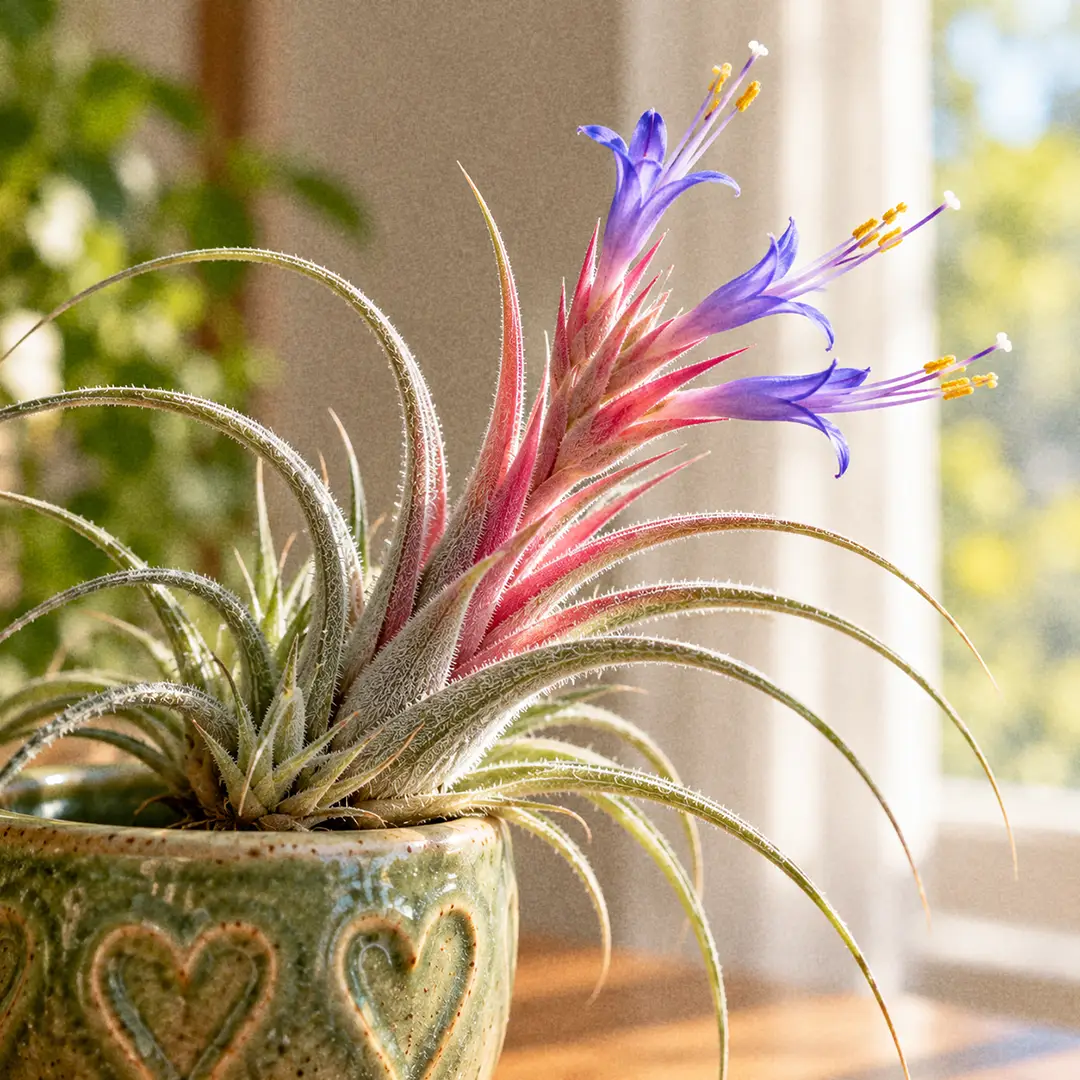
The first sign that a Kolbii is getting ready to flower is color. The inner leaves turn pink, then often a deeper red, while the outer leaves stay grey-green. The result is a rosette that looks like it is glowing from the center out. The blush is usually softer and more centered than the full-plant scarlet of an Ionantha, but it lasts for weeks.
What the Flowers Look Like
Then a short stalk pushes up from the middle. This raised stalk is the feature the old name scaposa refers to, and it is one of the easiest ways to tell this plant apart from Ionantha, whose flowers sit down inside the leaves. The stalk carries pink bracts and several blue-violet tubular flowers, each about an inch and a half long, with stamens that stick out well past the petals. The flowers open in sequence and each one lasts only a few days.
Sellers often list it as a winter bloomer, roughly late autumn through early spring, though an indoor plant can flower at any time once it is mature.
How to Get It to Bloom
Light is the main factor. A mature rosette in bright, filtered light with weekly soaks and a light monthly feed will usually flower once it reaches full size. A young pup may need a year or two to get there. Cooler nights in autumn and winter seem to help, so do not worry if your windowsill drops into the fifties at night.
If It Will Not Bloom
Failure to bloom is almost always about light. Move the plant closer to a bright window for a full season before changing anything else. If it is still small, it simply needs more time. Heavy feeding will not speed it up and tends to cause soft, weak growth instead.
🏷️ Kolbii Air Plant Types and Varieties
Kolbii or Scaposa: The Naming Mix-Up
This plant has an odd naming history, so a quick explanation helps. It was first described in 1941 as a variety of Tillandsia ionantha, called T. ionantha var. scaposa, from plants collected near Antigua in Guatemala. Later it was raised to its own species as T. scaposa.
Separately, a plant named T. kolbii was described in 1981. Major botanical databases, including Kew's Plants of the World Online, now treat T. scaposa as a synonym of T. kolbii, which is why the name Kolbii is so common on labels. Some bromeliad specialists disagree. They keep the two apart and suggest that true T. kolbii is rare in cultivation, so the plant almost everyone grows is the Guatemalan scaposa type.
For a home grower, none of this changes the care. Plants sold as Kolbii, Scaposa, and Ionantha Scaposa are generally the same plant, so buy whichever label you find.
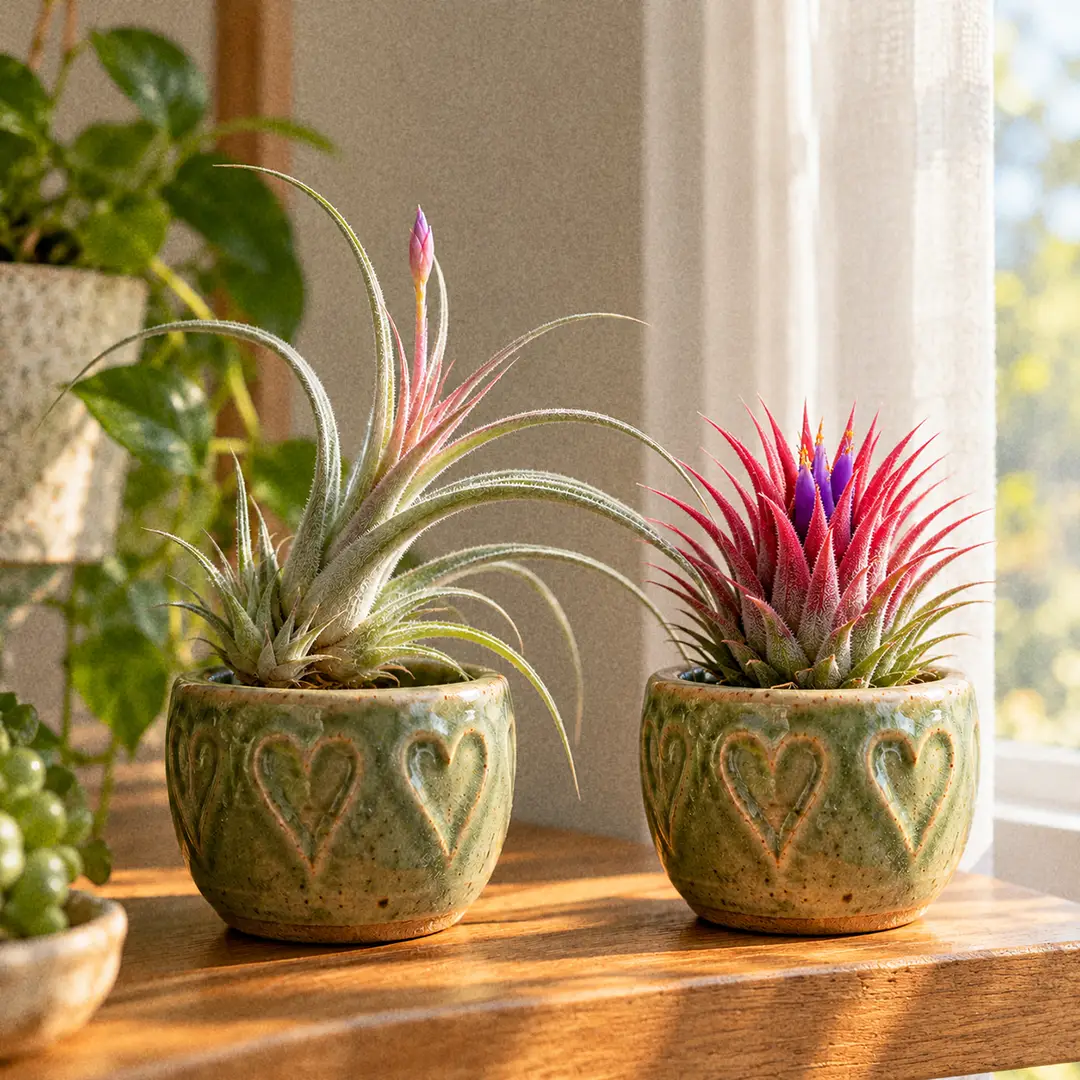
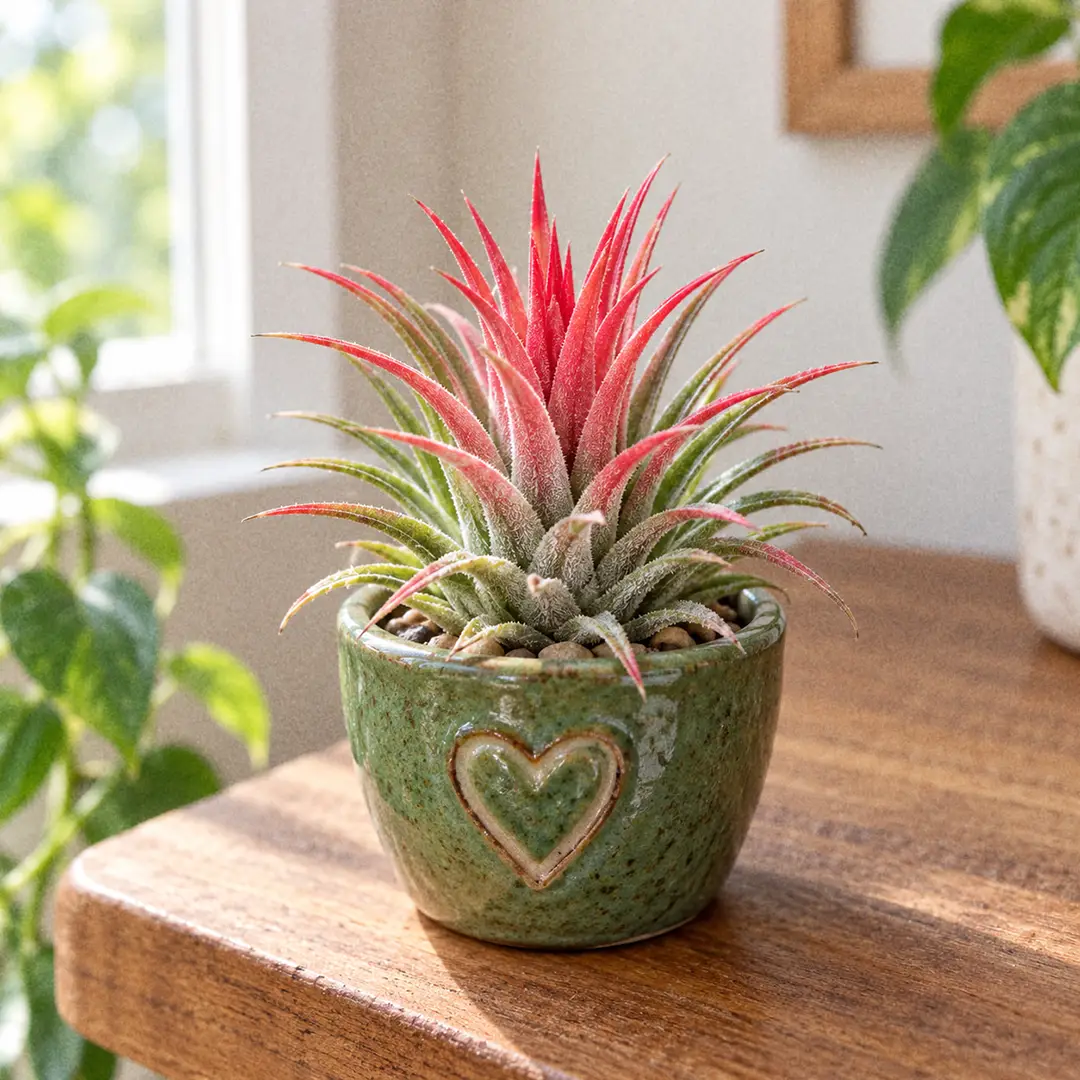
These two are easy to mix up, and shops sometimes do. Compared with an Ionantha Air Plant, Kolbii usually has fewer leaves, and they are longer, thinner, and more flexible. They curve outward, often leaning to one side, instead of standing in a stiff, neat cone. The blush tends to stay centered rather than covering the whole rosette.
The clearest difference shows up at bloom time. Kolbii lifts its flowers on a short visible stalk, while Ionantha's flowers sit right down in the leaves. If you have an "Ionantha" whose flowers rise above the rosette, it is probably a Kolbii.
Variation in Shop Plants
Kolbii varies a fair amount from plant to plant. Some are silvery and fine-leaved, while others are greener with thicker leaves, and the number of leaves per rosette differs too. Growers are not sure whether that is natural variation or the result of some plants being hybrids. Unless you are a collector, just pick a healthy plant whose shape you like.
Kolbii vs Other Small Air Plants
If you like the arching, slightly messy shape but want peach tones and a bigger rosette, try the Capitata Peach Air Plant. For a green plant that clumps even faster and raises pink flower spikes, look at the Tenuifolia Air Plant. And if you just want the most cold-tolerant plant in this size range, the Sky Plant is the tougher choice.
🪴 Mounting a Kolbii Air Plant
When to Remount
Kolbii never needs repotting because it never goes in a pot. What does happen, after a few years of pups, is that the clump outgrows its mount or dish. At that point, move it to a larger piece of cork or a wider holder. It takes about five minutes.
Choosing a Mount
Cork bark is the easiest choice, since it is light and does not rot. Driftwood, grapevine, and untreated wood work just as well. The rule is simple: air needs to reach the base from below. Avoid anything that holds water against it, like a solid cup or a nest of wet moss.
How to Attach It
Let the plant dry fully first. Then dab a little waterproof adhesive on the very bottom of the base, or tie it on with fishing line tucked between the lower leaves. Keep glue away from the center of the plant. Within a few months, its roots will grip the mount and the tie can come off.
✂️ Pruning a Kolbii Air Plant
Trimming Leaf Tips
Pruning here is mostly cleanup. Snip any brown, dry leaf tips with clean scissors, cutting at an angle that follows the natural taper of the leaf so the trim does not stand out. Avoid cutting into green tissue.
Cutting the Spent Flower Stalk
When the last flower fades and the stalk dries, cut it close to the center of the rosette. Leaving it does no harm, but a dry stalk can catch water during a soak and looks untidy.
Clearing Old Leaves
After blooming, the mother rosette slowly dries out from the outside in over several months while the pups grow. That is normal. Gently pull away outer leaves once they are fully brown and papery, and twist out the old rosette when it has finished.
🌱 How to Propagate Kolbii Air Plant
Pups Are the Best Method
Kolbii propagates mainly through pups, the small rosettes that grow from the base of the mother plant. It is a generous pupper. A rosette usually produces several pups after it flowers, and well-grown plants form clumps without any help from you. Growing from seed is possible, but it takes years and is best left to specialists.
Step-by-Step Pup Removal
- Wait until a pup is at least a third of the mother's size. Smaller pups often struggle on their own.
- Hold the mother plant in one hand and grip the pup low, right where it joins the base.
- Twist gently and pull sideways. A ready pup comes away cleanly with a small snap.
- If it resists, stop and give it a few more weeks. Tearing the base can cause rot.
- Let the new pup dry for a day, then start it on the same weekly soak.
Clump or Separate?
Leaving pups attached creates a clump, and a Kolbii clump looks great. Each rosette blooms on its own schedule, so a mature clump can give you pink centers and purple flowers on and off for a good part of the year.
The one catch is drying. A clump holds more water in its tight center than a single rosette, so shake it harder after soaking and give it extra time upside down. Separate pups only when you want more plants to share or mount elsewhere.
🐛 Kolbii Air Plant Pests and Treatment
Mealybugs and Scale
Air plants get fewer pests than potted plants, since there is no damp soil for anything to breed in. Most problems arrive on a new plant from the shop.
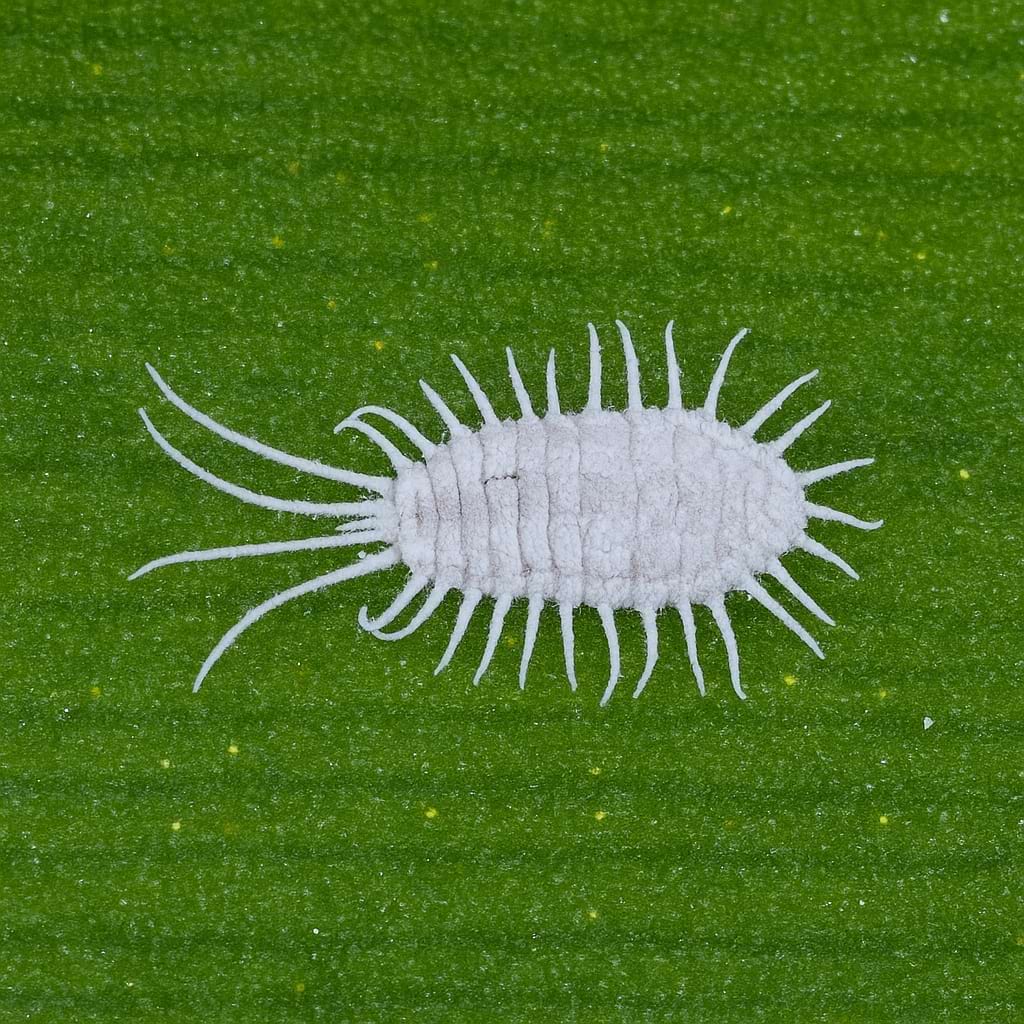
Mealybugs look like tiny white cottony specks wedged between the leaf bases. Dab each one with a cotton swab dipped in rubbing alcohol, then soak the plant as usual and check again a week later.
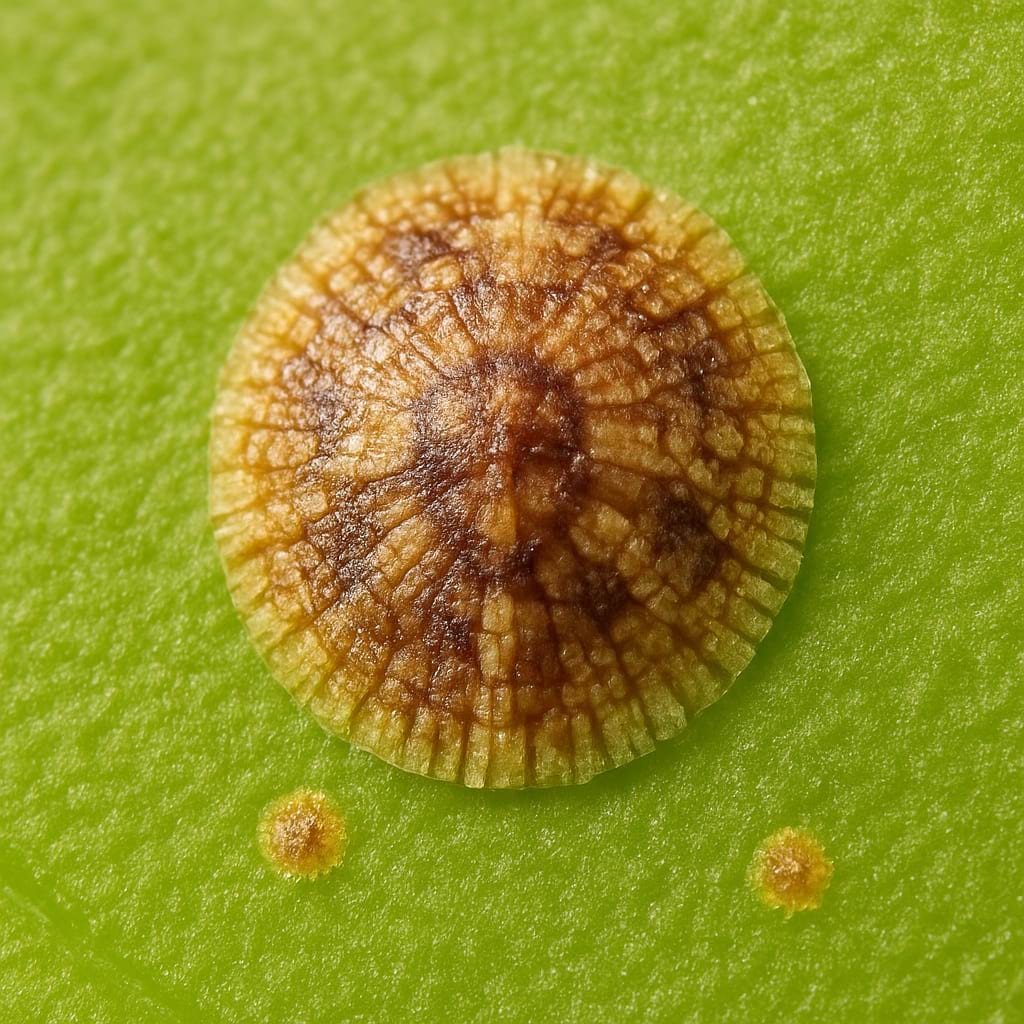
Scale insects look like small tan or brown bumps stuck to the leaves. Scrape them off gently with a fingernail or soft toothbrush, then wipe the spot with alcohol.
Spider Mites
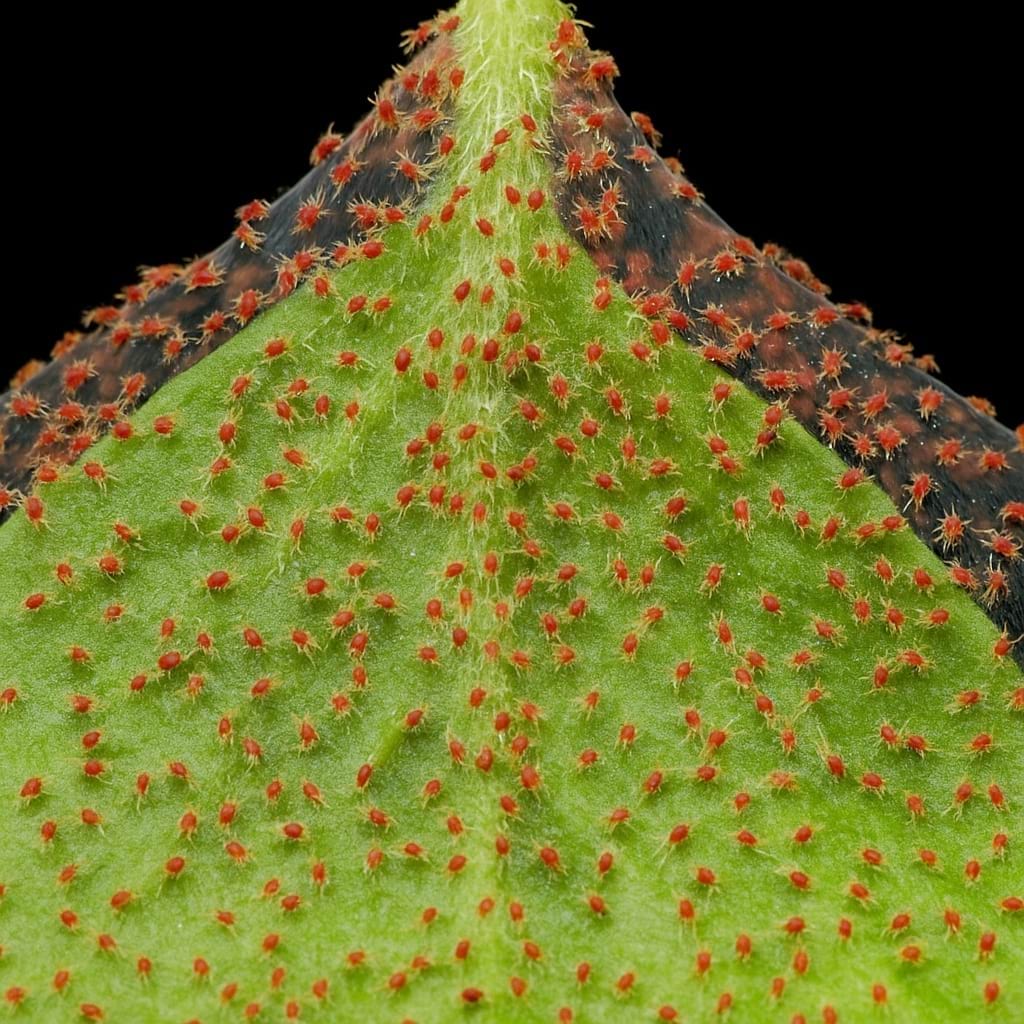
Spider mites show up as fine webbing and a dusty, speckled look on the leaves, usually in hot, dry, still air. Weekly soaks and better airflow usually clear them up on their own. If they come back, rinse the plant under the tap before each soak for a few weeks.
Keeping Pests Away
- Quarantine new air plants for two weeks before adding them to a group.
- Check between the leaf bases when you soak. That is where pests hide on a tight rosette.
- Keep plants spaced so air can move between them.
🩺 Common Kolbii Air Plant Problems
Rot at the Base
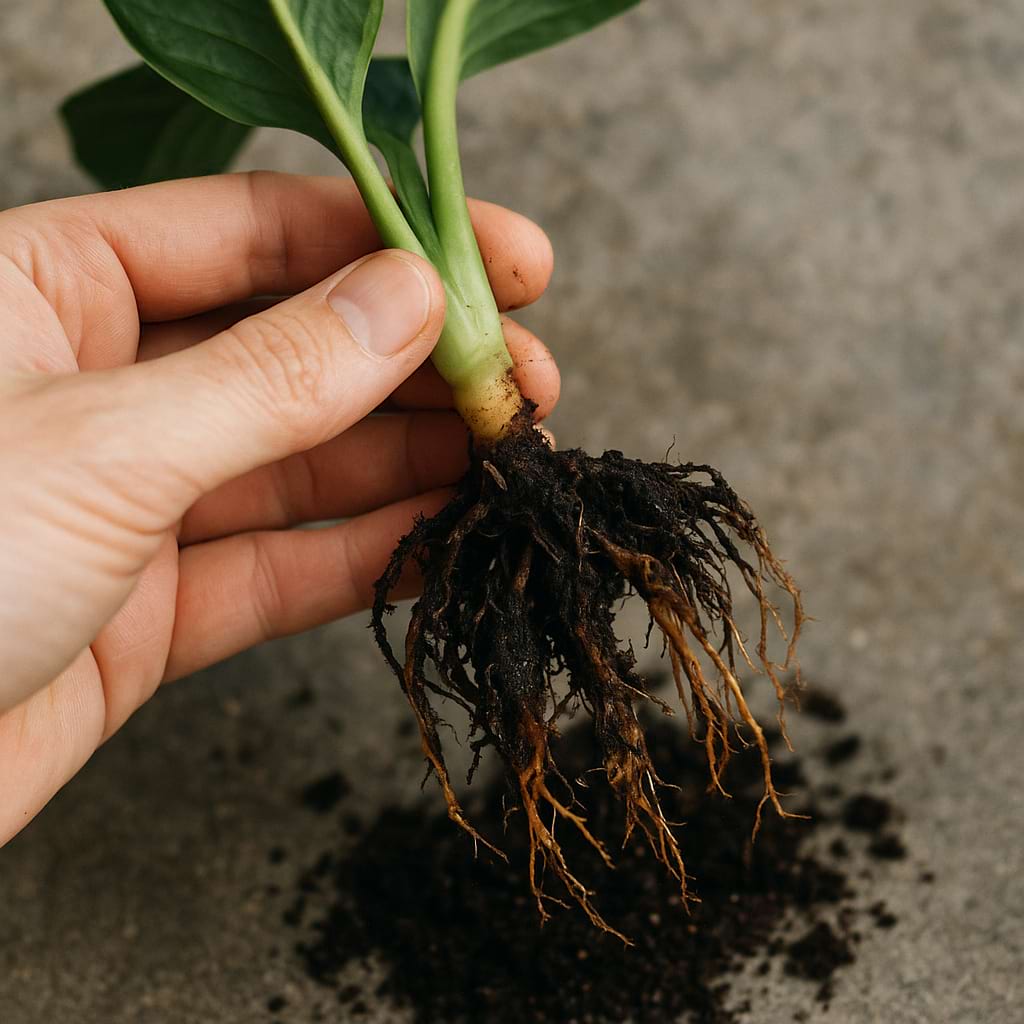
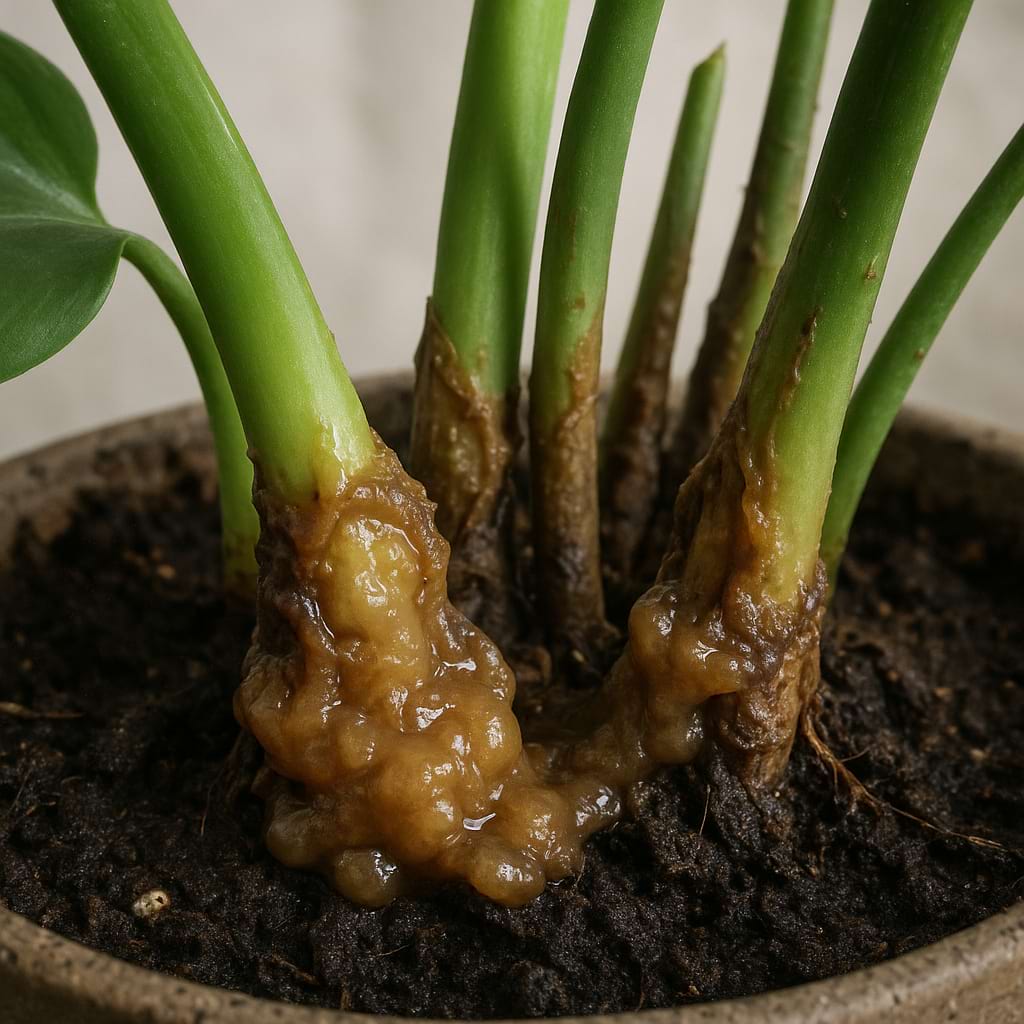
This is the serious one. The center darkens, the plant feels soft, and the inner leaves pull out easily with a wet tug. It is crown rot, caused by water sitting between the tight leaf bases after soaking. It cannot be reversed, so save any firm pups and change your drying habits: shake harder, dry upside down, and keep it out of closed containers.
Brown Tips and Curling Leaves
Brown, crispy tips usually mean the plant is drying out too much, either from too few soaks or from nearby heat. Leaves that curl inward along their length are a thirst signal. A soak usually relaxes them within hours. If they stay curled the next day, soak longer next time and add an extra soak each week.
Pale Growth and No Color
A rosette that stays plain and pale, with no pink at the center and soft, stretched new leaves, is not getting enough light. Pale, faded leaves on an air plant are almost always fixed by moving it closer to a bright window. Fertilizer will not help much with this.
A Mother Rosette That Is Dying
A plant that is slowly browning from the outside in, after it has flowered, is not sick. That is how the life cycle works. Look for pups at the base. As long as they are firm and green, the plant is doing exactly what it should.
🖼️ Kolbii Air Plant Display and Styling Ideas
Solo Setups
Because Kolbii's leaves curve and lean, it looks best seen from the side, not from above. Set it on a small piece of cork or driftwood at eye level, on a shelf near a window, and the arching shape shows clearly. A plain ceramic dish or a pale shell works too, and makes the pink center stand out once it starts to blush.
Grouped Arrangements
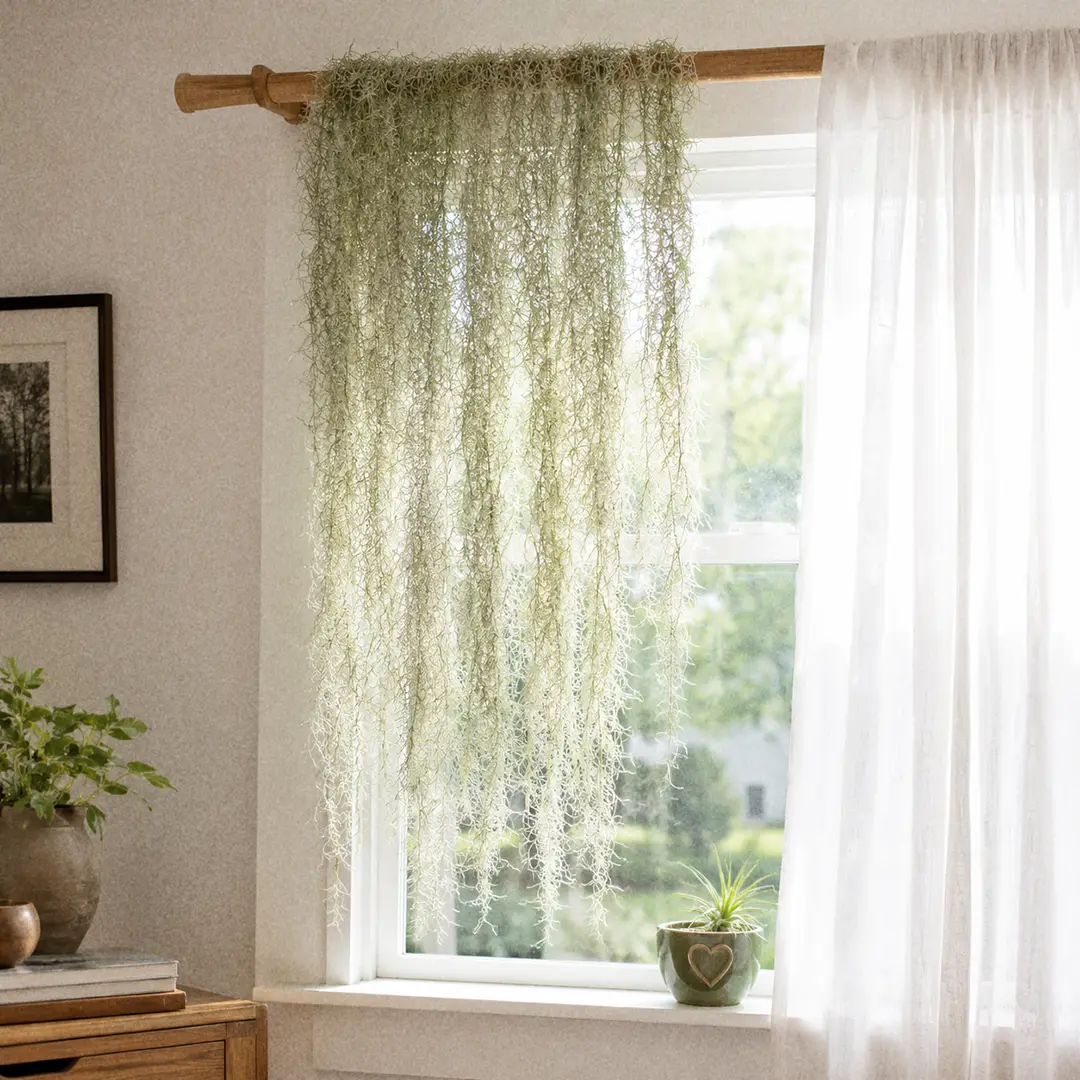
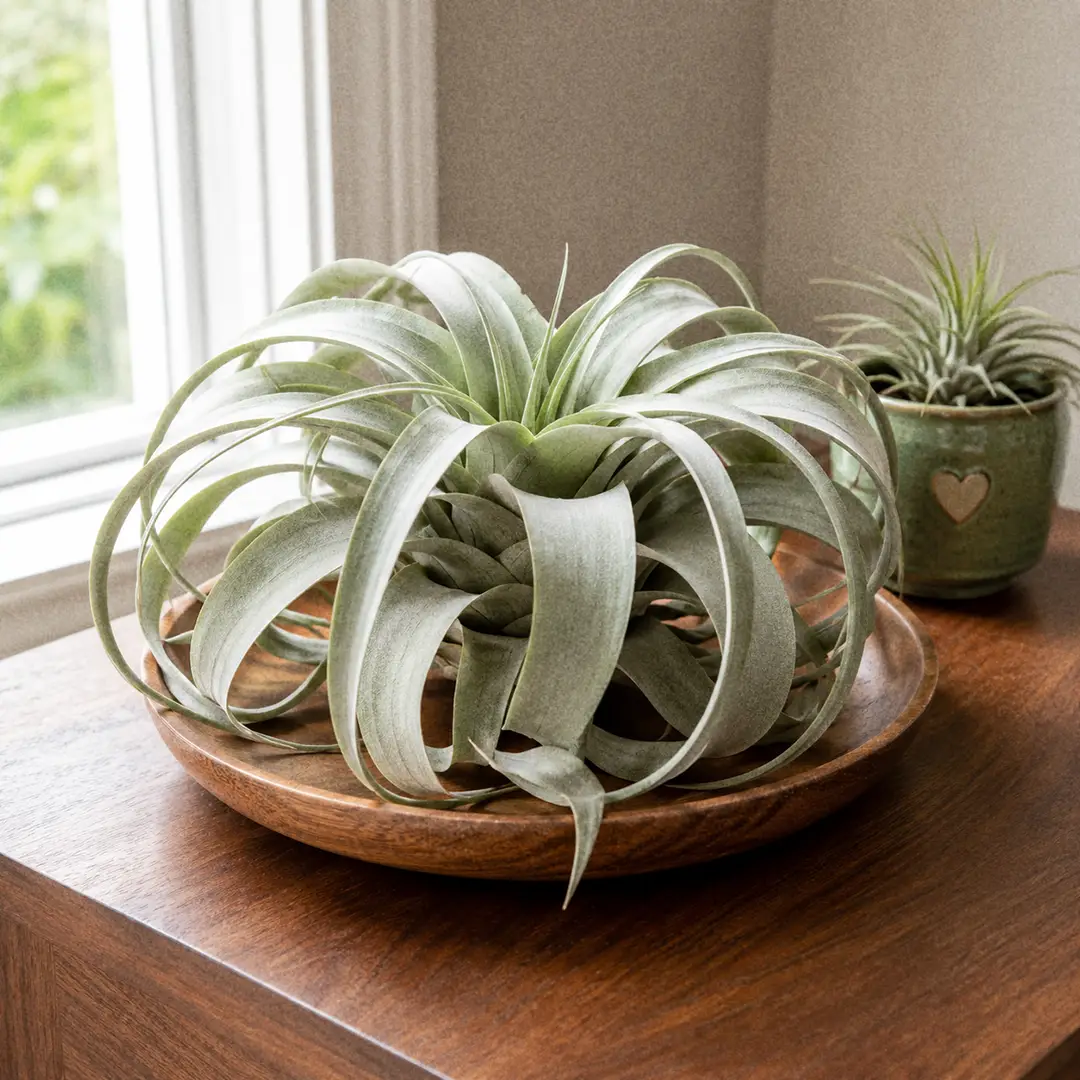
Kolbii looks great next to stiffer, more upright air plants. Its loose shape contrasts nicely with neat Ionantha cones or the broad silver leaves of a Xerographica. A few strands of Spanish Moss hanging nearby add a soft background. A clump of Kolbii on one end of a driftwood branch and a tall, grassy Juncea Air Plant on the other makes a balanced shelf arrangement.
Where Not to Put It
Avoid sealed glass globes, closed terrariums, and deep cups that hold water. Also skip dark bookshelves away from windows and spots right above radiators. The first group causes rot, the second causes slow starvation, and the third causes crispy tips.
🌟 Kolbii Air Plant Pro Care Tips
Daily Habits That Help
- Shake it, then dry it upside down. The tight leaf bases trap water. This one habit prevents most losses.
- Use leaf curl as your watering cue. Rolled-in, greyer leaves mean it is time to soak.
- Do not wipe the leaves. The grey fuzz is the trichomes it drinks through.
Setup Tips
- Give it filtered light, not harsh afternoon sun. It is a highland forest plant, not a desert one.
- Skip copper. Copper wire and hooks are toxic to bromeliads. Use fishing line or plastic-coated wire.
- Use rainwater or filtered water if your tap water goes through a salt-based softener.
Long-Term Tips
- Let it form a clump. Attached pups bloom at different times, which spreads the color out over months.
- Quarantine new plants for two weeks before adding them to your collection.
❓ Frequently Asked Questions
Is Tillandsia kolbii the same as Tillandsia scaposa?
It depends on who you ask. Botanical databases like Kew's Plants of the World Online list T. scaposa as a synonym of T. kolbii, while some bromeliad specialists keep them separate and say the plant in the trade is really T. scaposa. In practice, plants sold under either name are almost always the same plant, with the same care.
How do I tell a Kolbii from an Ionantha?
Kolbii has longer, thinner, more arching leaves and a looser rosette, while Ionantha is shorter, stiffer, and more compact. The surest sign is the flower. Kolbii lifts its flowers above the leaves on a short stalk, and Ionantha's flowers sit down inside the rosette.
Is the Kolbii Air Plant safe for cats and dogs?
As far as we know, yes. Tillandsia as a genus is generally considered non-toxic to cats and dogs, though that is a genus-level call, since there is no separate toxicity listing for T. kolbii specifically. A pet that chews off a large piece could still have an upset stomach, so keep it out of reach of determined chewers.
How often should I water a Kolbii?
Soak it once a week for 15 to 20 minutes, then shake it and dry it upside down. Go to twice a week in hot, dry weather, or stretch to every ten days in a cool, humid room. Curled, greyer leaves mean it needs water sooner.
Why is my Kolbii turning pink or red?
That is the pre-bloom blush, and it is a good sign. The inner leaves color up in the weeks before a flower stalk appears. Bright light can also bring out a light pink tint even without a bloom.
Does a Kolbii die after it flowers?
The flowering rosette slowly fades over several months, but not before it makes pups. Those pups grow into new plants, so if you leave them attached, the clump keeps going for years.
How big does a Kolbii Air Plant get?
Each rosette usually stays about two to four inches tall, with leaves up to roughly three and a half inches long. A clump can grow much wider over time as pups fill in around the mother plant.
Can I keep a Kolbii in a terrarium?
Only an open one. Closed terrariums and sealed globes keep the plant damp for too long after watering, which leads to rot. If you use an open-sided globe, soak and dry the plant outside it first, then put it back.
Why is my Kolbii not blooming?
Usually it needs more light. Move it closer to a bright east window or add a grow light, and give it a full season. Young pups may also just need another year or two to reach flowering size.
ℹ️ Kolbii Air Plant Info
Care and Maintenance
🪴 Soil Type and pH: No soil. Mount on cork, driftwood, or wood, or rest it loose in an open holder or shell.
💧 Humidity and Misting: Average household humidity is fine if it gets its weekly soak and dries quickly afterwards.
✂️ Pruning: Snip dry leaf tips at an angle, cut the spent flower stalk, and peel off papery outer leaves.
🧼 Cleaning: Rinse dust off during the soak. Do not wipe the leaves, which strips the grey trichomes it absorbs water through.
🌱 Repotting: Not needed. Move it to a bigger mount or holder when the clump outgrows its spot, every few years.
🔄 Repotting Frequency: Not required
❄️ Seasonal Changes in Care: Weekly soaks and monthly feeding from spring through summer. Through the heating season keep it away from radiators and soak a little more often if the tips crisp.
Growing Characteristics
💥 Growth Speed: Slow to moderate
🔄 Life Cycle: Evergreen epiphytic perennial. Each rosette blooms once, makes pups, then dries away over many months.
💥 Bloom Time: Often late autumn through winter, though indoor plants can bloom at other times once mature
🌡️ Hardiness Zones: 9-11
🗺️ Native Area: Southern Mexico (Oaxaca, Chiapas) and Guatemala, on trees in cool, moist highland forest
🚘 Hibernation: No true dormancy. Growth slows in winter and the plant needs slightly less water.
Propagation and Health
📍 Suitable Locations: East windowsills, bright bathrooms with a window, cork or driftwood mounts, shallow bowls, open-sided globes
🪴 Propagation Methods: Twist off pups once they reach a third of the mother's size, or leave them on to build a clump.
🐛 Common Pests: Mealybugs, Scale Insects, Spider Mites
🦠 Possible Diseases: Crown and base rot from water trapped between the tight leaf bases
Plant Details
🌿 Plant Type: Epiphytic bromeliad
🍃 Foliage Type: Evergreen rosette of narrow, tapering, arching leaves densely covered in grey scales
🎨 Color of Leaves: Silvery grey-green, with the inner leaves flushing pink to deep red before flowering
🌸 Flower Color: Blue-violet tubular petals with long protruding stamens, held above pink bracts
🌼 Blooming: Yes, indoors, once the rosette reaches full size
🍽️ Edibility: Not edible.
📏 Mature Size: 2-4 inches tall
Additional Info
🌻 General Benefits: Pet-safe, soil-free, small enough for any shelf, blooms indoors, and pups freely into a clump
💊 Medical Properties: No documented medicinal uses.
🧿 Feng Shui: A light, rootless plant suited to high shelves, small bathrooms, and hanging spots where a pot would feel heavy.
⭐ Zodiac Sign Compatibility: Pisces
🌈 Symbolism or Folklore: Quiet change, growth in small steps
📝 Interesting Facts: The plant sold as Kolbii has carried three names. It was first described in 1941 as a variety of Tillandsia ionantha (var. scaposa), later raised to its own species as T. scaposa, and is often merged with T. kolbii in botanical databases. Scaposa refers to the scape, the short visible stalk that lifts its flowers above the leaves.
Buying and Usage
🛒 What to Look for When Buying: Choose a firm rosette with a pale, solid base and leaves that hold tight when tugged. Skip any plant with a dark or soft center. Plants labeled Kolbii, Scaposa, and Ionantha Scaposa are usually the same plant in the trade.
🪴 Other Uses: Cork and driftwood mounts, shell displays, wreaths, small gifts, and open terrarium accents.
Decoration and Styling
🖼️ Display Ideas: Cork rounds, driftwood, shallow ceramic dishes, wire stands, grouped clumps at mixed heights
🧵 Styling Tips: Show it at eye level or slightly above so the arching leaves and the raised flower stalk read from the side, not just the top.
🪴 See also 🪴
Complete Guide to Capitata Peach Air Plant Care and Growth
Complete Guide to Baileyi Air Plant Care and Growth
Complete Guide to Harris's Air Plant Care and Growth
Complete Guide to Pruinosa Air Plant Care and Growth
Complete Guide to Ionantha Air Plant Care and Growth
Complete Guide to Spanish Moss Care and Growth
Complete Guide to Xerographica Air Plant Care and Growth
Complete Guide to Pink Quill Plant Care and Growth
Complete Guide to Silver Vase Plant Care and Growth
Complete Guide to Sky Plant Care and Growth
Complete Guide to Brachycaulos Air Plant Care and Growth

Houseplant101 Forum
Questions & Comments
Ask a question, share your plant experience, or help other plant owners.
Comments are temporarily unavailable.
Open the Houseplant101 ForumNo comments yet
Be the first to ask a question or share your experience about this page.
Log in or create an account
Comments use your Houseplant101 Forum account, but you can stay on this page.
Create a new account