
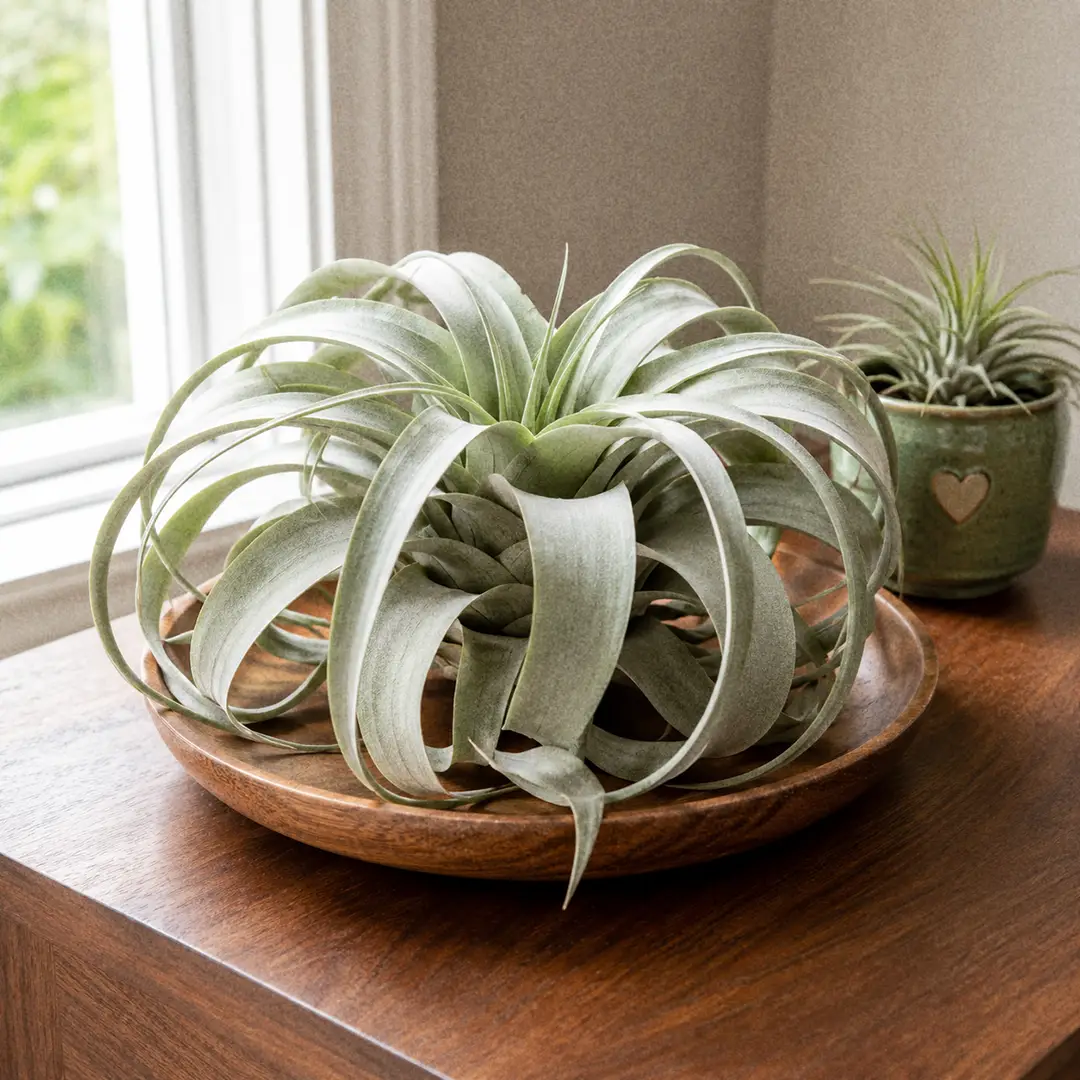
Xerographica Air Plant
Tillandsia xerographica
Tillandsia xerographica, King of Air Plants, Giant Air Plant, Xeric Air Plant, Xerographic Air Plant


The Xerographica Air Plant is the big silver Tillandsia everyone calls the king of air plants, and the one most beginners drown inside a month. Learn how often to soak Tillandsia xerographica, how to dry it so the crown never rots, and how to buy a nursery-grown plant instead of a poached one.
📝 Xerographica Air Plant Care Notes
🌿 Care Instructions
⚠️ Common Pests
📊 Growth Information
🪴 In This Guide 🪴

☀️ Xerographica Air Plant Light Requirements (Bright to Direct Sun)
The Sweet Spot
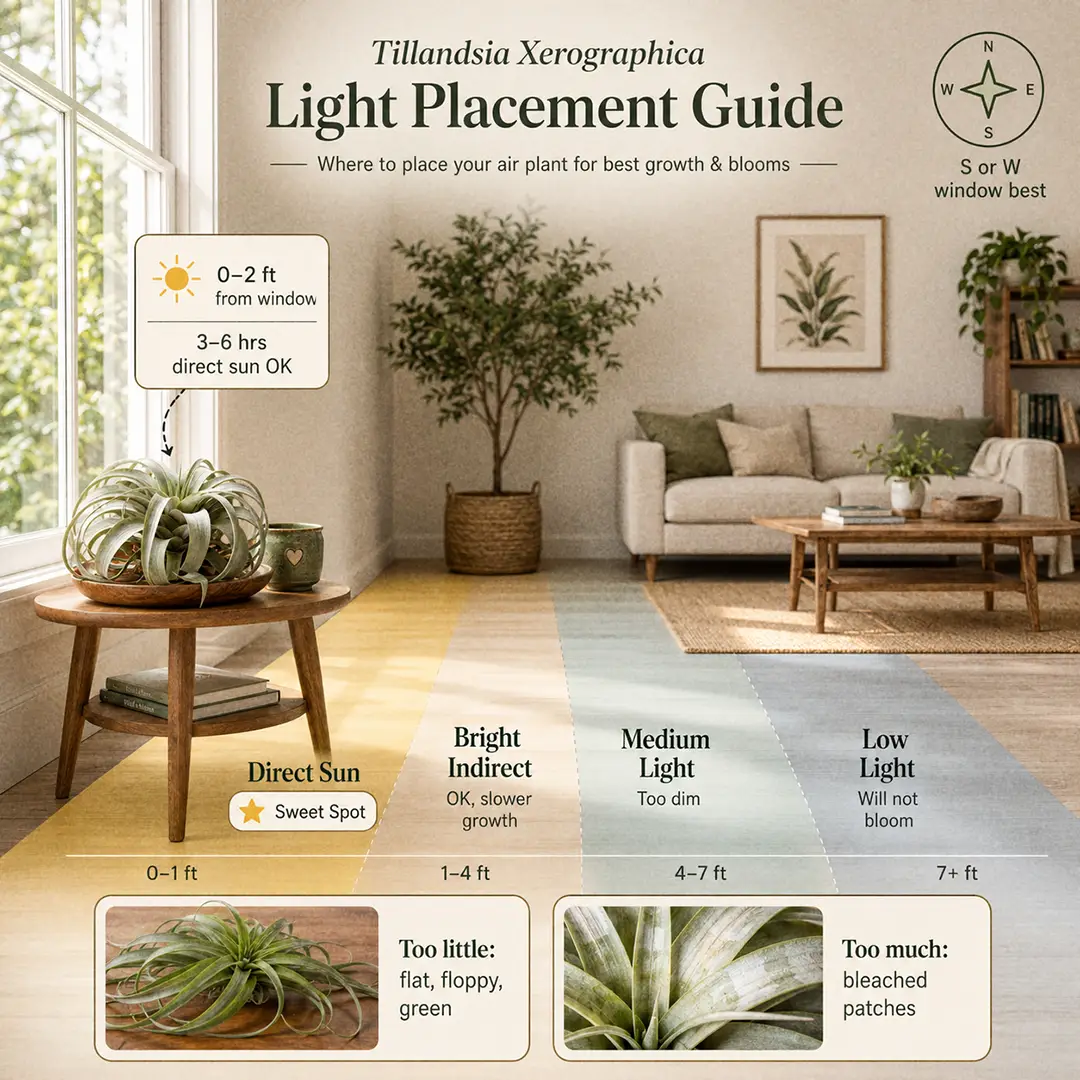
This is a full-sun plant in the wild, sitting on exposed branches in dry forest, and it wants more light indoors than most beginners expect. A south window is the best spot in the average home, with the plant sitting right up close to the glass. A west window is a strong second choice. An east window works if it gets a solid few hours of morning sun, though the plant will grow slower and stay a little looser in shape.
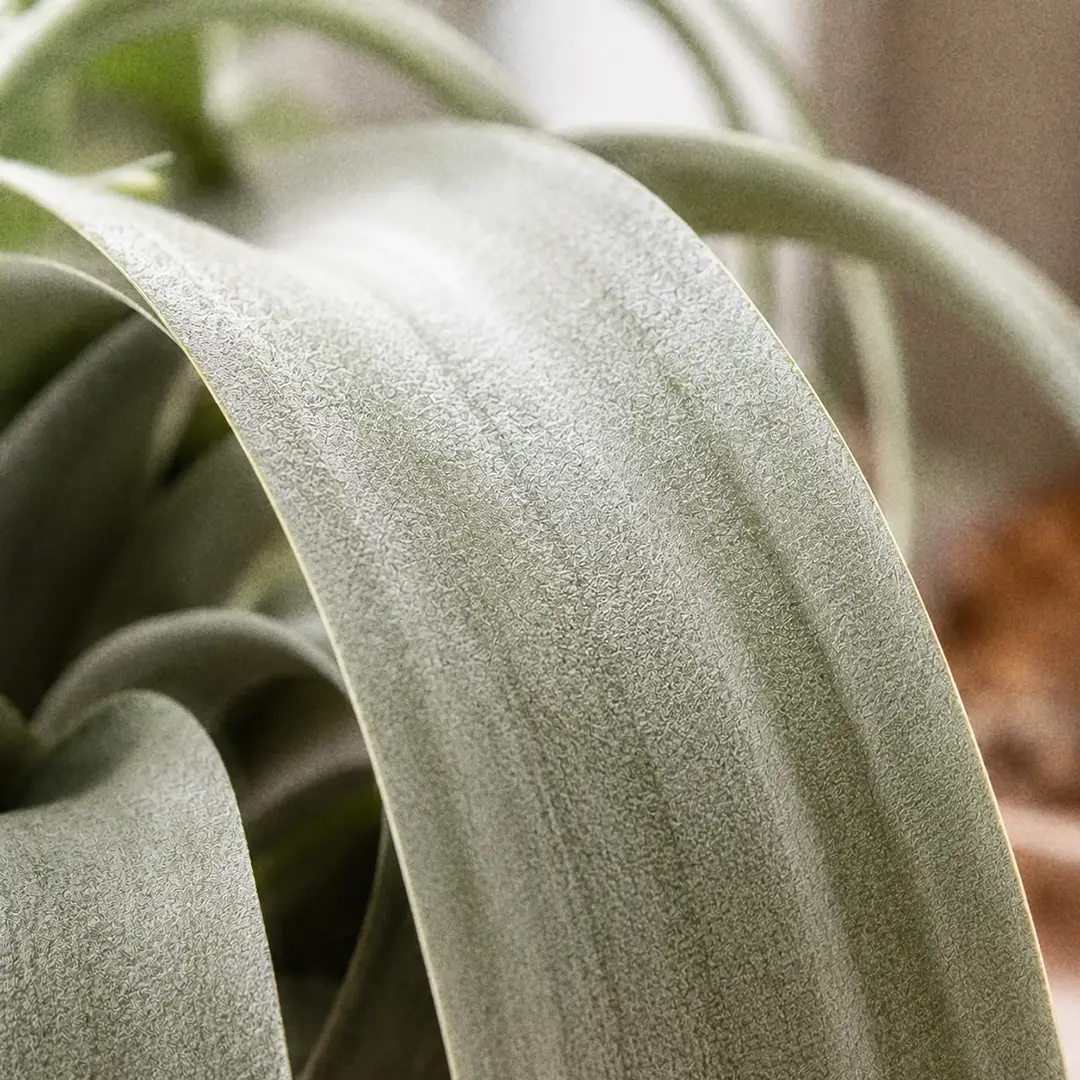
Unlike the thin green air plants, xerographica does not need its sun filtered. Three to six hours of direct light a day is welcome. That dense silver coating on the leaves is a built-in sunscreen, and it is the reason this species can sit where a Sky Plant would scorch.
Too Little Light
Weak light shows up in the shape long before it shows up in the color. The leaves lose their tight curl and flop outward into a flat, floppy star instead of a spiral. New leaves come out narrower than the old ones. The silver dulls toward plain green, because the plant makes fewer trichomes when it is not fighting sun.
A xerographica in a dim corner will sit alive and unchanging for years and never bloom. If your brightest window is north-facing, put it under a grow light about twelve inches above the plant for ten to twelve hours a day. It takes to artificial light better than most bromeliads.
Too Much Light
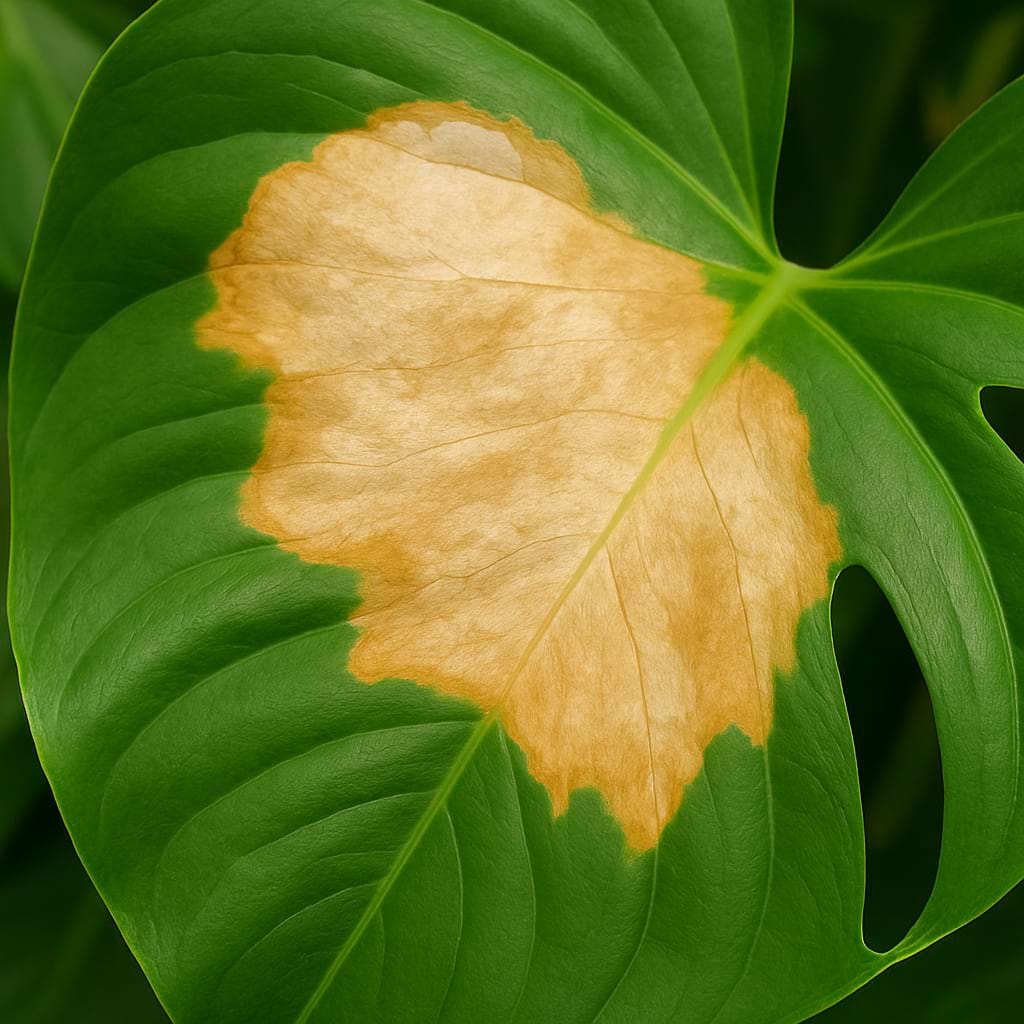
Genuine sunburn is uncommon but not impossible, and it happens the same way every time: a plant that spent months on a dim shop shelf gets moved straight into a July south window. The damage looks like pale bleached patches on the upward-facing leaves, later drying to thin brown paper.
Move a new plant into its bright spot over about two weeks. Outdoors in summer, give it dappled shade or morning sun rather than unbroken midday exposure, since outdoor sun is far stronger than anything coming through glass. Our light guide covers the same acclimation logic for potted plants.
💧 Xerographica Air Plant Watering Guide (Soak Rarely, Dry Fast)
Watering Frequency
Every two to three weeks. That is the number, and it is the single biggest difference between this plant and every other air plant sold beside it. Thin-leaved species like Brachycaulos want a weekly soak. Xerographica wants roughly a third of that.
In a hot, dry summer room, or under an air conditioner that runs all day, go to every two weeks. In winter, when light is weak and the plant has stopped growing, every three to four weeks is plenty. The plant tells you when it is thirsty: the leaves curl inward more tightly and the whole rosette closes up and looks a bit wrinkled at the base. A well-watered one relaxes and opens out.
How to Water
Fill a sink or a deep bowl with room-temperature tap water, and let it sit out overnight first if your water is heavily chlorinated. Rainwater is ideal. Lay the plant in on its side so the entire rosette goes under, and leave it for one to two hours. That is a long soak by air plant standards, and it suits a thick-leaved species that gets watered rarely.
Skip distilled water. It carries none of the trace minerals a Tillandsia would normally pick up from rain and dust, and used exclusively it slowly starves the plant.
Then the part that decides everything. Lift the plant out, turn it upside down, and shake it hard three or four times to throw water out of the leaf bases. Stand it upside down on a towel or in a dish rack for at least two hours, somewhere with moving air. Only set it back in its display once the center is dry to the touch. Water sitting in that crown overnight is what rots this plant, every single time. Our general watering guide covers the same drain-completely principle for potted plants.
Signs of Trouble
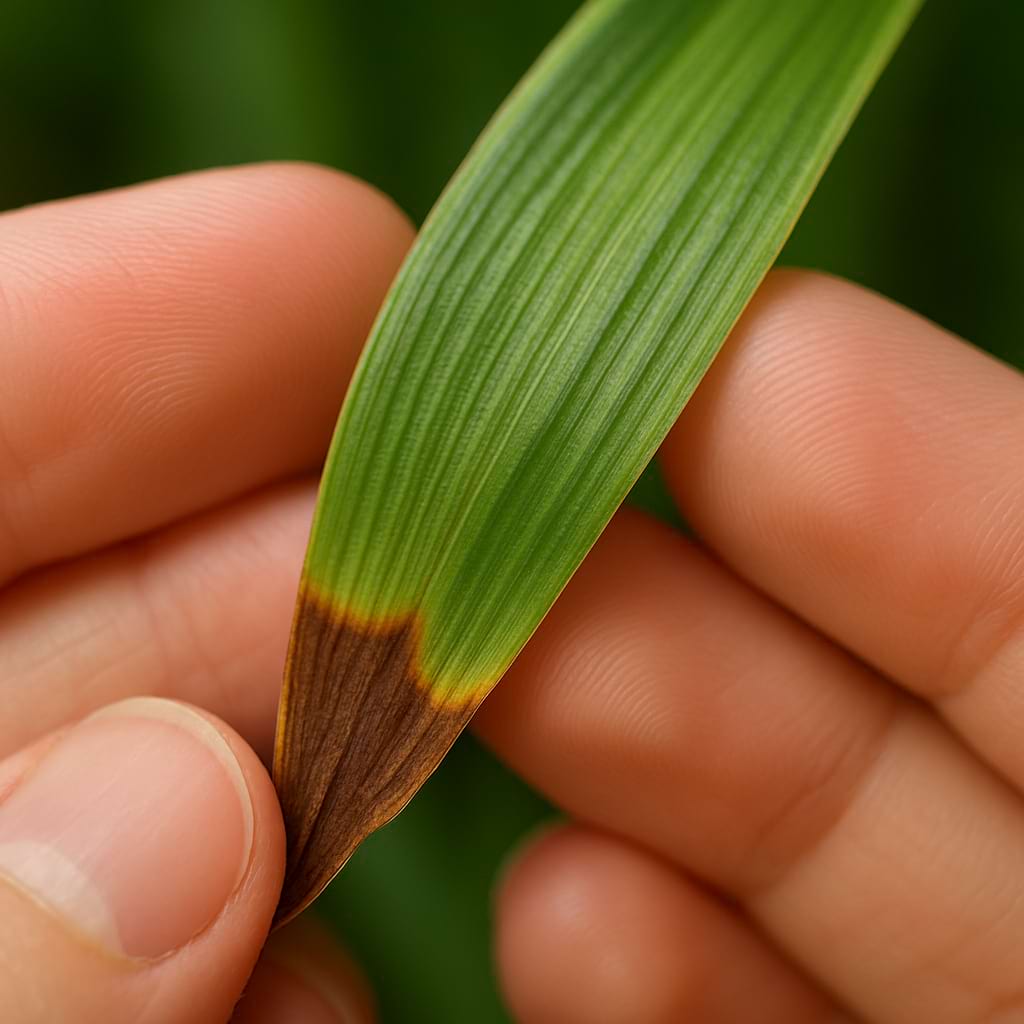
Underwatering looks like dry, crisp, brown leaf tips and a rosette that stays clenched shut even a day after a soak. It is easy to fix and rarely fatal.
Overwatering looks like nothing at all until the day the plant falls apart. The first real sign is the center going soft. If you tug gently on an inner leaf and it slides out with a brown, wet base, the crown has rotted and the plant is usually gone. Prevention is the whole game here, and prevention is drying it upside down.
🪴 Best Growing Medium for Xerographica Air Plant (None at All)
It Never Goes in Soil
This is an epiphyte. In the wild it perches on tree branches in dry forest, holding on with a few wiry roots and taking all its water and food through the trichomes on its leaves. Potting it kills it. Soil holds moisture against the base, the base rots, and the plant collapses from the middle out.
If you receive one sitting in a pot of soil, take it out. It will be resting on top rather than rooted in, so it lifts straight off.
What to Set It On Instead
The easiest option, and the one I use, is a shallow bowl or a low wooden dish with nothing in it. The plant simply sits there, curl side up, and you lift it out to soak. A tray of pebbles works too, as long as the pebbles stay dry.
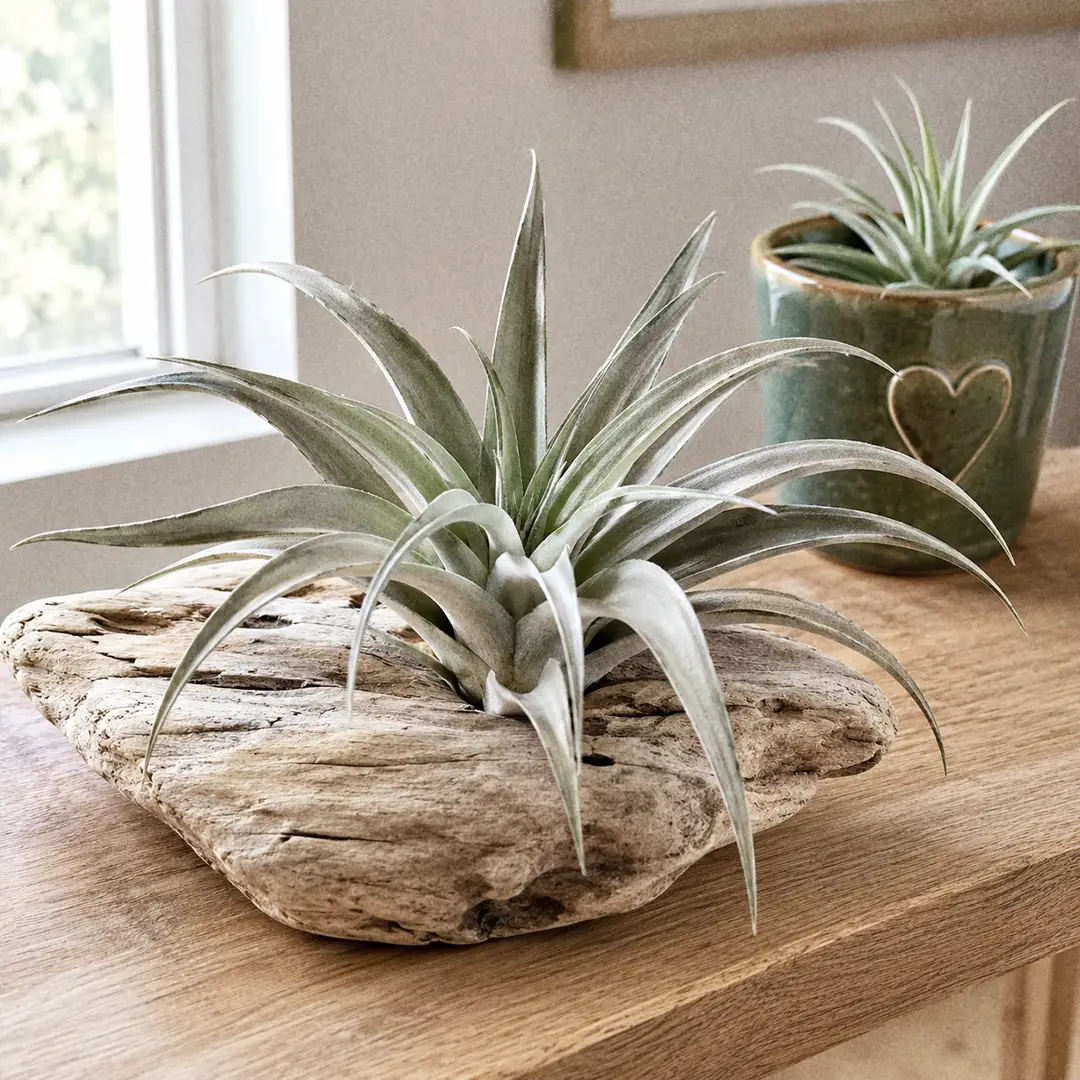
A wire ring stand, a slab of driftwood or cork, a chunk of lava rock, or a wall-hung metal hoop all work. This is a heavy air plant compared to its cousins, so whatever you use needs to hold it without tipping.
Anything That Traps Water Is Out
Skip moss. Sphagnum packed around the base is a common decorating habit and a slow death sentence for a xeric species. Skip closed terrariums for the same reason. Skip glue, which many sellers use to fix air plants to bases, since it seals off part of the leaf surface and makes lifting the plant off for a soak impossible.
🍼 Fertilizing Xerographica Air Plant
When and How Often
Once a month from early spring through early autumn, added to the soak water. Skip feeding entirely in winter. This is a slow plant and it does not need much, but regular feeding is the main lever you have if you want it to reach blooming size in your lifetime.
What to Use
Use a bromeliad or air plant fertilizer at quarter strength, and check the label for one thing: it must be urea-free. Air plants cannot process urea nitrogen, because that conversion needs soil bacteria they do not have. A urea-based houseplant fertilizer does nothing for them except leave residue on the leaves.
Mix it into the soak bowl, soak as normal, then dry as normal. There is no separate feeding step.
Over-Fertilizing Signs
Too much feed shows as a chalky white film on the leaves and, in bad cases, burnt brown leaf tips. If you see it, soak the plant twice in plain water and skip the next two feedings. Our fertilizing guide has more on reading feed damage across houseplants.
🌡️ Xerographica Air Plant Temperature Range
Ideal Range
Comfortable anywhere between 55°F and 90°F, and happiest between 65°F and 85°F. Ordinary room temperature suits it year round with no adjustment. It handles heat far better than cold, which makes sense for a plant from low-elevation dry forest in Guatemala and El Salvador.
Below about 55°F it stops growing and wants noticeably less water. Frost kills it outright, so if it summers outdoors, bring it in before nights drop near 50°F.
Drafts and Heat Sources
Cold drafts matter less here than they do for tropical foliage plants, but a plant pressed against a single-glazed window in January can still get chilled. Move it back a few inches in winter.
Heat is actually helpful. A spot near a radiator or a heating vent is fine for this species, and the dry moving air speeds up drying after a soak, which is exactly what you want. The one thing to watch is that heated rooms shorten the interval between soaks, so check the leaf curl rather than sticking to the calendar.
💦 Xerographica Air Plant Humidity Requirements
Ideal Humidity
Ordinary indoor humidity of 40-60% is fine. This is a dry-country plant, and one of the very few houseplants that genuinely does not care whether you own a humidifier.
Airflow Beats Moisture
What it does care about is air movement. Still, damp, stagnant air is the condition that rots crowns, so a plant on an open shelf in a normally ventilated room is better off than one in a humid, closed bathroom. If you keep it in a bathroom for the light, make sure the room actually dries out between showers. A small fan running nearby after a soak is a genuinely useful habit. Our humidity guide covers the balance for plants that want the opposite.
🌸 Xerographica Air Plant Flowers (A Once-in-a-Lifetime Spike)
What the Flowers Look Like
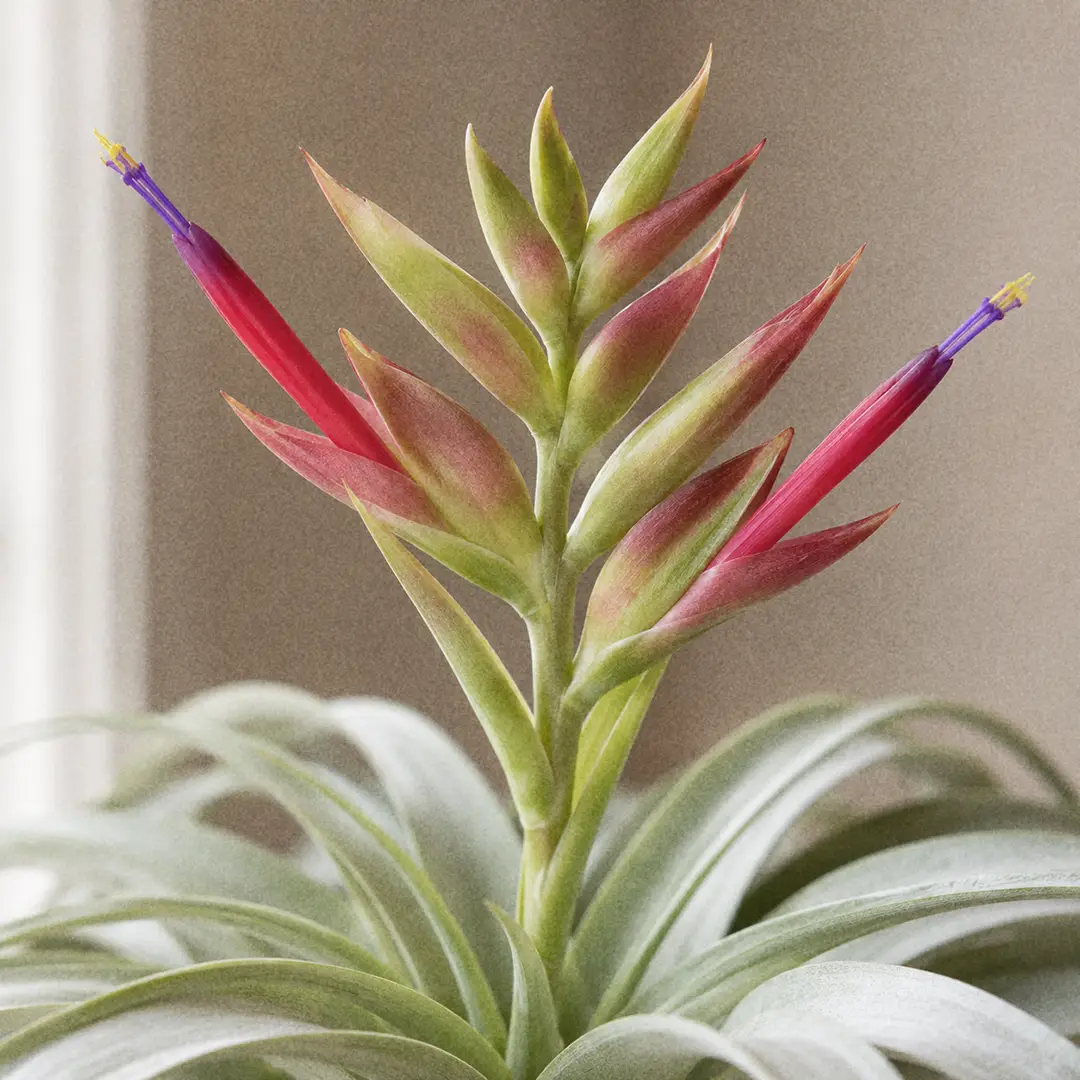
The bloom is worth the wait. A thick green stem pushes up from the center of the rosette and branches into anywhere from nine to thirty short side spikes, standing up to two feet tall on a big plant. The bracts along those spikes are chartreuse and rosy red. The actual flowers are narrow tubes in red to purple, and they open slowly along the spike.
The best part is the duration. The colored bracts hold for months, not days. A single bloom season can carry a plant through most of a year looking spectacular.
How to Trigger Bloom
There is no trick, only time and light. This species is slow, and a plant needs to reach roughly eight to ten inches across before it will even consider flowering. A store-bought four-inch seedling is already about four or five years old, and it may be another five or more before it blooms.
The two things that actually speed it up are strong light and monthly feeding through the growing season. Some growers use the ripe-apple trick, sealing the plant in a bag with an apple for a few days so the ethylene gas nudges it into flower. It works on some bromeliads, but on a plant this slow it is a gamble, and I would rather give it a sunnier window.
After It Blooms
Flowering is the end of that rosette's life. It is monocarpic, which means it blooms once and then declines over the following year or two. Do not panic when it happens, because the plant hands off before it goes: pups appear around the base at roughly the same time as the spike. Cut the spent spike once it dries to brown straw, and let the mother feed the pups for as long as she has anything left to give.
🏷️ Xerographica Air Plant Types and Varieties
Size Grades, Not Cultivars
There are no named cultivars of the straight species in general trade, so what you are actually choosing between is size. Sellers grade them roughly as seedling at two to four inches, medium at five to six, large at six to eight, and jumbo at eight to ten inches or more. Price climbs steeply with size, and for good reason: a jumbo plant represents about a decade of nursery growing.
Buy the biggest one you can justify. The difference between grades is far more visible in a room than it looks in a photo.
The Capitata Cross
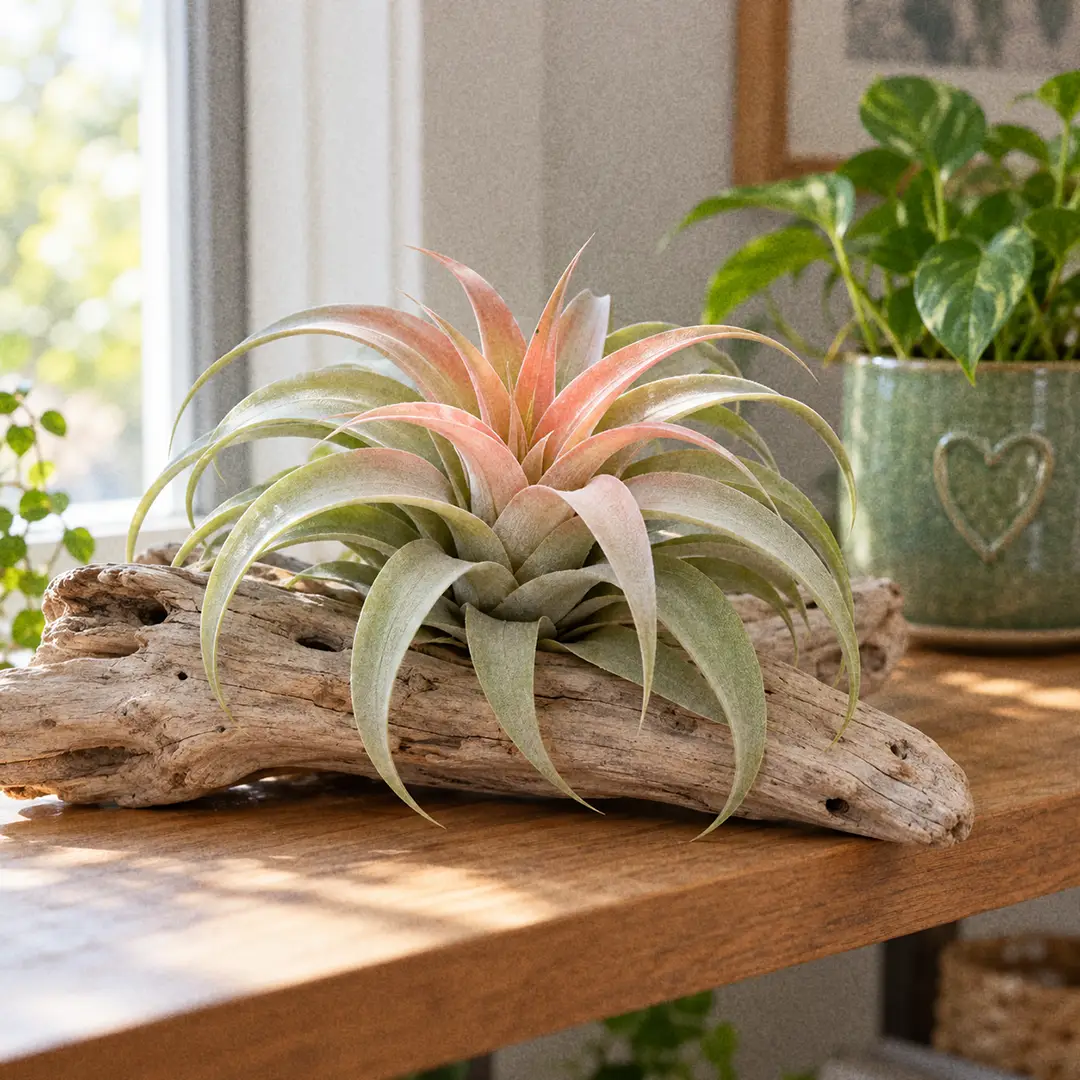
A few specialist nurseries sell a Tillandsia capitata × xerographica hybrid. It keeps the silvery leaves and sturdy build of the xerographica parent but grows a narrower, more upright rosette with longer, more flowing leaves. Care is identical to the straight species. The capitata parent is best known through the Capitata Peach Air Plant, a soft silvery rosette that blushes peach before it flowers. The hybrid is not common, but if you see one from a reputable air plant nursery it is a good buy.
Lookalikes and Mix-Ups
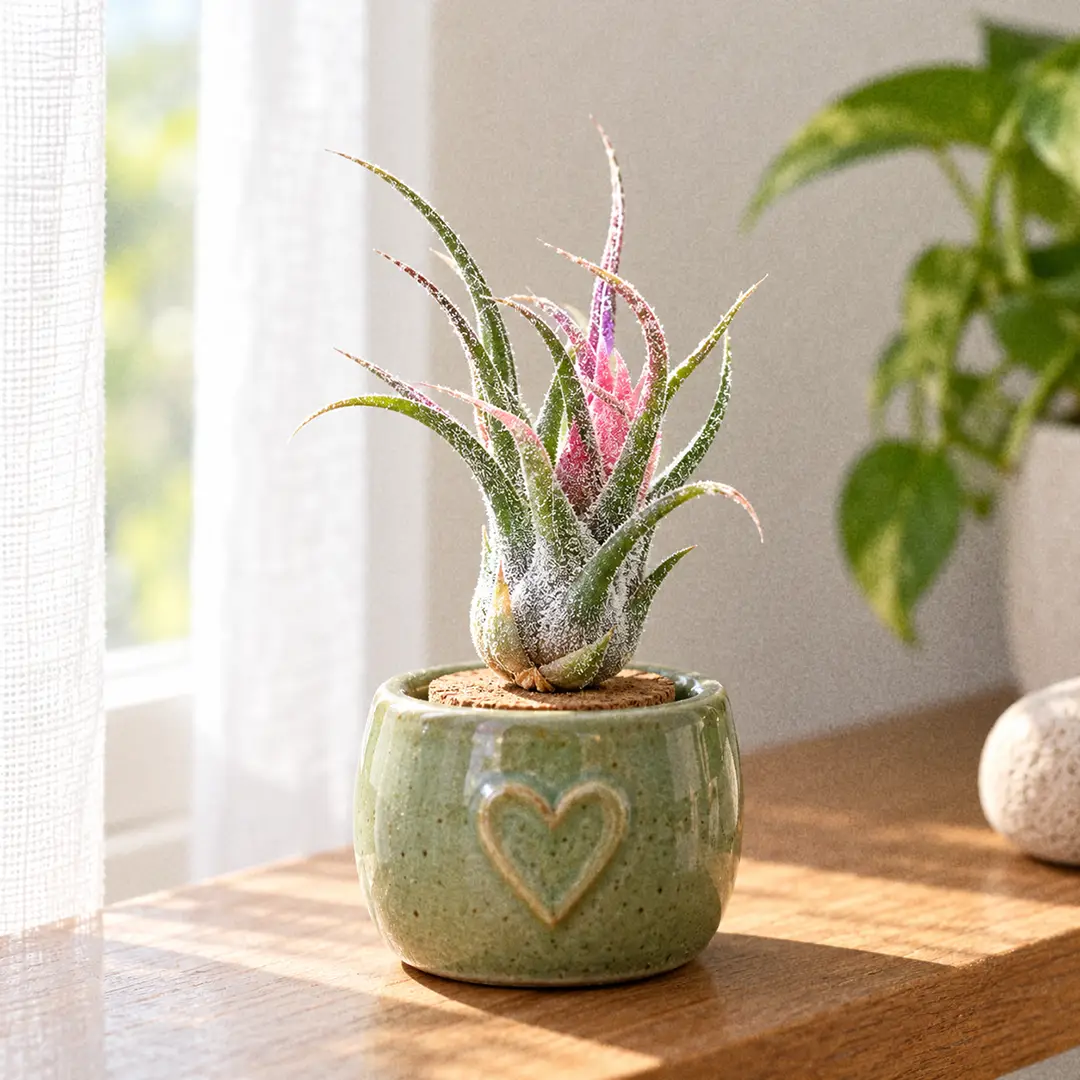
Two other silver Tillandsias get confused with it on shop shelves. The Streptophylla Air Plant has much narrower leaves that curl into tight ringlets when dry, sits on a fat hollow bulb, and wants more water than a xerographica does. Harris's Air Plant is smaller, with a distinct woody stem and stiff triangular leaves rather than broad straps. If a plant is being sold as xerographica and its leaves are under an inch wide at the base, it is something else. The Tectorum Air Plant is the other dry-growing silver species worth knowing, a fuzzy white ball that is misted and never soaked. Our general air plant guide walks through the wider genus.
🪴 Mounting and Displaying Xerographica Air Plant
Loose Is Usually Best
Because it is heavy and because it has to come out for soaking, the simplest approach wins: leave it loose in a bowl, on a stand, or in a tray. No fixing required. A mature xerographica sits perfectly stable on a flat surface under its own weight, and you can pick it up in one hand when soak day arrives.
If You Want to Mount It
Use wire, fishing line, or a nylon plant tie to secure the base to driftwood, cork bark, or a slab of lava rock. Wrap around the very bottom of the rosette, below the leaves, and leave the crown entirely open. Never use hot glue or super glue, both of which are common in cheap ready-made arrangements and both of which make proper soaking impossible.
A mounted plant still needs a full soak, so either it comes off the mount or the whole mount goes in the water. Decide that before you fix it to a piece of wood you would rather not submerge.
Sizing Up
There is no repotting here, but there is outgrowing. A plant that has widened past its dish starts to look cramped, and its lower leaves sit awkwardly against the rim. Move it to something wider every two or three years and give the leaves room to curl fully. That curl is the whole point of the plant.
✂️ Pruning Xerographica Air Plant
Trimming Leaf Tips
Dry brown tips are normal on an older plant and are not a sign of trouble unless they are spreading fast. Snip them off with sharp scissors, cutting at a shallow angle that mimics the natural taper of the leaf. A flat straight cut looks obviously trimmed from across the room.
Removing Dead Outer Leaves
The oldest outer leaves brown off from the bottom over time. Once one is fully dry and papery, hold the base of the plant with one hand and pull the leaf downward and outward with the other. It should release cleanly. If it resists, it is not dead yet, so leave it alone and try again in a month.
The Flower Spike
After blooming, the spike slowly fades from chartreuse to tan to dry brown. Wait until it is genuinely dry and stiff, then cut it off close to the base of the rosette without cutting into the leaves. Removing a green spike early gains you nothing and wastes a few months of good color.
🌱 How to Propagate Xerographica Air Plant
Pups Are the Only Method
Seed is possible in theory and pointless in practice, since a xerographica grown from seed takes the better part of a decade to become a recognizable plant. Every xerographica in a home comes from a pup, which is a small clone that grows out from the base of the mother rosette.
Pups appear around the time the plant flowers, and most plants produce somewhere between three and five over their lives. If your plant has not bloomed, it has no pups yet, and there is nothing you can do to hurry that along. Our general propagation guide covers offset division across other plant families.
Step-by-Step Separation
- Wait until the pup is about a third the size of the mother plant. Smaller pups can be separated but they grow far more slowly on their own.
- Hold the mother firmly at her base with one hand and the pup at its base with the other.
- Twist and pull downward with steady pressure. A ready pup separates with a clean snap at the connection point.
- If it will not budge, use a clean sharp knife and cut down through the joint as close to the mother as you can without slicing into the pup's own base.
- Leave the separated pup dry for a day so the wound seals, then start it on the normal soak routine.
Or Just Leave Them
You are not obliged to separate anything. Left alone, the pups grow into a clump around the dying mother, and a mature xerographica clump is more impressive than any single rosette. The mother slowly disintegrates and you pick her remains out over the following year. This is my preference, and it is also less work.
🐛 Xerographica Air Plant Pests and Treatment
Air plants get pests rarely, and this one gets them less than most, since there is no soil for anything to breed in. When trouble shows up it is almost always one of three culprits, and it usually arrives on a new plant from a crowded nursery bench.
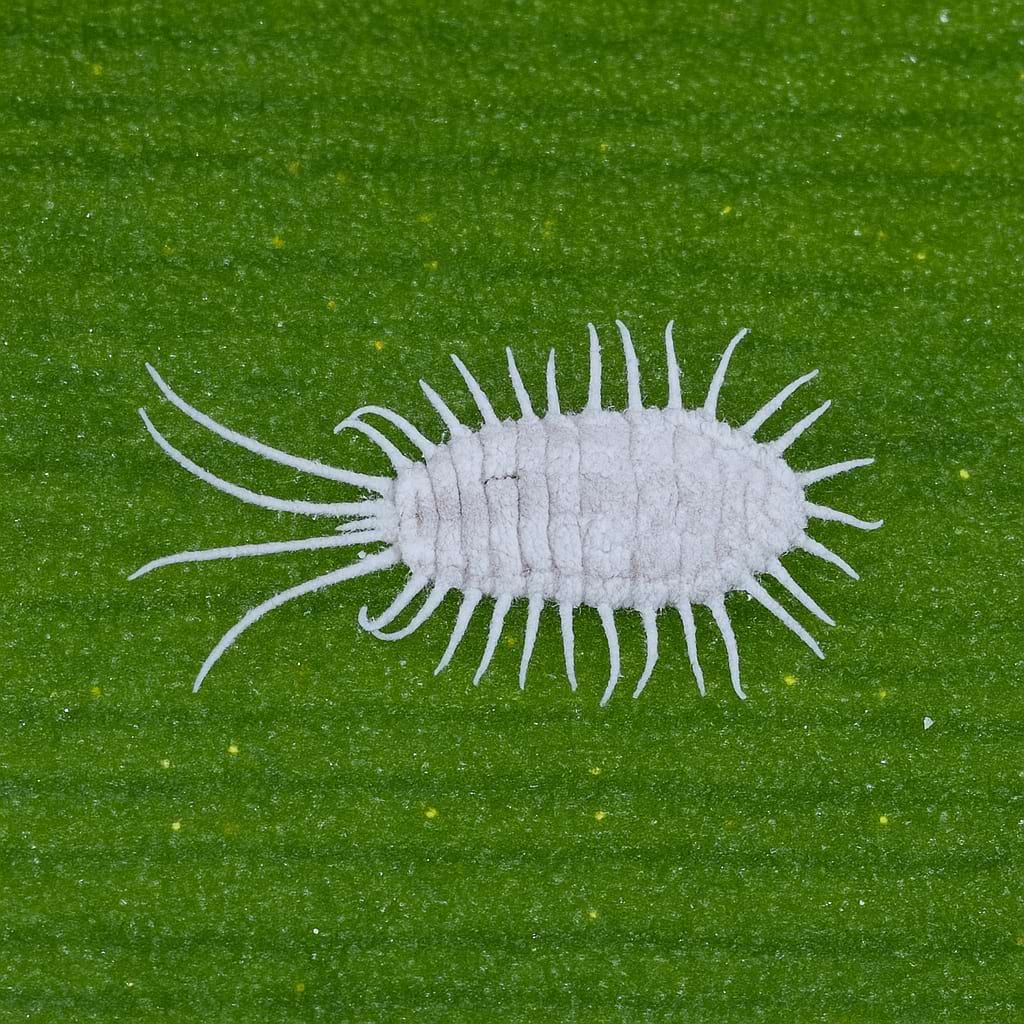
Mealybugs are the most common. Look for small white cottony specks tucked deep between the leaf bases, exactly where you cannot easily see. Dab each one with a cotton bud dipped in rubbing alcohol, then check again in a week.
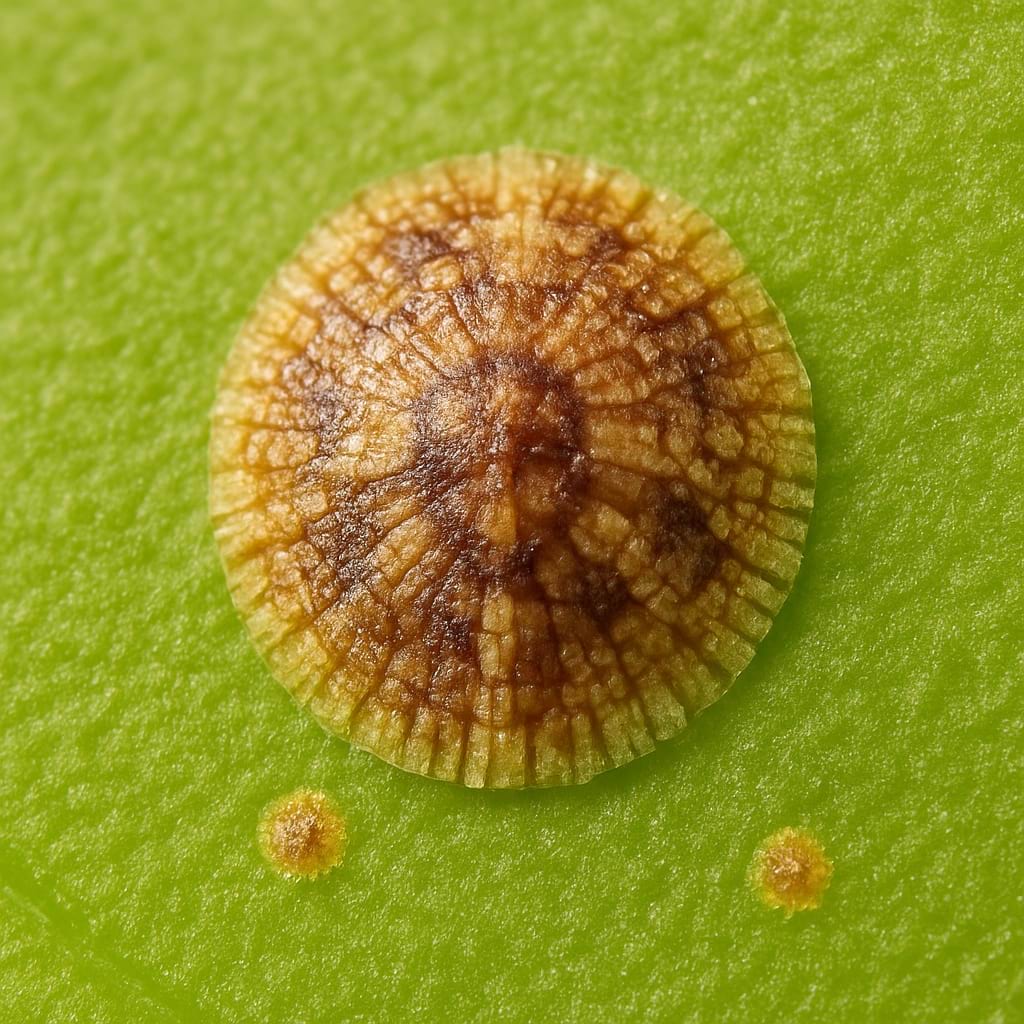
Scale insects appear as tiny hard brown bumps stuck to the leaf surface. Scrape them off with a fingernail or an old toothbrush. They do not move, so once they are off, they are gone.
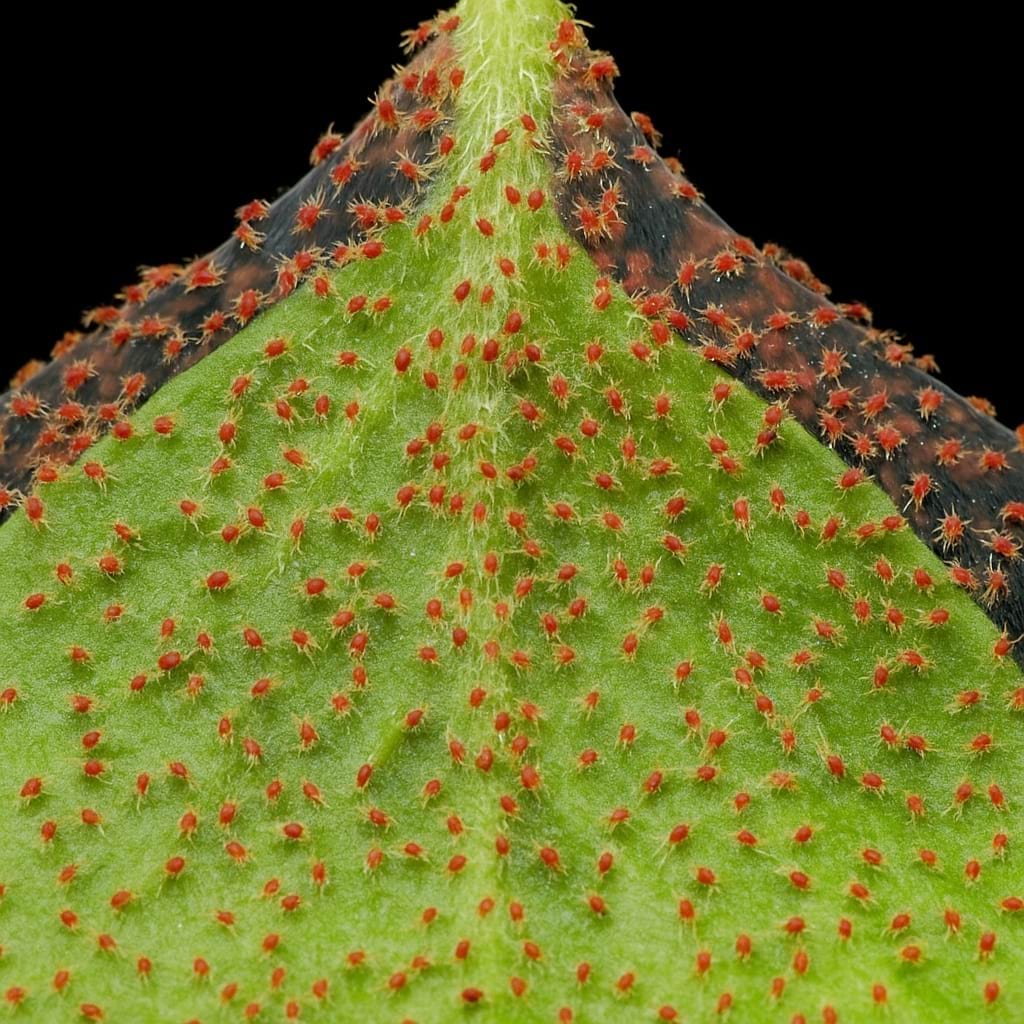
Spider mites turn up in very dry, still air and show as fine webbing between the leaves and a dusty stippled look on the surface. A thorough soak knocks most of them off, and improving airflow keeps them away.
Do not use oil-based sprays such as neem or horticultural oil on any Tillandsia. Oil coats the trichomes and blocks the plant's ability to absorb water, which does more damage than the pest ever would.
🩺 Common Xerographica Air Plant Problems
Nearly every xerographica problem traces back to water, either too much sitting in the wrong place or too little reaching the plant at all.
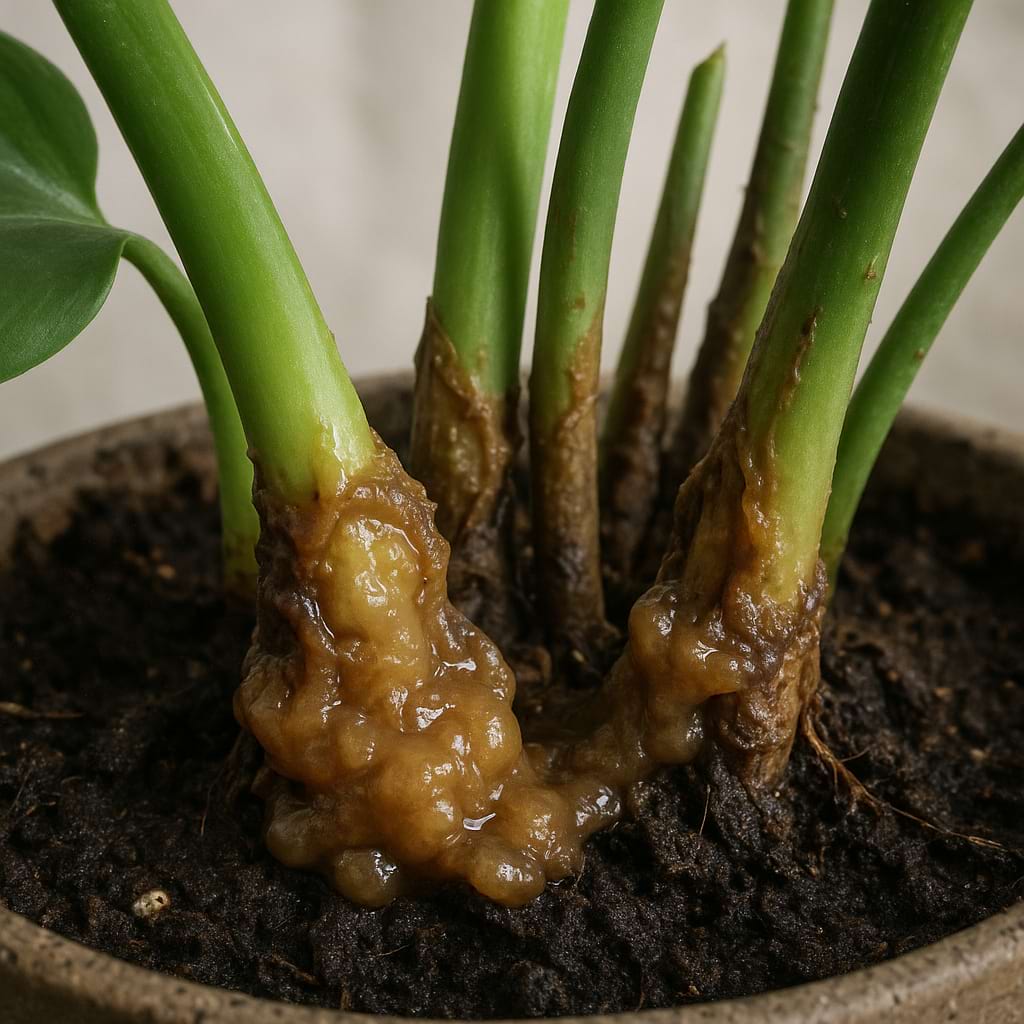
Rot in the center is the one that kills. It shows as mushy stems and a soft, dark crown, with inner leaves that pull out with a wet brown base. It comes from water left sitting in the leaf bases after a soak, or from a plant kept somewhere damp and still. There is no cure once the crown goes. Dry the plant upside down every single time and this never happens.
Brown crispy tips are the underwatering signal. See brown crispy edges. A little on the oldest leaves is normal aging. Widespread, and on new growth, means your soak interval is too long or your soaks are too short.
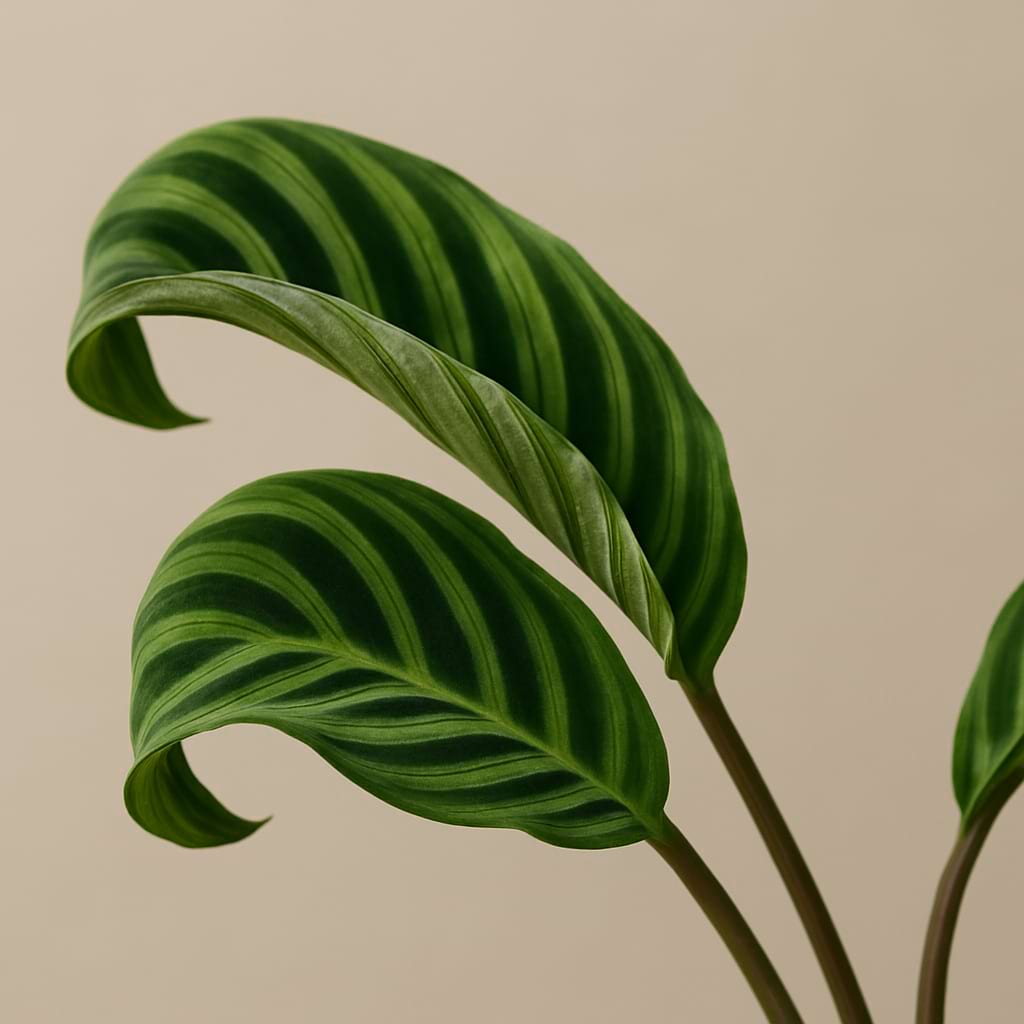
Leaves curling shut and staying shut after a soak points to a plant that is not actually absorbing water. Usually the cause is glue on the base from a shop arrangement, or a soak that only lasted ten minutes. See curling leaves.
Pale, floppy, green-tinged leaves with a loose open shape mean not enough light. See pale faded leaves. Move it closer to a south or west window and watch the new growth, since the old leaves will not recover their color.
Bleached patches on the sun-facing side are sunburn from a plant moved into strong light too fast. The damaged tissue never repairs, but the plant carries on fine.
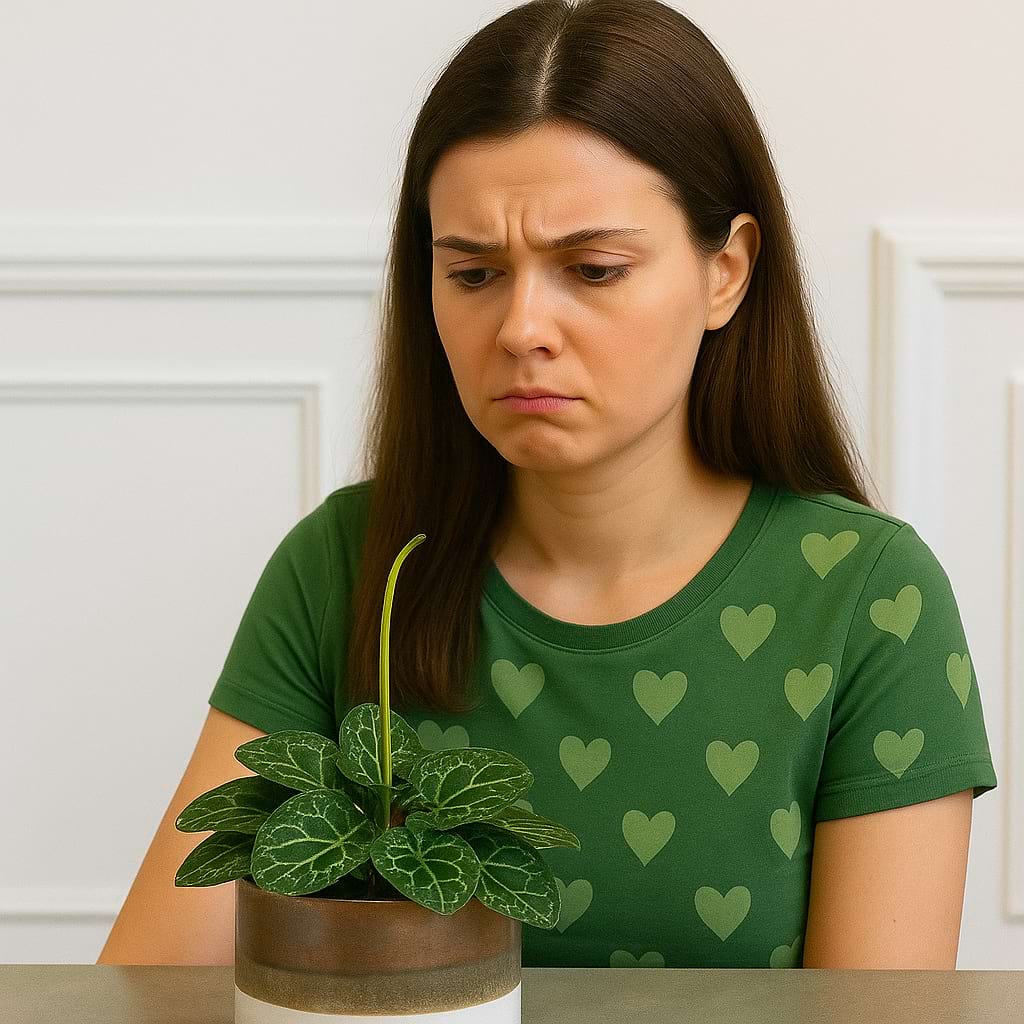
No bloom, ever is usually not a problem at all. See failure to bloom. Most plants sold are simply too young, and the fix is light, food, and several years of patience.
🖼️ Xerographica Air Plant Display and Styling Ideas
It Works Best Alone
This is one of the few houseplants that carries a whole surface by itself. A single large xerographica in a low, wide ceramic dish on a coffee table or a console needs nothing else around it. The silhouette does all the work, and clutter beside it just reads as noise.
Give it a warm background. The cool silver of the leaves lands beautifully against wood, terracotta, brass, and dark paint, and disappears entirely against a grey wall.
Stands, Hoops, and Wood
A simple black or brass wire stand lifts the plant off the surface and lets you see the underside of the curl, which is where the shape is most interesting. Hanging hoops and macrame holders work well too, since a raised plant catches window light from more angles.
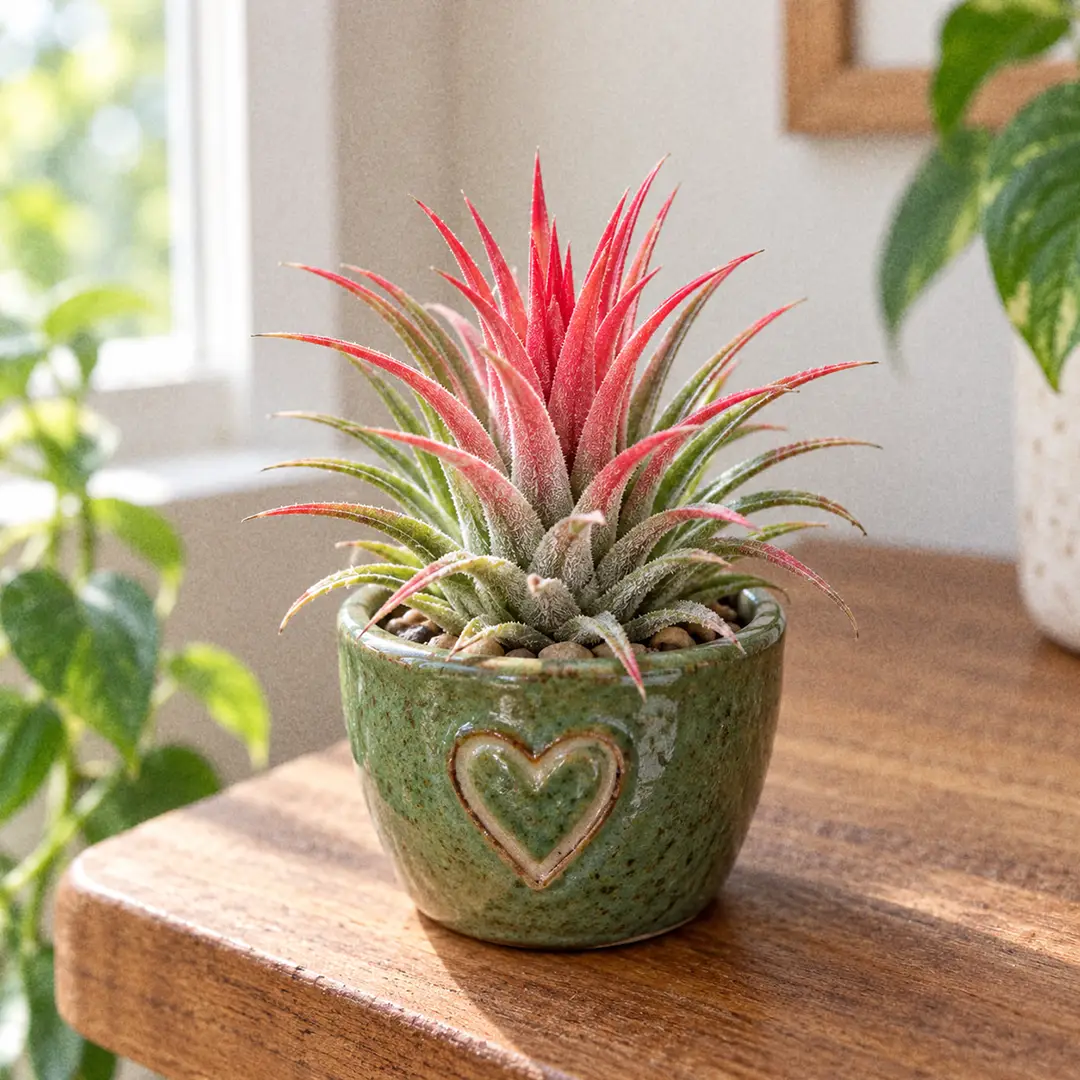
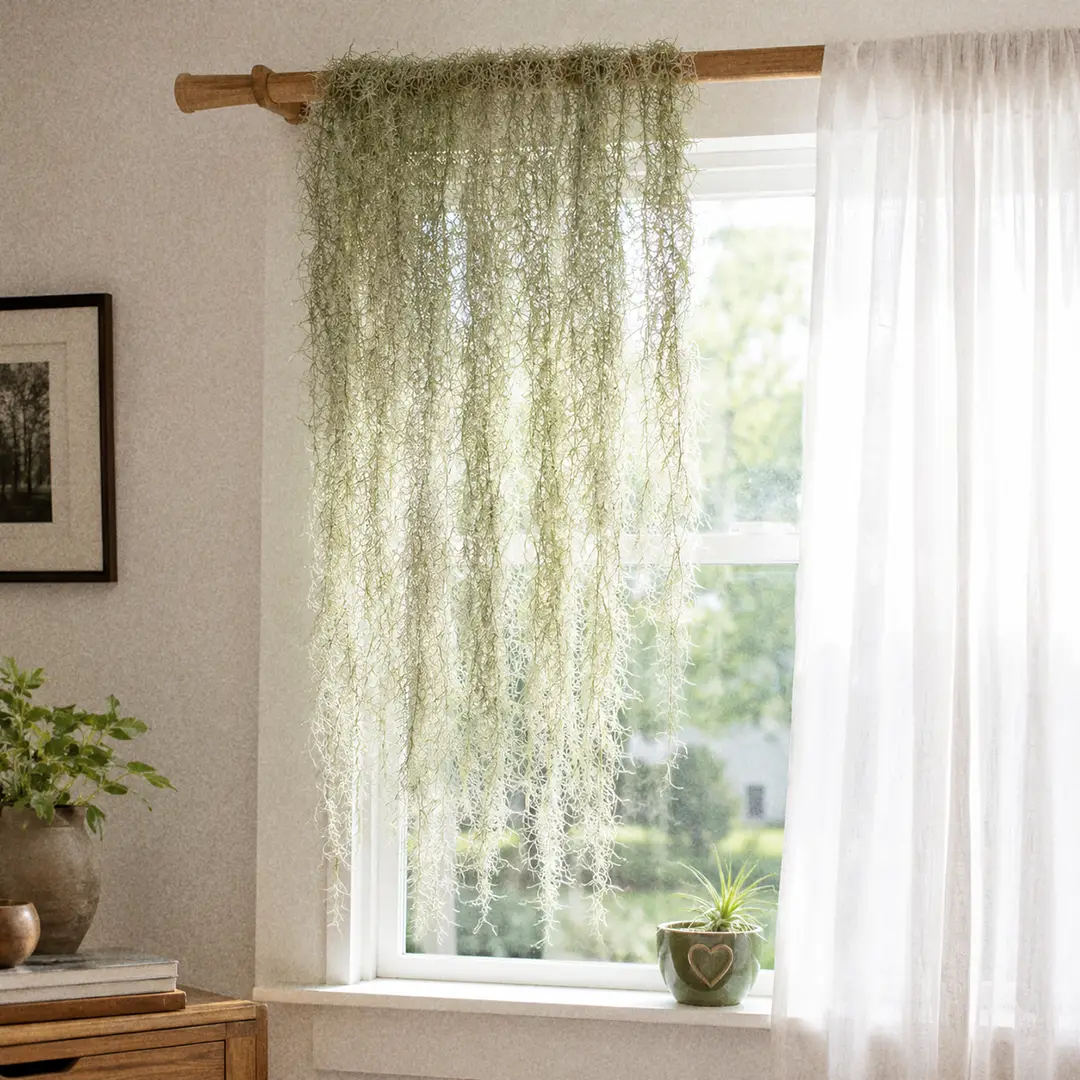
On wood, a driftwood slab or a chunk of grapewood suits the sculptural look better than a neat cut board. Keep the plant unglued so you can lift it off on soak day. Draping a little Spanish Moss over the same slab gives the hard silver curl something soft to sit against, and both are silver-leaved xerics that suit the same warm, well-lit spot. Tucking two or three small Ionantha Air Plants at the far end of the slab adds scale and a hit of scarlet when they blush, without competing with the main silhouette. Just remember they want a weekly soak against xerographica's three-week one, so keep them loose rather than glued down.
Where Not to Put It
Not in a closed terrarium, ever. Not tucked into moss. Not in a dim corner as a decorative object, which is how most of them die. And not somewhere it will get knocked into a sink, since the leaf tips snap. A Staghorn Fern is the better pick if you want a soilless plant for a lower-light wall.
🌟 Xerographica Air Plant Pro Care Tips
- Set a soak reminder for every three weeks, not every week. If you have owned other air plants, your instincts are wrong for this one.
- Dry it upside down, without exception. Two hours minimum, in moving air. This one habit prevents the only problem that actually kills the plant.
- Buy nursery-grown, and ask. The species sits on CITES Appendix II because wild collection hit it hard. A legitimate seller states their permit status without being asked.
- Never glue it to anything. If yours arrived glued, wet the base briefly and work the glue off carefully rather than living with it.
- Weigh it in your hand if you are unsure. A hydrated xerographica is noticeably heavier than a thirsty one, and lifting it teaches you the difference faster than any schedule.
- Skip the mister. Misting wets the leaf surface without ever reaching the plant's reserves, and it leaves water sitting in the crown. Soak it or leave it.
- Summer it outside in dappled shade if you can. A few months of real outdoor light does more for growth rate than anything you can arrange indoors.
❓ Frequently Asked Questions
How often should I water a Xerographica Air Plant?
Soak it fully for one to two hours every two to three weeks, then dry it upside down. That is much less often than most air plants, and watering it weekly is the most common way people kill it. Stretch to every three or four weeks in winter.
Why is my Xerographica Air Plant turning brown in the middle?
That is crown rot, caused by water sitting in the leaf bases after a soak. If the center is soft and inner leaves pull out with wet brown ends, the plant cannot be saved. Check the base of any surviving pups and start them on a strict shake-and-invert drying routine.
Is the Xerographica Air Plant safe for cats and dogs?
Yes. Tillandsias are not toxic to pets, so a nibbled leaf is a plant problem rather than a vet problem. The bigger risk is a cat treating a loose plant as a toy, so use a heavy dish or a raised stand.
How big does a Xerographica Air Plant get?
Up to about three feet across at absolute maximum, though that is a decades-old specimen. Most plants sold are five to ten inches, and a well-grown houseplant realistically reaches twelve to eighteen inches across over many years. Flower spikes add up to another two feet of height.
Can I grow a Xerographica Air Plant in a terrarium?
Only in an open one with genuine airflow, and even then it is a compromise. Closed terrariums hold moisture against the crown and rot the plant within months. If you want an air plant for a sealed glass vessel, this species is the worst possible choice.
Why is my Xerographica Air Plant flat instead of curly?
Not enough light, most of the time. The tight spiral curl develops under strong sun, and a plant in dim conditions relaxes into a flat open star. Move it to a south or west window and watch the new leaves, since the old ones will not re-curl.
Does a Xerographica Air Plant need to be mounted?
No. It is heavy enough to sit stable in a bowl or on a stand under its own weight, and staying loose makes soaking far easier. Mount it only for looks, using wire or fishing line rather than glue.
Will my Xerographica Air Plant die after it flowers?
Eventually, yes. It is monocarpic, so the rosette blooms once and declines over the next year or two. Before that happens it produces three to five pups at the base, and those carry the plant forward indefinitely if you leave them attached or separate them once they reach a third of the mother's size.
Why is my Xerographica Air Plant not blooming?
Almost always age. A plant needs to reach eight to ten inches across before it will flower, and a small store-bought one may be five or more years away from that point. Strong light and monthly feeding through spring and summer are the only levers that speed it up.
ℹ️ Xerographica Air Plant Info
Care and Maintenance
🪴 Soil Type and pH: None. Grown as a soilless epiphyte, loose or mounted.
💧 Humidity and Misting: Fine at ordinary indoor humidity of 40-60%, and far more concerned with airflow than with moisture.
✂️ Pruning: Trim dried leaf tips at an angle and cut the spent flower spike off once it has gone brown and papery.
🧼 Cleaning: The soak is the cleaning. Never wipe the leaves, since that rubs off the silver trichomes the plant drinks with.
🌱 Repotting: Nothing to repot. Move it to a bigger bowl or stand as the rosette widens, and remount only when the base it sits on fails.
🔄 Repotting Frequency: Every 2-3 years, or whenever the plant outgrows its dish.
❄️ Seasonal Changes in Care: Soak every two weeks through spring and summer, stretch to every three or four weeks in winter, and stop feeding by mid-autumn.
Growing Characteristics
💥 Growth Speed: Slow
🔄 Life Cycle: Perennial, monocarpic rosette that pups around the time it blooms.
💥 Bloom Time: Summer into autumn, once in the plant's life, on a mature rosette at least eight inches across.
🌡️ Hardiness Zones: 9a-11b outdoors, houseplant everywhere else.
🗺️ Native Area: Dry forest and thorn scrub at 140-600 m in southern Mexico, Guatemala, El Salvador, and Honduras.
🚘 Hibernation: Growth stalls below 55°F and the plant wants noticeably less water through that stretch.
Propagation and Health
📍 Suitable Locations: South and west windows, sunrooms, bright bathrooms with airflow, coffee tables, open shelving, sheltered summer patios.
🪴 Propagation Methods: Separate the pups that appear at the base after flowering, once each is about a third the size of the mother.
🐛 Common Pests: Mealybugs, Scale Insects, Spider Mites
🦠 Possible Diseases: Crown rot from water left sitting in the leaf bases, plus soft brown collapse at the center after a slow dry.
Plant Details
🌿 Plant Type: Epiphytic bromeliad.
🍃 Foliage Type: Evergreen.
🎨 Color of Leaves: Silvery grey-green, densely felted with trichomes.
🌸 Flower Color: Chartreuse floral bracts with red to purple tubular flowers.
🌼 Blooming: A thick branched spike with 9-30 side branches, carrying flowers that stay open for months.
🍽️ Edibility: Not edible.
📏 Mature Size: 8-16 inches tall indoors, plus a flower spike up to 2 feet
Additional Info
🌻 General Benefits: Needs no soil, no pot, and no drainage, so it lives on a table where nothing else could.
💊 Medical Properties: None recorded.
🧿 Feng Shui: A soilless plant reads as the air element, and its wide open curl is used to soften a hard-edged room.
⭐ Zodiac Sign Compatibility: Aquarius.
🌈 Symbolism or Folklore: Self-sufficiency and endurance, earned by a plant that lives on rain and dust in a dry forest.
📝 Interesting Facts: The name comes from the Greek xeros for dry and graphis for writing. It is one of a small handful of Tillandsias listed on CITES Appendix II.
Buying and Usage
🛒 What to Look for When Buying: Buy only from sellers who state their stock is nursery-grown under CITES permit. Check that the center of the rosette is firm and dry, with no brown softness where the leaves meet.
🪴 Other Uses: A staple of event and wedding styling, since it holds its shape for weeks out of water and needs no vase.
Decoration and Styling
🖼️ Display Ideas: Low ceramic bowls, wooden trays, wire stands, driftwood slabs, hanging hoops, and single-plant table centerpieces.
🧵 Styling Tips: The silver reads cool and sculptural, so it lands best against warm wood, terracotta, and dark walls rather than grey.
🪴 See also 🪴
Complete Guide to Capitata Peach Air Plant Care and Growth
Complete Guide to Baileyi Air Plant Care and Growth
Complete Guide to Harris's Air Plant Care and Growth
Complete Guide to Pruinosa Air Plant Care and Growth
Complete Guide to Ionantha Air Plant Care and Growth
Complete Guide to Spanish Moss Care and Growth
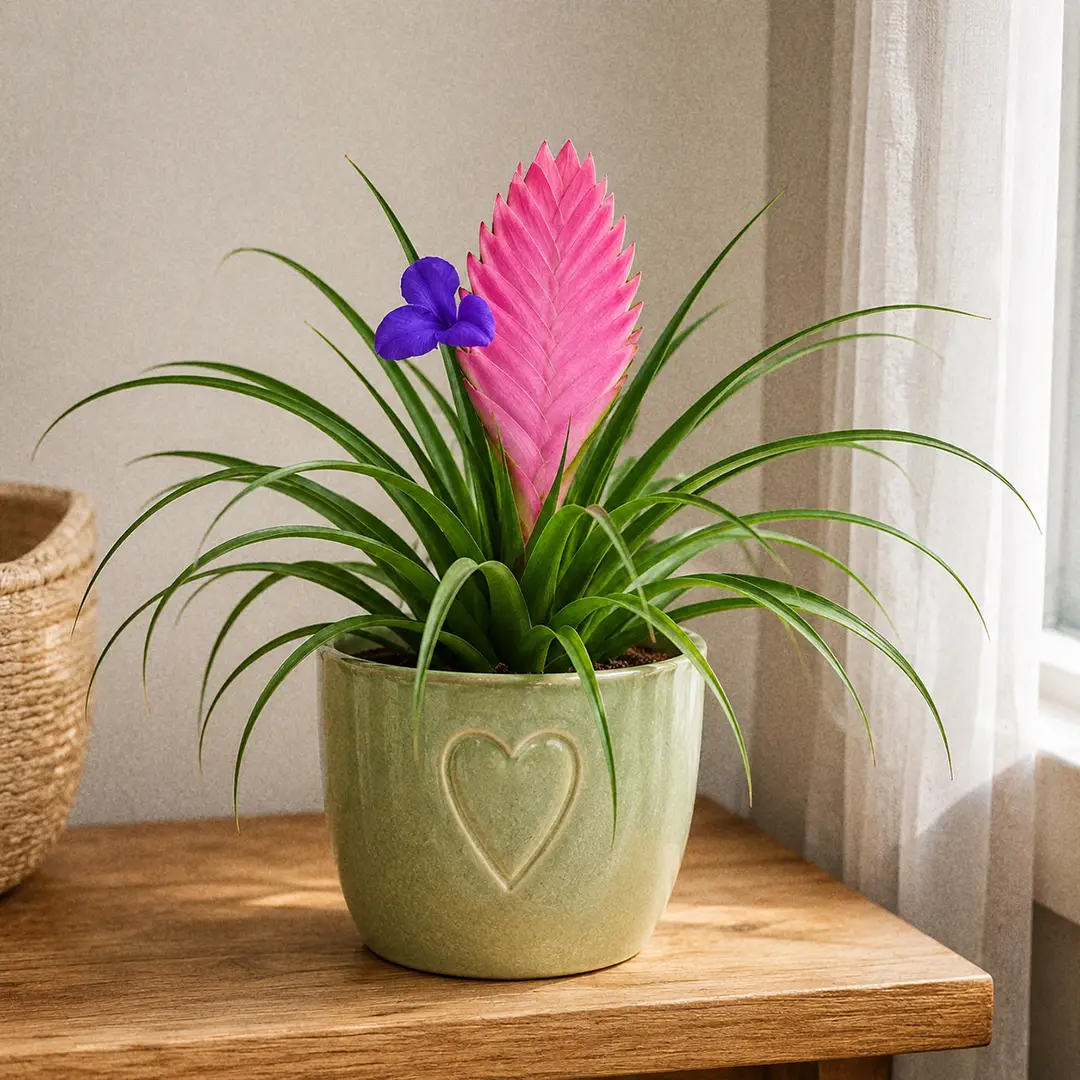
Complete Guide to Pink Quill Plant Care and Growth
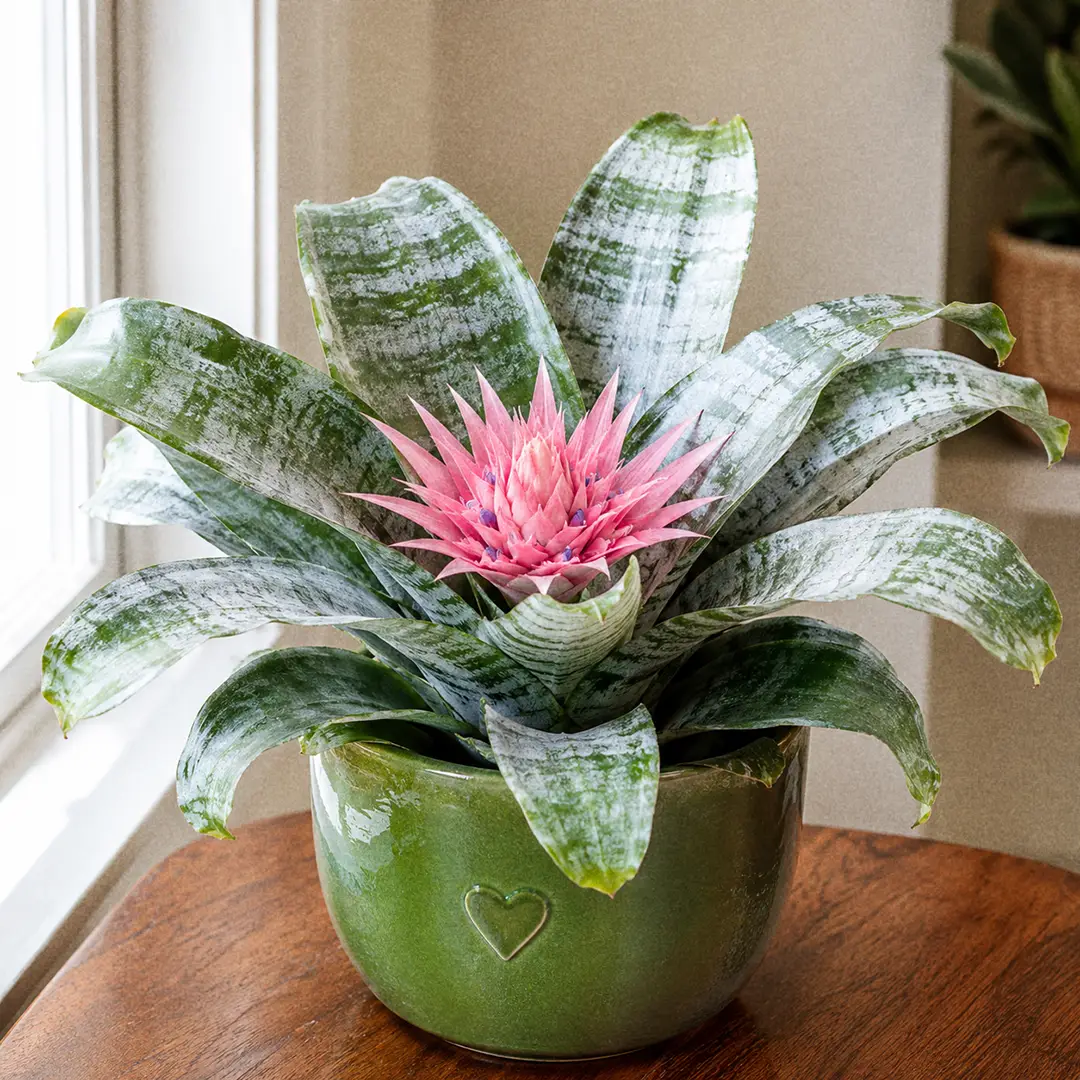
Complete Guide to Silver Vase Plant Care and Growth
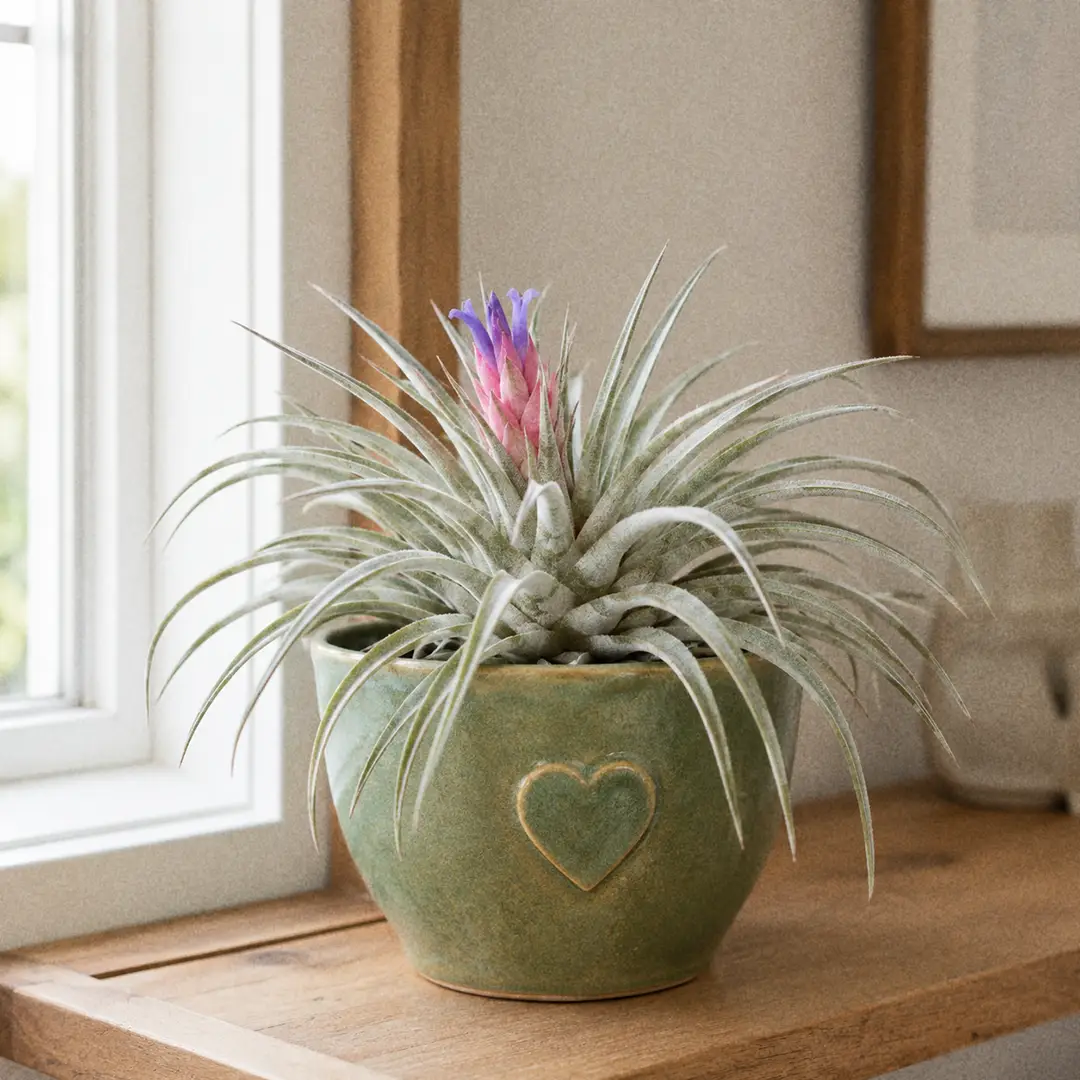
Complete Guide to Sky Plant Care and Growth
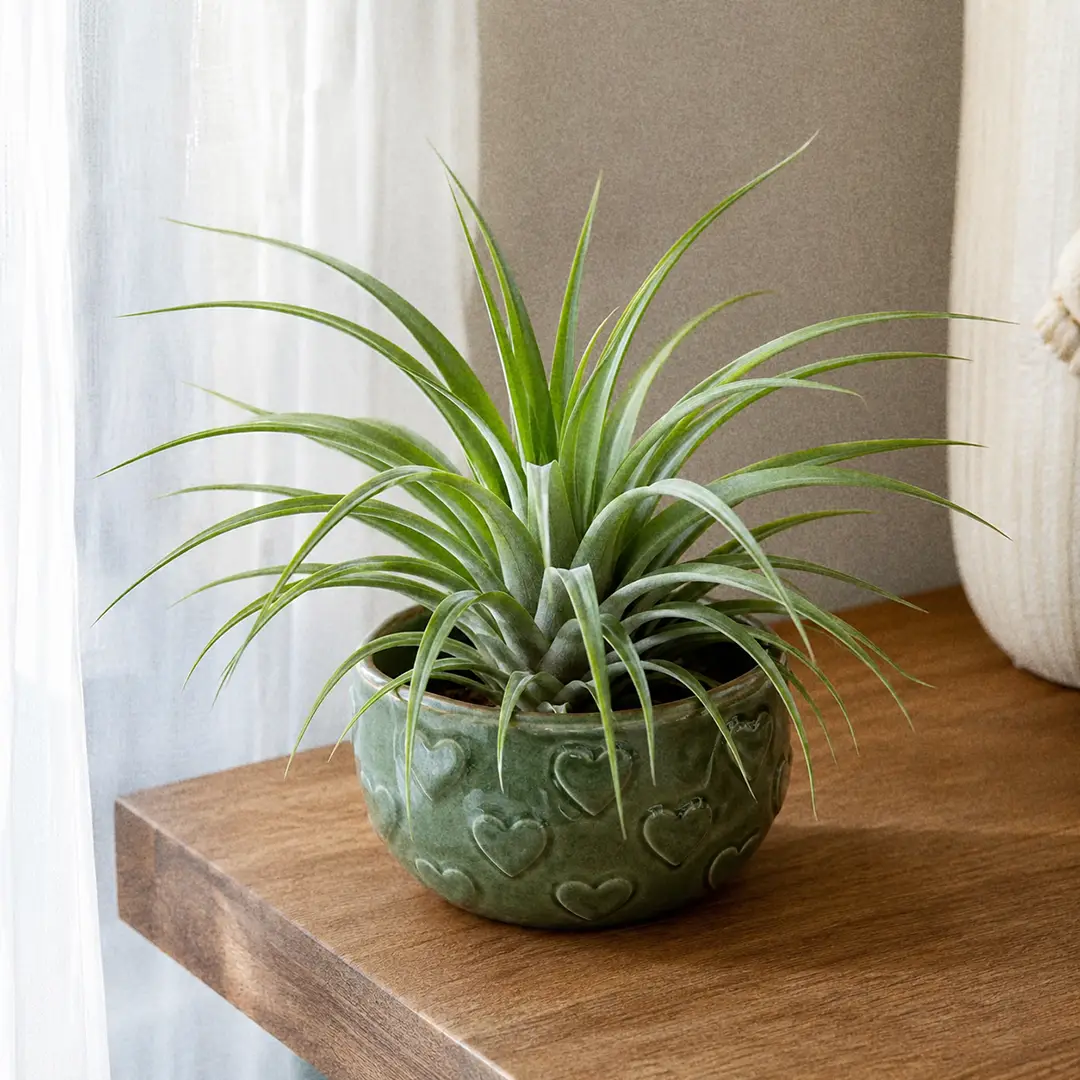
Complete Guide to Brachycaulos Air Plant Care and Growth

Houseplant101 Forum
Questions & Comments
Ask a question, share your plant experience, or help other plant owners.
Comments are temporarily unavailable.
Open the Houseplant101 ForumNo comments yet
Be the first to ask a question or share your experience about this page.
Log in or create an account
Comments use your Houseplant101 Forum account, but you can stay on this page.
Create a new account