
Jonesii Air Plant
Tillandsia jonesii
Jonesii, Tillandsia Jonesii


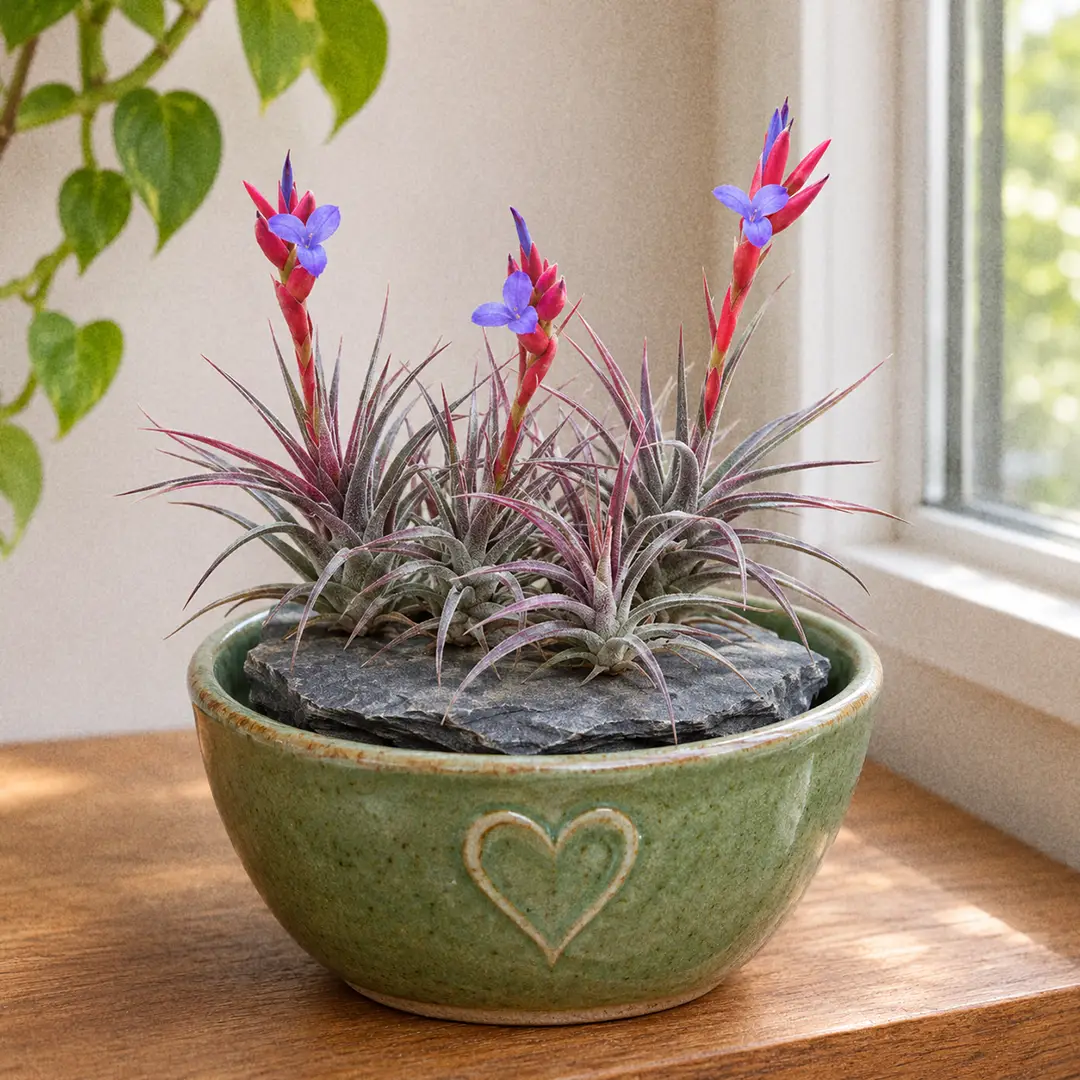
Jonesii Air Plant (Tillandsia jonesii) is a rare, rock-growing air plant from southern Brazil with stiff, twisted silver-green leaves that flush purple to ruby red, and blue flowers over a pink bract. Learn what it really is, how it differs from the Sky Plant, and how to grow it into a clump indoors.
📝 Jonesii Air Plant Care Notes
🌿 Care Instructions
⚠️ Common Pests
📊 Growth Information
🪴 In This Guide 🪴

☀️ Jonesii Air Plant Light Requirements (Bright, Some Sun)
The Sweet Spot
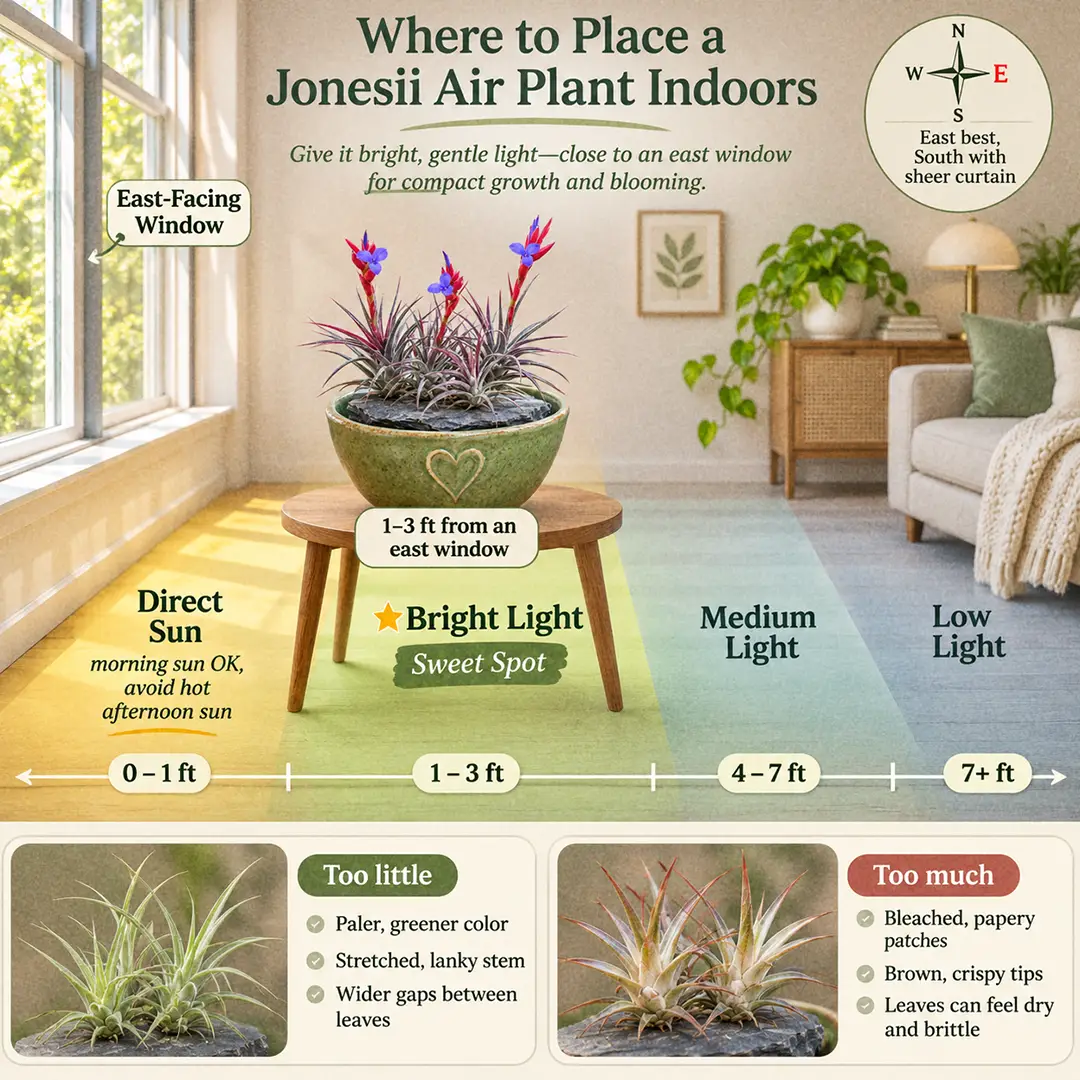
Give it bright light with a little gentle sun. An east window is ideal, with the plant one to three feet from the glass so it catches soft morning sun. A south window works too if a sheer curtain takes the edge off the midday rays.
This is a lithophyte, meaning it grows on rock rather than on trees. In Rio Grande do Sul it forms tufts on open rock faces, so it is used to more light than a forest air plant. Even so, the nurseries that sell it recommend bright, indirect light indoors. Sun through window glass, with no breeze, heats a small plant much faster than open-air sun on a rock face, so keep the direct sun to the gentle morning kind.
Too Little Light
In a dim room, Jonesii stays plain green-grey, the leaves soften, and the stem stretches with wide gaps between leaves. It also stops making pups and will not flower. If your brightest window is still dull, a grow light about 12 inches above the plant for 10 to 12 hours a day fixes it. Our indoor light guide explains how to judge a spot.
Too Much Light
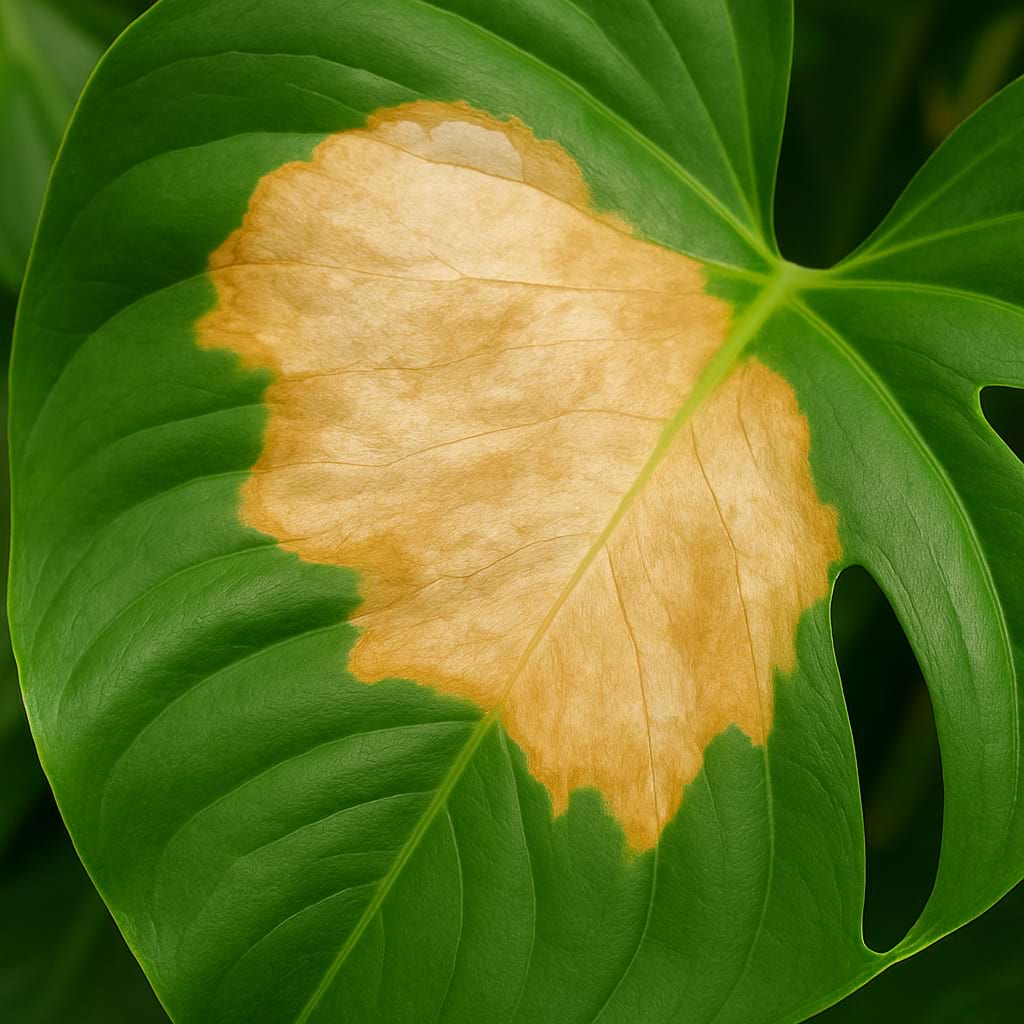
Hot afternoon sun through a west or south window is the risk. Watch for bleached, papery patches and tips that go brown fast. That is sunburn, and the damaged tissue does not recover. Move the plant back a few feet or add a curtain.
A purple to ruby flush across the leaves is a different thing. Sellers describe the leaves as silver-green to ruby red, and the deeper color shows up in strong light. It means the light is right.
💧 Jonesii Air Plant Watering Guide (Soak or Dunk, Then Dry)
Watering Frequency
Start with one 15 to 20 minute soak a week. Rainforest Flora, one of the few US nurseries that sells it, suggests misting or dunking two to three times a week instead, and more often in hot, dry weather. Both routines work. Pick the one that suits your week and adjust by how the plant looks.
The silver coating on the leaves is made of tiny scales called trichomes, which soak up water and slow its loss. That makes Jonesii more forgiving of a late watering than the smooth green air plants. In a cool, humid room, every ten days may be enough.
How to Water
Submerge the whole plant in room-temperature water. Rainwater or filtered water is best, and ordinary tap water is fine in most homes. Avoid water from a salt-based softener, since sodium builds up on the leaves.
Then shake it firmly and set it upside down or on its side on a towel or dish rack in moving air. The key rule, from growers who keep it, is that the leaves should be dry within a few hours. A clump holds water between its stems, so give clumps an extra shake and more drying time. Our watering guide covers the basics.
Signs of Trouble
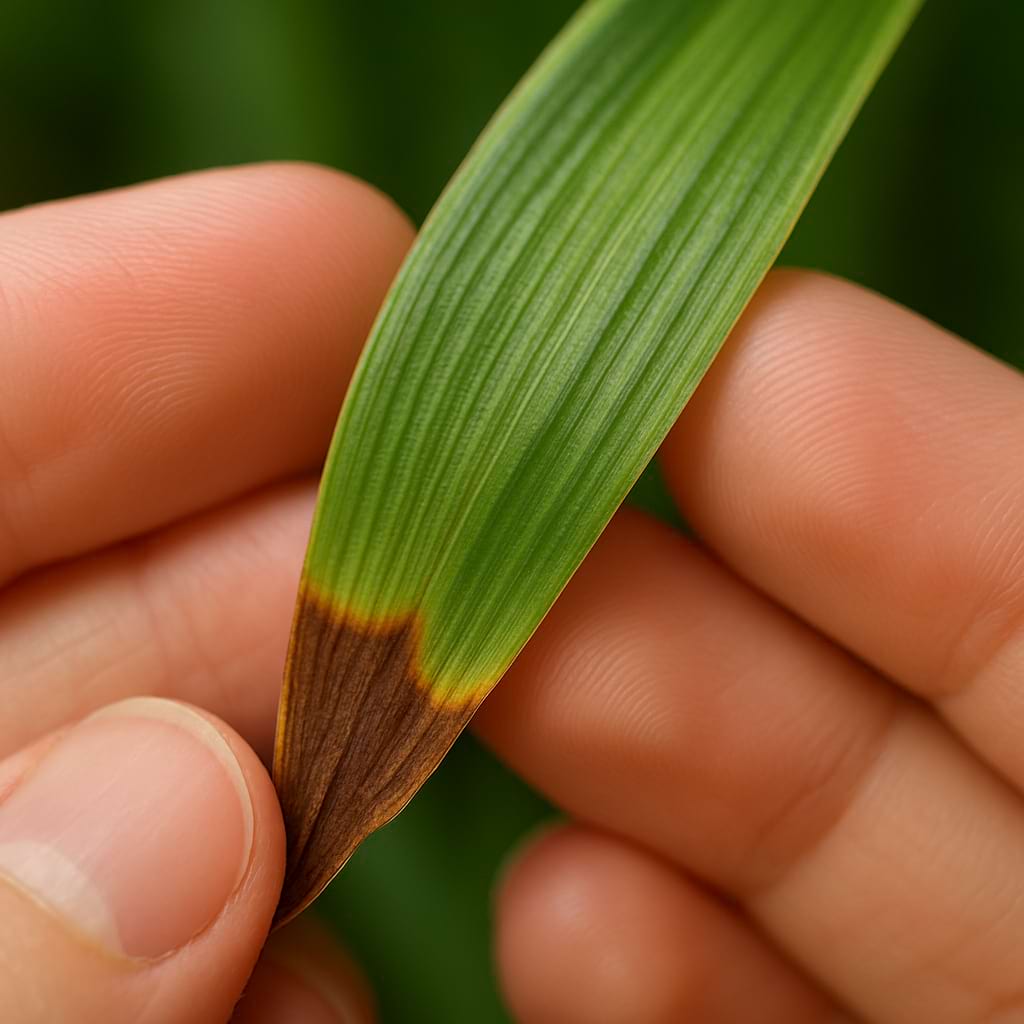
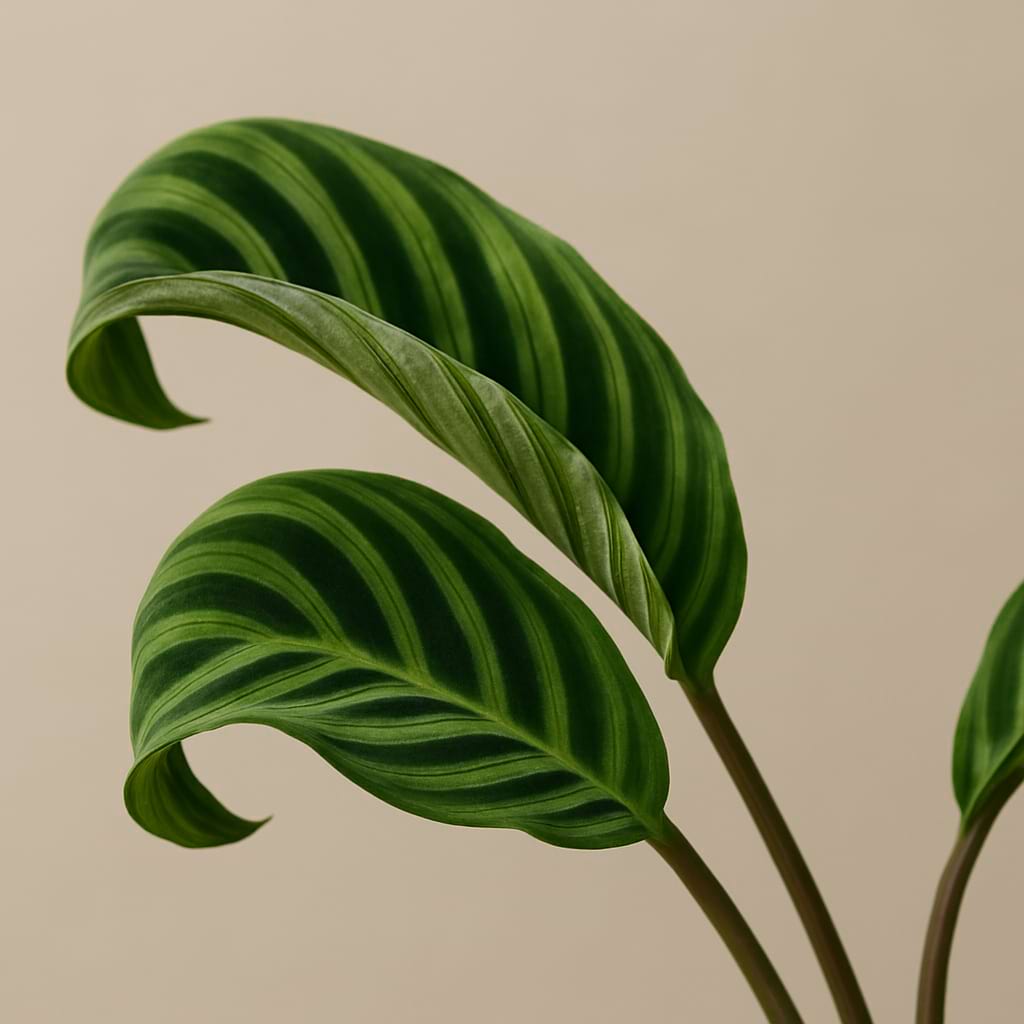
Leaves that roll inward and look greyer and tighter than usual are thirsty. A soak relaxes them within hours. Crispy brown tips that keep spreading mean it needs water more often, or it is sitting too close to a heater.
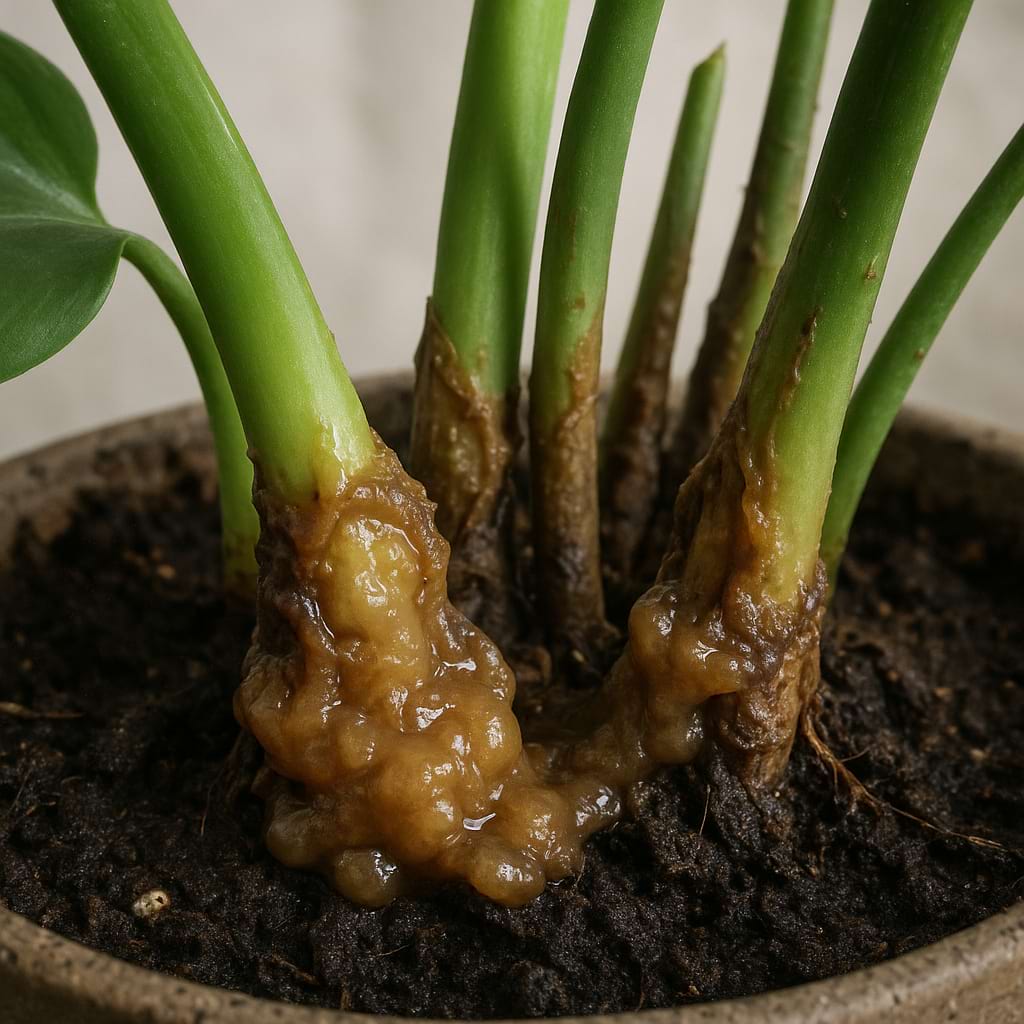
A dark, soft base or stem, or leaves that pull out with a wet tug, mean rot. That nearly always comes from a plant that stayed wet too long after watering.
🪴 Best Soil for Jonesii Air Plant (None, It Grows on Rock)
Why It Skips Soil
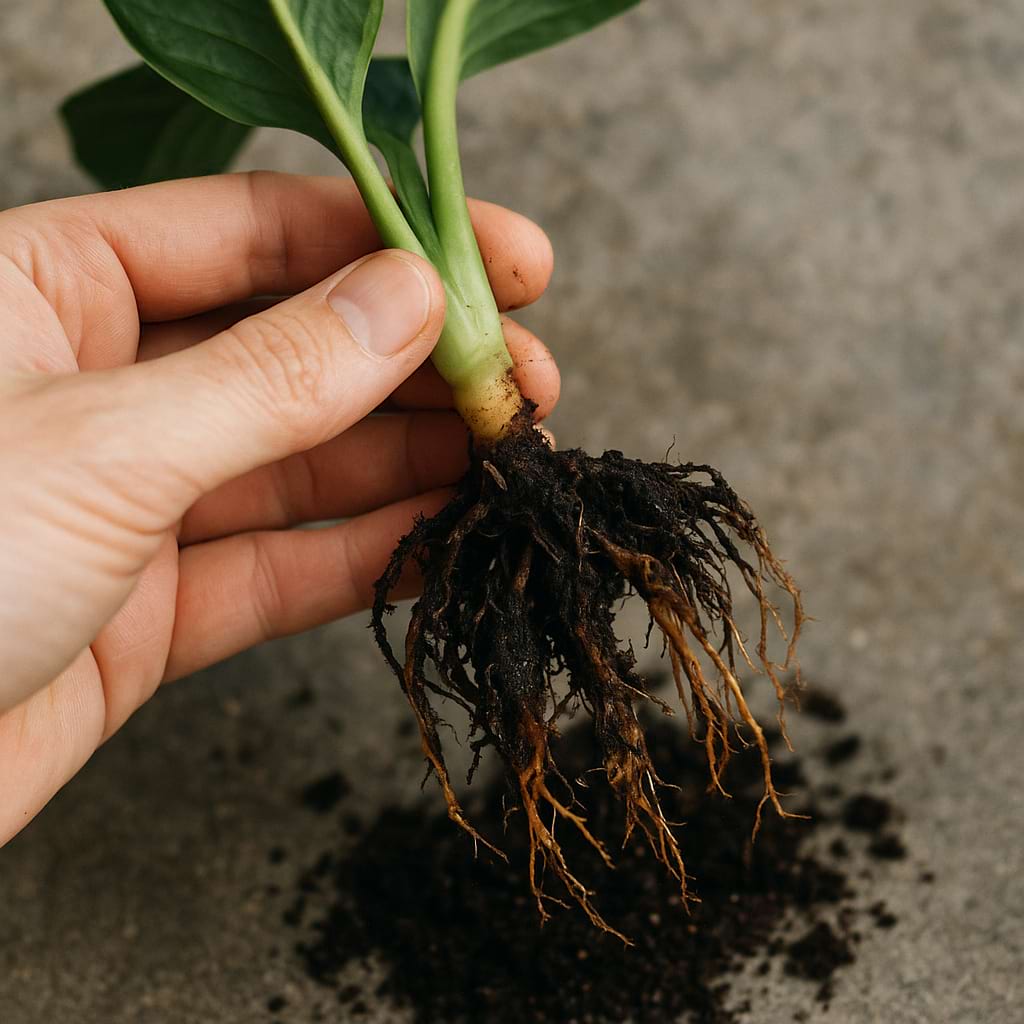
In the wild, Jonesii clings to bare rock. Its roots are short and wiry and exist only to hold on. Water and food come in through the leaves. If you plant it in potting mix, the base stays damp and rots, usually within a few weeks.
So there is nothing to mix and nothing to repot each spring. That alone makes it easier than most houseplants.
What to Grow It On
Anything that lets air reach the base works. Given its habitat, a piece of slate, lava rock or a smooth river stone is the natural choice, and cork bark or untreated wood work just as well. Tropiflora, a Florida bromeliad nursery that has grown it, notes that once a clump forms it can simply be hung from a string. That is one of the easiest setups there is.
Containers to Avoid
Skip closed terrariums, sealed glass globes, and anything packed with damp moss. A rock plant kept in still, humid air stays wet far too long. An open-sided globe or a shallow dish is fine.
🍼 Fertilizing Jonesii Air Plant (Light and Monthly)
When and How Often
Feed once a month from spring to late summer and stop in autumn and winter. Feeding is optional. An unfed plant still grows, just a little more slowly, and a light monthly dose helps it reach flowering size and push out pups.
What to Use
Use a bromeliad or air plant fertilizer, or a balanced houseplant feed at a quarter of the label strength. A urea-free formula is better, because air plants have no soil bacteria to break urea down. Mix it into the soak water so feeding and watering happen in one step. Our fertilizing guide and fertilizer roundup have more detail.
Over-Fertilizing Signs
Burnt brown tips and a faint white crust on the leaves mean too much. Give it two soaks in plain water to rinse it off, then go lighter. More fertilizer will not make it flower faster.
🌡️ Jonesii Air Plant Temperature Range
Ideal Range
Normal room temperatures suit it, roughly 60°F to 85°F (16-29°C). Rainforest Flora describes it as happy in warm to intermediate conditions, and it grows naturally in a subtropical part of Brazil where winters are cool.
Cold Limits
No one has published a cold-hardiness rating for this species. Its lookalike, the Sky Plant, is famous for handling near-freezing nights, but that does not carry over automatically to a different species. Keep Jonesii above about 50°F (10°C) to be safe, and bring it in before autumn nights turn cold if you summer it outside.
Drafts and Heat Sources
A gentle breeze is good for it, since it speeds drying. Dry, blasting heat is the problem. A shelf right above a radiator or in the path of a heating vent dries it out between waterings and crisps the tips.
💦 Jonesii Air Plant Humidity Requirements
Ideal Humidity
Average household humidity of 40 to 60% is enough, as long as the plant gets its regular water. Its silver trichomes help it hold moisture, and a rock-face plant is used to drying winds. Good airflow matters more to it than high humidity.
Easy Humidity Boosters
In a very dry winter room, add one extra dunk a week or set it near a small humidifier. Grouping air plants together helps a little too. Avoid daily heavy misting in still air, which keeps the base damp without fully watering the plant. See our humidity guide for more.
Signs the Air Is Too Dry
In dry air the leaves roll inward sooner after each soak, the plant looks greyer, and the tips start to brown even though you water on schedule. Before buying gadgets, move it away from heat sources and add a midweek dunk. That usually solves it.
🌸 Jonesii Air Plant Flowers (Pink Bract, Blue Blooms)
What the Flowers Look Like
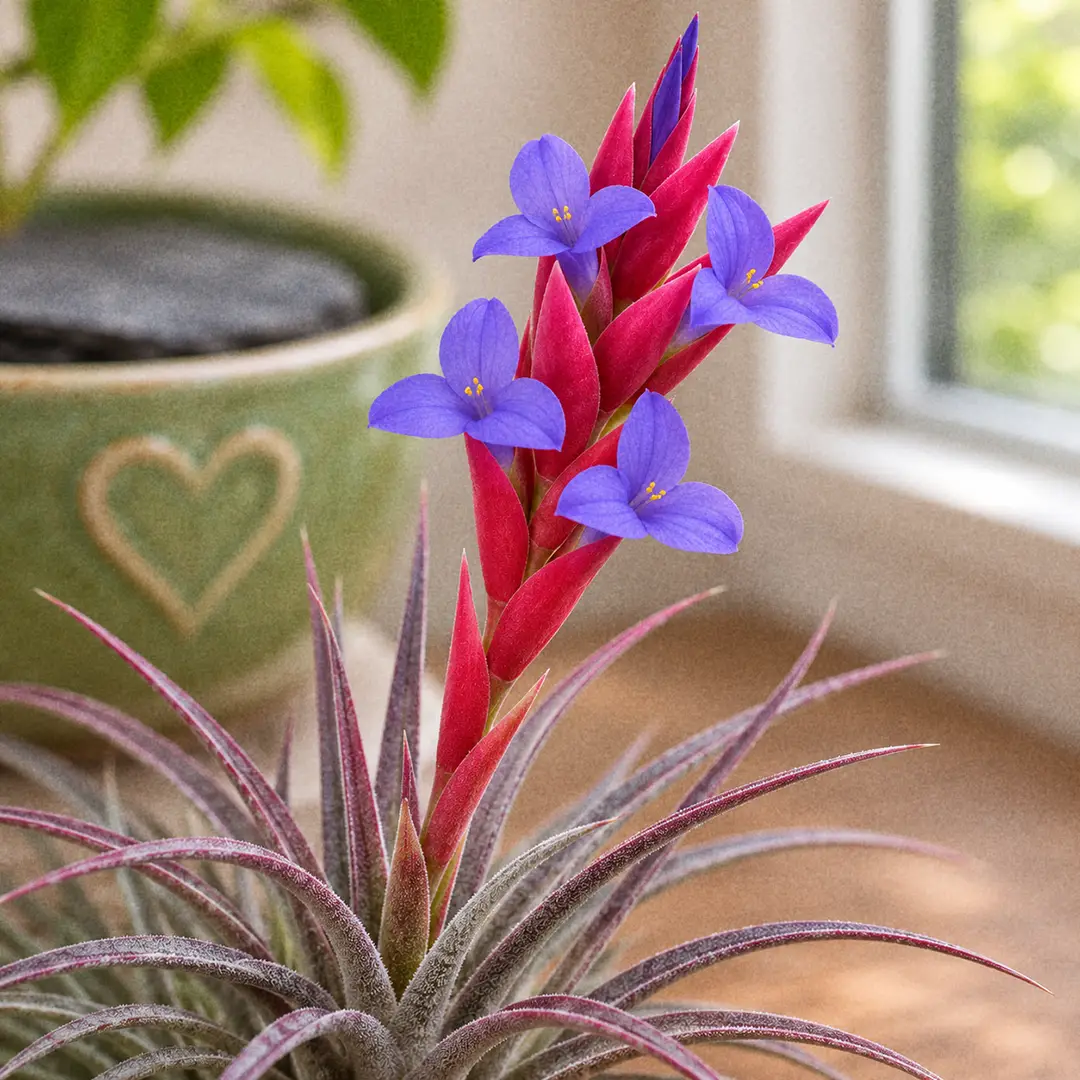
Nursery descriptions agree on the basics. Jonesii flowers from a single, unbranched spike with a bright pink to red bract and a handful of blue flowers, usually four to six according to Rainforest Flora. Tropiflora describes the petals as flaring blue, and Plant Addicts lists them as purple. In practice that means somewhere between clear blue and violet. Listings disagree on how tall the stalk gets, so expect anything from a short spike sitting near the leaves to one standing a few inches above them.
As with most air plants, each individual flower lasts only a few days.
How to Get It to Bloom
Light is the trigger that matters most. A mature plant in bright light with some morning sun, regular soaks, and a light monthly feed will usually flower once it reaches full size. A small pup may need a year or two first. There is no reliable bloom season on record for indoor plants, so do not wait for a particular month.
After It Blooms
Like every Tillandsia, each plant flowers only once. That is not the end. Flowering is what sets off pups at the base, and the mother plant stays green for many months while they grow. Cut the stalk once it dries.
If It Won't Bloom
Failure to bloom almost always means not enough light. Move it closer to a bright window for a full growing season before changing anything else. If it is still small, it simply needs time.
🏷️ Jonesii Air Plant Types and Varieties
What Tillandsia jonesii Actually Is
Tillandsia jonesii is a real, accepted species. It was described in 2000 by the botanist Teresia Strehl, in a paper in the journal Iheringia naming new air plants from Rio Grande do Sul. Kew's Plants of the World Online accepts the name, lists its range as Rio Grande do Sul only, and classes it as a lithophyte. The type plant was collected near Riozinho in that state in 1994.
A 2015 paper in Phytotaxa lists Jonesii among several rock-growing air plants that are endemic to Rio Grande do Sul and have restricted ranges. It belongs to subgenus Anoplophytum, the same group as the Sky Plant and the Tenuifolia Air Plant. There are no named cultivars or varieties of it in the trade that we could find.
How It Is Sold
It is rarely sold. We found it listed by only a few specialists, mainly Tropiflora and Rainforest Flora, plus a sold-out listing at Plant Addicts. Plants usually ship at about 2 to 3 inches. Tropiflora says its stock traces back to the collection of Brazilian bromeliad expert Elton Leme. You are very unlikely to meet it in a garden center bin.
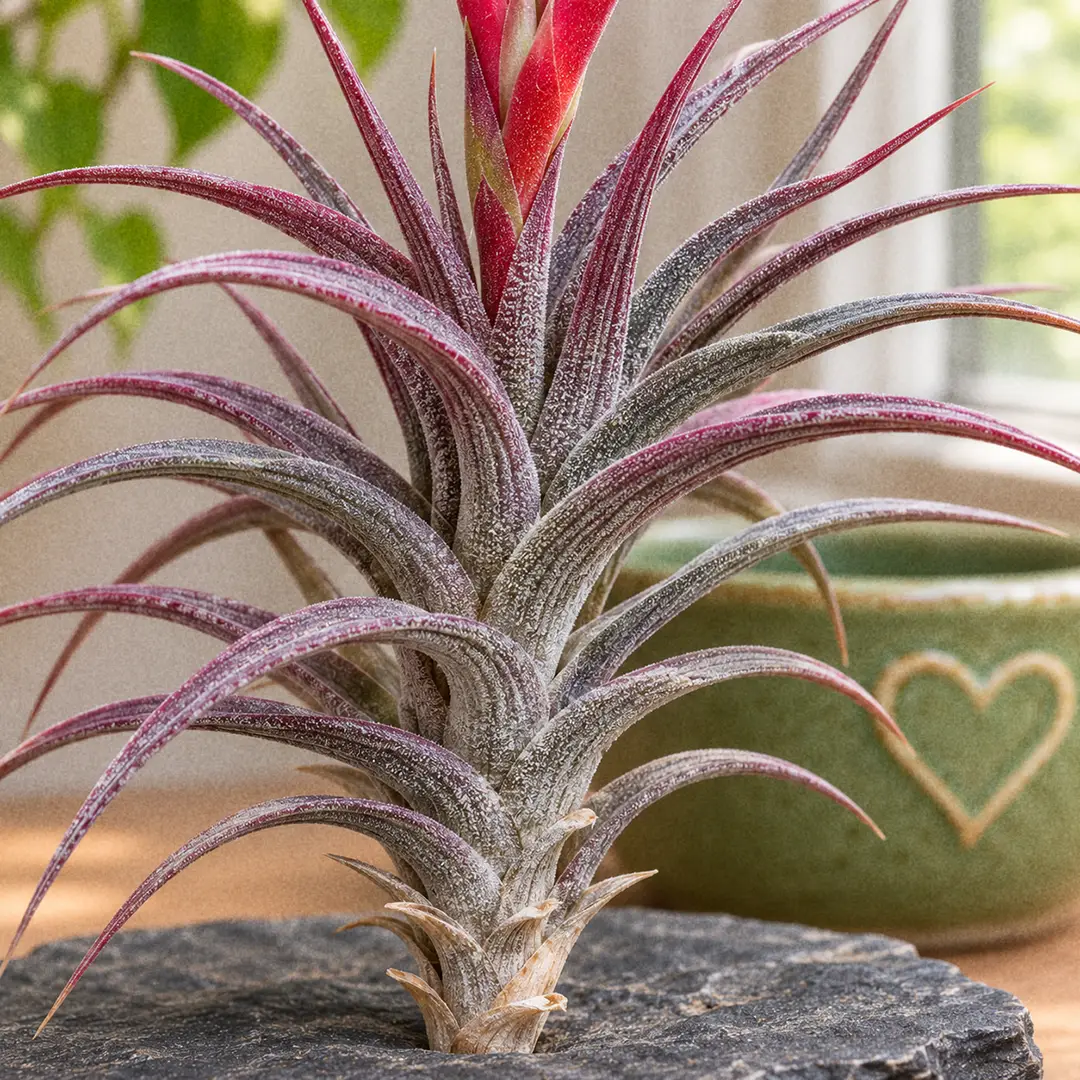
Tropiflora notes that Jonesii looks a lot like T. aeranthos, the Sky Plant. Both have stiff, narrow silvery leaves, a pink bract and blue to violet flowers, and both clump. The descriptions that exist point to a few traits worth checking. Jonesii grows on a visible stem, with short leaves of about 2 to 3 inches set in many rows. The leaves are grooved, curve back, and twist, and they flush dark purple to ruby red.
We could not find a published side-by-side key that separates the two with confidence. Because they look alike and Jonesii is rare, a label alone is not proof. Buy from a specialist that names the species, and treat any "Jonesii" from a mixed bin with suspicion.
Jonesii vs Other Air Plants
If the stem is what you like, the Duratii Air Plant is a much bigger silver plant on a long stem. For a dense, fast clump of short leaves, the Tenuifolia Air Plant is the easy, widely sold choice, though it is greener and thirstier. The Stricta Air Plant is the common pick if you want a pink bract with blue to violet flowers at a fraction of the hunt, with softer leaves in a stemless rosette.
🪴 Mounting a Jonesii Air Plant
When to Remount
Jonesii never goes in a pot, so it never needs repotting. What happens instead is that a clump outgrows its mount. Tropiflora says clumps form easily, so plan for a bigger stone or piece of cork every few years.
Choosing a Mount
Slate, lava rock, cork bark and driftwood all work. Choose something larger than the plant in your hand so the clump has room to spread. Make sure air can reach the underside of the base, and avoid anything that holds water against it.
How to Attach It
Let the plant dry fully first. Put a small dab of waterproof, plant-safe glue on the bottom of the stem, or tie it on with fishing line between the lower leaves. Keep glue off the center. Never use copper wire, which is toxic to bromeliads. Within a few months the roots grip the surface and the tie can come off.
✂️ Pruning a Jonesii Air Plant
Trimming Leaf Tips
Pruning here is light cleanup. Snip brown leaf tips with clean scissors, cutting at an angle that follows the natural taper so the trim does not show. Stay out of green tissue.
Clearing the Stem
Because Jonesii grows along a stem, the oldest leaves at the bottom dry out and turn papery over time. That is normal. Pull them away gently once they are fully brown, which also helps air reach the base.
After Flowering
Cut the flower stalk close to the plant once it dries. When the mother plant has finished and gone brown, twist it out of the clump so the pups have the space.
🌱 How to Propagate Jonesii Air Plant
Best Method: Pups
Jonesii spreads by pups, small new plants that grow from the base, usually after flowering. Tropiflora describes it as a plant that clumps easily, and Rainforest Flora notes that in the wild it forms dense tufts on rock. Seed is possible but slow, and best left to specialists.
Step-by-Step Pup Removal
- Wait until the pup is at least one third the size of the mother. Smaller pups often struggle alone.
- Hold the mother in one hand and grip the pup low, right where it joins.
- Twist gently and pull sideways. A ready pup comes away with a small snap.
- If it resists, stop and wait a few more weeks. Tearing the base invites rot.
- Let the pup dry for a day, then give it the same care as the parent.
Clump or Separate?
Leaving the pups on creates the dense tuft this plant makes in the wild, and it is the best way to show it off. Each plant in a clump flowers on its own schedule, so a mature clump can give you color more than once a year.
The trade-off is drying. A clump traps water between its stems, so shake it harder after watering and let it dry upside down. Separate pups only when you want to share plants or start a second mount.
🐛 Jonesii Air Plant Pests and Treatment
Mealybugs and Scale
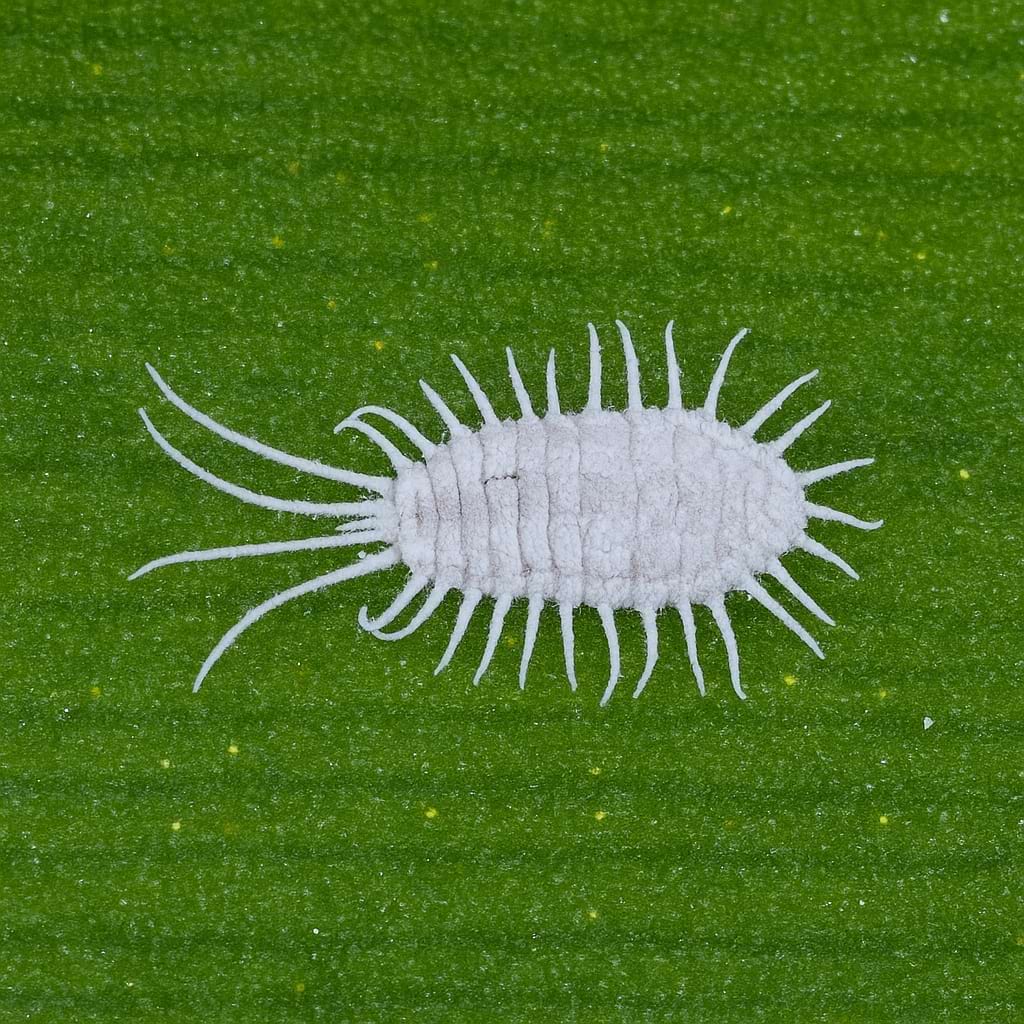
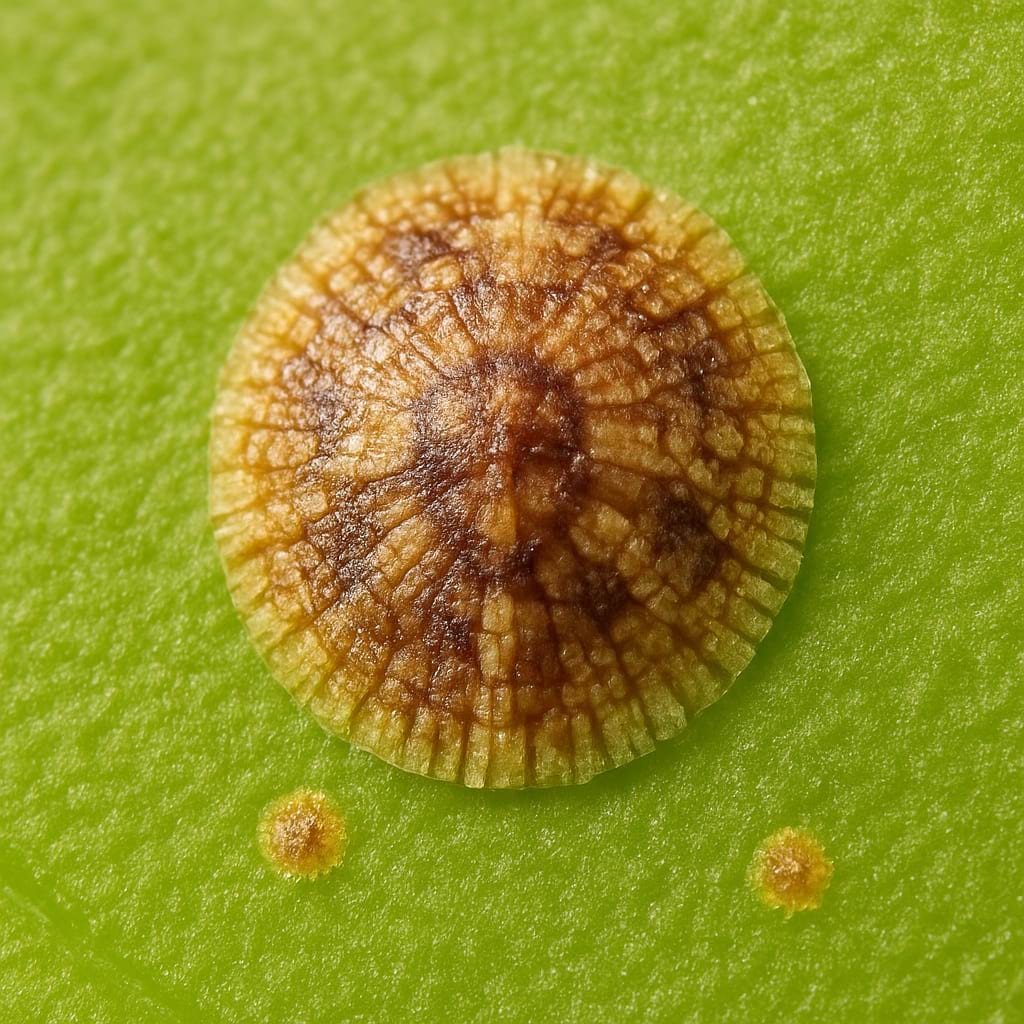
Air plants have few pests, since there is no damp soil to breed in. Most arrive on a new plant. Mealybugs look like tiny cotton tufts between the leaf bases. Dab them with a cotton swab dipped in rubbing alcohol, then soak as usual. Scale insects are small tan bumps on the leaves or stem. Scrape them off gently and wipe the spot with alcohol.
Spider Mites
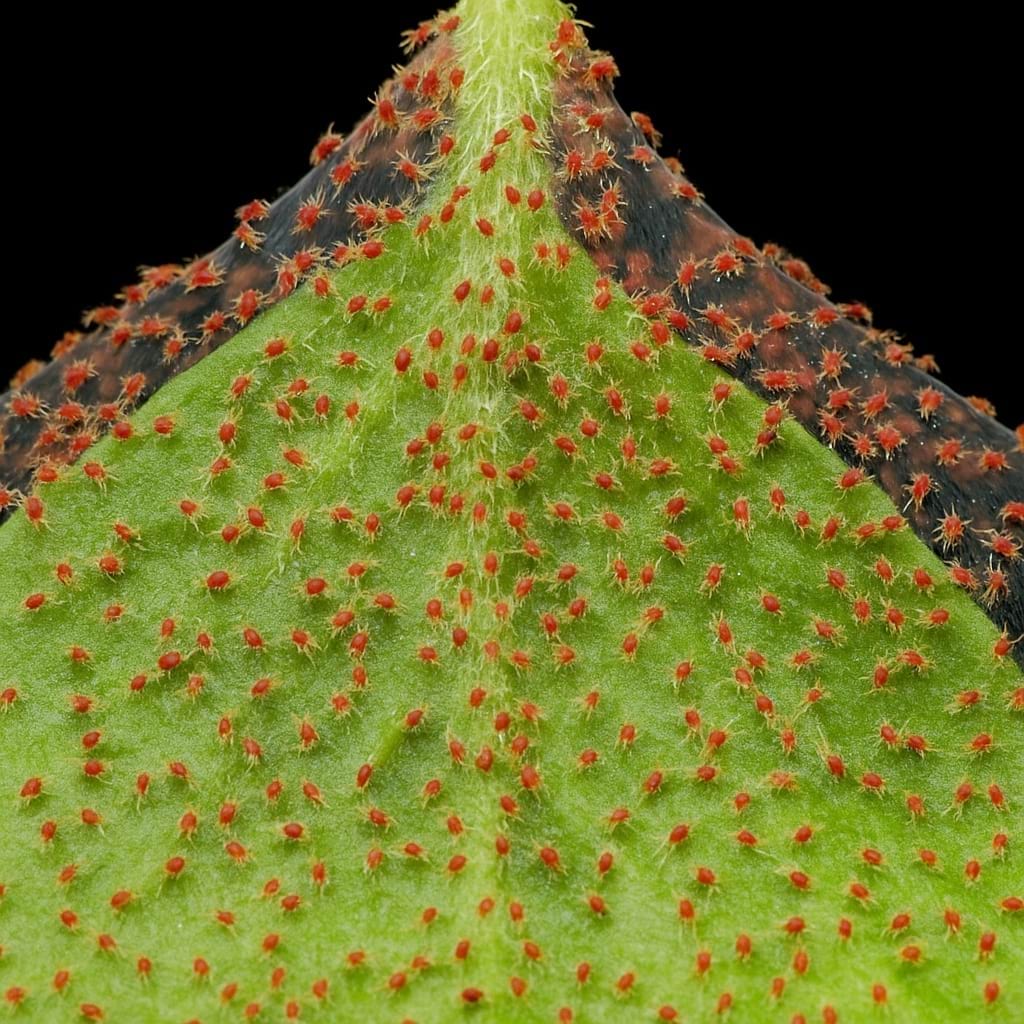
Spider mites leave fine webbing and a dusty, speckled look, mostly in hot, dry, still air. Regular soaks and better airflow usually clear them. If they return, rinse the plant under the tap before each soak for a few weeks.
Keeping Pests Away
- Quarantine new air plants for two weeks before adding them to a group.
- Check the stem and the crowded centers of a clump when you water.
- Space plants so air moves between them.
🩺 Common Jonesii Air Plant Problems
Rot in the Base or Stem
The most serious problem. The base or stem goes dark and soft, and leaves pull out easily. This is rot or mushy stems, caused by water left sitting in the plant or clump after watering. It cannot be reversed. Save any firm pups and change the drying routine: shake harder, dry upside down, and keep it out of closed containers.
Brown Tips and Curled Leaves
Brown, crispy tips usually mean the plant dries out too much between waterings, or sits near a heater. Curling leaves that roll inward are a thirst signal. If a soak does not relax them by the next day, water more often.
Pale, Stretched Growth
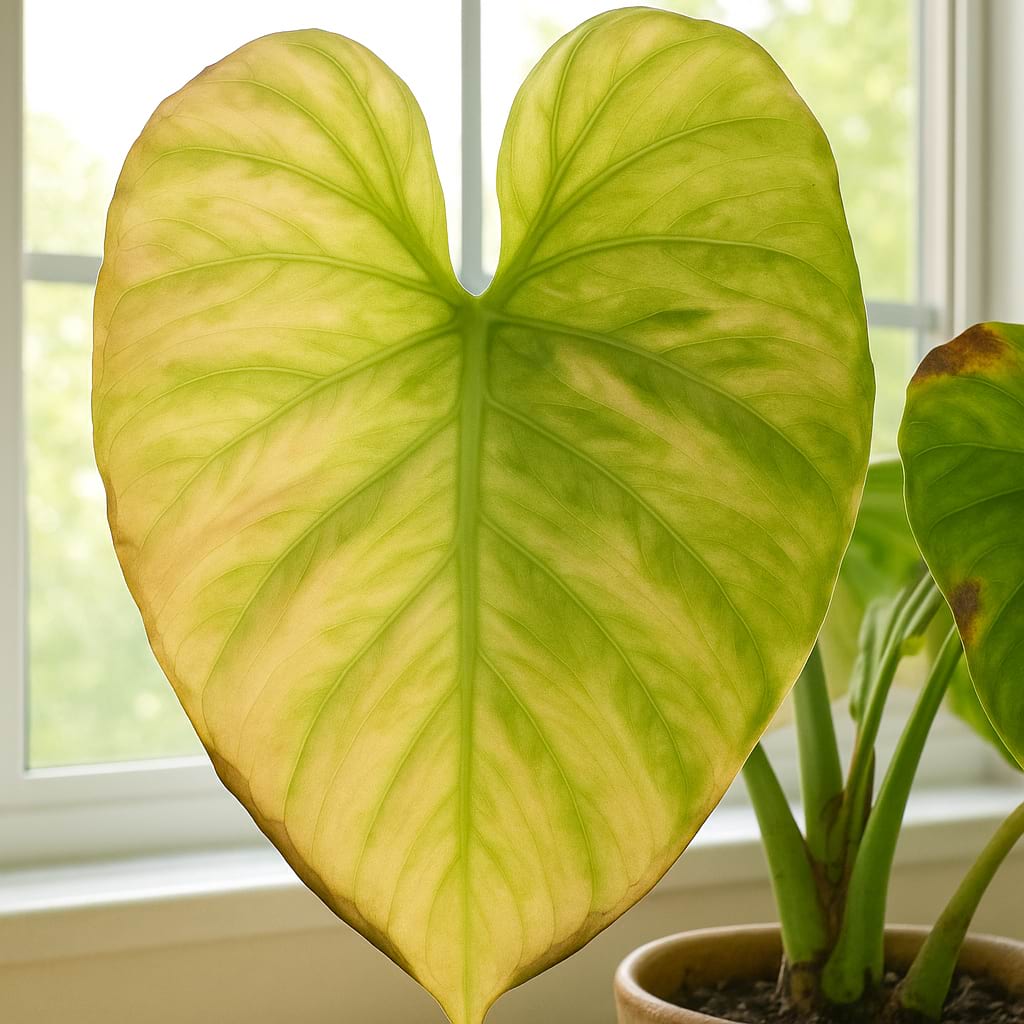
Pale, faded leaves with no purple tint and wide gaps along the stem mean too little light. Move the plant closer to a bright window. Fertilizer will not fix a light problem.
A Mother Plant That Is Fading
A plant that slowly browns from the bottom up after flowering is not sick. That is the normal life cycle. As long as firm pups are growing at the base, the clump is doing what it should.
🖼️ Jonesii Air Plant Display and Styling Ideas
Solo Setups
The most fitting display mirrors where it grows: a clump sitting on a piece of slate, lava rock or weathered stone. Set it at eye level near a bright window so the twisted leaves and the stem read from the side. A plain ceramic dish works too, and makes the purple flush stand out.
Hanging Clumps
Once you have a clump, try Tropiflora's simple method and hang it from a length of fishing line in a bright window. It dries quickly up there, which suits it, and it is easy to take down for watering.
Grouped Arrangements
On a mixed board or shelf, Jonesii's short, stiff leaves look good next to the soft fountain of a Juncea Air Plant or the broad silver curls of a Xerographica Air Plant. Avoid sealed globes, closed terrariums and dark shelves.
🌟 Jonesii Air Plant Pro Care Tips
Watering Habits
- Dry within four hours. If it is still damp after that, it needs more airflow or a shorter soak.
- Shake clumps hard. Water hides between the stems.
- Use leaf curl as your cue. Tighter, greyer leaves mean it is time to water.
Setup Habits
- Grow it on stone. It is a rock plant, and stone dries fast and looks right.
- Give it bright light with gentle sun. Good light brings out the purple and leads to flowers.
- Skip copper. Use fishing line or plastic-coated wire to attach it.
Buying and Long-Term
- Buy from a bromeliad specialist. With a rare species, the seller's label is your best evidence.
- Let it clump. A tuft of several plants is sturdier and more striking than a single stem.
❓ Frequently Asked Questions
Is Tillandsia jonesii a real species?
Yes. It was described by Teresia Strehl in 2000 and is accepted by Kew's Plants of the World Online and it appears in the Bromeliad Taxon List kept by bromeliad specialists. It is a rock-growing species found only in Rio Grande do Sul in southern Brazil.
Is Jonesii the same as the Sky Plant?
No. They are separate species in the same group, and they look alike, which is why a Jonesii label deserves a careful look. Jonesii grows on a visible stem with short, twisted, grooved leaves that flush purple to ruby, and it is far rarer in the trade.
Is the Jonesii Air Plant safe for cats and dogs?
As far as we know, yes. Tillandsia as a genus is generally treated as non-toxic to cats and dogs, but that is a genus-level call, since there is no separate toxicity listing for T. jonesii. A pet that chews a large piece could still get an upset stomach.
How often should I water a Jonesii?
Soak it for 15 to 20 minutes once a week, or dunk it briefly two or three times a week, then shake it and dry it upside down. It should be dry within a few hours. Water more often in hot, dry weather and less in a cool room.
How big does a Jonesii Air Plant get?
Sellers ship it at about 2 to 3 inches, with leaves around 2 to 3 inches long. Rainforest Flora gives mature plants as roughly 6 to 8 inches long as the stem lengthens, and clumps grow wider over time.
Why is my Jonesii turning purple or red?
That is a good sign. The leaves flush purple to ruby red in strong light. If the color fades and the leaves look pale and stretched, the plant needs more light.
Does Jonesii die after flowering?
The plant that flowered slowly fades over many months, but first it makes pups at the base. Leave them on and the clump carries on for years.
Is it normal for my Jonesii to grow a stem?
Yes. Jonesii is a stem-forming species, so the leaves are spaced along a short stem rather than packed into a flat rosette. As the plant ages, the stem lengthens and the lowest leaves dry off. Wide gaps between leaves and soft, pale growth are the warning sign, and those mean it needs more light.
Can I grow a Jonesii in a terrarium?
Only an open one with good airflow. Closed terrariums and sealed globes keep it wet far too long and lead to rot. Water it outside the container and put it back once dry.
Where can I buy a Tillandsia jonesii?
It is mostly found at bromeliad specialists, such as Tropiflora and Rainforest Flora in the US, and stock comes and goes. Buy from a seller that lists the full species name rather than a generic mixed lot.
ℹ️ Jonesii Air Plant Info
Care and Maintenance
🪴 Soil Type and pH: No soil. Mount on cork, wood or stone, or rest it loose in an open dish or holder.
💧 Humidity and Misting: Normal household humidity is fine as long as it gets its regular soak and good air movement.
✂️ Pruning: Snip dry leaf tips at an angle, cut the dry flower stalk, and pull away papery lower leaves along the stem.
🧼 Cleaning: Rinse dust off during the soak. Do not wipe the leaves, which removes the silver scales it drinks through.
🌱 Repotting: Not needed. Move the clump to a larger mount or holder when it outgrows its spot.
🔄 Repotting Frequency: Not required
❄️ Seasonal Changes in Care: Soak weekly and feed monthly in spring and summer. In winter, keep it away from radiators and stretch the soaks slightly if it dries slowly.
Growing Characteristics
💥 Growth Speed: Moderate
🔄 Life Cycle: Evergreen perennial air plant. Each plant blooms once, makes pups, then dries away over many months.
💥 Bloom Time: Not well documented for indoor plants. A mature plant flowers once, and each flower lasts only a few days.
🌡️ Hardiness Zones: No published rating for this species. Treat it as frost-tender and grow it indoors or outdoors only in mild weather.
🗺️ Native Area: Endemic to Rio Grande do Sul in southern Brazil, where it grows on rock faces in a subtropical climate
🚘 Hibernation: No true dormancy. Growth slows in the darker months and it needs a little less water.
Propagation and Health
📍 Suitable Locations: East windows, bright south windows with a sheer curtain, cork or stone mounts, hanging from a line, open dishes
🪴 Propagation Methods: Separate pups once they reach a third of the mother's size, or leave them on to build a dense tuft.
🐛 Common Pests: Mealybugs, Scale Insects, Spider Mites
🦠 Possible Diseases: Base and stem rot from water left sitting in a clump that cannot dry
Plant Details
🌿 Plant Type: Lithophytic bromeliad (air plant)
🍃 Foliage Type: Narrow, stiff, grooved and twisted leaves set in many rows along a short stem
🎨 Color of Leaves: Silver-green, flushing purple to ruby red in strong light
🌸 Flower Color: Blue to violet petals held in a pink to red bract
🌼 Blooming: Yes, once the plant reaches mature size
🍽️ Edibility: Not edible.
📏 Mature Size: 2-3 inches when sold, stems lengthening to roughly 6-8 inches with age
Additional Info
🌻 General Benefits: Pet-safe, soil-free, small, clumps readily, and colors up in good light
💊 Medical Properties: No documented medicinal uses.
🧿 Feng Shui: A rock-dweller suited to stone, slate and other hard, earthy materials in a bright corner.
⭐ Zodiac Sign Compatibility: Capricorn
🌈 Symbolism or Folklore: Staying put, steady growth on hard ground
📝 Interesting Facts: Tillandsia jonesii was described by the botanist Teresia Strehl in 2000, in a paper naming several new air plants from the state of Rio Grande do Sul. It belongs to the same group of Tillandsia as the Sky Plant (T. aeranthos), which it closely resembles.
Buying and Usage
🛒 What to Look for When Buying: Buy from a bromeliad specialist that lists the full species name. Choose a firm plant with a solid, pale base and leaves that hold tight when tugged.
🪴 Other Uses: Rock and stone mounts, hanging clumps, open terrarium accents, collections of Brazilian air plants.
Decoration and Styling
🖼️ Display Ideas: Slate or lava rock, cork rounds, a clump hung from a fishing line, shallow ceramic dishes
🧵 Styling Tips: Show it on stone, the way it grows in the wild, and at eye level so the twisted leaves and stem read from the side.
🪴 See also 🪴
Complete Guide to Pink Quill Plant Care and Growth
Complete Guide to Kolbii Air Plant Care and Growth
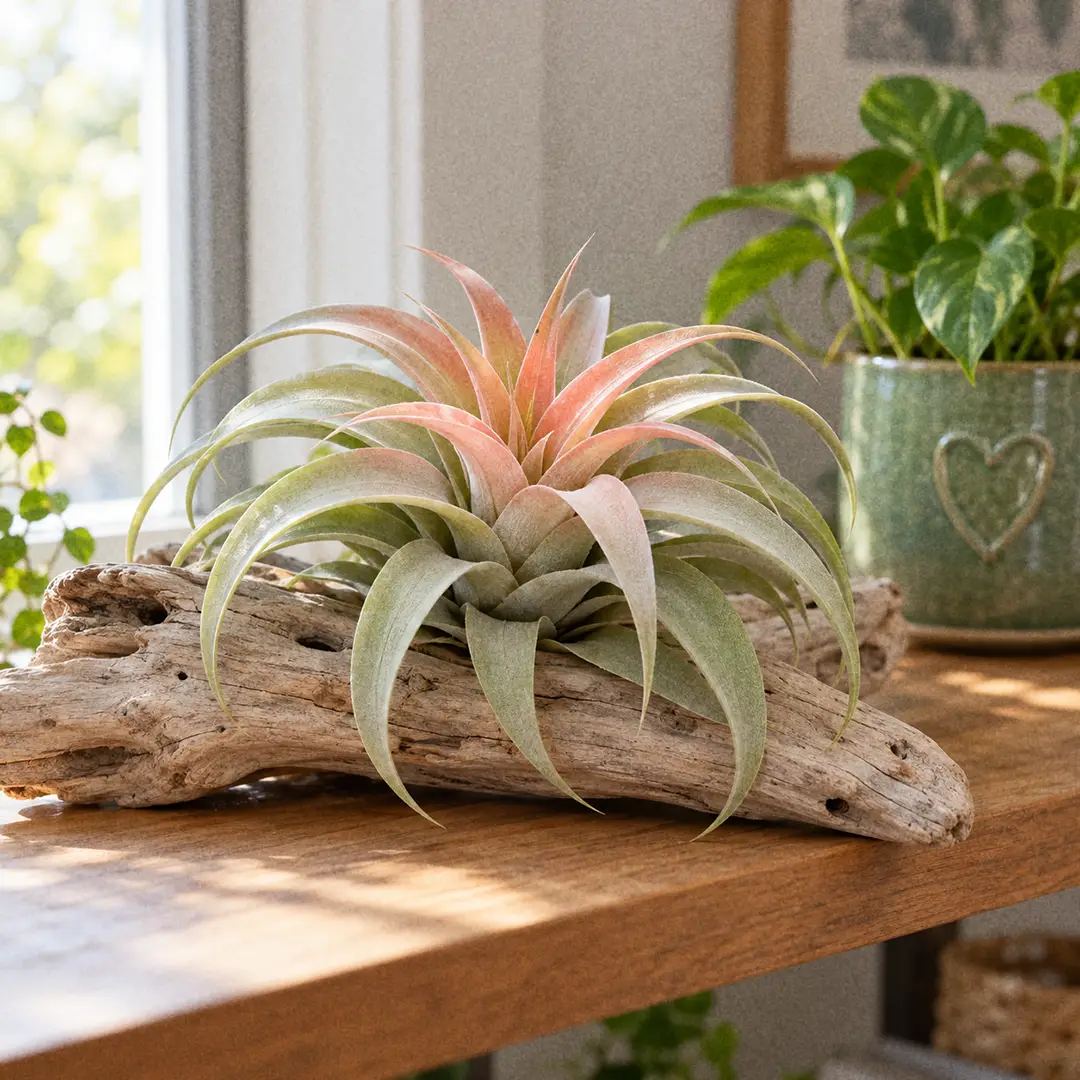
Complete Guide to Capitata Peach Air Plant Care and Growth
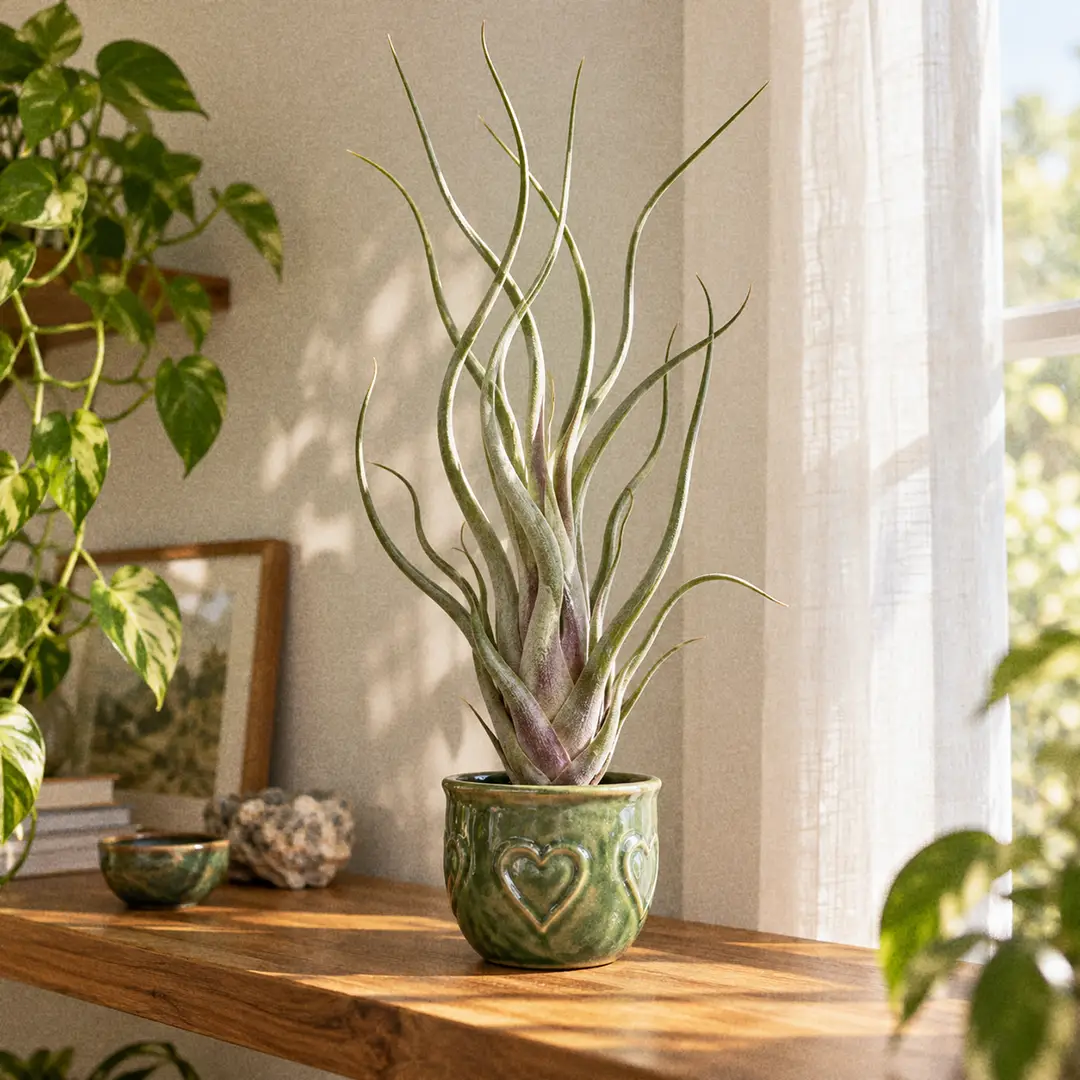
Complete Guide to Baileyi Air Plant Care and Growth
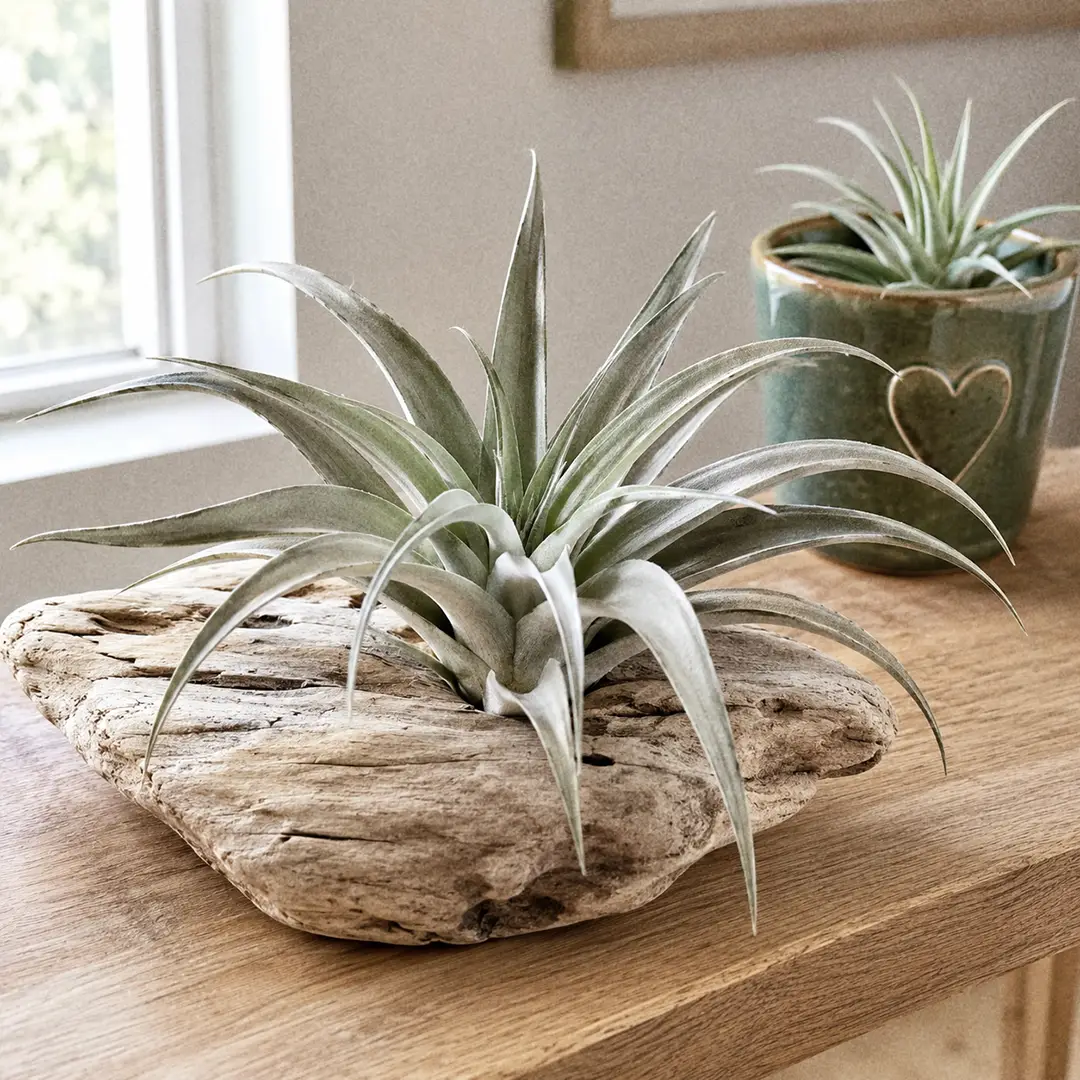
Complete Guide to Harris's Air Plant Care and Growth
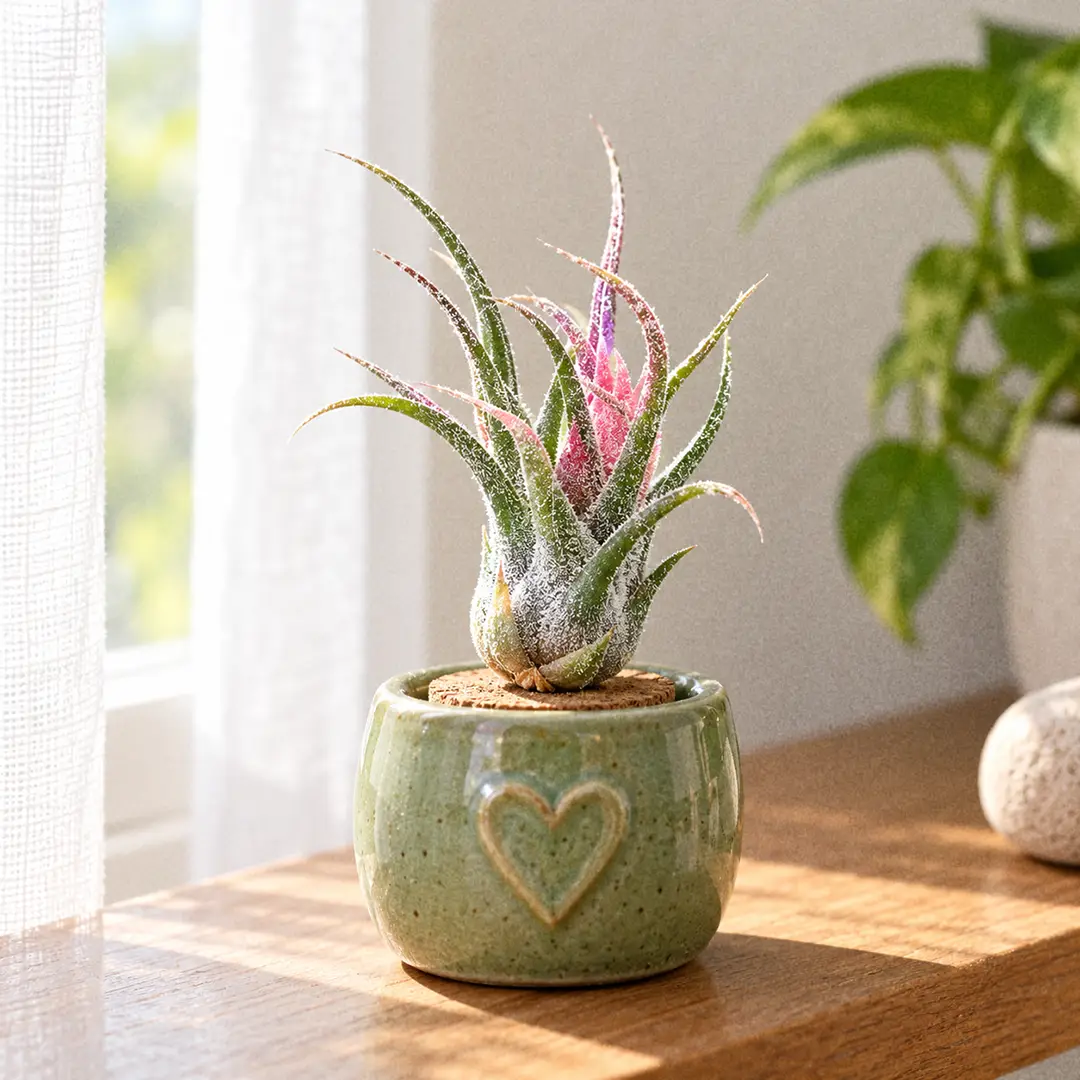
Complete Guide to Pruinosa Air Plant Care and Growth
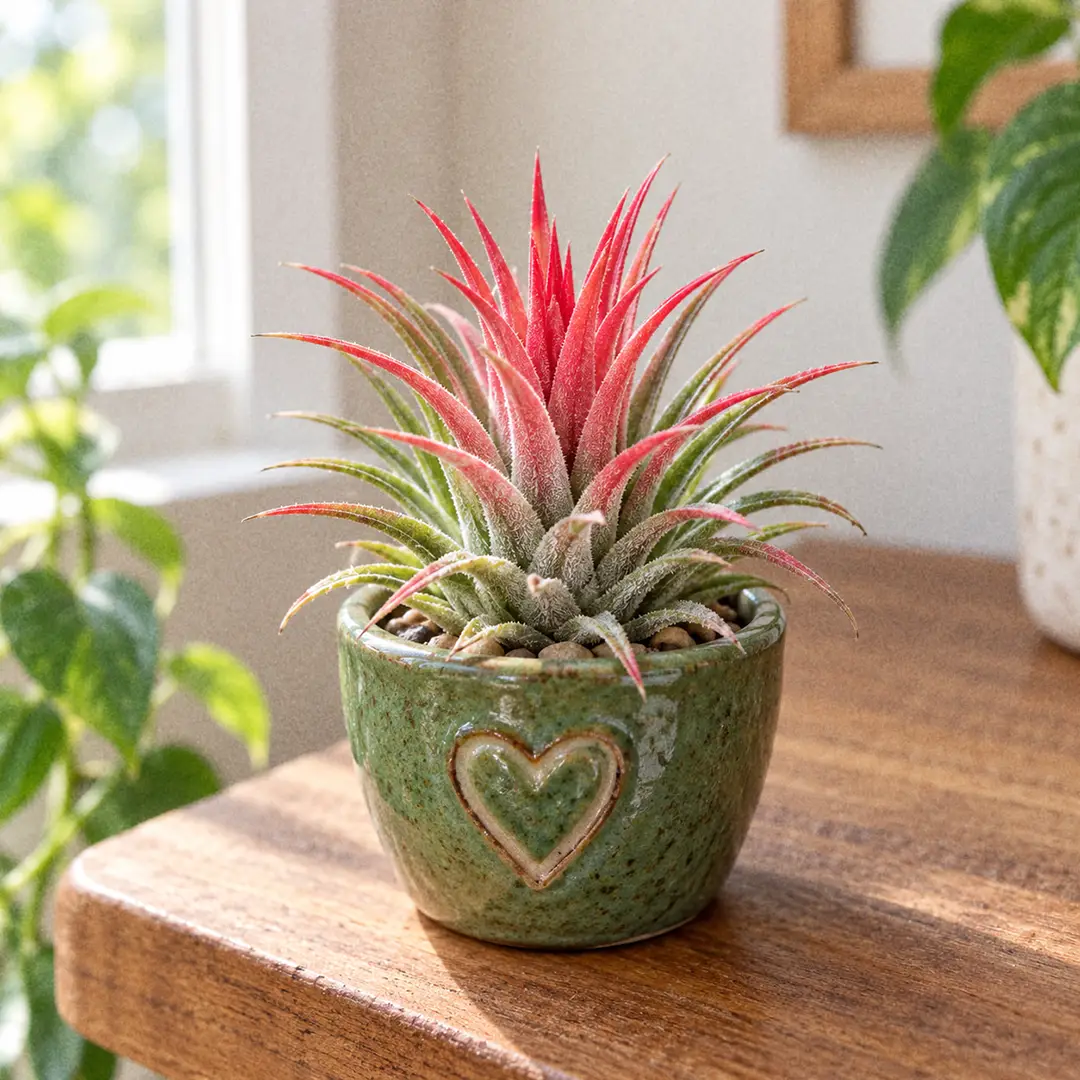
Complete Guide to Ionantha Air Plant Care and Growth
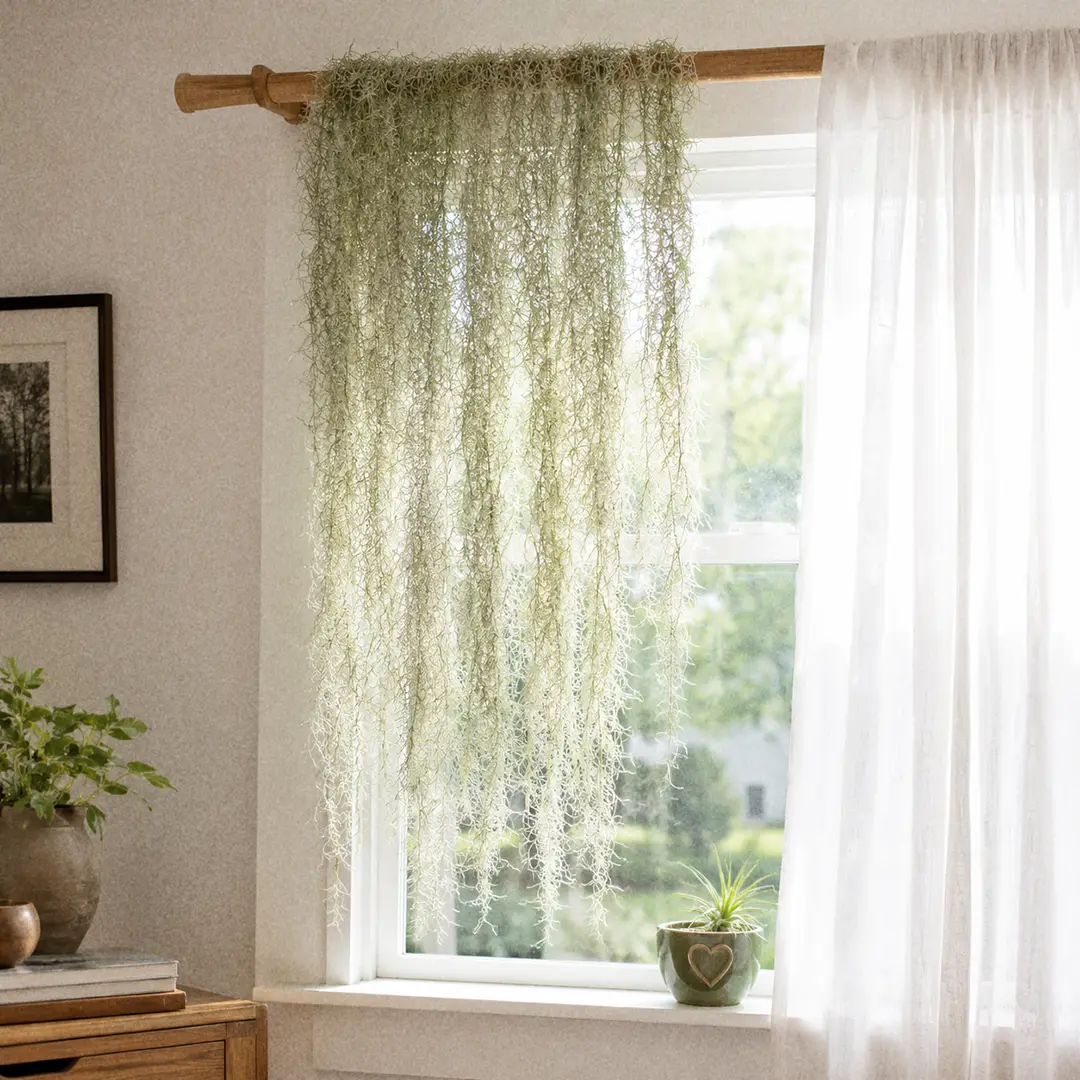
Complete Guide to Spanish Moss Care and Growth
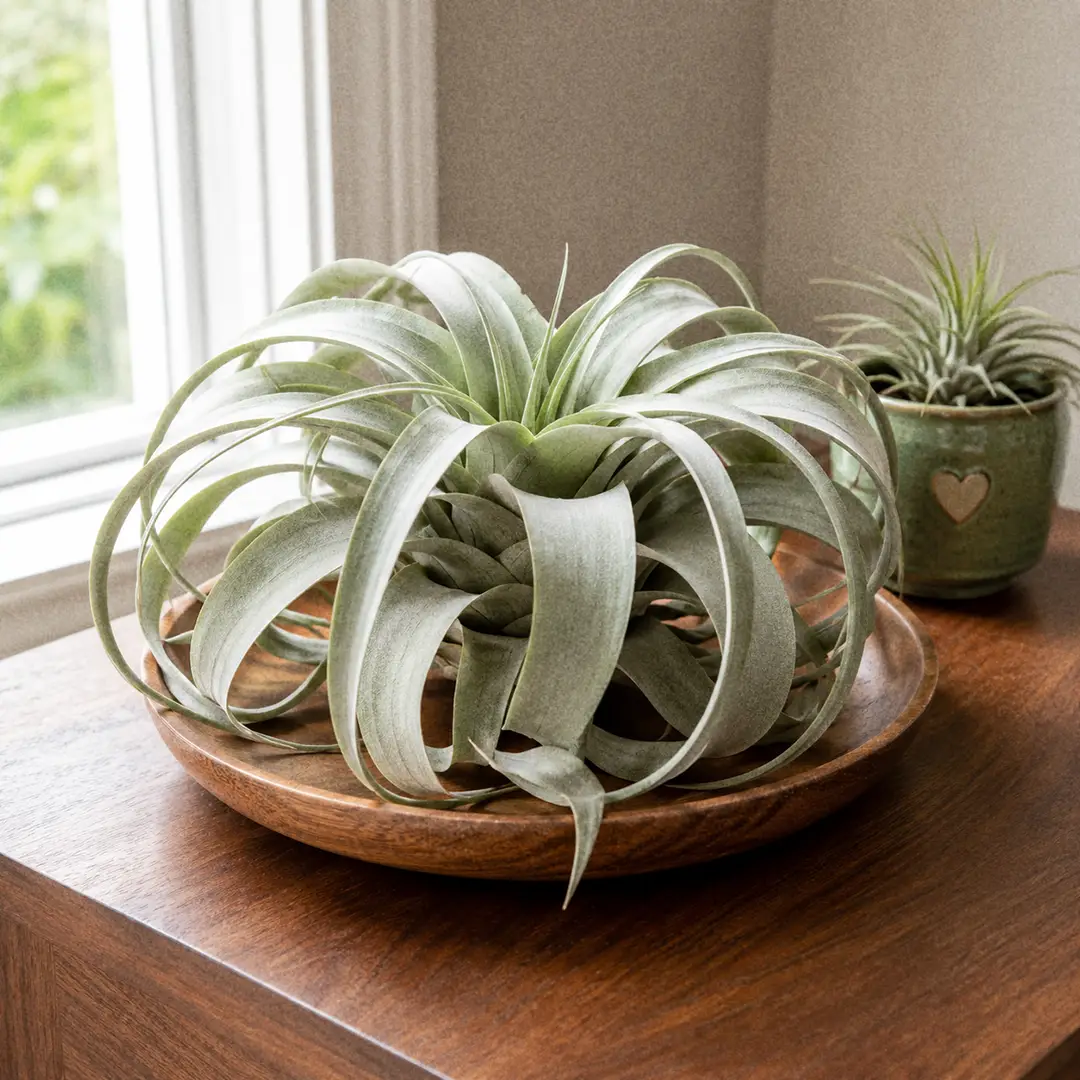
Complete Guide to Xerographica Air Plant Care and Growth
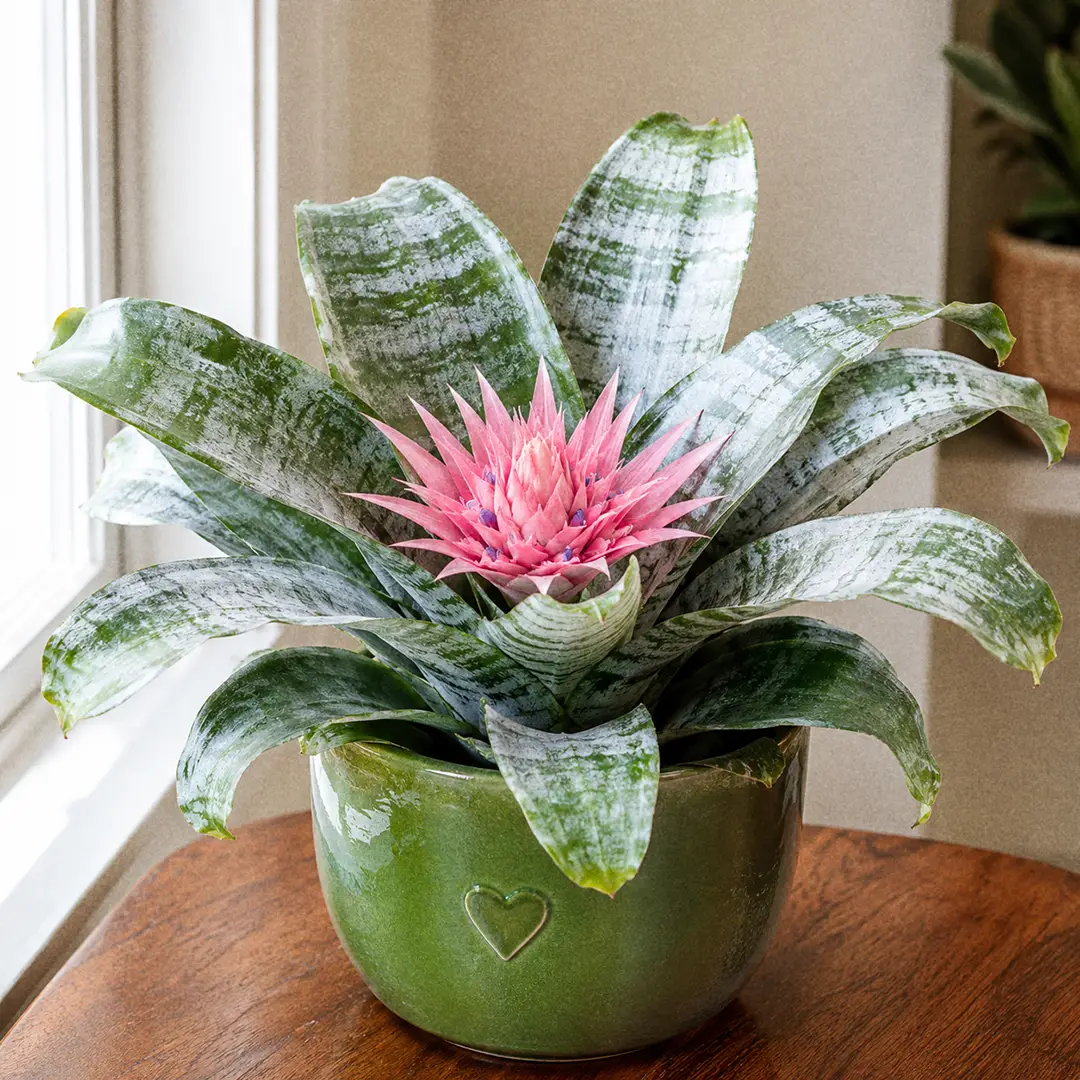
Complete Guide to Silver Vase Plant Care and Growth
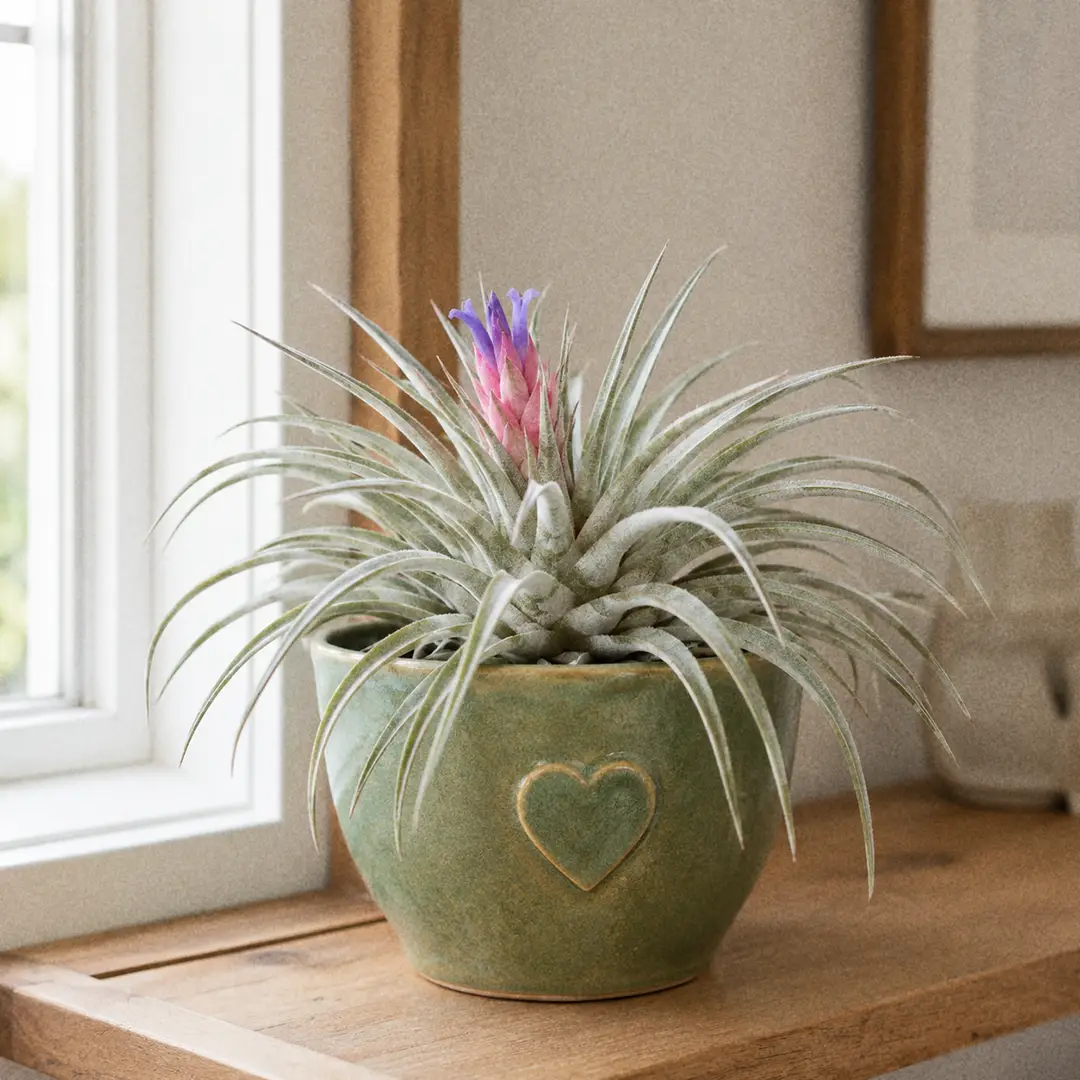
Complete Guide to Sky Plant Care and Growth
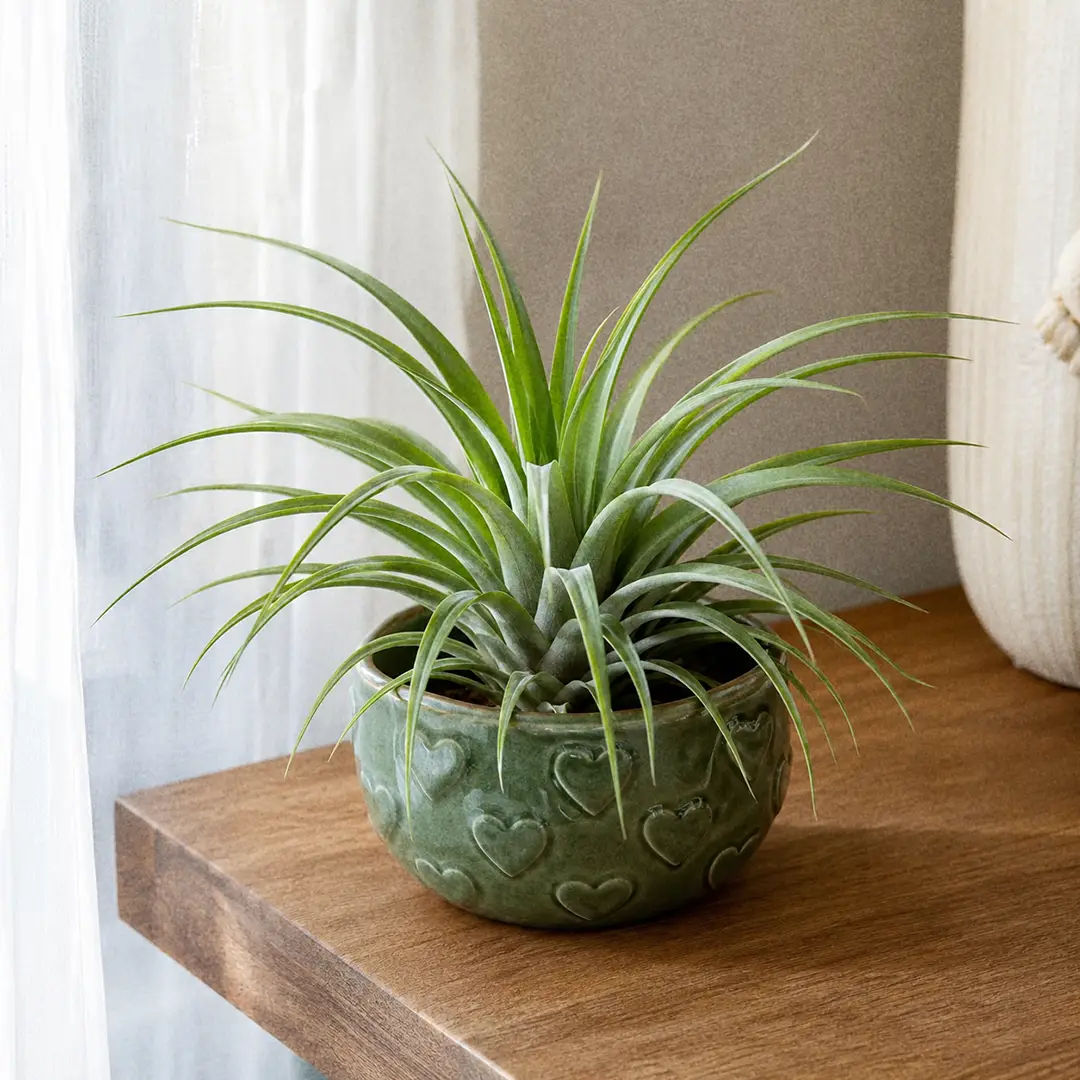
Complete Guide to Brachycaulos Air Plant Care and Growth

Houseplant101 Forum
Questions & Comments
Ask a question, share your plant experience, or help other plant owners.
Comments are temporarily unavailable.
Open the Houseplant101 ForumNo comments yet
Be the first to ask a question or share your experience about this page.
Log in or create an account
Comments use your Houseplant101 Forum account, but you can stay on this page.
Create a new account