
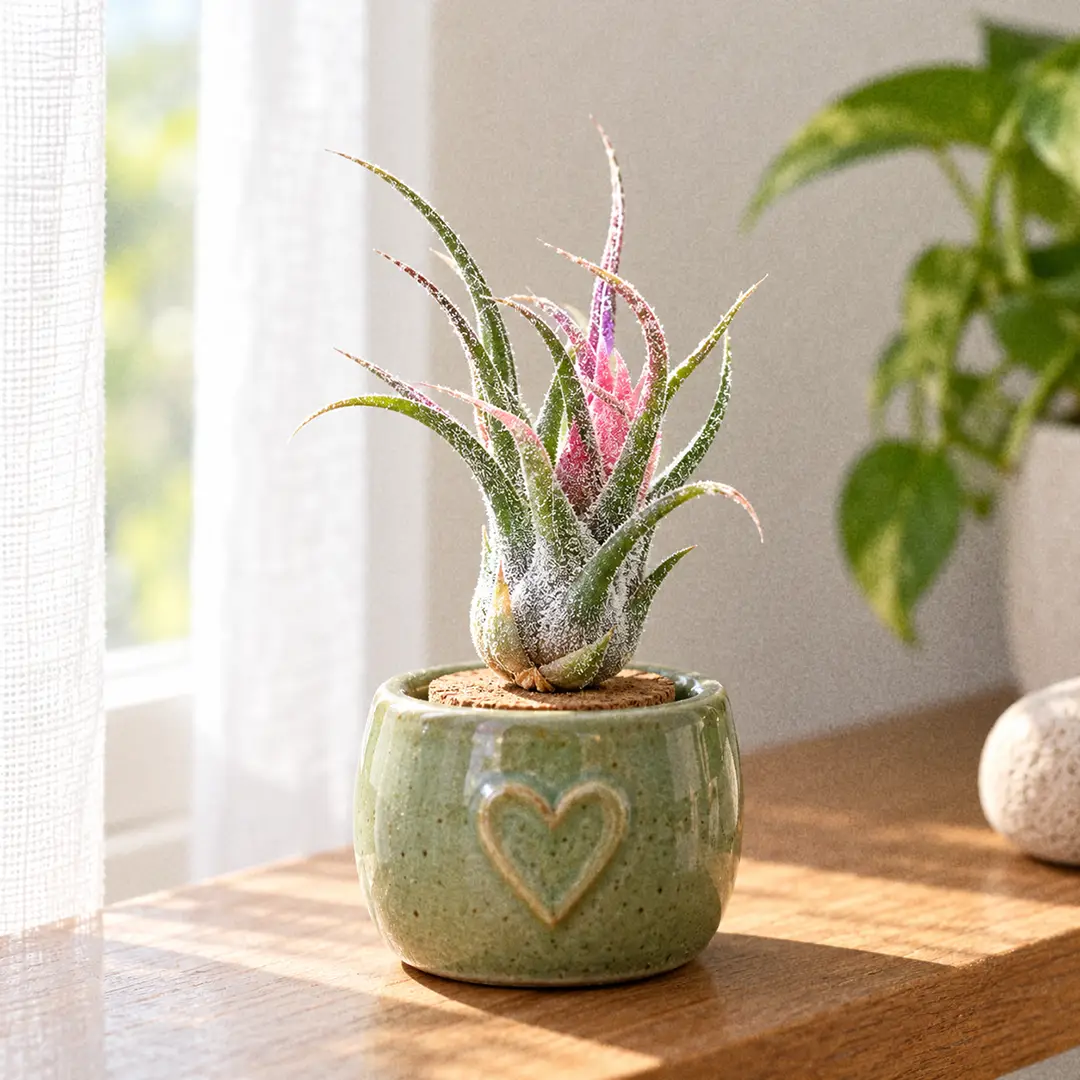
Pruinosa Air Plant
Tillandsia pruinosa
Fuzzy Wuzzy Air Plant, Fuzzywuzzy Airplant, Hoary Airplant, Frosty Air Plant


Pruinosa Air Plant is the fuzzy little bulb with twisting silver-purple arms that looks like it was dipped in frost. Learn how to grow Tillandsia pruinosa indoors, water its hollow base without rotting it, and coax out the pink bracts and violet flowers.
📝 Pruinosa Air Plant Care Notes
🌿 Care Instructions
⚠️ Common Pests
📊 Growth Information
🪴 In This Guide 🪴

☀️ Pruinosa Air Plant Light Requirements (Bright Filtered Light)
The Sweet Spot
Pruinosa wants bright, filtered light. An east-facing window two to three feet from the glass is close to perfect, with soft morning sun and bright shade the rest of the day. A south or west window works too if a sheer curtain takes the edge off the afternoon.
In the wild it grows on trees in shady, humid forests, so it is not a full-sun desert plant, even though the heavy fuzz makes it look like one. The trichomes do help shield it from strong light, which gives you a little more room for error than a smooth green air plant.
A good rule of thumb: if you can read a book comfortably in that spot at midday without turning on a lamp, the light is probably strong enough. If you need the lamp, move the plant closer to the window.
Too Little Light
In a dim spot the fuzz thins out, the purple tones fade to plain gray-green, and the leaves stretch and go limp. Growth stalls and the plant never blooms or pups. It can survive like that for a long time, which is why the problem often goes unnoticed.
If your windows are poor, a grow light about 10 to 12 inches above the plant for 10 to 12 hours a day works well. Our light guide explains how to judge a spot.
Too Much Light
Hours of unfiltered summer sun through glass can bleach patches on the leaves and crisp the tips, which is sunburn and does not heal. A deeper purple or pink flush, on the other hand, is a good sign. It means the plant is getting plenty of light, and a pink bulb often signals a bloom on the way.

💧 Pruinosa Air Plant Watering Guide (Dunk, Don't Drown)
Watering Frequency
Water your Pruinosa once or twice a week in spring and summer, and about once a week in winter. This species comes from humid forests, so it wants more regular moisture than a sun-baked Xerographica. Fuzzy leaves do not mean it can go weeks without a drink.
Watch the leaves. A well-watered plant has soft, slightly open arms. A thirsty one curls its leaves tighter and looks extra silver and stiff.
Your home decides the exact rhythm. A warm, bright room with a fan running dries the plant quickly, so twice a week makes sense. A cool room in winter, where the plant stays damp for most of a day, needs less. When in doubt, it is safer to water a little too little than to leave the bulb wet.
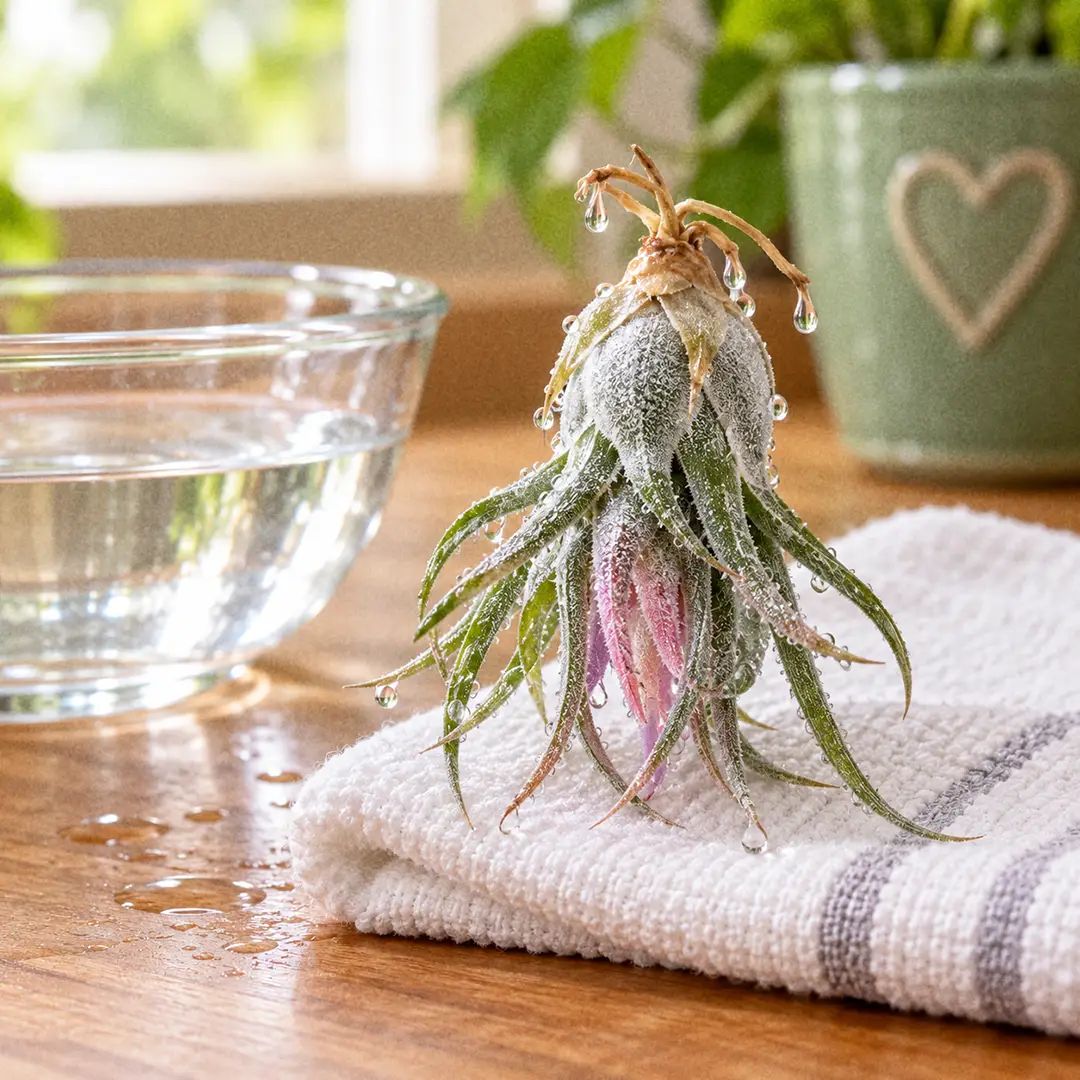
Skip the classic 30-minute soak. The bulb at the base is hollow and fills with water, and water that sits in there for hours rots the plant from the inside. Instead:
- Dunk the whole plant in room-temperature water and swish it for about 10 seconds, or give it a short soak of no more than 10 minutes.
- Lift it out and gently shake it upside down.
- Leave it base-up on a towel or dish rack in a spot with moving air.
- Return it to its display only when it feels dry, ideally within two to four hours.
Rainwater or filtered water is best if your tap water is softened, because the sodium builds up on the fuzz and there is no soil to flush it away. Let chlorinated tap water sit out overnight if you want to be extra careful.
If your Pruinosa is glued or wired to a mount, you do not have to take it down. Run the whole mount under the tap or dip it briefly, then hang or prop it so the bulb points down while it drains. Misting alone is not enough water for this plant, but it is a nice extra in a dry winter room. For more on general principles, see our watering guide.
Signs of Trouble
Dry, brown leaf tips and tightly curled leaves mean it needs water more often. Add a second dunk each week.
A bulb that turns dark, feels soft, or lets the center leaves slide out means rot. That usually cannot be saved, but check for firm pups at the base that can be separated.
🪴 Best Soil for Pruinosa Air Plant (No Soil Needed)
Why There Is No Soil
Pruinosa is an epiphyte. In nature it clings to tree branches with a few wiry roots and absorbs water and nutrients through the fuzzy trichomes on its leaves. Its roots are only anchors. Bury the bulb in potting mix and it stays wet and rots within weeks.
What to Mount It On
Good choices are cork bark, driftwood, grapevine, lava rock, and untreated hardwood. All of them dry quickly after watering. A shell or open ceramic holder also works, as long as water does not pool in it. Grapevine and cork are especially nice because the plant's roots can grip their rough surface over time, so the mount eventually holds the plant on its own.
Materials to Avoid
Skip sphagnum moss packed around the base, since it holds moisture right against the bulb. Also avoid copper wire and pressure-treated wood, because copper is toxic to bromeliads. Our soil guide explains why most plants need soil, but air plants are the exception.
🍼 Fertilizing Pruinosa Air Plant
When and How Often
Feed once a month from spring through summer, adding fertilizer to the water on one of your regular dunks. Skip it in autumn and winter when growth slows.
What to Use
Use a bromeliad or air plant fertilizer at a quarter of the label strength. A regular houseplant fertilizer can work at the same strength, but choose one that is low in urea, since air plants cannot break urea down without soil microbes. Our fertilizer roundup covers the options.
Over-Fertilizing Signs
Too much fertilizer shows up as brown, burned leaf tips on new growth or dark spots on the leaves. If you see that, skip a few months of feeding and rinse the plant in plain water. With air plants, less is always safer.
🌡️ Pruinosa Air Plant Temperature Range
Ideal Range
Pruinosa grows best between 60 and 85°F (16 to 29°C). It can handle roughly 50 to 90°F (10 to 32°C), which covers almost any heated home. Below 50°F, growth stops and a wet plant is at real risk of rot, so bring it indoors before nights get cool if it summers outside.
A summer outdoors in a shaded, sheltered spot is a real treat for this plant. The fresh air and natural humidity often give it a burst of growth. Hang it under a tree or a covered porch, out of midday sun, and check it after heavy rain so the bulb is not staying wet.
Drafts and Heat Sources
Keep it away from radiators, heat vents, and the air stream of a space heater, which dry the fuzz and crisp the tips fast. Cold drafts from a winter window are also a problem, especially right after watering. A bright spot with gentle, steady air movement is ideal.
💦 Pruinosa Air Plant Humidity Requirements
Ideal Humidity
Average home humidity of 40 to 60% is fine. Pruinosa does like more moisture than most silver air plants, but air circulation matters more than humidity. Humid, stagnant air plus a wet bulb is how rot starts.
Easy Humidity Boosters
A bright bathroom is a great home for it, since the shower adds moisture while the plant still dries between uses. In very dry winter rooms, mist it lightly between dunks, only in the morning so it dries by evening. An open terrarium or a humidifier nearby also helps. Our humidity guide has more ideas.
🌸 Pruinosa Air Plant Flowers (Pink Bracts, Violet Blooms)
What the Flowers Look Like
When a Pruinosa gets ready to bloom, the bulb and inner leaves often blush pink. A short, chunky flower spike then emerges from the center, covered in fuzzy pink bracts. Small tubular flowers in violet, sometimes leaning blue, poke out from between the bracts one or a few at a time.
The spike is large for such a small plant. The individual flowers last only a few days, but the pink bracts can stay colorful for weeks, sometimes for a couple of months.
How to Trigger Bloom
Blooming usually happens in spring or summer once the plant is mature. There is no single trick, just steady good care:
- Bright, filtered light every day.
- Regular watering once or twice a week in the growing season.
- Monthly feeding at quarter strength.
- A slightly cooler, drier winter rest.
If It Won't Bloom
Most of the time the plant is simply too young, or the light is too weak. A small store-bought Pruinosa can take a year or more to reach flowering size. Move it closer to the window before anything else. If it has good light and still refuses, see failure to bloom. Remember that each plant blooms only once, so a plant that has already flowered will not bloom again.
That is not bad news. After flowering, keep caring for the mother exactly as before, with steady light, water, and monthly feeding. She puts her remaining energy into pups, and a healthy mother often produces two or three. Those pups are your next round of blooms.
🏷️ Pruinosa Air Plant Types and Varieties
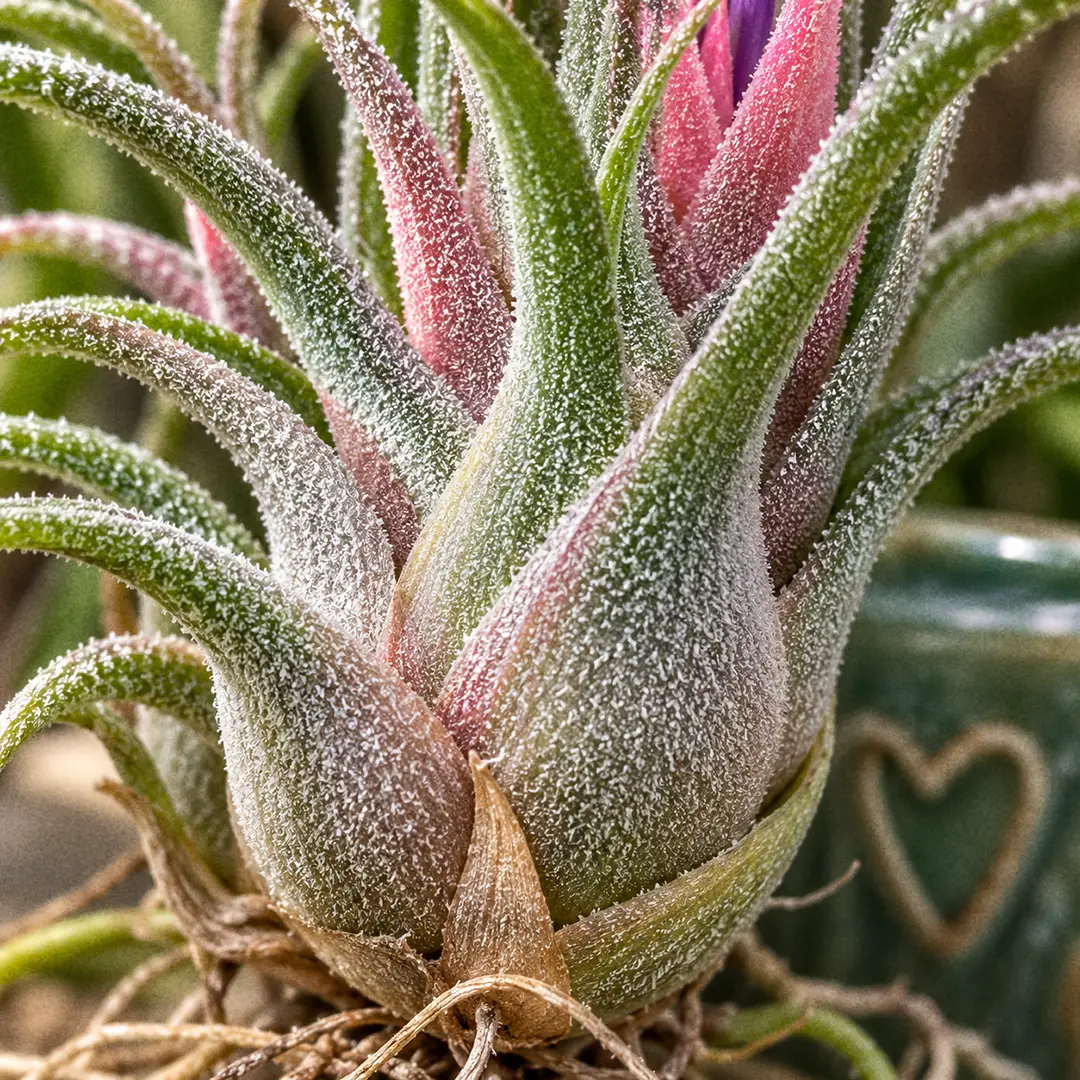
Tillandsia pruinosa (Standard Form)
There are no widely sold named cultivars of Pruinosa. Plants vary a bit by origin. Some are silver-gray, some carry a strong purple flush, and size ranges from under two inches to about eight inches tall. Growing conditions affect color too, so a plant in brighter light often shows more purple.
Pruinosa x Seleriana Hybrid
The one form you may see in shops is the hybrid with Tillandsia seleriana. It usually has a larger, rounder bulb and a thicker coat of fuzz than straight Pruinosa. Care is the same: dunk, drain upside down, and keep the light bright. It is often sold a little bigger and a little pricier than the straight species, and it makes a great first bulbous air plant because the extra size makes it slightly more forgiving.
Pruinosa vs Caput-Medusae and Bulbosa
These three bulbous air plants get mixed up constantly. The Medusa's Head Air Plant (T. caput-medusae) has stiffer, thicker leaves and less fuzz. T. bulbosa has smooth, glossy green leaves with almost no visible trichomes. Pruinosa is the softest-looking and fuzziest of the group. T. seleriana is the closest lookalike, but it is larger and chunkier, with a bulb that can reach the size of a small orange. If a shop labels a fuzzy bulb that fits in your palm as seleriana, it may well be a Pruinosa, and the care is identical anyway. A fuzzy plant with no bulb at all, just a soft round rosette of thin leaves, is more likely a Magnusiana Air Plant. The Potbelly Air Plant (T. paucifolia, often sold as circinata) is another Florida native in the mix, silver rather than frosted, with only a few curling leaves.
Similar Plants on Our Site
If you like the bulb-and-tentacles look, the speckled Butzii Air Plant and the curly Streptophylla Air Plant share the same hollow base and the same watering rules. The taller, twisting Baileyi Air Plant is the one to pick if you want the look at twice the height. For more silver fuzz without the bulb, try the Harrisii Air Plant, or the snow-white Tectorum Air Plant, which is far fuzzier and wants a light misting in place of a dunk.
🪴 Potting and Mounting Pruinosa Air Plant
There Is Nothing to Repot
With no soil, there is no repotting. The only time you move a Pruinosa is when a clump outgrows its mount or you want to change its display.
Choosing a Mount or Holder
Choose something that drains and dries quickly: cork, driftwood, grapevine, or an open ceramic holder. Keep the bulb from sitting in a cup or dip where water collects. Tilting the plant slightly on its mount helps water run out of the base.
How to Attach It
Use fishing line, plastic-coated wire, or a small dab of plant-safe glue on the side of the bulb or on the roots, never on the leaves. Do not wrap wire tightly around the bulb. Once it is mounted, keep in mind you will still need to take it down for dunking, unless you water the whole mount and hang it upside down to drain.
✂️ Pruinosa Air Plant Pruning
When to Prune
Prune only when something is dead: a dry brown leaf tip, a papery lower leaf, or a flower spike that has finished and turned brown.
How to Prune
Use clean, sharp scissors. Cut brown tips at an angle so the leaf still looks natural. Old lower leaves that are completely dry can be gently pulled away from the bulb. If a leaf resists, leave it.
Dealing With the Spent Flower Spike
Once the bracts fade and turn brown, snip the spike off close to the center. This tidies the plant and lets the mother put energy into pups. Do not cut into the bulb itself.
🌱 How to Propagate Pruinosa Air Plant
Best Method: Pups
Pruinosa multiplies by pups, small offsets that grow from the base of the plant, usually around or after blooming. The mother slowly fades over the following months while the pups grow. Seed is possible, but it takes years and is not practical at home.
Step-by-Step Separation
- Wait until a pup is at least one-third the size of the mother.
- Hold the mother firmly at the bulb and the pup at its base.
- Twist the pup gently downward and away. It should snap free cleanly.
- If it resists, wait a few more weeks, or cut it off with a clean, sharp knife as close to the mother as possible.
- Let the cut end dry for a day before watering the pup.
- Care for it just like an adult plant.
Caring for New Pups
Young pups are small and dry out faster than the mother, so give them a slightly brighter spot and do not skip waterings. They still need to drain upside down, since they already have a small bulb of their own. Expect a pup to take one to two years to reach blooming size. Mount it only after it has been separated for a couple of weeks and looks firm.
Clump or Separate?
Leaving pups attached creates a fuzzy clump that looks great on cork or driftwood, and a clump blooms on a staggered schedule. Separate them when you want more plants. Just remember a clump traps more water, so shake and drain it extra carefully after every dunk. Our propagation guide covers the basics.
🐛 Pruinosa Air Plant Pests and Treatment
Pests are uncommon on air plants, and they usually arrive on a new plant from a shop.
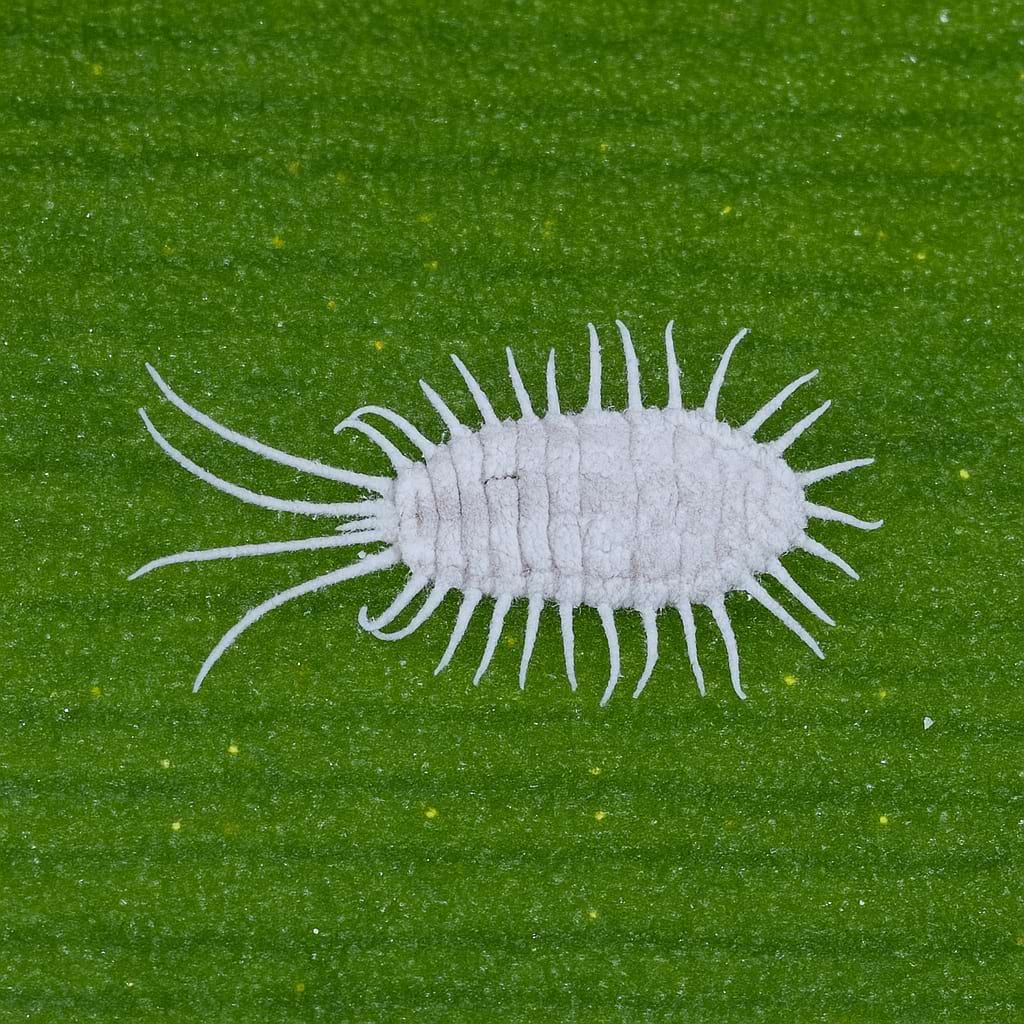
Mealybugs are the most likely. They look like tiny white cottony clumps tucked into the leaf bases or around the bulb, where the fuzz helps hide them. Dab them with a cotton swab dipped in rubbing alcohol, then give the plant a quick rinse.
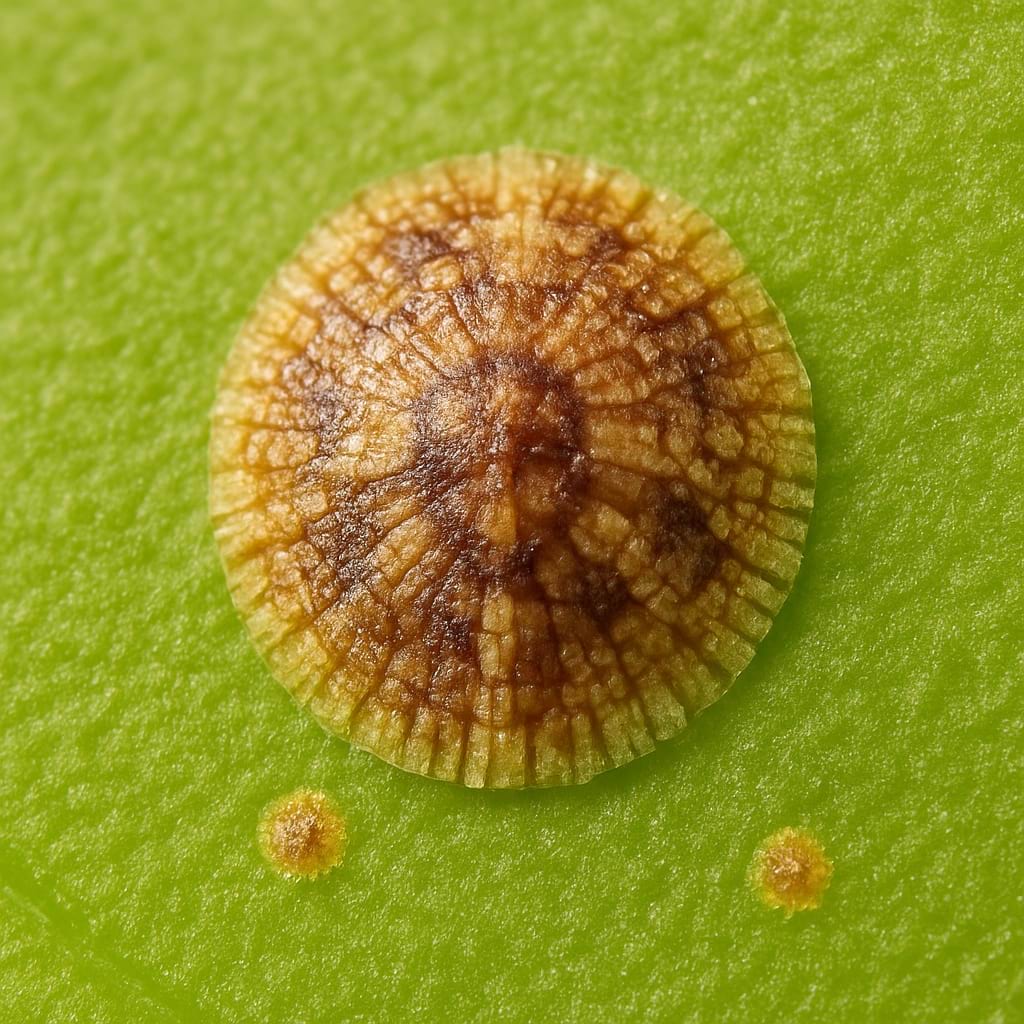
Scale insects appear as small brown or tan bumps stuck to the leaves. Scrape them off gently with a fingernail and dab the spot with alcohol. Be careful, since hard scrubbing also removes the fuzz.
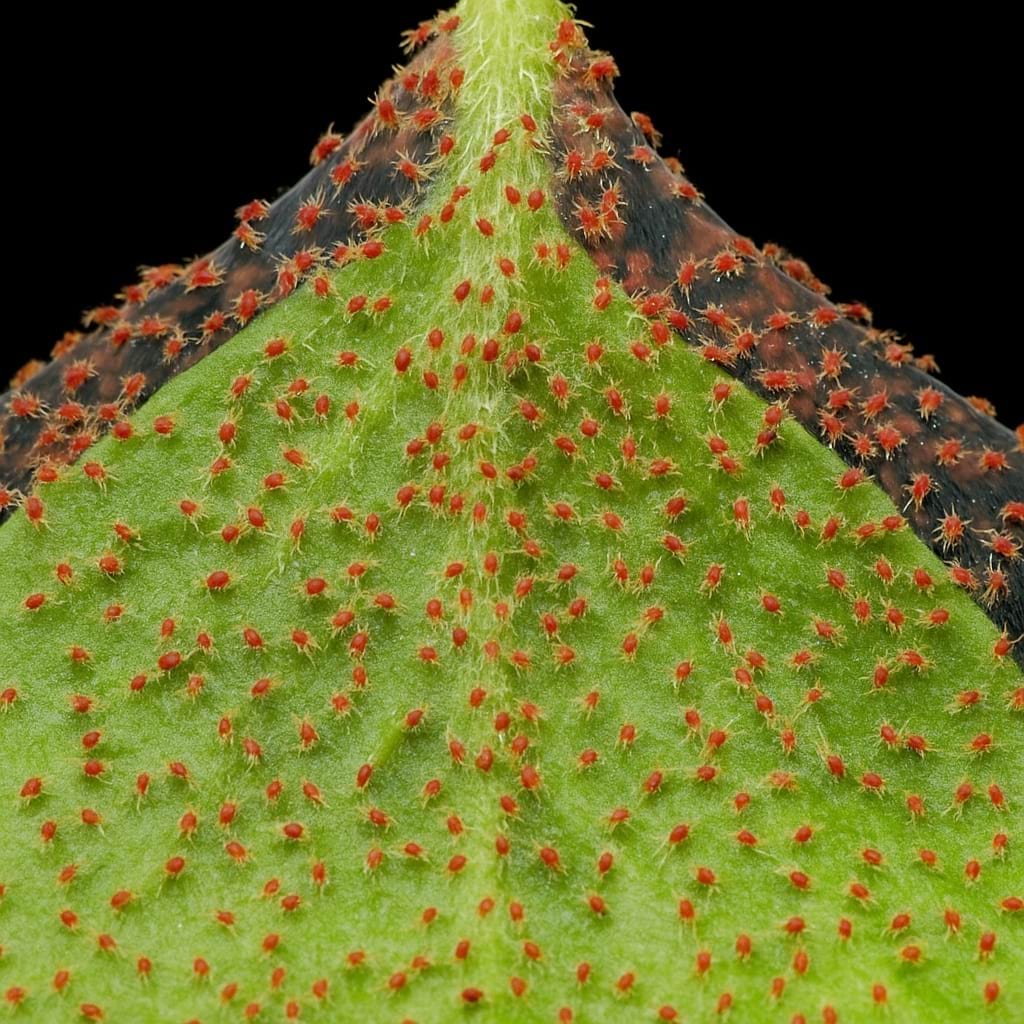
Spider mites are rare but can show up in hot, dry, still rooms. Look for fine webbing between the leaves. Regular dunks and better air flow usually clear them without any other treatment.
Quarantine every new air plant for two weeks before adding it to your collection. And never buy a wild-collected Pruinosa: in Florida it is endangered, and the Mexican bromeliad weevil is one of the main threats to its native populations.
🩺 Common Pruinosa Air Plant Problems
Almost every Pruinosa problem comes down to water in the bulb, too little water overall, or weak light.
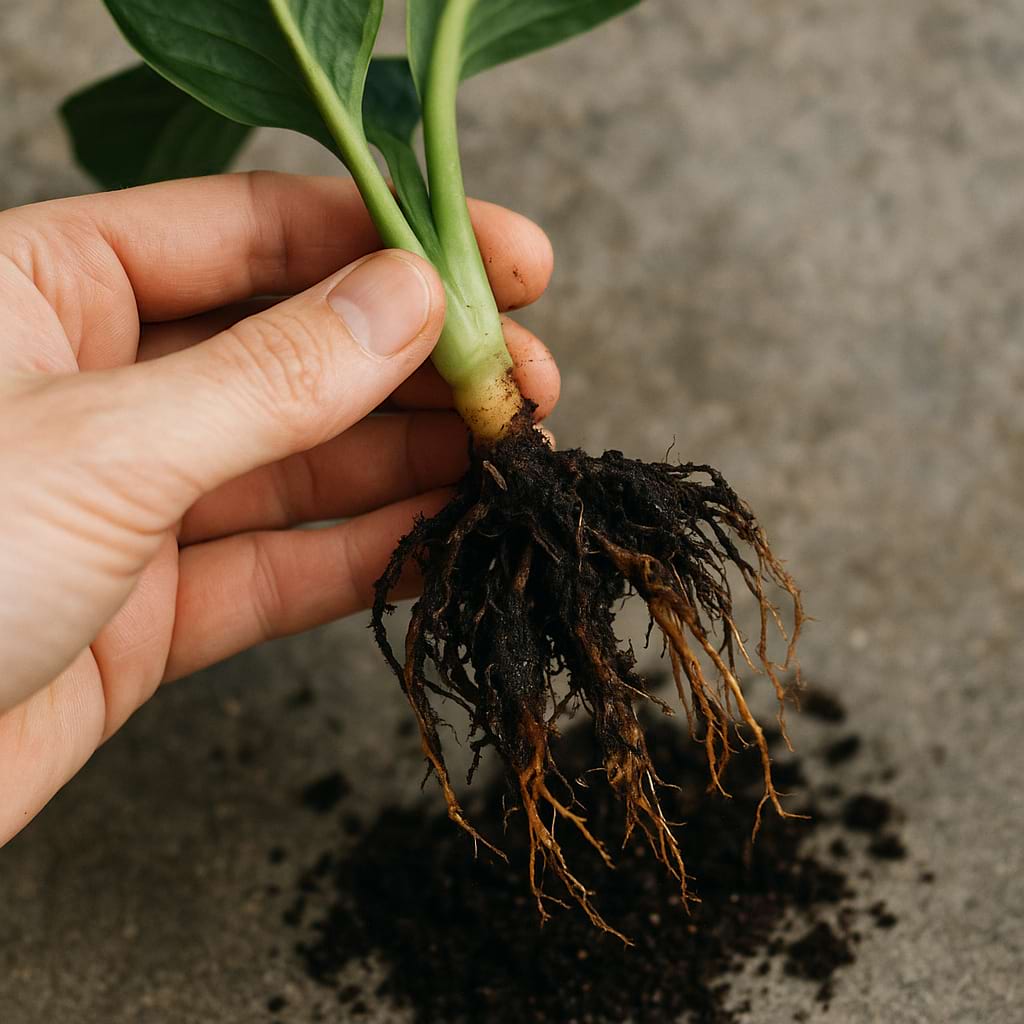
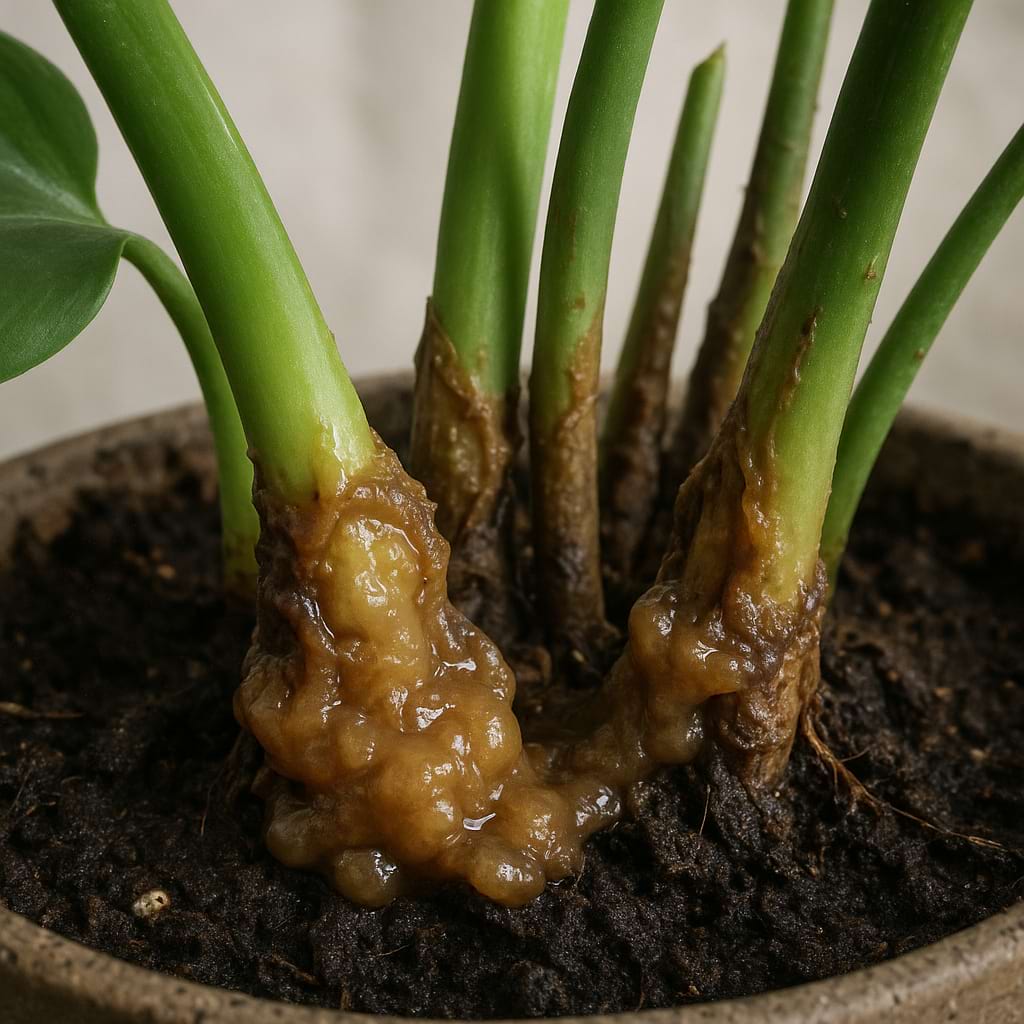
Rot in the bulb is the big one. The base darkens, turns soft or mushy, and the center leaves fall out. It comes from long soaks or drying the plant base-down. It is root rot in air plant form, and it rarely recovers. Save any firm pups.
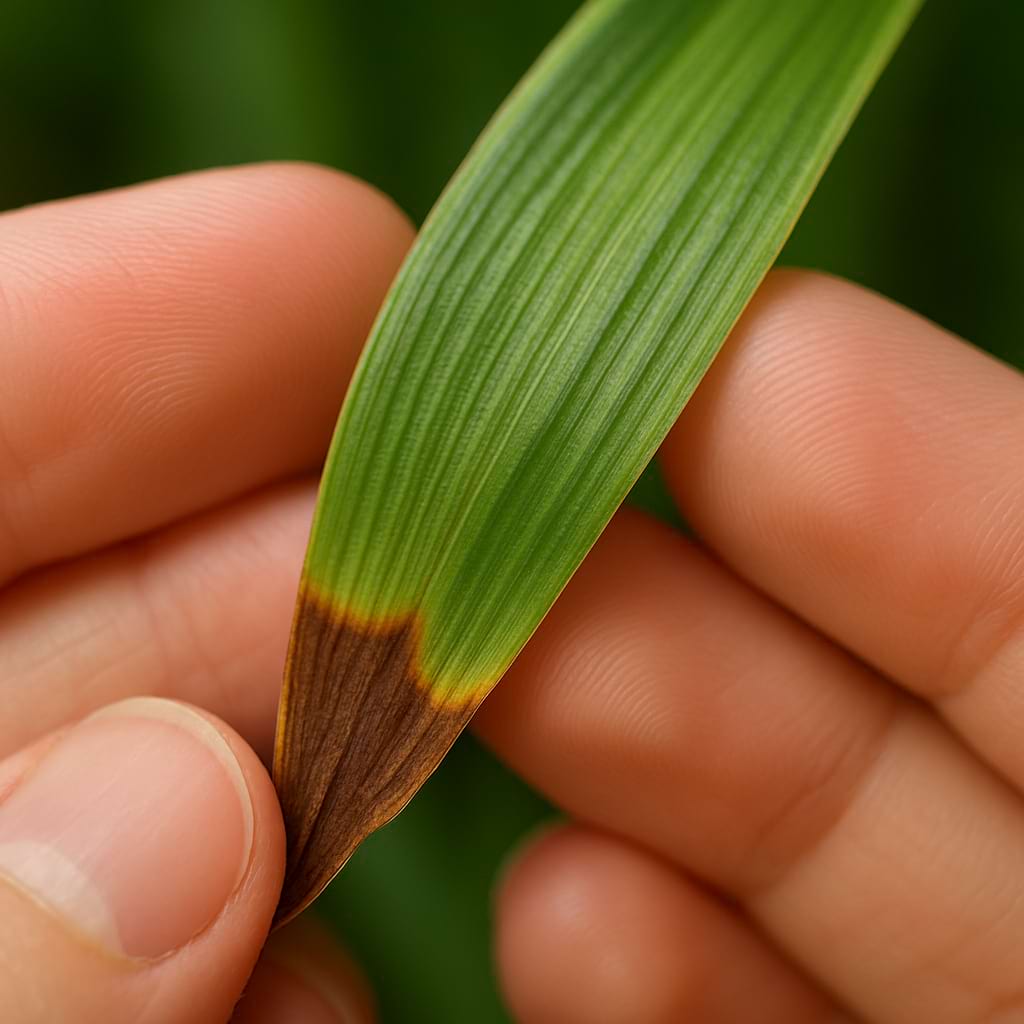
Brown crispy tips mean the plant is too dry or sitting near a heater. Water more often and trim the brown tips at an angle.
Tightly curled leaves are a thirst signal. A dunk fixes it within hours. If they stay curled, increase watering to twice a week.
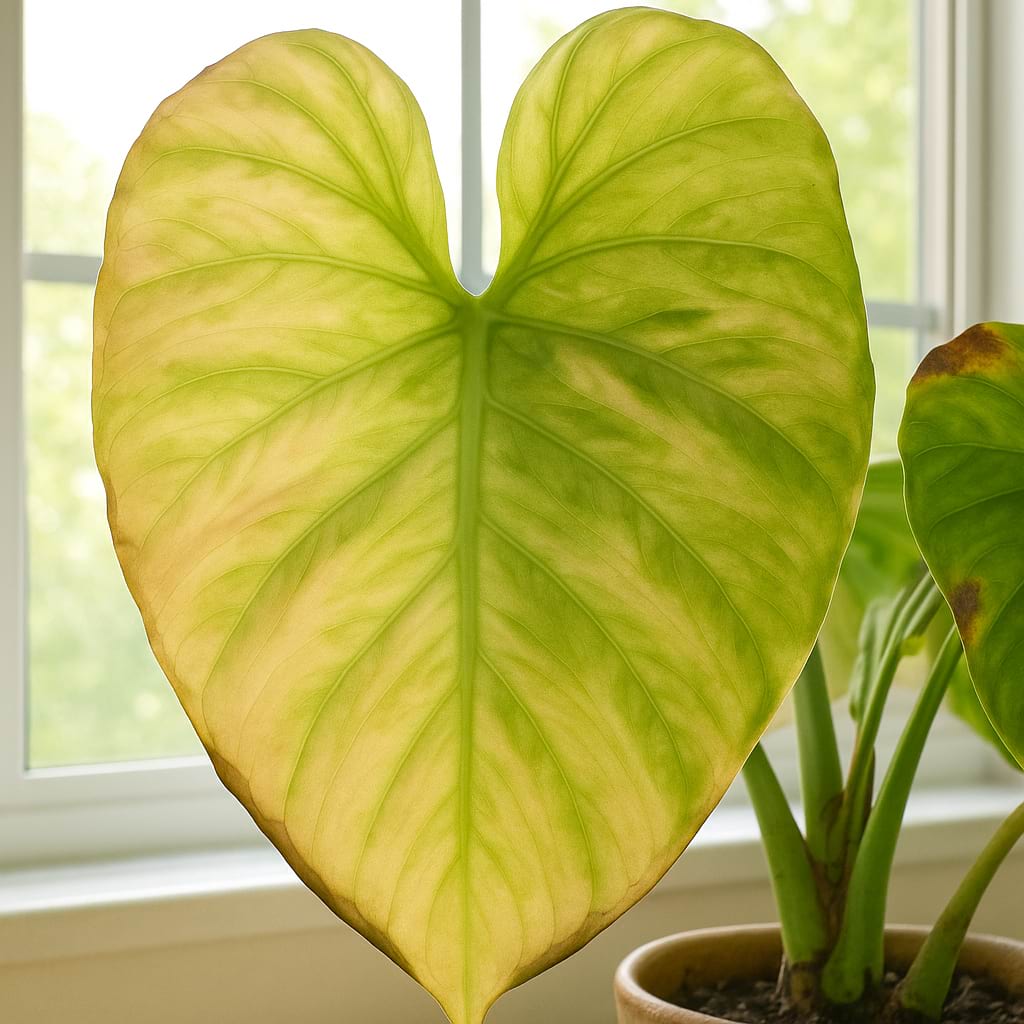
Pale, thin fuzz and faded color mean not enough light. Pale leaves on a Pruinosa call for a brighter spot.
Bald green patches on the leaves come from rubbing or handling. The fuzz does not grow back on those leaves, but new growth will be normal.
No growth for months is common in winter and not a problem by itself. If it continues through spring, check light first, then make sure you are feeding once a month in the growing season.
🖼️ Pruinosa Air Plant Display and Styling Ideas
Solo Setups
A single Pruinosa on a small cork round or in a sea urchin shell shows off the fuzz beautifully. Place it where side light from a window catches the trichomes. Against a dark wood or slate background, the frosty coat looks like it is glowing.
Grouped Arrangements
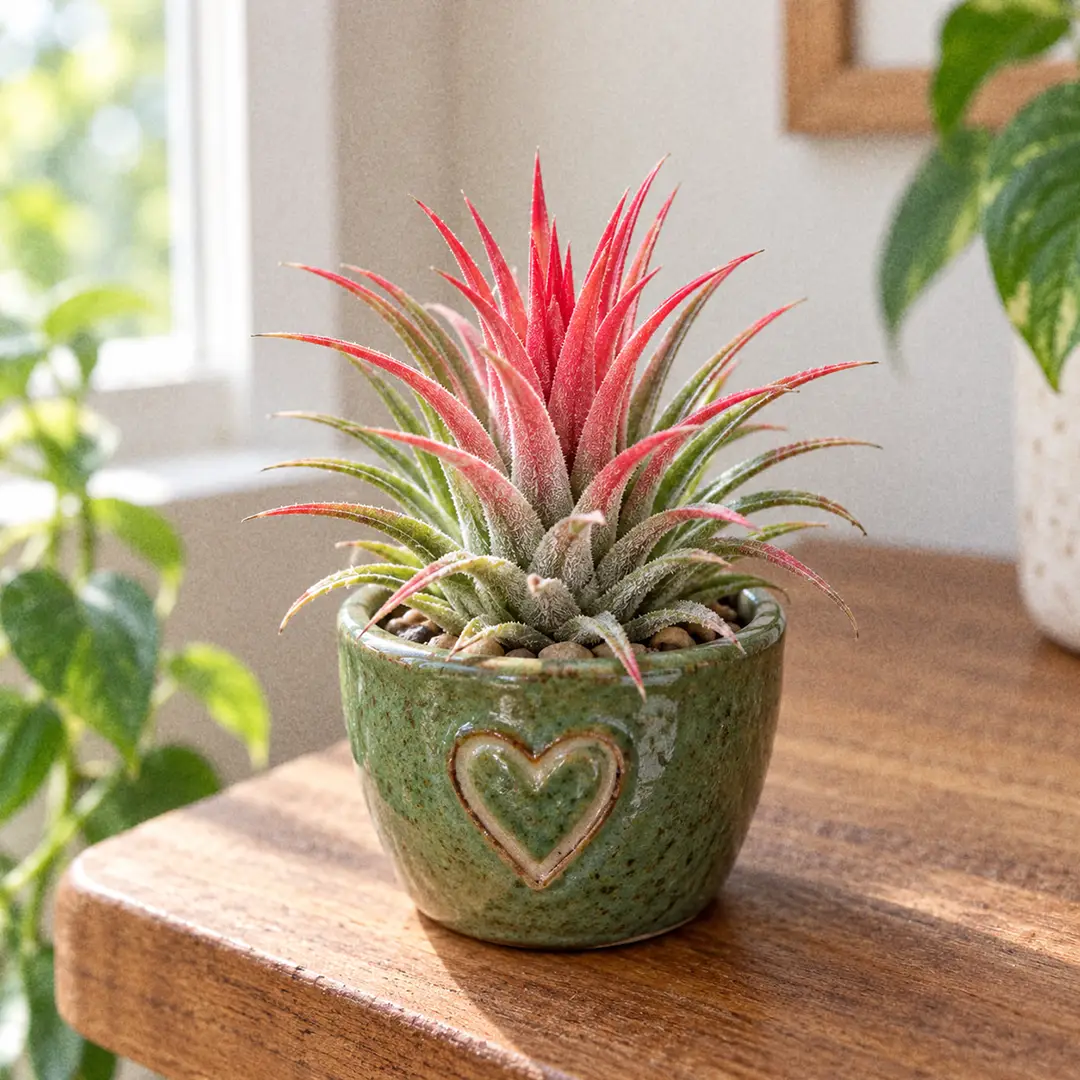
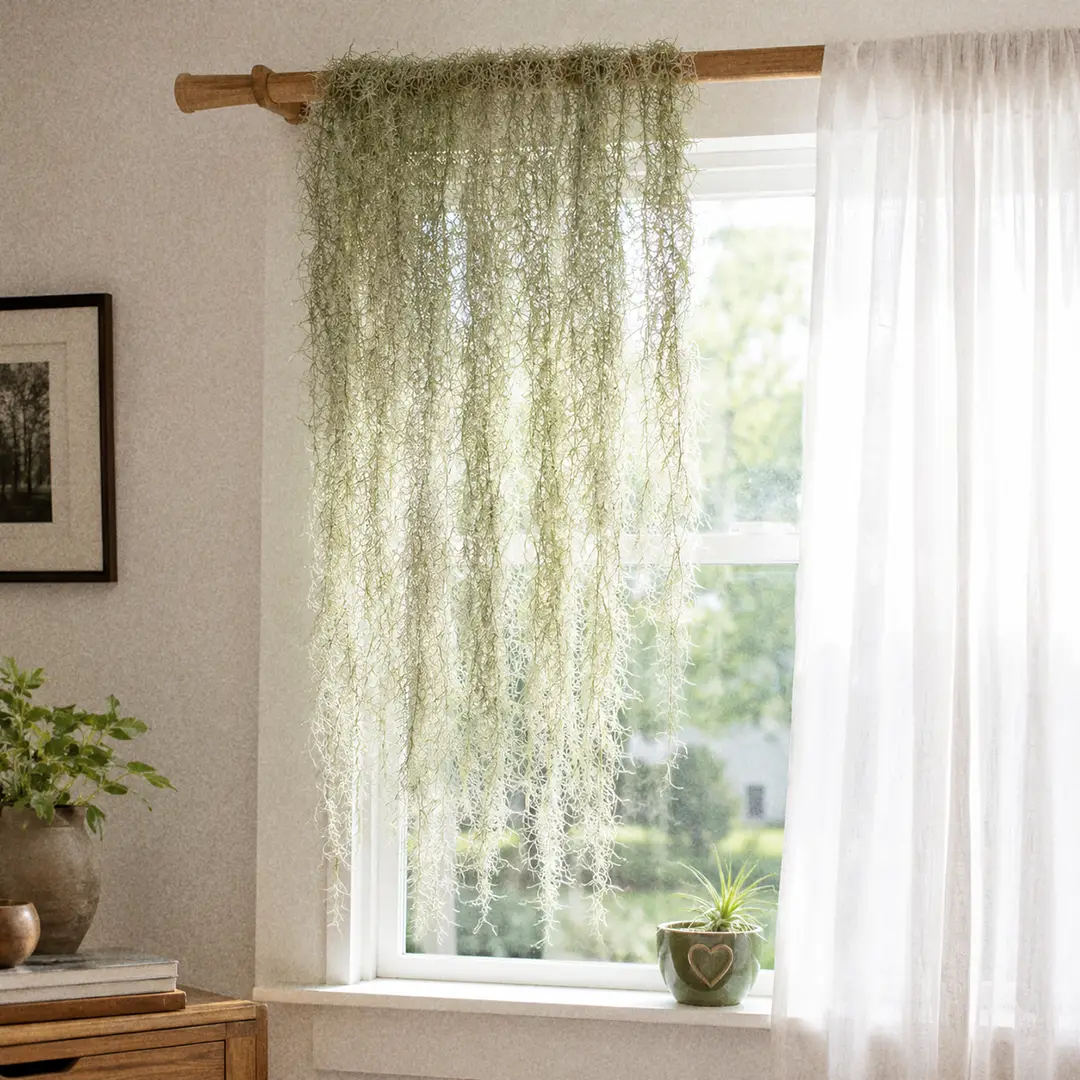
Pruinosa pairs well with air plants that have very different shapes. A spiky, blushing Ionantha Air Plant and a grassy Juncea Air Plant make a nice contrast next to its round bulb. Draping a little Spanish Moss behind the group adds a soft silver backdrop.
Where Not to Put It
Avoid closed glass globes and deep decorative cups, where water collects and air cannot move. Also skip spots next to heaters or in dim corners. A bright bathroom shelf or a windowsill with a sheer curtain is a much better home.
Also think about reach. The fuzz invites touching, and every guest will want to stroke it. Put it just out of easy reach of hands and curious cats, and you will keep that frosty coat intact for years.
🌟 Pruinosa Air Plant Pro Care Tips
- Dunk, don't soak. A quick dunk or a soak under 10 minutes keeps the hollow bulb from filling up.
- Always drain upside down. Base-up until dry, every time.
- Hands off the fuzz. Rubbing or wiping strips the trichomes, and they do not grow back.
- Water more than a desert air plant. This is a forest species. Once or twice a week is normal.
- No copper, ever. Use fishing line or plastic-coated wire for mounting.
- Buy nursery-grown. Wild populations in Florida are endangered.
- Let the pink bulb be your cue. A blushing bulb usually means a bloom is coming, so keep the light and watering steady.
❓ Frequently Asked Questions
Why is my Pruinosa Air Plant called Fuzzy Wuzzy?
Because it is covered in dense, soft trichomes that look like fuzz. The Latin name pruinosa means frosty, for the same reason. The fuzz helps the plant absorb water and shields it from strong light.
Should I soak a Pruinosa Air Plant?
Not for long. Its hollow bulb fills with water and rots if water sits inside it. Dunk it or soak it for 10 minutes at most, then drain it upside down until dry.
Is Pruinosa Air Plant safe for cats and dogs?
Yes. Tillandsias are non-toxic to cats and dogs. The bigger risk is to the plant, since cats love to bat at and chew soft, fuzzy air plants.
How big does a Pruinosa Air Plant get?
Most sold plants are 2 to 4 inches tall with a bulb about an inch wide. A mature plant can reach around 8 inches tall, and a clump spreads wider over time.
Why is my Pruinosa turning pink?
A pink blush on the bulb and inner leaves usually means the plant is preparing to bloom. It can also be a response to good, bright light. Either way, it is a healthy sign.
Does my Pruinosa die after blooming?
Slowly, yes. Each plant blooms once, then produces pups and gradually fades over months. The pups carry on, so the plant as a whole keeps going.
Why is the fuzz on my Pruinosa disappearing?
Usually from handling, wiping, or brushing the leaves. Low light can also make new growth less fuzzy. Handle the plant by the bulb and give it a brighter spot.
Can I keep a Pruinosa Air Plant in a terrarium?
Only an open one. Closed terrariums trap moisture around the bulb, which leads to rot. An open globe with plenty of air flow and bright light works fine.
How often should I water a Pruinosa Air Plant?
Once or twice a week in spring and summer, and about once a week in winter. Adjust to your home: if the leaves curl tightly, water more often. If the bulb stays damp for hours, water less and improve the air flow.
Why is the bulb of my Pruinosa soft?
A soft bulb almost always means rot from water trapped inside. Unfortunately it rarely recovers. Look for firm pups at the base to save, and switch to short dunks and upside-down drying for your next plant.
Is it legal to collect Pruinosa in Florida?
No. It is listed as endangered in Florida and grows wild in only a few protected areas. Buy nursery-grown plants, which are easy to find and inexpensive.
ℹ️ Pruinosa Air Plant Info
Care and Maintenance
🪴 Soil Type and pH: No soil. Mounted on cork, driftwood, or grapevine, or displayed loose in an open holder.
💧 Humidity and Misting: Likes a bit more moisture than most fuzzy air plants, but must dry within a few hours.
✂️ Pruning: Snip dried leaf tips and remove the spent flower spike once it browns.
🧼 Cleaning: Never wipe or brush the leaves. The fuzz is trichomes, and rubbing them off leaves bald green patches that do not regrow.
🌱 Repotting: Not applicable. Re-mount when a clump outgrows its perch.
🔄 Repotting Frequency: Not required
❄️ Seasonal Changes in Care: Water twice weekly and feed monthly in warm months, drop to once weekly in winter, and keep it away from heaters.
Growing Characteristics
💥 Growth Speed: Slow
🔄 Life Cycle: Evergreen epiphytic perennial. Each plant flowers once, produces pups, then slowly dries away.
💥 Bloom Time: Spring into summer
🌡️ Hardiness Zones: 10-11
🗺️ Native Area: Southern Florida, Cuba and the Caribbean, Mexico, Central America, and south to Ecuador and Brazil, in shady, humid forests and swamps
🚘 Hibernation: No true dormancy, though growth slows in cool, dim winters.
Propagation and Health
📍 Suitable Locations: East windows, bright bathrooms, filtered south windows, open terrariums
🪴 Propagation Methods: Separate pups from the base once they reach a third of the mother's size, or leave them to form a clump.
🐛 Common Pests: Mealybugs, Scale Insects, Spider Mites
🦠 Possible Diseases: Crown and base rot from water trapped inside the bulb.
Plant Details
🌿 Plant Type: Epiphytic bromeliad (air plant)
🍃 Foliage Type: Soft, fuzzy, twisting leaves rising from a bulbous base
🎨 Color of Leaves: Frosty silver-gray over green, often flushed purple
🌸 Flower Color: Pink bracts with violet to bluish tubular flowers
🌼 Blooming: Blooms once per plant when mature, often after a pink blush on the bulb
🍽️ Edibility: Not edible.
📏 Mature Size: 2-4 inches typical, up to 8 inches
Additional Info
🌻 General Benefits: Pet-safe, soil-free, tiny, and one of the most touchable-looking plants you can own
💊 Medical Properties: No documented medicinal uses.
🧿 Feng Shui: A soft, rounded plant that suits small desks and shelves where a spiky succulent would feel sharp.
⭐ Zodiac Sign Compatibility: Pisces
🌈 Symbolism or Folklore: Resilience, gentleness, quiet protection
📝 Interesting Facts: The name pruinosa is Latin for frosty, after the dense coat of trichomes that covers the whole plant. In Florida it grows wild in only a handful of places in Collier County and is listed as endangered there, threatened by the invasive Mexican bromeliad weevil, habitat loss, and illegal collecting.
Buying and Usage
🛒 What to Look for When Buying: Buy nursery-grown plants only. Look for a firm bulb that does not give when pressed, thick even fuzz, and leaves that do not pull free. Skip plants with a dark or soft base.
🪴 Other Uses: Cork and driftwood mounts, open terrariums, shell displays, and gift arrangements.
Decoration and Styling
🖼️ Display Ideas: Cork rounds, grapevine wreaths, sea urchin shells, open glass globes, small wire stands
🧵 Styling Tips: Put it where side light catches the fuzz. Against a dark background the frosty coat almost glows.
🪴 See also 🪴
Complete Guide to Capitata Peach Air Plant Care and Growth
Complete Guide to Baileyi Air Plant Care and Growth
Complete Guide to Harris's Air Plant Care and Growth
Complete Guide to Ionantha Air Plant Care and Growth
Complete Guide to Spanish Moss Care and Growth
Complete Guide to Xerographica Air Plant Care and Growth
Complete Guide to Pink Quill Plant Care and Growth
Complete Guide to Silver Vase Plant Care and Growth
Complete Guide to Sky Plant Care and Growth
Complete Guide to Brachycaulos Air Plant Care and Growth

Houseplant101 Forum
Questions & Comments
Ask a question, share your plant experience, or help other plant owners.
Comments are temporarily unavailable.
Open the Houseplant101 ForumNo comments yet
Be the first to ask a question or share your experience about this page.
Log in or create an account
Comments use your Houseplant101 Forum account, but you can stay on this page.
Create a new account