
Pink Quill Plant
Wallisia cyanea
Tillandsia cyanea, Pink Quill, Pink Feather, Wallisia Anita, Tillandsia Anita, Quill Plant


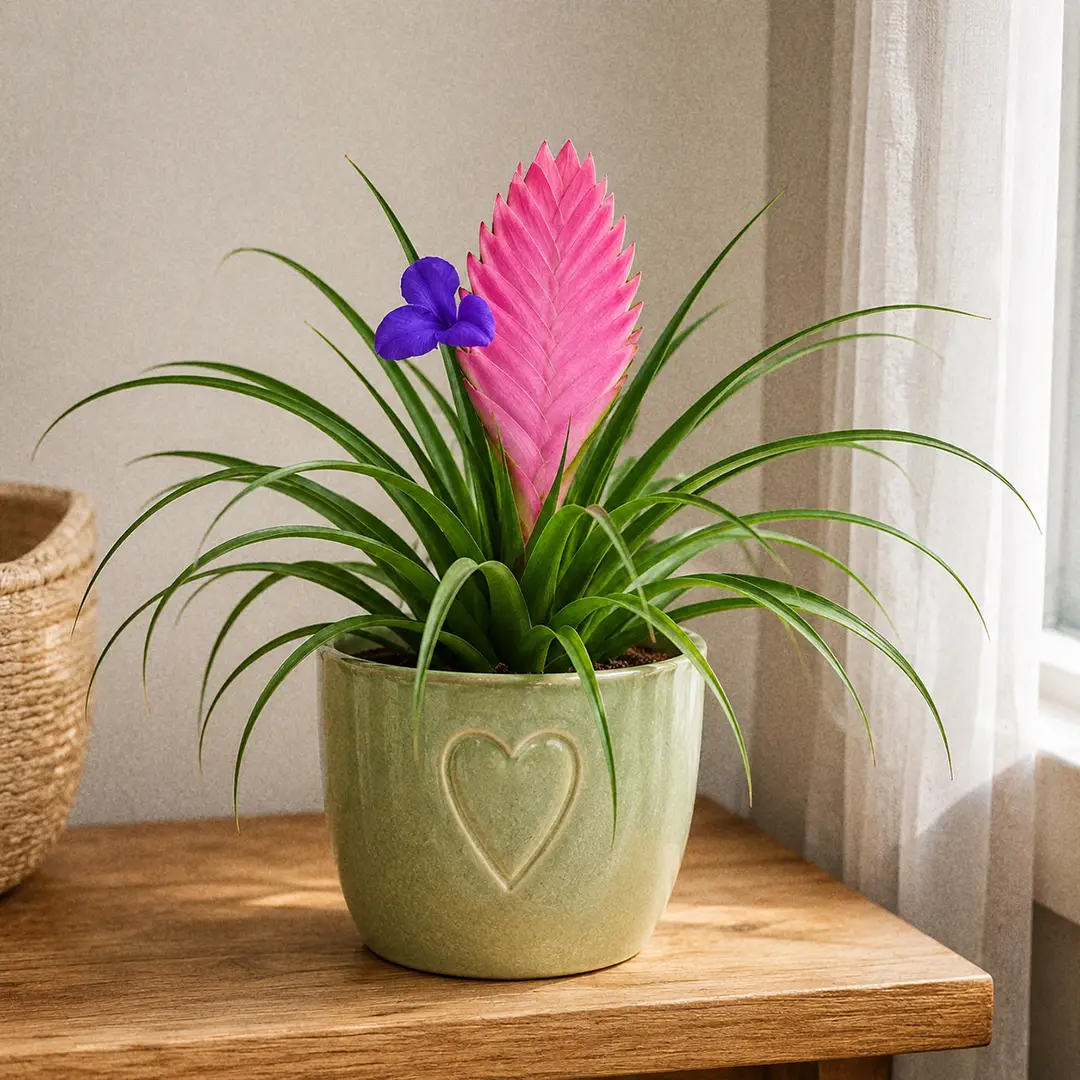
Pink Quill Plant is the air plant that grows in a pot, sending up a flat pink paddle that holds its color for months while violet flowers pop out one at a time. Learn how to grow Wallisia cyanea, still widely sold as Tillandsia cyanea, keep the bract bright, and raise the pups it leaves behind.
📝 Pink Quill Plant Care Notes
🌿 Care Instructions
⚠️ Common Pests
📊 Growth Information
🪴 In This Guide 🪴

☀️ Pink Quill Plant Light Requirements (Bright Indirect Light)
The Sweet Spot
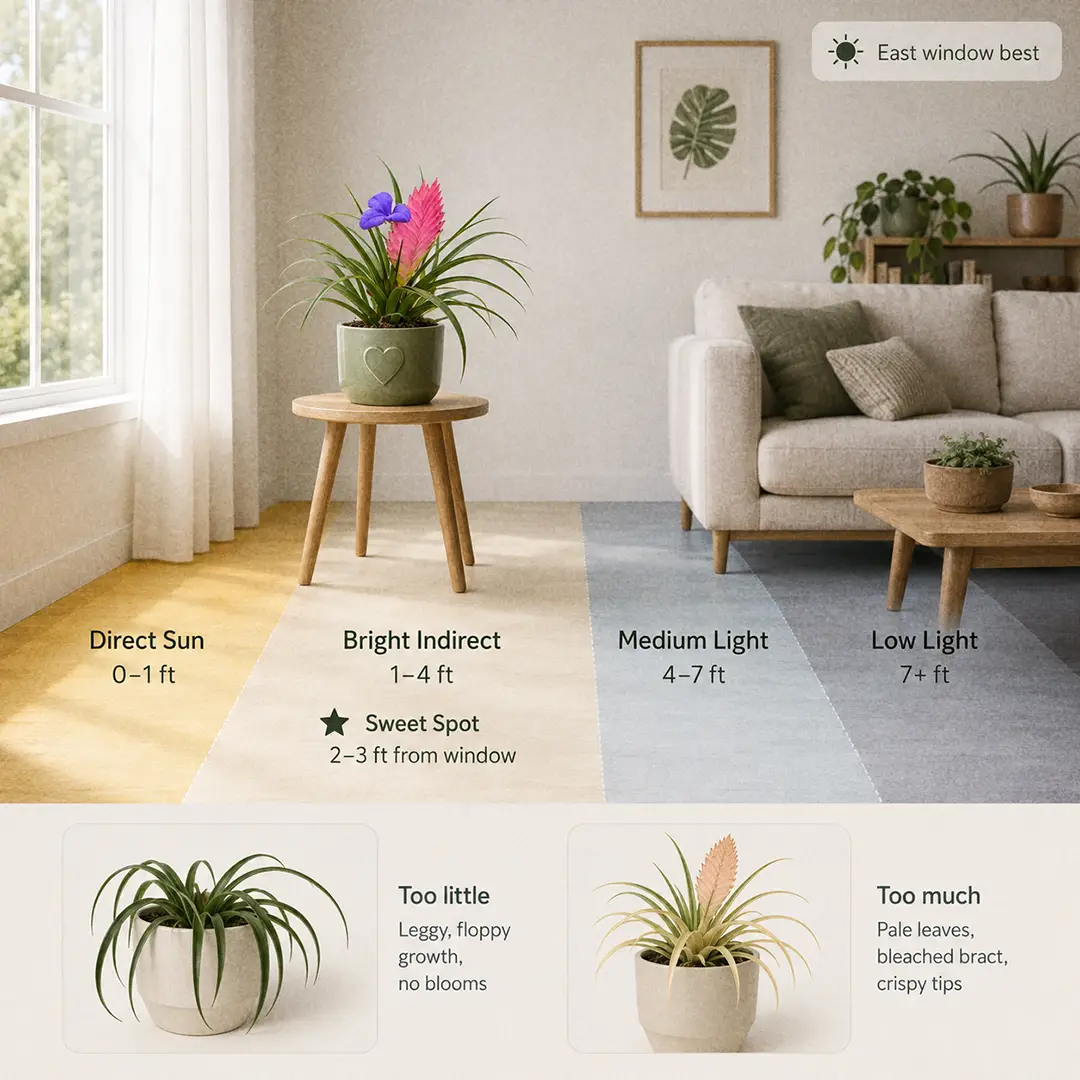
Pink Quill Plant wants bright indirect light with an hour or two of gentle direct sun, which puts an east-facing window right at the top of the list. A spot two to three feet back from a south or west window works just as well, ideally behind a sheer curtain so the afternoon glare gets softened before it lands.
This comes from where the plant grows. Wallisia cyanea, still widely sold as Tillandsia cyanea, lives clipped to tree branches in Ecuadorian cloud forest, so it spends its life in dappled light that filters down through leaves. It is not a full-sun plant like a Silver Torch Cactus, and it is not a shade plant either. Our Indoor Lighting Guide helps if you are still learning to read a room by eye.
Too Little Light
In a dim corner the leaves go floppy and lose their silvery cast, turning a flat dark green. The rosette opens out wider and loses its neat fan shape. Worst of all, a plant in low light simply will not produce a bract, and since each rosette only flowers once, a shaded year is a wasted one.
If your winters are gloomy, a grow light on a timer for ten hours a day keeps the leaves firm and the color right.
Too Much Light
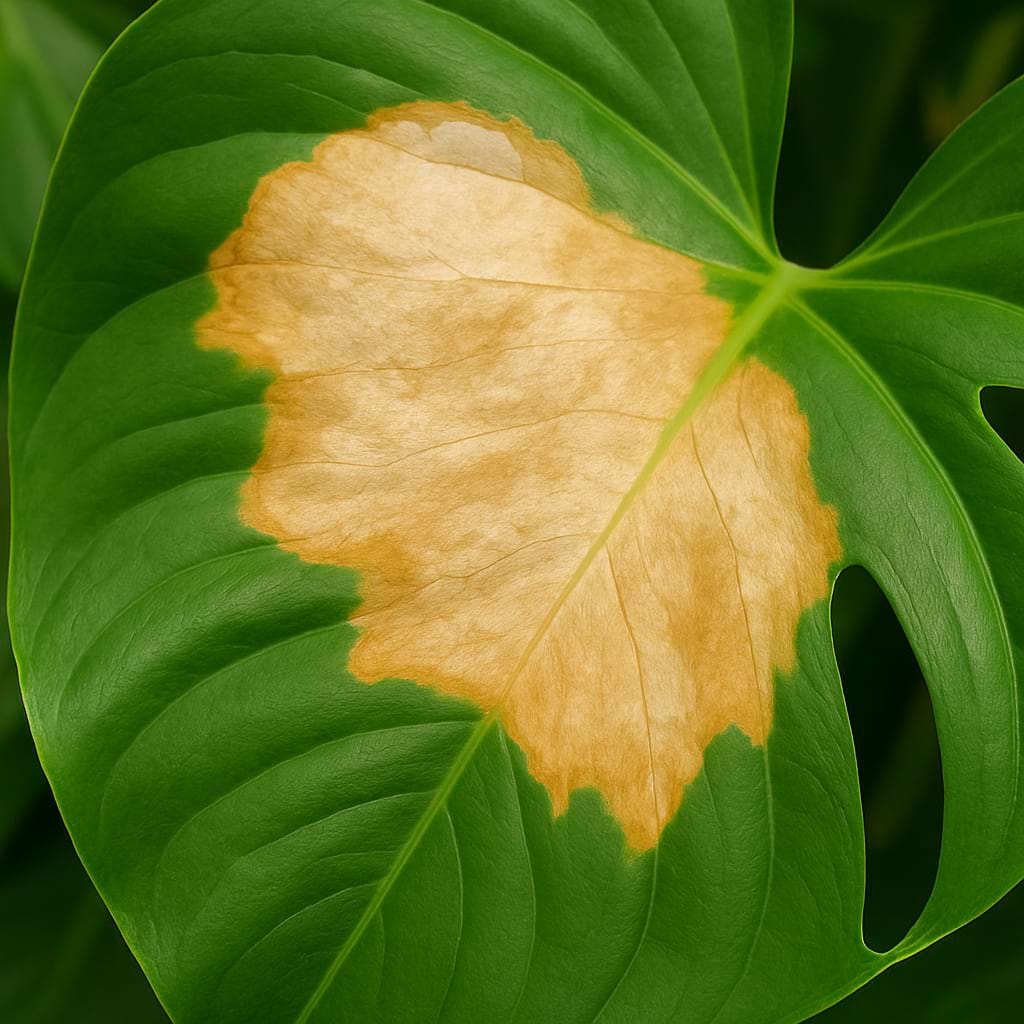
Several hours of unfiltered midday sun bleaches the leaves to a pale straw color and leaves dry brown patches on the most exposed blades, which is sunburn. Direct sun also fades the pink bract faster, turning it salmon and then tan weeks earlier than it should.
A light reddish blush at the leaf bases is different. That is normal pigment on a well-lit plant, and it usually means a bract is on the way.
💧 Pink Quill Plant Watering Guide (How to Water Wallisia cyanea)
Watering Frequency
Here is where Pink Quill Plant parts ways with the rest of its genus. Unlike a rootless Air Plant that you soak in a bowl, this one grows in a pot and has real working roots. Treat it like an orchid: keep the chunky mix lightly moist, never wet, and never bone dry.
In practice that means watering roughly every five to seven days in spring and summer, stretching to every ten to fourteen days in winter. Push a finger an inch into the bark. If it feels barely damp, wait a day. If it feels dry, water. A moisture meter removes the guesswork in a dense mix.
How to Water
Pour slowly over the mix until water runs out of the drainage holes, then tip the pot on its side to empty anything caught in the leaf bases. The rosette has only a shallow cup, nothing like the deep tank of a Silver Vase Plant, so it cannot hold standing water safely. Water left sitting in the center for days is the fastest route to crown rot.
Water quality matters more than usual. Bromeliads absorb minerals through their leaves and react badly to the salts in hard tap water, which show as white crust and brown tips. Rainwater, filtered water, or tap water left out overnight all work better. Our Watering Guide covers the basics.
Signs of Trouble
Thirst shows as leaves that curl inward along their length and feel papery near the tips. A thorough watering usually straightens them within a day.
Overwatering is quieter and more dangerous. The base of the rosette softens, the outer leaves go yellow and pull away with almost no resistance, and the whole plant loosens in its pot. That is root rot, and by the time the plant wobbles the roots are largely gone.
🪴 Best Soil for Pink Quill Plant (Potting Mix and Drainage)
What the Soil Needs
An epiphyte's roots evolved to grip bark in open air, so they want oxygen as much as water. The mix has to drain within seconds and stay airy afterward. Ordinary potting compost packs down around those roots, holds water for days, and suffocates them.
Think of the mix as something to anchor the plant rather than feed it. Loose, chunky, and quick to dry is the whole goal. Our Soil Guide explains why pot drainage matters so much.
DIY Soil Mix
A blend that works reliably is 2 parts fine orchid bark, 1 part perlite, and 1 part coco coir or peat. The bark keeps big air pockets open, the perlite stops the mix collapsing over time, and the coir holds just enough moisture between waterings. A handful of horticultural charcoal keeps the mix sweet if your room stays humid.
Pre-Made Options
Bagged bromeliad mix is the easy answer and is usually close to right out of the bag. Failing that, a fine-grade orchid mix cut with a third perlite does the same job. Skip standard houseplant soil entirely, even the ones labeled well-draining, since they are still far too dense for these roots. The potting soil guide compares the common bagged options.
🍼 Fertilizing Pink Quill Plant
When and How Often
Feed monthly from spring through early autumn, and not at all in winter. This is a light feeder that gets most of its nutrition from leaf surfaces in the wild, so a small dose often beats a strong one. Water first, then feed, so the fertilizer never hits dry roots.
What to Use
Use a bromeliad or air plant fertilizer at quarter strength, or a balanced houseplant feed diluted the same way. The important detail is copper: bromeliads are sensitive to it, and many general fertilizers include it as a micronutrient. Check the label. Urea-based nitrogen is also worth avoiding, since these plants cannot process it well. Our Fertilizing Guide and the fertilizers guide cover the ratios and the products.
Spraying diluted feed onto the leaves works as well as pouring it into the pot, which suits the plant's natural habit.
Over-Fertilizing Signs
Brown, crisp leaf tips are the first sign, usually mistaken for low humidity. A white crust on the bark surface and unusually soft, pale new leaves confirm it. Flush the pot with plain water two or three times and pause feeding for a couple of months.
🌡️ Pink Quill Plant Temperature Range
Ideal Range
Room temperature suits it exactly. Aim for 60-80°F (15-27°C), which most homes hit without any effort. Growth slows below 55°F, and anything under 45°F causes damage that shows up later as translucent patches on the leaves.
The Cool Nights That Help
A drop of about ten degrees at night is welcome and mirrors the montane forest it comes from. Those cooler nights, paired with good light, are part of what nudges a mature rosette into producing a bract.
Drafts and Heat Sources
Keep it away from radiators, heating vents, and the airflow from an air conditioner. Dry moving air pulls moisture out of the narrow leaves faster than the roots can replace it, and crispy tips follow within weeks. A drafty winter windowsill is also worth avoiding, since cold glass plus damp bark is how fungal spotting starts.
💦 Pink Quill Plant Humidity Requirements
Ideal Humidity
Target 50-60% humidity. This is a cloud forest plant, and while it tolerates average household air of around 40%, the difference shows in the leaf tips. Below 40% the tips go brown and papery no matter how carefully you water.
Easy Humidity Boosters
A small humidifier nearby is the most reliable fix and the one I would pick first. A bright bathroom or above a kitchen sink also does the job for free. Grouping it with other plants raises the local humidity a few points. Misting the leaves two or three times a week helps a little and is genuinely useful for this species because the leaf scales absorb moisture directly, but let it dry before nightfall. Our humidity guide and the humidifiers guide go deeper.
🌸 Pink Quill Plant Flowers (How to Make It Bloom)
What the Bract and Flowers Look Like
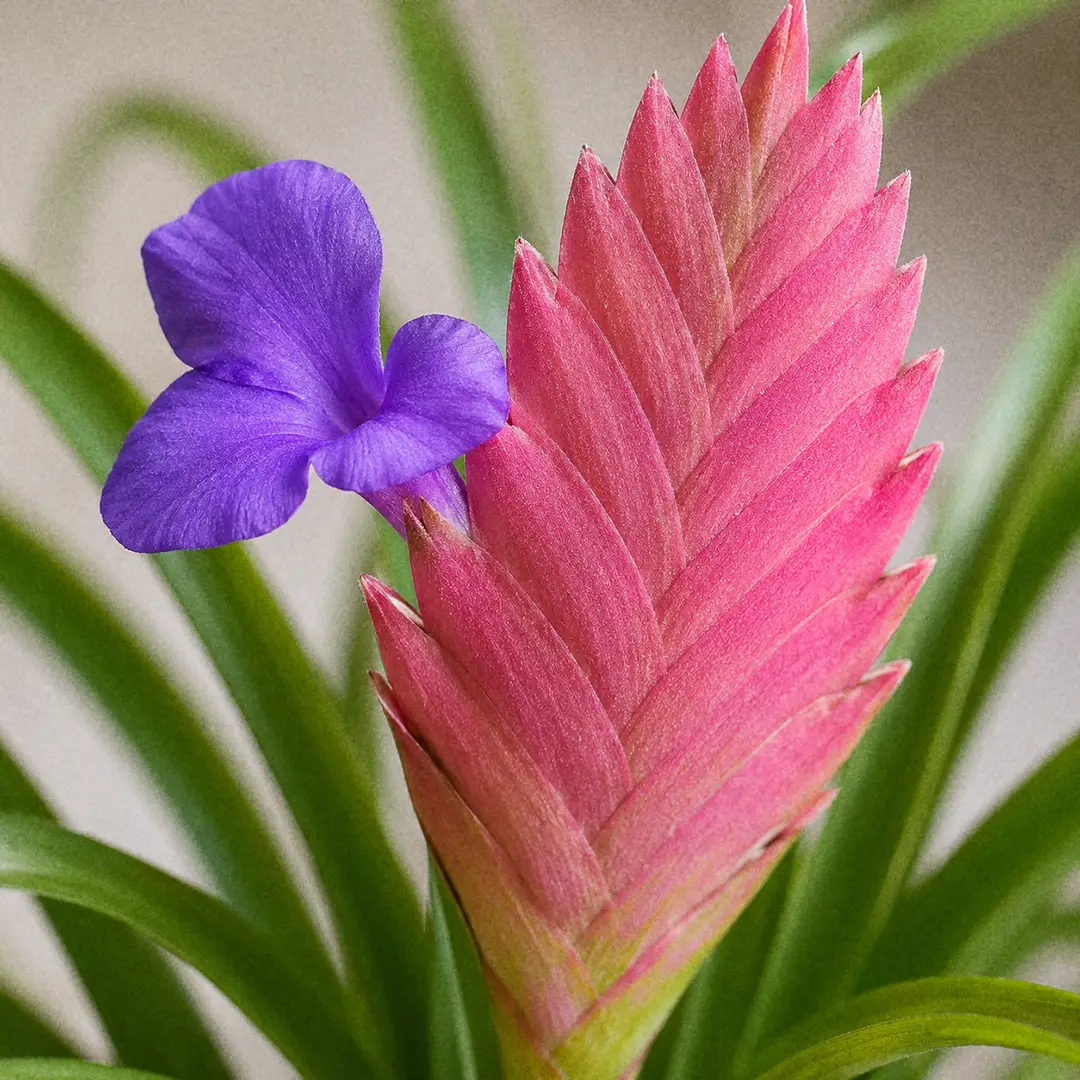
The pink paddle everyone buys this plant for is not a flower. It is an inflorescence made of flat overlapping bracts, stacked into a shape somewhere between a feather and a canoe paddle, four to eight inches long and a deep rose pink. It emerges from the center of the rosette on a short stem and stays colorful for two to four months, which is why this plant outlasts almost anything else on a bloom shelf.
The real flowers appear one or two at a time, pushing out from between the bracts as deep violet trumpets with three broad petals and a white throat. Each lasts a day or two. Over several weeks a dozen or more work their way up the paddle, so there is nearly always one open. In some plants they carry a faint clove scent in the morning.
How to Trigger Bloom
A rosette flowers when it reaches full size, usually at three or four years old, and it needs bright light and steady feeding to get there. If you have a mature plant that is stalling, the ethylene trick works: seal the whole plant in a clear plastic bag with a ripe apple for seven to ten days, keeping it out of direct sun. The ethylene gas the apple releases triggers flowering in bromeliads, often within two months.
If It Won't Bloom
Insufficient light is the usual culprit, followed by immaturity. A plant that has never flowered and is still small simply needs another year. That is failure to bloom, and moving it two feet closer to an east window fixes most cases.
Worth knowing before you fuss too much: each rosette blooms exactly once. If yours has already flowered and the bract has browned, no amount of coaxing brings a second one. Your flowers now come from the pups.
🏷️ Pink Quill Plant Types and Varieties
The species is stable and there are not dozens of cultivars, but a few forms turn up under different labels and the naming can be confusing on a shop shelf.
Wallisia cyanea (the accepted name)
The classic Pink Quill described throughout this guide. A fountain of narrow arching leaves twelve to eighteen inches across, silvery green with a reddish base, topped by a flat rose-pink bract. This is what almost every garden center sells.
Tillandsia cyanea (the older name)
Same plant, older label. Botanists moved this species out of Tillandsia and into Wallisia in 2016. Nurseries still use both names, so a plant tagged Tillandsia cyanea is not a different variety and wants identical care.
Wallisia 'Anita'
This common Pink Quill cultivar is still often sold as Tillandsia 'Anita'. It is a touch larger and more vigorous than the species, with a broader bract and slightly bluer flowers. It also pups more freely, which is one reason growers favor it.
Wallisia lindeniana
The taller cousin has a longer, often slightly curved bract and bigger flowers marked with a distinct white eye. Older labels may call it Tillandsia lindeniana or Tillandsia lindenii. It is less common in shops but grows in the same conditions.
How It Compares to Other Bromeliads
Set beside a tank-forming Bromeliad like a Guzmania, Pink Quill looks almost grassy, and its watering needs differ enough to matter: no filled cup here. The Silver Vase Plant is the heavyweight of the family with wide banded leaves and a spiky pink head. Soil-free Air Plants belong to the related genus Tillandsia and grow without a pot. The closest relative in habit is the Brachycaulos Air Plant, which colors up before flowering but goes scarlet across the whole rosette instead of raising a separate pink bract. If it is the pink bract you are after without the pot, the Sky Plant raises a smaller version on a soil-free, mountable rosette, and Harris's Air Plant does it in orange-red on a taller spike if you can wait a few years for it.
🪴 Potting and Repotting Pink Quill Plant
When to Repot
Rarely, which is good news. The root system is small and mostly anchors the plant, so a Pink Quill can sit in the same pot for its whole flowering life. Repot only when the bark has broken down into dark crumbly stuff, when the plant is top-heavy enough to tip, or when you are separating pups. Spring is the time, and never while a bract is developing.
Choosing a Pot
Small and stable. A pot barely wider than the root ball is right, since extra volume just holds damp mix the roots never touch. Terracotta is a good match because it breathes, though the plant is wide and light enough that a heavier pot helps it stay upright. Drainage holes are essential. Our plant pots guide compares materials.
Step-by-Step Repotting
Slide the plant out and shake most of the old bark off the roots without scrubbing them clean. Trim anything black or mushy with clean scissors. Set the rosette into fresh mix at the same depth it grew before, keeping the base of the leaves at the surface, because burying the crown causes rot. Firm the mix lightly, water once, and give it a week in slightly lower light while it settles. Our repotting guide covers the general process.
✂️ Pruning Pink Quill Plant
Trimming Brown Tips and Leaves
There is little routine pruning here. Snip brown leaf tips with sharp scissors, following the natural taper of the leaf rather than cutting straight across, and the trim will be invisible from a step away. Remove whole outer leaves only once they are fully brown and pull away easily.
Cutting the Spent Bract
When the bract fades from pink to tan and dries out, usually three or four months after it appeared, cut the stem as low as you can reach into the rosette without nicking the leaves. Leaving a dried bract in place is not harmful, but it traps moisture in the center and looks tired.
Removing the Mother Plant
Once the mother has flowered she begins a slow decline over the following year, browning from the outside in. Leave her attached while the pups are small, since they draw energy from her. When the pups are well grown and she is mostly brown, cut her out at the base and let the pups take over the pot.
🌱 How to Propagate Pink Quill Plant
Best Method: Pups
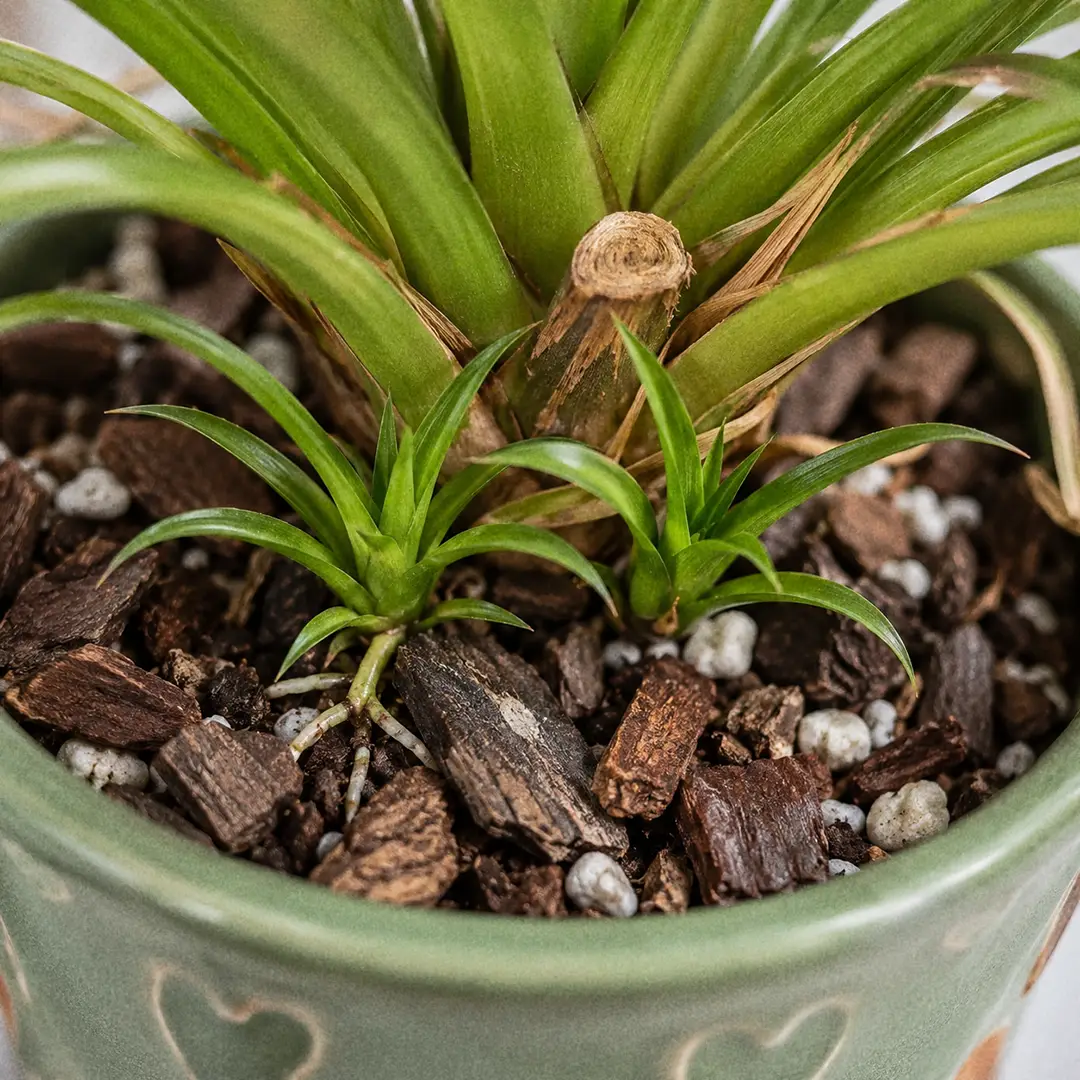
Pink Quill Plant is monocarpic, so propagation is not optional if you want to keep it. After flowering, the mother produces one to three pups at her base, and those are your next generation. There is no other practical route at home, since seed takes years and cuttings do not work on a bromeliad. Our propagation hub covers the general ideas.
When to Separate
Patience pays here. Wait until a pup is at least a third to a half the size of the mother and has its own visible roots, which usually takes six to twelve months. Pups removed early rarely have the root mass to support themselves and often stall or rot.
Step-by-Step
Tip the whole plant out of its pot so you can see where pup meets mother. Work the bark away from the join and look for the point where the pup narrows to a short stub of its own. Cut there with a clean sharp knife, taking any roots that clearly belong to the pup.
Pot each pup into a small container of the same chunky bark mix, planted just deep enough to stand up. Water lightly, keep it warm and in bright indirect light, and hold off feeding for a month. If a pup has almost no roots, mount it on cork bark and mist it daily instead, treating it like an air plant until roots form.
Tips for Success
Leave two pups in the original pot and you get a fuller display faster than starting over with one. Expect the first bloom from a pup in two to four years, which sounds long until you remember the bract lasts a whole season. Steady bright light through those years is what shortens the wait.
🐛 Pink Quill Plant Pests and Treatment
Common Pests
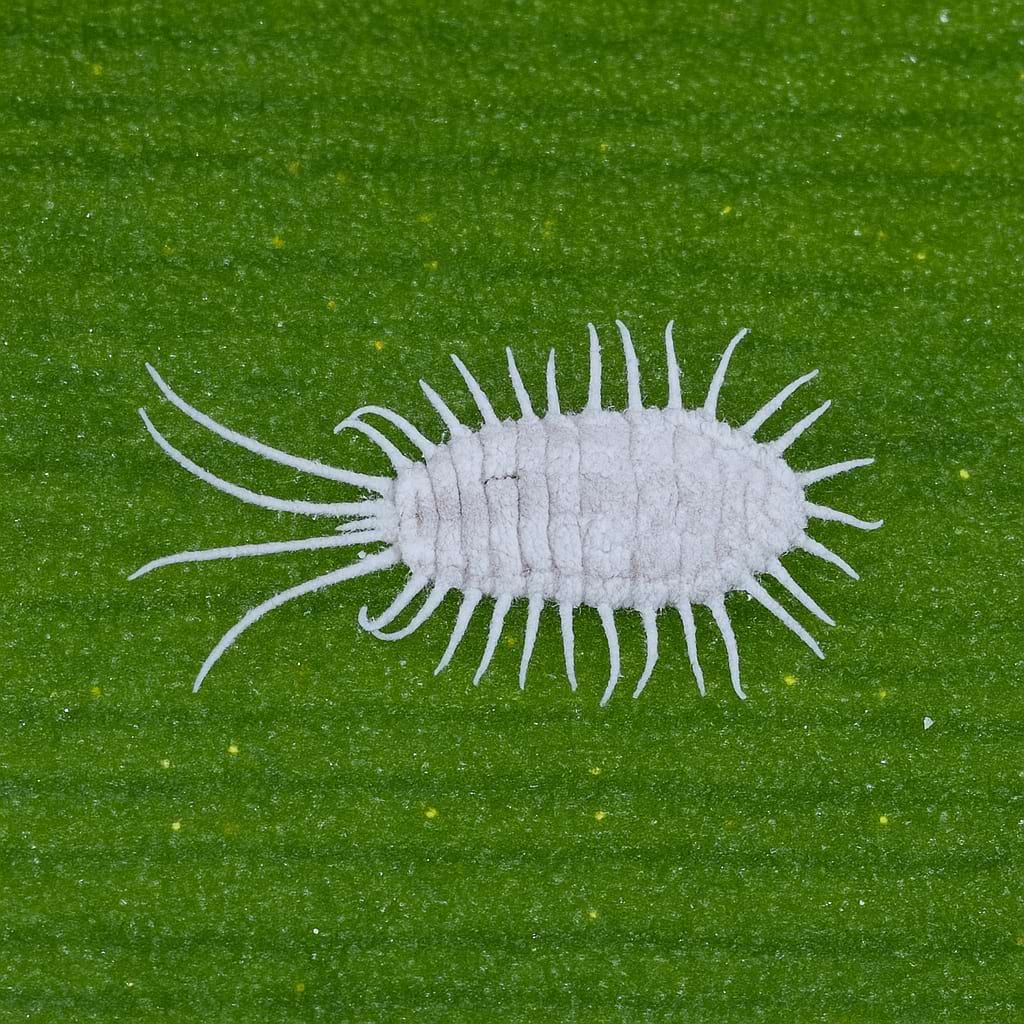
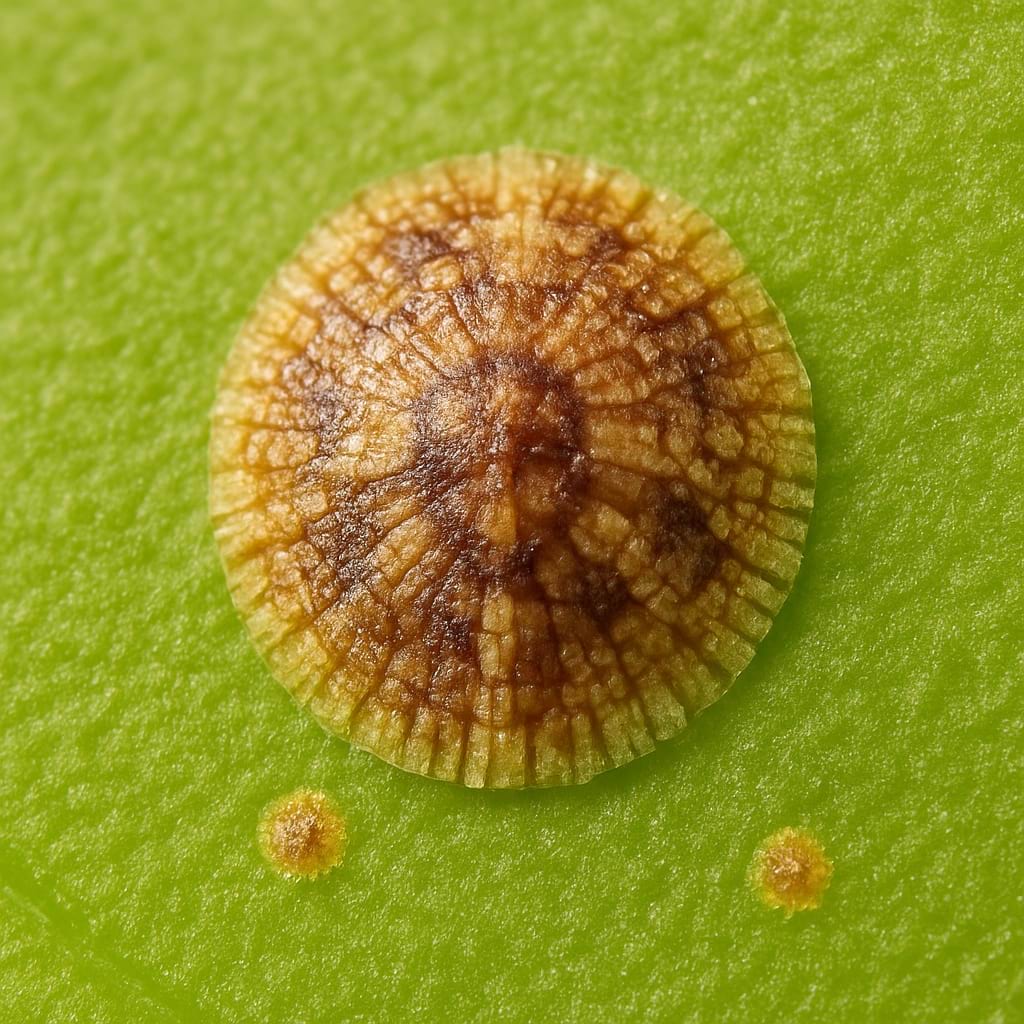
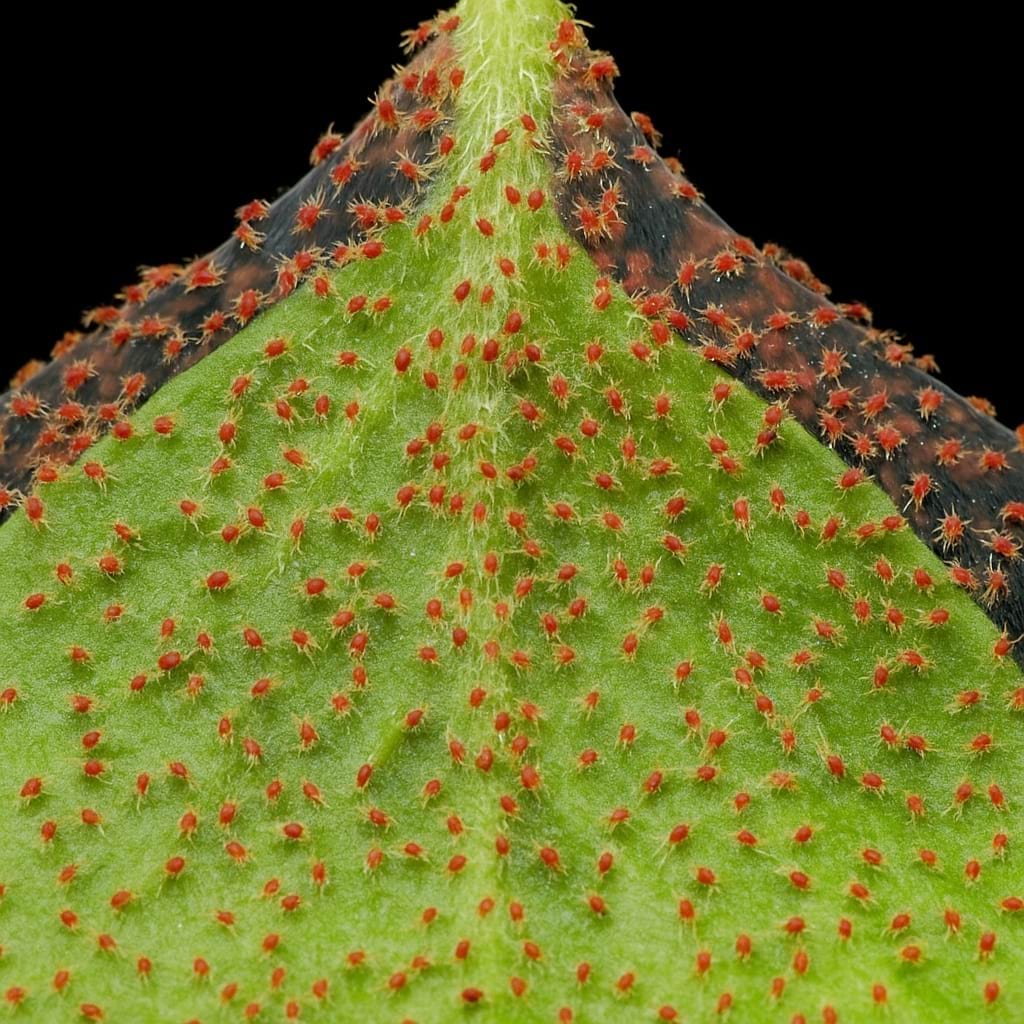
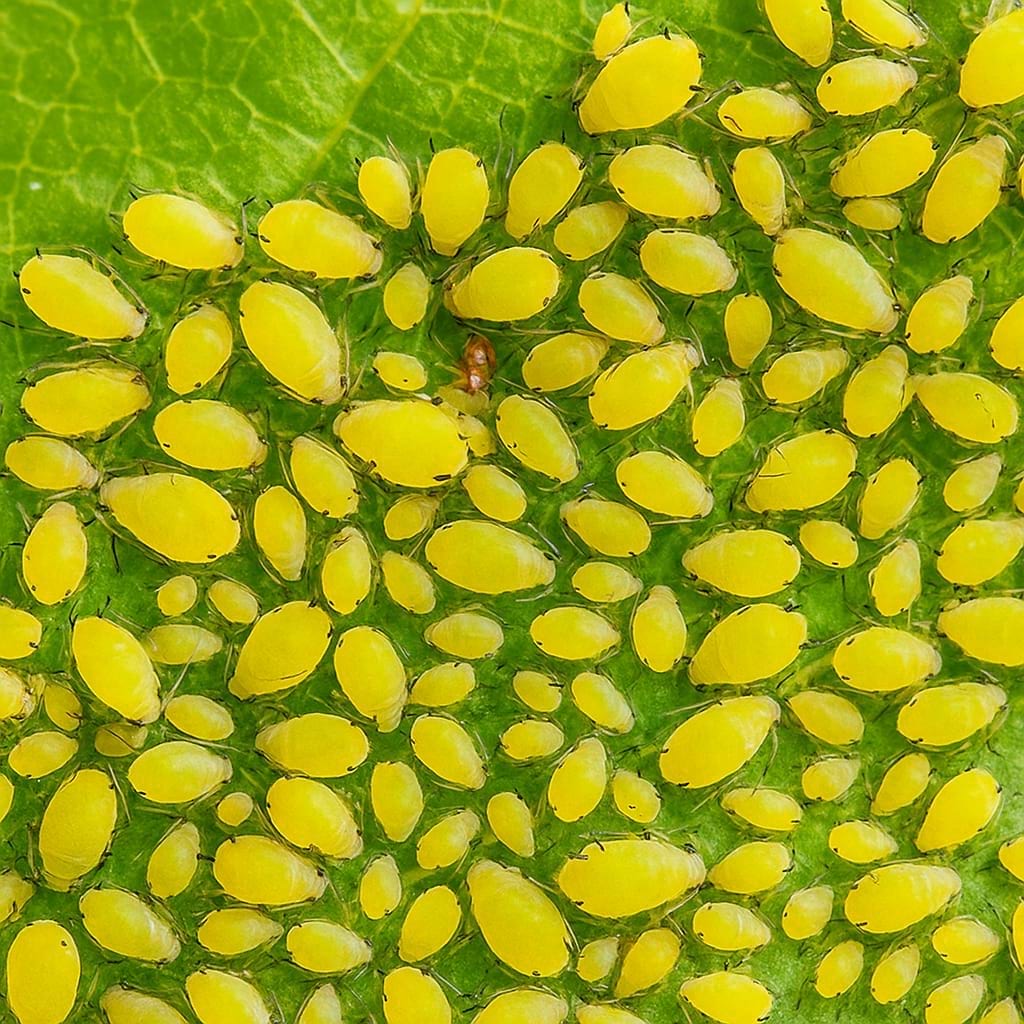
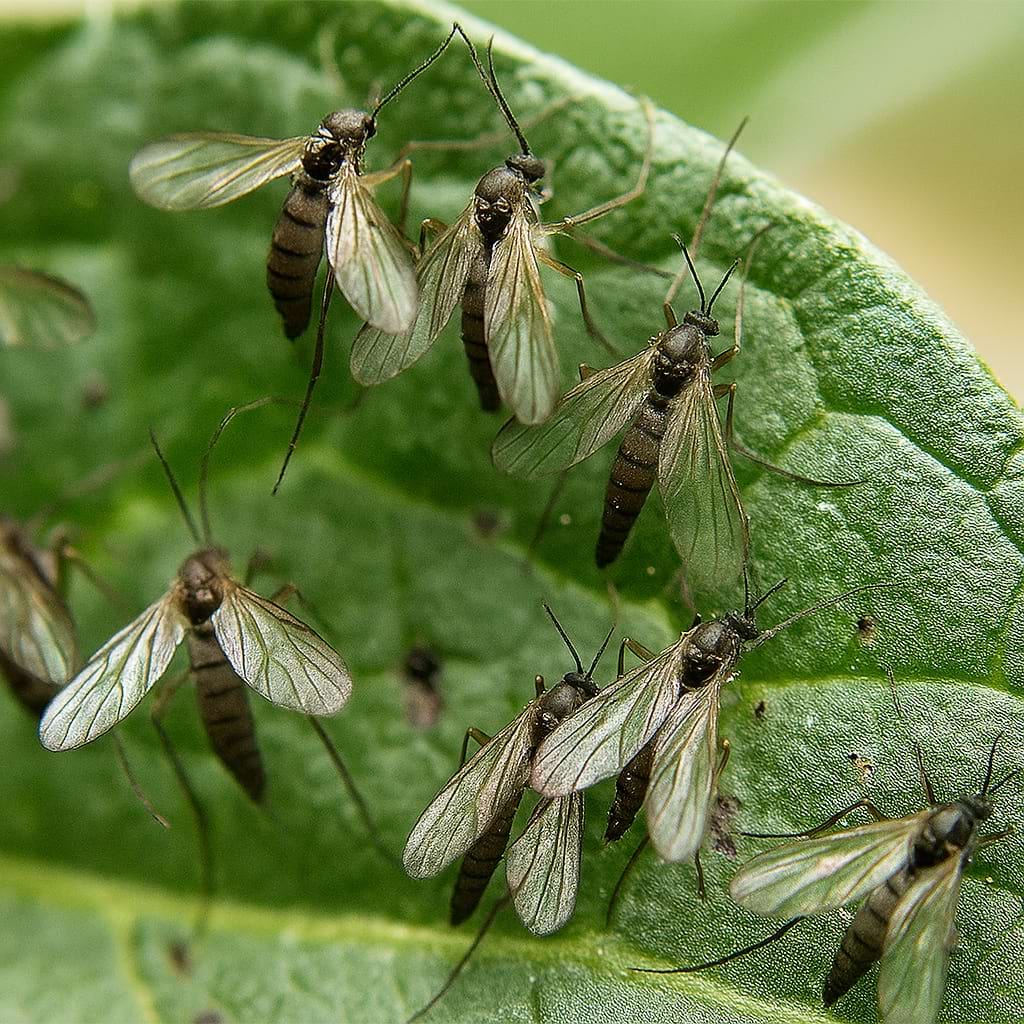
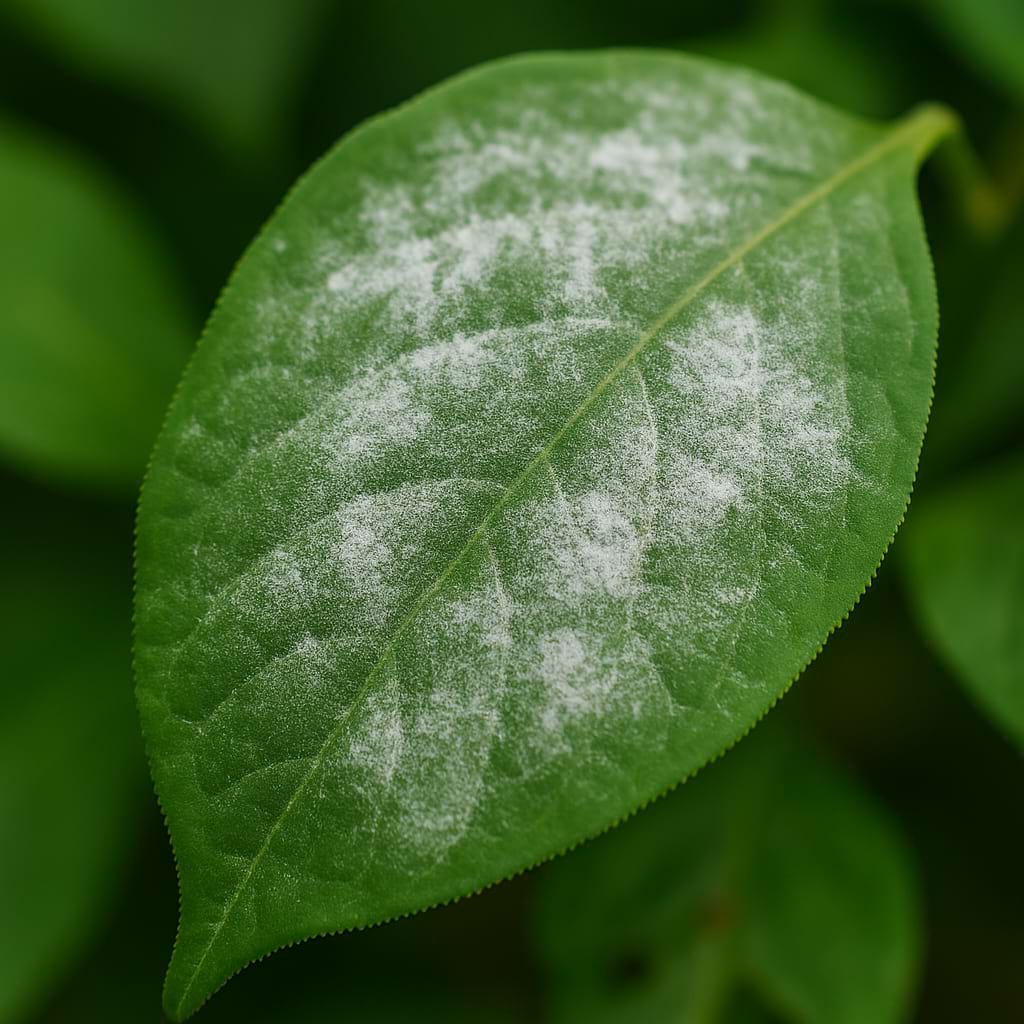
Mealybugs are the main nuisance, tucking white cottony clumps deep into the leaf bases where the rosette is tightest. Scale insects show as small brown or tan bumps along the undersides of the leaves and are easy to mistake for natural markings. Spider mites turn up when the air is dry, leaving fine webbing between leaves and a dull stippled cast. Aphids occasionally gather on a developing bract, which is the one place they do real cosmetic damage. Fungus gnats mean the mix is staying wetter than it should.
Treatment and Prevention
Dab mealybugs and scale with a cotton bud dipped in rubbing alcohol, then rinse the whole plant under a lukewarm shower a few days later. Insecticidal soap works, but keep it off the bract, where it can stain. Skip neem and any oil-based spray on the flowers themselves. Spider mites retreat once humidity comes up, and fungus gnats disappear when you let the bark dry a little more between waterings.
Because the leaf bases are packed tight, inspect down into the rosette with a torch once a month rather than trusting a glance from above.
🩺 Common Pink Quill Plant Problems
Rot From Too Much Water
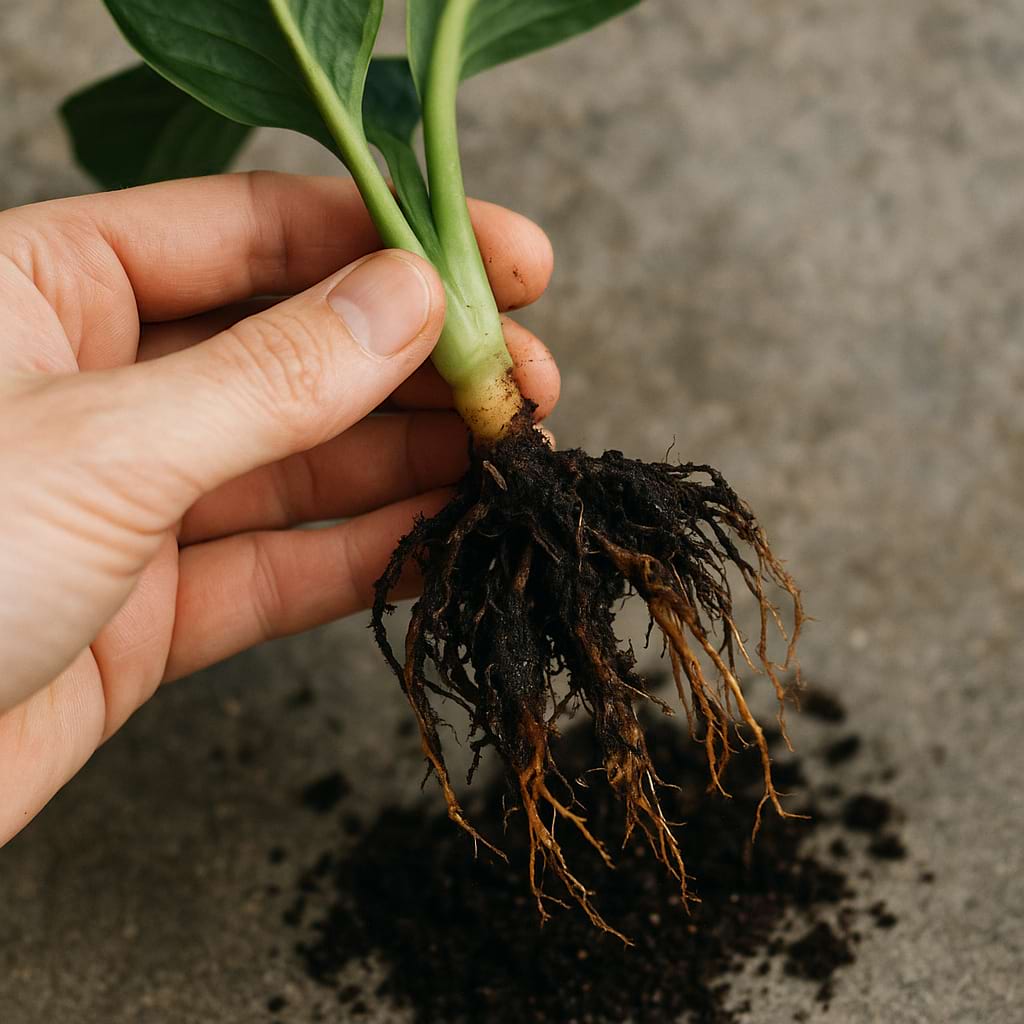
The most common way to lose this plant is water sitting where it should not. Root rot starts in soggy mix and shows as a wobbly plant with yellowing outer leaves that detach with a light tug. Crown rot starts in the center cup and turns the heart of the rosette soft and brown. Both call for the same response: unpot, cut away everything mushy, and replant in fresh dry bark, or salvage the pups if the mother is too far gone.
Brown Tips and Faded Leaves
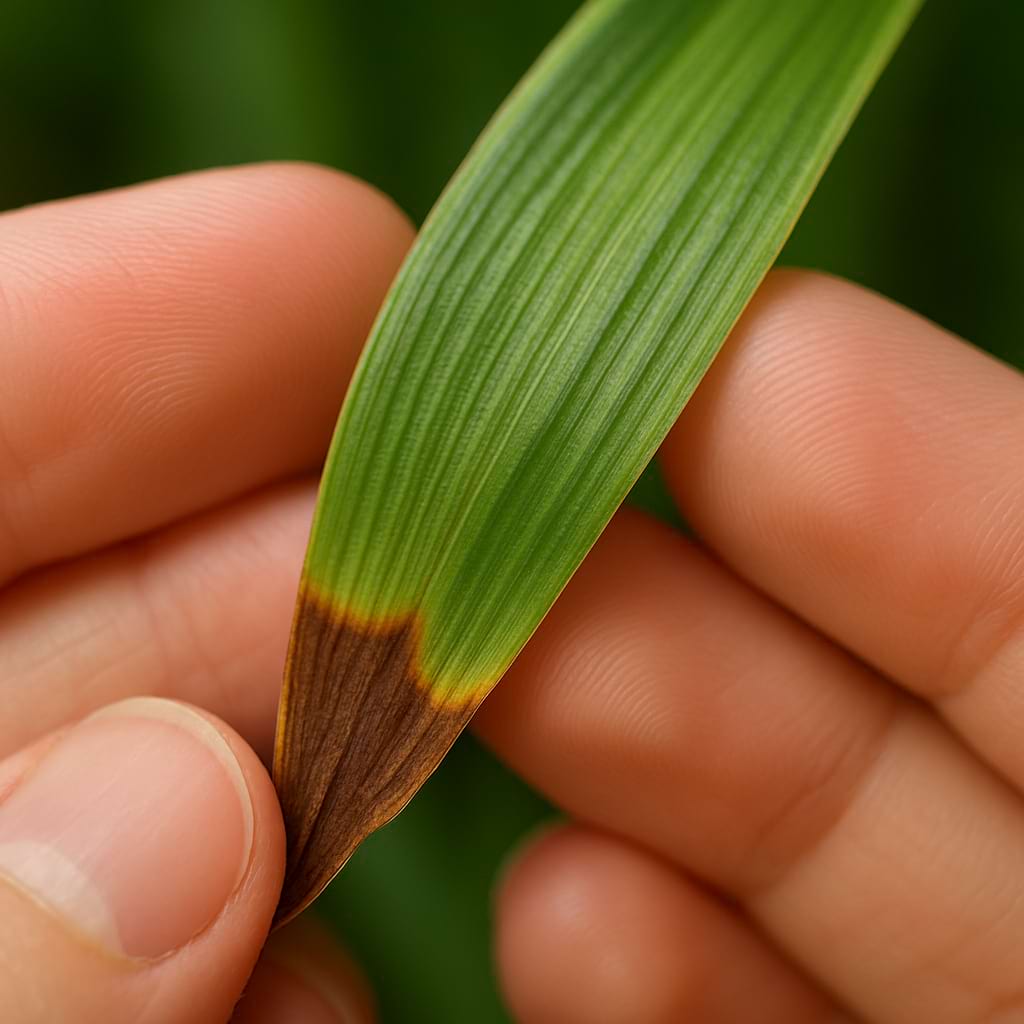
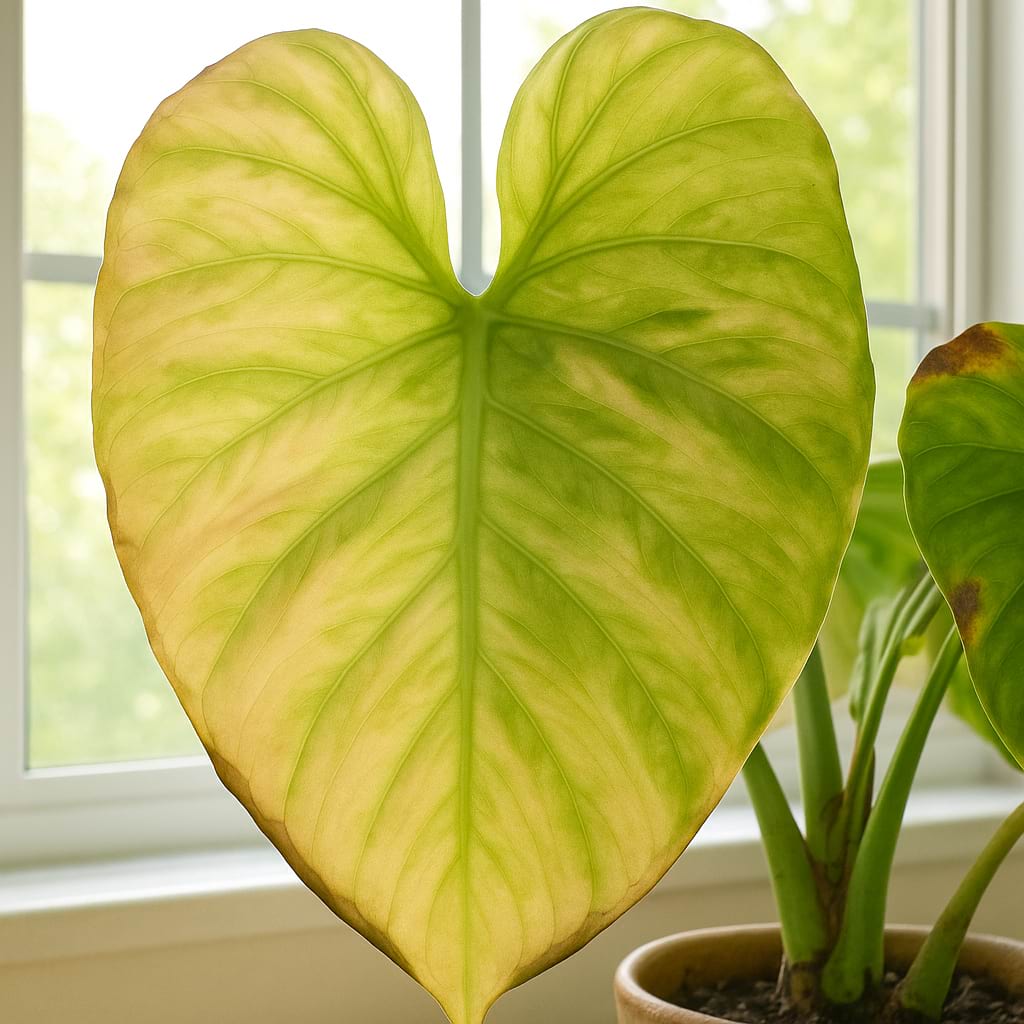
Crisp brown tips are almost always dry air, hard tap water, or fertilizer salts, in that order of likelihood. Switch to filtered or rainwater, raise the humidity, and flush the pot occasionally, and new growth comes in clean. See brown crispy edges for the full rundown. Leaves going a washed-out pale green usually point to too much direct sun, while yellowing leaves lower down point back at the roots.
The Bract Turning Brown
This one worries people the most and is almost never a problem. A bract that fades from pink through salmon to tan after two or three months has simply finished its run. That is the normal end of the cycle, not a care mistake. Cut it off and turn your attention to the pups at the base.

🖼️ Pink Quill Plant Display and Styling Ideas
Solo Setups
The bract is flat and reads best from one side, so this plant wants to be faced rather than centered. Set it at eye level on a shelf or a bathroom counter with the paddle turned toward the room. A plain white, cream, or pale green pot lets the pink do the talking, where a patterned pot fights it.
Grouped Arrangements
It pairs naturally with other bromeliads that want the same bright indirect light. A wide-leaved Silver Vase Plant behind it gives contrast in leaf width, while a mounted Air Plant on cork nearby makes the family resemblance obvious. A Phalaenopsis Orchid is the other easy epiphyte to slot into the same window, and its arching spike carries the group above the flat pink paddle. For a softer grouping, a trailing fern at a lower level balances the upright fan of the rosette, and a curtain of Spanish Moss hung just above the shelf does the same job in silver rather than green.
Because the roots are so minimal, this is also a good candidate for a wide open glass bowl or a cork bark mount, as long as air moves freely around it.
Where Not to Put It
Skip dim corners and north-facing rooms, where the rosette flops and no bract appears. Keep it off windowsills that get several hours of hard afternoon sun, which bleaches the leaves and fades the pink early. Radiators and air conditioning vents are the other places to avoid.
🌟 Pink Quill Plant Pro Care Tips
🌸 The pink paddle is not a flower. The violet trumpets pushing out of it are, and they come one at a time over weeks.
💧 Do not fill the center. This rosette has a shallow cup, not a tank, and standing water there rots the crown.
🚰 Use rainwater or filtered water. Hard tap water leaves crusty white residue and brown tips on bromeliad leaves.
🪵 Pot it in bark, not soil. The roots want air, and ordinary compost smothers them within a season.
🍎 Try the apple-in-a-bag trick. Ten days sealed with a ripe apple triggers flowering in a stalled mature plant.
🍼 Check your fertilizer for copper. Bromeliads are sensitive to it, so a bromeliad-specific feed is worth buying.
🌱 Wait until pups are half the mother's size. Separated early, they usually stall or rot.
🔄 Turn the pot to face the bract outward. The paddle is one-sided and looks flat from behind.
❓ Frequently Asked Questions
Is Pink Quill Plant toxic to cats and dogs?
Pink Quill Plant is non-toxic to cats and dogs, like all bromeliads. The narrow leaves can tempt a cat into chewing, which may cause mild stomach upset from the fiber itself, but there is nothing poisonous in the plant.
Why is my Pink Quill Plant's pink bract turning brown?
Because it has finished. A bract holds color for two to four months and then fades through salmon to tan as the flowering cycle ends. This is normal and not a sign of poor care. Cut it off at the base and watch for pups.
Will my Pink Quill Plant flower again?
The same rosette will not. Each one flowers once and then declines, which is what monocarpic means. The pups it produces at the base will flower in their own time, usually two to four years after separating.
How often should I water a Pink Quill Plant?
Roughly every five to seven days in spring and summer, and every ten to fourteen in winter, adjusted by feel rather than a calendar. Keep the bark lightly moist, water until it drains, and tip out anything pooled in the leaf bases.
Do I water Pink Quill Plant in the center like other bromeliads?
No, and this is the single most common mistake. Unlike a tank bromeliad, this species has only a shallow center cup that cannot hold standing water safely. Water the mix and mist the leaves instead.
Can I grow Pink Quill Plant without soil, like a normal air plant?
Yes, though it grows better potted. Mounted on cork bark and misted daily it will survive and even flower because it is an epiphytic bromeliad. In a pot of bark mix it grows faster and produces a bigger bract.
Why won't my Pink Quill Plant bloom?
Usually not enough light, or the plant is not mature enough yet. Move it to bright indirect light near an east window and feed monthly through the growing season. For a mature plant that is stalling, seal it in a clear bag with a ripe apple for seven to ten days.
Is Tillandsia cyanea the same as Wallisia cyanea?
Yes. Botanists reclassified the species into the genus Wallisia in 2016, so both names refer to the same plant. Nurseries use them interchangeably, and care is identical whichever label you find.
How big does a Pink Quill Plant get?
The rosette spreads twelve to twenty-four inches across and stands about ten to eighteen inches tall once the bract is up. It stays compact enough for a windowsill or a bathroom shelf.
Why are the tips of my Pink Quill Plant's leaves brown and crispy?
Dry air is the most likely cause, followed by mineral buildup from hard tap water and then excess fertilizer. Raise humidity toward 50-60%, switch to filtered or rainwater, and flush the pot with plain water every few months.
ℹ️ Pink Quill Plant Info
Care and Maintenance
🪴 Soil Type and pH: Chunky epiphyte mix of bark, perlite, and coarse peat or coir
💧 Humidity and Misting: Prefers 50-60% humidity and rewards a humidifier or a well-lit bathroom.
✂️ Pruning: Trim the spent bract once it browns and cut the mother back only after the pups are established.
🧼 Cleaning: Wipe the grassy leaves with a damp cloth or rinse the whole plant under a lukewarm shower, then shake out the center.
🌱 Repotting: Repot only when the plant tips over or the bark breaks down, roughly every 2-3 years, in spring.
🔄 Repotting Frequency: Every 2-3 years
❄️ Seasonal Changes in Care: Bright light and steady moisture from spring through autumn, then slightly drier and cooler in winter with no feeding.
Growing Characteristics
💥 Growth Speed: Slow to moderate
🔄 Life Cycle: Evergreen epiphytic perennial, monocarpic rosette that flowers once and then offsets
💥 Bloom Time: Mostly late summer into autumn indoors, though nursery plants arrive in bloom year round; the pink bract holds color for 2-4 months
🌡️ Hardiness Zones: 10-11
🗺️ Native Area: Humid montane rainforests of Ecuador
🚘 Hibernation: No true dormancy, just a slower, drier winter rest at cooler temperatures
Propagation and Health
📍 Suitable Locations: East windowsills, bright bathrooms, kitchen counters, shelves near a filtered south window, mounted displays
🪴 Propagation Methods: Separate the pups that appear at the base after flowering, once each is about a third the size of the mother.
🐛 Common Pests: Mealybugs, Scale Insects, Spider Mites, Aphids, Fungus Gnats
🦠 Possible Diseases: Root rot, crown rot, fungal leaf spotting in still damp air
Plant Details
🌿 Plant Type: Epiphytic bromeliad grown as a potted houseplant
🍃 Foliage Type: Evergreen rosette of narrow arching grass-like leaves
🎨 Color of Leaves: Silvery mid-green, often with a reddish-brown flush at the base
🌸 Flower Color: Deep violet to blue-purple three-petalled flowers on a rose-pink flattened bract
🌼 Blooming: Yes, once per rosette, with a bract that stays colorful for months
🍽️ Edibility: Not edible.
📏 Mature Size: 10-18 inches tall in bloom
Additional Info
🌻 General Benefits: Pet-safe, blooms indoors more reliably than most bromeliads, needs no special equipment, and self-replaces through pups
💊 Medical Properties: No documented medicinal uses.
🧿 Feng Shui: A soft, upward-fanning rosette with a warm pink crown, often used to lift stagnant energy in a bright corner without the spiky edge of a cactus.
⭐ Zodiac Sign Compatibility: Libra
🌈 Symbolism or Folklore: Warmth, hospitality, a brief spectacular flourish, renewal through offspring
📝 Interesting Facts: The pink paddle is not a flower at all. It is a flattened stack of overlapping bracts, and the true flowers are the small violet trumpets that push out from between them, one or two at a time over several weeks. Botanists moved this species into the genus Wallisia in 2016, so newer labels may read Wallisia cyanea, but the plant on the shelf is the same one.
Buying and Usage
🛒 What to Look for When Buying: Pick a plant whose bract is still tight, deep pink, and green-tinged at the tip, with few or no violet flowers open yet. A bract already fading to salmon means most of the show has happened.
🪴 Other Uses: Gift plant, bathroom accent, mounted epiphyte display, terrarium centerpiece in a wide open container.
Decoration and Styling
🖼️ Display Ideas: Bright bathroom shelves, kitchen windowsills, grouped bromeliad tables, cork bark mounts, wide glass bowls
🧵 Styling Tips: The bract is flat and one-sided, so turn the pot until the paddle faces the room. A plain pale pot keeps the pink from competing.
🪴 See also 🪴
Complete Guide to Capitata Peach Air Plant Care and Growth
Complete Guide to Baileyi Air Plant Care and Growth
Complete Guide to Harris's Air Plant Care and Growth
Complete Guide to Pruinosa Air Plant Care and Growth
Complete Guide to Ionantha Air Plant Care and Growth
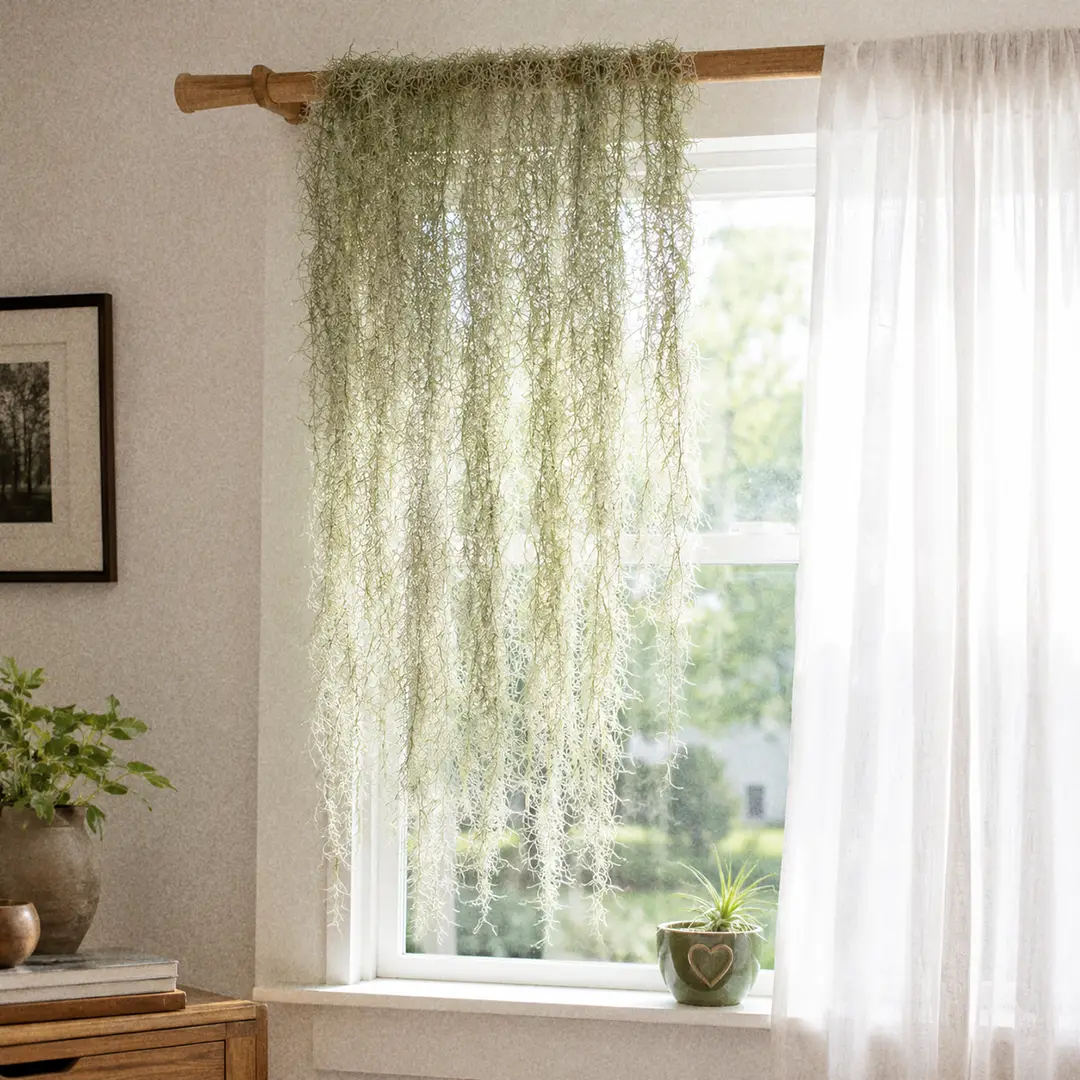
Complete Guide to Spanish Moss Care and Growth
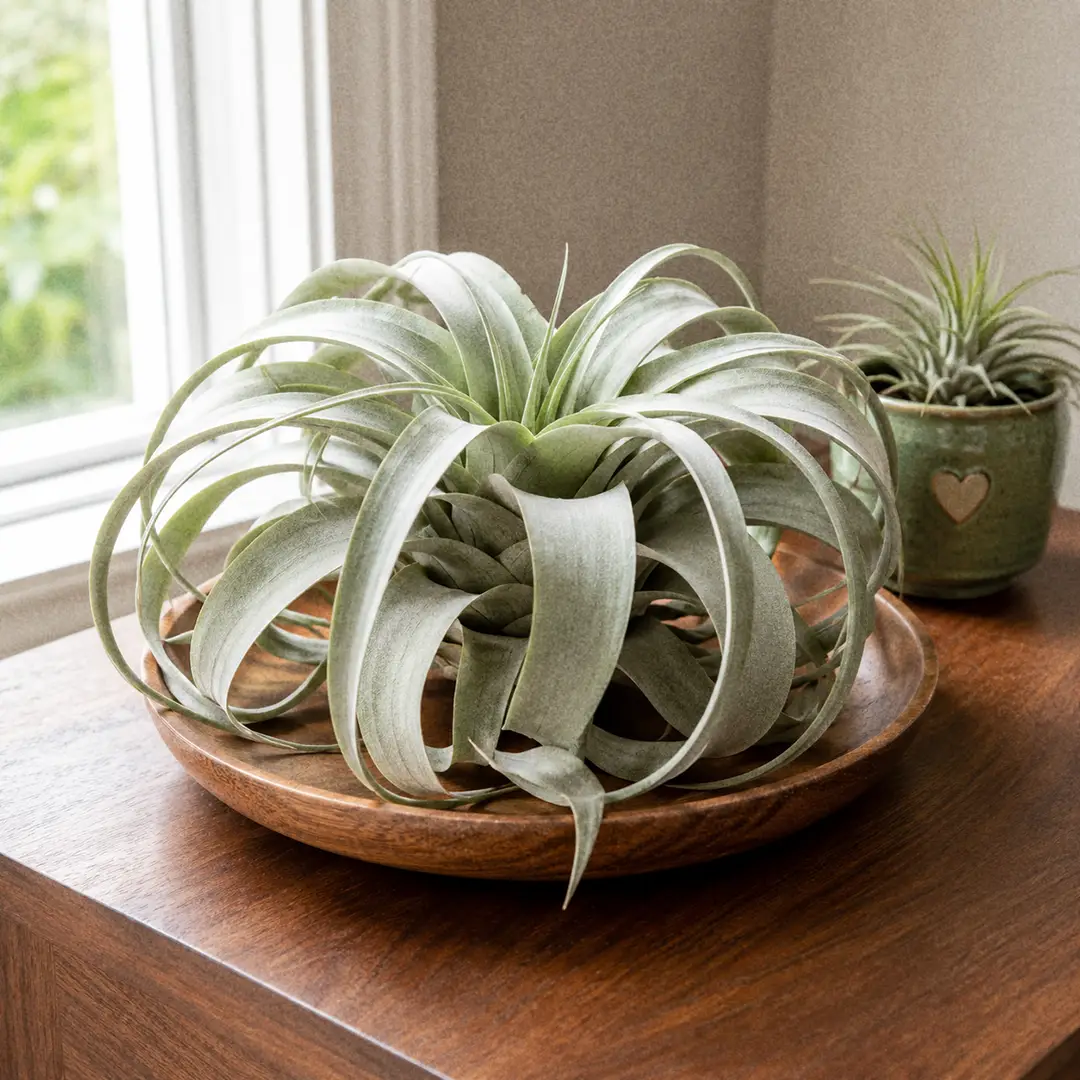
Complete Guide to Xerographica Air Plant Care and Growth
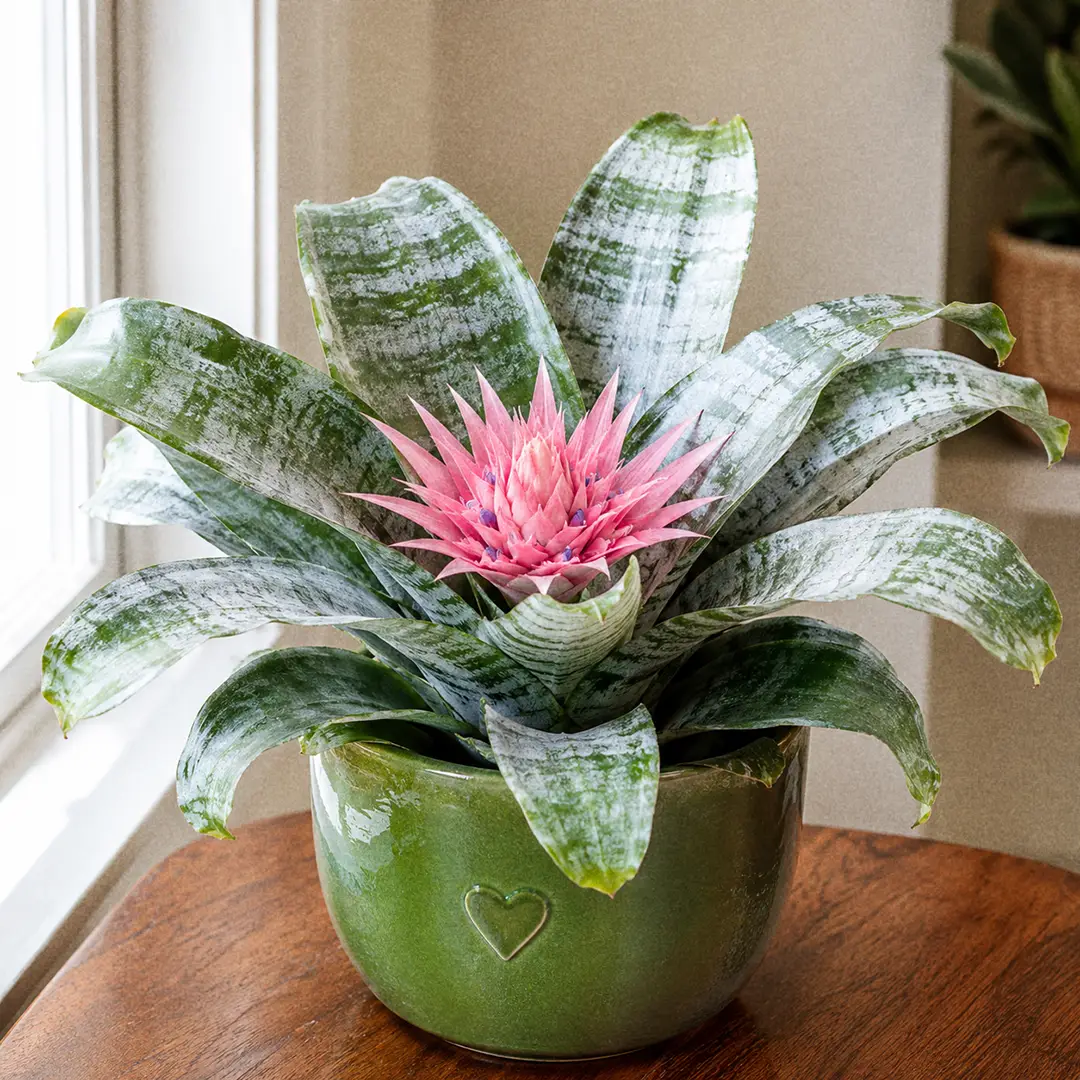
Complete Guide to Silver Vase Plant Care and Growth
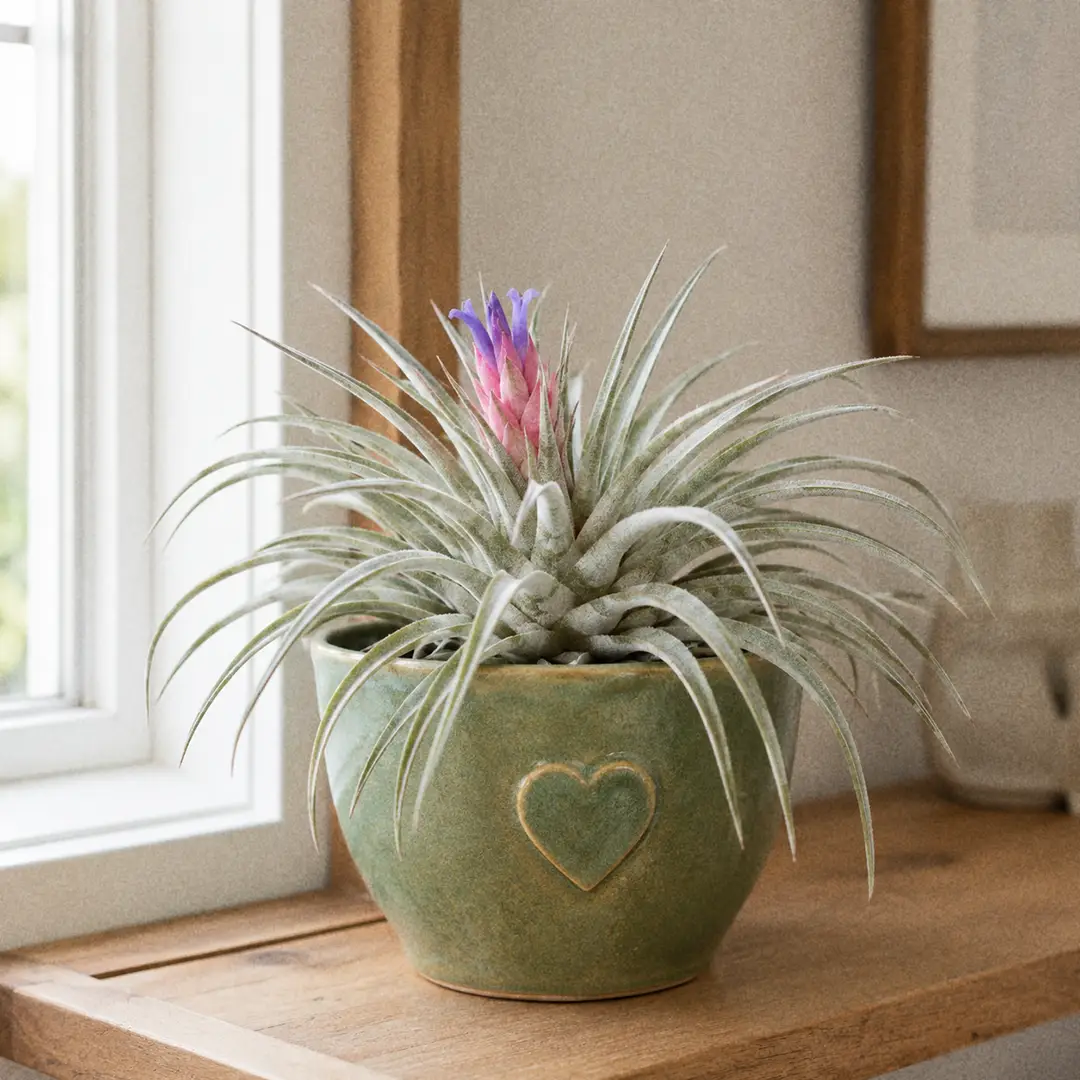
Complete Guide to Sky Plant Care and Growth
Complete Guide to Brachycaulos Air Plant Care and Growth

Houseplant101 Forum
Questions & Comments
Ask a question, share your plant experience, or help other plant owners.
Comments are temporarily unavailable.
Open the Houseplant101 ForumNo comments yet
Be the first to ask a question or share your experience about this page.
Log in or create an account
Comments use your Houseplant101 Forum account, but you can stay on this page.
Create a new account