
Ionantha Air Plant
Tillandsia ionantha
Sky Plant, Blushing Bride, Ionantha, Blushing Air Plant


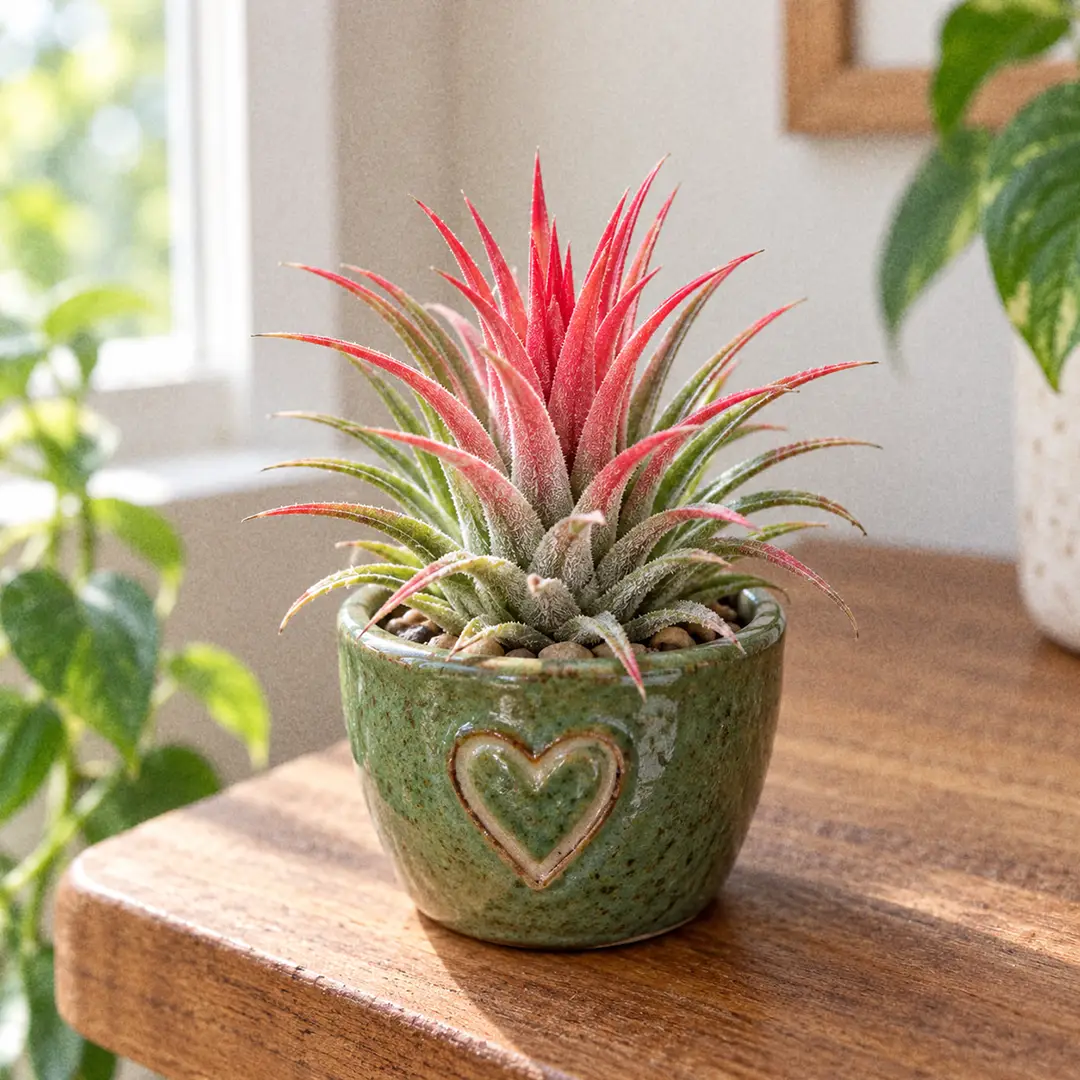
Ionantha Air Plant is the little silver rosette that turns fire-engine red before it flowers, then hands you a ring of pups. Learn how to grow Tillandsia ionantha indoors, trigger the blush, and turn one plant into a clump that never stops.
📝 Ionantha Air Plant Care Notes
🌿 Care Instructions
⚠️ Common Pests
📊 Growth Information
🪴 In This Guide 🪴

☀️ Ionantha Air Plant Light Requirements (Bright Indirect Light)
The Sweet Spot
Ionantha wants bright indirect light with an hour or two of gentle direct sun, and an east-facing window about two to three feet from the glass hits that almost exactly. Morning sun is soft enough that the leaves never scorch, and it is strong enough to drive the color change that makes this plant worth owning.
A south or west window works if you hang a sheer curtain between the plant and the hottest afternoon hours. Bathrooms with a frosted window are a favorite spot, since the light arrives already diffused and the room stays a little damper between soaks.
Too Little Light
A dim Ionantha does not die dramatically. It just stops. The rosette stays green instead of blushing, the leaves lengthen and soften, and the plant sits there for a year or two looking vaguely fine while never flowering and never producing pups. Since it has no soil to draw on, light is essentially its whole diet, and a shaded corner is a slow starvation.
If your brightest window is genuinely dark, a small grow light about ten inches above the plant, running ten hours a day, fixes it completely. Our indoor lighting guide helps if you are still learning to judge a spot by eye.
Too Much Light
Scorch is possible but takes real effort. Unfiltered midsummer sun through south-facing glass will bleach papery white patches on the sun-facing leaves and dry the tips to brown, which is sunburn and does not heal. Move plants outdoors in stages over two weeks rather than all at once.
A deep red flush across the leaves is a different thing entirely. That is either the pre-bloom blush or plain sun pigment, and both mean you have found a good spot.

💧 Ionantha Air Plant Watering Guide (The Weekly Soak)
Watering Frequency
Soak your Ionantha once a week, year-round, then adjust to how fast your house dries it. A warm, breezy summer room may want twice weekly. A cool, still winter room where the plant takes most of a day to dry can stretch to every ten days.
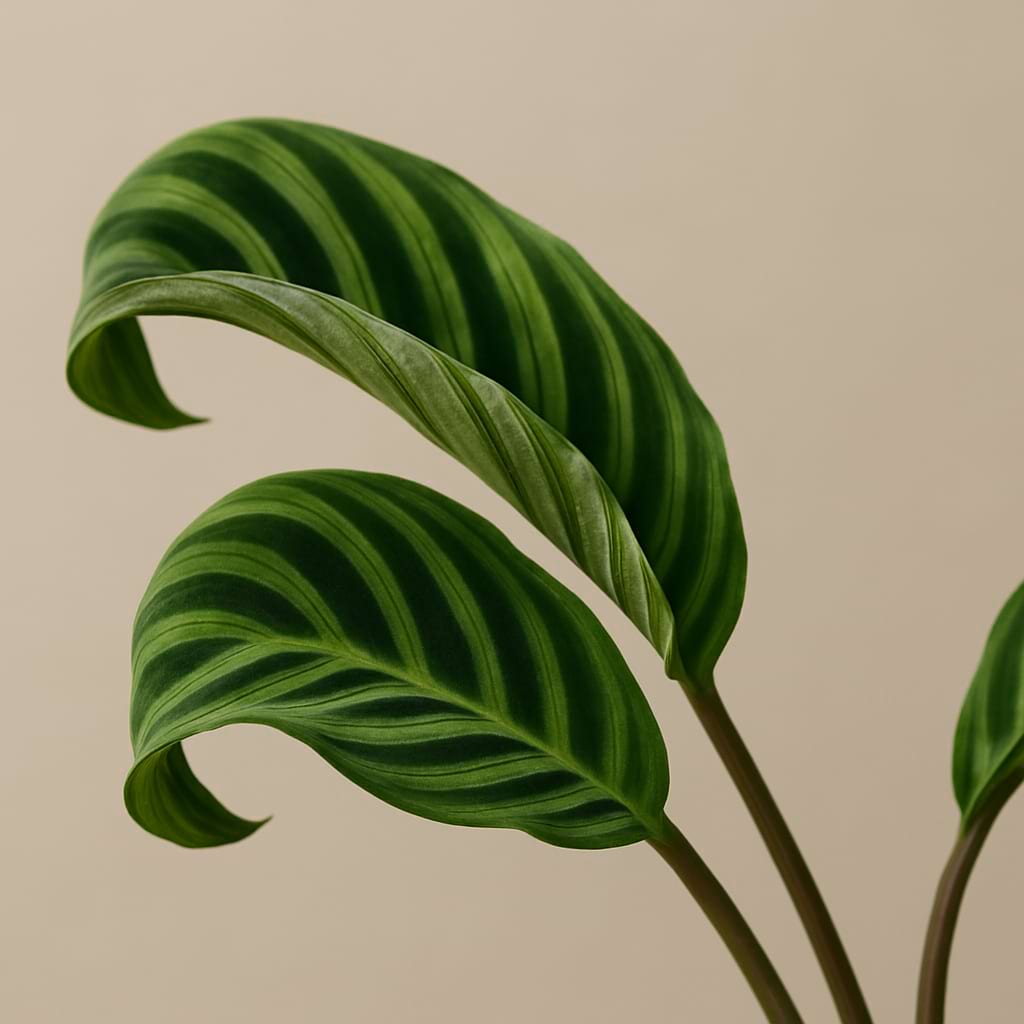
The plant is honest about thirst. A hydrated rosette holds its leaves firm and slightly spread. A thirsty one curls its leaves inward along their length and looks tighter and more silver than usual. Watch for that curl a few times and you can stop counting days entirely.
How to Water
Fill a bowl with room-temperature water and submerge the whole plant for 20 to 30 minutes. Tap water is fine in most areas, though if yours is heavily softened, use filtered or rainwater instead, because sodium builds up on the leaves.
Then comes the step that matters more than the soak itself. Lift the plant out, shake it hard upside down, and leave it base-up on a towel or a dish rack until it is completely dry, which should take two to four hours. Water trapped in the tight center of the rosette is the single most common way people kill this plant. Set it somewhere with moving air, never straight back into a closed globe.
One caution if you soak a whole collection in the same bowl. The full 20 to 30 minute soak is right for Ionantha, but it is too long for bulbous species like the Streptophylla Air Plant, whose hollow base fills with water and rots. Those get a quick dunk instead, so pull them out early or water them separately.
Misting is not a substitute. It wets the trichomes for a few minutes and evaporates before the plant absorbs much of anything. Our watering guide covers the general principles if you are juggling several plant types.
Signs of Trouble
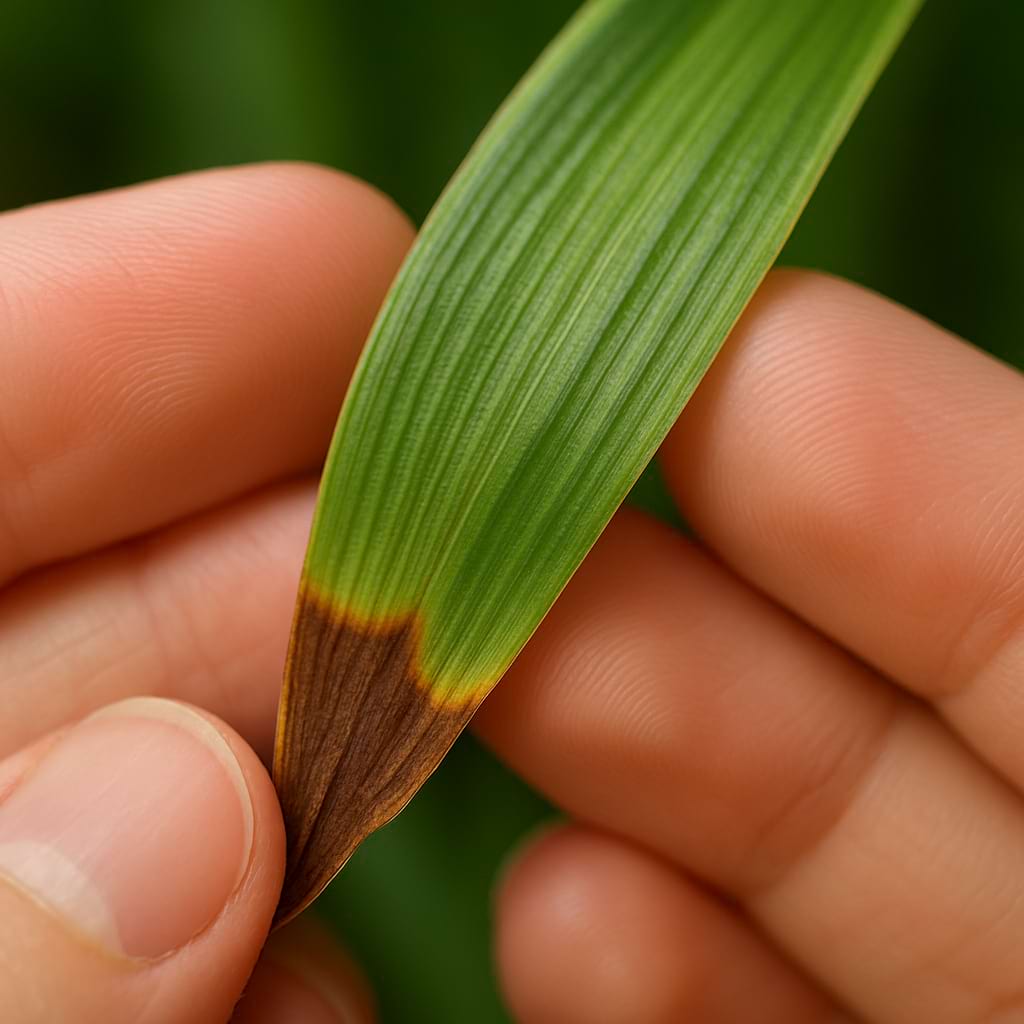
Brown, crispy leaf tips and a rosette that stays curled mean the soaks are too far apart. Add a soak per week and the new growth comes in correctly, though the damaged tips stay brown.
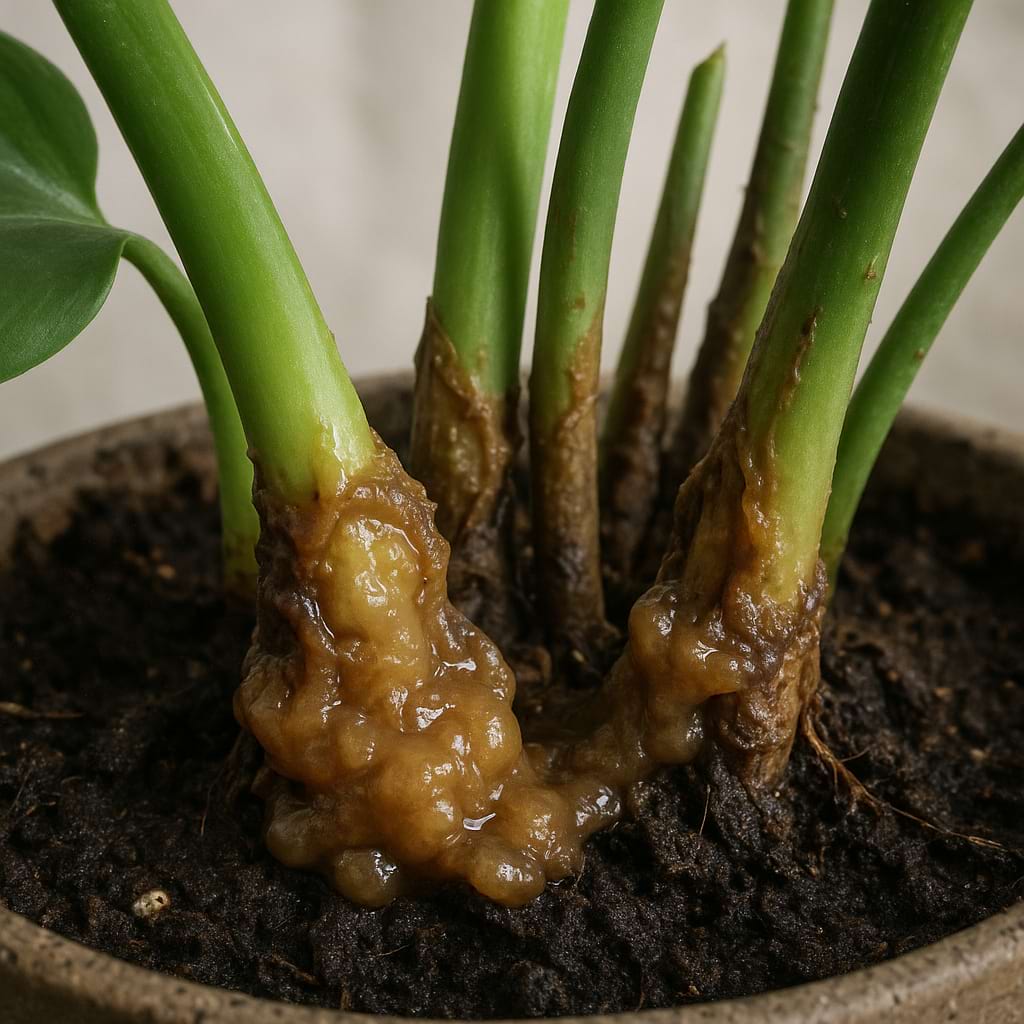
The opposite problem looks worse and moves faster. If the base turns dark and the innermost leaves pull free with a wet tug, the plant has crown rot from water sitting in the center. There is no fixing a rotted base. Check whether any pups are still firm, separate them, and start over with better drying habits.
🪴 Best Soil for Ionantha Air Plant (It Does Not Use Any)
Why There Is No Soil
Ionantha is an epiphyte. In Mexico and Guatemala it grows clamped to tree bark and rock faces, taking water and nutrients through the silvery scales on its leaves, called trichomes. Its roots are anchors and nothing more. Potting it in soil buries the base in constant moisture and rots it, usually within a couple of months.
So there is no soil mix to get right, no repotting schedule, and nothing to fertilize into. This is genuinely one of the easiest parts of owning this plant.
What to Mount It On
Any porous, non-toxic surface works: cork bark, driftwood, grapevine, a sea urchin shell, a piece of lava rock. Attach it with a dab of waterproof craft adhesive at the base, or tie it on with fishing line or thin florist wire until it grips on its own. Never use copper wire, which is toxic to bromeliads.
If you would rather not commit, an open wire holder, a shallow bowl, or a small dish of pebbles is completely fine. The plant does not care what it sits on, as long as air reaches the base.
Displays That Cause Problems
Closed terrariums and sealed glass globes are the usual culprits. They hold humidity beautifully and dry the plant far too slowly, and a rosette that stays damp for a day rots at the center. If you love the globe look, use an open-fronted one and take the plant out to soak and dry, then put it back.
🍼 Fertilizing Ionantha Air Plant
When and How Often
Feed once a month from spring through early autumn, and skip it entirely in winter. Ionantha grows slowly and gets by on very little, so more feeding does not buy you faster growth. What it does buy is a better blush and a stronger pup crop.
What to Use
Use a bromeliad or air plant fertilizer, or any balanced houseplant food at a quarter of the label strength, mixed into the soak water. Look for one whose nitrogen is urea-free, since Tillandsia cannot break down urea without soil bacteria to do the work.
Just add it to the bowl at soak time once a month and carry on as normal. There is no separate feeding routine to remember. Our fertilizing guide explains the ratios in more detail.
Over-Fertilizing Signs
Too much food burns the leaf tips brown and can leave a faint crust on the leaves. If you see either, soak the plant in plain water twice in a row to rinse it and go back to a lighter hand. When in doubt, feed less. An unfed Ionantha still blooms.
🌡️ Ionantha Air Plant Temperature Range
Ideal Range
Ionantha is comfortable anywhere between 50°F and 90°F (10-32°C), which covers nearly every heated home. Normal room temperature suits it year-round and no special winter arrangement is needed.
It handles brief dips to around 40°F without damage, but it is not frost-hardy in the way Sky Plant is. If you summer it outdoors, bring it in before the first cold night rather than gambling on a mild autumn.
Drafts and Heat Sources
Airflow is a friend here, unlike with most houseplants. A breezy spot helps the plant dry after soaking and cuts the rot risk considerably.
Dry heat is the real problem. Directly above a radiator or in the path of forced-air heating, the plant dries out between soaks far too fast and the tips go crispy. Move it a few feet away and soak a little more often through the heating season. A cool, bright winter, ideally in the fifties and sixties at night, actually helps trigger the spring bloom.
💦 Ionantha Air Plant Humidity Requirements
Ideal Humidity
Anything from 40% upward suits this plant, and it manages in drier air as long as you soak on schedule. Ionantha is one of the more drought-adapted Tillandsias, with dense silver trichomes that hold moisture well, so it copes with dry rooms better than the thin-leaved green species do.
Easy Humidity Boosters
A bathroom with a window is the easiest answer, and the shower steam counts as a bonus soak. Grouping several air plants together raises the local humidity a little as well.
If your air is very dry in winter, run a small humidifier nearby rather than misting the plant daily. Misting wets the leaves without hydrating them and leaves them damp longer than they should be, which is exactly the wrong trade. Our humidity guide has more on judging your room.
🌸 Ionantha Air Plant Flowers (The Blush and the Bloom)
What the Flowers Look Like
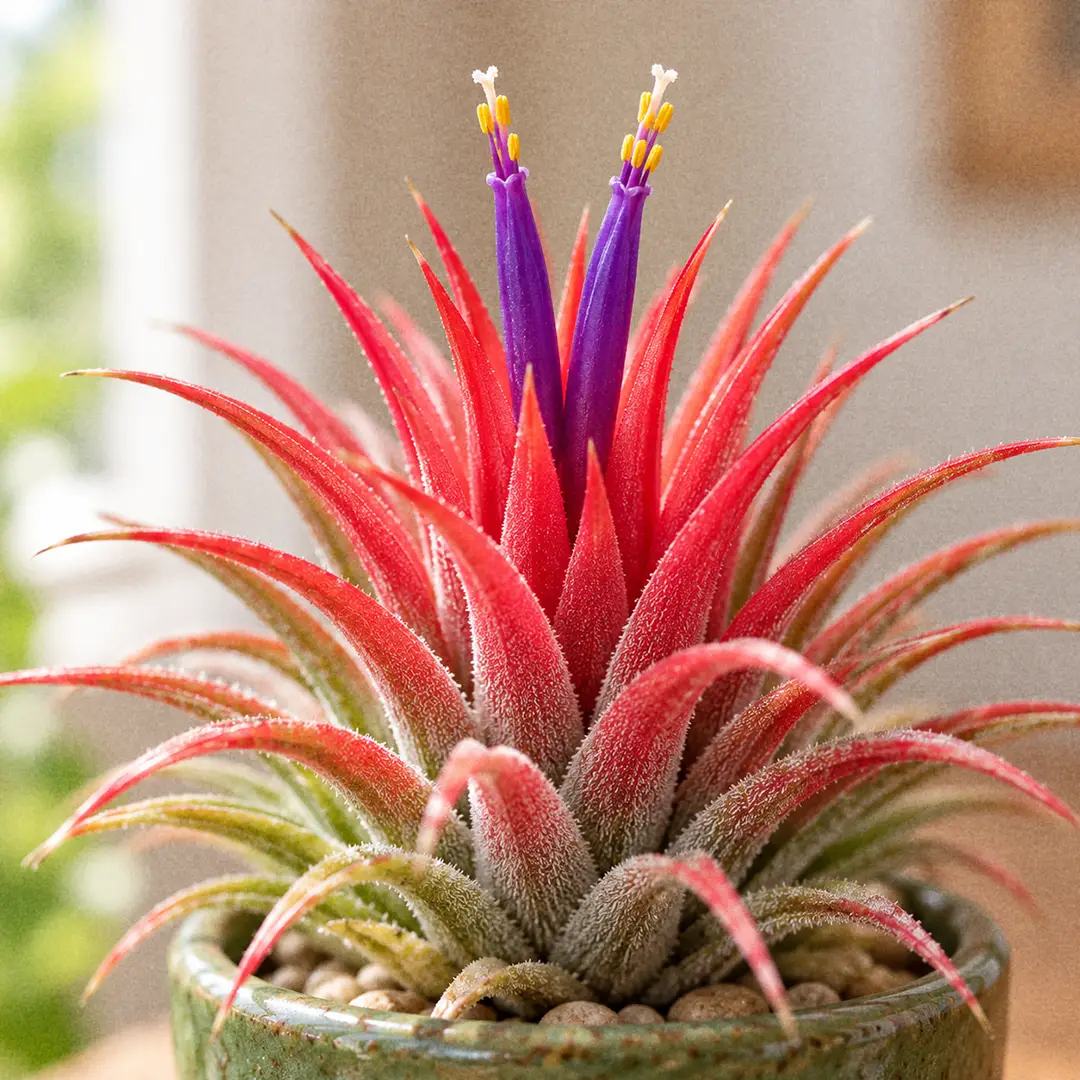
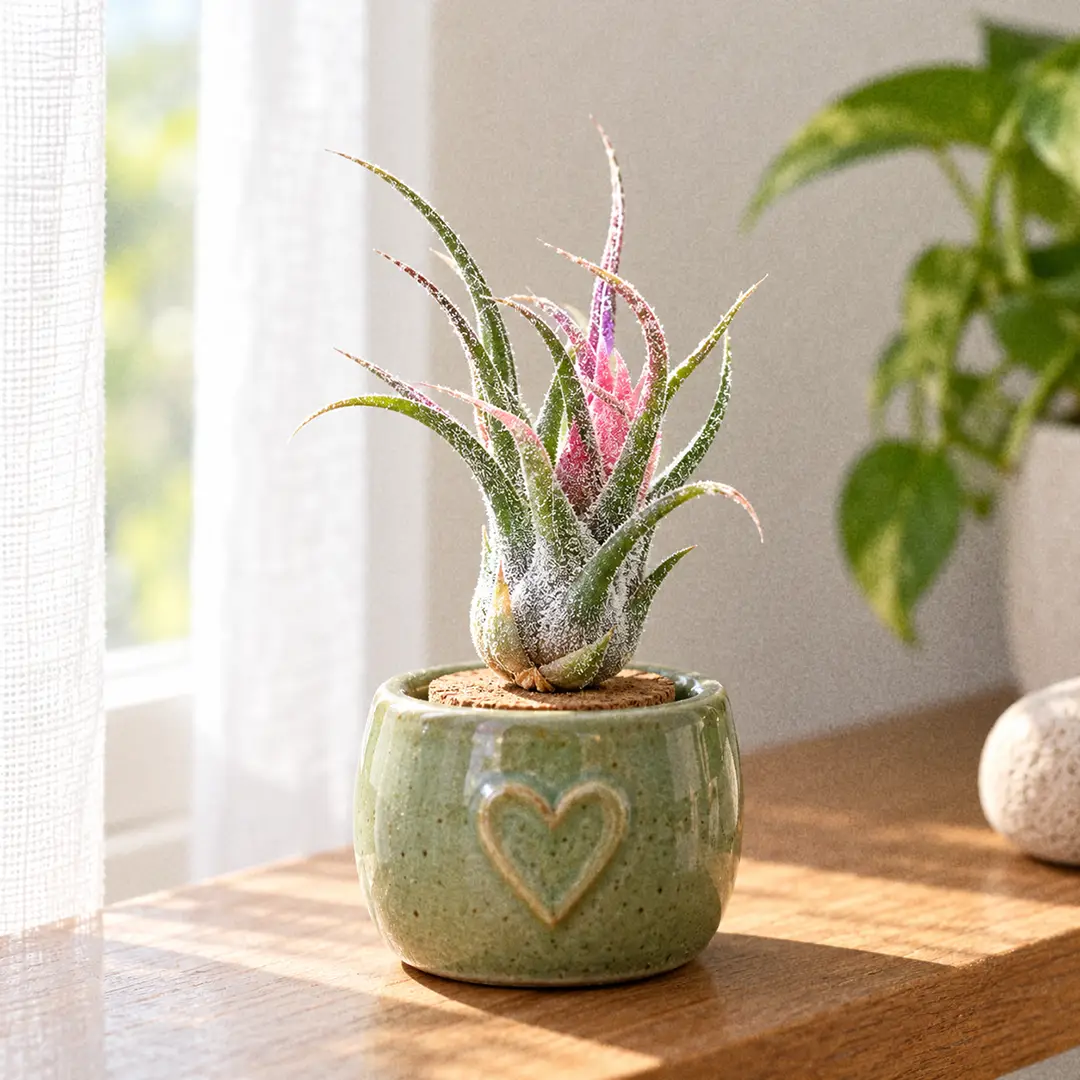
The bloom happens in two acts, and the first one is the famous part. Weeks before any flower appears, the whole rosette changes color, most often to a fire-engine scarlet that runs from the center outward to the leaf tips. Depending on the variety, that blush can also be pink, coral, peach, or nearly white.
Then one to three violet-purple tubular flowers push straight up from the middle, each a couple of inches long, with yellow-tipped stamens sticking out past the petals. Each flower lasts only a few days. The blush lasts several weeks, sometimes more than a month, which is why people fall for this plant.
How to Trigger Bloom
Light is the main lever. A rosette getting bright light with a little morning sun typically blooms once it reaches full size, which for a nursery-bought plant means within a year or two. There is nothing clever to do beyond giving it the light and the weekly soaks.
A cool, bright winter helps considerably, since the drop in night temperature is part of the natural cue. If you have waited a long time and nothing is happening, the ripe-apple trick works: seal the plant in a clear bag with a slice of apple for three or four days. The ethylene gas the fruit gives off often forces bud initiation.
If It Won't Bloom
Nine times out of ten, failure to bloom here is a light problem, not a feeding or watering one. Move the plant closer to the window for a season before changing anything else.
The other possibility is size. A pup that is still small has not banked enough energy to flower and simply needs another year. Do not force it with heavy fertilizer, which produces soft floppy growth rather than buds.
🏷️ Ionantha Air Plant Types and Varieties
Ionantha 'Guatemala'
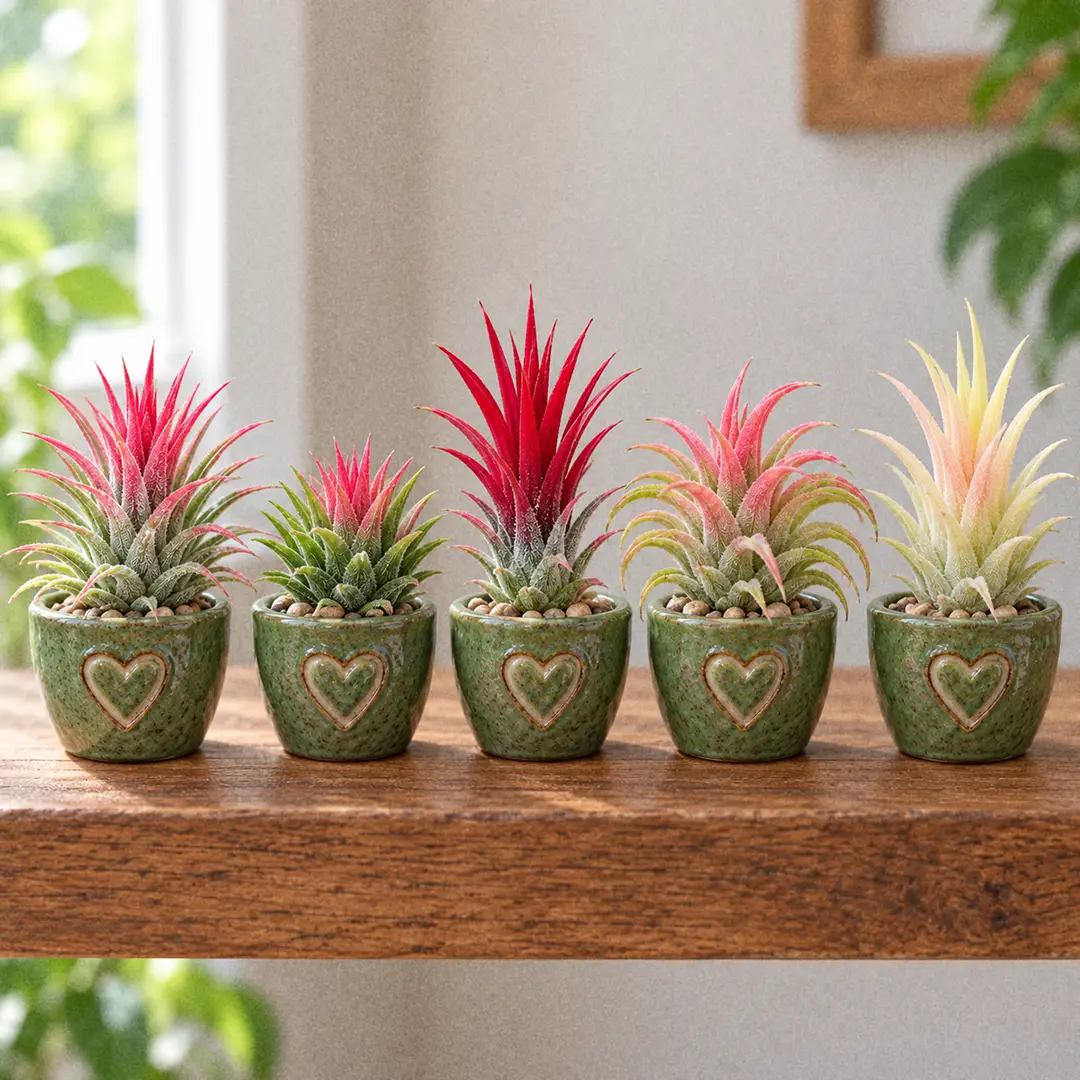
The standard form and the one most shops sell unlabeled. It makes a neat conical rosette of stiff silver-green leaves and blushes a strong scarlet to pink from the center out. It clumps enthusiastically, which makes it the best value of the group if you want a colony rather than a single specimen.
Ionantha 'Mexican'
The smallest and toughest of the common forms, with short, thick, bright green leaves on a very compact rosette. It blushes pinkish-red rather than fire-red. If you have a dry apartment or a habit of forgetting soaks, this is the one to start with.
Ionantha 'Fuego'
Fuego means fire, and it earns the name. Short stiff upright leaves go a deeper, more saturated red than any other variety, and the color holds for several weeks. It stays around three inches across, so it works as a striking single specimen on a shelf rather than a big clump.
Ionantha 'Rubra'
Yellow-green leaves that curl downward and outward give this one the look of a tiny pineapple top. It is softer-leaved than 'Guatemala' and prefers a slightly damper spot, so a bathroom suits it well. It blushes rose-pink and flowers violet like the rest.
Ionantha 'Druid'
The odd one out, and worth seeking out. Druid is an albino form: instead of red, the rosette turns a soft yellowish-white or pale peach, and the flowers open white rather than purple. It grows a little taller than the others, up to about five inches, and clumps readily.
Ionantha var. stricta and 'Peach'
Stricta, from Oaxaca, holds a deep red blush all year given enough light rather than only at bloom time. 'Peach' does what its name suggests, flushing a soft apricot from pale green leaves (for the same color on a rosette several times the size, see the Capitata Peach Air Plant). Both are collector picks rather than shop-shelf plants, so expect to order them from a specialist grower.
When You Want the Same Trick, Bigger
Ionantha is the miniature version of a colour change several Tillandsias do. If you want the same green-to-red shift at ten inches instead of two, and a bloom spike that holds for weeks rather than days, look at the Tricolor Air Plant. It asks for more water and a harder shake after every soak, but it is the obvious next step once a shelf of Ionantha starts looking small. If what you like is the way Ionantha pups into a clump, the Tenuifolia Air Plant does it faster, building a spiky green cushion topped with pink spikes, though it stays green rather than blushing red. For a tough hybrid that keeps the red blush, look for 'Califano', a cross with the tall Baileyi Air Plant.
🪴 Potting and Mounting Ionantha Air Plant
There Is Nothing to Repot
This section is short by nature. Ionantha never needs repotting because it never gets potted. There is no root ball to outgrow, no compacted mix to refresh, and no annual spring chore. If you have come here from soil-grown plants, you can simply cross this off the list.
What does eventually happen is that a clump outgrows its perch. Every two or three years you may want a larger piece of cork or a wider bowl, which is a five-minute job.
Choosing a Mount or Holder
Cork bark is the classic choice because it is porous, light, and rot-resistant. Driftwood, grapevine, lava rock, and sea urchin shells all work equally well. What matters is that air can reach the base of the plant from underneath.
Avoid anything that holds water against the base: moss packed around the plant, a solid cup, a sealed container, or copper of any kind.
How to Attach It
Let the plant dry fully first. Then either dab a small amount of waterproof adhesive on the base and press it to the mount for a minute, or lash it on with fishing line, cotton twine, or plastic-coated wire, tucking the tie between the lower leaves so it disappears.
Do not glue over the center of the plant or bury the base. Within a few months the plant sends out anchor roots that grip the mount on their own, and the tie can come off.
✂️ Pruning Ionantha Air Plant
When to Prune
Pruning here is tidying rather than shaping. Ionantha grows to a fixed size and stops, so there is no cutting back for bushiness the way there is with a trailing plant. You are only ever removing what has already finished.
How to Prune
Trim brown, crispy leaf tips with sharp scissors, cutting at an angle that follows the natural taper of the leaf so the trim is invisible. Cutting straight across leaves an obvious flat stub.
When the flowers fade, snip the dried bloom right at the base of the rosette. Leaving it is not harmful, but a dry brown stub in the center looks untidy and can hold moisture after a soak.
Dealing With the Fading Mother
After blooming, the mother rosette gradually dries from the outside in over many months while the pups grow. This is normal and not a disease. Peel away the outer leaves once they are fully brown and papery, a gentle tug at a time. Once the mother is spent, twist it out from the middle of the pups and the clump closes over the gap.
🌱 How to Propagate Ionantha Air Plant
Best Method: Pups
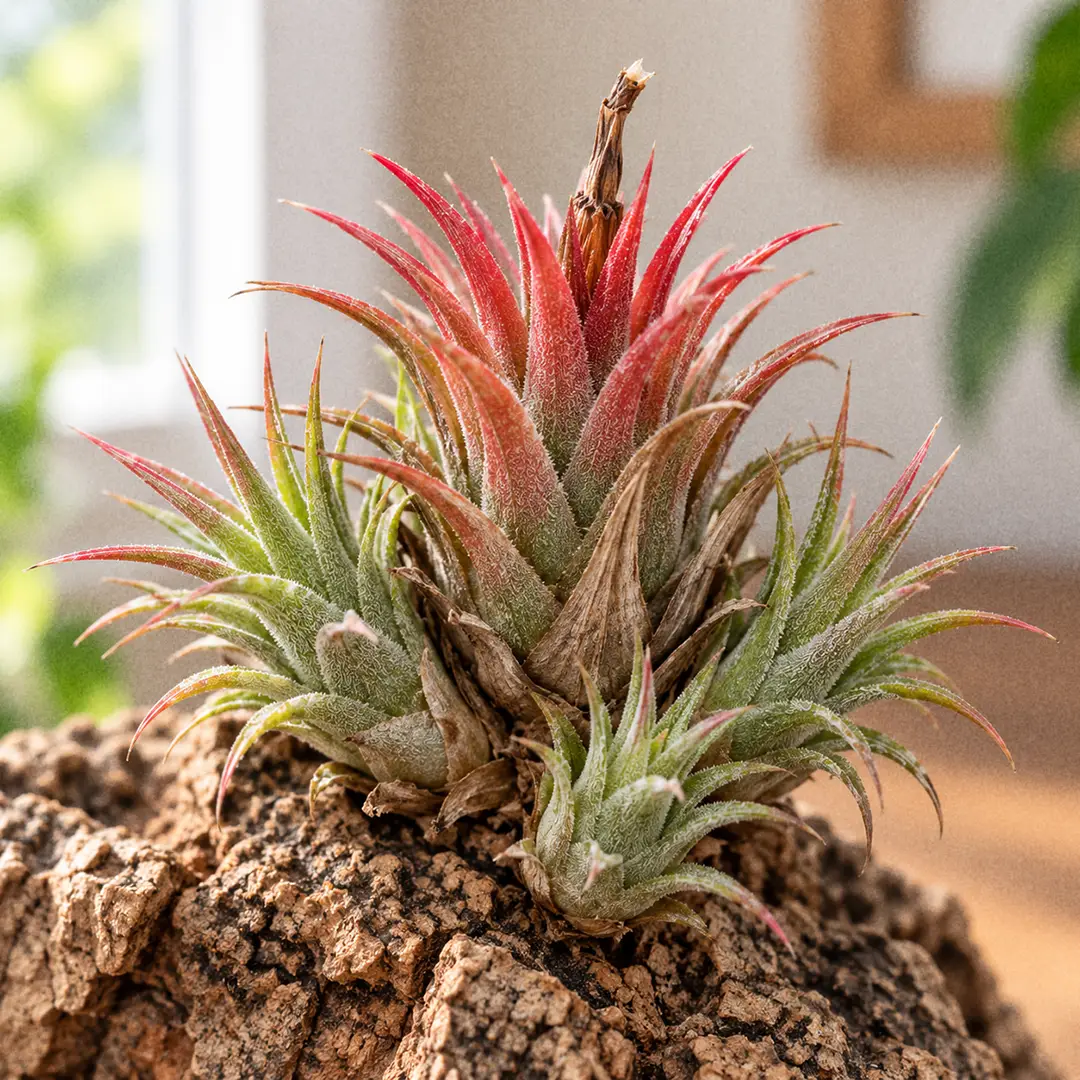
Ionantha propagates by pups, also called offsets, and it does the work for you. After a rosette flowers, it produces two to five pups from its base, usually within a few months. Seed is possible but takes several years to reach flowering size and is not worth the trouble for a home grower.
The whole thing is automatic. Your only real decision is whether to separate the pups or leave them attached.
Step-by-Step Separation
- Wait until a pup is at least one third the size of the mother. Smaller pups often fail on their own.
- Hold the mother firmly in one hand and grip the pup low, right at the point where the two join.
- Twist and pull gently sideways rather than straight down. It should release with a small pop, taking a bit of the mother's base with it.
- If it resists, stop and wait a few more weeks. Forcing it tears the base and invites rot.
- Let the separated pup air-dry for a day, then start soaking it on the normal weekly schedule.
Clump or Separate?
Leaving pups attached builds a clump, and a clump is genuinely the better display. Rosettes bloom at slightly different times, so a mature clump gives you scarlet patches and violet flowers on and off for much of the year, while a single plant blooms once and then rests.
Separate only when you want more plants to give away or mount elsewhere. A clump also traps water in its center more readily, so shake a clumped plant harder after soaking than you would a single rosette.
🐛 Ionantha Air Plant Pests and Treatment
Air plants get pests less often than soil plants, mostly because there is no damp medium for anything to breed in. When trouble does show up, it usually arrives on a new plant from the shop.
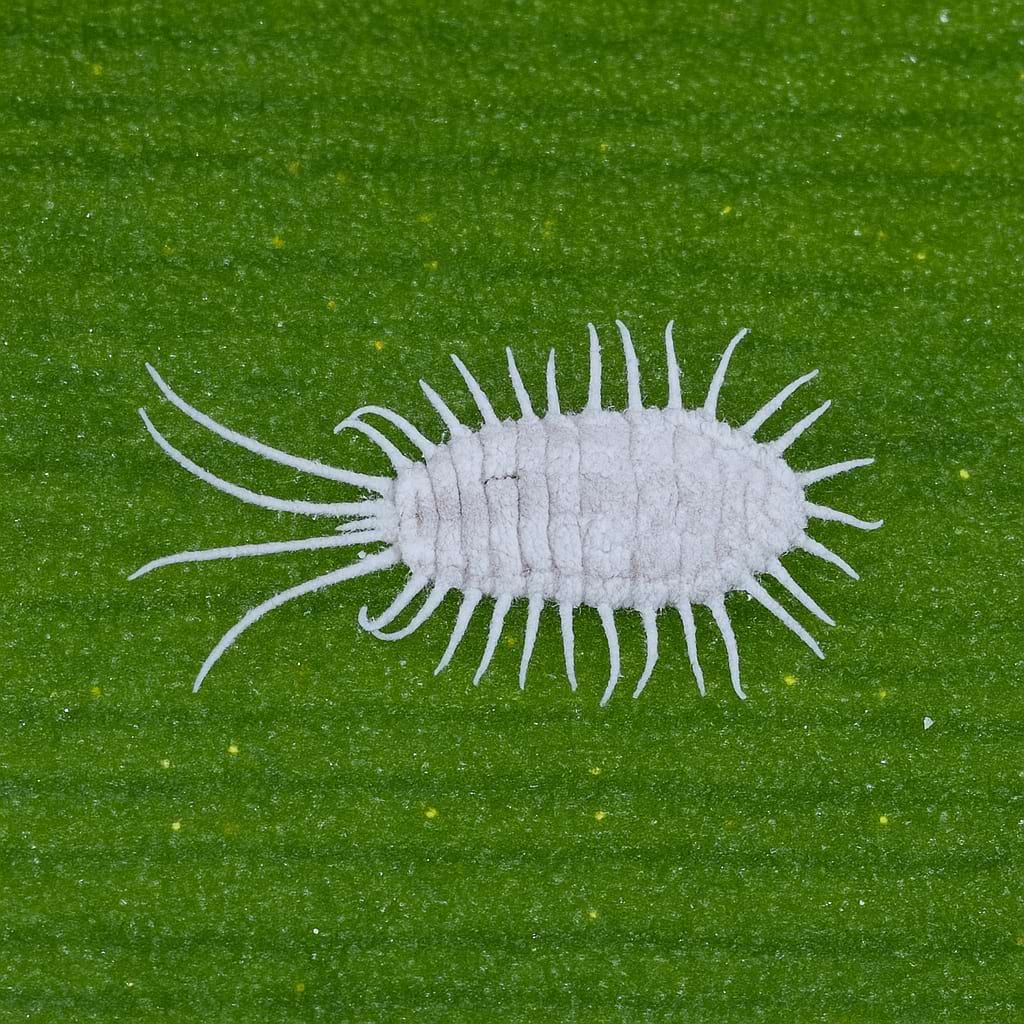
Mealybugs are the most common. Look for small white cottony specks wedged deep between the leaf bases, which is exactly where they hide on a tight rosette. Dab each one with a cotton swab dipped in rubbing alcohol, then soak the plant as normal and check again a week later.
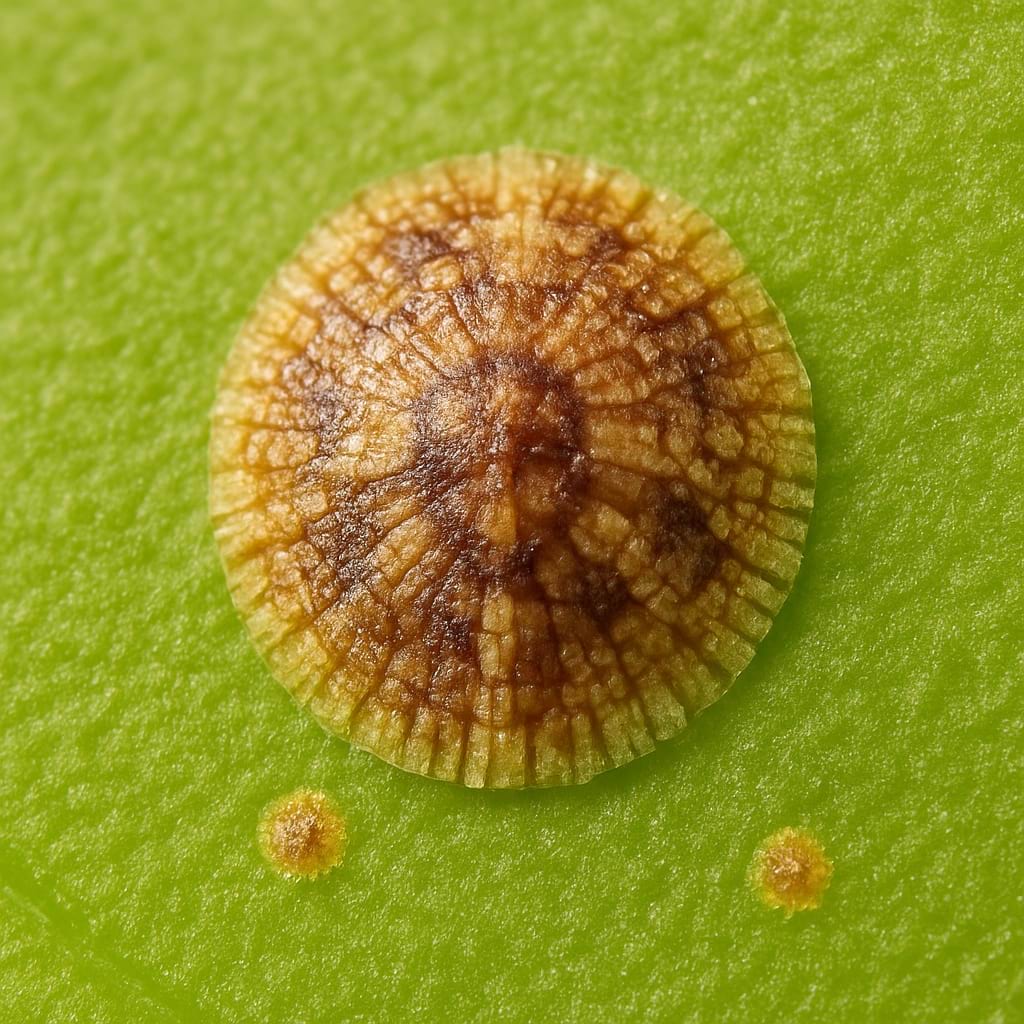
Scale insects look like small brown or tan bumps stuck flat to the leaves and do not brush off easily. Scrape them off with a fingernail or an old toothbrush, then wipe the area with alcohol. Because the leaves are stiff and few, a full inspection takes about a minute.
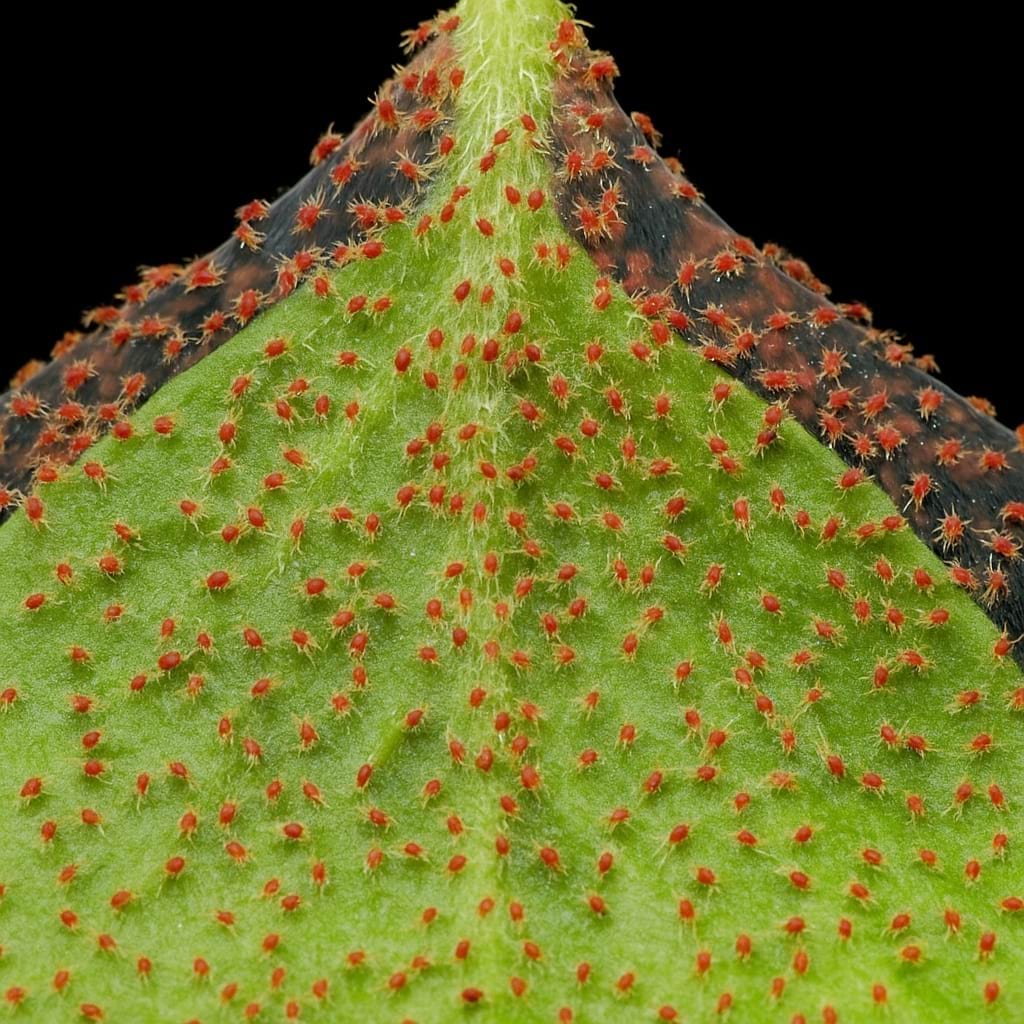
Spider mites show up as fine webbing between leaves in very dry, still air, along with a dusty, stippled look to the leaf surface. They rarely survive a regime of weekly soaks, so increasing airflow and soaking on schedule usually settles it without any treatment at all.
Quarantine every new air plant for two weeks before it joins a display. On a mounted collection, one infested plant spreads to the rest quickly.
🩺 Common Ionantha Air Plant Problems
Nearly every problem with this plant traces back to one of two things: not enough drying after a soak, or not enough light.
Rot at the base is the serious one. The center darkens, the plant loses its firmness, and the innermost leaves slide out with a wet pull. This is crown rot, caused by water sitting in the rosette, and it cannot be reversed. Save any firm pups and change your drying routine.
Brown crispy tips mean underwatering, and they are extremely common. Add a soak per week and check that the plant is not parked near a heat vent. The brown tips already there stay brown, so trim them at an angle and judge by the new growth.
Curling, tightly rolled leaves are the plant's thirst signal. A soak fixes it within hours. If the leaves stay curled a day after soaking, the soak was too short. Give it a full 30 minutes next time. See curling leaves for the wider picture.
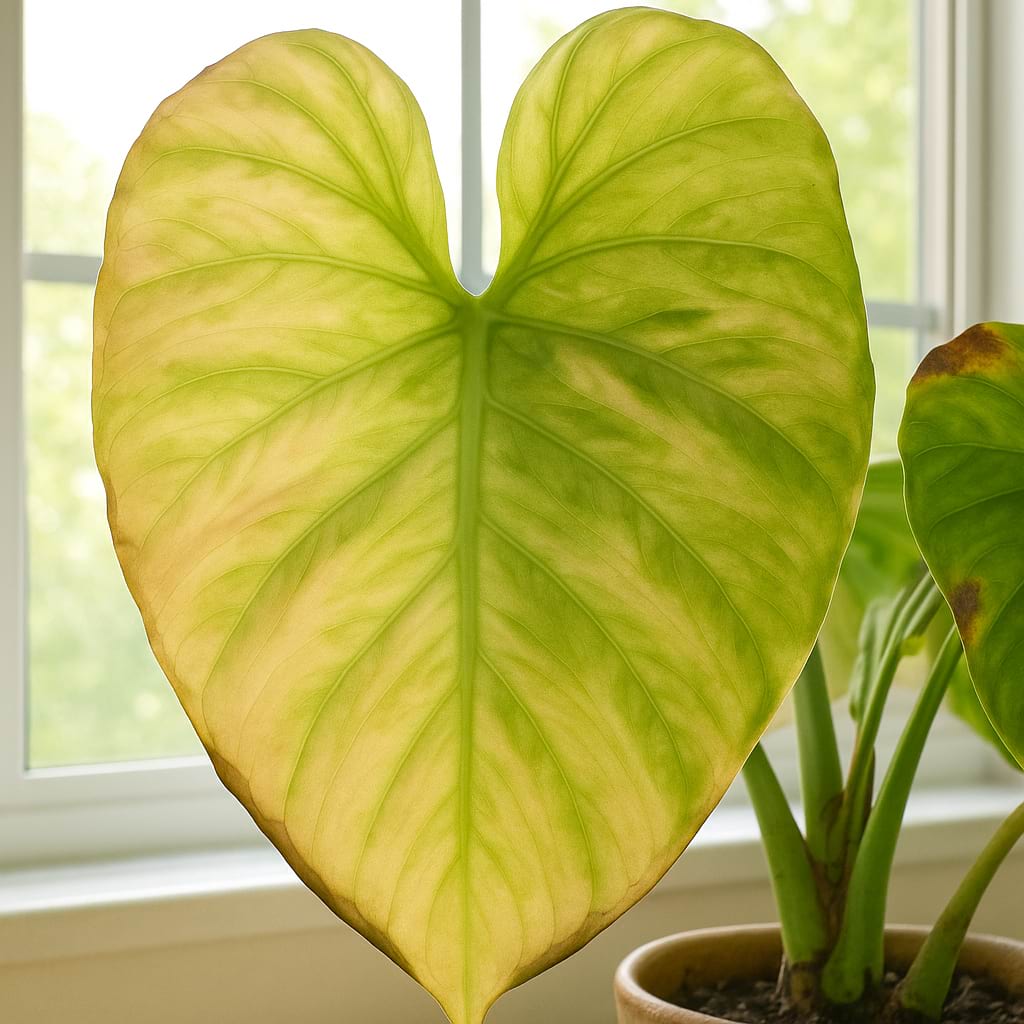
A pale, soft, stretched rosette that never colors up is a light problem, not a nutrition one. Pale faded leaves on an air plant almost always means move it closer to the window.
Leaves that pull away easily from the base with no rot smell usually means the plant was allowed to dry out for far too long, or it is the natural fading of a mother rosette that has already bloomed. Check for pups before writing it off.
🖼️ Ionantha Air Plant Display and Styling Ideas
Solo Setups
A single Ionantha in a sea urchin shell is the classic look, and it works because the pale shell sets off the scarlet blush perfectly. A small piece of cork bark propped on a shelf, a lava rock in a shallow dish, or a simple wire stand all do the same job.
Keep it at eye level or a little above. The blush is what makes this plant, and looking down at the top of a two-inch rosette misses most of it.
Grouped Arrangements
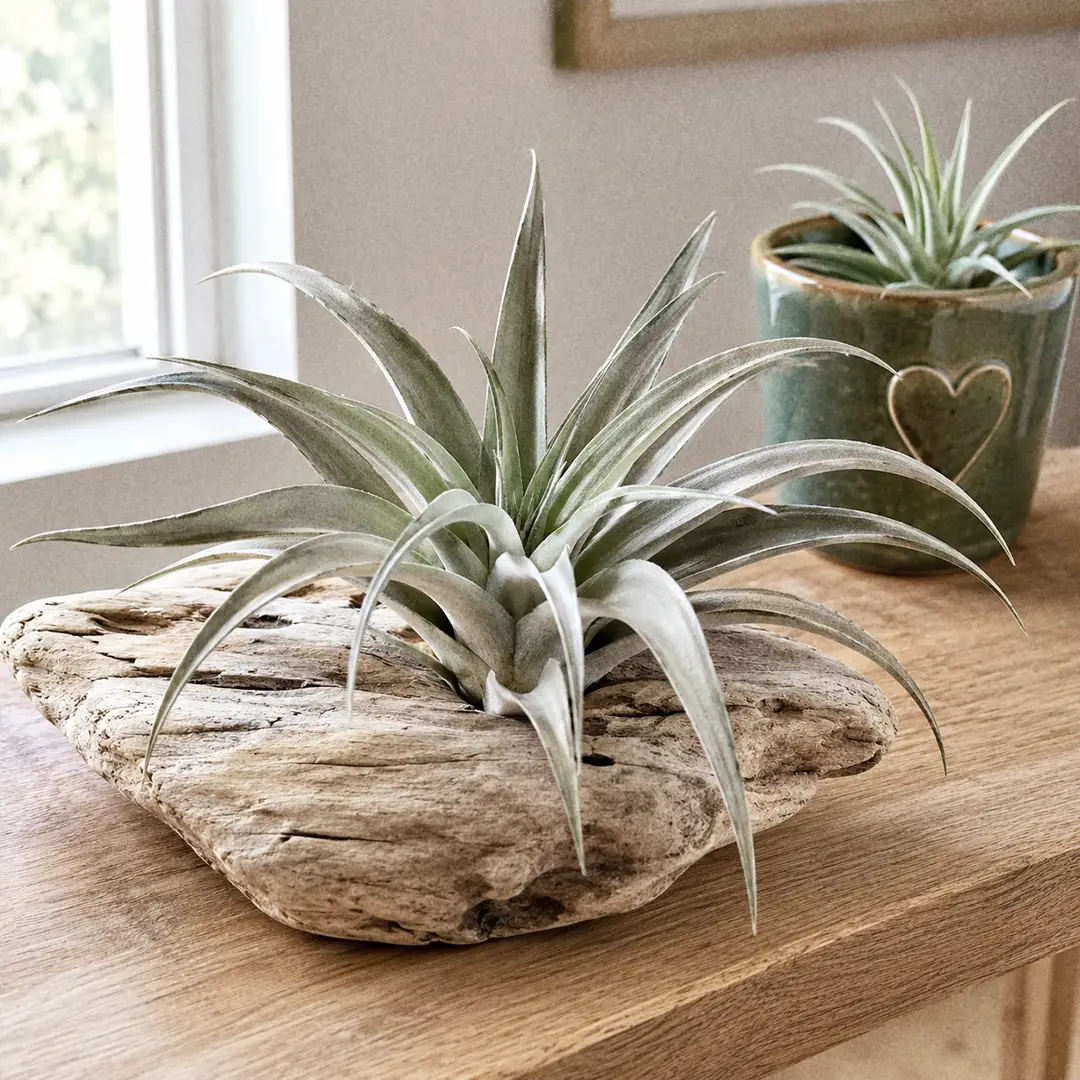
Three Ionanthas at staggered heights on one piece of driftwood looks far better than three in a row. Mixing varieties multiplies the effect, since a scarlet 'Fuego' beside a pale 'Druid' reads as two different plants entirely.
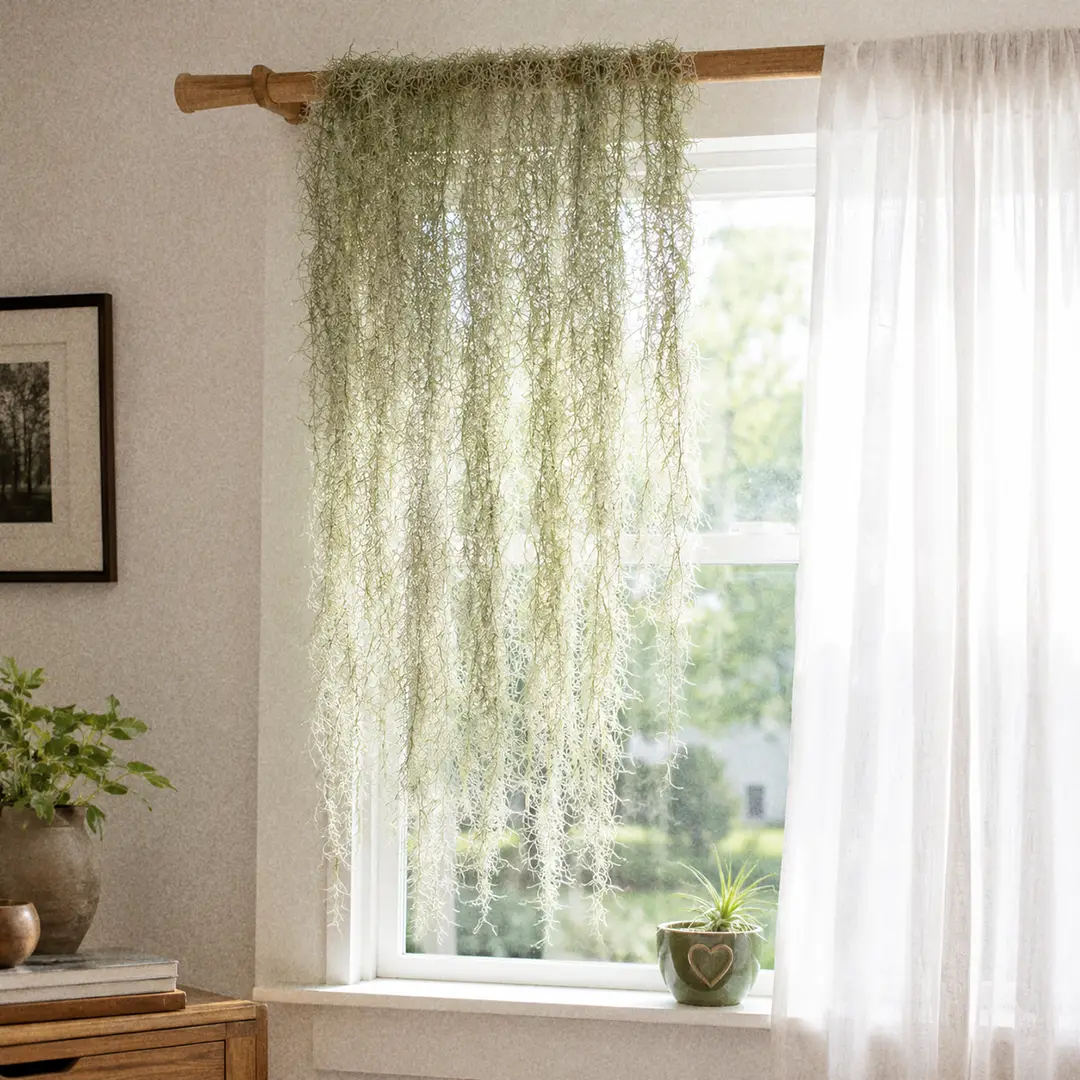
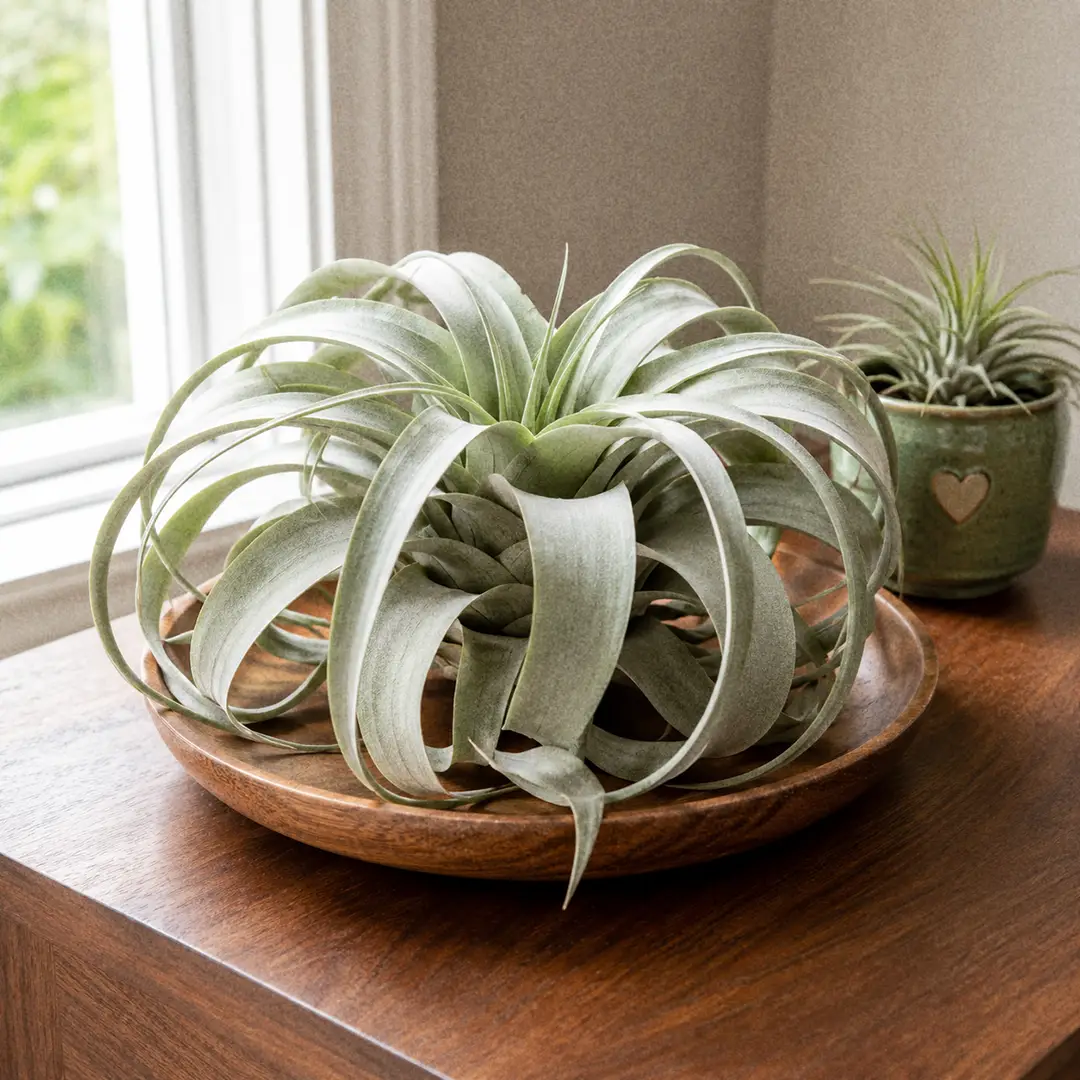
Grouping with other Tillandsias works well too. The fine silver tangle of Spanish Moss makes a good backdrop, and a large flat Xerographica anchors a composition that a handful of small rosettes cannot carry on their own. For height and a bit of strangeness, a Butzii Air Plant throws speckled tentacles up out of the arrangement and contrasts nicely with all those tidy little rosettes. A grassy Juncea Air Plant standing behind the group does the same job more formally, its fine vertical leaves making the little rosettes at its feet look deliberate rather than scattered.
Where Not to Put It
Skip the sealed glass globe, however good it looks. Ionantha needs to dry within a few hours of a soak, and a closed container is the fastest route to a rotted base. Open-sided globes are fine.
Also avoid deep moss nests, decorative cups that hold water, and any spot with no air movement at all. A dark bookshelf away from a window is not a display, it is storage.
🌟 Ionantha Air Plant Pro Care Tips
- Dry it upside down, every single time. This one habit prevents most of the ways this plant dies. Base up, on a towel, until fully dry.
- Judge thirst by leaf curl, not by the calendar. Curled inward means soak. Firm and slightly spread means wait.
- Never wipe the leaves. The silver dust is trichomes, the structures the plant drinks through, and wiping strips them off permanently.
- Skip copper entirely. Copper wire, copper hooks, and copper-treated wood are all toxic to bromeliads. Use fishing line or plastic-coated wire.
- Let the clump form. Attached pups bloom on a staggered schedule, so a clump gives you color for months instead of weeks.
- Use rainwater if your tap is softened. Sodium accumulates on the leaves and there is no soil to flush it out of.
- Quarantine new plants for two weeks. Air plant collections sit close together, and mealybugs move fast between mounted rosettes.
❓ Frequently Asked Questions
Is the Ionantha Air Plant the same as the Sky Plant?
Confusingly, the name Sky Plant gets applied to both Tillandsia ionantha and Tillandsia aeranthos. They are different species. Ionantha is the tiny silver rosette that turns scarlet before flowering, while Tillandsia aeranthos is larger, spikier, and blooms from a hot pink bract on a stalk. Both are easy, and either one makes a good first air plant.
Why did my Ionantha turn red?
That is the blush, and it is good news. The whole rosette colors up in the weeks before it flowers, usually scarlet but sometimes pink or peach depending on the variety. Strong light can also produce a lighter red flush without a bloom, which simply means the plant is well placed.
Is Ionantha Air Plant safe for cats and dogs?
Yes. Tillandsias are not toxic to pets or children, so a chewed leaf is not a poisoning risk. The stiff leaves could still cause a blockage if a large piece is swallowed whole, so keep it out of reach of dogs that eat everything.
Does my Ionantha die after it flowers?
The individual rosette does, eventually, but not for a long time and not before it replaces itself. After blooming it produces two to five pups from its base and then fades slowly over many months. Leave the pups attached and the clump keeps going indefinitely.
How long does the bloom last?
The violet flowers themselves last only a few days each, with one to three opening in sequence. The red blush is the long-lasting part, holding for several weeks and sometimes more than a month.
Can I keep an Ionantha in a closed terrarium?
Not safely. It needs to dry fully within a few hours of soaking, and closed glass keeps it damp long enough to rot the center. An open terrarium or an open-sided globe is fine, as long as you take the plant out to soak and dry it before putting it back.
Why are the tips of my Ionantha turning brown?
Almost always underwatering, or dry heat from a nearby vent or radiator. Increase to two soaks a week and move it away from the heat source. Trim the existing brown tips at an angle following the leaf shape, and judge your progress by the fresh growth.
How often should I fertilize an Ionantha?
Once a month from spring through early autumn, using a urea-free bromeliad fertilizer at a quarter strength mixed into the soak water. Nothing at all in winter. Ionantha blooms perfectly well unfed, so err on the side of less.
My Ionantha has never bloomed. What am I doing wrong?
Usually the light. Move it within two or three feet of an east-facing window for a full season before changing anything else. If it is a young pup, it may simply need another year to reach flowering size. As a last resort, seal it in a bag with an apple slice for four days to trigger buds with ethylene.
Should I separate the pups or leave them?
Leave them unless you want extra plants. A clump is a better display and blooms in waves rather than all at once. If you do separate, wait until the pup is a third the size of the mother and twist it off sideways.
ℹ️ Ionantha Air Plant Info
Care and Maintenance
🪴 Soil Type and pH: No soil. Mounted on cork, driftwood, or shell, or displayed loose in an open holder.
💧 Humidity and Misting: Happy in average household air, provided it dries out fast after every soak.
✂️ Pruning: Trim dried leaf tips at an angle and pull away the papery outer leaves as the mother rosette fades.
🧼 Cleaning: Rinse dust off during the weekly soak. Never wipe the leaves, because that strips the silvery trichomes it drinks through.
🌱 Repotting: Not applicable. Re-mount or move to a larger holder when the clump outgrows its perch, roughly every 2-3 years.
🔄 Repotting Frequency: Not required
❄️ Seasonal Changes in Care: Weekly soaks and monthly feeding from spring through summer, then fewer soaks and a brighter, cooler winter that helps set the blush.
Growing Characteristics
💥 Growth Speed: Slow to moderate
🔄 Life Cycle: Evergreen epiphytic perennial. Each rosette flowers once, produces pups, then slowly dries away.
💥 Bloom Time: Most often late winter into spring, though a mature rosette can bloom in any season once it reaches full size
🌡️ Hardiness Zones: 9b-11
🗺️ Native Area: Mexico and Central America, from Guatemala and Honduras south to Nicaragua and Costa Rica, on trees and rocks between 450 and 2000 meters
🚘 Hibernation: No true dormancy. Growth slows in winter, when it wants less water and as much light as you can give it.
Propagation and Health
📍 Suitable Locations: East windowsills, bright bathrooms with a window, cork mounts, hanging globes, shallow bowls, open terrariums
🪴 Propagation Methods: Twist off pups once they reach a third of the mother's size, or leave them attached to build a clump.
🐛 Common Pests: Mealybugs, Scale Insects, Spider Mites
🦠 Possible Diseases: Basal rot, crown rot, fungal spotting from water left standing in the rosette
Plant Details
🌿 Plant Type: Epiphytic bromeliad
🍃 Foliage Type: Evergreen silvery-green rosette of stiff tapering leaves
🎨 Color of Leaves: Silver-green, flushing scarlet, pink, peach, or yellow-white across the whole rosette before bloom
🌸 Flower Color: Violet-purple tubular petals with yellow-tipped stamens
🌼 Blooming: Yes, reliably indoors once the rosette reaches full size
🍽️ Edibility: Not edible.
📏 Mature Size: 2-4 inches tall
Additional Info
🌻 General Benefits: Pet-safe, needs no soil, blooms indoors more reliably than most air plants, stays tiny, and multiplies into clumps without any help
💊 Medical Properties: No documented medicinal uses.
🧿 Feng Shui: A rootless plant that suits high shelves, hanging spots, and small bathrooms where a potted plant would feel heavy.
⭐ Zodiac Sign Compatibility: Aquarius
🌈 Symbolism or Folklore: Transformation, quiet reinvention, beauty that arrives late
📝 Interesting Facts: The name ionantha comes from the Greek for violet-flowered, and the plant is sold under the common names Sky Plant and Blushing Bride for the way the entire rosette changes color before it opens a single flower. It is one of the few Tillandsia species to have naturalized outside its range, turning up wild in Broward County, Florida.
Buying and Usage
🛒 What to Look for When Buying: Look for a firm rosette with tightly packed leaves, a pale solid base, and ideally a pup or two already showing. Skip plants with a dark soft center, a hollow base, or leaves that pull free with no resistance.
🪴 Other Uses: Cork and driftwood mounts, sea urchin shells, wreaths, hanging glass globes, wedding favors, and terrarium accents.
Decoration and Styling
🖼️ Display Ideas: Sea urchin shells, cork bark, hanging globes, wire frames, shallow bowls, grouped trios at mixed heights
🧵 Styling Tips: The blush is the whole show, so display it at eye level or slightly above, where the color change reads from across the room.
🪴 See also 🪴
Complete Guide to Capitata Peach Air Plant Care and Growth
Complete Guide to Baileyi Air Plant Care and Growth
Complete Guide to Harris's Air Plant Care and Growth
Complete Guide to Pruinosa Air Plant Care and Growth
Complete Guide to Spanish Moss Care and Growth
Complete Guide to Xerographica Air Plant Care and Growth
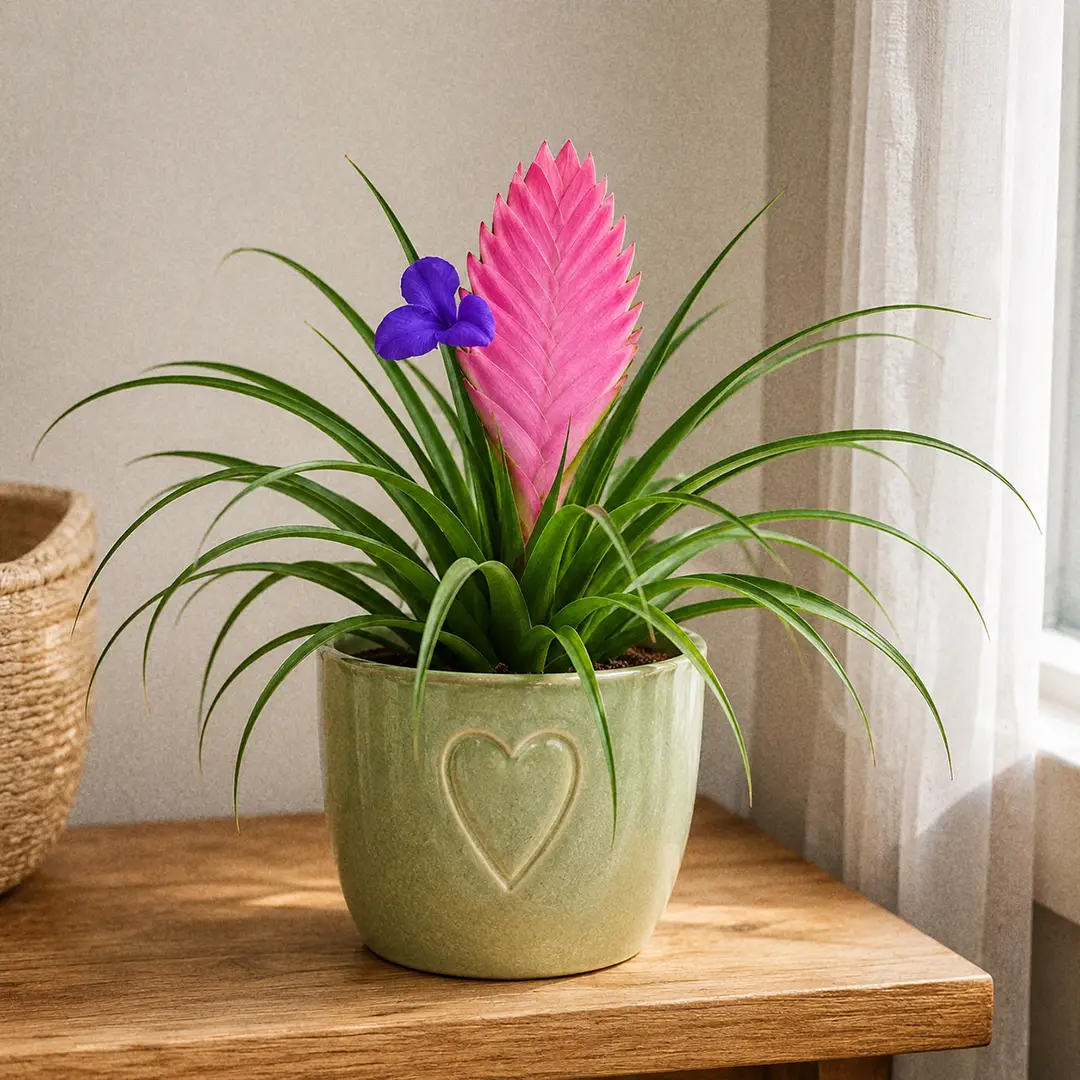
Complete Guide to Pink Quill Plant Care and Growth
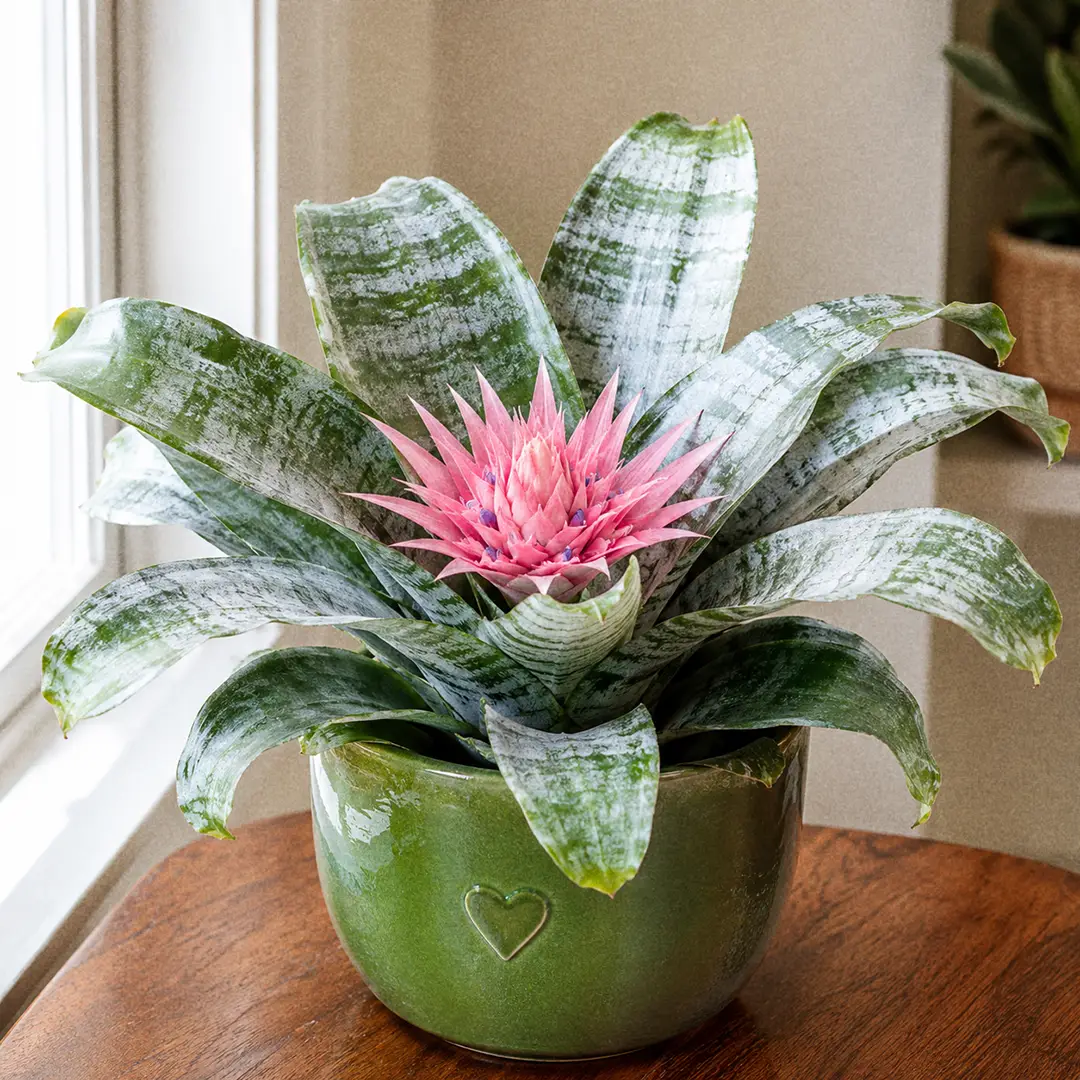
Complete Guide to Silver Vase Plant Care and Growth
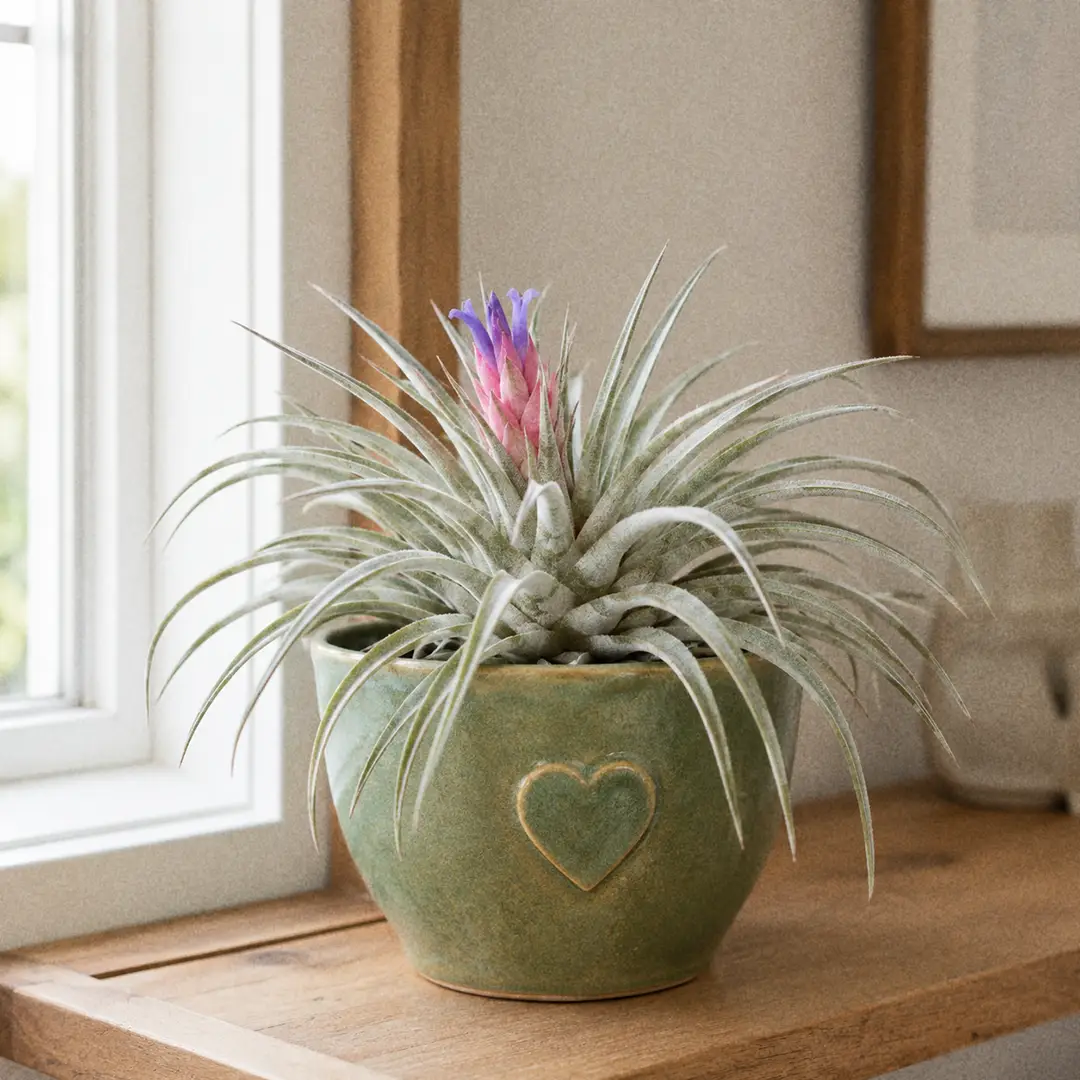
Complete Guide to Sky Plant Care and Growth
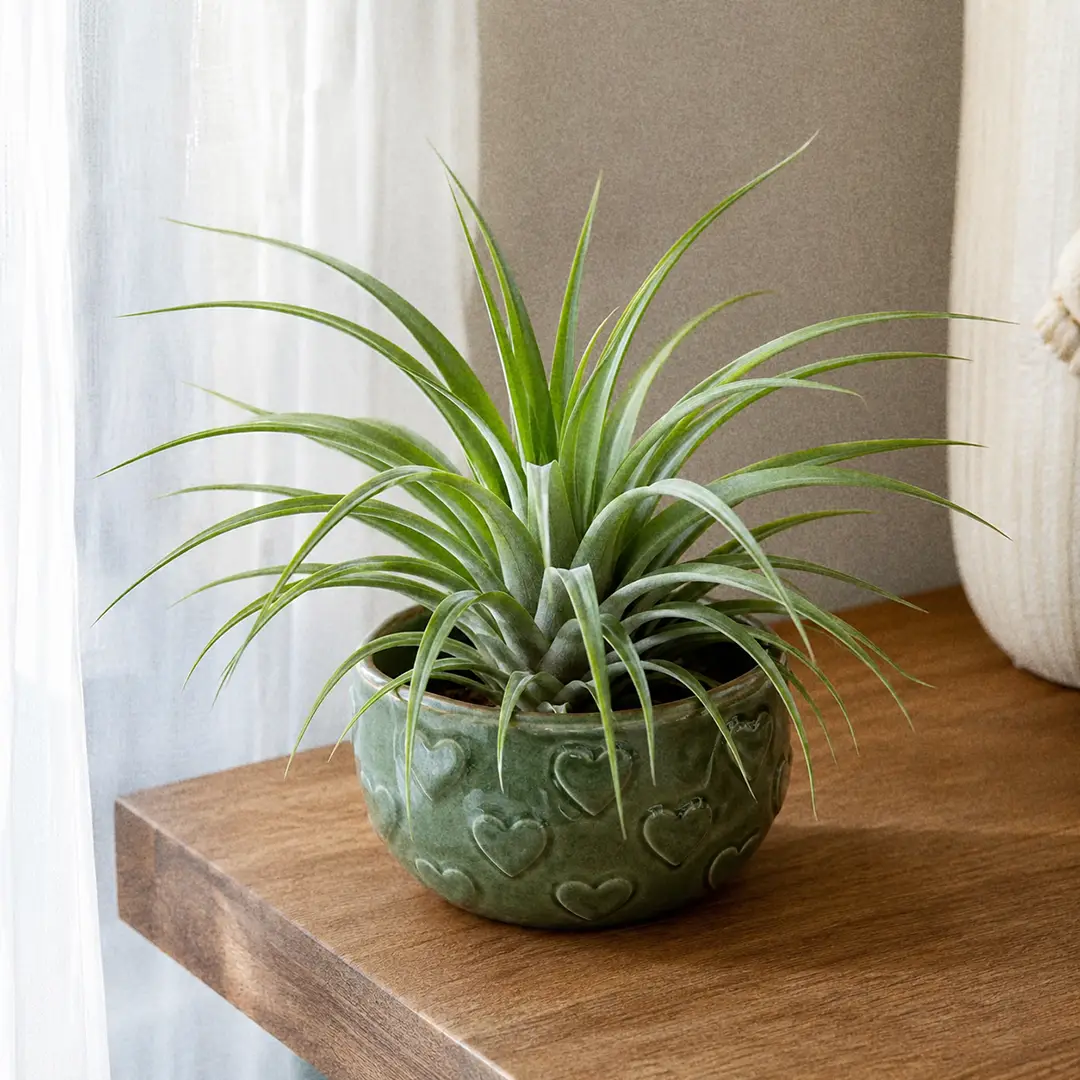
Complete Guide to Brachycaulos Air Plant Care and Growth

Houseplant101 Forum
Questions & Comments
Ask a question, share your plant experience, or help other plant owners.
Comments are temporarily unavailable.
Open the Houseplant101 ForumNo comments yet
Be the first to ask a question or share your experience about this page.
Log in or create an account
Comments use your Houseplant101 Forum account, but you can stay on this page.
Create a new account