Complete Guide to Silver Vase Plant Care and Growth

πŸ“ Silver Vase Plant Care Notes

🌿 Care Instructions

Watering: Keep the central cup a quarter full of fresh water and only lightly moisten the soil.
Soil: Loose, fast-draining bromeliad or orchid mix with plenty of bark and perlite.
Fertilizing: Quarter-strength balanced liquid feed once a month in spring and summer, applied to the cup or soil.
Pruning: Cut the spent flower bract at the base once it browns, and trim any tatty outer leaves.
Propagation: Very easy from pups (offsets) once they reach a third of the mother plant's size.

⚠️ Common Pests

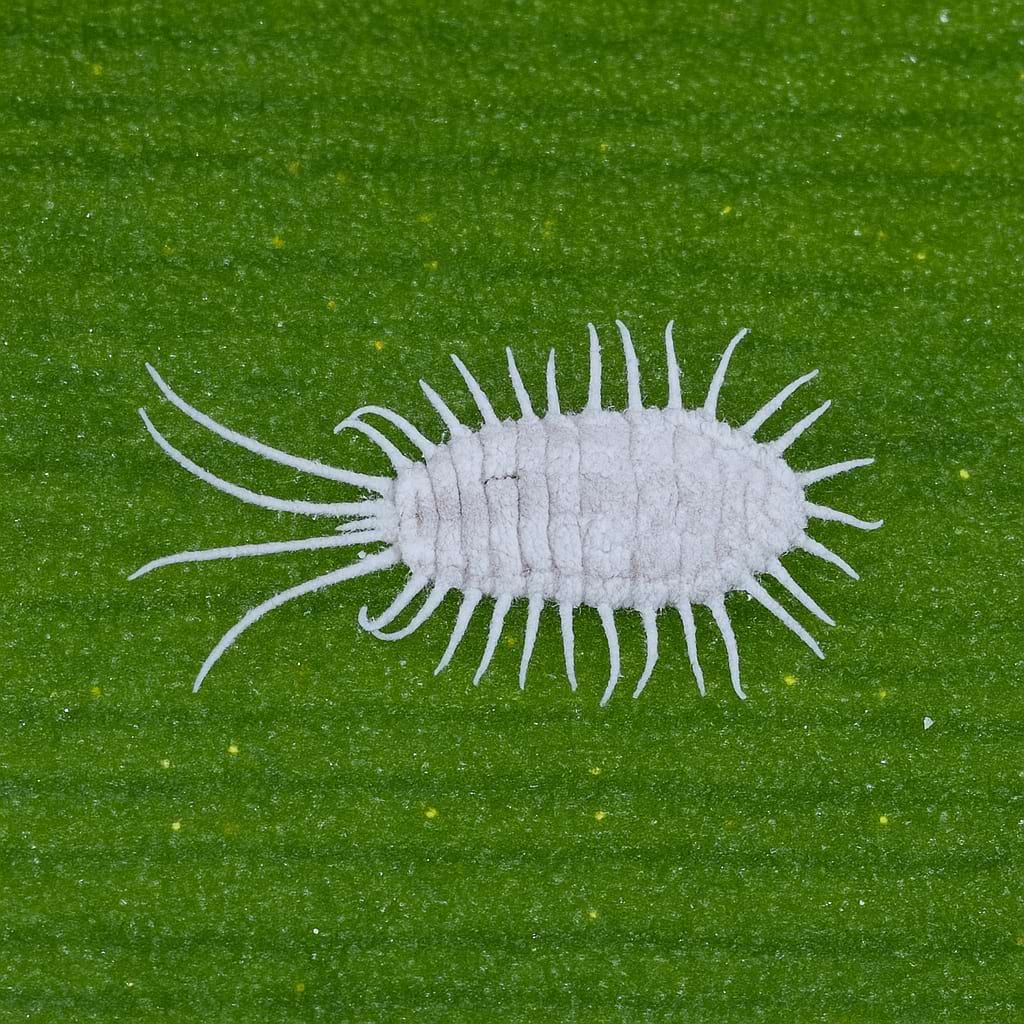
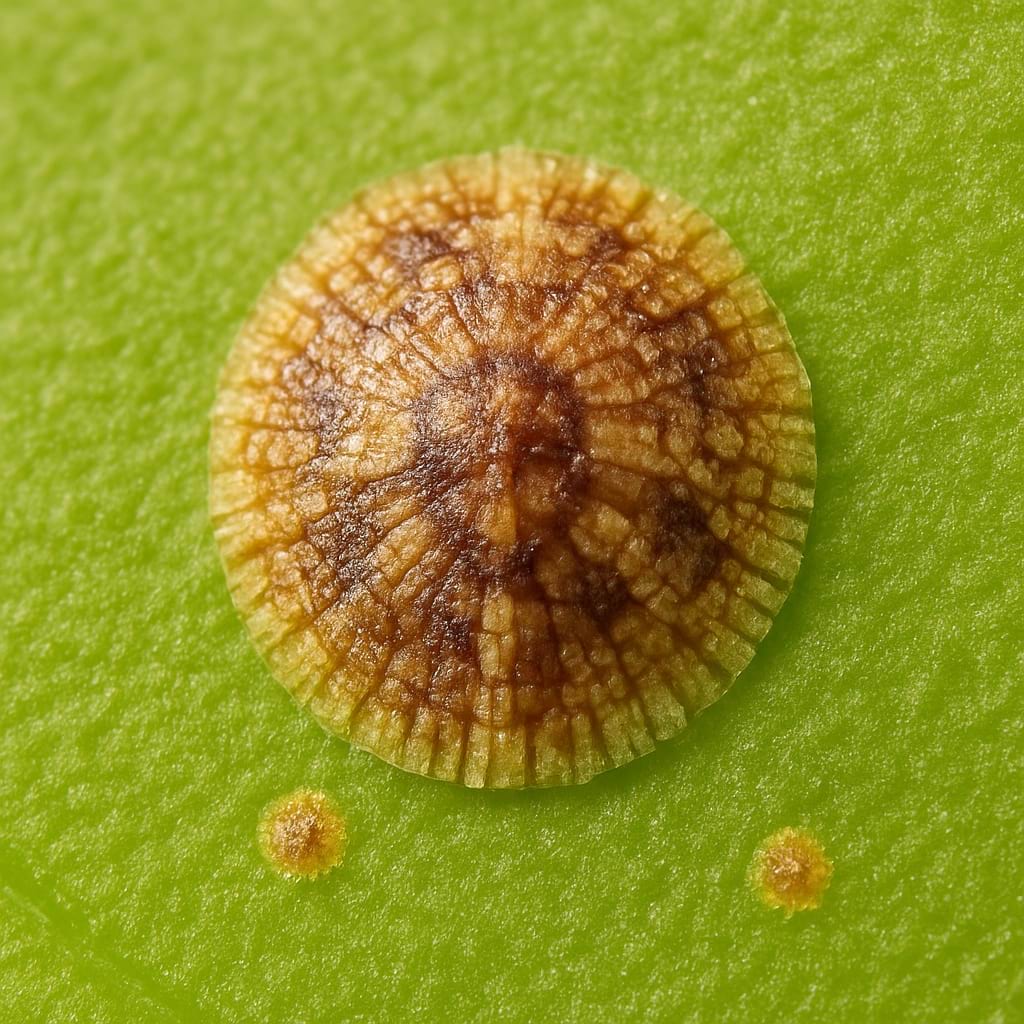
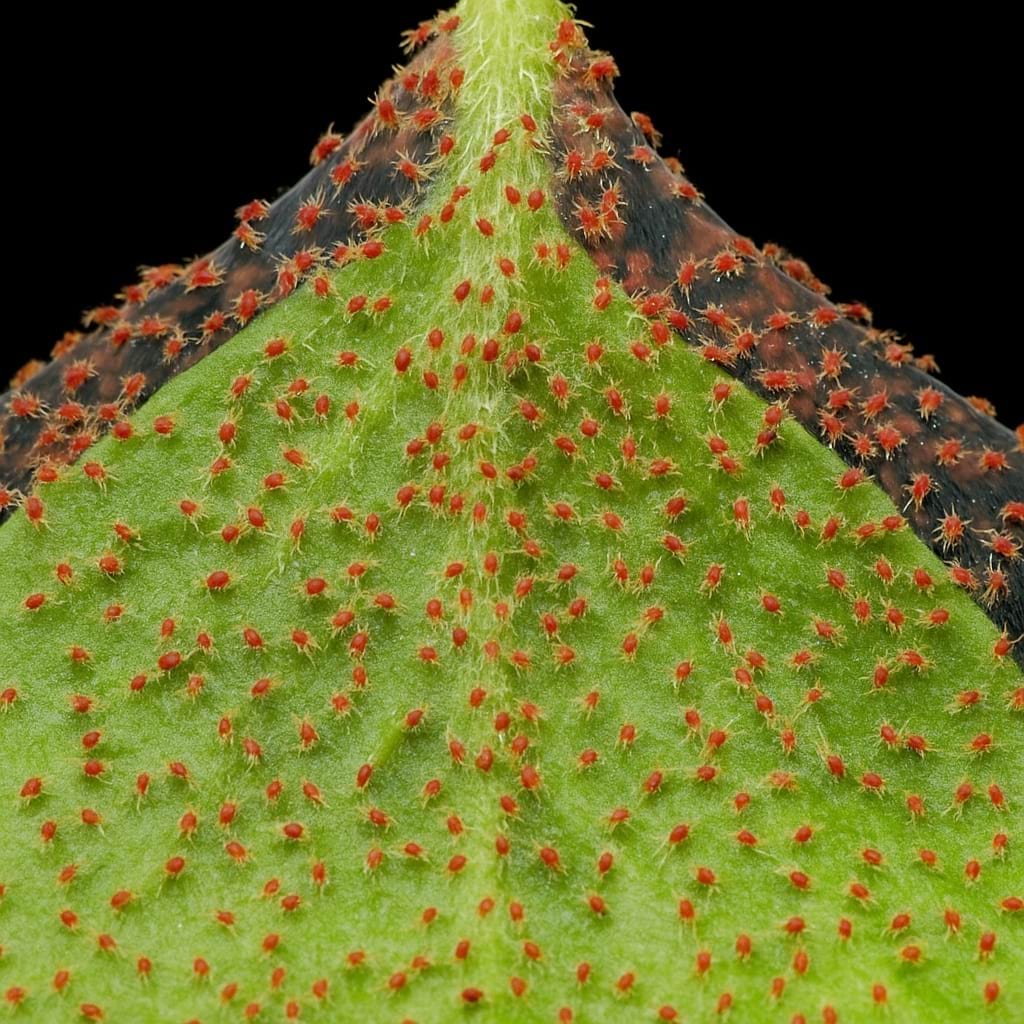
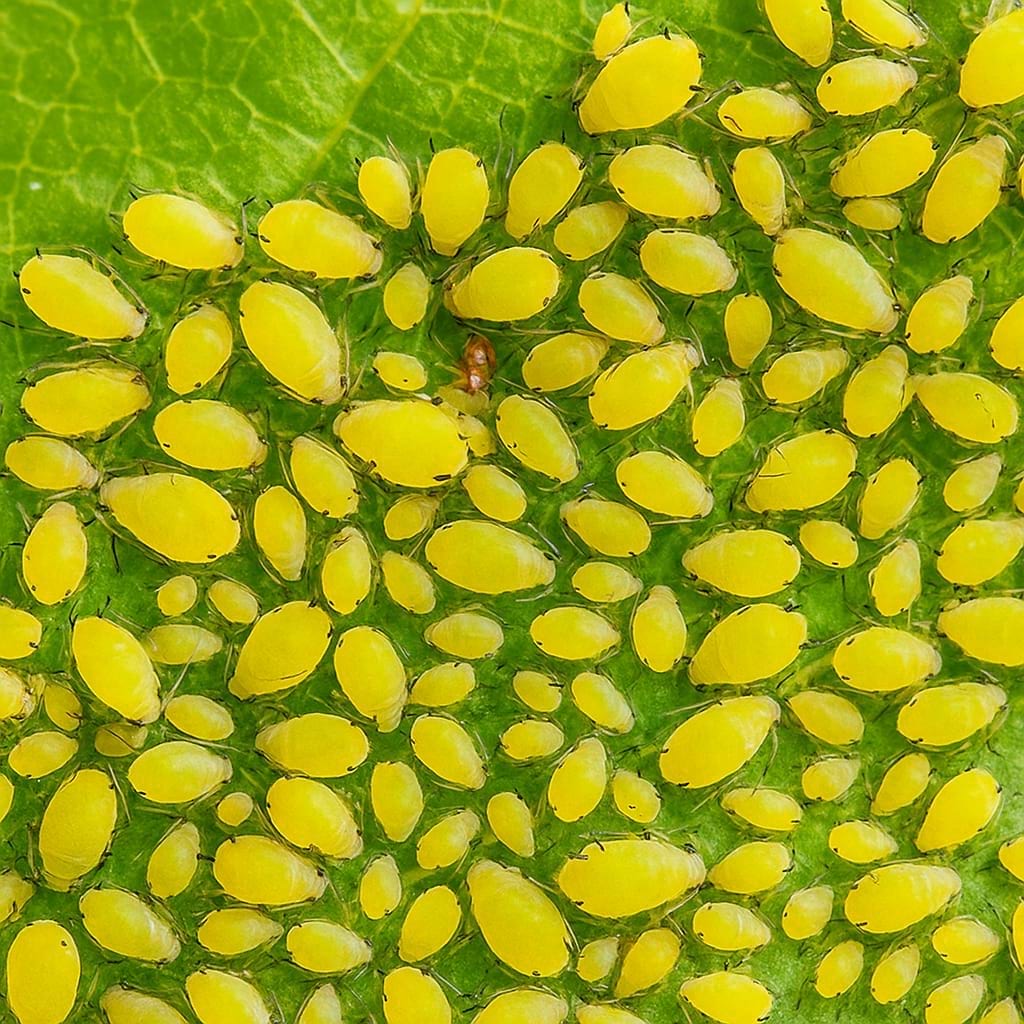
Monitor for Mealybugs, Scale Insects, Spider Mites, Aphids, Fungus Gnats. Wipe leaves regularly.

πŸ“Š Growth Information

Height: 24-36 inches at full maturity, including the flower bract
Spread: 24-36 inches
Growth Rate: Slow
Lifespan: Mother plant lives 3-5 years and dies after blooming; pups continue the line indefinitely

A Note From Our Plant Expert

Marina here. The Silver Vase Plant is the houseplant I bring to anyone who wants the longest-lasting bloom in the indoor world. The fluorescent pink bract that rises from the centre of the silver-banded rosette holds its color for three to six months, sometimes longer, and that puts it in a category by itself. Most flowering houseplants give you a week or two of color. A Silver Vase Plant gives you most of a season.

It is also one of the most forgiving plants on the site. The thick leathery leaves and central water-holding cup mean you can forget to water for a full week and the plant barely notices. It tolerates a wide range of light, shrugs off most pests, and asks for almost nothing in the way of fertiliser. If the Bromeliad family has a flagship indoor representative, this is it. Aechmea fasciata is the bromeliad you see in supermarkets, garden centres, and hotel lobbies precisely because it is dramatic, near-indestructible, and impossible to forget once you have seen one in bloom.

This guide covers the full care routine I use to keep my own Silver Vase Plants in heavy bract for half the year and producing a steady stream of pups for the rest. The plant has a few quirks worth knowing, the central cup needs fresh water and an occasional rinse, the mother plant only blooms once in its life, and the silver chalky coating on the leaves is alive and should not be scrubbed off, but once you have those down, the plant essentially takes care of itself. If you are coming from an African Violet or any fussy flowering houseplant, the Silver Vase Plant will feel like a holiday by comparison.

β˜€οΈ Silver Vase Plant Light Requirements (Bright Indirect, Some Direct OK)

Light is what unlocks both the silver banding on the leaves and the pink bract that defines this plant. A Silver Vase Plant in dim light still survives, but the silver patterning fades, the rosette stretches, and the plant rarely blooms. Move it into bright, indirect light with a touch of gentle direct sun and the entire personality of the plant comes alive.

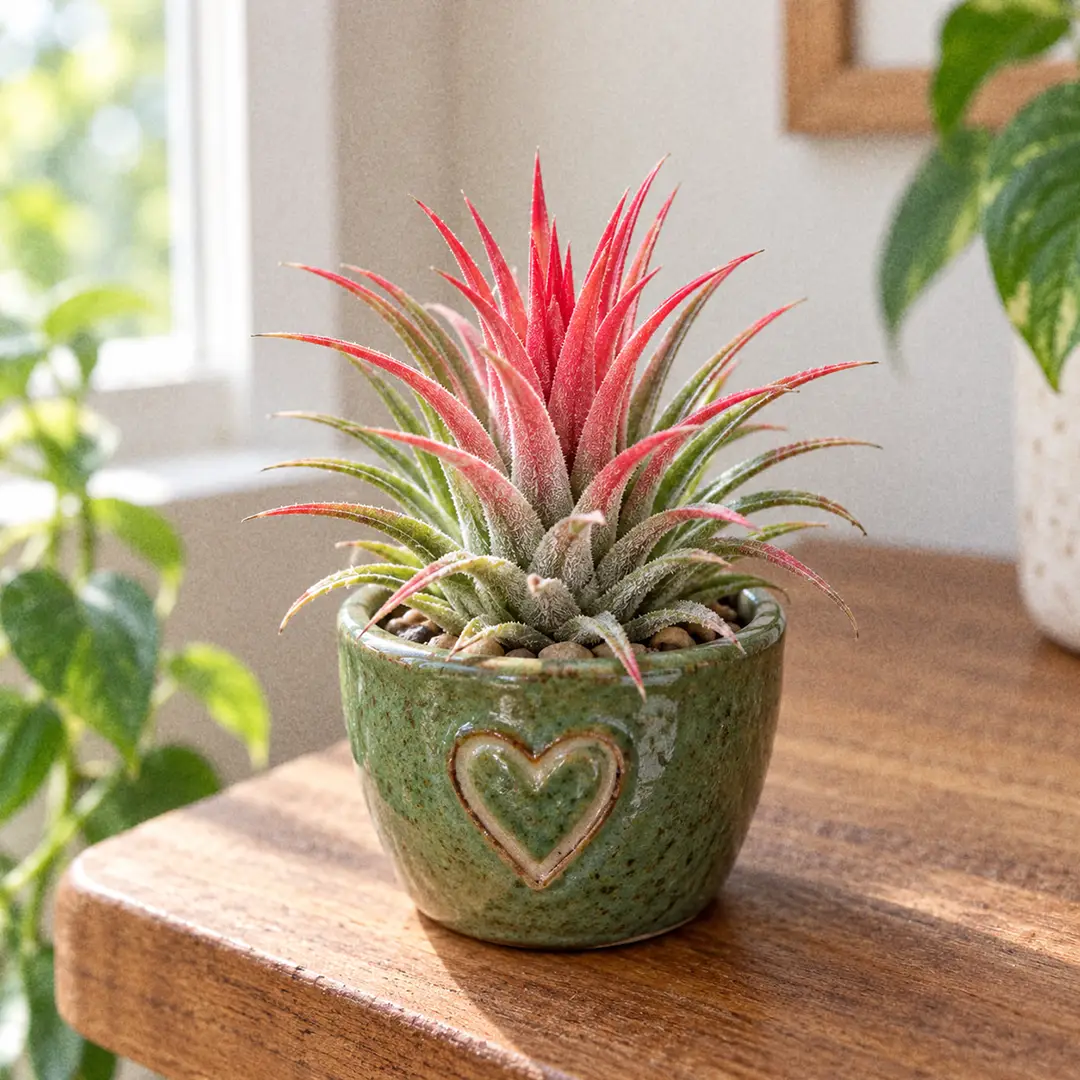
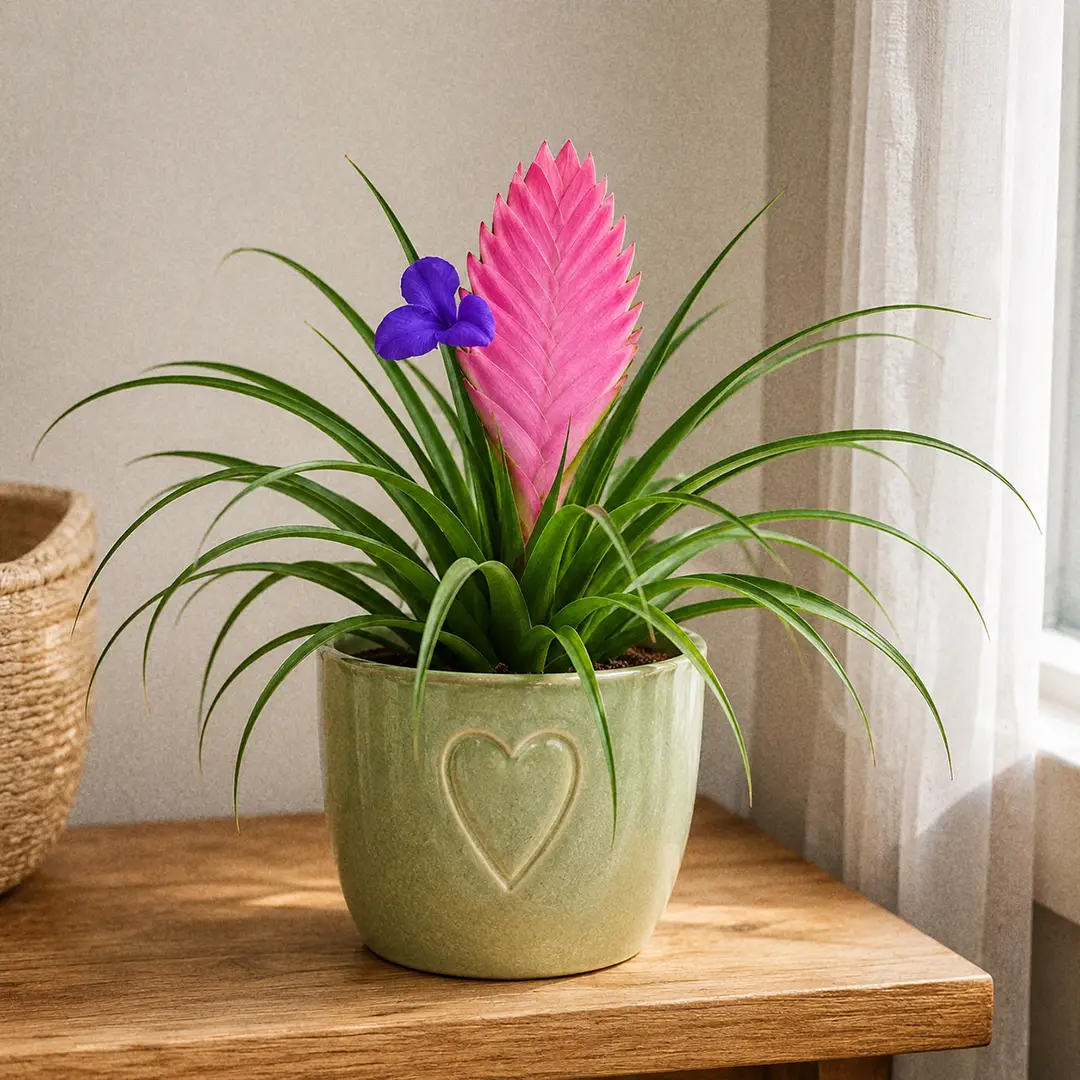
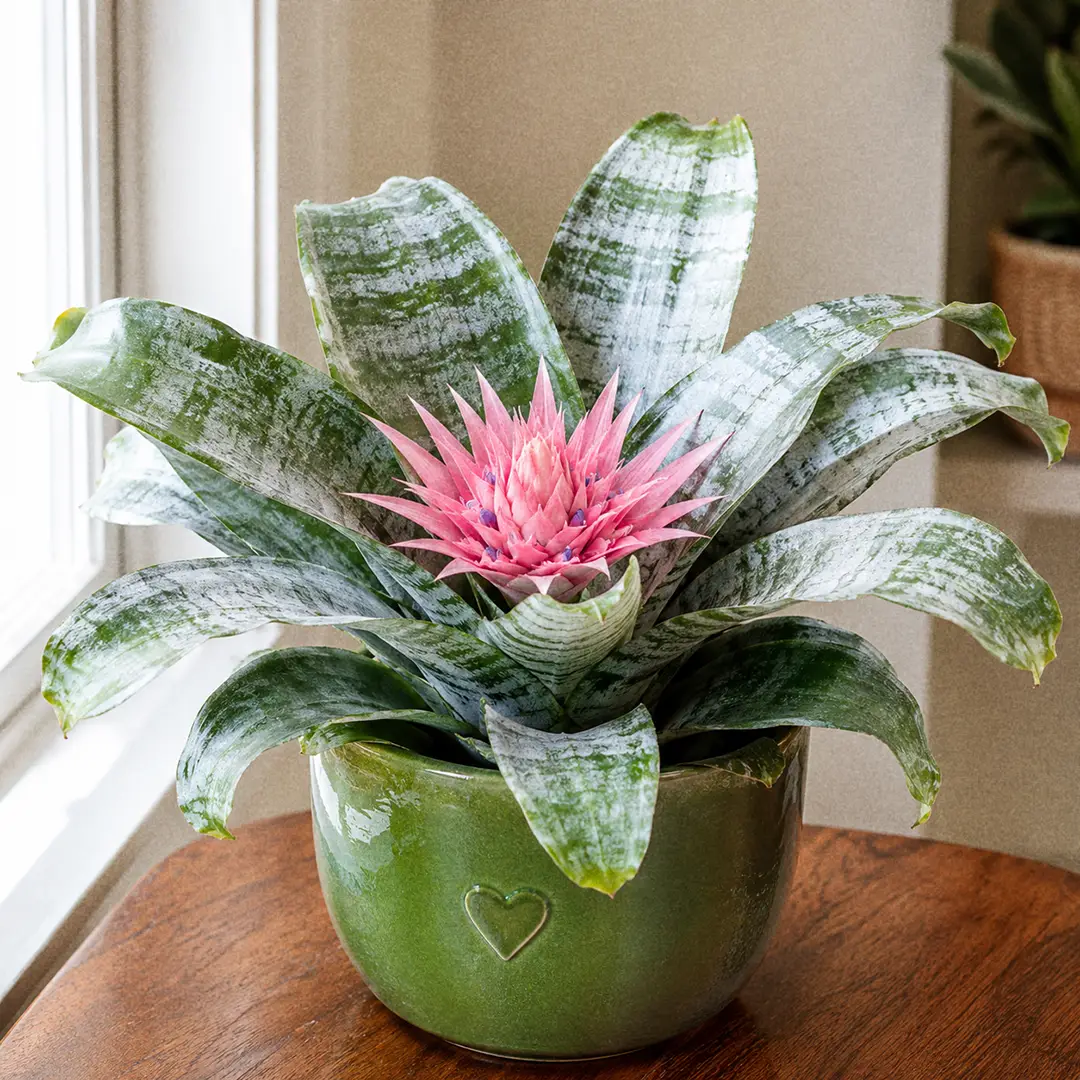
A mature Silver Vase Plant Aechmea fasciata with arching silver-banded leaves forming a tight upright vase and a tall hot-pink spiky flower bract rising from the centre, in a green ceramic pot with a heart motif on a wooden table near a bright window

The Sweet Spot

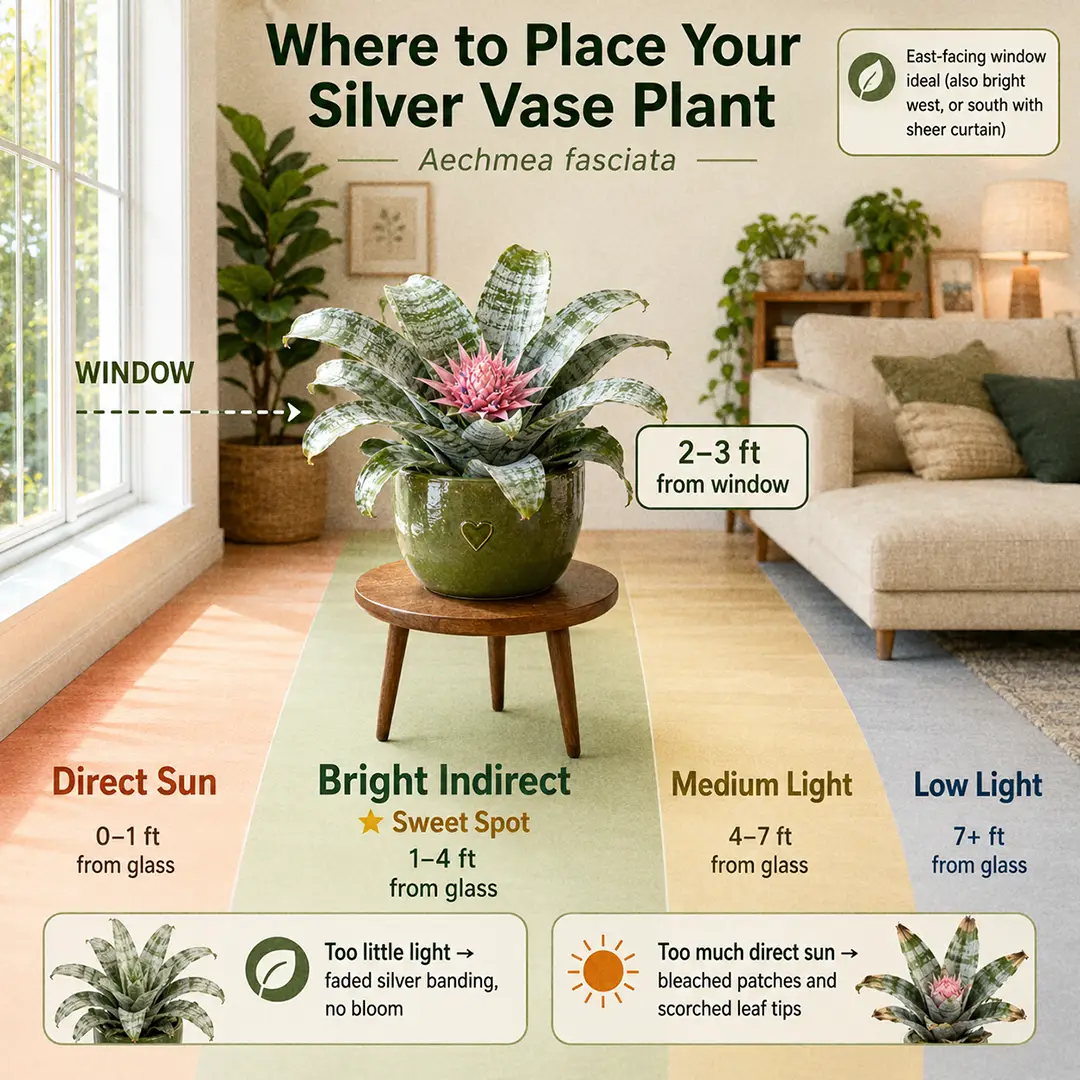
Aim for bright, indirect light with one to two hours of soft direct sun a day, ideally morning or late afternoon. East-facing windows are close to ideal. West-facing windows work well in the afternoon as long as a sheer curtain breaks the harshest hours. South-facing windows are fine if the plant sits two to four feet inside the room, or behind a sheer curtain, since unfiltered midday southern sun through a hot pane will scorch the leaves. North-facing rooms can work for the foliage but rarely deliver enough light to push the plant into bloom; supplement with a small grow light if a north window is your only option.

The right light shows up clearly in the leaves. A well-lit Silver Vase holds tight, arching leaves in a stable upright vase, with crisp silver-grey crossbanding on a deep green base. The whole plant has a slightly chalky, frosted look up close. That chalky coating is alive: it is made of microscopic scales called trichomes, and they are part of how the plant absorbs water and nutrients in the wild.

A labeled light-zone diagram showing a Silver Vase Plant placed in the sweet spot two to three feet from an east-facing window, with sweet-spot, too-dark, and too-bright zones color-washed and a small note about ideal indirect light with a touch of soft morning sun

What Too Little Light Looks Like

A light-starved Silver Vase Plant loses its character before it loses its leaves. The first sign is faded silver banding: the bold contrast between silver crossbands and deep green softens into a uniform pale green. Next, the rosette opens up and flattens, leaning outward toward the brightest available light instead of holding its tight upright vase. New leaves come in narrower and longer than the old ones. Finally, the plant simply refuses to bloom even after years of growth. Move the plant six to twelve inches closer to the window, or add a small grow light on a timer for ten to twelve hours a day, and the silver banding rebuilds within a few months.

What Too Much Light Looks Like

Aechmea fasciata is more sun-tolerant than many bromeliads thanks to its thick scaled leaves, but unfiltered tropical-style sun through a hot south-facing pane is still too much. Watch for pale washed-out patches on the highest leaves, papery dry edges, a pink-purple flush across leaf tissue that is more sunburn than pigment, and crispy brown patches that develop after a hot afternoon. Once a leaf is scorched it does not recover. Pull the plant a foot or two back from the glass, hang a sheer curtain, or move it to a brighter east window. Acclimatise it gradually over a week or two if you are moving it to or from a sunnier spot, since sudden swings in light cause stress that shows up as bleached patches.

A useful test: a happy Silver Vase Plant holds an upright tight rosette with crisp silver bands and either a developing bract or healthy pups at the base. If the rosette is collapsing outward and the silver is fading, push it brighter. If the leaves are bleaching or burning, soften the light. The plant tells you clearly which way to move.

πŸ’§ Silver Vase Plant Watering Guide (Tank Watering)

This is where the Silver Vase Plant differs from almost every other houseplant on the site. Aechmea fasciata is a tank-forming bromeliad, which means the central cup formed by the overlapping leaf bases is the plant's primary water reservoir. In its native Brazilian forest, the tank collects rainwater, dew, and falling leaf litter. The roots are mostly there to anchor the plant to a tree branch; they do very little of the actual water uptake. Indoors, you replicate that by keeping the cup topped up and only lightly moistening the soil.

How to Water the Tank

Pour fresh water directly into the central cup until it is about a quarter to half full. That is your main watering. Refresh the cup whenever you notice the water level dropping, the plant pulling water out as it transpires through the day. Once every two to three weeks, tip the plant carefully sideways over a sink and flush the cup completely, then refill with fresh water. This stops mineral buildup, mosquito larvae, bacteria, and the faintly sour smell that comes from stagnant water sitting too long in any container.

Use filtered, distilled, or rainwater whenever you can. The trichome-coated leaf bases are sensitive to chlorine, fluoride, and the mineral content of hard tap water. Heavily chlorinated tap water leaves a chalky white crust around the cup and browns the inner leaf tips over time. If your tap runs hard, leave the watering can out overnight to off-gas the chlorine, or switch to filtered water for the cup specifically. Always use room-temperature water, never cold straight from the tap, since cold water shocks the soft tissue at the cup base.

How to Water the Soil

The soil only needs a light drink, and only when the top inch or two has dried out fully. In a typical home with bright indirect light and average humidity, that lands around every ten to fourteen days during spring and summer, and every three to four weeks in winter. The general watering houseplants primer covers the underlying logic if you are still calibrating your rhythm with houseplants in general.

When you do water the soil, pour slowly at the soil line until water just begins to drain through, then stop. The roots are minimal and shallow, and they do not need a deep drench. Soggy soil is the single fastest way to lose a Silver Vase Plant. The plant tolerates a forgotten week of dryness far better than it tolerates a single weekend of waterlogging. When in doubt, skip a watering and check again in a few days.

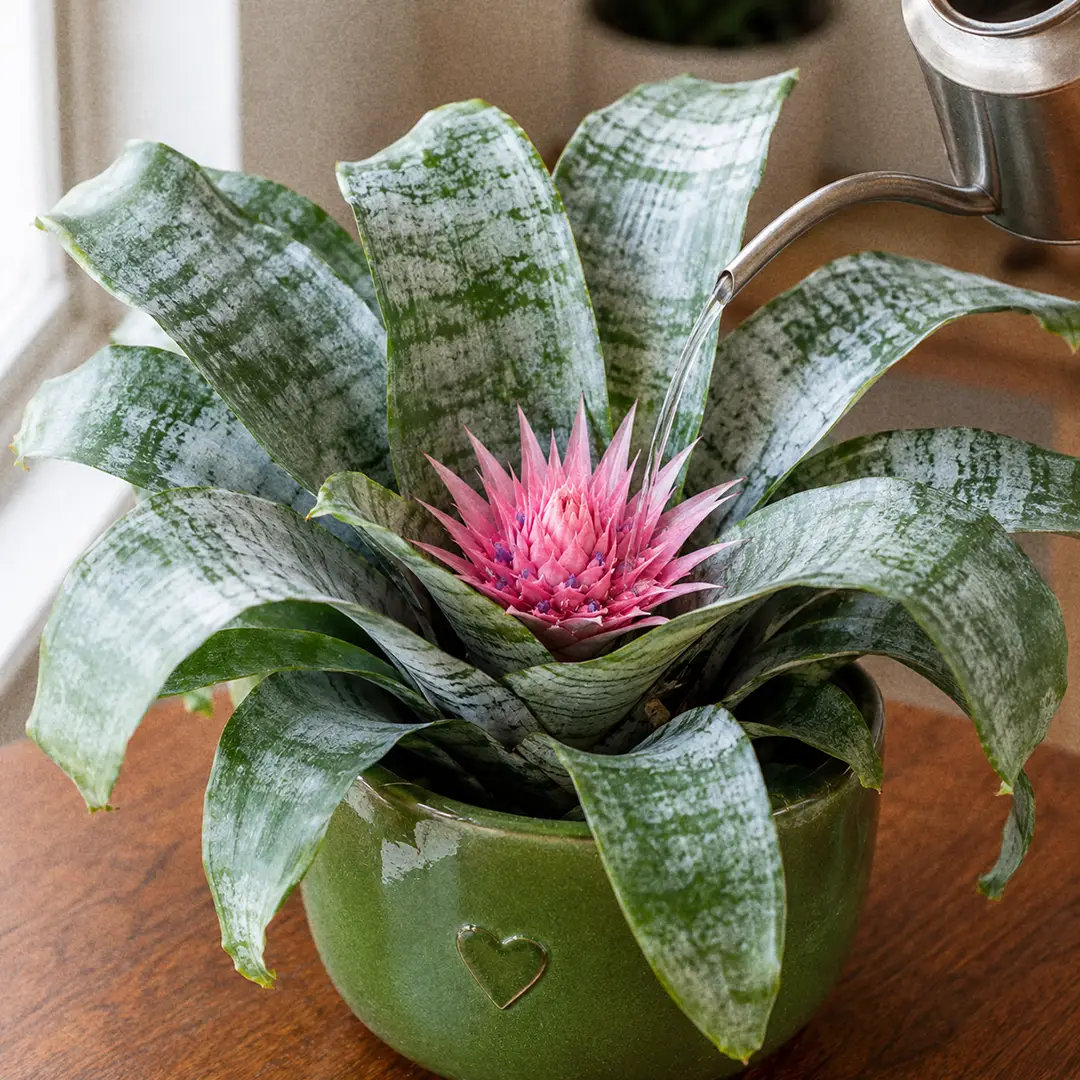
A close-up of a slender-spouted watering can pouring fresh water into the central cup of a Silver Vase Plant in a green ceramic pot with a heart motif, the silver-banded arching leaves catching soft window light

Signs You Are Overwatering

  • Soft, blackened patches at the base of the rosette where the leaves attach to the centre
  • A faint sour smell from the cup or the pot
  • Soil that stays wet for more than two weeks between waterings
  • Yellowing of the lowest outer leaves in groups, with mushy bases
  • The whole plant pulling away from the soil with no real root resistance
  • A blackened crown that smells distinctly off when you sniff close to the cup

Signs You Are Underwatering

  • A central cup that has been bone dry for more than a few days
  • Lower leaves curling slightly inward at the edges
  • Crispy brown tips on otherwise healthy leaves
  • A pot that feels noticeably light when lifted
  • Leaf colour fading toward a dusty grey-green with the silver still visible but the green washed out

A thirsty Silver Vase Plant recovers within a day or two of refilling the tank and lightly watering the soil. A waterlogged one keeps declining for weeks even after you stop watering, since the rot at the base is already underway. The asymmetry is exactly why erring on the dry side is always the safer call with this plant. If you are torn between watering and waiting, wait.

Once-Yearly Tank Flush

Twice a year, completely empty and refresh the tank. Tip the plant carefully sideways over a sink so the old water and any debris pour out fully. Run a small stream of fresh water through the cup to rinse, then set the plant upright and refill the tank to a quarter full. This clears mineral buildup, breaks any algal film, and keeps the cup smelling clean. It takes thirty seconds and the plant noticeably perks up afterward.

πŸͺ΄ Best Soil for Silver Vase Plant (Loose, Airy, Fast-Draining)

The soil for a Silver Vase Plant has a different job than the soil for most houseplants. The roots are mostly there to anchor the plant rather than feed it, so you are not aiming for a rich nutrient-holding mix. You are aiming for something light, airy, fast-draining, and slightly acidic. Get the mix right and the limited root system stays healthy for years.

A Simple DIY Mix for Silver Vase Plant

This is the recipe I use for every Aechmea, Vriesea, and Guzmania in my collection.

  • 2 parts orchid bark (medium grade) or fine fir bark
  • 1 part perlite or pumice
  • 1 part quality indoor potting soil or a peat-coir blend
  • A small handful of horticultural charcoal to keep the mix sweet

Mix in a bucket and squeeze a fistful in your hand. The mix should fall apart almost immediately when you open your fingers. If it stays in a hard clump, add more bark and perlite. If it crumbles to dust with no body at all, add a touch more soil. The aim is a mix with enough texture to support the plant upright and enough air pockets that water drains in seconds rather than lingering for days.

What to Look For in a Premix

If a bag is your style, an "orchid bark mix" or a "bromeliad and orchid blend" both work well right out of the bag. Cut the orchid mix with a small handful of regular potting soil if it looks too chunky, since pure orchid bark dries out so fast it makes the soil-watering side of care fiddly. Avoid any mix labeled "moisture control" or "water-retaining"; those hold far too much water for a tank-forming bromeliad and lead straight to root rot.

Why Drainage Matters So Much

The roots of an Aechmea fasciata are short, fine, and shallow. In the wild the plant grows attached to a tree branch with rainwater running freely past the roots and over the rosette. Indoors, soggy soil traps water against those small roots, and rot sets in fast. Fast drainage keeps oxygen reaching the roots and gives the plant the conditions it actually evolved for. Spend the ten extra minutes mixing a proper bromeliad-friendly blend and the plant will reward you with years of healthy growth.

🍼 Fertilizing Silver Vase Plant (Light Feeder)

Silver Vase Plants are very light feeders. Aggressive fertilising does more harm than good on a tank-forming bromeliad, since the salts concentrate in the cup and burn the soft tissue at the base of the rosette. The aim is a small, gentle drip of nutrients during active growth, and almost nothing in winter.

When to Fertilize

Feed monthly during the active growing season, roughly April through September in the Northern Hemisphere. In winter, when light is lower and growth slows, pause feeding entirely. Resume in early spring as new growth picks up and tank temperatures stabilise. Plants that are actively pushing a flower bract appreciate a touch of extra feeding through the bract development phase, since the plant is putting most of its remaining energy into that single show.

What to Use

A balanced liquid houseplant fertiliser with an NPK around 10-10-10 or 20-20-20, diluted to a quarter of the dose listed on the label, works well for tank bromeliads. The general fertilizing guide goes deeper on why heavy feeding hurts more than it helps for low-need plants like this one.

You can apply the diluted fertiliser two ways. Either pour the quarter-strength solution directly into the cup, replacing whatever was already there, or water it lightly into the soil at the base. The cup method is the traditional bromeliad approach and works well for older plants. The soil method is gentler on the leaf bases and is the safer option if you have ever burned a bromeliad before. Switch between the two if you like, or pick one and stick with it.

Reading the Plant

  • Steady new leaves and crisp silver banding: feeding is on point.
  • Slowing growth and faded silver: the mix has run out of available nutrients. Bump frequency slightly or refresh the cup more often.
  • Brown leaf bases and a chalky white crust at the cup edge: salt buildup. Flush the cup and the pot with plain water and skip the next two feedings.
  • A sudden collapse of soft tissue at the cup base after feeding: fertiliser burn. Pause feeding for two months, flush thoroughly, and start again at half the previous strength.

A slow-release pellet stirred into the surface of the soil at the start of spring is also a fine option for low-maintenance growers. One application carries the plant through most of the active season, and you can skip the cup-feeding routine entirely. Just keep the dose conservative; a tablespoon at most for a fully grown plant.

🌑️ Silver Vase Plant Temperature Range

This is a tropical plant from the warm coastal forests of southeastern Brazil, and it likes warm, stable indoor conditions year-round. The sweet spot is between 65 and 80Β°F (18 to 27Β°C), which lines up with most heated homes. Aechmea fasciata is more cold-tolerant than truly tender tropicals like a Calathea Orbifolia but less forgiving of cool temperatures than a Snake Plant or a ZZ Plant.

What to Avoid

  • Cold drafts from a leaky winter window
  • Hot dry blasts from a heating vent or radiator
  • Air-conditioning vents pointed directly at the leaves
  • Anything below 55Β°F (13Β°C) for more than a few nights, which slows growth and may trigger leaf-base discolouration
  • Sustained exposure under 50Β°F (10Β°C), which causes the cup tissue to soften and rot
  • Direct summer sun through unshaded glass, which heats the leaves quickly and scorches the silver scales

Seasonal Care

A mild winter cool-down does not hurt this plant, but it should never approach freezing. Many growers actually find their Silver Vase Plants bloom more reliably when nights drop into the 60-65Β°F (16-18Β°C) range for a few weeks in autumn, since the seasonal temperature swing seems to help trigger bract production in mature plants. Keep the plant in your brightest available window through winter, reduce tank water and soil watering to match the slower growth, and skip fertiliser through the lowest-light weeks.

If you summer your plants outside in a sheltered, lightly shaded spot (Silver Vase Plants thrive on a covered patio in summer in zones 9 and warmer), bring them back indoors well before nights regularly fall under 55Β°F (13Β°C). Inspect each plant for hitchhiking pests as you bring it inside, and give it a bright spot away from cold glass for the first week or two. The transition can pause new growth briefly, but the plant settles within a month.

πŸ’¦ Silver Vase Plant Humidity Requirements

Silver Vase Plants prefer middle-to-high humidity but tolerate average indoor conditions surprisingly well. The thick scaled leaves help hold moisture in, and the central cup acts as a tiny humid microclimate around the plant's most sensitive tissue. They are noticeably more tolerant of dry air than fussier bromeliads like Vrieseas or fine-leaved Tillandsia varieties.

  • Ideal range: 50 to 70 percent
  • Tolerable: 40 percent
  • Trouble starts below: 30 percent (look for crispy edges, slow new growth, and a pause in bract production)

Easy Ways to Boost Humidity

  • Run a small humidifier in the room for a few hours a day, especially in winter when heating dries out indoor air.
  • Group the plant with other houseplants so they share transpired moisture; a Silver Vase Plant set among ferns and orchids creates its own little humidity pocket.
  • Set the pot on a tray of pebbles and water. The pot sits on the pebbles, not in the water.
  • Move the plant to a brighter bathroom if the light is good enough. A north-facing bathroom with a daylight LED is one of the happiest places a Silver Vase can live.
  • A weekly mist of the foliage is fine but optional. Aim the spray for the air around the plant rather than the leaves themselves, and never mist directly into the cup.

A general overview of boosting humidity for indoor plants helps if your home runs especially dry in the cold months.

🌸 Silver Vase Plant Flowers (The Pink Bract)

This is where the Silver Vase Plant earns its place in the houseplant hall of fame. The pink "flower" that everyone falls in love with is actually a large coral-pink bract, a structure made of modified leaves rather than petals. The true flowers are small, lilac to pale-blue, three-petalled, and tucked along the spike. The bract itself is what stays colourful for three to six months, which is far longer than any actual flower could last.

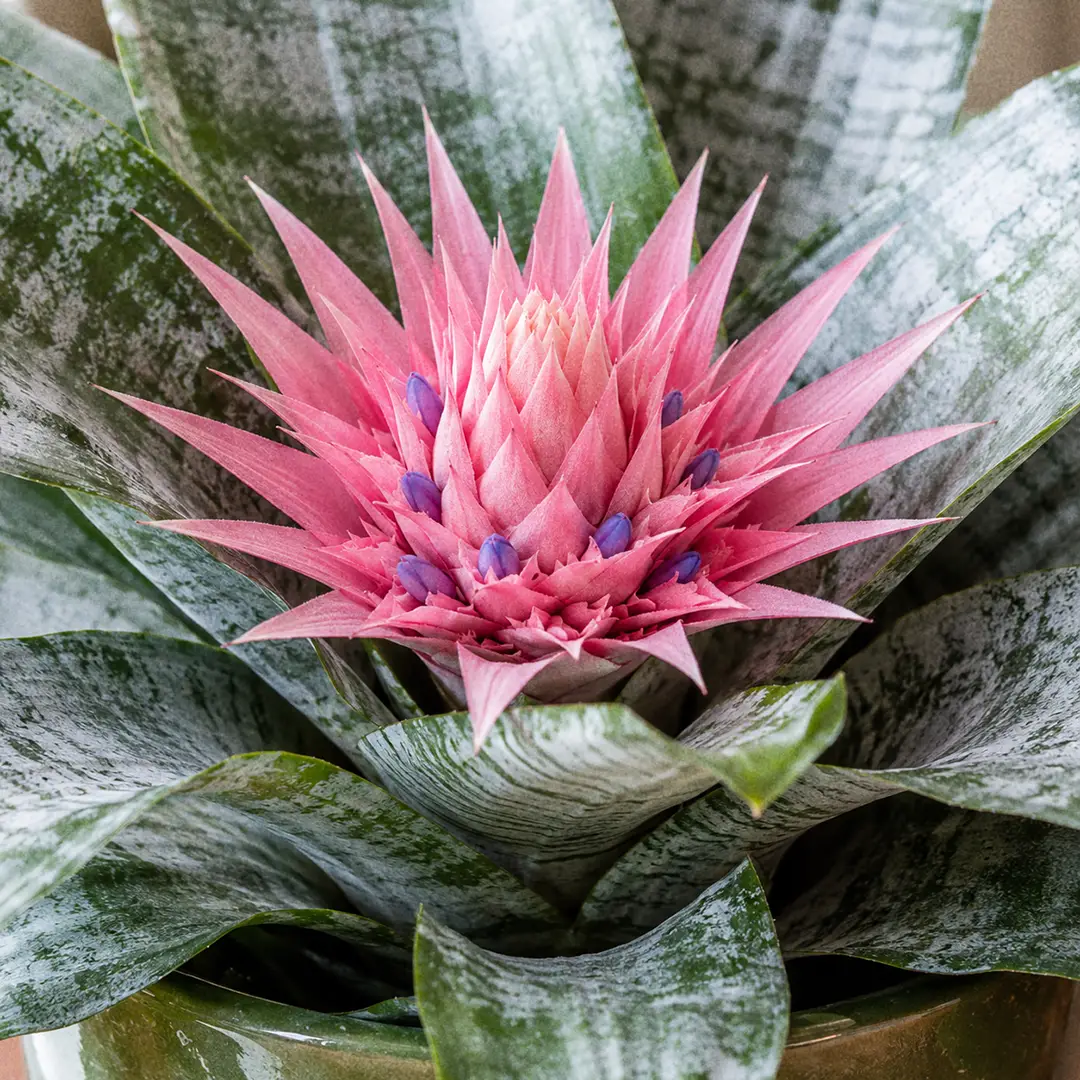
Macro close-up of a Silver Vase Plant inflorescence with a tall hot pink and coral spiky bract surrounded by silver-banded arching leaves, with two or three small lilac-blue true flowers visible along the spike, in a green ceramic pot with a heart motif against a softly lit window

What the Bract Looks Like

The bract emerges from the centre of the cup as a thick stem topped with stiff, spiny pink scales arranged in a rough pinecone or torch shape. Over a few weeks it grows upward to its full height, which is six to twelve inches above the rosette in most homes. The pink colour comes in slowly and deepens to a fluorescent coral-pink at peak, then fades over months toward a dusty rose, and finally to a brown skeleton at the very end of the show. Small purple-blue true flowers open in succession along the bract over a couple of weeks, each lasting only a day or two, but the bract itself keeps its pink colour long after the true flowers are gone.

A single bract can hold colour for three to six months indoors, occasionally longer in a cool, bright bathroom. After it begins to brown, you can either leave it as a sculptural feature or cut it back at the base of the bract stem.

The Once-in-a-Lifetime Catch

Aechmea fasciata is what botanists call monocarpic, which is a polite way of saying the mother plant blooms once in its life and then dies. Do not panic when you read that. The bloom lasts months, the plant takes years to reach the bloom stage, and most importantly the mother does not just die quietly. While the bract is fading, the plant pours its energy into producing pups (offsets) at the base of the rosette. Those pups are full clones of the mother, ready to grow on and bloom themselves in two to four years. By the time the mother eventually fades away entirely, you have one to four young Silver Vase Plants taking her place.

That generational handoff is part of why the plant is rewarding to grow long-term. You buy one, enjoy a multi-month bloom, raise the pups, and end up with a small group of plants ready to bloom in succession over the following years. A well-managed collection always has at least one in flower somewhere.

How to Trigger a Bloom

Most Silver Vase Plants sold in shops have already been forced into bloom by the grower using ethylene gas. If yours is one of those, simply enjoy the show. The pups it raises afterward are the ones you will need to coax into bloom yourself, and they bloom on their own schedule once they are mature, usually two to four years from separation.

If a mature Aechmea fasciata in your home refuses to bloom, the classic trigger is ethylene exposure. Place a ripe apple, banana, or kiwi fruit (all of which release ethylene as they ripen) inside a clear plastic bag with the plant. Loosely tie the bag closed, leave it for one to two weeks in a bright but not hot spot, and then remove the bag and the fruit. A bract usually appears within three to four months. The technique works because ethylene is the natural signal that triggers flowering in many bromeliads.

Other helpful triggers:

  • Bright indirect light with a couple of hours of soft direct sun a day. Light is bloom fuel.
  • A mild seasonal cool-down with autumn nights in the 60-65Β°F (16-18Β°C) range.
  • Steady but minimal feeding through the active growing season.
  • Patience. The mother plant needs to be fully mature, three to five years old, before it can bloom. A plant that is too young will not respond to ethylene tricks.

Spent Bloom Cleanup

Once the bract has fully browned, cut the bract stem off at the base with clean snips. Leave the rosette and the pups in place. The mother will continue to look like a plant for many more months while the pups grow up at her base. Eventually the mother's outer leaves brown and pull away easily; remove them as they do, and the rosette gradually gives way to the next generation of plants. The whole process from peak bract to mother fully dying typically takes one to two years.

🏷️ Silver Vase Plant Types and Varieties

The species Aechmea fasciata has a few selected cultivars in cultivation, and the broader Aechmea genus contains hundreds of related species, but for indoor growers the choices narrow to a small handful of reliably available plants.

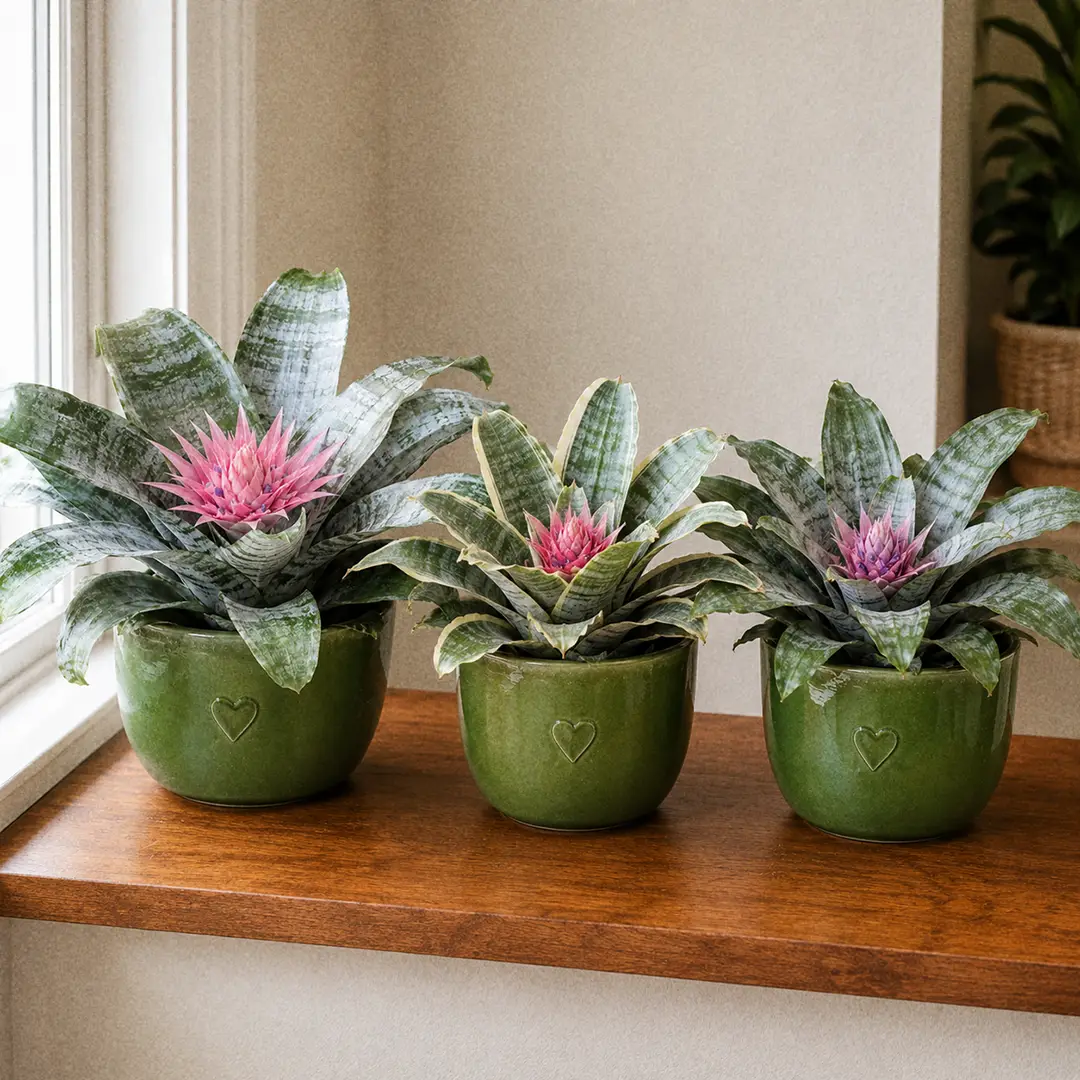
Three Silver Vase Plant relatives side by side on a wooden shelf in matching green ceramic pots with heart motifs: a classic Aechmea fasciata with silver-banded leaves and a hot pink bract, an Aechmea fasciata Primera with crisper leaf banding, and a related Aechmea Blue Rain with deeper green leaves and a violet-pink bract

Aechmea fasciata 'Primera'

The dominant commercial cultivar. 'Primera' is what almost every supermarket and big-box garden centre sells as a "Silver Vase Plant" or "Urn Plant", and the cultivar name is rarely listed on the label. It has uniform silver crossbanding on slightly broader leaves than the wild type, and produces a reliable hot pink bract on schedule. Care and appearance are essentially the same as the species.

Aechmea fasciata 'Variegata' ('Albomarginata')

A cream-edged variegated cultivar of the standard plant, with a thick ivory band running along the outer edge of each leaf. Slightly less common but well worth seeking out for collectors. The variegation slows growth a touch, so this cultivar takes a year longer to reach blooming size on average. Otherwise care is identical.

Aechmea fasciata 'Morgana'

A purpler-toned cultivar with a deep-pink bract that reads more rose-pink than coral, on slightly shorter, denser foliage. Less widely sold but a favourite of bromeliad collectors looking for something distinct from the supermarket form.

Aechmea 'Blue Rain' (Aechmea fasciata x A. caudata)

A modern hybrid with deeper green leaves, less-defined silver banding, and a smaller, taller, electric-violet bract that fades through pink to dusty rose. Care is the same as the standard Silver Vase Plant. Treat any cross-species Aechmea hybrid you find with the same general routine.

Aechmea chantinii (Zebra Plant Bromeliad)

A close relative with much sharper black-and-silver crossbanding (almost zebra-like), red-and-yellow flower bracts, and a more open rosette form. Slightly trickier than Aechmea fasciata but still very forgiving by tropical-plant standards. Worth knowing about if you fall in love with the Aechmea genus and want to expand the collection.

Silver Vase Plant vs. Other Bromeliads

The most useful comparison. The general Bromeliad family covers a huge range of related plants, and they all share the central-cup care routine, the once-in-a-lifetime bloom, and the pup-based propagation. Day-to-day, the differences come down to leaf form, bract shape, and tolerance for low light.

  • Aechmea fasciata (this plant) has stiff, silver-banded leaves and a coral-pink bract. The silver scaling is its signature.
  • Guzmania lingulata has glossy, plain green leaves and a star-shaped flower bract in red, orange, yellow, or pink. It is the most low-light tolerant of the common indoor bromeliads.
  • Vriesea splendens ("Flaming Sword") has banded leaves and a flat sword-shaped flower spike, often bright red.
  • Neoregelia species have flat, colourful rosettes with the centre of the cup turning bright red, orange, or pink as the plant matures, and the flowers themselves are tiny and tucked deep in the cup.
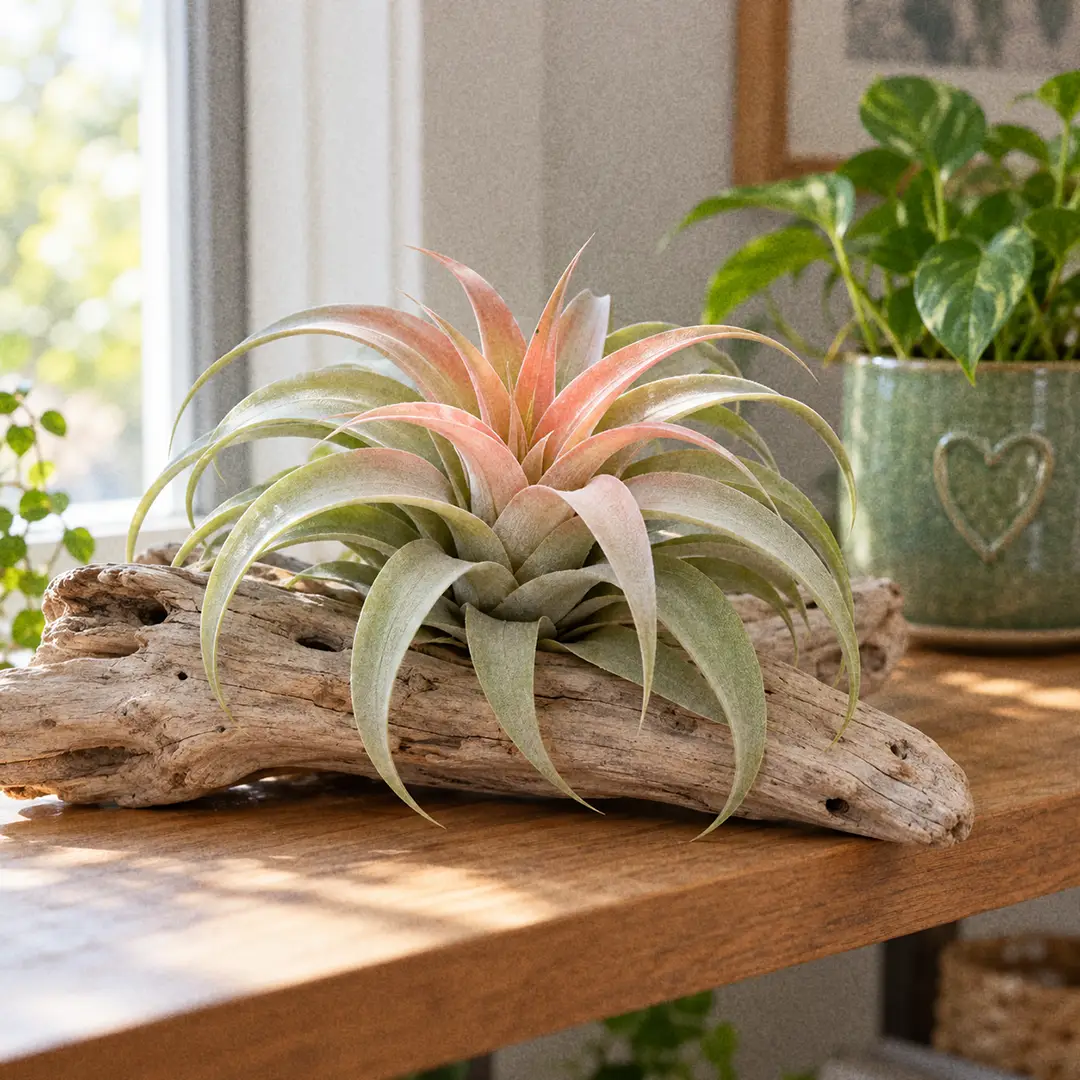
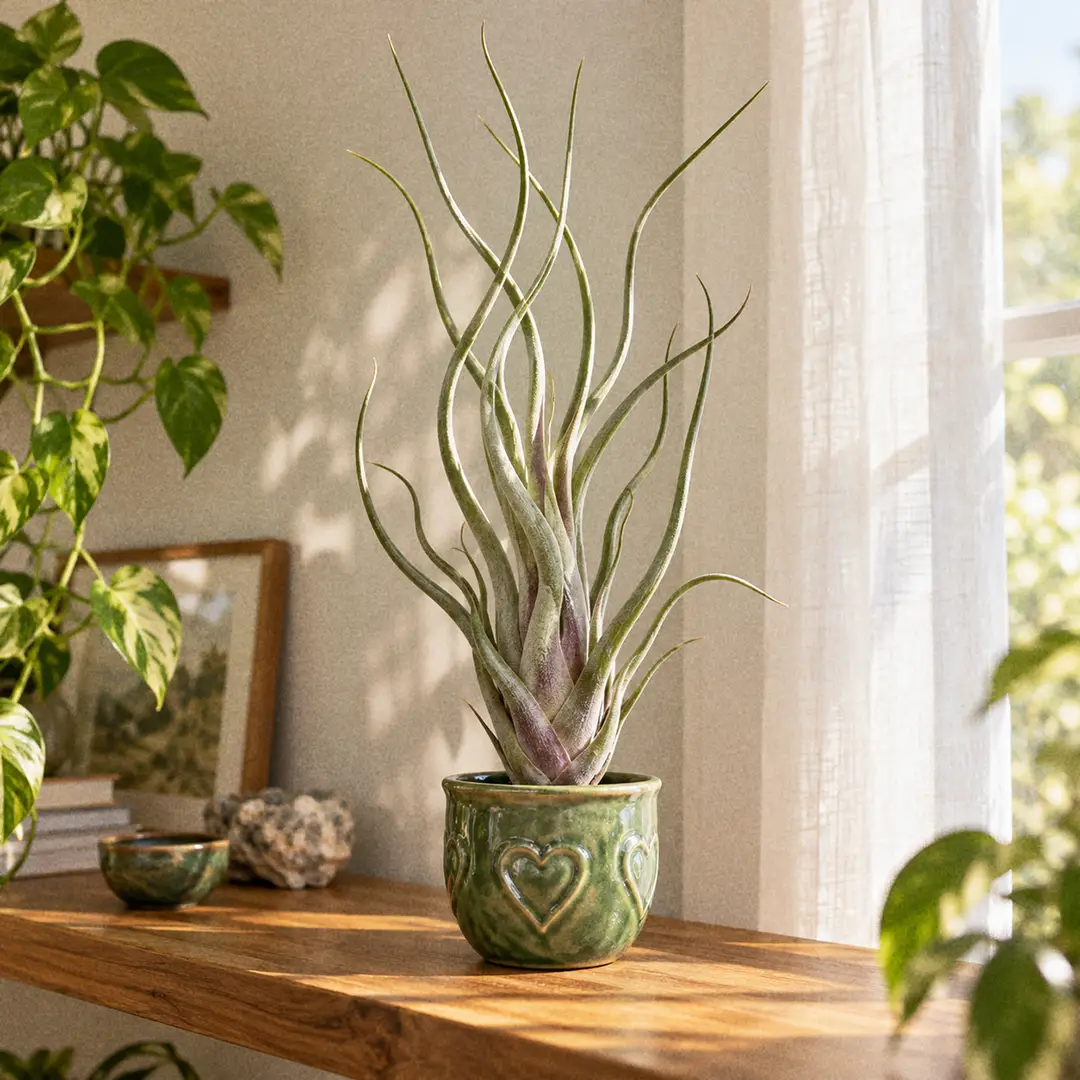
  • Tillandsia (Air Plant) is the rootless cousin: same family, same general care principles, but no soil at all, just light and humidity.

Silver Vase Plant vs. African Violet

A fair comparison only because both are popular flowering houseplants, but they could not be more different in form. The African Violet is a small, soft-leaved, shade-loving plant that produces small flowers tucked just above its rosette and blooms repeatedly year-round. The Silver Vase Plant is a larger, leathery, dramatic plant with silver-banded leaves and a single show-stopping bract that lasts for months. African Violets are easier to keep blooming continuously; Silver Vase Plants are easier to keep alive and ask far less of you between bloom cycles. If your goal is constant small flowers, go with the African Violet or the Cape Primrose. If your goal is one giant pink bract that lasts half a year, choose the Silver Vase.

When buying, look for a plant with a tight, even silver-banded rosette, several developing pups (or at least one good-sized pup) at the base, and either a developing bract or a mature one in colour. Avoid plants with limp leaves, mushy bases, brown crown rot at the centre of the cup, or a sour smell from stagnant tank water that has clearly been neglected.

πŸͺ΄ Potting and Repotting Silver Vase Plant

Silver Vase Plants have small, shallow root systems and prefer to stay in the same pot for years. They are not climbers or sprawlers; they hold their place quietly and only need repotting in a couple of specific situations.

When to Repot

Repotting is rare for this plant. Plan to repot only when:

  • You are separating pups from a parent plant (the most common reason)
  • The pot has become unstable and tips over because the rosette has grown taller than its container
  • The soil has visibly broken down into a dense, sour-smelling sludge
  • The mother plant has finally finished its life cycle and you are moving the next generation of pups into fresh mix

A young plant from the shop can comfortably stay in its original nursery pot, slipped into a decorative cover pot if you like, for one to two years before it needs anything more. Most Silver Vase Plants live their entire mother-plant life in a single pot.

Avoid repotting during active bract production. The disturbance can pause the bloom, and the plant has only one shot at flowering. Wait until the bract has fully matured or finished before doing any major root work.

Choose the Right Pot

A Silver Vase Plant is happiest in a pot only an inch or two wider than its current root ball, with strong drainage holes. The plant has a top-heavy habit thanks to the upright vase of leaves, so a slightly heavier pot is genuinely more useful than a tall, light one that tips over.

  • Plastic pots are the most common choice for serious bromeliad growers because they are light and easy to drill more drainage into.
  • Terracotta works very well thanks to its breathability, which helps the small root ball stay aerated.
  • Glazed ceramic falls in the middle, with a cleaner look than terracotta and a touch more weight to keep the plant upright.
  • Heavy stoneware or stone-effect pots are excellent for mature plants with tall bracts that would otherwise tip a lighter pot.

How to Repot, Step by Step

  1. Water the plant lightly the day before so the root ball holds together when you slide it out.
  2. Choose a new pot only one to two inches wider than the current one.
  3. Add an inch of fresh bromeliad mix to the bottom.
  4. Slide the plant out gently. The root ball is small and may feel almost loose; that is normal for this plant.
  5. Tease apart any tightly circling roots with your fingers and trim away any that are mushy, brown, or hollow. Healthy roots are pale and firm.
  6. If you are separating pups at the same time, this is the moment. Use a clean knife to slice each pup away from the mother where they meet, ensuring each pup keeps its own roots, and pot the pups up separately.
  7. Set the parent plant in the new pot at the same depth it was sitting before. Do not bury the lowest leaves or any part of the cup base.
  8. Backfill around the roots with fresh mix, tapping the pot to settle it. Do not pack hard.
  9. Refresh the cup with clean water and place the plant back in its usual bright indirect spot.

A general overview of repotting houseplants covers the basics. For a Silver Vase Plant specifically, the rule above all others is: do not bury the cup base. The lowest part of the rosette must sit at or just above the soil line, never below. A buried cup rots fast.

βœ‚οΈ Pruning Silver Vase Plant

Pruning a Silver Vase Plant is almost entirely cosmetic. The plant has no woody stems to shape, no leggy growth to cut back, and no real branching to manage. Pruning here means tidying the rosette, removing the spent bract, and eventually trimming away the mother plant after she has finished her cycle.

Removing the Spent Bract

Once the pink bract has fully browned and looks tired, cut the bract stem off at the base with clean snips. Leave the rosette and any developing pups in place. The plant continues to look healthy for many more months as the pups grow up at the base. Cutting the spent bract early redirects the mother's remaining energy into pup production, which is exactly what you want.

Removing Tired or Damaged Outer Leaves

Older outer leaves at the base of the rosette eventually brown at the tips, fade in colour, or look ragged. Trim them off at the soil line with clean snips. The plant always produces new leaves from the centre of the rosette, so removing tired outer leaves keeps the plant looking neat without harming anything.

If a leaf has a brown crispy edge but is otherwise green, you can trim just the damaged tip off rather than removing the whole leaf. Cut at a soft angle that follows the natural pointed leaf shape, and the trimmed leaf keeps doing its job until it eventually ages out.

Removing the Mother Plant

This is the final pruning task in a Silver Vase Plant's life. Once the pups at the base have reached one-third to one-half the size of the mother, the mother will start to brown and pull away naturally. At that point, slice her off at the soil line with clean snips and discard her. The pups remain in place and continue growing in the same pot. You can leave one pup in place to grow on, or separate them and pot them up individually.

Cleaning the Leaves

The silver chalky coating on Silver Vase Plant leaves is alive (microscopic trichome scales), and aggressive scrubbing wipes it off. Resist the urge to polish the leaves the way you would a Rubber Plant. Once a couple of months, gently wipe the upper leaf surfaces with a soft, slightly damp cloth, going with the natural leaf direction. Skip leaf shine sprays entirely; they coat the trichomes and reduce the plant's ability to absorb water and nutrients through the leaf surface.

Removing Diseased Tissue

Any leaf that has gone soft, mushy, or dark-spotted should be snipped off at the soil line immediately. Cut back into clean, firm tissue, and clean your snips with rubbing alcohol between cuts so you do not spread fungal issues across the plant.

🌱 How to Propagate Silver Vase Plant (Pups)

This is one of the easiest plants in the houseplant world to propagate. The mother plant does almost all the work for you. After flowering, she produces one to four (occasionally more) pups at the base of the rosette, each a full genetic clone of the parent. All you have to do is wait until the pups are big enough to live on their own and then separate them.

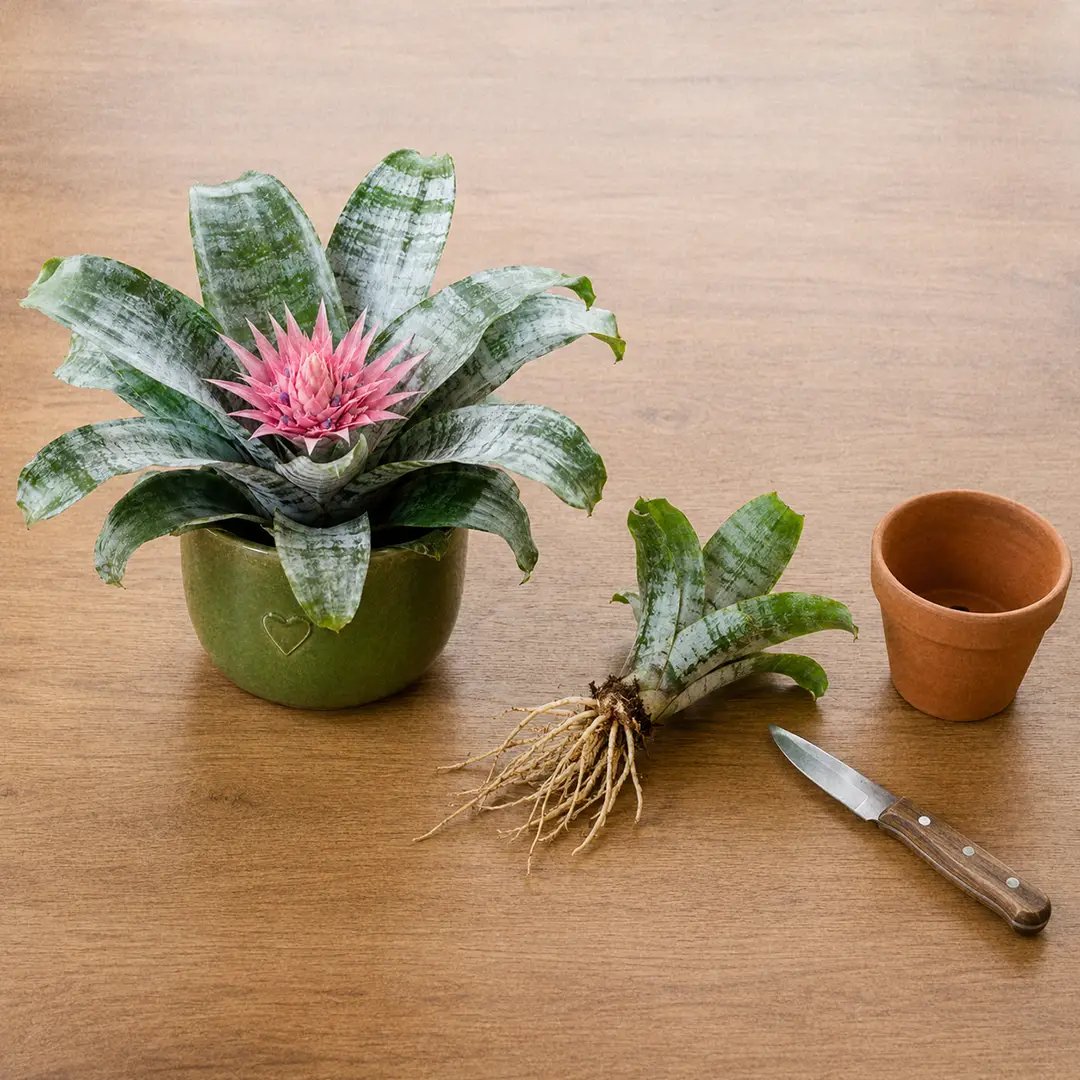
A Silver Vase Plant being divided on a workbench, with a mother plant on the left and a young pup on the right separated cleanly with its own roots, beside a green ceramic pot with a heart motif holding the parent rosette

When to Separate the Pups

Wait until each pup reaches about one-third to one-half the size of the mother plant. That usually happens six to twelve months after the bract appears, depending on light and feeding. Smaller pups can be separated earlier, but they take significantly longer to recover and reach blooming size. Patience here pays off in healthier plants and faster blooms down the road.

A pup is ready to separate when:

  • It is at least four to six inches tall (smaller pups survive but struggle)
  • It has formed its own small set of roots at the base
  • The mother plant has clearly slowed or stopped putting out new growth
  • The mother is starting to brown at the outer leaves

How to Separate, Step by Step

  1. Slide the entire plant out of its pot and shake or rinse off most of the soil so you can see the bases clearly.
  2. Identify the join between each pup and the mother. The pups grow from the mother's base on short stolons (runners). The join is usually obvious as a thicker connection point.
  3. Using a clean, sharp knife, carefully cut each pup away from the mother. Aim to keep at least two or three of the pup's own roots attached.
  4. Let the cut surfaces dry in open air for a few hours, ideally overnight in a warm, dry spot. This callusing step reduces rot risk dramatically.
  5. Pot each pup in fresh bromeliad mix in a small pot just wide enough to hold the pup upright. A four- to five-inch pot is plenty for most pups.
  6. Set the pup at the same depth it was growing before, with the cup base sitting at or just above the soil line.
  7. Water the soil lightly and pour a small splash of fresh water into the new cup. Do not water heavily for the first two weeks while the pup settles.
  8. Place the pup in bright indirect light, slightly shaded from any direct sun for the first few weeks while it establishes new roots.

The pup typically anchors itself within four to six weeks, after which you can return to normal care. From there, expect two to four years of growth before that pup produces its own bract.

Leaving Pups in Place

You do not have to separate pups at all. If you prefer, leave the pups attached to the mother and let the original pot become a multi-generational clump. The mother eventually browns and dies away on her own as the pups take over, and the pot keeps producing new pups in cycles for years. This is the lowest-effort approach and produces a fuller, more dramatic display in the long run, since you end up with a clump of three to four bromeliads in one pot rather than separate plants. The trade-off is that you cannot share the pups with friends.

What Does Not Work

  • Leaf cuttings: Aechmea fasciata does not regenerate from a cut leaf, unlike a Cape Primrose or a Snake Plant. The pup is the only practical propagation route.
  • Seed: technically possible, but seeds take three to four years to reach blooming size, are rarely produced indoors, and the resulting plants vary genetically. Pup division is dramatically faster and produces identical clones.
  • Dividing the mother: there is nothing to divide. The mother is a single rosette and cutting through it kills the plant.

πŸ› Silver Vase Plant Pests and Treatment

Silver Vase Plants are not major pest magnets, thanks to their thick leathery leaves and the chalky trichome coating that makes the surface unpleasant for most sap-suckers. That said, indoor air carries pests no matter what, and the warm, sheltered cup at the centre of the rosette is a favourite hideout for a few classic offenders. Inspect the cup base, the leaf joints, and the underside of leaves every two weeks. Quarantine any new plant for two weeks before placing it next to your established collection.

Mealybugs cluster in leaf joints and at the base of the central cup where soft tissue meets the rosette, looking like tiny tufts of cotton wool. The warm, sheltered cup is exactly the kind of spot they love. Dab each cluster with a cotton swab dipped in 70 percent isopropyl alcohol, then wipe down the surrounding leaf surface. Repeat every five days for three weeks to break the egg cycle. Heavy infestations sometimes hide inside the cup itself; in that case, flush the cup completely and refill with fresh water before continuing the alcohol-swab treatment.

Scale insects appear as small, brown, slightly raised bumps along the leaf undersides and the leaf bases. They look almost like part of the leaf at a glance. Scrape them off gently with your fingernail or a soft toothbrush, then wipe the leaf with insecticidal soap. Heavy populations need a follow-up systemic treatment, since scale armour shields adults from contact sprays.

Spider mites become a problem when winter heating dries the air. Look for fine webbing in the leaf rosette and tiny stippled dots dulling the leaf surface. Boost humidity, brush the leaves down gently with a soft dry brush, and treat with insecticidal soap weekly until you see two clean inspections in a row. Avoid spraying oil-based products in bright sun, since the residue can scorch the silver scales.

Aphids cluster on fresh new growth and the soft tissue of an emerging bract. Rinse them off in the sink first, then follow up with insecticidal soap if any return. They are most common in spring when fresh growth and bract development overlap.

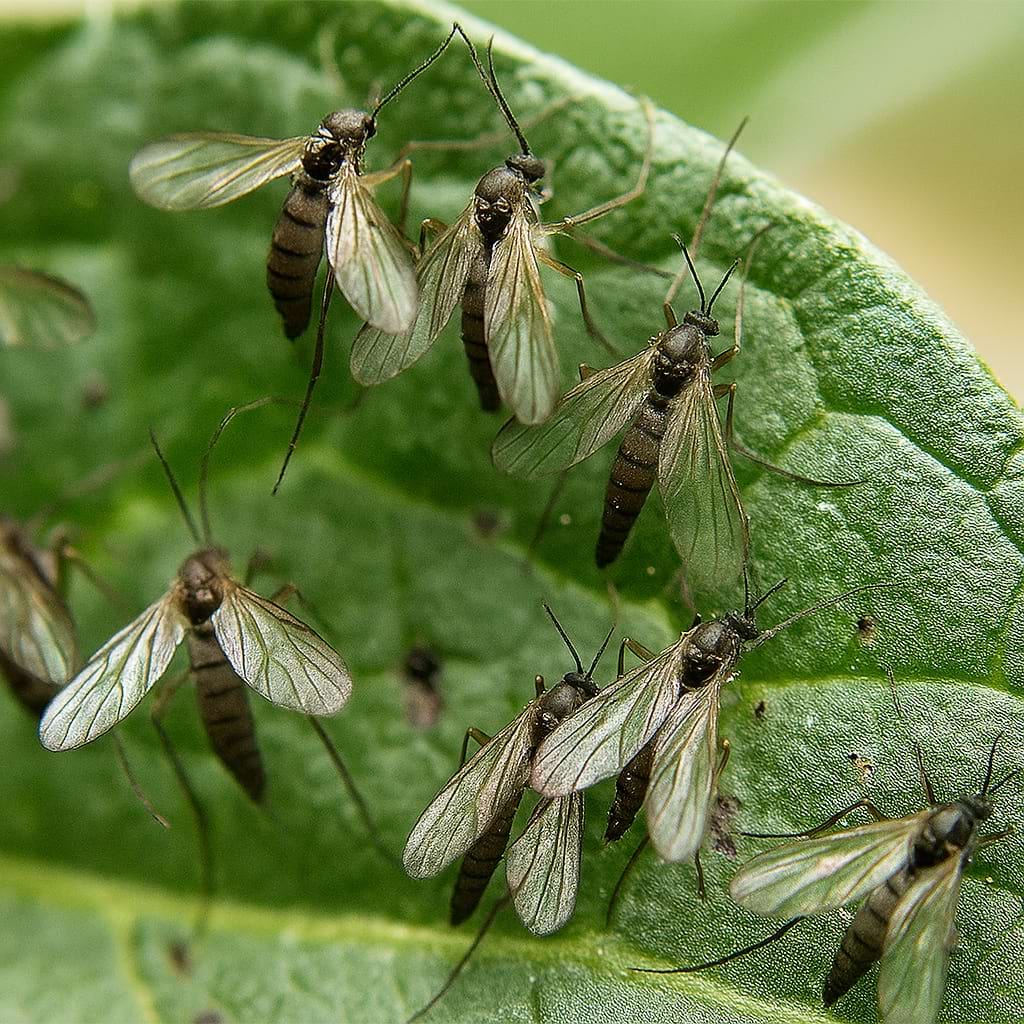
Fungus gnats signal that the soil is staying too wet. Their larvae live in the top layer of damp soil and chew on tender new roots. Let the top inch dry out fully between waterings, top-dress with a half inch of dry sand or fine bark, and use yellow sticky traps to knock down adults. Persistent fungus gnats almost always mean you are watering the soil too often. Switch to cup-only watering for a few weeks and the population usually crashes on its own.

A general primer on pest prevention in winter covers the seasonal patterns that catch most flowering houseplant owners off guard.

🩺 Common Silver Vase Plant Problems

Most issues with this plant trace back to watering, light, or a buried cup base. Here is how to read what your Silver Vase Plant is telling you.

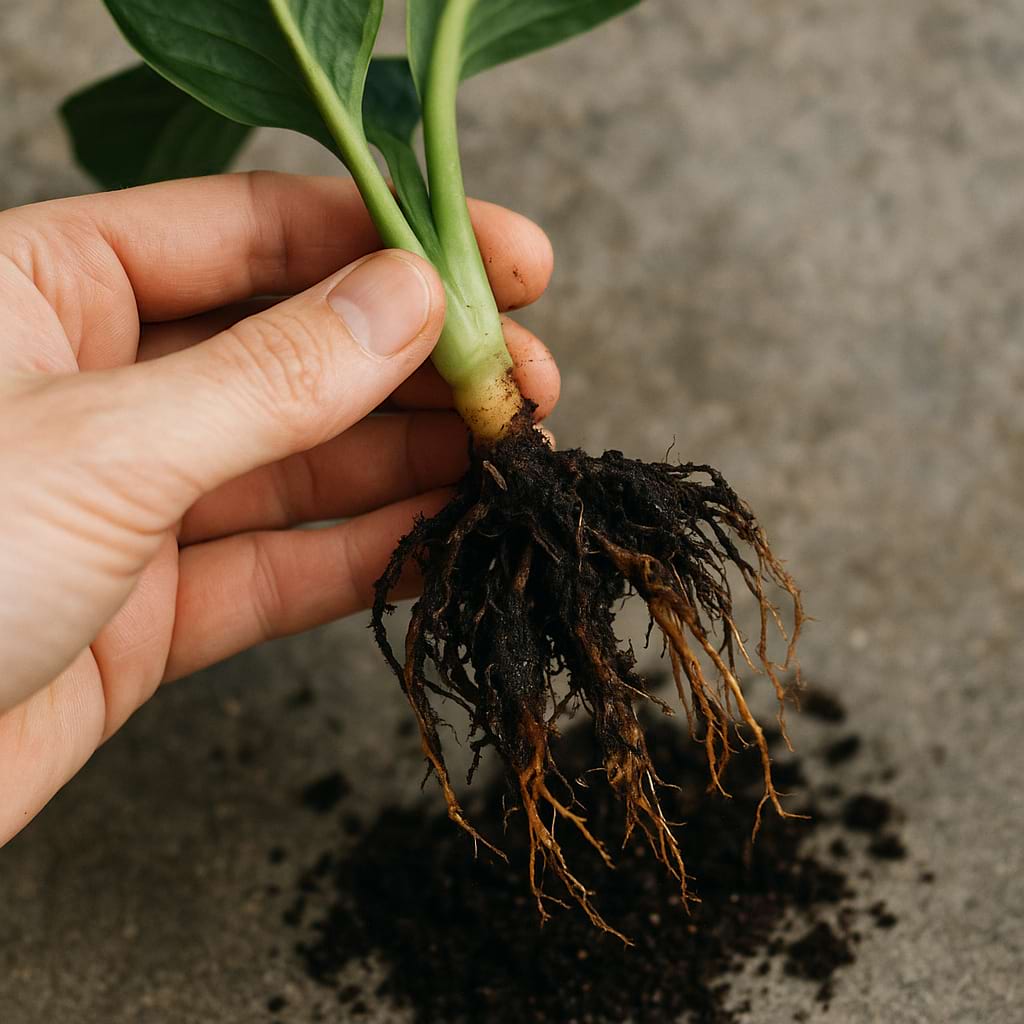
Root rot is the leading killer of Silver Vase Plants indoors. It usually starts in the cup rather than the soil, since the most common cause is water sitting in the cup against soft tissue for too long without a refresh, or the pot being kept consistently soggy. Mushy crown tissue, a sour smell, and a plant that lifts out of its pot with no resistance all point to rot. Slide the plant out, cut back to firm clean tissue with a sterile blade, dust the cut with cinnamon or sulfur, and replant in fresh dry bromeliad mix. Hold off on watering the soil for a week and feed nothing for a month.

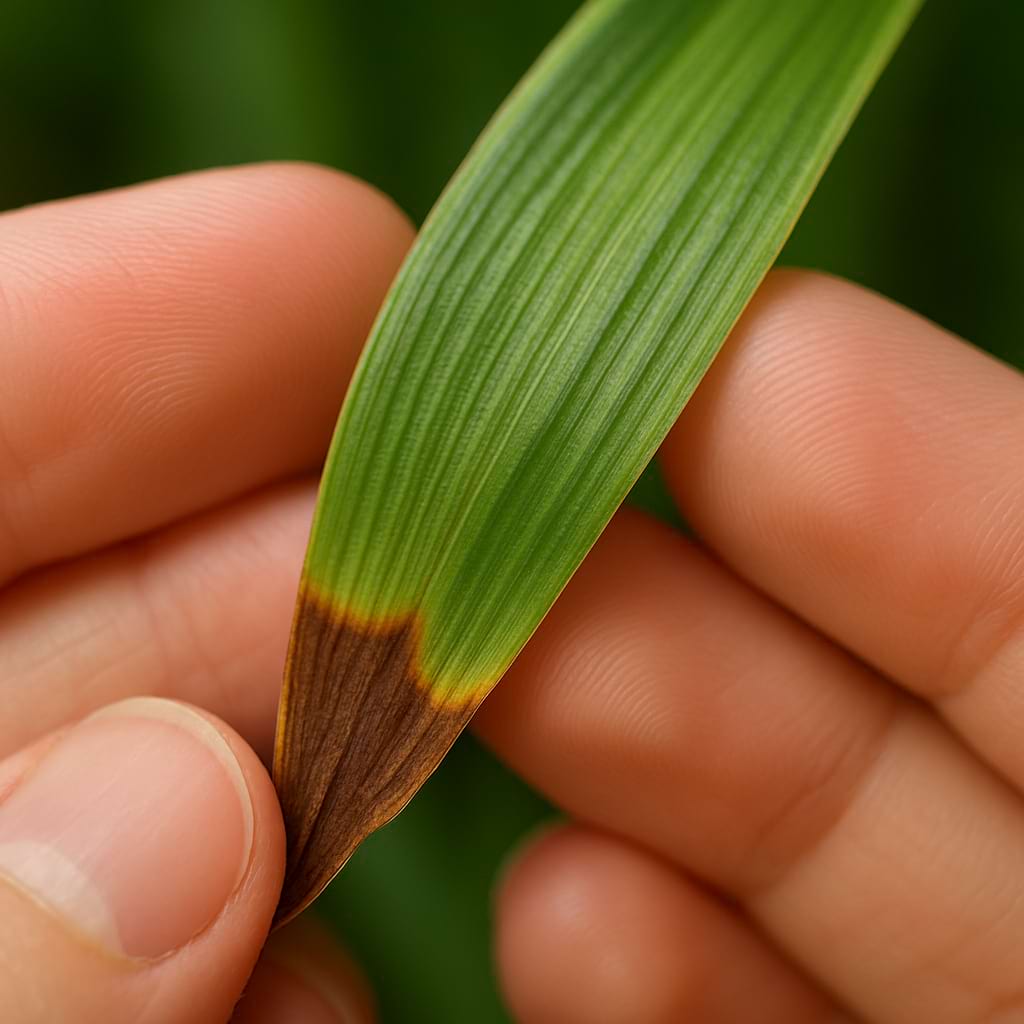
Brown crispy edges on otherwise healthy leaves point to dry air, mineral buildup, or hard tap water. Boost humidity, switch to filtered or rainwater for the cup, and flush the cup once a month to clear salts. The damage that already exists does not heal, but new leaves come in clean once conditions improve.

Failure to bloom on a Silver Vase Plant is almost always one of two things: the plant is not yet mature enough (mother plants need three to five years to reach bloom size), or it is in light too low to trigger the bract. Move the plant brighter or add a small grow light, and consider the ethylene-and-banana trick described in the bloom section above for a mature plant that still refuses to flower.

Wilting or drooping is rare on this plant thanks to the water reserve in the cup, but it does happen with severely waterlogged soil or completely dry tank conditions. Check both the cup and the soil before acting. If the soil is wet and the rosette is collapsing, you are dealing with rot. If the cup is bone dry and the soil is dust, you are dealing with thirst; refill the cup, water lightly, and the plant perks up within a day.

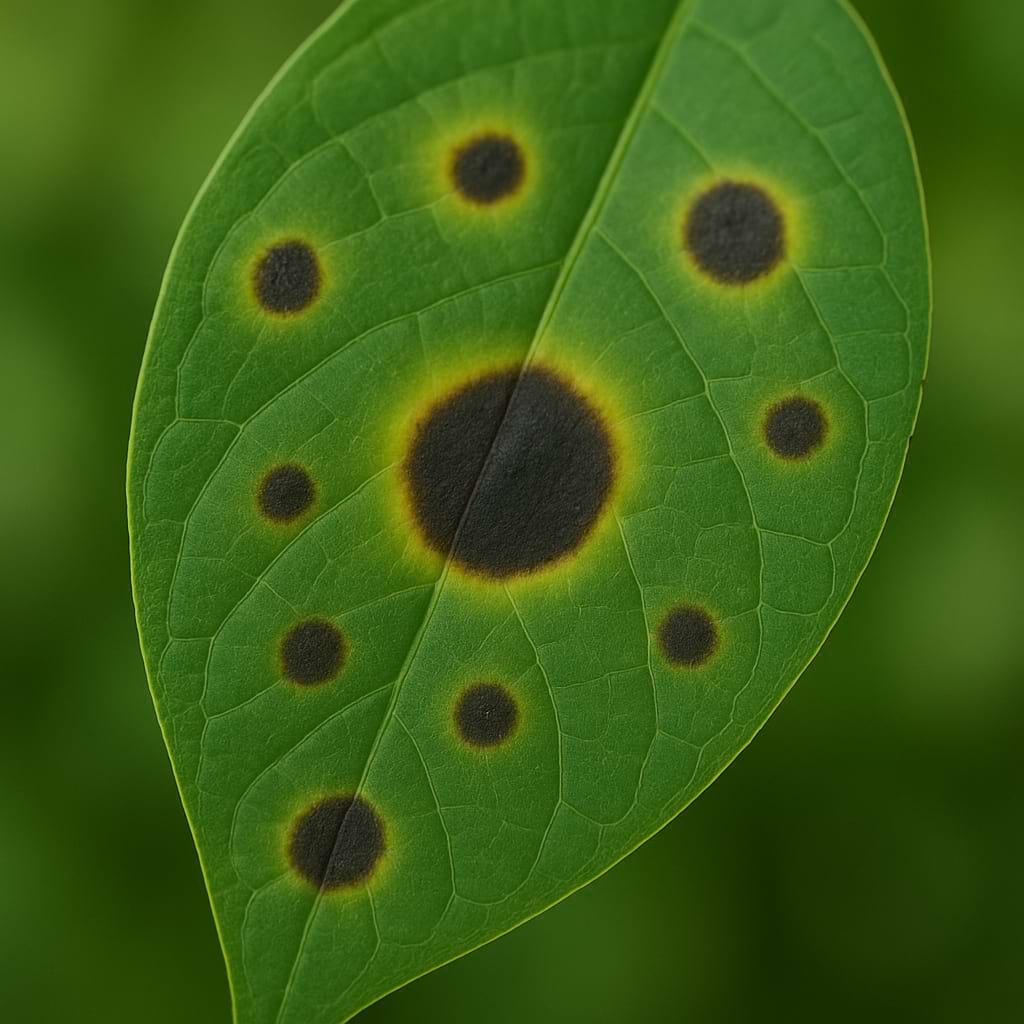
Brown or black spots on the leaves usually mean a fungal or bacterial issue, often from water sitting on the leaves overnight in cool temperatures. Trim affected leaves, improve air circulation, water the cup rather than the foliage, and avoid splashing the leaves during evening waterings.

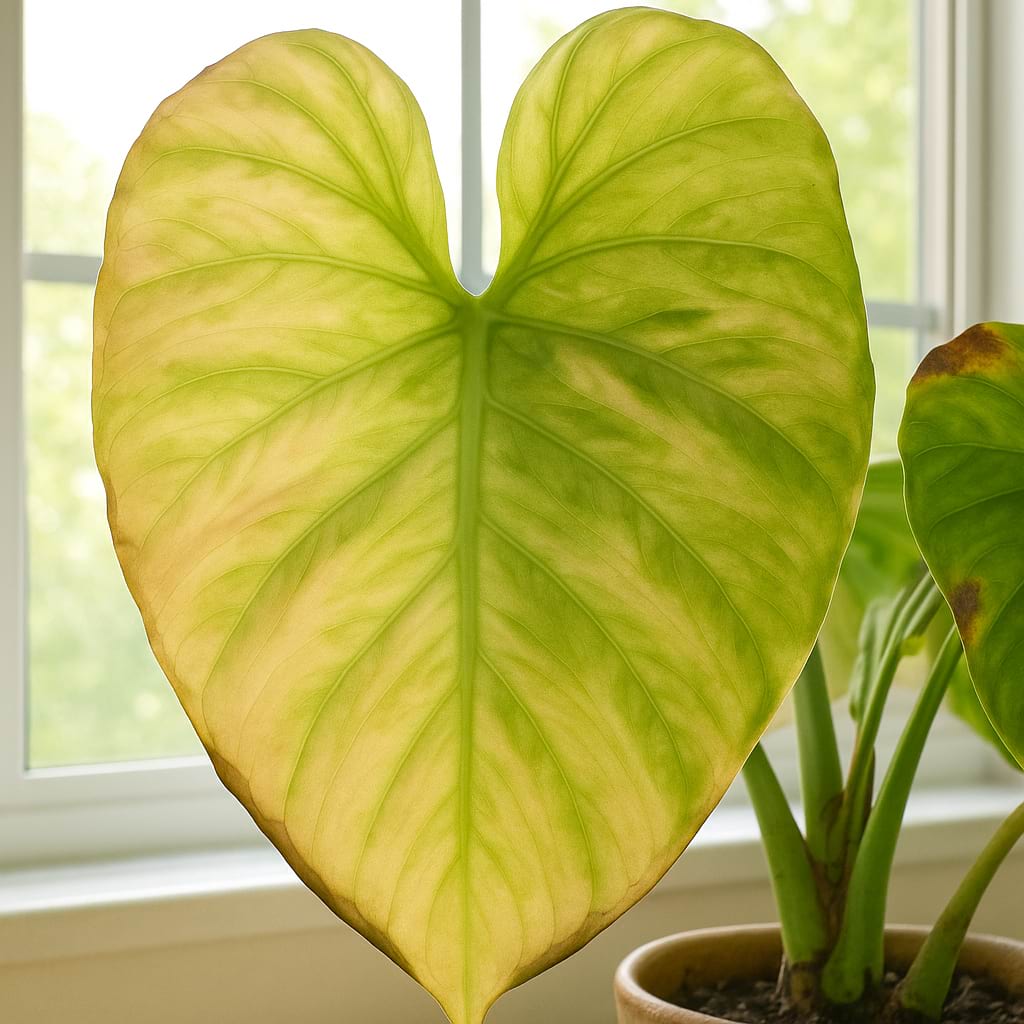
Pale or faded leaves with washed-out silver banding signal a light deficit. The silver scales need bright indirect light with some direct sun to maintain their crisp contrast. Move the plant closer to the window or add a grow light, and the silver banding rebuilds within a few months as new leaves come in.

Fungal or bacterial leaf spot appears as dark spots ringed with yellow halos, usually in plants kept in cool, damp, low-airflow conditions. Trim affected leaves, water the cup only, improve air circulation around the plant, and if the outbreak spreads, apply a mild fungicide. Diluted neem oil works for early cases.

Leaf drop of multiple leaves over a few days usually signals shock from a sudden change: a move, a draft, a big swing in light, or a heavy overwatering event. Stabilise conditions and wait. A healthy Silver Vase Plant rebuilds slowly but steadily once conditions are steady.

A plant whose mother has clearly finished her life cycle and is dying back gradually is not a problem at all. That is the natural arc. Cut away the spent mother as her leaves brown and fade, leave the pups in place, and the next generation takes over. The plant is not dying; the original rosette is finishing its job.

πŸ–ΌοΈ Silver Vase Plant Display and Styling Ideas

The Silver Vase Plant is one of the most architectural flowering houseplants you can grow. The upright silver-banded vase, the dramatic pink bract, and the compact footprint make it a natural feature plant rather than a background filler. It pairs beautifully with simpler, calmer plants that let the rosette and bract carry the eye.

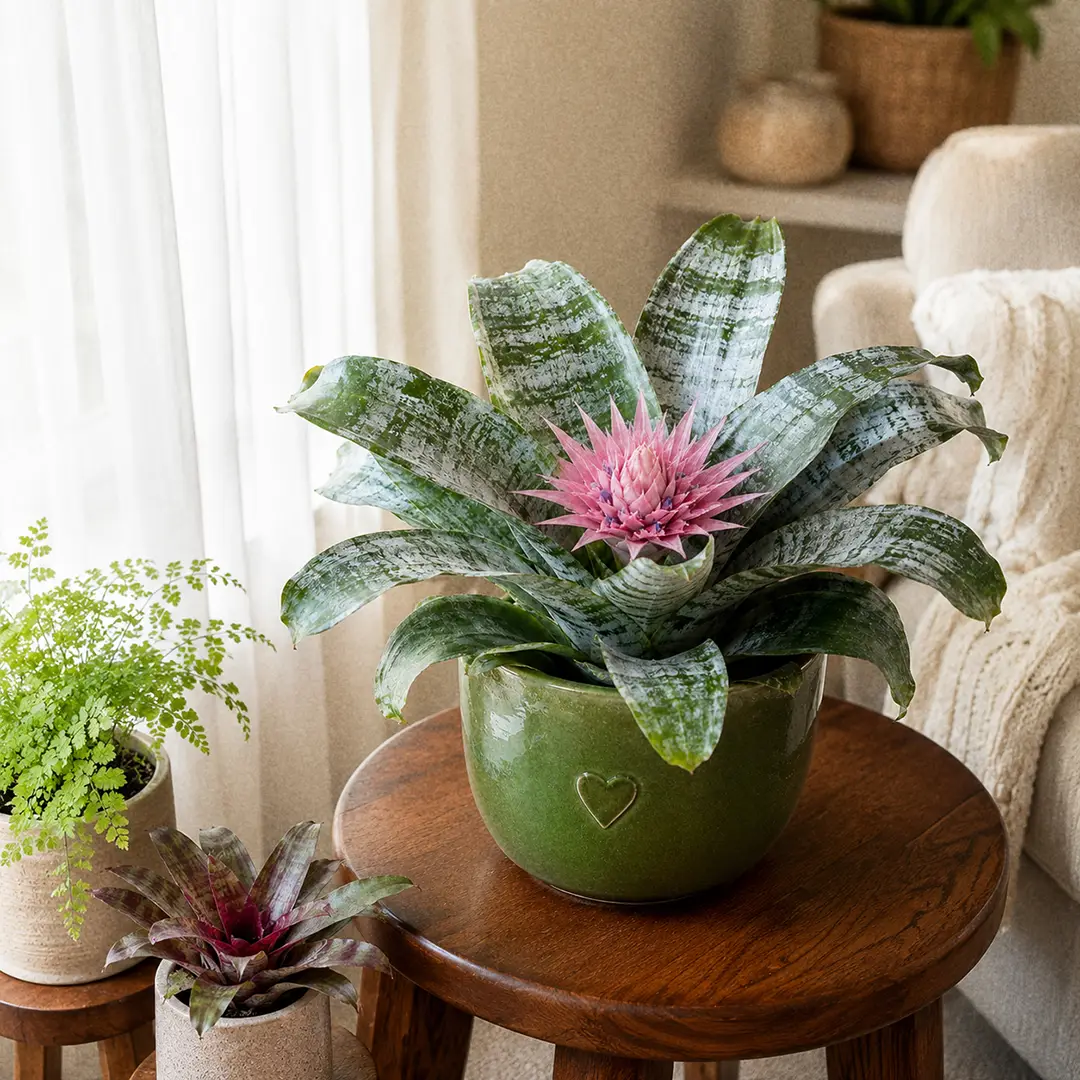
A styled bright living room scene with a mature blooming Silver Vase Plant in a green ceramic pot with a heart motif on a wooden side table, paired with a small fern and a smaller bromeliad on a plant stand, near a curtained sunny window

Pot and Color Pairings

  • Cream or matte ivory ceramic frames the silver leaves and pink bract cleanly without competing.
  • Charcoal or matte black makes the silver banding pop dramatically and reads modern.
  • Natural terracotta lends a relaxed Mediterranean feel that suits the plant's tropical origins.
  • Soft sage green and warm cream both echo the silver-and-green leaves without fighting them.
  • Avoid loud floral pots, since the silver banding and pink bract are already doing the work.

Spaces That Work Well

  • A bright living-room side table where the bract becomes a multi-month sculptural feature.
  • A sunny kitchen windowsill, where the plant enjoys both the light and the natural humidity from cooking.
  • A bathroom shelf near a bright window. Silver Vase Plants love bright bathrooms, where the warmth and humidity essentially recreate their native climate.
  • A plant stand against a neutral-coloured wall, where the upright form draws the eye upward.
  • A sheltered, lightly shaded patio or sunroom in summer, in zones 9 and warmer.

Companion Planting

The Silver Vase Plant pairs especially well with other tropical plants that share its love of bright indirect light and warm conditions. Group it with a Boston Fern or a Maidenhair Fern for a soft frilly contrast against the stiff silver leaves. Pair it with an Air Plant display on the same shelf, since both are bromeliads and the visual link is satisfying. A Peace Lily makes a great calm-leaved partner that fills in below the Silver Vase's upright form. For a wilder tropical scene, set it alongside a Bird of Paradise or an Anthurium Andraeanum that shares the warm, humid conditions.

Avoid pairing with plants that want low humidity and dry air, like a Snake Plant or a Jade Plant, since the conditions they want are exactly the conditions that limit a Silver Vase Plant.

Mounted Display

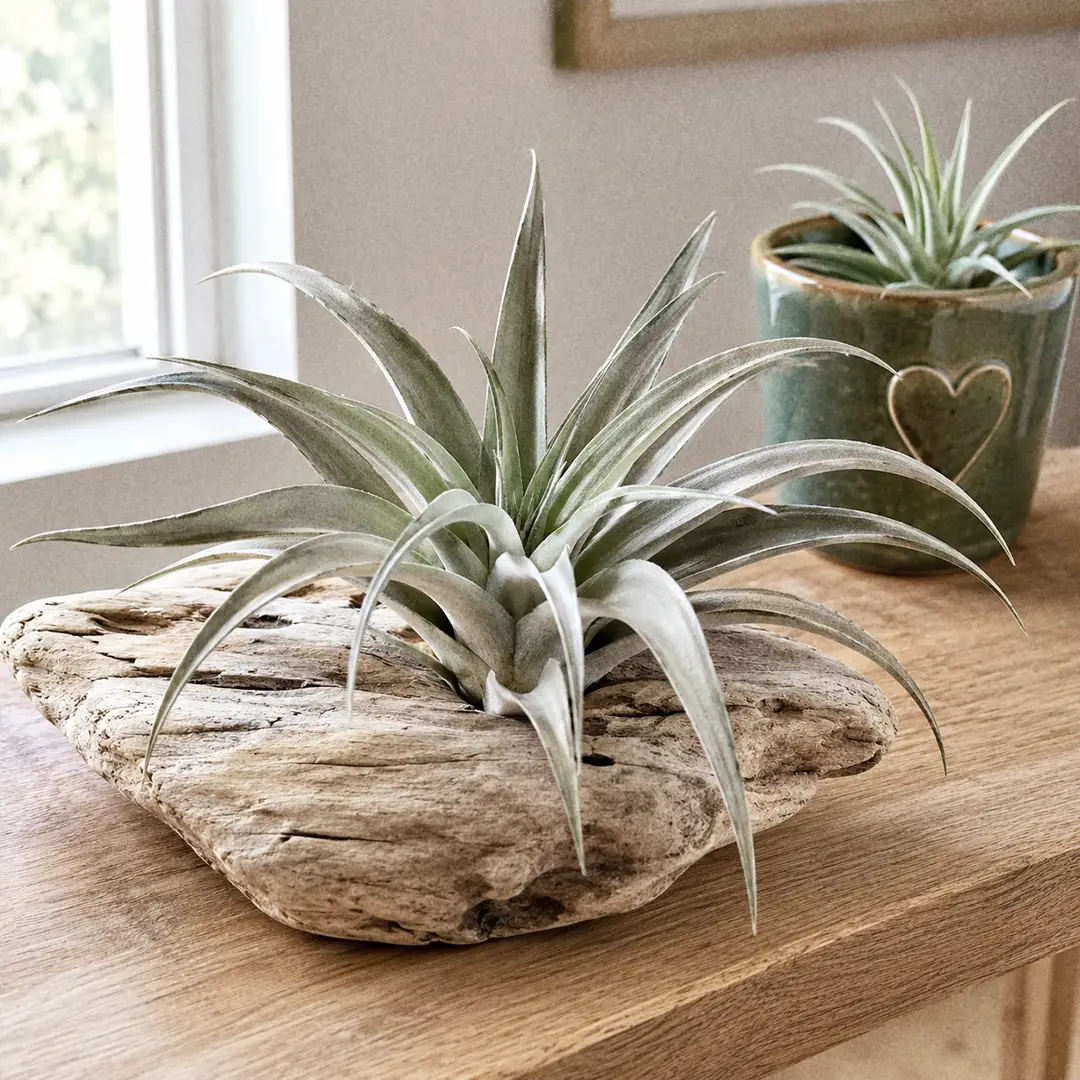
Because Aechmea fasciata is naturally epiphytic, it can be mounted on a piece of driftwood, cork bark, or a tree branch fixed to a wall. Wrap the small root ball in damp sphagnum moss, secure it to the mount with a bit of fishing line or jute twine, and water by spraying the moss and pouring fresh water into the cup. Mounted Silver Vase Plants make spectacular wall features, especially in bright bathrooms and conservatories. They need a touch more attention to humidity and watering than potted plants, since the moss dries out faster than soil, but the visual payoff is significant.

Mass-Planted Effect

A wide low planter mass-planted with three Silver Vase Plants in different bract phases (one in colour, one developing, one with pups) creates a long-lasting flowering feature. Pair the trio with a few mounded ferns at the base and the planter looks like a small piece of tropical rainforest. This works especially well as a feature on a sunny shelf or sideboard where the visual drama can be enjoyed daily.

Scale It Up

Indoors, a single Silver Vase Plant is a striking feature. Three of them grouped on a shelf in matching pots become an unmistakable bromeliad collection. A long planter with a row of bromeliads in different stages of bloom turns into the kind of display you see in plant-forward hotel lobbies. The plant scales up dramatically if you have the bright, warm space to support it.

🌟 Silver Vase Plant Pro Care Tips

βœ… The cup is the plant's stomach. Most of the water and nutrients reach the plant through the central cup, not through the soil. Keep the cup a quarter full of fresh water and the plant practically takes care of itself.

πŸ’§ Flush the cup monthly. Stagnant tank water grows bacteria and mosquitoes, and the trapped salts burn the leaf bases over time. A thirty-second tip-and-rinse once a month keeps everything sweet.

🌫️ Filtered or rainwater for the cup. The trichome-coated leaf bases are sensitive to chlorine, fluoride, and the mineral content of hard tap water. Filtered water is genuinely worth the small effort for this plant.

β˜€οΈ Bright indirect with a touch of direct. A few hours of soft morning or late-afternoon sun keeps the silver banding crisp and helps trigger blooms in mature plants. Avoid hot midday sun through unshaded south-facing glass.

🍌 Banana-and-bag for stalled blooms. A mature Silver Vase Plant that refuses to bloom often responds to ethylene gas. Place a ripe banana or apple inside a clear plastic bag with the plant for a week or two; a bract usually follows within a few months.

πŸͺ΄ Do not bury the cup. The lowest leaf bases of the rosette must sit at or just above the soil line, never below. A buried cup rots fast.

🌱 Pups before perfection. Wait until pups are at least one-third the size of the mother before separating. Smaller pups survive but take much longer to reach blooming size.

🧼 Skip leaf shine sprays. The silver chalky coating on the leaves is alive and helps the plant absorb water and nutrients. Leaf shine clogs the trichomes and dulls both the silver banding and the plant's biology.

🐾 Pet-safe peace of mind. Aechmea fasciata is officially non-toxic to cats and dogs according to the ASPCA. The chalky scales taste unpleasant, so most pets sample once and leave the plant alone forever.

🌸 Cool autumn nights help. A short stretch of nights at 60-65°F (16-18°C) in autumn often nudges mature plants into bract production the following spring. The seasonal swing seems to mimic the plant's natural cycle in southeastern Brazil.

πŸ”„ Quarter-turn the pot weekly. New growth tracks toward the brightest light, and rotating the pot keeps the rosette filling in evenly rather than leaning toward the window.

❓ Frequently Asked Questions

Is the Silver Vase Plant easy to care for?

Yes, it is one of the easiest flowering houseplants you can grow. The thick leathery leaves and central water-holding cup mean the plant tolerates a forgotten week of watering without a complaint, the silver chalky coating shrugs off most pests, and the bloom (when it eventually arrives) lasts for months rather than days. Keep the cup a quarter full of fresh water, give the plant bright indirect light with a touch of direct sun, and feed lightly once a month in the warm months. That is essentially the whole routine.

How long does the pink bract last on a Silver Vase Plant?

Three to six months is typical indoors, with some bracts holding colour for closer to eight months in cool, bright conditions. The bract is made of modified leaves rather than petals, which is why it lasts so much longer than the small purple-blue true flowers tucked along its spike. After the pink fades to dusty rose and finally to brown, you can cut the bract stem off at the base and let the pups at the rosette base take over.

Does the Silver Vase Plant only bloom once?

Yes. Aechmea fasciata is monocarpic, which means each individual rosette blooms only once in its life. The good news is that the bloom lasts for months, and while the bract is still in colour, the mother plant produces one to four pups (offsets) at her base. Those pups are full clones of the mother and grow on to bloom themselves in two to four years. By the time the original mother fades away, you have the next generation already established. A well-managed Silver Vase Plant essentially never stops, even though each individual rosette only blooms once.

Is the Silver Vase Plant toxic to cats and dogs?

No. Aechmea fasciata is officially non-toxic to cats, dogs, and humans according to the ASPCA. The chalky trichome scales taste unpleasant, so most pets sample once and lose interest forever. The sap can mildly irritate sensitive skin in people who handle the plant heavily, particularly during repotting, so wash your hands afterwards if you are sensitive, but the plant poses no real risk to a pet household.

Why is my Silver Vase Plant not blooming?

Two reasons. Either the plant is not yet mature enough (the mother plant needs three to five years from a separated pup to reach bloom size), or it is in light too low to trigger the bract. If the plant is clearly mature, the classic trigger is ethylene gas: place a ripe banana, apple, or kiwi fruit inside a clear plastic bag with the plant for one to two weeks, then remove the bag and the fruit. A bract usually appears within three to four months. Pair that with brighter light and patience, and a stalled mature plant almost always blooms eventually.

Can I grow a Silver Vase Plant from a cutting?

No, not in the way you would propagate a Pothos or a Cape Primrose. Aechmea fasciata does not regenerate from a cut leaf. Pups (offsets at the base of the mother plant) are the only practical propagation route. The mother produces them naturally during and after blooming, and you separate them once they reach about a third of the mother's size. Pup division is fast, reliable, and produces genetically identical clones.

How big does a Silver Vase Plant get?

A fully grown Silver Vase Plant reaches about 24 to 36 inches tall, including the flower bract, with a rosette spread of 24 to 36 inches. Without a bract, the rosette alone sits at around 18 to 24 inches tall. The plant grows slowly, so reaching that mature size takes three to five years from a small pup. The pot footprint stays modest throughout, since the root system is small and shallow.

Can the Silver Vase Plant live in a bathroom?

Yes, and a bright bathroom is genuinely one of the best spots for it. The warmth from showers and the elevated humidity replicate its native Brazilian forest conditions almost perfectly. Just make sure the bathroom is bright; a dark interior bathroom with no window or only an artificial light is too dim for the plant to thrive. A bathroom with a frosted window or a small skylight, on the other hand, is close to ideal.

Why is the silver coating coming off my plant's leaves?

The silver coating on the leaves is made of microscopic scales (trichomes) that the plant uses to absorb water and nutrients in the wild. Aggressive scrubbing, leaf shine sprays, and harsh chemical wipes all damage the coating. Once the coating is gone from a particular leaf, it does not regrow on that leaf. Switch to gentle, occasional wiping with a soft slightly damp cloth, skip the leaf shine entirely, and the silver coating on new leaves comes in clean.
Should I leave the spent flower bract on or cut it off?

Cut it off once it has fully browned. The faded bract no longer adds visual value, and removing it nudges the mother plant to redirect her remaining energy into pup production. Cut the bract stem off at the base of the bract, not at the bottom of the spike where it meets the cup, and leave the rosette and any pups in place to continue developing.

How do I divide pups from the mother plant?

Wait until each pup has reached about one-third to one-half the size of the mother. Slide the entire plant out of its pot, identify the join where each pup meets the mother (usually a thicker connection point at the base), and slice through the join with a clean sharp knife. Aim to keep two or three of the pup's own roots attached. Let the cut surfaces callus over for a few hours, then pot each pup in fresh bromeliad mix in a small pot. Water lightly, refresh the cup, and place in bright indirect light. Each pup typically blooms two to four years after separation.

Can I water my Silver Vase Plant with regular tap water?

You can in a pinch, but the trichome-coated leaf bases are noticeably sensitive to chlorine, fluoride, and the mineral content of hard tap water. Heavy tap water leaves a chalky white crust around the cup edge and browns the inner leaf bases over time. If your tap runs hard, leave the watering can out overnight to off-gas the chlorine, or switch to filtered, distilled, or rainwater. Soft-water households can usually use tap water without issue. The cup is what really matters; the soil tolerates regular tap water more easily than the cup does.

ℹ️ Silver Vase Plant Info

Care and Maintenance

πŸͺ΄ Soil Type and pH: Loose, airy, fast-draining mix; an orchid or epiphyte blend with bark, perlite, and a little peat is ideal.

πŸ’§ Humidity and Misting: Comfortable around 50 to 70 percent; happiest in bright bathrooms and kitchens.

βœ‚οΈ Pruning: Cut the spent flower bract at the base once it browns, and trim any tatty outer leaves.

🧼 Cleaning: Wipe the silver-banded leaves with a damp cloth every couple of months to keep the chalky scales intact and the silver banding visible.

🌱 Repotting: Rarely needed; only when separating pups or when the plant has outgrown its pot after several years.

πŸ”„ Repotting Frequency: Every 3-5 years, or when separating pups

❄️ Seasonal Changes in Care: Reduce tank water and pause feeding through the lowest-light winter weeks; resume in early spring.

Growing Characteristics

πŸ’₯ Growth Speed: Slow

πŸ”„ Life Cycle: Monocarpic perennial (mother blooms once, then pups carry on)

πŸ’₯ Bloom Time: Late spring through summer indoors, with the bract holding color for 3-6 months

🌑️ Hardiness Zones: 10-11 outdoors as a perennial; grown indoors elsewhere

πŸ—ΊοΈ Native Area: Southeastern Brazil, in the coastal Atlantic Forest of Rio de Janeiro and the surrounding states

🚘 Hibernation: No, but growth slows noticeably in winter

Propagation and Health

πŸ“ Suitable Locations: Bright living rooms, kitchen counters, sunlit bathrooms, east- and west-facing windowsills, sheltered patios in warm climates, conservatories, plant shelves under daylight LEDs

πŸͺ΄ Propagation Methods: Very easy from pups (offsets) once they reach a third of the mother plant's size.

πŸ› Common Pests: Mealybugs, Scale Insects, Spider Mites, Aphids, Fungus Gnats

🦠 Possible Diseases: Crown rot, root rot, leaf spot, fungal mold in the cup

Plant Details

🌿 Plant Type: Tank-forming epiphytic bromeliad

πŸƒ Foliage Type: Evergreen, leathery, silver-scaled, arching

🎨 Color of Leaves: Silver-grey banded over deep green, with a powdery chalky surface

🌸 Flower Color: Hot pink to coral-pink bract with small lilac to pale-blue true flowers, fading to dusty rose

🌼 Blooming: Yes, once per mature plant, but the bract holds color for three to six months and is one of the longest-lasting flowers in the houseplant world

🍽️ Edibility: Not edible; sap can mildly irritate sensitive skin

πŸ“ Mature Size: 24-36 inches at full maturity, including the flower bract

Additional Info

🌻 General Benefits: Air purification, low-water tolerance, dramatic long-lasting bloom, friendly to bright bathrooms, easy from pups

πŸ’Š Medical Properties: None recorded; the chalky scales (trichomes) on the leaves help the plant absorb water and nutrients in the wild

🧿 Feng Shui: Upward-flowing energy, associated with abundance and lasting joy thanks to the long-lived bloom

⭐ Zodiac Sign Compatibility: Leo

🌈 Symbolism or Folklore: Hospitality, lasting cheer, generous welcome

πŸ“ Interesting Facts: Aechmea fasciata was first described by the Scottish botanist John Lindley in 1828 from plants collected in Brazil. The genus name Aechmea comes from the Greek aichme, meaning "spear point", a reference to the stiff spike-like inflorescence that rises from the centre of the rosette. The species name fasciata means "banded", describing the silver-grey crossbands on the leaves. The plant has been a fixture in European glasshouse collections since the mid-nineteenth century, and a single cultivar called 'Primera' makes up almost the entire commercial supply seen in supermarkets and garden centres today.

Buying and Usage

πŸ›’ What to Look for When Buying: Look for a plant with a tight, even silver-banded rosette, no soft brown patches at the base, and either an unfurling pink bract or a developing bud at the centre of the cup. Avoid plants with limp leaves, mushy crown tissue, brown rot at the soil line, or a cup that smells sour from stagnant water.

πŸͺ΄ Other Uses: Conservatory feature plant, sheltered patio container in warm climates, gift plant for housewarmings, mounted display on cork bark

Decoration and Styling

πŸ–ΌοΈ Display Ideas: Single statement on a side table, grouped trio of mixed bromeliads on a sunny shelf, mounted on driftwood for a tropical wall display, paired with ferns and orchids in a bright bathroom

🧡 Styling Tips: Let the silver-banded leaves and bright pink bract carry the visual weight; choose neutral pots in cream, charcoal, or natural terracotta and avoid loud floral patterns that fight the bract for attention.

Kingdom Plantae
Family Bromeliaceae
Genus Aechmea
Species fasciata

πŸ’¬ Community

0 replies across this topic so far.

Browse forum

Start the first discussion.

Ask about Complete Guide to Silver Vase Plant Care and Growth

Ask a question or share what worked for you.