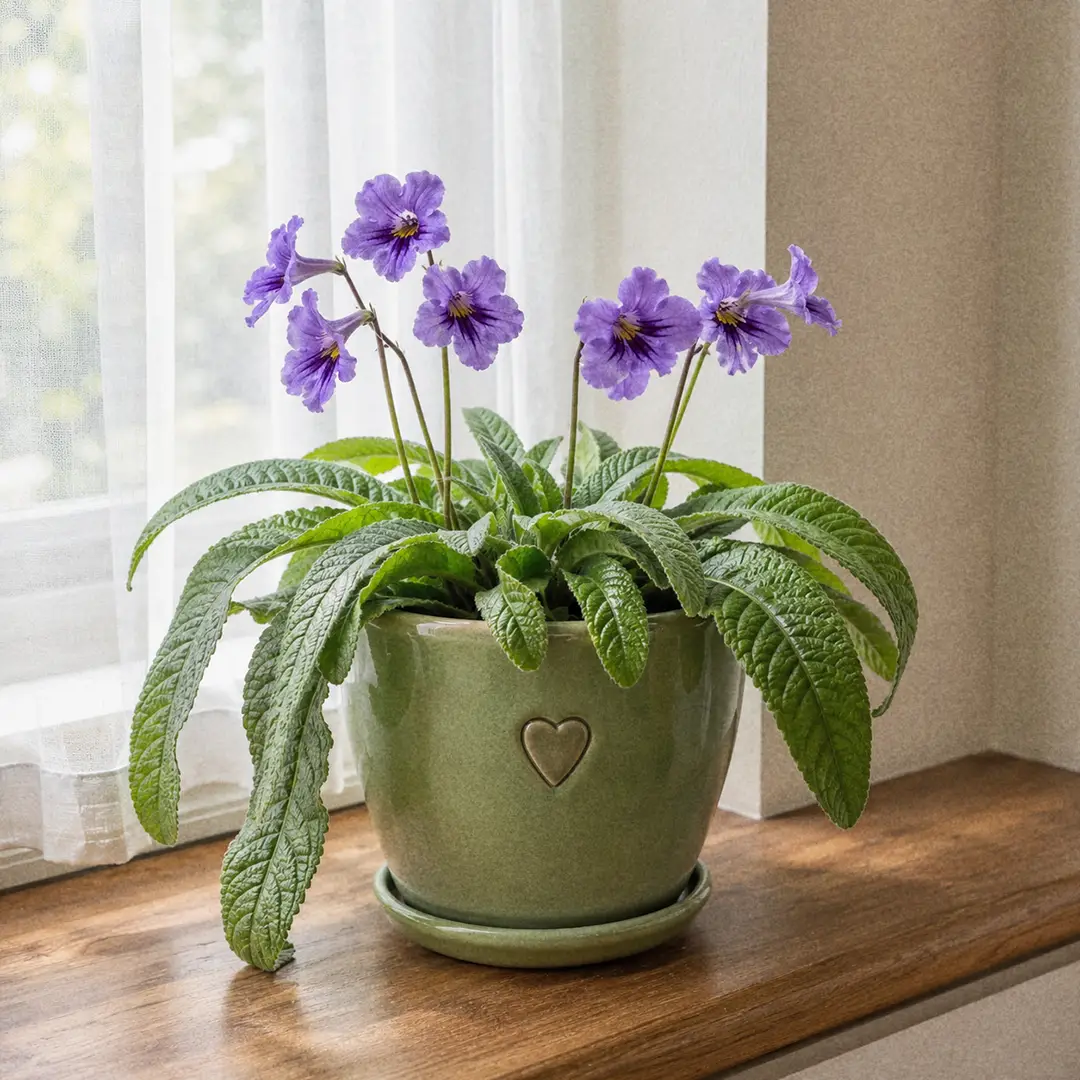
Cape Primrose
Streptocarpus rexii (and hybrids)
Streptocarpus, Streps, Twisted Fruit, Cape Cowslip
The Cape Primrose (Streptocarpus rexii) is the lesser-known cousin of the African Violet, with longer strap-like leaves, taller flower stems, and a reputation for being noticeably easier to keep happy on a north or east windowsill. Most plants in this group bloom for eight to ten months a year in trumpet-shaped flowers of purple, pink, blue, red, or white, often veined like a watercolor painting.
📝 Cape Primrose Care Notes
🌿 Care Instructions
⚠️ Common Pests
📊 Growth Information
🪴 In This Guide 🪴

☀️ Cape Primrose Light Requirements (Bright Indirect, No Direct Sun)
Light is the single biggest variable in whether your Cape Primrose blooms heavily or just sits there as a leafy clump. Unlike its Wax Begonia cousin in the flowering plant world, this is a true filtered-light plant. It evolved on shaded forest floors and rocky overhangs in southern Africa, and its soft fuzzy leaves scorch quickly under direct sun.

The Sweet Spot
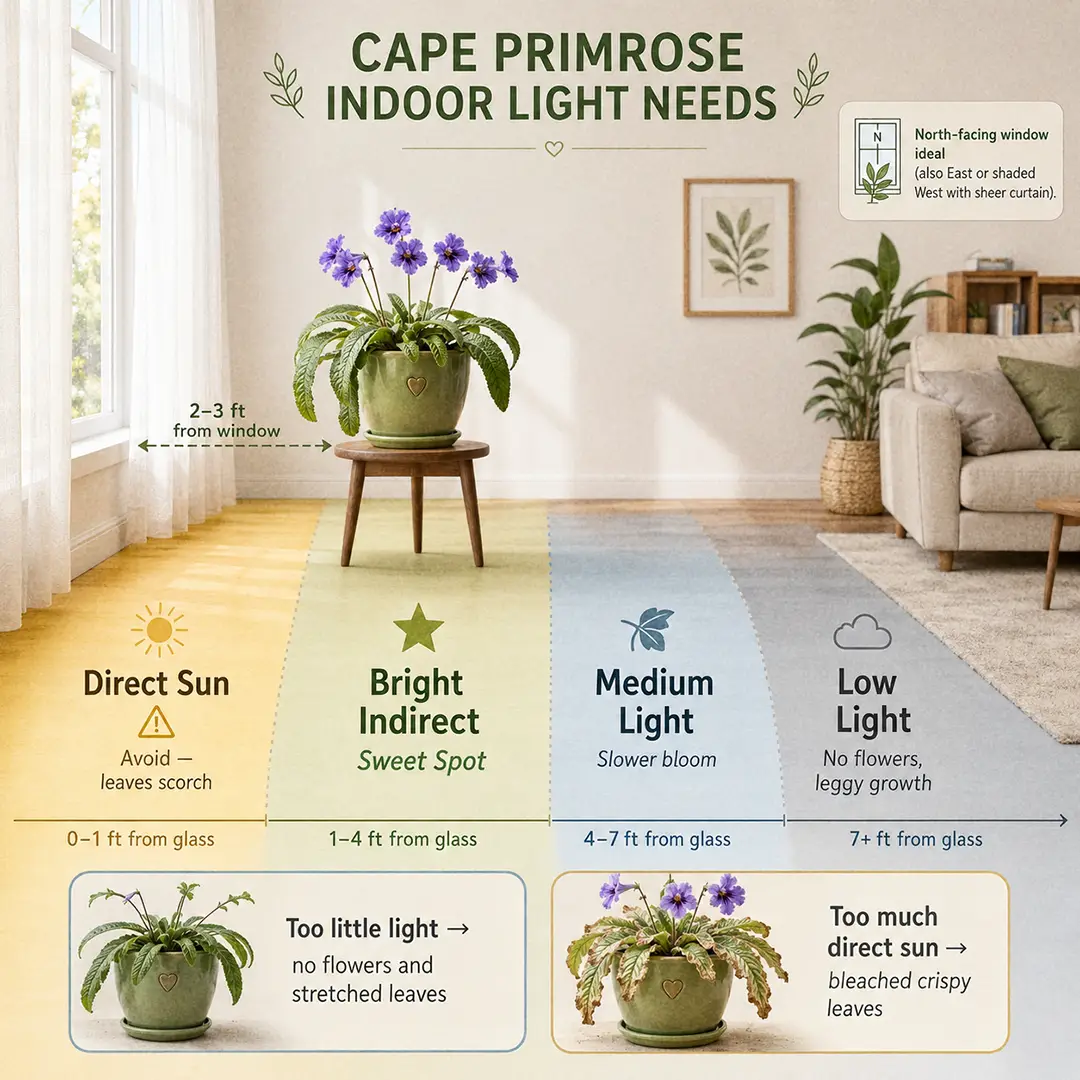
Aim for bright, indirect light with no more than an hour of gentle morning sun a day. A north-facing window in the Northern Hemisphere is genuinely close to ideal for this plant, which makes it one of the few flowering houseplants that thrives in a "boring" cool window. East-facing windows work beautifully if a sheer curtain or a half-step back from the glass softens the morning rays. South or west exposure also works as long as the plant is set two to four feet inside the room or a sheer curtain breaks the harshest afternoon light. The leaves should look soft and full of color, not bleached and drawn.

What Too Little Light Looks Like
A light-starved Cape Primrose stops blooming long before its leaves change color. The first sign is almost always a missing flower stem rather than a yellowing leaf. The rosette stays full and green, but no buds rise above the foliage for weeks. Eventually the leaves stretch and flatten, the central crown loses its tight shape, and any flowers that do appear are small and pale. Move the plant six to twelve inches closer to the window, or add a small grow light on a timer for ten to twelve hours a day. Streptocarpus respond very well to LED grow lights and many serious collectors grow theirs entirely under artificial light in basements and shelving units.
What Too Much Light Looks Like
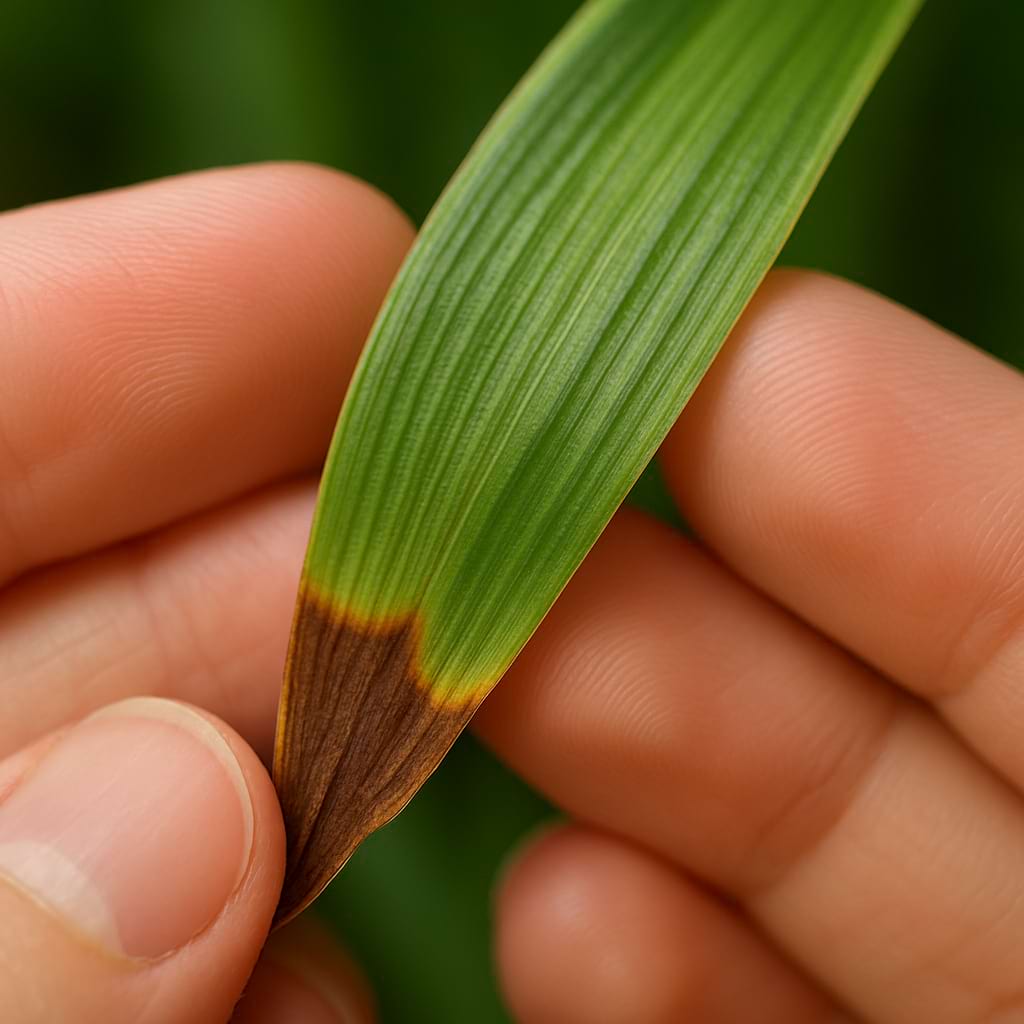
This plant scorches faster than almost any flowering houseplant in your collection. Watch for pale washed-out patches at the centre of the longest leaves, papery dry edges, a crispy curl at the leaf tips, and bleached white-yellow flowers that drop early. Once a leaf is scorched it does not recover. The damaged tissue dies and the leaf has to be trimmed away. The fix is simple: pull the plant a foot or two back from the window, hang a sheer curtain, or move it from a sunny south-facing room to a shadier north or east window where it actually belongs.
A useful test: a happy Cape Primrose holds its leaves in a soft, slightly arching rosette, and pushes new flower stems steadily through the season. If the leaves go upright and tense or the new stems stop coming, the light is wrong in one direction or the other. The plant is generous with feedback if you check it once a week.
💧 Cape Primrose Watering Guide (Top Inch Dry, Then Drench)
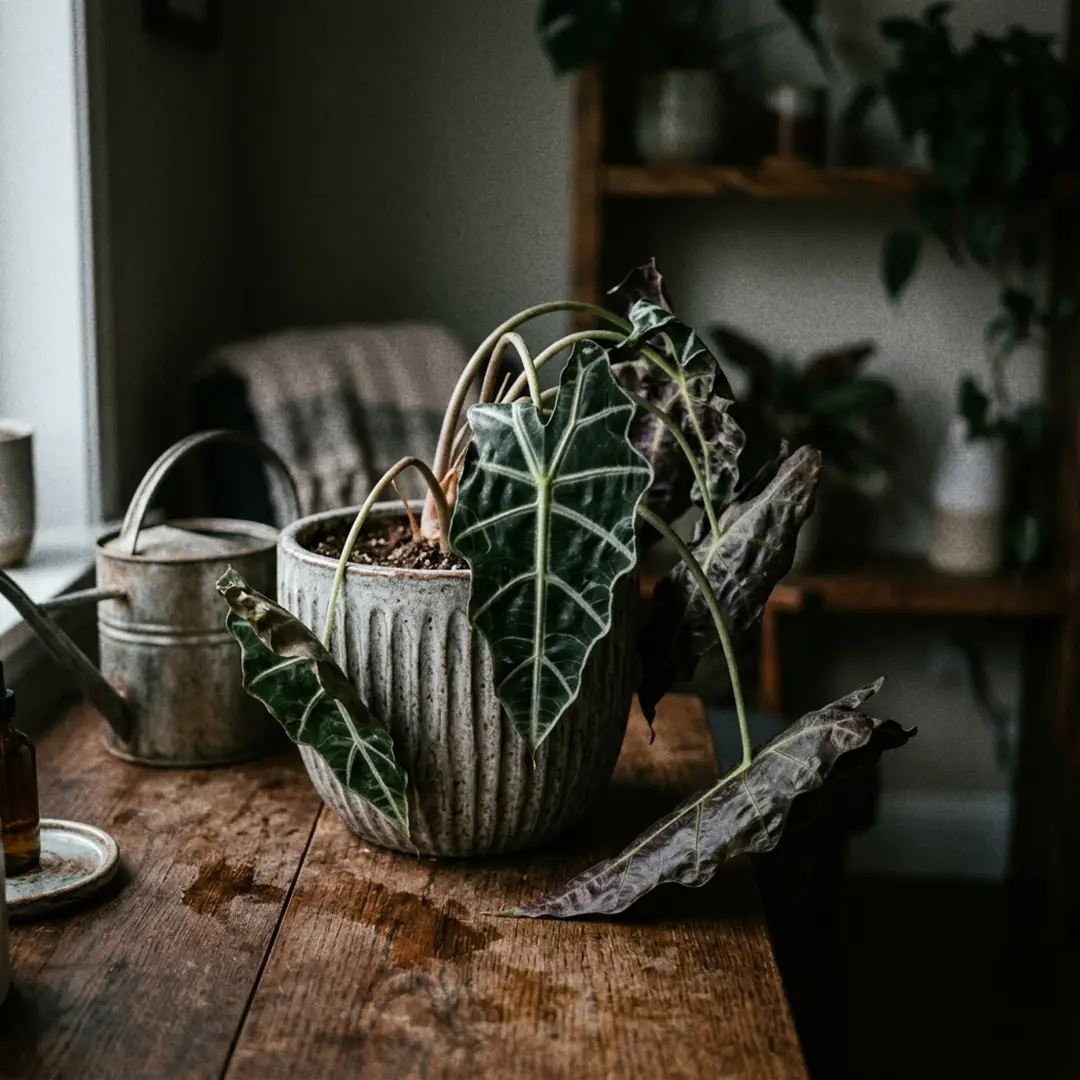
Cape Primroses are one of the rare flowering houseplants that actively tell you when they are thirsty. They wilt visibly, the whole rosette goes soft and sags toward the pot rim, and within two hours of a good drink they perk back up like nothing happened. That single trait makes them dramatically more beginner-friendly than African Violets, which give almost no warning before they rot. The honest truth: if you can read a wilting Cape Primrose, you can keep one alive.
How Often to Water
Push a finger an inch into the soil. If the top inch is dry and the deeper soil is still lightly damp, it is time to water. In a typical home with bright indirect light and average humidity, that lands around every five to seven days during spring and summer, and every ten to fourteen days in winter. The general watering houseplants primer is a good starting point if you are still calibrating your rhythm.
A Cape Primrose in heavy bloom drinks slightly more than a foliage-only plant, since flower production is thirsty work. Plants in bright light and clay pots dry out faster than plants in plastic pots in cooler rooms. Adjust your check-in schedule to match. The plant prefers to dry out a touch between waterings and absolutely hates sitting in soggy soil for days on end.

How to Water Properly
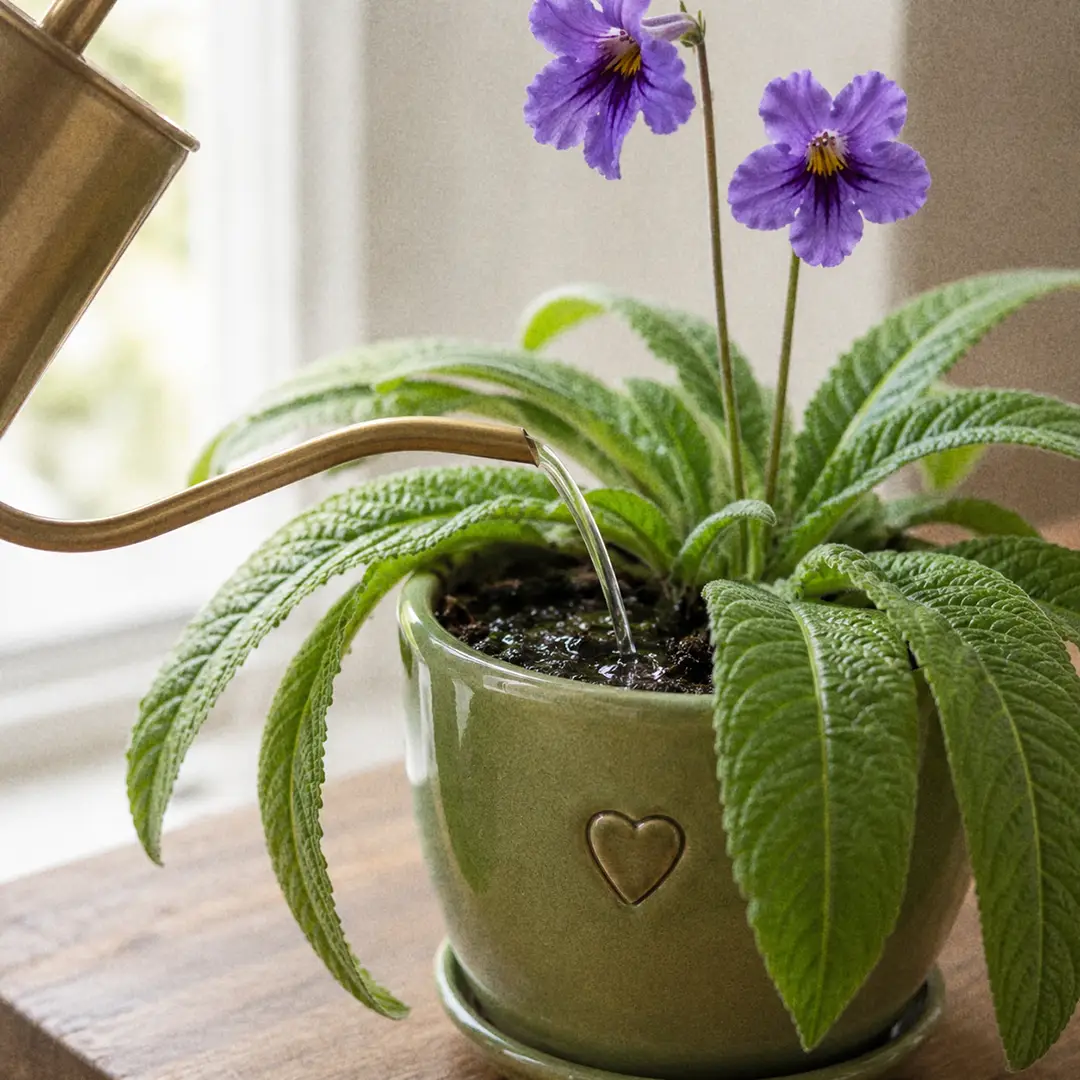
Water at the soil line, never from above. Pour slowly and steadily until water runs from the drainage hole, then let the pot drain fully. Tip out anything pooling in the saucer. Standing water at the base of the pot is the fastest route to root rot on a Cape Primrose, and once it is underway the plant declines quickly.
Do your best to keep water off the leaves and crown. The fuzzy leaf surface holds water droplets, and water sitting on the soft tissue overnight encourages spotting and crown rot. Use a narrow-spouted can and aim under the lowest leaves at the soil surface. If you splash a leaf, dab it dry with a tissue and move on.
Bottom watering is often the safest choice for this plant. Set the pot in a basin of room-temperature water for fifteen to twenty minutes, then drain. The roots draw water up through the drainage holes, and the leaves and crown stay completely dry. Many serious Streptocarpus growers bottom water exclusively for that reason. Just do not leave the pot soaking for hours, since the soil eventually saturates fully and that defeats the purpose.
Signs You Are Overwatering
- Lower leaves yellowing in groups within a week
- Soft, blackened patches at the centre of the rosette where the leaves attach
- A faint sour smell from the pot
- Soil that stays wet for more than ten days between waterings
- Whole leaves collapsing flat against the soil and pulling away when nudged
- Flower buds dropping unopened with mushy stems
Signs You Are Underwatering
- The whole rosette going limp and draped over the pot rim
- Leaves curling slightly inward at the edges
- Crispy brown tips on otherwise healthy leaves
- Soil pulling away from the sides of the pot
- A pot that feels noticeably light when lifted
- Flower stems wilting and bending halfway up
A thirsty Cape Primrose recovers within an hour or two of a good drink. A waterlogged one keeps declining for days even after you stop watering, since the rot is already underway in the roots. The asymmetry is exactly why erring on the dry side is always the safer call with this plant.
A Note on Water Quality
Cape Primroses tolerate average tap water better than fussier Gesneriads. Heavily chlorinated tap and very hard water with a lot of mineral content will eventually leave a chalky white crust on the soil and brown the leaf tips. If your tap runs hard, leave the watering can out overnight to off-gas the chlorine, or switch to filtered or distilled water. Always use room-temperature water. Cold water on warm soft roots causes stress and shows up as faint pale rings on the leaves.
🪴 Best Soil for Cape Primrose (Light, Airy, Slightly Acidic)
Standard bagged potting soil is too dense and too moisture-retentive for a Cape Primrose. The plant wants a fluffy, fast-draining mix that holds enough water to stay lightly damp but lets air reach the roots between waterings. Get the mix right and you will solve most overwatering issues before they begin.
A Simple DIY Mix for Cape Primrose
This is the recipe I use for every Streptocarpus and African Violet in my collection.
- 2 parts quality indoor potting soil or peat-based mix
- 1 part perlite or pumice
- 1/2 part vermiculite for moisture-buffering
- 1/2 part orchid bark (fine grade) or coco coir
- A small handful of worm castings for slow nutrient release
Mix in a bucket and squeeze a fistful in your hand. The mix should hold together briefly, then crumble apart at the slightest nudge. If it stays in a hard ball, add more perlite. If it crumbles instantly with no body, add a touch more soil. The aim is something with enough structure to support the fine roots and enough air pockets that water drains within seconds of pouring.
What to Look For in a Premix
If a bag is your style, an "African Violet mix" works almost perfectly for a Cape Primrose, since both plants share a love of light, slightly acidic soil. Cut it with a small handful of extra perlite to open it up further. Avoid anything labeled "moisture control" or "water-retaining," which holds far too much water for these fine-rooted Gesneriads. A general-purpose indoor mix amended with one part perlite to two parts soil is also a fine option.
Why Drainage Matters So Much
Cape Primroses have shallow, fine root systems that are easily damaged by waterlogged conditions. Unlike a tougher rhizomatous plant, they do not store water in a thick stem, so they have nothing to fall back on if the roots fail. Fast drainage keeps oxygen reaching the roots between waterings, which is the single biggest factor in keeping the plant alive long term. Spend the ten extra minutes mixing a proper Gesneriad-friendly blend and the plant will reward you with years of flowers.
🍼 Fertilizing Cape Primrose (Light Feed, Often)
Cape Primroses are heavy bloomers, and bloom production is energy-expensive. They appreciate steady, light feeding far more than occasional heavy doses. The aim is a low-and-slow drip of nutrients all season long.
When to Fertilize
Feed every two weeks during the active growing and blooming season, roughly March through October in the Northern Hemisphere. In winter, when light is lower and growth slows, drop to once a month or pause feeding for the coldest weeks. Resume in early spring as new growth picks up. Plants under grow lights with consistent year-round light can be fed steadily through winter at the same cadence as summer.
What to Use
A balanced liquid houseplant fertilizer with an NPK around 10-10-10 or 20-20-20 works well, always diluted to half the dose listed on the label. The general fertilizing guide goes deeper on why half strength is the safer rhythm for most flowering houseplants.
If your plant is blooming heavily and you want to push it further, switch to a slightly higher-phosphorus formula (something like 10-30-20 or any African Violet bloom booster) for two or three feedings. African Violet fertilizer is the easiest off-the-shelf choice, since the formula is balanced specifically for fine-rooted Gesneriads and is widely available. Return to the balanced formula after a couple of doses so the plant does not skimp on leaf growth.
Reading the Plant
- Steady flower stems and full glossy leaves: feeding is on point.
- Smaller pale leaves and slowing flower production: bump frequency or strength slightly.
- Lush leaves but few flowers: too much nitrogen. Switch to a higher-phosphorus formula.
- Brown leaf tips and a chalky white crust on the soil: salt buildup. Flush the pot with plain water until it runs clear, then skip the next feeding.
- A sudden drop of unopened buds despite good watering: often a sign of fertilizer burn. Pause feeding for a month and start fresh at half strength.
A slow-release pellet stirred into the spring repot is also a fine option for low-maintenance growers. Top up with a half-strength liquid feed every three to four weeks through the warm months and the plant essentially feeds itself.
🌡️ Cape Primrose Temperature Range
This is a temperate-climate Gesneriad from cooler upland regions of southern Africa, and it likes mild conditions without extremes. The sweet spot is between 60 and 75°F (16 to 24°C), which lines up with most homes. Cape Primroses are noticeably more cold-tolerant than tropical houseplants like a Calathea Orbifolia or a Polka Dot Begonia, which is part of why they do well on cool windowsills.
What to Avoid
- Cold drafts from a leaky winter window
- Hot dry blasts from a heating vent or radiator
- Air-conditioning vents pointed directly at the leaves
- Anything below 50°F (10°C) for more than a few nights, which slows growth dramatically and may cause leaf yellowing
- Sustained exposure under 45°F (7°C), which can trigger stem rot
- Direct summer sun through unshaded glass, which heats the leaves quickly and scorches the soft tissue
Seasonal Care
A mild winter cool-down does not hurt this plant. Many growers actually find their Cape Primroses bloom even better the following spring after a slightly cooler rest period in November and December. Keep the plant in your brightest available window, reduce watering to match the slower growth, and skip fertiliser through the lowest-light weeks.
If you summer your plants outside in a sheltered shaded spot (Cape Primroses do well on a covered north patio in summer), bring them back in well before nights regularly fall under 50°F (10°C). Inspect each plant for hitchhiking pests as you bring it indoors and give it a bright spot away from cold glass for the first week. The transition can cause a brief pause in flowering, but new growth resumes within a few weeks once the plant settles.
💦 Cape Primrose Humidity Requirements
Cape Primroses are middle-of-the-road on humidity. They are happier with a small boost above ordinary household air, but they do not collapse in dry conditions the way a Maidenhair Fern does. The thick fuzzy leaves help hold moisture in, and the plant's natural habitat (rocky slopes and forest edges in South Africa) sees humidity swings throughout the year.
- Ideal range: 40 to 60 percent
- Tolerable: 30 percent
- Trouble starts below: 25 percent (look for crispy edges, slow new growth, and a drop in flower count)
Easy Ways to Boost Humidity
- Run a small humidifier in the room for a few hours a day, especially in winter.
- Group the plant with other houseplants so they share transpired moisture.
- Set the pot on a tray of pebbles and water. The pot sits on the pebbles, not in the water.
- Move it to a brighter bathroom if the light is good enough.
- Skip misting. Wet leaves and crowns invite spotting and rot, and the brief humidity bump is not worth the risk on this fuzzy-leaved plant.
A general overview of boosting humidity for indoor plants helps if your home runs especially dry in the cold months.
🌸 Cape Primrose Flowers (Trumpets on Tall Stems)
This is where the Cape Primrose earns its keep. Where most flowering houseplants put out a single annual show, a Streptocarpus in good light produces fresh flower stems almost continuously from spring through fall, and many modern hybrids barely take a break in winter at all. The flowers are also visually different from an African Violet's: held high above the leaves on slim stems, with larger trumpet-shaped blooms in dramatic colors and watercolor-veined throats.

What the Flowers Look Like
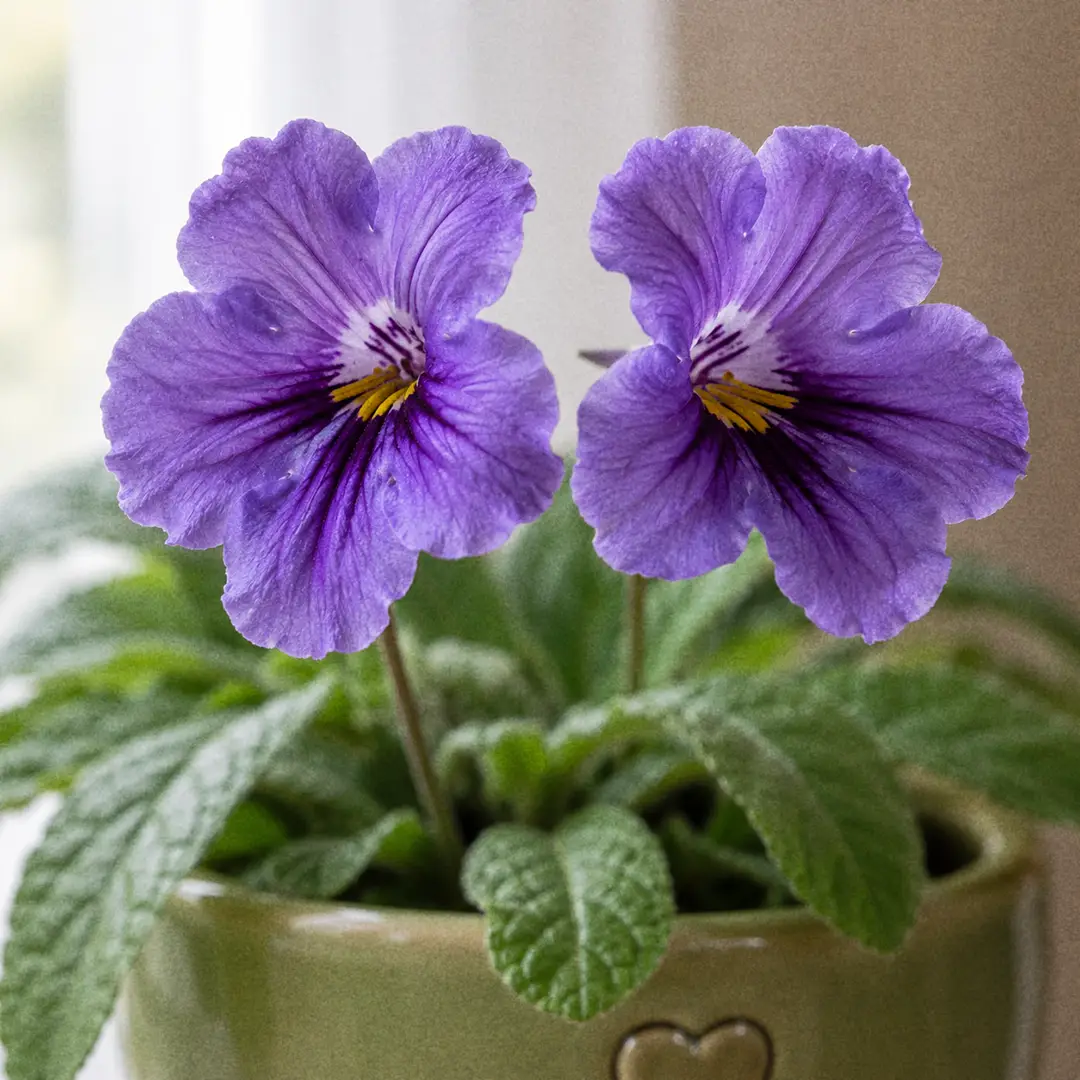
Each individual flower is two to three inches across, with five fused petals forming a flared trumpet. The upper two petals lean back slightly, and the lower three flare forward like a small landing pad. The throat is almost always marked with darker veining or a contrasting band, in patterns that read like brush strokes. Colors run across purple, blue, lavender, pink, rose, red, white, yellow, and bicolor combinations.
Flowers are held in pairs or small clusters at the end of slender stems that rise two to four inches above the leaf rosette. A healthy plant carries multiple stems at once, with successive flushes of fresh stems pushing up through the season. Each individual flower lasts five to seven days, and a well-grown plant always has fresh ones replacing spent ones.
After flowering, Cape Primroses produce the spirally twisted seed pods that give the genus its scientific name (Streptocarpus literally means "twisted fruit"). The pods are botanically interesting but sap energy from the plant, so deadheading after each flush keeps the plant pushing new flowers rather than ripening seed.
How to Encourage Continuous Blooms
- Bright indirect light, with no more than an hour of gentle direct morning sun. Light is bloom fuel.
- Steady half-strength feeding every two weeks during active growth, with the occasional bloom-booster.
- Even watering: never bone dry, never waterlogged.
- Deadheading. Snip spent flower stems all the way back to the leaf base. The plant redirects that energy into new buds.
- A slight cool-down in autumn (60-65°F / 16-18°C nights) often triggers a strong autumn bloom flush.
- Annual repotting and feeding refresh the soil and give the plant the resources to push more stems.
If your Cape Primrose has stopped blooming, the most common reason is light, followed closely by a lack of fertiliser through the active season. Move the plant a foot closer to the window or add an LED grow light, settle into a fortnightly feeding rhythm, and watch the buds reappear within a month.
Spent Bloom Cleanup
Cape Primroses are mostly self-cleaning. Spent flowers drop on their own without making much mess, and the slim flower stems eventually wither and can be pulled gently from the leaf base. That said, deliberately snipping spent flower stems all the way back to the leaf base nudges the plant to produce more. Once a week, run your fingers through the foliage and pull off any browned petals or finished flower stalks. The plant looks tidier and pushes more buds. Do not let spent flowers sit on the foliage in damp conditions, since they encourage botrytis gray mould.
🏷️ Cape Primrose Types and Varieties
The Cape Primrose group covers around 150 wild species and several thousand named hybrids. Most plants sold today are hybrids developed since the 1950s, primarily by Dibleys Nurseries in Wales, where breeders have spent decades selecting for compact habit, longer bloom periods, larger flowers, and brighter colors.

'Roulette' Series
The Roulette series is the most widely available group at garden centres, bred by Dibleys for compact habit and bicolor flowers. 'Roulette Cherry' has white flowers with a deep cherry-red lower lip, 'Roulette Azure' has white flowers with a vivid blue lower lip, and 'Roulette Pink' carries cherry-pink markings on a white base. These are excellent introductory cultivars and stay compact even on a small windowsill.
'Crystal' Series
The Crystal series produces unusually long-blooming, slightly larger plants with strong stems. 'Crystal Ice' has white flowers veined with deep blue, 'Crystal Snow' is pure white, and 'Crystal Beauty' carries soft lavender blooms. They tend to bloom a touch earlier in spring than the Roulettes.
'Concord Blue' and 'Concord Pink'
True classics of the Streptocarpus world. 'Concord Blue' produces vivid royal-blue flowers in big trumpet shapes with a yellow throat. 'Concord Pink' is the matching pink cultivar. Both are vigorous, easy to bloom, and forgiving of small mistakes, which is why they keep showing up at houseplant fairs decades after they were first introduced.
'Hannah' and 'Falling Stars'
'Hannah' is one of the deepest, richest red-purple Cape Primroses available, with a velvety throat and tall flower stems. 'Falling Stars' is a smaller-flowered, prolific bloomer with soft mauve-blue flowers held in clouds above the foliage. Both are classics in collector circles.
'Texas Hot Chili' and 'Polka Dot' Cultivars
For something more dramatic, 'Texas Hot Chili' carries scarlet-red trumpets, an unusual color in the Cape Primrose world, and 'Polka Dot Purple' (no relation to the Polka Dot Begonia or Polka Dot Plant, just a coincidence in naming) carries spotted purple flowers on a white base. These are slightly trickier to find but well worth the search.
Streptocarpella (Trailing Streptocarpus)
A subgroup with a different growth habit: trailing stems instead of a flat rosette, smaller pansy-shaped flowers, and a habit closer to a Hoya in form. Streptocarpus saxorum and its hybrids belong here, with masses of small lavender flowers on cascading stems. They make excellent hanging-basket plants. Care is similar to a regular Cape Primrose, with slightly more drought tolerance.
Cape Primrose vs. African Violet
The most useful comparison. Both are now in the genus Streptocarpus following the 2012 reclassification. Day to day they look very different. The African Violet holds a tight rosette of small fuzzy round leaves with flowers tucked just above them. The Cape Primrose has long strap-shaped leaves growing flat from a basal crown, with flowers rising on tall stems well above the foliage. African Violets bloom a bit more reliably year-round; Cape Primroses are slightly more forgiving of low light and missed waterings, and the flowers are larger and more visible. Both are pet-safe.
Cape Primrose vs. Gloxinia
Gloxinias (Sinningia speciosa) are another Gesneriad with similar trumpet-shaped flowers, but they grow from a tuber, take a long winter dormancy, and have much larger, fuzzier leaves. Cape Primroses are evergreen, do not go dormant, and stay actively growing year-round. If you want trumpets without the dormant period, Cape Primrose is the answer.
Cape Primrose vs. Wax Begonia
Both are excellent flowering houseplants for beginners, but they want different conditions. The Wax Begonia loves bright sun and even direct light, blooms in dense small clusters, and stays compact. The Cape Primrose prefers shade, blooms in tall stems with larger flowers, and has a softer foliage texture. If your brightest spot is a south-facing window, go with the Wax Begonia. If your brightest spot is a north or shaded east window, the Cape Primrose is the smarter pick.
When buying, look for a plant with a tight, even rosette, several developing flower stems, and no soft spots at the centre of the crown. Avoid plants with brown patches on the soil surface (a sign of crown rot underway) or limp leaves draped over a dry pot rim that has clearly been forgotten on the shelf for a week.
🪴 Potting and Repotting Cape Primrose
Cape Primroses have shallow, fine root systems and prefer wide shallow pots over tall narrow ones. A flat-bottomed half-pot or pan is genuinely better for them than a standard upright pot, since the roots spread sideways and stay near the surface. Match the pot to the root habit and the plant flowers more freely.
When to Repot
Plan to repot once a year in spring, after the worst of winter is over and new growth is starting to push. Other clear signs that say "time to repot":
- Roots circling the bottom of the pot when you slide the plant out
- The plant pushing itself up out of the pot with multiple crowns visible at the soil line
- Water running straight through the pot in seconds with no absorption
- A noticeable slowdown in growth and flowering despite good light and feeding
- Soil that has visibly broken down into a dense, sour-smelling sludge
Avoid repotting in mid-summer when the plant is in heavy bloom. The disturbance often pauses flowering for a few weeks. Late winter to early spring is the cleanest window.
Choose the Right Pot
A Cape Primrose is happiest in a wide, shallow pot only an inch or two wider than its current root ball. Drainage holes are mandatory. The "Cape Primrose pan" sold by specialist nurseries is essentially a half-height pot, and is the gold standard for this genus. Standard upright pots also work, just expect a bit more root depth than the plant actually needs.
- Plastic pots hold moisture longer and are the most common choice for Streptocarpus growers.
- Terracotta works well in a humid kitchen window, since the porous walls help wick excess moisture.
- Glazed ceramic falls in the middle, with a cleaner look than terracotta and easier moisture buffering.
- Self-watering pots with small reservoirs can work well, since the plant likes consistent moisture without sogginess.
How to Repot, Step by Step
- Water the plant lightly the day before so the root ball holds together when you slide it out.
- Choose a new pot only one to two inches wider than the current one, ideally a shallow pan.
- Add half an inch of fresh begonia-style mix to the bottom.
- Slide the plant out and gently tease apart any tightly circling roots.
- Trim away any roots that are mushy, brown, or hollow. Healthy roots are firm and pale.
- If the plant has split into multiple crowns over the year, this is the perfect time to divide. Use a clean knife to slice between crowns, each with its own roots, and pot up separately.
- Set the plant in the new pot at the same depth it was sitting before. Do not bury the lowest leaves.
- Backfill around the roots with fresh mix, tapping the pot to settle it. Do not pack hard.
- Water lightly and place back in its usual bright indirect spot.
A general overview of repotting houseplants covers the basics. For Cape Primroses specifically, the rule above all others is: do not bury the crown. Crowns sitting in damp soil rot fast on this plant.
✂️ Pruning Cape Primrose
Pruning a Cape Primrose is mostly a grooming exercise rather than a structural one. The plant has no woody stems to shape, no leggy growth to cut back, and no real branching to manage. The pruning you do is almost entirely about removing tired tissue, deadheading spent flowers, and keeping the rosette tidy.
Deadheading Spent Flowers
Snip spent flower stems all the way back to the leaf base with clean snips. Each flower stem produces a flush of two to four flowers in succession before exhausting itself, so once a stem has finished its run, remove it entirely. Weekly deadheading is the single fastest way to keep new flower stems pushing up from the rosette.
Removing Tired or Damaged Leaves
Older leaves at the outer edge of the rosette eventually yellow, brown at the tips, or simply look ragged. Trim them off at the soil line with clean snips. The plant continually produces fresh leaves from the centre of the crown, so removing tired outer leaves keeps the plant looking neat without harming anything.
If a leaf has a brown crispy edge but is otherwise green, you can trim just the damaged tip off rather than removing the whole leaf. Cut at a soft angle that follows the natural leaf shape, and the trimmed leaf keeps doing its job until it eventually ages out.
Removing Diseased Tissue
Any leaf that has gone soft, mushy, or dark-spotted should be snipped off at the soil line immediately. Same for any flower stem that has collapsed or rotted at the base. Cut back into clean, firm tissue, and clean your snips with rubbing alcohol between cuts so you do not spread fungal issues across the plant.
Cleaning the Leaves
Cape Primrose leaves are softly fuzzy and naturally collect dust over time. Once a month, brush the upper surfaces gently with a soft dry paintbrush or makeup brush. Avoid wiping with a damp cloth, since wet leaves and standing water on the soft tissue invite spotting and rot. Clean leaves photosynthesise better and look noticeably fresher between flower flushes.
Dividing as Pruning
Once a Cape Primrose has been in the same pot for two or three years, it usually splits into multiple crowns. Each crown is essentially its own plant. The annual spring repot is the perfect time to slice these apart with a clean knife and pot them up individually. This both refreshes the parent plant and gives you free new plants. See the propagation section below for the method.
🌱 How to Propagate Cape Primrose
This is genuinely one of the most rewarding houseplants to propagate. A single Cape Primrose leaf, sliced and laid on damp soil, can produce ten or more identical plantlets within a few months. The propagation methods here are slower than a simple stem cutting, but the success rate is enormous and the multiplication factor is huge.
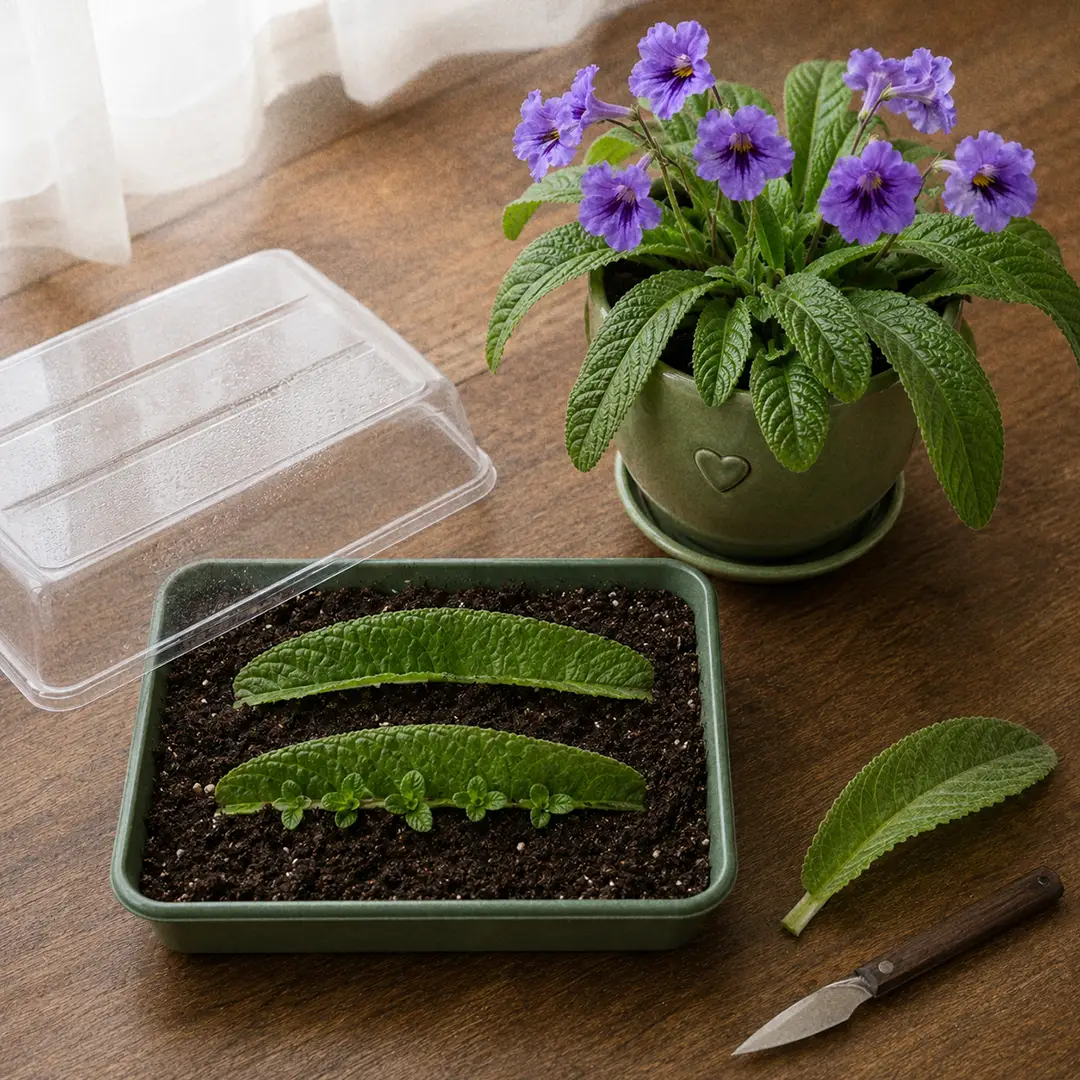
Method 1: Mid-Rib Leaf Cutting (The Classic)
This is the signature Streptocarpus propagation method. It is unique to this plant and produces the highest number of plantlets per leaf.
- Choose a healthy, mature mid-sized leaf. Younger leaves work best; very old outer leaves are less productive.
- Cut the leaf cleanly at the base where it meets the crown.
- Lay the leaf flat on a cutting board. Using a clean sharp blade, slice along the centre of the leaf from base to tip, removing the central mid-rib entirely. You now have two leaf halves, each with a long cut edge.
- Discard the central mid-rib strip. The two leaf halves are your cuttings.
- Fill a shallow tray or small pot with damp African Violet mix or a fine perlite-and-peat blend.
- Insert each leaf half cut-edge-down into the soil, just deep enough to stand it up at a slight angle. The cut edge should sit a quarter-inch deep in the moist soil.
- Cover the tray loosely with a clear plastic bag or propagation lid to hold humidity.
- Place in bright indirect light. Keep the soil consistently damp but never soggy.
- After six to ten weeks, tiny plantlets begin emerging in a row along the cut edge. Each plantlet has its own roots and leaves.
- Once each plantlet has three or four leaves of its own, gently separate them from the parent leaf and pot up individually.
A single large leaf can produce ten to twenty plantlets using this method. The soil propagation guide covers the broader technique.
Method 2: Wedge Cuttings
A faster variation of the mid-rib method.
- Take a healthy leaf and lay it flat on a cutting board.
- Slice the leaf into rough wedges or rectangles, each about an inch across, with the central mid-rib removed.
- Insert each wedge cut-edge-down into damp propagation mix.
- Cover with a humidity dome and place in bright indirect light.
- Plantlets emerge from each wedge within six to ten weeks.
Wedges produce fewer plantlets per piece than the long mid-rib cut, but you can get more total wedges from a single leaf, and they are easier to manage in small trays.
Method 3: Crown Division
When repotting an established multi-crown plant, simply slice between crowns with a clean knife. Each division should have its own roots and at least two leaves. Pot the divisions up individually in fresh mix, water lightly, and treat as established plants. The plant division guide covers the basics.
This method is the fastest way to get bloom-sized plants, since each division is already mature. It is also the best way to refresh an old plant that has become sprawled or unbalanced.
What Does Not Work
- Stem cuttings: Cape Primroses do not have a stem in the traditional sense, so there is no stem cutting to take.
- Whole-leaf cuttings without slicing: a whole leaf laid flat on soil rarely produces plantlets. The cut along the mid-rib is what triggers the plantlet response.
- Water rooting of leaves: leaves left in water tend to rot before producing plantlets. Damp soil and humidity are the right conditions.
🐛 Cape Primrose Pests and Treatment
Cape Primroses are not major pest magnets, but indoor air is dry and dusty, and pests find their way in eventually. Inspect the undersides of leaves and the centre of the crown every two weeks. Quarantine any new plant for two weeks before placing it next to your Cape Primrose collection. That habit alone prevents most pest problems before they start.
Mealybugs cluster in leaf joints and at the base of flower stems where the soft tissue meets the rosette, looking like tiny tufts of cotton. Dab each one with a cotton swab dipped in 70 percent isopropyl alcohol, then wipe down the surrounding leaf. Repeat every five days for three weeks to break the egg cycle. The warm, sheltered crown of a bushy Streptocarpus is exactly the kind of spot mealies love, so check it carefully.
Spider mites become a problem when winter heating dries out the air. Look for fine webbing in the leaf rosette and tiny stippled dots dulling the leaf surface. Boost humidity, brush leaves down gently with a soft dry brush, and treat with insecticidal soap or neem oil weekly until you see two clean inspections in a row. Avoid spraying the soft fuzzy leaves directly with oil sprays during the heat of the day, since the residue can scorch the surface in bright light.
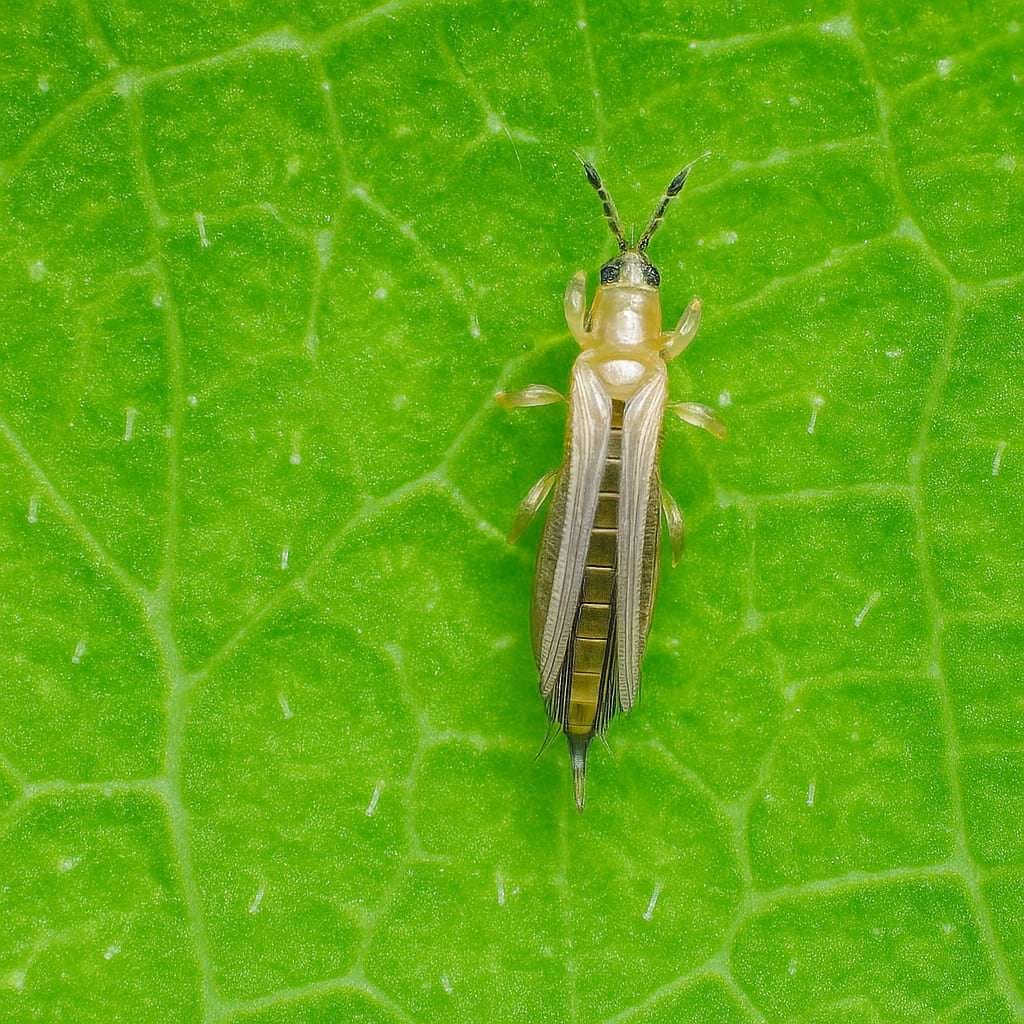
Thrips leave silvery scratch marks on leaves and can deform new flower buds before they fully open. Cape Primroses in heavy bloom are particularly attractive to thrips, since the trumpet-shaped flowers are warm sheltered nurseries for the larvae. Treat aggressively with a whole-plant insecticidal soap drench or repeated weekly rounds, and isolate the plant from the rest of your collection until the population is gone.
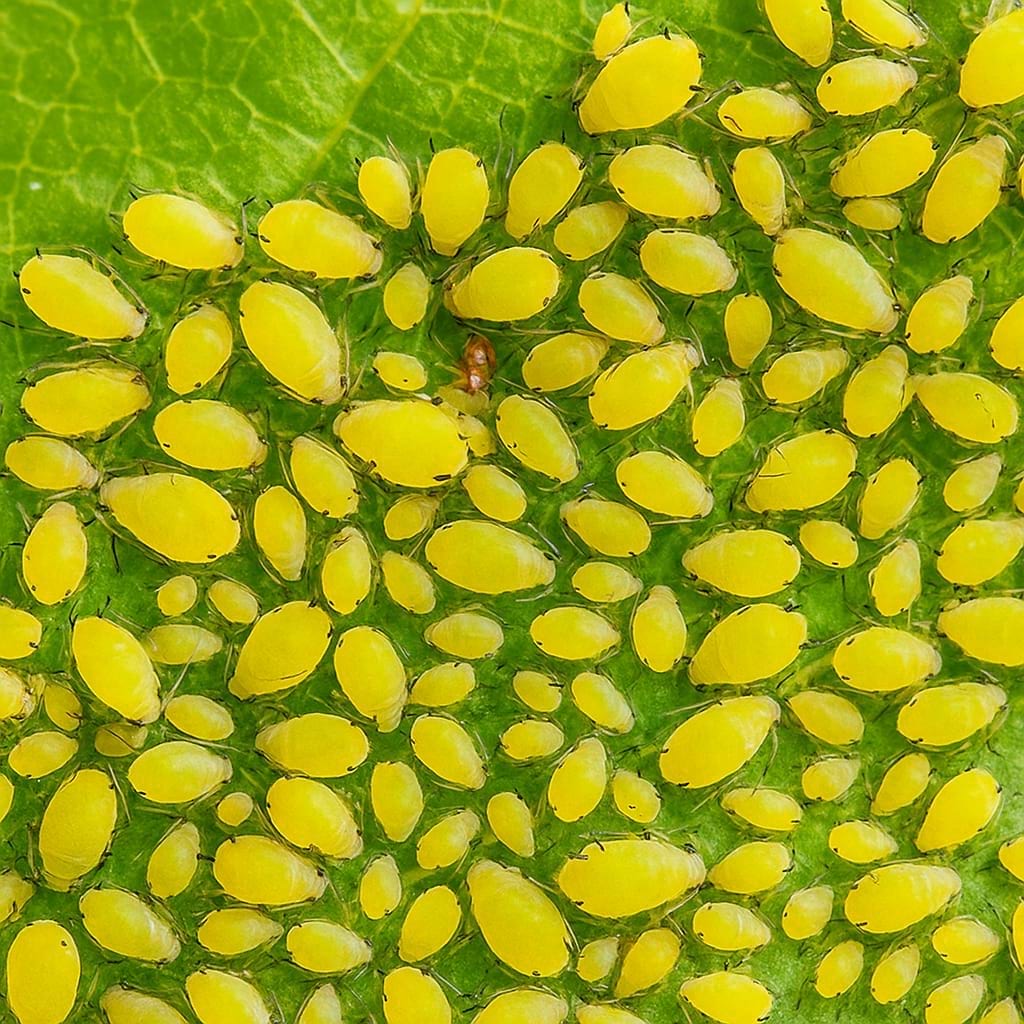
Aphids cluster on fresh new flower stems and the soft tips of unfurling buds. Rinse them off in the sink first, then follow up with insecticidal soap if any return. They are most common in spring when fresh growth is unfurling fast.
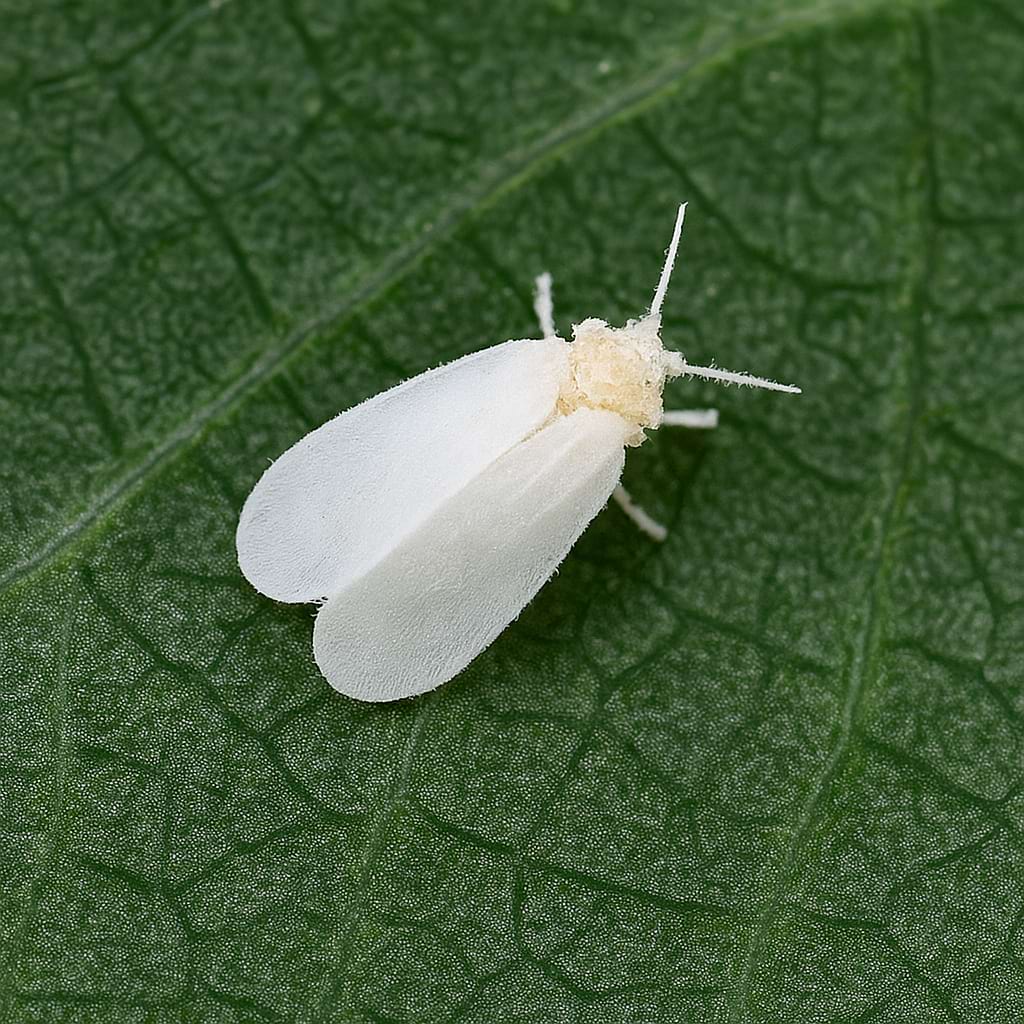
Whiteflies are common on plants that have spent the summer outdoors. They lift off in a small cloud when you brush the foliage. Yellow sticky traps catch most of the adults, and weekly insecticidal soap sprays handle the rest. Check carefully when bringing plants in for the winter.
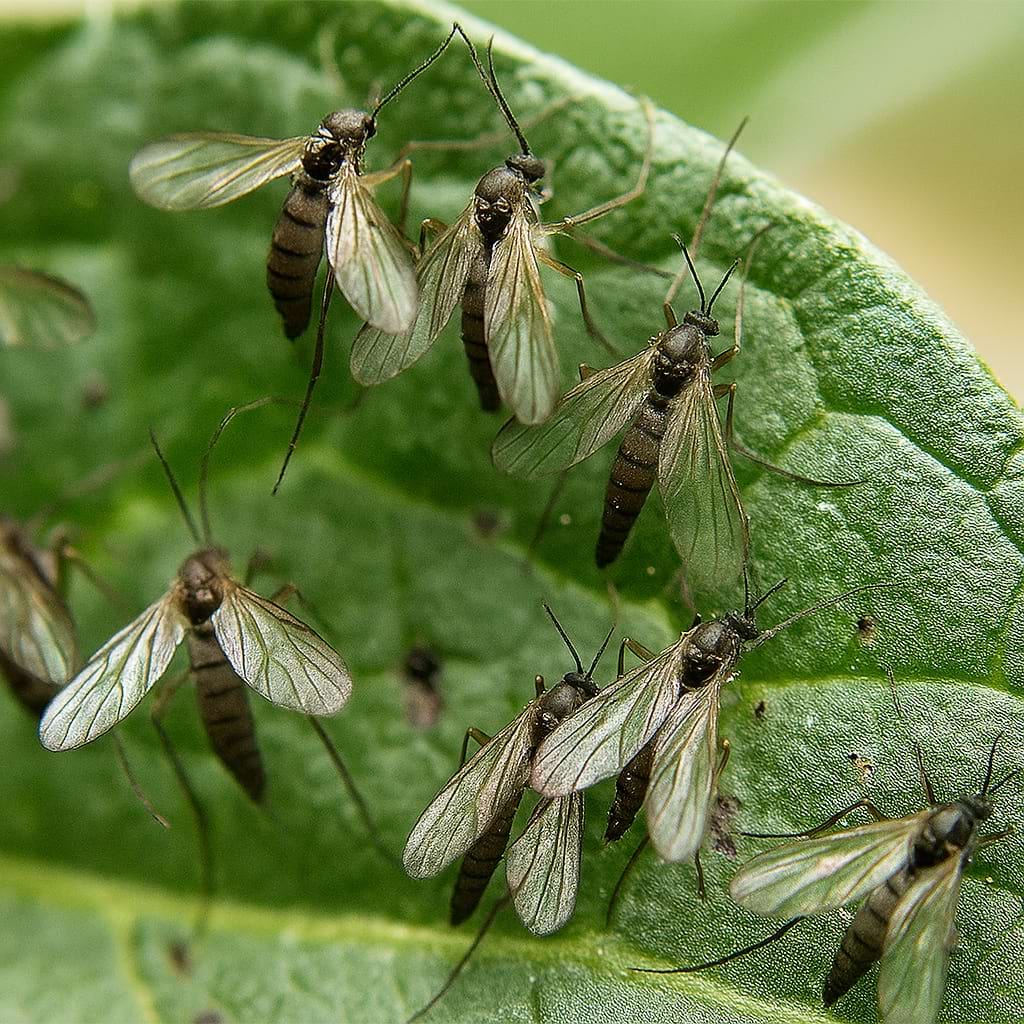
Fungus gnats signal that the soil is staying too wet. Their larvae live in the top layer of damp soil and chew on tender new roots. Let the top inch dry out fully between waterings, top-dress with a half inch of dry sand or fine bark, and use yellow sticky traps to knock down adults.
A general primer on pest prevention in winter covers the seasonal patterns that catch most flowering houseplant owners off guard.
🩺 Common Cape Primrose Problems
Most issues with this plant trace back to watering, light, or air. Here is how to read what your Cape Primrose is telling you.
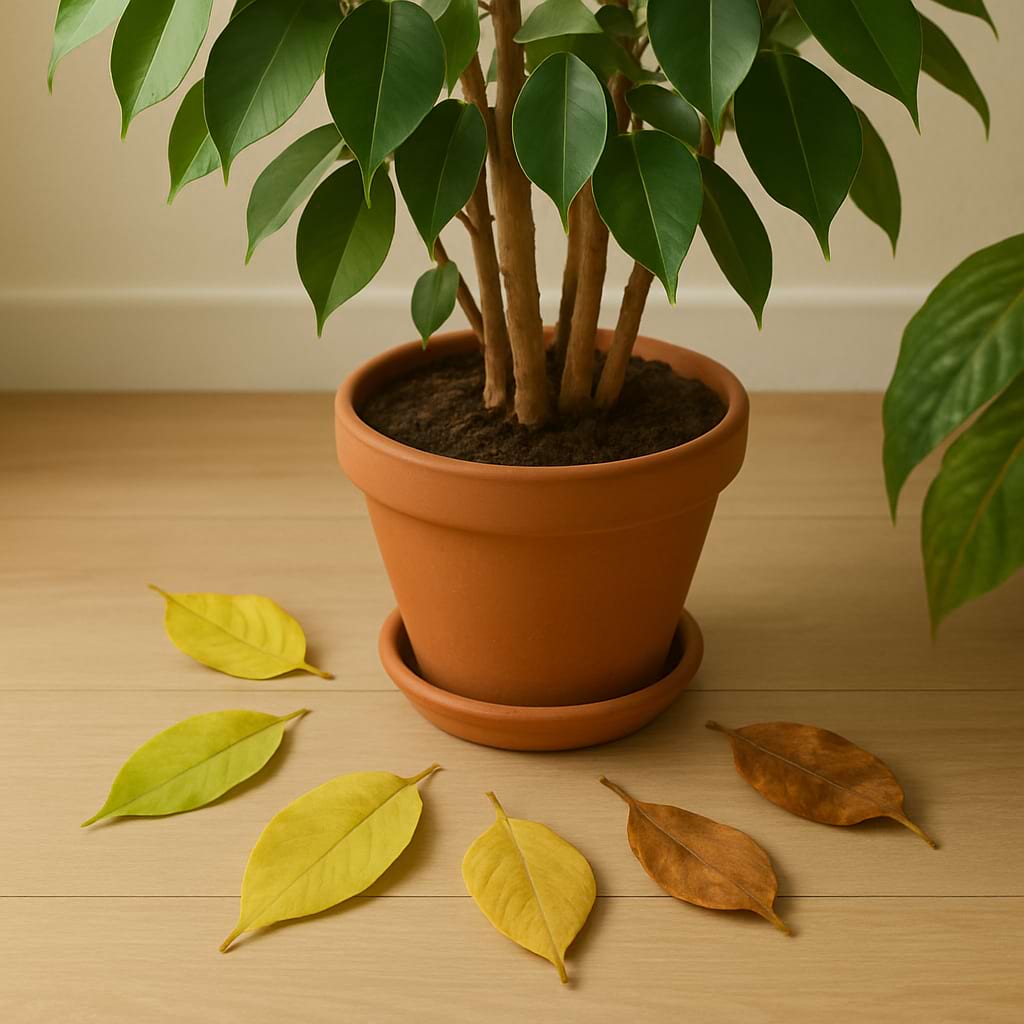
Yellowing leaves on the outer edge of the rosette are usually a sign of overwatering or the natural ageing of the oldest leaves. Check the soil moisture. If it is wet a week after watering, you are watering too often, or the soil is too dense. The occasional yellow outer leaf on a mature plant is also normal as old leaves age out and the plant redirects energy into new growth.
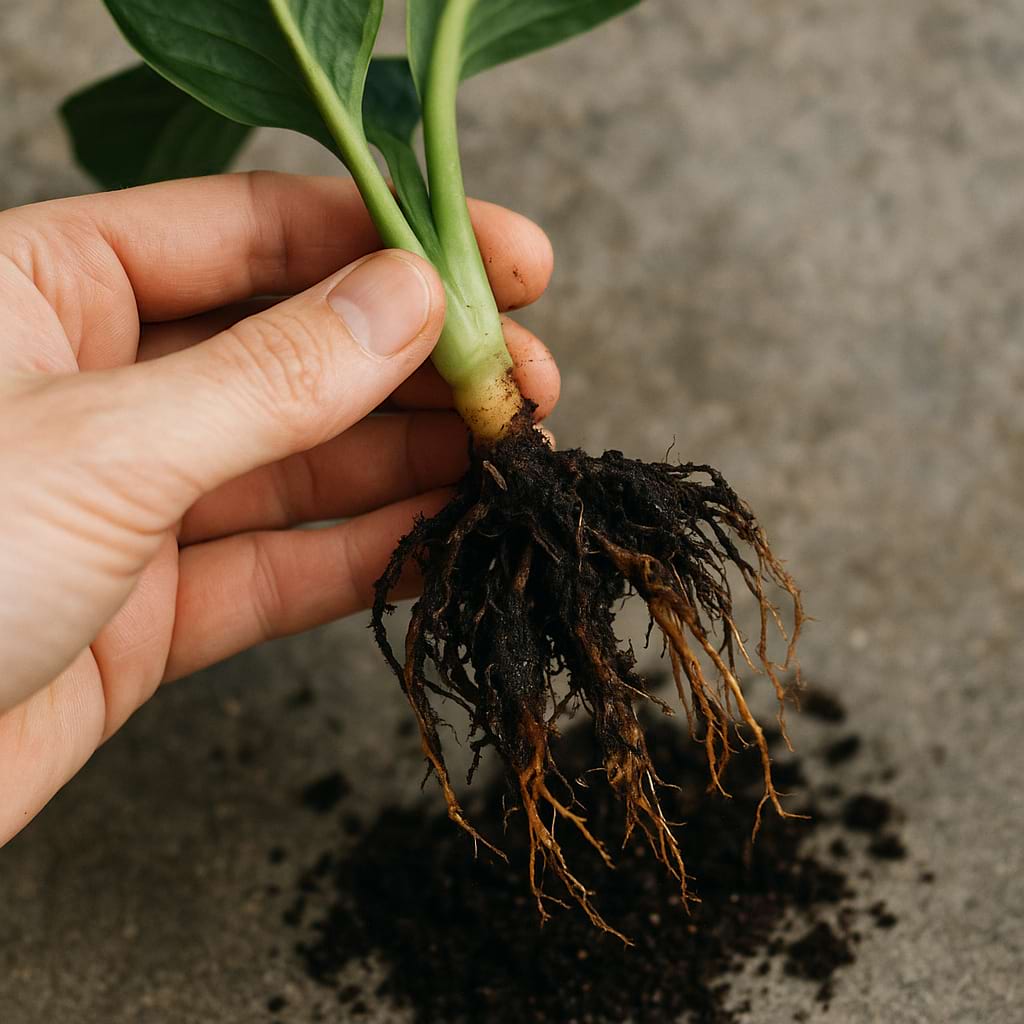
Root rot is the worst-case version of overwatering and the leading killer of Cape Primroses indoors. If yellowing is paired with mushy leaves at the crown and a sour smell, slide the plant out, cut back to firm clean roots and crown tissue with a sterile blade, dust the cut with cinnamon or sulfur, and replant in fresh dry mix. Hold off on watering for a week and on fertilizer for at least a month.
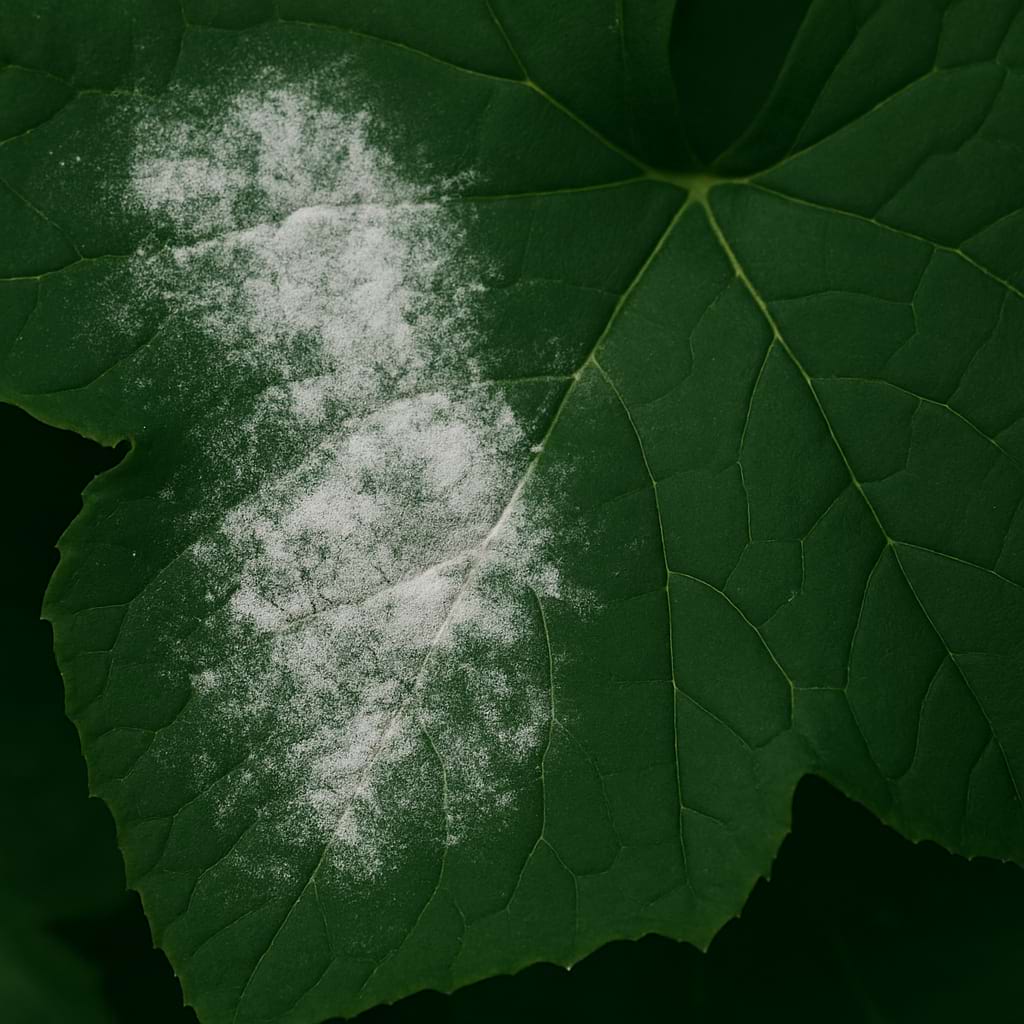
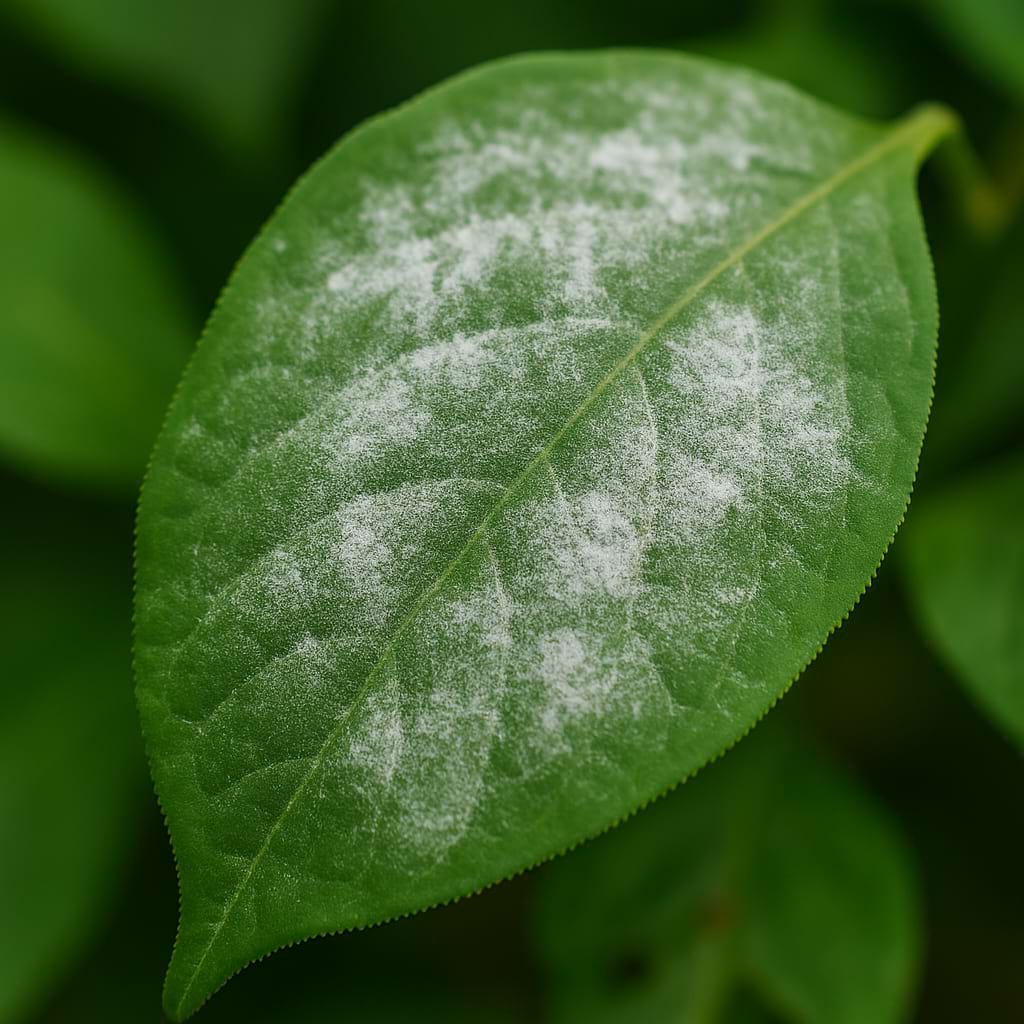
Powdery mildew is a chalky white film that appears on leaves, especially when humidity is high and air circulation is poor. Cape Primroses are moderately prone to it. Trim affected leaves, water at the soil line only, improve airflow with a small fan nearby, and treat with a mild fungicide if it spreads. Diluted neem oil works well for early cases.
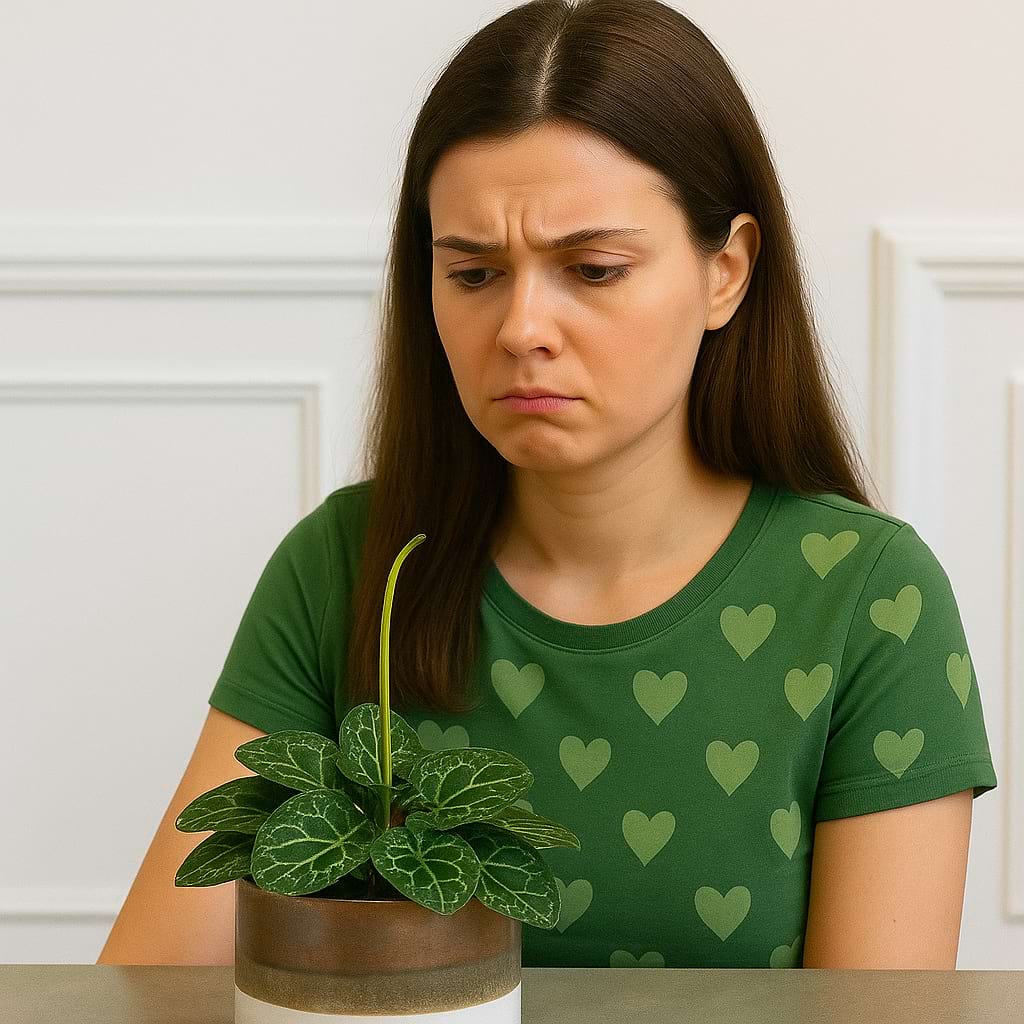
Wilting or drooping is the plant's most common signal, and almost always points to one of two opposite causes. Dry, lightweight soil and limp leaves mean the plant is thirsty: water it and the rosette perks back up within an hour or two. Wet, heavy soil and limp leaves mean the roots are rotting: holding off on water and addressing the rot is the only fix. Check the soil before acting.
Failure to bloom on a Cape Primrose almost always means not enough light. This plant blooms heavily for eight to ten months a year when conditions are right. If yours has stopped, the first thing to fix is its position relative to the nearest window. The second is fertiliser: a plant on a strict water-only diet eventually runs out of the nutrients needed for flower production.
Leaf drop of multiple leaves over a few days usually signals shock from a sudden change: a move, a draft, a big swing in light, or a heavy overwatering event. It is also normal during the first week of bringing a plant indoors after a summer outside. Stabilise conditions and wait. A healthy Cape Primrose rebuilds its rosette quickly once conditions are steady.
Brown crispy edges on otherwise healthy leaves point to dry air, inconsistent watering, or fertilizer salt buildup. Boost humidity, settle into a regular watering rhythm, and flush the pot with plain water once every couple of months to clear salts.
Fungal or bacterial leaf spot appears as dark spots ringed with yellow halos, usually when leaves stay wet overnight. Trim affected leaves, water the soil only, and improve air circulation around the plant. Skip overhead watering and overhead misting on this plant.
A slow-growing plant with small, washed-out leaves and almost no flowers, despite watering and feeding, is almost always a light problem. Cape Primroses do not need direct sun, but they do need bright indirect light to flower. A north window in a dim room may not actually be bright enough; a small grow light fixes it instantly.
🖼️ Cape Primrose Display and Styling Ideas
The Cape Primrose is a small, soft-leaved, very productive flowering plant. It does not have the architectural drama of a Bird of Paradise or the structural punch of a Snake Plant, but it has something neither of those has: nine months a year of large trumpet-shaped flowers held high above the leaves on slim graceful stems.

Pot and Color Pairings
- Cream or ivory ceramic frames purple, blue, and pink flowers cleanly without competing.
- Soft sage and warm terracotta read garden-cottage and pair well with white or pale pink cultivars.
- Charcoal or matte black makes white and yellow flowers pop dramatically and reads modern.
- Mid-blue and slate suit the cool-toned blue and purple cultivars beautifully.
- Avoid loud floral pots, since the trumpet flowers themselves carry the visual weight.
Spaces That Work Well
- A north or curtained east-facing windowsill, where the plant gets the gentle light it actually wants.
- A shaded office desk under a small daylight LED, where flowers lift the room without needing a sunny window.
- A cool kitchen counter near a curtained window, where the slightly cooler temperatures actually encourage blooms.
- A long shallow planter mass-planted with three of the same color for a single-tone effect.
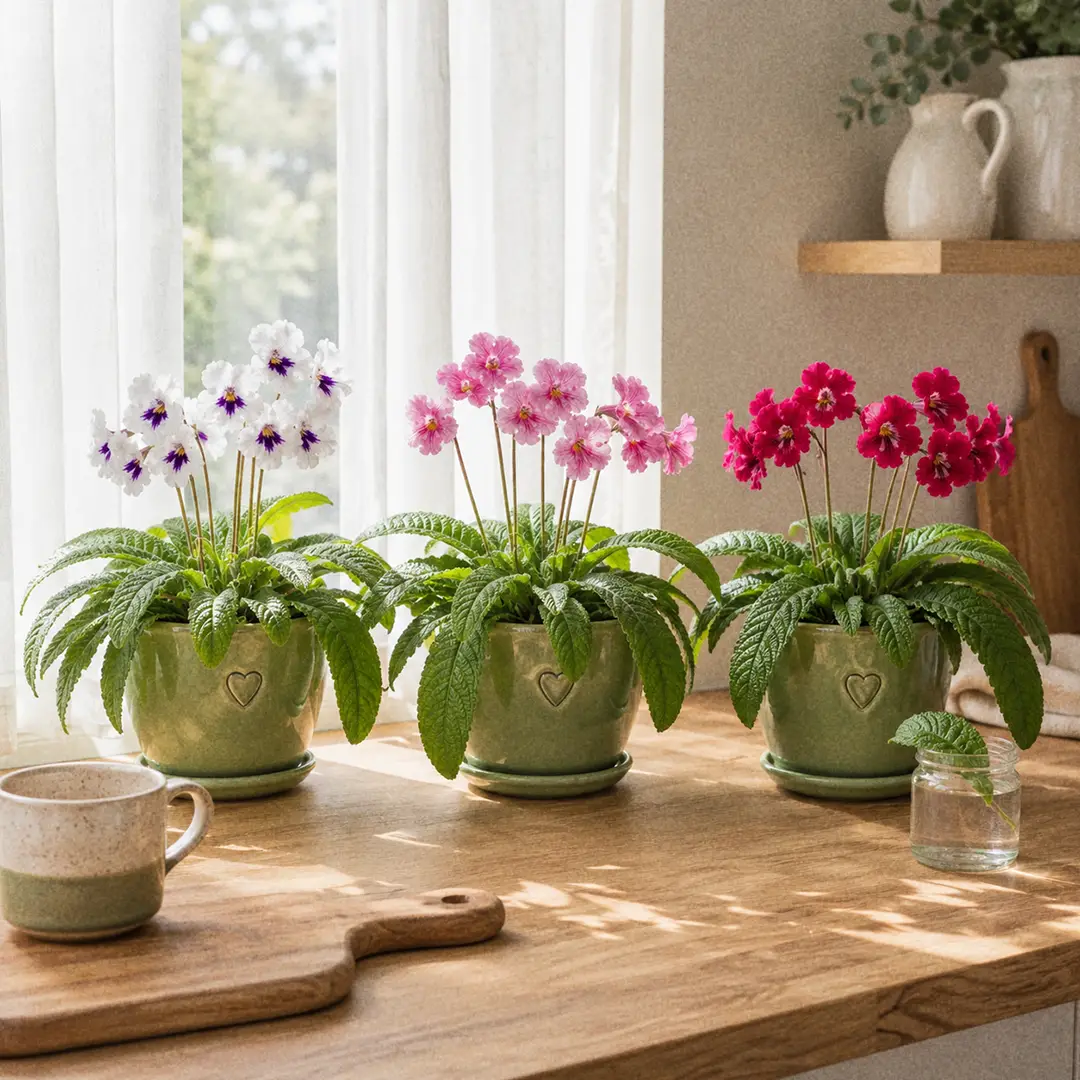
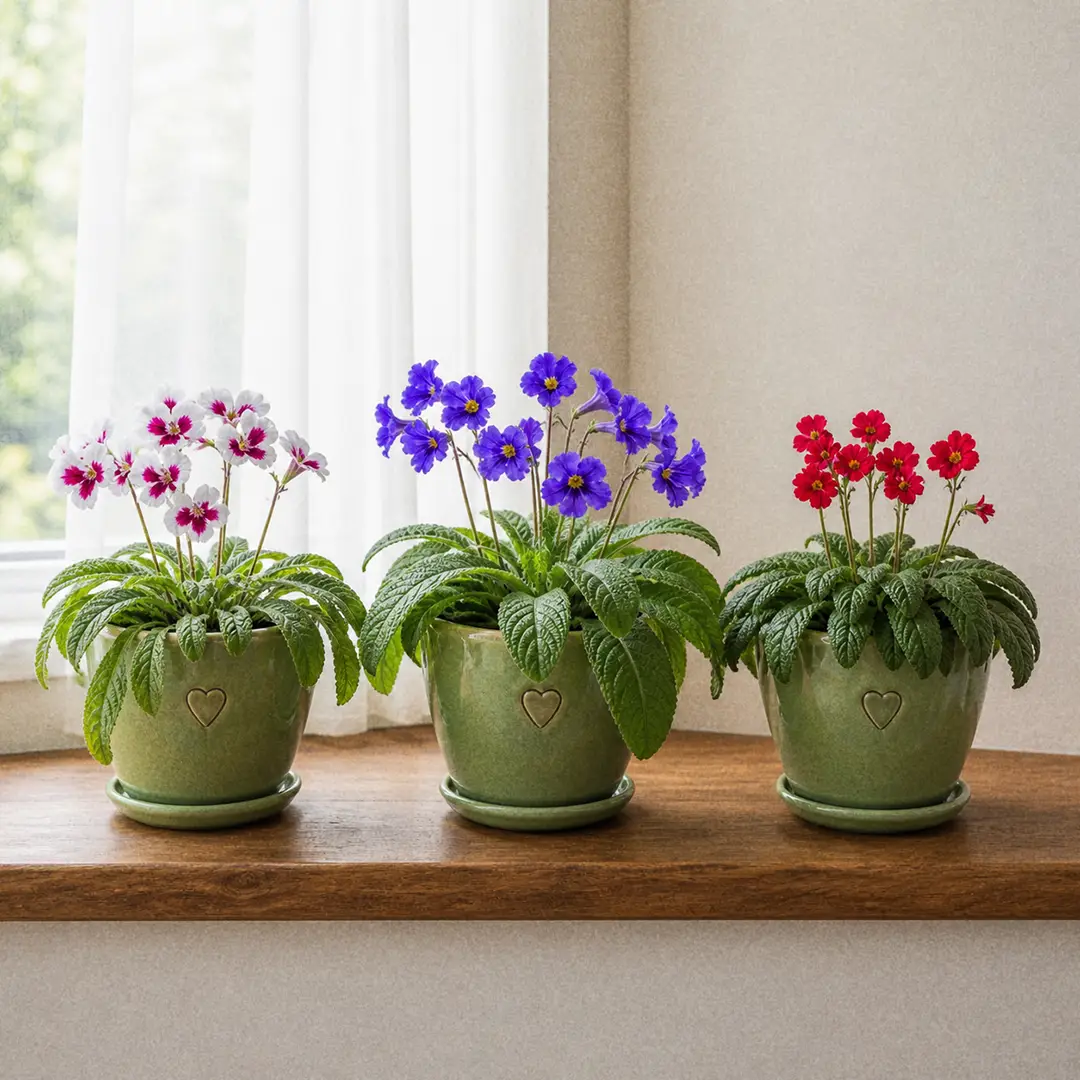
- A row of three windowsill pots, each a different color, for a window-box effect indoors without ever needing direct sun.
Companion Planting
The Cape Primrose mixes beautifully with both other Gesneriads and unrelated low-light houseplants. Pair it with an African Violet on the same shelf since both want identical care, or hang a Lipstick Plant above on a brighter side of the same window for a layered Gesneriad display that swaps tabletop rosette flowers with cascading red tubular blooms. For a moodier, foliage-led companion in the same family, a Black Pagoda Lipstick Plant trailing from a hanging basket above the rosette adds dark marbled leaves and wine-red undersides that contrast beautifully with the soft purple and pink Cape Primrose flowers below. Place a Peperomia Emerald Ripple or another textured small foliage plant beside it for visual contrast. A Maidenhair Fern in the same shaded window adds a soft frilly companion that loves the same low-direct-sun conditions. If you have a brighter window nearby, a Walking Iris on the sunnier side carries the flowering display through spring with its dramatic single-day blooms while the Cape Primrose handles the rest of the year on the shaded side. Avoid pairing with sun-hungry plants like a Wax Begonia or a Jade Plant, since the conditions they want are exactly the conditions a Cape Primrose wants to avoid.
Mass-Planted Effect
A wide low planter mass-planted with five or six Cape Primroses of the same cultivar creates an instant flowering feature. The strap leaves drape softly over the rim and the flower stems rise above in a coordinated cloud of color. This works especially well on a long north-facing windowsill or a shaded kitchen counter, where a more sun-loving plant would simply refuse to flower.
Scale It Up
Indoors, a single Cape Primrose is a friendly little flowering plant. Three of them grouped on a shaded shelf in matching pots become a feature. Six in a long planter mass-planted along a north-facing windowsill turn into a quietly spectacular indoor flower border that thrives in the kind of light most flowering plants ignore. The plant scales up beautifully if you have the cool indirect light to support it.
🌟 Cape Primrose Pro Care Tips
✅ Listen to the wilt. A Cape Primrose drooping its rosette is a thirsty plant, not a dying one. Water and the leaves perk back up within an hour or two. This single trait makes it dramatically more beginner-friendly than its African Violet cousin.
💧 Underwater rather than overwater. A thirsty Cape Primrose tells you exactly what it needs and recovers fast. A waterlogged one declines for days even after you stop watering, since the rot is already underway in the roots.
✂️ Deadhead at the base. Snip spent flower stems all the way back to the leaf base, not partway up. The plant redirects all of that energy into pushing new stems from the crown.
☀️ North windows are your friend. Cape Primrose is one of the few flowering houseplants that genuinely loves a cool, north-facing window. If your apartment skips direct sun entirely, this is the bloomer to grow.
🪴 Wide and shallow beats tall and deep. Cape Primrose roots run sideways and shallow. A wide, shallow pot or a Streptocarpus pan is genuinely better than a standard upright pot of the same volume.
🌬️ Skip misting. Wet leaves and crown invite spotting and rot. Use a humidifier or pebble tray instead, or simply group plants for shared transpiration.
🌱 One leaf, ten plants. A single mid-rib leaf cutting can produce ten or more plantlets. Build up backups so any single-plant disaster never feels final.
🐾 Pet-safe peace of mind. Cape Primroses are non-toxic to cats, dogs, and humans, like their African Violet cousins. A nibbled flower may upset a small pet stomach but causes no real harm.
🔄 Quarter-turn at every watering. New growth tracks toward the brightest light. Rotating the pot keeps the rosette filling in evenly rather than leaning toward the window.
🧂 Flush the soil seasonally. Twice a year, run plain water through the pot until it drains clear. This clears salt buildup that otherwise burns the roots and browns the leaf edges over time.
🌸 Cool nights spark autumn blooms. A short stretch of nights at 60-65°F (16-18°C) in October often triggers a strong autumn bloom flush. Many growers find their plants bloom hardest after a mild seasonal cool-down rather than in the heat of summer.
❓ Frequently Asked Questions
Is a Cape Primrose easy to care for?
Yes, easier than the African Violet most people compare it to. The plant tells you when it is thirsty by wilting visibly, recovers within an hour or two of a drink, tolerates north-facing windows where most flowering plants refuse to bloom, and propagates from a single sliced leaf. Give it bright indirect light, water when the top inch of soil feels dry, deadhead spent flower stems, and feed every two weeks at half strength, and the plant pretty much takes care of itself.
Are Cape Primroses and African Violets the same plant?
Almost. The 2012 reclassification merged the old Saintpaulia genus (African Violets) into Streptocarpus (Cape Primroses), so they are now technically members of the same genus and family. Day to day they look very different: the African Violet has a tight rosette of small fuzzy round leaves with flowers tucked just above them, while the Cape Primrose has long strap-shaped leaves growing flat from a basal crown with flowers rising on tall stems well above the foliage. Care is similar, but Cape Primroses are slightly more forgiving and bloom more visibly.
Is Cape Primrose toxic to cats and dogs?
No. Cape Primroses are non-toxic to cats, dogs, and humans, just like African Violets. A determined pet that chews a leaf may experience mild stomach upset, but no oxalates, no real toxins, and no risk of serious harm. That said, regular chewing damages the plant, so the standard advice still applies: keep it out of reach of pets that show interest.
Why is my Cape Primrose not blooming?
Light is almost always the answer. Cape Primroses bloom continuously when they have enough bright indirect light, and slow or stop almost completely when they do not. Move the plant closer to your brightest indirect window or add a small LED grow light, and check back in three to four weeks. The second most common reason is a lack of fertiliser through the active growing season. A half-strength balanced or high-phosphorus feed every two weeks usually wakes up a stalled plant.
Can Cape Primroses take direct sun?
No, unlike Wax Begonias or Jade Plants, this plant scorches quickly under direct sun. The soft fuzzy leaves bleach within a few days of unfiltered afternoon light, and the damage does not heal. A few minutes of gentle morning sun a day is fine, but full sun is too much. A north-facing window or a curtained east window is the sweet spot.
How big does a Cape Primrose get?
Indoors, expect a mature plant to reach six to ten inches tall at the foliage and ten to eighteen inches across. Flower stems rise another two to four inches above the leaves. The plant is much more about width and density than height, which is why a wide, shallow pot suits it better than a tall narrow one.
Why are my Cape Primrose leaves curling?
Leaf curling can be caused by several factors. Slight inward curling at the edges usually means the plant is thirsty or the air is dry. A more pronounced curl with crispy tips suggests sustained dry air or fertilizer salt buildup. Curling combined with stippled leaves often points to spider mites, especially in winter when heating dries the air. Inspect the underside of the leaves carefully, and adjust watering and humidity accordingly.
Can I propagate Cape Primrose from a single leaf?
Yes, and the technique is famous in the Gesneriad world. A single leaf, sliced in half along the mid-rib and laid cut-edge-down in damp soil, can produce ten or more identical plantlets within six to ten weeks. This is the signature Cape Primrose propagation method. No other common houseplant produces so many new plants from a single leaf.
How long does a Cape Primrose live?
Five to eight years is common indoors with steady care, and the plant can live longer when it is regularly divided and repotted. The plant naturally splits into multiple crowns over time, and each crown can be separated into a new plant, so the original genetic line can keep going almost indefinitely from generation to generation.
Why are my Cape Primrose flowers dropping before opening?
Bud drop on a Cape Primrose almost always points to one of three things: fertilizer burn, sudden temperature shock, or a serious watering swing (either bone dry or fully waterlogged). Pause feeding for a few weeks, settle the plant in a stable temperature spot away from drafts and heating vents, and rebuild a steady watering rhythm. Fresh buds usually appear within a few weeks once the plant settles.
Can I keep a Cape Primrose under grow lights?
Absolutely. Cape Primroses respond beautifully to LED grow lights and many serious collectors grow theirs entirely under artificial light in basements or shelving units. Aim for ten to twelve hours a day of bright indirect-strength LED light positioned twelve to eighteen inches above the plant. The plants bloom heavily and continuously under good grow-light conditions, often outflowering the same cultivar grown on a north windowsill.
Should I let my Cape Primrose set seed?
Generally no, unless you want to breed your own hybrids. Letting the seed pods ripen pulls energy away from new flower production, and the resulting twisted seed pods drop seeds that grow into a mix of plants that may not look like the parent. Snip off spent flower stems before the pods develop, and the plant pushes new flower stems instead.
ℹ️ Cape Primrose Info
Care and Maintenance
🪴 Soil Type and pH: Light, airy mix with perlite and a slightly acidic pH around 6.0-6.5; African Violet mix is ideal.
💧 Humidity and Misting: Comfortable around 40 to 60 percent; happier with a small humidity boost in winter.
✂️ Pruning: Snip spent flower stalks at the base and trim ragged or yellowing leaves at the soil line.
🧼 Cleaning: Soft dry brush along the leaf surface; rinse rarely and only when truly dusty, never overhead at night.
🌱 Repotting: Once a year in spring, into a shallow pot only slightly wider than the current one.
🔄 Repotting Frequency: Every 1 year
❄️ Seasonal Changes in Care: Reduce watering and pause feeding through the lowest-light winter weeks; resume in early spring.
Growing Characteristics
💥 Growth Speed: Moderate
🔄 Life Cycle: Evergreen perennial
💥 Bloom Time: Spring through fall heavily, often year-round indoors with steady light
🌡️ Hardiness Zones: 10-12 outdoors as a perennial; grown indoors elsewhere
🗺️ Native Area: South Africa, Madagascar, and parts of tropical East Africa
🚘 Hibernation: No, but growth slows noticeably in winter
Propagation and Health
📍 Suitable Locations: North-, east-, and bright west-facing windowsills, shaded conservatories, sunless office desks under daylight bulbs, kitchen counters, plant shelves under grow lights
🪴 Propagation Methods: Very easy from leaf-section cuttings; one leaf can produce ten or more plantlets.
🐛 Common Pests: Mealybugs, Spider Mites, Thrips, Aphids, Fungus Gnats, Whiteflies
🦠 Possible Diseases: Crown rot, root rot, botrytis, powdery mildew, leaf spot
Plant Details
🌿 Plant Type: Acaulescent (stemless) flowering herb
🍃 Foliage Type: Evergreen, soft-textured, slightly fuzzy
🎨 Color of Leaves: Soft mid-green, sometimes with a paler central vein
🌸 Flower Color: Purple, blue, pink, rose, red, white, yellow, and bicolors with darker throat veining
🌼 Blooming: Yes, eight to ten months a year with good care; modern hybrids bloom almost continuously
🍽️ Edibility: Not edible; no record of culinary use
📏 Mature Size: 6-10 inches (foliage); flower stems rise 2-4 inches above leaves
Additional Info
🌻 General Benefits: Long bloom season, pet-safe, easy from a single leaf, tolerant of low light, friendly to small spaces
💊 Medical Properties: None recorded; sap can mildly irritate sensitive skin
🧿 Feng Shui: Cheerful, abundant energy associated with steady joy and grounded warmth
⭐ Zodiac Sign Compatibility: Pisces
🌈 Symbolism or Folklore: Faithful affection, gentle perseverance, lasting cheer
📝 Interesting Facts: The genus name Streptocarpus comes from the Greek streptos (twisted) and karpos (fruit), referring to the spirally twisted seed pods that form after flowering. The Cape Primrose was first introduced to British horticulture in the 1820s, and modern hybridising work at the John Innes Institute in the 1940s and at Dibleys Nurseries in Wales since the 1950s has produced most of the named cultivars sold today. Genetic studies in 2012 collapsed the genus Saintpaulia (African Violet) into Streptocarpus, making Cape Primrose and African Violet very close cousins indeed.
Buying and Usage
🛒 What to Look for When Buying: Look for a tight rosette of firm, evenly green leaves with no soft brown patches at the base, and ideally several flower stems already pushing up from the crown. Avoid plants with limp leaves, mushy stems, or a chalky white coating from old fertiliser salts.
🪴 Other Uses: Conservatory feature plant, shade-pot bedding for sheltered patios, leaf-cutting projects for plant clubs, gift plants for beginner growers
Decoration and Styling
🖼️ Display Ideas: Single statement on a north windowsill, grouped trio of mixed colors on a kitchen shelf, mass-planted in a long shallow bowl, paired with foliage plants in a cool-room corner
🧵 Styling Tips: Keep the flowers as the focal point and let the long strap leaves drape softly over the pot rim; avoid loud floral pots since the blooms themselves carry the visual weight.

💬 Community
Start the first discussion.
Ask about Complete Guide to Cape Primrose Care and Growth
Ask a question or share what worked for you.
Log in to post.
Logged in as Member.
Log in to post your comment
Your draft stays here. Choose a sign-in method below.
Use Google or email. Your draft stays on this page.