Lipstick Plant
Aeschynanthus radicans
Lipstick Vine, Basket Vine, Aeschynanthus, Red Bugle Vine
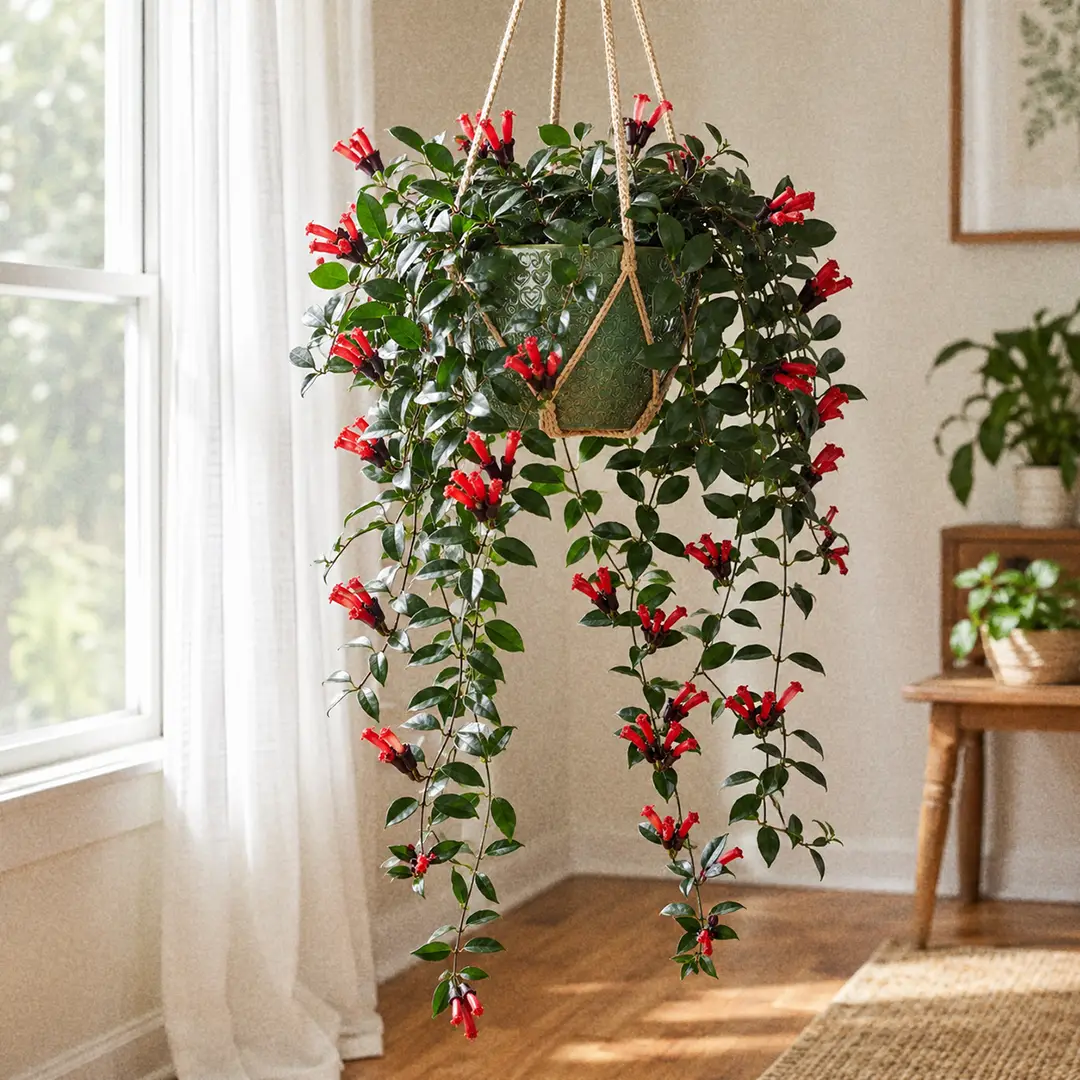
The Lipstick Plant (Aeschynanthus radicans) is a tropical trailing Gesneriad named for the bright red tubular flowers that push out of dark maroon calyces, looking exactly like little tubes of lipstick. It is a long-lived hanging-basket plant that blooms in summer and again into autumn when given bright indirect light, steady warmth, and humid air.
📝 Lipstick Plant Care Notes
🌿 Care Instructions
⚠️ Common Pests
📊 Growth Information
🪴 In This Guide 🪴

☀️ Lipstick Plant Light Requirements (Bright Indirect, A Touch of Direct Sun)
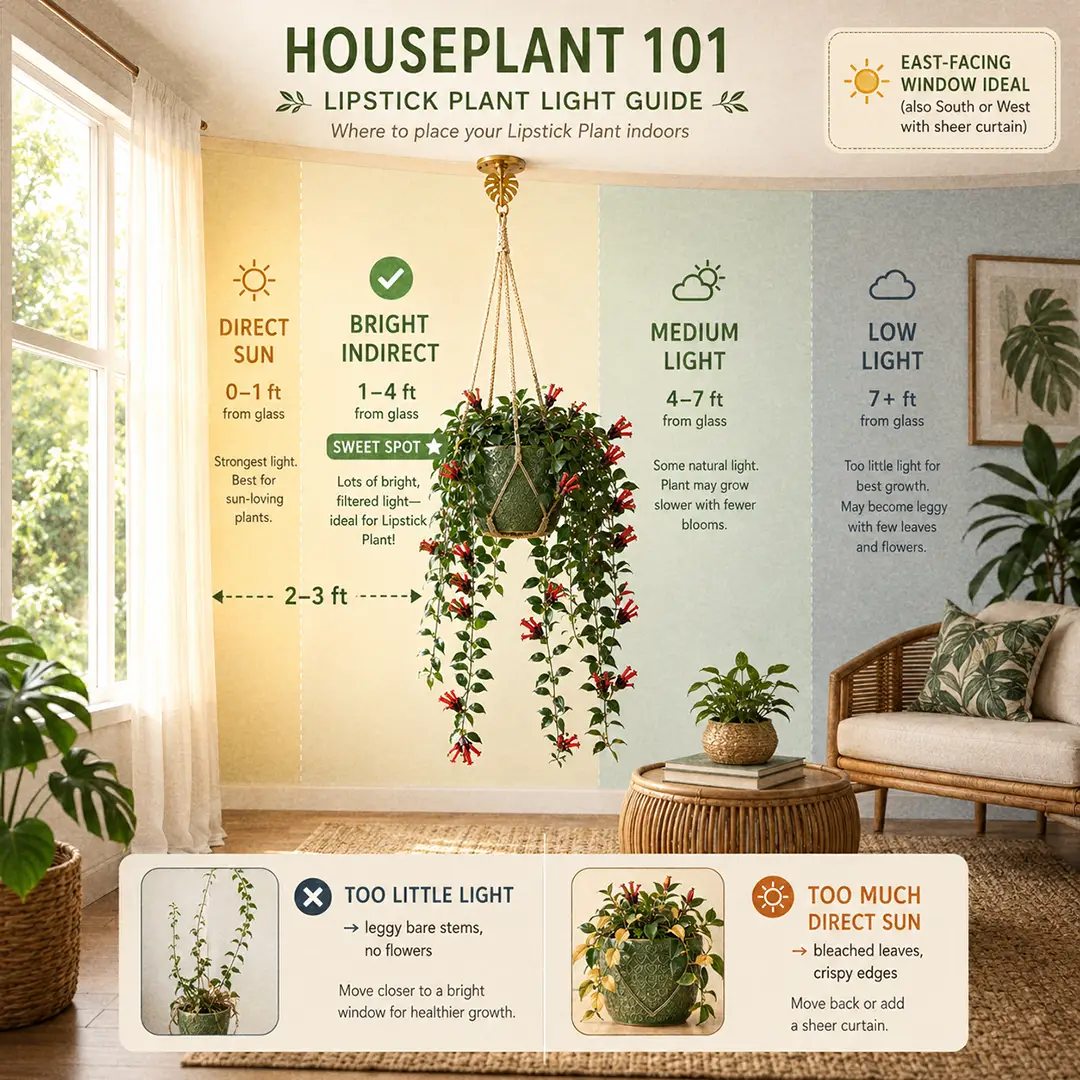
Light is the single biggest factor in whether your Lipstick Plant blooms heavily, blooms a little, or just sits there as a long green vine. The plant comes from the upper canopy of tropical forests where it gets dappled bright light filtering through other trees, and that translates indoors to bright indirect light with the option of a little gentle direct sun. Without enough light the plant grows fine but refuses to flower.

The Sweet Spot
Aim for bright indirect light with one to three hours of soft direct sun a day, ideally morning sun. An east-facing window two to four feet inside the room is the gold standard. A south- or west-facing window with a sheer curtain works just as well, and a south-facing bathroom window often produces the heaviest blooms thanks to the bonus humidity. The leaves should look glossy and full of color, not bleached and not deep limp green.
A north-facing window is usually too dim to flower this plant well. The vines stay healthy on north light, but you will see almost no blooms. If a north window is your only option, add a small LED grow light on a timer for ten to twelve hours a day. Lipstick Plants respond very well to artificial light and many serious bloomers grow theirs entirely under grow lights for that reason.

What Too Little Light Looks Like
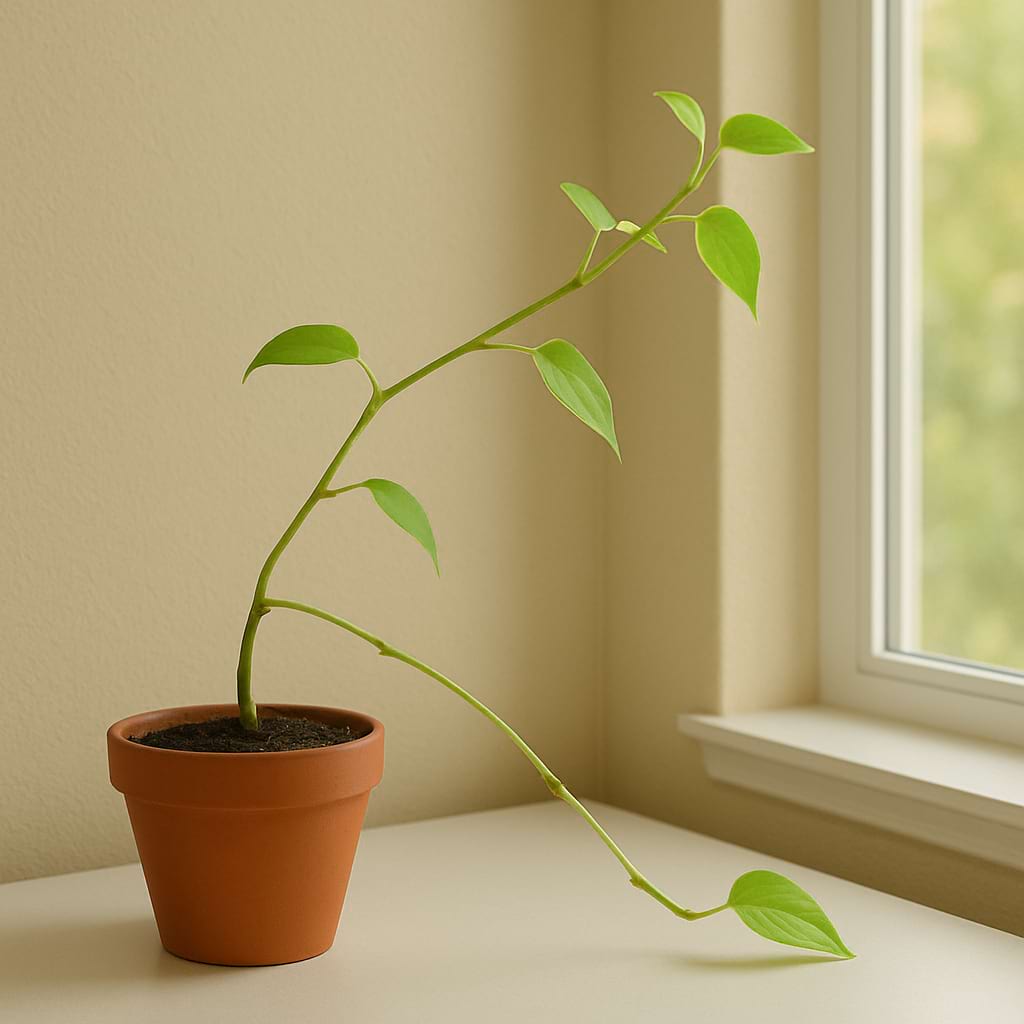
A light-starved Lipstick Plant produces long stretches of bare stem with leaves spaced too far apart, and refuses to bloom. The leaves themselves stay healthy and green, but the visual effect goes from full and lush to spindly and skeletal. New growth tracks visibly toward the brightest light, leaning sideways and downward. Move the plant a foot closer to the window, raise the hanging basket so it sits closer to the brightest indirect light at the top of the window, or add a small grow light directly above the plant. You should see denser new growth and the first fat unopened calyces within a couple of months.
What Too Much Light Looks Like
The plant scorches under sustained direct afternoon sun on a hot day. Watch for pale washed-out patches in the centre of the most exposed leaves, papery brown crispy edges, and a slight yellow cast across the entire plant. If you spot scorching, pull the plant a foot or two back from the window or hang a sheer curtain to break the harshest rays. Lipstick Plants tolerate a lot of light, but unfiltered direct south-facing sun on a 90°F afternoon is too much. The damaged leaves do not recover, but the plant produces fresh ones quickly once conditions are right.
A useful seasonal note: the same window that is gentle morning sun in spring becomes hot direct afternoon sun by July as the sun angle changes. Move the plant a half-step back from the window in summer, or add a sheer curtain for the warmest months. The plant signals what it wants if you check it once a week.
💧 Lipstick Plant Watering Guide (Top Inch Dry, Then Drench)
Watering a Lipstick Plant is the make-or-break skill, and it is genuinely simple once you stop thinking about schedules and start checking the soil instead. The plant is an epiphyte. Its roots evolved to be wet then dry then wet again, and they rot fast when they sit in heavy soggy soil for days. Get the rhythm right and you will avoid the single most common cause of Lipstick Plant death.
How Often to Water
Push a finger an inch into the soil. If the top inch is dry and the deeper soil still has a faint cool dampness, it is time to water. In a typical home with bright indirect light and average humidity, that lands around every five to seven days during spring and summer, and every ten to fourteen days through winter. The general houseplant watering primer covers the broader logic.
A few practical notes. A plant in a hanging basket dries faster than the same plant in a tabletop pot, since the warm air rises around the basket and pulls moisture from all sides. A plant in heavy bloom drinks slightly more than a foliage-only plant. A plant in a clay or terracotta pot dries faster than the same plant in a glazed ceramic or plastic pot. Adjust your check-in rhythm to match your conditions rather than counting days.

How to Water Properly
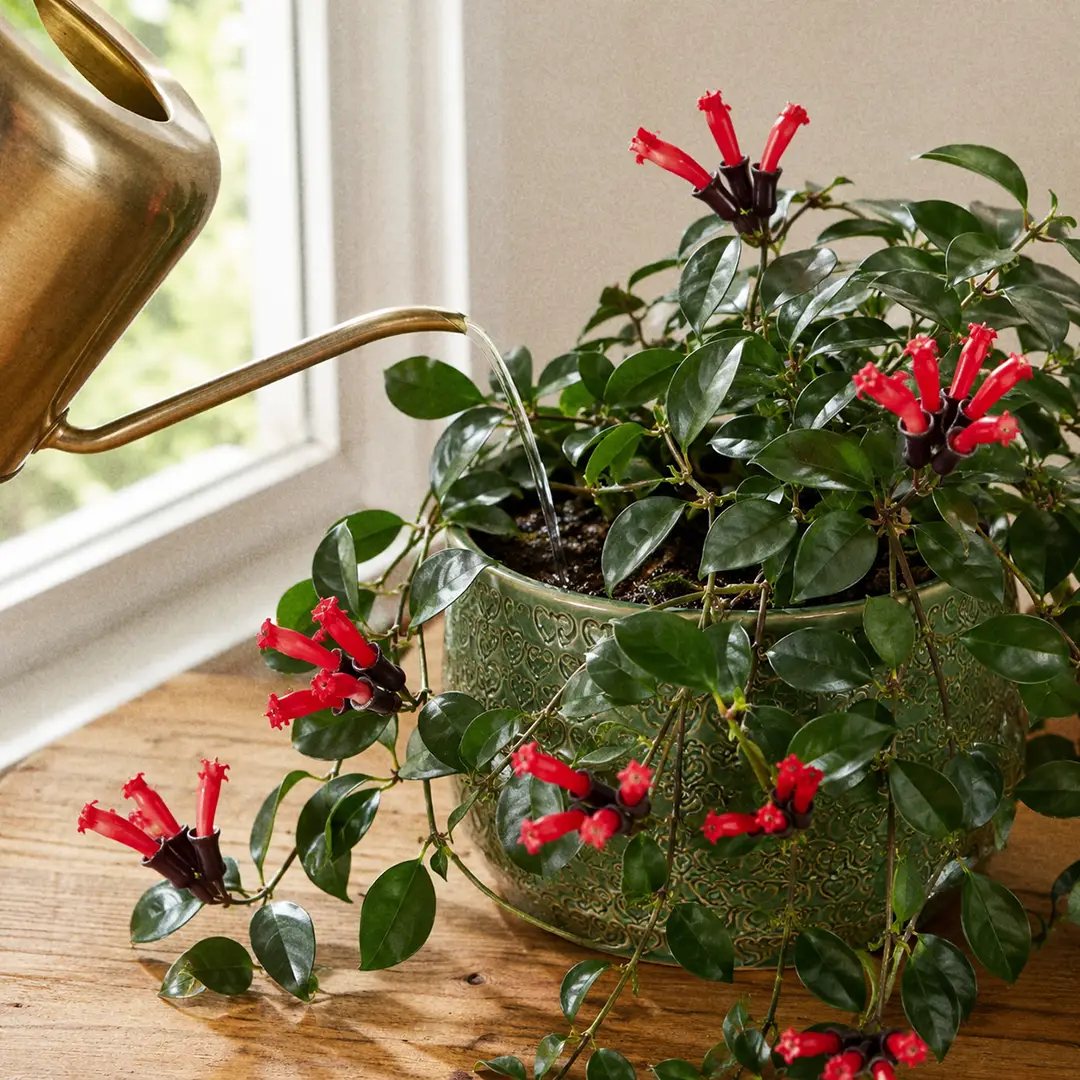
Water at the soil line and pour slowly until you see water running freely from the drainage holes. Let the pot drain fully, then tip out anything pooling in the saucer or drip tray. Standing water at the base of the pot is the fastest route to root rot on a Lipstick Plant, and once it is underway the plant declines quickly.
The plant tolerates light overhead watering far better than its African Violet cousin, since the leaves are smooth and waxy rather than fuzzy. Even so, do your best to keep water off the open flowers if the plant is in bloom. Wet petals turn translucent and brown faster than dry ones, and the bloom show ends sooner.
Bottom watering is a perfectly good option, especially for Lipstick Plants in hanging baskets that are awkward to take down for top-watering. Lift the basket into a basin of room-temperature water for fifteen to twenty minutes, then let it drain fully before re-hanging. The roots draw water up through the drainage holes evenly, and the soil rehydrates without pooling at the base.
Signs You Are Overwatering
- Lower leaves yellowing in groups within a week of watering
- Soft, blackened patches at the base of stems where they enter the soil
- A sour, swampy smell from the pot
- Soil that stays heavy and wet for more than ten days between waterings
- Whole leaves dropping cleanly when nudged, with stems looking soft just above the soil line
- Flower buds blackening and falling unopened
Signs You Are Underwatering
- The trailing stems going limp and the leaves softening
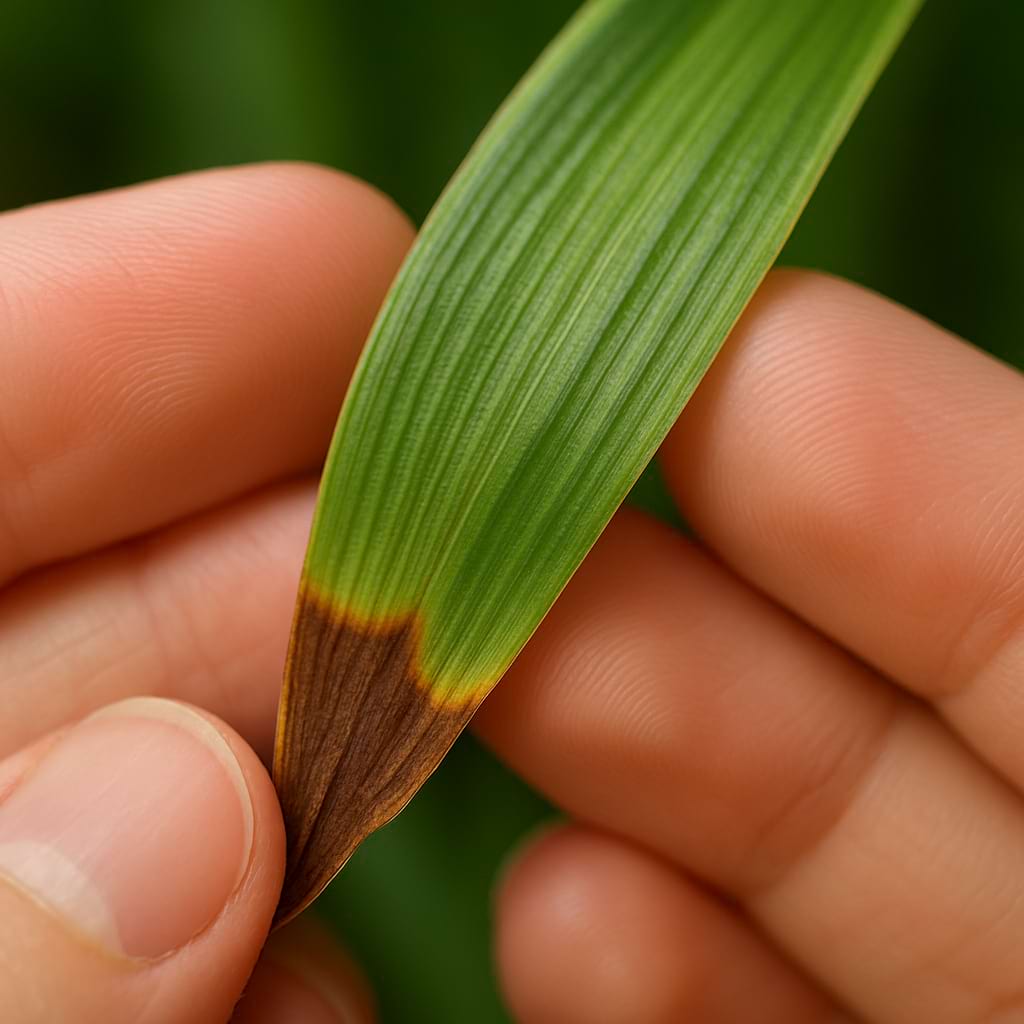
- Crispy brown leaf tips on otherwise healthy leaves
- Soil pulling away from the sides of the pot in a visible gap
- A pot that feels noticeably light when lifted
- A wholesale dropping of leaves along the older interior parts of the vines
- Flower buds drying and falling without ever opening
A thirsty Lipstick Plant recovers within a day of a good drench. A waterlogged one keeps declining for days even after you stop watering, since the rot is already underway in the roots. Erring on the dry side is always the safer call.
A Note on Water Quality
Lipstick Plants are not especially fussy about water quality, but very heavily chlorinated tap and very hard mineralised water will eventually leave a chalky white crust on the soil and brown the leaf tips. If your tap runs hard, leave the watering can out overnight to off-gas the chlorine, or switch to filtered or distilled water for the picky months. Always use room-temperature water. Cold water on warm tropical roots causes a brief stress shock and shows up as faint pale rings on the leaves.
🪴 Best Soil for Lipstick Plant (Light, Airy, Epiphyte-Friendly)
Standard bagged potting soil is too dense and too moisture-retentive for a Lipstick Plant. The plant is a tropical epiphyte and its roots want fast drainage, plenty of air, and just enough moisture-buffering to stay lightly damp between waterings. Get the mix right and you have already prevented the most common cause of plant death on this species.
A Simple DIY Mix for Lipstick Plant
This is the recipe I use for every Aeschynanthus and Hoya in my collection.
- 2 parts quality indoor potting soil or peat-based mix
- 1 part orchid bark (fine to medium grade)
- 1 part perlite or pumice
- 1/2 part coco coir or sphagnum moss for moisture-buffering
- A small handful of horticultural charcoal to keep the mix sweet
Mix in a bucket and squeeze a fistful in your hand. The mix should hold together briefly when squeezed, then crumble apart cleanly at the slightest nudge. If it stays in a hard ball, add more perlite and bark. If it crumbles into dust, add a touch more soil or coir. Aim for something with the springy, chunky texture of a top-quality orchid mix rather than a smooth dense potting compost.
What to Look For in a Premix
If a bag is your style, an "African Violet mix" works almost perfectly for a Lipstick Plant, since both plants share a love of light, slightly acidic soil. Cut it with a generous handful of orchid bark and perlite to open it up further. A dedicated "epiphyte" or "Hoya" blend works straight out of the bag if you can find one. Avoid anything labeled "moisture control" or "water retaining," which holds far too much water for a plant whose roots evolved to be wet then dry then wet again.
Why Drainage Matters So Much
Lipstick Plants have shallow, fibrous root systems that suffocate quickly in waterlogged soil. Unlike a tougher rhizomatous plant, they have no thick stem or rhizome to fall back on if the roots fail. Fast drainage keeps oxygen reaching the roots between waterings, which is the single biggest factor in keeping the plant alive long term. Spend the extra ten minutes mixing a proper epiphyte-friendly blend and the plant will reward you with years of summer flowers.
🍼 Fertilizing Lipstick Plant (Light, Steady, Bloom-Pushing)
Lipstick Plants are heavy bloomers, and bloom production is energy-expensive. They prefer a steady, light feed through the active season over occasional heavy doses, especially in the months leading up to the summer flower flush. The aim is a low-and-slow drip of nutrients, with a slight phosphorus push when buds are forming.
When to Fertilize
Feed every two weeks during the active growing season, roughly March through October in the Northern Hemisphere. In winter, when light is lower and growth slows, drop to once a month or pause feeding entirely for the coldest weeks. Resume in early spring as new growth picks up and the plant gets ready to push next season's flower buds.
What to Use
A balanced liquid houseplant fertiliser with an NPK around 10-10-10 or 20-20-20 works fine, always diluted to half the dose listed on the label. The general fertilizing guide goes deeper on why half strength is the safer rhythm for most flowering houseplants.
For the spring run-up to bloom season, switch to a slightly higher-phosphorus formula (something like 10-30-20 or any "bloom booster") for two or three feedings to push flower formation. African Violet fertilizer is the easiest off-the-shelf choice, since it is already formulated for fine-rooted Gesneriads and is widely available at most garden centres. Return to a balanced formula after the bloom-push window.
Reading the Plant
- Steady glossy leaves and bushy new growth: feeding is on point.
- Pale, smaller leaves and slowing growth: bump frequency or strength slightly.
- Lush green growth but no flower buds: too much nitrogen. Switch to a higher-phosphorus formula for a couple of feedings.
- Brown leaf tips and a chalky white crust on the soil: salt buildup. Flush the pot with plain water until it runs clear, then skip the next feeding.
- A sudden drop of unopened buds despite good watering: often a sign of fertilizer burn. Pause feeding for a month and start fresh at half strength.
A slow-release pellet stirred into the spring repot is also a fine option for low-maintenance growers. Top up with a half-strength liquid feed every three to four weeks through the warm months and the plant essentially feeds itself.
🌡️ Lipstick Plant Temperature Range
This is a tropical plant and it likes warmth. The sweet spot is between 65 and 80°F (18 to 27°C), which lines up with most warm rooms in most homes. A Lipstick Plant is noticeably less cold-tolerant than its Cape Primrose cousin, which is part of why it does best in heated rooms rather than chilly entryways.
What to Avoid
- Anything below 55°F (13°C) for more than a few nights, which slows growth and may cause leaf drop
- Sustained exposure under 50°F (10°C), which can trigger stem rot at the base
- Cold drafts from a leaky winter window or a regularly opened back door
- Hot dry blasts from a heating vent or radiator pointed directly at the foliage
- Air-conditioning vents pointed straight at the plant in summer
- Direct unfiltered hot afternoon sun through unshaded glass on a 90°F day
The Cool-Down That Triggers Blooms
Here is the most useful trick on this whole page. Lipstick Plants bloom hardest after a slightly cooler, drier rest in late autumn. Through November and December, drop the night-time temperature to around 60-65°F (16-18°C) for a few weeks, reduce watering by about half, and pause fertiliser. The plant slows down visibly, but in February and March it pushes out a heavy spring flush of buds that opens through summer. Without that cool-down, the plant still grows, but blooms more sporadically.
This is the same biological mechanism that drives Christmas Cactus and other tropical bloomers to flower on cue. A short cool-and-dry period signals "the season changed," and the plant responds by switching from foliage growth to flower production. A spare bedroom that runs a bit cooler at night is perfect for this rest period.
Seasonal Care
If you summer your plants outside in a sheltered shaded spot (Lipstick Plants do beautifully on a covered north patio in summer once nights are reliably above 60°F / 15°C), bring them back in well before the first cold nights arrive. Inspect each plant for hitchhiking pests as you bring it indoors and give it a bright spot away from cold glass for the first week. The transition can pause flowering briefly, but new buds resume within a few weeks once the plant settles.
💦 Lipstick Plant Humidity Requirements
Lipstick Plants are tropical epiphytes and they like humid air, but they are far more forgiving on this front than a Maidenhair Fern or a Calathea Orbifolia. The thick waxy leaves hold moisture in well, and the plant tolerates ordinary household humidity without complaint. It just blooms a little more reliably and looks a little glossier when the air is moist.
- Ideal range: 50 to 70 percent
- Comfortable: 40 to 50 percent
- Tolerable: 30 percent
- Trouble starts below: 25 percent (look for crispy edges, slow new growth, and bud drop)
Easy Ways to Boost Humidity
- Run a small humidifier in the room for a few hours a day, especially in winter when central heating dries the air.
- Group the plant with other humidity-loving houseplants so they share transpired moisture in a small microclimate.
- Set the pot on a tray of pebbles and water. The pot sits on the pebbles, not in the water. Less effective than a humidifier but better than nothing.
- Move it into a bright bathroom. The combination of bright indirect light and naturally high shower-time humidity suits this plant perfectly.
- Avoid heavy daily misting. Quick light misting once or twice a week is fine in dry winter air, but soaking the foliage every day invites fungal leaf spot, especially when the plant is in bloom.
A general overview of boosting humidity for indoor plants helps if your home runs especially dry in the cold months.
🌸 Lipstick Plant Flowers (Red Tubes Pushing From Dark Calyces)
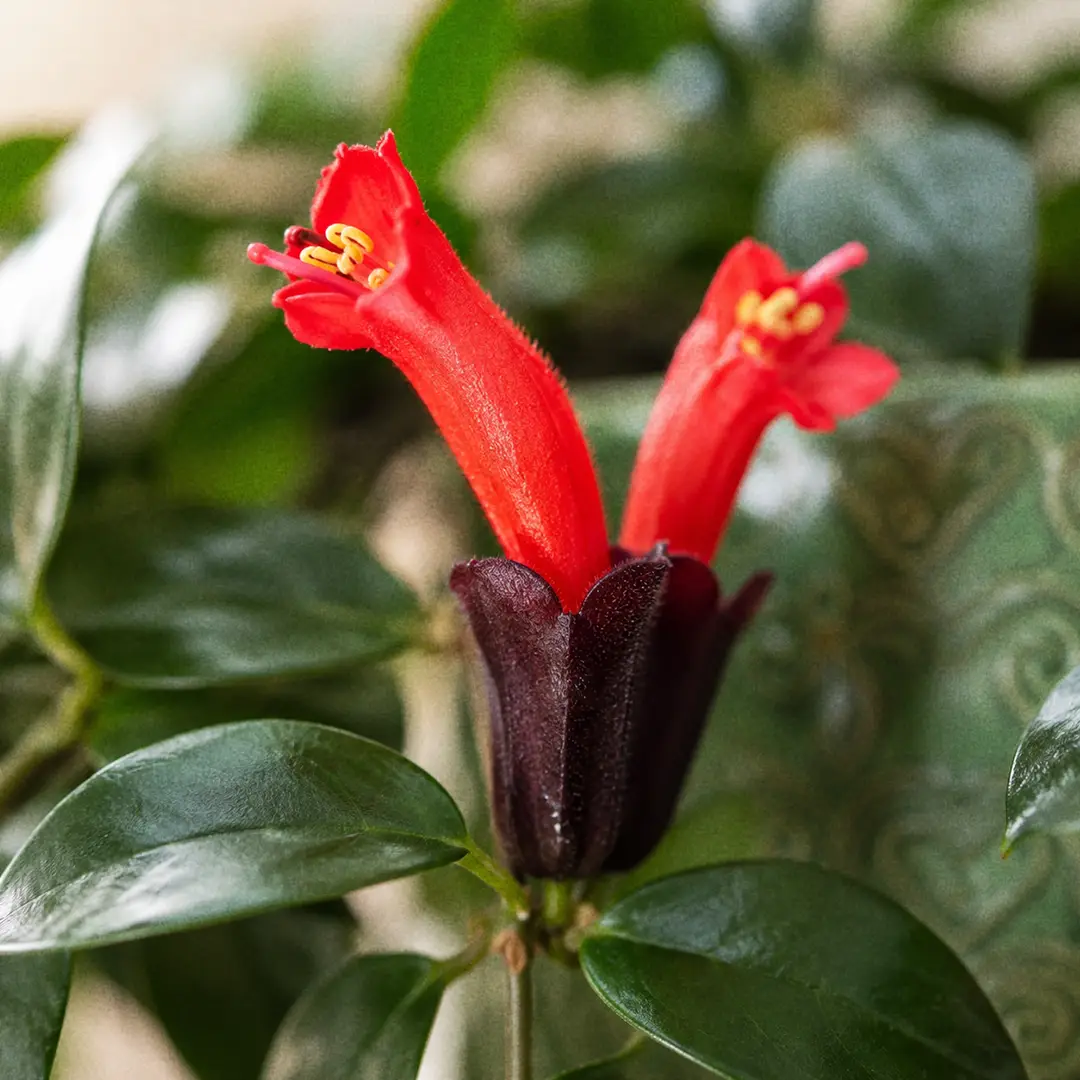
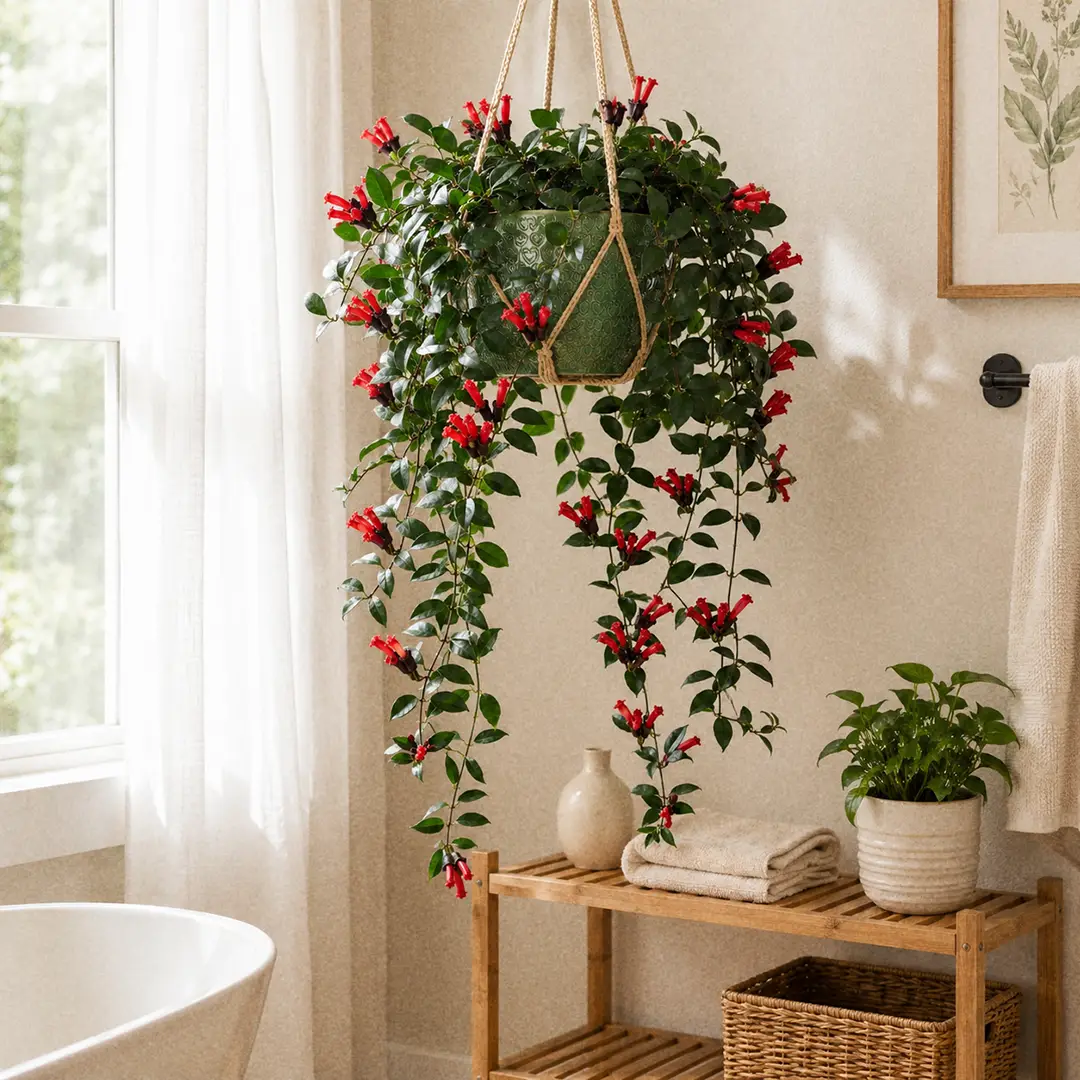
This is where the Lipstick Plant earns its name. The flowers form in clusters at the very tip of each long trailing stem, with several flower buds emerging together from a single stem tip. Each bud forms inside a dark, almost black-maroon calyx that looks like a tube or sleeve. Then the bright scarlet-red tubular flower pushes out of the calyx, exactly like a tube of lipstick rising from its case. The visual is striking, the color contrast is dramatic, and a healthy plant in heavy bloom carries dozens of these little tubes at once.

What the Flowers Look Like
Each individual flower is two to three inches long, slim and tubular, fused into a curved trumpet that flares slightly at the open end where the stamens stick out. The classic species (Aeschynanthus radicans) produces bright scarlet-red flowers, but cultivar breeding has produced orange, coral, yellow, and even bicolor versions. The dark calyx around the base of the flower is part of the visual signature. It stays in place even after the flower drops, giving the plant a second wave of dark interest after the bright red show fades.
Flowers form at the tips of mature stems, in clusters of three to eight per stem tip. A healthy plant in good light produces multiple stem-tip clusters at once, with successive flushes of fresh flowers replacing spent ones through summer and into autumn. Each individual flower lasts five to ten days. The whole bloom show on a single plant can stretch from late June through early October indoors.
After flowering, Lipstick Plants occasionally produce long slim seed pods. Most cultivars rarely set seed indoors, but if pods form, snip them off so the plant redirects energy into new flowers rather than ripening seed.
How to Trigger Heavy Blooms
The Lipstick Plant flowers when several conditions line up at once. Check each one and the plant will reward you.
- Bright indirect light, with one to three hours of soft morning sun. Light is bloom fuel and this plant absolutely needs it to flower. A plant in dim light grows fine but refuses to flower.
- A cool-and-dry rest period in late autumn. Around 60-65°F (16-18°C) at night and reduced watering for four to six weeks, then back to warm conditions. This is the single most reliable trigger for a heavy spring-summer bloom.
- Steady half-strength feeding through the growing season, with a higher-phosphorus push for two or three feedings as buds start to form.
- A slightly snug pot. The plant flowers best when slightly root-bound. Repotting too often can delay blooming by a year.
- Pruning after each bloom flush. Trim spent flower-bearing stems by a third right after the flowers drop. Flowers form on the new growth that follows, so pruning resets the bloom cycle.
If your Lipstick Plant has stopped blooming, the most common reason is light, followed by missing the autumn cool-down, followed by overwatering through winter. Move the plant a foot closer to your brightest indirect window or add a small grow light, and rebuild the seasonal rhythm. Most stalled plants come back into bloom within one full seasonal cycle.
Spent Bloom Cleanup
Lipstick Plants are mostly self-cleaning. Spent flowers drop on their own, and the dark calyx eventually browns and drops too. Once a week, run your fingers gently through the foliage and pick off any browned petals or finished calyces still hanging on. Do not let spent flowers sit on damp foliage in a bathroom or kitchen window, since they encourage botrytis gray mould.
🏷️ Lipstick Plant Types and Varieties
The genus Aeschynanthus contains around 150 species, most of them tropical Asian epiphytes, but only a handful are commonly grown as houseplants. Most plants sold today are cultivars or hybrids of Aeschynanthus radicans, with a few notable selections from other species. The variation runs from leaf shape and color to flower color, with the bright red scarlet trumpet of the type species being just one of many possible looks.

Aeschynanthus radicans 'Mona Lisa'
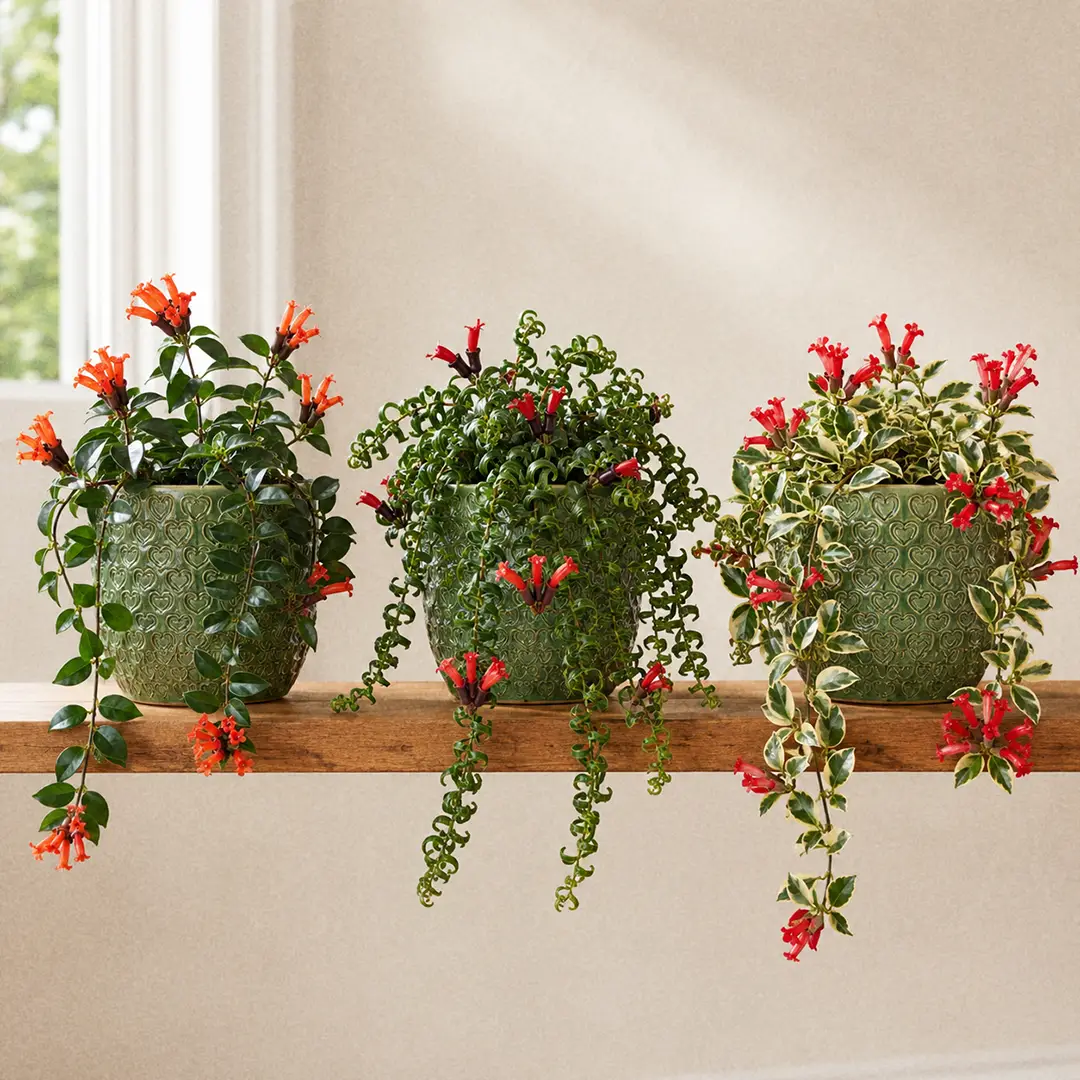
The most widely sold cultivar, with bright orange-red trumpet flowers slightly larger than the species. 'Mona Lisa' is a vigorous bloomer and a forgiving grower, and is the cultivar most commonly sold simply as "Lipstick Plant" at garden centres. If you cannot find a label and the flower is orange-red rather than pure scarlet, this is probably what you have.
Aeschynanthus radicans 'Cassiopeia'
A reliable rebloomer with classic scarlet-red flowers and slightly more compact growth. 'Cassiopeia' tends to bloom for a longer stretch than the type species and is a favourite for hanging baskets where heavy continuous bloom is the goal.
Aeschynanthus radicans 'Variegata'
A stunning leaf-variegated cultivar with cream and green marbled foliage and the same bright red flowers as the type species. The contrast between the cream-marked leaves and the scarlet flowers is dramatic. Slightly slower-growing than the all-green forms, and a touch more demanding on light, since the variegated tissue does not photosynthesise as efficiently.
Aeschynanthus 'Rasta' (Curly Lipstick)
Sold as 'Rasta' or 'Curly Lipstick,' this cultivar has dramatically twisted, curly leaves that look almost like little springs along the stems. Same scarlet-red flowers as the species, but the foliage alone is a feature even between bloom flushes. A solid choice if you find the standard smooth-leaved form a bit predictable. Sometimes confused with the 'Twister' cultivar, which has a similar look with slightly tighter curls.
Aeschynanthus 'Black Pagoda'
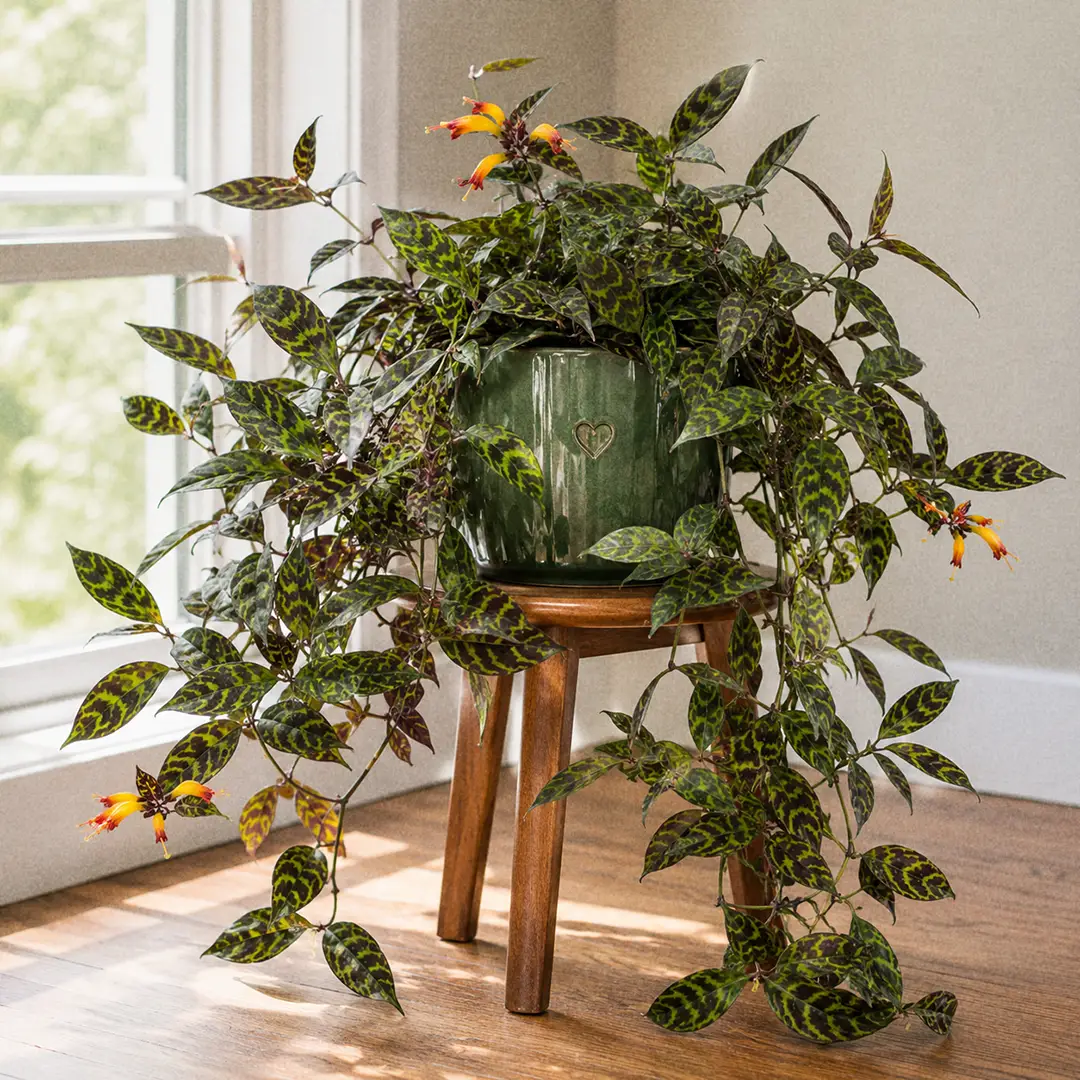
A different species (Aeschynanthus longicaulis) with deep maroon, marbled near-black leaves and pale yellow-green tubular flowers spotted with maroon. The leaves are the showpiece on this one rather than the flowers, and the dark foliage looks dramatic against a pale wall. Care is essentially identical to the standard Lipstick Plant. A great companion plant on the same shelf with a classic red-flowered cultivar for a side-by-side foliage comparison.
Aeschynanthus speciosus
A larger-growing species with broader leaves and looser clusters of orange-yellow flowers tipped in red. Less common in shops than radicans, but a striking plant when you find it. Wants a slightly larger basket and slightly more humidity than the standard Lipstick Plant.
'Krakatau' and 'Curly Q'
Two newer cultivars with twisted leaves like 'Rasta' but slightly different leaf-curl patterns and growth habits. 'Krakatau' has a tighter-twisted, almost corkscrew leaf and pure red flowers. 'Curly Q' carries softer curls and slightly more orange-toned flowers.
Lipstick Plant vs. Goldfish Plant
The most useful comparison for a beginner. Both are tropical Gesneriads, both have tubular flowers, and both work as hanging-basket plants. The Goldfish Plant (Nematanthus gregarius) carries pouchy fish-shaped flowers that look like tiny goldfish swimming among glossy green leaves. The Lipstick Plant carries longer, slimmer trumpet flowers that emerge from dark calyces, with a more dramatic color contrast. Goldfish Plant flowers are usually orange. Lipstick Plant flowers are usually scarlet red. Care is broadly similar (both want bright indirect light, humidity, and an epiphyte mix), but the Lipstick Plant is slightly tougher on humidity and slightly more forgiving of missed waterings.
Lipstick Plant vs. Hoya
Both are tropical epiphytes that hang beautifully and bloom in summer, but they look entirely different. The classic Hoya Carnosa has thick succulent waxy leaves and produces tight star-clustered umbels of tiny waxy flowers. The Lipstick Plant has thinner glossy leaves and produces larger, individually striking tubular flowers in clusters at the stem tip. Hoyas are more drought-tolerant and slower-growing. Lipstick Plants are faster-growing, slightly thirstier, and bloom more reliably in their first year or two.
Lipstick Plant vs. African Violet
Both are Gesneriads and both want similar feeding and soil. The African Violet is a tabletop rosette plant with fuzzy round leaves and small flowers held just above the foliage. The Lipstick Plant is a long trailing vine for hanging baskets with smooth waxy leaves and dramatic tubular flowers at the stem tips. They share family-level care preferences but look completely different in the home.
When buying, look for a plant with a full crown of dark glossy leaves, several long stems trailing evenly around the rim, and ideally a few fat unopened maroon calyces already forming at the stem tips. Avoid plants with limp drooping stems, soft brown patches at the soil line, or yellowing lower leaves all around the rim of the pot.
🪴 Potting and Repotting Lipstick Plant
Lipstick Plants prefer to be slightly root-bound and bloom best when their roots are gently squeezed by the pot. This means you do not need to repot often. The annual repot beloved of so many other houseplants would actually delay flowering on this one. Plan on a refresh every two to three years, and only when the plant is genuinely outgrowing its container.
When to Repot
Look for these clear signals that the plant actually wants more space:
- Roots circling the bottom of the pot when you slide the plant out, forming a tight network
- Roots growing visibly out of the drainage holes
- Water running straight through the pot in seconds with almost no absorption
- A noticeable slowdown in growth and bloom production despite good light and feeding
- Soil that has visibly broken down into a dense, sour-smelling sludge
- The plant pushing itself up out of the pot under root pressure
Avoid repotting in mid-summer when the plant is in heavy bloom. The disturbance often pauses flowering and shocks the plant during its most productive time. Late winter to early spring is the cleanest repot window, just as the plant is waking back up after the autumn cool-down.
Choose the Right Pot
A Lipstick Plant is happiest in a pot only one to two inches wider than its current root ball. Drainage holes are mandatory. Hanging baskets with built-in drainage and a removable saucer are ideal, since they show off the trailing stems while letting water drain away from the roots.
- Plastic hanging baskets are the most common choice. Lightweight, hold moisture longer, and easy to swap.
- Coco-fibre lined wire baskets drain extremely well and look great, but dry out quickly and need more frequent watering.
- Glazed ceramic with a hanging hook suits the bathroom or kitchen and buffers moisture better than plastic.
- Self-watering hanging baskets can work, since the plant likes consistent moisture without sogginess. Use cautiously and never let the reservoir overflow into the soil.
How to Repot, Step by Step
- Water the plant lightly the day before so the root ball holds together when you slide it out of the basket.
- Choose a new pot or basket only one to two inches wider than the current one.
- Add an inch of fresh epiphyte-style mix to the bottom.
- Slide the plant out and gently tease apart any tightly circling roots at the bottom.
- Trim away any roots that are mushy, brown, or hollow. Healthy Lipstick Plant roots are firm and pale tan.
- Set the plant in the new pot at the same depth it was sitting before. Do not bury the lowest stems or leaves.
- Backfill around the roots with fresh mix, tapping the pot gently to settle it. Do not pack hard.
- Water lightly and place the plant back in its usual bright indirect spot.
A general overview of repotting houseplants covers the broader basics. For Lipstick Plants specifically, the rule that matters most is: do not bury the crown, and do not move up into a giant pot in one jump. A pot that is much too large holds excess soil and stays wet too long, which is the single fastest way to rot this plant.
✂️ Pruning Lipstick Plant
Pruning is non-optional on a Lipstick Plant if you want it to look full and bloom heavily. Untrimmed plants quickly turn into a few long bare vines with sparse leaves and a tuft of green at the very tip. A well-pruned plant stays full and bushy from the rim of the basket all the way down to the stem tips, with multiple flowering stem tips at once instead of just one or two.
Prune After Each Bloom Flush
The most important pruning rhythm. Right after each bloom flush ends in late summer or early autumn, trim each spent flowering stem back by about a third with clean sharp snips. The plant responds by branching from the cut point, doubling the number of stem tips that can carry next year's flowers. Skip this step and the plant blooms less and less each year.
Trim Back Leggy Stems
Through the growing season, look out for stems that have stretched into long bare lengths with leaves only at the tip. Trim these back by half to encourage branching from the cut point. The cuttings can be saved for propagation (see the next section). A Lipstick Plant in heavy bloom does not look leggy, but a stretched winter plant in low light often does, and a hard prune in early spring resets the whole plant for the new season.
Pinch the Tips of New Growth
For an extra-full plant, pinch the very tip out of each new growing stem during spring. This forces the stem to branch from the next leaf node down, and a single pinch can turn one stem into two or three. Do this only on non-flowering stems, since the flowers form at the tips and pinching them removes the flowers.
Remove Diseased or Damaged Tissue
Any leaf that has gone soft, mushy, or dark-spotted should be snipped off at the stem with clean snips. Same for any stem that has rotted at the base or shrivelled to brown. Cut back into clean firm tissue, and clean your snips with rubbing alcohol between cuts so you do not spread fungal issues across the plant.
Cleaning the Leaves
Lipstick Plant leaves are smooth and waxy and naturally repel dust better than fuzzy-leaved Gesneriads. Once a couple of months, wipe the leaves down gently with a soft damp cloth to remove accumulated grime. Clean leaves photosynthesise better and look noticeably fresher between flower flushes.
🌱 How to Propagate Lipstick Plant
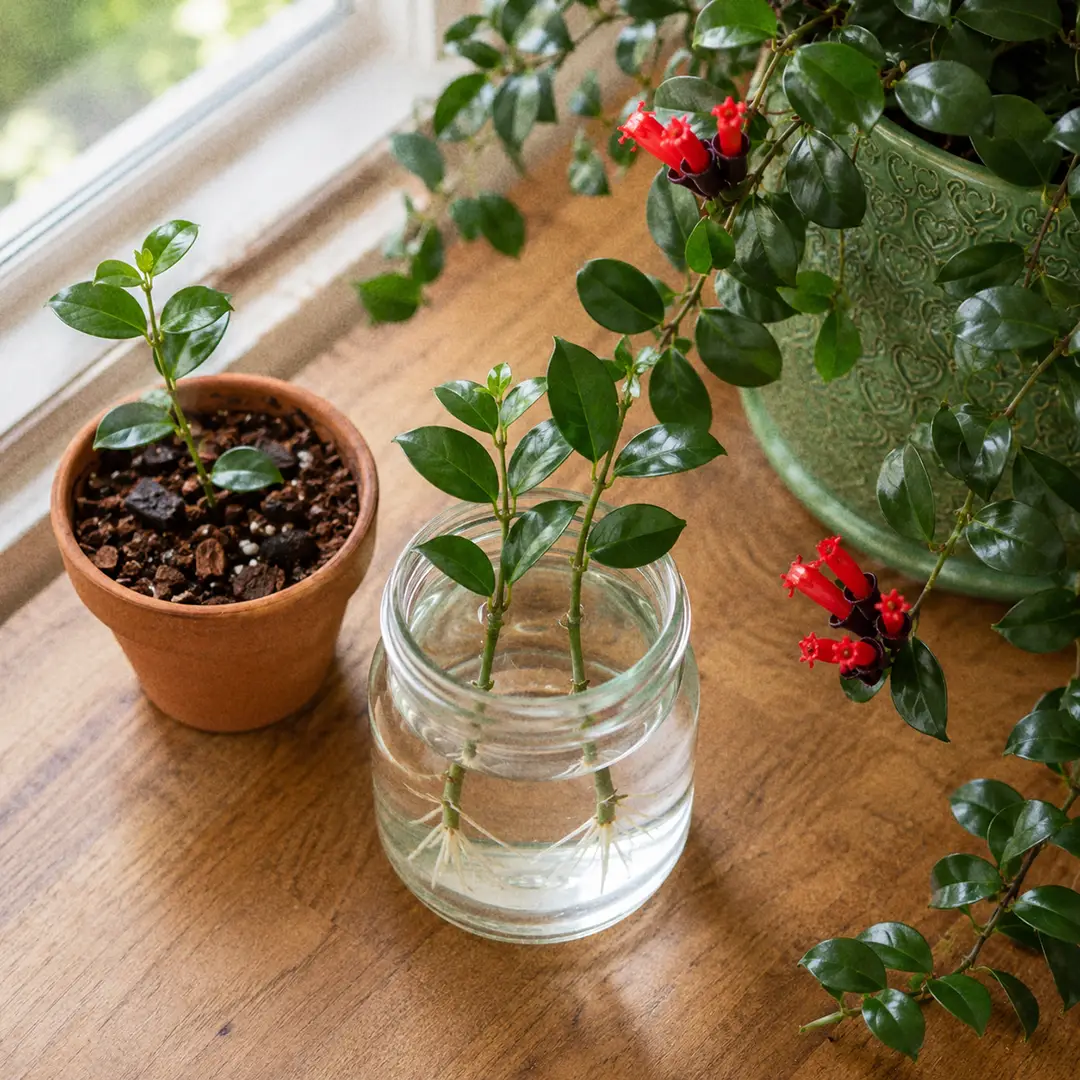
The Lipstick Plant is one of the easiest tropical Gesneriads to propagate. Stem cuttings root reliably in either water or directly in damp soil, and a cutting taken in spring is usually a flowering plant by the following summer. The post-bloom prune in late summer is the perfect free supply of cutting material.

Method 1: Water Propagation (The Easiest)
This is the method I use for most cuttings, since it lets me watch the roots develop and time the move into soil exactly right.
- Choose a healthy, non-flowering stem tip with at least four pairs of leaves.
- Cut a four to six inch piece of stem with clean, sharp scissors, just below a leaf node. The leaf node is where new roots will form.
- Strip the leaves from the bottom two pairs so the lower stem is bare. Leave the top leaves intact.
- Drop the cutting into a clean glass jar of room-temperature water. Make sure no leaves are submerged, since submerged leaves rot quickly and foul the water.
- Place the jar in bright indirect light, never direct sun. Direct sun on a glass jar of water cooks the developing roots.
- Change the water every three to five days to keep it fresh and oxygenated.
- New roots usually appear from the leaf nodes within two to three weeks. Wait until the roots are at least an inch long before potting up.
- Pot the rooted cutting into a small pot of damp Lipstick Plant mix. Water lightly and place back in bright indirect light.
- Keep humidity slightly higher than usual for the first couple of weeks while the plant adjusts to soil. A clear plastic bag loosely tented over the pot helps.
The general water propagation guide covers the broader technique.
Method 2: Soil Propagation (Skip the Water Step)
Slightly faster overall once the cutting takes hold, since you skip the move from water to soil.
- Take a four to six inch stem-tip cutting as described above.
- Strip the lower leaves and let the cut end air-dry for half an hour to callus over slightly.
- Dip the cut end in rooting hormone (optional but speeds things up).
- Insert the cutting cut-end-down into a small pot filled with damp epiphyte-style mix. Bury the bottom inch of the stem.
- Cover the pot loosely with a clear plastic bag or propagation lid to hold humidity at around 70 percent.
- Place in bright indirect light. Keep the soil consistently damp but never soggy.
- After three to four weeks, give the cutting a gentle tug. Resistance means roots have formed.
- Once the cutting shows new top growth, gradually wean it off the humidity dome by opening it a little more each day.
The soil propagation guide covers the broader technique.
Method 3: Air Layering
A more involved option, useful if a stem is already very long and you want to root a section without cutting it from the parent. Wrap a node halfway down a long stem in damp sphagnum moss, cover the moss with cling film, and tie at both ends. Roots form into the moss within a few weeks, at which point you cut the stem below the rooted section and pot up. This method works well on older woody stems that root slowly from a standard cutting.
What Does Not Work
- Single-leaf cuttings: Lipstick Plants do not produce plantlets from individual leaves, unlike a Cape Primrose or African Violet. You need a stem section with at least one leaf node.
- Cuttings of flowering stems: stems carrying flowers root poorly because the plant is investing energy in the flower instead of new roots. Wait until the bloom finishes, or take the cutting from a non-flowering stem.
- Cuttings without a node: a stem section with no leaf node along its length cannot root. Always cut just below a node and leave at least two nodes on the cutting.
🐛 Lipstick Plant Pests and Treatment
Lipstick Plants are not major pest magnets, but indoor air gets dry and dusty, and pests find their way in eventually. Inspect the undersides of leaves and the inner curve of stems every couple of weeks. Quarantine any new plant for two weeks before placing it next to your existing collection. That habit alone prevents most pest problems before they start.
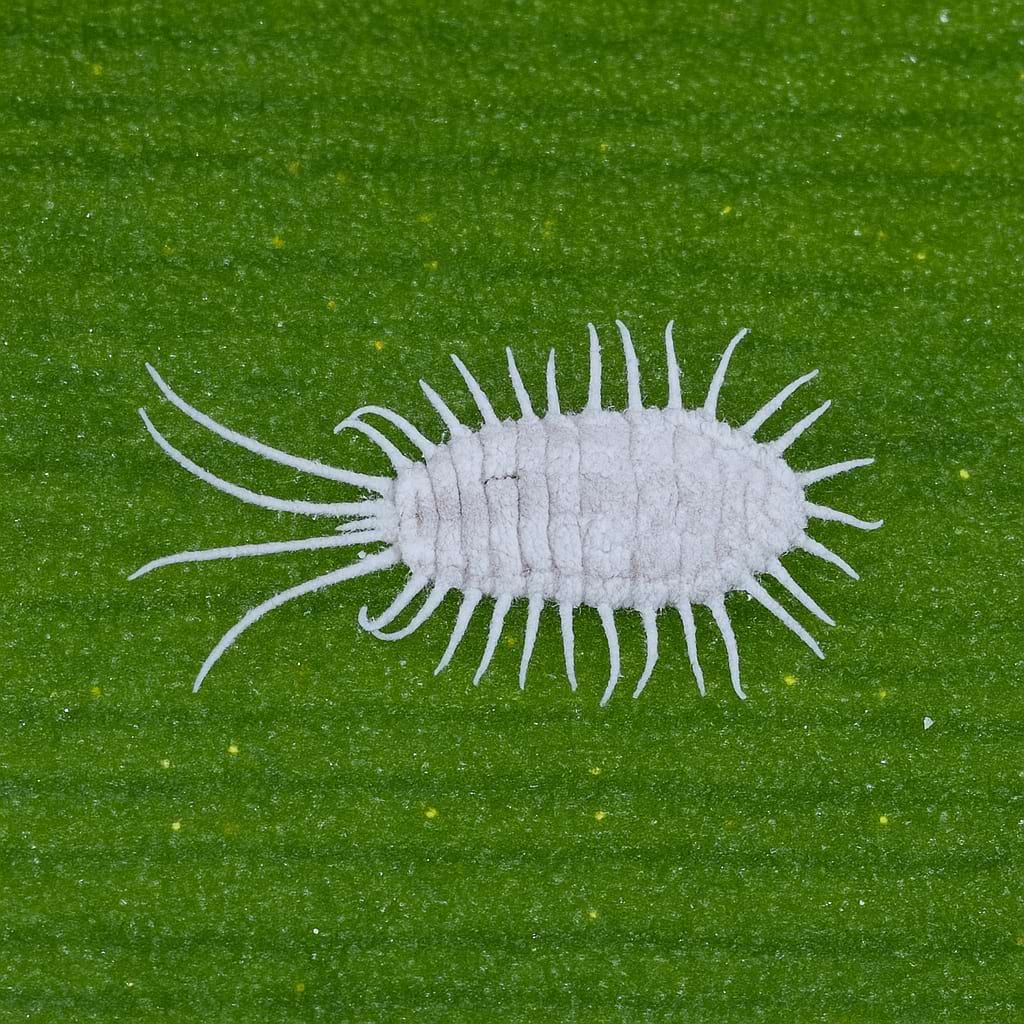
Mealybugs cluster in leaf joints, at the base of stem tips, and inside the dark calyces of the flower buds, looking like tiny tufts of cotton. The flower calyces are a particular favourite hiding spot, since the dark sheltered space mimics the cracks in tree bark mealies love. Dab each one with a cotton swab dipped in 70 percent isopropyl alcohol, then wipe down the surrounding leaf. Repeat every five days for three weeks to break the egg cycle.
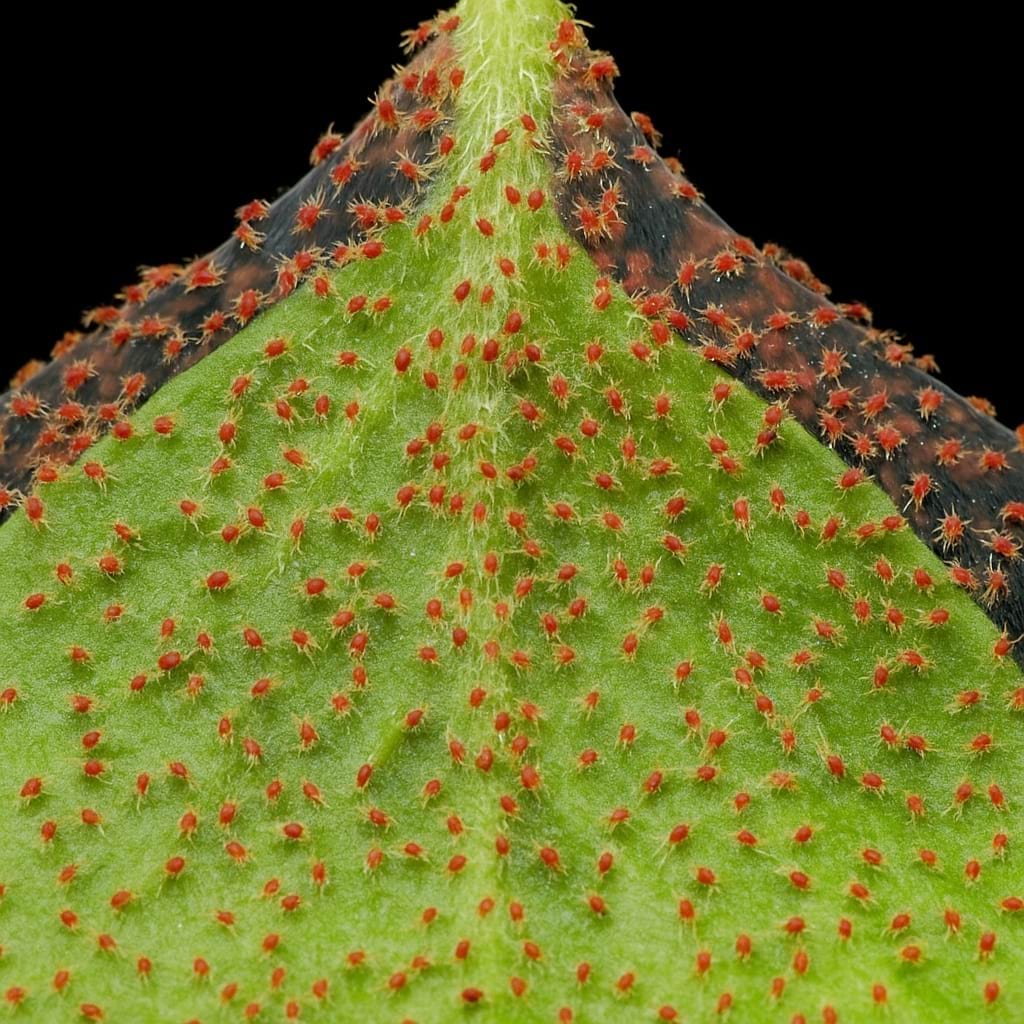
Spider mites become a problem when winter heating dries out the air. Look for fine webbing in the leaf joints and tiny stippled dots dulling the leaf surface. Boost humidity, wipe leaves down gently with a damp cloth, and treat with insecticidal soap or neem oil weekly until you see two clean inspections in a row.
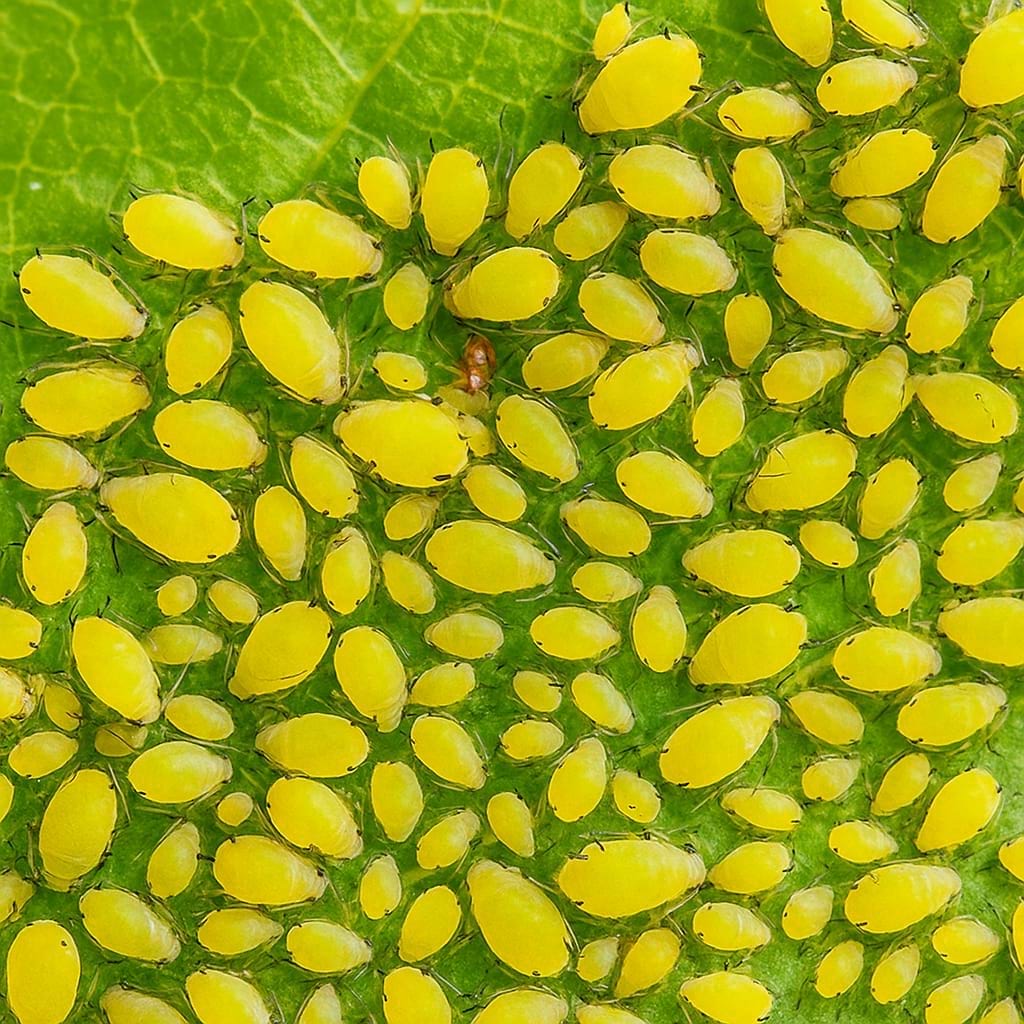
Aphids cluster on fresh new growth and the soft tips of unfurling buds. Rinse them off in the sink first, then follow up with insecticidal soap if any return. They are most common in spring as fresh growth unfurls fast.
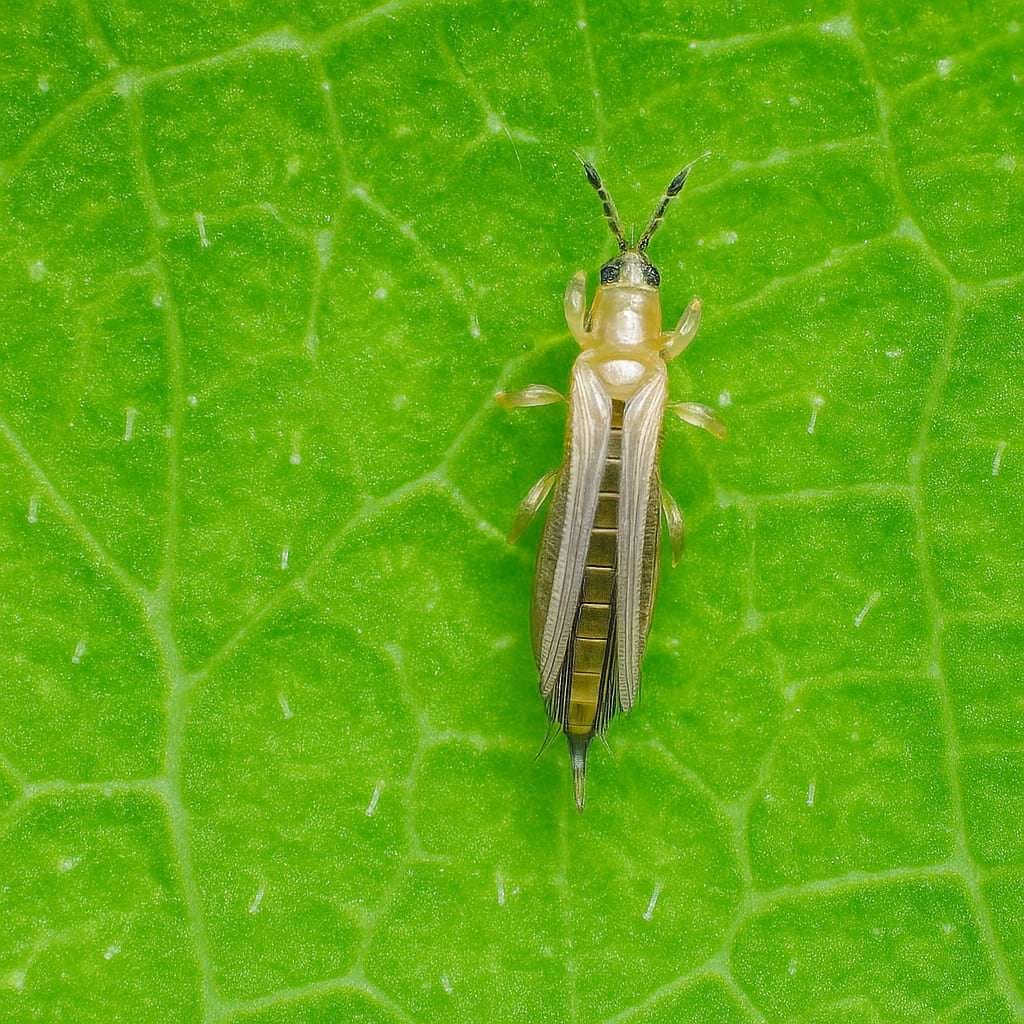
Thrips leave silvery scratch marks on leaves and can deform new flower buds before they fully open. Lipstick Plants in heavy bloom are particularly attractive to thrips, since the tubular flowers are warm sheltered nurseries for the larvae. Treat aggressively with a whole-plant insecticidal soap drench or repeated weekly rounds, and isolate the plant from the rest of your collection until the population is gone.
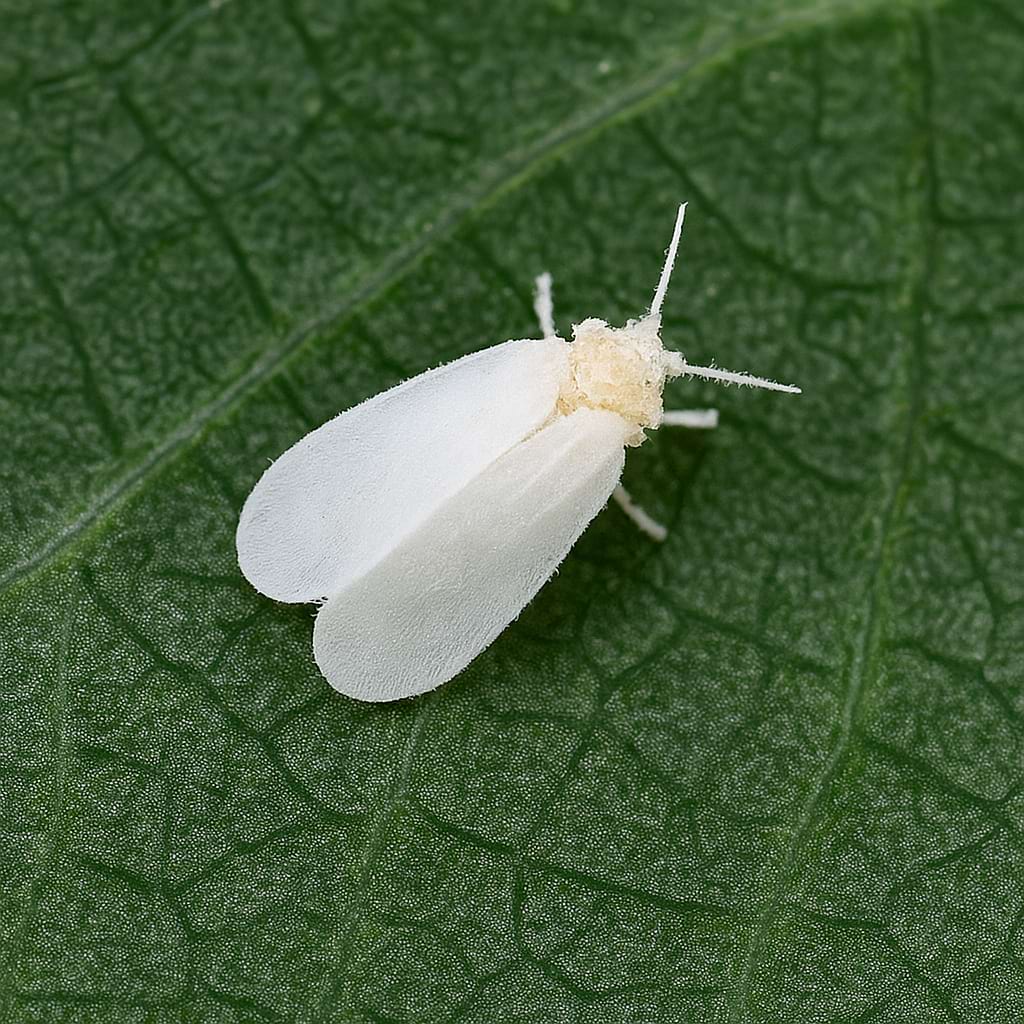
Whiteflies are common on plants that have spent the summer outdoors. They lift off in a small cloud when you brush the foliage. Yellow sticky traps catch most of the adults, and weekly insecticidal soap sprays handle the rest. Check carefully when bringing plants in for the winter.
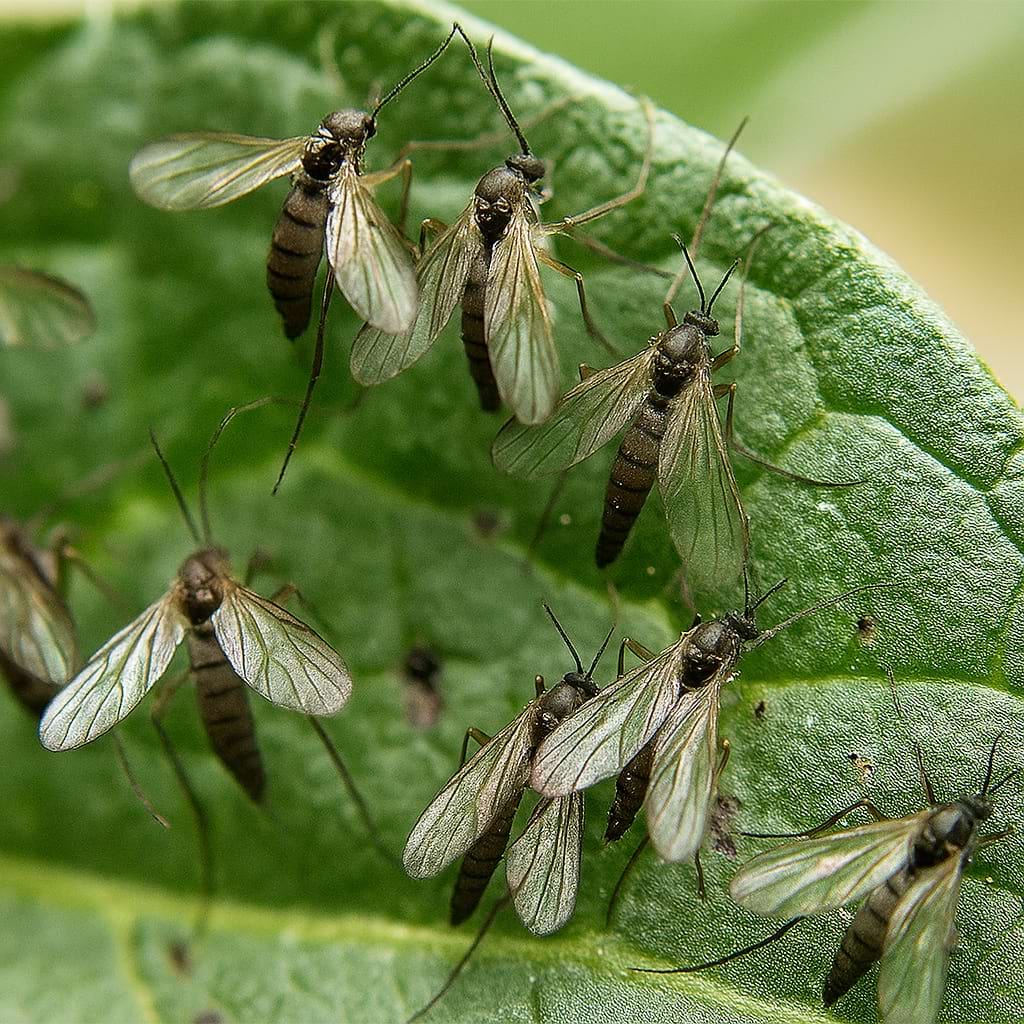
Fungus gnats signal that the soil is staying too wet. Their larvae live in the top layer of damp soil and chew on tender new roots. Let the top inch dry out fully between waterings, top-dress with a half inch of dry sand or fine bark, and use yellow sticky traps to knock down adults.
A general primer on pest prevention in winter covers the seasonal patterns that catch most flowering houseplant owners off guard.
🩺 Common Lipstick Plant Problems
Most issues with this plant trace back to watering, light, or temperature. Here is how to read what your Lipstick Plant is telling you.
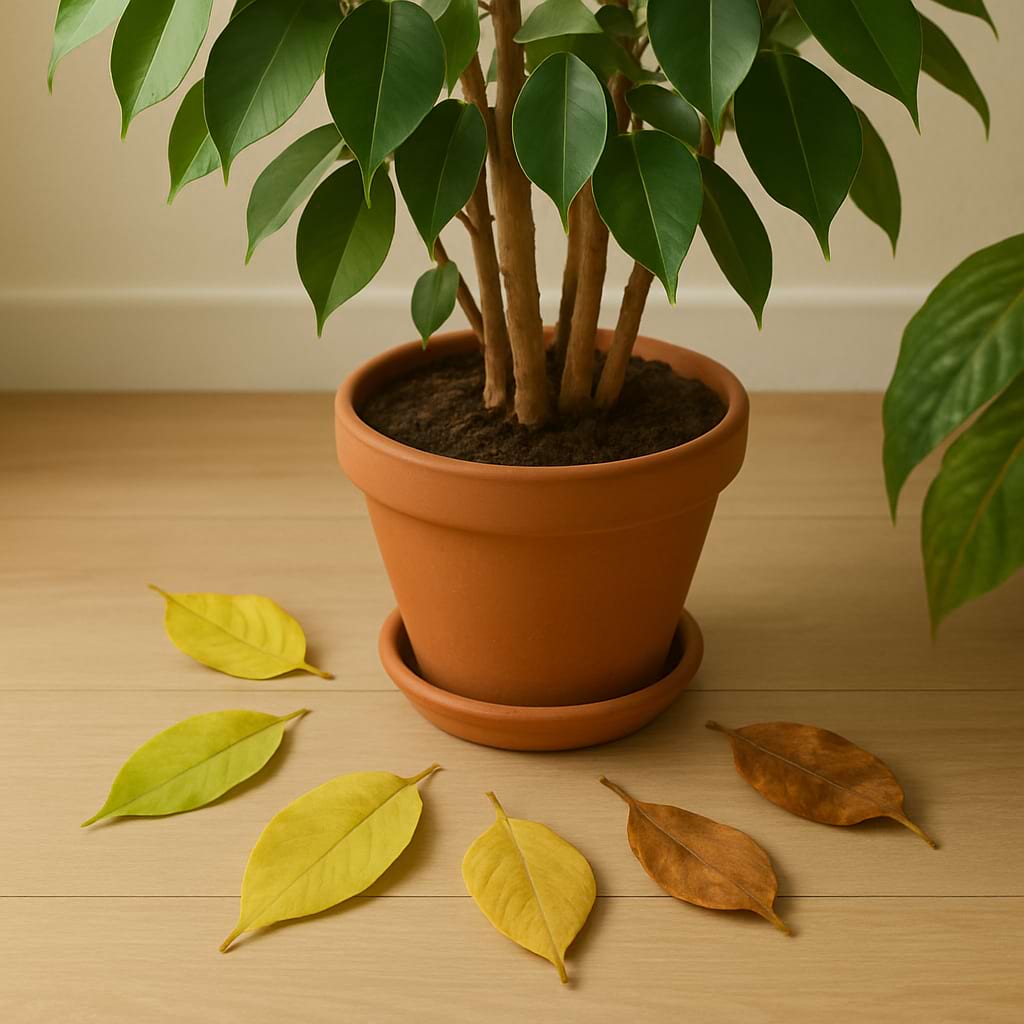
Yellowing leaves along the lower interior of the vines are usually a sign of overwatering or the natural ageing of the oldest leaves. Check the soil moisture. If it is wet a week after watering, you are watering too often or the soil is too dense. The occasional yellow lower leaf on a mature plant is also normal as old leaves age out.
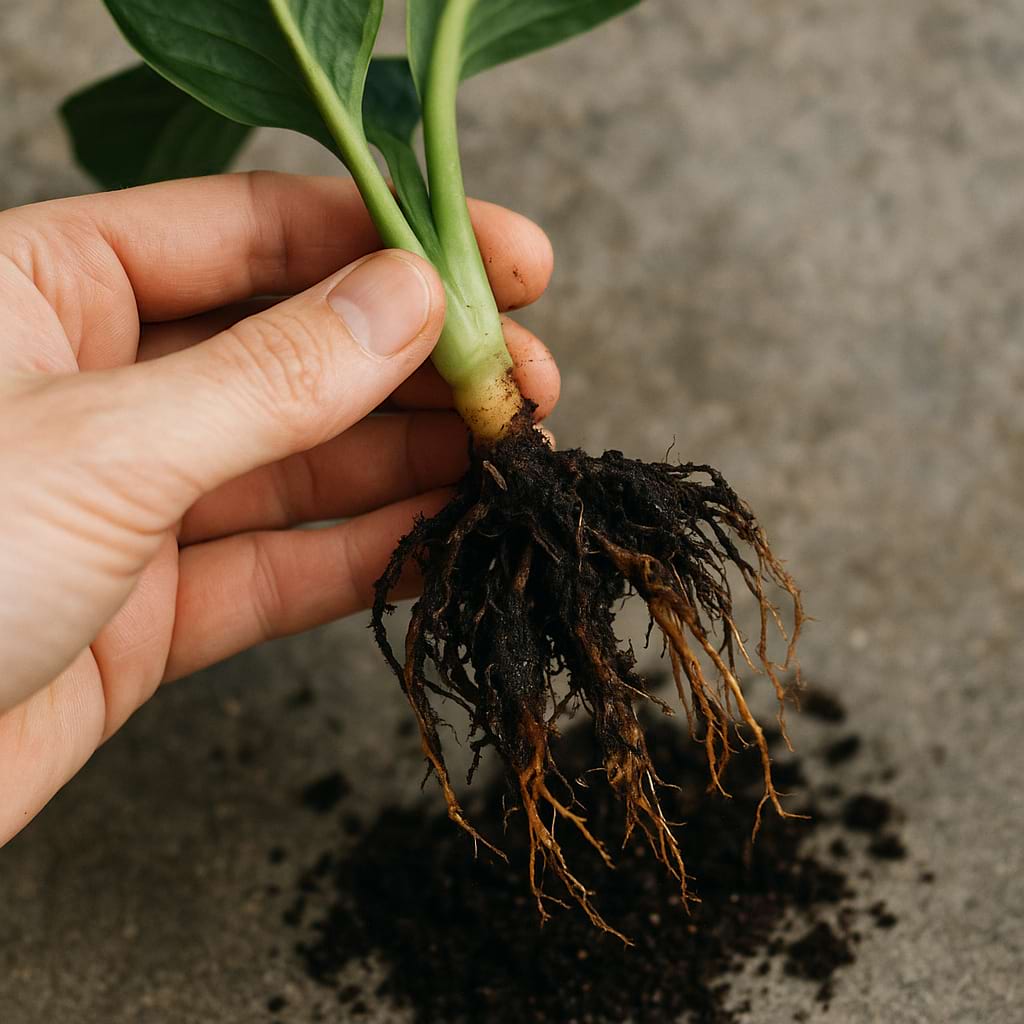
Root rot is the worst-case version of overwatering and the leading killer of Lipstick Plants indoors. If yellowing is paired with mushy stems at the base and a sour smell from the soil, slide the plant out, cut back to firm clean roots and crown tissue with a sterile blade, dust the cut with cinnamon or sulfur, and replant in fresh dry mix. Hold off on watering for a week and on fertilizer for at least a month. Severe cases sometimes require taking stem-tip cuttings from healthy growth and starting fresh.
Failure to bloom on a Lipstick Plant almost always points to one of three causes. The most common is not enough light. Move the plant a foot closer to your brightest indirect window or add a small grow light. The second is missing the autumn cool-down rest period, which is the single biggest bloom trigger. The third is overfeeding with high-nitrogen fertilizer, which pushes leaf growth at the expense of flower buds. Switch to a higher-phosphorus formula for a couple of feedings.
Leaf drop of multiple leaves over a few days usually signals a sudden shock: a move, a draft, a big swing in temperature, or a heavy overwatering event. It is also normal during the first week of bringing a plant indoors after a summer outside. Stabilise conditions and wait. A healthy Lipstick Plant rebuilds within a few weeks.
Brown crispy edges on otherwise healthy leaves point to dry air, inconsistent watering, or fertilizer salt buildup. Boost humidity, settle into a regular watering rhythm, and flush the pot with plain water once every couple of months to clear salts.
Leggy growth with long bare stems and leaves only at the very tips usually means the plant is reaching for more light. Move it to a brighter spot and prune the leggy stems back by half to encourage branching from the cut points. The cuttings can be saved for propagation.
Wilting or drooping usually points to one of two opposite causes. Dry, lightweight soil and limp stems mean the plant is thirsty: water it and the stems perk back up within a day. Wet, heavy soil and limp stems mean the roots are rotting: holding off on water and addressing the rot is the only fix. Check the soil before acting.
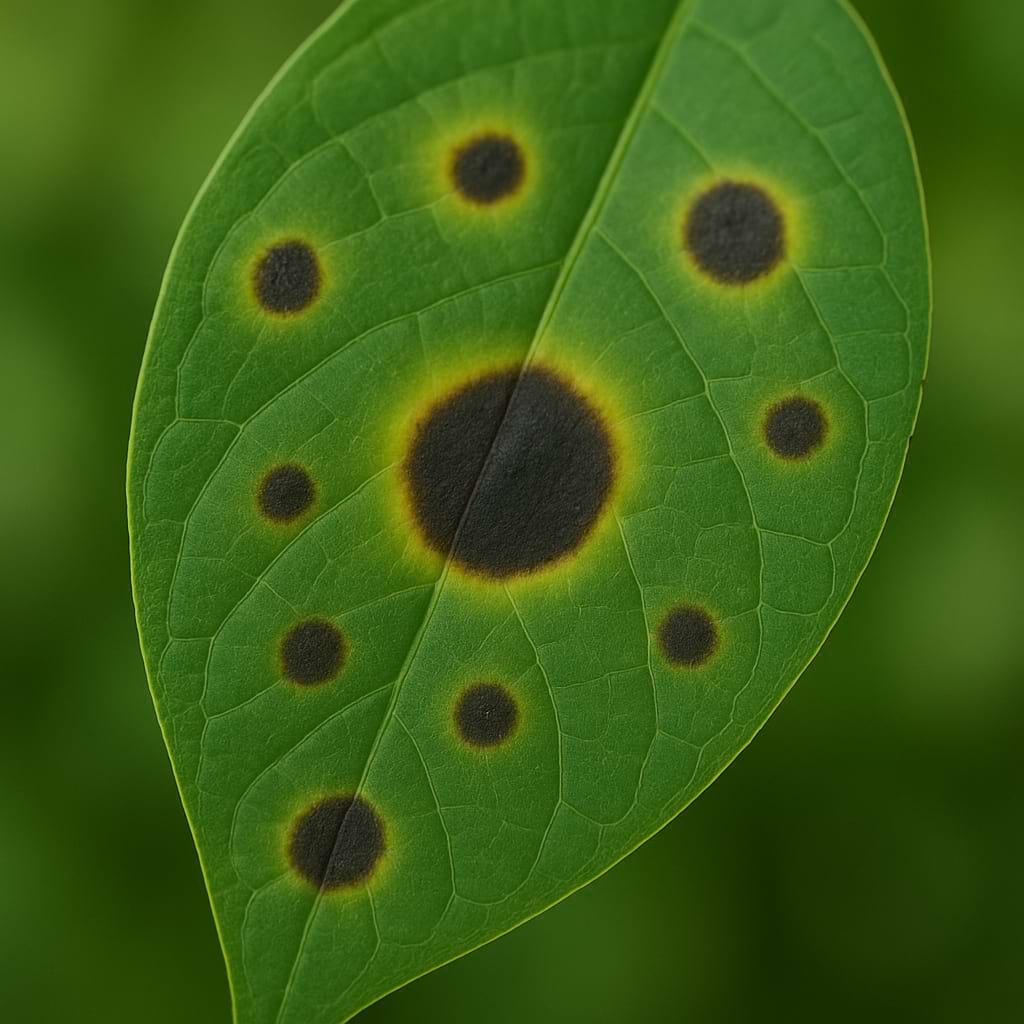
Brown-black spots on leaves can indicate a fungal leaf-spot disease, often caused by water sitting on the leaves overnight or by a botrytis gray mould developing on spent flowers. Trim affected leaves, water the soil only, improve air circulation around the plant, and remove spent blooms promptly.
A slow-growing plant with sparse foliage and almost no flowers, despite watering and feeding, is almost always a light problem. The plant is healthy enough to survive but does not have the energy reserves to bloom. A move closer to a bright window or a small LED grow light fixes it within one full seasonal cycle.
🖼️ Lipstick Plant Display and Styling Ideas
The Lipstick Plant is a long-trailing flowering vine with dramatic red flowers and glossy dark green leaves. It is a hanging-basket plant first and foremost, and looks best when its stems are allowed to cascade fully without being pinned back. The flower clusters at the stem tips are the visual payoff, and a plant in heavy bloom in a hanging basket can carry its display three to four feet down from the pot rim.

Pot and Color Pairings
- Cream or ivory ceramic frames the dark glossy foliage cleanly without competing with the red flowers.
- Soft sage and warm terracotta read garden-cottage and pair well with the scarlet bloom.
- Charcoal or matte black makes the red flowers pop dramatically and reads modern and minimal.
- Brass or copper hangers add a warm metal accent that picks up the red of the flowers without trying to match it.
- Avoid loud floral or red-themed pots, since the bright tubular flowers themselves carry all the visual weight the plant needs.
Spaces That Work Well
- A bright bathroom corner near a curtained window, where the bonus humidity from showers feeds the plant beautifully.
- A macrame hanger in front of an east- or west-facing kitchen window, where the trailing stems frame the view.
- A tall plant stand in a sunny living room corner, with the trailing stems cascading down past the side of a sofa.
- A covered north patio in summer, where the plant gets gentle bright shade and natural airflow.
- A bark-mounted display on a humid sunroom wall, treating the plant as the epiphyte it actually is. Wrap the roots in damp sphagnum, fix to a slab of cork bark, and hang.
Companion Planting
The Lipstick Plant pairs beautifully with other tropical epiphytes that want similar conditions. Hang a Hoya Carnosa or a String of Hearts on the same window for a coordinated trailing-plant display. A Sweetheart Hoya on a nearby shelf adds a single-leaf novelty that contrasts the long trailing stems of the Lipstick. Place a quieter foliage plant like a Peperomia Emerald Ripple on the bookshelf below to give the eye a calm green backdrop, and the red flowers above read even brighter. Avoid pairing with sun-hungry desert plants like a Jade Plant on the same window, since the conditions clash.
Mass Display
Three Lipstick Plants in matching hanging baskets along a sunny bathroom or kitchen window create a flowering curtain effect through the back end of summer. Stagger the heights at slightly different drop lengths and the trailing stems weave together into a coordinated display. This works especially well in a bright bathroom, where the plants love the steamy air, and the visual reward through July and August is genuinely spectacular.
Scale It Up
Indoors, a single Lipstick Plant is a friendly trailing flowering plant. Three of them grouped along a bright bathroom window become a feature wall. Five of them spread across a sunroom turn into a quietly spectacular tropical-cottage display that blooms through the warmest months. The plant scales up beautifully if you have the bright indirect light and warm humid air to support it.
🌟 Lipstick Plant Pro Care Tips
✅ The autumn cool-down is the bloom trigger. Drop night-time temperatures to 60-65°F (16-18°C) and reduce watering for four to six weeks in November and December. The plant rests, then explodes into a heavy spring-summer bloom flush. This single trick makes the difference between a plant that blooms a little and a plant that blooms heavily.
💧 Drench, drain, dry, repeat. Lipstick Plants want the wet-then-dry rhythm of an epiphyte, not the consistent moisture of a fern. Water thoroughly, let the pot drain fully, then let the top inch of soil dry out before watering again. Forget about days on a calendar, just check the soil.
✂️ Prune after every bloom flush. Trim spent flowering stems back by a third right after the flowers drop. The plant branches from the cut points and doubles its flowering stem tips for next year. Skip this step and the plant blooms less each year.
🪴 Stay snug in the pot. A slightly root-bound Lipstick Plant blooms more reliably than a freshly repotted one. Hold off on the bigger pot for two to three years unless the plant is genuinely outgrowing its container.
☀️ Bright indirect with a touch of morning sun. This is one of the few flowering houseplants that wants real light and rewards you with real flowers in return. A north window grows fine foliage but rarely flowers. Get the light right and most other care issues solve themselves.
🛁 Bathrooms are bonus territory. A bright bathroom window is one of the best possible homes for a Lipstick Plant, since the steamy air and bright light line up exactly with what the plant wants. If your bathroom has a window, this is your plant.
🌱 Cuttings are free plants. Every post-bloom prune is a free supply of cutting material. Drop the trimmings in a glass of water and they root within a few weeks. Build up backups so any single-plant disaster never feels final.
🐾 Pet-safe peace of mind. Lipstick Plants are non-toxic to cats, dogs, and humans, like their Gesneriad cousins. A nibbled leaf may upset a small pet stomach but causes no real harm.
🔄 Quarter-turn weekly. New growth tracks toward the brightest light. Rotating the pot keeps the trailing stems full and even rather than leaning all to one side.
🧂 Flush the soil seasonally. Twice a year, run plain water through the pot until it drains clear. This clears salt buildup that otherwise burns the roots and browns the leaf edges over time.
🌸 Pinch for fullness, leave for flowers. Pinching the tips of new spring growth creates a fuller plant by forcing branching. Stop pinching by early summer so the plant has time to set flower buds at the new stem tips.
❓ Frequently Asked Questions
Is the Lipstick Plant easy to care for?
Yes, easier than its tropical Gesneriad reputation suggests. The plant tolerates ordinary household conditions, blooms reliably with adequate light, recovers fast from a missed watering, and propagates in a week or two from a stem cutting. Give it bright indirect light, water when the top inch of soil feels dry, prune after each bloom flush, and feed every two weeks at half strength, and the plant pretty much takes care of itself. The single skill to learn is the autumn cool-down rest period that triggers heavy flowering.
Why is my Lipstick Plant not blooming?
Three causes account for nearly all bloom failure on this plant. First and most common is not enough light. Lipstick Plants need bright indirect light with a touch of morning sun, and a north-facing window almost always falls short. Second is missing the autumn cool-down. The plant flowers heaviest after a four to six week rest at 60-65°F (16-18°C) at night with reduced watering. Third is overfeeding with high-nitrogen fertilizer, which pushes leaf growth at the expense of flowers. Switch to a bloom-booster formula for two or three feedings as buds should be forming.
Is the Lipstick Plant toxic to cats and dogs?
No. Lipstick Plants are non-toxic to cats, dogs, and humans, just like their African Violet and Goldfish Plant cousins. A determined pet that chews a leaf may experience mild stomach upset, but no oxalates, no real toxins, and no risk of serious harm. That said, regular chewing damages the plant, so keep it in a hanging basket or on a stand out of reach of pets that show interest.
How often should I water my Lipstick Plant?
Check the soil before watering rather than counting days. Push a finger an inch into the soil. If the top inch is dry and the deeper soil is still lightly damp, it is time to water. In a typical home with bright indirect light, that lands around every five to seven days in spring and summer, and every ten to fourteen days in winter. Plants in hanging baskets and bright bathrooms dry faster than plants in tabletop pots in cooler rooms.
Can a Lipstick Plant take direct sun?
A little, yes. Unlike its Cape Primrose cousin, a Lipstick Plant tolerates one to three hours of soft morning sun a day, and many growers find this gentle direct light helps trigger heavier blooms. What it does not tolerate is unfiltered hot afternoon sun in summer, which scorches the leaves quickly. A south- or west-facing window with a sheer curtain in summer is the safe sweet spot.
How do I propagate Lipstick Plant?
Stem cuttings, easy as can be. Take a four to six inch cutting from a healthy non-flowering stem tip, just below a leaf node. Strip the lower leaves and either drop the cutting into a glass of water or insert it directly into damp soil. Roots form within two to three weeks. Once the roots are at least an inch long, pot the cutting up into a small pot of epiphyte-style mix. A spring or early summer cutting is usually a flowering plant by the following summer.
What is the best pot for a Lipstick Plant?
A hanging basket only one to two inches wider than the current root ball, with drainage holes. Plastic hanging baskets are the most common and forgiving choice. Coco-fibre lined wire baskets drain extremely well but dry out faster. Avoid going up into a much larger pot in one jump, since excess soil holds excess moisture and rots the roots. The plant flowers better when slightly root-bound, so do not be too quick to repot.
Why are my Lipstick Plant leaves dropping?
Usually a sudden shock. A move to a colder room, a draft from a leaky window, a heavy overwatering event, or a sharp swing in light can trigger leaf drop within a few days. The plant also drops some leaves naturally during the autumn cool-down rest period, which is fine and normal. If leaves continue dropping for more than a couple of weeks, check the soil for rot, the room for drafts, and the watering rhythm for inconsistency.
How long does a Lipstick Plant live?
Five to ten years indoors with steady care, and the plant can live longer when it is regularly pruned and refreshed with new cuttings. The original plant gradually slows down after about a decade, but cuttings rooted from healthy stems essentially restart the genetic line indefinitely. Many serious Aeschynanthus growers refresh their plants every five years or so by rooting fresh cuttings of the best stems and discarding the old parent.
Can I keep a Lipstick Plant in a bathroom?
Absolutely, and a bright bathroom is genuinely one of the best possible homes for this plant. The naturally higher humidity from showers and baths, combined with consistent warmth, gives the plant exactly the conditions it grew up in. The only requirement is a window with bright indirect light. A windowless bathroom is too dark, but a bathroom with a curtained east-, south-, or west-facing window is excellent.
Why are my Lipstick Plant flowers brown before they open?
Bud drop or browning unopened buds usually points to one of three things. The most common is a sharp swing in moisture, either bone dry or fully waterlogged. Second is fertilizer salt burn from overfeeding without flushing. Third is a sudden temperature shock from a cold draft or a hot blast from a heating vent. Pause feeding for a few weeks, settle the plant in a stable spot away from drafts and vents, and rebuild a steady watering rhythm. Fresh buds usually appear within a few weeks.
Should I mist my Lipstick Plant?
Light occasional misting is fine, especially in dry winter air, but heavy daily misting is a bad idea. Wet foliage and flowers in cool conditions invite fungal leaf spot and gray mould, especially when the plant is in heavy bloom. A small humidifier, a pebble tray, or grouping plants together gives steadier humidity without the disease risk. If you do mist, do it in the morning so the leaves can dry before nightfall.
Can I grow a Lipstick Plant under grow lights?
Yes, and the plant responds beautifully to LED grow lights. Aim for ten to twelve hours a day of bright indirect-strength light positioned twelve to eighteen inches above the plant. Many serious growers grow theirs entirely under grow lights through the winter to keep them blooming when natural light dips. Pair the grow-light schedule with the autumn cool-down (drop the temperature, even if you keep the light steady) to trigger reliable flowering.
ℹ️ Lipstick Plant Info
Care and Maintenance
🪴 Soil Type and pH: Light, airy, slightly acidic mix with perlite, orchid bark, and a peat or coco coir base; pH around 6.0-6.5.
💧 Humidity and Misting: Happiest above 50 percent, tolerates average household humidity, struggles below 30 percent.
✂️ Pruning: Trim leggy stems back by a third after each bloom flush to keep the plant full and push more flowers.
🧼 Cleaning: Gentle wipe with a soft damp cloth on the smooth leaves; brush dust off between leaf pairs every couple of months.
🌱 Repotting: Every 2-3 years, only when truly root-bound; the plant blooms best when slightly snug in its pot.
🔄 Repotting Frequency: Every 2-3 years
❄️ Seasonal Changes in Care: Reduce watering and pause feeding through the lowest-light winter weeks; give the plant a slightly cooler, drier rest to set the next round of flower buds.
Growing Characteristics
💥 Growth Speed: Moderate
🔄 Life Cycle: Evergreen perennial
💥 Bloom Time: Summer through early autumn, often with a smaller spring flush indoors
🌡️ Hardiness Zones: 10-11 outdoors as a tender perennial; grown indoors elsewhere
🗺️ Native Area: Tropical forests of Malaysia, Indonesia, southern Thailand, Java, and the Malay Peninsula
🚘 Hibernation: No, but growth slows visibly in winter
Propagation and Health
📍 Suitable Locations: Hanging baskets near east- or west-facing windows, bright bathroom corners, kitchen plant shelves, sheltered covered porches in summer, plant stands under skylights
🪴 Propagation Methods: Very easy from 4-6 inch stem-tip cuttings rooted in water or directly in damp soil.
🐛 Common Pests: Mealybugs, Spider Mites, Aphids, Thrips, Fungus Gnats, Whiteflies
🦠 Possible Diseases: Root rot, botrytis gray mould, fungal leaf spot, southern blight in warm wet conditions
Plant Details
🌿 Plant Type: Epiphytic trailing vine
🍃 Foliage Type: Evergreen, waxy, smooth-textured
🎨 Color of Leaves: Glossy mid- to deep-green, some cultivars marked with cream or maroon
🌸 Flower Color: Scarlet red most commonly, with orange, coral, yellow, and bicolor cultivars
🌼 Blooming: Yes, flowers heavily through summer indoors with adequate light and a winter rest period
🍽️ Edibility: Not edible
📏 Mature Size: 6-12 inches at the crown; vines trail 2-3 feet
Additional Info
🌻 General Benefits: Long-lasting summer flowers, pet-safe, easy from cuttings, well suited to hanging baskets, reliable rebloomer year after year
💊 Medical Properties: None recorded; the sap can mildly irritate sensitive skin
🧿 Feng Shui: Brings warm, lively, passionate energy and is associated with cheer and abundance in shaded corners
⭐ Zodiac Sign Compatibility: Leo
🌈 Symbolism or Folklore: Affection, warmth, and lasting attraction
📝 Interesting Facts: The genus name Aeschynanthus comes from the Greek aischyne (shame) and anthos (flower), a reference to the way the bright tubular flower seems to "blush" out of its dark calyx. The species name radicans means "rooting," because the trailing stems often produce small aerial roots along their length, which is how the plant attaches itself to tree bark in the wild. The Lipstick Plant is a true epiphyte, growing on branches in tropical forests rather than in the ground, which is why it wants an airy, fast-draining mix and dislikes heavy wet soil.
Buying and Usage
🛒 What to Look for When Buying: Look for a full hanging basket with several long stems trailing evenly around the rim, dark glossy leaves with no soft brown patches, and ideally a few fat unopened maroon calyces already forming at the stem tips. Avoid plants with limp drooping stems, yellow lower leaves, or a pot that smells sour at the soil line.
🪴 Other Uses: Hanging-basket centerpiece, terrarium-edge trailer, mounted on bark slabs as an epiphyte display, gift plant for beginner indoor gardeners
Decoration and Styling
🖼️ Display Ideas: Hanging basket near a bright bathroom window, macrame hanger over a kitchen sink, tall plant stand at the side of a sofa, bark-mounted display on a humid sun room wall
🧵 Styling Tips: Let the trailing stems cascade fully without pinning them up, since the dramatic red flowers along the stem tips are the visual payoff; pair with quieter green foliage plants below to give the eye a calm backdrop.
💬 Community
Start the first discussion.
Ask about Complete Guide to Lipstick Plant Care and Growth
Ask a question or share what worked for you.
Log in to post.
Logged in as Member.
Log in to post your comment
Your draft stays here. Choose a sign-in method below.
Use Google or email. Your draft stays on this page.