
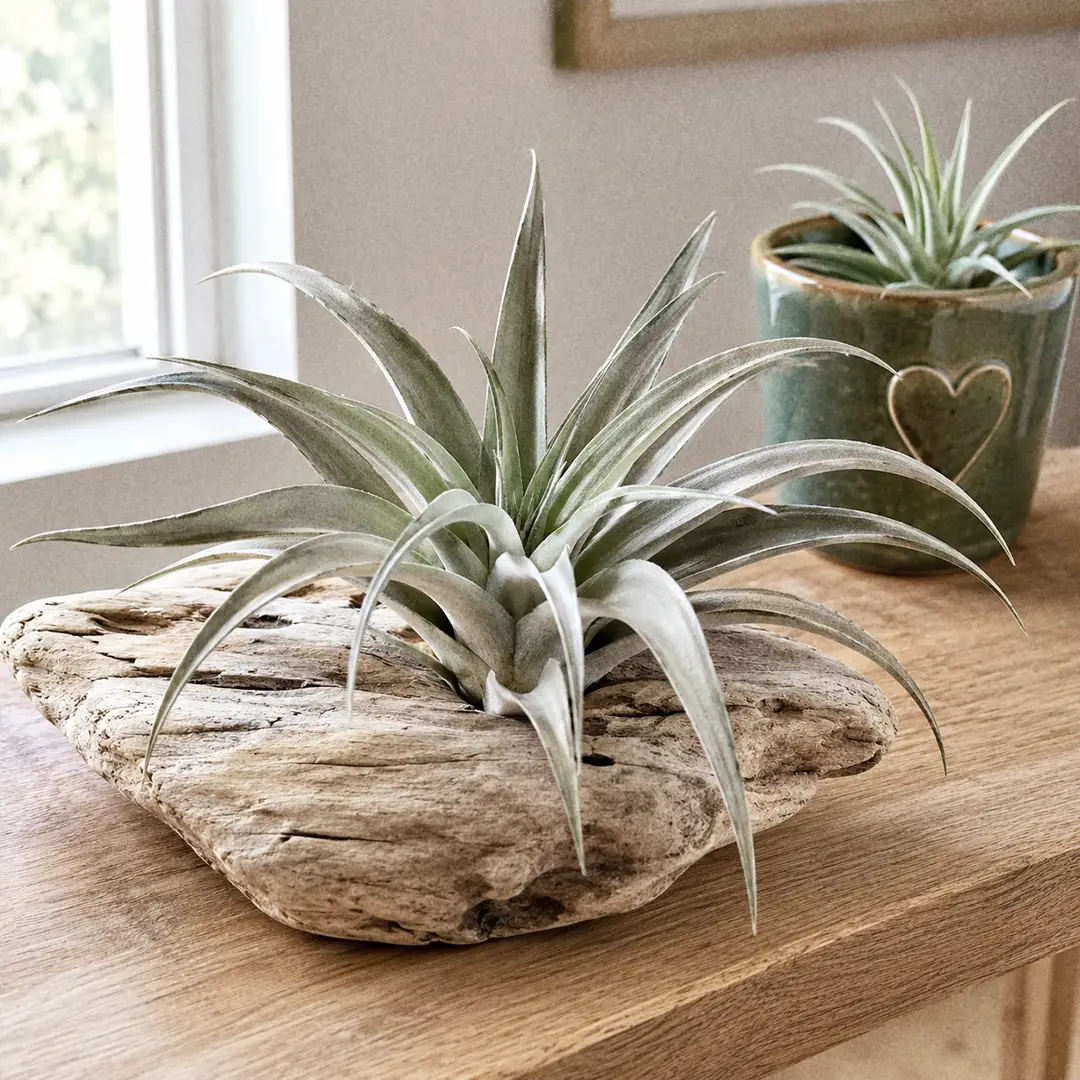
Harris's Air Plant
Tillandsia harrisii
Tillandsia harrisii, Harrisii Air Plant, Harris Air Plant, Silver Air Plant, Guatemalan Air Plant


Harris's Air Plant is the thick, silver-felted Tillandsia that takes more sun and less water than any air plant a beginner is likely to own. Learn how to soak and dry Tillandsia harrisii without rotting its stem, coax the red and violet bloom, and buy it without touching the wild population.
📝 Harris's Air Plant Care Notes
🌿 Care Instructions
⚠️ Common Pests
📊 Growth Information
🪴 In This Guide 🪴

☀️ Harris's Air Plant Light Requirements (Bright Light with Some Sun)
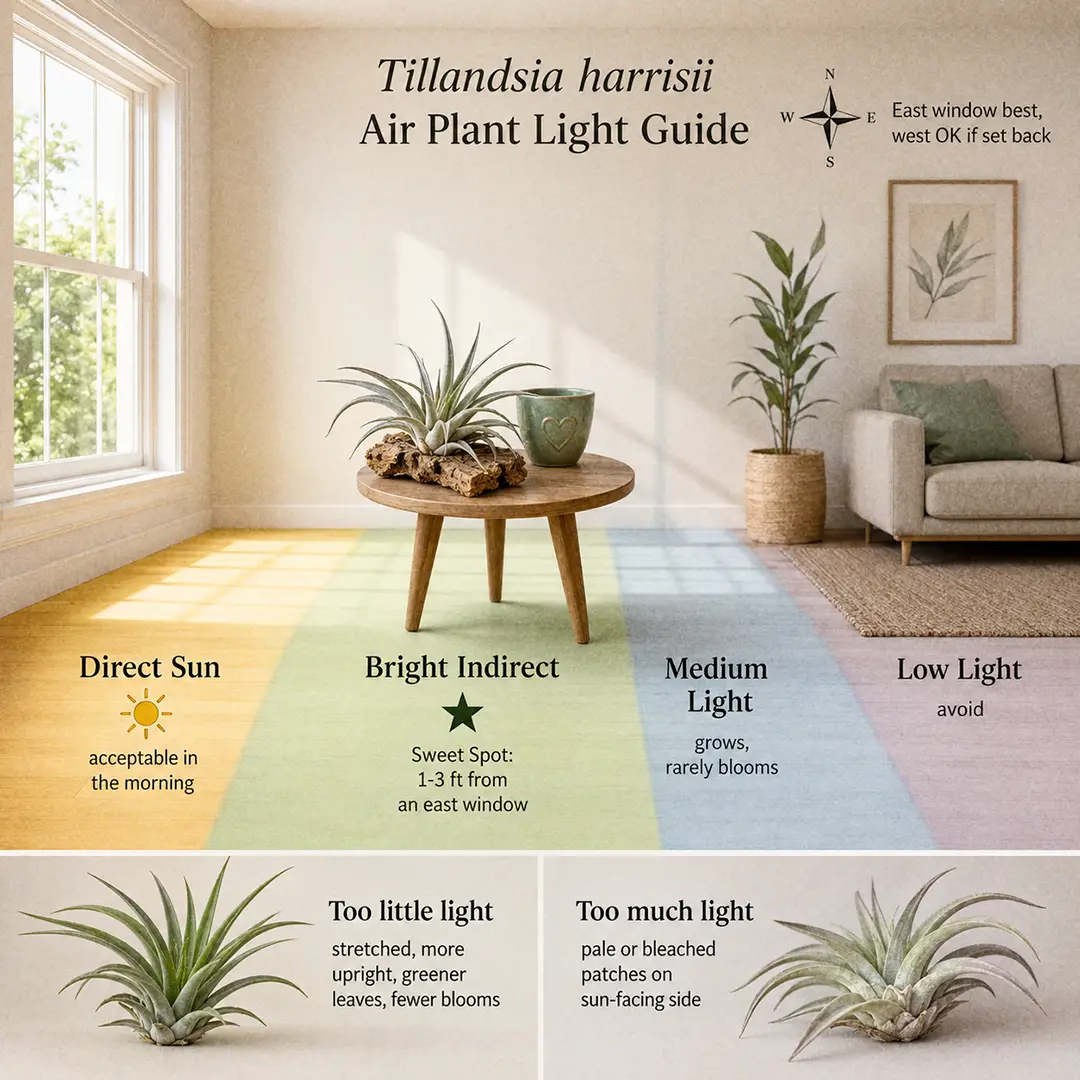
The Sweet Spot
This plant comes off bare rock in dry Guatemalan valleys, so it handles more light than almost any air plant a beginner owns. An east window with two or three hours of morning sun is close to perfect. A west window works too, as long as the plant sits back two or three feet from the glass so the hottest afternoon hours arrive filtered. Bright indirect light all day, with no direct sun at all, is still fine. It just grows a little slower and blooms a little later.
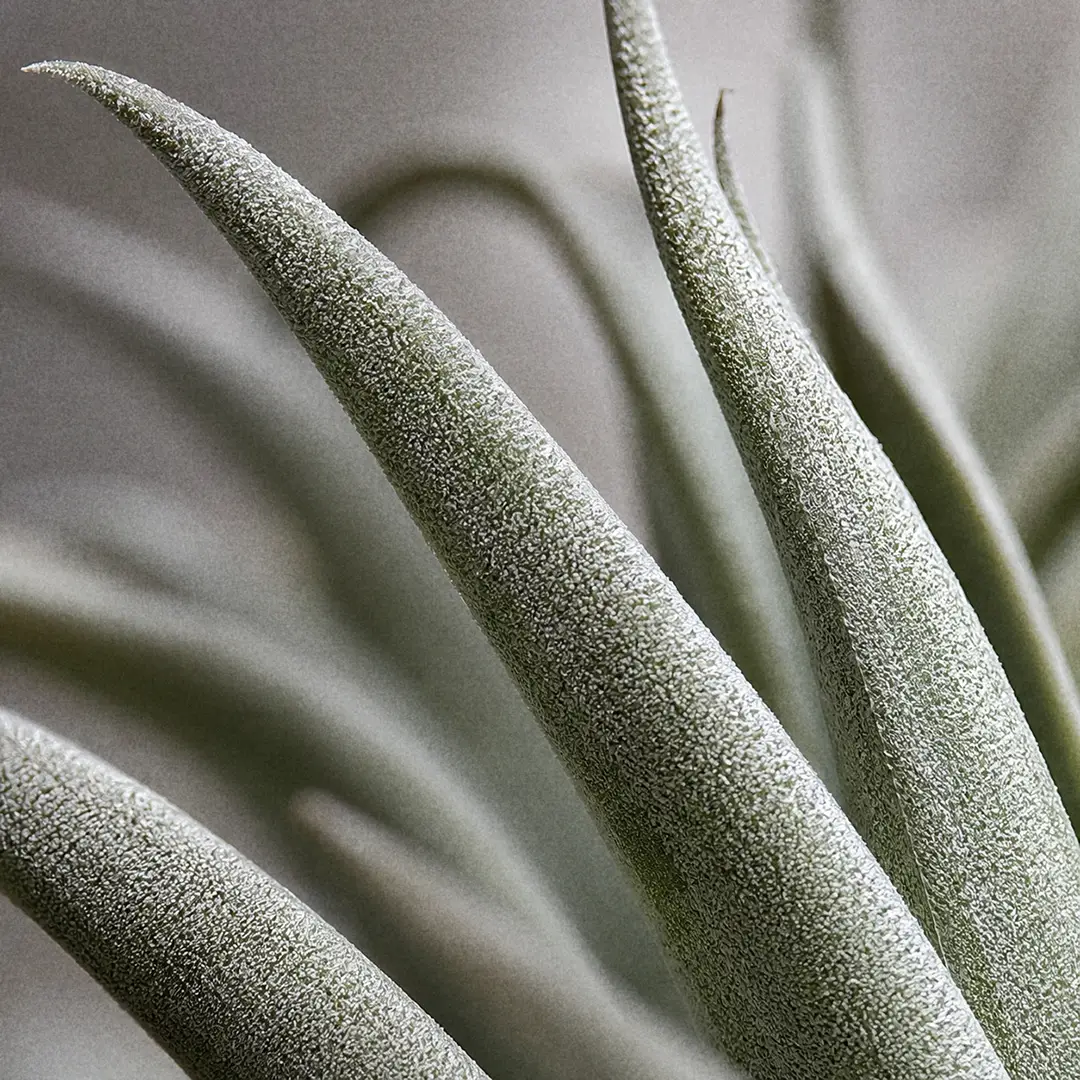
The silver felt on the leaves is your gauge. In good light it stays dense and pale, almost white in dry weather. That coating is a sunscreen and a water collector at the same time.
Too Little Light
Low light shows up as stretch. The stem lengthens, the leaves point upward instead of curving out, and the whole rosette loses its tidy fountain shape. The silver fades toward flat green, because the plant produces fewer trichomes when it is not fighting sun. A plant kept in a dim corner will sit alive but static for years and never flower. If your only spot is a north window or an interior shelf, add a small grow light about a foot above the plant for ten hours a day.
Too Much Light
Real sunburn is rare on this species but it does happen, usually after a plant is moved straight from a dim shop shelf to a south window in July. It looks like pale bleached patches on the sun-facing side, sometimes drying into papery brown. Move plants into brighter positions over two weeks rather than in one afternoon. Outdoors in summer, keep it in dappled shade under a tree or an awning rather than in full unfiltered midday sun.
💧 Harris's Air Plant Watering Guide (Soak, Shake, Invert)
Watering Frequency
Once a week is the baseline. In a hot dry summer, or in a room with a running air conditioner, go to twice a week. In winter, when the plant is barely growing and the light is weak, once every ten to fourteen days is plenty.
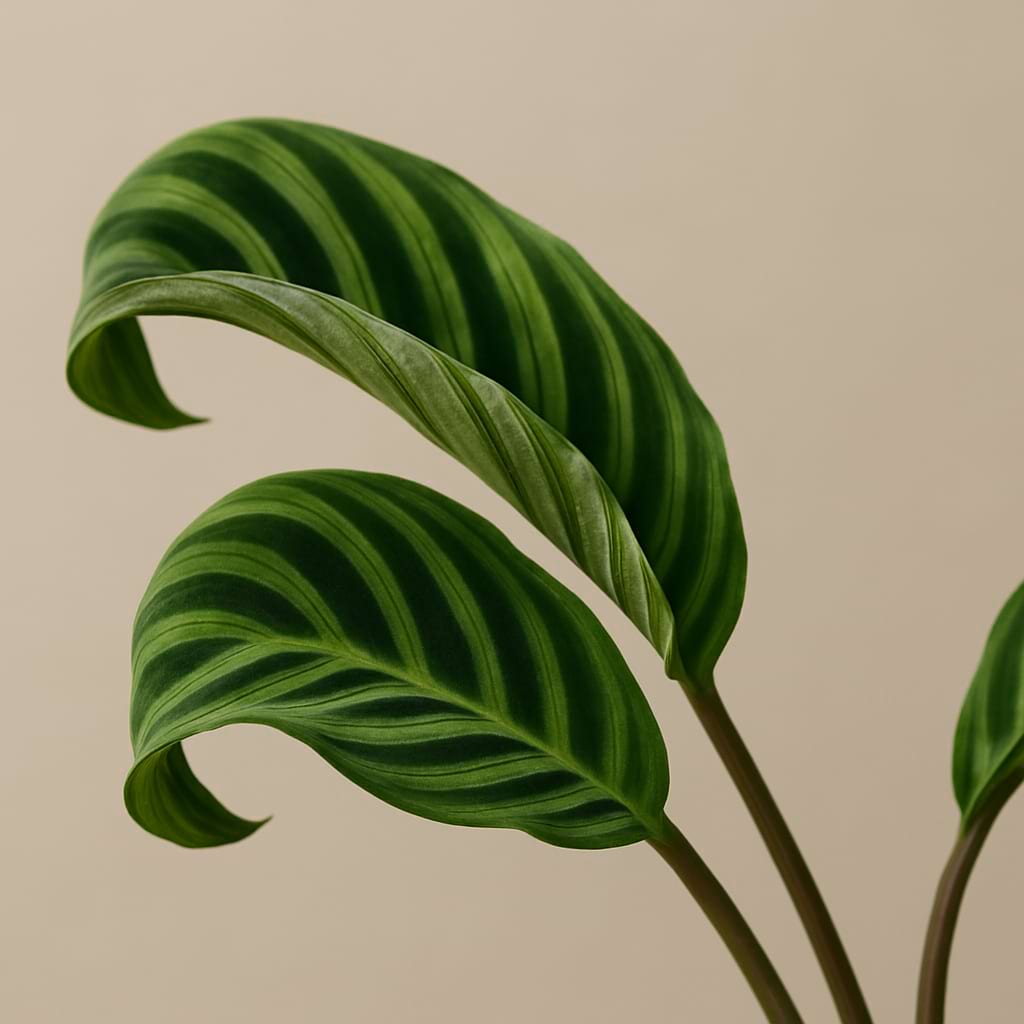
Do not water on a calendar alone. Look at the leaves. A thirsty harrisii curls its leaf edges inward and the whole rosette tightens and looks a little wrinkled at the base. A hydrated one sits open and relaxed. That signal is more reliable than any schedule, and once you have read it twice you will never need a reminder again.
How to Water
Fill a bowl with room-temperature tap water that has sat out overnight, or use rainwater if you collect it. Lay the plant in so the whole rosette is submerged and leave it for twenty to thirty minutes. Distilled water is a poor choice here, since it carries none of the trace minerals the plant would normally pick up from rain and dust.
Then comes the part that decides whether your plant lives. Lift it out, shake it firmly two or three times to throw water out of the leaf bases, and stand it upside down on a towel or in a rack for an hour. It should be dry to the touch within two hours. Only put it back on its mount once no water is sitting where the leaves meet the stem. Our general watering guide covers the same principle for potted plants.
Signs of Trouble
Persistent curling that does not relax after a soak means the plant is drying out faster than it can drink, usually from too much heat or too little soak time. Brown crispy tips point the same way. A soft brown patch at the base, or leaves that pull away from the stem with no resistance, means rot, and rot on this plant is almost always trapped water rather than too many soaks.
🪴 Best Growing Medium for Harris's Air Plant (None at All)
Why There Is No Soil
Tillandsia harrisii has no working root system for feeding. Whatever roots it grows exist only to grip rock or bark. Everything it eats and drinks comes in through the trichomes on its leaves. Put it in potting mix and it will rot within a season, which is the most common way new owners lose one.
What to Mount It On
Anything that does not hold water works: cork bark, grapevine, driftwood, cholla wood, lava rock, a piece of slate. In the wild this species is saxicolous, meaning it clings to rock faces more often than to trees, so stone mounts suit it especially well and look right.
Attach it with a loop of coated wire, fishing line, or a small dab of waterproof plant glue at the base of the stem. Never wrap the base in sphagnum moss. Moss is standard practice for tropical epiphytes and it is exactly wrong for a dry-country air plant, because it holds moisture against the one part of the plant that must stay dry.
The No-Mount Option
You do not have to mount it at all. A harrisii sitting loose in a shallow dish of pebbles, in a wire stand, or in an open glass bowl grows perfectly well and is far easier to lift out for its weekly soak. Closed terrariums are the exception. Sealed glass traps humidity, kills airflow, and rots this plant fast.
🍼 Fertilizing Harris's Air Plant
When and How Often
Feed once a month from early spring to early autumn, and not at all in winter. This is a slow plant and feeding it harder does not speed it up, though in my experience it does bring a first bloom forward by a season.
What to Use
Use a bromeliad or Tillandsia fertilizer at a quarter of the label strength, mixed straight into the soak water. The label must say urea-free. Air plants cannot process urea nitrogen, since that conversion normally happens in soil, so a urea-based feed delivers nothing useful and leaves salt on the leaves. Copper is worse: it is toxic to bromeliads, so avoid any product containing it and never mount one of these on copper wire. Our fertilizing guide and our fertilizer roundup go into label reading in more depth.
Signs of Over-Feeding
Too much food shows as burnt brown tips and a dulled, patchy silver coating. Skip two months of feeding and soak in plain water to flush it.
🌡️ Harris's Air Plant Temperature Range
Ideal Range
Ordinary room temperature suits it: 60-85°F is the comfortable band, and it grows fastest in the upper half of that. Brief spells to 90°F are fine if you water more often.
Cold Limits
It handles a short dip near 40°F if it is bone dry, which makes it usable on a sheltered porch into autumn. Cold and wet together is the dangerous combination, so bring it indoors before the first cold rain rather than after. Below 55°F it stops growing and needs much less water.
Drafts and Heat Sources
A spot directly above a radiator or in the blast of a forced-air vent will dry the plant to a crisp between soaks. Keep it a few feet from both. A steady breeze from an open window is a benefit, not a problem, and this species genuinely likes moving air.
💦 Harris's Air Plant Humidity Requirements
Ideal Humidity
Normal household humidity of 40-60% is fine. Those trichomes evolved for a dry climate, so unlike most bromeliads this plant asks nothing special of you. If your home runs very dry in winter, below 30%, simply soak more often rather than reaching for a humidifier.
Airflow Beats Humidity
Airflow matters more than moisture in the air. High humidity with still air is the worst combination for a harrisii, because the plant never fully dries after a soak. If you are running a humidifier nearby, keep a fan or an open window in the same room.
🌸 Harris's Air Plant Flowers (Red Bracts, Violet Blooms)
What the Flowers Look Like
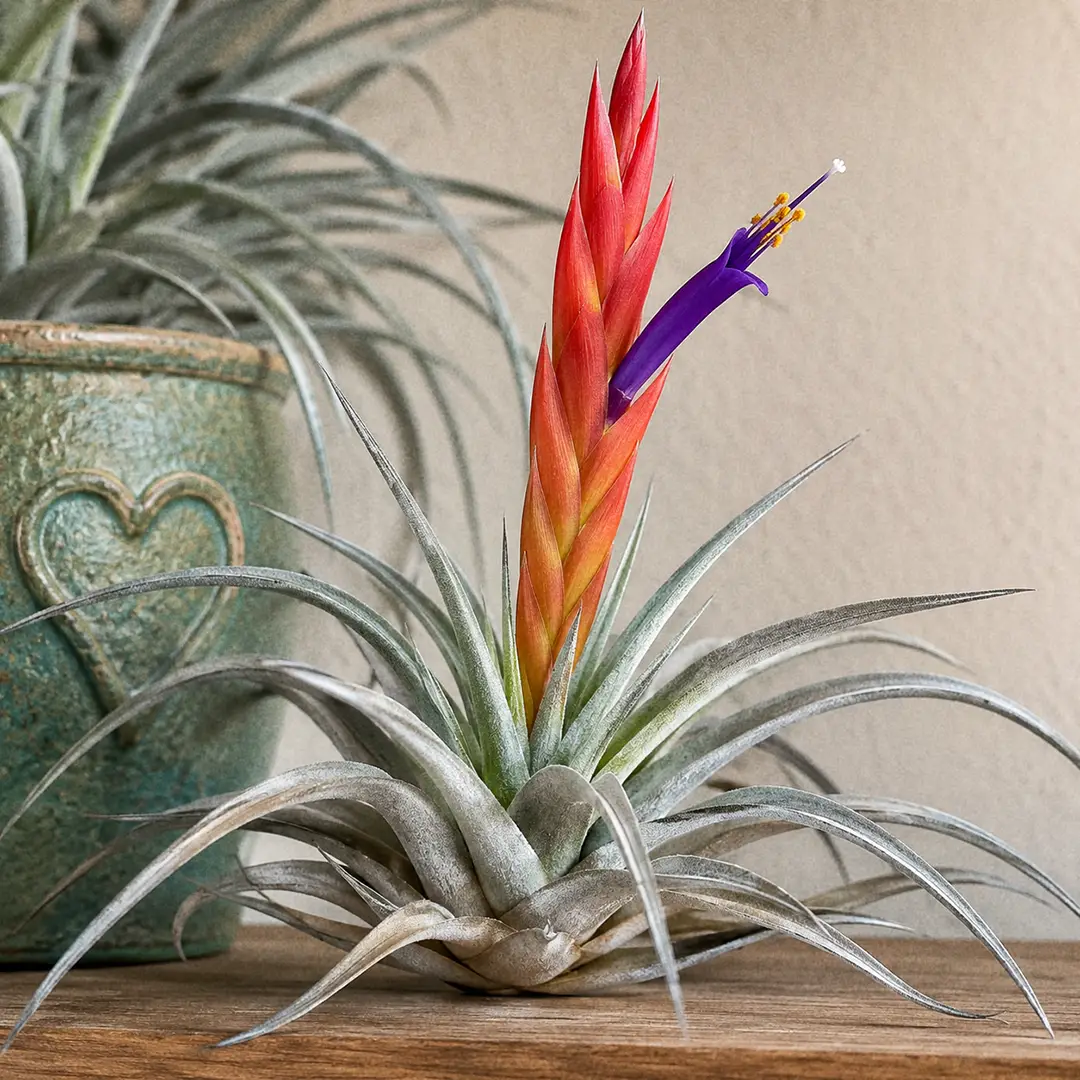
The bloom is worth the wait. A single spike rises several inches above the rosette carrying flattened bracts that flush orange through to deep coral red. From between them emerge five to ten tubular flowers in violet-blue, each around two inches long, with the stamens pushed out past the petals. They open a few at a time over two or three weeks, and the red bracts hold their color for weeks after the last flower fades.
When and How to Trigger Bloom
Blooming happens on mature plants, generally at two to four years old, most often in late winter and spring. There is no trick that forces it early. What helps is the boring version of good care: strong light, a reliable weekly soak, and monthly feeding through the growing season. Cold weather does not trigger it the way it does for some bromeliads.
If you want to nudge a nearly mature plant, the ethylene trick used on potted bromeliads works here too. Seal the dry plant in a clear bag with a ripe apple for three or four days, then unbag it. It works often enough to be worth one attempt, and not reliably enough to promise.
After the Bloom
Each rosette flowers once and then slowly winds down over the following year or two. That sounds like a loss and is not one, because the flowering signal is also the pup signal. Offsets appear at the base within a few months, and by the time the mother browns out you usually have two or three replacements. See our notes on failure to bloom if a clearly mature plant refuses for several years running.
🏷️ Harris's Air Plant Types and Varieties
Straight Species in Size Grades
Almost all harrisii sold is the plain species, graded by size rather than by name. Small plants run two to three inches and are cheap, but they are years from flowering. Medium runs three to five inches. Large specimens at six to eight inches, stem included, are the ones close to bloom, and they are what I would buy if the flower is the point.
Clumps and Multiples
Because the species pups freely, sellers also list clumps: a mother with two to five attached offsets, sometimes with a spent flower spike still standing. Clumps cost more, look far better on a mount, and often flower within a year. They are the best value on the shelf.
Registered Cultivars
The Bromeliad Cultivar Register lists a couple of named harrisii selections, but they almost never reach retail and you should not go hunting for them. If a listing offers you a fancy-sounding harrisii cultivar at an ordinary price, you are most likely buying the ordinary species.
Harrisii vs Its Relatives
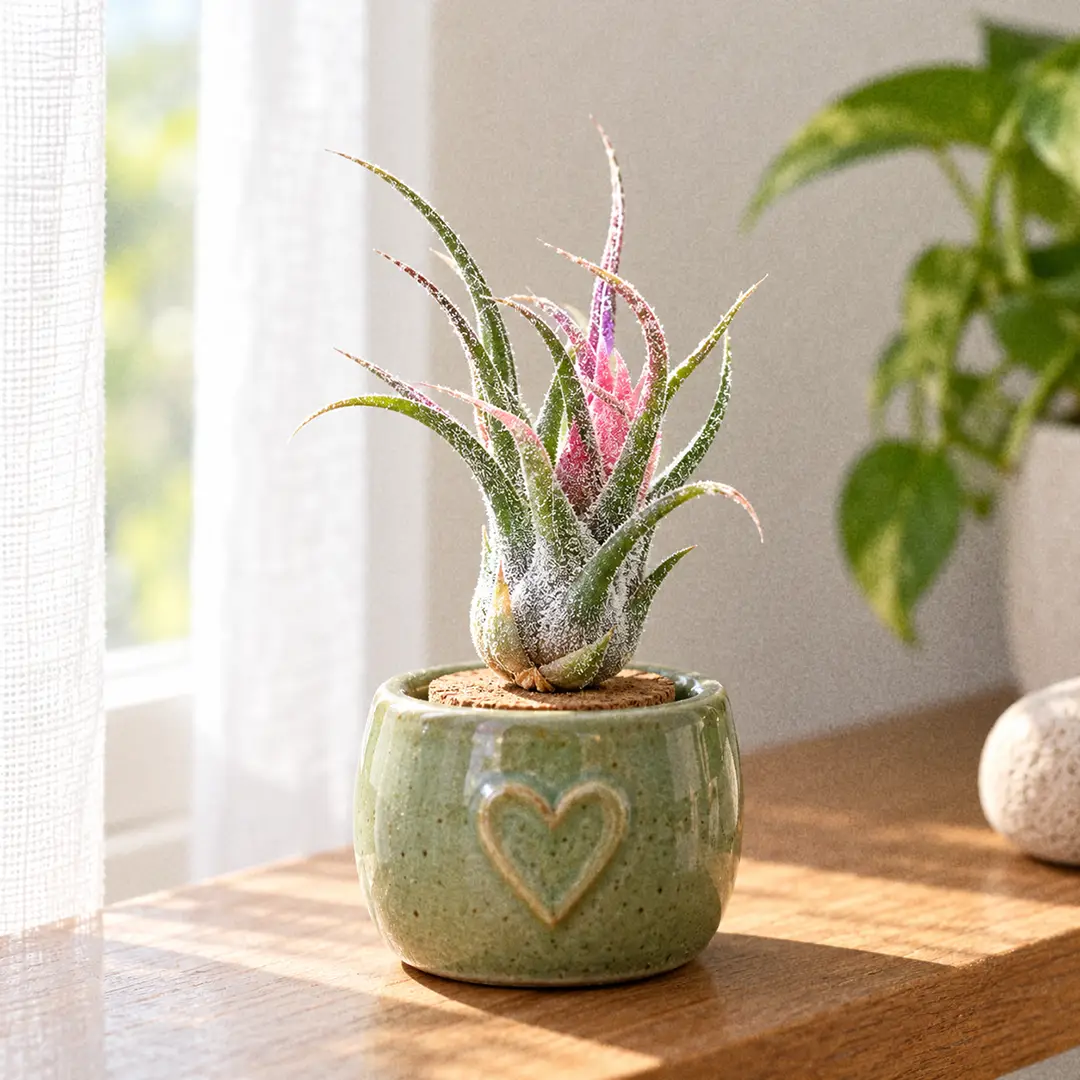
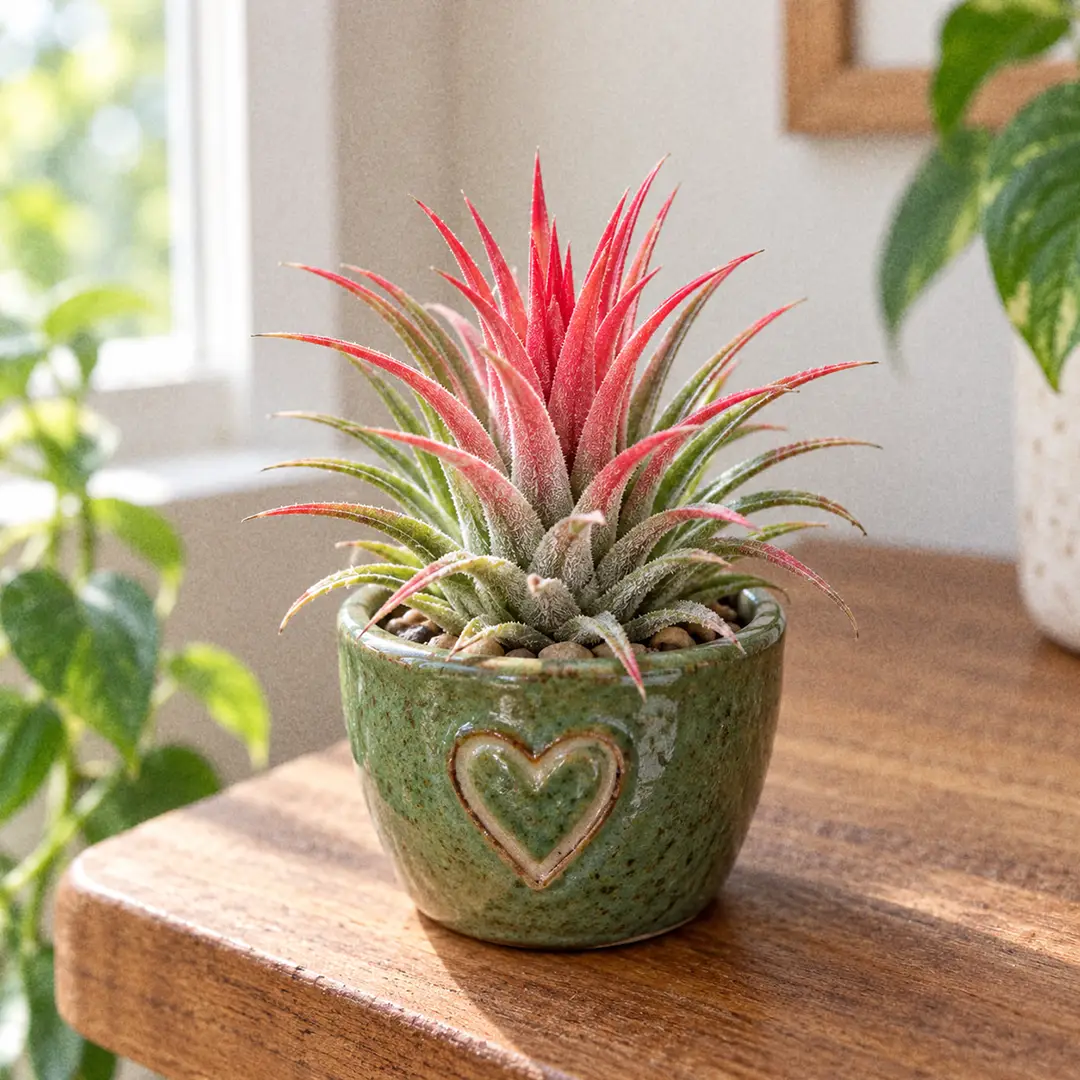
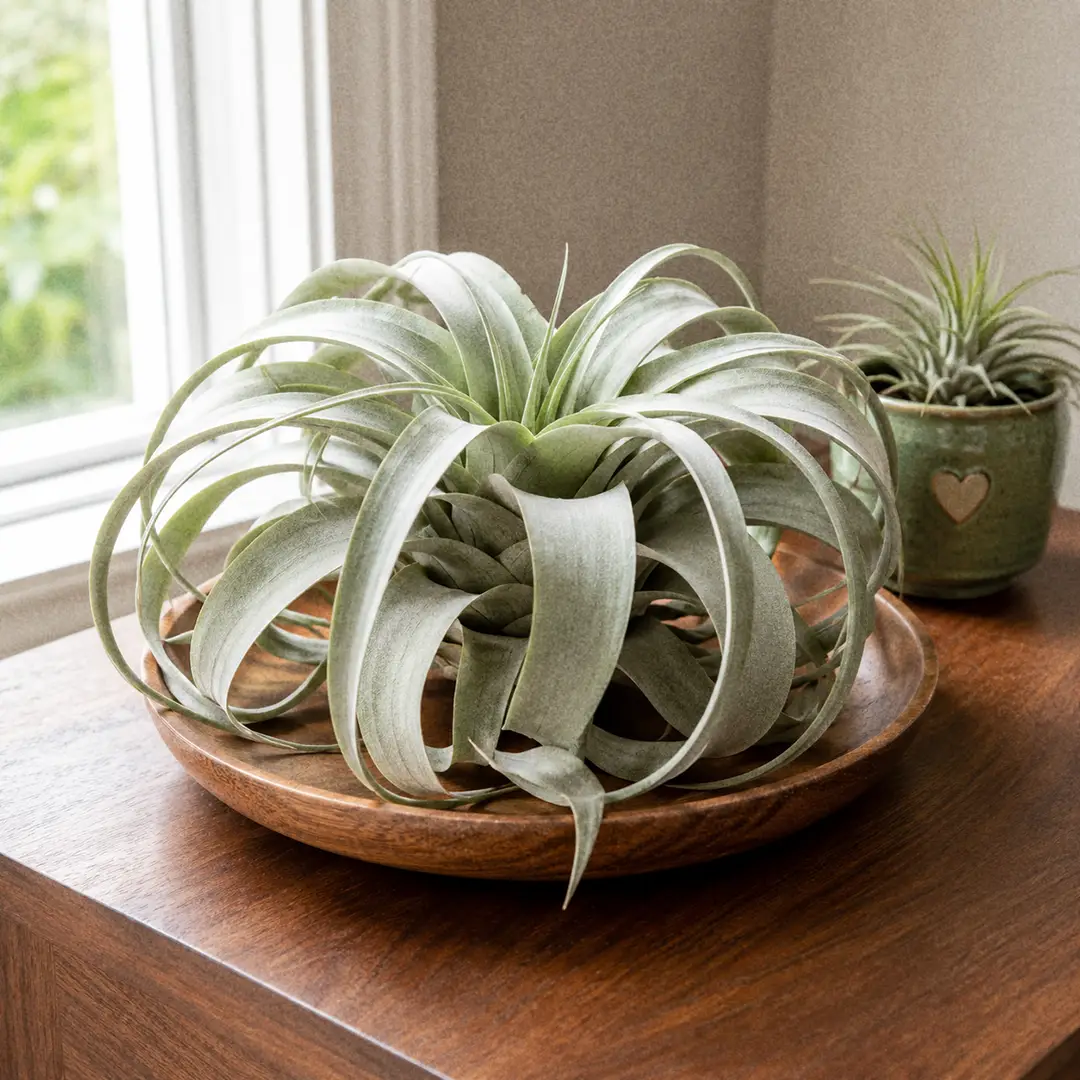
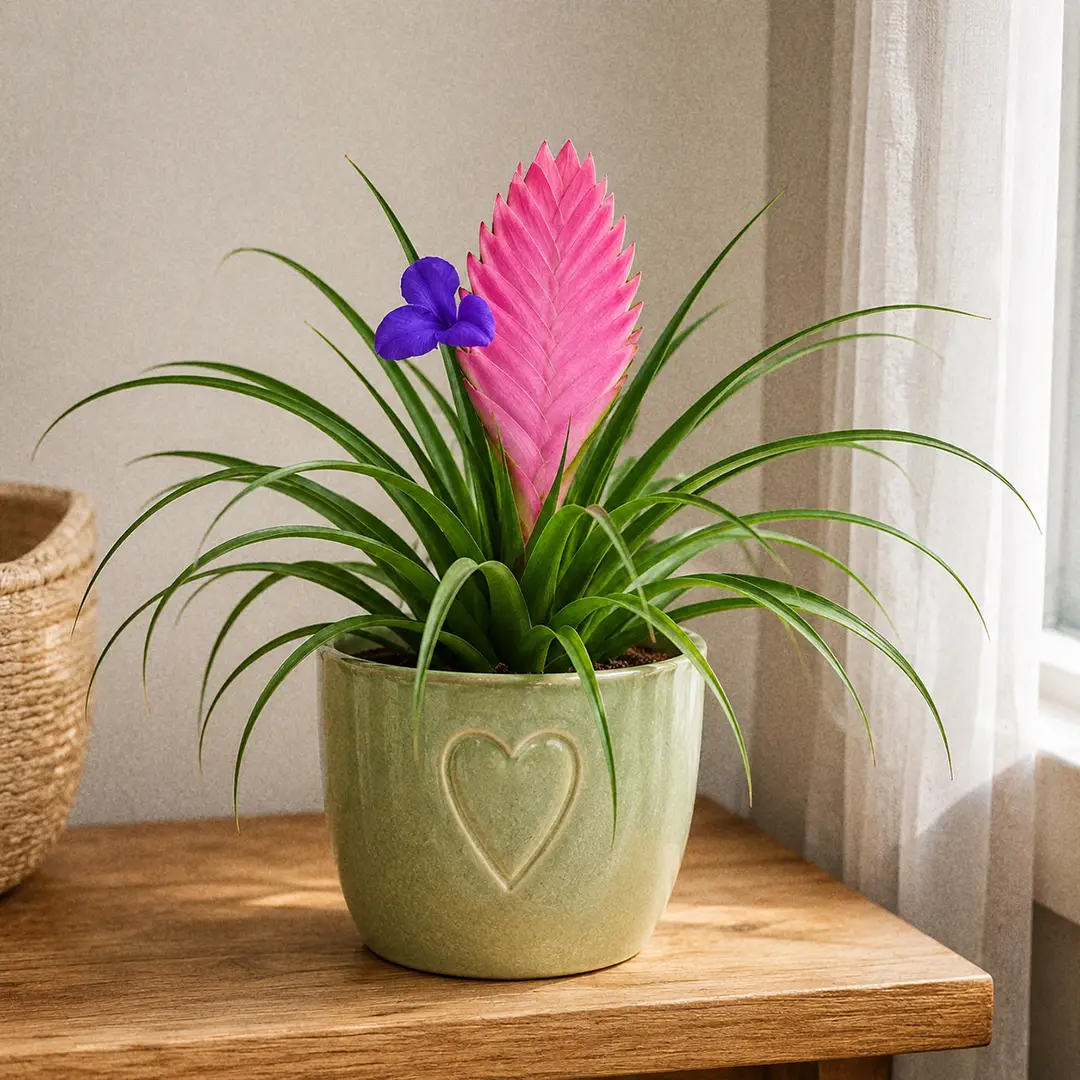
Next to brachycaulos, harrisii is drier, stiffer, silver instead of green, and much slower. Next to the sky plant it is thicker-leaved and needs water less often. The Ionantha Air Plant is the shortcut if the wait is putting you off: same silver rosette shape at a fraction of the size, no woody stem, and it blushes scarlet and flowers within a year or two rather than several. The Xerographica Air Plant is the same silver, dry-growing idea scaled up several times over, with broad strap leaves that curl into a spiral and a soak interval closer to three weeks than one. The Streptophylla Air Plant is the other silver species people mix up with harrisii on a shelf: it has no woody stem, sits on a fat hollow bulb instead, and its leaves twist into ringlets as it dries out. The Butzii Air Plant is harrisii's opposite in almost every way: green and chocolate-speckled instead of silver, cloud forest instead of sun-baked rock, and it wants watering two or three times a week rather than once, on a hollow bulb that must never be left standing in water. The Pruinosa Air Plant is the other fuzzy silver option, but it is a humid-forest species on a small hollow bulb, so it wants shorter, more frequent dunks than harrisii. The Magnusiana Air Plant is the fuzzy silver pick with no stem or bulb: a small, soft puffball of thin leaves whose packed center rots if it stays wet. The Tectorum Air Plant goes the other way: a white, feathery ball from dry Andean rock that takes even more sun than harrisii and is misted, never soaked. The Capitata Peach Air Plant is the softer silver-green rosette to pick if you want leaf color, since its center blushes peach in bright light where harrisii stays silver until the spike appears. Compared to the pink quill plant, which is potted and blooms from a flat pink paddle, harrisii is a true no-soil species with an upright spike. The Funkiana Air Plant also grows on a stem, but its stems are long and trailing, covered in fine needle leaves, and it wants water far more often. Our general air plant guide covers the genus if you are still choosing.
🪴 Mounting and Remounting Harris's Air Plant
When to Remount
There is no repotting. You remount when the wire rusts through, the glue lets go, or a clump has grown past its base. For most plants that means every two or three years, and some never need it at all.
Choosing a Mount
Pick something that will not hold water and will not shed. Cork bark and grapevine are the easy defaults, lava rock and slate suit the species best, and cholla wood is popular because the hollow tube makes wiring simple. Skip pressure-treated lumber, copper wire, and anything painted with an unknown finish.
Step-by-Step Mounting
Let the plant dry fully first, then set its base against the mount and run a loop of coated wire or clear fishing line around the lowest inch of stem, snug but not biting. If you prefer glue, use a waterproof gel adhesive and a dab the size of a pea, applied to the stem base only and never into the leaf crown. Give it a day to set before the next soak. Over the following year the plant grows its own gripping roots and the wire becomes decorative.
✂️ Pruning Harris's Air Plant
Trimming Leaf Tips
Brown tips are cosmetic and will not spread. Cut them with clean scissors at a shallow angle that copies the leaf's natural taper, so the trim disappears. Cut into green tissue only if you have to.
Removing the Spent Spike
Leave the flower spike alone while it holds color. Once it dries to straw, snip it as close to the base as you can reach without nicking the leaves. Removing it early does not push pups out any faster, and cutting a green spike wastes months of color.
Cleaning Off Dead Leaves
Outer leaves brown and shrivel with age. Peel them off with a gentle downward tug once they are fully dry. If a leaf resists, leave it another week.
🌱 How to Propagate Harris's Air Plant
Pups Are the Only Practical Method
Seed is possible and takes the better part of a decade to reach a plant worth looking at, so ignore it. Every harrisii in a shop got there from an offset. A mother plant produces two to five pups from the base in the year following its bloom, and sometimes a few beforehand.
Step-by-Step Pup Removal
Wait until the pup is at least a third the size of the mother. Rushing it is the main reason separated pups sit and sulk. Hold the mother's base in one hand and the pup's base in the other, then twist and pull sideways in one steady motion. It should release with a small snap and a clean base. If it fights, slide a sterilized blade down the join instead of forcing it.
Let the separated pup dry for a day before its first soak, then treat it exactly like an adult. Water weekly, give it the same bright spot, and do not feed it for the first month.
Leaving the Clump Intact
You can also do nothing. Left alone, the pups grow into and around the fading mother and form a clump, and clumps grow faster, bloom more reliably, and look better than any single plant. I separate pups only when I want more plants or when the mother has fully browned. Our general propagation guide covers the offset approach across other species.
Tips for Success
Sterilize any blade you use. Keep newly separated pups out of the strongest sun for their first month. Do not glue a pup to a mount until it has been growing on its own for a season, because you will want to move it.
🐛 Harris's Air Plant Pests and Treatment
The dense trichome layer puts most insects off, so this is a genuinely low-pest plant. The pests that do appear hide in the tight leaf bases where you cannot see them.
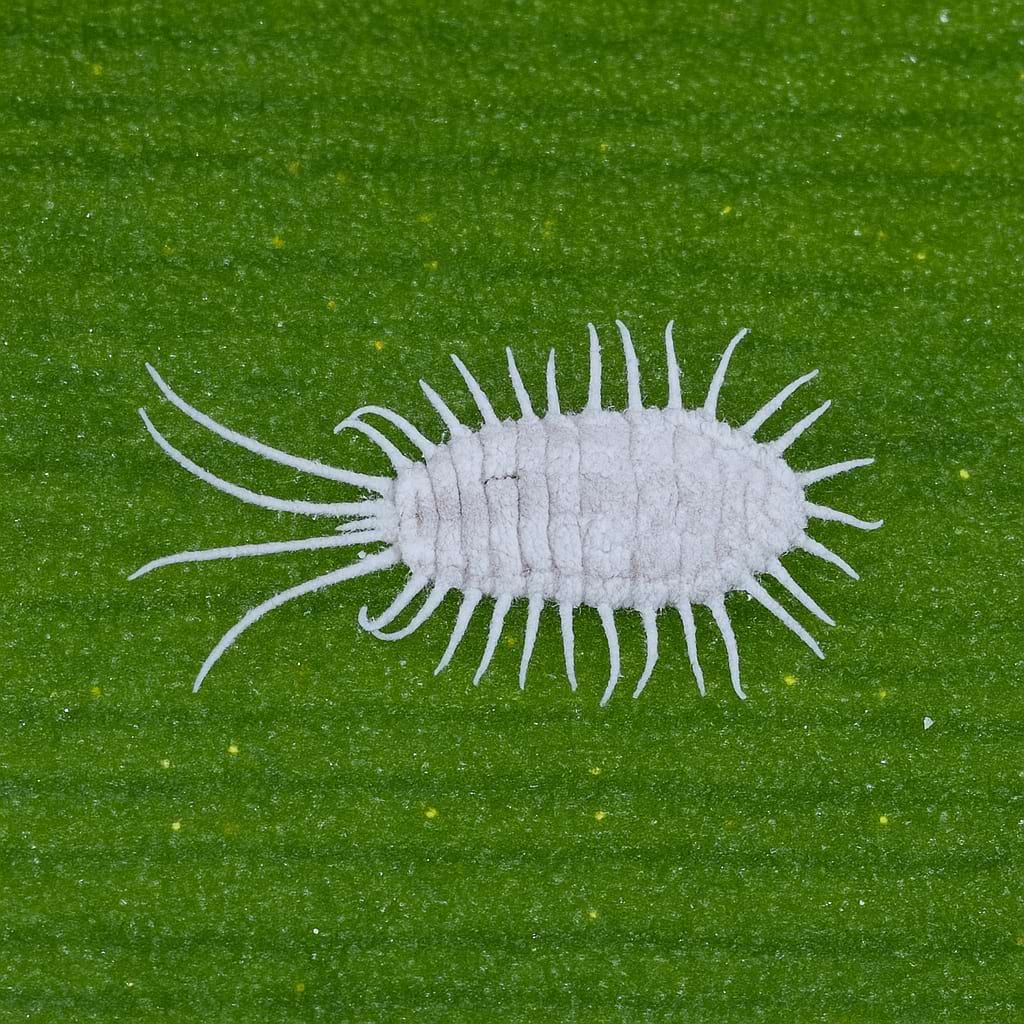
Mealybugs are the usual offender. Look for white cottony specks wedged where the leaves meet the stem. Pick them off with a cotton swab, then soak the plant and check again a week later.
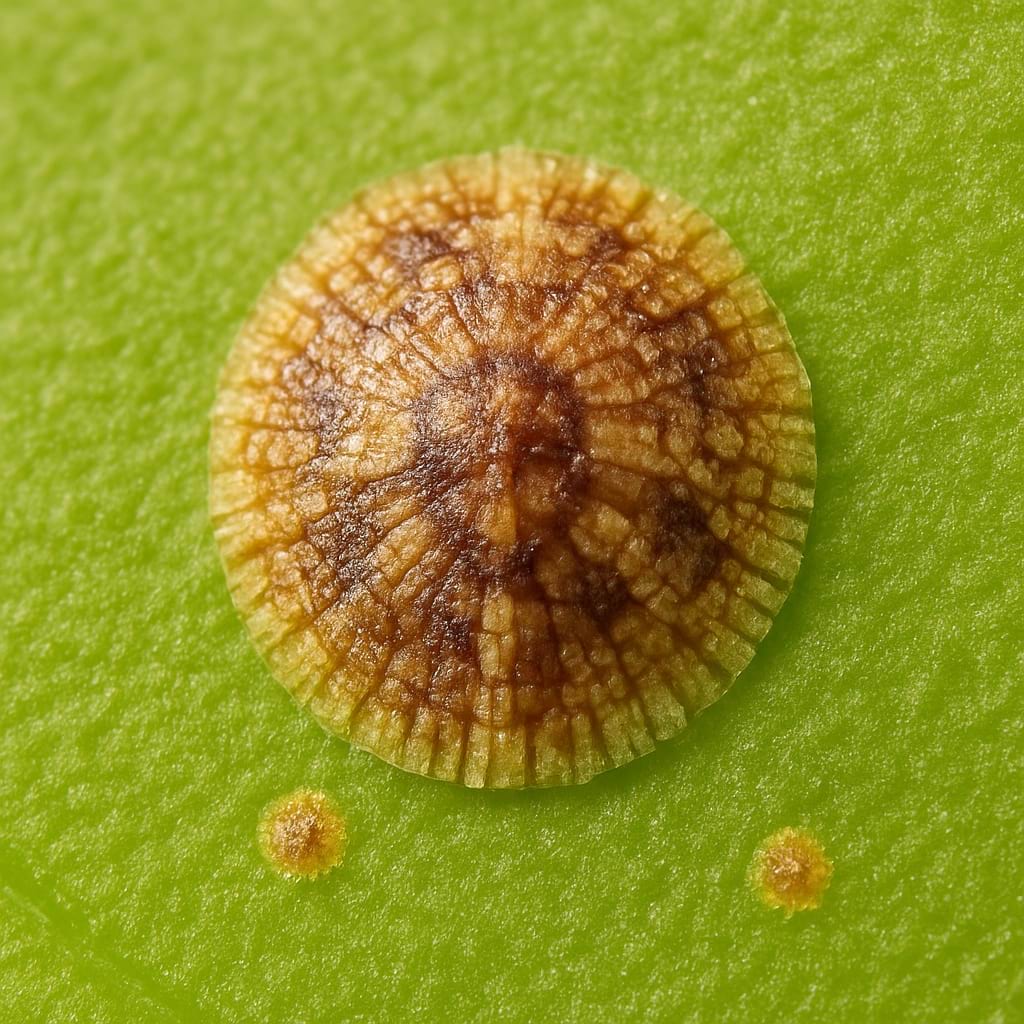
Scale insects show as small brown bumps that scrape off with a fingernail. They are slow-moving and easy to beat if you catch them early.
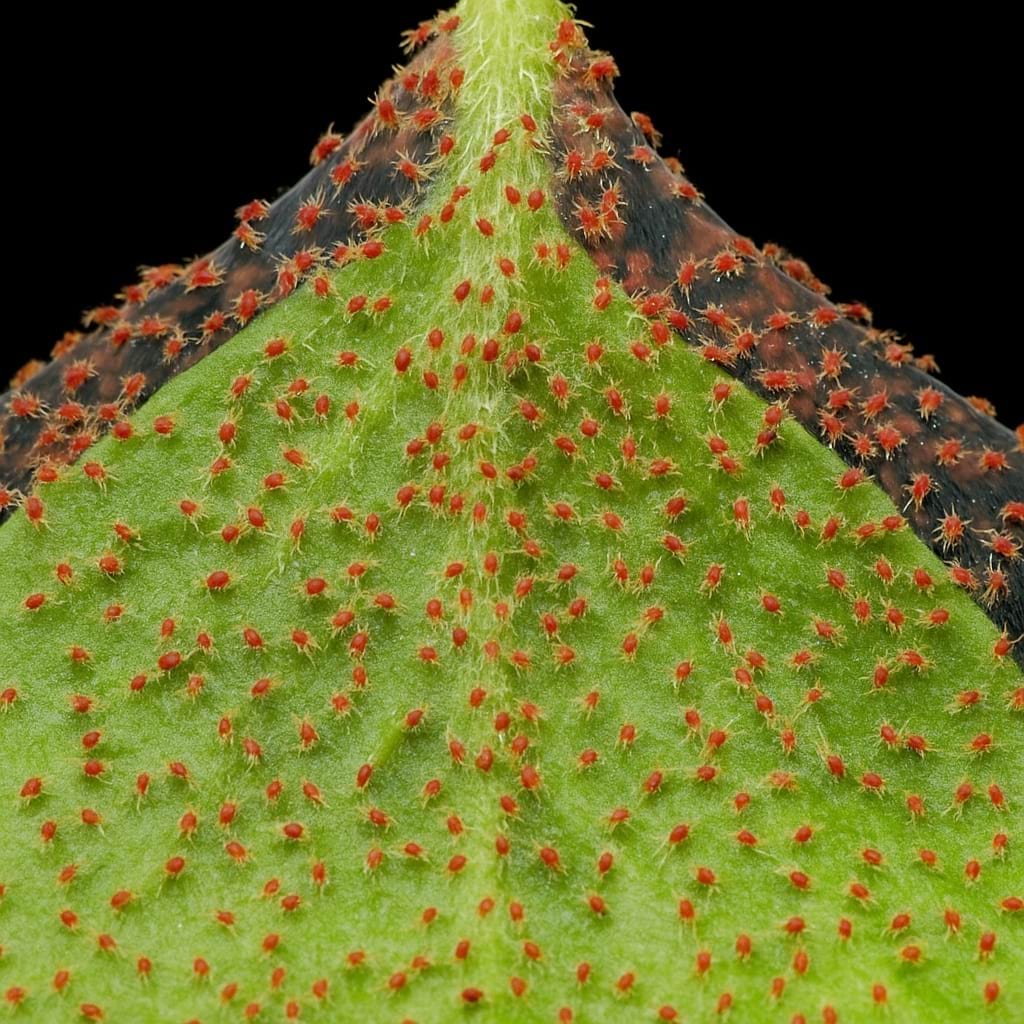
Spider mites turn up in hot dry spells, leaving fine webbing between the leaves. More frequent soaking usually ends the problem on its own.
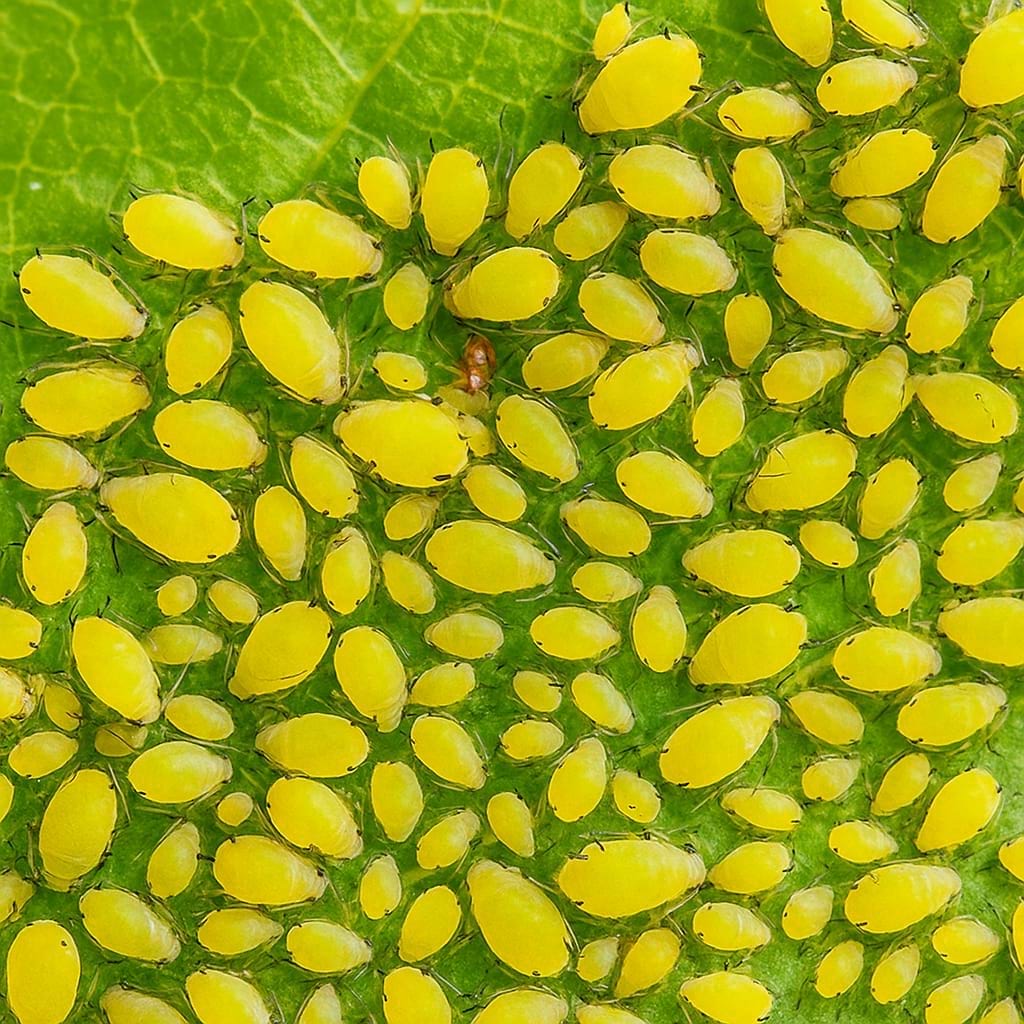
Aphids occasionally attack a fresh flower spike outdoors. Rinse them off under the tap.
One warning on treatment: most oil-based and soap-based sprays coat the trichomes and stop the plant absorbing water. Use physical removal and plain water first, and if you must spray, use a diluted insecticidal soap once, then rinse the plant thoroughly the next day.
🩺 Common Harris's Air Plant Problems
Nearly every problem on this plant traces back to water, either sitting where it should not or arriving too rarely.
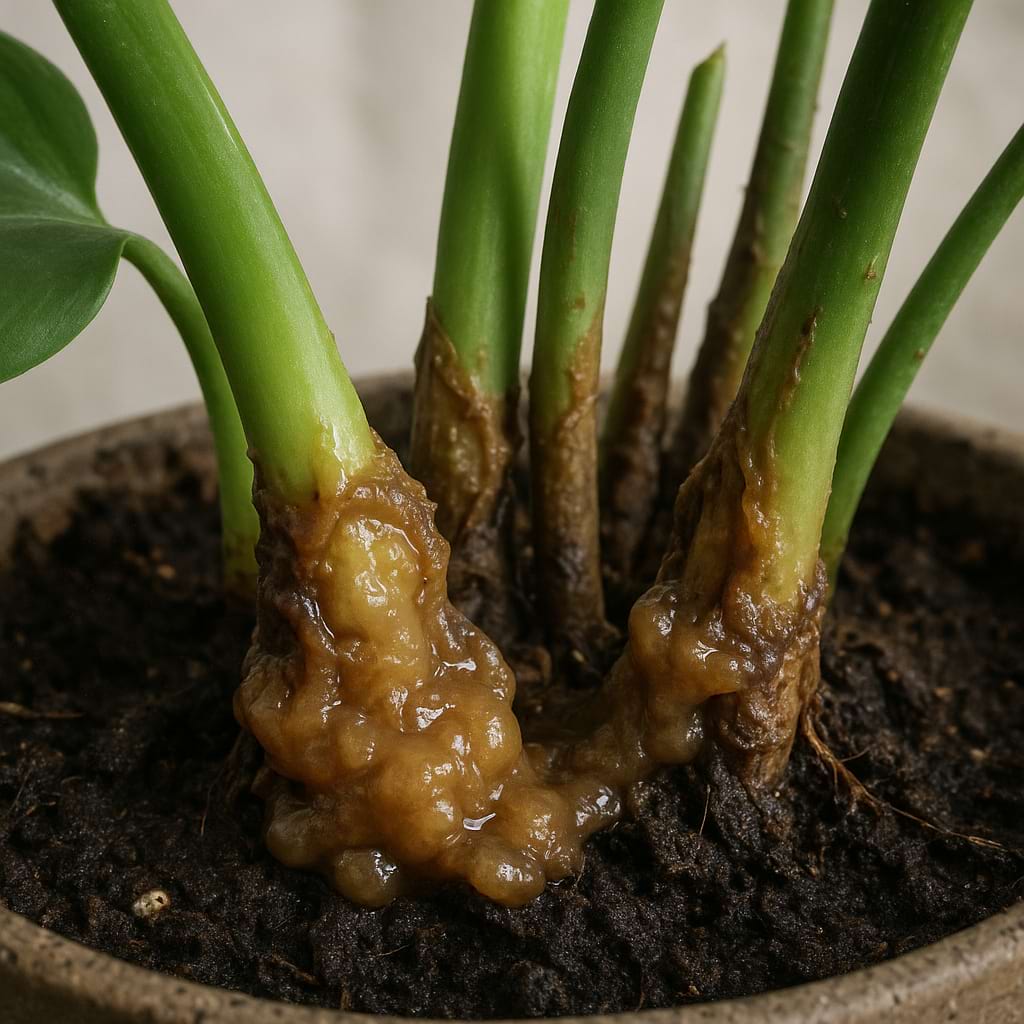
Mushy stems and a soft, dark, foul-smelling base mean crown rot from water trapped after a soak. It is not recoverable once it reaches the stem. Salvage any firm pups and change your drying routine.
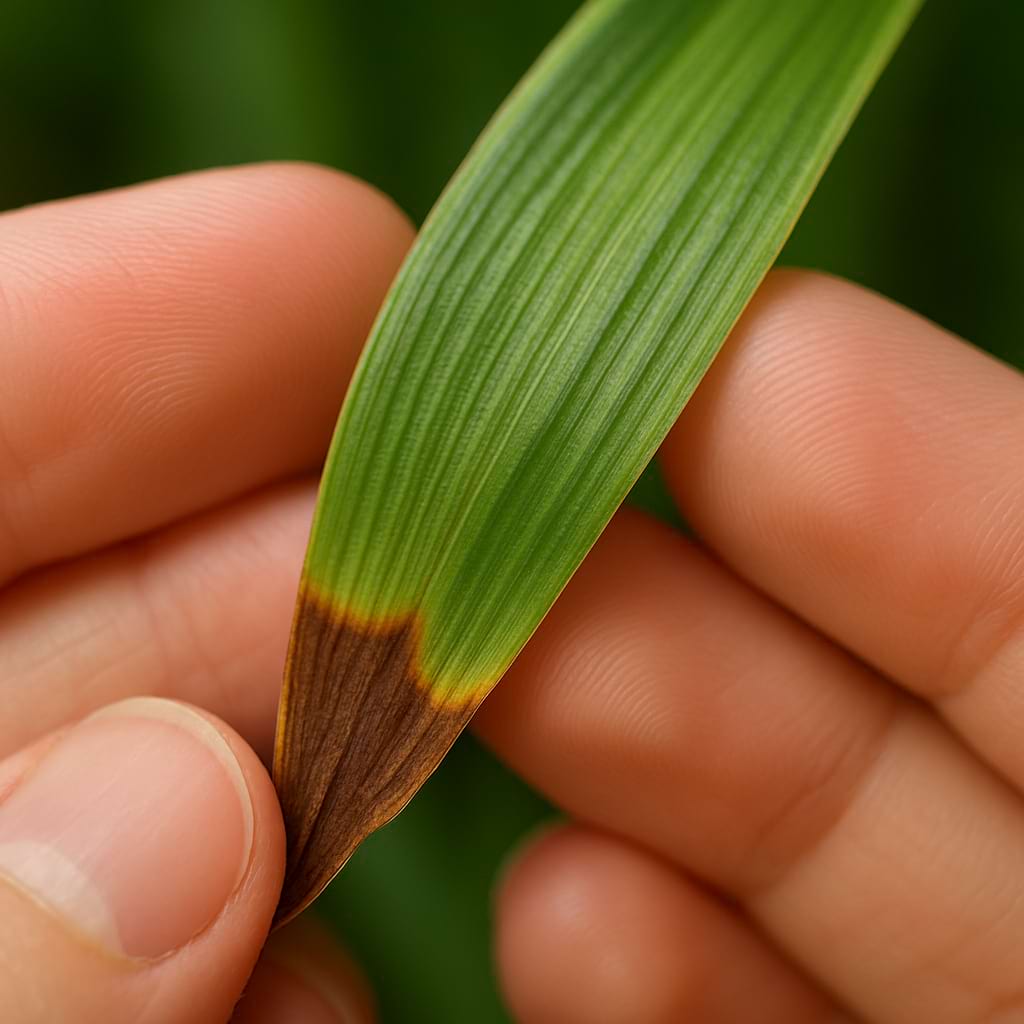
Brown crispy edges and hard curled leaf tips mean underwatering, or a spot too close to a heat source. Soak more often rather than longer.
Curling leaves that do not relax within a day of a soak are the same message, arriving earlier.
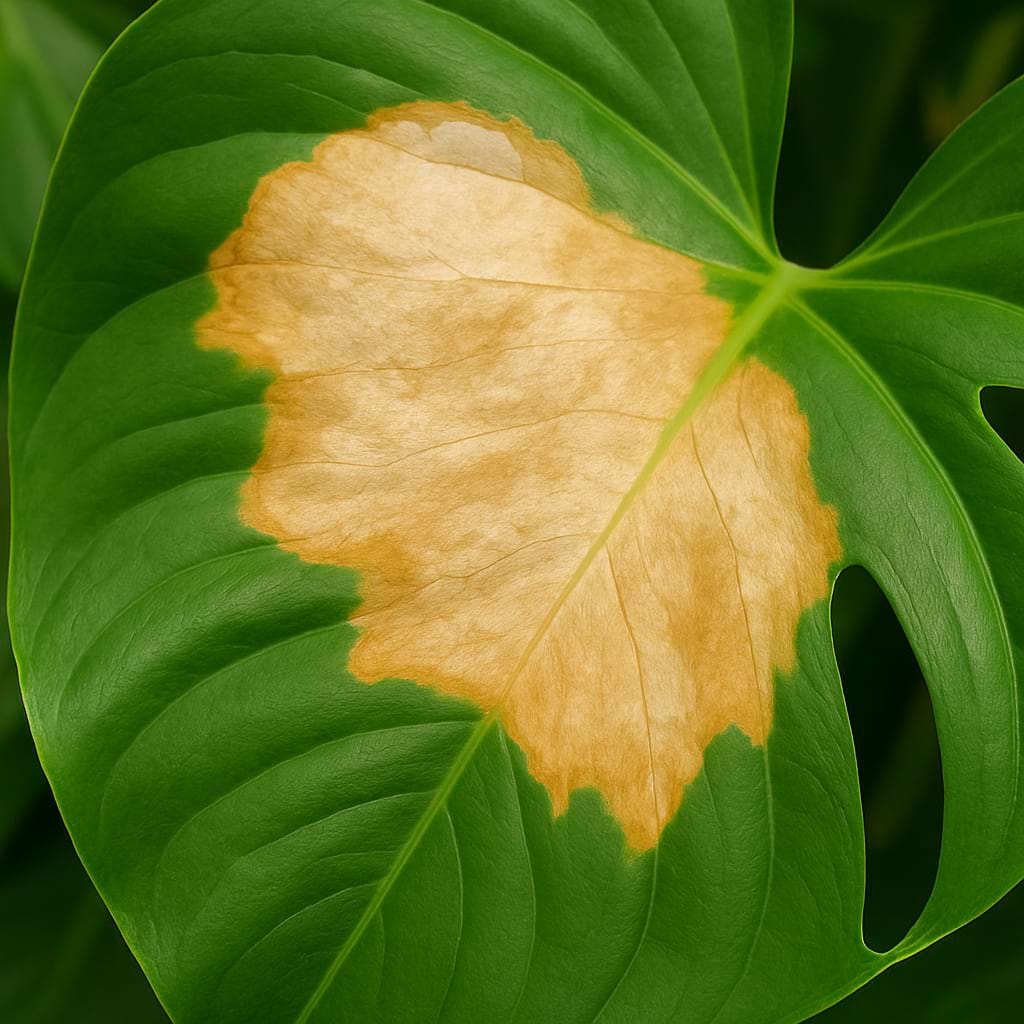
Sunburn leaves bleached patches on the side that faced the glass, usually after a fast move to a brighter window.
Pale faded leaves with a thin silver coating point to light that is too dim, not to a feeding problem.
Stunted growth is worth checking twice before you worry. This species is slow by nature, and a plant that adds half an inch in a year is behaving normally.
🖼️ Harris's Air Plant Display and Styling Ideas
Solo Setups
The silhouette does the work here: a felted silver fountain on a short woody stem. Mount one on a slab of cork or a chunk of lava rock and set it on a shelf where light rakes across it. A simple brass or black wire stand also suits it, and has the advantage of lifting straight off for soaking.
Grouped Arrangements
Threes work better than pairs. Group a harrisii with a greener, softer air plant so the silver reads as a deliberate choice rather than a dusty plant. Vary the heights: one mounted high on bark, one in a shallow pebble dish, one in a hanging glass globe left open at the front.
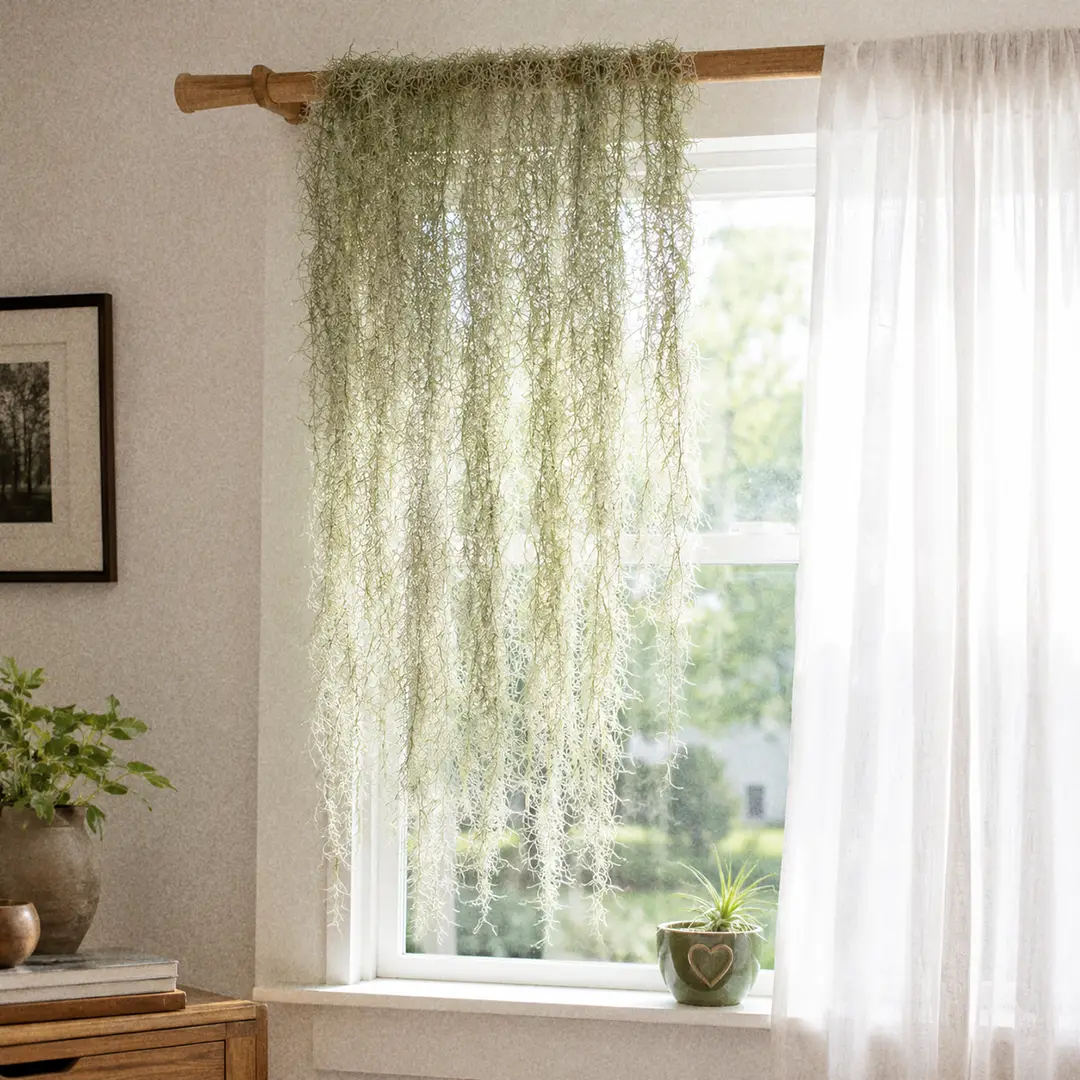
The cool grey of the leaves sits well against warm materials. Wood, terracotta, brass, and rough stone all suit it. Against a pale grey wall it vanishes. For a third element with a completely different texture, hang a length of Spanish Moss behind the group, since its fine silver threads make the felted rosettes read as solid by comparison.
Where Not to Put It
Not in a sealed terrarium. Not sitting in a bowl that collects water. Not on a bathroom shelf with no window or extractor fan. And not out of arm's reach, because a plant that is awkward to lift down is a plant that quietly misses its soaks.
🌟 Harris's Air Plant Pro Care Tips
- Buy from a seller who says their stock is nursery-grown under CITES permit. This is one of only three Tillandsia species with trade protection, and wild collection nearly emptied the Guatemalan population.
- Never wipe the leaves to dust them. That silver felt is the plant's feeding system and it does not grow back quickly.
- Soak in the morning, not the evening. The plant then dries in daylight with air moving rather than sitting damp overnight.
- If you travel, soak the plant well, dry it fully, and leave it. It will hold for three weeks without complaint.
- Keep it off copper. Copper wire, copper-stained stone, and copper-containing fungicides are all toxic to bromeliads.
- A plant that has just been shipped is usually dehydrated. Give it a long first soak of an hour, then return to the normal weekly rhythm.
❓ Frequently Asked Questions
Why is my Harris's Air Plant turning brown at the base?
That is almost certainly rot from water trapped where the leaves meet the stem. It is the leading cause of death in this species and it happens when a plant goes back on its mount still damp. Break off any firm pups to save them, and from now on shake and invert every plant after every soak.
How often should I water Tillandsia harrisii?
Once a week as a default, twice a week in hot dry summer weather, and every ten to fourteen days in winter. Read the leaves rather than the calendar: curled inward means thirsty, relaxed and open means fine.
Can Harris's Air Plant take direct sunlight?
Yes, more than most air plants. A few hours of morning sun from an east window is ideal, and filtered afternoon sun is fine. Move it into brighter light gradually over two weeks, since a sudden jump to a hot south window can bleach the leaves.
Is Harris's Air Plant safe for cats and dogs?
Yes. Tillandsias are not listed as toxic to cats or dogs. The stiff pointed leaves are a physical hazard rather than a poison one, so keep it out of reach of a determined chewer.
Why won't my air plant flower?
Age is the usual answer. Harrisii flowers at two to four years old and there is no shortcut. If a plant is clearly mature and still refuses, the cause is nearly always light that is too dim or a growing season with no feeding.
Does Harris's Air Plant die after blooming?
The individual rosette does, slowly, over a year or more. It is not a loss in practice, because flowering triggers pups, and those pups replace the mother before she finishes fading.
Should I mist my air plant instead of soaking it?
Misting alone is not enough for a plant this thick. It wets the trichomes without rehydrating the tissue underneath. Soak weekly, and treat misting as a between-soaks top-up in very dry weather.
Can I grow Harris's Air Plant in a terrarium?
Only in an open one with real airflow. A closed jar keeps the plant damp between soaks and rots it. An open bowl with pebbles and a wide mouth is fine.
What water should I use?
Tap water left to sit overnight, rainwater, or aquarium water are all good. Avoid distilled and reverse osmosis water, which strip out the trace minerals the plant would normally absorb, and avoid softened water because of the salt.
Why is my air plant losing its silver color?
Fading silver means it is producing fewer trichomes, which is a light problem. Move it somewhere brighter and the new growth will come back pale and felted, though the older leaves stay as they are.
ℹ️ Harris's Air Plant Info
Care and Maintenance
🪴 Soil Type and pH: None. Grown mounted or loose as an epiphyte.
💧 Humidity and Misting: Happy at ordinary indoor humidity of 40-60% as long as air keeps moving around it.
✂️ Pruning: Trim brown leaf tips at an angle and cut the spent flower spike off once it has dried to straw.
🧼 Cleaning: The weekly soak does the cleaning. Never wipe the leaves with a cloth, since that strips the silver trichomes it feeds with.
🌱 Repotting: Nothing to repot. Remount only when the wire or glue holding it to its base fails, or when a clump outgrows its mount.
🔄 Repotting Frequency: Every 2-3 years, or whenever the mount gives out.
❄️ Seasonal Changes in Care: Water two or three times a week in hot summer weeks, drop to once a week or less in winter, and stop feeding by mid-autumn.
Growing Characteristics
💥 Growth Speed: Slow
🔄 Life Cycle: Perennial, monocarpic rosette that pups after blooming.
💥 Bloom Time: Late winter through spring, on plants at least two or three years old.
🌡️ Hardiness Zones: 9b-11b outdoors, houseplant everywhere else.
🗺️ Native Area: Dry rocky valleys of Guatemala, at low elevation.
🚘 Hibernation: Slows almost to a stop below 55°F and wants far less water during that stretch.
Propagation and Health
📍 Suitable Locations: East or west windows, sunrooms, bright bathrooms with airflow, open terrariums, shelf displays, sheltered summer patios.
🪴 Propagation Methods: Twist off the pups that form along the base after flowering, once each one is a third the size of the mother.
🐛 Common Pests: Mealybugs, Scale Insects, Spider Mites, Aphids
🦠 Possible Diseases: Crown and stem rot from water trapped at the leaf bases, plus soft brown collapse after a slow dry.
Plant Details
🌿 Plant Type: Epiphytic and saxicolous bromeliad.
🍃 Foliage Type: Evergreen.
🎨 Color of Leaves: Silvery grey-green, felted with trichomes.
🌸 Flower Color: Violet-blue petals inside orange-red bracts.
🌼 Blooming: A single upright spike carrying five to ten tubular flowers, held several inches above the rosette.
🍽️ Edibility: Not edible.
📏 Mature Size: 5-8 inches tall including the stem
Additional Info
🌻 General Benefits: Needs no soil, no pot, and no drainage, so it fits places nothing else will grow.
💊 Medical Properties: None recorded in traditional or modern use.
🧿 Feng Shui: Grown without soil, it reads as an air element plant, and is used to lighten a stagnant corner.
⭐ Zodiac Sign Compatibility: Aquarius, for the obvious reason.
🌈 Symbolism or Folklore: Independence and resourcefulness, from a plant that lives on bare rock and thin air.
📝 Interesting Facts: Named for Bill Harris, a Tillandsia enthusiast killed in Guatemala in 1985, and formally described by Ehlers in 1987. It is one of only three air plants protected under CITES.
Buying and Usage
🛒 What to Look for When Buying: Buy from a seller who states their plants are nursery-grown under CITES permit. Look for a firm stem, tight leaf bases, and no brown mush where the leaves meet.
🪴 Other Uses: Popular in wedding work, mounted wall art, and cholla-wood arrangements because it holds its shape for weeks out of water.
Decoration and Styling
🖼️ Display Ideas: Cork bark mounts, driftwood, open glass bowls with pebbles, wire stands, and grouped trios at different heights.
🧵 Styling Tips: The silver reads cool, so it pops against warm wood and terracotta and disappears against a grey wall.
🪴 See also 🪴
Complete Guide to Capitata Peach Air Plant Care and Growth
Complete Guide to Baileyi Air Plant Care and Growth
Complete Guide to Pruinosa Air Plant Care and Growth
Complete Guide to Ionantha Air Plant Care and Growth
Complete Guide to Spanish Moss Care and Growth
Complete Guide to Xerographica Air Plant Care and Growth
Complete Guide to Pink Quill Plant Care and Growth
Complete Guide to Silver Vase Plant Care and Growth
Complete Guide to Sky Plant Care and Growth
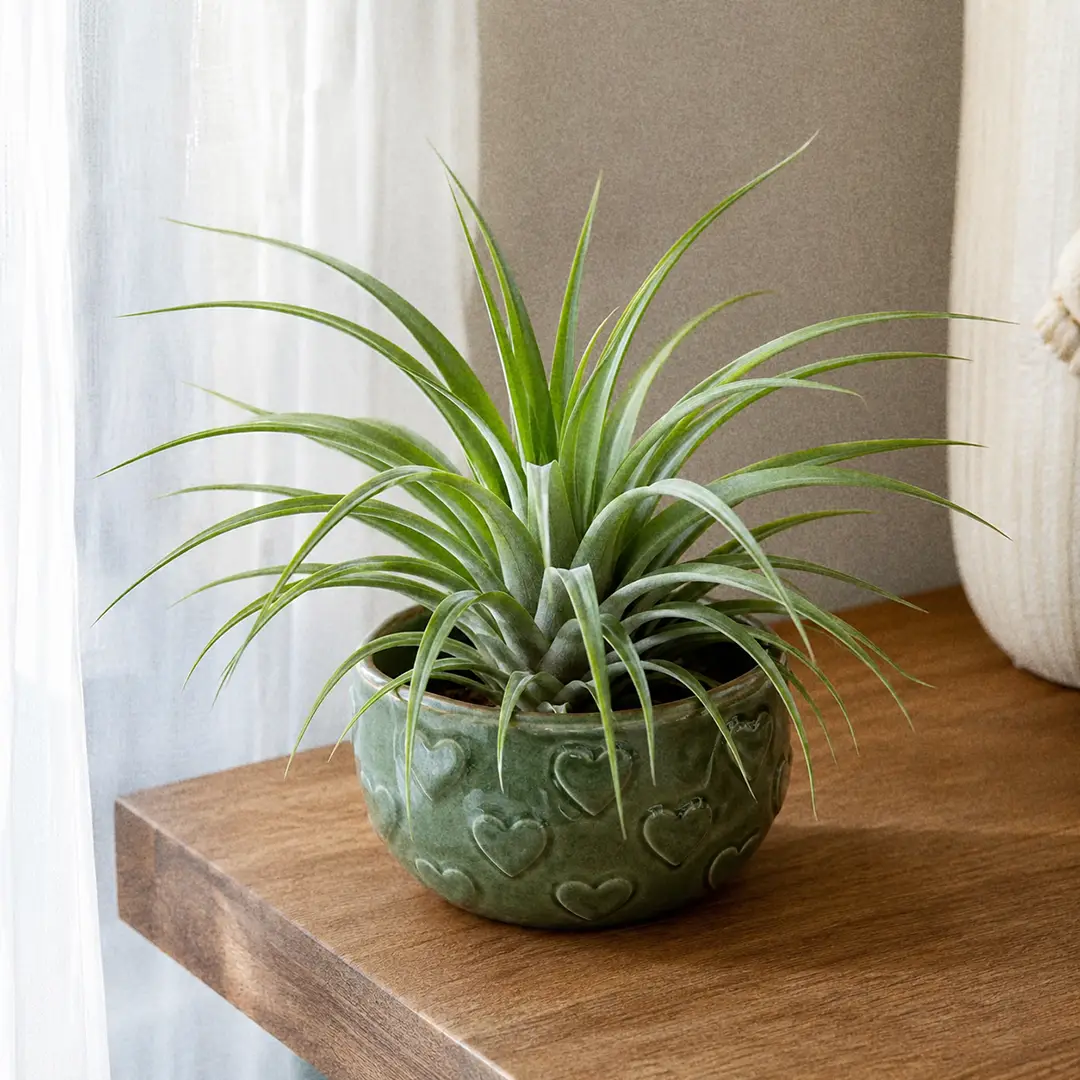
Complete Guide to Brachycaulos Air Plant Care and Growth

Houseplant101 Forum
Questions & Comments
Ask a question, share your plant experience, or help other plant owners.
Comments are temporarily unavailable.
Open the Houseplant101 ForumNo comments yet
Be the first to ask a question or share your experience about this page.
Log in or create an account
Comments use your Houseplant101 Forum account, but you can stay on this page.
Create a new account