
Tectorum Air Plant
Tillandsia tectorum
Tectorum Ecuador Air Plant, Snowball Air Plant, Fuzzy Air Plant, Roof Air Plant


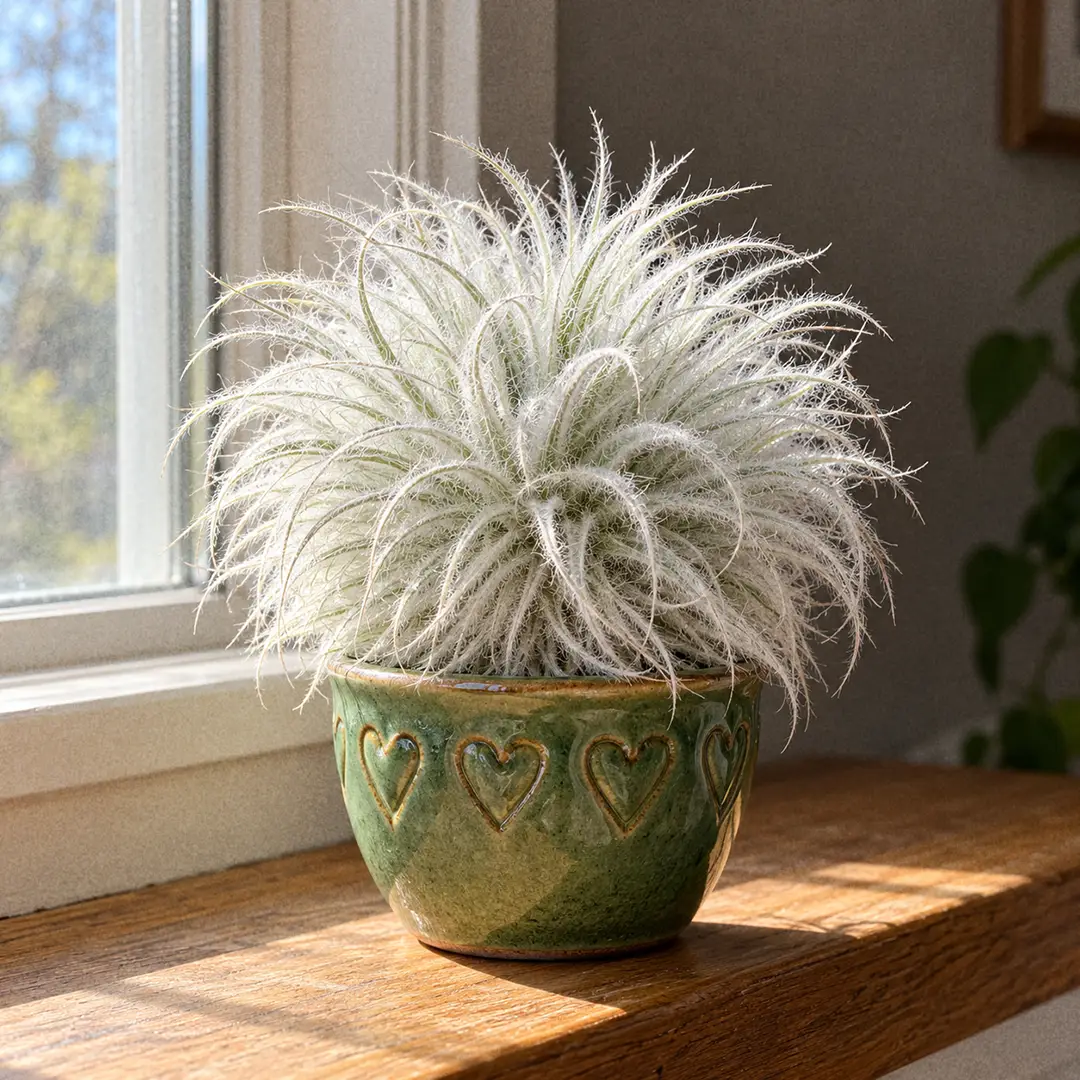
Tectorum Air Plant is the fuzzy white snowball from the dry Andes, and it breaks the usual air plant rules. Learn how to grow Tillandsia tectorum Ecuador indoors with strong light, moving air, and a light misting instead of a weekly soak, plus how the Ecuador and Peru forms differ.
📝 Tectorum Air Plant Care Notes
🌿 Care Instructions
⚠️ Common Pests
📊 Growth Information
🪴 In This Guide 🪴

☀️ Tectorum Air Plant Light Requirements (Very Bright, Some Direct Sun)
The Sweet Spot
Tectorum wants more light than almost any other air plant you can buy. Put it right on a south or west windowsill, within a foot of the glass, where it gets several hours of direct sun. An unobstructed east window is the minimum that works well.
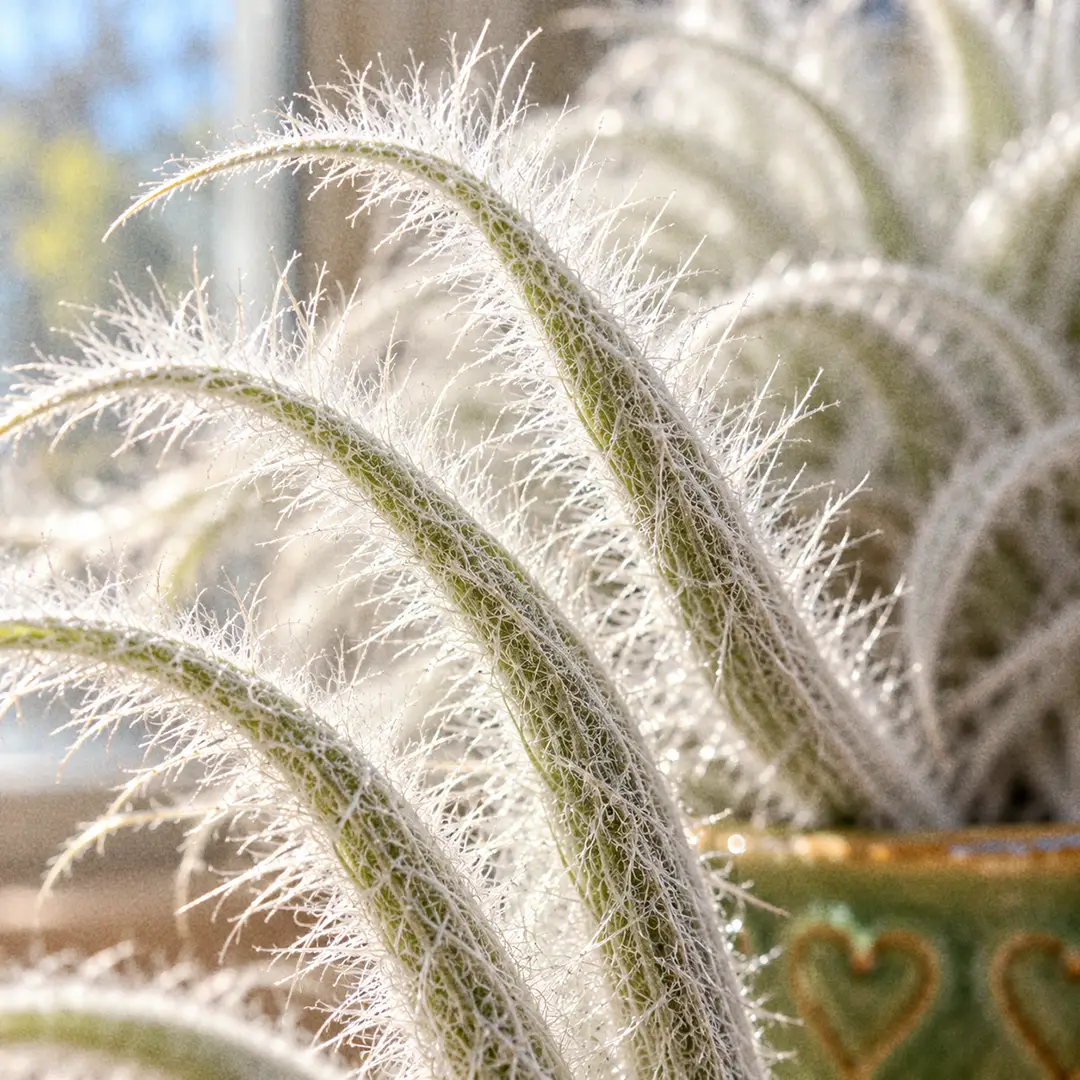
This makes sense once you know where it grows. In the wild it sits on bare rock faces in the dry Andes, in full sun next to cacti. The white fuzz acts as its sunscreen. The trichomes scatter sunlight before it reaches the leaf, so a spot that would fry a green air plant suits this one fine.
Too Little Light
Low light is the slow way to lose a Tectorum. The plant does not collapse. It simply stops growing, the center opens up and flattens, and new leaves come in thinner, greener, and less fuzzy. A plant that sits wet in dim light is also far more likely to rot, because it uses water so slowly.
If you do not have a sunny window, use a grow light 6 to 10 inches above the plant for 12 hours a day. A north window or a shelf in the middle of a room is not enough for this species. Our light guide shows how to measure what a spot really gets.
Too Much Light
It is hard to give this plant too much light indoors. The real risk is heat. A plant pressed against hot summer glass, or shut inside a glass container in the sun, can cook, and the leaf tips turn tan and crisp. That is sunburn, and it does not heal.
In very hot regions, give it light shade during the hottest part of summer afternoons. If you move it outside for summer, start in morning sun and increase the exposure over two weeks.

💧 Tectorum Air Plant Watering Guide (Mist, Never Soak)
Why Tectorum Breaks the Soaking Rule
Most air plant advice says to soak the plant in a bowl once a week. For Tectorum, that advice is wrong. The long trichomes that make it white are built to catch fog and dew out of moving air. They pull in water within seconds, and they also hold a lot of it against the leaf. After a 30-minute soak, the dense center of the plant can stay wet for a day, and that is how it rots.
In its habitat, rain is rare. The plant lives on mist that rolls through and dries off again by midday. Your goal at home is the same pattern: a brief wetting, then a fast dry.
Watering Frequency
In a typical heated or air-conditioned home, mist once a week. In a hot, dry climate or right next to a sunny window in summer, twice a week is fine. In a cool, humid, or dim room, every two to three weeks is enough.
Read the plant, not the calendar. A hydrated Tectorum feels light but springy, with leaves that arch outward. A thirsty one feels stiff and papery, and the leaf tips curl inward and start to brown. When in doubt, wait. This species forgives a month of drought much more easily than one wet week.
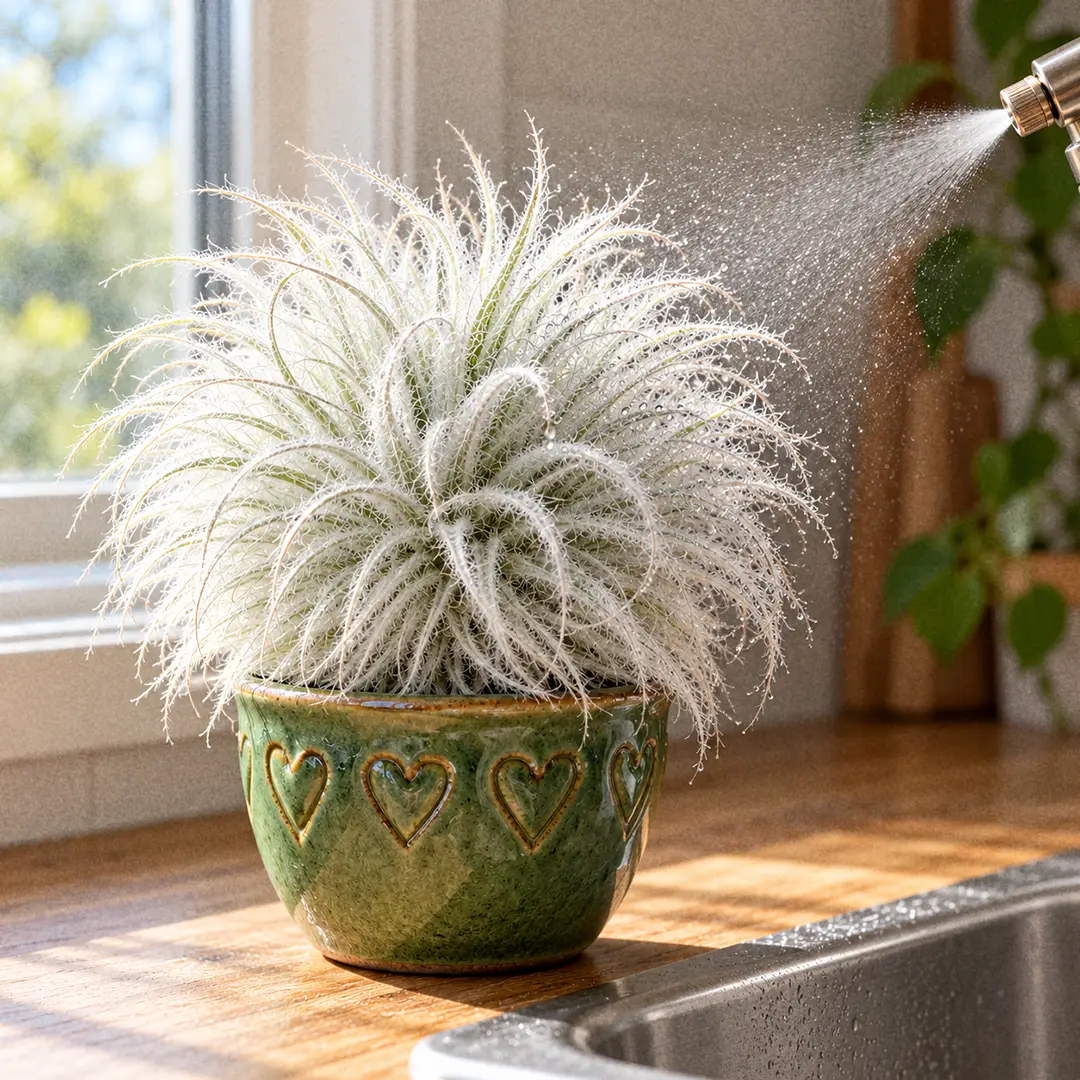
- Take the plant to the sink in the morning, so it has all day to dry.
- Mist it from all sides with a fine spray until the fuzz looks evenly damp and slightly gray. It should not be dripping.
- Shake it gently upside down to knock water out of the center.
- Set it on its side or upside down in bright light with moving air.
- Check it after an hour. It should feel dry. If it is still damp after four hours, the spot needs more airflow.
A quick pass under a running tap also works, as long as you shake the plant out and it dries just as fast. Use rainwater, filtered water, or tap water that is not softened. Softened water leaves sodium on the trichomes, and very hard water leaves a crust that dulls the white. Our watering guide covers water quality in more detail.
Signs of Trouble
Brown, crispy tips and a tight, stiff rosette mean it is too dry. Mist a little more often, not more heavily.
A dark, soft base, a sour smell, or center leaves that slide out when touched mean rot. Fuzz that turns flat and gray and stays that way after the plant dries is an early warning that it has been wet too long.
🪴 Best Soil for Tectorum Air Plant (None, Keep It on Rock)
Why Tectorum Needs No Soil
Tectorum is a lithophyte, which means it grows on rock. Its few thin roots are anchors that grip a cliff face. They do not take up water in any useful amount. All of that happens through the leaves. Put the plant in potting mix and the base stays damp, and a damp base is the one thing this species cannot survive.
What to Set It On
Choose something hard, dry, and airy: lava rock, a chunk of granite, cork bark, driftwood, cholla wood, or an open wire stand. Tectorum does not need to be attached to anything. Most people simply rest it on top of its perch, which also makes it easy to pick up for misting.
Our site photos show it sitting on the rim of an empty ceramic pot. That works well because air reaches the plant from every side and nothing touches the base for long.
Materials to Avoid
Skip sphagnum moss, damp sand, and decorative moss beds. They hold moisture right against the base. Avoid copper wire and pressure-treated wood too, because copper is toxic to bromeliads. Deep cups and closed glass globes are also a problem, since they trap water and block the airflow the plant depends on.
🍼 Fertilizing Tectorum Air Plant
When and How Often
Tectorum is a slow plant from a place with almost no nutrients, so feeding is optional. If you want to feed, do it once a month from spring through late summer, and not at all in autumn and winter.
What to Use
Use a bromeliad or air plant fertilizer at a quarter of the label strength, added to the spray bottle on a normal misting day. Pick a formula that is low in urea. Air plants have no soil microbes to break urea down, so that nitrogen is wasted. Our fertilizer roundup lists suitable options, and the fertilizing guide explains dilution.
Over-Fertilizing Signs
Fertilizer dries onto the trichomes and stays there, so too much shows up fast as brown, burned tips or a dull, crusty look on the fuzz. If that happens, stop feeding for the rest of the season and mist with plain rainwater or filtered water for the next few waterings.
🌡️ Tectorum Air Plant Temperature Range
Ideal Range
Normal room temperature suits it. Aim for 60 to 85°F (16 to 29°C) in the growing season, and it handles days into the 90s (32°C and up) if the air is moving. In winter it is happy a little cooler, around 55 to 65°F (13 to 18°C), which matches the cool nights of its mountain home.
Cold Tolerance
A dry Tectorum tolerates a brief dip toward 40°F (4°C), and growers report that it survives a light frost. A wet plant in the cold is a different story. Keep it above 45°F (7°C) to be safe, and never mist it right before a cold night. Outdoors it is a year-round plant only in zones 10 and 11.
Drafts and Heat Sources
This is one of the few houseplants that enjoys a breeze. An open window or a ceiling fan is good for it. What it does not like is a blast of hot, dry air from a heat vent, which crisps the tips, or still, hot air trapped behind a closed curtain.
💦 Tectorum Air Plant Humidity Requirements
Ideal Humidity
Tectorum prefers dry air, roughly 30 to 50% humidity, which is what most homes have anyway. It is one of the few air plants that needs no help in a centrally heated room. Do not put it in a steamy bathroom or next to a humidifier.
Airflow Matters More Than Humidity
Moving air is what keeps this plant alive. On an Andean cliff the wind never really stops, and the fuzz dries within minutes of getting wet. Indoors, give it an open spot where air passes on all sides, not a nook or a container. If you live somewhere humid, a small fan running nearby for an hour after each misting makes a real difference. Our humidity guide explains how to measure your room.
🌸 Tectorum Air Plant Flowers (Pink Stalk, Lavender Blooms)
What the Flowers Look Like
A mature Tectorum sends up a slim stalk from the center of the rosette, well above the fuzz. At the top is a small cluster of pink to rose bracts, and from between them come tiny tubular flowers in pale lavender, often with white. Each flower is small, under an inch long, but the pink stalk against the white plant is easy to spot. The bracts hold their color for several weeks.
How to Trigger Bloom
There is no trick that forces it. Tectorum blooms when it is old enough and has had enough light, and that takes years. Small plants sold at 2 to 3 inches may need three or more years to reach flowering size. What helps:
- As much sun as you can give it.
- Steady, light misting through the growing season.
- A cooler, drier winter.
- Light feeding in spring and summer.
Bloom usually comes in spring.
If It Won't Bloom
Do not worry about it. Many indoor Tectorum plants never flower, and people grow this species for the fuzz, not the bloom. If you want to improve the odds, add light before anything else. Our page on failure to bloom covers the general causes.
Like other air plants, each rosette blooms only once. Afterward it puts its energy into pups, then slowly declines over a year or more.
🏷️ Tectorum Air Plant Types and Varieties (Ecuador vs Peru)
Tectorum Ecuador (The Snowball Form)
This is the plant most shops sell, and the one this guide is about. It has a very short stem, so the leaves form a rounded, nearly spherical rosette. The trichomes are long and stand straight out from the leaf, which gives the plant its feathery, snow-white look. Small plants are sold at 2 to 3 inches across. Mature single rosettes commonly reach 6 to 8 inches.
Tectorum Peru
Plants sold as Peru come from the southern part of the range, and the label covers more than one look. In general, the leaves are held more upright than on the Ecuador form, so the plant looks less like a ball. Some Peru plants also grow along a visible stem and pup freely into clumps. Sellers do not agree on which form is larger, and size varies a lot with age and growing conditions, so judge the plant in front of you, not the label.
Care is the same for both: strong light, moving air, misting only.
Caulescent and Other Named Forms
Specialist nurseries also list a caulescent (stem-forming) form that slowly grows into a long, leafy stem, a wide or giant form, and occasionally a small form. All are the same species with the same needs. Dyed Tectorum plants in pink or green are ordinary plants with color added to the fuzz. The dye fades, and new growth comes in white.
Tectorum vs Other Fuzzy Air Plants
The Pruinosa Air Plant is also sold as a fuzzy air plant, but it is a small, bulb-based forest species that wants water once or twice a week. The Harrisii Air Plant is soft and silver, with short trichomes that lie flat. The Xerographica Air Plant is the other famous dry-climate species, with wide, smooth, curling silver leaves. None of them has trichomes as long as Tectorum, and none wants to be kept as dry.
🪴 Potting and Mounting Tectorum Air Plant
There Is Nothing to Repot
With no soil, there is no repotting and no root care. The only reason to move a Tectorum is that it has outgrown its perch or you want a different display. Our repotting guide applies to your other plants, not this one.
Choosing a Holder
Pick a holder that is open on all sides and cannot hold water. A flat rock, a cork round, a shallow dry dish, or a wire stand all work. Keep the base of the plant in the air or resting on something hard and dry. Tilt the plant slightly so any water in the center can run out.
Mount It or Leave It Loose?
Leave it loose if you can. A loose plant is easy to carry to the sink, mist from every side, and shake out. If you want it fixed to a piece of wood, tie it on with fishing line or plastic-coated wire around the lowest leaves. Avoid glue. It mats the fuzz, and the plant has very little bare base to glue to.
✂️ Pruning Tectorum Air Plant
When to Prune
Rarely. This plant keeps its old leaves for a long time, and a few dry ones at the bottom are normal. Prune only when a flower stalk has finished and turned brown, or when a lower leaf is fully dry and loose.
How to Prune Without Damaging the Fuzz
Use small, clean scissors and touch the plant as little as possible. Cut the spent stalk as low as you can reach without digging into the center. For brown tips, trim just the dead part at an angle. Every leaf you handle loses some trichomes, so do not tidy this plant more than once or twice a year.
🌱 How to Propagate Tectorum Air Plant
Best Method: Pups
Tectorum propagates by pups, small offsets that appear at the base or along the stem, usually after the plant blooms. Some plants also produce a pup or two without flowering. It can be grown from seed, but seedlings take many years to reach a size you would notice, so pups are the practical route at home.
Step-by-Step Pup Separation
- Wait until the pup is at least a third the size of the mother, and half is better. With a slow plant like this, that can take a year.
- Hold the mother low on the base, with as little contact with the fuzz as you can manage.
- Grip the pup at its base and twist gently downward. It should come away cleanly.
- If it does not, cut it free with a clean, sharp blade close to the mother.
- Leave both plants dry for two or three days so the wound seals.
- Go back to normal misting.
Caring for Tectorum Pups
A separated pup gets the same care as an adult: strong light, moving air, light misting. Small pups dry out a little faster, so check them between mistings, but do not start soaking them. Expect slow progress. A pup may only add an inch or so across in a year.
Clump or Separate?
Leaving pups attached is the easier choice, and many growers prefer it. A clump of white rosettes looks great and is sturdier than single plants. The trade-off is airflow. A dense clump holds water in the gaps, so shake it well and give it extra drying time. Our propagation guide covers offsets in general.
🐛 Tectorum Air Plant Pests and Treatment
Mealybugs and Scale
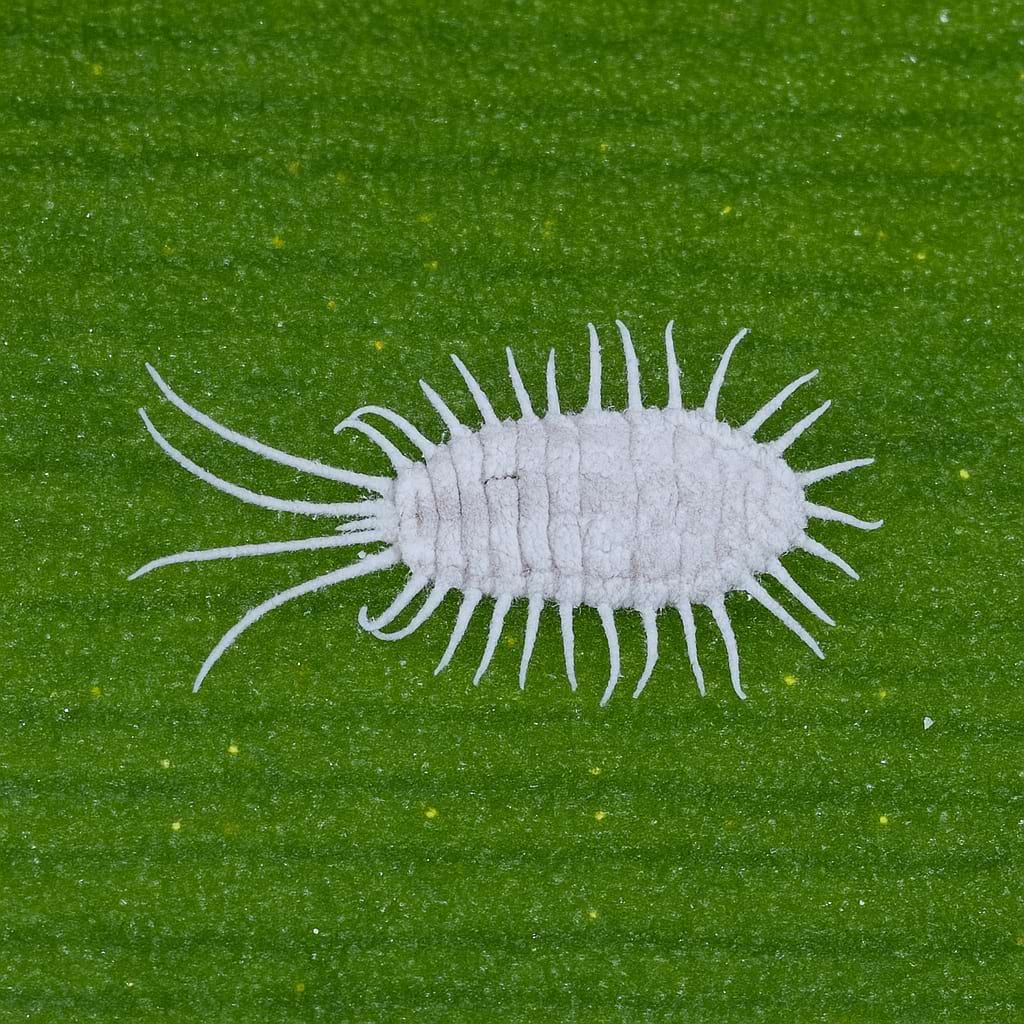
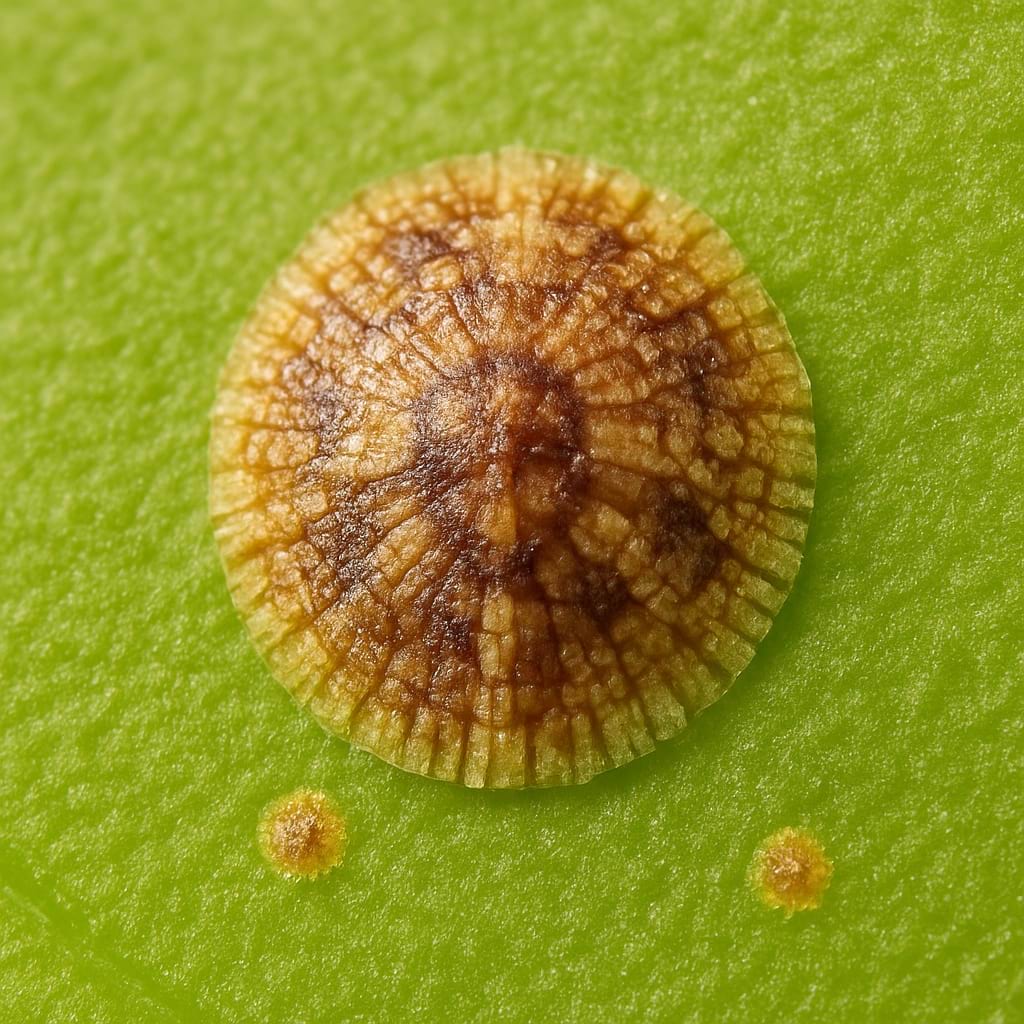
Pests are uncommon on Tectorum, since the dry conditions it likes do not suit most of them. Mealybugs are the one to watch for, and they are hard to see because they are white and cottony on a white, fuzzy plant. Look deep between the leaf bases for clumps that look waxy or sticky instead of feathery. Touch each one with a cotton swab dipped in rubbing alcohol.
Scale insects show up as small tan or brown bumps on the leaves. Lift them off with a toothpick and dab the spot with alcohol.
Treating Without Ruining the Fuzz
Do not use neem oil, horticultural oil, or insecticidal soap on this plant. Oils and soaps coat the trichomes, mat them down, and can block the plant's ability to take in water. Stick to spot treatment with alcohol on a swab, then mist with plain water the next day. Keep any new air plant apart from your others for two weeks before you add it to a display.
🩺 Common Tectorum Air Plant Problems
Rot From Too Much Water
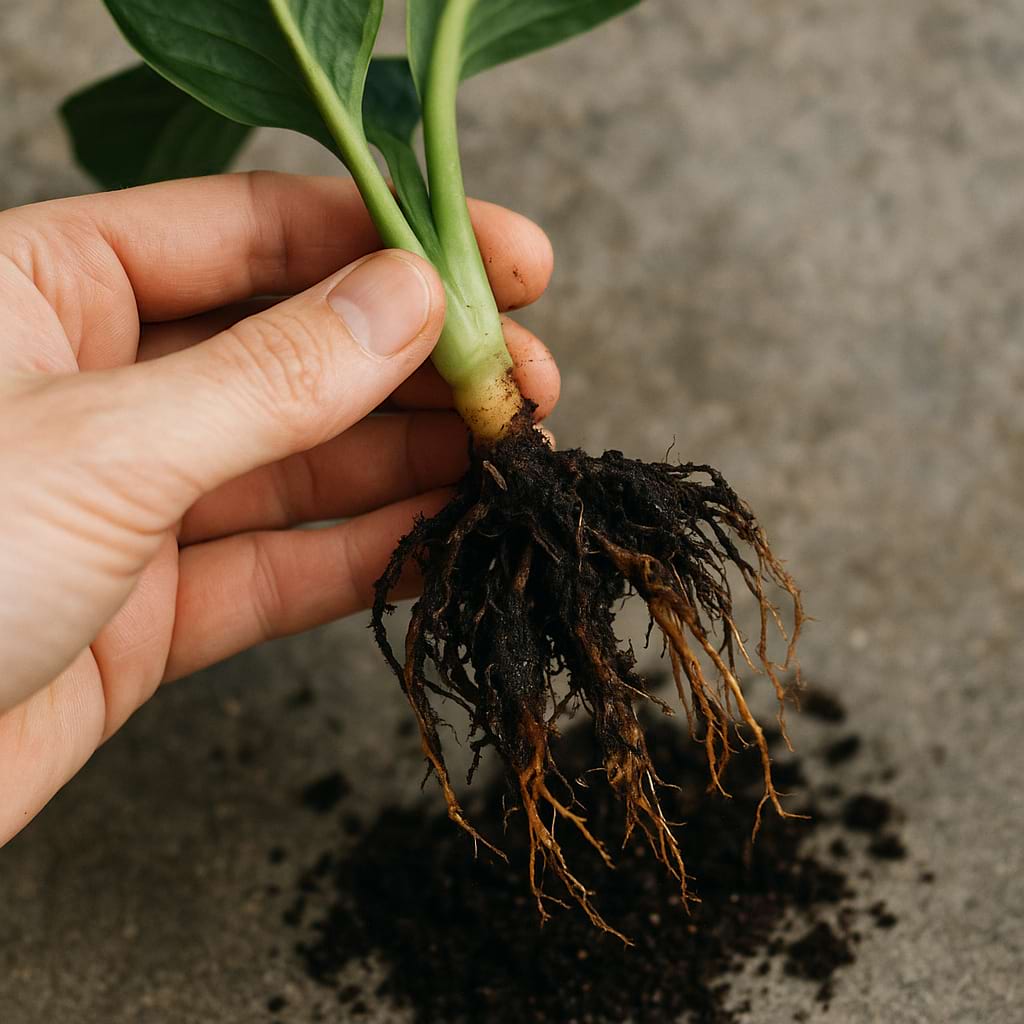
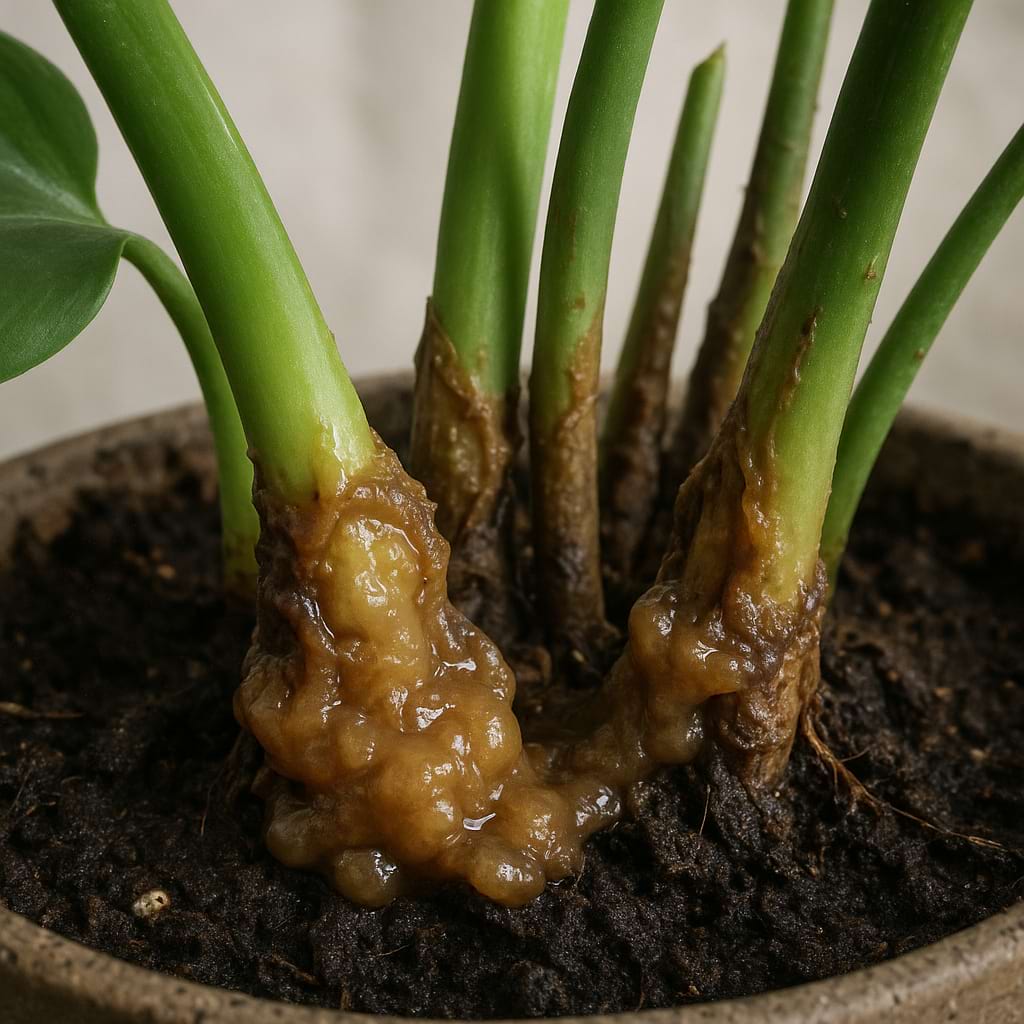
This is what kills most Tectorum plants. The base turns dark and mushy, the center leaves pull out, and the plant falls apart. It follows soaking, a closed container, or slow drying in a dim room. A rotted rosette does not recover, though a firm pup can be saved. It is the air plant version of root rot.
Dry Tips and Lost Fuzz
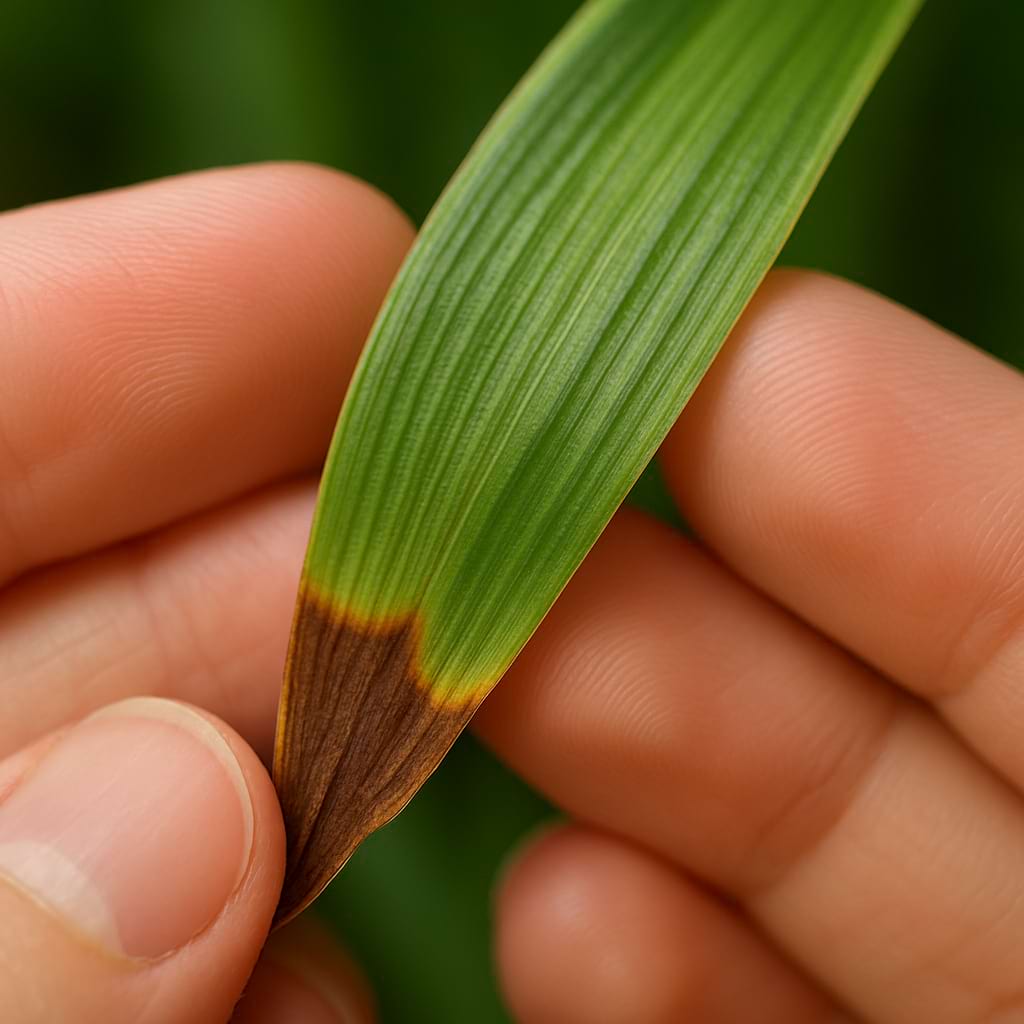
Brown, crispy tips mean the plant has gone too long between mistings or sits in a stream of hot air. Mist a bit more often and trim the dead ends.
Bald, green patches come from handling. The trichomes break off when rubbed and do not grow back on that leaf. New leaves will be fuzzy again. Fuzz that looks gray and flat right after misting is normal and turns white again as it dries.
Slow, Flat, or Green Growth
A rosette that opens flat, with stretched, thinner, greener new leaves, is not getting enough light. Move it to direct sun in stages. Pale, less fuzzy growth has the same cause.
Very slow growth by itself is normal for this species. If you see nothing new at all through spring and summer, treat it as stunted growth and check light first, then watering.

🖼️ Tectorum Air Plant Display and Styling Ideas
Solo Setups
One Tectorum on a piece of dark lava rock or a slab of slate is hard to beat. The white plant against a dark, rough surface looks like snow on a mountain, which is close to how it grows in nature. A wire stand or a small piece of cholla wood on a sunny sill works just as well.
Grouped Arrangements
Pair it with plants that want the same sun and dry air. A Xerographica Air Plant beside it gives you smooth silver curls next to white fuzz. Small cacti in their own pots suit it too. An Old Man Cactus is a fun match, since both plants wear white hair for the same reason, as protection from mountain sun.
Do not group it with forest air plants such as Bulbosa or Stricta if you water the whole display at once. Their weekly soak would kill it.
Where Not to Put It
Avoid closed terrariums, glass globes, bathrooms, dim shelves, and anywhere it gets splashed. Also think about hands and paws. Everyone wants to pet this plant, and cats like to bat it around. Each touch costs it some fuzz, so a spot that is easy to see and hard to reach is the best one.
🌟 Tectorum Air Plant Pro Care Tips
Watering and Light Habits
- Mist, never soak. A weekly bowl soak is the standard way this plant dies.
- Dry within the hour. If it is still damp after four hours, add airflow.
- Water in the morning. A plant that goes into a cool night wet is at risk.
- Sun first. If something looks off, check the light before anything else.
- When unsure, skip a misting. It handles drought far better than damp.
Handling and Buying
- Hands off the fuzz. Lift it from underneath by the base, and only when you need to.
- Check the holder it came in. Remove any moss or glue-on base that stays wet.
- Buy the size you want. It grows slowly, so a 3-inch plant stays small for years.
❓ Frequently Asked Questions
Should I soak my Tectorum Air Plant?
No. Its long trichomes absorb water in seconds and hold it against the leaves, so a soak leaves the center wet for too long and leads to rot. Mist it lightly and let it dry within about an hour.
How often should I water a Tectorum Ecuador Air Plant?
About once a week in a normal heated home, up to twice a week in hot, dry conditions, and every two to three weeks in a cool or humid room. Stiff, papery leaves with browning tips mean it wants water a little more often.
Why is my Tectorum Air Plant turning green?
Either it is wet or it is short on light. Wet fuzz goes transparent and shows the gray-green leaf beneath, then turns white again as it dries. If new leaves stay greener and less fuzzy when dry, move the plant into stronger light.
Is Tectorum Air Plant safe for cats and dogs?
Yes. Tillandsia air plants are considered non-toxic to cats and dogs. The plant is the one at risk, because chewing and batting strip the fuzz and break the leaves.
How big does a Tectorum Ecuador Air Plant get?
Most are sold at 2 to 3 inches across. A mature single rosette of the Ecuador form usually reaches 6 to 8 inches, and a clump of several rosettes grows wider over the years. Growth is slow.
What is the difference between Tectorum Ecuador and Tectorum Peru?
They are forms of the same species from different parts of its range. The Ecuador form is a rounded, short-stemmed ball with very long, feathery trichomes. Peru plants tend to hold their leaves more upright, and some grow along a stem and clump. Care is identical.
Can a Tectorum Air Plant live in a terrarium or glass globe?
Not a closed one. It needs moving air and dry conditions, and glass traps both heat and moisture. A wide, open bowl with dry stones is fine if you take the plant out to mist it.
Can Tectorum Air Plant take full sun?
Indoors, yes, and it grows best with several hours of direct sun through a window. Outdoors, introduce it to full sun gradually and give light afternoon shade in very hot climates.
Why is my Tectorum Air Plant falling apart?
Leaves that slide out of the center with a dark, soft base mean rot from staying wet. That rosette cannot be saved. Separate any firm pups, keep them dry for a few days, and switch to light misting.
Does a Tectorum Air Plant die after blooming?
The rosette that bloomed slowly declines, but that takes a year or longer, and it produces pups first. The pups grow on, so the plant continues.
ℹ️ Tectorum Air Plant Info
Care and Maintenance
🪴 Soil Type and pH: No soil. Displayed loose on rock, cork, or driftwood, or in an open, dry holder.
💧 Humidity and Misting: Prefers dry air with strong circulation. Humid, still rooms are where it rots.
✂️ Pruning: Almost none. Snip the spent flower stalk and leave the fuzzy leaves alone.
🧼 Cleaning: Do not wipe, brush, or stroke the leaves. The fuzz is made of trichomes that snap off and do not regrow on that leaf.
🌱 Repotting: Not applicable. Move it to a larger perch when a clump outgrows the old one.
🔄 Repotting Frequency: Not required
❄️ Seasonal Changes in Care: Mist weekly in bright, warm months, stretch to every two or three weeks in cool, dim winters, and keep air moving all year.
Growing Characteristics
💥 Growth Speed: Slow
🔄 Life Cycle: Evergreen perennial bromeliad. Each rosette flowers once, produces pups, then slowly declines.
💥 Bloom Time: Usually spring, on mature plants only
🌡️ Hardiness Zones: 10-11
🗺️ Native Area: Dry Andean slopes and canyons of Ecuador and northern Peru, on rock outcrops and cliff faces among cacti
🚘 Hibernation: No true dormancy, though growth nearly stops in a cool, dim winter.
Propagation and Health
📍 Suitable Locations: South and west windowsills, bright sunrooms, under a strong grow light, sheltered sunny patios in summer
🪴 Propagation Methods: Separate pups once they reach a third to half the size of the mother, or leave them to form a clump.
🐛 Common Pests: Mealybugs, Scale Insects
🦠 Possible Diseases: Crown and base rot from staying wet too long.
Plant Details
🌿 Plant Type: Lithophytic bromeliad (air plant)
🍃 Foliage Type: Narrow, wiry leaves in a rounded rosette, hidden under long white trichomes
🎨 Color of Leaves: Snow white to silver-gray fuzz over a gray-green leaf
🌸 Flower Color: Pink to rose bracts with small pale lavender flowers
🌼 Blooming: Blooms once per rosette after several years, with a slim pink stalk rising above the fuzz
🍽️ Edibility: Not edible.
📏 Mature Size: 3-8 inches for the Ecuador form, taller on stemmed forms
Additional Info
🌻 General Benefits: Pet-safe, soil-free, very drought tolerant, and one of the most unusual textures in the houseplant world
💊 Medical Properties: No documented medicinal uses.
🧿 Feng Shui: A soft white sphere that lightens a sunny sill or desk where a dark, spiky plant would feel heavy.
⭐ Zodiac Sign Compatibility: Capricorn
🌈 Symbolism or Folklore: Endurance, self-reliance, calm
📝 Interesting Facts: The name tectorum is Latin for "of roofs". The same species name appears on Hens and Chicks (Sempervivum tectorum), another plant known for growing on rooftops. Its trichomes are far longer than those of most air plants and stand out from the leaf like tiny feathers, which is why the plant looks white instead of green.
Buying and Usage
🛒 What to Look for When Buying: Look for a firm center, thick even fuzz, and leaves that do not pull free. Avoid plants with a dark or soft base, matted gray fuzz, or a holder that was packed with wet moss.
🪴 Other Uses: Rock and driftwood displays, arid tabletop arrangements, open dry bowls, gift plants.
Decoration and Styling
🖼️ Display Ideas: Lava rock, cork rounds, dry stone bowls, cholla wood, wire stands on a sunny sill
🧵 Styling Tips: Give it a dark or warm-toned background. White fuzz disappears against a white wall and glows against slate, walnut, or terracotta.
🪴 See also 🪴
Complete Guide to Stricta Air Plant Care and Growth
Complete Guide to Medusa's Head Air Plant Care and Growth
Complete Guide to Tenuifolia Air Plant Care and Growth
Complete Guide to Streptophylla Air Plant Care and Growth

Houseplant101 Forum
Questions & Comments
Ask a question, share your plant experience, or help other plant owners.
Comments are temporarily unavailable.
Open the Houseplant101 ForumNo comments yet
Be the first to ask a question or share your experience about this page.
Log in or create an account
Comments use your Houseplant101 Forum account, but you can stay on this page.
Create a new account