
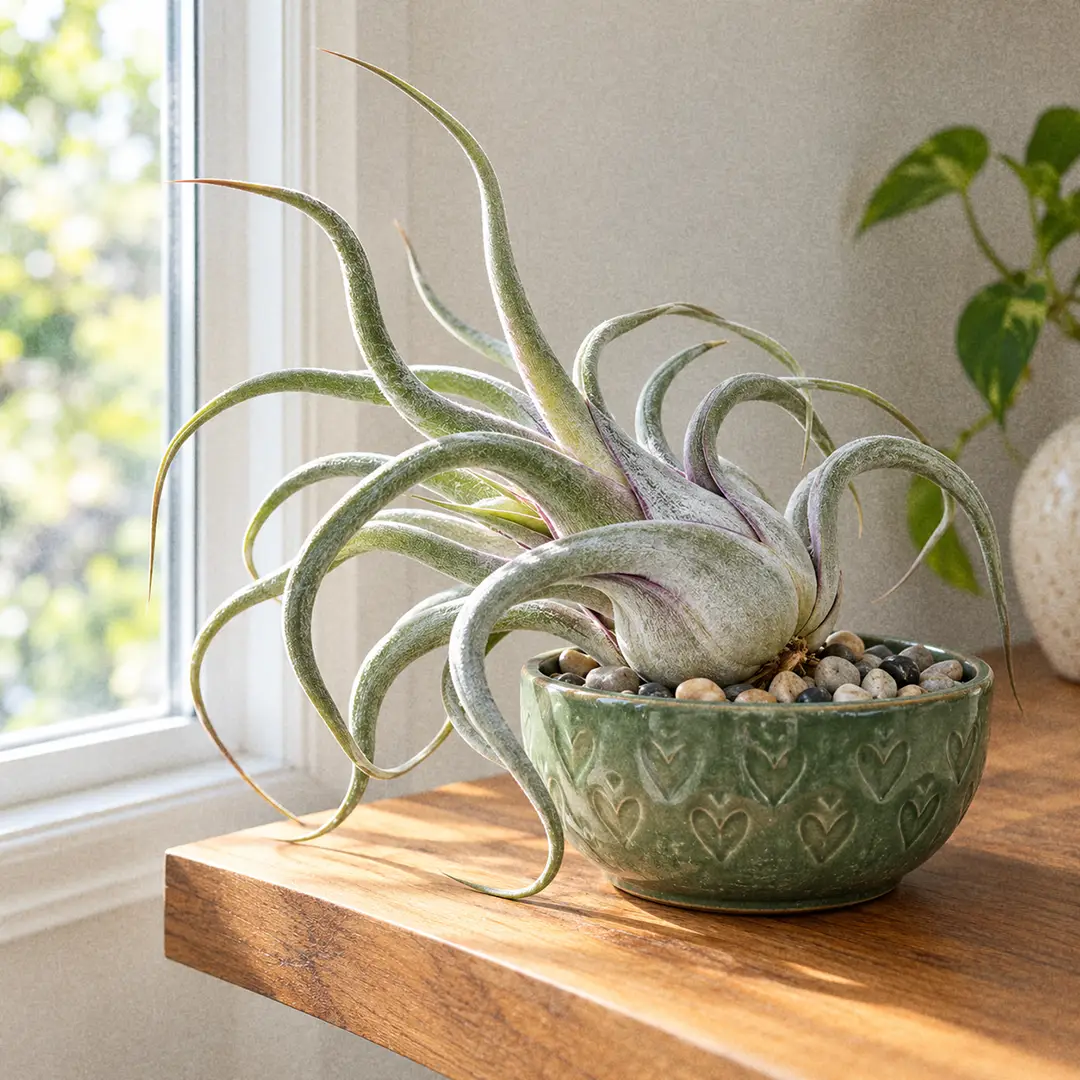
Medusa's Head Air Plant
Tillandsia caput-medusae
Medusa Air Plant, Octopus Air Plant, Caput-Medusae, Medusa's Head Tillandsia


The Medusa's Head Air Plant is a silver, snake-leaved Tillandsia with a fat hollow bulb that ants live in back home in Central America. Learn how to water Tillandsia caput-medusae without rotting that bulb, how much sun it takes, and how to get its blood-red flower spikes.
📝 Medusa's Head Air Plant Care Notes
🌿 Care Instructions
⚠️ Common Pests
📊 Growth Information
🪴 In This Guide 🪴

☀️ Medusa's Head Air Plant Light Requirements (Bright with Gentle Sun)
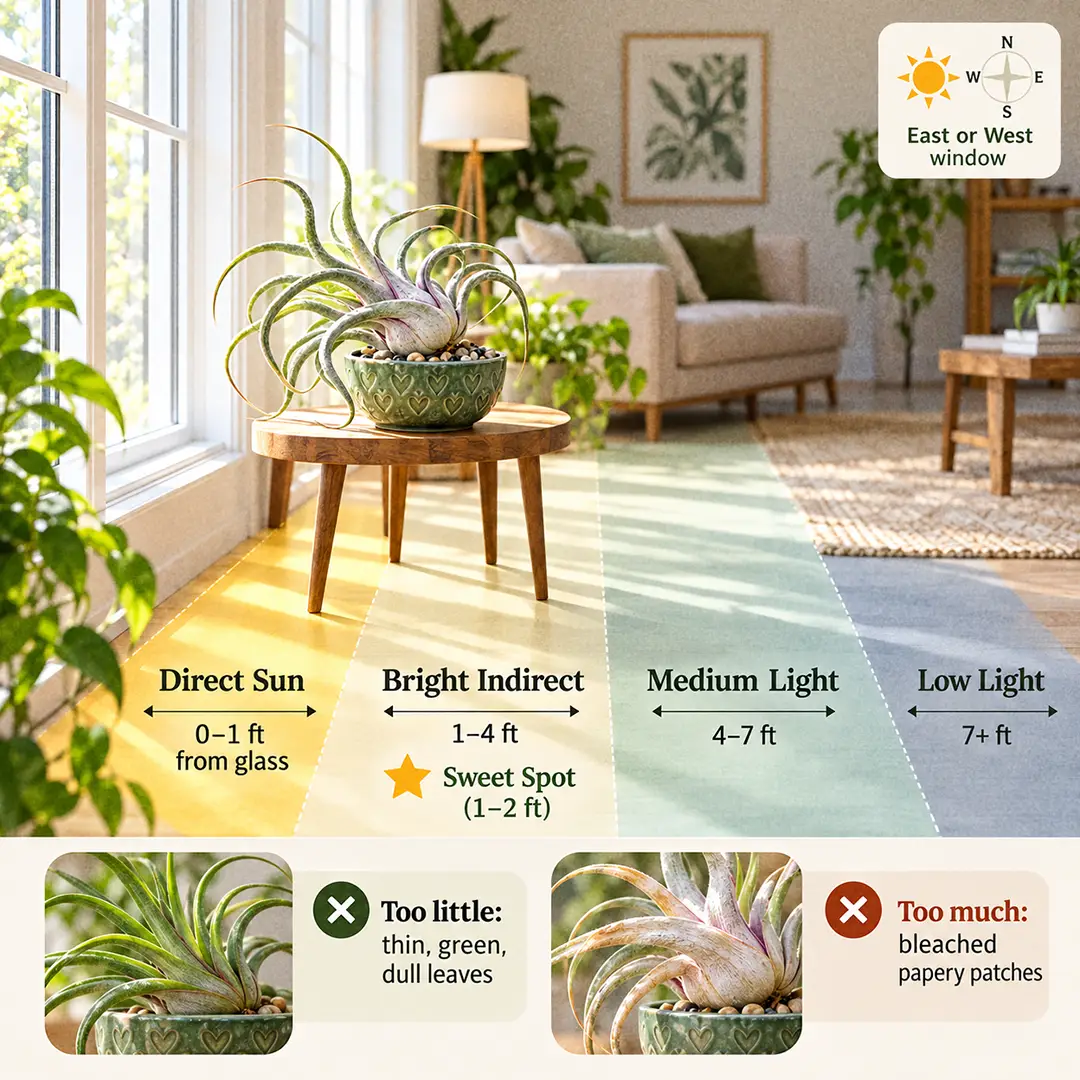
The Sweet Spot
This is one of the brighter-loving air plants. That thick silver coat is sunscreen, a sign it comes from open, sunny tree branches rather than deep forest shade. Indoors, aim for a spot within a couple of feet of an east or west window, where it gets a few hours of soft morning or late-afternoon sun and bright light the rest of the day.
A south window works too if a sheer curtain takes the edge off midday sun. A north window is usually too dim unless the plant sits right on the sill.
Too Little Light
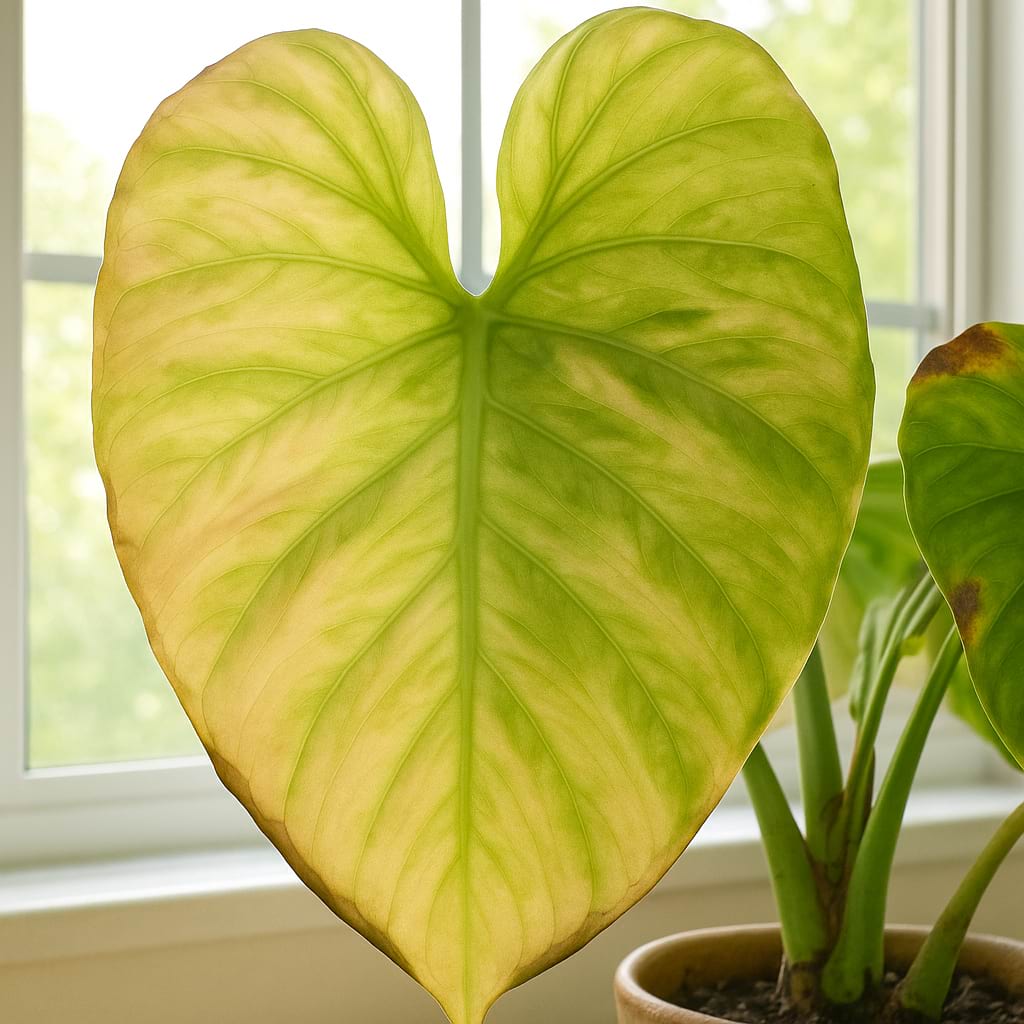
A Medusa in a dim corner does not die quickly. It just stops. New leaves come in thinner and greener, the silver sheen fades, and the plant never reaches flowering size. Low light also slows drying after watering, which is exactly how bulb rot starts.
If your only bright spot is too far from a window, a full-spectrum grow light 12 to 18 inches above the plant for 10 to 12 hours a day works well.
Too Much Light
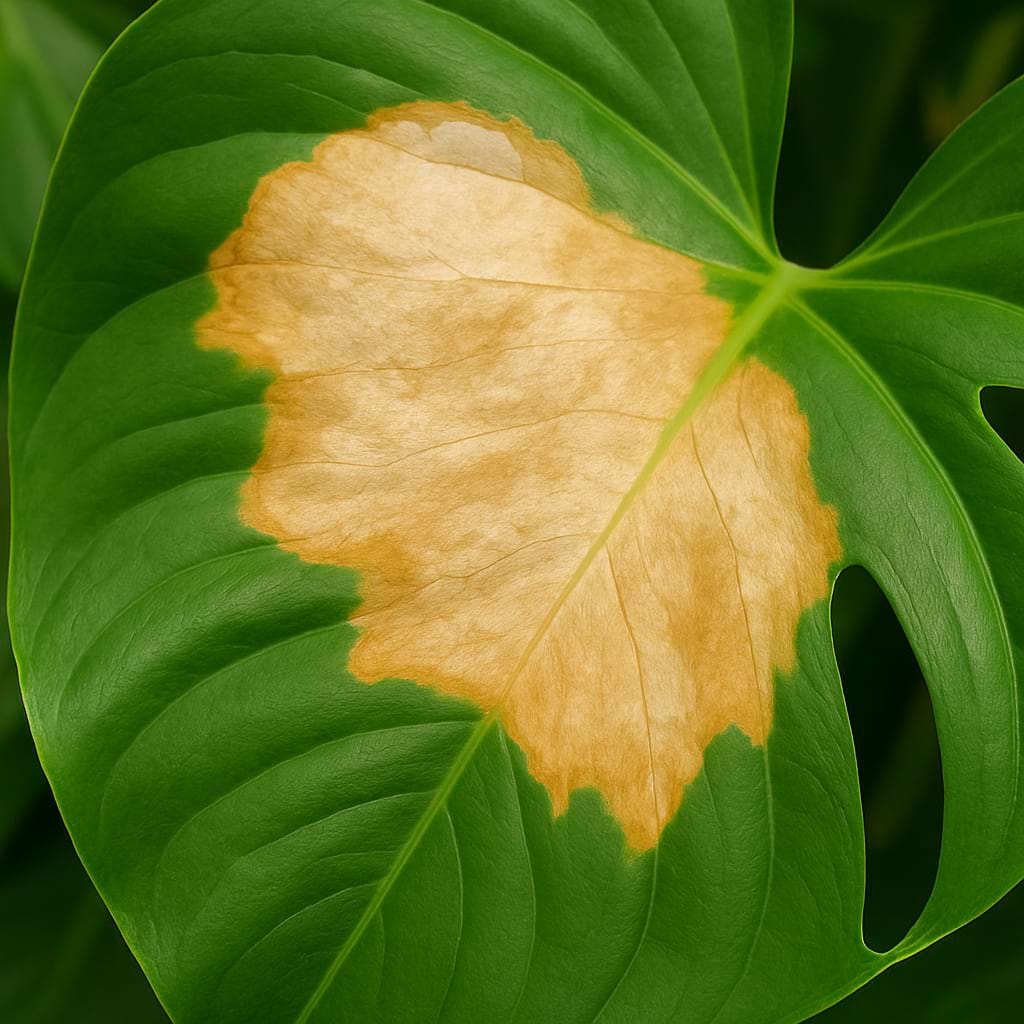
Hours of hot afternoon sun through glass can still scorch it. Look for bleached, papery patches on the side facing the window, or leaf tips that go crisp and tan. Pull it back a foot or add a sheer curtain. Scorched tissue does not recover, but new growth comes in clean once the light is right.
More sun also means faster drying, so a plant in a sunnier spot will need watering more often. See our light guide if you are unsure how bright a window really is. Plants moved outside for summer need a week in shade before any direct sun.
💧 Medusa's Head Air Plant Watering Guide (Mist or Dunk, Never Soak)
Watering Frequency
Most growers land on one of two routines. Either mist the plant heavily two or three times a week until every leaf is dripping, or give it a quick dunk once a week. In hot, dry summer weather you may need both. In a cool winter room, once a week is often plenty.
The leaves give you a reading. A well-hydrated plant holds its leaves fairly straight and open. A thirsty one curls them tighter and the silver coat looks whiter and duller. Crispy tips mean you are well behind.
How to Water Without Rotting the Bulb
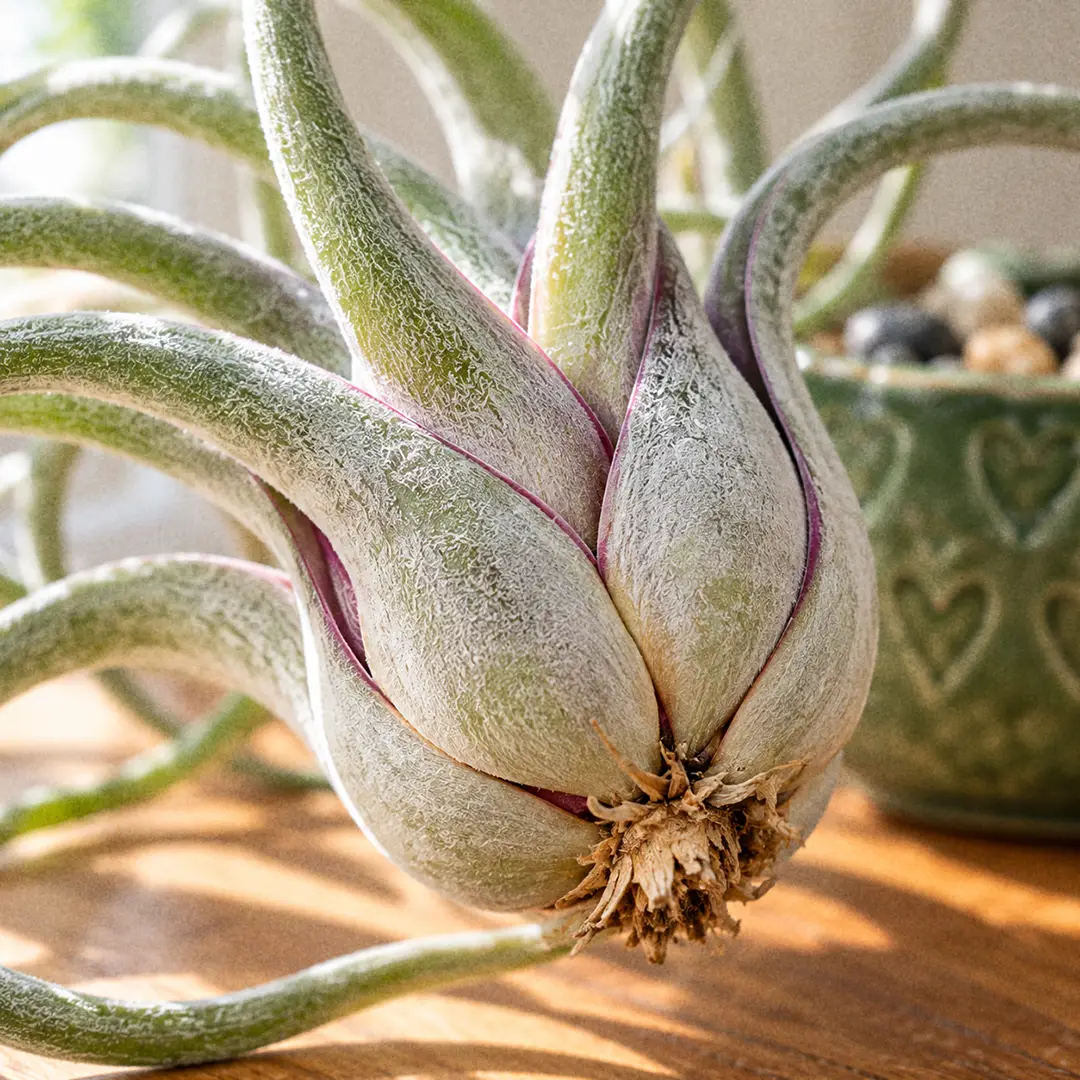
The hollow bulb is the whole story here. In the wild, ants live in the gaps between the swollen leaf bases. In your kitchen, those same gaps fill with water. Water that sits in there for a day will rot the plant from the inside, and you will not see it until the centre pulls loose.
So skip the long bowl soak that suits an Ionantha. If you dunk, keep it to a minute or two. Then hold the plant bulb-up and give it three or four firm shakes, and leave it upside down on a towel or dish rack for two to four hours. It should feel dry to the touch before it goes back on its mount. Misting is safer still, as long as you aim at the leaves rather than the base.
Rainwater, filtered water, or tap water left out overnight all work. Avoid softened water, which carries salts the trichomes cannot handle.
Signs of Trouble
A dark ring at the base, a sour smell, or leaves that slide out of the centre with no resistance mean rot. Tight curling plus brittle, crunchy tips means underwatering. A limp, bruised-looking bulb that is still firm inside usually means the plant stayed wet too long but can recover if you let it dry fully and water less often for a few weeks.
🪴 Why Medusa's Head Air Plant Needs No Soil
It Is an Epiphyte
Medusa's Head grows on tree branches and even cacti in the wild. Its roots exist only to hold on. All of its water and food comes in through the silver scales, called trichomes, that cover every leaf. Bury the base in potting soil and the bulb stays wet and rots within weeks.
What to Mount It On Instead
Anything that stays dry and lets air reach the base works: cork bark, driftwood, grapevine, a wire hanger, a shell, or a rock. Avoid treated wood, and never use copper wire, which slowly poisons Tillandsias.
Materials that hold water, like sphagnum moss, coco coir, or soft untreated pine, are a poor match. They stay damp against the base long after the leaves have dried, which is exactly the condition you are trying to avoid.
Angle the Mount So It Drains
This matters more for Medusa than for most air plants. Mount it sideways, tilted, or even fully bulb-up so nothing pools at the base. Many growers hang it upside down permanently, and the plant is perfectly happy that way.
A simple test: pour a little water over the plant on its mount and watch where it goes. If it runs off the leaves and drips away, the angle is right. If it runs down into the bulb and stays there, turn the mount.
🍼 Fertilizing Medusa's Head Air Plant
When and How Often
Feed once a month from spring through late summer. Skip winter, when growth slows. Air plants survive without fertilizer, but a fed Medusa grows noticeably faster and reaches flowering size sooner.
What to Use
Use a bromeliad or air plant fertilizer at a quarter of the label strength, mixed into your misting or dunking water. Low-nitrogen formulas are best. A general houseplant fertilizer works at a quarter strength as long as it contains no urea and no copper. More on the basics in our fertilizing guide.
Over-Fertilizing Signs
Burnt, dark leaf tips that appear shortly after feeding mean the mix was too strong. Rinse the plant in clean water and halve the dose next time.
A white crust building up on the leaves is mineral residue from fertilizer or hard water. Rinse the plant under clean water once a month to wash it off, since a crust blocks the trichomes from drinking.
🌡️ Medusa's Head Air Plant Temperature Range
Ideal Range
It is happiest between 65°F and 85°F (18-30°C), which is ordinary room temperature. It tolerates short dips to around 50°F (10°C), but keep it above 55°F (12°C) for anything longer than a night. It has no frost tolerance.
A gentle drop of 10 degrees or so at night is actually good for it. That day-night swing is one of the things that nudges a mature plant into bloom.
Drafts and Heat Sources
On a windowsill in winter, the glass itself can get far colder than the room, so pull the plant back a few inches on frosty nights. Cold drafts from a winter window are the bigger risk, especially straight after watering, when a wet, cold plant is a rot risk. Keep it off radiators and away from heating vents too, which dry it out in hours. Moving air is good. Blasts of hot or cold air are not.
💦 Medusa's Head Air Plant Humidity Requirements
Ideal Humidity
Around 40 to 60% is comfortable, but this species handles drier rooms better than most air plants thanks to its dense trichomes. What it does not like is humid air that never moves, which keeps the bulb damp. See our humidity guide for the basics.
The drier the room, the more often it needs water. In a centrally heated flat in January, that may mean misting every other day.
Easy Humidity Boosters
In very dry winter rooms, mist more often rather than adding a humidifier. A bright bathroom with a window and a fan works well. A closed terrarium does not.
Grouping several air plants together also raises the humidity around them a little, as long as they are not crammed so tightly that air cannot move between them.
🌸 Medusa's Head Air Plant Flowers (Red Spikes, Violet Tubes)
What the Flowers Look Like
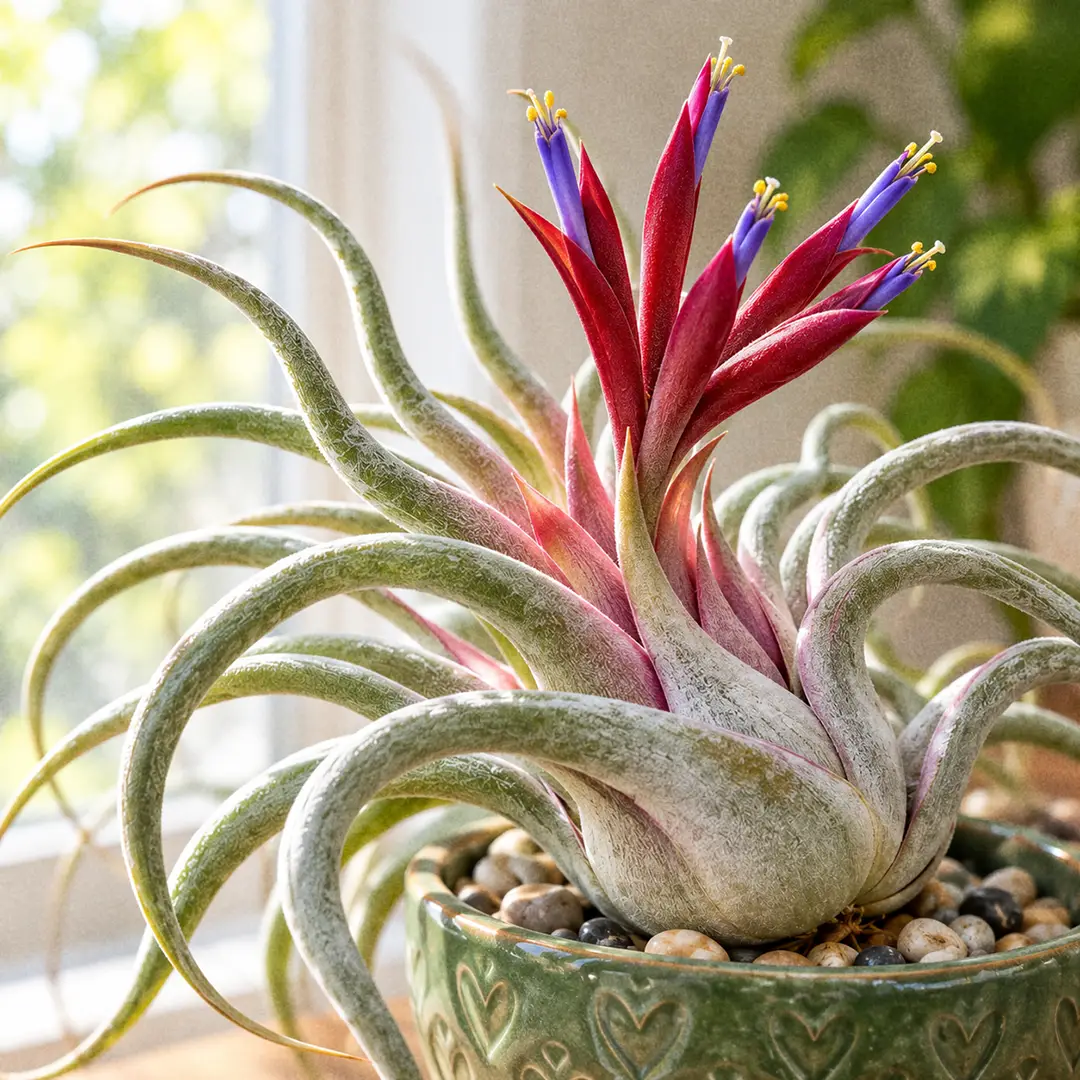
The bloom is the best part. As a mature plant gets ready, the inner leaves blush pink or red. Then a stalk rises from the centre and splits into two to six flat, finger-like spikes of red bracts, occasionally pink. Bright violet-blue tubular flowers poke out of the bracts a few at a time.
Each individual flower lasts only a day or two, but the red spikes hold their colour for several weeks.
How to Trigger Bloom
Flowering comes with maturity, usually on plants around 6 inches tall or more, and usually in late spring or early summer. Bright light and regular feeding get it there faster. A summer outdoors in dappled shade helps a lot, because of the brighter light and cooler nights.
Some growers seal a mature plant in a bag with a ripe apple for a few days, since the ethylene gas it gives off can trigger flowering in bromeliads. It works on some plants and not others, so treat it as a bonus.
After the Flowers
Medusa flowers once. After the bloom it starts making pups around the base and slowly fades over the next year or more. Snip the dead flower stalk at its base once it browns, keep watering as normal, and let the pups grow.
🏷️ Medusa's Head Air Plant Types and Varieties
The Standard Species
What you find at most shops is the plain T. caput-medusae. Even this varies a lot. Plants from different parts of its range differ in leaf length, how tightly the leaves twist, and bract colour, and sizes run from 4 inches to over a foot. Specialist nurseries sell them by size, so a "large" plant is still the same species.
'Robust' and 'Pink'
Some nurseries, including Bird Rock Tropicals, sell selected forms. 'Robust' is a chunkier plant with thicker leaves and a bigger bulb. 'Pink' is named for its pink rather than red flower bracts. Both need exactly the same care.
Hybrids
A few hybrids turn up from specialist growers, including crosses with T. seleriana, T. balbisiana, and T. diguetii. They generally blend the parents, so a cross with seleriana tends to have a fatter, fuzzier bulb. Treat any bulbous hybrid with the same dunk-shake-dry routine.
Hybrids are mostly collector plants and cost more than the species. For a first Medusa, the standard species is the better buy: it is cheap, easy to find, and flowers just as well.
Lookalikes on the Shelf
Several bulbous air plants get mixed up with Medusa. The Butzii is slimmer, with green leaves covered in fine chocolate-brown speckles and no silver coat to speak of. The Pruinosa is smaller and fuzzier, with softer leaves. The Streptophylla has wider, softer leaves that curl into loose ringlets. T. bulbosa is smooth and shiny green, with almost no silver. The Potbelly Air Plant (T. paucifolia, often sold as circinata) is silver too, but squatter, with fewer, shorter leaves that curl back toward the plant. Medusa is the silver one with thick, stiff, snaking leaves.
🪴 Mounting and Displaying Medusa's Head Air Plant
It Never Gets Potted
There is no repotting schedule here. Medusa lives its whole life on a mount or loose in a holder. If you like it in a pot for display, sit it on top of pebbles or a wire ring so the bulb never touches anything wet.
Choosing a Mount
Pick something light enough to carry to the sink. Cork bark and driftwood look natural. Wire and brass hangers make watering easiest, because you lift the plant out, water it, dry it, and put it back.
How to Mount It
Use fishing line, cotton thread, or plant-safe glue made for air plants, fixed to the lower leaves, not the bulb itself. Position it on its side or bulb-up. Within a year it grows small roots that grip the mount, and you can remove the line. Never cover the base with moss.
✂️ Pruning Medusa's Head Air Plant
When to Prune
Only when something looks dead. A few dry lower leaves are normal, since the plant sheds old leaves from the outside as it grows from the centre.
How to Prune
Snip crispy brown tips at an angle with clean scissors, so the trimmed leaf still looks pointed. Pull off dead outer leaves with a gentle downward tug. If a leaf resists, leave it, it is still alive. Cut the spent flower stalk close to the base once it has browned completely.
Tidying the Base
Dead leaf sheaths around the bulb are worth removing, because they hold moisture and give mealybugs somewhere to hide. Peel them away only once they are fully dry and papery. Pulling at a living sheath can tear into the bulb and open a door for rot, so if in doubt, wait a few more weeks.
🌱 How to Propagate Medusa's Head Air Plant
Pups Are the Only Practical Method
Medusa makes pups, small offsets that grow from the base, usually after it flowers. A single plant might produce two to four. Seed is possible but takes years to reach any size, so pups are the way to go at home. Our propagation guide covers the general ideas.
When and How to Separate
Wait until a pup is about a third the size of the mother. Earlier than that and it grows slowly on its own. Hold the mother firmly, grip the pup near its base, and twist it gently downward. It should come free cleanly. If it resists, wait another month.
Let the separated pup dry for a day, then water and mount it like an adult. It needs the same light and the same dunk-shake-dry care.
Tips for Success
Pups grow fastest in the first year if you feed them monthly and give them the brightest spot you have. Mist them rather than dunking while they are small, since a small bulb fills and stays wet more easily than a big one. Expect a pup to take three to five years to reach flowering size.
Or Leave Them Attached
Leaving the pups in place gives you a clump, which looks spectacular as a many-headed Medusa after a few years. The mother eventually dries up. Remove it once it pulls away easily, and the clump carries on.
🐛 Medusa's Head Air Plant Pests and Treatment
Pests are rare, but the bulb gives them hiding spots other air plants lack. Those gaps that house ants in the wild suit insects indoors too.
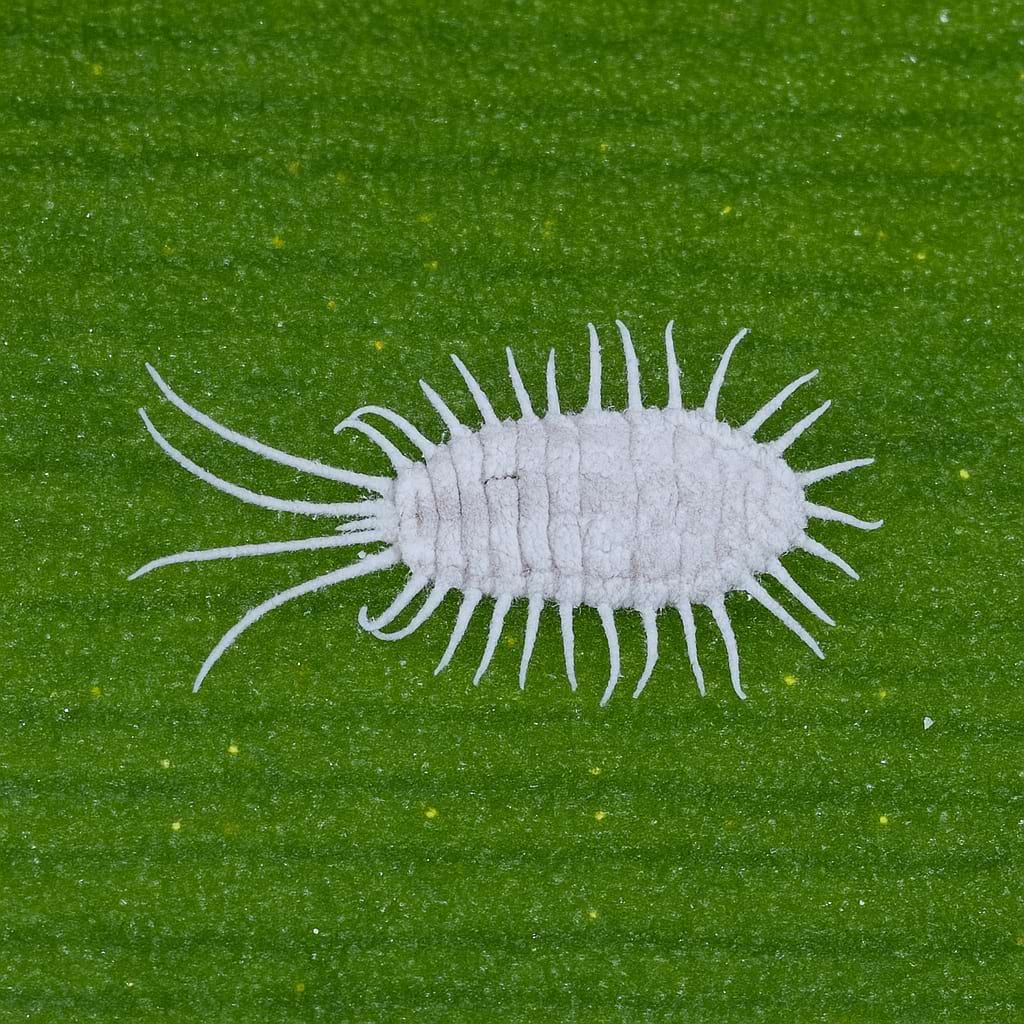
Mealybugs are the main one. They tuck into the gaps between the leaf bases and show as white fluff. Dab them with a cotton bud dipped in 70% isopropyl alcohol, then rinse the plant.
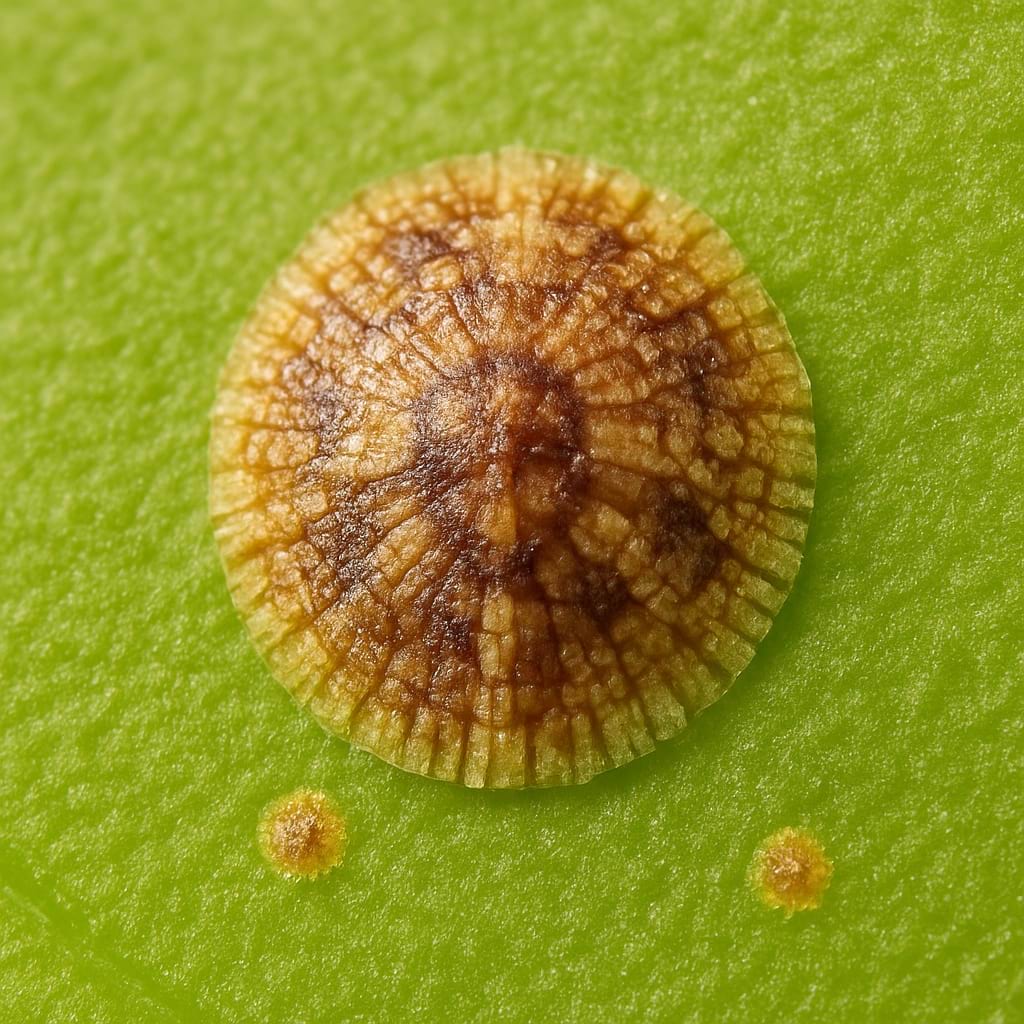
Scale insects look like small brown bumps on the leaves. Scrape them off with a fingernail or soft toothbrush and check weekly.
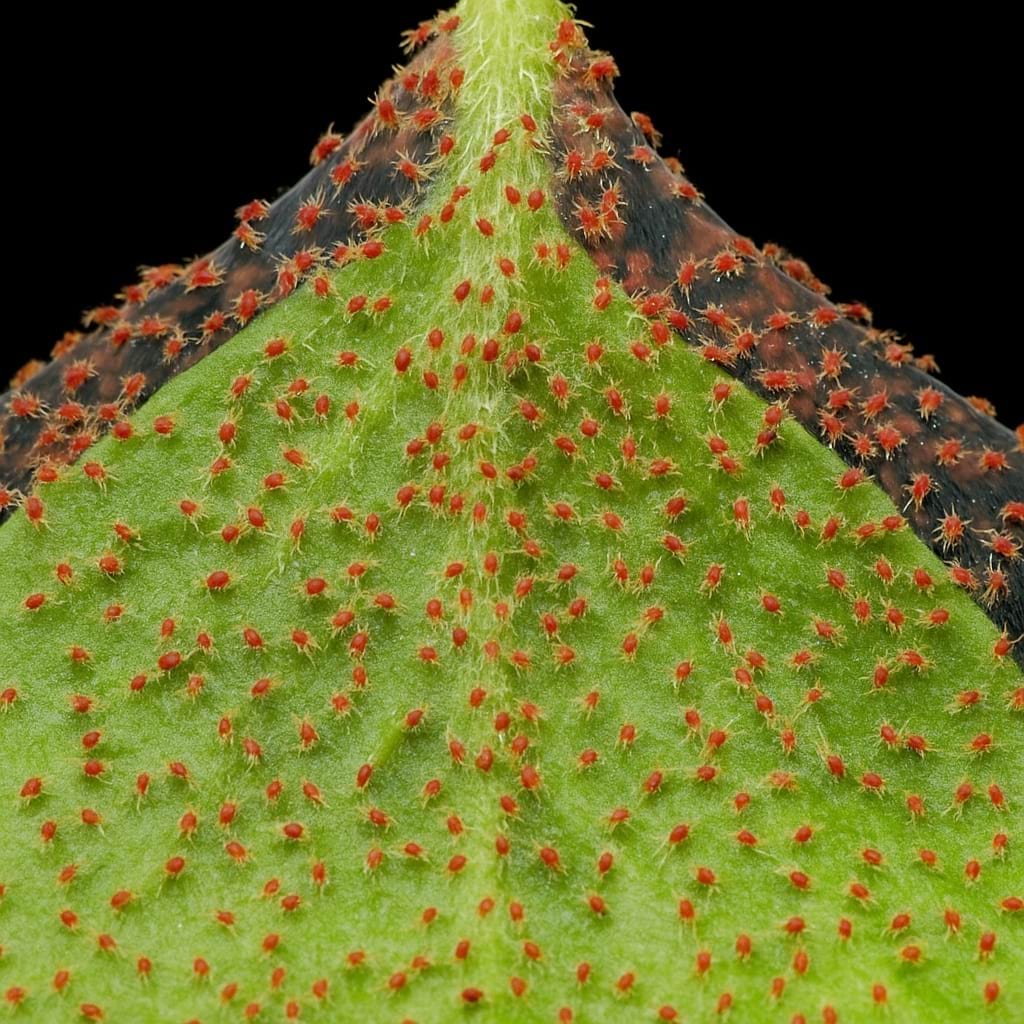
Spider mites appear in hot, dry spells as fine webbing and a dusty speckled look. Rinse the plant hard under the tap twice a week for two weeks.
Skip oil sprays and anything with copper. Oils clog the trichomes, and copper is toxic to Tillandsias.
🩺 Common Medusa's Head Air Plant Problems
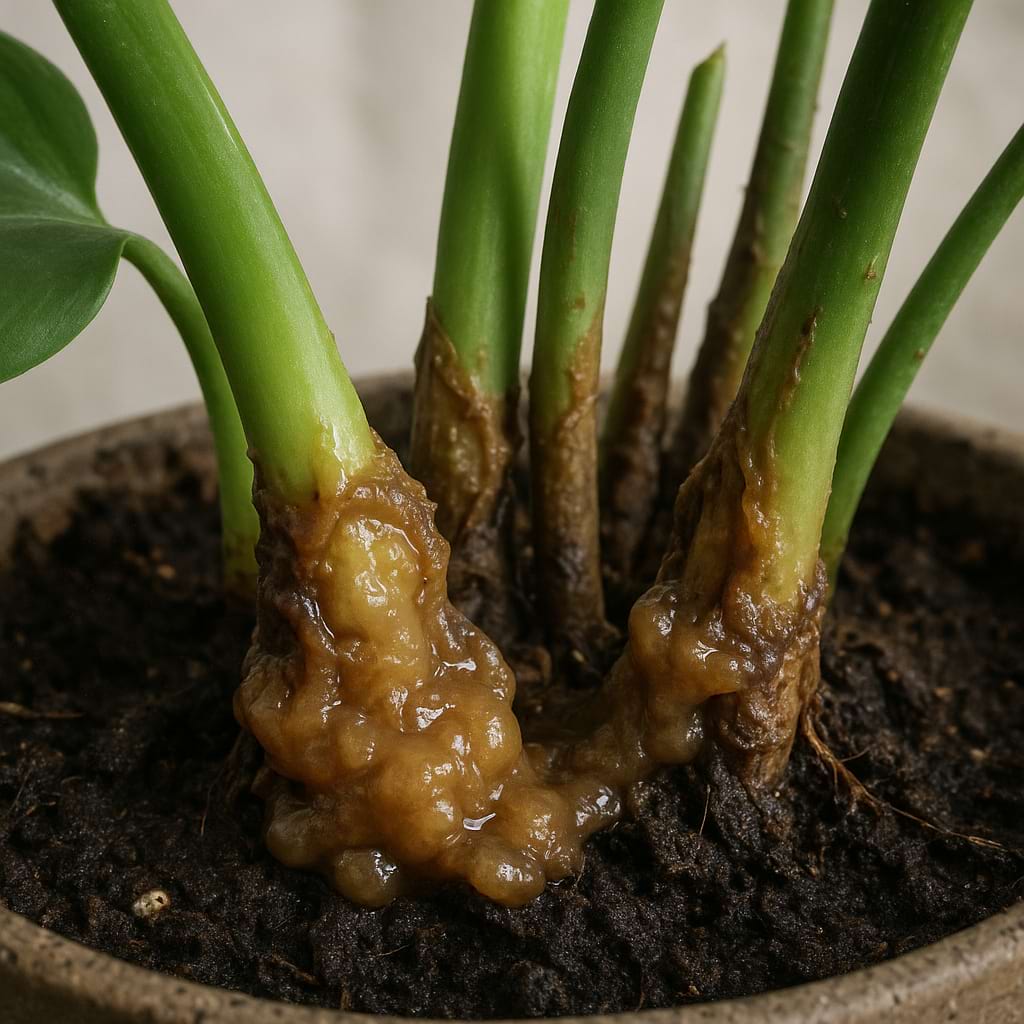
Nearly every Medusa problem comes back to water sitting in the bulb.
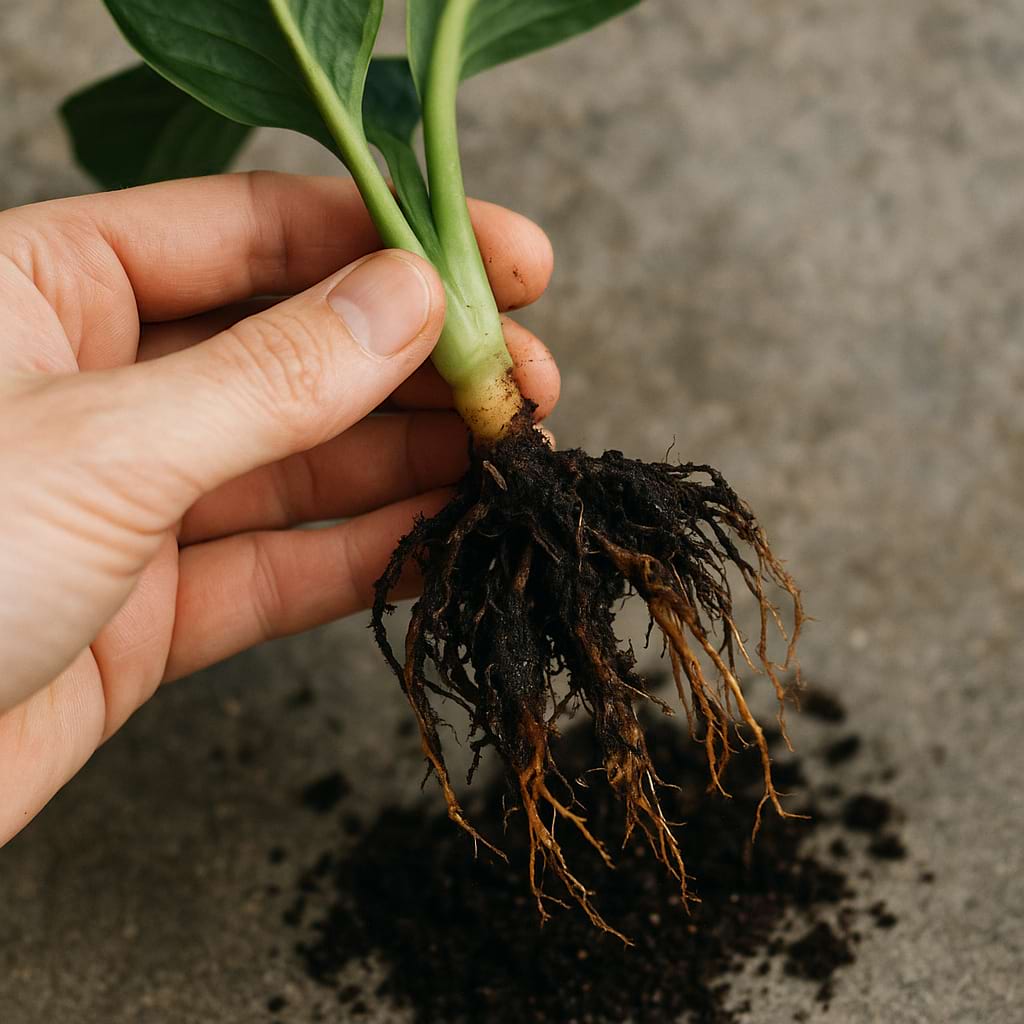
Bulb rot is the killer. The base darkens, smells sour, and the centre leaves come out with no resistance. It is root rot and mushy stems in air plant form, caused by long soaks or skipping the upside-down drying step. Once the centre goes soft the plant is lost, so save any firm pups.
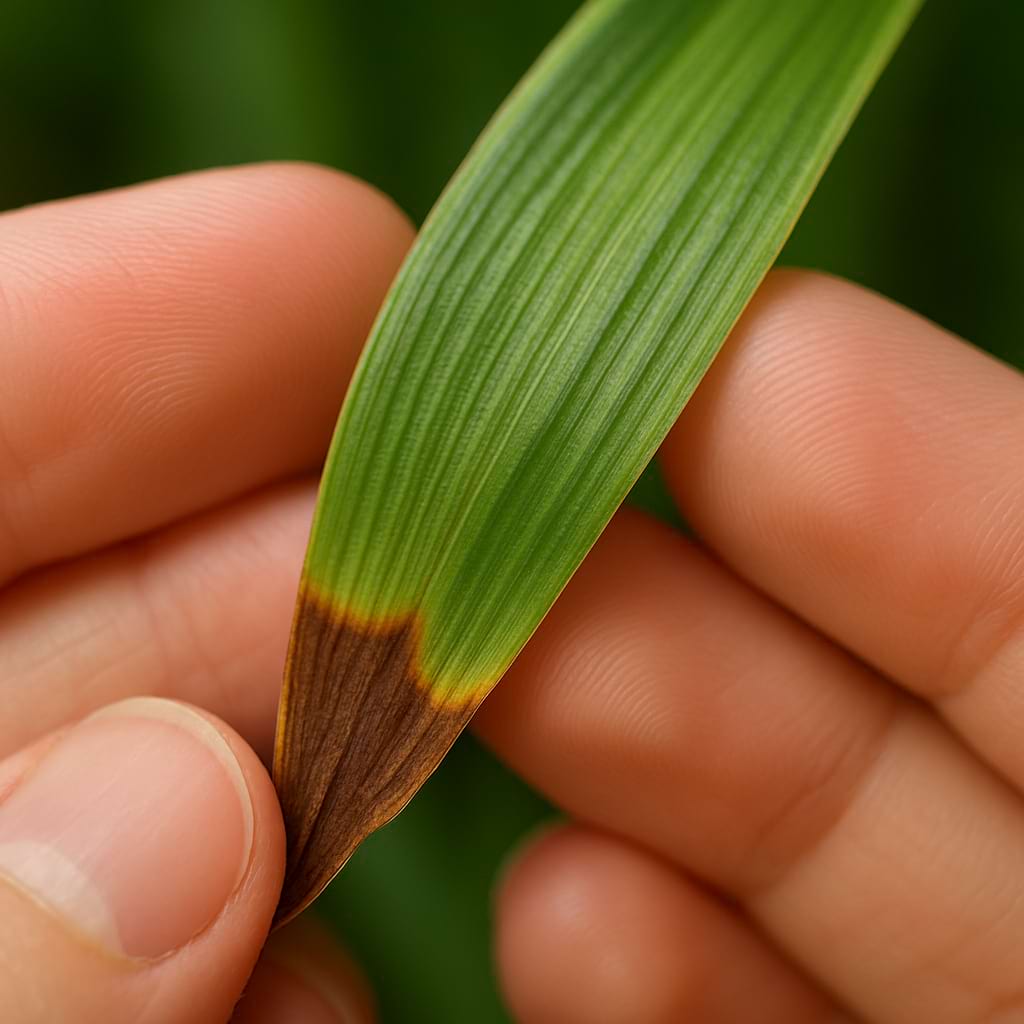
Crispy brown tips on a firm plant mean it needs more water or less heat, showing as brown crispy edges. Mist more often and trim the tips.
Bleached patches on one side are sunburn. Filter the light or move the plant back.
Thin, green, dull leaves point to low light, the air plant version of pale faded leaves. Move it closer to a window.
No flowers on a large plant is failure to bloom, usually from too little light or no temperature swing.
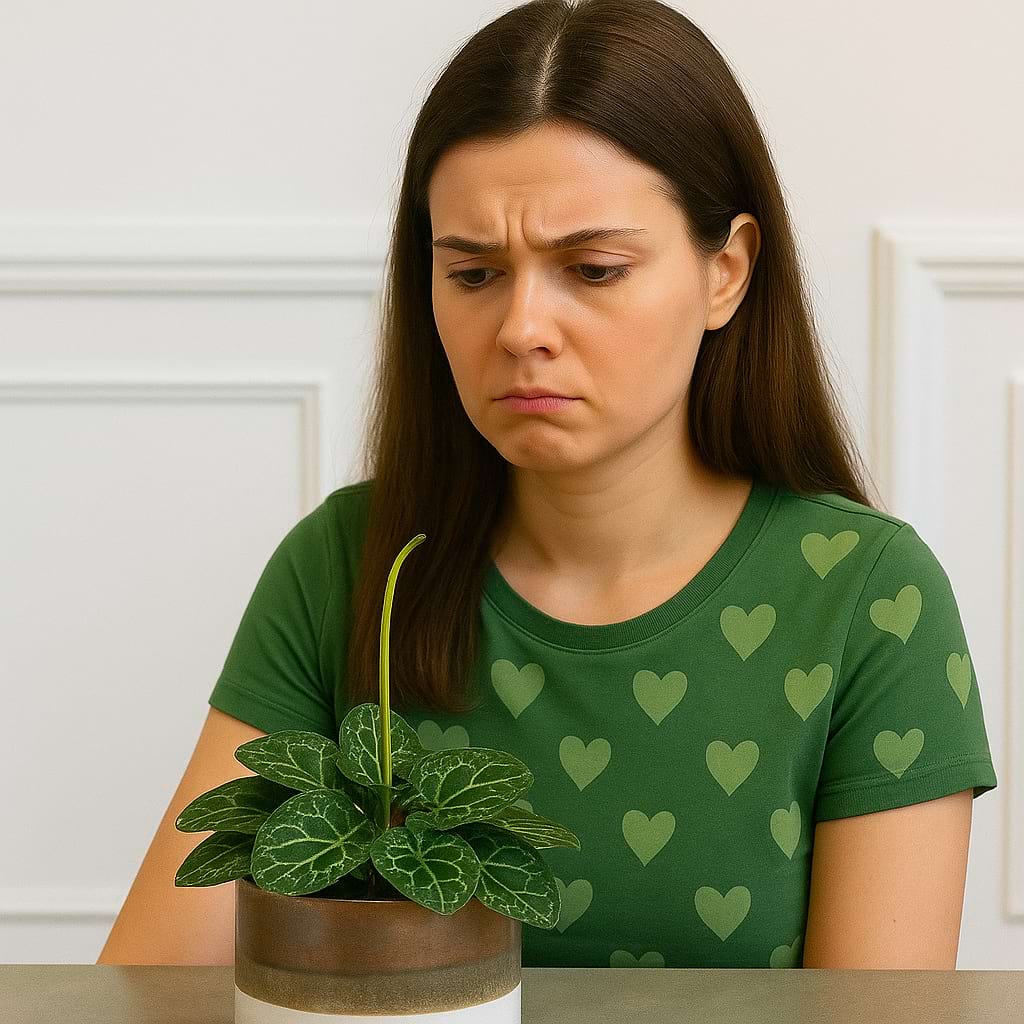
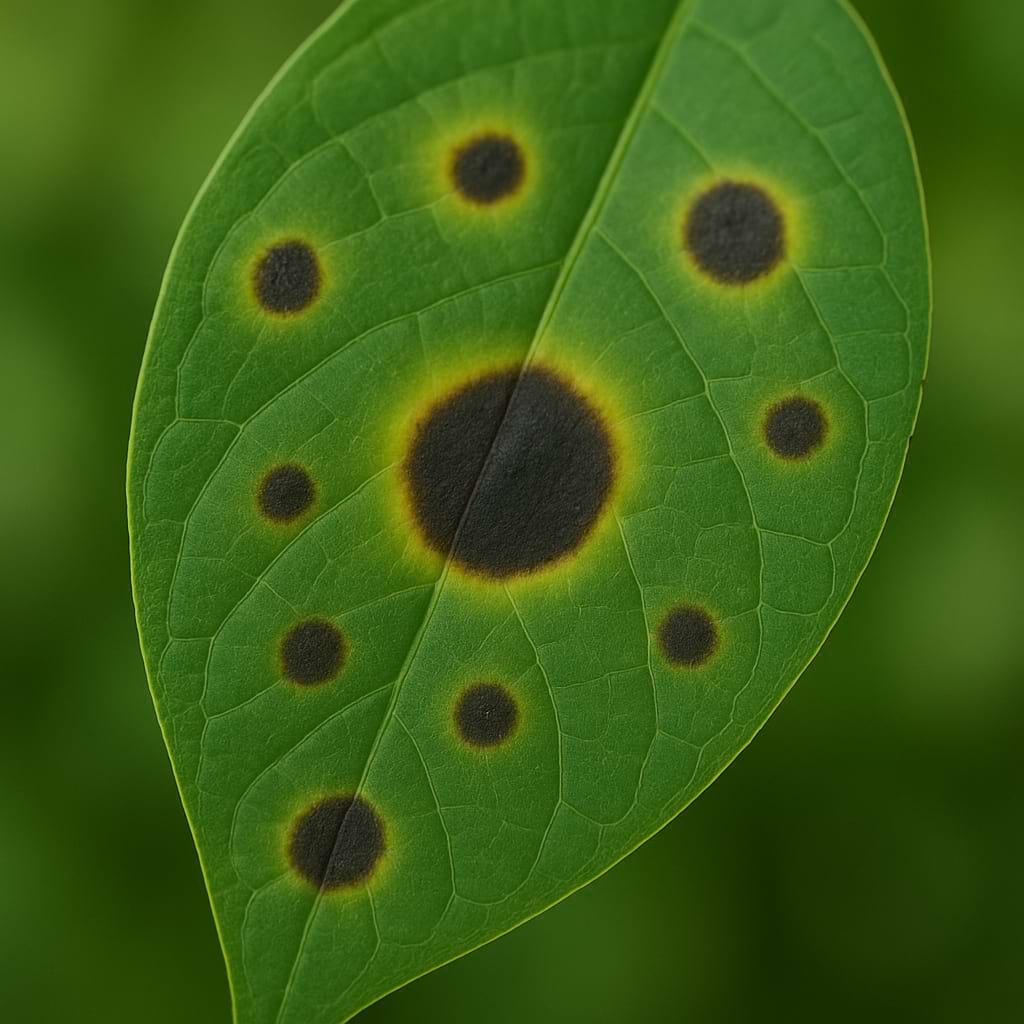
Black or brown spots on otherwise healthy leaves usually mean a fungal problem from damp, still air, one of the brown or black spots causes. Improve airflow, water in the morning, and remove badly marked leaves.
🖼️ Medusa's Head Air Plant Display and Styling Ideas
Solo Setups
The shape does all the work. One plant hung bulb-up on a piece of driftwood, at eye level against a plain wall, looks like a small sculpture. Side lighting throws snake-shaped shadows across the wall, which is half the fun.
A sea urchin shell with the bulb resting upward is a classic pairing, but tip the water out after every watering. A small wall-mounted wire hanger is the easiest option of all, because the plant lifts straight out for watering and slots back once it is dry.
Grouped Arrangements
Group it with contrasting air plants at different heights. The long silver strands of Spanish Moss and the small, tight rosettes of an Ionantha make good partners. A Xerographica adds a big, curling silver shape that echoes Medusa's leaves. The small silver ball of a Fuchsii Air Plant gives a round, fine-leaved contrast to Medusa's long arms.
Where Not to Put It
Not in a closed terrarium, not in a glass globe with a narrow opening, and not nestled into moss. All three trap moisture around the bulb. If you want the glass look, use an open vessel and take the plant out to water.
🌟 Medusa's Head Air Plant Pro Care Tips
- Shake, then flip. Three or four firm shakes and a few hours upside down after every watering prevents most deaths.
- Mount it bulb-up. A permanently inverted plant never pools water at the base.
- Water in the morning. It dries by evening instead of sitting wet overnight.
- Give it more sun than your other air plants. The silver coat is there for a reason.
- Never wipe the leaves. The fuzz is how it drinks. Rinse, do not polish.
- No copper, no oil sprays. Both harm Tillandsias.
- Summer it outside in dappled shade if you can. It grows faster and blooms sooner.
❓ Frequently Asked Questions
Why is it called Medusa's Head?
The name caput-medusae is Latin for the head of Medusa, the figure from Greek myth with snakes for hair. The thick, twisting leaves spilling out of a round bulb look very much like that. In some places it is also sold as the Octopus Air Plant.
Do I need ants for my Medusa's Head Air Plant?
No. In the wild, ants live in the hollow bulb and their waste feeds the plant, but indoors a monthly dose of diluted fertilizer does the same job. It grows perfectly well without them.
Can I soak my Medusa's Head Air Plant like other air plants?
Keep it short. A dunk of a minute or two is fine, but the 20 to 30 minute soaks often recommended for air plants fill the bulb with water. If you do soak it, shake it hard and dry it upside down for several hours.
Is Medusa's Head Air Plant safe for cats and dogs?
Yes. Tillandsias are considered non-toxic to cats and dogs. Chewing can still upset a pet's stomach and will certainly damage the plant, so a wall mount is a good idea if you have a nibbler.
Why is my Medusa's Head falling apart in the middle?
That is bulb rot. Water sat inside the base for too long, and the centre has rotted. The plant cannot be saved once the core is mushy, but firm pups at the base often can be.
How big does a Medusa's Head Air Plant get?
Most indoor plants reach 6 to 10 inches tall. Well-grown plants, especially the larger forms, can reach about 16 inches. Growth is slow, so size is mostly decided by how big it was when you bought it.
How long until it flowers?
A store-bought plant that is already 5 to 6 inches tall may flower within a year or two. Small plants and fresh pups take several years. Bright light and regular feeding speed things up.
Does it die after flowering?
Slowly, yes. It flowers once, then puts its energy into pups and fades over a year or more. The pups carry on, so you end up with more plants, not fewer.
Why are the leaves curling tighter than usual?
Tight curling and a whiter, duller look mean it is thirsty. Mist or dunk it, dry it properly, and the leaves will relax and open a little within a day.
Can Medusa's Head Air Plant grow outdoors?
In frost-free climates (roughly USDA zones 9 to 11) it can live outside all year, mounted on a tree branch in bright, dappled shade. Elsewhere it makes a great summer visitor. Bring it back in before nights drop below about 50°F.
How do I choose a healthy Medusa's Head at the store?
Squeeze the bulb gently. It should be firm and a little springy, with no dark staining at the base. Pick plants with a thick, even silver coat, and skip any with leaves that wobble loose in the centre.
ℹ️ Medusa's Head Air Plant Info
Care and Maintenance
🪴 Soil Type and pH: None. Epiphytic, grown mounted or free-standing without medium.
💧 Humidity and Misting: Copes well with ordinary household humidity thanks to its thick silver coat, but hates damp, still air.
✂️ Pruning: Snip dry leaf tips at an angle and pull off dead outer leaves once they come away with a gentle tug.
🧼 Cleaning: Never wipe the leaves. The silver fuzz is living trichomes that absorb water. Rinse under the tap instead.
🌱 Repotting: Never potted in soil. Remount only when the mount rots or a clump outgrows its base.
🔄 Repotting Frequency: Only when the mount fails
❄️ Seasonal Changes in Care: Bright light and frequent misting from spring to autumn, then less water and more airflow through cool winter months.
Growing Characteristics
💥 Growth Speed: Slow
🔄 Life Cycle: Evergreen epiphytic bromeliad that flowers once and then offsets
💥 Bloom Time: Late spring to early summer on mature plants; the red bracts hold colour for several weeks
🌡️ Hardiness Zones: 9-11
🗺️ Native Area: Mexico and Central America, from Guatemala and Honduras south to Costa Rica and Panama, on trees and cacti from sea level up to around 2,400 m
🚘 Hibernation: No true dormancy, but growth slows in winter and watering should drop back.
Propagation and Health
📍 Suitable Locations: East and west windowsills, bright bathrooms with a window, driftwood and cork mounts, wire hangers, open shallow dishes
🪴 Propagation Methods: Separate the pups that grow around the base after flowering, once each is about a third the size of the mother.
🐛 Common Pests: Mealybugs, Scale Insects, Spider Mites
🦠 Possible Diseases: Bulb rot, crown rot, fungal spotting in damp still air
Plant Details
🌿 Plant Type: Xeric epiphytic bromeliad with a hollow pseudobulb base
🍃 Foliage Type: Evergreen, silver-scaled, thick, twisting and recurving
🎨 Color of Leaves: Silvery grey-green, with purple edges on the leaf bases
🌸 Flower Color: Violet-blue tubular flowers from red (occasionally pink) bracts
🌼 Blooming: Yes, once at maturity, with two to six flower spikes
🍽️ Edibility: Not edible.
📏 Mature Size: 6-10 inches indoors, up to 16 inches
Additional Info
🌻 General Benefits: Needs no soil, tolerates dry air and some direct sun, is safe around cats and dogs, and multiplies itself after flowering
💊 Medical Properties: No documented medicinal uses.
🧿 Feng Shui: A plant that lives on air suits floating displays and high shelves where a heavy pot would crowd the space.
⭐ Zodiac Sign Compatibility: Scorpio
🌈 Symbolism or Folklore: Protection, transformation, turning something fearsome into something beautiful
📝 Interesting Facts: In the wild the hollow bulb is an ant house. Colonies move into the gaps between the swollen leaf bases, and the debris they leave behind feeds the plant. Botanists call plants with this arrangement myrmecophytes. The name caput-medusae is Latin for the head of Medusa, after her hair of snakes.
Buying and Usage
🛒 What to Look for When Buying: Squeeze the bulb gently. It should feel firm and slightly springy. Any softness, dark staining at the base, or leaves that pull loose from the centre means rot has started. Prefer plants with a thick, even silver coat.
🪴 Other Uses: Driftwood mounts, wreaths, living wall panels, open terrariums, and table centrepieces that need no soil.
Decoration and Styling
🖼️ Display Ideas: Cork bark, driftwood, wire hangers, sea urchin shells, shallow ceramic dishes, grouped with other Tillandsias at different heights
🧵 Styling Tips: Mount it sideways or bulb-up so water drains out. It reads best at eye level against a plain wall where the snaking leaves throw shadows.
🪴 See also 🪴
Complete Guide to Duratii Air Plant Care and Growth
Complete Guide to Funkiana Air Plant Care and Growth
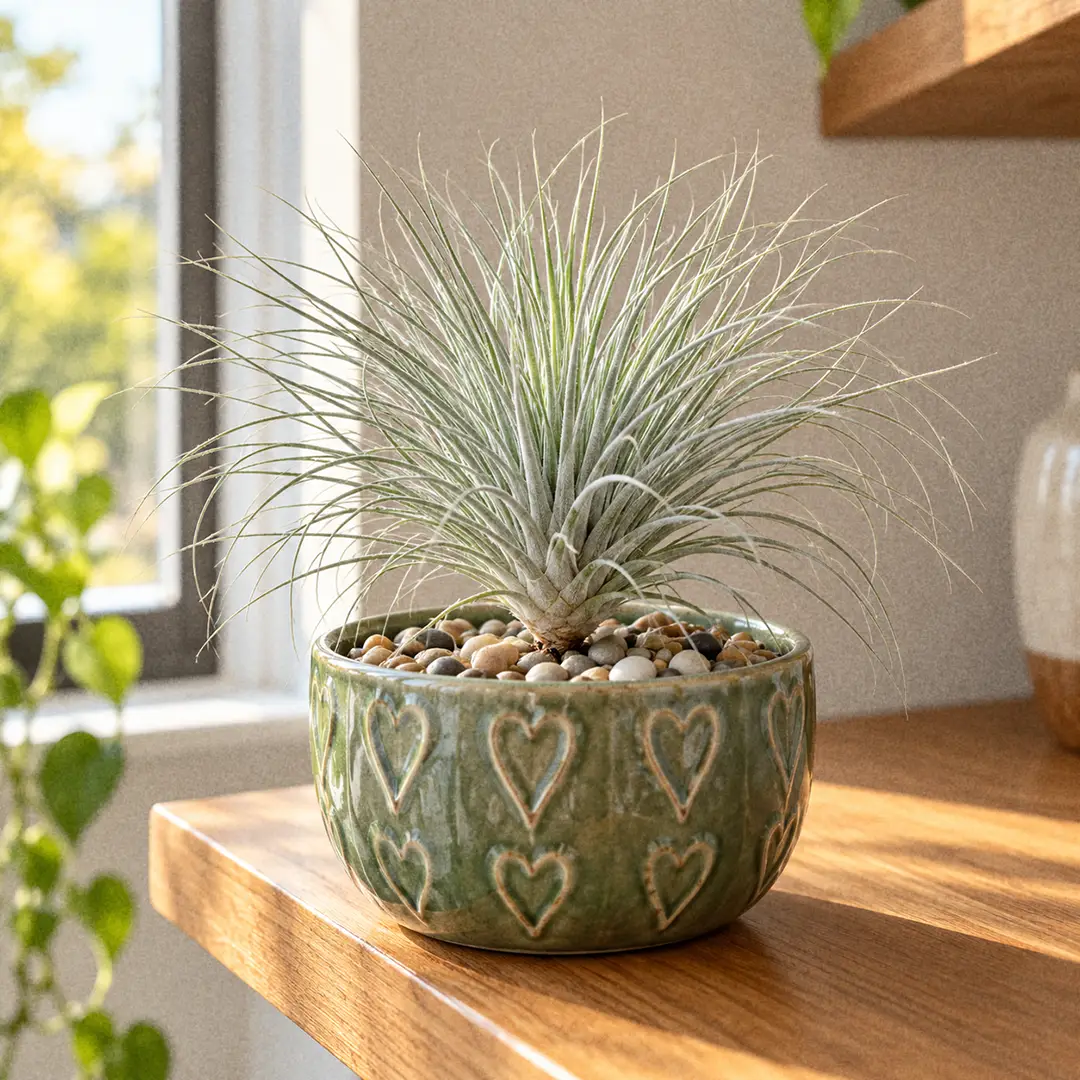
Complete Guide to Fuchsii Air Plant Care and Growth
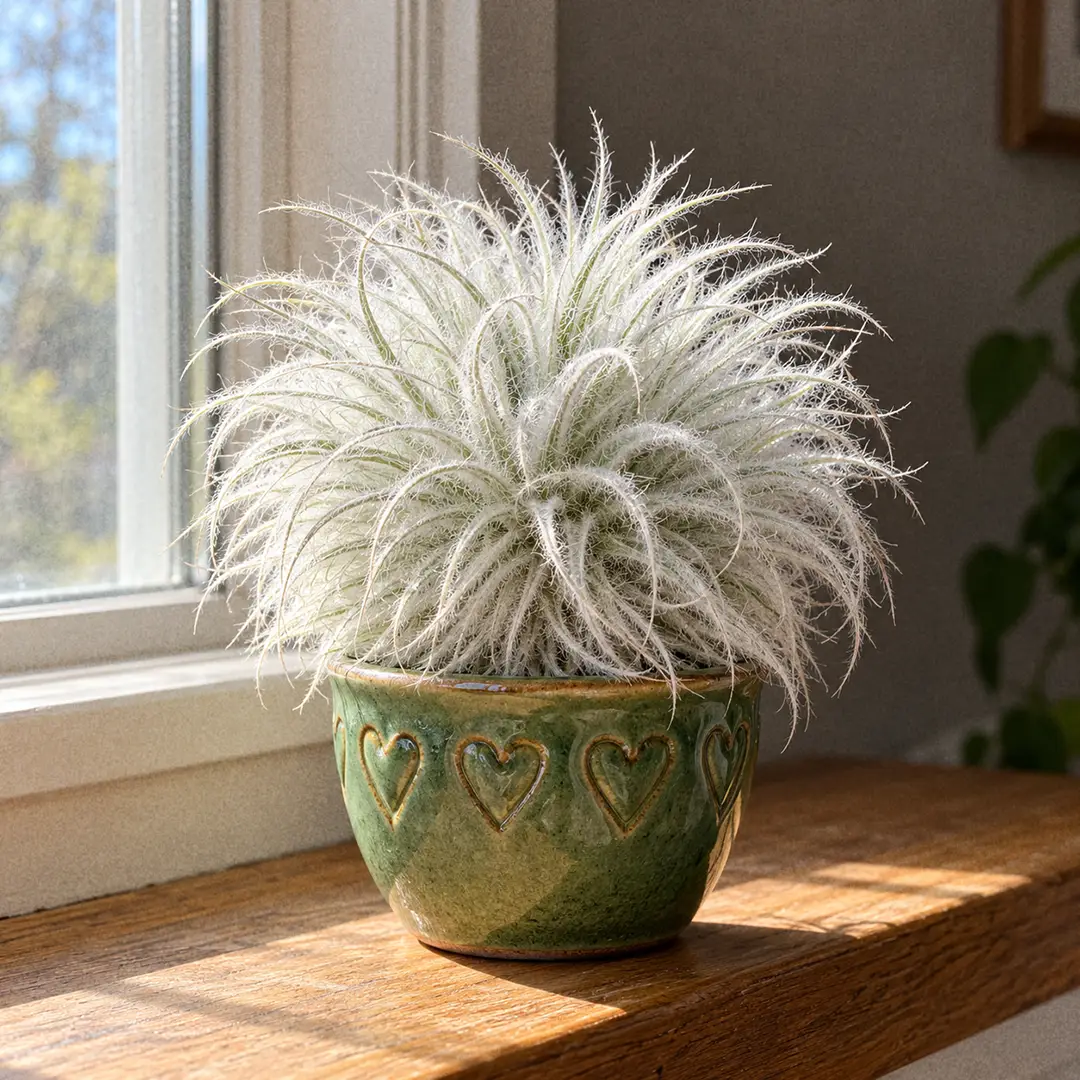
Complete Guide to Tectorum Air Plant Care and Growth
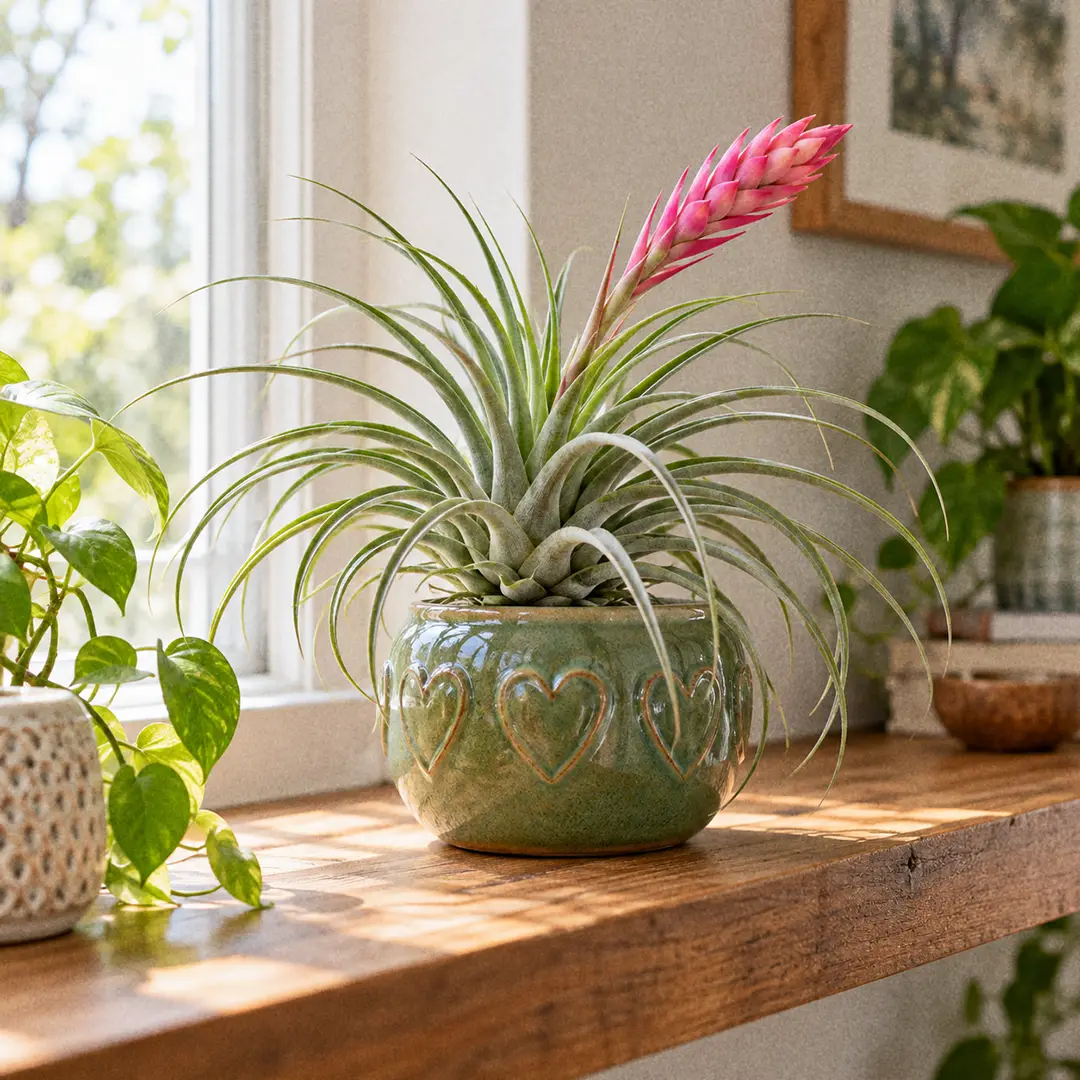
Complete Guide to Stricta Air Plant Care and Growth
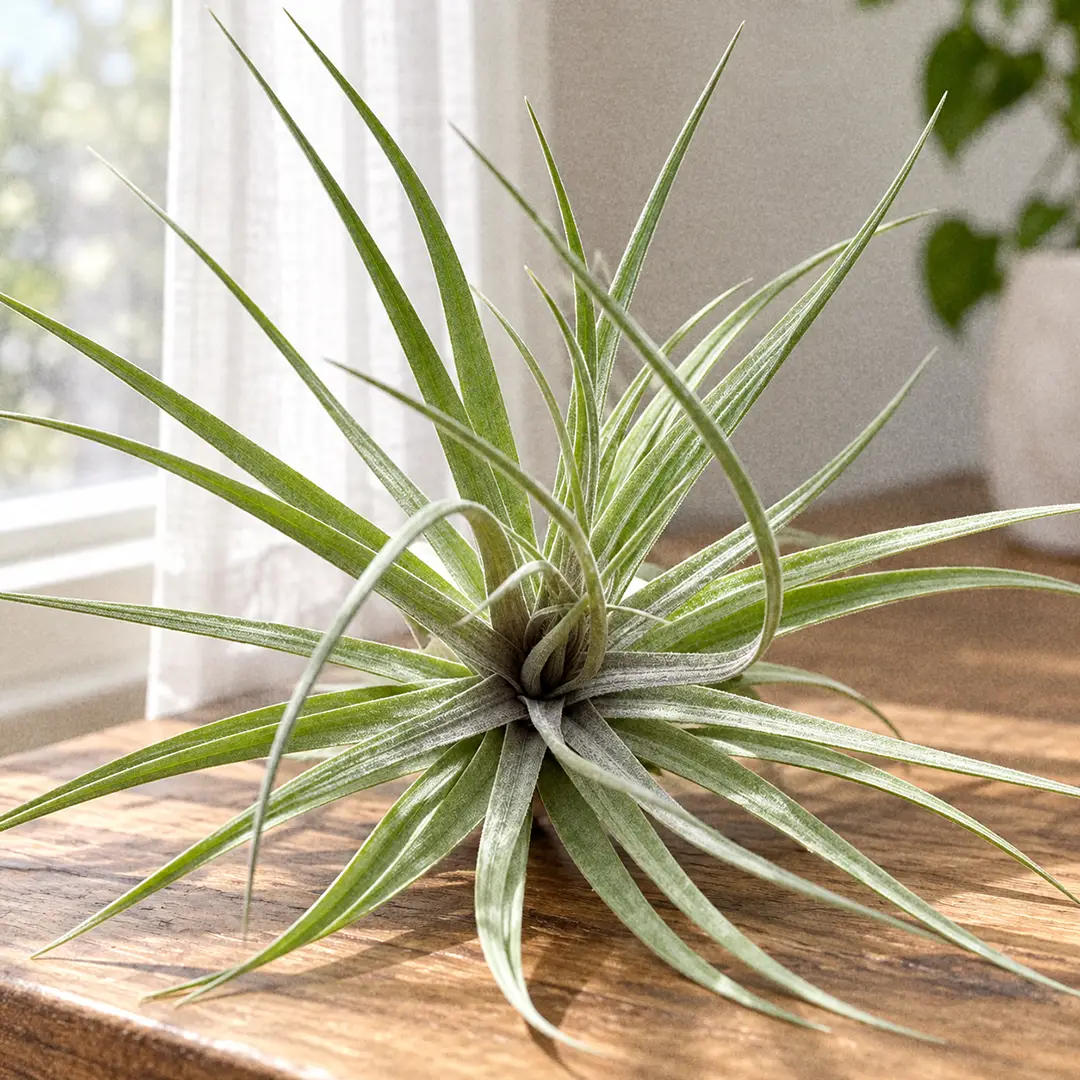
Complete Guide to Tenuifolia Air Plant Care and Growth
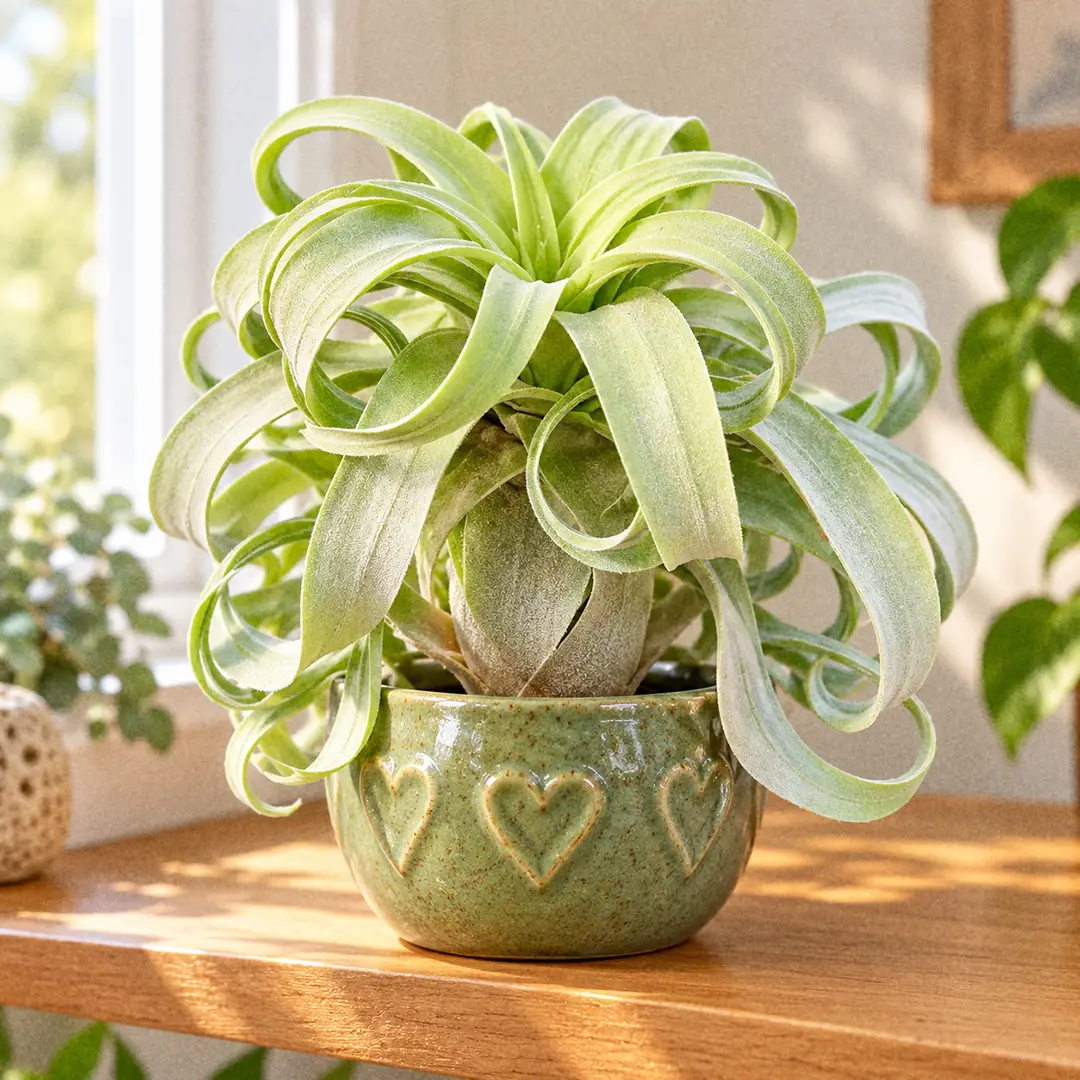
Complete Guide to Streptophylla Air Plant Care and Growth

Houseplant101 Forum
Questions & Comments
Ask a question, share your plant experience, or help other plant owners.
Comments are temporarily unavailable.
Open the Houseplant101 ForumNo comments yet
Be the first to ask a question or share your experience about this page.
Log in or create an account
Comments use your Houseplant101 Forum account, but you can stay on this page.
Create a new account