
Tricolor Air Plant
Tillandsia tricolor var. melanocrater
Melanocrater Air Plant, Tillandsia melanocrater, Tillandsia tricolor


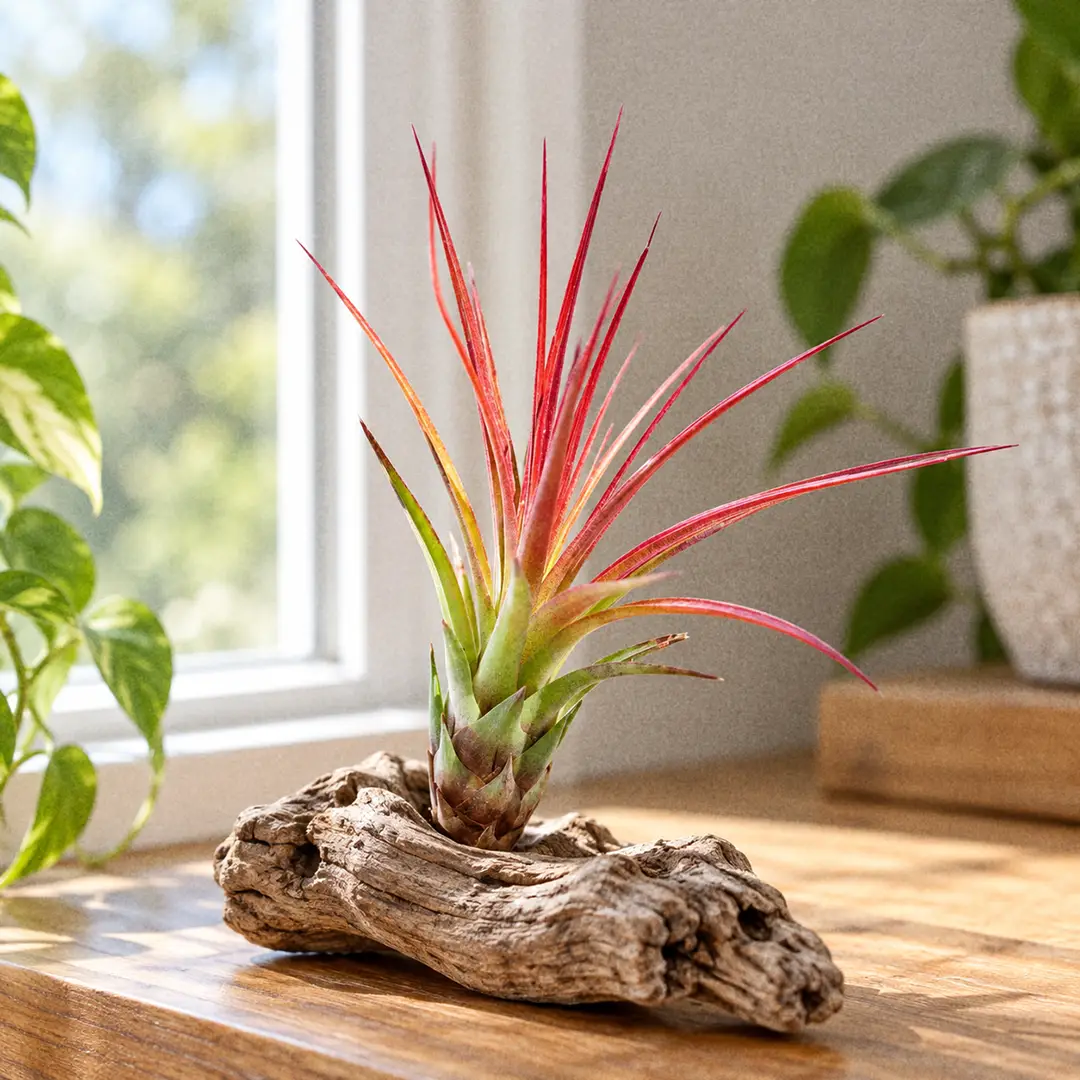
The Tricolor Air Plant has smooth green leaves that blush red and purple in strong light, sitting on a near-black bulbous base that looks like it was dipped in ink. Learn how to water Tillandsia tricolor var. melanocrater without drowning that base, and how to get its long-lasting orange bloom.
📝 Tricolor Air Plant Care Notes
🌿 Care Instructions
⚠️ Common Pests
📊 Growth Information
🪴 In This Guide 🪴

☀️ Tricolor Air Plant Light Requirements (Bright, With Some Sun)
The Sweet Spot
This is a mesic air plant, meaning it comes from damp forest rather than open desert, but it still wants more light than most people give it. An east window is the easy answer: a couple of hours of gentle morning sun, then bright light for the rest of the day. A south or west window works if the plant sits two to four feet back, or behind a sheer curtain during the hottest afternoons.
In the wild it grows clipped to tree branches in Central American cloud forest, anywhere from 1,600 to 7,500 feet up. That means strong, bright, often filtered light with a lot of moving air. Sitting on a dim bookshelf is the opposite of that. If you are not sure how to read a spot by eye, our Indoor Lighting Guide walks through it.
Too Little Light
A shaded tricolor stays flat green and stops doing anything interesting. The leaves lose their stiffness, the rosette loosens and splays, and the plant drifts toward pale, faded leaves instead of building color. It rarely dies from low light. It just refuses to bloom, and the color-change trick this plant is named for never shows up.
Low light also makes rot far more likely, because a plant in a dim corner dries slowly after every soak. Light and airflow usually travel together, so fixing one tends to fix the other. Through dark winters, a grow light on a timer keeps it firm and colored.
Too Much Light
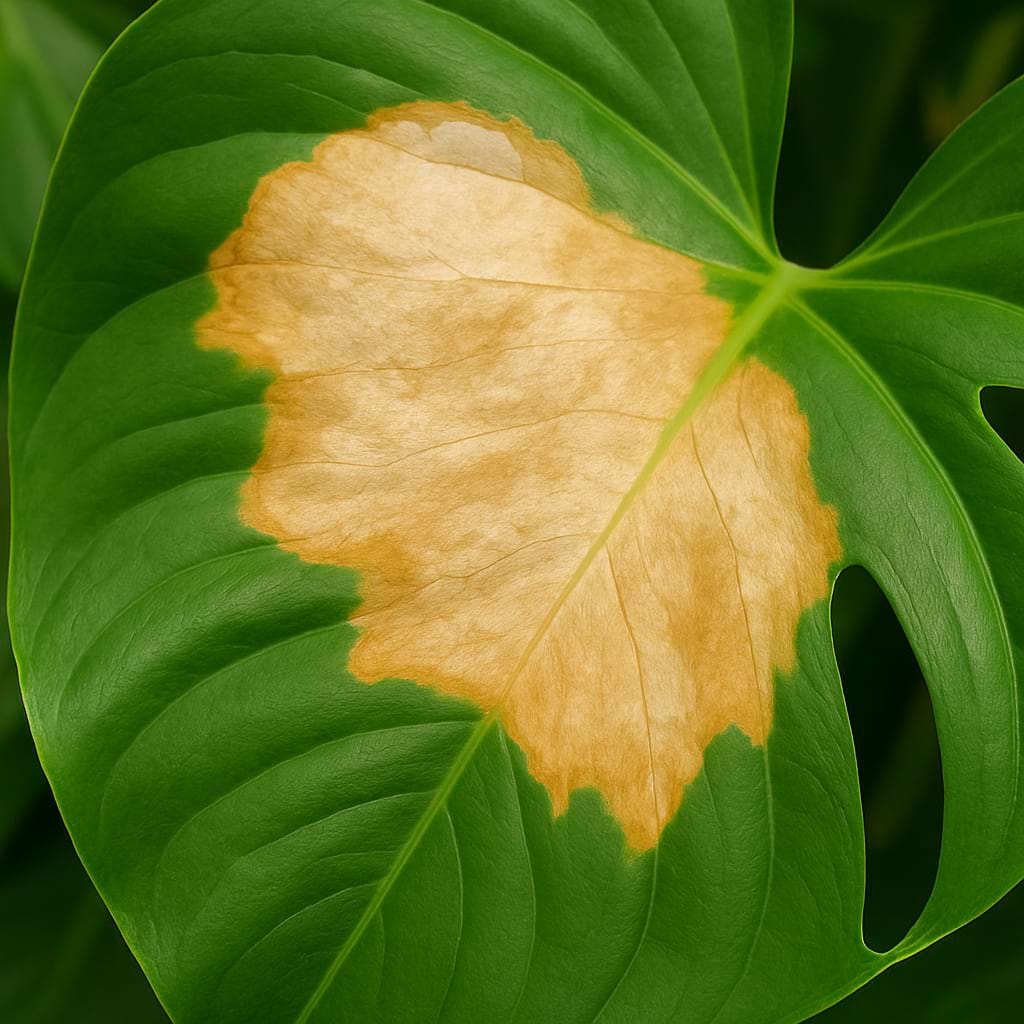
It does burn. Pushed straight into unfiltered afternoon sun behind hot glass, the smooth leaves develop bleached tan or white patches, which is scorch, and that damage never heals. The leaves here carry fewer visible trichomes than a silver species like Xerographica, so they have less built-in sunscreen.
A red and purple flush across the leaves is something else entirely. That is pigment the plant builds in response to good light, it is harmless, and it is exactly what you want. Increase sun over two or three weeks rather than all at once, and watch for hard-edged white patches as your signal to back off.

💧 Tricolor Air Plant Watering Guide (Soak, Then Shake Hard)
Watering Frequency
Once a week is the baseline in an average home. This is a mesic species, so it is thirstier than the bulbous Butzii and far thirstier than a Xerographica, and it will not tolerate the three-week gaps some air plant care sheets suggest.
Adjust by conditions rather than by calendar. A warm, bright, breezy room might need twice a week in summer. A cool room in winter might stretch to ten days. The plant tells you: leaves that feel soft and show fine lengthwise wrinkles are thirsty, leaves that feel stiff and flat are fine.
How to Water
Submerge the whole plant in room-temperature water for 30 to 60 minutes. Tap water is usually fine if it sits out overnight first, and rainwater is better if you have it. Then comes the part that matters more than the soak itself.
Take the plant out, turn it upside down, and shake it firmly several times. Water hides in the packed sheaths of that dark base and will not drain on its own. Then leave the plant upside down or on its side on a towel in a spot with moving air until it is fully dry, ideally within four hours. Never put a wet air plant straight back into a closed globe or a decorative dish.
Signs of Trouble
Wrinkled, curling, papery leaves mean underwatering, and a good long soak usually plumps them back up within a day. A soft, darkened base that gives when you squeeze it means the opposite, and by then it is often too late. Our general watering guide covers the logic, though air plants play by their own rules on frequency.
🪴 Best Soil for Tricolor Air Plant (None at All)
Why There Is No Soil
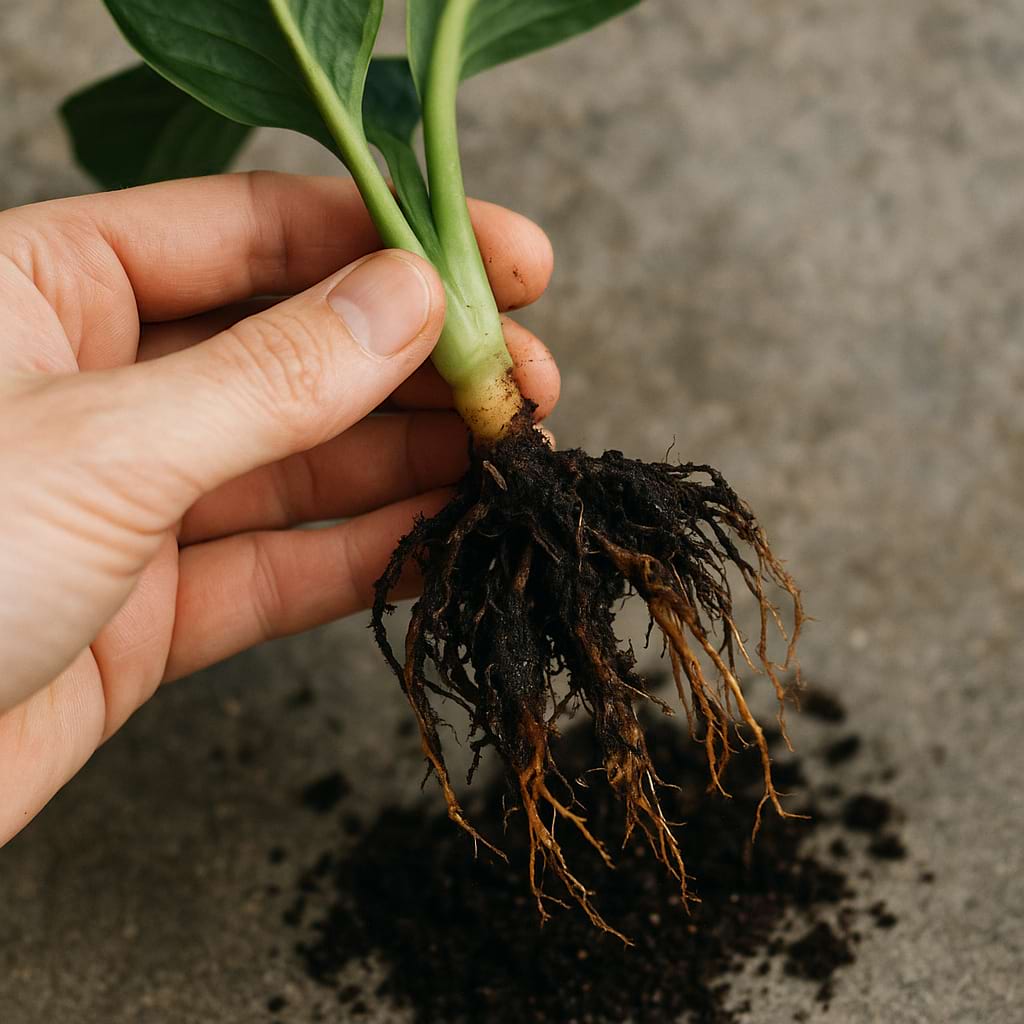
Tillandsias are epiphytes. In the forest they anchor to bark with wiry holdfast roots and take every drop of water and every scrap of nutrient through their leaves. Put one in a pot of potting mix and the base stays damp between waterings, which is the single fastest way to kill it.
The roots you see are grips, not feeders. You can trim them off for looks without harming the plant, though leaving them on lets it eventually attach itself to a mount.
What It Sits On Instead
Good mounts are anything that dries fast: cork bark, driftwood, cholla wood, grapevine, a wire form, or a piece of untreated hardwood. The plant can also simply rest loose in a bowl of sea glass, pebbles or shells, as long as you lift it out to water and put it back dry.
What to Avoid
Sphagnum moss is the classic mistake. It looks right in a terrarium and it holds water against the base for days, which is precisely the condition this plant cannot survive. Skip soil, skip moss, and skip any glue that seals the base. If you glue a mount, put a dab of waterproof E6000 or silicone on the roots only, never across the bottom of the rosette.
🍼 Fertilizing Tricolor Air Plant (Weak and Monthly)
When and How Often
Feed once or twice a month through spring and summer, and stop entirely in winter when growth stalls. Fertilizer is optional for survival but close to essential if you want blooms, because a plant living on nothing but tap water grows slowly and takes years longer to flower.
What to Use
A dedicated bromeliad or air plant fertilizer is the simplest choice. Otherwise use a balanced houseplant feed at quarter strength, and check that the nitrogen is not in urea form, which air plants cannot process. Mix it into the soak water rather than spraying it on, so the whole leaf surface gets it. Our fertilizing guide and the fertilizer roundup go deeper.
Over-Fertilizing Signs
Too much feed burns the leaf tips brown and can leave a white crust in the base. If you see either, soak the plant in plain water twice in a row to flush it and then halve your dilution. Feeding more often at a weaker strength always beats feeding hard once.
🌡️ Tricolor Air Plant Temperature Range
Ideal Range
Anywhere between 60°F and 85°F suits it, which covers most homes year round. It handles brief dips to the mid-40s when completely dry, but it is not frost hardy at all, and it belongs outdoors only in zones 10 and 11. Growth slows noticeably below about 55°F.
A ten degree drop at night is genuinely helpful. That day-night swing is normal in its cloud forest home and it seems to encourage flowering, which is why plants summered outdoors on a shaded porch often bloom the following season.
Drafts and Heat Sources
Moving air is good, dry heat is not. Keep the plant away from a radiator, a heating vent or the top of a fridge, where warm air pulls moisture out faster than weekly soaking can replace it. Cold winter window glass is the other extreme: a plant pressed against it on a freezing night can develop soft, translucent patches. A few inches of clearance solves both.
💦 Tricolor Air Plant Humidity Requirements
Ideal Humidity
Aim for 45 to 60 percent. That is higher than a desert Tillandsia wants and roughly what a normal home sits at outside of winter. Below 40 percent you will be soaking twice a week to keep up.
Easy Humidity Boosters
A bright bathroom with a window is the natural home for this plant, since shower steam does half the work. Grouping air plants together raises local humidity a little. A small humidifier run through the dry months is the reliable option, and our humidity guide covers the rest.
One caution: humidity without airflow is a rot sentence. Pair any humidifier with a fan or an open door so the plant still dries out between waterings.
🌸 Tricolor Air Plant Flowers (Orange Spike, Purple Tubes)
What the Flowers Look Like
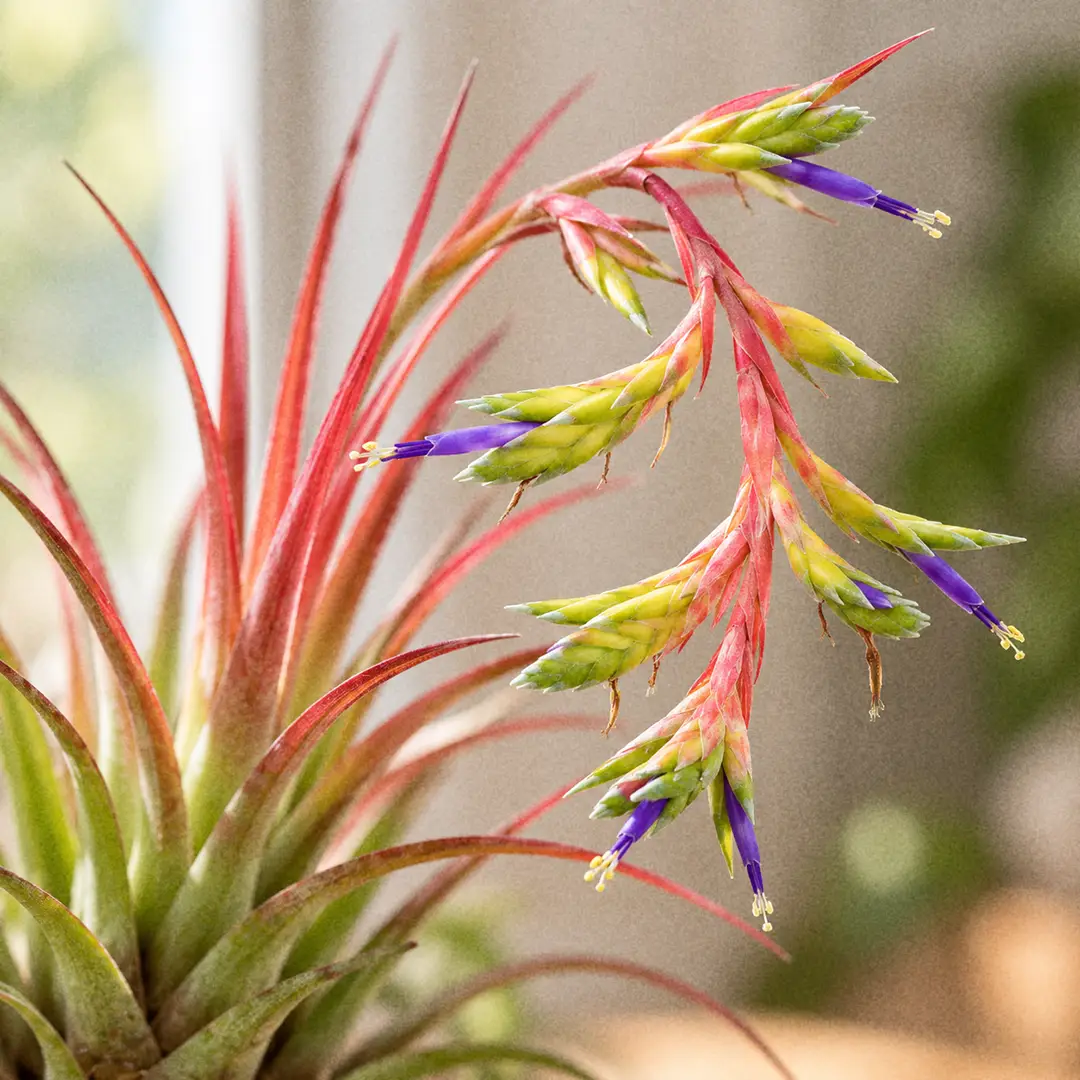
This is the reason to grow it. A mature plant pushes a flattened bract spike up from the center, colored bright yellow through orange to coral, and from that spike the actual flowers emerge as slim violet-purple tubes, a few open at a time. The leaves around the center flush red as the spike develops, so you get green, orange and purple on one plant at once. That is where the name tricolor comes from.
The spike lasts unusually long for an air plant. Where an Ionantha bloom is over in days, the colored bracts here hold for several weeks and sometimes a couple of months, which makes this one of the better value blooms in the genus.
How to Trigger Bloom
Light is the main lever. A plant in a genuinely bright spot, fed monthly through summer, usually blooms on its own once it reaches full size. The second lever is that night temperature drop.
The impatient method is the apple trick: seal the plant in a bag with a ripe apple for two to three days. The ethylene gas the apple gives off can push a bromeliad into bloom. It works, but only on a plant already old enough to flower, and a forced bloom on an underfed plant means weaker pups.
If It Won't Bloom
Most of the time the answer is age, light, or both. Tillandsias flower once at maturity and this one takes several years to get there, so a small plant is simply not ready. Persistent failure to bloom on a full-sized plant points at a spot that is too dim, or years of plain water with no feeding.
🏷️ Tricolor Air Plant Types and Varieties
Var. Melanocrater, the One You Will Buy
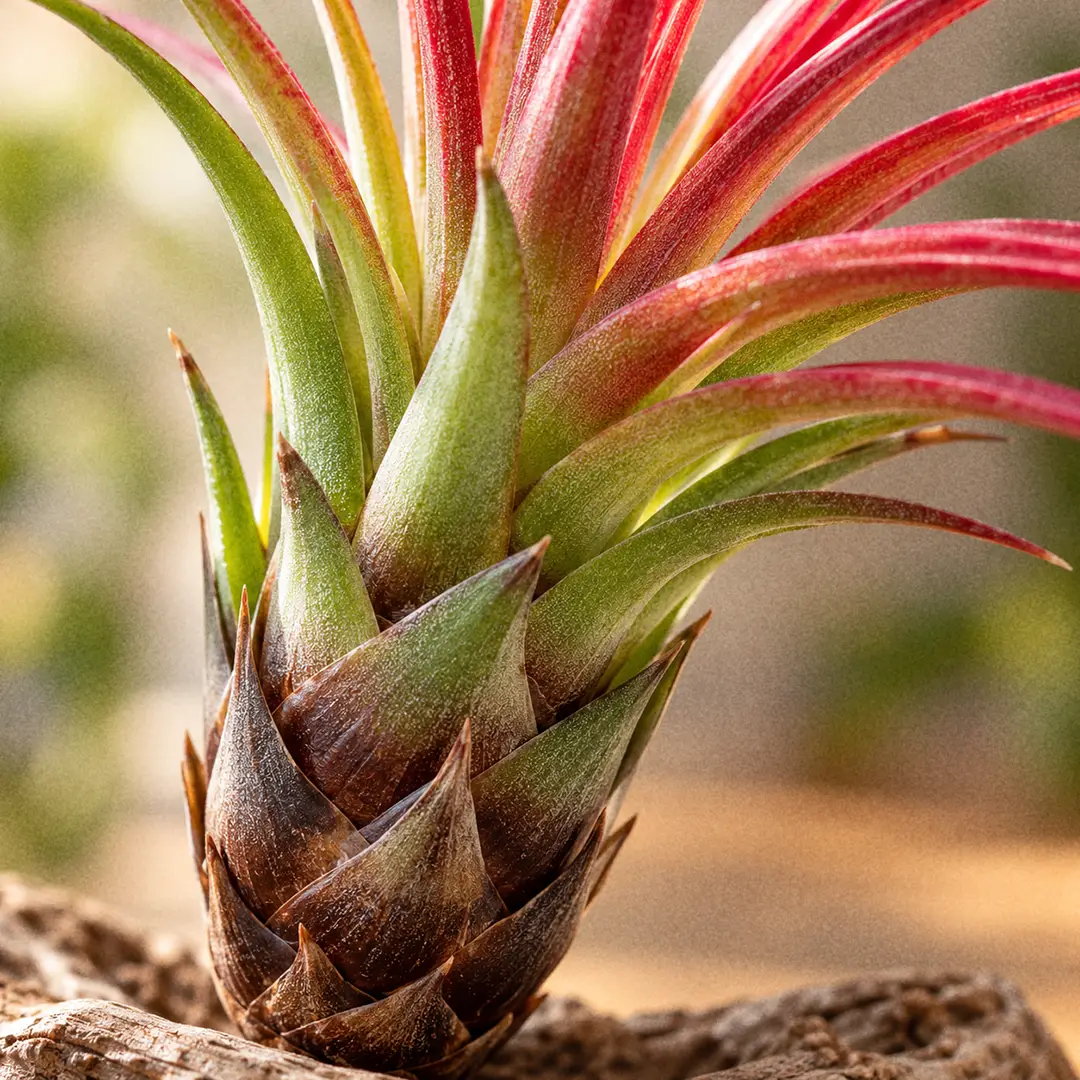
Almost every plant sold as a Tricolor Air Plant is Tillandsia tricolor var. melanocrater. It is the variety with the dark, almost black bulbous base, and it is often listed simply as "Tillandsia melanocrater" with no mention of tricolor at all. Same plant, two labels, so do not pay twice thinking you are collecting both.
Expect 9 to 12 inches tall at maturity, with smooth stiff leaves that arch outward from a narrow base. Sellers price by size, and a large specimen is several years older than a small one.
Var. Tricolor, the Type Form
The base variety exists but rarely reaches the houseplant trade. It looks similar, with the obvious difference being a paler, browner base instead of the near-black one. If a listing shows a plant with a light base, you are probably looking at the type form or at a young melanocrater that has not darkened yet.
Painted and Dyed Plants
Air plants get sprayed with floral paint more often than people realize, and the tricolor's natural red blush makes a dyed one easy to pass off. Check the undersides of the leaves, which stay green on a painted plant, and look for hard color edges or unpainted streaks where the spray missed. Real blush runs through the leaf and deepens gradually with light.
How It Compares to Other Air Plants
Next to the fine grassy Juncea or the compact Ionantha, the tricolor reads as a bigger, glossier, more architectural plant. It is closest in feel to Brachycaulos, which also blushes red, but the dark base sets it apart instantly. It is thirstier than Streptophylla and much thirstier than a Xerographica.
🪴 Mounting a Tricolor Air Plant
It Never Goes in a Pot
There is no repotting here, which is half the appeal. The plant either sits loose in a holder or gets fixed to a mount, and the only maintenance is moving it when it outgrows its perch or when a pup clump gets too heavy.
Choosing a Mount
Cholla wood is the classic pairing for this species, because the hollow tube holds the narrow base upright and drains completely. Cork bark, driftwood and grapevine all work. Whatever you pick, it must dry fast and must not be pressure-treated or salt-soaked, so rinse beach driftwood thoroughly first.
Bud vases are a good no-commitment option. The narrow neck grips the base while the leaves fan out above, and the plant lifts straight out at soak time.
How to Attach It
Use nylon fishing line or thin florist wire wrapped around the roots and the base of the rosette, never tight around the leaves. Leave it loose enough to slide a fingernail under. Over a year or two the plant grows its own holdfast roots into the mount and you can cut the wire away.
If you glue, a small dot of E6000 or aquarium silicone on the root mass only is safe. Hot glue works but can scorch the tissue if applied too hot, and white craft glue stays damp. Never seal the underside of the base, because that is the part that has to dry.
✂️ Pruning a Tricolor Air Plant
When to Prune
There is no shaping to do, just tidying. Trim whenever tips go brown or outer leaves die back, which happens naturally as the plant grows and is not a sign of a problem on its own.
How to Prune
Cut crisp brown tips at a steep angle with clean scissors so the cut follows the leaf's natural taper and stays invisible. Cutting straight across leaves an obvious flat stump. Take off only the dead tissue and leave a hairline of brown, because cutting into green tissue opens a fresh wound that browns again anyway.
Dead outer leaves should be peeled, not cut. Pull gently downward and outward: if the leaf releases easily it was finished, and if it resists it is still feeding the plant. Leave it.
After Flowering
Once the bloom spike dries to brown, cut it off close to the base and get the stub as short as you can without nicking the leaves. A dried spike left in the center collects water at soak time, and that is one more thing sitting wet in a place you do not want wet.
🌱 How to Propagate Tricolor Air Plant
Pups Are the Only Method
Tillandsias are monocarpic: each rosette flowers once and then slowly declines. The good news is that flowering triggers pups, and this species is generous, typically producing three to six offsets around the base over the following months. The mother stays green and attractive for a year or more while they grow.
Seed is possible but takes five to eight years to reach a plant worth looking at, so nobody does it outside of specialist growing.
Step-by-Step Separation
- Wait until each pup is at least one third the size of the mother. Earlier separation stunts it or kills it outright.
- Soak the whole clump for half an hour so everything is flexible and less brittle.
- Hold the mother's base in one hand and the pup's base in the other, then twist and pull gently sideways. A ripe pup separates with a soft pop.
- If it resists, stop. Leave it another month and try again.
- Dry both pieces upside down for a few hours before mounting or displaying them.
Or Leave the Clump Alone
You do not have to separate anything. Left intact, the pups grow into a mounded clump that flowers in waves over several seasons, and a mature tricolor clump is far more impressive than any single rosette. Watering a clump takes more care, since the packed bases trap more water, so shake it harder and give it more airflow.
🐛 Tricolor Air Plant Pests and Treatment
What Shows Up
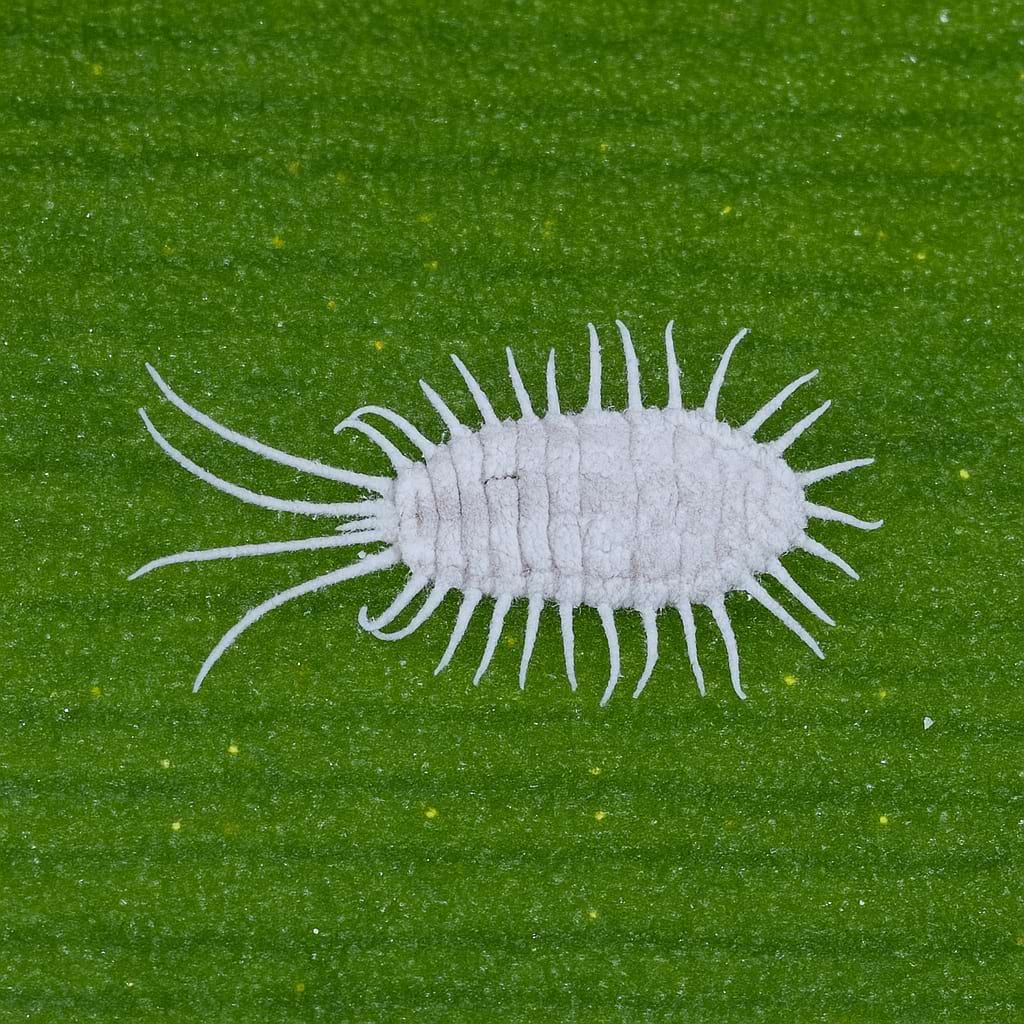
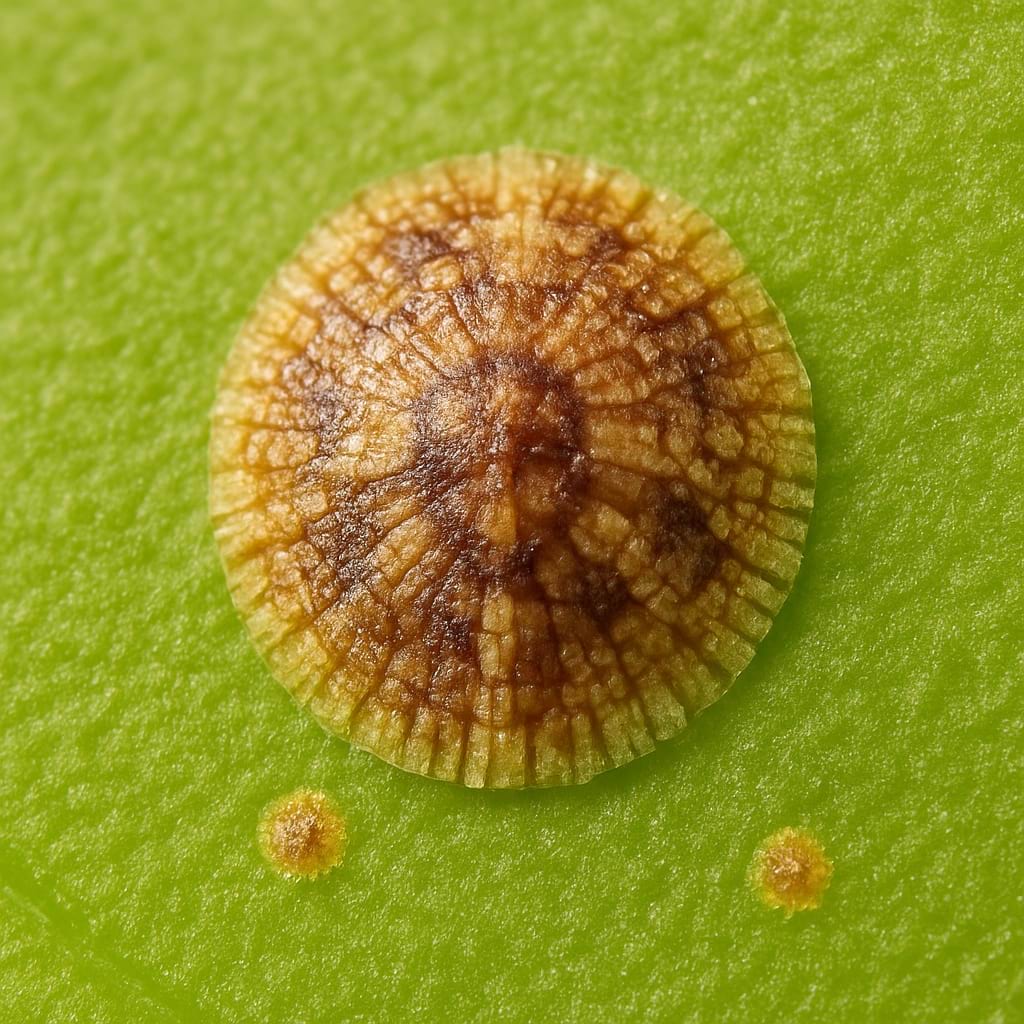
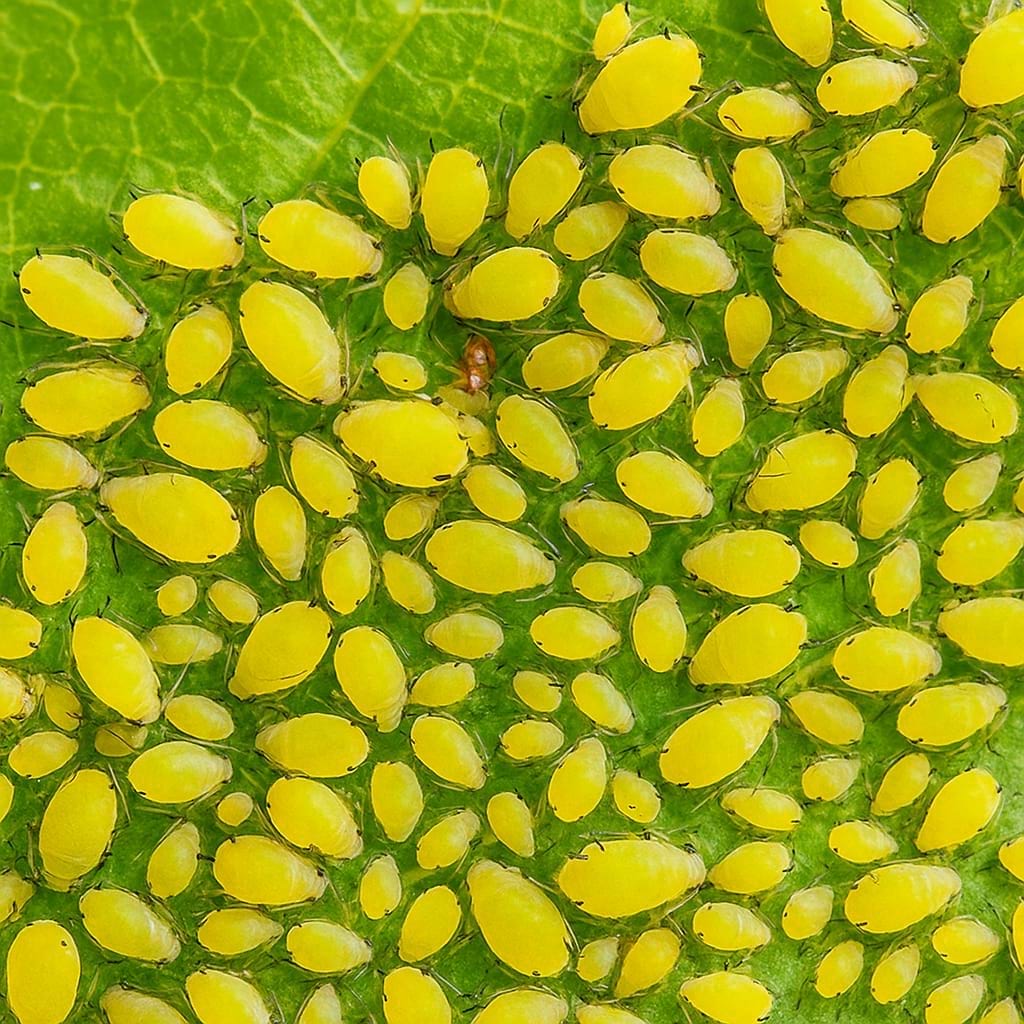
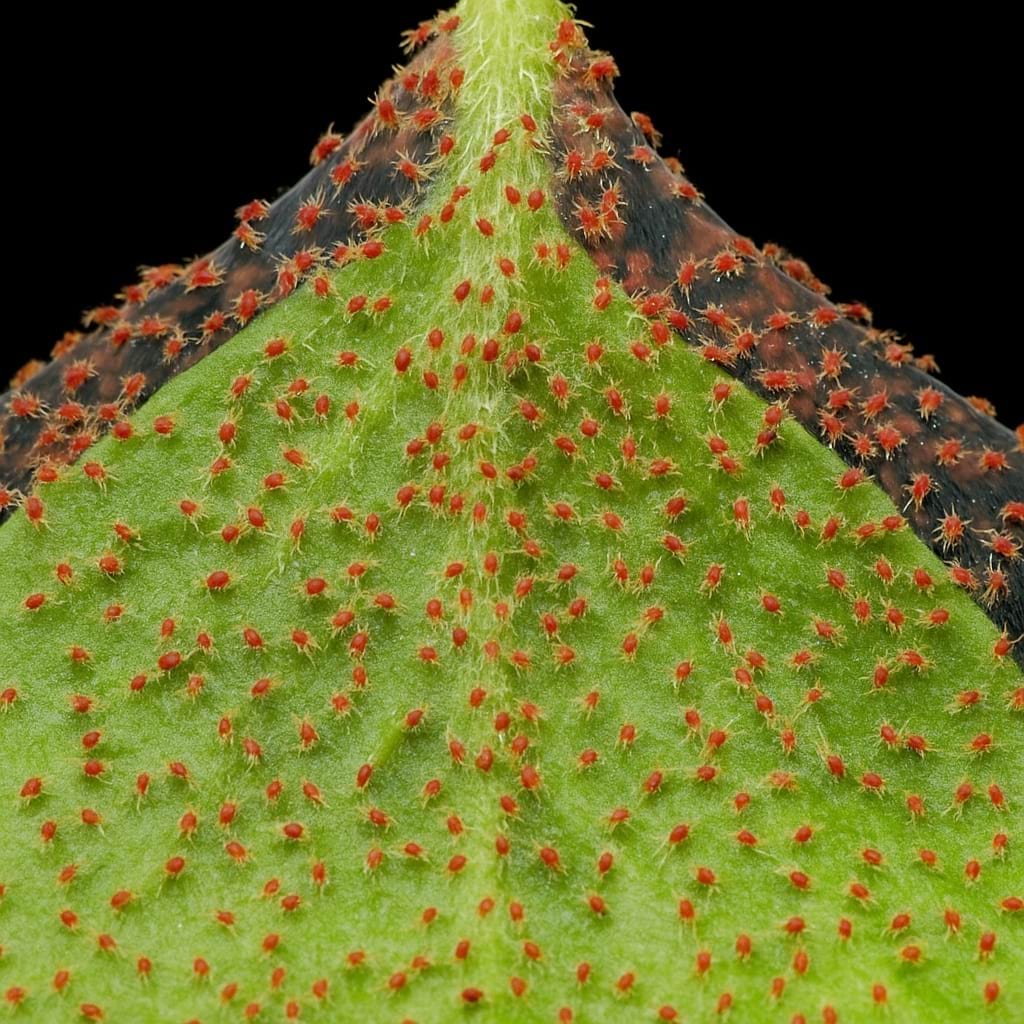
Mealybugs are the main offender, and they hide deep in the dark base where you will not see them until the population is large. Look for white cotton fluff in the crevices and a tacky feel on the leaves. Scale insects appear as small brown bumps along the leaf blades and scrape off with a fingernail. Aphids go straight for a developing bloom spike, which is soft enough to pierce. Spider mites are uncommon but show up on plants kept hot, dry and still.
How to Treat Them
There is no soil to drench, so treatment is physical. Start with a hard rinse under the tap aimed into the base, then dry the plant upside down quickly. For a few insects, dab each one with a cotton bud dipped in rubbing alcohol.
For a real infestation, use dilute insecticidal soap, rinse it off after an hour, and dry thoroughly. Go light on oil sprays including heavy neem, because a film of oil clogs the trichomes the plant drinks through. Quarantine every new air plant for two weeks, since mealybugs ride in unseen.
🩺 Common Tricolor Air Plant Problems
Base Rot Is the Killer
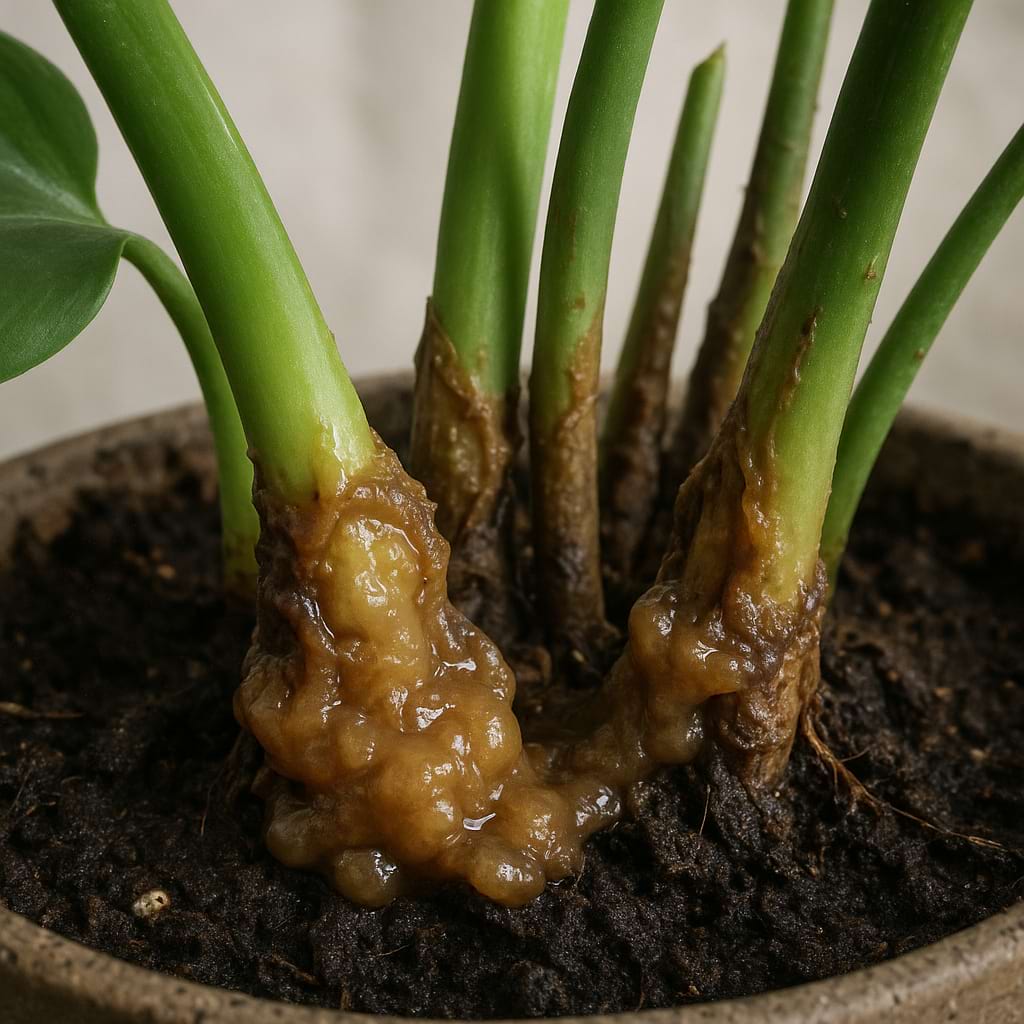
Nearly every dead tricolor died of rot in that dark base, and nearly every case traces back to water left sitting in the sheaths after a soak. The signs are a base that darkens and softens, a faintly sour smell, and leaves that slide out of the center with no resistance. Once the core goes, the plant is finished. Prevention is the only treatment: shake hard, dry upside down, keep air moving.
Mushy Center, Collapsing Rosette
A mushy center with leaves peeling away in your hand is the same problem one stage further along. If it is caught very early, and only the outermost sheaths are affected, peeling them off and giving the plant a week of dry bright air occasionally saves it. Usually it does not.
Brown Crispy Tips
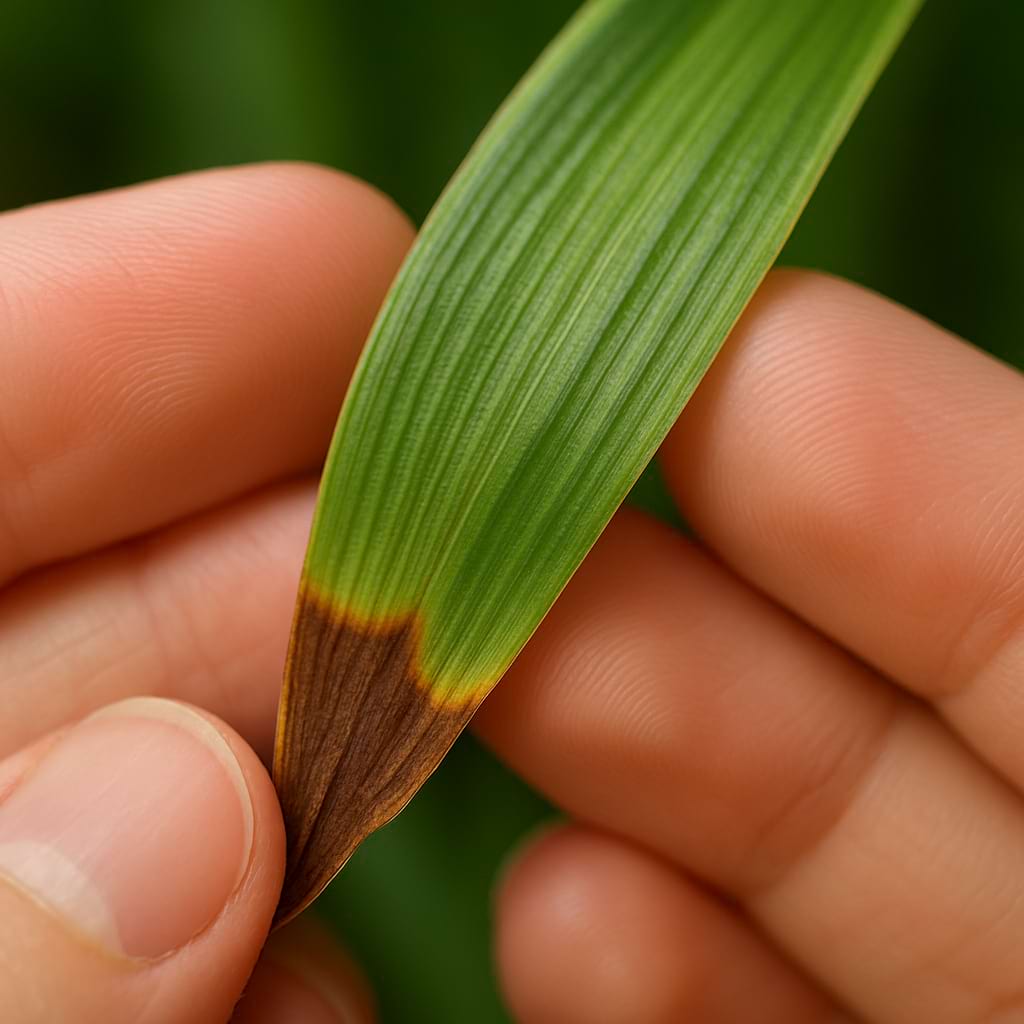
Tip crisping means the plant is drying faster than you are watering, whether from long gaps between soaks, dry winter heat, or fertilizer burn. Trim the tips on an angle and soak more often. A little tip browning on an older plant is normal wear, not a problem.
Splayed, Pale, Floppy Growth
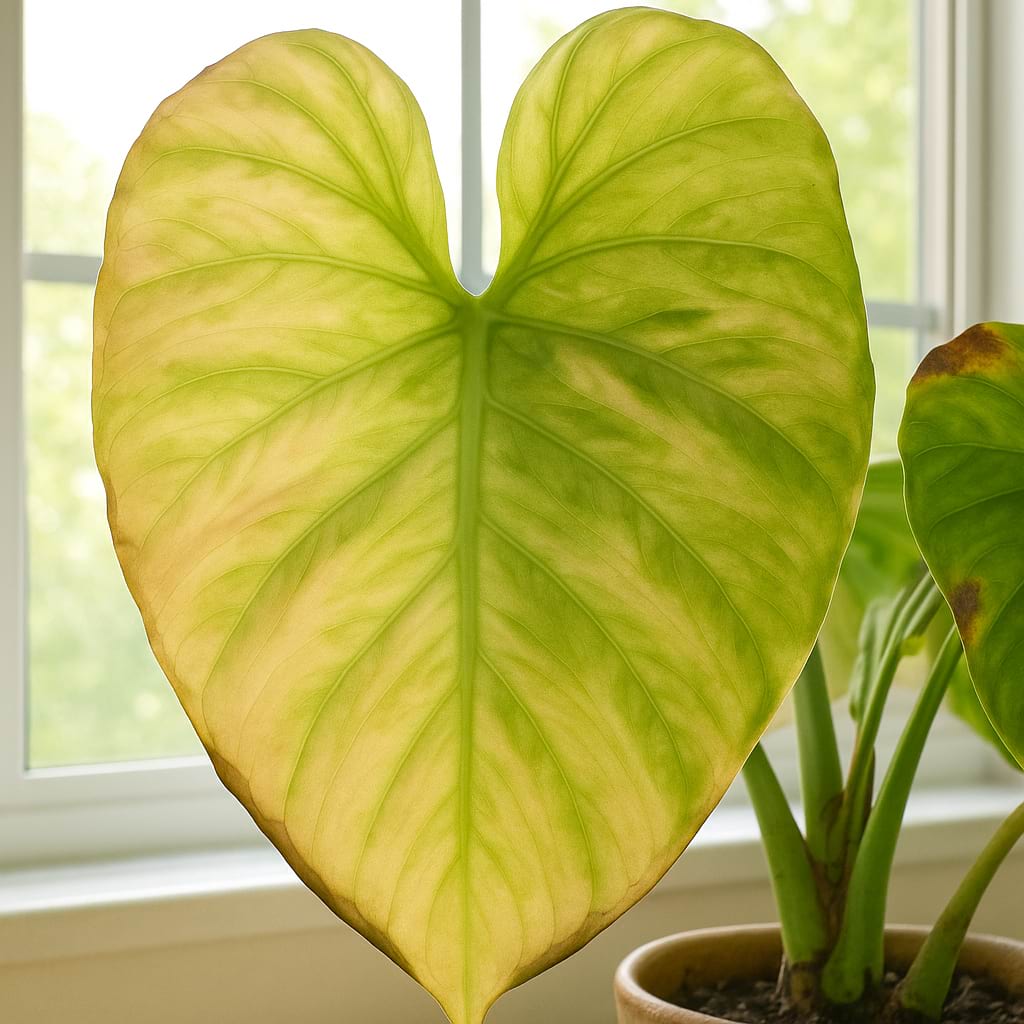
A tricolor that has lost its stiffness and gone flat green is short on light, which shows up as pale, faded leaves and a rosette that opens out instead of arching. Move it toward a brighter window over a couple of weeks so it does not scorch on the way.
🖼️ Tricolor Air Plant Display and Styling Ideas
Solo Setups
The dark base is the design feature, so choose a holder that shows it. A clear bud vase, a wire stand, or a cholla wood tube all lift the plant and let that near-black cup read against the green leaves. Keep it at or just below eye level, because from above the base disappears entirely.
Grouped Arrangements
Group it with silver, fine-textured species for contrast: a grassy Juncea, a small clump of Ionantha, a sculptural Streptophylla. The tricolor is the glossy green one in the middle, and the texture difference is what makes the shelf look composed rather than repetitive.
Where Not to Put It
Closed terrariums kill this plant. So do decorative dishes packed with moss, and any spot where water can pool under the base. An open glass globe is fine, provided you lift the plant out to soak and return it dry. The other bad spot is a dark corner chosen for looks, where it will slowly pale and never bloom.
🌟 Tricolor Air Plant Pro Care Tips
- Shake, then shake again. Three firm shakes upside down after every soak, not one. That habit alone prevents the problem that kills most of these plants.
- Set up a fan, not a humidifier. If you can only add one thing to the room, add air movement. This plant tolerates dry air far better than stagnant air.
- Feed if you want flowers. Quarter-strength bromeliad food in the soak water, twice a month from April to September. Unfed plants take years longer to bloom.
- Summer it outdoors. A shaded porch from June to September, with the night temperature drop, gives better color and better bloom odds than any indoor spot.
- Do not separate pups early. One third the size of the mother is the rule, and waiting an extra month costs nothing.
- Rinse, never wipe. The leaf surface is how this plant drinks. Rubbing it with a cloth damages the cells it feeds through.
❓ Frequently Asked Questions
Is the Tricolor Air Plant toxic to cats and dogs?
No. Tillandsias are not listed as toxic to cats, dogs or horses, so a curious pet that chews a leaf is not in danger. The bigger risk runs the other way: a small air plant is an excellent cat toy and can be shredded in seconds, so mount it somewhere out of reach.
How often should I water a Tricolor Air Plant?
Once a week as a starting point, adjusted for your conditions. A warm bright room may need twice weekly in summer, a cool room may stretch to ten days in winter. Soak 30 to 60 minutes, shake hard, and dry within four hours.
Why is the base of my air plant black?
That is normal and it is what the variety is named for. Melanocrater means black bowl, and the dark brown to near-black leaf sheaths at the base are a healthy feature, not rot. Rot feels soft and gives when squeezed. A healthy dark base is firm.
Can I keep it in a closed terrarium?
No. A closed container keeps the base damp indefinitely, which is exactly what causes rot. Open globes and bowls are fine as long as you remove the plant to water it and put it back only once it is fully dry.
Will it bloom again after flowering?
Not the same rosette. Each plant flowers once, then puts its energy into producing three to six pups around the base. Those pups reach flowering size in a few years, so a clump left intact gives you blooms in waves indefinitely.
Why are my leaves wrinkled and curling inward?
That is thirst. Fine lengthwise wrinkles and inward-curling leaf edges mean the plant has been dry too long. A one-hour soak usually plumps it back up within a day. If the leaves stay wrinkled after a good soak, check the base for rot, because a rotted plant cannot take water up.
Does it need to be misted between soaks?
Misting is optional and it is not a substitute for soaking. A quick mist raises humidity for a few minutes and wets the leaf surface, which this species appreciates in dry winter rooms, but it never gets enough water into the plant to replace the weekly soak.
How big does a Tricolor Air Plant get?
About 9 to 12 inches tall and 6 to 10 inches across at full size, which takes several years. Sellers list plants by current size, so a 4 inch plant is a young one, not a dwarf form.
Can I use tap water?
Usually yes. Let it stand overnight so chlorine dissipates, and avoid softened water entirely, since the added sodium builds up on the leaves. Rainwater, well water and aquarium water are all better if you have access to them. Distilled water is too pure and lacks the trace minerals the leaves absorb.
ℹ️ Tricolor Air Plant Info
Care and Maintenance
🪴 Soil Type and pH: None. Epiphytic, grown mounted, wired or standing loose.
💧 Humidity and Misting: Comfortable at 45 to 60 percent, higher than a desert Tillandsia wants, with real air movement to balance it.
✂️ Pruning: Trim crisp tips on an angle and peel away spent outer leaves once they pull free without resistance.
🧼 Cleaning: Do not wipe the leaves. Rinse under the tap instead, aiming water down into the base and then shaking it back out.
🌱 Repotting: Never potted. Remount when the plant outgrows its perch or a pup clump gets too heavy for the mount.
🔄 Repotting Frequency: Only as needed, usually every 2-3 years
❄️ Seasonal Changes in Care: Weekly soaks and monthly feeding through spring and summer, then longer gaps and no fertilizer once growth slows in a cool winter room.
Growing Characteristics
💥 Growth Speed: Slow
🔄 Life Cycle: Evergreen epiphytic bromeliad, monocarpic with offsets
💥 Bloom Time: Late winter into spring on mature plants, occasionally in summer
🌡️ Hardiness Zones: 10-11
🗺️ Native Area: Cloud forest and wet tropical woodland from southern Mexico through Guatemala, Honduras and Nicaragua to Costa Rica and Panama
🚘 Hibernation: No true dormancy, but growth stalls below about 55°F and watering should be cut back accordingly
Propagation and Health
📍 Suitable Locations: East windowsills, bright bathrooms, cholla wood mounts, bud vases, open terrariums, grouped air plant shelves
🪴 Propagation Methods: Separate the pups that form around the base after flowering, once each one is about a third the size of the mother.
🐛 Common Pests: Mealybugs, Scale Insects, Aphids, Spider Mites
🦠 Possible Diseases: Base rot, crown rot, fungal spotting in still damp air
Plant Details
🌿 Plant Type: Epiphytic bromeliad (air plant)
🍃 Foliage Type: Evergreen rosette of smooth, stiff, recurving strap leaves
🎨 Color of Leaves: Bright to deep green, blushing red and purple in strong light, with near-black leaf sheaths at the base
🌸 Flower Color: Violet-purple tubular flowers on a yellow to orange bract spike
🌼 Blooming: Yes, reliably indoors on a mature plant given enough light
🍽️ Edibility: Not edible.
📏 Mature Size: 9-12 inches tall
Additional Info
🌻 General Benefits: Pet-safe, soil-free, blooms indoors more readily than most air plants, holds its bloom color for weeks, and pups generously afterwards
💊 Medical Properties: No documented medicinal uses.
🧿 Feng Shui: A rootless plant that lives on air suits spaces where you want lightness rather than grounding, so it works well on a high shelf or a hanging mount.
⭐ Zodiac Sign Compatibility: Aquarius
🌈 Symbolism or Folklore: Independence, adaptability, thriving without foundations
📝 Interesting Facts: The variety name melanocrater comes from the Greek for black bowl, and it describes the dark brown to almost black cup of tightly wrapped leaf sheaths at the plant base. That cup is the plant best feature and its biggest weakness, because it holds water long after the leaves have dried.
Buying and Usage
🛒 What to Look for When Buying: Pick a plant with a firm base you cannot squeeze, leaves that feel stiff rather than papery, and no wrinkling along the leaf blades. Check the underside of the leaves for paint if the plant is an improbable red.
🪴 Other Uses: Mounted wall art, terrarium centerpiece, wreath and driftwood arrangements, living table settings
Decoration and Styling
🖼️ Display Ideas: Cholla wood mounts, bud vases, wire stands, open glass globes, grouped air plant shelves with contrasting silver species
🧵 Styling Tips: Display it at or just below eye level so the dark base is visible. That contrast between the near-black cup and the green leaves is the whole point of the plant, and it disappears when the plant sits above your head.
🪴 See also 🪴
Complete Guide to Potbelly Air Plant Care and Growth
Complete Guide to Bulbosa Air Plant Care and Growth

Houseplant101 Forum
Questions & Comments
Ask a question, share your plant experience, or help other plant owners.
Comments are temporarily unavailable.
Open the Houseplant101 ForumNo comments yet
Be the first to ask a question or share your experience about this page.
Log in or create an account
Comments use your Houseplant101 Forum account, but you can stay on this page.
Create a new account