
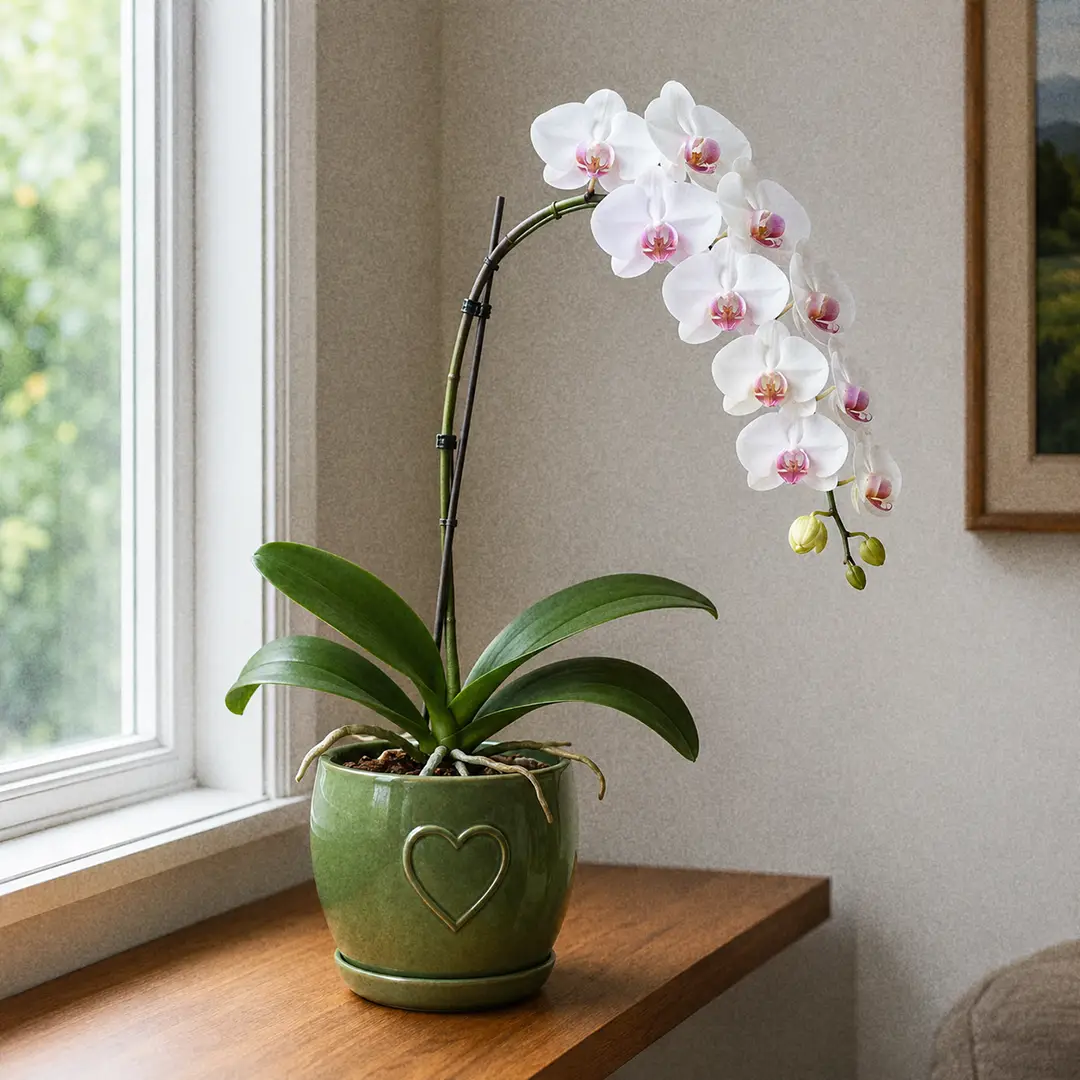
Phalaenopsis Orchid
Phalaenopsis spp. and hybrids
Moth Orchid, Phal, Supermarket Orchid, Phalaenopsis Hybrid


The Phalaenopsis Orchid is the grocery-store orchid almost everyone has killed once, and it is genuinely one of the easiest flowering houseplants going once you learn to read its roots. Learn how to water it, when to repot it, and the one temperature trick that makes it bloom again.
📝 Phalaenopsis Orchid Care Notes
🌿 Care Instructions
⚠️ Common Pests
📊 Growth Information
🪴 In This Guide 🪴

☀️ Phalaenopsis Orchid Light Requirements (Bright Indirect)
The Sweet Spot
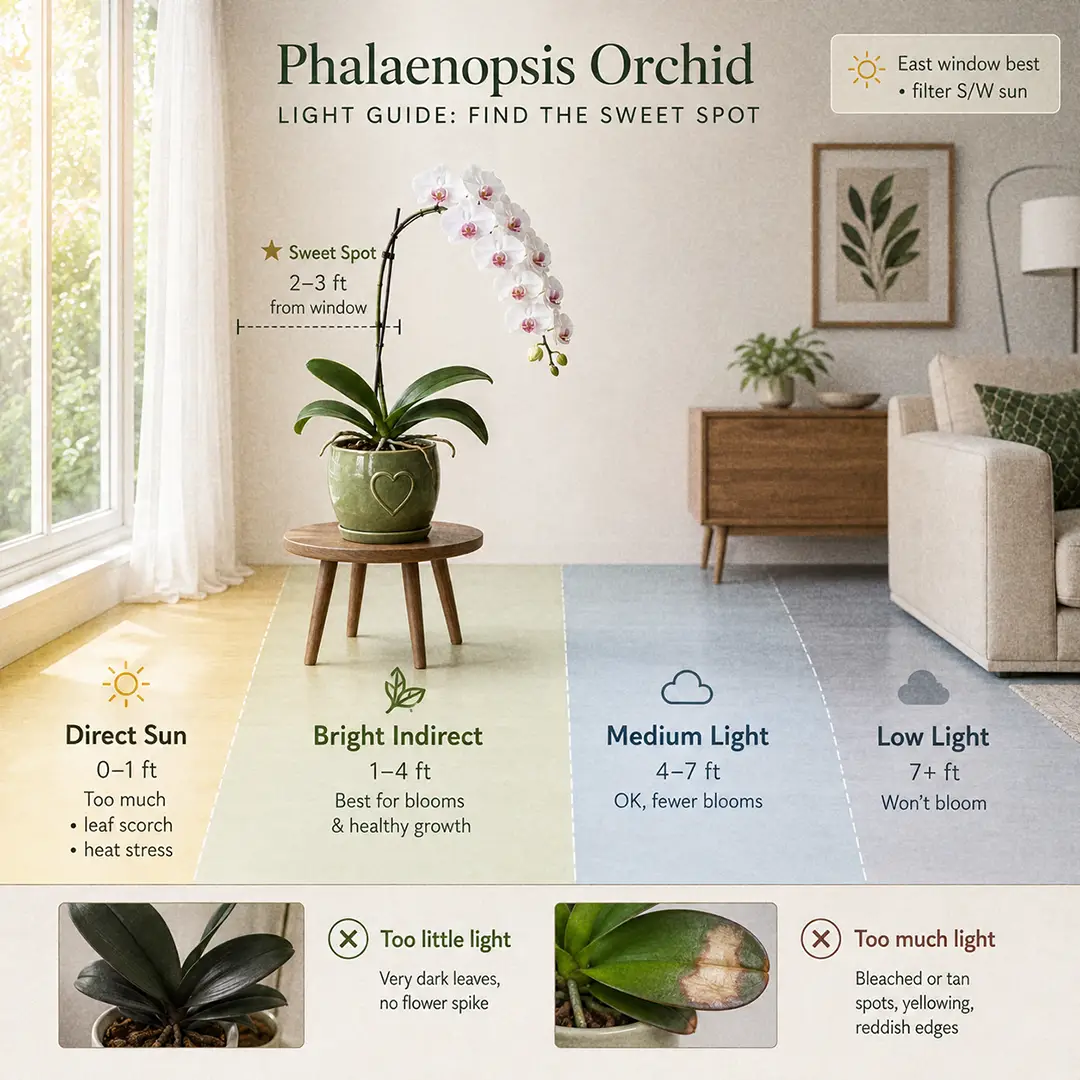
An east window is the best place in most homes. The plant gets soft morning sun on the leaves for an hour or two, then bright ambient light for the rest of the day, which is close to what it would get under a forest canopy in the Philippines. Sit it on the sill or within two to three feet of the glass.
South and west windows work too, but only behind a sheer curtain or set back three to four feet. Afternoon sun through bare glass will scorch these leaves in a single hot afternoon. North windows are perfectly usable as well, and a Phalaenopsis will live there happily for years, though it may bloom a little less generously.
Too Little Light
The classic sign is a plant that looks healthy, grows new leaves, and simply never produces a flower spike. Very dark, almost blackish-green leaves are the other tell. Orchid leaves should be a medium grass green, not deep forest green. If yours are dark and it has not bloomed in over a year, move it closer to the window before you change anything else.
Too Much Light
Leaves go yellowish and washed out, and dry tan patches appear where the sun hit hardest. Bad cases end up as sunburn, a papery bleached area that never recovers. Reddish or purplish tinting along the leaf edges is the gentler warning, and it usually means the plant is right on the edge of too much. Pull it back a foot and it settles down. Our houseplant light guide covers how to judge window brightness if you are not sure what you have.
💧 Phalaenopsis Orchid Watering Guide (Read the Roots)
Watering Frequency
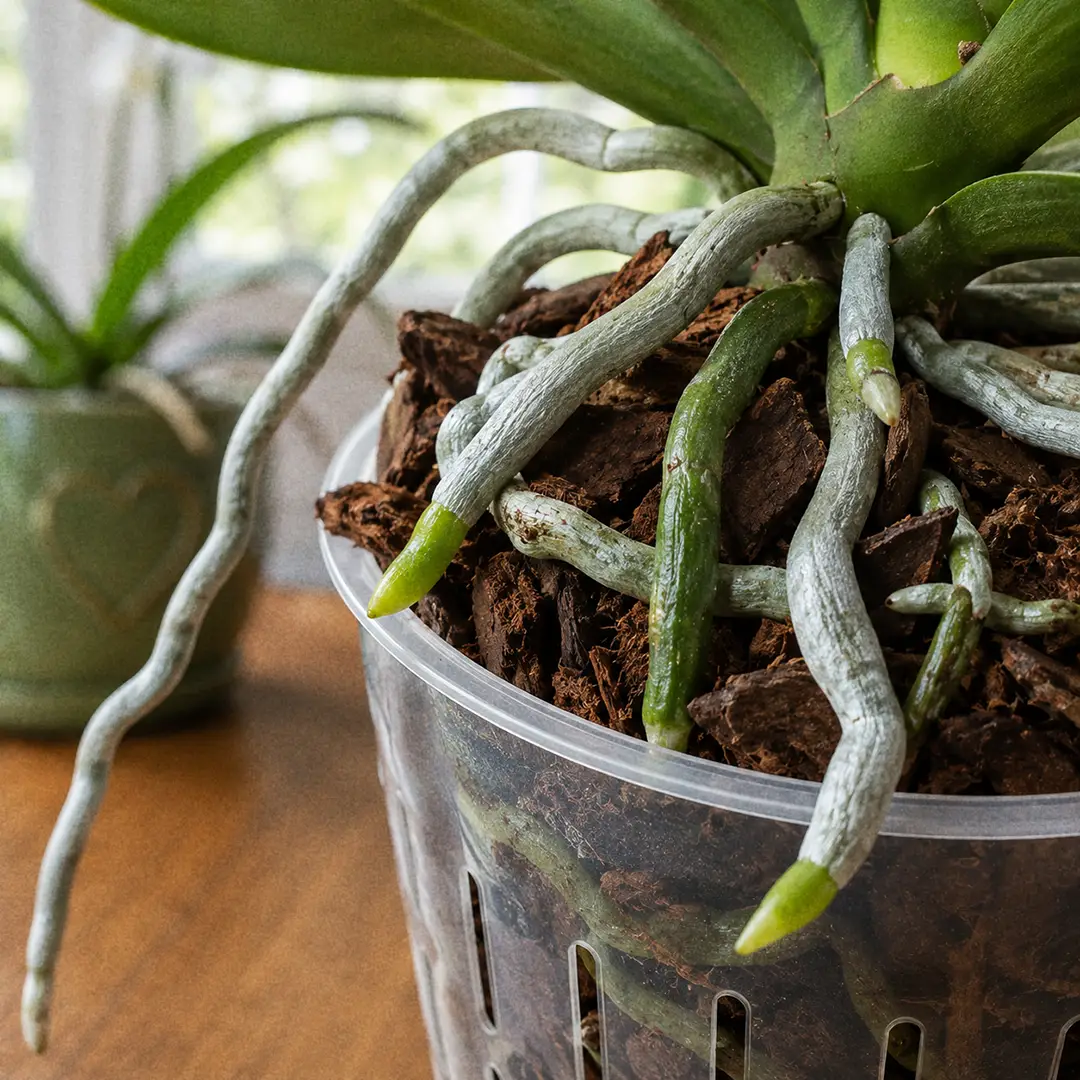
Forget schedules. Look at the roots through the clear pot instead. Bright green roots mean the plant has plenty of water. Silvery white roots mean it is thirsty. In most homes that cycle runs about 7 to 10 days, longer in winter, shorter in a hot dry summer room.
If your orchid sits in an opaque pot, poke a finger an inch into the bark. Dry and light means water, damp and heavy means wait. Picking up the pot works too, and after a few rounds you will know the difference by weight alone.
How to Water
Take the whole plant to the sink and run tepid water through the bark for 15 to 30 seconds, letting it pour straight out of the drainage holes. Some growers prefer a soak, standing the pot in a bowl of water for about ten minutes so the bark rehydrates fully. Either method is fine. What matters is what comes next: let it drain completely before it goes back into its decorative cachepot. No standing water, ever.
Water in the morning so any drops that land in the crown evaporate during the day. Water sitting overnight in the center of the plant is how crown rot starts. And skip the ice cube method. It is convenient, and it is also chilling a tropical plant's roots once a week.
Signs of Trouble
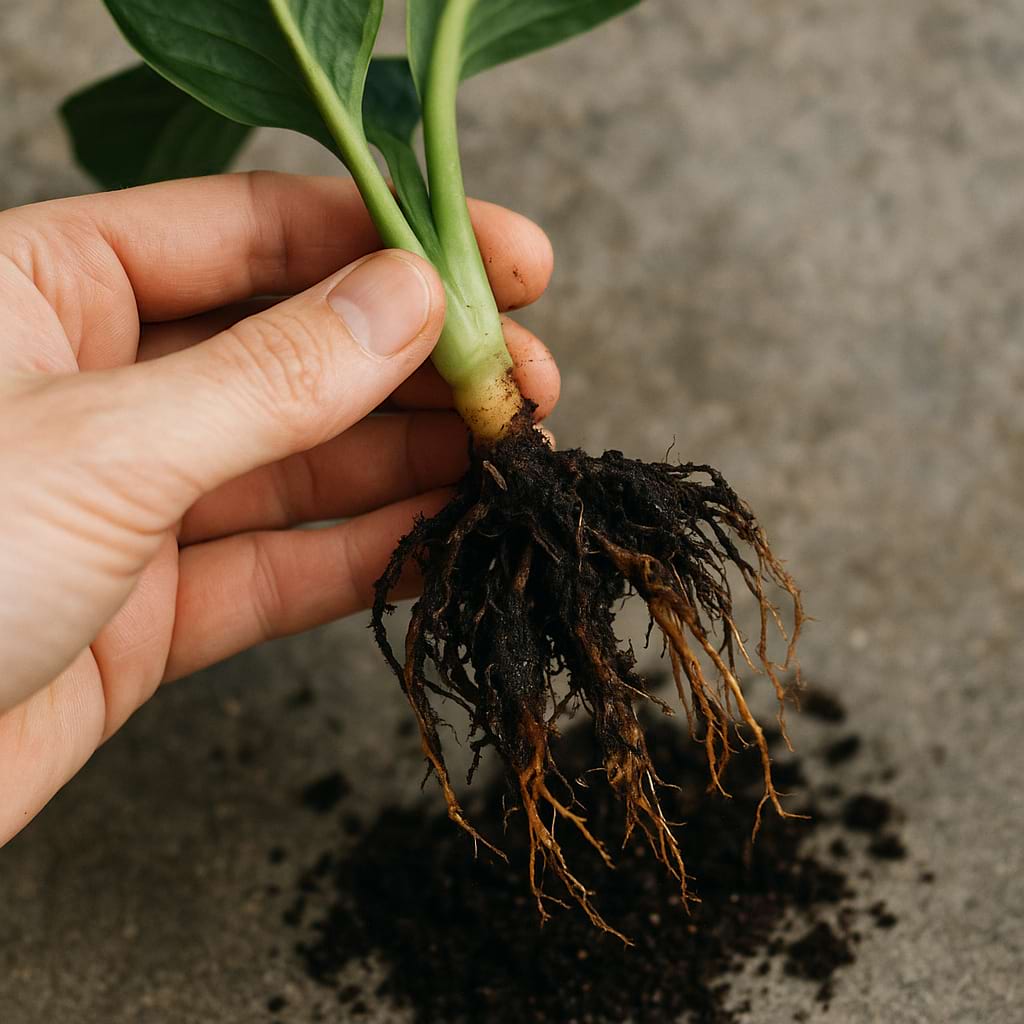
Limp, leathery, floppy leaves fool everybody, because they look like thirst and usually mean the opposite: the roots have rotted and the plant cannot drink. Tip it out and check. Firm silver or green roots are healthy. Brown, hollow, stringy roots that flatten between your fingers are gone. Wrinkled leaves alongside plump healthy roots genuinely is underwatering, and that one is an easy fix. Our watering fundamentals article covers the general principle.
🪴 Best Soil for Phalaenopsis Orchid (Bark, Not Soil)
What the Roots Actually Need
These orchids are epiphytes. In the wild they cling to tree bark with their roots hanging in open air, catching rain and drying out within hours. Regular potting soil suffocates them within months. It holds water against the roots, blocks airflow, and all but guarantees root rot. This single mistake kills more Phalaenopsis than everything else put together.
DIY Bark Mix
Medium-grade fir bark, on its own, is the safest option for a beginner. It is chunky, airy, and it dries at a sensible pace. If you want to blend your own, roughly 70% medium fir bark, 20% rinsed sphagnum moss and 10% perlite holds a little more moisture without going soggy. A handful of horticultural charcoal is a nice optional extra that keeps the mix sweet for longer. Our potting soil guide explains why ordinary mixes behave so differently.
About That Moss Plug
Almost every orchid sold in a supermarket has a dense plug of sphagnum moss packed tight around the base of the roots. Growers use it so the plants survive shipping and shelf time without drying out. It is not a long-term medium, and it stays wet far longer than the bark around it. When you repot, tease that plug out completely. A good share of the mystery orchid deaths on the internet are a rotting moss core hiding inside otherwise healthy-looking bark.
🍼 Fertilizing Phalaenopsis Orchid (Weakly, Weekly)
When and How Often
The old orchid grower's rule is weakly, weekly: a balanced fertilizer at about a quarter of the label strength, every time you water during active growth. That suits bark perfectly, since bark holds almost no nutrients of its own. In winter, and while the plant is in full flower, drop back to once a month.
What to Use
A balanced 20-20-20 or a dedicated orchid feed both work well. Some growers switch to a higher-phosphorus bloom formula in late summer to nudge spike production, which is optional but harmless. Our fertilizer guide walks through what the label numbers mean if they still read like a code.
Flushing the Salts
Once a month, run plain water through the pot for a full minute with no fertilizer at all. Bark traps mineral salts, and a buildup burns the delicate root tips, which then stop growing. White crust on the pot rim or on the bark surface means you are overdue. There is more on this in our fertilizing basics.
🌡️ Phalaenopsis Orchid Temperature Range
Ideal Range
Days between 65 and 80°F, nights between 60 and 70°F. That is ordinary room temperature, which is exactly why this orchid became the most popular flowering houseplant in the world. Nothing special is required for most of the year.
The Autumn Difference
The one deliberate change worth making is a cooler autumn. A stretch of nights at 55 to 60°F for four to six weeks is what tells the plant to build a flower spike, and it works best when the days stay 10 to 15 degrees warmer than the nights. There is more on how to arrange that in the bloom section below.
Drafts and Heat Sources
Keep it away from radiators, heating vents, and the swing of an exterior door in winter. A sudden cold blast is the quickest way to lose a whole spike of buds to bud blast, where they yellow and drop before they ever open. Anything below 50°F risks real damage to the leaves themselves.
💦 Phalaenopsis Orchid Humidity Requirements
Ideal Humidity
Between 50 and 65% is the target. Most heated homes sit nearer 30 or 40%, and orchids do get by there, but you will see fewer wrinkled leaves and better root growth if you lift it.
Easy Humidity Boosters
Grouping plants together is the cheapest fix and works better than people expect. A pebble tray under the cachepot helps a little. A small humidifier helps a lot, and earns its keep if your winter air is very dry. A bright bathroom windowsill gives you good humidity for free. Skip misting, which wets the leaves and crown without really changing the air around them. See our humidity guide for the full picture.
🌸 Phalaenopsis Orchid Flowers (and How to Rebloom It)
What the Flowers Look Like
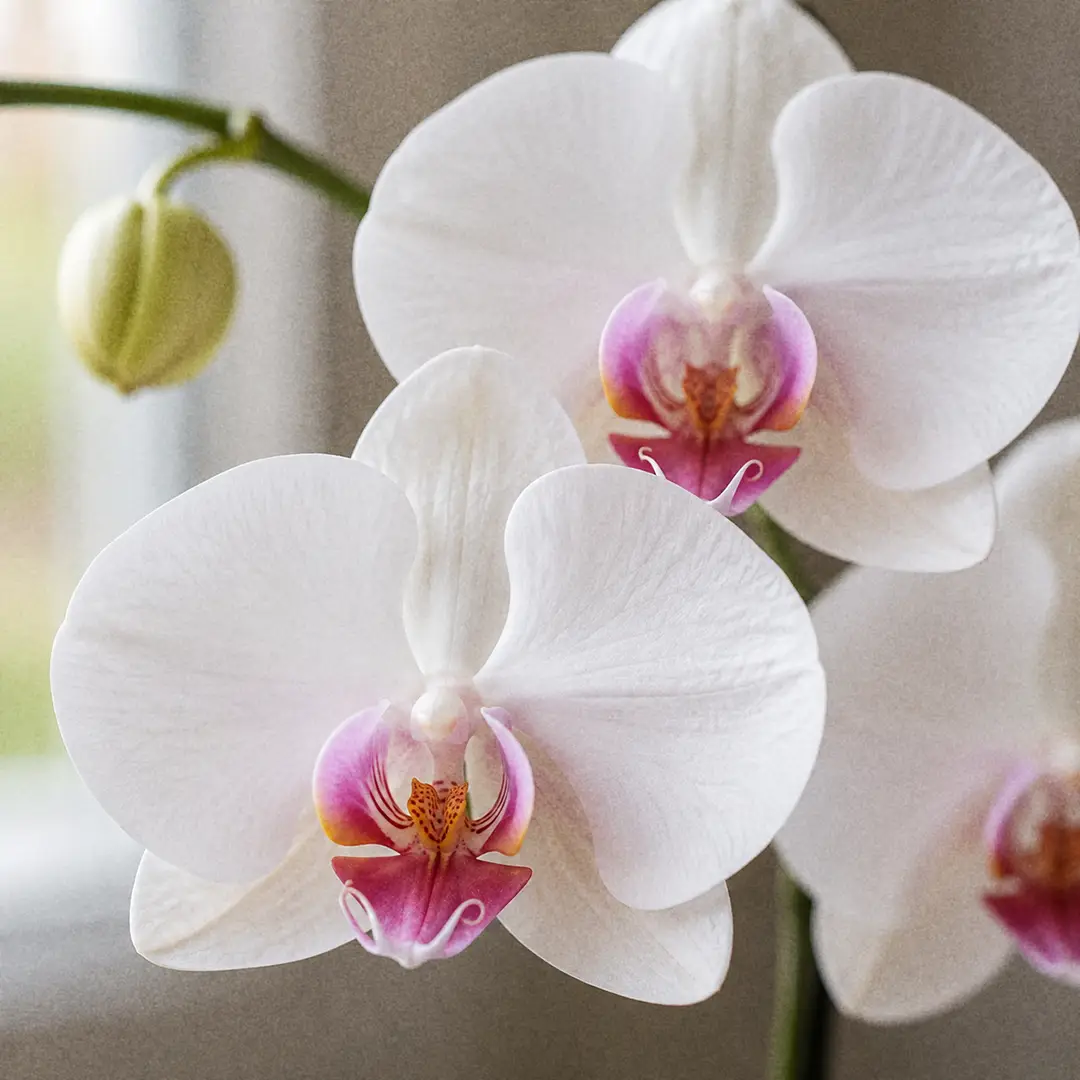
Flat, round, moth-shaped flowers march up an arching spike, usually 5 to 15 of them, opening from the base outward over several weeks. They hold for two to three months, longer than any cut flower and longer than nearly every other blooming houseplant. Most modern hybrids have no scent at all. If you want fragrance you need one of the novelty types covered in the next section.
How to Trigger a New Spike
Give it a cool autumn. From roughly late September through November, put the plant somewhere nights drop to 55 to 60°F while days stay in the seventies. A windowsill in an unheated spare room, a porch that stays above 55°F, or a bright room where you turn the heating off overnight all do the job. Hold it for four to six weeks. A spike usually appears a couple of weeks in, then takes two to three months to reach full bloom, which is why so many Phalaenopsis flower in late winter.
Good light and steady feeding through the summer are what set this up. A plant grown in a dim corner all year rarely has the energy to spike, however cool the nights get.
If It Won't Bloom
The two usual causes are not enough light and no temperature dip. Fix the light first, because a plant in a dark corner will not bloom no matter what else you do. Then arrange the cool nights. Keep in mind that a newly bought orchid often skips a season while it recovers from shipping and a change of home. Persistent failure to bloom in a well-lit, well-fed plant nearly always traces back to a warm bedroom in October.
🏷️ Phalaenopsis Orchid Types and Varieties
Standard Large-Flowered Hybrids
These are the supermarket classics: big flat flowers in white, pale pink or magenta, on a single staked spike. They are bred for uniformity and shelf life, they are the easiest to grow, and they are usually sold with no name at all beyond the color. If you are starting out, start here.
Miniature and Multiflora Types
Multifloras carry many smaller flowers on branching spikes, often in candy pinks and stripes, and the whole plant fits in a four-inch pot. Miniatures are the same idea scaled down further. Both are ideal for a crowded windowsill, and they tend to branch and rebloom more readily than the big standards do.
Novelty and Harlequin Hybrids
Novelties come from crossing standard whites and pinks with brightly colored species such as P. amboinensis, P. venosa and P. violacea. That gives you yellows, oranges, reds, heavy spotting, and the lacquered blotchy patterns known as harlequins. The flowers are usually smaller and waxier, the spikes shorter, and many of these are pleasantly fragrant. Care is identical, though they appreciate a little more warmth.
Species Worth Knowing
Phalaenopsis bellina and P. violacea are the two most fragrant in the genus, with a sweet citrus-spice scent that fills a room on a warm morning. P. schilleriana has silver-mottled leaves that are worth looking at even out of bloom, and throws a big branching spray of pink flowers. P. amabilis is the pure white species behind most of the standard hybrids. These are collector plants, sold by specialist orchid nurseries rather than supermarkets, and well worth the hunt once you have kept a standard hybrid alive for a year.
🪴 Potting and Repotting Phalaenopsis Orchid
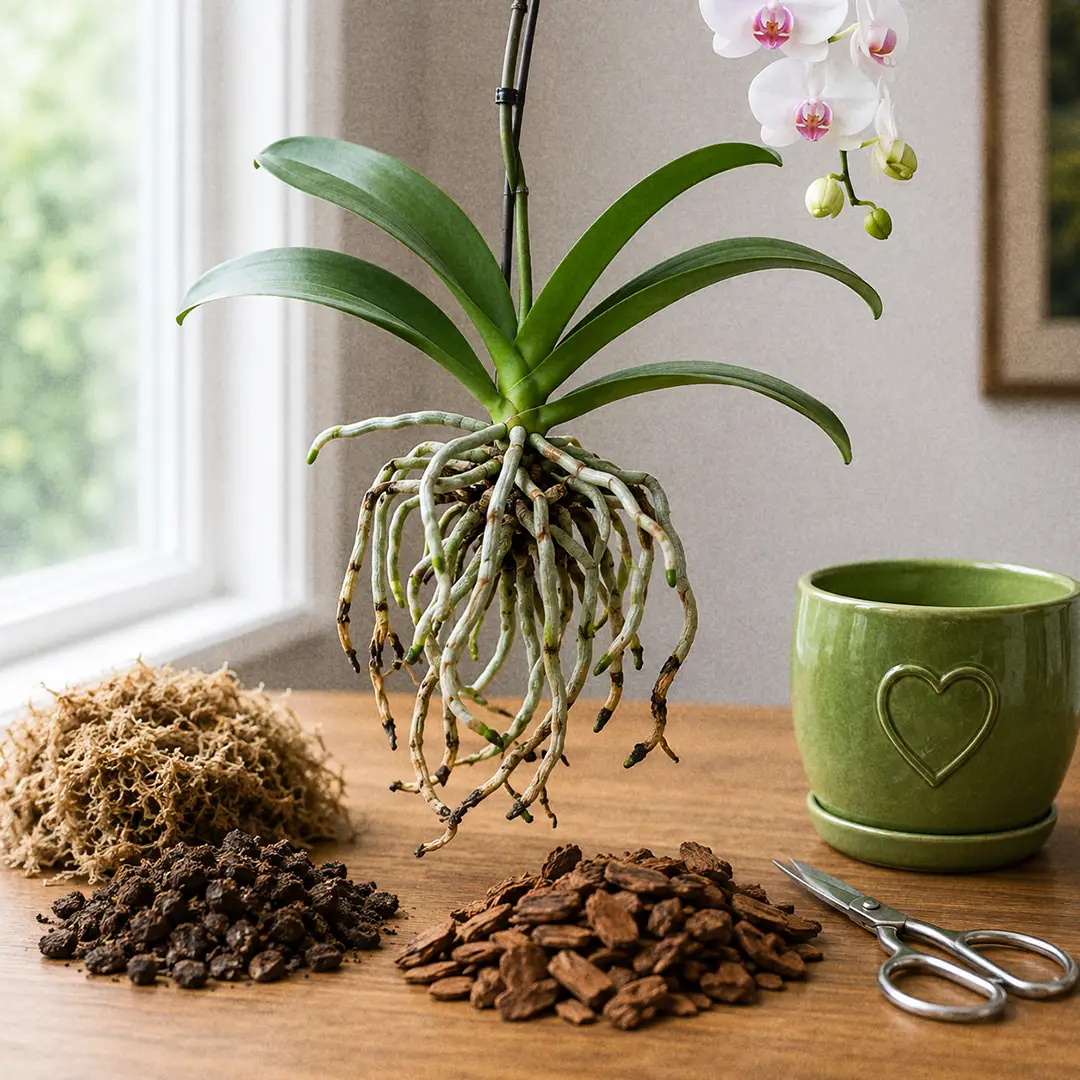
When to Repot
Every two years, or whenever the bark has broken down into dark crumbly bits that stay wet. Decomposing bark is the real trigger, not the plant outgrowing its pot. The best timing is right after the last flower drops, when you can see fresh green root tips beginning to push. Repotting a plant in full bloom will usually cost you the flowers.
Choosing a Pot
Clear plastic orchid pots with slits are genuinely useful, not a gimmick. You can see the roots, judge watering at a glance, and the roots themselves photosynthesize a little. Go one size up at most, or often the same size again. Phalaenopsis roots hate a large volume of damp medium sitting around them. Our pot guide covers drainage in more depth.
Step-by-Step Repotting
Slide the plant out and shake off the old bark. Pull that sphagnum plug out of the middle. Rinse the roots under tepid water so you can see what you are working with, then cut away every brown, hollow or mushy root with sterile scissors, leaving the firm silver ones alone. Hold the plant so the lowest leaf sits just at the pot rim and trickle fresh bark in around the roots, tapping the pot to settle it rather than pressing it down. Wait about five days before the first watering so the cut roots can seal. Our repotting guide covers the general technique.
✂️ Pruning Phalaenopsis Orchid
What to Cut After Blooming
Once the last flower has dropped, look at the spike. If it is still green and firm, cut it about an inch above the second or third node counting up from the base, using sterile snips. There is a fair chance the plant pushes a branch from that node and flowers again within a couple of months, though the second flush is usually smaller.
When to Cut It Right Back
If the spike has gone yellow, brown or dry, cut it off at the base. A dying spike gives you nothing, and the plant is better off putting that energy into leaves and roots. Make the same call if the plant looks tired or is down to two or three leaves. Cutting to the base means a longer wait for the next bloom but a stronger plant when it comes.
Leaves and Aerial Roots
Trim yellow leaves only once they have fully died back and pull away easily. Losing the oldest bottom leaf once or twice a year is normal. Leave the aerial roots wandering out of the pot alone, even the ones heading in silly directions. They are working, and cutting them off costs the plant real capacity to drink.
🌱 How to Propagate Phalaenopsis Orchid
The Honest Answer
You cannot propagate a Phalaenopsis from cuttings. It grows from a single point at the center, with no branching stem and no offsets around the base, so there is nothing to cut. Commercial growers multiply them in sterile lab flasks. That leaves exactly one method available at home, and it is opportunistic rather than something you can reliably schedule.
Keikis, the Only Home Method
A keiki (Hawaiian for baby) is a small plantlet that sometimes appears on a node of an old flower spike, complete with its own leaves and roots. They show up more often on plants kept warm and well fed, and occasionally on plants under mild stress. Some growers apply keiki paste, a hormone gel, to a spike node to force one, which works often enough to be worth a try if you have a spare spike sitting there.
Step-by-Step Keiki Removal
Wait, and then wait longer. The keiki needs two or three leaves and roots at least two to three inches long before it can survive alone, which typically takes six to twelve months. When it is ready, cut the spike an inch either side of where the keiki attaches, using sterile scissors. Pot it into a small pot of fine-grade bark, keep it slightly more humid than the parent for the first few weeks, and water lightly. Expect it to flower in one to three years, depending on how big it was when you separated it.
Tips for Success
Do not separate a keiki early just because it looks big enough. Roots shorter than two inches almost always fail. Use a sterile blade every time, since orchid viruses travel on tools. And leave the parent's spike intact while the keiki is growing on it, because that is where it is being fed from. Our propagation basics article covers sterile technique.
🐛 Phalaenopsis Orchid Pests and Treatment
Orchids attract fewer pests than most houseplants, but the ones they do get like to hide in awkward places.
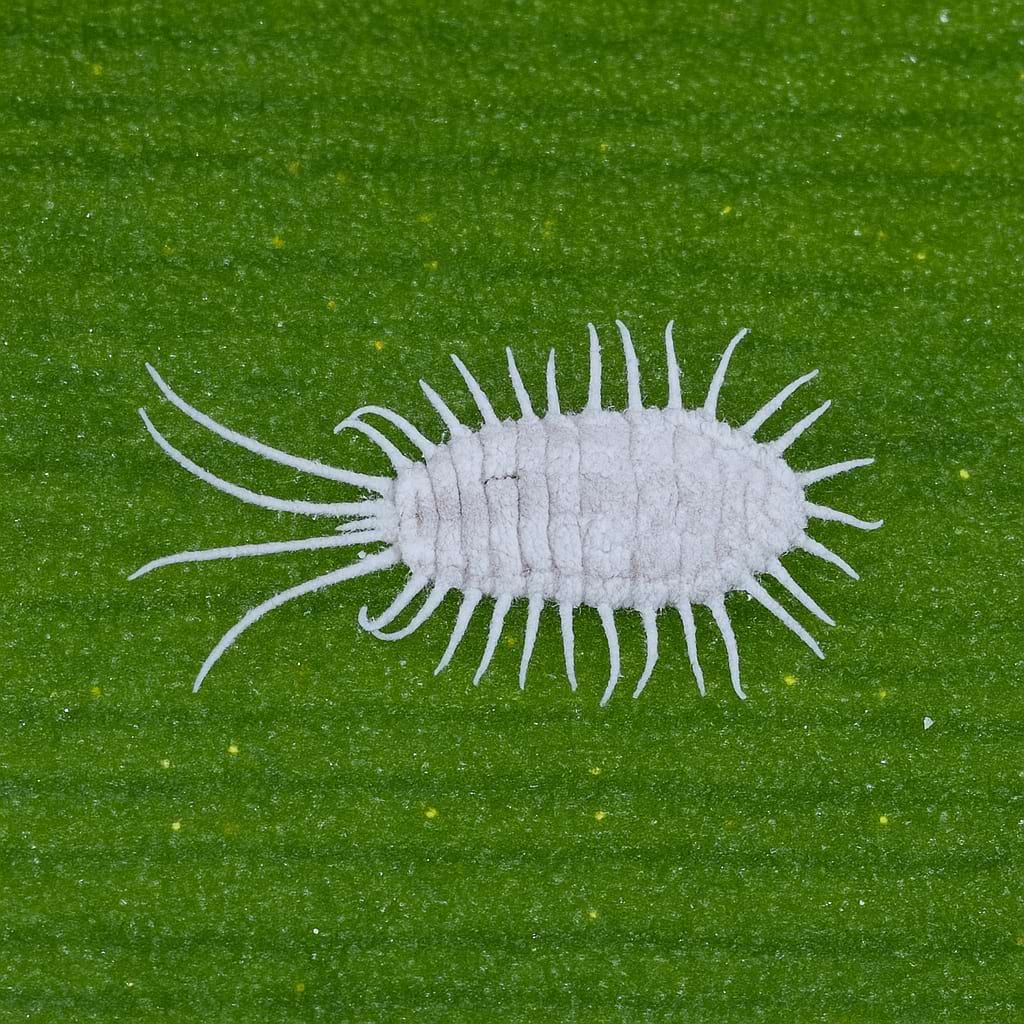
Mealybugs are the most common by far. Look for white cottony specks tucked into the leaf axils, under the leaf bases, and inside the papery sheaths along the flower spike. Dab each one with a cotton swab dipped in rubbing alcohol, then check again a week later, because they always come back at least once.
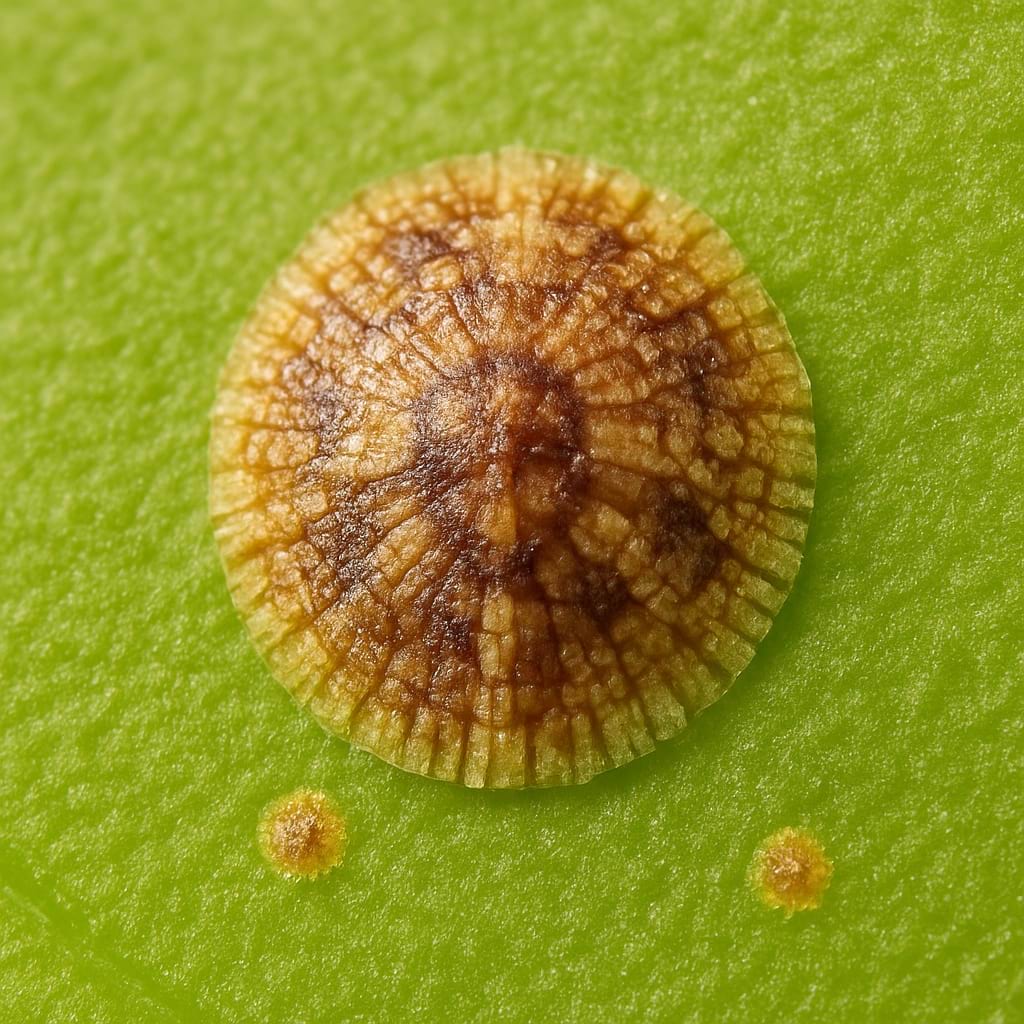
Scale insects show up as small flat brown limpets stuck to the undersides of the leaves and along the spike. Scrape them off with a fingernail and wipe the area with alcohol. A stubborn infestation needs horticultural oil, applied out of direct sun.
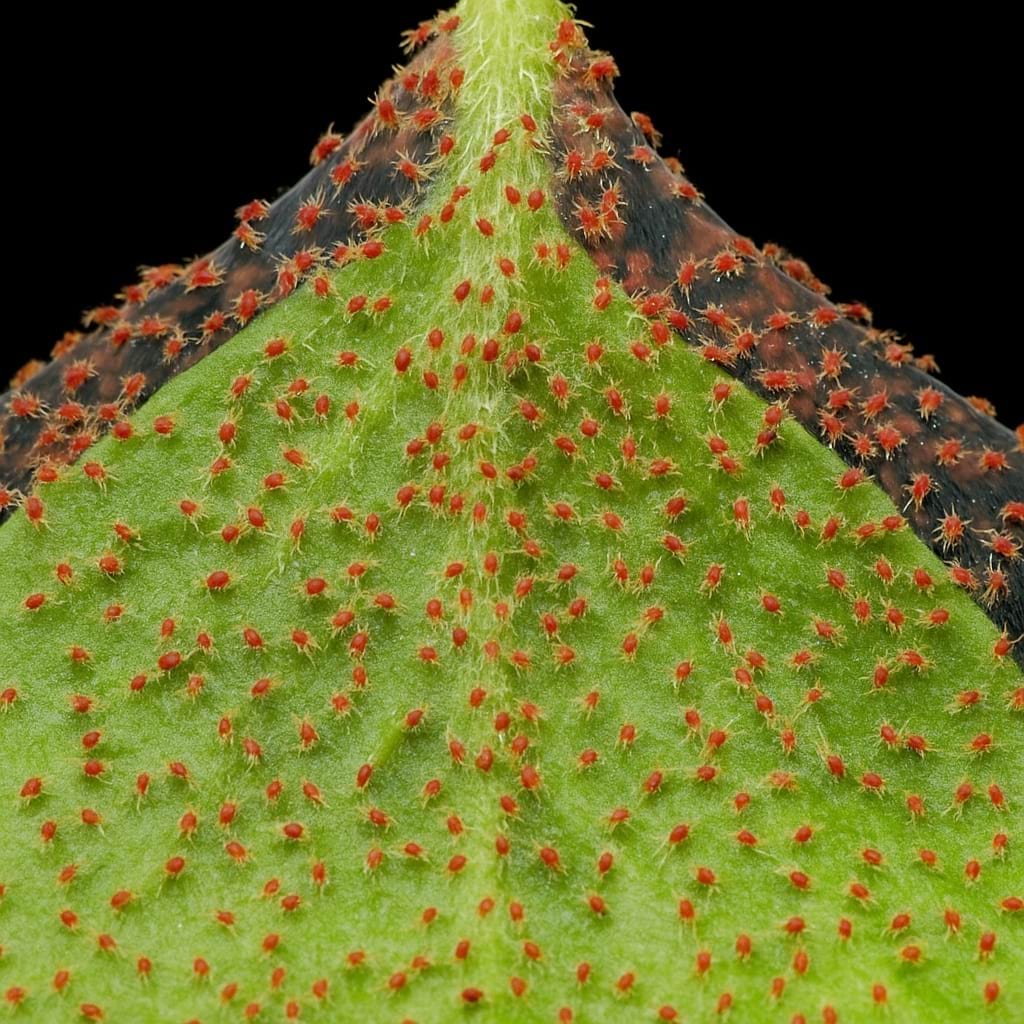
Spider mites turn up in dry winter rooms, leaving fine pale stippling on the leaves and sometimes faint webbing at the leaf junctions. Raise the humidity, wipe both leaf surfaces, and treat with insecticidal soap if the stippling keeps spreading.
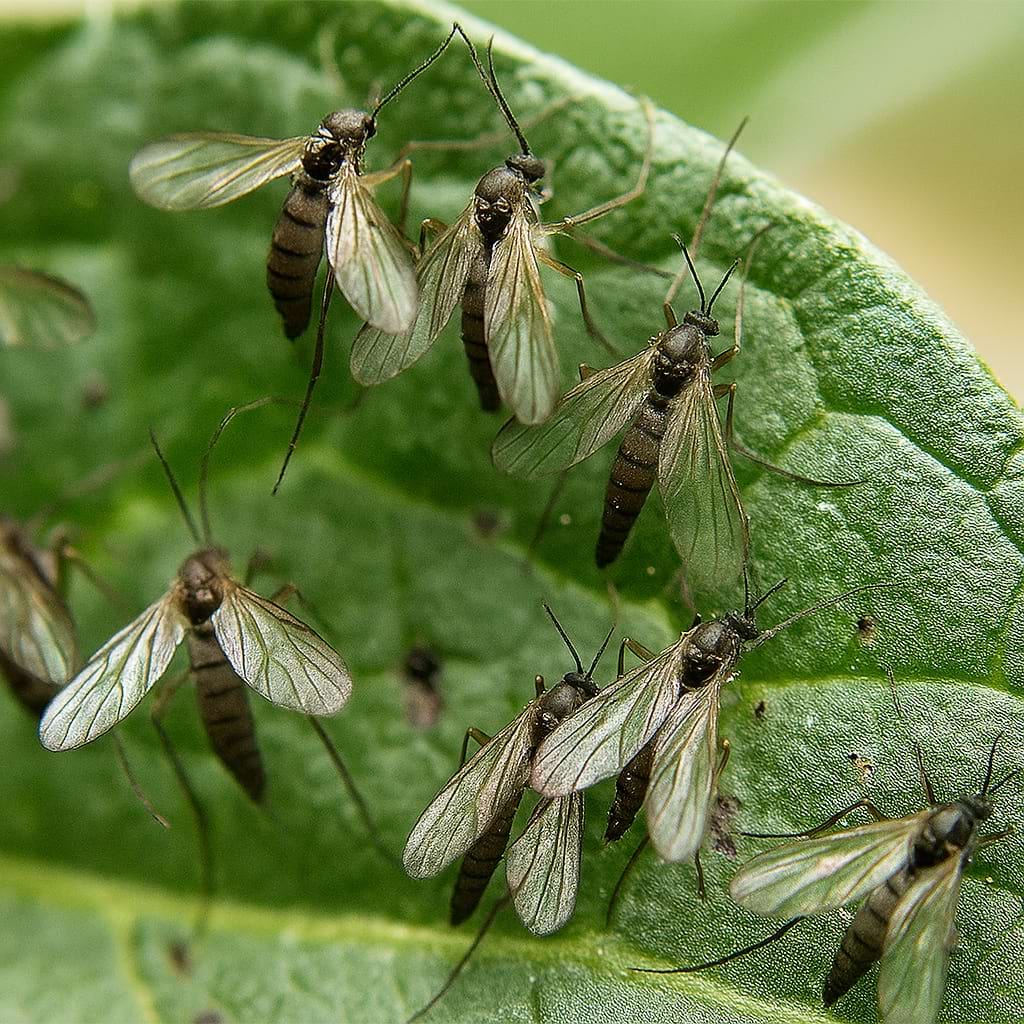
Fungus gnats mean your bark is staying too wet, usually thanks to an old moss plug or a pot that cannot drain. The gnats do little direct harm to a Phalaenopsis, but they are a reliable early warning that root rot is on the way. Fix the watering and they go.
Always inspect a new orchid before it joins the others, especially inside the spike sheaths where mealybugs like to overwinter.
🩺 Common Phalaenopsis Orchid Problems
Root rot is the number one killer. The signs are floppy leathery leaves and brown mushy roots, caused by soil instead of bark, a pot that cannot drain, or a soggy moss plug at the core. Unpot it, cut every dead root away, repot into fresh dry bark, and water sparingly for a month.
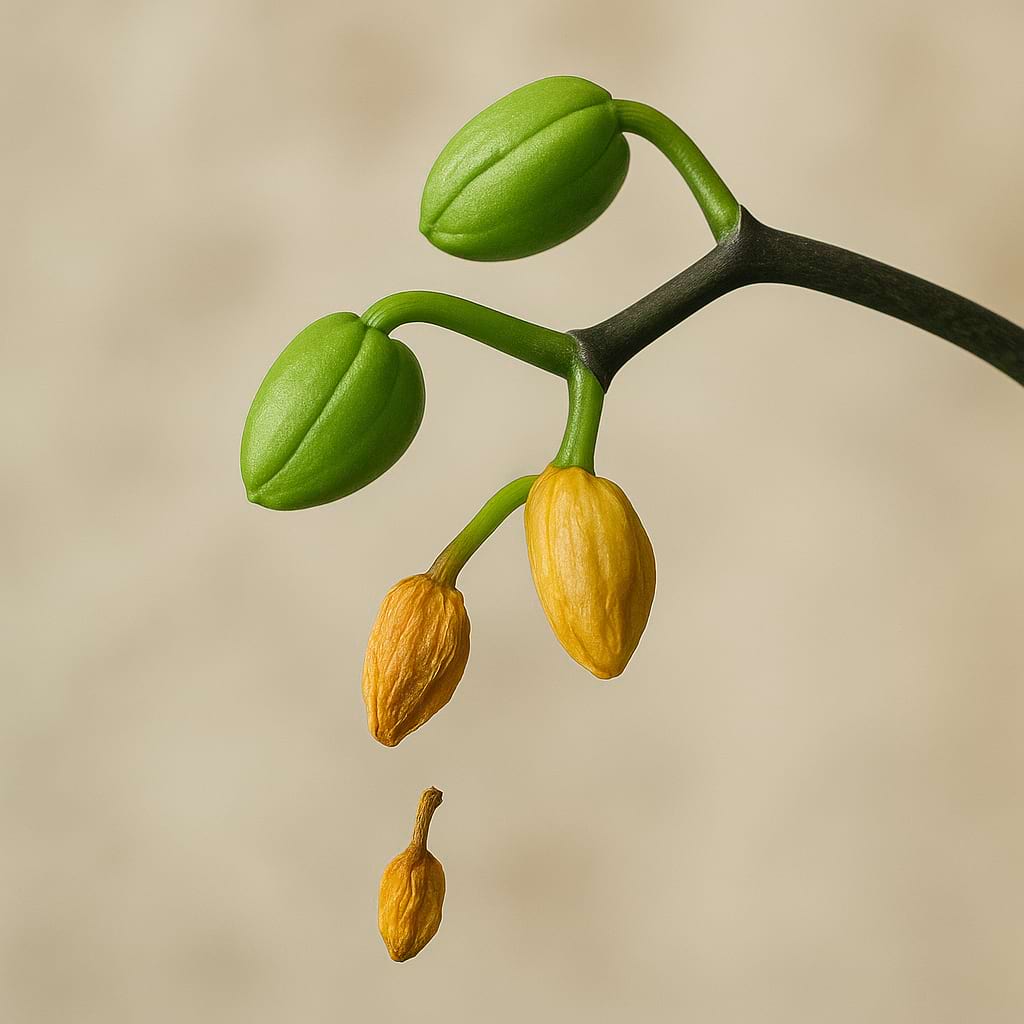
Bud blast is when buds yellow and drop before opening. Cold drafts, sudden temperature swings, dry air and ripening fruit nearby all cause it. Fruit is the sneaky one, because the ethylene it releases makes orchids shed buds within days. Move the plant off the fruit bowl.
Yellowing leaves are perfectly normal when it is the lowest, oldest leaf going yellow slowly. Two or three yellowing at once points at overwatering or damaged roots.
Wilting and drooping that persists after a good watering is a root problem, not a thirst problem. Check the roots before you water again.
Sunburn appears as bleached or tan dry patches after a stretch of direct afternoon sun. It will not heal, so move the plant and let new growth replace the damage.
Failure to bloom traces back to light or the missing autumn cool period nine times out of ten.
Crown rot is the one to act on fast: a soft, blackening center after water has sat in the crown. Blot it dry, keep the plant warm with good airflow, and water at the pot rim only from then on.

🖼️ Phalaenopsis Orchid Display and Styling Ideas
Solo Setups
One orchid in a plain cachepot on a windowsill is a finished piece of decor for three months at a time. Choose a cachepot an inch or two wider than the nursery pot so you can lift the plant straight out to water it. Do not plant it directly into the decorative pot unless that pot has real drainage.
Grouped Arrangements
Two or three orchids in matching pots along a sill look intentional rather than accidental, and the shared humidity does them good. Pairing them with textured foliage works even better. A Bromeliad or a Pink Quill Plant lives in the same epiphyte world, while a Jewel Orchid grown purely for its foliage makes a lovely counterpoint underneath. An African Violet fills the low front row with flowers between orchid cycles.
Where Not to Put It
Not on top of the fridge, where the heat is constant and the light is poor. Not next to a fruit bowl, for the ethylene reason above. Not over a radiator. And not in a windowless bathroom, since steam is no substitute for light. A bright bathroom, on the other hand, is close to ideal.
🌟 Phalaenopsis Orchid Pro Care Tips
- Judge everything by the roots. Green means watered, silver means thirsty, brown and mushy means act today.
- Keep the plant in its clear plastic nursery pot and slip that inside your decorative one. Nothing else gives you the same information at a glance.
- Water in the morning, at the sink, and let it drain fully before it goes back on the shelf.
- Repot after the last flower drops, never mid-bloom, and always pull out the moss plug.
- One cool autumn is the whole rebloom secret. Nights at 55 to 60°F for four to six weeks.
- Move it away from the fruit bowl. Ethylene from ripening fruit drops orchid buds fast.
- Aerial roots wandering out of the pot are normal and healthy. Leave them be.
- Flush the pot with plain water once a month to clear out fertilizer salts.
- Buy a plant with unopened buds still at the tip of the spike so you get the whole show at home.
❓ Frequently Asked Questions
Should I water my Phalaenopsis Orchid with ice cubes?
No. It is marketed as foolproof, but it chills the roots of a tropical plant every single week and it delivers water unevenly to one spot in the pot. Take the plant to the sink instead and run tepid water through the bark for 15 to 30 seconds. It takes about the same amount of effort.
Why are my orchid's leaves limp and floppy?
Almost always rotted roots, not thirst. The plant cannot drink because the roots have died, so the leaves lose water and go leathery. Tip it out of the pot, cut away everything brown and mushy, and repot into fresh dry bark. If the roots are plump and healthy, then it really is underwatered and a good soak will sort it out.
What are the roots growing out of the pot?
Aerial roots, and they are a sign of a happy orchid. In the wild the whole plant grows this way, with roots gripping bark and hanging in open air. Do not cut them off, do not try to stuff them into the pot, and do not worry when they look silvery and dry. They green up when you water.
Are Phalaenopsis Orchids toxic to cats and dogs?
No. The ASPCA lists the Phalaenopsis orchid as non-toxic to cats, dogs and horses, which makes it one of the safest flowering plants you can keep. A pet that chews a leaf might still get mild stomach upset, and fertilizer residue is more of a worry than the plant itself.
How long do the flowers last?
Two to three months on a healthy plant, sometimes longer in a cool room. Individual flowers open from the base of the spike upward over several weeks, so the display builds gradually and then holds.
Do I cut the flower spike after blooming?
If the spike is still green, cut it about an inch above the second or third node from the base and you may get a branch with a second flush. If it has turned yellow or brown, cut it right down to the base and let the plant rebuild instead.
Can I grow a Phalaenopsis in regular potting soil?
No, and this is the mistake that kills most of them. These are epiphytes with roots adapted to open air and quick drying. Soil holds water against them constantly and they rot within a few months. Use chunky fir bark in a pot with plenty of holes.
Why won't my orchid bloom again?
Nine times out of ten it is either too little light or no autumn cool period. Move it to an east window first, feed it through the summer, then give it four to six weeks of 55 to 60°F nights in autumn. A recently bought plant may also skip a season while it settles in.
What is the little plant growing on my flower spike?
That is a keiki, a clone of the parent. Leave it attached until it has two or three leaves and roots at least two inches long, which can take six to twelve months, then cut the spike either side of it and pot it into fine bark.
How often should I repot my Phalaenopsis?
Every two years, or sooner if the bark has gone dark and crumbly. Old bark holds water like a sponge, and that is what starts root rot. Repot right after the flowers drop, when new root tips are showing.
ℹ️ Phalaenopsis Orchid Info
Care and Maintenance
🪴 Soil Type and pH: Medium-grade fir bark orchid mix, no soil
💧 Humidity and Misting: Likes 50-65% humidity but copes with average rooms if the roots are never left sitting wet.
✂️ Pruning: Trim the spent spike above a lower node for a rebound bloom, or cut it to the base if the plant looks tired.
🧼 Cleaning: Wipe the broad leaves with a damp cloth every few weeks. Dust settles fast on them and dulls the shine.
🌱 Repotting: Repot into fresh bark every 2 years, right after the last flower drops, bare-rooting the plant and cutting away mushy roots.
🔄 Repotting Frequency: Every 2 years
❄️ Seasonal Changes in Care: Steady care all year, plus cooler autumn nights around 55-60°F for four to six weeks to trigger a new flower spike.
Growing Characteristics
💥 Growth Speed: Slow
🔄 Life Cycle: Evergreen epiphytic perennial
💥 Bloom Time: Usually winter into spring, with flowers holding for two to three months
🌡️ Hardiness Zones: 10-12
🗺️ Native Area: Lowland tropical forests of Southeast Asia, including the Philippines, Taiwan, Indonesia and Malaysia
🚘 Hibernation: No dormancy, but a cooler night period in autumn is what sets the next round of flowers.
Propagation and Health
📍 Suitable Locations: East windowsills, bright bathrooms, kitchen sills, north windows, office desks near a window
🪴 Propagation Methods: Only by removing a keiki, the baby plantlet that occasionally forms on an old flower spike.
🐛 Common Pests: Mealybugs, Scale Insects, Spider Mites, Fungus Gnats
🦠 Possible Diseases: Root rot, crown rot, bacterial soft rot, fungal leaf spotting
Plant Details
🌿 Plant Type: Monopodial epiphytic orchid
🍃 Foliage Type: Evergreen, thick, strap-shaped leaves in a low fan
🎨 Color of Leaves: Deep glossy green; silver-mottled in some species
🌸 Flower Color: White, pink, magenta, yellow, spotted, striped and harlequin patterns
🌼 Blooming: Yes, reliably indoors, and the flowers last longer than almost any other houseplant bloom
🍽️ Edibility: Not grown as an edible plant.
📏 Mature Size: 8-16 inches of foliage, spikes to 2-3 feet
Additional Info
🌻 General Benefits: Pet-safe, blooms for months at a time, thrives in low-to-medium indoor light, and fits on any windowsill
💊 Medical Properties: No documented medicinal uses.
🧿 Feng Shui: A classic symbol of refinement and fertility. Placed in a bedroom or a quiet corner, it is said to soften harsh energy and invite calm.
⭐ Zodiac Sign Compatibility: Libra
🌈 Symbolism or Folklore: Elegance, luxury, love, fertility and quiet strength
📝 Interesting Facts: The name Phalaenopsis means moth-like, given by the botanist Carl Blume, who reportedly mistook a cluster of the flowers for a group of moths resting in the Indonesian forest. The roots are wrapped in a spongy white layer called velamen that soaks up water in seconds and turns bright green when it does, which is why a thirsty orchid looks silver and a watered one looks green.
Buying and Usage
🛒 What to Look for When Buying: Turn the clear pot over and look at the roots first. You want plump silver or green roots, not brown mush. Pick a plant with several unopened buds still at the tip of the spike so you get the full show at home.
🪴 Other Uses: Long-lasting gift plant, cut-flower substitute, wedding and event centerpiece, and one of the world's most widely traded pot plants.
Decoration and Styling
🖼️ Display Ideas: Windowsill rows, bathroom shelves, glass cloches, decorative cachepots, grouped with foliage plants for contrast
🧵 Styling Tips: Slip the clear nursery pot inside a slightly larger cachepot so you can lift it out to check the roots and water it at the sink.
🪴 See also 🪴
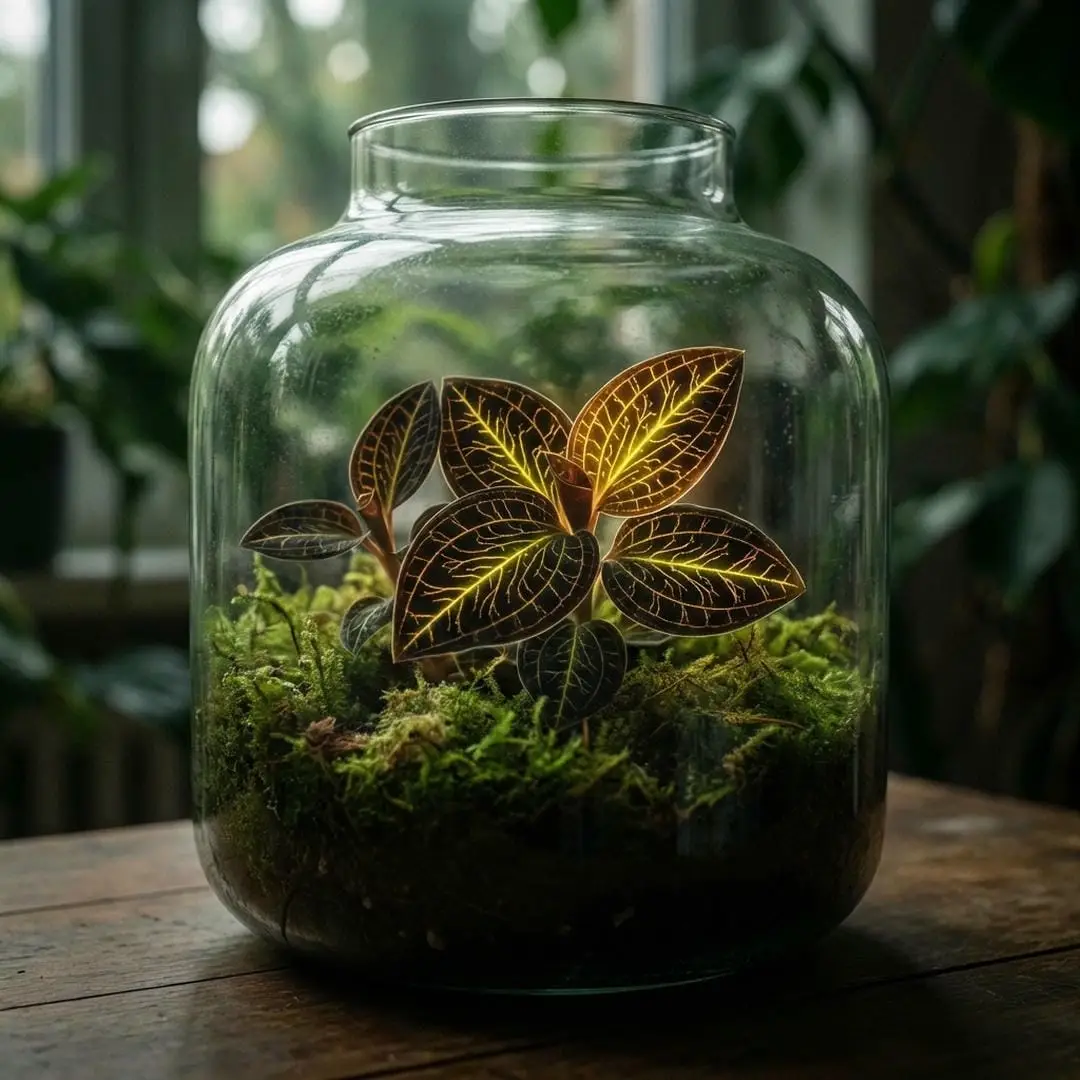
Complete Guide to Jewel Orchid Care (Macodes Petola)

Houseplant101 Forum
Questions & Comments
Ask a question, share your plant experience, or help other plant owners.
Comments are temporarily unavailable.
Open the Houseplant101 ForumNo comments yet
Be the first to ask a question or share your experience about this page.
Log in or create an account
Comments use your Houseplant101 Forum account, but you can stay on this page.
Create a new account