
Dendrobium Aphyllum
Dendrobium aphyllum
Dendrobium pierardii, Dendrobium cucullatum, Leafless Dendrobium


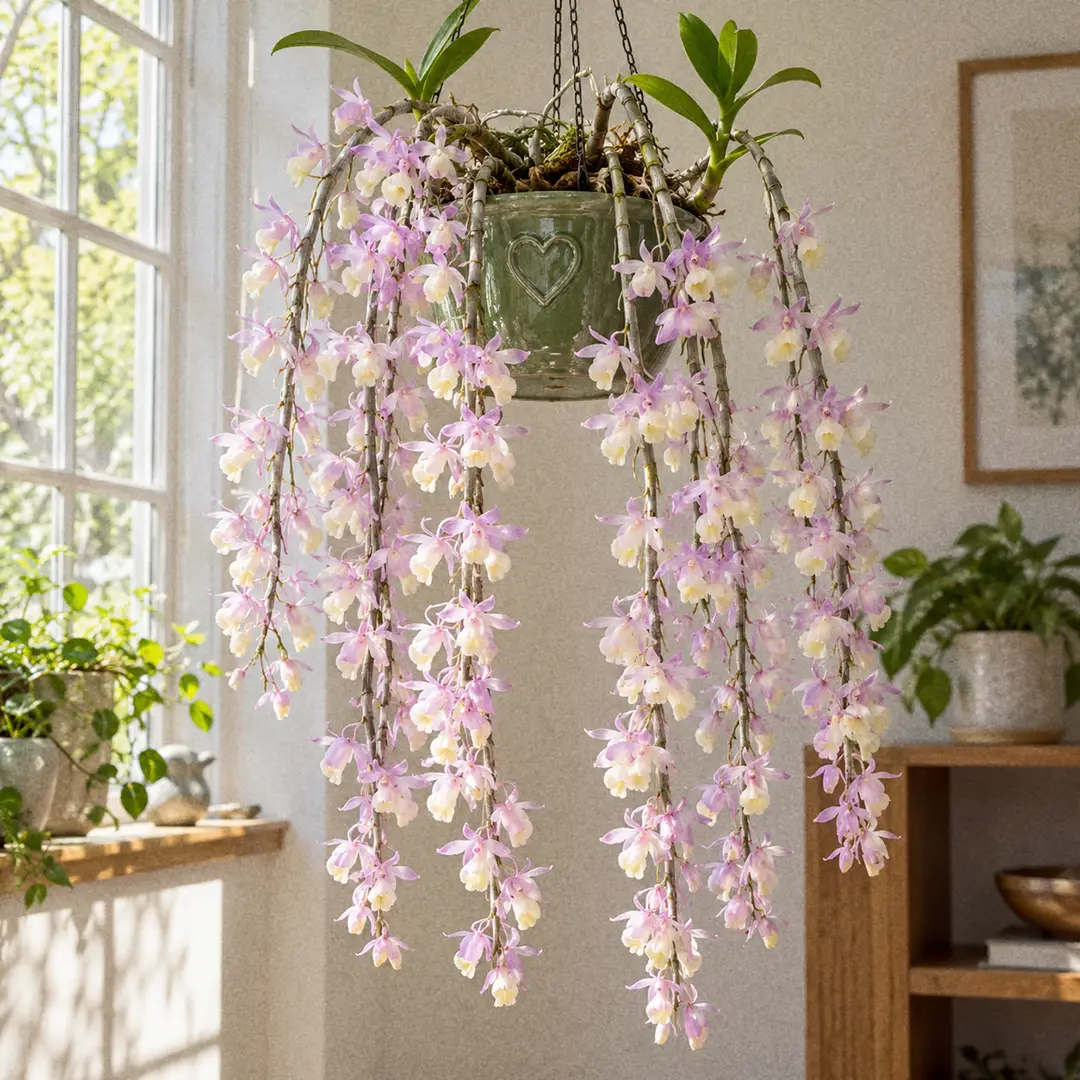
Dendrobium aphyllum is a deciduous cascading orchid that drops its leaves in winter, then covers its bare canes in pale pink, violet-scented flowers with a creamy hooded lip. Learn the wet summer, dry winter routine that makes it bloom indoors.
📝 Dendrobium Aphyllum Care Notes
🌿 Care Instructions
⚠️ Common Pests
📊 Growth Information
🪴 In This Guide 🪴

📺 Dendrobium Aphyllum Video Guide

☀️ Dendrobium Aphyllum Light Requirements (Bright, Some Sun)
The Sweet Spot
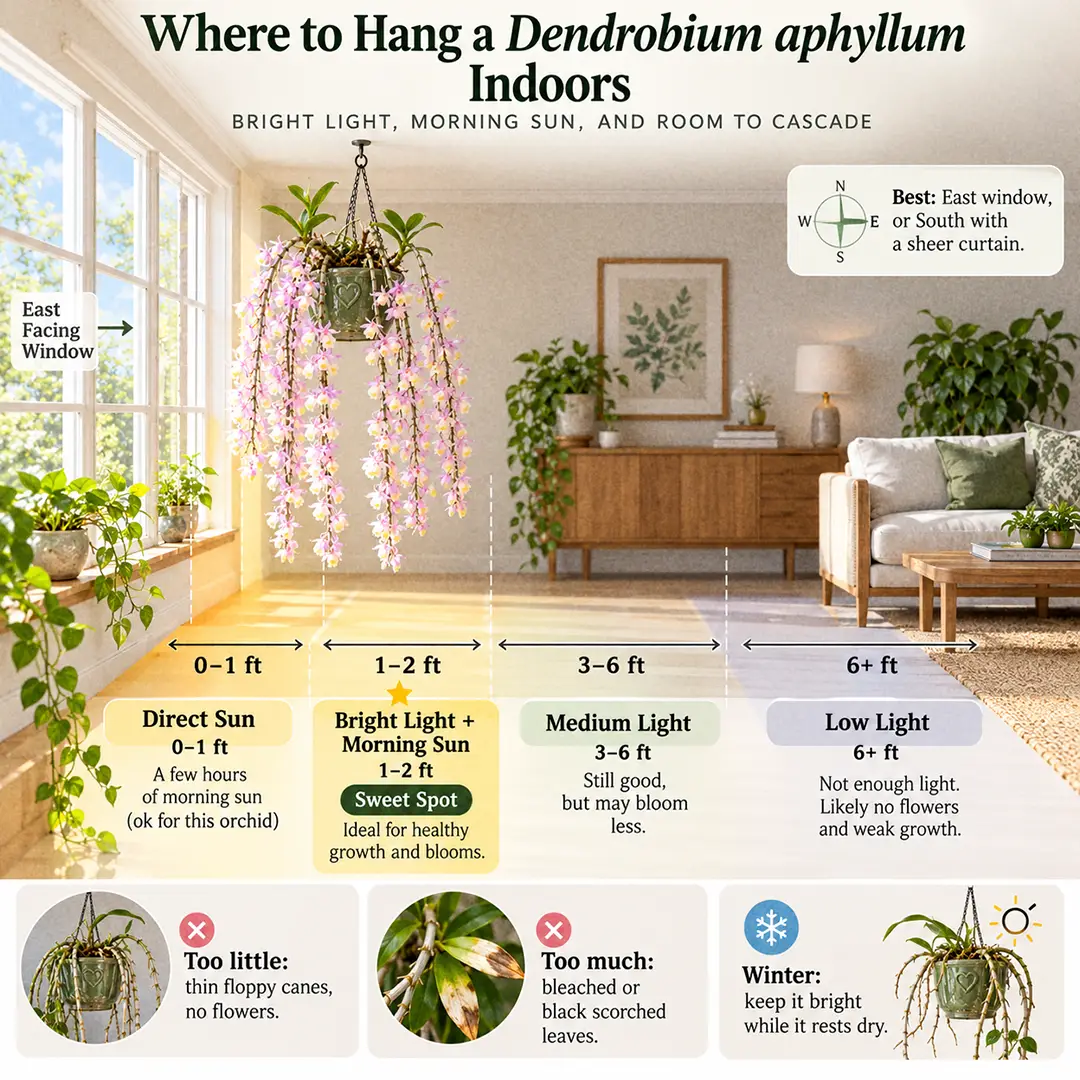
Dendrobium aphyllum wants more light than a Phalaenopsis: bright light all day with a few hours of gentle direct sun. An east window with full morning sun is ideal. A south window works with a sheer curtain to soften summer afternoons. Hang the plant within 1-2 feet of the glass, since light drops off quickly as you move back into the room. A Cattleya Orchid wants much the same light, so the two can share a window.
In the wild it grows on trees in open, seasonally dry forests, where it gets strong filtered light, and that light is what builds flowering canes. Our Indoor Lighting Guide helps you judge your windows.
Too Little Light
A shaded plant grows thin, floppy canes and dark green, soft leaves, and it flowers poorly or not at all. Poor light is the second most common reason this orchid refuses to bloom, after a missing winter rest. In a dim home, a grow light 12-18 inches above the plant for 12-14 hours a day fixes it.
Too Much Light
Hot midday sun behind glass can scorch the thin leaves, leaving bleached or black patches that never recover. Light green leaves with a slight yellow cast are normal and mean the light is about right. Bright light is especially useful during the winter rest, when the canes are bare and ripening their buds, so do not move it into a dark corner just because it looks dormant.
💧 Dendrobium Aphyllum Watering Guide (Wet Summer, Dry Winter)
The Seasonal Watering Calendar
This orchid follows the monsoon climate of its home, so watering changes with the seasons more than for almost any houseplant.
Spring and summer: once new shoots appear, water heavily. Mounted plants may need water every day in hot weather; potted plants every 2-4 days, whenever the medium is just barely damp. This is when the new canes grow, and fat canes mean more flowers.
Autumn: when the new canes finish growing (you will see a small final leaf at the tip), start cutting back. Water every week or so, then less as the leaves yellow and fall.
Winter: a dry rest of two to three months. Give only a light misting or a small drink every two or three weeks, just enough to stop the canes from shriveling badly. Some wrinkling is normal and fine.
How to Water
Water in the morning, soaking the roots and medium thoroughly, then let everything drain. Mounted plants are easiest to dunk in a bucket for a minute or rinse under the tap. Potted plants can be soaked for 10 minutes and drained. Never let the pot sit in water. Our watering guide covers the basics.
When to Start Watering Again
Wait until the flower buds are clearly swelling along the canes or new shoots appear at the base. Watering heavily too early in late winter can turn developing flower buds into keikis (baby plants) instead of flowers. When in doubt, keep it dry a little longer.
Once the flowers open, give moderate water, then build back up to full summer watering as the new shoots grow their own roots.
Signs of Trouble
In the growing season, wrinkled canes and limp leaves mean the plant is thirsty, and a mounted plant can get there in a single hot day. Soak it and water more often. Shriveling during the winter rest is expected, as long as the canes are still firm at the base.
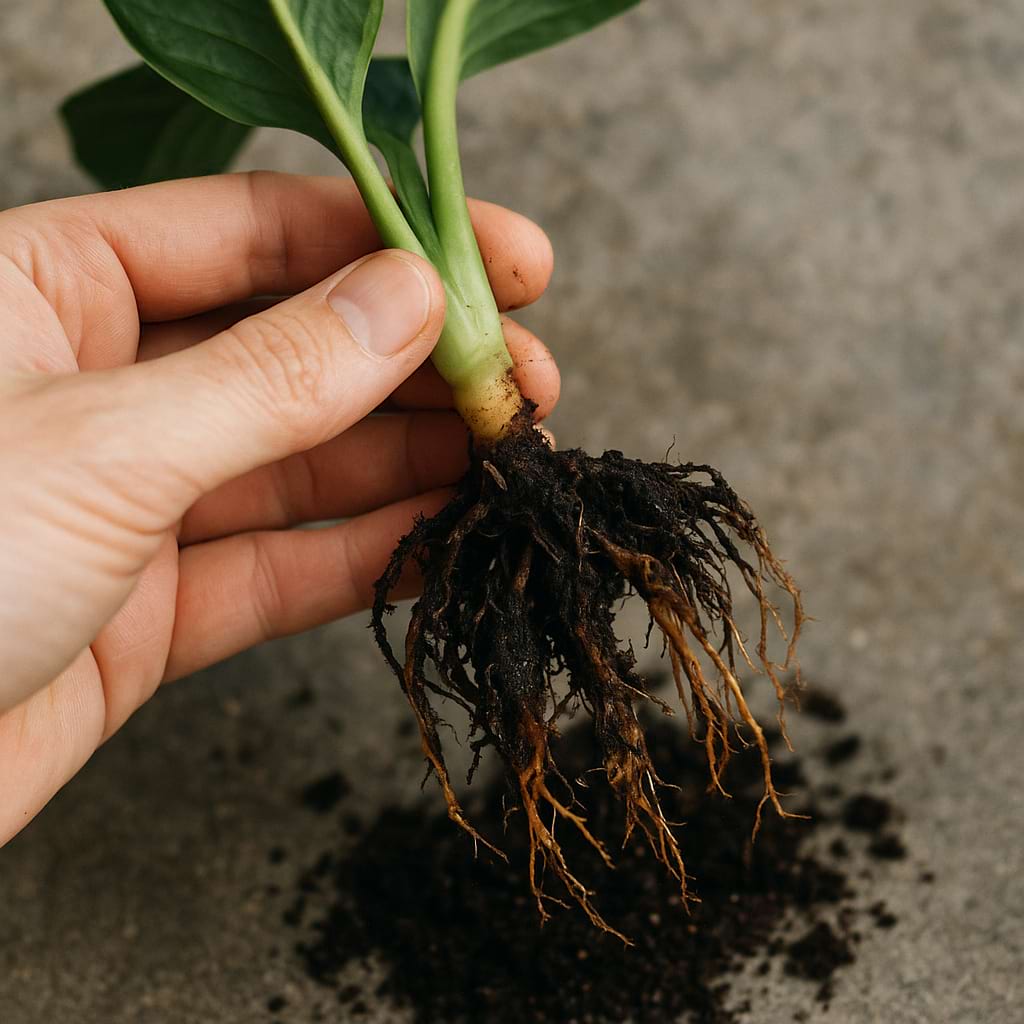
Overwatering looks different. Roots turn brown and mushy instead of silvery white, and the base of the canes goes soft or black. That is the start of root rot, and it happens most often when the plant gets summer amounts of water during its winter rest.
🪴 Best Potting Medium for Dendrobium Aphyllum
What the Roots Need
Dendrobium aphyllum is an epiphyte, so its roots grow on tree bark, not in soil. They need to dry quickly after watering and get plenty of air. Regular potting soil smothers them and rots them within weeks.
Mounted or Potted
Mounting on a slab of cork bark or a piece of hardwood suits this orchid best, because the canes hang naturally and the roots never sit wet. The catch is that mounted plants dry fast and need frequent watering and higher humidity.
Potted plants do well in a small plastic or clay pot or a slatted wooden basket hung up high, so the canes cascade over the edge. Use medium-grade orchid bark, or sphagnum moss in a small pot if your home is dry.
Choosing a Medium
Fresh, chunky bark is the safest choice for beginners because it is hard to overwater. Sphagnum holds more moisture, so use it only in a small pot and water less often. Avoid fine, dusty bark mixes. Our potting soil guide explains orchid mixes.
🍼 Fertilizing Dendrobium Aphyllum
When and How Often to Feed
Feed during the growing season only, from when new shoots appear in spring until late summer. Growers usually use a weak solution every week or every other watering, about a quarter to half of the label strength. Stop all feeding in early autumn so the canes ripen before the winter rest.
What Fertilizer to Use
A balanced orchid fertilizer works well. Some growers switch to a higher-phosphorus feed in late summer, but the dry winter rest matters far more than the formula. Flush the medium with plain water once a month to stop salts building up. See our Fertilizing Guide and fertilizer guide.
Signs of Overfeeding
Burned black root tips, crusty white deposits on the bark, and brown leaf tips point to salt buildup. Rinse the roots thoroughly and cut back to quarter strength.
🌡️ Dendrobium Aphyllum Temperature Range
Ideal Range
In the growing season, warm temperatures of 70-85°F (21-29°C) by day and above 60°F (16°C) at night suit it well. It handles summer heat as long as humidity and watering keep up. Many growers move it outdoors in summer to a spot with bright light and no harsh midday sun.
Cooler Winter Nights
During the winter rest, cooler nights around 50-60°F (10-15°C) help set flower buds. A bright, unheated room or a spot near a cool window works. Bring outdoor plants inside before nights drop below 50°F (10°C). Keep it away from radiators, which dry out the resting canes too much.
Summering Outdoors
A summer outdoors is one of the best things you can do for this orchid. Hang it under a tree or on a porch with morning sun and bright shade in the afternoon, once nights stay above 60°F (16°C). Rain, fresh air, and stronger light build thick canes. Check for pests before bringing it back inside in early autumn, and read our guide to bringing outdoor plants back inside for the details.
💦 Dendrobium Aphyllum Humidity Requirements
Ideal Humidity
Aim for 60-70% humidity while the plant is growing. Mounted plants need the high end, since their roots are exposed to the air. During the winter rest, normal household humidity is fine and even helpful, as it keeps the plant drier.
Easy Humidity Boosters
Run a humidifier near your orchids, or group them so they share moisture. In summer, mist mounted roots in the morning on hot days. Good airflow matters as much as humidity, so a gentle fan helps prevent rot. Potted plants in bark cope with ordinary room humidity of 40-50% much better than mounted ones, so if your home is dry in summer, start with a pot and move to a mount later. Our humidity guide lists more options.
🌸 Dendrobium Aphyllum Flowers (How to Make It Bloom)
What the Flowers Look Like
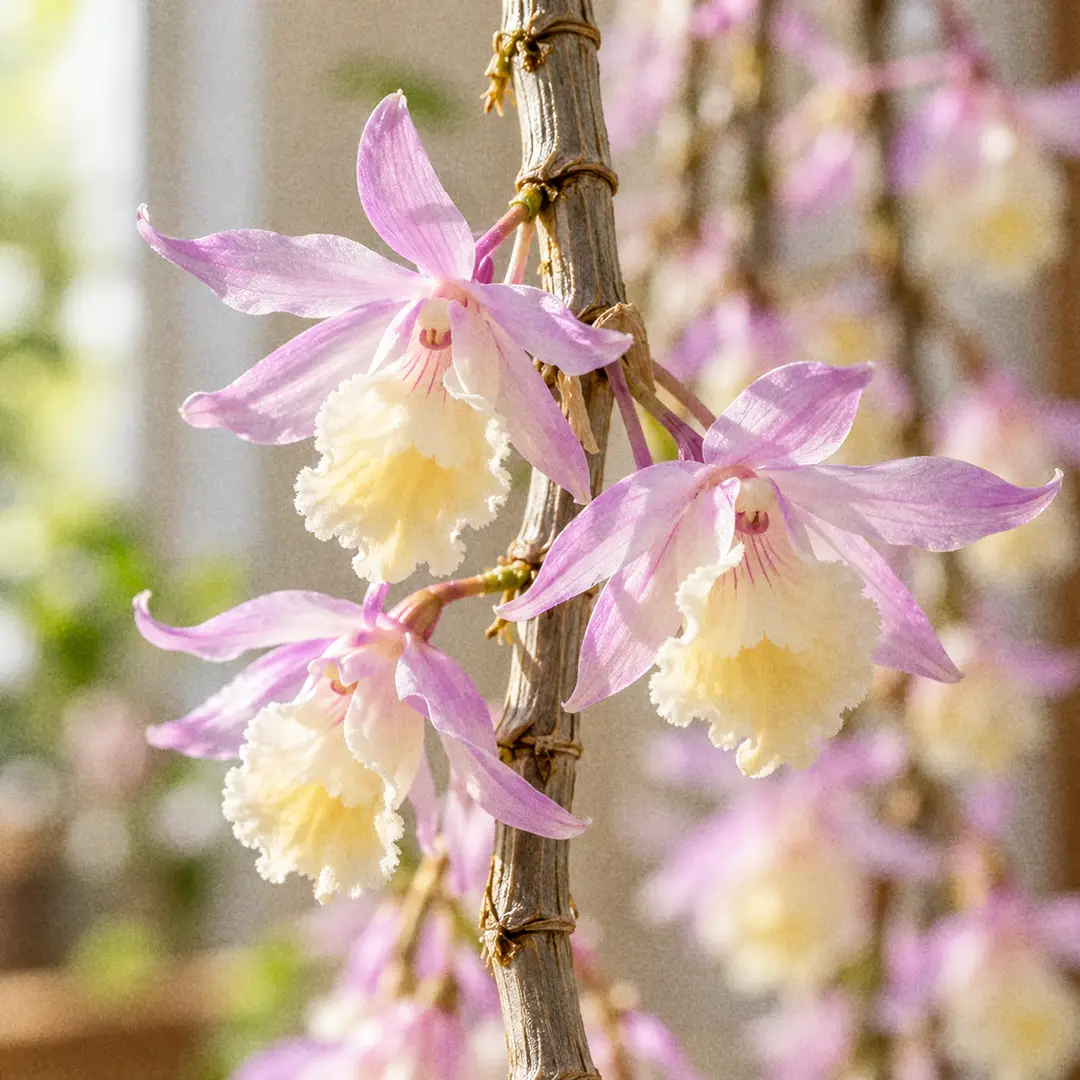
The flowers appear in late winter and spring all along the bare, leafless canes, one to three at each node. Each one is about 2 inches across, with pale pink to lilac petals and a large, cream to soft yellow lip that cups around the center like a hood, finely fringed at the edge. A well-grown plant flowers along the whole length of its canes, so it looks like a pink curtain.
The scent is strong and sweet, often compared to violets or raspberries, and is strongest on warm mornings. Individual flowers are fairly short-lived, but they open in waves along the canes.
How to Trigger Bloom
Three things do it. First, a wet, bright, well-fed summer that builds thick canes. Second, a dry winter rest of two to three months with very little water. Third, cooler nights during that rest. Flowers usually form on the previous year's canes once they have dropped their leaves, and older canes can flower again in later years.
If It Won't Bloom
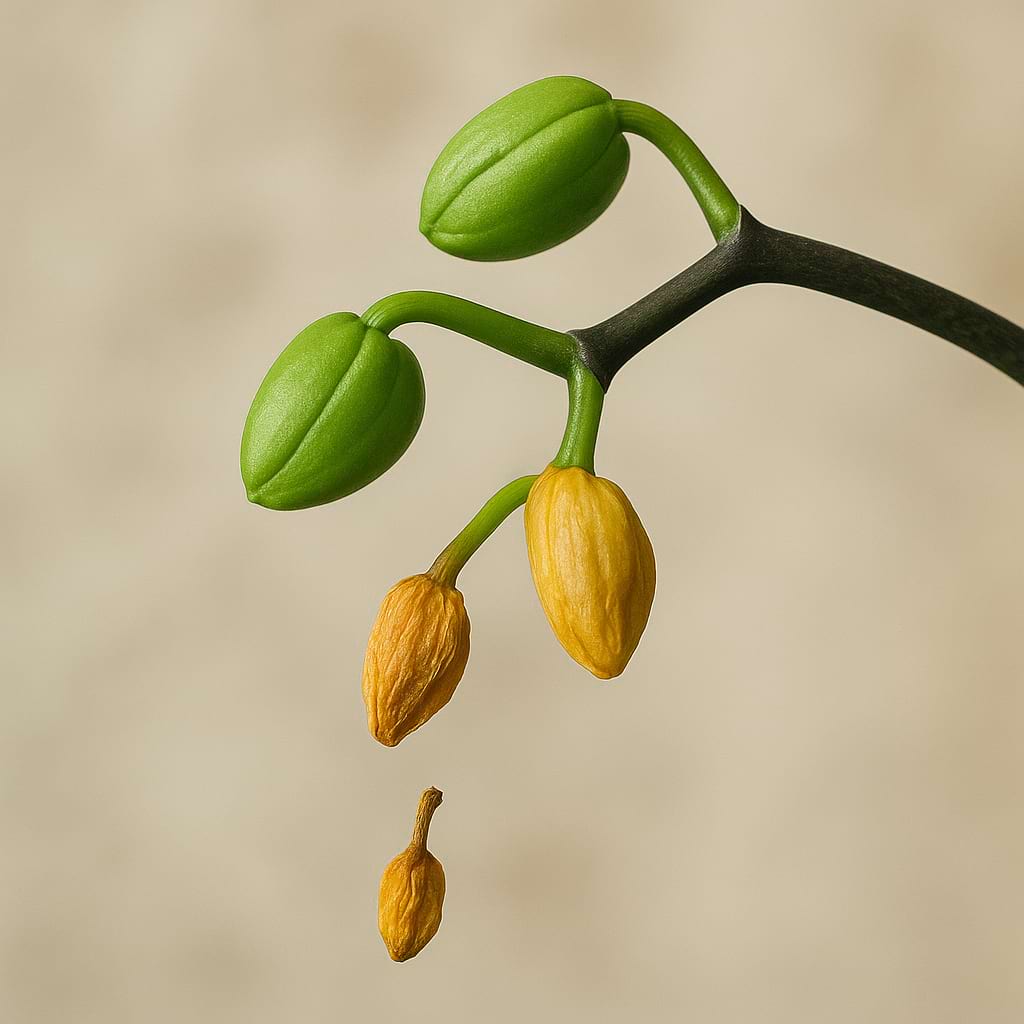
A plant that grows lots of leaves but no flowers is almost always being watered through winter or kept too dark. That is failure to bloom, and next year's fix is a stricter dry rest. If buds appear and then turn yellow and fall, that is bud blast, usually from moving the plant, a hot radiator, or the medium going bone dry once buds are developing. If the buds turn into small plants with leaves, it was watered too early: they are keikis, which you can grow on.
🏷️ Dendrobium Aphyllum Types and Lookalikes
Dendrobium aphyllum has no named cultivars in common trade. It is sold as the species, sometimes under its old names D. pierardii or D. cucullatum. What you do need to know is how to tell it apart from the similar deciduous Dendrobiums it is often confused with.
Dendrobium aphyllum (the species)
Long, thin, pendulous canes that hang 2-3 feet indoors, pale pink flowers with a cream hooded lip, and a violet scent. This guide covers it.
How to Tell It Apart
The easiest clues are flower color and cane length. Pale pink petals with a cream or pale yellow hooded lip, on thin canes that hang straight down, point to aphyllum. Buy in bloom or from an orchid nursery if the exact species matters to you, since unflowered deciduous Dendrobiums look very similar and labels get mixed up.
Dendrobium anosmum
The closest lookalike and on the same care calendar. Its flowers are larger and usually deep magenta to purple, with a strong raspberry scent. The canes are thicker and can grow even longer. If your plant has big purple flowers, it is probably anosmum.
Dendrobium primulinum
Very similar pale pink petals and a primrose yellow lip, but on shorter, more compact canes that grow more upright before arching. Same wet summer and dry winter care.
Dendrobium nobile and Nobile Hybrids
The Dendrobiums sold in supermarkets are either nobile types or phalaenopsis-type (Den-Phal) hybrids. The nobile types have upright canes, also need a cool, dry winter rest, and bloom along the canes in spring, so much of the winter-rest advice here works for them too, but they grow upright instead of hanging.
Good Companions
Dendrobium aphyllum shares a shelf well with a Phalaenopsis, as long as you remember the two need opposite winter watering. A hanging Spanish Moss or mounted air plants suit the same bright, airy, mounted setup.
🪴 Potting and Mounting Dendrobium Aphyllum
When to Repot or Remount
Repot only when the bark breaks down and stays soggy, usually every 2-3 years. Mounts can last many years until the cork crumbles. The right time is just after flowering, when new shoots and fresh root tips appear. Repotting a plant in bud or during the winter rest sets it back badly.
How to Mount on Cork
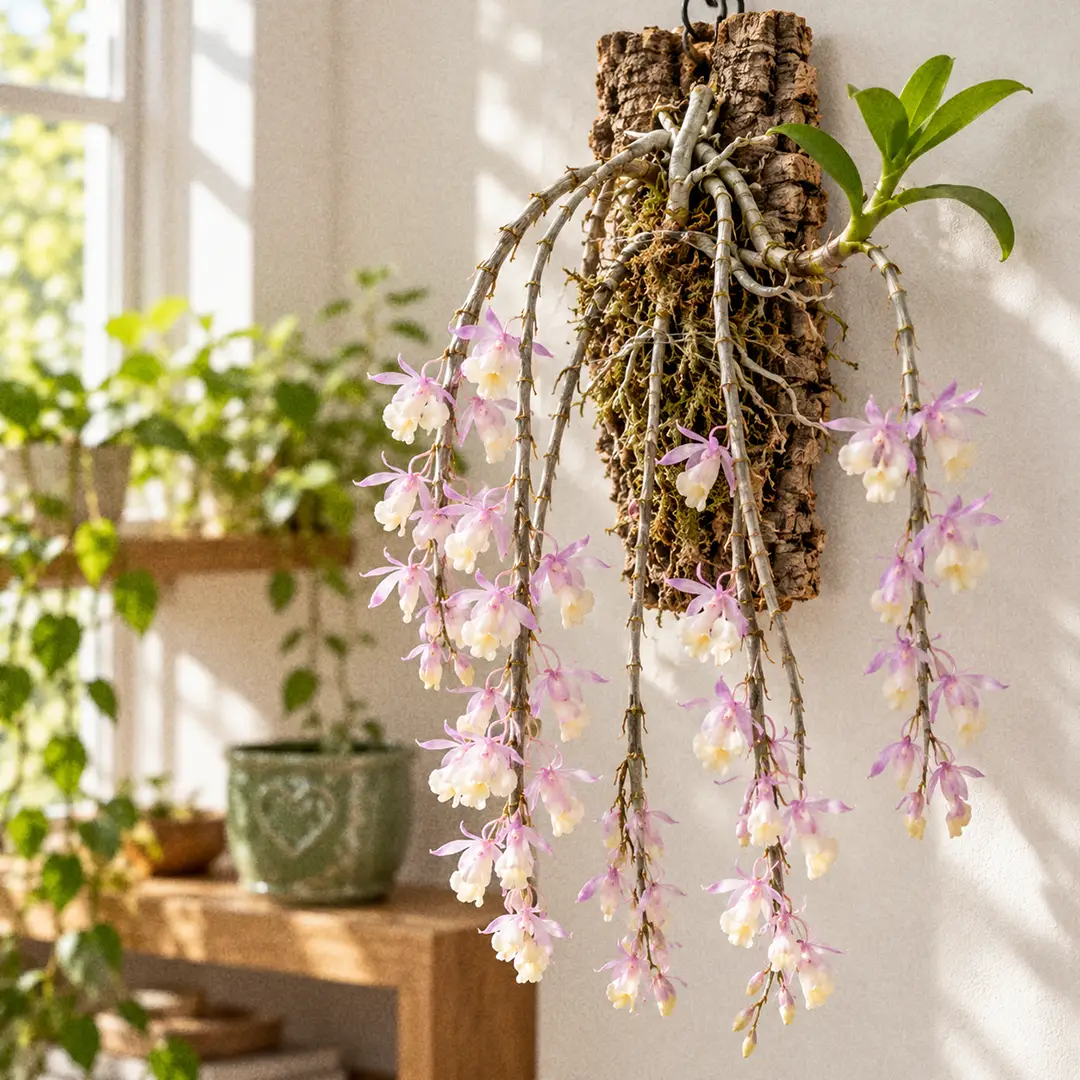
Choose a cork slab a little longer than the plant's base. Place a small pad of sphagnum moss against the cork, set the plant on top with its oldest canes at the top so new growth has room, and tie it on with fishing line or plastic-coated wire. In a few months new roots grip the cork and you can remove the ties. Water mounted plants daily for the first weeks while roots establish.
Choosing a Pot
If you pot it, use the smallest pot that holds the roots, or a slatted wooden basket. Oversized pots stay wet and rot the roots. Hang the pot up high so the canes can fall freely over the edge. See our repotting guide and plant pots guide.
✂️ Pruning Dendrobium Aphyllum
Don't Cut the Old Canes
This is the most important rule. Bare, leafless canes are not dead: they store water and food for the plant, can flower again in later years, and often produce keikis. Cutting them weakens the plant and costs you flowers.
What You Can Remove
Cut off canes only when they are completely shriveled, brown, and dry, at the base with clean, sterilized scissors. Remove spent flowers as they fade. Fallen leaves can be picked off so they do not rot in the pot.
Tidying Long Canes
If the canes get too long for your space, you can loop them gently or hang the plant higher, but do not trim the tips. The whole length of the cane can carry flowers.
🌱 How to Propagate Dendrobium Aphyllum
Best Method: Keikis
Keikis are baby plants that grow from nodes along the old canes, especially when the plant is watered early in late winter. They are the easiest way to get a new plant. Leave the keiki on the mother until it has a few leaves and roots about 2 inches long, then cut it free with a small piece of the cane attached.
Step-by-Step Keiki Potting
Pot the keiki in a very small pot of sphagnum moss or fine bark, or tie it to a small cork mount. Keep it bright and humid, and water a little more often than an adult plant for the first season. It may take two to three years to reach flowering size.
Division
A large plant can be split into pieces with at least three or four canes each, right after flowering when new roots appear. Smaller pieces recover slowly and may skip a year of flowers. See our plant division guide.
Cane Cuttings
An old leafless cane can be cut into sections of a few nodes each and laid on damp sphagnum in a bright, humid spot. Keikis sometimes form at the nodes over a few months. This is slower and less reliable than waiting for natural keikis. Our propagation hub covers the general principles.
🐛 Dendrobium Aphyllum Pests and Treatment
Common Pests
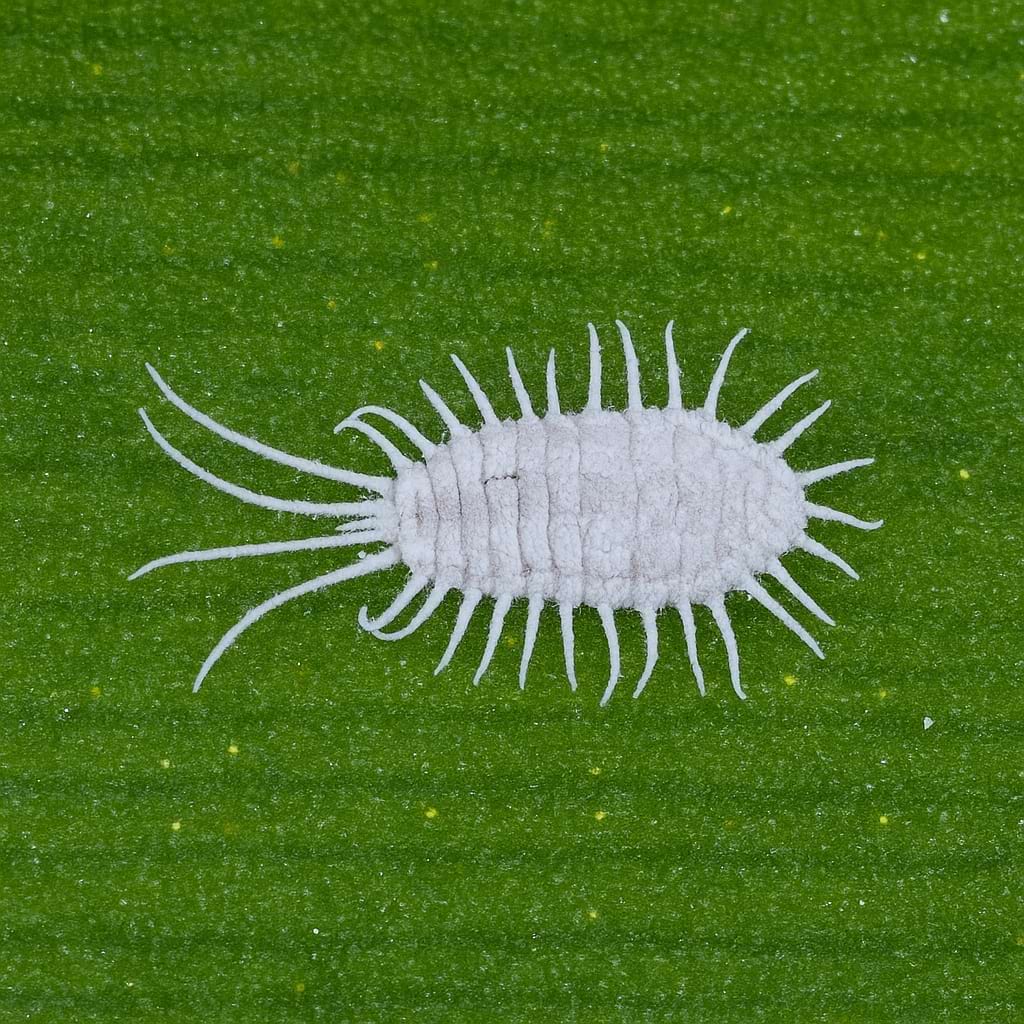
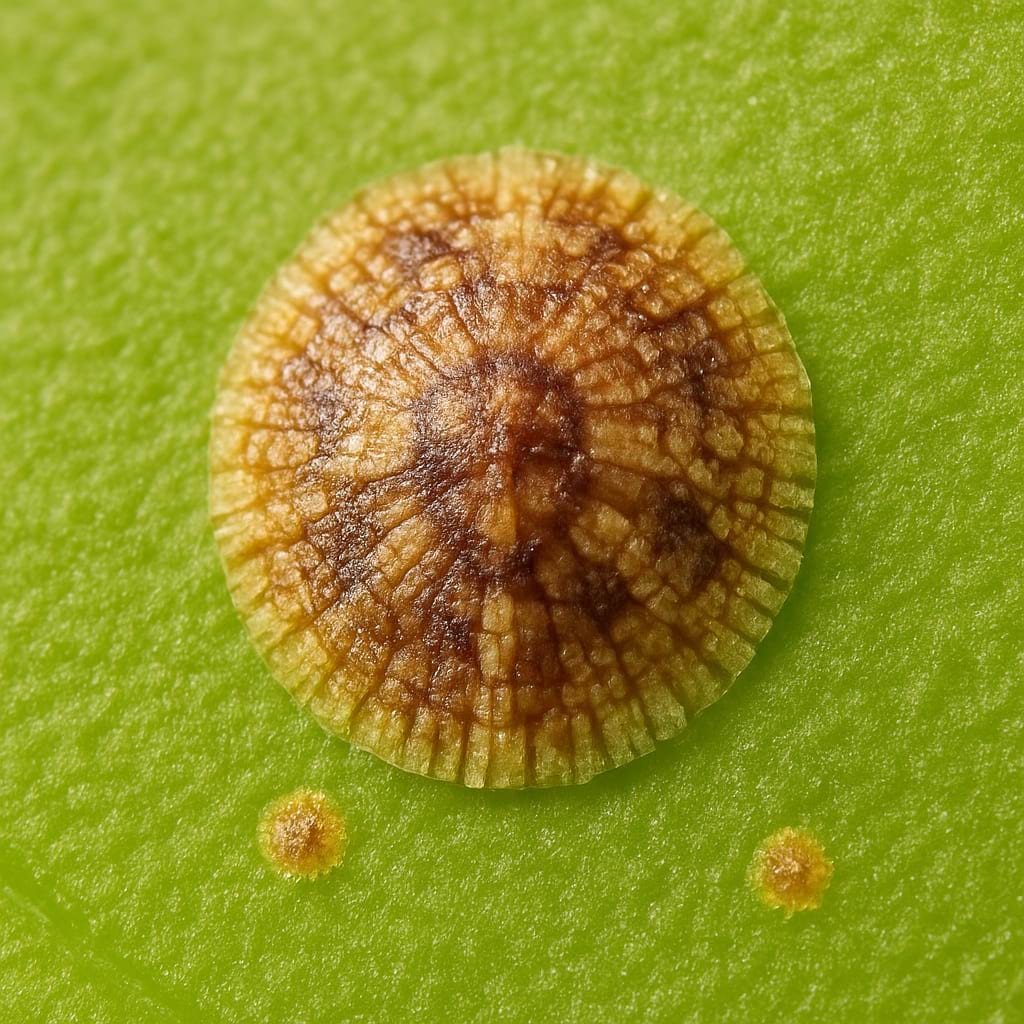
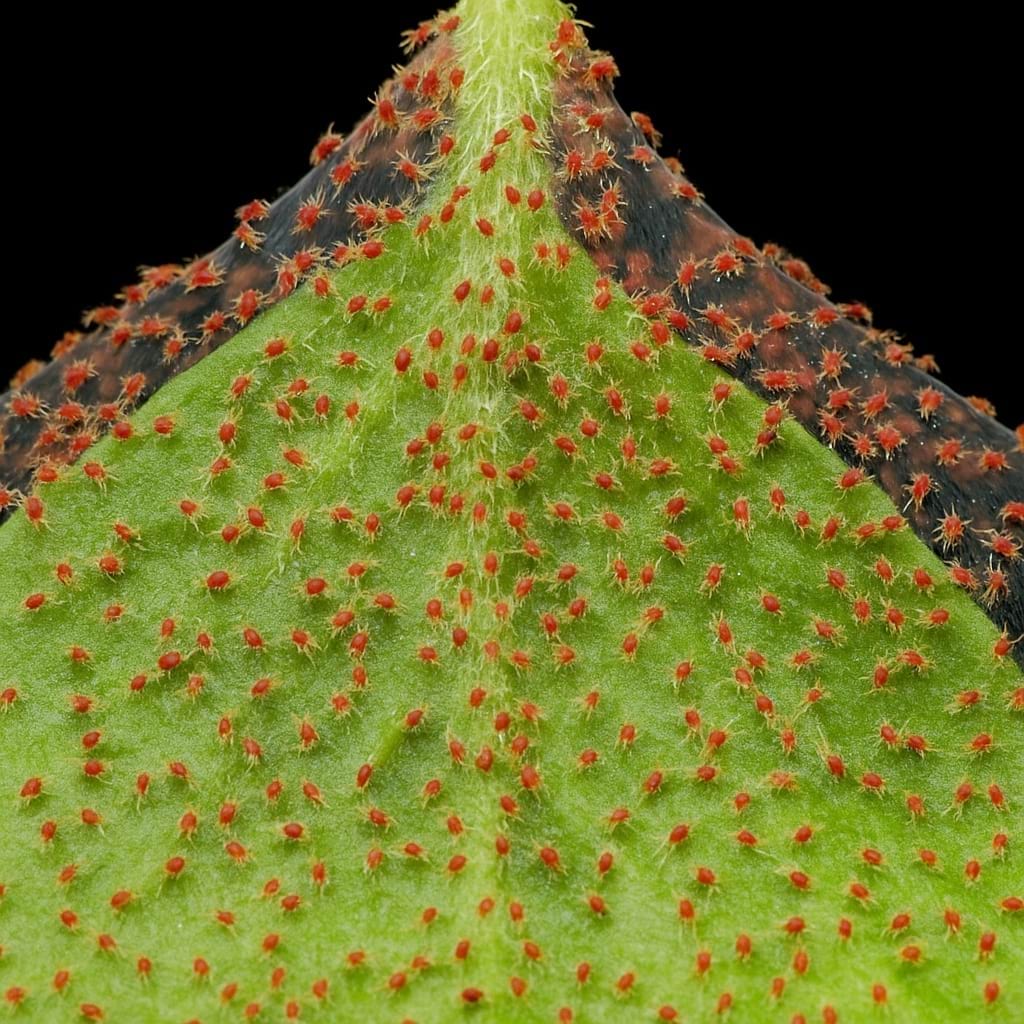
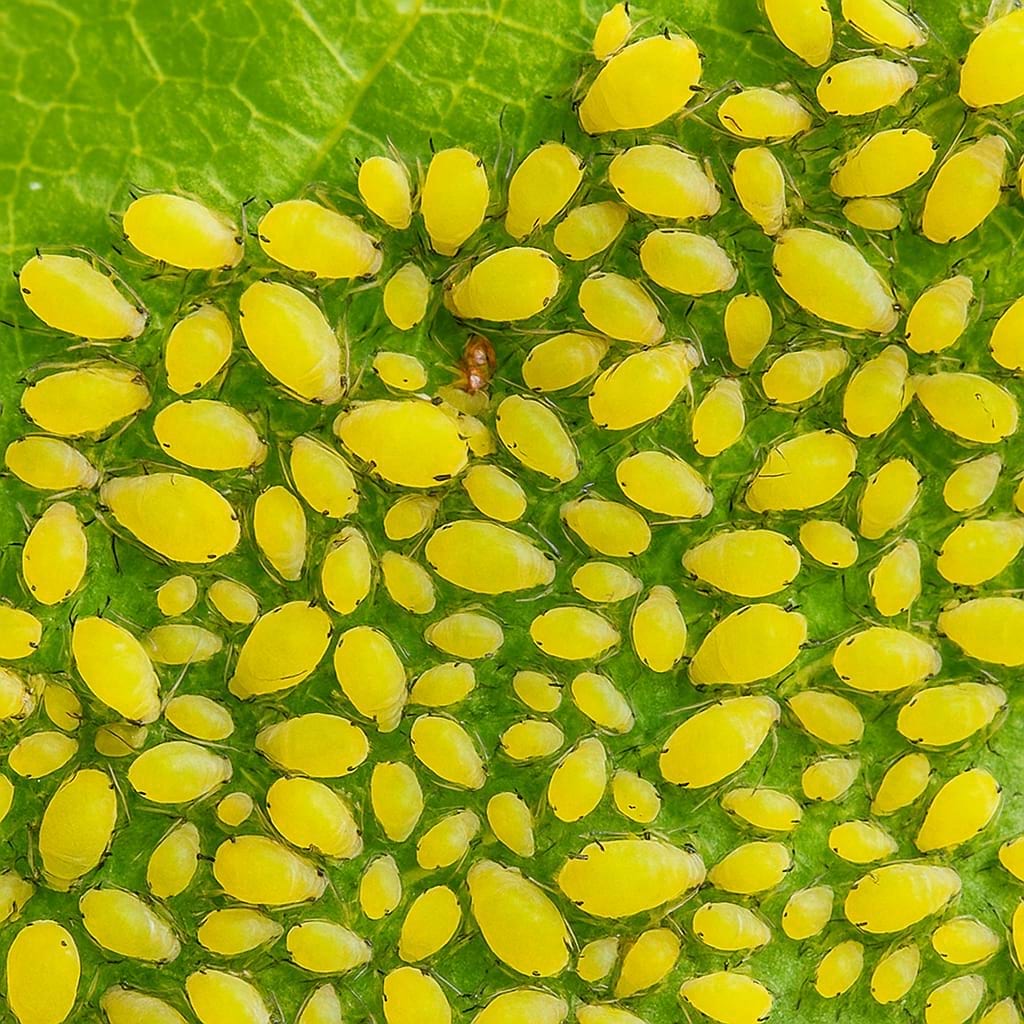
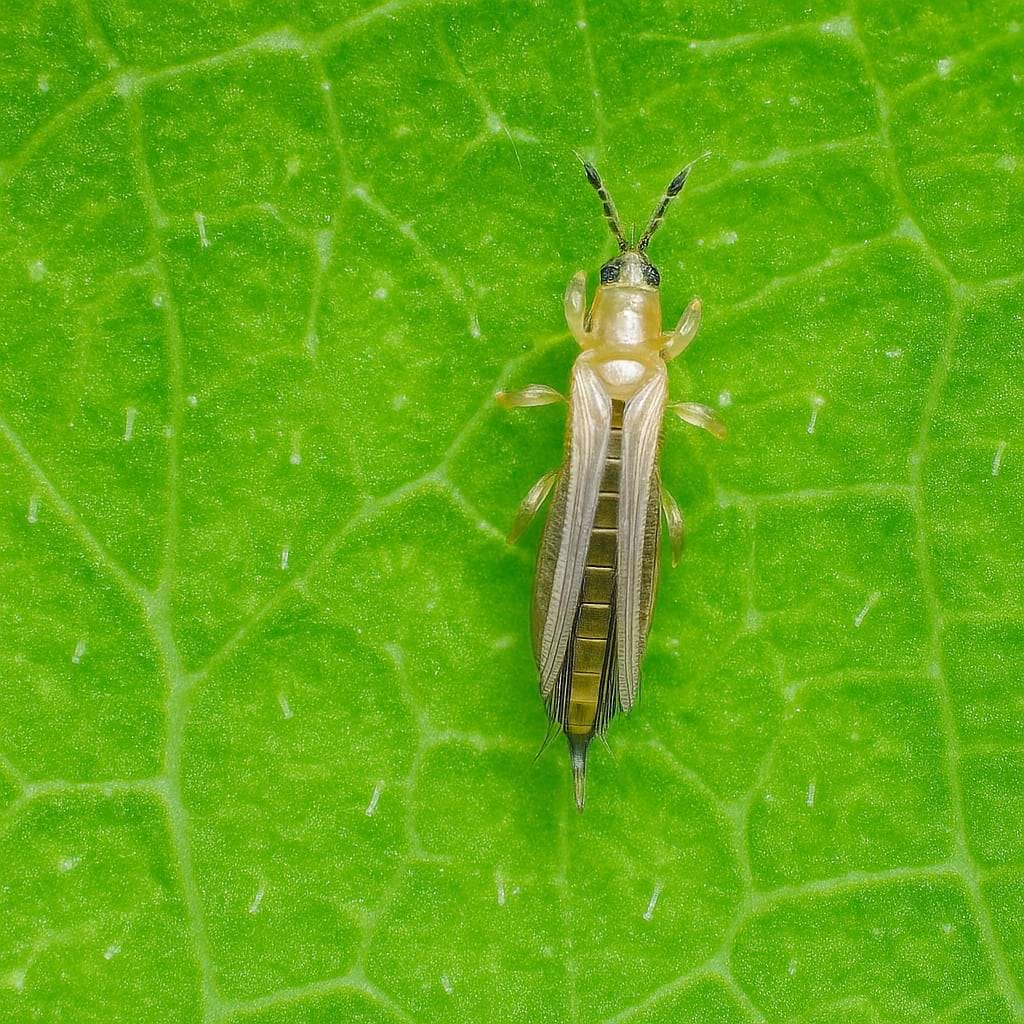
Mealybugs hide in the papery sheaths on the canes and around the new shoots. Scale insects look like small brown bumps stuck to canes and leaf undersides. Spider mites cause silvery speckling in hot, dry air. Aphids and thrips go for the flower buds and can make them drop or open deformed.
Treatment and Prevention
Peel back loose papery sheaths on the canes to find hiding mealybugs and scale, then wipe them off with a cotton swab dipped in rubbing alcohol. Follow with insecticidal soap or neem oil, repeated every week for several weeks. Spray mounted plants thoroughly, including the cork. Keep humidity up and check the bud tips every few days as buds develop.
🩺 Common Dendrobium Aphyllum Problems
Yellow Leaves and Leaf Drop in Autumn
This is the problem that is not a problem. In autumn and winter, the leaves on the year's canes turn yellow and fall, and the canes stay bare. That is normal leaf drop for a deciduous orchid. Only worry if new canes yellow in summer, or the canes themselves turn soft.
Root and Cane Rot
Soft, black, or hollow canes at the base, and brown mushy roots, come from wet medium, especially in winter. That is root rot or mushy stems. Cut away the rotted parts, let the plant dry, and repot or remount in fresh bark. Healthy roots are white or silvery when dry and green when wet.
Wrinkled or Shriveled Canes
Some wrinkling on old canes during the winter rest is normal. Deep shriveling in summer means the plant is short of water, or that the roots are dead and can no longer take water up. Check the roots: if they are healthy, water more often and raise humidity. If they are mushy or missing, treat it as rot, then mist the canes daily until new roots grow.
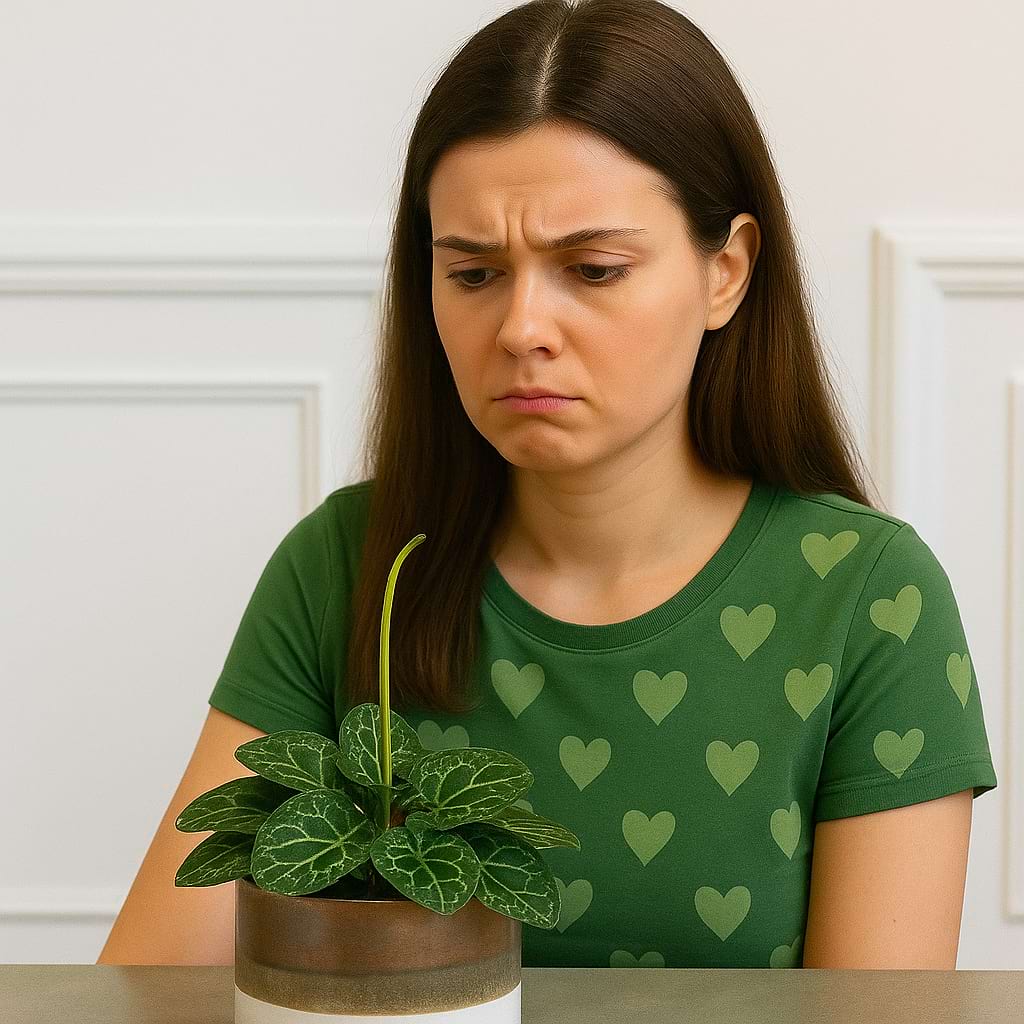
No Flowers or Dropped Buds
A healthy plant that never blooms is getting water or warmth through the winter, or too little light. That is failure to bloom. Buds that yellow and drop are bud blast from a sudden move or temperature change.

🖼️ Dendrobium Aphyllum Display and Styling Ideas
Hanging Displays
The cascading canes need room to hang, so this orchid looks best up high: a hanging basket near an east window, or a pot on a tall plant stand. At peak bloom, the canes turn into strands of pink, so hang it where you walk past and can catch the scent.
Mounted on a Wall or Branch
A cork mount on a bright wall or hung from a branch in a sunroom shows the plant the way it grows in nature. Group it with other mounted orchids or air plants for an epiphyte wall. Remember that mounts drip after watering, so hang them over a tray or tile floor.
Where Not to Put It
Avoid dark rooms, bathrooms without a window, and spots next to radiators. Keep it away from busy doorways where the long canes get bumped and the buds knocked off.
🌟 Dendrobium Aphyllum Pro Care Tips
🍂 Bare canes are normal. Leaf drop in autumn means the plant is getting ready to bloom.
🏜️ Stop watering in winter. Two to three months nearly dry is the bloom trigger.
⏳ Wait for swelling buds before you water again. Early water turns buds into keikis.
☀️ Give it more light than a Phalaenopsis. Morning sun builds flowering canes.
🌧️ Water heavily in summer. Fat summer canes mean more flowers next spring.
✂️ Never cut old canes. They flower again and make new plants.
🪵 Mount it if you can. Cork mounts suit the hanging canes and prevent root rot.
🍼 Stop feeding by early autumn. Ripe canes bloom better than soft ones.
❓ Frequently Asked Questions
Why is my Dendrobium aphyllum losing its leaves?
It is deciduous. In autumn and winter the leaves on mature canes turn yellow and drop, and the plant flowers on the bare canes in spring. This is normal, as long as the canes stay firm.
Is Dendrobium aphyllum toxic to cats and dogs?
It is not on the ASPCA toxic plant list, and the Dendrobium species the ASPCA does list are recorded as non-toxic to cats and dogs. Chewing any plant can still upset a pet's stomach, so keep the buds out of reach.
How do I get my Dendrobium aphyllum to bloom?
Give it a bright, wet, well-fed summer, then a dry winter rest of two to three months with cooler nights and only enough water to stop severe shriveling. Start watering again when buds are clearly swelling along the canes.
Should I cut the old canes off?
No. Leafless canes store water and food, can flower again, and often produce keikis. Cut a cane only when it is completely shriveled and brown.
What are the baby plants growing on the canes?
Those are keikis, Hawaiian for "babies". Leave them until they have roots about 2 inches long, then cut them off with a little of the cane and pot them in sphagnum or mount them.
Is Dendrobium aphyllum the same as Dendrobium pierardii?
Yes. Dendrobium pierardii and Dendrobium cucullatum are older names for the same species, and plants are still sold under all three names. Care is identical.
Can I grow Dendrobium aphyllum in a pot?
Yes. Use a small pot or a slatted basket with medium orchid bark, and hang it up so the canes can drape over the edge. It dries faster on a mount, but a pot is easier to keep watered in a dry home.
How long are the canes?
Indoors the canes usually hang 2-3 feet long. In the wild they can reach 6 feet. Each year the plant adds new canes, and each one tends to be longer than the last on a healthy plant.
Why are my Dendrobium aphyllum canes wrinkled?
In winter, light wrinkling is normal while the plant rests dry. In summer, it means the plant needs more water or more humidity, or that the roots have rotted and cannot take water up. Check the roots before changing anything else.
Can I keep Dendrobium aphyllum with my Phalaenopsis?
Yes, on the same shelf, but not on the same watering schedule. A Phalaenopsis wants steady water all year, while this orchid needs to be kept nearly dry for two to three months in winter. Label the plants so whoever waters them knows the difference.
Does Dendrobium aphyllum smell?
Yes, the flowers are fragrant, with a sweet scent often compared to violets or raspberries. It is strongest on warm, sunny mornings.
ℹ️ Dendrobium Aphyllum Info
Care and Maintenance
🪴 Soil Type and pH: Mounted on cork or tree-fern, or medium bark or sphagnum in a small pot
💧 Humidity and Misting: Keep humidity around 60-70% in the growing season, especially for mounted plants; drier air is fine during the winter rest.
✂️ Pruning: Never cut healthy old canes, since they flower again and make keikis; only remove canes that are fully shriveled and brown.
🧼 Cleaning: Rinse the canes with lukewarm water in summer. No leaf shine products.
🌱 Repotting: Repot or remount only when the medium breaks down, right after flowering as new roots appear.
🔄 Repotting Frequency: Every 2-3 years for potted plants; mounts last much longer
❄️ Seasonal Changes in Care: Warm, wet, and well fed in spring and summer; tapering water in autumn as leaves yellow; a bright, cooler, mostly dry rest in winter
Growing Characteristics
💥 Growth Speed: Moderate (one set of new canes per year)
🔄 Life Cycle: Deciduous epiphytic orchid
💥 Bloom Time: Late winter to spring, on leafless canes
🌡️ Hardiness Zones: 10-12
🗺️ Native Area: Himalayan foothills of India, Nepal, and Bhutan through Myanmar, Thailand, Laos, Vietnam, and southern China to Peninsular Malaysia
🚘 Hibernation: Winter rest of 2-3 months with bright light, cooler nights, and very little water; leaves drop naturally
Propagation and Health
📍 Suitable Locations: Hanging baskets near an east or south window, mounted on a wall of a bright sunroom, outdoors in summer in light shade
🪴 Propagation Methods: Pot up keikis once their roots are 2 inches long, or divide large clumps into pieces with at least three or four canes each.
🐛 Common Pests: Mealybugs, Scale Insects, Spider Mites, Aphids, Thrips
🦠 Possible Diseases: Root rot, cane rot, fungal leaf spot
Plant Details
🌿 Plant Type: Epiphytic orchid with pendulous canes
🍃 Foliage Type: Deciduous; thin lance-shaped leaves fall before flowering
🎨 Color of Leaves: Light to mid green
🌸 Flower Color: Pale pink to lilac petals with a cream to pale yellow hooded lip
🌼 Blooming: Yes, reliably indoors after a dry winter rest
🍽️ Edibility: Not grown as an edible plant.
📏 Mature Size: Canes hang 2-3 feet long indoors (up to 6 feet in the wild)
Additional Info
🌻 General Benefits: Fragrant, very showy cascading bloom; compact enough for a windowsill basket; pairs well with other orchids on the same routine
💊 Medical Properties: No documented medicinal use for home growers.
🧿 Feng Shui: Orchids are linked with refinement and abundance, and a cascading orchid hung near a bright window brings soft, upward-flowing energy.
⭐ Zodiac Sign Compatibility: Pisces
🌈 Symbolism or Folklore: Grace, patience, and renewal after a resting season
📝 Interesting Facts: Aphyllum means "leafless", because the plant flowers on bare canes after shedding its foliage. The old synonym cucullatum means "hooded" and describes the cupped, cream-colored lip that wraps around the column.
Buying and Usage
🛒 What to Look for When Buying: Buy in late winter or spring when you can see firm, plump canes and swelling buds or open flowers. Avoid plants with soft, black, or hollow canes at the base.
🪴 Other Uses: Classic mounted orchid for cork slabs and branches, and a summer porch plant in warm climates.
Decoration and Styling
🖼️ Display Ideas: Hanging baskets, cork mounts on a bright wall, an orchid shelf where the canes can hang freely
🧵 Styling Tips: Hang it where you can walk around it at eye level; the flowers line the whole length of each cane, so height lets the cascade show.
🪴 See also 🪴
Complete Guide to Jewel Orchid Care (Macodes Petola)
Complete Guide to Phalaenopsis Orchid Care and Growth

Houseplant101 Forum
Questions & Comments
Ask a question, share your plant experience, or help other plant owners.
Comments are temporarily unavailable.
Open the Houseplant101 ForumNo comments yet
Be the first to ask a question or share your experience about this page.
Log in or create an account
Comments use your Houseplant101 Forum account, but you can stay on this page.
Create a new account