
Crested Brain Cactus
Mammillaria elongata f. cristata
Brain Cactus, Crested Lady Finger Cactus, Golden Stars Cristata, Crested Gold Lace Cactus


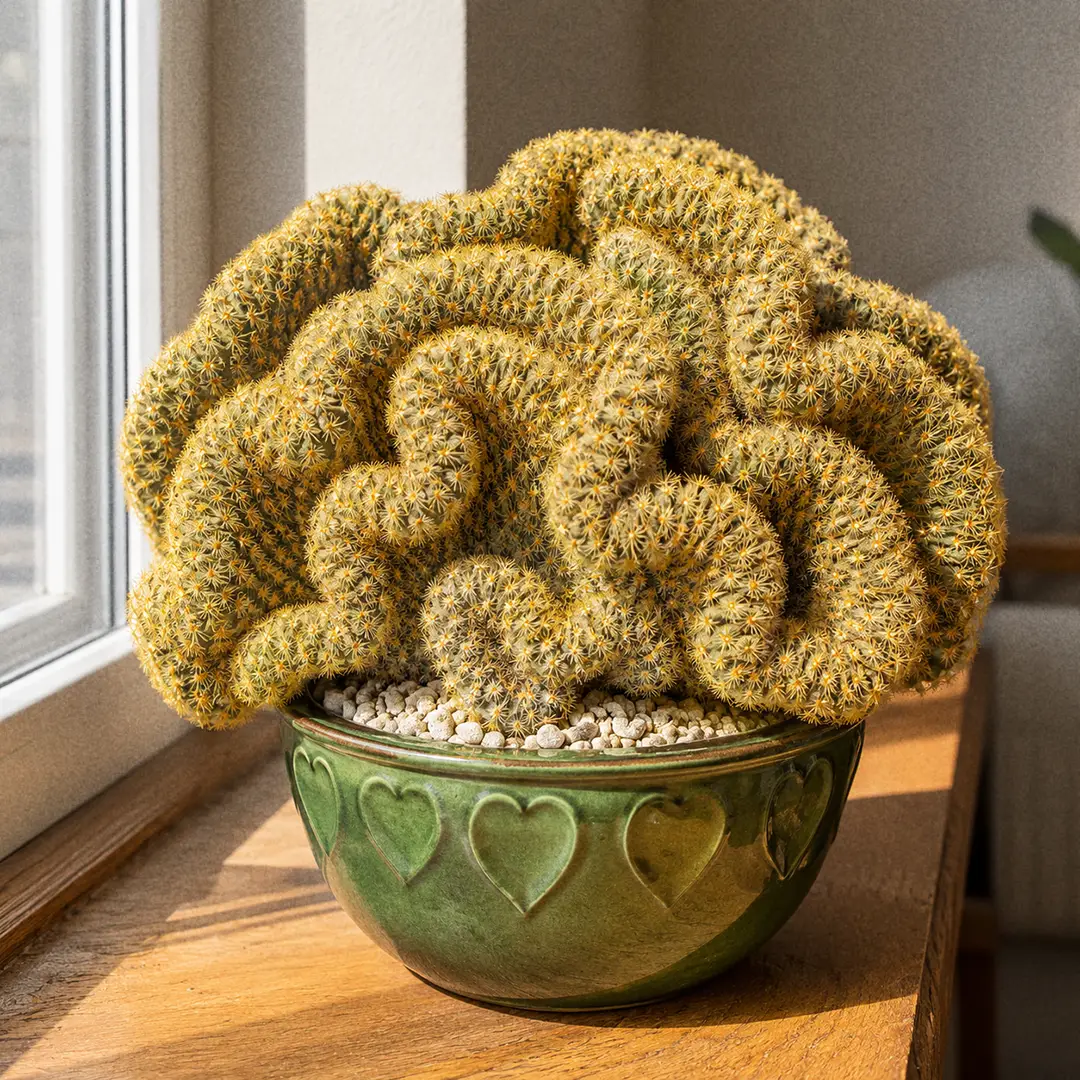
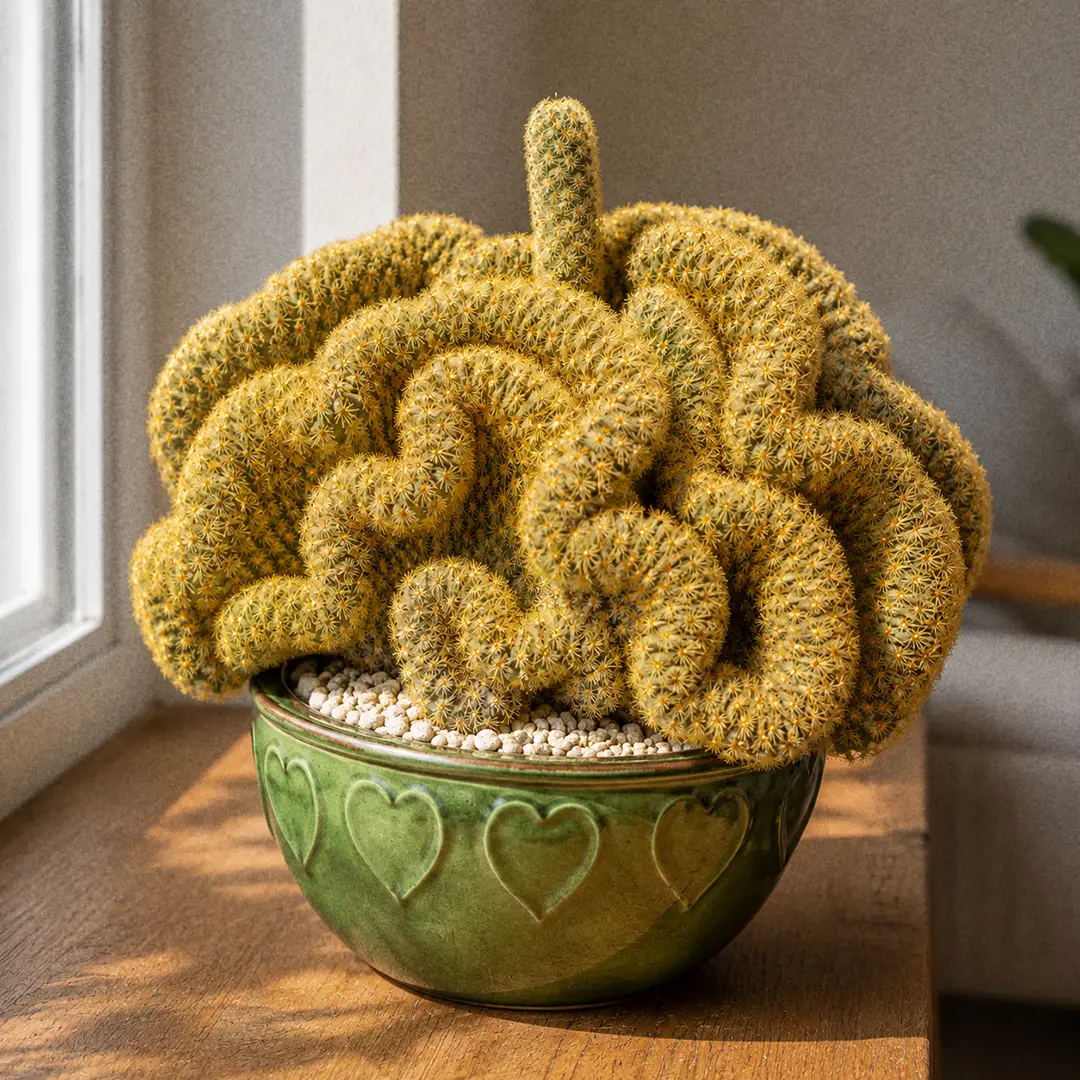
The Crested Brain Cactus (Mammillaria elongata f. cristata) is a mutated Lady Finger Cactus whose growth point stretched into a line, folding the stem into a golden, brain-like fan. It is one of the easiest crested cacti to keep alive indoors, as long as you keep water out of the folds and know what to do when it tries to grow a normal finger again.
📝 Crested Brain Cactus Care Notes
🌿 Care Instructions
⚠️ Common Pests
📊 Growth Information
🪴 In This Guide 🪴

☀️ Crested Brain Cactus Light Requirements (Sun and Placement)
The Sweet Spot
Give it the brightest windowsill you have. A south or west window with three to six hours of direct sun keeps the fan tight, the folds deep, and the spines a strong gold rather than a washed-out straw colour. Sitting right against the glass is fine for most of the year.
The parent species grows wedged into limestone slopes in Hidalgo, Guanajuato, and Querétaro in central Mexico, in open sun with very little shade from anything taller. The crest inherited that appetite. If you are still learning to judge a spot by eye, our Indoor Lighting Guide walks through it.
Too Little Light
A shaded crest goes pale and flabby, and the folds start to open out and flatten instead of packing tightly together. Spines come in shorter and thinner, so the plant loses the dense golden texture that made you buy it. Growth is so slow that this takes months to become obvious, which is exactly why people miss it.
Dim winters are the usual culprit in northern homes. A small grow light on a timer for eight hours a day holds the shape until spring returns.
Too Much Light
Sunburn is real but uncommon, and it almost always happens after a move. A plant that spent months under shop fluorescents and then goes straight onto a blazing July sill can bleach to a yellowish white or develop dry corky patches along the top ridge of the fan, which is sunburn. That scarring is permanent on a plant this slow.
Move it into strong sun over two or three weeks. A faint reddish or bronze blush on the ridges is not damage, it is sun pigment, and it usually means the light is spot on.

💧 Crested Brain Cactus Watering Guide (Soak and Dry)
Watering Frequency
Soak and dry, with the emphasis on dry. Water thoroughly, then leave the mix until it is bone dry all the way through the pot, not just at the surface. In a small gritty pot on a sunny sill that lands around every two to three weeks in spring and summer, and much less in a cool room.
From late autumn the schedule basically stops. Give it nothing for eight to ten weeks while it rests cold, or at most a thimble of water once a month if the fan starts to look sunken. Crested growth is slow enough that a winter soak just sits in the soil doing damage. Our watering guide covers the general principle, and a moisture meter settles arguments if you cannot read the pot by weight yet.
How to Water Without Rotting It
This is the part that matters more than frequency. Never pour water over the top of the fan. The folds are narrow canyons lined with hooked spine rosettes, and any drop that lands in one stays there for days with no air movement. That is how a healthy crest goes brown in the middle.
Pour at the soil surface with a narrow spout, or stand the pot in an inch of water for fifteen minutes and let it wick up from below. Drain completely afterwards. Bottom watering is a good habit for any crested cactus for exactly this reason.
Signs of Trouble
Underwatering shows as a slightly soft fan with shallower folds and a dull tone. It plumps back up within a couple of days after a soak and does no lasting harm.
Overwatering shows as a dark, soft, wet-looking patch, usually at the soil line or deep in a fold. That is root rot or mushy stems, and on a plant this slow it spreads faster than the plant can outgrow it. If you are unsure whether to water, wait a week.
🪴 Best Soil for Crested Brain Cactus (Mix and Drainage)
What the Soil Needs
The mix has one job: dry out fast. This cactus has a fine, shallow root system that sulks in anything holding moisture for more than a few days, so the target is a gritty, lean, open blend that water runs straight through. Bagged general potting compost will kill it eventually, no matter how carefully you water.
Mammillaria elongata grows in limestone crevices in habitat, so it also prefers a neutral to slightly alkaline mix rather than the acidic peat most compost is built on.
DIY Soil Recipe
A reliable blend for a windowsill plant:
- 2 parts pumice, perlite, or coarse horticultural grit
- 1 part cactus and succulent compost
- 1 part coarse sand or fine gravel
- a small handful of crushed limestone, oyster shell grit, or horticultural lime
That comes out at roughly 60 to 70 percent mineral, which sounds severe and is exactly right. Skip fine builder's sand, which packs down into concrete.
Pre-Made Options
A bagged cactus mix works if you cut it with an equal volume of pumice or perlite. Straight out of the bag, most of them still hold too much water for a crest. Our potting soil guide compares what is worth buying.
A layer of coarse grit on the surface is worth adding. It keeps the base of the fan off damp soil, discourages fungus gnats, and stops soil splashing up into the folds.
🍼 Fertilizing Crested Brain Cactus (Feeding Schedule)
When and How Often
Feed once a month from April through August, and not at all the rest of the year. This is a slow plant, so it uses very little, and feeding a resting cactus in winter is a good way to push soft growth that rots.
What to Use
A low-nitrogen cactus fertilizer diluted to half the label strength. High nitrogen makes crested cacti grow fast and loose, which flattens the folds and gives you a soft green plant with weak spines. Look for something where the middle and last numbers are higher than the first. Our fertilizer guide explains the ratios.
Always water lightly first, then feed. Fertilizer on dry roots burns them.
Signs of Over-Feeding
Sudden pale green growth with sparse, thin spines, or a crust of white salts on the soil surface and pot rim. Flush the pot with plain water three or four times and skip feeding for the rest of the season. On a plant that grows this slowly, the damage stays visible for years.
🌡️ Crested Brain Cactus Temperature Range
Ideal Range
Ordinary room temperature suits it all through the growing season, anywhere from 65 to 85°F. It handles a hot sunny windowsill in summer better than almost any other houseplant, as long as the pot is dry more often than it is wet.
The Winter Rest
Winter is the exception worth planning for. A cool, dry rest at 45 to 55°F for eight to ten weeks slows the plant right down, keeps the fan compact, and gives you a much better chance of the small flowers appearing in late spring. An unheated porch, a spare bedroom, or a bright garage all work. Short dips near 35°F do no harm if the soil is completely dry.
Drafts and Heat Sources
Cold plus wet is the dangerous combination, not cold on its own. Keep it off a windowsill where it sits behind a closed curtain on a freezing night with damp soil. At the other end, a spot directly above a radiator dries the pot so fast the roots shrivel, so shift it a foot away or check it more often.
💦 Crested Brain Cactus Humidity Requirements
Ideal Humidity
Dry is good. Anywhere from 30 to 50 percent suits it, which is what most heated homes sit at anyway. This is one of the few houseplants where you can ignore the humidity question entirely.
What to Avoid
Never mist it. Water resting between the spine rosettes with nowhere to evaporate is the single fastest route to fungal spotting and fold rot. Steamy bathrooms and closed terrariums are wrong for the same reason.
If your home runs humid, air movement fixes most of it. A ceiling fan on low, a cracked window, or simply not crowding it against other plants keeps the folds dry between waterings.
🌸 Crested Brain Cactus Flowers (Blooming Guide)
What the Flowers Look Like
When a crest does flower, small funnel-shaped blooms of cream, pale yellow, or soft pink open in a scattered line along the crest ridge rather than in the neat ring you get on a normal Mammillaria. They are about half an inch across, last a few days, and often appear a handful at a time over several weeks in late spring.
How to Trigger Bloom
Two things do the work. The first is light, several hours of genuine direct sun through the whole growing season. The second is the cold dry winter rest described above, which is the actual switch. A plant kept warm and slightly damp all year almost never blooms.
Feeding matters less than most people assume, though a low-nitrogen feed through summer helps the plant build the reserves it needs.
If It Never Blooms
Do not take it personally. The straight Lady Finger Cactus is described by growers as easily flowered, ringing itself in cream blooms each spring, but crests are far more hit and miss and plenty of well-grown ones never bloom at all. The fasciated growth line is disorganised, and flower buds need a tidy areole to form from. Nobody buys this plant for the flowers, and a healthy crest that sits there sculpting itself for twenty years is doing its job.
If you want reliable cactus flowers on the same shelf, a Crown Cactus blooms while it is still the size of a golf ball.
🏷️ Crested Brain Cactus Types and Varieties

Mammillaria elongata f. cristata (Golden Form)
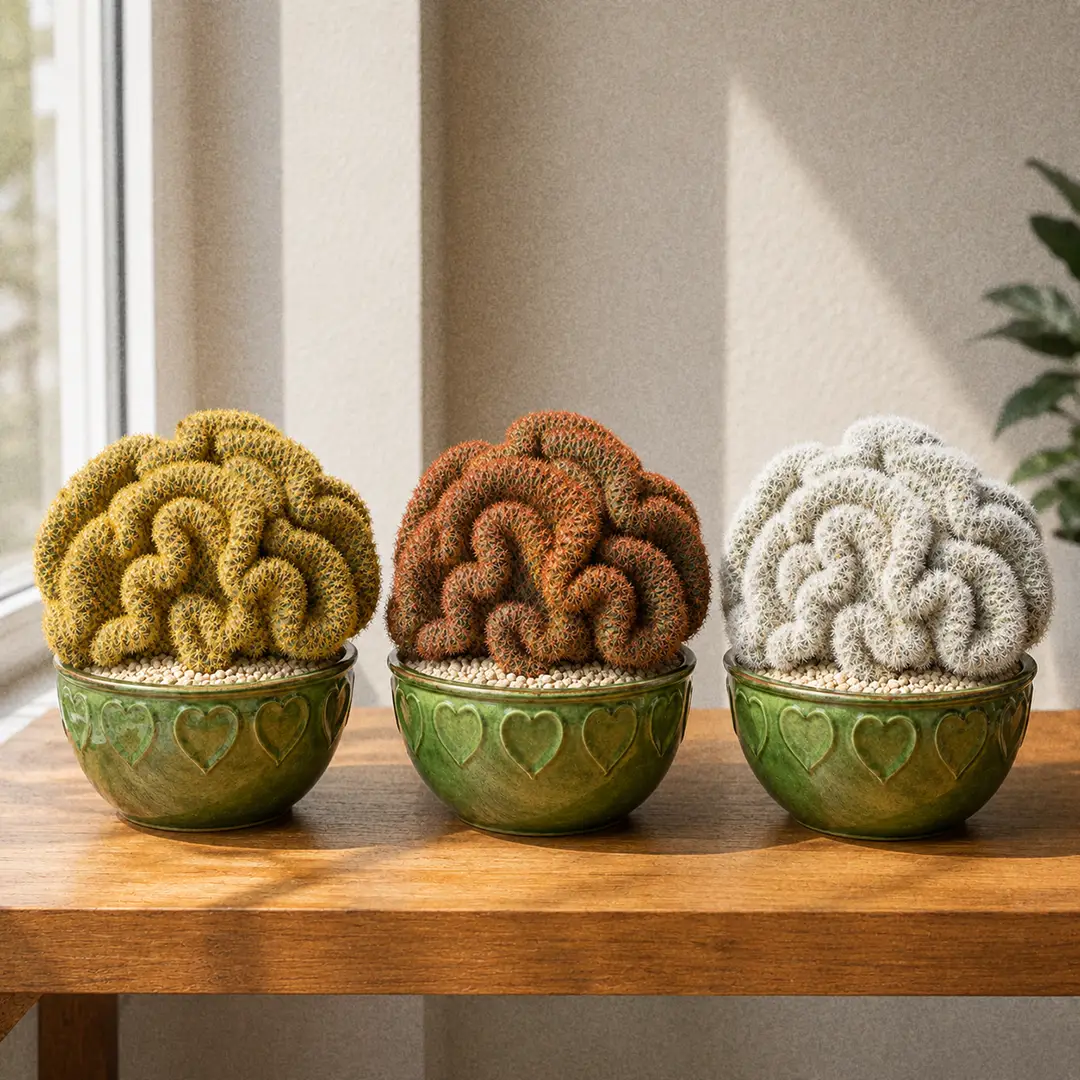
The one you will find in most shops. Green folds under dense rosettes of short golden-yellow spines, packed tightly enough that the fan reads as gold from a distance. It builds slowly into a wide, low, wavy sheet.
Copper King Crest
The crested form of Lady Finger Cactus 'Copper King', with warmer red-brown to copper spines instead of yellow. In strong sun it develops a deeper rust tone along the ridges. Care is identical, and it is the better pick if you want the fan to sit against pale ceramic.
Pale and White-Spined Crests
Spine colour in this species runs the whole way from whitish amber through gold to coppery red, and it varies from plant to plant rather than by named cultivar. Pale crests at the whitish end look closer to a Powder Puff Cactus than to gold lace. Buy with your eyes rather than by the label, since two plants tagged with the same name can look quite different.
Crested vs Monstrose
Crested growth means the growth point stretched into a line, giving you one folded fan. Monstrose growth means the plant produces growth points all over, giving you a lumpy congested cluster of short stems instead. Both get called "brain cactus" in shops, and both are fine houseplants, but a true crest has that clean fan silhouette.
Worth clearing up: the plant sold as the Brain Cactus with no "crested" in front of it is usually Stenocactus multicostatus, a completely different species with wavy ribs and no crest mutation at all.
🪴 Potting and Repotting Crested Brain Cactus
When to Repot
Rarely. Every three to four years is plenty, and only in spring. This plant grows so slowly that it rarely fills a pot with roots, and disturbing it more often than that sets it back for a season. Repot when the fan overhangs the rim enough to tip the pot, when the mix has broken down into something dark and dense, or after a rot scare.
Choosing a Pot
Go wide and shallow, not deep. The fan spreads sideways and gets top heavy, so a shallow bowl or a squat pan supports it better and holds less soggy soil under the shallow roots. Terracotta is a genuine advantage here because it wicks moisture out through the walls.
Drainage holes are non-negotiable. A decorative pot with no hole is a rot trap for this plant.
Step-by-Step Repotting
- Let the soil dry completely for a week first, so it crumbles off the roots.
- Wrap the fan in a folded tea towel or a strip of newspaper to handle it. The spines are soft compared to a barrel cactus but they hook into skin.
- Slide it out and brush old mix away. Trim off anything black, mushy, or hollow.
- Set it at the same depth in dry gritty mix, with the base of the fan just above the surface, and top with grit.
- Wait a full week before watering. Damaged roots need to seal first.
Our repotting guide covers the general routine if you want more detail.
✂️ Pruning Crested Brain Cactus
Removing Reverted Fingers
This is the only pruning that matters, and it is important. Crested plants regularly throw a normal cylindrical finger straight out of the fan, because the mutation is unstable. Normal growth is faster and stronger than crested growth, so if you leave it, that finger will steadily take over and you end up with an ordinary Lady Finger Cactus wearing a crest at the bottom.
Cut it flush with the crest surface using a clean sharp blade. Most collectors remove it promptly so the plant puts its energy back into the crest. Some wait a season first, on the chance the shoot starts cresting itself, and a few just keep both because they like the contrast. See reversion for the wider picture on this in variegated and mutated plants.
How to Cut Safely
Sterilise the blade with alcohol first. Cut on a dry day, into dry tissue, and leave the wound open to the air rather than sealing it. It will callus over in a week or two. Do not water for several days afterwards.
Tidying Damaged Areas
If a section of the fan goes brown and soft, cut back into firm green tissue, taking a little more than looks necessary. Dust the cut with powdered sulphur or cinnamon if you have it. The scar never fills back in, since crests do not regrow across a gap, but the plant carries on growing at the healthy edges.
🌱 How to Propagate Crested Brain Cactus
Best Method: Crest Division
Cuttings, not seed. Seed from a crested plant grows into ordinary fingers, because fasciation is not passed down reliably. To get another crest you have to take a piece of the crest itself.
The good news is that this cactus roots readily from a chunk of fan, and a piece that includes a section of the growing edge will carry on growing as a crest. Spring and early summer are the right time, when the plant is in active growth.
Step-by-Step
- Choose a section of the fan at least two inches across, ideally including part of the actively growing front edge.
- Slice it off cleanly with a sterilised sharp knife, cutting straight down rather than sawing.
- Leave the cutting on a dry shelf out of direct sun for seven to ten days until the cut face is dry, hard, and papery. This is the step people skip and it is the step that decides whether it lives.
- Set the callused face on top of dry gritty mix. Do not bury it, just rest it there, propped upright with a couple of stones if needed.
- Wait two weeks, then start misting the surface of the soil lightly every few days.
- Once roots take hold, usually in four to eight weeks, water normally.
Tips for Success
Bigger pieces root far more reliably than small ones, since they carry more stored water. Keep the cutting warm, around 70°F, and in bright light but out of scorching direct sun while it roots. Our succulent propagation guide covers the callusing principle in more depth.
Reverted fingers you prune off are worth rooting too. They give you a straight Lady Finger Cactus rather than a crest, but they root in a fortnight and make good gifts.
🐛 Crested Brain Cactus Pests and Treatment
The folds are a hiding place, which is the whole pest story on this plant. Anything that gets into the crevices between the ridges is out of sight and hard to reach, so a monthly look with a torch is worth more than any spray.
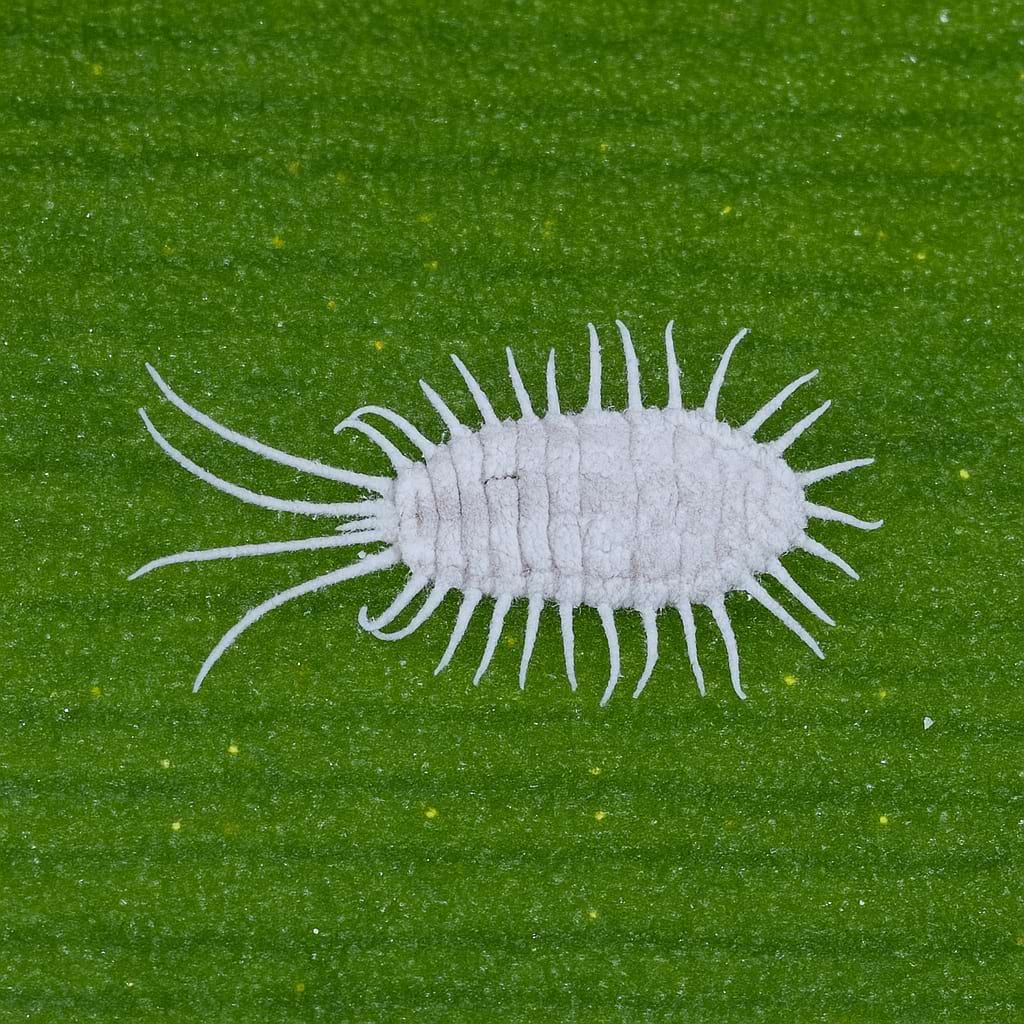
Mealybugs are the main offender. They look like specks of white cotton wool wedged deep in the folds and between spine rosettes. Dab each one with a cotton bud dipped in rubbing alcohol, then repeat weekly for a month, since the eggs hatch in waves.
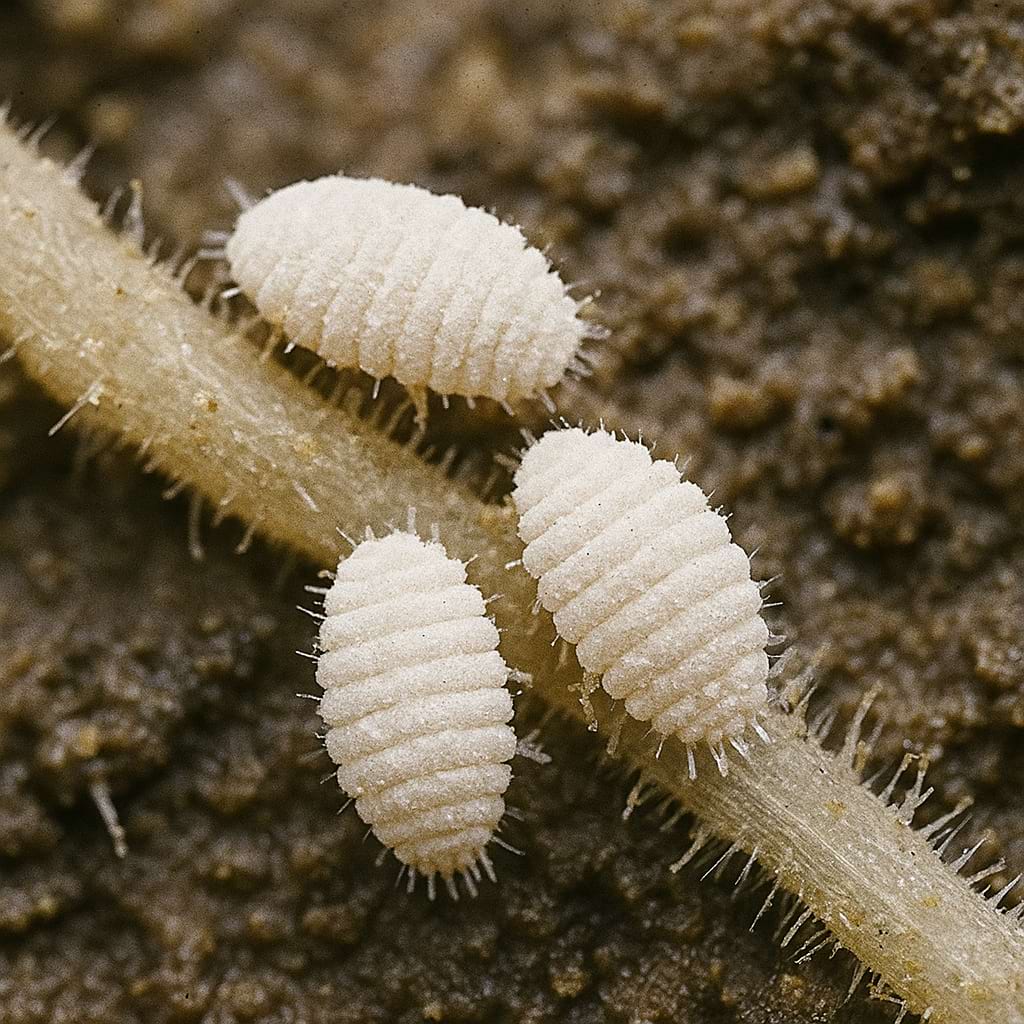
Root mealybugs hide below the soil and show up as white powder on the roots and inside the pot walls. Suspect them when a well-watered plant is shrinking for no reason. Bare-root it, wash the roots, and repot into fresh dry mix.
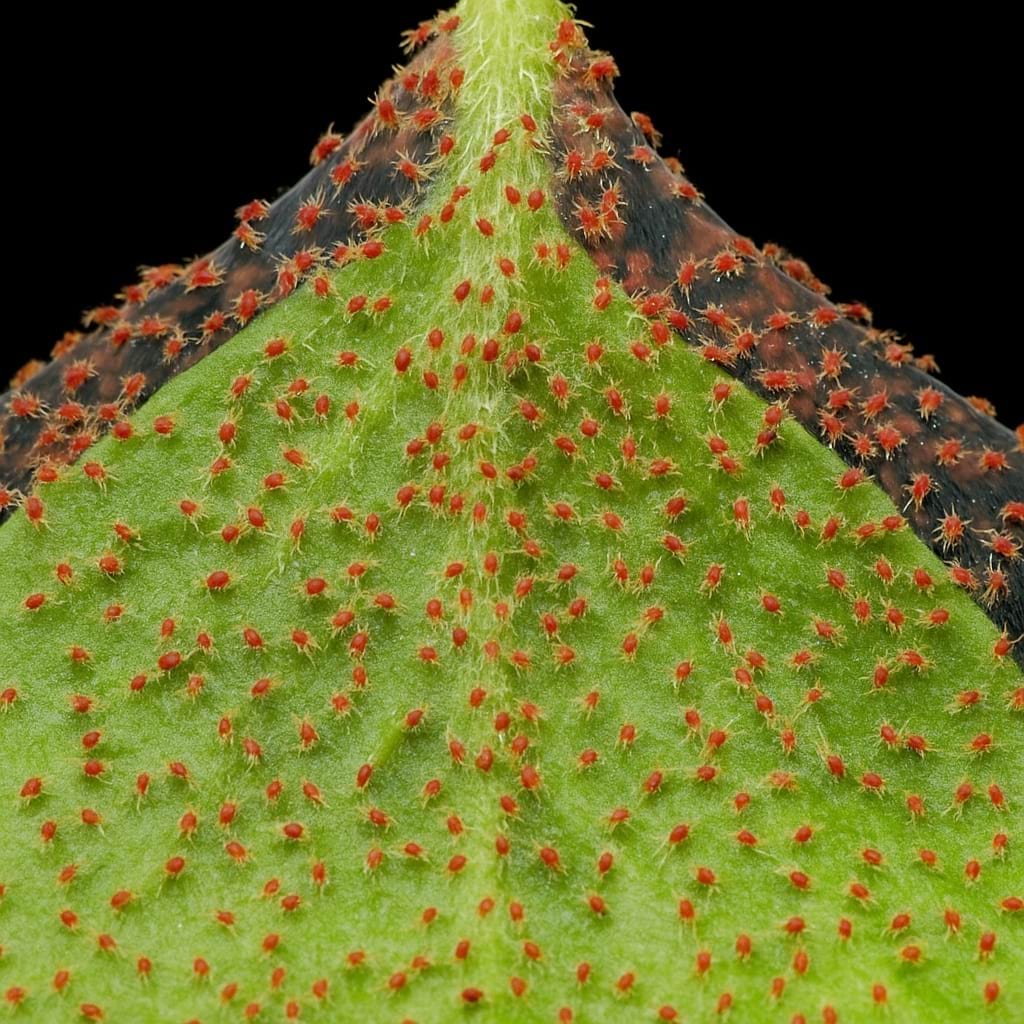
Spider mites leave fine webbing across the spine tips and a dull rusty cast on the green tissue. They thrive in hot dry stagnant air, so improve air movement and treat with a horticultural soap or neem, keeping the liquid off the folds where it can pool.
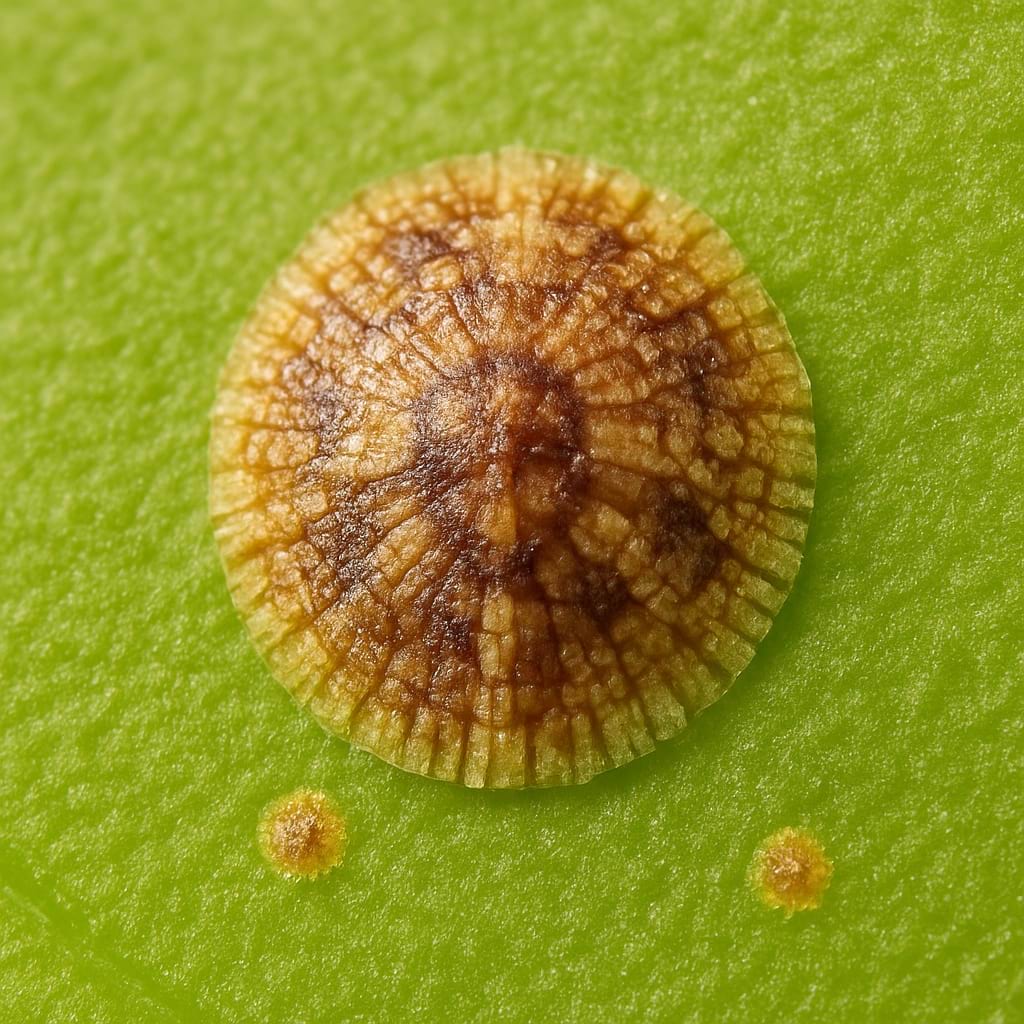
Scale insects appear as tiny brown limpets on the ridges. Scrape them off with a fingernail or a wooden pick and follow with alcohol.
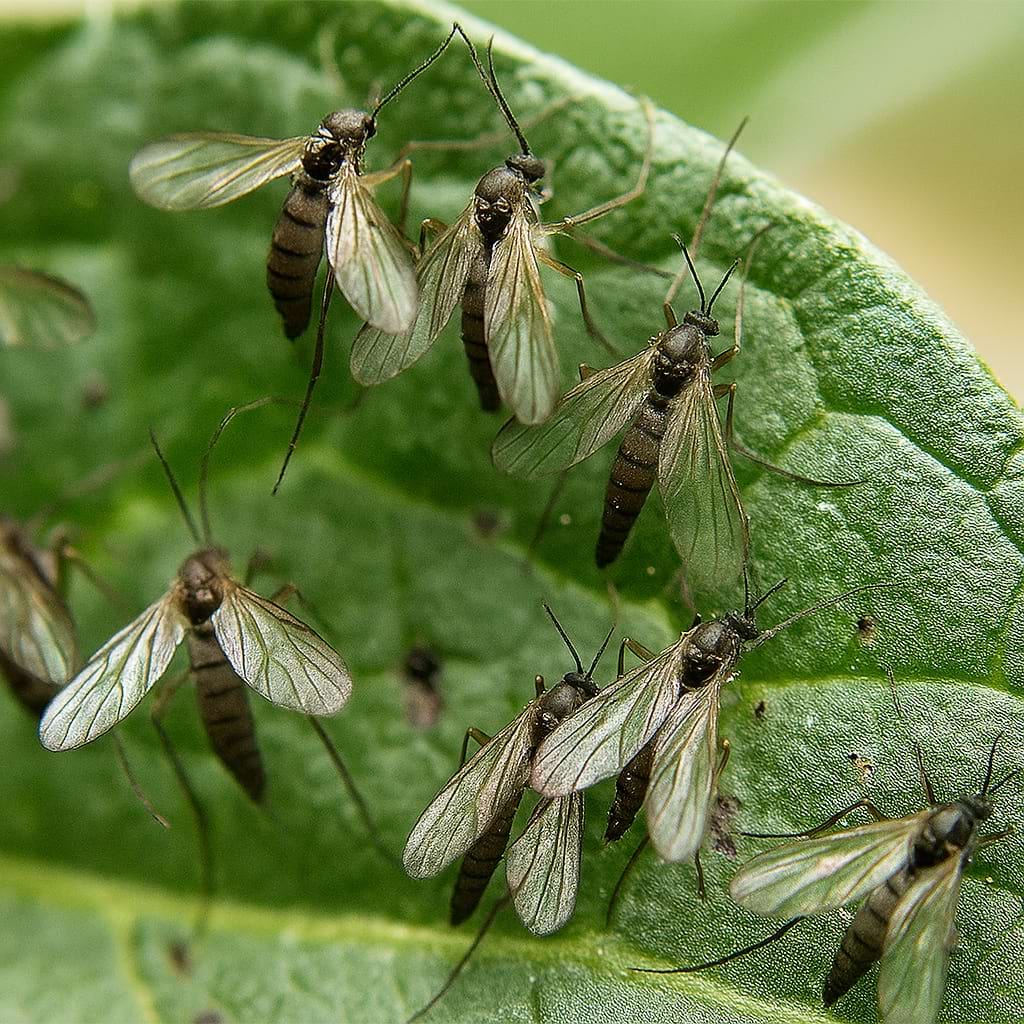
Fungus gnats mean the soil is staying wet too long. They are a symptom here rather than a real threat. Dry the pot out properly and they go.
🩺 Common Crested Brain Cactus Problems
Root rot is the number one killer, and it usually starts under the soil where you cannot see it. The tell is a plant that feels loose in its pot, or a soft brown zone at the base of the fan. Unpot it, cut away every soft part, let it dry for a week, and replant in fresh dry mix.
Fold rot is the version unique to crested cacti. Water sits between two ridges, cannot evaporate, and the tissue underneath turns dark and slimy. Cut it out back into firm green, and change how you water, not just how much.
Mushy stems spreading from the top down usually follow a cold damp winter. Dry heat and better air movement prevent it far better than any fungicide.
Reversion is the one that catches people out, since it is not really a disease. A normal finger appears out of the fan and grows three times faster than the crest around it. Cut it off flush as soon as you see it, or the crest gets swallowed.
Stunted growth with a pale flat fan is nearly always a light problem, sometimes combined with an exhausted pot. Move it brighter and repot in spring.
Yellowing across the green tissue points at overwatering or a spent root system, not hunger. Check the roots before you reach for fertilizer.
Fungal spotting shows as dry rusty or black flecks on the ridges. It is a humidity and airflow problem, so improve both and cut out anything soft.




🖼️ Crested Brain Cactus Display and Styling Ideas
Solo Setups
Treat it as a small sculpture. A wide shallow bowl with a grit mulch, sitting at eye level or slightly below on a sunny sill, shows the folds far better than a tall pot that makes you look down on the fan edge-on. Turn the plant so the front face of the crest looks into the room rather than out of the window.
Grouped Arrangements
The fan is a flat wavy horizontal, so pair it with shapes it does not repeat. A perfect sphere like a Golden Barrel Cactus and a fuzzy white dome like an Old Lady Cactus sit beautifully either side of it. Slim upright fingers of the straight Lady Finger Cactus make a nice before-and-after story next to the mutated version. For a second oddity with a completely different look, a grafted Moon Cactus brings colour to the group.
Keep the neighbours short. Anything tall casts shade over the fan and the crest will lean away from it.
Where Not to Put It
Nowhere dim, nowhere humid, and nowhere it gets watered by a well-meaning housemate with a full can. Bathrooms, kitchen splash zones, and closed terrariums are all wrong, and so is a shelf directly under a pot that drips.
🌟 Crested Brain Cactus Pro Care Tips
- Water the soil, never the plant. Every serious problem this cactus has starts with liquid sitting in a fold.
- Check for reverted fingers monthly. Cut them flush unless you want to give the shoot a season to see if it crests on its own.
- Rotate the pot a quarter turn each month. The fan grows toward the light and will lean and twist out of shape if you never turn it.
- Weigh the pot to judge watering. Dry and light versus recently watered and heavy beats any finger test in a gritty mix.
- Give it a cold dry winter. It costs you nothing, keeps the fan compact, and is the only real shot at flowers.
- Use a torch when you inspect it. Mealybugs live in the shadow at the bottom of the folds, not on the visible surface.
- Handle it with a folded towel, not bare hands. The spines are soft but they hook.
- Do not repot on a schedule. This plant is happiest left alone for years.
❓ Frequently Asked Questions
Is the Crested Brain Cactus the same as the Brain Cactus?
Not usually. A plant labeled simply "Brain Cactus" is most often Stenocactus multicostatus, a small globe with dozens of wavy ribs. The Crested Brain Cactus is a mutated Lady Finger Cactus, sold as Mammillaria elongata f. cristata. Both look brain-like, and shops use the names interchangeably, so check the Latin name on the label.
Why did my crest grow a normal finger?
Because fasciation is an unstable mutation, and the plant keeps trying to revert to its original growth pattern. It is completely normal and not a sign of poor care. Most growers cut the finger off flush with a sterile blade, since normal growth outpaces crested growth and will take the plant over if left alone. Waiting a season to see whether the shoot crests is the other accepted option.
Is it toxic to cats and dogs?
No. Mammillaria species are not poisonous if chewed. The realistic risk is mechanical, since the spine rosettes hook onto a curious nose or paw and detach. Keep it out of reach of climbing cats, more for your peace of mind than for the cat's safety.
Should mine have a stem underneath it?
No. Almost every Crested Brain Cactus you will find sits low and flat, straight on the soil surface, with no visible stem holding the fan up. That is the normal own-root plant. Crested cacti in general are often grafted onto a rootstock the way a Moon Cactus is, and this one turns up that way occasionally, but it roots so easily on its own that most growers do not bother.
How fast does it grow?
Very slowly. Expect the fan to widen by roughly half an inch to an inch a year in good light. A specimen the width of your palm is often five to ten years old, which is worth remembering when you see the price on a big one.
Why is the middle of my crest turning brown?
Almost certainly water that got trapped between the folds and sat there. Cut the soft tissue out back into firm green with a sterile blade, let it dry, and switch to watering at the soil surface or from below. Better airflow around the plant helps prevent a repeat.
Can I put it outside in summer?
Yes, and it enjoys it, as long as you acclimatise it over two weeks to avoid sunburn and keep it under cover from rain. Rainwater filling the folds outdoors causes the same rot as a watering can indoors. Bring it back inside before nights drop below about 45°F.
Does it flower?
Sometimes, but far less reliably than the straight Lady Finger Cactus. Small cream or pink funnels appear along the crest ridge in late spring, and only on plants that got full sun through summer and a cold dry rest through winter. Plenty of healthy crests never bloom, and that is normal for the form.
How do I clean dust out of the folds?
A soft dry paintbrush worked along the length of each fold, or a puff from a camera blower. Do not spray it with water and do not use leaf shine. Anything wet that settles between the ridges is exactly what you spend the rest of the time trying to avoid.
ℹ️ Crested Brain Cactus Info
Care and Maintenance
🪴 Soil Type and pH: Gritty, sharply draining cactus mix with limestone grit
💧 Humidity and Misting: Prefers dry air with good movement; damp still rooms cause rot inside the folds.
✂️ Pruning: Cut off any normal cylindrical fingers that sprout from the crest, or they will take over.
🧼 Cleaning: Dust with a soft dry paintbrush worked along the folds. Never spray it clean, since water trapped between the spine rosettes is the main killer.
🌱 Repotting: Repot every 3-4 years in spring, into a wide shallow pot that supports the growing fan.
🔄 Repotting Frequency: Every 3-4 years
❄️ Seasonal Changes in Care: Bright sun and regular soakings from March to September, then a cold, bone dry rest from late autumn to early spring.
Growing Characteristics
💥 Growth Speed: Slow
🔄 Life Cycle: Evergreen perennial cactus, fasciated (crested) growth form
💥 Bloom Time: Late spring to early summer, sparse and unreliable on crested plants; small cream to pale pink flowers along the crest line
🌡️ Hardiness Zones: 9-11
🗺️ Native Area: The parent species grows on limestone slopes in Hidalgo, Guanajuato, and Querétaro, central Mexico; the crested form arose in cultivation
🚘 Hibernation: Dry winter rest at 45-55°F for roughly 8-10 weeks, in full light
Propagation and Health
📍 Suitable Locations: South and west windowsills, sunny kitchen sills, shallow display bowls, cactus shelves, bright sunrooms
🪴 Propagation Methods: Slice a chunk of the crest with a clean blade, callus it for a week, then set it on dry gritty mix.
🐛 Common Pests: Mealybugs, Root Mealybugs, Spider Mites, Scale Insects, Fungus Gnats
🦠 Possible Diseases: Root rot, crown and fold rot, fungal spotting in cold damp air
Plant Details
🌿 Plant Type: Crested (fasciated) clumping cactus
🍃 Foliage Type: Leafless folded green stem covered in star-shaped spine rosettes
🎨 Color of Leaves: Mid green to grey-green body under the spines
🌸 Flower Color: Cream, pale yellow, or soft pink
🌼 Blooming: Occasionally, and far less freely than the normal Lady Finger form
🍽️ Edibility: Not grown as an edible plant.
📏 Mature Size: 3-6 inches tall
Additional Info
🌻 General Benefits: Pet-safe, soft-spined enough to handle with care, extremely slow and long-lived, and one of the few sculptural cacti that stays windowsill sized
💊 Medical Properties: No documented medicinal uses.
🧿 Feng Shui: A soft-spined, low, curving cactus that adds sculptural texture to a sunny sill without the aggressive spikes of a columnar desert cactus.
⭐ Zodiac Sign Compatibility: Capricorn
🌈 Symbolism or Folklore: Individuality, useful mistakes, slow and stubborn growth
📝 Interesting Facts: The brain shape is a growth defect called fasciation. Instead of growing from a single point, the stem grows from a line, so it can only expand sideways and folds over on itself to fit. Nobody can reliably cause it, and every crested plant in the trade traces back to a chance mutation someone spotted and propagated.
Buying and Usage
🛒 What to Look for When Buying: Check the underside of the fan and the soil line for soft brown patches, and look inside the deepest folds for white mealybug fluff. Pick the plant with the deepest, tightest folds and the strongest spine colour, since a flat pale fan has been sitting in poor light.
🪴 Other Uses: Sculptural windowsill specimen, dish garden centerpiece, and collector display plant.
Decoration and Styling
🖼️ Display Ideas: Shallow wide bowls, sunny windowsills at eye level, mixed cactus shelves, stone-mulched dish gardens
🧵 Styling Tips: The fan is a flat sculpture, so turn it so the folds face into the room rather than the glass, and keep neighbouring plants low enough not to crowd it.
🪴 See also 🪴
Complete Guide to Leaf of Life Care and Growth
Complete Guide to Aeonium Care and Growth
Complete Guide to Feather Cactus Care and Growth
Complete Guide to Snowball Cactus Care and Growth
Complete Guide to Spiral Cactus Care and Growth
Complete Guide to Fairy Castle Cactus Care and Growth
Complete Guide to Silver Torch Cactus Care and Growth
Complete Guide to Crown Cactus Care and Growth
How to Propagate Succulents from Leaves & Offsets
Succulent Care Indoors: How to Stop Killing Jade and Echeveria
Complete Guide to Lithops Care and Growth (Living Stones)
Complete Guide To Aloe Vera Care and Growth
Complete Guide to Burro's Tail Care and Growth
Complete Guide to Crown of Thorns Care and Growth
Complete Guide to Echeveria Care and Growth
Complete Guide to Flaming Katy Care and Growth
Complete Guide to Jade Plant Care and Growth
Complete Guide to Sedum Adolphii Care and Growth
Complete Guide to Queen of the Night Care and Growth
Complete Guide to Domino Cactus Care and Growth
Complete Guide to Easter Lily Cactus Care and Growth
Complete Guide to Peanut Cactus Care and Growth
Complete Guide to Rat Tail Cactus Care and Growth
Complete Guide to Ghost Plant Care and Growth
Complete Guide to Hens and Chicks Care and Growth

Complete Guide to String of Coins Care and Growth
Complete Guide to Silver Squill Care and Growth
Complete Guide to Jelly Bean Plant Care and Growth
Complete Guide to Fishbone Cactus Care and Growth
Complete Guide to Mistletoe Cactus Care and Growth
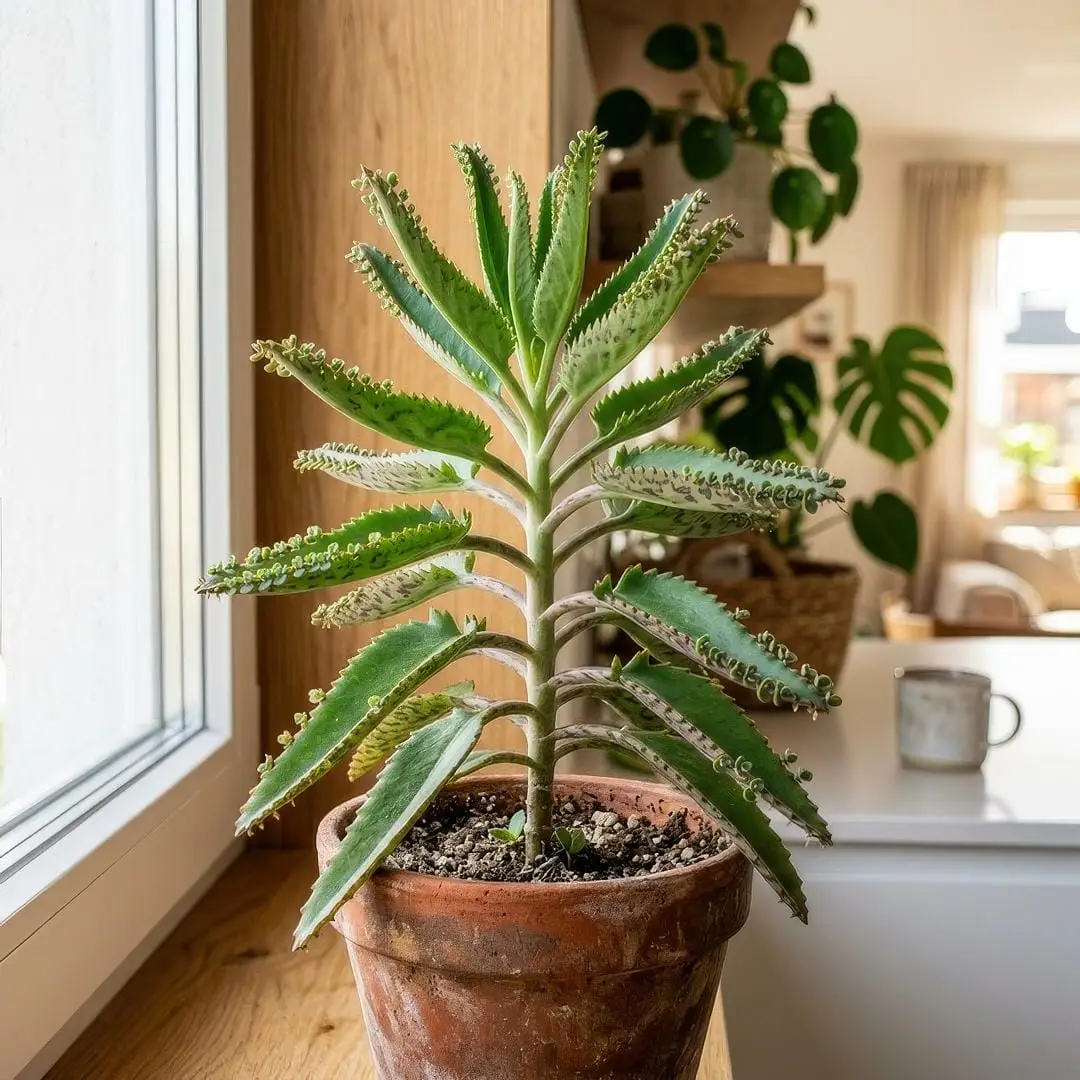
Complete Guide to Mother of Thousands Care and Growth
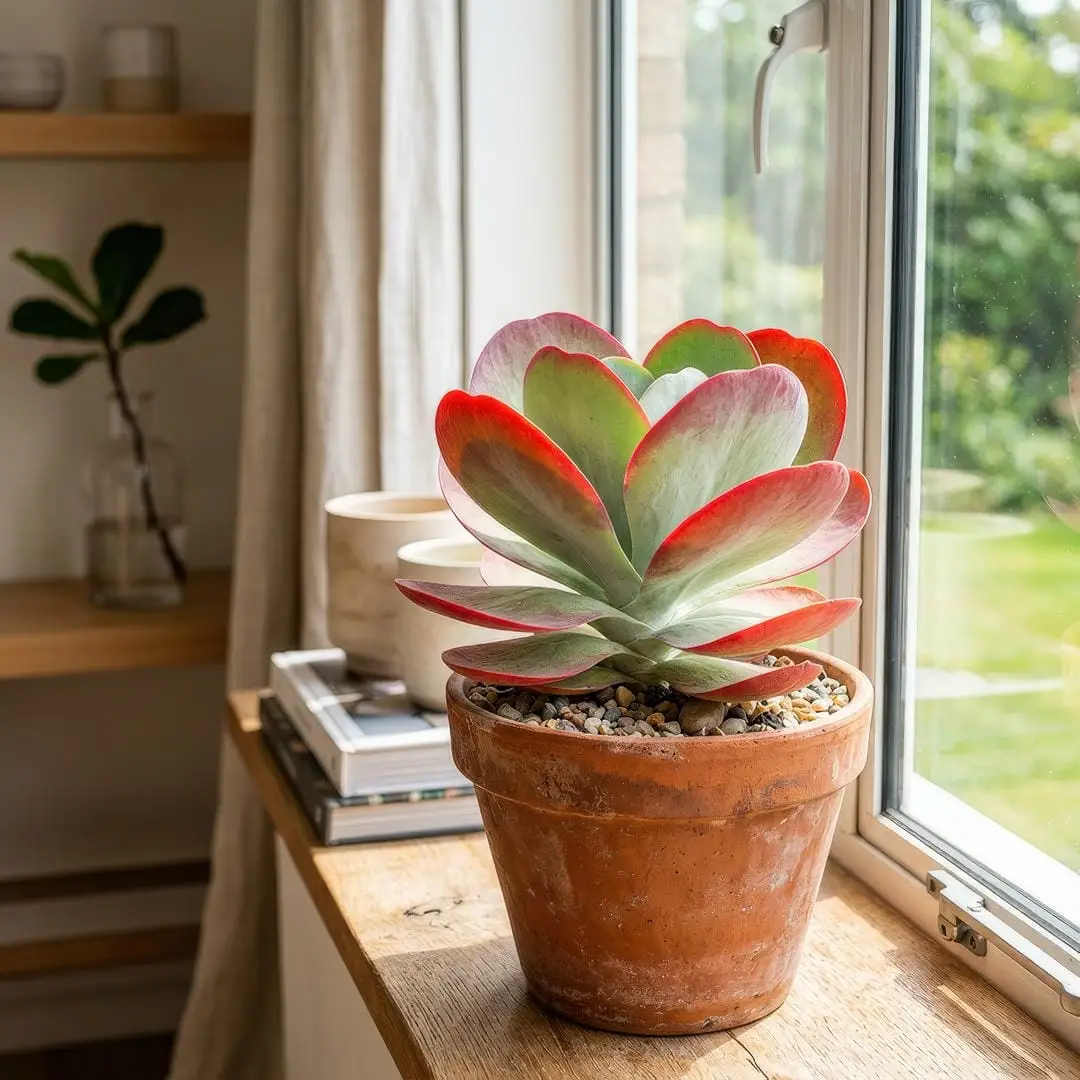
Complete Guide to Paddle Plant Care and Growth
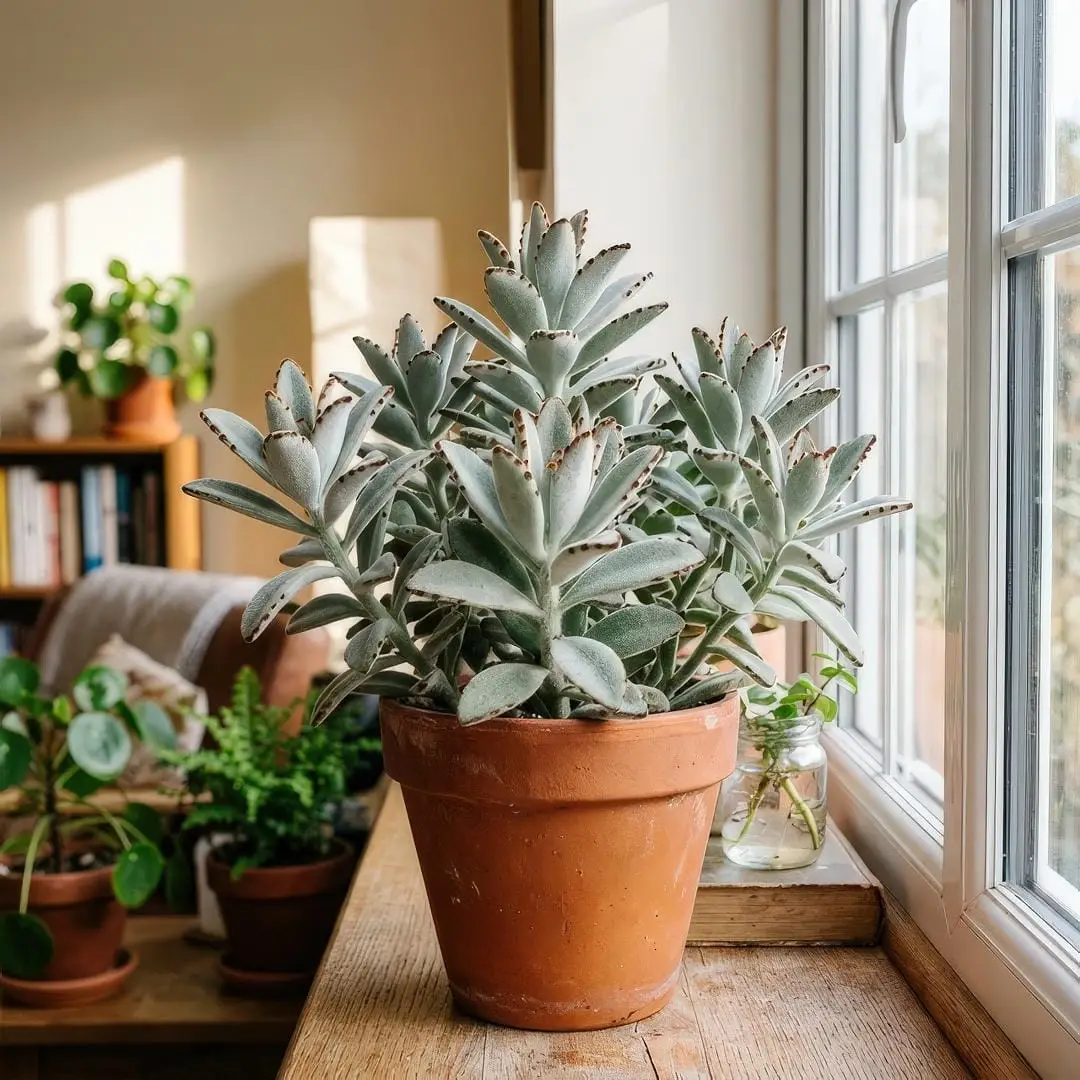
Complete Guide to Panda Plant Care and Growth

Complete Guide to Elephant Bush Care and Growth
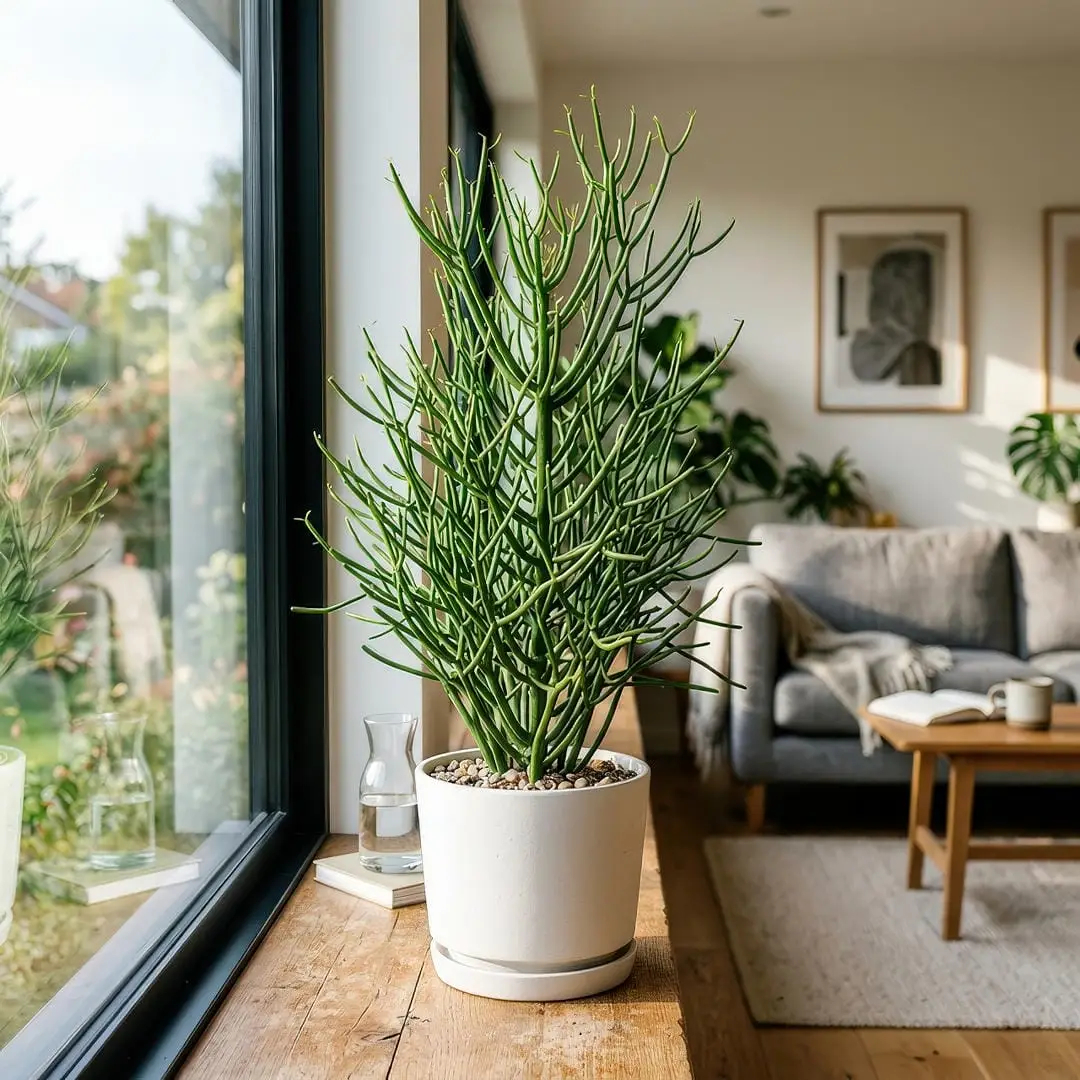
Complete Guide to Pencil Cactus Care and Growth
Complete Guide to African Milk Tree Care and Growth

Complete Guide to Gasteria 'Little Warty' Care and Growth
Ox Tongue Care

Houseplant101 Forum
Questions & Comments
Ask a question, share your plant experience, or help other plant owners.
Comments are temporarily unavailable.
Open the Houseplant101 ForumNo comments yet
Be the first to ask a question or share your experience about this page.
Log in or create an account
Comments use your Houseplant101 Forum account, but you can stay on this page.
Create a new account