
Succulent Care Indoors: How to Stop Killing Jade and Echeveria
A complete guide to keeping succulents alive indoors. Learn the light and watering rules that actually matter, how to mix gritty soil, and how to fix stretched Jade plants and rotting Echeveria rosettes.
Care Guide: A complete guide to keeping succulents alive indoors. Learn the light and watering rules that actually matter, how to mix gritty soil, and how to fix stretched Jade plants and rotting Echeveria rosettes.
🪴 In This Guide 🪴

A Note From Our Plant Expert
Anastasia here. Almost every dead succulent I get asked about died the same way, and it was not neglect. It was kindness. People water them like a fern and stand them somewhere pretty but dim, and then wonder why a plant sold as unkillable gave up in four months. Get the light and the soil right, and the rest of succulent care is mostly leaving them alone.
💀 Why succulents die indoors
Succulents have a reputation for being the easiest plants in the shop. That reputation is half true. They are forgiving about a lot of things, and completely unforgiving about two.
The desert myth
The plants sold as succulents come from places with intense sun, fast-draining ground, and long dry spells broken by heavy rain. Nothing about that resembles a bookshelf. Their fat leaves are water tanks, built for the dry spells, and every part of the plant is designed around the assumption that water arrives rarely and leaves quickly.
Indoors, we reverse both conditions. We give them dim light and steady moisture, which is exactly the environment they have no defence against. A Boston Fern can shrug off a soggy week. A succulent cannot, because it never evolved to.
The two things that actually kill them
Not enough light, and too much water. That is the whole list, and the two are connected. A plant in bright light drinks quickly and dries its pot out in days. The same plant in a dim corner barely uses any water at all, so the soil stays wet for weeks while the roots sit in it.
This is why a watering routine that works fine on a sunny windowsill turns lethal the moment you move the same plant across the room. You did not change the watering. You changed how fast the plant could use it.
The plump-leaf illusion
Succulents hide their decline. A plant whose roots died three weeks ago still looks plump, because those leaves are full of stored water and will stay full until that store runs out. By the time the leaves finally wrinkle, the roots have often been gone for a month.
That delay is what makes people water again at exactly the wrong moment. The plant looks thirsty, so they water, and there are no functioning roots left to take it up. If a succulent starts looking sad and you have been watering normally, check the roots before you reach for the watering can.
☀️ How much light succulents really need
If you fix only one thing after reading this, fix the light. It changes how much water the plant needs, how compact it grows, what color it turns, and how well it shrugs off pests.
The six-hour rule
Most common succulents want around six hours of direct sun a day. Direct means the sun physically lands on the leaves, not that the room feels bright. In the northern hemisphere that means a south-facing window, or a west-facing one, with the plant sitting right at the glass rather than on a table nearby.
The drop-off with distance is much steeper than your eyes suggest. Move a succulent three feet back from a bright window and it can lose most of the light it was getting, because your pupils adjust and the plant does not. Our light guide explains how to judge a window properly.

What too little light looks like
The plant stretches. The stem lengthens, the gaps between leaves widen, the rosette opens up and flattens, and the whole thing leans toward the window. This is etiolation, and it is the plant spending its stored energy on reaching for light it cannot find. Color fades too, so the pinks and reds and purples wash out to a flat green. Our guides on leggy growth and pale, faded leaves go deeper on both symptoms.
The important part: stretched growth never goes back. Moving the plant to a brighter spot stops further stretching but will not close the gaps that already opened. To actually fix a stretched succulent you cut the top off, let the cut callus for a few days, and re-root it, which our succulent propagation guide walks through step by step. The stump usually sprouts new offsets, so you end up with more plants than you started with.
What too much light looks like
Real sunburn on a succulent shows as dry, bleached-white or brown patches on the leaf surfaces facing the sun, and unlike stretching, those marks are permanent scars on that leaf. It happens most often when a plant that has been living indoors gets moved outside for summer, or moved from a dim corner to a hot south window in one jump.
The fix is acclimation rather than avoidance. Increase the light over two or three weeks, starting with morning sun and building up, and the plant thickens its protective wax layer as it goes. Sunburn and leaf scorch covers the recovery.
When your windows are not enough
North-facing windows, basement flats, and buildings with something large in front of them are not going to deliver six hours of sun, and no amount of technique compensates. A grow light does, and succulents are one of the plant groups where cheap lights work well because you can put them close.
Run it eight to twelve hours a day, positioned six to twelve inches above the plants. Our grow lights guide covers picking one. This is also the single best thing you can do for a succulent collection in winter, when even a good south window drops below what these plants want.
💧 Watering succulents without rot
More succulents die from watering than from anything else, and the reason is that most people apply houseplant logic to a plant that runs on different rules.
Soak and dry, properly
The method is simple: water thoroughly, then wait until the soil is bone dry all the way through, then water thoroughly again. Nothing in between.
Thoroughly means until water runs freely from the drainage hole. Little sips wet only the top inch, which trains roots to stay shallow and leaves salts building up in the lower soil. Full saturation with a proper dry-out between is what these roots are built for.
The waiting is the hard part. In a bright window in summer, a small pot might be ready again in ten days. In winter, the same plant might go six weeks. There is no interval to memorize, which frustrates people, but it is the honest answer.
Why the finger test fails on succulents
The standard advice is to poke a finger into the top inch of soil. On a gritty succulent mix, that test is actively misleading, because the coarse surface dries within a day while the core of the pot stays damp for another two weeks.
Use one of these instead. Lift the pot and learn its weight when dry versus freshly watered, which is the fastest method once you have felt the difference a few times. Or push a wooden skewer to the bottom and pull it out, since damp soil darkens the wood and clings to it. A moisture meter works too, as long as you push the probe deep rather than reading the surface.
Where to pour the water
Aim at the soil, not the plant. Water that pools in the center of a rosette or in the crown where the leaves meet the stem sits there in still indoor air and rots the growing point, which kills the plant from the middle outward.
This matters most for tight rosettes like Echeveria, Hens and Chicks, and Haworthia. Bottom watering sidesteps the problem entirely, though you should still top-water occasionally to flush accumulated mineral salts out of the soil.
The first sign you have overdone it
Leaves that go soft, translucent, and slightly yellow, usually starting at the bottom of the plant. Those cells have taken on more water than they can hold and burst. It is not a disease and there is no treatment for the affected leaves, but it is a clear early warning.
Stop watering and let the pot dry out completely. If the lower stem has gone brown, soft, or smells sour, the damage has reached the stem and you need to act now: read mushy stems and root rot, unpot the plant, cut back to firm white tissue, let it callus, and re-root the healthy top.
🪴 Soil and pots for succulents
Light and water get all the attention, but soil and pot choice are what make the watering forgiving instead of precarious. Get these right and a mistimed watering is survivable.
What the mix has to do
Drain in seconds and dry within days. That is the entire specification. Bagged potting soil does the opposite by design, since it is built to hold moisture for plants that want moisture.
Even bags labelled cactus and succulent mix are often too rich, especially peat-heavy ones that also shrink away from the pot sides when dry and then let water run straight down the gap without wetting the soil at all. Cut whatever you buy with more mineral content and stop worrying about the label.
A gritty mix that works
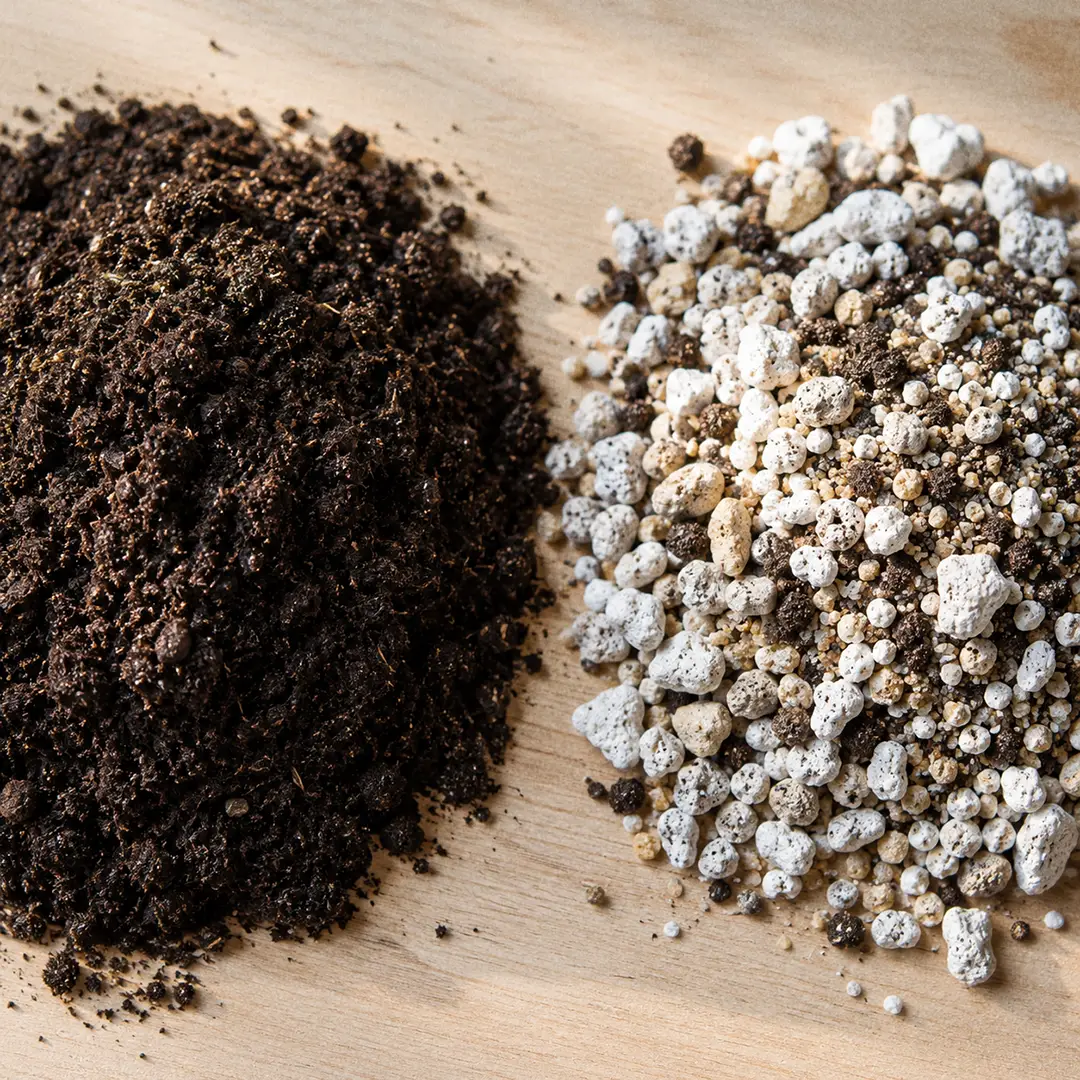
One part potting soil to two parts perlite or pumice, by volume. That is it. If your home runs humid or your light is on the weaker side, push it further toward the mineral end.
Pumice is worth the extra money over perlite for succulents because it is heavier, so it does not float to the surface after a few waterings, and it adds useful ballast to top-heavy plants. Coarse horticultural sand works as part of the mineral fraction, but never fine builder's sand, which packs into something close to concrete. Our potting soil guide covers the ingredients in more detail, and the general soil guide is a gentler starting point.
Pots: the hole is not optional
Every succulent needs a drainage hole. The decorative ceramic pots sold alongside succulents in shops frequently have none, and they are the most common murder weapon in this hobby, because water collects in the base where you cannot see it and the roots sit in it.
A layer of pebbles at the bottom does not create drainage. It raises the saturated zone up into the root ball, which makes things worse rather than better. If you love a pot with no hole, use it as a cover and keep the plant in a plastic nursery pot inside it.
Terracotta is the better material for succulents because it is porous and pulls moisture out through its walls, buying you a margin for error. Size matters too: a pot only slightly wider than the plant dries out at a sensible rate, while an oversized pot holds a large reservoir of wet soil that the small root system cannot use. See choosing plant pots and the repotting guide for the practical side, and note that succulents should be repotted into dry soil and left unwatered for about a week afterward so damaged roots can heal.
🌳 Jade Plant care specifics
The Jade Plant is a small tree rather than a rosette, and a few things about it behave differently from the rest of a succulent shelf. It is also the succulent most likely to outlive its owner, so it is worth learning properly.
Jade wants more light than you think
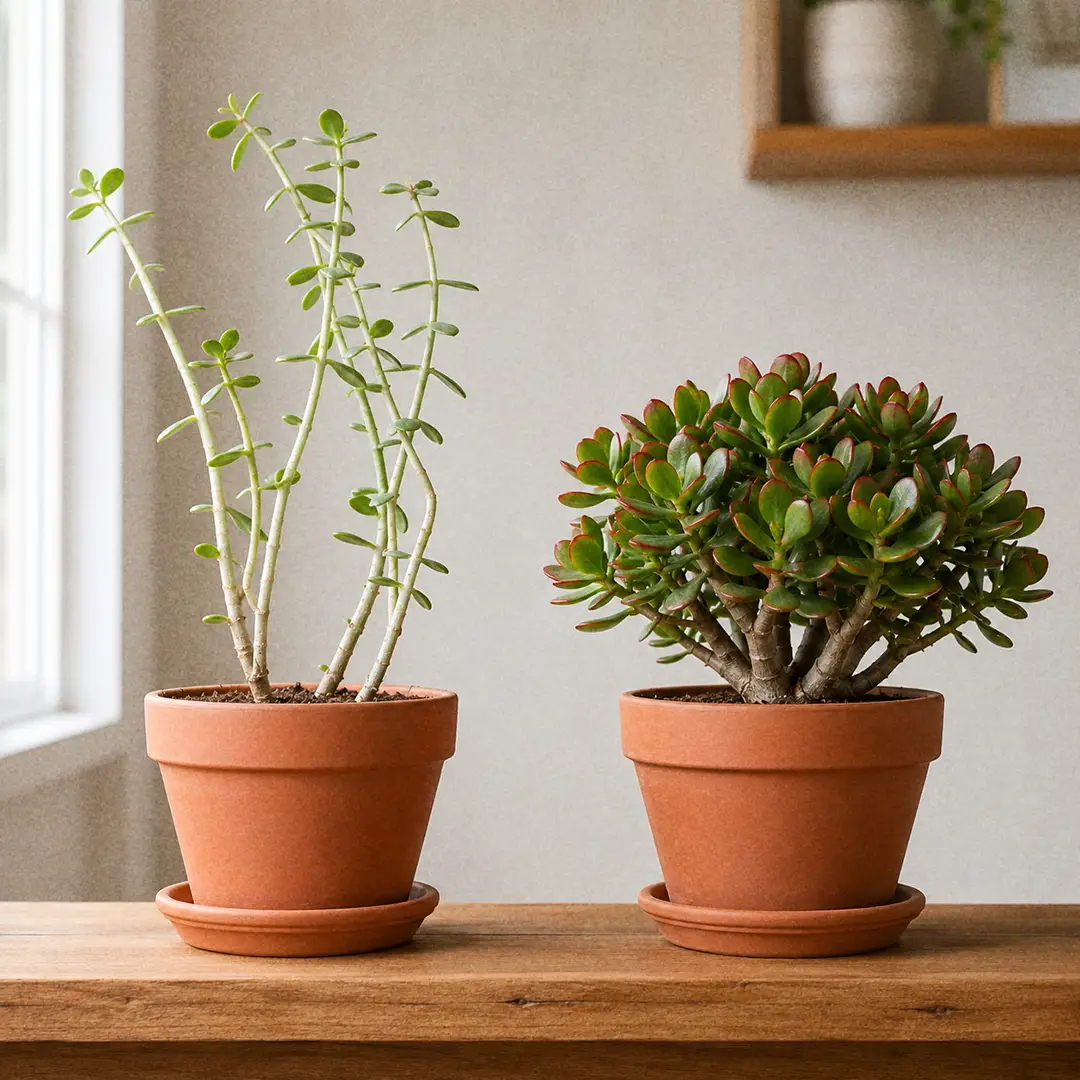
Jade is at the demanding end of the light scale. In anything less than direct sun, the trunk grows long and whippy, the leaves stay small and spaced out, and the plant develops a permanent lean. Given real sun, the leaves get thick, the trunk thickens into proper bark, and the leaf edges blush red.
That red edge is a good sign, not stress. It is the plant producing pigment in response to strong light, and it is the quickest visual confirmation that a Jade is happy where it stands.
Reading Jade leaves
Wrinkled, slightly soft leaves that are still firmly attached mean the plant is thirsty, and it will plump back up within a day of a proper soak. Yellow, soft leaves that drop at a touch mean the opposite, and you should check the roots.
Sudden leaf drop with no other symptoms is usually cold or a draft. Jade tolerates a chilly room but not a cold windowpane in January, and not the blast from a door that opens onto winter several times a day.
Pruning for a tree shape
Jade responds well to pruning, and it is the main reason old specimens look so good. Cut a stem back to just above a leaf pair and it will branch into two from that point, which is how you build a thick, tree-like canopy instead of a few long arms.
Prune in spring or early summer while the plant is growing actively. Every piece you cut off roots easily, so keep the cuttings, let them callus for a few days, and pot them up. The Elephant Bush looks similar, grows faster, and takes the same treatment if you want a second one to practice on.
🌹 Echeveria care specifics
Echeveria is the plant most people picture when they hear the word succulent, and it is the one that most often disappoints indoors. Its rosette form is beautiful and also structurally vulnerable in ways a Jade is not.
Protect the crown
Water pooling in the center of the rosette is the classic Echeveria killer. Outdoors, sun and moving air dry that water within the hour. On a windowsill it can sit for a day, and rot starts at the growing point in the middle of the plant.
Water at soil level, always. If water does end up in the rosette, tip the pot gently and blot it out with a corner of kitchen paper. Any rot that starts in the crown is effectively untreatable, since it destroys the only point the plant can grow from.
Do not touch the farina
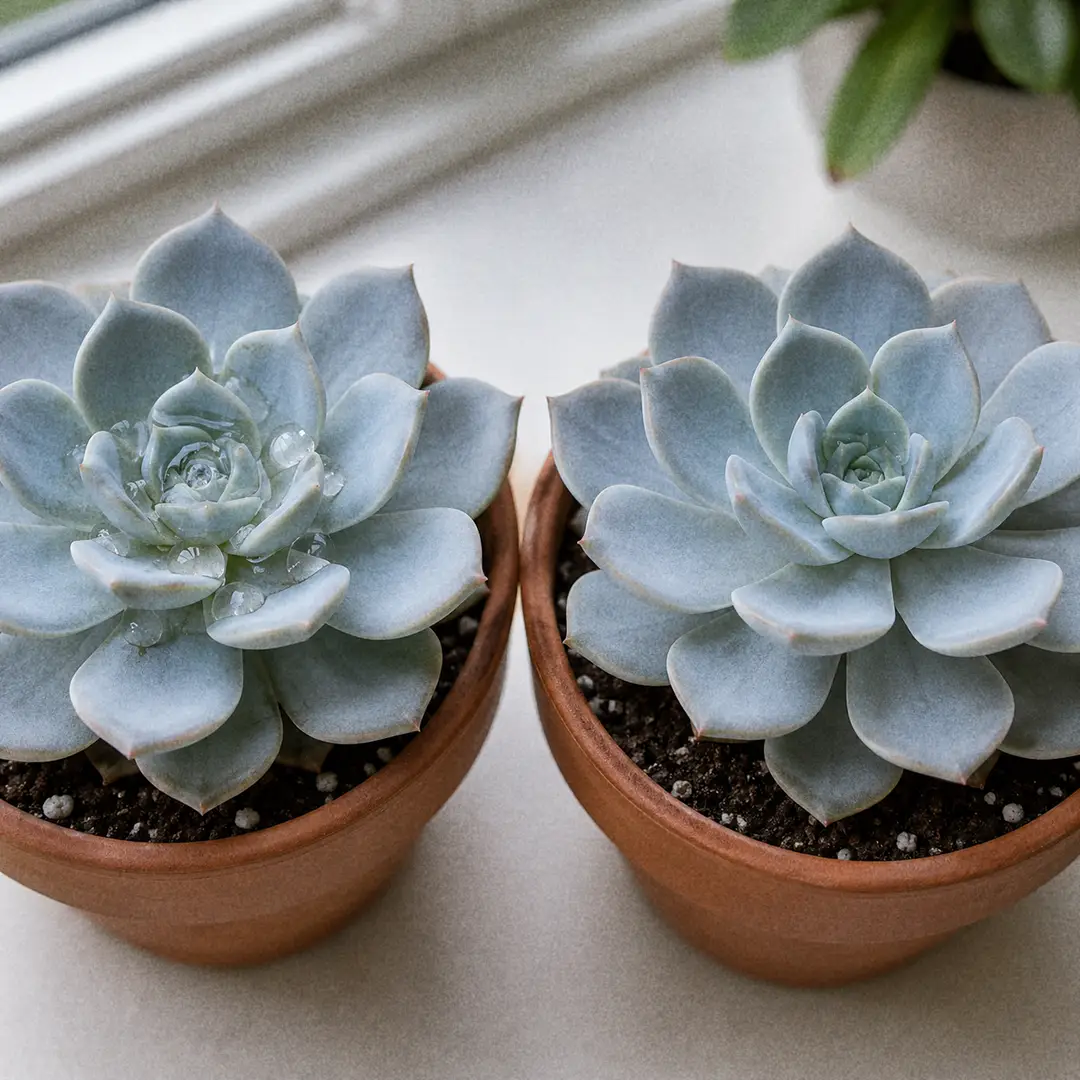
Many Echeveria varieties carry a fine, chalky white bloom on their leaves called farina. It is a wax layer the plant produces as sunscreen and waterproofing, and it does not grow back on a leaf once it is gone.
Every fingerprint is permanent. Handle these plants by the pot, do not wipe the leaves to dust them, and be careful with water spots, which can also mark the coating. If you like the powdery blue-gray look, this is the reason to keep your hands off.
Echeveria stretches faster than anything else
An Echeveria is the fastest early-warning system on the shelf. Where a Jade takes months to show that the light is inadequate, an Echeveria opens its rosette and starts stretching within weeks.
Treat that as useful information about the whole shelf rather than a problem with one plant. And when it does happen, the fix is the standard one: behead the rosette, re-root the top, and let the stump produce offsets. Ghost Plant and Hens and Chicks behave the same way and take the same treatment.
❄️ Summer and winter care
Succulent care is not one routine applied year-round. The seasonal swing indoors is larger than for most houseplants, because both light and growth change so much.
Winter is the dangerous season
Short days and weak sun mean the plant nearly stops growing and barely uses water, while your central heating dries the air but not necessarily the soil deep in the pot. This combination is why so many succulents that sailed through summer collapse in February.
Cut watering back hard. For most succulents in a bright window, once every four to six weeks through winter is plenty, and a slightly wrinkled leaf is a much safer state than a damp pot. Stop fertilizing entirely, move plants as close to the glass as you can without letting leaves touch cold panes, and consider a grow light. Our winter fertilizing rules and providing enough light during short winter days go into the seasonal shift in more detail.
Summer growth and the outdoor question
Spring and summer are when succulents actually grow, so this is when watering picks up, when you can feed at half strength once a month, and when you should do any repotting or propagating. Our fertilizing guide covers the feeding side.
Moving succulents outdoors for summer is genuinely good for them, and it is also the fastest way to burn them. Acclimate over two to three weeks in shade, then partial sun, then full. Watch the rain, since a pot left out in a wet week can stay saturated for a fortnight, and bring everything back inside before nights drop below about 50°F (10°C). Not all succulents follow this pattern, though. Lithops and Aeonium grow in winter and rest in summer, so they want the reverse treatment.
🩺 Troubleshooting succulent problems
Most succulent complaints resolve to one of a handful of causes. This table gets you to the right guide quickly.
| What you see | What it means | Where to go next |
|---|---|---|
| Stem lengthening, leaves spaced out, plant leaning | Not enough light | Leggy growth |
| Colors washed out to flat green | Not enough light | Pale, faded leaves |
| Lower leaves soft, translucent, yellow | Overwatering | Root rot |
| Stem brown, soft, or foul-smelling at the base | Rot has reached the stem | Mushy stems |
| Leaves wrinkled but firmly attached | Thirsty, and easily fixed | Watering guide |
| Dry bleached or brown patches on sun-facing leaves | Sunburn from a sudden move | Sunburn and leaf scorch |
| White cottony specks in the leaf joints | Mealybugs | Mealybugs |
| Small flies around the pot | Soil staying wet too long | Fungus gnats |
The pests that target succulents
Mealybugs are the main one, and they love succulents because the tight leaf joints of a rosette give them exactly the sheltered crevice they want. Check where the leaves meet the stem, since that is where they hide and where you will see the white cottony deposits before you see the insects.
Root mealybugs are the nastier relative, living in the soil and feeding on roots with no visible symptom above ground until the plant stops thriving for no apparent reason. Every time you repot a succulent, take ten seconds to look at the root ball for white powdery patches.
When to give up and propagate instead
Some plants are not worth saving as they are. A badly stretched succulent, a rosette with crown rot, or a plant whose roots have gone will not return to looking good, no matter how well you treat it from now on.
The good news is that succulents are the easiest houseplants to restart from a piece. A single healthy leaf or the top few inches of a stem will produce a whole new plant, and the succulent propagation guide covers both methods. Beheading a ruined plant is not defeat, it is how experienced growers keep a collection looking sharp.
🪴 See also 🪴
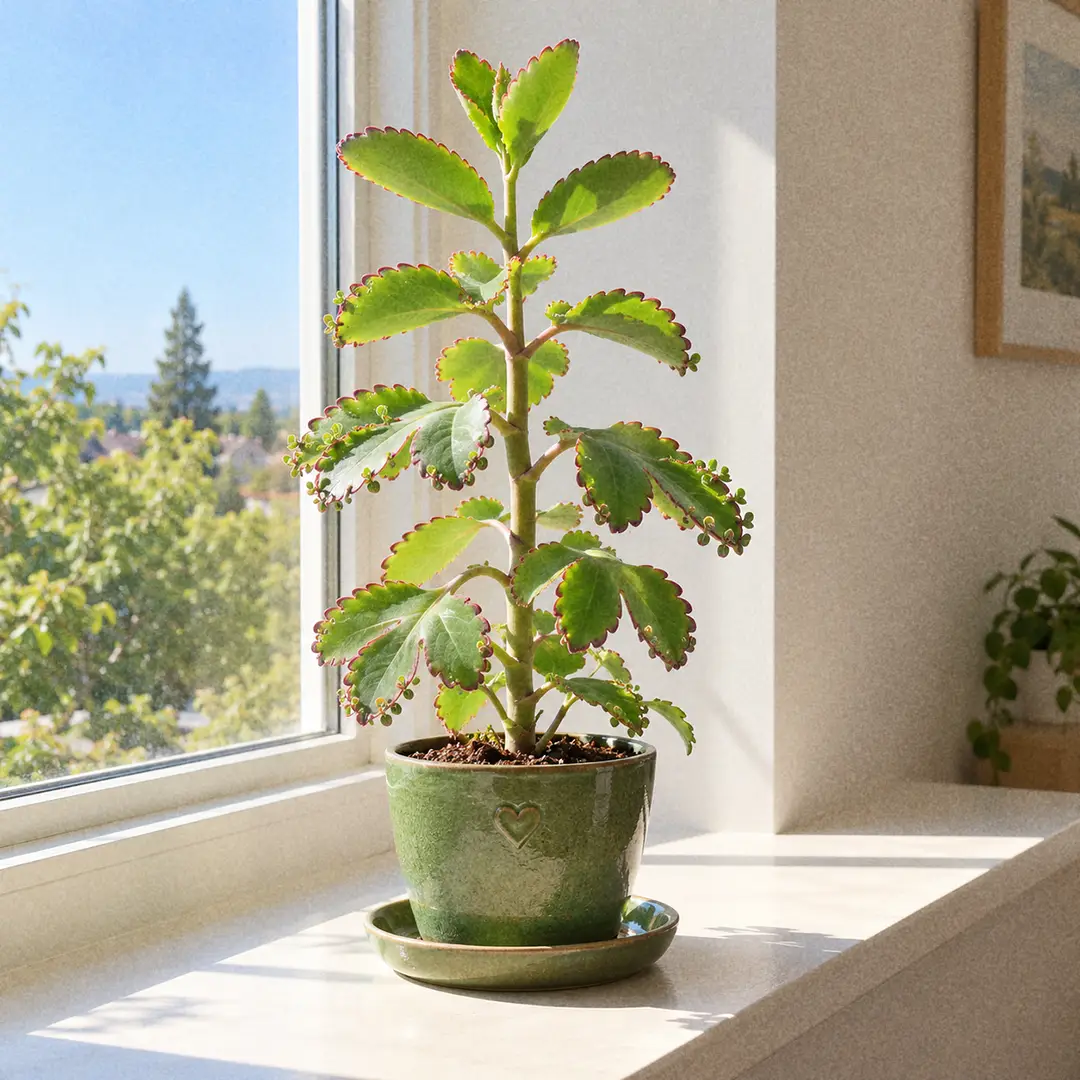
Complete Guide to Leaf of Life Care and Growth
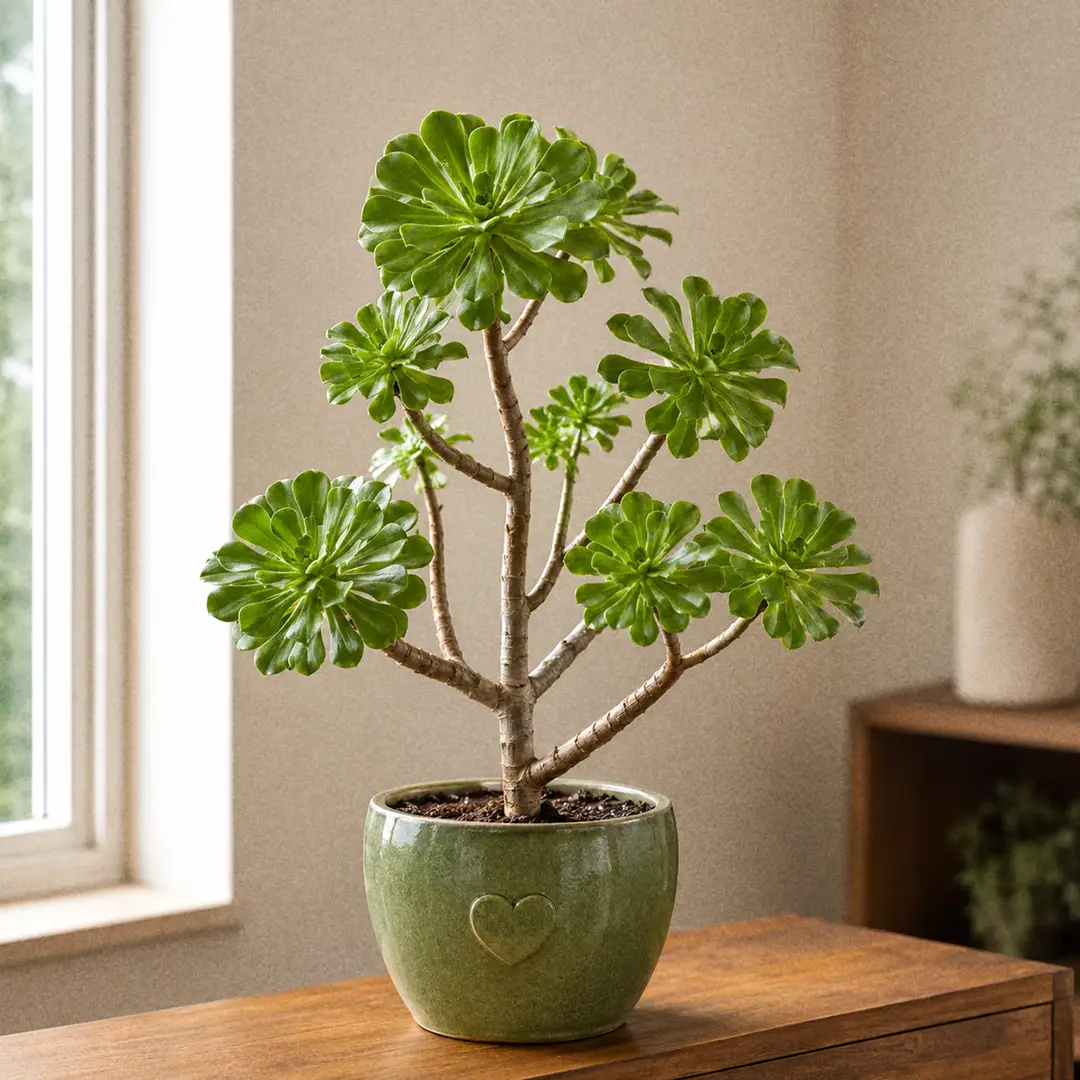
Complete Guide to Aeonium Care and Growth
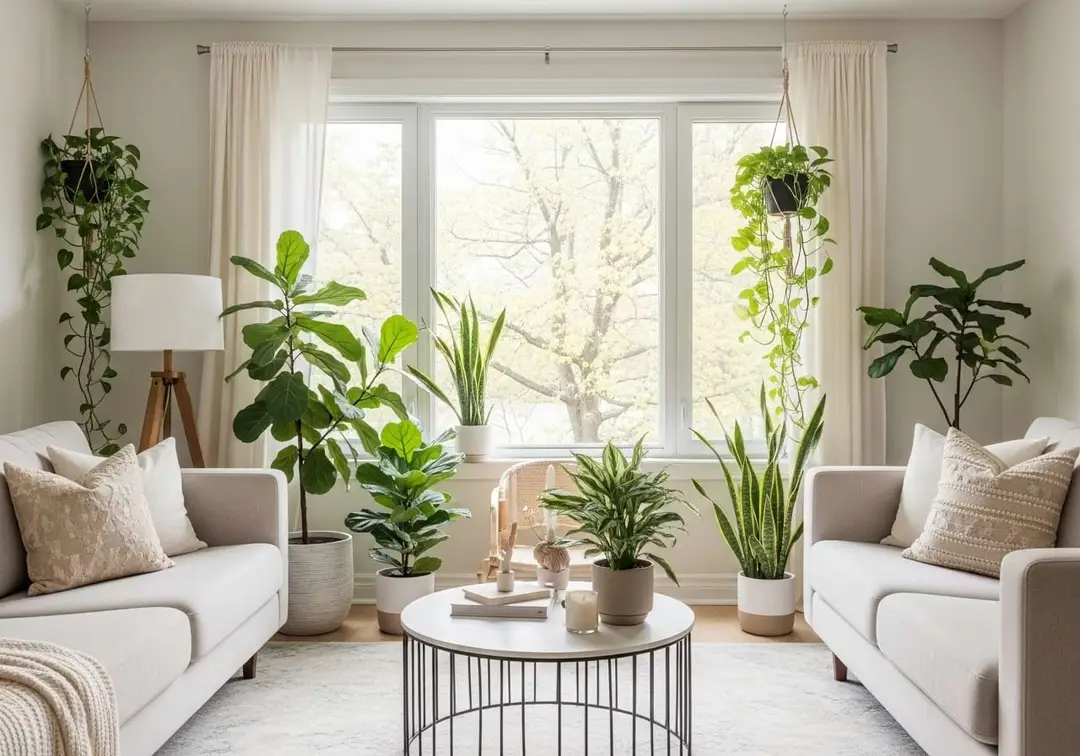
Houseplant Light Guide: How to Find the Perfect Spot for Your Plant
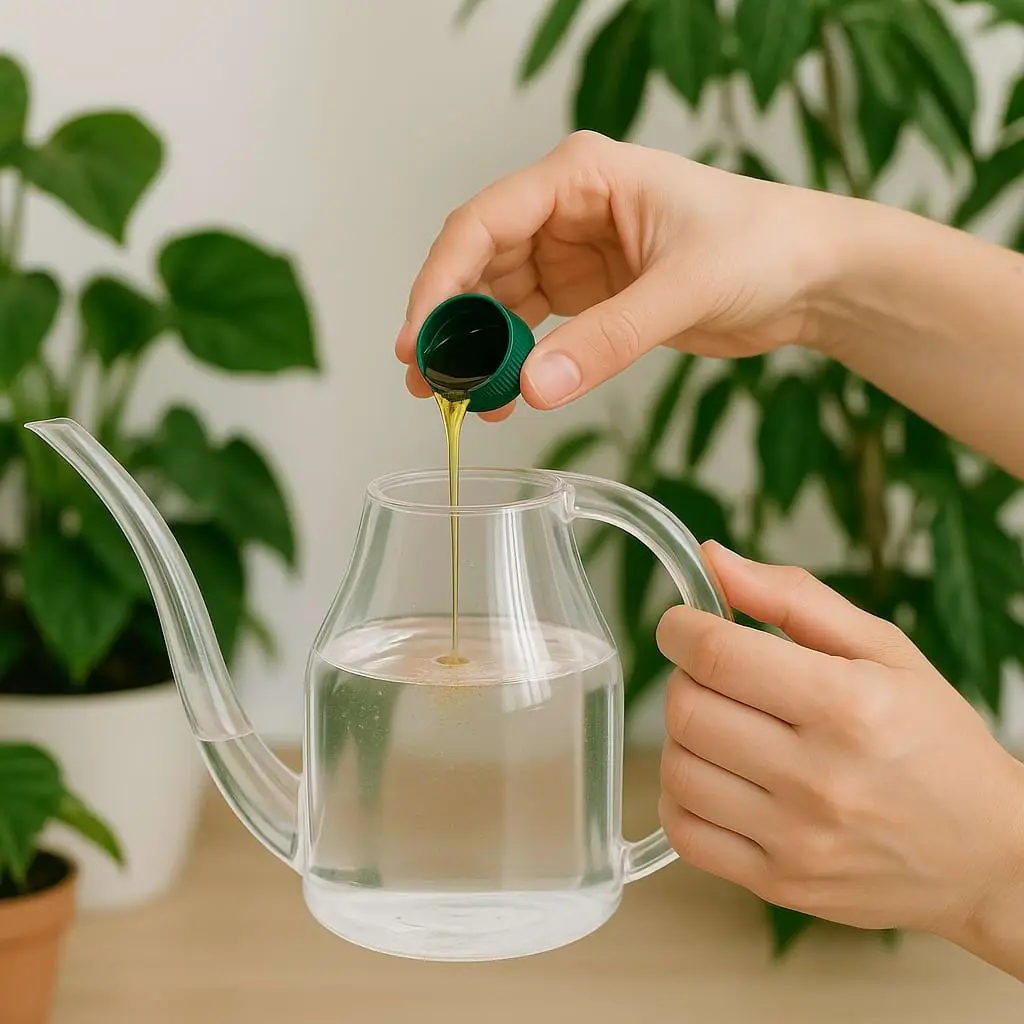
How to Fertilize Houseplants: A Simple Guide for Beginners
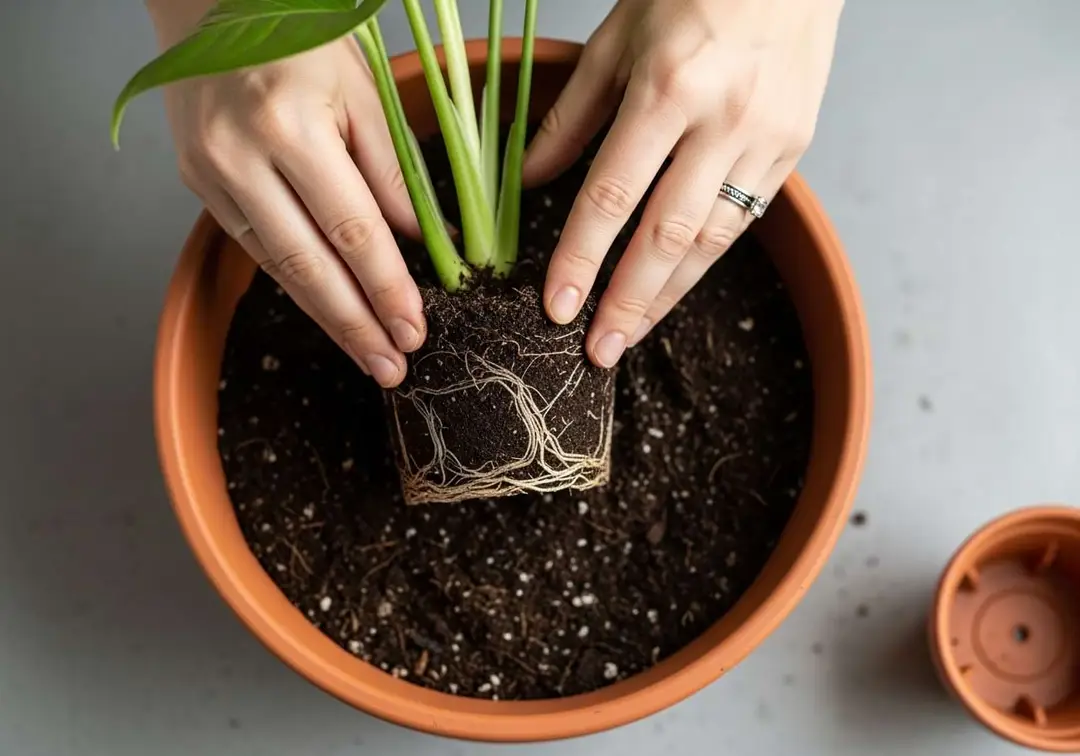
How to Repot a Houseplant Without Killing It (Step-by-Step Guide)
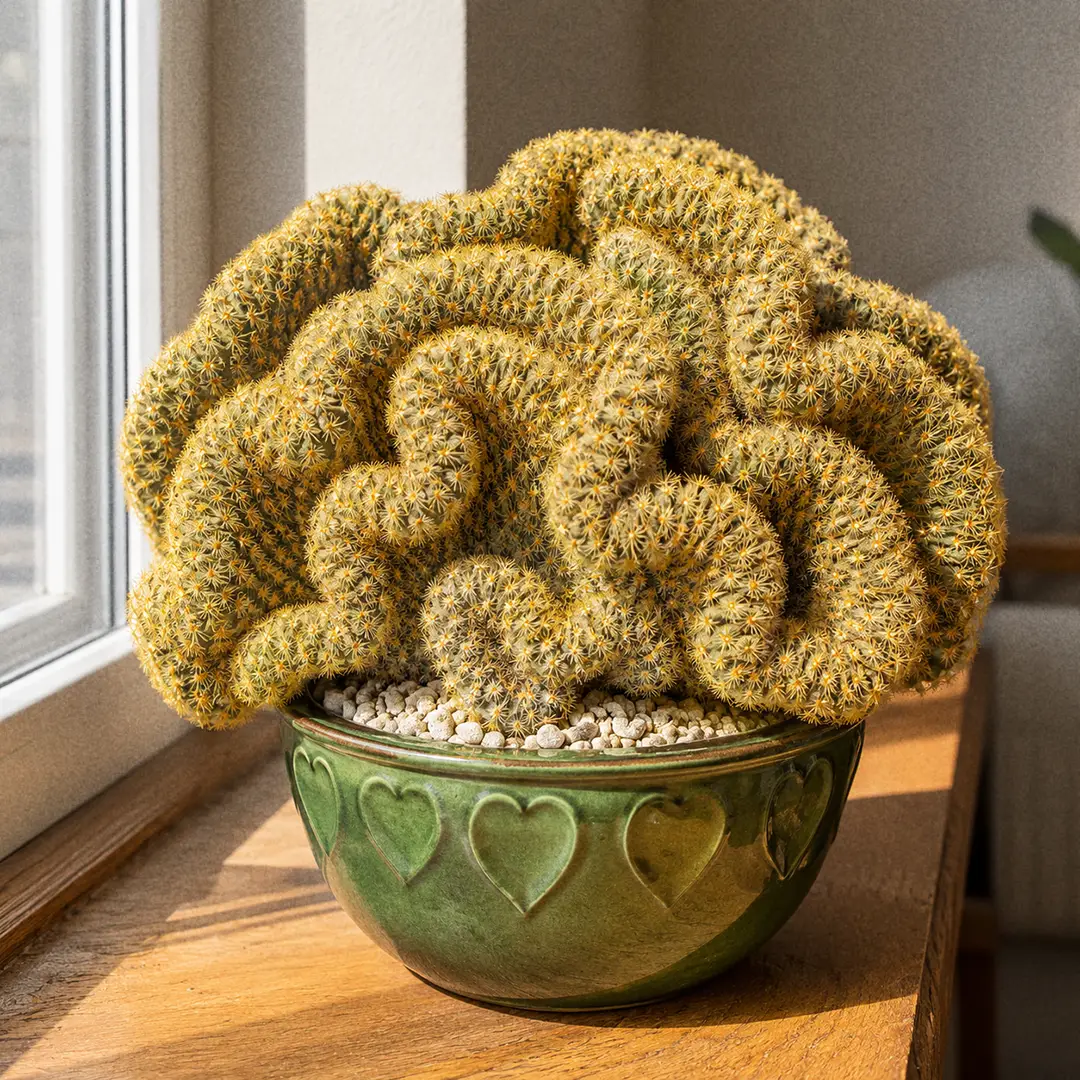
Complete Guide to Crested Brain Cactus Care and Growth
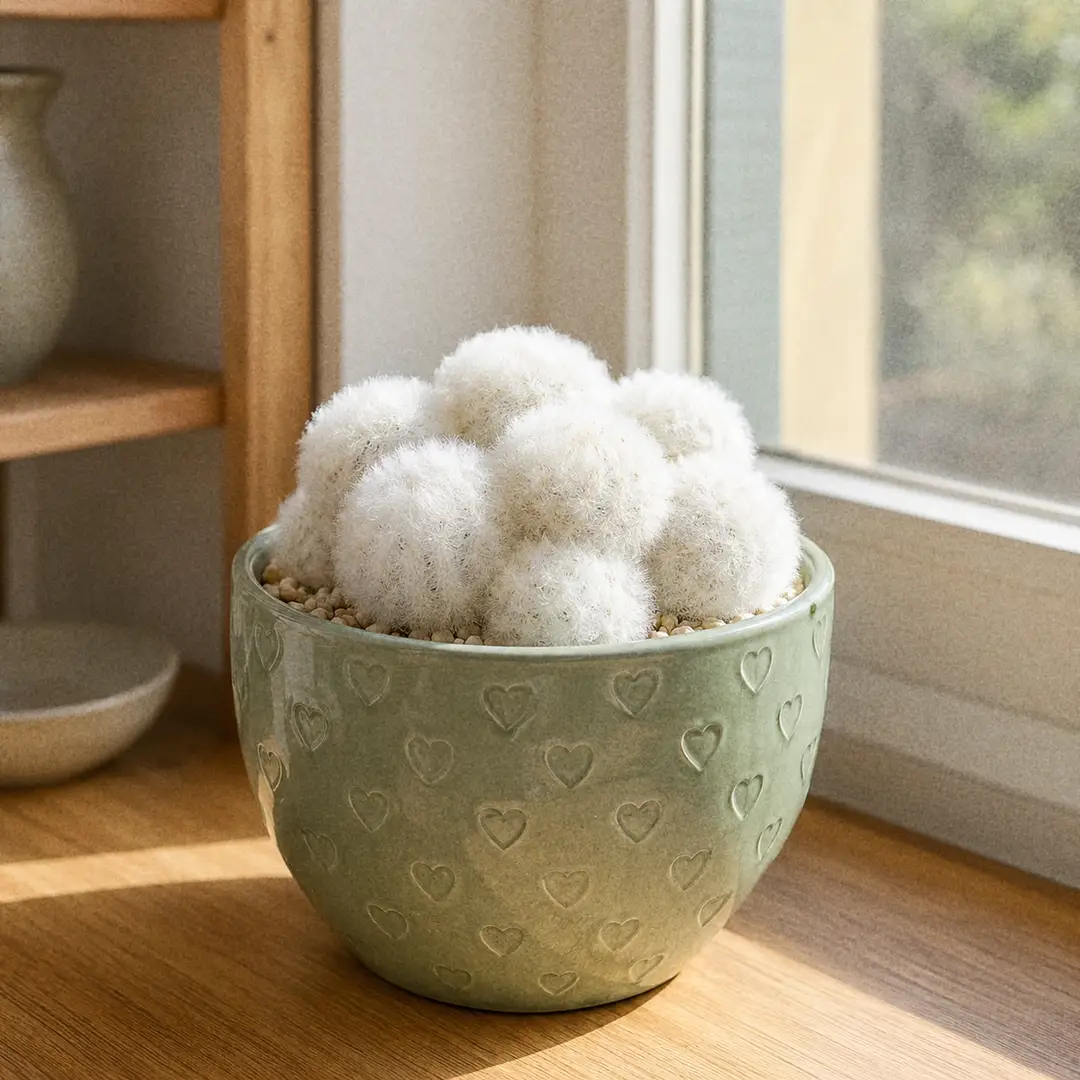
Complete Guide to Feather Cactus Care and Growth
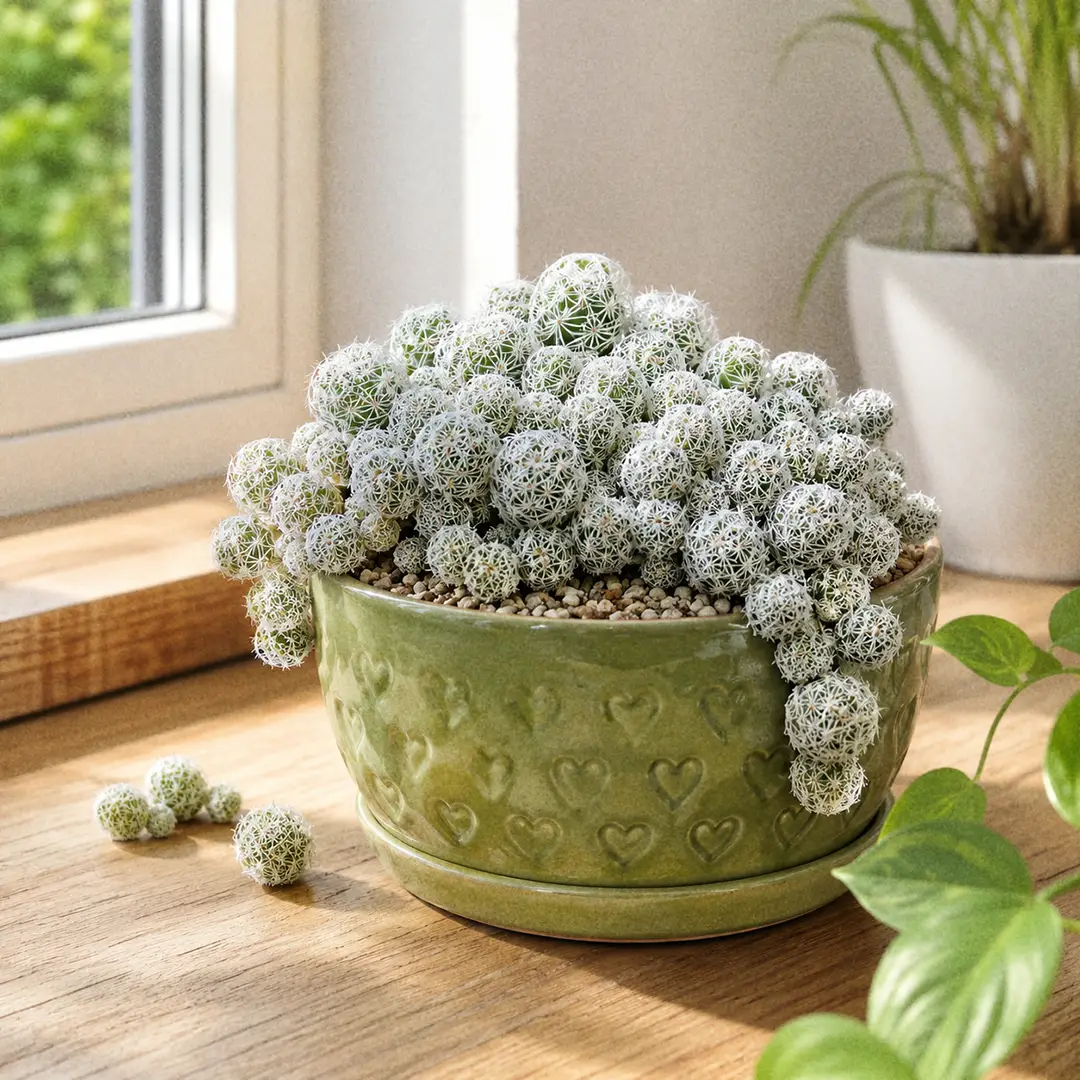
Complete Guide to Snowball Cactus Care and Growth
Complete Guide to Spiral Cactus Care and Growth
Complete Guide to Fairy Castle Cactus Care and Growth
Complete Guide to Silver Torch Cactus Care and Growth
Complete Guide to Crown Cactus Care and Growth
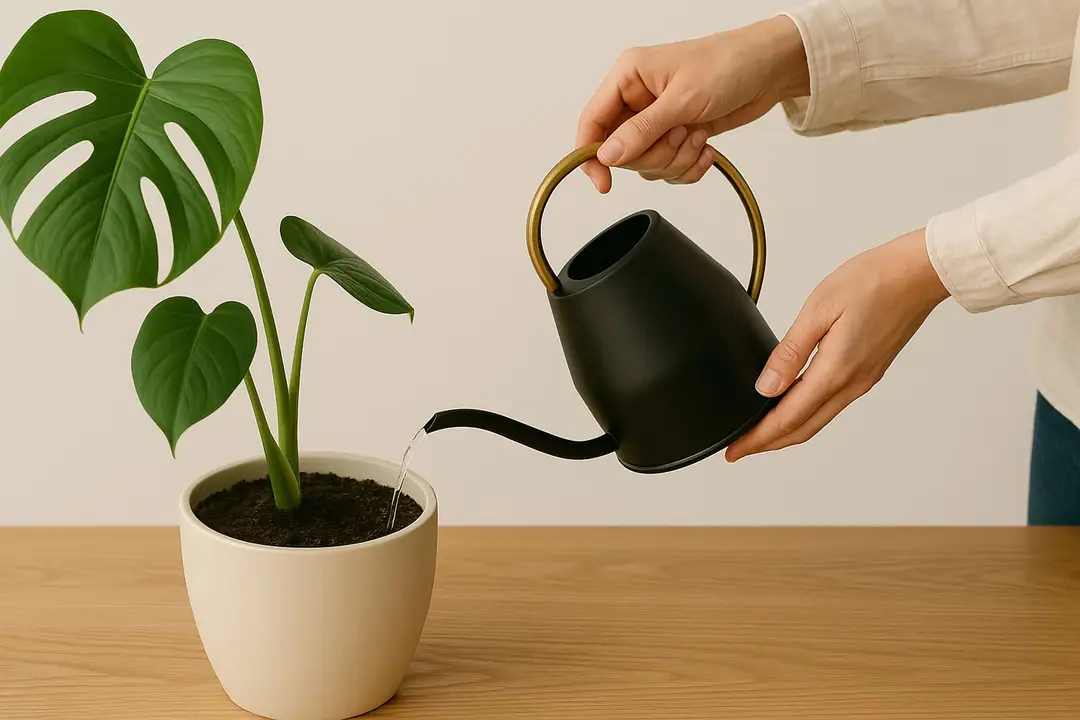
How to Water Houseplants: The Ultimate Beginner's Guide
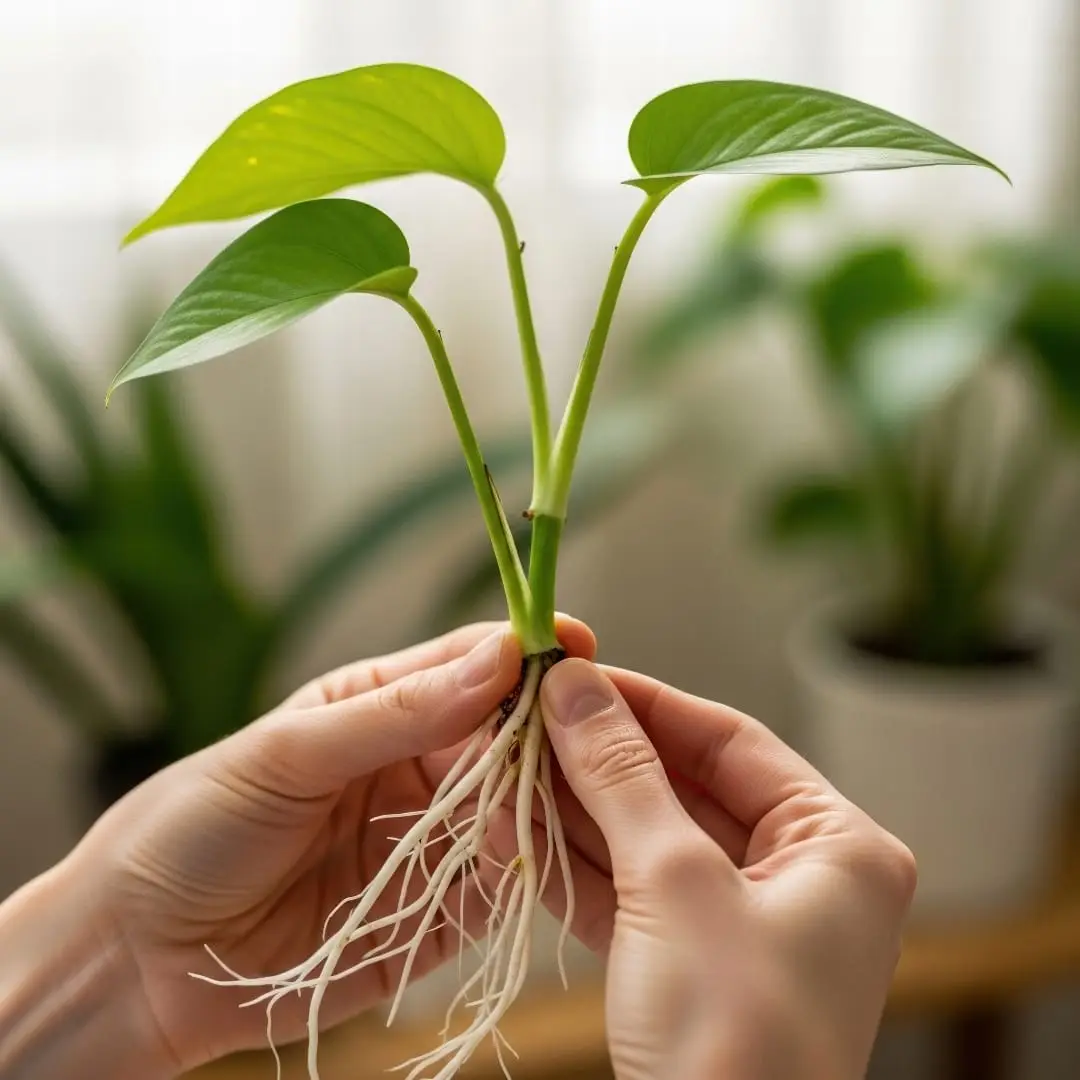
The Ultimate Guide to Houseplant Propagation: Create New Plants for Free!
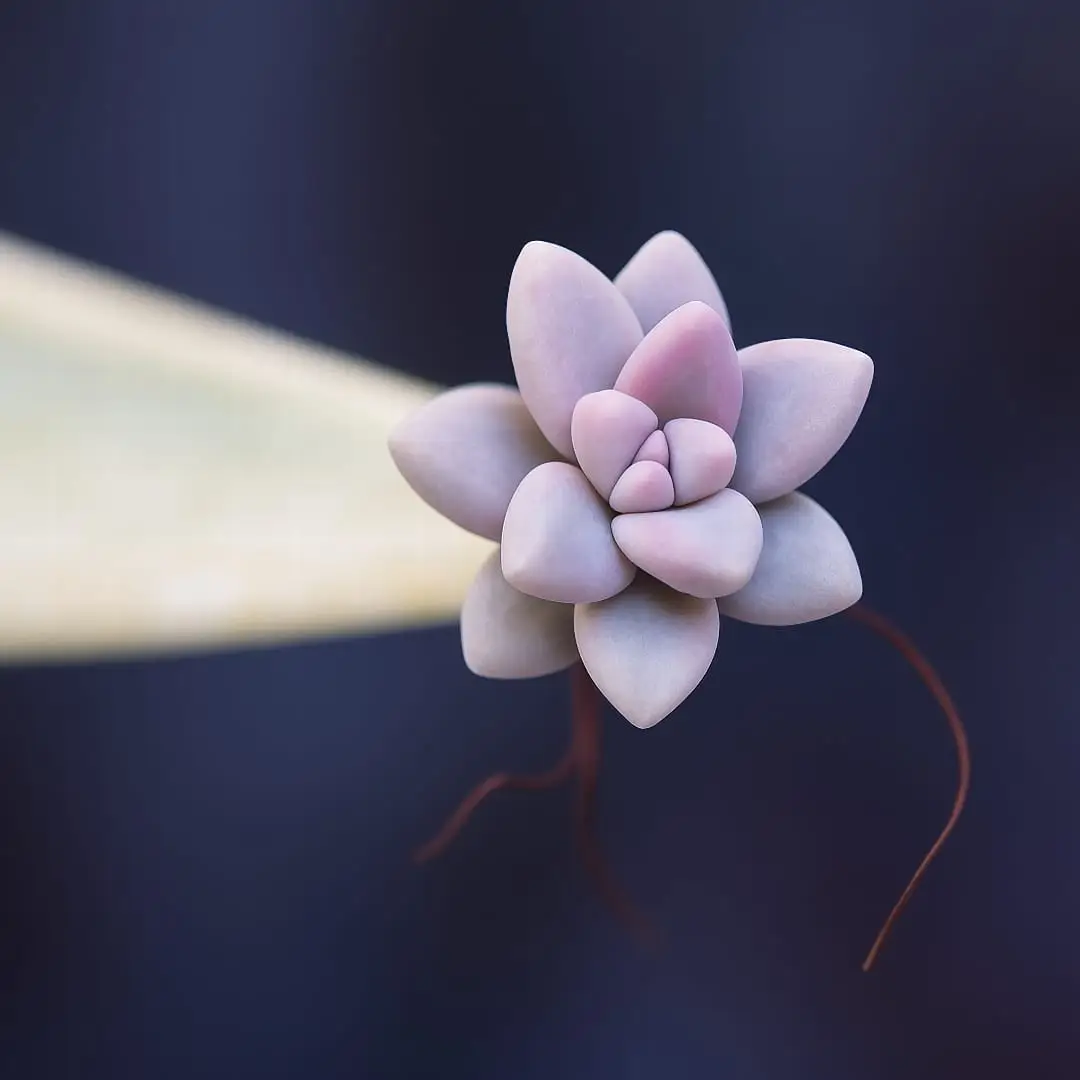
How to Propagate Succulents from Leaves & Offsets
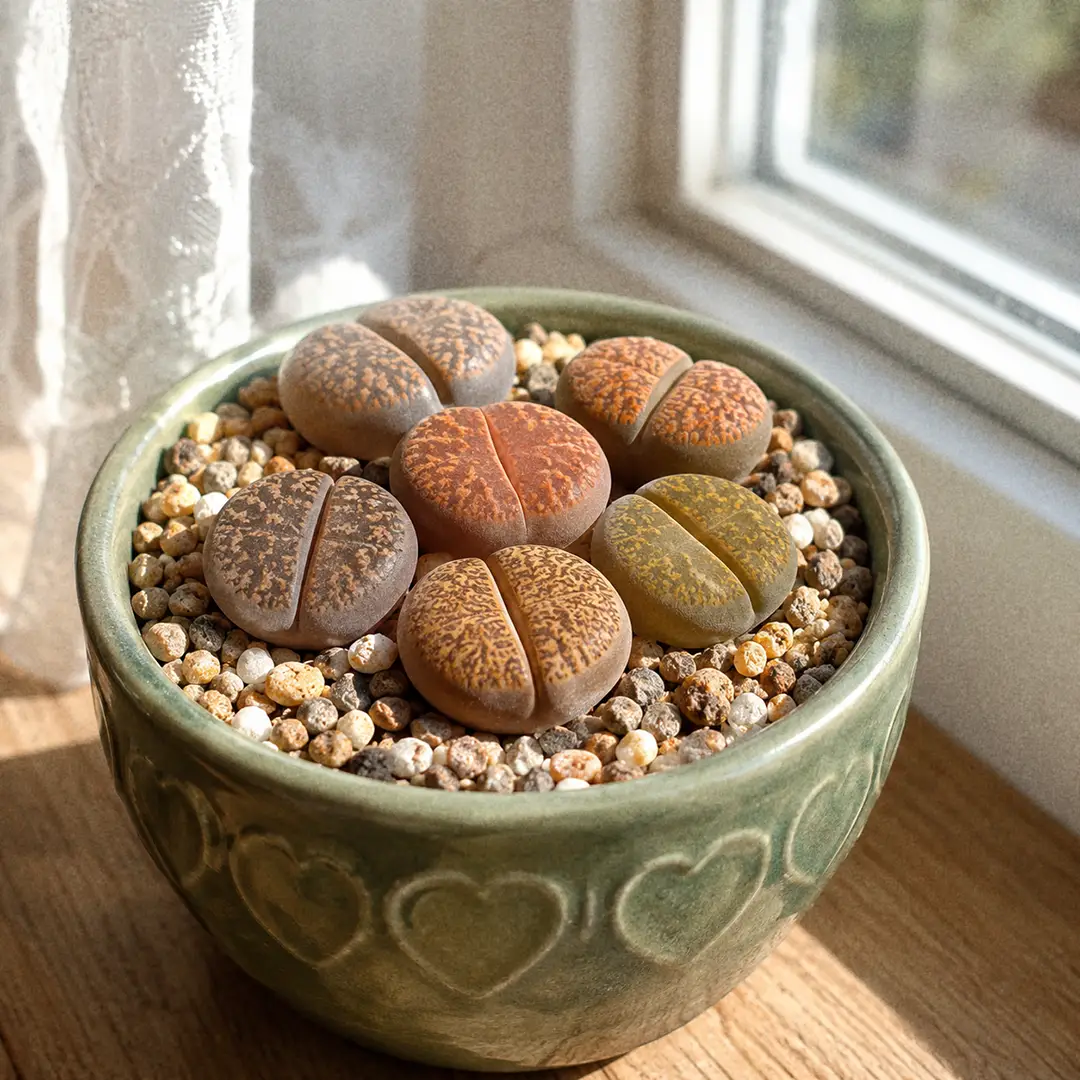
Complete Guide to Lithops Care and Growth (Living Stones)
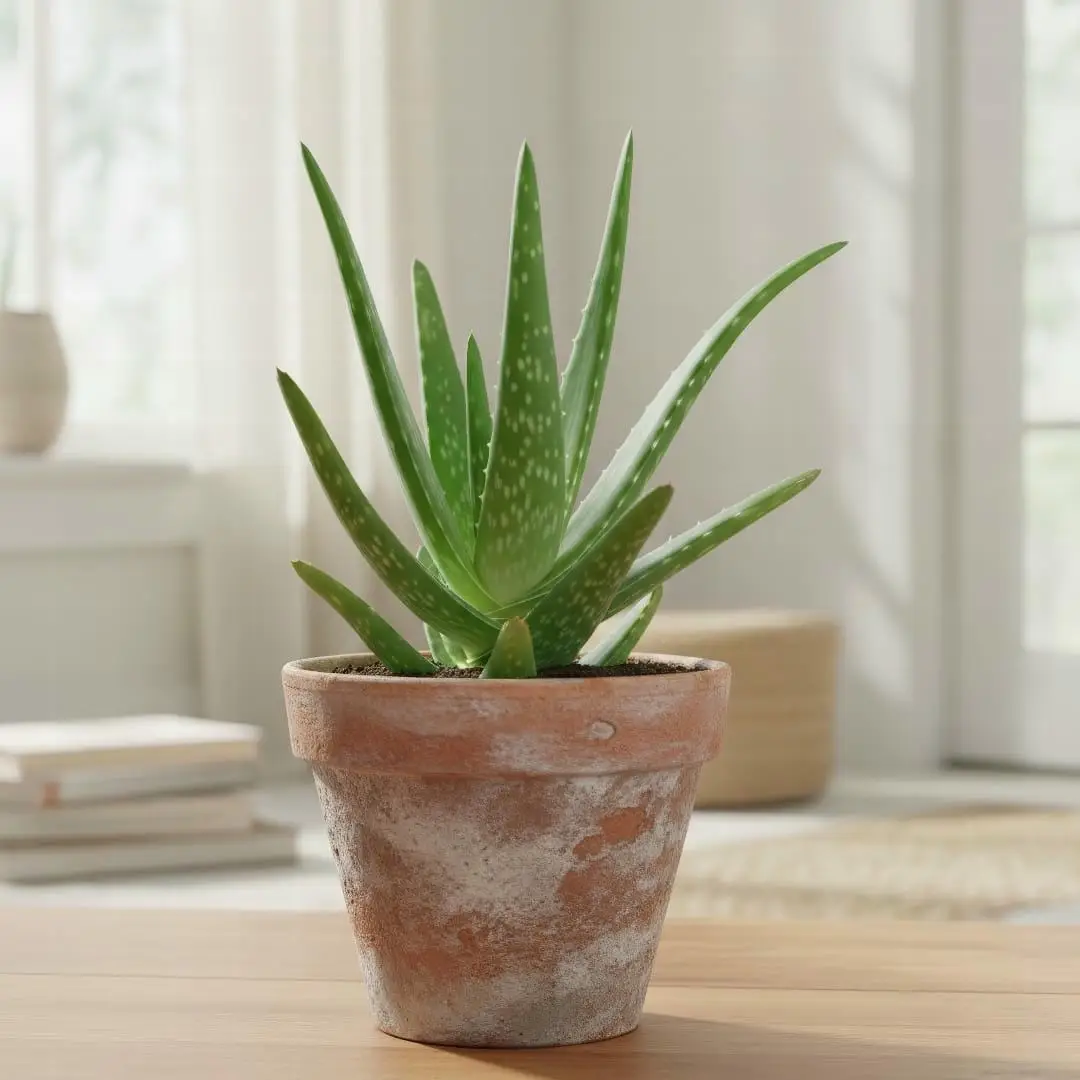
Complete Guide To Aloe Vera Care and Growth
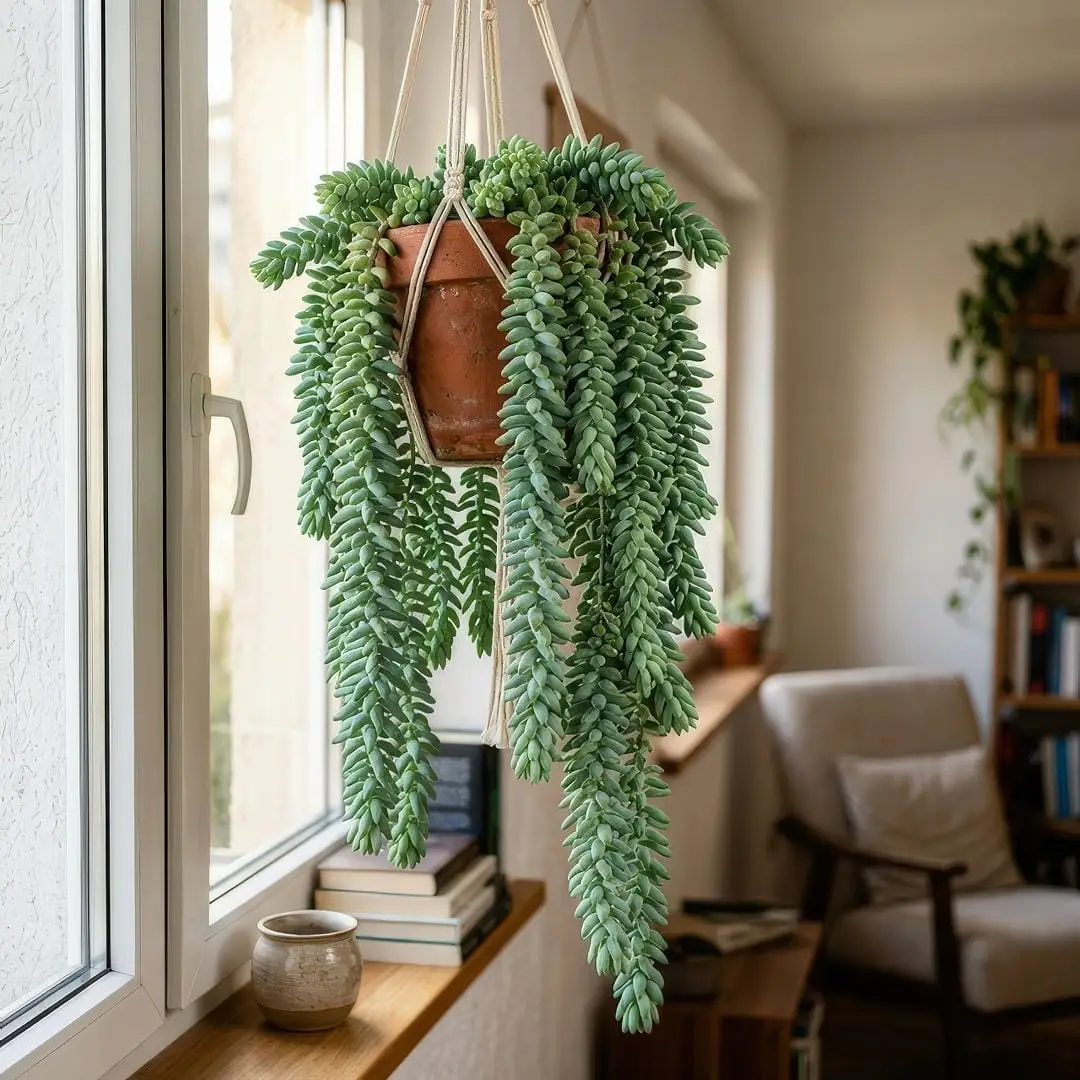
Complete Guide to Burro's Tail Care and Growth
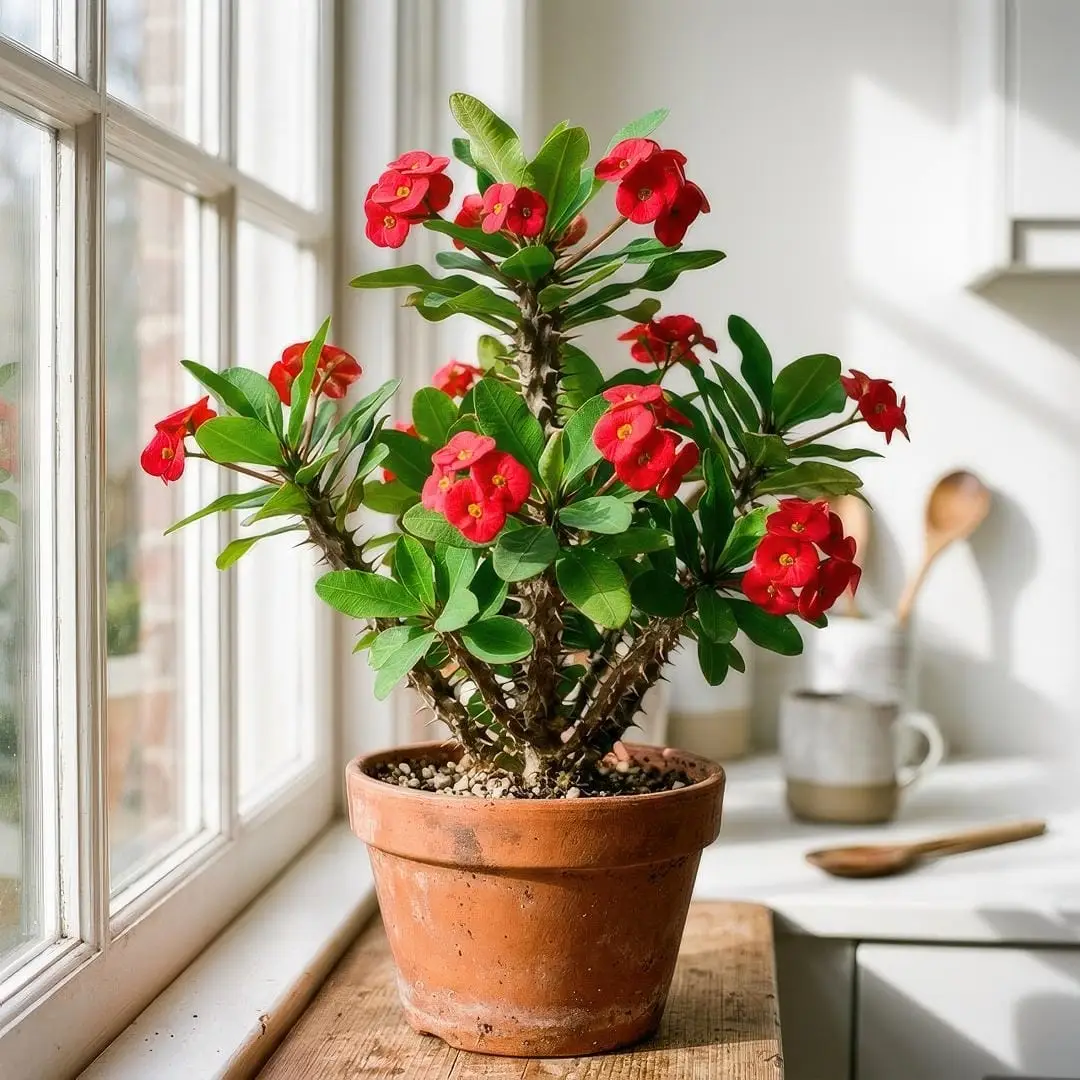
Complete Guide to Crown of Thorns Care and Growth
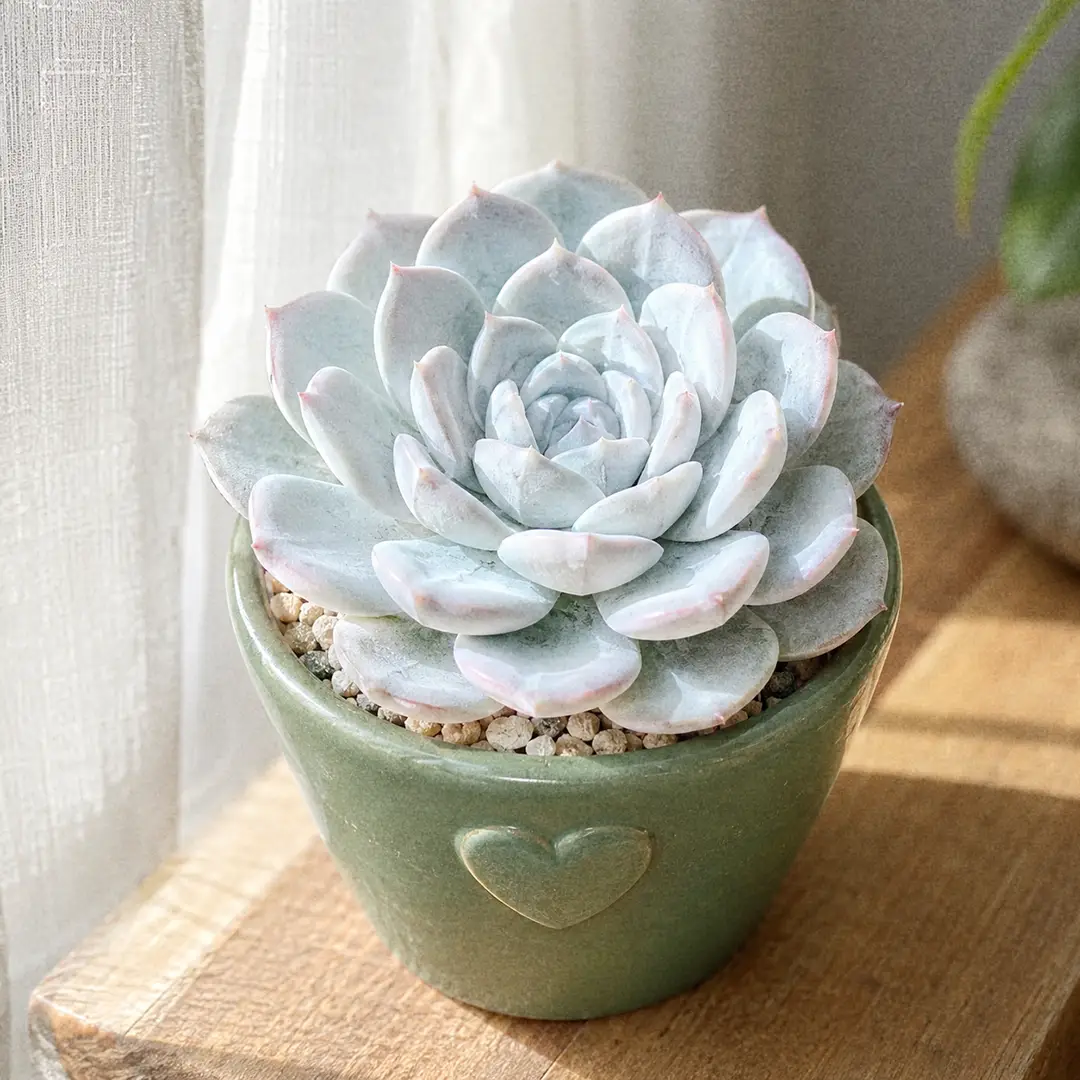
Complete Guide to Echeveria Care and Growth
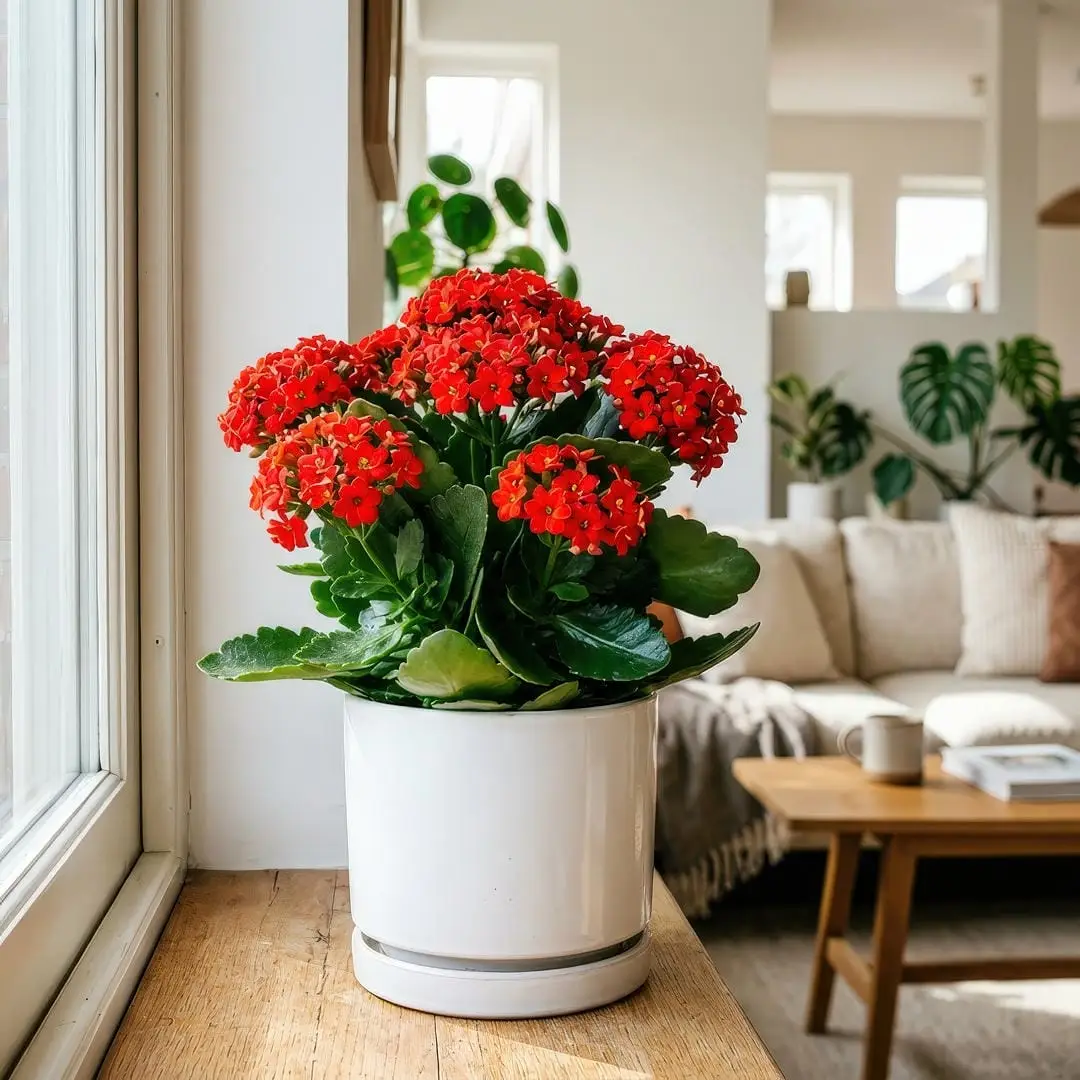
Complete Guide to Flaming Katy Care and Growth
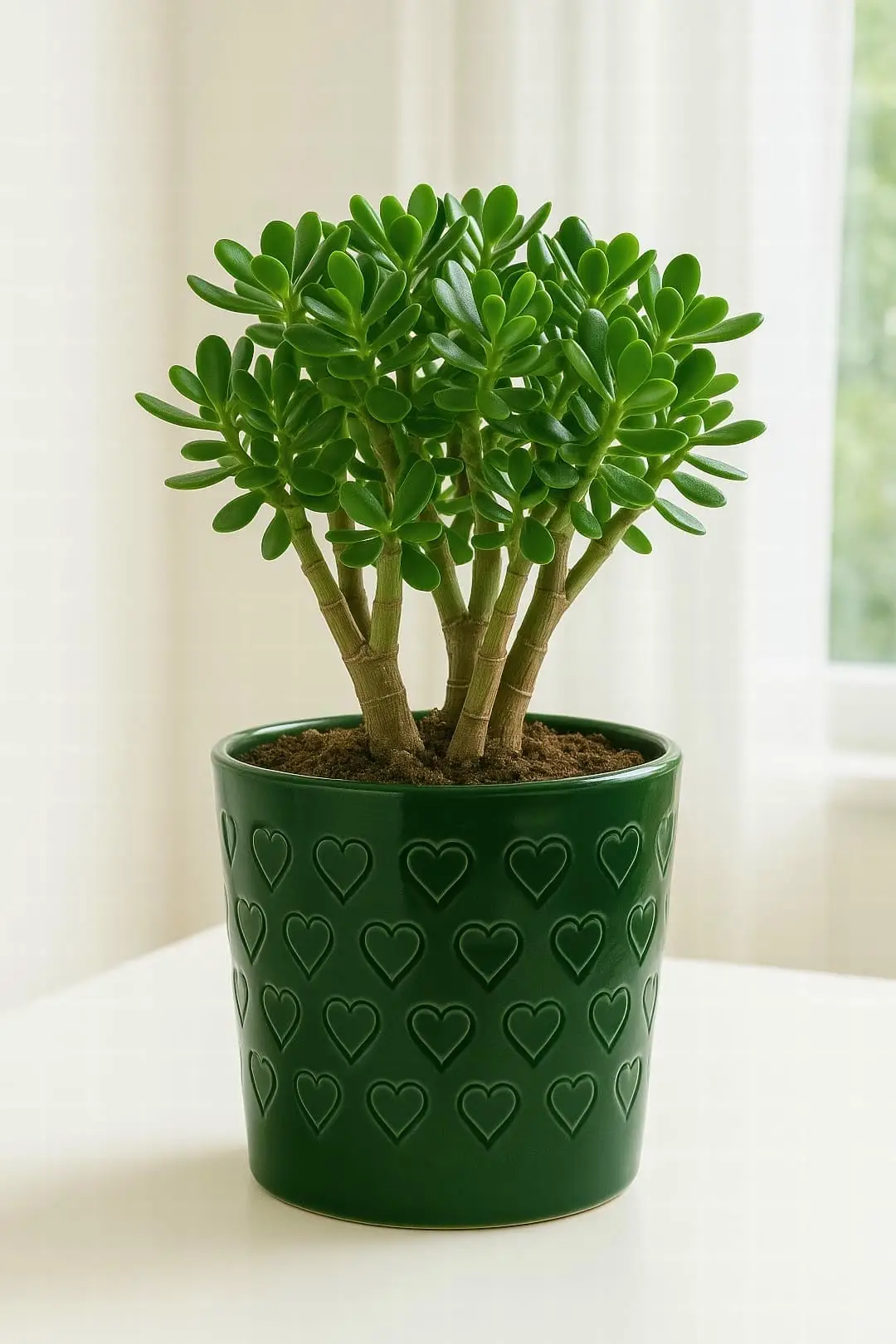
Complete Guide to Jade Plant Care and Growth
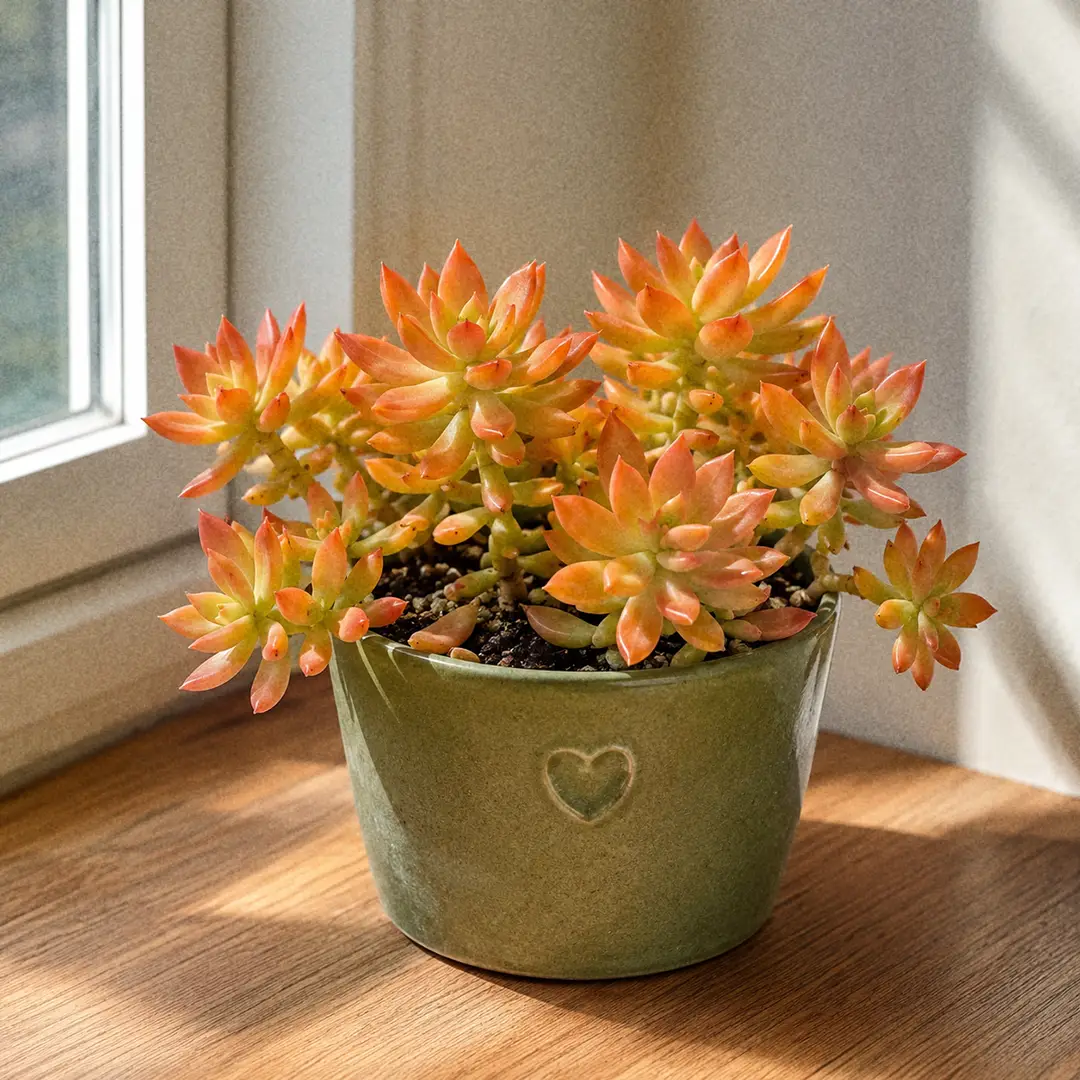
Complete Guide to Sedum Adolphii Care and Growth
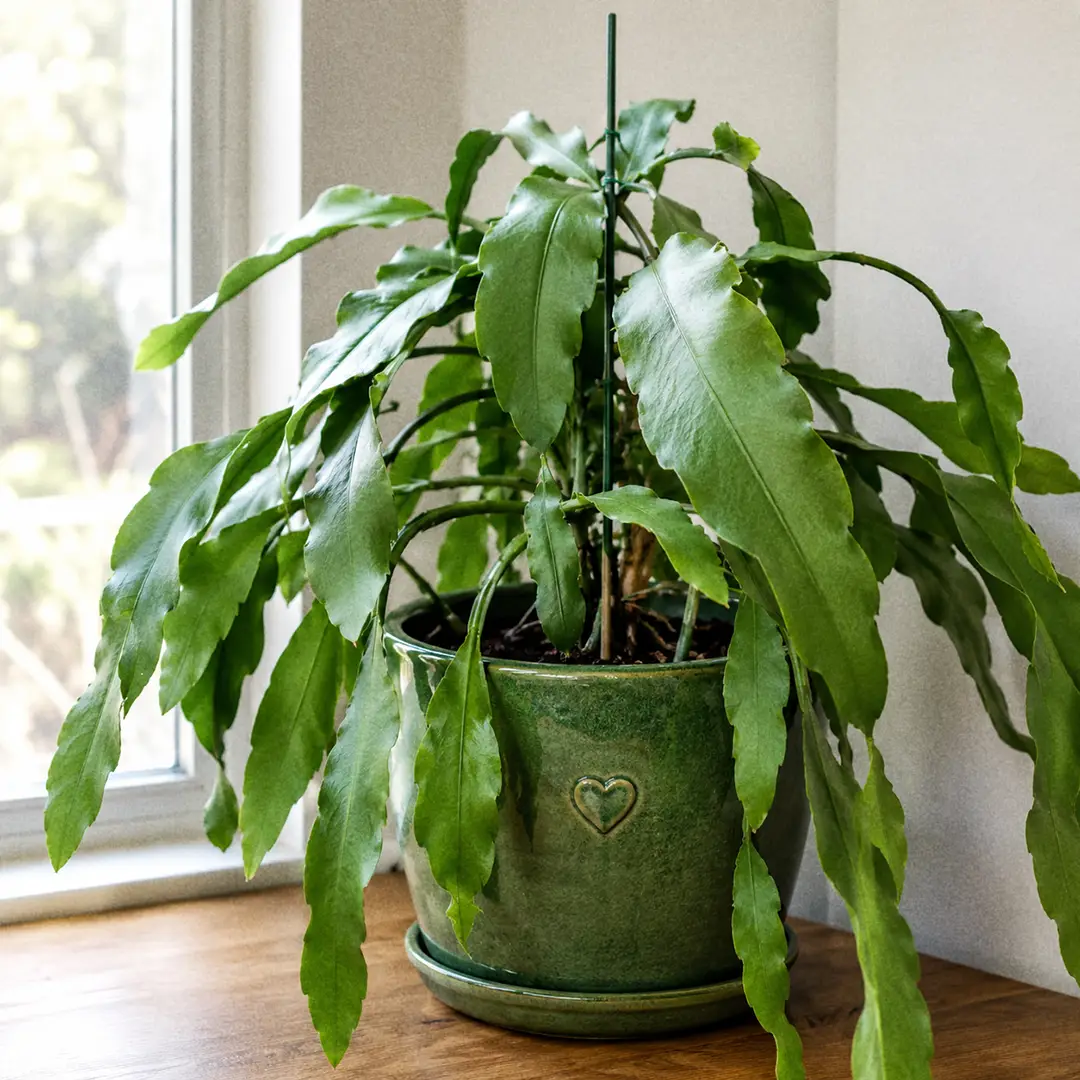
Complete Guide to Queen of the Night Care and Growth
Complete Guide to Domino Cactus Care and Growth
Complete Guide to Easter Lily Cactus Care and Growth
Complete Guide to Peanut Cactus Care and Growth
Complete Guide to Rat Tail Cactus Care and Growth
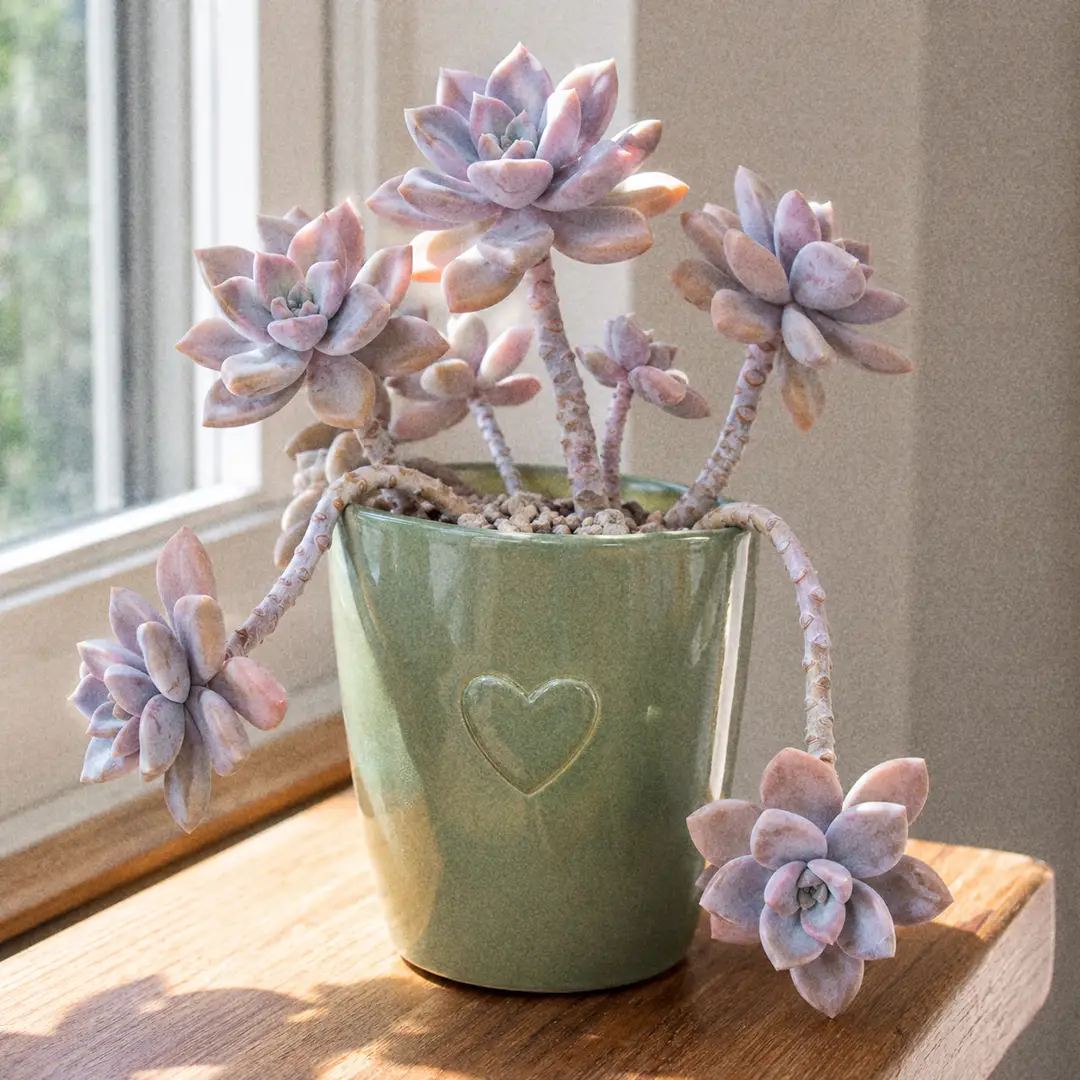
Complete Guide to Ghost Plant Care and Growth
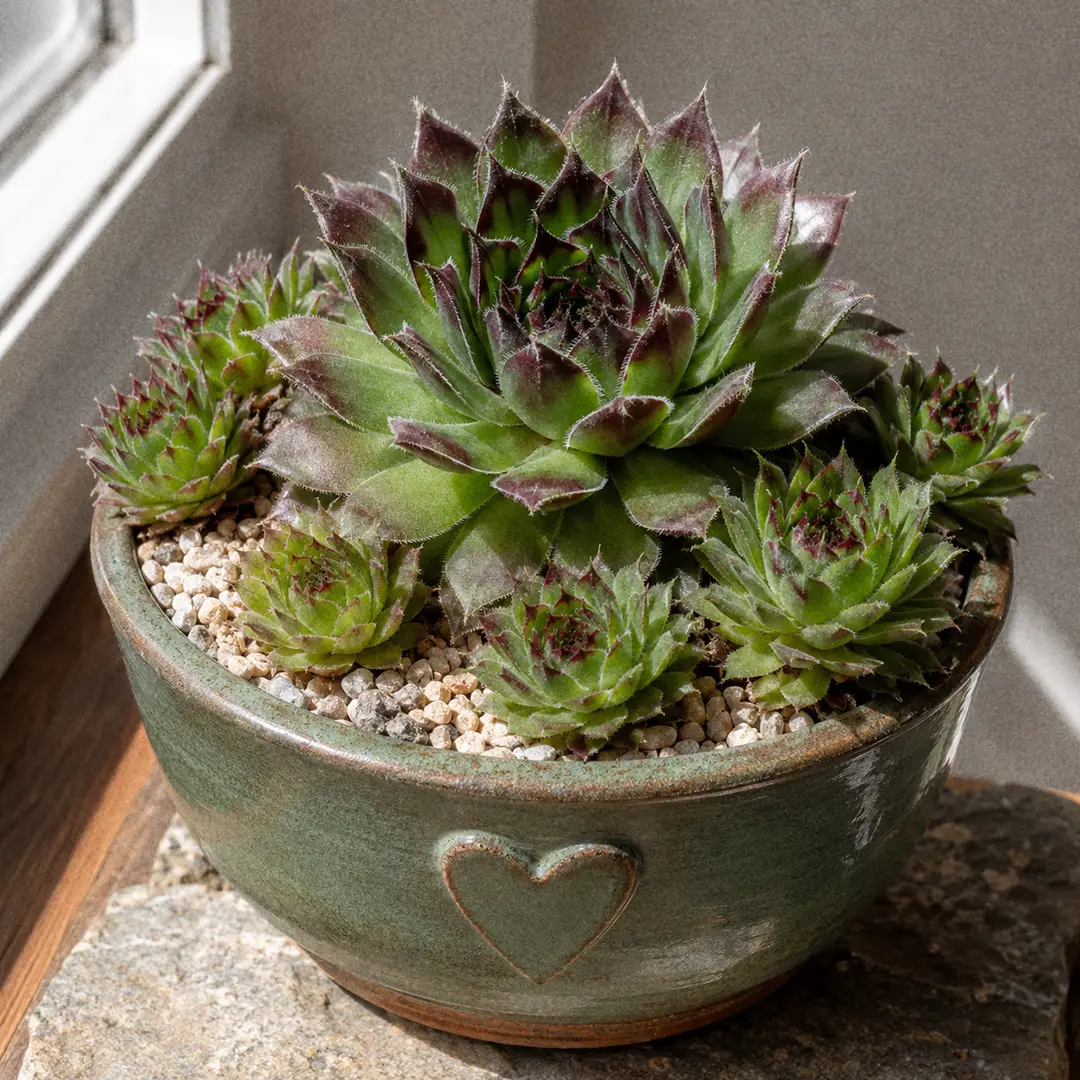
Complete Guide to Hens and Chicks Care and Growth
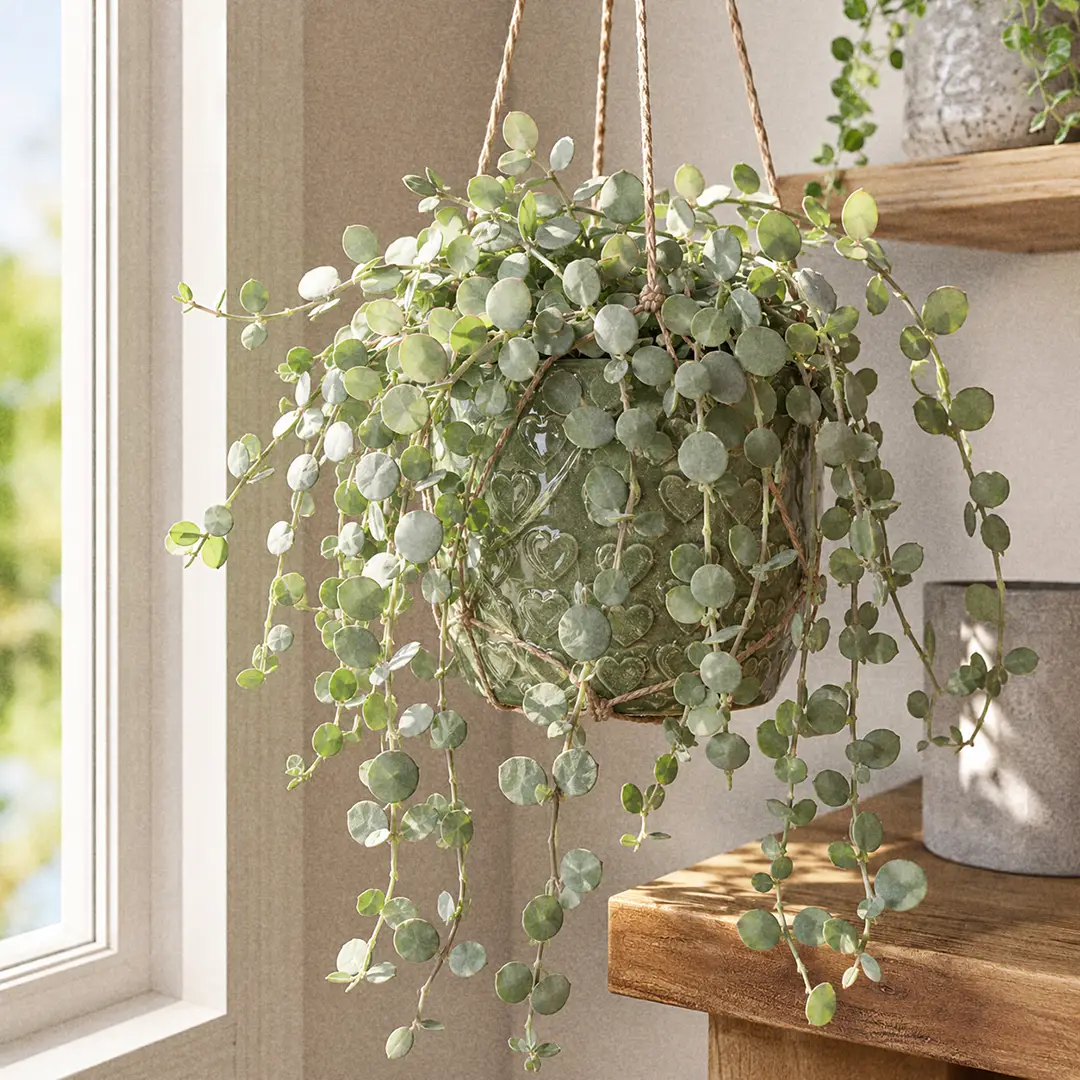
Complete Guide to String of Coins Care and Growth
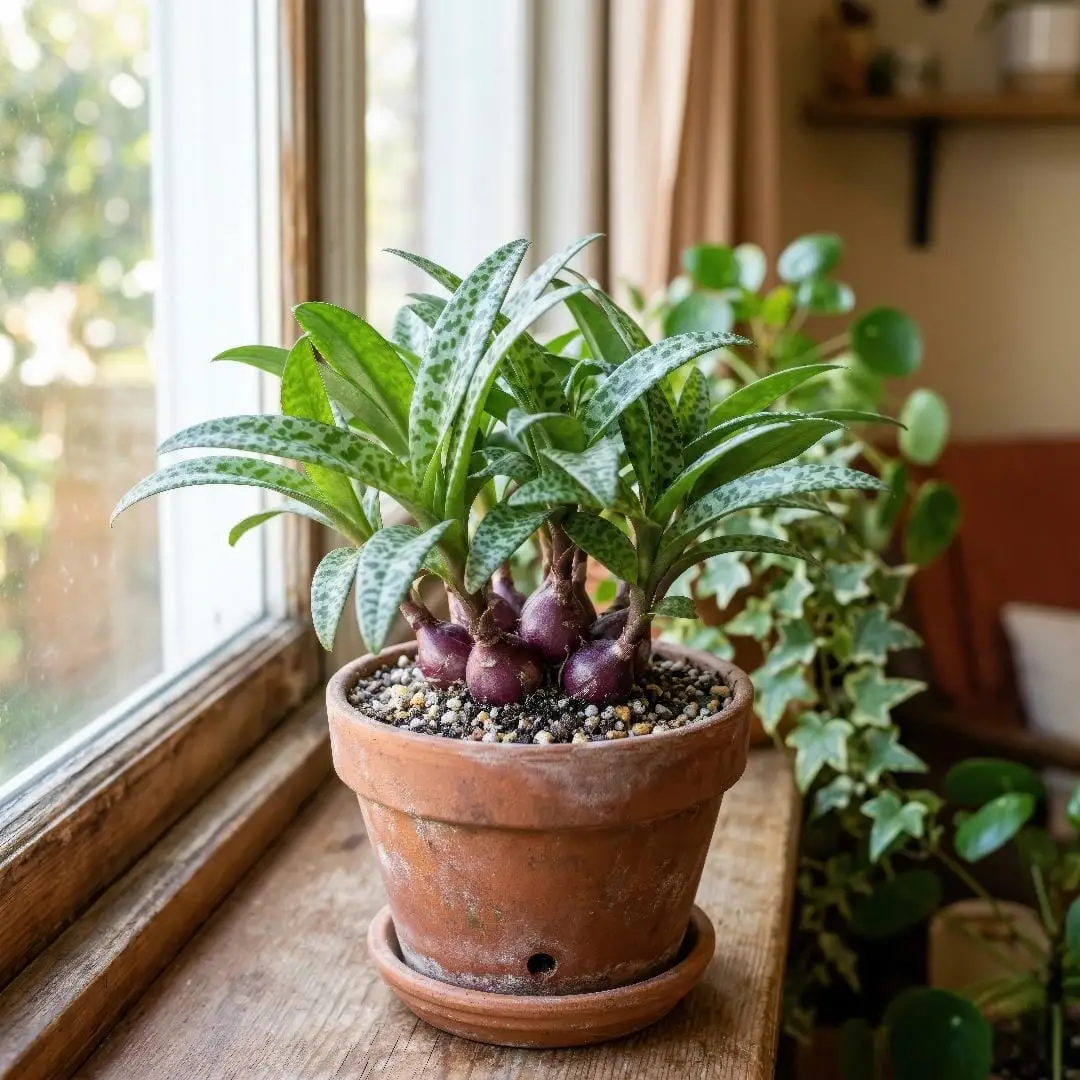
Complete Guide to Silver Squill Care and Growth
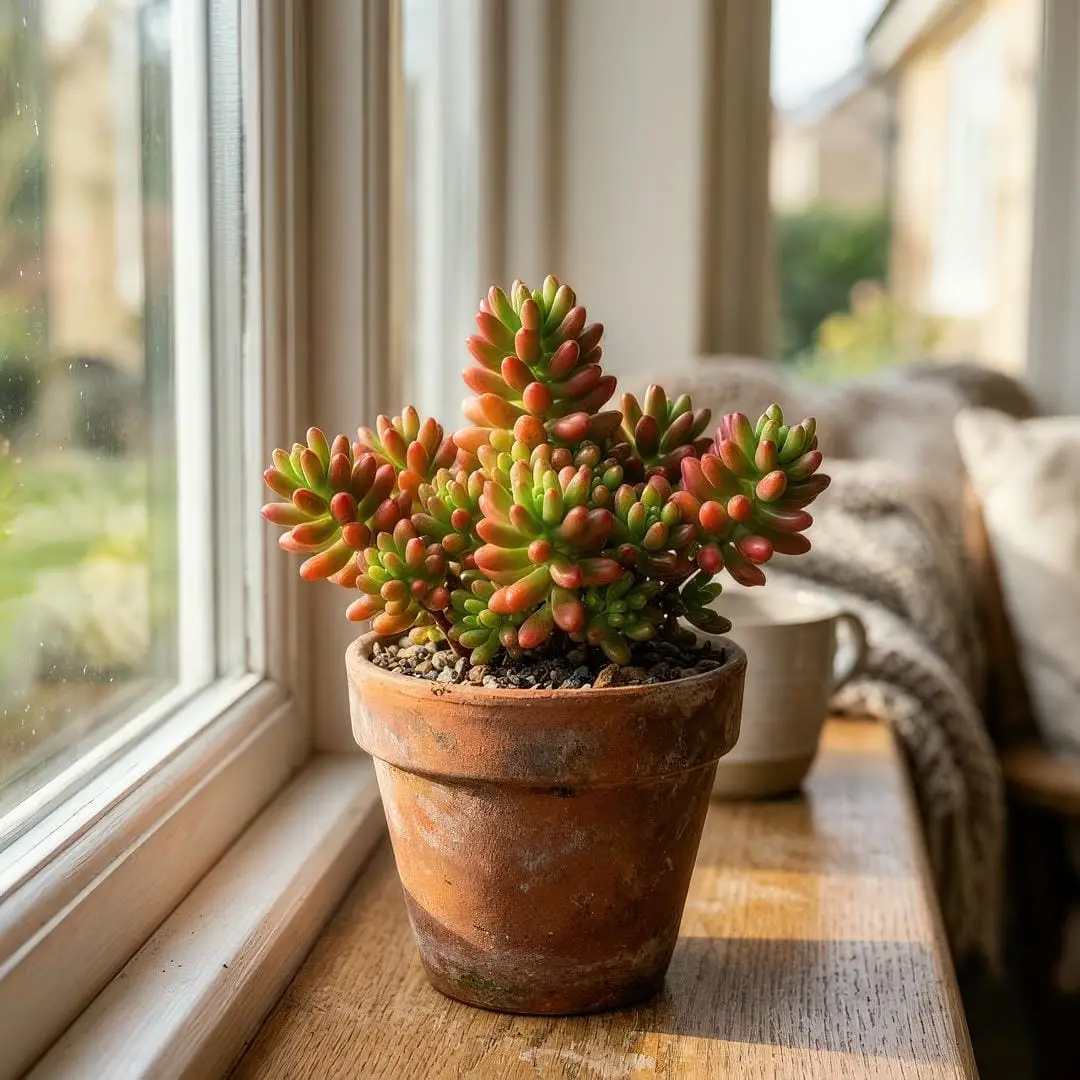
Complete Guide to Jelly Bean Plant Care and Growth
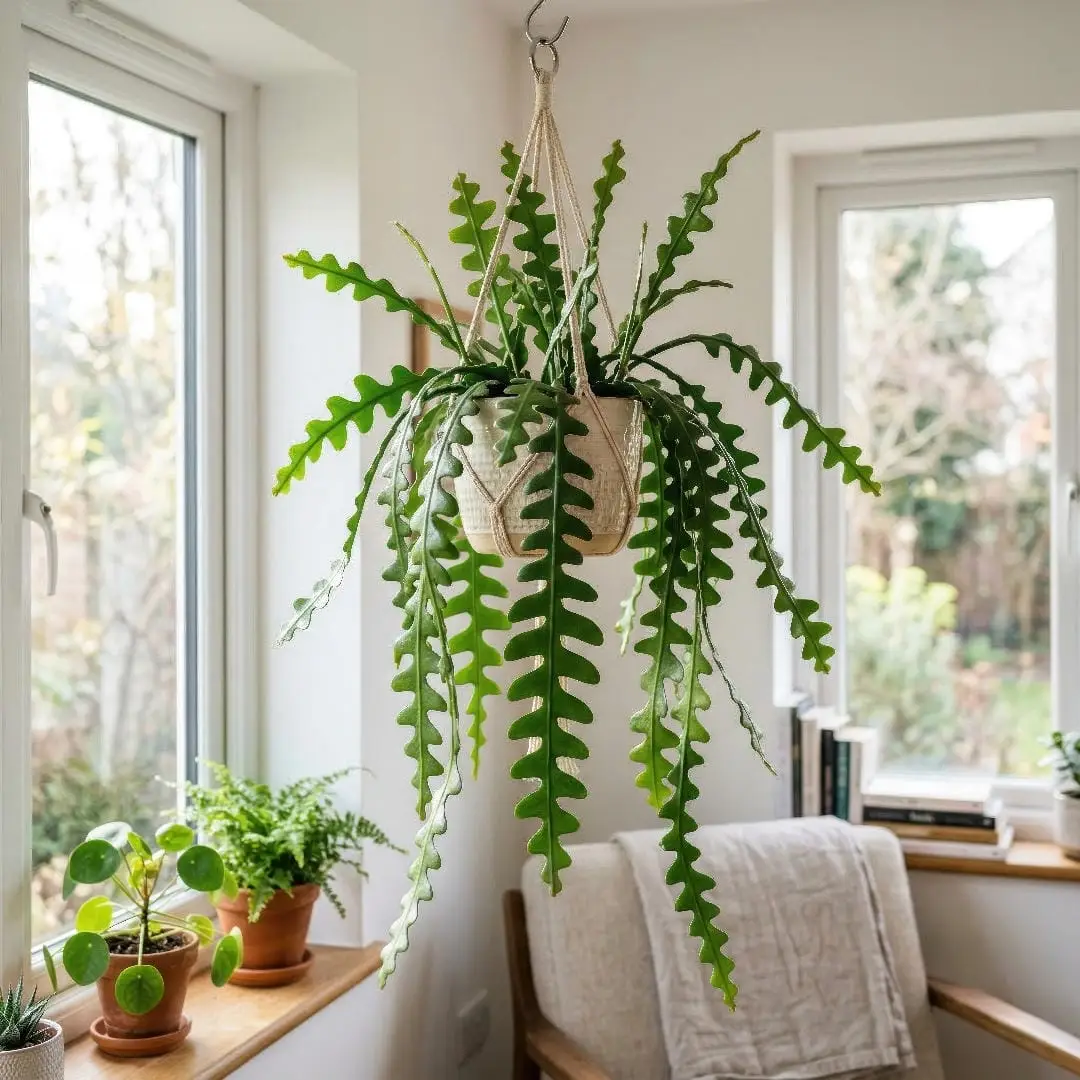
Complete Guide to Fishbone Cactus Care and Growth
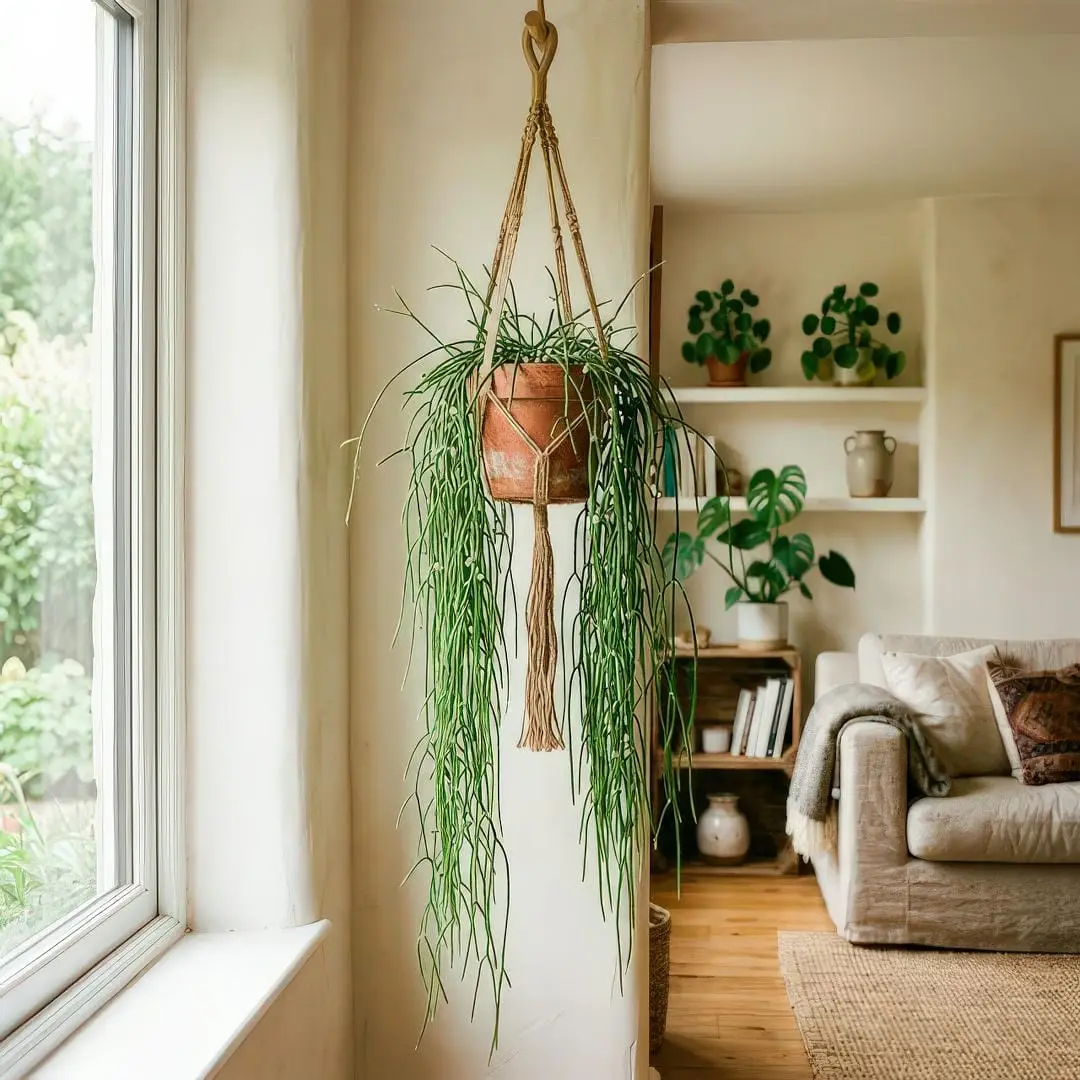
Complete Guide to Mistletoe Cactus Care and Growth
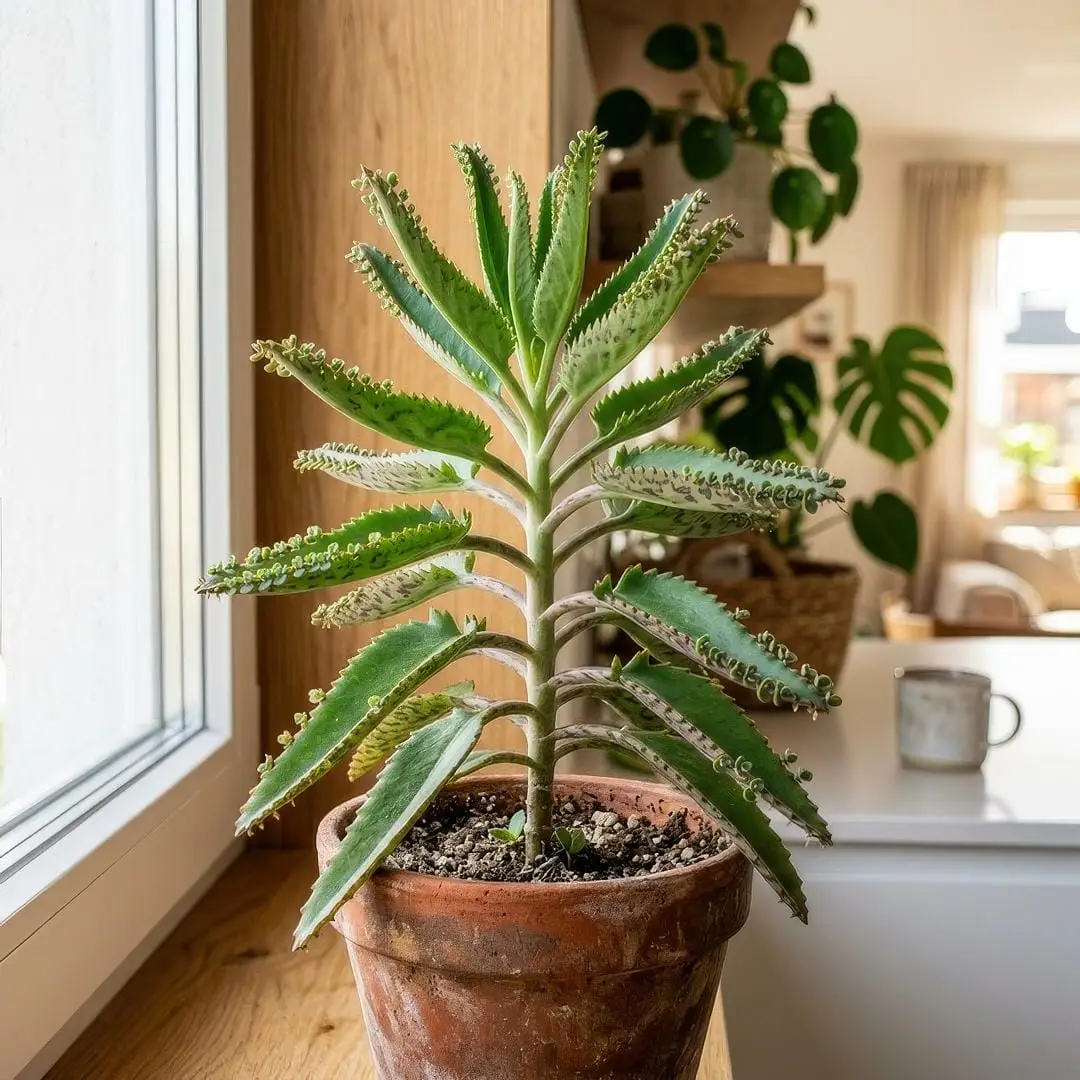
Complete Guide to Mother of Thousands Care and Growth
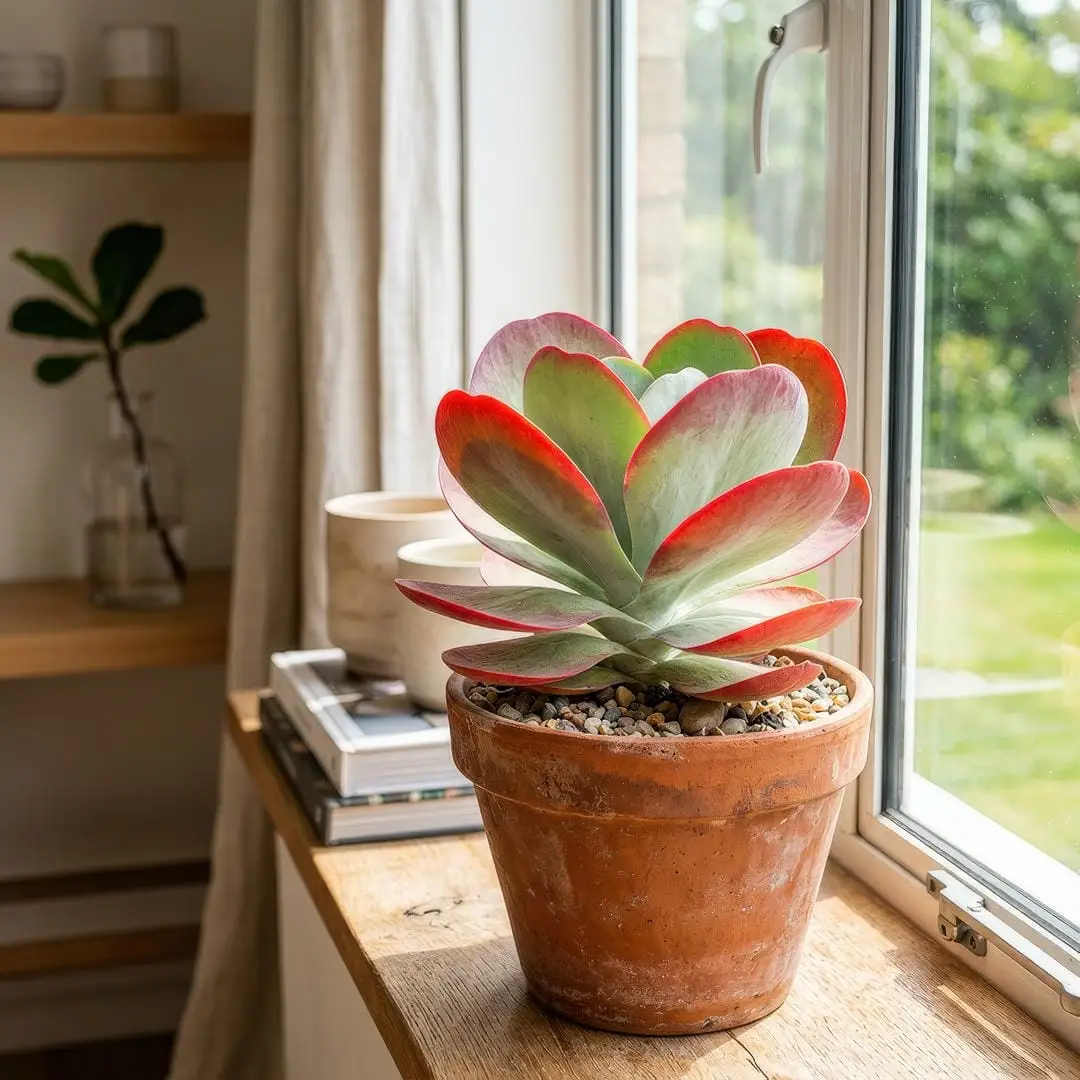
Complete Guide to Paddle Plant Care and Growth
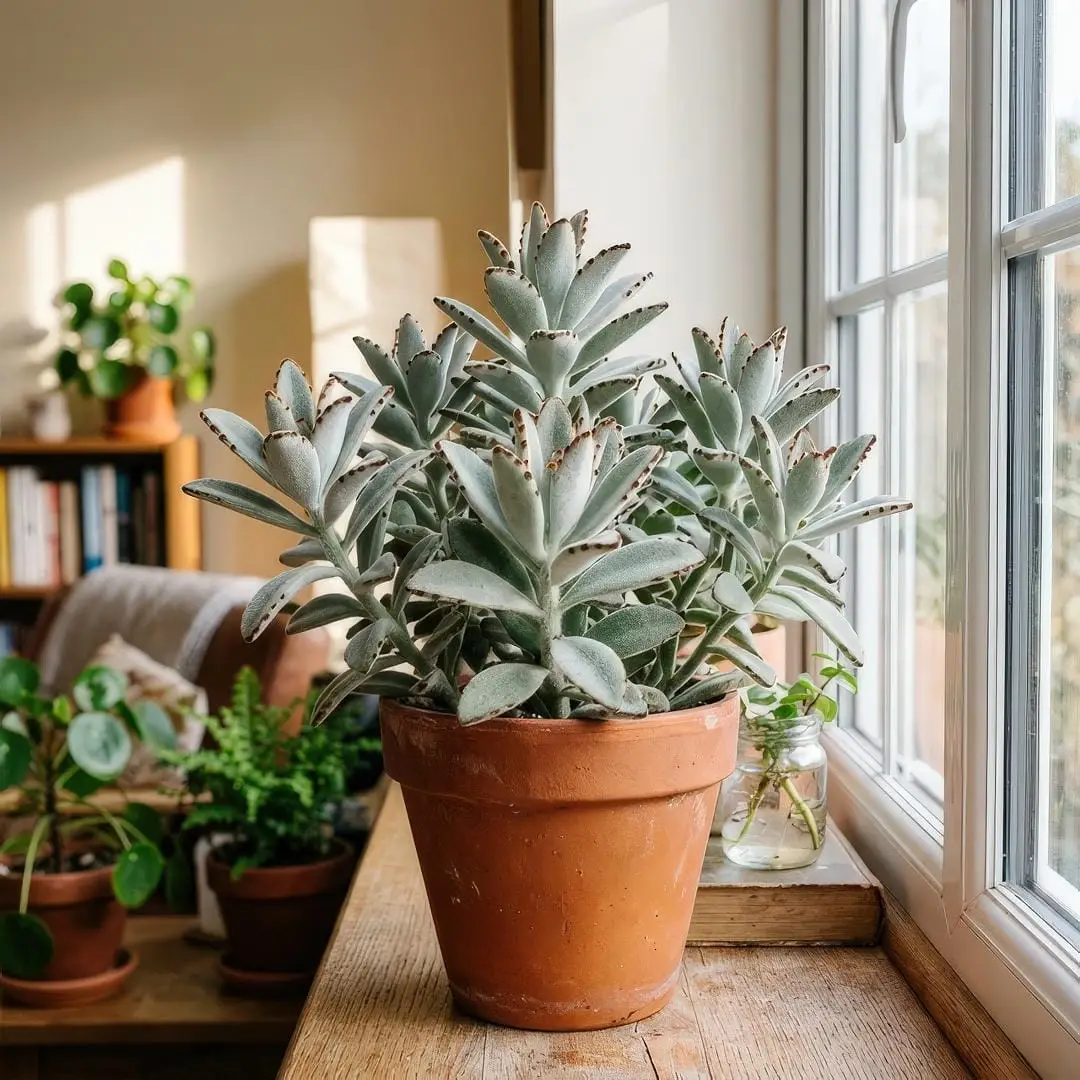
Complete Guide to Panda Plant Care and Growth

Complete Guide to Elephant Bush Care and Growth
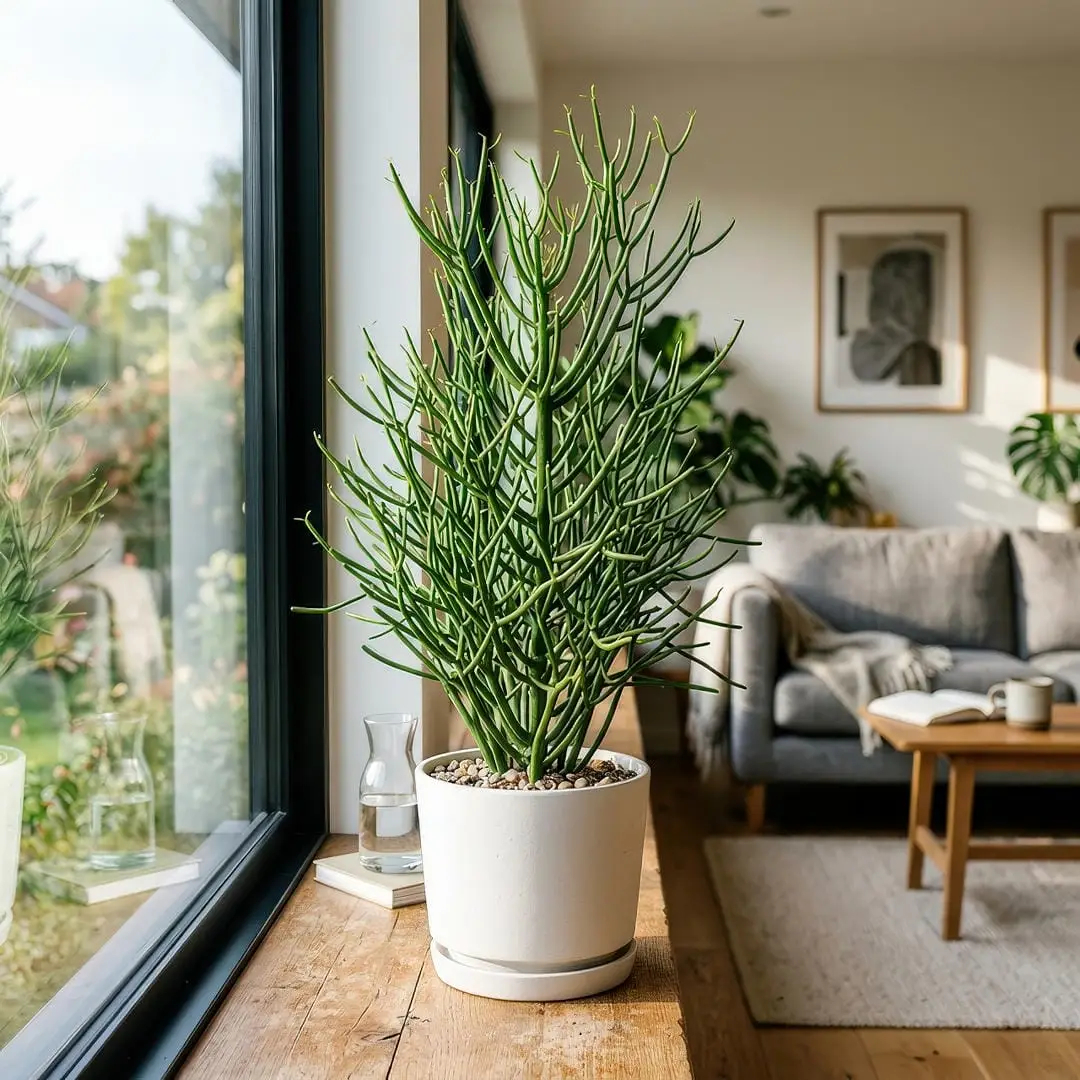
Complete Guide to Pencil Cactus Care and Growth
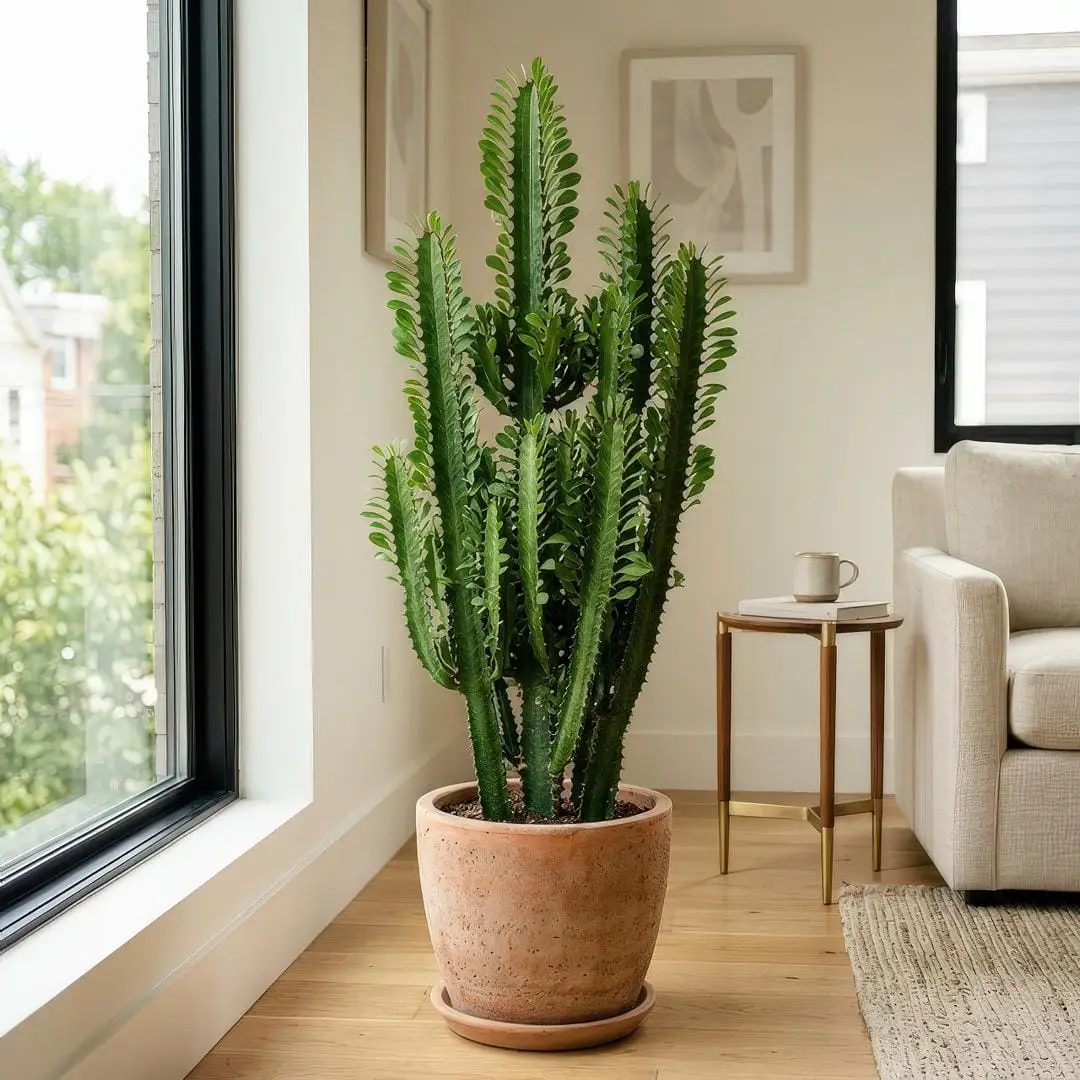
Complete Guide to African Milk Tree Care and Growth
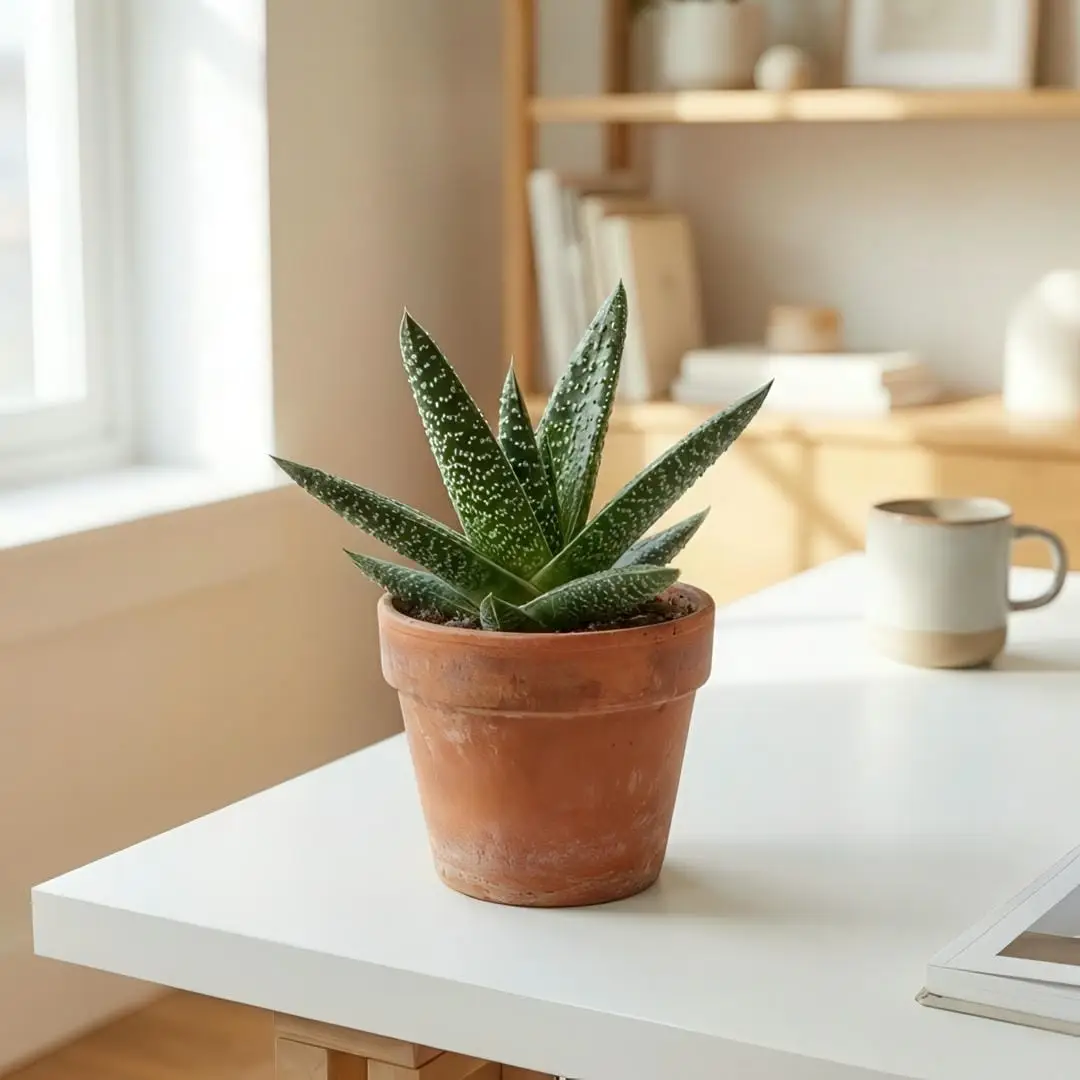
Complete Guide to Gasteria 'Little Warty' Care and Growth
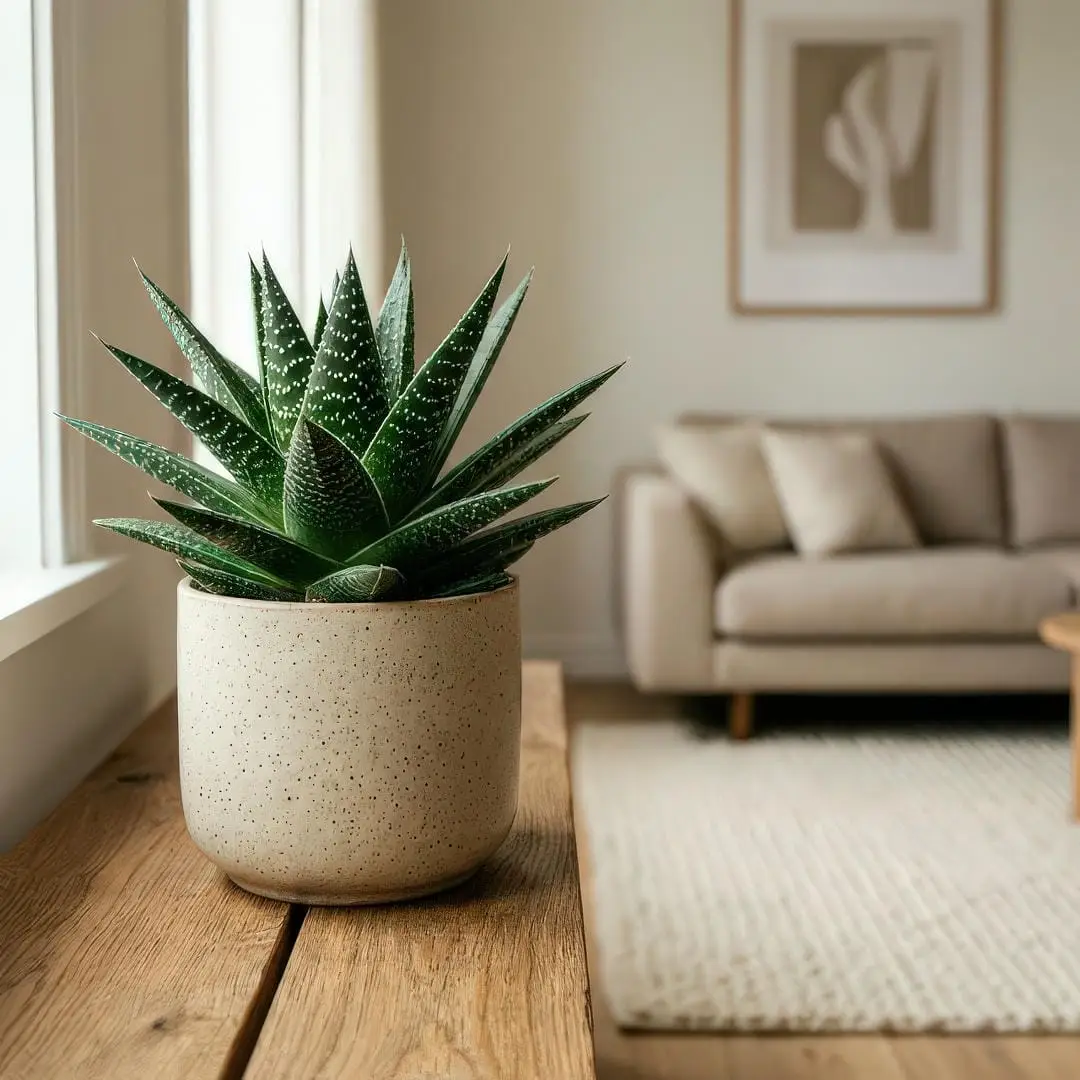
Ox Tongue Care
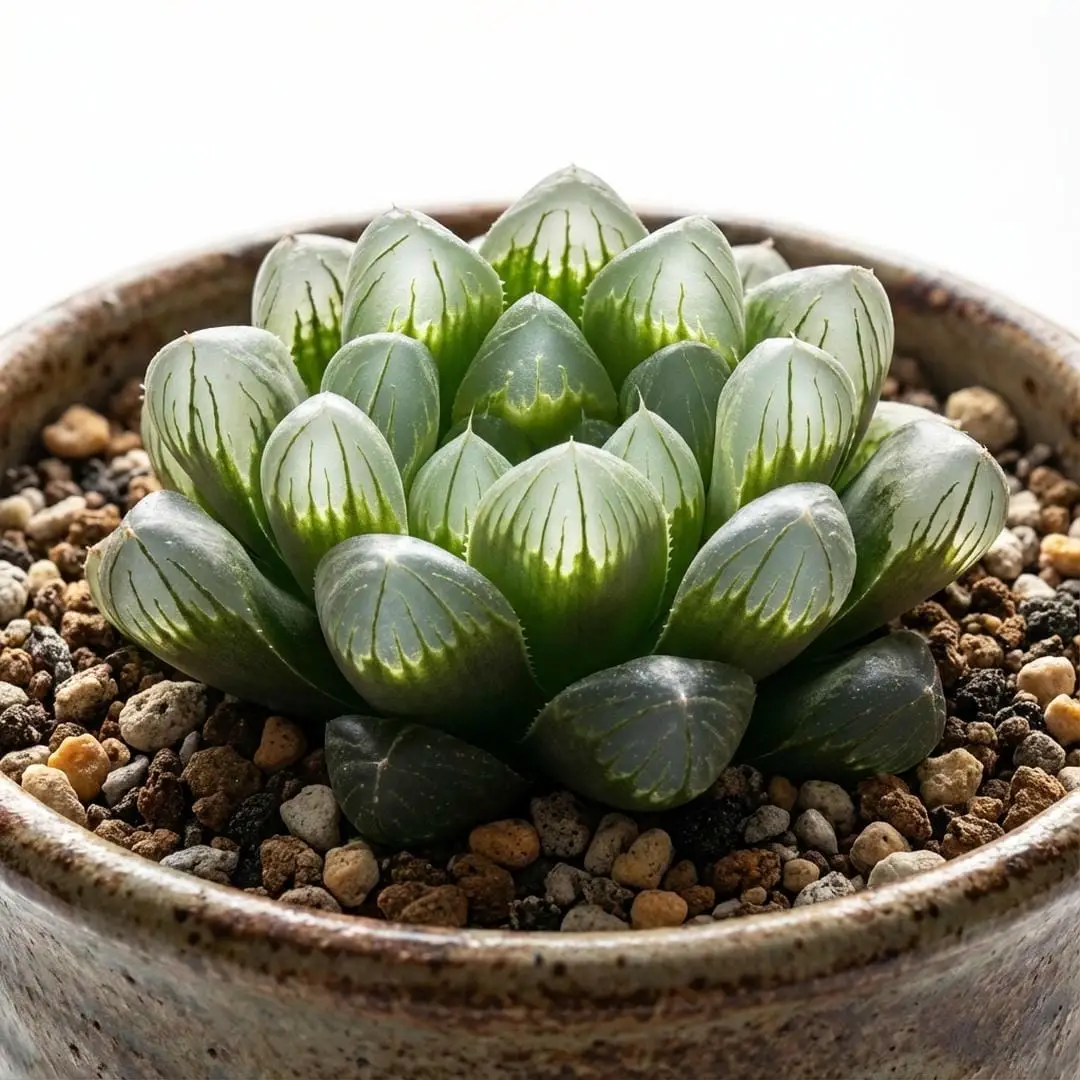
Complete Guide to Haworthia Cooperi Care (Alien Window Plant)
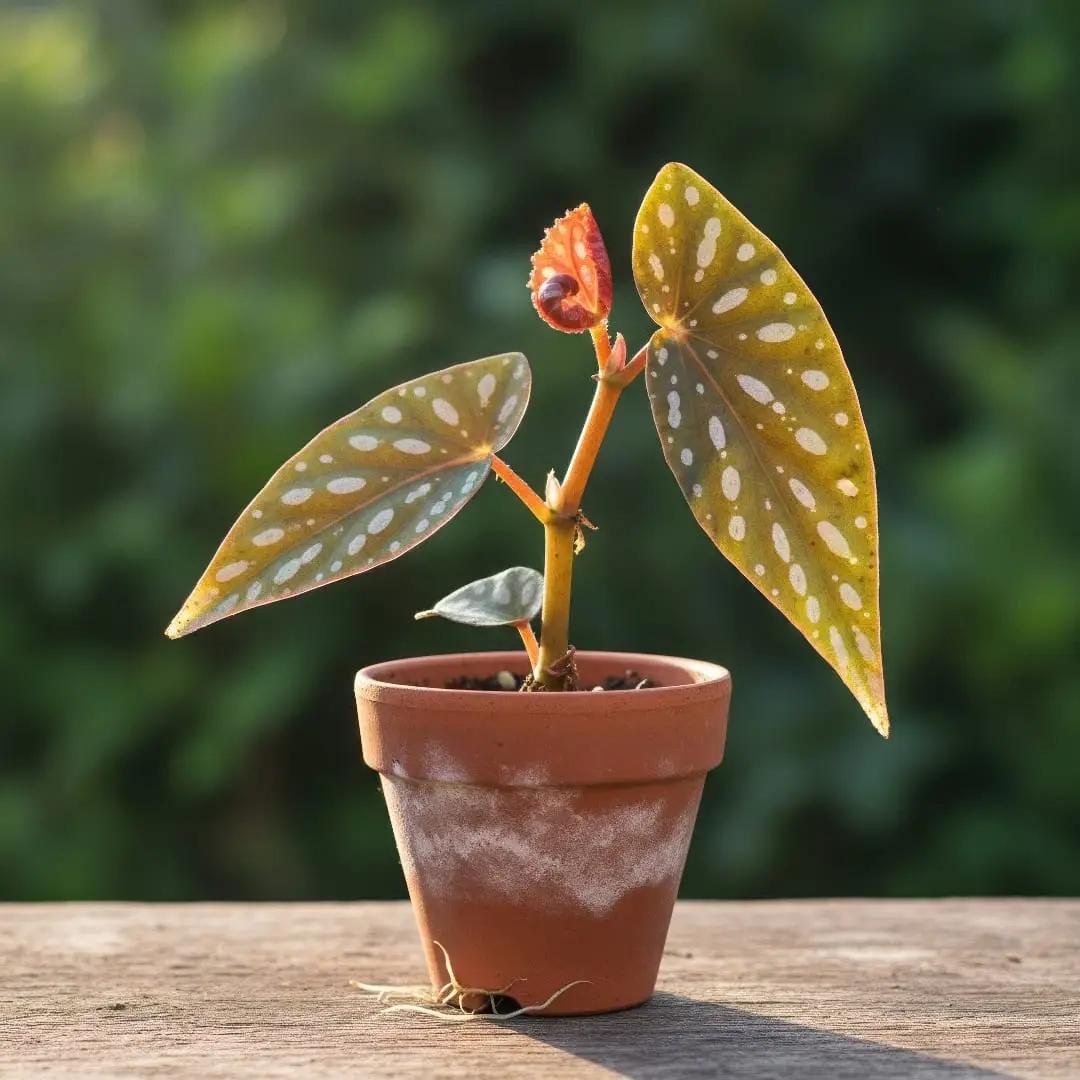
How to Propagate Plants Directly in Soil: A Beginner's Guide
The Complete Guide to Dividing Houseplants: Refresh and Multiply
An Introduction to Air Layering for Indoor Trees
A Step-by-Step Guide to Propagating Plants in Water

How to Use a Moisture Meter (and Never Overwater Again)
Choosing the Right Potting Mix: A Beginner's Soil Guide
The Essential Houseplant Care Checklist & Routine

Houseplant101 Forum
Questions & Comments
Ask a question, share your plant experience, or help other plant owners.
Comments are temporarily unavailable.
Open the Houseplant101 ForumNo comments yet
Be the first to ask a question or share your experience about this page.
Log in or create an account
Comments use your Houseplant101 Forum account, but you can stay on this page.
Create a new account