
What Is a Terrarium and How Does It Work? (Plus How to Build One)
What is a terrarium, and how can a sealed jar of plants survive for months without water? Learn how closed and open terrariums work, which plants to use, how to layer one, and how to fix fog, mold, and rot.
Care Guide: What is a terrarium, and how can a sealed jar of plants survive for months without water? Learn how closed and open terrariums work, which plants to use, how to layer one, and how to fix fog, mold, and rot.
🪴 In This Guide 🪴

🫙 What Is a Terrarium?
The Simple Definition
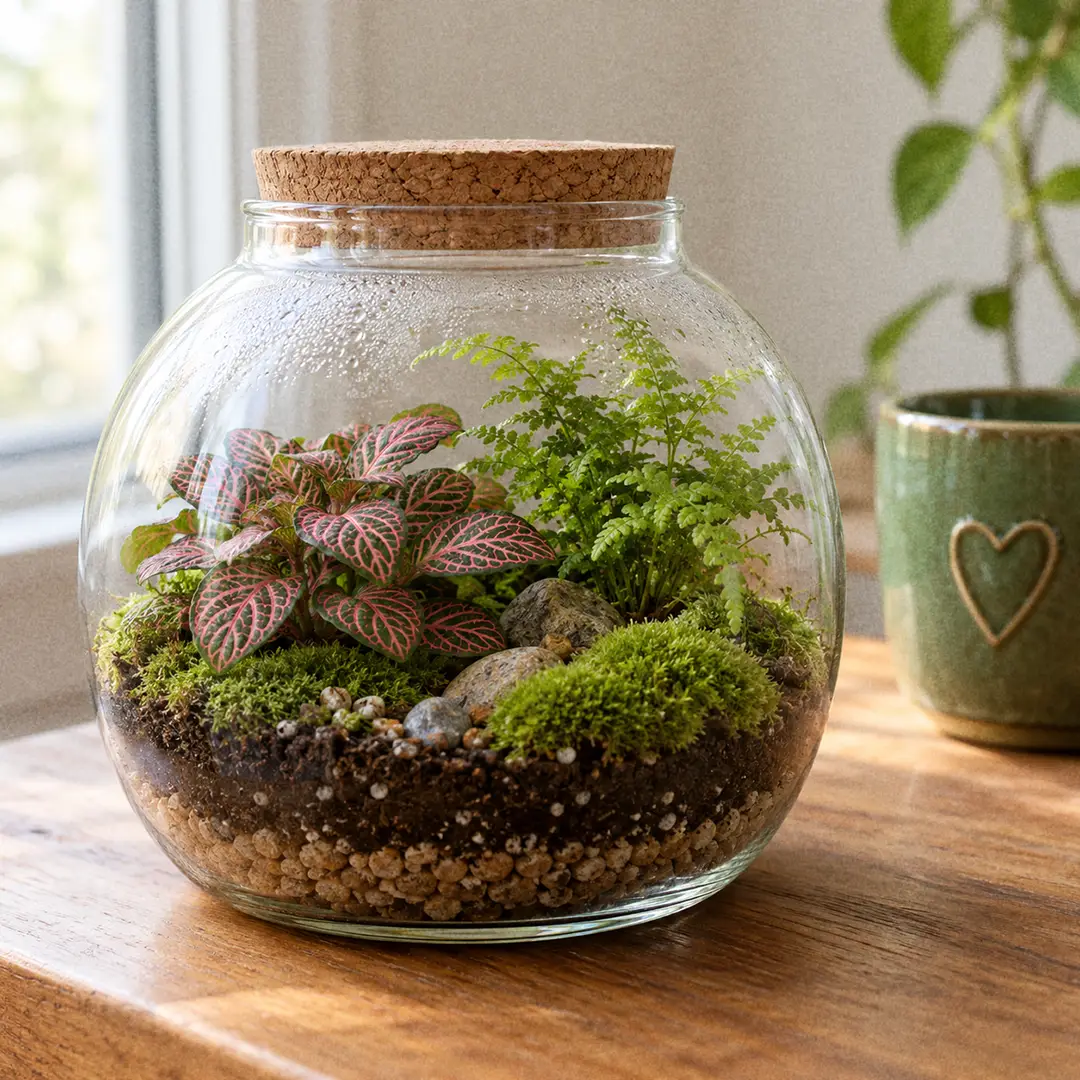
A terrarium is a clear container, usually glass, holding small plants growing in soil. It can be sealed with a lid (a closed terrarium) or left open at the top (an open terrarium). The glass lets light in, while the walls hold moisture around the plants.
Where Terrariums Came From
The idea was discovered by accident. In the 1820s and 1830s, a London doctor named Nathaniel Ward noticed a fern sprouting inside a sealed glass jar he was using to watch moth cocoons. The fern kept growing for years without any care. His sealed glass "Wardian cases" were soon used to ship live plants across oceans, and the Victorian craze for ferns under glass followed.
Why People Love Them
A terrarium gives you a lot of green in a small space, with very little watering. Closed terrariums are also the best way to grow humidity lovers that crisp up in dry indoor air, such as Nerve Plant and small begonias. And they are fun to build.
🔄 How Does a Closed Terrarium Work?
The Water Cycle Inside the Jar
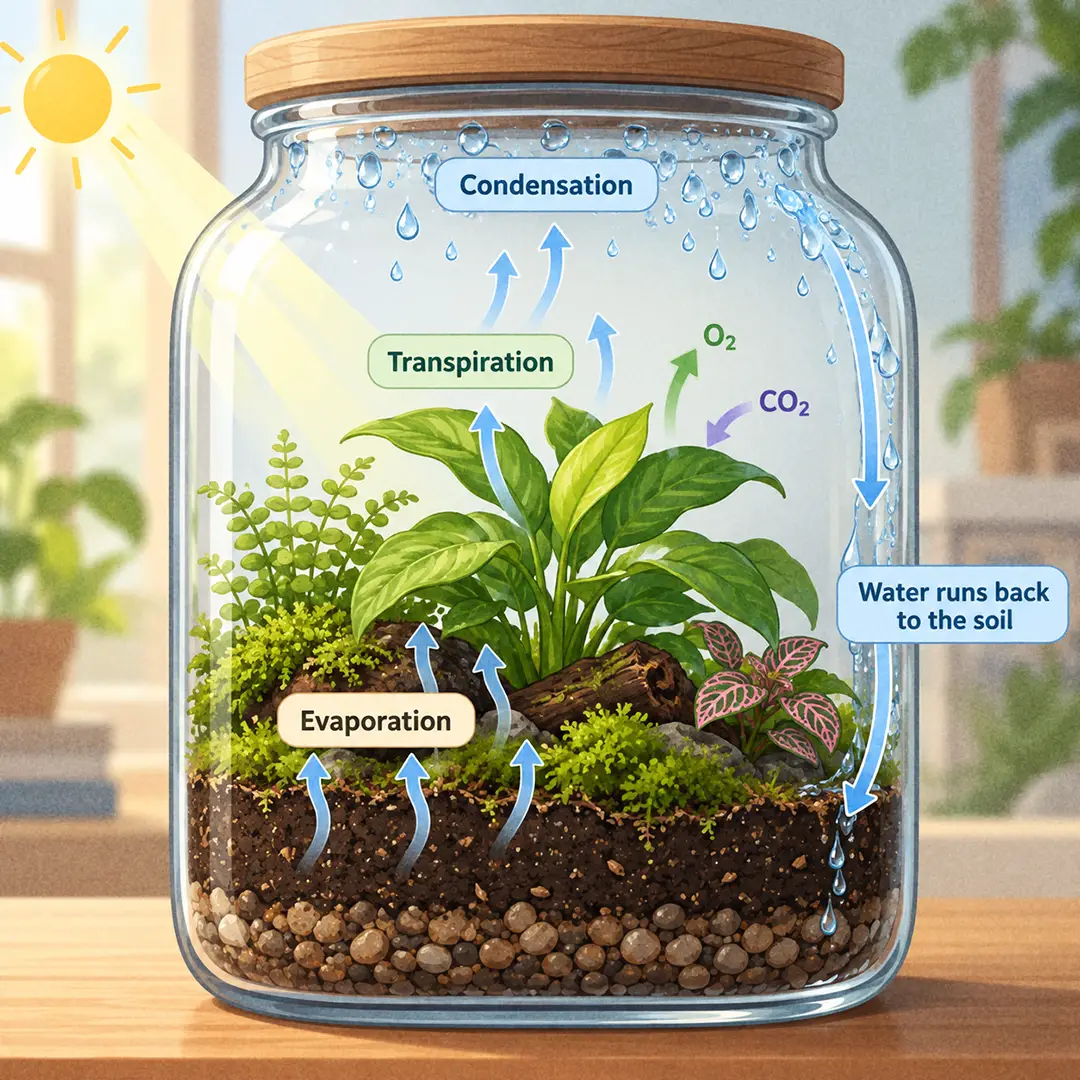
A closed terrarium is a small version of the water cycle outside. Light warms the inside of the jar. Water evaporates from the soil, and the plants release water vapor through their leaves (transpiration). That vapor touches the cooler glass and turns back into droplets, which you see as fog or condensation. The droplets run down the glass back into the soil, and the roots drink them again.
Because the lid stops the moisture from escaping, the same water goes round and round. That is why a well-balanced closed terrarium only needs a little water every few months.
The Air and Nutrient Cycle
Plants also recycle the air. In light, they take in carbon dioxide and release oxygen while they photosynthesize. They also respire all the time, using some oxygen and releasing carbon dioxide. Tiny soil microbes, and in bioactive terrariums springtails and isopods, break down fallen leaves and return nutrients to the soil.
What a Terrarium Still Needs From You
The one thing the jar cannot make is light, so placement matters more than anything else. A terrarium is also not truly maintenance-free. Plants keep growing and need trimming, and the water balance sometimes drifts, so you check it now and then.
⚖️ Open vs Closed Terrariums
Closed Terrariums
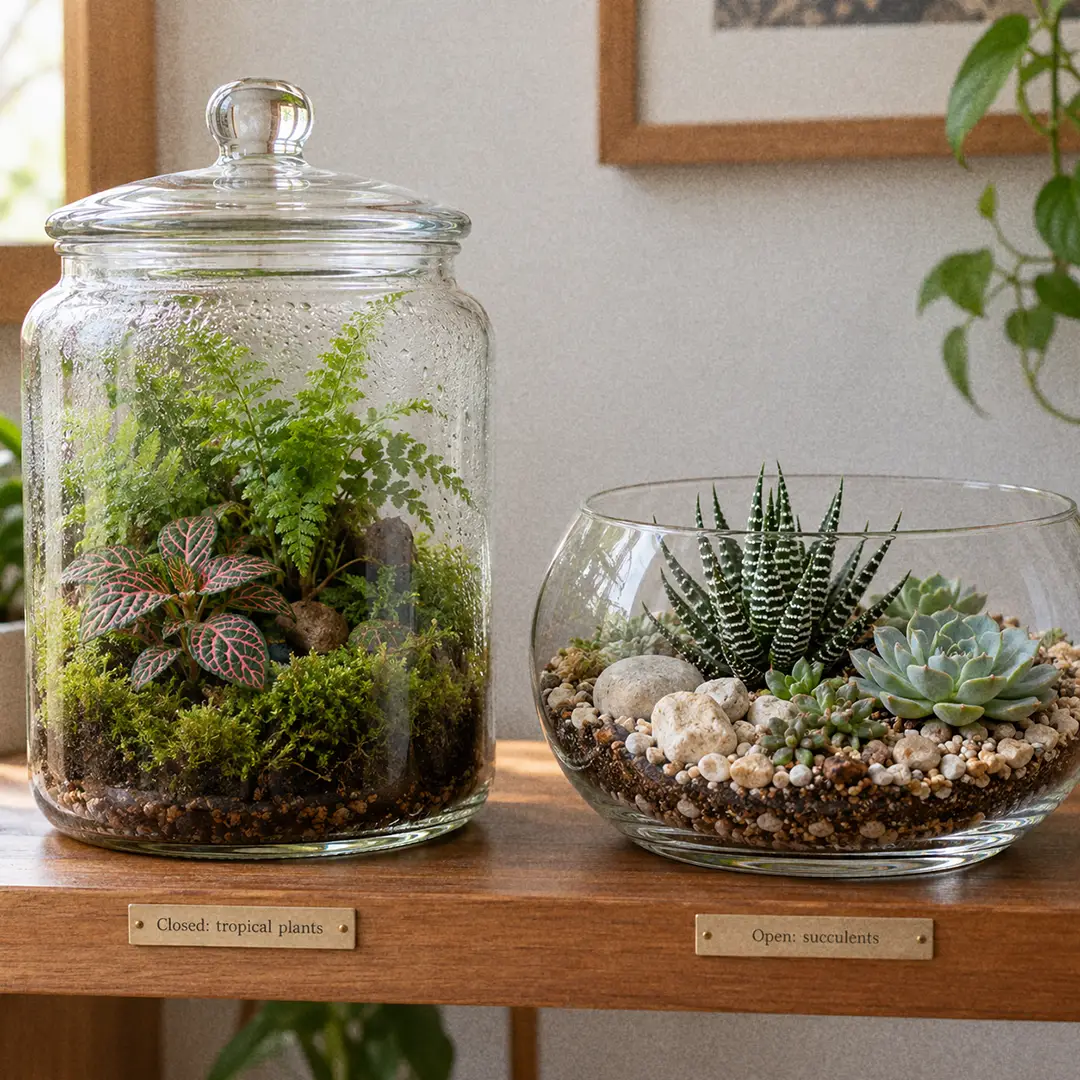
Sealed or nearly sealed containers with very high humidity inside. They suit tropical plants from damp forest floors: ferns, mosses, Fittonia, small begonias, and creeping vines. They need the least watering of any planted container.
Open Terrariums
Bowls, fishbowls, and containers with a wide opening. Air moves freely, so the soil dries out between waterings. They are the right choice for plants that hate humidity, especially succulents and cacti. If that is what you want to grow, read our guide to making a succulent terrarium.
Which One to Choose
Choose by plant, not by container. Tropical, humidity-loving plants go in a closed jar. Desert plants go in an open bowl. Mixing the two never works for long: either the succulents rot or the ferns crisp up.
🌿 Best Plants for a Closed Terrarium
Easy Starter Plants
- Nerve Plant (Fittonia): the classic terrarium plant. Pink, red, or white veined leaves that love humidity and stay small.
- Polka Dot Plant: spotted pink or white leaves. Pinch it often, because it grows fast.
- Creeping Fig: a tiny-leaved vine that climbs the glass or covers the ground.
- Cushion and sheet moss: the green carpet that makes a terrarium look like a forest floor.
Ferns and Foliage
Small ferns like the Lemon Button Fern do well in larger jars, and a Moon Valley Pilea adds deeply textured leaves. Small peperomias such as String of Turtles work in an open-topped or vented jar.
For Collectors
Jewel orchids like Macodes petola and miniature begonias such as Begonia amphioxus grow better under glass than anywhere else in a home. Our begonia care guide explains which begonias need an enclosure.
Plants to Avoid
Skip succulents, cacti, and fast, large plants like pothos or full-size ferns, which outgrow a jar within months. Check the mature size before you plant.
🪨 Terrarium Layers Explained
Drainage Layer
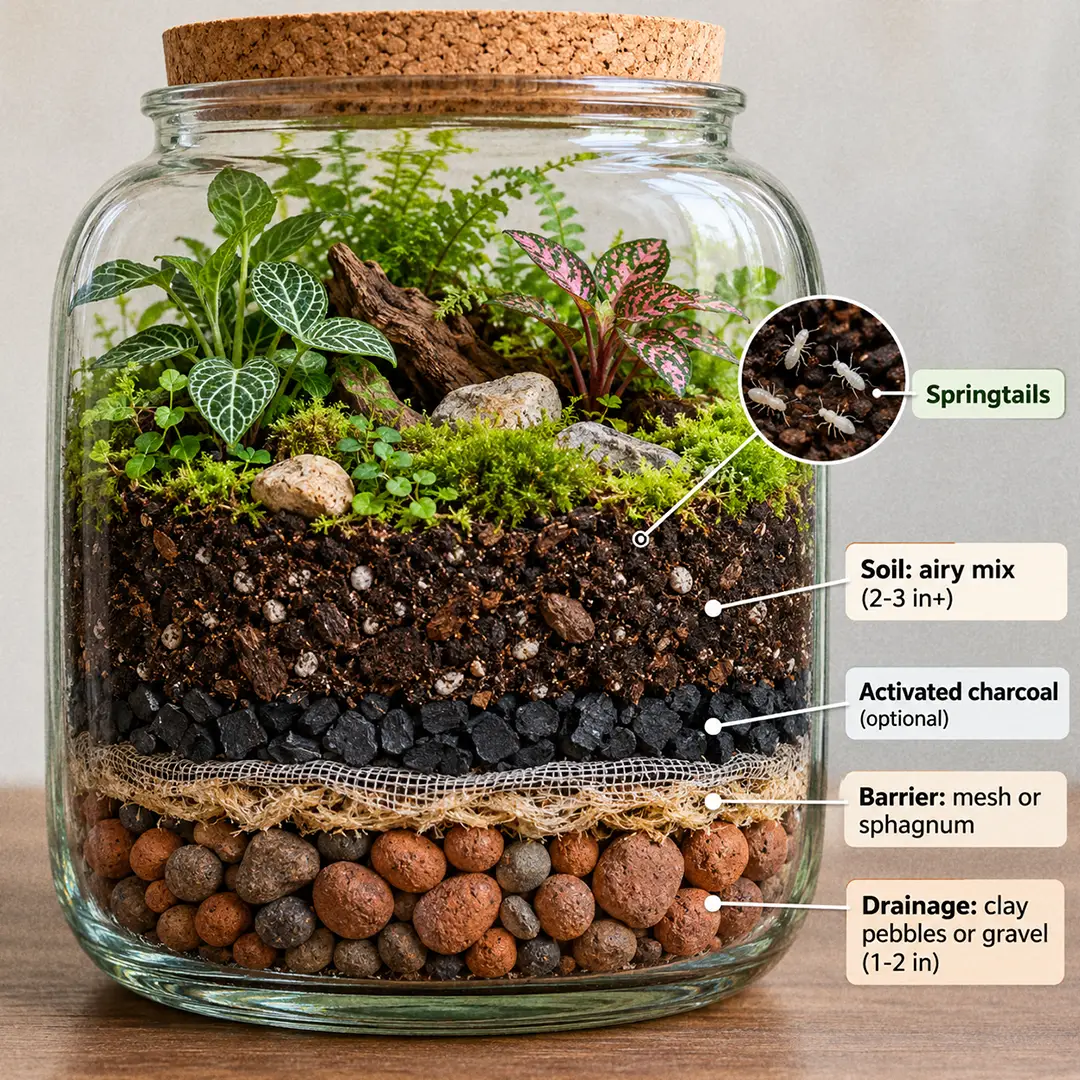
Glass has no drainage hole, so excess water needs somewhere to go. Start with 1-2 inches of LECA clay pebbles, lava rock, or gravel. Any extra water collects here instead of drowning the roots.
Barrier Layer
A piece of mesh, landscape fabric, or a thin layer of dry sphagnum moss stops the soil washing down into the drainage layer. Without it, the drainage layer clogs within a few months.
Charcoal (Optional)
Activated charcoal is sold to absorb odors and keep the jar fresh. The evidence for it is weak, and many experienced builders skip it. It does no harm, so add a thin layer if you have it.
Soil
Use 2-3 inches or more of a light, airy mix, deep enough for the roots. A good recipe is potting mix with orchid bark, perlite, and some sphagnum. Avoid heavy garden soil. Our Soil Guide explains why air in the mix matters.
Top Layer and Cleanup Crew
Finish with moss, small stones, or bark pieces. If you want a bioactive terrarium, add springtails, tiny harmless insects that eat mold and decaying leaves. They are the easiest way to keep a closed terrarium clean.
🛠️ How to Build a Closed Terrarium
What You Need
A glass container with a lid, drainage material, a mesh or moss barrier, terrarium soil, two to four small plants, moss, a spray bottle, and long tweezers or a spoon for planting in tight spaces.
Step-by-Step
- Wash and dry the container.
- Add 1-2 inches of drainage material.
- Lay the barrier on top.
- Add a thin layer of charcoal, if using.
- Add the soil, deeper at the back for a sloped look.
- Remove the plants from their pots, gently shake off most of the old soil, and plant them, tallest at the back.
- Press moss in around the plants and add stones or decorations.
- Mist the plants and soil lightly, wipe the inside of the glass clean, and close the lid.
The First Few Weeks
Watch the condensation for the first week or two. Expect some adjustment: a few leaves may yellow as plants settle in. Remove anything that dies so it does not start mold.
💧 Terrarium Care: Light, Water, and Maintenance
Light
Bright indirect light is ideal: near a north or east window, or a few feet back from a brighter one. Never put a closed terrarium in direct sun. Glass traps heat, and the inside can get hot enough to cook the plants in an hour. If your rooms are dim, a small LED grow light on a timer works very well. Our light guide helps you judge your windows.
Reading the Condensation
The glass tells you when to water. Light fog in the morning that clears during the day means the balance is right. No condensation at all for several days means it is too dry, so add a few sprays of water. Heavy fog that never clears, with water pooling in the drainage layer, means it is too wet. Take the lid off for a few hours a day until it settles.
Trimming and Cleaning
Trim plants that touch the lid or crowd their neighbors, and remove dead leaves. Wipe the inside of the glass with a paper towel. Skip fertilizer, or give a very diluted dose once or twice a year, since you want the plants to stay small.
🩺 Common Terrarium Problems
Mold
White fuzz on the soil or on dead plant parts is common in the first weeks. Remove it with a cotton swab, take out any dead material, and open the lid for a day to let the jar dry a little. Springtails prevent it from coming back. Read more about soil mold.
Rot and Yellow Leaves
Mushy stems and yellowing leaves usually mean too much water. Remove the affected plant, let the terrarium air out, and water less. If a plant rots at the base, see root rot.
Leggy Plants or Algae on the Glass
Plants stretching toward the light with long gaps between leaves need a brighter spot, a sign of leggy growth. Green algae on the glass means the opposite: too much light. Move it a little farther from the window and wipe the glass.
🪴 See also 🪴
Houseplant Light Guide: How to Find the Perfect Spot for Your Plant
How to Fertilize Houseplants: A Simple Guide for Beginners
How to Repot a Houseplant Without Killing It (Step-by-Step Guide)
How to Water Houseplants: The Ultimate Beginner's Guide
The Ultimate Guide to Houseplant Propagation: Create New Plants for Free!
How to Propagate Succulents from Leaves & Offsets
Succulent Care Indoors: How to Stop Killing Jade and Echeveria
How to Propagate Plants Directly in Soil: A Beginner's Guide
The Complete Guide to Dividing Houseplants: Refresh and Multiply
An Introduction to Air Layering for Indoor Trees
A Step-by-Step Guide to Propagating Plants in Water

How to Use a Moisture Meter (and Never Overwater Again)
Choosing the Right Potting Mix: A Beginner's Soil Guide
The Essential Houseplant Care Checklist & Routine

Houseplant101 Forum
Questions & Comments
Ask a question, share your plant experience, or help other plant owners.
Comments are temporarily unavailable.
Open the Houseplant101 ForumNo comments yet
Be the first to ask a question or share your experience about this page.
Log in or create an account
Comments use your Houseplant101 Forum account, but you can stay on this page.
Create a new account