
Begonia
Begonia spp.
Angel Wing Begonia, Cane Begonia, Rex Begonia, Rhizomatous Begonia, Wax Begonia


Begonia care comes down to one balance: humid air around the leaves, but dry leaves and only lightly moist roots. Learn the shared care routine for every indoor begonia, how to tell cane, rhizomatous, Rex, and wax begonias apart, and how to propagate each type.
📝 Begonia Care Notes
🌿 Care Instructions
⚠️ Common Pests
📊 Growth Information
🪴 In This Guide 🪴

☀️ Begonia Light Requirements (Bright Indirect, No Hot Sun)
The Sweet Spot for Begonias
Begonias want bright indirect light: a bright room where the plant sees plenty of sky but little hot sun on its leaves. An east-facing window is close to perfect, since a couple of hours of soft morning sun is welcome. In a south or west room, set the plant 3-5 feet back from the glass or behind a sheer curtain.
The groups differ a little. Wax and cane begonias take the most light and flower better for it. Rex and other rhizomatous begonias want the gentlest version of bright indirect, since their thin, colorful leaves scorch first. Our Indoor Lighting Guide shows how to judge a spot by eye.
Too Little Light
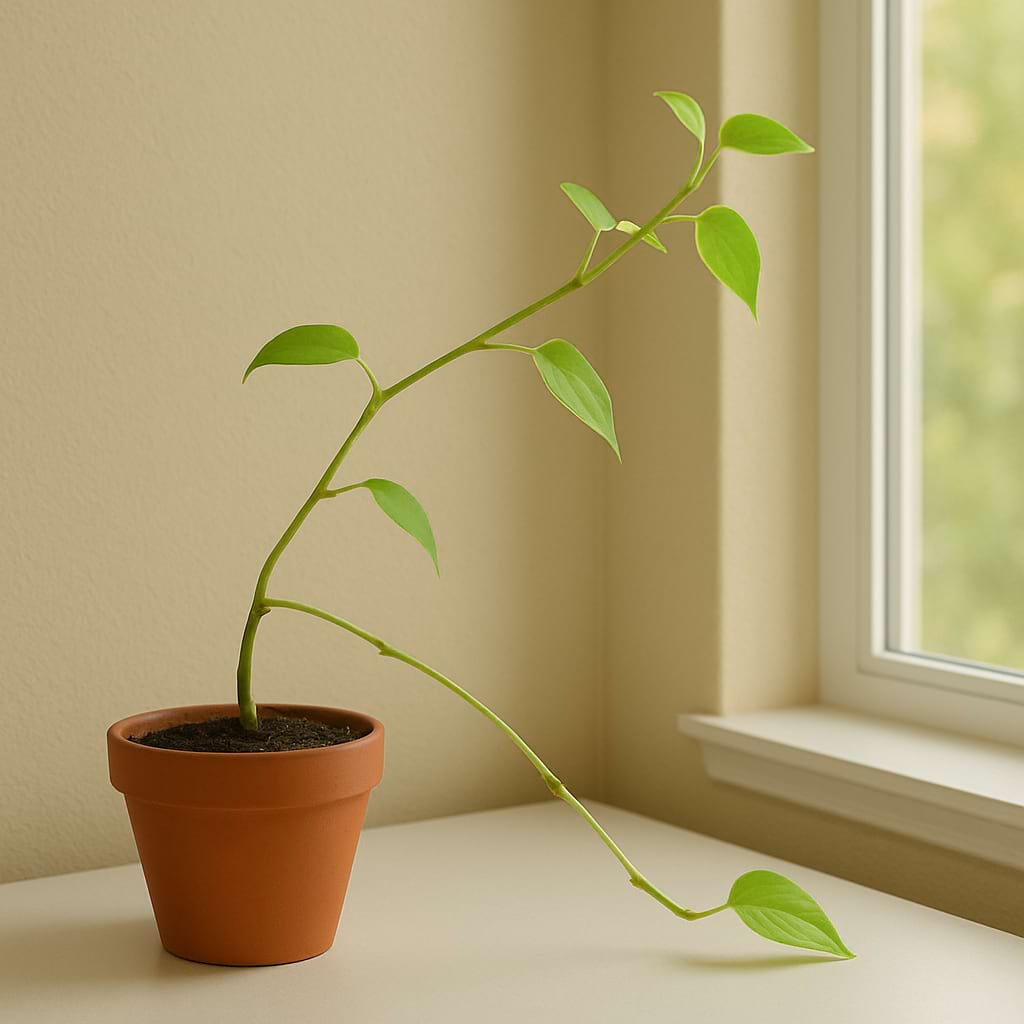
A cane begonia in a dim corner stretches, with long bare gaps between leaves, and stops flowering. Wax begonias keep their leaves but drop their blooms. Rex leaves lose contrast, so the silver and pink fade toward plain green. That stretched look is leggy growth, and the fix is a brighter spot or a grow light in winter.
Too Much Light
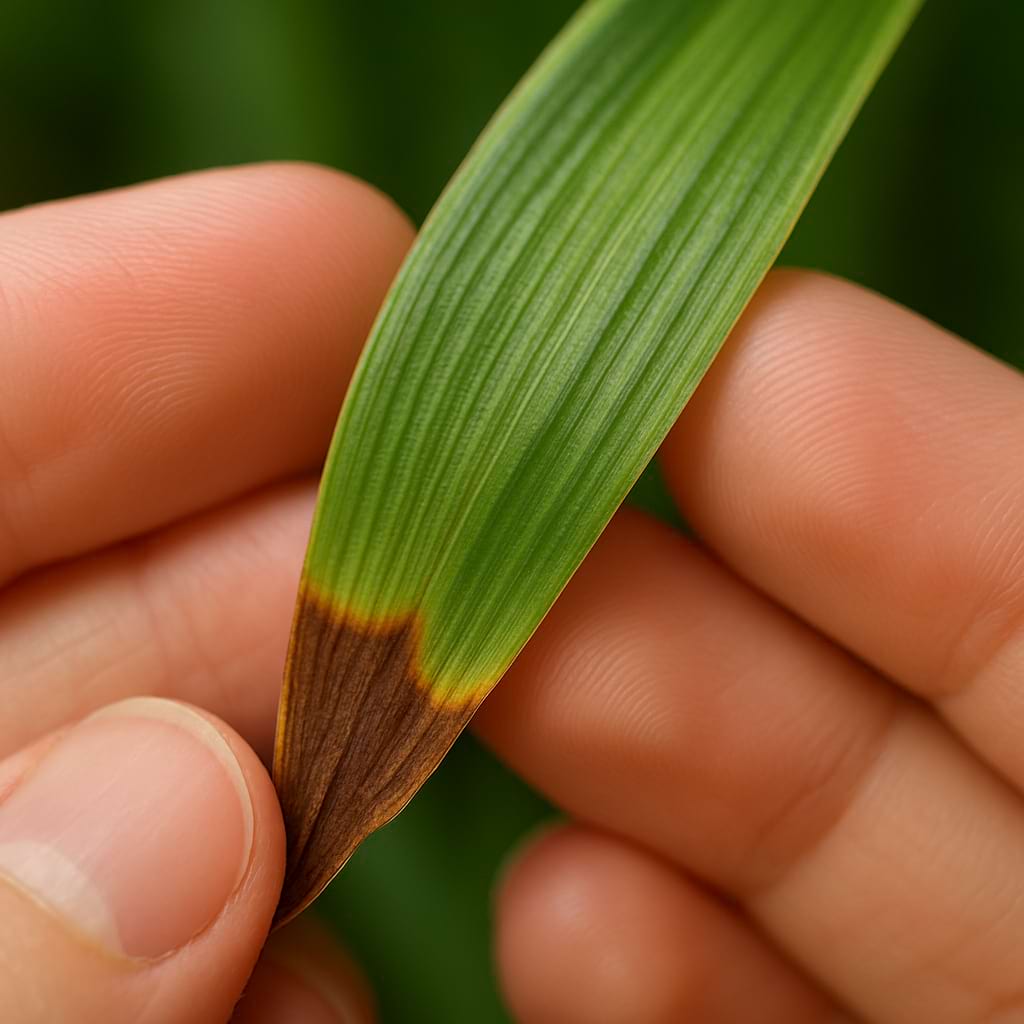
Direct afternoon sun through glass bleaches and burns begonia leaves within a day or two. You will see dry tan patches, crispy margins, or leaves curling down at the edges. That is sunburn, and the damaged spots never green up again. A red or bronze flush on a wax begonia in bright light is different: that is normal pigment, not damage.

💧 Begonia Watering Guide (Moist, Never Soggy)
How Often to Water Begonias
Water when the top inch of soil is dry. Push a finger in to the first knuckle: if it feels dry, water; if it is still cool and damp, wait. In a warm, bright room that usually means every 5-7 days in summer and every 10-14 days in winter, but check the soil rather than the calendar.
Rhizomatous and Rex begonias store water in their thick stems, so they tolerate a little more drying, about the top third of the pot. Cane and wax begonias are thirstier. A moisture meter helps if you are unsure.
How to Water Without Wetting the Leaves
Pour water onto the soil, under the leaves, until it runs out of the drainage holes. Then empty the saucer, because begonia roots are fine and rot fast in standing water. Water in the morning so any splashes dry by evening, since leaves that stay wet overnight are where powdery mildew and gray mold start.
Bottom watering suits begonias very well, especially low Rex types whose leaves cover the whole pot. Stand the pot in a few inches of water for 15-20 minutes, then let it drain fully.
Signs of Over- and Underwatering
A thirsty begonia droops dramatically, and the leaves feel soft and limp. It recovers within a few hours of a drink, but repeated wilting leads to crispy edges and leaf drop.
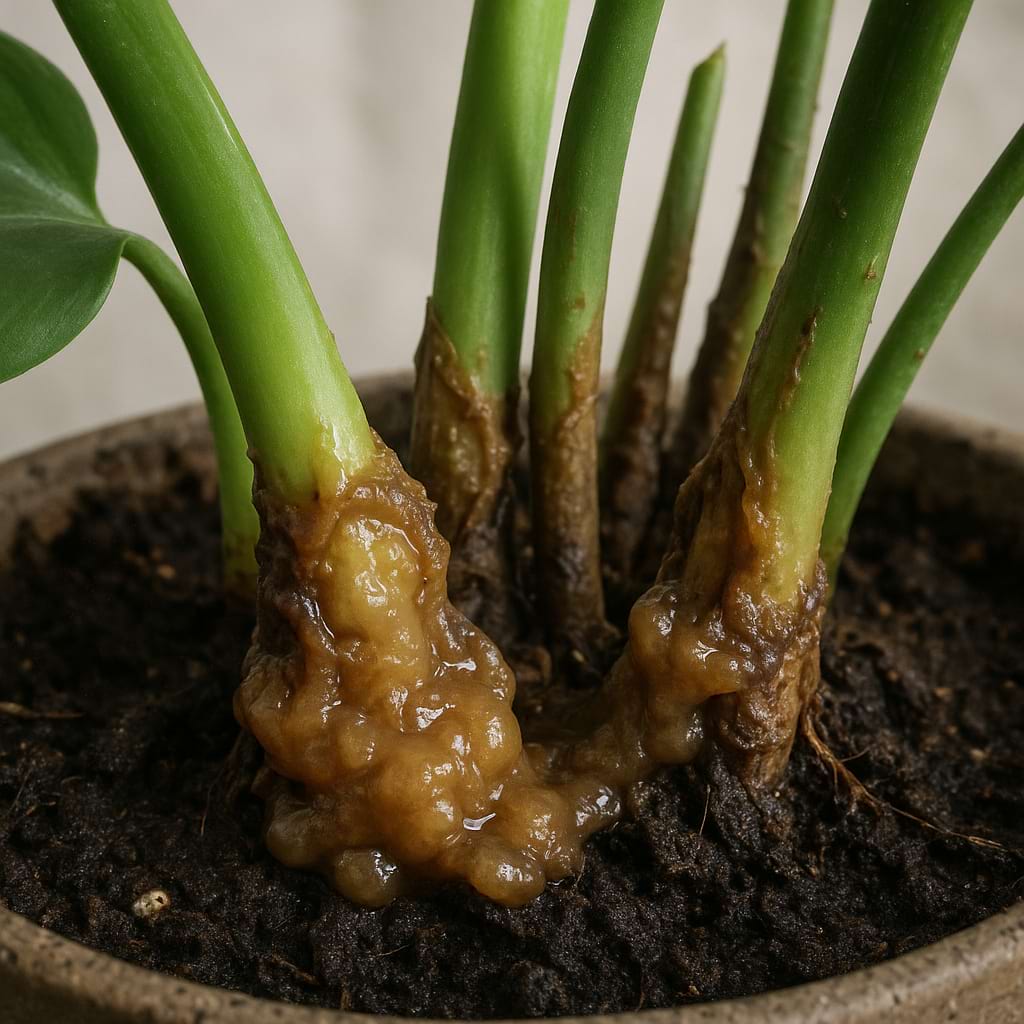
Overwatering is the bigger danger. Lower leaves turn yellow, stems go dark and soft at the soil line, and the plant droops even though the soil is wet. That last sign means root rot or mushy stems, and it needs action the same day.
🪴 Best Soil for Begonias (Light and Airy Mix)
What Begonia Soil Needs
Begonia roots are thin and shallow, and they need air as much as water. Dense potting soil stays wet in the middle of the pot for days, which is how most begonias die. The ideal mix holds a little moisture, drains fast, and stays loose. A slightly acidic mix, around pH 5.5-6.5, suits them, and most bagged soils already sit in that range.
DIY Begonia Soil Mix
A reliable recipe is 2 parts quality potting mix, 1 part perlite, and 1 part fine orchid bark. The perlite keeps it airy and the bark stops it compacting over time. For small, humidity-loving species grown in a cabinet or terrarium, swap some of the potting mix for sphagnum moss. Our Soil Guide explains why air pockets matter so much for fine-rooted plants.
Pre-Made Options
African violet mix is a good shortcut, because it is already light and slightly acidic. Lighten it with a couple of handfuls of perlite and it works for every begonia group. A chunky aroid mix also works for cane begonias. Avoid moisture-control mixes with water-holding crystals. Our potting soil guide compares the common bags.
🍼 Fertilizing Begonias
When and How Often to Feed
Feed every 2-4 weeks from spring through late summer, while the plant is actively growing. Use half the strength printed on the label, since begonias are light feeders and their fine roots burn easily. Stop in late autumn and winter, except for wax begonias still blooming in a bright window, which can have a quarter-strength feed once a month.
What Fertilizer to Use
A balanced liquid fertilizer (such as 10-10-10 or 20-20-20) suits foliage types like Rex and Iron Cross. Flowering wax and cane begonias do well on a feed with a little more phosphorus and potassium while they are blooming. Water first, then feed, so the fertilizer never hits a bone-dry root ball. Our Fertilizing Guide and fertilizer guide cover the details.
Signs of Too Much Fertilizer
Brown leaf edges, a white crust on the soil, and new leaves that come out small or twisted all point to salt buildup. Flush the pot with plain water two or three times and skip feeding for a month.
🌡️ Begonia Temperature Range
Ideal Temperature for Begonias
Begonias like normal room temperatures: 65-75°F (18-24°C) during the day, slightly cooler at night. Keep them above 60°F (15°C). Below 50°F (10°C) most types get cold damage, which shows up as dark, water-soaked patches on the leaves a day or two later. In very hot rooms above 85°F (29°C), leaves wilt even when the soil is moist.
Drafts, Radiators, and Cold Windows
Sudden changes cause more trouble than steady cool air. Leaves pressed against a cold window in winter turn black at the contact points. A spot by an exterior door, an air conditioner, or a heating vent leads to leaf drop and crispy edges. Pull begonias a foot back from the glass on frosty nights.
💦 Begonia Humidity Requirements
Ideal Humidity for Begonias
Most begonias are happy at 50% humidity or higher. Wax and cane types cope with 40%, which is normal for many homes. Rex begonias and small species such as Begonia amphioxus want 60% or more, and the smallest ones grow best in a glass cabinet or a closed terrarium.
Humidity Without Misting
Do not mist begonias. Water sitting on the leaves is the main trigger for powdery mildew and leaf spot. Raise the humidity around the plant instead: run a humidifier nearby, set the pot on a tray of wet pebbles, or group it with other plants. Keep some air moving too, since humid, still air breeds mildew. Our humidity guide covers more options.
🌸 Begonia Flowers (How to Get More Blooms)
Which Begonias Flower Indoors
Most begonias bloom indoors, but some are far more generous than others. Wax begonias flower almost nonstop in good light, with small pink, red, or white blooms. Cane begonias produce hanging clusters of pink, coral, or white flowers from spring into autumn. Rhizomatous types like the Beefsteak Begonia send up tall stalks of pale pink sprays in late winter. Rex begonias flower too, but the blooms are small, and many growers pinch them off to keep energy in the leaves.
Begonias carry separate male and female flowers on the same plant. Female flowers have a winged, three-sided seed pod right behind the petals, while male flowers do not.
How to Get More Flowers
Light comes first. A begonia in bright indirect light with a little morning sun flowers far more than one in a dim room. Feed regularly during the growing season, and remove faded flowers so the plant keeps making new ones. Cane begonias bloom better when slightly pot-bound, so do not rush them into a bigger pot.
Why Begonia Flowers Drop
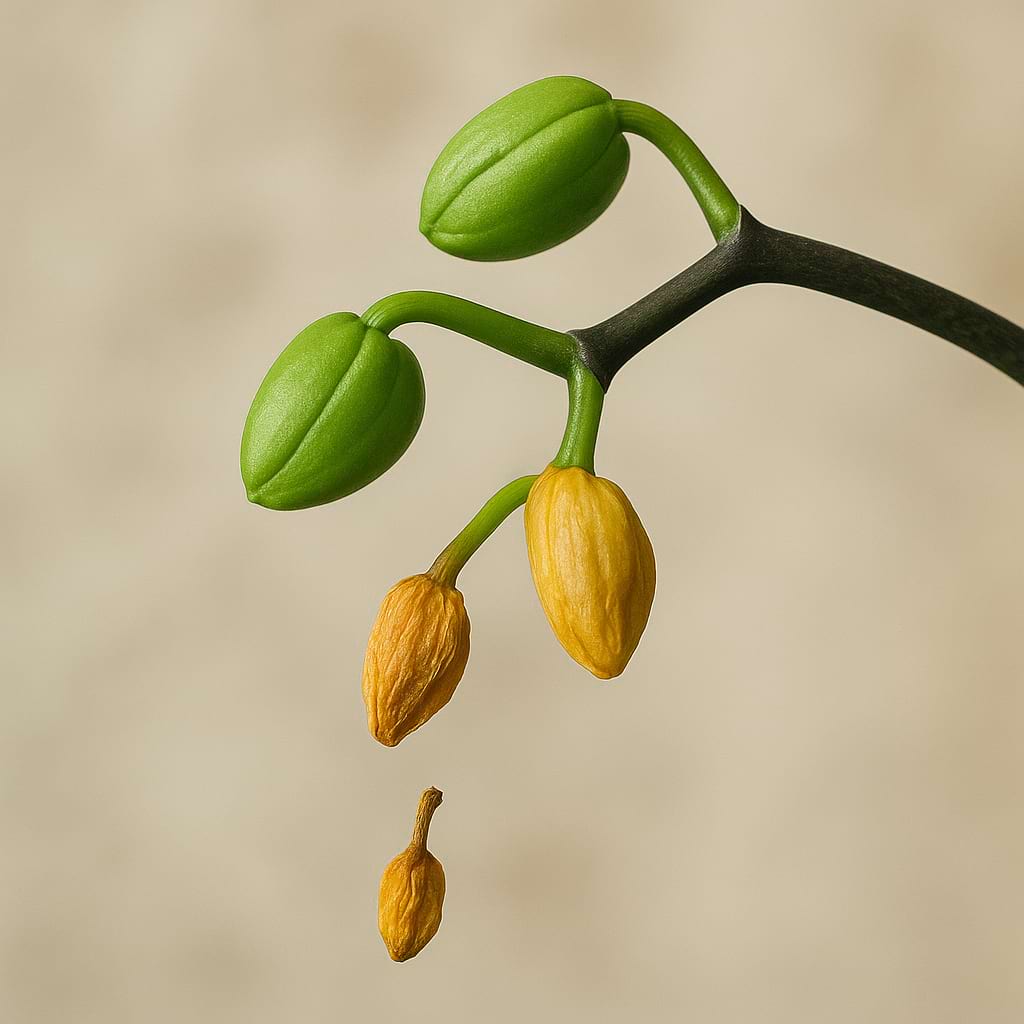
Male flowers fall on their own after a few days, which is normal. If buds drop before they open, that is bud blast, usually caused by the soil drying out completely, a sudden temperature change, or moving the plant to a new spot while it is in bud.
🏷️ Begonia Types and Varieties
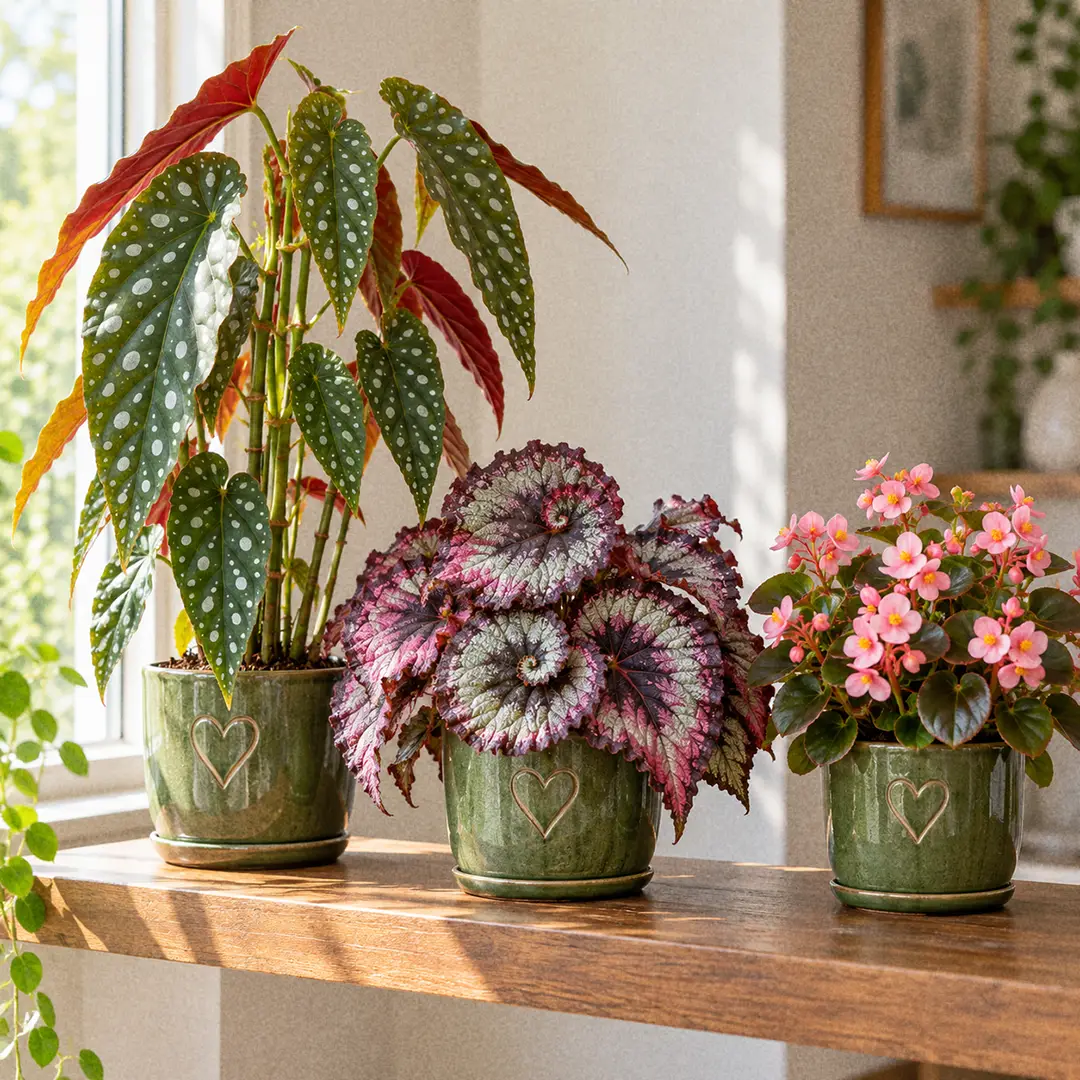
There are around 2,000 begonia species and many thousands of hybrids, so begonia societies sort them by how they grow. Once you know which group your plant belongs to, you know how it wants to be watered, pruned, and propagated.
Cane Begonias (Angel Wing)
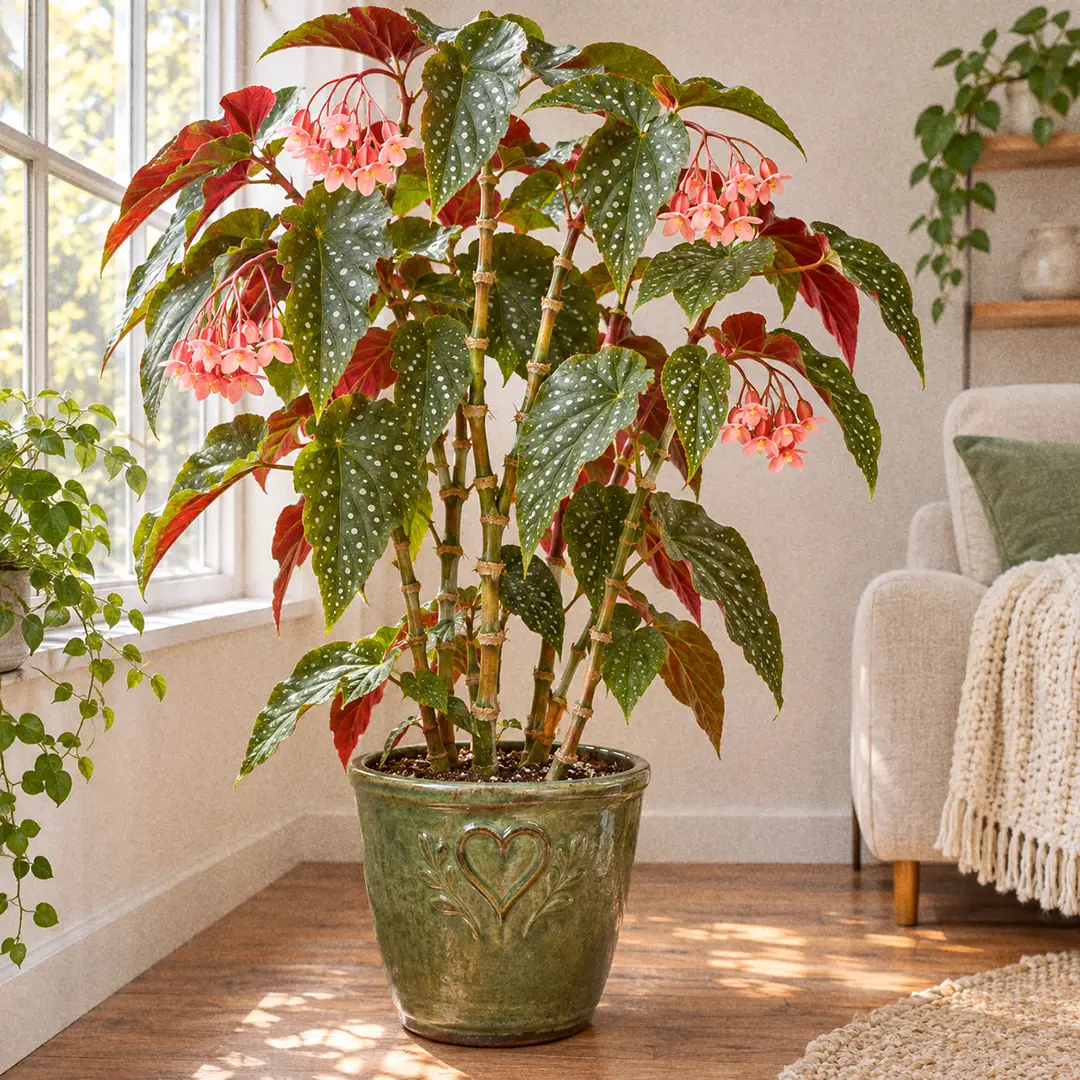
Upright, jointed stems that look like bamboo, with long, wing-shaped leaves that are often spotted silver and red underneath. They grow 2-4 feet tall and flower in hanging clusters. The famous Polka Dot Begonia belongs here. Cane begonias take the most light of any group and need regular pruning to stay full. Our Angel Wing Begonia guide covers the group in detail.
Rhizomatous Begonias
These grow from a thick stem (the rhizome) that creeps along the soil surface, with leaves on stalks rising from it. They stay low and wide and are grown for their foliage. The Iron Cross Begonia with its dark cross pattern and the glossy, round-leaved Beefsteak Begonia are the classics, and the smaller, bumpy-leaved Begonia Soli-Mutata changes from green to red-bronze as the light gets brighter. They like wide, shallow pots and a little more drying between waterings.
Rex Begonias
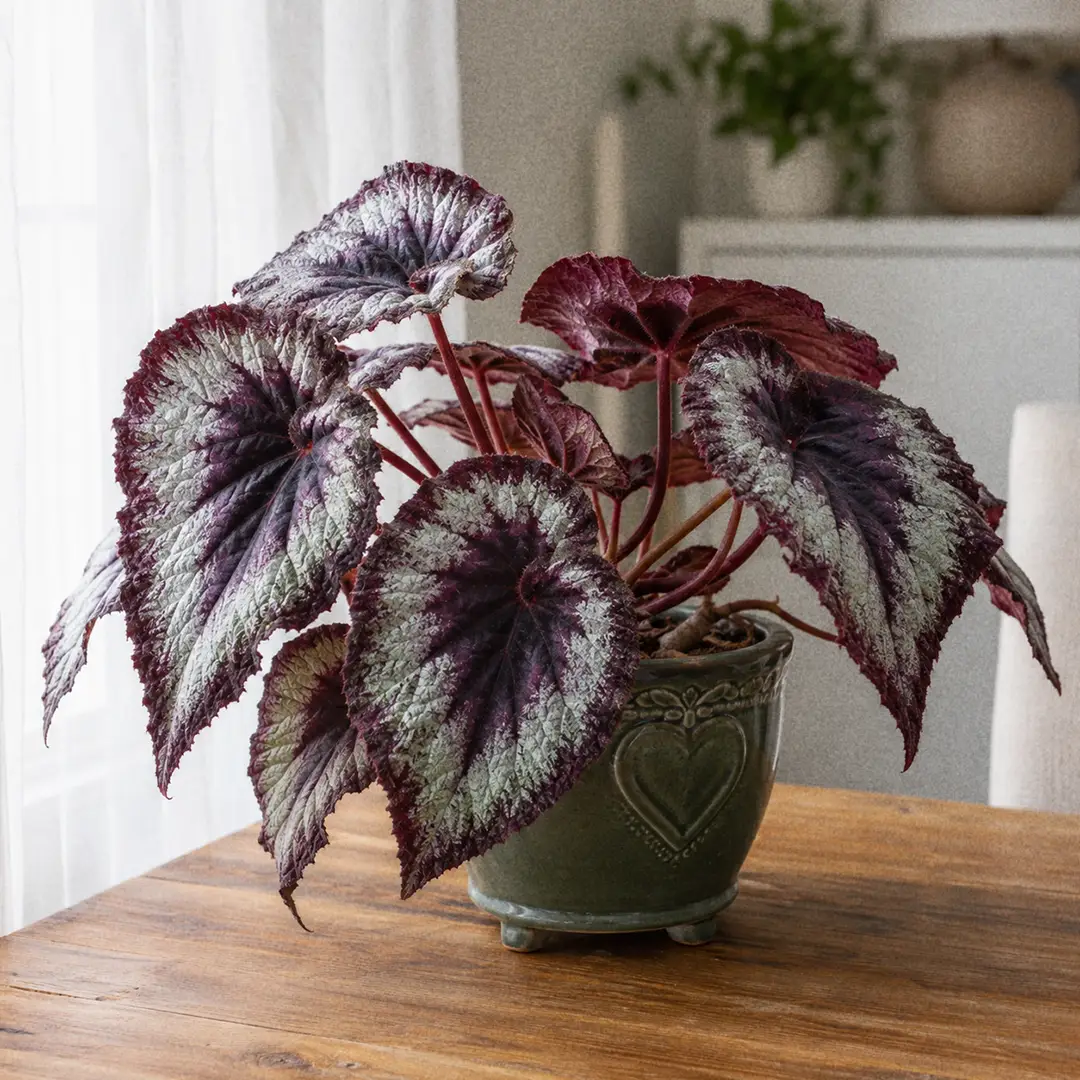
Technically a subgroup of rhizomatous begonias, but distinct enough to get their own name. The Rex Begonia has the wildest leaves in the genus: spirals, metallic silver, deep purple, and hot pink. They are the fussiest group, wanting steady humidity, gentle light, and careful watering.
Wax Begonias (Semperflorens)
Compact, bushy plants with round, waxy green or bronze leaves and small flowers almost all year. Wax Begonias are sold as outdoor bedding plants, but they make easy, long-lived houseplants on a sunny sill.
Shrub-Like Species
Small, soft-stemmed upright begonias that branch from the base. Many are rainforest species that need high humidity, like the red-spotted Begonia amphioxus, which grows best in an enclosure.
Tuberous and Rieger Begonias
Sold in bloom as gift plants, with big rose-like flowers. Tuberous begonias die back to a tuber every winter and need a dry dormant rest. Rieger begonias are usually enjoyed for one long flowering season and then replaced or restarted from cuttings.
Not Actually a Begonia
The Strawberry Begonia is Saxifraga stolonifera, a completely different family. It likes cooler rooms and is propagated from runners, so care it by its own guide, not this one.
🪴 Potting and Repotting Begonias
When to Repot
Repot every 1-2 years in spring, or when roots circle the bottom of the pot and the soil dries out within a couple of days. Begonias like being a little snug, and many flower better that way, so do not repot just because a year has passed.
Choosing the Right Pot
Move up only one size, about 1 inch wider. A pot that is too big holds a mass of wet soil the fine roots cannot reach, and that is where rot starts. Rhizomatous and Rex begonias do best in wide, shallow pots, since their roots stay near the surface. Drainage holes are non-negotiable. Plastic keeps moisture longer and terracotta dries faster, so match the pot to how often you water. Our plant pots guide compares materials.
How to Repot a Begonia
Water the day before so the root ball holds together. Ease the plant out, loosen circling roots gently, and trim any that are brown and mushy. Set it in fresh mix at the same depth as before. For rhizomatous types, keep the rhizome sitting on top of the soil, not buried. Water lightly and keep it out of direct sun for a week. Our repotting guide covers the general steps.
✂️ Pruning Begonias
Pruning Cane Begonias
Cane begonias get tall and bare at the bottom unless you cut them back. In spring, cut the tallest canes down to just above a node, two or three nodes above the soil. New shoots sprout from the base and below the cut, and the plant fills out within a couple of months. Every piece you remove can be rooted as a cutting.
Pinching Wax and Shrub Begonias
Pinch off the soft tips of wax and shrub-like begonias every few weeks in the growing season. Each pinch makes the stem branch into two, so the plant stays bushy instead of floppy. Snip off faded flowers at the same time.
Tidying Rhizomatous and Rex Begonias
These rarely need pruning. Remove old, damaged, or yellowing leaves by cutting the stalk close to the rhizome. If a rhizome grows over the pot edge and hangs bare, cut it off and root it.
🌱 How to Propagate Begonias
Which Method for Which Begonia
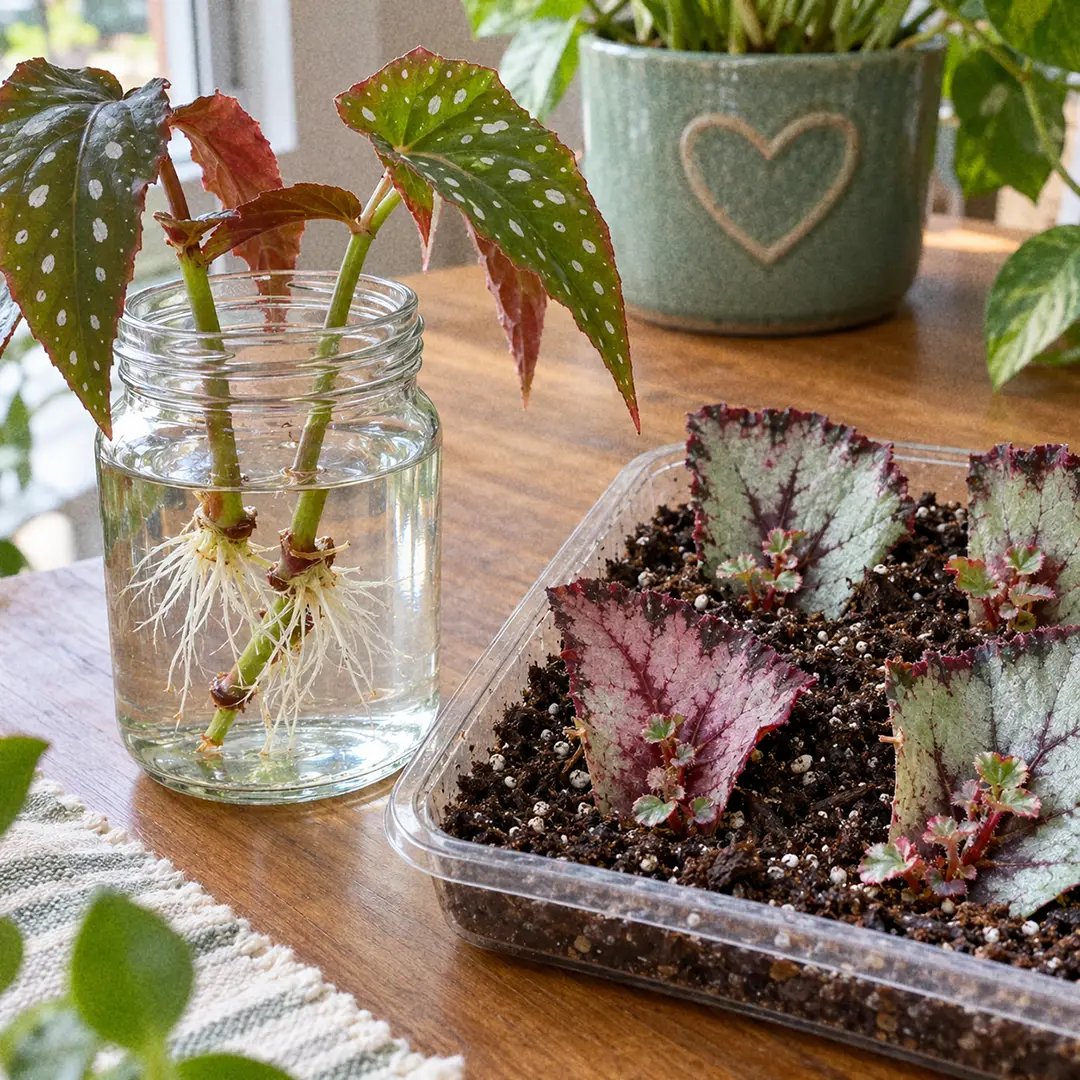
Begonias are some of the easiest houseplants to propagate, but the method depends on the group. Cane, wax, and shrub begonias root from stem cuttings. Rex and rhizomatous begonias grow new plants from a single leaf, a piece of leaf, or a section of rhizome. Tuberous begonias are restarted from the tuber or from spring shoots. Spring and early summer give the fastest results. Our propagation hub covers the basics.
Stem Cuttings in Water or Soil
Cut a 4-6 inch stem tip just below a node, with two or three nodes on it. Remove the lower leaves so no foliage sits in water or soil. Place it in a jar of water, or straight into moist, airy mix. Water roots usually appear in 2-4 weeks. Pot water-rooted cuttings once the roots are an inch or two long. See water propagation and soil propagation for both methods.
Leaf Cuttings for Rex and Rhizomatous Begonias
This is where begonias get fun. The simplest method: take a healthy leaf with an inch of stalk and push the stalk into moist mix so the leaf stands up. New plantlets grow from the base of the stalk.
For more plants from one leaf, use wedges. Cut the leaf into triangles, each with a main vein running to the point, and push the pointed end into the mix. Or slice through the main veins on the back of a leaf and pin it flat on the soil, where babies form at each cut. Cover the tray with a clear lid or bag. Plantlets appear in about one to two months.
Dividing Rhizomes
Cut a long rhizome into 2-inch sections, each with at least one leaf or growing tip. Lay them half-buried on moist mix. This is also the way to restart a Rex that has grown bare in the middle. Our plant division guide covers splitting crowded pots.
Tips for Success
Keep cuttings in bright indirect light and high humidity, but open the lid or bag every day or two to let fresh air in. Leaf cuttings rot quickly in stale, wet air. Skip fertilizer until you see new leaves.
🐛 Begonia Pests and Treatment
Common Begonia Pests
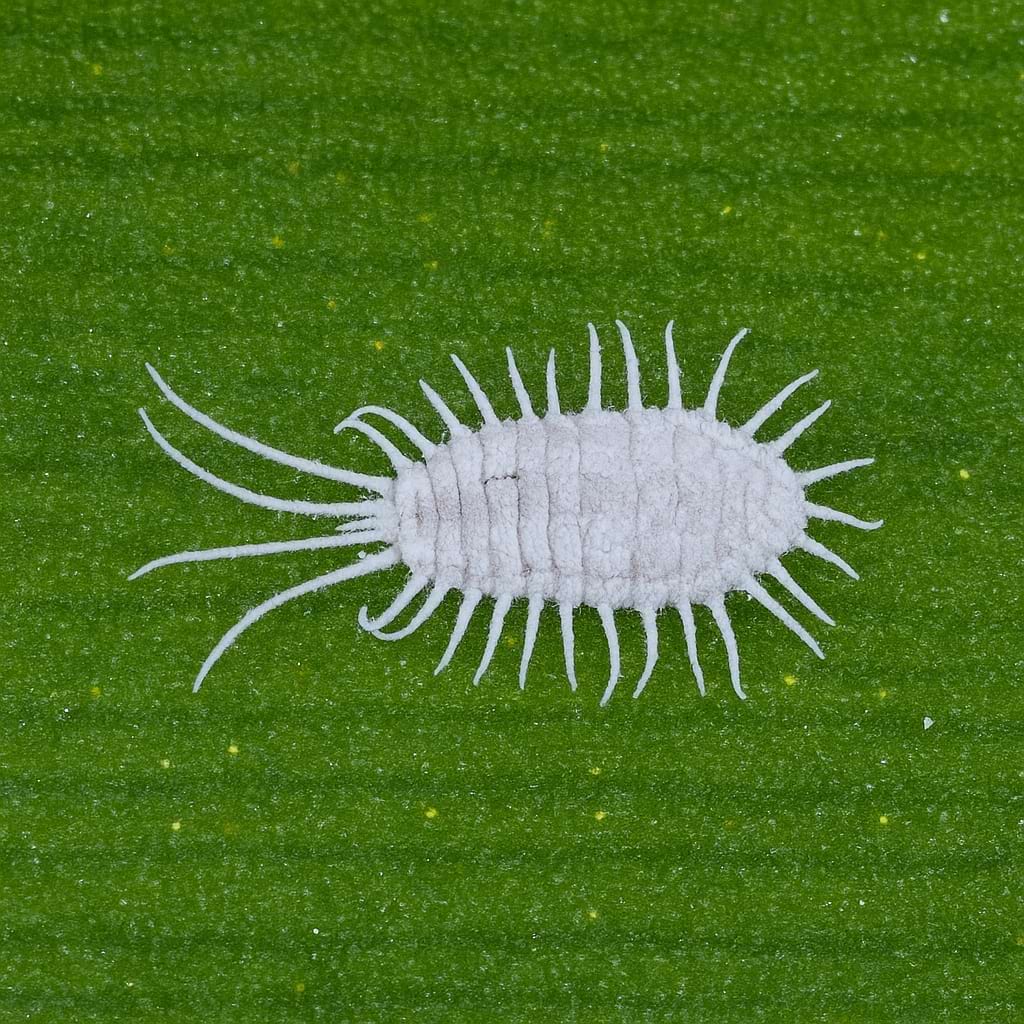
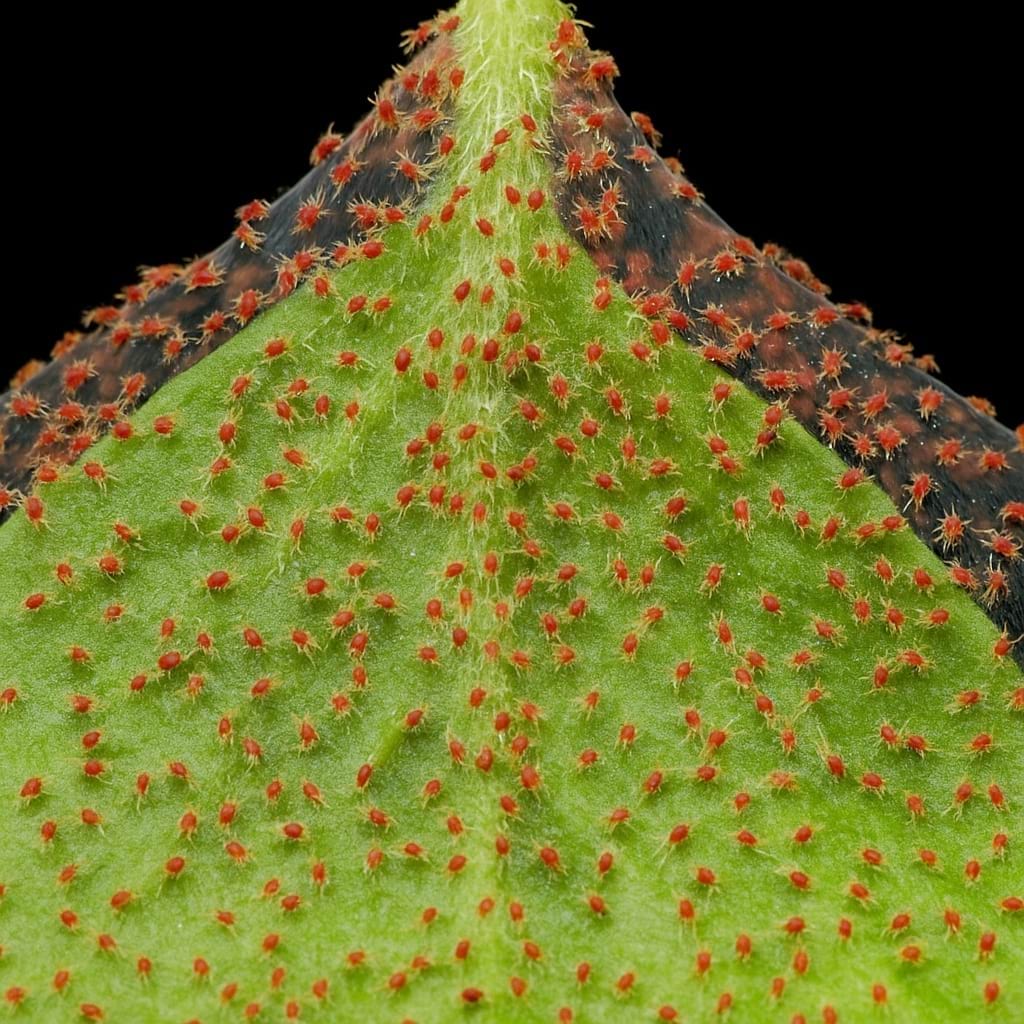
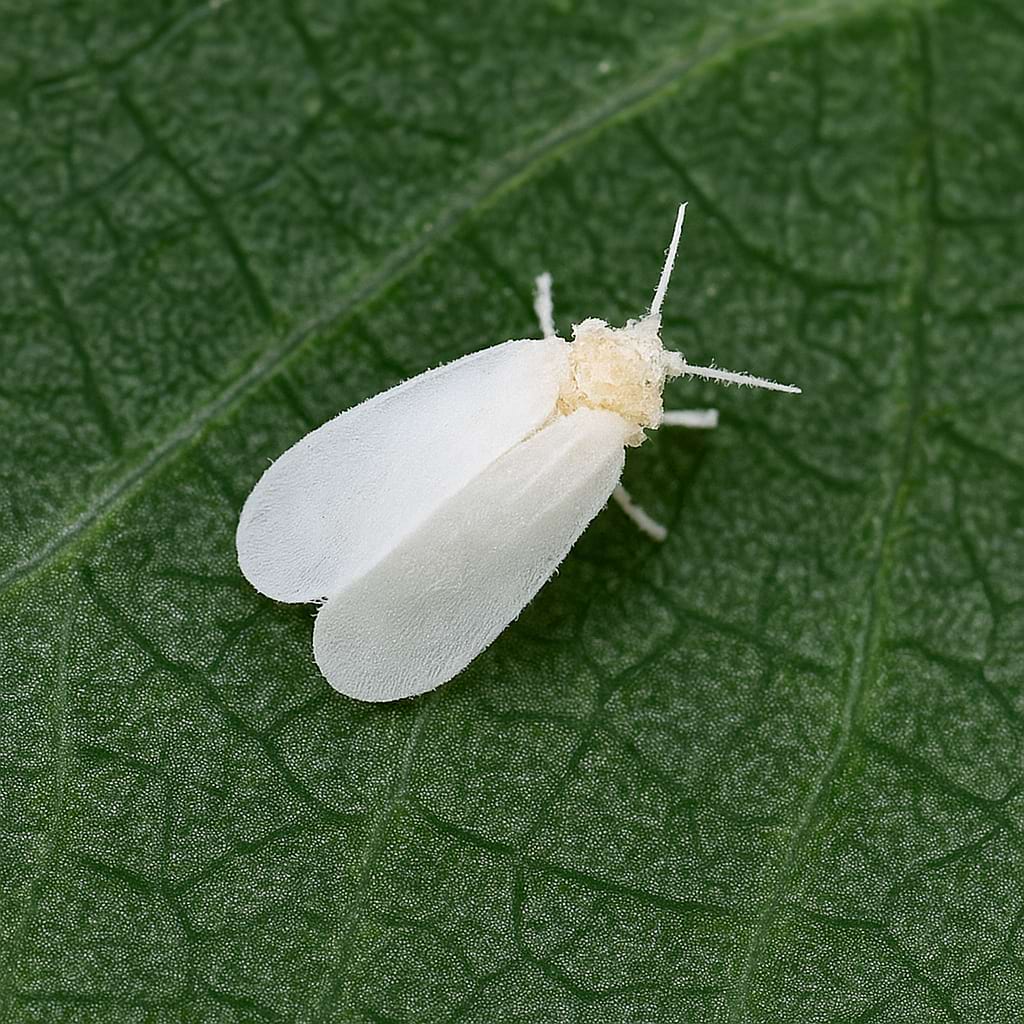
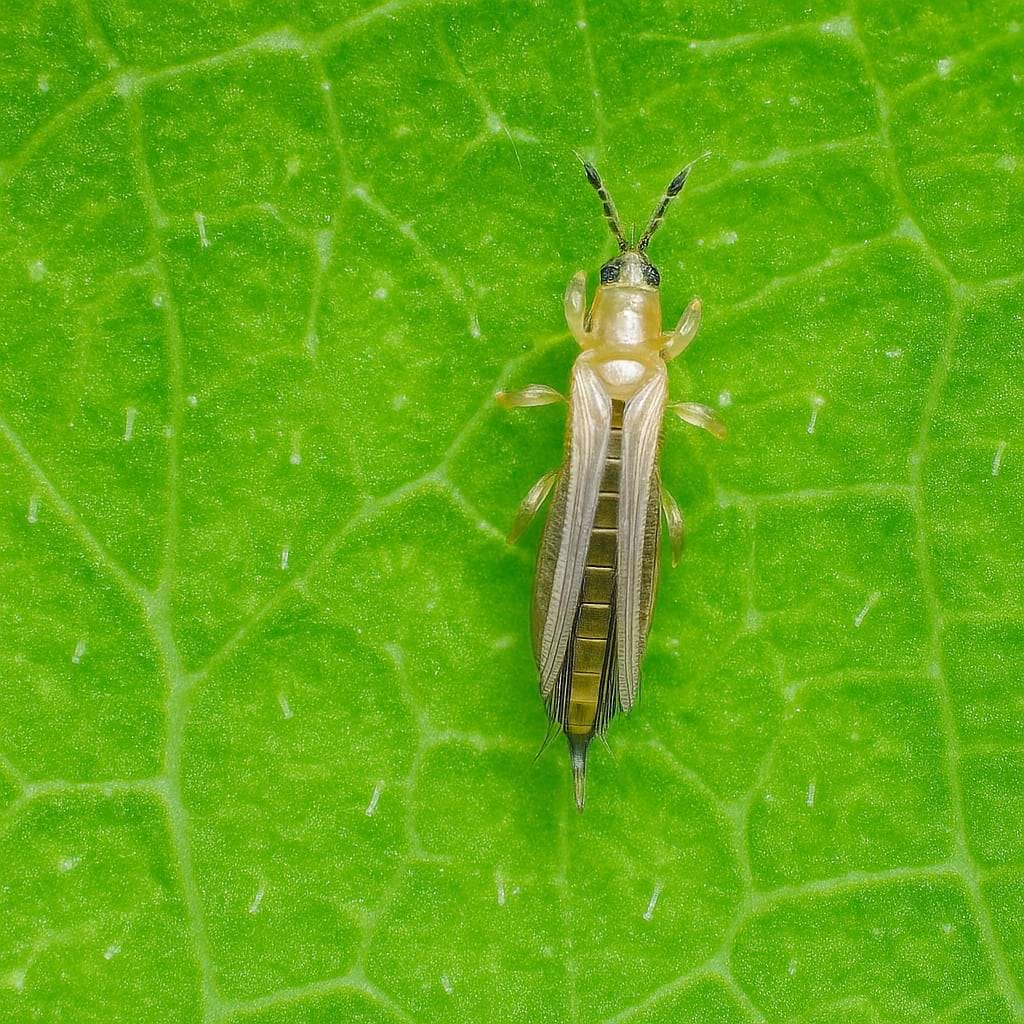
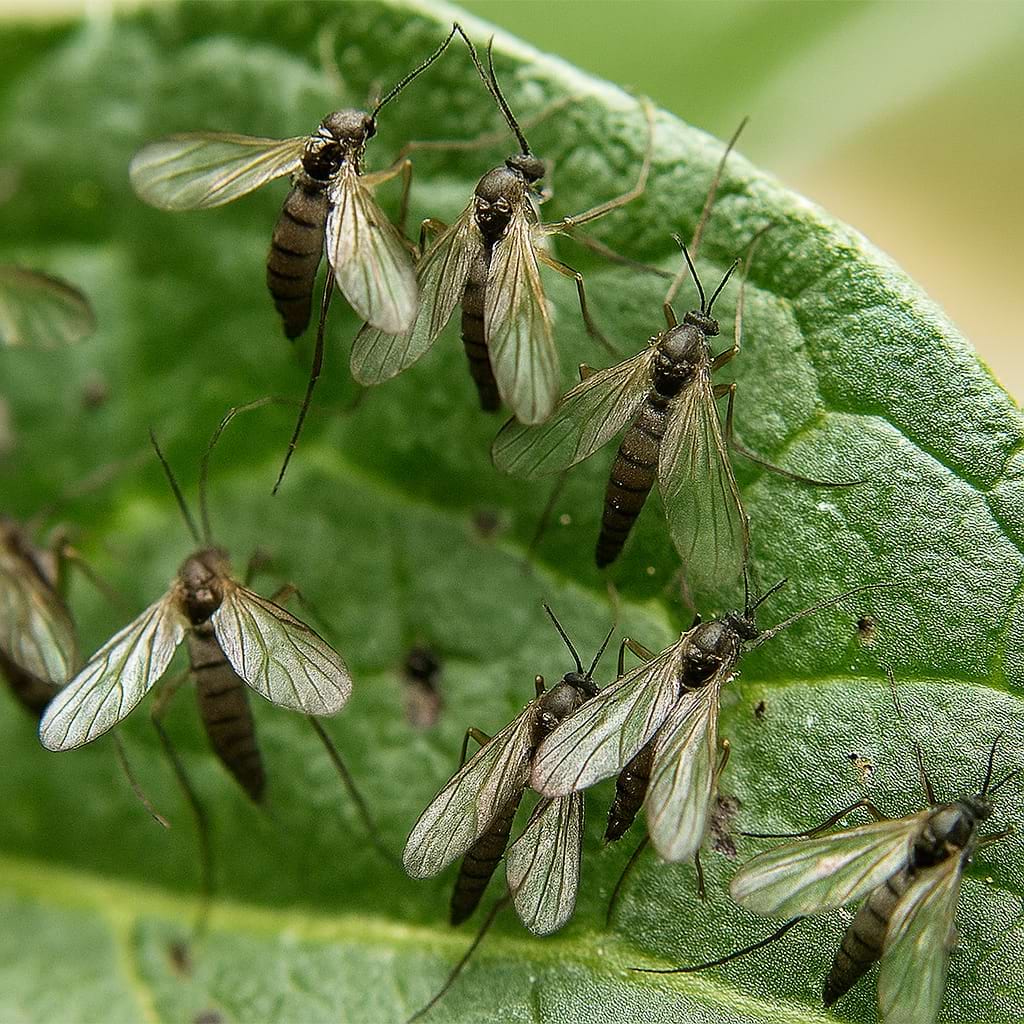
Mealybugs are the most common, hiding as white cottony tufts where leaf stalks meet stems and along the undersides of leaves. Spider mites show up in warm, dry air as fine webbing and pale speckling. Whiteflies and thrips cause silvery streaks and distorted new leaves. Fungus gnats mean the soil is staying wet for too long.
Treatment and Prevention
Dab mealybugs with a cotton swab dipped in rubbing alcohol, then treat the plant with insecticidal soap. Test any spray on one leaf first, because hairy and thin-leaved begonias can be sensitive, and never spray in direct sun. Raising humidity discourages spider mites, and letting the top inch dry out ends fungus gnats. Check the undersides of leaves every couple of weeks and quarantine new plants before they join your collection.
🩺 Common Begonia Problems
Powdery Mildew
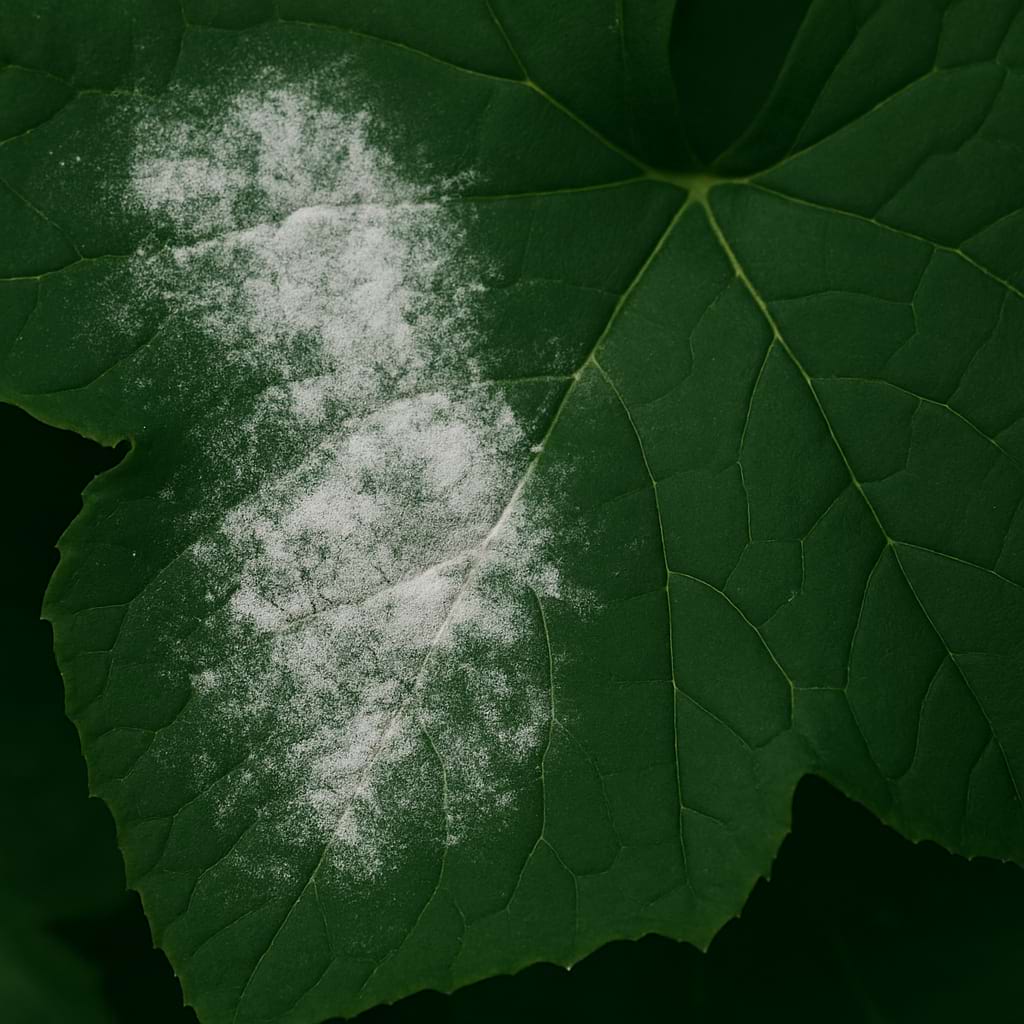
The number one begonia problem. White, flour-like patches appear on leaves and stems, especially on Rex and cane types. It spreads in humid, still air and on leaves that stay wet. Remove badly affected leaves, improve airflow, stop misting, and treat with a fungicide or a potassium bicarbonate spray. See powdery mildew for the full treatment.
Root and Stem Rot
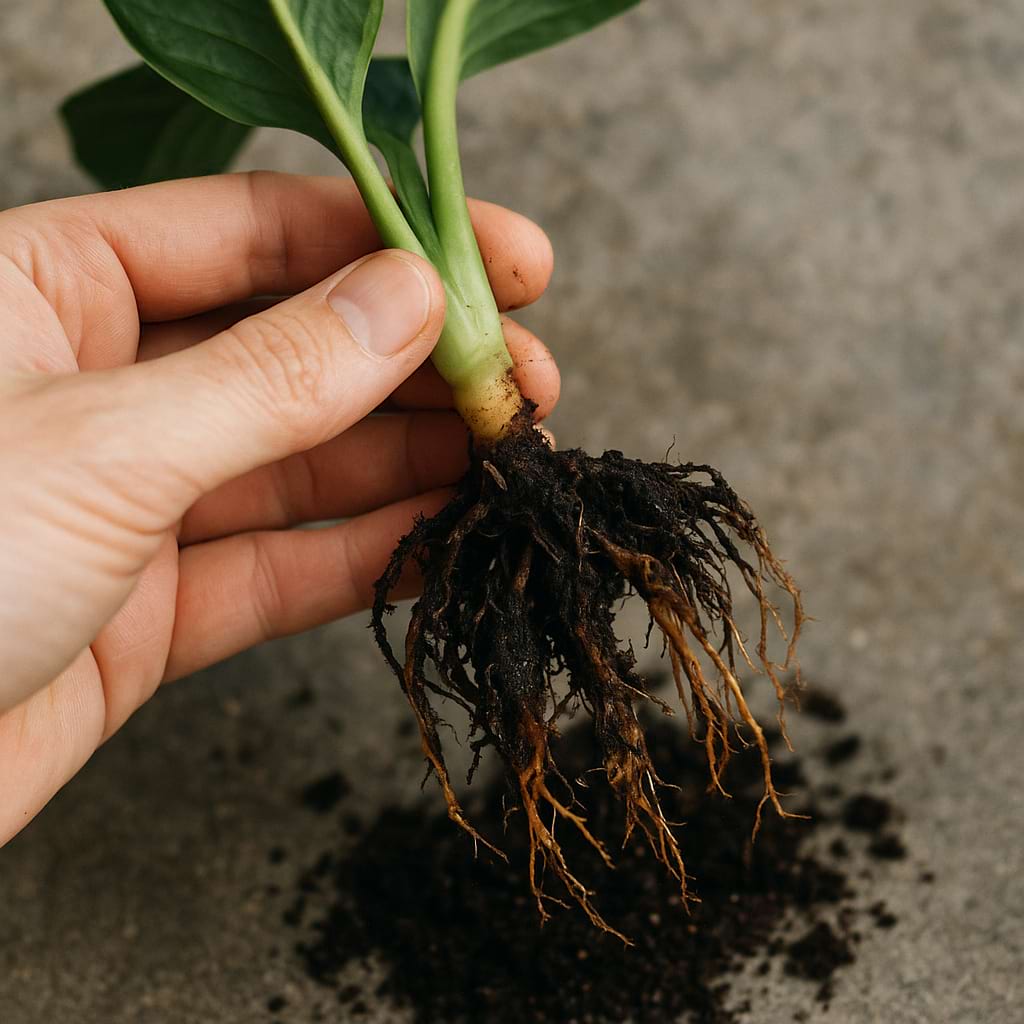
Stems that turn black and soft at the soil line mean root rot or mushy stems from wet soil. Unpot the plant, cut away mushy roots, and repot in fresh, airy mix. If the base is lost, take cuttings from the healthy tops, since begonias root so easily that a rescue is usually possible.
Leaf Drop, Crispy Edges, and Leggy Stems
Sudden leaf drop usually follows a move, a cold draft, or a missed watering. Brown crispy edges point to dry air or fertilizer salts. Long bare stems are leggy growth from low light, fixed by a brighter spot and a spring prune.

🖼️ Begonia Display and Styling Ideas
Solo Setups
A tall cane begonia makes a good floor or table plant near an east window, where the spotted leaves and red undersides catch the light. A single Rex looks best at eye level or just below, so you see the top of its swirled leaves.
Grouped Begonia Collections
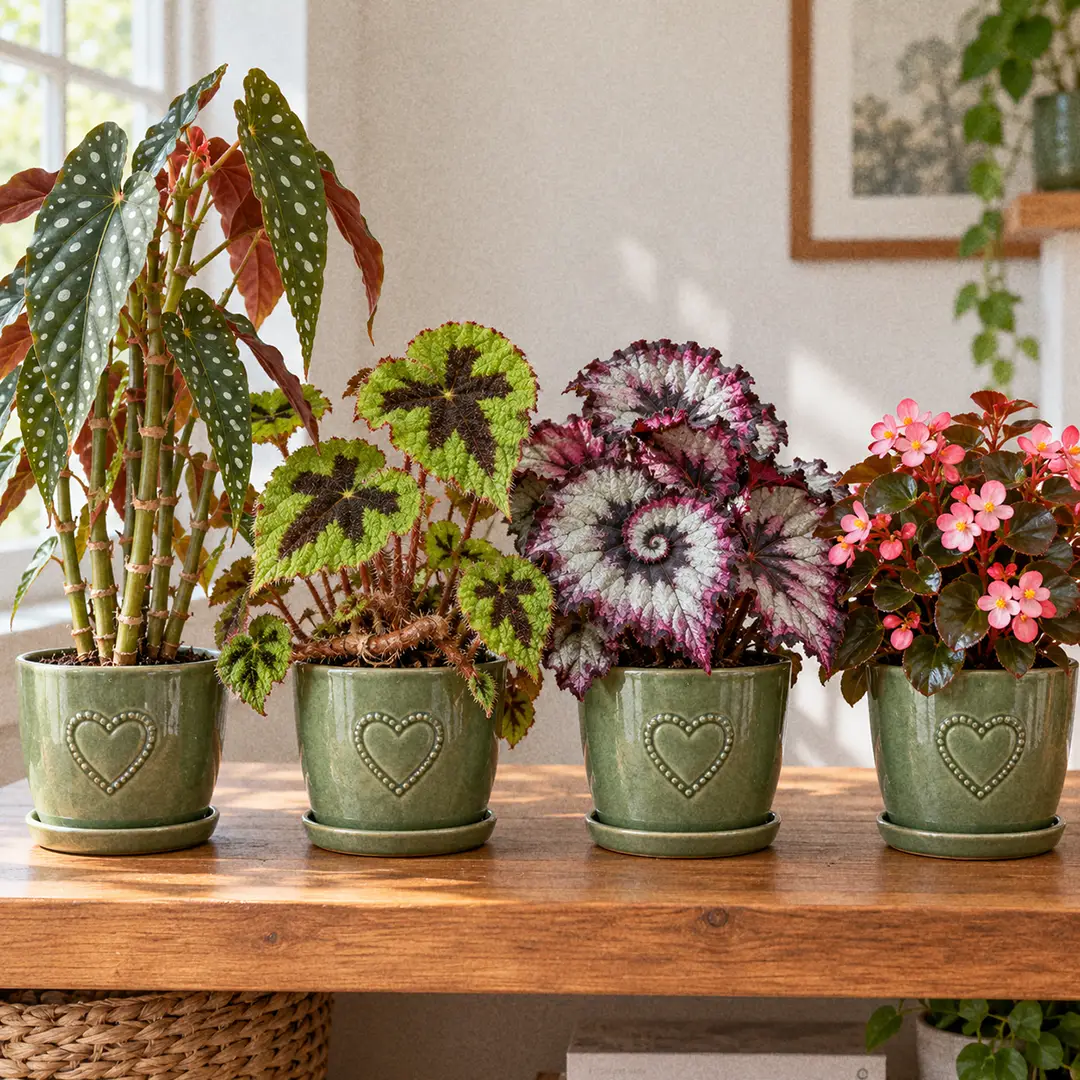
Begonias are made for collecting, because the leaf patterns are so different. Put an upright spotted cane begonia at the back, a low Iron Cross or Rex in front, and a flowering wax begonia at the edge. Grouping them also raises the humidity around all of them. Leave a little space between pots so air still moves and mildew does not spread.
Where Not to Put a Begonia
Skip south or west windowsills with hot afternoon sun, rooms with radiators or heating vents nearby, and dark corners. Keep begonias on high shelves or in a room pets cannot reach, since they are toxic to cats and dogs.
🌟 Begonia Pro Care Tips
💧 Water the soil, not the plant. Wet leaves are the main cause of mildew and leaf spot.
🚫 Never mist begonias. Raise humidity with a humidifier or pebble tray instead.
🪴 Go up one pot size at a time. Oversized pots hold wet soil and rot the fine roots.
🌬️ Keep air moving. Humid but still air breeds powdery mildew.
✂️ Prune cane begonias every spring. Cut leggy canes to two or three nodes and root the tops.
🌱 Keep a backup cutting. Begonias root so easily that a spare in a jar is cheap insurance.
🍼 Feed at half strength. Fine begonia roots burn easily.
🐾 Keep them away from pets. All parts are toxic, and the rhizomes and tubers most of all.
❓ Frequently Asked Questions
Are begonias toxic to cats and dogs?
Yes. The ASPCA lists begonias as toxic to cats, dogs, and horses. They contain soluble calcium oxalates, which cause mouth irritation, drooling, and vomiting, and the underground tubers and rhizomes are the most toxic parts. Keep begonias out of reach of pets.
Should I mist my begonia?
No. Misting leaves water sitting on the foliage, which is the main trigger for powdery mildew and leaf spot. Raise humidity with a humidifier, a pebble tray, or by grouping plants instead.
Why are my begonia leaves turning white and powdery?
That is powdery mildew, the most common begonia disease. It spreads in humid, still air and on leaves that stay wet. Remove badly affected leaves, improve airflow, and treat with a fungicide or a potassium bicarbonate spray.
Can you grow a begonia from a single leaf?
Rex and rhizomatous begonias, yes. A leaf with a short stalk pushed into moist mix will grow new plantlets, and you can even cut one leaf into wedges for several plants. Cane and wax begonias need a stem cutting with at least one node.
Why is my begonia dropping leaves?
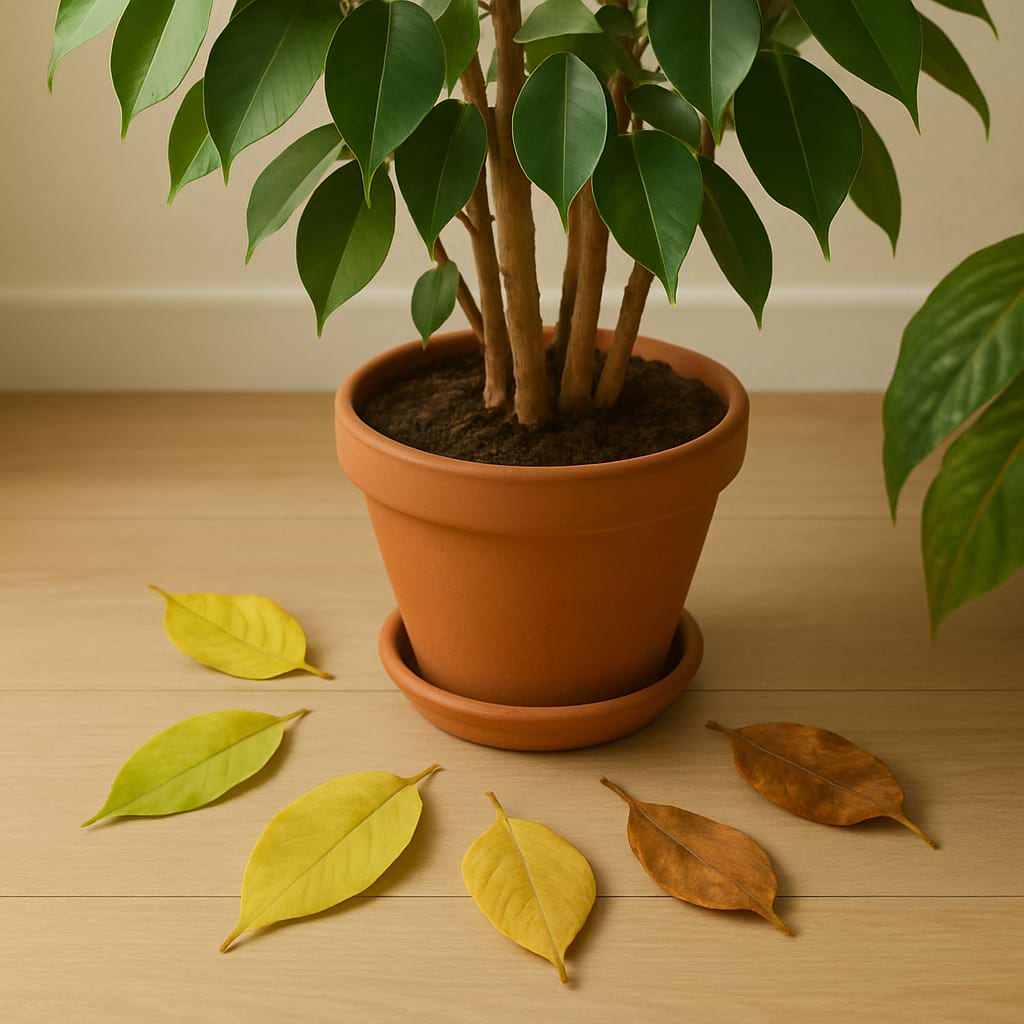
The most common causes are a sudden change of spot, cold drafts, letting the soil dry out completely, or overwatering. Check the soil first. If it is soggy and the stems are soft, look for root rot. If it is bone dry, water thoroughly and keep watering more regularly.
Can begonias grow in water permanently?
Cuttings root well in water, but most begonias do better moved into soil once the roots are an inch or two long. Long-term water culture works for some cane types if you change the water weekly and add a very diluted fertilizer.
Do begonias like to be root-bound?
Mildly, yes. Begonias have small root systems and many flower better in a snug pot. Repot only when roots fill the pot and the soil dries within a couple of days, and go up just one size.
Are begonias indoor or outdoor plants?
Both. Wax and tuberous begonias are popular summer bedding plants outdoors, while cane, rhizomatous, and Rex begonias are grown mostly as houseplants. Outside zones 10-12, any begonia has to come indoors before nights drop below 50°F (10°C).
How long do begonias live?
Cane, rhizomatous, and wax begonias live for many years indoors, and because they root so easily, you can keep renewing the same plant from cuttings indefinitely. Rieger begonias are usually short-lived, and tuberous types die back each winter and regrow from the tuber.
Is Strawberry Begonia a real begonia?
No. Strawberry Begonia is Saxifraga stolonifera, from a different plant family. It only shares the name because its rounded, hairy leaves look a little like a begonia's.
ℹ️ Begonia Info
Care and Maintenance
🪴 Soil Type and pH: Light, airy, slightly acidic potting mix with perlite and bark
💧 Humidity and Misting: Aim for 50% or more, raised with a humidifier or pebble tray rather than misting, which invites powdery mildew.
✂️ Pruning: Cut back leggy cane begonias in spring, pinch wax begonias for bushiness, and remove old leaves at the rhizome on Rex types.
🧼 Cleaning: Brush dust off with a soft dry brush. Avoid wiping or wetting the leaves, especially hairy and textured types.
🌱 Repotting: Repot in spring every 1-2 years, moving up only one pot size. Rhizomatous types prefer wide, shallow pots.
🔄 Repotting Frequency: Every 1-2 years
❄️ Seasonal Changes in Care: Steady water and feeding in spring and summer, then lighter watering and no feeding in winter, with tuberous types going fully dormant.
Growing Characteristics
💥 Growth Speed: Moderate to fast
🔄 Life Cycle: Evergreen perennial (tuberous types are seasonally dormant)
💥 Bloom Time: Wax begonias bloom almost year-round; cane begonias in spring through autumn; rhizomatous types in late winter and early spring
🌡️ Hardiness Zones: 10-12
🗺️ Native Area: Tropical and subtropical Central and South America, Africa, and southern Asia
🚘 Hibernation: Most indoor begonias slow down in winter but keep their leaves; Rex can pause and drop a few leaves; tuberous begonias die back to the tuber
Propagation and Health
📍 Suitable Locations: East windows, bright rooms a few feet from a south or west window, humid kitchens with good light, plant cabinets and terrariums for small species
🪴 Propagation Methods: Stem cuttings for cane and wax begonias; leaf cuttings, leaf wedges, or rhizome sections for Rex and rhizomatous begonias.
🐛 Common Pests: Mealybugs, Spider Mites, Whiteflies, Thrips, Fungus Gnats
🦠 Possible Diseases: Powdery mildew, botrytis (gray mold), root and stem rot, bacterial leaf spot
Plant Details
🌿 Plant Type: Herbaceous perennial with cane, rhizomatous, fibrous, or tuberous growth
🍃 Foliage Type: Asymmetrical leaves, often spotted, swirled, hairy, or metallic depending on the group
🎨 Color of Leaves: Green, bronze, silver, purple, pink, near-black, and red undersides
🌸 Flower Color: Pink, white, red, coral, orange, yellow
🌼 Blooming: Yes, most types bloom indoors; Rex is grown mainly for its leaves
🍽️ Edibility: Not edible. Toxic to pets, with the tubers and rhizomes most toxic.
📏 Mature Size: 6 inches to 4 feet depending on type
Additional Info
🌻 General Benefits: Huge variety of leaf patterns in a small footprint, easy to propagate, flowering types bloom for months
💊 Medical Properties: No documented medicinal use for home growers.
🧿 Feng Shui: Begonias are associated with harmony and balance, and the rounded, colorful leaves bring soft, friendly energy to a room.
⭐ Zodiac Sign Compatibility: Libra
🌈 Symbolism or Folklore: Caution and gratitude in the Victorian language of flowers
📝 Interesting Facts: Begonia is one of the largest plant genera on Earth, with roughly 2,000 species. Nearly every begonia has lopsided leaves, one side of the midrib larger than the other, and each plant carries separate male and female flowers. The genus is named after Michel Bégon, a French colonial administrator and plant collector.
Buying and Usage
🛒 What to Look for When Buying: Look for compact plants with no white powder on the leaves, no soft or blackened stems at the soil line, and new growth at the tips. Check leaf undersides for mealybugs and mites.
🪴 Other Uses: Wax begonias double as outdoor bedding plants in summer; small species are classic terrarium plants.
Decoration and Styling
🖼️ Display Ideas: Shelves near an east window, grouped collections of leaf patterns, wide shallow bowls for rhizomatous types, glass cabinets for small species
🧵 Styling Tips: Mix leaf textures: a spotted cane begonia behind a low swirly Rex reads as a deliberate collection instead of a random cluster.
🪴 See also 🪴
Complete Guide to Angel Wing Begonia Care and Growth
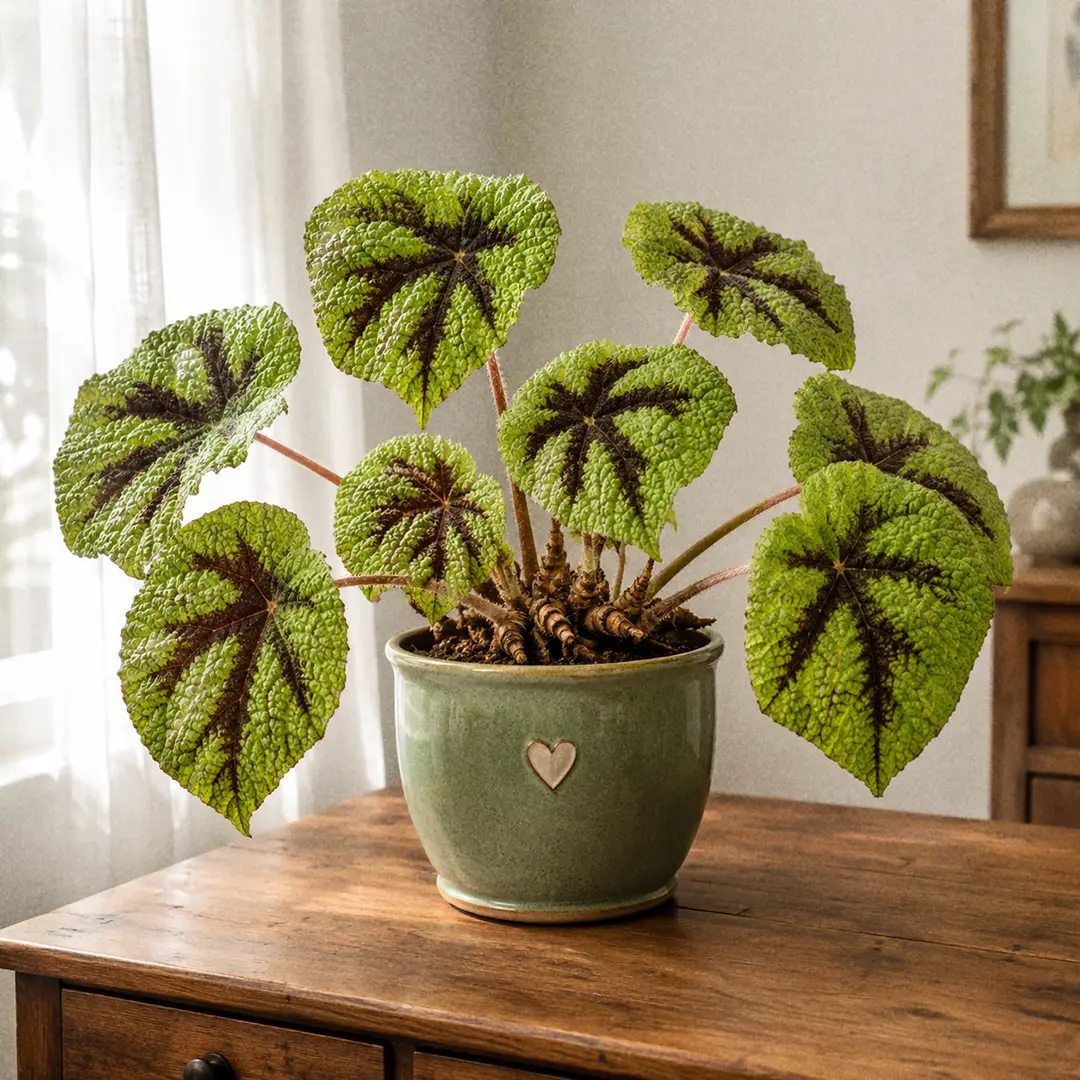
Complete Guide to Iron Cross Begonia Care and Growth
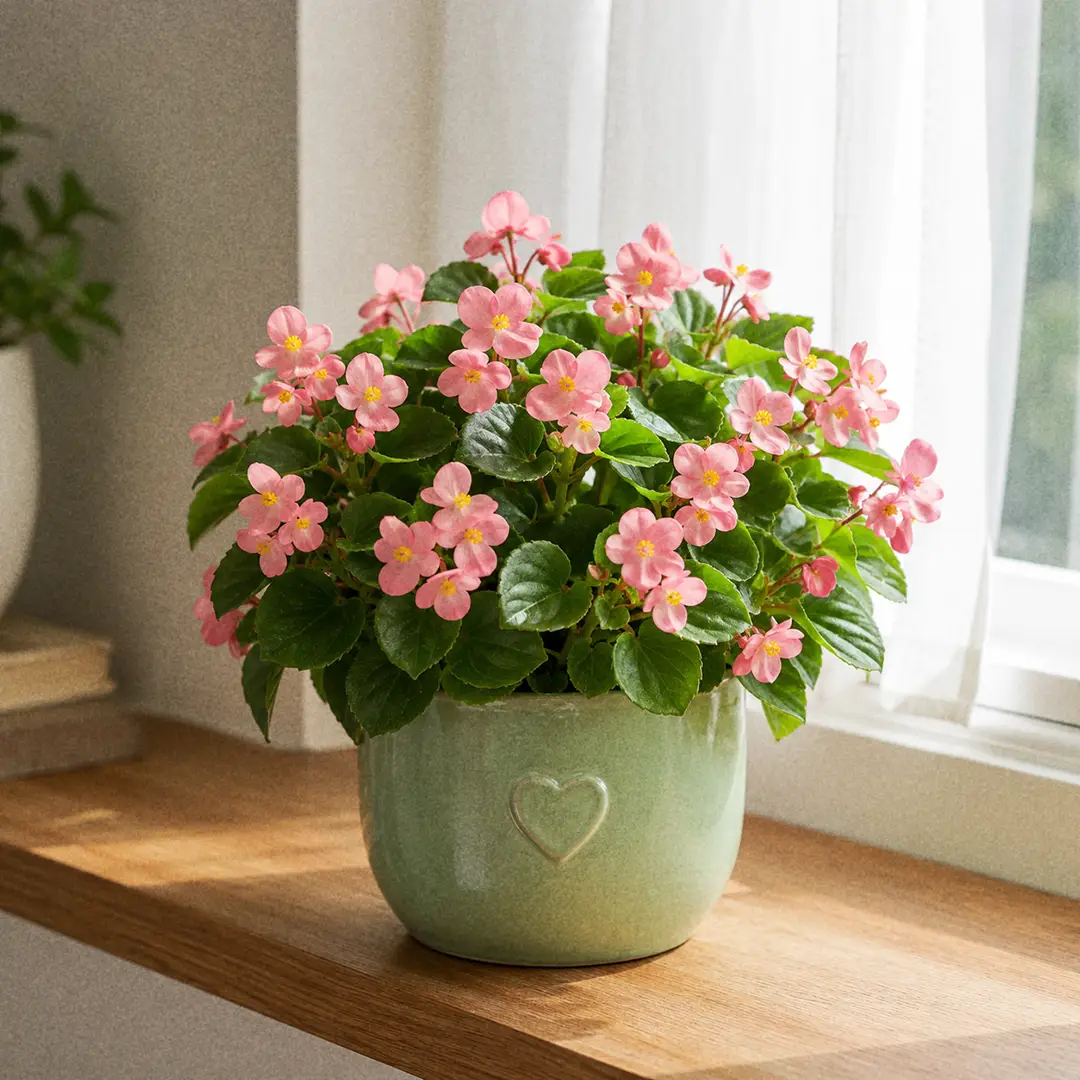
Complete Guide to Wax Begonia Care and Growth
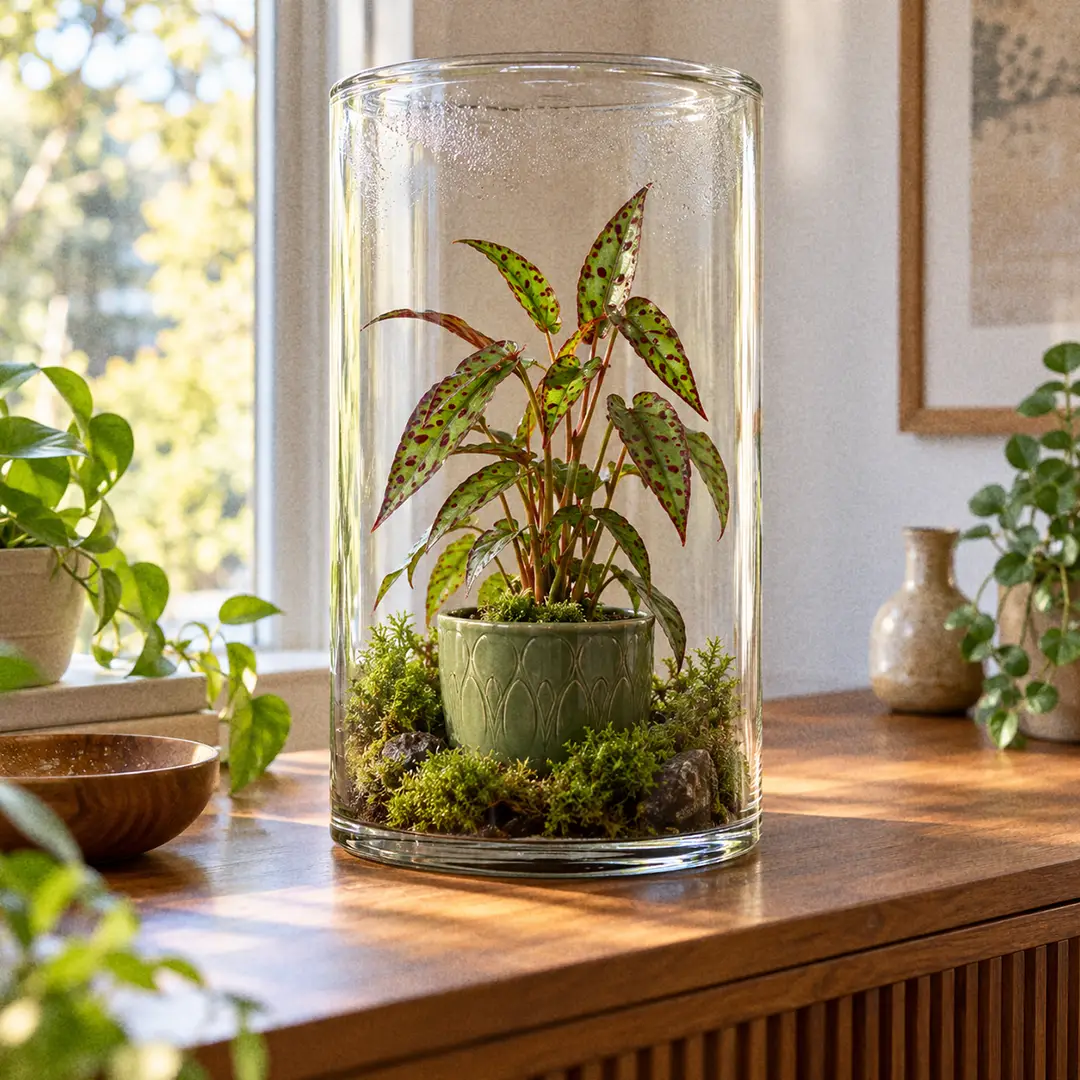
Complete Guide to Begonia Amphioxus Care and Growth
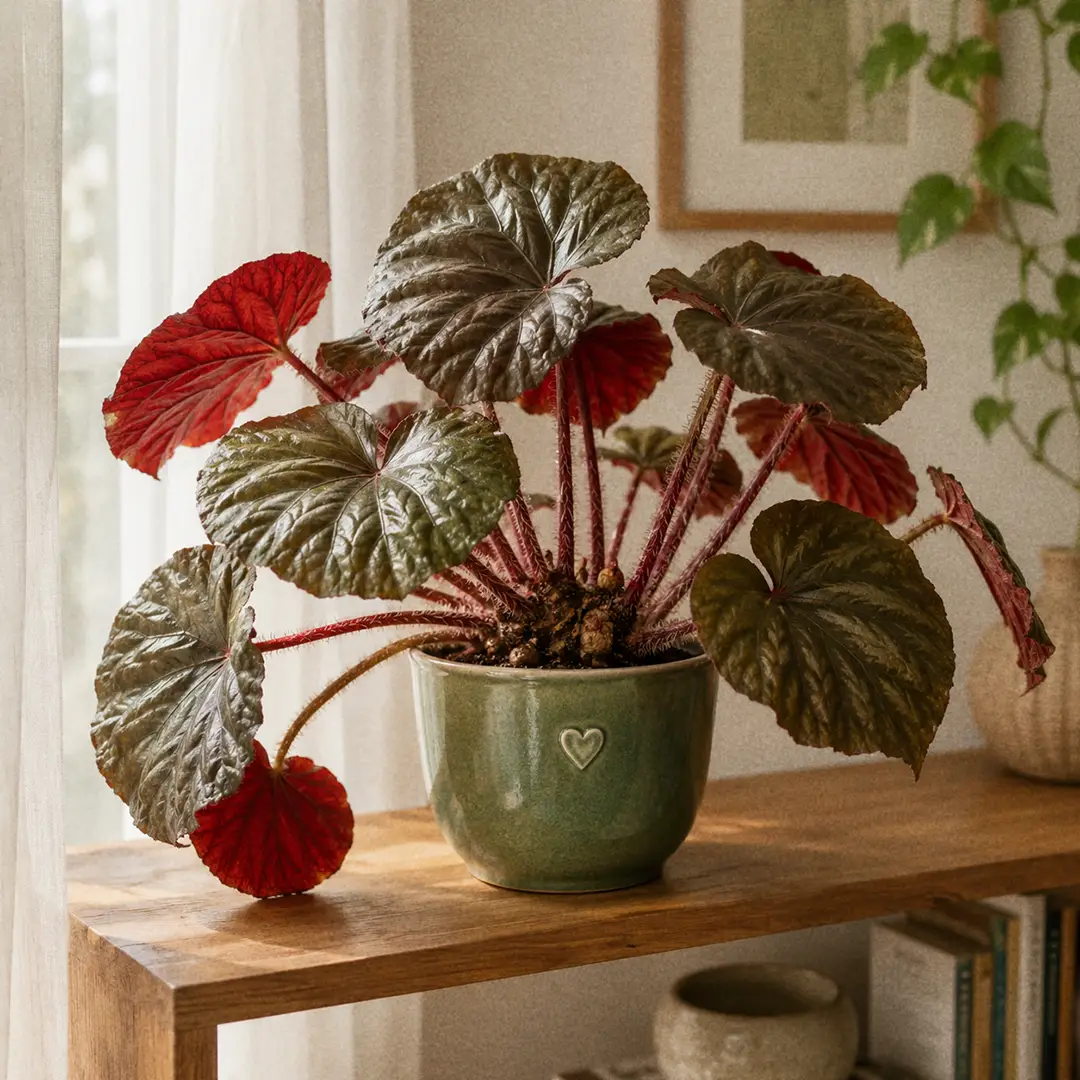
Complete Guide to Beefsteak Begonia Care and Growth

Houseplant101 Forum
Questions & Comments
Ask a question, share your plant experience, or help other plant owners.
Comments are temporarily unavailable.
Open the Houseplant101 ForumNo comments yet
Be the first to ask a question or share your experience about this page.
Log in or create an account
Comments use your Houseplant101 Forum account, but you can stay on this page.
Create a new account