
Angel Wing Begonia
Begonia × corallina and other cane-stemmed hybrids
Cane Begonia, Cane-Stemmed Begonia, Begonia corallina, Begonia Lucerna, Corallina de Lucerna


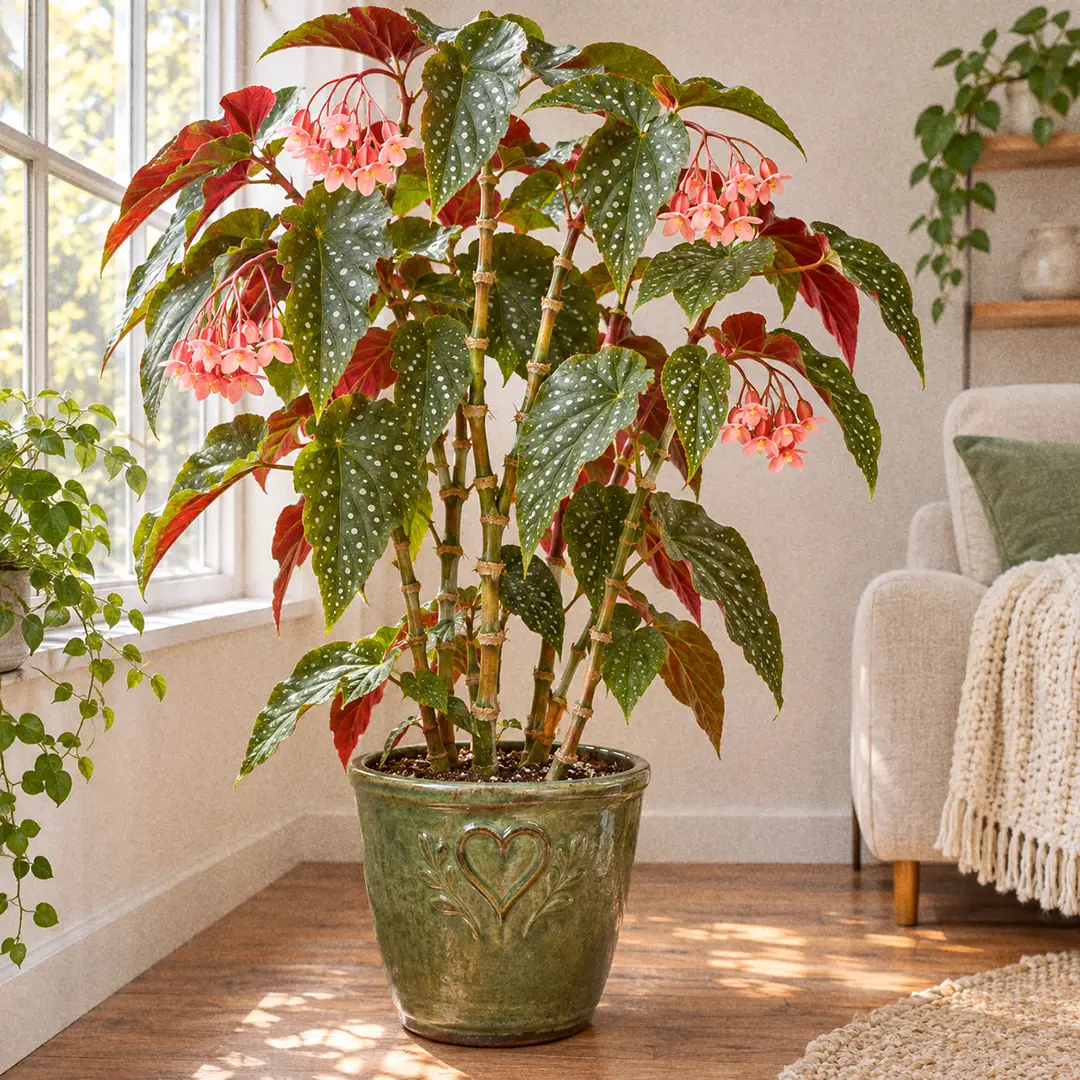
Angel Wing Begonia is a cane begonia with tall, jointed, bamboo-like stems, wing-shaped leaves often spotted silver, and hanging clusters of pink, red, or white flowers. Learn how to prune leggy canes, keep powdery mildew away, and root new plants from cuttings in a glass of water.
📝 Angel Wing Begonia Care Notes
🌿 Care Instructions
⚠️ Common Pests
📊 Growth Information
🪴 In This Guide 🪴

☀️ Angel Wing Begonia Light Requirements (Bright Light, Gentle Sun)
The Sweet Spot
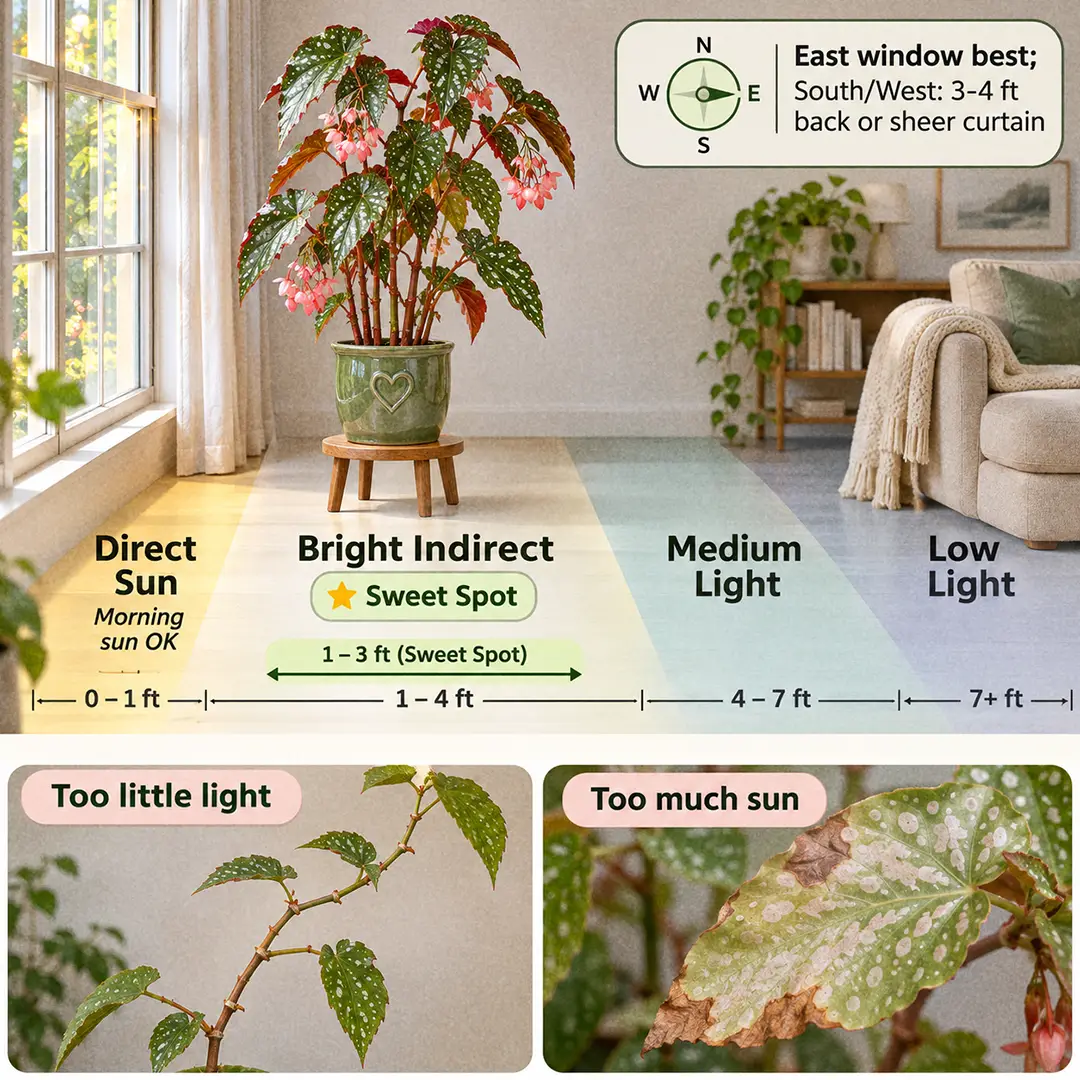
Angel wings want more light than most begonias. Bright light all day, plus two or three hours of soft direct sun, gives you short gaps between leaves and steady flowers. An east-facing window is ideal, right on the sill or a foot or two back. A south or west window works if the plant sits 3-4 feet back or behind a sheer curtain during summer afternoons.
This is the main care difference from a Rex Begonia, whose thin leaves scorch in the same spot. Cane begonias have tougher leaves and flower on light, so they are happy closer to the glass. Our Indoor Lighting Guide shows how to judge a window by eye.
Too Little Light
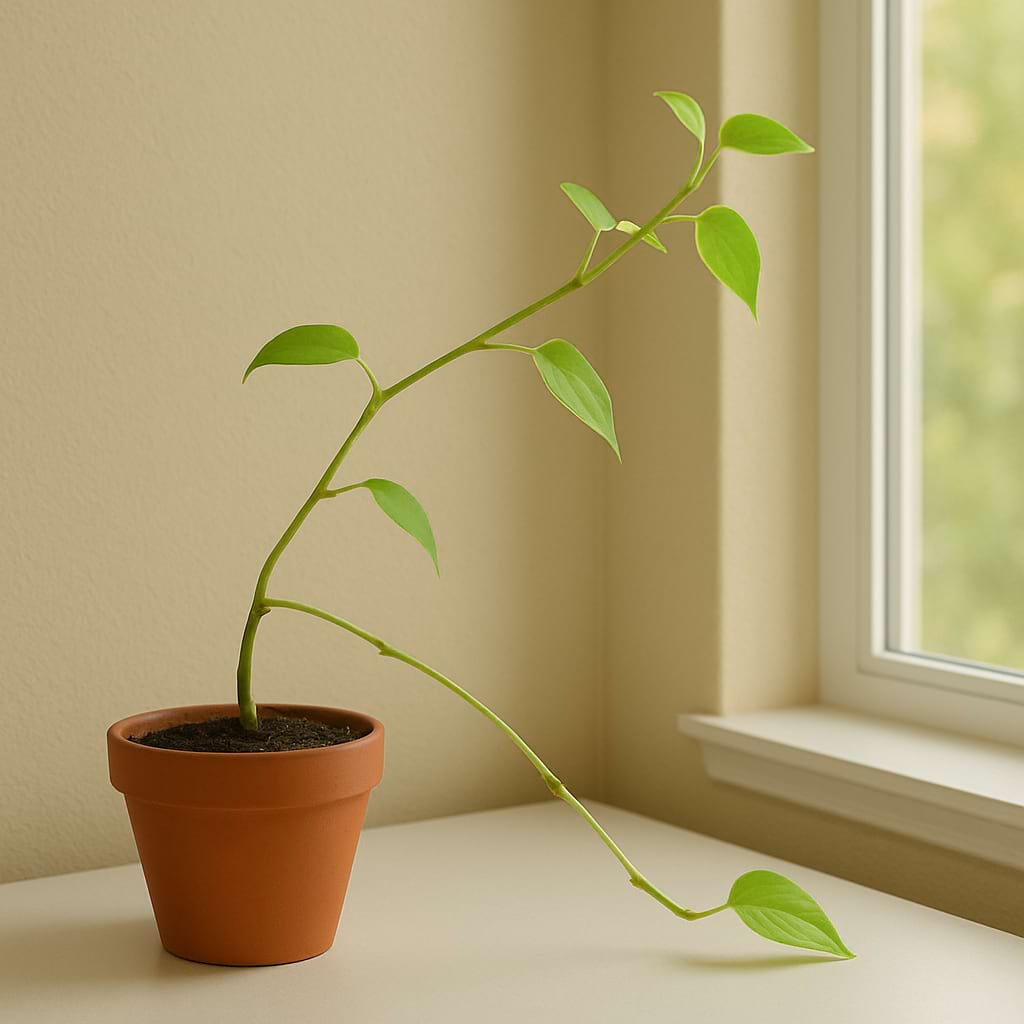
A dim corner is the most common reason an angel wing looks scruffy. The canes stretch, the gaps between leaves grow longer, lower leaves drop, and flowering stops. That is leggy growth. The stretched part never tightens up again, so move the plant first and then prune the long canes back. In dark winters, a grow light a foot above the top keeps it compact.
Too Much Light
Hot afternoon sun through glass bleaches the leaves, fades the silver spots, and leaves dry brown patches, which is sunburn. A red or bronze flush on the upper leaves in strong light is different. Many cultivars blush like that, and it is harmless as long as the leaves stay firm and unmarked.
💧 Angel Wing Begonia Watering Guide (Top Inch Dry, Never Soggy)
Watering Frequency
Water when the top inch of the mix feels dry. In a bright room in summer that is often once a week, sometimes more for a big plant in a small pot. In winter, when growth slows, it may stretch to every 10-14 days. Push a finger into the soil or use a moisture meter instead of following a calendar.
Cane begonias handle a slightly dry pot far better than a wet one. Their fine roots rot quickly in soil that stays soggy, and that is the one mistake that kills them outright. Our watering guide covers the basics for any houseplant.
How to Water
Pour water onto the soil, not over the leaves, until it runs out of the drainage hole. Tip out the saucer after ten minutes. Water in the morning so any splashes dry by evening, since wet leaves overnight are an open invitation to mildew.
Bottom watering also works well: stand the pot in a few inches of water for 15-20 minutes, then drain. Top water every few weeks to flush out salts.
Signs of Trouble
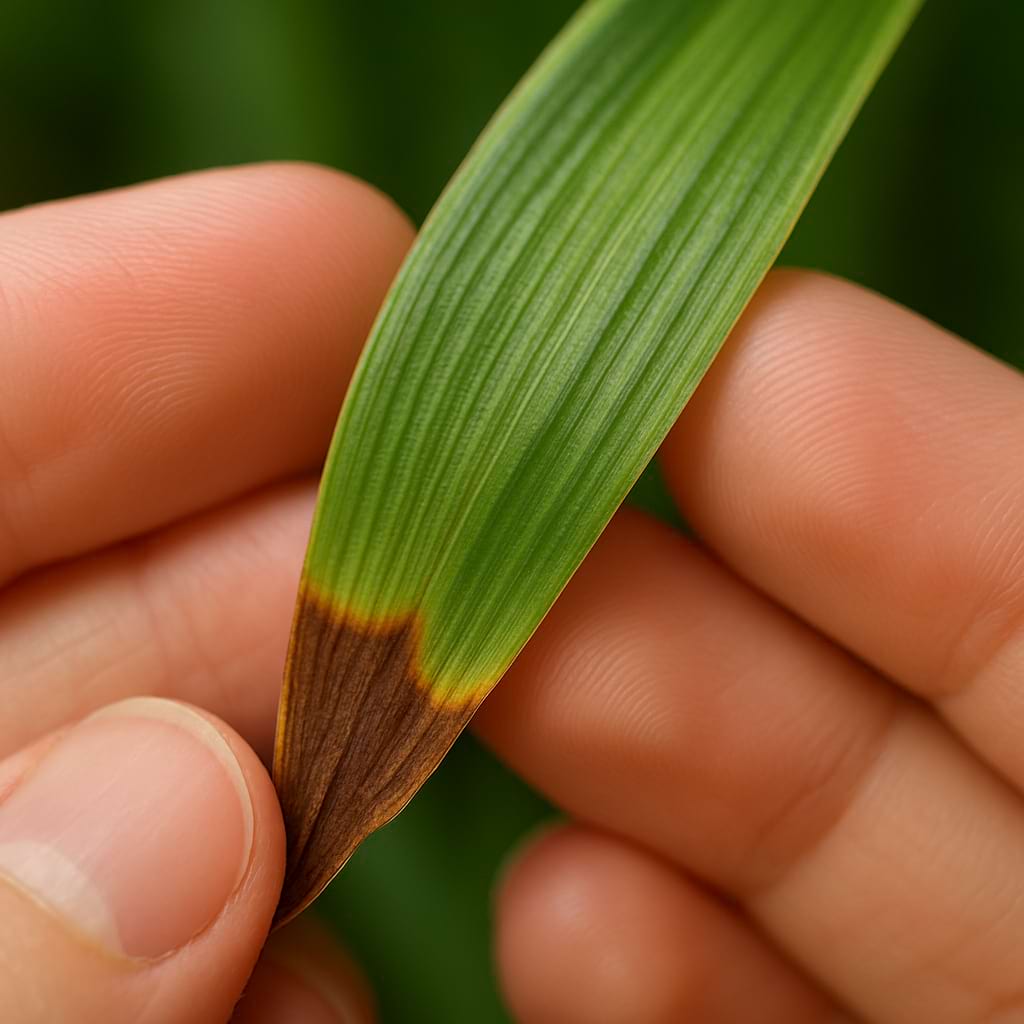
Underwatered angel wings droop as a whole, leaves soft and limp, then perk up within hours of a drink. Repeated drying out shows up as brown crispy edges and dropped flower buds.
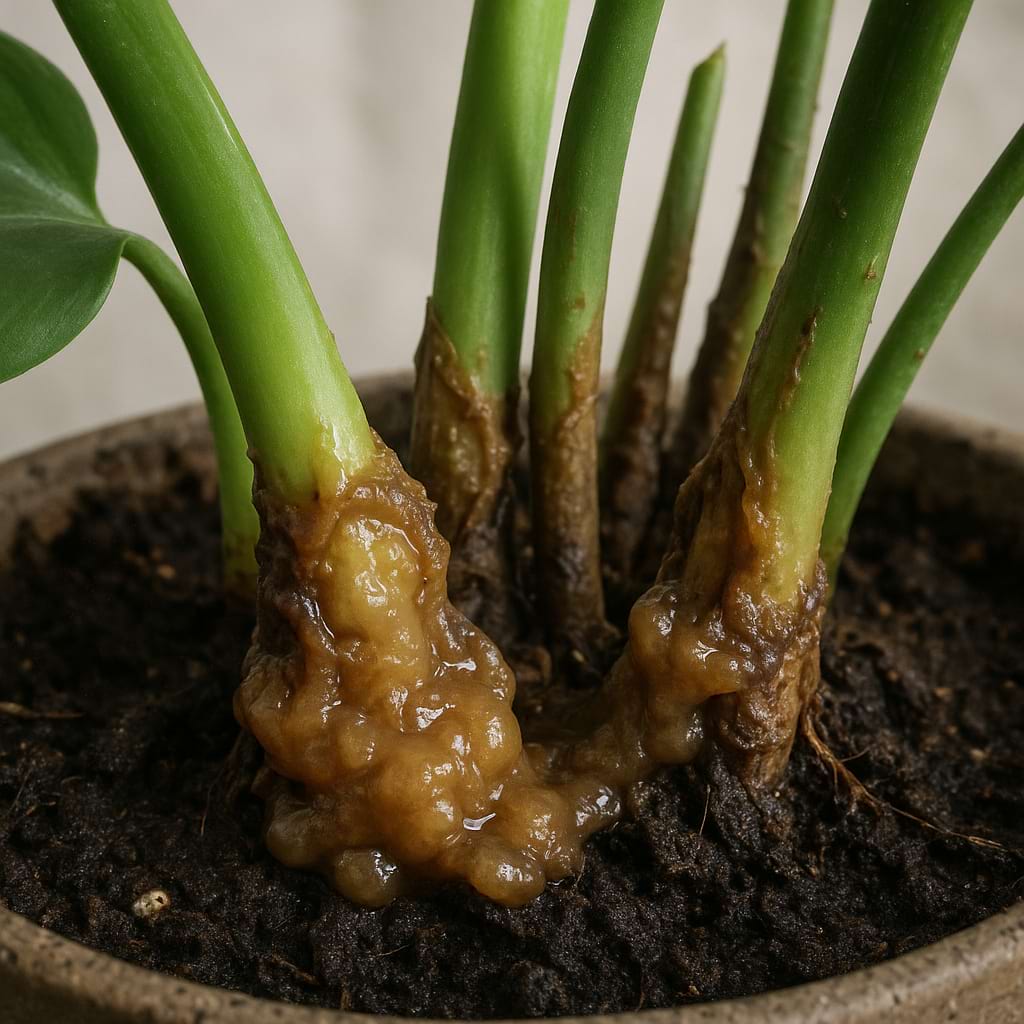
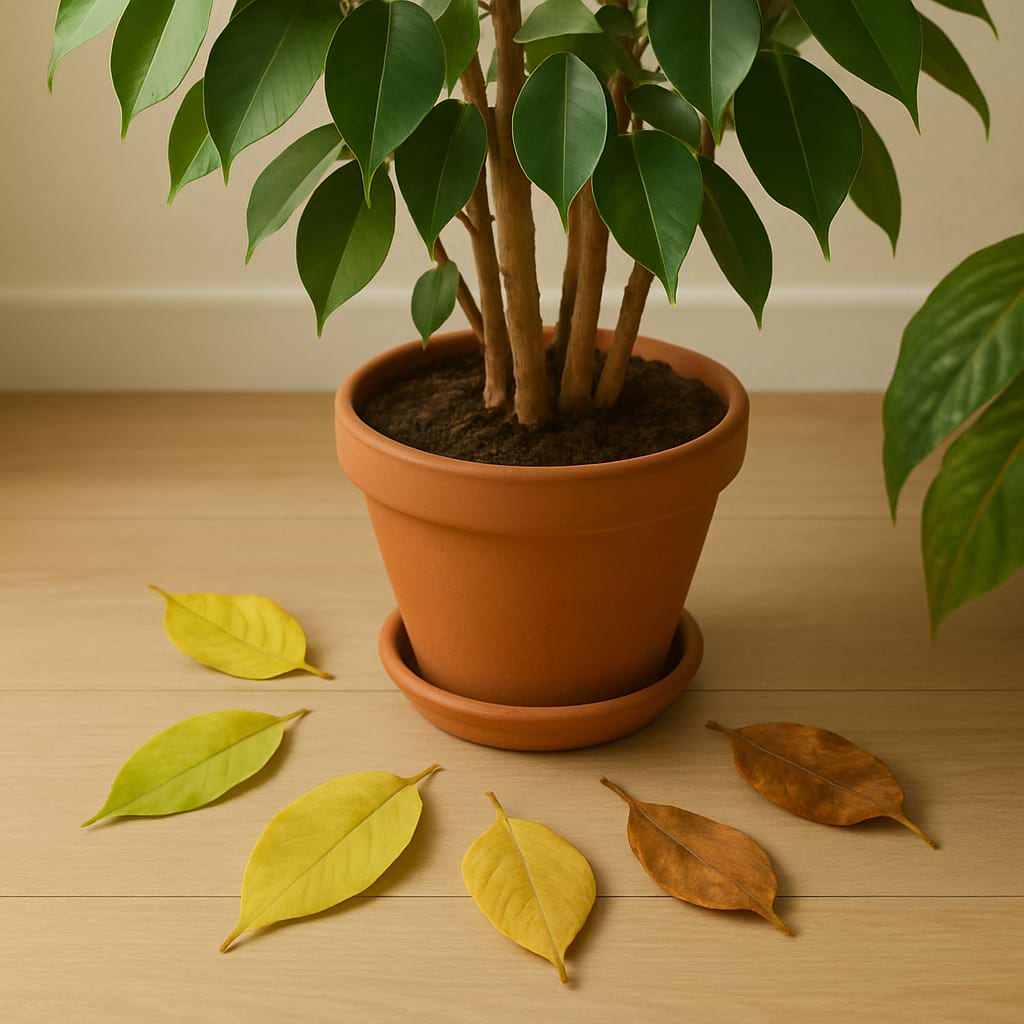
Overwatering looks different. Lower leaves turn yellow and fall, the soil smells sour, and the base of the canes goes dark and soft. That is root rot or mushy stems, and it needs action quickly (see Problems below).
🪴 Best Soil for Angel Wing Begonia (Rich but Airy)
What the Soil Needs
Cane begonias like a richer, more substantial mix than most begonias. The American Begonia Society describes a humusy mix as ideal, partly because the soil has to anchor tall canes. It still needs air pockets, so water drains through in seconds instead of pooling. Our Soil Guide explains why structure matters as much as nutrients.
DIY Angel Wing Soil Mix
A simple blend that works:
- 2 parts good indoor potting mix
- 1 part perlite
- 1 part fine orchid bark or coco chips
The potting mix holds moisture and nutrients, the perlite keeps it from compacting, and the bark adds weight and drainage. Skip garden soil, which packs down hard in a pot.
Pre-Made Options
A chunky aroid mix works straight from the bag. So does an all-purpose indoor mix with a couple of extra handfuls of perlite. Avoid moisture-control blends with water-holding crystals, which keep the root zone wet for too long. Our potting soil guide compares the common bags.
🍼 Fertilizing Angel Wing Begonia (Light and Regular)
When and How Often
Feed every two to four weeks from spring to early autumn, when the plant is growing new canes and flowering. Stop in winter, when growth slows and unused salts build up in the pot. Water first and then feed, so fertilizer never hits a dry root ball.
What Fertilizer to Use
A balanced liquid fertilizer at half strength is the simplest choice. Once flower clusters appear, a bloom formula with a little more phosphorus and potassium helps keep them coming. A cane begonia pushed with lots of nitrogen grows big leaves and fewer flowers. Our Fertilizing Guide and fertilizer guide cover the options.
Over-Fertilizing Signs
A white crust on the soil, brown leaf tips, or soft, floppy new growth all point to too much feed. Flush the pot with plain water two or three times and skip a month before starting again at a weaker dose.
🌡️ Angel Wing Begonia Temperature Range
Ideal Range
Normal room temperatures suit it perfectly, roughly 60-80°F (16-27°C). Growth slows below 60°F, and it should not sit below 50°F (10°C) for long. Frost kills the canes, so outdoor plants come inside before autumn nights turn cold.
Moving It Outdoors and Back In
Many people summer their angel wing on a shady patio, where it grows fast and flowers hard. Put it out once nights stay above 55°F, in shade or morning sun only. Bring it back in early autumn, check every leaf for pests, and expect some leaf drop while it adjusts to dimmer indoor light. Our article on preparing houseplants for winter walks through the move.
Drafts and Heat Sources
Keep it away from radiators, heating vents, and doors that open onto cold air. Hot dry air from a vent crisps the leaf edges, and cold drafts cause sudden leaf and bud drop.
💦 Angel Wing Begonia Humidity Requirements
Ideal Humidity
Good news here. Cane begonias are some of the least fussy begonias about humidity and cope with the 40-50% found in most homes. Crisp brown leaf edges are the sign the air is too dry, which usually happens next to a heater in winter.
Humidity Without Misting
Do not mist. Water sitting on the leaves is the main trigger for powdery mildew, the number one angel wing problem. If you need more moisture, run a humidifier nearby or group plants together, and keep air moving so leaves dry quickly. Our humidity guide has more options.
🌸 Angel Wing Begonia Flowers (Hanging Clusters)
What the Flowers Look Like
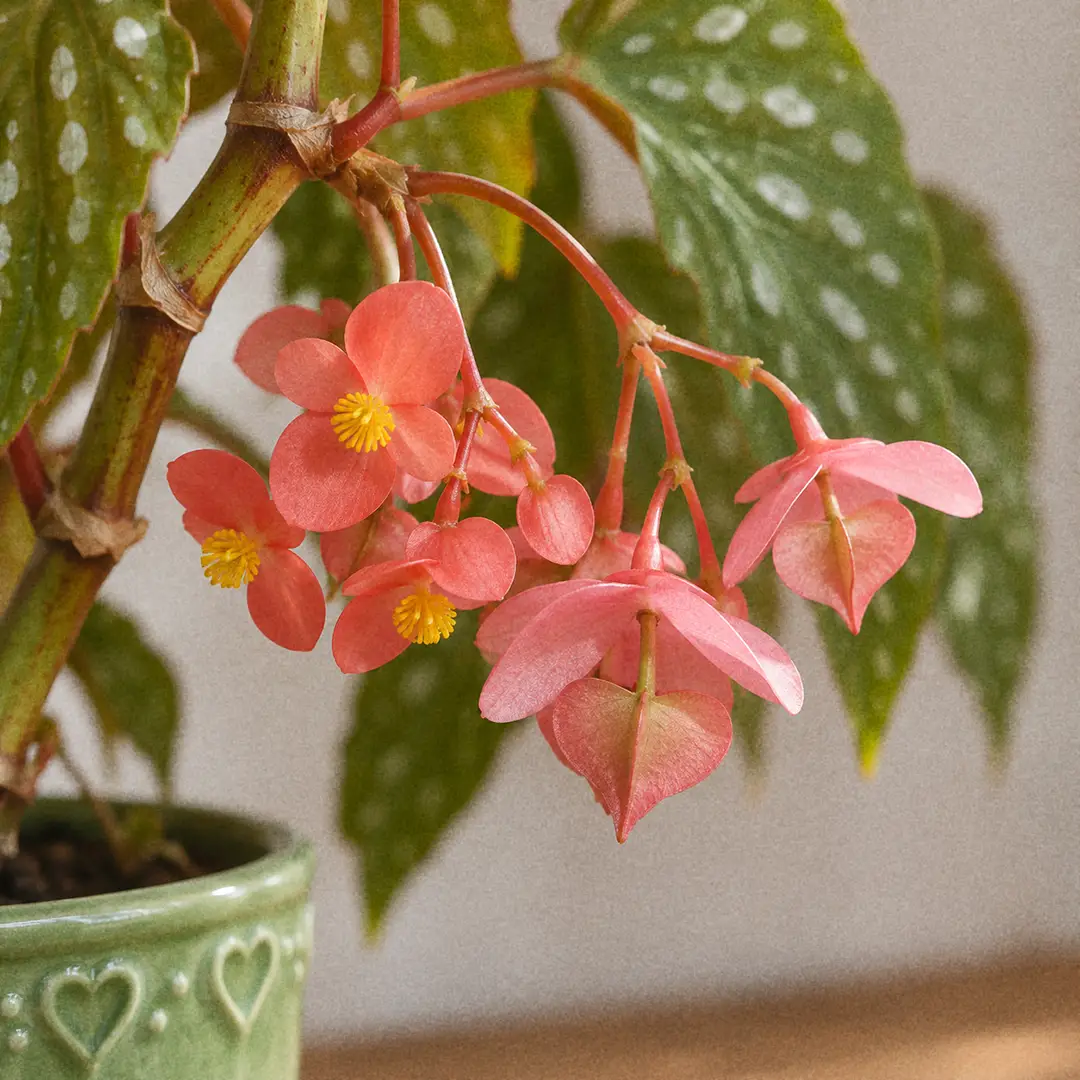
This is the reward for growing a cane begonia instead of a foliage-only one. Flowers come in loose clusters that hang down from the leaf joints near the top of the canes, like small bunches of grapes. Depending on the cultivar they are pink, coral, red, orange, or white, each flower under an inch across.
Like every begonia, each plant carries separate male and female flowers, often in the same cluster. Male flowers are the small rounded ones with a yellow center. Female flowers are easy to spot by the winged seed pod sitting just behind the petals.
When It Blooms
Most angel wings flower from spring into autumn, and some keep a few clusters going for much of the year in a bright spot. Flowering slows in winter along with growth, then picks up again as the days lengthen. A hard spring prune can delay the first clusters a little while the plant regrows its canes.
How to Get More Flowers
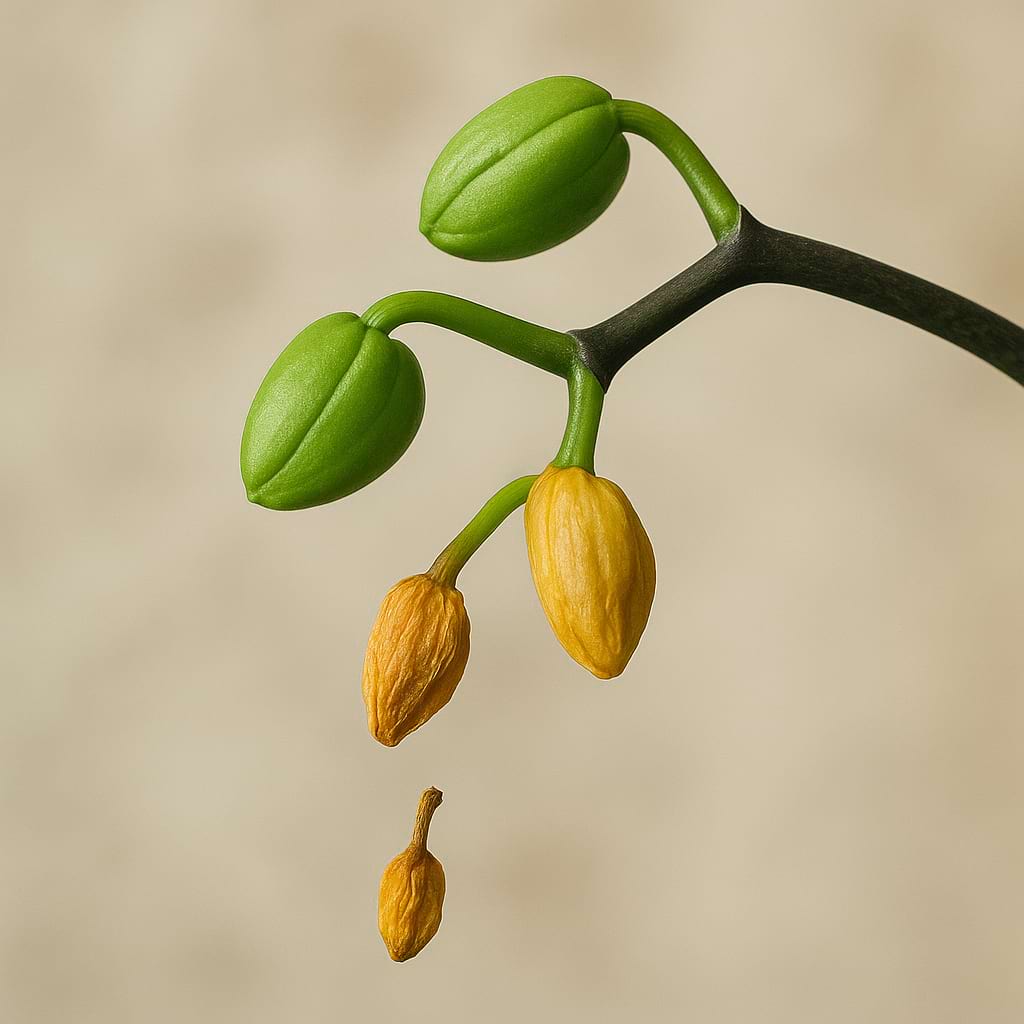
Light comes first. A plant near an east window with some morning sun flowers far more than one in a dim room. Feed regularly through summer, let the pot stay snug instead of moving it up every year, and snip off spent clusters at their base. Keep watering steady once buds form, since a bone-dry pot or a cold draft makes buds fall off before they open. That is bud blast.
🏷️ Angel Wing Begonia Types and Varieties
"Angel wing" is a nickname for the cane-stemmed begonias, a group that holds thousands of hybrids. All of them share the jointed, bamboo-like canes and need the same care. They differ in height, leaf shape, and flower color.
How Cane Begonias Differ From Other Begonias
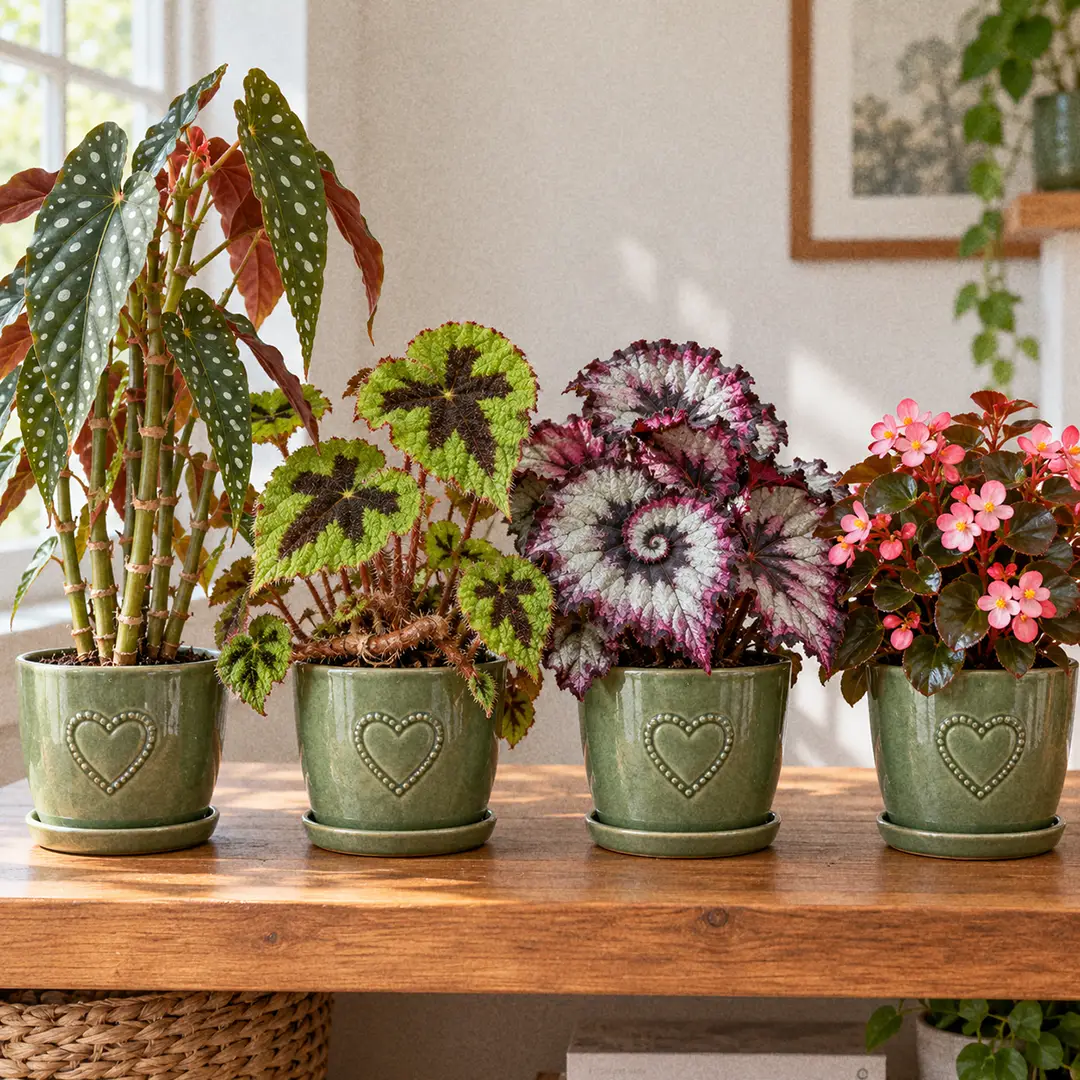
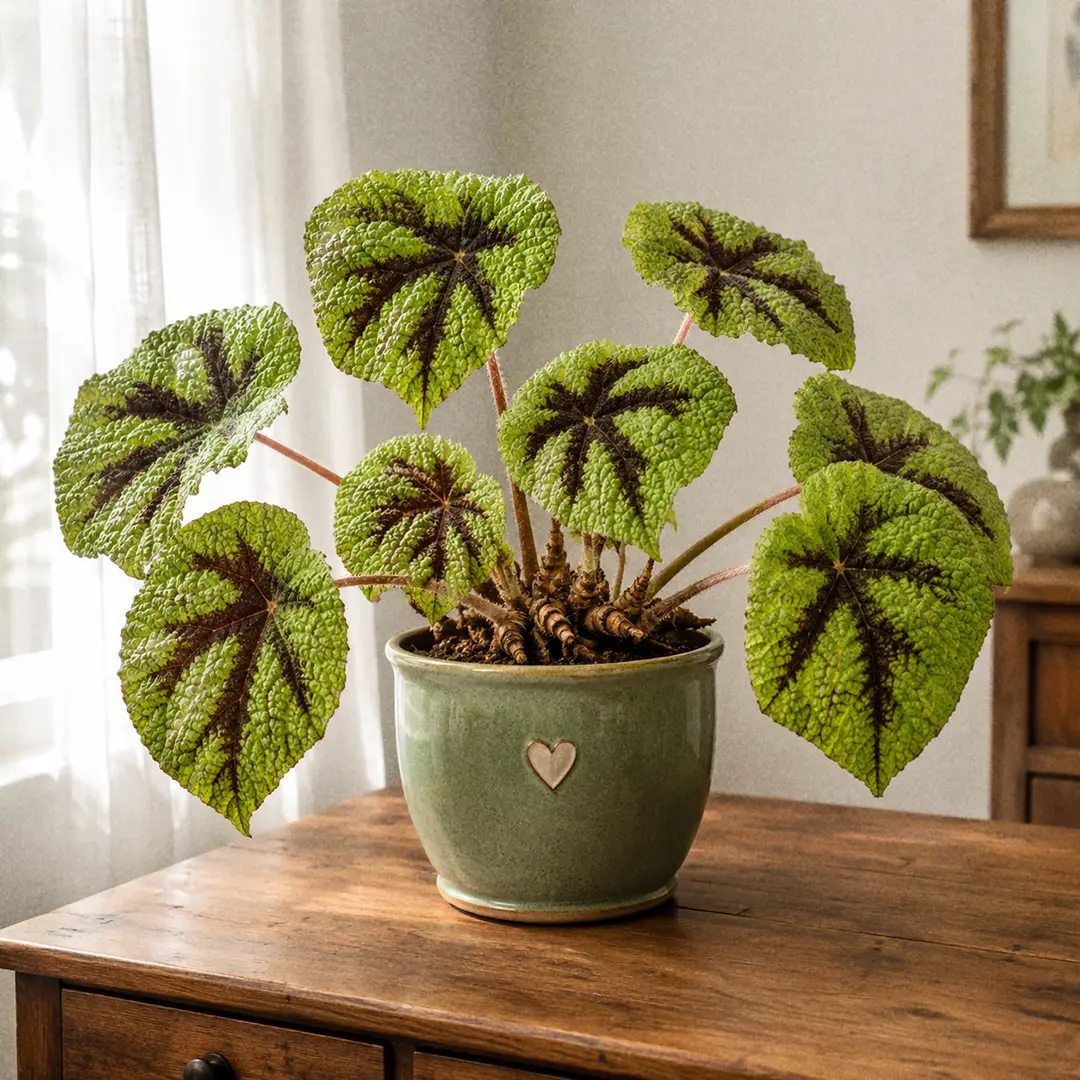
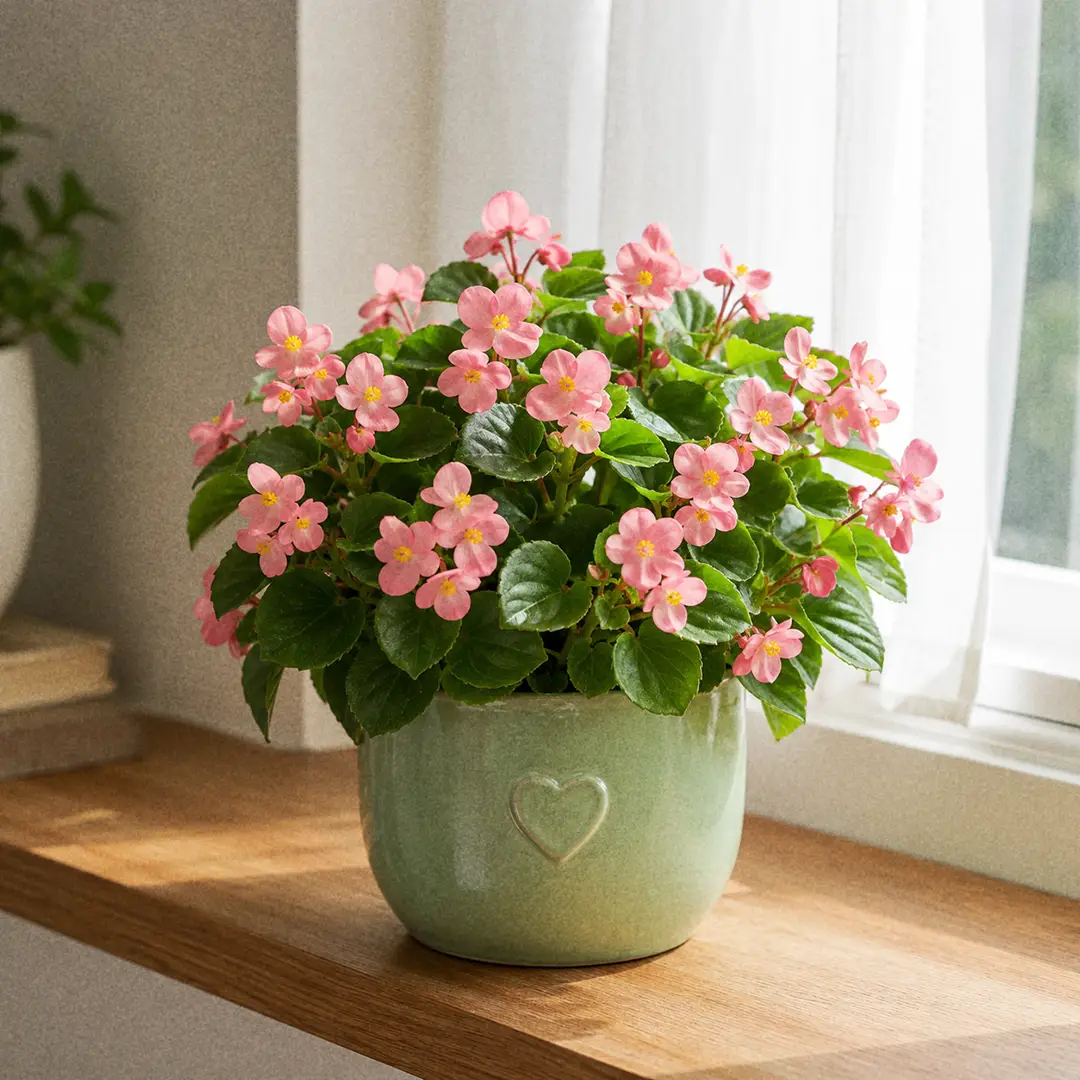
Cane begonias grow upright on stiff, jointed stems with swollen nodes. Rex Begonias and other rhizomatous types like the Iron Cross Begonia grow from a thick creeping stem at the soil line, stay low, and are grown for leaves. Wax Begonias are small, bushy, fibrous-rooted, and flower nonstop. Our general Begonia guide covers all the groups side by side.
'Corallina de Lucerna' (Begonia × corallina 'Lucerna')
The classic. Olive-green leaves heavily spotted with silver, red undersides, and big hanging clusters of coral-pink flowers. It dates to the early 1890s and is recorded as a cross of B. teuscheri and B. coccinea, and many later angel wings descend from it. It is one of the tallest, reaching 5-8 feet if never pruned, so it needs a yearly cut indoors.
Polka Dot Begonia (Begonia maculata)
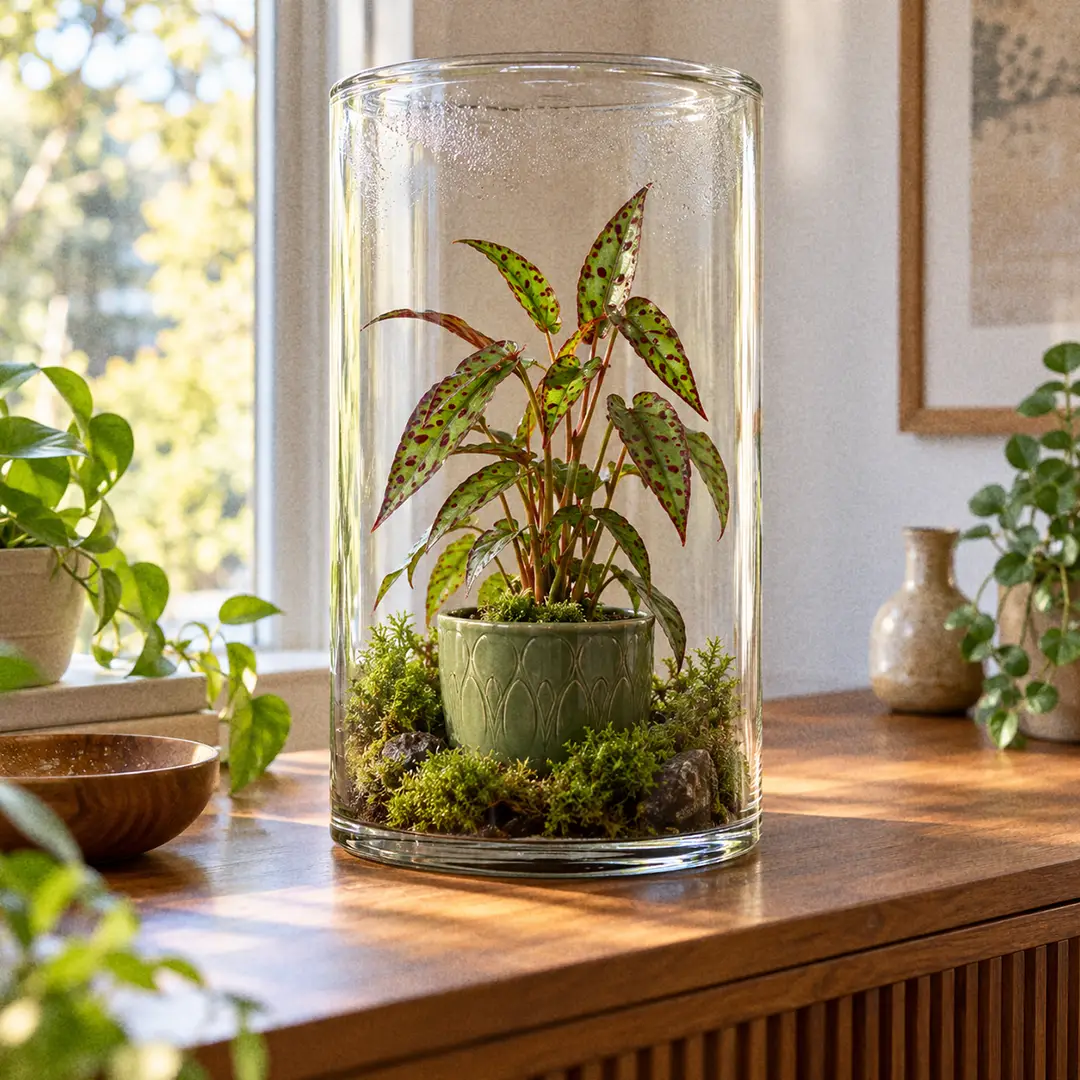
The Polka Dot Begonia is a cane begonia too, a species rather than a hybrid. It has long, narrow olive leaves with neat white-silver dots, deep red undersides, and white to pale pink flowers. Care is the same as any angel wing. It just gets the spotlight on social media.
Superba Types, Such as 'Sophie Cecile'
Superba canes have large, deeply lobed, jagged leaves, inherited from B. aconitifolia. The first was bred in California in 1926 from B. aconitifolia and 'Lucerna'. 'Sophie Cecile' is a well-known one, with dark green lobed leaves flecked silver and loose hanging clusters of pink flowers.
'Looking Glass'
Grown more for its leaves. Large silvery leaves with olive-green veins and cranberry-red undersides, plus pink flowers. A good pick if you want a silver plant that is easier than a Rex.
Gryphon and Dragon Wing
Two modern series sold at garden centers. Gryphon has big, deeply cut, maple-like leaves splashed silver on red-orange stems and stays roughly 1-2 feet tall. Dragon Wing has glossy green angel-wing leaves and red or pink flowers and is sold mainly as an outdoor container plant, but it winters indoors in a bright window.
🪴 Potting and Repotting Angel Wing Begonia
When to Repot
Repot every one to two years in spring, ideally at the same time as your hard prune. Signs it is time: roots circling out of the drainage hole, water rushing straight through, or a plant so top-heavy it tips over. Angel wings flower better slightly snug, so do not move up just because a year has passed.
Choosing a Pot
Go one size up, about 2 inches wider. Use a standard-depth pot rather than a shallow bowl, because canes have a deep root system and new canes sprout from the outer roots. Weight matters too. Terracotta or a heavy glazed pot keeps a 3-foot plant from toppling, while a light plastic pot often needs to sit inside a heavier cover pot. Drainage holes are essential. Our plant pots guide compares materials.
Step-by-Step Repotting
Water the day before so the root ball slides out in one piece. Ease the plant out, loosen circling roots with your fingers, and trim any that are black or mushy. Set it in fresh mix at the same depth it grew before, firm the mix around the canes, and water once. Keep it out of direct sun for a week while it settles. Our repotting guide covers the general method.
✂️ Pruning Angel Wing Begonia (Fix Leggy Canes)
When to Prune
The main prune happens once a year, in late winter or early spring, just as new growth starts. The plant then has a full growing season to refill. Light pinching can happen any time from spring to late summer. Avoid big cuts in autumn and winter, when the plant regrows slowly.
How to Cut Back Leggy Canes
Cane begonias rarely branch high up the stem. New growth mostly comes as fresh canes from the base, which is why an unpruned plant ends up as a few tall poles with leaves only at the top. The fix is to cut.
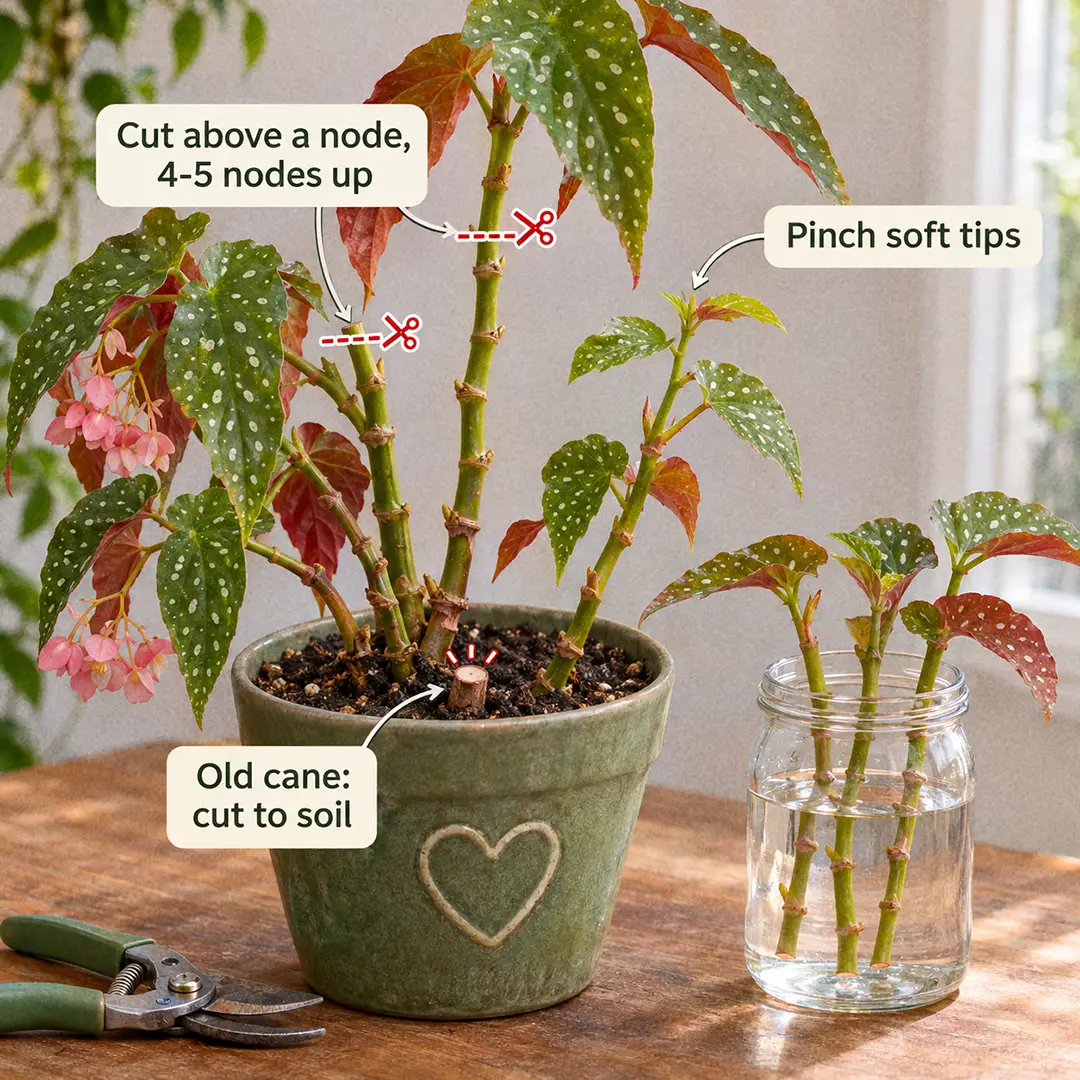
- Remove the oldest canes. Cut any thick, woody, bare cane right down to the soil. This pushes new canes up from the roots.
- Shorten the rest. Cut the remaining green canes down to about four or five nodes, just above a node. A healthy plant tolerates losing up to two-thirds of its growth.
- Stagger the heights. Cut canes to different lengths so the regrown plant is full from soil to top instead of flat across.
Use clean, sharp scissors and keep the tops for propagation.
Pinching Tips and Staking
Through summer, pinch the soft tip off any cane growing much faster than the others. That slows it down and nudges the plant into sending up new canes. A well-pruned angel wing rarely needs staking. A very tall cultivar, or a cane bending under heavy flower clusters, can be tied loosely to a slim bamboo stake with soft plant tape.
🌱 How to Propagate Angel Wing Begonia
Best Method: Cane Cuttings in Water
Angel wings are among the easiest plants to root, and spring pruning hands you a pile of cuttings. Stem cuttings with a few nodes are the reliable method. Seed is not worth it, because hybrid seed does not come true to the parent. Our water propagation guide covers the general technique.
Step-by-Step
- Cut a piece of cane with two to four nodes, cutting just below the lowest node.
- Remove the leaves from the bottom node or two, and leave two or three leaves at the top. Cut very large leaves in half to reduce water loss.
- Stand the cutting in a glass of room-temperature water so the bare nodes are submerged and no leaves touch the water.
- Keep it in bright light out of direct sun and change the water every few days.
- Roots usually appear in two to four weeks. Pot it up when they are an inch or two long.
Rooting in Soil or Perlite
You can skip the water stage. Push the cutting into moist perlite or a light seed mix, cover loosely with a clear bag, and keep it bright and warm. Rooting takes about as long, and the roots handle potting better because they formed in a solid medium.
Tips for Success
Always include a node. A single leaf can grow roots, but it usually never sends up a shoot, so you end up with a rooted leaf and no plant. For an instantly fuller look, root three to five cuttings and plant them together in one pot. Wait about a month after potting before you fertilize.
🐛 Angel Wing Begonia Pests and Treatment
Common Angel Wing Pests
Healthy cane begonias are fairly pest-resistant, but a few insects turn up regularly:
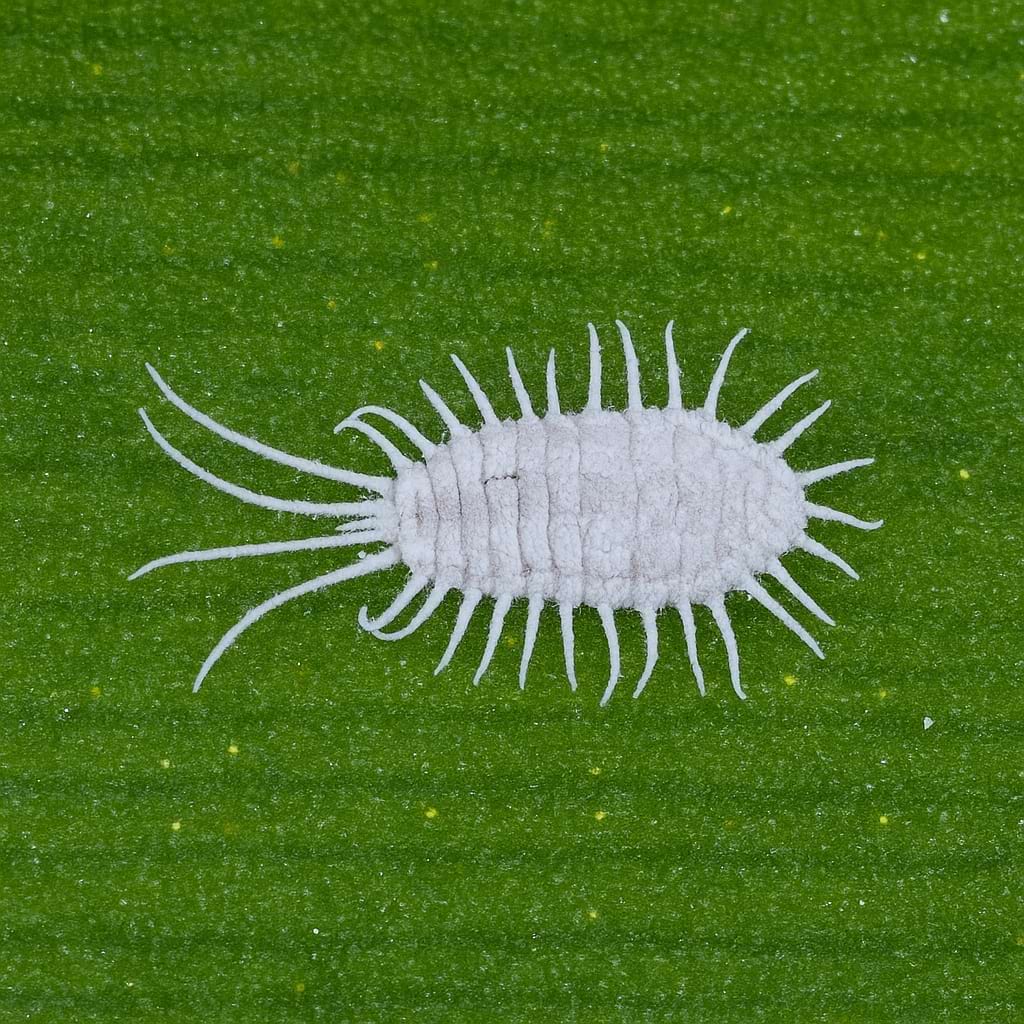
- Mealybugs: white cottony clumps tucked into the leaf joints along the canes and under leaves.
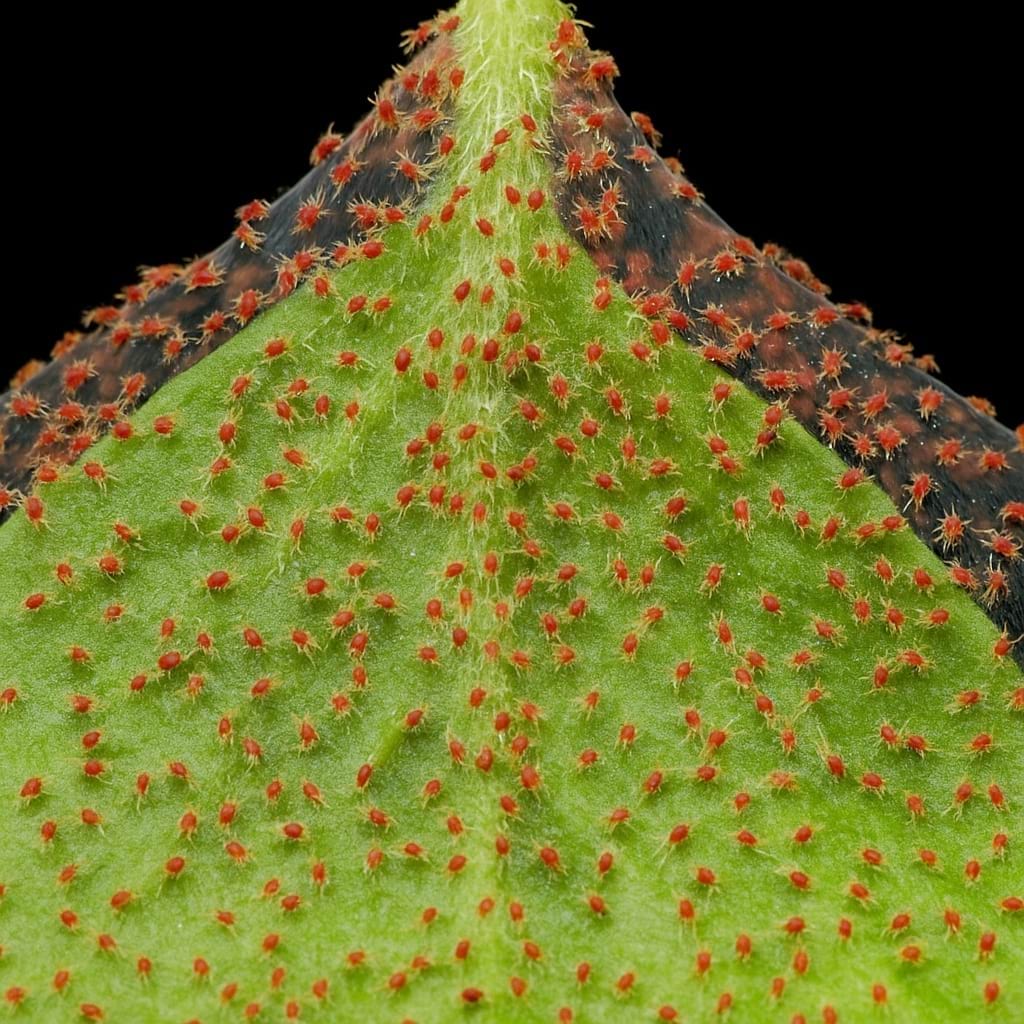
- Spider mites: fine webbing and a dull, speckled look on leaves, worst in hot, dry winter air.
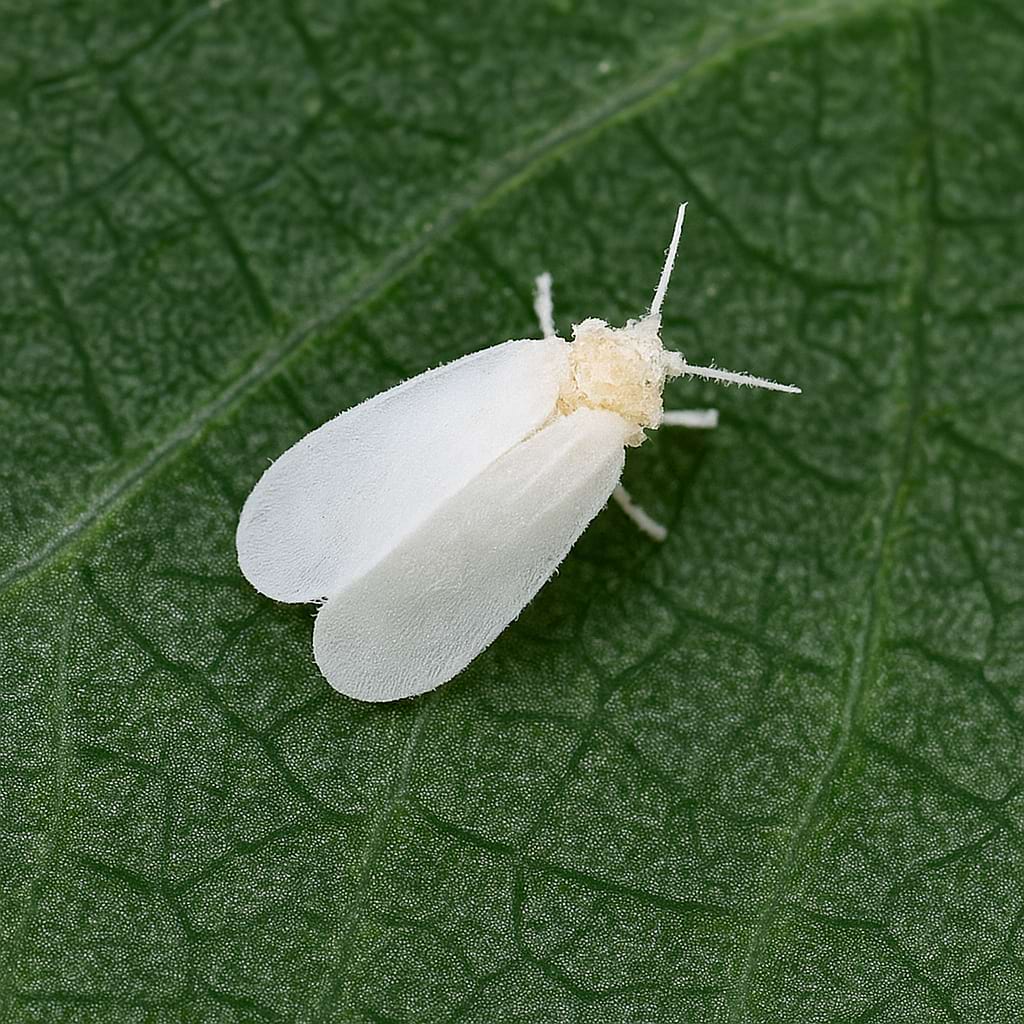
- Whiteflies: tiny white insects that fly up in a cloud when you brush the leaves.
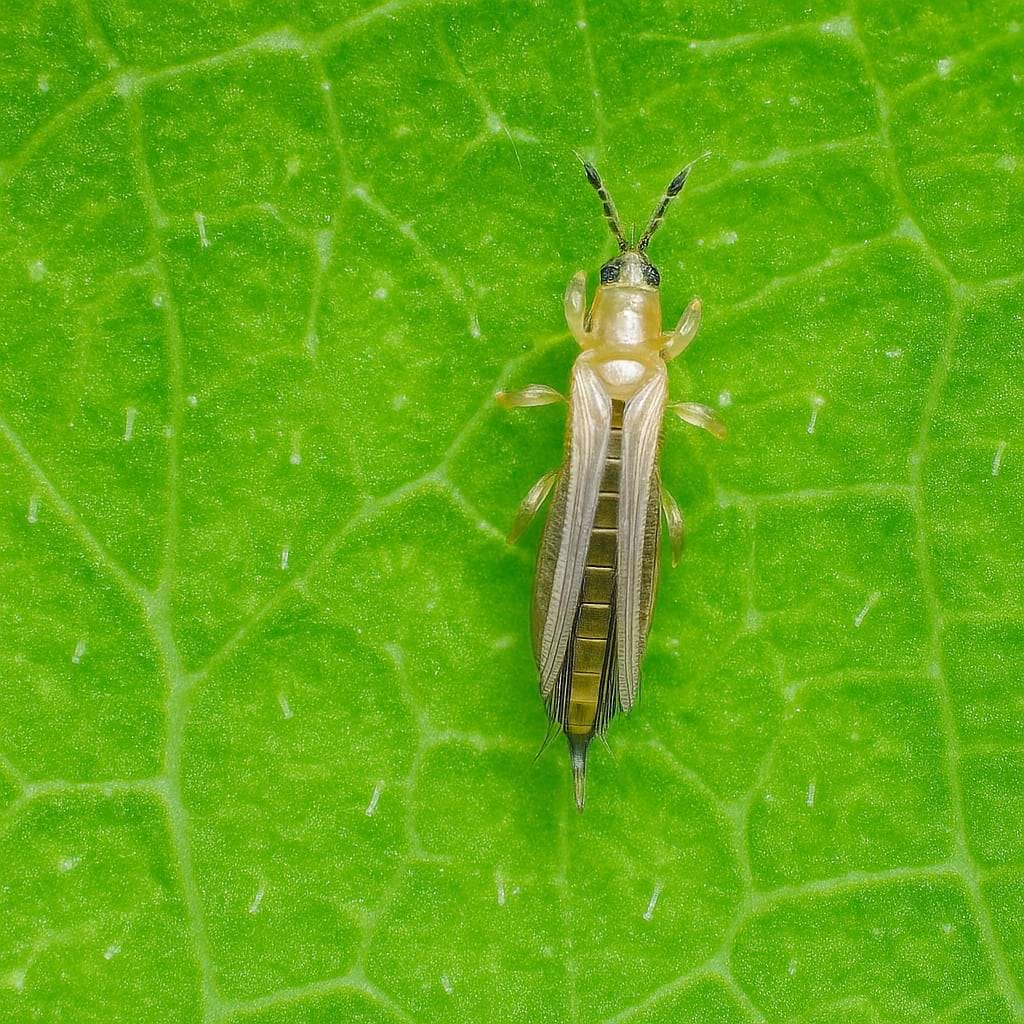
- Thrips: silvery streaks and distorted new leaves and buds.
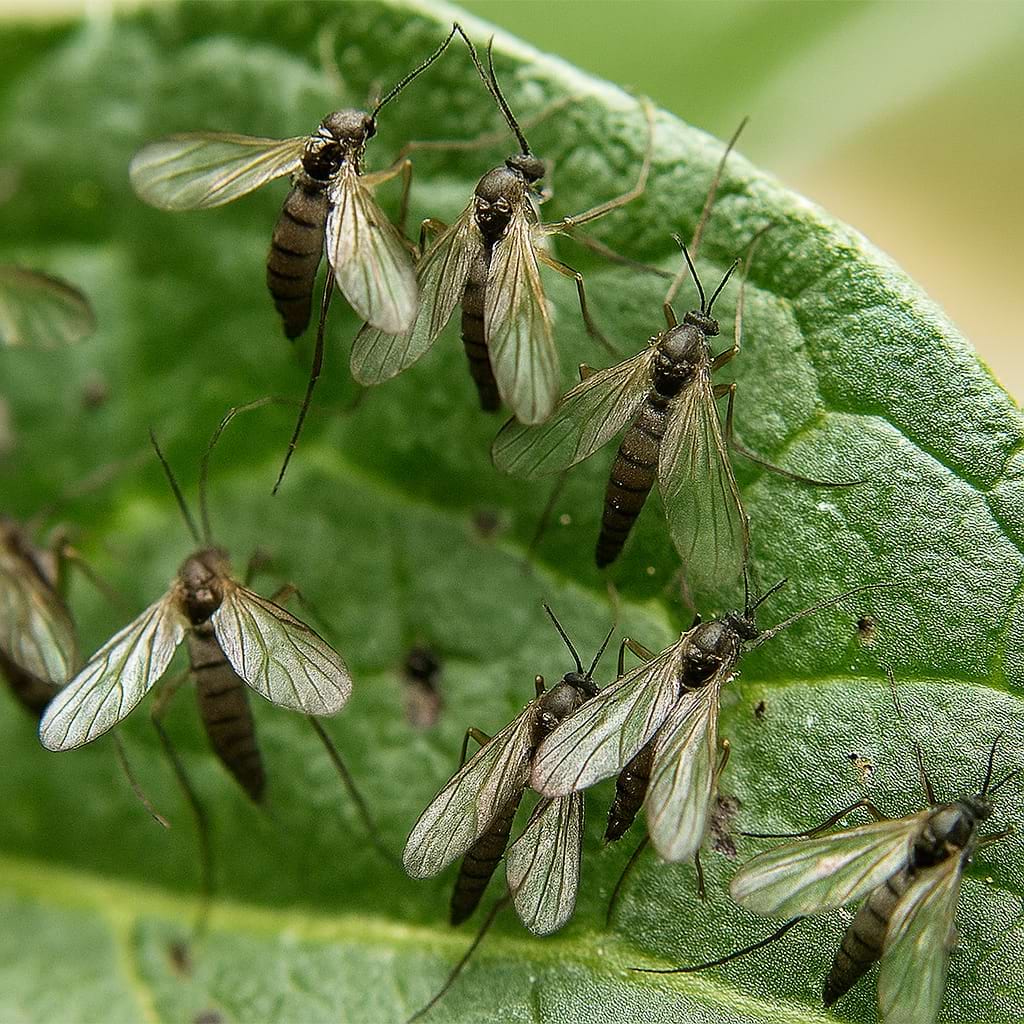
- Fungus gnats: small black flies around soil that stays wet too long.
Treatment
Rinse the plant in the shower with lukewarm water to knock off mites and whiteflies, then let the leaves dry fully in good airflow. Dab mealybugs with a cotton swab dipped in rubbing alcohol. For larger outbreaks, spray insecticidal soap on both leaf surfaces every five to seven days, testing a single leaf first and spraying in the morning so the leaves dry by evening. Fungus gnats disappear once the top inch dries between waterings.
Prevention
Check the leaf undersides and leaf joints every time you water. Quarantine new plants for a couple of weeks, and inspect outdoor plants carefully before bringing them in for autumn. Our pest prevention in winter article covers the cold months.
🩺 Common Angel Wing Begonia Problems
Powdery Mildew
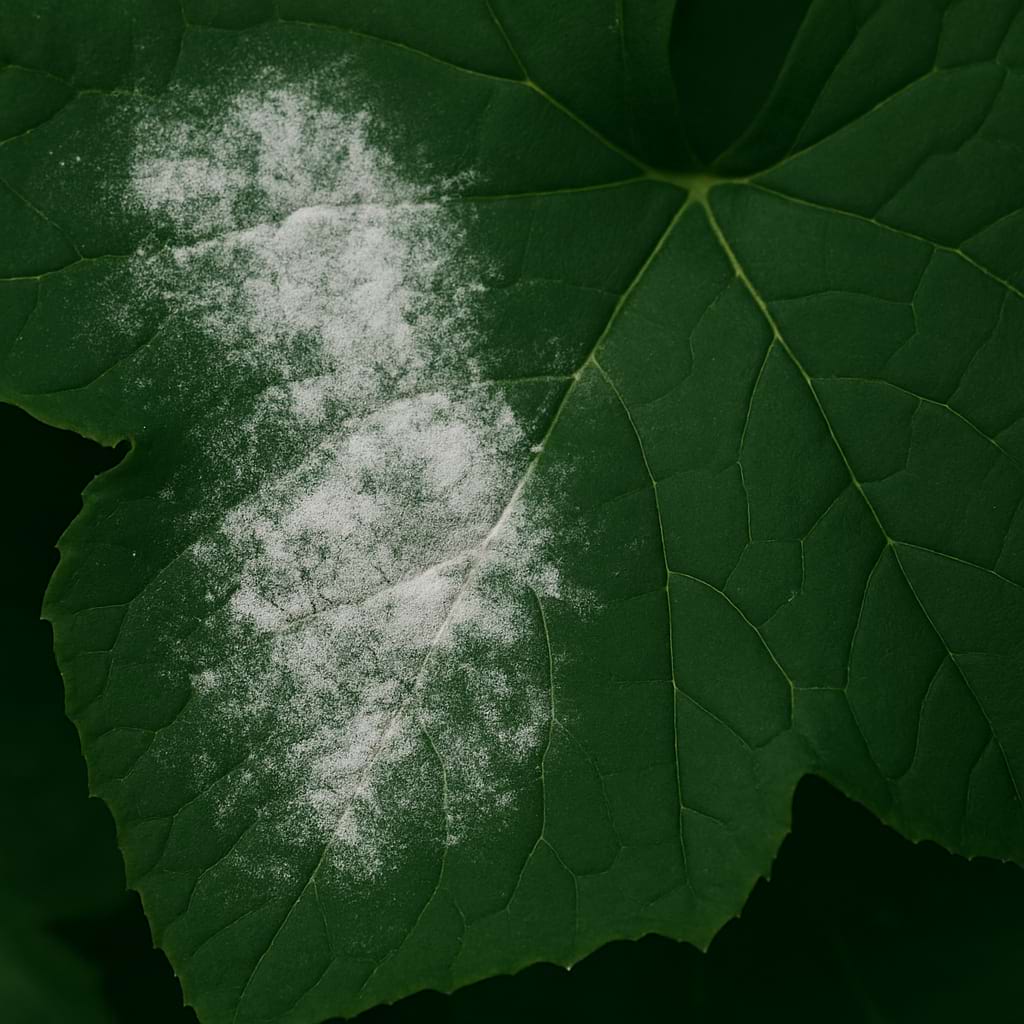
The most common angel wing problem by far. White, flour-like patches appear on leaves and sometimes stems, usually in still, humid air or on leaves that stayed wet. Remove the worst leaves, stop misting, water at the soil in the morning, and give the plant space and airflow. Treat with a fungicide labeled for powdery mildew or a potassium bicarbonate spray. Our powdery mildew page has the full method.
Root and Stem Rot
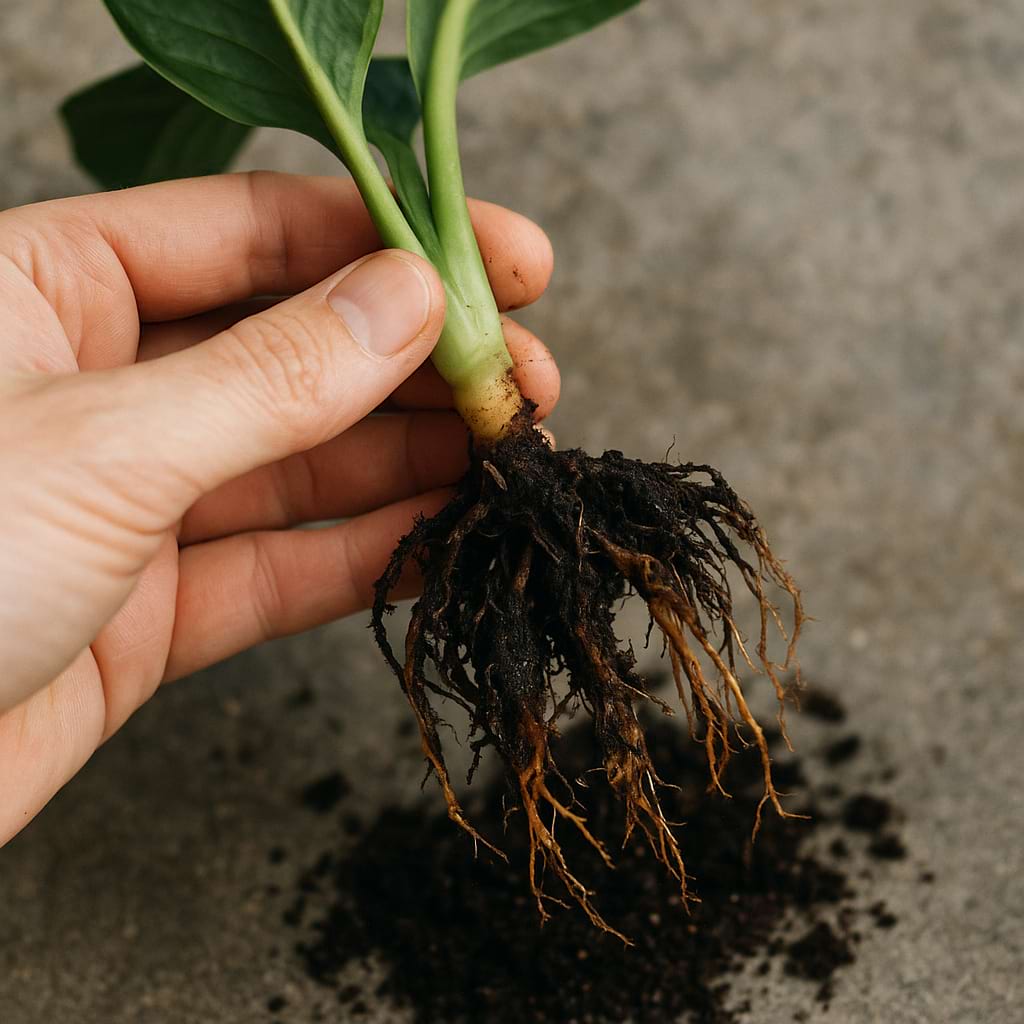
Canes that turn black and soft at the soil line, with lower leaves yellowing and dropping, point to root rot or mushy stems from wet soil. Unpot it, cut off dark roots and canes, and repot in fresh, airy mix. If the base is gone, take cuttings from the healthy tops and start again.
Leaf Drop and Bare Canes
Sudden leaf drop often follows a move, a cold draft, or a dry spell. Bare lower canes on an older plant are normal aging plus low light. Prune those canes back and the base fills in.
Yellowing and Crispy Leaves
Yellowing leaves low on the plant usually mean too much water. Brown crispy edges mean dry air, a heater nearby, or a pot that dried out completely.

🖼️ Angel Wing Begonia Display and Styling Ideas
Solo Setups
A mature angel wing is tall enough to work as a floor plant in a heavy pot beside an east window. Smaller plants look best on a plant stand at eye level, where you see the red leaf undersides and the flower clusters hanging below the leaves. Place it where backlight shines through the leaves, since the red undersides glow.
Grouped Begonia Collections
Cane begonias make a natural back row. Put a tall spotted angel wing at the back, a low swirly Rex Begonia or glossy Beefsteak Begonia in front, and a flowering Wax Begonia at the edge. Plain green plants like a Cast Iron Plant make the silver spots stand out. Leave a little space between pots so mildew does not spread from leaf to leaf.
Where Not to Put It
Skip dark hallways, where it stretches and stops flowering. Avoid spots next to radiators or heating vents, and keep it out of reach of cats and dogs that chew plants. If you need something safe for pets, see our pet-safe houseplants list.
🌟 Angel Wing Begonia Pro Care Tips
Light and Water Tips
- ☀️ Give it an east window. Morning sun means shorter gaps between leaves and far more flowers.
- 💧 Water the soil, never the leaves. Dry leaves are the best mildew prevention there is.
- 🪣 Let the top inch dry. A slightly dry pot is safer than a soggy one.
Shaping Tips
- ✂️ Prune every spring. Take the oldest canes to the soil and shorten the rest to four or five nodes.
- 📏 Cut to different heights. Staggered canes give you a plant that is full from top to bottom.
- 🌱 Root every piece you cut. Plant several cuttings back into the pot to thicken it up.
Flowering Tips
- 🌸 Keep it snug. A slightly root-bound plant flowers better than one in an oversized pot.
- 🍼 Feed lightly from spring to autumn. Half strength every two to four weeks, nothing in winter.
❓ Frequently Asked Questions
Is Angel Wing Begonia toxic to cats and dogs?
Yes. The ASPCA lists begonias as toxic to cats, dogs, and horses, with soluble calcium oxalates as the toxic principle. Chewing causes drooling and vomiting, and the roots are the most toxic part. Keep it out of reach of pets that chew plants, and call your vet or the ASPCA Animal Poison Control line if one eats some.
How do I fix a leggy Angel Wing Begonia?
Move it somewhere brighter first, then prune in late winter or early spring. Cut the oldest bare canes to the soil and shorten the others to about four or five nodes, at different heights. New canes come up from the base within a couple of months.
Why is my Angel Wing Begonia dropping leaves?
Lower leaf drop is usually overwatering, a cold draft, or low light. Plants moved indoors after summer outside often shed leaves for a few weeks while they adjust. Check that the soil dries on top between waterings and that the plant gets bright light.
What is the white powder on my Angel Wing Begonia leaves?
That is powdery mildew, the most common angel wing disease. Remove the worst leaves, stop misting, improve airflow, and treat with a fungicide or potassium bicarbonate spray. Watering at the soil instead of over the leaves keeps it from coming back.
Can I grow an Angel Wing Begonia from a leaf?
Not reliably. A single leaf can root, but it usually never makes a shoot, so it never becomes a plant. Take a piece of cane with two to four nodes instead and root it in water or moist perlite.
Is Angel Wing Begonia the same as Polka Dot Begonia?
The Polka Dot Begonia (Begonia maculata) is one kind of angel wing, a cane begonia species with narrow leaves and neat white dots. "Angel wing" is the broader name for all cane-stemmed begonias, most of which are hybrids. Care is the same for all of them.
How tall does an Angel Wing Begonia get?
Indoors, most grow 1-4 feet, depending on the cultivar and how often you prune. Old tall types like 'Corallina de Lucerna' can top 6 feet if never cut back. A yearly prune keeps any of them at a manageable size.
Can Angel Wing Begonias grow outside?
Yes, in summer, on a shady patio or under trees, once nights stay above 55°F. They are frost-tender and only stay outdoors year-round in frost-free climates (roughly USDA zones 10-11). Bring them in before autumn nights get cold.
Does Angel Wing Begonia go dormant in winter?
No. It keeps its leaves and grows slowly through winter. Water less, stop feeding, and give it the brightest window you have until spring.
Why are the leaf undersides red?
Many cane begonias have red or burgundy leaf undersides, a trait passed down from their parent species. It is normal and not a sign of stress. Grow the plant where light can shine through the leaves and the undersides glow.
ℹ️ Angel Wing Begonia Info
Care and Maintenance
🪴 Soil Type and pH: Rich, airy, well-drained potting mix with perlite and bark
💧 Humidity and Misting: Copes with ordinary room humidity of 40-50%; skip misting, which invites powdery mildew.
✂️ Pruning: Cut old woody canes out at the base and shorten the rest in late winter or early spring, then pinch tips through summer.
🧼 Cleaning: Brush dust off with a soft dry brush or a dry cloth. Avoid wiping leaves with water, since damp foliage invites mildew.
🌱 Repotting: Repot in spring every 1-2 years, one pot size up, into a standard-depth pot heavy enough to hold tall canes upright.
🔄 Repotting Frequency: Every 1-2 years
❄️ Seasonal Changes in Care: Steady water and feeding from spring to early autumn, lighter watering and no feeding in winter, and a hard prune in late winter or early spring.
Growing Characteristics
💥 Growth Speed: Fast
🔄 Life Cycle: Evergreen perennial that does not go dormant
💥 Bloom Time: Mainly spring through autumn; some cultivars bloom on and off for much of the year
🌡️ Hardiness Zones: 10-11
🗺️ Native Area: Garden hybrid; the parent species come mainly from the forests of Brazil
🚘 Hibernation: No true dormancy. Growth slows in winter and plants moved in from outdoors often drop some leaves while they adjust.
Propagation and Health
📍 Suitable Locations: East windows, a few feet back from a south or west window, bright living rooms, sheltered shady patios in summer
🪴 Propagation Methods: Root stem cuttings with two to four nodes in water or moist perlite; every pruning cut gives you new plants.
🐛 Common Pests: Mealybugs, Spider Mites, Whiteflies, Thrips, Fungus Gnats
🦠 Possible Diseases: Powdery mildew, botrytis (gray mold), stem rot, root rot
Plant Details
🌿 Plant Type: Cane-stemmed (cane-like) begonia
🍃 Foliage Type: Asymmetrical, wing-shaped leaves on jointed bamboo-like canes, often spotted or splashed silver
🎨 Color of Leaves: Olive to dark green, bronze, or silver, often with red undersides
🌸 Flower Color: Pink, coral, red, orange, white
🌼 Blooming: Yes, freely indoors in good light, in hanging clusters
🍽️ Edibility: Not edible. Toxic to pets, with the roots the most toxic part.
📏 Mature Size: 1-4 feet indoors; tall cultivars over 6 feet if never pruned
Additional Info
🌻 General Benefits: Flowers indoors for months, grows fast, roots easily from cuttings in water, and tolerates more light than most begonias
💊 Medical Properties: No documented medicinal use for home growers.
🧿 Feng Shui: Upright canes are associated with steady growth, and the soft wing-shaped leaves and drooping flowers bring a gentle, friendly feel to a room.
⭐ Zodiac Sign Compatibility: Libra
🌈 Symbolism or Folklore: Caution and gratitude in the Victorian language of flowers
📝 Interesting Facts: One of the oldest cane begonias still sold, 'Corallina de Lucerna', dates to the early 1890s and is recorded as a cross of Begonia teuscheri and Begonia coccinea. It went on to parent many later angel wings. The American Begonia Society no longer uses "angel wing" as a category, because the name stretched to cover too many different canes.
Buying and Usage
🛒 What to Look for When Buying: Pick a plant with several canes coming from the soil rather than one tall stem, leaves all the way down, and no white powder on the foliage. Check leaf undersides for mealybugs and whiteflies.
🪴 Other Uses: Shady patio and container plant in summer; cane cuttings make easy gifts for friends.
Decoration and Styling
🖼️ Display Ideas: Floor pots near an east window, plant stands that lift the hanging flower clusters to eye level, grouped begonia collections
🧵 Styling Tips: Let the tall canes stand behind lower, rounder plants, so the silver spots and red leaf undersides show against plainer foliage.
🪴 See also 🪴
Complete Guide to Begonia Care and Growth
Complete Guide to Iron Cross Begonia Care and Growth
Complete Guide to Wax Begonia Care and Growth
Complete Guide to Begonia Amphioxus Care and Growth
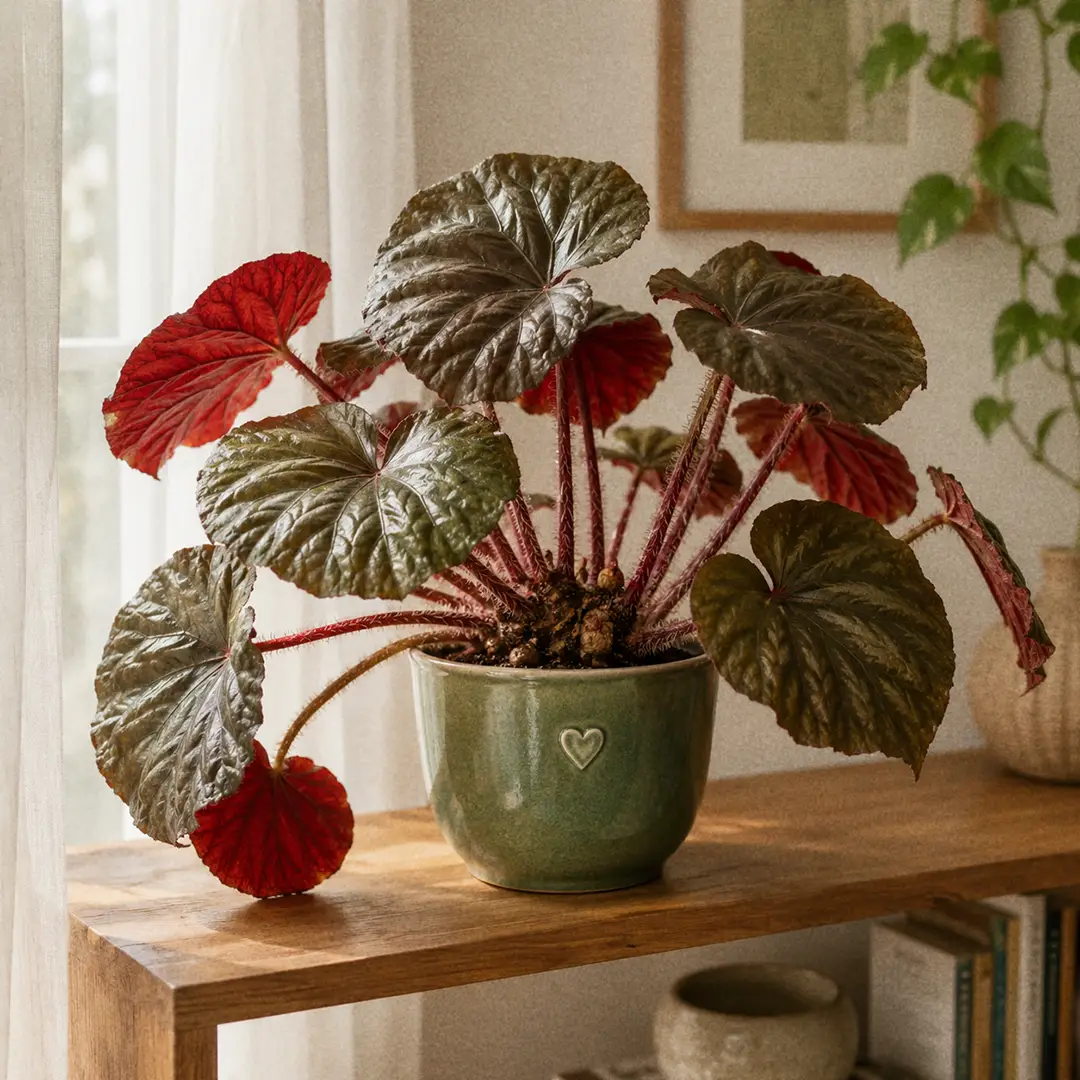
Complete Guide to Beefsteak Begonia Care and Growth

Houseplant101 Forum
Questions & Comments
Ask a question, share your plant experience, or help other plant owners.
Comments are temporarily unavailable.
Open the Houseplant101 ForumNo comments yet
Be the first to ask a question or share your experience about this page.
Log in or create an account
Comments use your Houseplant101 Forum account, but you can stay on this page.
Create a new account