Complete Guide to Beefsteak Begonia Care and Growth

πŸ“ Beefsteak Begonia Care Notes

🌿 Care Instructions

Watering: Water when the top inch of soil feels dry, then drench until water runs through.
Soil: Light, well-draining mix with bark and perlite, slightly acidic to neutral.
Fertilizing: Balanced liquid feed at half strength every three to four weeks in spring and summer.
Pruning: Pinch leggy stems and remove yellow leaves; lift any rhizome that climbs the pot rim.
Propagation: Rhizome division and leaf cuttings are both reliable indoors.

⚠️ Common Pests

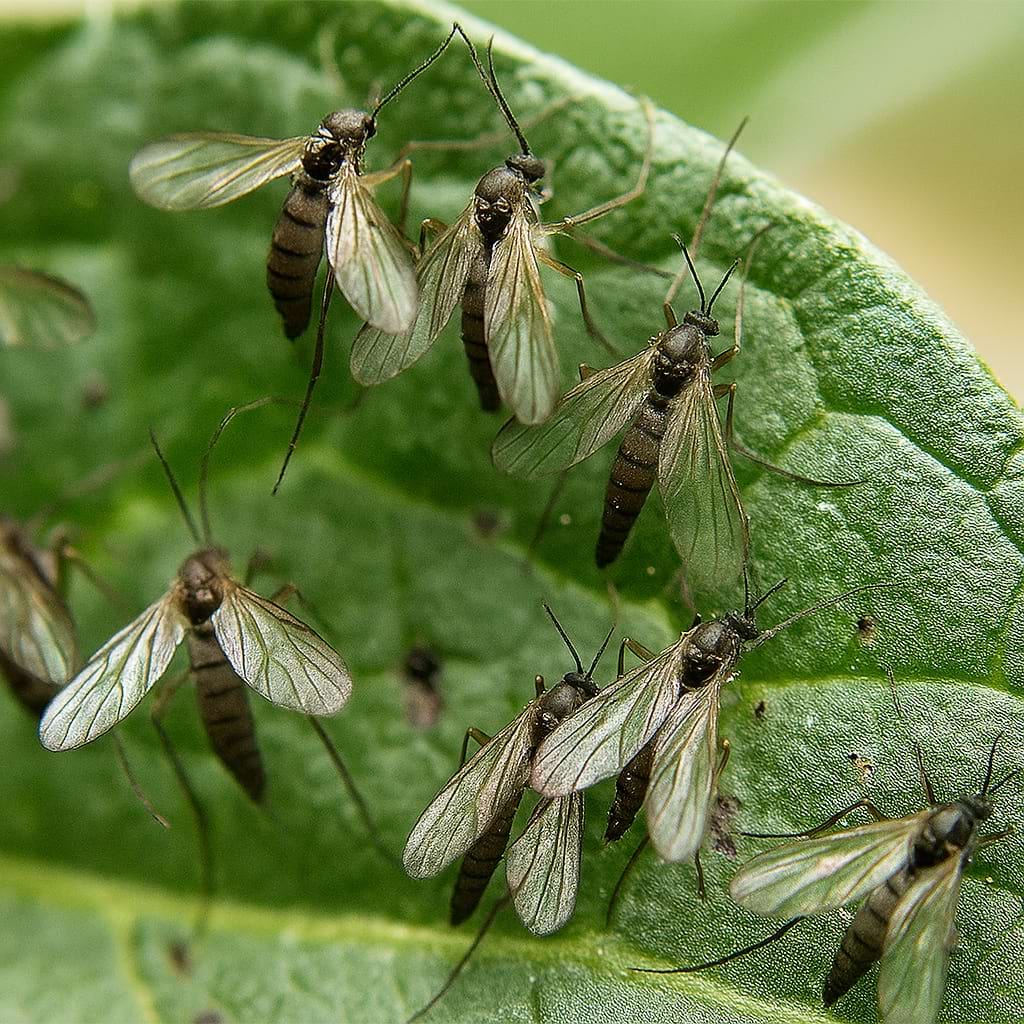
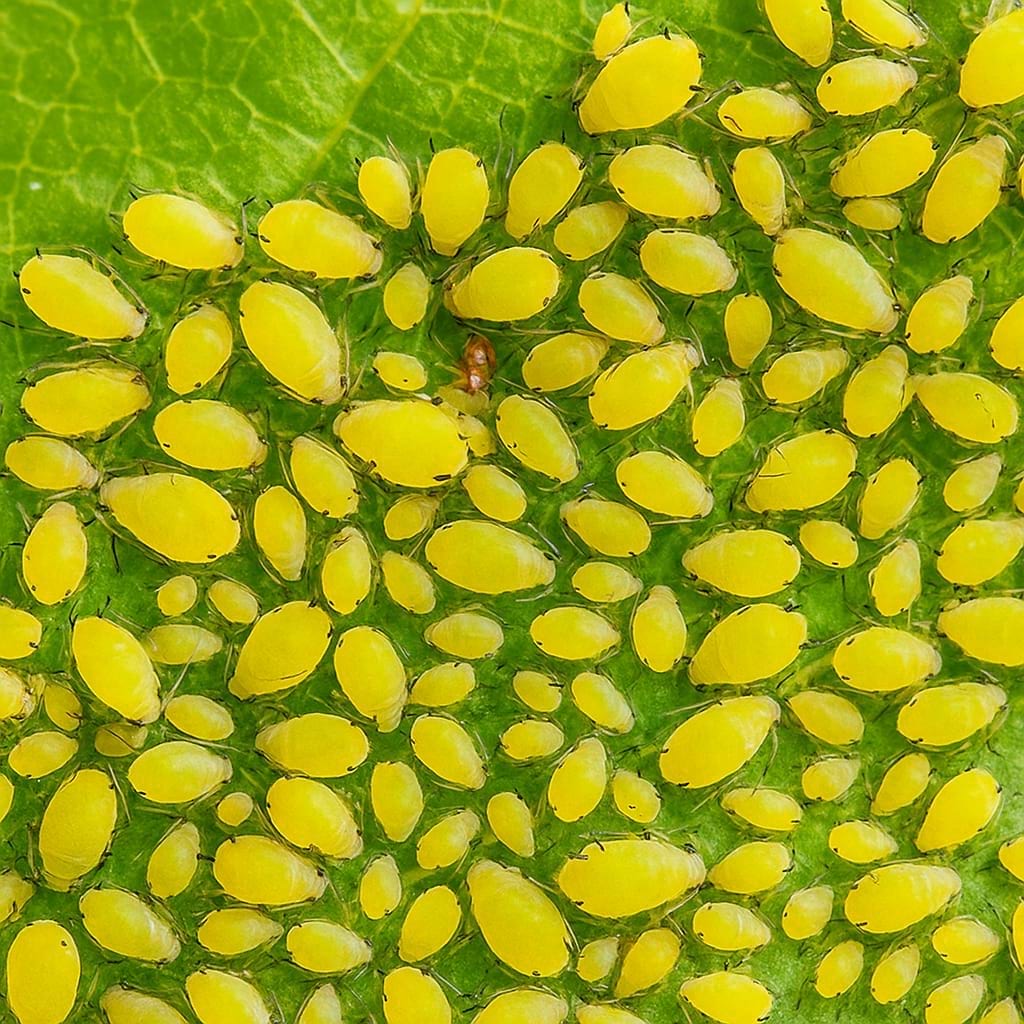
Monitor for Mealybugs, Spider Mites, Thrips, Fungus Gnats, Aphids. Wipe leaves regularly.

πŸ“Š Growth Information

Height: 12-18 inches indoors
Spread: 18-24 inches
Growth Rate: Moderate
Lifespan: Perennial, 5-10+ years with steady care

A Note From Our Plant Expert

Marina here. The Beefsteak Begonia is the plant I send people to when they tell me they killed a Polka Dot Begonia and gave up on the genus. I get it. Begonia maculata is gorgeous, but it acts like a diva the second your home dips below 50 percent humidity. The Beefsteak does not. Its leaves are thicker, waxier, and built for the dry air of a normal apartment, and the rhizome at its base stores water like a tiny camel. This is a begonia you can actually live with.

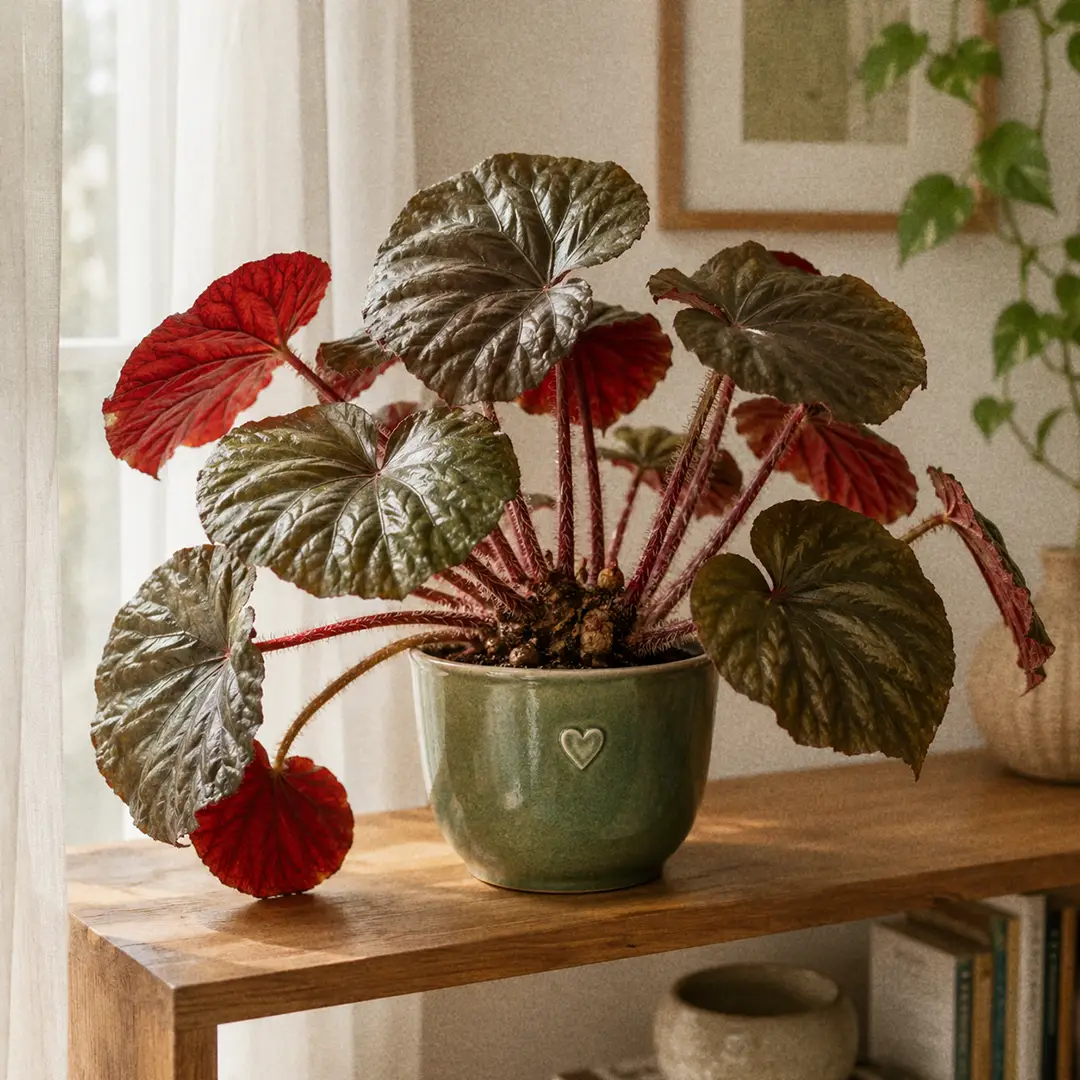
The big payoff is the leaf itself. Round, glossy, slightly cupped, olive-bronze on top, and a deep red underneath that lights up like stained glass when sun comes through it. In winter, while most of your other plants are sulking, the Beefsteak sends up tall thin red stalks with airy clusters of soft pink flowers held a hand above the foliage. It blooms when nothing else wants to. If you already grow a Polka Dot Begonia or a Strawberry Begonia, think of this one as the easygoing older sibling.

This guide covers everything I have learned keeping mine alive across three apartments, two cats, and one very dry winter. The plant rewards a light hand more than a fussy one. Underwater rather than overwater, give it good light without baking it, and leave the rhizome alone when you repot. Do those three things and a Beefsteak will outlive most of your other houseplants without complaint.

β˜€οΈ Beefsteak Begonia Light Requirements (Bright Indirect, No Harsh Sun)

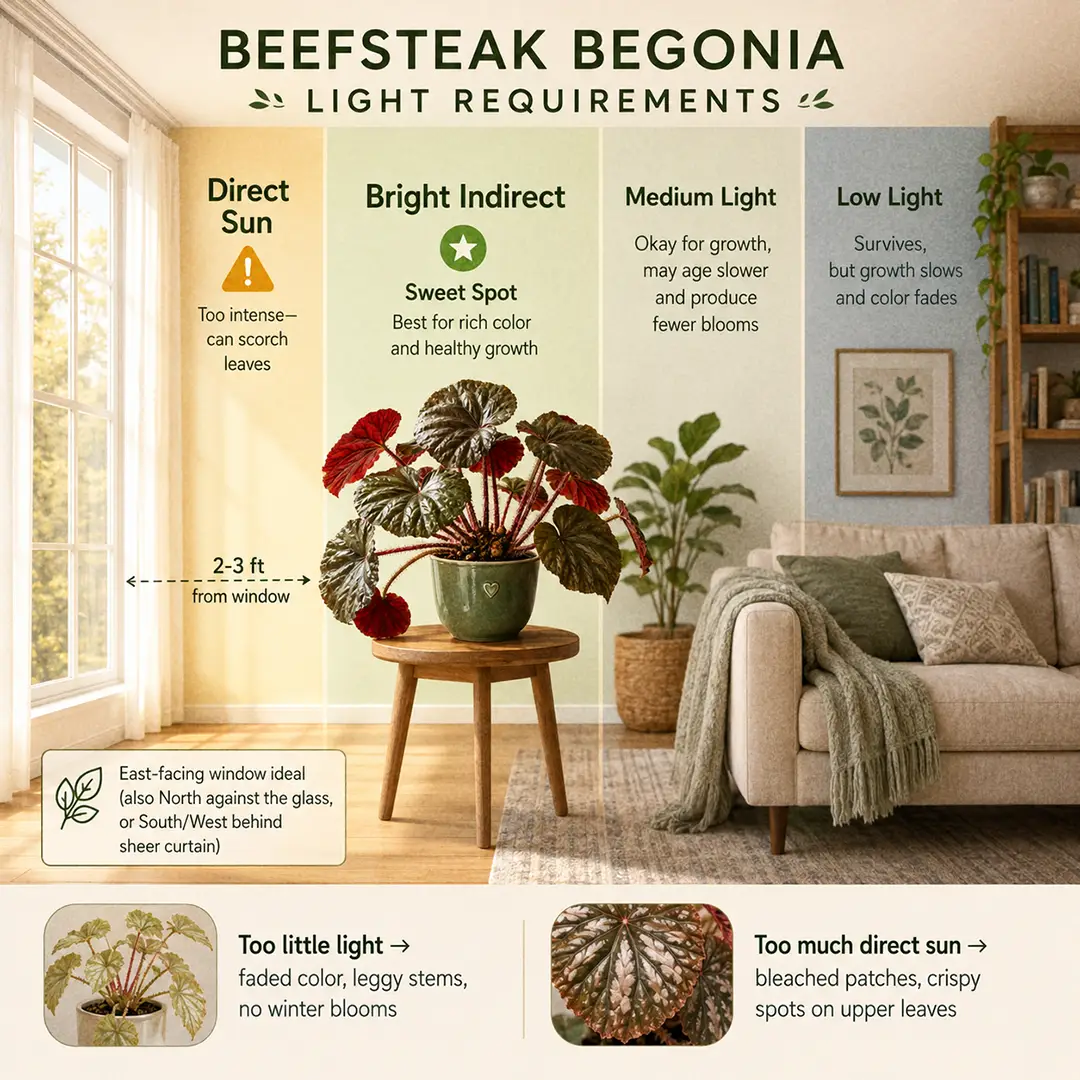
Light is what gives this plant its color. Strong indirect light deepens the bronze tone on the upper leaf and intensifies the red undersides until they look painted. Marginal light produces a flatter green plant with smaller leaves and few blooms. Direct afternoon sun, on the other hand, scorches the surface within a single bad week. The Beefsteak wants the bright zone, not the hot one.

A mature Beefsteak Begonia with rounded olive-green leaves and visible blood-red undersides growing from a thick rhizome at the soil line in a green ceramic pot with a heart motif on a wooden shelf near a sheer-curtained window

The Sweet Spot

The Beefsteak does best in bright indirect light for at least six hours a day. An east-facing window is close to perfect: gentle morning sun, then bright filtered light through the rest of the day. A north-facing window works if you place the plant right against the glass. South or west exposure is fine too, as long as a sheer curtain breaks the harshest afternoon hours, or the pot sits two to three feet back from the glass.

A labeled light-zone diagram showing a Beefsteak Begonia placed in the bright indirect sweet spot two to three feet from an east-facing window in a warm modern living room with sweet-spot, too-dark, and too-bright zones marked in soft color washes

What Too Little Light Looks Like

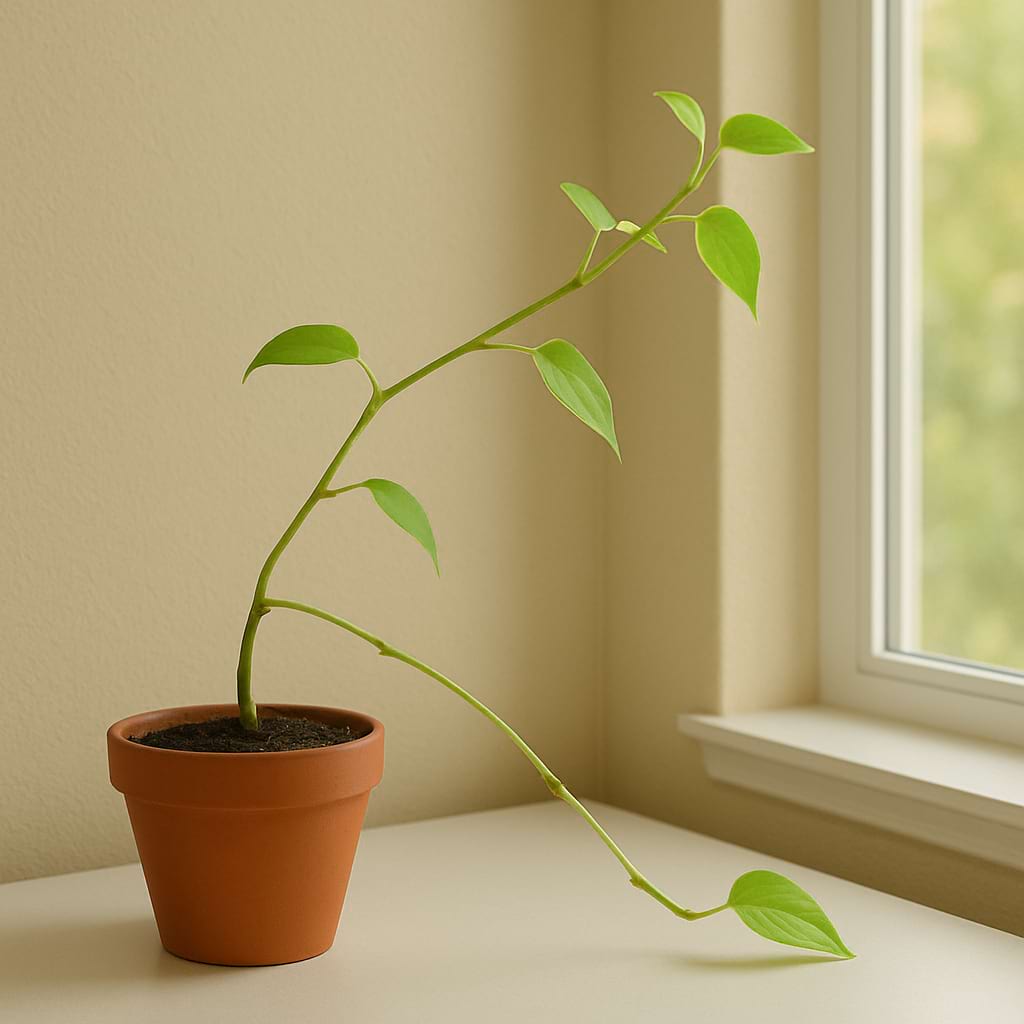
A Beefsteak in low light keeps growing, but it changes. The new leaves come in smaller, the bronze tone fades to a flat dull green, the petioles stretch long and thin, and the rhizome flops over the side of the pot reaching for any window it can find. Most importantly, the winter flower spikes either fail to form or come up stunted. If you are seeing any of this, the fix is straightforward: move the plant closer to the window or supplement with a bright grow light for eight to ten hours a day.

What Too Much Light Looks Like

Direct afternoon sun, especially in summer, will burn this plant. Watch for bleached patches on the upper leaf surface, papery dry spots in the middle of leaves, and a washed-out look starting from the side closest to the window. The thick leaves of a Beefsteak hold up better than the thinner foliage of a Polka Dot, but they still cannot take an unfiltered south-facing afternoon. Either pull the plant back from the glass or hang a sheer curtain to soften the light.

A useful test: lift one of the lower leaves and look at the underside. If the red is glowing and saturated, the light is right. If the red has gone pale or dull, the plant wants more light. If the upper surface looks bleached and the red stays bright only on the lowest, most shaded leaves, the top of the plant is getting too much sun and you need to filter or move it.

πŸ’§ Beefsteak Begonia Watering Guide (Top Inch Dry, Then Drench)

This is where most begonias get killed, and the Beefsteak is no exception, even though it is one of the more forgiving members of the genus. The rhizome holds water for the plant like a thick fleshy battery, which means a Beefsteak handles a missed watering far better than a soaked one. Wet feet kill this plant fast.

How Often to Water

Push a finger one knuckle deep into the soil. If the top inch feels dry and the soil deeper down feels lightly damp, it is time to water. In a typical home with bright light and average humidity, that lands somewhere between every seven and ten days during spring and summer. In winter, when growth slows and the plant is flowering, it can stretch to every two weeks or longer. The general watering houseplants primer is a good starting point if you are still calibrating your rhythm.

A moisture meter is genuinely useful here. The Beefsteak rhizome sits right at the soil surface, which makes finger-checking tricky without disturbing it. A meter reading of 3-4 in the middle of the pot is the green-light moment for a drink.

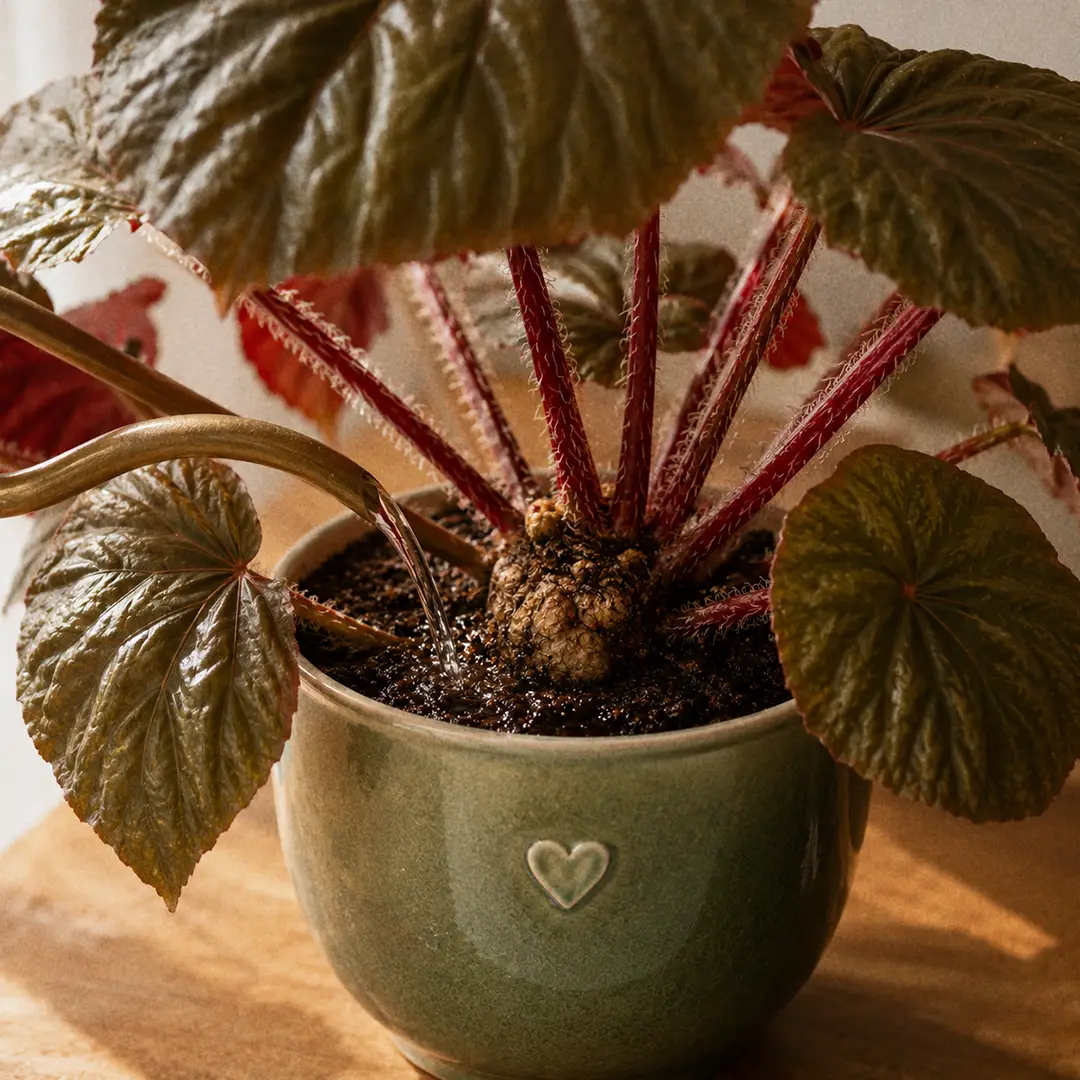
A close-up of a slender-spouted watering can pouring water onto the soil at the base of a Beefsteak Begonia in a green ceramic pot with a heart motif, with droplets visible on the dark soil surface and the rhizome held just above the rim

How to Water Properly

Water at the soil line, never over the leaves. Pour slowly and evenly until you see water run from the drainage hole. Let it drain fully, then tip out anything that pools in the saucer. Standing water at the base is the single fastest route to root rot on this plant.

Avoid splashing water on the upper leaf surface. The Beefsteak's leaves are slightly fuzzy along the veins, and water sitting on them encourages powdery mildew and other fungal spotting. If a few drops do land on the leaves, dab them gently with a soft cloth.

Some growers swear by bottom watering for begonias, which keeps the leaves and rhizome bone dry while the roots drink. Set the pot in a basin of room-temperature water for fifteen to twenty minutes, then drain. This is a great approach for the Beefsteak, especially during humid summer weeks when fungal issues spike.

Signs You Are Overwatering

  • Lower leaves yellowing one after another within a single week
  • Soft mushy spots on the rhizome at the soil line
  • A faint sour smell when you lift the pot to your nose
  • Soil that stays wet for more than ten days between waterings
  • Leaves dropping at the slightest touch
  • A black rim creeping around the base of petioles

Signs You Are Underwatering

  • Leaves curling slightly inward at the edges
  • The whole plant sagging without going limp
  • Crispy brown edges on otherwise healthy older leaves
  • Soil pulling away from the sides of the pot
  • A pot that feels noticeably light when you lift it

A thirsty Beefsteak perks up within hours of a good drink. A waterlogged one declines for days even after you stop watering. When in doubt, wait another day.

A Note on Water Quality

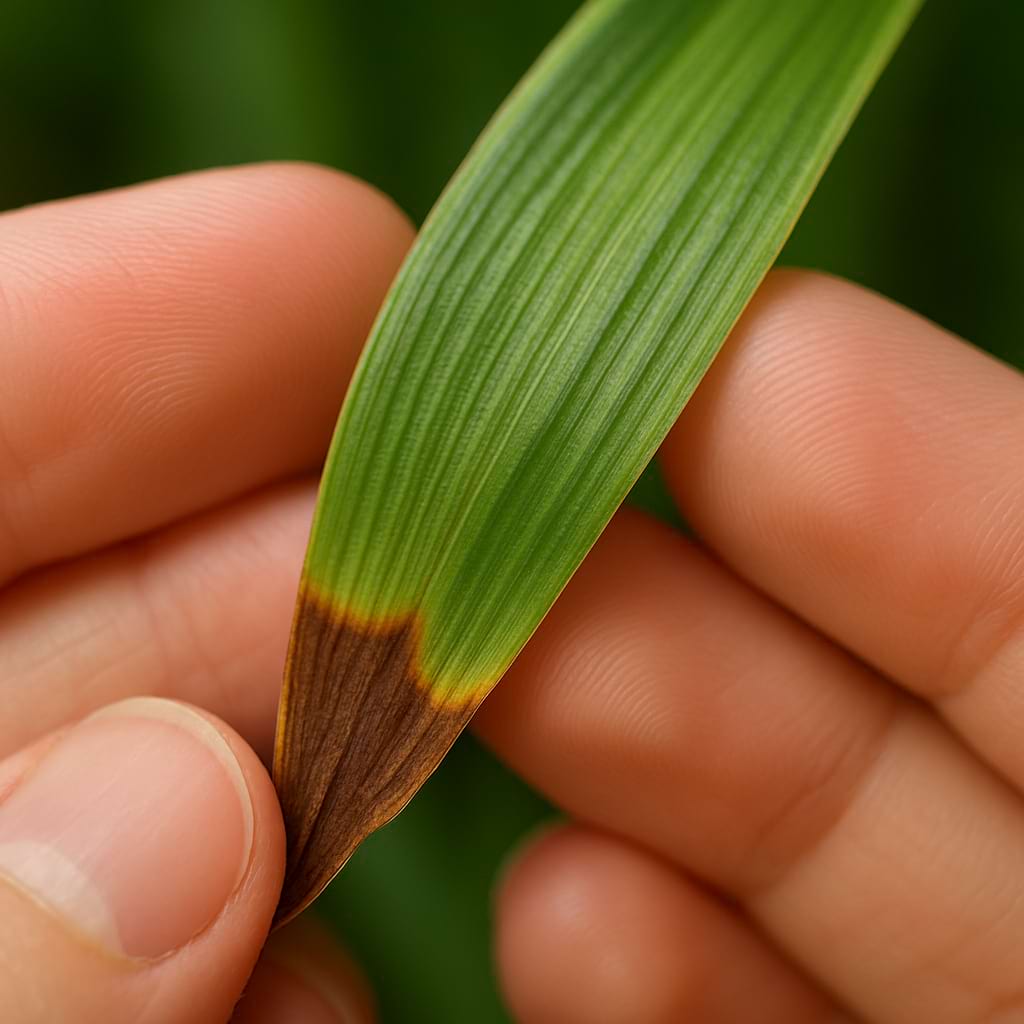
Beefsteaks are not as picky as a Calathea Orbifolia, but they do appreciate softer water. Heavily chlorinated tap water and water with very high mineral content can cause brown leaf tips and a slow buildup of crusty white salt around the rhizome. If your tap runs hard, leave a watering can out overnight to off-gas the chlorine, or switch to filtered or rainwater for this plant.

πŸͺ΄ Best Soil for Beefsteak Begonia (Light, Airy, Slightly Acidic)

Standard bagged potting soil packs down quickly and holds water far too long for a rhizomatous begonia. The Beefsteak wants a light, fluffy mix that drains in seconds and lets air reach the roots and the rhizome. Bonus: a fluffy mix also makes it easier for the rhizome to stretch sideways without getting choked.

A Simple DIY Mix for Beefsteak Begonia

This is the recipe I use for every rhizomatous begonia in my collection.

  • 2 parts quality indoor potting soil
  • 1 part perlite or pumice
  • 1 part orchid bark (fine grade)
  • 1/2 part coco coir or peat for steady moisture
  • 1/2 part worm castings for a slow nutrient drip

Mix in a bucket and squeeze a fistful in your hand. The blend should hold together for a moment, then crumble apart at the slightest nudge. If it stays in a tight clump, add more bark and perlite. If it falls apart instantly, add a little more soil and coir. The aim is a mix with body that still drains the second water hits it.

What to Look For in a Premix

If a bag is your style, an "African violet mix" is actually a decent off-the-shelf base for a Beefsteak, since both plants want a similar light, slightly acidic blend. Cut it with a generous handful of perlite and a smaller handful of orchid bark to open it up further. Avoid anything labeled "moisture control," which holds far too much water for this plant. A "begonia mix" or "rhizomatous begonia mix" from a specialist nursery is the gold standard if you can find one.

Why Drainage Matters Even More for a Rhizomatous Begonia

Unlike a fibrous-rooted houseplant, a rhizomatous begonia stores its water in the thick stem at the soil line. Wet, dense soil packs around that rhizome and rots it from the outside in. The plant looks fine for a week or two, then collapses overnight. Fast drainage is the single best insurance policy you can give a Beefsteak. Get the mix right and the plant practically takes care of itself.

🍼 Fertilizing Beefsteak Begonia (Half-Strength, Every Few Weeks)

The Beefsteak is a steady eater, not a heavy one. Big leaves and winter blooms cost the plant energy, but a rhizomatous begonia burns through fertilizer slower than a cane begonia or a fast aroid. Light, frequent feeding works far better than the occasional heavy dose.

When to Fertilize

Feed every three to four weeks during the active growing season, roughly March through September in the Northern Hemisphere. Stop feeding completely from late fall through winter, even though the plant is producing flowers. Bloom energy is already stored in the rhizome, and pushing fertilizer at a resting plant just builds up salts in the soil.

What to Use

A balanced liquid houseplant fertilizer with an NPK around 10-10-10 or 20-20-20 works well. Always dilute to half the dose listed on the label. The general fertilizing guide goes deeper on why half-strength is the safer rhythm for most begonias.

If you want to push winter blooms harder, switch to a slightly higher-phosphorus formula (something like 10-30-20) for one or two feedings in early fall, while the bud spikes are forming. Then return to balanced. A formula meant for African violets works well as a substitute and is easy to find.

Reading the Plant

  • New leaves the same size as old leaves, glossy and well colored: feeding is on point.
  • Smaller, paler new leaves with thin petioles: bump up frequency slightly.
  • Brown leaf tips and a chalky white crust on the soil: too much fertilizer or salt buildup. Flush the pot with plain water until it runs clear from the drainage hole, then skip a feeding cycle.
  • Few or no flower spikes in winter: the plant likely did not store enough energy in summer. Feed more steadily next growing season.

🌑️ Beefsteak Begonia Temperature Range

This is a tropical-origin hybrid, so it likes warmth without extremes. The sweet spot is between 65 and 75Β°F (18 to 24Β°C), which is exactly where most homes live. The Beefsteak handles a slightly cooler winter rest, which actually helps trigger its bloom cycle, but it does not enjoy genuine cold.

What to Avoid

  • Cold drafts from a leaky winter window
  • Hot dry blasts from a heating vent or radiator
  • Air-conditioning vents pointed directly at the leaves
  • Anything below 55Β°F (13Β°C), which can cause leaf damage and stem dieback
  • Sustained exposure under 50Β°F (10Β°C), which can be fatal to the rhizome

Seasonal Care

Move the plant a step away from cold glass once outdoor temperatures drop in fall. A spot that worked in July can be ten degrees colder by January, and rhizomatous begonias react badly to cold soil. If you summer your plants outside (the Beefsteak loves a shaded patio in warm months), bring it back in well before nights regularly fall under 60Β°F (15Β°C). Inspect the rhizome and the underside of every leaf for hitchhiking pests as you bring it indoors.

A mild winter dip into the low 60s is actually good for this plant. The slightly cooler night temperatures help trigger the bloom cycle, which is one reason a Beefsteak in a slightly drafty bright kitchen often outflowers one in a perfectly climate-controlled living room.

πŸ’¦ Beefsteak Begonia Humidity Requirements

Here is where the Beefsteak quietly outshines its prettier cousins. Where a Polka Dot Begonia crisps up the second indoor air dips below 50 percent, a Beefsteak shrugs and keeps growing. The thick waxy leaves hold moisture in, and the rhizome buffers the plant against dry stretches. This is by far the most apartment-friendly begonia on the humidity front.

  • Ideal range: 40 to 50 percent
  • Tolerable: 30 percent
  • Trouble starts below: 25 percent (look for crispy edges, slow new growth, and stalled bud spikes)

Easy Ways to Boost Humidity

  • Run a small humidifier in the room for a few hours a day, especially in winter.
  • Group the Beefsteak with other plants so they share transpired moisture.
  • Set the pot on a tray of pebbles and water. The pot sits on the pebbles, not in the water.
  • Move it to a brighter bathroom if the light is good enough.
  • Skip misting. Wet upper leaves on a fuzzy-veined begonia invite powdery mildew and other fungal issues. The risk is not worth the brief humidity bump.

A general overview of boosting humidity for indoor plants helps if your home runs especially dry in the cold months.

🌸 Beefsteak Begonia Flowers (Pink Winter Sprays)

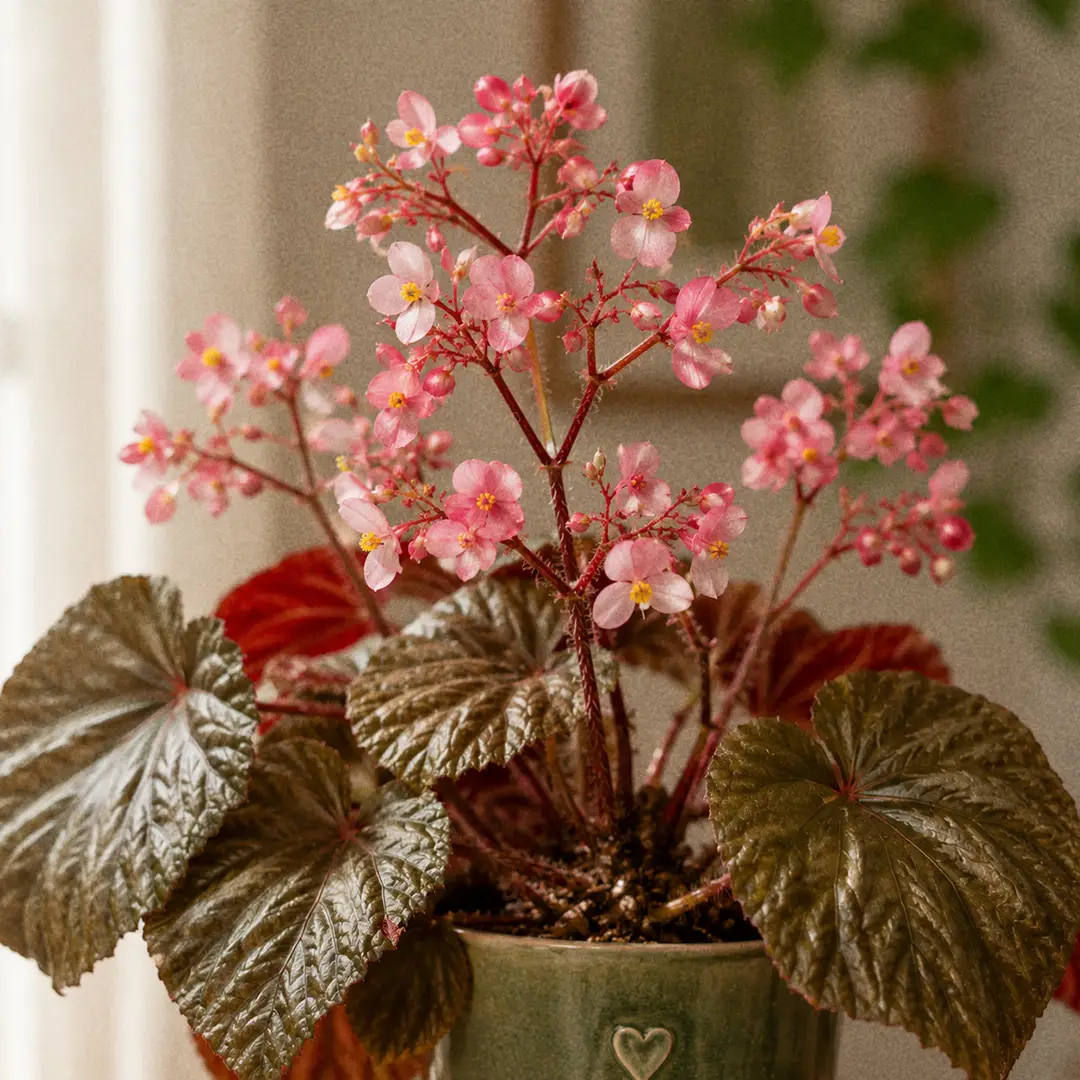
This is the part that surprises new owners. Most rhizomatous begonias bloom indoors, and the Beefsteak is one of the more reliable performers. From late fall through early spring, while almost every other houseplant is on pause, this plant pushes tall thin red stalks up above the foliage and unfurls airy clusters of soft pink to rose flowers held a hand above the leaves.

Macro close-up of a Beefsteak Begonia inflorescence with airy clusters of soft pink rose flowers on slender red stalks rising above glossy olive-green leaves with red undersides, in a green ceramic pot with a heart motif against a softly lit window background

The Bloom Cycle

Bud spikes start forming in mid to late autumn as day length shortens and indoor temperatures drop slightly. The first flowers usually open in December or January, and a healthy plant keeps producing fresh sprays into March or April. Each individual flower lasts about a week, and a single stalk can carry thirty to fifty blooms over a few weeks.

The flowers themselves are typical begonia: small, four-petaled, soft pink with a yellow center, and held loosely in branched clusters that catch the light. They do not have a strong scent, but they have presence. A Beefsteak in full winter bloom can be the brightest thing in a January room.

How to Encourage Blooms

  • Bright, generous light through summer and early fall to build energy in the rhizome.
  • Slight cooling of nighttime temperatures in fall (low 60sΒ°F is ideal).
  • Steady but light feeding through the growing season.
  • A short stretch of slightly drier soil in early fall to nudge the plant toward bud formation.
  • No repotting in late summer or fall. Disturbing the rhizome right before bloom season usually skips the bloom.

If your plant has never flowered, the most common reason is light. A Beefsteak in a dim corner produces beautiful leaves and stops there. Move it to a brighter spot for a full growing season and watch what happens the following winter.

Spent Bloom Cleanup

Once a flower stalk is finished, snip the whole stem at its base. This redirects energy back into the rhizome and the leaves and keeps the plant looking tidy. Spent flowers left on the plant are a common landing spot for botrytis, so do not let them linger.

If you want to skip the bloom (some growers prefer the foliage-only look on shelves and in tight spaces), you can pinch out the flower spikes as soon as they appear. The plant will redirect all that energy into bigger, glossier leaves instead.

🏷️ Beefsteak Begonia Types and Varieties

The Beefsteak is itself a named hybrid (Begonia Γ— erythrophylla), often considered the oldest begonia hybrid still in common collection. There is a small group of related cultivars and a few close lookalikes that get sold under similar names. Knowing them apart helps when shopping.

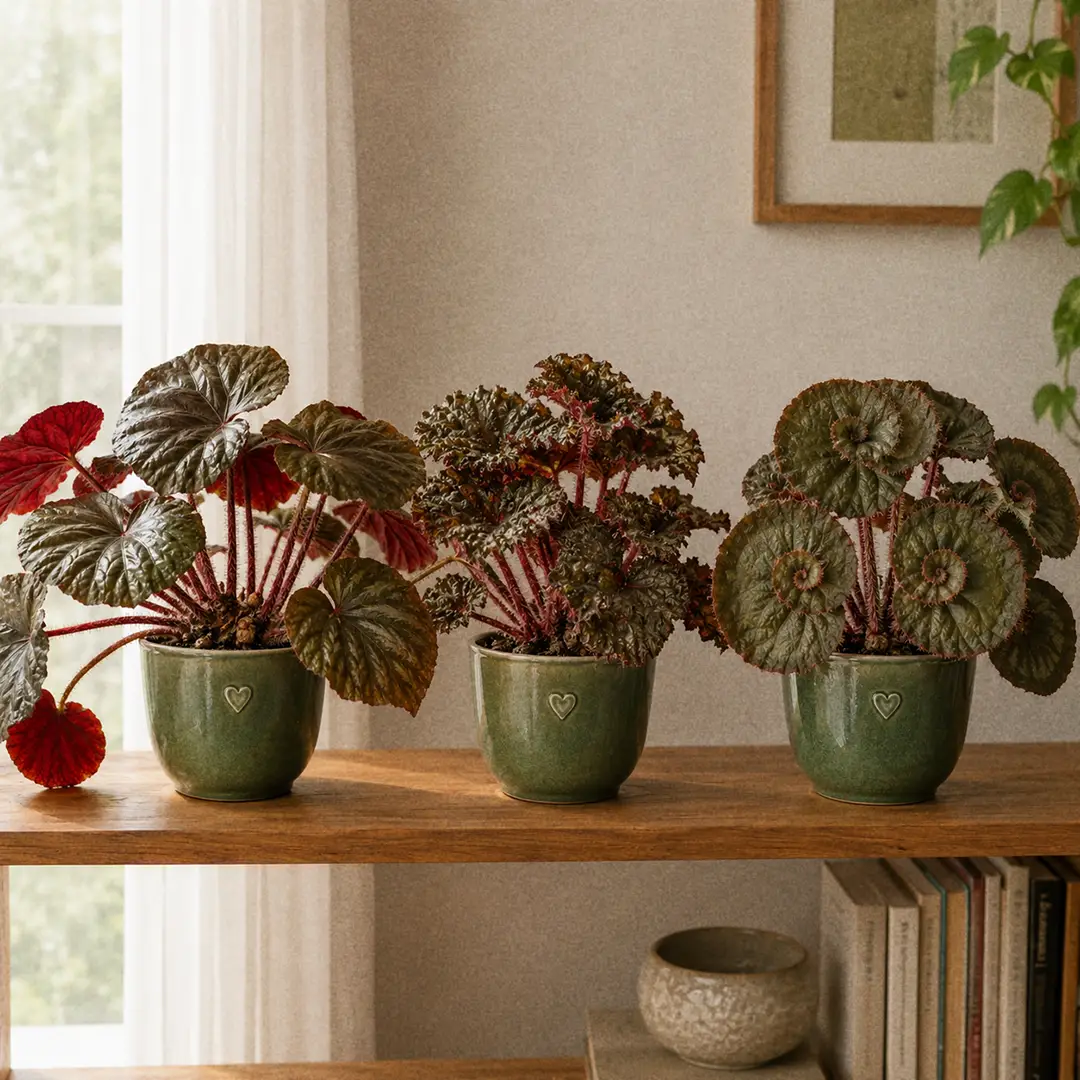
Three rhizomatous begonias side by side on a wooden shelf in matching green ceramic pots with heart motifs: a classic Beefsteak Begonia with round olive leaves and visible red undersides, a Bunchii cultivar with ruffled leaf edges, and a Helix Begonia with spiraled centers

Classic Beefsteak (*Begonia Γ— erythrophylla*)

Round, slightly cupped, peltate leaves four to six inches across. Top surface a glossy olive to bronze-green. Underside a deep blood-red. Hairy red petioles. Tall pink winter flower spikes. A thick visible rhizome creeping along the soil line. This is the original 1845 hybrid raised by John Heal at Veitch Nursery in England.

Beefsteak 'Bunchii'

A ruffled-leaf sport of the classic Beefsteak. Same round leaf shape and red undersides, but with tightly crimped, lettuce-like edges. The ruffles are most pronounced on mature leaves. Slightly slower growing and a touch more humidity-loving than the smooth-leaved parent. Sold as 'Bunchii', 'Crispa', or "ruffled Beefsteak" depending on the nursery.

Beefsteak 'Helix'

Sometimes labeled Begonia 'Helix' or Begonia 'Stained Glass'. Same general leaf shape and red undersides, but with a dramatic spiral curl in the center of each leaf where the petiole attaches. The spiral catches light beautifully and gives a much more sculptural look. Care is identical to the classic.

Beefsteak Begonia vs. Polka Dot Begonia

Easily the most common mix-up. The Polka Dot Begonia is a cane begonia, with long bamboo-like stems and angel-wing-shaped leaves dotted with silver spots. The Beefsteak is a rhizomatous begonia, with round leaves growing low from a creeping stem at the soil line. Polka Dot grows up; Beefsteak grows out. Polka Dot demands high humidity; Beefsteak does not. Both are gorgeous, but they want very different conditions.

Beefsteak Begonia vs. Strawberry Begonia

Despite the shared "begonia" name, the Strawberry Begonia (Saxifraga stolonifera) is not a begonia at all. It is a Saxifrage that produces strawberry-like runners with baby plantlets. Leaf shape, growth habit, and bloom style are all different. The two share a love of bright indirect light and well-draining soil, but otherwise they are unrelated plants.

Beefsteak Begonia vs. Iron Cross Begonia

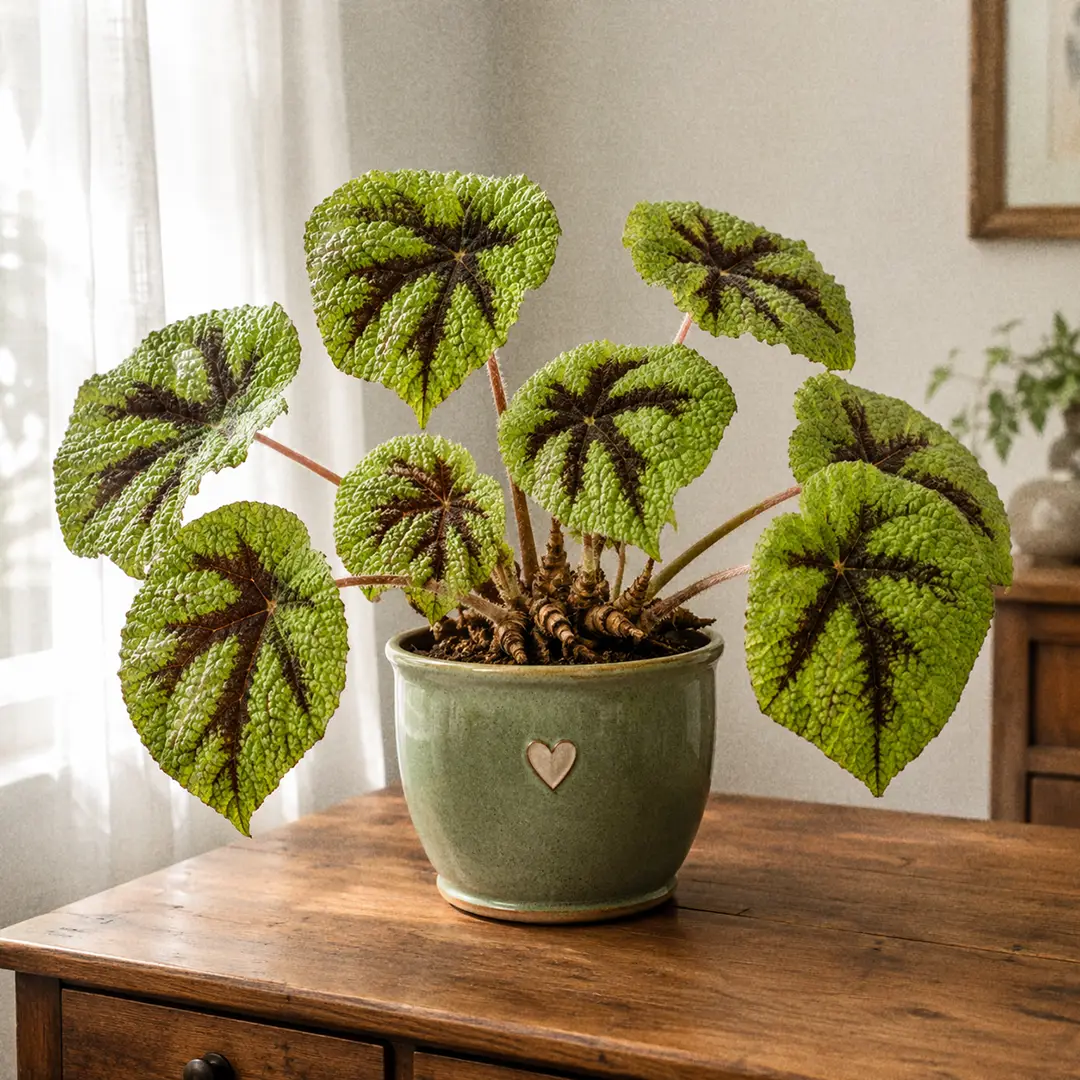
Iron Cross Begonia (Begonia masoniana) is another rhizomatous begonia, which makes the mix-up understandable. Its leaves have a dark chocolate-brown cross pattern stamped across a green background, and the texture is bumpy and almost reptilian. Beefsteak leaves are smooth, glossy, and red underneath. Care is similar across the two, since both are rhizomatous, but Iron Cross wants slightly higher humidity.

Beefsteak Begonia vs. Rex Begonia

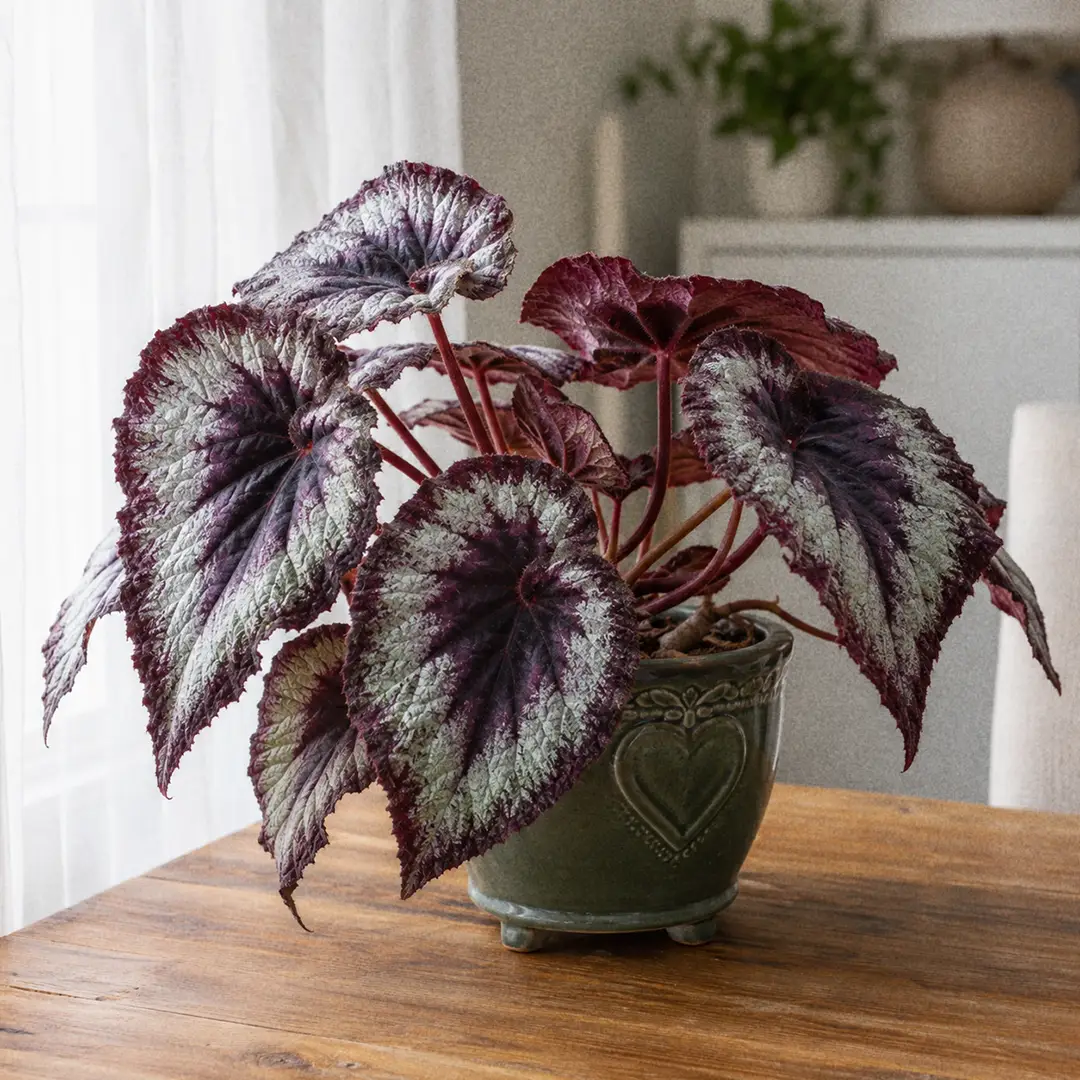
Rex Begonias are also rhizomatous and share the same general growth habit, but their leaves are flashy works of art with silver, pink, purple, and burgundy patterns. Beefsteak leaves are simpler: clean olive on top, blood-red beneath, no patterning. Rex types tend to be much fussier about humidity and dormancy than the Beefsteak. If you killed a Rex, the Beefsteak is the plant to try next.

Beefsteak Begonia vs. Wax Begonia

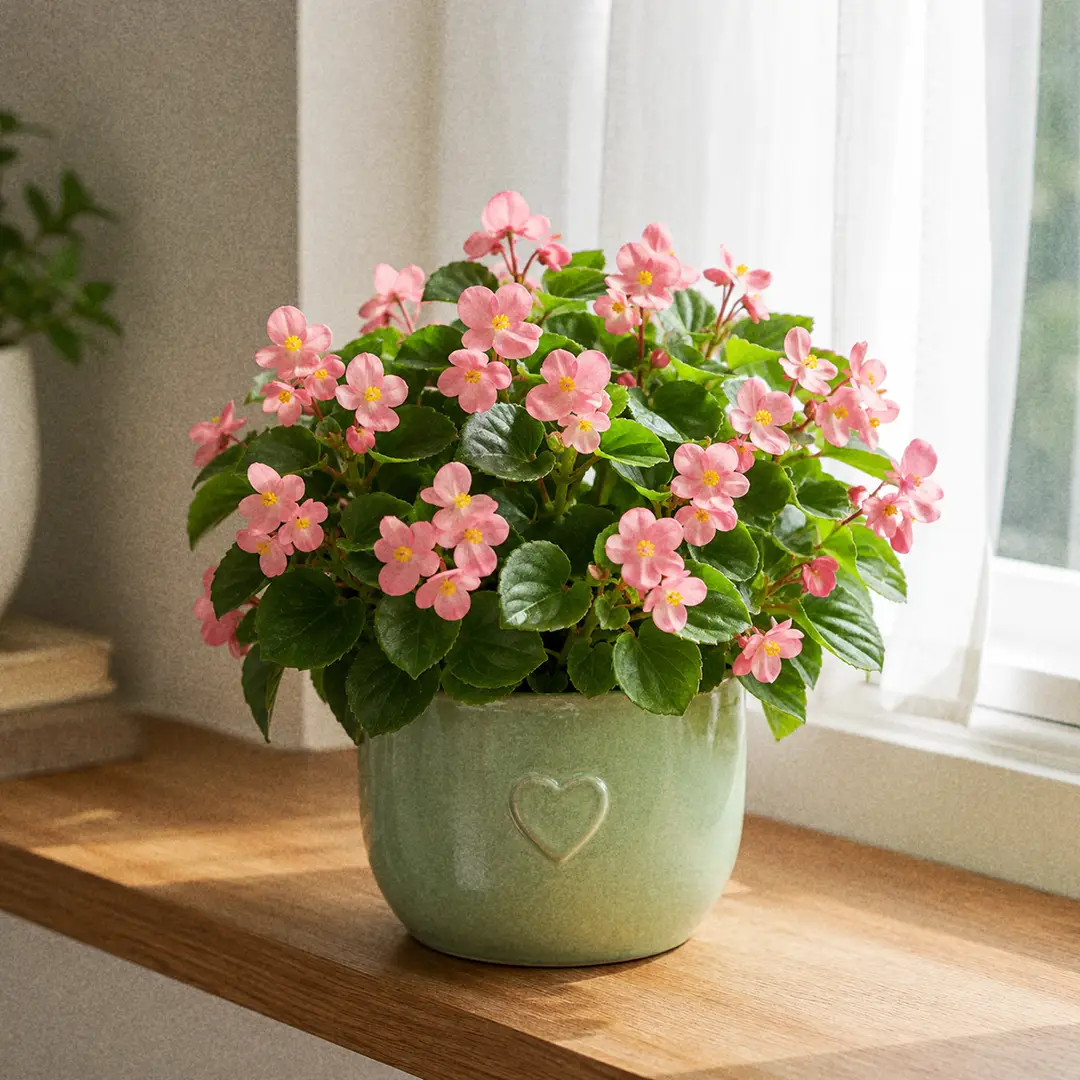
The Wax Begonia is a fibrous-rooted bedding begonia with small glossy leaves and near-constant clusters of white, pink, or red flowers. The Beefsteak is rhizomatous, with much larger round leaves growing from a creeping stem and a single annual winter bloom cycle. Wax Begonia is grown almost entirely for its flowers; Beefsteak is grown for foliage drama with flowers as a winter bonus. They want similar light and watering, but Wax tolerates more direct sun and Beefsteak prefers a wider, shallower pot.

When buying, check the rhizome carefully. A real Beefsteak shows a thick, visible, slightly hairy stem creeping along the soil with leaves arching up from it. If you see a tall central stem with leaves stacked around it, you are looking at a cane begonia, not a rhizomatous one.

πŸͺ΄ Potting and Repotting Beefsteak Begonia

This plant is happiest slightly underpotted. The rhizome wants to creep across the surface and feel the air, and an oversized pot full of damp soil under that rhizome is the easiest way to rot it. Wide and shallow beats tall and deep every single time.

When to Repot

Plan to repot every two to three years, or whenever you see one of these clear signs:

  • The rhizome has reached the rim of the pot and started climbing over the edge.
  • Roots circle tightly around the root ball when you slide the plant out.
  • Roots growing out of the drainage hole.
  • Water running straight through the pot in seconds with no absorption.
  • A noticeable slowdown in new leaf production despite good light and feeding.

Avoid repotting in late summer or fall, when the plant is preparing flower spikes. Spring, after the bloom cycle finishes, is the ideal window. The plant has the whole growing season ahead of it to settle in.

Choose a Wide, Shallow Pot

A rhizome wants to spread, not dig. Choose a pot that is wider than it is tall, with drainage holes. A standard "azalea pot" or "begonia bowl" is the right shape. The new pot should only be one to two inches wider than the current one. Going up too much puts the rhizome in the middle of a soggy soil ocean, which it will not survive.

How to Repot, Step by Step

  1. Water the plant lightly the day before so the root ball holds together.
  2. Choose a new pot only one to two inches wider than the current one.
  3. Fill the bottom inch with fresh light begonia mix.
  4. Slide the plant out. Brush away enough soil to see the rhizome clearly.
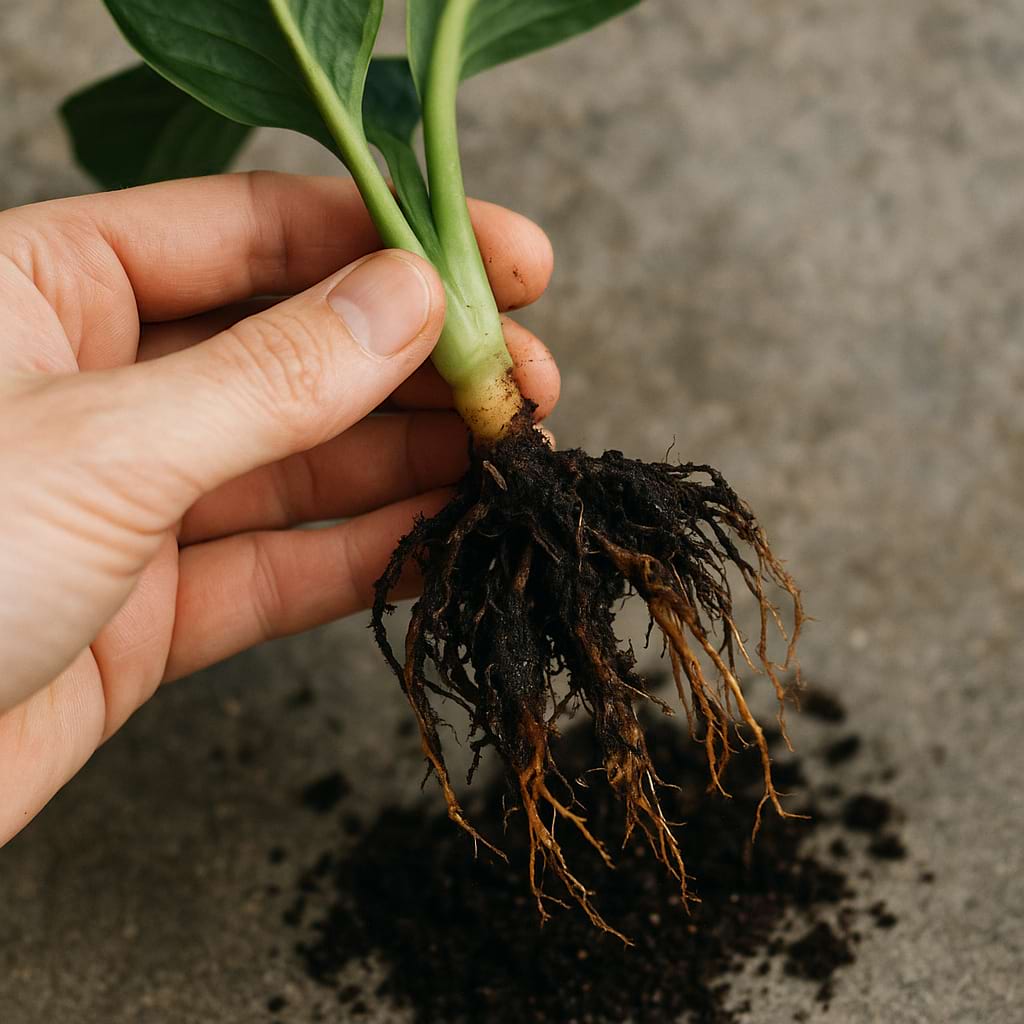
  5. Trim any roots that are mushy, brown, or hollow. Healthy roots are firm and pale.
  6. Set the plant in the new pot with the rhizome sitting on top of the soil, not buried. Burying it is the single most common repotting mistake.
  7. Backfill around the roots with fresh mix, tapping the pot to settle it. Do not pack it down hard.
  8. Water lightly and place in the usual bright indirect spot.

A general overview of repotting houseplants covers the basics. For a Beefsteak specifically, the one rule above all others is: keep the rhizome above the soil. Buried rhizomes rot.

Pot Material Choice

Terracotta is a great fit for this plant. The porous walls let excess moisture wick out and help the soil dry evenly between waterings, which is exactly what a Beefsteak wants. Glazed ceramic and plastic hold moisture longer and pair better with cooler, drier homes where the soil rarely stays wet too long. Either works as long as drainage holes are present.

βœ‚οΈ Pruning Beefsteak Begonia

Pruning a rhizomatous begonia is mostly about cleanup, light shaping, and managing where the rhizome grows. Big dramatic cuts are not needed. A few small snips a few times a year keeps the plant looking sharp.

What to Prune

  • Yellowing or fully spent leaves: cut the petiole at its base with clean snips.
  • Damaged or torn leaves: same approach.
  • Spent flower stalks: cut at the base once the last flower drops.
  • Leggy stems reaching for light: pinch back to a shorter sturdy node and use the cutting for propagation.
  • Rhizome sections that have climbed completely over the pot rim: trim back to a healthy node, callus the cut for a day, and replant the trimmed piece in fresh mix.

That is essentially all the pruning the plant needs. Clean tools with rubbing alcohol between cuts to avoid spreading any fungal issues between plants.

Cleaning the Leaves

The Beefsteak's slightly fuzzy leaves trap dust faster than smooth-leaved plants. Once every two or three weeks, brush the upper surfaces gently with a soft dry paintbrush or a soft makeup brush. Avoid wet wiping, since water sitting on the leaf surface can encourage fungal spotting. Clean leaves photosynthesize better and keep their bronze tone bright.

Managing the Rhizome's Spread

A mature Beefsteak rhizome can outgrow its pot in two seasons. If a section reaches the rim and starts hanging over, you have two choices: repot the whole plant into a wider pot, or trim that section, callus it, and start a new plant in its own pot. Both work. Cutting the rhizome does not hurt the parent plant as long as you leave a healthy section with at least three or four leaves and active growth points behind.

🌱 How to Propagate Beefsteak Begonia

This is one of the easiest begonias to multiply. Two reliable methods work well indoors, and a third advanced one is fun to try if you want to nerd out. Both standard methods are far easier than propagating a Polka Dot Begonia from cane cuttings.

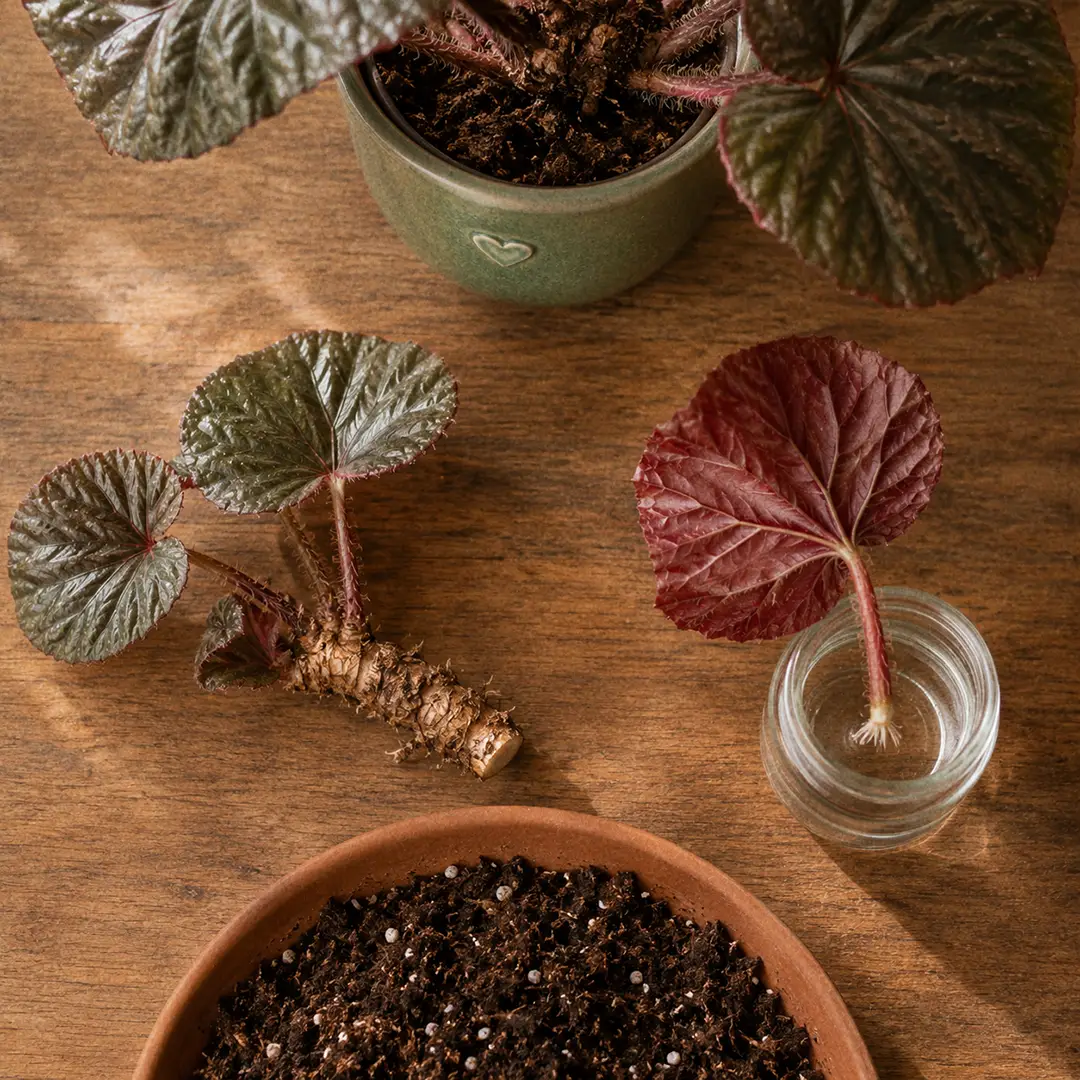
Top-down view of a Beefsteak Begonia propagation setup showing a cut rhizome section with a few leaves laid on a wooden surface beside a green ceramic pot with a heart motif, a small jar of water with a leaf cutting forming roots, and a tray of fresh begonia mix

Method 1: Rhizome Division

This is the most reliable approach and the one I recommend for any new Beefsteak owner. The full plant division walkthrough covers the technique in detail.

  1. Wait until the plant is mature and you can see the rhizome branching into two or more clearly separate growth points.
  2. The next time you repot, slide the plant fully out of its pot.
  3. Brush away enough soil to see how the rhizome and roots are arranged.
  4. Find a natural fork where two healthy sections each have their own roots and at least three or four leaves.
  5. Use a clean, sharp knife to cut through the rhizome at the fork. Do not tear.
  6. Let each cut surface callus by leaving the divisions out of soil for a few hours, in a shaded spot.
  7. Pot each section in fresh begonia mix with the rhizome sitting on top of the soil.
  8. Water lightly and place in bright indirect light. Hold off on fertilizer for a month.

Divisions sulk for a week or two, then start producing new leaves like nothing happened.

Method 2: Leaf Cuttings

Begonias are one of the small group of plants where a single leaf can grow into a whole new plant, which is delightful. The soil propagation and water propagation guides cover the basics if you are new to the process.

Whole-leaf method (in soil):

  1. Cut a healthy mature leaf with about an inch of petiole still attached.
  2. Make several short slices across the largest veins on the underside of the leaf.
  3. Pin the leaf flat onto damp begonia mix in a shallow tray, sliced side down.
  4. Use bent paper clips or small stones to keep the leaf in firm contact with the soil.
  5. Cover the tray loosely with a clear plastic bag or a propagation lid to hold humidity.
  6. Place in bright indirect light. Mist the soil lightly when the surface dries.
  7. After four to eight weeks, tiny new plantlets emerge from the cut veins.
  8. Once each plantlet has three or four leaves of its own, lift it gently and pot it up.

Petiole cutting (in water):

  1. Cut a healthy leaf with a one to two inch petiole.
  2. Place the petiole in a small jar of clean room-temperature water.
  3. Set the jar in bright indirect light. Change the water weekly.
  4. Roots and tiny plantlets form at the base of the petiole over the next four to eight weeks.
  5. Pot up once the roots are an inch long.

The leaf-cutting method takes patience but produces multiple new plants from a single leaf. It is the route that earned this plant its reputation as a heritage hybrid passed down through generations.

Method 3: Wedge Cuttings (Advanced)

Cut a mature leaf into pie-slice wedges, each containing a section of major vein. Bury the pointed end of each wedge in damp begonia mix. Cover loosely to hold humidity. New plantlets form from the base of each wedge. Slow, but you can get six or eight new plants from a single leaf.

What Does Not Work

  • Single petiole cuttings with no leaf tissue attached: nothing roots.
  • Leaves left to soak in deep water for weeks: they rot before they root.
  • Burying the rhizome in deep soil: kills the parent plant too.

πŸ› Beefsteak Begonia Pests and Treatment

The Beefsteak is genuinely tougher than most begonias when it comes to pest pressure, partly thanks to its thick waxy leaves. Indoor air is dry and dusty, though, and pests find their way in. Inspect the undersides of leaves and the rhizome line every two weeks. Quarantine new plants for two weeks before placing them next to your Beefsteak. That single habit prevents most pest problems before they start.

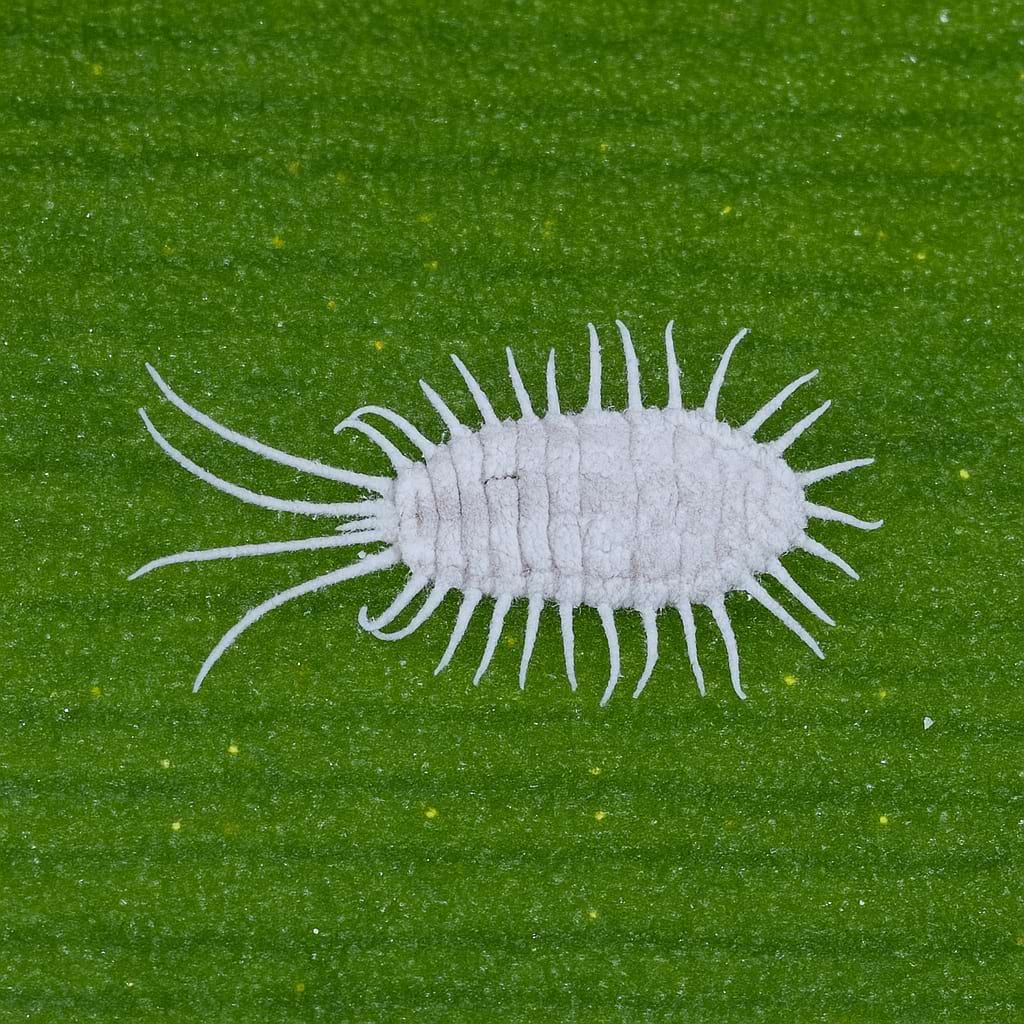
Mealybugs hide in the tight space where new leaves are unfurling and along the petiole bases at the rhizome. They look like little tufts of cotton. Dab each one directly with a cotton swab dipped in 70 percent isopropyl alcohol, then wipe down the surrounding leaf. Mealies love the warm pocket at the rhizome's growth point, so check there first. Repeat every five days for three weeks to break the egg cycle.

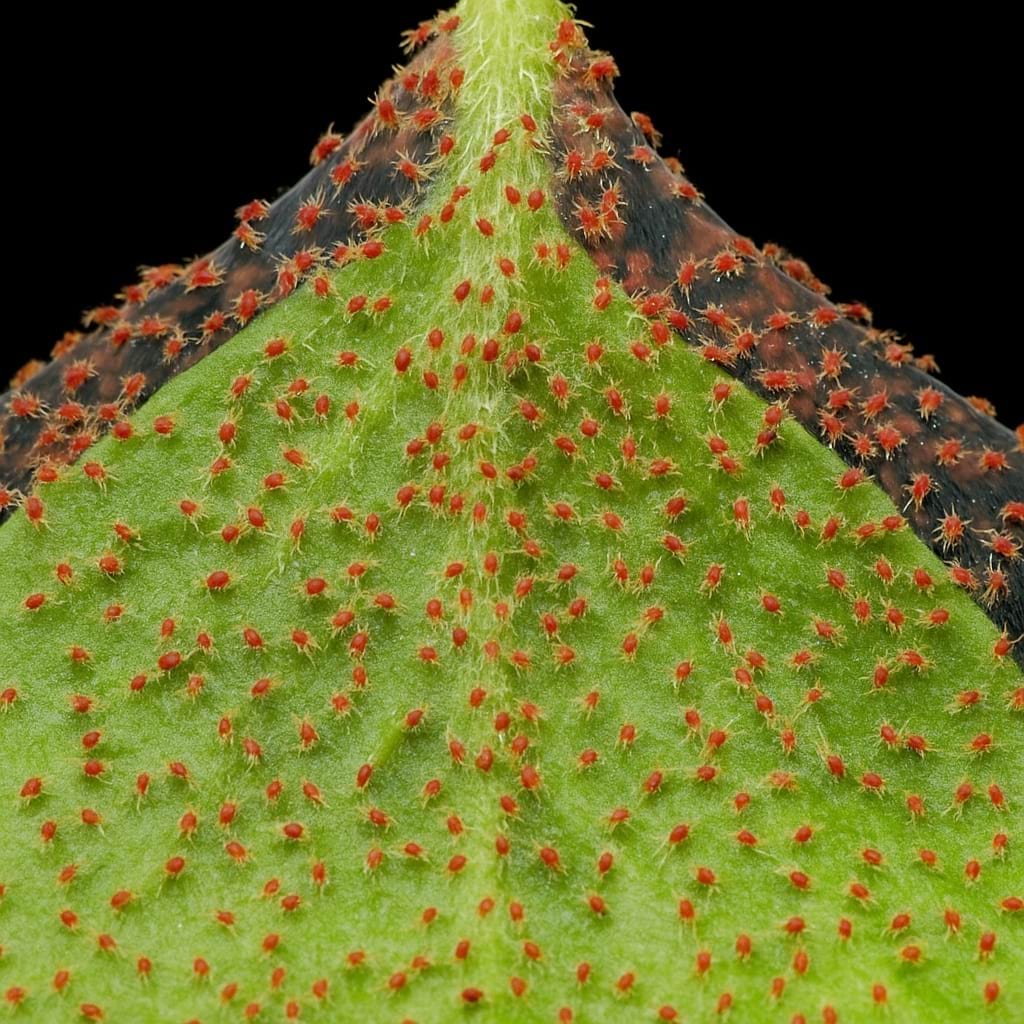
Spider mites become a problem when winter heating dries out the air. Look for fine webbing in leaf joints and tiny stippled dots that dull the leaf surface. Boost humidity, wipe leaves down, and treat with insecticidal soap or neem oil weekly until you see two clean inspections in a row.

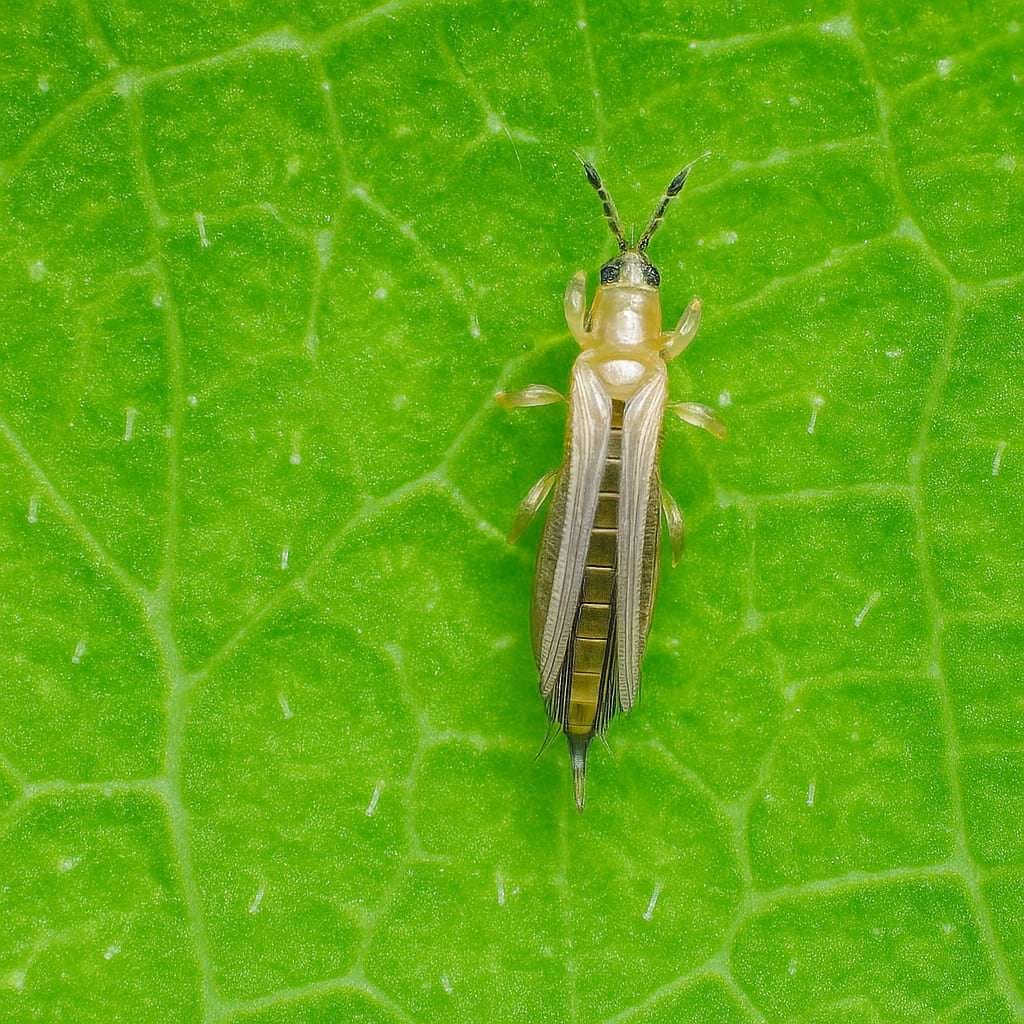
Thrips leave silvery scratch marks on leaves and can deform new leaves before they fully open. They are sneaky and persistent. If you spot them, treat aggressively with a whole-plant insecticidal soap drench or repeated weekly rounds, and isolate the plant from the rest of your collection.

Fungus gnats signal that the soil is staying too wet. Their larvae live in the top layer of damp soil and can chew on tender new roots and damaged rhizome tissue. Let the top inch dry out fully between waterings, top-dress with a half inch of dry sand or fine bark, and use yellow sticky traps to knock down adults.

Aphids cluster on fresh new growth and on the soft tips of bud spikes. Rinse them off in the sink first, then follow up with insecticidal soap if any return. They are most common in spring when fresh leaves are unfurling fast.

A general primer on pest prevention in winter covers the seasonal patterns that most often catch Beefsteak owners off guard.

🩺 Common Beefsteak Begonia Problems

Most issues with this plant trace back to watering, light, or air. Here is how to read what your Beefsteak is telling you.

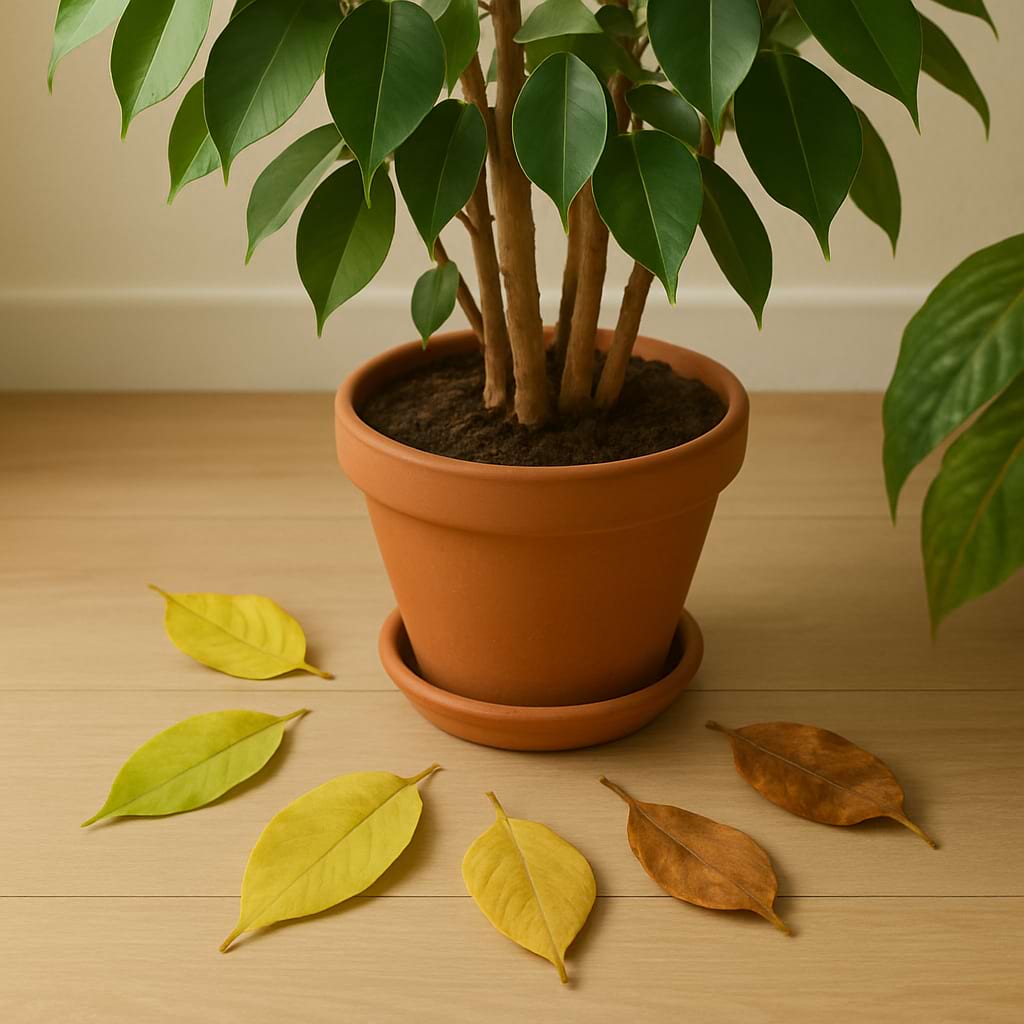
Yellowing leaves on the lower part of the plant are usually a sign of overwatering. Check the soil moisture. If it is wet a week after watering, you are watering too often, or the soil is too dense. The occasional yellow lower leaf on a mature plant is also normal as old leaves age out and the plant redirects energy into new growth.

Root rot is the worst-case version of overwatering, and it kills more Beefsteaks than any other issue. If yellowing is paired with mushy spots on the rhizome and a sour smell, slide the plant out, cut the rhizome back to firm clean tissue with a sterile blade, dust the cut with cinnamon or sulfur, let it callus for a day, and replant in fresh dry mix. Hold off on watering for a week and on fertilizer for at least a month.

Brown crispy edges on otherwise healthy leaves point to dry air, inconsistent watering, or fertilizer salt buildup. Boost humidity, settle into a regular watering rhythm, and flush the pot with plain water once every couple of months to clear salts.

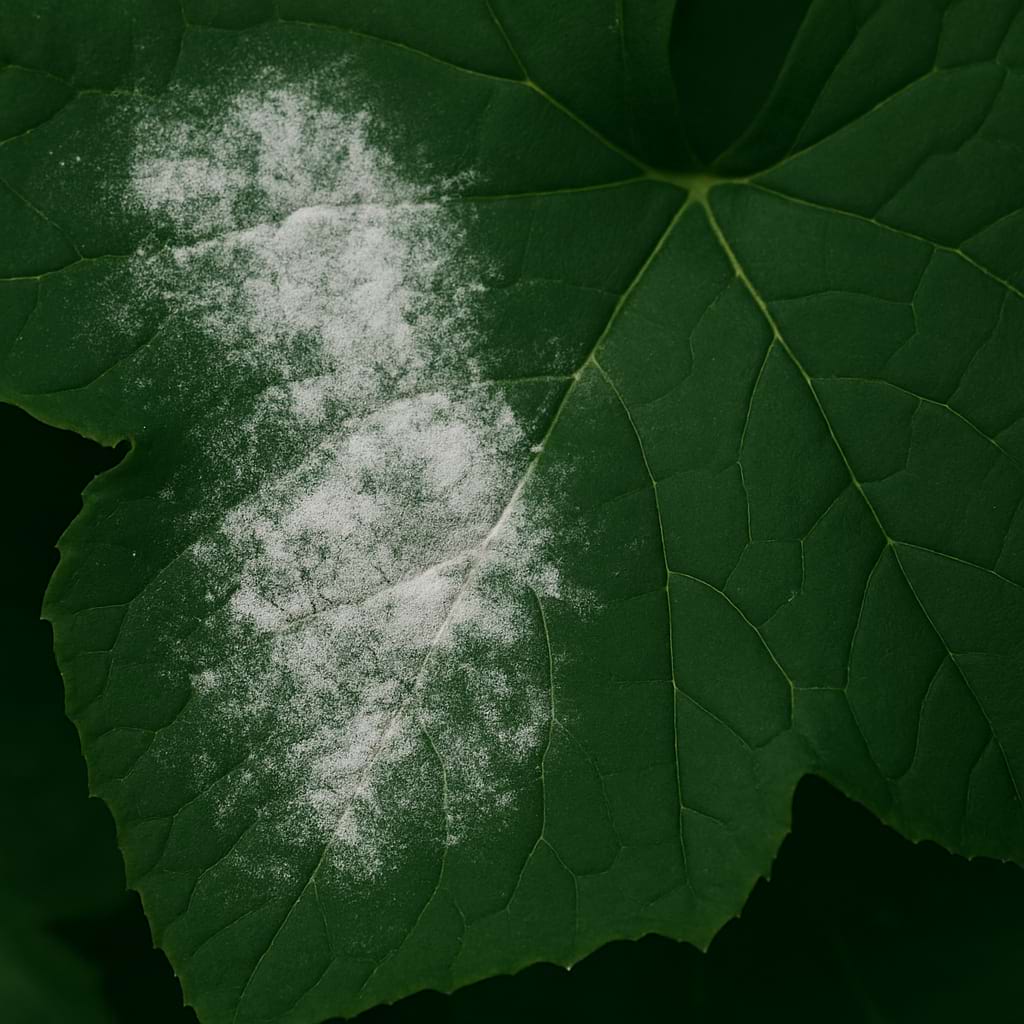
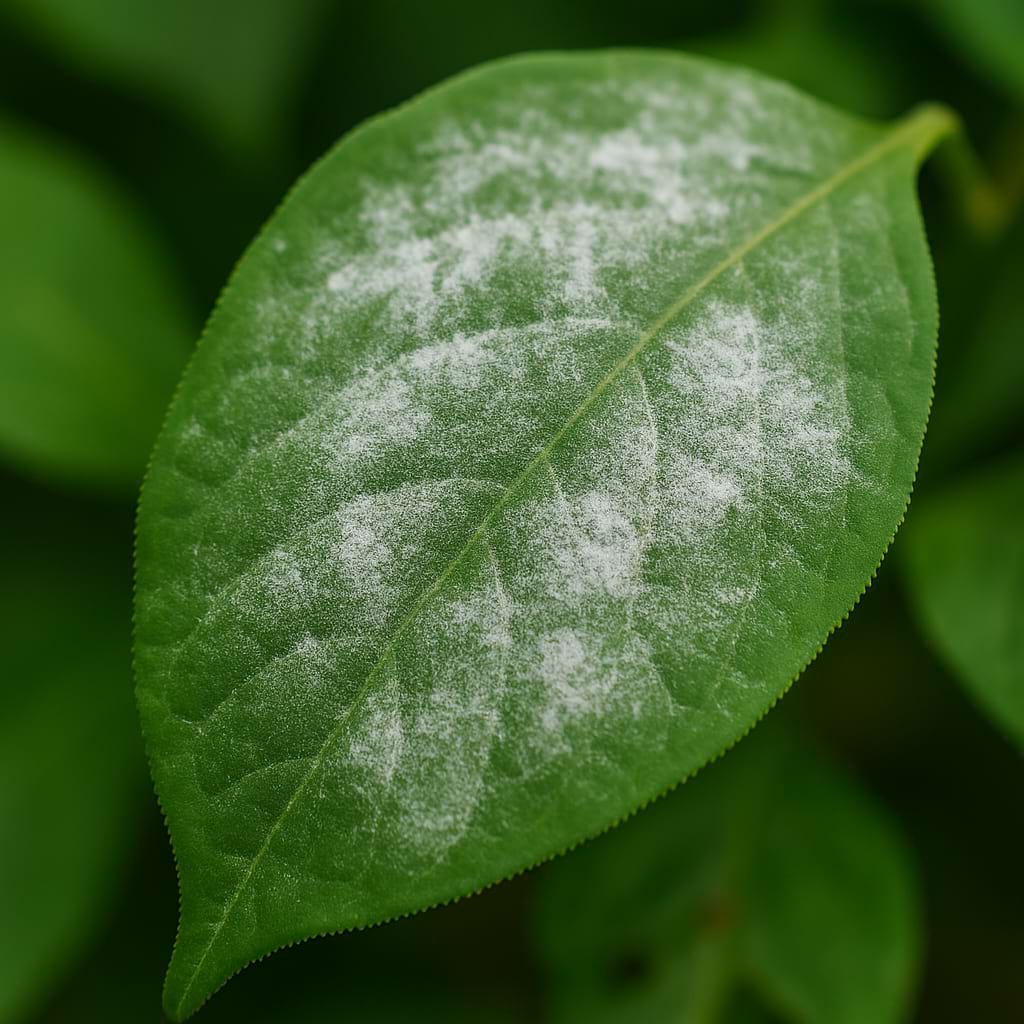
Powdery mildew is a chalky white film that appears on leaf surfaces, especially when humidity is high and air circulation is poor. The Beefsteak is more prone to this than to most other issues. Trim affected leaves, water at the soil line only, improve airflow with a small fan, and treat with a mild fungicide if it spreads. A dilute neem oil spray works well for early cases.

Leggy growth shows up as long thin petioles with sparse small leaves. The plant is reaching for more light. Move it closer to a window or add a grow light. Pinch back the leggy stems and propagate the cuttings to fill in the plant.

Leaf drop of multiple leaves over a few days usually signals shock from a sudden change: a move, a draft, a big swing in light, or a heavy overwatering event. Stabilize conditions and wait. A healthy Beefsteak rebuilds its canopy from the rhizome quickly once conditions are right.

Failure to bloom usually means not enough light through the previous summer. The rhizome stores bloom energy from the warm months. A plant that lived in dim light all summer will not have the reserves to push flower spikes in winter. Move it to a brighter spot for a full growing season and revisit next winter.

Fungal or bacterial leaf spot appears as dark spots ringed with yellow halos, usually when leaves stay wet overnight. Trim affected leaves, water the soil only, and improve air circulation around the plant. Skip overhead misting on this plant.

A faded bronze tone on the upper leaf surface, with the red underside also looking pale, is almost always a light problem. The plant survives, but it stops looking like a Beefsteak. Move it to a brighter spot and the color usually returns within a few new leaf cycles.

πŸ–ΌοΈ Beefsteak Begonia Display and Styling Ideas

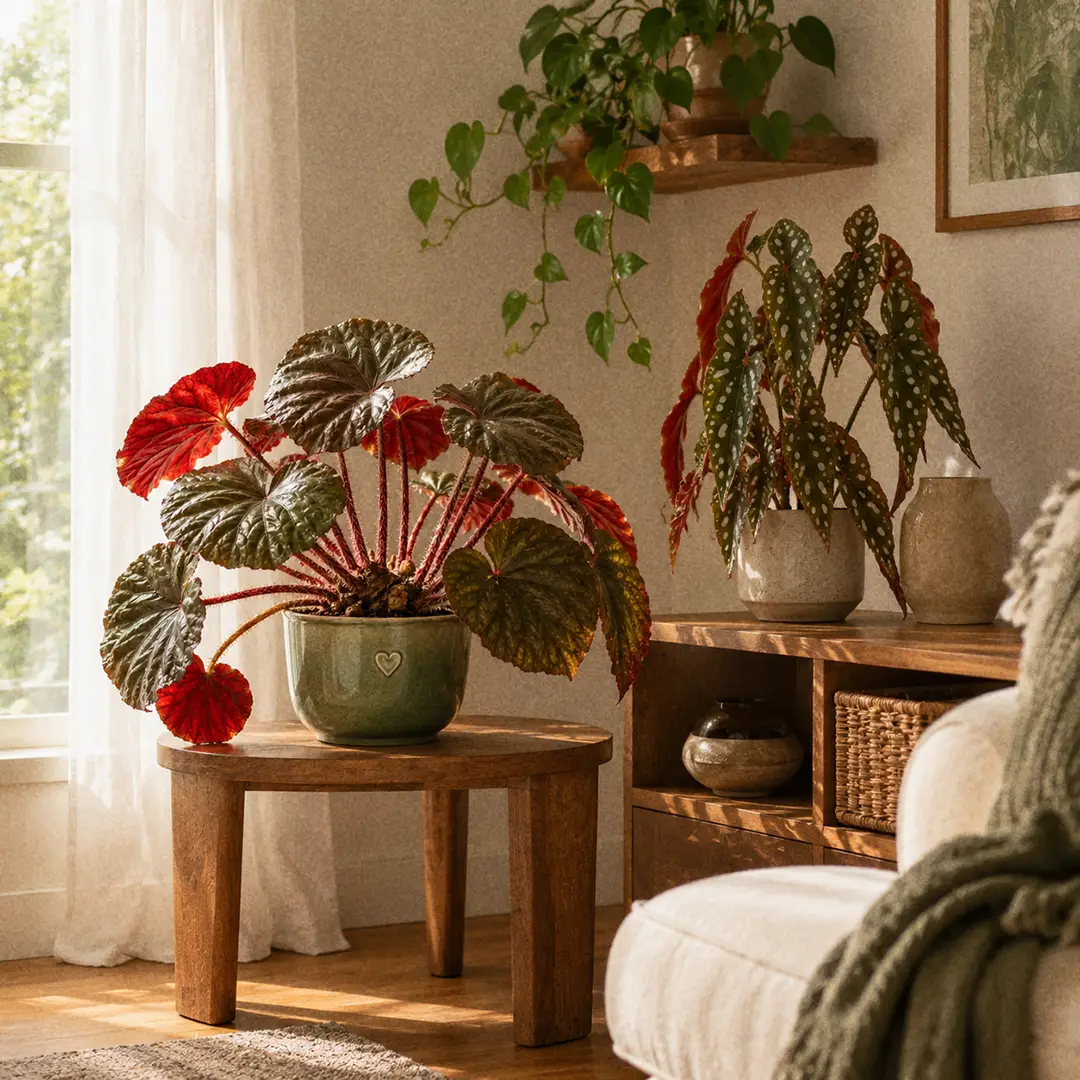
This plant earns its keep visually. The round olive-bronze leaves cast soft shapes on a wall, the red undersides glow when sun comes through them, and the tall winter flower spikes punctuate the foliage like tiny pink fireworks. It is one of the most architecturally interesting begonias for a small space.

A styled corner of a bright modern living room with a Beefsteak Begonia in a wide low pot on a wooden side table beside a Polka Dot Begonia and a trailing Heart-Leaf Philodendron with sheer curtains diffusing light from a tall window

Pot and Color Pairings

  • Cream or ivory ceramic frames the bronze and red tones beautifully.
  • Charcoal and matte black planters give a moody contrast that lets the leaf color carry the whole composition.
  • Warm terracotta echoes the red undersides and reads cozy.
  • Soft sage or olive glaze sits quietly behind the foliage, letting the plant speak.
  • Wide shallow bowls work much better than tall narrow planters, since this rhizome wants to spread.

Spaces That Work Well

  • A bright kitchen counter, where winter blooms add life when herbs are sparse.
  • A bathroom with a window, where moderate humidity suits the plant.
  • A wide low plant shelf, paired with smaller foliage plants.
  • A north-facing windowsill, where the plant can sit right against the glass.
  • A backlit position where afternoon sun comes through the leaves and lights up the red undersides.

The backlit angle is the trick most growers miss. Place a Beefsteak where light hits it from behind for part of the day, and the red undersides become the whole show. It is a free design moment and one of the best reasons to grow this plant.

Companion Planting

The Beefsteak's bronze tones look stunning next to plants with a different leaf personality. Pair it with a Polka Dot Begonia for a layered begonia story (cane and rhizomatous together). Add a trailing Strawberry Begonia cascading from a nearby shelf to soften the line. A small Boston Fern or a fine-leafed Maidenhair Fern brings a softer texture that flatters the round Beefsteak leaves. For a darker accent, a Black Velvet Alocasia tucked nearby pulls out the deeper bronze tones in the Beefsteak.

Scale It Up

A single Beefsteak in a wide low planter is already a strong piece, but three of them grouped on a long shelf with related rhizomatous begonias (an Iron Cross Begonia, a Rex variety, the Bunchii sport) creates a heritage-collector look that rewards close looking. The varied leaf shapes within the family read as deliberate, not random.

🌟 Beefsteak Begonia Pro Care Tips

βœ… Keep the rhizome on top of the soil. The single most common Beefsteak killer is a buried rhizome rotting from below. Plant high, keep it visible.

πŸ’§ Underwater rather than overwater. A thirsty Beefsteak perks up within hours of a drink. A drowned one declines for days even after you stop watering.

πŸͺ΄ Go wide, not deep, when you pot up. A spreading rhizome balances better in a wide low planter than in a tall narrow one. Azalea pots are practically made for this plant.

🌬️ Skip misting. Wet upper leaves on a fuzzy-veined begonia invite powdery mildew. Use a humidifier, a pebble tray, or grouping instead.

πŸ‚ Let winter cool slightly. A few degrees of nighttime cooling in fall triggers the bloom cycle. A perfectly climate-controlled spot often produces fewer flowers than a slightly drafty bright kitchen.

βœ‚οΈ Snip spent flower stalks promptly. Old stalks invite fungal issues and drain energy from the rhizome. Cut at the base once the last flower drops.

🌱 Save your trimmings. Almost any healthy leaf with a petiole roots happily in soil or water. Build up a backup plant or three in case the parent ever crashes.

πŸͺž Backlight the leaves. Place the plant where light comes through it for part of the day. The red undersides glow, and the whole plant shifts from "nice" to "stunning."

🐾 Keep it out of reach. Begonias are mildly toxic to pets if chewed, thanks to soluble oxalates in the leaves and stems. Place it in a room your pets do not visit.

πŸ”„ Quarter-turn at every watering. New leaves track toward the brightest light. Rotating the pot keeps the rhizome filling in symmetrically rather than leaning toward the window.

πŸ§‚ Flush the soil seasonally. Twice a year, run plain water through the pot until it drains clear. This clears salt buildup that otherwise burns the rhizome and browns the leaf edges over time.

❓ Frequently Asked Questions

Is Beefsteak Begonia easy to care for?

Yes, easier than almost any other begonia. The thick waxy leaves and water-storing rhizome handle dry indoor air, occasional missed waterings, and ordinary household temperature swings far better than thinner-leaved cousins like the Polka Dot. As long as you give it bright indirect light, a fast-draining mix, and water only when the top inch dries, it pretty much takes care of itself.

Why is my Beefsteak Begonia called "beefsteak"?

The common name refers to the deep blood-red color on the underside of every leaf. When light comes through the foliage from behind, the red glows intensely, looking a little like raw meat. It is one of those Victorian-era plant names that sounded apt when it was coined and now sticks because nothing else fits as well.

Is Beefsteak Begonia toxic to cats and dogs?

Yes, mildly. All begonias contain soluble calcium oxalates, which can irritate the mouth, throat, and digestive tract if chewed. The highest concentration is in the rhizome and roots. Chewing usually causes drooling, mouth pain, vomiting, and difficulty swallowing rather than anything more serious, but a determined pet can run into real trouble. Keep the plant out of reach, and call a vet if your pet bites a leaf.

How often does a Beefsteak Begonia bloom?

Once a year, usually from late fall through early spring. A healthy mature plant in a bright spot reliably pushes tall pink flower spikes from December through March or April. Younger plants and plants in marginal light may skip bloom seasons or flower less freely. The bloom cycle is triggered by the slight cooling and shorter days of autumn.

Why are my Beefsteak Begonia leaves losing their red color?

Two common causes. First, not enough light. The bronze tone on top and the red on the underside both depend on strong indirect light to develop. A plant in dim conditions fades to flat green. Second, the plant might be stressed by overwatering or salt buildup, both of which dull the leaf color overall. Move the plant closer to a bright window and check your watering rhythm.

How big does a Beefsteak Begonia get?

Indoors, expect a mature plant to reach 12 to 18 inches tall, with the rhizome and leaves spreading 18 to 24 inches across. Individual leaves grow four to six inches in diameter on a happy plant. Winter flower spikes can rise another six to eight inches above the foliage. It is one of the more compact rhizomatous begonias, which is part of why it works in apartments.

Should I bury the rhizome when repotting?

No. This is the single most common Beefsteak repotting mistake. The rhizome should sit on top of the soil, with only the root system buried. A buried rhizome rots quickly. Keep it visible at the surface, and the plant thrives.

Can I grow Beefsteak Begonia from a single leaf?

Yes, very successfully. Take a healthy mature leaf with a short petiole, slice across the major veins on the underside, pin the leaf onto damp begonia mix sliced side down, and keep it in bright indirect light under a humidity dome. Tiny new plantlets emerge from the cut veins after four to eight weeks. This is one of the most satisfying propagation methods in the houseplant world.

Why is there white powder on my Beefsteak Begonia leaves?

Powdery mildew, a common fungal issue on begonias. It thrives in warm humid air with poor circulation. Trim affected leaves, water only at the soil line, run a small fan nearby for airflow, and treat with a mild fungicide or diluted neem oil. Skip misting, since wet leaves are exactly what the fungus wants.

Does Beefsteak Begonia go dormant?

Not in the strict sense. Growth slows in winter while the plant pushes flower spikes, and you should water less and stop feeding during this stretch. But the plant stays fully evergreen, and it does not lose its leaves the way a tuberous begonia does. Treat it as an active winter bloomer that is simply running on lower energy until spring returns.

Can I keep my Beefsteak Begonia outdoors in summer?

Yes, in a shaded or dappled-light spot, as long as nights stay above 60Β°F (15Β°C). A covered patio or a porch with morning sun and afternoon shade works well. Bring the plant back inside well before the first cool nights of fall, and inspect it carefully for hitchhiking pests on the way in. Avoid placing it in direct outdoor sun, which scorches the leaves quickly.

How long does a Beefsteak Begonia live?

A long time for a houseplant. Five to ten years is common, and well-cared-for specimens have been passed down through families for decades. The 1845 hybrid origin means the cultivar itself has been grown in homes and greenhouses for nearly two centuries. Your plant is part of a long line.

ℹ️ Beefsteak Begonia Info

Care and Maintenance

πŸͺ΄ Soil Type and pH: Light, airy, well-draining mix with perlite and bark, pH around 6.0-6.8.

πŸ’§ Humidity and Misting: Comfortable around 40-50 percent; tolerates average household air better than most begonias.

βœ‚οΈ Pruning: Pinch leggy stems and remove yellow leaves; lift any rhizome that climbs the pot rim.

🧼 Cleaning: Soft dry brush along the leaf surface; avoid water sitting on the slightly fuzzy upper leaves.

🌱 Repotting: Every 2-3 years, or when the rhizome runs out of room and starts climbing the pot rim.

πŸ”„ Repotting Frequency: Every 2-3 years

❄️ Seasonal Changes in Care: Reduce watering and stop feeding from late fall through winter; expect bloom spikes during this rest period.

Growing Characteristics

πŸ’₯ Growth Speed: Moderate

πŸ”„ Life Cycle: Perennial evergreen

πŸ’₯ Bloom Time: Winter to early spring

🌑️ Hardiness Zones: 10-11 outdoors

πŸ—ΊοΈ Native Area: Hybrid origin (parents native to Mexico and Central America); raised in a nursery in 1845

🚘 Hibernation: No, but growth slows in winter while flowers are pushed

Propagation and Health

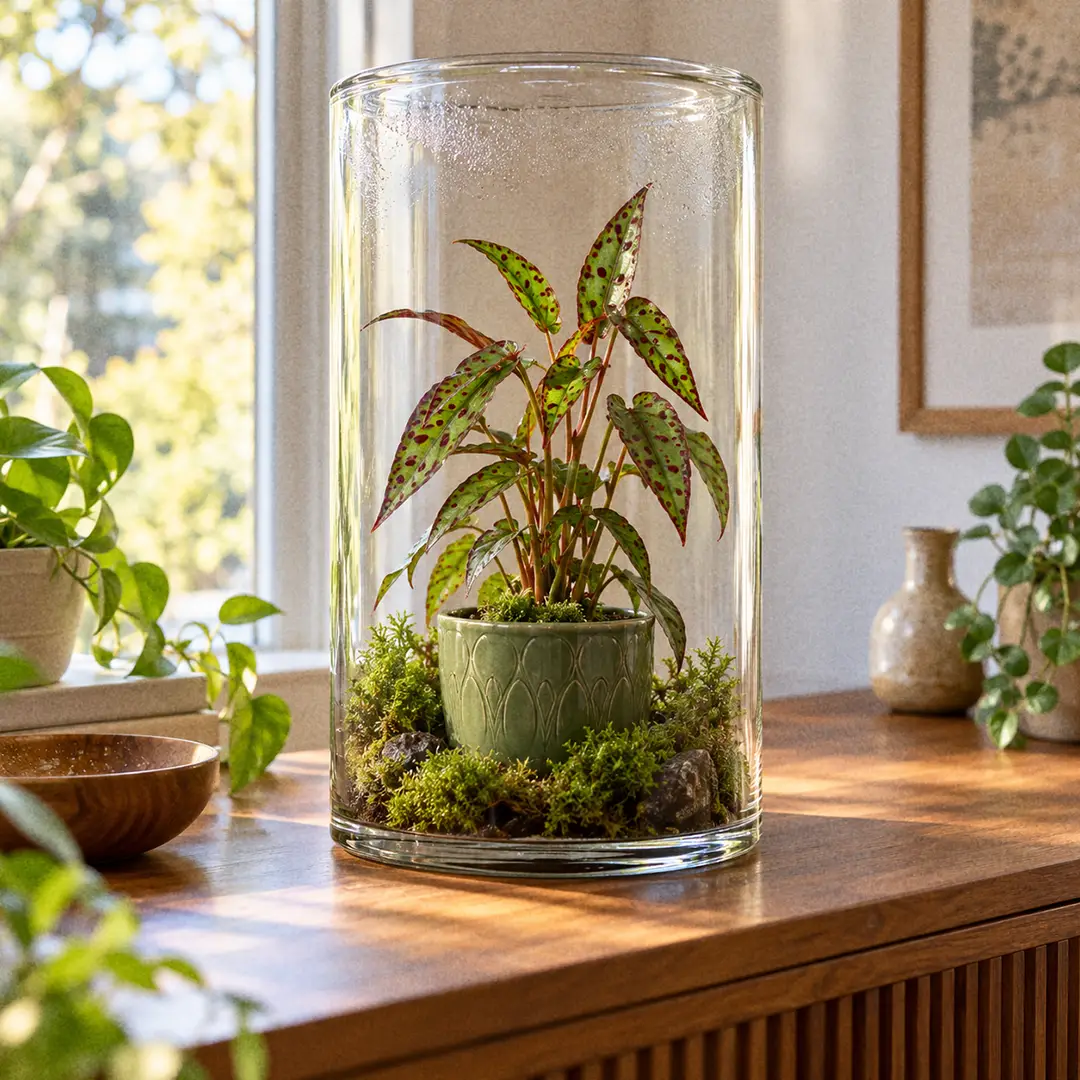
πŸ“ Suitable Locations: Bright kitchens, bathrooms with windows, plant shelves, north-facing rooms with a clear view, terrariums when small

πŸͺ΄ Propagation Methods: Rhizome division and leaf cuttings are both reliable indoors.

πŸ› Common Pests: Mealybugs, Spider Mites, Thrips, Fungus Gnats, Aphids

🦠 Possible Diseases: Powdery mildew, root rot, botrytis, leaf spot

Plant Details

🌿 Plant Type: Rhizomatous begonia

πŸƒ Foliage Type: Evergreen, thick, glossy

🎨 Color of Leaves: Olive to bronze-green on top, deep blood-red underneath

🌸 Flower Color: Soft pink to rose, in airy clusters on tall red stalks

🌼 Blooming: Reliable bloomer indoors, usually winter into early spring

🍽️ Edibility: Not edible; mildly toxic if chewed

πŸ“ Mature Size: 12-18 inches indoors

Additional Info

🌻 General Benefits: Long-lived, easygoing, blooms in the dim indoor months, easier than most begonias

πŸ’Š Medical Properties: None; sap is mildly irritating

🧿 Feng Shui: Warm, generous energy associated with hospitality and steady abundance

⭐ Zodiac Sign Compatibility: Cancer

🌈 Symbolism or Folklore: Hospitality, hidden warmth, quiet drama

πŸ“ Interesting Facts: Begonia erythrophylla was raised in 1845 by John Heal at Veitch Nursery in England, and is often called the oldest begonia hybrid still in common collection. The "beefsteak" name refers to the deep red undersides of the leaves, which look like raw meat when the light hits them from below.

Buying and Usage

πŸ›’ What to Look for When Buying: Pick a plant with at least three or four glossy mature leaves, a thick visible rhizome at the soil line, and clean undersides with no chalky white film.

πŸͺ΄ Other Uses: Greenhouse heritage plant, terrarium centerpiece for larger setups, gift plant in winter when in bloom

Decoration and Styling

πŸ–ΌοΈ Display Ideas: Wide low planter on a kitchen counter, hanging in a window where the red undersides glow against backlight, paired with darker-leafed begonias on a plant shelf

🧡 Styling Tips: Choose a wide shallow pot to match the rhizome's spreading habit; let it sit slightly above the rim so the stem is visible and dramatic.

Kingdom Plantae
Family Begoniaceae
Genus Begonia
Species erythrophylla

πŸ’¬ Community

0 replies across this topic so far.

Browse forum

Start the first discussion.

Ask about Complete Guide to Beefsteak Begonia Care and Growth

Ask a question or share what worked for you.