
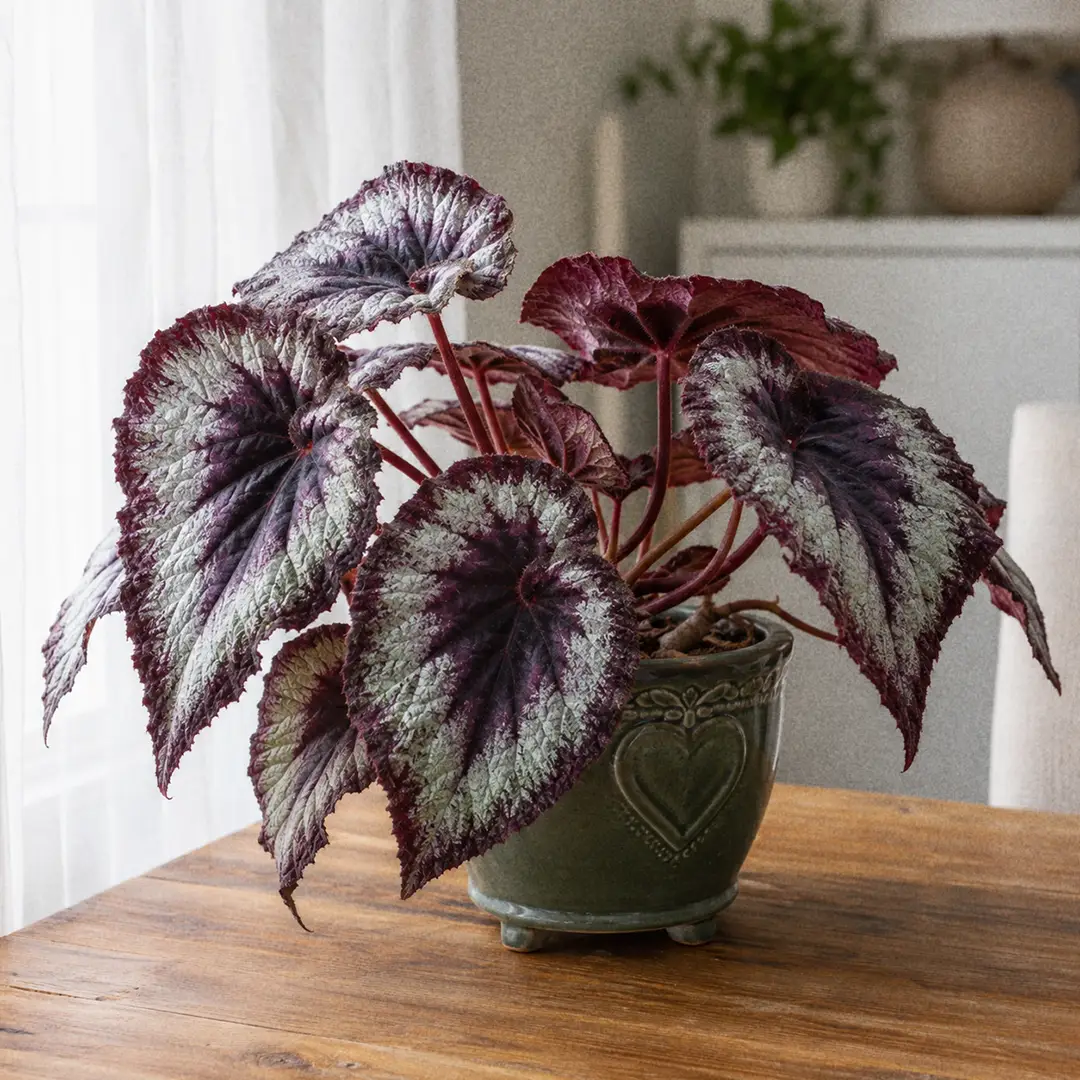
Begonia Rex
Begonia Rex Cultorum Group
Rex Begonia, Painted Leaf Begonia, Fancy Leaf Begonia, King Begonia


Begonia Rex grows the loudest leaves in the houseplant world, spiralled and silvered and stamped with purple, and it does it in light too dim for most plants. Learn how to keep a Rex Begonia humid, unrotted, and covered in colour all year.
📝 Begonia Rex Care Notes
🌿 Care Instructions
⚠️ Common Pests
📊 Growth Information
🪴 In This Guide 🪴

☀️ Begonia Rex Light Requirements (Indoor Lighting Guide)
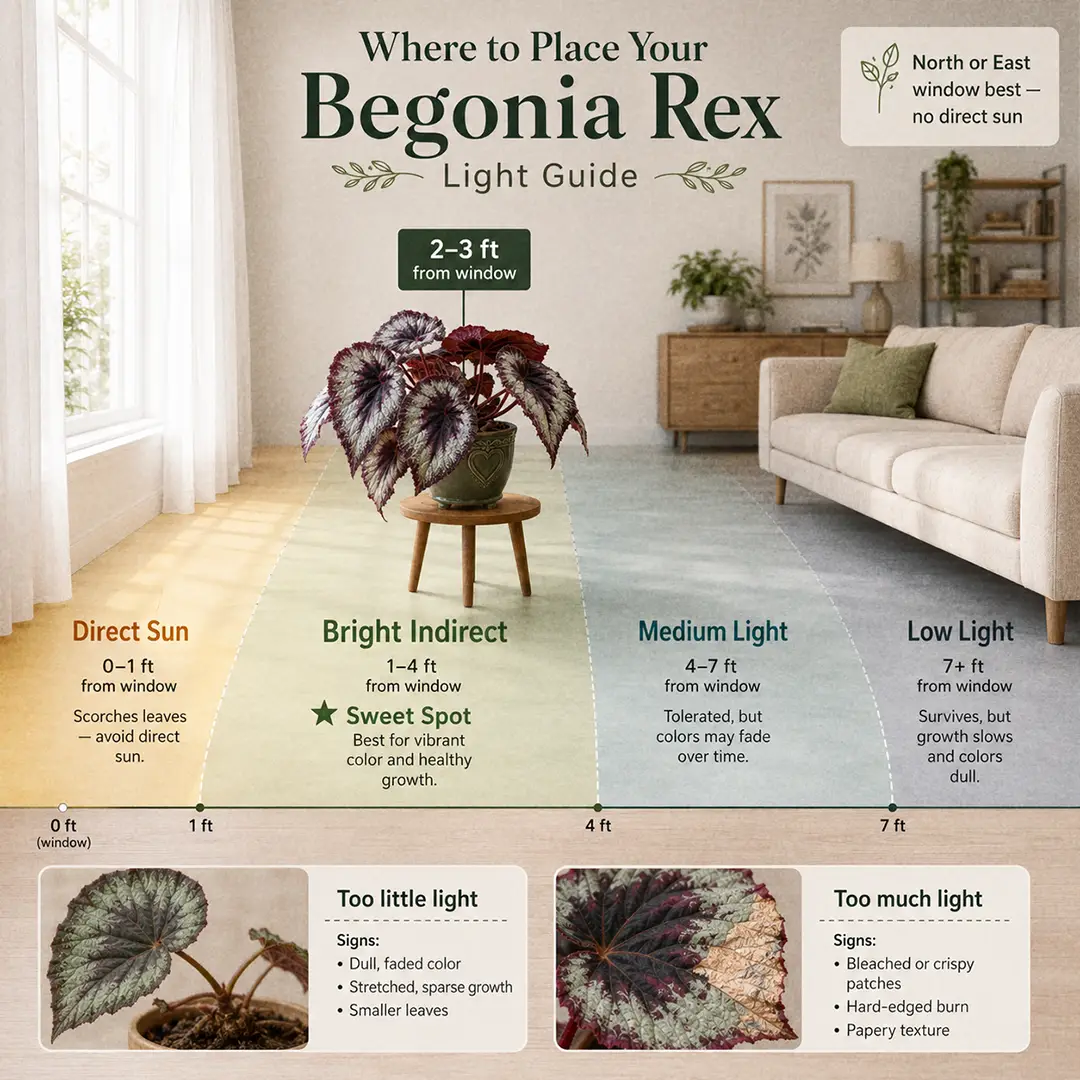
The Sweet Spot
Begonia Rex wants bright, filtered light and no direct sun on the leaves. A north-facing window is close to perfect, and this is one of the very few genuinely showy plants that prefers one. East works well too, as long as the plant sits a couple of feet back from the glass so the early sun does not land on it directly.
South and west windows are usable, but only behind a sheer curtain or set five to six feet into the room. The leaves are thin and finely haired, and they scorch faster than almost anything else on a windowsill. Our Indoor Lighting Guide is worth a read if you are still judging light by eye.
Too Little Light
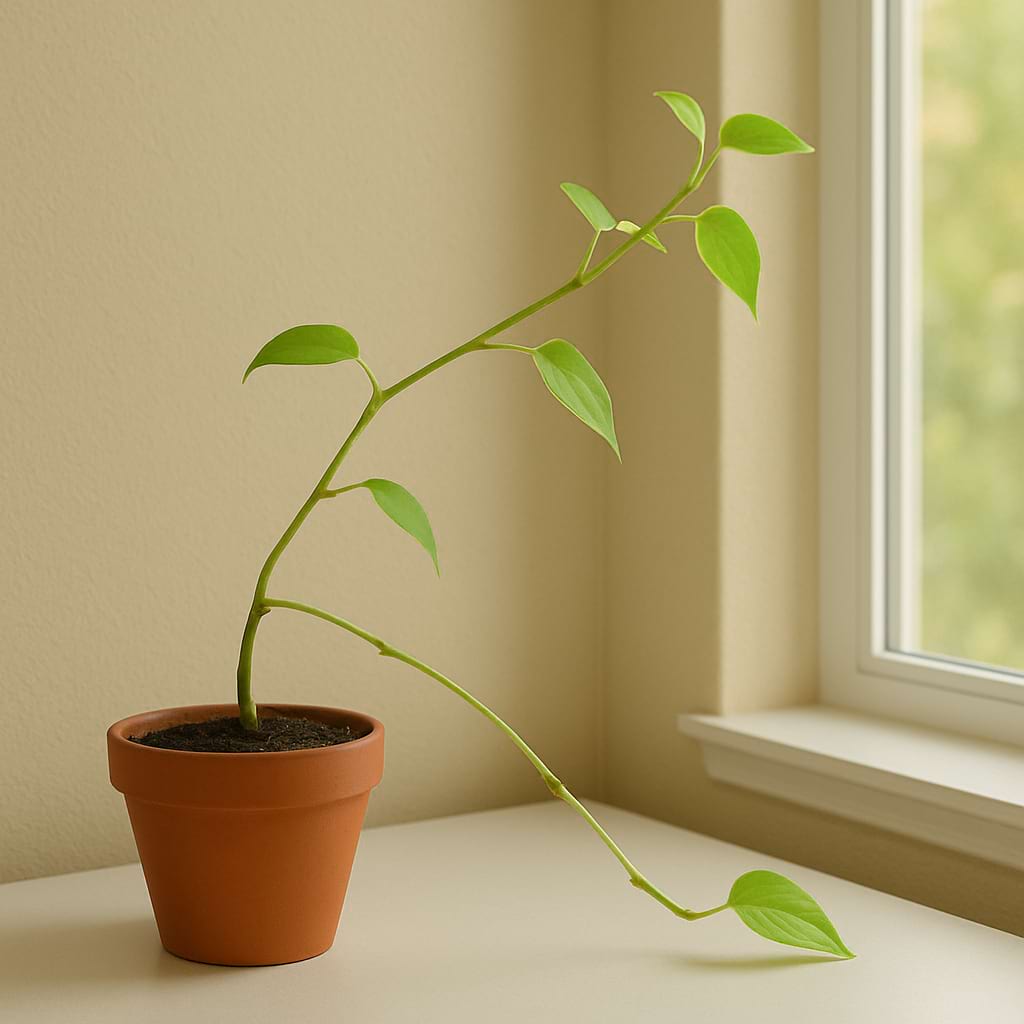
Rex tolerates gloom better than most plants, which is exactly why people push it too far. The tell is the pattern going flat: silvers dull toward grey-green, the purples fade, and new leaves arrive smaller than the old ones. You will also see the rhizome reaching, with long bare gaps between leaves instead of a tight rosette.
That is leggy growth plus pale, faded leaves, and both reverse once the light improves. A modest grow light running ten hours a day keeps colour through a dark winter, and Rex responds to fluorescent or LED light better than many tropicals do.
Too Much Light
Direct sun bleaches the leaf surface to papery tan, usually in a hard-edged patch matching where the beam landed. That is sunburn and it does not heal. The damaged leaf stays marked until you remove it.
A softer version shows up as leaf edges curling downward and the whole plant looking tight and hunched, which is the plant trying to reduce the surface it exposes. Move it back from the window a foot at a time and give it two weeks to settle.
💧 Begonia Rex Watering Guide (How to Water Properly)
Watering Frequency
Water when the top inch of mix is dry, not before. In a warm bright room in summer that usually works out to every five to seven days in a shallow pot. Rex likes to stay a shade damper than most begonias, but never sodden, and it has fine shallow roots that give up quickly in wet soil.
Winter is a different plant entirely. Once growth stops and the rest period starts, watering drops to roughly every two to three weeks, just enough to keep the rhizome from shrivelling. A pot that stays wet through a cool winter is the single most common way people lose a Rex Begonia. Check with a finger or a moisture meter instead of following a schedule.
How to Water
Use tepid water in the morning, and pour at the soil surface, never over the plant. Those fine leaf hairs hold droplets against the surface for hours, which is how leaf spotting and mildew start. Let the pot drain fully and tip out the saucer after fifteen minutes.
Bottom watering suits Rex nicely for the same reason. Stand the pot in an inch of tepid water for ten to fifteen minutes, let the mix wick up what it wants, then drain it. It keeps the crown and the leaves dry while watering the shallow roots evenly.
Signs of Trouble
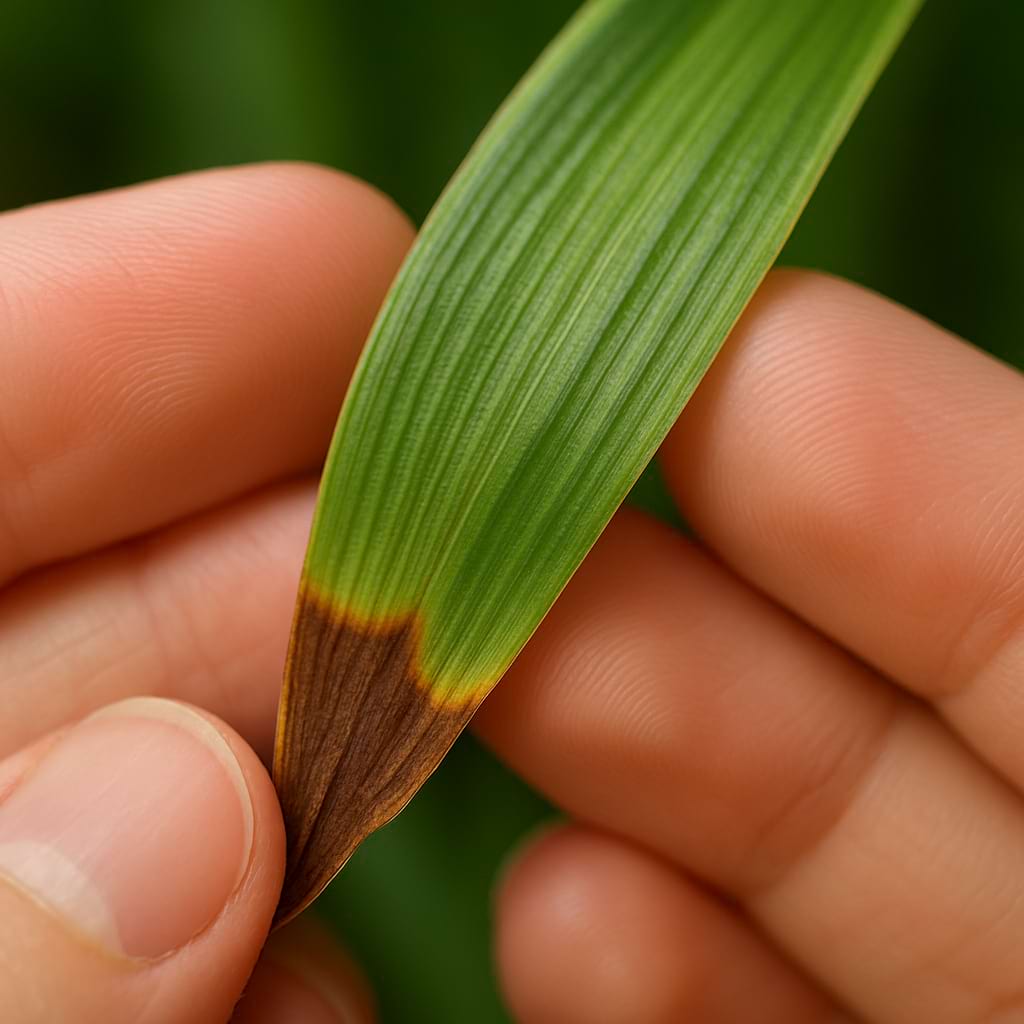
Underwatering shows first as limp, drooping leaves that perk back up within a few hours of a drink, followed by crispy brown edges if it keeps happening. Mild wilting is recoverable and not a crisis.
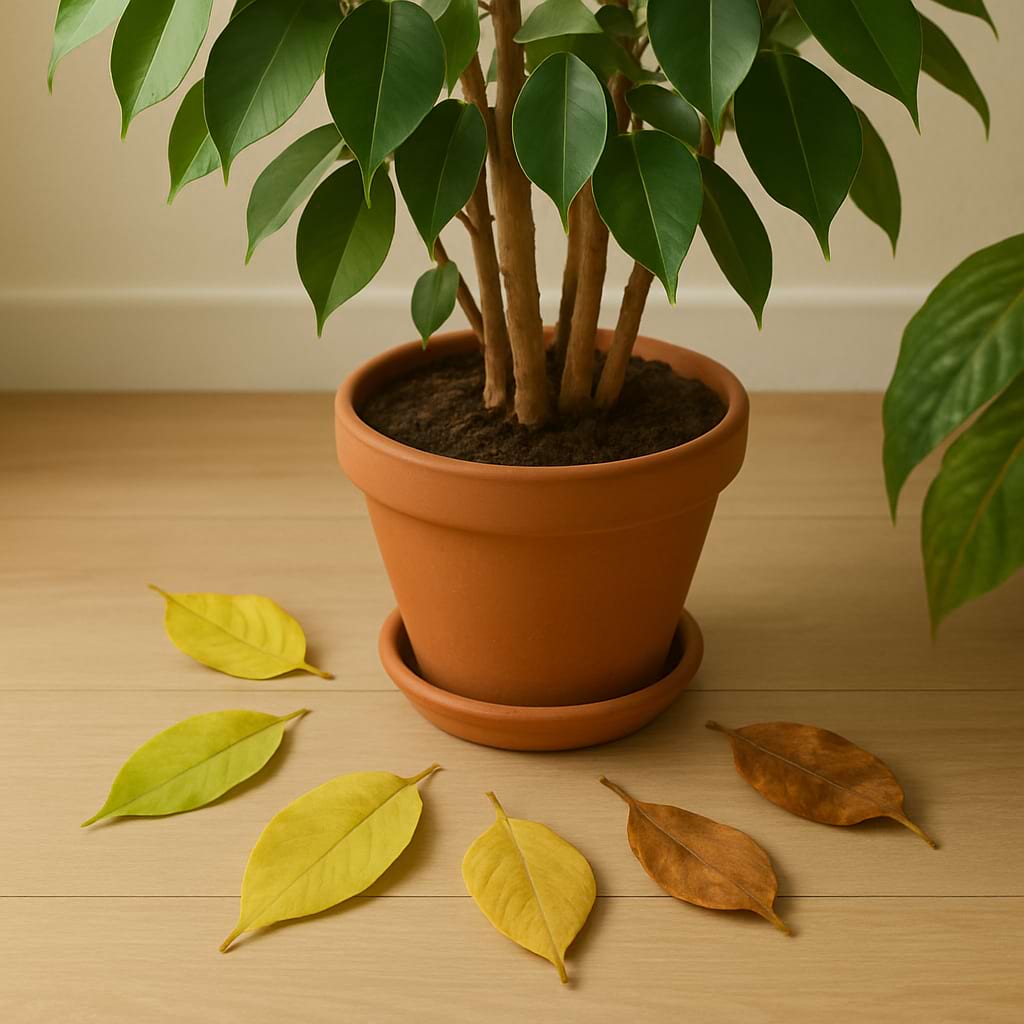
Overwatering looks different, and worse. Leaves go pale and soft rather than crisp, stalks turn translucent and collapse at the base, and the plant sheds from the bottom up. That is root rot starting, and on a shallow-rooted begonia it moves fast. When you cannot decide whether to water, wait a day.
🪴 Best Soil for Begonia Rex (Potting Mix & Drainage)
What the Soil Needs
Rex has thin, shallow roots that sit near the surface and need air as much as they need water. The mix has to hold moisture without going dense or soggy, and it should sit slightly acidic, around pH 5.7 to 6.4. Straight bagged potting soil is too heavy on its own and packs down within a single season.
DIY Soil Mix
The recipe most Rex growers settle on is simple and hard to beat:
- 1 part coco coir or peat-based potting mix for moisture
- 1 part fine orchid bark for structure and air pockets
- 1 part perlite for drainage
Mix it loose and do not tamp it into the pot. If your room runs dry, shift the ratio slightly toward the coir. If you water heavily, add more perlite.
Pre-Made Options
An African violet mix is the best off-the-shelf starting point, because it is already light and slightly acidic. Add a couple of handfuls of perlite and bark per pot and it is ready to use. A standard potting soil works only if you amend it the same way, and our soil guide covers the reasoning behind each ingredient.
🍼 Fertilizing Begonia Rex (Feeding Schedule)
When and How Often
Feed every two to four weeks from late winter through early autumn, then stop completely. Rex takes a real winter rest, and feeding through it just leaves salts sitting in the soil. Growers who follow the botanical-garden schedule start feeding in February and ease off after midsummer.
What to Use
A balanced water-soluble houseplant fertilizer at quarter to half the label strength is right. Rex is a light feeder and full-strength doses burn those fine roots quickly. A slightly higher phosphorus formula suits it if you want flowers, but for foliage a balanced feed is fine. See our fertilizing guide and the fertilizer types breakdown for options.
Over-Fertilizing Signs
Brown, dry leaf margins on a plant that is otherwise well watered usually mean salt buildup rather than thirst. A white crust on the soil surface or around the pot rim confirms it. Flush the pot with plain water until it runs freely out the bottom, then skip two feeds. Feeding a dry pot causes the same burn, so always water first and feed second.
🌡️ Begonia Rex Temperature Range
Ideal Range
Rex is comfortable where you are: 65 to 75°F through the growing season, with a small drop at night. It keeps growing above 60°F and starts sulking below that. Sustained temperatures under 50°F cause leaf drop and mushy stems.
Drafts and Heat Sources
Sudden swings bother this plant more than the absolute number does. A leaf touching cold glass on a January night will show a brown patch by morning. Keep it out of the direct blast of a radiator or a heating vent too, since dry hot air scorches the leaf edges within days.
During the winter rest a slightly cooler spot around 60°F is genuinely helpful. It slows the plant down, keeps it from stretching in low light, and lines up neatly with the reduced watering.
💦 Begonia Rex Humidity Requirements
Ideal Humidity
Aim for 50 to 60%, and some of the fancier cultivars want more than that. Below roughly 40% the leaf edges go brown and papery, and no amount of watering fixes it, because the problem is the air and not the soil.
Easy Humidity Boosters
A pebble tray under the pot, a cluster of plants together, or a small humidifier all work. A bathroom with a window is a natural fit. What does not work is misting: water sitting on those hairy leaves is exactly what causes spotting and mildew, so keep the spray bottle well away from this one. Our humidity guide covers the alternatives.
Air Movement Matters
Here is the part most guides skip. High humidity plus still air equals powdery mildew on a Rex Begonia, reliably. A small fan on low across the room, or simply not shoving the plant up against a wall, prevents most of it. Damp and breezy is the target, not damp and stagnant.
🌸 Begonia Rex Flowers (Bloom Care)
What the Flowers Look Like
Rex does bloom indoors, usually in winter or early spring, on wiry stalks that rise above the foliage. The flowers are small and pale, pink or white, carried in loose sprays. They are pleasant enough and completely outclassed by the leaves underneath them.
Should You Let It Bloom
Most growers pinch the flower stalks off as soon as they appear, and there is a reason beyond aesthetics. Flowering pulls energy out of the rhizome, and a Rex that blooms hard often follows it with a thinner, rougher year of foliage. Snip the stalk right at the base with clean scissors.
Spent flowers also drop petals onto the leaves below, and a wet petal stuck to a hairy leaf is a starting point for fungal disease. If you do let it bloom, clear the fallen petals off promptly.
If It Won't Bloom
A Rex that never flowers is not a problem plant. Most bloom only when mature, well fed, and given decent light through the shortening days of autumn. If you actively want flowers, keep the light bright through winter and use a fertilizer with a higher middle number. Failure to bloom on this plant is normal rather than a diagnosis.
🏷️ Begonia Rex Types and Varieties
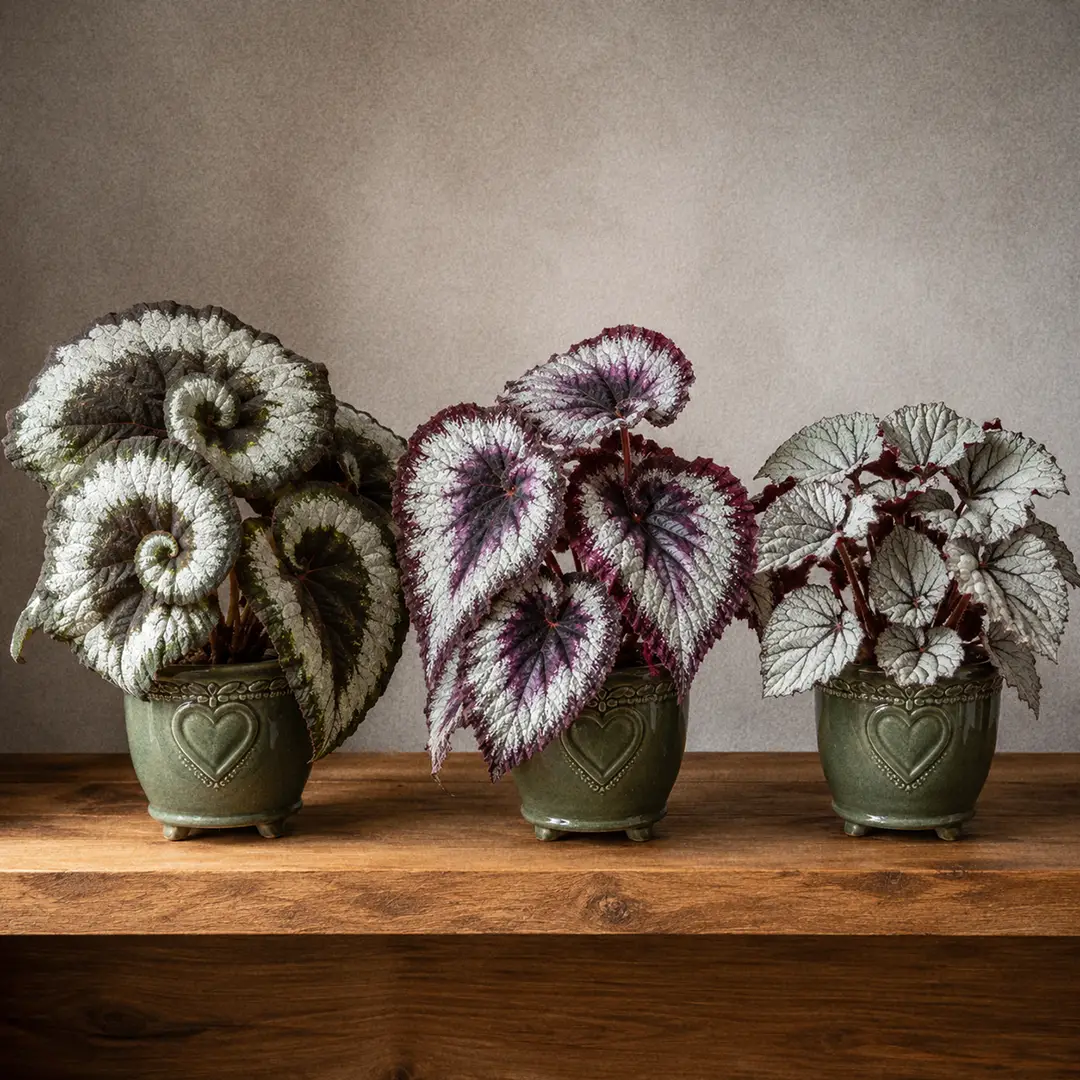
The Rex Cultorum Group is not a species. It is a breeding group of more than four thousand named cultivars, all traced back to the original Begonia rex crossed with other Asian rhizomatous begonias. Care is the same across all of them, so choose purely on looks.
'Escargot'
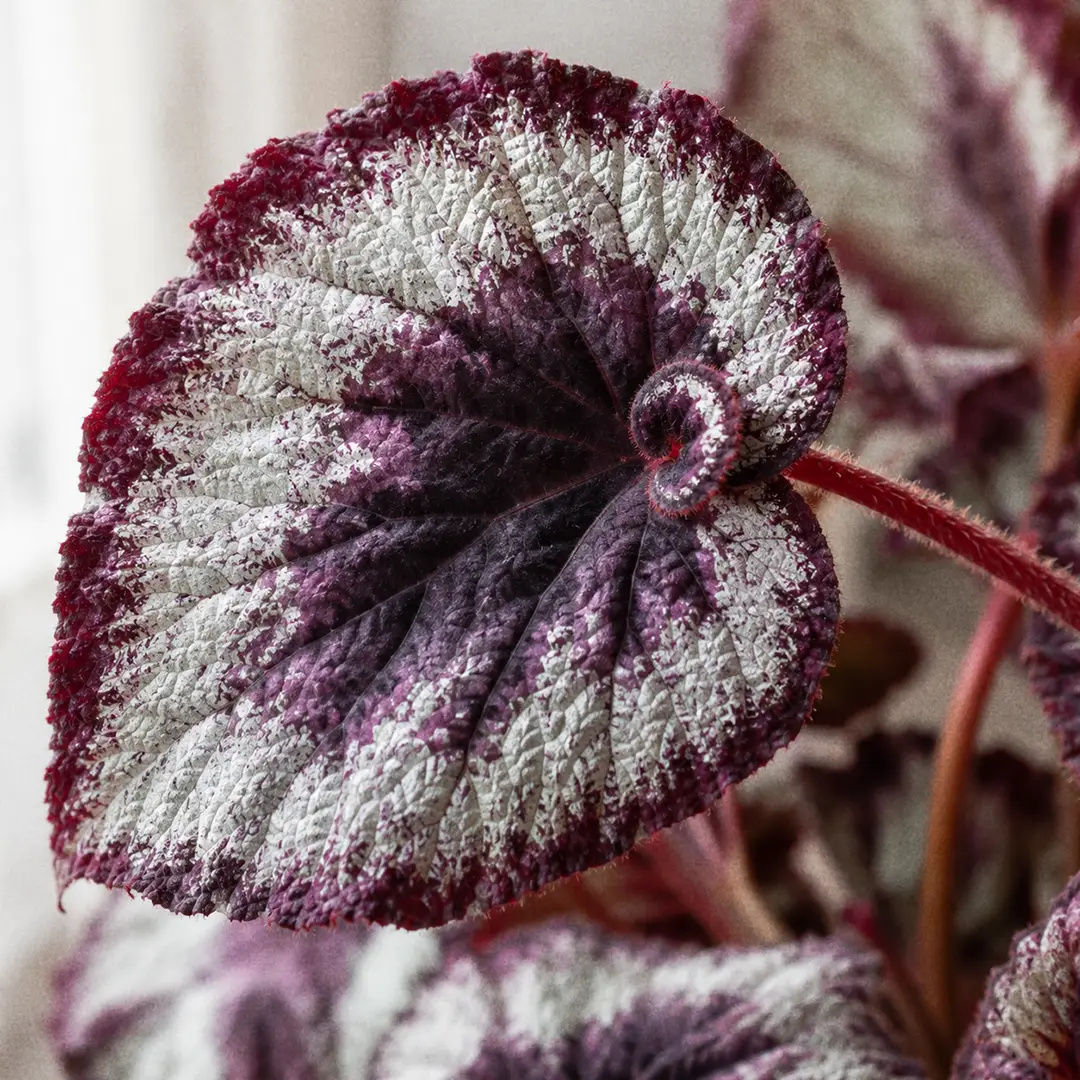
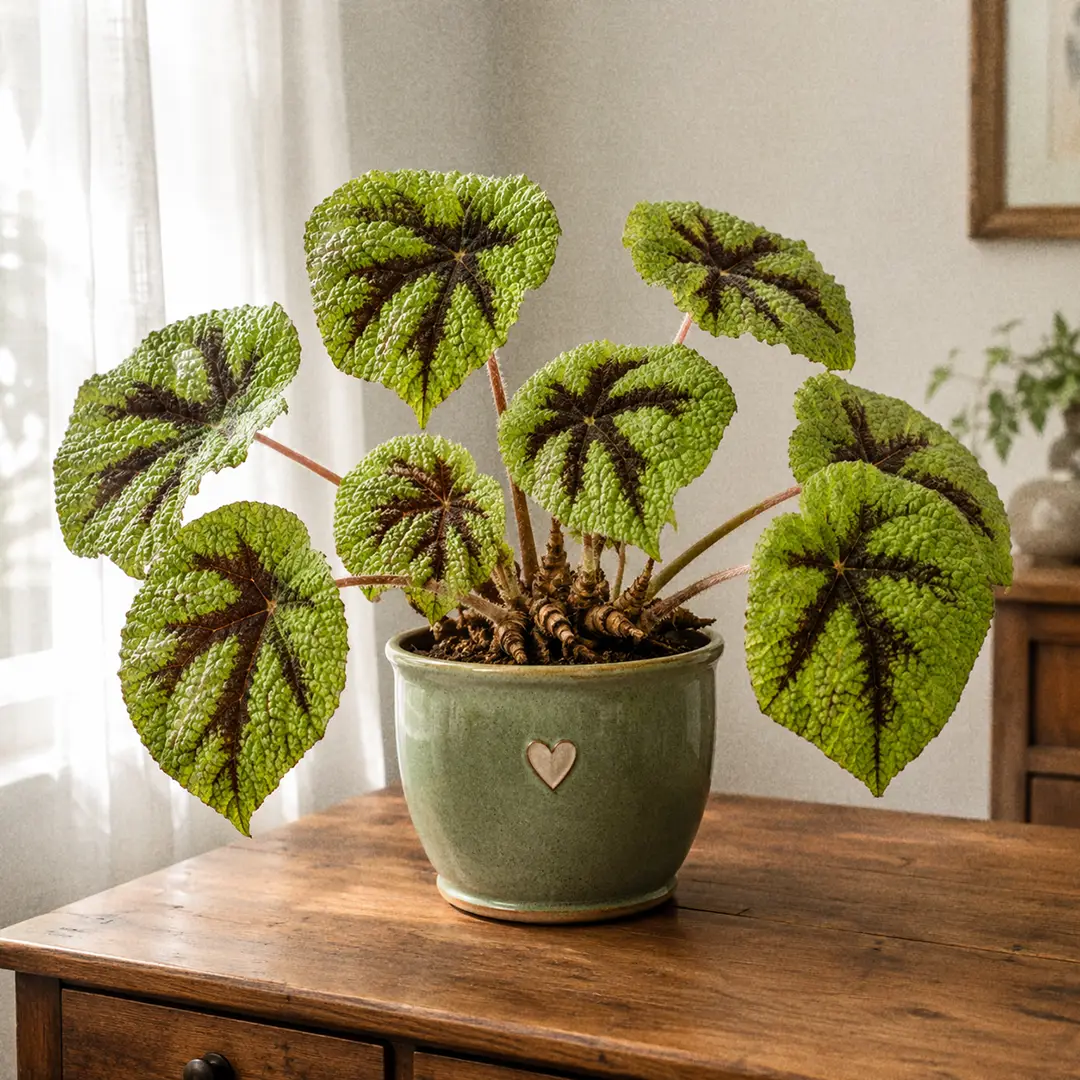
The famous one. Each leaf coils at the base into a tight spiral like a snail shell, banded in silver, olive and chocolate brown. It is the cultivar people photograph, and it is a little fussier about humidity than most. The leaves run larger than average, so give it room.
'Fireworks'
Dark purple-black centres, shimmering silver-white mid-bands, and purple-pink edges, with the pattern radiating outward like a burst. Compact, well behaved, and one of the easiest of the flashy cultivars to actually find in a shop.
'Red Kiss'
Bright red-magenta with a broad near-black centre. Small, only six to eight inches tall, which makes it a good cabinet or terrarium candidate. The colour holds better in slightly brighter light than the silver cultivars want.
'Silver Limbo'
Almost solid metallic silver on top with red undersides, and small, neat leaves. It reads as a completely different plant from across a room, and it pairs well with the darker cultivars in a group.
Jurassic and Shadow King Series
These are commercial series bred for uniformity and easier growing, sold widely in garden centres. 'Jurassic Silver Swirl' and its siblings offer the swirled banding of the collector cultivars with a bit more tolerance for ordinary household conditions. A sensible place to start.
🪴 Potting and Repotting Begonia Rex
When to Repot
Every one to two years in spring, and less often than you would think. Rex grows and flowers best when it is slightly snug, and an oversized pot holds water the shallow roots cannot reach. Repot when roots show at the drainage holes or the rhizome has crawled over the pot rim.
Choosing a Pot
Go shallow and wide, not deep. This is a rhizomatous plant with roots in the top few inches, so a standard deep pot is mostly a reservoir of soggy soil sitting underneath them. A half-pot or a bulb pan is ideal. Drainage holes are non-negotiable, and terracotta helps if you tend to overwater. Our pot guide covers the material trade-offs.
Step-by-Step Repotting
- Water lightly a day ahead so the root ball holds together.
- Slide the plant out and gently loosen the outer roots. Do not tease them hard.
- Choose a pot one size up, no more, and add a shallow layer of fresh mix.
- Set the plant so the rhizome sits on top of the soil, not buried. A buried rhizome rots.
- Fill around the edges, tap the pot to settle it, water lightly, and keep it out of bright light for a week.
Full details on timing and aftercare are in our repotting guide.
✂️ Pruning Begonia Rex
When to Prune
Late winter to early spring, just as growth restarts, is the best window. You can remove damaged leaves at any time of year, and you should, because a dying leaf lying against healthy tissue spreads disease.
How to Prune
Cut leaf stalks right back at the base with clean, sharp scissors rather than leaving stubs behind, since stubs rot. Take off anything yellowing, spotted, or torn. If the plant has thinned out in the centre, removing a few of the oldest outer leaves pushes energy into new growth from the rhizome.
Keeping It Compact
Over a few years the rhizome creeps outward and the plant hollows out in the middle. The fix is to cut the leading rhizome tips back to a few inches, which forces branching and gives you a denser plant. Do not throw those cuttings away, because every piece is a new plant. Which leads straight into the next section.
🌱 How to Propagate Begonia Rex
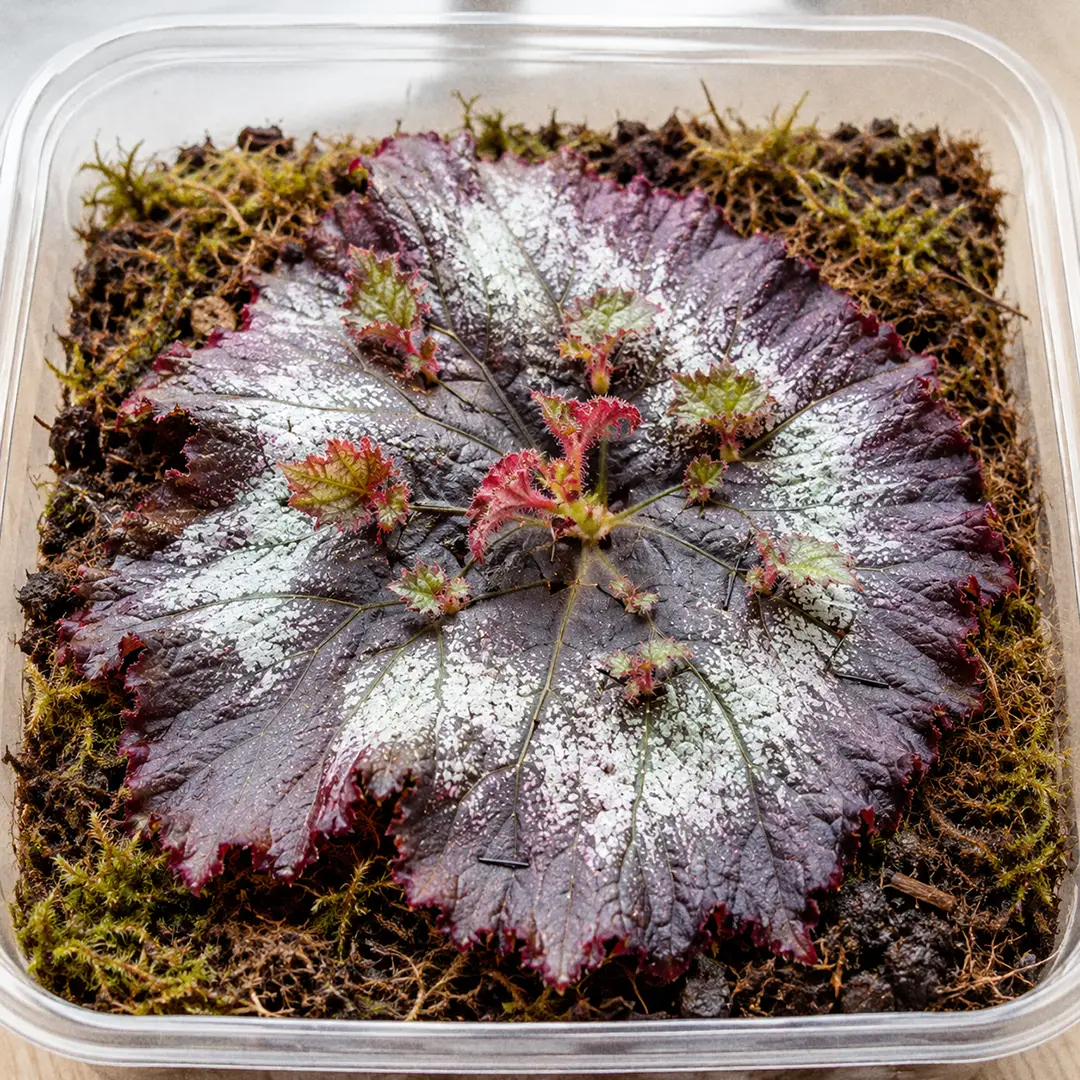
Rex Begonia is one of the most rewarding houseplants to propagate, because a single leaf can produce a dozen plants. It is also slow, so start in spring and be patient.
Best Method: Leaf Wedges
Take a healthy mature leaf and cut it into pie-shaped wedges, each one containing a piece of a main vein running to the point. The vein is the part that produces plantlets, so a wedge without one will just sit there and eventually rot.
Step-by-Step
- Choose a mature, undamaged leaf and cut it from the plant with a clean blade.
- Cut the leaf into wedges, each with a section of main vein at the narrow end.
- Fill a tray with damp 50:50 perlite and peat or coir.
- Push each wedge in pointed end down, about half an inch deep, standing upright.
- Cover with a clear lid or a loose plastic bag and keep it at 65 to 70°F in bright indirect light.
- Air the cover for a few minutes daily to keep mould down.
Plantlets appear at the buried vein end in four to eight weeks, sometimes closer to twelve. Pot them up individually once they have two or three leaves of their own.
Rhizome Cuttings
Faster and easier if you already have a big plant. Cut a one to three inch section of rhizome, ideally with a leaf attached, and press it half an inch into the same damp mix. It roots and shoots within a few weeks. This is the method to use with the pieces you removed while pruning. Our propagation guide covers the general principles.
Tips for Success
Bottom heat around 70°F speeds everything up noticeably. Keep the medium damp but never wet, since these cuttings rot far more often than they dry out. And do not bury cuttings deeply, because the plantlets have to reach the surface.
🐛 Begonia Rex Pests and Treatment
Rex Begonia's soft, hairy leaves and the humid conditions it likes make it more pest-prone than a tough-leaved plant. Check the undersides weekly, which is where nearly everything hides.
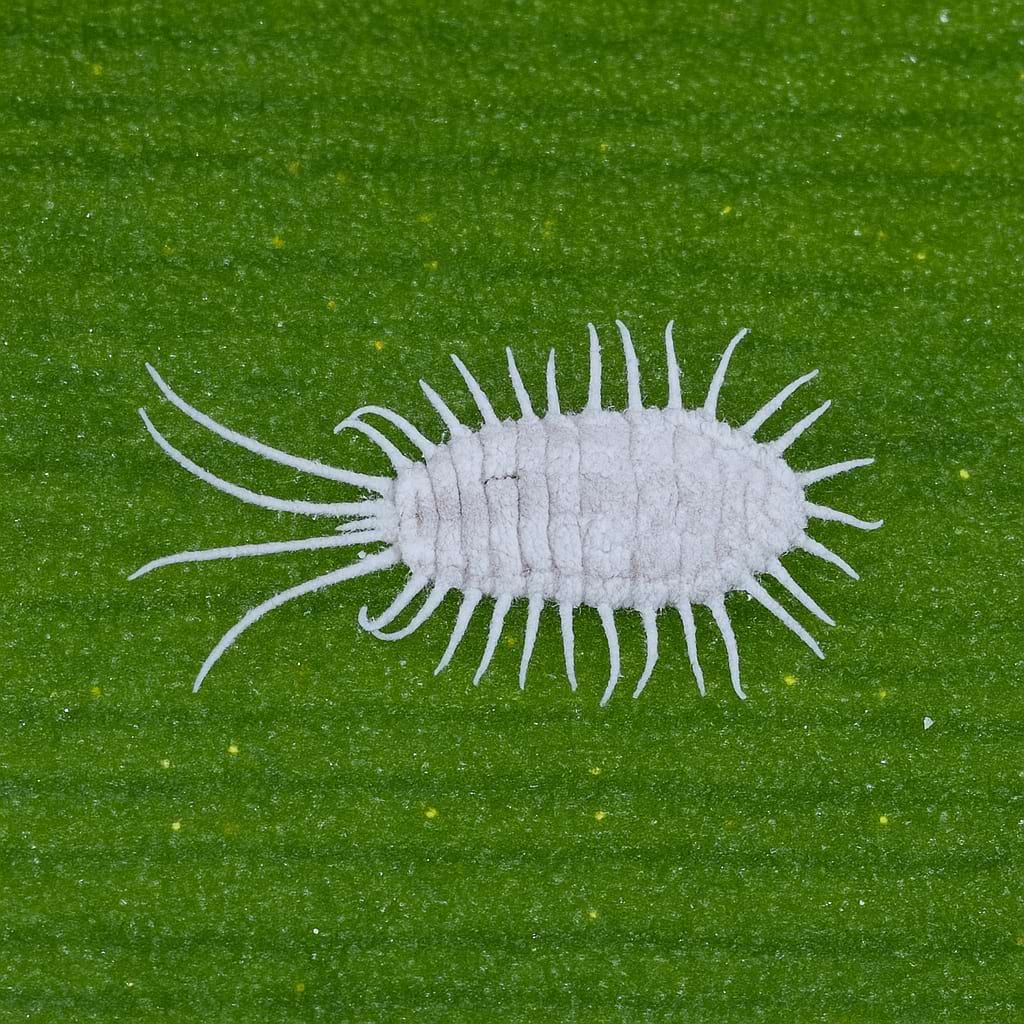
Mealybugs are the usual visitor, showing up as white cottony blobs tucked into leaf joints and along the rhizome. Dab them with an alcohol-dipped cotton swab, then treat the whole plant. They hide deep in the rhizome folds, so a single pass rarely finishes them off.
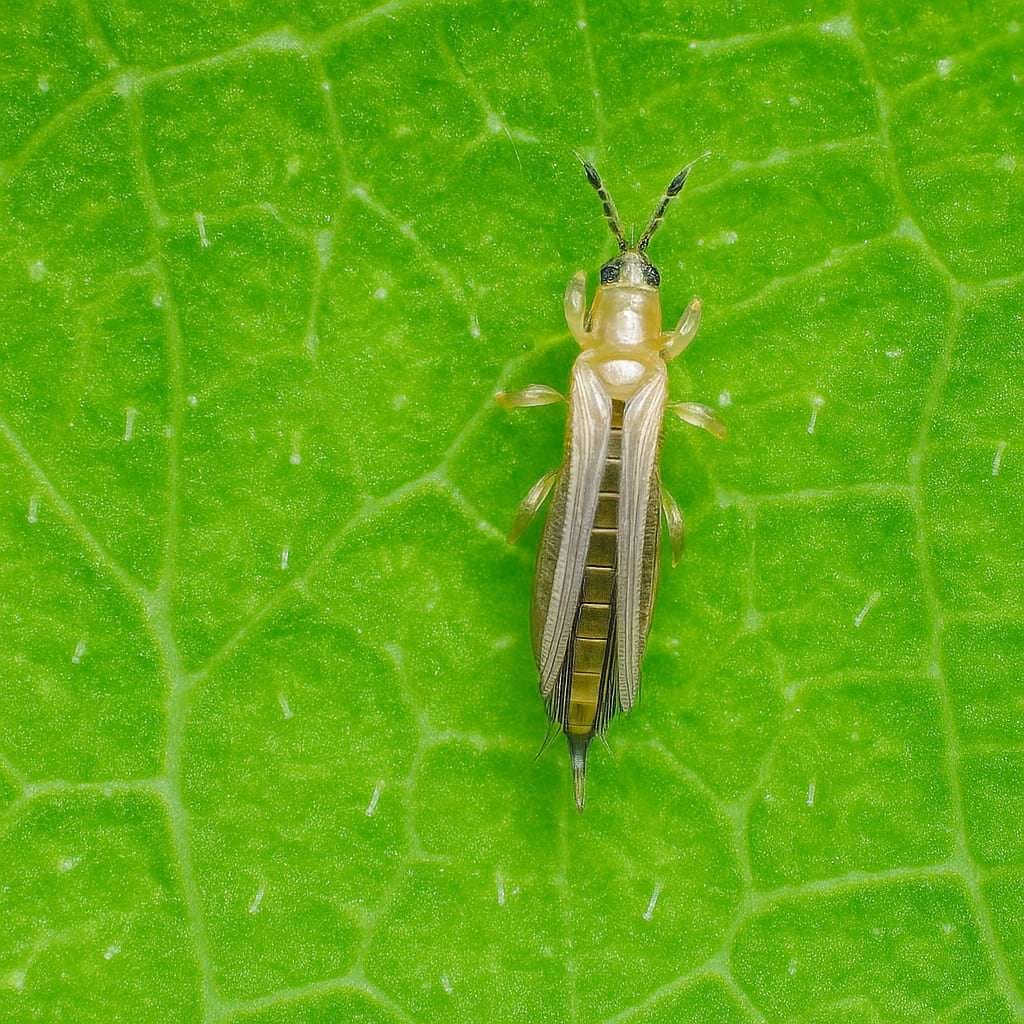
Thrips cause silvery streaking and distorted new leaves, and they love begonias. They are hard to spot directly, so if new growth keeps coming in stunted and scarred, suspect thrips before anything else.
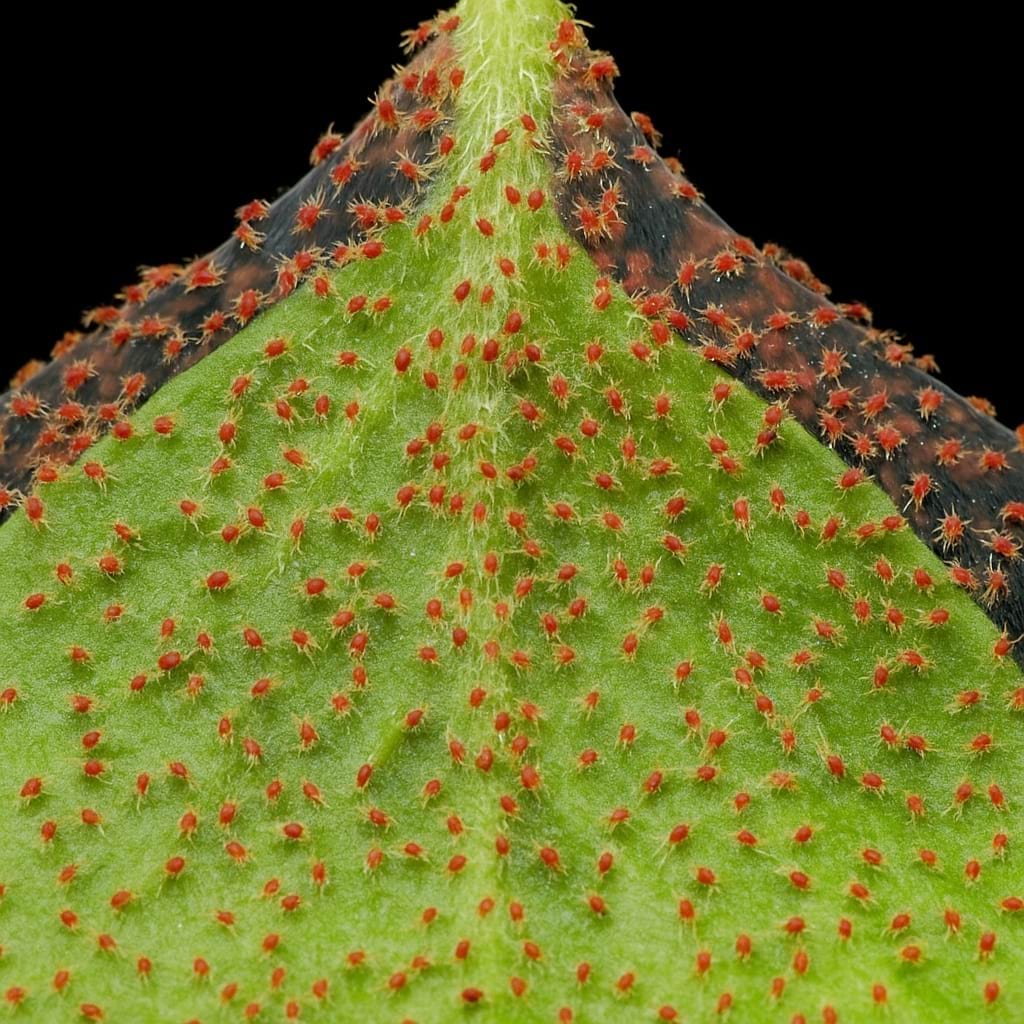
Spider mites turn up when the air goes dry, leaving fine stippling and webbing on the undersides. Keeping humidity in the target range prevents most infestations before they start.
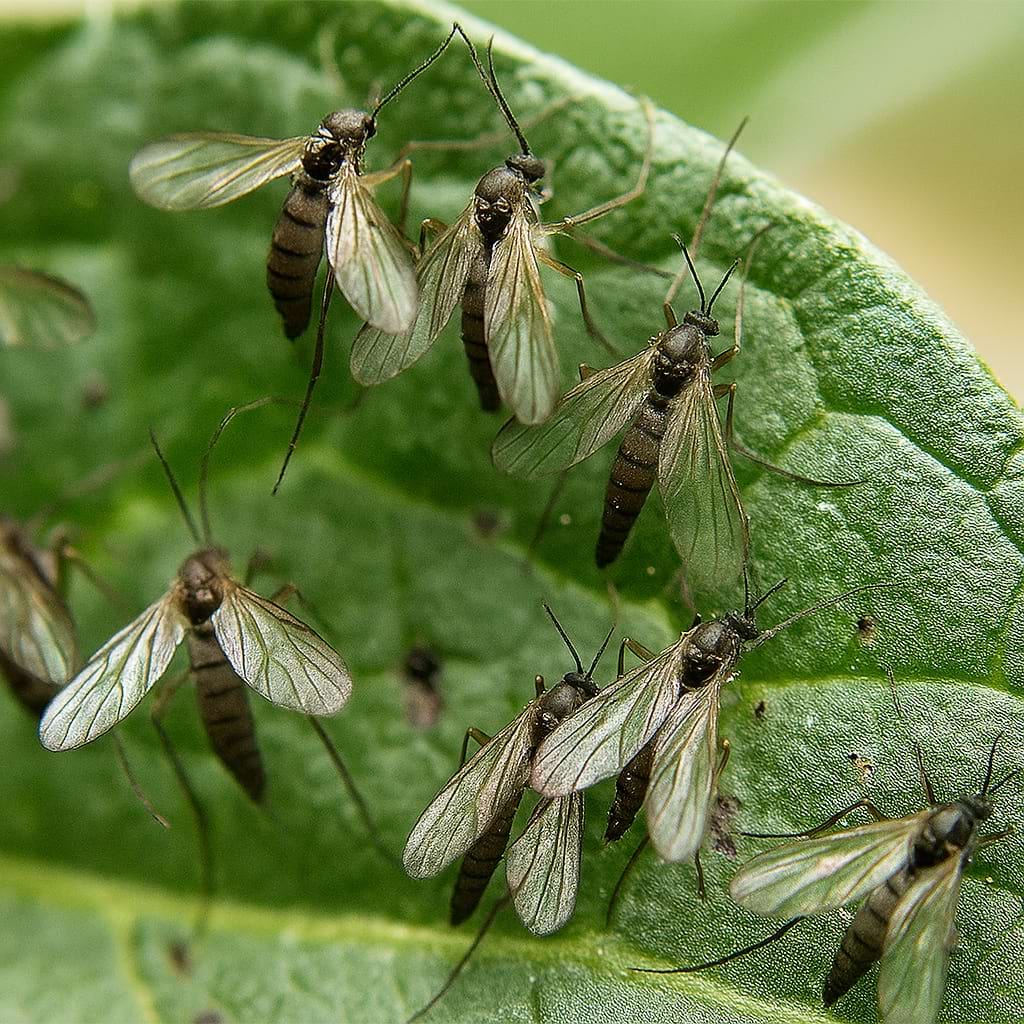
Fungus gnats breed in the constantly damp surface this plant likes. They are more nuisance than threat, but the larvae chew fine roots. Let the top inch dry properly between waterings and they mostly disappear.
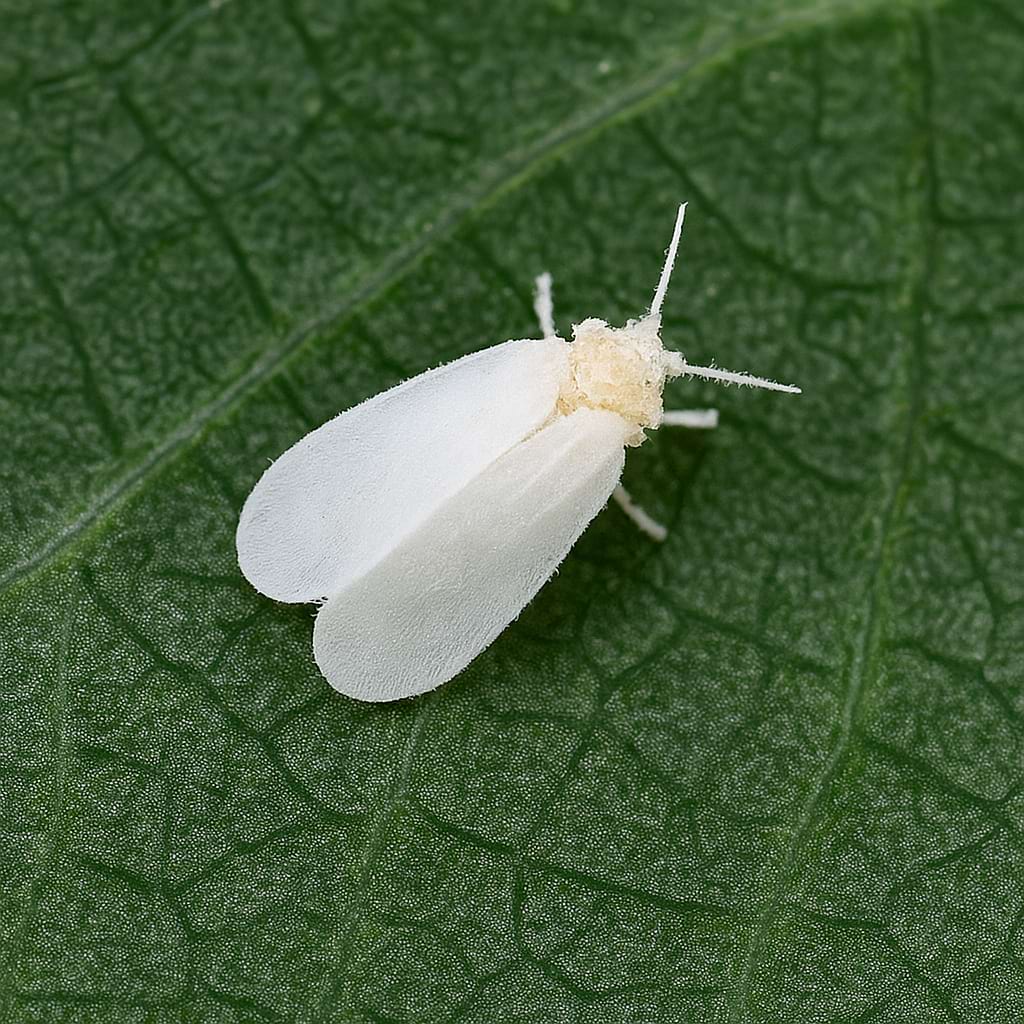
Whiteflies scatter in a cloud when the plant is disturbed and leave sticky honeydew on the lower leaves. Yellow sticky traps plus repeat insecticidal soap treatments will clear them.
Because these leaves resent wet surfaces, apply any spray in the evening, keep it light, and let the plant dry in moving air rather than sitting damp overnight.
🩺 Common Begonia Rex Problems
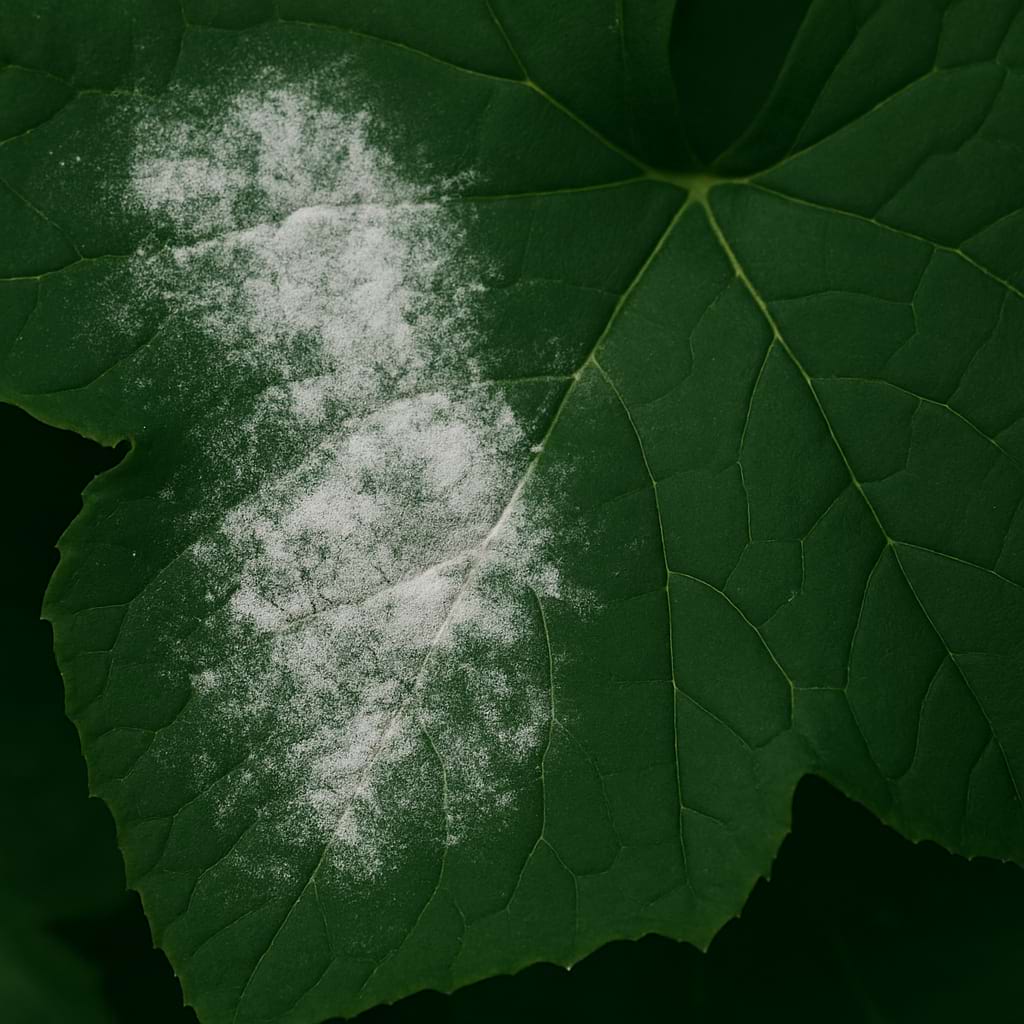
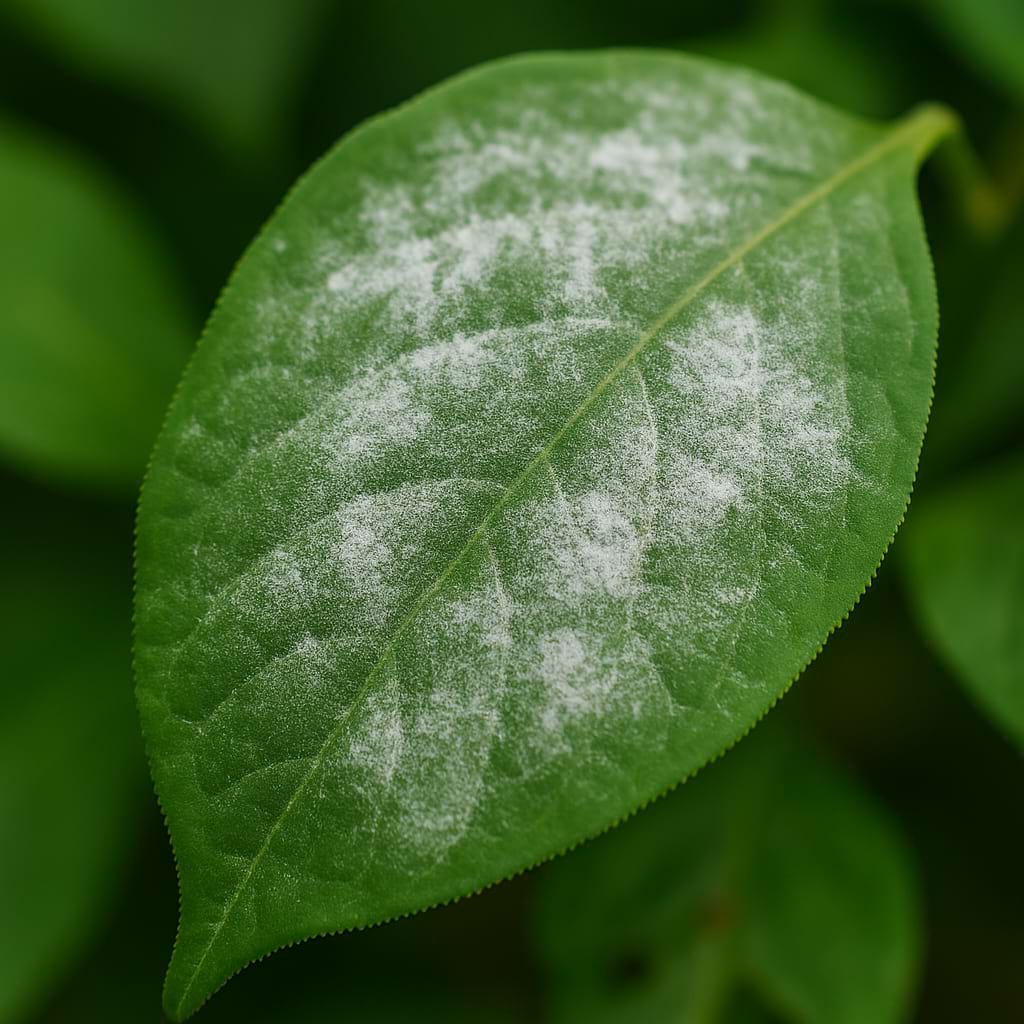
Powdery mildew is the signature Rex problem. It looks like white talcum dusted across the leaf surface, and it comes from humid still air or from damp foliage. Remove affected leaves, get air circulating, and stop misting. It spreads fast if you ignore it.
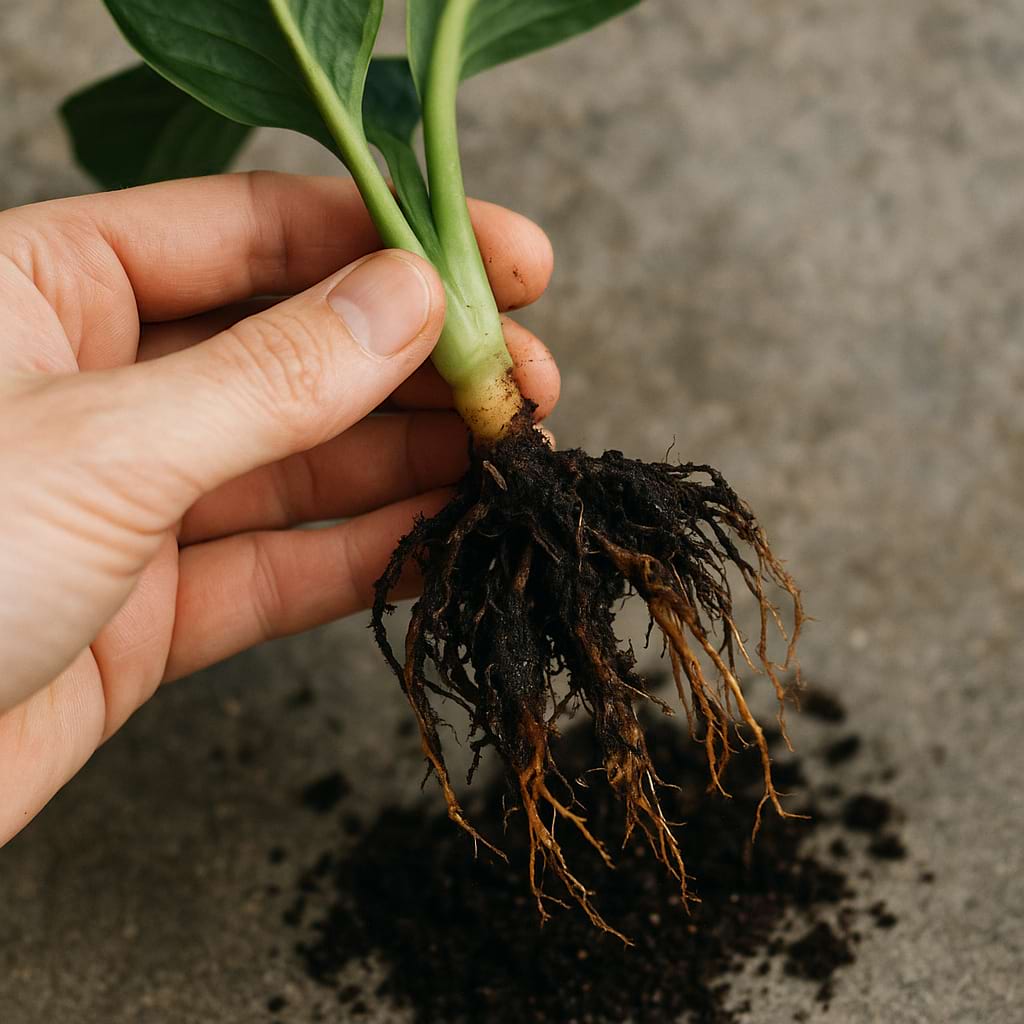
Root rot follows overwatering or a pot that is too deep. Stalks go soft and translucent at the base and the plant collapses from the bottom up. Repot into fresh airy mix, cut away anything mushy, and water less.
Brown crispy edges mean the air is too dry, or occasionally that fertilizer salts have built up. Check humidity first, then flush the pot.
Leaf drop in autumn is often just the winter rest beginning and needs no action at all. Sudden leaf drop in spring or summer usually points to a cold draft, a temperature swing, or a soggy pot.
Bacterial leaf spot shows as watery brown blotches with yellow halos, spreading where leaves touch each other. Remove affected leaves immediately and keep the foliage dry.
Yellowing leaves at the base are normal turnover on an older plant. Widespread yellowing with soft stalks means too much water.

🖼️ Begonia Rex Display and Styling Ideas
Solo Setups
A Rex Begonia earns a spot of its own. Set a single plant in a shallow bowl against a plain pale wall and let the leaf pattern do all the work. North-facing windowsills, which most plants find disappointing, are exactly where this one looks best.
Grouped Arrangements
Pair Rex with plain green foliage rather than with other patterned plants, or the whole grouping turns into visual static. A simple pothos or a fern beside a Rex makes both look better. If you want a patterned partner, the quieter Watermelon Peperomia holds its own without competing for attention.
Grouping also raises local humidity, which suits everyone involved. Just leave gaps between the pots so air still moves through.
Cabinets and Terrariums
The smaller cultivars like 'Red Kiss' and 'Silver Limbo' are excellent in a glass cabinet, where humidity is stable and easy to hold. Add a small fan if the cabinet is sealed, because the mildew rule applies under glass just as much as it does out on a shelf.
Where Not to Put It
Skip sunny south windowsills, spots directly above radiators, and anywhere a cold draft crosses in winter. Also skip high shelves. The colour is all on the top surface of the leaves, and above eye level you see only the undersides.
🌟 Begonia Rex Pro Care Tips
- Never mist it. Raise the humidity around the plant instead. Water sitting on the leaf surface is how mildew and leaf spot start.
- Put a small fan on low nearby. Moving air is the best mildew prevention there is, and it costs almost nothing to run.
- Use a shallow pot. Deep pots hold wet soil below roots that never reach down into it.
- Keep the rhizome on the surface. Buried rhizomes rot, and it is the most common repotting mistake people make with this plant.
- Pinch the flowers off. Foliage is why you bought it, and blooming costs the plant energy it would rather spend on leaves.
- Water in the morning with tepid water. Cold water shocks the roots, and evening watering leaves the plant damp overnight.
- Take cuttings before winter. If the mother plant struggles through the rest period, you already have backups rooted and growing.
- Rotate the pot a quarter turn every few weeks so the rhizome does not lean off toward the window.
❓ Frequently Asked Questions
Is Begonia Rex toxic to cats and dogs?
Yes. The ASPCA lists Rex Begonia as toxic to cats, dogs and horses, with soluble calcium oxalates as the toxic principle. Chewing it causes mouth irritation, drooling and vomiting, and the underground parts are the most toxic of all. Keep it out of reach of pets that chew on plants.
Why does my Begonia Rex have white powder on the leaves?
That is powdery mildew, and it is the most common Rex problem by a wide margin. It comes from humid air that is not moving, or from water sitting on the leaves. Remove the affected leaves, get air circulating around the plant, and stop misting it.
Is my Begonia Rex dying or just dormant?
If leaves drop in autumn or winter while the rhizome stays firm and plump, it is dormant and it will come back. Cut watering back to every couple of weeks and stop feeding. If the rhizome itself is soft or mushy, that is rot rather than dormancy.
Why are the leaf edges turning brown and crispy?
Almost always low humidity. Rex wants 50% or more, and household air in winter often sits closer to 30%. A pebble tray or a humidifier fixes it. The existing crispy edges will not heal, but the new leaves will come in clean.
Can I grow a Begonia Rex in a north-facing window?
Yes, and it is one of the best plants for one. North light is bright and filtered with no direct sun in it, which is exactly what those thin leaves want. In a very dark north room, add a grow light for the winter months.
How do I propagate a Begonia Rex from one leaf?
Cut the leaf into wedges, each with a piece of main vein at the pointed end, and push them vein-end down into damp perlite and peat under a clear cover. Plantlets appear in four to eight weeks. One large leaf can yield six to ten new plants.
Why is my Rex Begonia losing its silver colour?
Not enough light. The metallic patterning fades toward plain green when the plant sits too dim, and new leaves come in smaller. Move it closer to a bright window or add supplemental light, and the next flush of leaves will colour up properly.
Should I cut off the flowers?
Most growers do. The flowers are small and pale, and blooming diverts energy away from the foliage that makes this plant worth having. Snip the stalk at the base as soon as you see it forming.
How big does a Begonia Rex get indoors?
Most reach 12 to 18 inches tall and 12 to 24 inches wide, though compact cultivars like 'Red Kiss' stay closer to six to eight inches. They spread sideways more than upward, which is why a wide shallow pot suits them so well.
Can I keep a Begonia Rex in a bathroom?
If the bathroom has a window, yes, and the humidity is a real advantage. Make sure air still moves through, since a sealed steamy bathroom is a mildew factory for this plant. An extractor fan or a door left open sometimes is enough.
ℹ️ Begonia Rex Info
Care and Maintenance
🪴 Soil Type and pH: Loose, airy, moisture-retentive mix with bark and perlite
💧 Humidity and Misting: Wants 50-60% or higher, but with moving air, because still damp air brings mildew.
✂️ Pruning: Pinch back leggy rhizome tips, remove tired leaves at the base, and snip off flower stalks to protect the foliage.
🧼 Cleaning: Dust with a soft dry brush or a puff of air. Never wipe or mist the leaves, because the fine hairs hold water and spot.
🌱 Repotting: Repot in spring into a pot only one size up, keeping the rhizome sitting on the surface rather than buried.
🔄 Repotting Frequency: Every 1-2 years
❄️ Seasonal Changes in Care: Bright indirect light, humidity and regular feeding from spring to early autumn, then a cooler, drier, unfed rest through winter.
Growing Characteristics
💥 Growth Speed: Moderate
🔄 Life Cycle: Tender rhizomatous evergreen perennial
💥 Bloom Time: Small pink or white sprays, usually in winter or spring, often removed to keep the plant leafy
🌡️ Hardiness Zones: 10-12
🗺️ Native Area: Hybrid group bred from species of northeast India, southern China and southeast Asia, led by Begonia rex from Assam
🚘 Hibernation: A partial winter rest of 2-3 months. Growth stops, some or all leaves may drop, and water is reduced sharply.
Propagation and Health
📍 Suitable Locations: North windows, bathrooms with a window, east-facing rooms, terrariums and cabinets, shaded shelves under grow lights
🪴 Propagation Methods: Leaf wedge cuttings or rhizome sections in a covered tray of damp perlite and peat.
🐛 Common Pests: Mealybugs, Thrips, Fungus Gnats, Spider Mites, Whiteflies
🦠 Possible Diseases: Powdery mildew, botrytis, bacterial leaf spot, root rot
Plant Details
🌿 Plant Type: Rhizomatous foliage begonia
🍃 Foliage Type: Large asymmetric evergreen leaves with metallic patterning
🎨 Color of Leaves: Silver, purple, burgundy, near-black, pink, lime and green, usually banded or swirled
🌸 Flower Color: Pale pink to white
🌼 Blooming: Yes, but the flowers are small and most growers pinch them off
🍽️ Edibility: Not edible. All parts are toxic to people and pets.
📏 Mature Size: 12-18 inches tall
Additional Info
🌻 General Benefits: Grows dramatic colour in low-to-medium light where flowering plants sulk, stays compact, and multiplies easily from a single leaf
💊 Medical Properties: No documented medicinal uses.
🧿 Feng Shui: A soft, round-leaved plant with warm colour, good for adding gentle energy to a dim corner or a north-facing room.
⭐ Zodiac Sign Compatibility: Cancer
🌈 Symbolism or Folklore: Individuality, uniqueness, bold self-expression
📝 Interesting Facts: The whole group descends from one plant. In 1856 a shipment of orchids arrived in England with an unknown silver-leaved begonia tucked into the packing moss. It was named Begonia rex, the king begonia, and breeders have crossed it into more than four thousand named cultivars since.
Buying and Usage
🛒 What to Look for When Buying: Look for a plant with firm leaves, no white bloom on the surface, and a visible fat rhizome on the soil. Skip anything with brown mushy leaf stalks or grey fuzz at the base, and check the undersides for pests.
🪴 Other Uses: Terrarium and cabinet specimen, shaded patio container in summer, cut foliage for arrangements
Decoration and Styling
🖼️ Display Ideas: Shallow bowls, north windowsills, plant cabinets, bathroom shelves, grouped with plain green foliage that lets the pattern read
🧵 Styling Tips: One Rex Begonia against a plain background beats three crammed together. The leaves are already busy, so give them empty space to sit against.
🪴 See also 🪴
Complete Guide to Beefsteak Begonia Care and Growth
Complete Guide to Wax Begonia Care and Growth

Houseplant101 Forum
Questions & Comments
Ask a question, share your plant experience, or help other plant owners.
Comments are temporarily unavailable.
Open the Houseplant101 ForumNo comments yet
Be the first to ask a question or share your experience about this page.
Log in or create an account
Comments use your Houseplant101 Forum account, but you can stay on this page.
Create a new account