
Caladium
Caladium bicolor (Caladium × hortulanum hybrids)
Angel Wings, Heart of Jesus, Elephant Ears, Fancy-Leaf Caladium, Lance-Leaf Caladium, Strap-Leaf Caladium


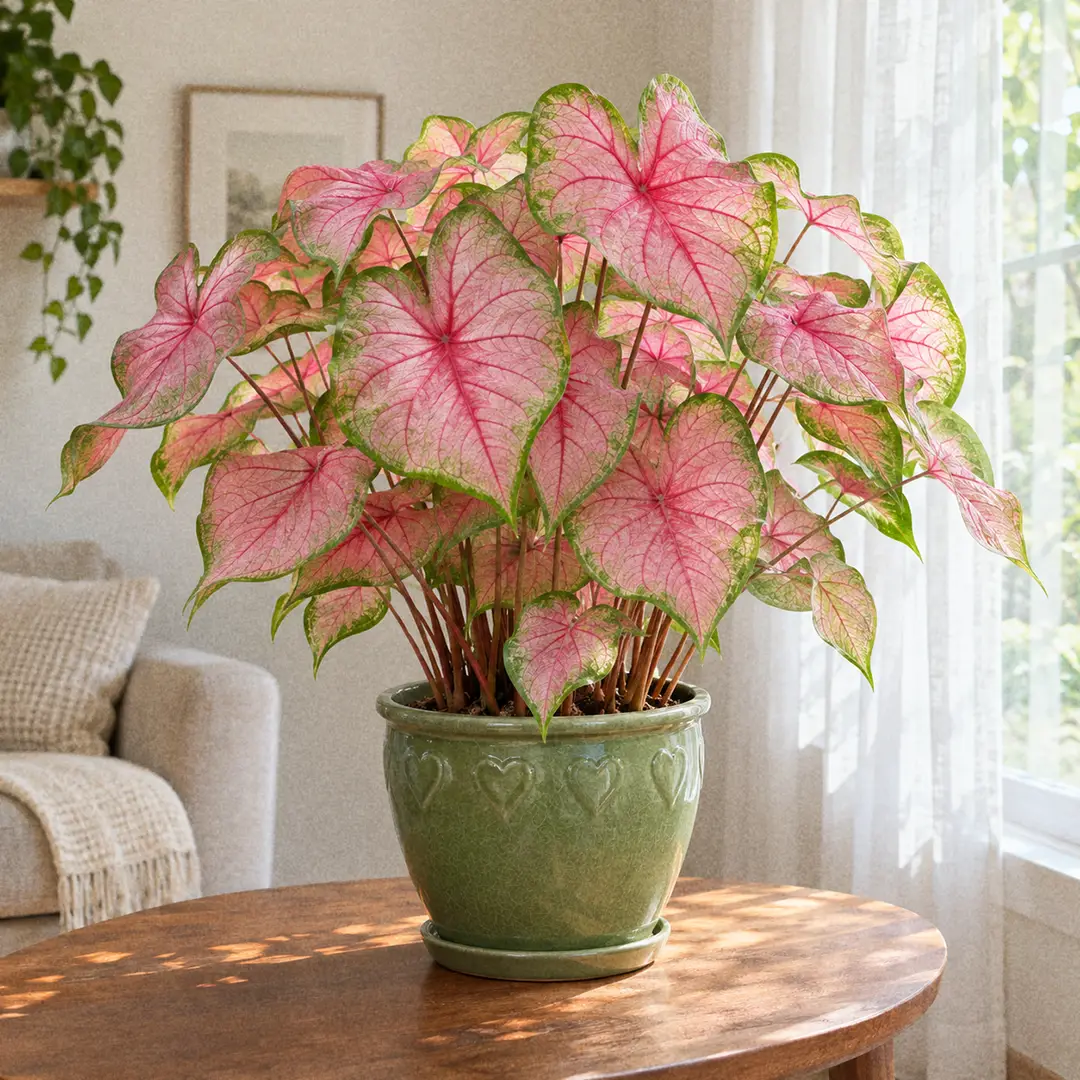
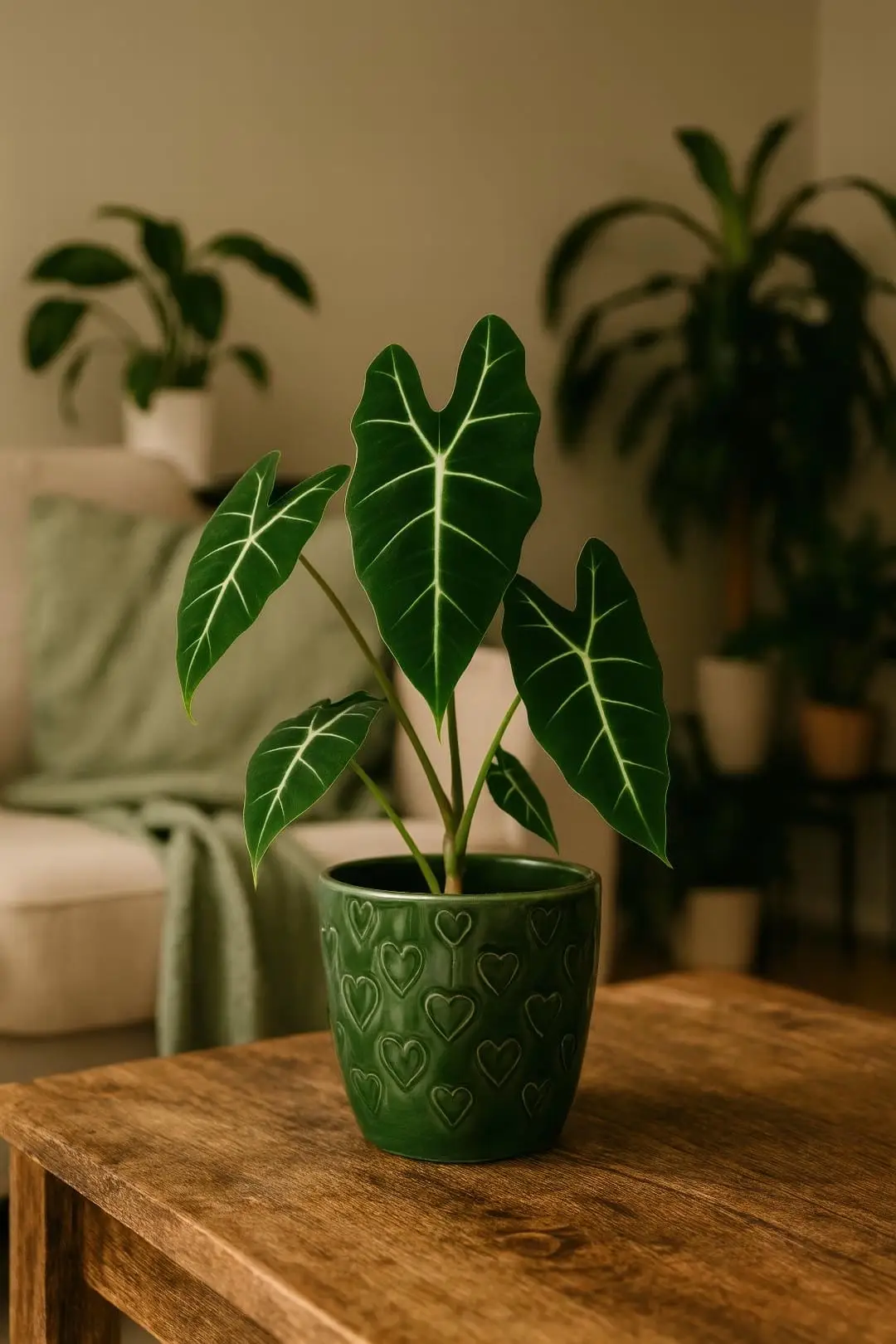
Caladium is the angel wings plant, a tuberous aroid grown for thin, papery leaves splashed in pink, red, white and green. Learn how to keep it colourful all summer, why it collapses every autumn, and how to store the tuber so it comes back in spring.
📝 Caladium Care Notes
🌿 Care Instructions
⚠️ Common Pests
📊 Growth Information
🪴 In This Guide 🪴

☀️ Caladium Light Requirements (Bright Indirect Light)
The Sweet Spot
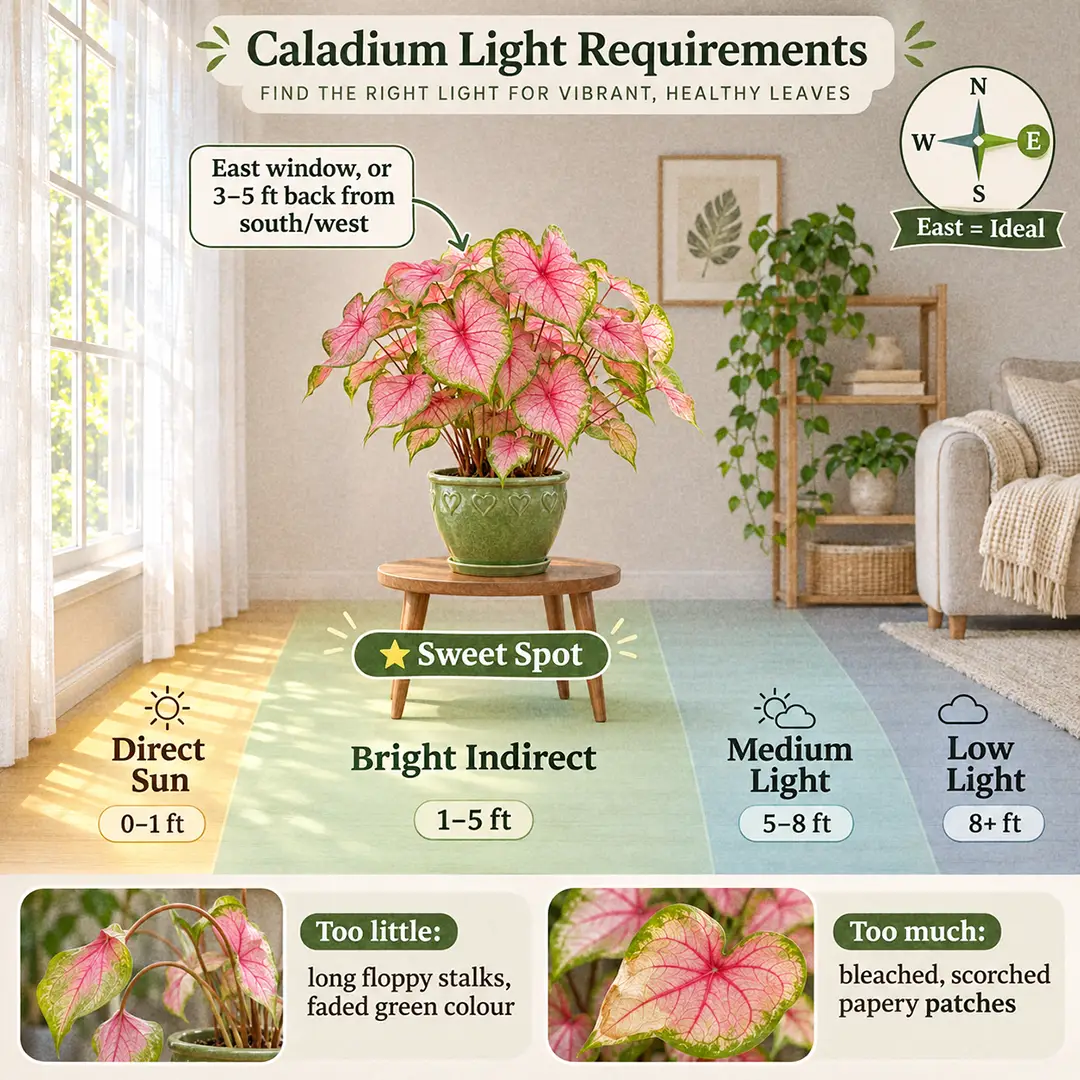
Caladium wants bright light that is mostly filtered. An east window is ideal: a little soft morning sun, then bright light for the rest of the day. A south or west window works if the plant sits three to five feet back or behind a sheer curtain, so the strong afternoon sun never lands directly on the leaves.
Colour depends on light. A caladium in a bright spot holds its pinks and reds well, while one in a gloomy room tends to look washed out and greener.
Too Little Light
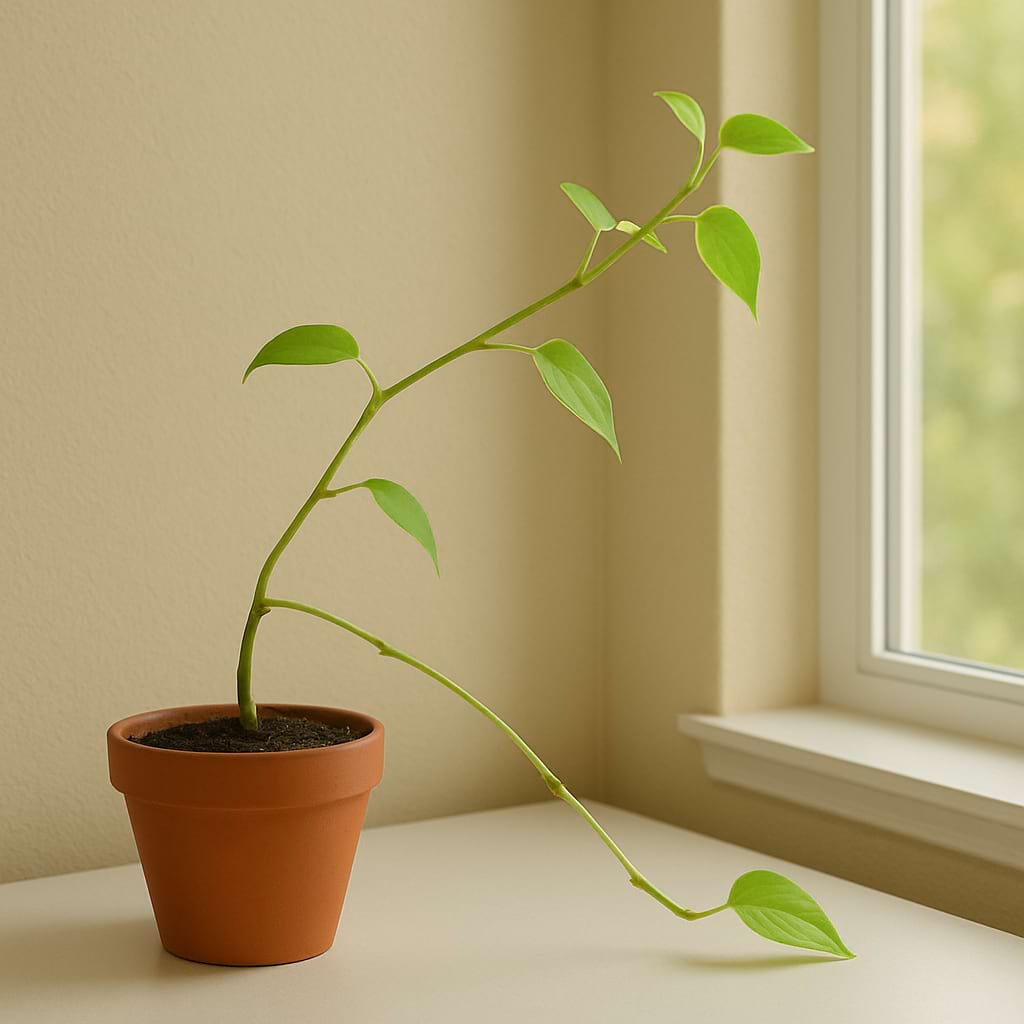
In a dim corner the leaf stalks stretch long and thin toward the window, the leaves flop over, and each new leaf comes up smaller. It is the indoor version of leggy growth. Move it closer to the window, or add a grow light for 10 to 12 hours a day if no window in the house is bright enough. Our light guide helps you judge your windows.
Too Much Light
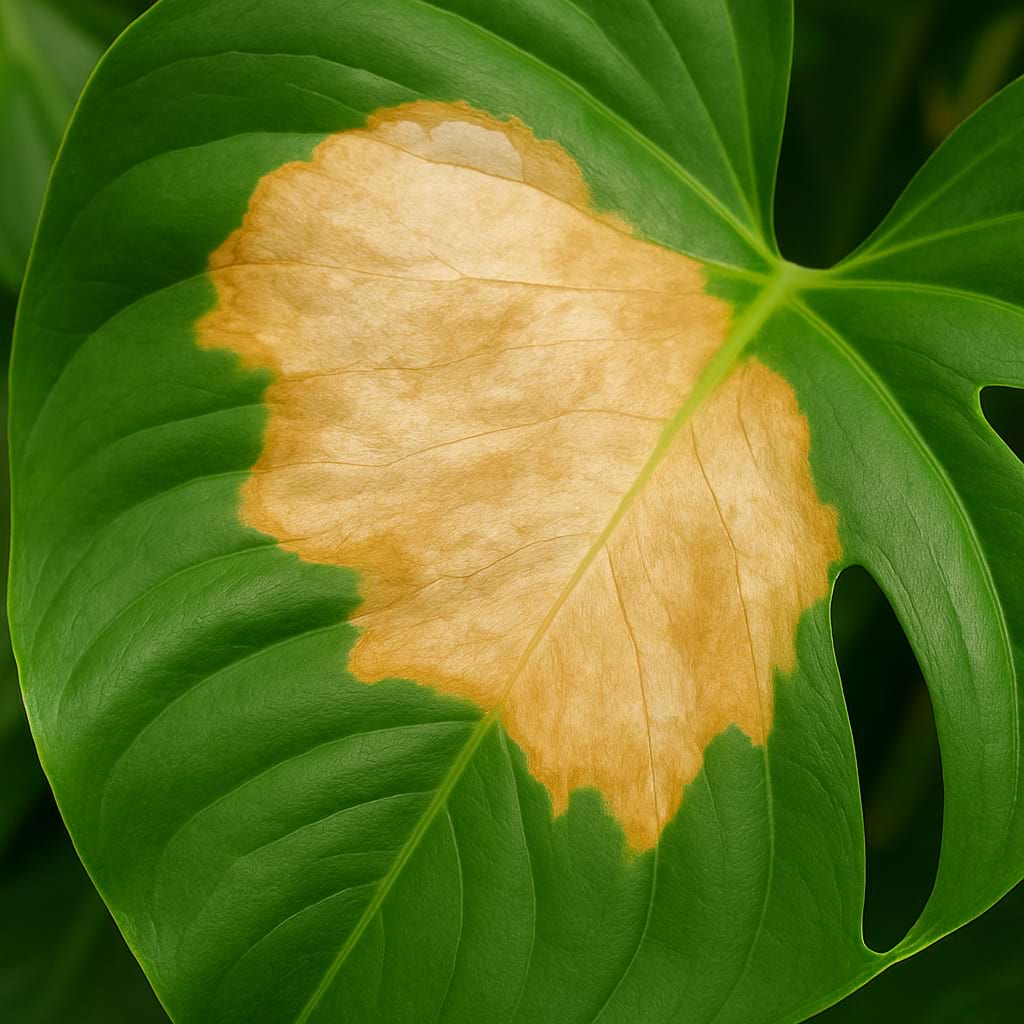
These leaves are paper thin, so hot direct sun scorches them fast. You will see bleached, almost translucent patches that dry to brown, which is sunburn. Some newer cultivars handle a couple of hours of direct sun a day (more on those under Types), but even those prefer dappled light, and none of them want a hot south windowsill in July.
💧 Caladium Watering Guide (Moist in Summer, Dry in Winter)
Watering in the Growing Season
From the first leaf in spring until the leaves start fading in autumn, keep the mix evenly moist, like a wrung-out sponge. In practice that usually means watering when the top half inch to an inch feels dry. A caladium with a full head of leaves in a warm room can need water twice a week in summer, so check rather than following a calendar. A moisture meter takes the guessing out of it.
Water thoroughly until it runs out of the drainage holes, then empty the saucer after ten minutes. Our watering guide covers the basics.
Watering a Newly Planted Tuber
This is where most rot happens. A freshly potted tuber has no leaves to use water, so keep the mix only barely damp until shoots appear. Soaking a cold, leafless tuber is the fastest way to turn it to mush.
Signs of Trouble
Thin leaves wilt the moment the soil dries out, so a droopy caladium in dry mix usually perks up within a few hours of a drink. Repeated wilting, though, leaves brown crispy edges behind. Drooping in wet soil is the opposite problem: the roots or tuber are rotting, and more water makes it worse. As autumn arrives and leaves begin to yellow, start cutting water back, which the Dormancy section explains step by step.
🪴 Best Soil for Caladium (Moist but Airy)
What the Soil Needs
Caladium roots like steady moisture, but the tuber rots in mix that stays wet and airless. The goal is a soil that holds water like a sponge yet drains freely. Extension guides for container caladiums recommend mixes based on peat moss or coir with fine pine bark, which is a good description of what works indoors too.
DIY Soil Mix
My mix, by volume:
- 3 parts peat-based or coir-based potting mix
- 1 part fine orchid bark
- 1 part perlite
Mix it dry, dampen it lightly, then plant. It should feel springy, not heavy, in your hand.
Pre-Made Options
A good bagged indoor potting soil with a couple of handfuls of perlite stirred in does the job. A chunky aroid mix also works, though you will need to water a bit more often. Avoid garden soil and heavy compost on its own, which pack down around the tuber.
🍼 Fertilizing Caladium (Only While in Leaf)
When and How Often
Start feeding once the first leaves have fully opened in spring, then every 3 to 4 weeks through summer. Stop as soon as the leaves begin to fade in autumn. A tuber heading into dormancy cannot use the nutrients, and they just build up as salts in the pot.
What to Use
A balanced liquid houseplant fertilizer at half the label strength is plenty, always poured onto damp soil. Thin leaves burn easily, and an overfed caladium shows it at the edges first. Our fertilizing guide and fertilizer roundup cover the options.
Over-Fertilizing Signs
Brown, burnt-looking leaf margins on a plant that is watered properly, or a white crust on the soil surface, both point to salt buildup. Flush the pot with plain water for a minute and skip the next two feeds.
🌡️ Caladium Temperature Range
Ideal Growing Temperature
Caladium is a heat lover. It grows best in a warm room, roughly 70 to 85°F (21 to 29°C), which is why it thrives through summer and sulks in cooler months. Extension guides advise waiting for soil of about 70°F (21°C) before planting tubers outdoors, and the same warmth gets indoor tubers sprouting fastest.
Cool rooms below about 60°F (16°C) slow it right down and can push it into early dormancy. Frost kills the leaves outright and damages the tuber.
Drafts and Heat Sources
Keep it away from cold draughts, open doors in spring, and air conditioning vents blowing straight onto the leaves, all of which make the thin foliage wilt and brown. Radiators are less of an issue only because the plant is usually dormant by heating season, but a tuber stored right next to one can dry out and shrivel.
💦 Caladium Humidity Requirements
Ideal Humidity
Aim for 50 percent or higher. Caladium leaves have very little substance to them, and in dry air the edges go brown and papery within days. Summer humidity in most homes is fine, which suits a plant that is only in leaf in the warm months anyway.
Signs the Air Is Too Dry
The first sign is a thin brown rim along the leaf edge, often on the newest leaves first. Leaves that curl slightly inward or feel crisp rather than soft point the same way. Damage does not reverse, so judge any fix by the next leaf.
Easy Humidity Boosters
Group it with other plants, stand the pot on a pebble tray with the base above the waterline, or run a small humidifier nearby during dry spells. A bright bathroom works well too. Our humidity guide has more options. Skip heavy misting, since water sitting on the leaves in a cool room invites spotting.
💤 Caladium Dormancy and Tuber Storage
Why Your Caladium "Dies" in Autumn
This is the big one. Caladiums grow from a tuber, and in the wild they rest underground through the dry season. Indoors, as the days shorten and rooms cool in autumn, the leaves turn yellow one after another and collapse until nothing is left. Your plant is not dead. It is pulling its energy back into the tuber for a rest that can last a few months or longer.
When the first leaves start to fade, stop fertilizing and water less. Once most of the leaves have yellowed, stop watering altogether and let the pot dry out. Cut the dead foliage off at soil level.
Storing Tubers in the Pot or Lifted
The easy route is to leave the tuber in its dry pot and put the whole thing somewhere warm, like a closet in a heated room. Do not water it at all until spring.
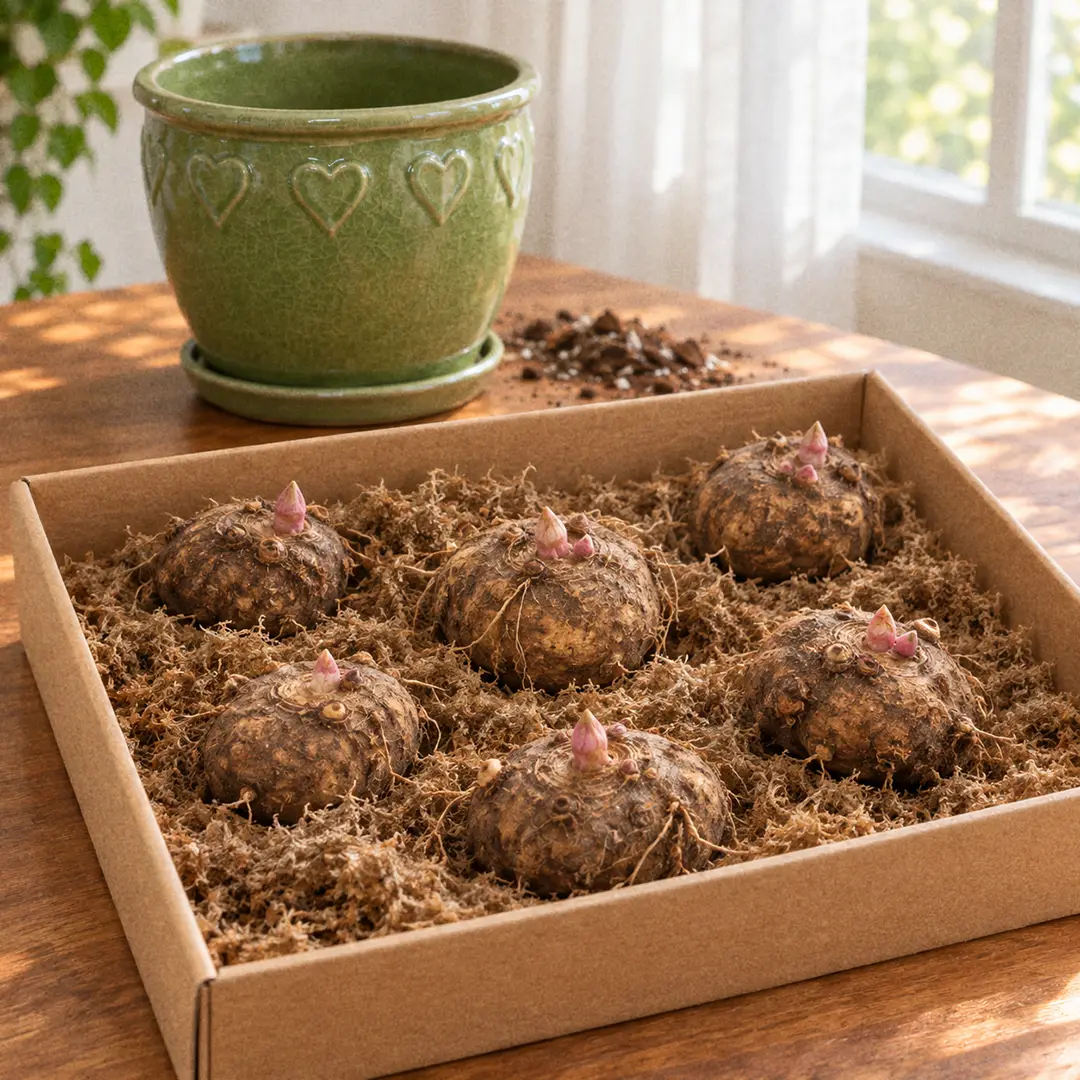
Alternatively, lift it. Ease the tubers out, let them dry in a warm, airy spot for one to two weeks, brush off the soil, and pack them in dry peat moss, perlite or vermiculite in a box or paper bag, not touching each other. Check them once a month and throw out any that turn soft.
Storage Temperature
This is where caladiums differ from most bulbs: they need warm storage, not cold. Keep tubers above 60°F (16°C), and somewhere around normal room temperature is safest. Never put them in a fridge, garage or unheated shed. Chilled tubers can look fine and still come up slow, patchy and weak the following year.
Waking It Up in Spring
In early to mid spring, repot the tuber into fresh mix, knobby side up, and keep it warm and barely damp in bright light. Sprouting can take several weeks, and longer in a cool room. Warmth is what wakes it, so a spot near (not on) a warm appliance or a seedling heat mat speeds things up.
🌸 Caladium Flowers (Small and Best Removed)
What the Flowers Look Like
A caladium sometimes throws a flower in summer: a greenish-white hood (the spathe) wrapped around a short spike, similar to a small calla lily or jack-in-the-pulpit. It usually sits low among the leaf stalks and is easy to miss.
Why to Cut It Off
Most growers pinch or snip the flower stalk off at the base as soon as they see it. Making a flower diverts energy from the leaves and can leave you with a smaller tuber at the end of the season, and a strong tuber is what gives you next year's display. If you want an aroid that flowers properly indoors, a Peace Lily does that job far better.
🏷️ Caladium Types and Varieties
Fancy-Leaf vs Lance-Leaf Caladiums
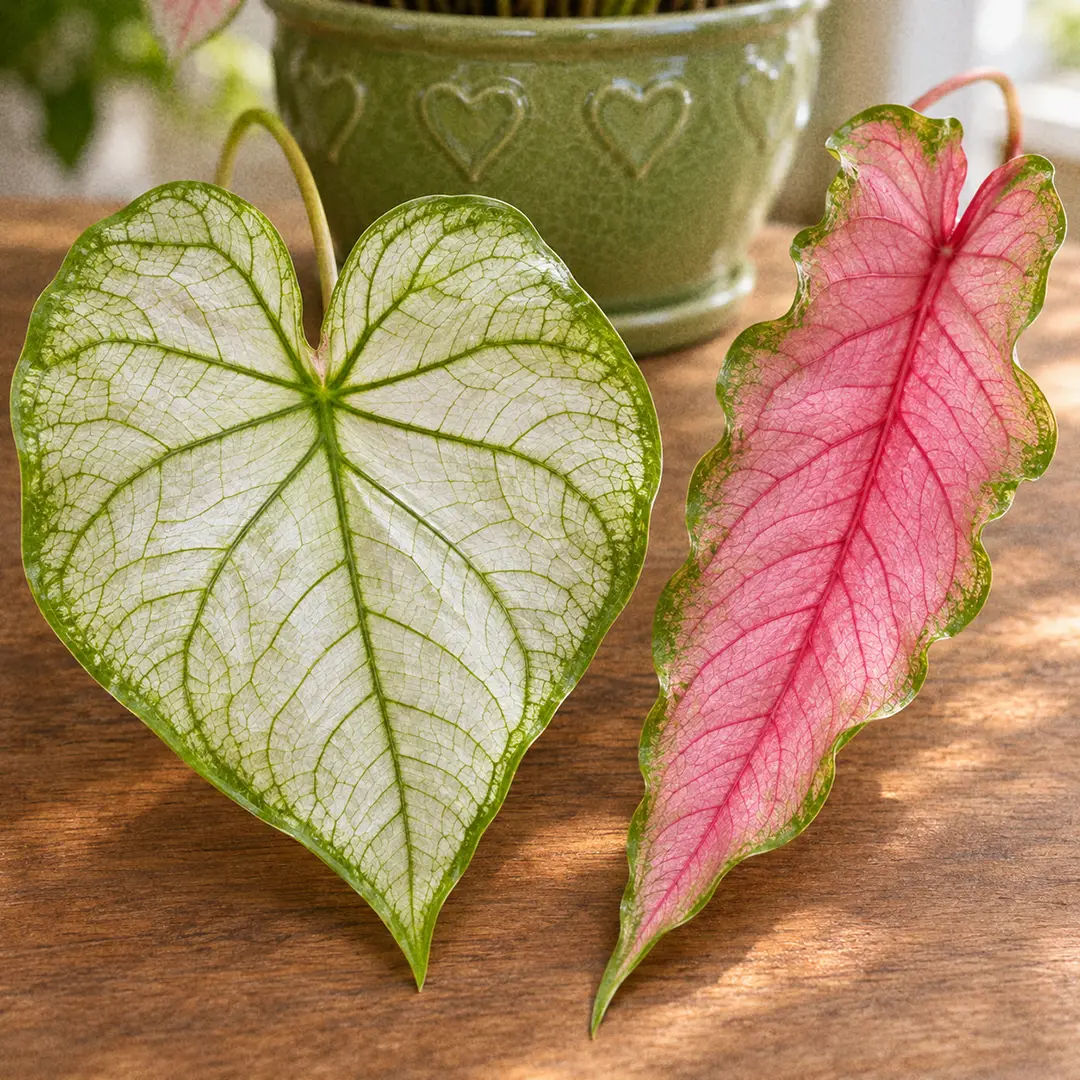
Shops sort caladiums into two groups. Fancy-leaf types are the classic look: big heart-shaped leaves on long stalks, reaching roughly 12 to 30 inches tall. Lance-leaf types, also sold as strap-leaf, have narrower, elongated leaves, often with ruffled edges. They usually stay under 12 inches and produce more leaves per plant, which makes them a good fit for shelves and windowsills.
Care is the same for both. Pick by size and look.
Sun-Tolerant vs Shade Caladiums
Older cultivars burn quickly in any direct sun. Newer releases, many from the University of Florida breeding program, tolerate a couple of hours of direct sun a day, which indoors means they forgive a brighter window. Clemson Extension lists 'Aaron', 'Florida Elise' and 'Red Flash' among the more sun-tolerant fancy-leaf types. Lance-leaf types are often more sun-tolerant as a group.
Popular Caladium Cultivars
Fancy-leaf:
- 'Candidum': an old favourite, white leaves with green veins. A shade type.
- 'Aaron': white leaves with broad green margins, and more sun-tolerant than most whites.
- 'Red Flash': dark red leaves with fuchsia spots and green edges. Vigorous, with large leaves.
- 'Florida Elise': green leaves with rose-pink blotches and speckles, released by the University of Florida in 1991.
Lance-leaf:
- 'Florida Sweetheart': wide lance leaves with rose centres and green margins. The University of Florida describes it as the most popular lance-leaf cultivar sold.
- 'Florida Red Ruffles': a red lance-leaf type that UF reports handles cold better than the older red lance cultivars.
Which Caladiums Store Best
If you plan to keep your tubers for several years, white-leaved cultivars are a sensible pick. Clemson Extension notes that white-foliaged tubers tend to store better than other colours. Whatever you grow, the second year's leaves are often a little less impressive than the first, so judge a cultivar on its first summer.
If you love caladium colour but not the yearly dormancy, a Rex Begonia gives you metallic pinks and silvers all year round.
🪴 Potting and Repotting Caladium
When to Repot
Every spring, as the dormant tuber wakes up. Start it in fresh mix rather than last year's tired soil, which is the right moment to check the tuber for soft spots too. Do not repot a plant that is in full leaf unless it is rotting.
Choosing a Pot and Tuber
Larger tubers carry more buds and give fuller pots, so buy the biggest tubers you can, or plant two or three smaller ones together in a wider pot. Choose a pot with drainage holes. Plastic or glazed ceramic suits caladium better than terracotta, since this plant likes steady moisture. Our guide to plant pots compares the options.
Planting a Tuber Step by Step
- Find the top of the tuber, the knobbly side with buds (eyes). The smoother side with old root scars goes down.
- For a bushier plant, you can lift out the large central bud with the tip of a sharp knife, which pushes the smaller buds around it to sprout instead.
- Plant it 1.5 to 2 inches deep in damp, not wet, mix.
- Keep it warm and bright and water sparingly until shoots appear. Our repotting guide covers general technique.
✂️ Pruning Caladium
What to Remove
There is no shaping to do. Cut yellowing or damaged leaves off at the base with clean scissors, and remove any flower spathes as they appear. A leaf with a small brown edge can be trimmed along its natural outline, though it will not regrow.
Cutting Back for Dormancy
In autumn, leave fading leaves on until they are fully yellow or collapsed. While they are yellowing, the plant is still pulling nutrients back into the tuber for next year. Once they are limp and brown, cut them off at soil level and let the pot dry.
Safety First
Wear gloves or wash your hands after handling. The sap contains calcium oxalate crystals and stings on broken skin or in your eyes. Keep trimmings well away from pets.
🌱 How to Propagate Caladium
Best Method: Tuber Division
You cannot root a caladium leaf. The plant grows from its tuber, so propagation means dividing the tuber, best done in spring just before you replant. Large tubers can be cut into several pieces, and each piece grows into its own plant.
Step-by-Step Division
- Take a firm, healthy tuber out of storage in spring.
- Look for the buds on top. Cut the tuber into pieces with a clean knife so that each piece has at least one bud, ideally two.
- Leave the pieces somewhere warm and dry for 24 to 48 hours until the cut surfaces form a dry skin. Planting a freshly cut tuber is an invitation to rot.
- Plant each piece bud side up, 1.5 to 2 inches deep, in damp mix.
- Keep warm and only barely moist until shoots appear.
Tips for Success
Small tubers are best left whole, since tiny pieces make weak plants. Expect divided pieces to sprout a little later than whole tubers. Our plant division guide covers the general idea.
🐛 Caladium Pests and Treatment
Spider Mites and Aphids
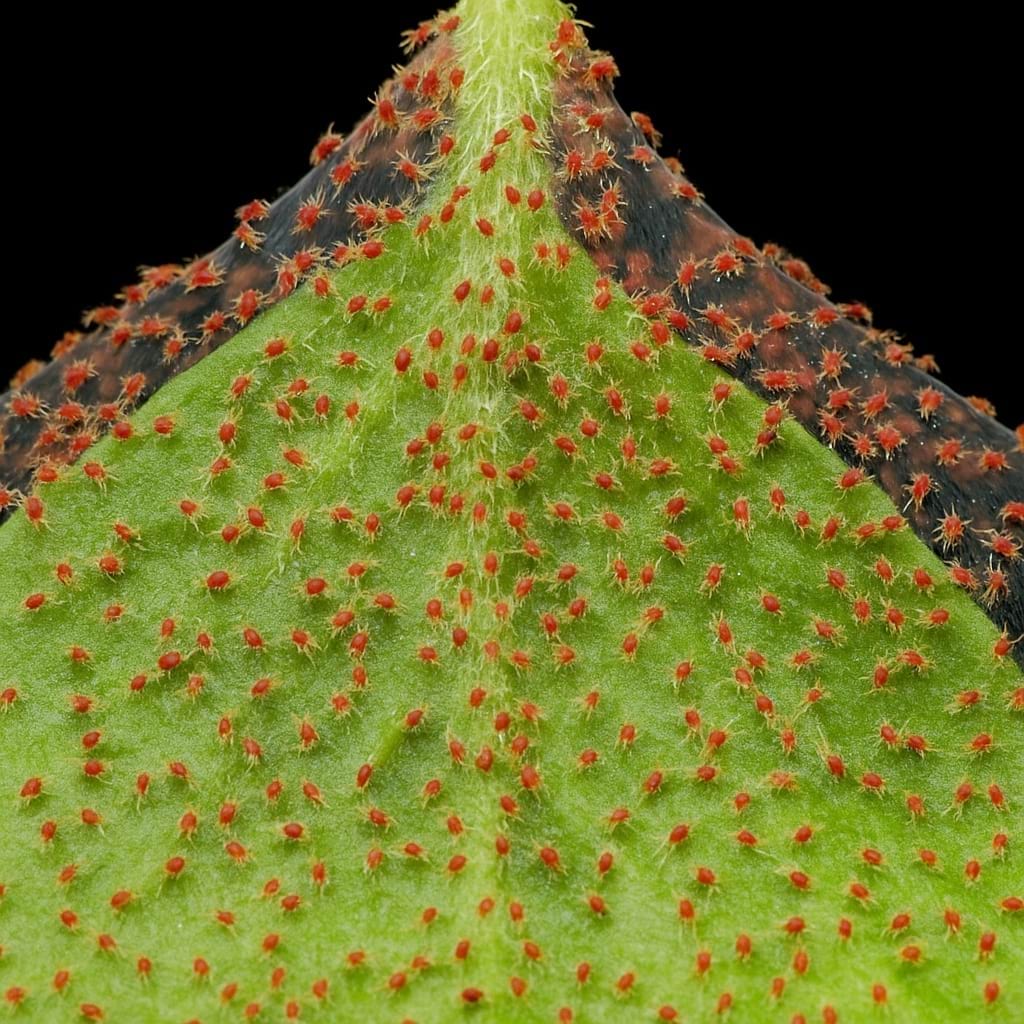
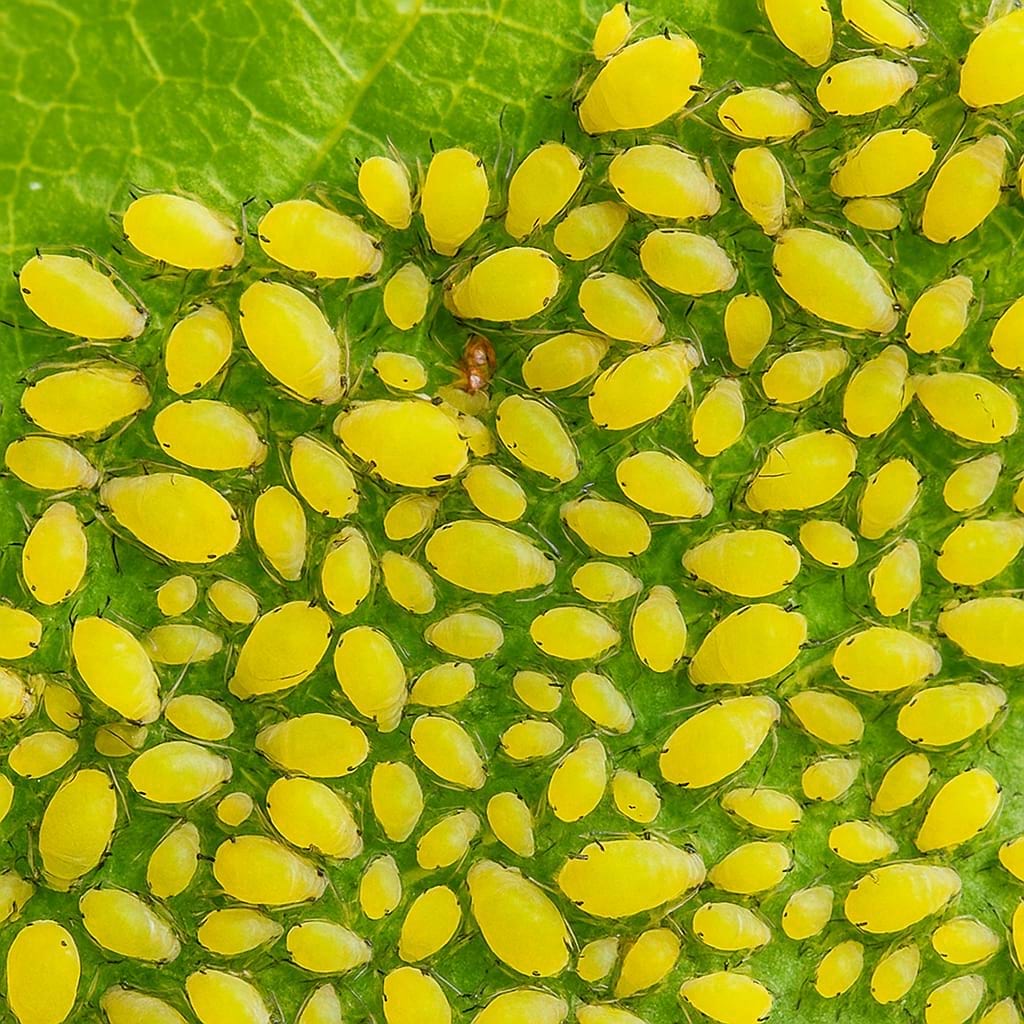
Spider mites love warm, dry rooms and thin leaves. Look for fine pale stippling and faint webbing under the leaves. Rinse the plant gently in the shower, then treat with insecticidal soap weekly for three weeks. Aphids cluster on new, unfurling leaves and rinse off easily with lukewarm water.
Mealybugs and Thrips
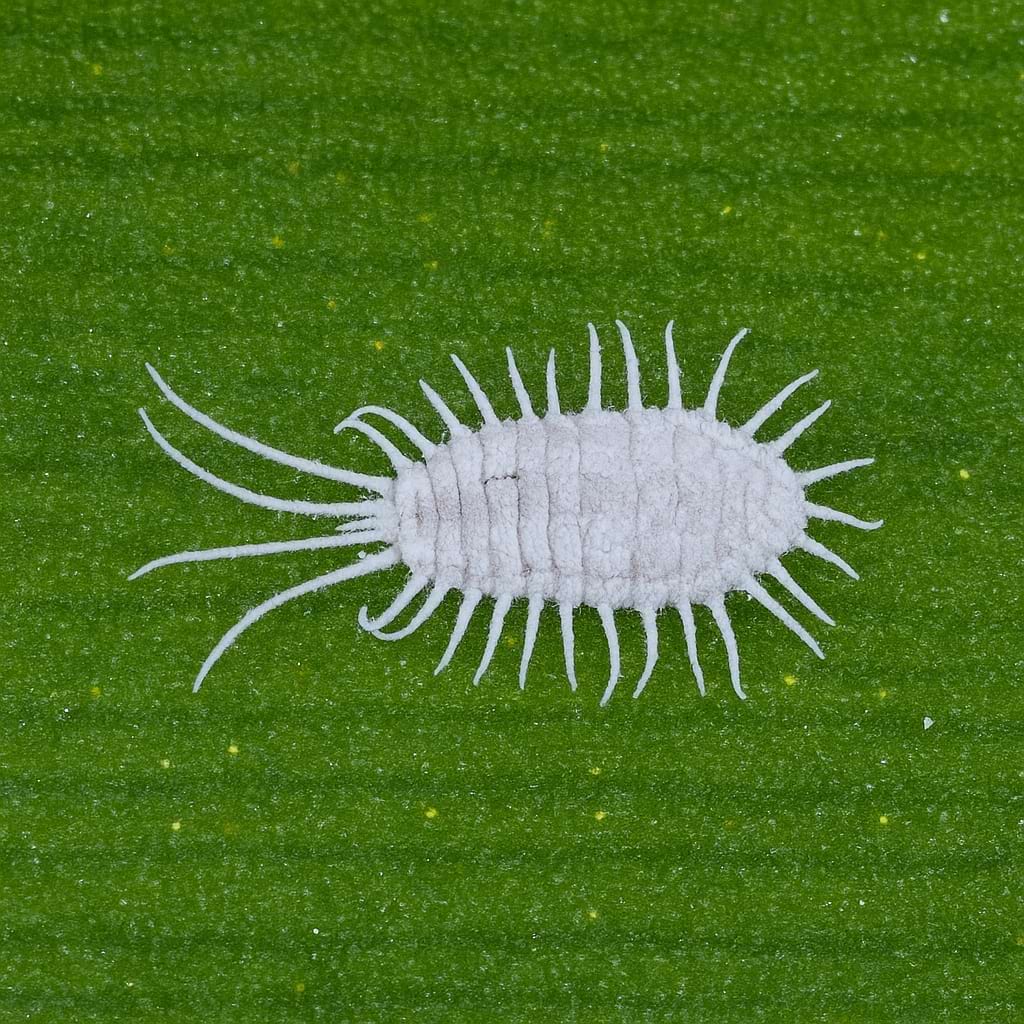
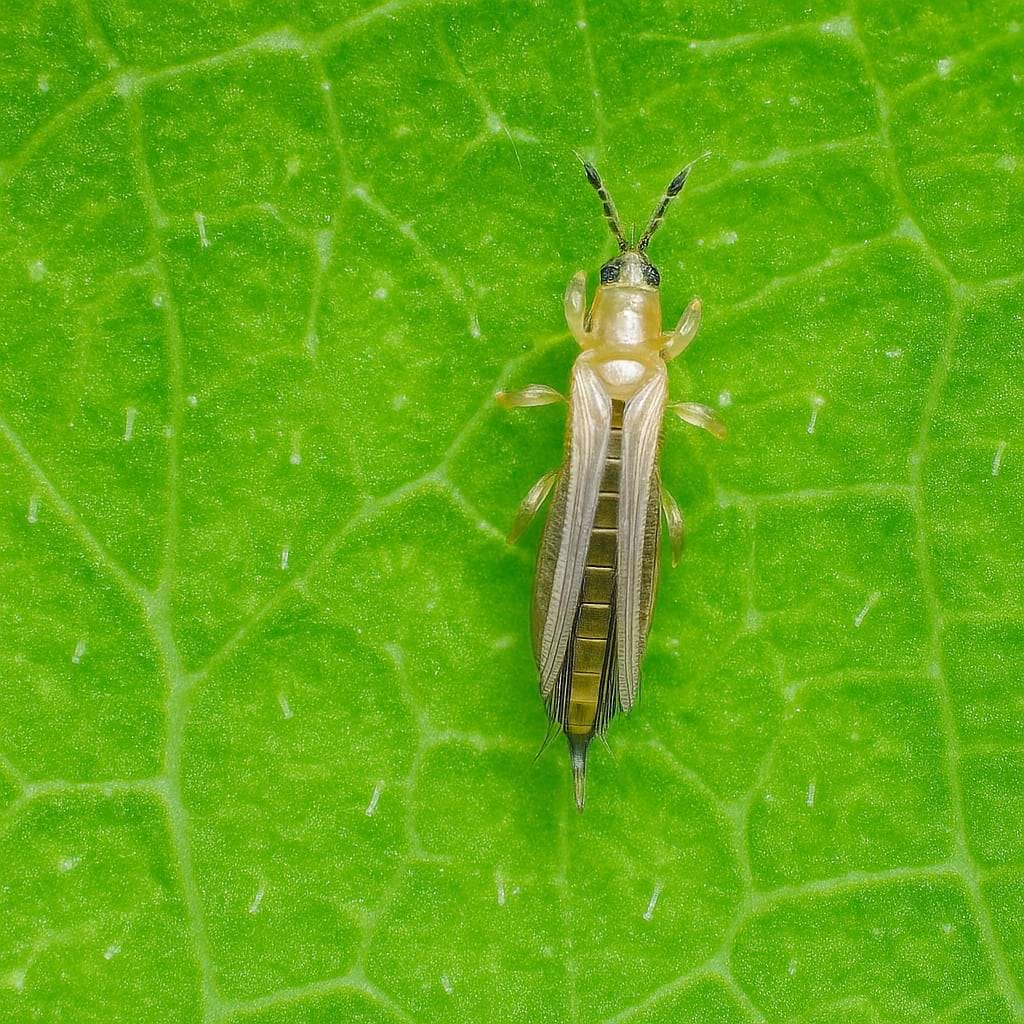
Mealybugs show up as white cottony blobs where leaf stalks meet the soil. Dab them with a cotton bud dipped in rubbing alcohol. Thrips leave silvery streaks and distorted new leaves and need repeated treatments with insecticidal soap or neem.
Fungus Gnats and Prevention
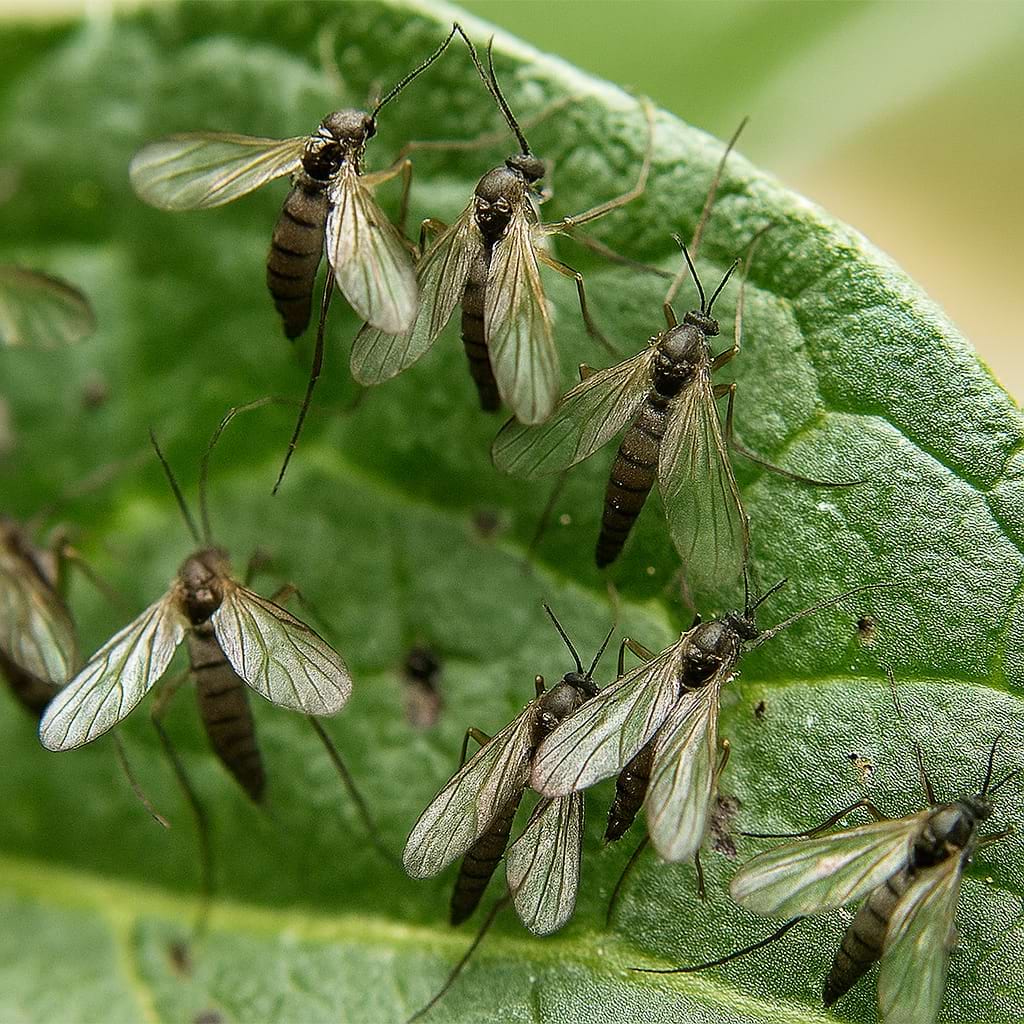
Fungus gnats mean the top of the mix is staying too wet, often around a newly planted tuber. Let the surface dry a little between waterings. For prevention, check leaf undersides each time you water, and inspect stored tubers for pests before replanting them.
🩺 Common Caladium Problems
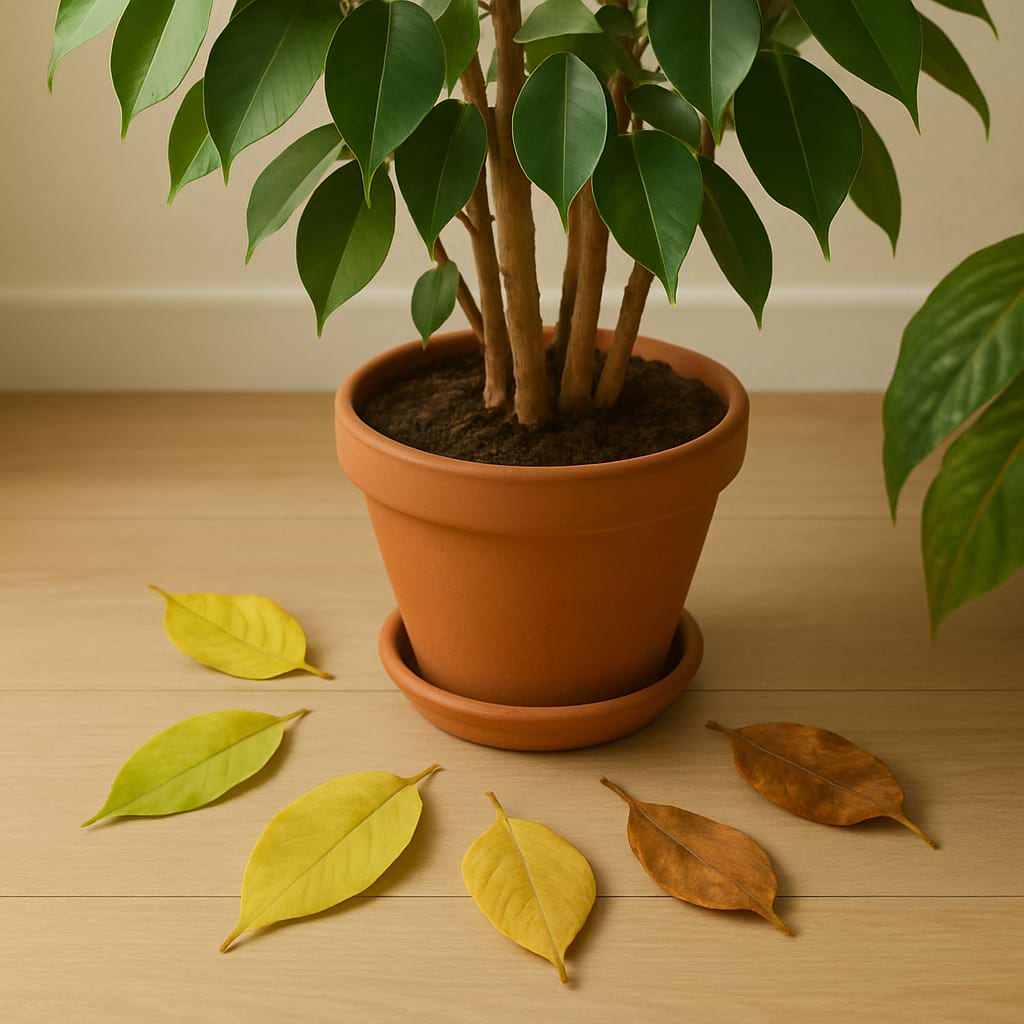
Yellowing and Collapsing Leaves
In autumn this is dormancy, not a disease, and the Dormancy section tells you what to do. In spring or summer, yellowing leaves on a plant in wet soil usually mean overwatering. If the leaves drop in mid-summer after a cold draught, that is leaf drop from chill, and the plant usually pushes new leaves once it is warm again.
Tuber Rot
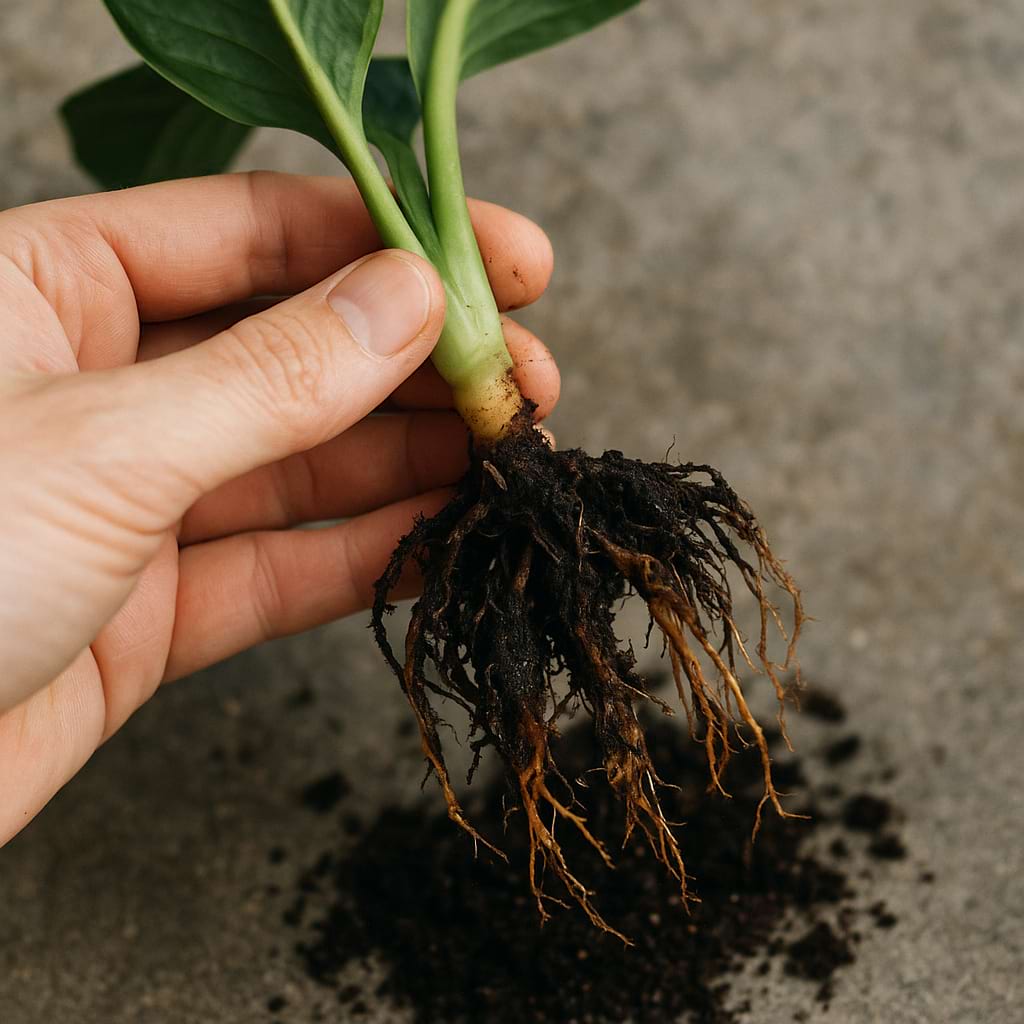
Caladium's main killer is a tuber sitting in cold, wet soil. The stems go soft at the base, the plant wilts in damp mix, and the tuber feels mushy. Unpot it, cut away soft parts back to firm tissue, let the cuts dry for a day, and replant in fresh, barely damp mix. Fully mushy tubers cannot be saved. This is the caladium version of root rot.
Brown Crispy Edges
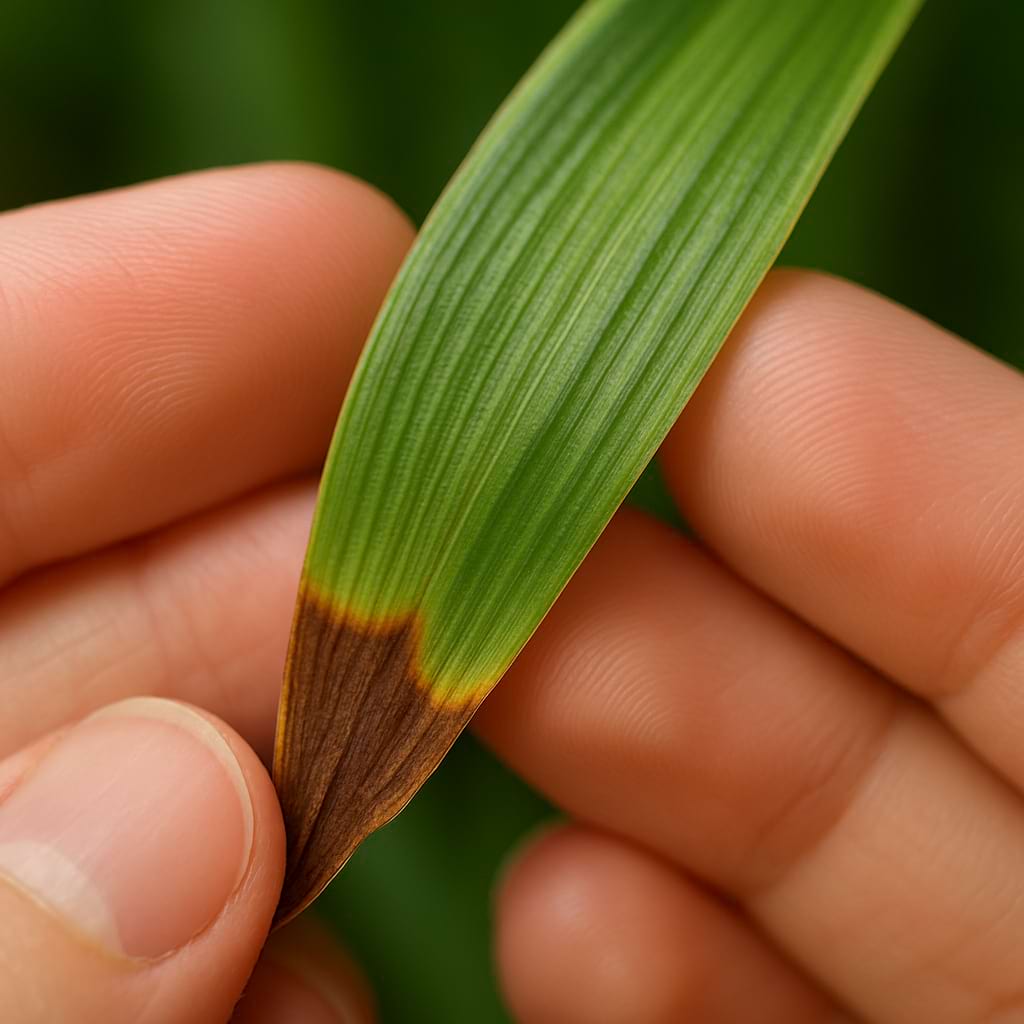
Crispy margins come from dry air, a plant that has wilted from thirst a few times, or fertilizer salts. Raise humidity, water more consistently, and flush the pot.
Faded Colour and Floppy Leaves
If the pinks and reds look dull or greener than when you bought the plant, light is usually the cause. Caladium colour shifts with light, and shade tends to bring out more green. Long, weak leaf stalks that flop sideways point the same way. Move the plant somewhere brighter with filtered light. The current leaves will not change, but new ones come up sturdier and more colourful.

🖼️ Caladium Display and Styling Ideas
Solo Setups
A single full pot of a fancy-leaf caladium makes a great summer table centrepiece, especially in a plain pot that lets the leaf colour carry the look. Lance-leaf types fit a windowsill or a narrow shelf.
Grouped Arrangements
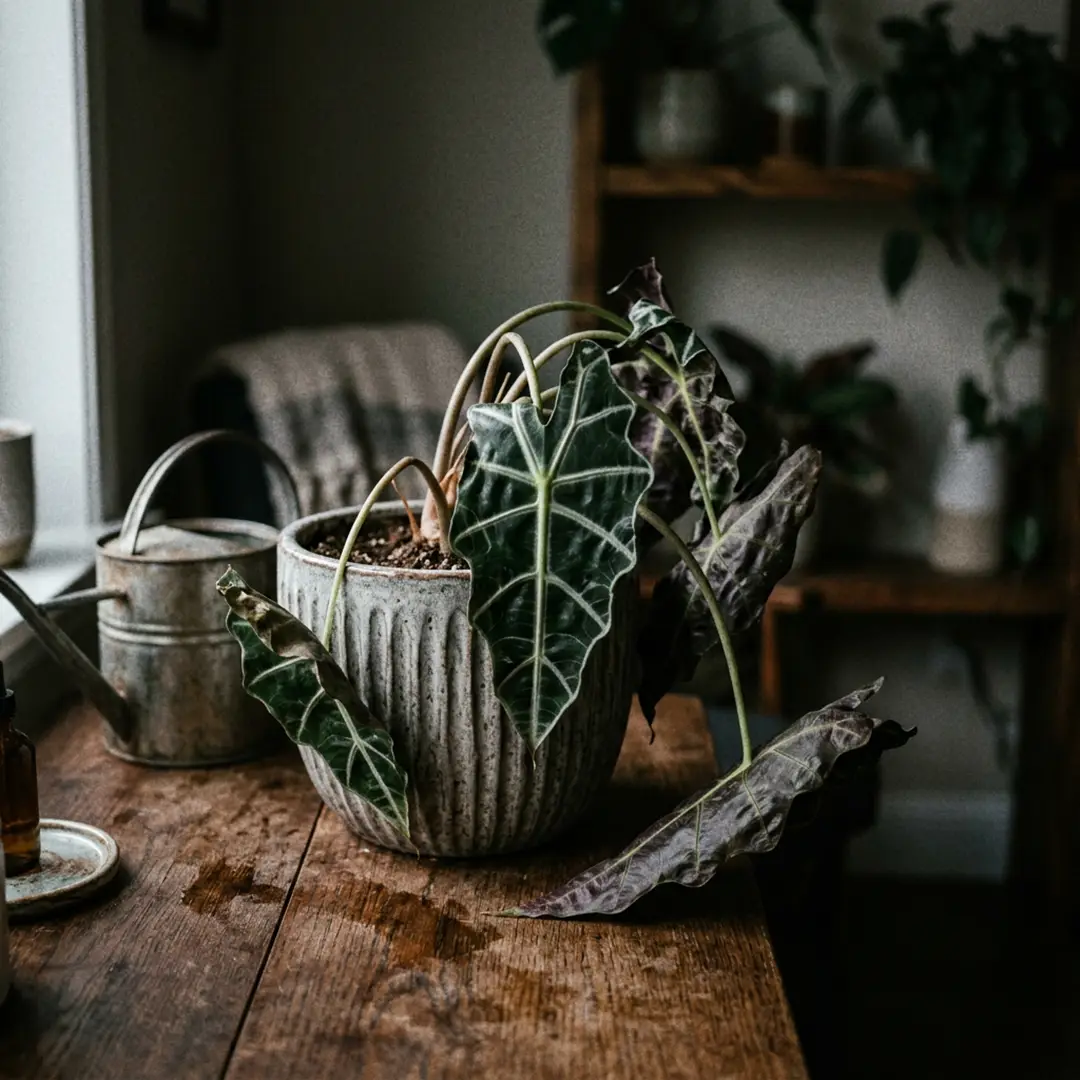
Caladium colour pops hardest against plain green. Group it with a Peace Lily or ferns, or go the other way and build a colour-foliage corner with a Polka Dot Plant, Coleus or a Nerve Plant. A dark Alocasia Polly next to a white caladium is a striking pair, and both take a similar winter rest, so they can slow down together.
Summer Outdoors and Where Not to Put It
Once nights stay warm, a caladium can spend summer on a shaded patio or balcony, then come back in before temperatures drop in autumn. Indoors, keep it off hot sunny windowsills, out of cold draughts, and well away from cats, dogs and small children, since every part of the plant is toxic.
🌟 Caladium Pro Care Tips
Seasonal Tips
- Mark your calendar for spring. A dormant pot in a closet is easy to forget until it is too late in the season.
- Taper, do not stop suddenly. Cut water back as leaves fade, then go fully dry once most have yellowed.
- Store warm. Above 60°F (16°C), never in a fridge or garage.
Everyday Care Tips
- Rotate the pot weekly. Leaves lean hard toward the light.
- Water more in heatwaves. A full caladium in summer drinks much faster than you expect.
- Pinch off flowers early so the energy stays in the leaves and tuber.
- Buy big tubers. More buds means a fuller pot from day one.
❓ Frequently Asked Questions
Why is my caladium dying in autumn?
It is almost certainly going dormant. Shorter days and cooler rooms tell the tuber to rest, so the leaves yellow and collapse. Stop feeding, cut back water, then let the pot dry out once most leaves are gone. The tuber regrows in spring.
Is caladium toxic to cats and dogs?
Yes. The ASPCA lists caladium as toxic to dogs, cats and horses. It contains insoluble calcium oxalate crystals, which cause mouth pain and irritation, drooling, difficulty swallowing and vomiting. If your pet chews one, call your vet or the ASPCA Animal Poison Control Center.
How do I store caladium tubers over winter?
Either leave the tuber in its dry pot in a warm room, or lift it, dry it for one to two weeks, and pack it in dry peat moss, perlite or vermiculite. Either way, keep it dry and above 60°F (16°C). Never refrigerate caladium tubers.
When should I replant caladium tubers?
In early to mid spring indoors, once your rooms are reliably warm. Plant the tuber knobby side up, 1.5 to 2 inches deep, and keep it barely damp until shoots appear. For pots heading outdoors, wait until the soil has warmed to around 70°F (21°C).
Can caladiums grow in full sun?
Not really indoors. Some newer cultivars, such as 'Aaron', 'Florida Elise' and 'Red Flash', tolerate a couple of hours of direct sun a day, but all caladiums prefer filtered light. Hot afternoon sun scorches the thin leaves.
What is the difference between fancy-leaf and lance-leaf caladiums?
Fancy-leaf caladiums have large heart-shaped leaves and grow taller. Lance-leaf (strap-leaf) types have narrower leaves, often ruffled, stay more compact and usually produce more leaves. Care is the same.
Why are my caladium leaves drooping?
Check the soil. Dry soil means thirst, and a good watering fixes it within hours. Wet soil with soft stems means the tuber is rotting. Drooping in autumn, with leaves yellowing too, is the start of dormancy.
Do caladiums come back every year?
Yes, as long as the tuber survives its winter rest. Keep it dry and warm while dormant, then repot it in spring. A firm, heavy tuber is a live one, while a soft or shrivelled one is not worth replanting.
Should I buy a potted caladium or tubers?
Potted plants give you instant colour and are the easier start for beginners. Tubers are cheaper, come in more cultivars, and let you choose the size, but you have to wait several weeks for leaves. Either way, the plant will go dormant in autumn.
Why did my caladium come back smaller this year?
Second-year growth is often a bit weaker, especially if the tuber was chilled in storage or the plant flowered the summer before. Store tubers warm, remove flowers, and feed well while in leaf. Some growers simply buy fresh tubers for the biggest display.
ℹ️ Caladium Info
Care and Maintenance
🪴 Soil Type and pH: Light, moisture-holding potting mix with bark and perlite for drainage
💧 Humidity and Misting: Likes 50 percent or more. In dry air the thin leaves brown at the edges quickly.
✂️ Pruning: Snip off yellowing leaves and any flower spathes at the base. Nothing else needs cutting.
🧼 Cleaning: The leaves are too thin to wipe hard. Rinse dust off with a gentle lukewarm shower and let the leaves dry before the plant goes back in place.
🌱 Repotting: Repot every spring when you wake the tuber up. Start it in fresh mix rather than reusing last year's soil.
🔄 Repotting Frequency: Every spring, at the end of dormancy
❄️ Seasonal Changes in Care: Wake the tuber in spring, keep it warm, moist and bright all summer, let it die back in autumn, then store it dry and warm until spring.
Growing Characteristics
💥 Growth Speed: Fast in summer, fully dormant in winter
🔄 Life Cycle: Tuberous perennial with a yearly cycle of summer growth and winter dormancy
💥 Bloom Time: Occasionally in summer. The flower is a small greenish-white spathe, best removed.
🌡️ Hardiness Zones: 9-11 (hardy only to about zone 9 or 10; grown as a summer plant elsewhere)
🗺️ Native Area: Caladium bicolor grows wild from Central America to northern Argentina, mostly in wet tropical regions. The colourful garden forms are hybrids bred from it.
🚘 Hibernation: Fully dormant in winter. All leaves die back and the tuber rests dry and warm for several months.
Propagation and Health
📍 Suitable Locations: East windows, a few feet back from a south or west window, bright bathrooms, a shaded summer patio
🪴 Propagation Methods: Divide large tubers in spring into pieces with at least one bud each, let the cuts dry for a day or two, then plant.
🐛 Common Pests: Spider Mites, Aphids, Mealybugs, Thrips, Fungus Gnats
🦠 Possible Diseases: Tuber rot, root rot, leaf scorch, leaf spot from cold wet foliage
Plant Details
🌿 Plant Type: Tuberous aroid (geophyte)
🍃 Foliage Type: Thin, papery heart-shaped or arrow-shaped leaves (fancy-leaf), or narrower, often ruffled leaves (lance-leaf)
🎨 Color of Leaves: Pink, red, rose, white and green, often veined, blotched or speckled
🌸 Flower Color: Greenish-white spathe
🌼 Blooming: Occasional in summer, and worth removing to save energy for the leaves and tuber
🍽️ Edibility: Not edible. All parts contain insoluble calcium oxalate crystals and irritate the mouth and skin.
📏 Mature Size: Lance-leaf types usually under 12 inches; fancy-leaf types 12 to 30 inches
Additional Info
🌻 General Benefits: More leaf colour than almost any other foliage plant, a fast summer display, and a tuber that can be kept for years
💊 Medical Properties: No documented medicinal uses. Treat the sap as an irritant.
🧿 Feng Shui: The heart-shaped leaves are linked with warmth and affection, which suits a living room or dining table.
⭐ Zodiac Sign Compatibility: Leo
🌈 Symbolism or Folklore: Joy, affection, a fresh start each spring
📝 Interesting Facts: Most of the world's caladium tubers are grown in central Florida around Lake Placid, which calls itself the Caladium Capital of the World. The University of Florida has run a caladium breeding program since the 1970s, which is where the many cultivars named 'Florida' come from.
Buying and Usage
🛒 What to Look for When Buying: Potted plants are sold in spring and summer, tubers in late winter and spring. Choose firm, heavy tubers with visible buds, and bigger tubers for fuller pots. Skip any that feel soft, light or shrivelled.
🪴 Other Uses: Shade bedding outdoors, summer patio containers, table centrepieces, colour among green foliage plants
Decoration and Styling
🖼️ Display Ideas: Solo as a table centrepiece, grouped with green foliage for contrast, in a bright bathroom, on a shaded patio in summer
🧵 Styling Tips: A plain pot lets the leaf colour do the work. Group several tubers in one wide pot for a fuller look.
🪴 See also 🪴
Complete Guide to Alocasia Dragon Scale Care and Growth
Complete Guide to Alocasia Red Secret Care and Growth
Complete Guide to Alocasia Zebrina Care and Growth
Complete Guide to Alocasia Black Velvet Care and Growth
Complete Guide to Alocasia Polly Care and Growth

Houseplant101 Forum
Questions & Comments
Ask a question, share your plant experience, or help other plant owners.
Comments are temporarily unavailable.
Open the Houseplant101 ForumNo comments yet
Be the first to ask a question or share your experience about this page.
Log in or create an account
Comments use your Houseplant101 Forum account, but you can stay on this page.
Create a new account