
Coleus
Plectranthus scutellarioides
Painted Nettle, Poor Man's Croton, Flame Nettle, Solenostemon scutellarioides


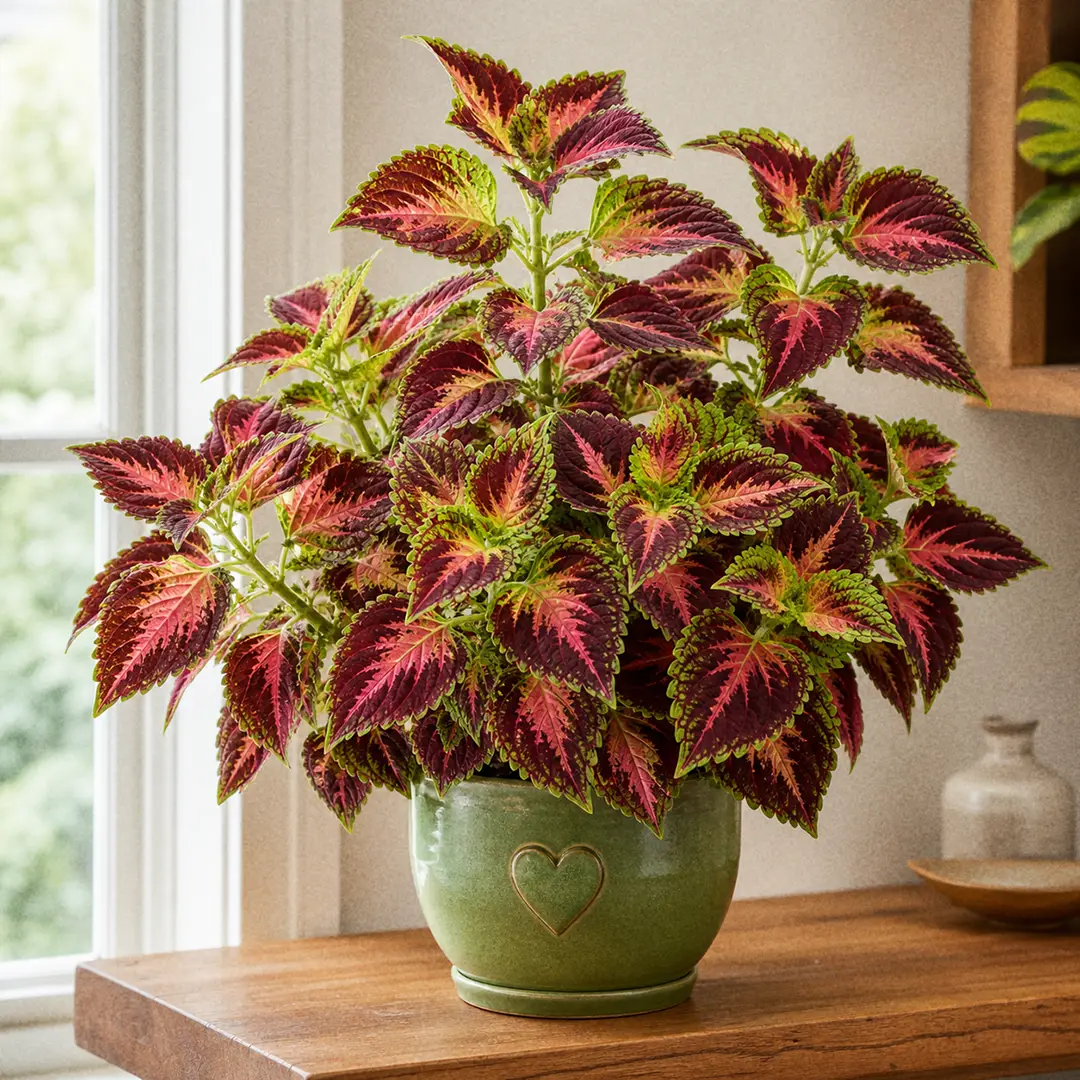
Coleus (Plectranthus scutellarioides) is a tropical foliage powerhouse with some of the boldest leaf color in the plant world. Burgundy, lime, magenta, copper, and chartreuse, often layered on a single leaf, this plant earns its spot indoors with bright light, steady watering, and regular pinching.
📝 Coleus Care Notes
🌿 Care Instructions
⚠️ Common Pests
📊 Growth Information
🪴 In This Guide 🪴

📺 Coleus Video Guide

Coleus Light Requirements
Best Light for Coleus
Coleus needs bright light to keep its color saturated. The pigments that produce the drama (anthocyanins for the reds, carotenoids for the oranges and yellows) are made in response to strong light. Cut the light, and the plant defaults to plain green.
The sweet spot is bright indirect light with a few hours of gentle direct sun. An east window is excellent; south or west works with a sheer curtain during hot afternoons. A north window usually is not enough, especially in winter.
Modern "sun Coleus" cultivars (Wizard, Kong, Premium Sun) handle several hours of direct sun. Older shade types prefer mostly indirect light. If leaves crisp at the edges or bleach, pull back from the glass.
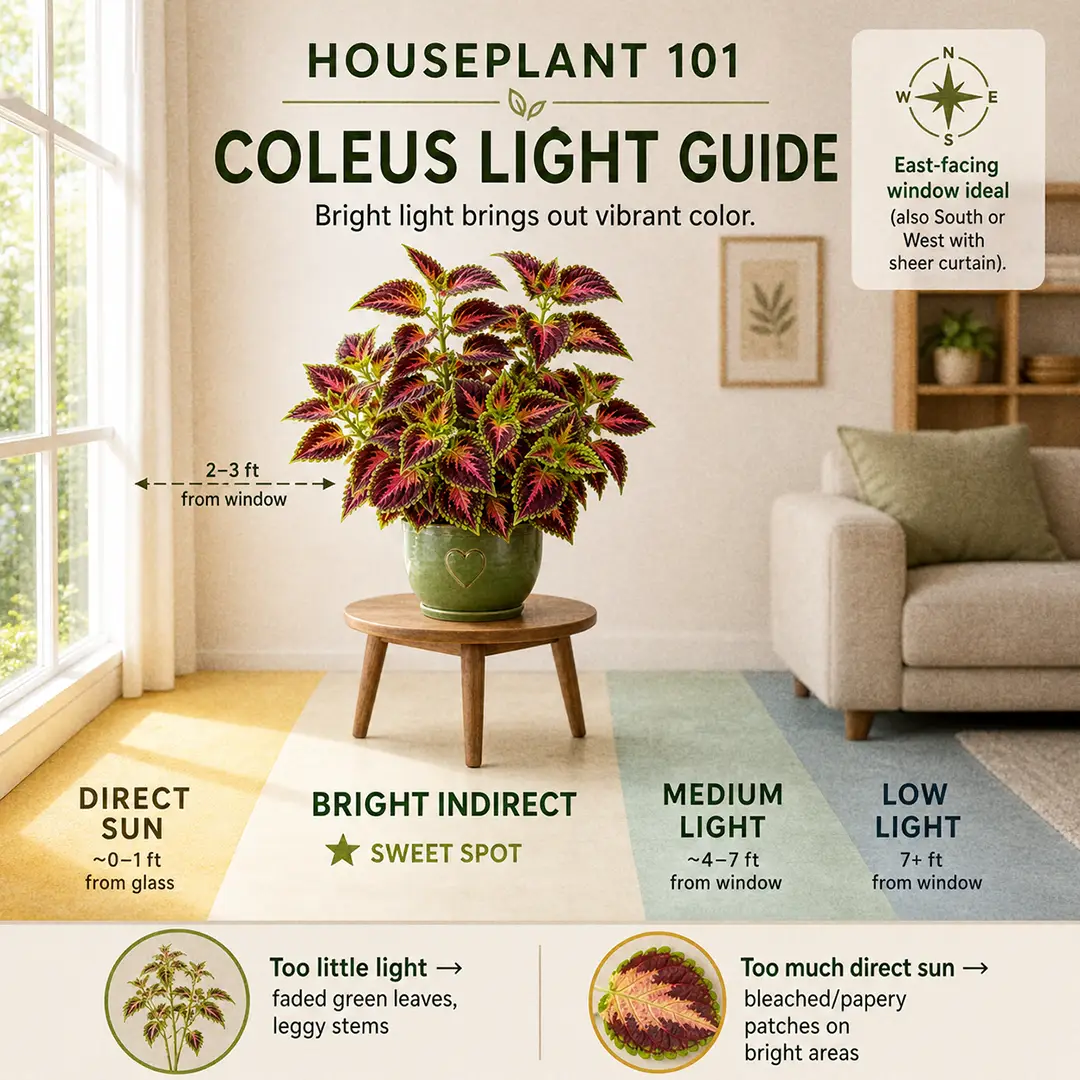
A practical test: if your hand casts a defined shadow on the wall behind the plant, you have enough light for vibrant color.
Signs of Incorrect Light
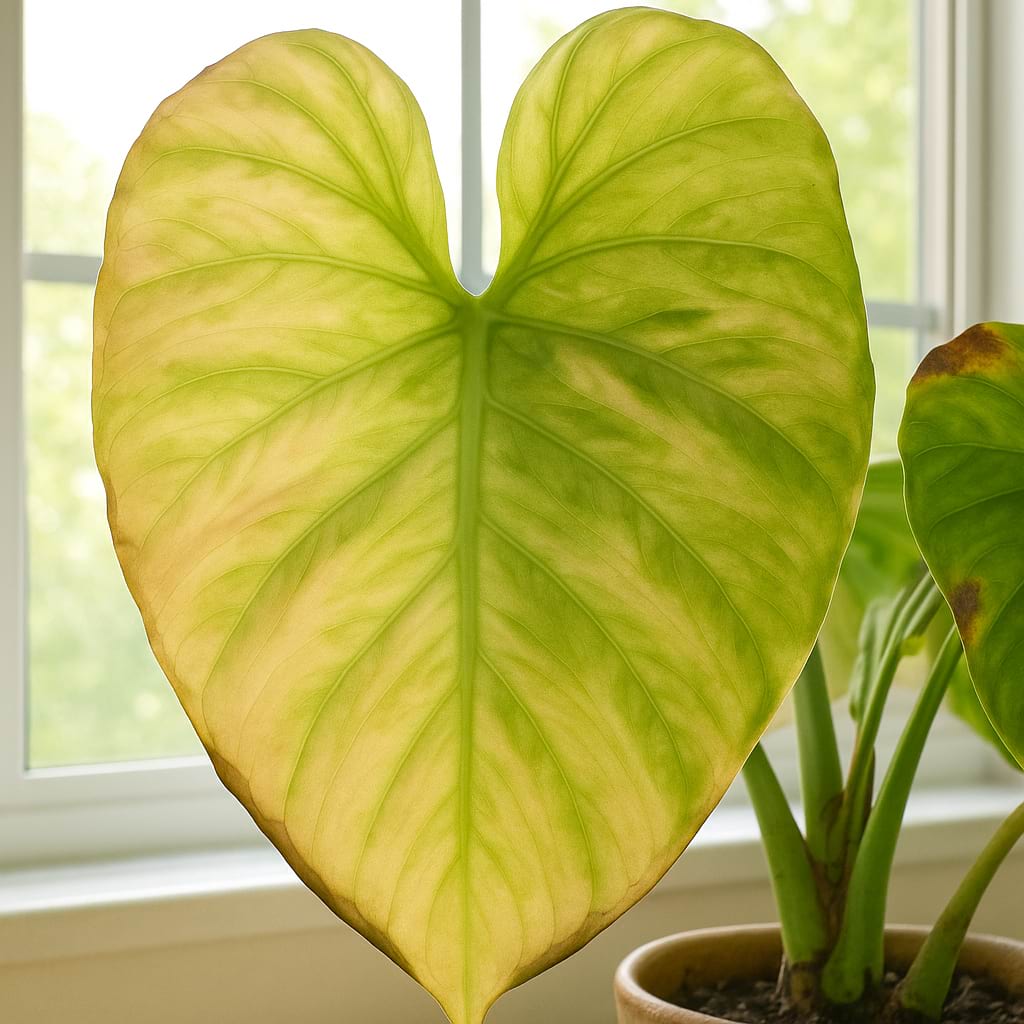
Too little light: leaves grow paler, the plant stretches, lower leaves drop, and color contrast goes flat.
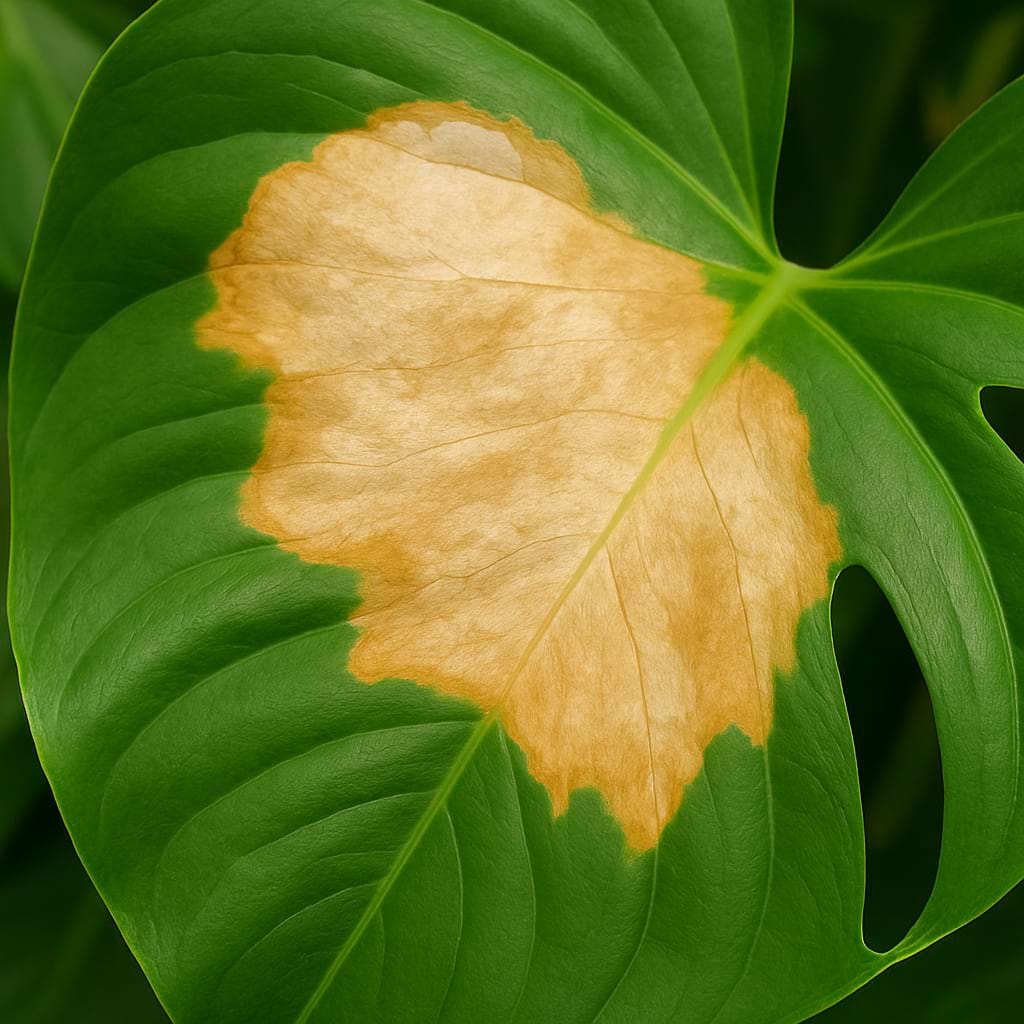
Too much direct sun: leaf edges crisp, especially on bright pink and white sections that lack protective green pigment.
Coleus Watering Guide
How Often to Water Coleus
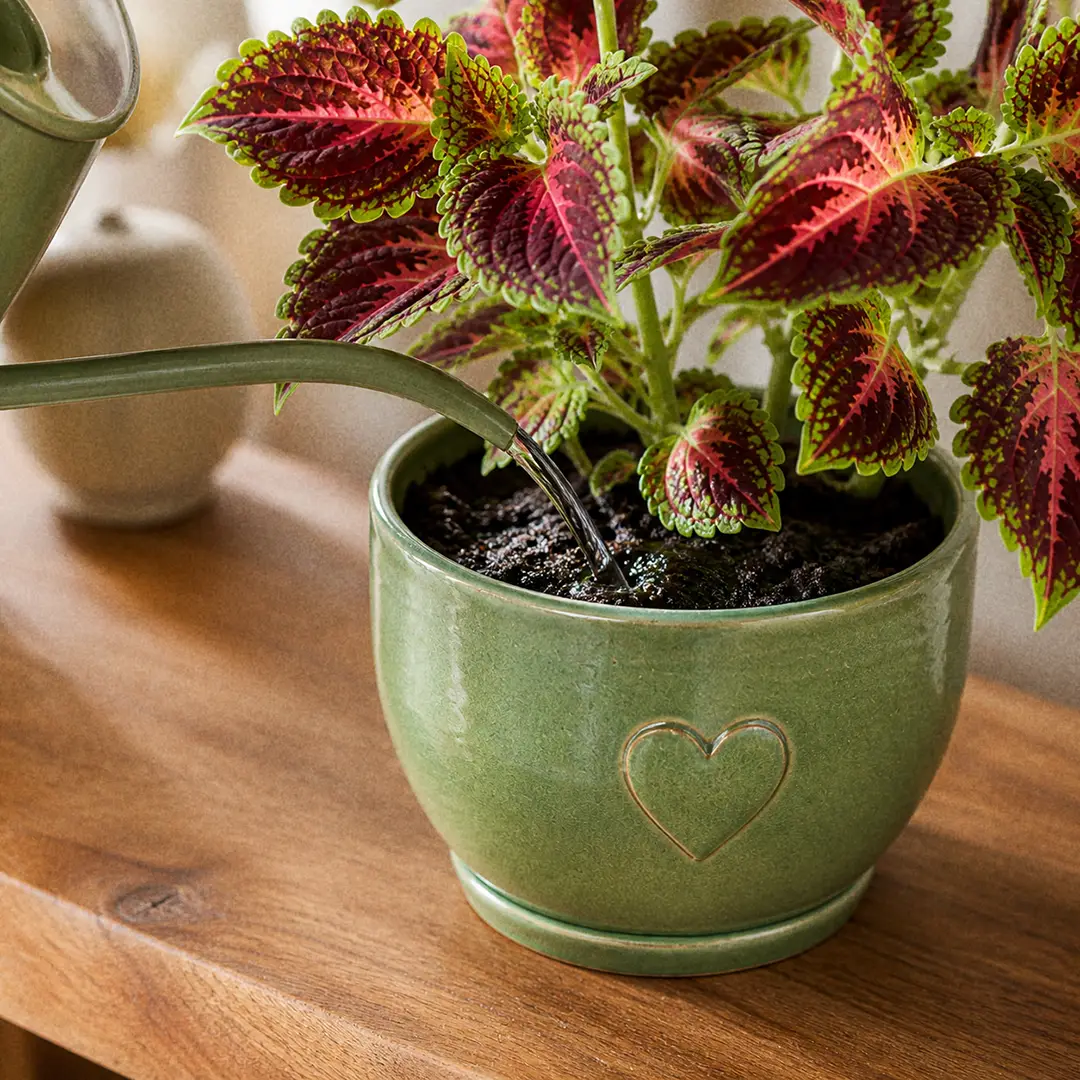
Coleus likes to stay evenly moist but never waterlogged. Water when the top half-inch of soil feels dry but the deeper soil is still slightly damp. For most indoor setups this is every 4-6 days in spring and summer, every 7-10 days in winter.
This plant has thin leaves and cannot store water for long. If the soil dries out completely, it wilts dramatically within hours. A thorough watering usually perks it back up, but repeated cycles trigger leaf drop. A consistent watering routine is the single biggest improvement most growers can make.
How to Water
Bottom watering works well: set the pot in room-temperature water for 15-20 minutes, then drain. See our bottom watering guide for the full method. If you top water, water slowly until it runs from the drainage holes and dump anything that pools in the saucer.
Signs You Are Watering Wrong
Underwatered: every leaf droops at once; soil pulls away from the pot edge. Recovery is quick after a soak.
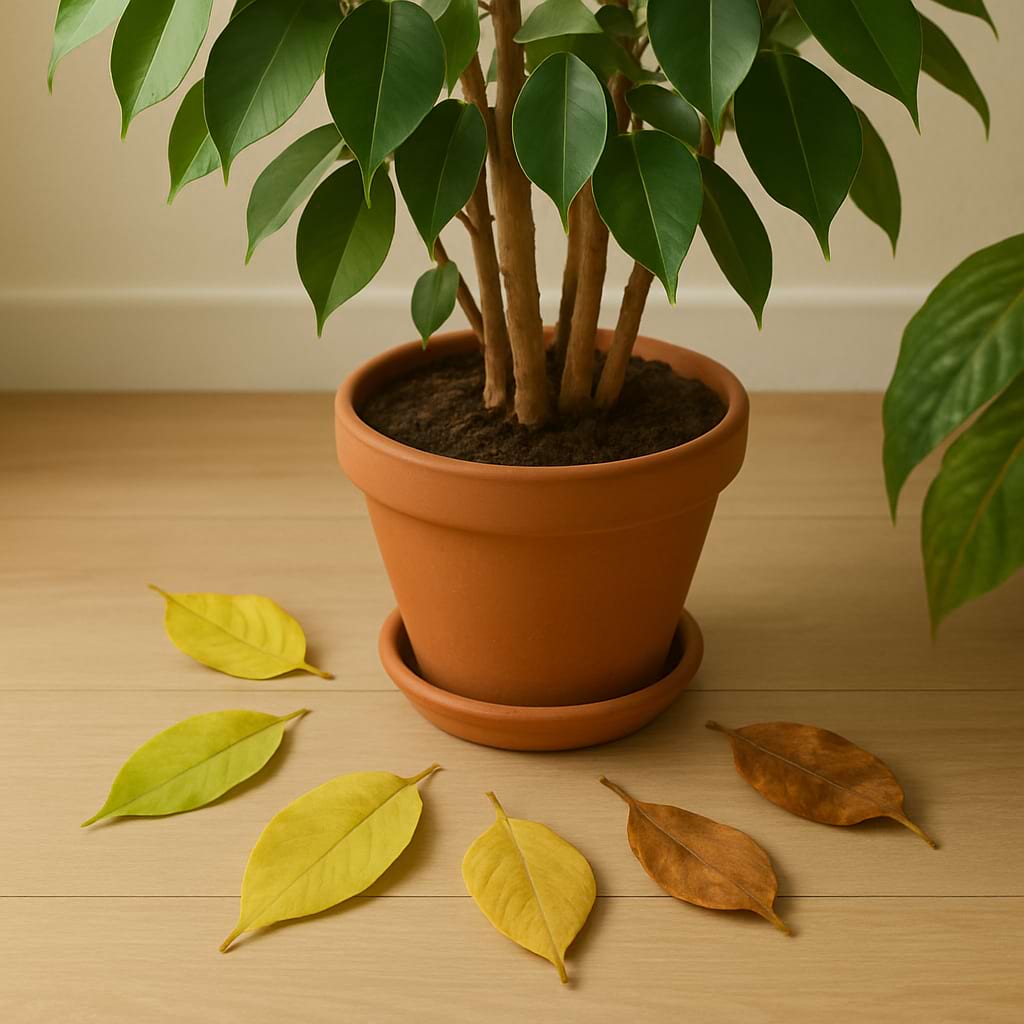
Overwatered: lower leaves yellow and turn translucent, stems go soft at the base, soil smells sour. This is early root rot; take cuttings immediately as backup.
Best Soil for Coleus
What the Soil Needs
Coleus wants two things: good drainage and steady moisture. A peat or coco-coir potting mix with about 25-30% perlite works well. The roots are fine and dense, and they suffocate in compacted soil.
DIY Soil Mix
A simple homemade mix:
- 2 parts potting soil (peat or coco coir base)
- 1 part perlite
- A small handful of compost or worm castings
Pre-Made Options
Any good indoor potting mix with extra perlite works. Avoid heavy garden soil and pure cactus mix. Target pH 6.0-7.0; most bagged mixes fall there. In a self-watering pot, use a lighter mix with extra perlite.
Fertilizing Coleus
When and How Often
Coleus is a fast grower and a heavy feeder for its size. During active growth (spring through early autumn), feed every 2-3 weeks. In winter, cut back to once a month at quarter strength, or skip it if light is low. See our fertilizing guide for more.
What to Use
A balanced liquid fertilizer at half strength is ideal. A 10-10-10 or 20-20-20 works well. Skip slow-release granules indoors; they release on temperature, not need.
Over-Fertilizing Signs
Brown crispy leaf tips and a white crust on the soil mean you are overfeeding. Flush with plain water for a minute and skip the next feeding.
Coleus Temperature Range
Ideal Range
The comfortable indoor range is 65-80°F (18-27°C). Coleus is happiest above 70°F. Below 55°F (13°C), cold damage shows up as black mushy patches on leaves. Above 90°F (32°C), it may wilt midday even with damp soil and recover in the evening.
Drafts and Heat Sources
Keep it a foot away from cold winter glass and out of AC vent airflow. Heater vents dry the leaves out fast, so move the plant if you feel warm air blowing on it.
Coleus Humidity Requirements
Ideal Humidity
Coleus likes 50-60% humidity. It tolerates lower, but leaves stay smaller, edges crisp, and spider mites move in. See our humidity guide for more.
Easy Boosters
Group plants together, use a pebble tray, or run a small humidifier in winter. Keep the plant away from heater and AC airflow. Misting is fine but evaporates within minutes and can encourage fungal spots. A bright bathroom is a wonderful Coleus location.
Coleus Flowers
What the Flowers Look Like
Coleus does flower indoors: slender vertical spikes of pale blue or lavender that look like tiny mint blossoms (it is in the mint family). It is mildly attractive but underwhelming next to the foliage.
Why You Pinch Off Flowers
Once Coleus flowers, it shifts into reproductive mode. Foliage thins, lower leaves drop, color fades, and stems get woody. Pinch off flower spikes the moment you see them forming at the tips, taking the spike and a small piece of stem just below. A regularly de-flowered Coleus stays vigorous for years. Check weekly during late summer and autumn.
Coleus Types and Varieties
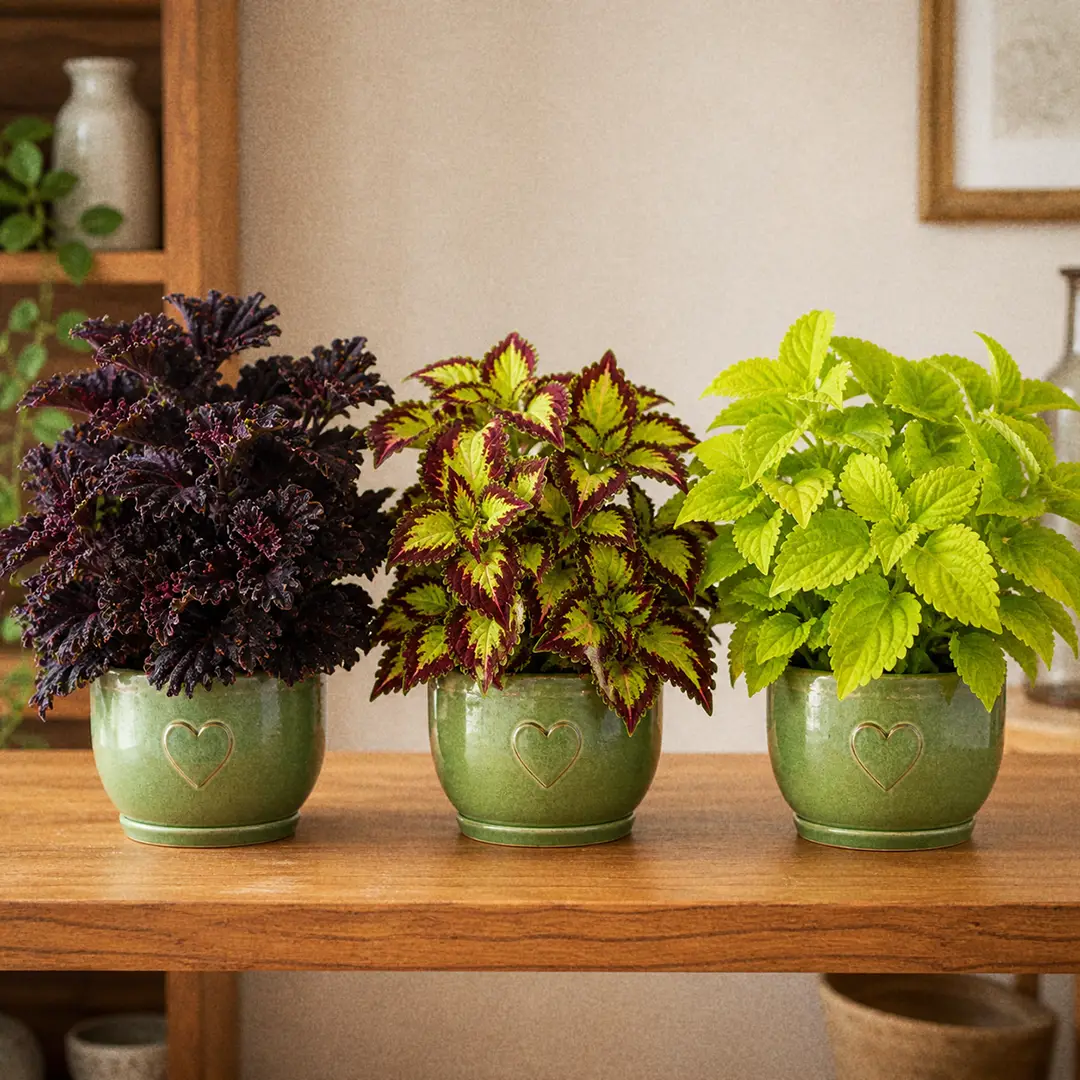
There are hundreds of named cultivars. The ones you will see most often:
Wizard Series
Compact, well-branching cultivars that stay tidy without much pinching. Wizard Mosaic, Wizard Pineapple, Wizard Velvet Red are common starters.
Kong Series
Big, bold leaves up to 6-8 inches across. Kong Rose, Kong Red, and Kong Mosaic prefer slightly less direct sun and look spectacular as a specimen plant.
Black Dragon
A near-black, deeply ruffled cultivar with curled leaf edges. Compact and slow growing. Best in bright indirect light to keep the dark color saturated.
Henna
Lime green centers transitioning to deep burgundy edges, with serrated leaves. Holds up well in sun.
Wasabi
A solid electric chartreuse with no markings. Brilliant for brightening a corner or contrasting with a dark Coleus.
Campfire
Bright copper-orange leaves edged in deeper red. Stunning under late-afternoon light.
Redhead
Deep uniform red foliage that holds its color even in shade. Tall, upright habit; benefits from regular pinching.
Premium Sun Series
Modern cultivars bred for outdoor full sun. Indoors, these handle the brightest windows without scorching.
Potting and Repotting Coleus
Pot Type and Size
Coleus likes a snug pot. Going too large keeps the soil wet too long. Start a young plant in a 4-6 inch pot and go up only one inch at a time. Drainage holes are non-negotiable. Terracotta is excellent because it wicks moisture; plastic and ceramic work with more attention to watering.
When to Repot
Repot every spring, or when roots circle the bottom, water runs straight through, or the plant tips over easily. See our repotting guide.
How to Repot
Water the plant the day before. Tip it out, shake off loose soil, and tease apart circling roots. Set the plant in fresh soil at the same depth, water thoroughly, and keep it out of direct sun for a few days. Take a cutting while you are at it as backup insurance.
Pruning Coleus
Pinching is the single most important Coleus habit. A regularly pinched Coleus stays full and richly colored. An unpinched one becomes a tall stem with a sad tuft of leaves on top within months.
How to Pinch
With clean fingernails or sharp scissors, snap the top of each stem just above a pair of healthy leaves. Take about 1-2 inches, including any tiny developing leaves. Each pinch causes the stem to split into two new branches. Repeat every 1-2 weeks during the growing season.
Even a leggy plant can be reset by hard pinching back to a healthy node; it will fill in within 4-6 weeks. And save your pinched tips: they are perfect cuttings.
Removing Flower Spikes
Pinch off any developing flower stalks immediately. They look like vertical spikes at the very tip of a stem.
How to Propagate Coleus
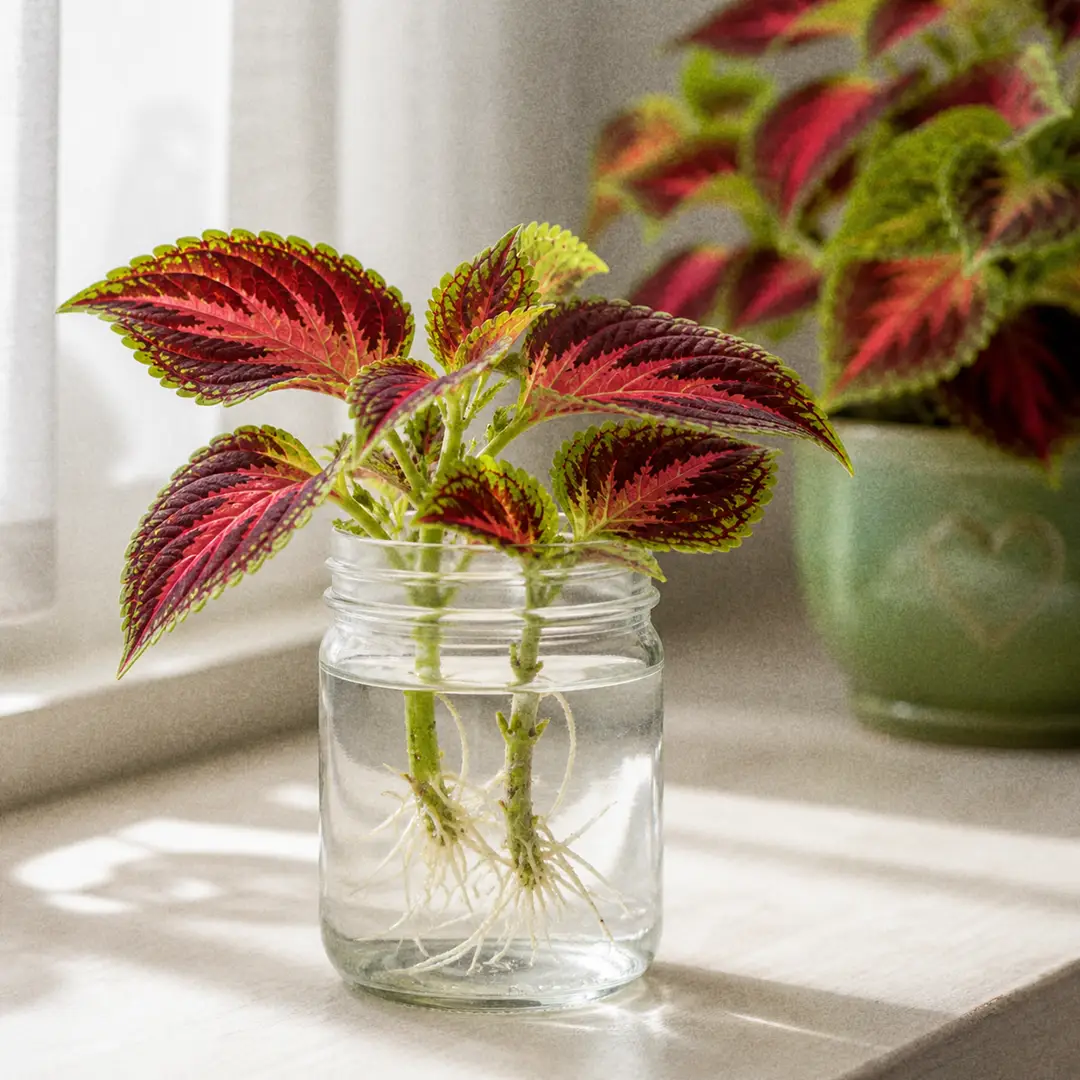
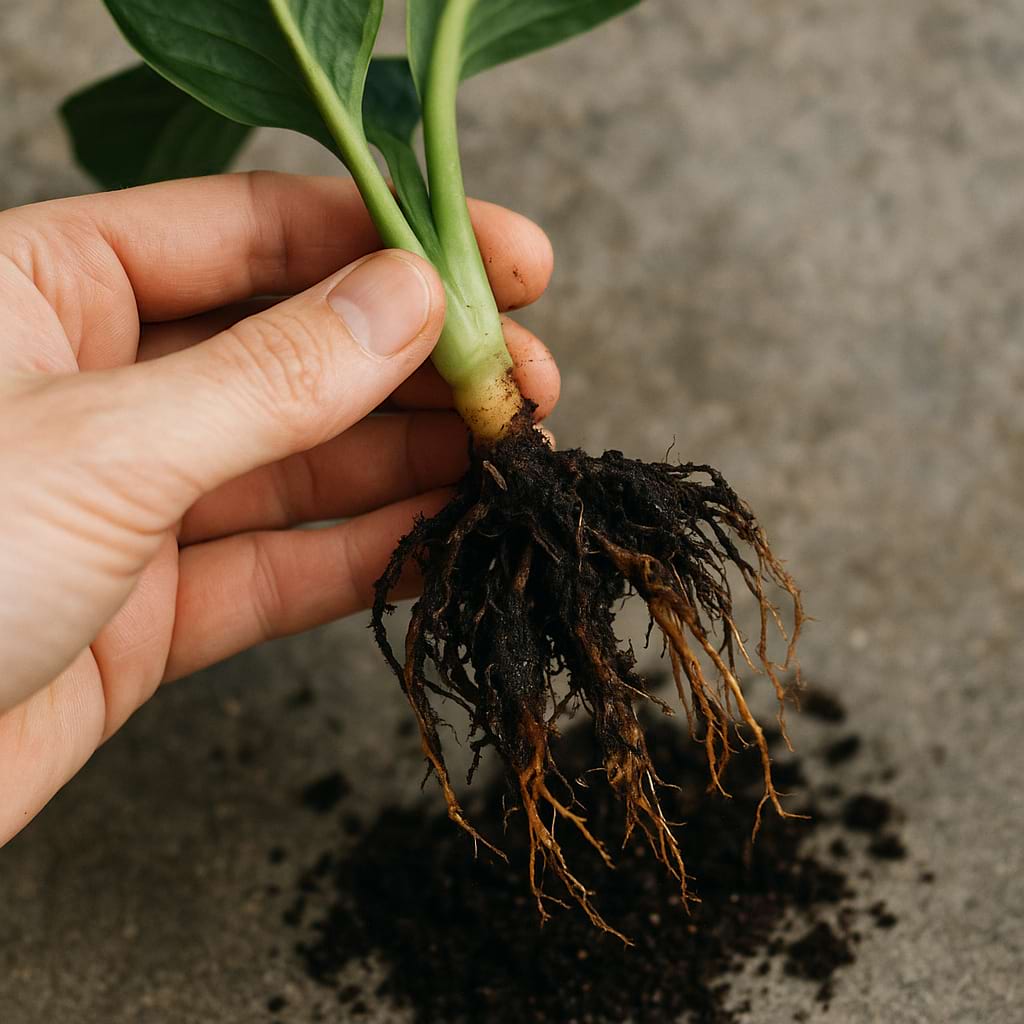
Coleus cuttings root in water within 7-14 days. A single mature plant can produce dozens of new plants each season.
Water Propagation
- Take a cutting 4-6 inches long from a healthy stem, cutting just below a leaf node.
- Strip the lower 1-2 sets of leaves, leaving 2-3 sets at the top.
- Place in room-temperature water with the bare nodes submerged.
- Set in bright indirect light. Change the water every 3-4 days.
- When roots are 1-2 inches long, pot up in moist potting mix.
Soil Propagation
Take the cutting the same way and push it 1-2 inches into moist potting mix. Cover with a clear plastic bag to hold humidity. Rooting hormone is optional. Roots establish in 2-3 weeks.
Spring through early autumn is ideal. Winter propagation works but is slower.
Coleus Pests
Coleus has soft juicy leaves and a few common indoor pests love it. Check the underside of leaves weekly.
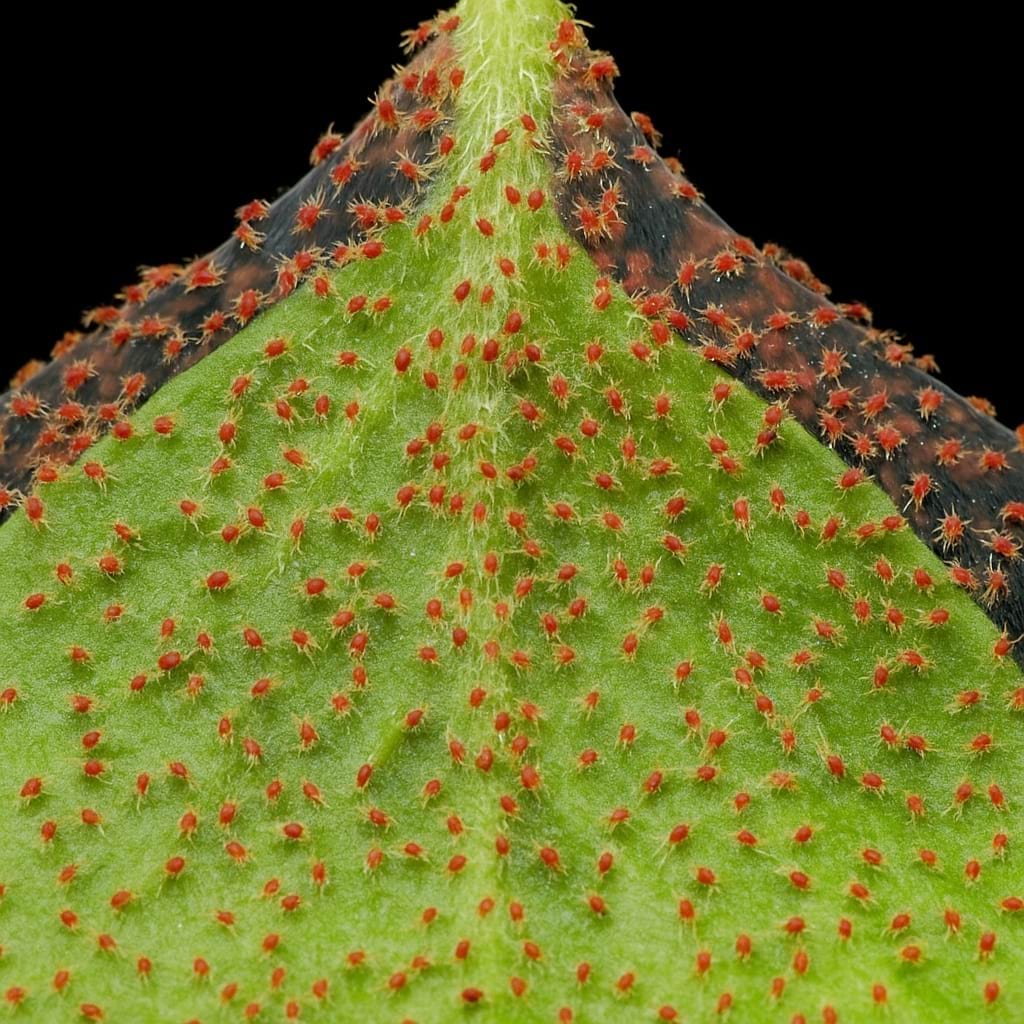
Spider mites: fine webbing in leaf joints and stippled yellow dots. Wipe with diluted insecticidal soap or 1:1 water-and-alcohol; repeat weekly for three weeks.
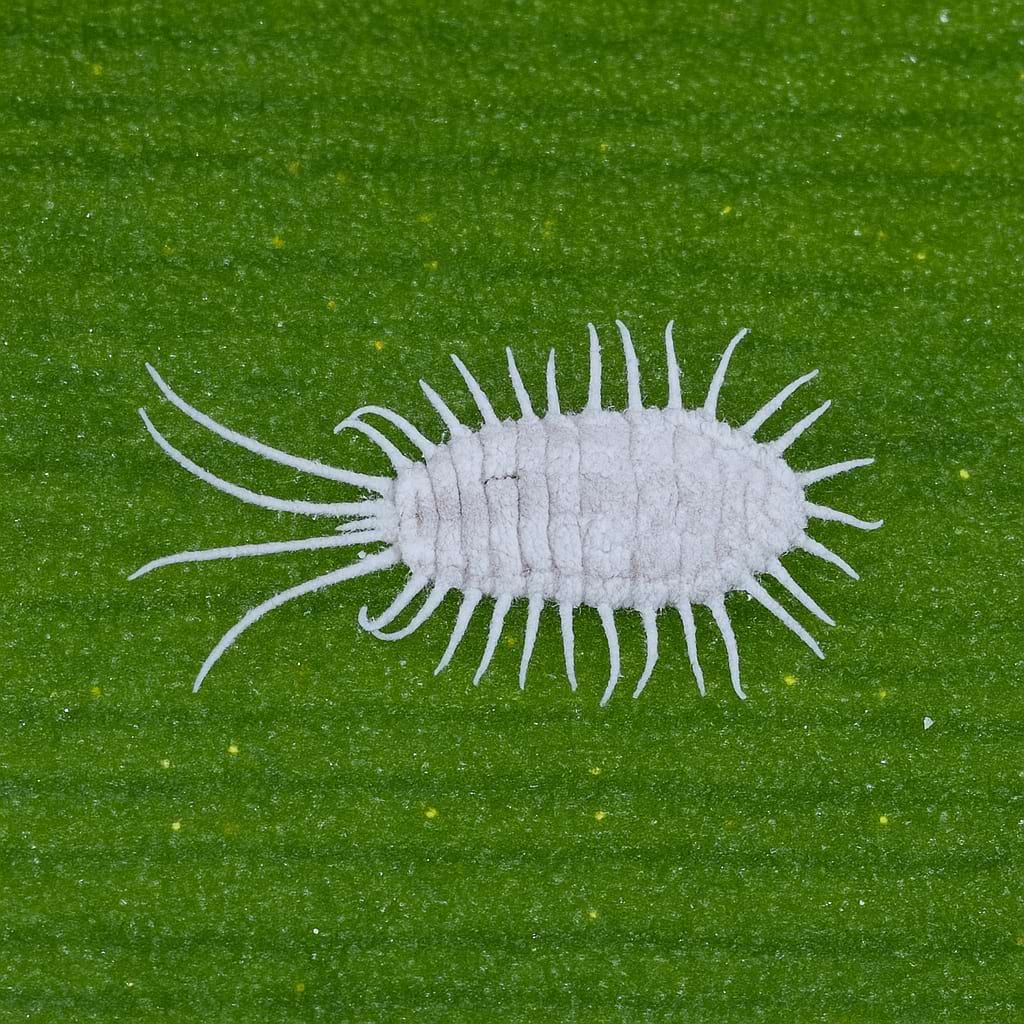
Mealybugs: white cottony puffs in leaf nodes. Dab each with a cotton swab dipped in 70% isopropyl alcohol.
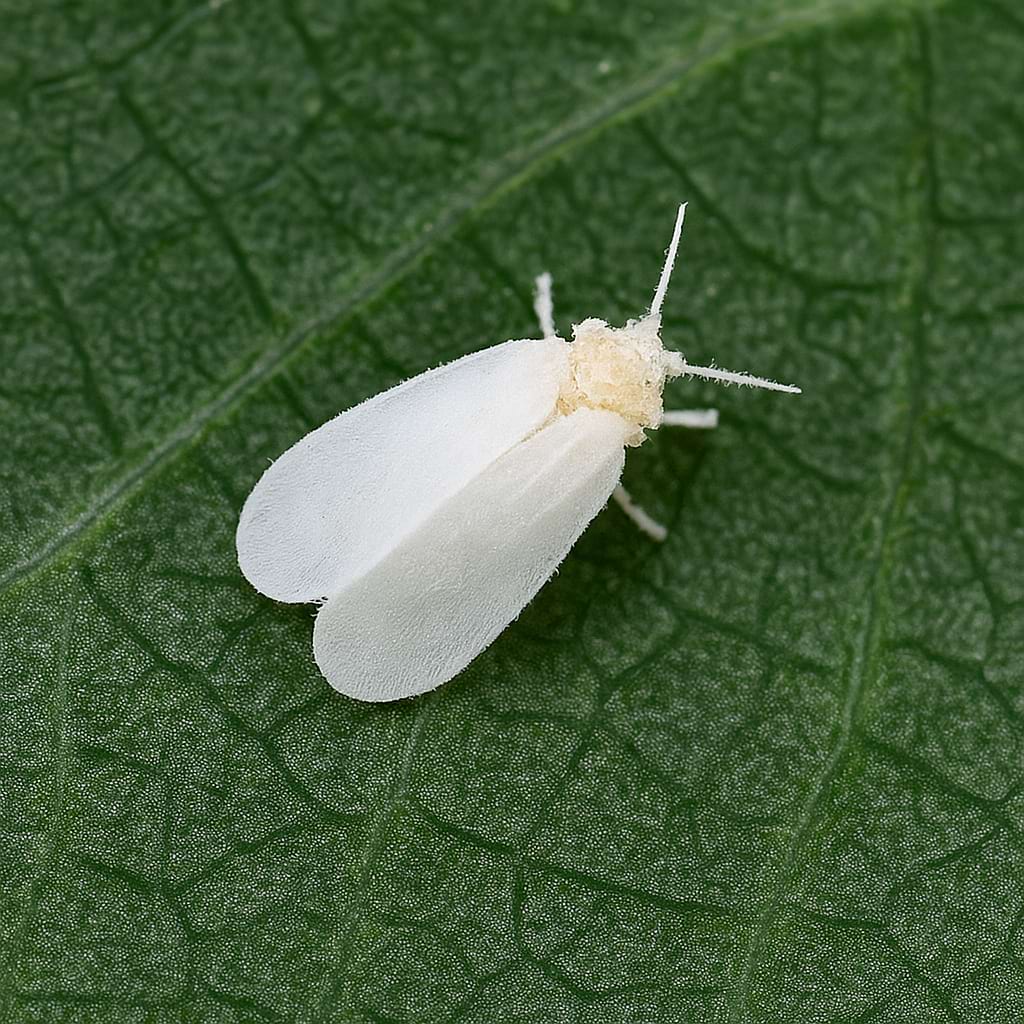
Whiteflies: tiny moth-like insects that flutter up when disturbed. Yellow sticky traps plus insecticidal soap or neem.
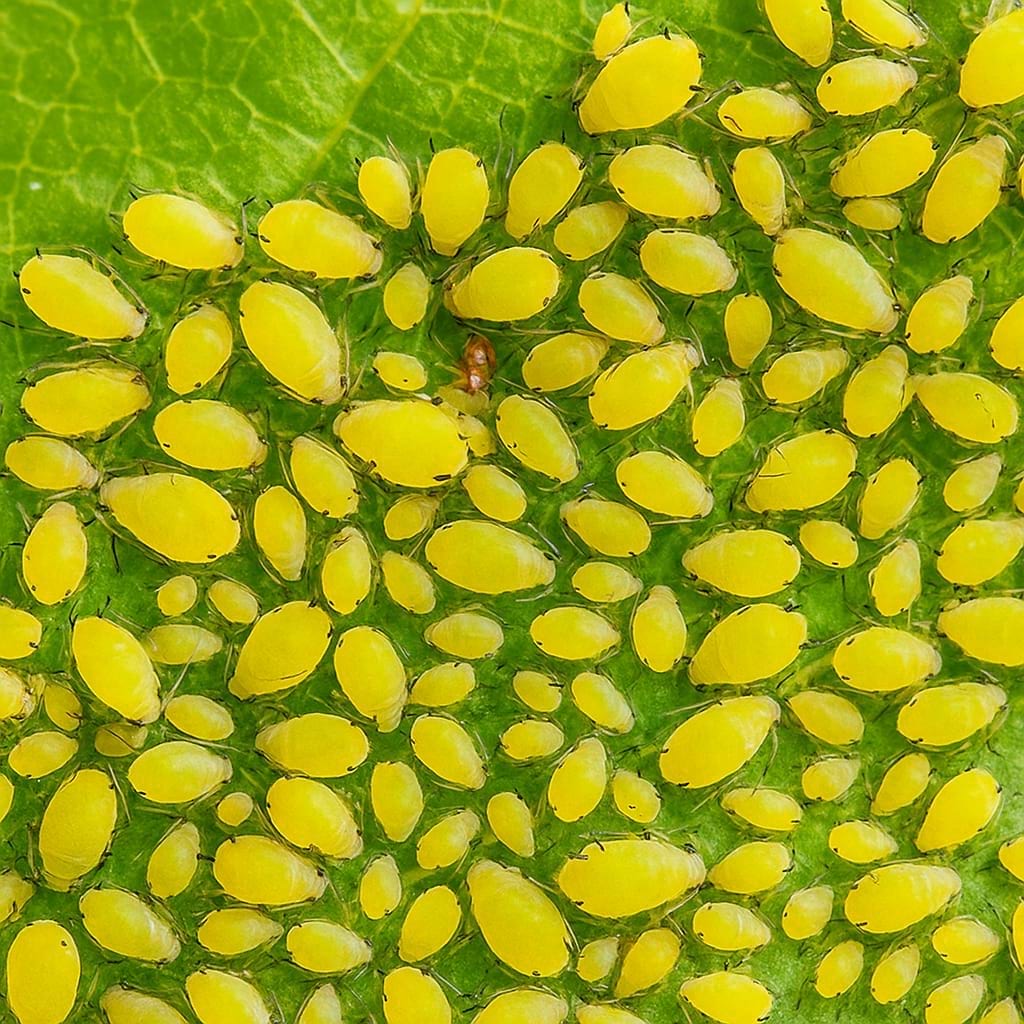
Aphids: small green or black bugs on new growth. Rinse off in the sink, follow up with insecticidal soap.
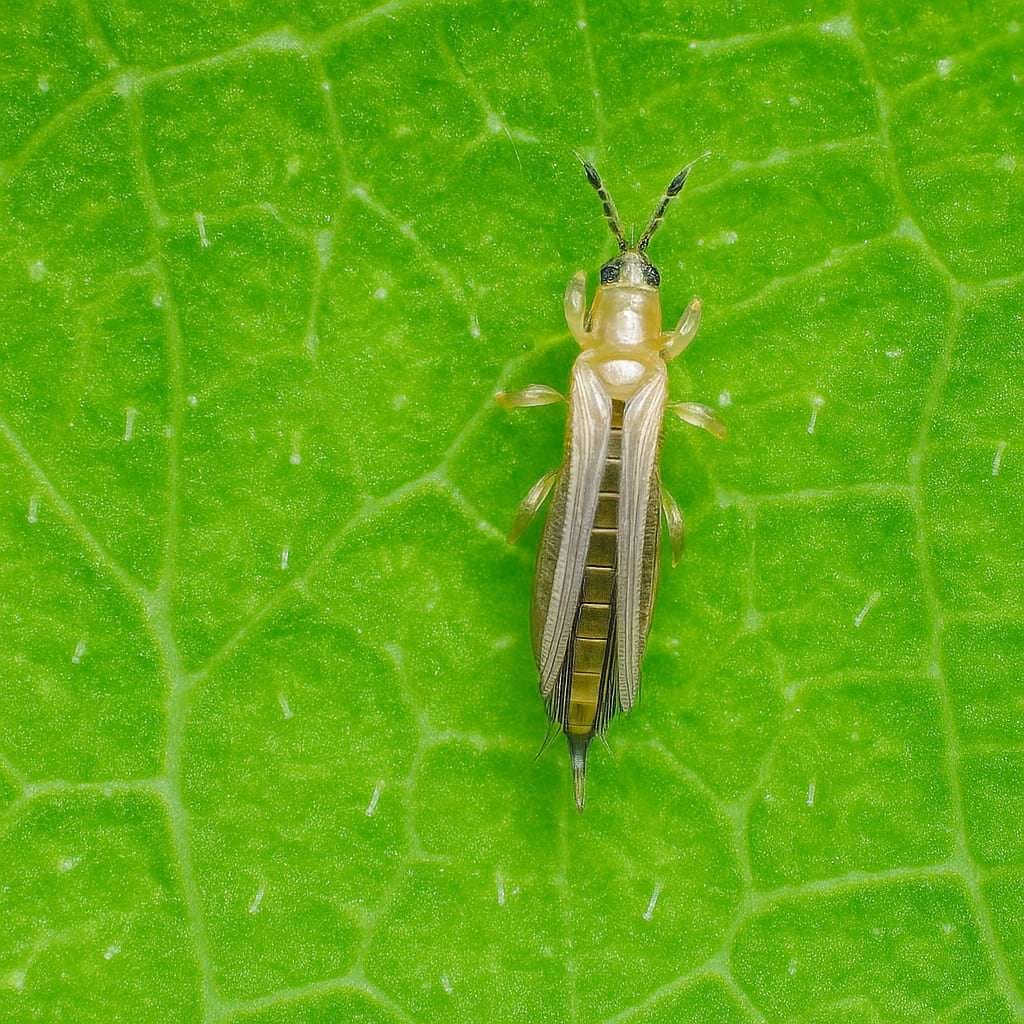
Thrips: silvery streaks and black specks on leaves. Sticky traps plus neem oil over several rounds.
Isolate the affected plant while treating.
Common Coleus Problems
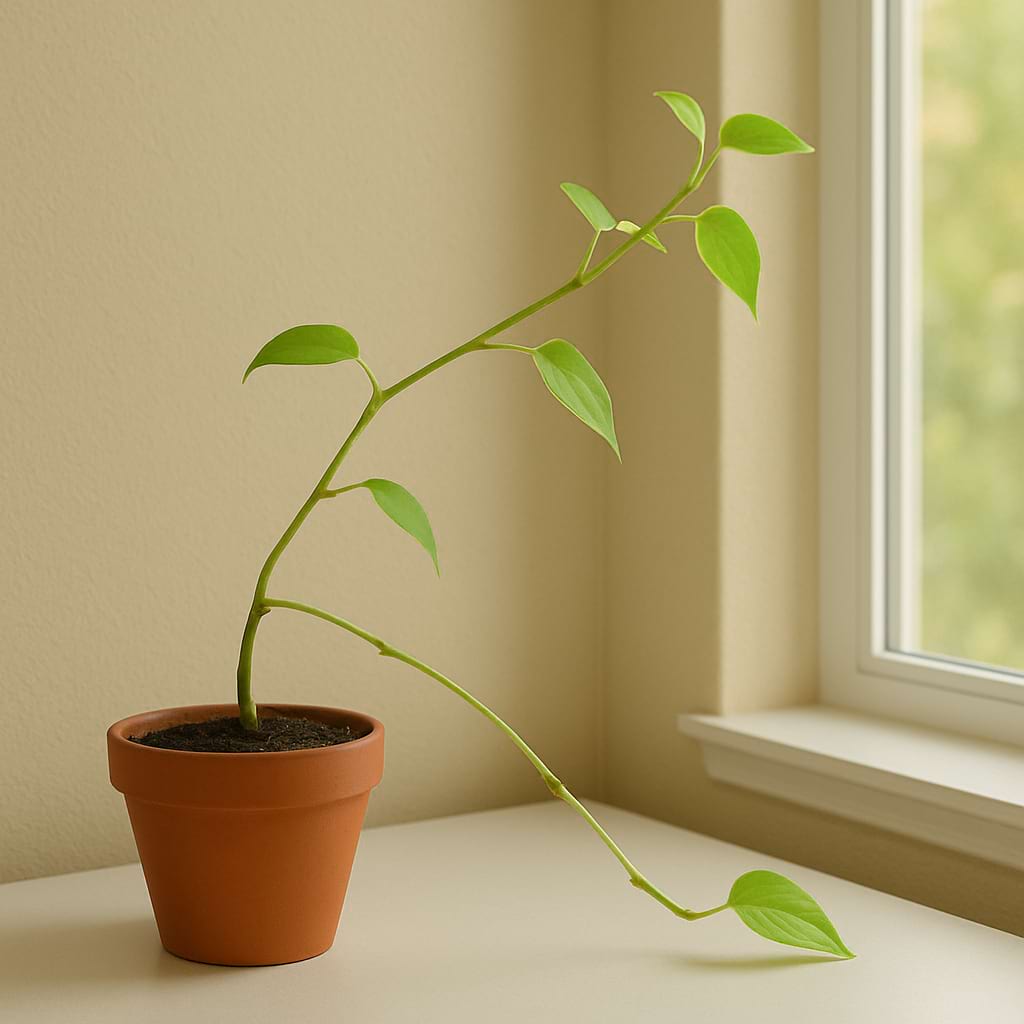
Leggy growth: stretched stems and dropping lower leaves. Too little light or no pinching. Move brighter, cut back to healthy nodes; new growth fills in within 4-6 weeks.
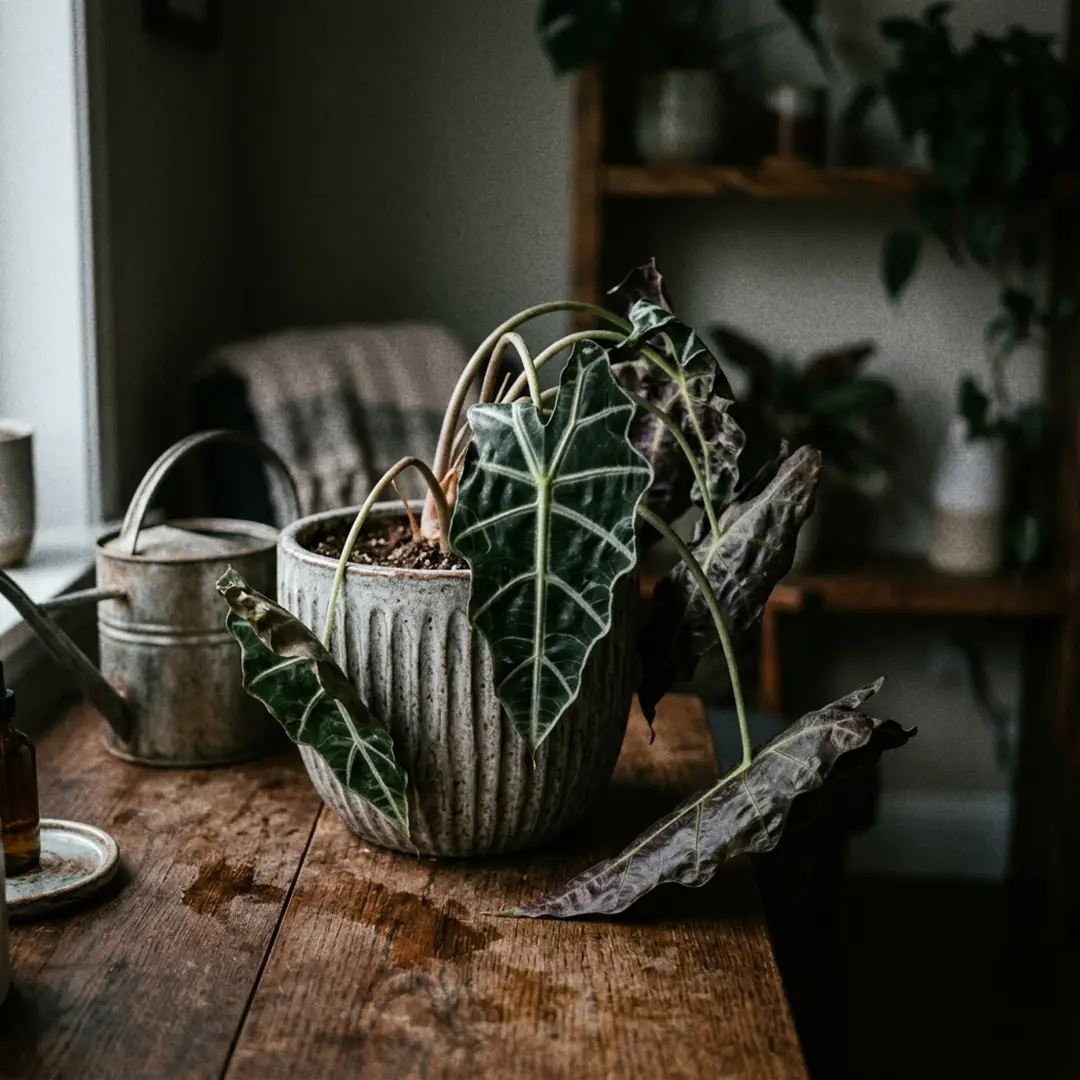
Wilting: quick recovery after watering means underwatering. Wilting on a wet pot means root damage.
Root rot: mushy black stems and yellowing leaves from overwatering or poor drainage. Unpot, trim soft roots, repot in fresh soil. If the main stem is rotted, take cuttings from healthy upper growth and start over.
Pale faded leaves: not enough light. Move closer to a window or add a grow light.
Leaf drop: temperature shock, cold drafts, severe underwatering, or sudden move to a darker spot. Stable conditions fix it.
Sunburn: bleached papery patches on pink, white, and pale yellow sections. Pull back from the window or add a sheer curtain.
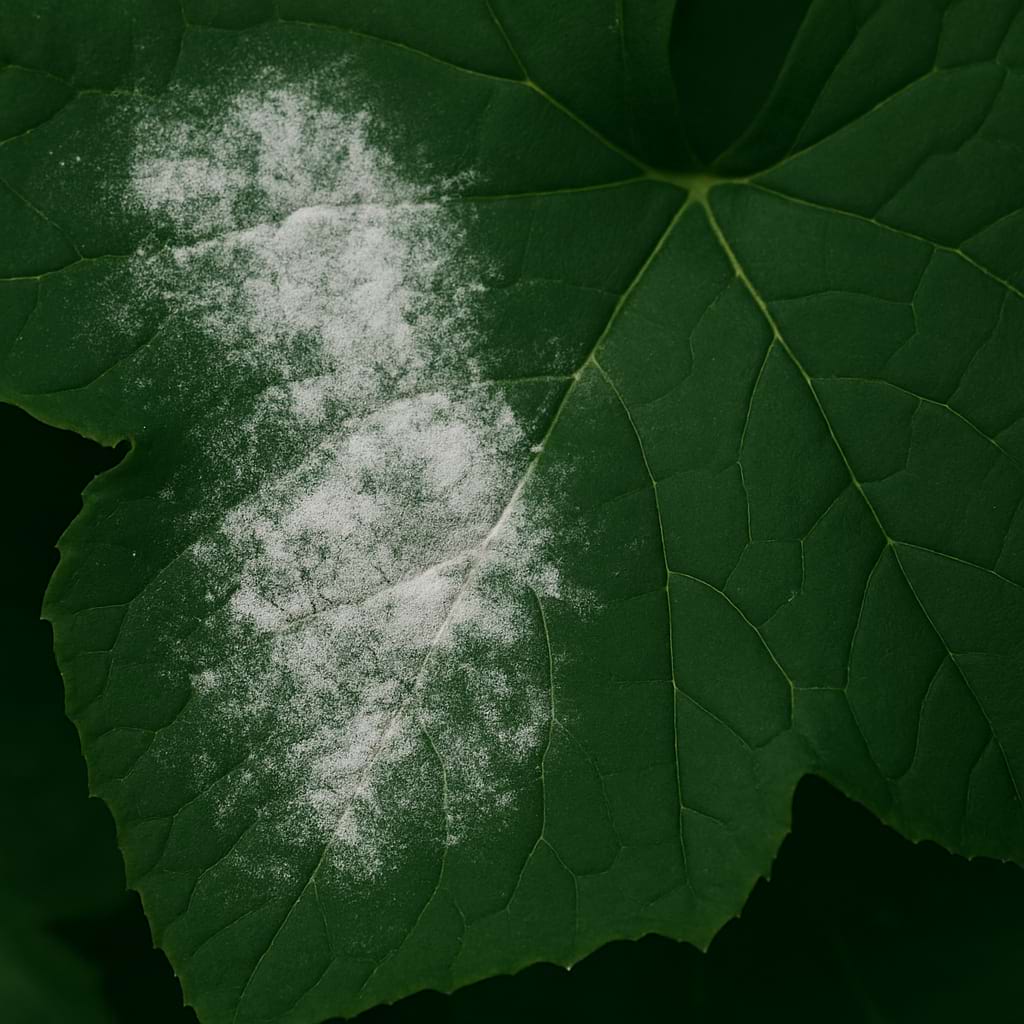
Powdery mildew: dusting of white powder in cool humid low-airflow conditions. Improve airflow, water in the morning, treat with a 1:1 milk-water spray or fungicide.
Coleus Display Ideas
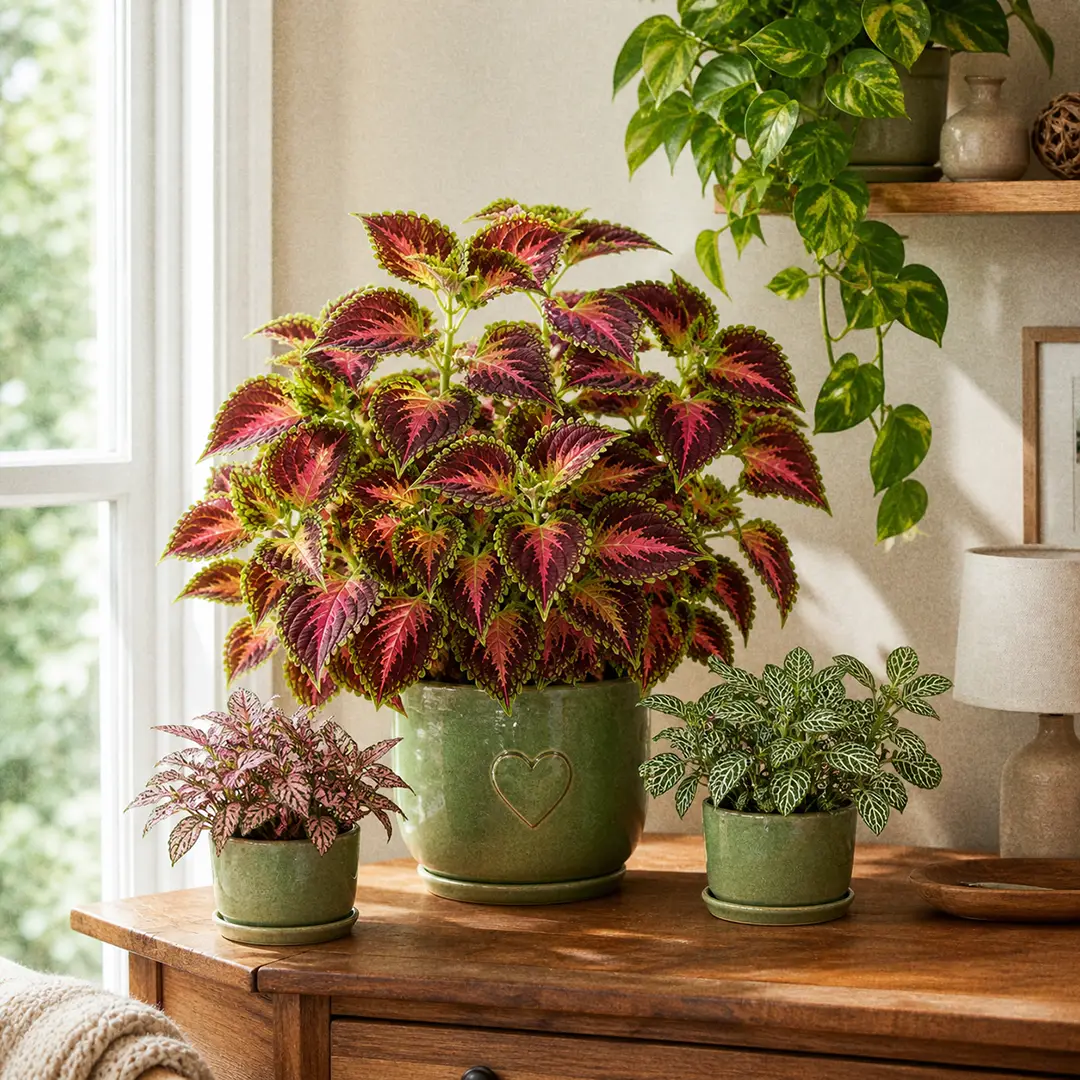
Solo Setups
A mature Coleus in a 6-8 inch pot is striking on its own. Pick a bold cultivar like Kong Rose or Black Dragon and a neutral pot in cream, terracotta, or matte sage.
Grouped Arrangements
For color-stack groupings, try Wasabi next to Black Dragon for contrast, Henna next to Redhead for warm tones, or Campfire with chartreuse for autumn mood. Use matching pots so the foliage stays the focus.
Companion Plants
Coleus mixes well with a Polka Dot Plant or Nerve Plant, and a trailing Pothos draped above sets it off beautifully. A bright bathroom with morning light is ideal. And a cluster of clear bottles with rooting cuttings on a sunny windowsill is genuinely pretty decor.
Coleus Pro Tips
- Pinch on a weekly schedule; it takes 60 seconds and prevents most problems.
- Always keep backup cuttings rooting; a parent plant past its second year is past prime.
- More light means more color; a grow light is worth it for a low-light apartment.
- Water in the morning so any splashed leaves dry by evening.
- Rotate a quarter turn weekly so growth stays even.
- Take cuttings in early autumn to overwinter as fresh spring plants.
- Skip leaf shine sprays; a soft damp cloth is all you need.
Frequently Asked Questions
Is Coleus toxic to cats and dogs?
Yes, mildly. The essential oils can cause vomiting, diarrhea, and skin irritation if a pet chews on the leaves. Rarely dangerous, but worth keeping out of reach. For a non-toxic alternative with similar punch, try Polka Dot Plant.
Can Coleus be grown indoors year-round?
Yes. Indoors it can live several years, but older plants lose vigor after about two years. Keep taking cuttings so you always have a fresh young version of the same plant.
Why are my Coleus leaves turning green?
Not enough light. The pigments that produce burgundy, magenta, copper, and pink require strong light to be expressed. Move closer to a window and new growth should come in saturated.
How fast does Coleus grow?
Fast. A 4-inch nursery plant can fill a 6-inch pot in 2-3 months under good conditions, and a rooted cutting can become a full plant in a single growing season.
Can I grow Coleus from seed?
Yes, but seeds rarely come true to named cultivars. Seed-grown Coleus is more variable in color. For a specific cultivar, propagate from cuttings.
Can I move my Coleus outdoors in summer?
Yes. Acclimate over a week, starting in shade. Bring it back in before nighttime temperatures drop below 55°F, and check carefully for pests before reentry.
How do I keep my Coleus bushy instead of tall and bare?
Pinch the growing tips every 1-2 weeks. Each pinch turns one stem into two new branches, building density.
Are there really Coleus varieties that handle direct sun?
Yes. Modern sun-bred cultivars (Premium Sun, many Wizards and Kongs) tolerate full sun. Older heirloom varieties prefer indirect light. The label usually says "sun" or "shade."
ℹ️ Coleus Info
Care and Maintenance
🪴 Soil Type and pH: Light, peat or coco-coir based mix with perlite for drainage and a touch of compost for nutrients.
💧 Humidity and Misting: Prefers 50-60% humidity; tolerates average rooms but colors deepen in higher humidity.
✂️ Pruning: Pinch growing tips every 1-2 weeks and snap off flower spikes to keep foliage vivid.
🧼 Cleaning: Wipe leaves gently with a soft damp cloth to remove dust; do not use leaf shine products.
🌱 Repotting: Every spring or whenever roots circle the pot; Coleus grows fast and appreciates fresh soil yearly.
🔄 Repotting Frequency: Every 12 months
❄️ Seasonal Changes in Care: Push light and pinching hard in spring and summer. In autumn, scale back fertilizer and reduce watering as growth slows. In winter, move closer to your brightest window and protect from cold drafts; some leaf drop is normal.
Growing Characteristics
💥 Growth Speed: Fast
🔄 Life Cycle: Tender tropical perennial
💥 Bloom Time: Late summer into autumn; small lavender to pale blue spikes that look like miniature mint flowers. Most growers pinch them off to keep the plant's energy in the foliage.
🌡️ Hardiness Zones: 10-11 (outdoors)
🗺️ Native Area: Southeast Asia, Malaysia, and northern Australia
🚘 Hibernation: No, but growth slows in winter
Propagation and Health
📍 Suitable Locations: Bright windowsills, sunrooms, plant shelves, covered patios in summer.
🪴 Propagation Methods: Extremely easy from stem cuttings rooted in water within 7-14 days.
🐛 Common Pests: Spider Mites, Mealybugs, Whiteflies, Aphids, Thrips
🦠 Possible Diseases: Root rot, downy mildew, botrytis, fungal leaf spot.
Plant Details
🌿 Plant Type: Herbaceous Perennial
🍃 Foliage Type: Evergreen indoors (deciduous as outdoor annual)
🎨 Color of Leaves: Endless combinations of burgundy, magenta, lime, copper, chartreuse, near-black, pink, and cream.
🌸 Flower Color: Pale blue to lavender spikes
🌼 Blooming: Late summer to autumn; usually pinched off
🍽️ Edibility: Not edible; mildly toxic if ingested
📏 Mature Size: 6-36 inches indoors
Additional Info
🌻 General Benefits: Outrageous color in any room, fast growth, very easy propagation, excellent for filling out plant arrangements quickly.
💊 Medical Properties: Some traditional medicine uses in Southeast Asia, but no widely recognized home herbal applications. Treat as ornamental only.
🧿 Feng Shui: The bold warm tones bring fire energy; great for an entryway or living room where you want a more lively, sociable atmosphere.
⭐ Zodiac Sign Compatibility: Leo
🌈 Symbolism or Folklore: Self-expression, individuality, and the joy of standing out.
📝 Interesting Facts: Coleus was a Victorian houseplant obsession in the 1800s. Wealthy collectors competed for rare cultivars and entire greenhouses were dedicated to breeding new color combinations. The genus name has been bounced between Coleus, Solenostemon, and now Plectranthus, which is why you will see all three on plant labels depending on when the tag was printed.
Buying and Usage
🛒 What to Look for When Buying: Look for compact, bushy plants with vivid color and tight internodes (short spaces between leaves). Avoid stretched, pale specimens and any plant with flower spikes already showing, since blooming shifts energy away from foliage. Check the underside of leaves for spider mites before bringing one home.
🪴 Other Uses: A staple of Victorian carpet bedding designs and modern container gardens. Indoors, often used as a colorful filler in mixed planters and as a propagation hobby plant for beginners.
Decoration and Styling
🖼️ Display Ideas: Group two or three different cultivars in matching pots to play color against color. A near-black Coleus next to a lime-green variety on a wooden shelf is showstopping. Looks great as a centerpiece in a living room window or paired with trailing plants in a tiered stand.
🧵 Styling Tips: Neutral pots in cream, terracotta, or sage green make the foliage colors pop. Avoid bright patterned pots that compete with the leaves. The plant's saturated tones look beautiful against pale linen or warm wood.

Houseplant101 Forum
Questions & Comments
Ask a question, share your plant experience, or help other plant owners.
Comments are temporarily unavailable.
Open the Houseplant101 ForumNo comments yet
Be the first to ask a question or share your experience about this page.
Log in or create an account
Comments use your Houseplant101 Forum account, but you can stay on this page.
Create a new account