
Alocasia Black Velvet
Alocasia reginula
Little Queen, Black Velvet Alocasia, Alocasia reginula Black Velvet


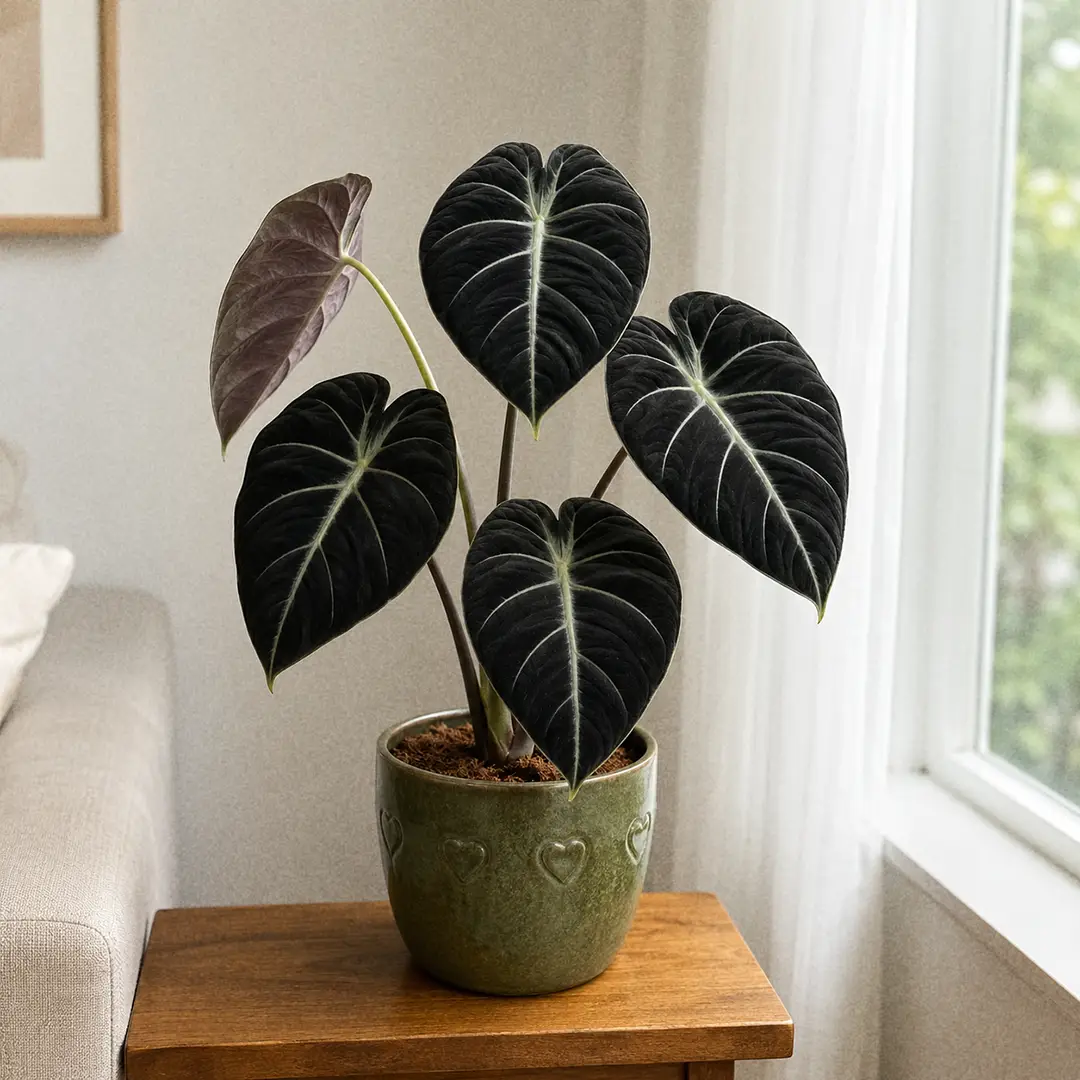
Alocasia Black Velvet has thick, near-black leaves with a suede finish and bright silver veins, all on a plant that stays under 18 inches. Learn how to water, light, and overwinter Alocasia reginula without losing every leaf.
📝 Alocasia Black Velvet Care Notes
🌿 Care Instructions
⚠️ Common Pests
📊 Growth Information
🪴 In This Guide 🪴

☀️ Alocasia Black Velvet Light Requirements (Indoor Lighting Guide)
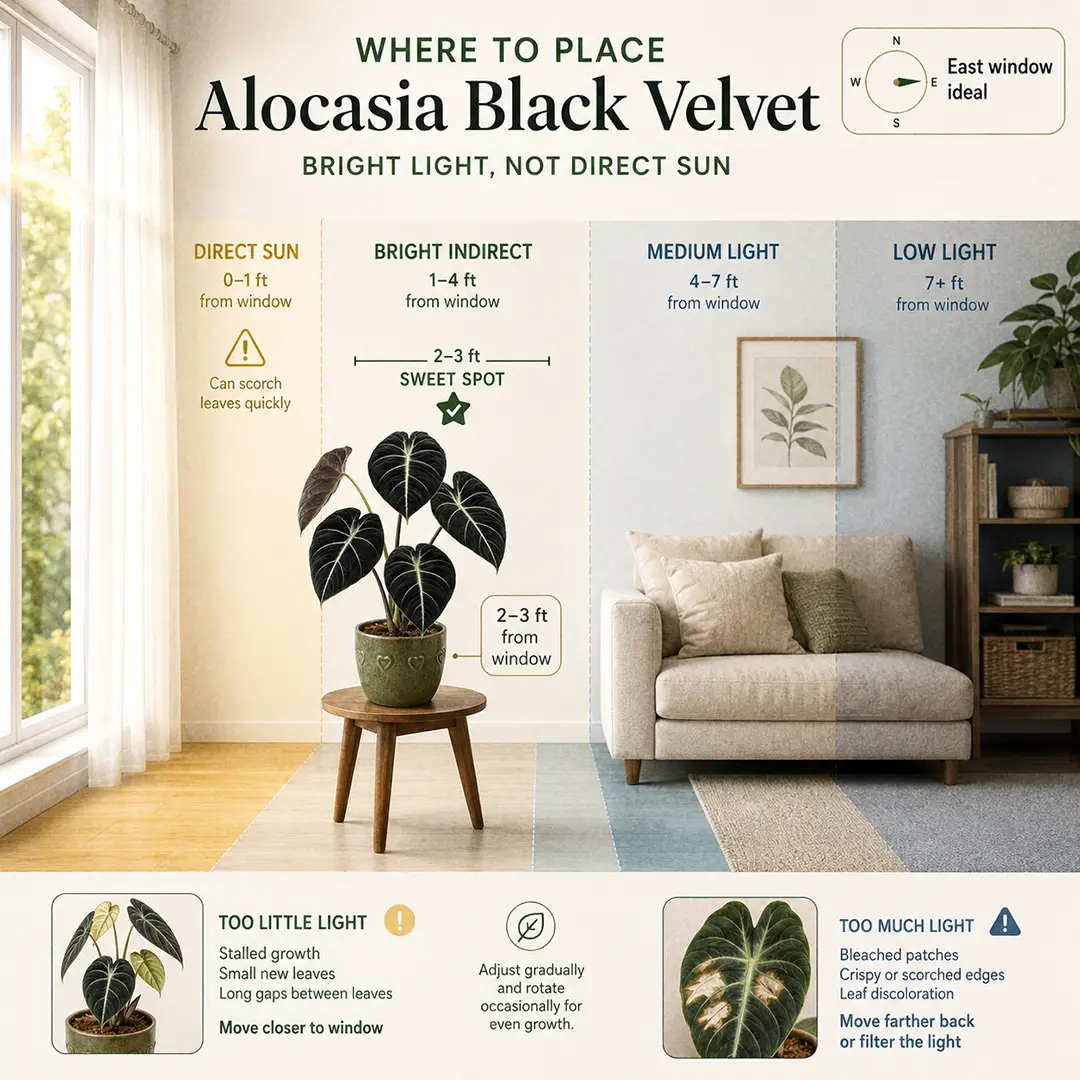
The Sweet Spot
Black Velvet wants bright indirect light, and it is fussier about this than most aroids because the leaves are so dark. An east-facing window is the easy answer: two or three feet back from the glass, where it gets soft morning sun and bright light the rest of the day. A north window works in summer but usually goes too dim by November.
South and west windows are fine as long as the plant sits four to five feet back or behind a sheer curtain. This is a rainforest floor plant from Borneo, growing in the dappled light that filters through everything above it. It never sees open sun in the wild, and it does not want it on your windowsill. Our Indoor Lighting Guide walks through judging a spot by eye if you are unsure.
Too Little Light
In a dim corner, Black Velvet does not stretch the way a pothos does. It just stops. New leaves come in smaller than the last ones, the gap between leaves grows longer, and eventually the plant produces nothing at all for months. That is stunted growth, and it is slow enough that people often blame the season instead of the spot.
The other tell is soil that stays wet for a week or more. Low light means low water use, which means a permanently damp pot and rot risk. If your winters are dark, a small grow light on a timer for eight hours a day keeps it growing and keeps the mix drying at a sensible pace.
Too Much Light
Direct sun scorches these leaves fast. An hour or two of harsh afternoon sun through glass leaves pale bleached patches that turn papery brown, and because the leaf is so dark it absorbs more heat than a green one would. That damage is leaf scorch and it never heals.
Milder overexposure shows up as fading. The velvet black lightens toward a dull olive-brown and the silver veins lose their contrast. Move the plant back a few feet and the next leaf comes in properly dark.
💧 Alocasia Black Velvet Watering Guide (How to Water Properly)
Watering Frequency
Water when the top two inches of mix are dry, not on a schedule. In a warm bright room in summer that lands around every 5 to 7 days in a small pot. In winter it can stretch to every two or three weeks, and if the plant has gone dormant, longer still.
Two inches is deliberate. Most guides say one inch, but this plant has a thick rhizome that rots quickly in constant moisture, and the chunky mix it should be sitting in dries unevenly. Push a finger in properly, or use a moisture meter if you find the surface misleading. The mix should never go bone dry all the way through, though. That is the other failure mode, and it is what causes sudden leaf collapse.
How to Water
Water thoroughly until it pours from the drainage holes, then tip out the saucer. Half-watering, where you give a small splash every few days, keeps the top wet and the bottom dry and encourages root loss down where you cannot see it.
Room temperature water only. Cold water straight from the tap shocks a warm-rooted tropical and often triggers a round of yellow lower leaves within a week. If your tap water is heavily chlorinated or very hard, this is one of the plants that notices, so filtered or left-out water is worth the trouble. Bottom watering works well here: stand the pot in a few inches of water for 15 minutes, then drain it completely.
Signs of Trouble
Overwatering shows up first as yellowing on the lowest leaf, then a soft base and a sour smell from the soil. That is root rot and it moves faster in this plant than in most, because the rhizome is essentially a storage organ sitting in wet mix. Underwatering is different: the whole plant droops at once, leaves flatten and go limp, and it usually perks back up within hours of a soak. Read the full watering guide if you want the general principles.
🪴 Best Soil for Alocasia Black Velvet (Chunky Aroid Mix)
What the Soil Needs
Air, mostly. The roots need to be wet and breathing at the same time, which regular bagged potting soil cannot do once it settles and compacts. A good mix for Black Velvet holds moisture on the surface of its chunks and lets everything else drain away in seconds.
It also wants to be slightly acidic, around pH 5.5 to 6.5, which most peat or coco-based mixes land at naturally. Do not add lime or garden soil.
DIY Soil Mix
The recipe that works, by volume:
- 2 parts orchid bark
- 2 parts perlite or pumice
- 1 part potting soil or coco coir
- a handful of horticultural charcoal (optional, helps keep the mix sweet)
That looks alarmingly chunky compared to what the plant arrived in. It should. Nursery plants are grown in dense peat for shipping, and that mix is the single most common cause of rot once the plant is in a home where it dries slowly.
Pre-Made Options
Any bagged aroid or Monstera mix is a reasonable starting point, though most are still too fine straight from the bag. Cut them with an extra handful of perlite and bark. Standard potting soil on its own is not suitable here, and neither is cactus mix, which drains fast but holds nothing. Our soil guide covers how the components behave if you want to build your own blends.
🍼 Fertilizing Alocasia Black Velvet (Feeding Schedule)
When and How Often
Feed every three to four weeks from spring through late summer, and stop completely from October until you see new growth. A dormant or resting plant cannot use fertilizer, and the salts just sit in the mix damaging roots.
What to Use
A balanced liquid houseplant fertilizer at half the labelled strength is all this plant needs. Something around 20-20-20 or 10-10-10 is fine. Black Velvet is a small, slow grower, and full-strength feed is more than its root system can process. Always water first, then feed, so the fertilizer never hits dry roots. See our fertilizing guide and the fertilizer comparison for product specifics.
Over-Fertilizing Signs
Brown crispy leaf tips while the soil is still moist usually means salt buildup, not low humidity. A white crust on the soil surface or around the drainage holes confirms it. Flush the pot with plain water three or four times, let it drain fully, and skip the next two feeds.
🌡️ Alocasia Black Velvet Temperature Range
Ideal Range
Aim for 65-80°F (18-27°C), which is comfortable indoor room temperature year round. Growth slows noticeably below 65°F and stops around 60°F. Below 55°F the plant starts shedding leaves and the rhizome is at risk if the soil is also wet.
Consistency matters more than the exact number. A steady 68°F beats a room that swings from 75°F in the day to 58°F overnight, which is exactly what a windowsill does in winter.
Drafts and Heat Sources
Cold draughts are the classic Black Velvet killer. A front door that opens onto a January street, a rattling sash window, an air conditioning vent blowing across the plant: any of these produce leaf drop within days, and it looks dramatic enough that people assume the plant is dying rather than reacting.
Radiators and heating vents are the opposite problem. They do not chill the plant, they dry the air around it to desert levels, and the leaf margins go brown and papery. Keep at least three feet between the pot and any heat source.
💦 Alocasia Black Velvet Humidity Requirements
Ideal Humidity
This plant wants 60-75% humidity and genuinely means it. It will survive at 50%, and below 45% you get brown crispy edges on every new leaf. A typical heated home in winter sits around 30%, which is why so many Black Velvets look perfect in September and ragged by January.
Easy Humidity Boosters
A small humidifier running near the plant is the only method that reliably shifts the number. Grouping plants together helps a little, and a pebble tray helps very slightly. Misting does not work: it raises humidity for about ten minutes and leaves water sitting on velvet leaves, which invites fungal spotting.
The genuinely easy answer is location. A bright bathroom, a kitchen, or a glass cabinet does the work for free. Our humidity guide covers the options in detail.
🌸 Alocasia Black Velvet Flowers (Bloom Guide)
What the Flowers Look Like
If your Black Velvet blooms, you get a typical aroid inflorescence: a narrow pale green to cream spathe wrapped around a slim white spadix, sitting low among the leaves on a short stalk. It is a few inches long, unscented, and easy to miss entirely.
Nobody grows this plant for its flowers. Set against those black leaves, the bloom reads as a pale sheath poking out at the base rather than anything ornamental. Mature plants may produce a bright orange berry cluster afterwards if pollinated, which almost never happens indoors.
How to Trigger Bloom
There is no reliable trigger, and chasing one is not worth it. Blooming happens when a plant is mature, well fed, warm, and slightly rootbound, usually in summer, and mostly on plants that have been in the same pot for a couple of years. Nothing you do to the light or the feeding schedule will force it.
Should You Remove It?
Yes, usually. Flowering costs the plant real energy, and on a small rhizome that energy comes straight out of leaf production. Since this is a foliage plant with maybe five leaves at any time, losing one to a bloom is a poor trade. Snip the flower stalk off at the base with clean scissors as soon as you spot the bud, and the plant redirects everything back into leaves. If you want a genuine flowering houseplant instead, a Peace Lily gives you the aroid look with blooms worth keeping.
🏷️ Alocasia Black Velvet Types and Varieties
Standard Alocasia reginula
Worth clearing up first: Black Velvet is not a cultivar of something else. It is Alocasia reginula, its own species, and "Black Velvet" is simply the trade name that stuck. You will also see it sold as Little Queen, which is a direct translation of reginula. All of these are the same plant, so do not pay a premium for a different label.
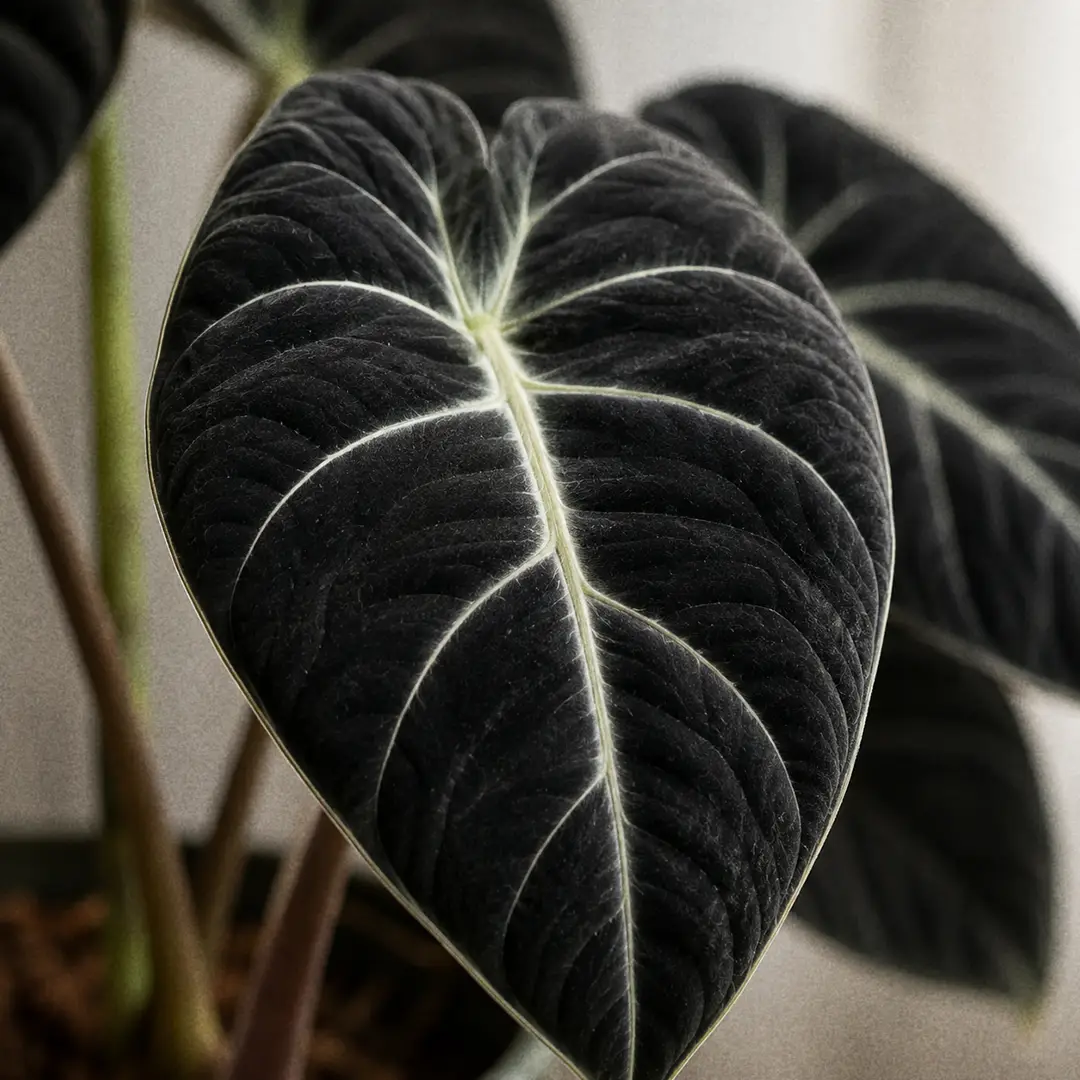
The standard form has thick, stiff, heart-shaped leaves that are matte black to very dark charcoal, with silver-white veins and a pale underside that is often flushed purple. Leaves run 4 to 6 inches long and the whole plant tops out around 18 inches.
Variegated Black Velvet
Variegated forms exist and are genuinely rare. You will see mint or cream sectoral variegation, and occasionally a pink-flushed form, all sold at collector prices. They grow more slowly than the standard plant and are less forgiving, because the pale tissue does no photosynthesis. If you are buying one, check that the variegation is stable across several leaves rather than a single lucky sport, and read up on reversion first.
Alocasia Maharani (Grey Dragon)
Maharani is a hybrid between A. reginula and A. melo, sold as Grey Dragon. It keeps the dwarf size and swaps the velvet black for a thick, leathery, stone-grey leaf with a pebbled surface. Care is nearly identical. If you like Black Velvet and want a companion rather than a duplicate, this is the one.
Lookalikes Worth Knowing
Black Velvet gets confused with Alocasia Frydek, which has the same velvet finish but green leaves, an arrow shape, and grows three times the size. Alocasia Silver Dragon is the pale mirror image: same compact habit, same thick leaves, silver-green instead of black. Its emerald twin, Alocasia Dragon Scale, is the closest thing to Black Velvet in texture, swapping matte velvet for quilted panels and sunken near-black veins. Alocasia Red Secret is the opposite finish entirely, coppery and reflective where Black Velvet is matte and light-absorbing, which is exactly why the two look so good side by side. Alocasia Polly is glossy rather than velvety with deeply scalloped edges. Nobody confuses it with Alocasia Zebrina, which is the tall one of the genus and puts its pattern on the stems instead of the leaves, but the two pair well: a dark 18 inch mound at the foot of a three foot striped plant.
🪴 Potting and Repotting Alocasia Black Velvet
When to Repot
Every one to two years at most, in spring. This plant likes being slightly rootbound, and repotting too often or into too large a pot is one of the fastest ways to rot it. The signal to repot is roots emerging from the drainage holes or circling visibly at the soil surface, not the calendar.
Choosing a Pot
Go up one size only, an inch or two of extra diameter. A big pot holds a big volume of wet mix that a small root system cannot drink, and that mix stays sodden for weeks. Drainage holes are non-negotiable. Terracotta suits this plant well because it wicks moisture out through the walls, though plastic is fine if you are careful with the watering can. Our pot guide compares the materials.
Step-by-Step Repotting
- Water lightly the day before so the rootball holds together.
- Slide the plant out and gently tease away the old dense nursery peat, especially from around the rhizome.
- Check the rhizome. It should be firm and pale. Anything soft or brown gets cut away with a clean blade.
- Set the plant at the same depth it was before, with the rhizome top just at the surface, and fill in with fresh chunky mix.
- Water thoroughly and put it back in its usual spot.
Expect a sulk. Alocasias commonly drop a leaf or droop for a week after repotting, and that is normal recovery rather than a problem. Our repotting guide has more on the general technique.
✂️ Pruning Alocasia Black Velvet
When to Prune
There is no shaping to do on this plant. Each leaf comes up on its own stalk from the rhizome, so pruning is purely about removing leaves that are finished. Do it any time of year, as soon as a leaf turns.
How to Prune
Cut the stalk at the base, close to the soil, with clean sharp scissors or snips. Do not tear or pull, because a torn stalk can damage the rhizome underneath. Wipe the blade with alcohol between cuts if you have had any fungal issues.
Which Leaves to Remove
Take off leaves that are fully yellow, brown, or collapsed. A leaf that is still half green is still feeding the plant, so leave it. Black Velvet only holds four to six leaves at once and naturally sheds the oldest as new ones emerge, so losing the bottom leaf every couple of months is normal ageing, not a problem to fix. Wear gloves or wash your hands after: the sap contains calcium oxalate crystals and irritates skin.
🌱 How to Propagate Alocasia Black Velvet
Best Method
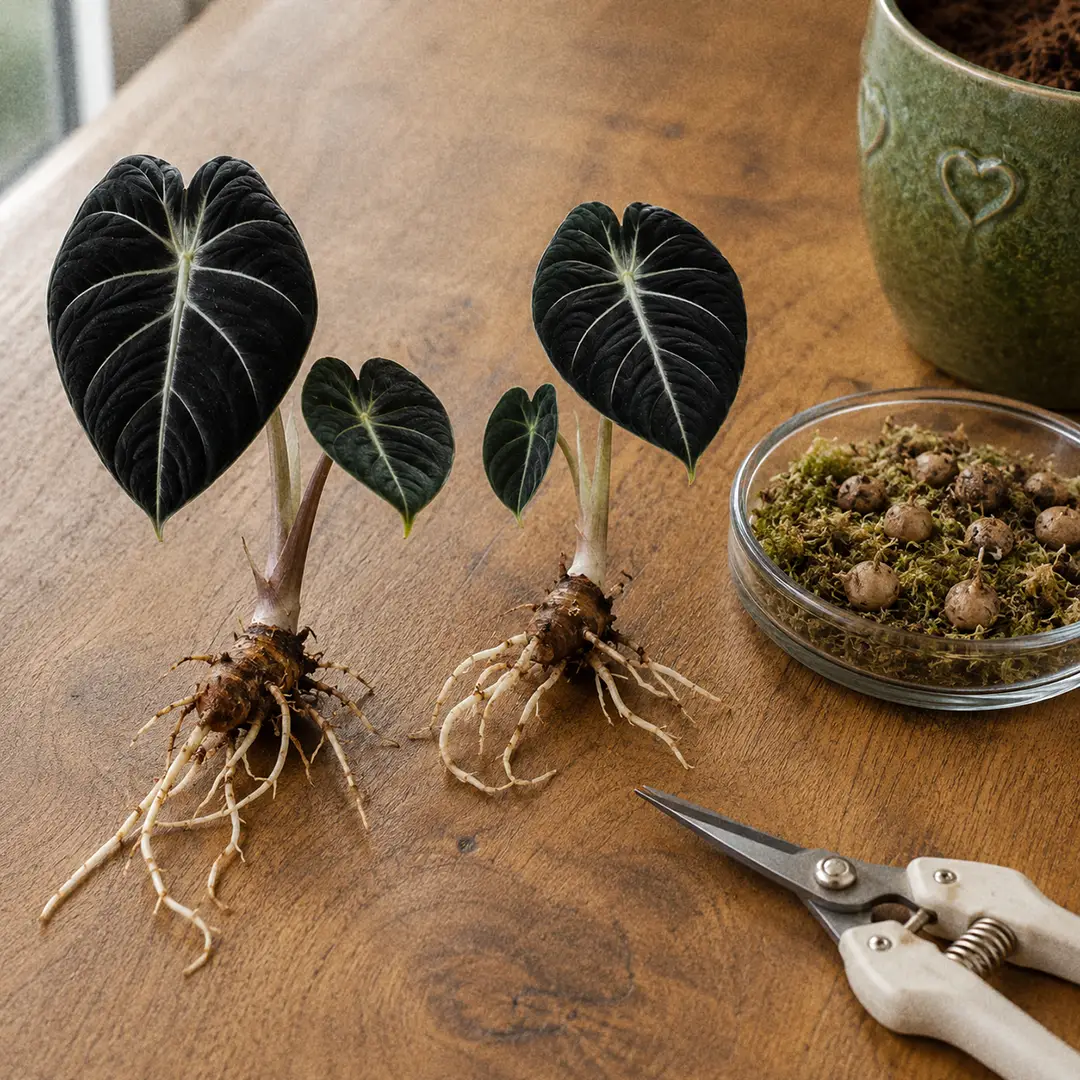
Cuttings do not work here. There is no node to root, because this is a rhizomatous plant rather than a vining one, and a leaf placed in water will simply rot. Your two real options are rhizome division and corms. Division is by far the more reliable of the two.
Dividing the Rhizome
Do this in spring, ideally while repotting, on a plant that has produced an offset clump.
- Unpot the plant and wash enough soil off the base to see what you are working with.
- Look for natural separations: a side shoot with its own leaves and its own roots.
- Pull the sections apart by hand where you can, or cut through the rhizome with a sterilised blade, leaving each division with roots and at least one growth point.
- Let cut surfaces air-dry for an hour or two so they seal.
- Pot each division into a small pot of the same chunky mix, water lightly, and keep it warm and humid.
Expect nothing for a few weeks. A fresh division puts its energy into roots first, so leaf growth resumes about a month later.
Growing On the Corms
While repotting you will find small round corms, roughly pea-sized and pale brown, scattered through the mix around the rhizome. Each one can become a plant, though it is a slow and unreliable process, so treat it as a bonus rather than a plan.
Peel the papery outer skin off, sit the corms pointed-end-up on damp sphagnum moss in a sealed clear container, and keep them somewhere warm and bright. Roots appear in two to four weeks, a first leaf in another month or two, and a recognisable plant several months after that. Plenty simply do nothing. Our propagation guide covers the general principles.
🐛 Alocasia Black Velvet Pests and Treatment
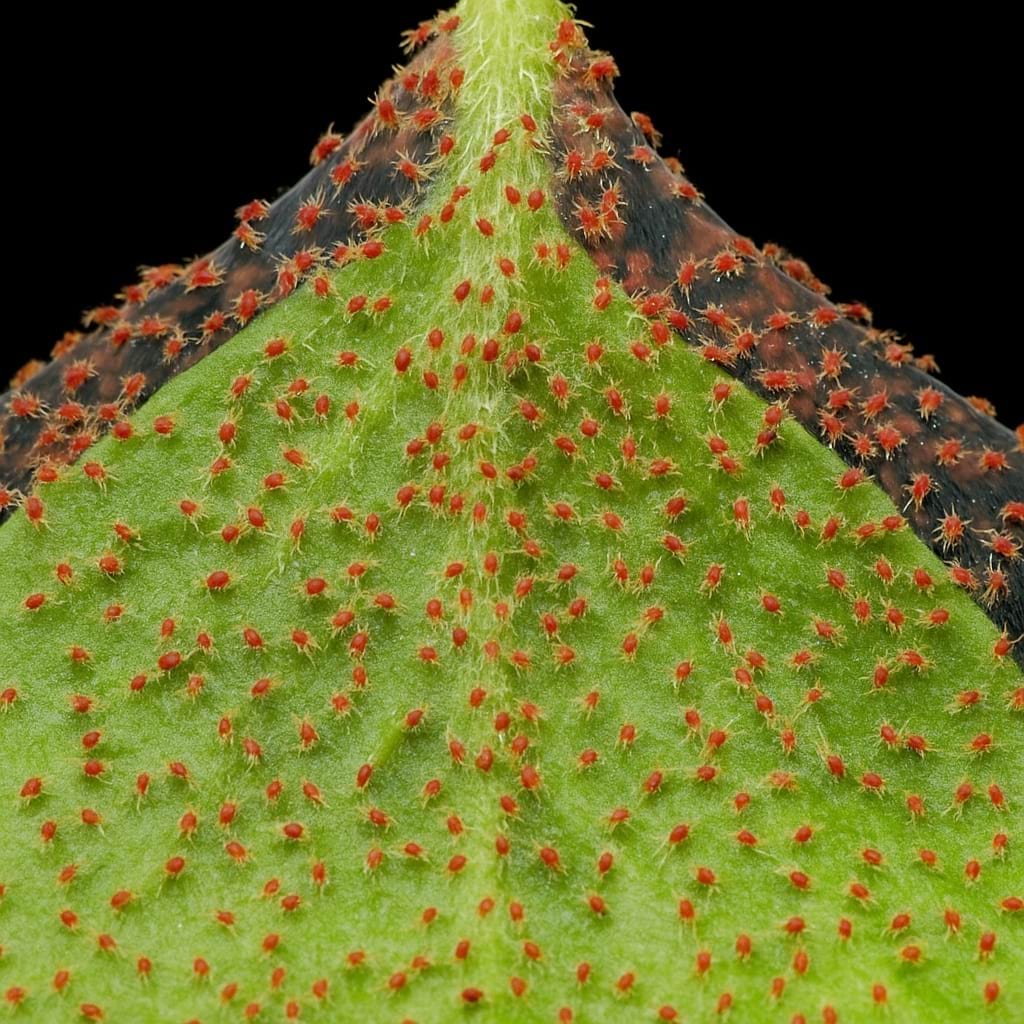
Black Velvet is a spider mite magnet, and that one pest causes more damage on this plant than everything else combined.
Spider mites thrive in exactly the dry warm air that stresses this plant, and the velvet leaf surface hides them well. Check the undersides weekly with a torch: fine webbing at the leaf joins and a faint stippled speckling on top are the giveaways. Wipe both leaf surfaces down, treat with insecticidal soap or diluted neem weekly for three weeks, and fix the humidity or they come straight back.
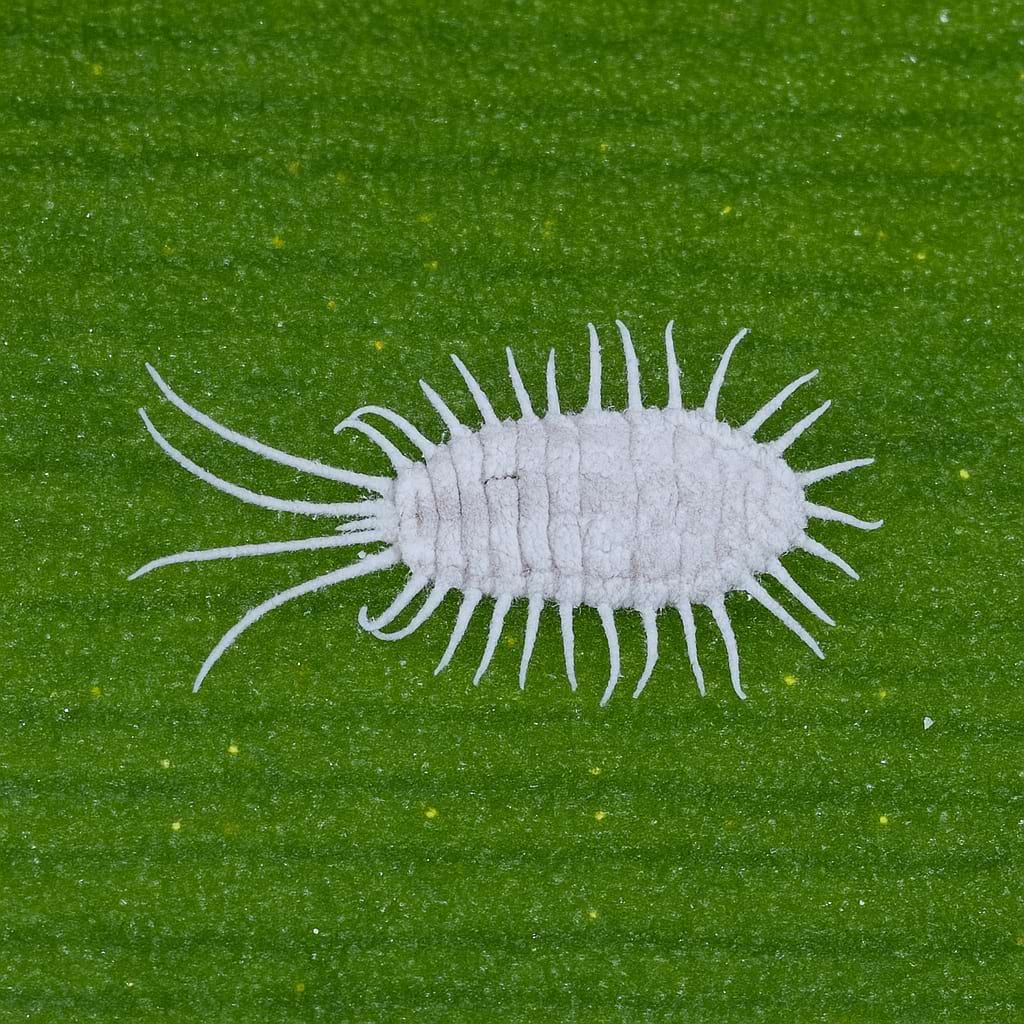
Mealybugs turn up as white cottony blobs where the stalks meet the rhizome, which is a hard spot to see. Dab each one with an alcohol-soaked cotton bud, then treat the whole plant.
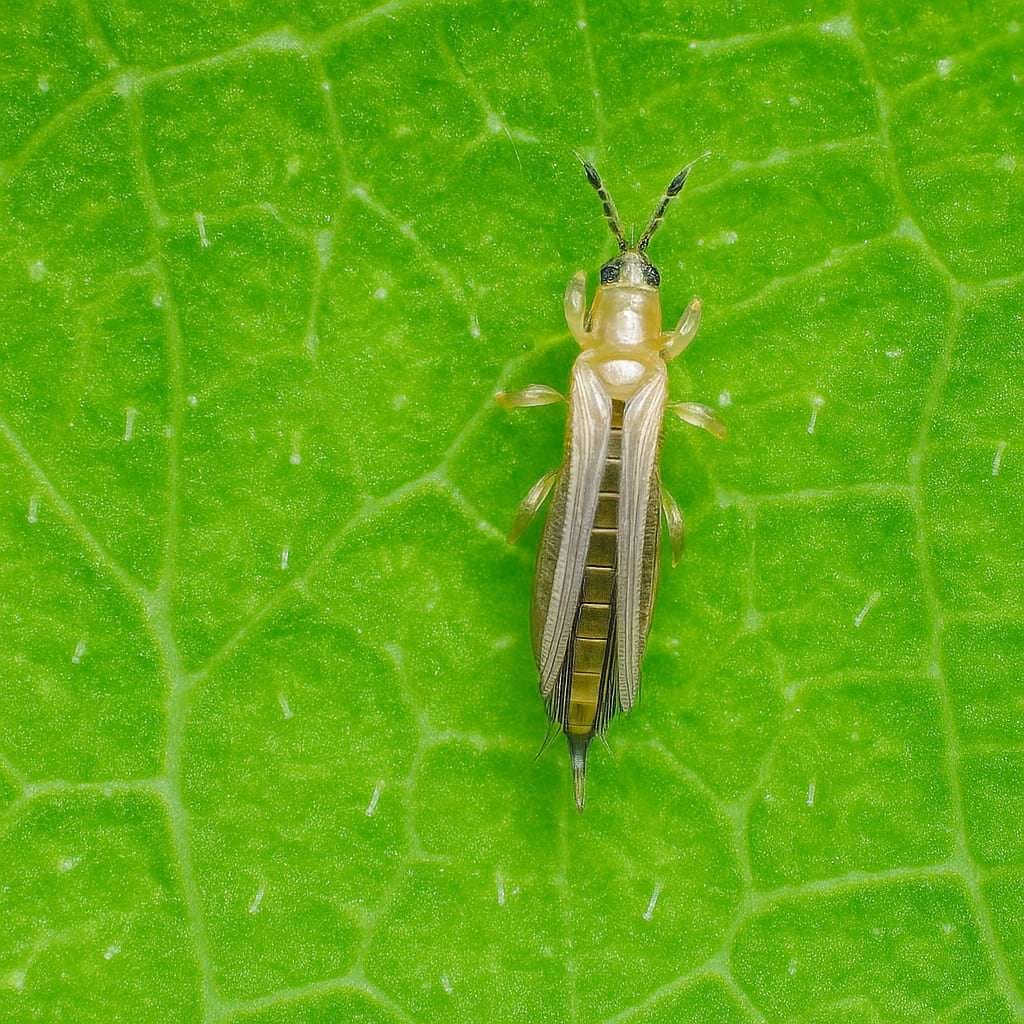
Thrips leave silvery streaks and tiny black dots of frass, and they distort new leaves as they unfurl. They are stubborn, so expect several rounds of treatment and isolate the plant while you deal with them.
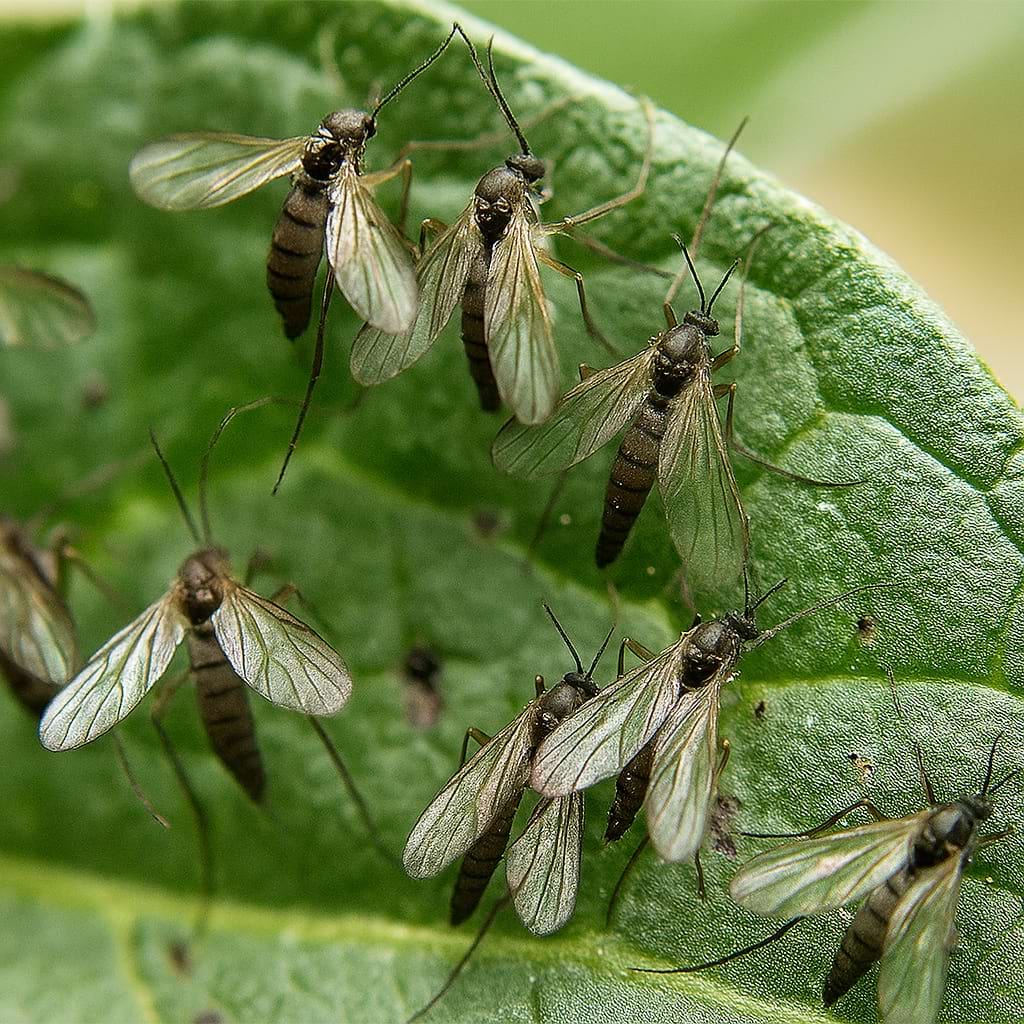
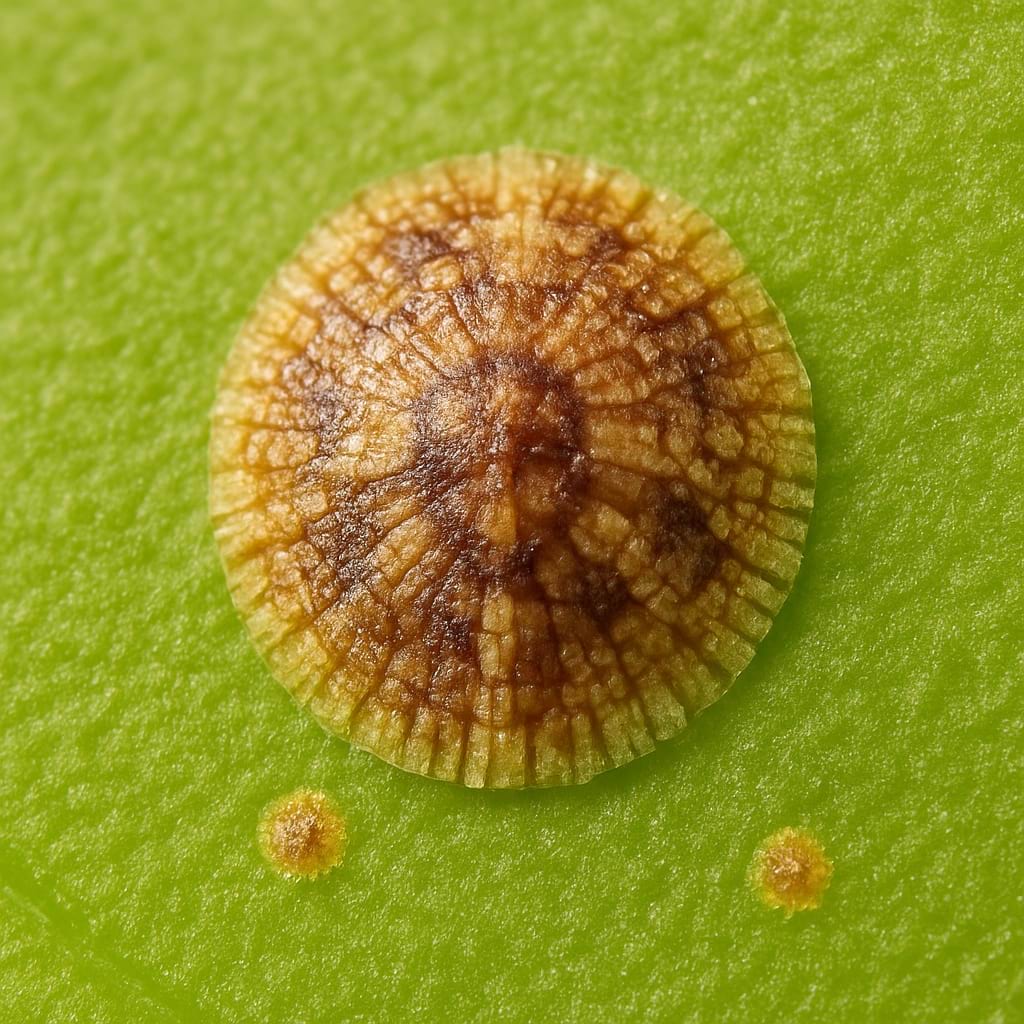
Fungus gnats mean the mix is staying too wet. The adults are harmless, but their presence is a warning about your watering. Let the top layer dry properly and use yellow sticky traps. Scale insects show up occasionally as small brown bumps along the stalks; scrape them off and treat the plant.
🩺 Common Alocasia Black Velvet Problems
Most Black Velvet trouble comes down to water and air, and the plant reacts more visibly than most.
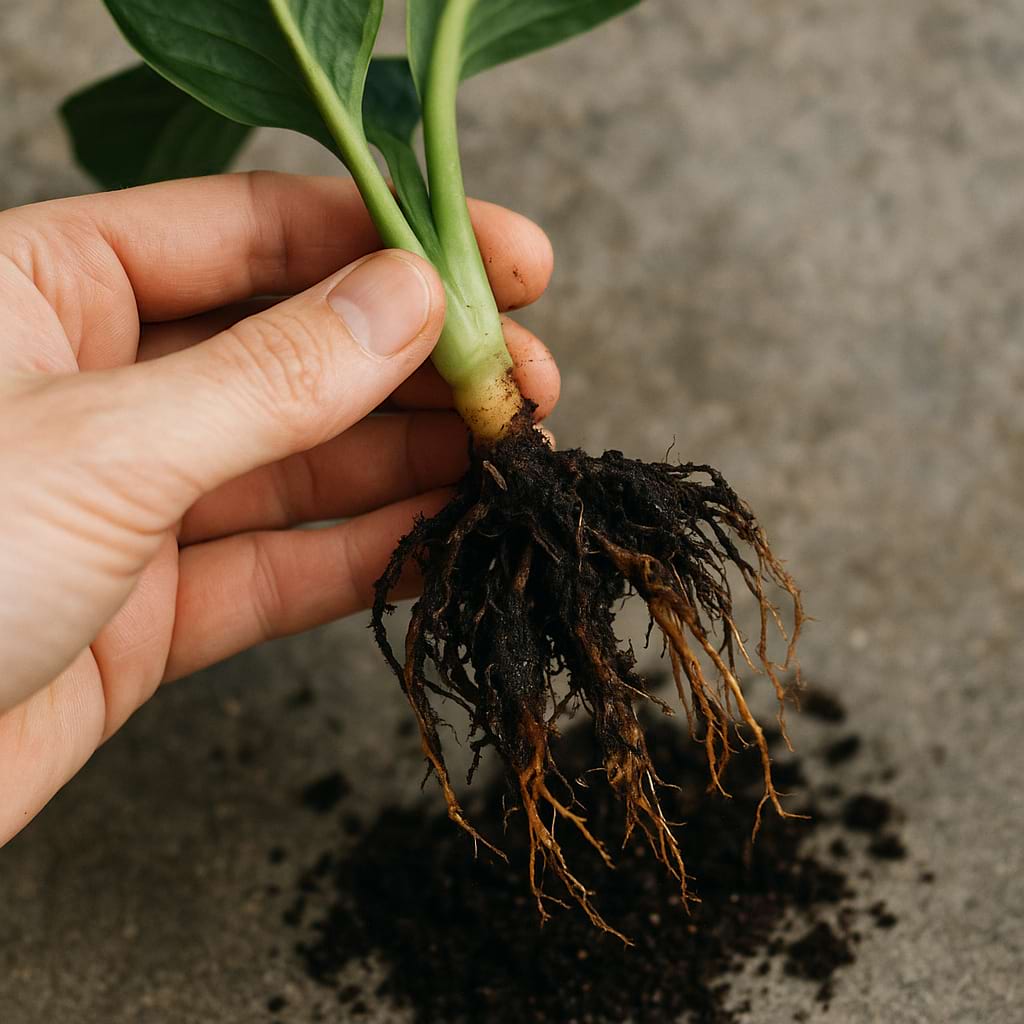
Root rot is the one that kills. Soft mushy stalk bases, a sour smell, and yellowing that spreads upward all point to it. Unpot immediately, cut away every soft part of the rhizome and root, and repot into fresh dry chunky mix.
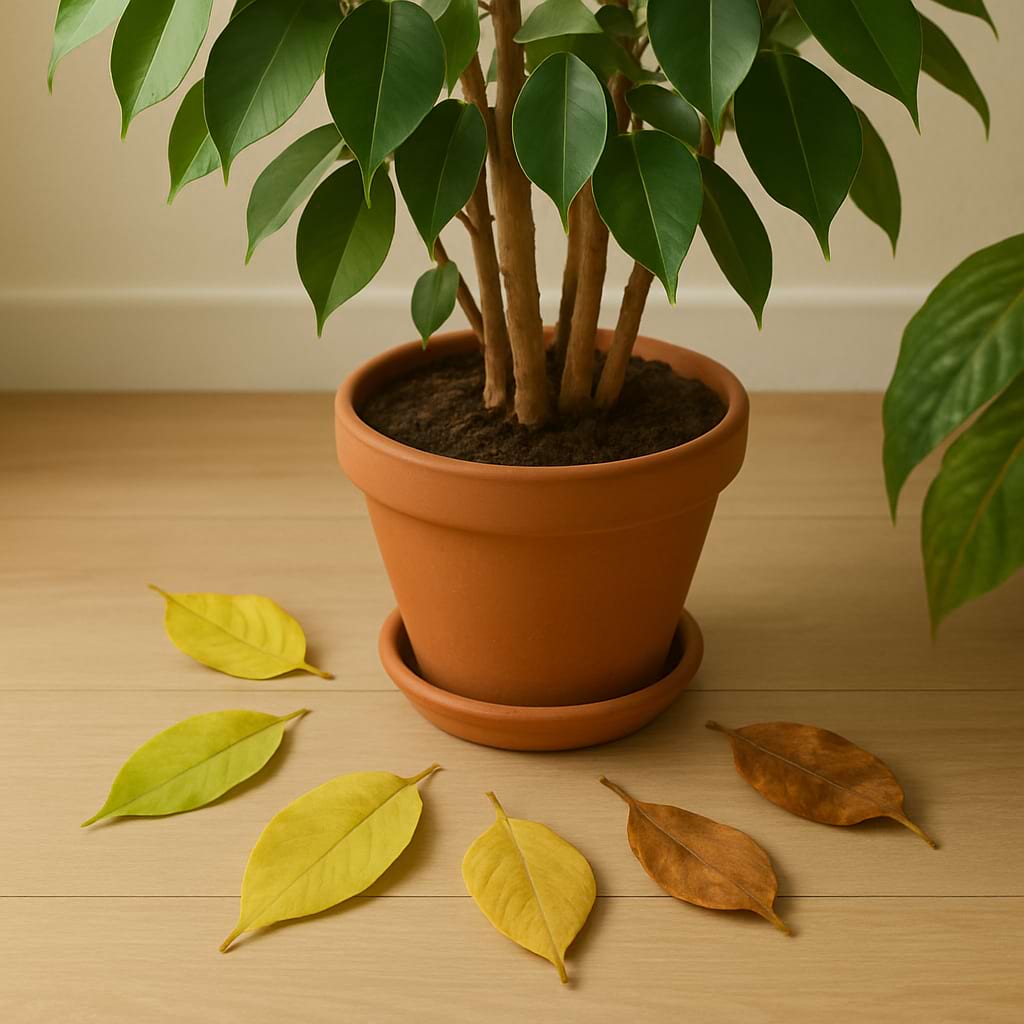
Yellowing leaves on the very bottom of the plant, one at a time, are normal ageing. Several at once, or yellowing on new leaves, means the roots are in trouble, usually from overwatering.
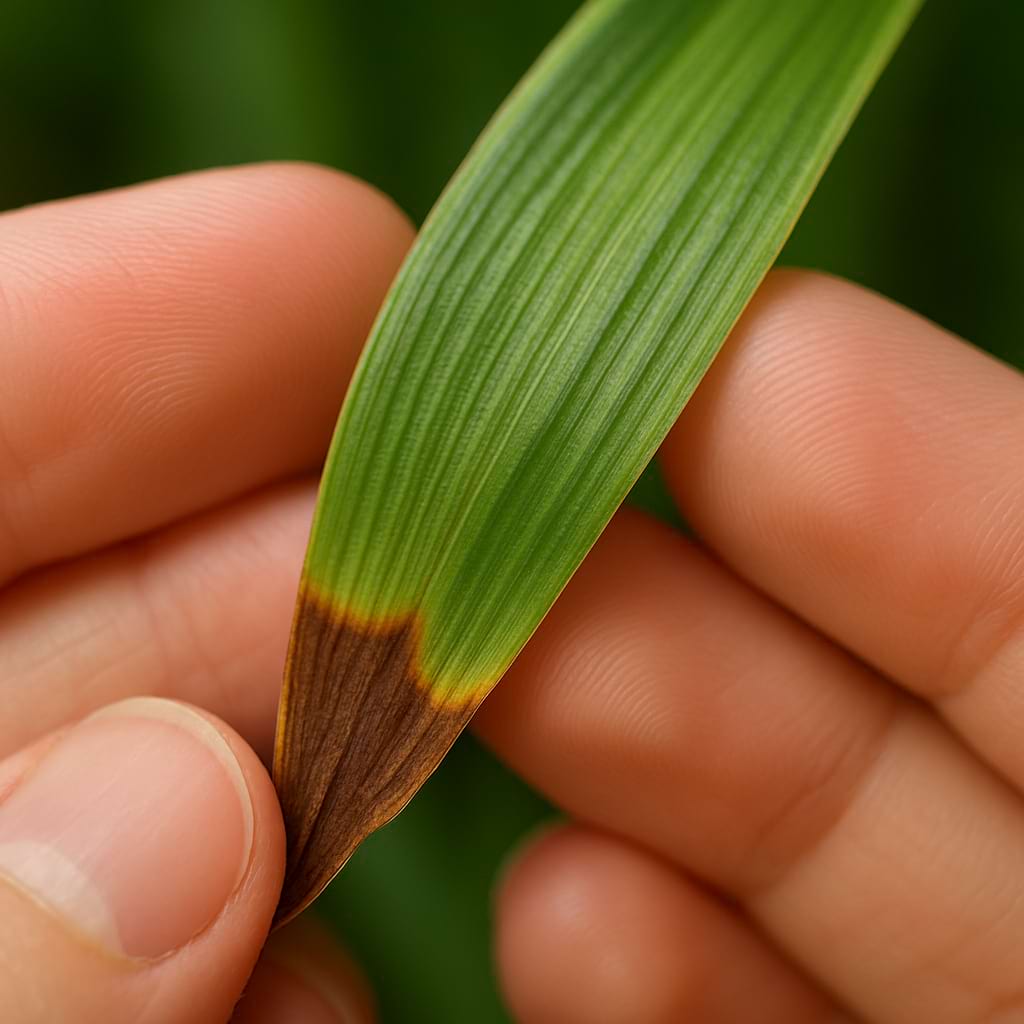
Brown crispy edges are the humidity complaint. They can also come from salt buildup or hard water, so check the soil surface for white crust before you blame the air.
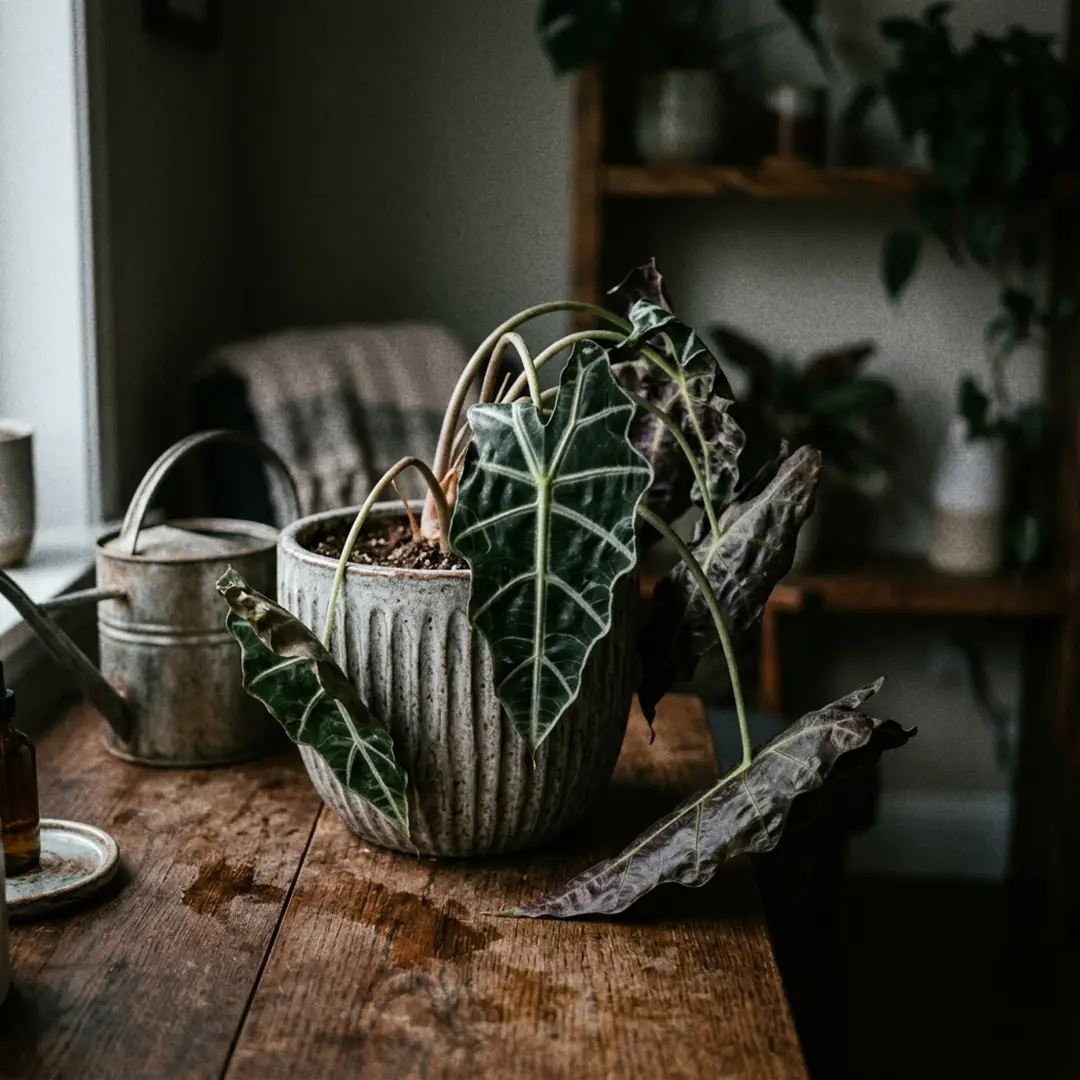
Drooping leaves usually mean thirst, and the plant recovers within a few hours of a soak. If it droops while the soil is wet, that is a root problem, not a water problem, and needs the opposite treatment.
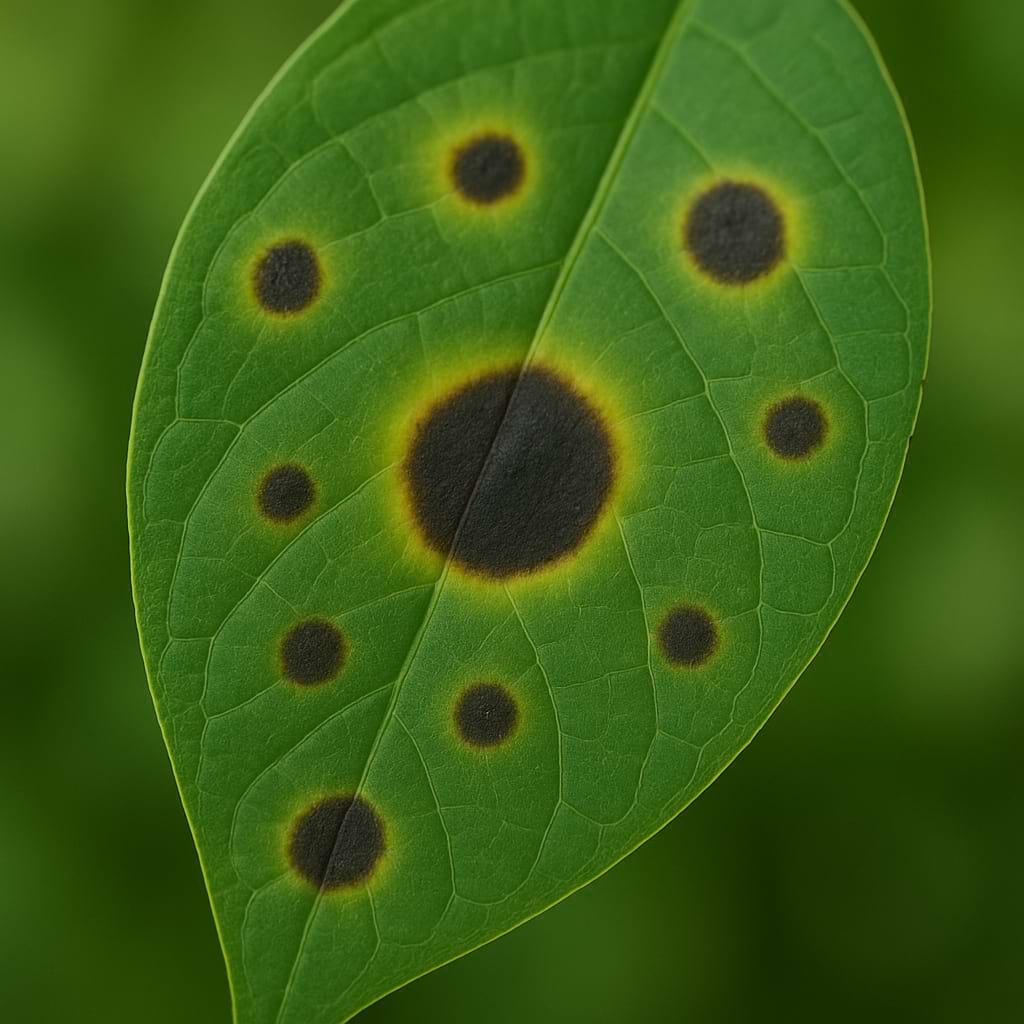
Leaf drop in autumn and winter is often dormancy rather than death. If the plant loses every leaf, keep the pot barely damp, keep it warm, and wait: the rhizome frequently pushes new growth in spring. Brown and black spots that spread with a yellow halo are fungal, usually from water sitting on the leaves.

🖼️ Alocasia Black Velvet Display and Styling Ideas
Solo Setups
Put it somewhere pale. Against a white wall, a light shelf, or a cream pot, the black leaves and silver veins read clearly. Against dark wood or a charcoal wall the plant vanishes into a shadow, which is the single most common styling mistake with this species.
Because it stays under 18 inches, it works on surfaces where a full-size aroid never could: a bathroom shelf, a kitchen windowsill out of direct sun, a bedside table near a bright window.
Grouped Arrangements
Group it with pale silver and light green foliage for contrast. Silver Dragon beside it is a straight light-and-dark pairing, and something soft like a Maidenhair Fern breaks up the stiff upright shape. A Philodendron Verrucosum climbing a pole behind it works well too, since it shares the velvet finish and the humidity requirement but adds height the Black Velvet never will. Grouping also lifts the local humidity, so it is practical as well as decorative.
Where Not to Put It
Not near a door, a heating vent, or an air conditioner. Not on a south windowsill in direct sun. And not anywhere a cat or a toddler can reach it, because the sap is genuinely irritating. A closed glass cabinet solves the humidity and the safety issue at once, which is why so many collectors keep this one behind glass.
🌟 Alocasia Black Velvet Pro Care Tips
- Repot the nursery peat out within a month of buying. That dense mix is the number one cause of early rot in a home.
- Check leaf undersides for spider mites every single week. Catching them early is the difference between a wipe-down and a lost plant.
- Never mist the leaves. Velvet holds droplets, and standing water on that surface causes spotting.
- If the plant drops every leaf in winter, do not throw it out. Keep the rhizome barely damp and warm, and wait until March.
- Rotate the pot a quarter turn each time you water so the leaves stay evenly upright.
- Use room-temperature filtered water. This is one of the plants that visibly reacts to cold, hard tap water.
- Wear gloves when dividing or pruning. Calcium oxalate sap stings on broken skin.
❓ Frequently Asked Questions
Why is my Alocasia Black Velvet dropping leaves?
Usually cold, dry air or a wet pot, and often all three at once in winter. Check the soil first: if it is soggy, you are looking at root trouble; if it is dry and the room is under 45% humidity, it is stress. Also consider dormancy, since a plant that sheds everything in autumn and stays warm and barely damp will often push new leaves in spring.
How often should I water Alocasia Black Velvet?
When the top two inches of mix are dry, which is roughly every 5 to 7 days in summer and every two to three weeks in winter. Test with a finger every time rather than watering on a fixed schedule, because the rate changes enormously with light and season.
Is Alocasia Black Velvet toxic to cats and dogs?
Yes. Every part contains needle-shaped calcium oxalate crystals, and the ASPCA lists Alocasia as toxic to cats, dogs, and horses. Chewing causes mouth pain, swelling, drooling, and difficulty swallowing. Keep it well out of reach of pets and small children.
Why are the leaf edges turning brown and crispy?
Low humidity is the usual answer, especially in a heated room in winter. Before you buy a humidifier, though, check the soil surface for white salt crust and consider whether you are using hard tap water, because both produce the same symptom.
Does Alocasia Black Velvet go dormant?
Often, yes. Growth stops in autumn and the plant may lose most or all of its leaves through winter. The rhizome stays alive underground. Cut the water right back, stop feeding entirely, keep it warm, and resume normal care when new growth appears in spring.
How big does Alocasia Black Velvet get?
Small, which is a big part of the appeal. Expect 12 to 18 inches tall and about as wide, with individual leaves around 4 to 6 inches long. It grows slowly, producing a new leaf roughly every four to six weeks in the growing season and holding only four to six leaves at a time.
Can I propagate Alocasia Black Velvet from a leaf cutting?
No. There is no node on a leaf stalk to root from, so a cutting in water will just rot. Divide the rhizome in spring, or grow on the small corms you find in the soil when repotting.
Why has my Black Velvet stopped growing?
Slow is normal for this species, so first check your expectations: one new leaf every month or so in summer is a healthy pace, and nothing at all through winter is standard. If it is genuinely stalled in the growing season, the usual causes are too little light, a pot that is far too large, or roots damaged by overwatering.
Should I let my Alocasia Black Velvet flower?
Better not to. The bloom is a small pale spathe that adds nothing visually, and it costs the plant energy it would otherwise spend on leaves. Snip the stalk off at the base as soon as you see a bud forming.
Are Black Velvet and Little Queen the same plant?
Yes. Both names refer to Alocasia reginula, and reginula literally means "little queen". Some sellers use one name, some the other, and there is no difference in the plant or the care it needs.
ℹ️ Alocasia Black Velvet Info
Care and Maintenance
🪴 Soil Type and pH: Chunky, fast-draining aroid mix with bark and perlite
💧 Humidity and Misting: Wants 60-75%. Below 45% the leaf edges go brown and crispy.
✂️ Pruning: Cut off yellowed or spent leaves at the base. There is no shaping to do.
🧼 Cleaning: Wipe with a soft dry brush or a barely damp cloth. The velvet surface holds water spots, so never spray the leaves and leave them wet.
🌱 Repotting: Repot in spring only when roots circle the pot. This plant flowers and grows better slightly snug.
🔄 Repotting Frequency: Every 1-2 years
❄️ Seasonal Changes in Care: Steady warmth, feeding, and even moisture from spring through summer, then much less water and no fertilizer once growth stops in autumn.
Growing Characteristics
💥 Growth Speed: Slow
🔄 Life Cycle: Evergreen rhizomatous perennial that may go dormant in winter
💥 Bloom Time: Summer, rarely indoors; a small pale spathe with a white spadix, more curiosity than flower
🌡️ Hardiness Zones: 10-12
🗺️ Native Area: Rainforest floors of Borneo, particularly Sabah in Malaysia
🚘 Hibernation: Often drops leaves and rests through winter. The rhizome stays alive underground and pushes new leaves in spring.
Propagation and Health
📍 Suitable Locations: Bright bathrooms, kitchen windowsills out of direct sun, terrariums and cabinets, east-facing rooms
🪴 Propagation Methods: Divide the rhizome in spring, or grow on the small corms that form around the base.
🐛 Common Pests: Spider Mites, Mealybugs, Thrips, Fungus Gnats, Scale Insects
🦠 Possible Diseases: Root rot, rhizome rot, fungal leaf spot in cold wet soil
Plant Details
🌿 Plant Type: Dwarf rhizomatous aroid
🍃 Foliage Type: Evergreen, thick, velvety arrow-shaped leaves
🎨 Color of Leaves: Near-black to deep charcoal green, with bright silver-white veins
🌸 Flower Color: Pale green to cream spathe with a white spadix
🌼 Blooming: Rare indoors, and the flowers are not worth keeping
🍽️ Edibility: Not edible. All parts contain calcium oxalate crystals.
📏 Mature Size: 12-18 inches tall
Additional Info
🌻 General Benefits: Stays small enough for a windowsill or cabinet, has genuinely black-looking foliage that almost nothing else offers, and thrives in the humid bathroom corners where most plants sulk
💊 Medical Properties: No medicinal uses. The sap is an irritant.
🧿 Feng Shui: Dark, upright, and grounding. Works as a still, quiet accent in a corner that already gets soft light rather than as a focal point.
⭐ Zodiac Sign Compatibility: Scorpio
🌈 Symbolism or Folklore: Quiet drama, restraint, small things with presence
📝 Interesting Facts: The species name reginula means "little queen", a nod to how small it stays next to the giant elephant ears it is related to. It reached the houseplant trade in the early 1990s from a single plant held at the Lyon Arboretum in Hawaii, which is why nearly every Black Velvet in cultivation traces back to the same source.
Buying and Usage
🛒 What to Look for When Buying: Look for firm, upright leaves with clean silver veins and no webbing under the leaf. Skip plants with brown crispy margins, yellow lower leaves, or soil that smells sour. A plant with only two leaves is often a stressed survivor rather than a young plant.
🪴 Other Uses: Terrarium and glass-cabinet specimen, bathroom plant, small collector accent
Decoration and Styling
🖼️ Display Ideas: Glass cabinets, terrariums, bright bathroom shelves, grouped with pale silver foliage for contrast
🧵 Styling Tips: Place it against a light wall or pale pot. Against dark furniture the black leaves disappear and the silver veins lose their effect.
🪴 See also 🪴
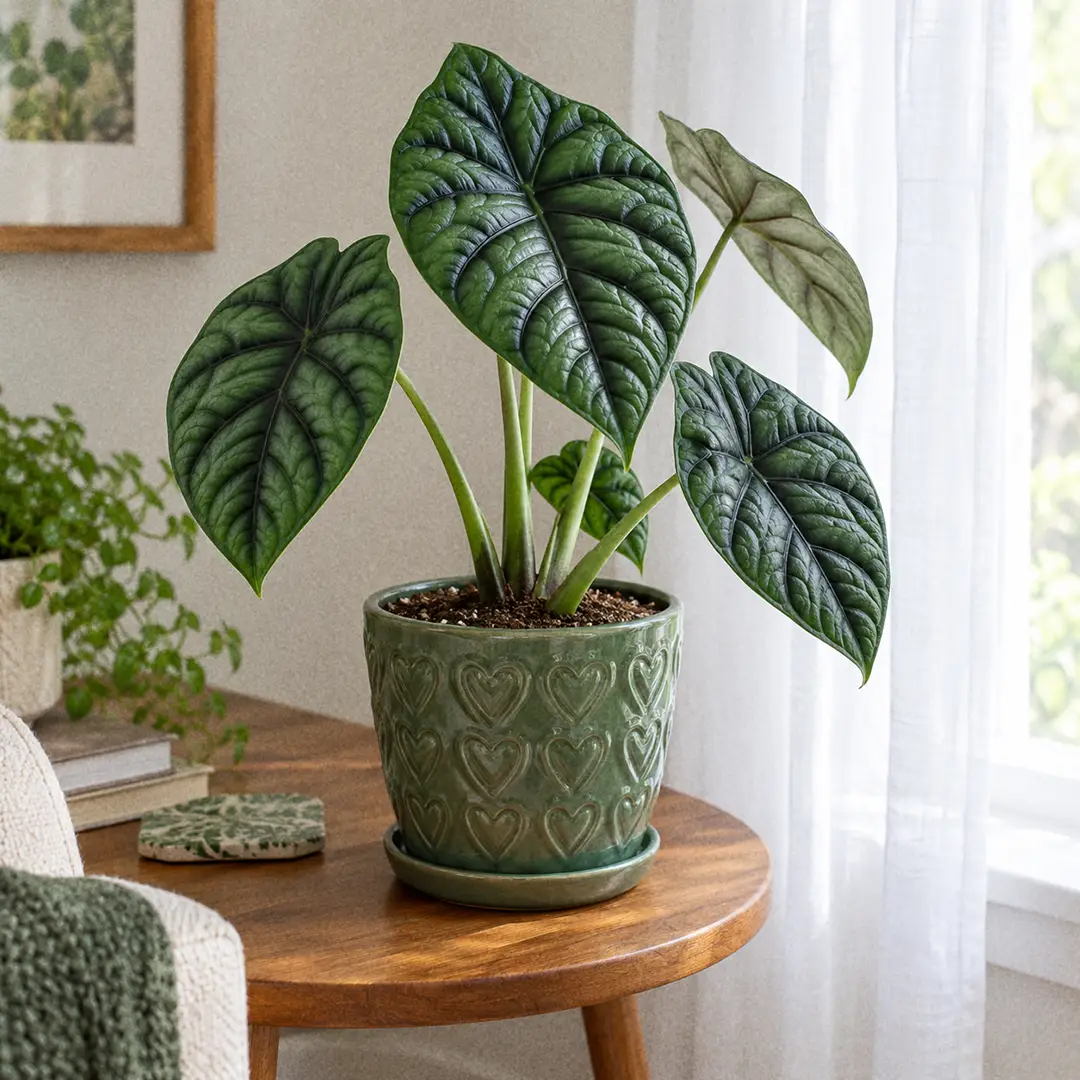
Complete Guide to Alocasia Dragon Scale Care and Growth
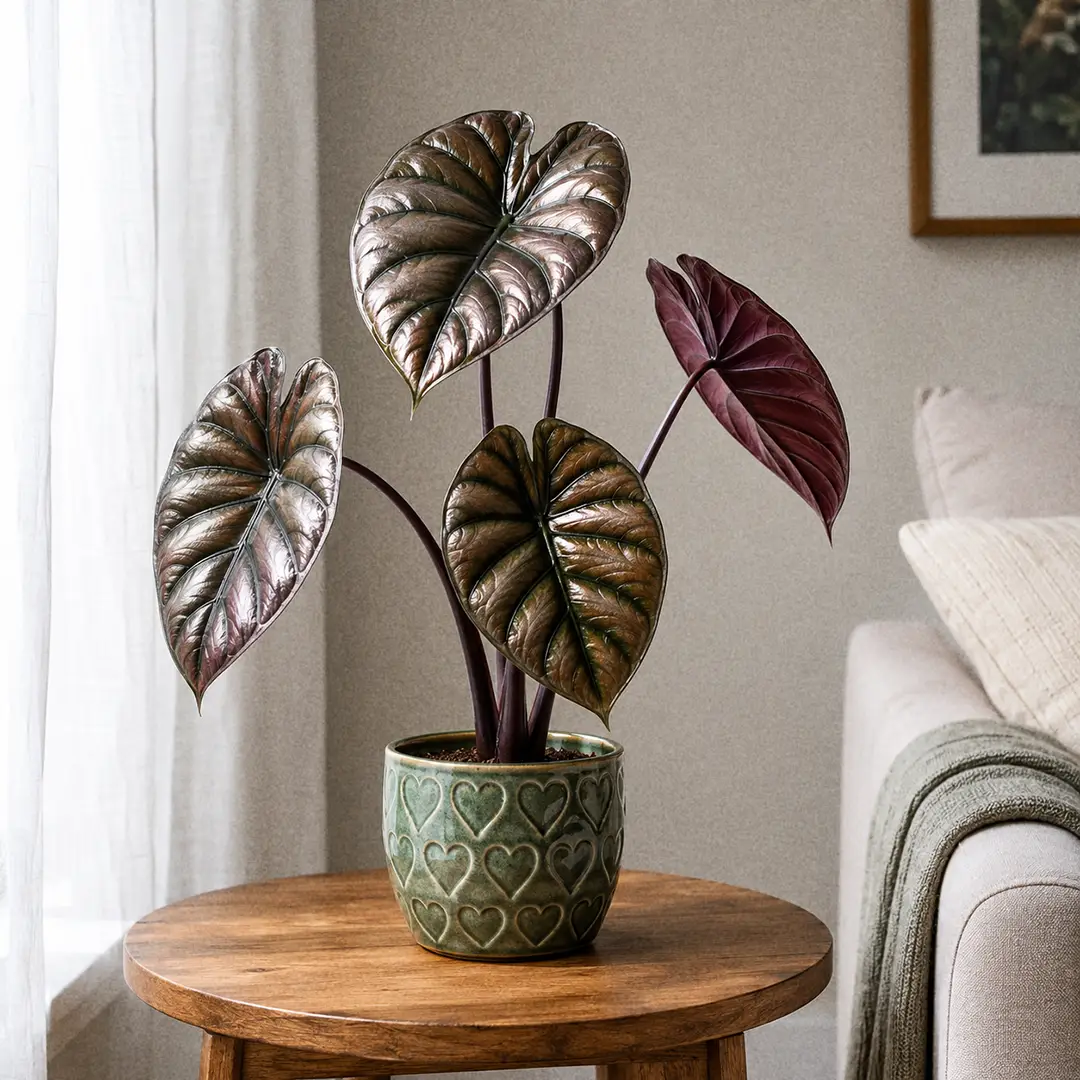
Complete Guide to Alocasia Red Secret Care and Growth
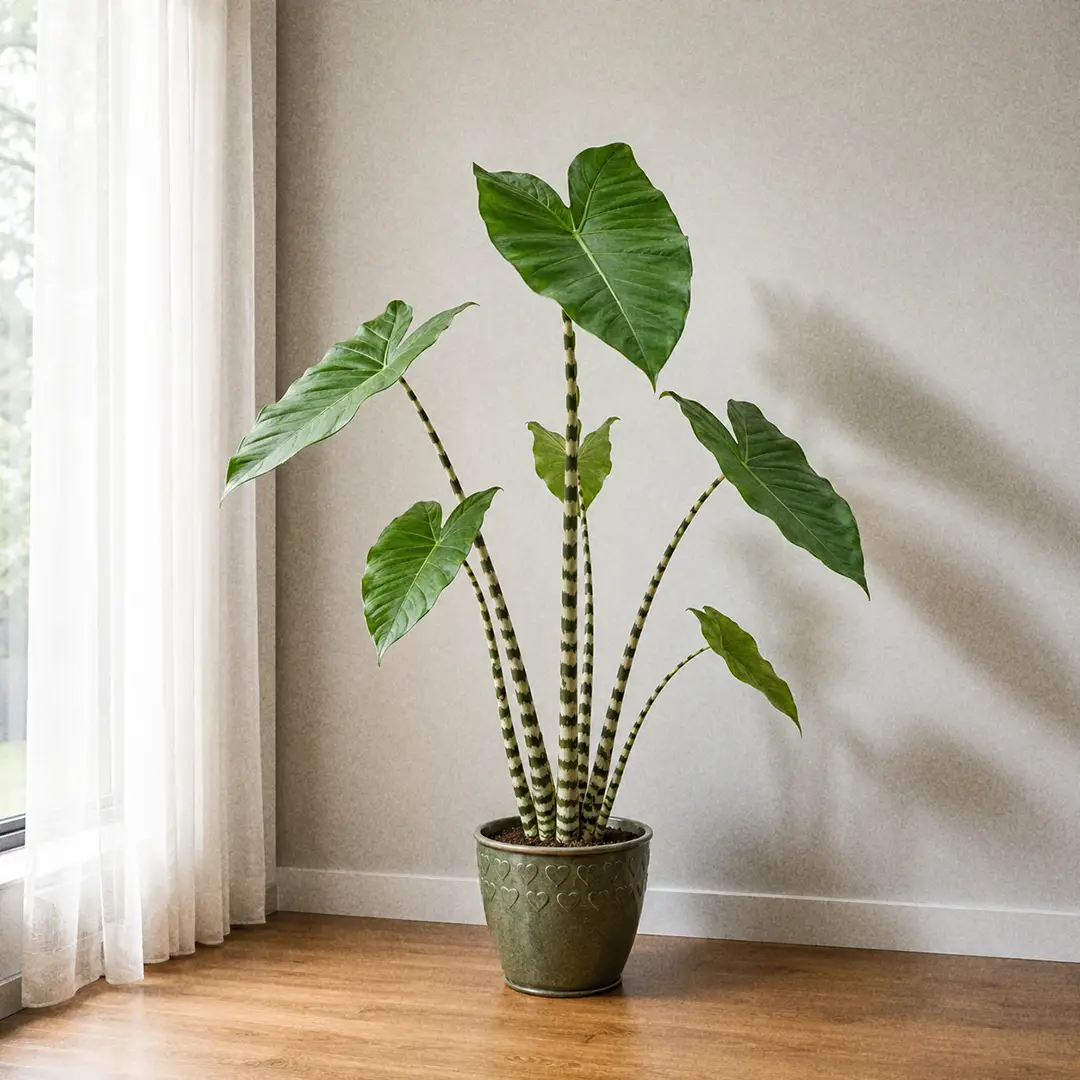
Complete Guide to Alocasia Zebrina Care and Growth
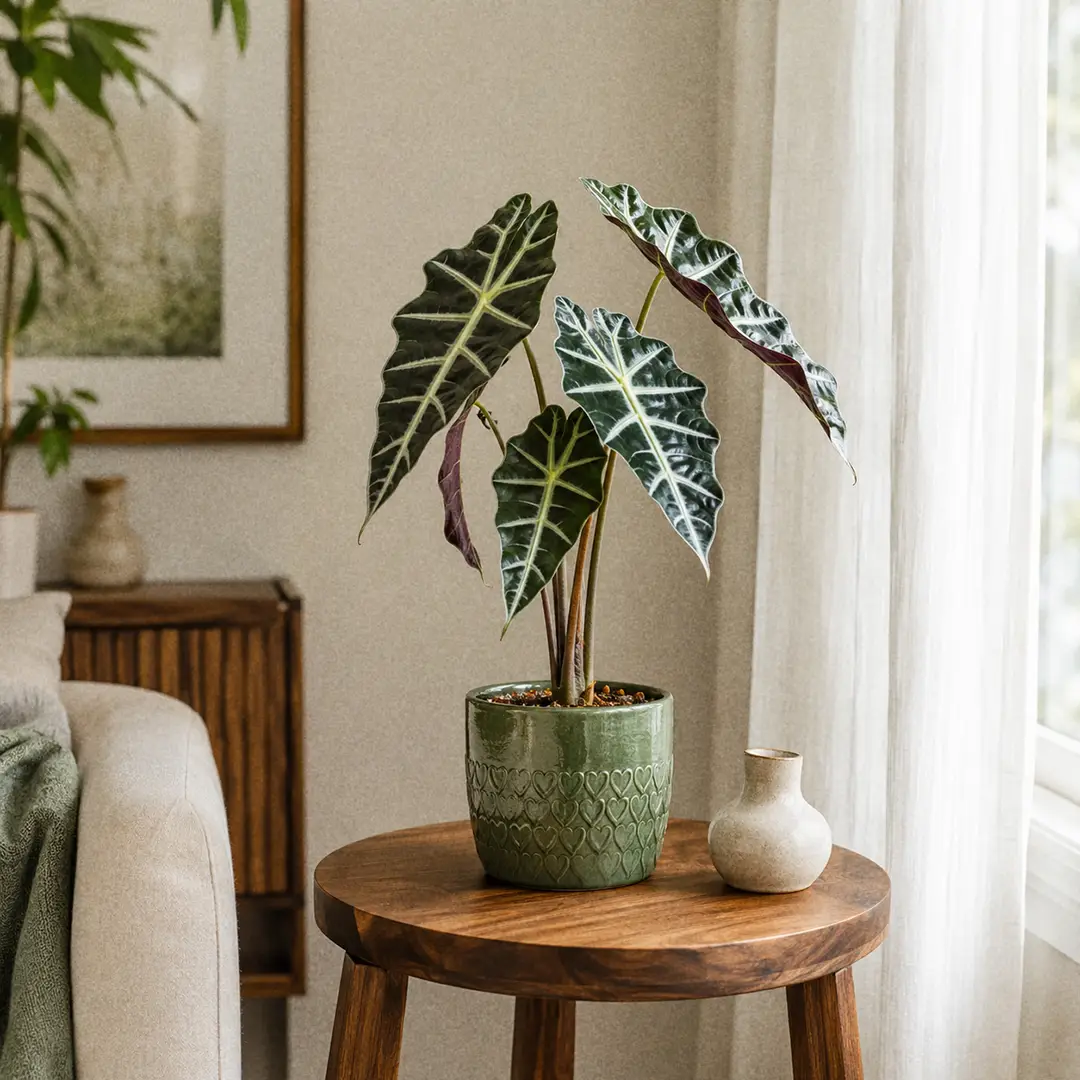
Complete Guide to Alocasia Polly Care and Growth
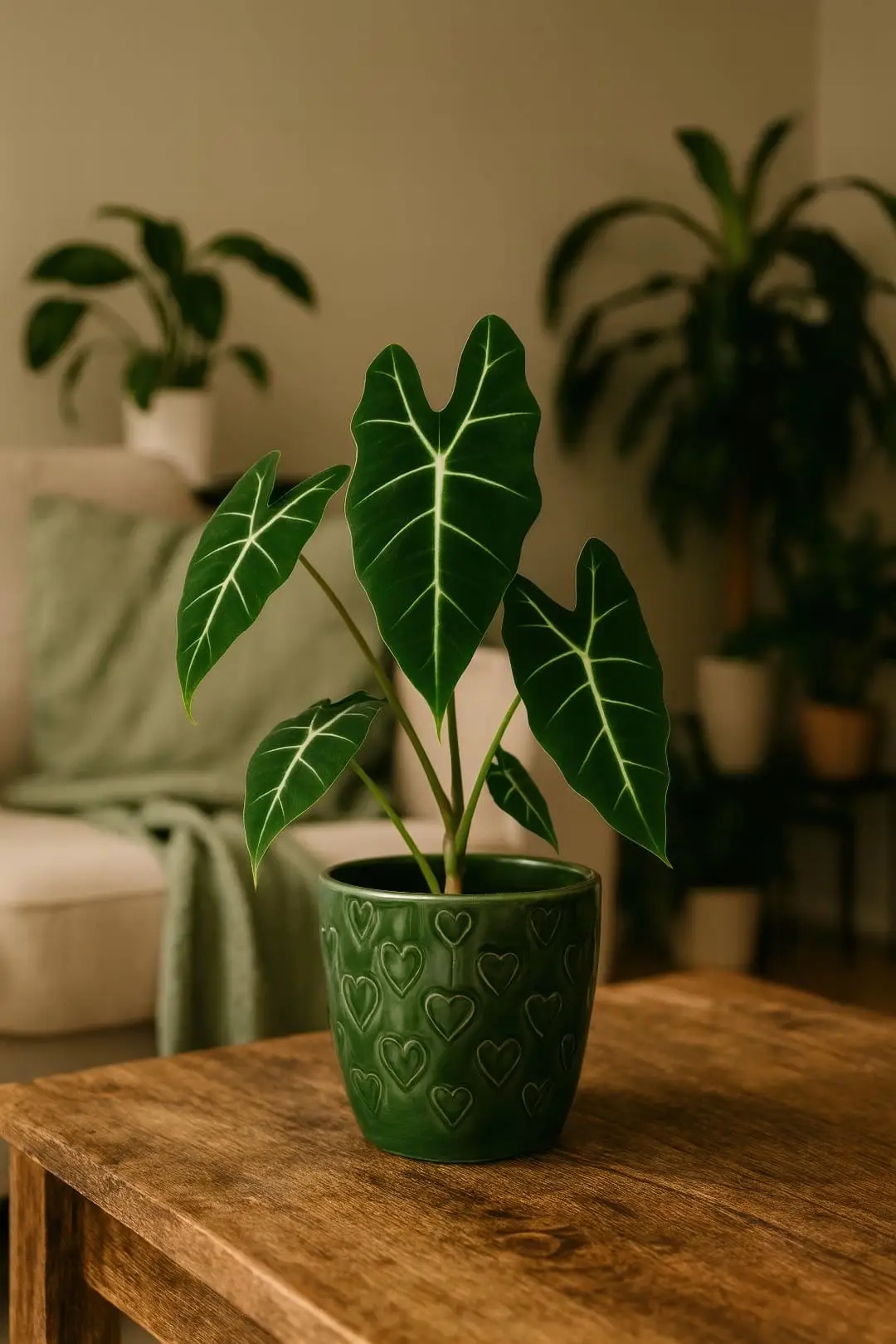

Houseplant101 Forum
Questions & Comments
Ask a question, share your plant experience, or help other plant owners.
Comments are temporarily unavailable.
Open the Houseplant101 ForumNo comments yet
Be the first to ask a question or share your experience about this page.
Log in or create an account
Comments use your Houseplant101 Forum account, but you can stay on this page.
Create a new account