
Philodendron Verrucosum
Philodendron verrucosum
Ecuador Philodendron, Velvet Philodendron, Hairy Philodendron


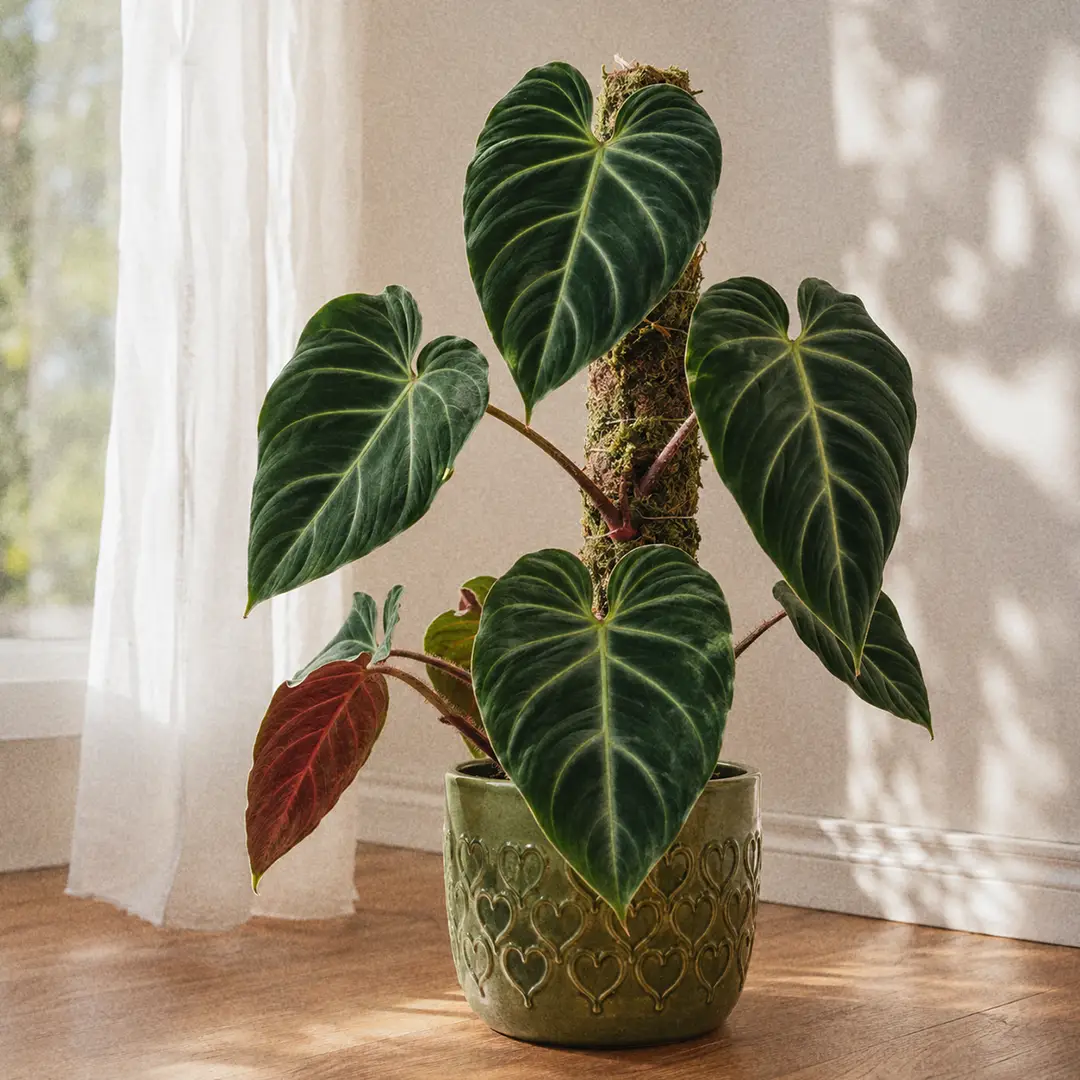
Philodendron verrucosum has the best foliage in the genus: heart-shaped leaves in dark green velvet, traced with pale vein tracks and backed in wine red, on petioles covered in soft bristly hairs. It is a cloud forest climber that asks for real humidity, and this guide covers exactly how to give it that indoors.
📝 Philodendron Verrucosum Care Notes
🌿 Care Instructions
⚠️ Common Pests
📊 Growth Information
🪴 In This Guide 🪴

☀️ Philodendron Verrucosum Light Requirements (Indoor Lighting Guide)
The Sweet Spot
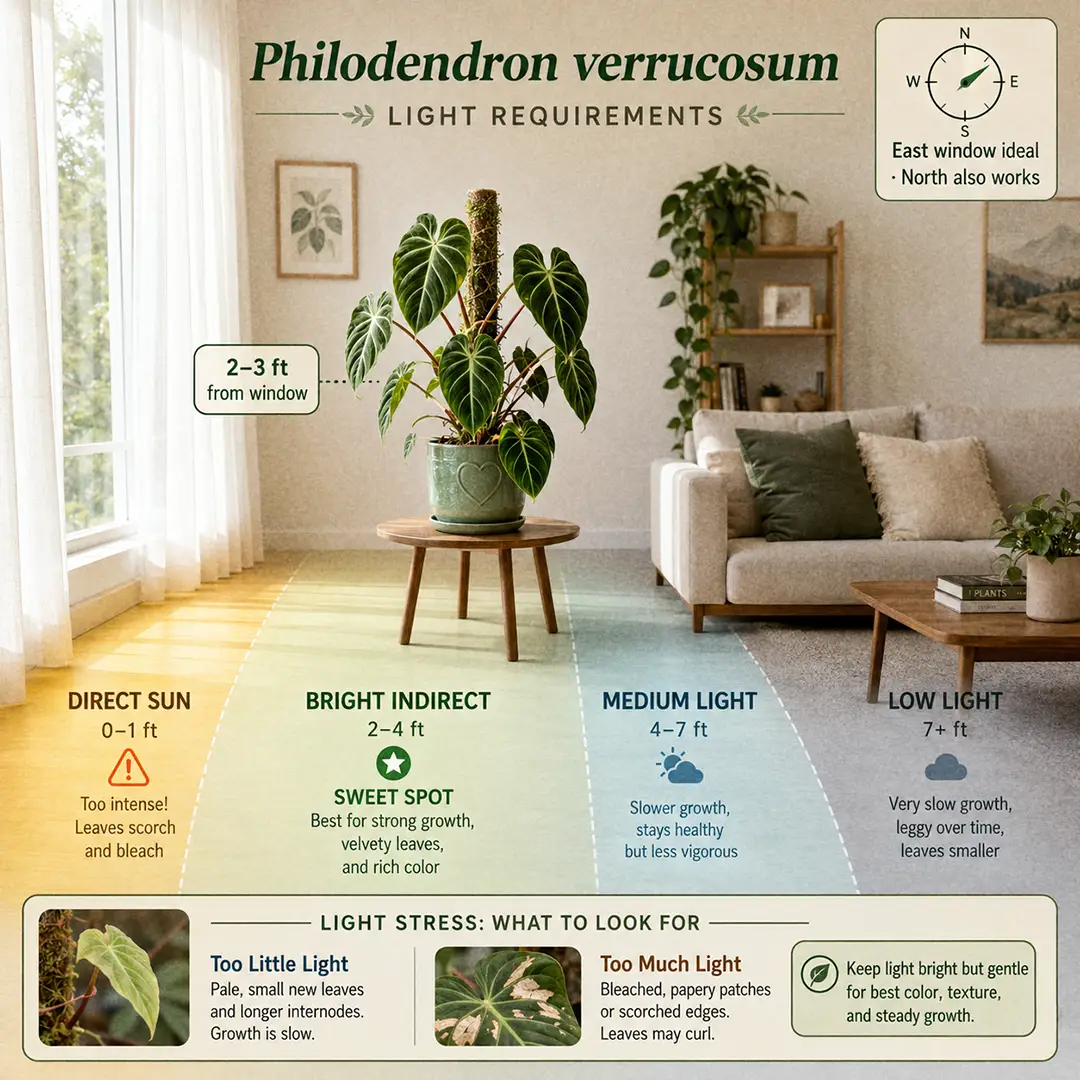
This plant wants bright light with nothing direct hitting the leaves. Think two to four feet back from an east-facing window, or right up against a north-facing one. A south or west window works fine as long as a sheer curtain sits between the glass and the plant all afternoon.
The reason is where it lives. Verrucosum climbs mossy trunks in the cloud forests of Ecuador and Colombia, somewhere between 200 and 2000 metres up, under a canopy that filters everything. It has never met unbroken sun in its life. Bright, soft, all-day light is the target, and our Indoor Lighting Guide helps if you are still learning to judge a spot by eye.
Too Little Light
In a dim corner the plant does not die, it just gets worse slowly. Each new leaf comes out smaller than the last, the gaps between leaves stretch out, and the velvet loses its depth and goes flat matte green. That combination of small leaves and leggy growth is the classic underlit verrucosum.
Because the plant needs high humidity anyway, a lot of people end up keeping it in a bathroom or a closed cabinet, and those are often darker than they look. A grow light on a timer solves this cheaply and is standard practice for cabinet growers.
Too Much Light
Direct sun is genuinely damaging here, more so than on a glossy-leaved philodendron. The velvet texture comes from tiny raised cells on the leaf surface, and they scorch quickly. You get pale bleached patches that turn papery brown, which is sunburn, and the damage never heals.
Milder over-exposure shows up first as a yellow-green cast across the whole leaf instead of that deep emerald. If you see the colour draining, move the plant back a couple of feet before it burns.
💧 Philodendron Verrucosum Watering Guide (How to Water Properly)
Watering Frequency
Water when the top inch of the mix feels dry and not much later. This is an evenly-moist plant, not a dry-out-completely plant. In a chunky aroid mix in a warm bright room that usually lands around every five to seven days in summer and every ten to fourteen in winter.
Do not run it on a schedule. A verrucosum in a plastic pot inside a humid cabinet stays wet for twice as long as the same plant in terracotta on an open shelf. Push a finger in, or use a moisture meter if you would rather not guess. Our Watering Guide covers the general principles.
How to Water
Water thoroughly at the soil surface until it runs out of the drainage holes, then empty the saucer. A chunky mix drains in seconds, so this takes no time and flushes out fertiliser salts as a bonus.
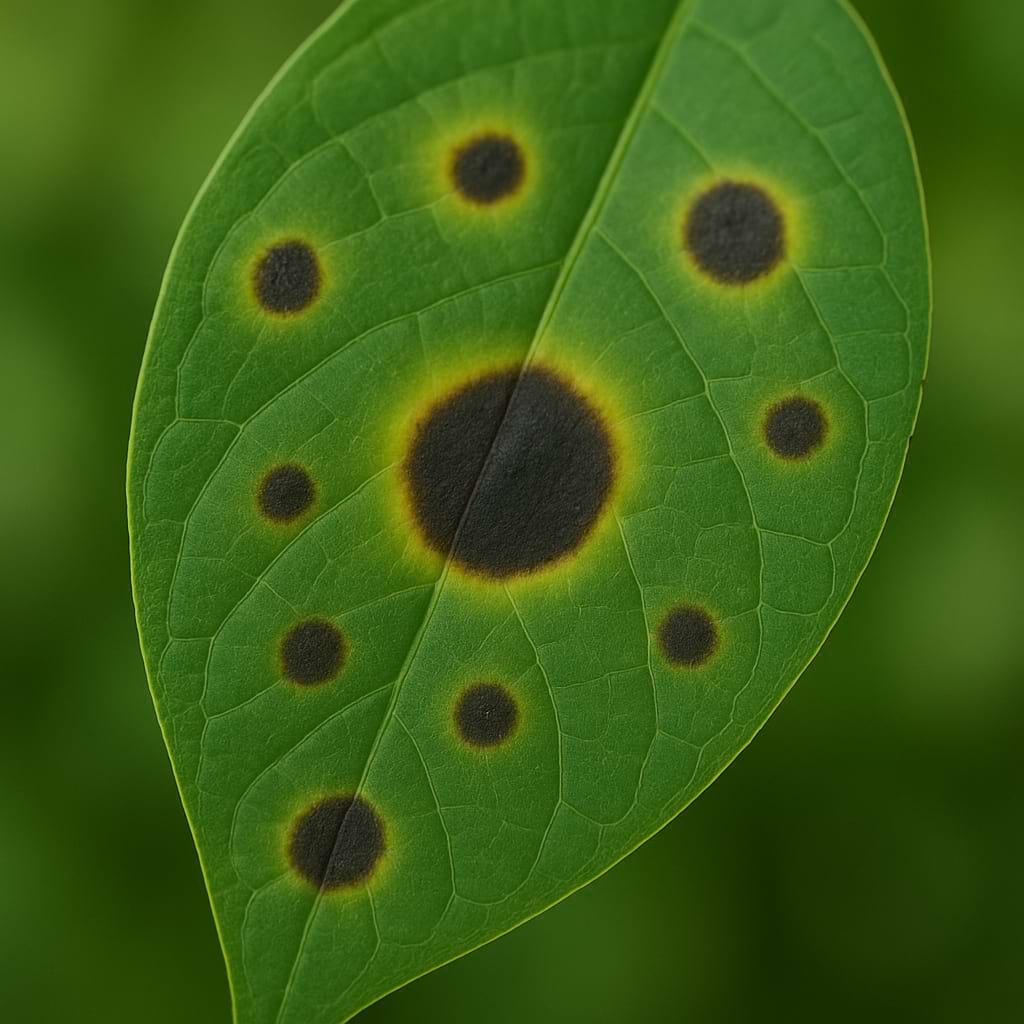
Keep water off the leaves. Velvet foliage holds droplets in the surface texture instead of shedding them, and water sitting on a leaf overnight in still humid air is exactly how you get brown and black spots. If you must mist, do it in the morning with air moving.
Signs of Trouble
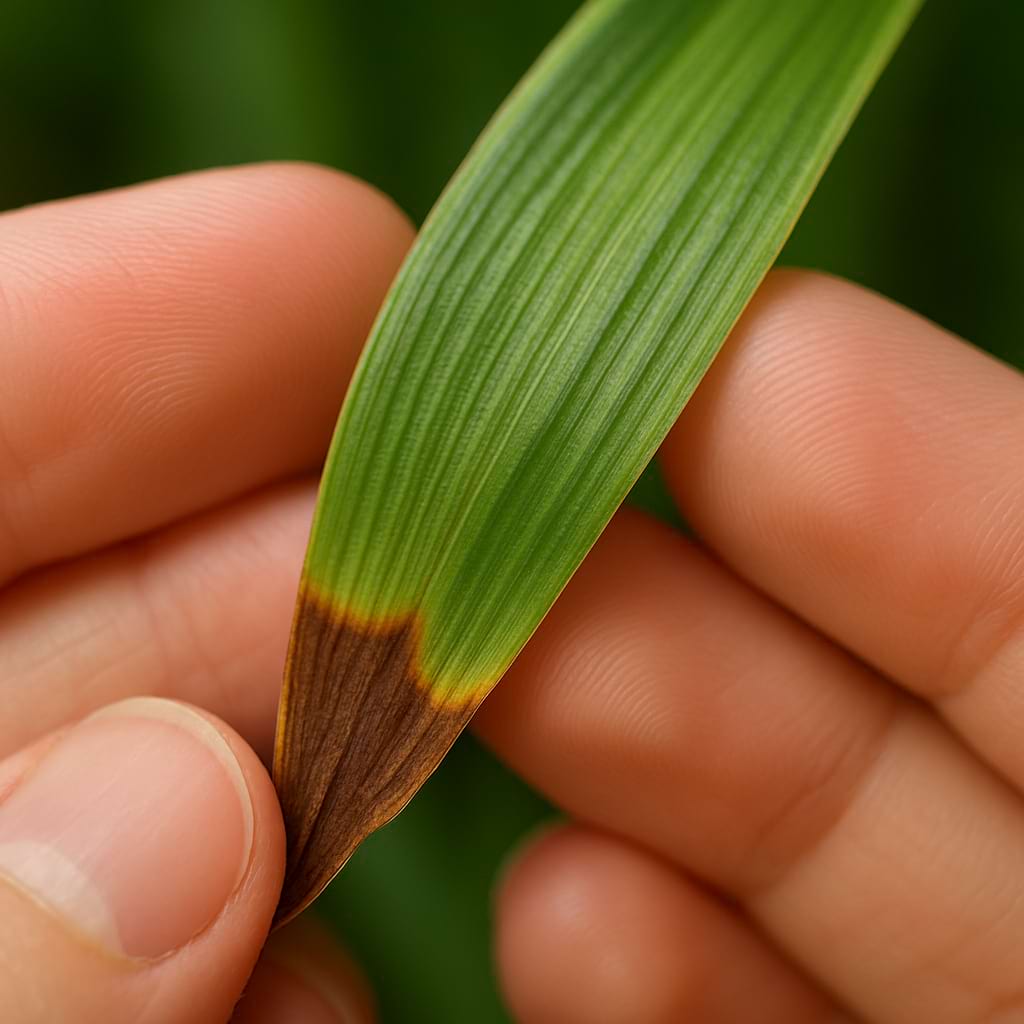
Thirst shows as a soft downward droop of the whole leaf, and it corrects within a few hours of a good drink. A plant that dries out hard and repeatedly gets crispy brown edges that never grow back.
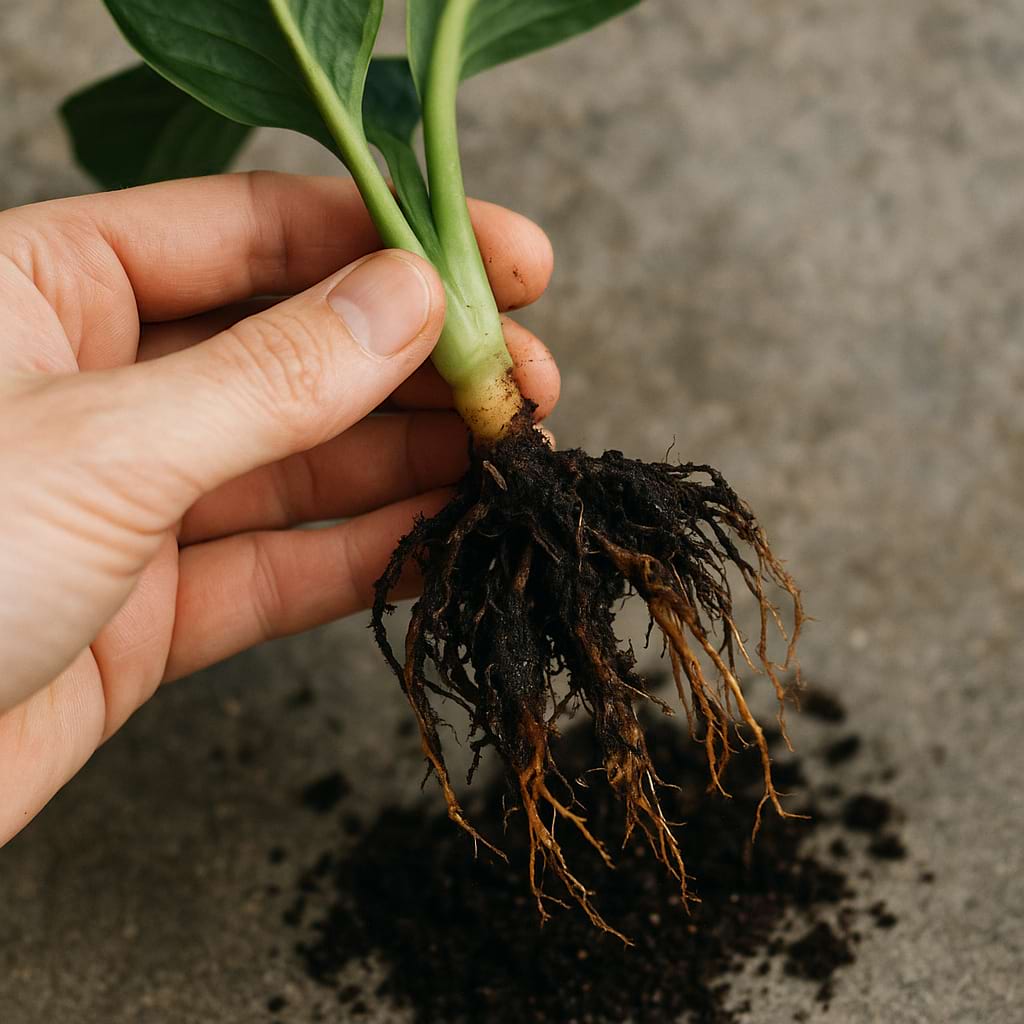
Overwatering is the more dangerous direction. Yellowing lower leaves with a mix that is still wet days after watering means root rot is starting. Unpot it, cut away anything brown and mushy, and repot into fresh airy mix.
🪴 Best Soil for Philodendron Verrucosum (Potting Mix & Drainage)
What the Soil Needs
In the wild this plant's roots run across mossy bark in open air, not through soil. That is the standard to aim for: a mix that holds moisture on its surfaces but has big air gaps between the pieces. Straight bagged potting soil compacts around those roots and suffocates them within a season.
DIY Soil Mix
The recipe I use, by volume:
- 3 parts orchid bark (fine to medium grade)
- 2 parts perlite or pumice
- 2 parts coco coir
- 1 part chopped sphagnum moss
- 1 part worm castings
The sphagnum is what makes this work for verrucosum specifically. It keeps moisture available without turning the pot into mud, which suits a plant that hates both drying out and sitting wet.
Pre-Made Options
Any bagged aroid or monstera mix gets you close. Open the bag and check it looks chunky rather than fluffy and black, then stir in an extra handful of perlite and a handful of sphagnum before potting. Our Potting Soil Guide compares the mainstream options.
🍼 Fertilizing Philodendron Verrucosum (Feeding Schedule)
When and How Often
Feed every third or fourth watering through spring and summer, then stop from late autumn until you see new growth restart. A plant putting out a leaf a month is hungry, and a plant sitting still in December is not.
What to Use
A balanced liquid houseplant fertiliser at half the strength on the label is right. Chunky bark mixes hold very few nutrients, so little and often beats a big occasional dose. Slow-release pellets also work well here because they suit the constant light feeding this plant likes. See our Fertilizing Guide and Fertilizer Comparison for specifics.
Over-Fertilizing Signs
Brown crispy leaf tips while the plant is otherwise well watered is the first sign of salt buildup, along with a white crust on the mix surface. Flush the pot with plain water for a minute, skip the next two feeds, and it recovers. Given the choice, underfeed a verrucosum. Nutrient deficiency is far easier to reverse than fertiliser burn.
🌡️ Philodendron Verrucosum Temperature Range
Ideal Range
Aim for 65-85°F (18-29°C), which is comfortable room temperature all year. Growth slows noticeably below 65°F and effectively stops in the high 50s.
The hard floor is 59°F (15°C). Cloud forest does not mean cold, it means cool nights and mild days with no frost ever. A verrucosum left in a room that dips into the low 50s sulks, drops leaves, and becomes vulnerable to rot, because cold wet roots cannot drink.
Drafts and Heat Sources
Sudden swings do more damage than any steady temperature in range. Keep it away from an outside door in winter, off a windowsill where cold glass touches the leaves overnight, and out of the airflow from a radiator or an air conditioning vent. Dry blasting heat is the fastest way to trigger crispy edges and a spider mite outbreak at the same time.
💦 Philodendron Verrucosum Humidity Requirements
Ideal Humidity
60 percent or higher, and this is the single fact that decides whether you enjoy this plant. Below roughly 55 percent, new leaves emerge undersized, tear on the way out of the sheath, or stall half-unfurled. Established leaves usually hold on, so the damage shows up only in new growth.
Easy Humidity Boosters
A humidifier running near the plant is the honest answer and the one that works. Beyond that, group it with other plants, keep it in a bright bathroom, or grow it in a glass greenhouse cabinet where you control the air properly.
Whatever you use, add gentle air movement. Still, saturated air on velvet leaves invites fungal and bacterial spotting. A small clip fan on low, aimed past the plant rather than at it, prevents almost all of it. Our Humidifier Guide covers the hardware.
🌸 Philodendron Verrucosum Flowers (Bloom Guide)
What the Flowers Look Like
Like every aroid, verrucosum makes an inflorescence rather than a flower: a pale green spathe, often flushed reddish on the outside, wrapped around a cream-coloured spadix that carries the actual tiny flowers. It is handsome in a subdued way and nothing like the foliage in drama.
How to Trigger Bloom
There is no reliable trick. Blooming needs a genuinely mature plant, and maturity in this genus means a thick climbing stem that has been going up a support for years with large adult leaves. Plants sold in small pots are juveniles, sometimes by a decade or more.
If you want to give it the best chance, give it a tall support and let it climb without cutting it back, keep humidity and warmth steady all year, and feed lightly through the growing season. A moss pole does more for maturity here than any fertiliser.
If It Won't Bloom
Honestly, do not chase it. Verrucosum flowers are rare indoors, the individual blooms last only a few days, and the plant will sometimes pull energy away from leaf production to make one. Nobody grows this plant for its flowers. If yours does bloom, take it as a sign that your conditions are excellent, and feel free to cut the spathe off to keep the leaves coming. A failure to bloom on a houseplant this young is the normal outcome, not a problem to solve.
🏷️ Philodendron Verrucosum Types and Varieties
The Standard Species
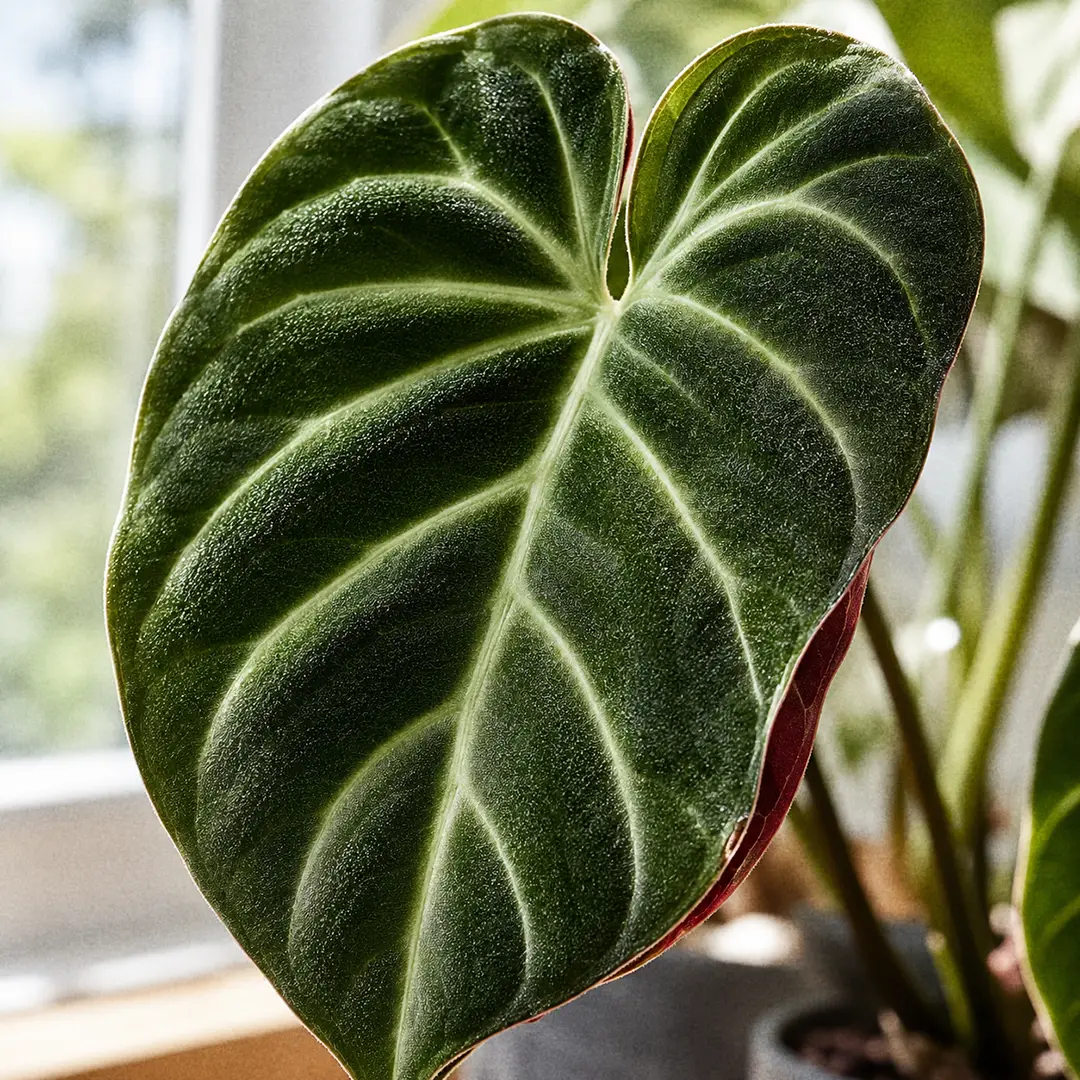
Most plants sold simply as Philodendron verrucosum have dark emerald velvet leaves, pale green vein tracks, slightly wavy margins, and a red to maroon underside. Colour varies a lot between wild-collected lines, so two plants under the same label can look noticeably different in depth of red. That variation is natural, not a mislabel.
'Incensi'
A widely traded selection with a strong contrast look: a red to burgundy leaf back and lighter green striping along the upper surface. Specialist growers across Europe and the US sell it, including a shorter form marketed as 'Incensi Compact' for people short on cabinet height.
'Amazon Sunset'
The one to get if you love the red. 'Amazon Sunset' has an unusually deep, unbroken scarlet underside, far more saturated than the typical species. Care is identical to the standard form. It costs more simply because it propagates as slowly as everything else in this genus.
'Splendid' (verrucosum × melanochrysum)
A well-established hybrid crossing verrucosum with Philodendron Melanochrysum, the long-leaved velvet climber. 'Splendid' takes the elongated leaf shape from one parent and the vein contrast and hairy petioles from the other, and it copes better with average room humidity than pure verrucosum does. A good stepping stone if you have killed a verrucosum before.
Commonly Confused With
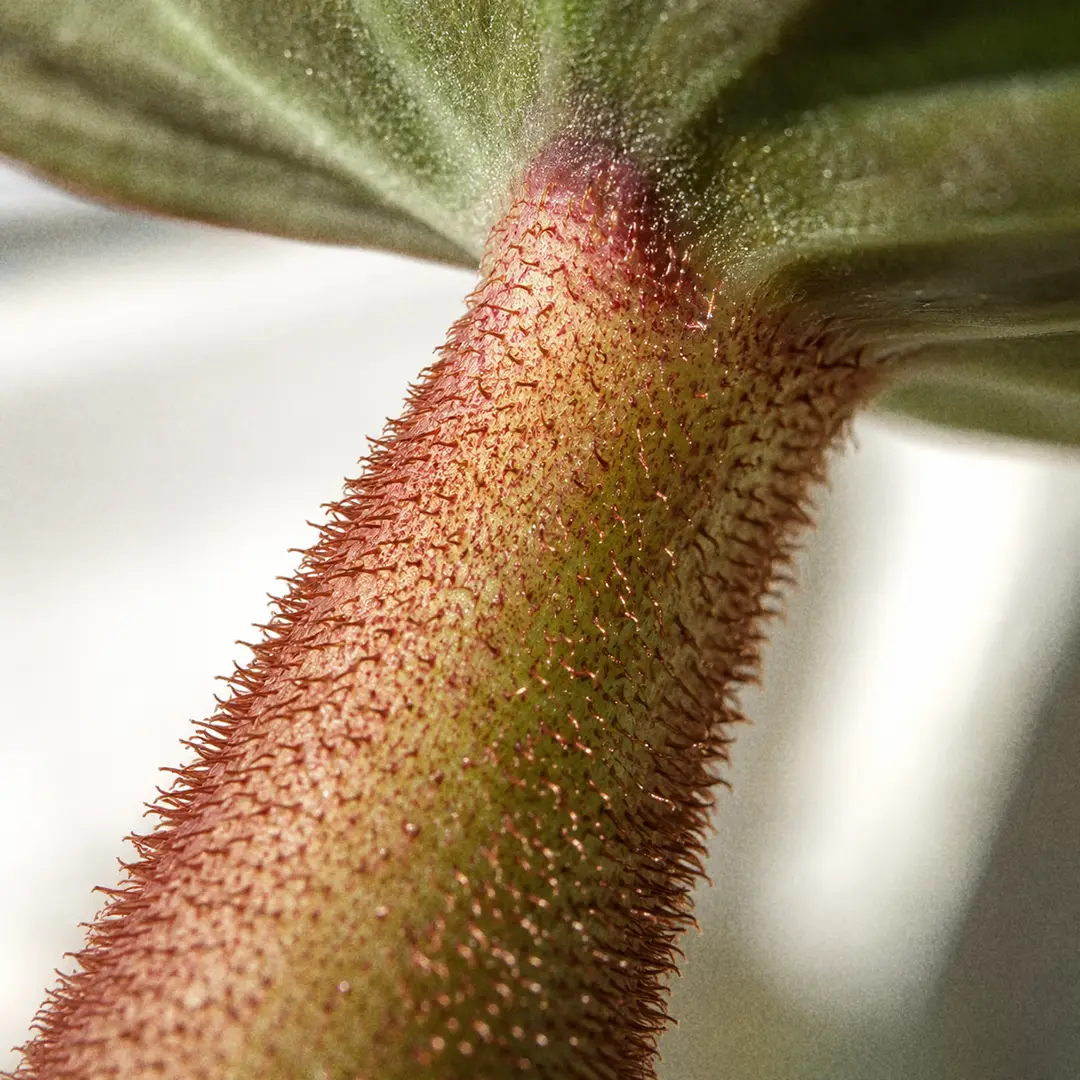
'El Choco Red' sits beside verrucosum on shop shelves constantly, but it is a different species (Philodendron rubrijuvenile) with smooth petioles. The trailing Velvet Leaf Philodendron gets mixed up with it too, though its leaves are far smaller and it has no bristles at all. The petiole test settles it every time: if the leaf stalk is not covered in soft bristly hairs, it is not a verrucosum.
🪴 Potting and Repotting Philodendron Verrucosum
When to Repot
Every 18 to 24 months, or when roots circle the inside of the pot and water runs straight through without wetting anything. Spring is best. This plant does not mind a slightly snug pot, and it minds a huge one a great deal, because unused wet mix around the rootball is where rot starts.
Choosing a Pot
Go up one size only, from a 4 inch to a 6 inch and no further. Drainage holes are mandatory. Plastic or glazed ceramic suits a chunky mix well because it holds moisture longer than terracotta does, and this is not a plant you want drying out fast. Our Plant Pot Guide breaks down the trade-offs.
Step-by-Step Repotting
- Water lightly the day before so the rootball holds together.
- Slide the plant out and tease apart the old mix, keeping as many roots as you can.
- Cut off anything brown, hollow, or sour-smelling with clean shears.
- Set the plant at the same depth in fresh aroid mix, working the mix between the roots with your fingers rather than pressing it down.
- Stake the pole now, in the same session, so you are not disturbing the roots again in a month.
- Water thoroughly and keep it slightly warmer and more humid than usual for two weeks.
Our Repotting Guide covers the general method in more detail.
✂️ Pruning Philodendron Verrucosum
When to Prune
Rarely. This is not a plant you shape. Remove damaged, yellowing, or spotted leaves whenever you see them, and otherwise leave it alone. Spring is the time for any real cutting, so the plant recovers fast.
How to Prune
Cut leaves off at the base of the petiole with clean, sharp shears. If you are shortening a climbing stem, cut just above a node, the slightly swollen ring where a leaf and an aerial root emerge. The node left on the plant is where new growth comes from, and the piece you removed is a cutting.
Managing a Leggy Plant
A long bare stem with leaves only at the top means the plant has been climbing without enough light, or it has outgrown its pole. You cannot make an old bare section releaf. What you can do is cut the top section off with three or four nodes, root it, and plant it back at the base of the same pot to fill things out. That is the standard fix for leggy growth on climbing philodendrons.
🌱 How to Propagate Philodendron Verrucosum
Best Method
Stem cuttings, taken in spring or summer. Each cutting needs at least one node with an aerial root attached, and ideally one leaf to power the process. Nodes without leaves root too, they just take longer, which is why wet-stick cuttings sell cheaply.
Step-by-Step
- Find a node on the main stem, identifiable by the small nub of aerial root beneath a leaf.
- Cut just below that node with sterilised shears, taking one leaf with it.
- Let the cut end air-dry for an hour or two so it seals.
- Nestle the node into damp sphagnum moss in a clear container, with the aerial root touching the moss and the leaf above it.
- Cover loosely to hold humidity near 90 percent, and keep it at 70-80°F in bright indirect light.
- Air it out for a minute every couple of days to stop mould.
- Roots appear in three to six weeks. Pot up into aroid mix once they are two inches long.
Water rooting works too and lets you watch progress, but the roots it makes are brittle and often sulk during the move into soil. Sphagnum is the more reliable route for this species. Our Propagation Guide and Water Propagation Guide cover both methods.
Tips for Success
Bottom heat is the single biggest accelerator, so a seedling mat under the container roughly halves the wait. Keep the moss damp and springy rather than soaked, since a waterlogged node rots in days. And resist unwrapping it to check every morning. Every peek dumps the humidity you built.
🐛 Philodendron Verrucosum Pests and Treatment
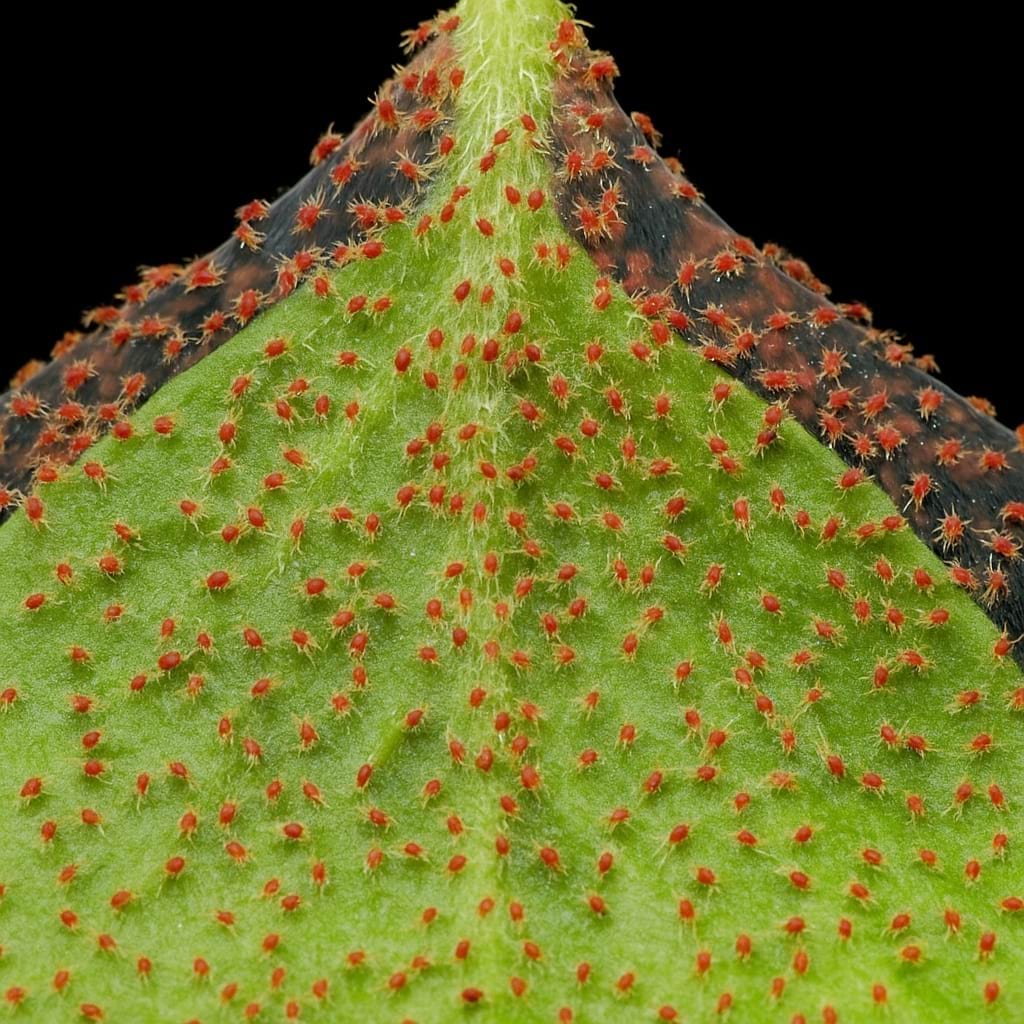
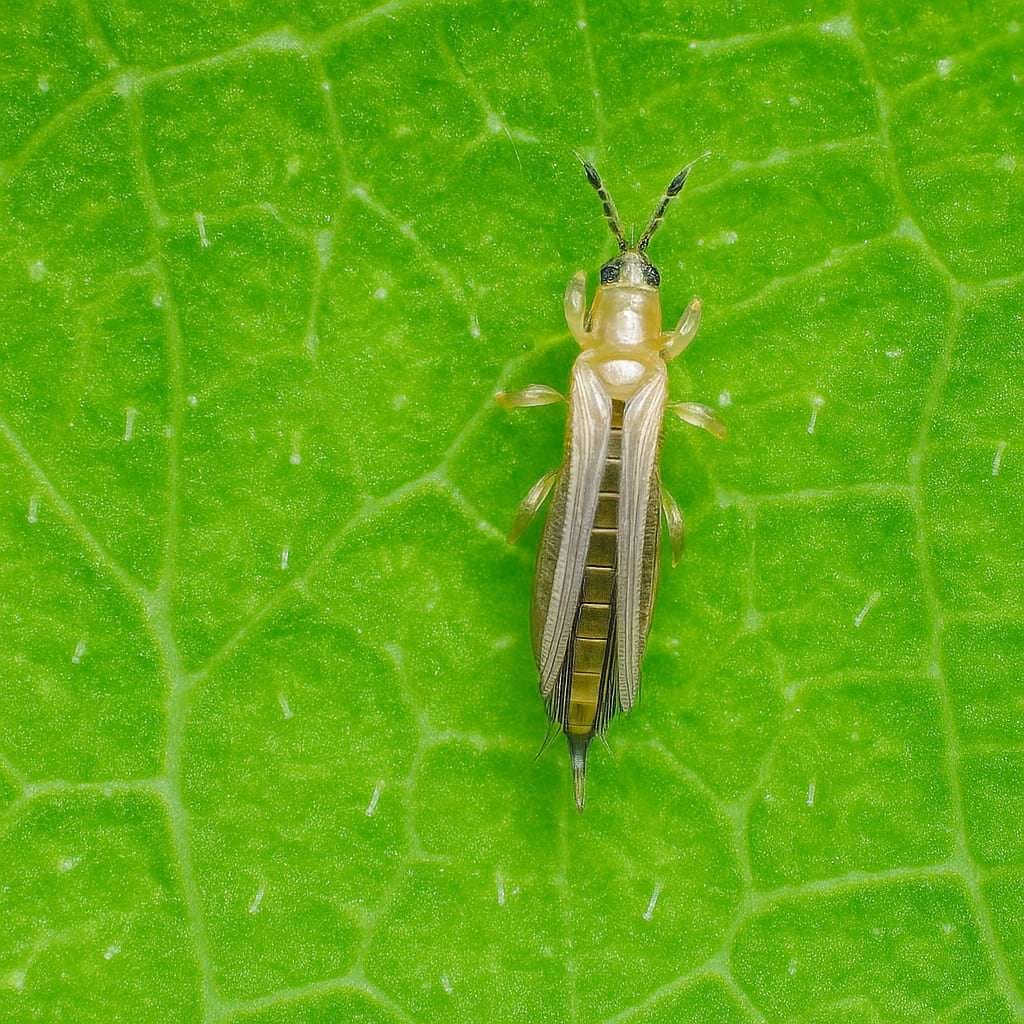
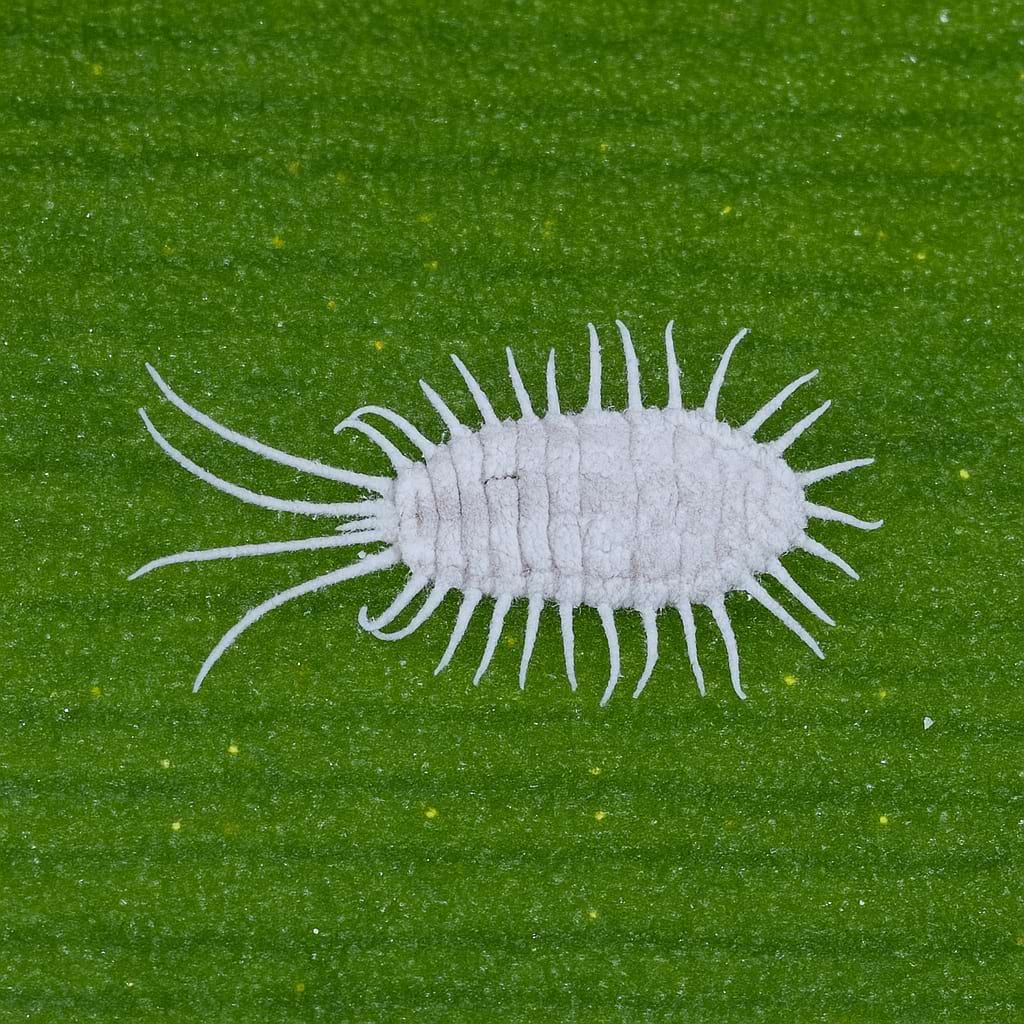
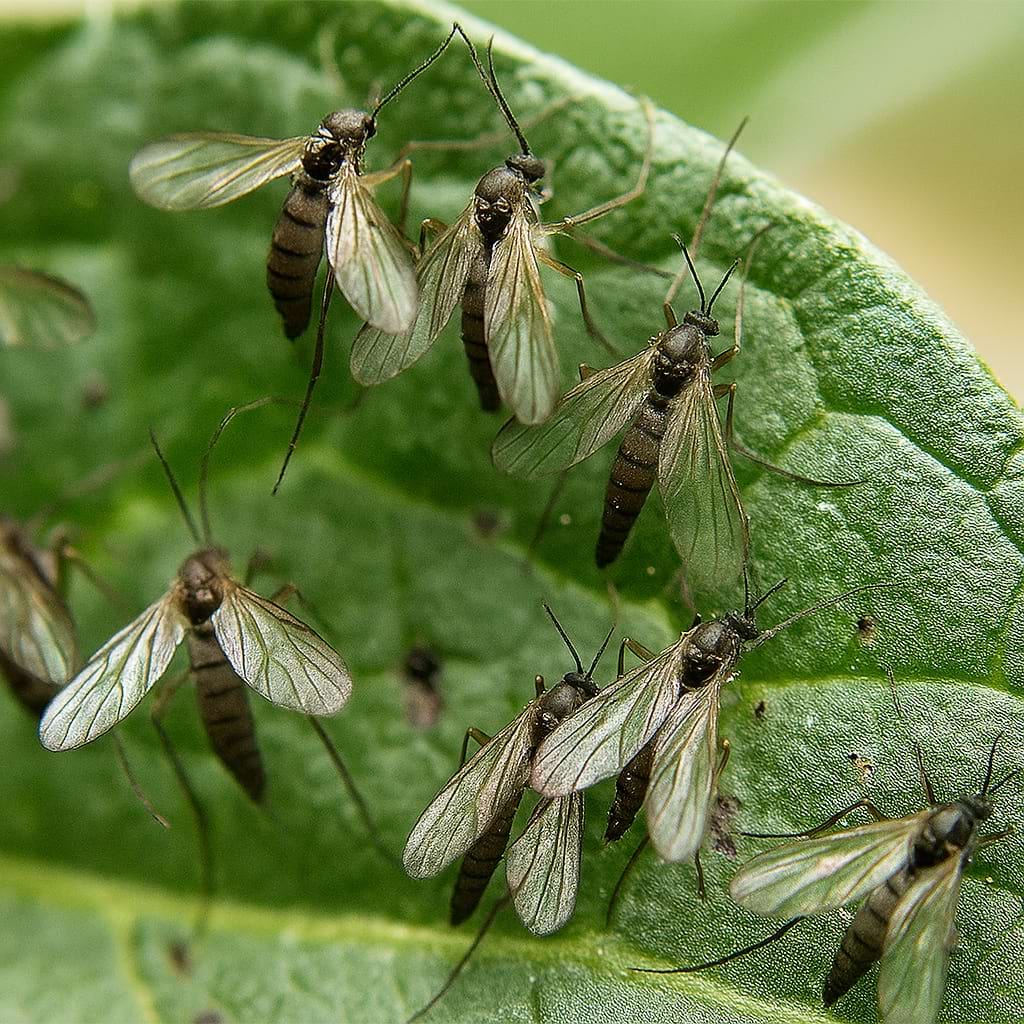
Velvet leaves make pests harder to spot early, because the texture hides the fine speckling and webbing you would notice instantly on a glossy leaf. Check the undersides weekly with the leaf tipped toward a light.
Spider mites are the main threat, and they arrive whenever the air goes dry, which is exactly what happens when the heating comes on. Look for pale stippling and fine webbing where the petiole meets the blade. Raise humidity and treat with insecticidal soap or a neem spray, applied in the evening and repeated weekly for a month.
Thrips leave silvery scarred patches and distorted new leaves, and they are common on rare aroids because so many plants pass through collector-to-collector trades. Isolate any new plant for three weeks before it joins your collection.
Mealybugs hide as white cottony blobs in leaf axils and along the aerial roots on a pole. Dab each one with a cotton bud dipped in rubbing alcohol, then follow up with a soap spray.
Fungus gnats come with the constantly damp mix this plant likes. They are harmless to a healthy plant. Yellow sticky traps and letting the top inch dry between waterings keeps numbers down.
Do not reach for a leaf-shine product on any of these problems. It clogs the velvet texture permanently.
🩺 Common Philodendron Verrucosum Problems
Small leaves and stunted growth are the classic verrucosum complaint, and the cause is nearly always low humidity or no support to climb. A plant with nothing to grip stays in juvenile mode and never sizes up.
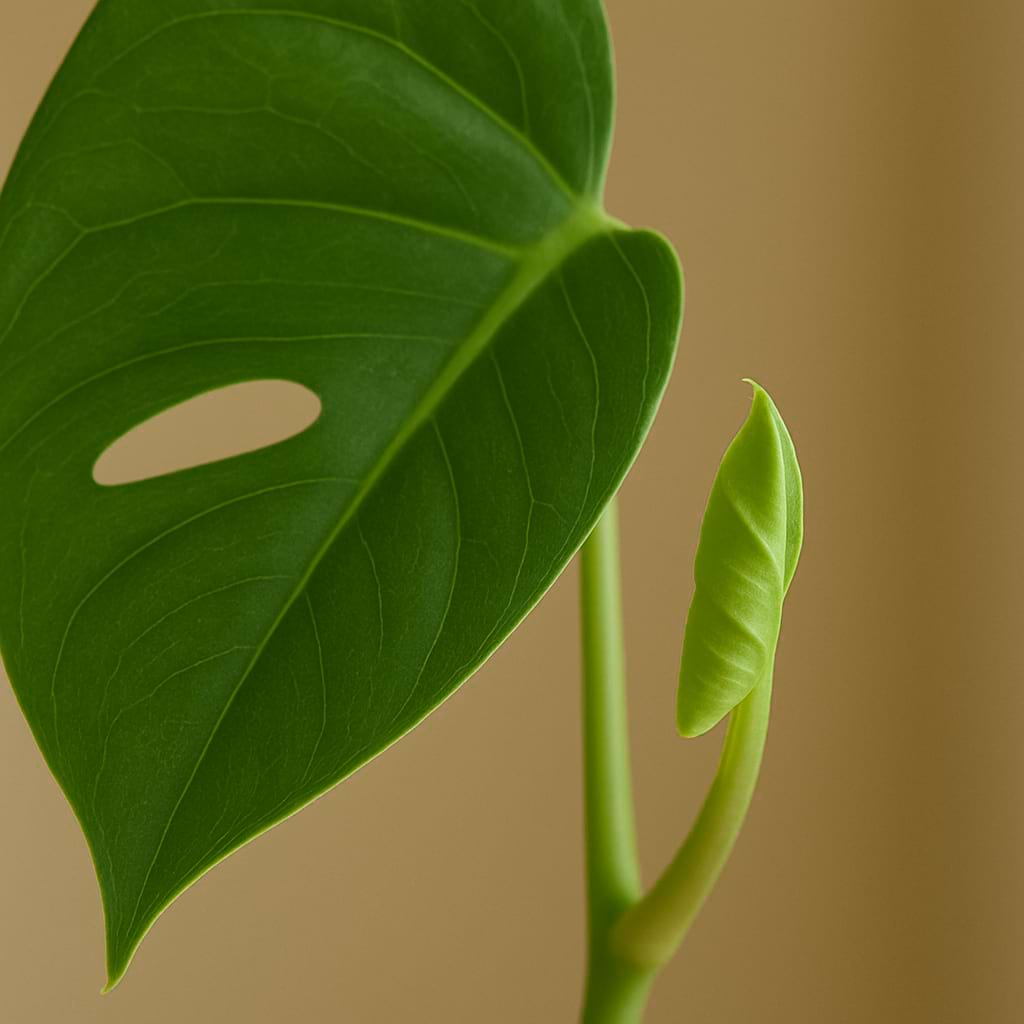
New leaves that emerge crumpled, torn, or stuck half-out of the sheath point to humidity too, sometimes combined with the mix drying out during the two weeks that leaf was forming. Do not pull a stuck leaf free. Mist the sheath and let it release itself.
Yellowing leaves on the lower part of the plant with wet mix means root rot. Yellowing across the whole plant with pale washed-out colour usually means too much light instead.
Brown and black spots with a yellow halo are bacterial leaf spot, which spreads on still, damp, warm air. Remove affected leaves, cut the misting, and get a fan moving. This is the one disease that can genuinely take a verrucosum down fast.
Crispy brown edges come from dry air, a missed watering, or salt buildup, in that order of likelihood. Trim them for looks if you like, and fix the cause.

🖼️ Philodendron Verrucosum Display and Styling Ideas
On a Pole, at Eye Level
This plant is worth staging properly. Give it a mossy pole and put it where light rakes across the leaves at an angle rather than hitting them straight on, because that is when the velvet actually reads as velvet and the vein tracks light up. A pale wall behind it helps enormously.
In a Cabinet or Terrarium
A glass plant cabinet is where verrucosum shines, and it solves the humidity problem permanently. A small pole inside a tall cabinet with a grow light strip on top gives you the full-sized adult leaves that people buy this plant hoping for. It also works as a feature plant in a large terrarium while young.
Grouping and Contrast
Pair it with other velvet-leaved aroids so the textures echo: an Anthurium Crystallinum at its feet, an Alocasia Black Velvet beside it, or a crawling Philodendron Gloriosum in a low bowl below to set climbing against creeping. For height instead of texture, a King Anthurium on a tall stand nearby hangs its long pleated leaves downward and gives the grouping a vertical line, on the same humidity that verrucosum already needs. Keep it out of walkways, since brushing past scuffs the velvet, and that mark is permanent.
🌟 Philodendron Verrucosum Pro Care Tips
- Buy on the petiole, not the leaf. Hairy bristly leaf stalks are the species signature. Smooth stalks mean you are being sold something else at a verrucosum price.
- Give it a pole from day one. A climbing philodendron with nothing to climb stays small forever, whatever else you do right.
- Never wipe the leaves. A soft brush or a puff of air removes dust. A damp cloth flattens the velvet permanently, and it will not spring back.
- Add a fan before you add a humidifier. High humidity without airflow is how bacterial spotting starts on velvet foliage.
- Keep a spare node rooting at all times. Verrucosum can decline suddenly if something goes wrong, and a backup cutting is cheap insurance on an expensive plant.
- Judge health by new leaf size. Each new leaf bigger than the last means everything is working. Two smaller leaves in a row is your signal to change something.
❓ Frequently Asked Questions
Is Philodendron Verrucosum hard to care for?
Moderate, and it is almost entirely down to humidity. The watering, light, and feeding are the same as any other climbing philodendron, and none of it is difficult. If your home sits at 60 percent humidity or you grow in a cabinet, this plant is easy. If you are at 35 percent in winter, it will fight you.
Why are my Philodendron Verrucosum leaves getting smaller?
Almost always low humidity, no support to climb, or too little light, often all three together. Leaf size in this genus depends on the plant maturing up a pole, so a verrucosum left trailing loose in a pot stays permanently juvenile. Add a moss pole and raise the humidity, and the next leaves come out bigger.
Is Philodendron Verrucosum toxic to cats and dogs?
Yes. Like all philodendrons, it contains insoluble calcium oxalate crystals, and the ASPCA lists the genus as toxic to both cats and dogs. Chewing a leaf causes intense mouth burning, drooling, and vomiting. It is unpleasant for people too, so keep it out of reach of small children and pets.
Why are the new leaves coming out crumpled or stuck?
The air is too dry while that leaf is forming, and sometimes the mix dried out midway through. New leaves develop over two or three weeks inside a protective sheath, and they need moisture the whole time to expand properly. Never pull a stuck leaf free. Mist the sheath and wait.
Can I grow Philodendron Verrucosum without a humidifier?
In a naturally humid climate or a bright bathroom, yes. In a heated home in winter, realistically no. Pebble trays and misting raise humidity by a couple of percent for a few minutes and do not move the needle for a plant that wants 60 percent sustained. A cabinet or a humidifier is the real solution.
How fast does Philodendron Verrucosum grow?
Fast for a rare aroid when conditions suit it, with a new leaf every three to five weeks in summer on a well-supported plant. On a pole indoors it can reach five to eight feet over several years, with leaves getting progressively larger as the stem thickens. Growth stalls almost completely in low winter light.
Should I use a moss pole or a coco pole?
Either works, but the pole has to be kept damp for the aerial roots to grab and feed. A sphagnum-filled pole holds moisture best and gives the largest leaves. Cedar or coco poles are tidier and easier to live with, they just need watering down more often.
Why is my Philodendron Verrucosum losing its velvet look?
Usually too much light, which fades the deep green to a yellowish cast and dulls the texture. The other cause is physical damage: wiping the leaves, brushing past them in a hallway, or a leaf-shine product. Neither is reversible on an affected leaf, but new growth comes in normal once the cause is fixed.
Can I propagate Philodendron Verrucosum from a leaf?
No. A leaf alone has no node and will never make a plant, no matter how long it sits in water. You need a section of stem with at least one node, ideally with an aerial root attached. That is true for every philodendron.
ℹ️ Philodendron Verrucosum Info
Care and Maintenance
🪴 Soil Type and pH: Chunky, airy aroid mix with bark, perlite, coco coir and a little sphagnum
💧 Humidity and Misting: Wants 60 percent or higher, with gentle air movement to prevent fungal spotting.
✂️ Pruning: Trim only damaged leaves and the occasional overlong stem section, cutting just above a node.
🧼 Cleaning: Never wipe the velvet leaves with a cloth; puff dust off with a soft brush or a gentle blast of air
🌱 Repotting: Move up one pot size, refresh the mix, and stake to a pole in the same session
🔄 Repotting Frequency: Every 18-24 months, or when roots circle the base
❄️ Seasonal Changes in Care: Slow feeding and watering from late autumn to late winter, keep the room above 60°F
Growing Characteristics
💥 Growth Speed: Moderate to Fast
🔄 Life Cycle: Evergreen perennial hemiepiphyte
💥 Bloom Time: Rarely indoors, occasionally on very mature climbing plants
🌡️ Hardiness Zones: 10-12 outdoors, houseplant elsewhere
🗺️ Native Area: Cloud forests of Costa Rica, Panama, Colombia, Ecuador and Peru
🚘 Hibernation: No true dormancy, growth simply slows in low winter light
Propagation and Health
📍 Suitable Locations: Bright bathrooms, plant cabinets, greenhouse shelves, east-facing rooms
🪴 Propagation Methods: Root stem cuttings with one node and an aerial root in sphagnum moss or water.
🐛 Common Pests: Spider Mites, Thrips, Mealybugs, Fungus Gnats
🦠 Possible Diseases: Root rot, bacterial leaf spot, fungal spotting in still humid air
Plant Details
🌿 Plant Type: Climbing hemiepiphyte
🍃 Foliage Type: Evergreen velvet foliage
🎨 Color of Leaves: Dark emerald green with pale green vein tracks, wine red underside
🌸 Flower Color: Pale green spathe with a reddish flush
🌼 Blooming: Very rare in cultivation
🍽️ Edibility: Not edible, all parts contain calcium oxalate crystals
📏 Mature Size: 5-8 ft indoors on a pole
Additional Info
🌻 General Benefits: Large leaf surface adds humidity to a room and softens hard interior lines
💊 Medical Properties: None, treat as a toxic ornamental only
🧿 Feng Shui: Heart-shaped foliage is associated with warmth and welcome in a living space
⭐ Zodiac Sign Compatibility: Taurus, for its taste for texture and slow luxury
🌈 Symbolism or Folklore: Abundance and quiet luxury, thanks to the velvet texture
📝 Interesting Facts: The species name means warty, and it describes the bristly hairs on the leaf stalks rather than the leaves
Buying and Usage
🛒 What to Look for When Buying: Check the petioles for hairs and the leaf undersides for red before paying rare plant prices
🪴 Other Uses: Popular as a mounted feature plant in large terrariums and plant cabinets
Decoration and Styling
🖼️ Display Ideas: Staked to a mossy pole at eye level where light rakes across the leaf surface
🧵 Styling Tips: Place it against a pale wall so the vein tracks and red underside read clearly
🪴 See also 🪴
Complete Guide to Philodendron Melanochrysum Care and Growth
How to Propagate Philodendron Brasil (and Keep the Variegation)
How to Grow Philodendron: Care Guide and 22 Types Worth Owning
Complete Guide to Imperial Red Care and Growth
Complete Guide to Philodendron Ring of Fire Care and Growth
Complete Guide to Philodendron Gloriosum Care and Growth
Complete Guide to Philodendron Birkin Care and Growth
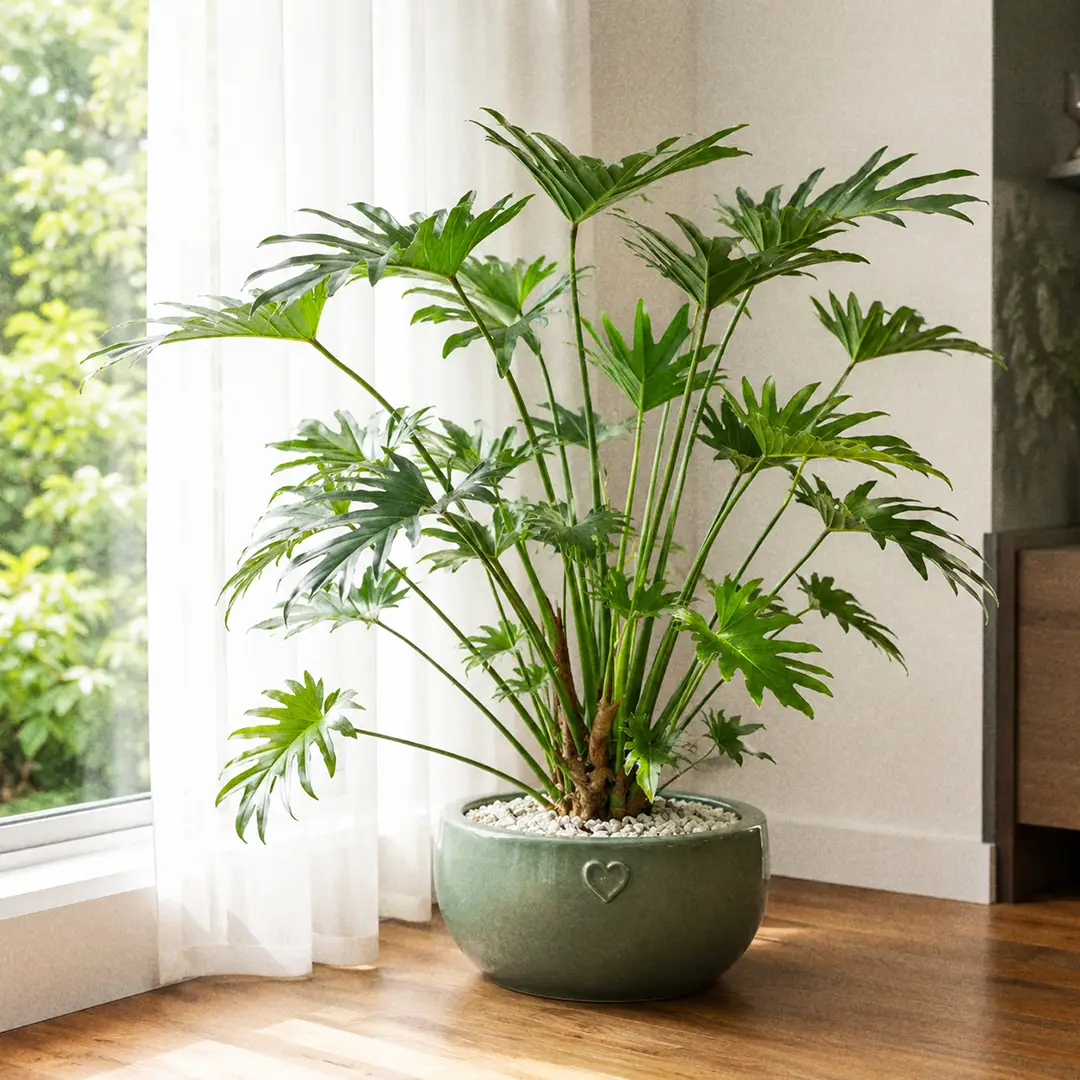
Complete Guide to Xanadu Care and Growth
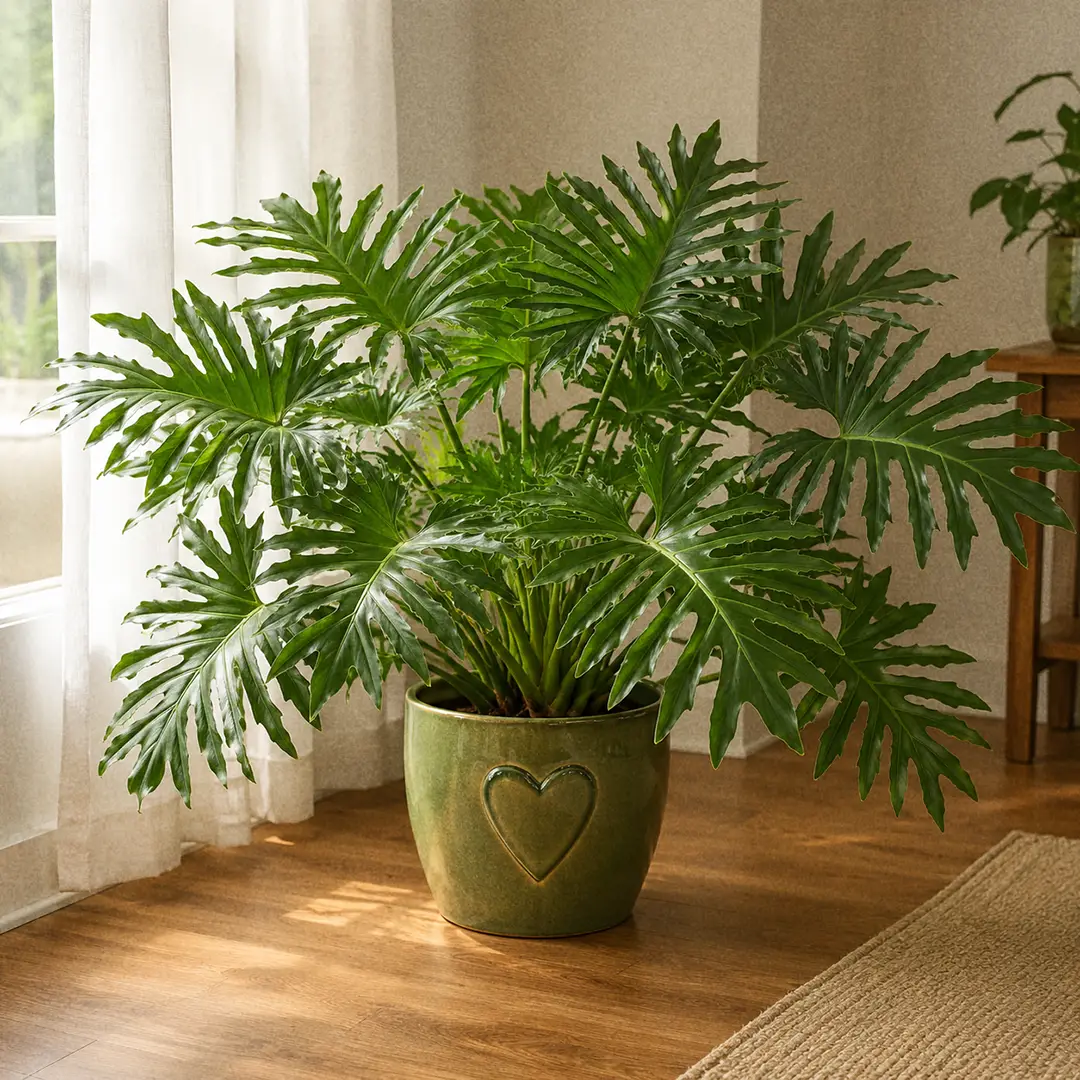
Complete Guide to Hope Selloum Care and Growth
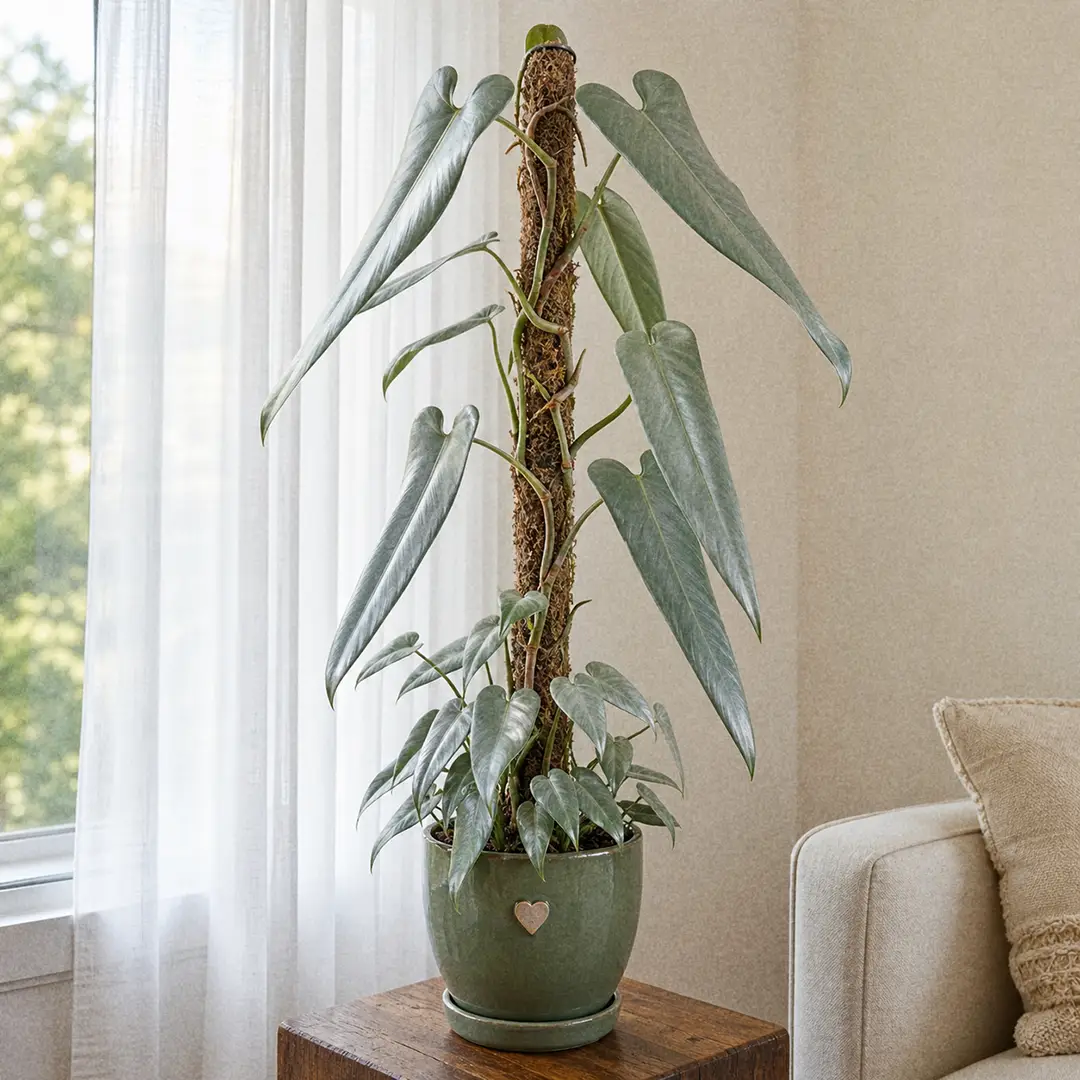
Complete Guide to Silver Sword Philodendron Care and Growth
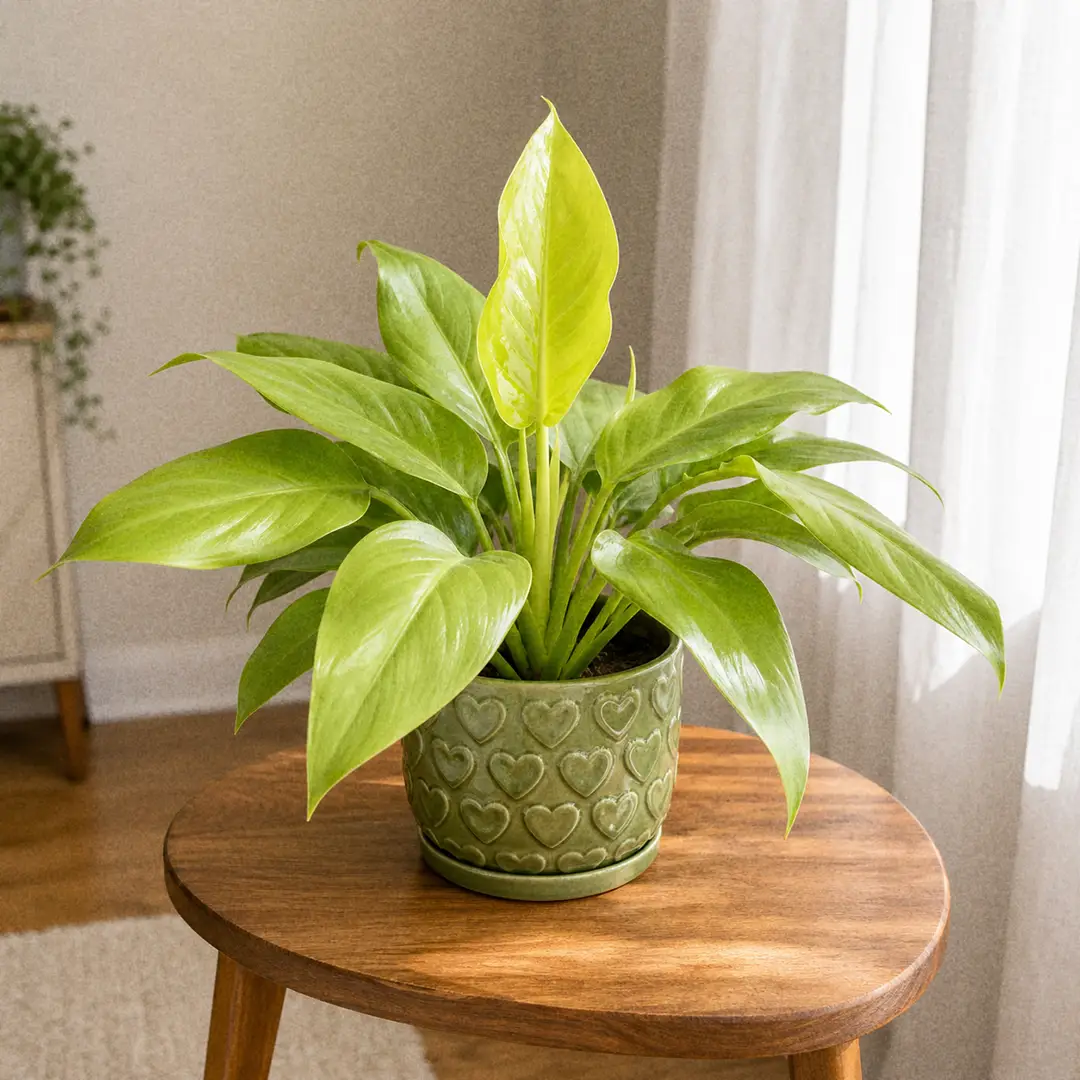
Complete Guide to Moonlight Philodendron Care and Growth
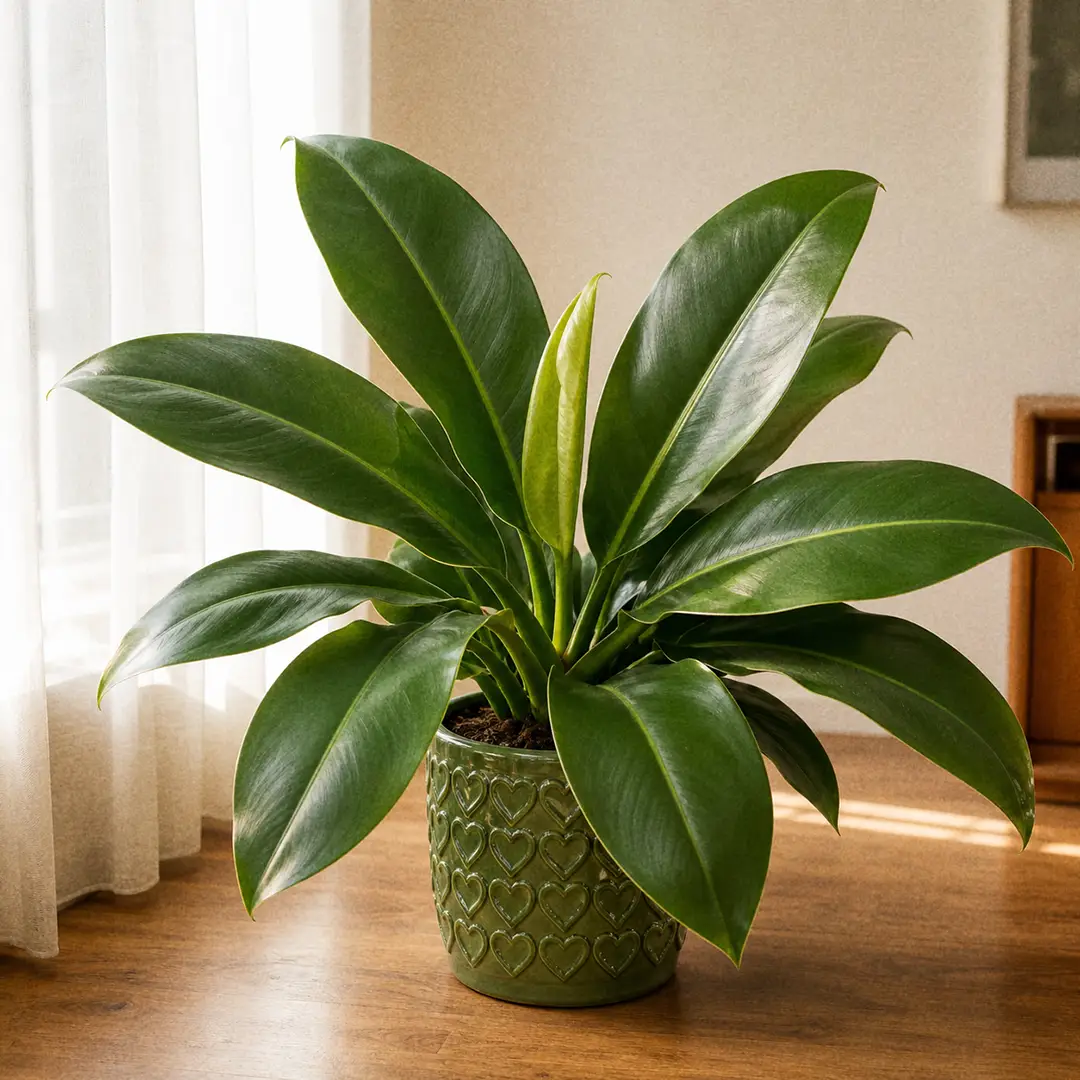
Complete Guide to Imperial Green Care and Growth
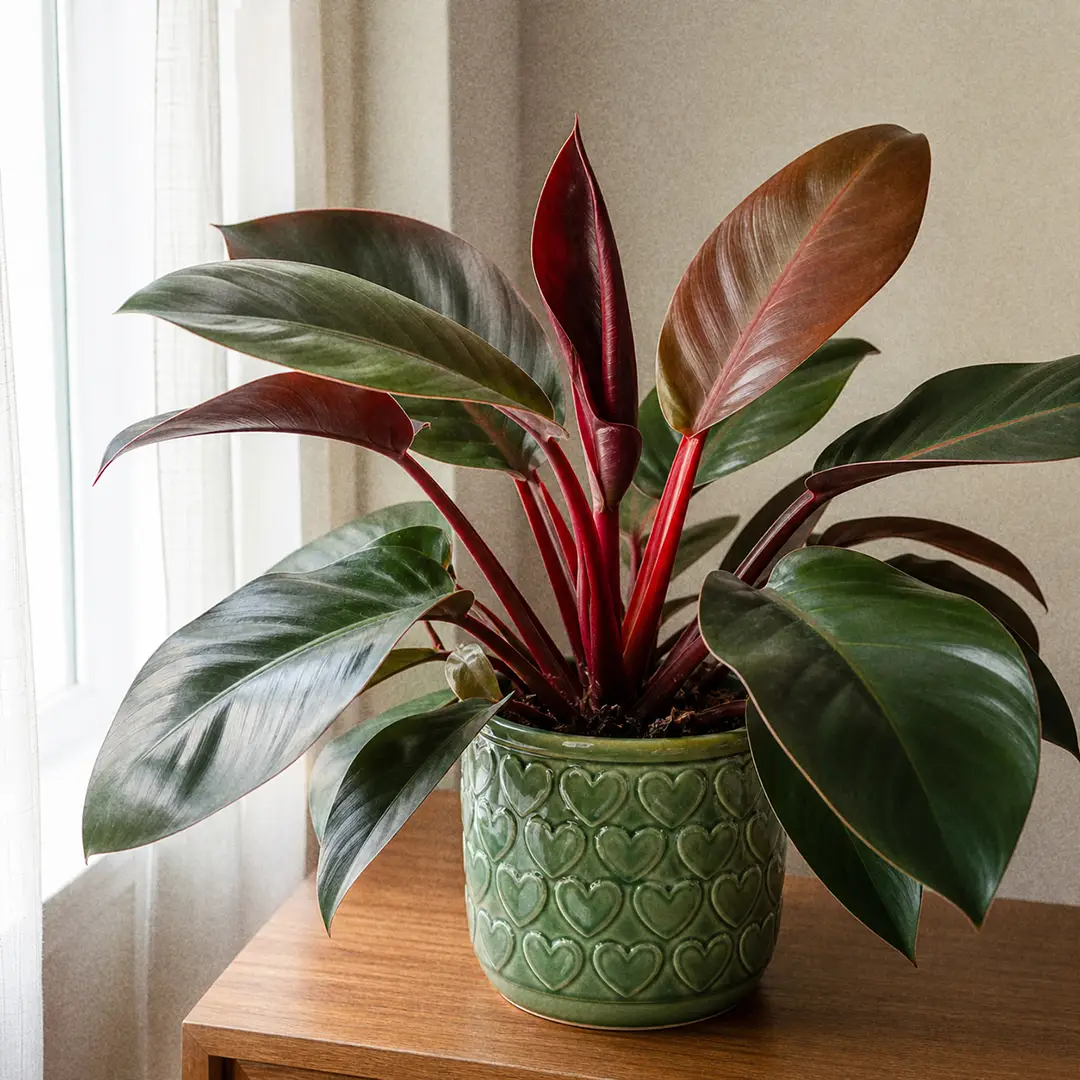
Complete Guide to Rojo Congo Care and Growth
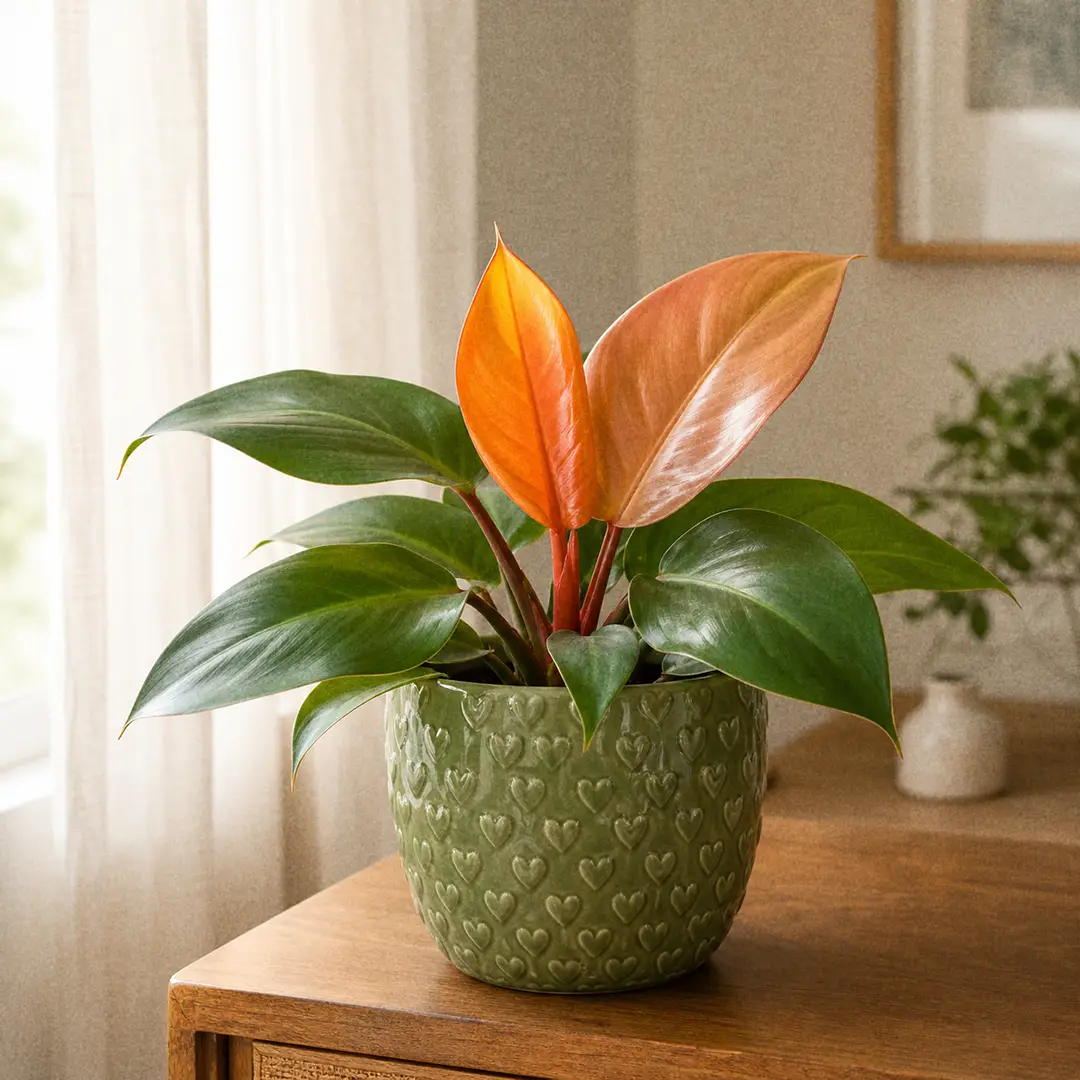
Complete Guide to Prince of Orange Care and Growth
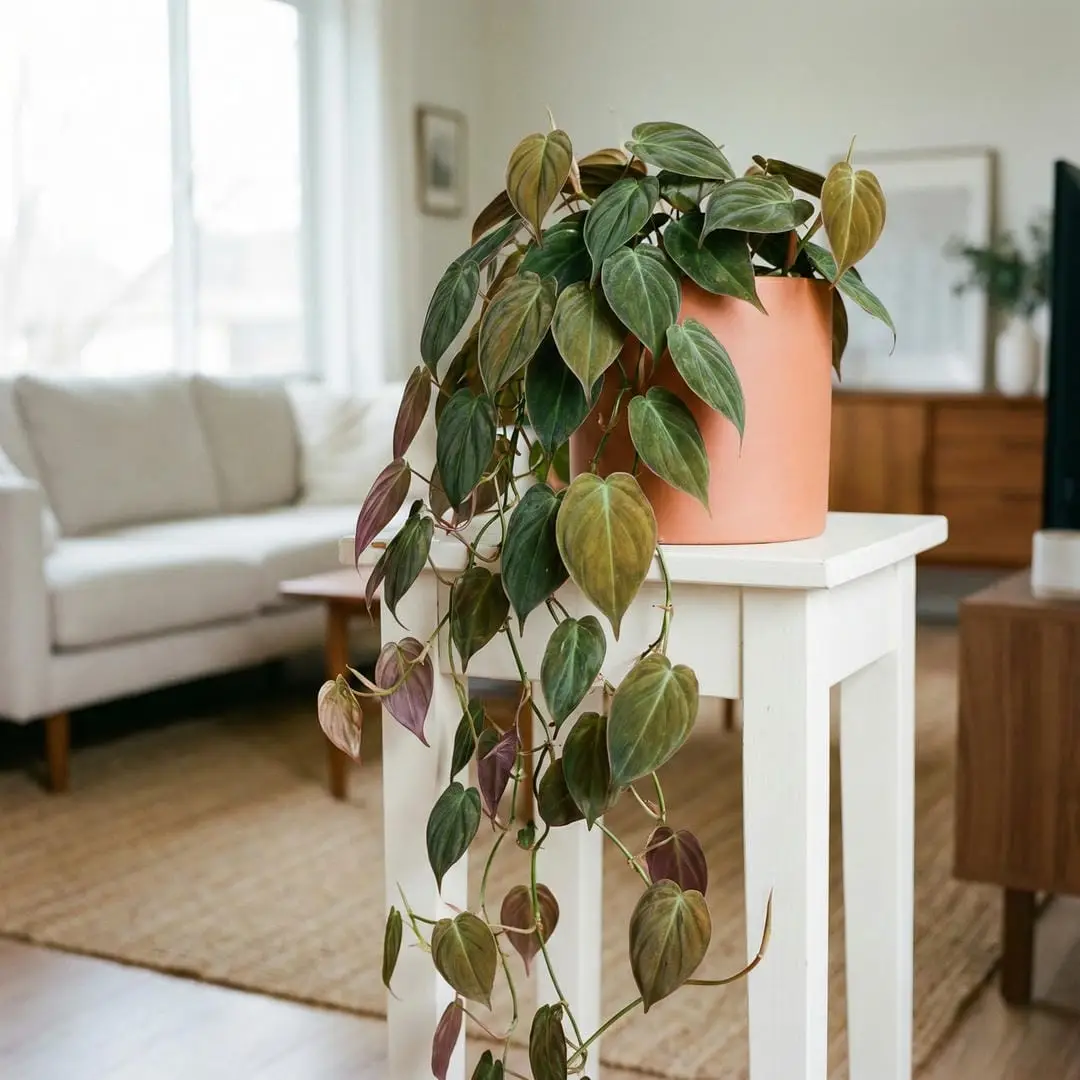
Complete Guide To Velvet Leaf Philodendron Care and Growth
Complete Guide To Heart-leaf Philodendron Care and Growth
Complete Guide to Philodendron Florida Beauty x Tortum Care and Growth
Complete Guide to Philodendron Mayoi Care and Growth
Complete Guide to Philodendron Polypodioides Care and Growth
Complete Guide to Philodendron White Princess Care and Growth
Complete Guide To Lemon Lime Philodendron Care and Growth

Houseplant101 Forum
Questions & Comments
Ask a question, share your plant experience, or help other plant owners.
Comments are temporarily unavailable.
Open the Houseplant101 ForumNo comments yet
Be the first to ask a question or share your experience about this page.
Log in or create an account
Comments use your Houseplant101 Forum account, but you can stay on this page.
Create a new account