
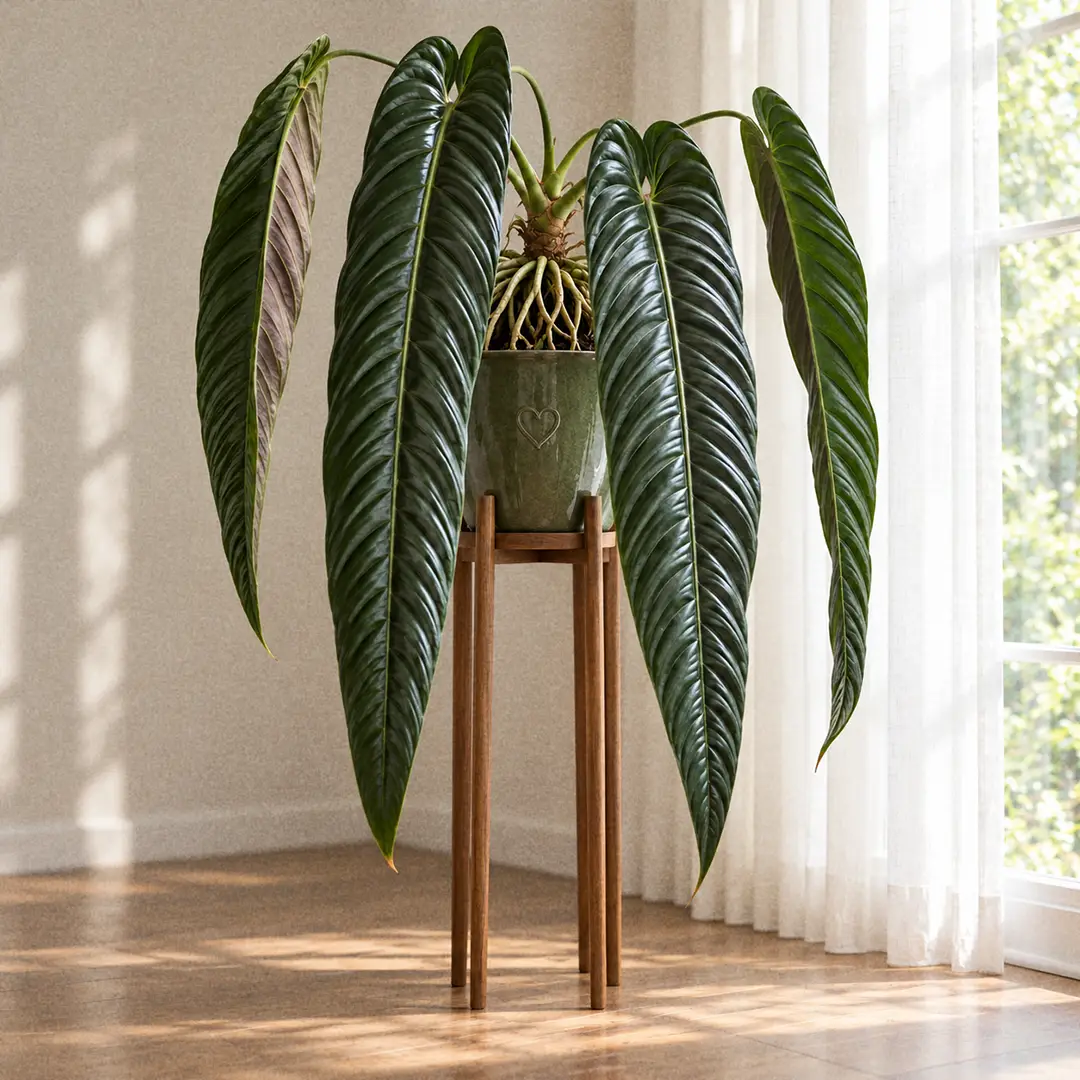
King Anthurium
Anthurium veitchii
Anthurium veitchii, King of Anthuriums, Veitchii


King Anthurium is the aroid with long, pleated, pendant leaves that hang in deep ridges like corrugated metal. Learn how to grow Anthurium veitchii indoors, and how to actually get those leaves to grow longer each year.
📝 King Anthurium Care Notes
🌿 Care Instructions
⚠️ Common Pests
📊 Growth Information
🪴 In This Guide 🪴

☀️ King Anthurium Light Requirements (Bright Indirect Light)
The Sweet Spot
In the wild this plant lives strapped to a tree trunk under a cloud forest canopy, so it has never met full sun and does not want to. Indoors it wants bright indirect light for most of the day, which in practice means a spot two to four feet back from an east window, or further back from a south or west window behind a sheer curtain.
A north window can work if it is large and unobstructed, though growth will be slower and leaves shorter. If you are relying on a grow light, keep it about 18 inches above the growth point and run it 10 to 12 hours a day. Our grow light guide covers picking one that is strong enough without being harsh.
Too Little Light
The plant will not die in low light, it will just quietly stop impressing you. New leaves emerge smaller than the previous ones, the pleating gets shallow, and the gaps between leaves stretch out so the stem looks bare. Because each leaf takes weeks to size up, you often do not notice the decline until three leaves in.
Too Much Light
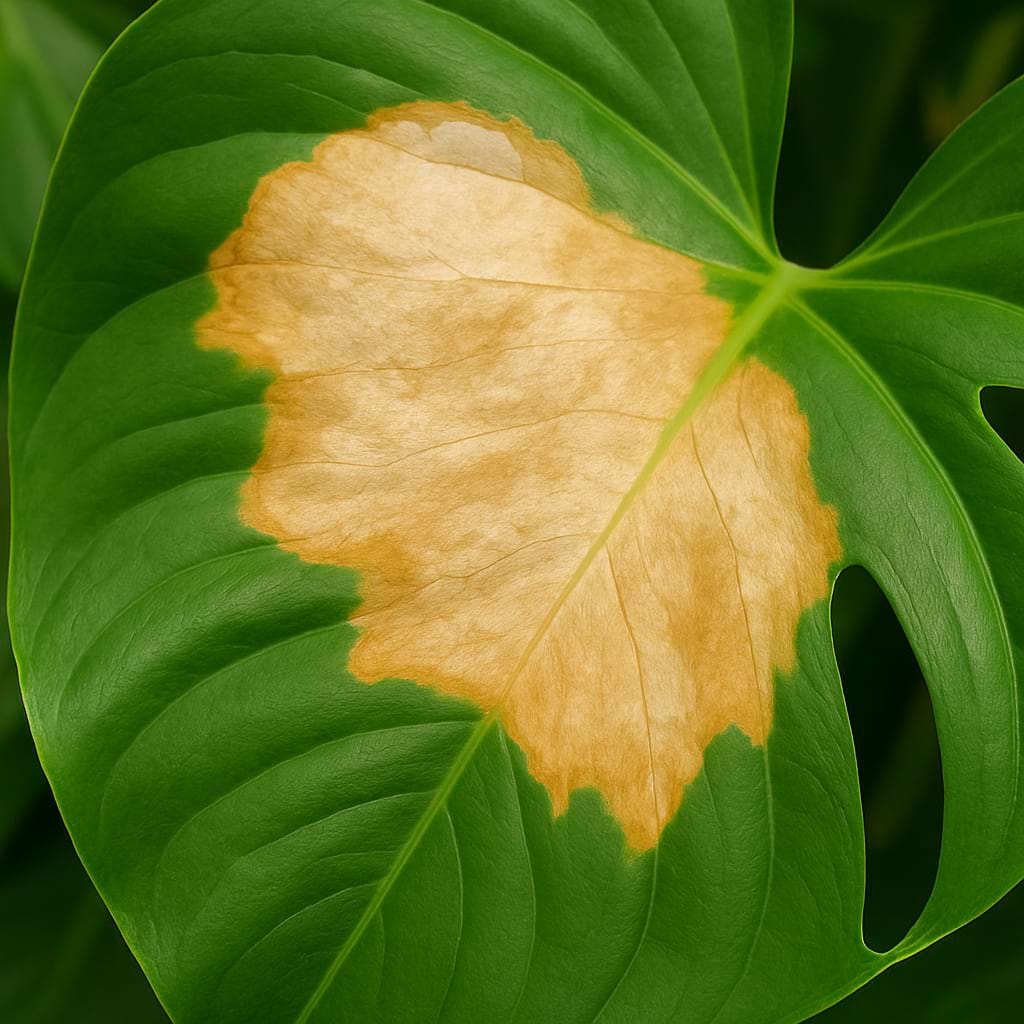
Direct sun is the fast way to ruin a leaf that took two months to build. You get pale bleached patches first, then dry tan scorch marks that never heal. A leaf on this plant can last years, so one bad afternoon on a windowsill stays visible for a very long time. When in doubt, move it back a foot. See our light guide for how to judge a spot properly.
💧 King Anthurium Watering Guide (Epiphytic Roots)
Watering Frequency
Forget a schedule. In a proper chunky mix, water when the top third to half of the pot has dried out, which usually lands somewhere between every five and ten days depending on your light, pot size, and season. In a heated winter room with less light, that might stretch to two weeks.
The reason this plant gets a reputation for being fussy is almost always the mix rather than the watering. Thick aerial roots that evolved to cling to wet bark cannot breathe in dense potting compost, so the same watering that would be fine in bark rots them in peat.
How to Water
Take the plant to the sink and run water through the pot until it pours freely from the drainage holes, then let it drain completely before it goes back on its shelf or saucer. A chunky mix holds very little, so a half-hearted splash only wets the top inch and leaves the lower roots dry.
Room-temperature water is best. If your tap water is heavily chlorinated or very hard, the leaf tips will tell you, and switching to filtered or rainwater usually clears it up. Our watering guide has the basics if you want them.
Signs of Trouble
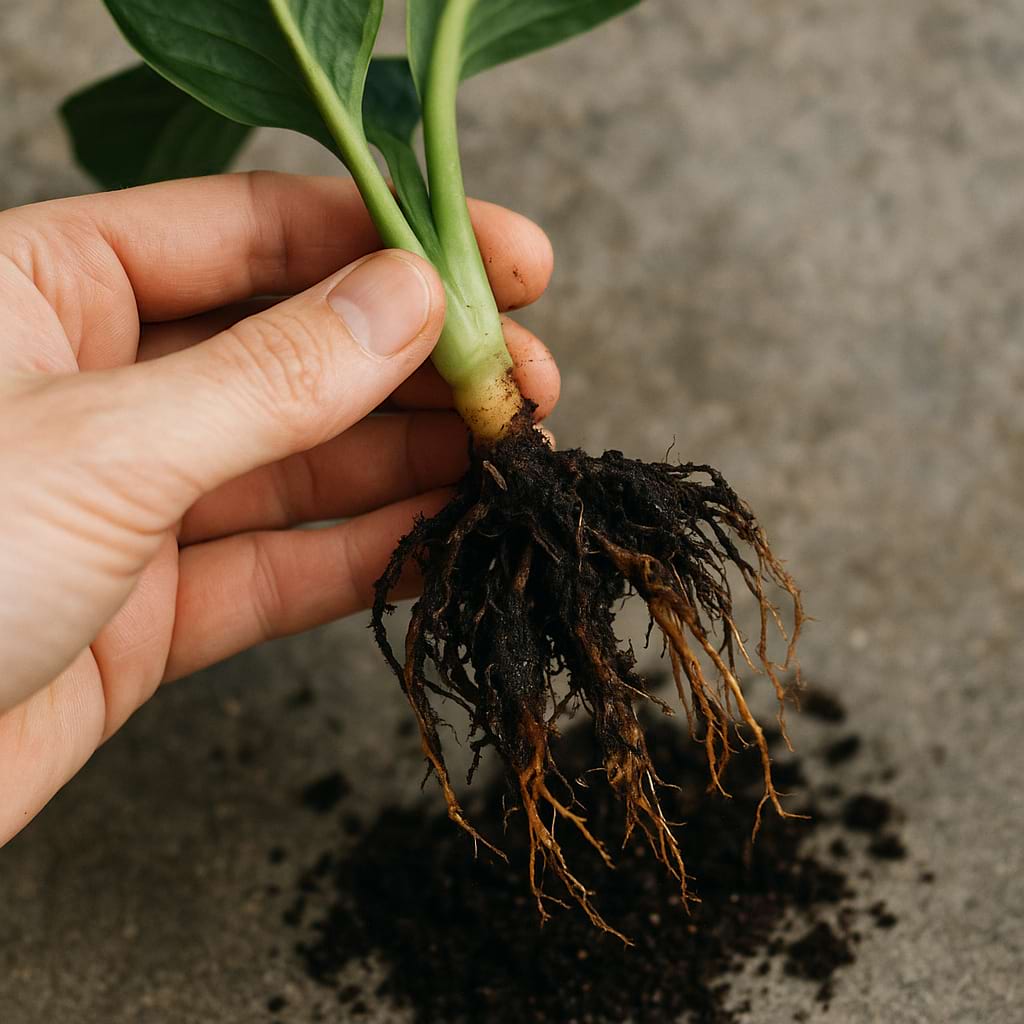
Underwatered plants droop their newest leaf first and the aerial roots go papery and shrivelled. That one is easy to fix. Overwatering shows up as yellowing on the lowest leaf and a sour smell from the pot, and by that point you should check the roots, because root rot moves faster than the leaves let on. Healthy roots are firm and white to tan. Mushy brown ones come out in your fingers.
🪴 Best Soil for King Anthurium (Chunky Aroid Mix)
What the Soil Needs
This is an epiphyte, so it has never grown in soil in its life. What it wants is a coarse, open medium that holds moisture on the surface of each piece while air moves freely between them. Standard bagged potting soil does the opposite, and it is the single most common reason a healthy plant declines after being brought home.
DIY Soil Mix
A reliable recipe by volume:
- 4 parts medium orchid bark
- 2 parts perlite or pumice
- 1 part coarse coco coir or peat
- 1 part horticultural charcoal
- A handful of chopped sphagnum moss for moisture buffering
The result should look almost too chunky, and water should run through it in seconds. If you can squeeze it into a ball, it is too fine. Some growers go all the way to pure sphagnum or semi-hydro for faster growth, which works well but demands much tighter attention to feeding and moisture.
Pre-Made Options
Any bagged mix labelled for aroids or monsteras is a reasonable starting point, though most still need extra bark and perlite stirred in. Our potting soil guide and soil guide go deeper on ingredients and what each one actually does.
🍼 Fertilizing King Anthurium (Little and Often)
When and How Often
Feed through the growing season, roughly March through September in most homes. Because a chunky bark mix holds almost no nutrients and gets flushed every time you water, little and often beats a big monthly dose. Every second or third watering at quarter to half strength works well.
Stop feeding over winter while growth stalls. Fertilizer the roots cannot use just builds up as salt.
What to Use
A balanced liquid fertilizer for foliage plants is fine. Aroid growers often prefer something with a slightly higher nitrogen number, since you are growing leaves rather than flowers here. See our fertilizing guide and our fertilizer picks.
Over-Fertilizing Signs
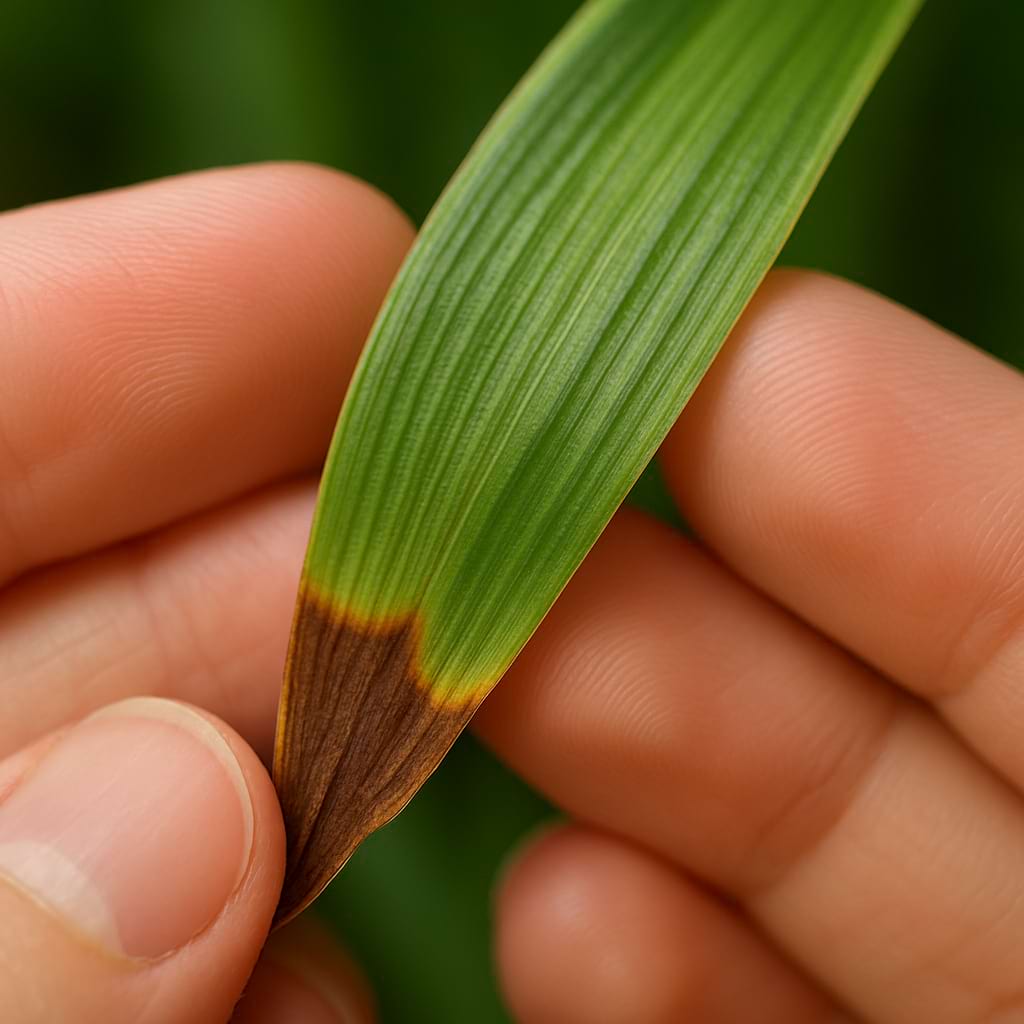
Brown crispy leaf tips with no obvious dryness problem usually mean salt buildup rather than low humidity. Flush the pot thoroughly with plain water a few times, then go back to feeding at half the strength you were using. A white crust on the bark surface is the other tell.
🌡️ King Anthurium Temperature Range
Ideal Range
Aim for 68 to 82°F (20 to 28°C), which is normal indoor comfort for most of the year. Warmth is what drives leaf production, and a plant kept at the top of that range with matching humidity will size up noticeably faster than one kept cool.
Cold, Drafts and Heat Sources
Below about 60°F (15°C) growth stops, and prolonged cold brings blackened patches and root damage. Keep it away from winter window glass, exterior doors, and air-conditioning vents. Radiators and heating vents are just as bad from the other direction, since the hot dry stream shreds humidity around the leaves and invites spider mites.
💦 King Anthurium Humidity Requirements
Ideal Humidity
This is the one that decides whether you get a showpiece or a shrug. Target 60 to 70% relative humidity. Around 50% the plant survives and grows slowly with shorter, flatter leaves. Sustained below 40% you get crispy margins, difficult unfurling, and new leaves that stall halfway open and stick to themselves.
Easy Humidity Boosters
A humidifier running near the plant is the only method that reliably moves the number, and for this species it is worth it. Grouping it with other tropicals helps at the margins, as does a bright bathroom. Misting does essentially nothing beyond the few minutes it lasts.
If your home runs dry in winter, a glass cabinet or an enclosed shelf with a small fan is the setup most collectors land on. Our humidity guide covers the options, and this plant sits near the top of our plants that love humidity list. Keep gentle air movement going, because still saturated air invites fungal and bacterial disease.
🌸 King Anthurium Flowers (What to Expect)
What the Flowers Look Like
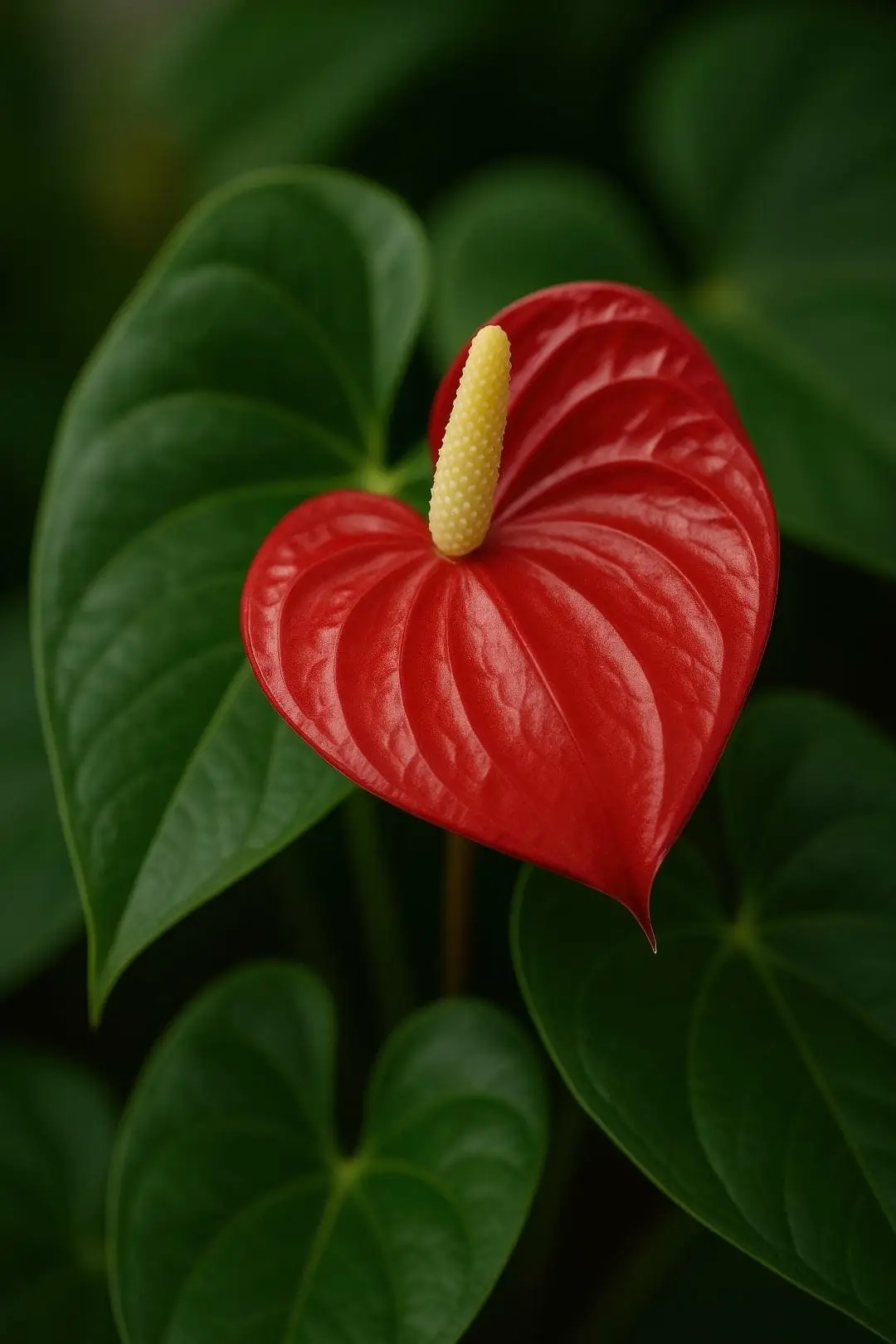
If you are picturing the glossy red heart of a florist Anthurium Andraeanum, reset your expectations. The King Anthurium inflorescence is a narrow greenish-white spathe about 3 to 5 inches long with a cream to faintly pink spadix beside it. It is botanically interesting and visually forgettable.
When It Blooms
Mature plants flower sporadically, most often in summer, and only once they have settled into good conditions for a couple of years. Pollinated flowers can set small greenish-white berries holding one or two seeds, though that is rare indoors without hand pollination.
Should You Let It Bloom
Flowering costs the plant energy it could be spending on the next leaf, which is the part you actually bought it for. Many growers snip the inflorescence off at the base as soon as it appears. If your plant is large and thriving, leaving one on does no harm and is fun to watch. If it is a small plant still building size, cut it.
🏷️ King Anthurium Types and Varieties
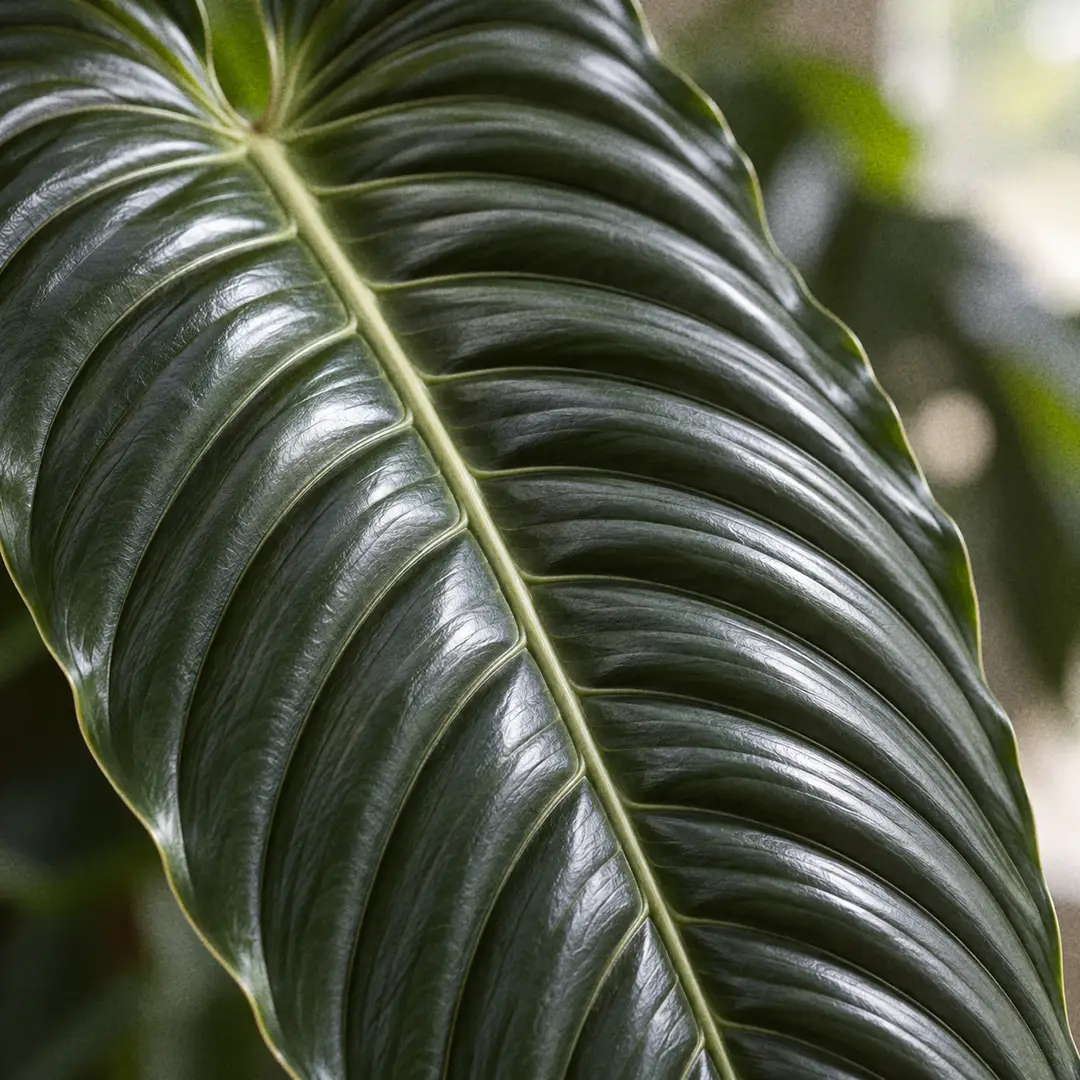
Narrow Form
There are no named cultivars here in the way there are with Philodendron Pink Princess or the many Alocasia hybrids. What you will see advertised are two forms. The narrow form has slimmer leaves with lateral veins set closer together, giving tighter, more frequent pleats and a more ribbon-like silhouette. Collectors generally pay more for it.
Wide Form
The wide form has broader leaves with veins spaced further apart, so the corrugations are deeper and further between. It reads as more substantial and sculptural at a distance. Neither form is harder to grow than the other, and care is identical.
Which One You Actually Get
Worth knowing before you spend money: veitchii is a variable species, and the same plant can express wider or narrower leaves depending on how it has been grown. Light, humidity and maturity all shift the result. Seedlings and tissue-cultured plants sold as one form sometimes grow up looking like the other. Buy the plant in front of you rather than the label on it.
🪴 Potting and Repotting King Anthurium
When to Repot
Every two years in spring is a reasonable default, or sooner if thick roots are pushing out of the drainage holes and coiling across the surface. Bark mixes also break down over time into something finer and denser, which is a repotting trigger on its own even when the plant looks fine.
Choosing a Pot
Go one size up, never two. This plant carries a lot of leaf on a comparatively small root system, and a big pot of slow-drying mix is how roots rot. Plastic nursery pots with generous drainage are the practical choice, and many growers use clear ones so they can watch root health directly. Terracotta dries too aggressively for a bark mix unless you water often. Our pot guide compares the materials.
Step-by-Step Repotting
- Water lightly a day before so the plant is not stressed going in.
- Slide it out and gently tease the old bark from between the roots.
- Cut away any mushy or hollow roots with clean scissors.
- Set the plant at the same depth it was before, holding the growth point clear of the mix.
- Pour fresh mix around the roots and tap the pot to settle it. Do not press it down.
- Water through, then keep it slightly warmer and more humid than usual for two weeks.
Our full repotting guide covers the general technique.
✂️ Pruning King Anthurium
When to Prune
Almost never. Each leaf represents months of work, and the plant has no spare foliage to lose. The only routine cutting is removing a leaf that has genuinely died back, or one damaged badly enough that it is now just a dust collector.
How to Prune
Cut the petiole close to the main stem with clean, sharp scissors or snips. Sterilize the blade with alcohol first, because anthuriums are prone to bacterial infection entering through fresh cuts. Let the wound dry in open air rather than sealing it with anything.
Aerial Roots and Old Petioles
Leave the aerial roots alone. They are actively feeding the plant and they will find their way into the mix or a nearby moss surface on their own. If a dried papery sheath remains after a leaf drops, it can be peeled off once it is fully brown and loose, but do not tug at anything still attached.
🌱 How to Propagate King Anthurium
Best Method
Division is the practical home method. Mature plants slowly produce offsets from the base, and each one with its own roots can become a separate plant. It is slow, since offsets take a couple of years to appear, but the success rate is high and you are not risking the mother plant.
Commercially, most King Anthuriums on the market today are tissue cultured in a lab, which is why a plant that was genuinely rare a decade ago is now findable. Seed works too, and it is how new variation appears, but aroid seed loses viability within days of ripening so it is rarely something a home grower can buy.
Step-by-Step Division
- Repot in spring and gently work the root mass apart under water to see what you have.
- Identify an offset with at least two or three of its own roots and one established leaf.
- Separate it by hand where possible. Use a sterile blade only if you must cut.
- Dust the cut surfaces with cinnamon or sulphur powder and let them air-dry for an hour.
- Pot the division into the same chunky mix, in the smallest pot that holds it.
- Keep it warm, humid, and out of direct light for a month while it establishes.
Our plant division guide walks through the general process.
Top-Cutting a Leggy Plant
An older plant that has built a tall stem with plenty of aerial roots can be topped. Cut the stem below several healthy aerial roots, pot the top as a new plant, and keep the rooted base warm and humid. The base often pushes a new growth point within a few months, so you end up with two plants.
Tips for Success
Humidity matters more than anything else for a new division. A clear propagation box or a bag with a few air holes carries them through the first weeks. Do not fertilize until you see fresh root growth, and resist unpotting to check.
🐛 King Anthurium Pests and Treatment
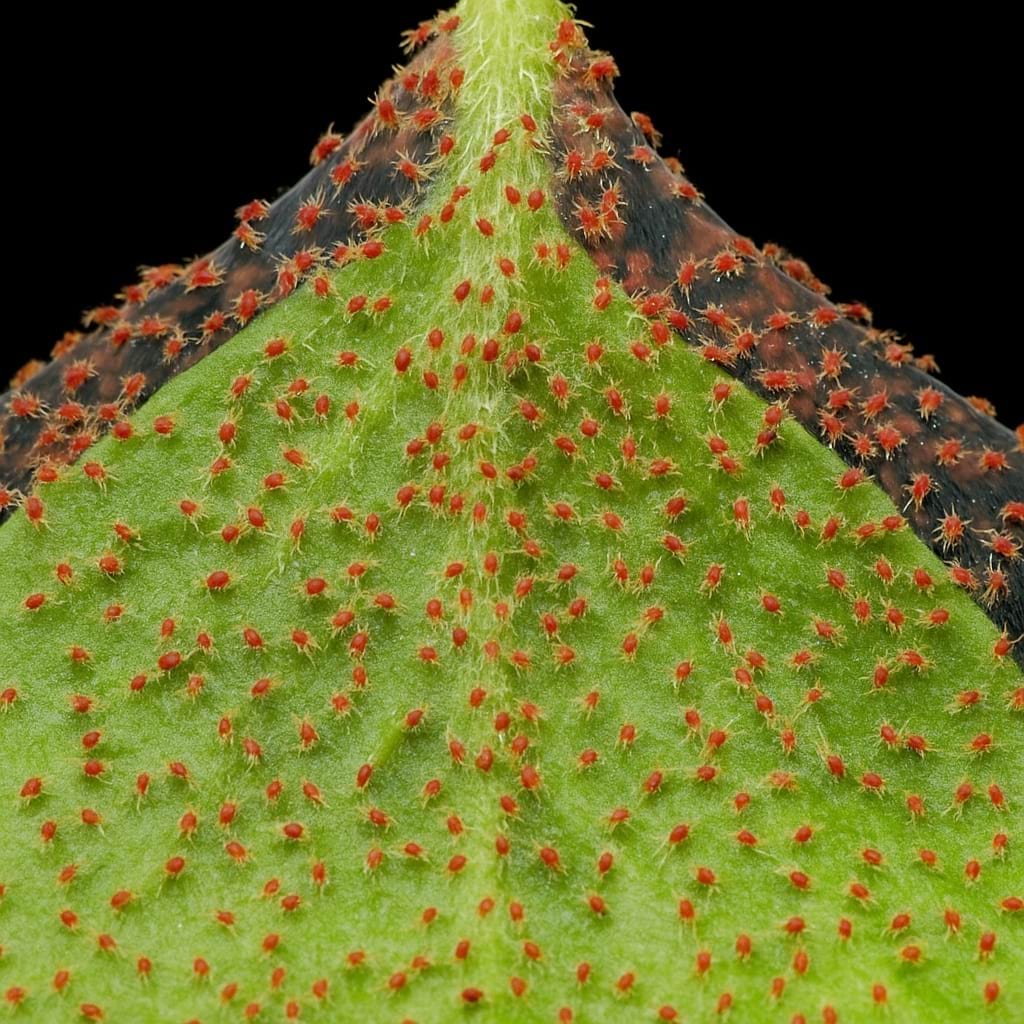
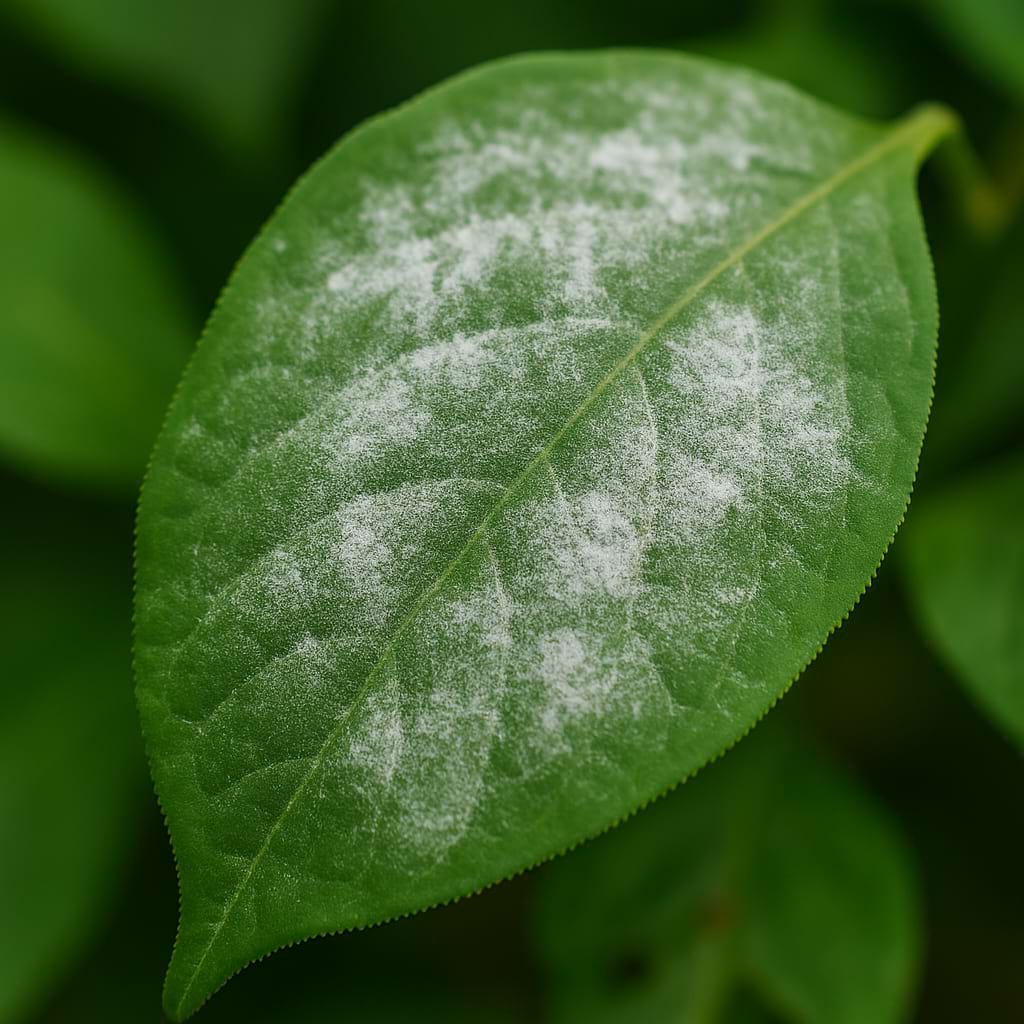
Spider mites are the number one threat, and they show up precisely when humidity drops, which is the same condition that already stresses this plant. Look for fine pale stippling across the leaf surface and faint webbing in the pleats. They hide in the corrugations, which makes them easy to miss and annoying to spray out.
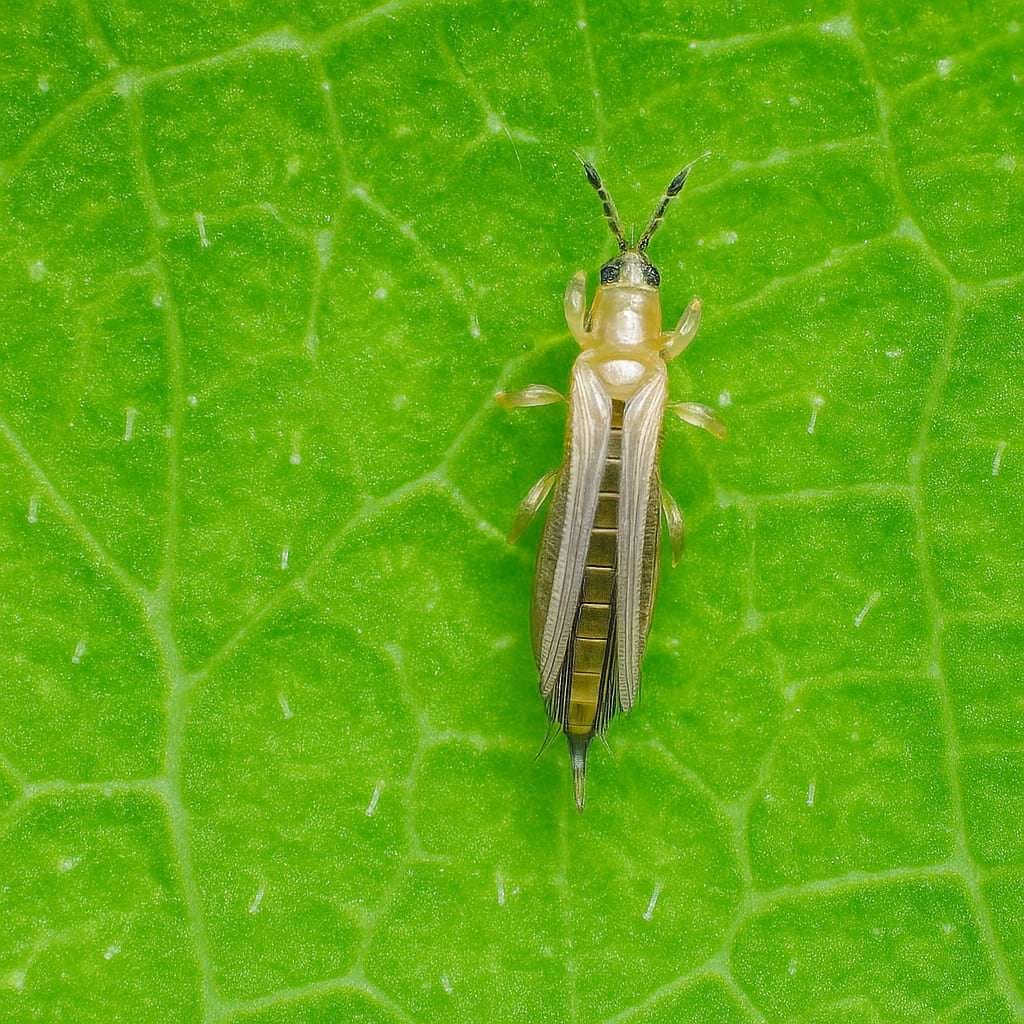
Thrips are the other serious one for anthuriums. They rasp at new growth, so damage appears as silvery streaks and distorted, scarred leaves that unfurl already ruined. Because each leaf lasts years, thrips damage stays with the plant for a long time. Check unfurling leaves closely.
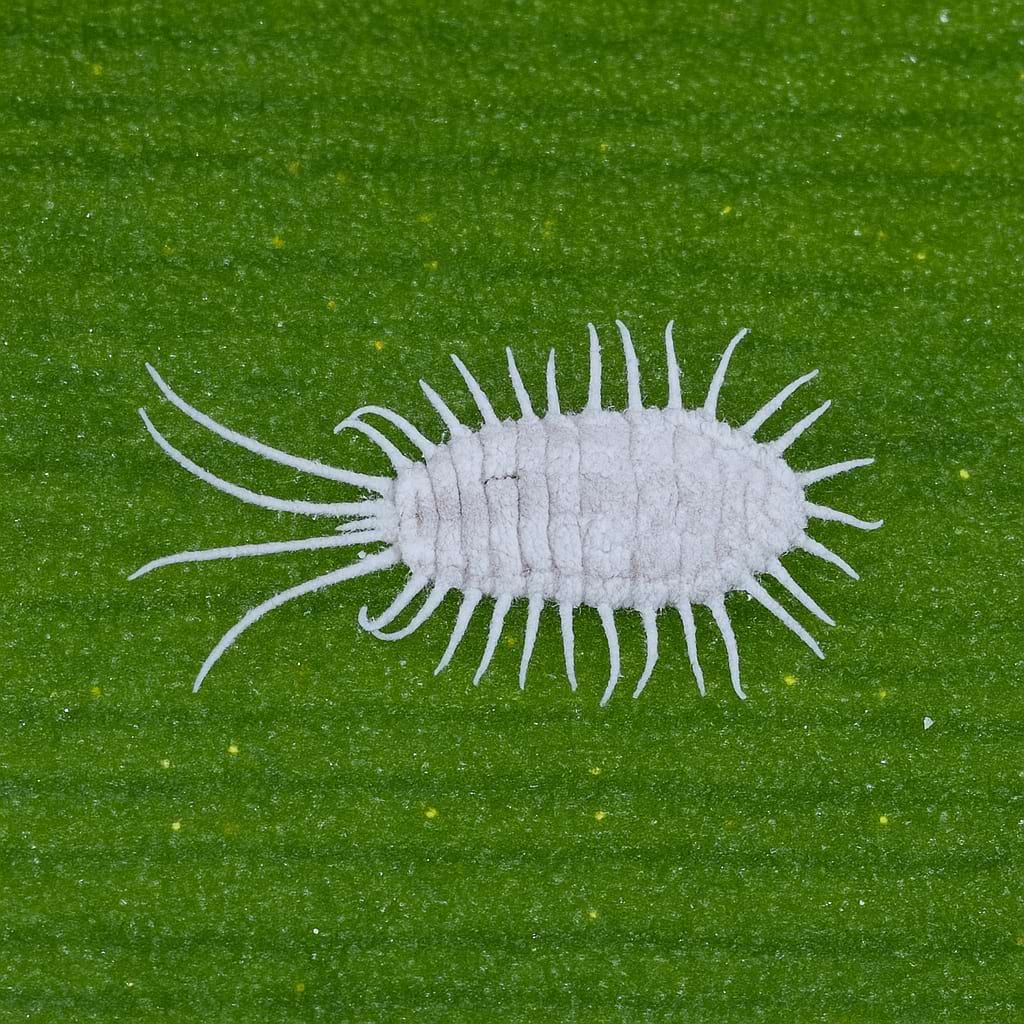
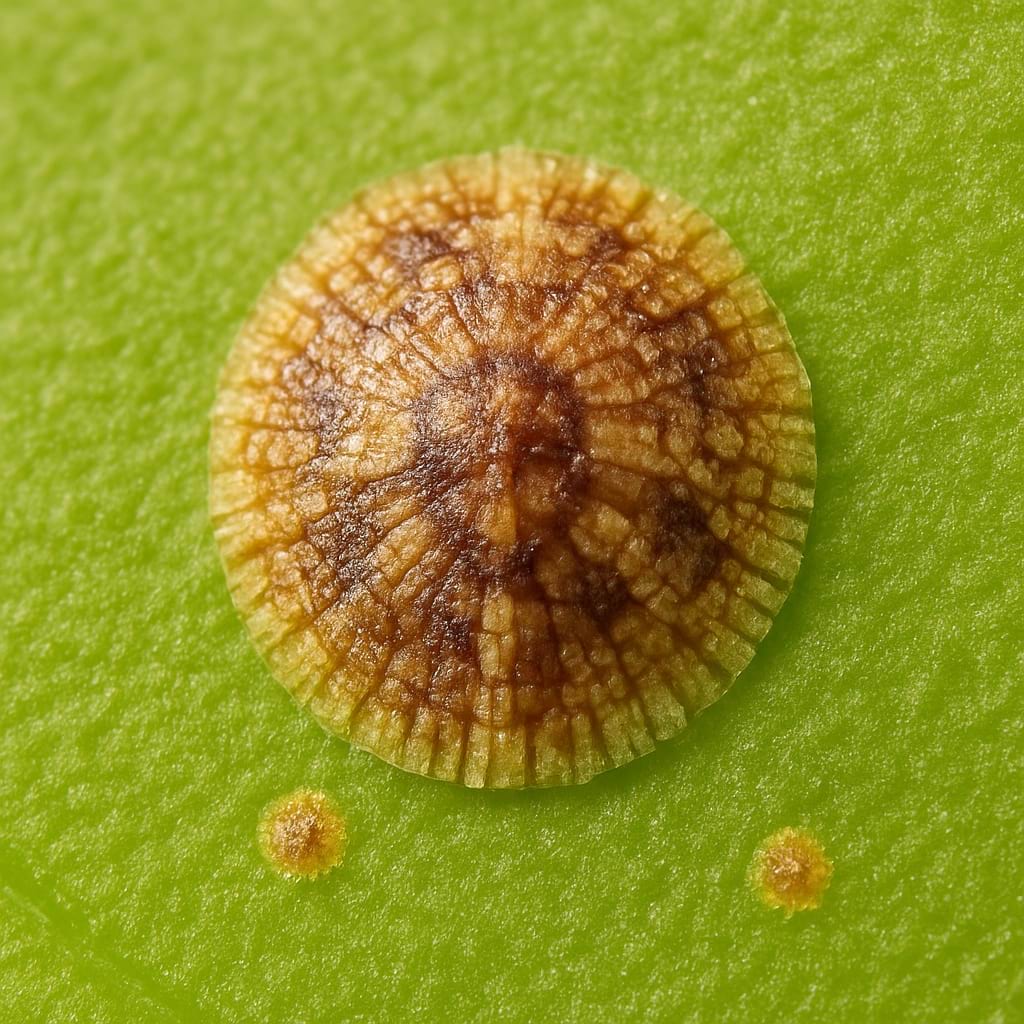
Mealybugs tuck into the leaf axils and among the aerial roots as white cottony specks. Scale insects sit as small brown bumps along petioles and midribs. Both come off with an alcohol-dipped cotton swab if you catch them early.
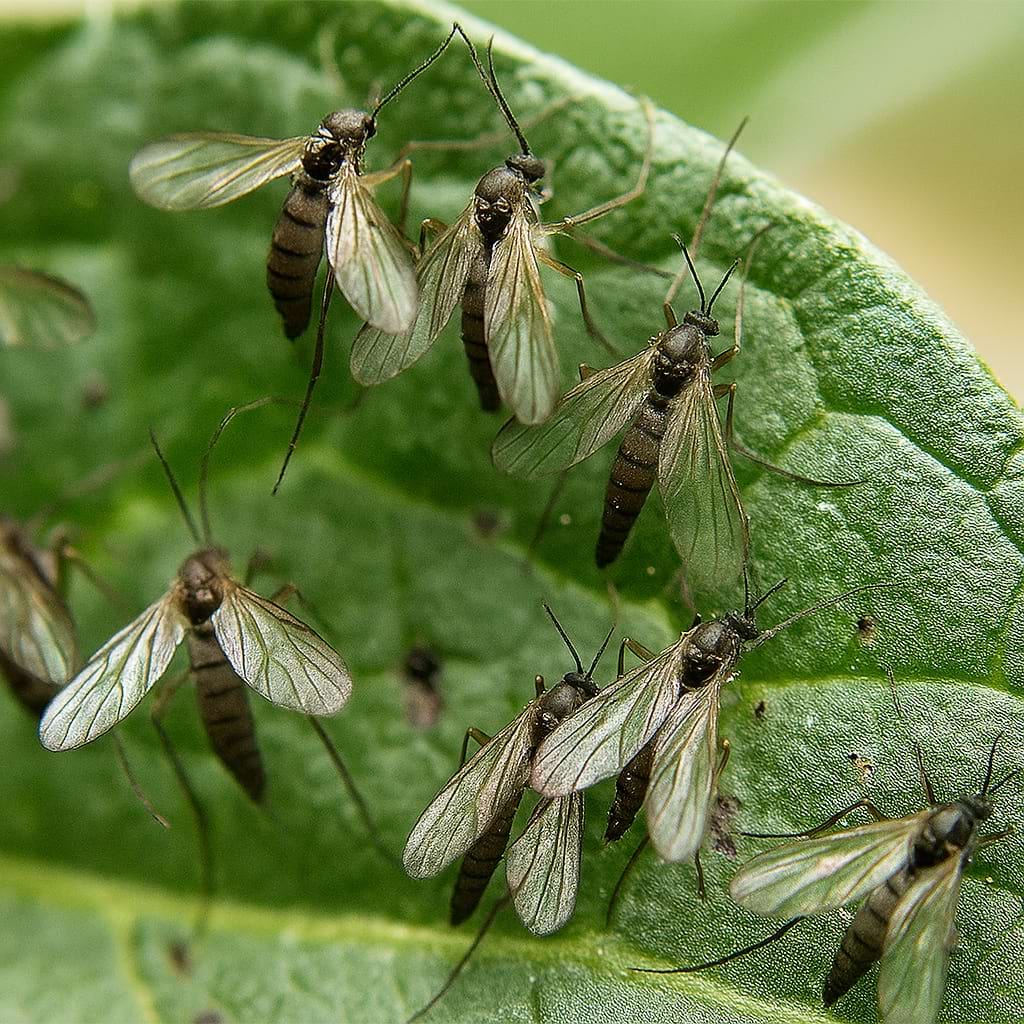
Fungus gnats turn up when the mix stays wet, especially if there is a lot of coir or moss in it. They are harmless to a healthy plant and a useful warning that you are watering too often.
Whatever the pest, treat with insecticidal soap or a horticultural oil, and spray both leaf surfaces plus the base. Repeat every five to seven days for three rounds to catch newly hatched eggs.
🩺 Common King Anthurium Problems
Root rot is the most common cause of death, and it almost always traces back to a mix that is too fine rather than genuine overwatering. Yellowing lower leaves plus a sour pot smell means unpot and inspect now.
Brown crispy edges point to low humidity, salt buildup from fertilizer, or hard tap water, in that order of likelihood. Raise humidity first, then flush the pot, then try filtered water.
Small leaves and stunted growth are the same conversation with this plant. If each new leaf is no bigger than the last, something is limiting it: usually light, humidity, or feeding, and often all three together.
Yellowing leaves on an old lower leaf is normal ageing. Yellowing on several leaves at once, or on new growth, is a root problem.
Sunburn and leaf scorch shows as bleached or tan patches where direct sun landed. Move the plant back and accept that the damaged leaf will not recover.
Fungal and bacterial disease appears as dark water-soaked spots with yellow halos that spread outward. It thrives in high humidity with no airflow. Remove affected leaves, sterilize your blade, and add a small fan.
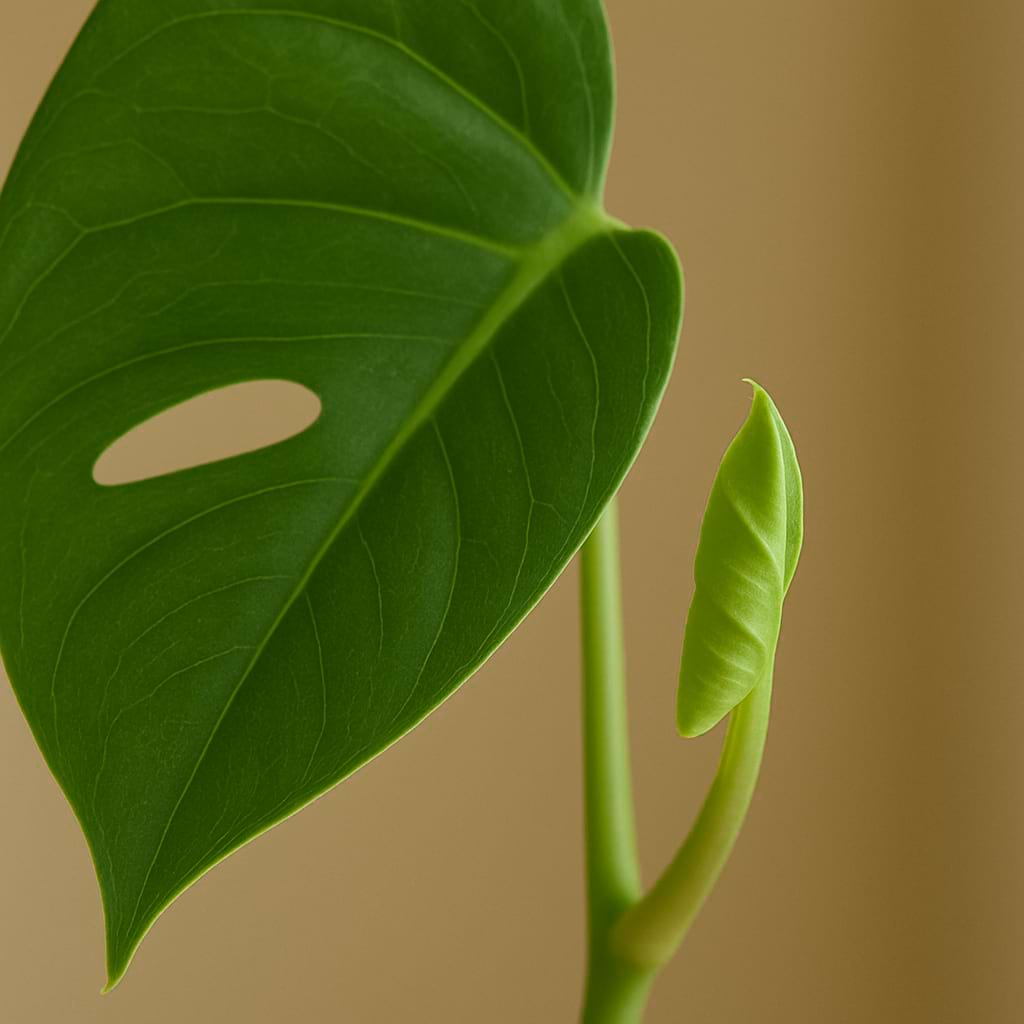
A leaf that gets stuck part-way open is a humidity problem, not a pest. Raise the humidity around the new growth and it will finish unfurling on its own.

🖼️ King Anthurium Display and Styling Ideas
Give It Height
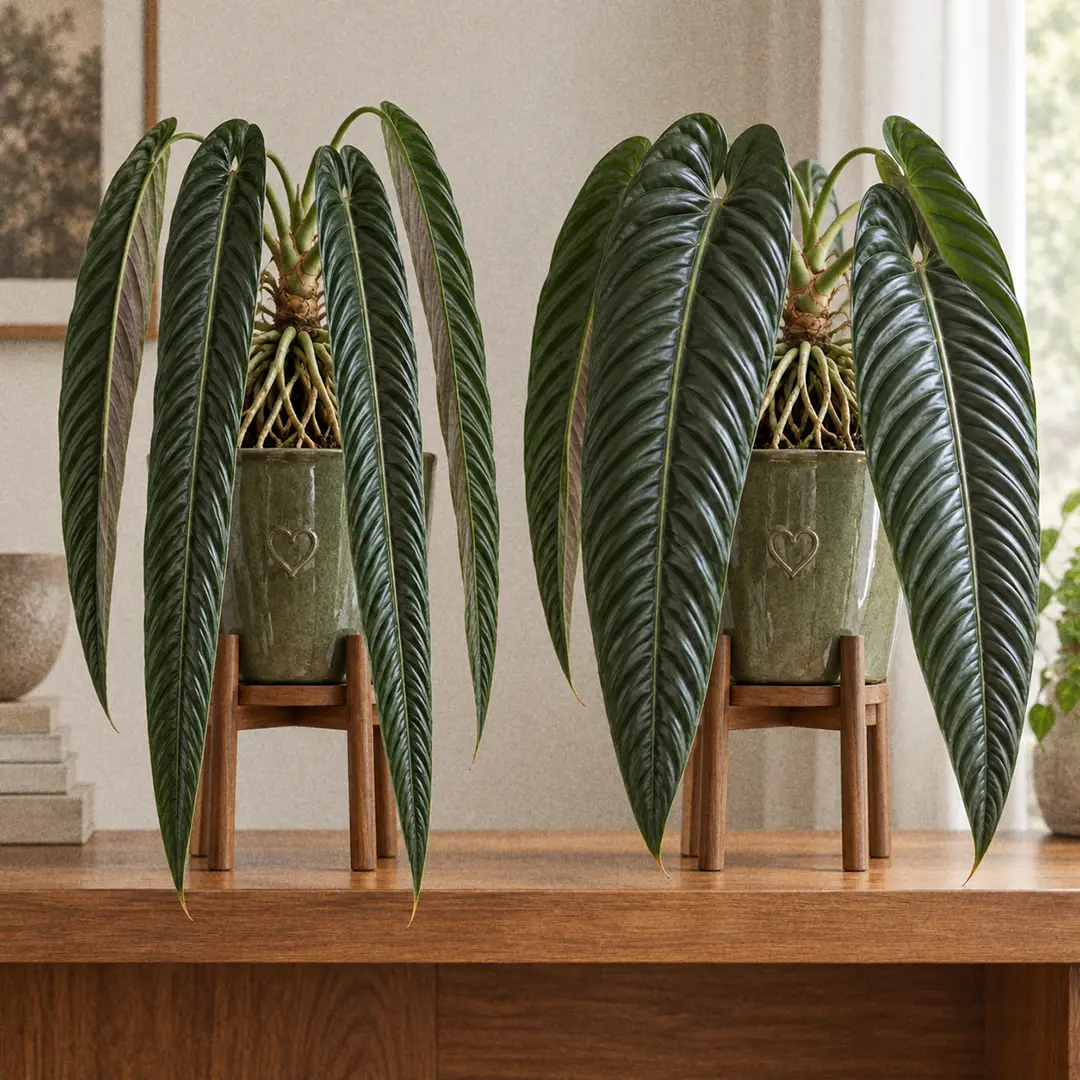
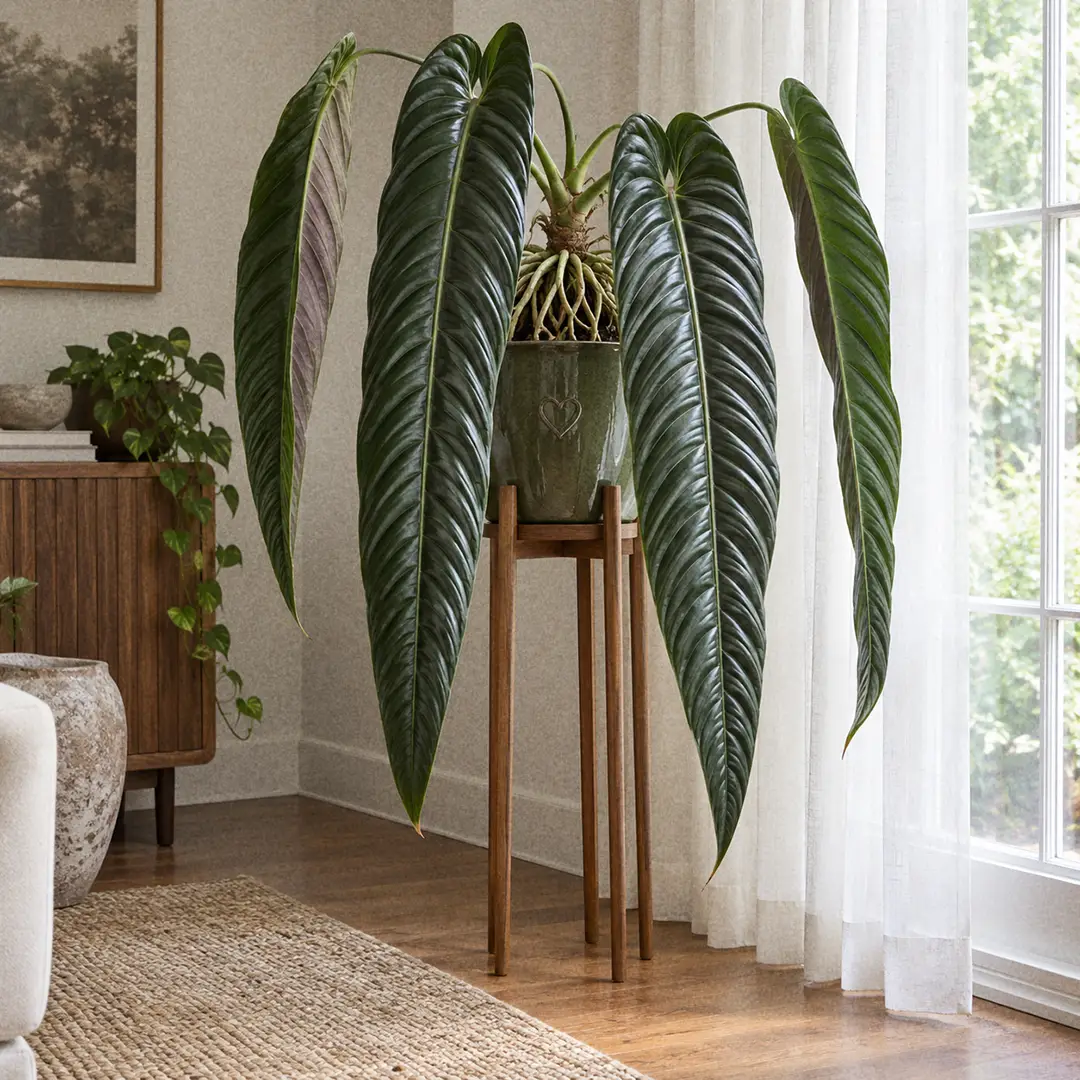
This plant only works when it is raised. The leaves hang, so anything sitting on a low table forces them to fold against a surface and crease permanently. A tall plant stand, a pedestal, a high shelf, or a hanging position all solve it. Leave clear air under the pot.
Grow Cabinets and Bathrooms
Because the humidity requirement is the real constraint, many growers give it a glass cabinet with a light and a small fan, where it becomes the centrepiece. A bright bathroom is the low-effort version of the same idea and works surprisingly well.
Where Not to Put It
Not in a hallway, not beside a doorway, and not anywhere someone brushes past it. A rubbed leaf develops a permanent horizontal crease across the pleats. Keep it off heated windowsills and away from air-conditioning too.
What to Pair It With
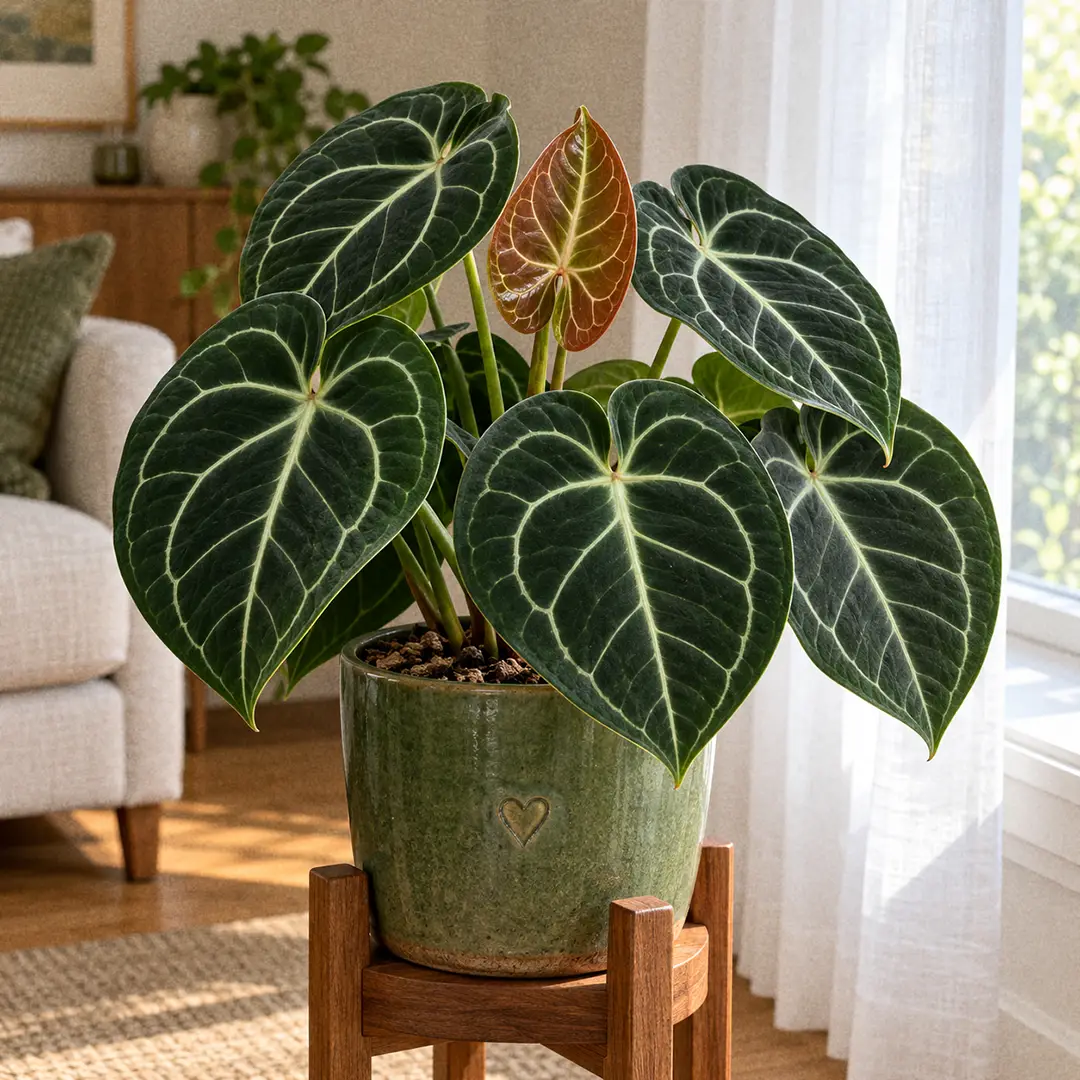
Give it space rather than neighbours. If you want a grouping, contrast the pendant ribbons with something upright and matte like a Philodendron Verrucosum or the low crawling habit of a Philodendron Gloriosum. A compact Anthurium Clarinervium also works on a lower shelf nearby, its broad white-veined hearts a neat contrast to the long hanging pleats.
🌟 King Anthurium Pro Care Tips
- Measure each new leaf. If it is longer than the last one, your conditions are right. If it is shorter, something changed. This is the most honest feedback any houseplant gives you.
- Fix the mix before you fix anything else. Nine out of ten struggling veitchii are sitting in something too dense.
- Support a long leaf while you clean it. Hold the underside with your free hand so the petiole does not take the strain.
- Buy small, buy healthy. A young plant with excellent roots outgrows a large one that arrived root-damaged, and it costs far less.
- Run a small fan near the humidifier. High humidity with still air is how bacterial spotting starts.
- Do not rotate it constantly. Let the leaves settle into one hanging direction rather than twisting the petioles each week.
- Keep a photo log. Growth this slow is hard to judge by memory, and a photo from six months ago settles the argument.
❓ Frequently Asked Questions
Is King Anthurium toxic to cats and dogs?
Yes. Anthuriums contain insoluble calcium oxalate crystals, and chewing any part causes immediate mouth pain, drooling, swelling, and difficulty swallowing. The ASPCA lists the genus as toxic to cats, dogs and horses. Since this plant needs to be displayed high up anyway, keeping it out of reach is easy enough.
Why are my King Anthurium leaves so short?
Usually humidity, then light, then age. Below about 50% humidity the leaves come out short and shallowly pleated no matter what else you do. Young plants also simply have not built the root mass to support a long leaf yet, and each leaf should lengthen as the plant matures.
How big does Anthurium veitchii get indoors?
Expect a plant around 2 to 4 feet tall with leaves up to about 3 feet long after several years of good care. In its native Colombian cloud forest the leaves reach two metres, but that is not happening in a living room.
How fast does King Anthurium grow?
Slowly. A healthy indoor plant produces roughly one new leaf every four to eight weeks in the growing season, and little to nothing over winter. This is not a plant that rewards impatience.
Why did my new leaf get stuck half open?
The air was too dry while it was unfurling, so the folded surfaces dried and stuck to each other. Raise humidity around the growth point and it usually frees itself. Never force it open by hand, since you will tear it.
Can I grow King Anthurium without a humidifier?
You can keep it alive, but you will not see what it can do. Below 50% humidity the leaves stay short and edges go crispy. If a humidifier is not an option, a bright bathroom or an enclosed cabinet gets you to similar numbers.
What is the difference between narrow form and wide form?
Vein spacing and leaf width. The narrow form has veins closer together, so the pleats are tighter and the leaf is slimmer. The wide form has broader leaves with deeper, more widely spaced corrugations. Care is identical, and the species is variable enough that growing conditions can shift the look.
Can I propagate King Anthurium from a leaf cutting?
No. A detached leaf will never root, because there is no growth point on it. Propagation is by division of basal offsets, by top-cutting a stem that has aerial roots, or by fresh seed. See the propagation section above.
Should I mount my King Anthurium?
You can, since it grows as an epiphyte on tree trunks in the wild, and mounted specimens on a bark slab or moss pole look spectacular. The trade-off is watering: a mount dries out daily and really needs a high-humidity cabinet to be practical. In a normal room, a pot is the kinder option.
Why does my King Anthurium have brown spots with yellow rings?
That pattern is bacterial or fungal leaf spot, not a watering issue. It sets in when humidity is high and air is completely still. Remove the affected leaves with a sterilized blade, improve airflow with a small fan, and avoid leaving water sitting on the foliage overnight.
ℹ️ King Anthurium Info
Care and Maintenance
🪴 Soil Type and pH: Chunky epiphytic aroid mix based on orchid bark
💧 Humidity and Misting: Wants 60-70% humidity. Below about 50% the new leaves come out short and poorly pleated.
✂️ Pruning: Only remove damaged or spent leaves. Never cut healthy foliage off a plant this slow.
🧼 Cleaning: Wipe each leaf with a soft damp cloth, supporting the underside with your other hand. The pleats collect dust in every groove.
🌱 Repotting: Repot every 2 years in spring, or when roots are climbing out of the pot and circling the surface.
🔄 Repotting Frequency: Every 2 years
❄️ Seasonal Changes in Care: Growing and feeding from spring through early autumn, then less water and no fertilizer over winter while it idles.
Growing Characteristics
💥 Growth Speed: Slow
🔄 Life Cycle: Evergreen epiphytic perennial aroid
💥 Bloom Time: Sporadically on mature plants, usually in summer; the inflorescence is small and green, not the point of the plant
🌡️ Hardiness Zones: 11-12
🗺️ Native Area: Cloud forests of Antioquia and Chocó in Colombia, growing on tree trunks around 1,000 m elevation
🚘 Hibernation: No true dormancy. Growth slows or stops below about 60°F and picks back up with warmth.
Propagation and Health
📍 Suitable Locations: Bright bathrooms, grow cabinets, tall plant shelves, atrium corners, east-facing rooms with a humidifier
🪴 Propagation Methods: Divide offsets from the base at repotting, or top-cut a long stem below a set of aerial roots.
🐛 Common Pests: Spider Mites, Thrips, Mealybugs, Scale Insects, Fungus Gnats
🦠 Possible Diseases: Root rot, bacterial blight, leaf spot in still humid air
Plant Details
🌿 Plant Type: Epiphytic aroid with a short upright stem
🍃 Foliage Type: Evergreen pendant lance-shaped leaves with deep parallel corrugations
🎨 Color of Leaves: Metallic dark green on top, paler and often flushed purple underneath
🌸 Flower Color: Greenish-white spathe with a cream to pink spadix
🌼 Blooming: Occasionally on mature plants; the flowers are small and unremarkable next to the foliage
🍽️ Edibility: Not edible. All parts irritate the mouth and throat.
📏 Mature Size: 2-4 feet tall indoors
Additional Info
🌻 General Benefits: One of the most dramatic foliage plants you can grow indoors, stays in a modest pot for its size, and rewards humidity with visibly longer leaves every season
💊 Medical Properties: No documented medicinal uses.
🧿 Feng Shui: Long downward leaves carry soft, calming, water-like energy. Good in a still corner of a bedroom or study, away from busy walkways.
⭐ Zodiac Sign Compatibility: Leo
🌈 Symbolism or Folklore: Patience, quiet grandeur, growth that shows up in inches not weeks
📝 Interesting Facts: In its Colombian cloud forest home the leaves can reach two metres long, hanging straight down from a tree trunk. Indoors they rarely pass three feet, and each new leaf is usually longer than the last, so the plant keeps a running record of how well you have grown it.
Buying and Usage
🛒 What to Look for When Buying: Look for firm, plump aerial roots and a clean growth point. Judge the plant by root quality, not leaf count. A small plant with good roots will overtake a bigger one that has been sitting in wet peat.
🪴 Other Uses: Specimen plant for grow cabinets, collector displays, and tall shelf positions where the leaves can hang freely.
Decoration and Styling
🖼️ Display Ideas: High shelves, plant stands, hanging positions, grow cabinets, tall pedestals beside a filtered window
🧵 Styling Tips: This plant only looks right when it is raised. Give it height so the leaves can hang without touching a surface, and leave clear space below it.
🪴 See also 🪴
Complete Guide to Anthurium Clarinervium Care and Growth

Houseplant101 Forum
Questions & Comments
Ask a question, share your plant experience, or help other plant owners.
Comments are temporarily unavailable.
Open the Houseplant101 ForumNo comments yet
Be the first to ask a question or share your experience about this page.
Log in or create an account
Comments use your Houseplant101 Forum account, but you can stay on this page.
Create a new account