
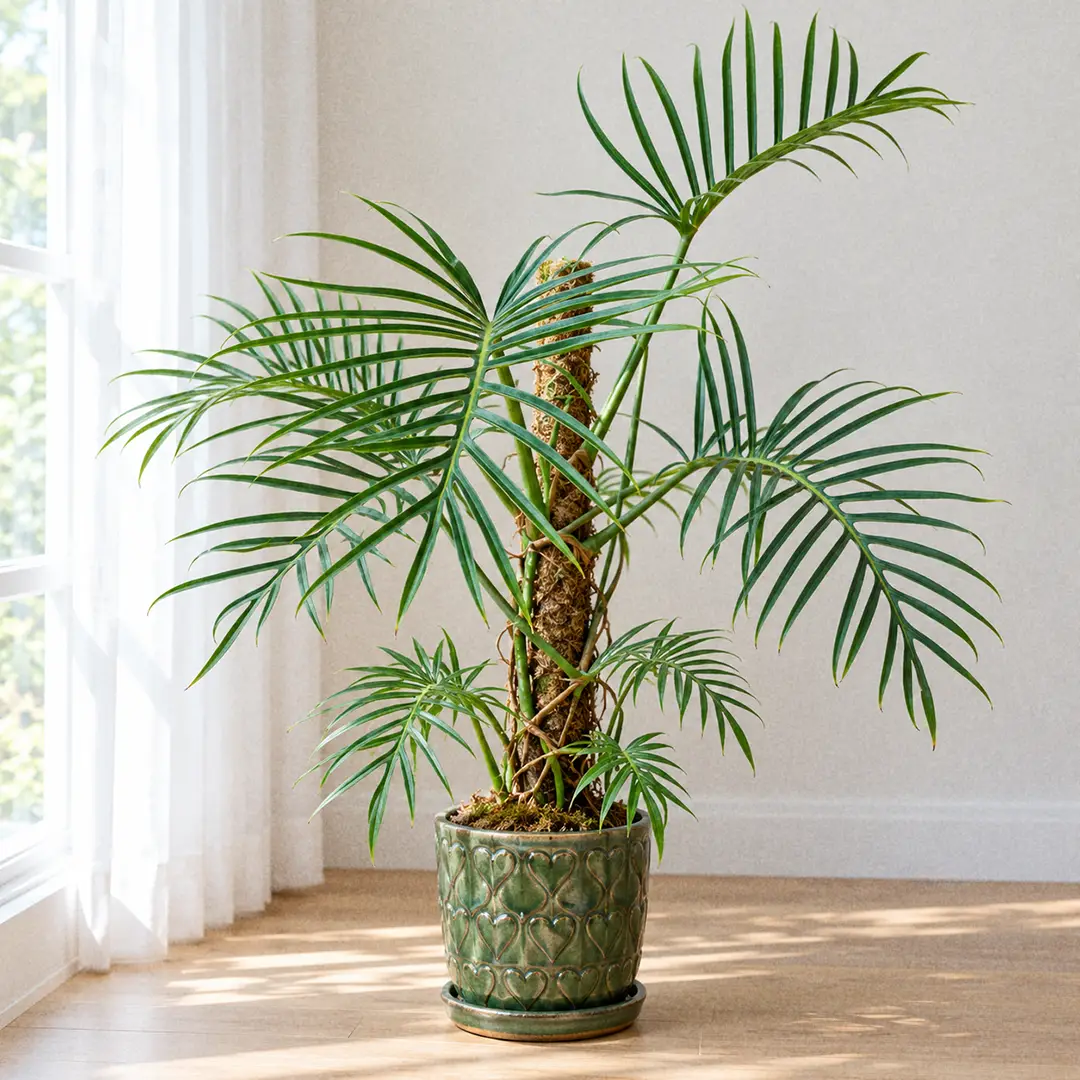
Philodendron Tortum
Philodendron tortum
Fernleaf Philodendron, Spider Philodendron, Tortum Philodendron


Philodendron Tortum is an Amazonian climber whose leaves are cut almost to the midrib into thin green fingers, giving it a skeletal, see-through look. Learn the light, pole and watering routine that turns a small juvenile plant into a climber with full mature leaves.
📝 Philodendron Tortum Care Notes
🌿 Care Instructions
⚠️ Common Pests
📊 Growth Information
🪴 In This Guide 🪴

☀️ Philodendron Tortum Light Requirements (Bright Indirect)
The Sweet Spot
Philodendron Tortum wants bright, indirect light for most of the day. A spot 3 to 4 feet back from an east- or west-facing window is close to perfect, and a south window works if a sheer curtain softens it. An hour of gentle morning sun is fine. Long hours of hot afternoon sun through glass are not, because those thin segments have very little tissue to protect themselves.
Light matters more for this plant than for most philodendrons. Leaf size and the number of segments both follow the light, so a Tortum in a dim corner keeps making small, juvenile-looking leaves for years.
Too Little Light
Low light shows up as long bare stretches of stem between leaves, new leaves that come in smaller than the last ones, and a plant leaning hard toward the window. Growth slows to a crawl. Move it closer to the window, or add a grow light for 10 to 12 hours a day. A full-spectrum LED mounted a foot or two above the top of the pole is an easy winter fix.
Too Much Light
Too much direct sun bleaches the leaves to a washed-out yellow-green and crisps the tips of the segments brown. Scorched tissue does not recover, so pull the plant back a few feet and trim badly burned leaves once new growth has replaced them. Our general light guide explains how to judge window strength if you are unsure.

💧 Philodendron Tortum Watering Guide (Top Inches Dry)
Watering Frequency
Water your Philodendron Tortum when the top 1 to 2 inches of mix are dry. In a warm, bright room in summer that is often every 7 to 10 days. In winter, as growth slows, it can stretch to every two weeks or longer. Check with a finger or a moisture meter instead of following a calendar, because pot size, light and season all change the answer.
This plant handles being a little too dry far better than being too wet. The fine segments do not store much water, but the roots rot quickly in soggy mix, and rot is much harder to fix than a thirsty droop.
How to Water
Water slowly over the whole surface until it runs from the drainage holes, then let the pot drain completely and empty the saucer after 15 minutes. If your plant climbs a moss pole, pour a little water down the moss each time you water the soil. The aerial roots that grip the pole only keep growing into it while it stays damp, and a pole that dries out completely gives them nothing to hold.
Room-temperature tap water is usually fine. If your water is very hard, switch to rain or filtered water now and then to keep mineral crust off the soil.
Signs of Watering Trouble
Yellow lower leaves, soft dark stems near the soil line and a sour smell from the pot point to overwatering. Drooping, dull leaves with crispy segment tips and mix that has shrunk away from the pot's edge point to underwatering. If you cannot tell which, lift the pot. A heavy pot with drooping leaves means stop watering and check the roots. Our watering guide covers the finger test and pot weight in more detail.
🪴 Best Soil for Philodendron Tortum (Chunky Aroid Mix)
What the Soil Needs
In the Amazon, Tortum climbs tree trunks with its roots in air, bark and leaf litter rather than dense earth. Indoors it wants a chunky, airy mix that holds some moisture but drains fast and lets oxygen reach the roots. Straight bagged potting soil stays wet and compacts over time, which is how most root problems start.
DIY Aroid Soil Mix
A simple recipe that works well:
- 1 part quality indoor potting mix
- 1 part orchid bark
- 1 part perlite or pumice
- A handful each of horticultural charcoal and worm castings
The bark and perlite keep the mix open, the potting mix holds moisture, and the castings add a slow trickle of nutrients. Squeeze a handful of damp mix. It should crumble apart rather than form a mud ball.
Pre-Made Soil Options
Any bagged aroid mix with visible chunks of bark will do. If all you have is regular houseplant soil, stir in orchid bark and perlite until each makes up about a third of the pot. Our potting soil guide and soil basics compare the common options.
🍼 Fertilizing Philodendron Tortum (Spring and Summer Feeding)
When and How Often to Feed
Feed from spring through late summer, while the plant is putting out new leaves. Once a month with a liquid fertilizer at half strength is plenty. Stop in late autumn and winter, when growth slows and unused salts start to build up in the pot.
What Fertilizer to Use
A balanced liquid houseplant food, such as a 20-20-20 or 10-10-10, works fine. Water first with plain water and then feed, so fertilizer never hits dry roots. Our fertilizer guide covers the product types, and how to fertilize houseplants explains dilution.
Over-Fertilizing Signs
Brown, burnt segment tips, a white crust on the soil surface, and sudden drooping after a feed all suggest too much fertilizer. Flush the pot by running plain water through it for a couple of minutes, skip the next two feedings, and dilute more next time.
🌡️ Philodendron Tortum Temperature Range
Ideal Temperature Range
Philodendron Tortum is happiest between 65 and 85°F (18-29°C), the warm range most homes already sit in. Growth slows below about 60°F, and long spells under 55°F (13°C) risk damage. It has no frost tolerance at all, so outdoors it only lives year-round in frost-free climates.
A summer on a shaded patio is fine once nights stay above 60°F. Bring it back in well before autumn cold arrives.
Drafts and Heat Sources
Keep it away from cold window glass in winter, exterior doors that open often, and the direct blast of an air conditioner. Heaters and radiators are just as bad, because hot, dry air crisps those thin segments fast. A steady spot beats a perfect one that swings from warm to cold every day.
💦 Philodendron Tortum Humidity Requirements
Ideal Humidity Level
Aim for 50 to 60 percent if you can. Tortum tolerates ordinary household air better than its delicate look suggests, but very dry air, especially in winter with the heating on, shows up as brown segment tips and new leaves that struggle to unfurl.
Easy Humidity Boosters
Group it with other plants, run a small humidifier nearby, and keep the moss pole damp, which raises the moisture right around the leaves. Pebble trays help a little. Our guide to boosting humidity in winter has more ideas.
Signs of Dry Air
Watch the newest leaf. If its segments stay stuck together, tear as they open, or brown at the tips within days of unfurling, the air is too dry. Older leaves browning slowly at the tips in winter tell the same story. A cheap hygrometer next to the plant takes the guesswork out of it.
🌸 Philodendron Tortum Flowers (Rare Indoors)
Does Philodendron Tortum Flower?
Like every philodendron, Tortum can produce the typical aroid flower: a hood-like spathe wrapped around a central spike called a spadix. Indoors this is rare. Flowering belongs to mature, climbing plants in strong light, and most houseplants never reach that stage.
What to Expect If It Blooms
The flower appears from the top of a climbing stem, does not last long, and adds little to the look of the plant. Some growers cut it off so the plant puts its energy back into leaves. Seed needs pollen from another flower opening at the right moment, so you are very unlikely to get any at home.
Why the Leaves Matter More
You grow this plant for its foliage. If you want it to look its best, put your effort into light, a pole and steady watering rather than chasing a bloom.
🏷️ Philodendron Tortum Types and Varieties
There are no named cultivars of Philodendron tortum. It is one species, plain green, and what changes is how the leaves look as the plant matures. The real confusion comes from a few lookalikes sold next to it, sometimes under the wrong label.
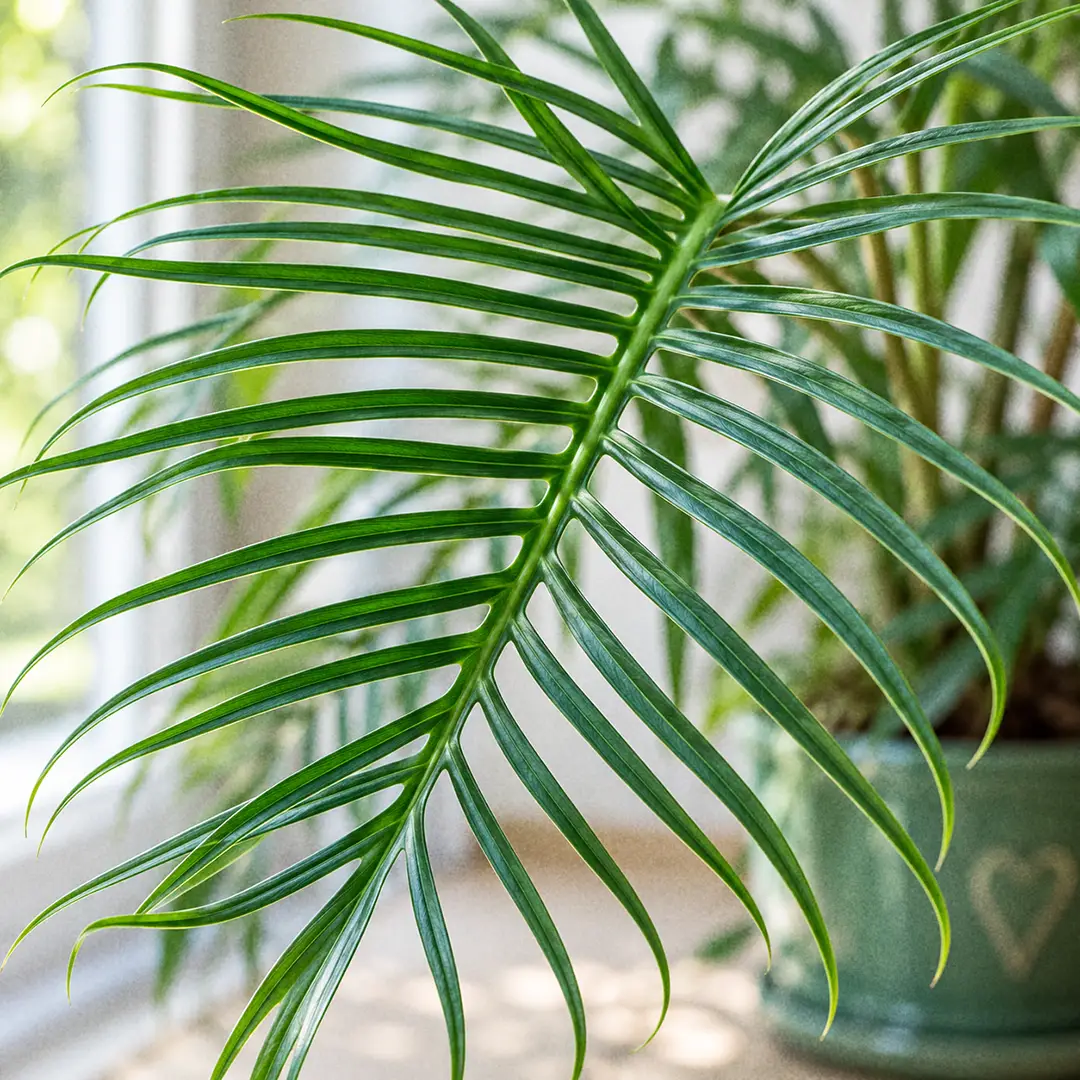
Juvenile vs Mature Tortum Leaves
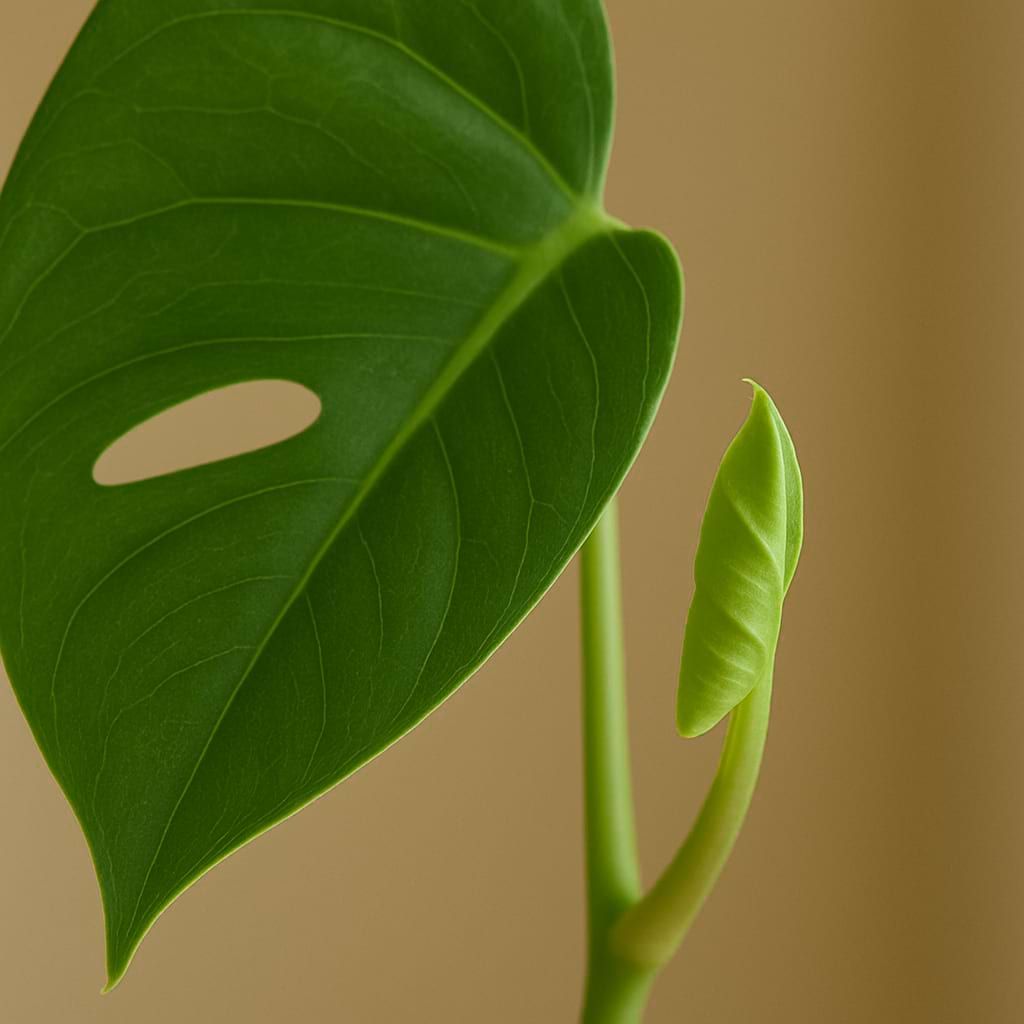
Young Tortum plants, especially small tissue-culture plugs, have small leaves with fewer and broader lobes. They grow in a bushy or crawling way until a stem finds something to climb. Once a stem is rooted into a pole and getting bright light, each new leaf comes in larger, with more segments that are longer and finer. Adult leaves can carry ten or more segments on each side and reach a foot long or more. If yours still looks like a lobed beginner plant, it usually needs more light and something to climb, not a new label.
Tortum vs Philodendron Polypodioides
These two get mixed up constantly, and some shops even sell Tortum as "polypodioides tortum". Philodendron Polypodioides has wider, flatter segments that read like a fern frond. Tortum's segments are narrower, almost thread-like on mature leaves, so the whole leaf looks skeletal and see-through.
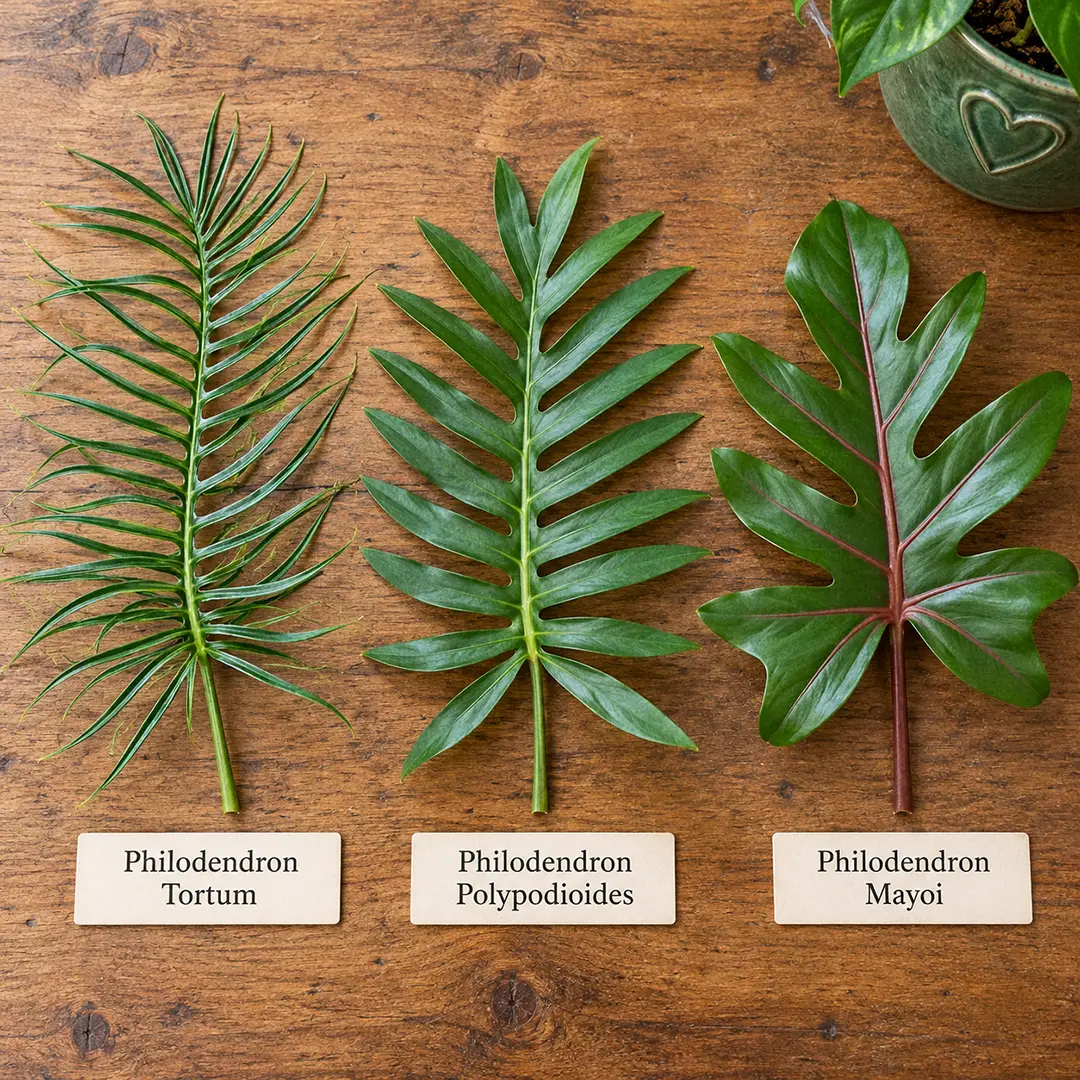
Tortum vs Philodendron Mayoi
Philodendron Mayoi has a similar cut-leaf outline, but its lobes are clearly wider and rounder, more palm frond than skeleton. Mayoi also tends to show reddish leaf stalks and veins, while Tortum stays green throughout.
Tortum vs Florida Beauty x Tortum
Philodendron Florida Beauty x Tortum is a hybrid with Tortum as one parent. It carries cream to yellow splashes of variegation, and its leaf shape varies from plant to plant. Pure Tortum is solid green, so any pale patches mean you are looking at the hybrid, not the species.
🪴 Potting and Repotting Philodendron Tortum
When to Repot
Repot every one to two years in spring, or when roots circle the inside of the pot or poke out of the drainage holes. Tortum does not mind being slightly snug, and a pot that is too big stays wet in the middle.
Choosing a Pot and Pole
Go up only 1 to 2 inches in diameter. Any material works as long as it has drainage holes. Terracotta dries faster, while plastic and glazed ceramic hold moisture longer, and our plant pot guide covers the trade-offs. Repotting is also the moment to add support. Push a moss pole or coir pole into the pot before you backfill, so you do not spear roots later.
Step-by-Step Repotting
- Water a day ahead so the root ball slides out in one piece.
- Ease the plant out and gently loosen any circling roots.
- Set the pole in the new pot, add a layer of fresh aroid mix, and place the plant against the pole.
- Backfill, firm gently, and tie the stem to the pole with soft plant ties.
- Water thoroughly and keep it out of strong sun for a week.
Our repotting guide has more detail.
✂️ Pruning Philodendron Tortum
When to Prune
Prune in spring or early summer, when the plant recovers fastest. Yellow or damaged leaves can come off at any time of year.
How to Prune
Use clean, sharp scissors and cut just above a node, the bump on the stem where a leaf and aerial root emerge. Remove a yellowing leaf at the base of its stalk rather than trimming the leaf itself. Wear gloves, since the sap can irritate skin.
Managing a Tall Climber
When Tortum reaches the top of its pole, you can either extend the pole or cut the top off and root it. The plant usually pushes new growth from a node below the cut. Stems that wander off the pole can be tied back in, or cut and propagated.
🌱 How to Propagate Philodendron Tortum
Best Method: Stem Cuttings
Stem cuttings are the easiest way to propagate Philodendron Tortum. Each cutting needs at least one node, ideally with an aerial root already showing, plus one or two leaves. A piece of stem with no node will not grow.
Step-by-Step Propagation
- Choose a healthy stem in spring or summer and cut just below a node with clean scissors.
- Let the cut end dry for an hour or so.
- Root it in water, damp sphagnum moss, or a mix of perlite and moss. Sphagnum in a clear box or bag gives the most reliable results.
- Keep it warm, around 70-80°F, in bright indirect light.
- Pot it up once the new roots are 1 to 2 inches long. This usually takes a few weeks.
Water-rooted cuttings do best in fairly moist aroid mix for the first couple of weeks, then on a normal watering routine as the roots adjust to soil. Our water propagation guide covers that switch.
Air Layering on the Pole
For a stem already climbing, air layering is the low-risk option. Wrap a node in damp sphagnum moss, cover it with plastic, and wait until roots fill the moss before cutting below it. Our air layering guide walks through the steps.
Tips for Success
Expect a new plant's first leaves to look juvenile, with fewer and broader lobes. That is normal. Give it a small pole as soon as it is potted, and the finer leaf shape returns as it climbs. See our propagation guide for general rooting tips.
🐛 Philodendron Tortum Pests and Treatment
Common Pests
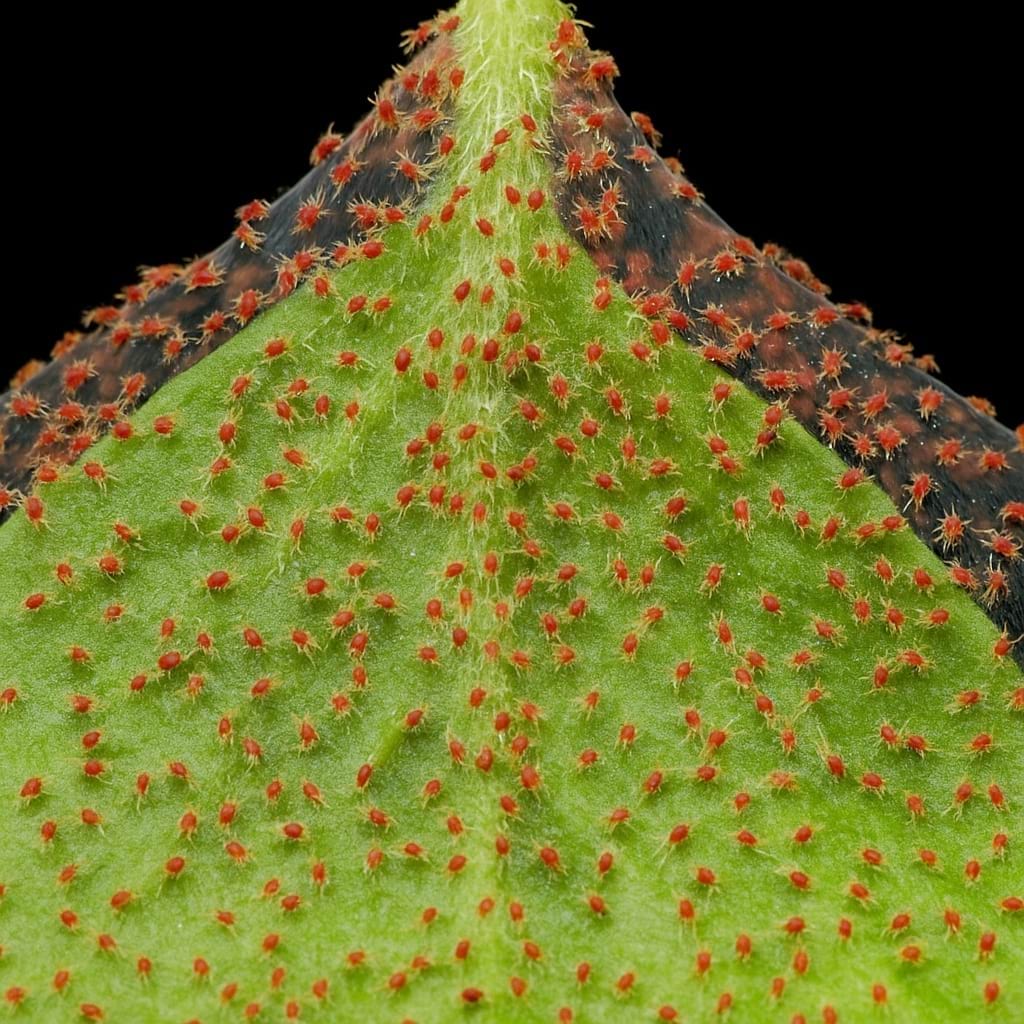
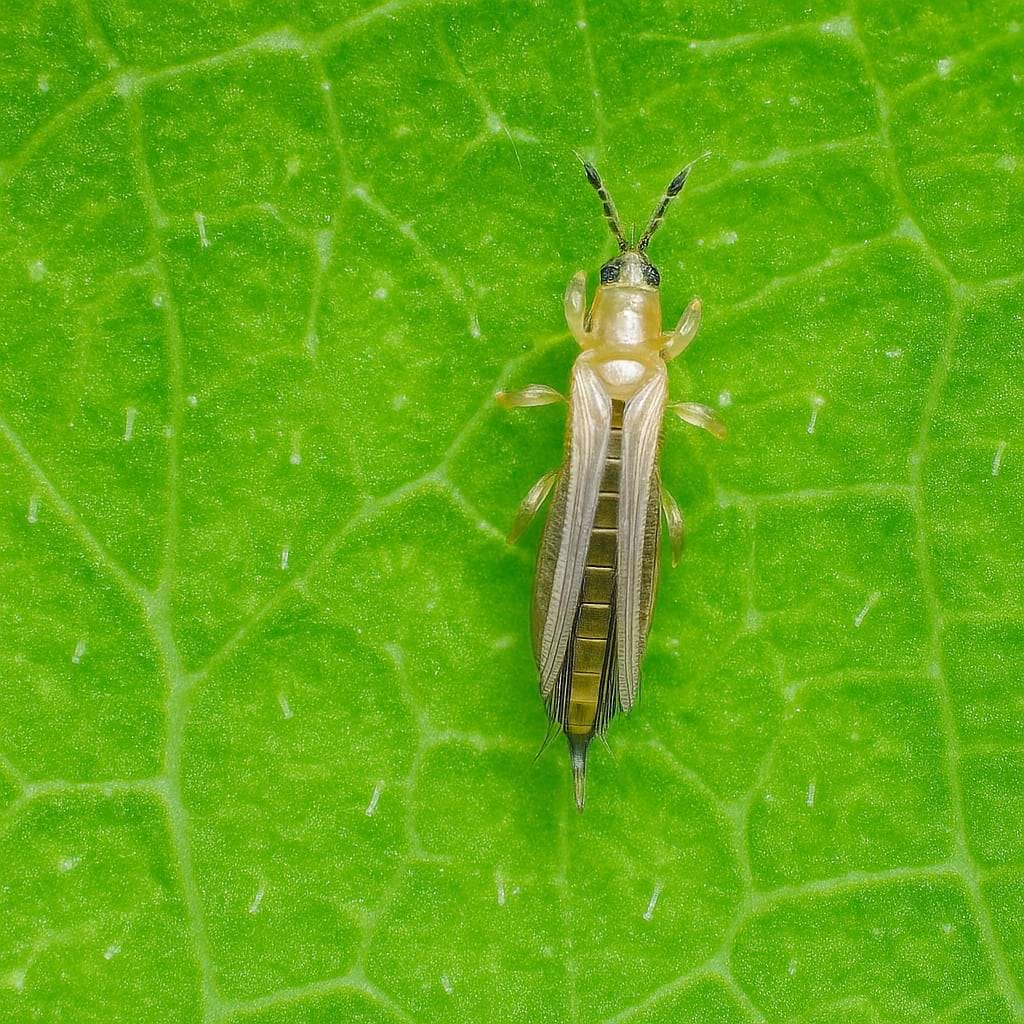
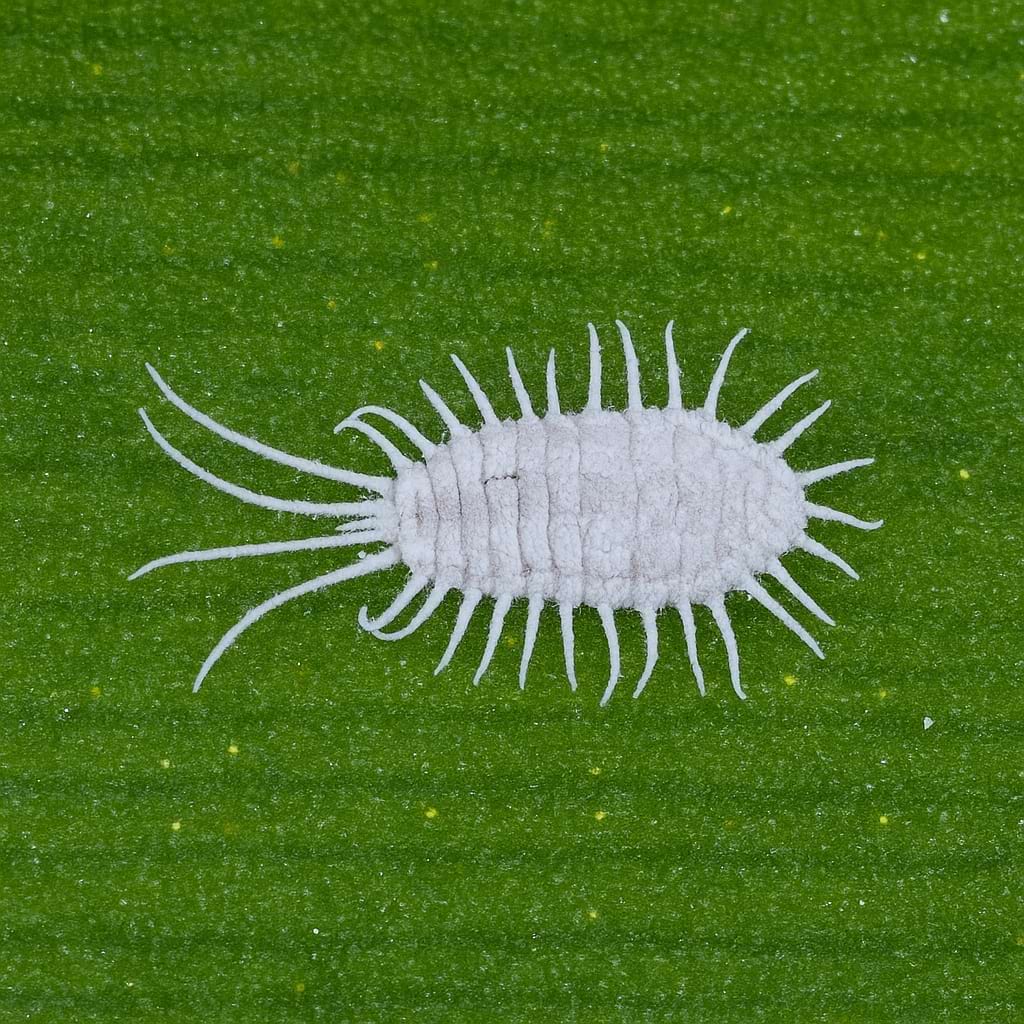
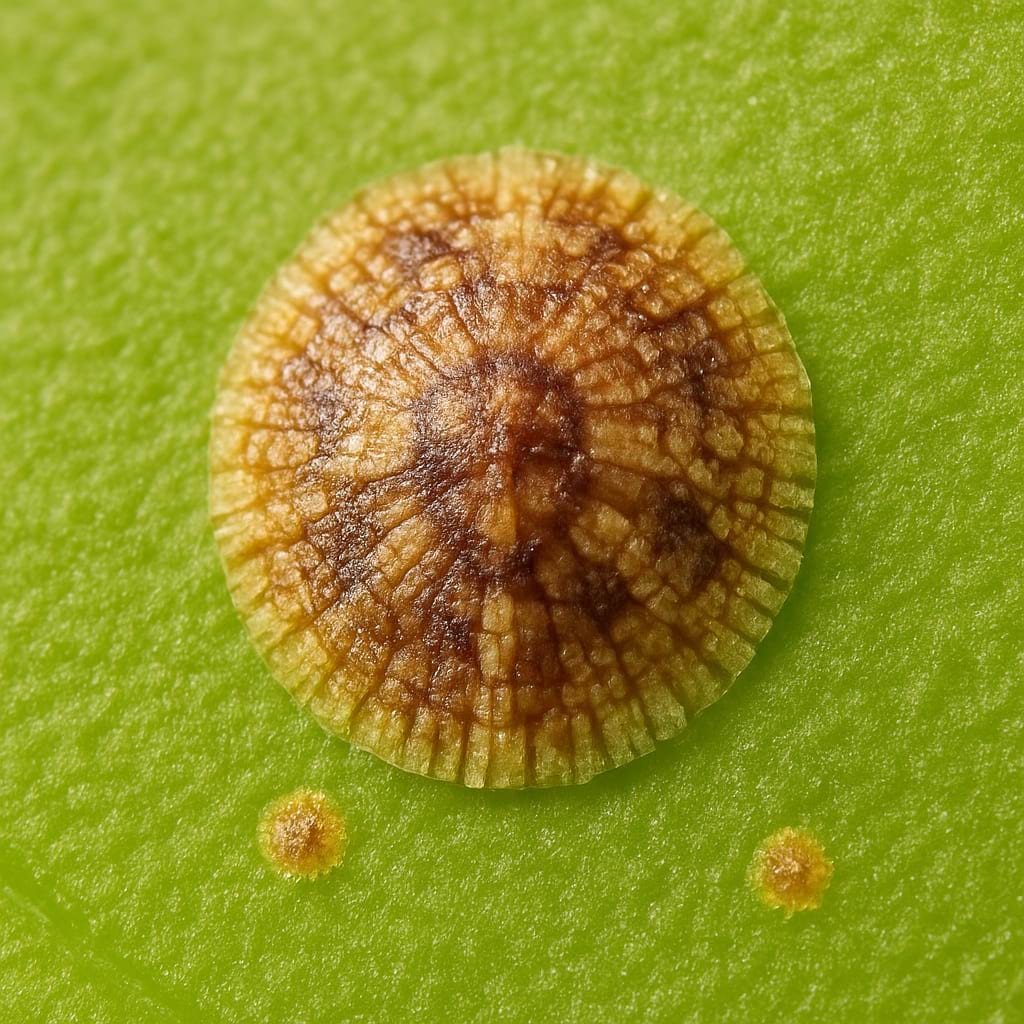
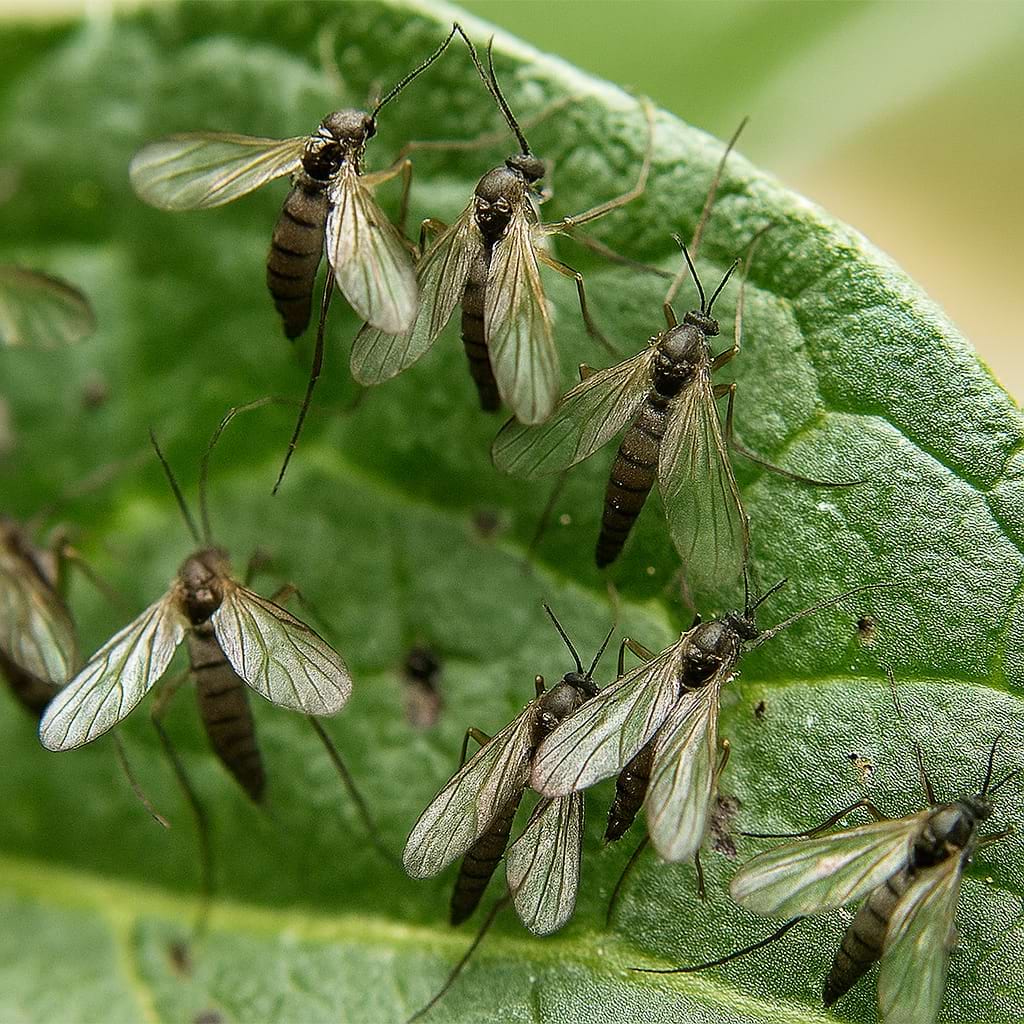
Spider mites are the most frequent problem, especially in warm, dry rooms. Look for fine webbing between the thin segments and a dusty, stippled look on the leaves. Thrips leave silvery streaks and black specks, and they like to hide in new leaves before they unfurl. Mealybugs show up as white cottony tufts where leaf stalks meet the stem, scale insects as small brown bumps along stems, and fungus gnats as tiny flies that mean the mix stays wet too long.
Pest Treatment
Isolate the plant first. Rinse it in the shower, then treat with insecticidal soap or neem oil, coating both sides of every segment. Wiping is fiddly on a leaf this finely cut, so a spray bottle works better. Repeat every 5 to 7 days for three or four rounds, because eggs hatch after the first treatment. Dab mealybugs and scale with a cotton bud dipped in rubbing alcohol. For fungus gnats, let the top of the mix dry out and use yellow sticky traps.
Pest Prevention
Check the undersides and the newest leaves each time you water. Quarantine new plants for a few weeks before they join the rest. Keeping humidity up and rinsing dust off now and then also makes spider mites much less likely.
🩺 Common Philodendron Tortum Problems
Yellow Leaves and Root Rot
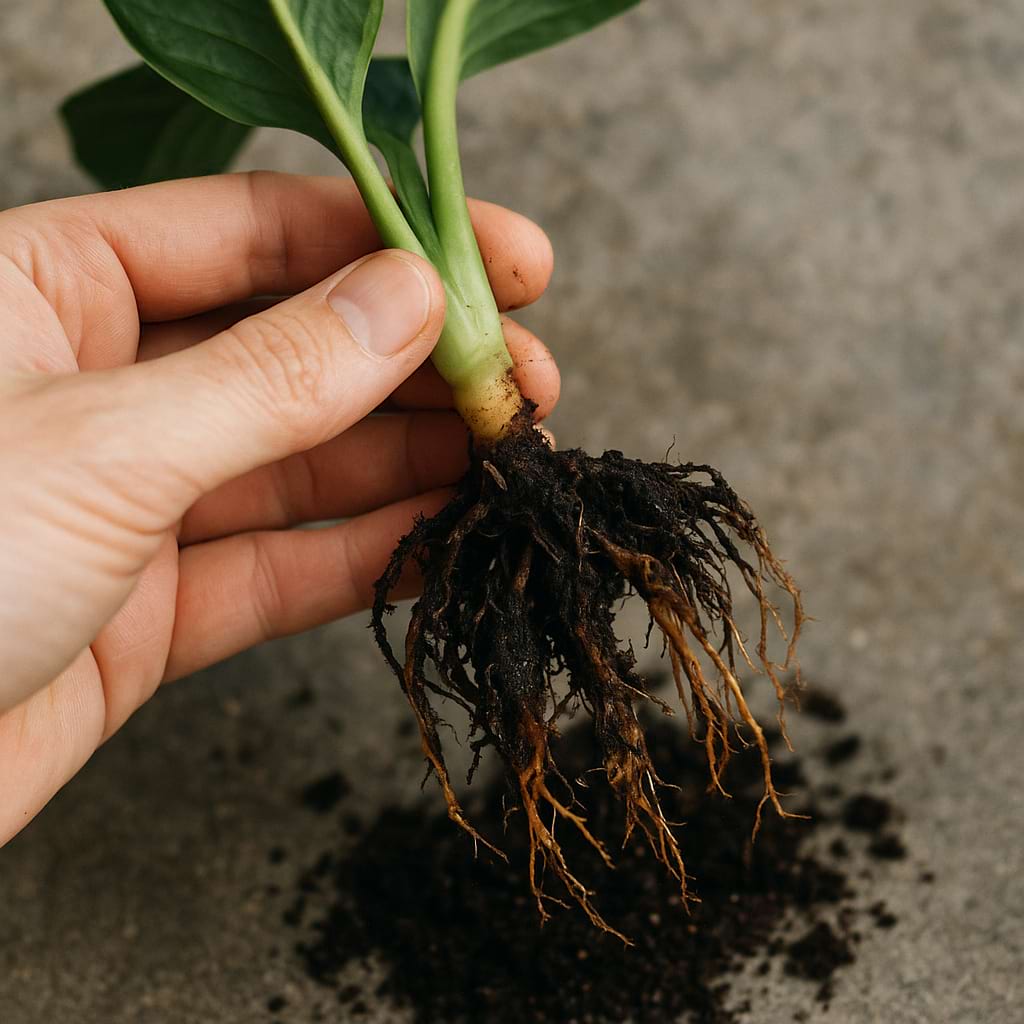
Yellowing leaves are usually a watering problem. One old leaf at the bottom turning yellow now and then is normal. Several at once, with soft stems or a sour smell, points to root rot. Unpot the plant, cut away brown, mushy roots, repot into fresh chunky mix in a clean pot, and water less often from then on.
Brown, Crispy Segment Tips
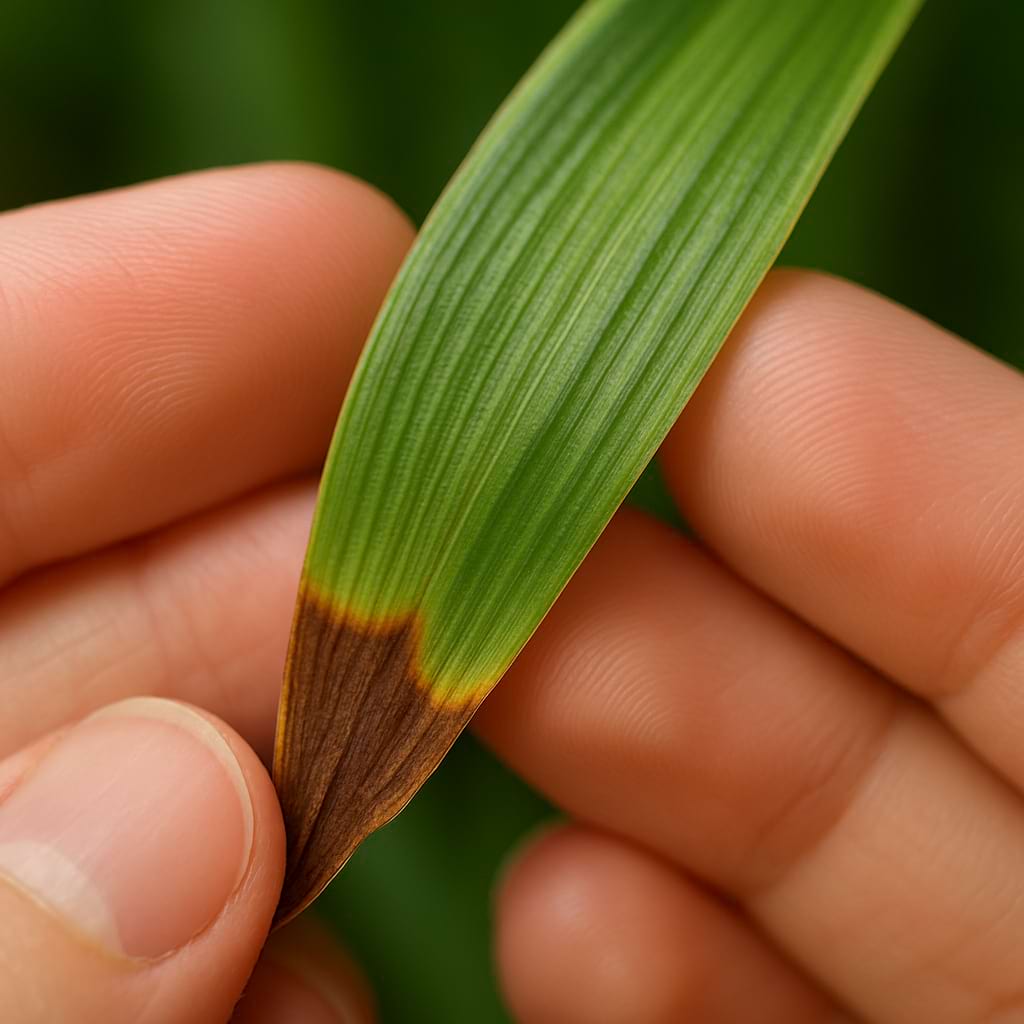
Brown crispy edges on those thin segments usually mean dry air, underwatering, or fertilizer salt buildup. Raise the humidity, check your watering, and flush the pot if you feed regularly. Trim dead tips with sharp scissors, following the shape of the segment.
Small Leaves and Leggy Growth
New leaves getting smaller and simpler, or stems stretching with big gaps between leaves, is leggy growth and the small leaves that come with it. The fix is more light and a pole to climb. A Tortum left to sprawl rarely produces its mature leaf shape.
Curling and Drooping Leaves
Curling leaves and drooping come from either watering extreme, a cold draft, or a recent move. Check the soil first, then the spot.

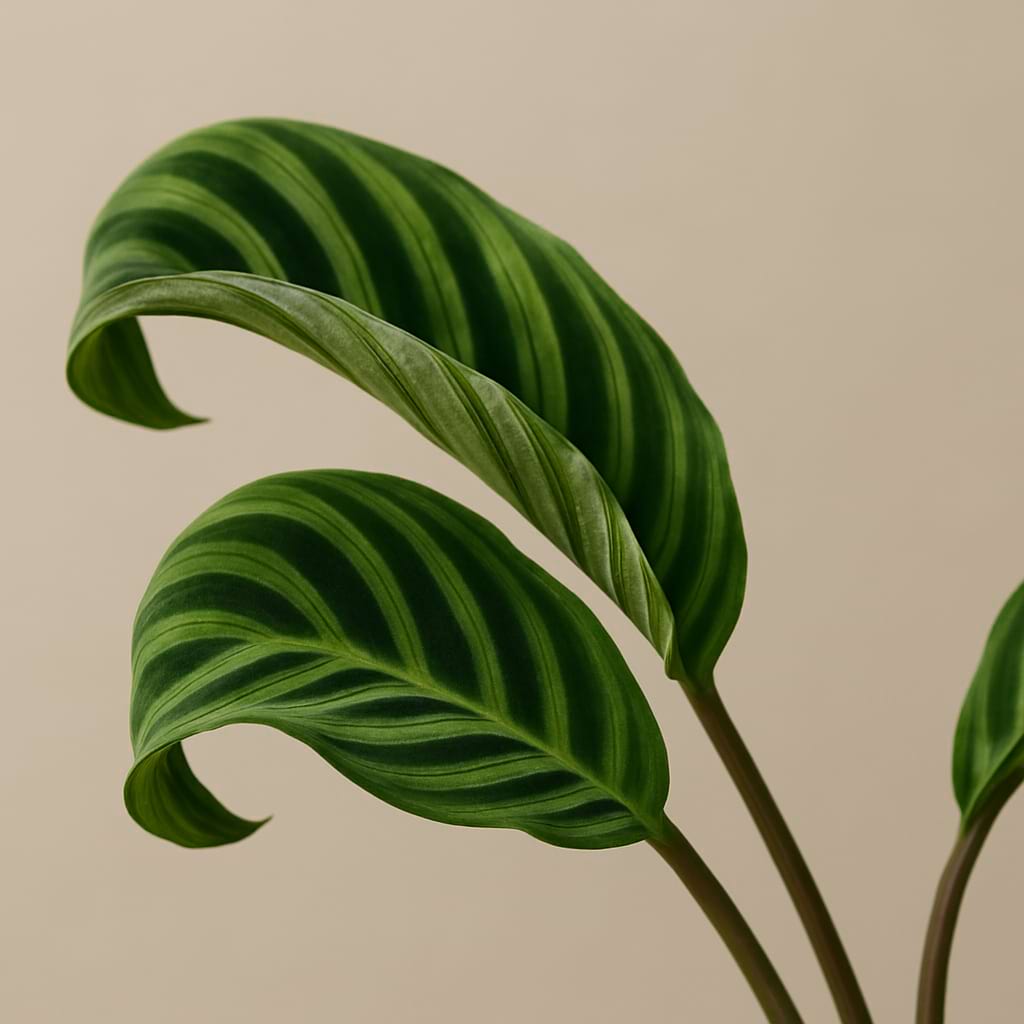
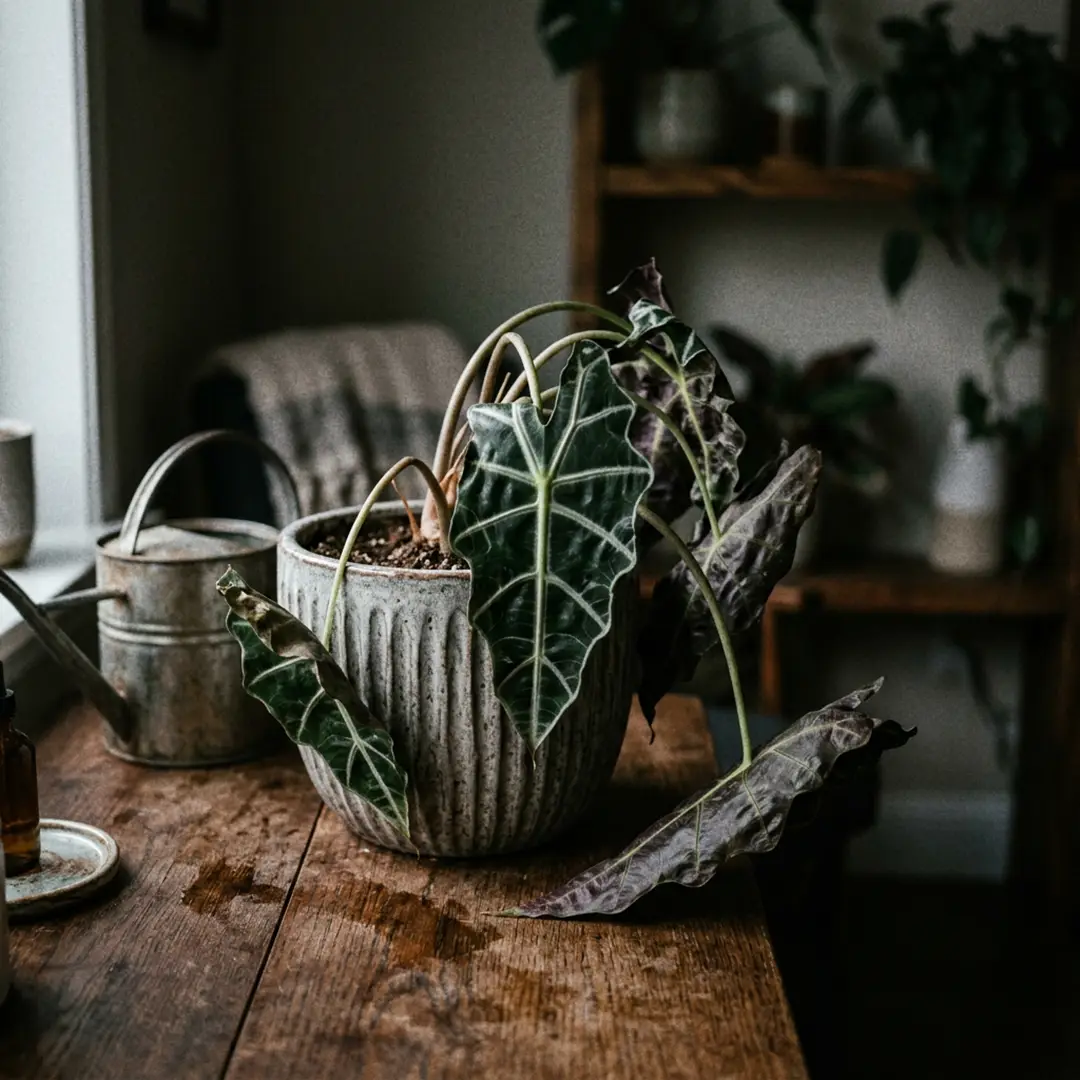
🖼️ Philodendron Tortum Display and Styling Ideas
Climbing a Moss Pole
Tortum looks its best climbing. A moss or coir pole in a floor pot turns it into a narrow column of feathery leaves, which suits a corner beside a bright window. Choose a pole you can extend, since a happy plant reaches the top faster than most people expect.
Grouped Arrangements
The fine leaves stand out best next to broad, solid foliage. Try it beside a Monstera Deliciosa or a Heartleaf Philodendron trailing from a nearby shelf. Next to other cut-leaf plants, the effect gets lost. A plain, light wall behind it shows off the leaf outline better than a busy background.
Young Plants on a Desk or Tabletop
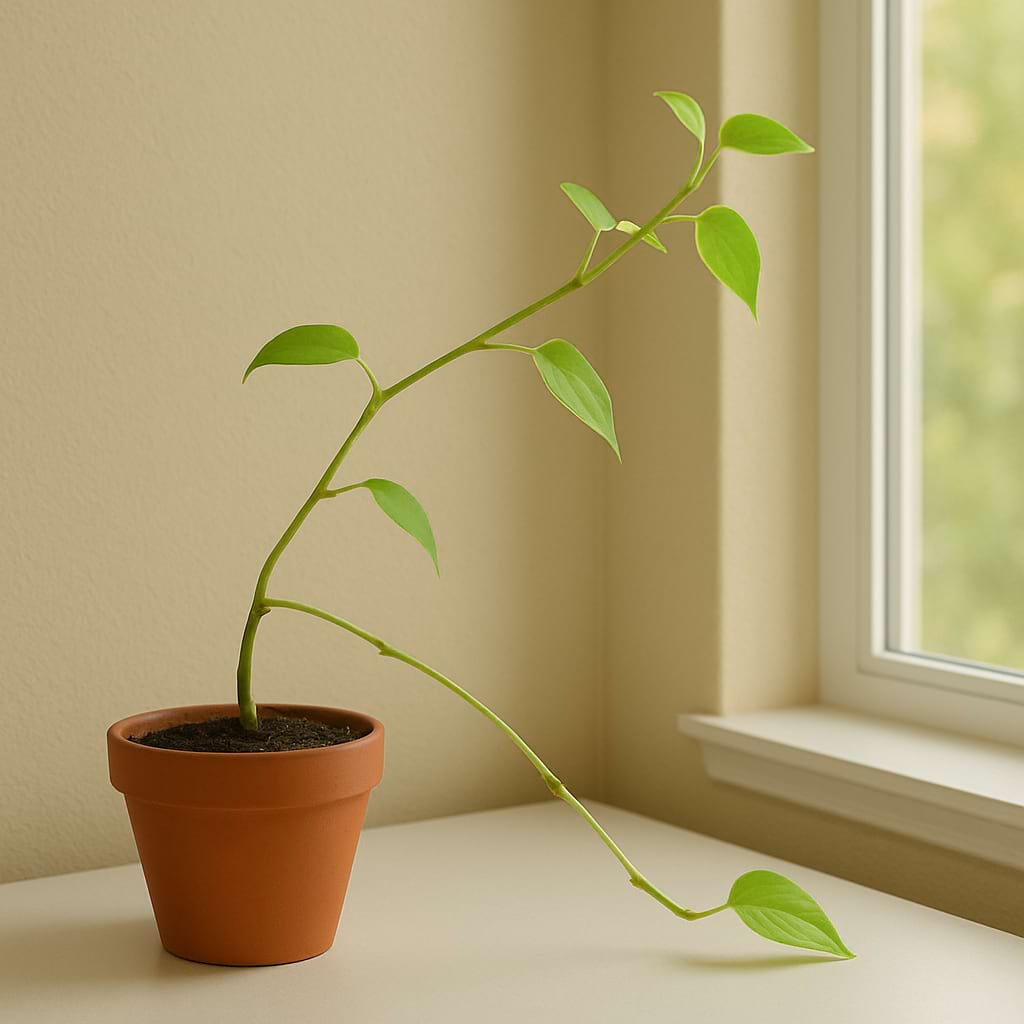
A small, juvenile Tortum stays bushy for a while, so it works on a bright desk, a sideboard or a wide windowsill set back from the glass. Slip a short moss pole into the pot early. Once the stem starts to lengthen and reach for it, move the plant to a floor pot with a taller pole.
Where Not to Put It
Skip floors and low tables where cats or dogs can chew it, cold window ledges in winter, and spots right next to heaters. A hanging basket is also a poor fit. This is a climber, not a trailer, and it grows smaller and messier with nowhere to climb.
👍 Philodendron Tortum Pro Care Tips
Growth and Leaf Shape
🪵 Add the pole on day one. Tortum only develops its mature, finely cut leaves once it is climbing, so do not wait until it sprawls.
☀️ Go brighter than you think. Bright indirect light is what pushes bigger leaves with more segments.
🪢 Tie, then let it grip. Soft ties hold the stem until the aerial roots take hold of the pole.
Watering and Feeding
💧 Water the pole as well as the pot. A damp pole keeps the aerial roots growing into it.
🍼 Feed at half strength, spring and summer only. Thin segments burn easily from salt buildup.
Health Checks
🔍 Check new leaves for thrips. They hide inside leaves before they unfurl.
🧤 Wear gloves when pruning. The sap irritates skin.
❓ Frequently Asked Questions
Is Philodendron Tortum toxic to cats and dogs?
Yes. Like all philodendrons, Tortum contains insoluble calcium oxalate crystals, and the ASPCA lists philodendrons as toxic to cats and dogs. Chewing a leaf causes mouth irritation, drooling, pawing at the face, vomiting and trouble swallowing. Keep it out of reach, and call your vet or a pet poison line if your pet eats some. See our list of pet-safe houseplants for alternatives.
Why doesn't my Philodendron Tortum look like the photos?
Most photos show mature, climbing plants. Young plants have smaller leaves with fewer, broader lobes, and they only develop the thin finger-like segments as they climb in bright light. Give it a pole and more light, and each new leaf should look more like the pictures.
How do I tell Philodendron Tortum from Polypodioides?
Look at the segments. Tortum's are very narrow, almost thread-like on mature leaves, giving a skeletal look. Polypodioides has wider, flatter segments that look more like a fern frond. Labels in shops are not always reliable, so trust the leaf.
Does Philodendron Tortum need a moss pole?
It will survive without one, but it will not look its best. Tortum is a root climber, and it makes larger, more finely divided leaves once its aerial roots grip a moss pole, coir pole or plank. Without support it stays bushy and juvenile or sprawls over the pot edge.
How big does Philodendron Tortum get indoors?
On a pole in good light it can climb 6 to 8 feet over several years, with mature leaves a foot long or more. Without a pole it stays much smaller. You can control the height by cutting the top and rooting it.
How fast does Philodendron Tortum grow?
In warm, bright conditions it puts out new leaves steadily through spring and summer. Growth slows sharply in winter and in low light. If yours barely grows in summer, light is the first thing to check.
Where is Philodendron Tortum from?
It is native to the Amazon, from northern Brazil to Bolivia, where it grows as a root-climbing liana on rainforest trees. It was formally described in 2001 from plants in the Ducke Forest Reserve near Manaus.
Should I cut off the juvenile leaves?
No. The older, broader leaves still feed the plant while it climbs, and removing them only slows it down. Let them stay until they yellow on their own, then cut them off at the base of the stalk.
Is Philodendron Tortum a good plant for beginners?
It is a reasonable second or third aroid. The care is standard philodendron care, with two extras: a pole, and brighter light than a heartleaf would need. Beginners who get those two right usually do fine, and the most common mistake is overwatering, not the plant being fussy.
Why are the new leaves stuck or not unfurling?
Dry air is the usual reason. The thin segments can stick together inside the opening leaf when humidity drops, especially in winter with the heating on. Raise the humidity and keep watering steady rather than forcing the leaf open, which tears the segments.
ℹ️ Philodendron Tortum Info
Care and Maintenance
🪴 Soil Type and pH: Chunky, fast-draining aroid mix with bark and perlite
💧 Humidity and Misting: Prefers 50 to 60 percent humidity but copes with average household air if kept away from heaters.
✂️ Pruning: Remove yellow leaves at the base and cut stems above a node to control height or take cuttings.
🧼 Cleaning: Rinse the plant under a lukewarm shower every month or two. The finely cut leaves are too fiddly to wipe one segment at a time.
🌱 Repotting: Repot in spring every 1-2 years, going up only 1-2 inches, and add a pole at the same time.
🔄 Repotting Frequency: Every 1-2 years
❄️ Seasonal Changes in Care: Steady water and monthly feeding in spring and summer, then less water and no fertilizer through autumn and winter.
Growing Characteristics
💥 Growth Speed: Moderate to fast in warm, bright conditions
🔄 Life Cycle: Evergreen perennial root-climbing aroid
💥 Bloom Time: Rarely flowers indoors
🌡️ Hardiness Zones: Frost-free climates only (roughly USDA 10-11)
🗺️ Native Area: Northern Brazil to Bolivia; first described from the Ducke Forest Reserve near Manaus, central Amazonas
🚘 Hibernation: No true dormancy; growth slows in winter
Propagation and Health
📍 Suitable Locations: Bright living rooms, corners beside east or west windows, offices with good light, under grow lights
🪴 Propagation Methods: Root stem cuttings with at least one node in sphagnum moss, water or perlite, or air layer a climbing stem.
🐛 Common Pests: Spider Mites, Thrips, Mealybugs, Scale Insects, Fungus Gnats
🦠 Possible Diseases: Root rot, bacterial and fungal leaf spot in wet, stagnant conditions
Plant Details
🌿 Plant Type: Root-climbing tropical aroid (liana)
🍃 Foliage Type: Evergreen, deeply divided into thin finger-like segments
🎨 Color of Leaves: Mid to dark green
🌸 Flower Color: Rarely seen indoors
🌼 Blooming: Rare indoors; needs a mature, climbing plant
🍽️ Edibility: Not edible. All parts contain calcium oxalate crystals.
📏 Mature Size: 6-8 feet on a pole indoors over several years
Additional Info
🌻 General Benefits: Unusual skeletal leaf shape, fast vertical growth on a pole, easier going than its delicate look suggests
💊 Medical Properties: No documented medicinal uses.
🧿 Feng Shui: An upward-climbing plant associated with growth and forward movement, best placed where it can rise freely on a pole.
⭐ Zodiac Sign Compatibility: Gemini
🌈 Symbolism or Folklore: Growth, change, patience rewarded
📝 Interesting Facts: Philodendron tortum was formally described only in 2001, by botanists M. L. Soares and Simon Mayo, from plants in the Ducke Forest Reserve near Manaus. The original description notes a strongly twisted, even spiralled prophyll, the sheath that protects each new leaf, and tortum is Latin for twisted.
Buying and Usage
🛒 What to Look for When Buying: Small plants look like ordinary lobed philodendrons, so judge them on healthy roots and clean new growth rather than leaf shape. Check that a plant labeled tortum has no cream or yellow patches; variegated plants are the Florida Beauty x Tortum hybrid.
🪴 Other Uses: Ornamental climbing houseplant and collection specimen.
Decoration and Styling
🖼️ Display Ideas: Moss or coir pole in a floor pot, corner beside a bright window, grouped with broad-leaved plants for contrast
🧵 Styling Tips: Set it against a plain wall where the fine leaf outline stands out, and pair it with solid, wide leaves rather than other cut-leaf plants.
🪴 See also 🪴
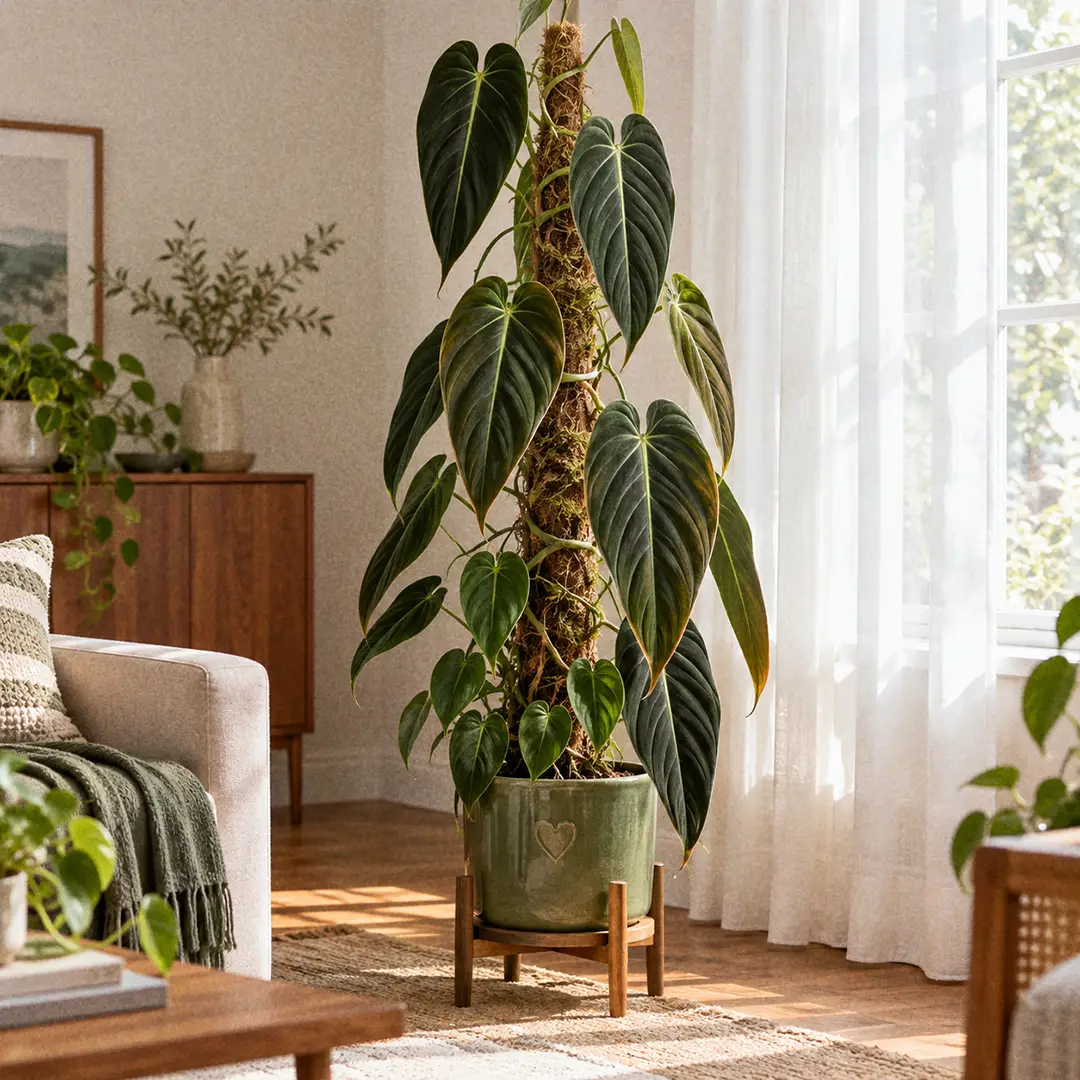
Complete Guide to Philodendron Melanochrysum Care and Growth
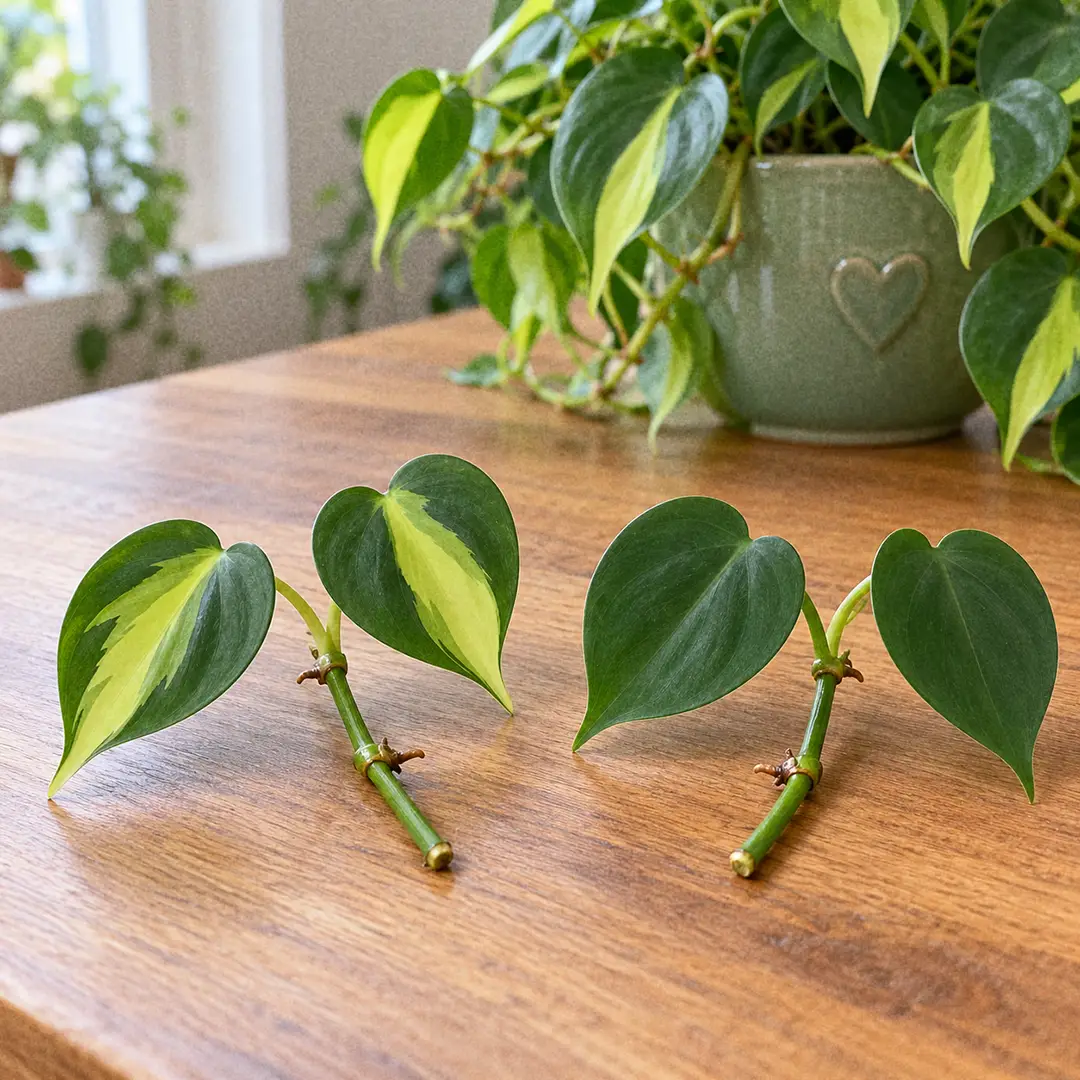
How to Propagate Philodendron Brasil (and Keep the Variegation)
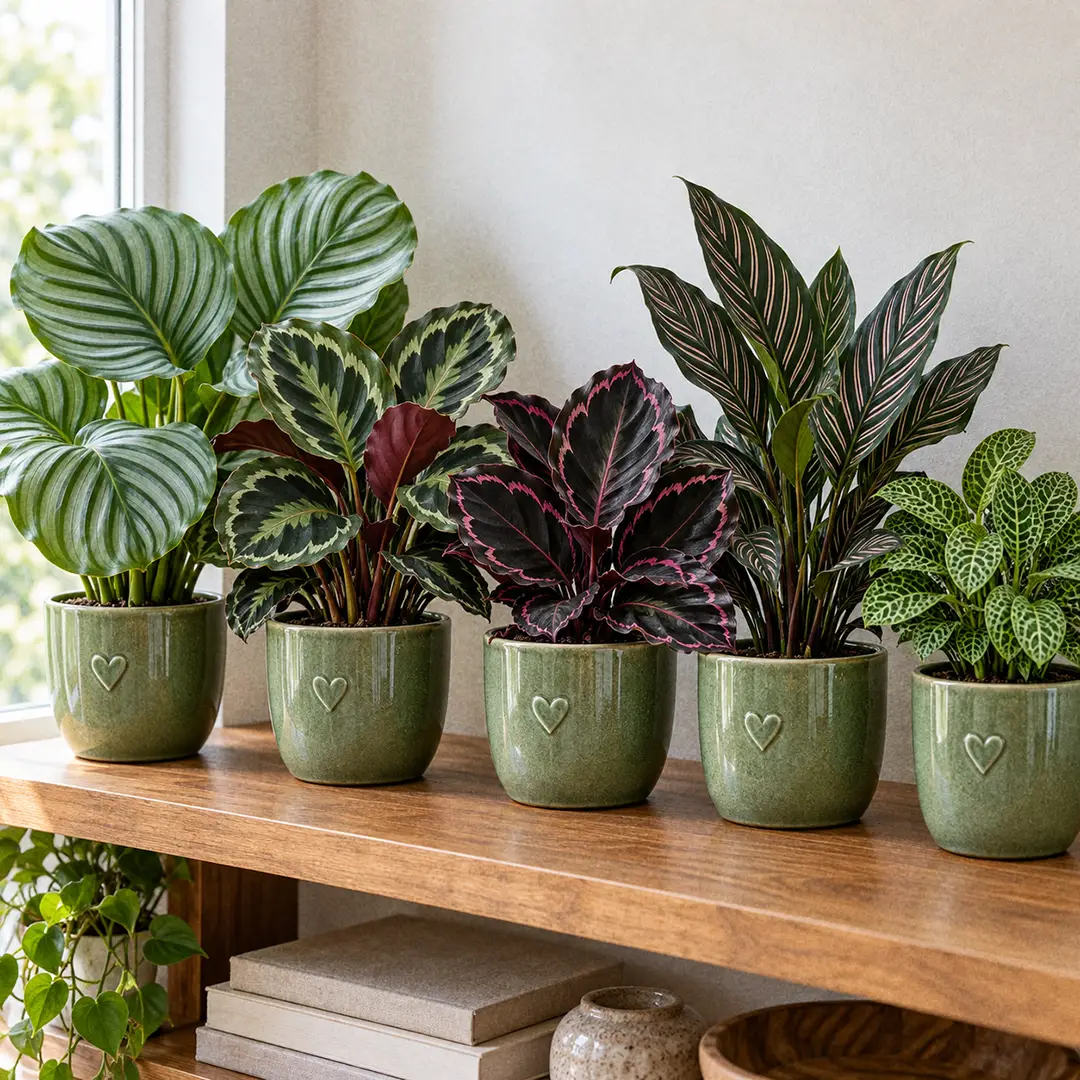
How to Grow Philodendron: Care Guide and 22 Types Worth Owning
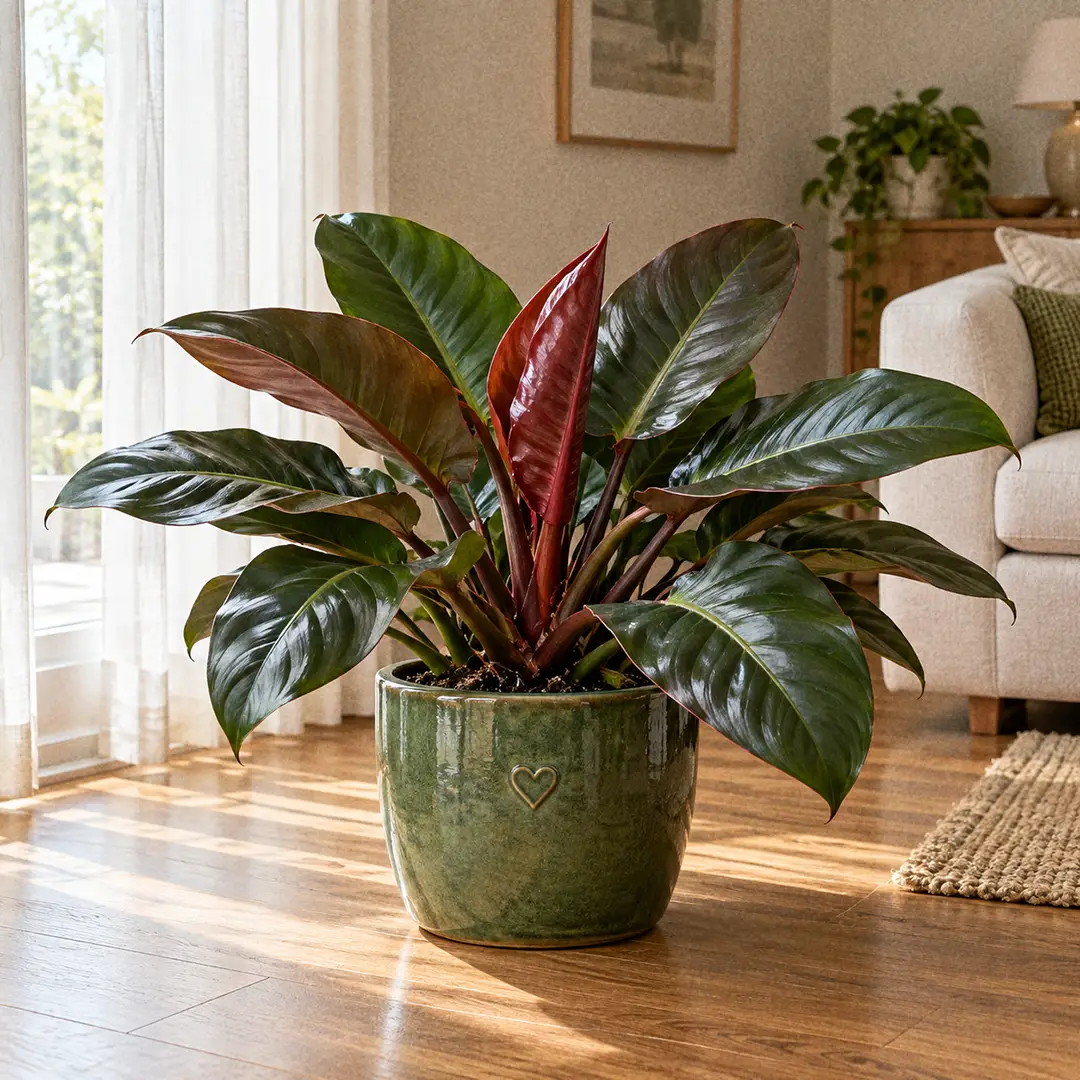
Complete Guide to Imperial Red Care and Growth
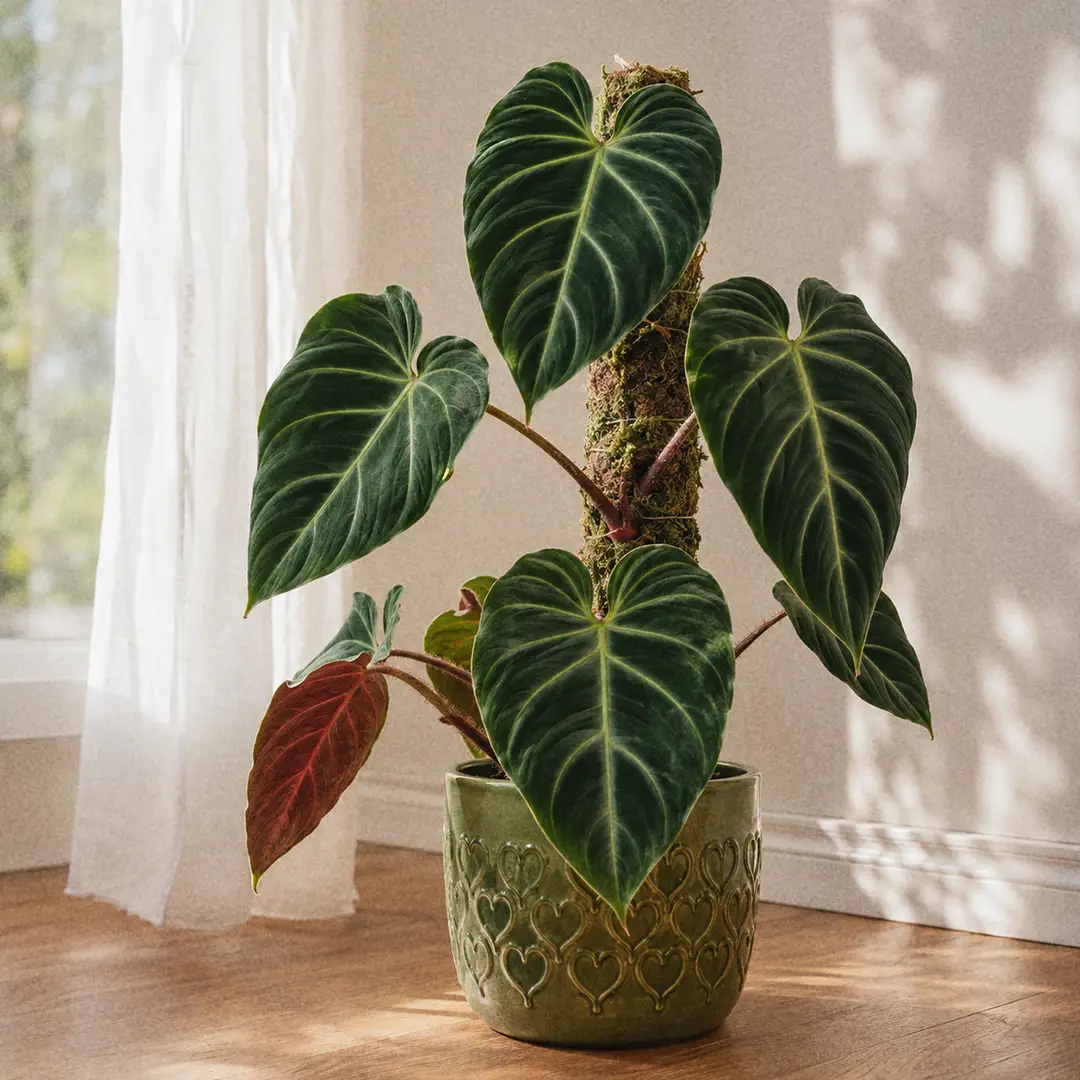
Complete Guide to Philodendron Verrucosum Care and Growth
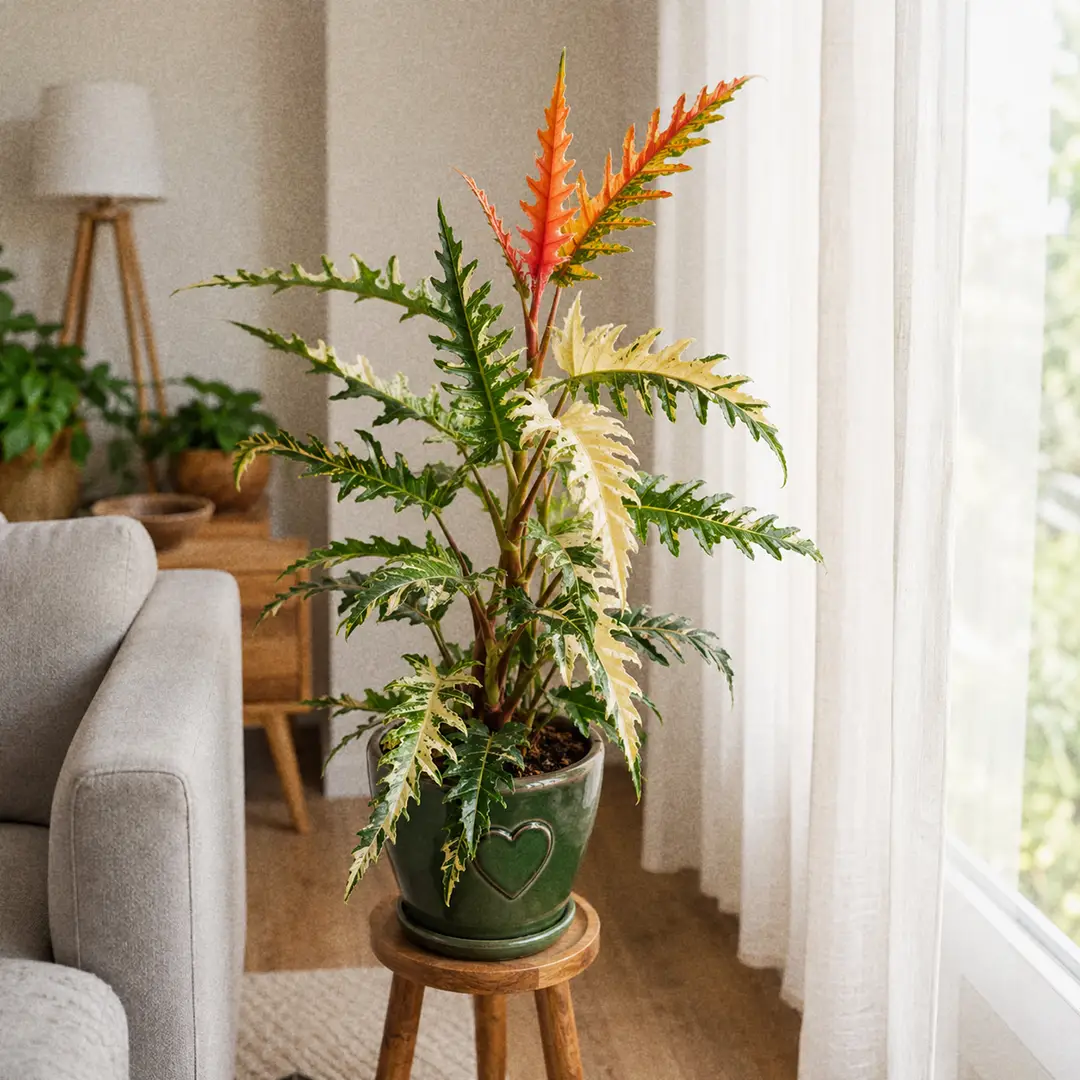
Complete Guide to Philodendron Ring of Fire Care and Growth
Complete Guide to Philodendron Gloriosum Care and Growth
Complete Guide to Philodendron Birkin Care and Growth
Complete Guide to Xanadu Care and Growth
Complete Guide to Hope Selloum Care and Growth
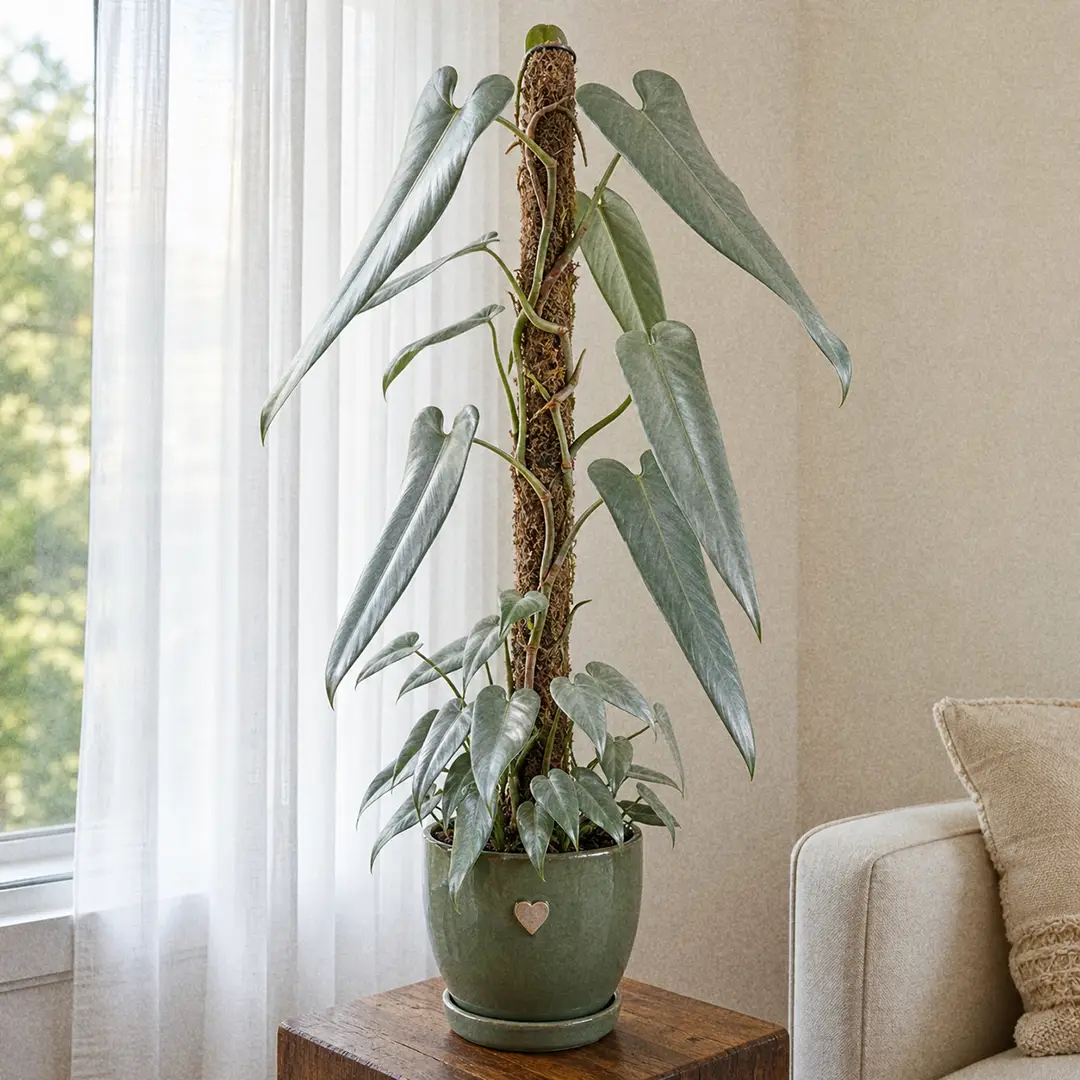
Complete Guide to Silver Sword Philodendron Care and Growth
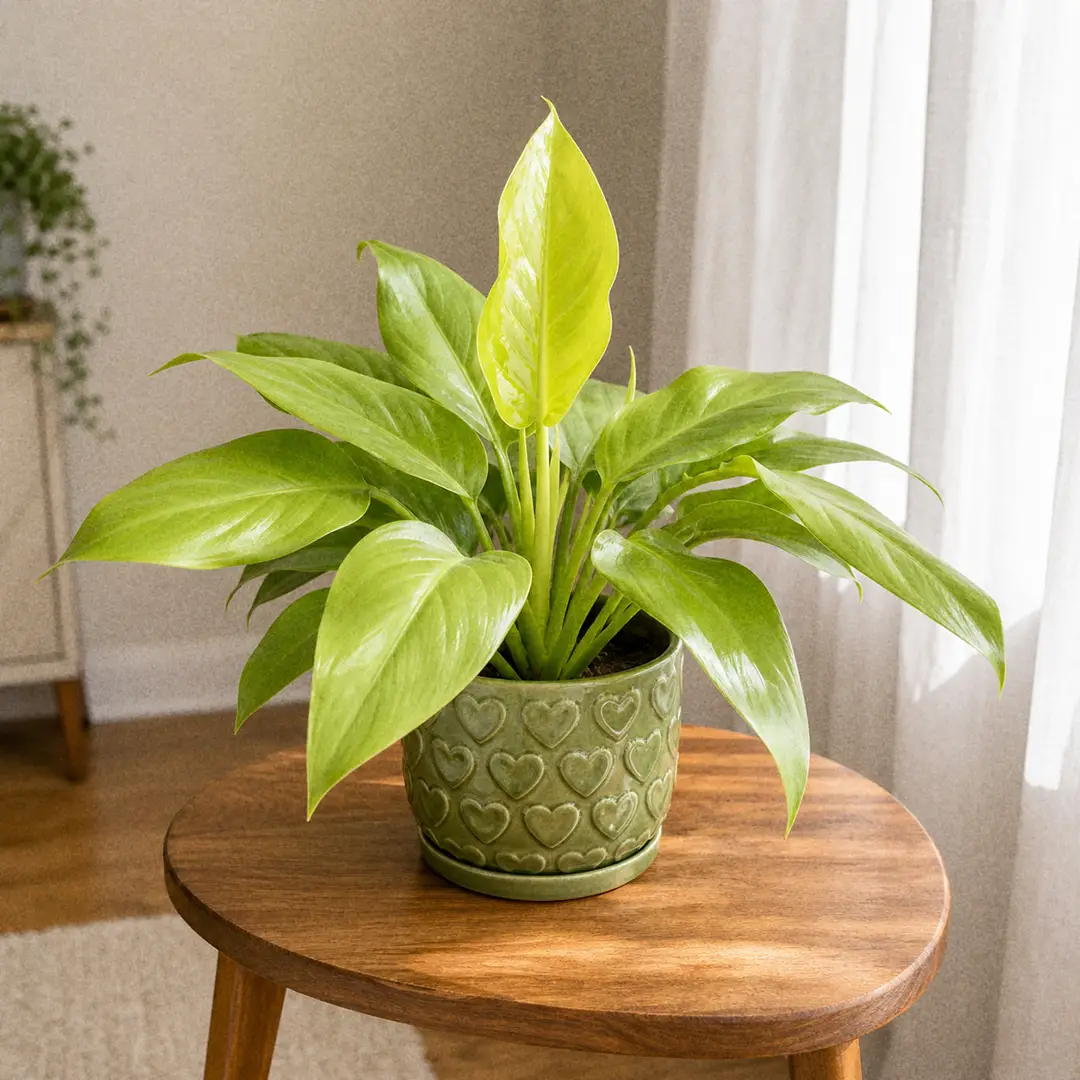
Complete Guide to Moonlight Philodendron Care and Growth
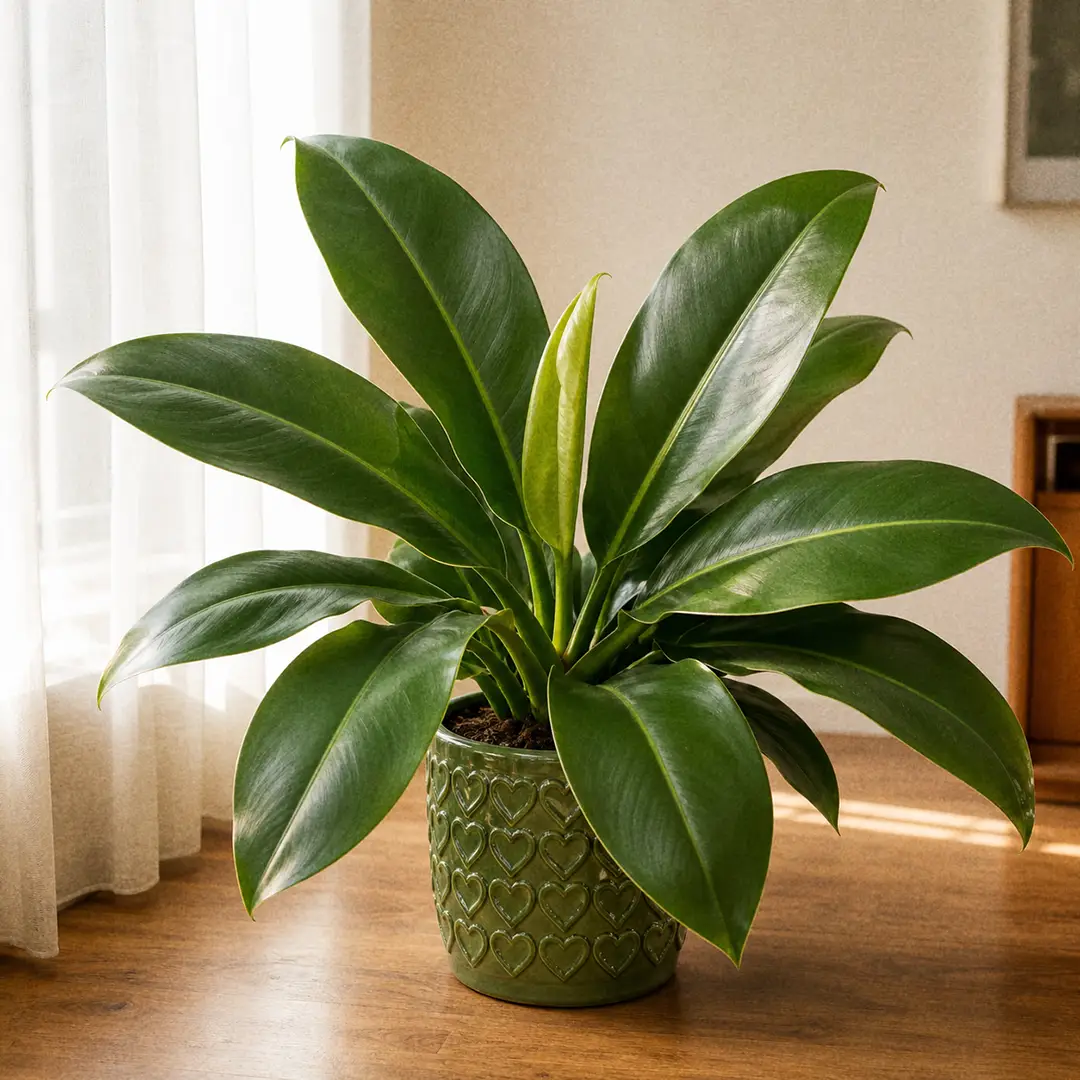
Complete Guide to Imperial Green Care and Growth
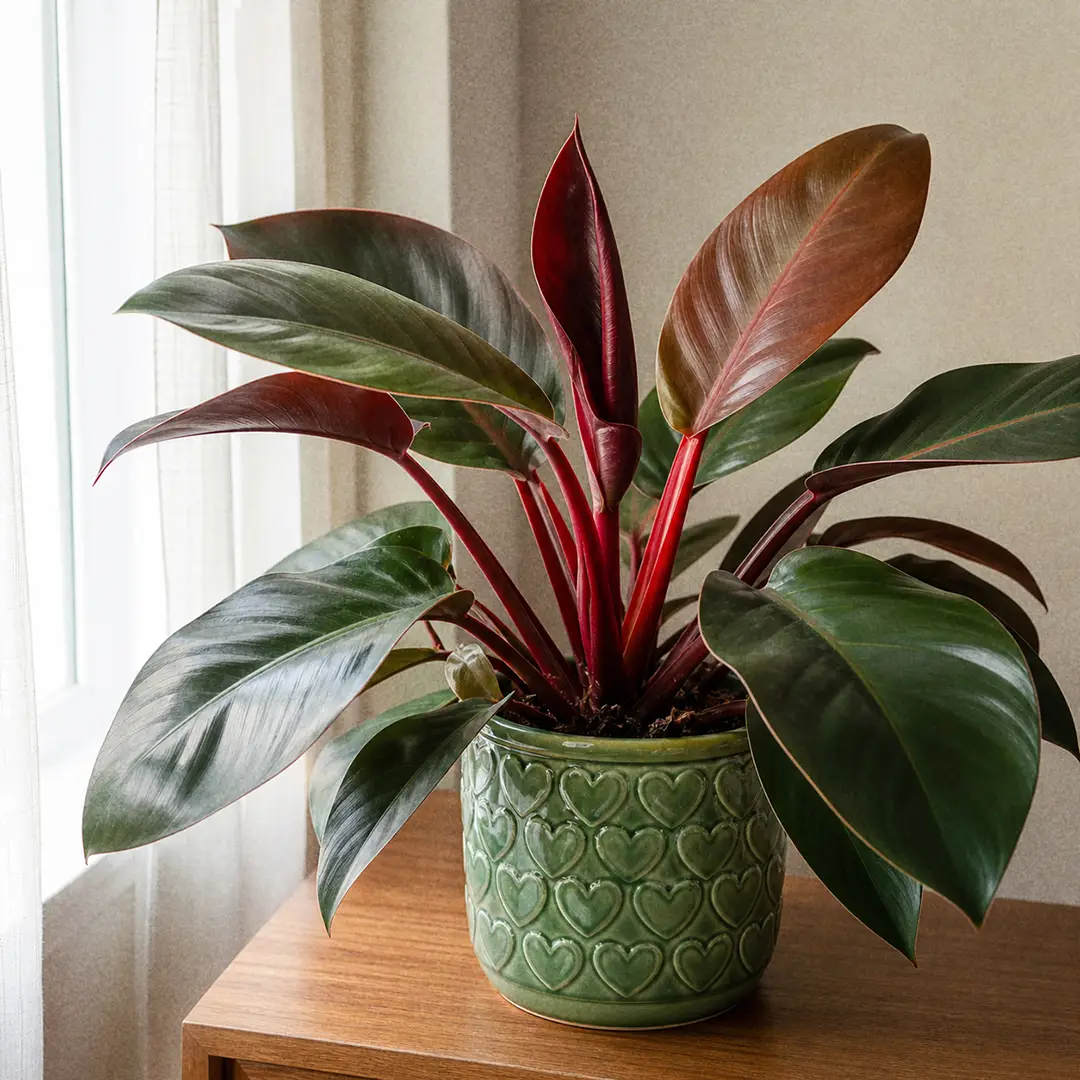
Complete Guide to Rojo Congo Care and Growth
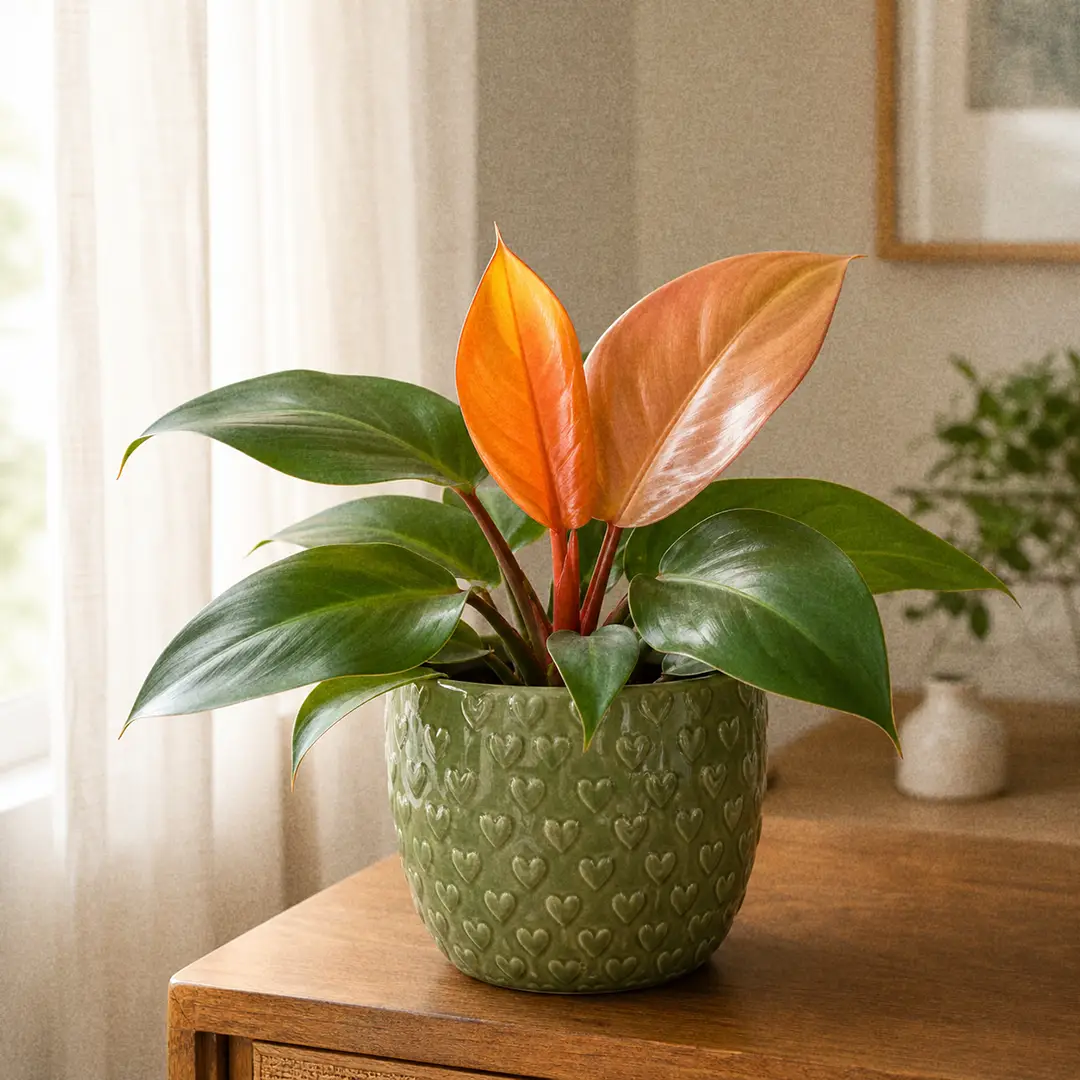
Complete Guide to Prince of Orange Care and Growth
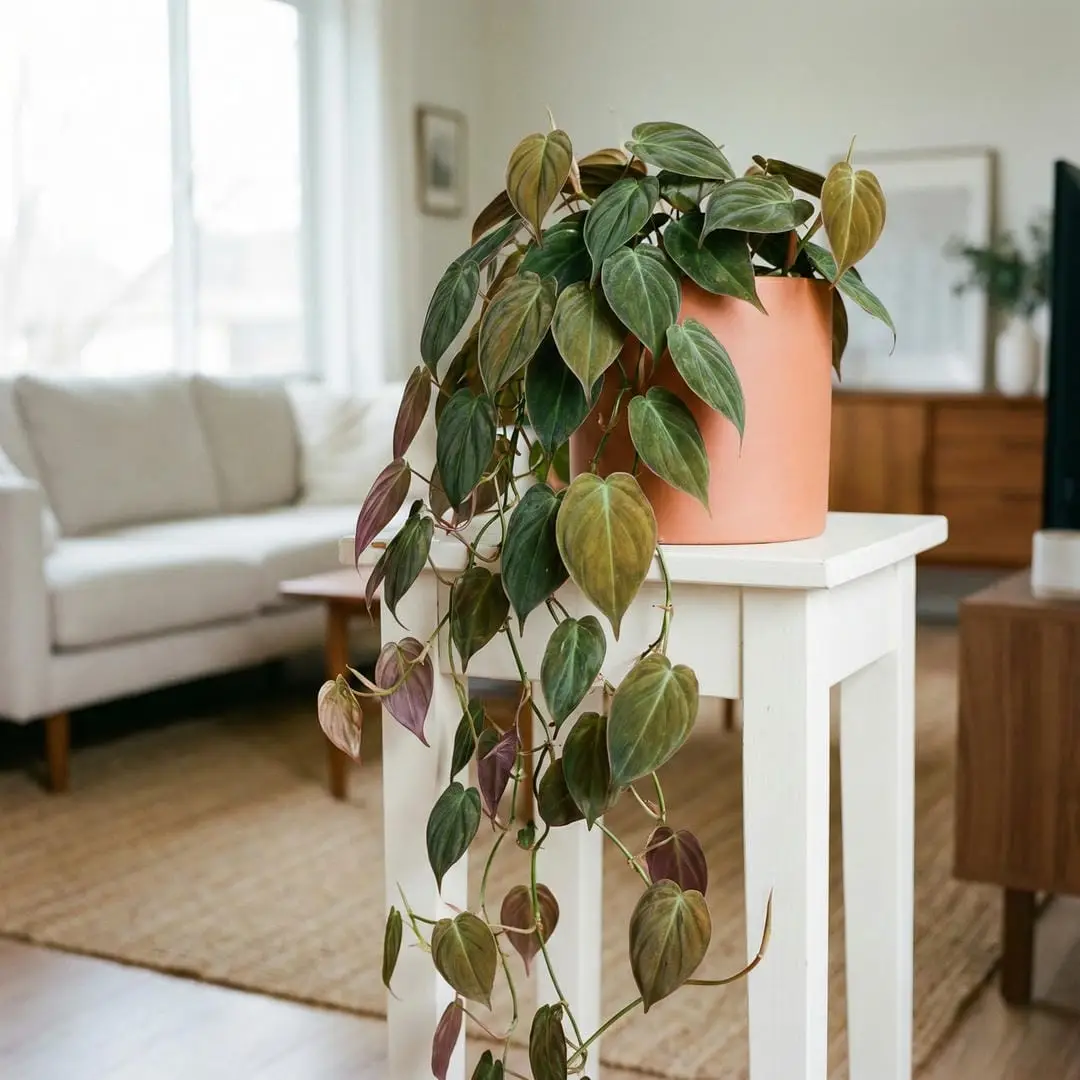
Complete Guide To Velvet Leaf Philodendron Care and Growth
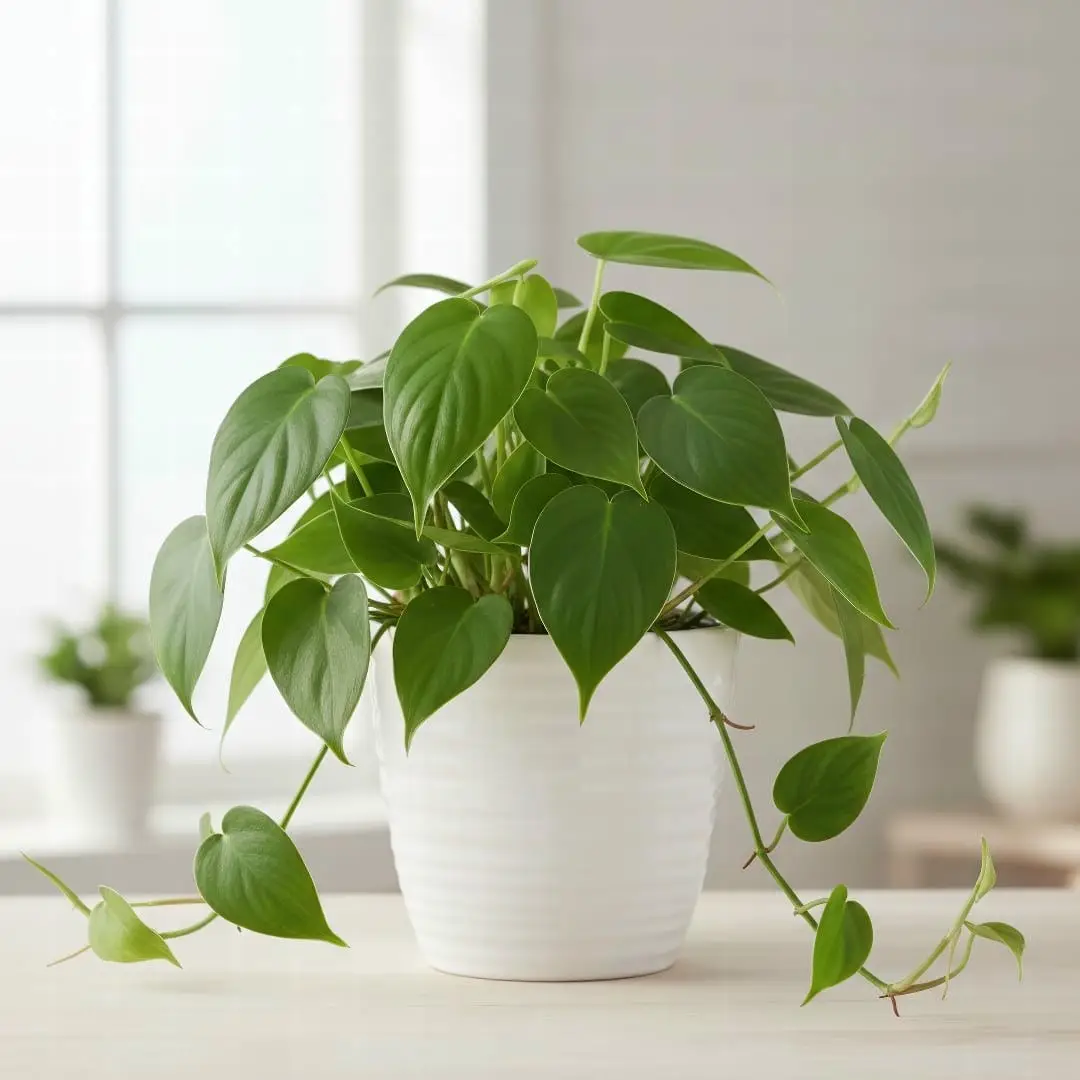
Complete Guide To Heart-leaf Philodendron Care and Growth
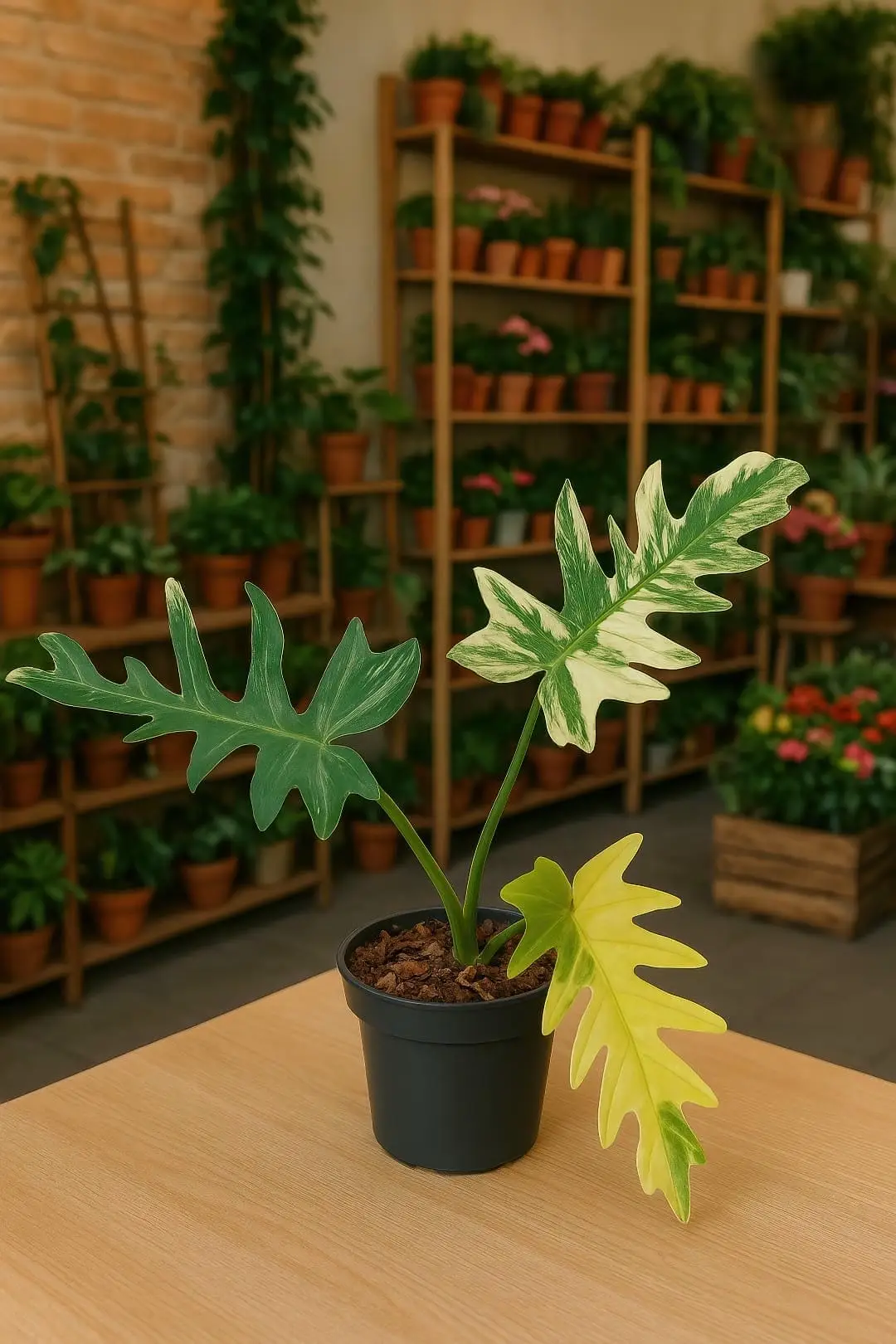
Complete Guide to Philodendron Florida Beauty x Tortum Care and Growth
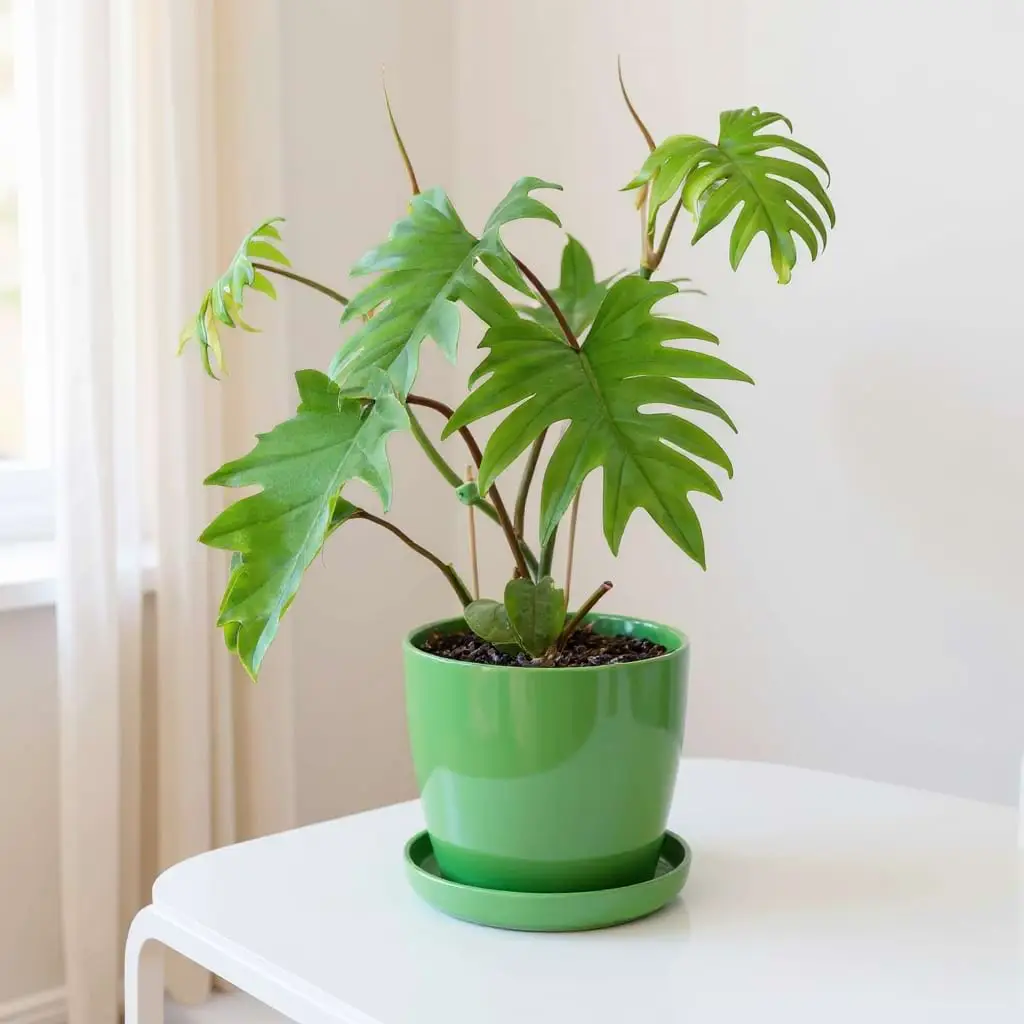
Complete Guide to Philodendron Mayoi Care and Growth
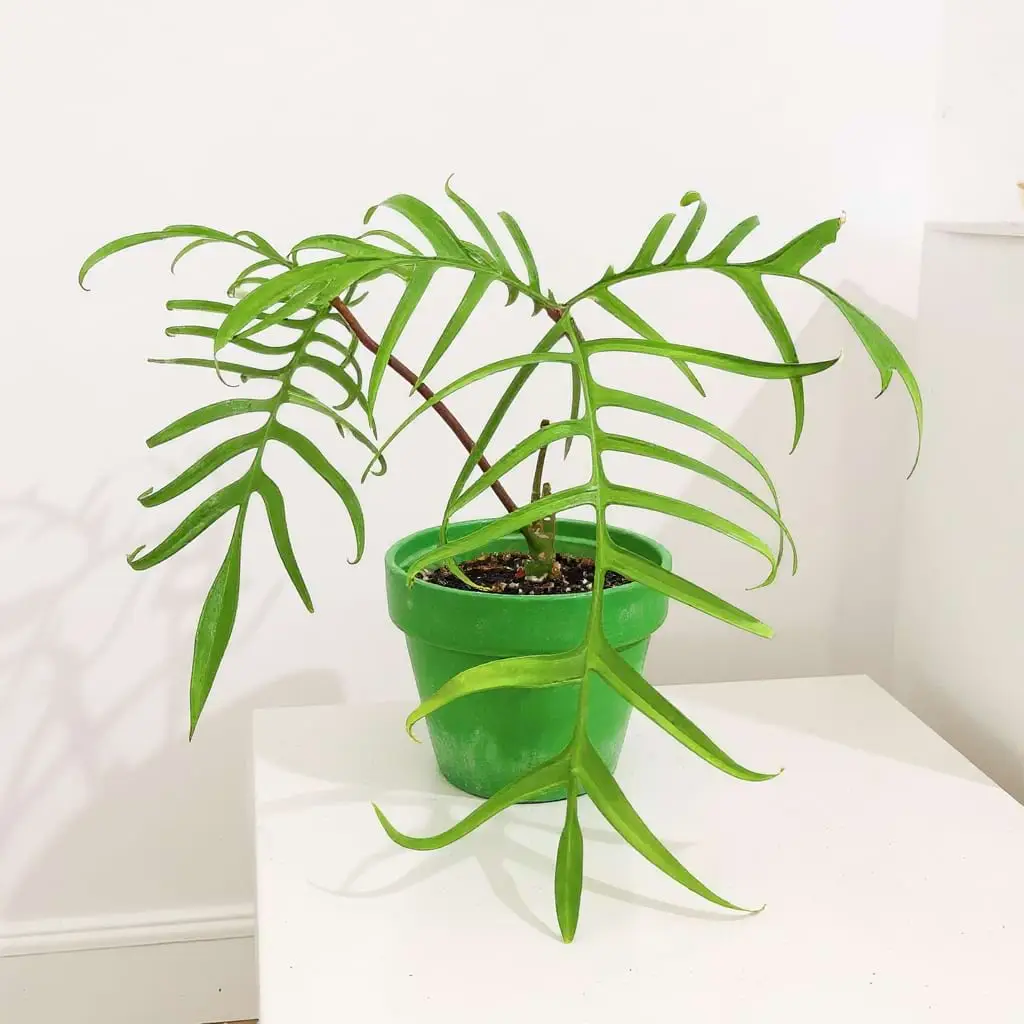
Complete Guide to Philodendron Polypodioides Care and Growth
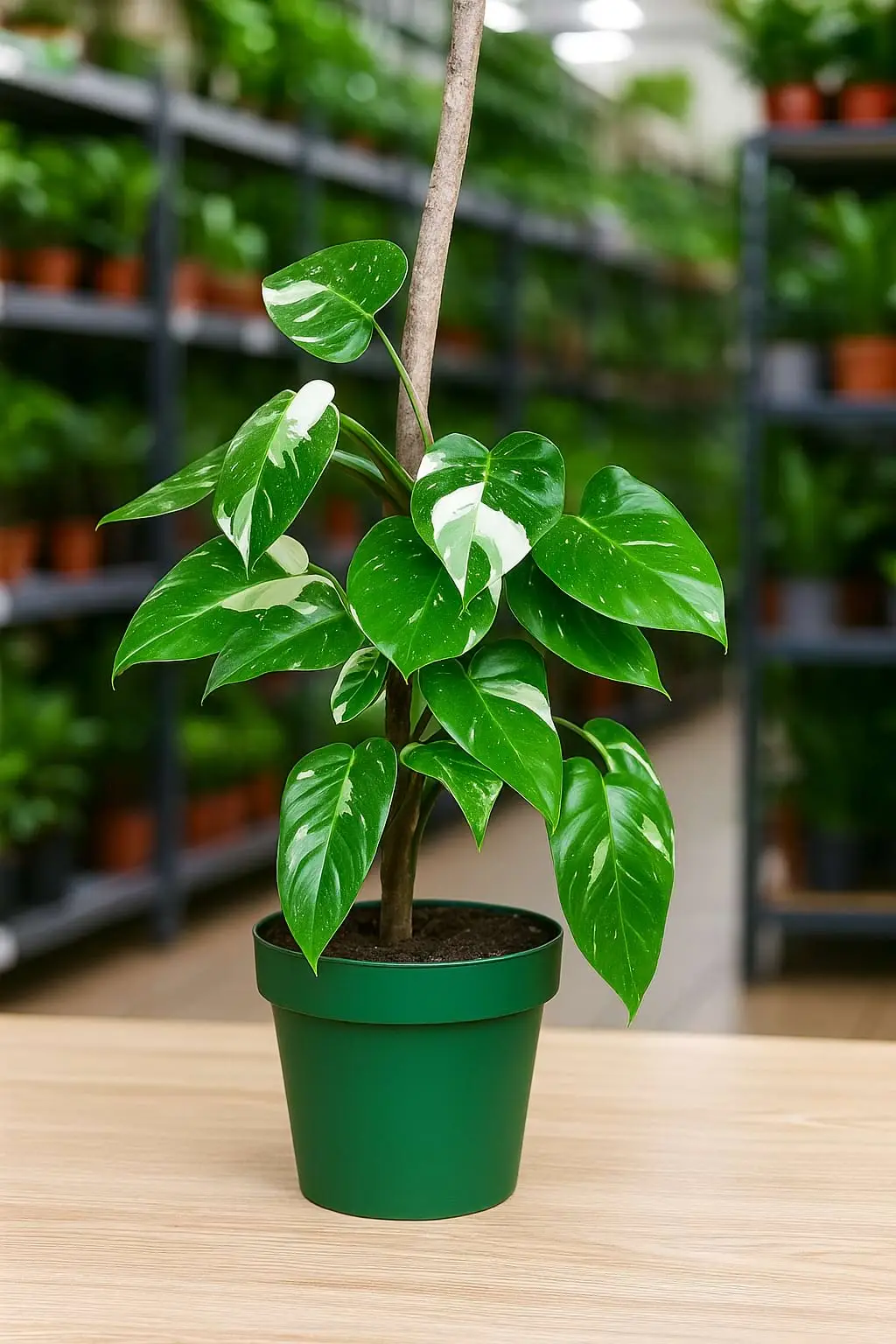
Complete Guide to Philodendron White Princess Care and Growth
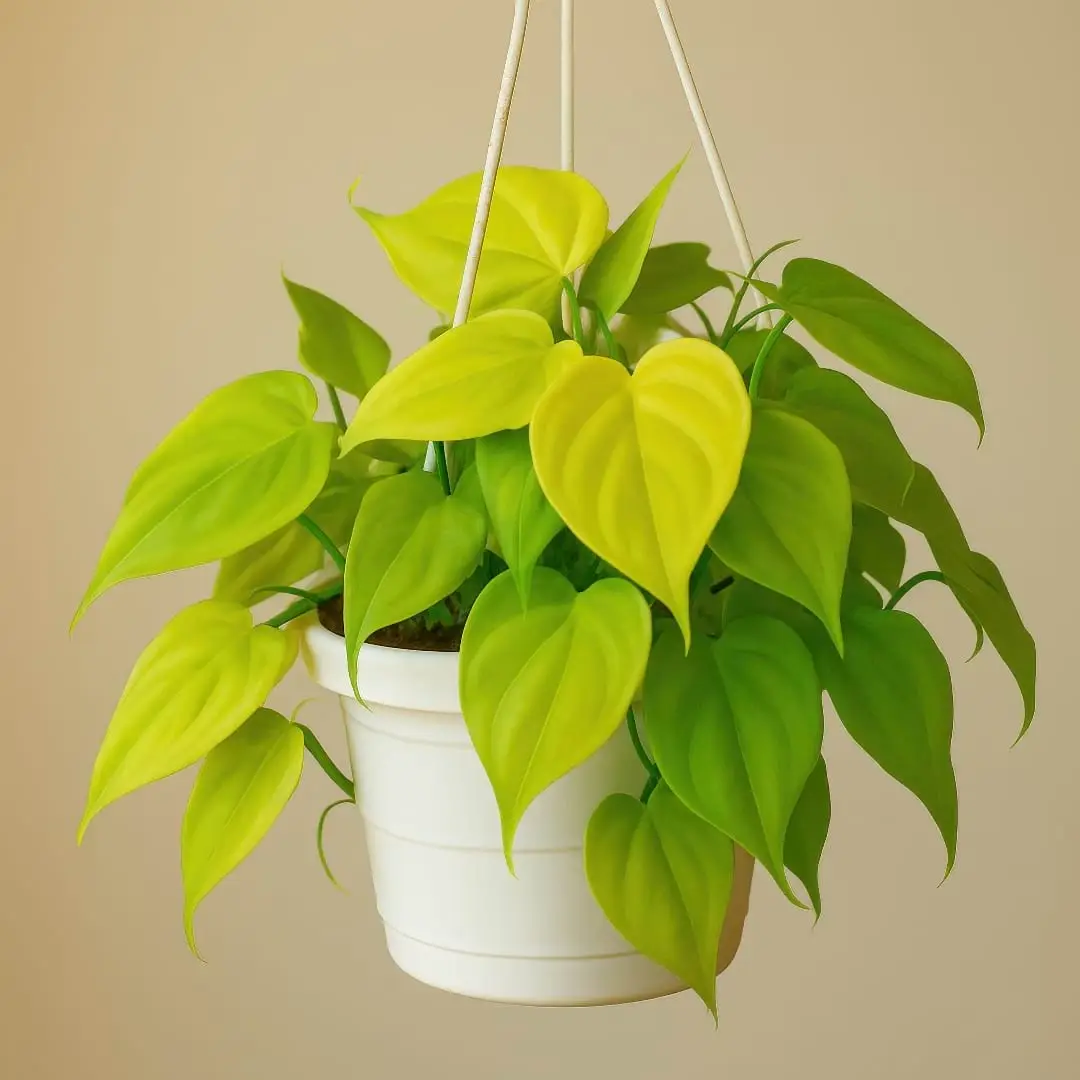
Complete Guide To Lemon Lime Philodendron Care and Growth

Houseplant101 Forum
Questions & Comments
Ask a question, share your plant experience, or help other plant owners.
Comments are temporarily unavailable.
Open the Houseplant101 ForumNo comments yet
Be the first to ask a question or share your experience about this page.
Log in or create an account
Comments use your Houseplant101 Forum account, but you can stay on this page.
Create a new account