
Alocasia Red Secret
Alocasia cuprea 'Red Secret'
Jewel Alocasia, Mirror Plant, Copper Alocasia, Alocasia cuprea


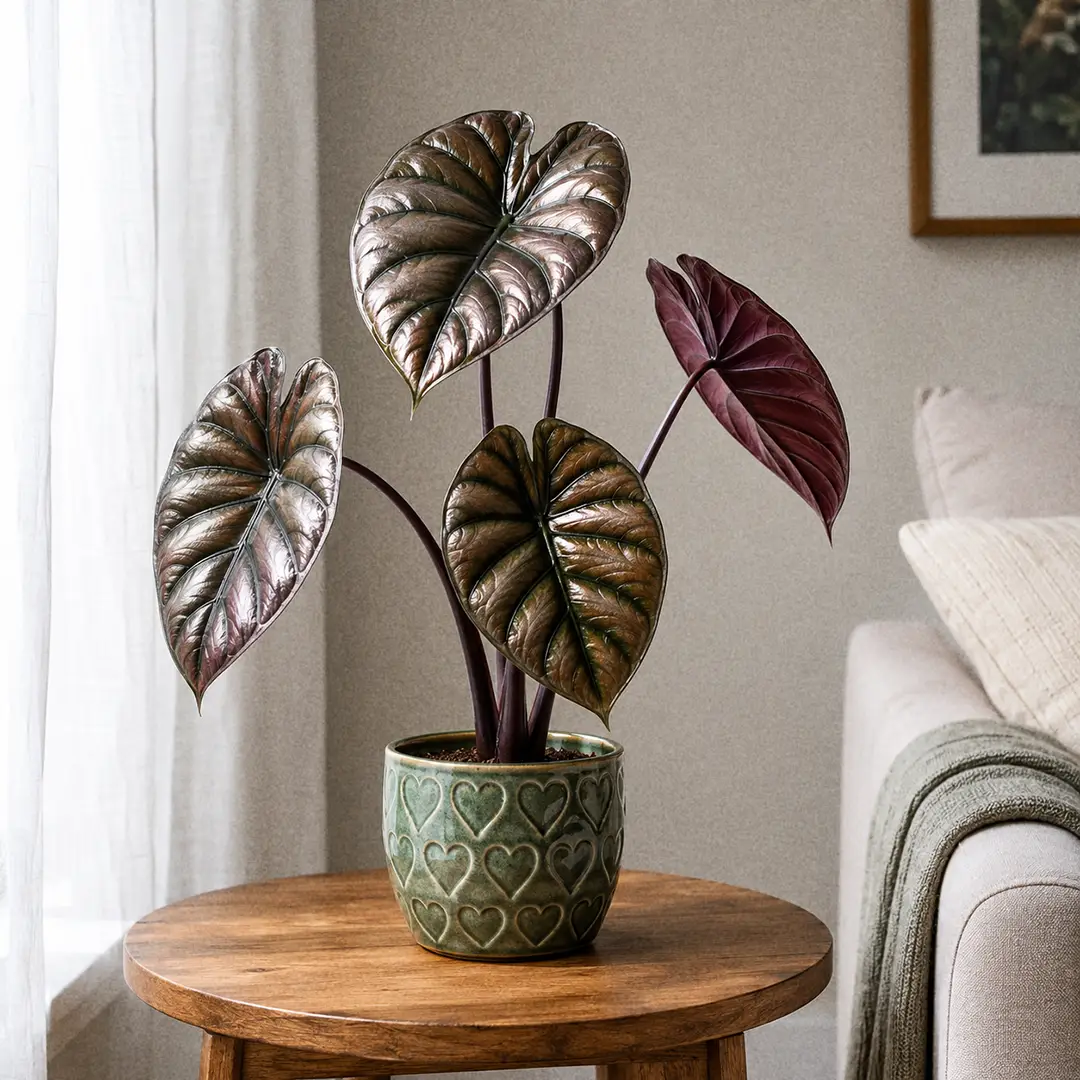
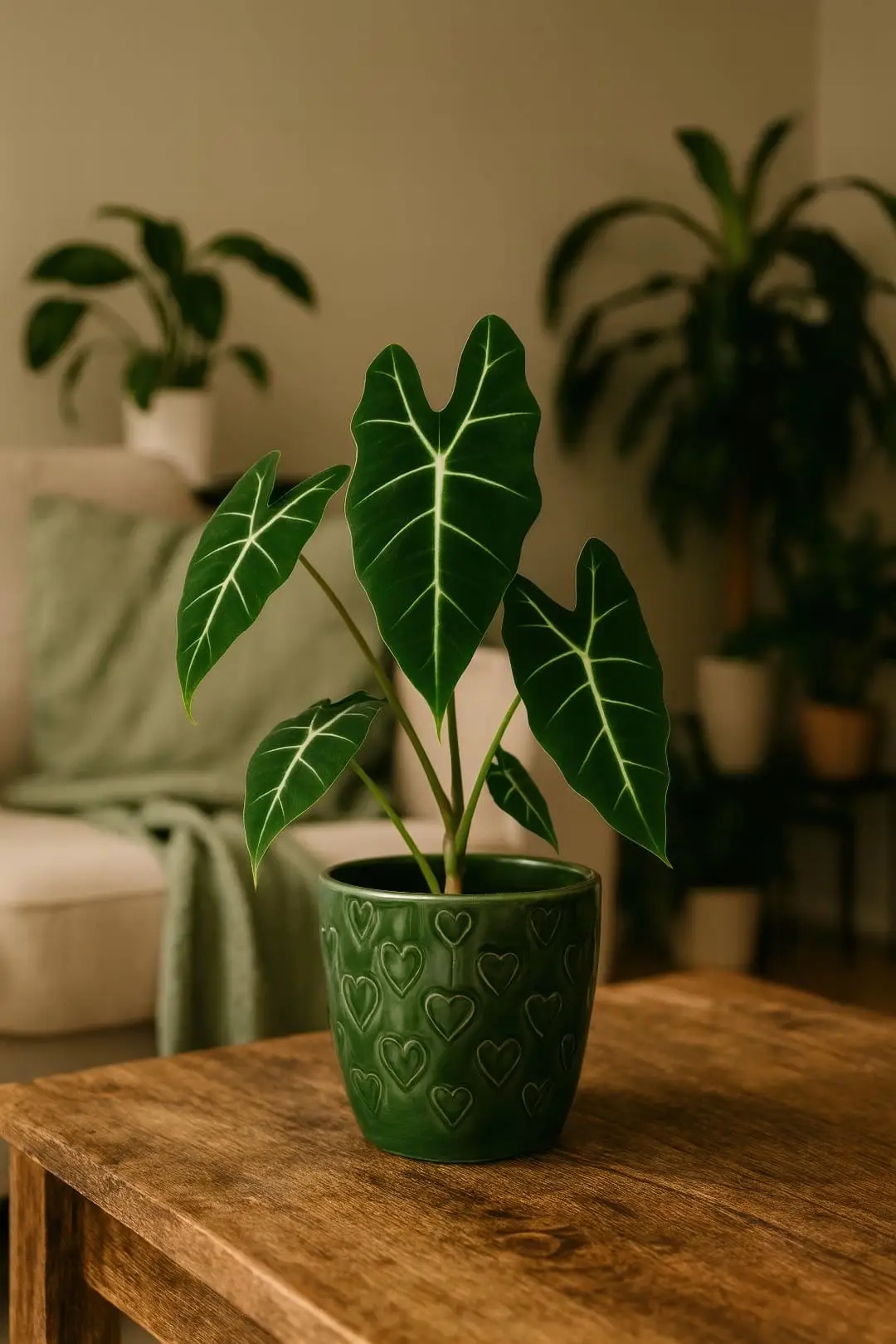
Alocasia Red Secret has leaves that look poured out of metal, coppery green on top with a deep wine-purple underside that glows when the light hits it. Learn how to keep those mirror leaves glossy indoors and why the corms in the pot matter more than you think.
📝 Alocasia Red Secret Care Notes
🌿 Care Instructions
⚠️ Common Pests
📊 Growth Information
🪴 In This Guide 🪴

☀️ Alocasia Red Secret Light Requirements (Indoor Lighting Guide)
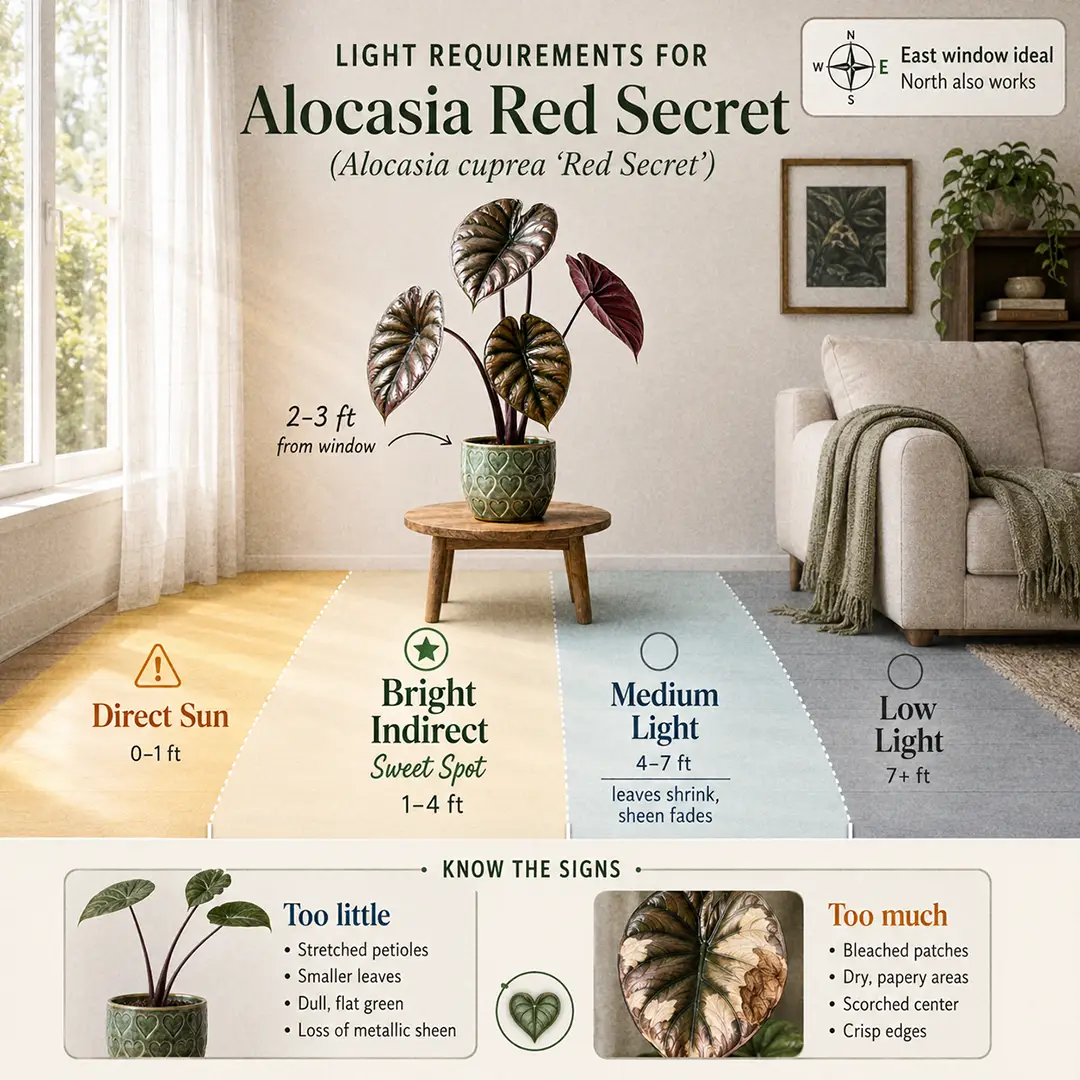
The Sweet Spot
Bright indirect light, and quite a lot of it. An east-facing window two to three feet back is the easy answer: gentle morning sun, then bright ambient light for the rest of the day. A north window works if it is unobstructed. South and west windows are fine too, as long as a sheer curtain sits between the glass and the plant through the afternoon.
The reason is where it grows. Alocasia cuprea comes from the forest floor in Borneo, under a canopy, so it evolved for filtered light rather than gloom. That mirror surface is part of the same adaptation, bouncing dim light back through the leaf a second time. Our Indoor Lighting Guide helps if you are still learning to judge a spot by eye.
Too Little Light
In a dim corner the plant stretches. Petioles grow long and thin, new leaves arrive smaller than the old ones, and the metallic sheen fades to a flat dull green. That combination of leggy growth and small leaves is the most common thing people do to this plant by accident, usually because it looks like a low-light plant and is not.
Winter is when it bites. If your room goes dim from November onward, a grow light on a timer for ten hours a day keeps the plant in leaf instead of shedding.
Too Much Light
Direct midday sun scorches it quickly. You get pale bleached patches, then dry brown papery centres where the tissue died, and that is sunburn, which never heals. Alocasia leaves are thin, and this one is thinner than most.
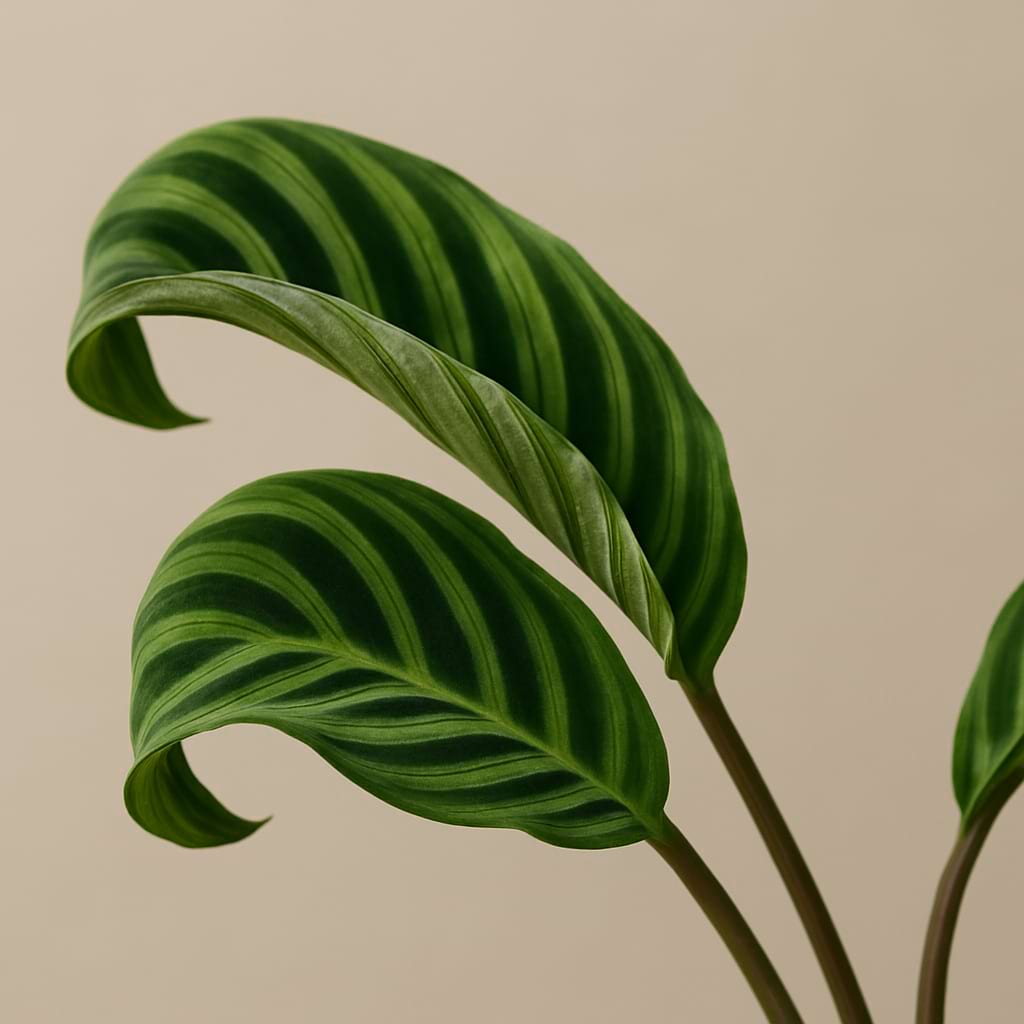
Watch for a curl too. Leaves that fold inward along the midrib during the hottest part of the day are telling you the light and heat are more than the roots can keep up with. Move it back a foot before the edges go crisp.
💧 Alocasia Red Secret Watering Guide (How to Water Properly)
Watering Frequency
Water when the top inch of the mix is dry, not on a schedule. In a warm bright room during summer that often lands around every five to seven days. In a cool winter room it can stretch to two weeks or more, and forcing water in on the old summer rhythm is how most of these plants die.
This is the balance point that makes Alocasia feel tricky. The plant wants to stay evenly moist, because it is a rainforest floor species with thin leaves that wilt fast. It also rots faster than almost any other houseplant if the mix stays wet. Both things are true at once, which is why the pot has to drain quickly. A moisture meter removes the guesswork if you are new to this.
How to Water
Water thoroughly until it runs out of the drainage holes, then tip the saucer out. Never leave the pot standing in water, and never water a pot that is already cold and damp. Room-temperature water is worth the small effort here, since a shot of cold water on tropical roots often triggers leaf drop a week later.
Tap water is usually fine, though this genus is more sensitive to fluoride and salt buildup than most. If your leaf tips brown consistently while your watering is otherwise good, switch to filtered or rainwater for a couple of months and see whether the new leaves come in clean. Bottom watering suits it well in a chunky mix, since it wets the whole root ball without waterlogging the surface.
Signs of Trouble
Sudden droop with dry soil is thirst, and a proper soak brings the leaves back up within hours. Nothing is damaged.
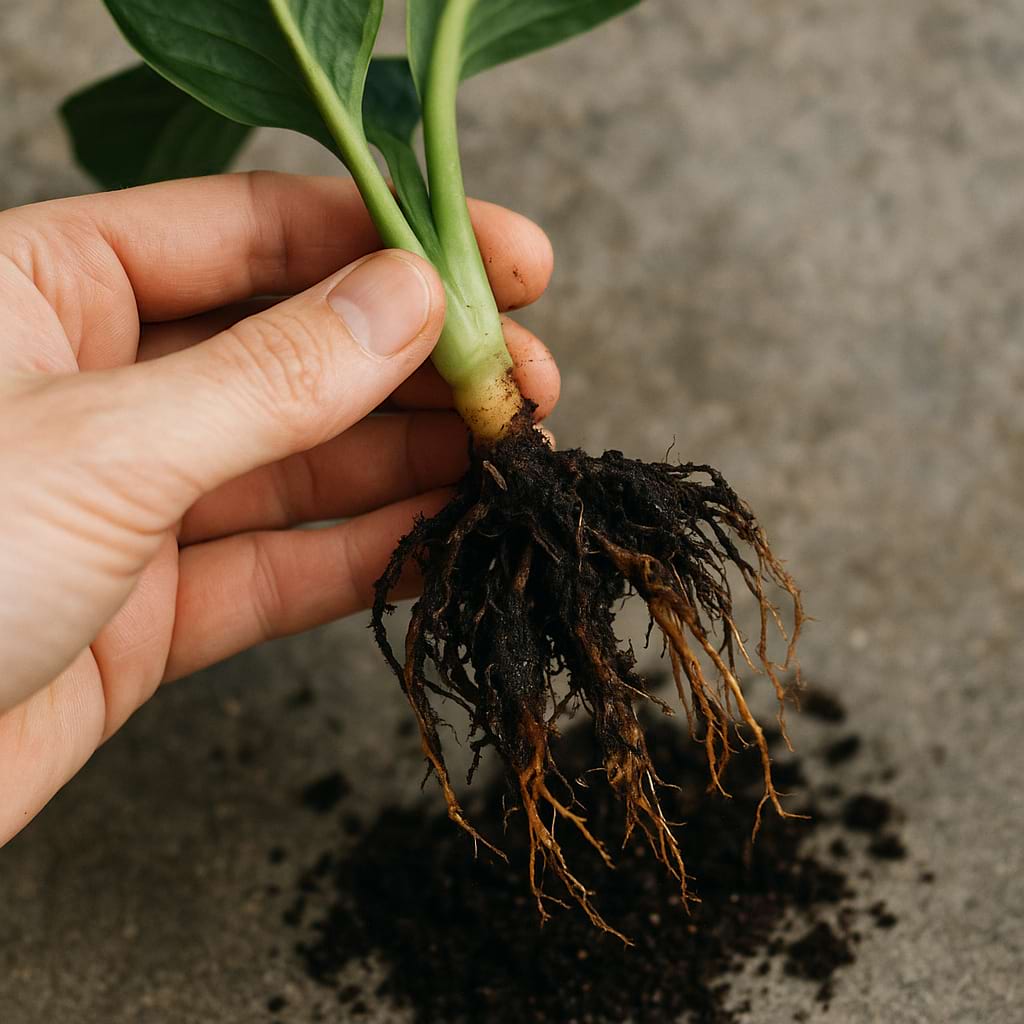
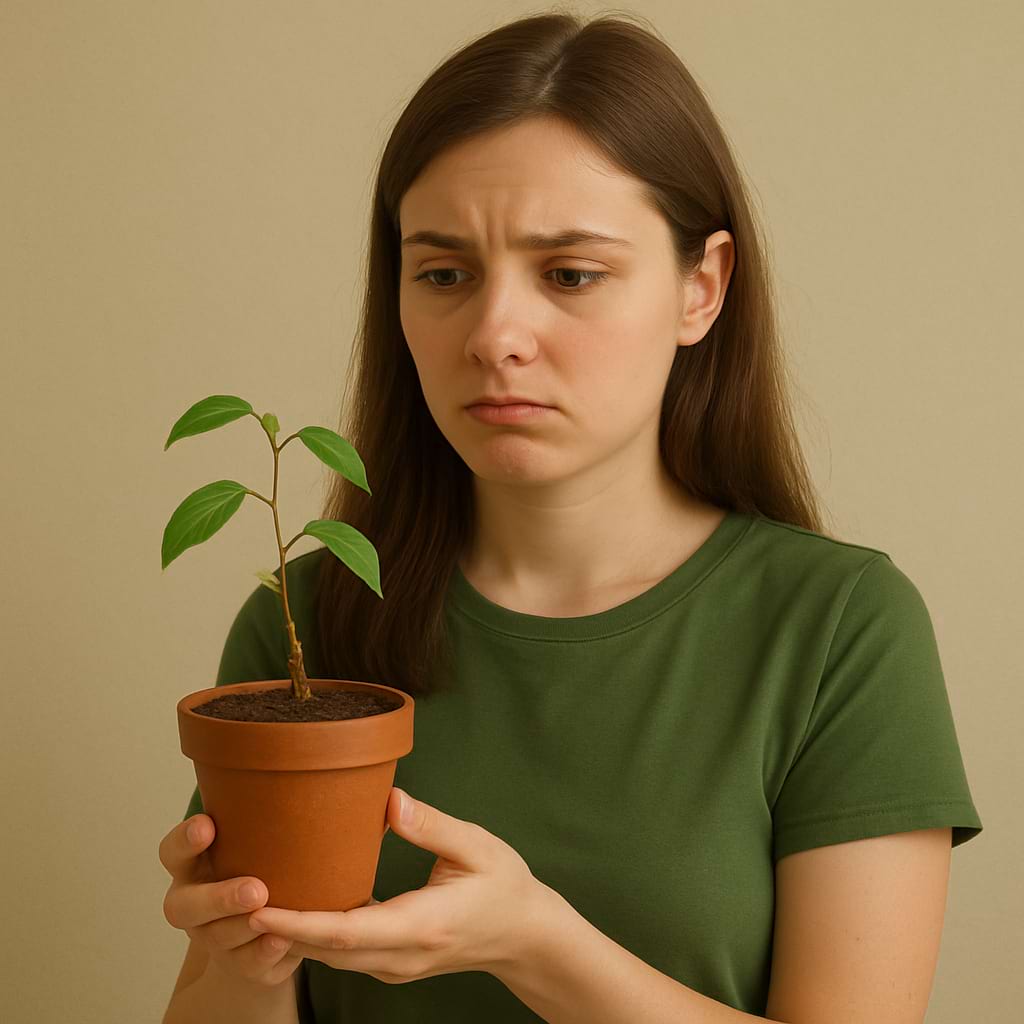
Droop with wet soil is the dangerous version. That is root rot, and by the time the leaves wilt the roots have usually been gone a while. Tip the plant out, look for brown mushy roots and a soft base, and check the corms while you are in there, because they often survive when the parent does not. Yellowing that starts on the lowest leaf and creeps upward is the earlier warning of the same thing.
🪴 Best Soil for Alocasia Red Secret (Potting Mix & Drainage)
What the Soil Needs
The mix has one job: hold moisture around the roots while letting water and air move through in seconds. Alocasia roots are fleshy and they suffocate quickly in dense compost. Straight bagged potting soil compacts within a couple of months and turns into a wet brick, which is where most of the root rot on this plant begins.
Think chunky rather than fine. You want visible air pockets when you squeeze a handful. Our Soil Guide covers why drainage matters more than fertility in a pot.
DIY Soil Mix
A reliable recipe is 2 parts orchid bark, 2 parts coco coir or peat-free compost, 1 part perlite or pumice, and 1 part worm castings. Add a handful of horticultural charcoal if you have it, which keeps the mix sweet between repottings.
Some growers go further and run this plant in pure sphagnum moss or in LECA, and it does well in both because they solve the moisture-versus-air problem outright. Moss dries faster than you expect, though, so it suits people who check their plants often.
Pre-Made Options
Bagged aroid mixes work straight from the bag, and they have improved a lot in the last few years. A standard houseplant compost does not, but cutting it roughly half and half with bark and perlite turns it into something workable. Our potting soil guide compares the common options.
🍼 Fertilizing Alocasia Red Secret
When and How Often
Feed every three to four weeks from early spring through to early autumn, then stop completely. This plant slows or stops outright in winter, and fertilizer sitting in cold wet soil just builds up salts around roots that are not drinking. Always water lightly first, then feed, so nothing lands on dry roots.
What to Use
A balanced liquid houseplant fertilizer at half the label strength is right. Something around 20-20-20 or a general foliage feed works fine. Alocasia are hungry compared with most houseplants during active growth, but they burn easily too, so little and often beats a big monthly dose. Our Fertilizing Guide explains the ratios and the fertilizers guide covers what to buy.
Over-Fertilizing Signs
Brown crispy leaf edges on a plant you have been watering correctly usually mean salt, not thirst. A white crust on the soil surface or around the drainage holes confirms it. Flush the pot with plain water three or four times, let it drain fully, and skip feeding for two months. Skipping a feed costs you a slightly smaller leaf. Overfeeding costs you roots.
🌡️ Alocasia Red Secret Temperature Range
Ideal Range
Warmth is not optional here. Aim for 65-85°F (18-29°C) and treat 60°F as the floor. Below that the plant stops growing, the roots stop drinking while the soil stays wet, and rot follows within weeks. This is the single most common reason a healthy summer Alocasia collapses in November.
Drafts and Heat Sources
Keep it away from exterior doors, single-glazed windows in winter, and air conditioning vents. A cold draft on a warm plant causes leaf drop days later, which people then blame on watering. Radiators and heating vents cause the opposite problem, drying the air around the leaf faster than the roots can supply it.
The Winter Rest
If your plant loses leaves in winter and the base still feels firm, it is resting, not dying. Alocasia go semi-dormant from a rhizome, and a plant that drops to one or two leaves in January often comes back fully in April. Keep it warm, cut watering right back, stop feeding, and be patient. Do not repot a resting plant.
💦 Alocasia Red Secret Humidity Requirements
Ideal Humidity
This plant wants 60% humidity or higher, and it tells you when it is not getting it. Average heated homes sit around 30-40%, which is why so many of these arrive gorgeous and go crispy within a month.
Easy Humidity Boosters
A humidifier near the plant is the only method that reliably moves the number, and it is worth it if you plan to keep jewel Alocasia long term. Misting does almost nothing beyond the few minutes it lasts, and on this leaf it can leave mineral spots on a surface whose whole appeal is the shine.
Grouping plants together helps a little. A glass cabinet, a terrarium, or a bright bathroom helps a lot, and this is one of the few houseplants genuinely worth putting in a cabinet. Our humidity guide covers the general approach.
🌸 Alocasia Red Secret Flowers (What to Expect)
What the Flower Looks Like
Nobody grows this plant for the flower. When a mature, well-fed Alocasia does bloom, it produces the standard aroid arrangement: a narrow pale green to cream spathe wrapped around a slim spadix, on a short stalk that pushes up low among the leaf stems. It is a few inches long, faintly scented at most, and easy to miss entirely under a canopy of leaves.
Will It Bloom Indoors?
Rarely, and sporadically. There is no bloom season to plan around. Flowering depends on the plant reaching decent maturity in near-ideal conditions rather than on the calendar, so it tends to show up on plants a few years old that have been sitting happily in a humid cabinet. If yours has never flowered, that says nothing about your care.
Should You Cut It Off?
Usually yes. A flower, and the seed pod behind it, pulls a real amount of energy from a plant whose whole appeal is the leaves. On a species this prone to slowing down in winter, that trade is rarely worth making. Snip the stalk at the base with clean scissors as soon as you spot it and the plant redirects that energy into the next leaf.
The exception is if you want to enjoy the novelty, in which case leave it. It wilts on its own within a few days and can be removed then. Do not try to hand-pollinate for seed indoors, since a single plant almost never sets viable seed on its own and the effort costs you a growing season.
🏷️ Alocasia Red Secret Types and Varieties
'Red Secret' Is a Trade Name, Not a Botanical One
Worth knowing before you shop: no cultivars of Alocasia cuprea are formally recognized. 'Red Secret' and 'Blackie' are names the nursery trade uses to label stock, and much of the visible difference between plants comes down to maturity, light levels, and which tissue-culture line the plant came from rather than genetics. A leaf grown in brighter light reddens more.
In practice that means two things. You will sometimes find the same plant sold as plain Alocasia cuprea for less money, and you should judge a plant by the leaves in front of you rather than by the label on the pot.
What the Leaves Actually Look Like
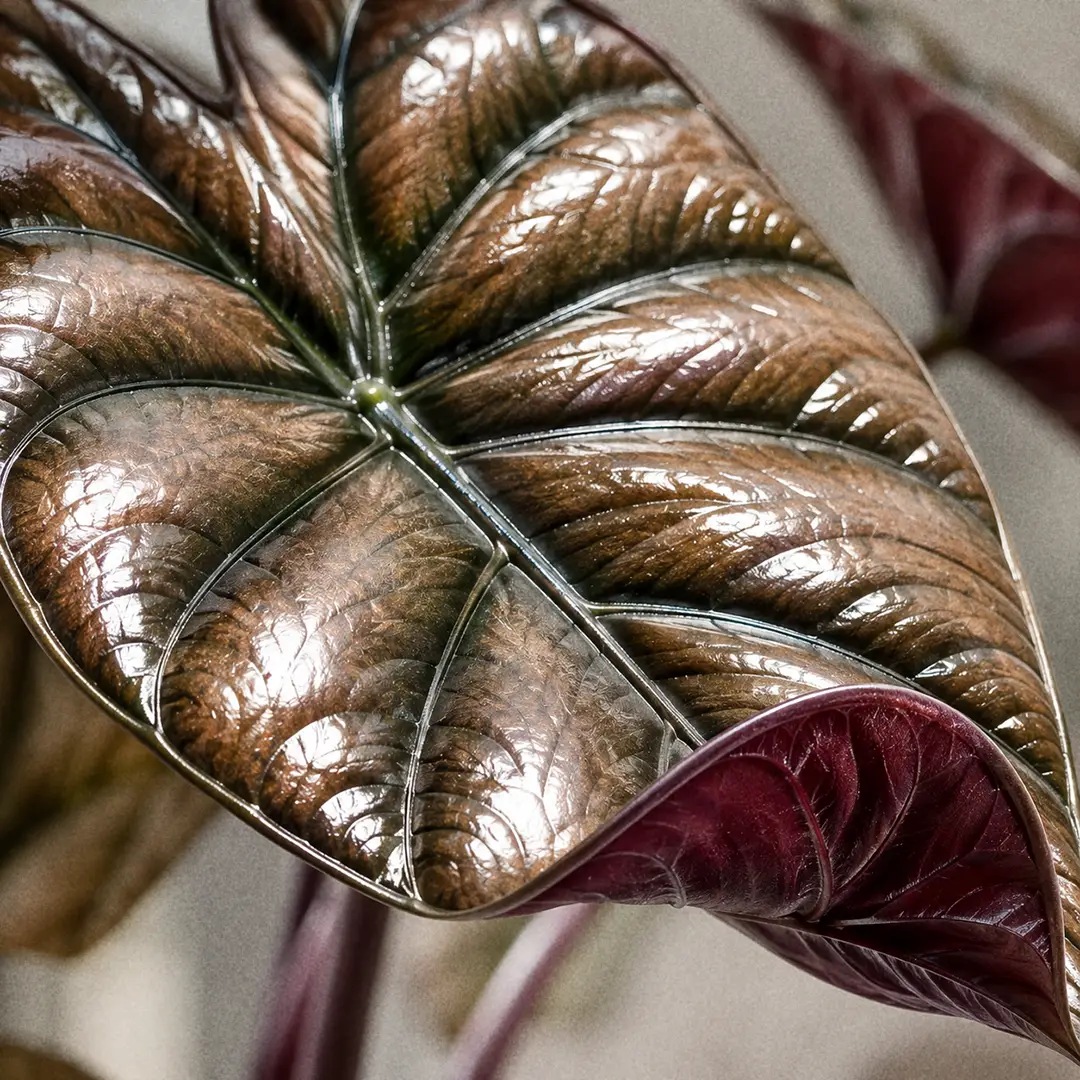
The signature is a broad shield-shaped leaf, roughly eight to twelve inches long on a mature indoor plant, in coppery bronze-green with deeply sunken darker veins that make the surface look quilted. The underside is a rich purple-red, which is where the name comes from and why the plant belongs on a shelf above eye level. Juvenile leaves carry more copper and red; mature ones darken and the veining intensifies.
Other Jewel Alocasia to Grow Alongside It
The jewel group all want the same care, so one routine covers a whole shelf. Alocasia Black Velvet is the obvious partner, matte black-green with silver veins, the exact opposite surface finish. Alocasia Silver Dragon brings pale sage leaves with dark scaled veining, and its sister form Alocasia Dragon Scale does the same trick in glossy emerald, which sits beautifully next to the copper. For height behind them, Alocasia Zebrina adds striped stems and arrow leaves, while Alocasia Frydek offers deep velvet green with bright white veins. Alocasia Polly is the easiest of the lot and a sensible starting point if this is your first.
🪴 Potting and Repotting Alocasia Red Secret
When to Repot
Every one to two years in spring, and less often than you might think. Alocasia grow better slightly snug, and a pot that is too large holds wet soil the roots cannot reach. The real triggers are roots coming out of the drainage holes, water running straight through a root-bound mass, or a mix that has broken down into something dark and slow-draining.
Opening the pot also lets you find the corms, which is reason enough to do it on schedule. Never repot a plant that is resting in winter, or one that has just dropped several leaves.
Choosing a Pot
Go up one size only, about an inch wider than the current pot. Drainage holes are non-negotiable. Plastic and glazed ceramic hold moisture longer, which suits a chunky bark mix well; terracotta dries faster and suits people who tend to overwater. A tall narrow pot beats a wide shallow one, because the root system runs down rather than out. Our plant pots guide compares materials.
Step-by-Step Repotting
Water lightly a day before so the root ball holds together. Ease the plant out and tease away the loose old mix, keeping the roots as intact as you can. Look for firm pale corms clustered around the root ball and set them aside if you want more plants, or leave them in place for a fuller pot.
Set the plant at the same depth it grew before, never deeper, since a buried crown rots. Fill in with fresh chunky mix, tapping the pot rather than pressing down hard, then water thoroughly and put it somewhere warm and humid for a fortnight while it settles. Expect one leaf to yellow afterward, which is normal. Our repotting guide covers the general process.
✂️ Pruning Alocasia Red Secret
When to Prune
There is no shaping to do. This plant grows leaf by leaf from a central rhizome, so pruning here means removing what is finished rather than directing growth. Cut a leaf once it is more than half yellow or brown, at any time of year.
How to Prune
Use clean sharp scissors and cut the petiole close to the base, leaving a short stub rather than tearing it out, which can damage the rhizome. Wear gloves or wash your hands afterward, since the sap contains calcium oxalate crystals that irritate skin and eyes.
Leaf Loss Is Normal
An Alocasia holds a fairly fixed number of leaves. When a new one unfurls, the oldest often yellows and goes, and that one-in-one-out rhythm is healthy. Worry only when leaves are lost faster than they are replaced, or when the newest leaf is the one turning.
🌱 How to Propagate Alocasia Red Secret
Best Method: Corms
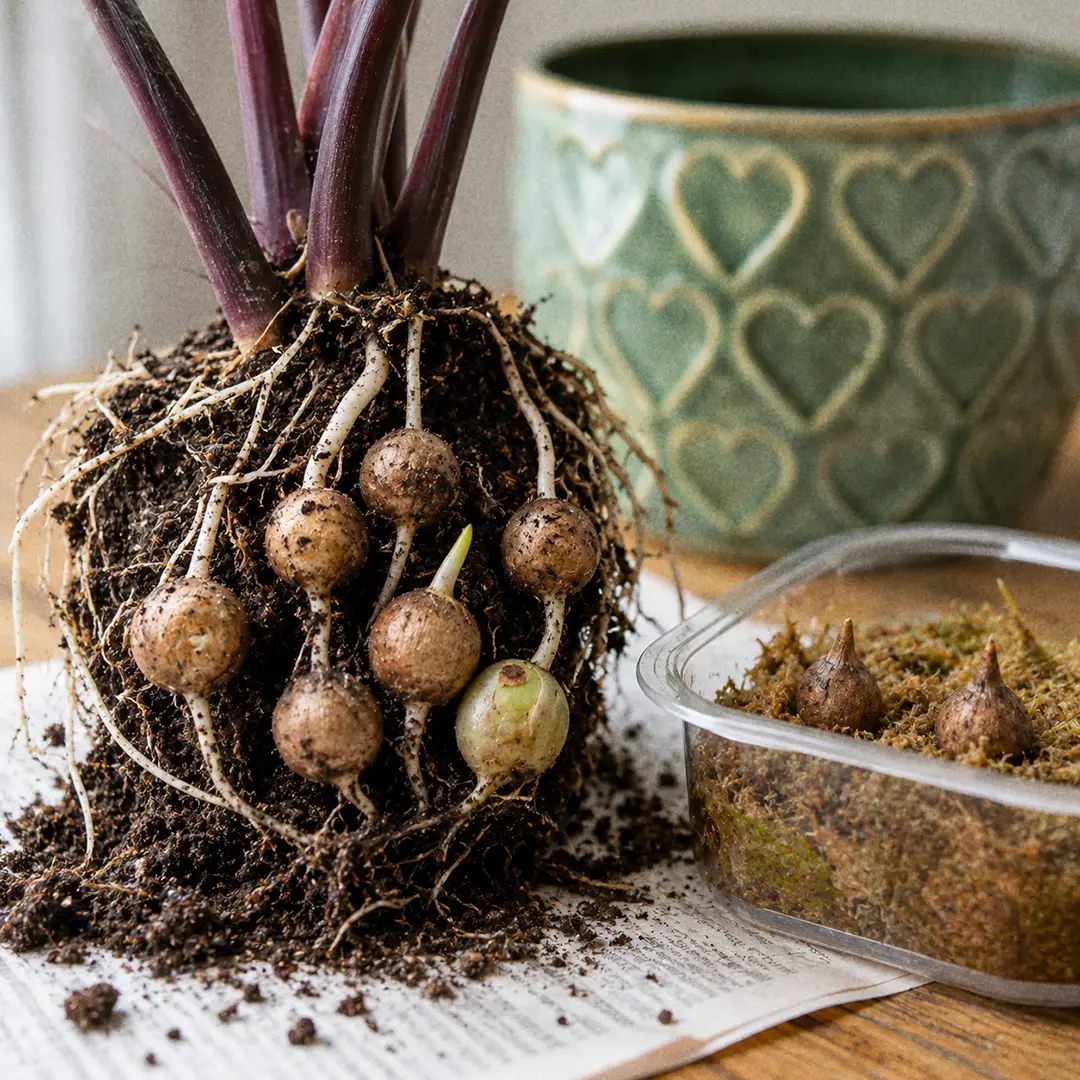
Forget cuttings. A stem cutting from an Alocasia will not root, because there is no node on the petiole to root from. Instead this plant produces corms, small firm bulb-like nodules the size of a pea or a marble, on short stems around the rhizome at or just below the soil line. Each one is a complete future plant. Our propagation hub covers the general principles.
You find them at repotting time, which is why growers who sell Alocasia all give the same warning: if you see bulb-like balls in the pot, do not throw them out.
Step-by-Step
Pick corms that feel firm and are pale brown to greenish. Soft or hollow ones are dead, and a quick float test sorts them, since keepers usually sink. Peel off the thin papery brown outer skin, which speeds sprouting noticeably.
Sit them on damp sphagnum moss in a clear deli container or a zip bag, pointed end up, pressed halfway in rather than buried. Close the lid to trap humidity, keep it somewhere warm around 75-80°F and bright but out of direct sun, and air it out once a week. A tiny green shoot appears in two to six weeks, and a first small leaf a few weeks after that. Pot into a small container of chunky mix once the plantlet has two leaves and visible roots.
Tips for Success
Warmth is the variable that matters most. Corms in a cool room can sit dormant for months and then rot. Do not let the moss go soggy, since it should feel like a wrung-out sponge, and be patient with the ones that do nothing at first, because they often wake up weeks after their siblings.
Division is the other option. If your plant has produced a separate clump with its own leaves and roots, it can be cut away at repotting, and our plant division guide walks through it.
🐛 Alocasia Red Secret Pests and Treatment
Common Pests
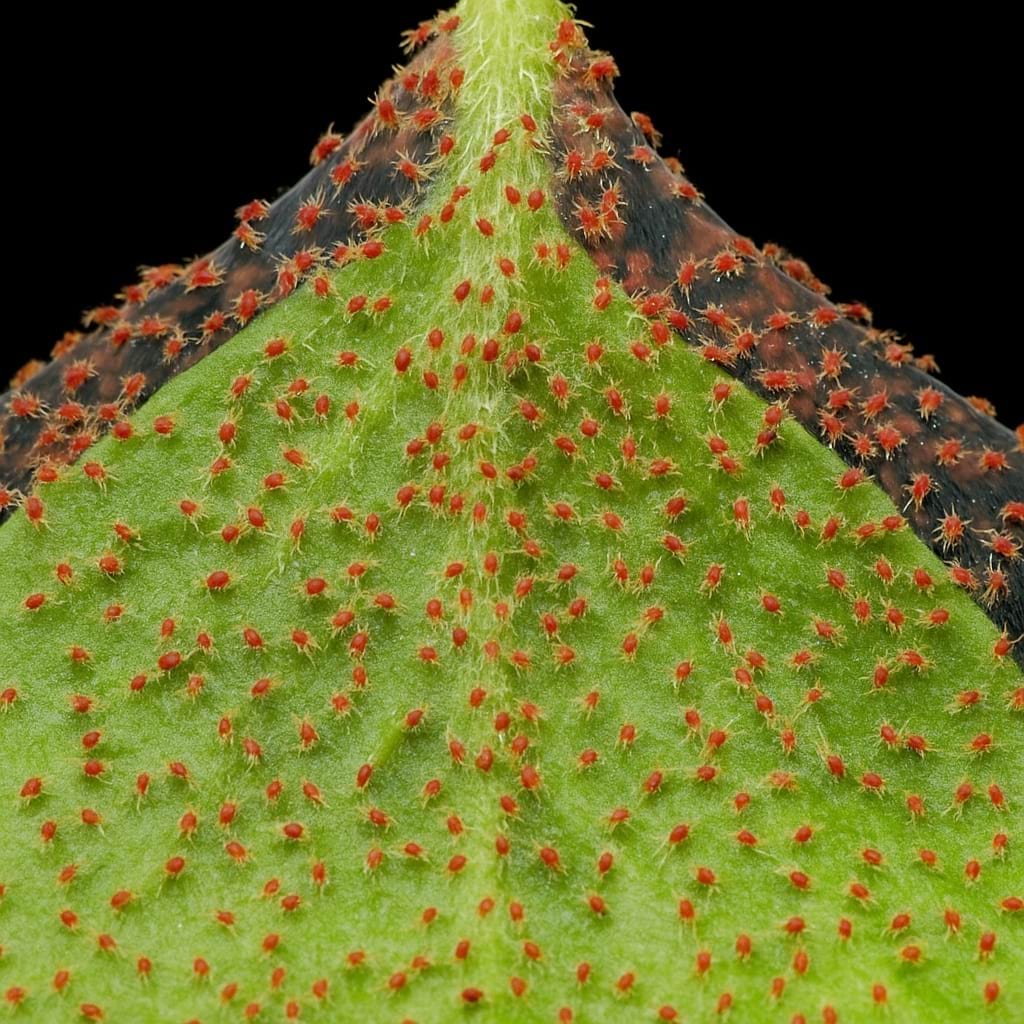
Spider mites are the number one problem on this plant, and dry air is what invites them. Look for fine webbing where the petiole meets the leaf, and a dull stippled bronze cast across a surface that should be glossy. On a metallic leaf that dulling is easy to mistake for dust.
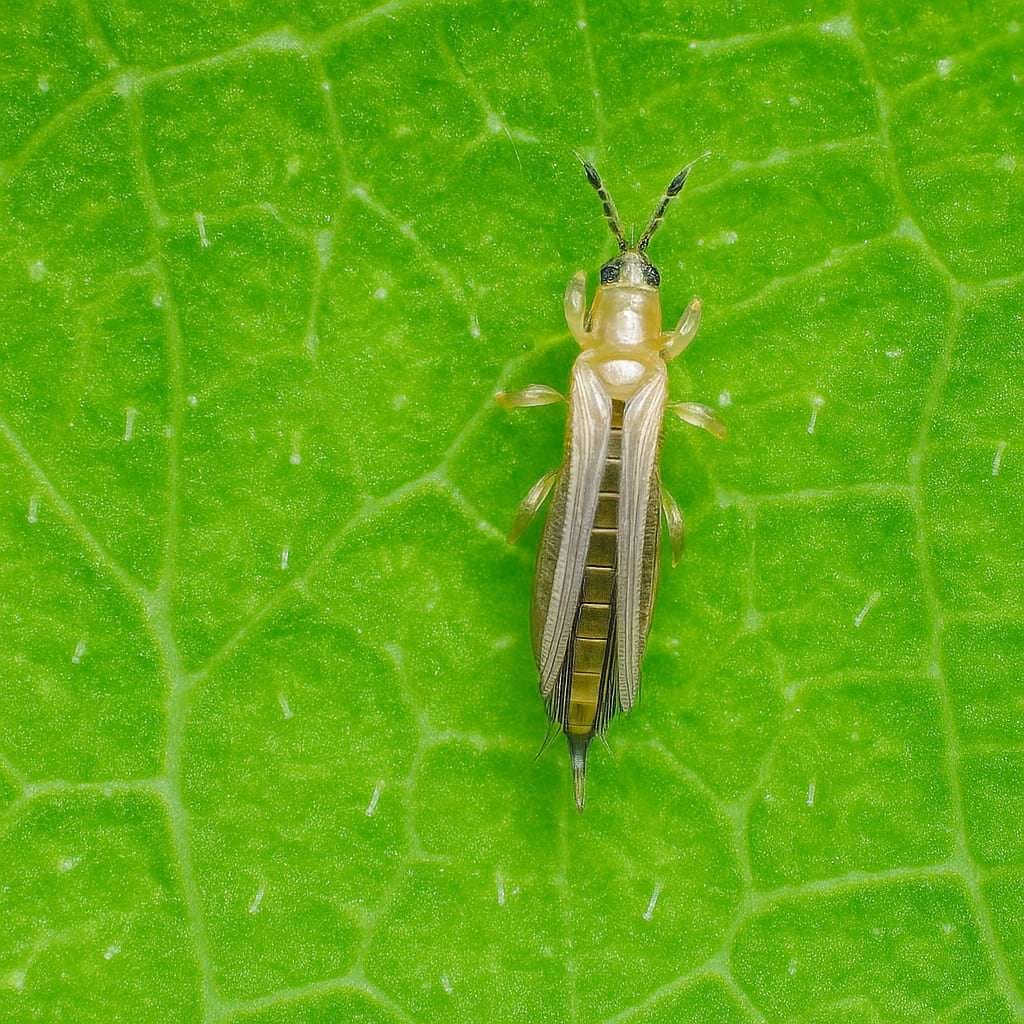
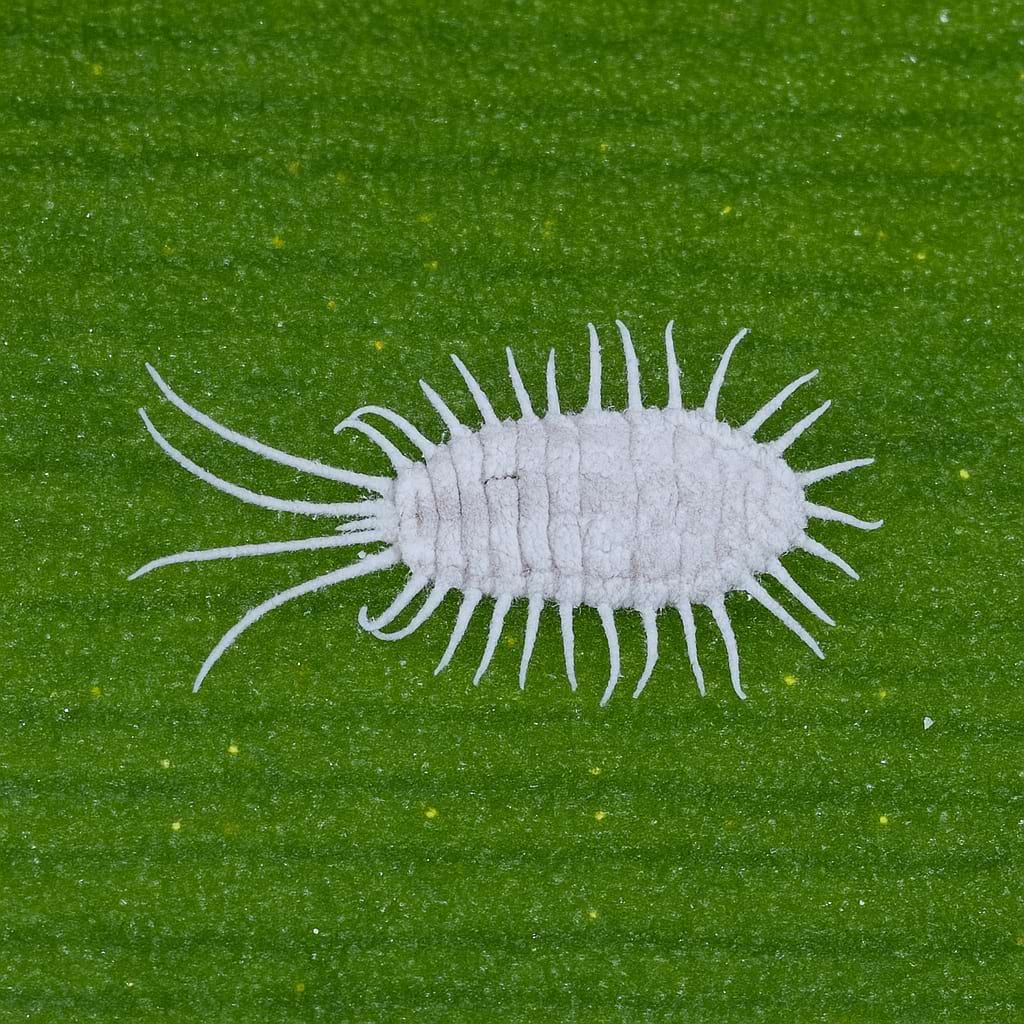
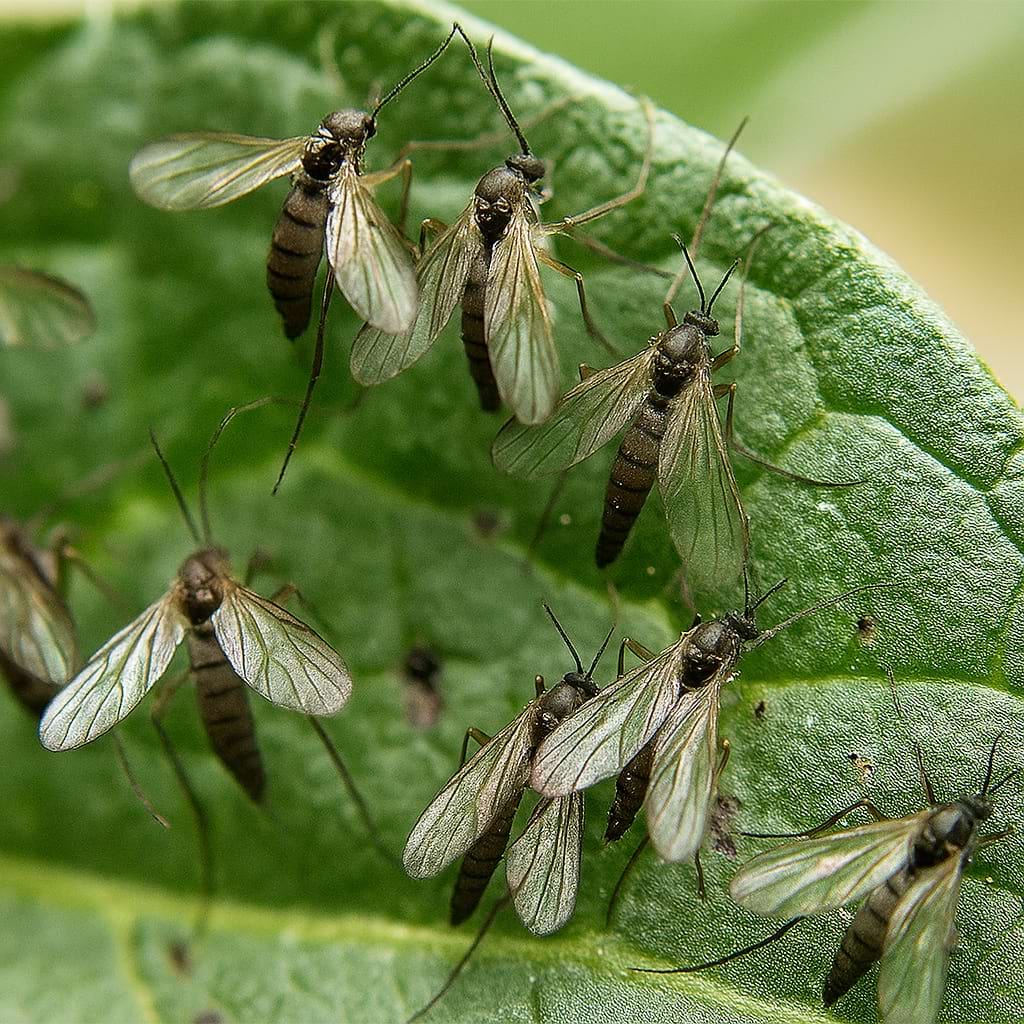
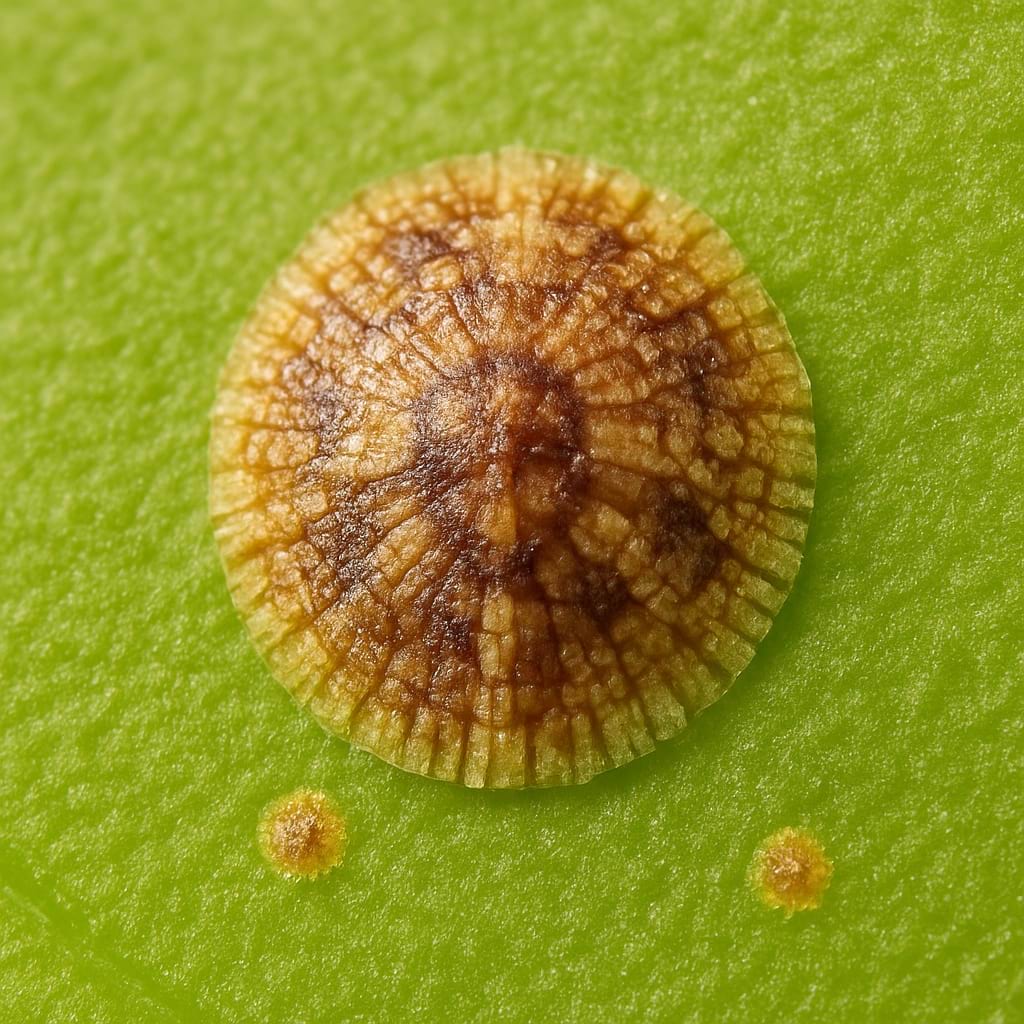
Thrips are the second, and worse, leaving silvery scarred streaks and deformed new leaves that never unfurl properly. Mealybugs tuck into the crevices where stems meet the crown as white cottony blobs. Scale insects show up as small brown limpets on the petioles, and fungus gnats are a signal that your mix is staying wet too long.
Treatment and Prevention
Check the undersides weekly, because that purple-red surface hides pests surprisingly well and both mites and thrips start there. Wipe both sides of every leaf with a soft damp cloth when you water, which knocks mite populations down before they establish and doubles as the cleaning that keeps the sheen.
For an active infestation, shower the plant in lukewarm water, then treat with insecticidal soap or a neem solution every seven days for three rounds so you catch newly hatched eggs. Isolate the plant while you treat it. Raising humidity is the best long-term mite prevention there is, which is one more argument for the humidifier.
🩺 Common Alocasia Red Secret Problems
Yellowing and Dropping Leaves
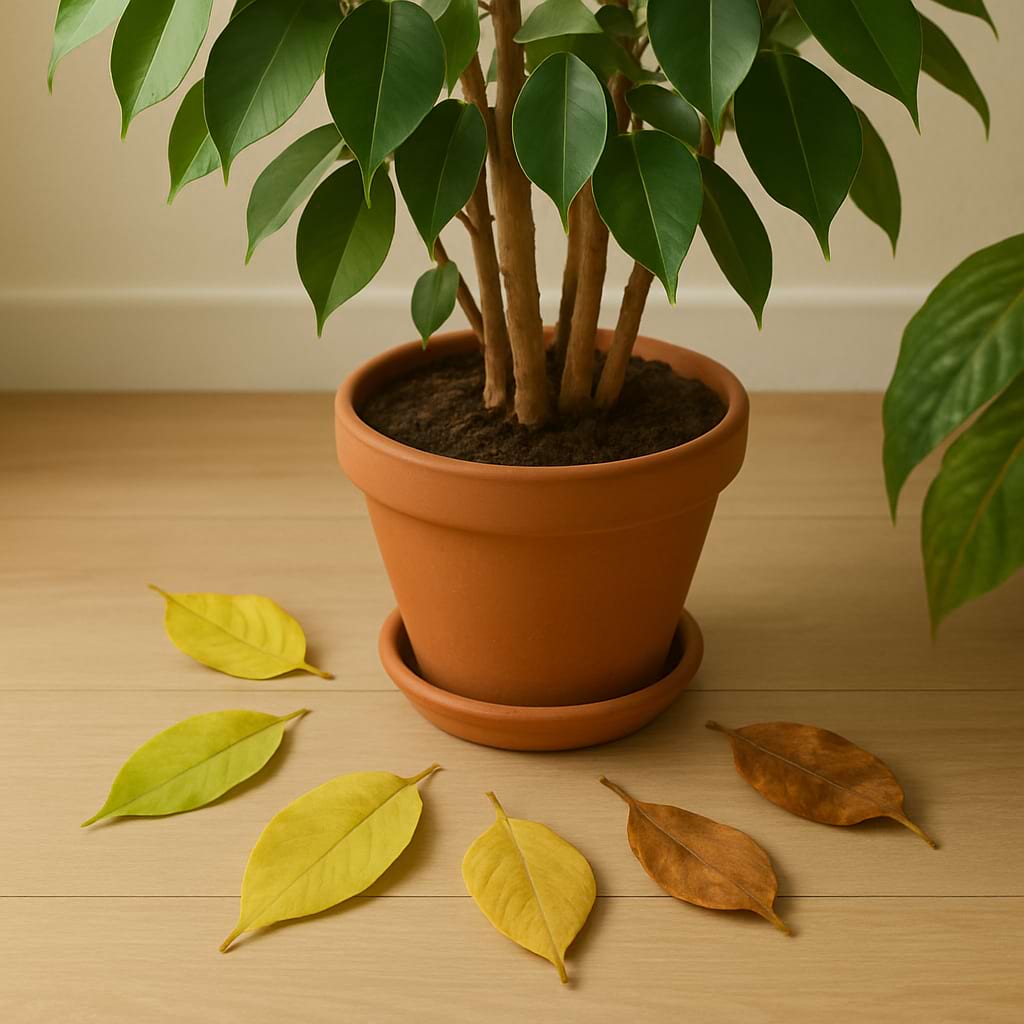
The most common complaint, and it has three usual causes. A single lowest leaf yellowing while a new one unfurls is normal turnover. Several leaves yellowing at once with damp soil is root rot beginning. Sudden leaf drop after a cold snap or a move is shock, and the plant usually recovers if you keep it warm and stop fiddling with it.
Winter leaf loss on a plant with a firm base is dormancy. Keep it warm and dry, and wait for spring.
Crispy Edges and Brown Patches
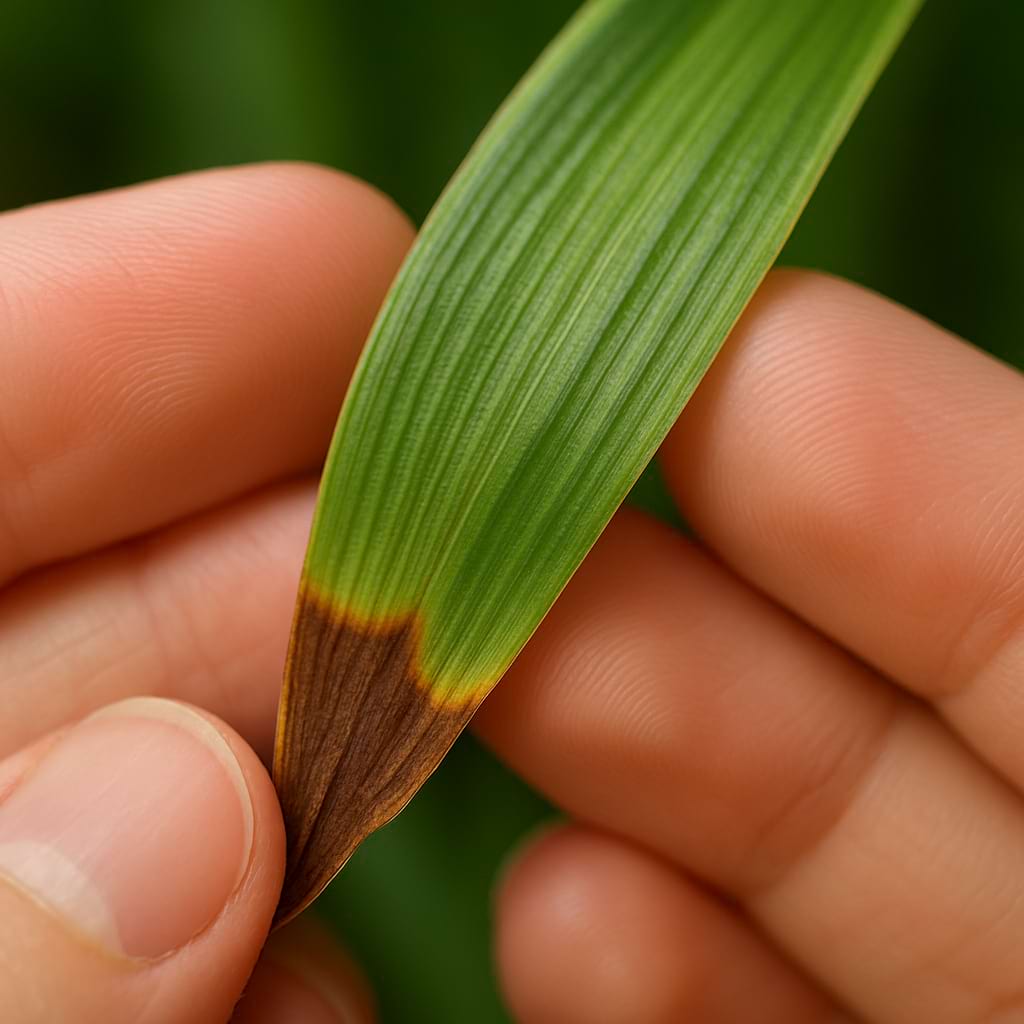
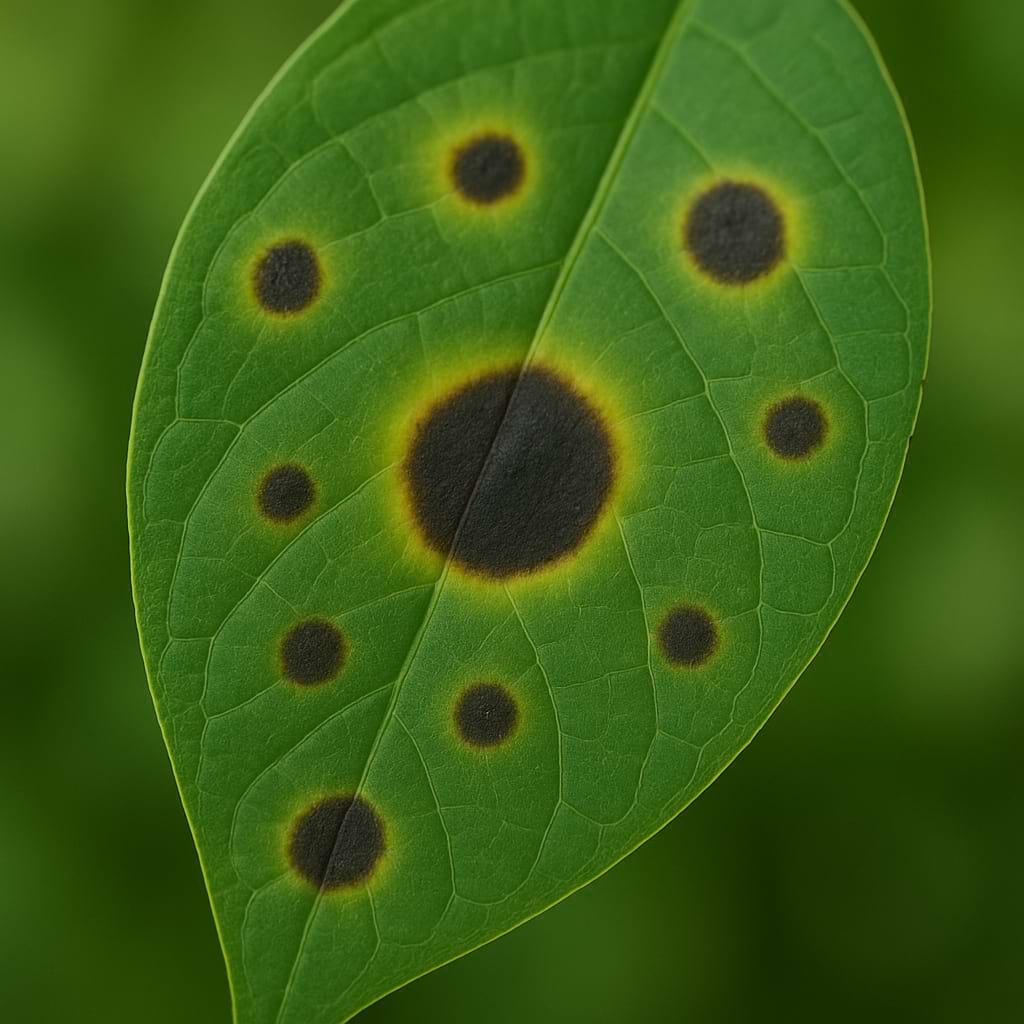
Dry brown crispy edges point at humidity first, salt buildup second, and fluoride in tap water third. Work through them in that order. Soft brown or black patches with a yellow halo are a different thing: that is bacterial or fungal leaf spot, which spreads in still, wet, cool conditions. Remove affected leaves, improve airflow, and stop wetting the foliage.
Drooping, Curling, and Stalled Growth
Drooping with dry soil is thirst and fixes itself within hours. Drooping with wet soil is rot. Curling leaves usually mean heat plus low humidity, or roots that cannot keep up because they are damaged.
Stunted growth with small pale new leaves is nearly always too little light, too little food, or a room that has quietly dropped below 60°F. Check the thermometer before you change anything else.

🖼️ Alocasia Red Secret Display and Styling Ideas
Light It From the Side
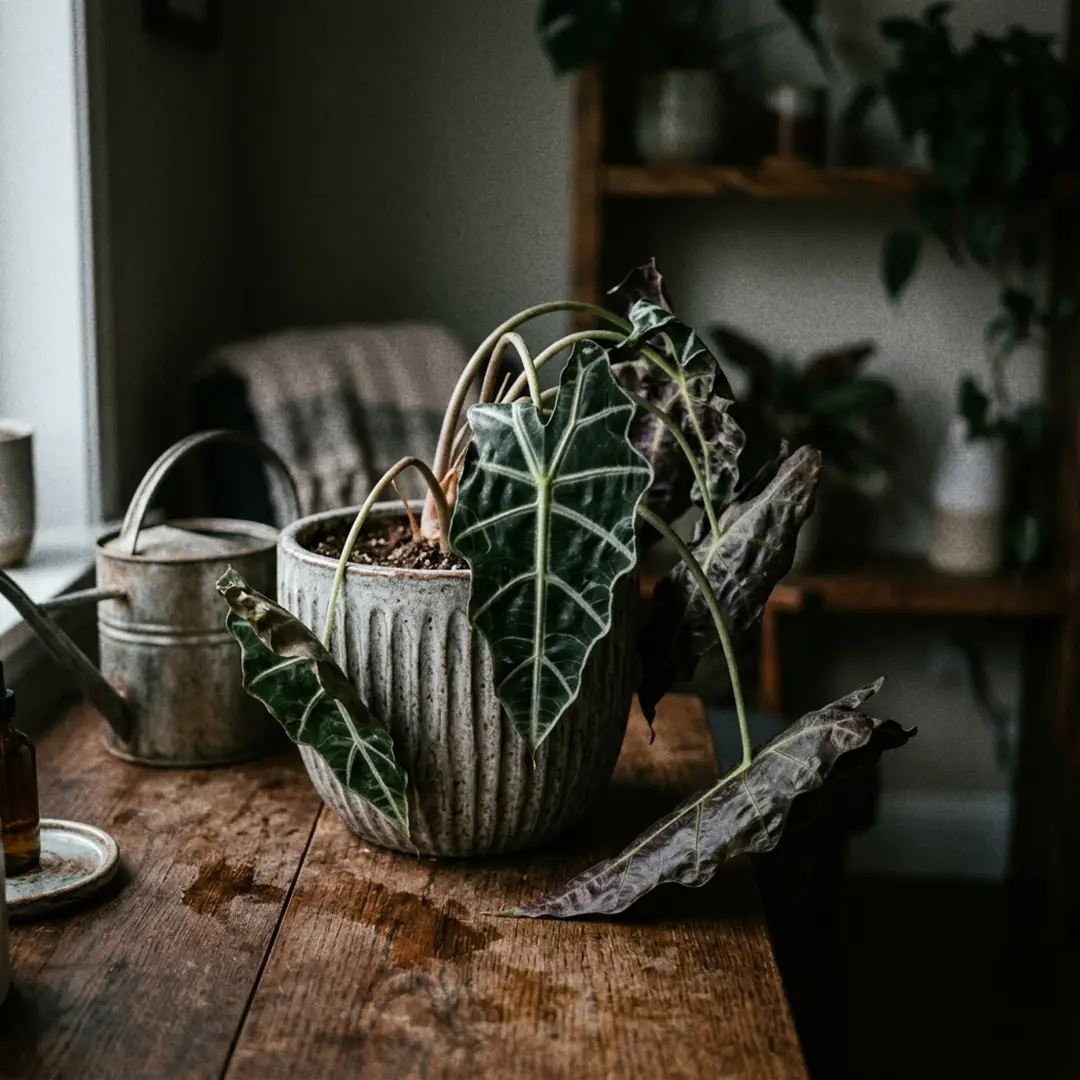
This plant lives or dies on presentation. Hit the leaf head-on with light and you get a green plant. Let light rake across it from an angle and the surface turns to hammered metal. Position it so a window sits off to one side rather than directly in front, and the difference is immediate.
Height matters too. The purple-red underside is half the plant's appeal and you only see it from below, so a plant stand, a pedestal, or a high shelf earns its keep here where a low table does not.
Cabinets and Bathrooms
A glass cabinet is the ideal home, both because it solves the humidity problem permanently and because the enclosed glass gives you controlled light and a frame. A bright bathroom is the cheap version of the same idea. If you have a window in your bathroom, this is the plant to put in there.
What to Pair It With
Contrast in texture, not in color. A matte black-green Alocasia Black Velvet next to this one makes both look better, since one absorbs light and the other reflects it. Ferns and mosses at the base work well too, filling the bare soil that Alocasia always leave visible. Avoid crowding it against a busy variegated plant, which fights with the veining.
Where Not to Put It
Not a hallway, not a north-facing corner far from a window, not above a radiator, and not anywhere a cat or a dog browses. Every part of this plant is toxic, so height is a safety feature as well as a styling one.
🌟 Alocasia Red Secret Pro Care Tips
- Buy in spring, not autumn. A plant that arrives in October has to settle in during its worst season, and a lot of them lose every leaf.
- Check the corms at every repot. Free plants, and they are also your insurance policy if the parent rots.
- Wipe the leaves when you water. It keeps the metallic sheen, and it is how you find spider mites a week before they become a problem.
- Do not chase a dropped leaf. Alocasia trade leaves constantly. Judge the plant by whether new growth is coming, not by the leaf count.
- A pebble tray will not save you. If you want 60% humidity, buy the humidifier or use a cabinet.
- Put it above eye level. The purple underside is half of what you paid for.
- Warm feet matter. A pot on a cold windowsill or a tiled floor in winter chills the roots even in a warm room. Slip a cork mat or a folded towel underneath.
❓ Frequently Asked Questions
Is Alocasia Red Secret the same as Alocasia cuprea?
Effectively, yes. 'Red Secret' is a trade name used in the nursery industry for Alocasia cuprea, and no cultivars of the species are formally recognized. Plants sold under the two names are often identical, and much of the color variation you see comes from light levels and plant age rather than genetics.
Why are my leaves losing their metallic shine?
Usually dust, low light, or spider mites, in that order of likelihood. Wipe both sides of the leaf with a damp cloth first, since that fixes it more often than anything else. If the shine does not come back, move the plant closer to a bright window and check the undersides carefully for fine webbing.
Is Alocasia Red Secret toxic to cats and dogs?
Yes. The ASPCA lists Alocasia as toxic to cats, dogs, and horses because of insoluble calcium oxalates. Chewing any part causes mouth pain, drooling, swelling, and vomiting. Keep it well out of reach, and wash your hands after pruning or repotting.
My plant lost all its leaves. Is it dead?
Probably not. Tip it out and squeeze the rhizome and any corms. If they are firm, the plant is dormant and will regrow. Keep the pot warm, water sparingly, stop feeding, and wait for spring. Cold plus a wet pot is what kills an Alocasia at this stage, not the missing leaves.
How big does Alocasia Red Secret get indoors?
Roughly 12 to 24 inches tall and about as wide, with individual leaves reaching eight to twelve inches on a mature plant. It stays far smaller than the big landscape Alocasia, which is a good part of the appeal.
Can I propagate it from a leaf or a stem cutting?
No. There is no node on the petiole, so a cut leaf simply rots in water. Propagation is by corms found around the root ball at repotting time, or by dividing an established clump that has its own roots.
Why do the leaf tips go brown even though I water correctly?
Low humidity is the first suspect, then mineral salts from fertilizer, then fluoride and chlorine in tap water. Try a humidifier for a month. If nothing changes, flush the pot thoroughly and switch to filtered or rainwater, then judge by the next new leaf rather than the damaged ones.
Does it need a terrarium or cabinet to survive?
No, but it does much better in one. A normal room at 40% humidity can grow this plant if you keep it warm and out of drafts, though it will hold fewer leaves and be fussier about everything else. A cabinet or a humid bathroom turns it from a demanding plant into an easy one.
Should I use LECA or sphagnum moss instead of soil?
Both work well and many experienced growers prefer them, because they solve the moisture-versus-oxygen problem that kills Alocasia in dense soil. The trade-off is attention: moss dries faster than potting mix, and LECA needs a nutrient solution rather than plain water. Stick with a chunky bark mix if you would rather not check the plant twice a week.
ℹ️ Alocasia Red Secret Info
Care and Maintenance
🪴 Soil Type and pH: Chunky, fast-draining aroid mix
💧 Humidity and Misting: Wants 60% or higher, which usually means a humidifier rather than misting.
✂️ Pruning: Cut spent leaves at the base and remove the flower if one appears.
🧼 Cleaning: Wipe leaves with a soft damp cloth, supporting the leaf from underneath. The metallic sheen only reads properly when the surface is dust free.
🌱 Repotting: Repot in spring every 1-2 years, or whenever the pot is packed with corms.
🔄 Repotting Frequency: Every 1-2 years
❄️ Seasonal Changes in Care: Warm, humid and steadily watered from spring to early autumn, then much drier and unfed through winter, when leaf loss is normal rather than alarming.
Growing Characteristics
💥 Growth Speed: Moderate in warmth, stalls below 60°F
🔄 Life Cycle: Evergreen tropical perennial with a winter rest
💥 Bloom Time: Sporadic and rare indoors; a pale green spathe and spadix on a mature plant
🌡️ Hardiness Zones: 10-12
🗺️ Native Area: Rainforest floors of Borneo
🚘 Hibernation: Semi-dormant in winter. Growth stops, older leaves may drop, and the rhizome holds on underground until spring.
Propagation and Health
📍 Suitable Locations: East windows, bright bathrooms, cabinets and terrariums, plant shelves away from vents
🪴 Propagation Methods: Separate the corms that form around the root ball and sprout them in damp moss.
🐛 Common Pests: Spider Mites, Thrips, Mealybugs, Fungus Gnats, Scale Insects
🦠 Possible Diseases: Root rot, crown rot, bacterial leaf spot, fungal spotting in cold wet soil
Plant Details
🌿 Plant Type: Rhizomatous evergreen aroid
🍃 Foliage Type: Evergreen shield-shaped leaves with a metallic sheen
🎨 Color of Leaves: Coppery bronze-green with darker sunken veins, deep purple-red underside
🌸 Flower Color: Pale green to cream spathe
🌼 Blooming: Rarely indoors, and the flower is worth removing
🍽️ Edibility: Not edible. All parts contain calcium oxalate crystals.
📏 Mature Size: 12-24 inches indoors
Additional Info
🌻 General Benefits: A genuinely small statement plant, thrives in the humid corners other plants hate, and multiplies itself through corms for free
💊 Medical Properties: No documented medicinal uses.
🧿 Feng Shui: The upward, shield-shaped leaves are used as protective energy in a hallway or entryway, though the low light of most hallways does not suit the plant.
⭐ Zodiac Sign Compatibility: Scorpio
🌈 Symbolism or Folklore: Hidden depth, quiet luxury, things that reveal themselves in the right light
📝 Interesting Facts: The leaf surface is not pigmented metal but a trick of structure. Cells just below the surface act like tiny lenses that bounce light back, which is why the leaf looks wet or hammered even when it is bone dry. The effect evolved to squeeze more use out of the dim light reaching the floor of a Bornean rainforest.
Buying and Usage
🛒 What to Look for When Buying: Look for firm upright stems, at least three or four leaves, and a heavy pot, which usually means a real root system rather than a fresh tissue-culture plug. Tip the plant out if you can and check for pale firm corms, since those are free future plants. Skip anything with yellowing lower leaves or a soft base.
🪴 Other Uses: Terrarium and cabinet specimen, tabletop feature plant, collector aroid.
Decoration and Styling
🖼️ Display Ideas: Glass cabinets, bright bathroom shelves, grouped with matte-leaved plants, pedestal or plant stand at eye level
🧵 Styling Tips: Place it where light rakes across the leaf rather than hitting it head on. Side lighting is what turns the surface from plain green to metal.
🪴 See also 🪴
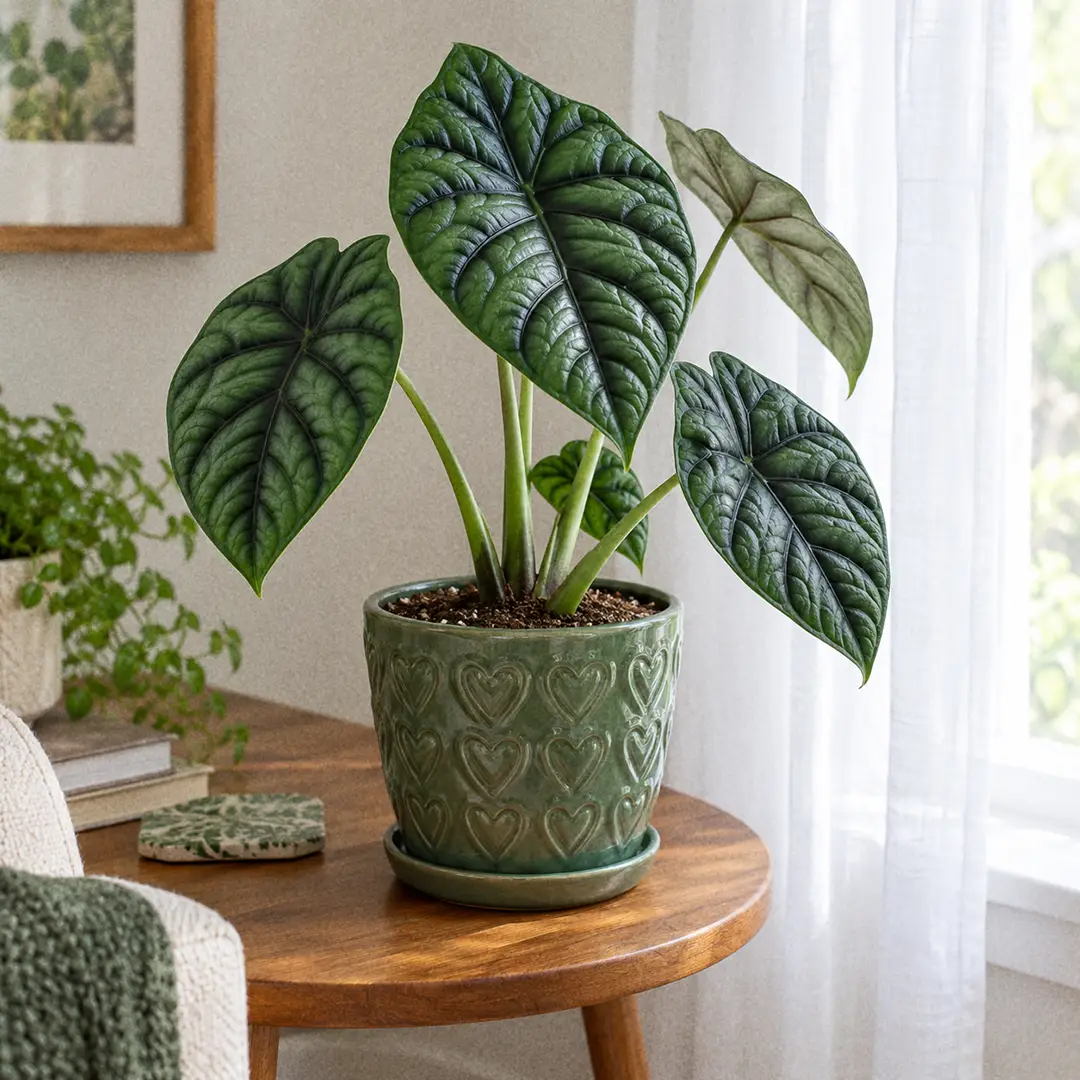
Complete Guide to Alocasia Dragon Scale Care and Growth
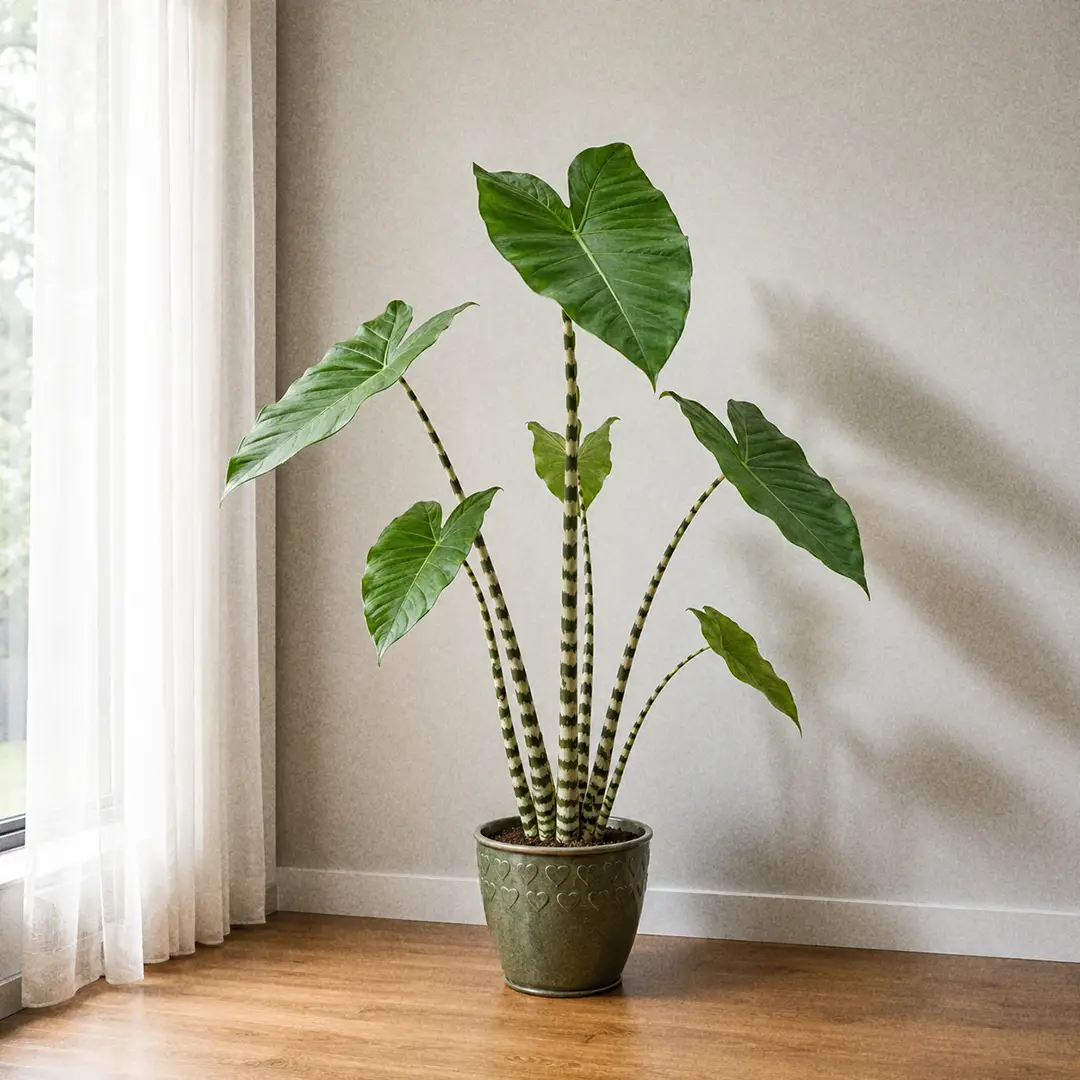
Complete Guide to Alocasia Zebrina Care and Growth
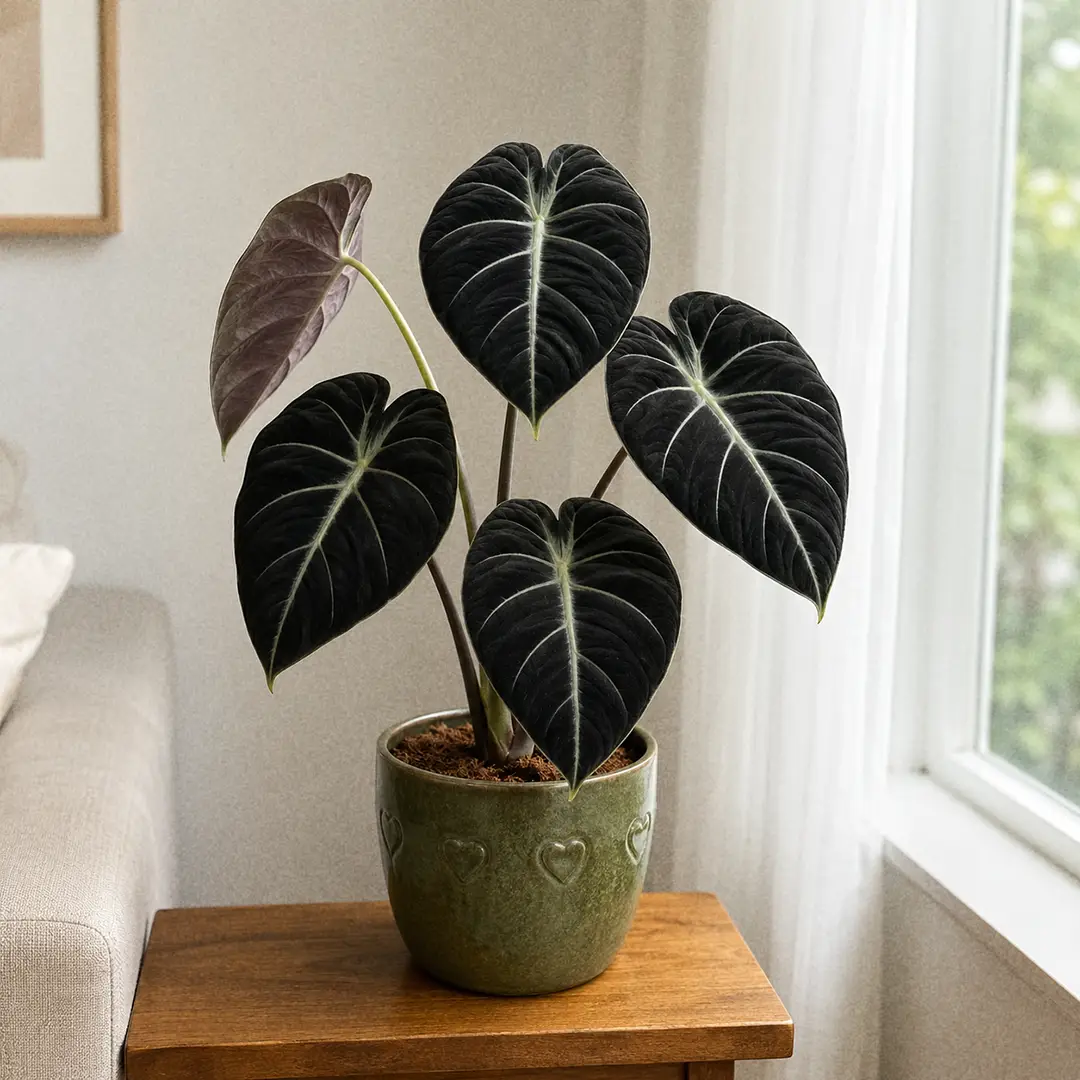
Complete Guide to Alocasia Black Velvet Care and Growth
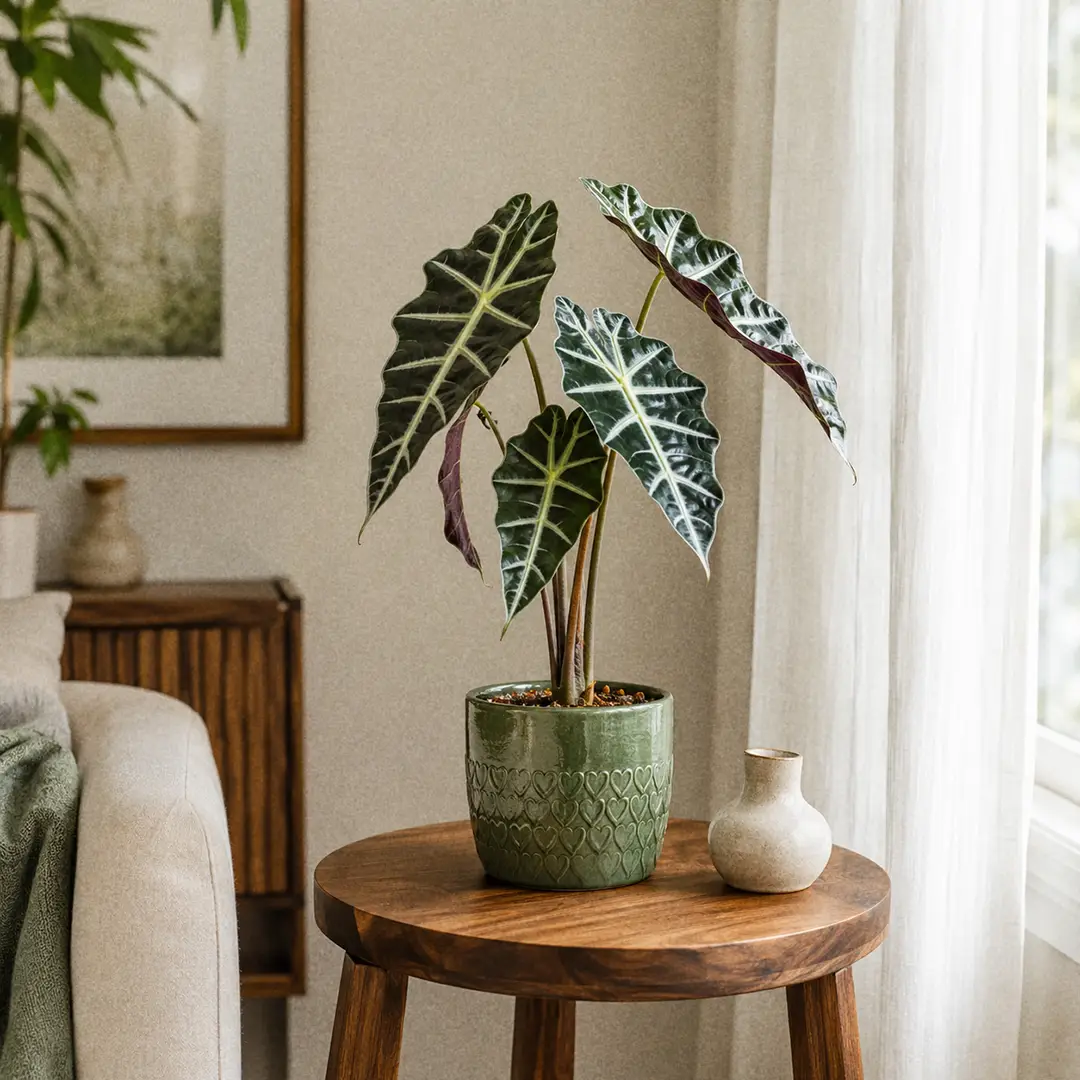
Complete Guide to Alocasia Polly Care and Growth

Houseplant101 Forum
Questions & Comments
Ask a question, share your plant experience, or help other plant owners.
Comments are temporarily unavailable.
Open the Houseplant101 ForumNo comments yet
Be the first to ask a question or share your experience about this page.
Log in or create an account
Comments use your Houseplant101 Forum account, but you can stay on this page.
Create a new account