
Ghost Plant
Graptopetalum paraguayense
Mother of Pearl Plant, Graptopetalum, Porcelain Plant, Sedum weinbergii


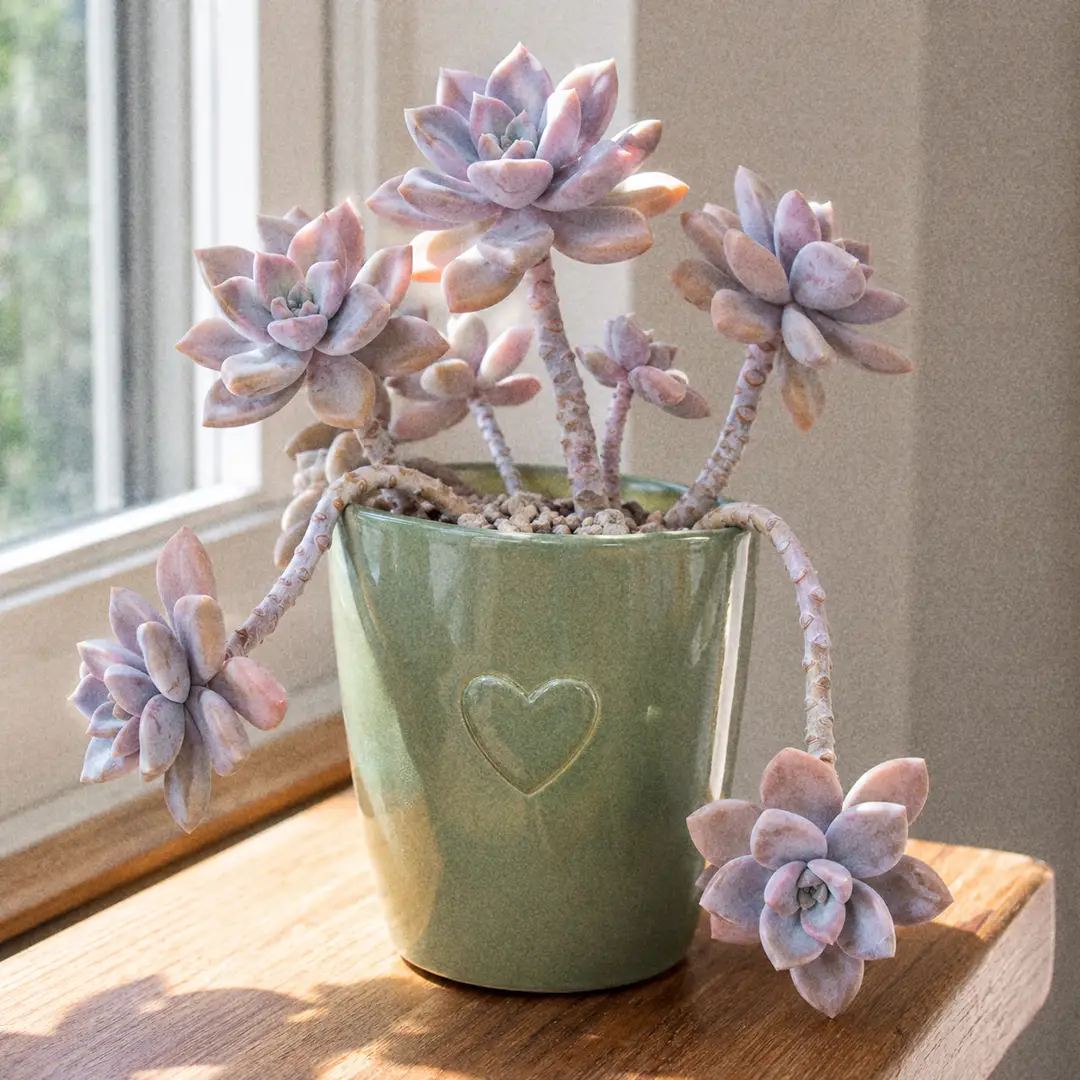
The Ghost Plant (Graptopetalum paraguayense) is the color-shifting rosette succulent that reads gray-blue in soft light and pearly pink-lavender on a hot sunny sill. Stems slowly lengthen and trail over the pot edge, and every leaf that drops can root itself into a free new plant.
📝 Ghost Plant Care Notes
🌿 Care Instructions
⚠️ Common Pests
📊 Growth Information
🪴 In This Guide 🪴

☀️ Ghost Plant Light Requirements (Bright Direct Sun)
Light does something with a Ghost Plant that it does with almost no other houseplant: it sets the color. The same plant can be powdery blue-gray in one window and opal pink in another. So before you think about watering schedules or soil recipes, decide what you want the plant to look like, then place it accordingly.
The Sweet Spot
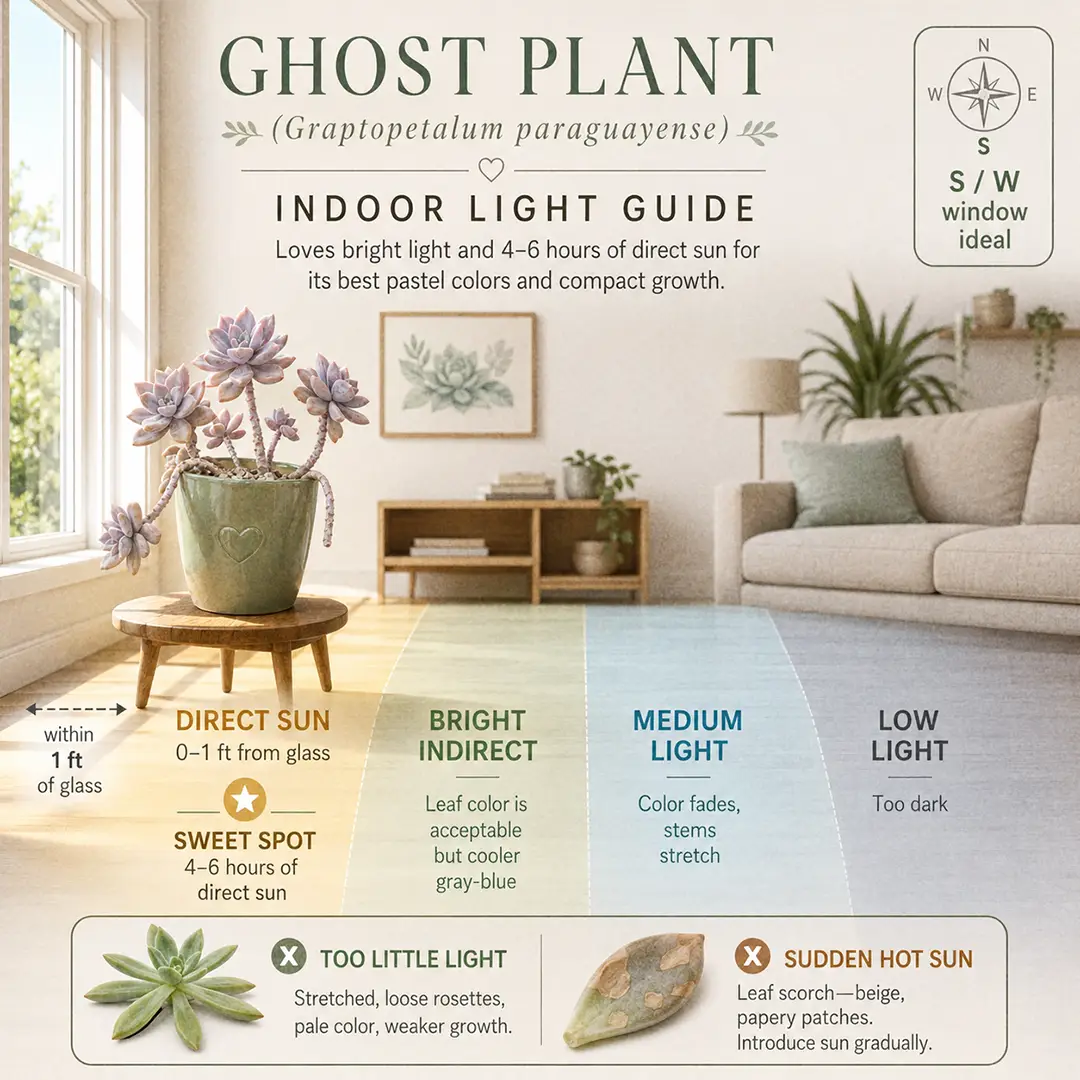
A south or west window with four to six hours of direct sun a day is ideal. Park the pot within a foot of the glass. In that kind of light the rosettes stay tight, the stems stay short between leaves, and the foliage takes on the famous pearly blush of pink, lavender, and peach. An east window keeps the plant healthy but leans the color toward cool blue-gray, which is pretty in its own right. In a dim apartment, a full-spectrum grow light running 12 to 14 hours a day, hung six to eight inches above the rosettes, does the same job. See light for houseplants for the broader picture.
Too Little Light
A Ghost Plant in weak light gives itself away within weeks. The new growth turns plain gray-green, the pastel blush disappears, and the stems stretch so the leaves sit further and further apart along bare stem. The rosette at the tip opens up and flattens out. Stretched growth never recompresses, but the fix is cheap: move the plant somewhere brighter, behead the leggy tops, and re-root them as compact new plants. The cut stems push out fresh rosettes along their length, so you end up with a fuller pot than you started with.
Too Much Light
This species genuinely likes direct sun, so "too much" is mostly about speed, not amount. A plant moved straight from a shaded shop bench to a blazing south window in July can scorch, leaving beige papery patches on the sun-facing leaves that never fade. Build up over two weeks, a few more hours of direct sun every few days, with a sheer curtain through the harshest afternoons of the transition. Once hardened off, a Ghost Plant will happily take more sun than nearly any rosette succulent you can grow indoors, and it will reward the strongest light with the strongest color.
💧 Ghost Plant Watering Guide (Soak and Dry)
Overwatering is the one reliable way to kill this plant. The plump leaves are water tanks, the species grows on cliff faces where rain drains away in seconds, and a Ghost Plant that misses two waterings barely notices. One that sits in wet soil for two weeks starts to rot from the roots up.
Watering Frequency
In spring and summer, water deeply only once the soil has dried completely from top to bottom. For a 4 to 6 inch terracotta pot in a sunny window, that works out to roughly every 10 to 14 days. A glazed or plastic pot, a cooler room, or a heavier mix stretches the interval toward three weeks. Test with a wooden chopstick pushed to the bottom of the pot; if it comes out cool or damp, wait. In autumn and winter, cut back hard. A cool-rested plant can sit nearly dry for two or three months, while one in a warm living room wants a small drink every four to six weeks, just enough to stop the lower leaves from wrinkling. The general rules in watering houseplants apply, with the dial turned toward dry.
How to Water
Water the soil, not the plant. Pour room-temperature water around the base until it runs from the drainage hole, wait ten minutes, then empty the saucer. Drops left sitting in the rosettes smudge the farina and can trigger fungal spots through a cool night, and on a trailing plant with stacked rosettes that is a lot of little water traps. Bottom watering works well if your mix is gritty enough, since it keeps every leaf dry while the roots drink.
Signs of Trouble
A thirsty Ghost Plant wrinkles its lower leaves first and the whole rosette softens slightly; one deep drink plumps it back up within a day or two. An overwatered plant goes the other way: lower leaves turn translucent yellow, then mushy, and fall at the lightest touch in numbers far beyond the plant's normal shedding. A sour smell at the soil line or a stem that feels soft means root rot is already moving, and the rescue at that point is to behead every healthy rosette and start over in dry grit.
🪴 Best Soil for Ghost Plant (Gritty and Fast-Draining)
Get the soil right and the watering can forgives you. A gritty mineral mix is the single best insurance policy for this plant, because it makes "too wet for too long" nearly impossible.
What the Soil Needs
Fast drainage above all. The mix should drain in seconds, dry fully within a week, and hold very little moisture against the roots. In habitat the Ghost Plant grows from cracks in Mexican cliff rock with barely any organic matter, so a rich, fluffy potting soil is the opposite of home. Slightly acidic to neutral pH is fine; no need to measure.
DIY Soil Mix
- 1 part standard cactus and succulent mix
- 1 part coarse pumice or perlite
- 1 part coarse horticultural sand or fine gravel
Squeeze a damp handful; it should fall apart the moment you open your fingers. If it clumps, add more pumice. The same recipe suits the Echeveria, Jade Plant, Jelly Bean Plant, and Burro's Tail sharing the windowsill.
Pre-Made Options
Most bagged "cactus and succulent" mixes are still too peaty straight from the bag. Cut them 50/50 with pumice or perlite before potting. Skip anything labelled moisture-retentive or enriched with compost; those bags are aimed at thirsty tropical plants and will hold a Ghost Plant's roots wet for far too long. See repotting for the full potting picture.
🍼 Fertilizing Ghost Plant (Barely at All)
This is a plant from poor mineral soil, and it grows just fine on almost nothing. Feeding is the least of your worries, and overdoing it actively ruins the plant's best features.
When and How Often
Feed only during active growth, in spring and early summer. Two or three feedings a year is plenty: one in late April or May, one in June, and an optional last one in early August. Skip autumn and winter entirely, and never feed a freshly repotted plant for its first two months.
What to Use
A low-nitrogen cactus and succulent fertilizer (something like 2-7-7) at half the label strength, applied to already-damp soil. Quarter-strength liquid kelp works as a gentle organic option. The dilution guidance in fertilizing houseplants covers the technique.
Over-Fertilizing Signs
Soft, fast, plain-green growth is the giveaway. An overfed Ghost Plant stretches, loses its pastel color, and thins its farina, which undoes exactly what you grew the plant for. A white crust on the soil or pot rim means salt build-up: flush the pot with two or three pot volumes of plain water and skip the next feeding.
🌡️ Ghost Plant Temperature Range
Ideal Range
Normal household temperatures, 65 to 80°F (18 to 27°C), suit a Ghost Plant through the growing season. A hot summer windowsill is no problem once the plant has been hardened to the sun. In winter, a cool spot at 45 to 55°F (7 to 13°C) with nearly dry soil keeps growth compact, deepens the leaf color, and lines up the spring flowers.
Cold Hardiness and Drafts
Here is the surprise: this delicate-looking pastel rosette is one of the toughest succulents you can own. Grown outdoors in dry soil, a Ghost Plant handles brief frost and is rated to around USDA zone 7, surviving short dips near 10°F (-12°C) that would turn an Echeveria to mush. Indoors none of that is needed; just avoid leaves pressed against freezing glass and keep the pot a foot clear of working radiators, which dry the soil unevenly and crisp the lower leaves on one side.
💦 Ghost Plant Humidity Requirements
Ideal Humidity
Ordinary dry household air, anywhere from 30 to 45 percent, is exactly what this plant wants. No misting, no pebble trays, no humidifier, and never a closed terrarium. The waxy farina and plump leaves exist to handle dry cliff air, and persistent humidity above 60 percent invites rot into the rosettes.
When Dry Air Helps
Winter heating season, the time of year when tropical plants sulk, is when a Ghost Plant is most comfortable. The only humidity risk is a cool, damp, still corner in autumn, where stagnant air settles fungal spots into the rosette centers. A small fan running a few hours a day, or simply a spot with normal room air movement, prevents it. Keep the plant out of steamy bathrooms and away from kitchen sinks.
🌸 Ghost Plant Flowers (Starry Sprays in Spring)
The flowers are a quiet bonus rather than the main event, but they are charming up close and a mature plant produces them reliably.
What the Flowers Look Like
In late winter through spring, mature stems send out slender branched sprays that rise a few inches above the rosettes. Each flower is a small five-pointed star, white to pale cream, speckled with tiny red flecks. Those marked petals gave the genus its name, Graptopetalum, which roughly translates as "inscribed petals." A large trailing plant in bloom carries dozens of these little stars at once, and the display lasts several weeks.
How to Trigger Bloom
Three ingredients: maturity, strong light, and a cool dryish winter. A plant at least two or three years old, grown within a foot of a sunny window through the previous year, and rested cool at 45 to 55°F (7 to 13°C) with minimal water through winter will almost always flower the following spring. Resume normal watering as the days lengthen in late winter and the flower sprays follow within weeks.
If It Won't Bloom
A healthy plant that never flowers is nearly always missing the winter rest, the strong light, or both. A Ghost Plant kept warm, watered, and four feet from the window all year will live happily for a decade without a single bud. Fix the light first, add the cool rest the next winter, and the flowers usually arrive on schedule.
🏷️ Ghost Plant Types and Varieties
The species itself comes in a couple of forms, but the Ghost Plant's bigger claim to fame is as a parent. Its hybrids fill succulent shelves everywhere, usually without anyone realizing the family connection.
Graptopetalum paraguayense (the classic)
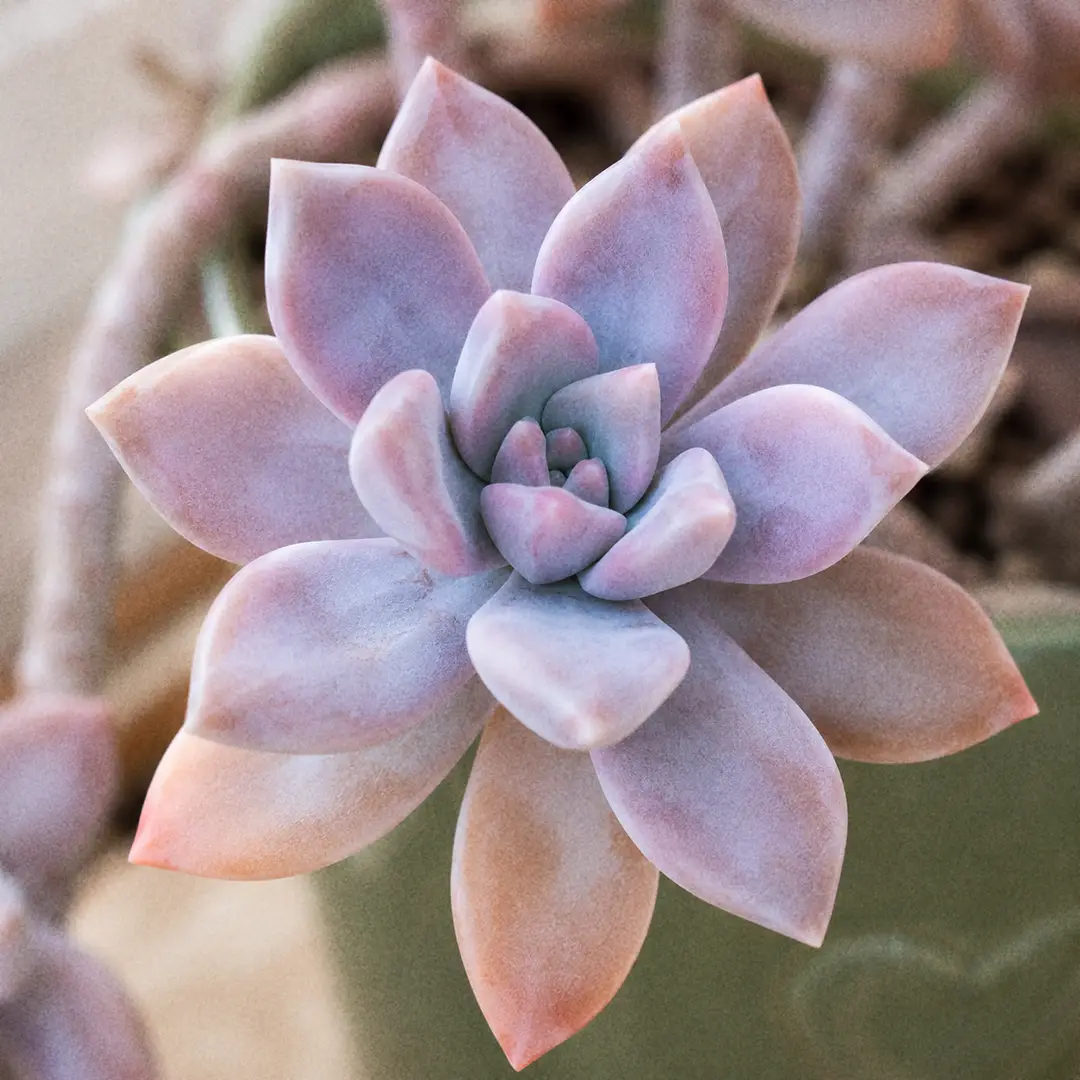
The standard Ghost Plant: loose rosettes of plump, pointed, wedge-shaped leaves, 2 to 5 inches across, at the tips of stems that lengthen and trail with age. The color runs from powdery gray-blue in gentler light to pearly pink and lavender in full sun, all under a pale coat of farina. This is the form you will find in nearly every shop, sometimes labelled Mother of Pearl Plant.
Smaller and Variegated Forms
Graptopetalum paraguayense subsp. bernalense is a naturally smaller version with rosettes about half the usual size, handy for tight windowsills and dish gardens. 'Variegatum' adds cream and pink streaking through the leaves; it is slower, a little softer, and appreciates slightly gentler afternoon sun than the plain species. Care for both is otherwise identical to the classic form.
The Hybrid Children: Graptoveria and Graptosedum
Cross a Ghost Plant with an Echeveria and you get ×Graptoveria, including the big bronze-lilac rosettes of 'Fred Ives' and the soft pink 'Debbie'. Cross it with a Sedum and you get ×Graptosedum, like the coppery 'California Sunset' (a cross with Golden Sedum, Sedum adolphii) and the red-brown 'Vera Higgins', which read like a Jelly Bean Plant wearing Ghost Plant colors. All of these inherit the same toughness and the same care: gritty soil, strong sun, soak and dry.
Ghost Plant vs. Echeveria
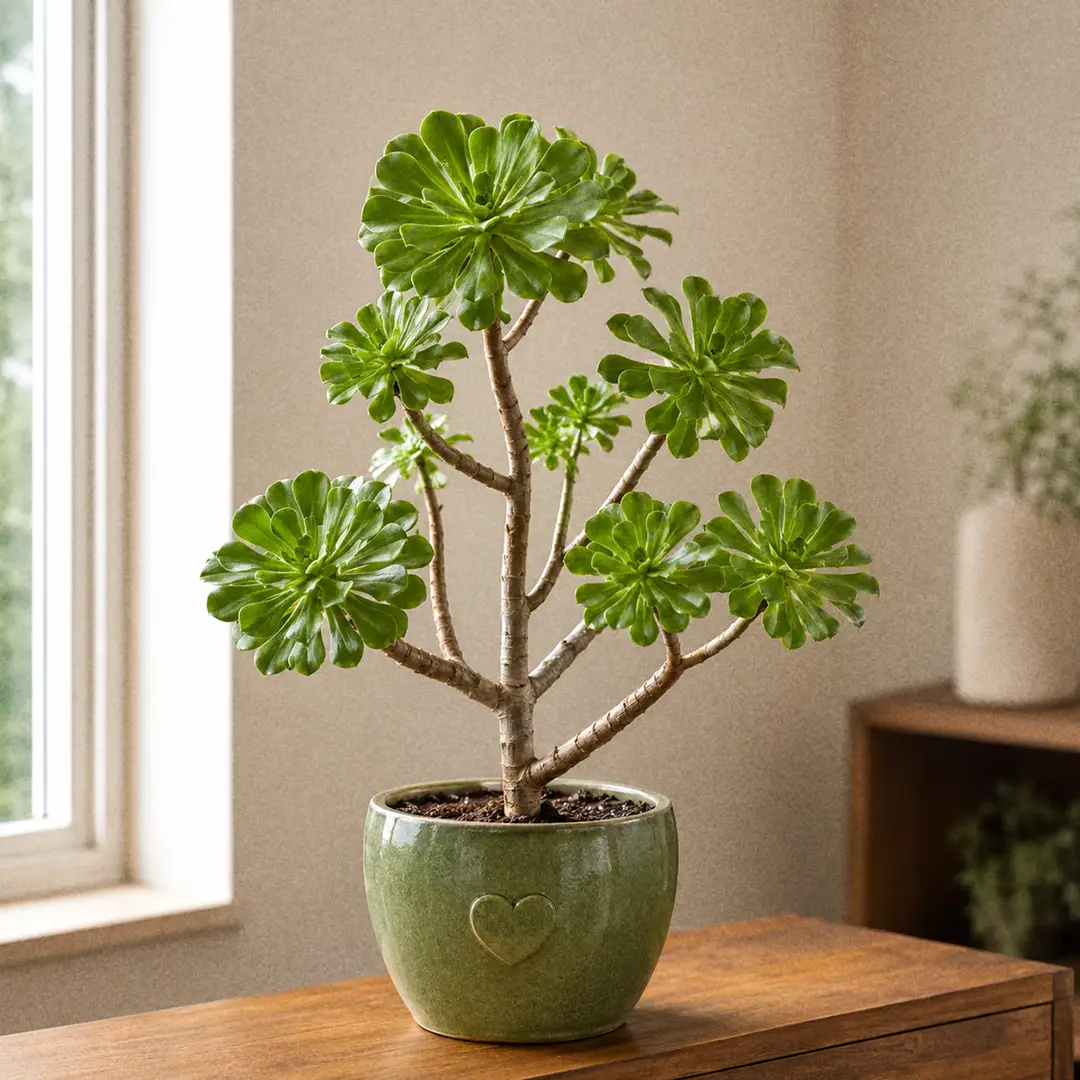
The two are confused constantly, and fairly: similar rosettes, similar farina, same family. Three tells separate them. First, habit: an Echeveria stays a tight stemless rosette at soil level, while a Ghost Plant builds visible stems that sprawl and trail. Second, leaf shape: Ghost Plant leaves are flatter, more pointed, and set in a looser, more open rosette. Third, toughness: the Ghost Plant tolerates frost, deeper neglect, and clumsier handling, though it pays for that with leaves that drop far more easily. One more rosette-on-a-stem to keep straight is the Aeonium, but that one is easy to rule out up close: its rosettes are flat, thin-leaved, and glossy with no farina at all, and it grows in the cool season while the Ghost Plant powers through summer.
🪴 Potting and Repotting Ghost Plant
When to Repot
Every two to three years in spring, or whenever the stems have clearly outgrown the pot and the root mass lifts free in one tight cylinder. There is no rush; this plant flowers and trails happily while slightly root-bound. Avoid repotting in winter unless you are rescuing the plant from soggy soil.
Choosing a Pot
Terracotta is the easy answer, one size (about an inch) wider than the current pot. The clay wicks moisture out of the mix and shortens drying time, which buys you a margin for watering mistakes. For a trailing specimen, a hanging pot or a pot on a high shelf edge shows the plant off best; just make sure whatever you choose has a real drainage hole. The root system is shallow, so wide-and-shallow beats tall-and-narrow.
Step-by-Step Repotting
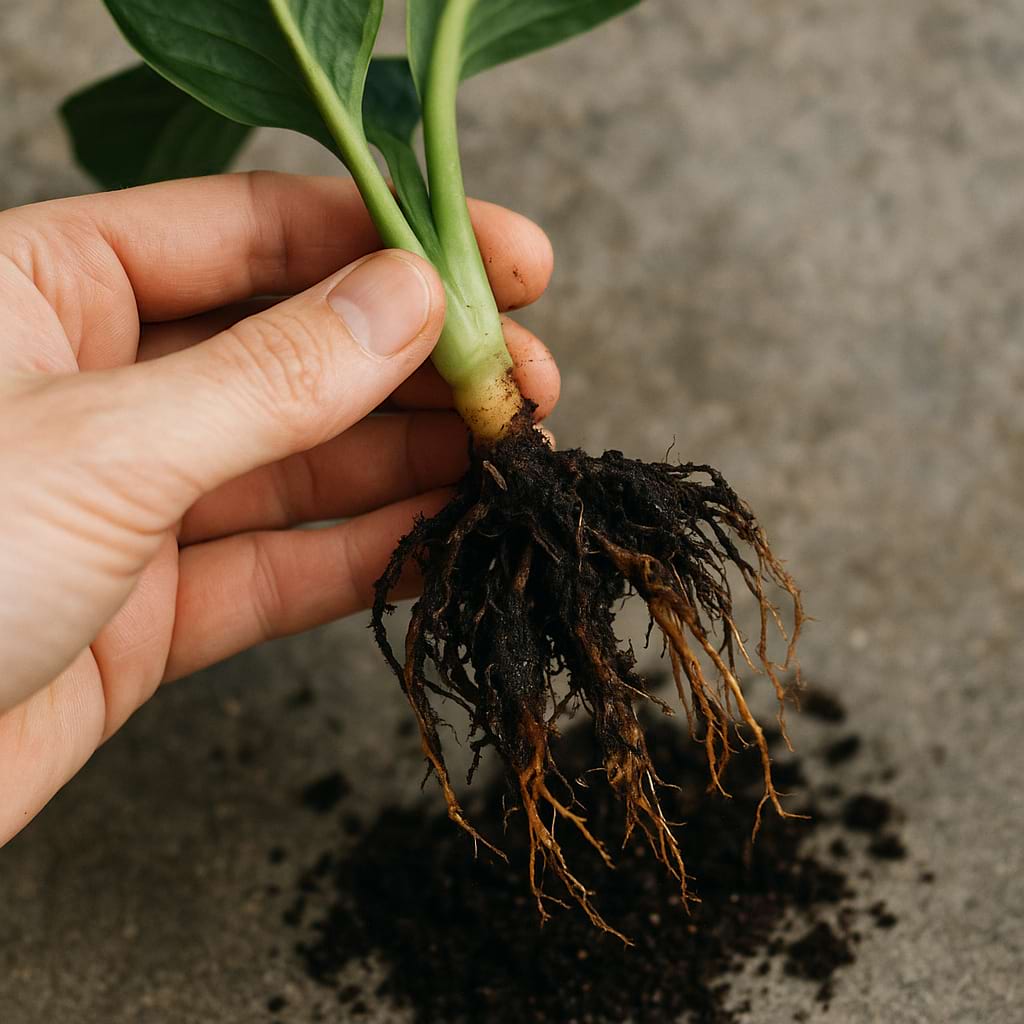
Let the soil dry out completely first; dry roots release the old mix cleanly. Handle the plant by the root ball and the bare stems, never by the rosettes, and accept that a few leaves will pop off no matter how careful you are (save them for the propagation tray). Tease off the spent soil, trim any soft brown roots with clean scissors, and settle the plant into fresh dry gritty mix at its old depth. Then wait a full week before the first watering, so any nicked roots callus instead of rotting.
✂️ Pruning Ghost Plant
A Ghost Plant needs almost no pruning for health. Every cut you make is really about shape, and every piece you remove is propagation material, so nothing is wasted.
When to Prune
Pull away dry, papery lower leaves whenever you notice them; that shedding is normal as each stem lengthens. Snip spent flower sprays at their base once the last star fades. The bigger decision is what to do as the stems stretch and bare up at the base, which is simply how this plant grows: rosettes ride at the tips of ever-longer stems.
How to Prune
Use a clean, sharp blade wiped with rubbing alcohol. Cut stems just above a leaf or a stem joint, and let any piece you plan to replant callus in a dry shaded spot for three to five days first. Spring and early summer cuts re-root fastest.
Beheading Leggy Stems
When a stem gets longer and barer than you like, behead it an inch or two below the rosette and re-root the top as a compact new plant. The headless stem is not a loss: it almost always pushes out several new rosettes along its length within weeks, turning one straggly stem into a branched, fuller plant. Many growers behead their Ghost Plants every couple of years on purpose, replanting the tops back into the same pot for a dense, layered look.
🌱 How to Propagate Ghost Plant
If you only ever propagate one succulent, make it this one. The Ghost Plant is so eager to multiply that it does most of the work itself; leaves it drops into the pot regularly root where they land without any help from you.
Best Method
Single leaves are the classic route and the most fun, with a success rate high enough that a handful of leaves practically guarantees a few new plants. Stem cuttings and beheaded rosettes are faster, giving you a display-ready plant in weeks instead of months. Use leaves for quantity and cuttings for speed. The broader principles live in succulent propagation, but honestly, this plant barely needs them.
Step-by-Step Leaf Propagation
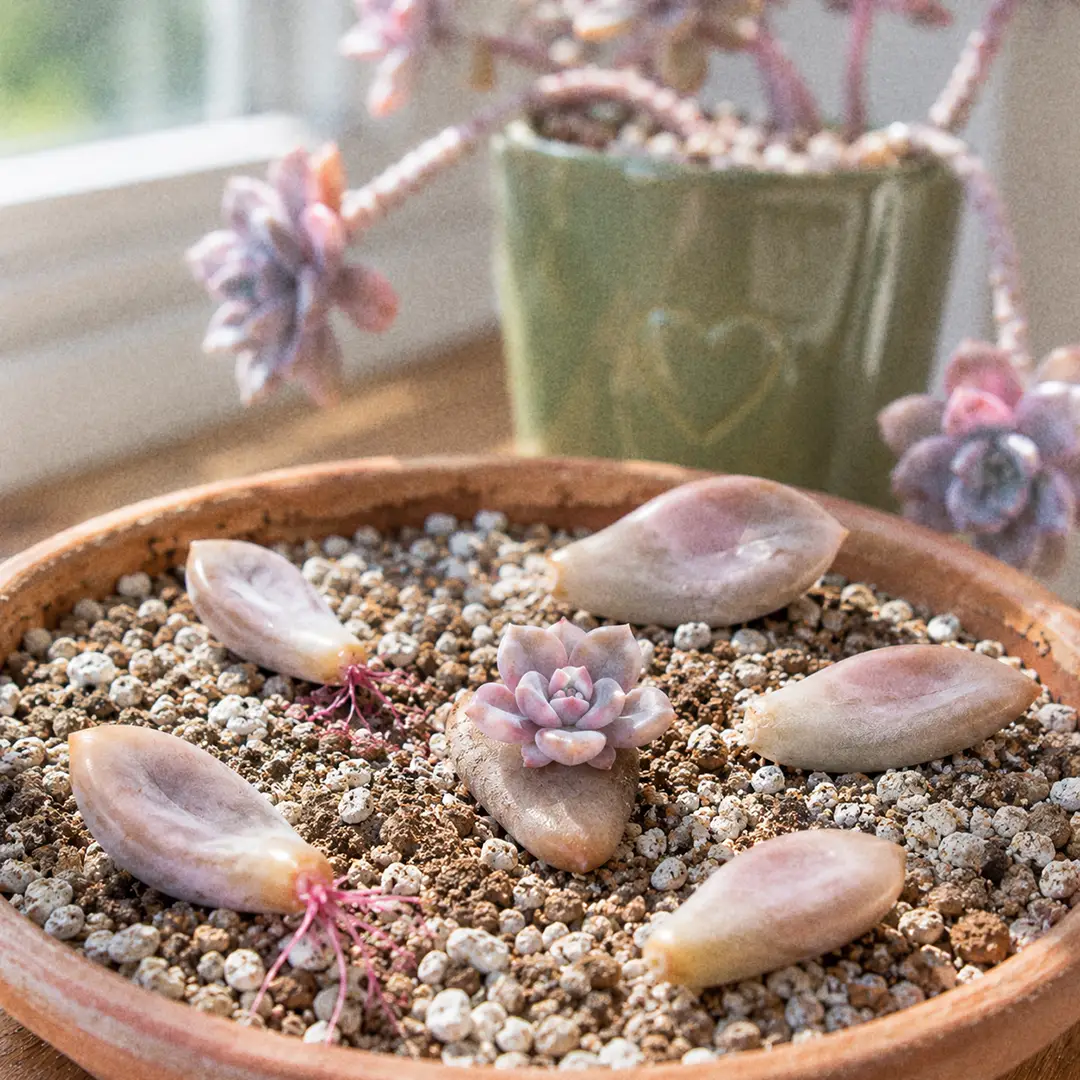
Twist a plump, healthy leaf gently side to side until it pops off whole; with this species that takes almost no effort, and any leaf that fell off on its own works just as well if it came away clean at the base. Let the leaves sit in a dry shaded spot for three to five days until the wound calluses. Lay them flat on top of dry gritty mix, do not bury them, and park the tray in bright indirect light. From the second week, mist the surface lightly once or twice a week. Pink roots appear in two to four weeks, a miniature rosette follows at the calloused end, and once the parent leaf shrivels away (two to four months in) the baby is ready for a tiny pot of its own.
Tips for Success
Bright indirect light beats full sun during rooting, which shrivels leaves before roots form. The killer mistake is wet soil under a callusing leaf; it rots in days. The quiet mistake is forgetting the tray entirely once roots have formed, since the babies do need that light weekly mist to keep growing. And check the parent plant's own pot now and then: odds are good you will find volunteer babies already rooting among the dropped leaves around the base.
🐛 Ghost Plant Pests and Treatment
A sun-grown Ghost Plant in dry air is a hard target, and most plants never see a pest. The folds of the rosettes and the trailing tangle of stems do offer hiding places, so glance into the rosette centers once a week while you check the soil.
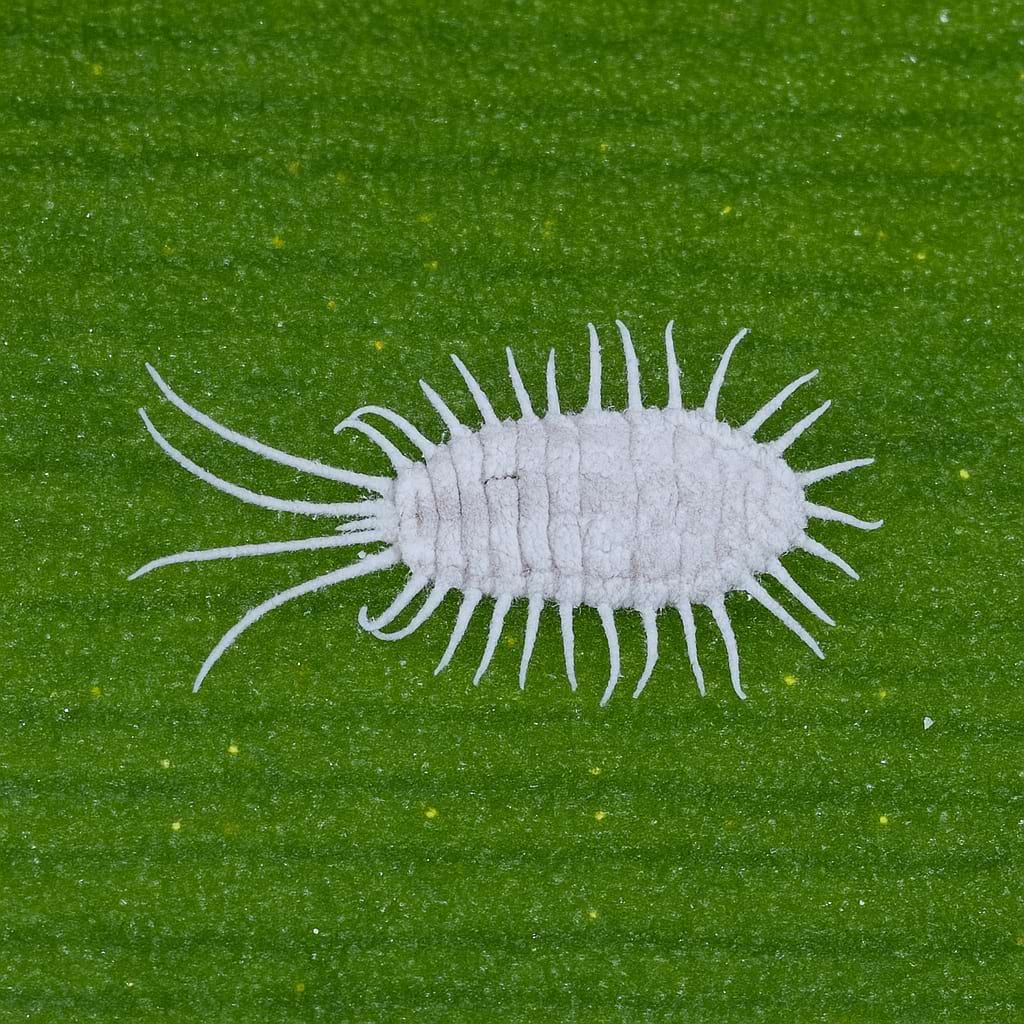
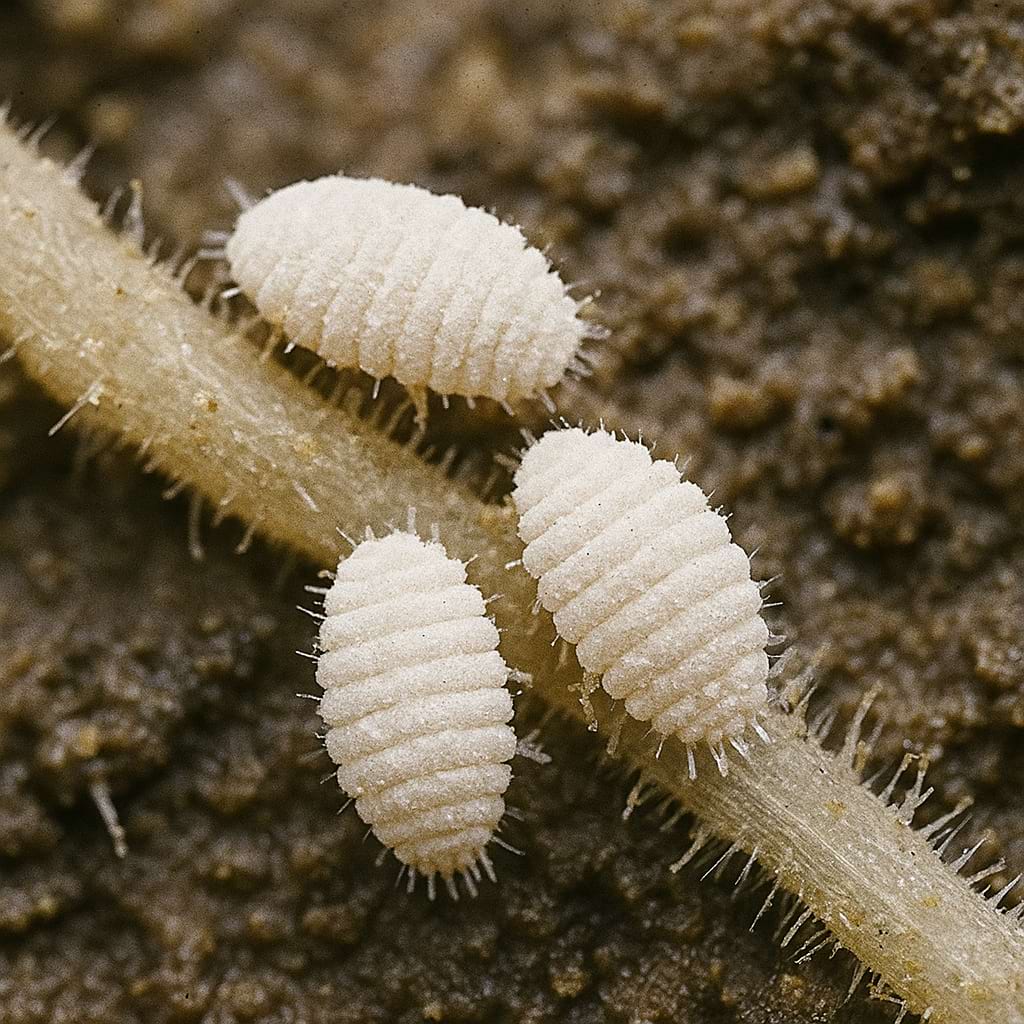
Mealybugs are the main offender, showing up as small white cottony tufts tucked between leaves and in the rosette centers. Dab each one with a cotton swab dipped in 70 percent isopropyl alcohol and repeat weekly until a month passes clean. The alcohol takes farina off wherever it touches, so aim carefully.
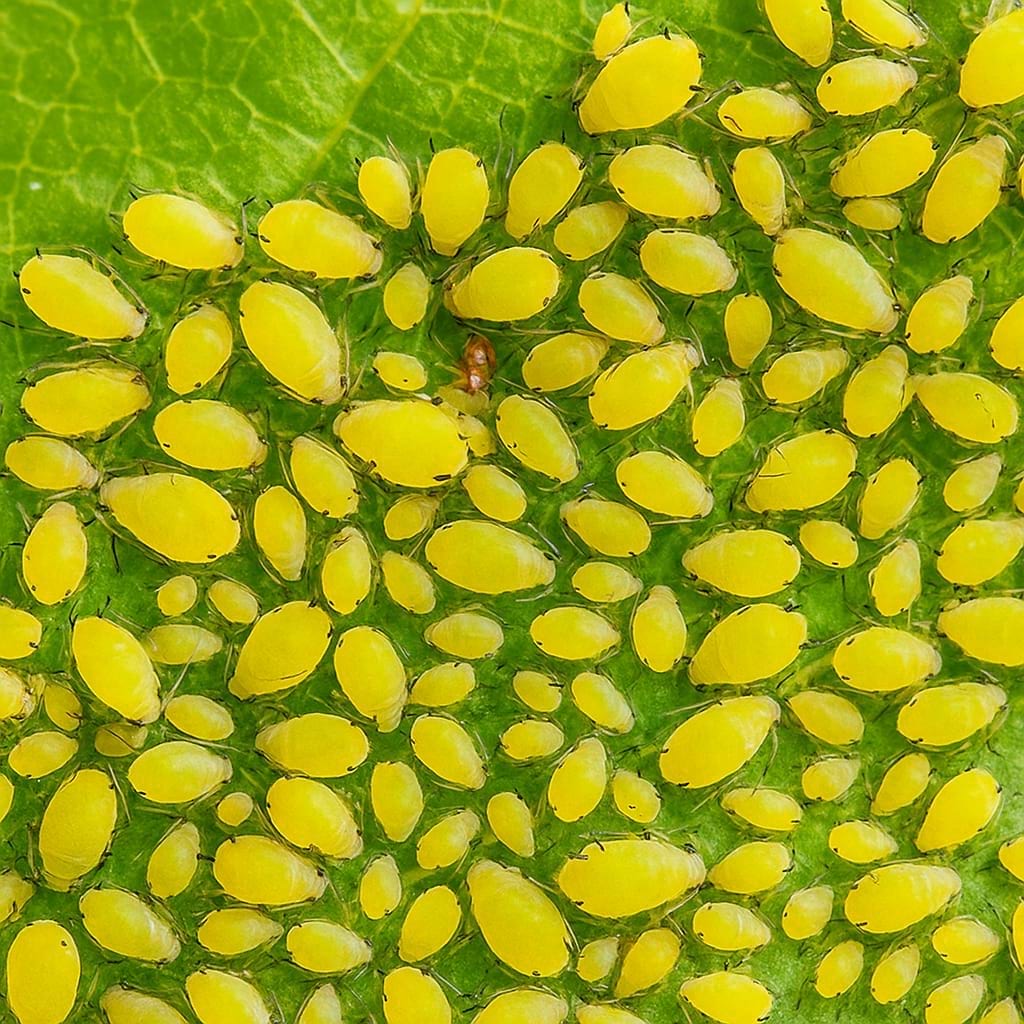
Aphids mostly target the soft flower sprays in spring. A firm blast of water aimed at the flower stems clears the bulk, and insecticidal soap a few days later finishes the job.
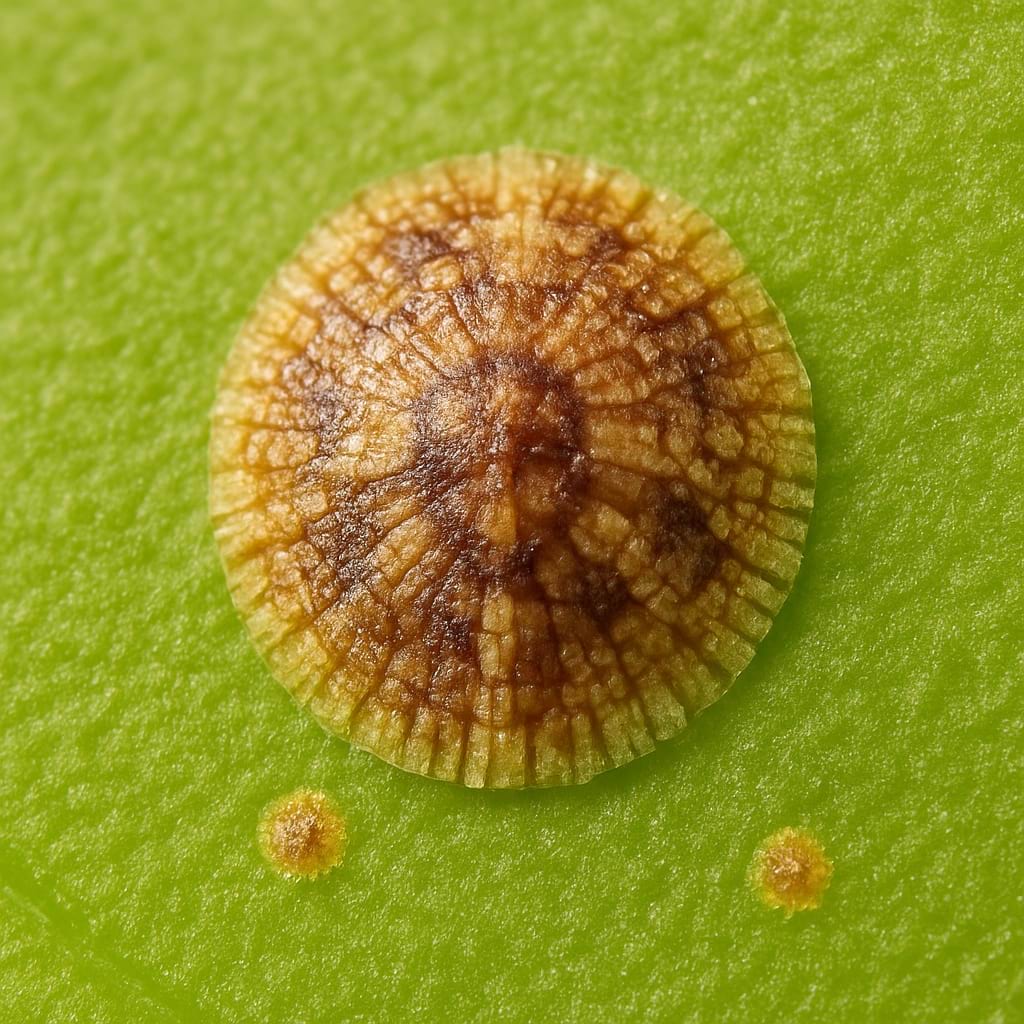
Scale insects look like small immobile brown bumps stuck to leaves and stems. Flick them off with a toothpick and follow with horticultural oil if you find more than a few.
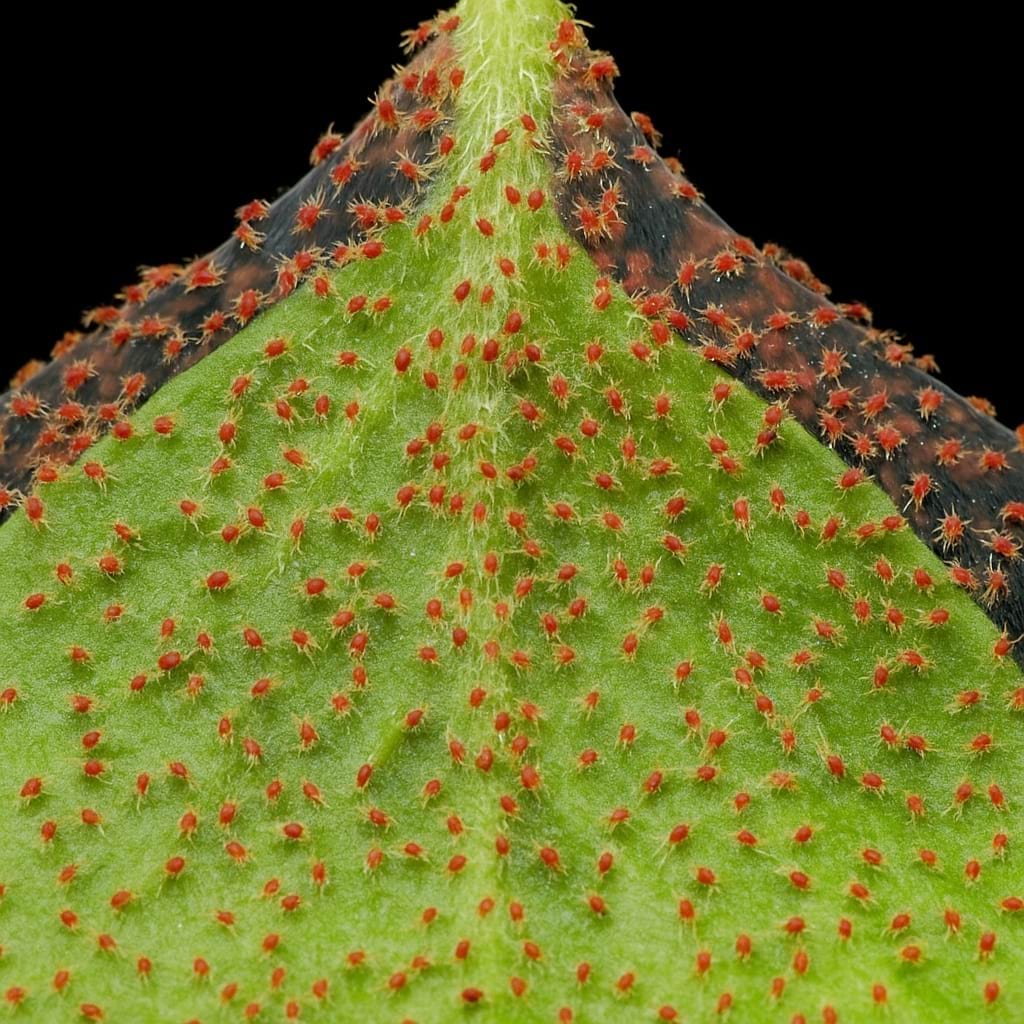
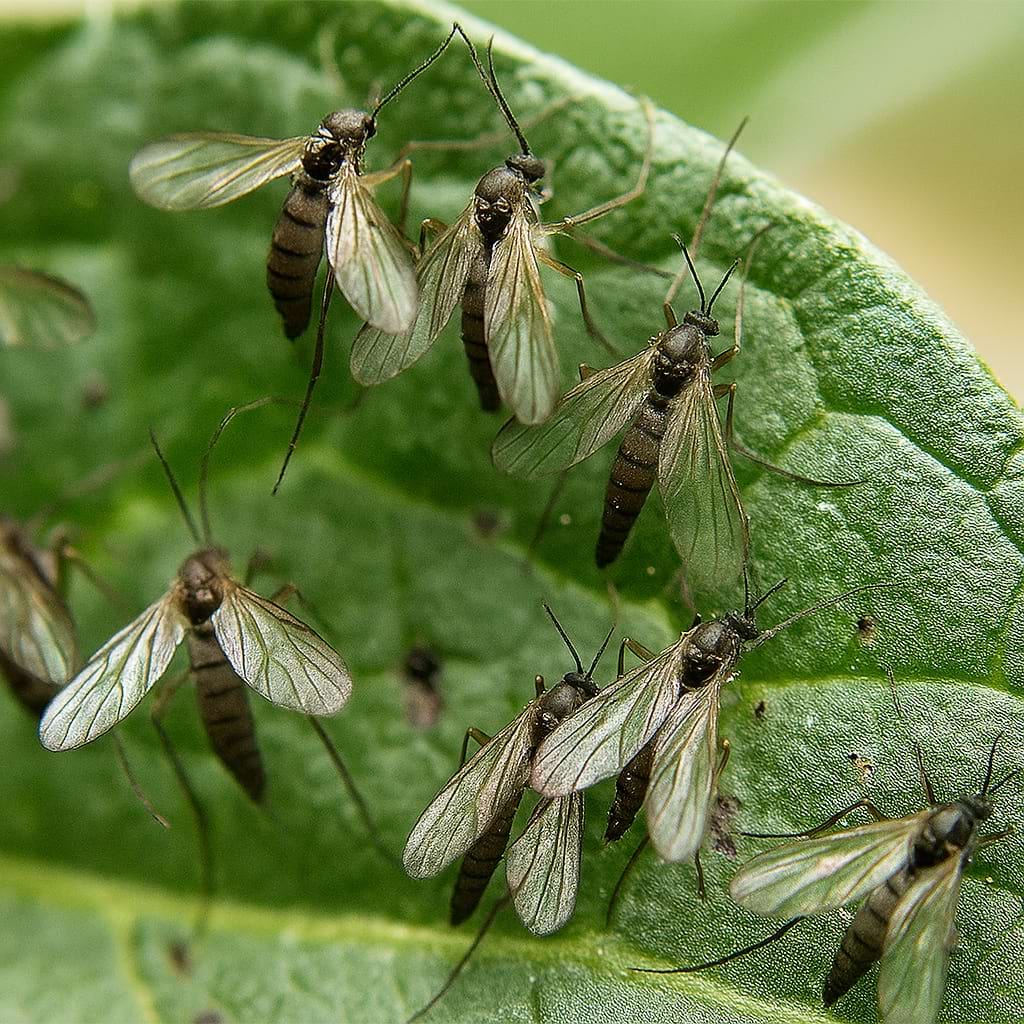
Spider mites turn up in hot dry summers as fine pale speckling and faint webbing between leaves; a lukewarm rinse plus one round of insecticidal soap usually ends them. Root mealybugs hide below the soil line and look like white powder on the roots when you unpot; bare-root the plant, rinse, repot in fresh dry mix, and treat with a soil drench. Fungus gnats only appear when the soil stays wet too long, which for this plant is a louder warning about your watering than about the gnats.
🩺 Common Ghost Plant Problems
Nearly every Ghost Plant problem comes down to too much water, too little light, or rough handling. The plant telegraphs all three early if you know what to look for.
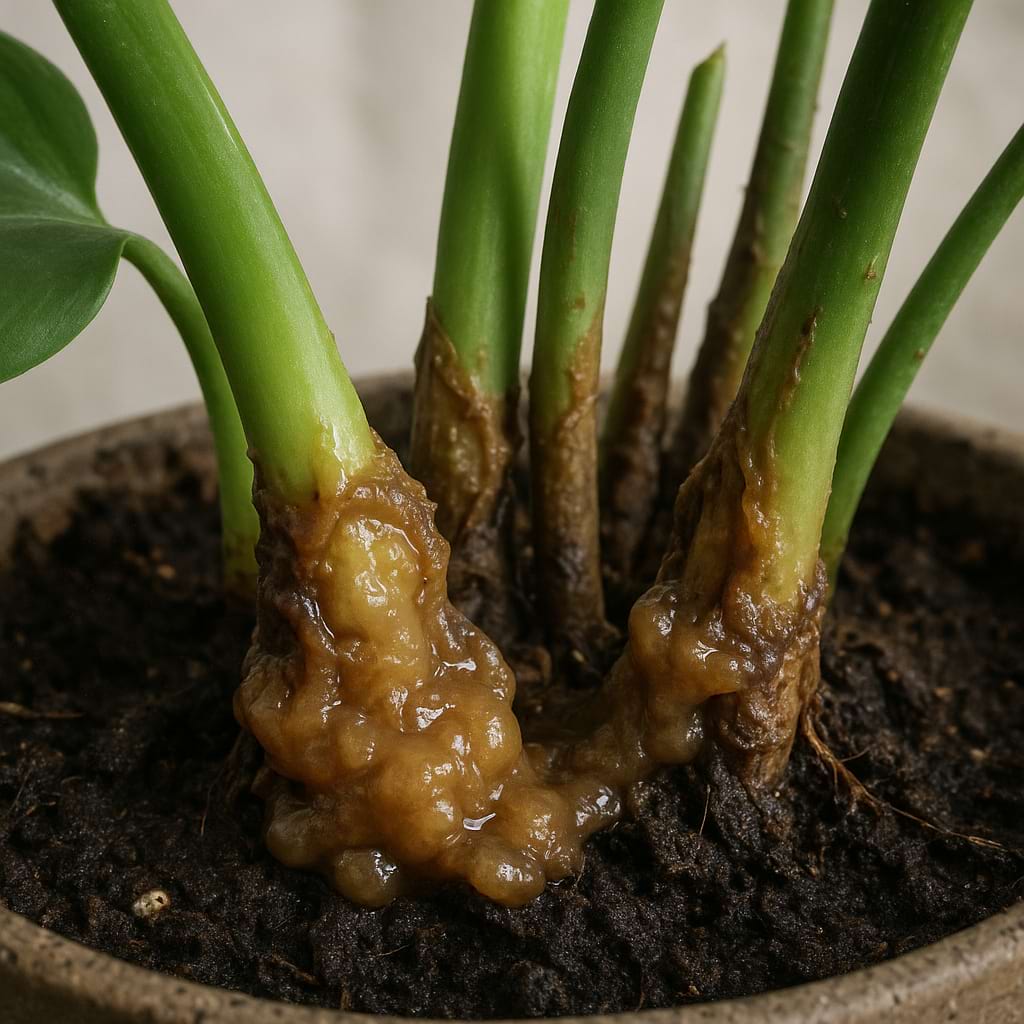
Root rot is the one genuine killer. Translucent yellowing lower leaves, heavy leaf drop, and a sour smell at the soil are the early signs; a soft stem base means it has climbed. Behead every firm healthy rosette, callus the cuts for a week, and re-root in dry grit. Caught early, you can instead unpot, cut away brown mushy roots, and replant in fresh dry mix.
Mushy stems follow rot or a cold, wet winter windowsill. The affected stem cannot be saved, but clean cuttings taken above the damage nearly always re-root.
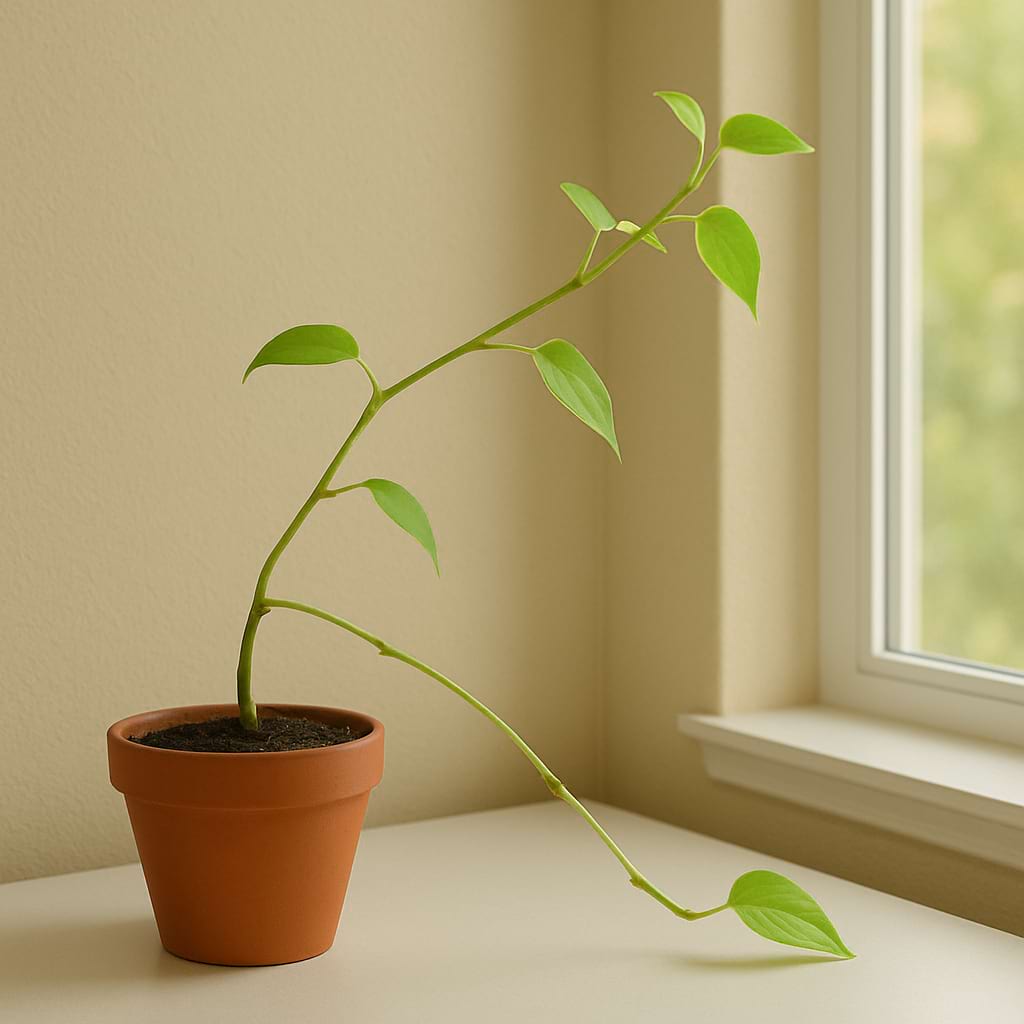
Leggy growth with long bare gaps between leaves is a light problem, full stop. Some stem lengthening is just this plant's natural trailing habit; the difference is that healthy trailing keeps leaves close-set and colorful, while light-starved stretching is sparse, green, and floppy. Brighter placement plus a beheading session fixes the look.
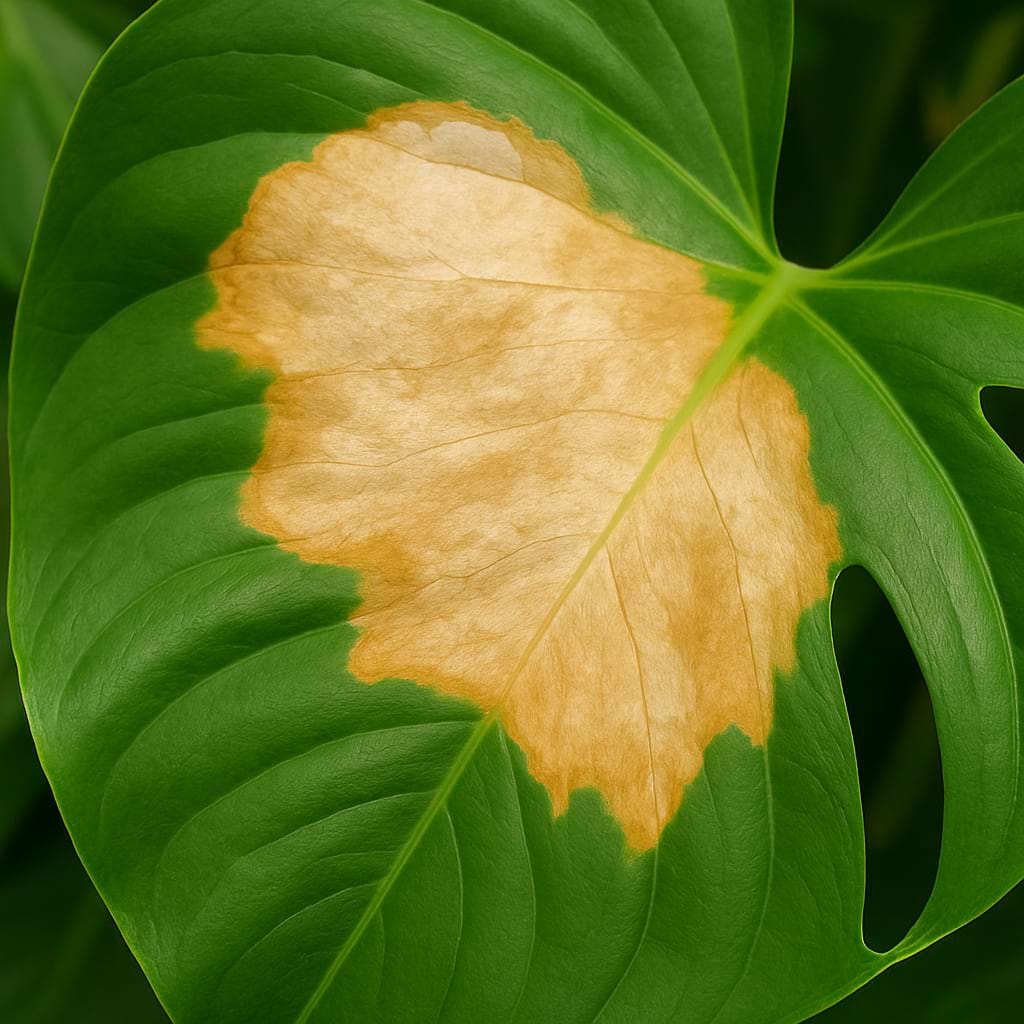
Sunburn and leaf scorch appears as beige papery patches after a sudden move into stronger sun. The marks are permanent on those leaves; harden the plant off gradually next time and new growth covers the damage.
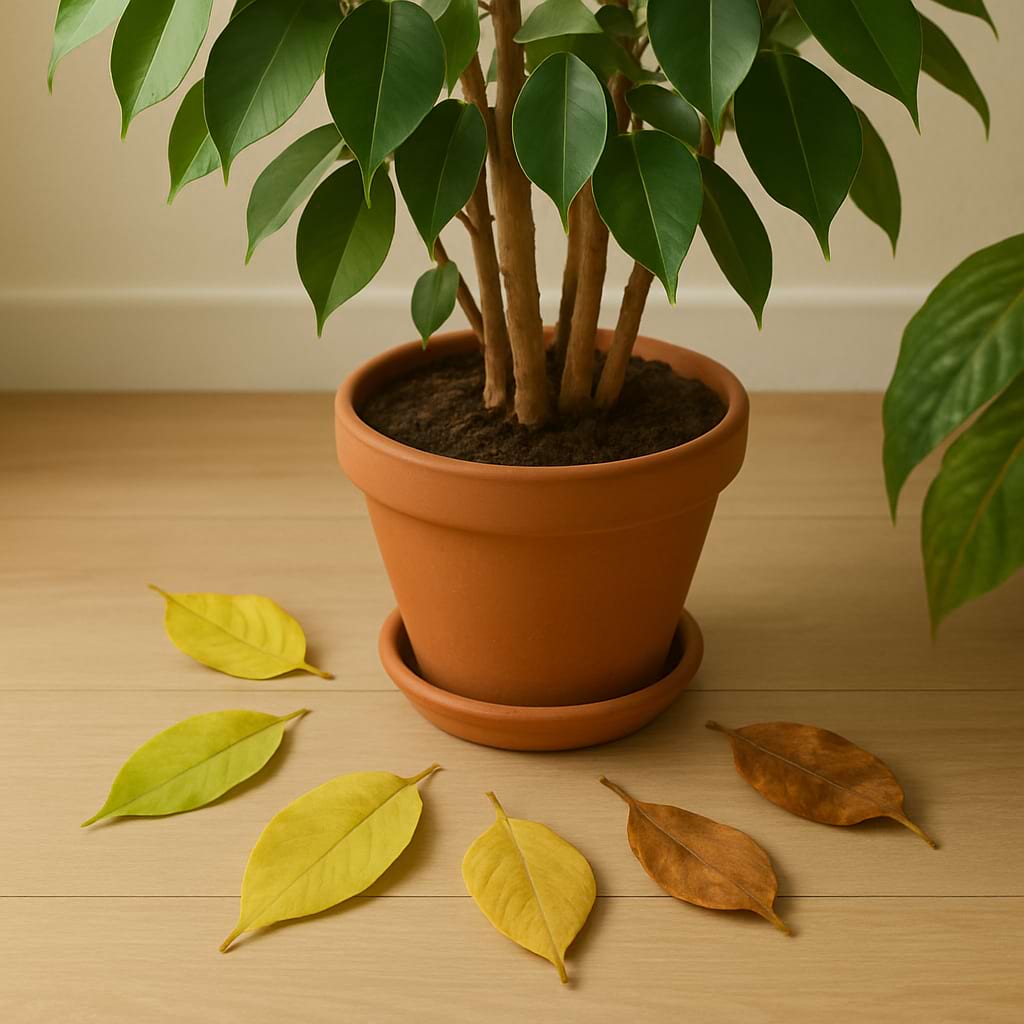
Leaf drop needs translation on this species. Leaves detaching at a bump or a brush is normal, the plant is built to shed and resprout. Worry only when leaves rain off untouched, which points to overwatering if they are soft and translucent, or severe thirst if they are flat and wrinkled.
Yellowing leaves beyond the normal aging of the lowest ring signal chronic overwatering or a clogged, salty pot; flush, dry out, and lengthen the watering interval. Stunted growth on a plant that should be moving usually traces to a heavy peaty mix, a too-large pot holding moisture, or deep shade.

🖼️ Ghost Plant Display and Styling Ideas
This plant changes shape over the years, from a tidy rosette cluster to a full pastel cascade, and the best displays plan for where it is going rather than where it starts.
Solo Setups
A hanging pot near a south or west window is the destination display: within a couple of years the stems pour over the rim and the layered rosettes hang like a pale chandelier. On a high shelf edge or a plant stand, the same trailing habit reads as a slow-motion waterfall. While the plant is young and upright, a simple terracotta or stoneware pot with pale gravel top-dressing keeps the attention on the shifting leaf color.
Grouped Arrangements
The Ghost Plant is the pastel note in a succulent group. Set it spilling from the front of a wide bowl with an upright Jade Plant behind it, a Haworthia for dark glassy contrast, and a Panda Plant for fuzzy texture. Beside other trailers like Burro's Tail or String of Pearls on a sunny shelf, it holds its own with a thicker, more sculptural cascade. Matching simple pots keep the mixed colors from turning busy.
Where Not to Put It
Skip dark hallways, steamy bathrooms, closed terrariums, and anywhere more than a few feet from a bright window; the color fades to plain green-gray long before the plant actually suffers. Just as important, skip high-traffic spots. A Ghost Plant brushing against a curtain you open every morning, or hanging where heads pass under it, will shed leaves constantly. Give it a corner where nothing touches it.
🌟 Ghost Plant Pro Care Tips
- When unsure whether to water, wait three more days. This plant forgives drought and punishes dampness.
- Handle by the pot and the bare stems, never by the rosettes. Every brushed leaf is a dropped leaf.
- Never wipe or touch the leaves; the farina does not grow back, and every fingerprint is permanent on that leaf.
- Drop every healthy fallen leaf back onto the soil surface. Free plants, zero effort.
- Want pink? More direct sun, cooler nights, and lean dry soil push the color from gray toward opal.
- Quarter-turn the pot weekly so the trailing stems develop evenly instead of all reaching one way.
- Use terracotta for your first year with this plant; the faster-drying clay covers your watering mistakes.
- Quarantine new succulents for a month before shelving them with your collection; root mealybugs travel in nursery pots.
- A summer outside on a sheltered balcony or porch rail thickens the leaves and supercharges the color. Harden it to full sun gradually and bring it in before sustained freezes.
- Plan for the trail. Starting in a hanging pot or on a shelf edge now beats disturbing (and de-leafing) the plant in a move later.
❓ Frequently Asked Questions
Why is my Ghost Plant changing color?
Because that is what Ghost Plants do. The leaf color tracks light, temperature, and drought: gentle light gives powdery blue-gray, while strong direct sun, cool nights, and lean dry soil shift the leaves toward opal pink and peach. A drift toward plain flat green is the only "bad" color, and it means the plant wants more sun.
Why do leaves fall off my Ghost Plant when I barely touch it?
The leaves attach loosely by design; in habitat, dropped leaves are how the plant spreads, since each one can root into a new plant. Shedding from handling is normal and harmless. Heavy leaf fall without any touching is different: soft translucent dropped leaves point to overwatering, wrinkled flat ones to severe thirst.
How often should I water a Ghost Plant indoors?
Roughly every 10 to 14 days in spring and summer for a small terracotta pot in a sunny window, always waiting for the soil to dry fully first. In winter, cut back to once every four to six weeks in a warm room, or nearly nothing if the plant rests somewhere cool.
Is the Ghost Plant safe for cats and dogs?
Yes. Graptopetalum paraguayense is considered non-toxic to cats, dogs, and humans. A nibbled leaf may cause a mild upset stomach simply because fleshy plant tissue is not pet food, but there are no toxic compounds in the plant. The bigger risk is to the plant, since every batted leaf falls off.
What is the difference between a Ghost Plant and an Echeveria?
An Echeveria stays a tight, stemless rosette sitting on the soil, while a Ghost Plant grows its looser, more pointed rosettes at the tips of stems that lengthen and trail over time. The Ghost Plant is also far more cold-hardy and more casual about neglect, but its leaves detach much more easily. Care is otherwise nearly identical.
Why is my Ghost Plant leggy, with long bare stems?
Some bare stem is normal; rosettes ride at the tips of stems that keep lengthening for years, which is what makes the plant trail. Light-starved stretching looks different: wide gaps between small pale green leaves and floppy growth that leans hard toward the window. Move the plant into direct sun and behead the worst stems; the tops re-root into compact plants and the stumps resprout.
Can a Ghost Plant grow outdoors?
In zones 7 through 11, yes, year-round in a spot with sharp drainage and protection from winter wet; it is among the most frost-tolerant rosette succulents, taking brief dips near 10°F (-12°C) when dry. Everywhere else, treat it as a houseplant that summers outside. Move it out after the last frost, harden it to full sun over two weeks, and bring it back in before hard freezes.
Does the Ghost Plant flower indoors?
Yes, reliably, once mature. In late winter and spring a sun-grown plant sends up slender sprays of small white star-shaped flowers flecked with red, and the show lasts several weeks. Strong light through the previous year plus a cool, nearly dry winter rest are what set the buds.
Is the Ghost Plant really from Paraguay?
No, and the name is a 100-year-old mistake. The species was described in 1907 from cultivated plants whose paperwork wrongly traced them to Paraguay, and the name stuck. Wild Ghost Plants grow on rocky cliffs in Tamaulipas in northeastern Mexico, which explains everything about their care: full sun, sharp drainage, dry air, and surprising cold tolerance.
ℹ️ Ghost Plant Info
Care and Maintenance
🪴 Soil Type and pH: Gritty, fast-draining cactus and succulent mix with added pumice, perlite, or coarse sand; neutral to slightly acidic pH.
💧 Humidity and Misting: Happiest in dry household air around 30 to 45 percent; dislikes damp, still corners.
✂️ Pruning: Behead leggy stems and trim spent flower stalks; the cuttings all root into new plants.
🧼 Cleaning: Hands off. The pale farina coating is the plant's sunscreen, and every fingerprint leaves a permanent glossy smudge on that leaf.
🌱 Repotting: Bump up one pot size in spring every 2 to 3 years, or when trailing stems have clearly outgrown the container.
🔄 Repotting Frequency: Every 2-3 years
❄️ Seasonal Changes in Care: Active growth in spring and autumn; slows in midsummer heat and rests nearly dry through winter.
Growing Characteristics
💥 Growth Speed: Moderate
🔄 Life Cycle: Perennial
💥 Bloom Time: Late winter through spring on mature stems
🌡️ Hardiness Zones: 7-11 outdoors with dry winter soil; grown as a houseplant in all other zones
🗺️ Native Area: Northeastern Mexico (Tamaulipas), on rocky cliffs; not Paraguay, despite the species name
🚘 Hibernation: Cool, nearly dry winter rest at 45 to 55°F (7 to 13°C) keeps growth compact and sets up spring flowers
Propagation and Health
📍 Suitable Locations: Sunny south or west windowsills, hanging pots near bright windows, sunrooms, sheltered summer balconies and porch rails
🪴 Propagation Methods: Extremely easy from single leaves, stem cuttings, and beheaded rosettes.
🐛 Common Pests: Mealybugs, Aphids, Scale Insects, Spider Mites, Root Mealybugs, Fungus Gnats
🦠 Possible Diseases: Root rot, mushy stems, fungal spotting from water trapped in the rosettes
Plant Details
🌿 Plant Type: Trailing rosette succulent
🍃 Foliage Type: Plump, pointed, spoon-to-wedge shaped leaves in loose rosettes at the tips of lengthening stems, coated in pale epicuticular wax (farina)
🎨 Color of Leaves: Opalescent gray-blue in bright shade, shifting to pearly pink, lavender, and peach in full sun
🌸 Flower Color: Small white star-shaped flowers flecked with red, on branched sprays
🌼 Blooming: Yes; reliable in spring on mature, sun-grown plants
🍽️ Edibility: Not eaten; non-toxic but not a food plant
📏 Mature Size: Rosettes sit 4-6 inches tall; stems lengthen and trail 1-3 feet over the years
Additional Info
🌻 General Benefits: Nearly unkillable, pet-safe, color-shifting foliage, trails beautifully, self-propagates from dropped leaves
💊 Medical Properties: None of significance for indoor growers
🧿 Feng Shui: A soft pearly cascade for a sunny ledge; the gentle pastel shift reads as calm, adaptable energy by a window
⭐ Zodiac Sign Compatibility: Pisces
🌈 Symbolism or Folklore: Quiet resilience, renewal, and graceful aging
📝 Interesting Facts: The Ghost Plant has never grown wild in Paraguay. It was named in 1907 from plants in a New York collection whose origin had been garbled along the trade route, and wild populations were only later documented on cliffs in Tamaulipas, Mexico. The genus name Graptopetalum means "marked petals," after the red flecks on the flowers. The species is also a famous parent: crossed with Echeveria it produced the Graptoveria hybrids like 'Fred Ives', and crossed with Sedum it gave us Graptosedum classics like 'California Sunset'.
Buying and Usage
🛒 What to Look for When Buying: Pick a plant with tight rosettes, plump unwrinkled leaves, and an even pale coating of farina. Expect a few loose leaves in the pot, the plant sheds at a touch, but avoid stretched plants with long gaps between leaves, shiny wiped-looking patches, or any stem that feels soft at the soil line.
🪴 Other Uses: Hanging baskets, rock gardens in mild climates, succulent wreaths and wall planters, beginner propagation projects, cut rosettes in bouquets
Decoration and Styling
🖼️ Display Ideas: A hanging pot near a south window where the stems can cascade, a high shelf with the rosettes spilling over the edge, or a wide shallow bowl where the stems sprawl into a pastel mound
🧵 Styling Tips: Give the stems room to hang; the plant looks best once the rosettes clear the pot rim. Pale gravel top-dressing and a simple pot keep the focus on the shifting leaf color.
🪴 See also 🪴
Complete Guide to Leaf of Life Care and Growth
Complete Guide to Aeonium Care and Growth
Complete Guide to Crested Brain Cactus Care and Growth
Complete Guide to Feather Cactus Care and Growth
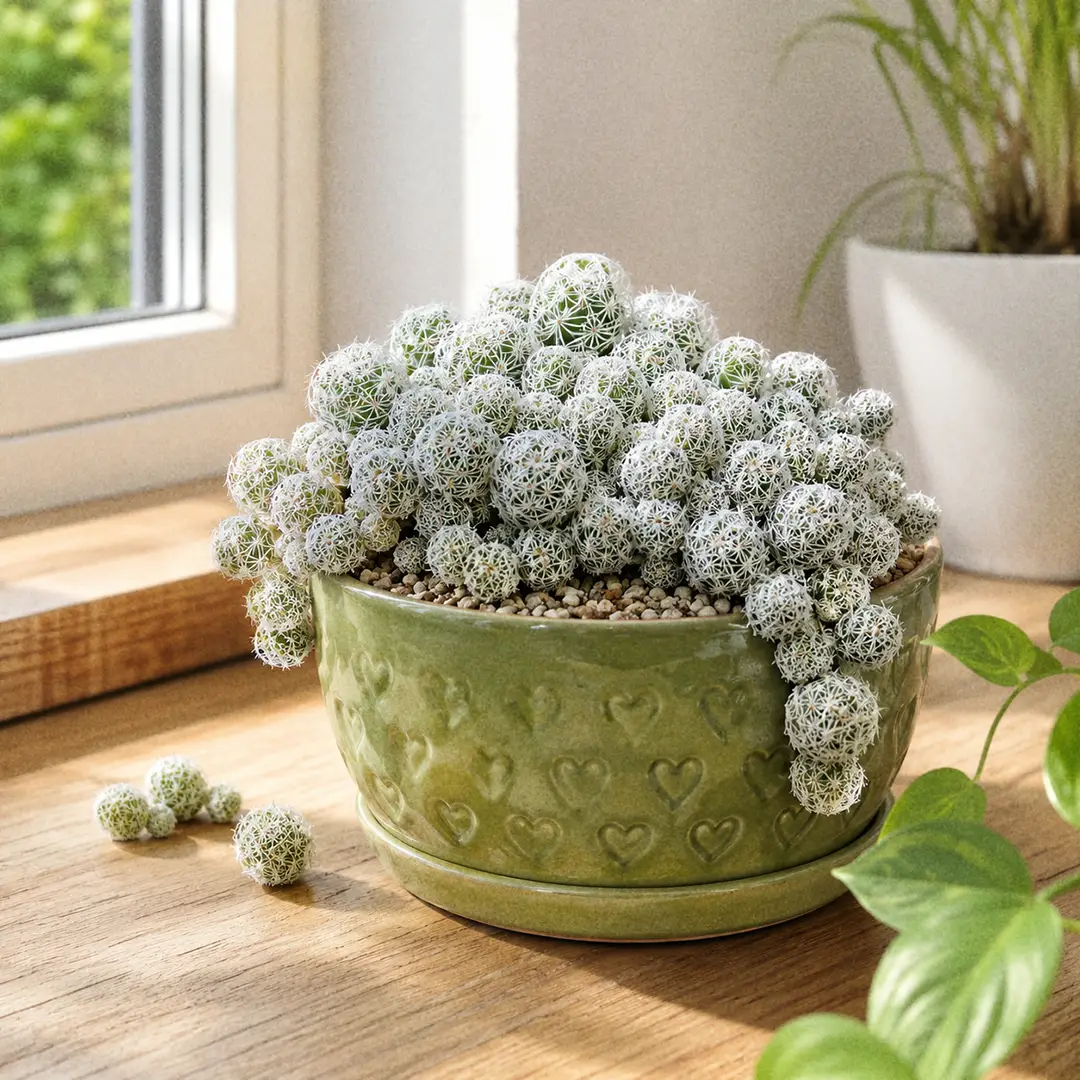
Complete Guide to Snowball Cactus Care and Growth
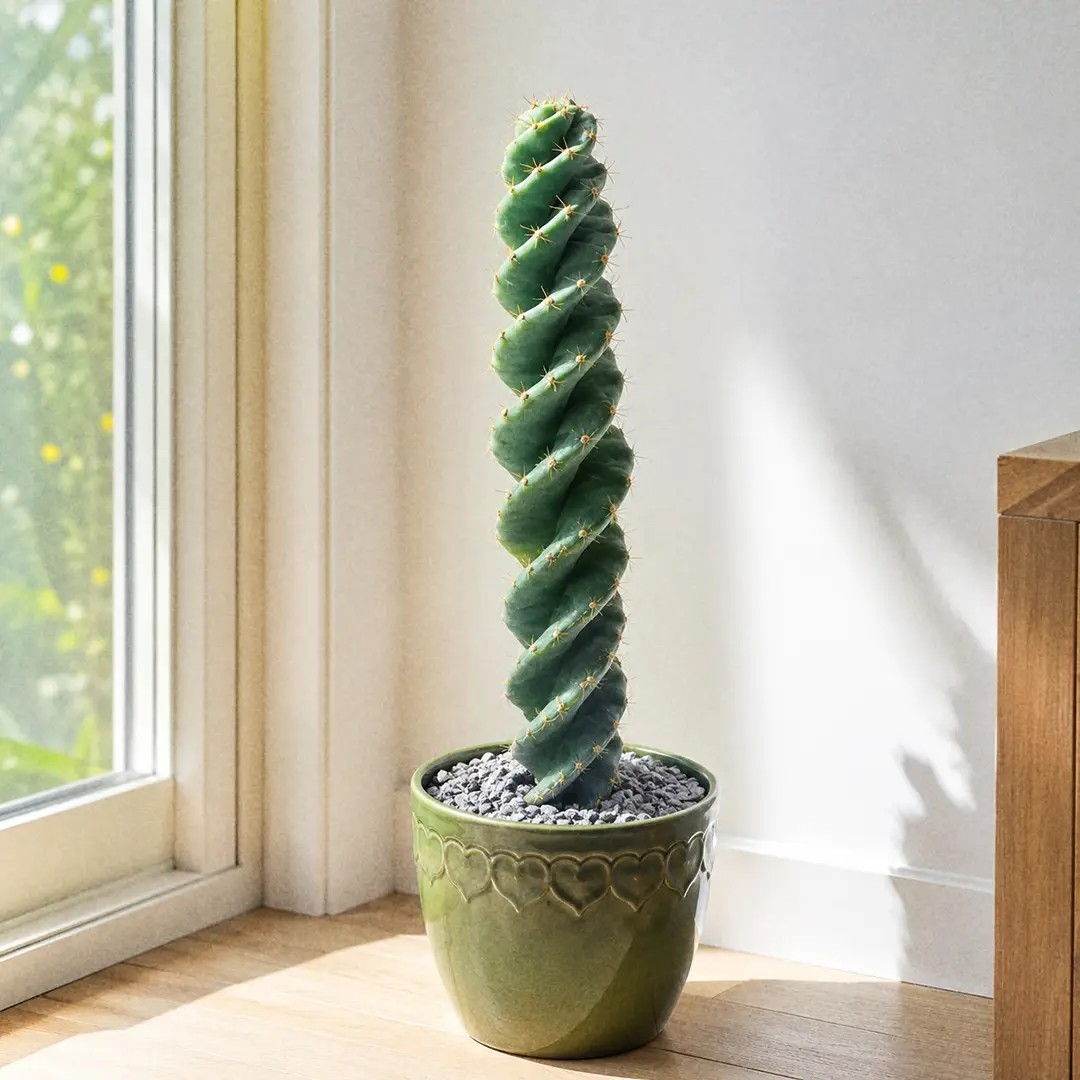
Complete Guide to Spiral Cactus Care and Growth
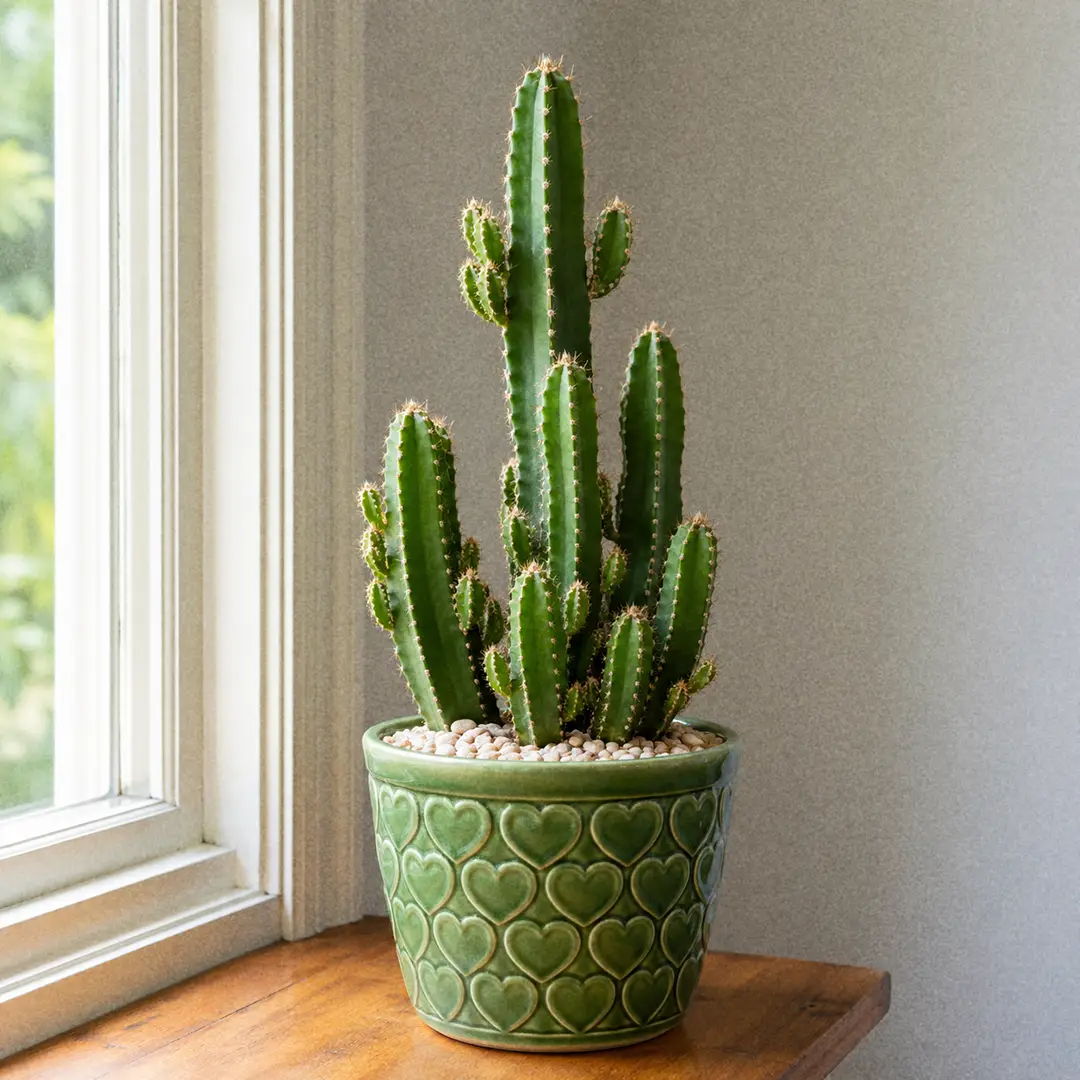
Complete Guide to Fairy Castle Cactus Care and Growth
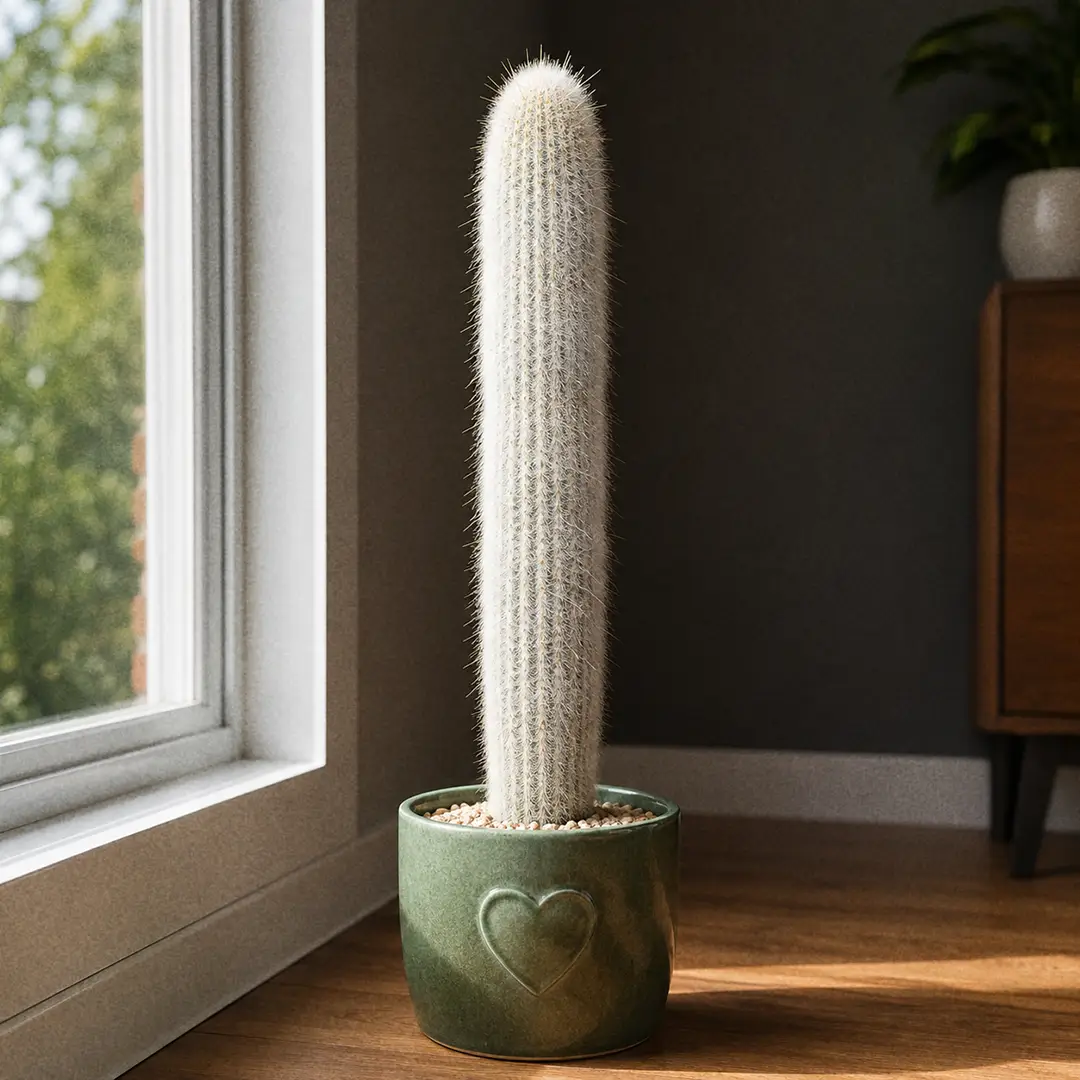
Complete Guide to Silver Torch Cactus Care and Growth
Complete Guide to Crown Cactus Care and Growth
How to Propagate Succulents from Leaves & Offsets
Succulent Care Indoors: How to Stop Killing Jade and Echeveria
Complete Guide to Lithops Care and Growth (Living Stones)
Complete Guide To Aloe Vera Care and Growth
Complete Guide to Burro's Tail Care and Growth
Complete Guide to Crown of Thorns Care and Growth
Complete Guide to Echeveria Care and Growth
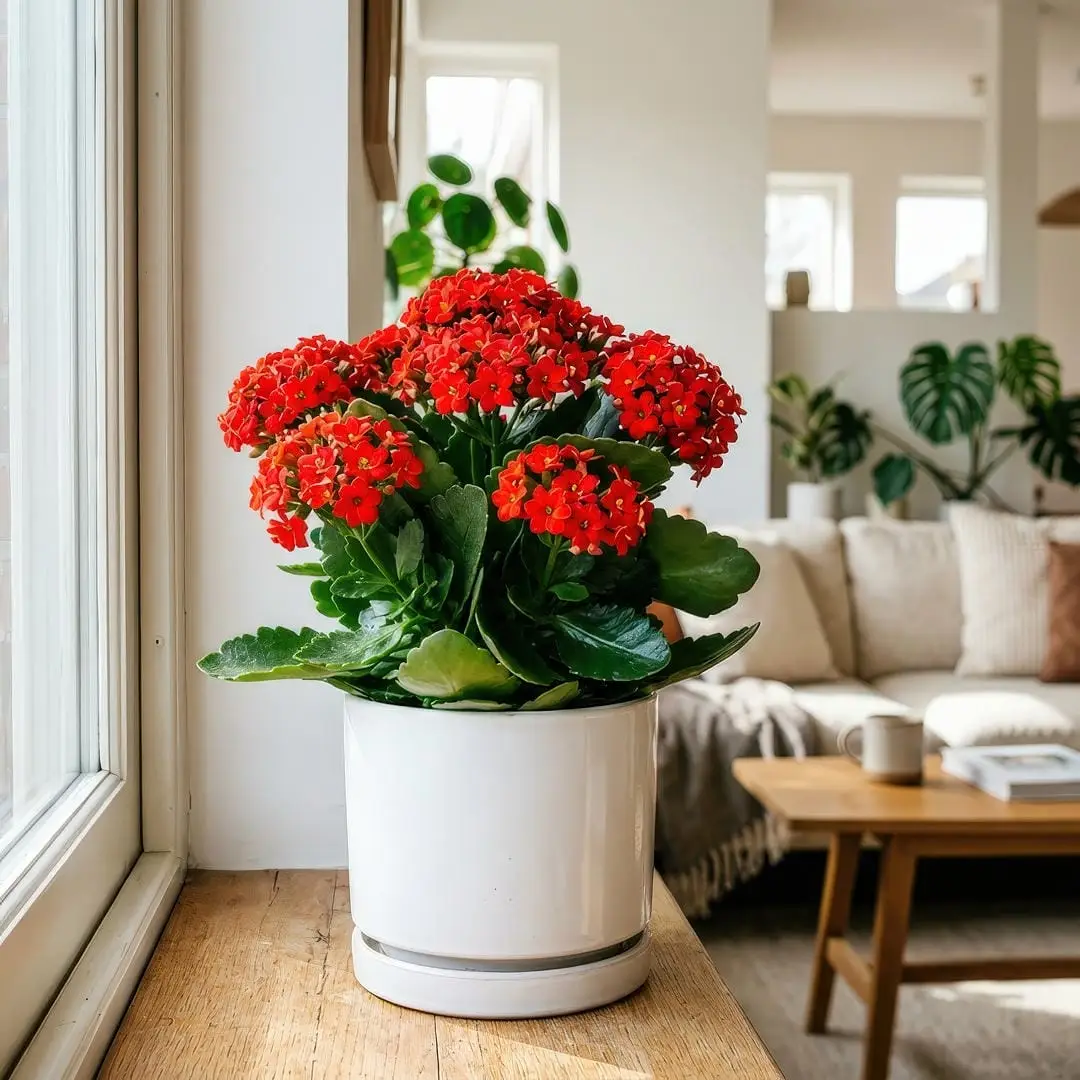
Complete Guide to Flaming Katy Care and Growth
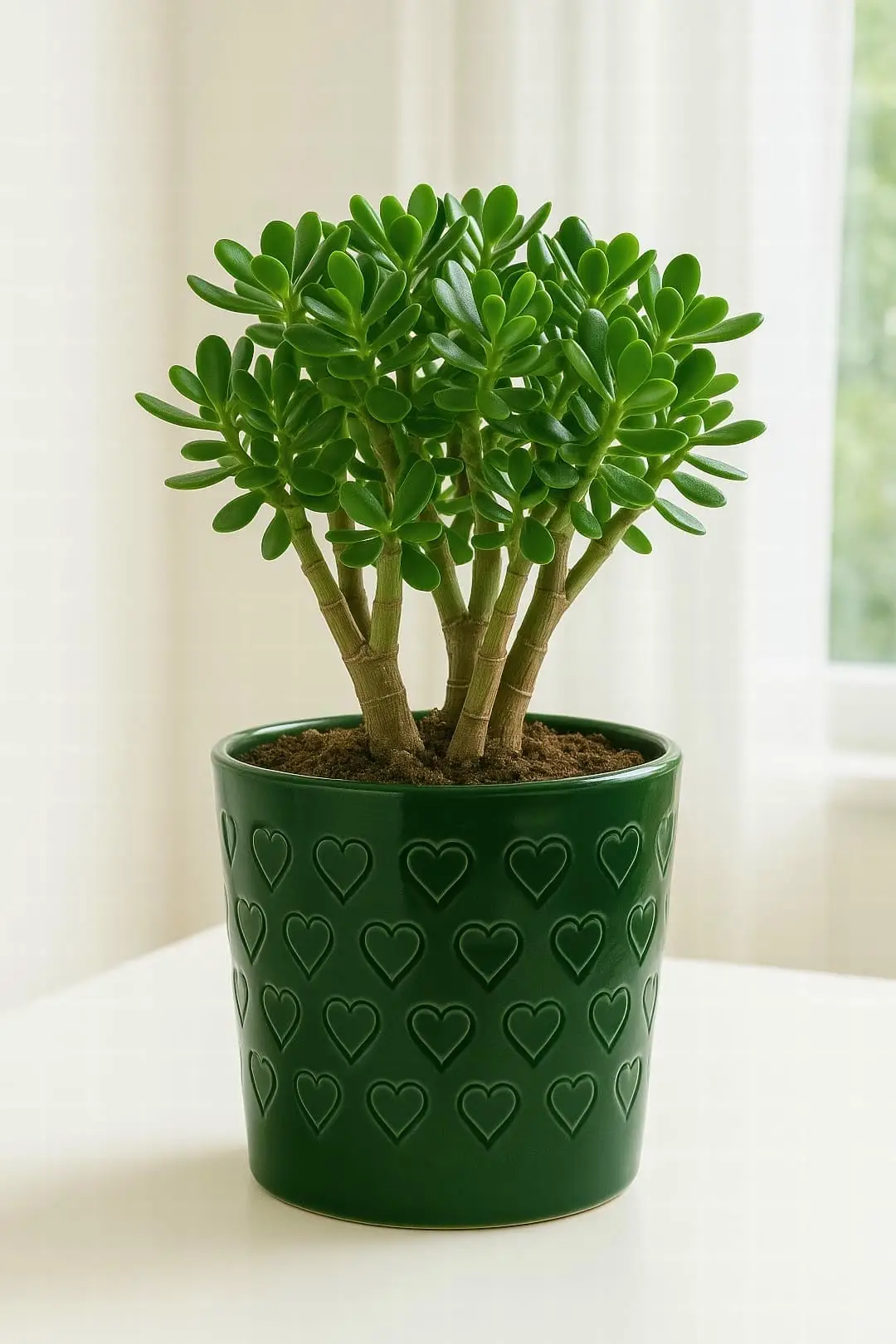
Complete Guide to Jade Plant Care and Growth
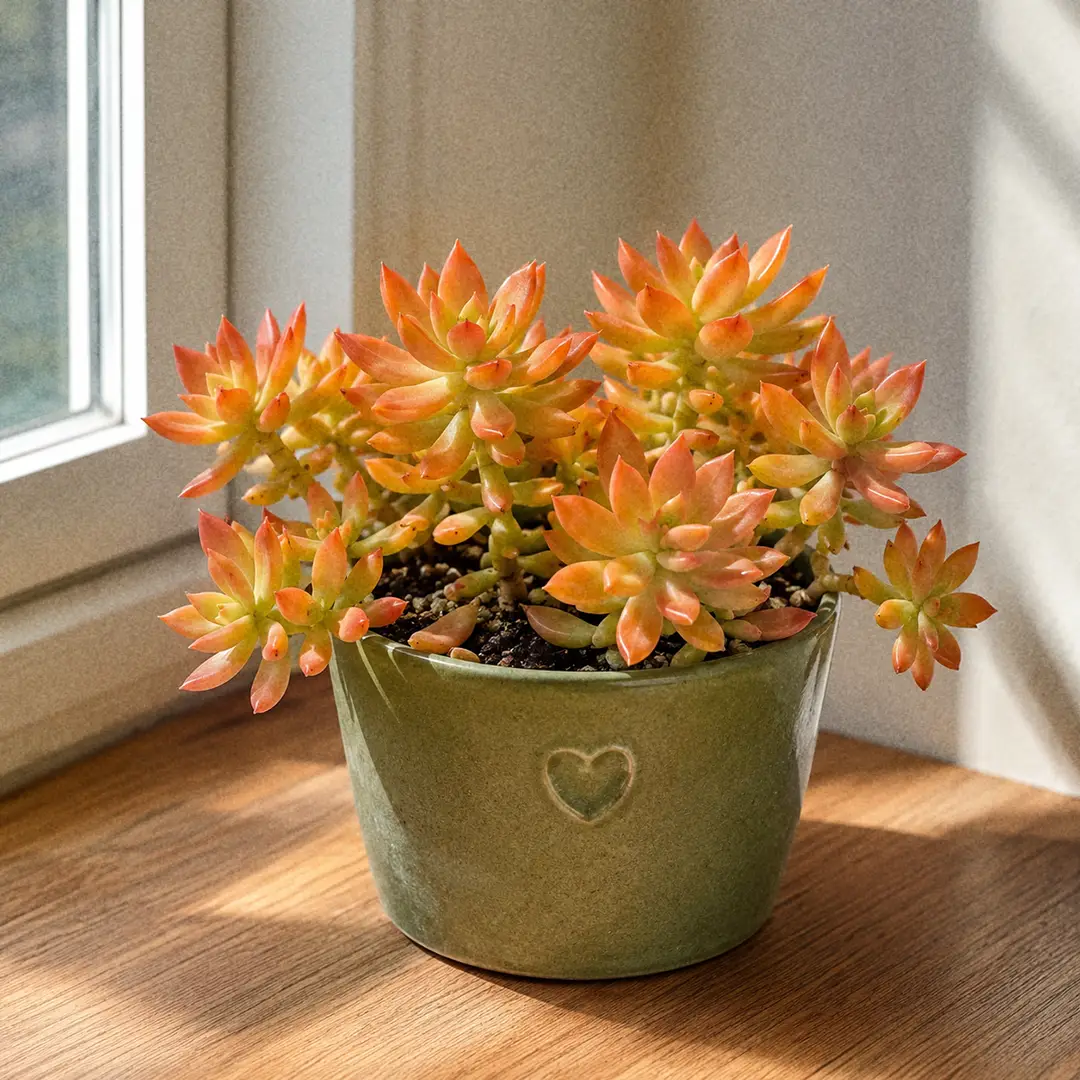
Complete Guide to Sedum Adolphii Care and Growth
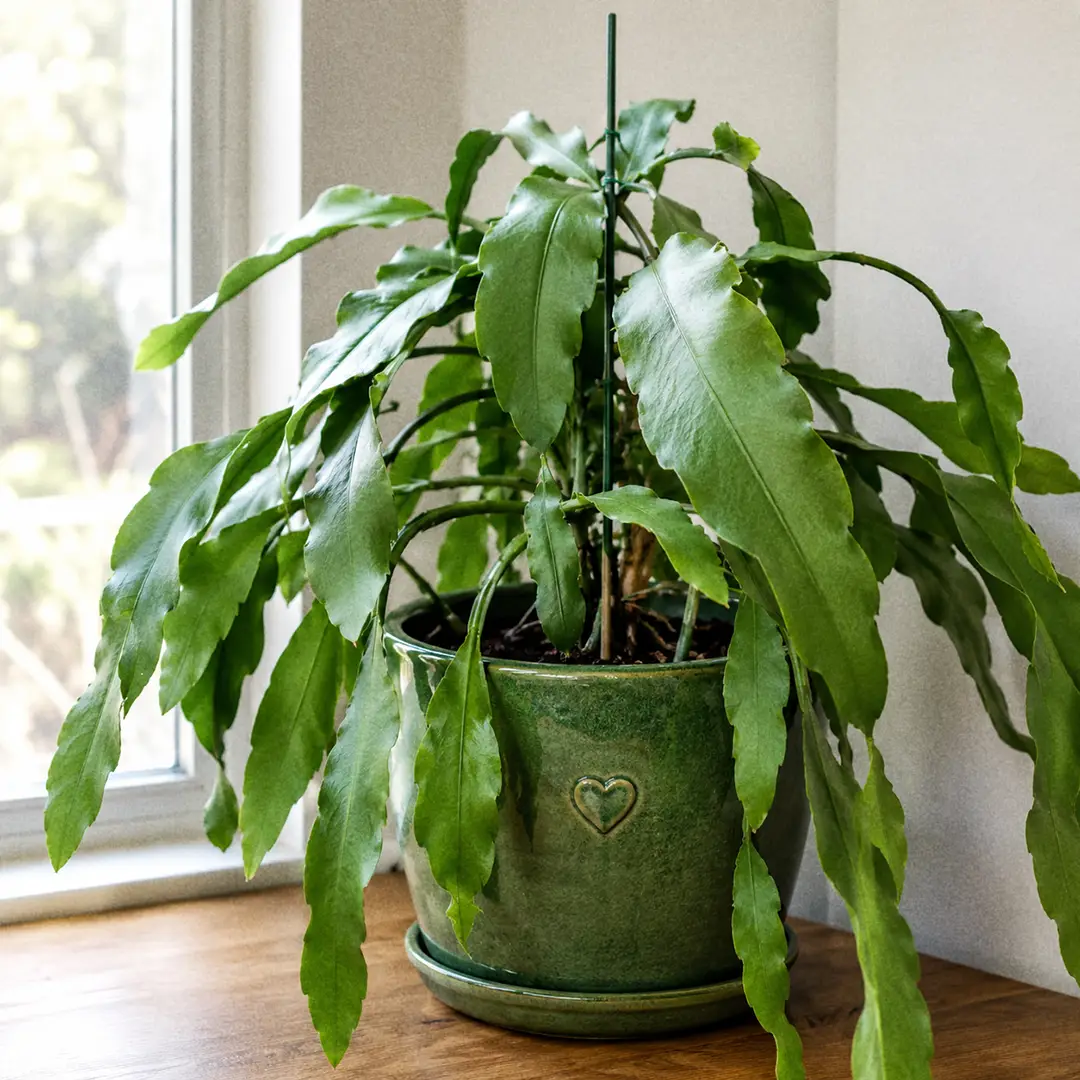
Complete Guide to Queen of the Night Care and Growth
Complete Guide to Domino Cactus Care and Growth
Complete Guide to Easter Lily Cactus Care and Growth
Complete Guide to Peanut Cactus Care and Growth
Complete Guide to Rat Tail Cactus Care and Growth
Complete Guide to Hens and Chicks Care and Growth
Complete Guide to String of Coins Care and Growth
Complete Guide to Silver Squill Care and Growth
Complete Guide to Jelly Bean Plant Care and Growth
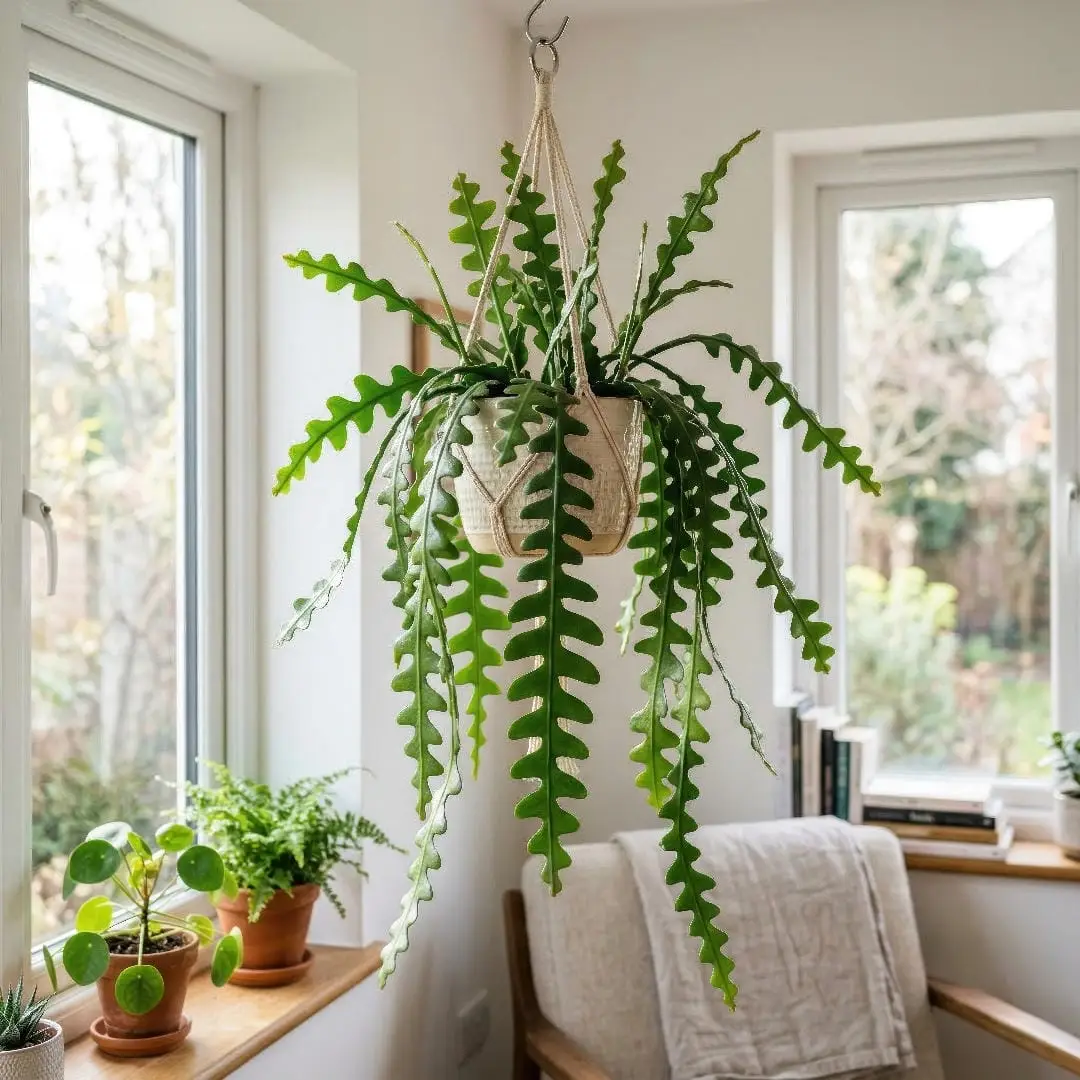
Complete Guide to Fishbone Cactus Care and Growth
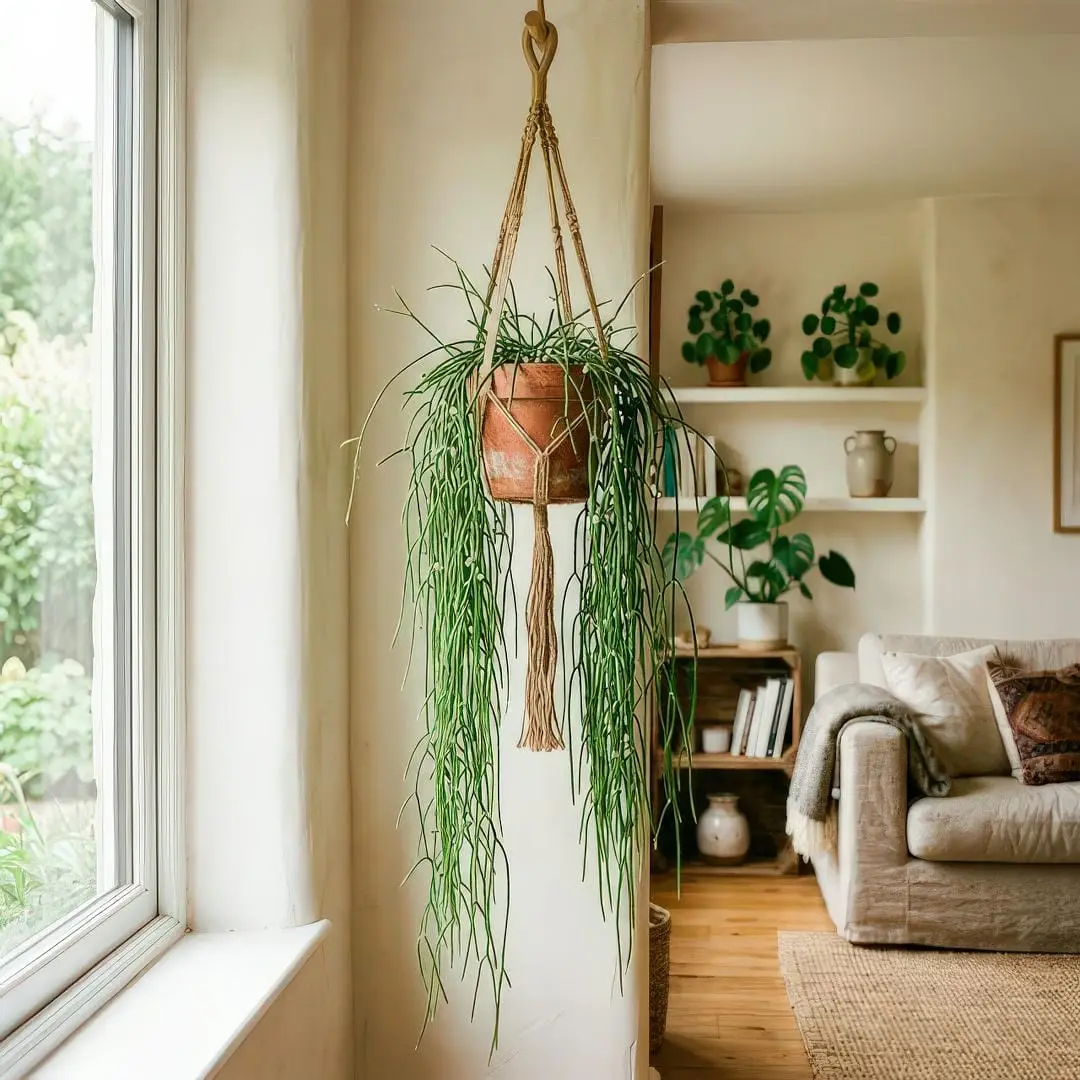
Complete Guide to Mistletoe Cactus Care and Growth
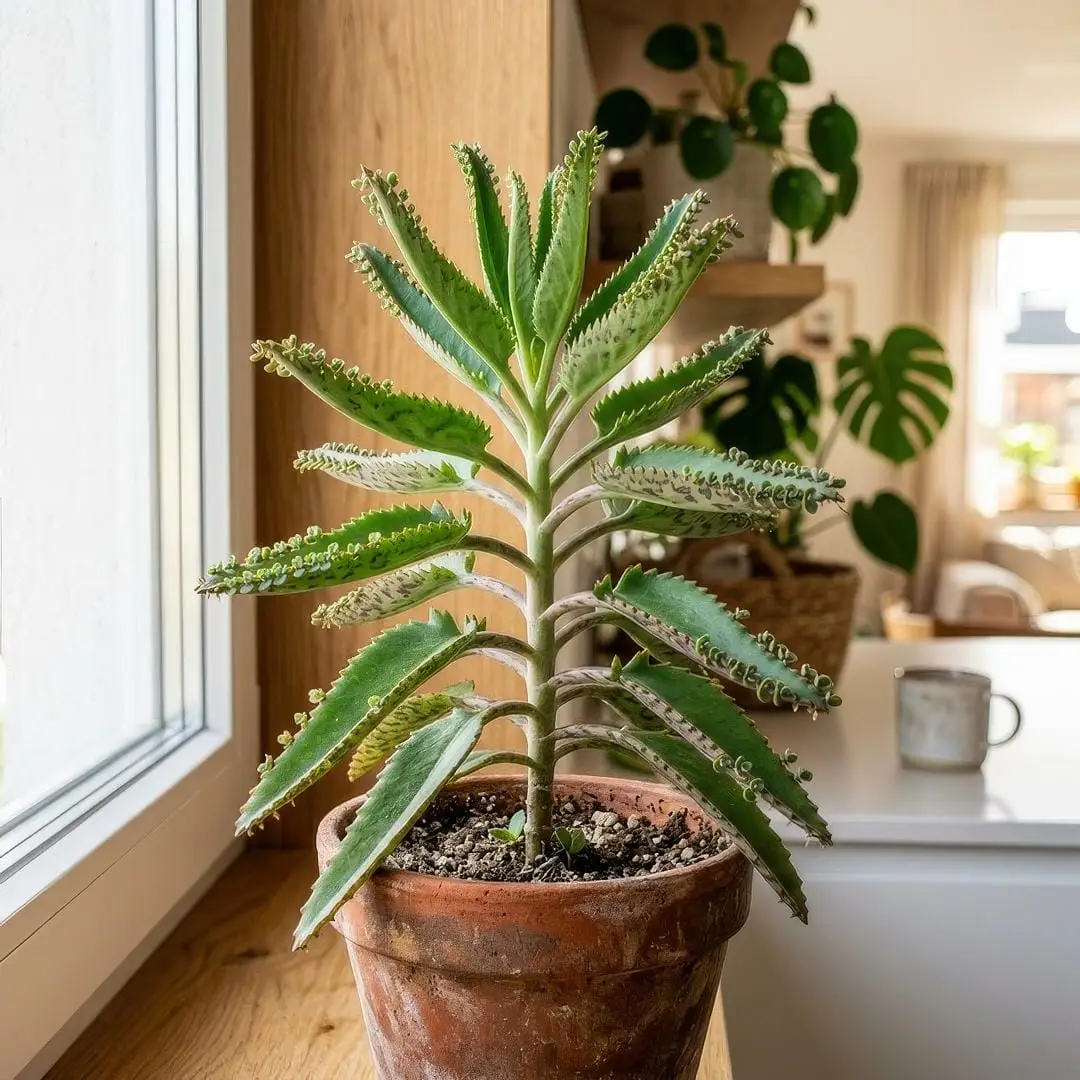
Complete Guide to Mother of Thousands Care and Growth
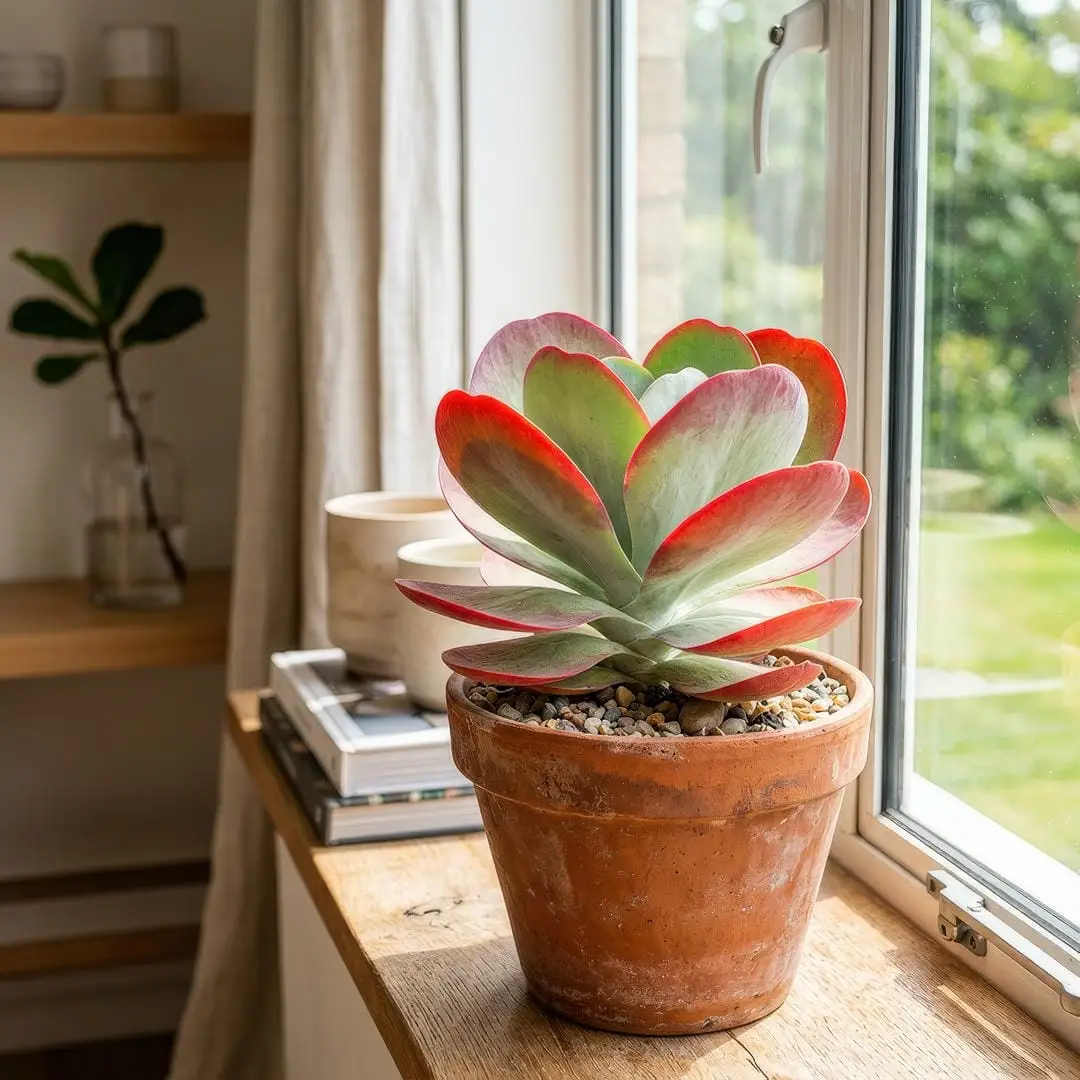
Complete Guide to Paddle Plant Care and Growth
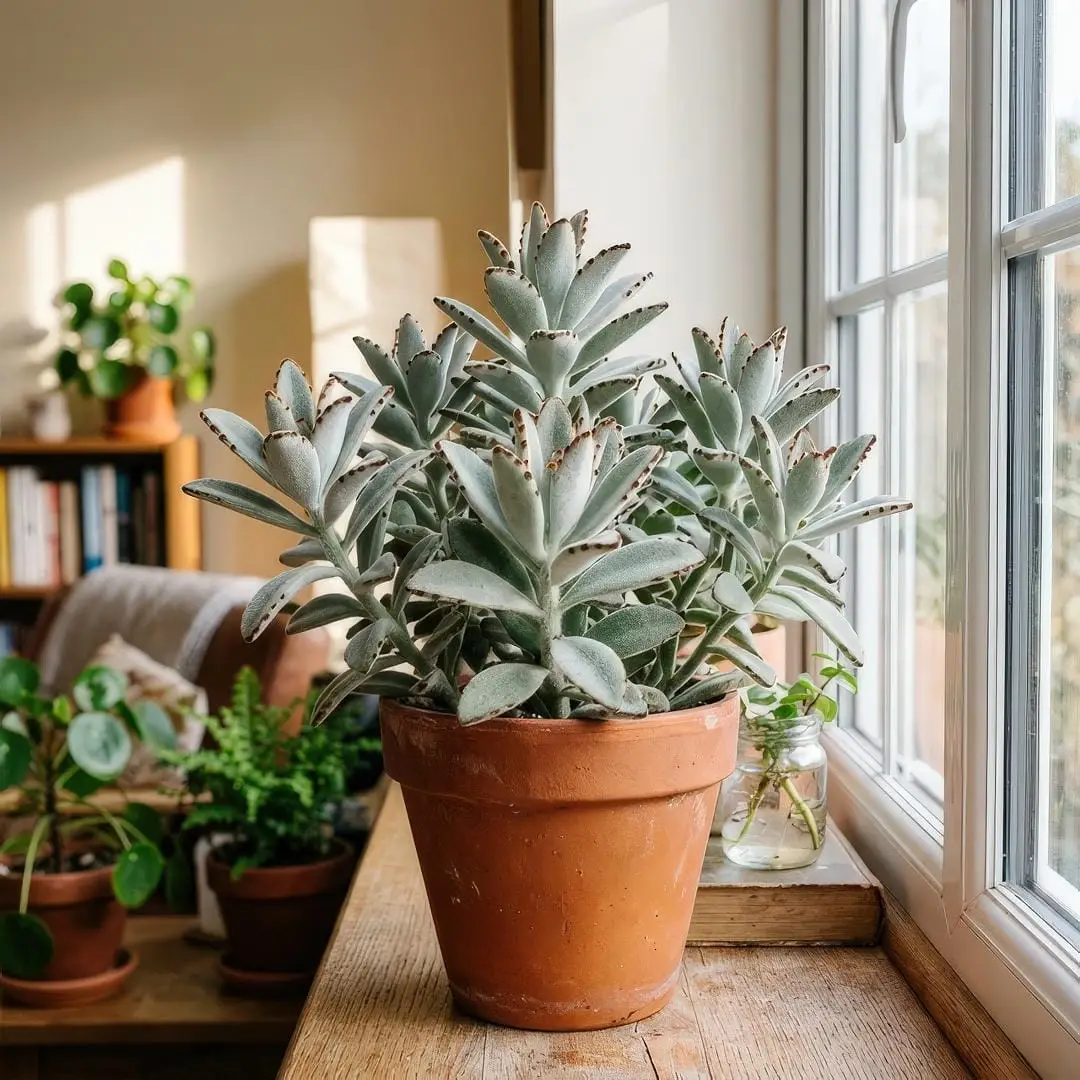
Complete Guide to Panda Plant Care and Growth

Complete Guide to Elephant Bush Care and Growth
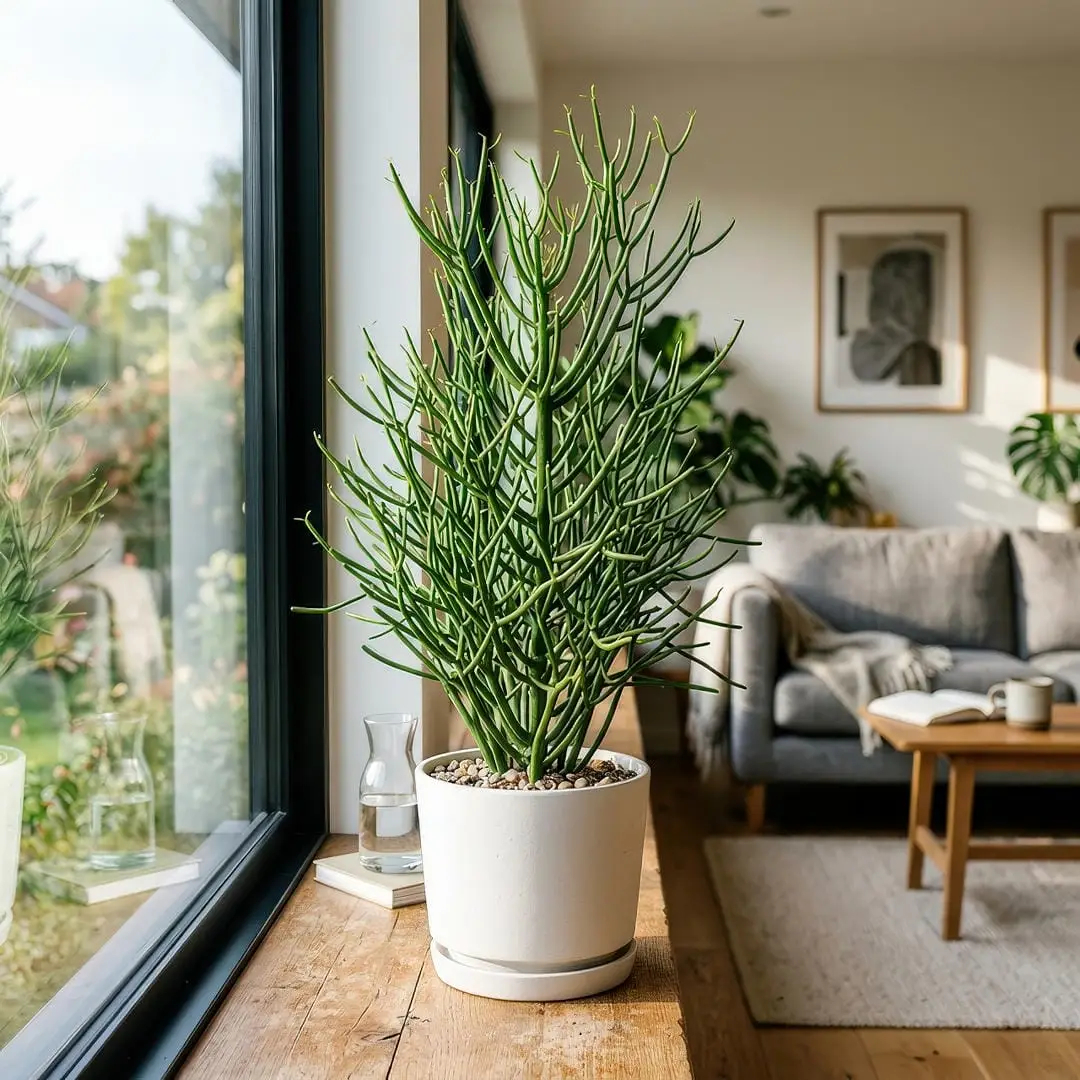
Complete Guide to Pencil Cactus Care and Growth
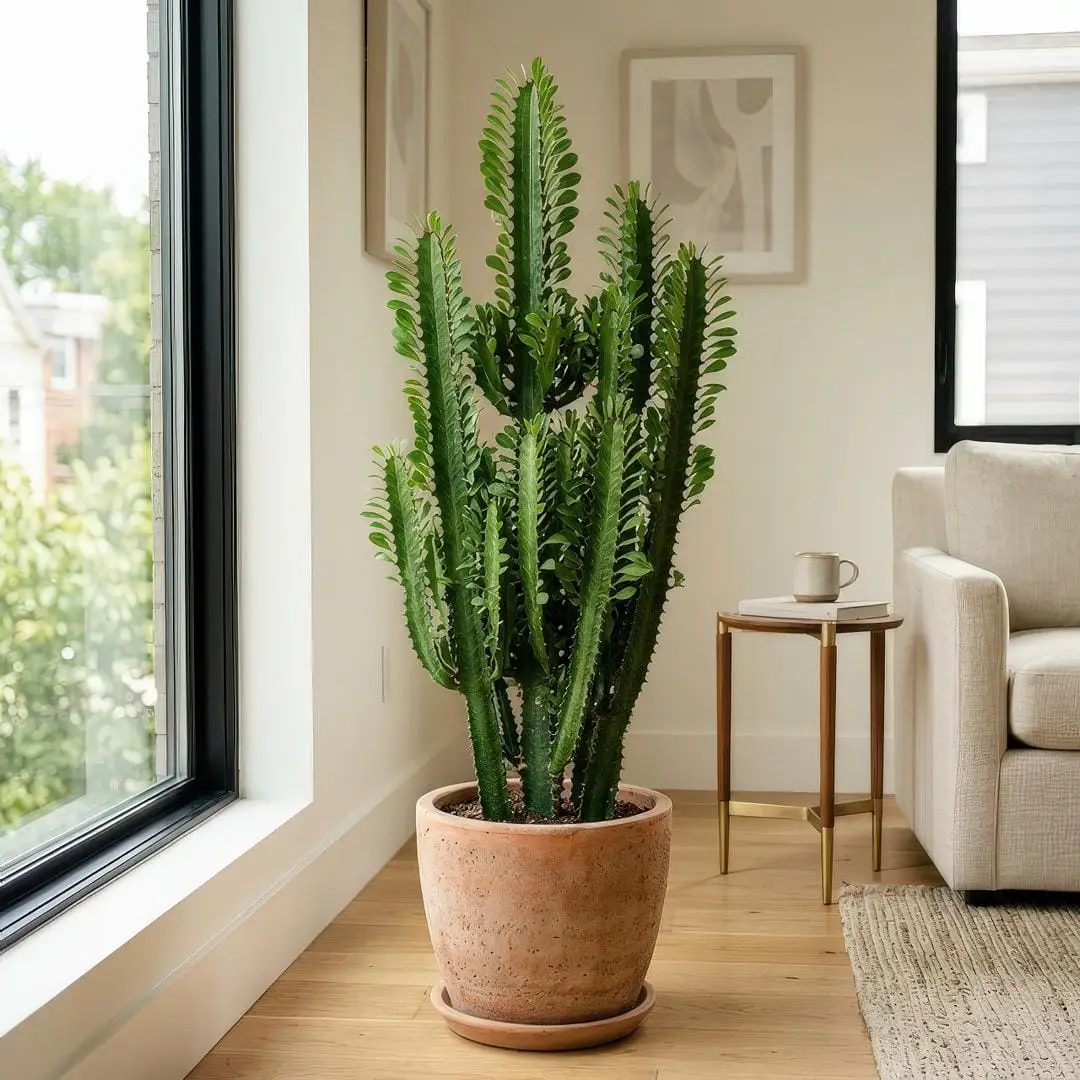
Complete Guide to African Milk Tree Care and Growth
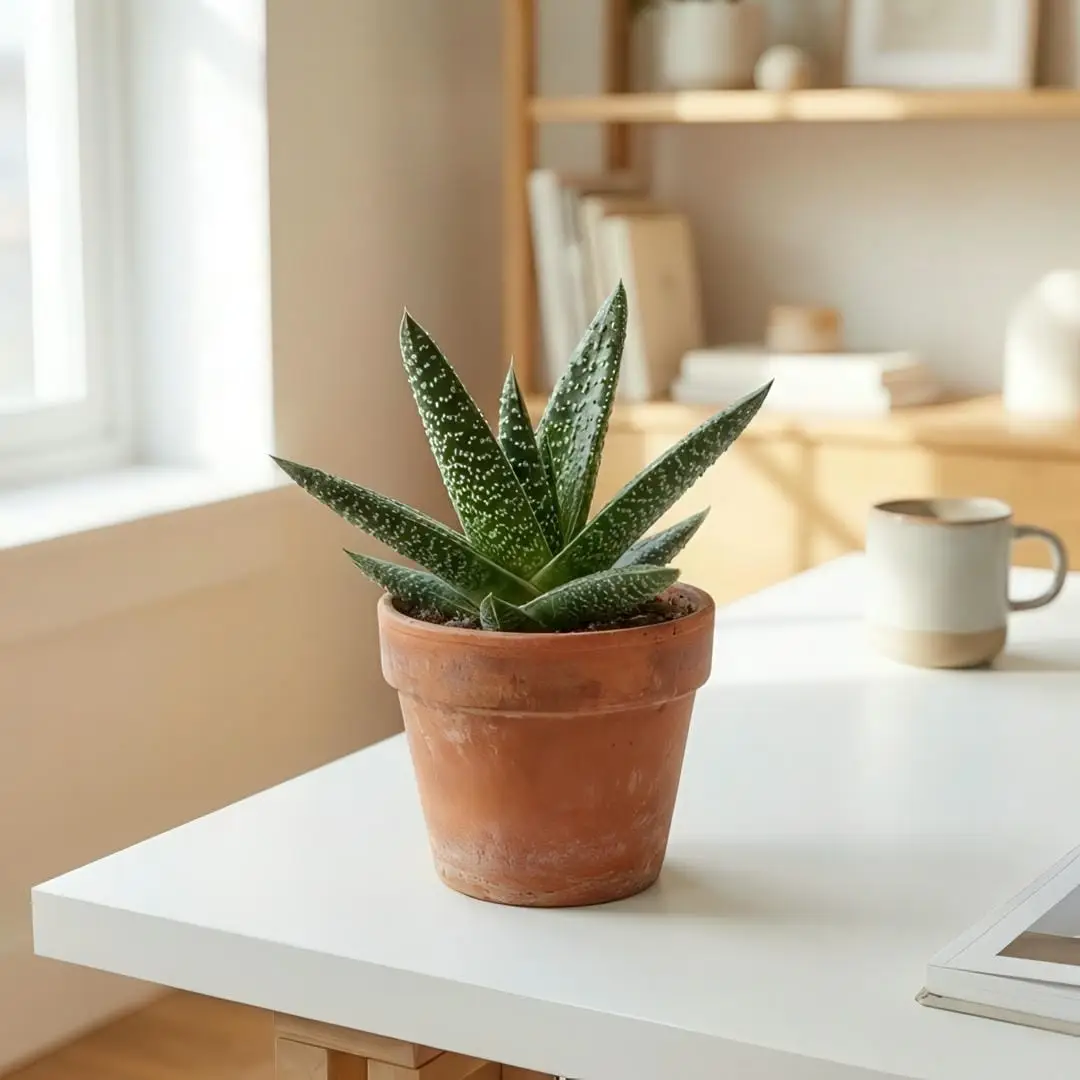
Complete Guide to Gasteria 'Little Warty' Care and Growth
Ox Tongue Care

Houseplant101 Forum
Questions & Comments
Ask a question, share your plant experience, or help other plant owners.
Comments are temporarily unavailable.
Open the Houseplant101 ForumNo comments yet
Be the first to ask a question or share your experience about this page.
Log in or create an account
Comments use your Houseplant101 Forum account, but you can stay on this page.
Create a new account