
Lady Finger Cactus
Mammillaria elongata
Ladyfinger Cactus, Gold Lace Cactus, Golden Stars, Brain Cactus (crested form)


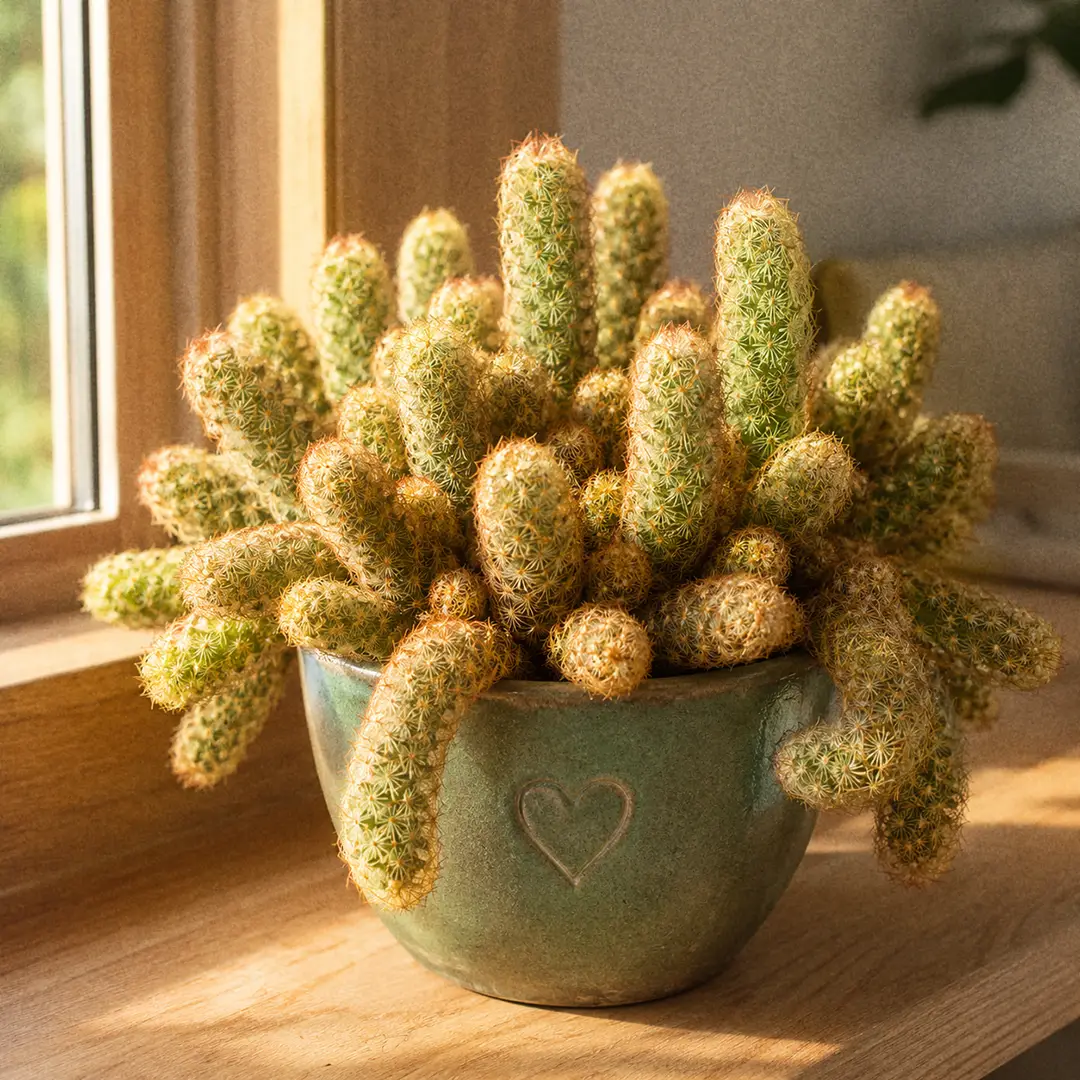
The Lady Finger Cactus (Mammillaria elongata) is the clump of slim golden fingers that fills its pot faster than almost any other small cactus and roots from a single snapped-off stem. It is one of the easiest cacti to keep alive and, by a wide margin, the easiest one to multiply.
📝 Lady Finger Cactus Care Notes
🌿 Care Instructions
⚠️ Common Pests
📊 Growth Information
🪴 In This Guide 🪴

☀️ Lady Finger Cactus Light Requirements (Full to Bright Sun)
Light is the one thing a Lady Finger Cactus will not negotiate on. This is a full-sun plant from open limestone slopes in central Mexico, and fingers that stretch thin in a dim spot stay that way for good. Get the window right and the rest of the care routine is almost boringly easy.
The Sweet Spot
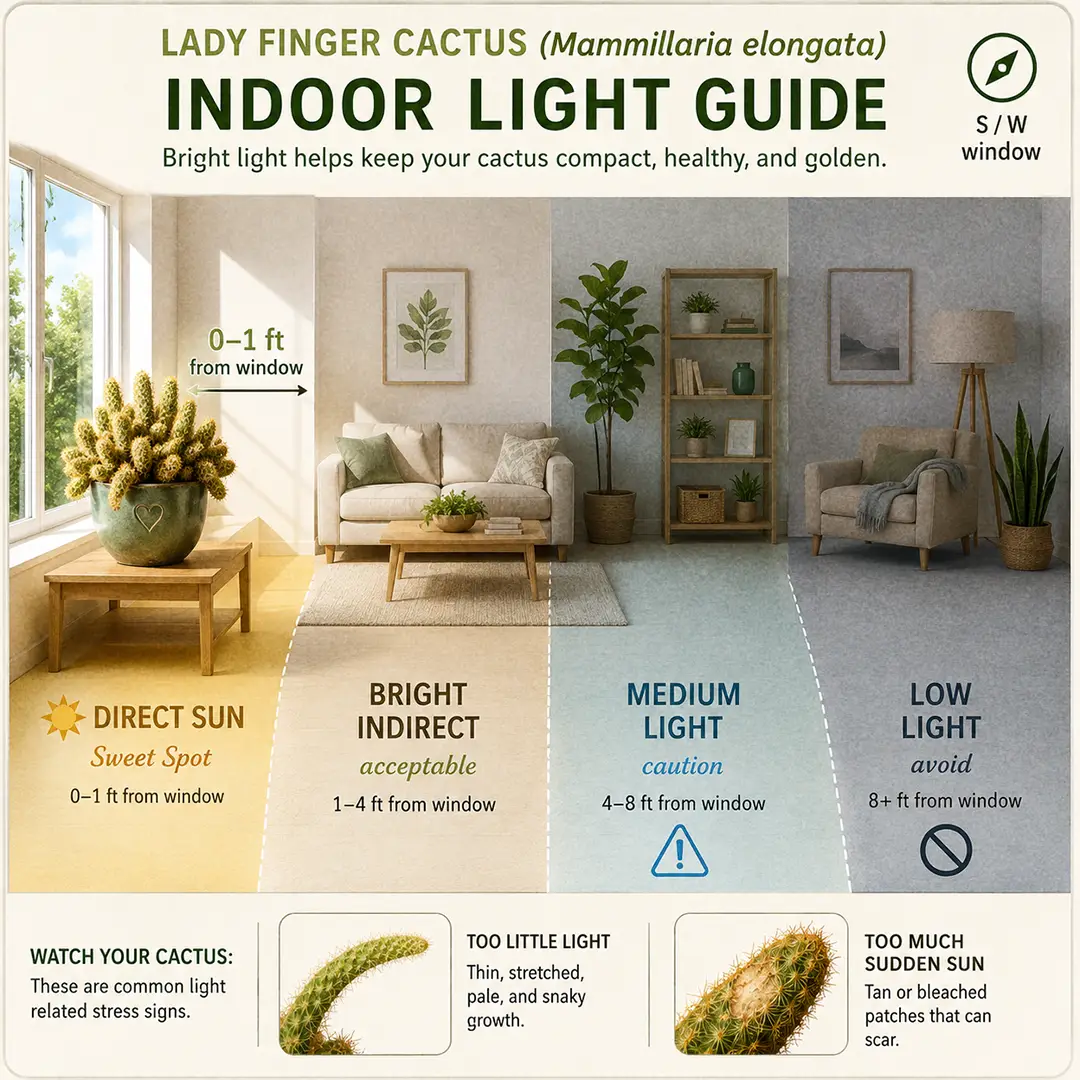
A south or west window with four to six hours of direct sun a day is ideal, with the pot sitting within a foot of the glass for most of the year. An unobstructed east window works too, especially for the denser-spined forms, though growth will be a little slower and the spine color a little softer. In a dim apartment, a strong grow light running 12 to 14 hours a day keeps the fingers compact and the gold color saturated. See light for houseplants for the broader framework.
Too Little Light
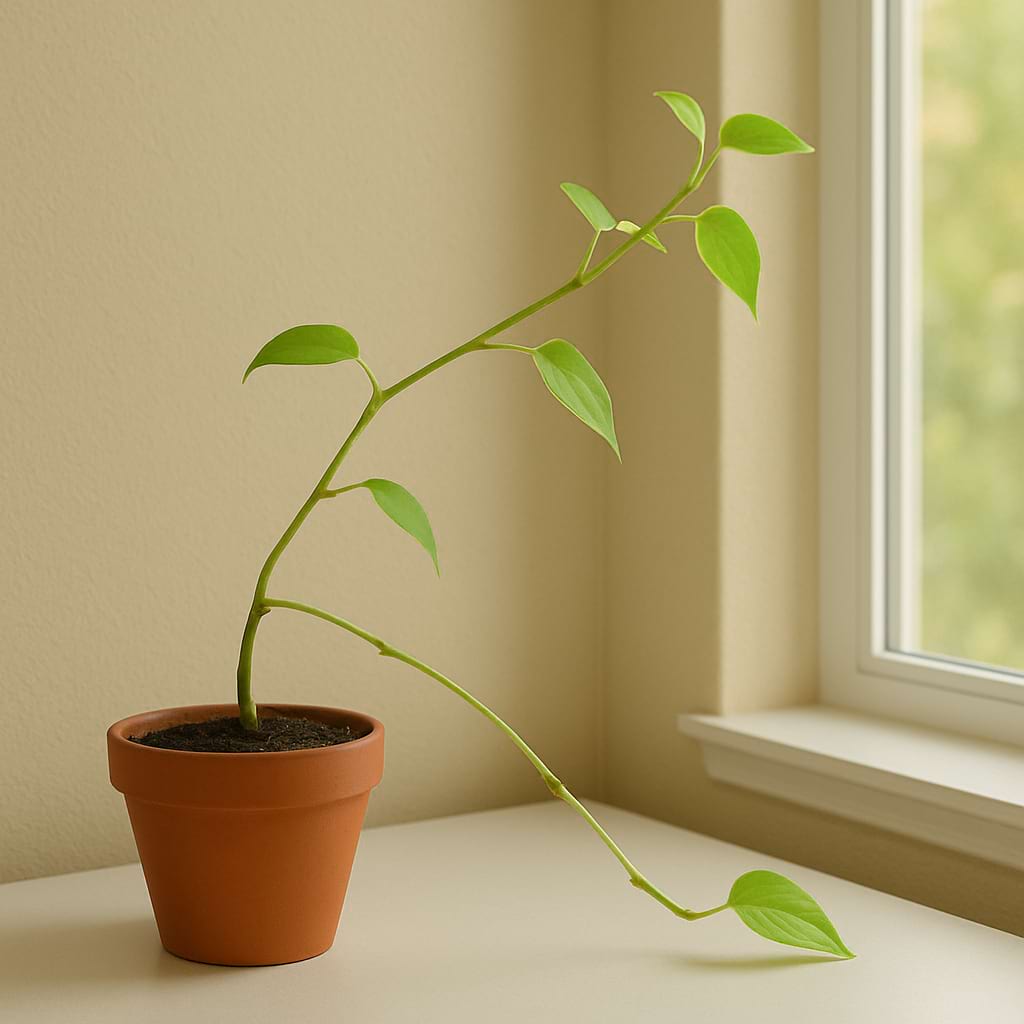
This is the classic Lady Finger Cactus failure, and you can spot it across the room. New growth in a dim spot comes out thinner than the older stem below it, pale yellow-green, with wide gaps between the spine rosettes, so each finger develops a weak, snaky tip. Growers call this etiolation, and the stretched section never thickens back up. Move the plant to the brightest window you have at the first sign of thinning, and once it has settled in, cut the worst fingers at the base and re-root the healthy lower portions (the propagation section covers how).
Too Much Light
Too much light is rare indoors, but too much too fast is common. A plant moved straight from a shaded shop shelf to a blazing south window in July can bleach or scorch on the side facing the glass, leaving tan patches that never fade. Harden it in over two weeks by moving it closer to the glass in stages. A light copper or bronze flush across the spines in strong summer sun is normal and many growers like the effect; flat tan or white patches on the stem itself are the warning sign.
💧 Lady Finger Cactus Watering Guide (Soak and Dry)
Watering mistakes are the only common way to kill this plant. The fingers store plenty of water, the roots are shallow and fine, and a week too dry is harmless while a week too wet is dangerous. When in doubt, wait.
Watering Frequency
In spring and summer, water deeply only once the soil is bone dry from top to bottom, which in a 4 inch terracotta pot on a sunny sill lands roughly every 10 to 14 days. A glazed pot, a bigger pot, or a cooler room stretches that to three weeks. Push a wooden skewer to the bottom of the pot; if it comes out cool or stained, wait a few more days. In winter, a plant resting in a cool room can go nearly dry for two to three months, while one in a heated living room wants a small drink every four to six weeks so the fingers do not wrinkle. The general technique is covered in watering houseplants.
How to Water
Water the soil, not the clump. A mature Lady Finger Cactus packs its fingers so tightly that water poured over the top gets trapped at the stem bases, and that hidden damp is what starts fungal spots and rot. Pour around the edge of the pot until water runs from the drainage hole, wait ten minutes, then empty the saucer. Bottom watering works beautifully here for exactly this reason: the clump never gets wet at all.
Signs of Trouble
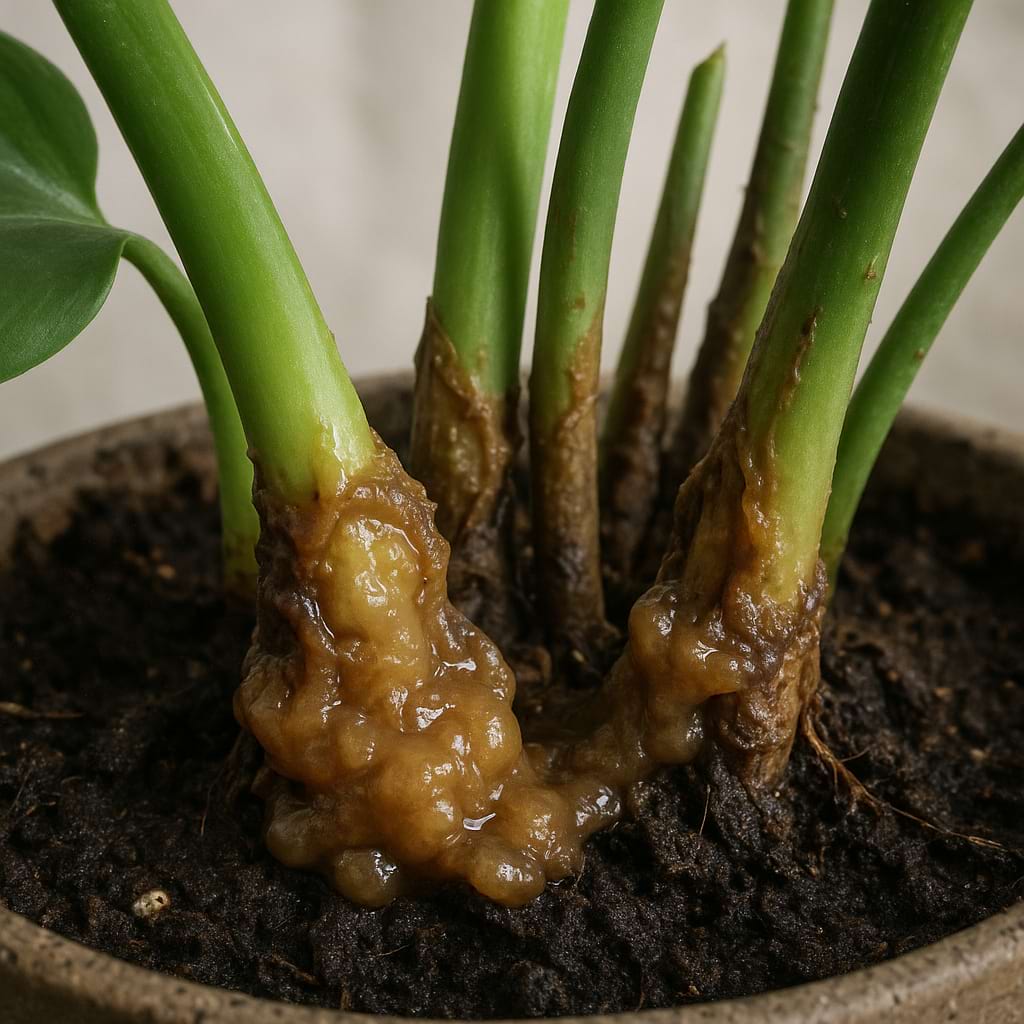
A thirsty plant wrinkles, the fingers lose their plumpness, and the whole clump looks slightly deflated; one deep watering fixes it within two days. An overwatered plant looks different: the stem bases turn yellow then translucent, a finger comes away with a gentle tug, and the soil smells sour. At that point, stop watering, unpot, and save the healthy fingers as cuttings if the base is too far gone.
🪴 Best Soil for Lady Finger Cactus (Gritty and Fast-Draining)
The right soil quietly forgives the watering mistakes you have not made yet. The wrong soil punishes even a careful schedule.
What the Soil Needs
A mix that drains in seconds and dries fully within a week. In habitat, Mammillaria elongata grows wedged into limestone cracks where rain runs straight past the roots, so it wants very little peat and a neutral to slightly alkaline pH. A pinch of crushed limestone or oyster shell grit in the mix mimics home.
DIY Soil Mix
- 1 part standard cactus and succulent mix
- 1 part coarse pumice (or perlite)
- 1 part coarse horticultural sand or fine gravel
Squeeze a damp handful; it should fall apart the moment you open your fingers. If it clumps, add more grit. The same recipe suits every other small cactus on the shelf, from a Golden Barrel Cactus to a Bishop's Cap Cactus.
Pre-Made Options
Most bagged "cactus mix" is still too peaty straight from the bag. Cut it 50/50 with pumice or perlite before potting, and skip anything labeled moisture-retentive or enriched with compost. See repotting for the full potting picture.
🍼 Fertilizing Lady Finger Cactus (Less Is More)
This is a quick grower by cactus standards, but it still comes from thin mineral soil and does not want rich feeding. Overfed fingers grow soft, pale, and floppy.
When and How Often
Feed only in active growth, from mid spring to late summer. Twice a year is plenty: once in May, once in July. Never feed a freshly repotted plant for its first two months, and skip feeding entirely in autumn and winter.
What to Use
A low-nitrogen cactus and succulent fertilizer (around 2-7-7) at half the label strength, applied to soil that is already damp from a plain watering. Quarter-strength liquid kelp is a gentler organic option. The basics are covered in fertilizing houseplants.
Over-Fertilizing Signs
A white crust on the soil or pot rim means salt build-up: flush the pot with several volumes of plain water and skip the next feeding. New fingers that come in unusually dark green, soft, and leaning are the early sign you are pushing too hard.
🌡️ Lady Finger Cactus Temperature Range
Ideal Range
From spring through autumn, anything between 65 and 90°F (18 and 32°C) is comfortable, and a baking summer windowsill is no problem for a plant that has been hardened into the sun. Indoors, never let it sit below 45°F (7°C). Outdoors in a dry summer spot it grows noticeably faster, but bring it in before the first cold rain.
Winter Rest and Drafts
A cool, almost dry winter at 45 to 55°F (7 to 13°C) for eight weeks or more is what keeps the fingers tight and triggers the spring flower rings. A bright unheated porch, a cool spare room, or a windowsill behind a thermal curtain all work. Keep the pot away from radiators, which wrinkle the fingers unevenly, and away from cold wet drafts, which mark the stems with corky scars.
💦 Lady Finger Cactus Humidity Requirements
Ideal Humidity
Normal dry household air, 30 to 45 percent, is exactly what this plant wants. No misting, no pebble tray, no humidifier.
Airflow Over Moisture
The only humidity-related risk hides inside the clump itself. Dozens of tightly packed fingers create still pockets of air, and in a cool damp autumn room those pockets grow black fungal spots. A small fan running a few hours a day, or simply a spot with decent air movement, removes the risk. Closed terrariums and steamy bathrooms are off the table entirely.
🌸 Lady Finger Cactus Flowers (Quiet Rings of Cream Bells)
Honesty first: this is not the showiest bloomer in the genus. Where a Pincushion Cactus crowns itself in hot pink, the Lady Finger Cactus blooms in a quieter key, and the fingers themselves stay the main event.
What the Flowers Look Like
In early to mid spring, mature stems produce small bell-shaped flowers in loose rings near the tips of the previous year's growth. Each bloom is about a third of an inch across, cream to pale yellow, sometimes blushed pink on the outer petals. On a large clump dozens of fingers flower at once, which turns the subtle individual blooms into a soft halo over the whole pot. Small reddish fruits sometimes follow and can sit among the spines for months.
How to Trigger Bloom
Two ingredients: maturity and a proper winter. Stems flower from about two to three years old, and only after a cool dry rest at 45 to 55°F (7 to 13°C) for at least eight weeks. Bring the plant back to warmth and careful watering in late winter and buds form within a few weeks.
If It Won't Bloom
A healthy clump that never flowers has almost always spent the winter warm and watered. Give it one true cool dry rest and it usually blooms the following spring. Young plants and freshly rooted cuttings simply need another year or two.
🏷️ Lady Finger Cactus Types and Varieties
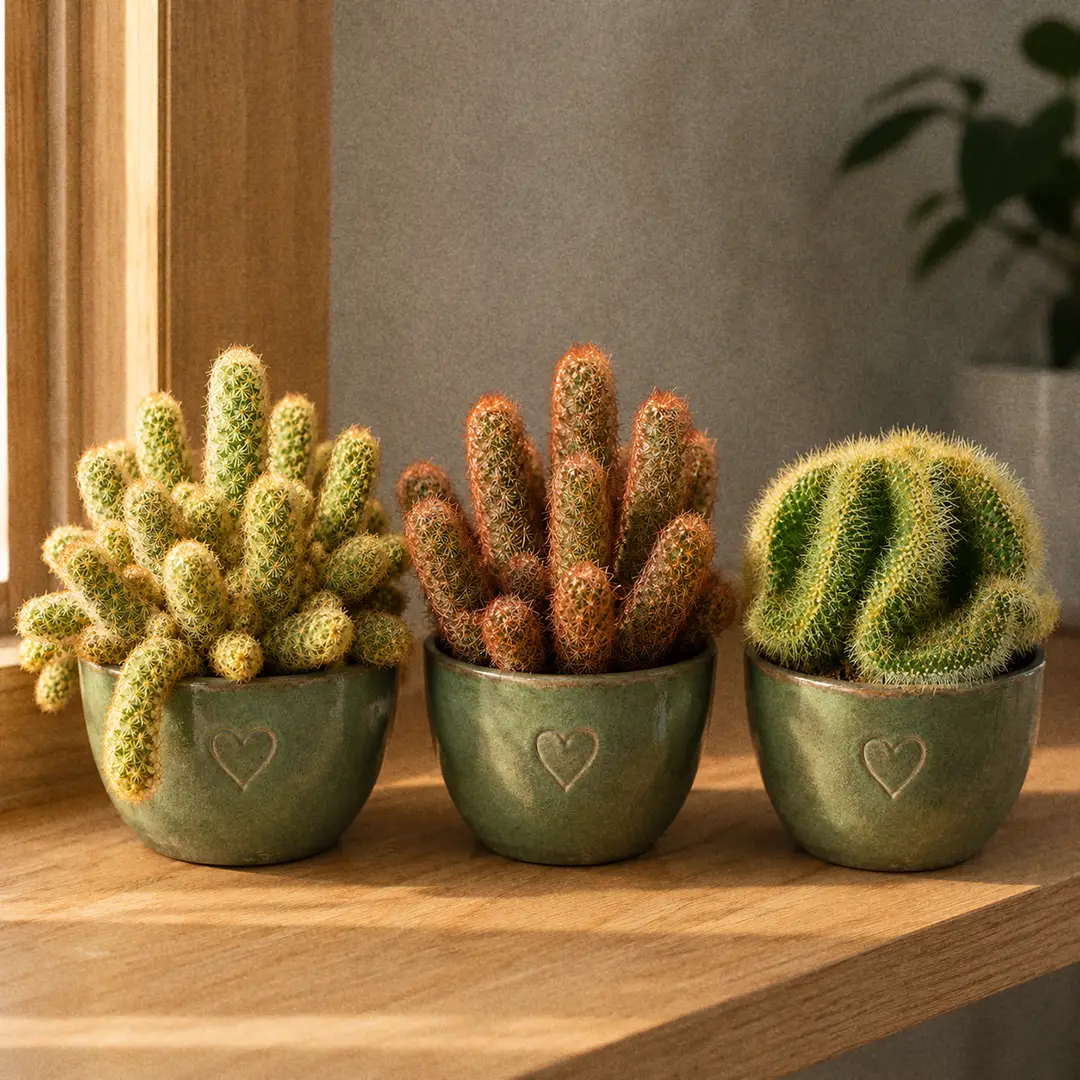
Every form of Mammillaria elongata is a riff on the same slim finger, and the differences ride almost entirely on the spines: their color, their density, and whether the stem grows straight or crests into folds.
Mammillaria elongata (Golden Stars)
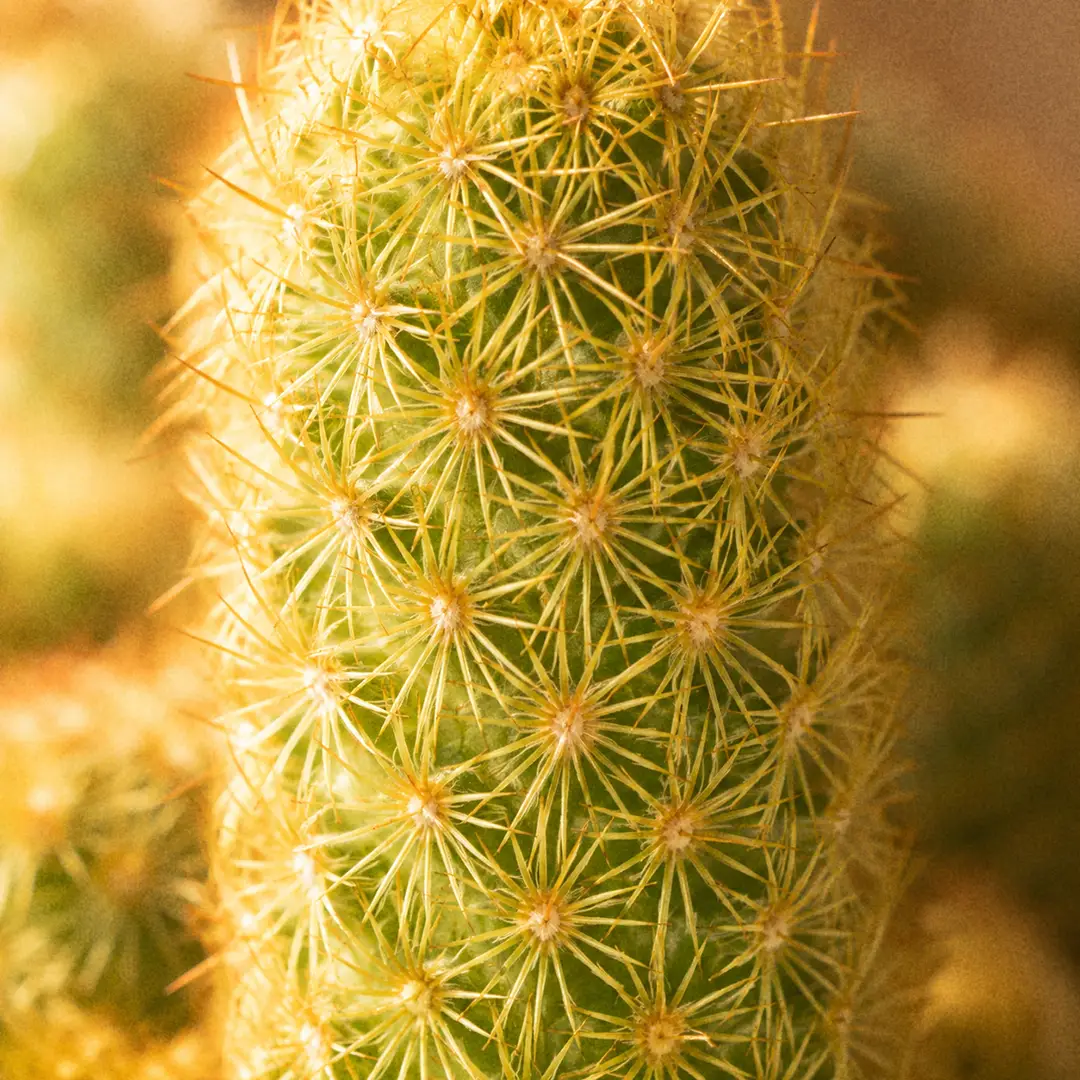
The standard form and the one usually sold simply as Lady Finger Cactus. Slim yellow-green fingers about half an inch thick, covered in flat rosettes of golden radial spines that interlock like lacework, which explains the other shop names, Gold Lace Cactus and Golden Stars. Clumps quickly and spills over the rim by its third or fourth year.
Mammillaria elongata 'Copper King'
A selected form with deep copper-red to russet spines that read almost metallic in direct sun. The contrast against the pale stem makes it the most dramatic of the straight-stemmed forms, and it keeps its color best with at least a few hours of direct light.
Mammillaria elongata subsp. echinaria
A stockier subspecies with slightly thicker fingers and one to three short central spines standing out from each rosette, so it looks bristlier and less lacy than the type. Care is identical, and it tends to hold itself more upright than the type.
Mammillaria elongata 'Cristata' (Brain Cactus)
The famous one. A crested mutation where the growth point stretches into a line instead of a point, so the stem grows as a wavy, folded fan that looks remarkably like a small golden brain. It is sold worldwide as the Crested Brain Cactus, nearly always on its own roots, though it is occasionally grafted onto a green rootstock the way a Moon Cactus is. Care matches the straight form, just slower, with extra caution about water settling in the folds, and the crest needs its reverted normal fingers cut off to keep its shape.
Lookalikes Worth Knowing
The Snowball Cactus (Mammillaria gracilis fragilis, often sold as Thimble Cactus or 'Arizona Snowcap') makes similar small fingers with white spine stars, but its pups detach at a touch. The Peanut Cactus (Echinopsis chamaecereus) copies the finger shape with softer, floppier stems and shockingly large orange-red flowers. The Hedgehog Cactus (Echinocereus) clumps into similar upright stems but trades the tidy spines for enormous spring flowers in magenta and scarlet. And the classic globular Pincushion Cactus is the round-bodied cousin that shares the same care card exactly.
Good Shelf Companions
The upright fingers earn their keep as the vertical texture in a small cactus collection. Set the clump beside round bodies for contrast: a Golden Barrel Cactus picks up the same gold spine color in a globe, a Bishop's Cap Cactus adds a smooth spineless star, and a flat Star Cactus holds the low ground. Genus mates like the hairy Old Lady Cactus and the woolly Powder Puff Cactus turn the same shelf into a Mammillaria collection case, and a tall Peruvian Apple Cactus behind them anchors the whole arrangement.
🪴 Potting and Repotting Lady Finger Cactus
When to Repot
Faster-clumping than most small cacti, a Lady Finger Cactus usually reaches the rim of its pot in two to three years. Repot in spring or early summer once the outer fingers press against the edge, or sooner if water starts running straight through exhausted soil. Skip autumn and winter repots unless you are rescuing the plant from rot.
Choosing a Pot
Width beats depth. The roots are shallow and the clump spreads sideways, so a wide, shallow terracotta pot or a low bowl an inch or two wider than the clump is the right shape. Terracotta wicks moisture out of the mix and buys you a margin of error in winter. One drainage hole minimum, always.
Step-by-Step Repotting
- Let the soil dry out completely first; a dry rootball slides out cleanly.
- Wrap the clump in a folded strip of newspaper or use foam-lined tongs. The spines are not vicious, but they are grippy.
- Expect a few fingers to snap off no matter how careful you are. Do not throw them away; set them aside to callus and you have free plants.
- Shake off the spent mix, trim any dark or hollow roots with sterile scissors, and settle the clump into fresh gritty mix at the same depth as before. Never bury the stem bases.
- Top-dress with grit or lava rock, then wait a full week before the first water so any nicked roots can callus.
✂️ Pruning Lady Finger Cactus
Why Pruning Is Rare
A healthy Lady Finger Cactus needs no shaping at all. Each finger grows from a single point at its tip, and the clump's slightly unruly, spilling habit is the look. Most owners never cut anything.
Removing Stretched or Damaged Fingers
The real reason to cut is etiolation. Fingers that stretched thin in low light never recover their shape, so once the plant is back in strong sun, slice the worst offenders off at the base with a clean blade. The gap fills with new offsets within a season, and any healthy lower sections of the cut fingers can be callused and re-rooted as cuttings.
Rescue Cuts
If rot creeps up from the base of a finger, cut well above the last discolored tissue, dust the wound on the clump with cinnamon or sulfur, and treat the healthy top as a cutting. Acting on one soft finger early usually saves the rest of the clump.
🌱 How to Propagate Lady Finger Cactus
If you learn propagation on any cactus, learn it on this one. Every finger is a ready-made cutting, the success rate is close to perfect, and a single mature clump can supply a whole shelf of gifts in a year.
Best Method: Finger Cuttings
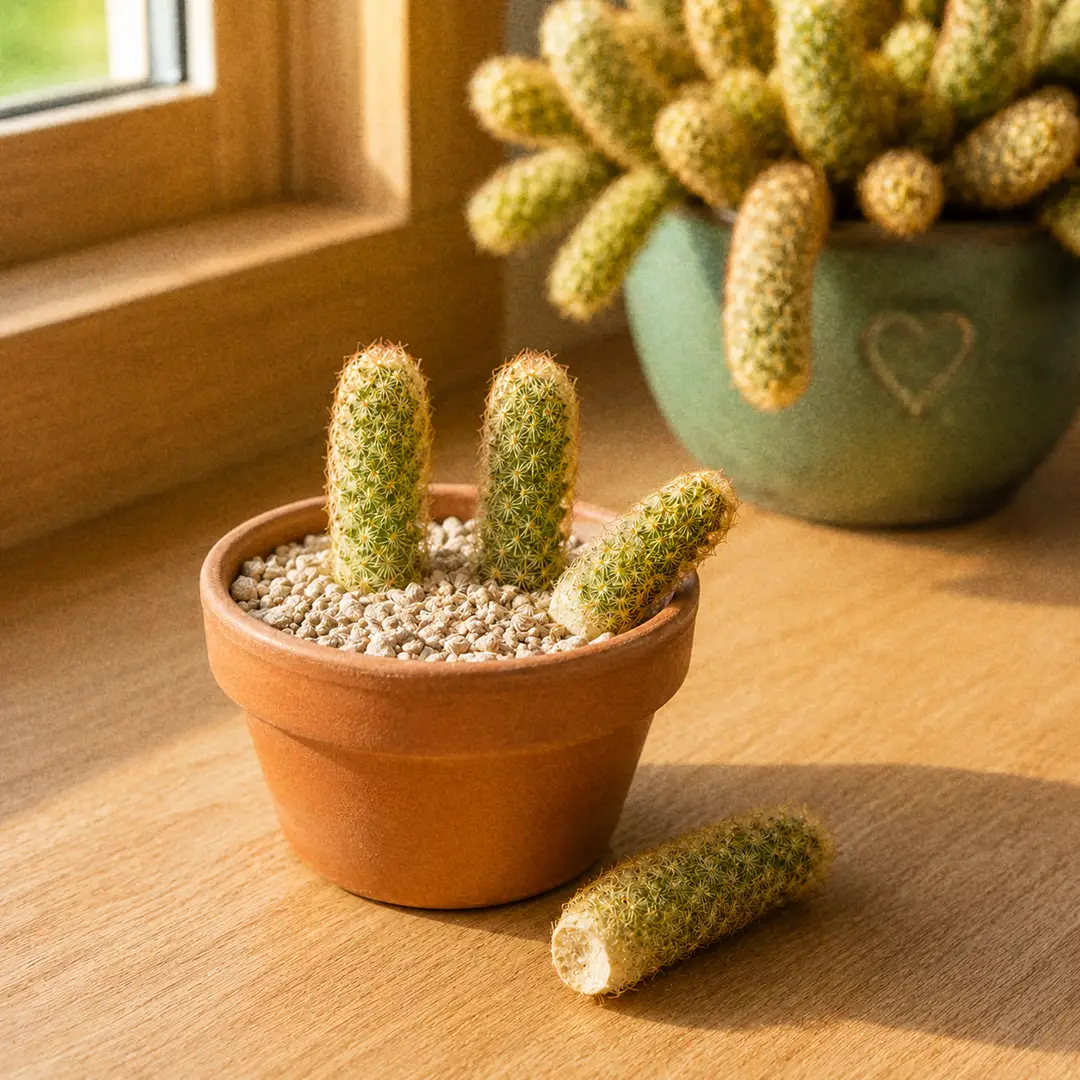
Pick a healthy, plump finger from the outside of the clump in spring or summer. Grip it low and twist gently, or slice it off at the base with a clean knife; either way works. Many fingers practically volunteer, snapping free during repotting or after a knock, and those work just as well.
Step-by-Step
- Set the finger on a dry paper towel out of direct sun for five to seven days, until the cut end forms a hard, dry callus. This step is the whole secret; skip it and the cutting rots.
- Stand the callused finger upright on top of dry gritty mix, burying nothing. Lean it against the pot rim or a pebble if it tips.
- Keep the pot in bright light without direct sun and do not water for two weeks.
- Give a light first water around the cutting, then let the mix dry fully between waterings.
- Roots appear in three to six weeks. You will know it worked when the finger resists a gentle nudge and the tip shows fresh, brighter growth.
Offsets and Division
A crowded clump can also be split at repotting time. Tease the rootball into two or three sections, each with its own roots, pot them up dry, and wait a week before watering. For the wider toolkit, see succulent propagation.
Tips for Success
Always callus before potting, always start in dry mix, and always wait until the cutting is rooted before introducing direct sun. Spring cuttings root fastest, but this plant forgives almost any timing except midwinter.
🐛 Lady Finger Cactus Pests and Treatment
A dense clump of fingers offers pests more hiding places than a single globe, so check the stem bases whenever you water.
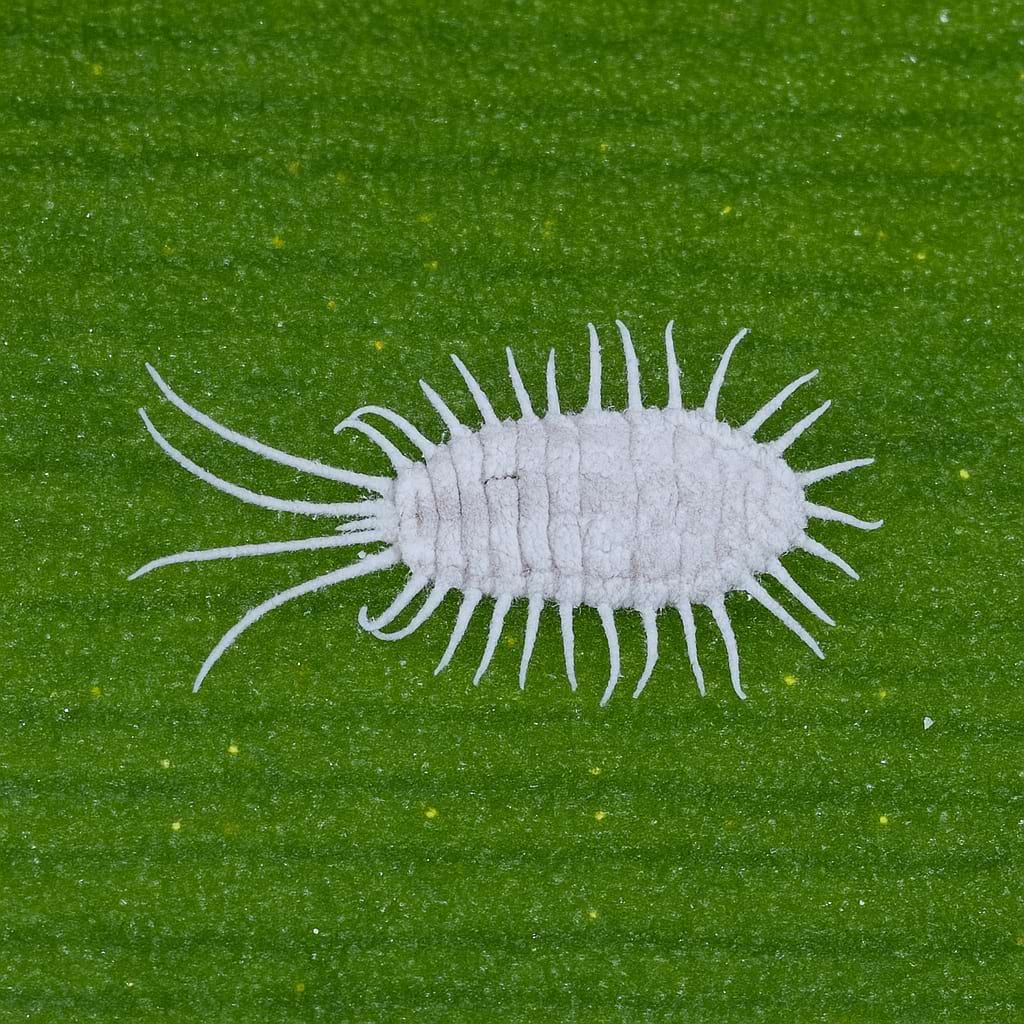
- Mealybugs: The main offender. White cottony tufts wedged deep between the fingers and at stem bases. Dab each with isopropyl alcohol on a cotton swab every five to seven days for three weeks; for a heavy infestation, drench the soil with a systemic insecticide.
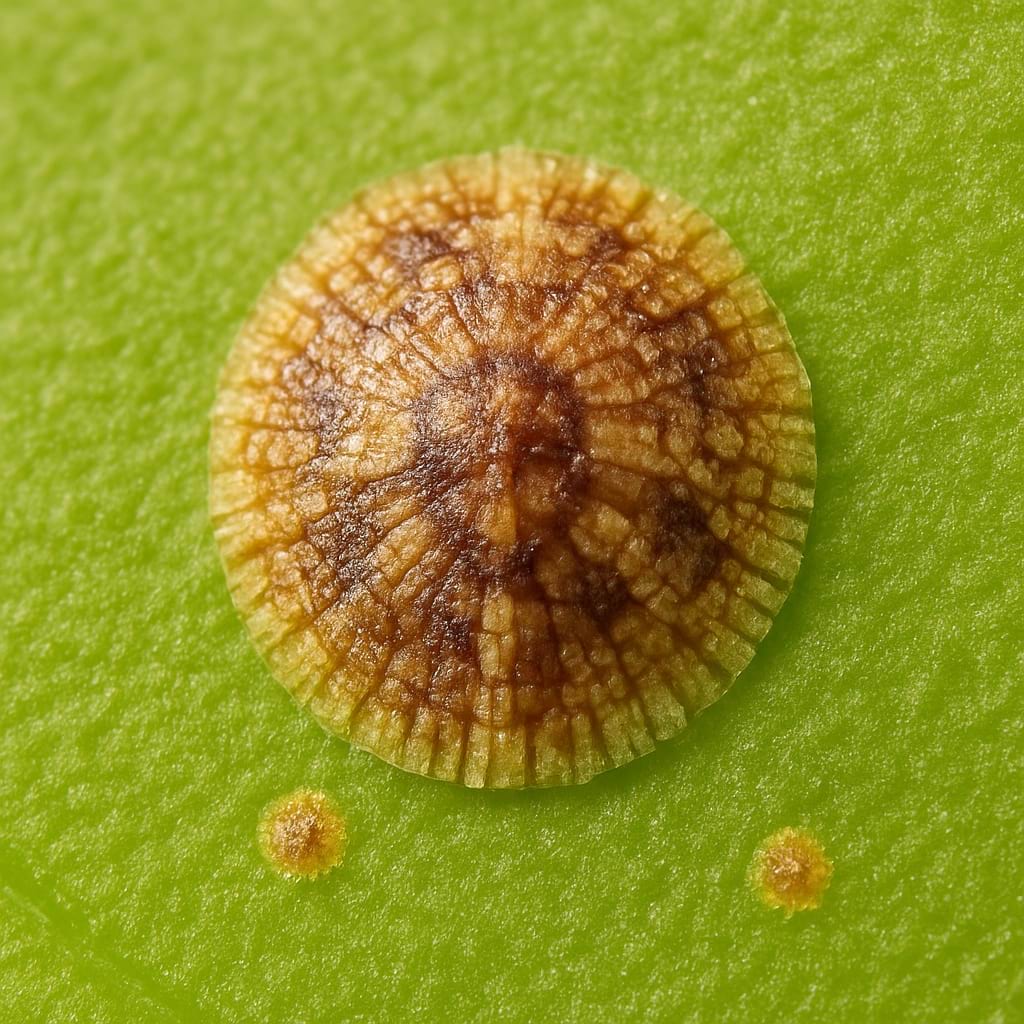
- Scale Insects: Flat tan or brown discs stuck to the stems under the spine rosettes. Flick off with a toothpick and follow up with neem oil.
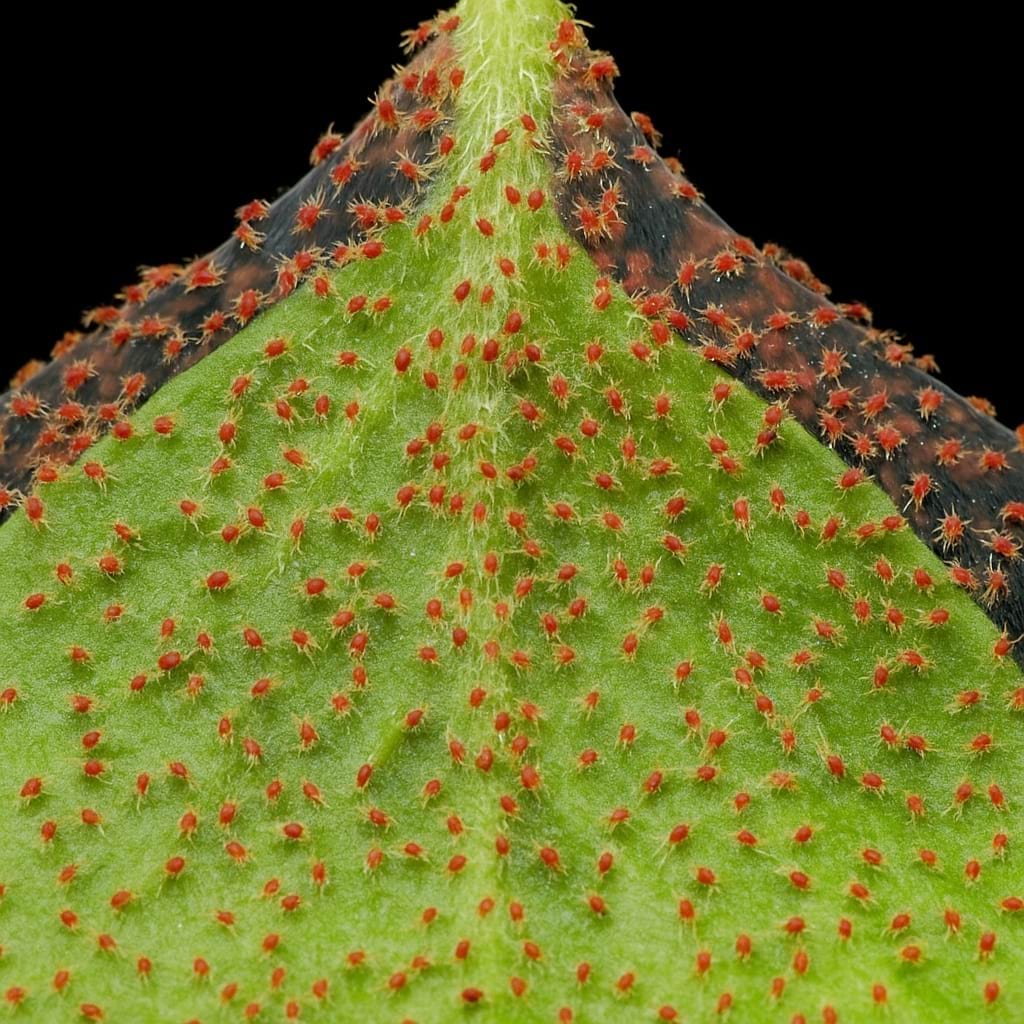
- Spider Mites: Fine webbing strung between fingers in warm dry winter rooms, with pale stippled patches on the stems. Brush the clump with a soft dry brush and treat with horticultural soap.
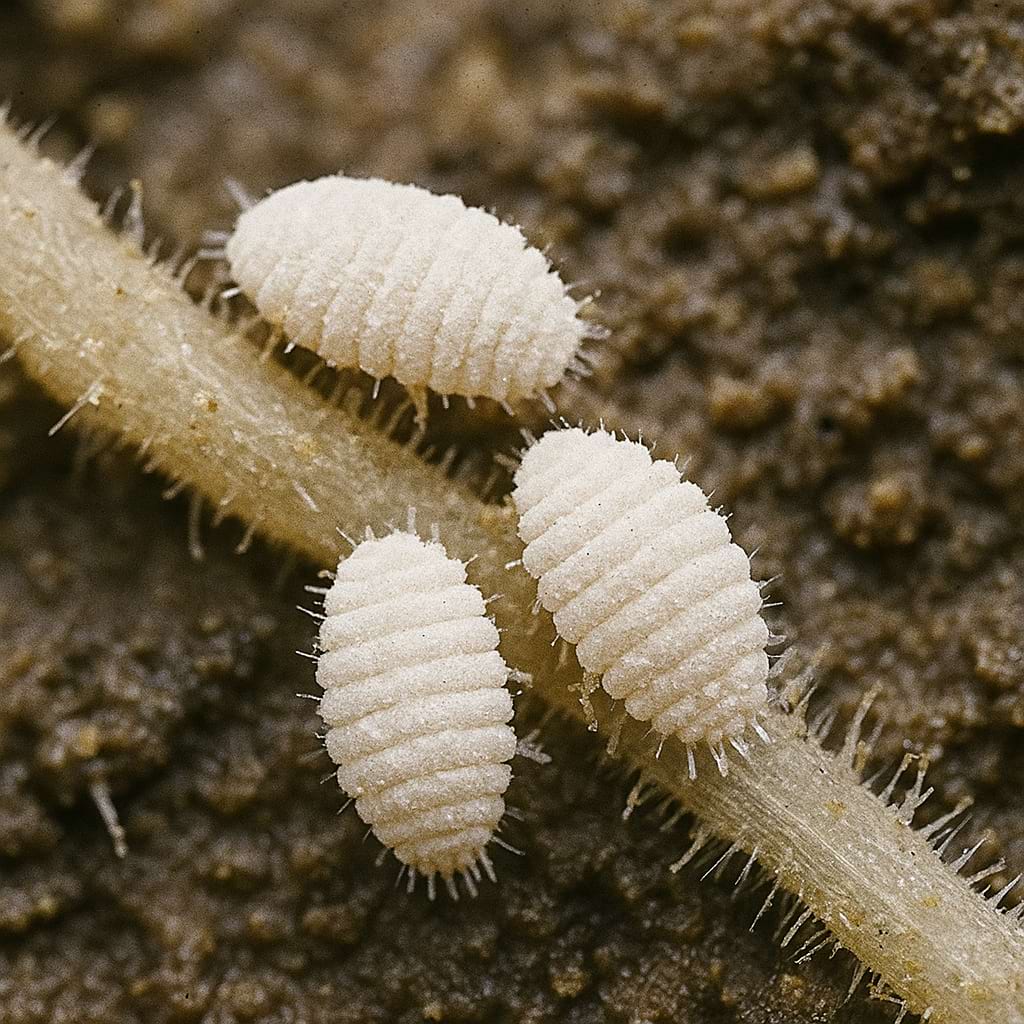
- Root Mealybugs: White powdery deposits on the roots, found only at repotting. Rinse the roots clean, repot in fresh dry mix, and hold off watering for two weeks.
Never let spray pool inside the clump; trapped liquid between the fingers causes the fungal spots covered below.
🩺 Common Lady Finger Cactus Problems
Nearly every problem traces back to one of three causes: wet soil, dim light, or water sitting inside the clump.
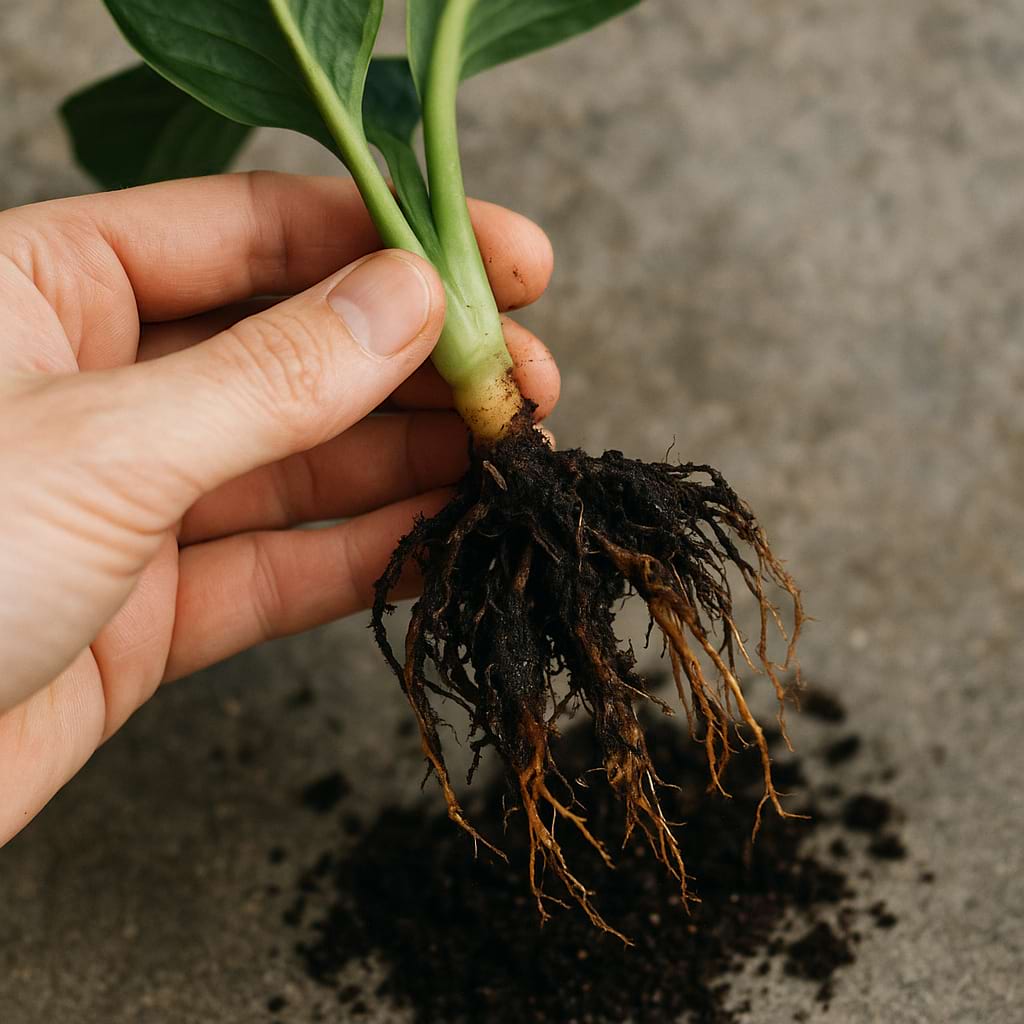
- Root rot and mushy stems: The killer. Stem bases turn yellow, then translucent brown, and fingers detach at a touch. Stop watering, unpot, cut away everything soft, and re-root the firm fingers as cuttings.
- Leggy growth: Thin, pale, snaky new tips with gaps between spine rosettes mean too little light. The stretch is permanent; improve the light, then cut and re-root the worst fingers.
- Brown-black spots: Fungal spotting from moisture trapped between fingers in cool still air. Improve airflow, water from below, and dust spots with sulfur.
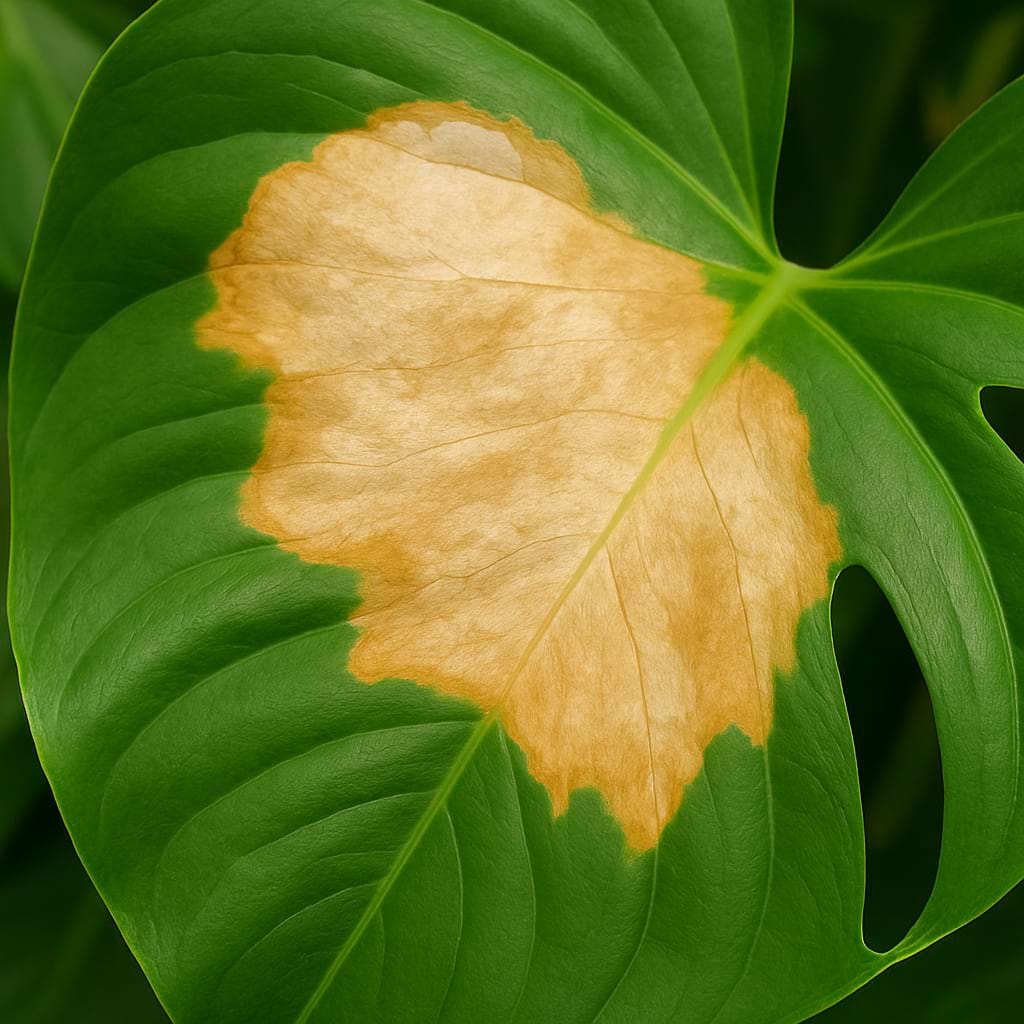
- Sunburn: Tan or bleached patches on the sun-facing side after a sudden move into strong light. The marks are there to stay; harden the plant in gradually next time.
- Yellowing stems: Whole-clump yellowing with softness is overwatering; a warm gold flush in summer sun on firm stems is harmless.
- Wilting or shriveling: Wrinkled, deflated fingers are usually plain thirst. Confirm the soil is fully dry, water deeply, and the clump plumps up within a day or two.
- Stunted growth: Exhausted soil or a root-bound pot. A spring repot into fresh gritty mix restarts the clump.
- Failure to bloom: Almost always a warm wet winter. One proper cool dry rest fixes it.




🖼️ Lady Finger Cactus Display and Styling Ideas
The sprawling, over-the-rim habit is the styling angle. Where globular cacti sit politely in their pots, this one performs.
Solo Setups
A mature clump in a low, wide terracotta bowl is the classic look, with the outer fingers arching over the rim like the plant is climbing out. Top-dress with red lava rock or dark slate chips; against a dark dressing the golden spines glow, while pale gravel washes them out. Keep the bowl shallow so the clump reads wider than tall.
Grouped Arrangements
Use the fingers as the vertical element in a trio of contrasting shapes: the clump alongside a globe (Golden Barrel Cactus) and a smooth star (Bishop's Cap Cactus) covers three silhouettes in three matching pots. For a one-genus display, line it up with an Old Lady Cactus and a Powder Puff Cactus: fingers, hair, and wool from the same family.
Where Not to Put It
Skip dim shelves and north-facing desks; the fingers stretch within months and the damage stays. Skip terrariums and bathrooms; the trapped moisture is exactly what the clump cannot vent. And think twice about narrow walkways, since the spines catch sleeves and the snagged fingers snap off. They root, of course, but the clump ends up lopsided.
🌟 Lady Finger Cactus Pro Care Tips
☀️ Pick the window first. Strong sun keeps the fingers fat, gold, and tight. Every other care decision is downstream of this one.
💧 When in doubt, wait a week. A dry Lady Finger Cactus wrinkles and recovers. A wet one rots and does not.
🫗 Water the soil, never the clump. Trapped droplets between the fingers are the source of nearly every fungal spot.
🥶 Give it a real winter. Eight cool, nearly dry weeks at 45 to 55°F (7 to 13°C) means compact growth and spring flowers.
🧤 Repot with newspaper, not gloves. A folded strip wrapped around the clump lifts it cleanly; the spines shred thin gloves anyway.
🌱 Treat every broken finger as a gift. Callus it a week, stand it on dry grit, and you have a new plant. There is no faster way to grow a collection.
🪨 Top-dress dark. Red lava rock or slate chips make the golden spines pop in a way pale gravel never does.
✂️ Cut stretched fingers without guilt. Etiolated tips never recover; the clump replaces them within a season.
🌬️ Keep air moving in autumn. A small fan a few hours a day stops black spots from forming deep inside the clump.
❓ Frequently Asked Questions
Why is my Lady Finger Cactus stretching thin and pale?
That is etiolation, the plant reaching for light it does not have. The new tips grow thinner and paler than the older stem, with the spine stars spaced far apart instead of interlocking. Move the plant to a south or west window or under a strong grow light; the stretched sections will not recover, but all new growth will come in compact.
Can I cut off the stretched fingers?
Yes, and you should once the light is fixed. Slice each stretched finger off at the base with a clean blade, and if the lower part of the finger is still compact and healthy, callus it for a week and re-root it as a cutting. The clump fills the gaps with new offsets by the end of the season.
How often should I water a Lady Finger Cactus?
In spring and summer, roughly every 10 to 14 days for a 4 inch terracotta pot in a sunny window, and only when the soil is completely dry from top to bottom. In winter, almost never if the plant rests in a cool room, or a small drink every four to six weeks in a heated one.
Is the Lady Finger Cactus toxic to cats and dogs?
No. Mammillaria elongata is not toxic if nibbled. The realistic risk is mechanical: the spine rosettes are grippy and detach-prone fingers can stick to a curious paw or nose. Keep the pot out of reach of climbing cats.
Why is my Lady Finger Cactus falling over the edge of the pot?
If the fingers are fat and well-spined, that sprawl is normal and healthy; mature clumps in habitat lean downhill out of rock cracks, and potted ones arch over the rim the same way. It only signals trouble when the leaning fingers are also thin and pale, which points to low light, or soft at the base, which points to rot.
Why won't my Lady Finger Cactus bloom?
Almost always a warm, watered winter. The plant needs a cool dry rest at 45 to 55°F (7 to 13°C) for at least eight weeks before spring, and individual stems need to be two to three years old. Give it one proper rest and the cream flower rings usually appear the next spring.
Is the Brain Cactus the same plant?
The Crested Brain Cactus is, yes. It is Mammillaria elongata 'Cristata', a crested form whose growth point stretches into a line, folding the stem into brain-like waves. Care is identical to the straight form, just slower, and you should be extra careful to keep water out of the folds. Confusingly, a plant labeled only "Brain Cactus" is usually the unrelated Stenocactus multicostatus, so check the Latin name.
Why are the fingers shriveling?
Firm-but-wrinkled fingers across the whole clump mean thirst; water deeply and they fill back out in a couple of days. Shriveling that starts at the base of one or two fingers, with yellowing or softness, is the opposite problem: rot from wet soil. Check the base color before reaching for the watering can.
How fast does a Lady Finger Cactus grow?
Quick by cactus standards. Each finger adds an inch or two of height per year in good light, and the clump produces new offsets every season, typically reaching the rim of a 4 inch pot within two to three years. A rooted single-finger cutting can become a small clump in about three years.
ℹ️ Lady Finger Cactus Info
Care and Maintenance
🪴 Soil Type and pH: Gritty, fast-draining cactus mix with added pumice, perlite, or coarse sand; neutral to slightly alkaline pH.
💧 Humidity and Misting: Happy in dry household air around 30 to 45 percent.
✂️ Pruning: Almost none; cut stretched or damaged fingers at the base and re-root the healthy tops.
🧼 Cleaning: Dust the spines with a soft dry artist's brush; never wipe the stems with a wet cloth, since water trapped between the fingers invites fungal spots.
🌱 Repotting: Move up one pot size when the clump reaches the rim, usually every 2 to 3 years; expect a few fingers to snap off, and keep them as cuttings.
🔄 Repotting Frequency: Every 2-3 years
❄️ Seasonal Changes in Care: Active growth in spring and summer; a cool dry winter rest keeps the fingers compact and sets the spring flowers.
Growing Characteristics
💥 Growth Speed: Moderate; quick by cactus standards
🔄 Life Cycle: Long-lived perennial
💥 Bloom Time: Early to mid spring, with occasional smaller flushes into summer
🌡️ Hardiness Zones: 9b-11 outdoors; grown as a houseplant in all other zones
🗺️ Native Area: Limestone slopes of central Mexico (Hidalgo, Querétaro, and Guanajuato)
🚘 Hibernation: Cool dry winter rest at 45 to 55°F (7 to 13°C) for compact growth and spring bloom
Propagation and Health
📍 Suitable Locations: Sunny south or west windowsills, sunrooms, bright kitchens, plant shelves under strong grow lights
🪴 Propagation Methods: Extremely easy from finger cuttings and offsets; possible from seed.
🐛 Common Pests: Mealybugs, Scale Insects, Spider Mites, Root Mealybugs
🦠 Possible Diseases: Root rot, fungal stem spotting, corky scarring from cold damp air
Plant Details
🌿 Plant Type: Small clumping desert cactus with finger-shaped stems
🍃 Foliage Type: Slim cylindrical stems covered in spirals of low tubercles, each crowned with a flat star-shaped rosette of radial spines; offsets freely from the base
🎨 Color of Leaves: Pale yellow-green stems, usually hidden under gold, copper, brown, or white spine rosettes
🌸 Flower Color: Cream to pale yellow bell-shaped flowers, sometimes blushed pink, in rings near the stem tips
🌼 Blooming: Yes; reliable in spring on mature stems after a cool dry winter
🍽️ Edibility: Not edible; grown strictly as an ornamental
📏 Mature Size: Individual stems 4-8 inches tall indoors
Additional Info
🌻 General Benefits: Compact, nearly indestructible, pet-safe in terms of toxicity, fast-clumping, and the easiest cactus to propagate and share
💊 Medical Properties: None of significance for indoor growers
🧿 Feng Shui: A small bright accent for a sunny corner; the upright fingers are read as steady growth and the spines as protective energy
⭐ Zodiac Sign Compatibility: Aries
🌈 Symbolism or Folklore: Persistence, generosity (a clump that endlessly produces new plants to give away), and quiet steady progress
📝 Interesting Facts: The species name "elongata" refers to the stretched, finger-like stems that set this plant apart from the globular heads typical of the Mammillaria genus. The flat star-shaped spine rosettes earned it the nicknames "Golden Stars" and "Gold Lace Cactus". Its crested form, with fan-shaped, brain-like growth instead of straight fingers, is sold around the world simply as the "Brain Cactus" and is one of the most popular crested cacti in cultivation. In habitat it grows wedged into limestone cracks on slopes in central Mexico, often hanging slightly downhill, which is why mature potted clumps naturally sprawl over the rim.
Buying and Usage
🛒 What to Look for When Buying: Choose a clump with firm, plump fingers and clean, intact spine rosettes. Avoid plants with thin, pale, stretched tips (a sign of months in low light) and any with brown softness at the soil line. A few loose fingers in the pot are no dealbreaker; they root easily.
🪴 Other Uses: Mini desert dish gardens, beginner propagation projects, office-desk accent, gifts grown from cuttings
Decoration and Styling
🖼️ Display Ideas: A low wide bowl with fingers spilling over the rim, a trio shelf with globular cacti, or a Mammillaria collection case
🧵 Styling Tips: Top-dress with red lava rock or dark slate chips so the golden spines pop, and choose a shallow pot that lets the clump read wider than tall.
🪴 See also 🪴
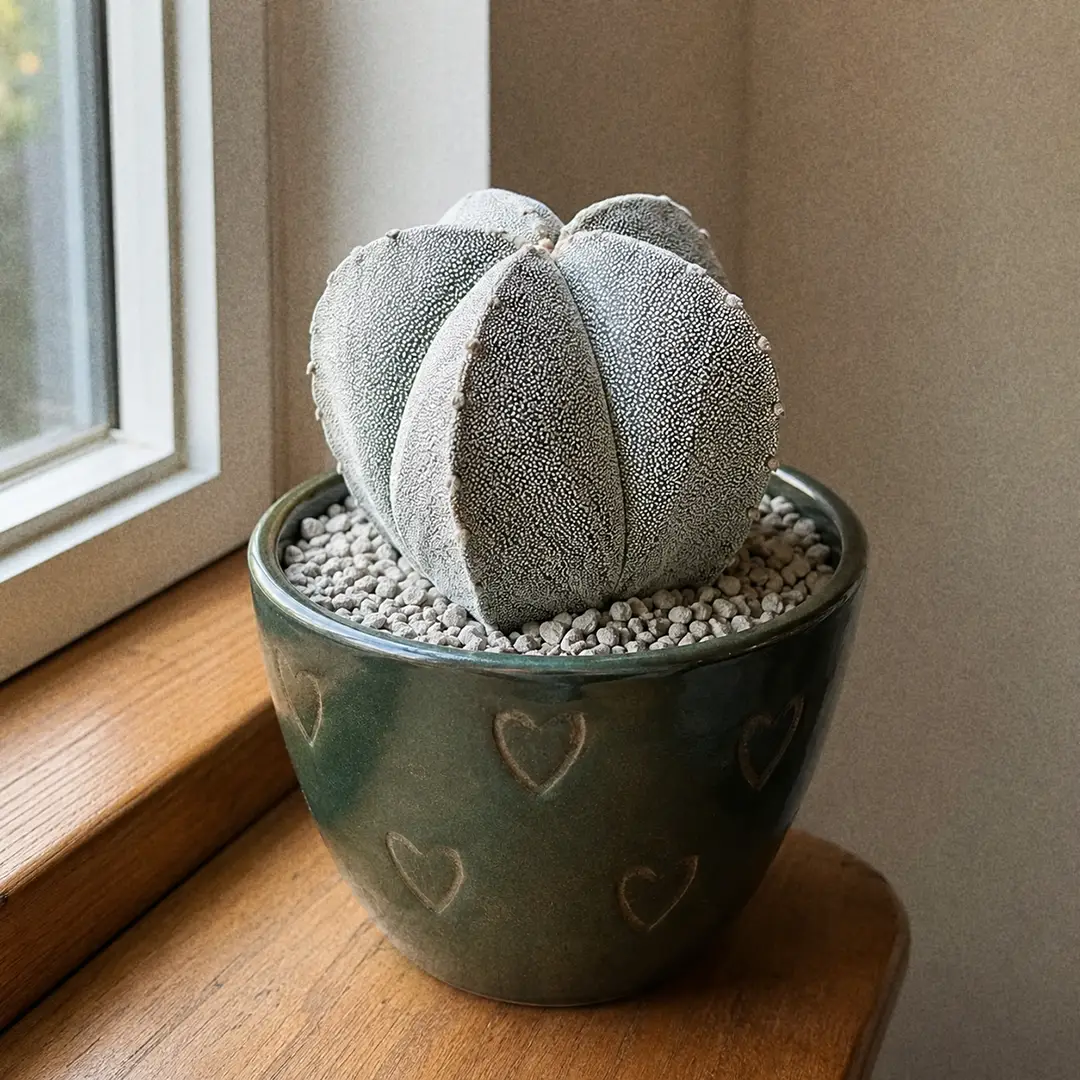
Complete Guide to Bishop's Cap Cactus Care and Growth
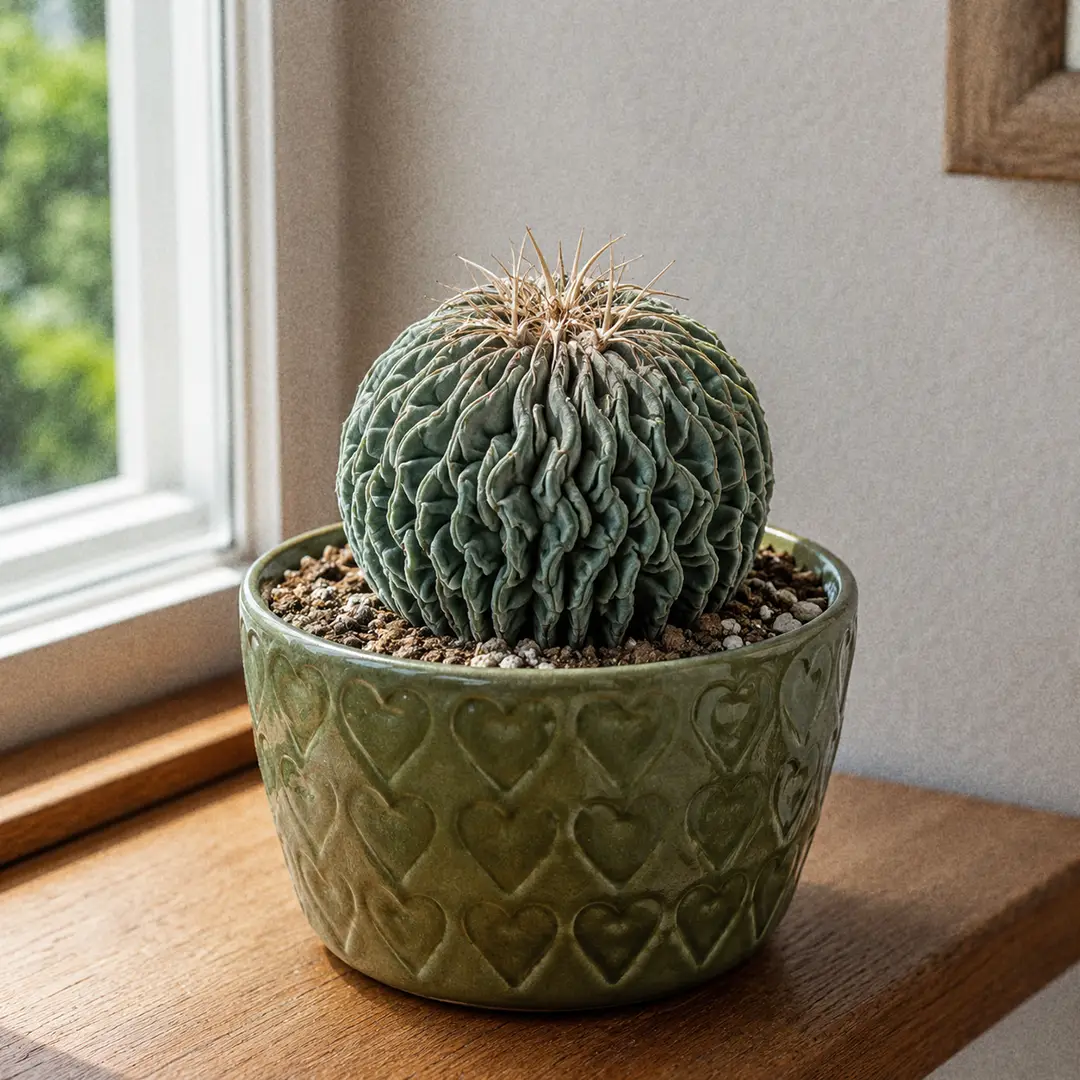
Complete Guide to Brain Cactus Care and Growth
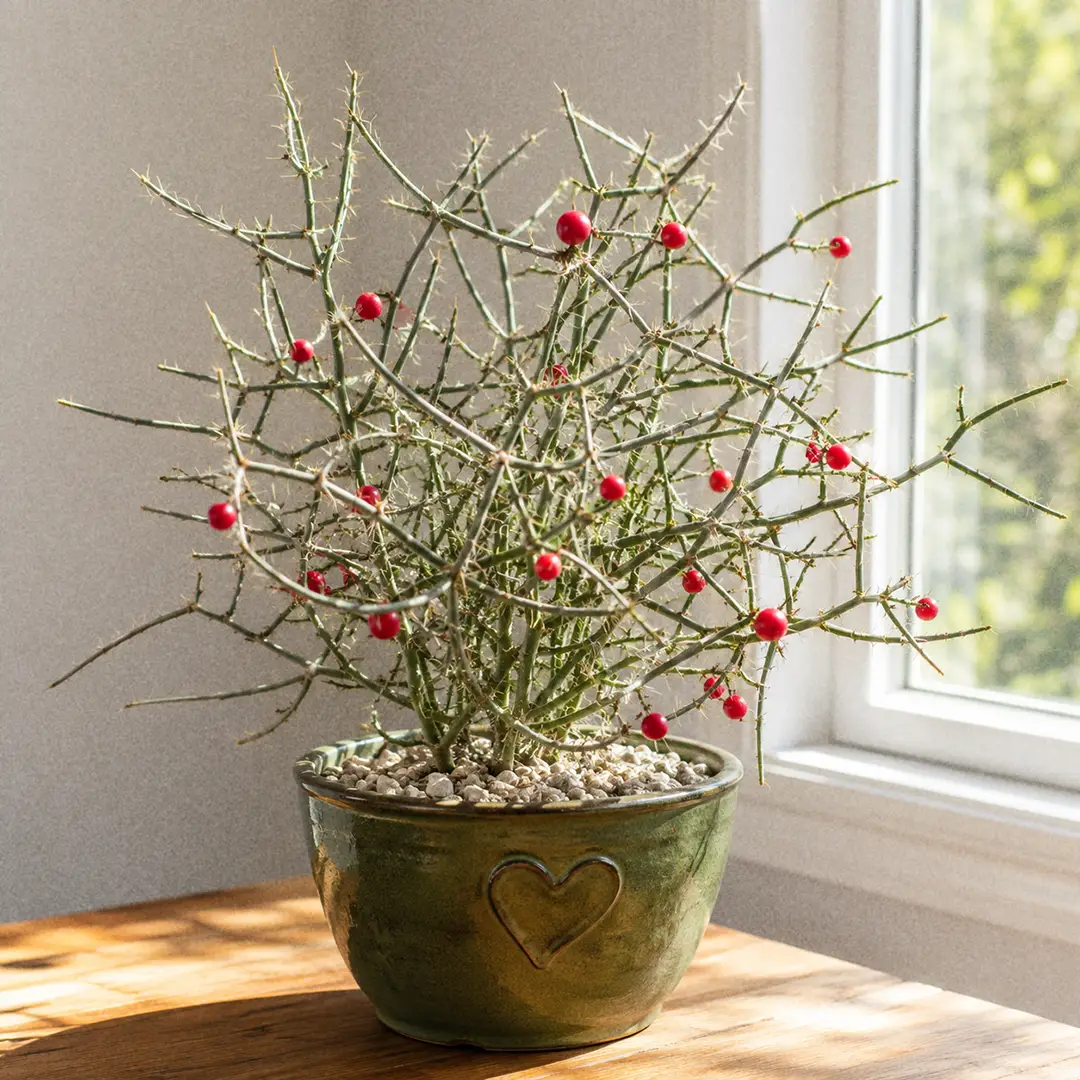
Complete Guide to Christmas Cholla Care and Growth
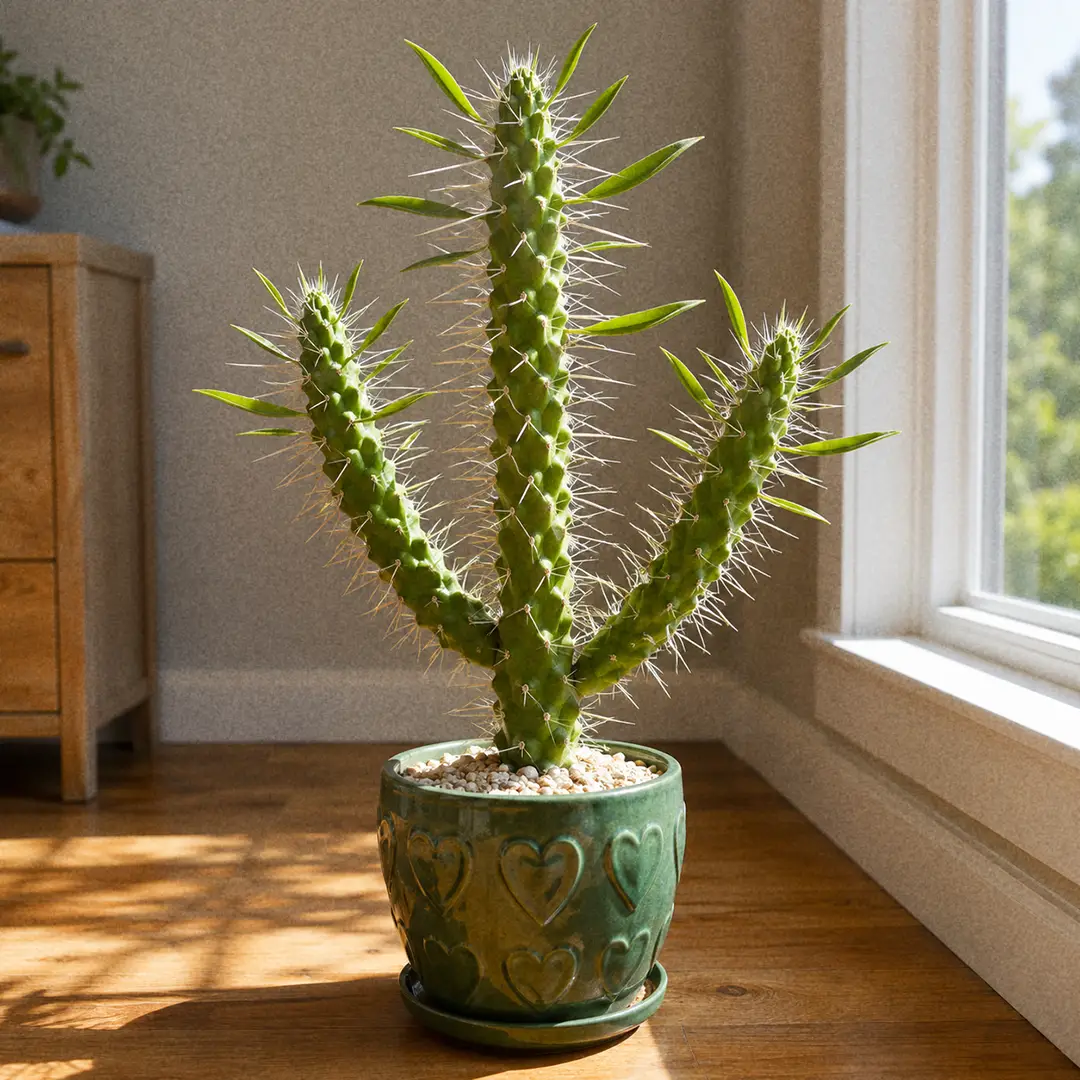
Complete Guide to Eve's Needle Cactus Care and Growth
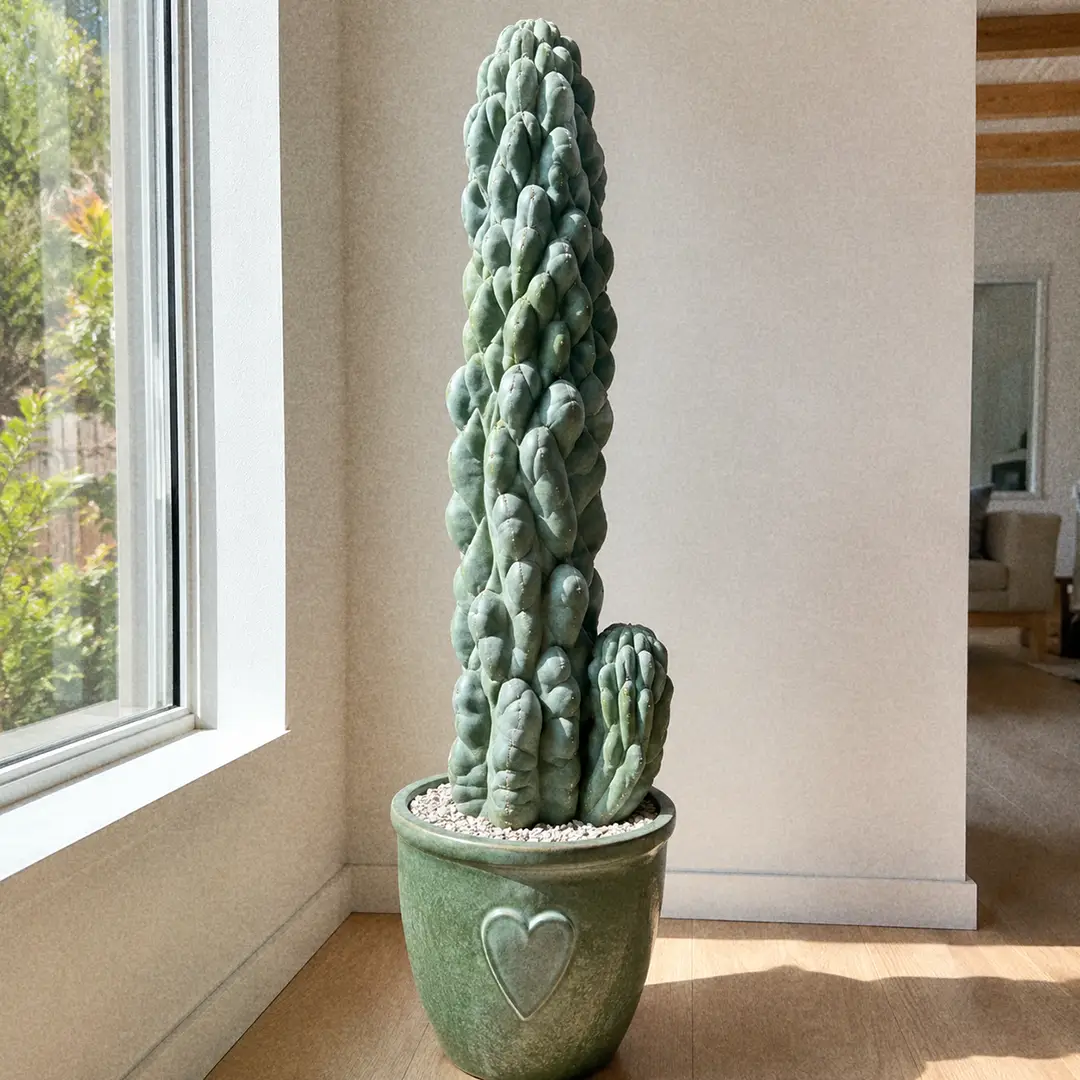
Complete Guide to Totem Pole Cactus Care and Growth
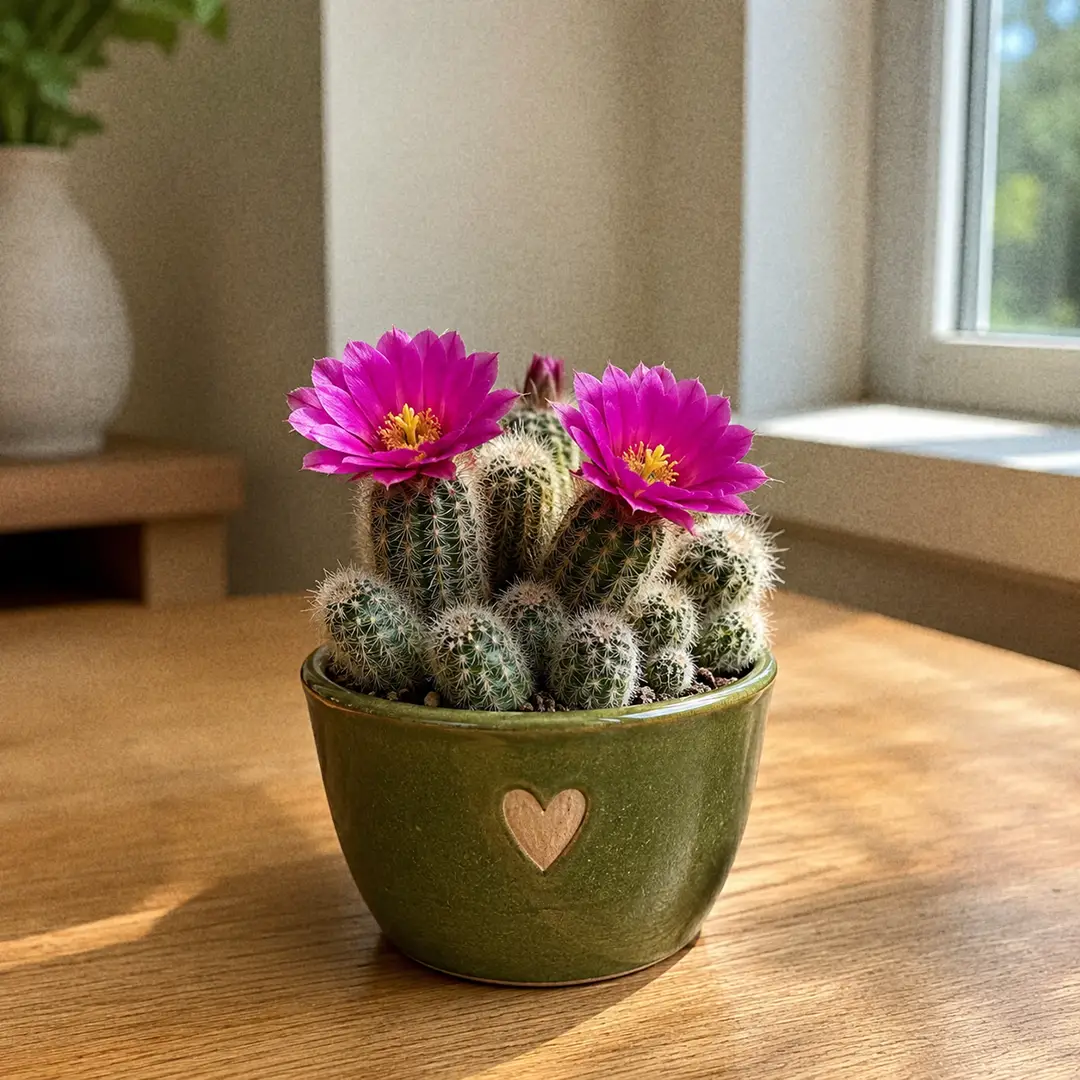
Complete Guide to Hedgehog Cactus Care and Growth
Complete Guide to Old Lady Cactus Care and Growth
Complete Guide to Powder Puff Cactus Care and Growth
Complete Guide to Pincushion Cactus Care and Growth
Complete Guide to Peruvian Old Man Cactus Care and Growth
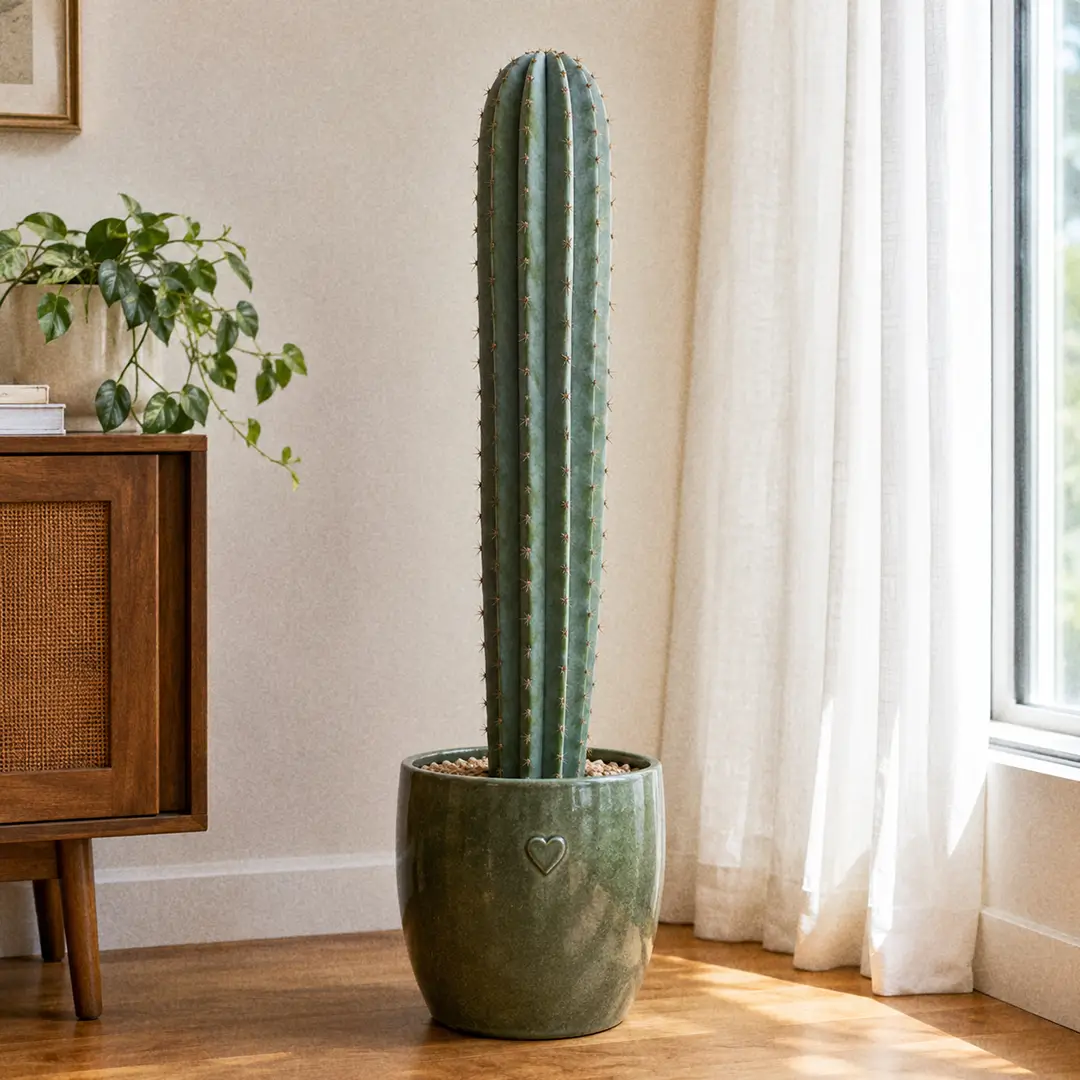
Complete Guide to Peruvian Apple Cactus Care and Growth
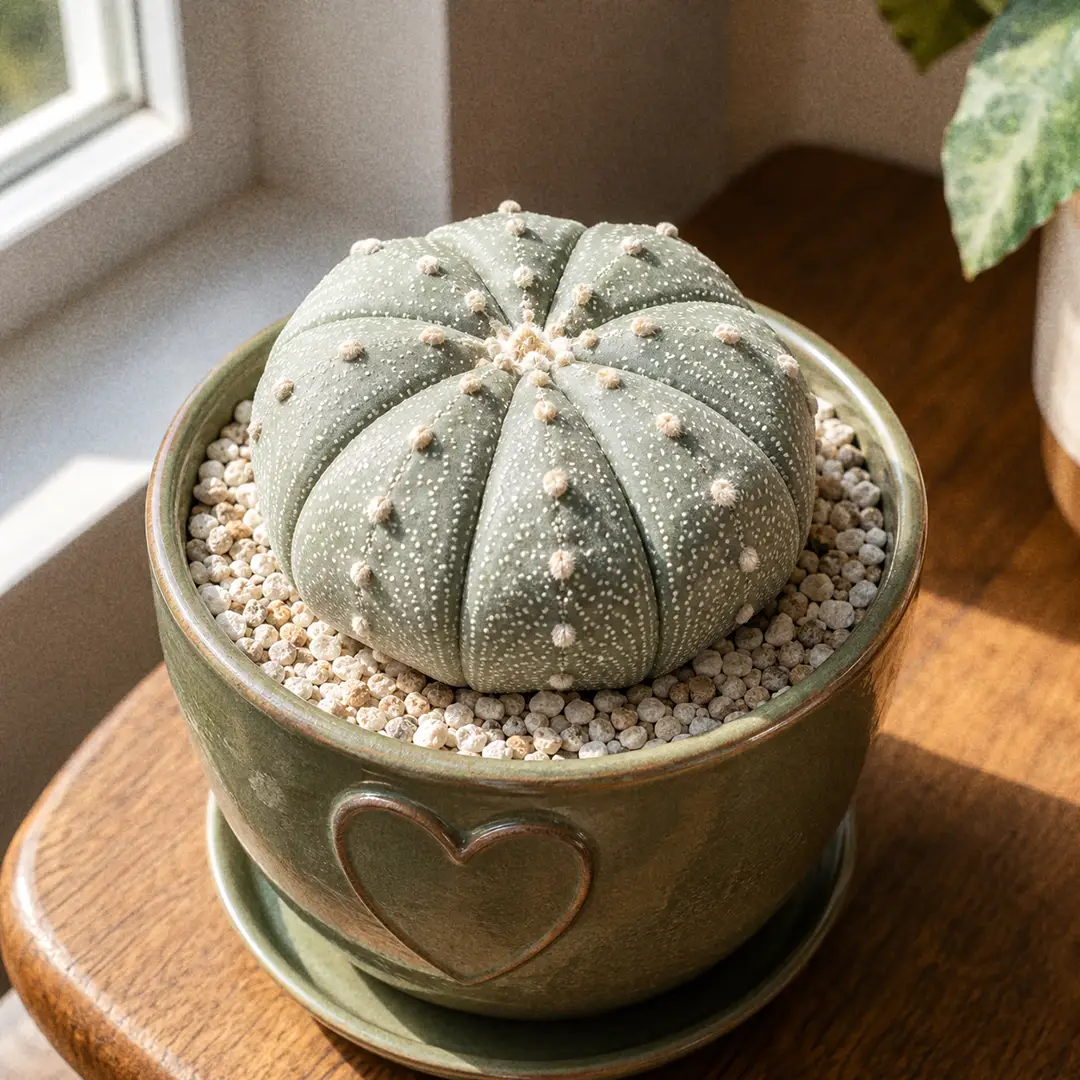
Complete Guide to Star Cactus Care and Growth
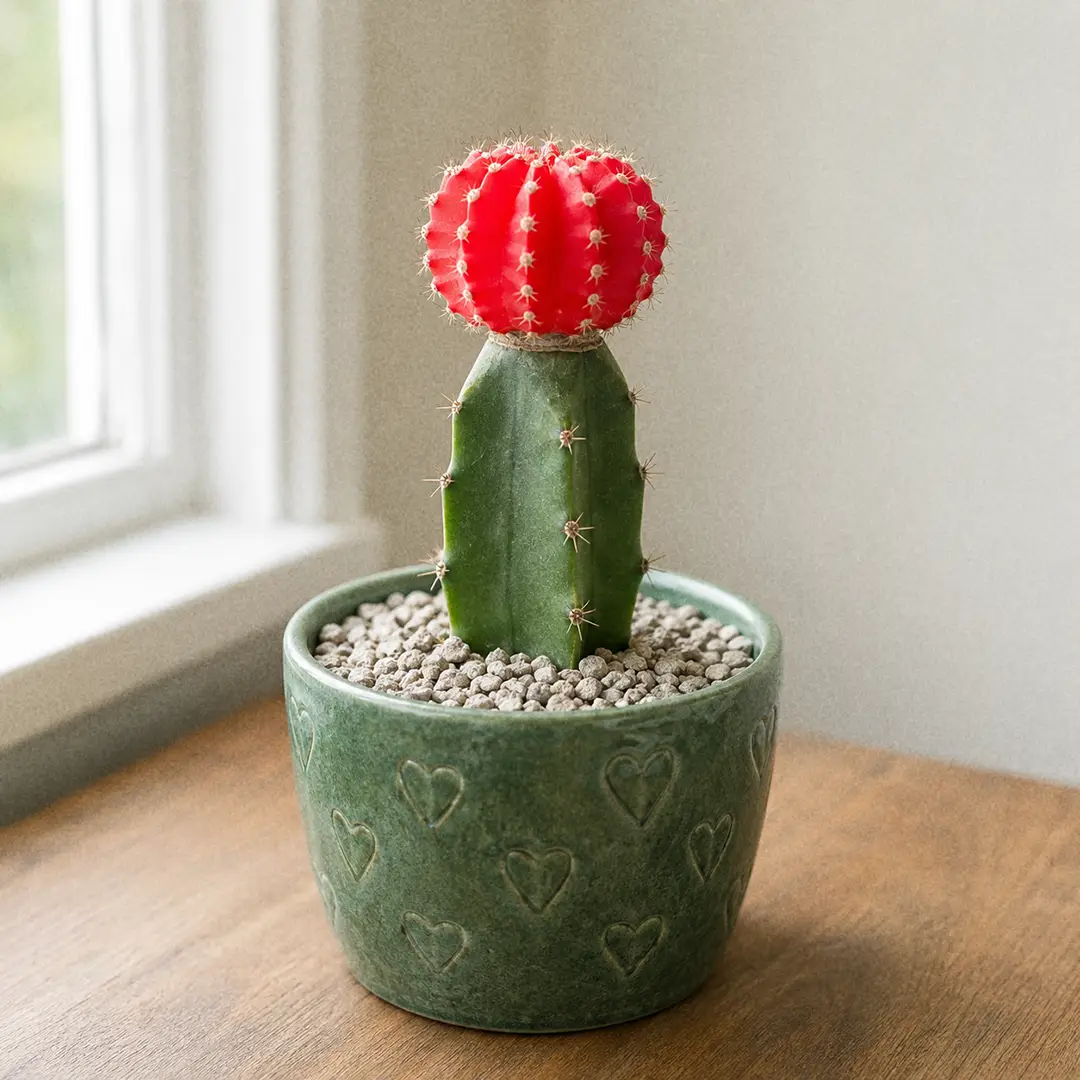
Complete Guide to Moon Cactus Care and Growth

Houseplant101 Forum
Questions & Comments
Ask a question, share your plant experience, or help other plant owners.
Comments are temporarily unavailable.
Open the Houseplant101 ForumNo comments yet
Be the first to ask a question or share your experience about this page.
Log in or create an account
Comments use your Houseplant101 Forum account, but you can stay on this page.
Create a new account