
Brain Cactus
Stenocactus multicostatus
Wave Cactus, Multi-Ribbed Cactus, Brain Coral Cactus, Echinofossulocactus multicostatus


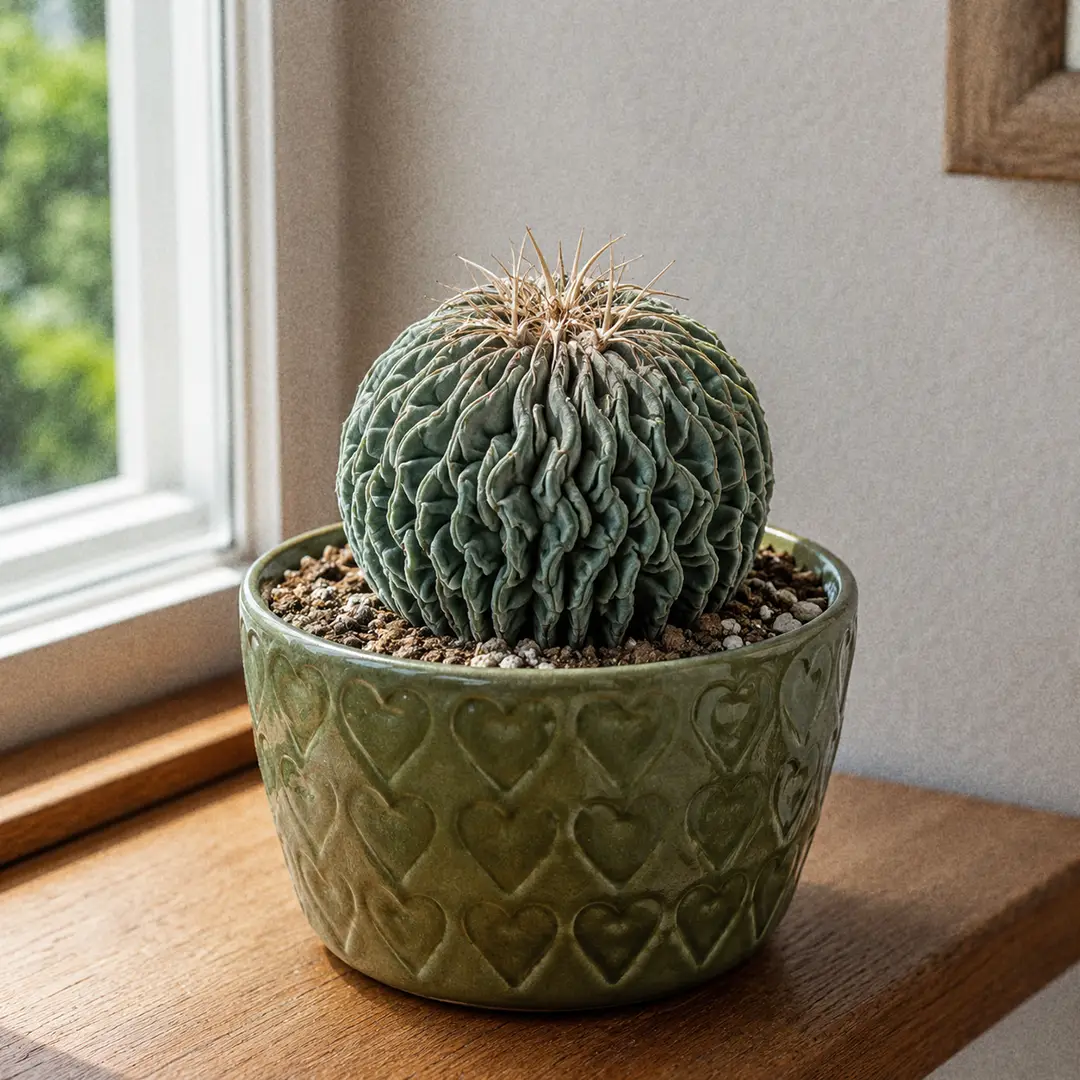
The Brain Cactus (Stenocactus multicostatus) is the little desert globe packed with more wavy ribs than any other cactus, so its surface folds and crinkles like a walnut or a scoop of brain coral. It stays palm-sized for years, thrives on a sunny windowsill, and throws white-and-purple striped flowers earlier in the year than almost any cactus you can buy.
📝 Brain Cactus Care Notes
🌿 Care Instructions
⚠️ Common Pests
📊 Growth Information
🪴 In This Guide 🪴

📺 Brain Cactus Video Guide

☀️ Brain Cactus Light Requirements (Full to Bright Indirect Sun)
Light is the one thing this cactus is genuinely fussy about, and getting it right is what keeps the ribs tight and the body compact. In the wild it grows out in open Mexican grassland with sun on it all day, so a dim corner will slowly ruin its shape.
The Sweet Spot
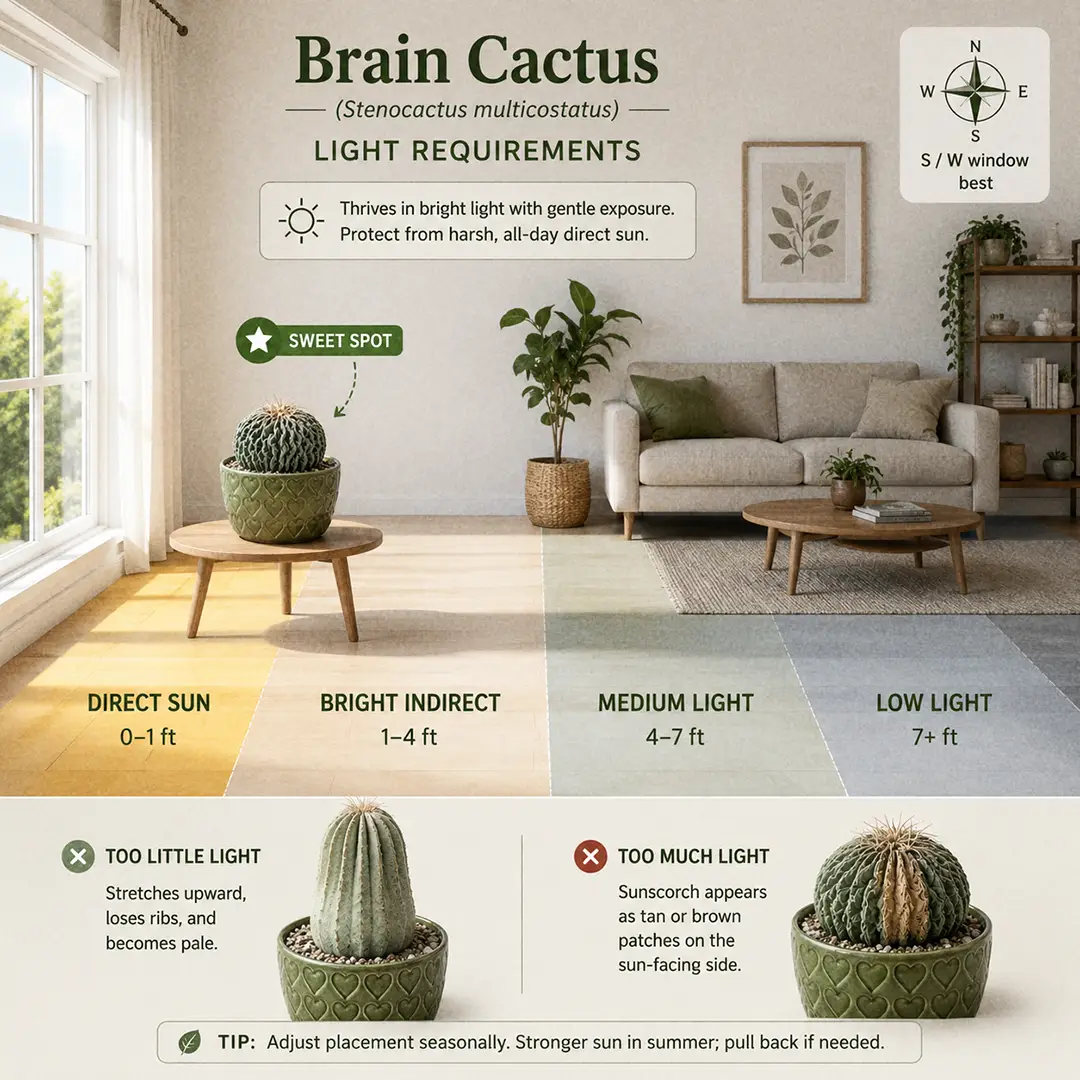
Aim for a south or west window where the plant gets four to six hours of direct sun a day. An unobstructed east window works well for a younger plant that has not been hardened to strong light yet. Keep the cactus within a foot of the glass for most of the year so it stays squat and richly colored. If your home is short on light, a grow light on a 12 to 14 hour timer does the job nicely. See our guide to light for houseplants for the wider picture.
Too Little Light
A Brain Cactus starved of light stretches upward from the center and grows a pale, smooth plug where the tight ribs should be. That new growth is soft, weakly colored, and never regains the crisp folds. If you notice the crown lightening and reaching, move the plant to the brightest window you have or add a grow light straight away.
Too Much Light
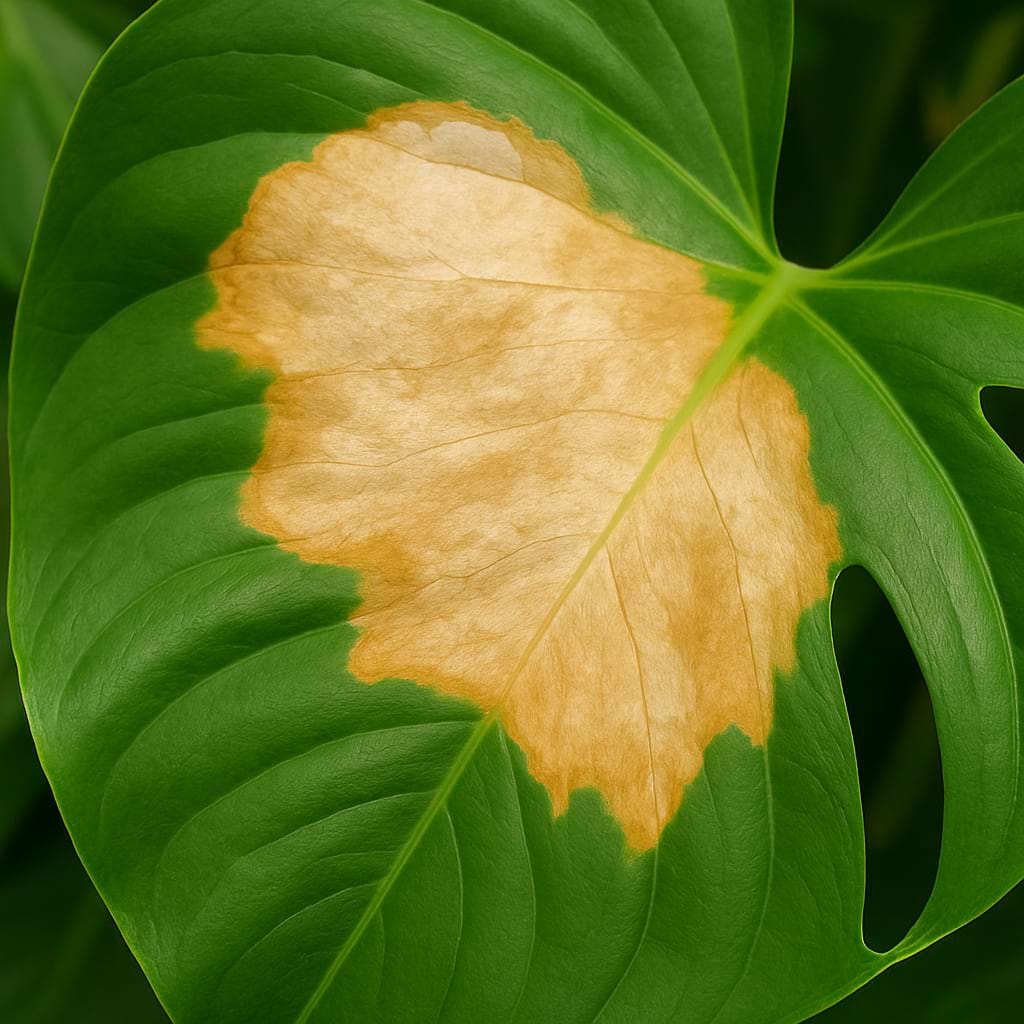
The flip side is rare but real. A plant moved suddenly from a dim shop to a blazing summer window can scorch, leaving pale tan or yellow patches on the sun-facing side that never heal. The fix is simple: harden the plant in over two weeks, shifting it a little closer to the glass every few days rather than all at once.
💧 Brain Cactus Watering Guide (Soak and Dry, Sparingly)
Overwatering is what kills most desert cacti indoors, and the Brain Cactus is no different. Its small body stores plenty of water, and the crowded ribs trap moisture easily, so the golden rule is to water hard, then wait a long time.
Watering Frequency
In spring and summer, water deeply only once the soil is dry all the way through. For a 4 inch terracotta pot in a sunny window, that usually lands every 10 to 14 days. A glazed pot or a cooler spot can stretch to three weeks. A wooden skewer pushed to the bottom of the pot is your best test; if it comes out cool or dark with clinging soil, wait a few more days. Our watering houseplants guide covers the basic rhythm.
In autumn and winter, cut right back. A plant resting in a cool room can go almost completely dry for two to three months, which is exactly the trigger it needs to flower early. A plant kept warm in a heated living room still wants a small drink every four to six weeks so the body does not shrivel.
How to Water
Pour room-temperature water around the base until it runs from the drainage hole, wait ten minutes, then empty the saucer. Never leave the pot standing in water. Try to keep water off the top of the plant, because moisture that settles down between the tight ribs is slow to dry and a common start to fungal spotting. Bottom watering suits this plant well if your mix is properly gritty.
Signs of Trouble
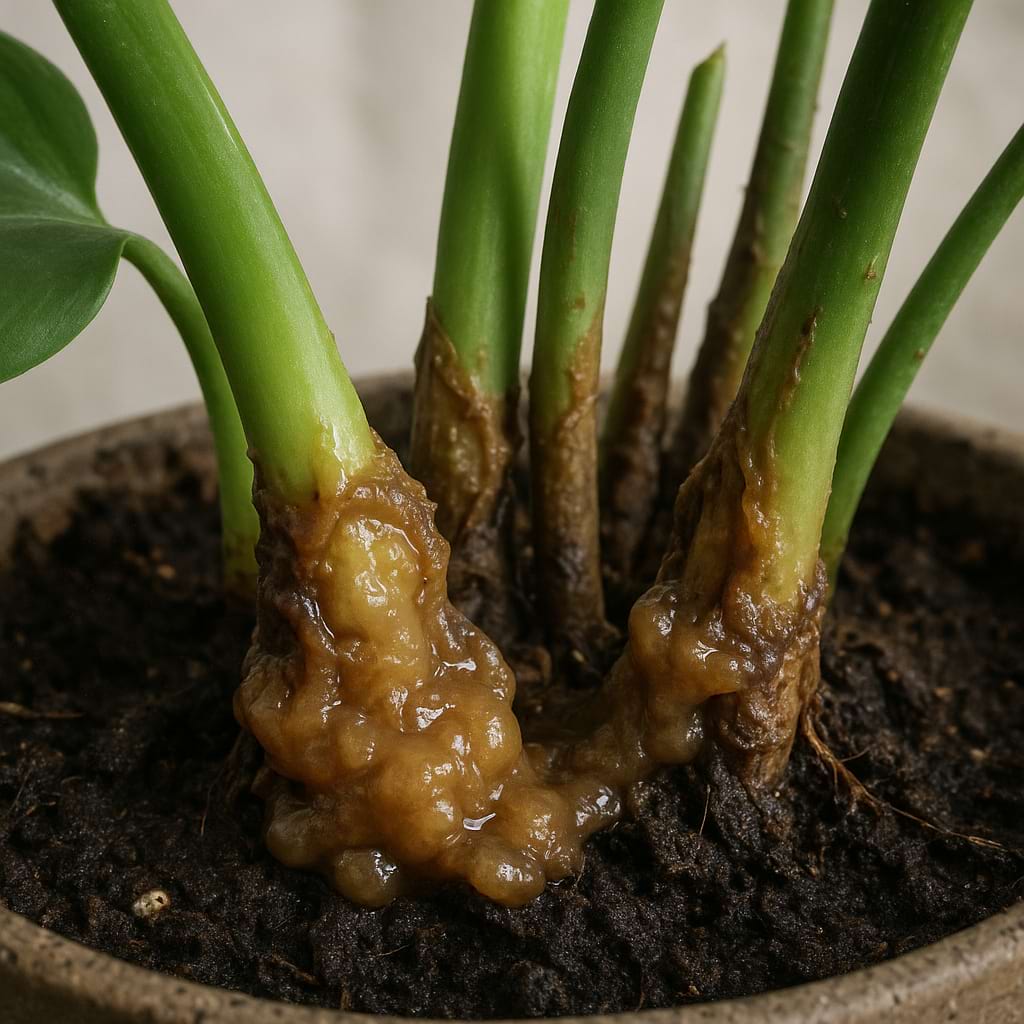
A thirsty Brain Cactus pulls in slightly and feels a touch soft, with the ribs looking a little deeper than usual. One good soak plumps it back within a day or two. Overwatering looks very different: the base darkens to brown, the body goes squishy near the soil, and the plant may lean or topple. Once rot reaches the body, your only option is to cut well above the damage and try to re-root the clean top in dry grit.
🪴 Best Soil for Brain Cactus (Gritty and Fast-Draining)
Soil is the most useful decision you make for this plant. A gritty mix forgives the occasional heavy hand with the watering can, while a rich, spongy one turns a small mistake into root rot.
What the Soil Needs
You want a mix that drains in seconds and dries out fully within a week. The Brain Cactus grows in thin, mineral-heavy ground, so it wants far more grit than most bagged potting soils provide. Aim for something loose and open, with very little peat holding water around the roots.
DIY Soil Mix
- 1 part standard cactus and succulent mix
- 1 part coarse pumice (or perlite)
- 1 part coarse horticultural sand or fine gravel
Squeeze a damp handful of the finished blend. It should collapse the moment you open your fingers. If it stays clumped, add more pumice until it falls apart cleanly.
Pre-Made Options
Most bagged cactus mixes are still too peaty for a Brain Cactus straight from the bag. Cut them roughly half and half with pumice or perlite before you pot. Steer clear of anything labeled "moisture retentive", which is the exact opposite of what this plant wants. Our repotting guide has more on getting the mix right.
🍼 Fertilizing Brain Cactus (Light Feeds in Summer Only)
The Brain Cactus is a slow grower from poor soil, so it needs very little feeding. Push it too hard and you get soft, pale, bloated growth that can split the neat folds of the ribs.
When and How Often
Feed only during active growth, from late spring to late summer. One or two feeds across the whole season is plenty, for example once in May and once in July. Skip feeding entirely the rest of the year, and never feed a plant you have just repotted for its first couple of months in fresh soil.
What to Use
Reach for a low-nitrogen cactus fertilizer (something around 2-7-7 or 5-10-10) at half the label strength. Always water first with plain water, then apply the diluted feed to already-damp soil so you never burn dry roots. A quarter-strength liquid kelp is a gentler organic option. See fertilizing houseplants for the general approach.
Over-Fertilizing Signs
A white crust on the soil surface or around the pot rim points to salt build-up. Flush the pot with a few pot volumes of plain water, skip the next planned feed, and dilute more heavily next time. Growth that suddenly looks lush, green, and soft is the early sign you are feeding too much.
🌡️ Brain Cactus Temperature Range
Temperature is where this cactus is genuinely easy. It comes from highland Mexico, where days are warm and nights turn cold, so ordinary indoor conditions feel gentle to it.
Ideal Range
Through spring, summer, and autumn, aim for 65 to 90°F (18 to 32°C). Normal room temperatures are ideal, and a hot summer windowsill is no problem once the plant is hardened in. Mature plants shrug off brief cold snaps down to around 20°F (-7°C) if they are bone dry at the root, but an indoor plant should never really sit below 40°F (4°C).
Drafts and Heat Sources
A cool winter rest at 40 to 50°F (4 to 10°C) for a couple of months is the switch that triggers the early spring flowers. An unheated bright porch, a cool spare room, or a windowsill behind a thermal curtain all work. Keep the plant away from a running radiator, which dries the body unevenly and can shrivel one side, and shield it from sudden blasts of cold air from an open door in winter.
💦 Brain Cactus Humidity Requirements
Ideal Humidity
Simple. The Brain Cactus is happy in normal dry household air, anywhere from 30 to 45 percent. No misting, no humidifier, no pebble trays. Its whole design is built for dry conditions.
Easy Humidity Boosters
You will almost never need to raise humidity for this plant. The only real risk runs the other way: damp, cool, still air in a stuffy corner encourages fungal spots down in the crowded ribs. A small clip-on fan running a few hours a day keeps the air moving and heads that off. Avoid steamy bathrooms and closed terrariums, both far too wet for a Brain Cactus.
🌸 Brain Cactus Flowers (Early White-and-Purple Blooms)
This is one of the earliest-flowering cacti you can keep, which is a big part of its charm. While most desert cacti are still dormant, a mature Brain Cactus is already opening buds at its crown.
What the Flowers Look Like
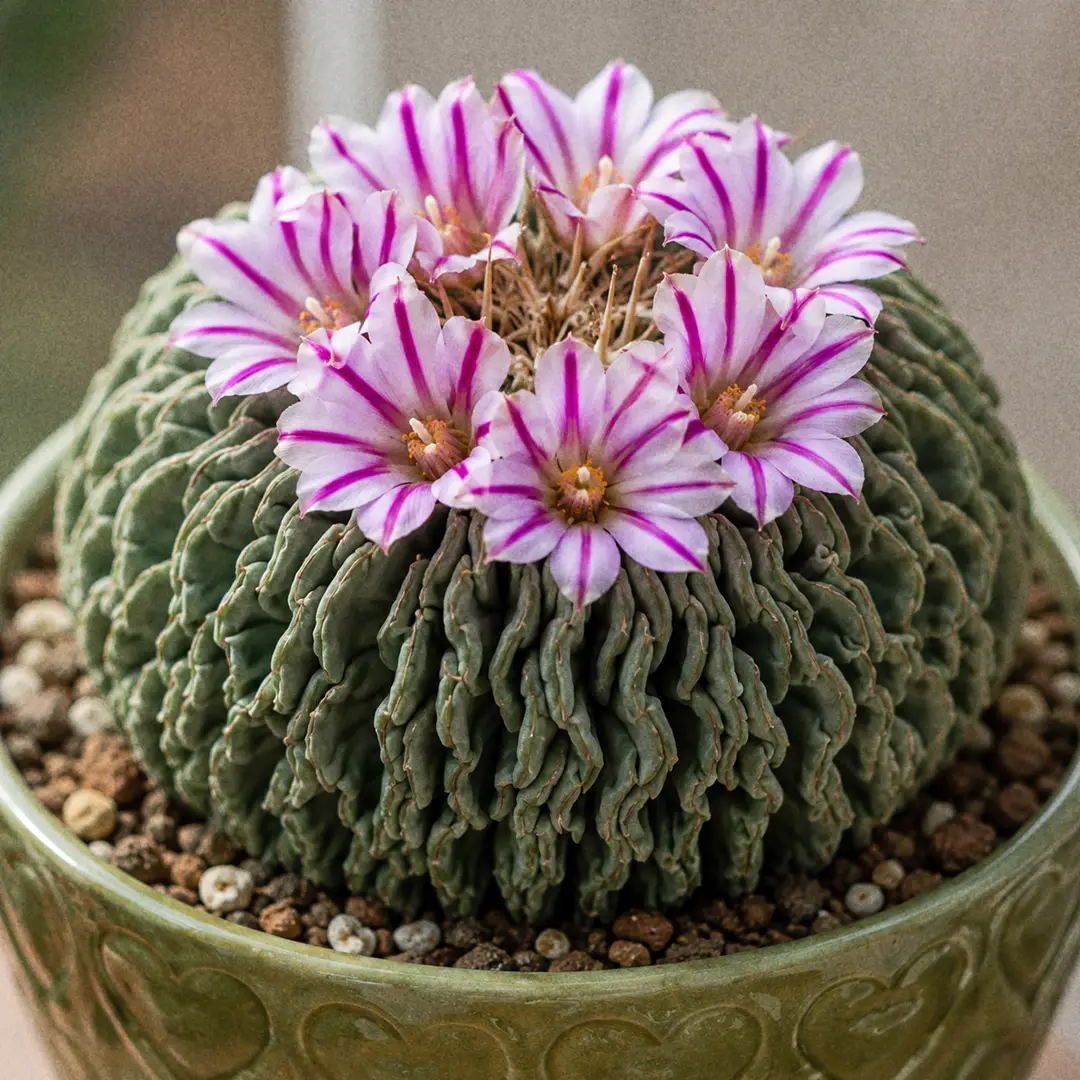
The flowers are small funnels, roughly an inch across, that sit in a little ring around the top of the plant. Each petal is white to pale lilac with a bold magenta or violet stripe running down its middle, so the whole bloom looks candy-striped. They open on sunny days in late winter and early spring, weeks ahead of most cacti, and a healthy plant can flower for several weeks.
How to Trigger Bloom
Two things bring the flowers. First, the plant needs to be mature, usually a few years old and comfortably filling a small pot. Second, and more important, it needs a cool, dry winter rest at 40 to 50°F (4 to 10°C) for six to eight weeks with almost no water. That cold dry spell is what sets the buds. Strong light through late winter and spring then pushes them open.
If It Won't Bloom
If a healthy, mature plant never flowers, the missing piece is nearly always the cool dry winter. A Brain Cactus kept warm and watered all year round will grow contentedly for decades without ever forming a bud. Give it a genuine cold rest and it usually rewards you the following spring.
🏷️ Brain Cactus Types and Varieties
Stenocactus is one of the messiest genera in the cactus world. The species blur into one another, names have been merged and split for over a century, and no two plants look exactly alike, which is part of why collectors love it.
Stenocactus multicostatus (The Classic Brain Cactus)
The plant most people mean by "Brain Cactus". It carries the highest rib count in the group, often 30 to over 100 thin, wavy, tightly packed ribs, giving that unmistakable folded, brain-coral surface. Spines are relatively few, with one or two flattened papery upper spines.
Stenocactus multicostatus 'Zacatecasensis'
A form (sometimes sold as its own species) with even finer, more crowded, more sharply wavy ribs. To the eye it is the most extreme version of the brain look, and it is the one collectors chase.
Stenocactus crispatus
A close cousin with fewer but still wavy ribs and longer, more prominent spines. Its flowers lean more purple. Care is identical to the classic Brain Cactus.
Stenocactus coptonogonus
The odd one out. Instead of many thin wavy ribs it has around 10 to 15 straight, blade-like ribs, so it reads as a chunkier, more geometric plant. Botanists have argued for years over whether it even belongs in the same genus.
Good Shelf Companions
The Brain Cactus sits beautifully next to other small globular cacti, where its busy folded surface plays off smoother bodies. Pair it with the perfect ribbed sphere of a Golden Barrel Cactus, the clean-ribbed star outline of a spineless Bishop's Cap Cactus, or the flat eight-rayed Star Cactus for a spineless contrast. A candy-bright grafted Moon Cactus adds a shot of color, the golden folded fan of a Crested Brain Cactus makes an interesting namesake pairing (it is a mutated Mammillaria rather than a Stenocactus, so the two share a nickname and nothing else), a clumping Pincushion Cactus brings a ring of spring flowers, and the snow-white wool of a Powder Puff Cactus makes a soft counterpoint to the Brain Cactus's crisp ridges.
🪴 Potting and Repotting Brain Cactus
When to Repot
This is a slow grower that likes to sit snug. Repot every three to four years, or only when the body has clearly filled the pot and you spot roots at the drainage hole. Spring or early summer is the ideal window. Avoid repotting in autumn or winter unless you are rescuing a plant from soggy, rotted soil.
Choosing a Pot
A small terracotta pot an inch wider than the current one is the safest choice. Clay wicks moisture out of the mix and speeds up drying, which quietly protects the roots from any watering slip. The root system is shallow, so a wider, shallower pot beats a tall narrow one. Make sure there is at least one drainage hole, ideally two.
Step-by-Step Repotting
- Wait until the soil is fully dry, so the rootball slides out cleanly and the plant is lighter to handle.
- Fold a strip of newspaper or a thick cloth into a band and loop it around the body to hold the plant without grabbing the spines.
- Tip the pot sideways, ease the rootball out, and crumble away the old mix.
- Check the roots. Trim any black, mushy, or hollow ones with sterile scissors; healthy roots are firm and pale.
- Set the plant in fresh gritty mix at the same depth it grew before. Burying the body even half an inch invites rot at the base.
- Firm the mix lightly with a chopstick and top-dress with a thin layer of grit.
- Hold off watering for a full week so any nicked roots can callus over.
✂️ Pruning Brain Cactus
Why Pruning Is Rare
The Brain Cactus is a single-bodied plant that does not branch, so there is nothing to shape and nothing to trim. For all normal purposes, you never prune it. Cutting into a healthy body only opens the door to fungal infection.
When You Might Need to Cut
The only reason to pick up a blade is rescue work. If the base has rotted, slice cleanly across the body well above any brown or soft tissue, dust the cut with sulfur powder or cinnamon, and rest the healthy top on dry grit. Once a firm callus forms after a week or two, set the piece on fresh dry mix and treat it as a new plant.
Cleaning the Ribs
Because the ribs are so crowded, dust settles deep in the folds. A soft, dry artist's brush or a small makeup brush sweeps it out without scratching the body or trapping moisture. Never clean with a wet cloth, since water left in the ribs is a common cause of spotting.
🌱 How to Propagate Brain Cactus
Best Method: Seed
The Brain Cactus almost always grows as a solitary plant, so the standard way to make more is from seed. It sets viable seed readily when two plants flower at the same time and you move pollen between them, since a single plant rarely pollinates itself.
Step-by-Step Seed Propagation
- Move pollen between the flowers of two different plants with a small soft brush while they are open.
- Wait for the small seed pods to ripen and dry, then collect the fine dark seed.
- In spring, scatter the seed on the surface of a tray of sterile gritty seed mix. Do not bury it, as the seed needs light to germinate.
- Mist lightly, cover with a clear lid or plastic wrap, and keep warm and bright at 70 to 80°F (21 to 27°C).
- Tiny green spheres appear over one to three weeks, at first with no visible ribs.
- Crack the lid open after another couple of weeks to ease the seedlings into normal room air.
- Pot the seedlings individually once they reach around a quarter inch across, usually after several months.
Tips for Success
Clean tools and sterile mix are the whole game with cactus seed, because damping-off fungus kills more seedlings than anything else. A light dusting of cinnamon over the surface before sowing gives a little extra protection. Our succulent propagation guide covers the wider technique.
Offsets Are Uncommon
Older Brain Cacti occasionally throw a small offset from the base. If one appears, let it grow to at least an inch across, slice it off with a sterile blade, let the cut callus for a week, and pot it in dry gritty mix.
🐛 Brain Cactus Pests and Treatment
Brain Cacti are not big pest magnets, but the deep crowded ribs give insects excellent places to hide, so check the folds now and then.
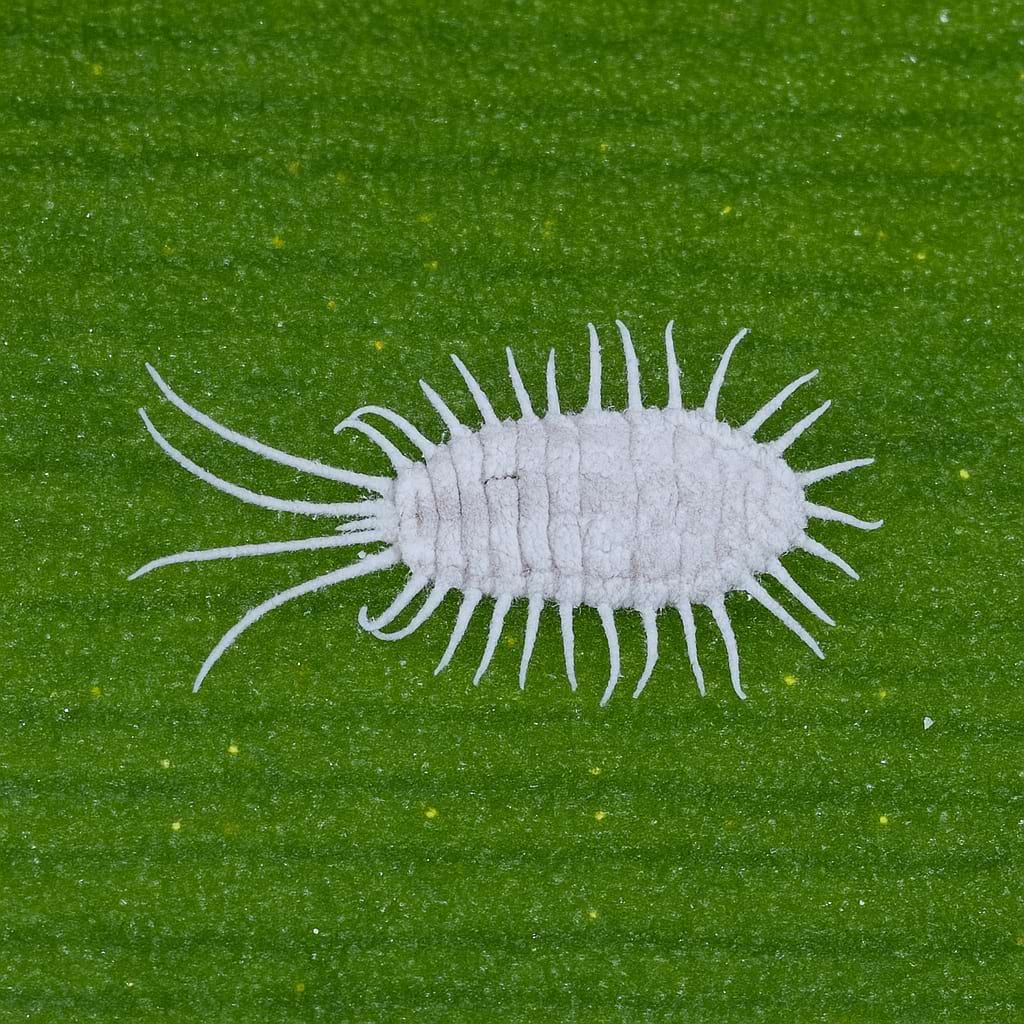
- Mealybugs: The most common visitor. Cottony white tufts tucked deep between the ribs. Dab each one with isopropyl alcohol on a cotton swab every five to seven days for three weeks. A systemic soil drench helps with a heavy infestation.
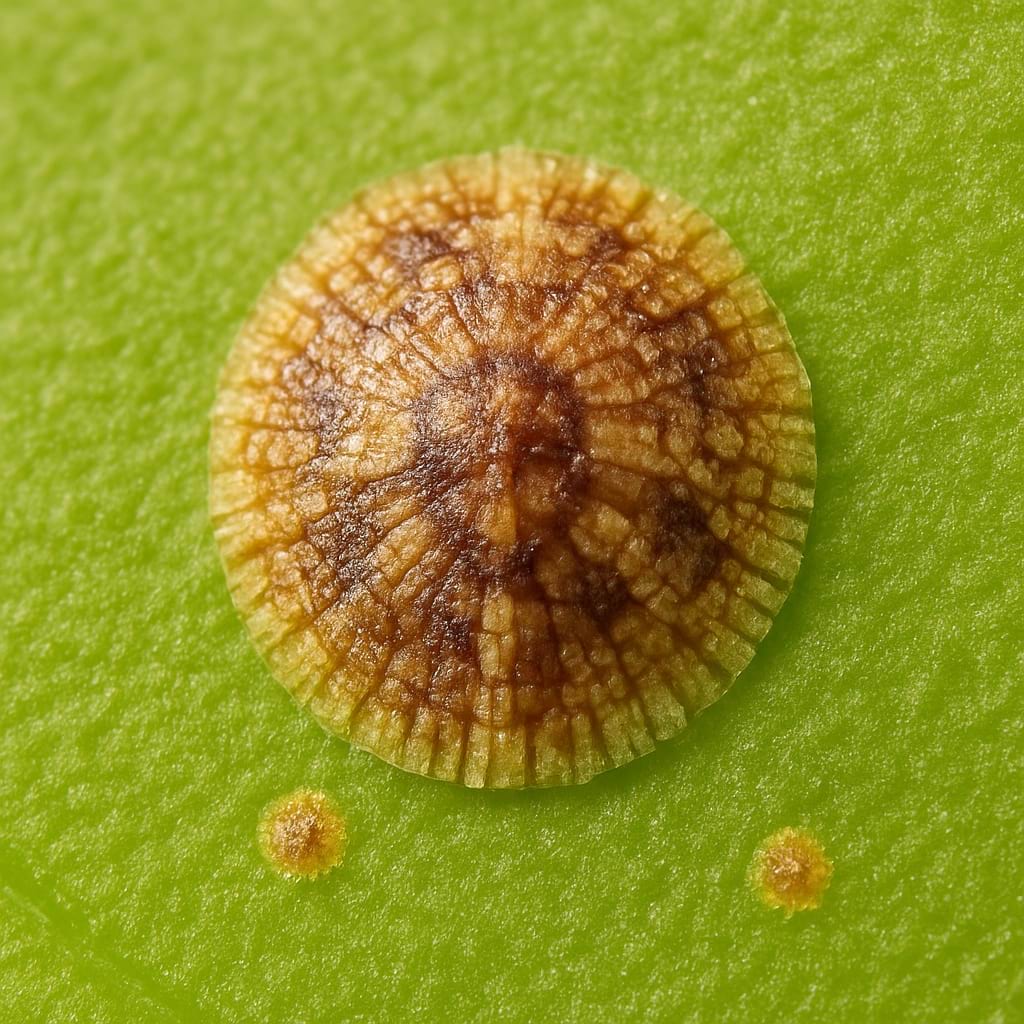
- Scale Insects: Small flat brown or tan shells stuck to the body. Scrape them off gently with a wooden toothpick and follow up with neem oil.
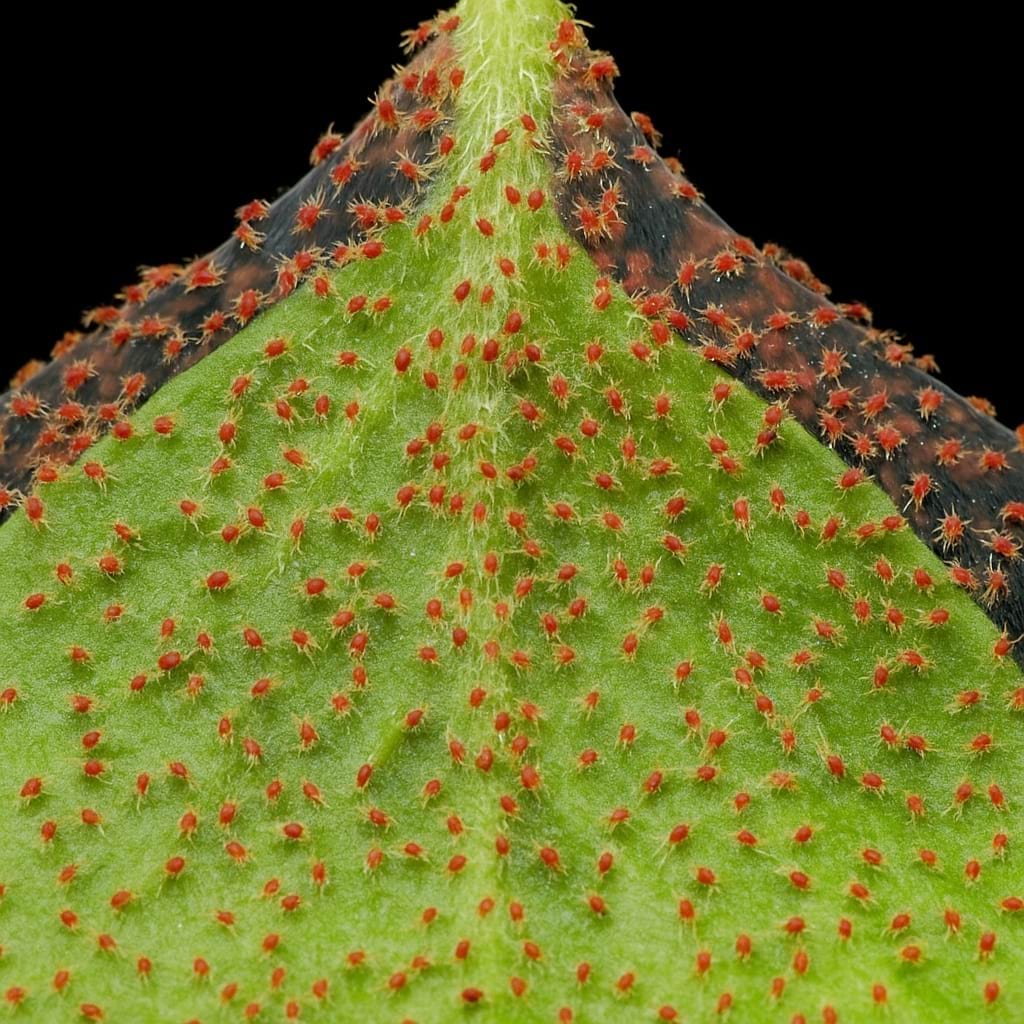
- Spider Mites: Fine webbing in the ribs, most likely in warm, dry indoor air over winter. Rinse gently and treat with a mild horticultural soap.
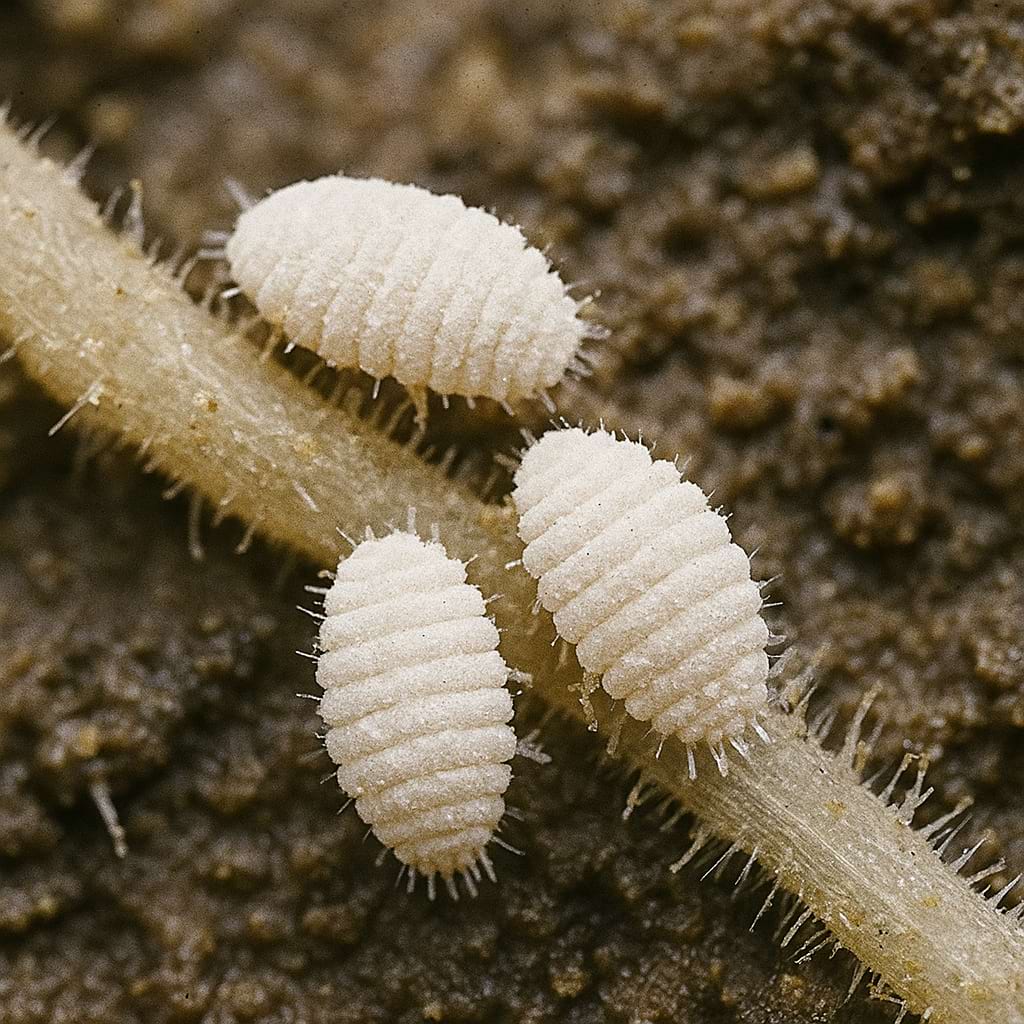
- Root Mealybugs: White powdery clusters on the roots, hidden until you unpot. Wash the roots clean under running water, repot in fresh dry mix, and skip watering for two weeks.
When you treat pests, never let sprays or alcohol pool down in the ribs. Trapped moisture there is what leads to the fungal spots in the next section.
🩺 Common Brain Cactus Problems
Nearly every Brain Cactus problem traces back to wet soil, moisture caught in the ribs, or strong sun on an unhardened plant.
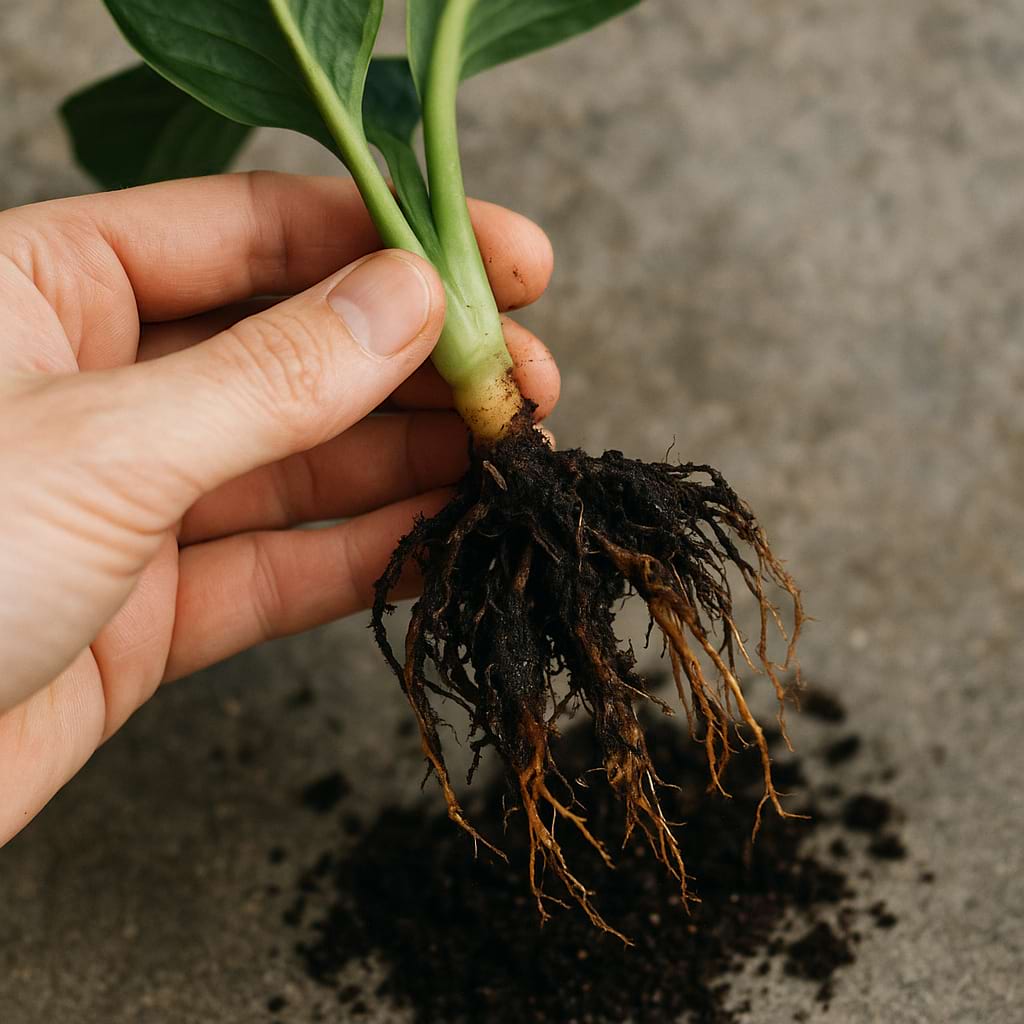
- Root rot and a mushy base: The single biggest killer. The base darkens from brown to black, the body softens near the soil, and the plant may lean over. Once it is advanced, cut the body well above the rot and re-root the clean top in dry grit. Prevent it with gritty soil and patient watering.
- Brown-black spots on the body: Cool damp air plus water lingering between the ribs. Improve airflow with a small fan, keep water at the soil, and dust any spots with sulfur powder to stop them spreading.
- Sunburn or bleaching: Pale tan or yellow patches on the side facing strong midday sun, usually on a plant moved suddenly into bright light. Harden it in over two weeks next time; the marks do not heal.
- Yellowing body: A soft, whole-body yellow cast points to overwatering. A flatter yellow flush in high summer is more often sun stress.
- Mushy stems at the soil line: The same root cause as root rot. Act quickly, because once the lower body softens, only the clean top above the damage is worth saving.
- Wilting or shrivelling: Usually simple thirst, especially in summer. Confirm the soil is fully dry, then water deeply and the body plumps back up.
- Stunted growth: Old exhausted soil, a cramped root system, or just a normal slow year. This species adds very little size annually even when it is thriving.
- Failure to bloom: No cool dry winter rest, or a plant that is still too young. Give it a genuine cold rest and a little patience.


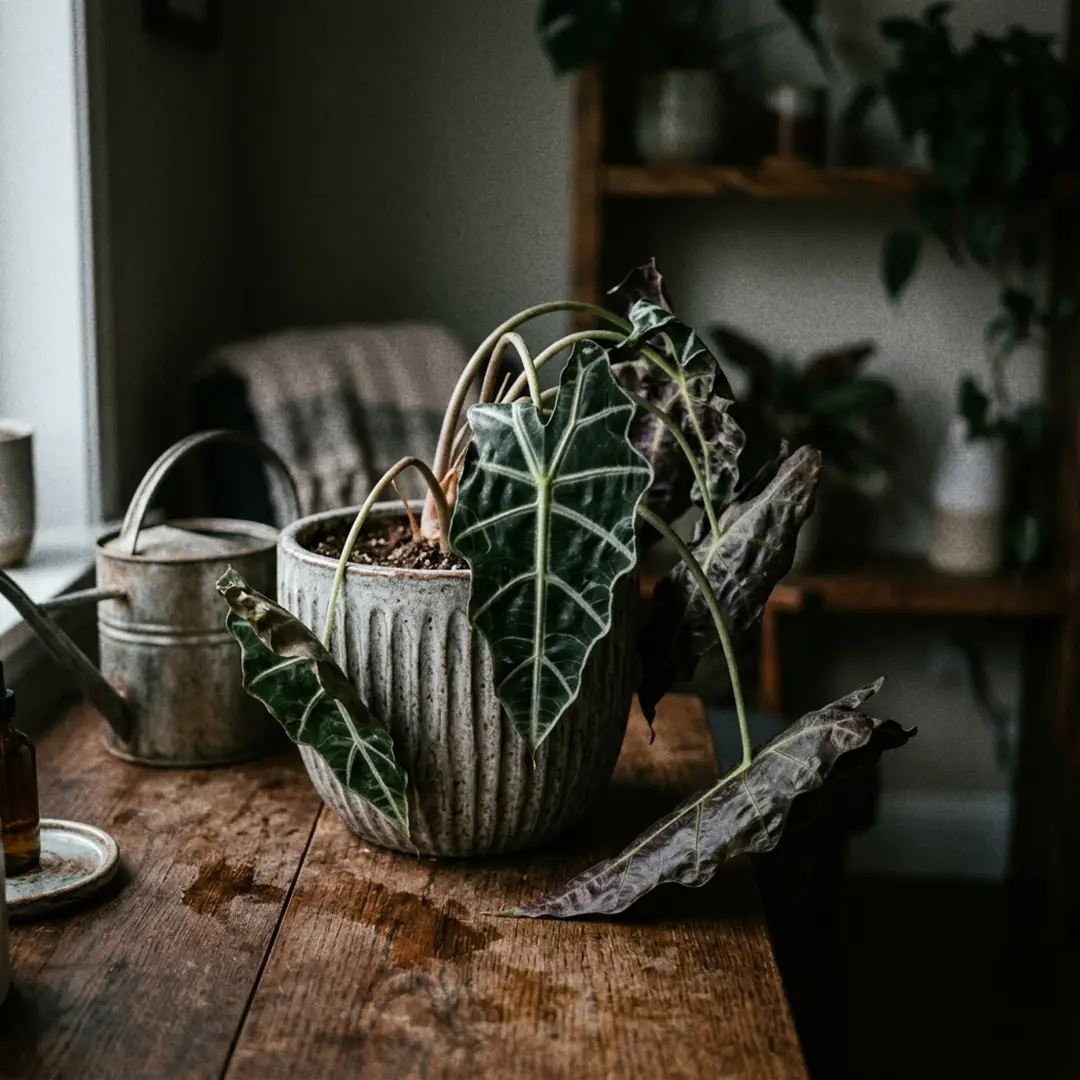
🖼️ Brain Cactus Display and Styling Ideas
The Brain Cactus is small and packed with texture, which makes it one of the more fun cacti to style.
Solo Setups
My favorite single setup is one Brain Cactus in a low, plain glazed pot, top-dressed with pale grey grit so the shadows in the ribs really pop. A simple matte pot keeps all the attention on the folded surface. Because the plant is the visual event, resist the urge to pick a busy, patterned container that competes with it.
Grouped Arrangements
On a shelf, the Brain Cactus shines as the "texture" plant in a group of globular cacti. Set it beside the smooth ribs of a Golden Barrel Cactus and the clean star of a Bishop's Cap Cactus, keep the pots matched, and let the different surfaces carry the whole display. A trio like that reads like a small texture study.
Where Not to Put It
Skip closed terrariums and steamy bathrooms; both are far too wet, and the crowded ribs make this plant especially prone to trapped moisture. Skip dim bedroom corners too, where the body stretches and loses its folds within months. A bright kitchen sill, a sunny desk, or a sunroom shelf are its natural homes.
🌟 Brain Cactus Pro Care Tips
✅ Treat the cool dry winter as the secret to those early flowers. Six to eight weeks at 40 to 50°F (4 to 10°C) with almost no water is what sets the buds.
☀️ Keep it close to the glass. Strong light is what keeps the ribs tight and the body squat; a dim spot smooths the folds away.
💧 When in doubt, wait. A Brain Cactus will sit happily dry for an extra week. A soggy one for an extra week is already in trouble.
🪴 Choose a small terracotta pot. The clay does half the drying work for you and shortens the risky wet window after watering.
🪶 Brush, never wipe. A soft dry paintbrush lifts dust from the crowded ribs without trapping the moisture that a wet cloth leaves behind.
🌬️ Keep the air moving. A little airflow in a cool room is the best defense against the fungal spots that love a still, damp corner.
🐾 Spine-aware but pet-safe. The plant is non-toxic, though the papery spines mean it is still best kept out of a curious pet's reach.
🔎 Buy the plant, not the label. Stenocactus names are a tangle, so choose the specific body and rib pattern you like in person rather than trusting the tag.
❓ Frequently Asked Questions
Why is my Brain Cactus turning brown at the base?
A browning, softening base is almost always the start of root rot from wet soil. Unpot the plant, trim any black or mushy tissue with a sterile blade, dust the cut with sulfur powder or cinnamon, and re-root the clean top in dry gritty mix after letting it callus for a week.
How often should I water a Brain Cactus?
In spring and summer, roughly every 10 to 14 days for a 4 inch terracotta pot in a sunny window, but only once the soil is completely dry. In winter, almost never if the plant is resting in a cool room, or a small drink every four to six weeks if it is kept in a warm one.
Is the Brain Cactus toxic to pets?
No, the plant itself is non-toxic to cats and dogs. It does carry spines, though, including a few longer papery ones, so it is still worth keeping out of reach of pets that like to bat at things.
Why isn't my Brain Cactus flowering?
The usual reason is a warm, watered winter. This species needs a cool, dry rest at 40 to 50°F (4 to 10°C) for six to eight weeks to set buds, and it also has to be mature enough, generally a few years old and filling its pot.
How big does a Brain Cactus get?
Indoors it stays small, usually 2 to 4 inches tall and 4 to 6 inches across, creeping toward about 6 inches over many years. It is a genuinely slow, compact plant, which is part of why it works so well on a windowsill.
Why does my Brain Cactus look wrinkled or shrivelled?
Some folding is normal, since the ribs are the whole point of the plant. But if the entire body looks shrunken and slightly soft, that is thirst. Check that the soil is fully dry, then give it a deep soak and it should firm up within a day or two.
Can I grow a Brain Cactus from seed?
Yes, and it is the main way to propagate one, since the plant rarely offsets. Cross-pollinate two flowering plants, sow the fine seed on the surface of sterile gritty mix in spring, keep it warm and lightly humid until it germinates, then gradually open it up to room air.
Does a Brain Cactus need a deep pot?
No. Its roots are shallow and spread sideways more than down, so a wide, shallow pot an inch larger than the current one is ideal. Just make sure it has at least one drainage hole so water never pools at the bottom.
ℹ️ Brain Cactus Info
Care and Maintenance
🪴 Soil Type and pH: Gritty, fast-draining cactus mix with added pumice, perlite, or coarse sand; neutral to slightly acidic pH.
💧 Humidity and Misting: Happy in dry household air around 30 to 45 percent.
✂️ Pruning: Essentially none; this cactus does not branch and rarely needs cutting.
🧼 Cleaning: Blow or brush dust out of the ribs with a soft dry brush; never wipe with a wet cloth, since water trapped between the crowded ribs invites fungal spots.
🌱 Repotting: Move up one pot size only when the body has clearly filled the pot, usually every 3 to 4 years.
🔄 Repotting Frequency: Every 3-4 years
❄️ Seasonal Changes in Care: Active growth in spring and summer; needs a cool, dry winter rest to set its very early flowers.
Growing Characteristics
💥 Growth Speed: Slow
🔄 Life Cycle: Long-lived perennial
💥 Bloom Time: Late winter through early spring, one of the first cacti to flower each year
🌡️ Hardiness Zones: 9-11 outdoors; grown as a houseplant everywhere colder
🗺️ Native Area: North-central Mexican highlands, including Chihuahua, Coahuila, Durango, Zacatecas, and San Luis Potosí
🚘 Hibernation: Cool dry winter rest at 40 to 50°F (4 to 10°C) for reliable, early blooming
Propagation and Health
📍 Suitable Locations: Sunny south or west windowsills, sunrooms, bright kitchens, plant shelves under strong grow lights
🪴 Propagation Methods: From seed in spring; offsets are uncommon but possible on old plants.
🐛 Common Pests: Mealybugs, Scale Insects, Spider Mites, Root Mealybugs
🦠 Possible Diseases: Root rot, fungal stem spotting from water trapped in the ribs
Plant Details
🌿 Plant Type: Small solitary globular desert cactus
🍃 Foliage Type: Ribbed globe carrying 30 to 100+ thin, wavy, crowded ribs that give a wrinkled brain-like surface
🎨 Color of Leaves: Blue-green to grey-green body, often with a slight bloom
🌸 Flower Color: White to pale lilac petals, each split by a bold magenta to violet midstripe
🌼 Blooming: Yes; reliable on mature plants after a cool dry winter, often the earliest cactus on the shelf to open
🍽️ Edibility: Not edible; grown strictly as an ornamental
📏 Mature Size: 2-4 inches tall indoors; slowly to about 6 inches over many years
Additional Info
🌻 General Benefits: Compact, slow, drought-tolerant, pet-safe, beginner-friendly, blooms very early in the year
💊 Medical Properties: None
🧿 Feng Shui: A small, contained accent for a bright corner; the tightly folded ribs read as a symbol of protection and gathered energy
⭐ Zodiac Sign Compatibility: Capricorn
🌈 Symbolism or Folklore: Endurance, patience, and quiet resilience; the brain-like folds are often read as a nod to thought and inner life
📝 Interesting Facts: Stenocactus multicostatus holds an informal record among cacti for sheer rib count. Where a Golden Barrel might carry 20 to 30 ribs, a Brain Cactus can fold 30 to well over 100 thin wavy ribs onto a body the size of a plum, which is what gives it the wrinkled, brain-coral look. The genus was long called Echinofossulocactus, a mouthful that means "hedgehog with little grooves", and older plants are still sold under that name. The species is famously variable, so no two Brain Cacti look quite alike, and botanists have merged and split its many named forms for over a century.
Buying and Usage
🛒 What to Look for When Buying: Pick a plant with a firm, evenly colored body, crisp undamaged ribs, and no soft brown patches at the base. The papery upper spines should be intact rather than snapped. Skip any plant that wobbles in its pot or shows a shrunken, discolored soil line, both signs of root trouble.
🪴 Other Uses: Mini desert dish gardens, collector's cactus shelves, bright office-desk accents, textural contrast in mixed succulent bowls
Decoration and Styling
🖼️ Display Ideas: Solo in a small glazed pot that shows off the folded ribs, grouped with other globular cacti for a texture study, or set in a shallow gravel bowl beside smooth-bodied species for contrast
🧵 Styling Tips: Top-dress with pale grit so the shadows in the ribs stand out; choose a low, simple pot so the busy surface of the plant stays the main event.
🪴 See also 🪴
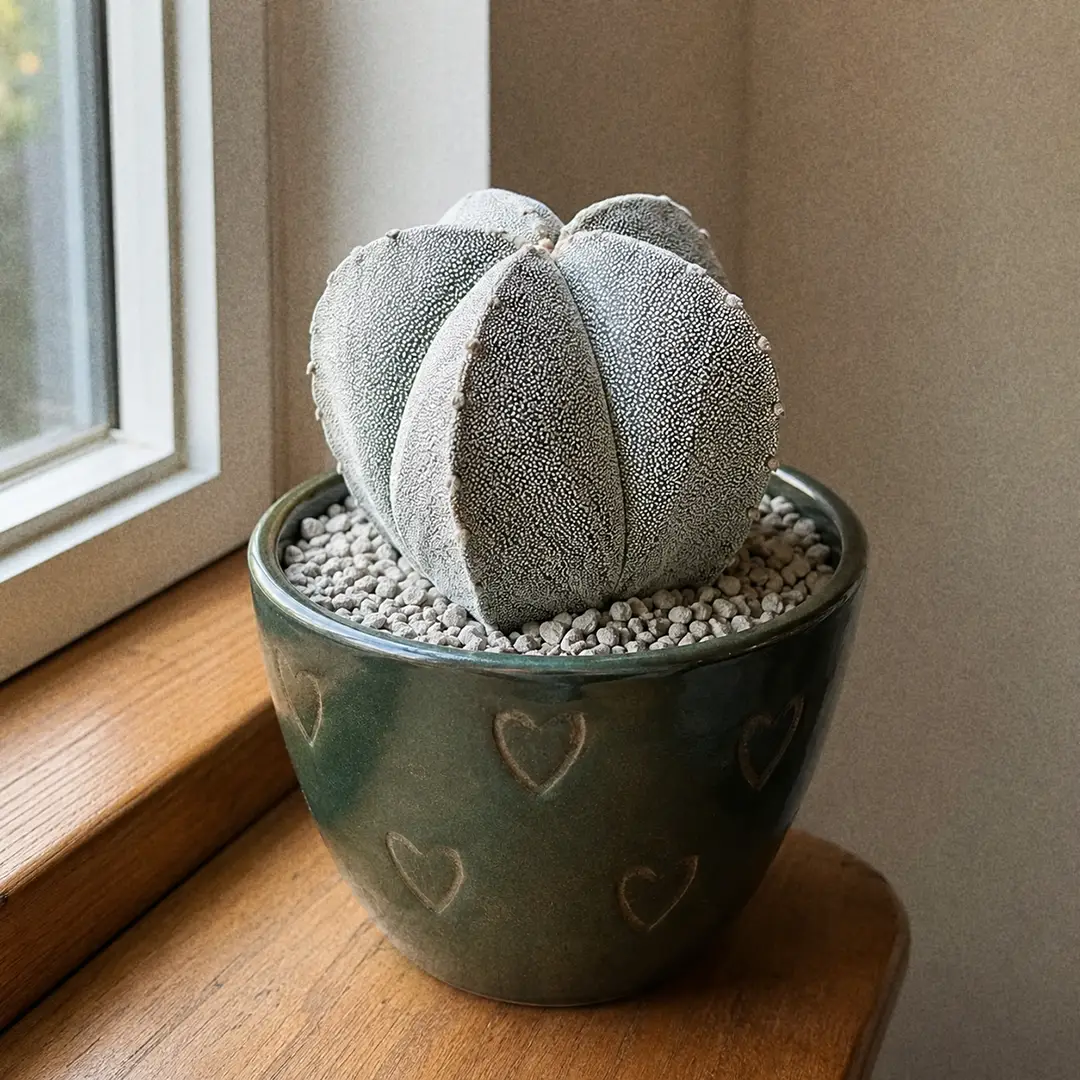
Complete Guide to Bishop's Cap Cactus Care and Growth
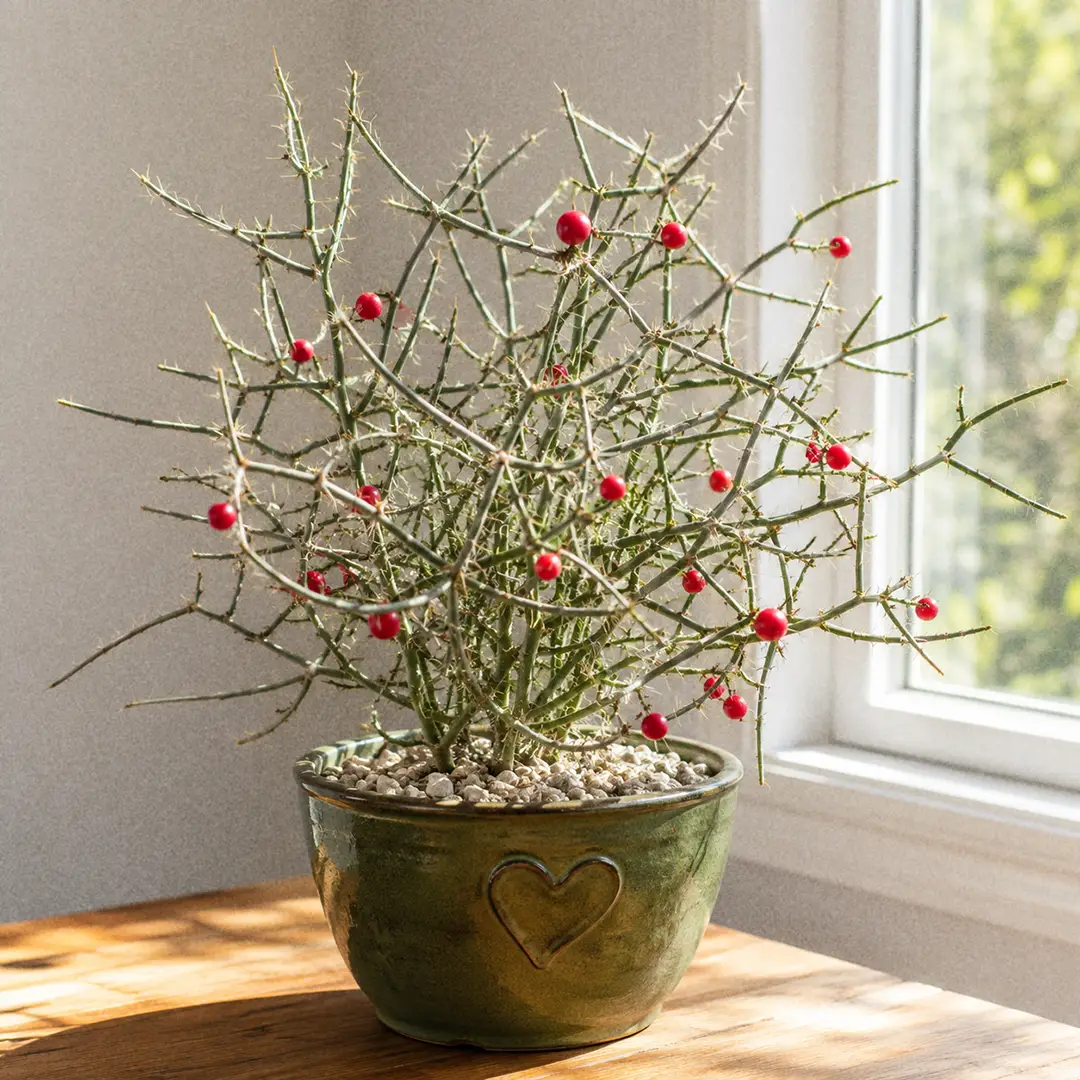
Complete Guide to Christmas Cholla Care and Growth
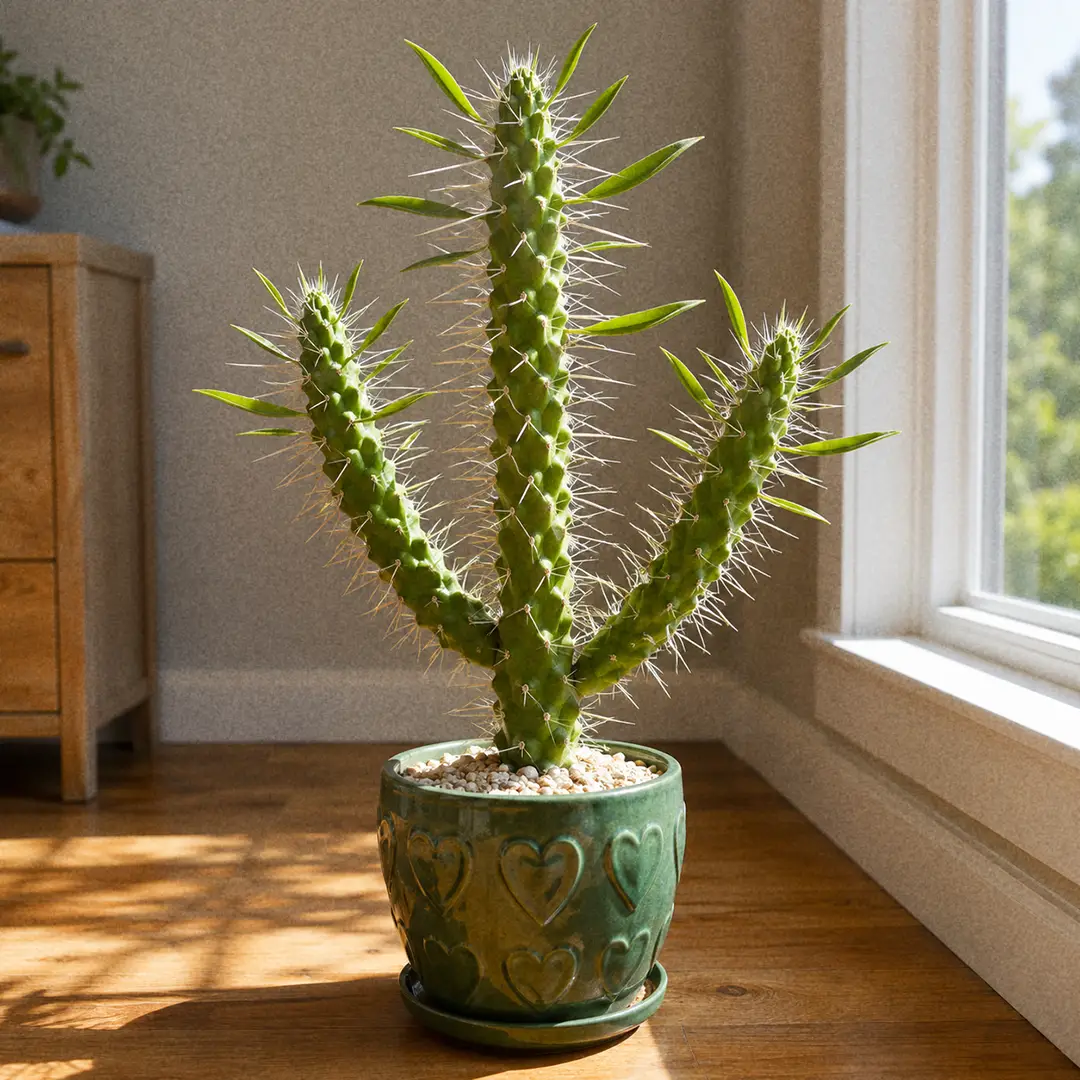
Complete Guide to Eve's Needle Cactus Care and Growth
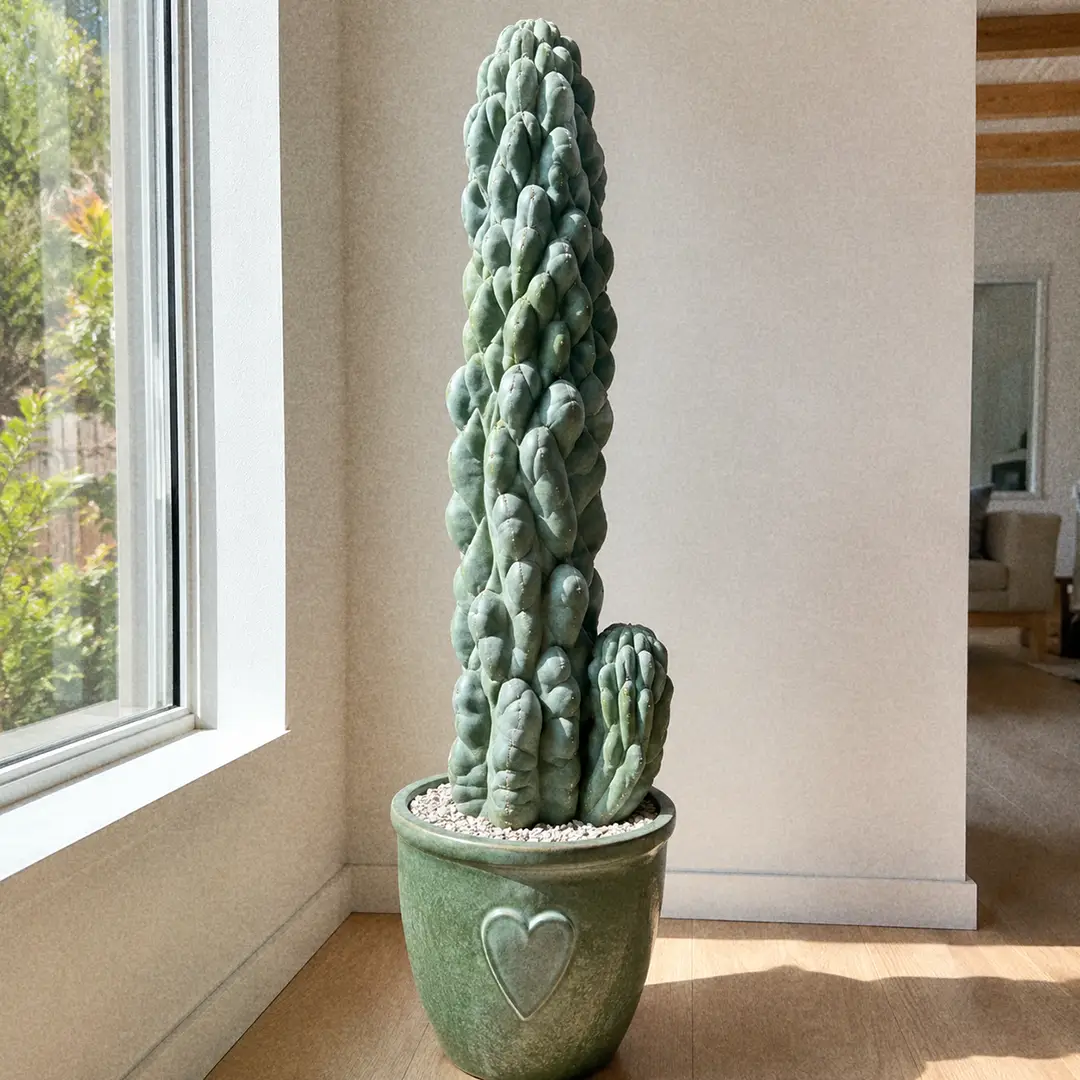
Complete Guide to Totem Pole Cactus Care and Growth
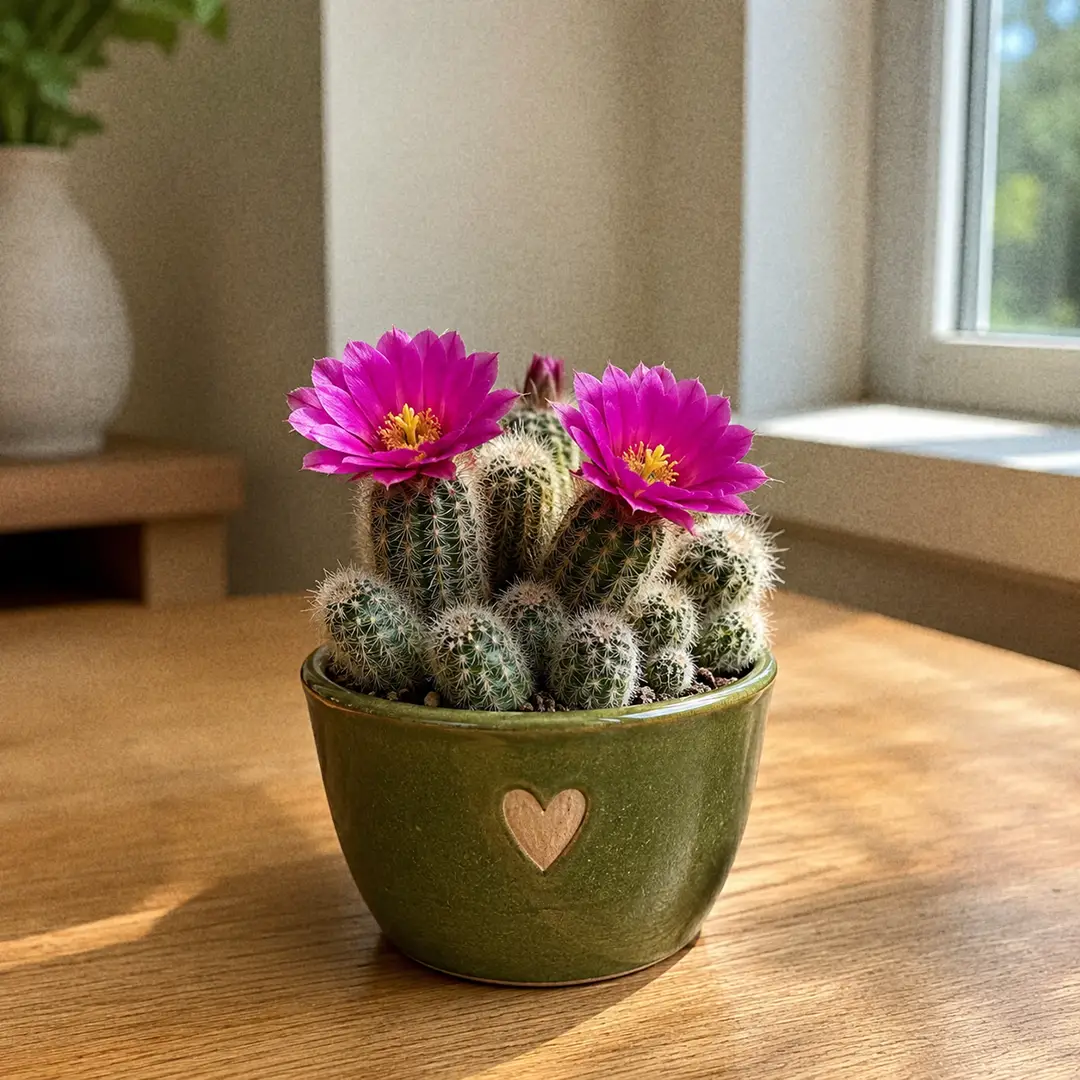
Complete Guide to Hedgehog Cactus Care and Growth
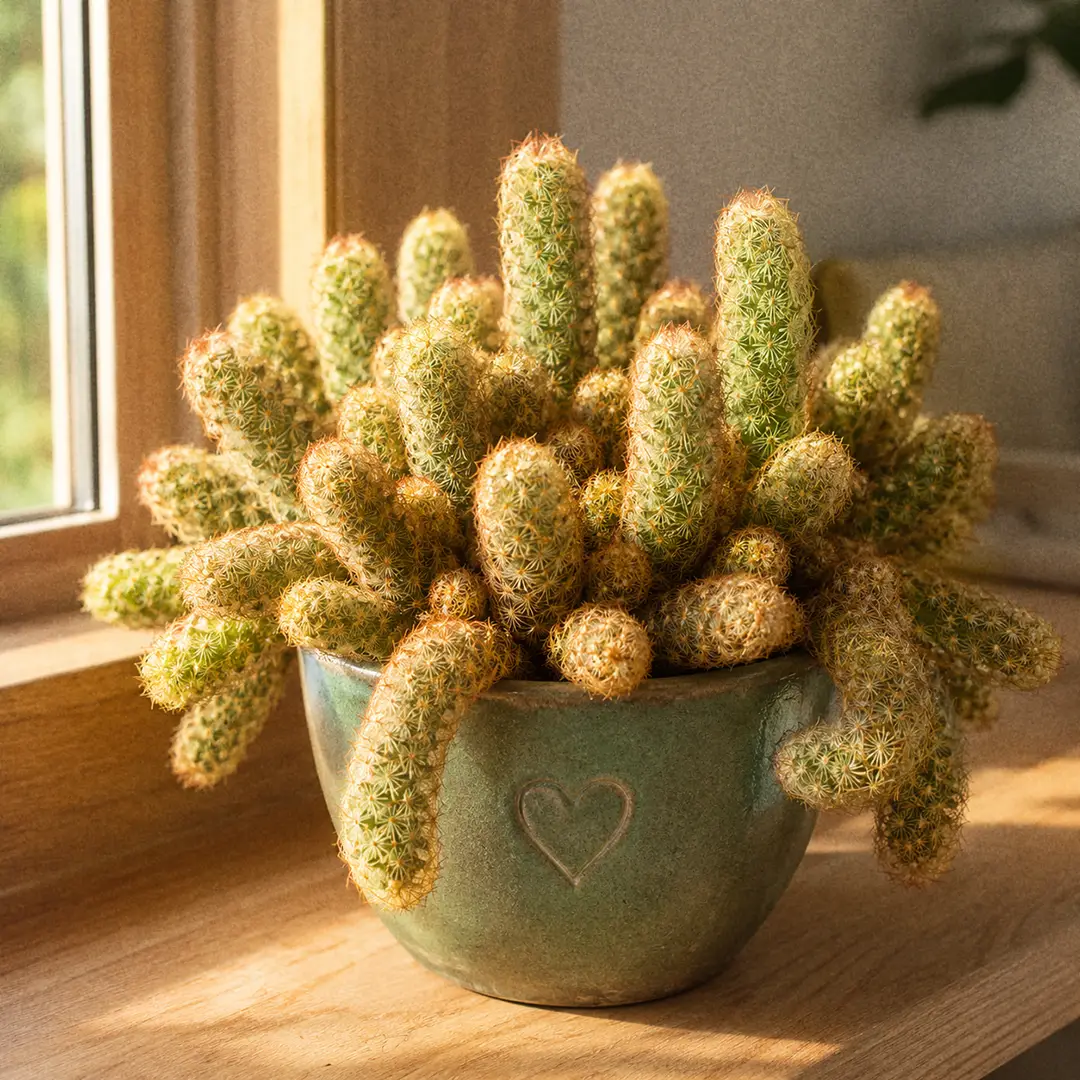
Complete Guide to Lady Finger Cactus Care and Growth
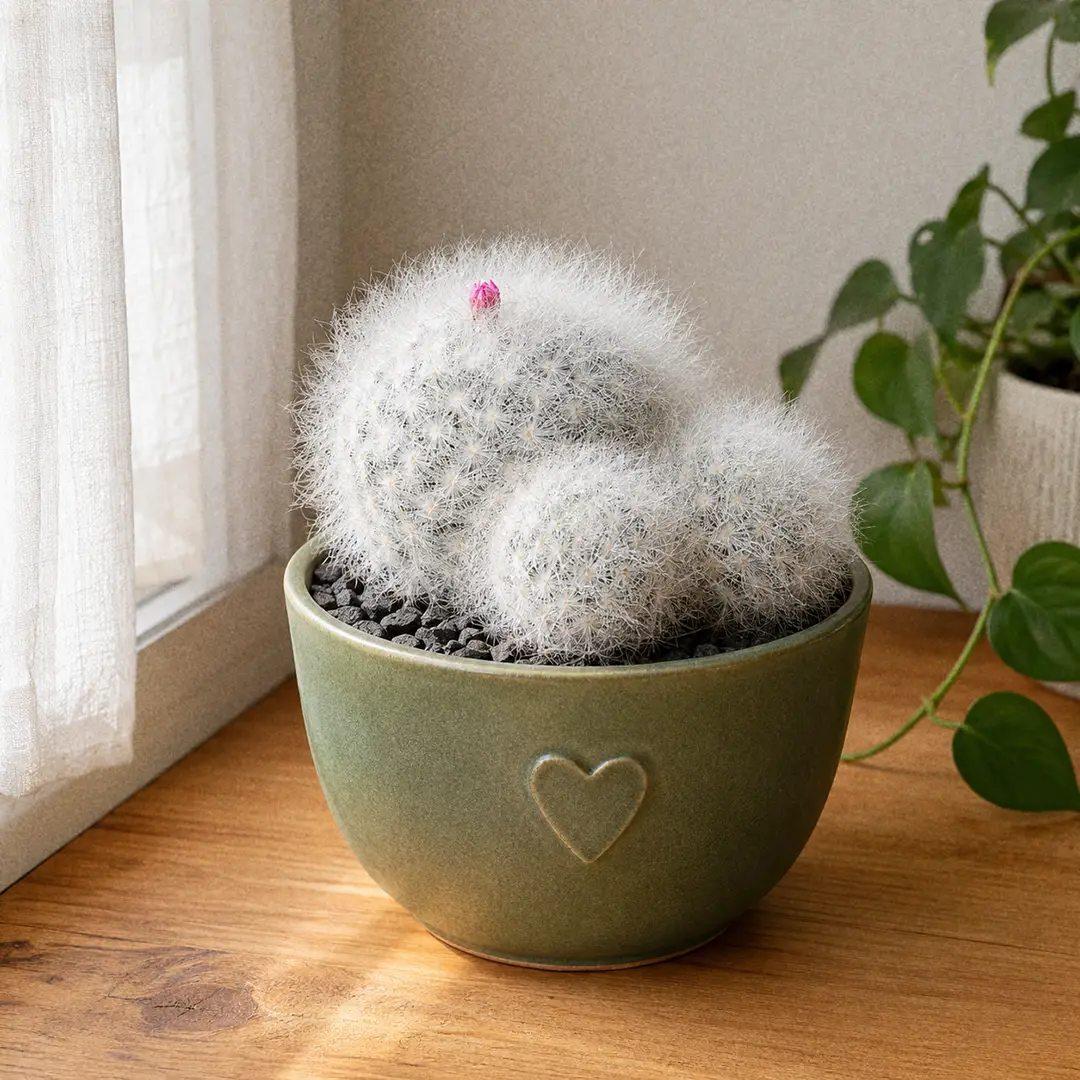
Complete Guide to Old Lady Cactus Care and Growth
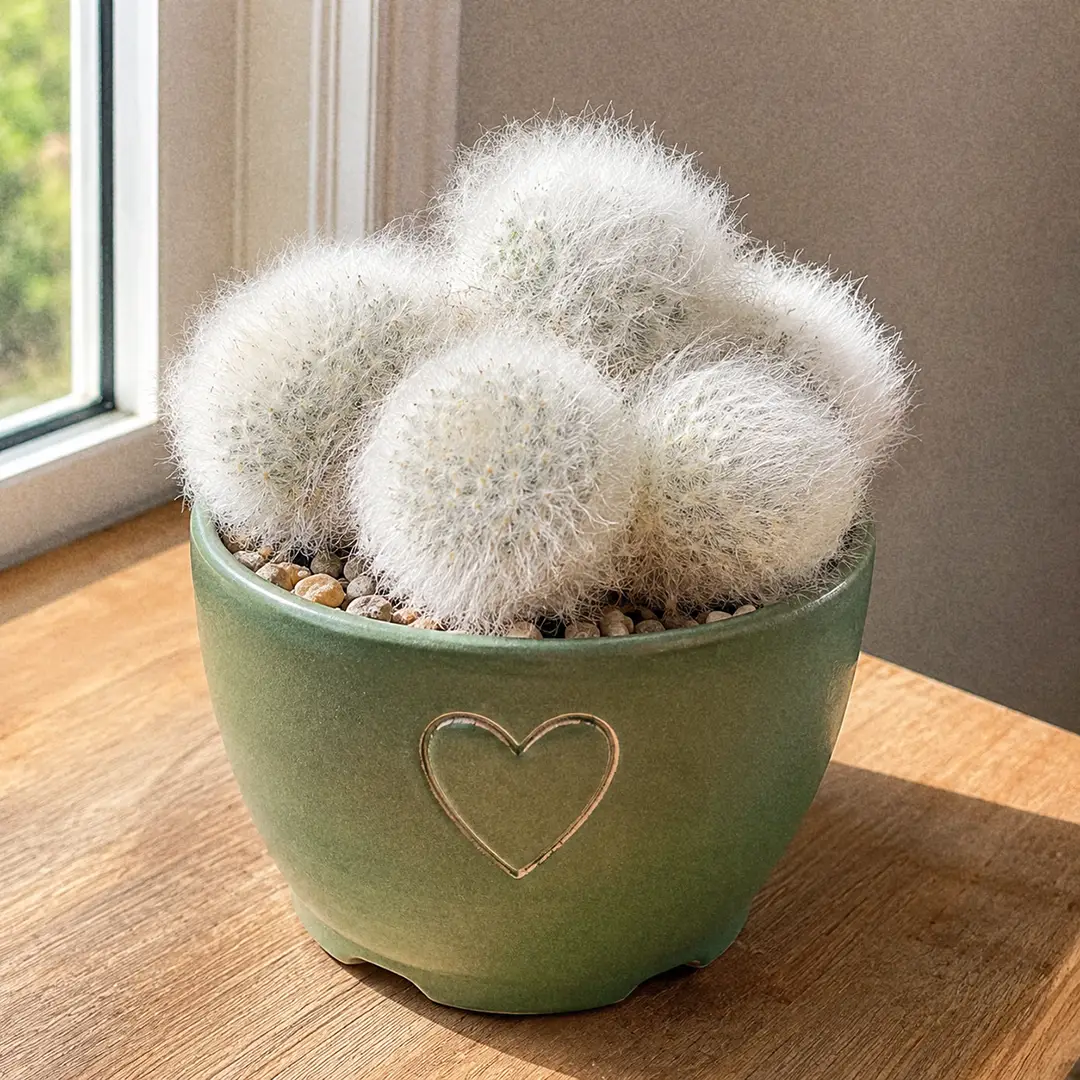
Complete Guide to Powder Puff Cactus Care and Growth
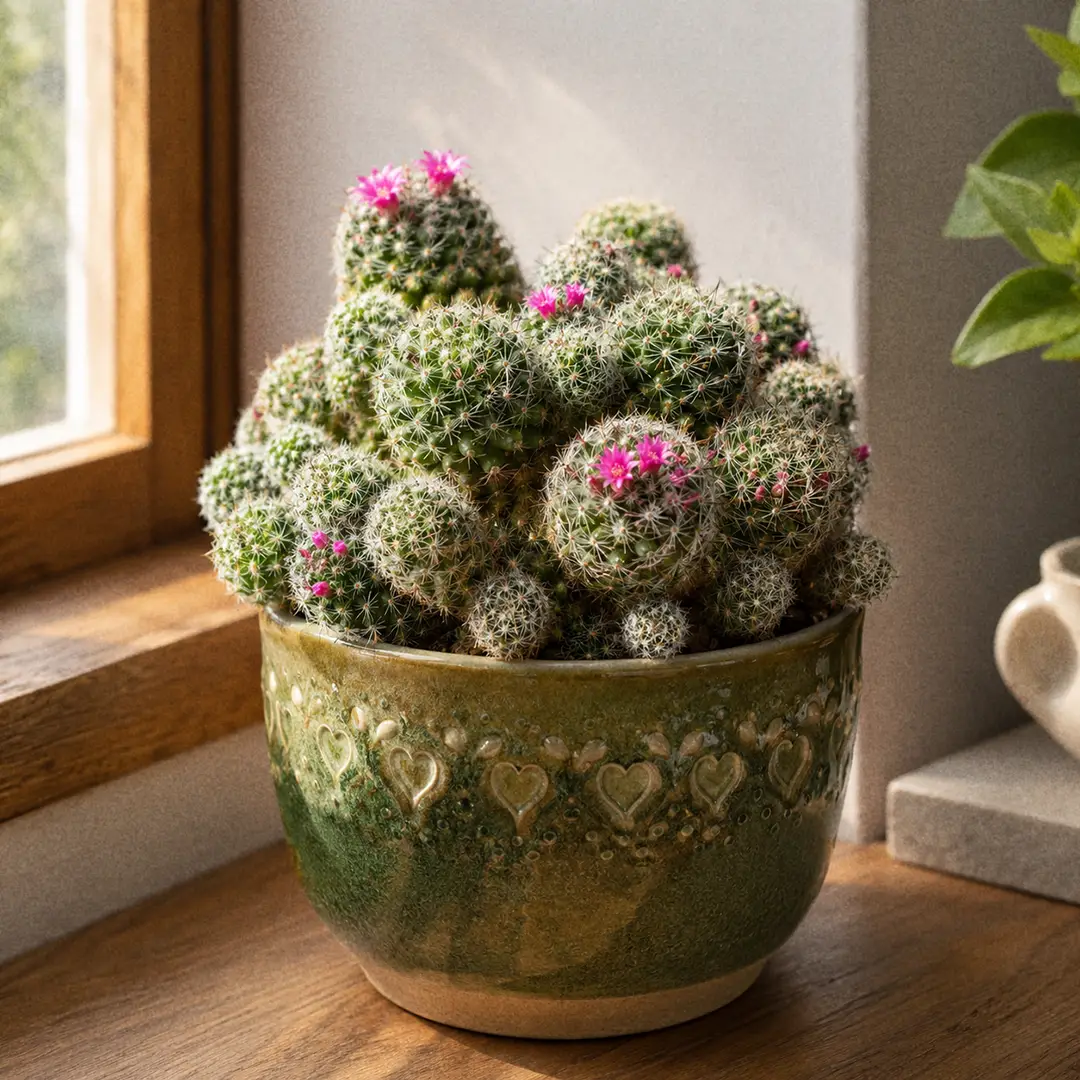
Complete Guide to Pincushion Cactus Care and Growth
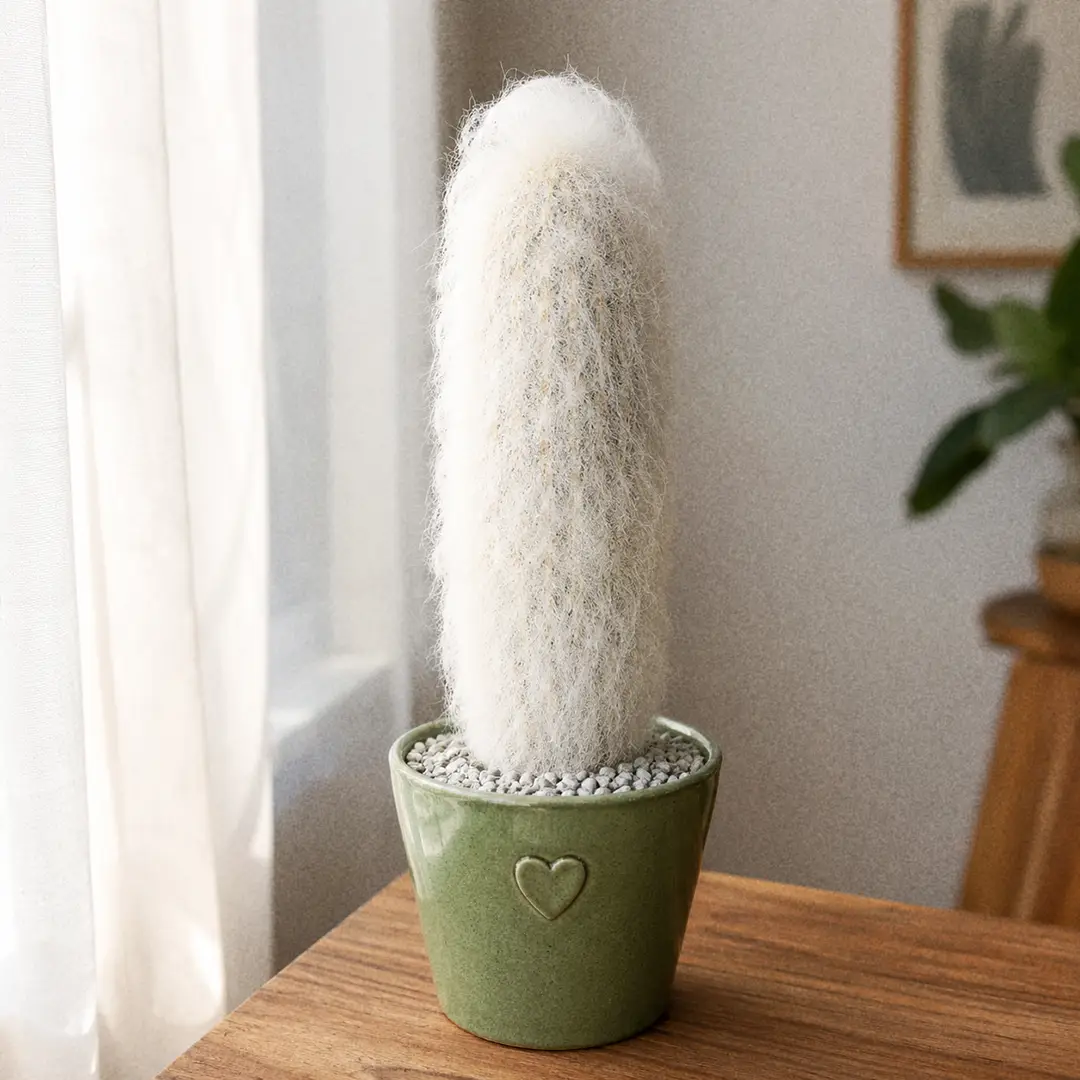
Complete Guide to Peruvian Old Man Cactus Care and Growth
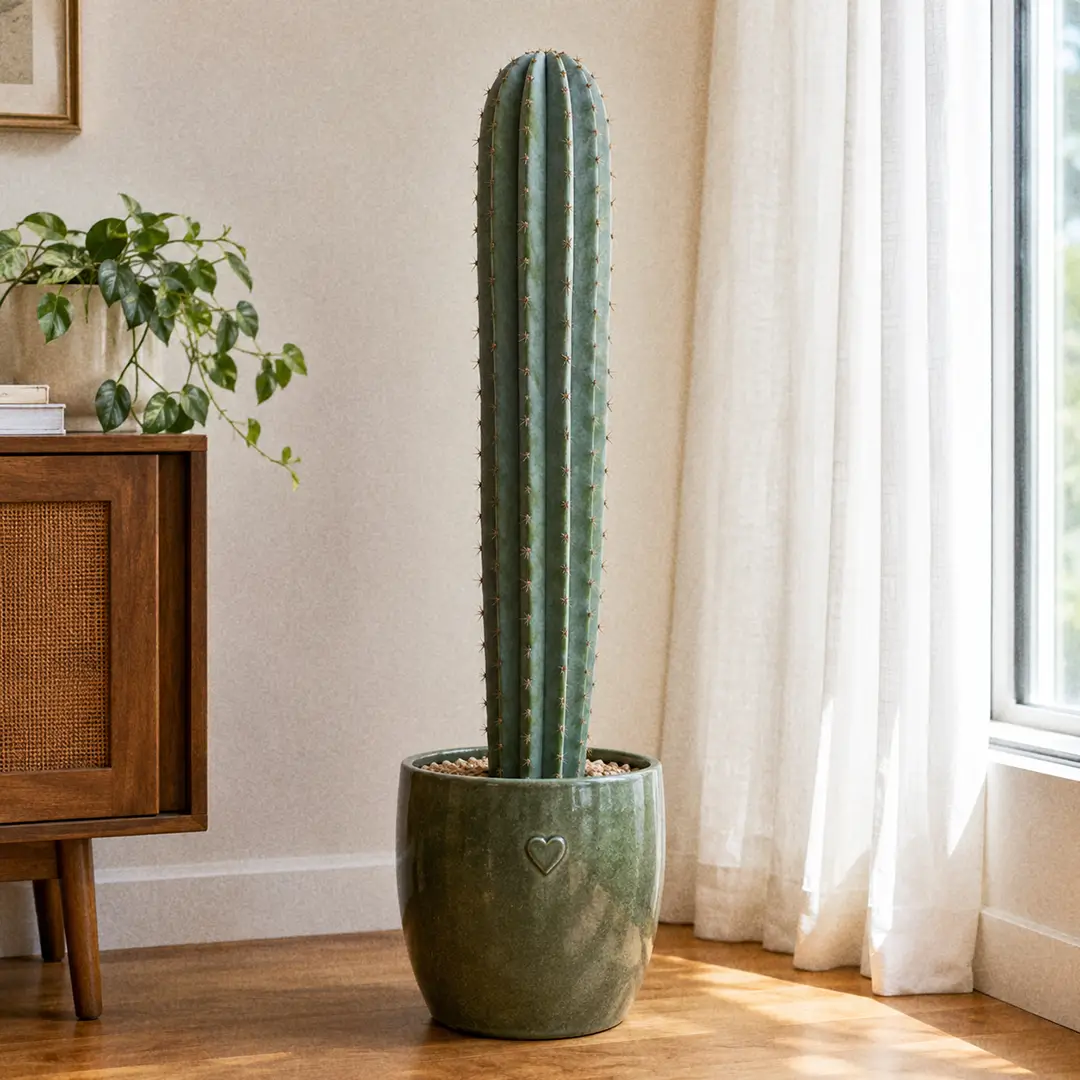
Complete Guide to Peruvian Apple Cactus Care and Growth
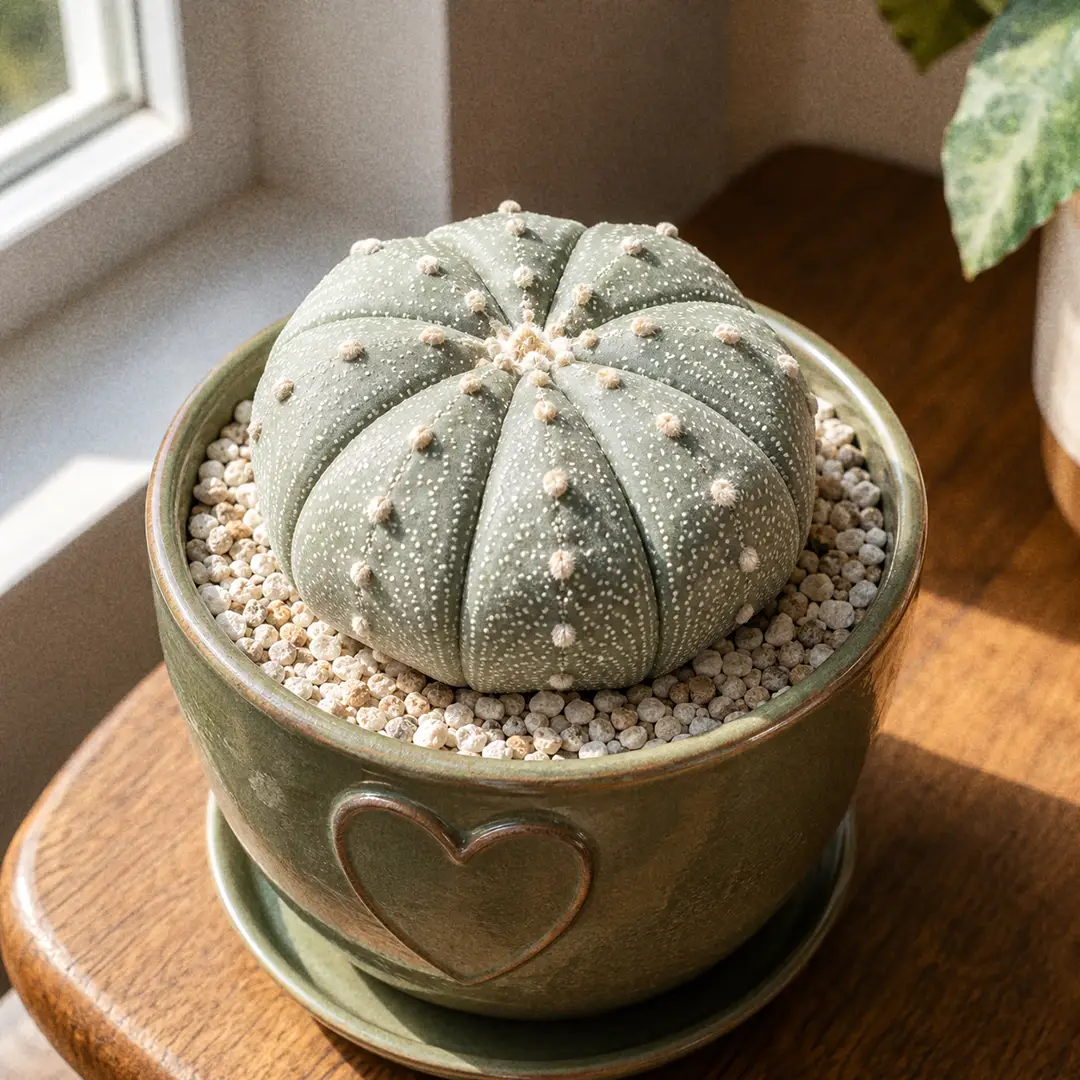
Complete Guide to Star Cactus Care and Growth
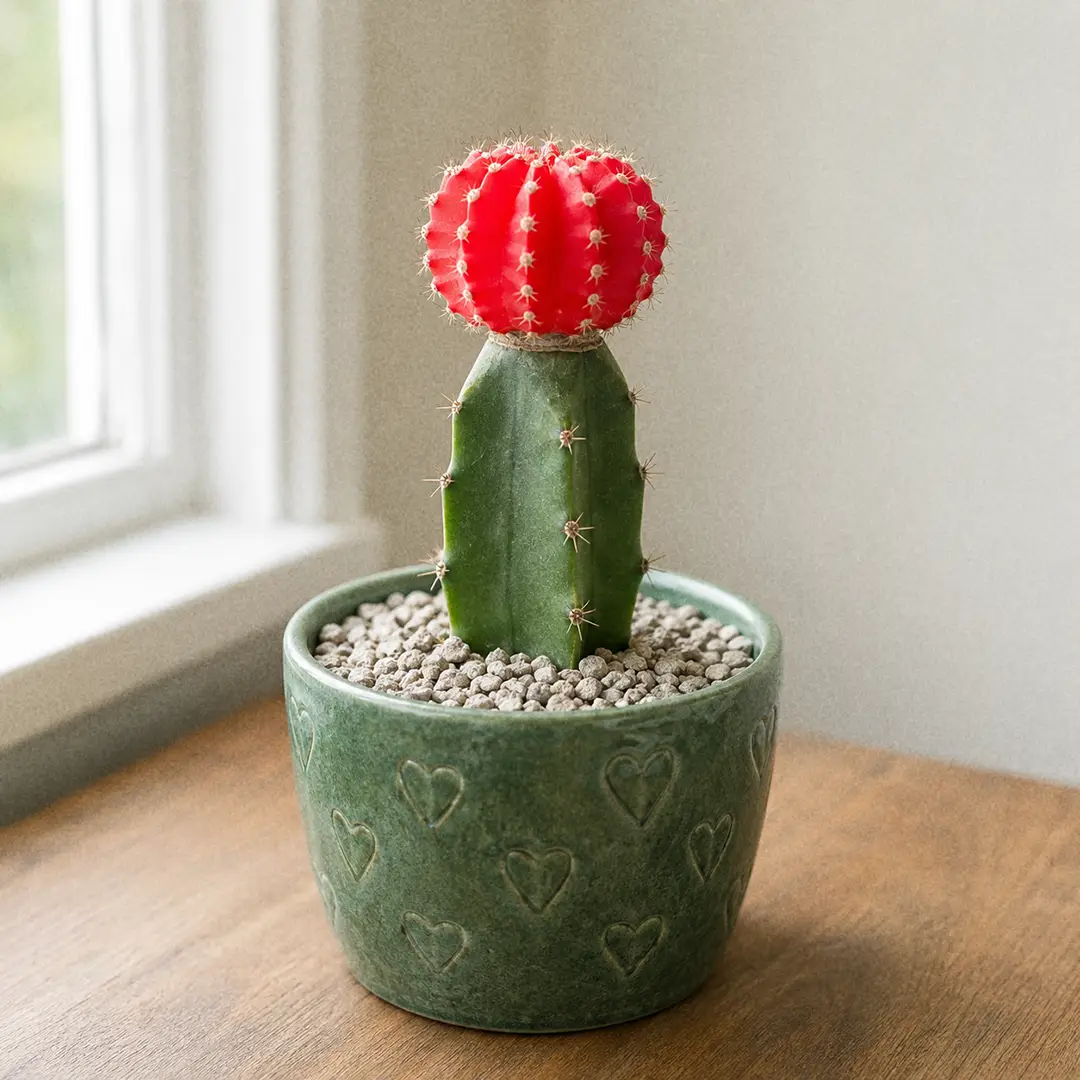
Complete Guide to Moon Cactus Care and Growth

Houseplant101 Forum
Questions & Comments
Ask a question, share your plant experience, or help other plant owners.
Comments are temporarily unavailable.
Open the Houseplant101 ForumNo comments yet
Be the first to ask a question or share your experience about this page.
Log in or create an account
Comments use your Houseplant101 Forum account, but you can stay on this page.
Create a new account