
Totem Pole Cactus
Pachycereus schottii f. monstrosus
Monstrose Senita, Lophocereus schottii monstrose, Totem Cactus, Whisker Cactus (parent form)


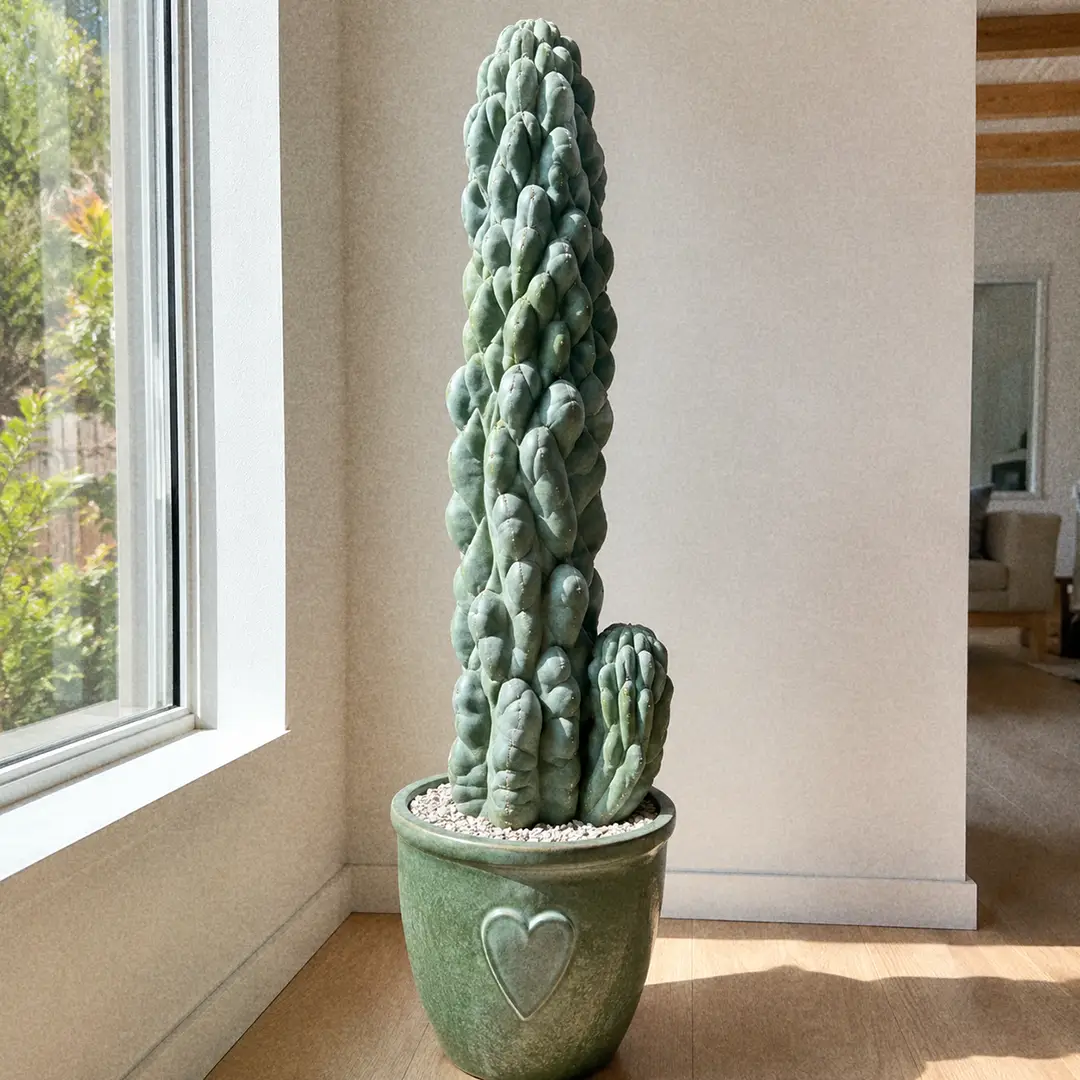
The Totem Pole Cactus (Pachycereus schottii f. monstrosus) is a spineless columnar cactus covered in soft, knobbly bumps that stack up like carved faces on a totem. It is completely safe to touch, almost impossible to kill in a sunny window, and grows so slowly that one plant can sit in the same corner for a decade.
📝 Totem Pole Cactus Care Notes
🌿 Care Instructions
⚠️ Common Pests
📊 Growth Information
🪴 In This Guide 🪴

☀️ Totem Pole Cactus Light Requirements (Full Direct Sun)
This is a desert plant from coastal Baja, and it wants sun the way a fern wants shade. Light decides whether your Totem Pole keeps its stocky knobby shape or turns into a pale green pole.
The Sweet Spot
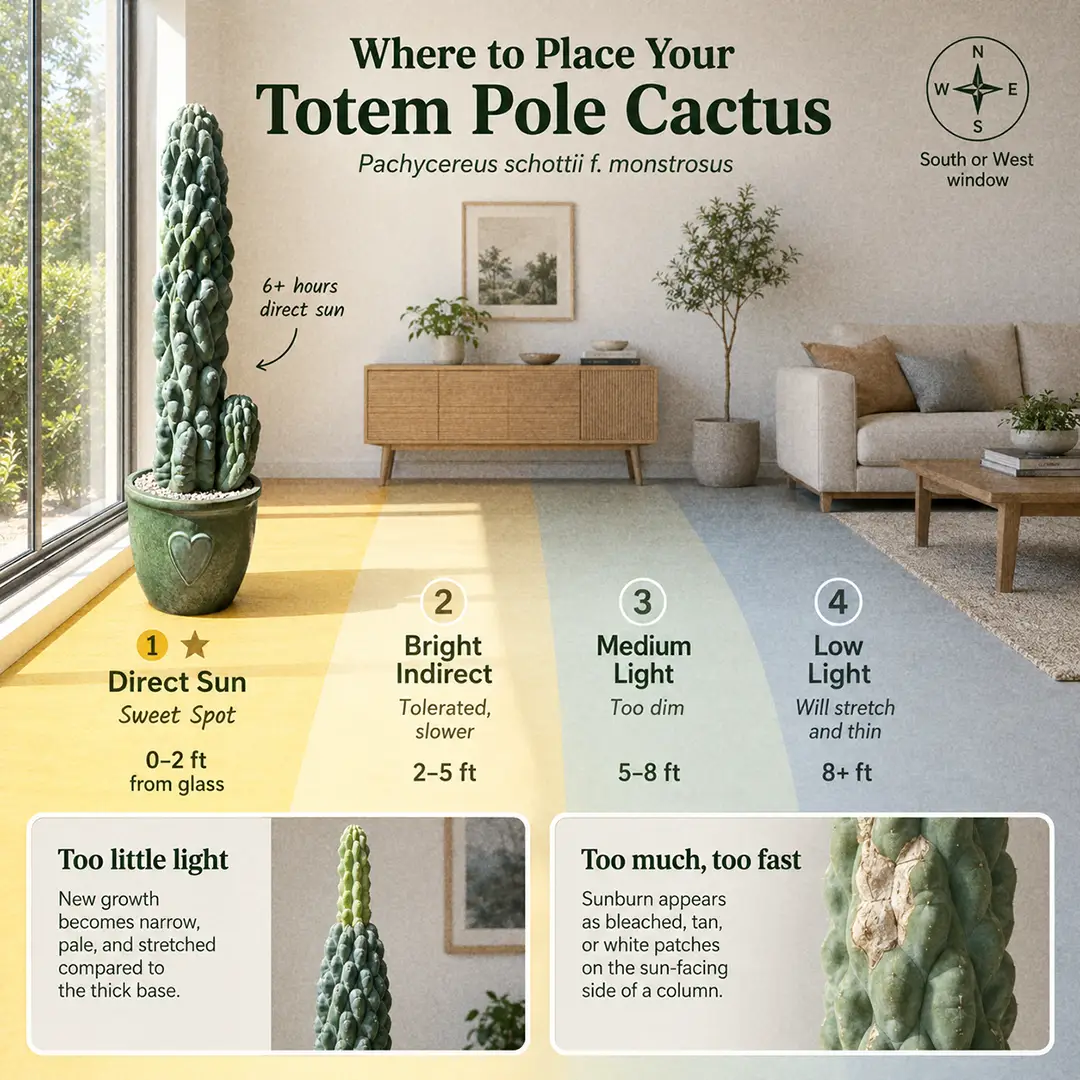
Indoors, put it directly in front of an unobstructed south or west window, within a foot or two of the glass, and aim for six or more hours of direct sun a day. It does not need a curtain and it does not want one. In zones 9b and warmer it can simply live outside in open sun all year.
Too Little Light
A shaded Totem Pole tells on you fast. New growth comes in narrower than the column below it, the fresh knobs flatten and lose definition, and the plant takes on a yellow-green cast instead of solid blue-green. Left long enough it develops a skinny stretched neck at the top that never thickens back up. If your brightest window runs dim, hang a grow light over it for ten to twelve hours a day.
Too Much Light
There is barely such a thing for an acclimated plant, but there absolutely is for a new one. A cactus that has spent months in a greenhouse or a shipping box will scorch if you park it in blazing outdoor sun on day one, and unlike a leaf, a column cannot shed the damage. Give any new plant a week or two of gradually increasing exposure, starting with morning sun only.
💧 Totem Pole Cactus Watering Guide (Bone-Dry First)
Every Totem Pole Cactus I have seen die was drowned, not starved. Those thick columns are water tanks built to coast for weeks. Your job is mostly to resist watering it.
Watering Frequency
From late spring through early autumn, water deeply only when the mix is dry from the surface to the bottom of the pot. In a sunny window that usually lands every two to four weeks. Do not water on a schedule. Push a bamboo skewer to the base of the pot and pull it out; if a single crumb of damp soil clings to it, wait longer. The general watering rules apply, just stretched way out.
How to Water
When it is time, water properly rather than sparingly. Run water through the mix until it pours out of the drainage holes, then tip out anything standing in the saucer. A deep soak followed by a long dry stretch mimics a desert rain. Little weekly sips keep the top layer damp and the deep roots thirsty, which is the worst of both worlds.
Winter Watering
Once temperatures drop and days shorten, the plant stops growing and its water use collapses. A Totem Pole resting in a cool bright spot can go six to eight weeks between waterings. Cold wet soil is the fastest route to a rotted base, so if your winter spot is chilly, err heavily toward drought.
Signs of Trouble
Thirst looks like slight wrinkling and a faint softness, and a good soak fixes it within days. That is the harmless direction. Overwatering shows up as yellowing that goes translucent, a mushy patch at the soil line, or a column that wobbles because the base has gone soft. By then root rot is well established, and the only real fix is to cut above the damage into clean firm tissue and re-root the healthy top.
🪴 Best Soil for Totem Pole Cactus (Sharp and Gritty)
Soil does most of the work of keeping this plant alive. A mix that drains in seconds forgives an extra watering. A mix that holds moisture punishes one.
What the Soil Needs
Aim for something that is at least half mineral grit and feels gravelly in your hand. It should never look dark and soggy a day after watering. A small share of organic matter is fine, but peat-heavy blends are the enemy here. Neutral to slightly alkaline pH suits it, so coarse sand or limestone gravel works well.
DIY Soil Mix
- 1 part standard cactus and succulent mix
- 1 part pumice or coarse perlite
- 1 part coarse horticultural sand or fine gravel
Squeeze a damp handful and it should collapse the moment you open your fingers. If it holds a shape, add more grit. Top the surface with a half inch of gravel to keep the base of the column dry.
Pre-Made Options
Bagged cactus soil is a reasonable base but almost always too fine and too peaty straight from the bag. Cut it with an extra fifty percent pumice before you plant. See our soil guide for the broader picture.
🍼 Fertilizing Totem Pole Cactus (Very Lightly)
This plant evolved on thin rocky desert ground and grows slowly by design. Feeding it heavily will not speed it up, it will just produce soft, pale, rot-prone tissue.
When and How Often
One or two feedings across the whole growing season is plenty: late May and, if you like, early July. Nothing from September through April, and nothing for two months after repotting. Water with plain water first so the feed never hits dry roots.
What to Use
Reach for a low-nitrogen cactus formula, something in the range of 2-7-7 or 5-10-10, diluted to half the strength printed on the bottle. High-nitrogen houseplant food pushes fast weak growth that spoils the compact knobby form. The fertilizing basics carry over, just at a much lower dose.
Over-Fertilizing Signs
A white crust on the soil surface and around the pot rim means mineral salts are piling up. Flush the pot with several pot-volumes of plain water, skip the next feeding, and halve your dilution next time.
🌡️ Totem Pole Cactus Temperature Range
This cactus comes from a warm coastal desert rather than a high cold one, so it takes heat far better than most people expect and cold far worse.
Ideal Range
Active growth happens between about 70 and 95°F (21 to 35°C), and it is perfectly comfortable in ordinary indoor summer temperatures. Heat alone is almost never a problem; a hot south window in August will not bother it as long as the roots are not sitting wet.
Cold Tolerance and Winter Rest
Kept dry, an established plant handles brief dips to roughly 25 to 28°F (-4 to -2°C), which puts it in USDA zones 9b through 11. Below that you get soft brown patches that scar permanently, and wet plus cold is far more damaging than either alone. Give it a cool, bright, nearly dry rest at 50 to 60°F (10 to 15°C) and you get better growth and a real shot at flowers the following summer.
Drafts and Heat Sources
Keep it off a radiator top and out of the blast of a heating vent, where uneven drying stresses one side of the column. An unheated but frost-free porch is close to ideal for winter, and if you summer it outdoors, bring it in before nights drop below 45°F.
💦 Totem Pole Cactus Humidity Requirements
Humidity is the one care factor you can safely ignore, provided you ignore it in the right direction.
Ideal Humidity
Dry air is genuinely what it wants. Twenty to forty percent is ideal, which describes most homes, especially in winter with the heating running. Never mist it, never put it on a pebble tray, and never share a corner with a humidifier aimed at your ferns. The same dry room that leaves a Boston Fern crisping at the tips keeps a Totem Pole perfectly content.
When Humidity Causes Trouble
High humidity paired with cool still air, the usual state of a closed room in late autumn, invites fungal spotting and soft rot where the knobs fold against each other. Those deep creases trap moisture more easily than a smooth-ribbed cactus would, so airflow matters more here than you might expect. Crack a window on mild days, and keep this plant out of bathrooms and terrariums.
🌸 Totem Pole Cactus Flowers (Night Bloomer)
Flowers here are a genuine event rather than a yearly expectation. Grow this plant for the form and treat any bloom as a bonus.
What the Flowers Look Like
The blooms are pale pink to rose with paler edges, roughly one to two inches across, and they emerge along the upper sides of a mature column. They open after dark and shut by mid-morning, so unless you are looking at the right hour on the right night you can miss the whole thing. Outdoors in a warm climate, a happy plant flowers repeatedly through summer.
How to Trigger Bloom
Three things matter: age, sun, and a proper winter rest. Plants need to be several years old and reasonably tall before they flower at all. Give a full season of direct sun, then hold the plant cool and nearly dry from November through February. That seasonal swing is what tells it to set buds.
If It Won't Bloom
Indoor plants very often never flower, and that is normal rather than a failure on your part. A window cannot deliver the light intensity of open desert sun. If flowering matters, summer the plant outdoors and give it a cold bright winter. One curiosity: the wild Senita is pollinated almost exclusively by the senita moth, so even a flowering houseplant never sets fruit.
🏷️ Totem Pole Cactus Types and Varieties
Because this mutation does not come true from seed, every Totem Pole Cactus sold traces back to cuttings of the same original plant. What varies is the parent form and the lookalikes it gets confused with.
The Monstrose Form (What You Are Buying)
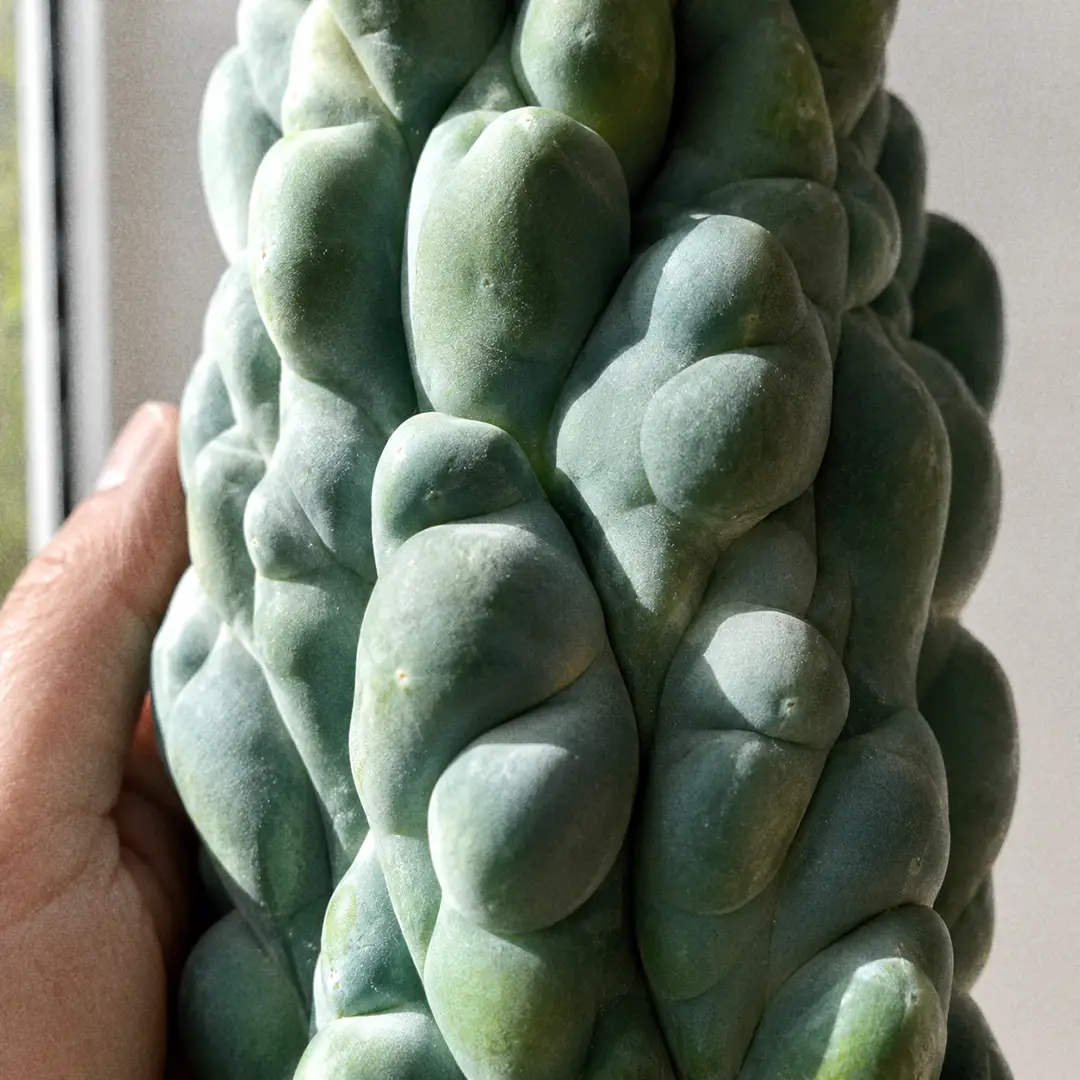
Pachycereus schottii f. monstrosus is the plant in this guide. Its growing point lost the ability to lay down regular ribs, so instead of neat vertical channels it produces rounded knobs and folds in no fixed pattern. Every plant is a little different, and the same column can shift from tight bumps to smoother stretches as it grows. Older references list it as Lophocereus schottii; nurseries use both names.
The Parent Species (Senita or Whisker Cactus)
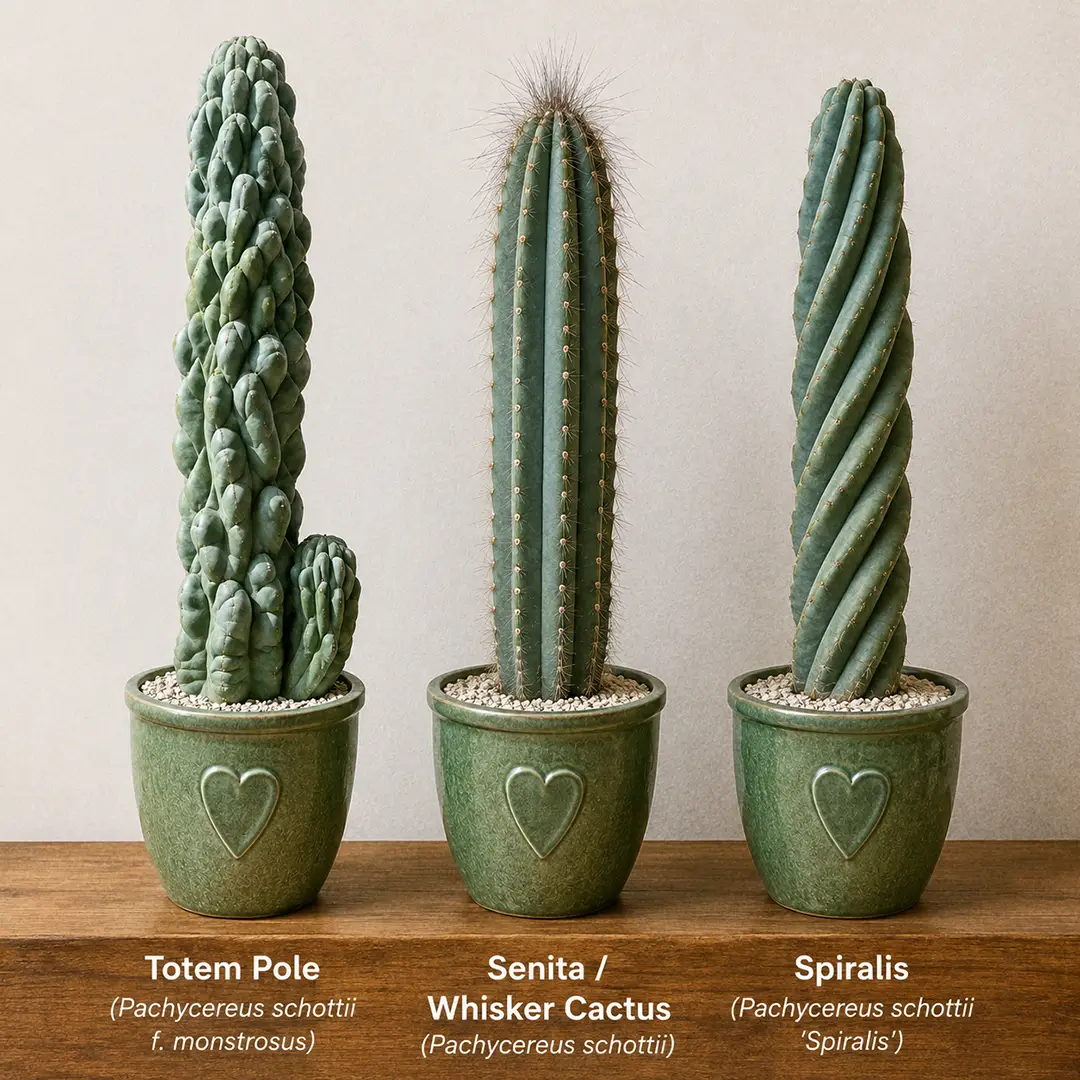
The normal Pachycereus schottii looks nothing like its mutant offspring. It has five to seven crisp vertical ribs, a slim blue-green column, and a shaggy crown of long gray bristles at flowering age, which earns it the Whisker Cactus nickname. It is grown far less often indoors because that beard takes years, but the care is identical.
'Spiralis' and Other Sports
A few nurseries offer a spiral-ribbed sport where the ribs twist gently around the column instead of running straight. You may also see partially reverted plants where a monstrose column suddenly starts producing normal ribs. That is not a defect; enjoy the contrast or cut the reverted section off. If the twist is what caught your eye rather than the knobbly monstrose look, the Spiral Cactus does it far more dramatically, winding a full turn every few inches down a blue-green column.
Lookalikes Worth Sorting Out
Two plants get mixed up with this one constantly. The Fairy Castle Cactus is monstrose too, also lumpy, but it branches into many small ribbed columns and carries short spines along the rib edges. The Peruvian Apple Cactus is a smooth-ribbed blue-green column with real spines at the areoles, taller and much faster growing. Shops also sell a monstrose Eve's Needle Cactus that has the same congested knobbly habit, though you can spot it instantly by the small green leaves scattered over its segments. If the plant in front of you has spines or leaves anywhere at all, it is not a Totem Pole.
🪴 Potting and Repotting Totem Pole Cactus
Repotting is a rare job with a cactus this slow, and the challenge here is not spines but weight and balance.
When to Repot
Every three to four years is plenty, or whenever roots crowd the drainage holes, water stops soaking in, or the plant gets top-heavy enough to tip. Early spring is the best window, and a firm plant with good color can be left alone longer.
Choosing a Pot
Go heavy and breathable: unglazed terracotta, concrete, or stone. The weight is not optional once the column passes two feet, because a tall cactus in a light plastic pot topples the first time someone brushes past. Size up by one to two inches only; an oversized pot holds a reservoir of wet soil the roots cannot use.
Step-by-Step Repotting
- Wait until the soil is completely dry so it falls away and the plant is lighter to lift.
- Because there are no spines, hold the column directly, supporting it near the base rather than the top.
- Tip the pot sideways, ease the rootball out, and crumble away most of the old mix.
- Trim any blackened or hollow roots with sterile shears.
- Set the plant at its original depth in fresh gritty mix and firm it with a chopstick.
- Stake a tall column loosely to a bamboo cane if it wobbles, then wait a full week before watering.
✂️ Pruning Totem Pole Cactus
You will most likely never prune this plant, and that is the correct outcome. It holds its shape and grows too slowly to outrun its space.
When to Prune
There are three real reasons to cut: removing rot or frost damage, shortening a plant that leans dangerously, and taking cuttings to propagate. Cosmetic pruning is a bad idea, because a cut column never regrows a pointed tip and branches instead, permanently changing the silhouette.
How to Prune
Work with a long sharp knife sterilized with isopropyl alcohol, and cut in one clean horizontal pass rather than sawing. On a rotted plant, keep taking thin slices upward until the cross-section is uniformly firm and pale green with no brown flecks or rings, then stop. Leave the cut open to dry air, do not seal it, and do not water for a couple of weeks. The wound hardens into a permanent pale scar, and new growth pushes out as one or more side columns just below it.
🌱 How to Propagate Totem Pole Cactus
Cuttings are the only way new plants are made, since the mutation does not pass through seed. The method is straightforward, but the callusing step takes far longer than with a thin-stemmed cactus.
Best Method
Column cuttings. Take them in late spring or early summer, when warmth and light speed up rooting. Offsets branching from the base can be severed and treated the same way, and they often root faster because they are smaller. The broader succulent propagation guide covers the principles.
Step-by-Step
- Cut a healthy section four to six inches long with a sterile knife, in one clean horizontal pass.
- Note which end was up. A cutting planted upside down will not root.
- Stand it upright in an empty pot in a dry shaded spot with good airflow.
- Let it callus for two to four weeks, until the cut face is hard, dry, and slightly sunken.
- Set the callused end an inch and a half into dry gritty mix, and stake it if it sways.
- Leave it completely dry for two to three weeks out of blazing sun.
- Begin light watering once a gentle tug meets resistance, letting the mix dry fully between drinks.
Tips for Success
Impatience is the whole failure mode here. A cutting planted before the cut face has hardened pulls water in through the wound and rots from the bottom up, and you will not notice until the column goes soft. Bottom heat around 75°F helps, rooting hormone is optional at best, and roots usually appear in four to eight weeks. One bonus: because the parent branches from below its cut, taking a cutting is how growers turn one straight column into a multi-headed specimen.
🐛 Totem Pole Cactus Pests and Treatment
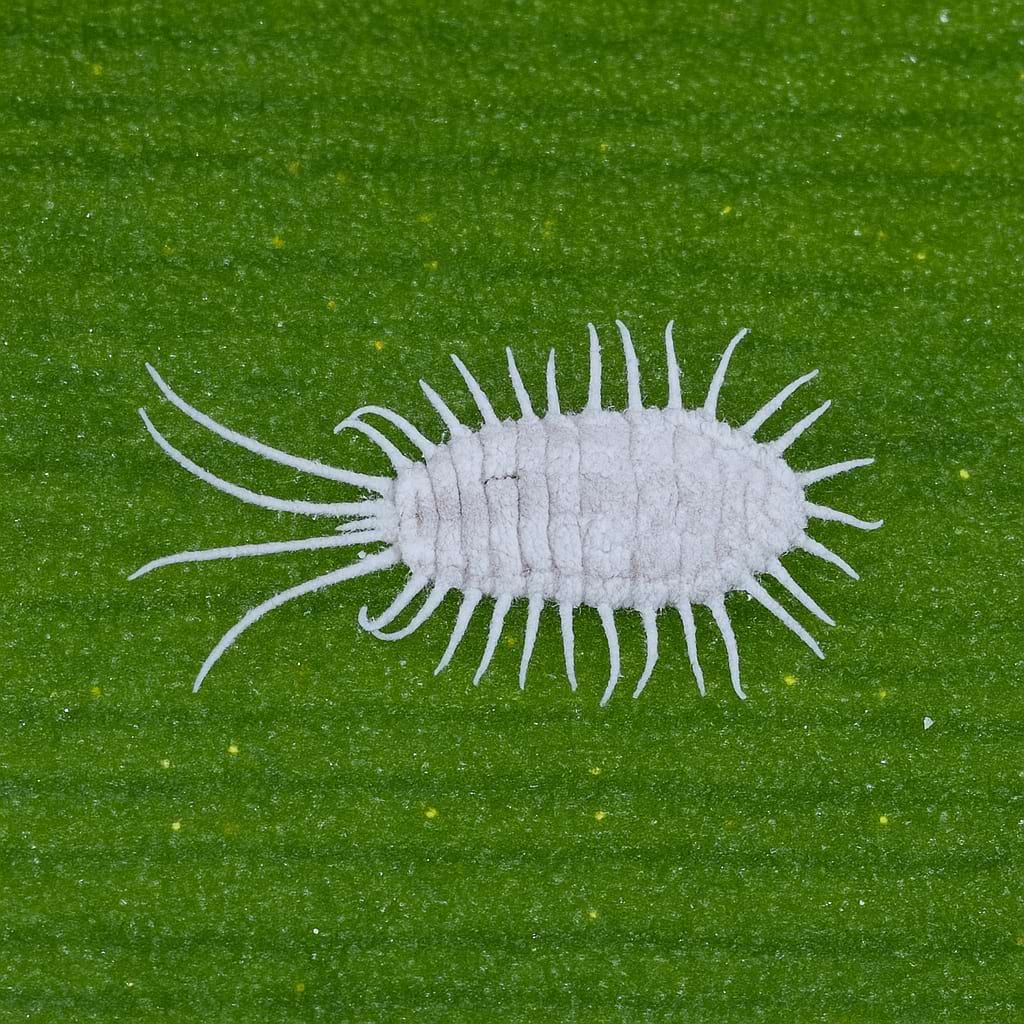
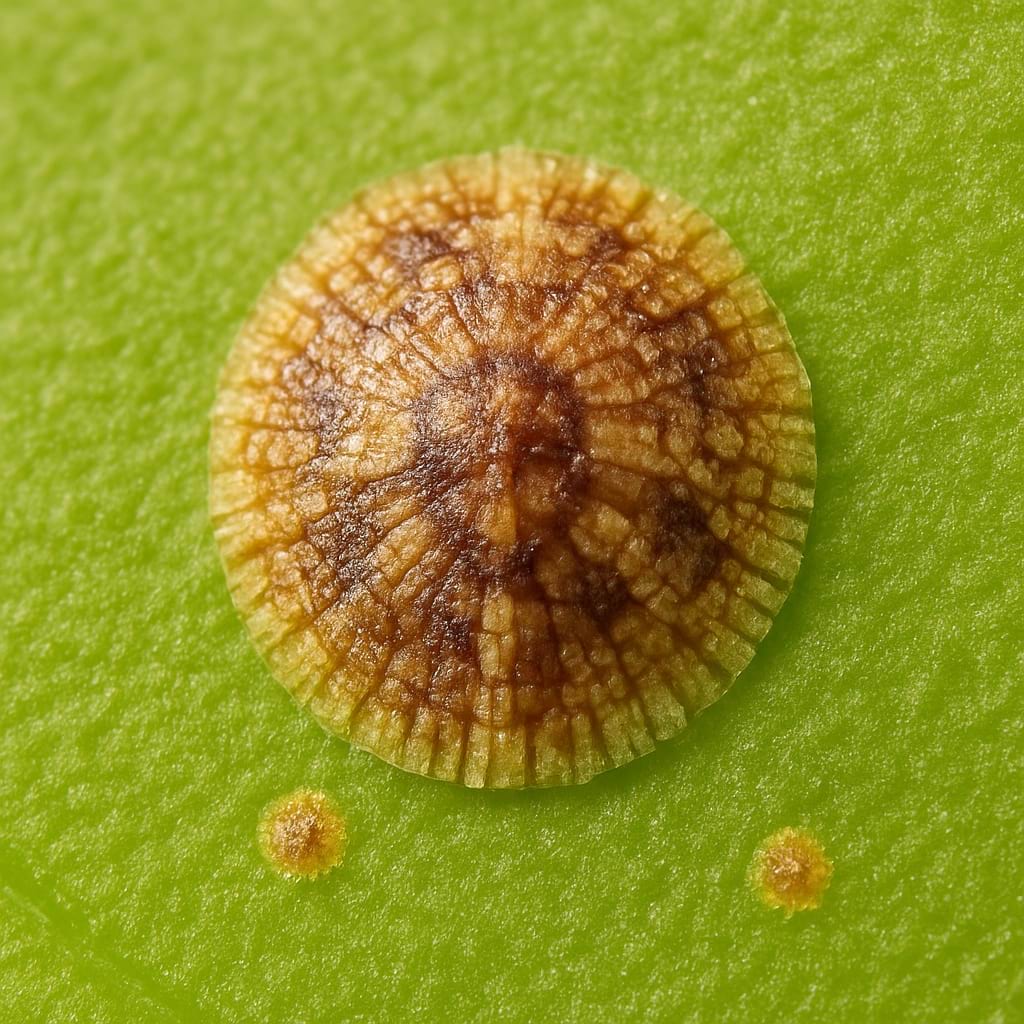
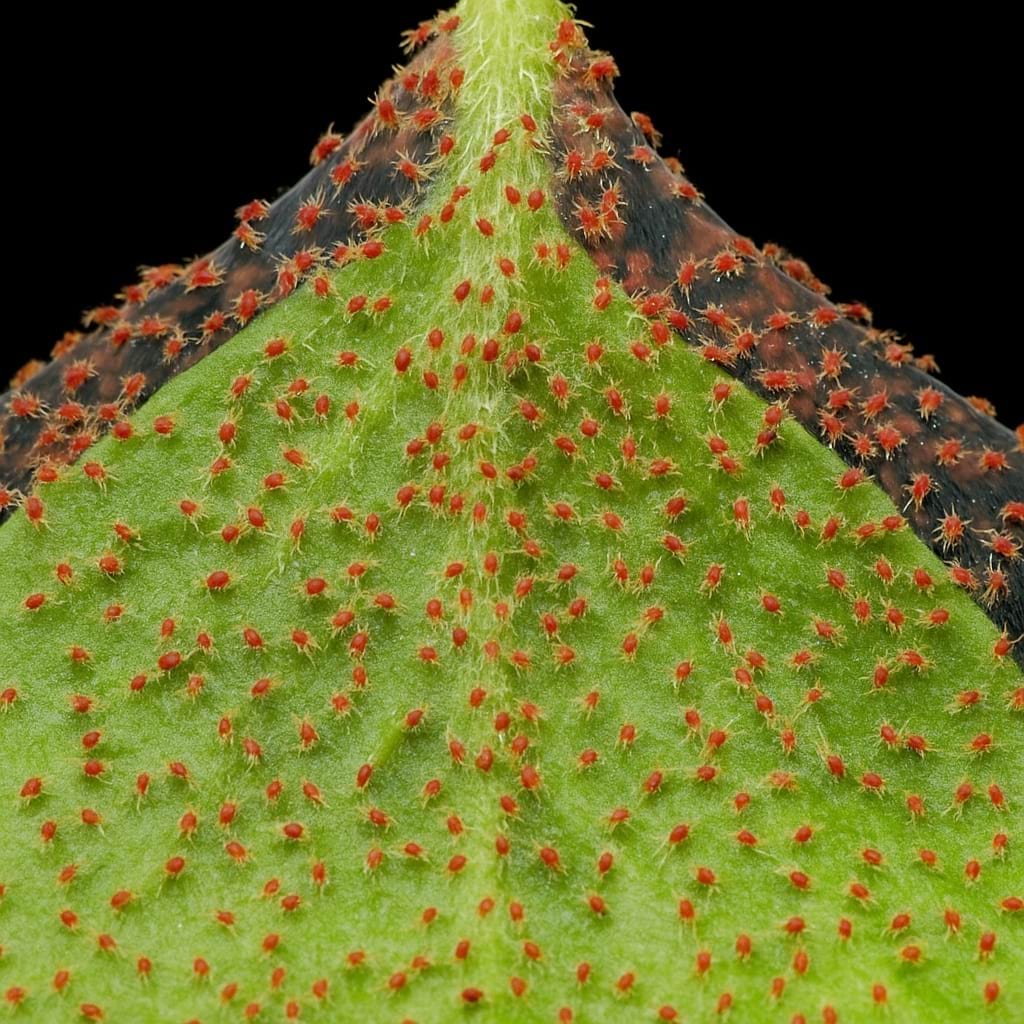
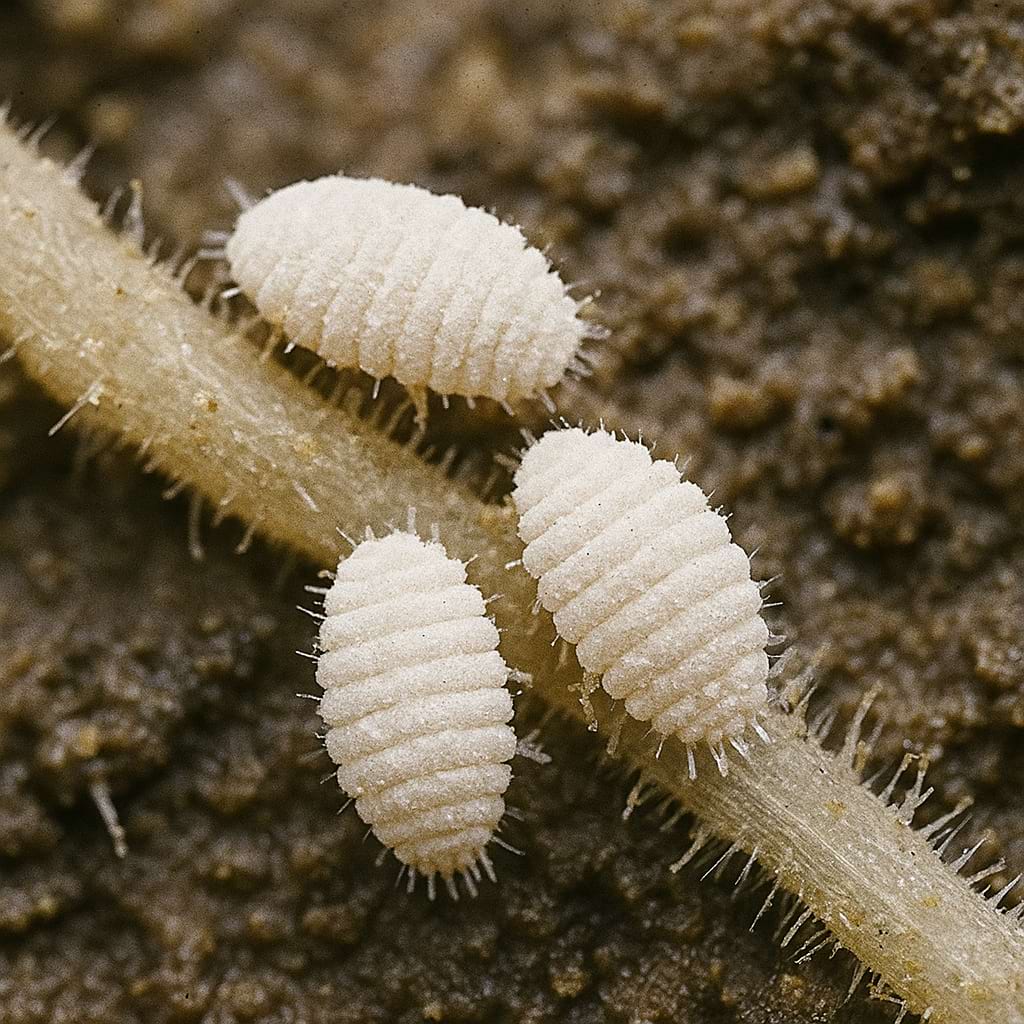
A well-lit, dry-grown Totem Pole is not a pest magnet, but the folds between its knobs give insects more hiding places than a smooth-ribbed cactus does. Check those creases whenever you water.
- Mealybugs: By far the most common problem. White cottony clusters deep in the folds and around the base. Dab each with isopropyl alcohol on a swab and repeat every five to seven days for a month to catch the hatchlings.
- Root Mealybugs: White powdery deposits on the roots, invisible until you unpot. Suspect them when a plant stalls and pales for no visible reason. Wash the roots, repot in fresh dry mix, hold water two weeks.
- Scale Insects: Flat brown bumps stuck to the green skin. With no spines in the way, an old toothbrush and soapy water works well here.
- Spider Mites: Fine webbing and a stippled bronze cast in hot, stagnant air. Rinse and treat with horticultural soap.
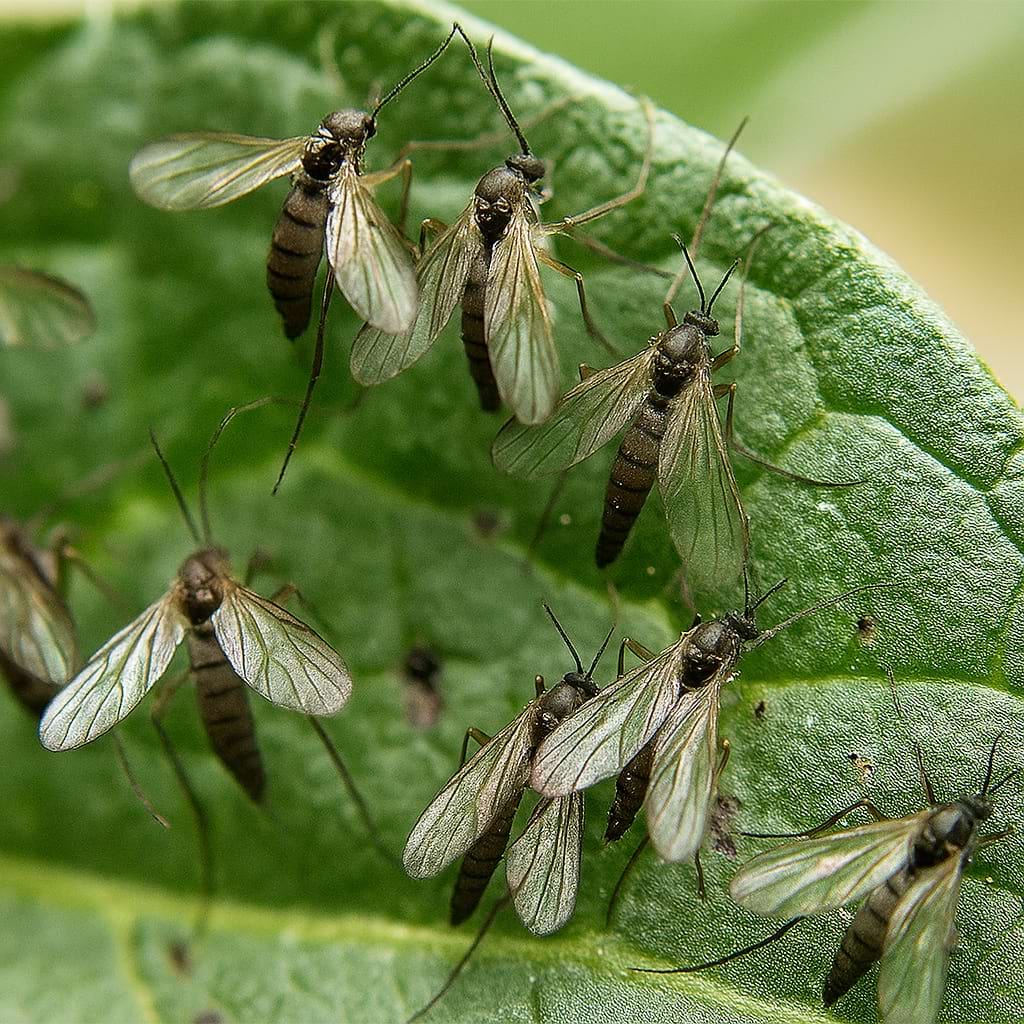
- Fungus Gnats: No threat to the cactus, but a reliable sign your soil is staying wetter than it should.
🩺 Common Totem Pole Cactus Problems
Nearly every issue traces back to water, light, or cold. Get those three right and this is one of the most trouble-free plants you can own.
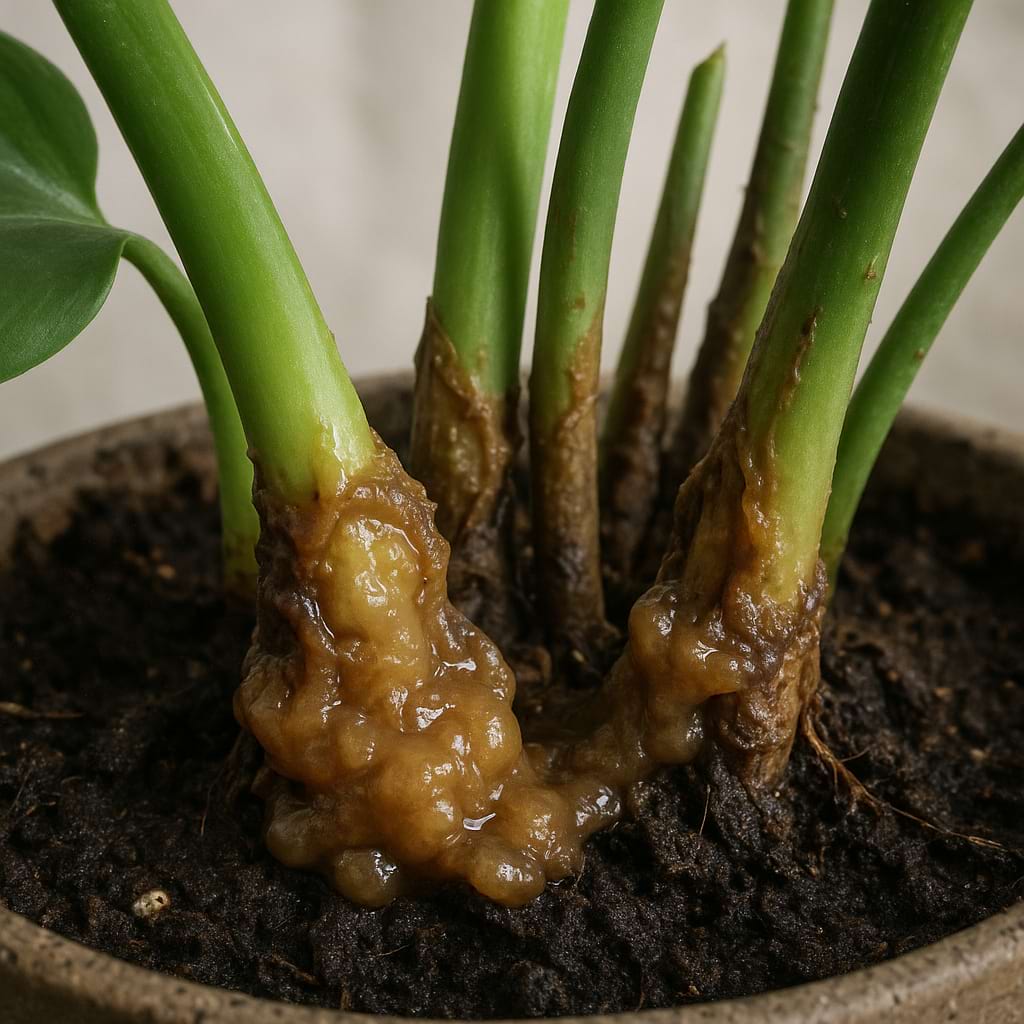
- Root rot and mushy stems: The number one killer. A soft, dark, sour-smelling base and a column that wobbles when nudged. Cut above the damage into clean firm tissue, callus the cut for weeks, and re-root the healthy top.
- Brown-black spots: Fungal marks from cool damp air with poor circulation. Improve airflow and water at the soil, never over the plant.
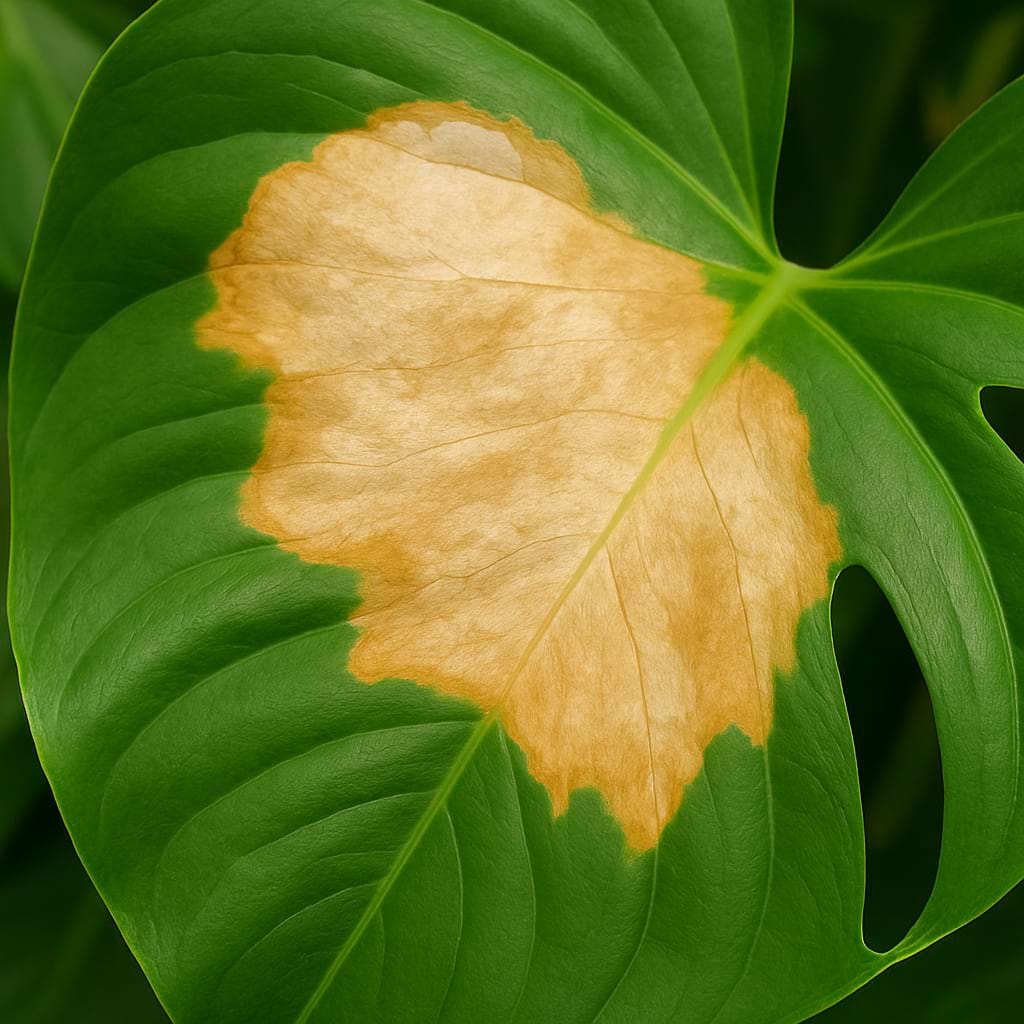
- Sunburn and scorch: Bleached white or tan patches on the sun-facing side after a sudden move into brighter light. The scarring is permanent, so acclimate gradually rather than cutting light long-term.
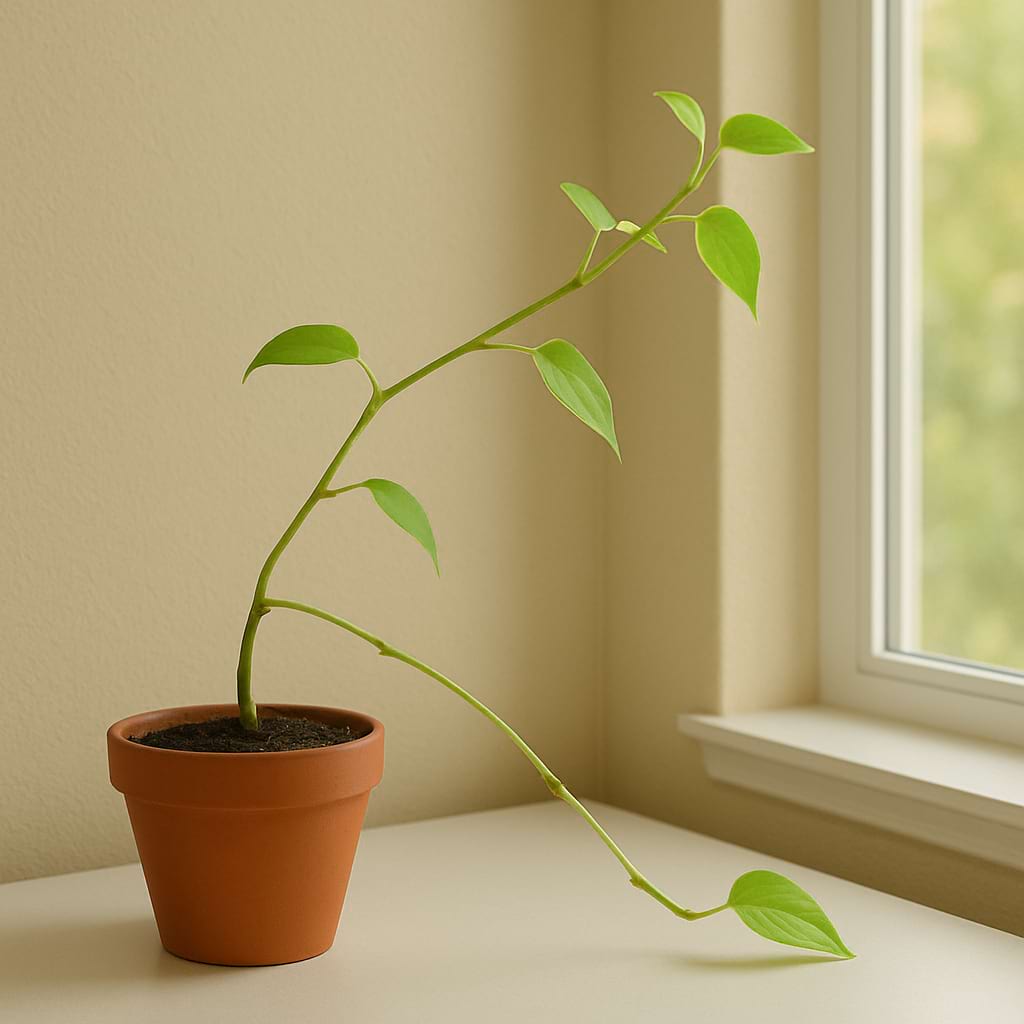
- Leggy, narrow growth: New growth thinner and paler than the column below means not enough light. The thin section will not fatten back up, though growth above it recovers once light improves.
- Wrinkling and wilting: Thirst if the soil is bone-dry, and a deep soak fixes it in days. If the soil is damp and the column still wrinkles, the roots have failed and you are looking at rot.
- Stunted growth: Some slowness is simply this plant's nature. Genuine stalling usually means low light, exhausted soil, or hidden root pests.
- Corking at the base: Older plants develop a tan, bark-like patch low on the column. Hard and dry to the touch means normal aging. Soft means rot.



🖼️ Totem Pole Cactus Display and Styling Ideas
The whole appeal is the silhouette, so the styling job is to stay out of its way and get the light right.
Solo Setups
One tall column in a plain heavy pot against a blank wall is the strongest possible look, and it earns a spot as a floor plant beside a sunny window. Keep the container neutral in concrete gray, matte black, or unglazed terracotta so the knobbly texture stays the focus. A gravel top dressing keeps the base dry and finishes the desert look.
Lighting the Texture
This is the trick most people miss. Position the plant so light rakes across it from the side rather than hitting it straight on, and every knob throws a small shadow that makes the column read as carved. A floor uplight after dark turns it into a genuine sculpture.
Grouped Arrangements
Its vertical line plays well against low, spreading succulents with the same watering needs. Try it behind a Golden Barrel Cactus or a cluster of Hens and Chicks, or beside the trailing stems of a Burro's Tail. With no spines, it is also the safe pick for the front of an arrangement people reach past.
Where It Actually Works
Unlike almost every other cactus, this one belongs in high-traffic spots. Hallways, entryways, and homes with cats or toddlers are all fair game, since there is nothing on it to catch skin. The only real constraint is sun, so pick the brightest such spot, not the most convenient.
🌟 Totem Pole Cactus Pro Care Tips
☀️ Give it the brightest window you own. Light keeps the columns thick and knobby instead of thin and pale.
💧 When you are unsure, wait. This plant recovers from drought and rarely recovers from rot.
❄️ Cool, bright, and nearly dry all winter. That rest drives good growth the next season, and it is less frost-hardy than most desert cacti, so bring it in before 45°F.
🪨 Pot heavy, plant gritty. A weighted terracotta pot and a half-mineral mix prevent both toppling and rot.
🔦 Light it from the side. Raking light turns the bumps into shadows and the plant into sculpture.
⏳ Callus cuttings for weeks, not days. A thick column needs two to four weeks before it touches soil.
🖐️ Enjoy the one cactus you can touch. No spines and no toxic sap means no gloves and no worry about pets.
❓ Frequently Asked Questions
Does the Totem Pole Cactus have spines?
No, and that is its defining feature. The monstrose mutation suppresses spine development entirely, leaving smooth green skin over the knobs. You can handle it bare-handed, which makes it one of very few cacti suitable for a hallway or a home with small children.
Is the Totem Pole Cactus toxic to cats and dogs?
It is not toxic. Unlike a Pencil Cactus and other euphorbias, it produces no irritating milky sap, and with no spines there is no mechanical hazard either. This is about as pet-safe as a large cactus gets.
How fast does a Totem Pole Cactus grow?
Slowly, roughly two to six inches a year indoors. Outdoors in a warm climate it moves faster and can eventually reach ten to fifteen feet over decades. If yours seems to be doing nothing, that is usually normal.
Why is my Totem Pole Cactus turning yellow and soft at the base?
That is overwatering and the start of root rot, the most common way this plant dies. Cut above the damage until the cross-section is uniformly firm and pale green, let the cut callus for two to four weeks, and re-root the healthy top in dry gritty mix.
Why is my Totem Pole growing thin and pale at the top?
Not enough light. New growth narrower and paler than the column below is the classic etiolation signal. Move it to a south or west window or add a strong grow light. The thin section stays thin permanently, but growth above it thickens back up.
Can I grow a Totem Pole Cactus indoors long-term?
Yes. It is one of the better columnar cacti for indoor life because it grows slowly enough to stay in scale for years. It needs a sunny window, sparing water, and ideally a cool winter rest. It just will not flower reliably indoors.
How do I propagate a Totem Pole Cactus?
Take a four to six inch column cutting with a sterile knife in late spring, keep track of which end was up, and let the cut face callus in dry air for two to four weeks until it is hard and slightly sunken. Then set it an inch into dry gritty mix and wait two to three weeks before any water.
Does the Totem Pole Cactus flower?
Yes, but rarely indoors. Mature plants produce pale pink flowers of one to two inches that open at night in summer and close by morning. Blooming needs age, a full season of direct sun, and a cool dry winter rest, all far easier to provide outdoors in zone 9b or warmer.
What is the difference between the Totem Pole and the Senita Cactus?
They are the same species. The Senita, or Whisker Cactus, is the normal Pachycereus schottii with clean vertical ribs and a shaggy gray bristle crown at flowering age. The Totem Pole is its monstrose mutation, which drops both the ribs and the bristles in favor of irregular knobs. Care is identical.
ℹ️ Totem Pole Cactus Info
Care and Maintenance
🪴 Soil Type and pH: Sandy, gravelly, sharply draining cactus mix; neutral to slightly alkaline pH.
💧 Humidity and Misting: Happy in ordinary dry household air; 20 to 40 percent suits it and damp stagnant air causes trouble.
✂️ Pruning: Almost never needed; cut a whole column back cleanly only to remove damage or restart a top-heavy plant.
🧼 Cleaning: Dust the ridges and folds with a soft dry paintbrush or a puff of compressed air; because there are no spines, you can also wipe it gently with a barely damp cloth.
🌱 Repotting: Pot up only when the roots fill the container or the plant gets top-heavy enough to tip.
🔄 Repotting Frequency: Every 3-4 years
❄️ Seasonal Changes in Care: Grows from late spring through early autumn; wants a cool, bright, nearly dry winter rest.
Growing Characteristics
💥 Growth Speed: Slow, roughly 2-6 inches of new growth a year
🔄 Life Cycle: Perennial
💥 Bloom Time: Late spring through summer, opening at night and closing by morning
🌡️ Hardiness Zones: 9b-11 outdoors; damaged below roughly 25°F even when dry
🗺️ Native Area: Baja California and Sonora, Mexico, and a small strip of southern Arizona, in coastal desert scrub
🚘 Hibernation: Cool, nearly dry winter rest at 50-60°F brings the best growth and bloom the following year
Propagation and Health
📍 Suitable Locations: South-facing windows, sunrooms, bright glassed porches, patios in warm climates
🪴 Propagation Methods: Take a column cutting, callus the wide cut for two to four weeks, then set it in dry gritty mix.
🐛 Common Pests: Mealybugs, Scale Insects, Spider Mites, Root Mealybugs, Fungus Gnats
🦠 Possible Diseases: Root rot, soft rot, fungal stem spot, corky scab from cold damp conditions
Plant Details
🌿 Plant Type: Columnar cactus, a monstrose (mutated) form of the Senita cactus, Cactaceae
🍃 Foliage Type: Leafless; thick vertical green columns covered in irregular knobs and folds
🎨 Color of Leaves: Blue-green to gray-green stems, no true leaves
🌸 Flower Color: Pale pink to rose with lighter edges, about 1-2 inches across
🌼 Blooming: Yes on mature outdoor plants, at night in summer; very rare indoors
🍽️ Edibility: The fruit of the parent Senita species is edible and was eaten by the Seri and Tohono O'odham peoples; not a home food crop
📏 Mature Size: 3-5 feet indoors over many years; 10-15 feet outdoors in ideal climates
Additional Info
🌻 General Benefits: Spineless and non-toxic, so it is safe around children and pets; extremely drought tolerant and low maintenance
💊 Medical Properties: No established medicinal use; the parent species contains alkaloids studied for antifungal activity
🧿 Feng Shui: Unlike spiny cacti, the smooth columns carry calm, stabilizing earth energy and suit a quiet corner or an entryway
⭐ Zodiac Sign Compatibility: Taurus
🌈 Symbolism or Folklore: Patience, endurance, quiet strength, standing your ground
📝 Interesting Facts: The normal Senita cactus has neat vertical ribs and a shaggy beard of gray bristles at the top, which is where the nickname Whisker Cactus comes from. The Totem Pole is a mutant form of that same plant: a growing point that lost its regular rib pattern and now lays down knobs and folds at random instead. Because the mutation is unstable and does not come true from seed, every Totem Pole Cactus sold anywhere in the world is a cutting descended from the same original mutated plant. In the wild, the Senita has an exclusive partnership with the senita moth, which pollinates the night flowers and lays its eggs in them.
Buying and Usage
🛒 What to Look for When Buying: Look for firm, plump columns with even blue-green color, no soft or blackened patches at the soil line, and a stable base that does not wobble in the pot. Freshly rooted cuttings are common, so tip the plant gently; if it swivels, it has not rooted in yet. A short, thick column establishes faster than a tall thin one.
🪴 Other Uses: Architectural accent in xeriscapes and desert gardens, pet-safe sculptural houseplant, grafting stock for other cacti
Decoration and Styling
🖼️ Display Ideas: Solo in a heavy neutral pot as a floor or side-table sculpture, or grouped with low rosette succulents that echo its color but not its height
🧵 Styling Tips: Keep the pot plain and heavy so the knobbly silhouette does the talking; a gravel top dressing keeps the base dry and finishes the desert look, and a side light throws the bumps into relief.
🪴 See also 🪴
Complete Guide to Bishop's Cap Cactus Care and Growth
Complete Guide to Brain Cactus Care and Growth
Complete Guide to Christmas Cholla Care and Growth
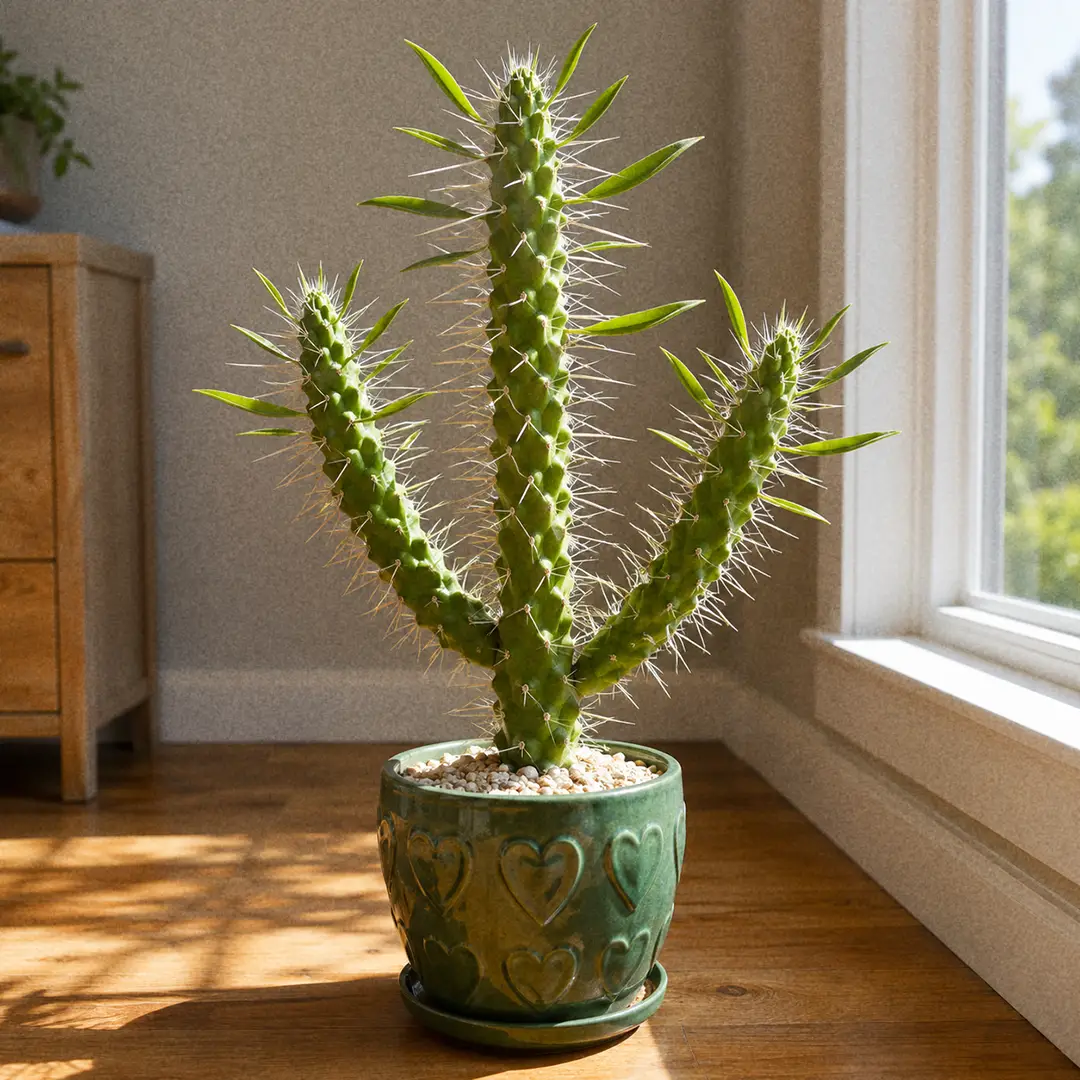
Complete Guide to Eve's Needle Cactus Care and Growth
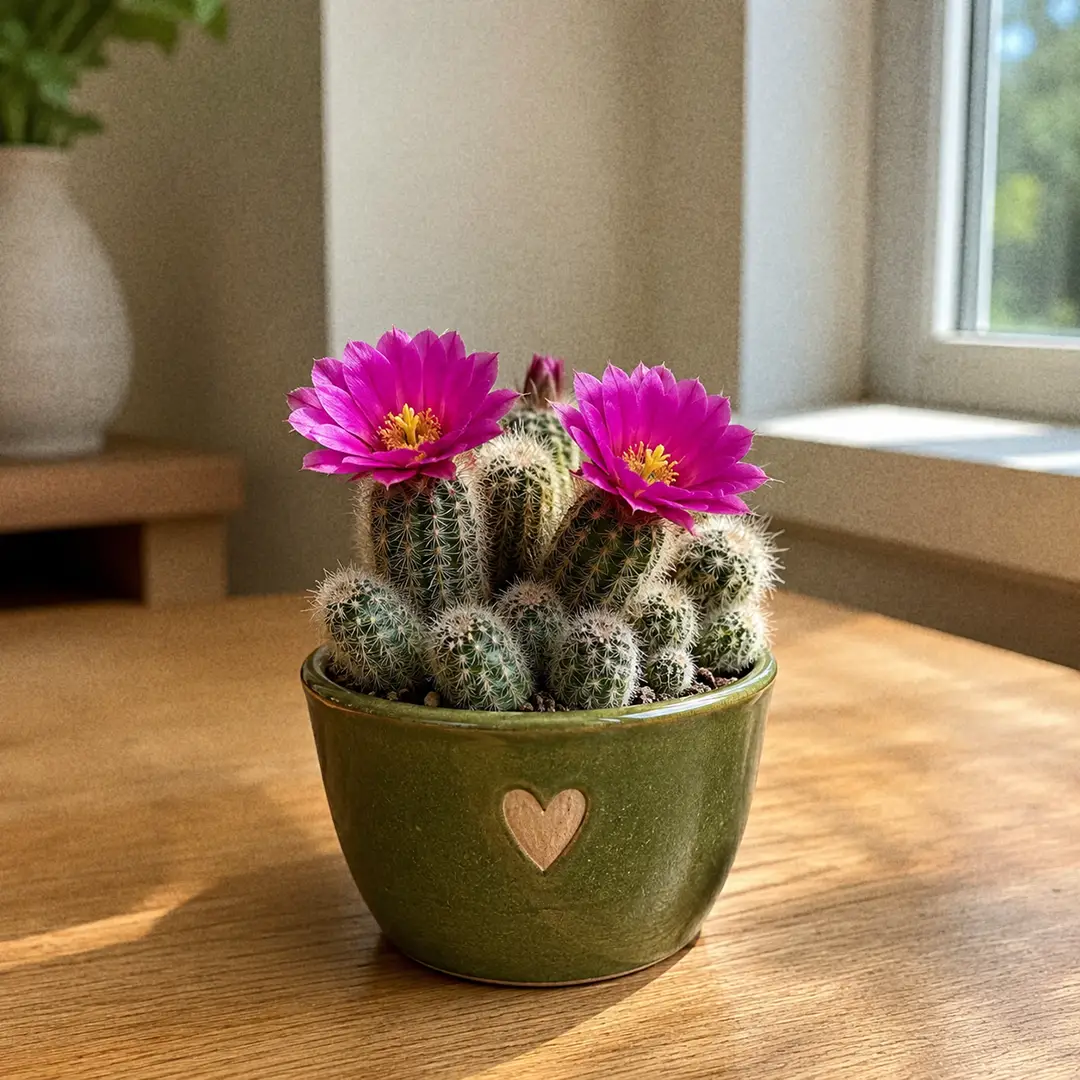
Complete Guide to Hedgehog Cactus Care and Growth
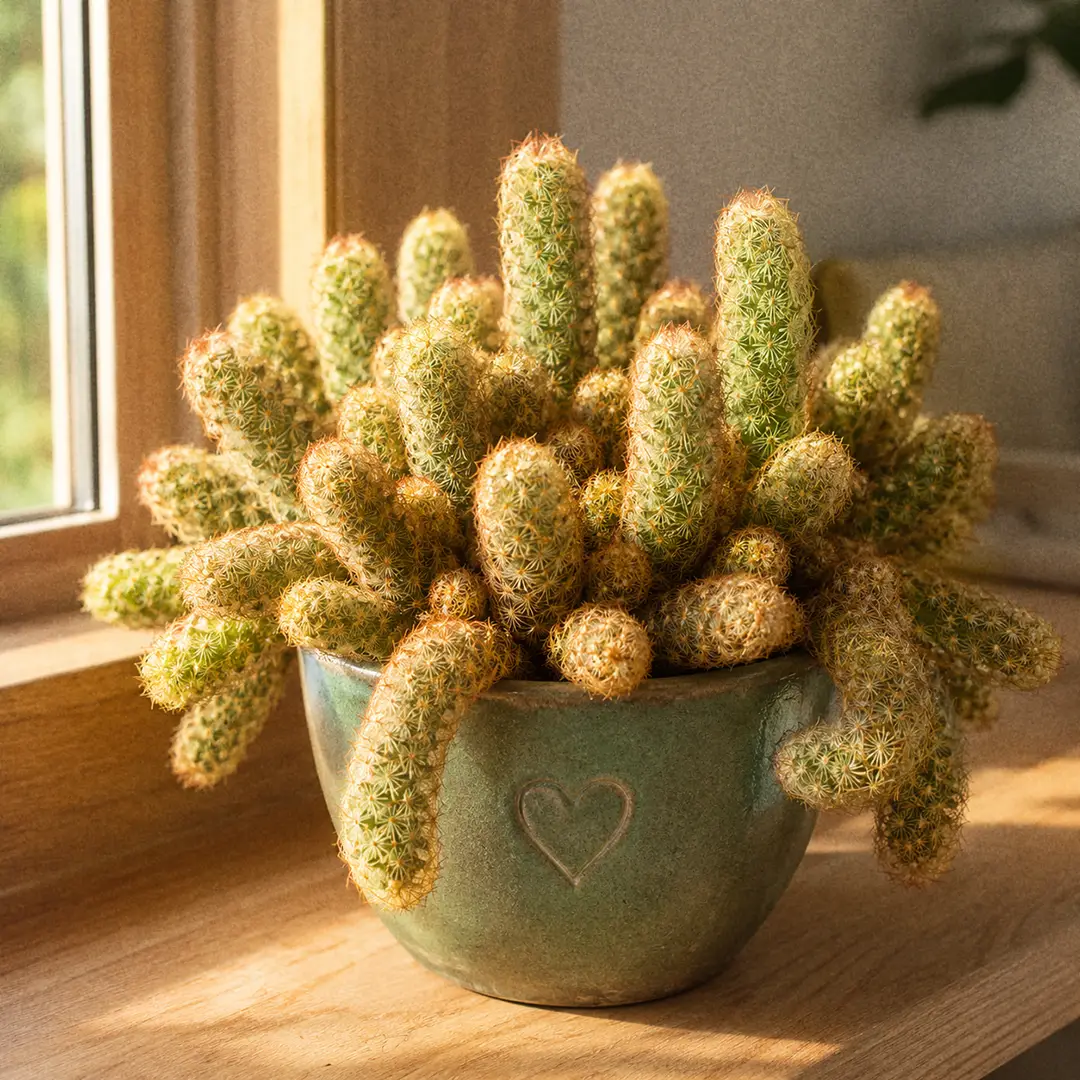
Complete Guide to Lady Finger Cactus Care and Growth
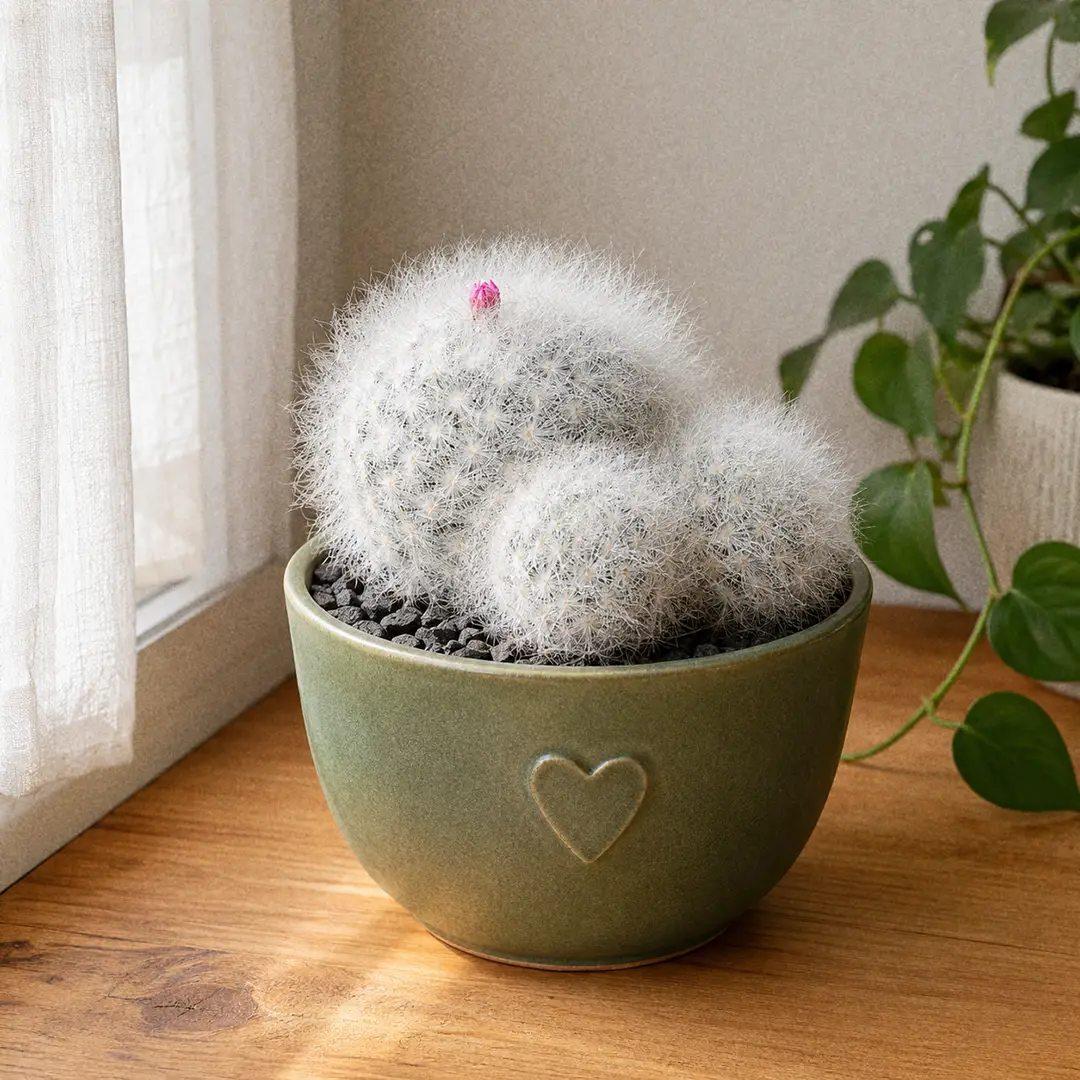
Complete Guide to Old Lady Cactus Care and Growth
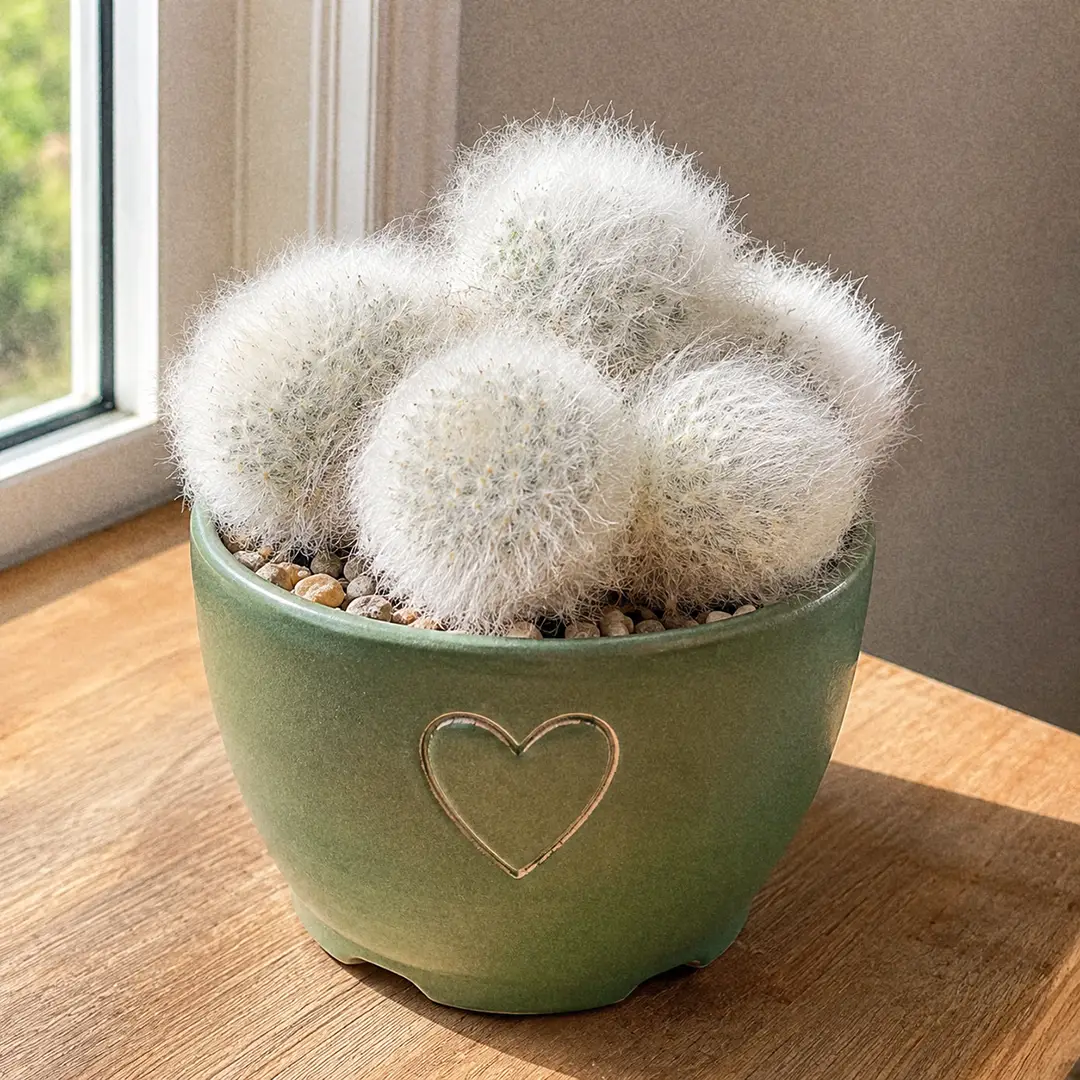
Complete Guide to Powder Puff Cactus Care and Growth
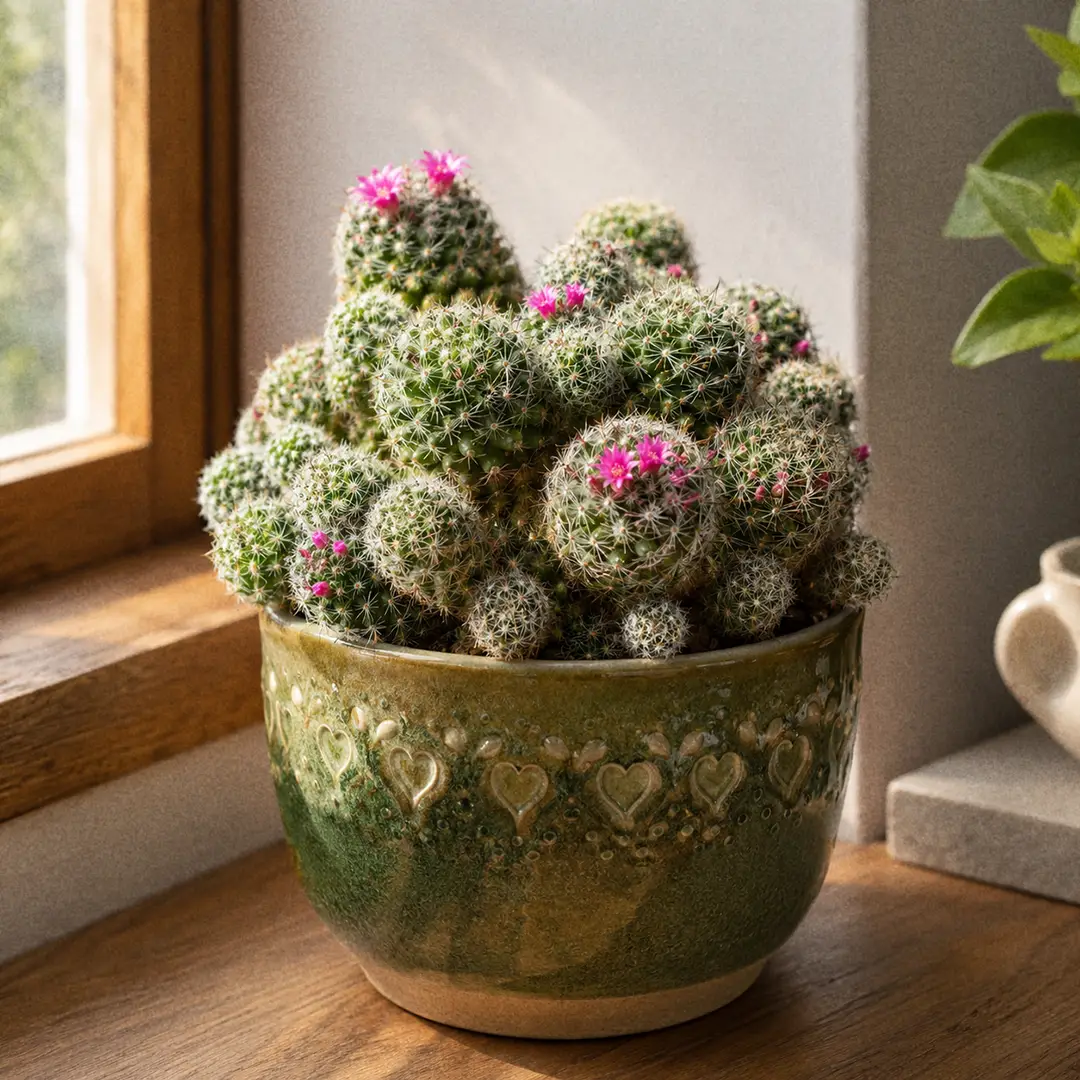
Complete Guide to Pincushion Cactus Care and Growth
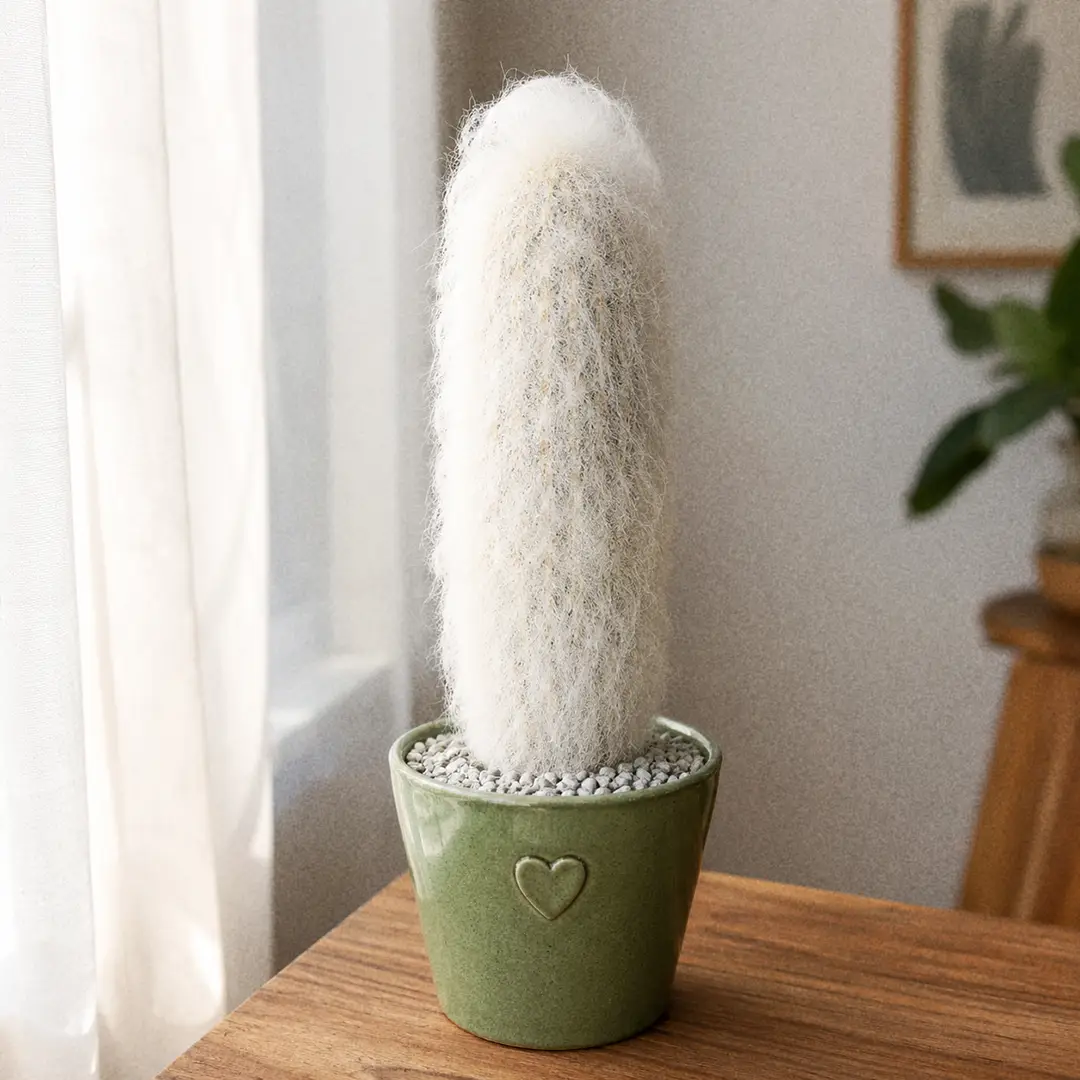
Complete Guide to Peruvian Old Man Cactus Care and Growth
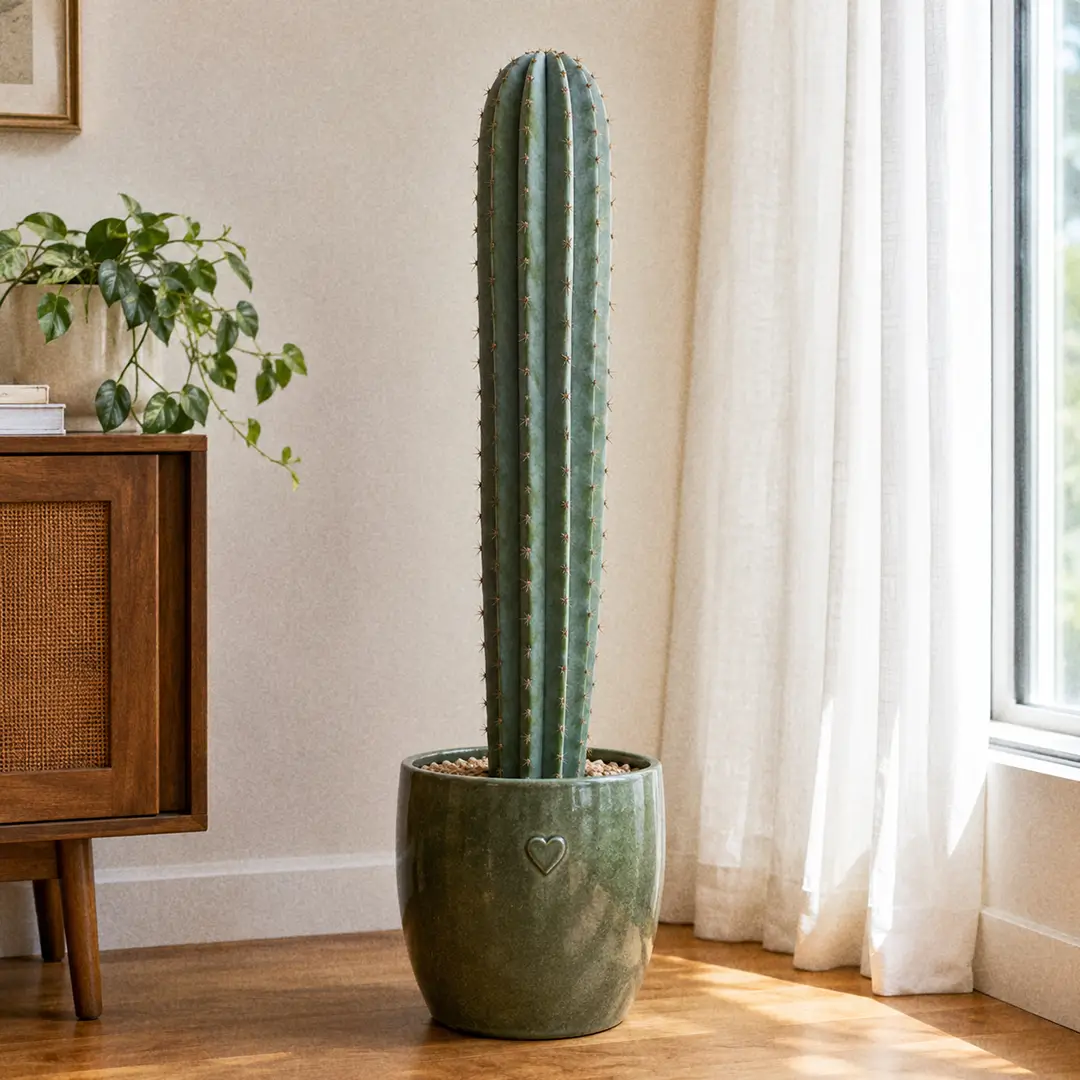
Complete Guide to Peruvian Apple Cactus Care and Growth
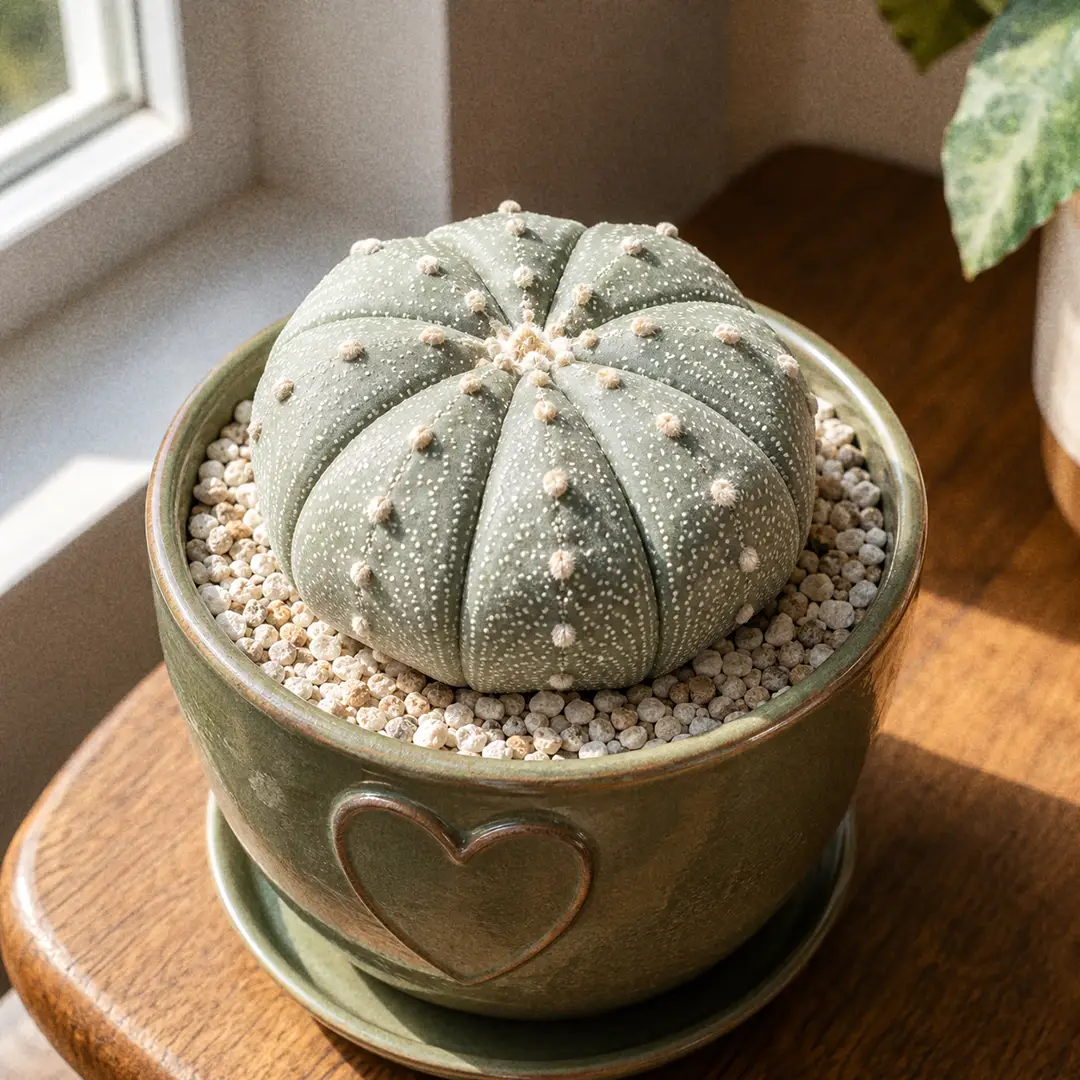
Complete Guide to Star Cactus Care and Growth
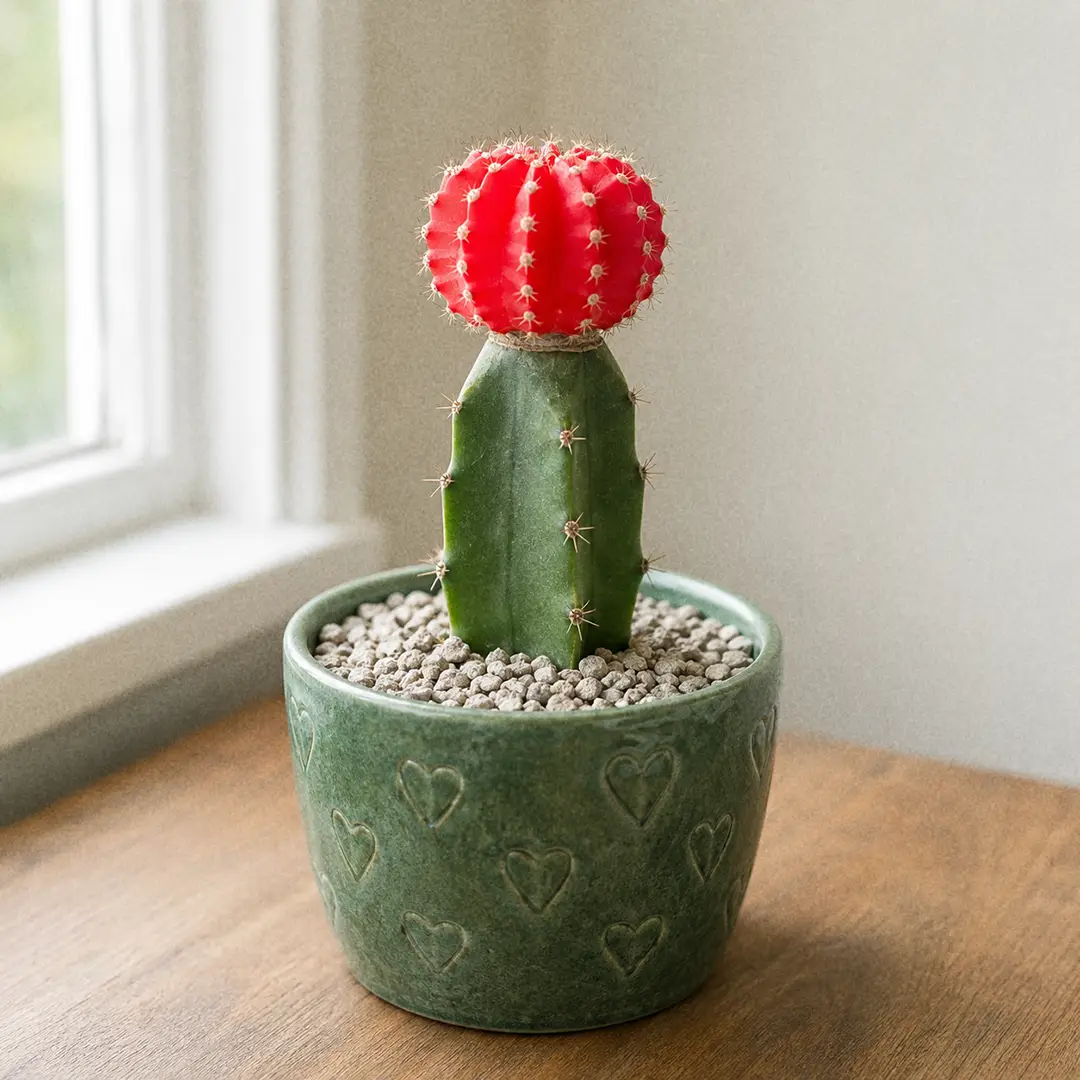
Complete Guide to Moon Cactus Care and Growth

Houseplant101 Forum
Questions & Comments
Ask a question, share your plant experience, or help other plant owners.
Comments are temporarily unavailable.
Open the Houseplant101 ForumNo comments yet
Be the first to ask a question or share your experience about this page.
Log in or create an account
Comments use your Houseplant101 Forum account, but you can stay on this page.
Create a new account