
Davana Blue Star Fern
Phlebodium aureum 'Davana'
Davana Fern, Living Lace Davana, Phlebodium aureum 'RAADPHLE01', Ruffled Blue Star Fern


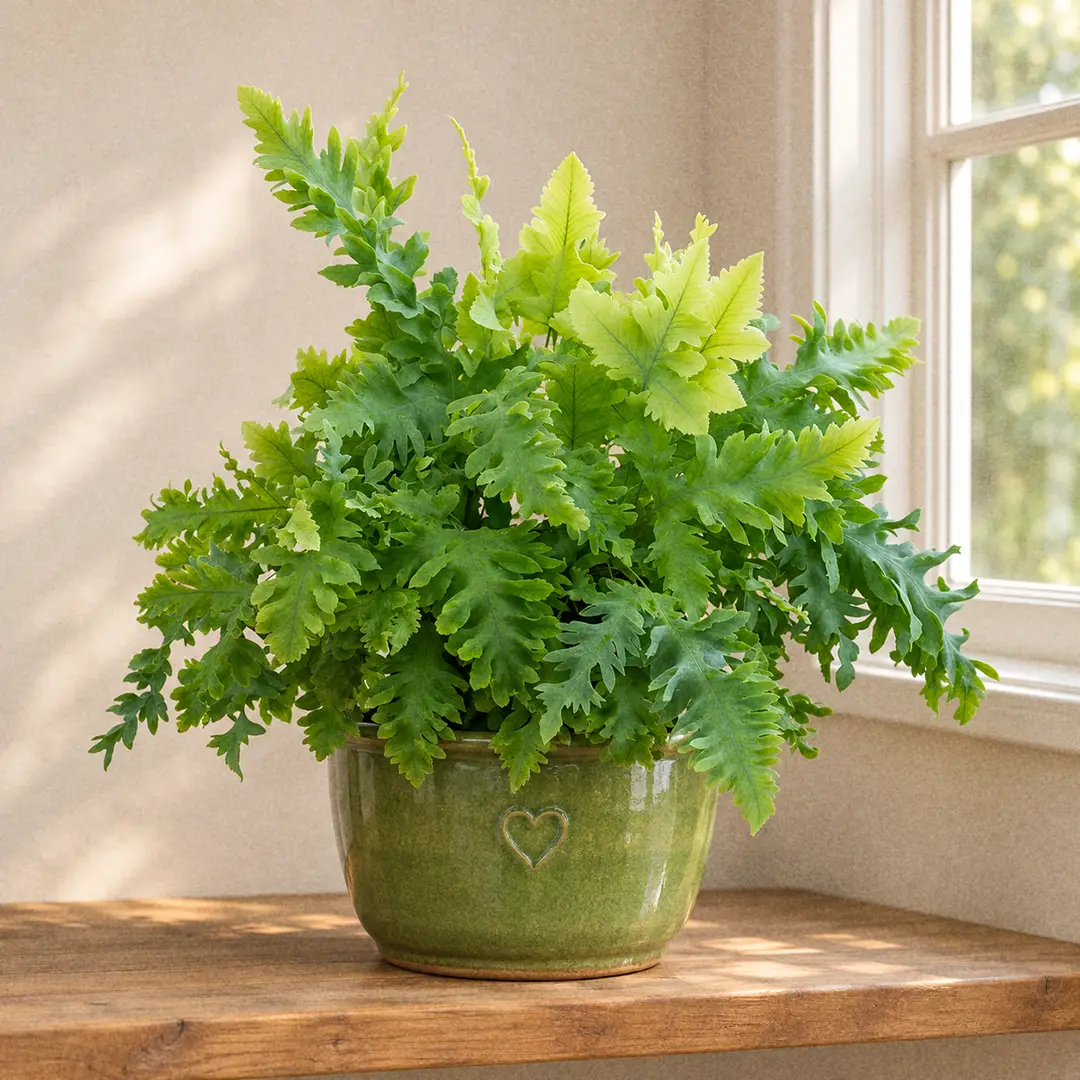
The Davana Blue Star Fern (Phlebodium aureum 'Davana') is a compact sport of the blue star fern with wavy, scalloped frond edges and furry creeping rhizomes. Learn how it differs from 'Blue Star' and 'Mandaianum', and how to keep it dense, ruffled and healthy on a shelf.
📝 Davana Blue Star Fern Care Notes
🌿 Care Instructions
⚠️ Common Pests
📊 Growth Information
🪴 In This Guide 🪴

☀️ Davana Blue Star Fern Light Requirements (Bright Indirect)
The Sweet Spot
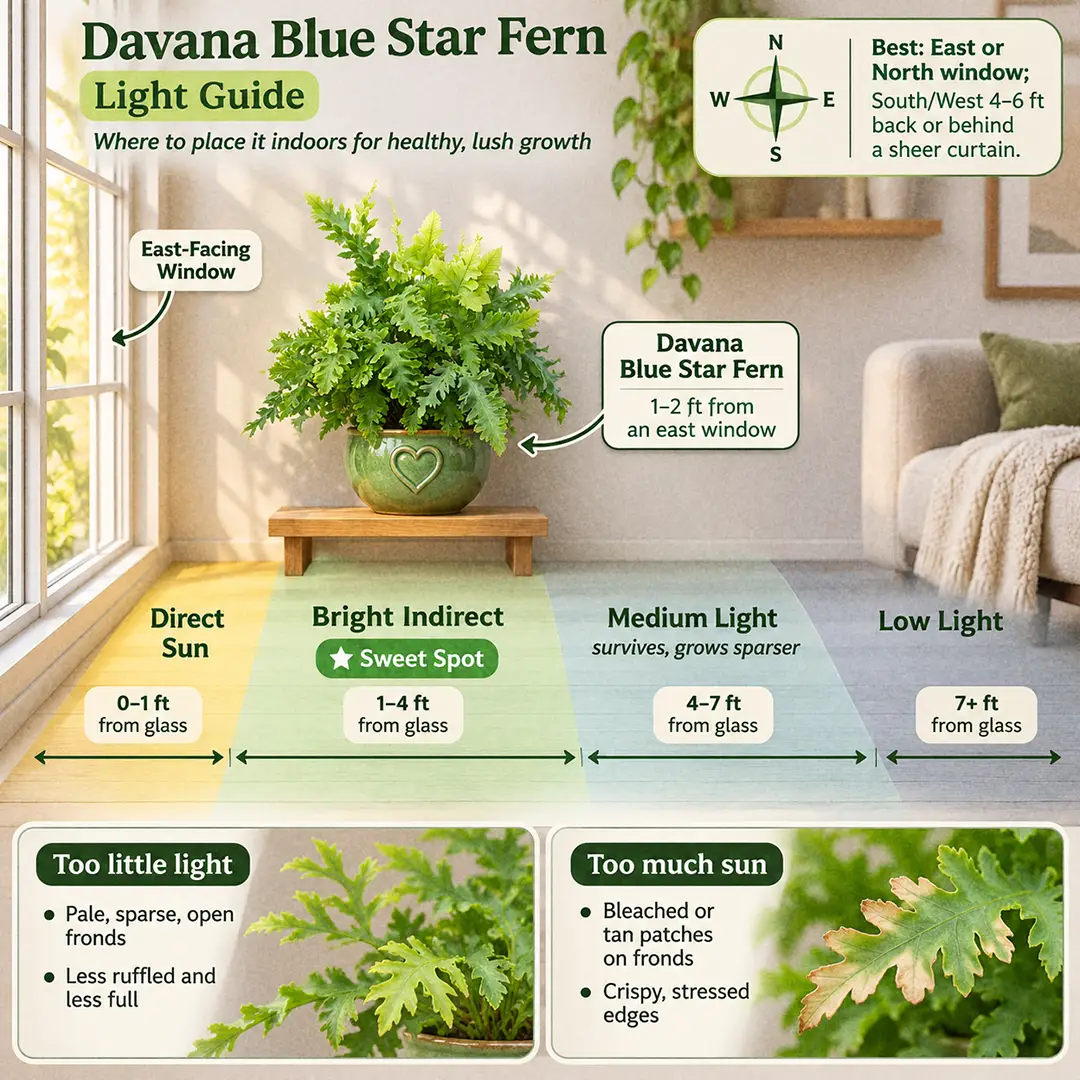
Bright indirect light keeps Davana dense and brings out the blue-grey haze on its fronds. An east window is ideal, with the pot a foot or two back from the glass. A spot right beside a north window works too. In a south or west room, set it four to six feet back, or behind a sheer curtain.
Because Davana is small, it tends to end up on a desk or a bookshelf across the room, and that is where most of them start to struggle. Judge the spot, not the room. If your hand casts only a faint, fuzzy shadow at midday, it is on the dim side. Our indoor light guide explains the hand-shadow test.
How Much Light Davana Really Needs
Sources do not agree here. Proven Winners, which sells Davana in the US as Living Lace Davana, rates it for low to medium light. White Flower Farm and the RHS both recommend bright, filtered light. In practice it survives medium light and looks its best in bright indirect light.
In a dim spot, new fronds come in paler and fewer, and the tight, ruffled mound you bought slowly opens out. If the only free shelf is far from a window, a grow light 12-18 inches above the fronds for about 10-12 hours a day keeps it compact.
Winter light is much weaker, so a shelf that worked in July can be too dim by December. Move the pot a little closer to the window from late autumn to early spring, keeping the fronds off the cold glass.
Too Much Sun
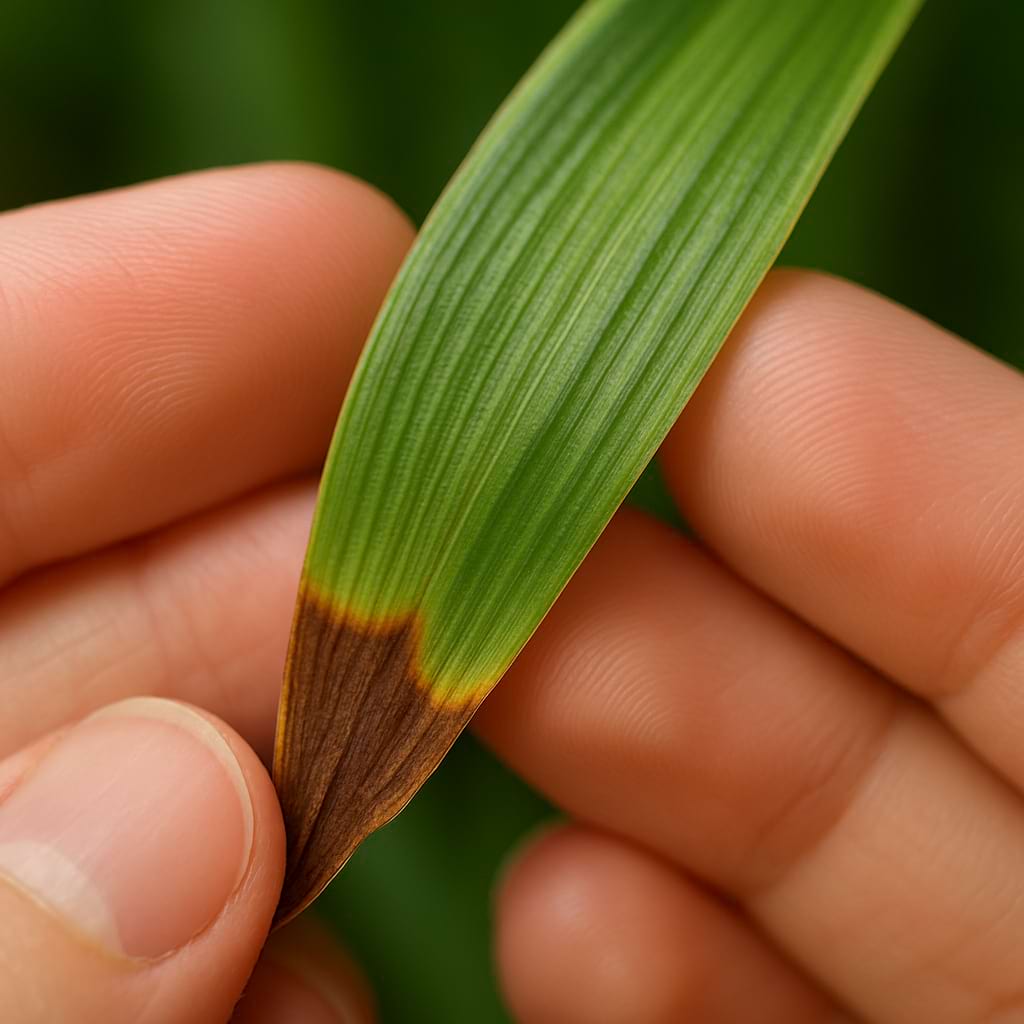
An hour of early morning sun is fine, especially in winter. Hot midday or afternoon sun through glass bleaches the fronds and leaves crisp tan patches, which is leaf scorch. Damaged fronds do not recover, so move the plant back and trim them once new growth appears.
💧 Davana Blue Star Fern Watering Guide (Evenly Moist, Never Soggy)
Watering Frequency
Water when the top half inch to inch of mix feels dry. Davana is usually sold in a 4- or 5-inch pot, and a small pot packed with roots and fronds dries out faster than a big blue star in a wide bowl. In a warm room in summer, check it every three or four days.
In winter, growth slows and the gaps stretch out, often to about a week. Go by feel and pot weight rather than the calendar. Our watering guide covers the finger and lift checks.
How to Water a Davana Fern
Pour slowly around the edge of the pot until water runs out of the drainage hole, then empty the saucer after ten minutes. Keep the stream off the furry rhizomes in the middle as much as you can. They want air, and repeated soaking is how rhizome rot starts.
The patent describes Davana being raised on ebb-and-flow benches, which flood the pots from below. Bottom watering for 15-20 minutes suits it well, especially once the crown of fronds is too dense to reach the soil. Top water every few weeks as well, to flush out salts.
Signs of Trouble
- Limp fronds, curled edges and a light pot: it went too dry. Water thoroughly and trim any fronds that stay crisp.
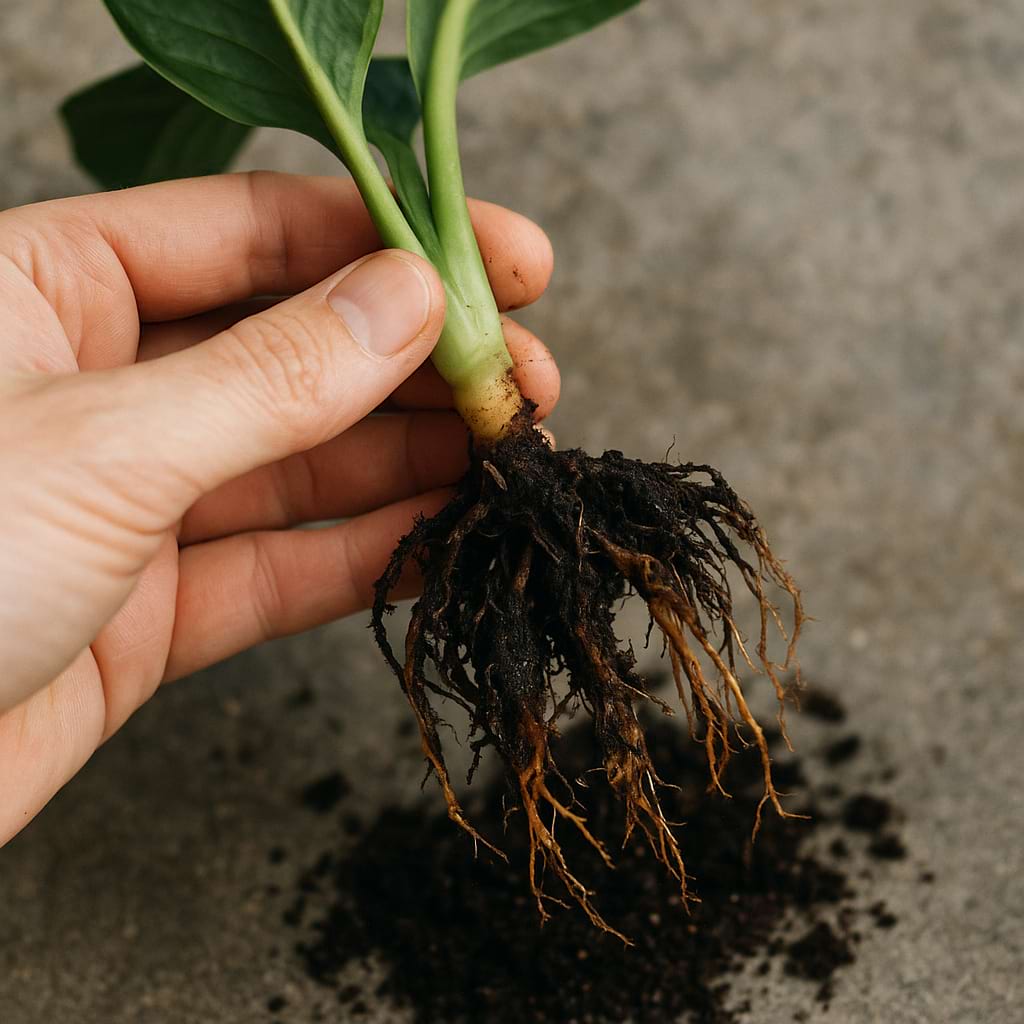
- Yellowing fronds, a heavy pot and a sour smell: too wet. Check the roots for root rot.
- Brown tips even though your timing is right: often hard tap water. Try rain or filtered water for a few months and watch the new fronds.
🪴 Best Soil for Davana Blue Star Fern (Airy but Moist)
What the Soil Needs
In the wild, Phlebodium aureum grows on tree trunks and palm trunks, so its roots are used to air and fast drainage. Davana keeps that habit. Its mix needs to hold some moisture without packing down around the roots, and its surface needs to stay open so the rhizomes can crawl across it.
DIY Davana Soil Mix
A simple blend that works:
- 2 parts houseplant compost or coco coir
- 1 part fine orchid bark
- 1 part perlite or pumice
This stays damp for a few days, drains freely and gives the rhizomes a firm, airy surface. If you tend to overwater, add an extra part of bark. Our soil guide explains what each ingredient does.
Pre-Made Options
Proven Winners suggests an all-purpose potting mix with extra perlite, which is a fine shortcut. A bagged orchid-and-fern blend also works. Skip cactus mix, which dries too fast, and garden soil, which packs solid. If the mix your plant came in stays wet for a week or more, move it into something airier at the next repot. Our potting soil picks compare the options.
🍼 Fertilizing Davana Blue Star Fern (Light and Monthly)
When and How Often
Feed once a month from spring to late summer, while new fronds are unrolling. Stop in autumn and winter. A plant this size uses little food, so skipping a month does no harm, while overfeeding does.
What to Use
A balanced liquid houseplant fertilizer at half the label strength is plenty. Pour it onto soil that is already damp, never onto a dry pot, and keep it off the rhizomes. Our fertilizing guide and fertilizer picks cover the choices.
Over-Fertilizing Signs
Brown, burnt-looking tips soon after a feed, or a white crust on the mix, mean salts are building up. Run plain water through the pot for a minute and skip the next feed. Small pots collect salts quickly, so flush every couple of months even if you see nothing wrong.
🌡️ Davana Blue Star Fern Temperature Range
Ideal Range
Normal room temperatures of about 60-80°F (16-27°C) suit Davana, and it grows best on the warmer side of that. The RHS rates it H2: it tolerates cool conditions down to roughly 34-41°F (1-5°C) but not frost. Treat that as a survival limit, not a target. Outdoors, the patent lists USDA zones 10-13.
Drafts and Heat Sources
Small ferns end up on windowsills and desks, which puts them right next to radiators and cold panes. Keep Davana away from heating vents, air conditioners and outside doors, and keep the fronds off window glass on winter nights.
Summer Outdoors
A shaded porch or patio is a good summer home. Keep it out of afternoon sun, water more often, and bring it in before nights drop below about 55°F (13°C). Check under the fronds for pests before it comes back inside.
💦 Davana Blue Star Fern Humidity Requirements
Ideal Humidity
Aim for 50% or more. Like the species, Davana has a thin waxy coating on its fronds, which the patent describes as a grey-green wax layer, so it handles average room air better than a maidenhair or Boston fern. Trouble usually starts when the heating comes on and the air turns dry.
Easy Humidity Boosters
A small humidifier nearby is the most reliable fix. A bright bathroom works well, and so does grouping it with other plants that love humidity. Misting only helps for a few minutes. Our humidity guide has more ideas.
Signs the Air Is Too Dry
The first sign is brown, papery tips on the outer fronds while the mix is still moist. If it gets worse, whole frond edges dry and curl, and new fronds come in smaller. When that happens in winter with the heating on, the air is the problem, not your watering. More water in the pot will not fix it, but a humidifier will.
🌸 Davana Blue Star Fern Flowers and Spores
No Flowers
Davana is a fern, so it never flowers. There are no buds to wait for and nothing to fix if it never blooms. All the interest is in the fronds and the furry rhizomes.
Spore Dots on Older Fronds
Mature blue star ferns carry round golden-orange spore clusters, called sori, in rows on the undersides of older fronds. Young Davana plants often have none. The plants described in the patent, at 30 weeks old, had no sori at all. Older fronds may develop them as the plant matures.
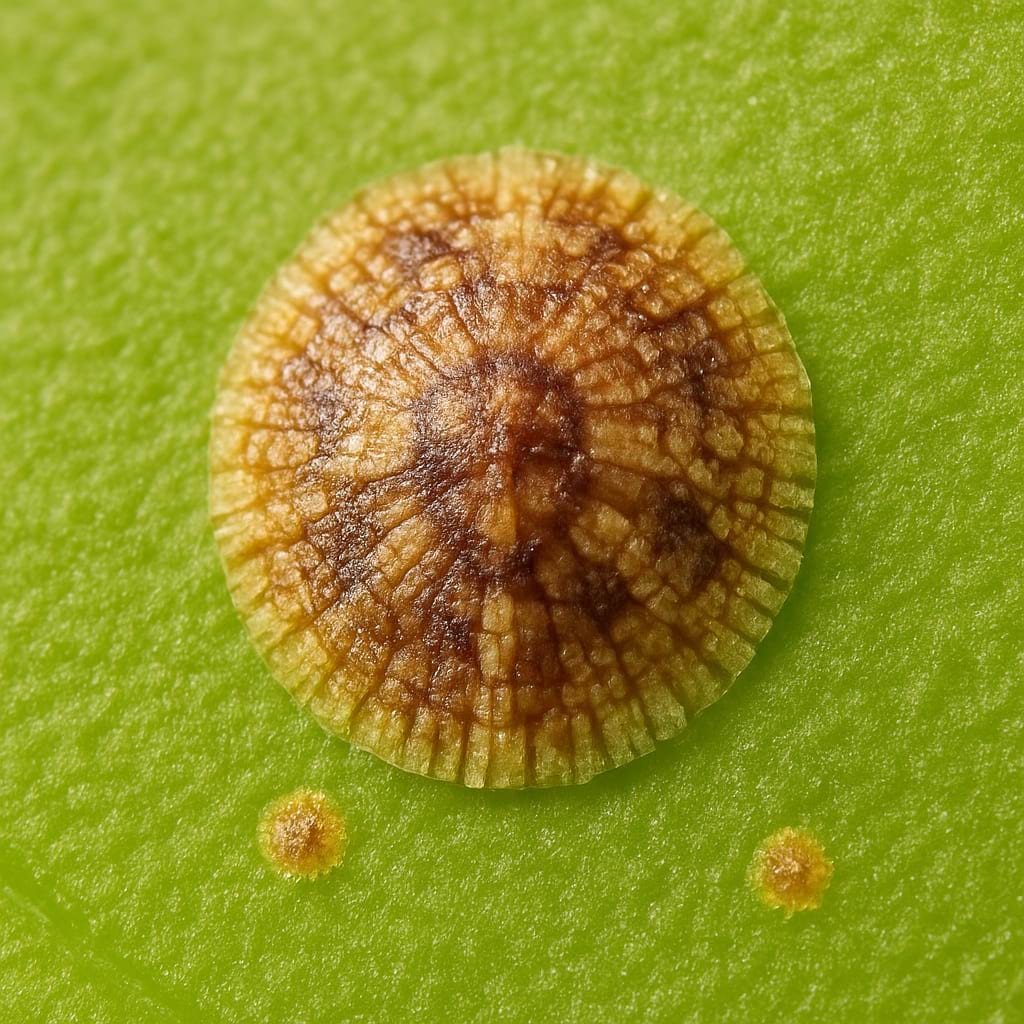
Neat rows of dry orange dots on the underside are normal. Scattered, raised brown bumps on stalks and fronds that scrape off with a fingernail are scale insects, which need treating.
🏷️ Davana Blue Star Fern Types and Varieties
Where Davana Came From
Davana is a sport, a natural mutation, not a cross. According to its US plant patent, it turned up in January 2015 in a crop of Phlebodium aureum 'Blue Star' at a commercial greenhouse in the Netherlands. The inventor is Kelly Raadschelders of Raadschelders Varens, a fern nursery in De Kwakel. The patent was granted in 2020 as PP32,332 under the cultivar code 'RAADPHLE01', and Davana is the trade name.
It is multiplied by tissue culture, so every plant is a clone of the original. In the US, Proven Winners sells it as Living Lace Davana in its Leafjoy houseplant range.
Davana vs Blue Star Fern
The patent compares Davana directly with its parent, 'Blue Star':
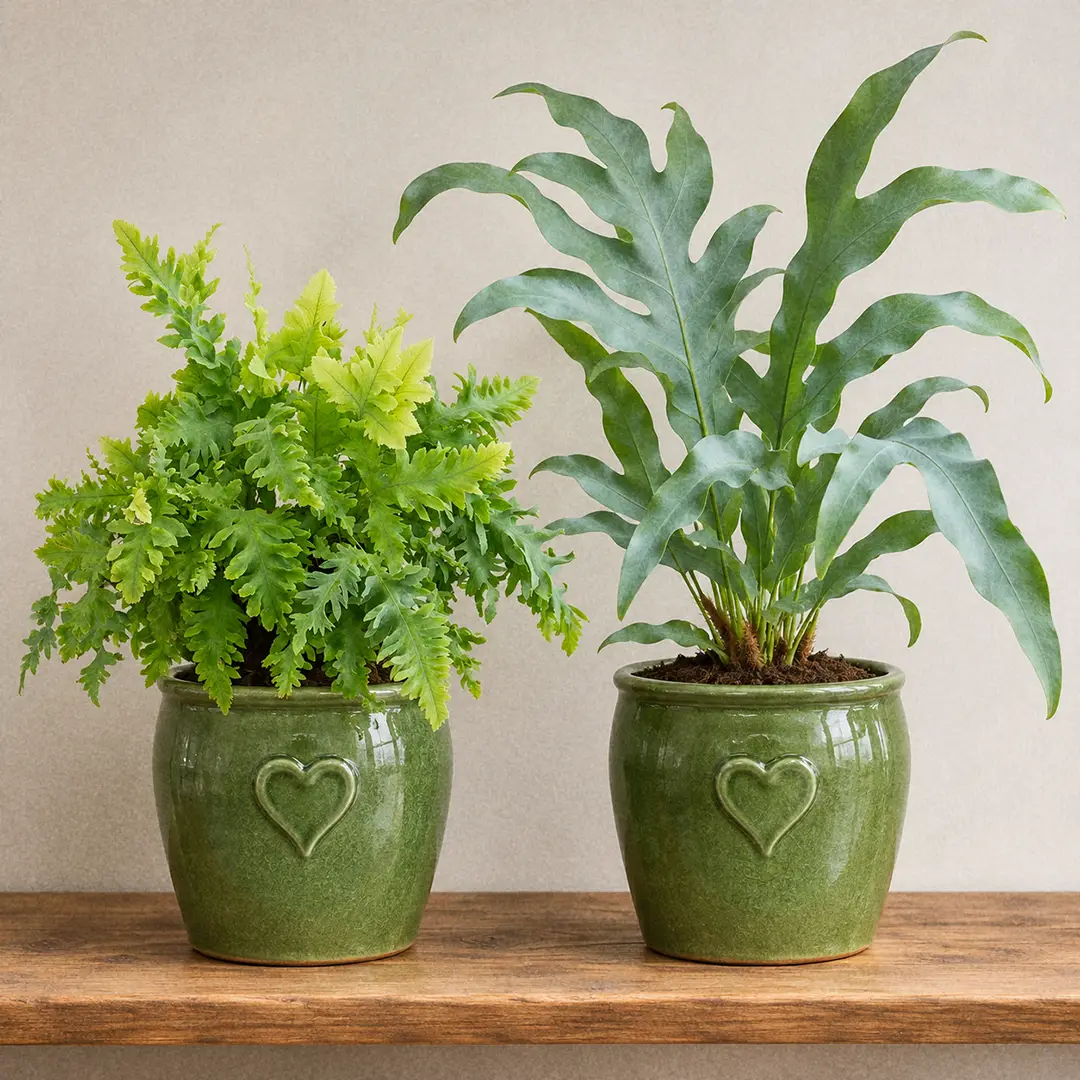
- Frond edges: Davana's margins are finely scalloped and strongly wavy. 'Blue Star' edges are smooth, though they can wave a little.
- Lobes: Davana's fronds are only shallowly to moderately lobed. The frilly look comes from the rippled edge, not from deep cuts.
- Habit: Davana arches outward more. 'Blue Star' stands more upright.
- Size: White Flower Farm lists Davana at 10-16 inches tall, and Proven Winners at 10-14 inches tall and 14 inches wide. A plain blue star fern often reaches 1-2 feet indoors.
- Color: Sellers call Davana blue-green. The patent describes its mature fronds as darker green than 'Blue Star', under a thin grey-green wax. Expect a green-leaning frond with a blue haze rather than a silvery blue one.
Davana vs Mandaianum
'Mandaianum' is an older ruffled blue star, also sold under the Living Lace name. Proven Winners describes it as reaching about 24 inches, with large, deeply lobed fronds and fringed, crinkled edges. So Mandaianum is the big, deeply cut frilly one, and Davana is the compact one with shallower lobes and wavy edges.
The naming is messy. Some European nurseries list 'Mandaianum' as just another name for 'Blue Star', while others sell them as separate plants. When a label is vague, go by size and frond shape.
Other Furry-Footed Lookalikes
The Bear's Paw Fern has much thicker, furrier rhizomes and leathery, glossy green fronds. The Kangaroo Paw Fern creeps the same way but has shiny, plain green fronds with no blue bloom. The Rabbit's Foot Fern has furry feet too, under fine, lacy fronds.
🪴 Potting and Repotting Davana Blue Star Fern
When to Repot
Repot in spring about every two years, or sooner if the rhizomes crowd over the rim and water runs straight through the pot. Davana grows at a moderate pace and looks good slightly snug, so do not rush it into a big pot.
Choosing a Pot
Wide and shallow beats deep, since the rhizomes travel across the surface and the roots stay fairly shallow. Go up only 1-2 inches in width, and always use a drainage hole. Terracotta helps if you tend to overwater. Plastic or glazed ceramic suits a dry home. Our plant pot picks cover the options.
Step-by-Step Repotting
- Water the day before so the root ball holds together.
- Ease the plant out and loosen the old mix around the roots.
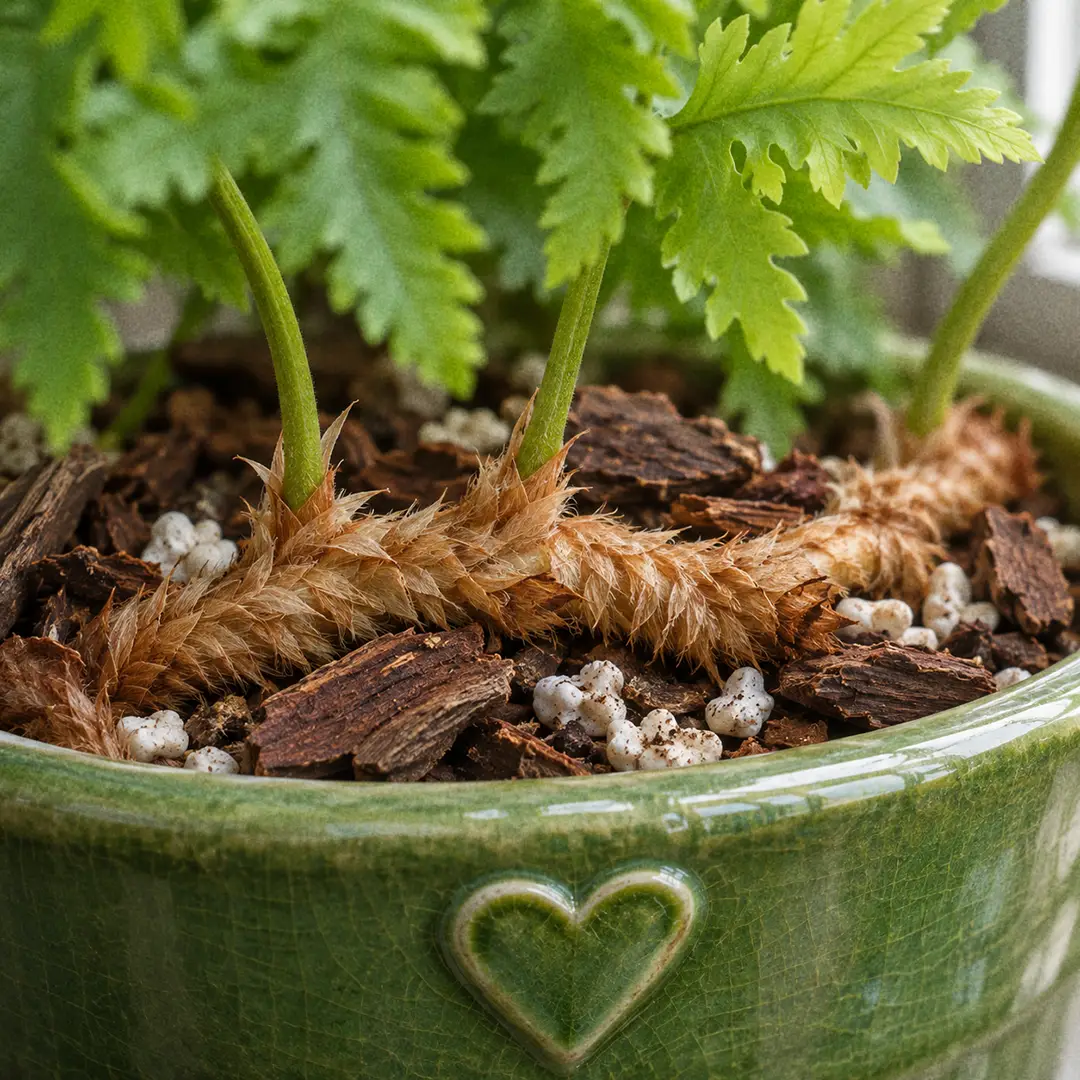
- Set it on fresh mix so the rhizomes sit at or just above the surface, never buried.
- Fill around the roots, not over the rhizomes, and firm lightly.
- Water, let it drain, and hold off fertilizer for a month.
Aftercare
Expect a short pause in growth after repotting, and maybe one older frond yellowing. Keep the mix lightly moist and the humidity up while it settles. If the plant wobbles, tuck a little bark around the root ball instead of piling mix over the rhizomes. Our repotting guide has more detail on the general method.
✂️ Pruning Davana Blue Star Fern
When to Prune
Prune whenever a frond turns fully yellow or brown. The oldest outer fronds relax outward and age first, and losing one now and then is normal. There is no set season.
How to Prune
Cut the stalk off at the base with small, clean scissors. Davana's crown is dense, so part the fronds with your fingers first to avoid nicking a new fiddlehead. Leave the rhizomes alone unless a piece is soft and black or you are dividing the plant.
Cleaning the Ruffled Fronds
Dust settles in the waves of the frond edges. Rinse the plant under a lukewarm shower a few times a year and let it drip dry. Do not wipe the fronds or use leaf shine. Both strip the waxy bloom and leave the fronds looking patchy and plain green.
🌱 How to Propagate Davana Blue Star Fern
Best Method: Division
Davana spreads by short creeping rhizomes, so a pot that has filled up after a couple of years can be split in spring. Our plant division guide shows the general technique.
One note: Davana is a patented variety, with a US plant patent and EU plant variety rights, so propagating it for sale is not allowed.
Step-by-Step Division
- Water the day before, then slide the plant out of its pot.
- Shake off enough mix to see where the rhizomes branch.
- Cut through the rhizome with a clean knife so each piece has its own roots and at least two or three fronds.
- Pot each piece into a small, wide pot of fresh airy mix, rhizome on the surface.
- Keep it warm, out of direct sun and lightly moist. A clear plastic bag over the pot for two weeks keeps the humidity up.
What About Spores?
Commercial growers multiply Davana by tissue culture, not spores. Growing ferns from spore is slow and fiddly, and there is no published evidence that Davana comes true from spore. Treat any sporelings as an experiment that may look like plain 'Blue Star'.
Tips for Success
Small divisions survive but sulk for months, so a few medium pieces beat many tiny ones. Expect each piece to drop an older frond while it settles. New fiddleheads mean it has taken.
🐛 Davana Blue Star Fern Pests and Treatment
Common Pests
- Scale insects are the one pest the RHS flags for this plant. Look for small brown bumps on stalks and along the undersides of fronds.
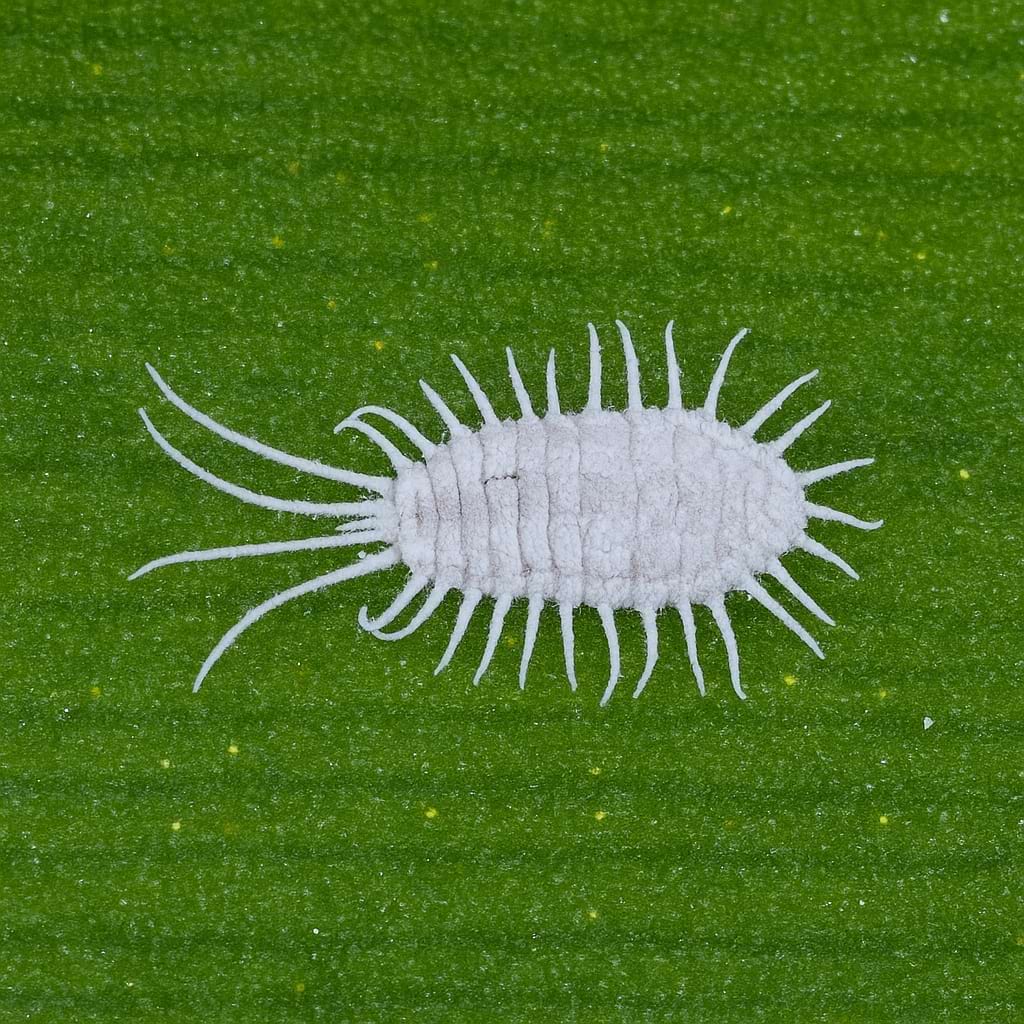
- Mealybugs hide as white fluff deep in the crown, where the ruffled fronds overlap.
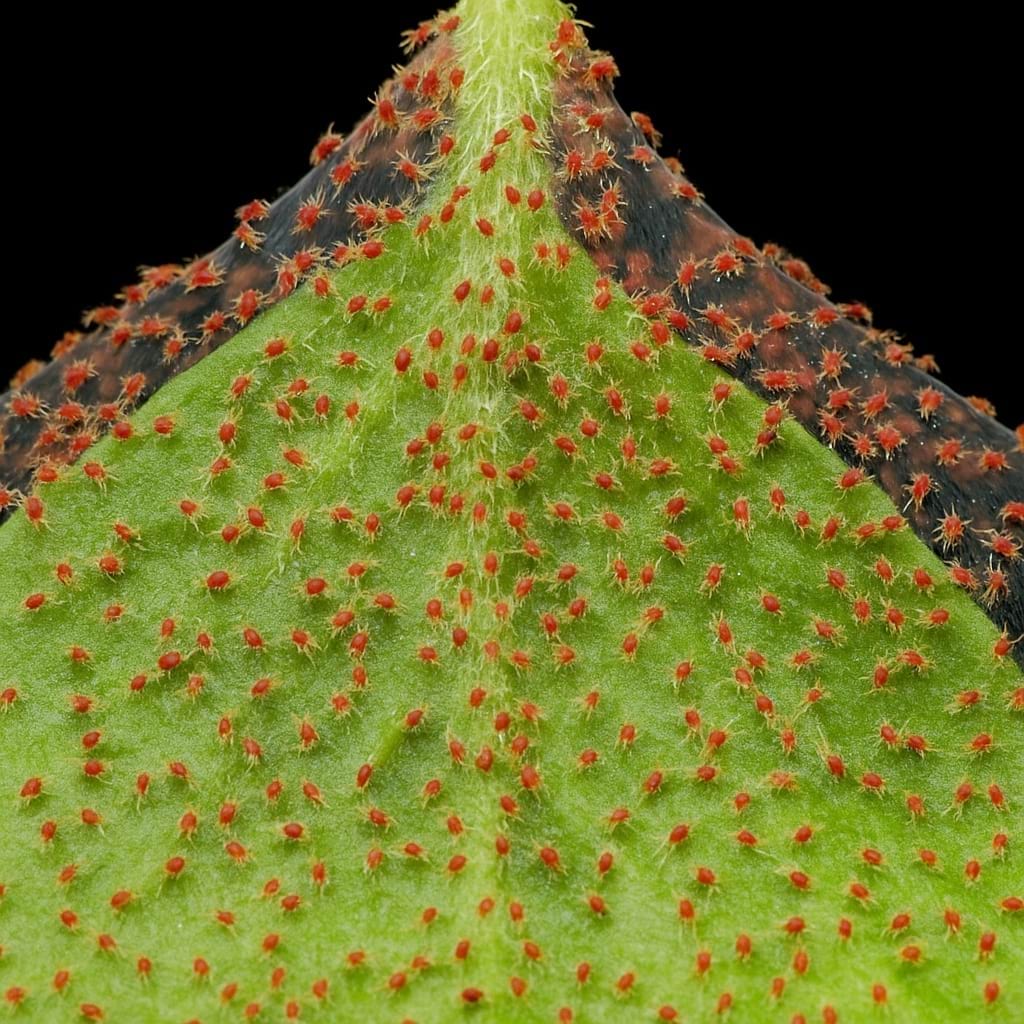
- Spider mites appear in dry, heated air as pale speckling and fine webbing.
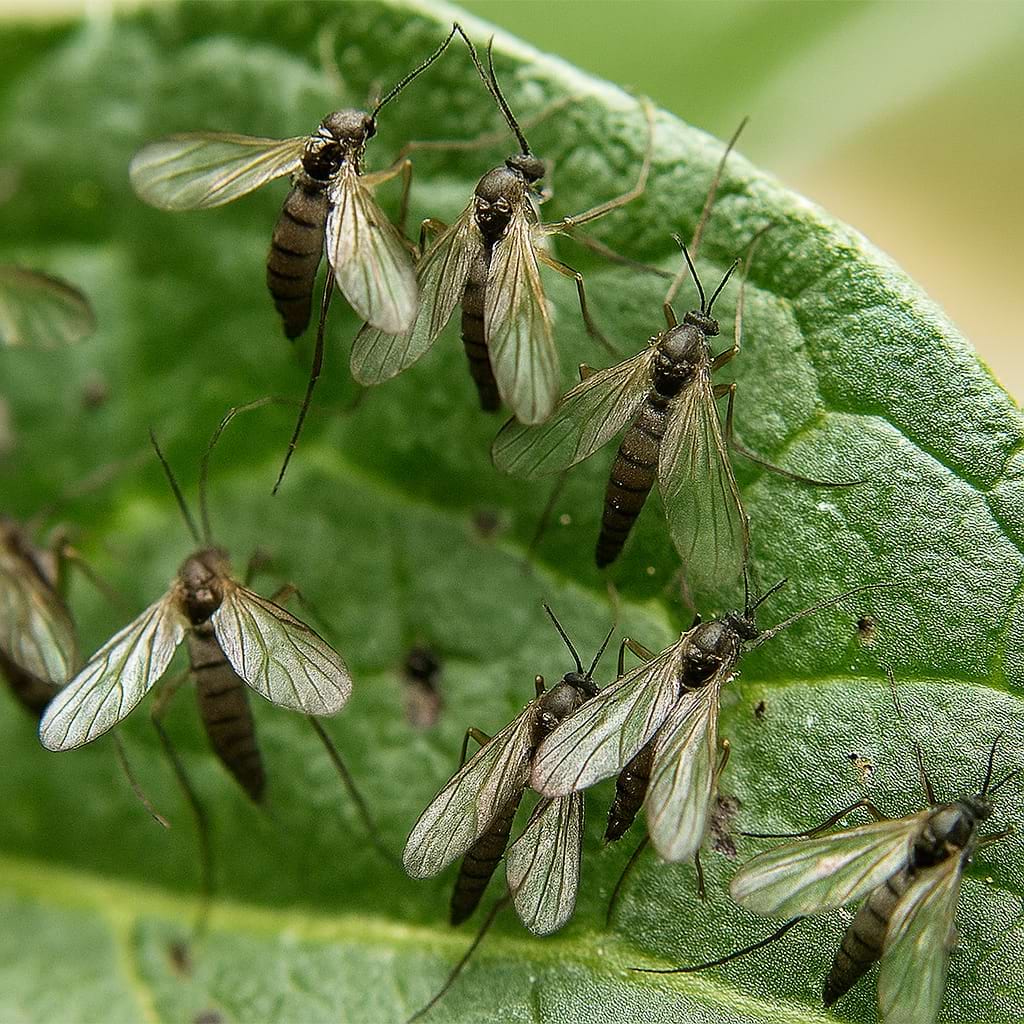
- Fungus gnats breed in mix that stays wet on top.
Treatment
Isolate the plant first. Scrape scale off with a fingernail and dab mealybugs with a cotton swab dipped in rubbing alcohol. A lukewarm shower knocks back mites. Ferns react badly to some sprays, so test insecticidal soap on one frond and wait two days before treating the rest. Yellow sticky traps and a drier surface deal with gnats.
Prevention
The dense crown hides pests well, so check under the fronds and around the rhizomes every month. Good humidity keeps mites away, and letting the top of the mix dry slightly between waterings keeps gnats down.
🩺 Common Davana Blue Star Fern Problems
Brown Tips and Pale Patches
- Brown, crispy edges mean dry air, a pot that dried out, or hard water. Raise the humidity and check your watering rhythm.
- Bleached, papery patches are sunburn from direct sun. Move it back and trim the damaged fronds later.
Yellowing, Drooping and Rot
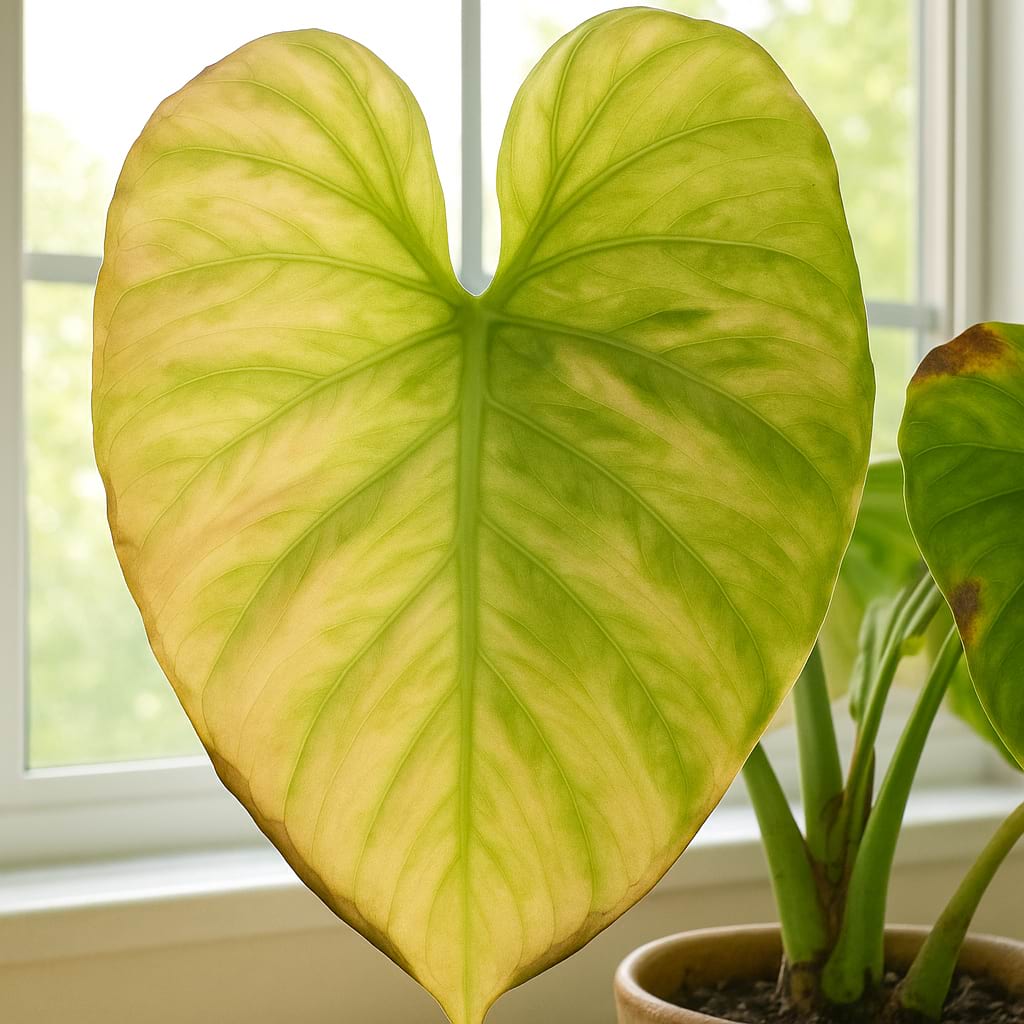
- Yellowing leaves on several fronds at once, in wet mix, mean overwatering or poor drainage.
- Soft, dark rhizomes and a sour smell point to root rot. Cut back to firm tissue and repot into fresh, airy mix.
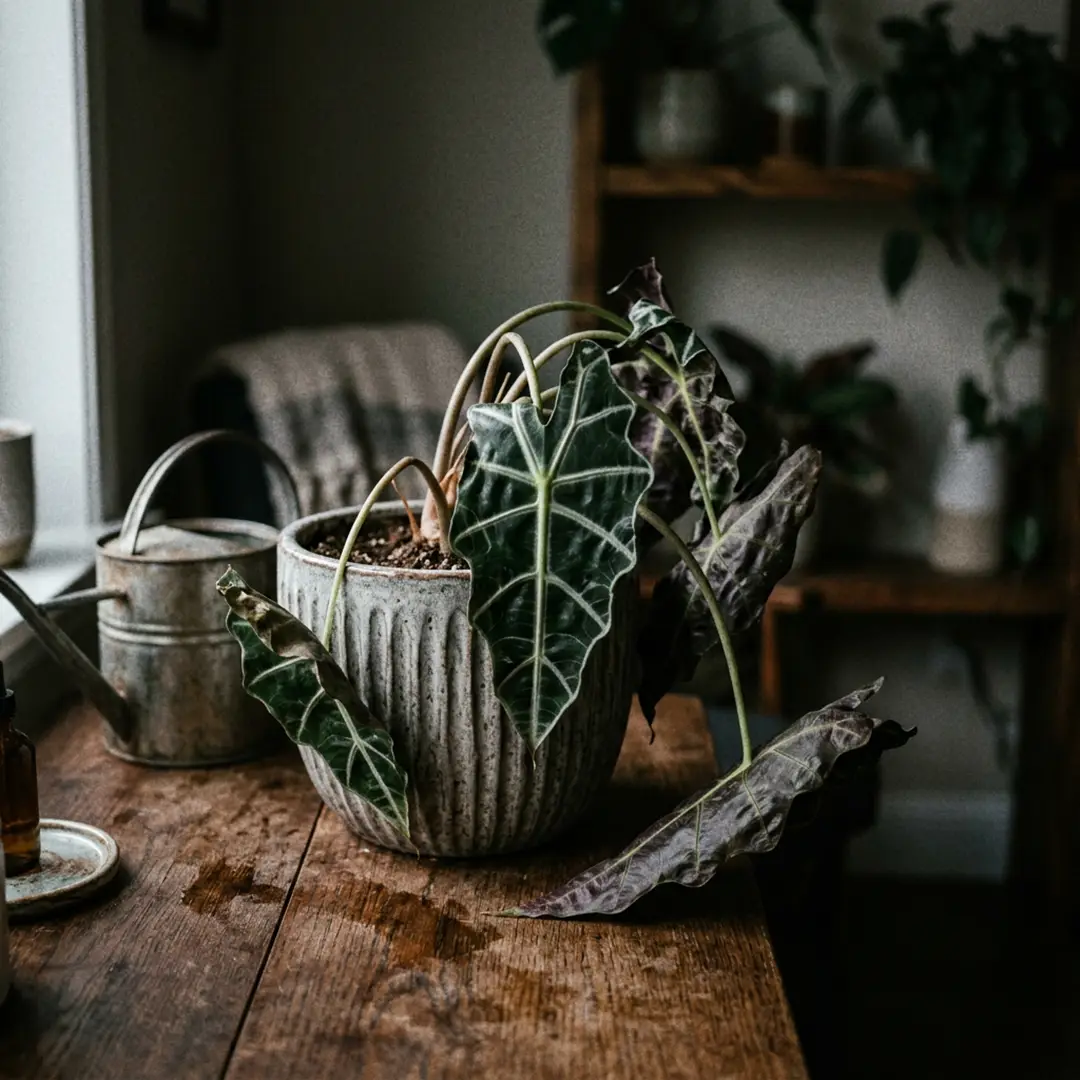
- Wilting and drooping in dry soil is thirst. In wet soil, the roots are damaged.
Pale or Slow Growth
- Pale, faded leaves and an open, floppy mound mean too little light.
- Stunted growth in a plant that gets enough light usually means old, compacted mix or a pot packed solid with rhizomes.
Yellow-Green New Fronds Are Normal
New Davana fronds unroll yellow-green and darken as they mature, which both the patent and White Flower Farm describe. A mix of light new fronds and darker old ones is the plant working as it should, not a nutrient problem.

🖼️ Davana Blue Star Fern Display and Styling Ideas
Shelves, Desks and Bathrooms
Davana's size is its selling point. It fits a bookshelf near an east window, a bright bathroom sill or a desk beside a north window. Set it at or a little above eye level, so you see the arching fronds and wavy edges from the side.
Grouped With Other Ferns
The ruffled, blue-tinged fronds look best beside solid, glossy leaves. A Bird's Nest Fern or a small Heart Fern gives that contrast. A Squirrel's Foot Fern repeats the furry-rhizome idea at a finer scale, and a plain Blue Star Fern beside it shows off how different the edges are. Our popular indoor ferns roundup has more partners.
Terrariums and Glass Cabinets
Young plants fit a large open terrarium or a glass cabinet with some airflow. A fully closed terrarium keeps the rhizomes too wet, so leave the lid off or open it daily.
Where Not to Put It
Skip hot, sunny windowsills, shelves above radiators and dark corners far from a window. In each of those spots it either crisps or loses its compact shape.
🌟 Davana Blue Star Fern Pro Care Tips
Everyday Habits
- Lift the pot every few days. A small pot tells you more by weight than by its surface.
- Water around the edge of the pot, not over the rhizomes.
- Turn the pot a quarter turn each week so the mound grows evenly.
Seasonal Habits
- Move it a little closer to the window from late autumn to early spring.
- Run a humidifier from the day the heating comes on.
- Repot or divide in spring, never in the middle of winter.
Buying a Davana Fern
- Look for a dense crown, firm rhizomes with tan fur and no black patches.
- Check under the fronds and along the stalks for scale bumps.
- A label reading Davana, Living Lace Davana or 'RAADPHLE01' confirms the cultivar. A vague "ruffled blue star" tag could be 'Mandaianum'.
❓ Frequently Asked Questions
Is the Davana Blue Star Fern safe for cats and dogs?
It is widely treated as pet safe, and no toxic effects are reported for Phlebodium aureum. The ASPCA does not appear to list the species by name, and its "rabbit's foot fern" entry covers Davallia, a different plant. If a pet eats a lot of any plant and seems unwell, call your vet.
What is the difference between Davana and a regular Blue Star Fern?
Davana is a compact sport of 'Blue Star' with finely scalloped, strongly wavy frond edges, shallower lobes and a more arching habit. It stays around 10-16 inches tall, while the plain blue star often reaches 1-2 feet indoors. Care is almost identical.
Is Living Lace Davana the same plant?
Yes. Living Lace Davana is the name Proven Winners uses in the US for Phlebodium aureum 'RAADPHLE01', the same cultivar sold as Davana in Europe.
How big does a Davana fern get?
Expect about 10-16 inches tall and around 14-15 inches wide. It slowly creeps wider as the rhizomes spread, but it stays a shelf-sized plant.
Why are the new fronds a different color from the old ones?
New fronds unroll yellow-green and mature to a darker green with a blue-grey waxy bloom. Having both colors on one plant is normal.
What is the difference between Davana and Mandaianum?
Both are ruffled blue star ferns, but 'Mandaianum' grows larger, to around 24 inches, with deeply lobed, fringed fronds. Davana is compact, with shallower lobes and wavy, scalloped edges.
Should I bury the furry rhizomes?
No. The rhizomes should rest on top of the mix, or only just touch it. Buried rhizomes stay wet and rot.
Can a Davana fern grow in low light?
It survives medium light, and Proven Winners rates it for low to medium. Growth is fuller and more compact in bright indirect light, and in a dark corner the fronds turn pale and the mound opens up.
Why are the tips of my Davana fern turning brown?
Dry air is the usual cause, followed by a pot that dried out and hard tap water. Raise the humidity to around 50%, water when the top half inch to inch feels dry, and try rain or filtered water.
Can a Davana fern live in a bathroom?
Yes, if the bathroom has a real window or a grow light. The steam from showers keeps the humidity up for hours, which suits it well. A windowless bathroom is too dark.
Is the Davana Blue Star Fern good for beginners?
Yes. It is one of the easier ferns, since the waxy fronds cope with average room air and its small size makes it easy to place. The two rules are steady moisture and rhizomes kept on the surface.
Can I grow Davana outdoors?
Year-round only in frost-free climates, roughly USDA zones 10-13, in shade. Elsewhere it makes a good summer patio plant in shade. Bring it in before nights drop to about 55°F (13°C).
ℹ️ Davana Blue Star Fern Info
Care and Maintenance
🪴 Soil Type and pH: Airy, humus-rich, slightly acidic to neutral mix with bark
💧 Humidity and Misting: Best at 50% or more, though the waxy fronds cope with average room air.
✂️ Pruning: Cut fully yellow or brown fronds off at the base and leave healthy rhizomes alone.
🧼 Cleaning: Rinse dust out of the ruffles under a lukewarm shower; do not wipe or use leaf shine, which strips the waxy bloom.
🌱 Repotting: Every 2 years or so in spring, into a pot only 1-2 inches wider, keeping the rhizomes on the surface.
🔄 Repotting Frequency: Every 2 years
❄️ Seasonal Changes in Care: Water and feed steadily in spring and summer. In winter, water a little less, stop feeding, raise humidity and keep it off cold glass.
Growing Characteristics
💥 Growth Speed: Moderate
🔄 Life Cycle: Evergreen perennial fern
💥 Bloom Time: Does not flower (reproduces by spores)
🌡️ Hardiness Zones: 10-13 (RHS hardiness H2, no frost)
🗺️ Native Area: Garden origin: a sport found in 2015 in a crop of Phlebodium aureum 'Blue Star' at a fern nursery in the Netherlands. The species is native to Florida, the Caribbean and Central and South America.
🚘 Hibernation: No (growth slows in winter)
Propagation and Health
📍 Suitable Locations: Shelves and desks near an east window, bright bathrooms, beside a north window, large open terrariums while young
🪴 Propagation Methods: Divide a crowded plant in spring so each piece has roots, rhizome and a few fronds.
🐛 Common Pests: Scale Insects, Mealybugs, Spider Mites, Fungus Gnats
🦠 Possible Diseases: Root and rhizome rot in wet, dense mix
Plant Details
🌿 Plant Type: Epiphytic fern with creeping rhizomes
🍃 Foliage Type: Evergreen, lobed fronds with finely scalloped, strongly wavy edges
🎨 Color of Leaves: Yellow-green when new, maturing to green with a thin blue-grey waxy bloom
🌸 Flower Color: N/A
🌼 Blooming: No
🍽️ Edibility: Not edible
📏 Mature Size: 10-16 inches
Additional Info
🌻 General Benefits: Compact size for shelves, unusual ruffled texture, widely treated as pet safe
💊 Medical Properties: None known for home use
🧿 Feng Shui: Its soft, rippled fronds suit calm spaces such as bathrooms, bedrooms and reading corners.
⭐ Zodiac Sign Compatibility: Aquarius
🌈 Symbolism or Folklore: Calm, renewal, adaptability
📝 Interesting Facts: Davana was not bred by crossing. It appeared as a spontaneous mutation in a greenhouse crop of 'Blue Star' and is now multiplied by tissue culture. It holds US Plant Patent 32,332 under the cultivar code 'RAADPHLE01'.
Buying and Usage
🛒 What to Look for When Buying: Look for a dense crown, firm rhizomes with tan fur and no black patches, and no scale bumps under the fronds. A label reading Davana, Living Lace Davana or 'RAADPHLE01' confirms the cultivar.
🪴 Other Uses: Mixed fern groupings, large open terrariums, bathroom shelves
Decoration and Styling
🖼️ Display Ideas: Shelf near an east window, bathroom sill, fern grouping
🧵 Styling Tips: Set it at or just above eye level so you see the arching fronds and the wavy edges side on. Matte pots suit the blue-grey bloom.
🪴 See also 🪴
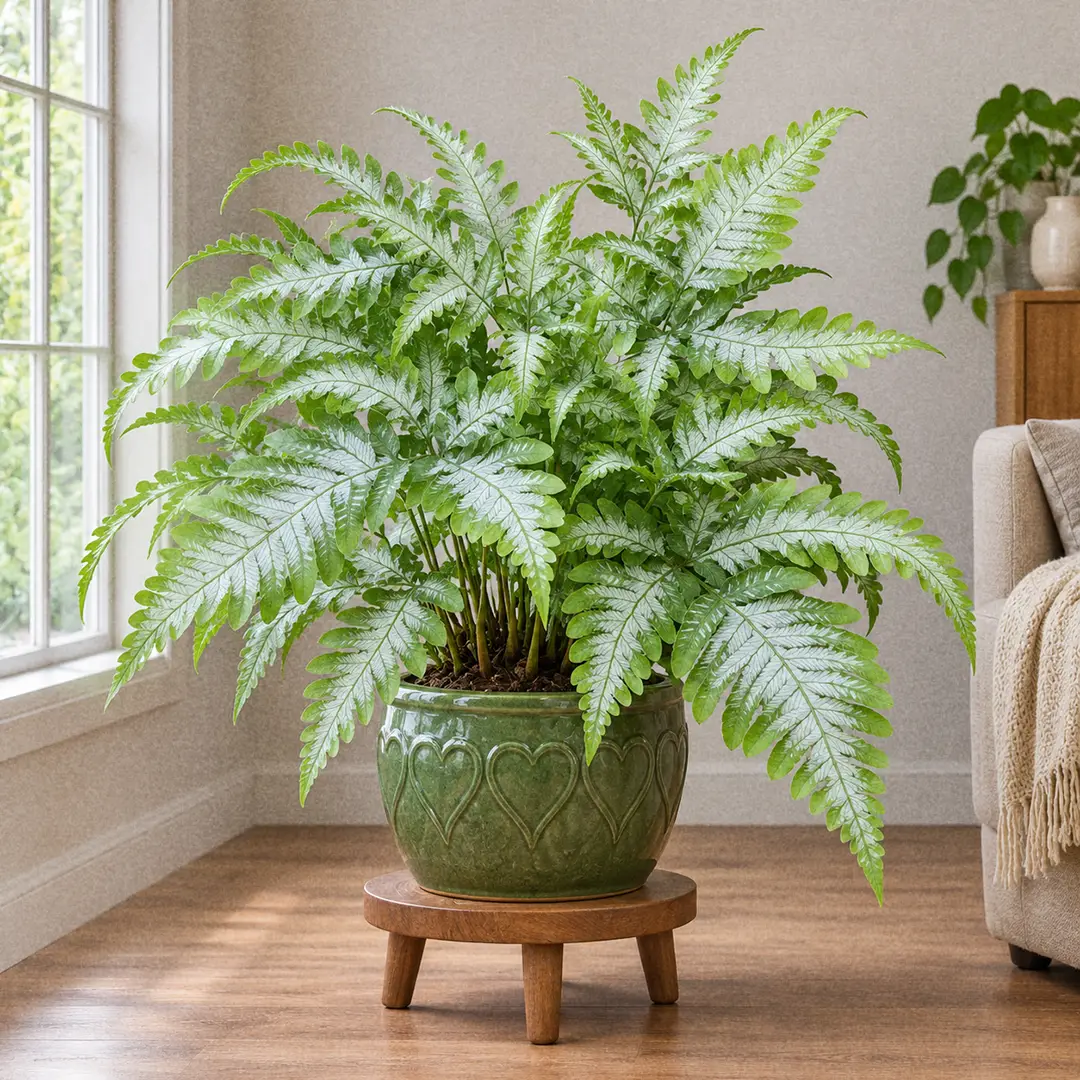
Complete Guide to Silver Brake Fern Care and Growth
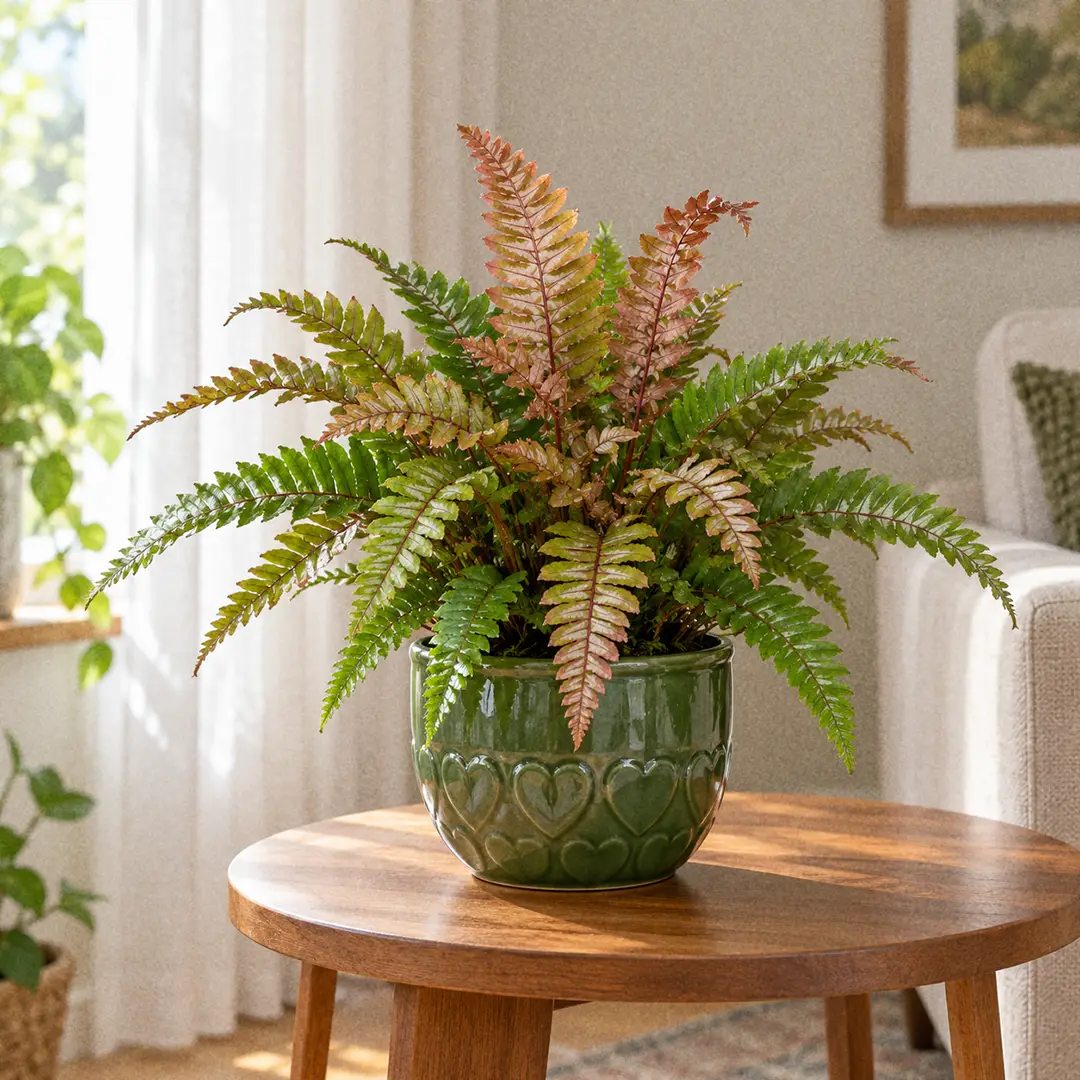
Complete Guide to Tricolor Brake Fern Care and Growth
Complete Guide to Silver Staghorn Fern Care and Growth
Complete Guide to Crown Fern Care and Growth
Complete Guide to Eyelash Fern Care and Growth
Complete Guide to Crissie Bird's Nest Fern Care and Growth
Complete Guide to Osaka Bird's Nest Fern Care and Growth
The 15 Most Popular Indoor Ferns and How to Choose One
Complete Guide to Leslie Bird's Nest Fern Care and Growth
Complete Guide to Superbum Staghorn Fern Care and Growth
Complete Guide to Austral Gem Fern Care and Growth
Complete Guide to Crispy Wave Fern Care and Growth
Complete Guide to Japanese Bird's Nest Fern Care and Growth
Complete Guide to Button Fern Care and Growth
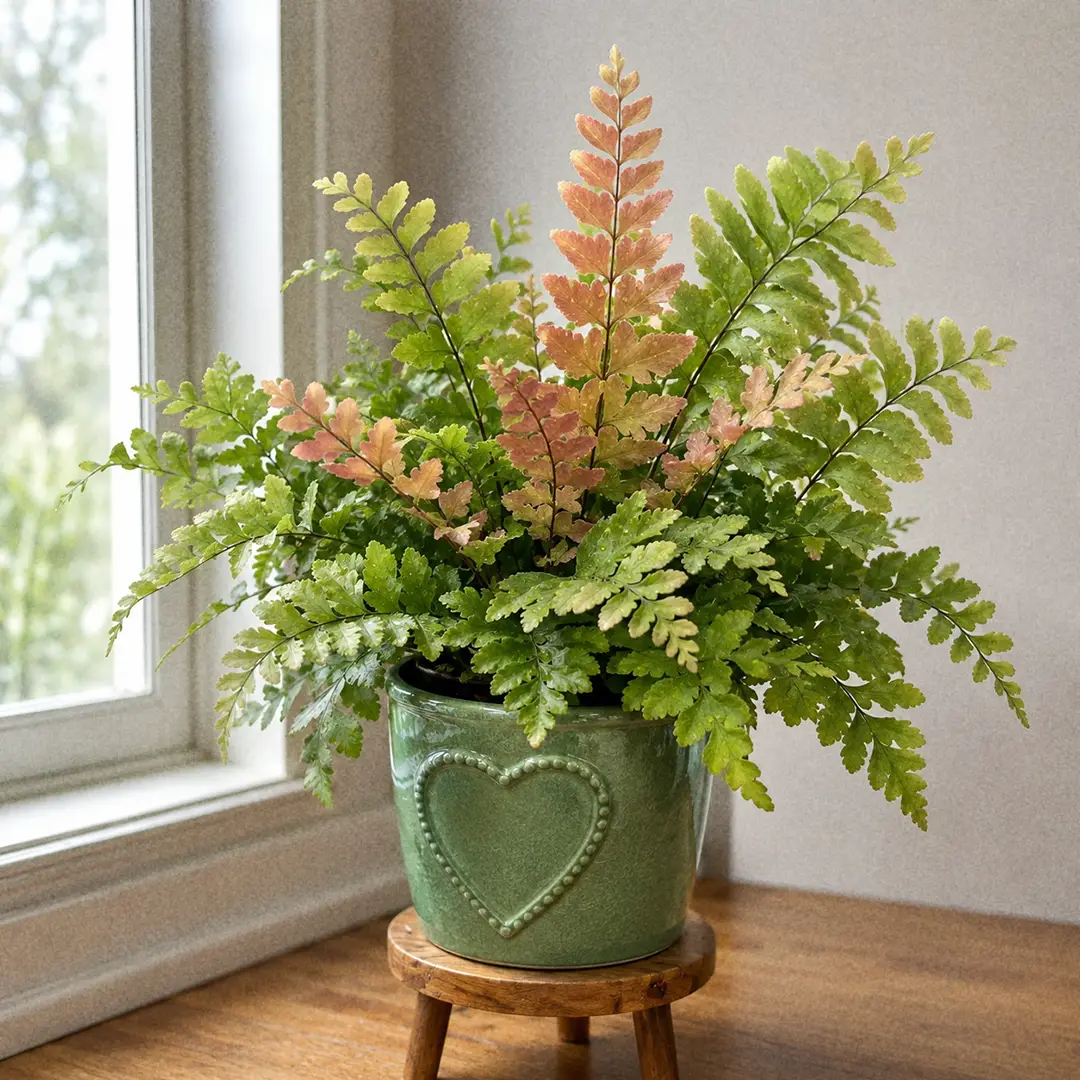
Complete Guide to Mahogany Fern Care and Growth
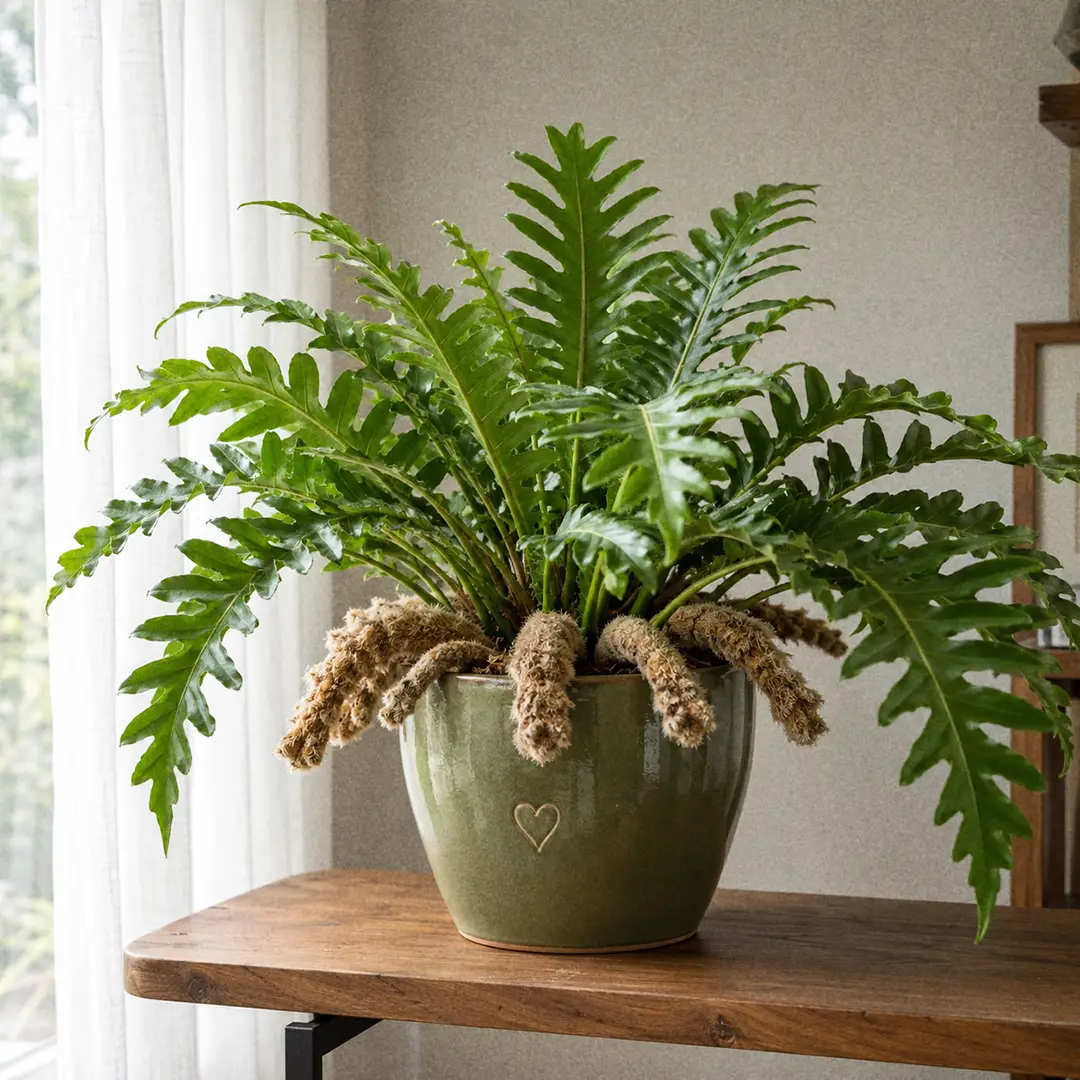
Complete Guide to Bear's Paw Fern Care and Growth
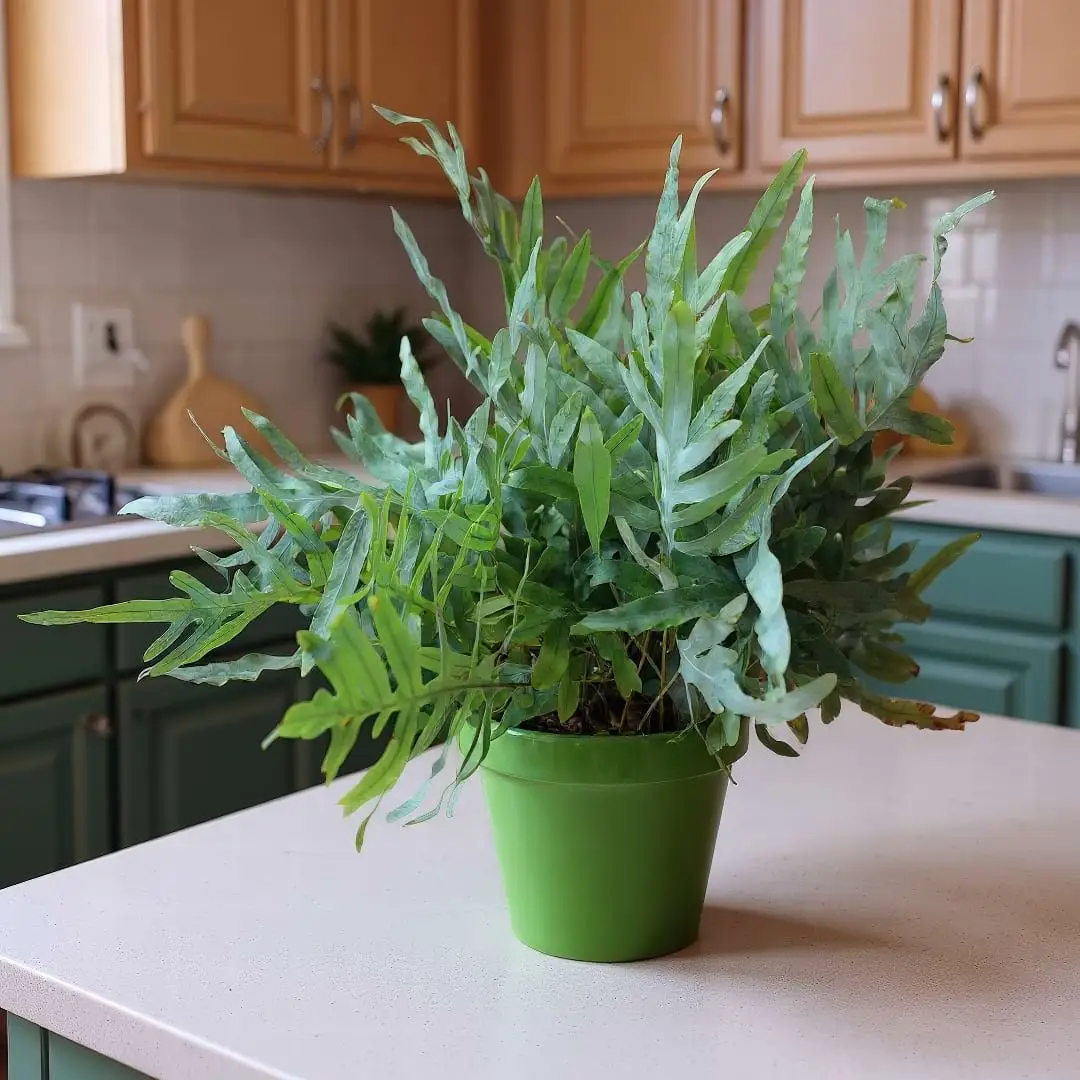
Complete Guide to Blue Star Fern Care and Growth
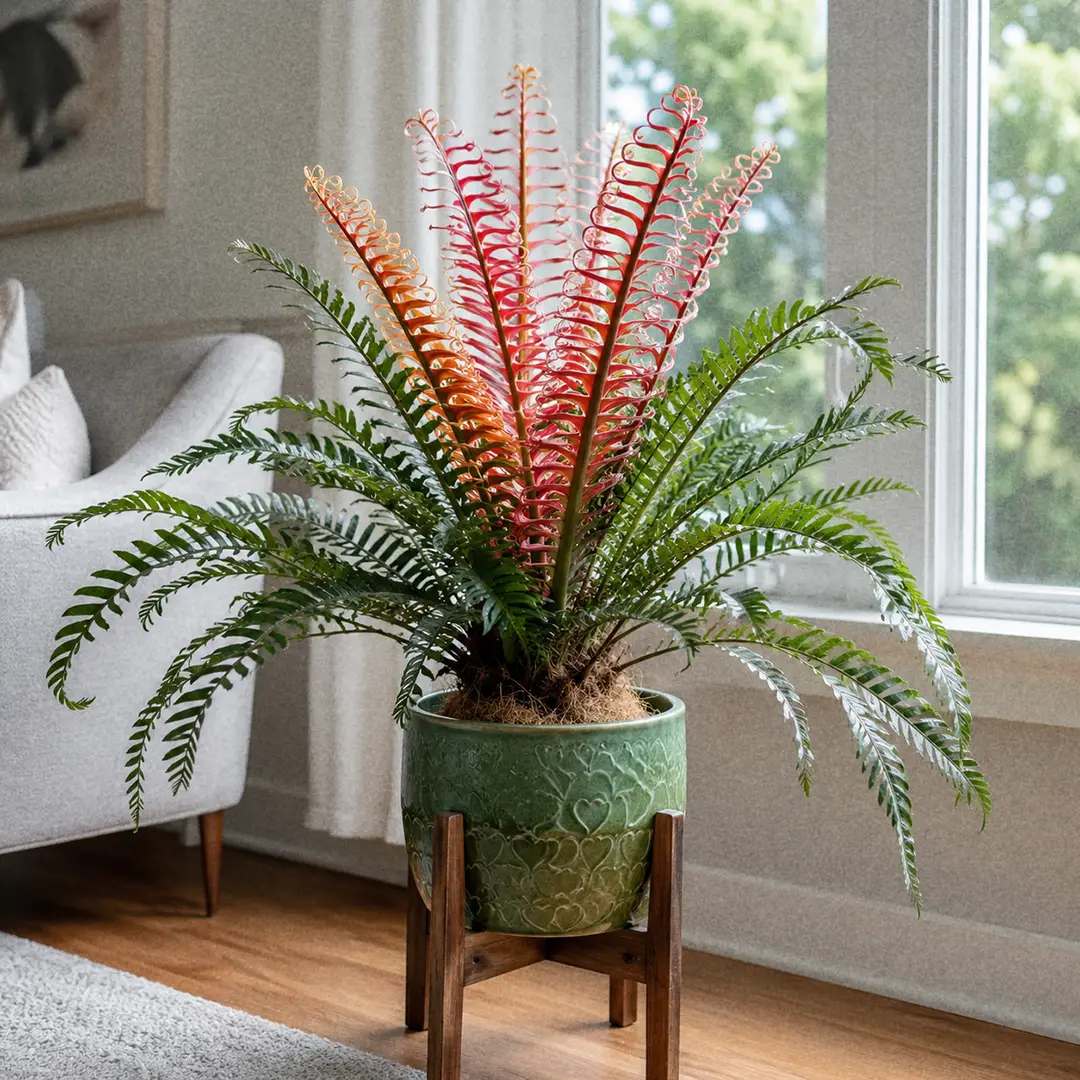
Complete Guide to Volcano Fern Care and Growth
Complete Guide to White Rabbit's Foot Fern Care and Growth

Houseplant101 Forum
Questions & Comments
Ask a question, share your plant experience, or help other plant owners.
Comments are temporarily unavailable.
Open the Houseplant101 ForumNo comments yet
Be the first to ask a question or share your experience about this page.
Log in or create an account
Comments use your Houseplant101 Forum account, but you can stay on this page.
Create a new account