
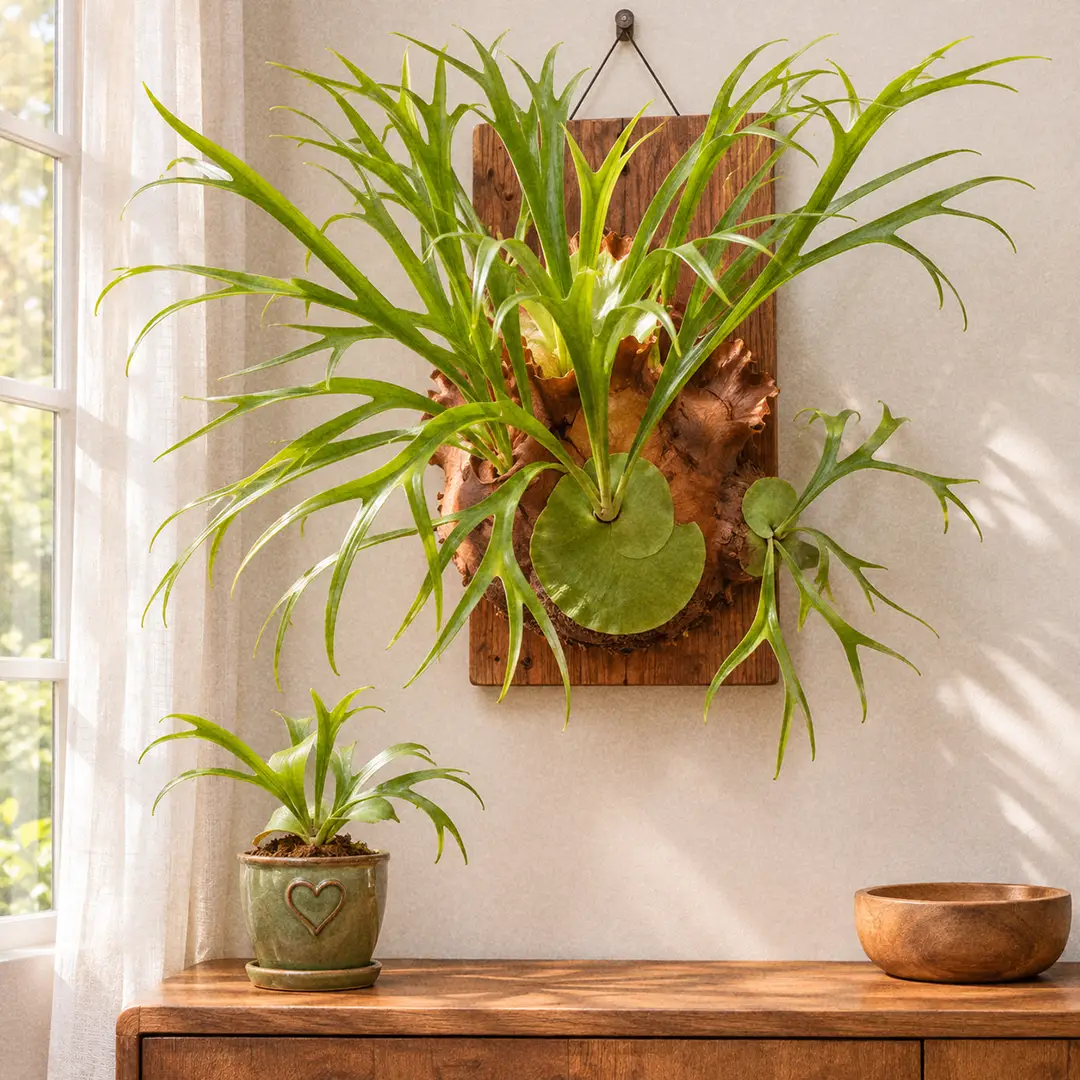
Alcicorne Staghorn Fern
Platycerium alcicorne
African Staghorn Fern, Madagascar Staghorn Fern, Platycerium vassei


The Alcicorne Staghorn Fern (Platycerium alcicorne) is the African and Madagascan staghorn, with upright green antler fronds and two distinct forms. Learn how to tell it from the common staghorn, then mount, water, and divide it indoors.
📝 Alcicorne Staghorn Fern Care Notes
🌿 Care Instructions
⚠️ Common Pests
📊 Growth Information
🪴 In This Guide 🪴

☀️ Alcicorne Staghorn Fern Light Requirements (Bright, Filtered)
The Sweet Spot
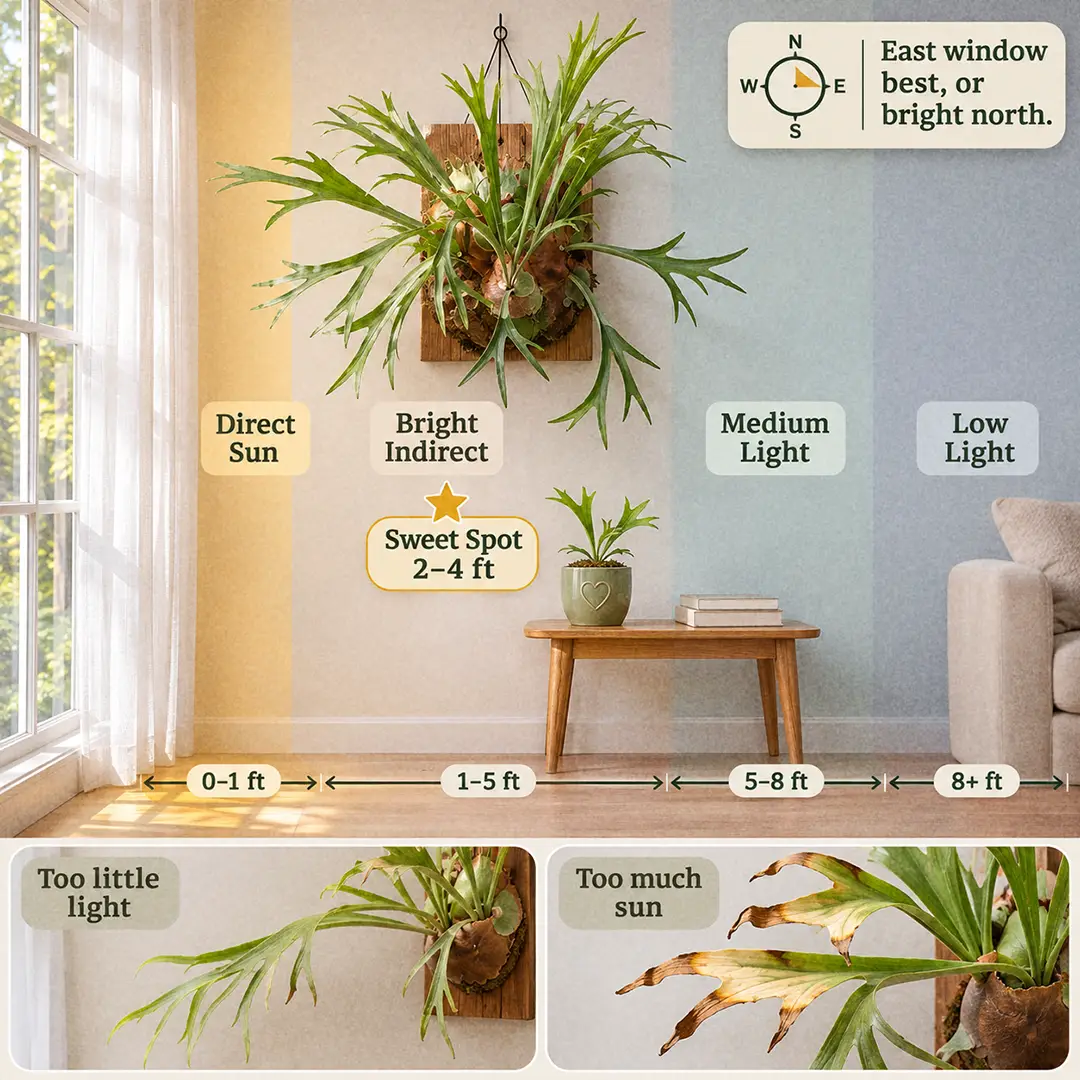
In the wild this staghorn grows on tree trunks and branches in forest and open woodland, where it gets plenty of light filtered through leaves. Indoors, that means bright, filtered light most of the day. An east window with soft morning sun is ideal. A bright north window works, and so does a wall 3-5 feet from a south or west window, out of the hot afternoon beam.
A rough test: if you can read a book comfortably at the spot all day without a lamp, it is bright enough. Our Indoor Lighting Guide shows how to judge light by eye.
Too Little Light
The upright posture is the giveaway. Healthy fertile fronds stand up and bend over only at the tips. In a dim room they grow long, thin, and floppy, and they lean toward the window. Pups stop forming and the plant may skip a season of new shields. In a dark apartment, a grow light 12-18 inches above the fronds for 12 hours a day keeps it compact.
Too Much Light
Hot afternoon sun through glass bleaches the fronds to a pale yellow and leaves crisp brown patches, which is sunburn. An hour or two of gentle morning sun is fine. If you want to give it more, move it closer to the window over two or three weeks rather than all at once.
💧 Alcicorne Staghorn Fern Watering Guide (Soak, Drain, Wait)
Watering Frequency
Water when the moss behind the shield feels dry to the touch and the mount feels noticeably lighter when you lift it. In spring and summer, while it is growing, that is usually every 5-7 days on a board, less often in a basket or pot. Grower notes from the US say the African form handles excess water less well than the Madagascar form, so if you are not sure which you have, err on the dry side.
Our general watering guide covers the basics for mounted plants.
The Winter Rest
This is where alcicorne differs from the common staghorn. Growers report that its shield fronds die back in late summer and autumn and the plant sits semi-dormant through winter. During that rest, stretch the gap to every 10-14 days and stop feeding. A dormant plant on a wet mount in a cool room is the classic way to lose one.
How to Water a Mounted Alcicorne
Lay the mount in a sink or tub with a few inches of lukewarm water for 10-15 minutes, until the moss behind the shield is soaked through. Stand it upright, let it drip for a few minutes, then hang it back. If the plant is too big to move, pour water slowly into the top of the shield and let it run down behind. Water in the morning so the base dries by evening.
Signs of Trouble
Underwatering shows as fronds that go dull and limp and get crisp brown tips. A good soak perks them up within a day. Overwatering is the bigger danger: soft, dark patches at the base of the shield, a sour smell from the moss, and fertile fronds yellowing from the bottom point to root rot. Let the mount dry fully and soak less often.
🪴 Best Growing Medium for Alcicorne Staghorn Fern (No Soil)
What the Roots Need
As an epiphyte, alcicorne keeps its roots behind the shield fronds, in a small pocket of trapped leaves and bark on a tree. Those roots want water, then air. Ordinary potting soil stays wet and airless and will rot them. Our Soil Guide explains why air pockets matter so much.
Best Mounting Medium
Use a pad of soaked long-fiber sphagnum moss about 2 inches thick, with a handful of chunky orchid bark mixed in. The moss holds a few days of water and the bark keeps it from packing down. As the plant grows, its new shields wrap over the pad and slowly replace it with their own layered mat.
Pots and Baskets
It grows well in a wire or wooden basket lined with moss, or in a shallow pot of pure coarse orchid bark with large drainage holes. Either way, expect the shields to climb over the rim within a year or two. That is the plant asking for a board.
🍼 Fertilizing Alcicorne Staghorn Fern
When and How Often
Feed once a month from spring through late summer, while new shields and fertile fronds are forming. Stop in autumn as the shields die back, and skip the whole winter rest. Always feed right after a plain soak, never onto dry moss, because dry roots scorch easily.
What to Use
A balanced liquid fertilizer such as 10-10-10 or 20-20-20 at half strength is plenty. Mix it into a second short soak, or pour it slowly into the top of the shield. Our Fertilizing Guide explains the numbers. A small scrap of banana peel tucked behind the shield is a popular home method, covered in our staghorn banana peel guide. Keep it small, since rotting peel holds water against the base.
Over-Fertilizing Signs
Brown, crispy tips on brand-new fronds, a white crust on the moss, or a blackened edge on a young shield all point to too much food. Rinse the mount with two or three plain soaks and skip feeding for two months.
🌡️ Alcicorne Staghorn Fern Temperature Range
Ideal Range
Normal warm room temperatures of 65-85°F (18-29°C) suit it during the growing season. It takes summer heat well as long as you soak it a little more often. During the winter rest, a slightly cooler room around 60-65°F is fine, provided the mount is kept on the dry side.
Cold Limits
Alcicorne is a bit more cold-sensitive than the common staghorn. University of Florida extension material rates it as semi-hardy only to about 40°F, and hobbyist growers note it will not take much frost. Indoors, keep it above 55°F (13°C). Cold and wet together cause most losses, so be extra careful near a drafty winter window.
Drafts and Heat Sources
Keep it away from heating vents and radiators, which dry a mount in a day and brown the frond tips. Cold drafts from a front door or an air conditioner blowing straight onto the fronds are just as unwelcome.
💦 Alcicorne Staghorn Fern Humidity Requirements
Ideal Humidity
Aim for 50% or higher. It copes with average room air of 40-50% as long as you soak it regularly, but new fronds unfurl more cleanly with a bit more moisture in the air. A bright bathroom with a window often suits it well.
Easy Humidity Boosters
Grouping it with other plants helps a little. A humidifier in the room helps more during dry winter heating. Daily misting does little for humidity and can leave water sitting at the shield base, so skip it.
Why Airflow Matters
Moist air is good, still air is not. A gentle fan on low or a cracked window keeps the moss drying out between soaks and keeps rot away from the shield. For this plant, airflow matters as much as humidity.
🌸 Alcicorne Staghorn Fern Spores (Does It Flower?)
No Flowers, Only Spores
Like every fern, alcicorne never flowers. It reproduces with spores, dust-fine specks that form on the undersides of mature fertile fronds. Young plants make none, and an indoor plant may take a few years of good light before it does.
What the Spore Patch Looks Like
Look under the tips of a mature fertile frond. A felt-like patch appears there, pale at first and turning brown as the spores ripen. It is easy to mistake for rust or disease, but it is completely normal. Leave it alone.
Spores or Scale?
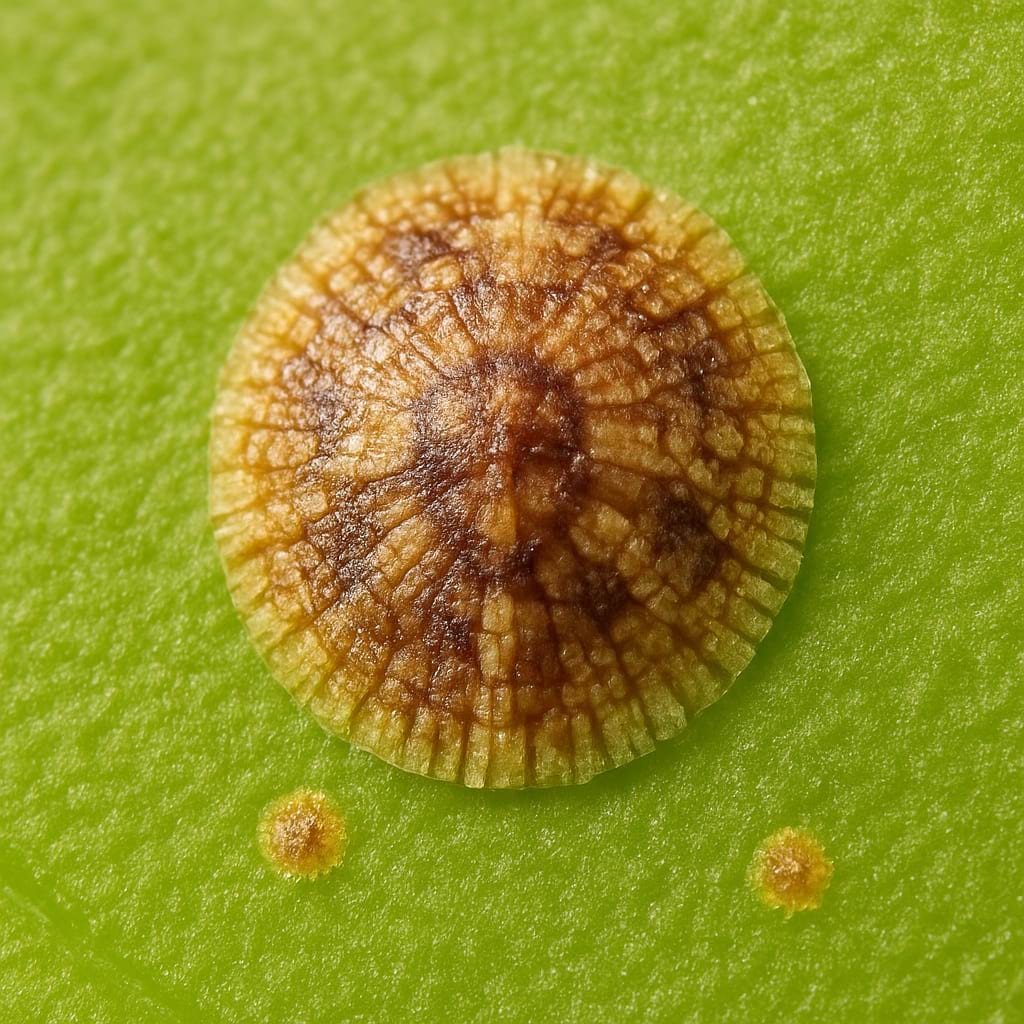
Spores rub off as brown dust on your finger. Scale insects are separate small bumps that stay put, and they often sit along the middle of the frond rather than at the tips. If you are unsure, zoom in with your phone camera. Spores make a soft, even layer. Scale makes scattered dots.
🏷️ Alcicorne Staghorn Fern Types and Identification
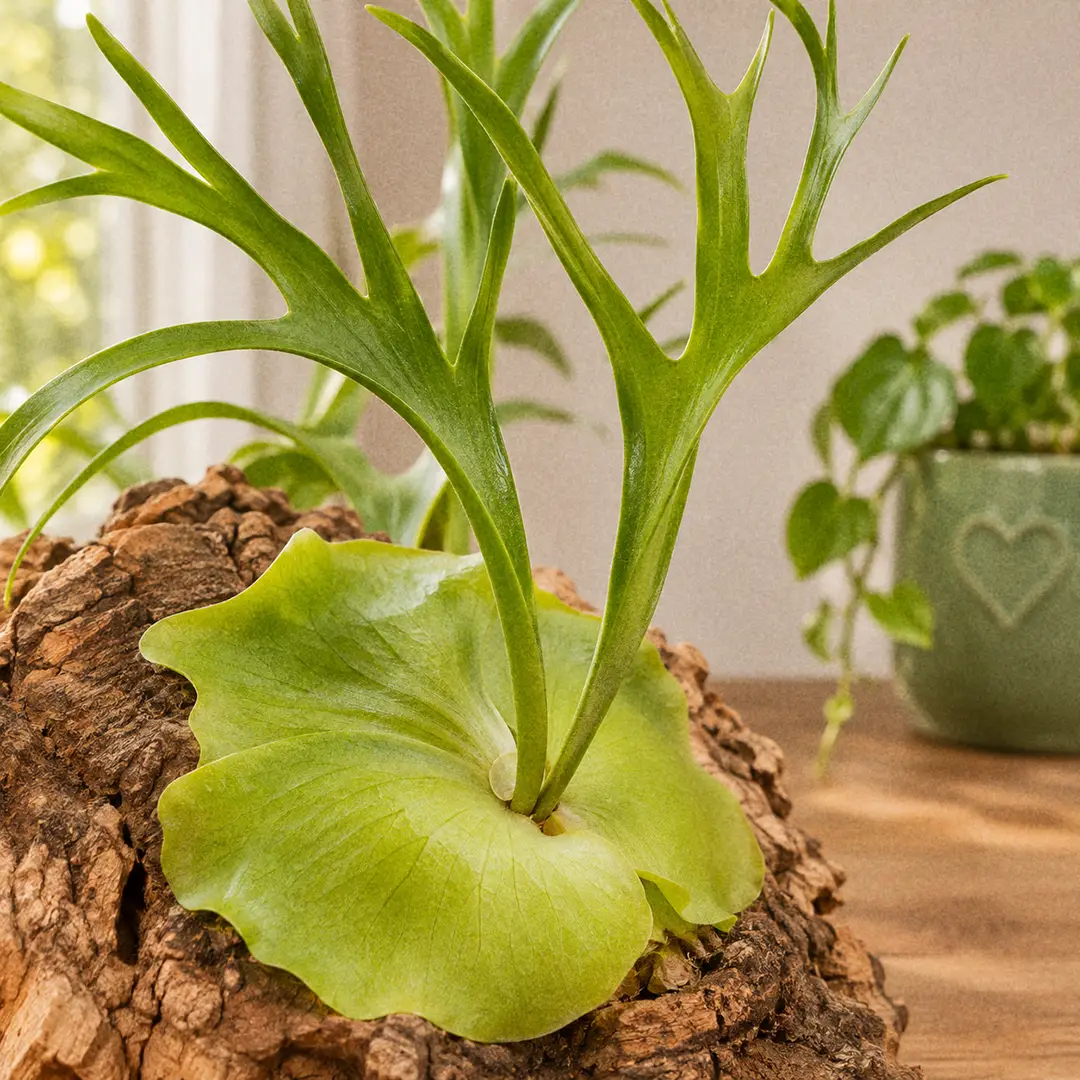
There are no named cultivars to choose between. What matters is which of the two wild forms you have, and whether your plant is alcicorne at all.
African Form (Mozambique and Zimbabwe)
This is the form most often sold in the US, frequently under the old name "Vassei." Its fronds are yellow-green, waxy, and almost hairless. The fertile fronds are fairly wide and split into long, slender, pointed fingers, and they stand upright before bending down at the tips. Dead shields turn a rich brown. It pups freely, but it is the fussier of the two about wet roots.
Madagascar Form
The Madagascar form is a darker green with many fine hairs on the fertile fronds, and some plants have pale, almost white undersides. In good light its shields grow deep ridges and folds in their upper half, and when they die they go nearly black instead of brown. Some plants have wide fertile fronds and others narrow ones. It makes fewer pups than the African form. Specialist growers now treat both as one species, so you may see either sold simply as P. alcicorne.
Alcicorne vs. Common Staghorn
The mix-up has a long history. In the 1800s, Australian botanists applied the name alcicorne to their local staghorn, which is now called Platycerium bifurcatum. That old usage is officially marked as a misapplication, but it lingers in older books and on some nursery labels. Both species can hold their antlers upright, so the shield is the better clue. The common Staghorn Fern usually has a shield whose upper edge splits into pointed lobes that jut forward, and its antlers tend to arch or droop more as the plant matures. Alcicorne's shield shows the waxy yellow-green or ridged dark green described above. If your plant matches neither form, it is probably a common staghorn with a fancy label.
Other African Staghorns
The Silver Staghorn Fern also grows upright, but it is Australian, covered in white fuzz, and wants much more sun. Africa's other well-known staghorn is the Elephant Ear Staghorn (Platycerium elephantotis), with huge cabbage-like shields and broad, unforked fronds that look nothing like antlers. Our staghorn fern varieties guide compares the whole genus.
🪴 Mounting Alcicorne Staghorn Fern
When to Mount or Remount
Mount a potted plant in spring, as it comes out of its winter rest and starts making new shields. After that, remount only when the clump of pups spills well past the edges of the board, usually every 3-4 years. Never pry an established shield off its board. Screw the old board onto a bigger one instead.
Choosing a Mount
Rot-resistant cedar, a cork bark slab, or a section of tree fern all work. Pick a board about twice the width of the current plant so the pups have room. Avoid pressure-treated timber, and drill a hanging hole before you start.
Step-by-Step Mounting
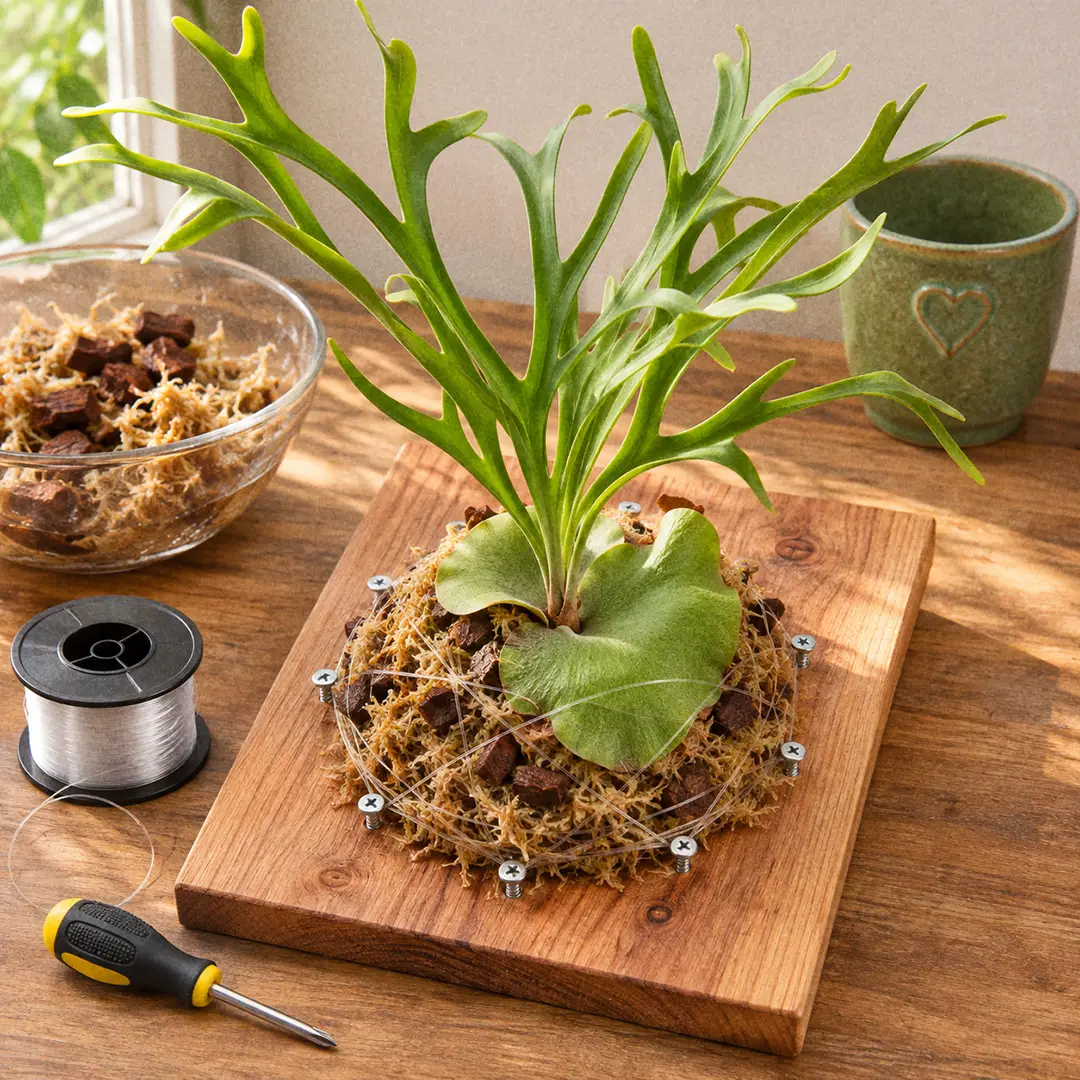
- Fix 4-6 small screws or nails in a circle on the board, slightly wider than the root ball.
- Lay down a 2-inch pad of soaked sphagnum mixed with bark.
- Shake most of the old mix off the roots and set the plant on the pad, shield against the board, fertile fronds pointing up.
- Wrap fishing line or coated wire across the base, hooking it around the screws. Keep the line on older shield tissue, not across the green growing edge.
- Soak, drain, and keep it out of direct sun for two weeks while it settles.
Within a season, a new shield grows over the line and grips the board. Our staghorn mounting guide shows more mount styles.
✂️ Pruning Alcicorne Staghorn Fern
Leave the Shields Alone
Alcicorne shields die back on a yearly rhythm, so every autumn you will see a fresh layer turn brown or nearly black. That is normal. The dead shields protect the roots, hold water, and become the base for the next layer. Never cut or peel them, however untidy they look.
Trimming Fertile Fronds
Remove a fertile frond only when it is completely brown and dry. Cut it at the base with clean, sharp scissors. A frond with brown tips but green elsewhere is still feeding the plant, so leave it on.
Cleaning the Fronds
Rinse dust off with a gentle lukewarm shower every month or two. Avoid leaf shine and do not wipe the fronds, especially on the hairy Madagascar form, where the hairs rub off and leave darker patches. Handle the plant by its board, not its fronds.
🌱 How to Propagate Alcicorne Staghorn Fern
Best Method: Separating Pups
Alcicorne spreads by pups, small new plants that appear around the base and sometimes behind the board. The African form makes them freely, while the Madagascar form is slower. Each pup grows its own shield and fertile fronds, so a separated pup is a complete plant. This is far faster than spores.
Step-by-Step Pup Division
- Wait for a pup with its own small shield and two or three fertile fronds, ideally in late spring when the plant is growing strongly.
- Soak the mount first so the moss is soft.
- Slide a clean, sharp knife under the pup's shield and cut it free with a piece of root and moss attached.
- Mount it on a small board over a moss pad, as in the mounting steps above.
- Keep it in bright light without direct sun, and water slightly more often than the parent until it grips the board.
Our staghorn propagation guide has more photos of the process.
Growing From Spores
Spores work but take patience. Collect ripe brown spore dust from a frond on white paper, sprinkle it thinly over sterilized, moist sphagnum or coir in a closed clear container, and keep it warm and bright. A green film forms first, and tiny fronds follow months later. Our propagation hub covers the general method.
Tips for Success
Do not divide during the winter rest, when a cut pup has no growth to fall back on. Leave a few pups on the parent if you like the full, multi-headed look, and never split off a pup that has no shield yet.
🐛 Alcicorne Staghorn Fern Pests and Treatment
Common Pests
Alcicorne is not a pest magnet, but a few insects do turn up:
- Scale insects: small brown bumps along the fronds and at the frond bases that do not rub off. The most common staghorn pest.
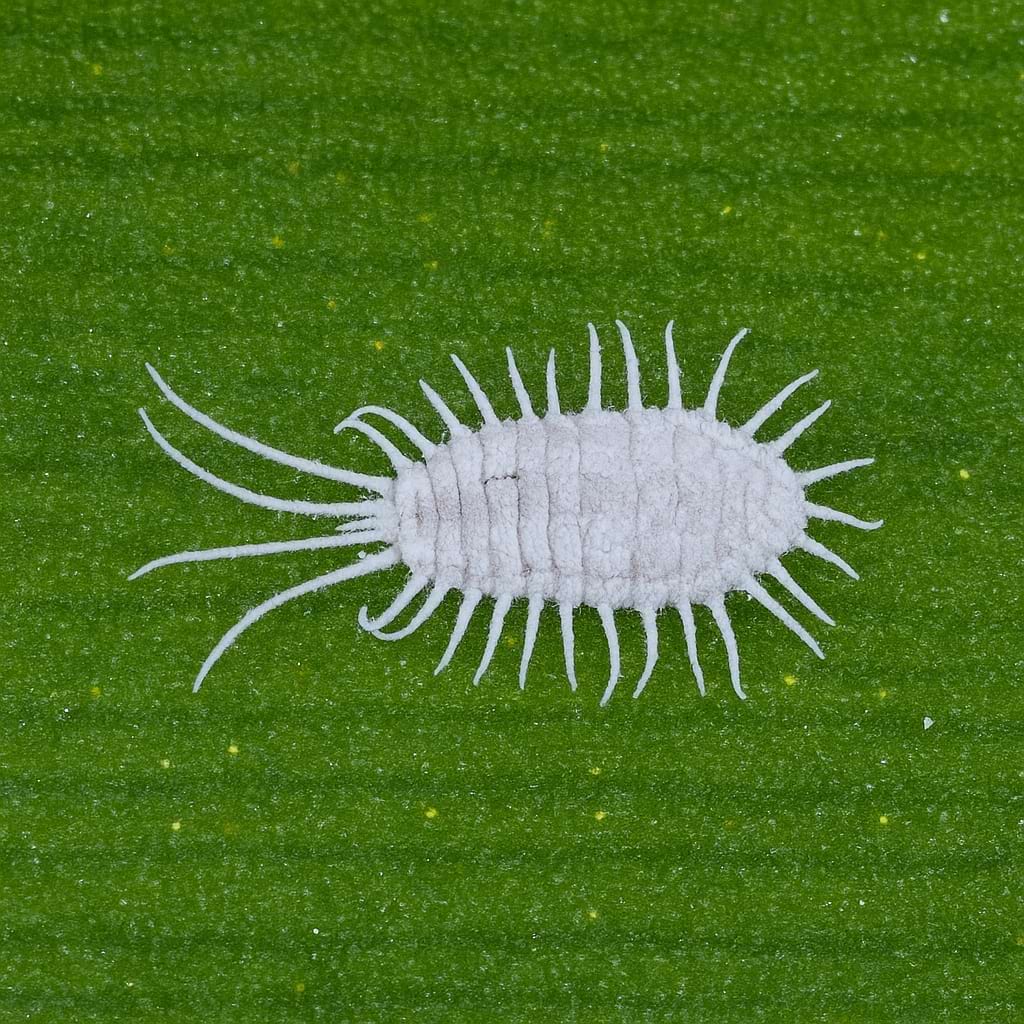
- Mealybugs: white cottony clusters where the fronds meet the shield or between pups.
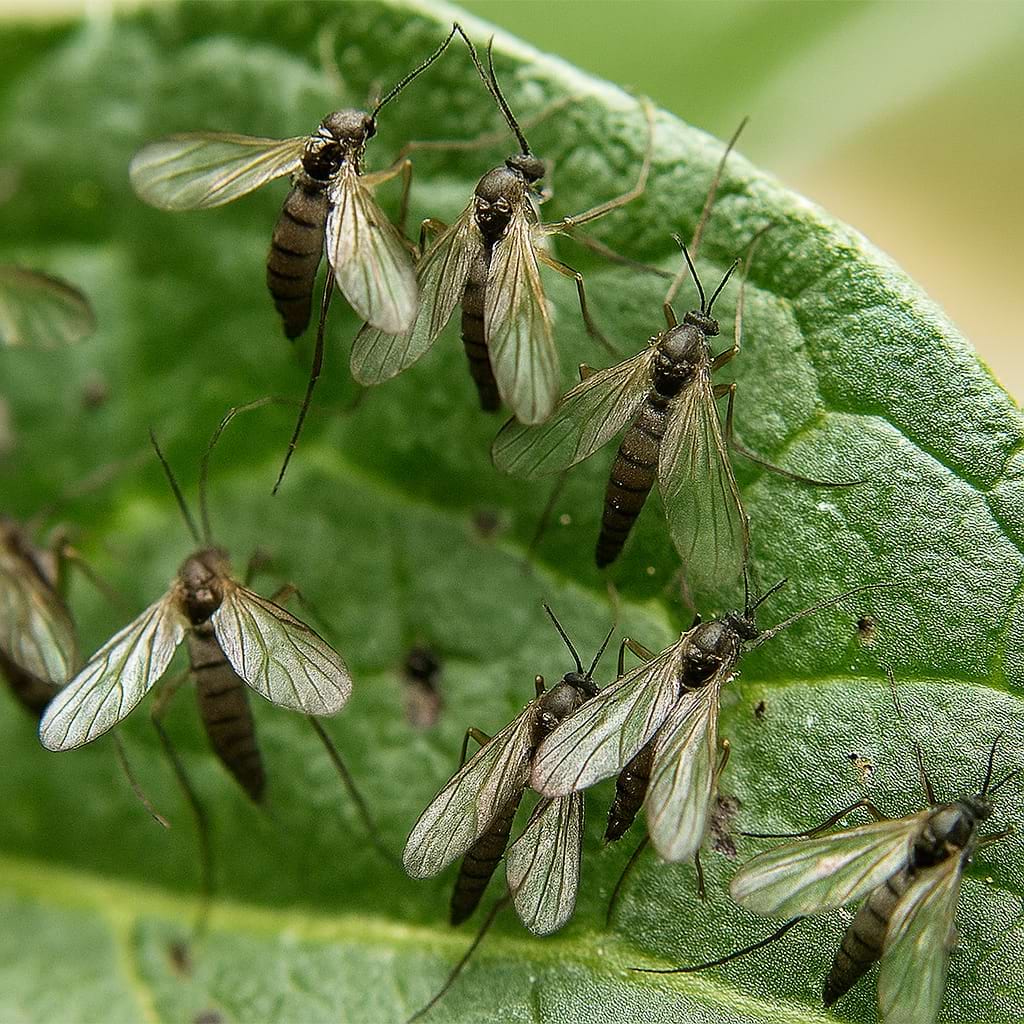
- Fungus gnats: tiny flies around the mount, a sign the moss stays wet too long.
Treatment and Prevention
Staghorn fronds are easily damaged by oil sprays and insecticidal soaps, so avoid them. Lift scale and mealybugs off with a cotton swab dipped in rubbing alcohol and repeat weekly until no new ones appear. For a heavy scale problem, a systemic granule sprinkled into the shield is gentler. Gnats disappear once the mount dries properly between soaks. Check under the fronds every time you water.
🩺 Common Alcicorne Staghorn Fern Problems
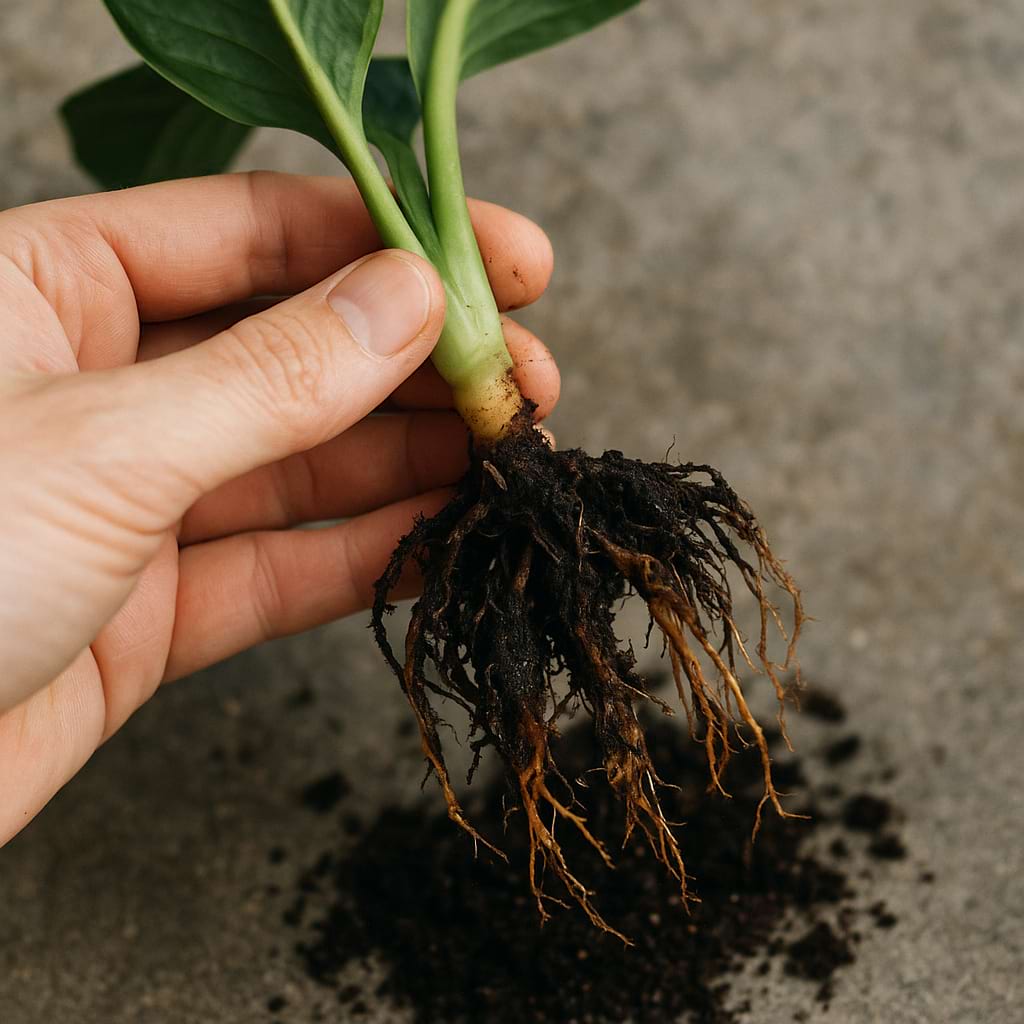
Rot at the Shield Base
- Symptoms: soft, dark patches at the bottom of the shield, spreading up, and a sour smell from the moss.
- Cause: root rot from a mount kept wet, usually in winter during the rest period.
- Fix: let it dry out fully, move it somewhere warmer with airflow, and soak less often. If the center goes mushy it rarely recovers, but healthy pups can be saved.
Floppy, Leaning Fronds
- Symptoms: fertile fronds that flop over instead of standing up.
- Cause: low light, the most common complaint. It looks like wilting, but watering will not fix it.
- Fix: move it closer to a bright window or add a grow light. New fronds come in upright, but the old floppy ones stay that way.
Brown or Black Shields
- Normal: a layer of shield dying back in late summer and autumn, turning rich brown (African form) or nearly black (Madagascar form).
- Problem: dark brown or black spots on the green fertile fronds, usually from cold damage or water sitting on them in a cool, still room.
Yellowing and Slow Growth
Fertile fronds yellowing from the base point to overwatering. A plant that makes no new shield in a whole growing season has stunted growth, which usually comes down to low light or no feeding in summer.

🖼️ Alcicorne Staghorn Fern Display and Styling Ideas
Solo Wall Mount
Hang the board at eye level on a bright wall, so you see the shield and the upright antlers together. Because the fronds stand up instead of hanging, it fits a narrower wall than most staghorns, but leave room on each side for pups. A light wall makes the dark Madagascar form stand out, while a darker wall flatters the yellow-green African form.
Grouped Arrangements
The best pairing is the obvious one: hang it beside a common Staghorn Fern so visitors can see how differently the two hold their antlers. A Blue Star Fern or a Rabbit's Foot Fern in a basket below shares its love of airy roots, and a few air plants on a small slab fill gaps on a gallery wall.
Where Not to Put It
Skip dim hallways, spots right above a radiator, and anywhere you cannot easily take it down for a soak. A dark, windowless bathroom keeps it too wet and too dim through its winter rest.
🌟 Alcicorne Staghorn Fern Pro Care Tips
Before You Buy
- 🔎 Check the shield. A waxy yellow-green or ridged dark green shield points to alcicorne. A lobed, forward-jutting shield usually means a common staghorn.
- 🏷️ Read "Vassei" as alcicorne. It is an old name still used in the trade, usually for the African form.
- 🧐 Look under the fronds. Scale hides at frond bases, so check before paying.
Seasonal Care
- 🍂 Expect autumn browning. A shield layer dying back in late summer is the normal start of the winter rest.
- ❄️ Go drier in winter. Stretch the soaks and stop feeding until spring growth starts.
- 🌡️ Keep it above 55°F. It is a little less cold-tolerant than the common staghorn.
Watering and Mounting
- ⚖️ Water by weight. Soak, drain, and wait until the mount feels light.
- 🪵 Leave room to grow. A board twice the plant's width gives pups space.
- 🟤 Keep every shield. Dead shields are the plant's own sponge and armor.
❓ Frequently Asked Questions
Is Alcicorne Staghorn Fern toxic to cats and dogs?
No. The ASPCA lists Platycerium alcicorne by name as non-toxic to cats, dogs, and horses, and it lists the common staghorn the same way. A pet chewing the fronds may still get a mild upset stomach, and the fronds will not grow back.
How do I tell Platycerium alcicorne from Platycerium bifurcatum?
Start with the shield. On alcicorne it is either waxy yellow-green (African form) or dark green with deep ridges (Madagascar form), while the common staghorn's shield usually has an upper edge split into pointed lobes that jut forward. Alcicorne's antlers also tend to stay upright with only the tips bending down, while common staghorn antlers arch or droop more with age.
Is Platycerium alcicorne just another name for the common staghorn?
No, though it used to be used that way. Nineteenth-century Australian botanists applied the name to the plant now called P. bifurcatum, and that is now recorded as a misapplication. Today P. alcicorne means the African and Madagascan species only.
What is Platycerium vassei?
An older name for the same plant. Growers once treated vassei as a separate species, but it is now included in P. alcicorne. In the US, plants labeled "Vassei" are usually the yellow-green African form.
Why are the shields on my alcicorne turning brown in autumn?
That is its natural cycle. Growers report the shields die back in late summer and autumn and the plant rests through winter. Leave the brown shields in place, water less, and stop feeding until new growth starts in spring.
How often should I water a mounted alcicorne?
Roughly every 5-7 days in spring and summer and every 10-14 days in winter, but go by feel. Soak it when the moss is dry and the board feels light. When in doubt, wait a day.
Does Alcicorne Staghorn Fern make pups?
Yes. The African form pups freely, while the Madagascar form makes fewer. Separate a pup once it has its own shield and a few fertile fronds, or leave them to build a full clump.
Can I grow Alcicorne Staghorn Fern in a pot?
You can, in a shallow pot or basket of very coarse orchid bark with big drainage holes. It still does best mounted, where the roots dry quickly and the shields can grip the way they would on a tree.
Can Alcicorne Staghorn Fern live outdoors?
Only in frost-free climates, in bright shade with shelter from heavy rain. It is rated semi-hardy to about 40°F, which is less than the common staghorn, so bring it in well before cold nights arrive.
Is it harder to grow than a common staghorn?
A little. It needs a drier winter and a bit more warmth, and the African form is less forgiving of wet roots. If you already keep a common staghorn alive on a board, you have the skills for this one.
ℹ️ Alcicorne Staghorn Fern Info
Care and Maintenance
🪴 Soil Type and pH: Mounted over sphagnum moss, or a very coarse orchid bark mix in a basket or pot
💧 Humidity and Misting: Likes 50% humidity or more with good airflow; average room air is fine if you soak it regularly.
✂️ Pruning: Leave every shield frond in place, green or brown; only remove fertile fronds that are completely brown and dry.
🧼 Cleaning: Rinse dust off with a gentle lukewarm shower. Do not wipe the fronds, since the Madagascar form carries fine hairs that rub off.
🌱 Repotting: Remount every few years when the clump outgrows its board. Screw the old board onto a larger one instead of pulling the plant off.
🔄 Repotting Frequency: Every 3-4 years (remount, do not repot)
❄️ Seasonal Changes in Care: Grows in spring and summer. Shields die back in late summer and autumn and the plant rests through winter, so water and feed less then.
Growing Characteristics
💥 Growth Speed: Slow to moderate
🔄 Life Cycle: Evergreen perennial epiphytic fern with a winter rest
💥 Bloom Time: Does not flower; spores form on the undersides of mature fertile fronds
🌡️ Hardiness Zones: 10b-11 (no frost)
🗺️ Native Area: Madagascar, the Comoros, and southeastern Africa including Mozambique and eastern Zimbabwe, growing on trees in forest and woodland
🚘 Hibernation: Semi-dormant in winter; shields die back in late summer and autumn
Propagation and Health
📍 Suitable Locations: East windows, bright north windows, a wall a few feet from a south or west window, bright bathrooms, sheltered patios in frost-free climates
🪴 Propagation Methods: Separate a pup that has its own shield and roots, or grow new plants from spores.
🐛 Common Pests: Scale Insects, Mealybugs, Fungus Gnats
🦠 Possible Diseases: Rot at the base of the shield from a mount kept wet, especially in winter
Plant Details
🌿 Plant Type: Epiphytic staghorn fern
🍃 Foliage Type: Evergreen, with sterile shield fronds and upright forked fertile fronds
🎨 Color of Leaves: Yellow-green and waxy (African form) or dark green and hairy (Madagascar form)
🌸 Flower Color: N/A (spores are brown)
🌼 Blooming: No, ferns reproduce by spores
🍽️ Edibility: Not edible.
📏 Mature Size: About 1-2 feet indoors
Additional Info
🌻 General Benefits: Pet-safe according to the ASPCA, a tidy upright staghorn that fits a smaller wall than most of the genus
💊 Medical Properties: No documented medicinal uses.
🧿 Feng Shui: Upright, reaching antlers, often read as growth and forward energy.
⭐ Zodiac Sign Compatibility: Sagittarius
🌈 Symbolism or Folklore: Adaptability and quiet strength
📝 Interesting Facts: The name alcicorne means "elk horn." In the 1800s Australian botanists used it for the common staghorn, which is now Platycerium bifurcatum, so older books and some labels still mix the two up.
Buying and Usage
🛒 What to Look for When Buying: Look for upright fertile fronds and a firm shield pressed tight to its mount. Check the shield and frond texture against the ID notes, because labels in this genus are often wrong.
🪴 Other Uses: Wall art, a mounted specimen for a bright bathroom, and a collector's staghorn for anyone who already grows the common one.
Decoration and Styling
🖼️ Display Ideas: Mounted on a cedar board or cork slab on a bright wall, or side by side with a common staghorn so the difference shows
🧵 Styling Tips: Hang it at eye level so you look at the shield and the upright antlers together, and leave room on the board for pups.
🪴 See also 🪴
Complete Guide to Hand Fern Care and Growth
Complete Guide to Golden Zebra Bamboo Fern Care and Growth
Complete Guide to Davana Blue Star Fern Care and Growth
Complete Guide to Silver Brake Fern Care and Growth
Complete Guide to Tricolor Brake Fern Care and Growth
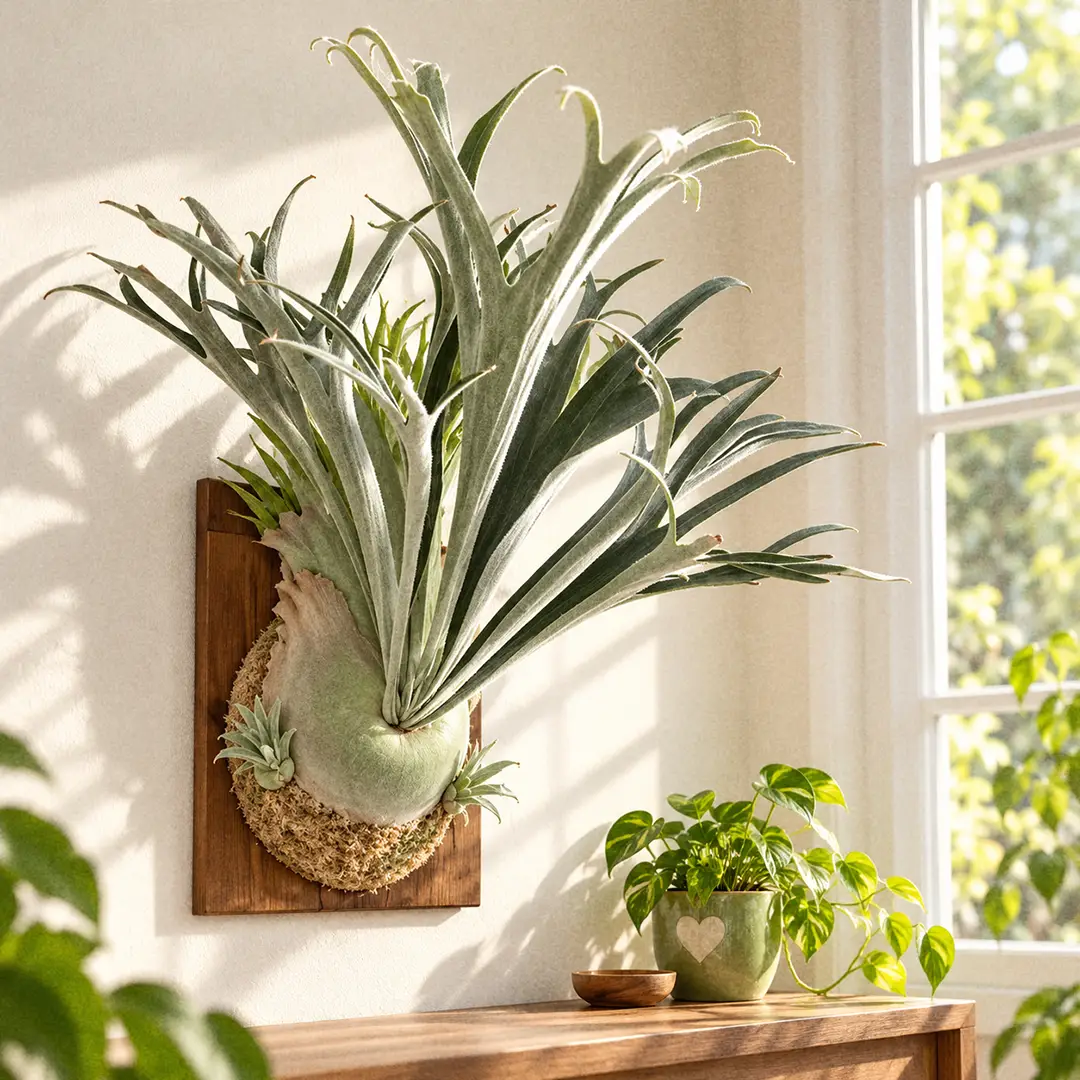
Complete Guide to Silver Staghorn Fern Care and Growth
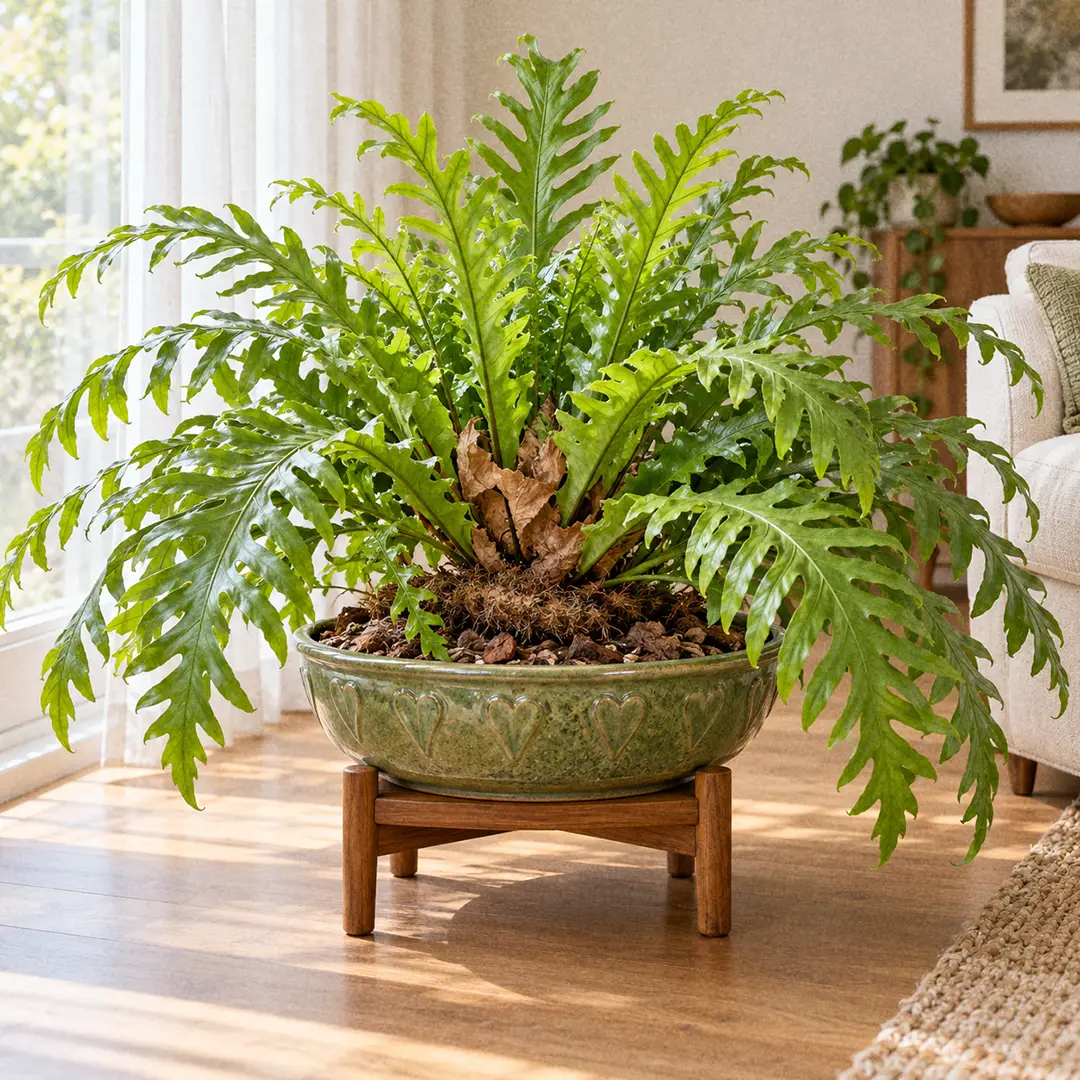
Complete Guide to Crown Fern Care and Growth
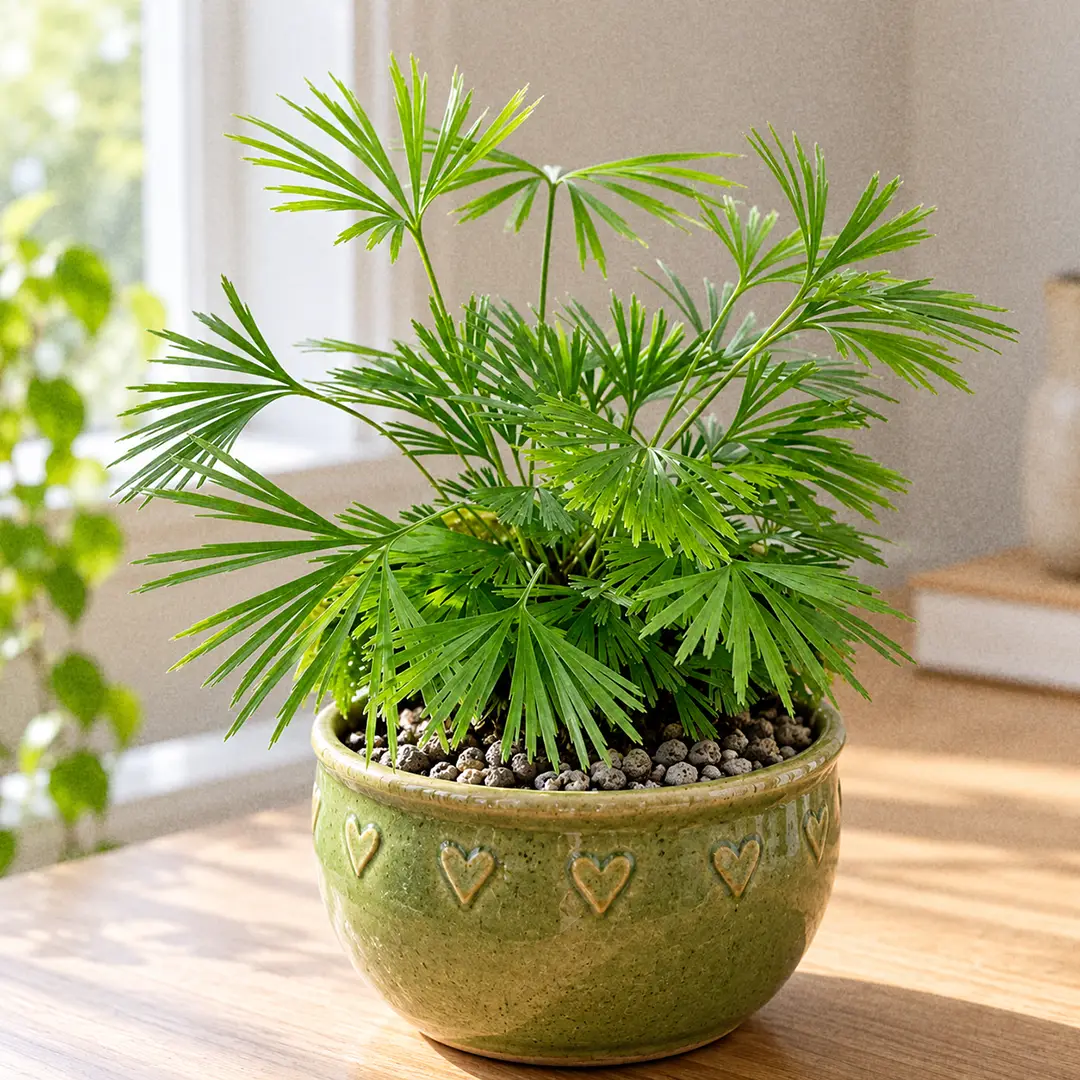
Complete Guide to Eyelash Fern Care and Growth
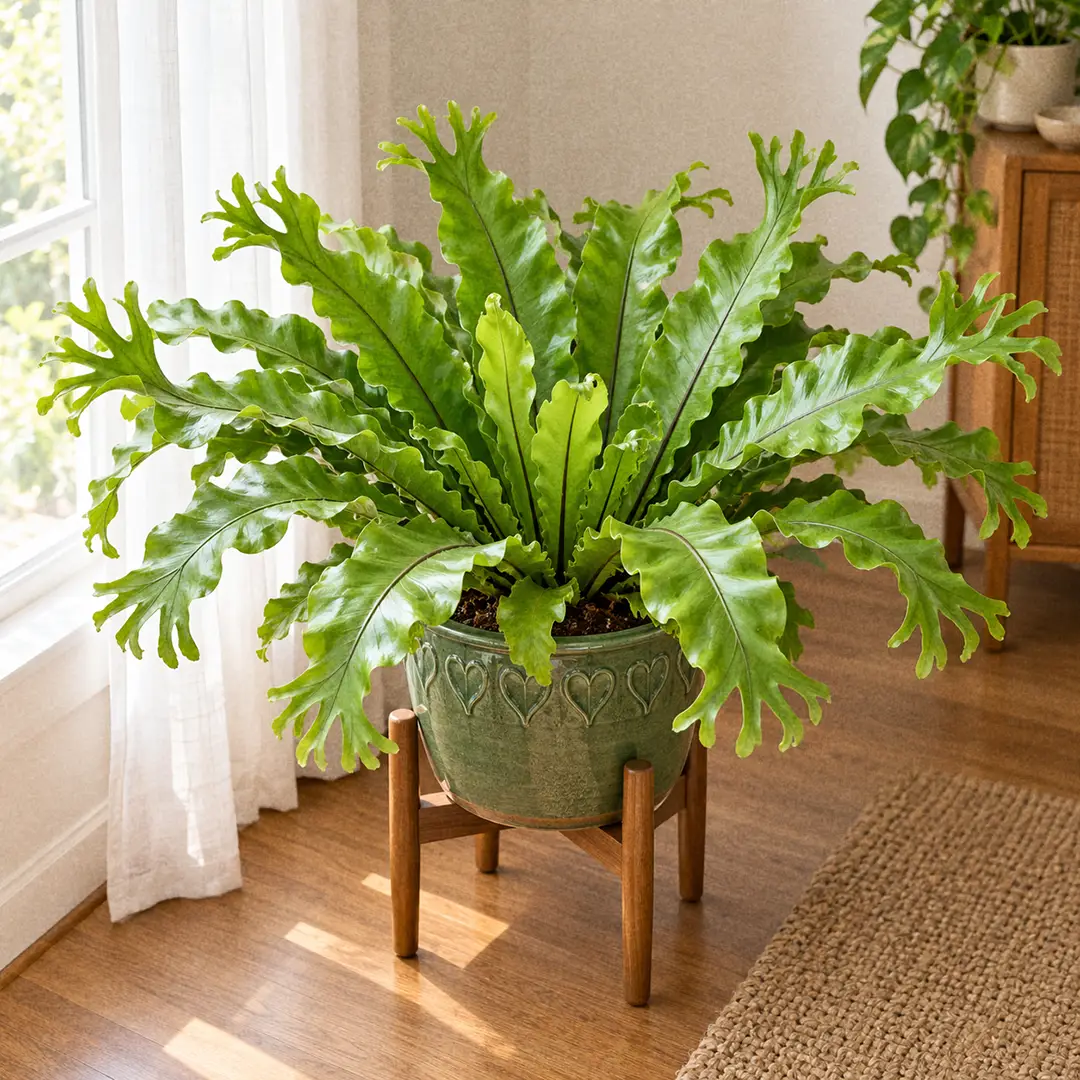
Complete Guide to Crissie Bird's Nest Fern Care and Growth
Complete Guide to Osaka Bird's Nest Fern Care and Growth
The 15 Most Popular Indoor Ferns and How to Choose One
Complete Guide to Leslie Bird's Nest Fern Care and Growth
Complete Guide to Superbum Staghorn Fern Care and Growth
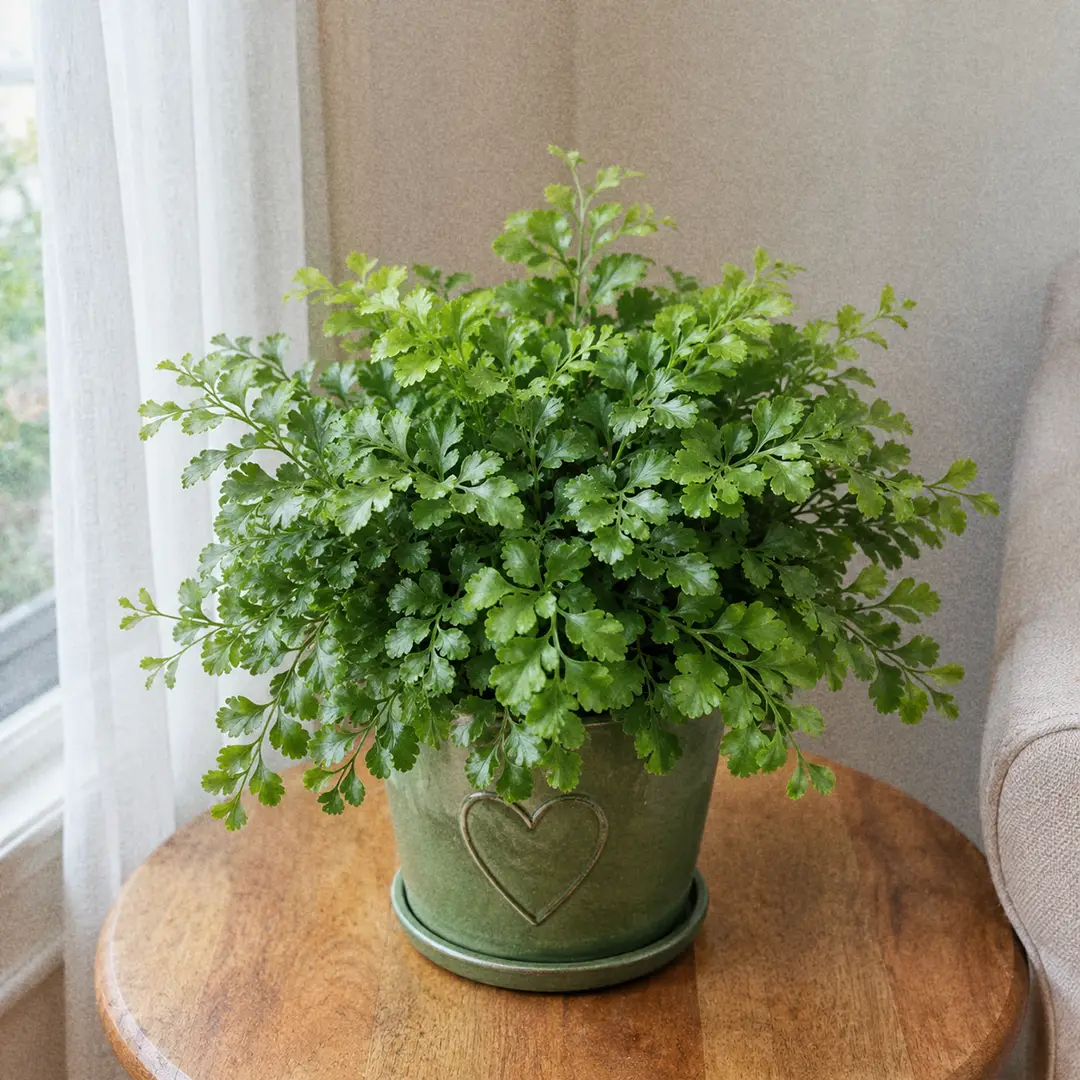
Complete Guide to Austral Gem Fern Care and Growth
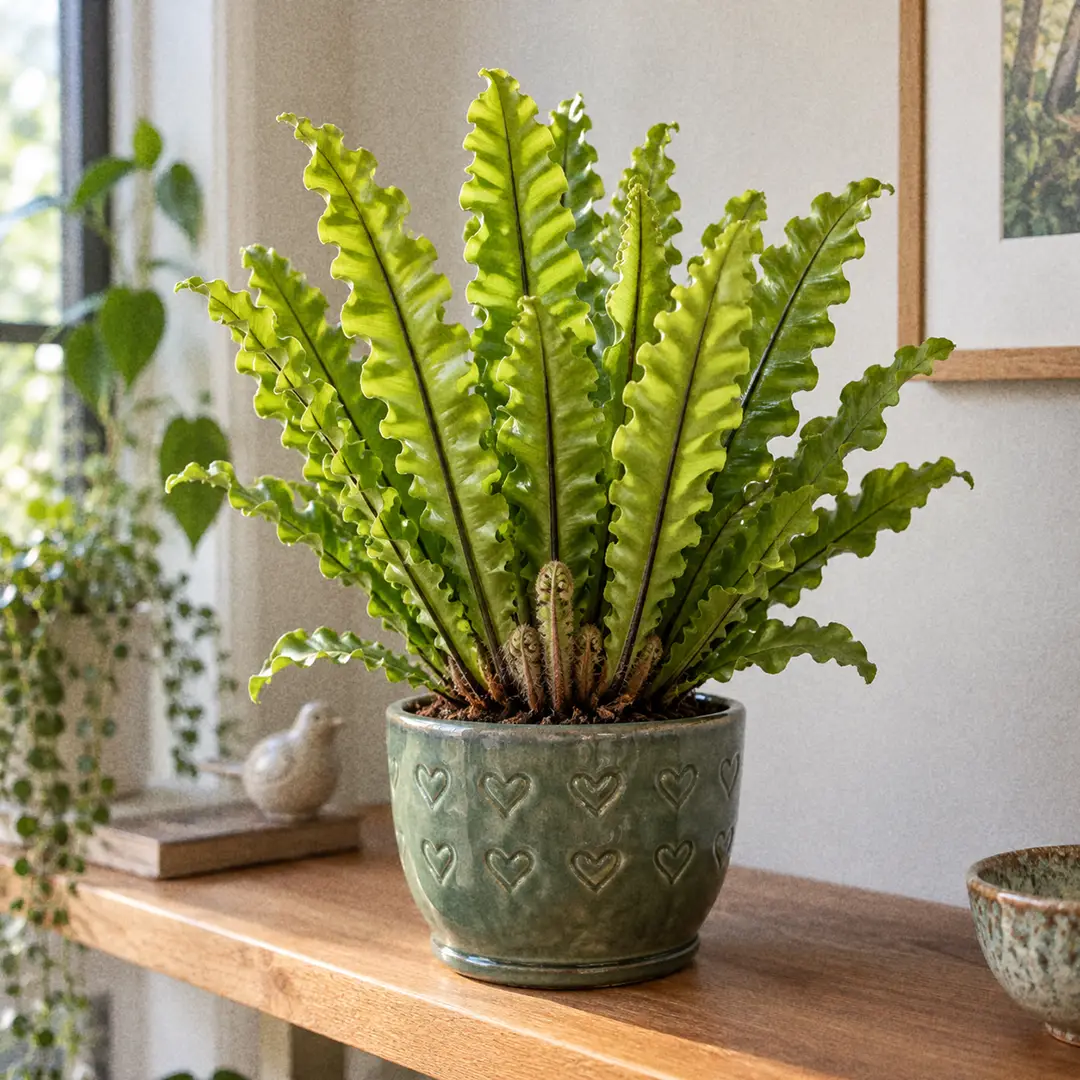
Complete Guide to Crispy Wave Fern Care and Growth
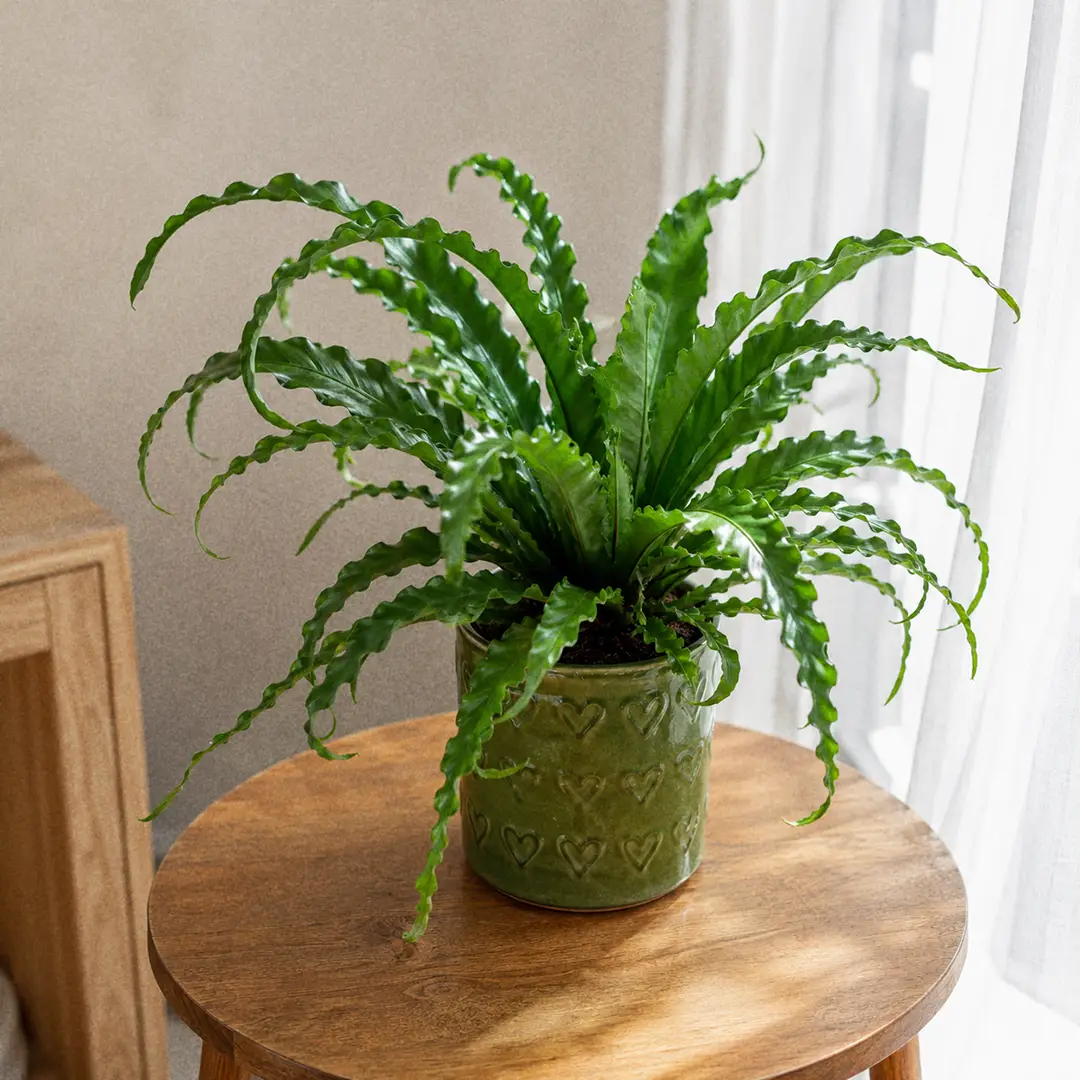
Complete Guide to Japanese Bird's Nest Fern Care and Growth
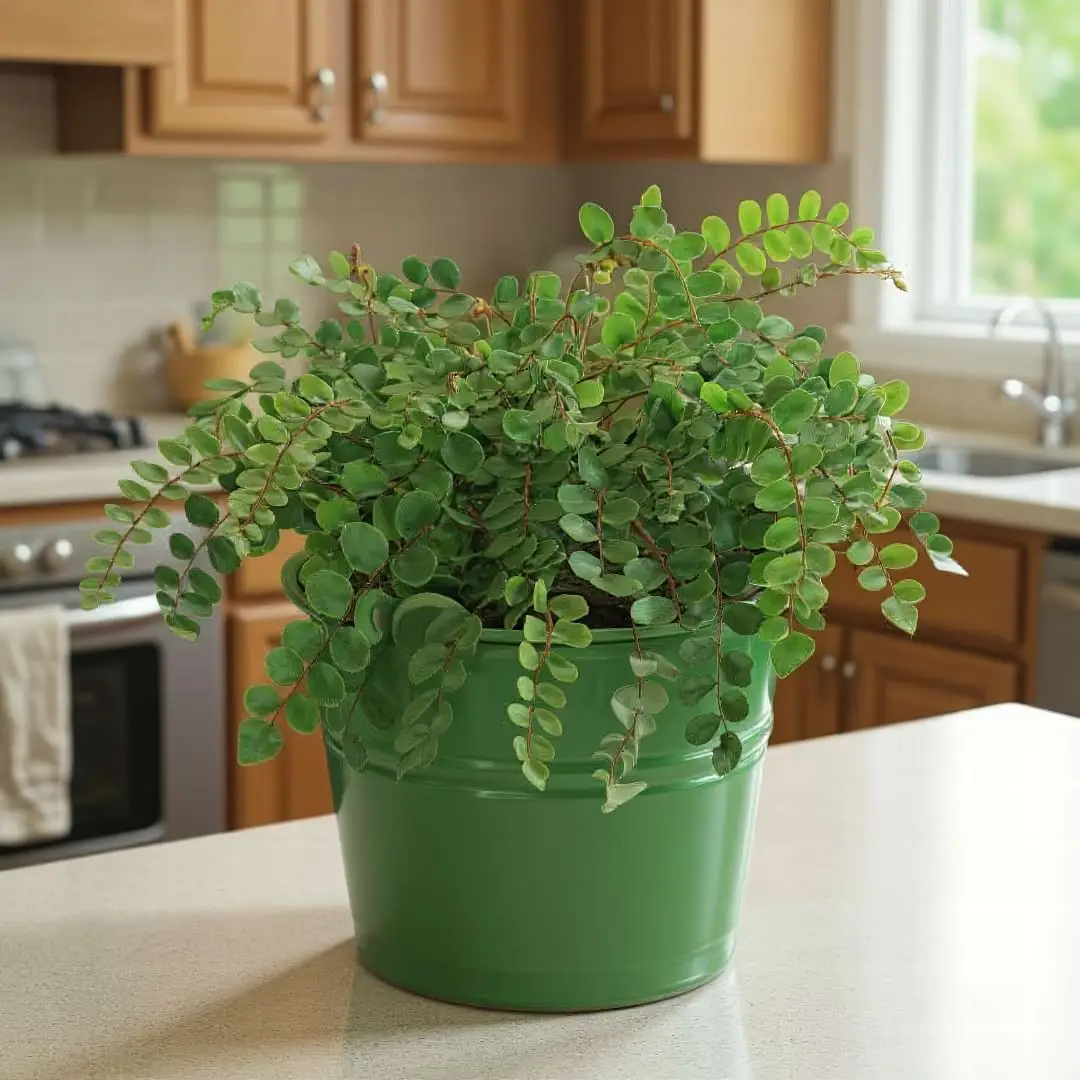
Complete Guide to Button Fern Care and Growth
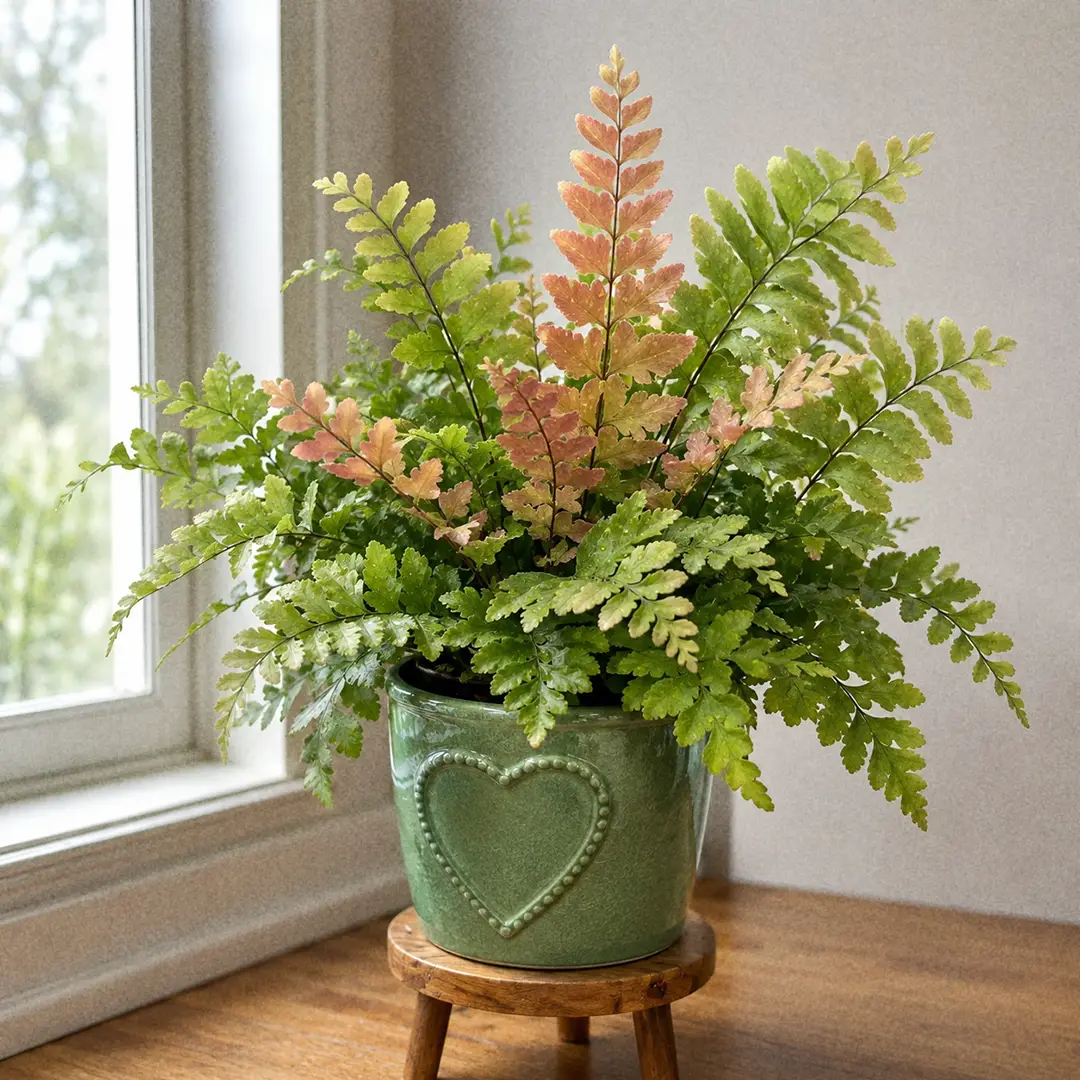
Complete Guide to Mahogany Fern Care and Growth
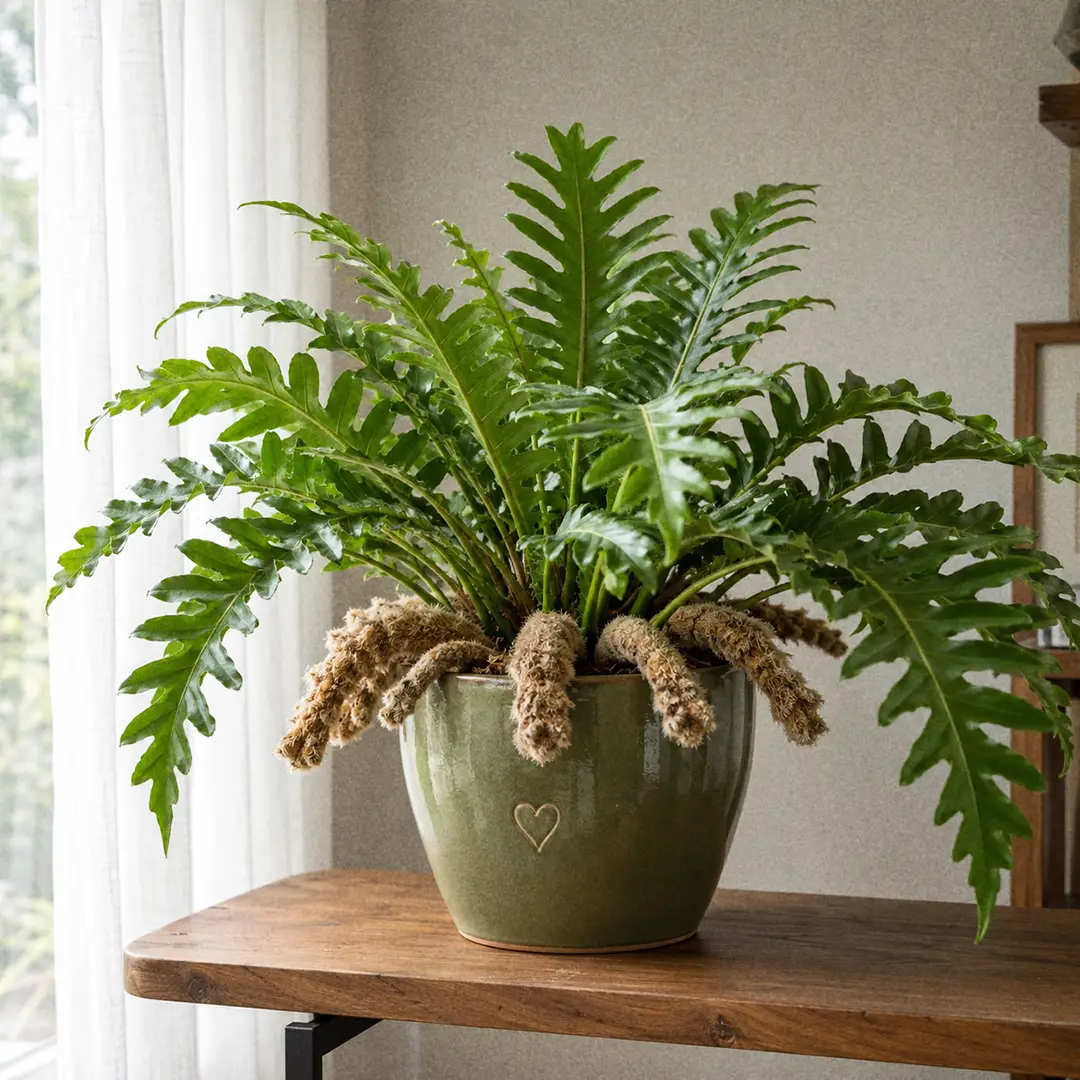
Complete Guide to Bear's Paw Fern Care and Growth
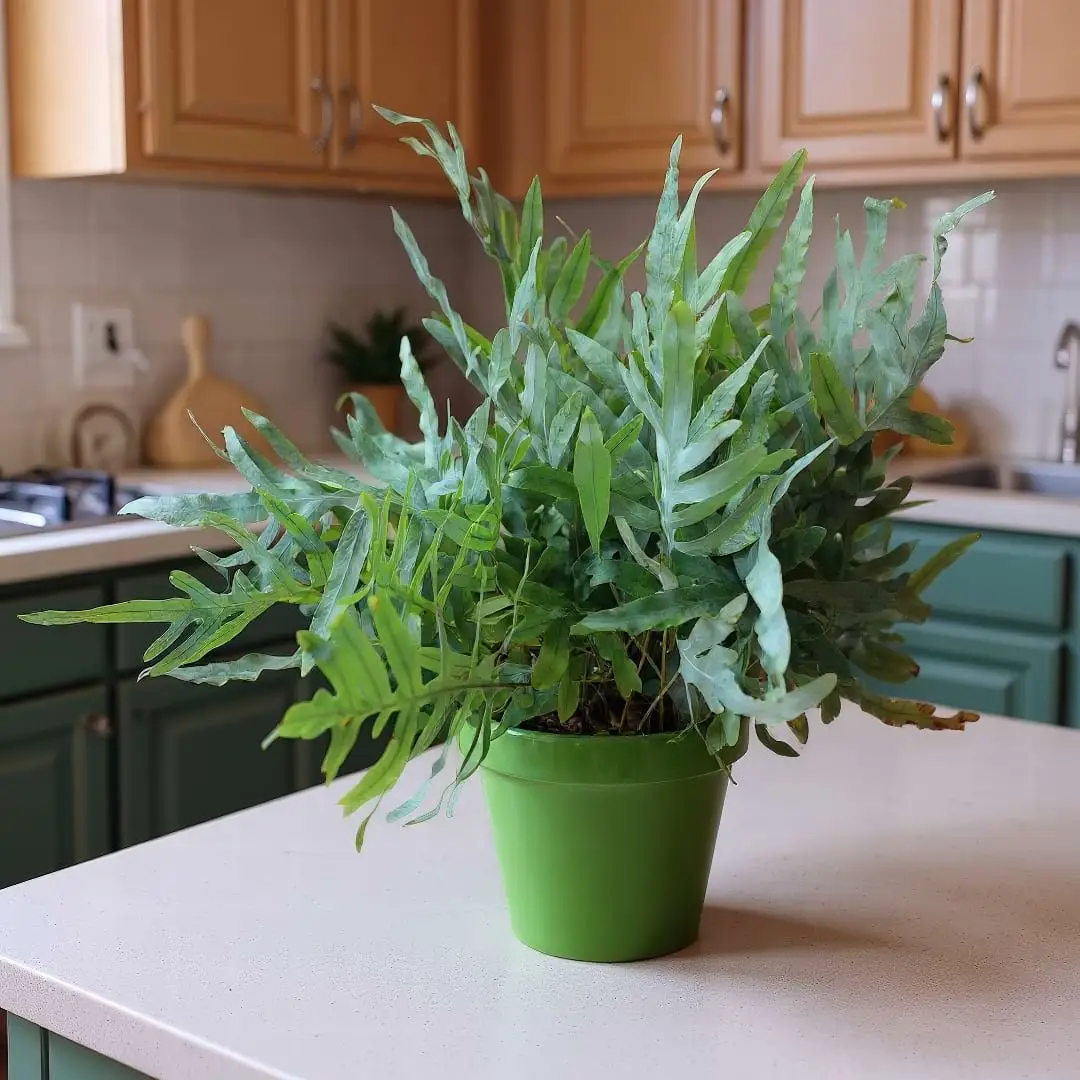
Complete Guide to Blue Star Fern Care and Growth
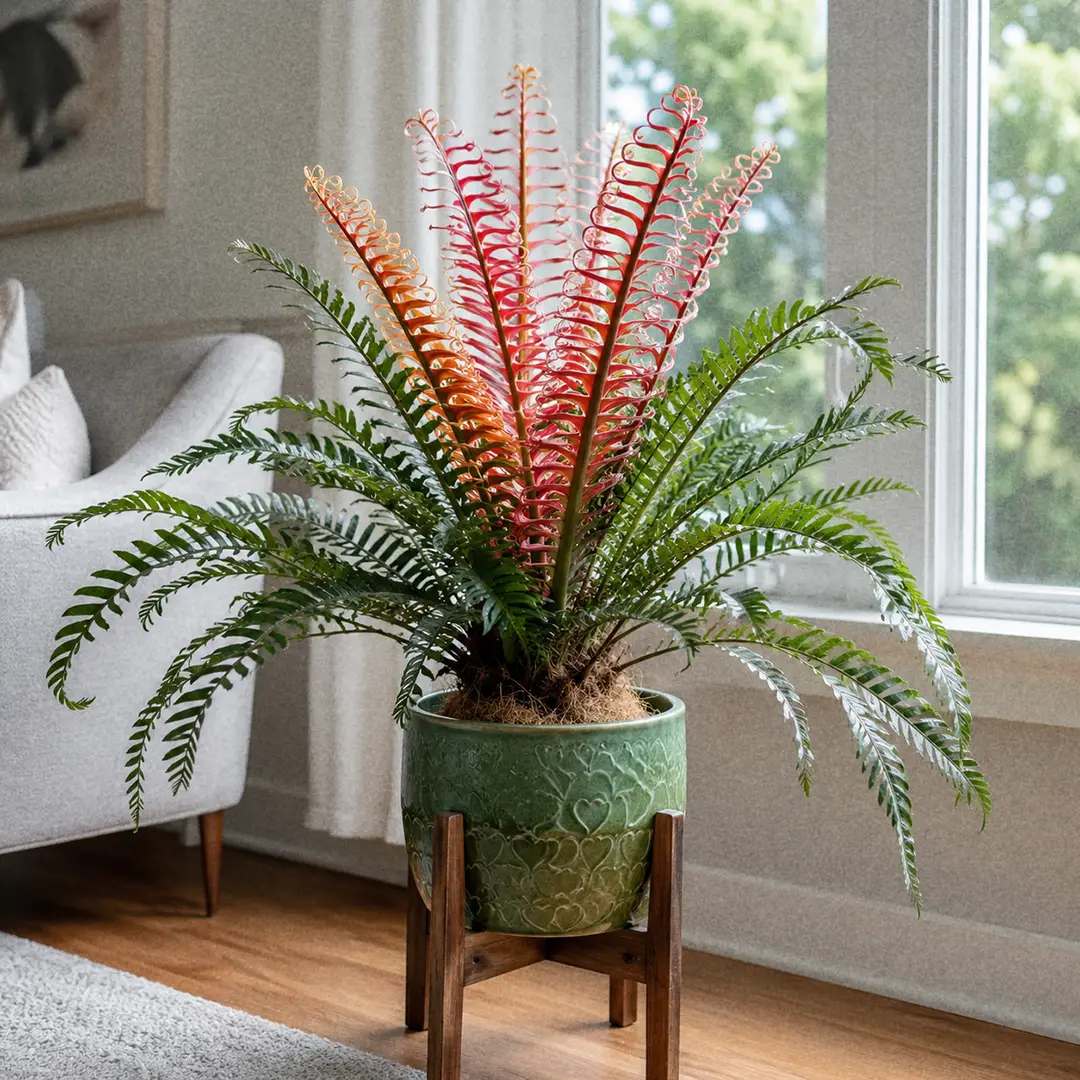
Complete Guide to Volcano Fern Care and Growth
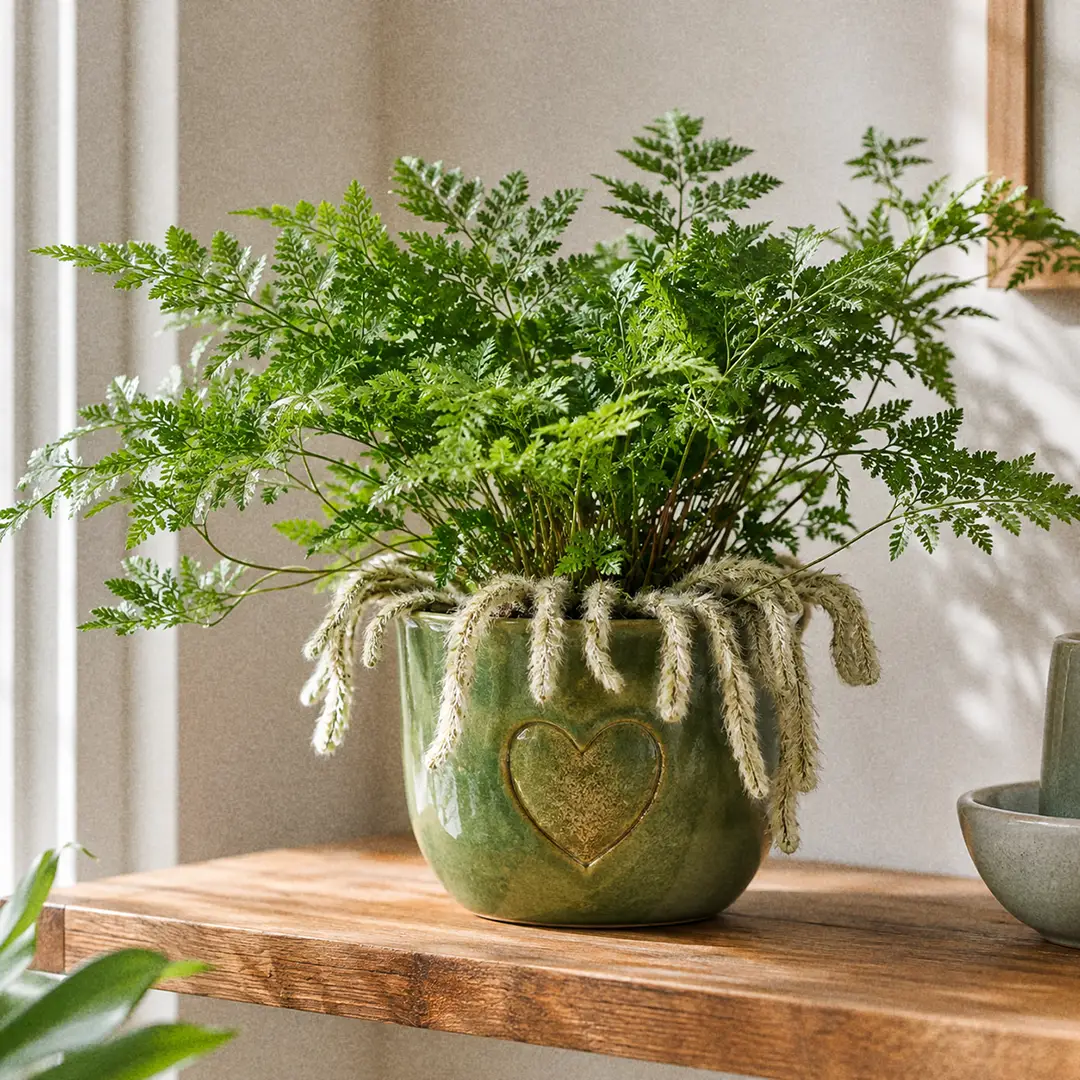
Complete Guide to White Rabbit's Foot Fern Care and Growth

Houseplant101 Forum
Questions & Comments
Ask a question, share your plant experience, or help other plant owners.
Comments are temporarily unavailable.
Open the Houseplant101 ForumNo comments yet
Be the first to ask a question or share your experience about this page.
Log in or create an account
Comments use your Houseplant101 Forum account, but you can stay on this page.
Create a new account