
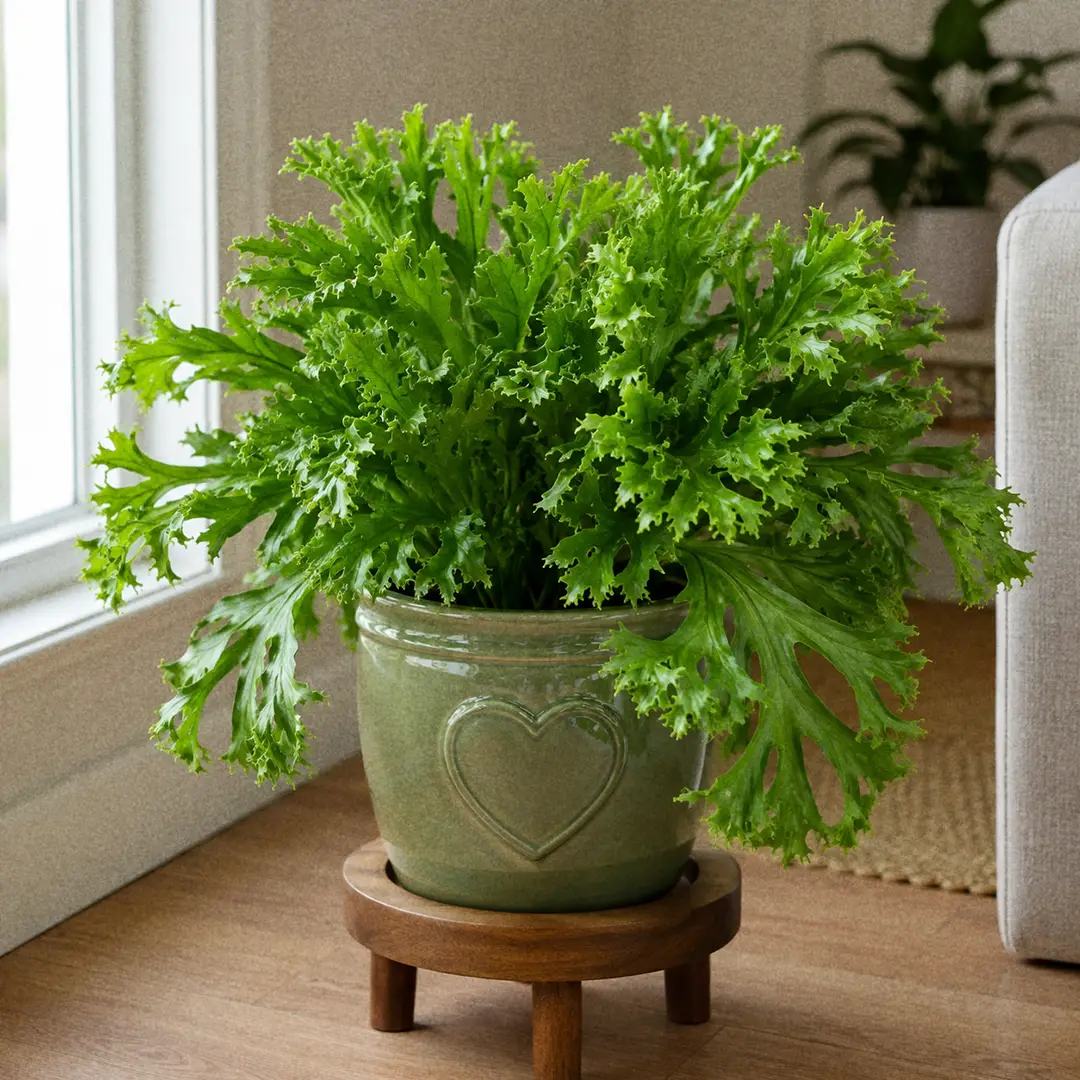
Crested Fishtail Fern
Microsorum punctatum 'Grandiceps'
Grandiceps Fern, Crested Climbing Bird's Nest Fern, Fishtail Fern, Cresta Fern, Microsorium punctatum Grandiceps


Crested Fishtail Fern is the fern that finally behaves indoors, with thick strappy fronds that split into forked fishtail crests at every tip. Learn how to grow Microsorum punctatum 'Grandiceps' without the humidity fuss most ferns demand.
📝 Crested Fishtail Fern Care Notes
🌿 Care Instructions
⚠️ Common Pests
📊 Growth Information
🪴 In This Guide 🪴

☀️ Crested Fishtail Fern Light Requirements (Bright Indirect Guide)
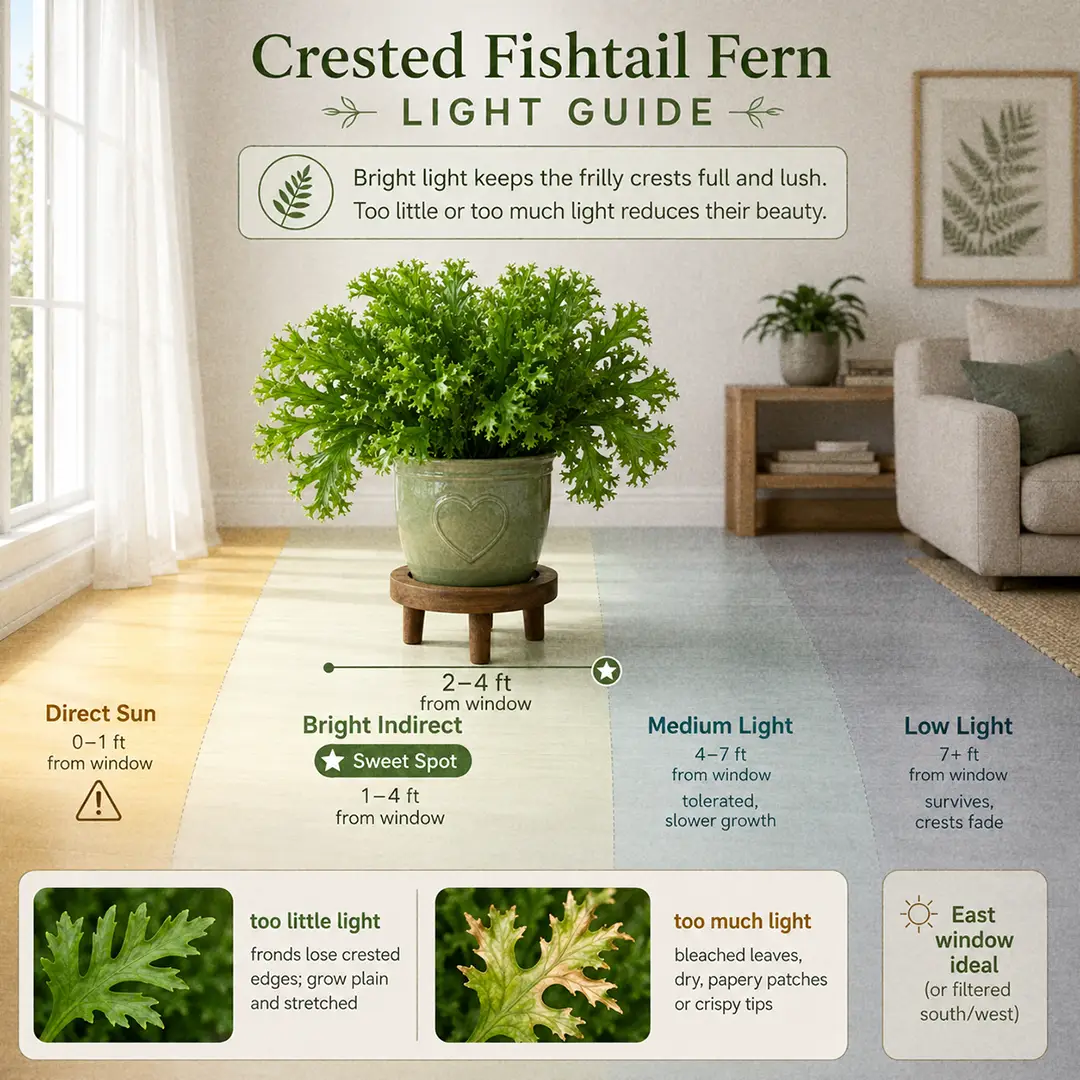
The Sweet Spot
Crested Fishtail Fern wants bright indirect light, which in practice means two to four feet back from an east-facing window, or a few feet off to the side of a south or west one. Morning sun landing on the fronds for an hour is fine and often deepens the color. Harsh afternoon sun through bare glass is not.
The reason sits in how it grows in the wild. Microsorum punctatum is an epiphyte, clinging to tree trunks and rocky ledges under a broken forest canopy, so it evolved under dappled light rather than full shade or open sun. Our Indoor Lighting Guide helps if you are still learning to read a spot by eye.
Too Little Light
This fern tolerates genuinely dim corners better than most, which is why it turns up in offices and north-facing bathrooms. Tolerating and thriving are different things, though. In low light the plant slows almost to a stop, new fronds come in narrow and pale, and the crests at the tips fork less dramatically or barely fork at all.
Losing the crest is the tell worth watching for. If your fronds are emerging with plain pointed tips instead of forked heads, the plant is telling you it wants more light before it wants anything else. A grow light on a timer sorts this out over a dark winter.
Too Much Light
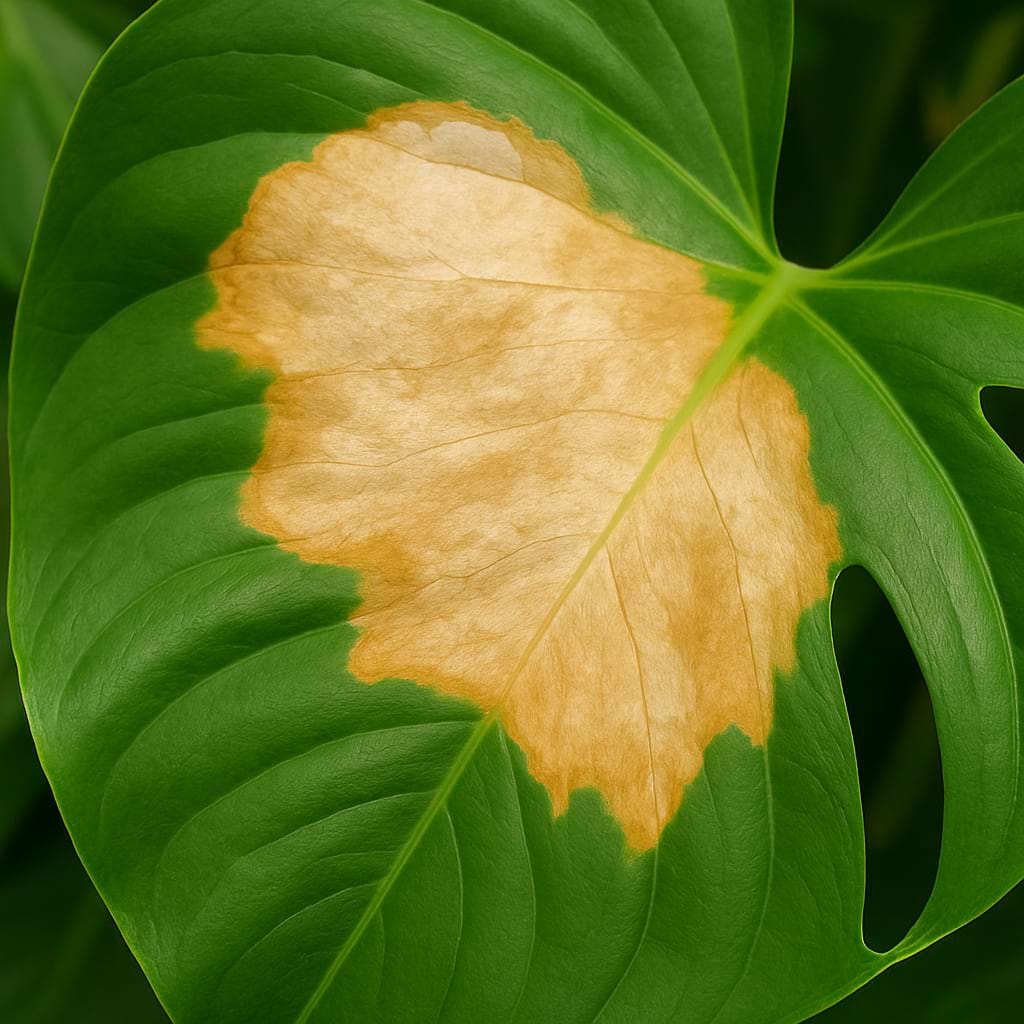
Direct afternoon sun bleaches the fronds to a washed-out yellow-green, then leaves dry papery patches in the middle of the leaf blade. That is sunburn, and the damaged tissue never recolors, so those fronds stay marked until you eventually cut them off.
Move a fern into brighter light gradually over two or three weeks rather than in one jump. A sheer curtain solves a hot west window entirely, and it is a far easier fix than nursing a scorched plant back.
💧 Crested Fishtail Fern Watering Guide (How to Water Properly)
Watering Frequency
Aim for evenly moist, never soggy, and never bone dry. Check by pushing a finger an inch into the mix: if it comes out dry, water. In a bright spot in summer that usually works out to once or twice a week, dropping to every 10 days or so in winter when growth slows.
The thick leathery fronds buy you slack that a Boston Fern never gives you. A Crested Fishtail Fern that gets forgotten for a few extra days sulks and recovers, where a lacy fern would already be brown. That said, repeated full drying knocks it back hard, and the fronds it loses do not come back. A moisture meter takes the guesswork out if you are new to ferns.
How to Water
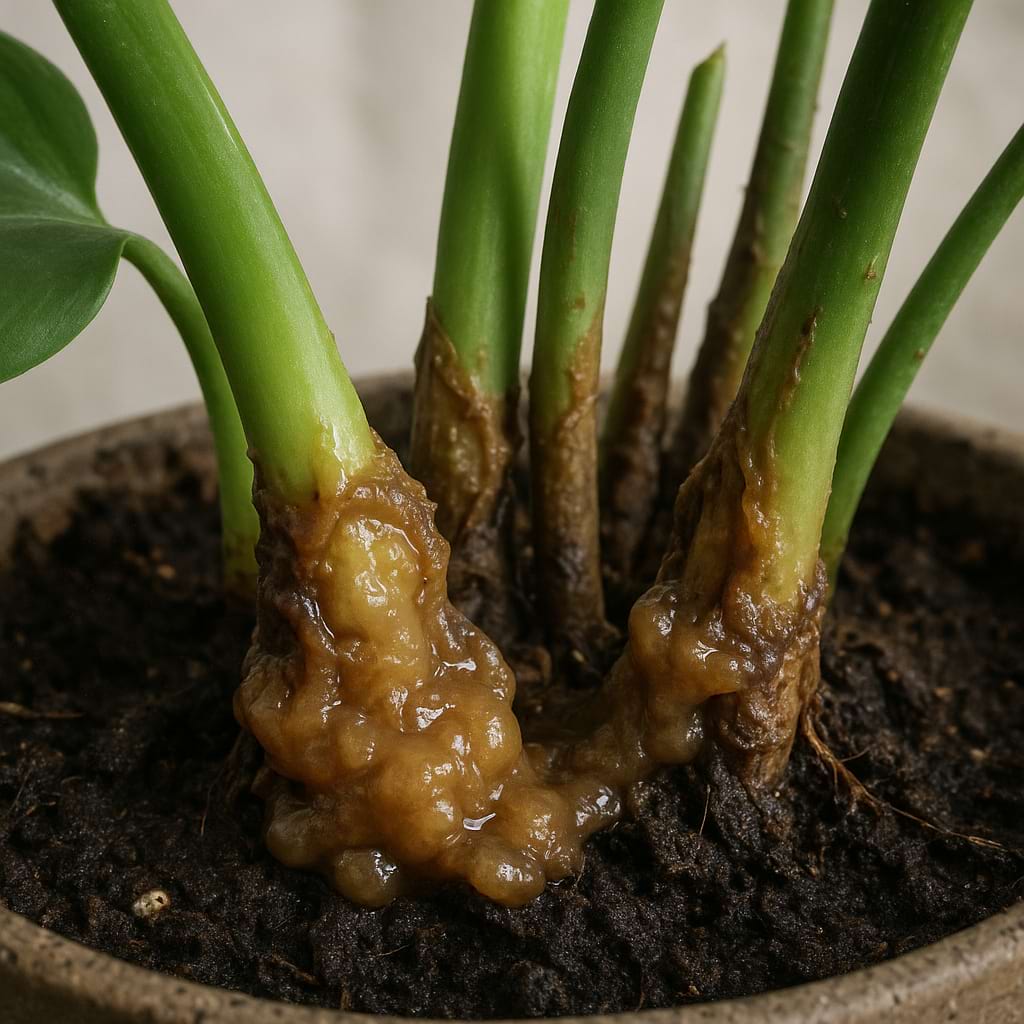
Water around the outside of the pot, aiming for the soil, and keep the stream out of the central rosette. This plant catches falling leaf litter in that crown in the wild, but a home pot has none of the airflow a tree fork does, so water sitting there in still indoor air turns into crown rot.
Soak until water runs from the drainage holes, then tip out the saucer completely. Chlorinated tap water is usually fine, though if your water is heavily softened the salts build up and burn the frond tips. Rainwater or filtered water avoids that. Our Watering Guide covers technique in more detail.
Signs of Trouble
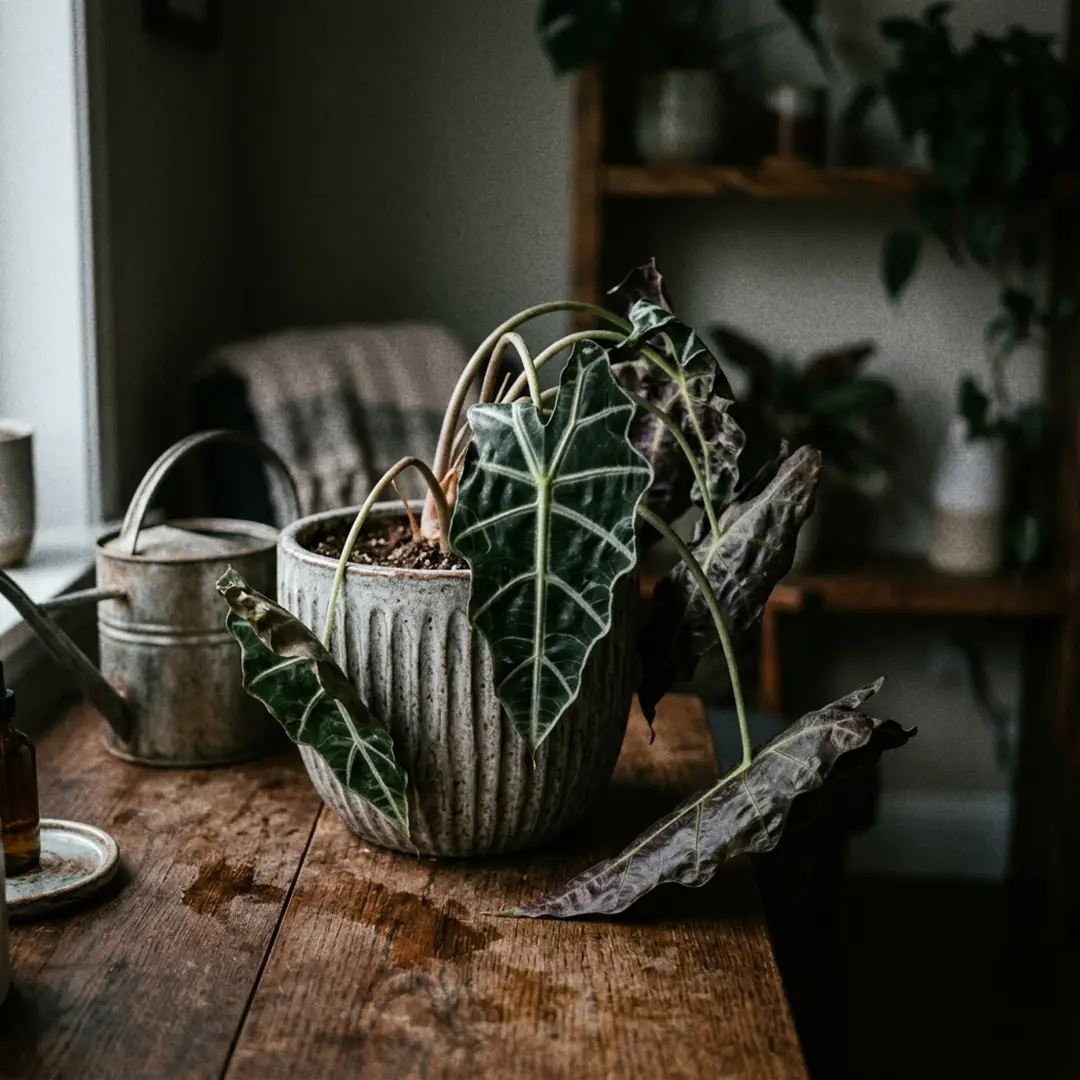
Thirst shows up as fronds that go limp and floppy, and as drooping that reverses within a few hours of a proper soak. Crispy brown edges on multiple fronds usually mean the pot dried out too far, too often.
Overwatering looks different. Yellowing at the base of the plant, fronds that go soft and darkly translucent near the rhizome, and soil still damp a week after watering all point at root rot. When you cannot tell which it is, check the soil before you reach for the watering can.
🪴 Best Soil for Crested Fishtail Fern (Potting Mix & Drainage)
What the Soil Needs
Because this is an epiphyte, its roots are used to clinging to bark with air moving freely around them. Straight potting compost packs down, holds water against those roots, and suffocates them. What you want is a mix that stays damp but stays airy, so water passes through quickly and leaves moisture clinging to the particles rather than filling the gaps.
Drainage holes are non-negotiable, and a decorative cachepot with no hole is one of the fastest ways to lose this plant. Our Soil Guide explains why pot drainage matters as much as the mix itself.
DIY Soil Mix
A blend that works reliably is 2 parts orchid bark, 1 part perlite, 1 part peat or coco coir, with a handful of horticultural charcoal if you have it. The bark provides the structure and air pockets, the perlite keeps it from compacting, and the coir holds enough moisture that you are not watering daily.
Pre-Made Options
Bagged aroid or orchid mixes are the closest thing off the shelf and need almost no adjustment. A standard houseplant compost will work if you cut it roughly half and half with bark and perlite. Do not use straight peat-based seedling compost, which turns to sludge within a season. Our potting soil guide compares the common bagged options.
🍼 Fertilizing Crested Fishtail Fern
When and How Often
Feed once a month from spring through late summer, then stop entirely through autumn and winter. Ferns are light feeders by nature, growing in thin pockets of leaf litter rather than rich soil, so this one needs far less than a fast-growing tropical.
Always water lightly first, then feed. Fertilizer hitting a dry root ball scorches the fine roots that ferns depend on.
What to Use
A balanced liquid houseplant fertilizer diluted to half strength is ideal. Slow-release pellets also work, applied once in spring, and they suit anyone who forgets a monthly routine. Fish emulsion and other gentle organic feeds suit ferns particularly well. Our Fertilizing Guide covers ratios, and the fertilizers guide covers what to buy.
Over-Fertilizing Signs
Brown, dry, scorched frond tips are the classic sign, along with a white crusty film on the soil surface. Fern roots are thin and burn easily, so this happens faster here than with a rubber plant or a philodendron. If you see it, flush the pot with plain water two or three times and skip feeding for a couple of months.
🌡️ Crested Fishtail Fern Temperature Range
Ideal Range
Ordinary room temperature suits it well: 65-80°F (18-27°C) is the comfortable band, and this fern is genuinely happy anywhere a person is. Growth slows below 60°F and stops around 55°F. Anything under 50°F risks damage, so this is not a plant to leave on a porch through a cold snap.
Drafts and Heat Sources
Sudden temperature swings do more harm than any particular number on the thermometer. A frond that spends its day beside a heating vent dries out and browns at the tip regardless of how well you water. Keep the plant clear of radiators, forced-air vents, wood stoves, and the cold blast of a frequently opened winter door.
Air conditioning deserves the same caution. A steady cool room is fine, but a vent blowing directly on the fronds strips moisture faster than the roots can replace it, which is where most mysterious brown tips come from.
💦 Crested Fishtail Fern Humidity Requirements
Ideal Humidity
Here is the good news: 40-60% humidity is plenty, and this fern shrugs off ordinary household air that would flatten a Maidenhair. Above 50% it grows faster and looks better, but it does not require a terrarium or a daily misting ritual to survive.
The thick, waxy frond surface is why. It loses water far more slowly than a finely divided fern frond, which is the single reason this plant works as a normal houseplant.
Easy Humidity Boosters
If your winter air drops below 35%, grouping plants together raises the local humidity for free. A pebble tray under the pot helps a little, and a small humidifier in the room helps a lot. Bathrooms with a window are excellent spots. Misting is largely decorative, and on this plant it is actively risky because droplets settling in the crown invite leaf spot. Our humidity guide covers the alternatives.
🌸 Crested Fishtail Fern Flowers and Spores
Why It Never Flowers
Crested Fishtail Fern will never bloom, and no amount of light, feeding, or coaxing will change that. Ferns predate flowering plants by roughly 200 million years and reproduce with spores instead. If you bought this plant hoping for flowers, that is the one thing it cannot deliver.
What it offers in exchange is a shape that holds all year. The forked crests give the plant sculptural interest that a flowering houseplant only manages for a few weeks each season.
What Those Brown Dots Are
Turn a mature frond over and you will find rows of round, raised, orange-brown dots scattered across the underside. Those are sori, the spore-bearing structures, and their arrangement in punched-looking dots gives the species its name, punctatum. New growers spot them and reach for the pest spray every time.
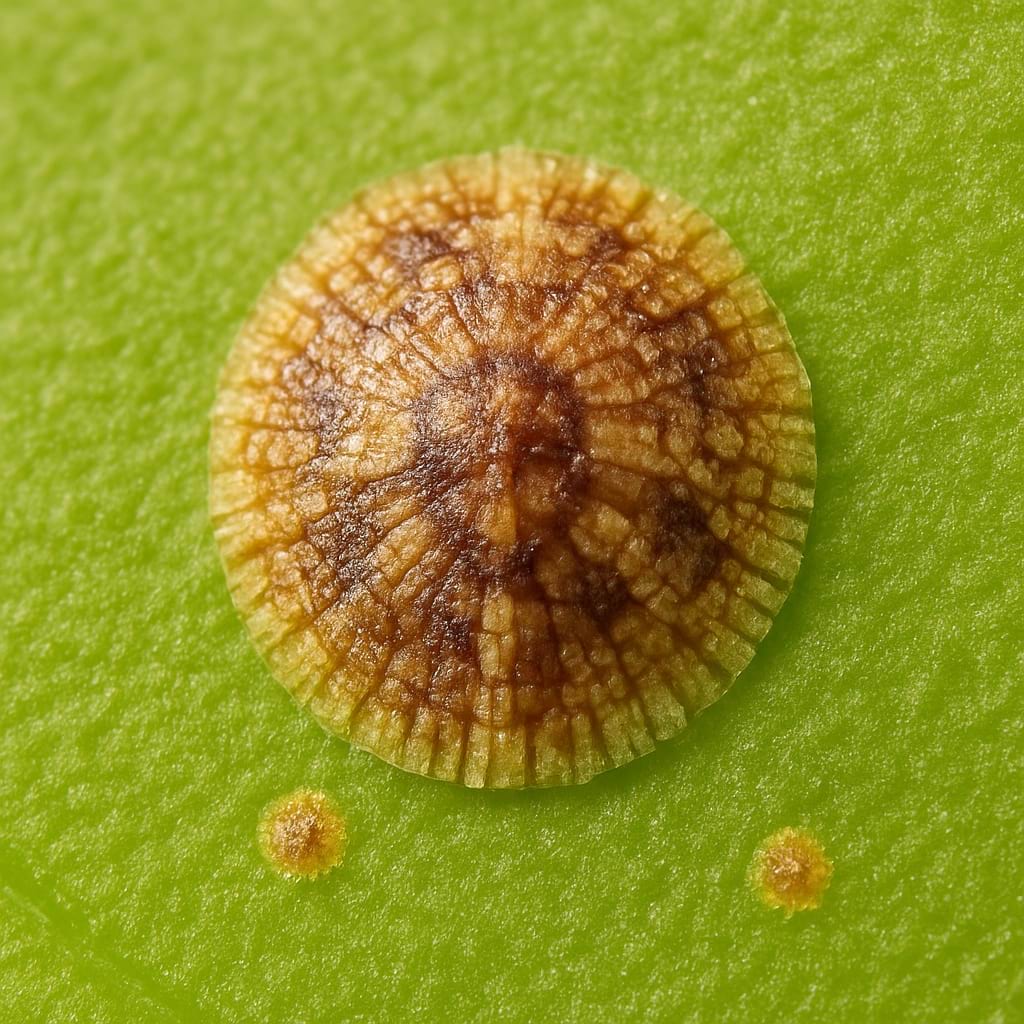
Sori are a sign of a healthy, mature plant. They sit in neat, regular rows or a scattered pattern, they are attached firmly and part of the frond itself, and they do not smear or move. Scale insects, the usual mix-up, sit randomly, pop off under a fingernail, and often leave a sticky residue.
Growing From Spores
You can raise new plants from spores by tapping a ripe frond over paper, sprinkling the dust onto sterile damp moss, and covering it under glass. It takes months and demands patience. There is also a catch specific to this plant: 'Grandiceps' is a cultivar, and spore-grown seedlings frequently revert to the plain uncrested species. Division is the reliable route.
🏷️ Crested Fishtail Fern Types and Varieties
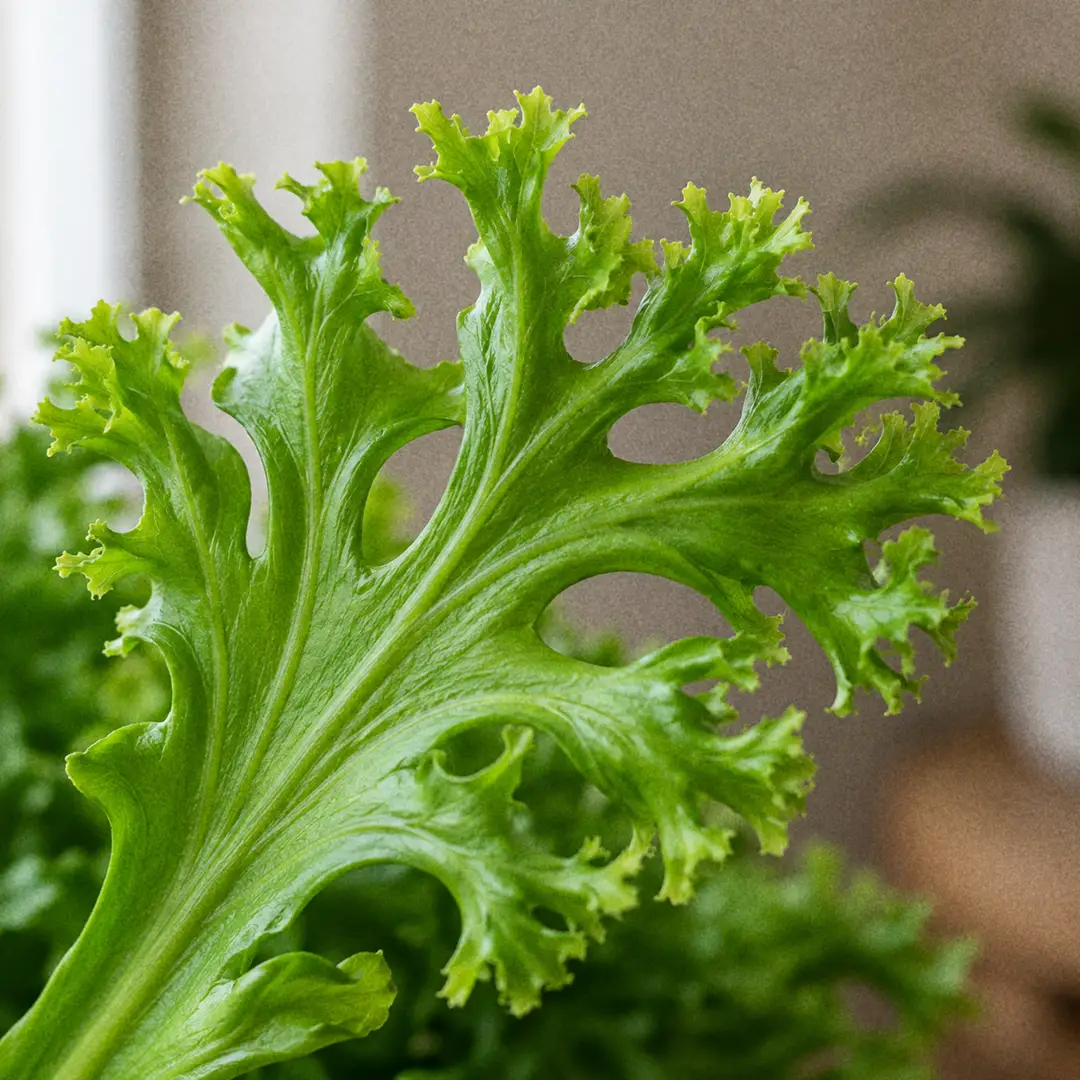
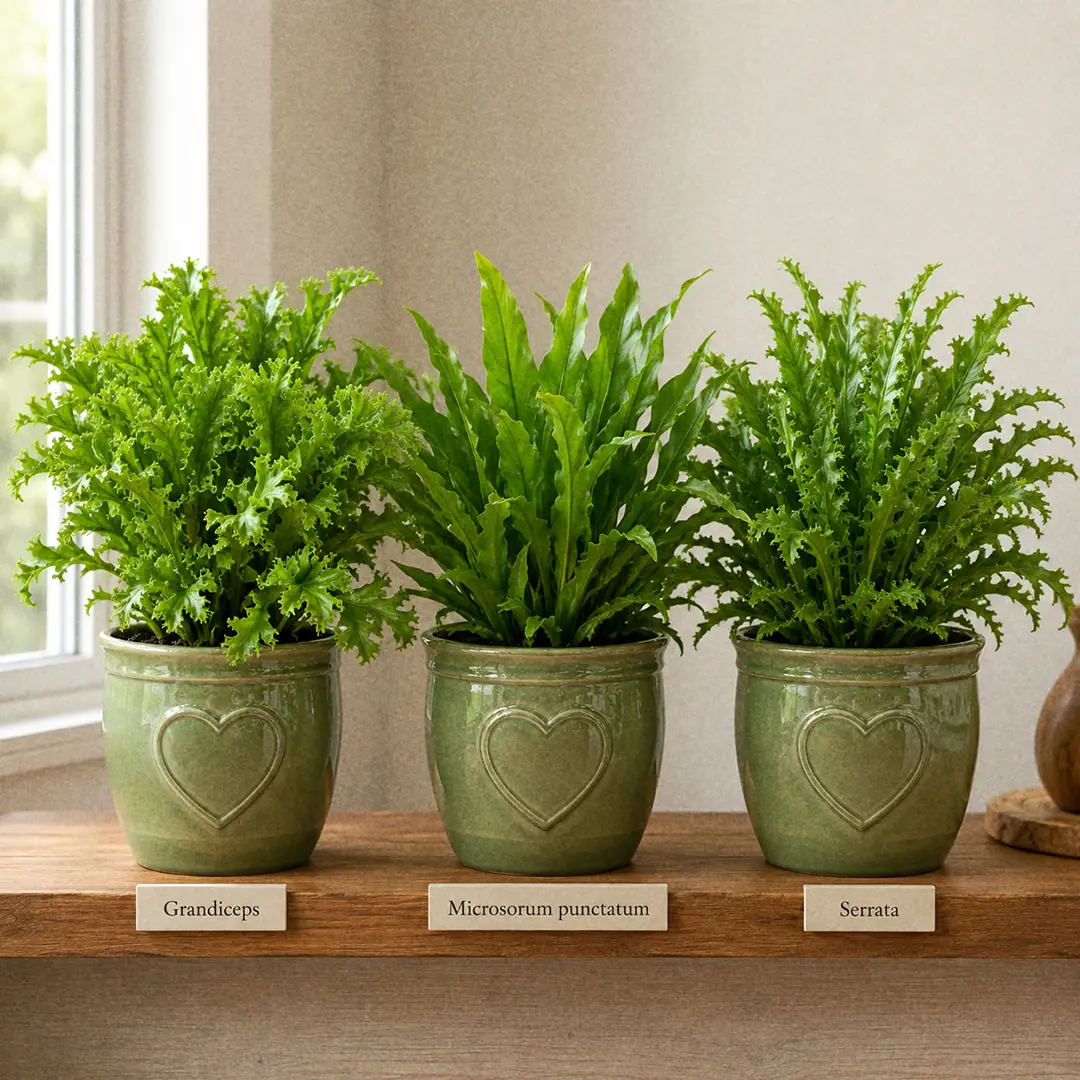
Microsorum punctatum has produced a handful of named cultivars, and they are separated almost entirely by what the frond tip does. Care is identical across every one of them.
Microsorum punctatum 'Grandiceps'
The plant this guide covers. Broad strappy fronds, 18 to 36 inches long, that fork once near the tip and then fork again several times, building a heavy crested head like a fish's tail. Fronds arch outward from a central rosette, and the weight of the crests pulls the tips downward, which is why it looks so good in a hanging basket.
Microsorum punctatum (the plain species)
The parent, sold as Climbing Bird's Nest Fern or plain Fishtail Fern. Same thick strappy fronds, same easy temperament, but the tips come to a simple point with no crest at all. Some plants sold as 'Grandiceps' are actually this species, which is worth checking at the till.
Microsorum punctatum 'Serrata'
A wavy, ruffled variant with finely toothed frond margins and a lightly crested tip. It reads softer and frillier than 'Grandiceps' and works well grouped with it for contrast.
Related Microsorum to Grow Alongside
The genus is worth exploring if this one works out for you. Crocodile Fern has the same thick leathery texture but is puckered with a reptilian vein pattern, and it wants slightly more humidity. Kangaroo Paw Fern grows from a similar creeping surface rhizome with lobed paw-shaped fronds. For a strappy contrast outside the genus, a Bird's Nest Fern gives you the same undivided-frond look in a tighter rosette, and the Leslie Bird's Nest Fern even copies the forked, crested tips.
🪴 Potting and Repotting Crested Fishtail Fern
When to Repot
Every two to three years is typical, and this fern actively prefers being a little snug. The real signals are roots pushing out of the drainage holes, the creeping rhizome running over the rim of the pot with nowhere left to go, or water running straight through soil that has broken down into fine mush. Spring is the right time, as the plant heads into active growth.
Choosing a Pot
Go up one size only, an inch or two wider. An oversized pot holds a mass of damp soil the roots never reach, which is the fastest route to root rot in an epiphyte. Wide and shallow beats deep and narrow, since the rhizome runs sideways across the surface rather than diving down. Drainage holes are essential. Our plant pots guide compares materials, and a hanging basket is a fine choice here.
Step-by-Step Repotting
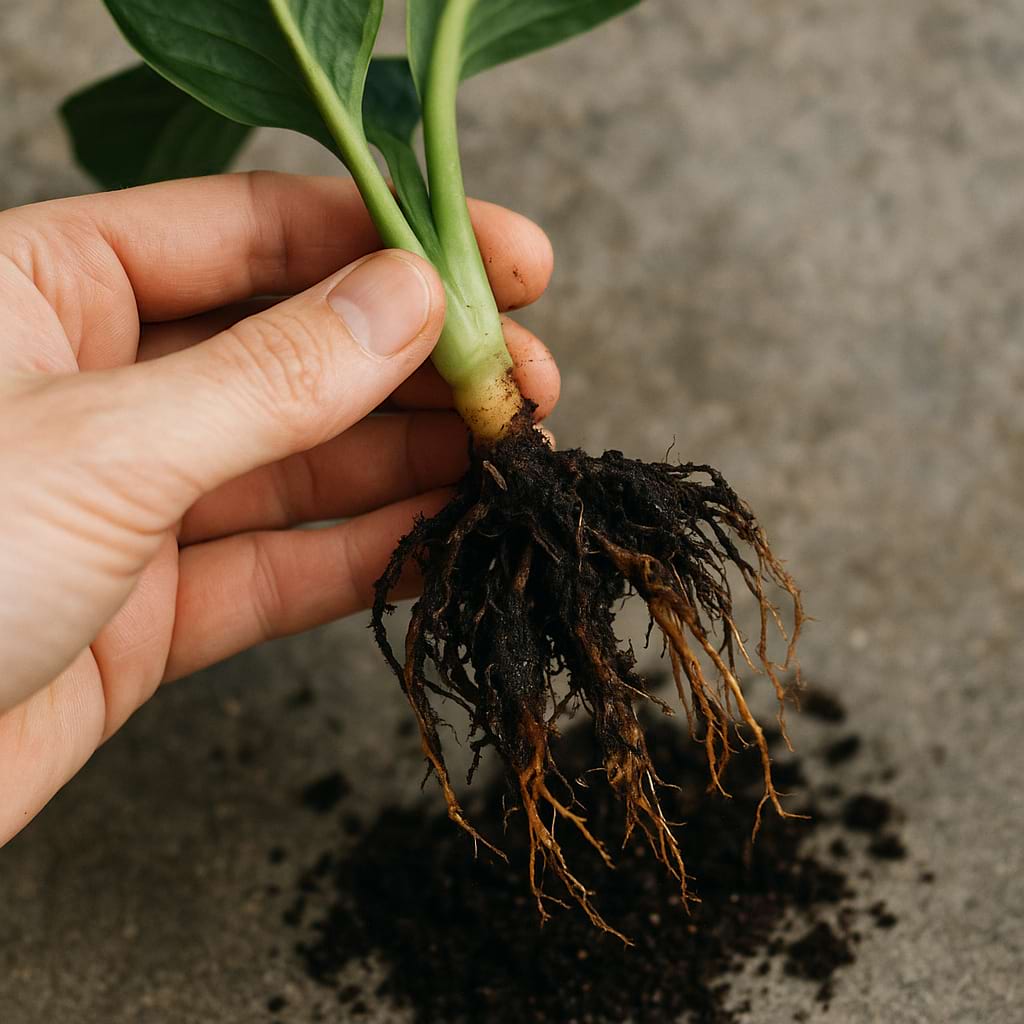
Water lightly the day before so the root ball holds together. Slide the plant out, tease away the loose old mix, and trim any blackened or slimy roots with clean scissors.
Set it into fresh chunky mix so the rhizome sits on top of the soil surface, not buried. This is the step people get wrong. That creeping rhizome needs air around it, and burying it under an inch of compost rots the plant from the middle outward. Firm the mix gently, water it in, and keep it out of direct sun for a week while it settles. Our repotting guide walks through the general process.
✂️ Pruning Crested Fishtail Fern
When to Prune
There is no shaping schedule here. You prune only to remove fronds that have finished: yellowed, browned right through, damaged, or scorched. Doing that once or twice a year, ideally in spring, keeps the plant looking sharp and redirects energy into new growth.
How to Prune
Follow the frond all the way down to where it meets the rhizome and cut it there with clean sharp scissors. Do not leave a stub, which just browns off and can harbor rot. Sterilize the blades with rubbing alcohol before you start, especially if the frond you are cutting looks diseased.
Never Trim the Crests
This is the one real rule. If a frond tip browns slightly, resist the urge to trim the crest into a neater shape. A fern frond does not regrow from a cut, so a trimmed tip stays cut and the crest is permanently ruined. Either leave the frond alone or remove the whole thing at the base. If tips are browning repeatedly, fix the cause instead: usually dry air, inconsistent watering, or salt buildup from tap water or fertilizer.
🌱 How to Propagate Crested Fishtail Fern
Best Method: Rhizome Division
Division is the only method that reliably gives you another crested plant, since spore-grown seedlings often revert to the plain-tipped species. It is also fast and forgiving. Spring, at repotting time, is the moment to do it. Our plant division guide covers the general technique.
Step-by-Step
Take the plant out of its pot and lay it on newspaper so you can see the rhizome, the thick horizontal stem creeping across the soil surface with fronds rising from it and roots dropping below.
Find a natural break point where a section carries at least two or three fronds and its own visible roots. Cut cleanly through the rhizome with a sterilized knife rather than tearing it. Pot each division into fresh chunky mix with the rhizome resting on the surface, water it in, and put it somewhere bright and indirect.
Tips for Success
Keep the new divisions a little more humid than usual for the first month, either with a clear bag propped loosely over the pot or by grouping them together. Do not fertilize until you see new fronds emerging, which usually takes four to eight weeks.
Divisions that are too small stall out or die, so resist the temptation to make six plants out of one. Two or three healthy chunks beat six weak ones every time. Expect a couple of older fronds to yellow and drop after division, which is normal transplant response rather than a sign you did it wrong.
🐛 Crested Fishtail Fern Pests and Treatment
Common Pests
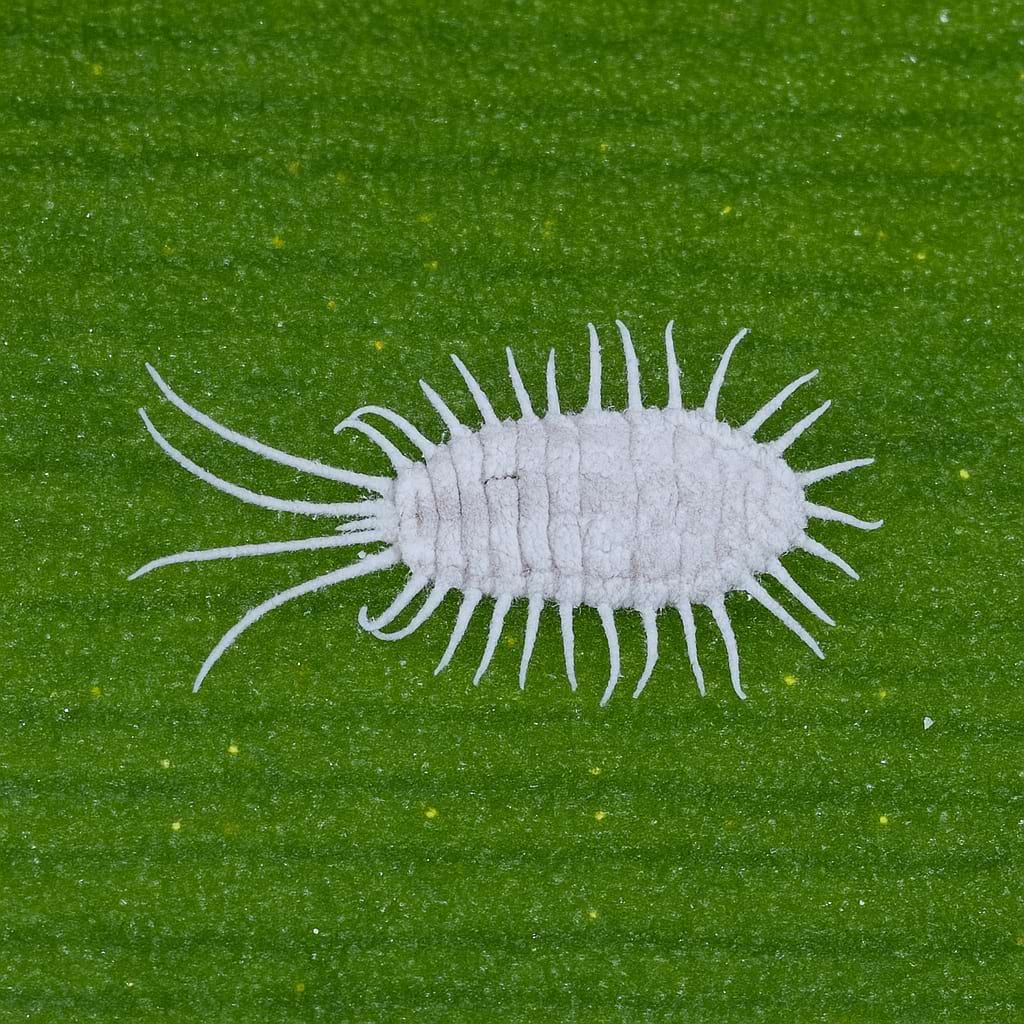
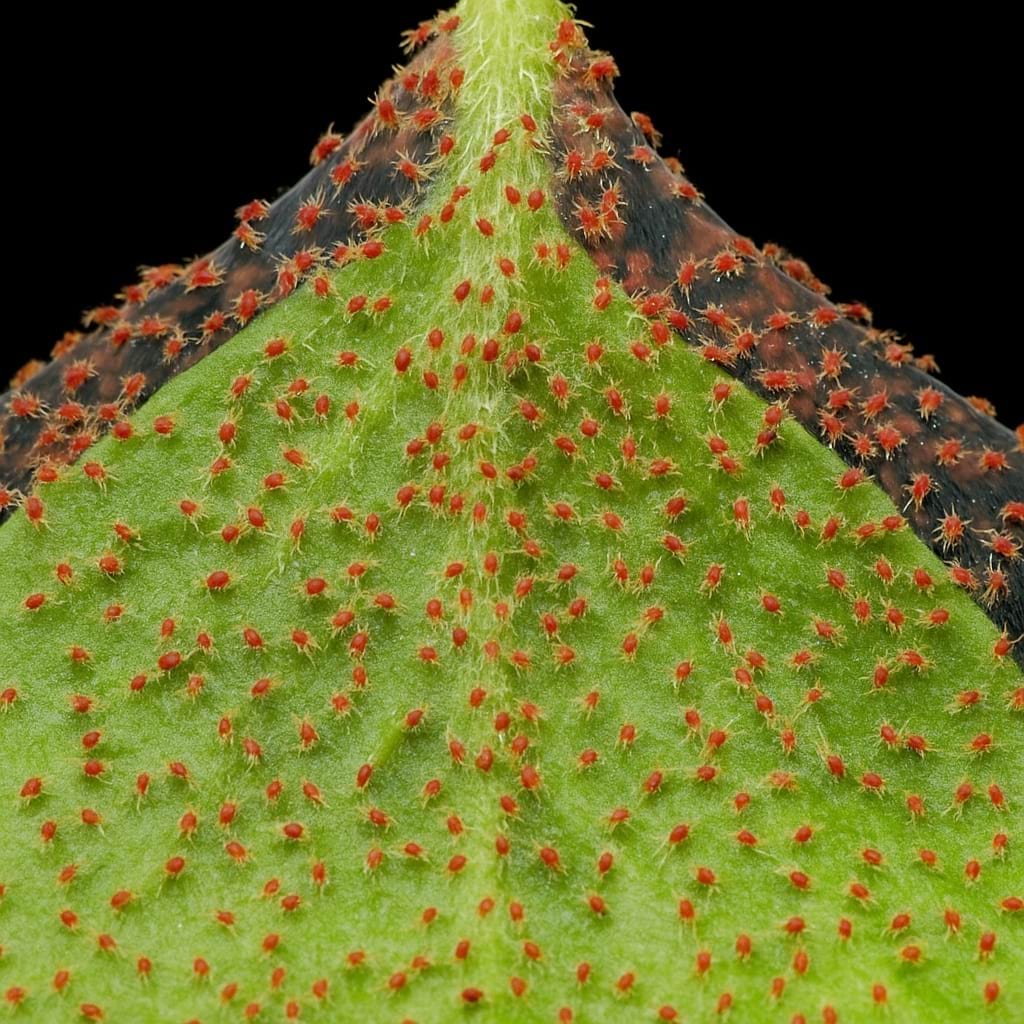
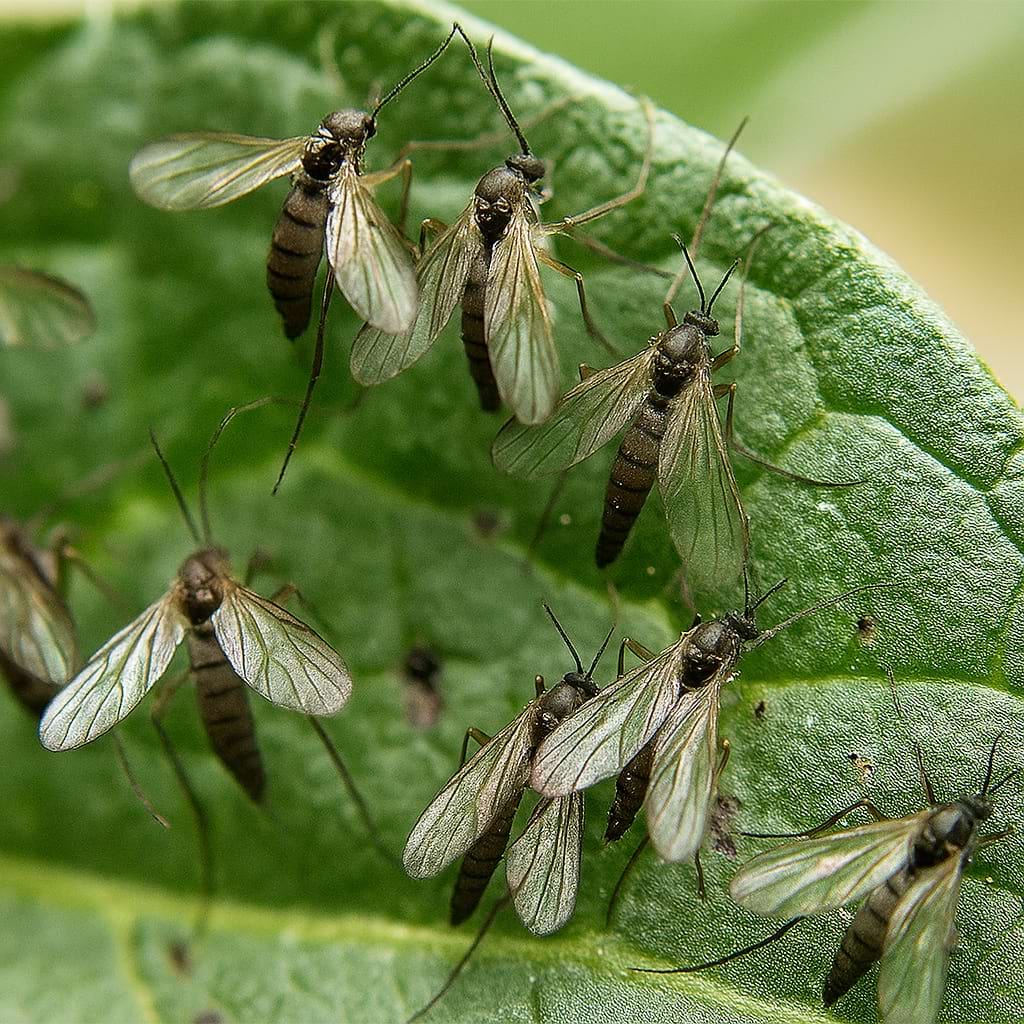
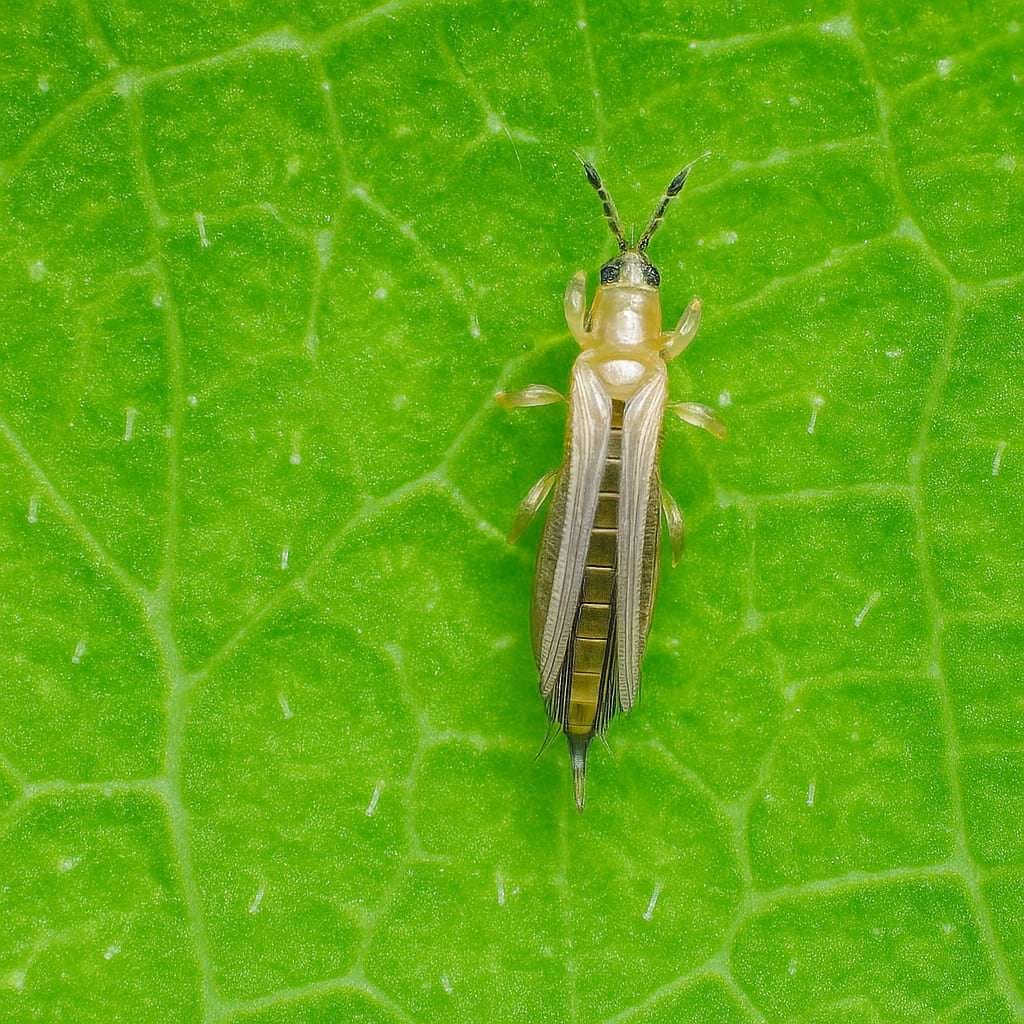
Scale insects are the number one problem on this plant, appearing as small brown or tan bumps along the frond undersides and midribs, where new growers regularly confuse them with spore dots. Mealybugs tuck into the crown and the crevices of the crested tips as white cottony fluff. Spider mites arrive in dry winter air and leave fine webbing plus a stippled, dusty look. Fungus gnats mean the mix is staying wet too long, and thrips leave silvery streaks and dark specks on the frond surface.
Treatment and Prevention
Ferns are sensitive to insecticides, so start gentle. Wipe scale and mealybugs off with a cotton bud dipped in rubbing alcohol, or rinse the whole plant in a lukewarm shower. If you need a spray, use insecticidal soap or diluted neem, and always test one frond first, then keep the plant out of direct sun until it dries. Avoid strong systemic products, which frequently scorch fern foliage.
Prevention comes down to routine. Inspect the frond undersides and the crown monthly, quarantine new plants for a few weeks, and keep the fronds dust-free so problems show up early.
🩺 Common Crested Fishtail Fern Problems
Brown Tips and Crispy Edges
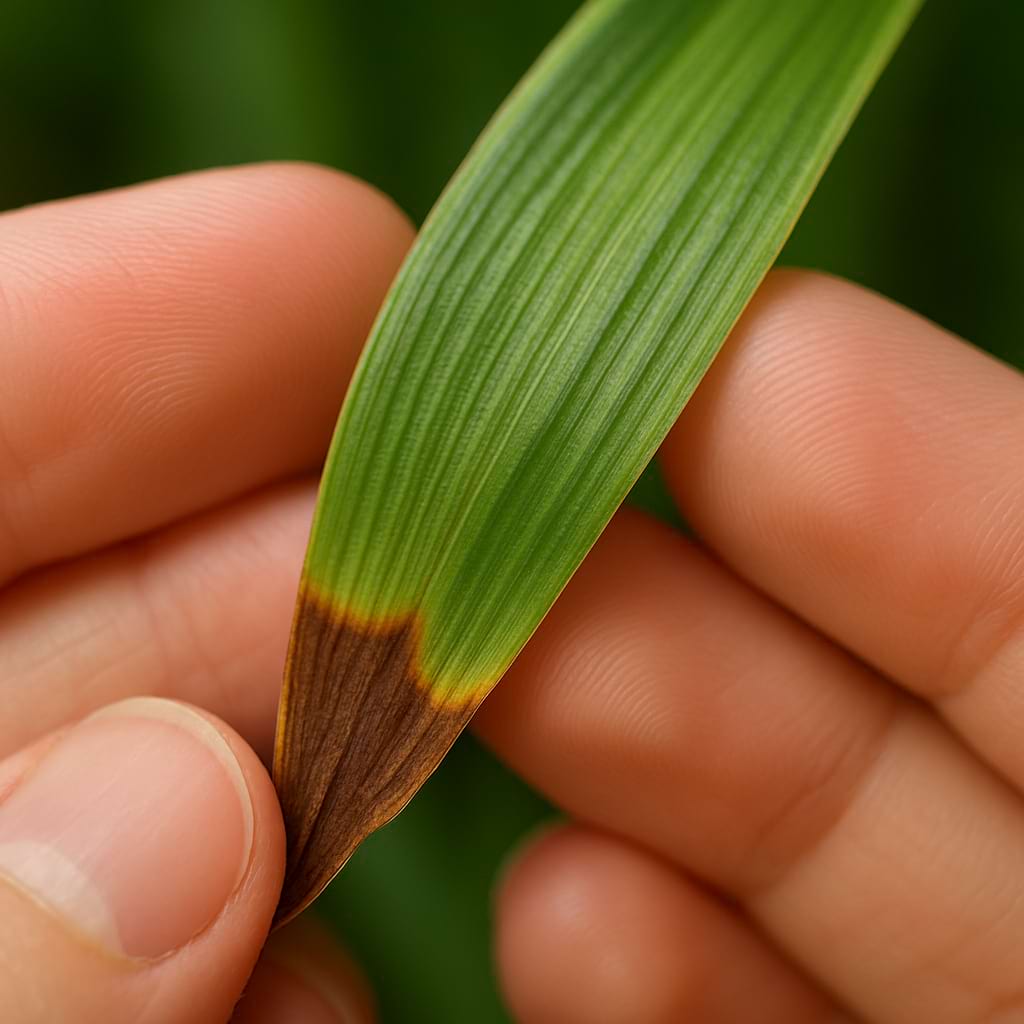
The most common complaint, and almost always an air or water issue rather than disease. Brown leaf tips come from dry air near a heat source, a pot that dried out completely between waterings, mineral buildup from hard or softened tap water, or too much fertilizer. Work through those four in order. Flush the soil thoroughly, move the plant away from vents, and switch to filtered water if your tap is hard.
Yellowing Fronds and Rot
Scattered yellowing on the oldest outer fronds is normal aging, so cut those off and move on. Widespread yellowing with soggy soil is root rot, which needs the plant unpotted, the mushy roots cut away, and a repot into fresh airy mix. A soft, dark, foul-smelling center is crown rot, caused by water pooling in the rosette. Salvage healthy rhizome sections as divisions if the center has gone.
Spotting, Fading, and Flopping
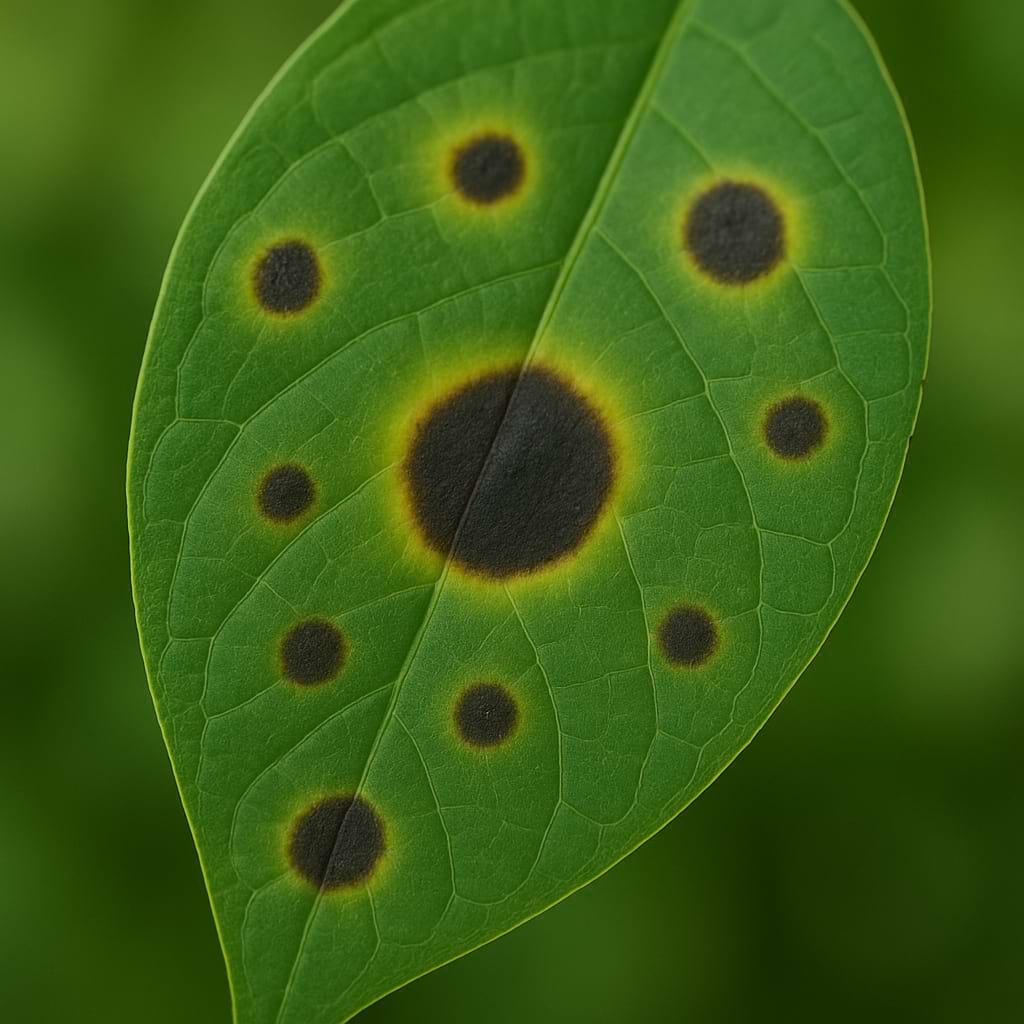
Dark or yellow-haloed patches on the fronds are leaf spot, a fungal issue that follows wet foliage in still air. Remove affected fronds, stop misting, and improve airflow. Pale washed-out blades with dry papery patches are sunburn from too much direct light. Fronds that flop and go limp are usually thirsty and recover within hours of watering, but if the soil is already wet, the roots are failing and rot is the real answer.

🖼️ Crested Fishtail Fern Display and Styling Ideas
Solo Setups
The crests are the whole point, and they only read properly when the fronds can arch and fall. A hanging basket is the best home for a mature plant, letting the forked tips dangle at eye level. A tall plant stand or a high shelf does the same job. Set on a low table, the arching fronds sprawl sideways and the crested tips end up hidden against the surface.
Grouped Arrangements
The broad strappy blades give you texture contrast that finely divided ferns cannot. Pair it with a lacy Rabbit's Foot Fern or a delicate Maidenhair Fern so the two textures play off each other, or set it beside a puckered Crocodile Fern for a duo of thick-leaved Microsorum. Mounted on a slab of cork bark, it also makes an excellent epiphyte display next to a Superbum Staghorn Fern or a White Rabbit's Foot Fern, which takes to a mount just as readily.
Where Not to Put It
Skip anywhere directly above or beside a radiator, which browns the tips no matter what you do. Avoid a south-facing sill in full afternoon sun, and avoid deep windowless corners where the crests stop forming. A closed cabinet or a spot with no air movement invites leaf spot and crown rot, so give it a room that breathes.
🌟 Crested Fishtail Fern Pro Care Tips
💧 Water the soil, never the crown. Standing water in the central rosette is the single fastest way to kill this plant.
🪴 Leave the rhizome on the surface. Burying that creeping stem when you repot rots the plant from the middle outward.
✂️ Never trim a crested tip. Fern fronds do not regrow from a cut, so a trimmed crest stays trimmed forever.
🔍 Learn the spore dots. Neat rows of firm orange-brown dots under a frond are sori, not scale insects.
🧺 Hang it. The crests only show properly when the fronds can arch downward and dangle.
🌱 Divide, do not sow. Spore-grown seedlings often lose the crest and revert to the plain species.
🚿 Shower it occasionally. A lukewarm rinse cleans dust off the broad fronds and knocks pests back at the same time.
🍼 Feed at half strength. Fern roots are fine and burn easily, and brown tips are usually the first sign you overdid it.
❓ Frequently Asked Questions
Is Crested Fishtail Fern toxic to cats and dogs?
No. Microsorum punctatum and its cultivars are non-toxic to cats and dogs, so this is a safe pick for a home with curious pets. A cat that chews a large amount of any plant material may still get an upset stomach, but there is nothing harmful in the fronds themselves.
What are the brown dots on the underside of my fronds?
Those are almost certainly spores. Sori form as round, raised, orange-brown dots in regular rows or scattered patterns on mature fronds, and they mean the plant is healthy. Scale insects, by contrast, sit randomly, flick off easily with a fingernail, and often leave sticky residue behind.
Why are my fronds losing their crested tips?
Insufficient light is the usual cause. New fronds emerging with plain pointed tips instead of forked heads mean the plant is not getting enough energy to build the crest. Move it closer to a bright window or add a grow light. Occasionally a plant sold as 'Grandiceps' is simply the plain species, which never crests at all.
How often should I water a Crested Fishtail Fern?
Water when the top inch of mix feels dry, which in a bright room in summer usually lands at once or twice a week, and every 10 days or so in winter. Always drain fully and never leave the pot sitting in a saucer of water.
Can Crested Fishtail Fern grow in low light?
It survives in low light better than nearly any other fern, which is why it works in offices and north-facing rooms. Growth slows considerably and the crests come in less pronounced, so treat low light as tolerance rather than a preference.
Does it need a humidifier?
Not usually. It does fine at 40-60% humidity, which most homes hit without help. If your winter air drops below 35% you will see brown tips, and a humidifier or a group of plants fixes that. Misting is not the answer here, since water settling in the crown causes rot.
How big does a Crested Fishtail Fern get?
Fronds reach 18 to 36 inches long indoors, with the whole plant spreading 18 to 30 inches wide over several years. Growth is moderate, so expect a few new fronds each season rather than a sudden takeover.
Can I trim the brown tips off my fronds?
You can trim brown edges for appearance, but you cannot restore the shape. Fern fronds do not regrow from a cut, so a trimmed crest stays blunt permanently. On a badly browned frond, cut the whole thing off at the rhizome instead and let a fresh one replace it.
Is Crested Fishtail Fern the same as a Bird's Nest Fern?
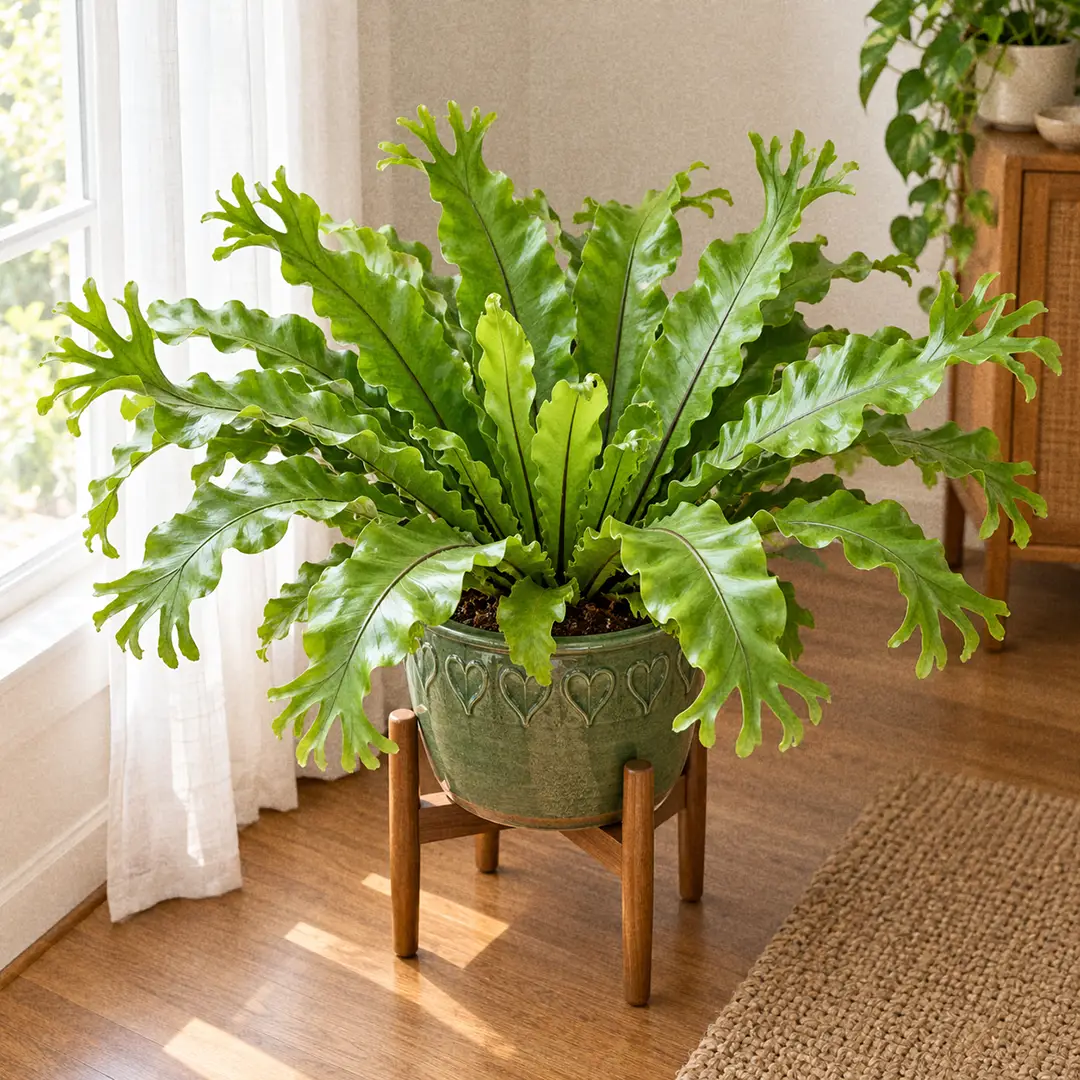
They are different plants that look related. Microsorum punctatum is sometimes sold as Climbing Bird's Nest Fern because it forms a similar rosette of undivided strappy fronds, but a true Bird's Nest Fern is Asplenium nidus, with a tighter rosette, wavier margins, and a dark central rib. Care is broadly similar for both.
ℹ️ Crested Fishtail Fern Info
Care and Maintenance
🪴 Soil Type and pH: Chunky, fast-draining epiphytic mix with bark and perlite
💧 Humidity and Misting: Happy at 40-60%, which is far more forgiving than most ferns, though it thrives above 50%.
✂️ Pruning: Cut spent or damaged fronds off at the rhizome; never trim a healthy frond tip.
🧼 Cleaning: Wipe the broad fronds with a damp cloth every few weeks, or rinse the whole plant in a lukewarm shower.
🌱 Repotting: Repot every 2-3 years in spring when the rhizome starts creeping over the rim of the pot.
🔄 Repotting Frequency: Every 2-3 years
❄️ Seasonal Changes in Care: Steady water and monthly feeding from spring through summer, then less water and no fertilizer through the darker months.
Growing Characteristics
💥 Growth Speed: Moderate
🔄 Life Cycle: Evergreen epiphytic perennial fern
💥 Bloom Time: Never flowers; reproduces by spores that form as round orange-brown dots on the undersides of mature fronds
🌡️ Hardiness Zones: 10-12
🗺️ Native Area: Tropical Asia, Australia, Africa, and the Pacific Islands, where the species grows on trees and rocks
🚘 Hibernation: No true dormancy, though growth slows noticeably in low winter light
Propagation and Health
📍 Suitable Locations: East windows, bright bathrooms, hanging baskets, plant shelves, mounted on bark, north-facing rooms
🪴 Propagation Methods: Divide the creeping rhizome in spring, making sure each piece keeps roots and two or three fronds.
🐛 Common Pests: Scale Insects, Mealybugs, Spider Mites, Fungus Gnats, Thrips
🦠 Possible Diseases: Root rot, crown rot, leaf spot from water sitting on the fronds
Plant Details
🌿 Plant Type: Epiphytic crested fern with a creeping rhizome
🍃 Foliage Type: Evergreen thick strappy fronds with forked crested tips
🎨 Color of Leaves: Bright apple green, deepening to mid green with age
🌸 Flower Color: None
🌼 Blooming: No. Ferns reproduce by spores, not flowers.
🍽️ Edibility: Not grown as an edible plant.
📏 Mature Size: 18-36 inches tall
Additional Info
🌻 General Benefits: Pet-safe, tolerates lower light and drier air than almost any other fern, and holds its sculptural shape without staking
💊 Medical Properties: The parent species has a history of traditional use in Southeast Asia, but no verified medicinal application.
🧿 Feng Shui: Soft, forked fronds soften sharp corners and add flowing wood energy without the spikiness of a palm or snake plant.
⭐ Zodiac Sign Compatibility: Pisces
🌈 Symbolism or Folklore: Abundance, branching growth, quiet resilience
📝 Interesting Facts: 'Grandiceps' is a cultivar name meaning "large head", a nod to the way each frond splits repeatedly at the tip into a heavy forked crest. Wild Microsorum punctatum grows as an epiphyte in tree forks, catching falling leaf litter in its rosette the way a Bird's Nest Fern does.
Buying and Usage
🛒 What to Look for When Buying: Look for firm apple-green fronds with well-formed crests at the tips and a plump rhizome sitting on top of the soil. Skip plants with brown mushy bases, flat uncrested tips, or masses of crispy frond edges.
🪴 Other Uses: Hanging basket specimen, mounted bark display, terrarium background plant, and a low-fuss substitute for a Boston Fern.
Decoration and Styling
🖼️ Display Ideas: Hanging baskets, high shelves, bathroom corners, plant stands, mounted on cork bark, grouped fern collections
🧵 Styling Tips: The crested tips read best when the fronds can arch and fall freely, so raise the plant off a table and let the crests hang below the rim.
🪴 See also 🪴
Complete Guide to Crissie Bird's Nest Fern Care and Growth
Complete Guide to Osaka Bird's Nest Fern Care and Growth
The 15 Most Popular Indoor Ferns and How to Choose One
Complete Guide to Leslie Bird's Nest Fern Care and Growth
Complete Guide to Superbum Staghorn Fern Care and Growth
Complete Guide to Austral Gem Fern Care and Growth
Complete Guide to Crispy Wave Fern Care and Growth
Complete Guide to Japanese Bird's Nest Fern Care and Growth
Complete Guide to Button Fern Care and Growth
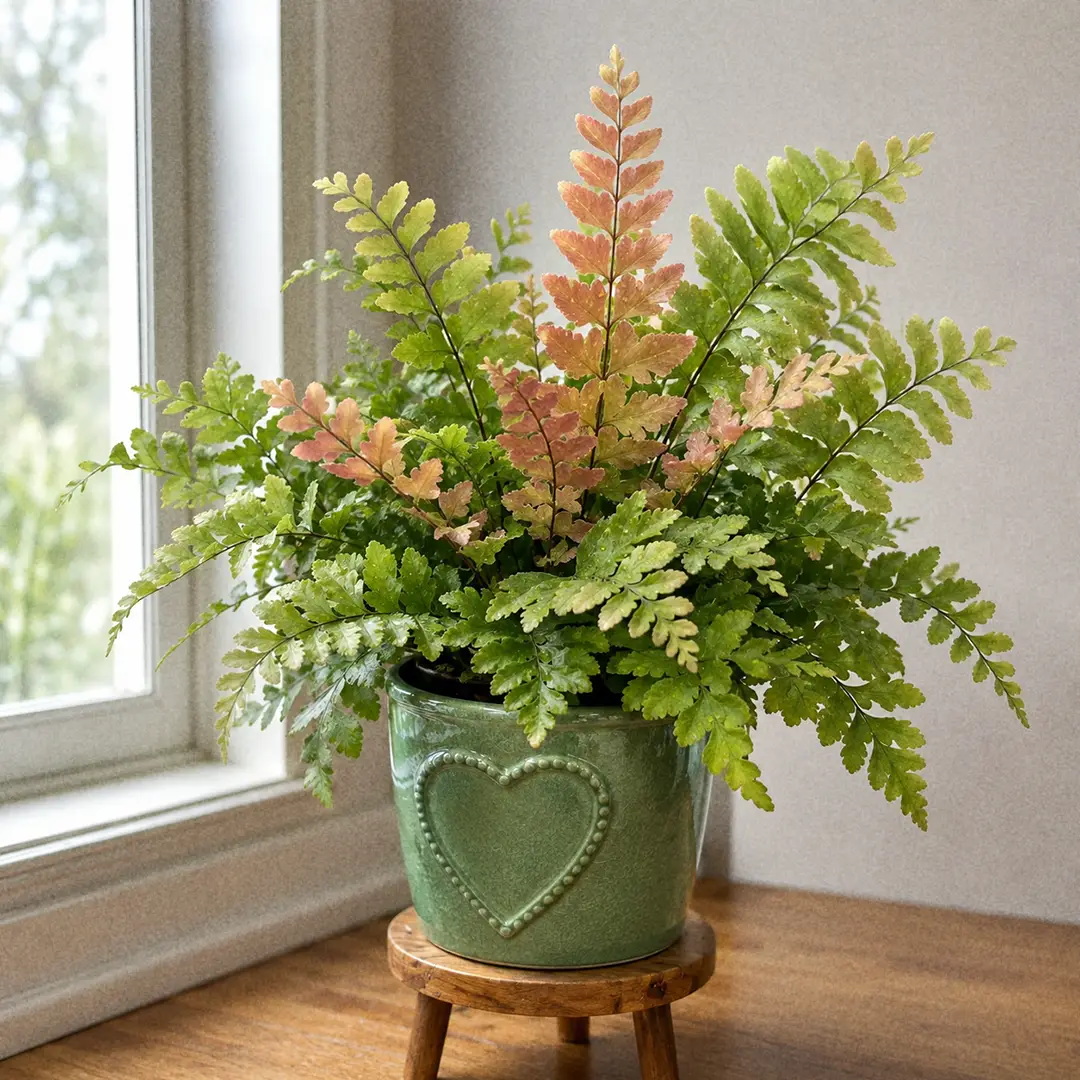
Complete Guide to Mahogany Fern Care and Growth
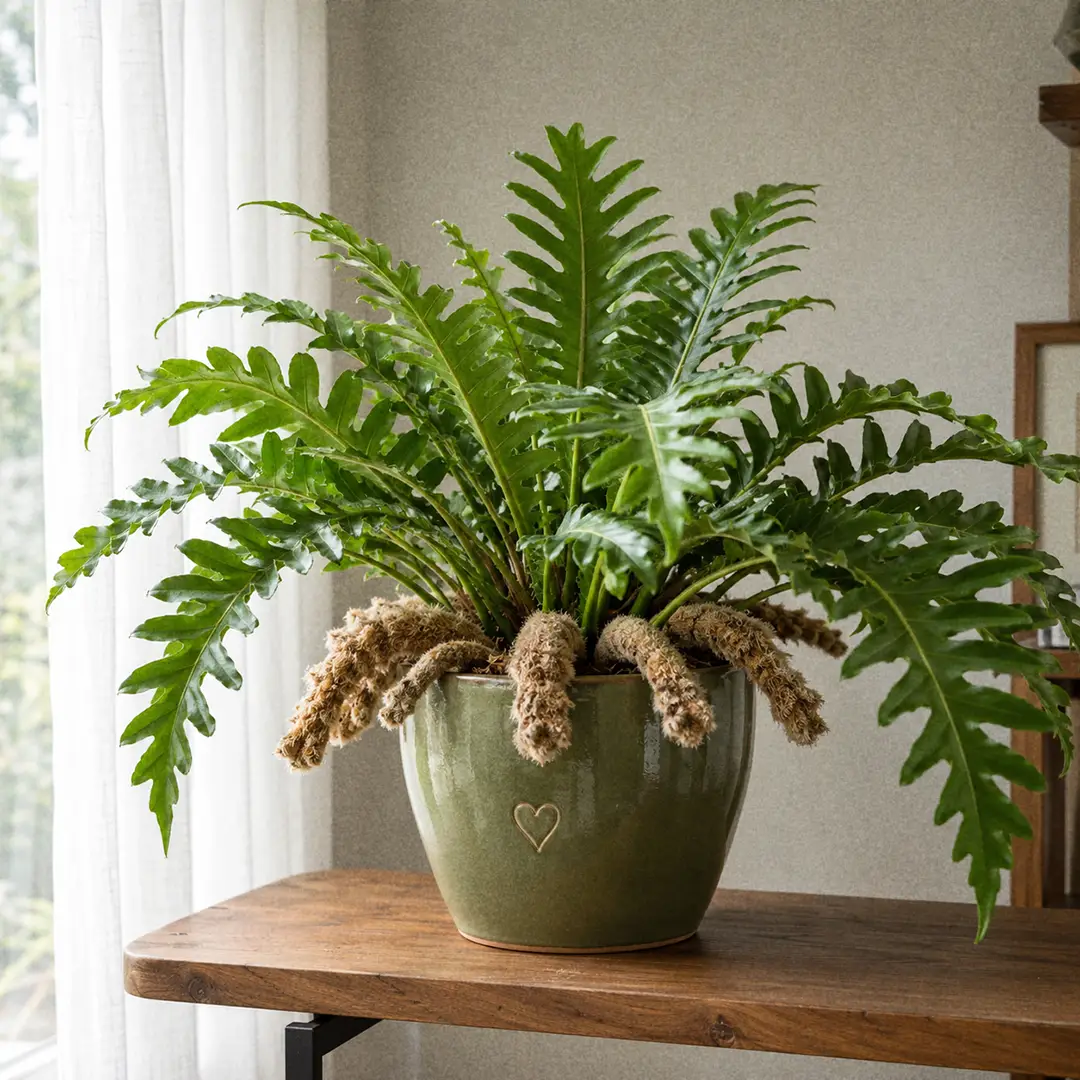
Complete Guide to Bear's Paw Fern Care and Growth
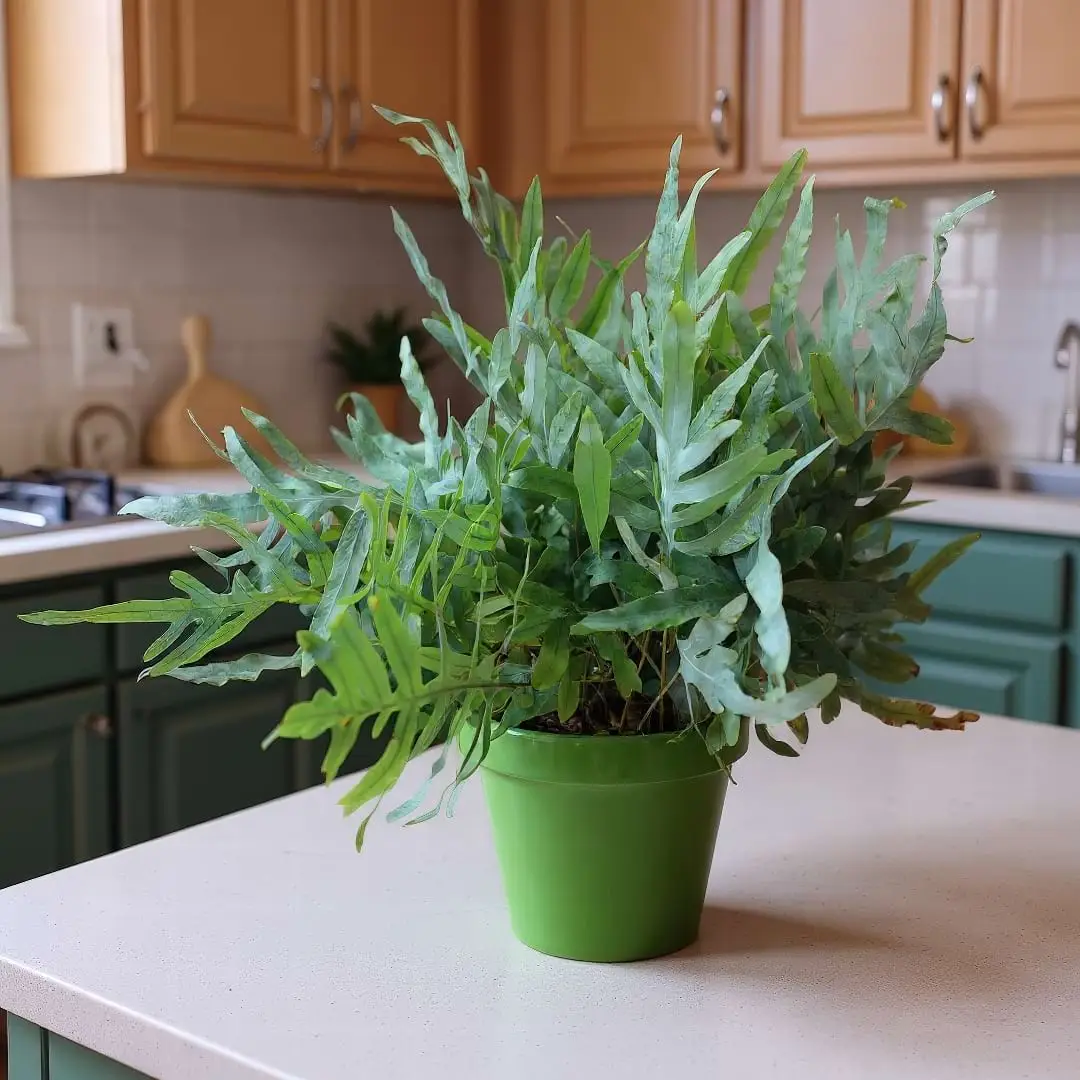
Complete Guide to Blue Star Fern Care and Growth
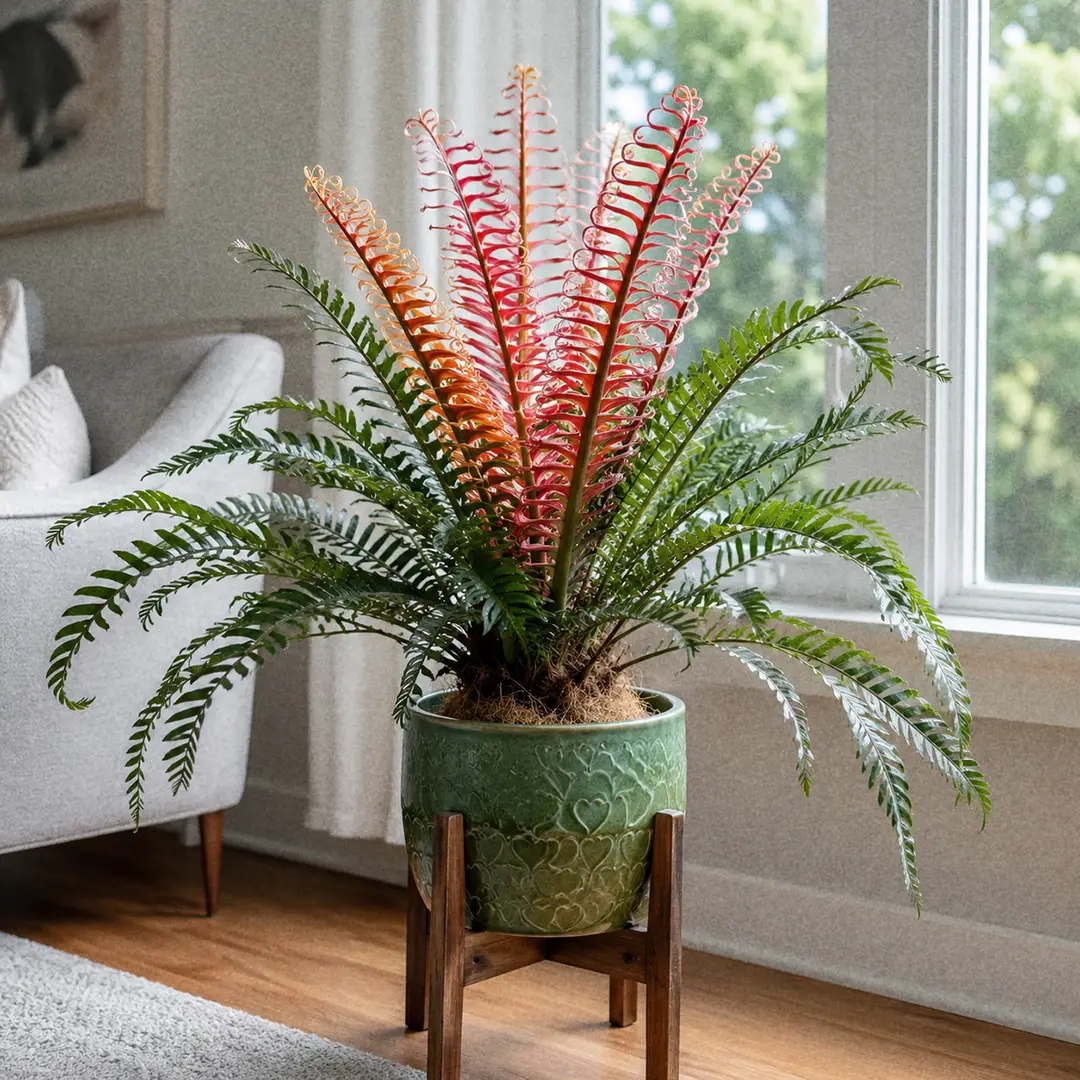
Complete Guide to Volcano Fern Care and Growth

Houseplant101 Forum
Questions & Comments
Ask a question, share your plant experience, or help other plant owners.
Comments are temporarily unavailable.
Open the Houseplant101 ForumNo comments yet
Be the first to ask a question or share your experience about this page.
Log in or create an account
Comments use your Houseplant101 Forum account, but you can stay on this page.
Create a new account