
Crispy Wave Fern
Asplenium nidus 'Crispy Wave'
Japanese Asplenium Fern, Crispy Wave Bird's Nest Fern, Asplenium antiquum 'Crispy Wave'


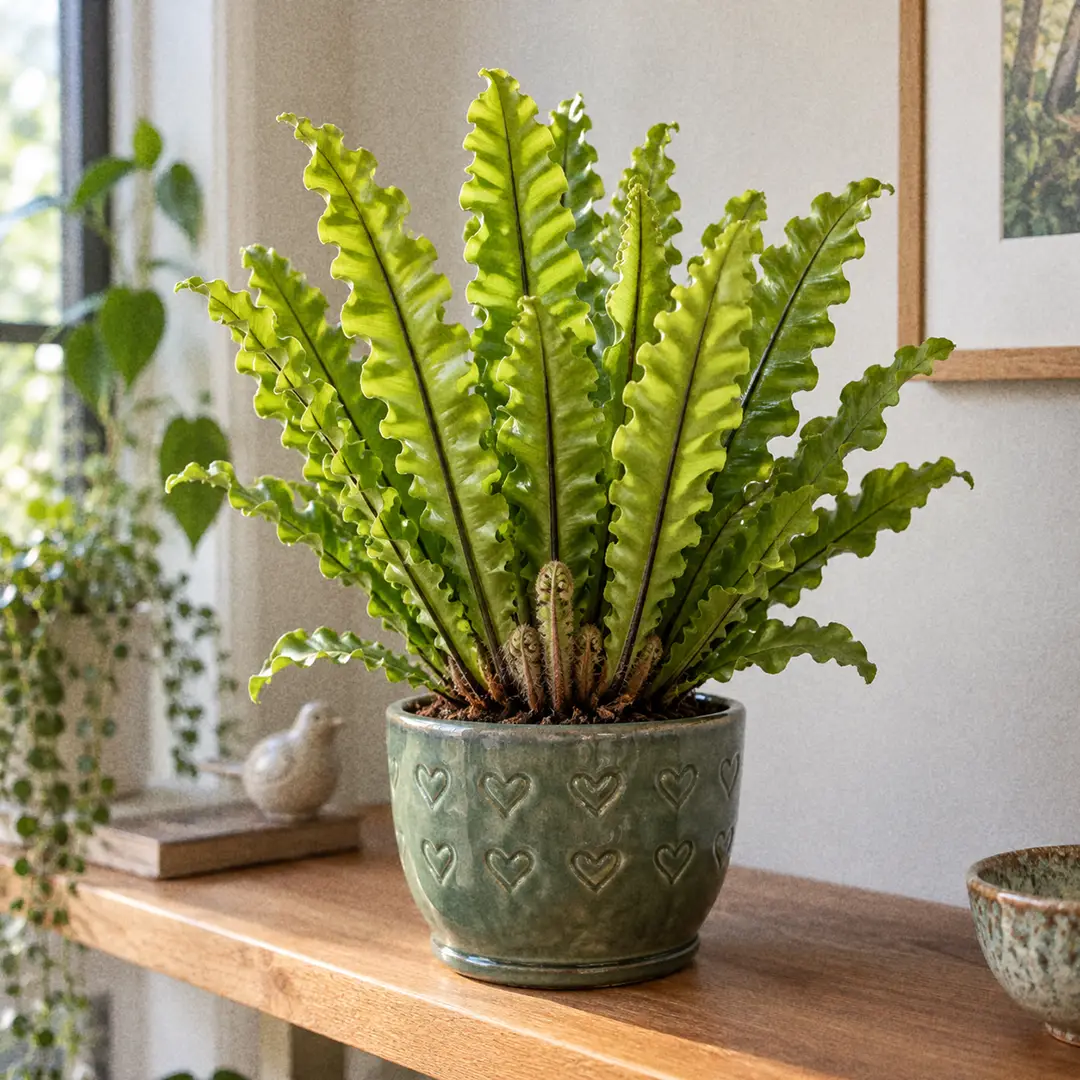
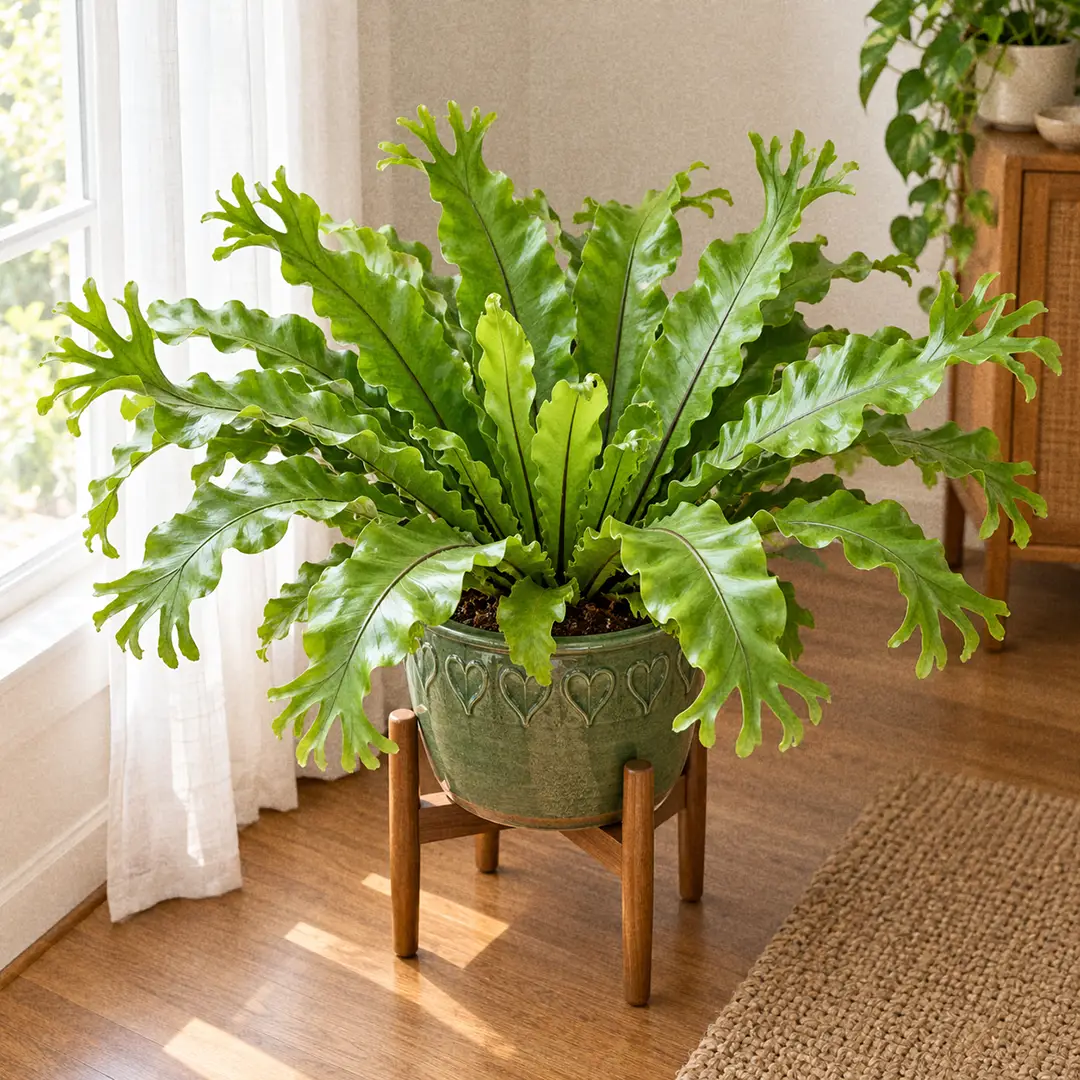
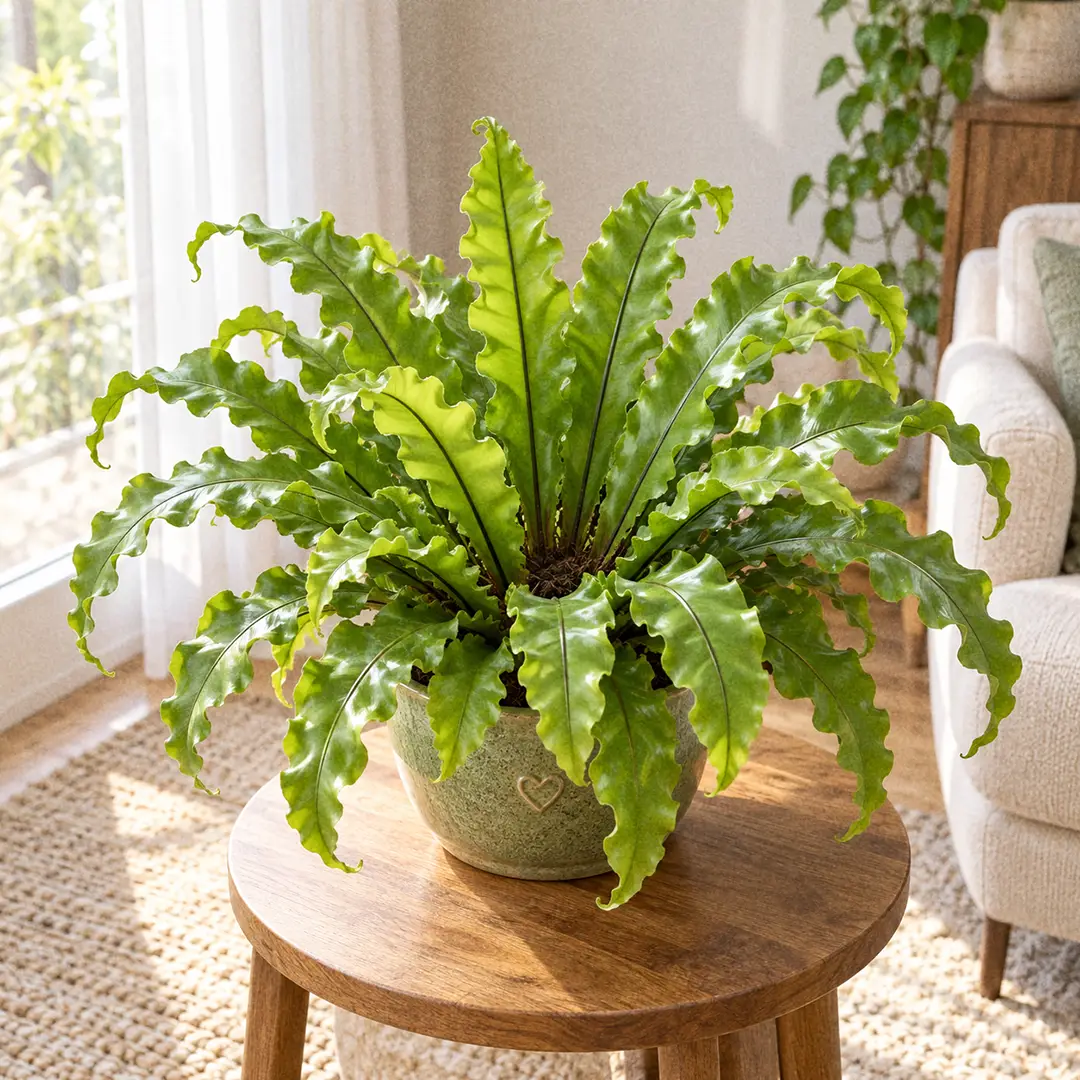
The Crispy Wave Fern is a bird's nest fern with stiff, deeply corrugated fronds that stand up in a ruffled rosette instead of arching over. Learn how to water it without rotting the crown, why the brown lines under the leaves are not pests, and how to stop the edges from crisping.
📝 Crispy Wave Fern Care Notes
🌿 Care Instructions
⚠️ Common Pests
📊 Growth Information
🪴 In This Guide 🪴

☀️ Crispy Wave Fern Light Requirements (Indoor Lighting Guide)
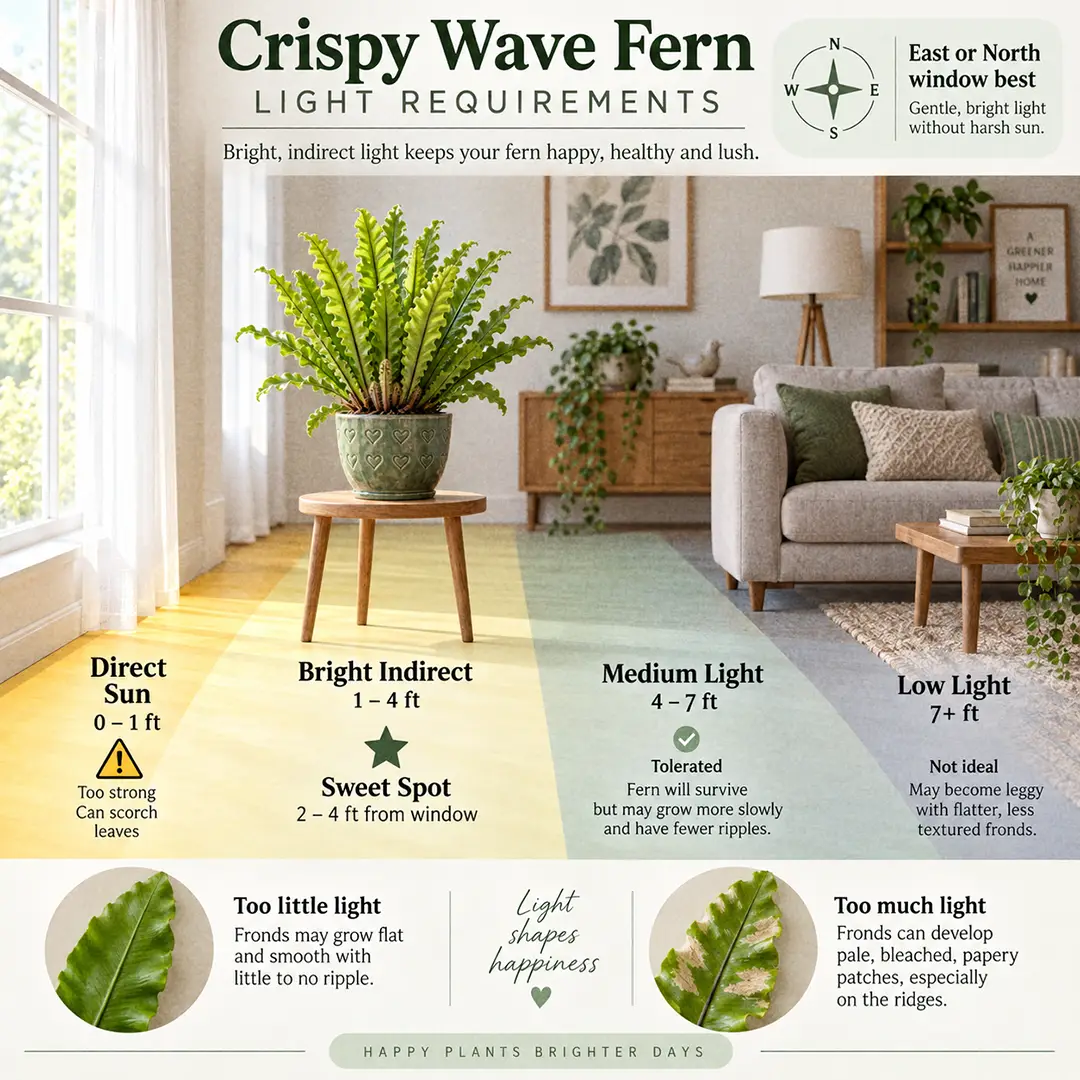
The Sweet Spot
Bright indirect light is what this fern wants, and an east or north window is the easy answer. In the wild the species grows as an epiphyte in the crook of a tree branch, under a canopy, so it evolved for dappled shade rather than open sky. Sit it right on a north sill, or two to four feet back from an east window where the morning sun lands on the wall beside it rather than on the leaves.
West and south windows work perfectly well if you put a sheer curtain between the glass and the plant. Our indoor lighting guide is worth a read if you are still learning to judge a spot by eye.
Too Little Light
Crispy Wave tolerates genuinely dim corners better than most ferns, which is why it turns up in offices and windowless bathrooms. Tolerating is not the same as thriving, though. In too little light the new fronds come out smaller, flatter, and noticeably less rippled than the ones the plant arrived with, which is stunted growth plus a loss of the whole reason you bought it.
The corrugation is the tell. If new leaves are opening almost smooth, move it closer to a window or put a grow light on a timer for eight hours a day.
Too Much Light
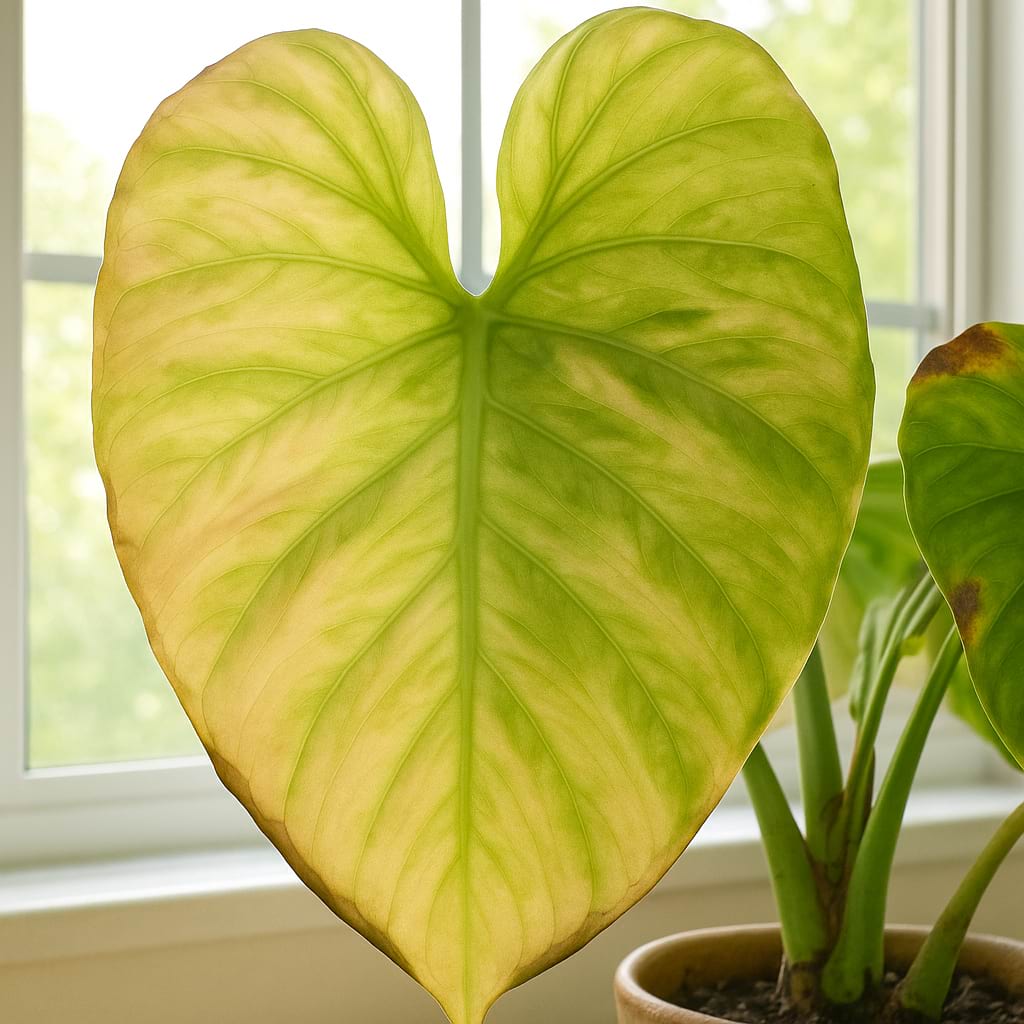
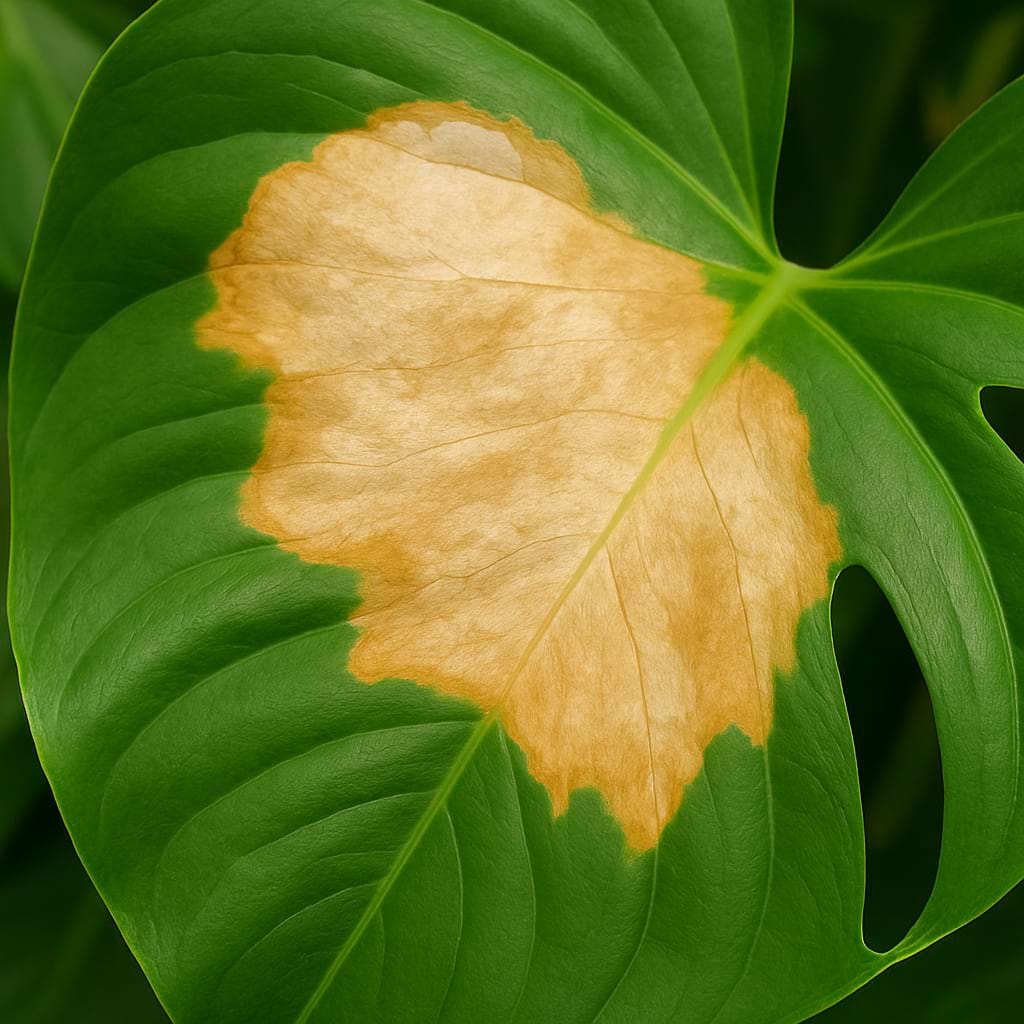
Direct midday sun bleaches these fronds fast. You get pale washed-out patches first, then dry papery scorch marks along the ridges where the light hits hardest. That damage does not heal, and the frond carries it until you cut it off.
A yellow-green cast across the whole plant is a milder version of the same message. Crispy Wave is naturally a lighter green than a common Bird's Nest Fern, but bright yellow with a hard-edged look means too much sun. Move it back a couple of feet and the next fronds come in richer.
💧 Crispy Wave Fern Watering Guide (How to Water Properly)
Watering Frequency
Aim for lightly and evenly damp, never soggy and never bone dry. In practice that means watering when the top inch of the mix has dried out, which usually falls every five to eight days in spring and summer, and every ten to fourteen in winter. Pot size, room warmth, and how bright the spot is all shift that, so check with a finger or a moisture meter rather than a calendar.
Those thick fronds hold a reserve of water, which is why this fern shrugs off a missed watering that would crisp a Maidenhair Fern overnight. It also means it goes downhill quietly rather than dramatically, so a weekly check beats waiting for a visible complaint.
How to Water
This is the one rule that decides whether your plant lives. Pour around the outside edge of the pot, never into the centre of the rosette. The middle of a bird's nest fern is a tightly packed funnel of overlapping frond bases, and water that settles there in a still, warm room does not evaporate. It sits, and the crown turns brown and soft from the inside.
Water until it runs freely from the drainage holes, then tip out the saucer. Bottom watering is a good fit here for exactly this reason: stand the pot in an inch of water for fifteen minutes, let the mix wick it up, then drain it fully. No splashing, no wet crown.
Signs of Trouble
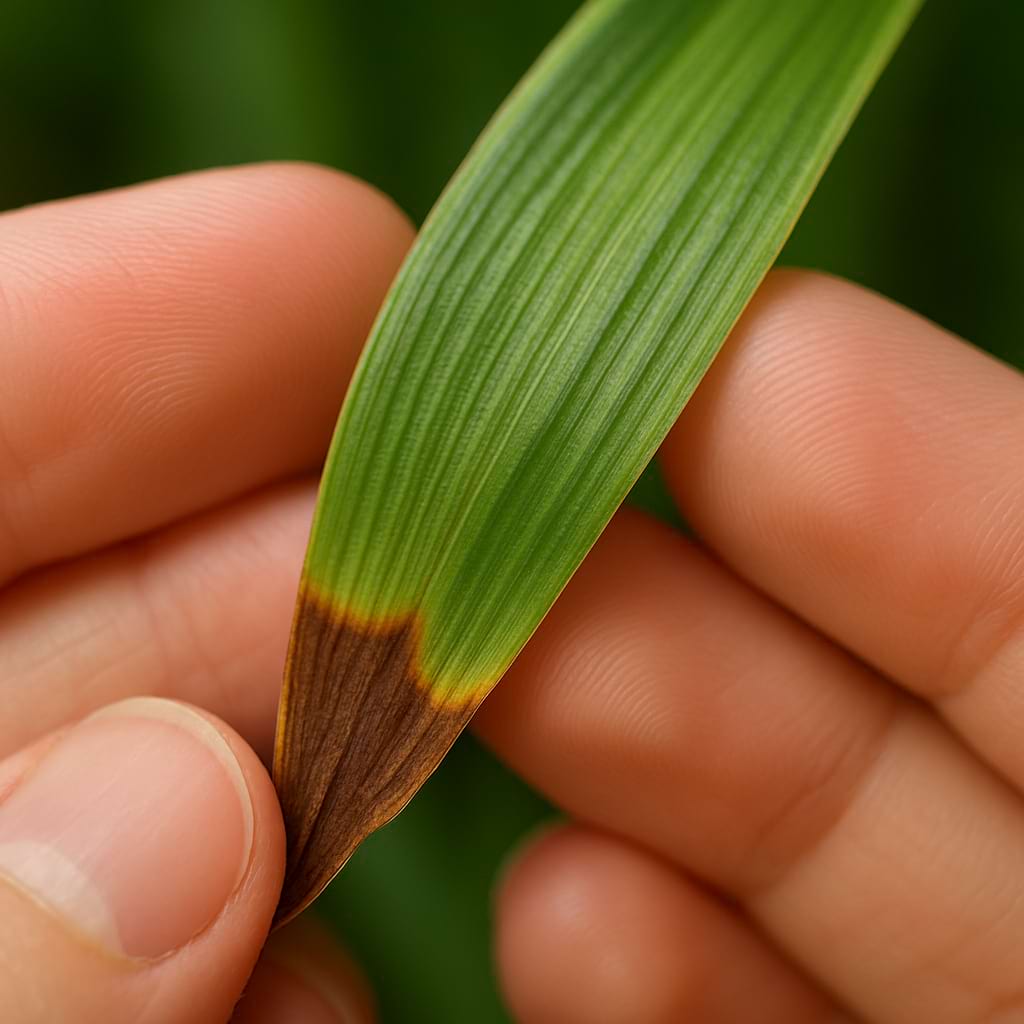
Underwatering shows as fronds that go limp and lose their stiff upright posture, then crisp brown along the ruffled edges from the tip inward. A thorough soak revives the limpness within hours, but the browned edges stay brown.
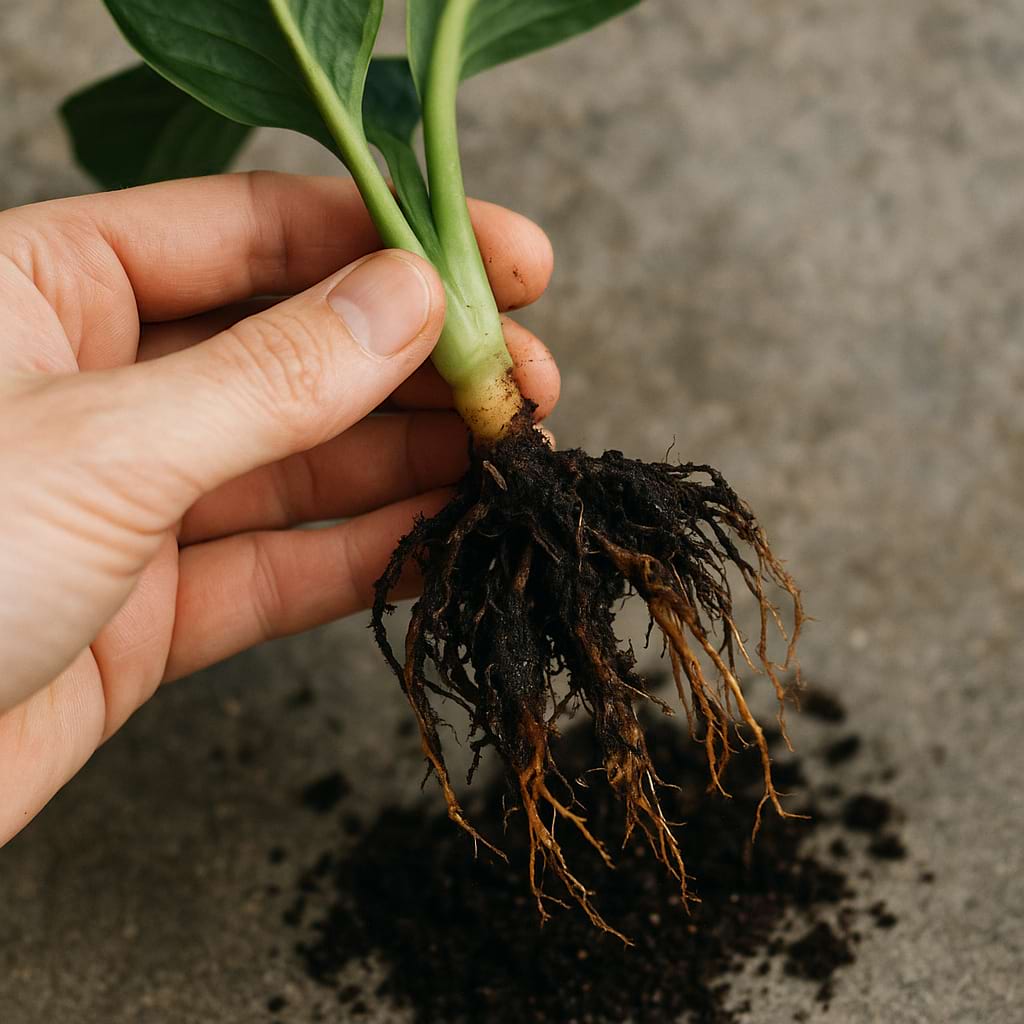
Overwatering is quieter and much more serious. Fronds go pale, yellow, and slightly translucent, often starting with the oldest ones at the outside of the rosette, and the base of the plant feels soft. That is root rot starting, and it needs the plant out of the pot and into fresh dry mix straight away. Our watering guide covers the wider principles.
🪴 Best Soil for Crispy Wave Fern (Potting Mix & Drainage)
What the Soil Needs
Crispy Wave is an epiphyte. In the wild its roots grip bark and moss with air all around them, never sitting in a dense soil block, so the mix in your pot has to be loose, chunky, and quick to drain while still holding a little moisture. Straight bagged potting compost is too heavy and stays wet for days, which is how most of these ferns end up rotting.
Slightly acidic is ideal, around pH 5.5 to 6.5, which most bark and peat-free coir blends land on naturally. Our soil guide covers why airflow around the roots matters as much as the ingredients.
DIY Soil Mix
A blend that works reliably is 2 parts peat-free coir or houseplant compost, 1 part orchid bark, 1 part perlite, plus a generous handful of chopped sphagnum moss to hold humidity around the roots. Some growers add a little horticultural charcoal to keep the mix sweet between repots, which is worth doing if your pot has no drainage saucer to check.
The bark is the part people skip, and it is the part that matters most. Those chunks create air pockets that let the roots breathe after every watering.
Pre-Made Options
A bagged aroid or orchid mix is the closest off-the-shelf match and needs almost nothing added. A standard houseplant compost needs cutting with roughly a third bark and perlite before it suits this fern. Our potting soil guide compares the common bags. Whatever you use, pair it with a pot that actually drains, because no mix survives a decorative pot with a sealed base.
🍼 Fertilizing Crispy Wave Fern
When and How Often
Feed once a month from early spring through to the end of summer, and stop completely through autumn and winter when growth slows. This is a moderate grower rather than a hungry one, so a light schedule beats a generous one. Always water lightly first, then feed, so the fertilizer never hits dry roots.
What to Use
A balanced liquid houseplant fertilizer at half the recommended strength is all it needs. Ferns have fine roots that burn easily at full-strength doses, and Crispy Wave is no exception. A gentle fish emulsion or seaweed feed also suits it well if you do not mind the smell for a day. Our fertilizing guide explains the ratios and the fertilizers guide covers what to buy.
Pour the diluted feed around the rim, exactly as you water, so nothing collects in the crown.
Over-Fertilizing Signs
Brown, crisp frond tips on a plant that is watered properly and sitting in good humidity usually point at salt buildup rather than dry air. A white crust on the soil surface confirms it. Flush the pot with plain water two or three times, letting it drain fully each time, and skip feeding for two months.
🌡️ Crispy Wave Fern Temperature Range
Ideal Range
Ordinary room temperature suits it, roughly 65-80°F (18-27°C). Growth slows below 60°F and the plant starts to look unhappy below 55°F, so treat 50°F (10°C) as the hard floor and do not test it. There is no cold rest to give and no benefit to chilling it.
Drafts and Heat Sources
Cold draughts are the bigger risk of the two. An entrance hall in winter, a gap under a badly fitted window, or a spot beside a door that opens onto frost will brown the frond edges within a week. Radiators and heating vents cause the same damage from the other direction, drying the air right around the plant until the ruffled margins crisp.
Both problems are fixed by moving the pot a few feet. A shelf on an interior wall, away from glass and away from the heat source, keeps it steady through winter.
💦 Crispy Wave Fern Humidity Requirements
Ideal Humidity
Target 50-60% humidity. Crispy Wave copes with less than a Maidenhair does, thanks to those thick fronds, but the deeply ruffled edges are the thinnest tissue on the plant and they brown first when air dries out. Below about 40%, expect crisping along the margins no matter how well you water.
Easy Humidity Boosters
A bathroom with a window is the single best room in most homes, and this fern loves a shower. Grouping it with other plants raises the local humidity noticeably, and a pebble tray helps a little. Skip the misting bottle: it does almost nothing for ambient humidity, and droplets running down into the crown are the exact thing you are trying to avoid.
If your winter air is genuinely dry, a small humidifier nearby solves it properly. Our humidity guide has the full rundown.
🌸 Crispy Wave Fern Flowers and Spores (What Those Brown Lines Are)
It Never Flowers
Crispy Wave is a fern, so it has no flowers, no seeds, and no bloom season to chase. It reproduces by spores instead, and that is the whole story. Anything sold as a flowering bird's nest fern is either a different plant or has something glued to it.
The Brown Lines Are Not Pests
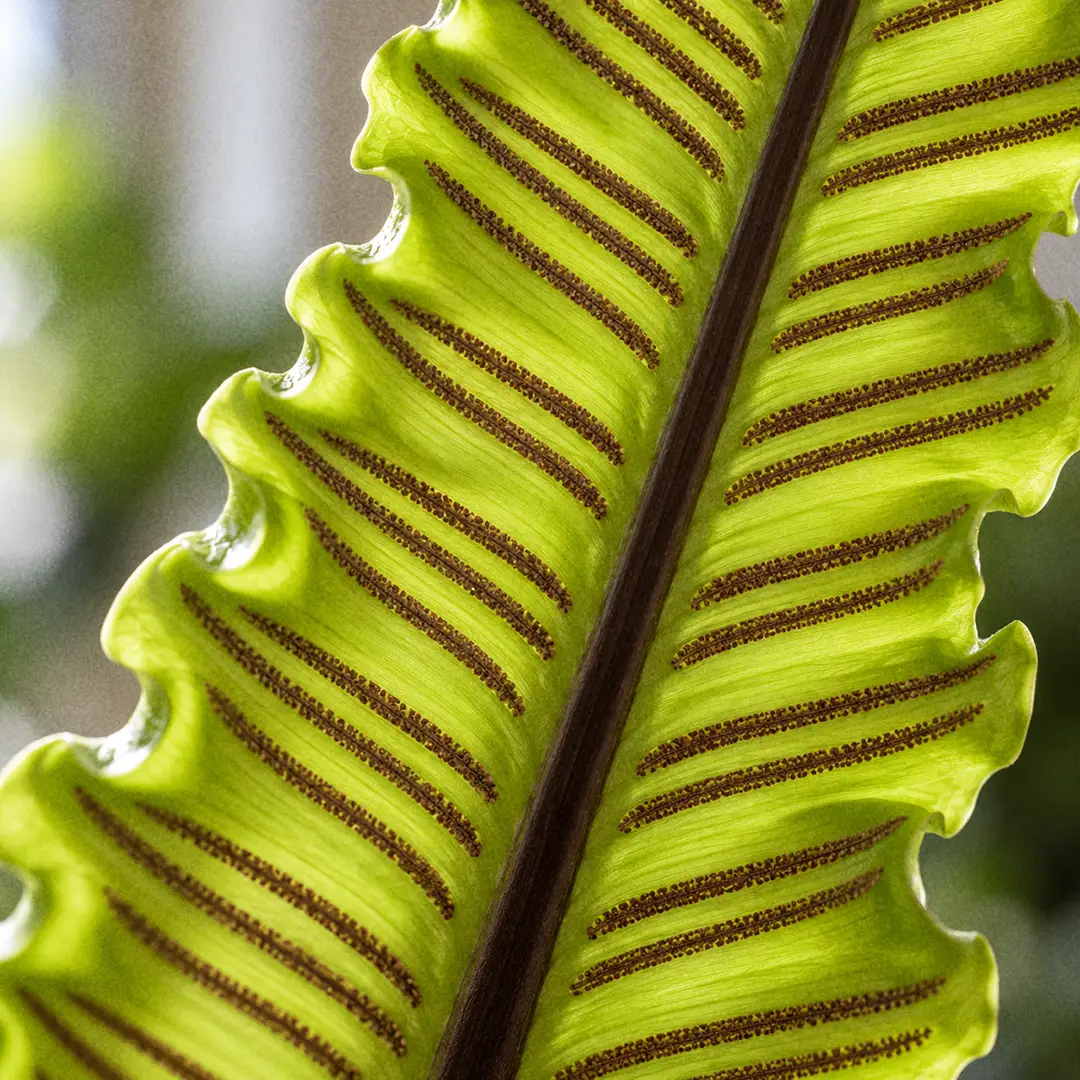
Turn a mature frond over and you will find neat brown ribs running out from the dark central midrib in parallel lines, following the corrugation. These are sori, the spore cases, and they appear on healthy plants from late summer onward once the fern is a few years old. Every year somebody scrapes them off thinking they are scale insects.
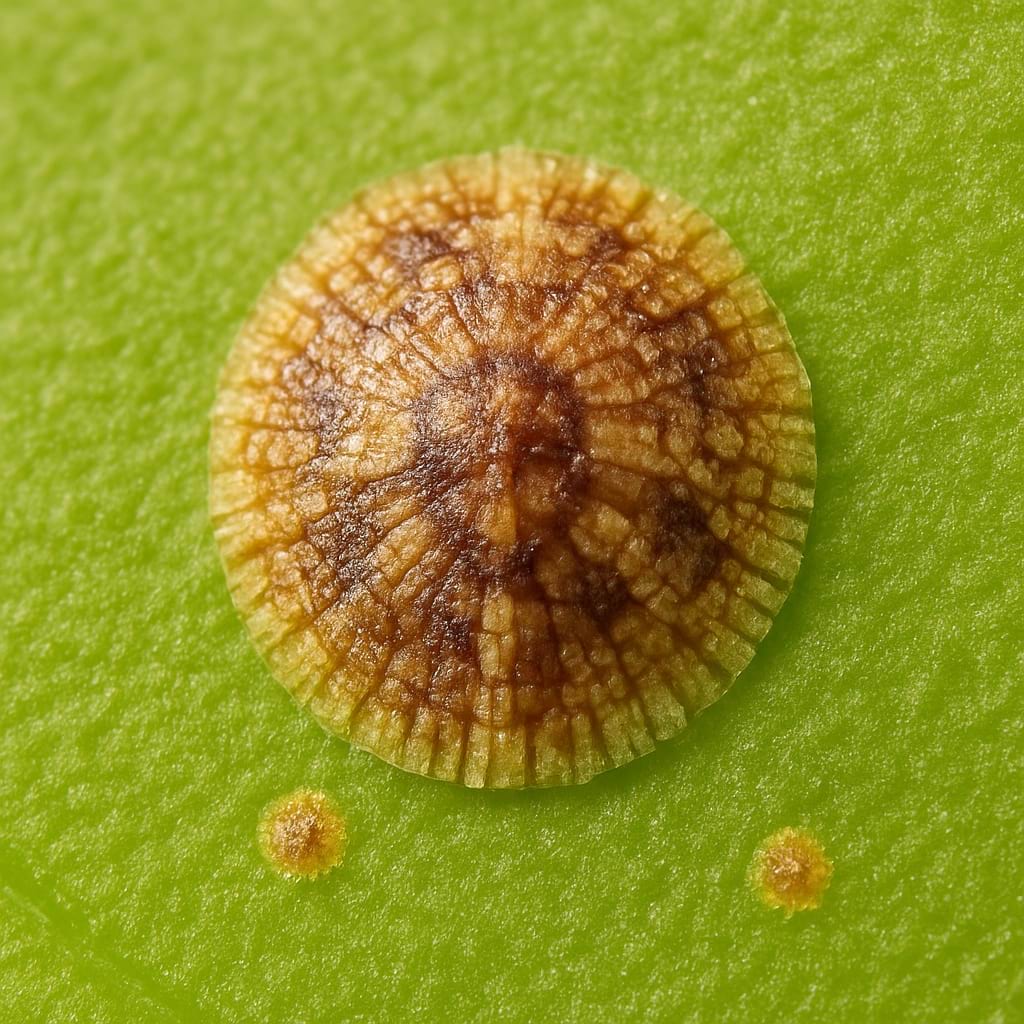
The difference is easy to see once you know. Sori are arranged in perfectly straight, evenly spaced lines and are flush with the leaf surface. Scale is scattered at random, sits raised like a small brown limpet, and pops off under a fingernail. Leave sori alone. They are a sign the plant is mature and content.
If You Want Spores
Wait until the sori darken from pale tan to a deep brown and start to look dusty. That is when the spores are ripe and ready to collect, which is the starting point for the only propagation method this plant has.
🏷️ Crispy Wave Fern Types and Related Varieties
Where Crispy Wave Came From
This is one plant, not a group, and it has an unusually well-documented origin for a houseplant. In 1961 Haruo Sugimoto found a strange sport growing in a planting of the Japanese cultivar 'Osaka' on Yakushima, an island off southern Kyushu. Its fronds were stiff and rippled rather than soft and arching. Nearly forty years later Yuki Sugimoto selected it, raised it from spores, and brought it to market, and it received a US plant patent in 2010.
The Naming Muddle
You will see it labelled Asplenium nidus 'Crispy Wave' in some shops and Asplenium antiquum 'Crispy Wave' in others. The patent files it under A. nidus, its parent 'Osaka' is usually sold as A. antiquum, and the two species are close enough that the trade has never fully settled the argument. Care is identical either way, so buy the plant you like and ignore the label.
How It Compares to Its Relatives
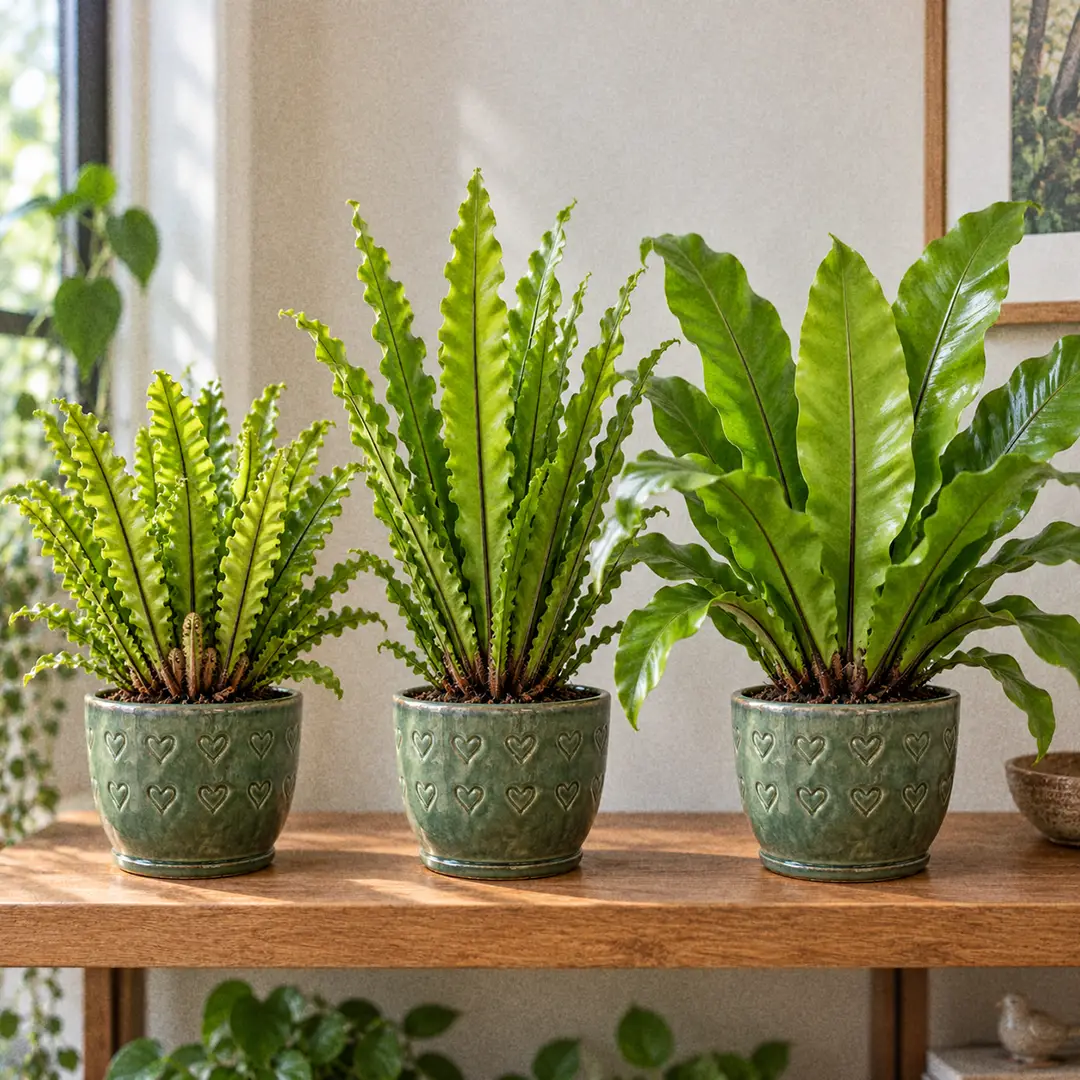
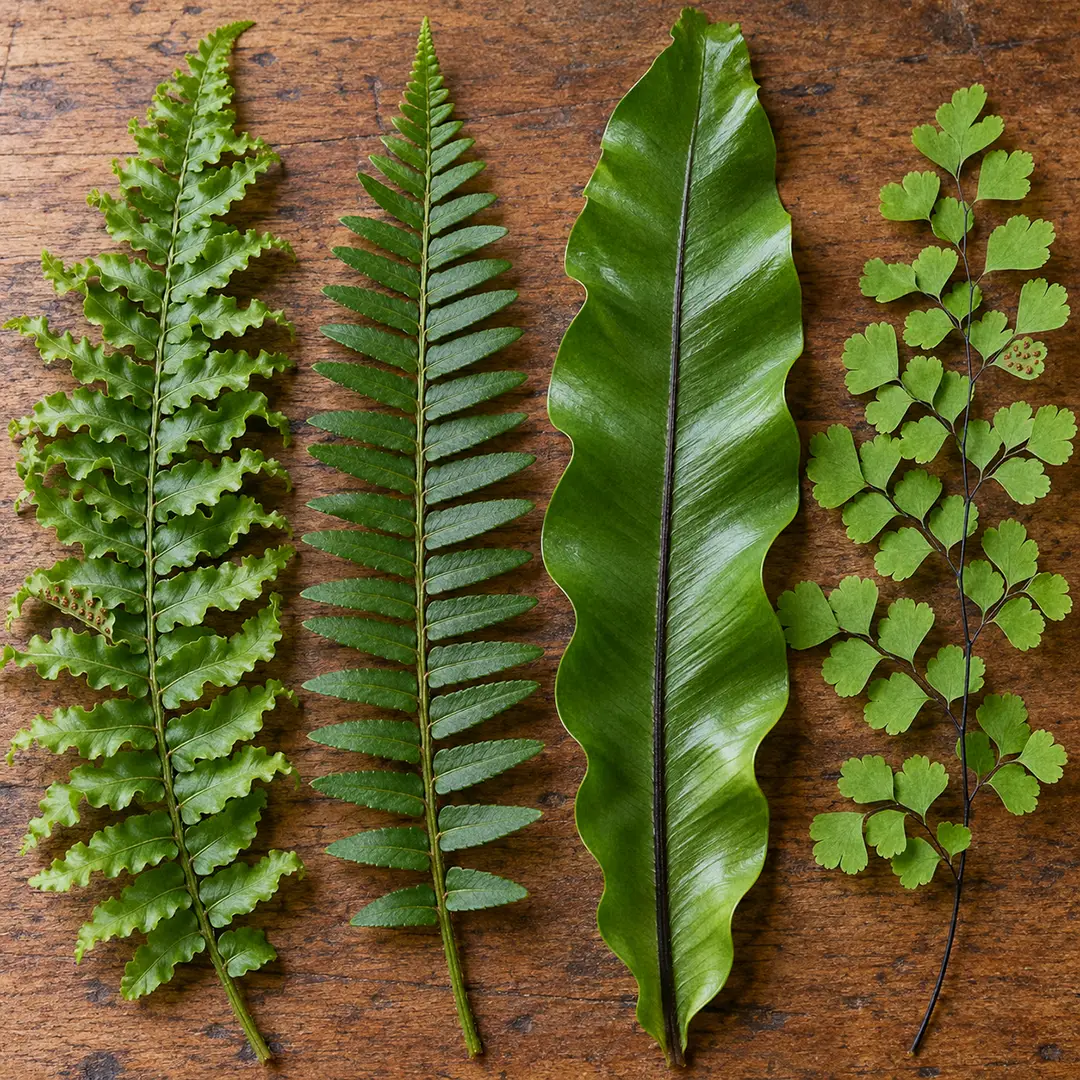
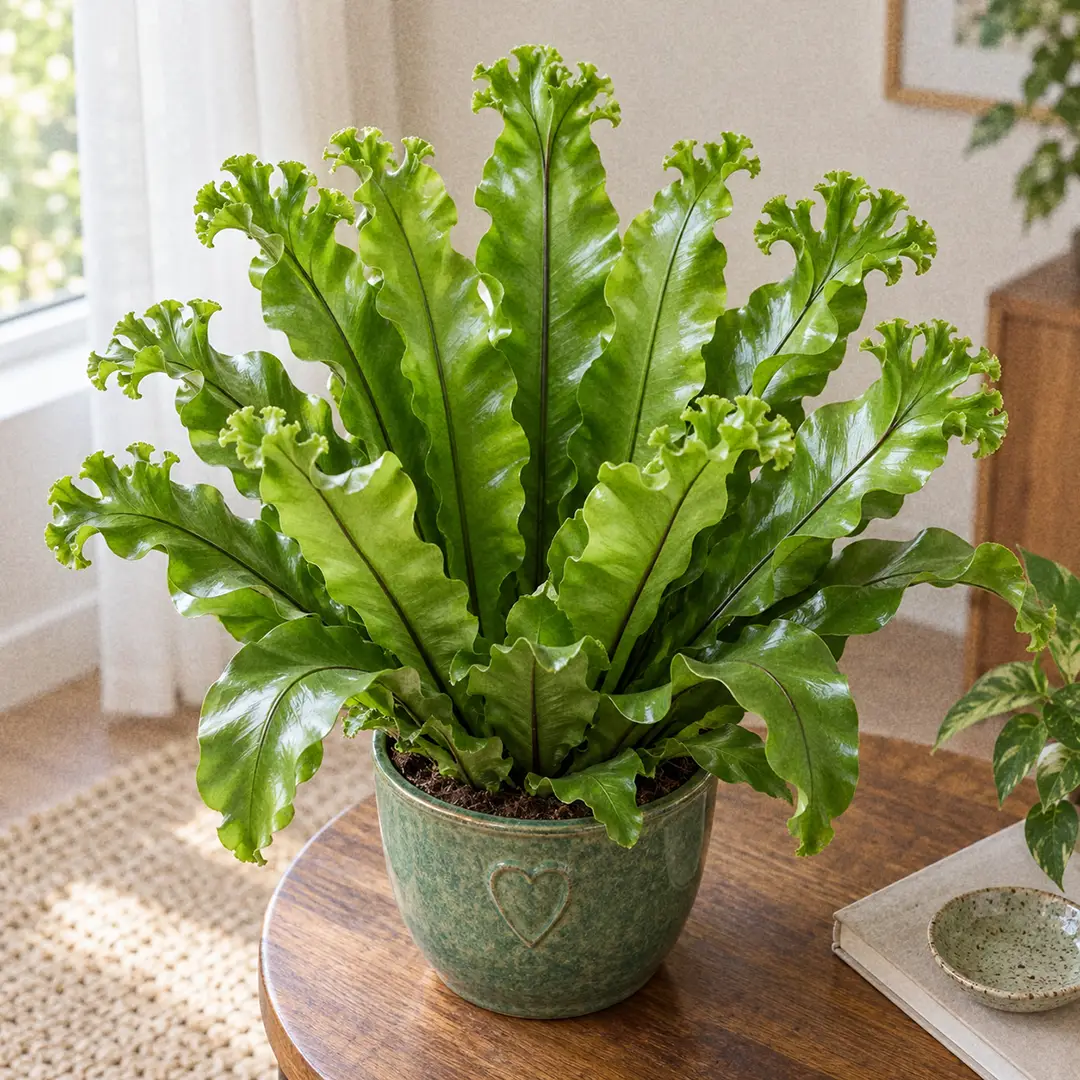
Next to a common Bird's Nest Fern, Crispy Wave is smaller, stiffer, and far more heavily rippled, and it holds its fronds upright instead of arching them outward. Against the Japanese Bird's Nest Fern cultivars 'Osaka' and 'Victoria', the wave is deeper and runs the full length of the leaf rather than just wrinkling the margin. There is also a newer patented selection, 'Campio', which is more compact again. Do not confuse any of them with the Leslie Bird's Nest Fern, which keeps a gentler wave and instead forks each frond tip into a frilly crest, or with its larger sibling, the Crissie Bird's Nest Fern.
If you like the corrugated look but want something with a different texture, the Crocodile Fern puckers its fronds into a scaled pattern instead of rippling them.
🪴 Potting and Repotting Crispy Wave Fern
When to Repot
Every two to three years is plenty, and spring is the time. This fern has a small root system for its size and genuinely prefers being a little snug, so repotting on a schedule does more harm than waiting for signs. Repot when roots come out of the drainage holes, when the mix has broken down into something dense and dark, or when the plant dries out within two days of watering.
Choosing a Pot
Go one size up only, an inch or two wider at most. An oversized pot holds a mass of wet mix that the roots never reach, and that is a rot problem waiting to happen. Terracotta is a good match because it breathes, though it dries fast enough that you will water more often. Drainage holes are non-negotiable. Our plant pots guide covers the trade-offs.
Step-by-Step Repotting
Slide the plant out and tease loose the outer roots without pulling the root ball apart. Set it in the new pot at the same depth it was growing before, so the base of the rosette sits slightly above the soil line rather than buried. Burying the crown is the second most common way to kill one of these.
Fill in around the sides with fresh bark mix, firm it gently, and water around the rim. Keep the plant out of bright light for a week while it settles. Our repotting guide has the general method.
✂️ Pruning Crispy Wave Fern
When to Prune
There is no shaping to do here. The rosette builds its own symmetry, and the only pruning worth doing is removing fronds that are finished. Old outer fronds yellow and die back naturally as the plant grows, which is normal and not a problem to solve.
How to Prune
Cut the frond off right at the base, as close to the crown as you can get without nicking it, using clean sharp scissors. Leaving a stub invites rot at exactly the spot you least want it. Take off anything fully yellow, fully brown, or badly creased.
For fronds that are only browned along the edges, you can trim the damage away following the natural curve of the leaf. It will not look invisible, but it looks better than a brown fringe. Never cut into the fuzzy centre or remove a tightly coiled new frond, no matter how odd it looks while unfurling.
🌱 How to Propagate Crispy Wave Fern
Spores Are the Only Option
Be straight with yourself before you start: this plant cannot be divided. A bird's nest fern grows from a single growing point, so there is nothing to split, and cutting a frond off gives you a dead frond. Every Crispy Wave in every shop was grown from spores in a greenhouse, and the patent record confirms that spore-raised plants come true to the parent.
Step-by-Step From Spores
Cut a mature frond with dark, dusty-looking sori and lay it sori-side down on a sheet of clean paper. Leave it somewhere still and dry for a few days until a fine brown dust falls out. Sprinkle that dust thinly onto damp sterilised sphagnum or seed compost in a shallow tray, and do not cover it with soil, since spores need light.
Cover the tray with a clear lid or a bag, put it somewhere warm and bright but out of direct sun, around 68-72°F (20-22°C), and keep it damp with a spray bottle. After four or five months you should see a green film of tiny heart-shaped prothalli. Real fronds appear some months after that, and the whole cycle takes roughly eight months before anything is ready to pot up.
Tips for Success
Sterilise everything. Spores germinate slowly and moss or algae will outrun them in a contaminated tray, so pour boiling water over the medium and let it cool before sowing. Keep the humidity high and constant, because the prothalli stage needs a film of water on the surface to reproduce at all.
Be patient, and do not thin them early. Most people give up around month three, which is exactly when nothing visible is happening yet. If this sounds like more than you signed up for, buying a second plant is a completely reasonable answer, and our propagation guide covers easier plants to practise on.
🐛 Crispy Wave Fern Pests and Treatment
Common Pests
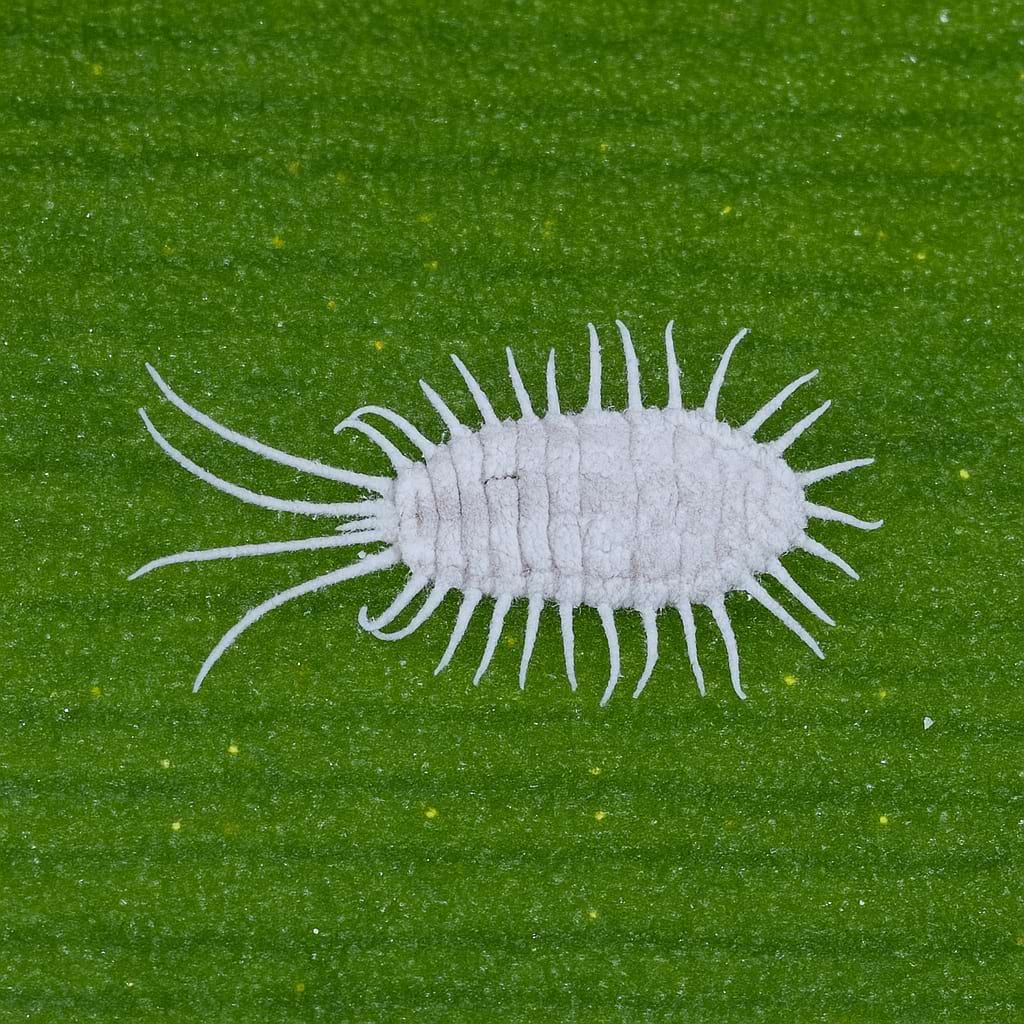
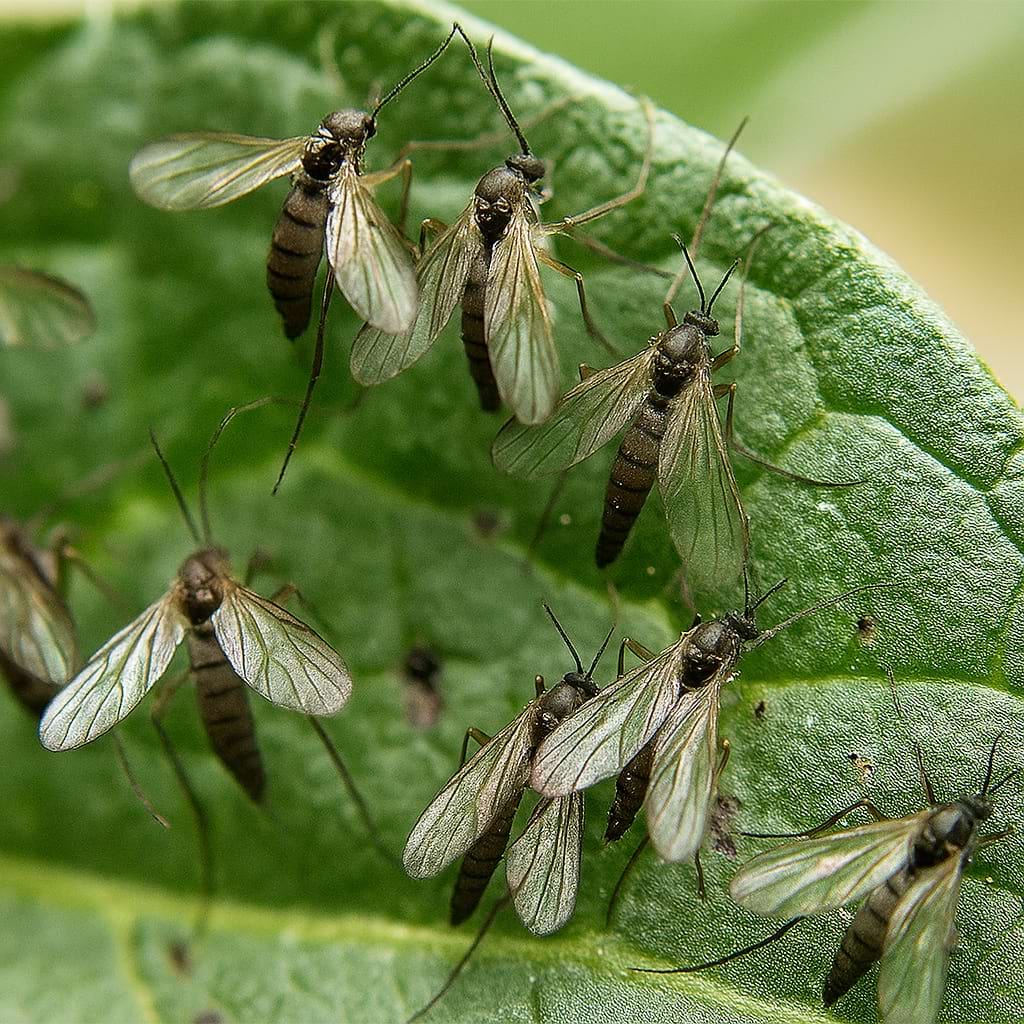
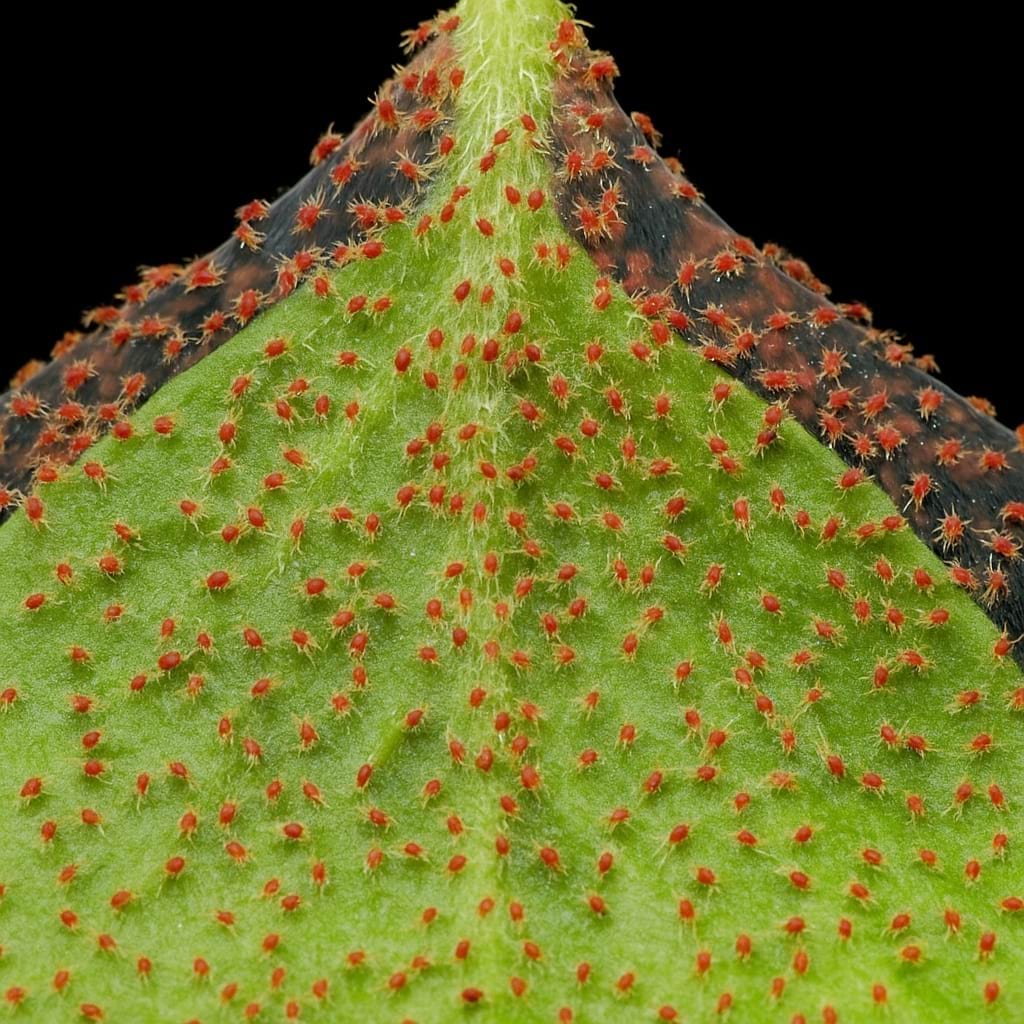
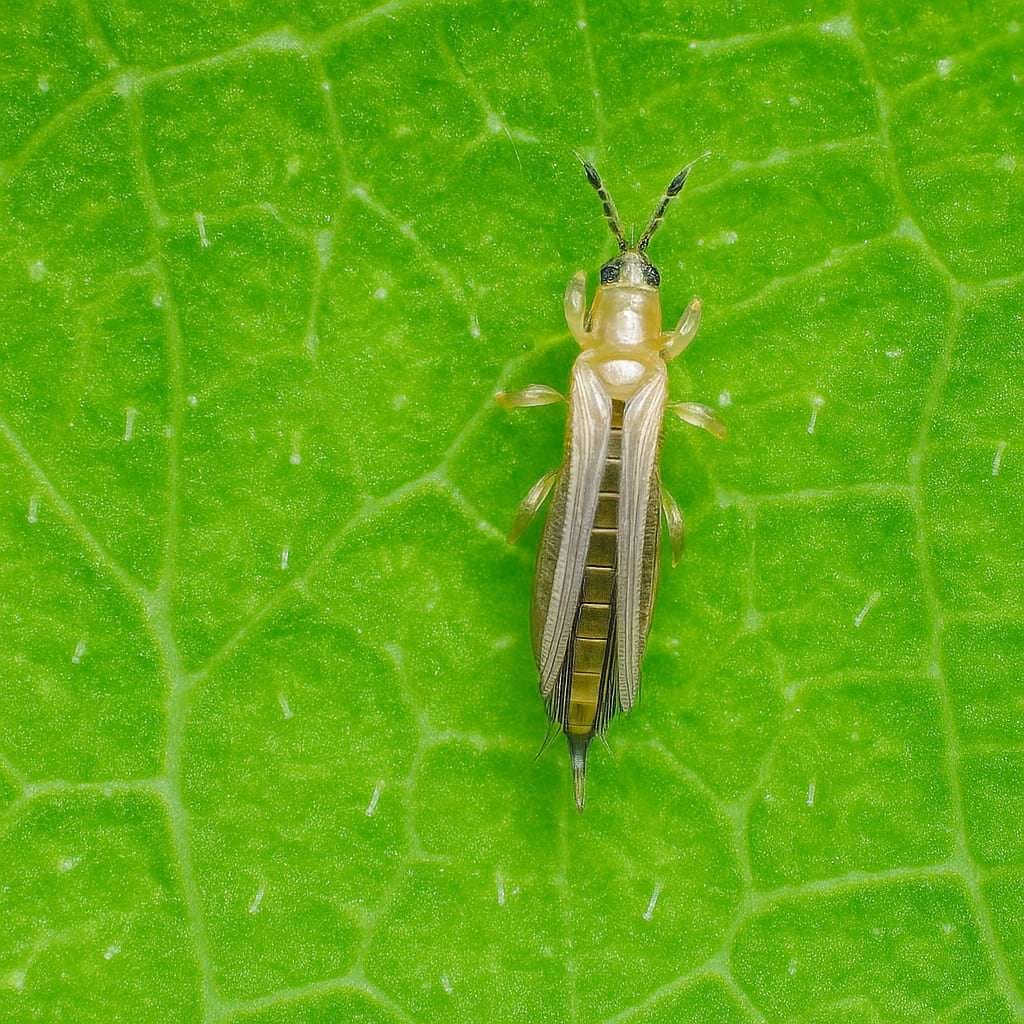
Scale insects are the classic pest of this genus, showing as small raised brown bumps along the midrib and frond undersides. Check carefully before you treat, since the neat brown lines of sori are frequently mistaken for them. Mealybugs hide as white cottony specks down in the crown and where fronds overlap. Spider mites arrive in dry winter air and leave fine webbing plus a dull stippled cast. Thrips scar the leaf surface with silvery streaks, and fungus gnats mean the mix is staying too wet.
Treatment and Prevention
Ferns are sensitive to insecticides, so start gentle. Wipe scale and mealybugs off with a cotton bud dipped in rubbing alcohol, then rinse the whole plant under a lukewarm shower with the pot wrapped in a bag. Insecticidal soap works if you need it, but test one frond first and never spray in direct sun. Skip neem oil at full strength on this plant, since it can mark the leaf surface.
Prevention is mostly humidity and airflow, which keeps spider mites away, plus quarantining anything new for a few weeks. Fungus gnats disappear once you let the top inch dry properly between waterings.
🩺 Common Crispy Wave Fern Problems
Brown Crispy Edges
This is the complaint that brings most people to a care guide. Brown crispy edges on a Crispy Wave come from dry air first, underwatering second, and salt buildup third, in that order of likelihood. Check the humidity before you change anything else, because the ruffled margins are the thinnest tissue on the plant and they show a dry room before the rest of it does.
Crown Rot and Root Rot
A soft, dark, collapsing centre is crown rot, and it is nearly always caused by watering into the middle of the rosette. There is no reliable rescue once the crown is gone. Root rot is the version that starts underground, from soggy mix or a pot with no drainage, and it shows as yellowing outer fronds and a plant that feels loose in its pot. Unpot, cut away every soft brown root, and repot into fresh bark mix.
Yellow, Pale, or Spotted Fronds
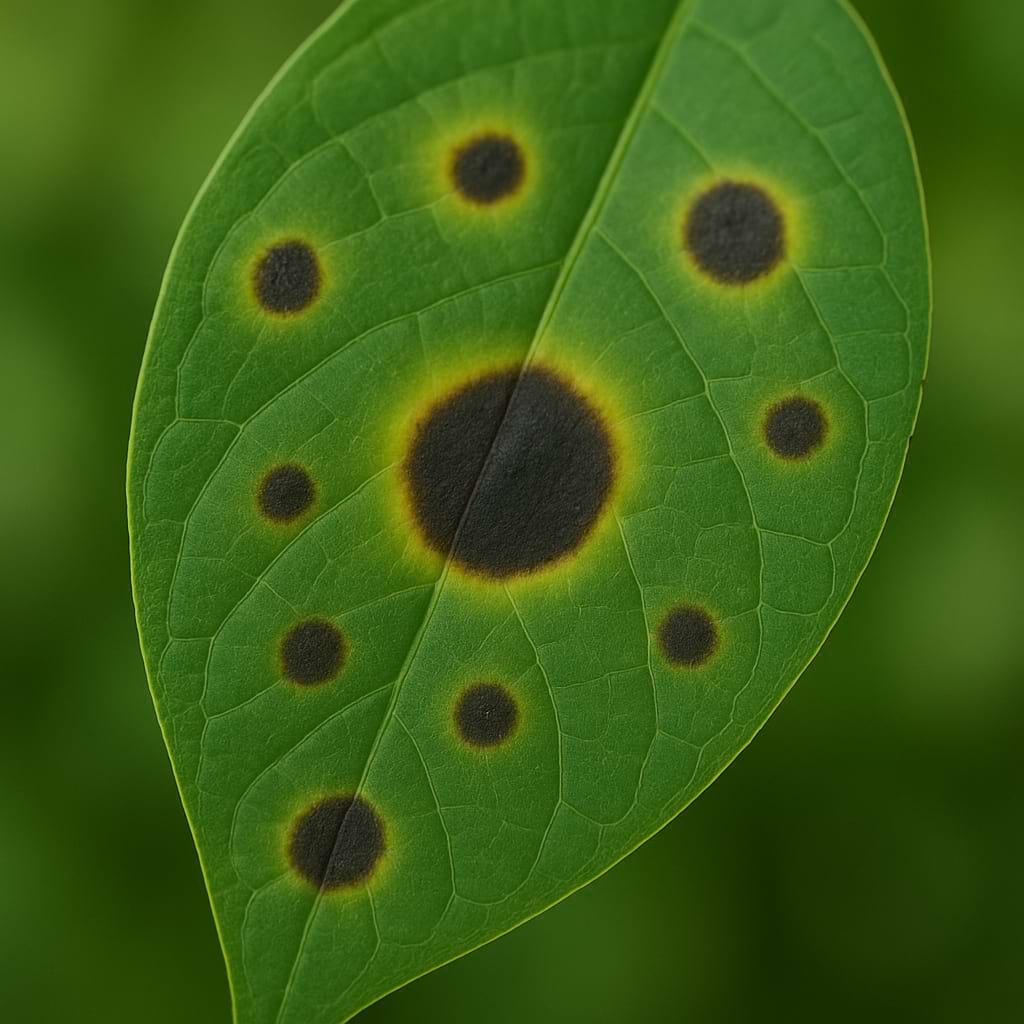
Widespread yellowing points at overwatering or exhausted soil, so check the roots first and the feeding schedule second. A single old outer frond yellowing while the rest look good is just age. Pale washed-out fronds with a bleached cast mean too much light. Dark brown or black spots with a yellow halo are usually bacterial leaf spot, spread by water sitting on the leaves in still air, so improve airflow and stop wetting the fronds.
New Fronds Coming Out Flat
If the newest fronds are less rippled than the older ones, the plant is short on light. The corrugation is the first thing to go when a bird's nest fern is under-lit, well before the colour changes. Move it brighter and the next flush comes back with its texture.

🖼️ Crispy Wave Fern Display and Styling Ideas
Solo Setups
The rosette is a sculpture, so give it room and let it be the only thing on the shelf. It looks best set at eye level or slightly below, in a simple pot, with light raking across the fronds from the side. Front-on lighting flattens the ripples and wastes the effect entirely. A pedestal planter or the top of a low bookcase near a north window does this well.
Grouped Arrangements
Grouped with other ferns, it plays the role of the solid one. Set it against the fine lacy texture of a Boston Fern or the delicate fans of a Maidenhair Fern and the contrast makes both plants look better, while the cluster raises humidity for all of them. A trailing Blue Star Fern above it fills the vertical space nicely.
Where Not to Put It
Skip a south-facing sill without a curtain, a spot directly above a radiator, and a draughty hallway by the front door. Bathrooms are a favourite for good reason, but only ones with a window or a decent light source, since a dark bathroom eventually flattens the fronds out.
👍 Crispy Wave Fern Pro Care Tips
💧 Water the rim, never the middle. Moisture sitting in the crown is the one thing that reliably kills this fern.
🚿 Shower it instead of wiping it. Dust sinks into the corrugated grooves where a cloth cannot reach, and the fronds bruise easily.
🔍 Do not scrape the brown lines off. Neat parallel ribs on the underside are spores, not scale.
📏 Keep the crown above the soil line. Burying the base of the rosette when you repot causes rot months later.
🌀 Flat new fronds mean more light. The ripple is the first thing lost in a dim spot and the first thing to return.
🪴 Pot up one size only. A big pot of wet mix around a small root system is a rot risk, not a growth boost.
🧪 Half-strength feed only. Fine fern roots scorch on full-strength fertilizer, and the tips brown for months afterward.
✂️ Cut old fronds flush at the base. Leaving a stub gives rot somewhere to start next to the crown.
❓ Frequently Asked Questions
Is the Crispy Wave Fern toxic to cats and dogs?
No. Asplenium ferns are non-toxic to cats and dogs, which makes this a safe pick for a home with pets or small children. A cat that chews a frond may still get a mild upset stomach from the fibre alone, as it would with any plant, but there is nothing poisonous in it.
Why are the edges of my Crispy Wave Fern turning brown?
Dry air is the usual answer. The ruffled margins are the thinnest part of the plant and they crisp first when humidity drops below about 40%. Check that before anything else, then look at whether the pot is drying out fully between waterings, then at salt buildup from feeding too strongly. Trim the browned edges away, since they will not turn green again.
What are the brown lines on the underside of the leaves?
Those are sori, the fern's spore cases, and they are a sign of a healthy mature plant. They run in straight parallel ribs out from the midrib and lie flush with the leaf. Scale insects, which people confuse them with, sit raised and scattered at random and flick off with a fingernail.
How do I propagate a Crispy Wave Fern?
Spores are the only way, because the plant grows from one central point and cannot be divided. Collect ripe spores from a mature frond, sow them on damp sterile sphagnum, cover the tray, and keep it warm and bright. Expect around eight months from sowing to a plantable fern, and expect some attempts to fail.
How big does a Crispy Wave Fern get?
Indoors it usually settles at one to two feet tall and about as wide, adding six to eight inches of frond length a year. In a very humid room or a conservatory it can reach three feet or more, and the species it came from can eventually get much larger than that, but a pot on a shelf keeps it in check naturally.
Can I water into the centre of the rosette like a bromeliad?
No, and this is the mistake that kills the most Crispy Wave ferns. A bromeliad has a watertight cup built to hold water. A bird's nest fern has a tightly packed funnel of frond bases that traps water without draining it, and the crown rots from inside. Always pour around the rim of the pot.
Does the Crispy Wave Fern really purify the air?
It is often marketed that way because the corrugated fronds carry far more surface area than a flat leaf of the same size. That part is true. The wider claim that a houseplant meaningfully cleans the air in a real room has not held up well in research, so buy it for the fronds and treat any air-quality benefit as a bonus.
Why is my Crispy Wave Fern growing flat, smooth fronds?
Not enough light. The deep corrugation costs the plant energy, so a fern in a dim spot economises by producing simpler, flatter leaves. Move it to a brighter position out of direct sun, or add a grow light, and the next fronds should come back with their ripple.
Can it live in a bathroom with no window?
Only with a light source. The humidity of a bathroom suits it perfectly, and it handles low light better than most ferns, but a genuinely windowless room with the light off most of the day will slowly flatten and shrink the new growth. A small grow light on a timer solves it completely.
ℹ️ Crispy Wave Fern Info
Care and Maintenance
🪴 Soil Type and pH: Loose, airy, bark-based epiphytic mix
💧 Humidity and Misting: Happiest at 50-60%, and the ruffled edges brown first when the room drops much below that.
✂️ Pruning: Cut old or browned fronds off at the base and leave every new curl alone until it opens.
🧼 Cleaning: Rinse the fronds under a lukewarm shower rather than wiping them. Dust settles into the corrugated grooves where a cloth cannot reach.
🌱 Repotting: Repot every 2-3 years in spring, keeping the base of the rosette sitting above the soil line.
🔄 Repotting Frequency: Every 2-3 years
❄️ Seasonal Changes in Care: Steady watering and monthly feeding from spring to late summer, then less water and no fertilizer through a cooler, darker winter.
Growing Characteristics
💥 Growth Speed: Moderate, roughly 6-8 inches of new frond length a year
🔄 Life Cycle: Evergreen epiphytic perennial fern
💥 Bloom Time: Never flowers. Mature fronds carry brown spore lines (sori) in neat ribs on the underside, usually from late summer onward.
🌡️ Hardiness Zones: 11-12 outdoors, grown as a houseplant everywhere else
🗺️ Native Area: The species grows across tropical Asia, Australia and the Pacific islands. This cultivar arose in Japan, on Yakushima in Kagoshima Prefecture.
🚘 Hibernation: No true dormancy. Growth slows below 60°F and watering should slow with it.
Propagation and Health
📍 Suitable Locations: East and north windows, bright bathrooms, shaded kitchen counters, terrarium and cabinet setups, shelves set back from a south window
🪴 Propagation Methods: Spores only, sown on damp sphagnum and kept covered. It takes about eight months and division does not work.
🐛 Common Pests: Scale Insects, Mealybugs, Fungus Gnats, Spider Mites, Thrips
🦠 Possible Diseases: Crown rot, root rot, bacterial leaf spot, fungal leaf blotch
Plant Details
🌿 Plant Type: Rosette-forming epiphytic fern
🍃 Foliage Type: Evergreen, undivided, strap-shaped fronds with stiff deeply corrugated ripples running the whole length
🎨 Color of Leaves: Bright yellow-green with a dark brown midrib
🌸 Flower Color: None. Ferns do not flower.
🌼 Blooming: No. It reproduces by spores rather than flowers or seeds.
🍽️ Edibility: Young fronds of some bird's nest ferns are eaten cooked in parts of Southeast Asia, but this one is grown as an ornamental and is not sold as food.
📏 Mature Size: 1-2 feet indoors, occasionally to 3 feet in a very humid room
Additional Info
🌻 General Benefits: Pet-safe, tolerant of low light, holds its shape without staking, and has far more surface area than a flat-fronded fern
💊 Medical Properties: No documented medicinal uses.
🧿 Feng Shui: The upright cupped rosette is read as a gatherer of good energy, which makes it a common choice for entryways and hallways.
⭐ Zodiac Sign Compatibility: Cancer
🌈 Symbolism or Folklore: Shelter, patience, steady growth from a protected centre
📝 Interesting Facts: Crispy Wave is not a species but a single lucky mutation. A sport with unusually stiff, rippled fronds was spotted in 1961 by Haruo Sugimoto in a planting of the Japanese cultivar 'Osaka' on Yakushima, and it took another four decades before Yuki Sugimoto selected it, raised it from spores, and put it into commerce. It was granted a US plant patent in 2010.
Buying and Usage
🛒 What to Look for When Buying: Look for a tight rosette with a clean, dry, fuzzy centre and fronds that stand up on their own. Skip plants with a soft or dark crown, mushy frond bases, or brown creases where leaves have been folded in transit.
🪴 Other Uses: Bathroom plant, terrarium and cabinet specimen, office desk plant under fluorescent light, low-light shelf filler
Decoration and Styling
🖼️ Display Ideas: Bathroom shelves, north windowsills, plant cabinets, grouped fern corners, pedestal planters where the rosette sits at eye level
🧵 Styling Tips: The corrugation only reads properly with light raking across it from the side, so place it where a window hits the fronds at an angle rather than head on.
🪴 See also 🪴
Complete Guide to Crissie Bird's Nest Fern Care and Growth
Complete Guide to Osaka Bird's Nest Fern Care and Growth
The 15 Most Popular Indoor Ferns and How to Choose One
Complete Guide to Leslie Bird's Nest Fern Care and Growth

Complete Guide to Superbum Staghorn Fern Care and Growth
Complete Guide to Austral Gem Fern Care and Growth
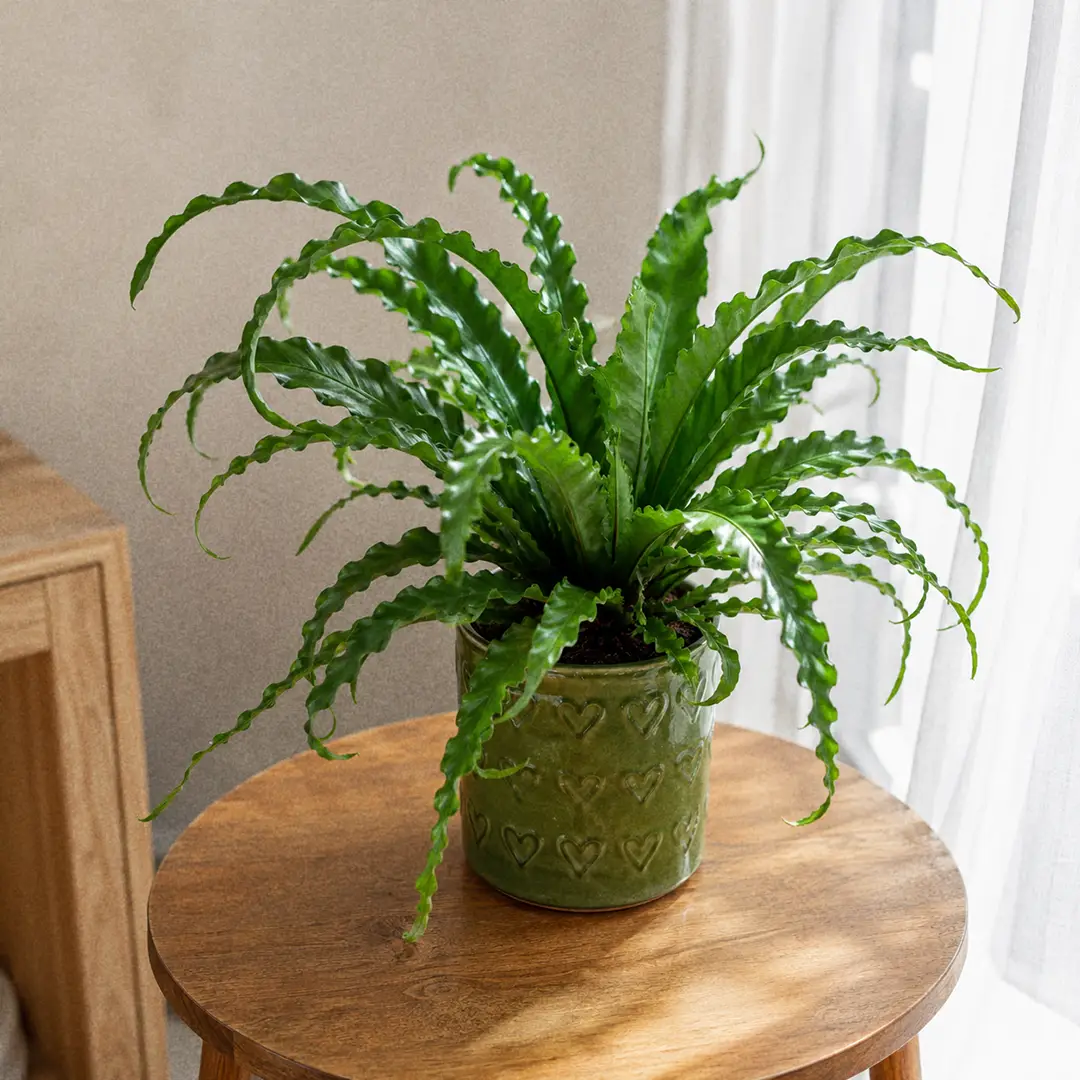
Complete Guide to Japanese Bird's Nest Fern Care and Growth
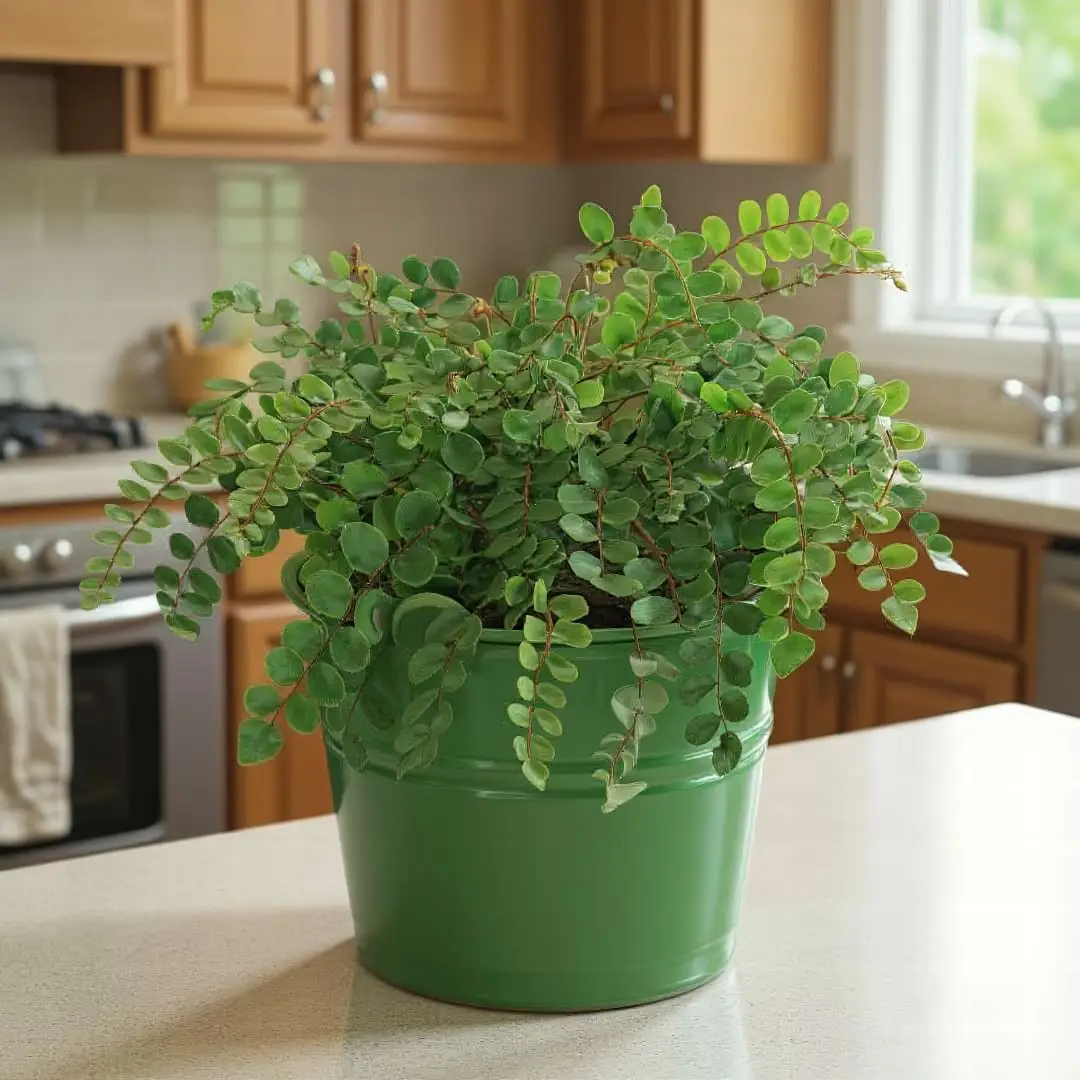
Complete Guide to Button Fern Care and Growth
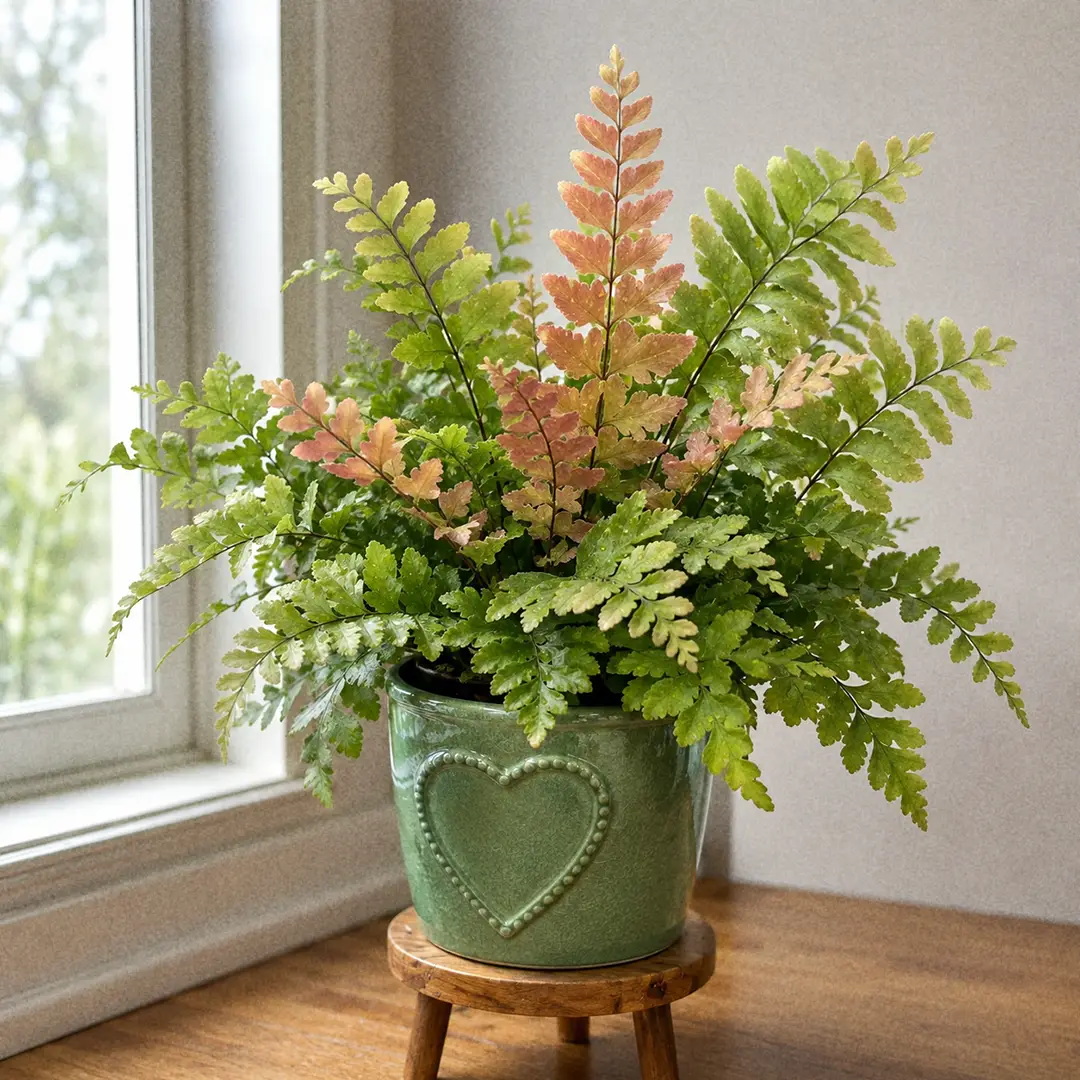
Complete Guide to Mahogany Fern Care and Growth
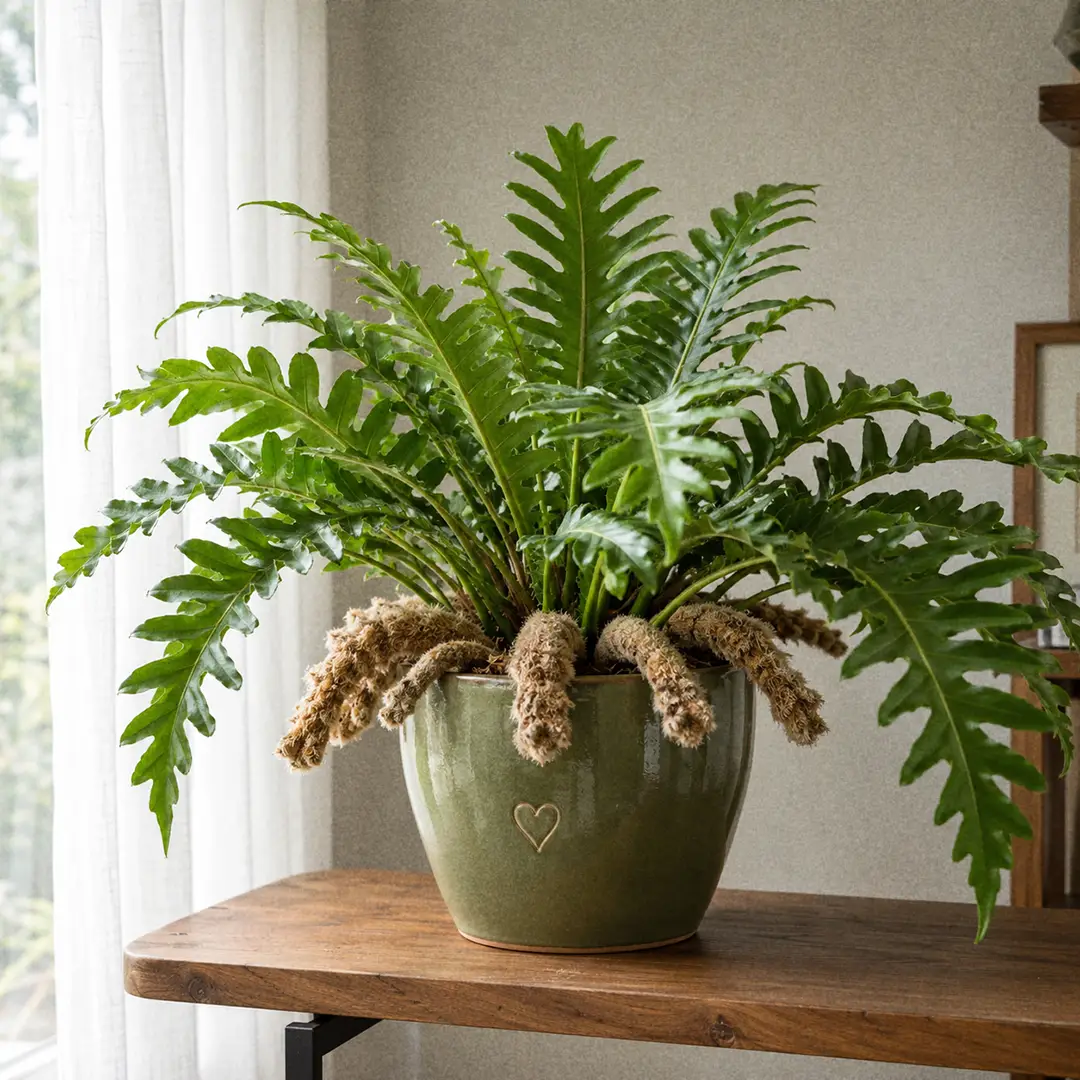
Complete Guide to Bear's Paw Fern Care and Growth
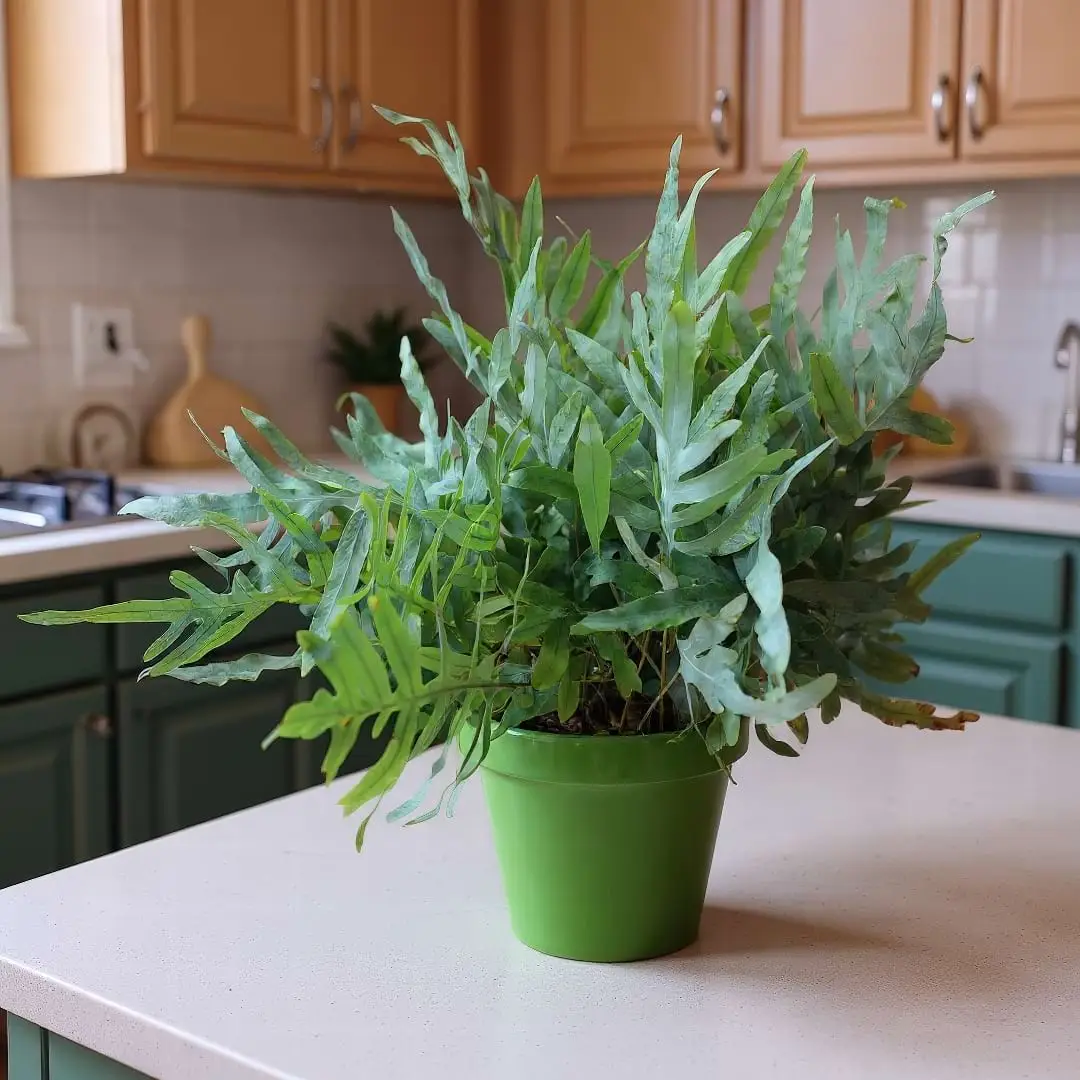
Complete Guide to Blue Star Fern Care and Growth
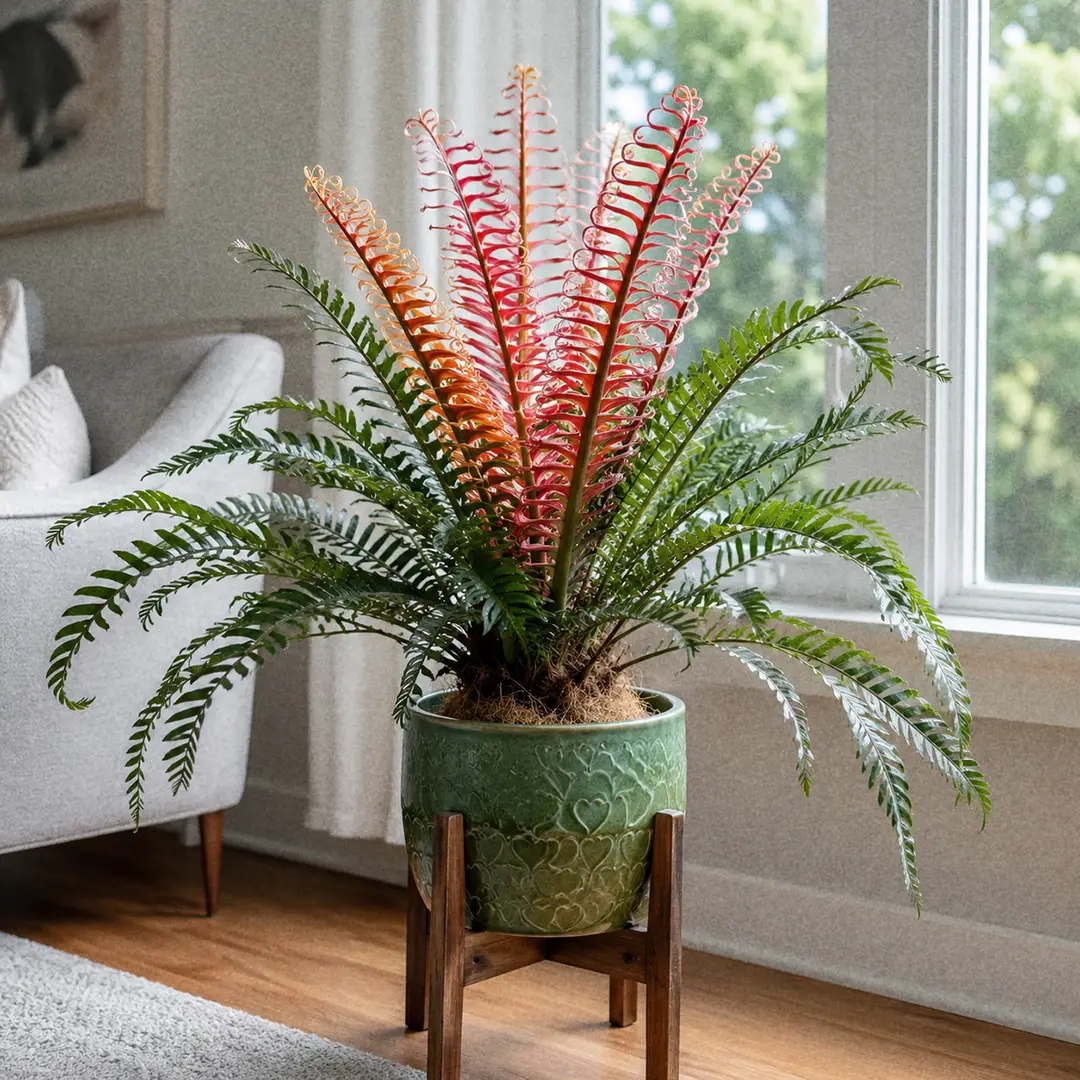
Complete Guide to Volcano Fern Care and Growth
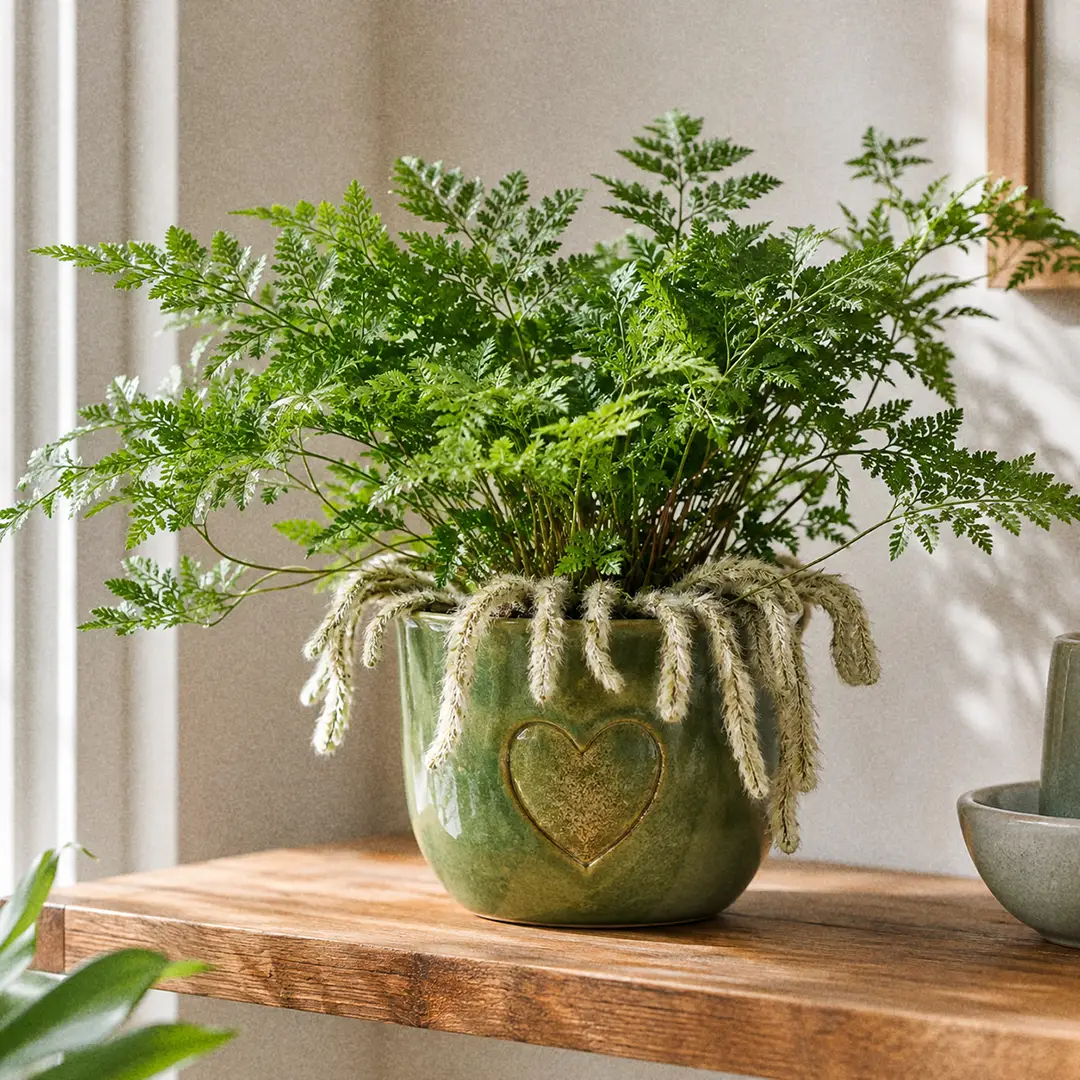
Complete Guide to White Rabbit's Foot Fern Care and Growth

Houseplant101 Forum
Questions & Comments
Ask a question, share your plant experience, or help other plant owners.
Comments are temporarily unavailable.
Open the Houseplant101 ForumNo comments yet
Be the first to ask a question or share your experience about this page.
Log in or create an account
Comments use your Houseplant101 Forum account, but you can stay on this page.
Create a new account