
Squirrel's Foot Fern
Davallia trichomanoides
Ball Fern, Shinobu Fern, Japanese Ball Fern, Carrot Fern, Davallia bullata


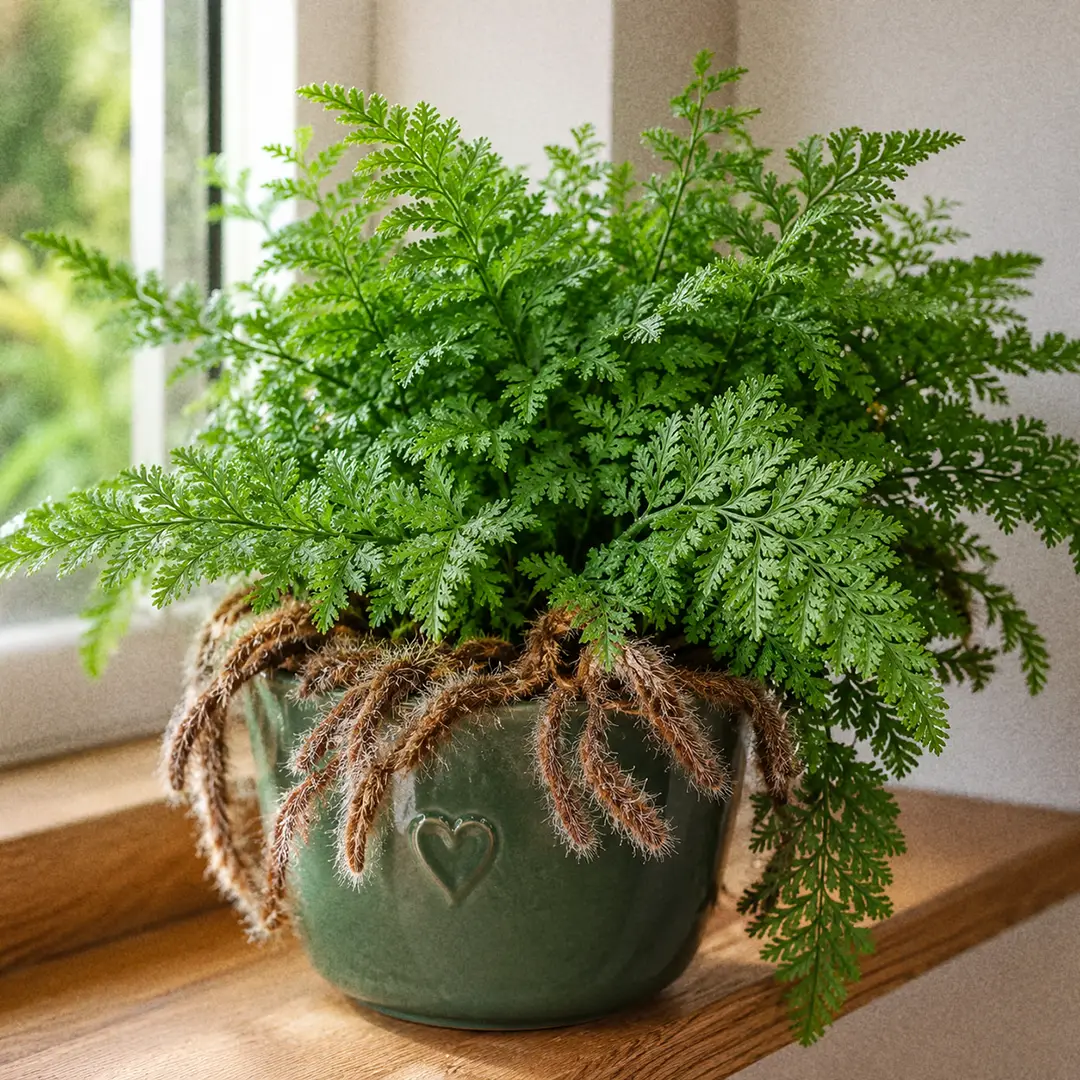
The Squirrel's Foot Fern (Davallia trichomanoides) is the small epiphytic fern whose slim, russet-furred rhizomes crawl over the pot rim and pile up like a nest of little animal feet. Its lacy fronds are firmer than a maidenhair's, which makes it one of the few genuinely lace-textured ferns that survives ordinary room air.
📝 Squirrel's Foot Fern Care Notes
🌿 Care Instructions
⚠️ Common Pests
📊 Growth Information
🪴 In This Guide 🪴

📺 Squirrel's Foot Fern Video Guide

☀️ Squirrel's Foot Fern Light Requirements (Bright Indirect)
This fern grows on tree trunks and mossy rock in the forests of Malaysia and Java, so it lives in broken light rather than deep shade. Its fronds are firmer than most lacy ferns and take more brightness than you might expect, just not full sun.
The Sweet Spot
An east window with the pot right at the glass is close to perfect. An hour of soft morning sun brings out the gloss on the fronds, and the rest of the day stays bright without heat. North windows work year round, and a south or west room needs the plant four to six feet back or behind a sheer curtain. You have it right when the rhizome tips keep advancing across the pot rim. See our light guide.

Too Little Light
In a dim corner the fern does not die, it just stops being interesting. The rhizomes slow to a crawl and the fronds come up thinly spaced, so instead of a dense mat you get a few lonely stalks along a bare foot. More than seven or eight feet from a window, move it closer or add a grow light on a ten hour timer.
Too Much Light
Direct afternoon sun through glass bleaches the fronds to a dry tan within a day or two. The rhizomes suffer more quietly: strong sun dries their surface hairs and the exposed feet shrivel even when the soil below is damp. A spot fully shaded in December can catch two hours of low sun in March.
💧 Squirrel's Foot Fern Watering Guide (Top Inch Dry)
This is an epiphyte, used to a wet-then-dry rhythm rather than constant moisture. The rhizomes hold a water reserve, which makes the plant more forgiving of a missed watering than most ferns and much less forgiving of a soggy pot.
Watering Frequency
Water when the top inch feels dry while the layer beneath is still faintly damp. In a warm bright room that lands around every five to seven days, stretching to every ten to fourteen in winter. A mounted or kokedama plant may need attention every two or three days in summer. A moisture meter helps if you struggle to read a bark-heavy mix by touch.
How to Water
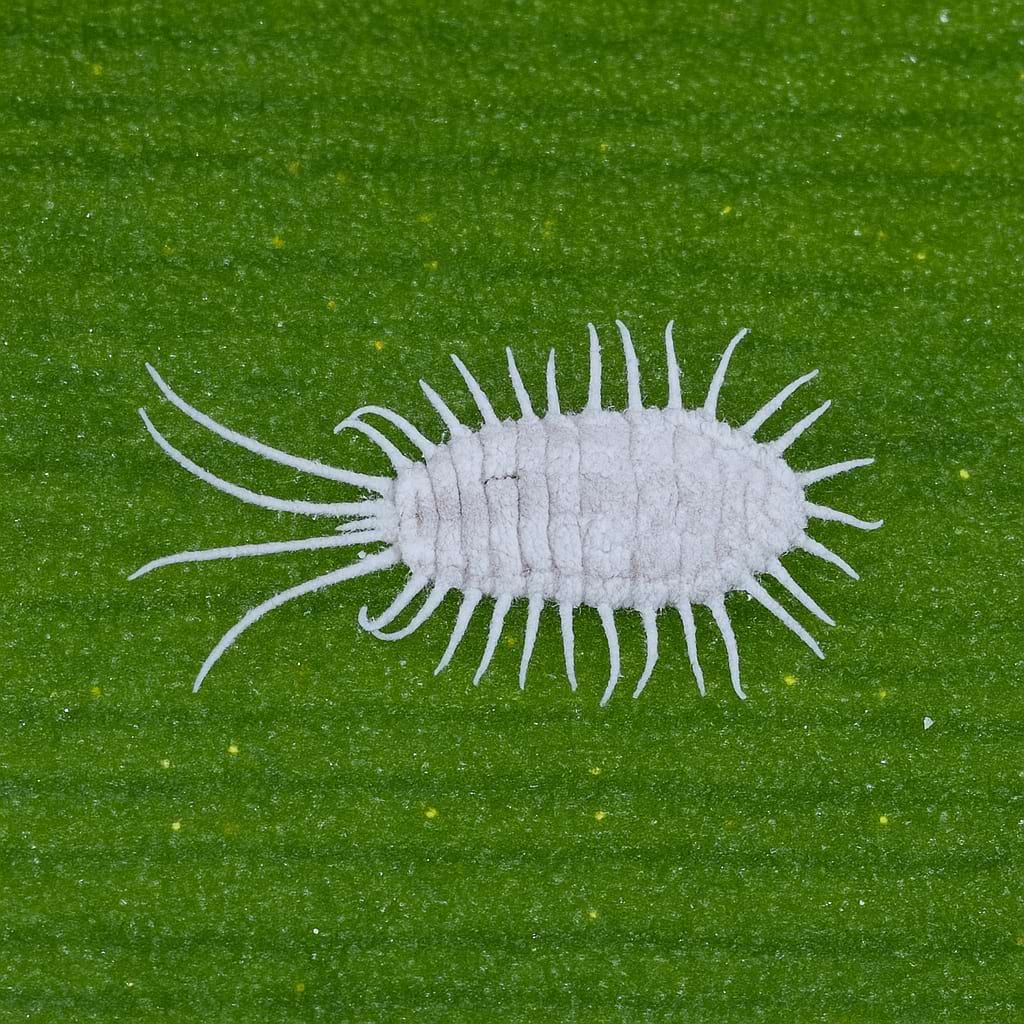
Water the mix, not the fur. Pour slowly around the edges of the pot until water runs from the drainage holes, then tip out the saucer. Bark sheds water if you pour too fast, so go around twice rather than dumping a jug in one spot. Water sitting overnight in the rhizome hairs gives mealybugs a place to breed.
For a mounted plant or moss ball, dunk it in room-temperature water for two or three minutes until the bubbles stop, then let it drip dry before rehanging.
Signs of Trouble
Underwatering shows first in the rhizomes, which feel hollow under the fur, followed by fronds browning from the tips inward. Overwatering runs the opposite way: fronds yellow from the base, the mix stays wet for over a week, and the undersides of the rhizomes turn soft and dark where they touch soil. Soft rhizome is the emergency, and it means unpotting today. See our watering guide.
🪴 Best Soil for Squirrel's Foot Fern
A tree-dwelling fern potted in ordinary houseplant compost is the most common setup mistake here. Those fine roots need air, and standard potting soil packs into an airless block within a season.
What the Soil Needs
Drainage comes first. If you squeeze a handful of the wet mix and it holds as a dense clod, it is wrong for this plant. You want visible chunks and air gaps, with just enough fine material to hold light moisture between waterings. Slightly acidic is ideal, roughly pH 5.5 to 6.5, which most bark and coir mixes hit naturally.
DIY Soil Mix
Two parts fine orchid bark, one part coco coir, one part perlite, and a handful of chopped sphagnum if your home runs dry. The bark gives the structure, the coir carries the moisture, the perlite keeps everything open. A little horticultural charcoal helps in a pot that will sit undisturbed for years.
Pre-Made Options
A bagged orchid mix is the easiest shortcut, straight from the bag or softened with a third coco coir. A general fern or aroid mix works once you cut it with an equal volume of orchid bark and perlite. Skip anything labelled moisture control. More in our soil guide.
🍼 Fertilizing Squirrel's Foot Fern
Epiphytes live on whatever washes down a tree trunk, which is not much. This fern grows steadily on very little feeding and reacts badly to a heavy hand.
When and How Often
Feed once a month from April through September, while new fronds are unrolling, and stop entirely from October to March. Skip the first two months after a repot, since fresh bark and coir carry enough to be going on with. Always feed onto damp mix, or the salts sit against dry roots and scorch them.
What to Use
A balanced liquid houseplant fertilizer at a quarter of the label strength is all this plant wants. Something in the 10-10-10 or 20-20-20 range is fine, as is dilute seaweed. For a mounted plant or moss ball, a very weak foliar feed works better than trying to soak nutrients into moss. Our fertilizing guide and fertilizer roundup go deeper.
Over-Fertilizing Signs
A white salt crust on the bark or pot rim is the earliest tell, scorched brown tips on fresh growth the second. Bark holds salts more than you would think, so flush the pot with three pot volumes of plain water every few months while you are feeding.
🌡️ Squirrel's Foot Fern Temperature Range
Warm and steady is the target, but this fern is tougher about cold than its tropical cousins, and a cool spell will not kill it the way it would a Boston Fern.
Ideal Range
Aim for 60 to 75°F (16 to 24°C) through the year. Growth stops below about 55°F (13°C), and a brief dip toward 45°F (7°C) is survivable if the mix is on the dry side, though cold plus wet is a rot sentence. Above 80°F (27°C) the fronds transpire faster than the rhizomes can resupply and the tips brown even in damp mix.
Drafts and Heat Sources
A radiator is the classic winter problem, not because of the warmth but because of the dry air pouring over exposed rhizomes, which dry far faster than potted roots. Air conditioning vents are worse, since they deliver cold and dryness together. Move the plant before the heating comes on in autumn, not after the fronds start browning.
💦 Squirrel's Foot Fern Humidity Requirements
This fern has the lace look of a maidenhair on a fraction of the humidity demand, because its leaflets are firmer and its rhizomes carry a water reserve. It is the main reason I recommend it to people whose homes run dry.
Ideal Humidity
Fifty to sixty percent is the comfort zone. It holds up perfectly well at forty, where a lot of homes sit outside winter, and only browns at the frond edges below about thirty. A cheap hygrometer tells you whether you have a humidity problem or a watering problem, since the two look almost identical on the fronds.
Easy Humidity Boosters
A room humidifier is the only method that genuinely moves the reading in a dry winter home. Beyond that, grouping plants lifts the local air a few points for free, and a bathroom with a decent window gets you steam twice a day. Our humidity guide has the full picture.
Mounted Plants Need More
On bark or as a kokedama, humidity stops being optional. With no reservoir of damp mix buffering the plant, a mounted specimen in a thirty percent room dries out between dunkings and the rhizomes shrivel. Mount it in a bathroom or near a humidifier.
🌸 Does Squirrel's Foot Fern Bloom?
No, and no fern does. Ferns predate flowering plants by a very long stretch and reproduce with spores instead of seeds, so there is no bloom to wait for and nothing to trigger.
Spores Instead of Flowers
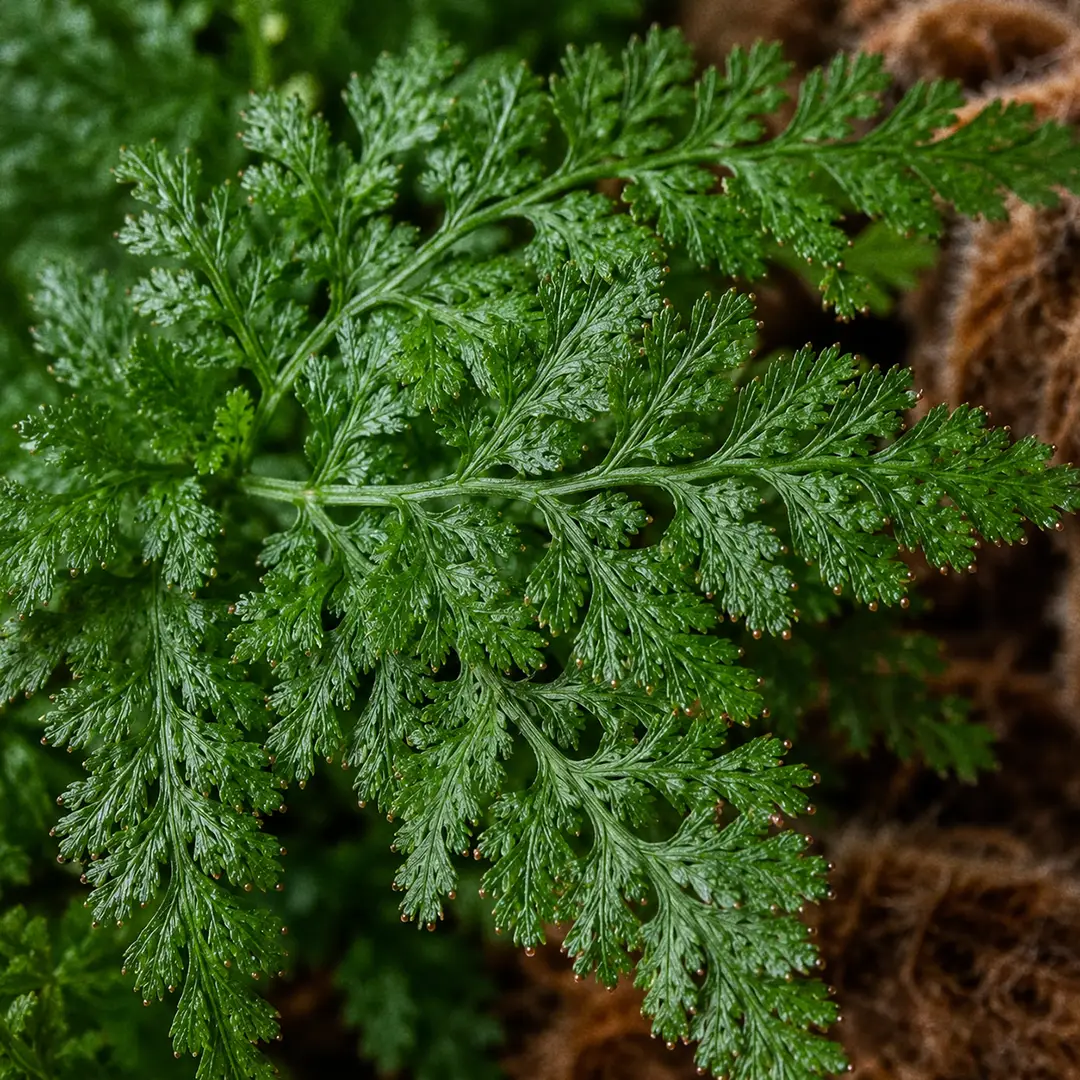
Turn a mature frond over in late summer and look along the outer edge of the little leaflets. You will find tiny cup-shaped structures tucked just inside the margin, each holding a cluster of spore cases. Davallia sori sit in these neat cups rather than as open dots, a handy family trait for confirming what you bought.
Spores or Scale?
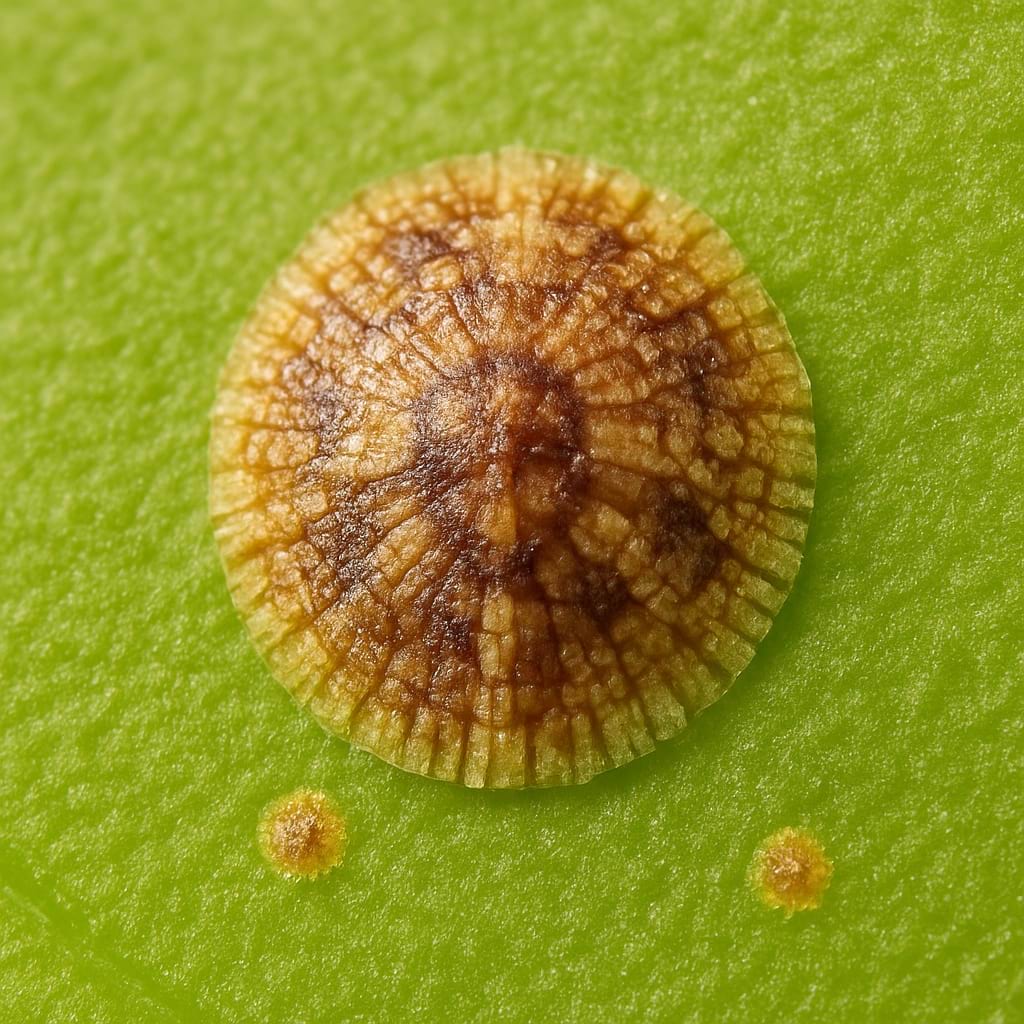
New owners find those brown bumps and reach straight for the pest spray. Sori appear only along the leaflet margins, in the same repeating pattern on every mature frond, and never on the rhizomes. Scale insects scatter at random, prefer stalks and rhizomes, and lift off with a fingernail. Sori will not budge.
The Rhizomes Are the Show
What you get instead of flowers is the reason people buy this plant. The rhizomes creep over the pot rim, then over each other, building into a knotted mat of furry feet that improves for years.
🏷️ Squirrel's Foot Fern Types and Lookalikes
The Davallia genus is a mess of shifting names and interchangeable labels, and the plant in your hands may well be sold as something else. Most of the differences show up in the rhizomes.
Davallia trichomanoides, the True Squirrel's Foot
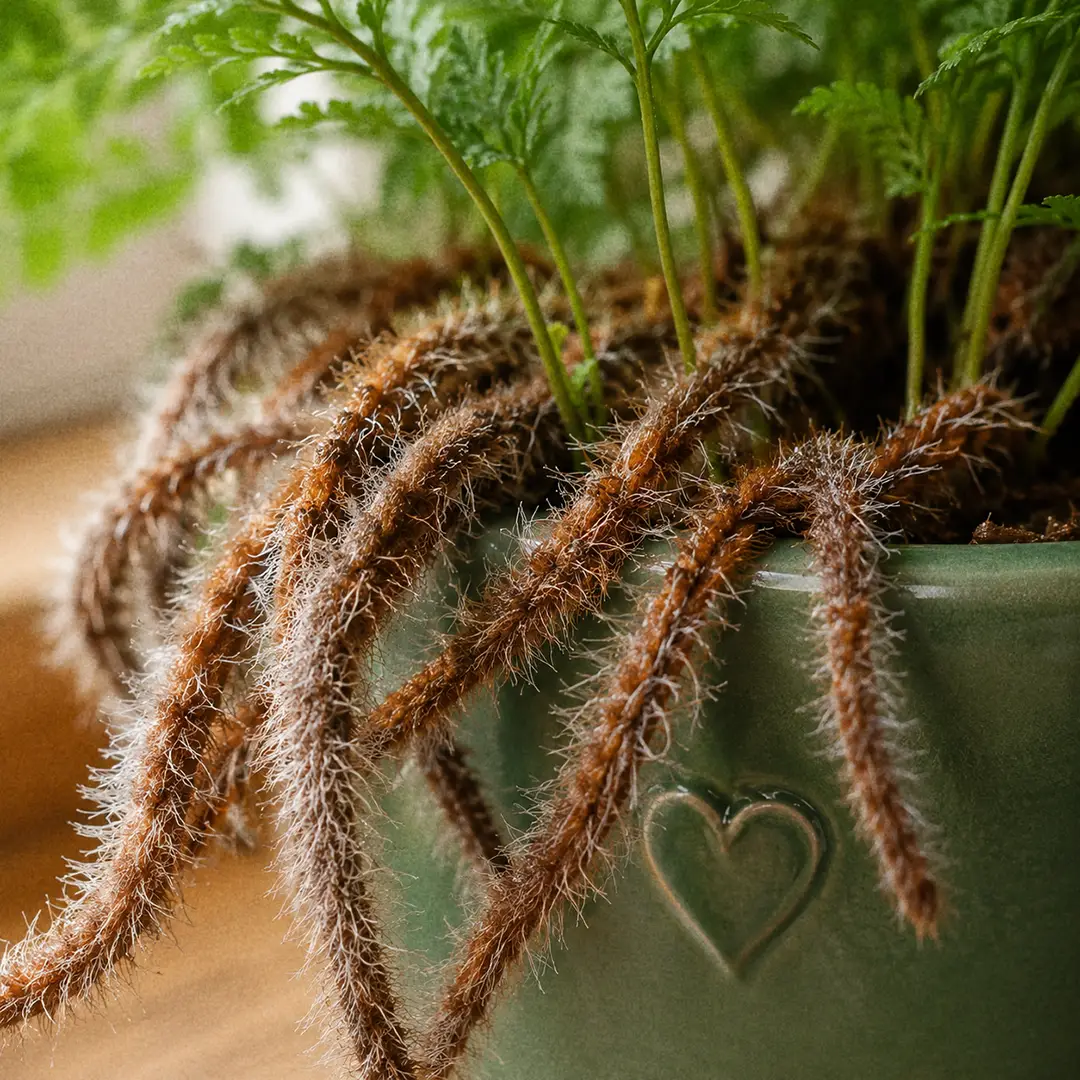
The subject of this guide. Slim rhizomes, roughly the thickness of a finger or less, wearing dense russet-brown to grey fur that gives them their animal-paw look. Fronds are small, triangular, glossy dark green, and cut three or four times into fine leaflets. You will also see it labelled Davallia bullata, an older name applied loosely across several small Davallias. Treat the care as identical.
Davallia mariesii, the Japanese Ball Fern
Sold under the squirrel's foot name at least as often as the real thing, and a fine plant to end up with. Its rhizomes are paler and it drops most of its fronds over winter, reflushing in spring, which alarms first-time owners. This is the species behind the traditional Japanese shinobu-dama moss balls.
Telling It From a Rabbit's Foot Fern
This is the mix-up that matters, because both plants sit side by side in garden centres. Compare the feet: a Rabbit's Foot Fern (Davallia fejeensis) has thicker rhizomes wearing pale silvery fur, and its fronds grow larger and more open at a foot and a half or more. Care is close to identical, so a mislabel is not a disaster.
Other Furry-Footed Ferns
Humata tyermanii, the White Rabbit's Foot Fern, has the whitest fur of the group and firmer fronds than either Davallia, and Davallia solida is the odd one out with broad leathery fronds instead of lace. The Bear's Paw Fern (Aglaomorpha meyeniana) belongs to a different genus, with chunky paws several times the thickness. That is the one to get for the furry rhizome effect at a larger scale.
🪴 Potting and Repotting Squirrel's Foot Fern
Everything about potting this fern comes back to one rule: the rhizomes belong on the surface, in the open air. Bury them and they rot.
When to Repot
Every two or three years, in spring as new fronds appear. The signals are a mix broken down into dark crumbs instead of bark chunks, or water running straight through without wetting anything. A crowded surface is no reason to repot on its own, since that mat of feet is the whole point. See our repotting guide.
Choosing a Pot
Wide and shallow beats deep and narrow. A bulb pan, a shallow bowl with drainage, or a hanging basket suits a plant whose roots stay near the surface and whose rhizomes want room to run sideways. Go up one size only, since a deep pot of wet mix under a shallow root system is how rot starts. Unglazed terracotta helps the mix dry between waterings.
Step-by-Step Repotting
- Water the day before so the root ball holds together and slides out cleanly.
- Ease the plant out by the root ball, supporting the rhizome mat with one hand.
- Shake off loose old mix and trim any dark, soft roots with clean scissors.
- Set the plant into fresh mix at the same depth, so every rhizome lies on top of the surface as before. Tuck none of them under.
- Water thoroughly, then keep it bright, shaded, and slightly more humid than usual for a fortnight. If a rhizome will not stay put, pin it down with a bent paperclip rather than pressing it in.
✂️ Pruning Squirrel's Foot Fern
Pruning here is tidying, not shaping. The plant builds its own form through the rhizomes and does not want your help with it.
When and How to Prune
Remove browned or yellowed fronds whenever you notice them, cutting each at the base of its own stalk with clean sharp scissors. Do not trim a half-brown frond to neaten it, because the cut edge browns further and the frond dies back anyway. Take the whole thing and let the plant put its energy into the next one.
Never Cut a Healthy Rhizome
The rhizome is the plant, and every future frond comes from it. Cut one only when you are taking a propagation piece. If a rhizome has grown somewhere awkward, turn the pot rather than removing it. A rhizome that dies back on its own turns dark and hollow under the fur, and that part can be trimmed away.
The Winter Shed Is Not a Problem
If your plant drops a large share of its fronds over a cool or dry winter, resist the urge to prune hard or throw it out. Semi-deciduous behaviour is normal in this group, particularly in D. mariesii. Cut only what is fully brown and wait for spring.
🌱 How to Propagate Squirrel's Foot Fern
This is one of the easiest ferns to multiply, because the rhizomes root wherever they touch damp material. You are not really propagating so much as encouraging what the plant already wants to do.
Best Method: Rhizome Cuttings
Spring or early summer, on a plant with rhizomes running over the pot edge with room to spare. You want a section three or four inches long carrying two or three fronds. Skip a young plant, since taking a rhizome from a small fern sets it back a season. Our plant division guide covers the general approach.
Step-by-Step
- Cut a firm, well-furred rhizome section with fronds attached from the parent, using sterile scissors.
- Fill a shallow pot with damp bark-based mix and firm the surface flat.
- Lay the cutting horizontally on top. Do not bury it, not even slightly.
- Pin it with a bent paperclip so the underside stays in firm contact with the mix.
- Keep it at 65 to 75°F (18 to 24°C) in bright indirect light, with the mix damp but never wet.
Roots appear from the underside within two to six weeks, and new fronds follow.
Tips for Success
Contact decides this. A rhizome hovering a millimetre above the surface sits there for months doing nothing, so pin it firmly. A clear bag tented loosely over the pot for the first fortnight speeds rooting, as long as you open it daily for air. Take two or three cuttings, since some pieces simply refuse. Spores work too, sown thinly onto damp sterilized peat under clear plastic, but take a year to give you anything.
🐛 Squirrel's Foot Fern Pests and Treatment
This plant has one pest problem all its own, and it is a nuisance: the rhizome fur is perfect camouflage for anything white and fuzzy.
Mealybugs are the pest to watch. They shelter among the rhizome hairs where they pass for part of the plant, and by the time you notice the colony it is well established. Check the undersides and junctions of the rhizomes monthly with a torch, and dab anything suspicious with a cotton swab of 70 percent alcohol.
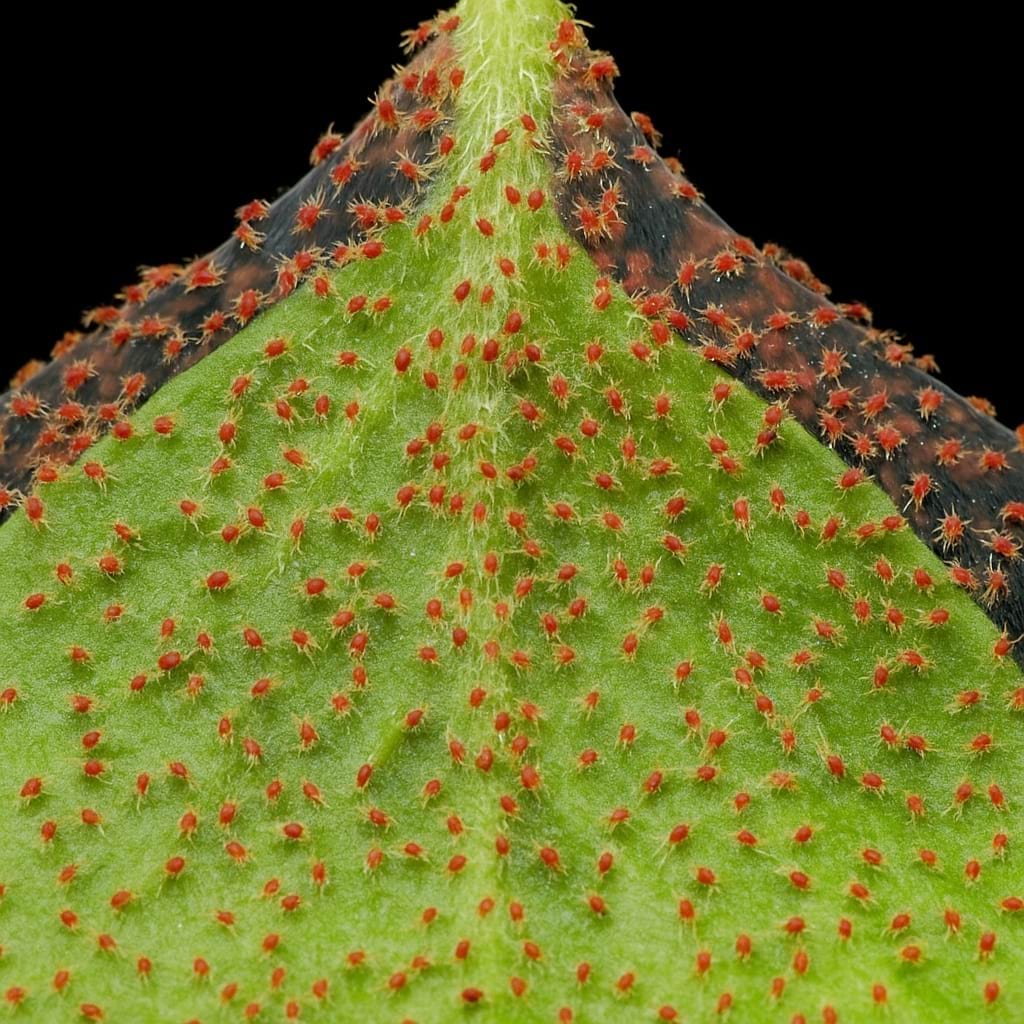
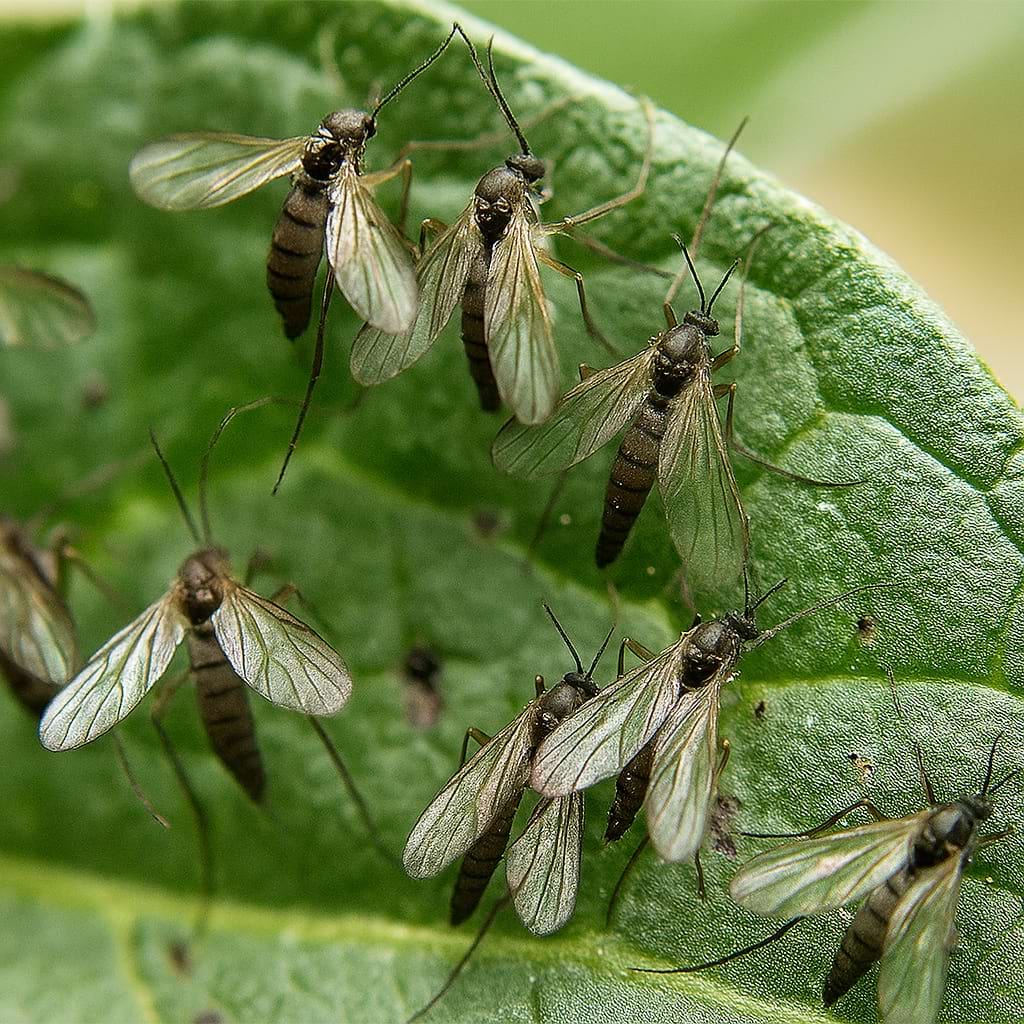
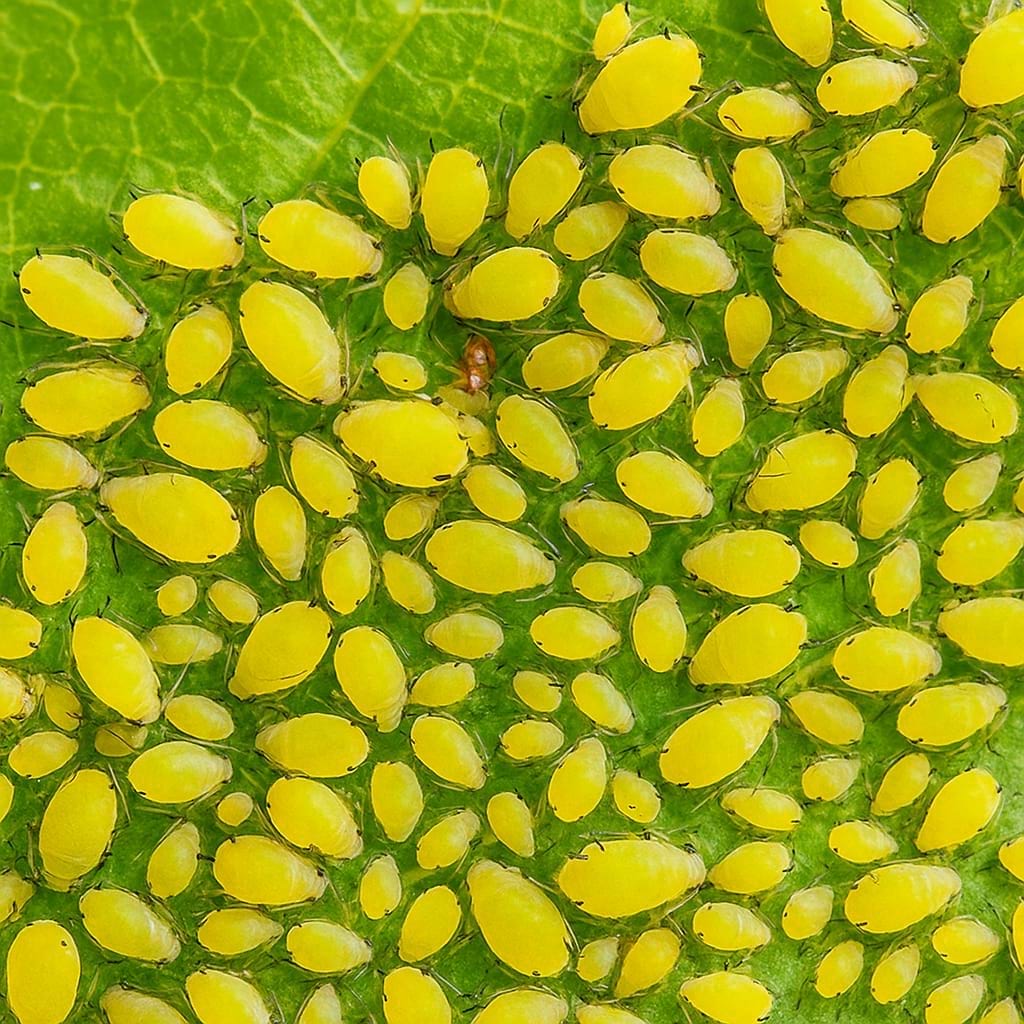
Spider mites arrive in dry winter air and show as fine webbing between leaflets with a dusty stippled look. Rinse under a lukewarm shower, raise humidity, and repeat weekly for three weeks. Scale insects look like small brown bumps on stalks and rhizomes, so confirm the pattern first, since ripening spores read the same way. Fungus gnats turn up when the mix stays wet too long and are a signal to water less. Aphids cluster on soft new fronds in spring and rinse off under a gentle stream.
A caution before you spray anything: neat neem oil and full-strength insecticidal soap mat the rhizome fur and scorch fern foliage. Use half strength and test one frond before doing the whole plant. Alcohol swabs and water pressure solve most of it anyway.
🩺 Common Squirrel's Foot Fern Problems
Check the rhizomes first when something looks wrong. They tell you more than the fronds, and sooner.
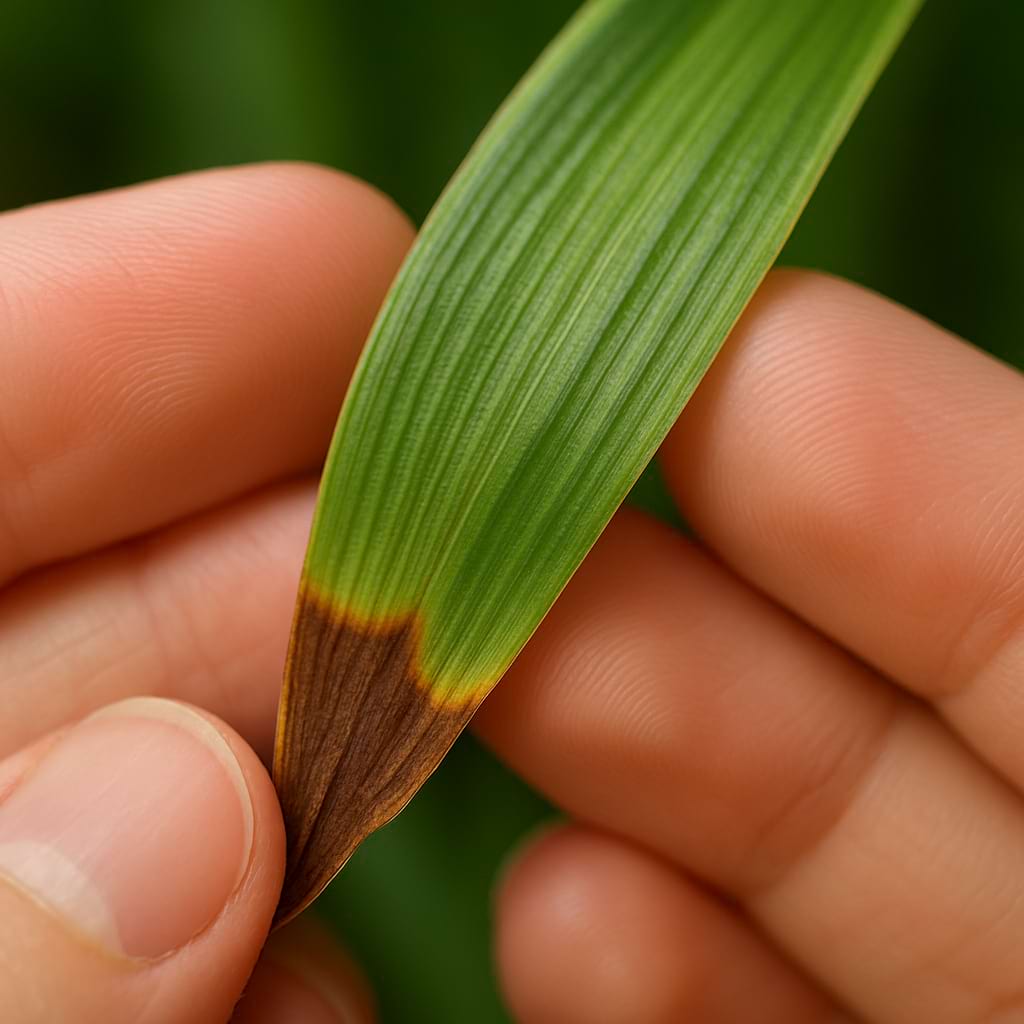
Brown crispy edges means the plant is losing water faster than it takes it up. Dry air below thirty percent, a pot left dry too long, or a hot draft, in that order of likelihood. Damaged fronds will not recover, so judge your fix by the new growth.
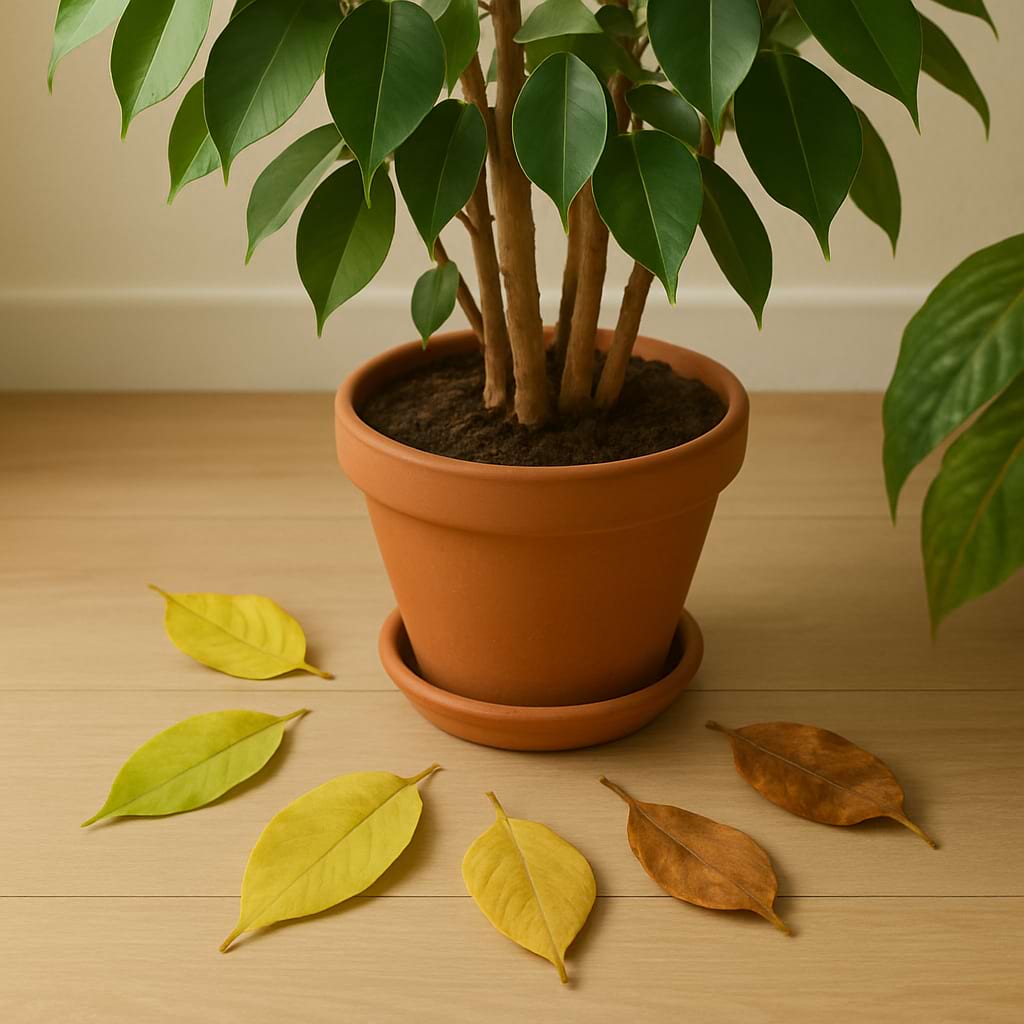
Yellowing leaves spreading through the plant usually means the mix has stayed wet. Check whether any rhizome is sitting in damp soil rather than on top of it, since a buried section rots quietly and yellows everything above it.
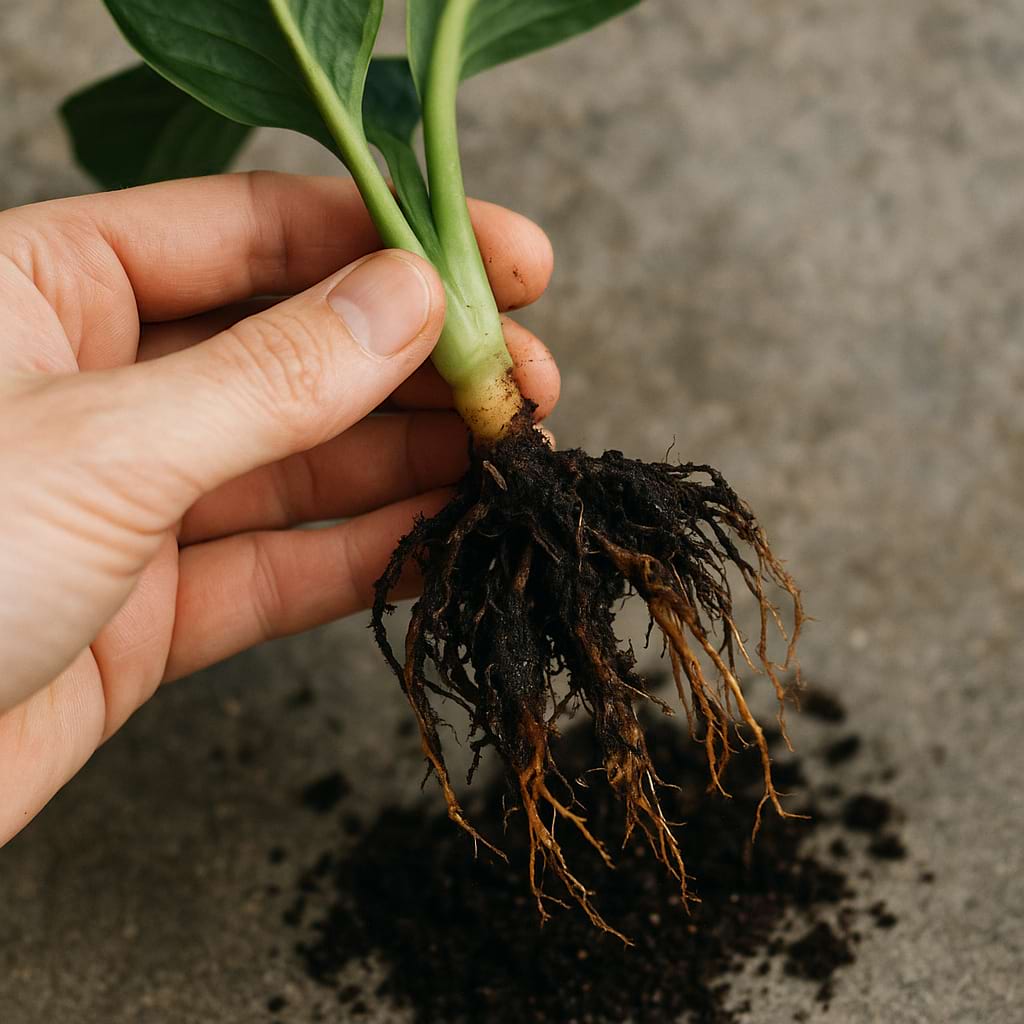
Root rot, or rhizome rot, is the serious one: soft dark patches under the fur, a sour smell, and fronds collapsing while the mix stays wet. Unpot immediately, cut back to firm tissue, and repot into fresh chunky mix.
Leaf drop in autumn or winter is often the normal semi-deciduous shed rather than a fault, especially if the rhizomes stay firm. Sudden drop in spring points to shock: a dry-out, a cold draft, or a repot that buried the feet.
Stunted growth through the growing season, with light and water in order, usually means an exhausted pot. Bark breaks down into airless crumbs in two or three years, and the fix is a repot rather than fertilizer.
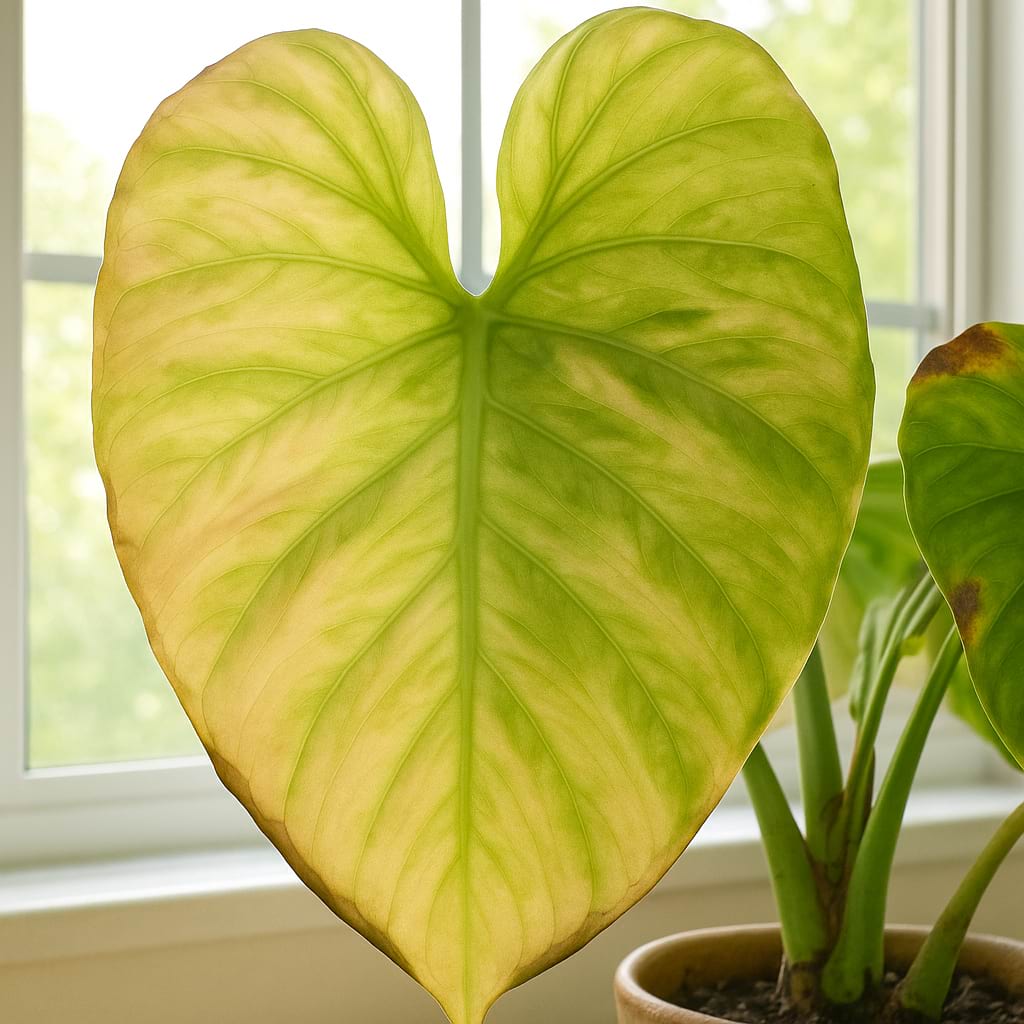
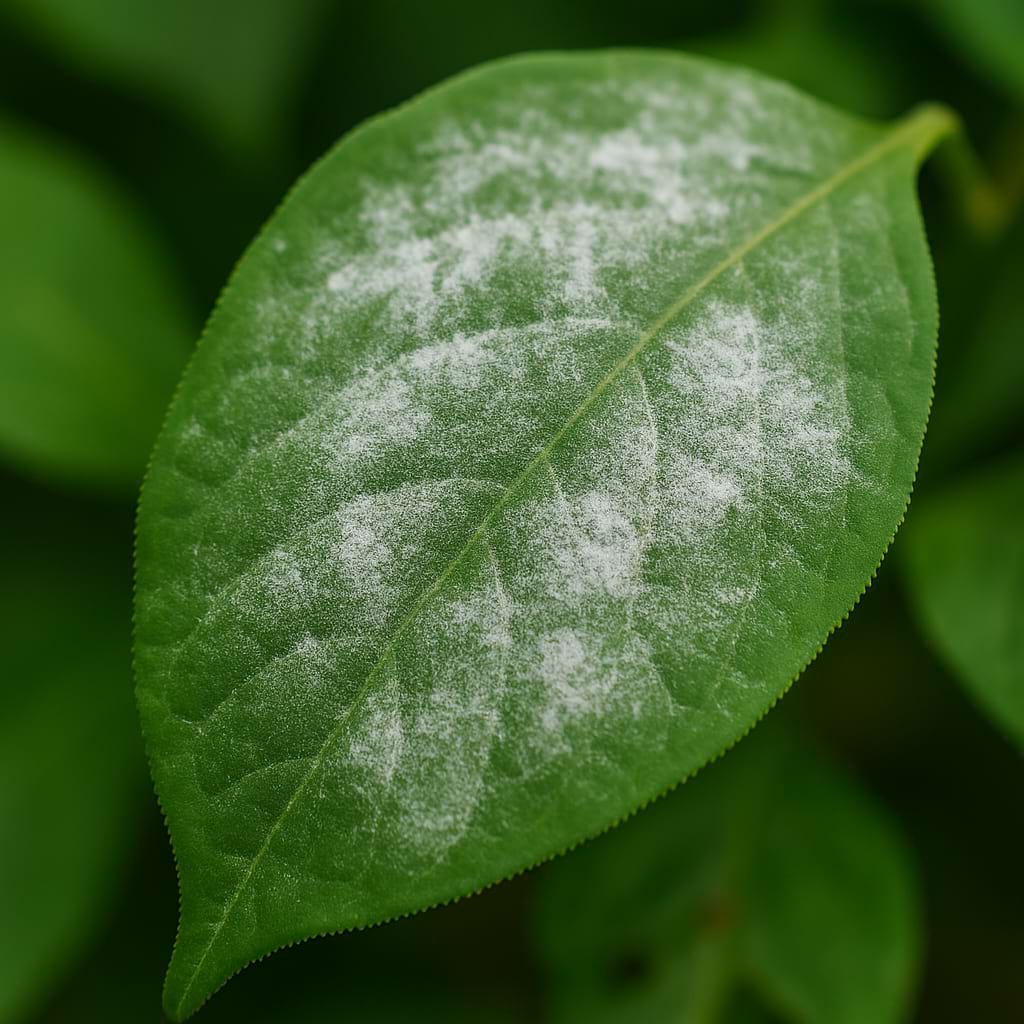
Pale faded leaves point at light: washed-out yellow-green with widely spaced fronds is too little, bleached patches on the window side too much. Fungal leaf spot shows as dark rings and follows wet foliage in still air, so water the mix rather than the plant.

🖼️ Squirrel's Foot Fern Display and Styling Ideas
How you display this fern changes what you actually see of it, because the rhizomes only become the star when you give them somewhere to go.
Hanging Baskets and Kokedama
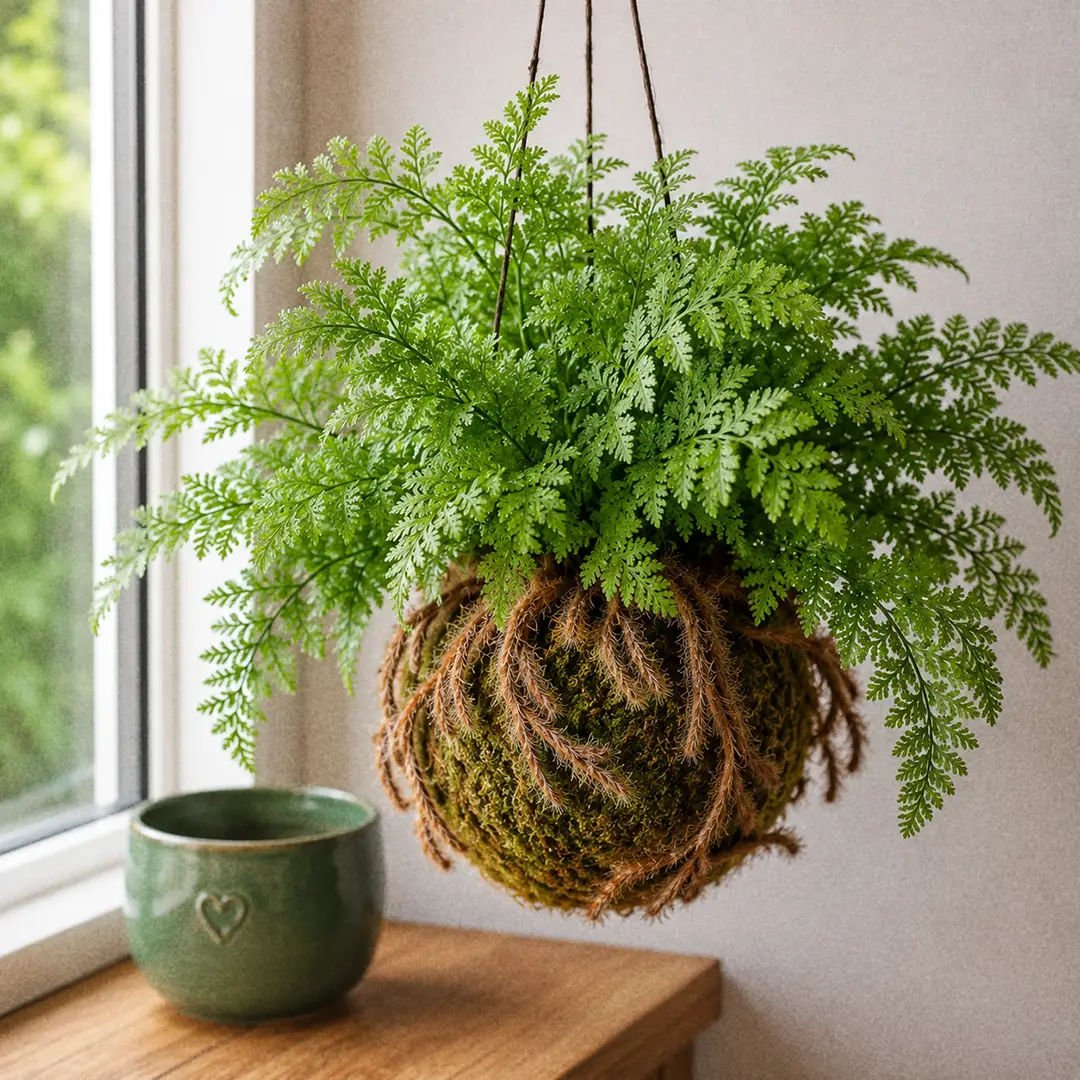
A hanging basket at eye level does the most for this plant, because the rhizomes run over the rim and keep going underneath until the container disappears inside a ball of furry feet. Kokedama takes the idea further, wrapping the roots in a moss sphere the rhizomes eventually cover entirely.
Mounted on Bark
Being an epiphyte, this fern grows happily on a slab of cork with a pad of sphagnum behind the roots and fishing line to hold it until it grips. It looks deliberate on a bright bathroom wall, and it is the closest thing to how the plant actually lives.
Shallow Bowls and Bonsai Accents
A wide shallow bowl on a pedestal shows the rhizome mat from above, the view most people never get. Bonsai growers use small Davallias as accent plants beside a tree for the same reason. Among other ferns, set it near the broad paddles of a Bird's Nest Fern or a Blue Star Fern, where the fine texture and furry feet both stand out.
🌟 Squirrel's Foot Fern Pro Care Tips
🐿️ Never bury a rhizome. Not to tidy it, not to anchor it, not even a little. If one needs holding down, pin it to the surface with a bent paperclip.
🔦 Torch-check the fur monthly. Mealybugs hide in the rhizome hairs where they pass for plant. Two minutes with a torch beats a month of treatment.
🪣 Dunk anything mounted. For kokedama and bark mounts, a two minute submersion in a bowl beats any amount of watering from a can.
🍂 Do not panic at a winter shed. Firm rhizomes plus bare stalks in January means dormant, not dead. Keep the mix lightly damp and wait for spring.
🚿 Rinse, never wipe. The rhizome hairs rub off under a cloth and do not grow back. A lukewarm shower cleans the fronds without touching them.
❓ Frequently Asked Questions
Should I bury the furry rhizomes of my Squirrel's Foot Fern?
No, never. Those rhizomes are adapted to sit exposed on a tree trunk and absorb moisture from the air. Buried under mix they stay wet, rot, and take the plant with them. If one lifts awkwardly, pin it to the surface rather than pushing it in.
What is the difference between a Squirrel's Foot Fern and a Rabbit's Foot Fern?
Look at the feet. Squirrel's foot rhizomes are slim and wear brown to grey fur, while a Rabbit's Foot Fern has thicker rhizomes with pale silvery fur and larger, more open fronds. Care is nearly identical, so a mislabelled plant is no problem.
Why are my Squirrel's Foot Fern's rhizomes shrivelling?
Hollow-feeling rhizomes mean the plant is running dry, either from stretched watering or from dry air pulling moisture out of the exposed feet faster than the roots replace it. Water thoroughly, raise the humidity, and move the pot away from any heat source. Plump rhizomes return within a couple of weeks.
Is the Squirrel's Foot Fern toxic to cats and dogs?
No. Davallia species are considered non-toxic to cats, dogs, and people. A pet that chews a frond may get a mild stomach upset from the fibre, but no poison is involved. The furry rhizomes do attract curious cats, so a hanging position suits a household with a climber.
My fern dropped most of its fronds over winter. Is it dead?
Probably not. This group is semi-deciduous, and a cool or dry winter often triggers a shed followed by a full reflush in spring. Squeeze a rhizome: if it is firm under the fur, the plant is alive and resting. Trim the brown fronds and wait.
How often should I water a Squirrel's Foot Fern?
Around every five to seven days in spring and summer, stretching to every ten to fourteen in winter, but check by touch rather than calendar. Water when the top inch feels dry while the layer beneath is still faintly damp. Mounted plants dry much faster.
Can I grow a Squirrel's Foot Fern in a terrarium?
In a large open terrarium, yes, and the constant humidity suits it. Avoid sealed vessels, since saturated still air keeps the rhizomes permanently damp and encourages rot.
What are the little brown bumps on the underside of the fronds?
If they sit in neat cup-shaped structures along the leaflet margins, repeating identically on every mature frond, they are sori, the fern's spore cases, and entirely normal. If they scatter at random on the stalks or rhizomes and lift off with a fingernail, suspect scale insects.
ℹ️ Squirrel's Foot Fern Info
Care and Maintenance
🪴 Soil Type and pH: Coarse, fast-draining, bark-based epiphyte mix holding light moisture; pH 5.5-6.5.
💧 Humidity and Misting: Happy at 50 to 60 percent and copes with 40 better than most lacy ferns.
✂️ Pruning: Cut spent fronds at the base of their stalk; never cut a healthy rhizome unless you are propagating.
🧼 Cleaning: Rinse fronds under a lukewarm shower. Never wipe or brush the rhizomes, as the hairs rub off and do not grow back.
🌱 Repotting: Every 2-3 years in spring, into a shallow pot only one size up, with the rhizomes left sitting on the surface.
🔄 Repotting Frequency: Every 2-3 years
❄️ Seasonal Changes in Care: Grows from April to September; may shed part of its foliage in a cool or dry winter and reflush in spring.
Growing Characteristics
💥 Growth Speed: Moderate through spring and summer, near stopped in winter
🔄 Life Cycle: Evergreen to semi-deciduous perennial depending on winter conditions
💥 Bloom Time: Does not bloom; sori ripen in small cups along the leaflet margins in late summer
🌡️ Hardiness Zones: 9-11 outdoors; a houseplant everywhere colder
🗺️ Native Area: Humid lowland and montane forest in Malaysia, Java, and southern China, growing on tree trunks and mossy rock
🚘 Hibernation: No true dormancy, though growth stalls in winter and a dry cold spell can trigger frond drop
Propagation and Health
📍 Suitable Locations: Hanging baskets, shallow bulb pans, mounted bark or cork, kokedama, bright bathrooms, east and north windows
🪴 Propagation Methods: Pin a four inch rhizome section onto damp mix in spring; roots and new fronds follow in six weeks.
🐛 Common Pests: Mealybugs, Spider Mites, Scale Insects, Fungus Gnats, Aphids
🦠 Possible Diseases: Rhizome and root rot in soggy mix, fungal leaf spot in still damp air
Plant Details
🌿 Plant Type: Small epiphytic fern with a long creeping surface rhizome densely clothed in fine scales
🍃 Foliage Type: Three to four times pinnate triangular fronds carried singly along the rhizome, firm and finely cut
🎨 Color of Leaves: Glossy mid to dark green, with new fronds unrolling a paler apple green
🌸 Flower Color: N/A
🌼 Blooming: Does not bloom; reproduces by spores held in tiny cup-shaped sori near the leaflet edges
🍽️ Edibility: Not edible
📏 Mature Size: 8-14 inches of arching frond
Additional Info
🌻 General Benefits: Pet-safe, tolerant of average room humidity, ideal for kokedama and mounted displays
💊 Medical Properties: Davallia rhizomes appear in traditional Chinese medicine as gu sui bu substitutes, with no modern clinical standing
🧿 Feng Shui: The creeping rhizomes read as growth spreading outward; often placed in an east or southeast corner
⭐ Zodiac Sign Compatibility: Cancer
🌈 Symbolism or Folklore: Endurance and quiet persistence; the Japanese name shinobu carries the sense of enduring patiently
📝 Interesting Facts: In Japan, Davallia ferns are bound into hanging moss balls called shinobu-dama and sold as summer ornaments, usually with a small wind chime attached. The rhizome hairs are modified scales that trap moisture against the surface, which is how the plant drinks on a bare tree trunk. Bonsai growers use it as an accent plant beside a tree because its scale reads convincingly as a forest floor.
Buying and Usage
🛒 What to Look for When Buying: Look for firm, plump rhizomes with intact fur and fronds green to the tip. Skip any plant whose rhizomes feel hollow or papery, or whose furry feet have been pressed under the soil at the nursery.
🪴 Other Uses: Kokedama, mounted bark plaques, bonsai accent planting, hanging baskets, large open terrariums
Decoration and Styling
🖼️ Display Ideas: A hanging basket at eye level so the rhizomes creep over and around the rim, a shallow bowl on a pedestal, or a cork bark mount on a bright wall
🧵 Styling Tips: Give it a wide shallow container rather than a tall one, and keep the rim clear so the furry feet are the thing people see first.
🪴 See also 🪴
Complete Guide to East Indian Holly Fern Care and Growth
Complete Guide to Silver Lace Fern Care and Growth
Complete Guide to Silver Lady Fern Care and Growth
Complete Guide to Tassel Fern Care and Growth
Complete Guide to Mother Fern Care and Growth
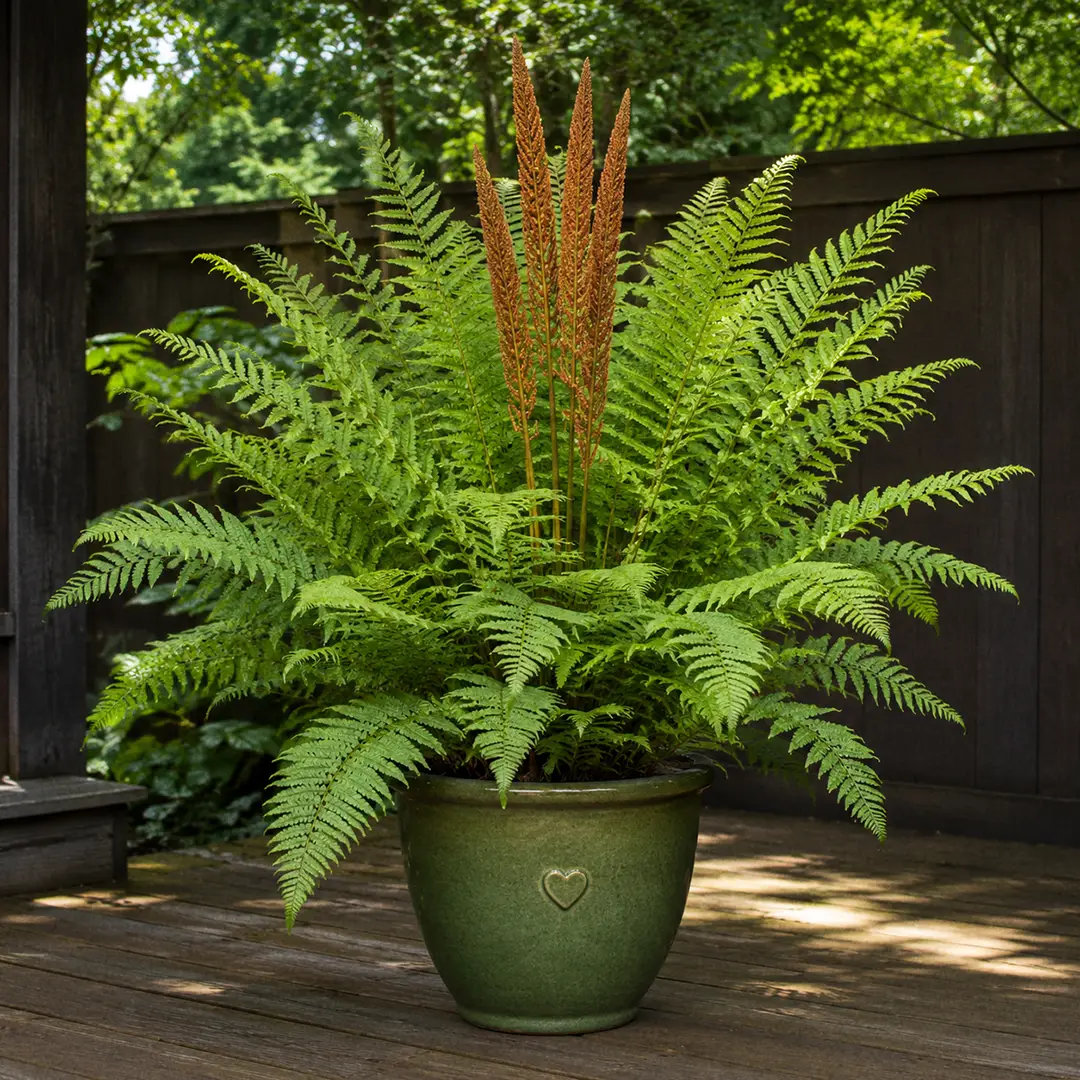
Complete Guide to Cinnamon Fern Care and Growth
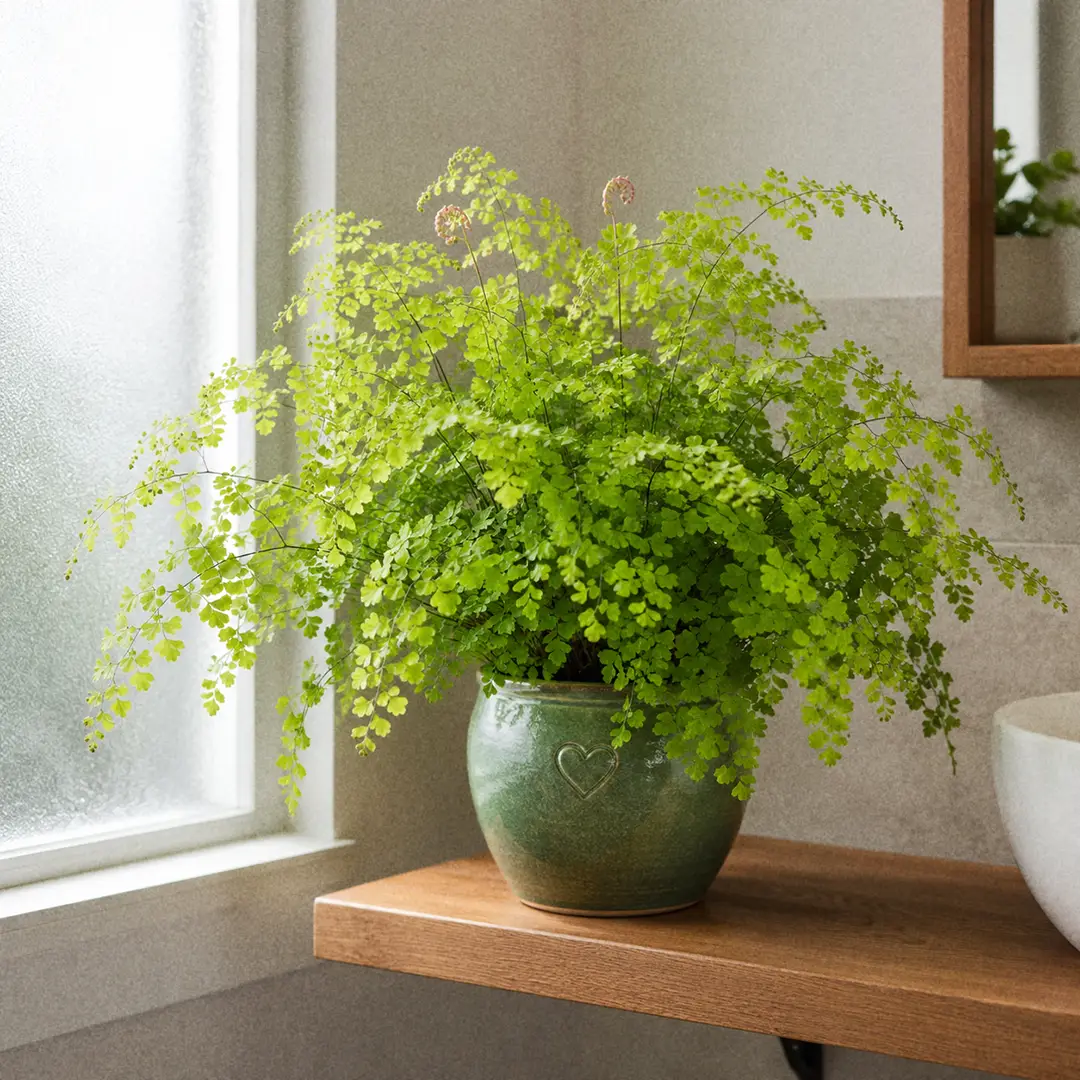
Complete Guide to Delta Maidenhair Fern Care and Growth
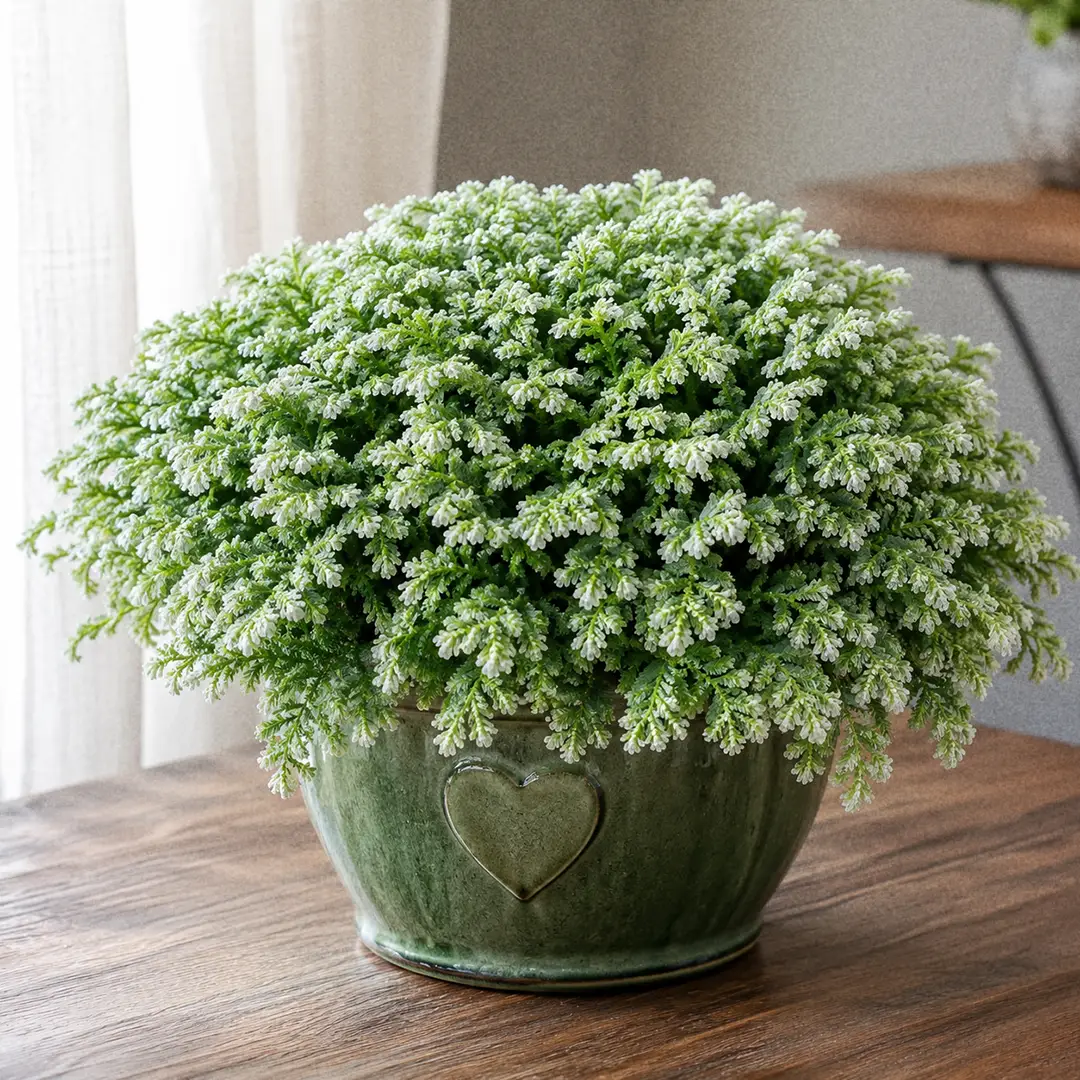
Complete Guide to Frosty Fern Care and Growth
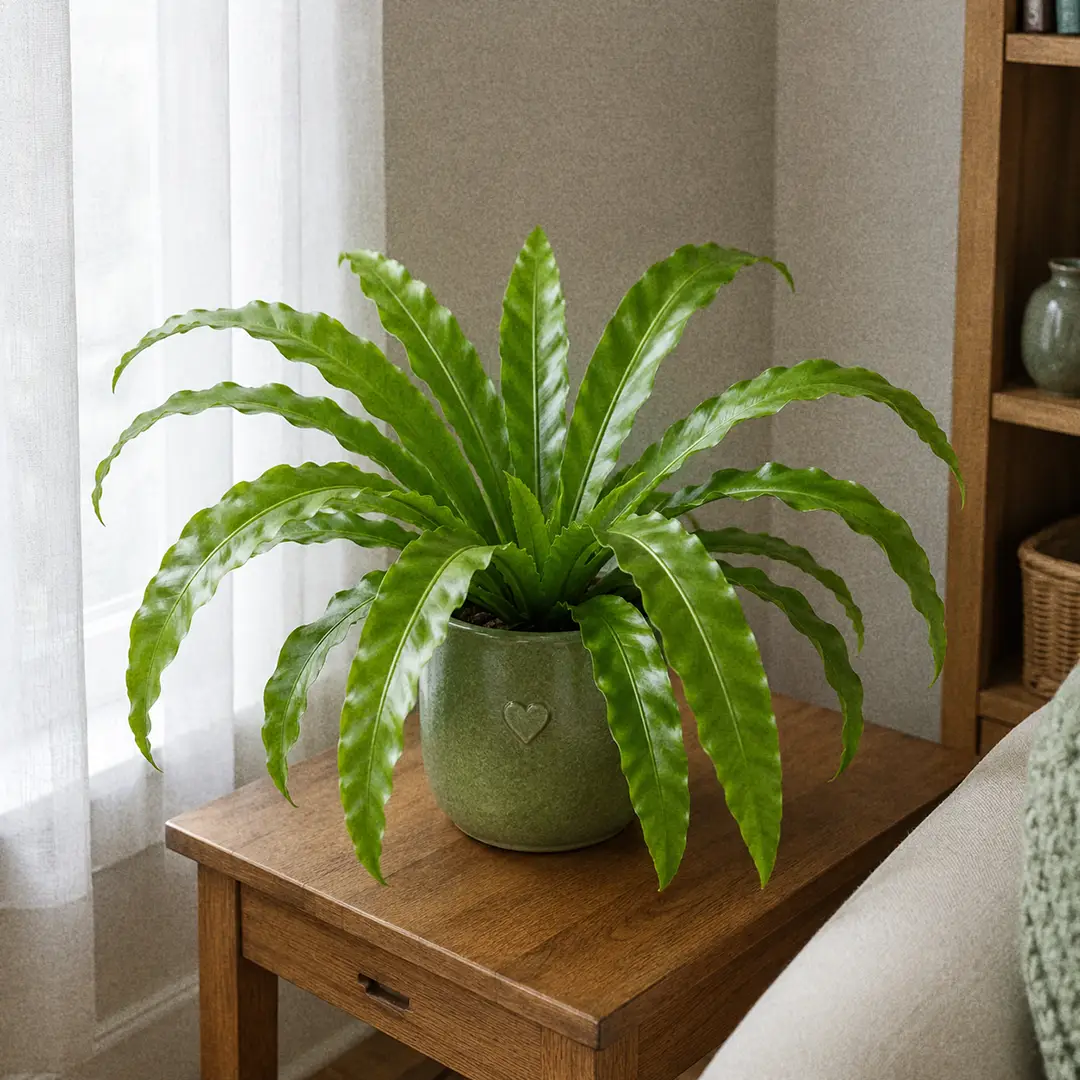
Complete Guide to Hart's Tongue Fern Care and Growth
Complete Guide to Korean Rock Fern Care and Growth

Houseplant101 Forum
Questions & Comments
Ask a question, share your plant experience, or help other plant owners.
Comments are temporarily unavailable.
Open the Houseplant101 ForumNo comments yet
Be the first to ask a question or share your experience about this page.
Log in or create an account
Comments use your Houseplant101 Forum account, but you can stay on this page.
Create a new account