
Cinnamon Fern
Osmundastrum cinnamomeum
Osmunda cinnamomea, Cinnamon-Colored Fern, Fiddlehead Fern, Buckhorn Brake


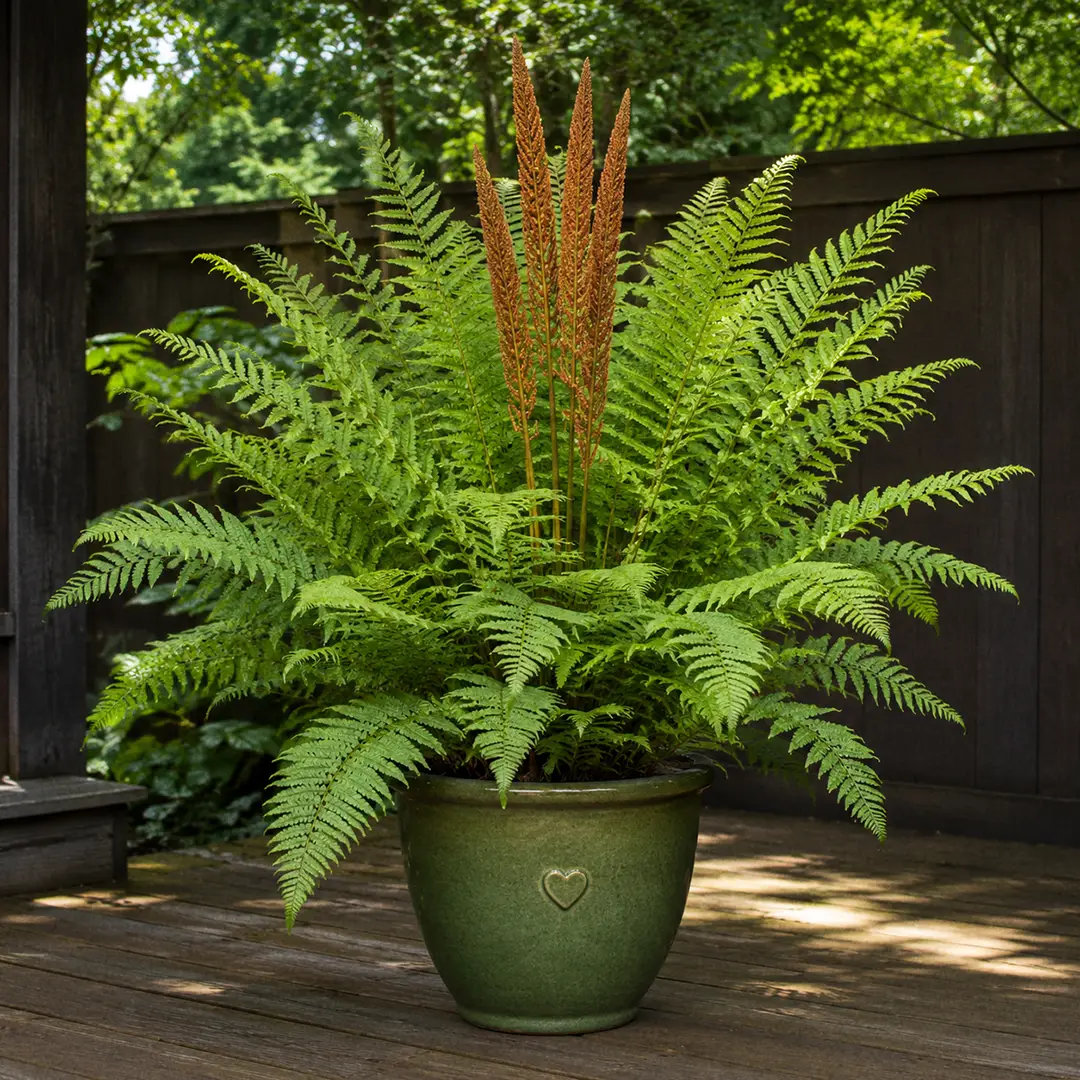
The Cinnamon Fern (Osmundastrum cinnamomeum) is the dramatic native fern with cinnamon-colored fertile fronds that shoot up like rusty cinnamon sticks from the center of a tall green vase. It is one of the most striking shade ferns for cool sunrooms, sheltered porches, and damp shaded garden beds across most of North America.
📝 Cinnamon Fern Care Notes
🌿 Care Instructions
⚠️ Common Pests
📊 Growth Information
🪴 In This Guide 🪴

📺 Cinnamon Fern Video Guide

☀️ Cinnamon Fern Light Requirements (Part to Full Shade)
Cinnamon Fern is a true shade plant. In the wild it grows along stream edges, in shaded bogs, and at the base of deciduous trees, where sunlight reaches it only in dappled patches. Indoors or in a container, that translates to bright but never direct light, with more room to err on the dim side than the bright side.
The Sweet Spot
A north-facing window, a shaded porch, or a spot under the high canopy of a deciduous tree is the natural home for this fern. Two or three hours of soft morning sun is fine; afternoon sun is too much almost anywhere south of zone 5. The sterile fronds should look fresh bright green, not pale yellow-green or scorched tan. Outdoors, plant it on the north or east side of a building, or under the dappled shade of a tall oak or maple. See light for houseplants for the broader framework on window directions.

Too Little Light
In genuinely deep shade the plant survives but slows down. Sterile fronds come up shorter, the clump stays small, and fertile fronds may not appear at all in any given year. Move the plant or the pot to a brighter shaded spot. Indoors, a north window two to three feet from the glass is usually enough; a small LED grow bar on a 10-hour timer wakes up a stalled plant in a corner.
Too Much Light
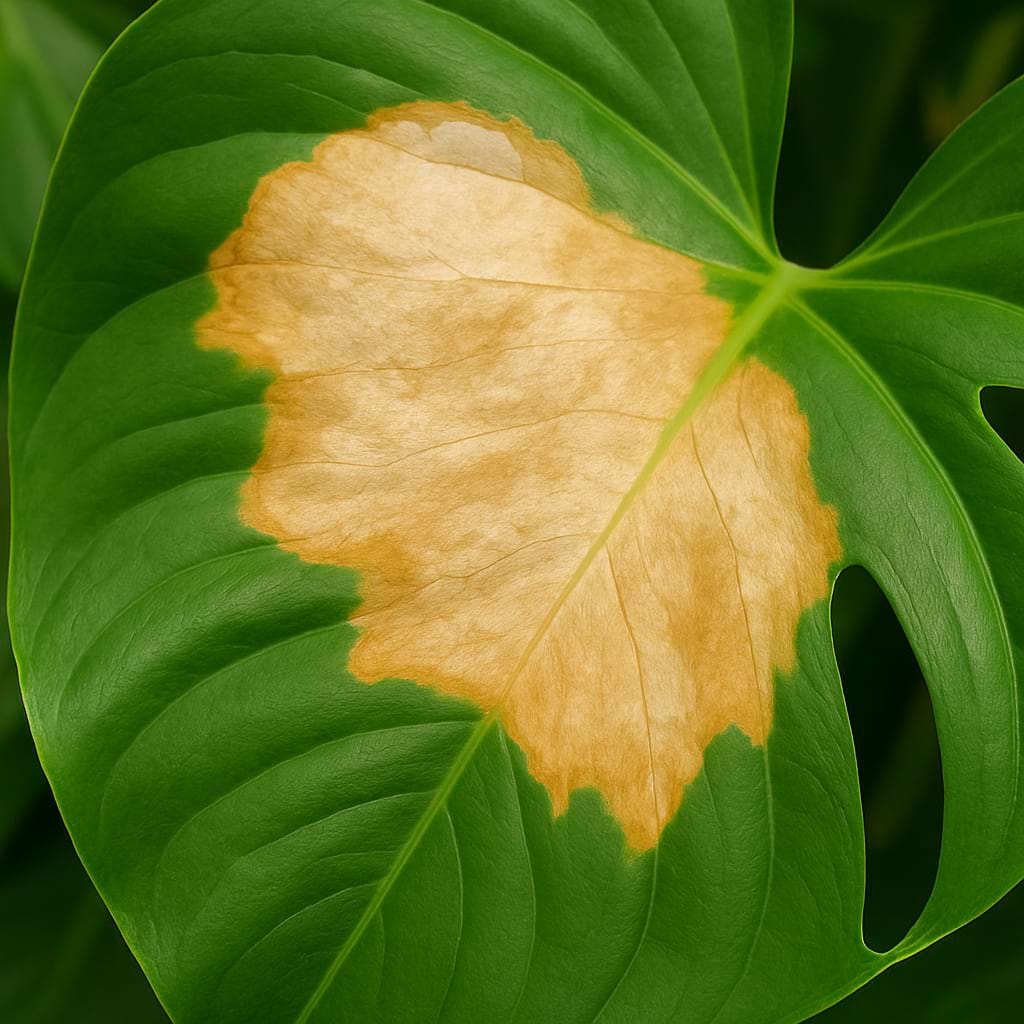
Direct sun bleaches the sterile fronds to a flat yellow within days and burns tan scorch patches along the upper surfaces within a week. The fronds do not recover; only new growth comes back clean. A south or west window, an open patio, or a thinned-out garden bed that gets afternoon sun is the wrong spot. Move the plant immediately if you see scorch; one day of unfiltered summer afternoon sun is enough to ruin a whole season of fronds.
💧 Cinnamon Fern Watering Guide (Consistently Moist to Wet)
Cinnamon Fern is one of the few ferns that tolerates standing water. In the wild it grows in bogs and the muddy edges of streams. Indoors and in containers, that means generous, frequent watering with no risk of overdoing it as long as light and temperature are right.
Watering Frequency
In spring and summer, water whenever the surface of the soil starts to look matte rather than glossy with moisture. For a large container in a shaded porch, that often lands every 2 to 3 days; in a true bog garden, you never water at all because the water table sits a few inches below the surface. In autumn, taper as the fronds yellow. After the plant goes dormant in winter, keep the rhizome from drying to bone but do not soak it; once a week is plenty. See watering houseplants for the basic technique.
How to Water
Pour rain or filtered water at the base of the clump until it puddles briefly and drains, then pour a little more. This is not a fern you flush dry between waterings. A saucer of standing water under the pot is welcome from spring through summer, the opposite of the rule for almost every other houseplant. Soft slightly acidic water suits it best; hard tap water leaves a white crust on the soil over a season. Bottom watering works, paired with a steady top water during the growing season.
Signs of Trouble
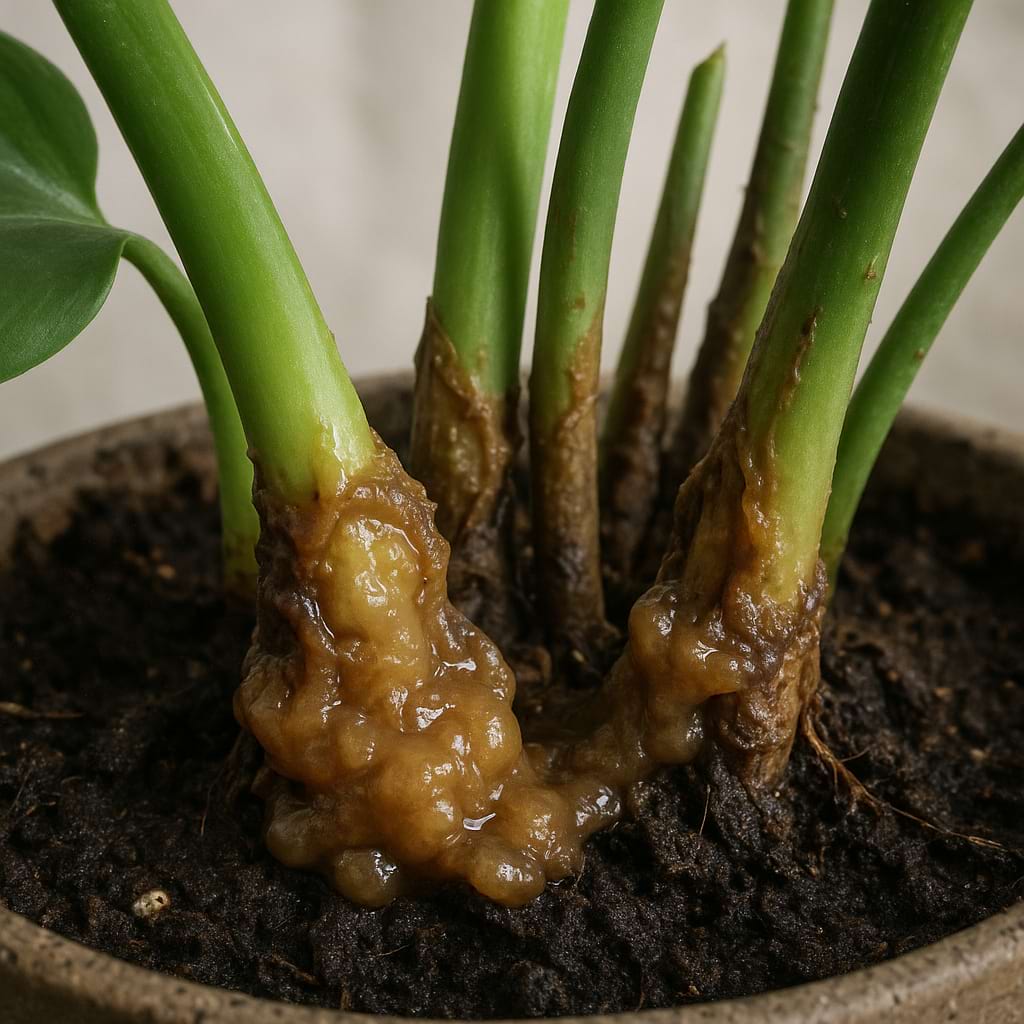
A thirsty Cinnamon Fern droops fast and the fronds crisp from the tip down within a day. The current season's fronds are usually a loss after a true drying-out, but the rhizome bounces back next spring. Yellow lower fronds in midsummer are normal turnover; yellow inner fronds combined with a soft crown mean stagnant warm water around the rhizome, the one way to overwater this plant.
🪴 Best Soil for Cinnamon Fern (Acidic, Humus-Rich, Moisture-Retentive)
Soil is where Cinnamon Fern is fussiest. It evolved in cool wet acidic bogs and forest floors thick with leaf mold. A standard houseplant mix is too lean and not acidic enough; a desert succulent mix is the opposite of what it wants.
What the Soil Needs
A heavy, humusy, slightly spongy mix that holds water and stays acidic. Peat moss or coco peat is the backbone. Composted leaves, pine bark fines, and a small amount of perlite round it out for structure. The target pH is 4.0 to 6.5; this is one of the few ferns that genuinely benefits from a peat-heavy formula.
DIY Soil Mix
- 2 parts peat moss or coco peat (peat moss is more acidic; coco peat is the sustainable alternative)
- 1 part composted leaf mold or pine bark fines
- 1 part standard houseplant potting soil
- 1/2 part perlite or coarse sand for a touch of drainage
- No lime, no oyster grit, no eggshell; those nudge pH the wrong way for this plant
Squeeze a handful. It should hold together like wet sponge cake and slowly release water when you press it.
Pre-Made Options
A bagged carnivorous-plant or bog-plant mix is closer to what this fern wants than any standard houseplant mix. African violet mix is acidic enough but too lean; bulk it up with extra peat and composted leaves. Avoid alkaline cactus mix and anything labeled for orchids or succulents.
🍼 Fertilizing Cinnamon Fern (Light and Organic)
This fern grew up in nutrient-poor bogs and woodland floors. Heavy feeding burns the roots and pushes weak, floppy fronds; light feeding from organic sources gives you the strong upright vase the plant is famous for.
When and How Often
Top-dress with a one-inch layer of compost or leaf mold once a year in early spring, just as the first fiddleheads start to push up. That single feeding usually covers the whole growing season for an outdoor or container plant. Indoor container plants in a less rich environment can take an extra half-strength liquid feed once a month from spring through midsummer.
What to Use
Composted leaves, fine pine-bark compost, or well-rotted manure are the gold-standard amendments. For liquid feeds, use a balanced organic option like fish emulsion or seaweed at quarter to half strength; standard synthetic blue-water plant food is fine if you stick to half strength and water with plain water first. See fertilizing houseplants.
Over-Fertilizing Signs
Floppy fronds that cannot hold themselves upright, brown crispy edges that do not respond to better water, or a white crust on the soil all mean too much feed. Flush the pot with two pot volumes of rainwater and skip the next two feeds. A garden plant rarely shows over-fertilization unless someone has used a lawn fertilizer nearby.
🌡️ Cinnamon Fern Temperature Range
One of the toughest ferns in the temperate world. It tolerates real cold and prefers cool conditions year-round.
Ideal Range
Outdoors, hardy in USDA zones 3 through 9. The rhizome survives winters down to -40°F (-40°C) under a layer of snow or mulch. Active growth happens between 50 and 75°F (10 to 24°C); the plant noticeably resents heat above 85°F (29°C), especially when paired with dry air. Indoors in a cool sunroom or shaded porch, aim for 55 to 75°F (13 to 24°C) during the growing season. Hot dry living-room conditions kill it within weeks.
Drafts and Heat Sources
Heating vents and warm forced-air drafts are the fastest way to crisp a container Cinnamon Fern indoors. Cold drafts in winter are not a problem; the plant is happiest going fully dormant in a cool spot. A bright unheated porch or a north-facing garage windowsill that stays above freezing is a fine winter rest spot. The fern needs that cold dormancy to set fertile fronds the following spring.
💦 Cinnamon Fern Humidity Requirements
Ideal Humidity
Wants 60 percent and above year-round when in growth. Outdoors near water, shade, or in a damp garden bed, this happens without effort. Indoors, the dry winter air of a heated home is the single hardest condition to overcome with this plant. Below 45 percent, frond tips brown within a couple of weeks; below 35 percent, the plant suffers. See humidity for houseplants.
Easy Humidity Boosters
Group the fern with other moisture-loving ferns, run a cool-mist humidifier nearby during the heating season, and keep the pot on a deep pebble tray with standing water. Misting alone barely moves the needle on a plant this size. Outdoor plants near a pond, stream, or shaded north wall stay humid all summer without help.
🌸 Cinnamon Fern Fertile Fronds and Spores (No Flowers)
Ferns do not bloom. Cinnamon Fern produces its spores on entirely separate, eye-catching fertile fronds that are the whole reason for the plant's name.
What the Fertile Fronds Look Like
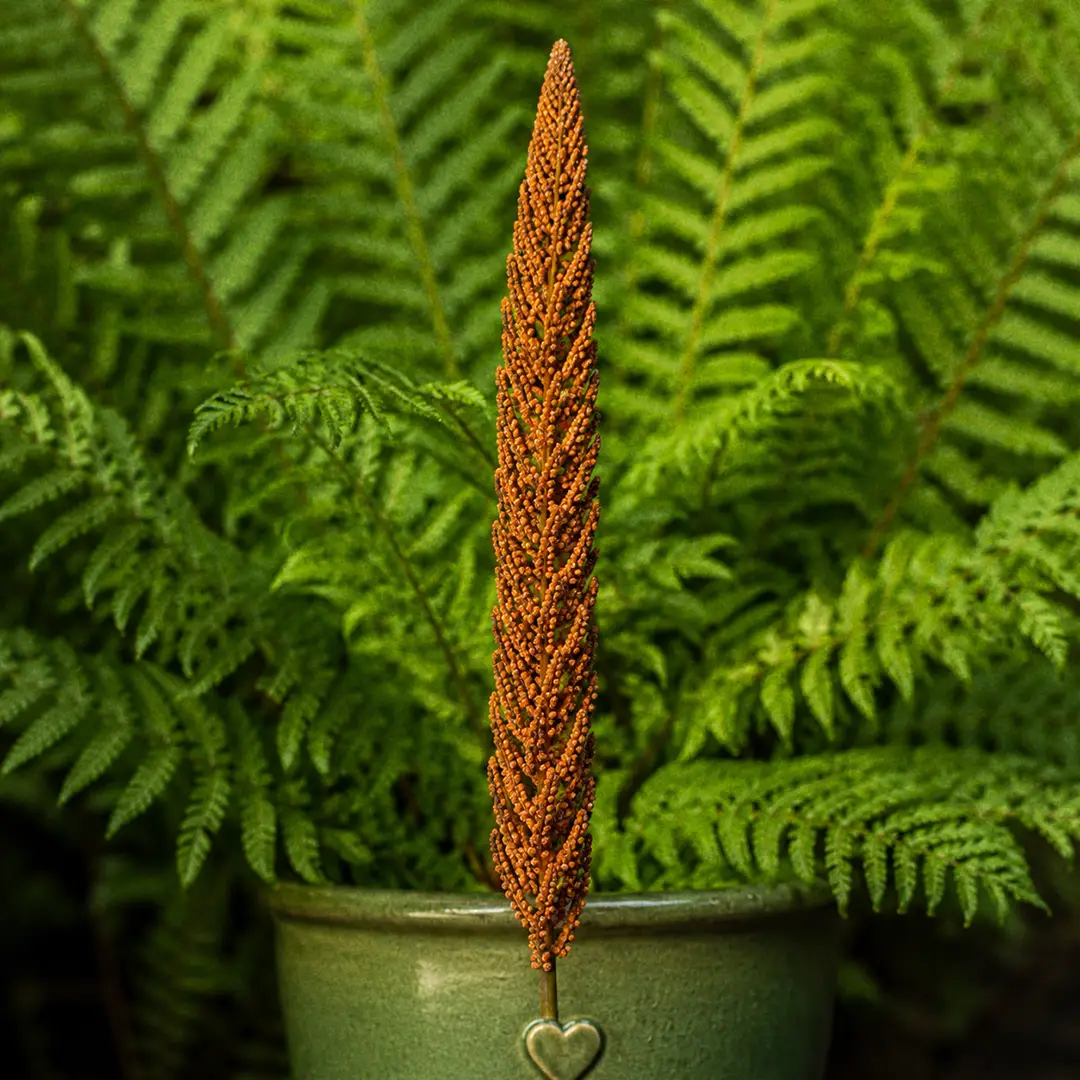
In mid to late spring, three to seven upright spikes shoot up from the center of the clump, surrounded by the green vase of sterile fronds. The spikes start green for a few days, then ripen quickly to the rust-cinnamon color the plant is named for. Each spike is covered top to bottom in densely packed brown sporangia (spore cases); there are no flat green leaflets on a fertile frond, just the spore-bearing structures. After releasing spores in late spring to early summer, the fertile fronds darken to dry brown and collapse, and the green sterile vase carries the plant through the rest of the season.
How Fertile Fronds Form
A mature, well-fed clump produces fertile fronds reliably from year three or four onward. The trigger is a proper cold winter dormancy followed by a steady cool wet spring. A plant kept permanently warm and dry indoors skips straight to ordinary green growth.
If Fertile Fronds Don't Appear
Most often the plant is too young, too warm, or dried out the previous summer. None of these are emergencies; the green sterile vase still puts on a good show on its own.
🏷️ Cinnamon Fern Types and Cousins
Cinnamon Fern has almost no horticultural cultivars worth seeking out. What you usually buy is the straight species, the same plant that has covered the floor of eastern North American forests since before mammals existed. A handful of close cousins in the Osmundaceae family fill out the picture for collectors.
Osmundastrum cinnamomeum (Wild Form)
The standard plant. A tall green vase 3 to 5 feet high, with three to seven upright cinnamon-rust fertile fronds in the middle each spring. Hardy zone 3 to 9, slow-spreading by rhizome. The plant you get at any native plant nursery and the only form most gardeners ever grow.
Osmunda regalis (Royal Fern)
The closest cousin still in the original Osmunda genus. Royal Fern carries its spores at the tips of normal-looking sterile fronds rather than on separate cinnamon spikes, and the silhouette is broader and more divided. Often planted side by side with Cinnamon Fern in bog gardens for contrasting frond shapes.
Osmunda claytoniana (Interrupted Fern)
A second close cousin native to the same eastern North American range. Spores appear on the middle section of an otherwise ordinary green frond, "interrupting" the leafy pattern with a stretch of brown sporangia. A good companion in the same bed.
Good Shelf and Garden Companions
Cinnamon Fern looks best beside the broad arching vase of an Ostrich Fern, the upright dark green clumps of a Christmas Fern, or the lacy delicate fronds of a Lady Fern. For texture contrast, plant it behind the silvery Japanese Painted Fern or the coppery new growth of an Autumn Fern. On a cool shaded porch or in a sunroom, pair a container Cinnamon Fern with the glossy strap fronds of a Hart's Tongue Fern for an unexpected vertical-to-flat contrast.
🪴 Potting and Repotting Cinnamon Fern
Cinnamon Fern is rarely a small indoor potted plant. Most are in the ground or in a large outdoor container, and the principles are the same either way.
When to Repot
Container plants need stepping up every 2 to 3 years, or when the rhizome runs out of room and roots start pushing the soil up out of the pot. Early spring, just before the first fertile fronds appear, is the right window. Garden plants in the ground rarely need lifting; a clump can sit happily in the same spot for decades.
Choosing a Pot
Go big. A 5-gallon to 15-gallon container suits a mature Cinnamon Fern far better than a small decorative pot. Plastic, glazed ceramic, or a half-barrel all work; unglazed terracotta dries the rootball out too fast for this fern. The pot must have drainage holes, but a tray of standing water beneath is welcome from spring through summer. Wide shallow pots suit the spreading rhizome better than tall narrow ones.
Step-by-Step Repotting
- Soak the parent pot the day before so the rootball slides out cleanly and the rhizome does not crack.
- Tip the pot on its side and ease the plant out, supporting the heavy crown.
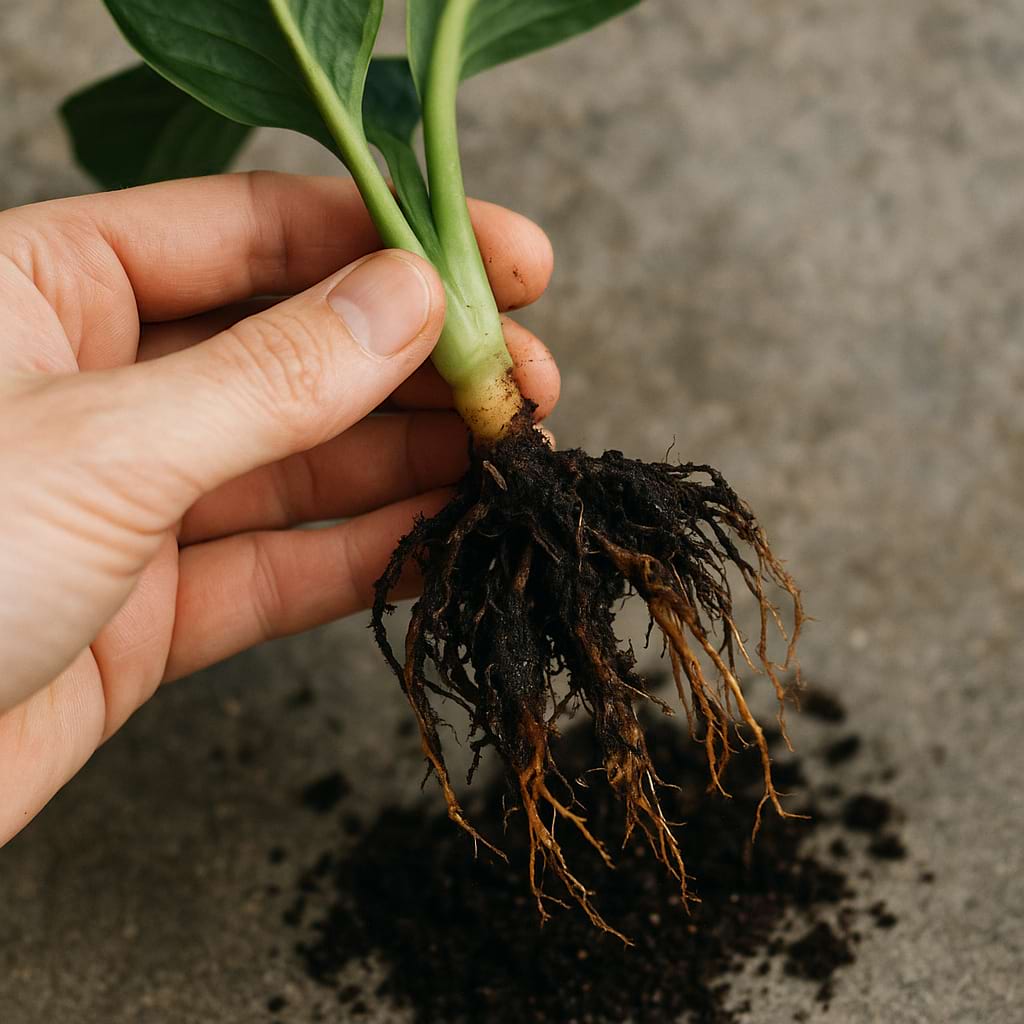
- Trim any black, mushy, or hollow roots back to firm pale tan tissue with sterile scissors. The rhizome itself should look like a knobby brown trunk; do not cut into it.
- Add a layer of fresh acidic peat-heavy mix to the new pot and set the plant in so the top of the rhizome sits just at the soil surface. Burying the rhizome too deep encourages crown rot.
- Backfill around the rootball with fresh mix, pressing it down firmly enough to hold the heavy plant upright but not so hard the soil compacts.
- Water generously to settle the soil, then top with a one-inch mulch of leaf mold or pine-bark fines. Skip fertilizer for the next two months.
✂️ Pruning Cinnamon Fern
When to Prune
Once the first hard frost collapses the fronds, the plant has finished for the year and the whole top dies back to the rhizome. Cut everything off at ground level once the fronds have turned brown and crispy.
How to Prune
Use sharp clean bypass pruners. Cut each frond off about an inch above the rhizome, leaving the rhizome itself untouched. Pull the cut fronds off and compost them; do not leave them piled on the crown, where they can hold moisture against the rhizome and rot it. For outdoor plants, a top dressing of leaf mold or compost over the cleared crown after cutting back protects the rhizome through winter and feeds the plant for the next spring.
Mid-Season Tidying
Through the growing season, snip off any frond that yellows or browns out of turn. Spent fertile fronds usually collapse by midsummer; cut them at the base once they are clearly brown and brittle, or leave them standing for the rusty color in an outdoor bed.
🌱 How to Propagate Cinnamon Fern
Best Method: Division of Mature Clumps
Division of an established clump is the only reliable way to propagate Cinnamon Fern for most gardeners. The rhizome is tough, woody, and slow to fork, so do not expect quick multiplication. Wait until a plant is at least 4 to 5 years old and the clump has clearly developed multiple growing crowns from the same rhizome. See plant division for the broader technique.
Step-by-Step Division
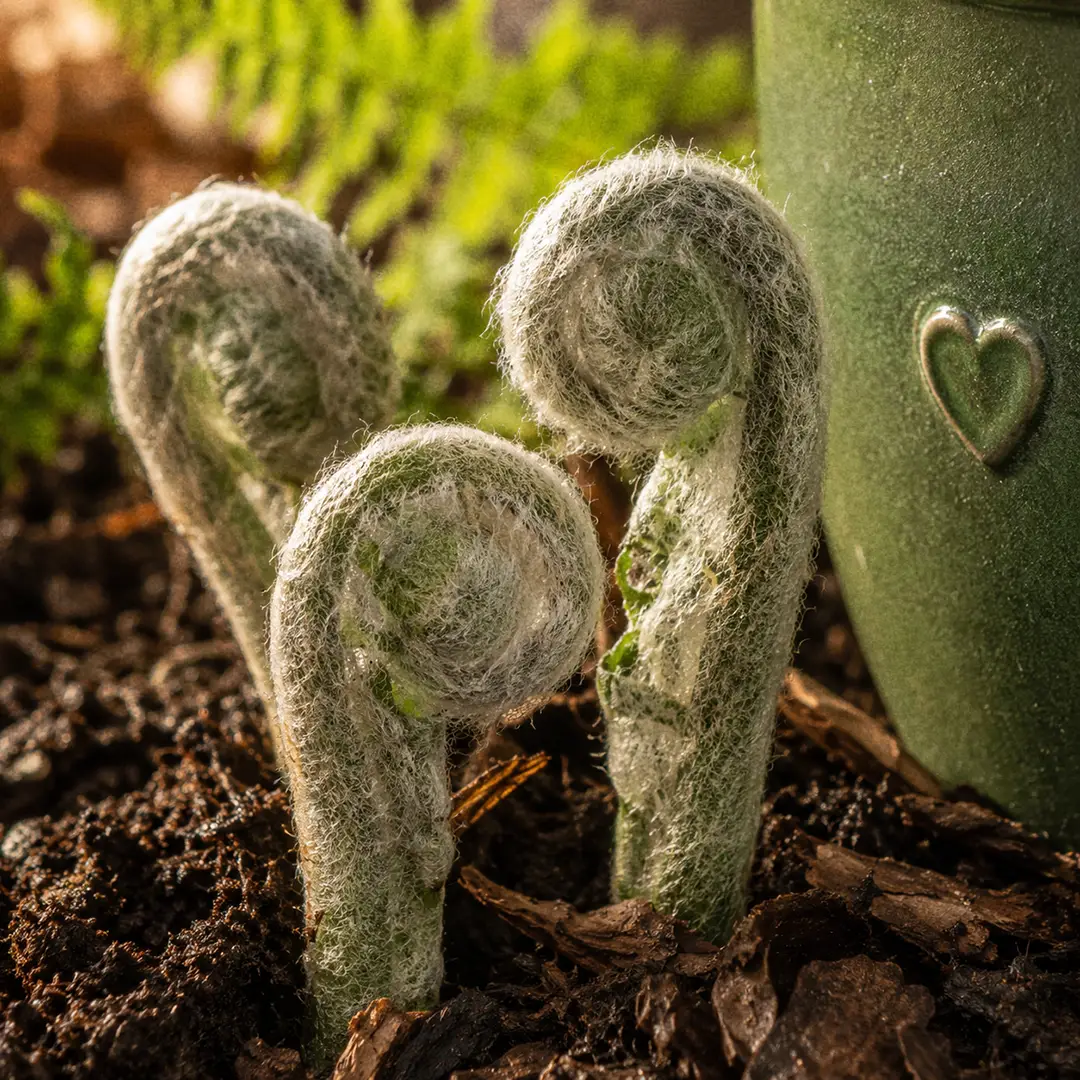
- In early spring, just as the fiddleheads are pushing up from the rhizome, dig or unpot the parent plant. The visible silvery-white woolly fiddleheads tell you exactly where each growing crown is.
- Rinse most of the soil off the rhizome so you can see the joins between crowns.
- Use a sterilized sharp knife or hand saw to cut straight down through the rhizome between the crowns. Each division needs at least one healthy crown with a fiddlehead and a section of rhizome with live roots attached.
- Plant each division at the same depth it was before, in fresh acidic peaty mix or in a prepared shaded damp garden spot.
- Water deeply and keep the new divisions in deep shade out of any direct sun for the first two weeks. Hold off fertilizer for 6 to 8 weeks. The first fertile fronds may not appear for a season or two after division; that is normal.
Spore Propagation
Possible but slow. Collect ripe cinnamon fronds in late spring, lay them on white paper for a day or two, and tap out the rust-brown dust. Sow on sterile damp peat-based mix in a covered tray at 60 to 70°F (15 to 21°C) under low light. A green prothallus appears in weeks; tiny fiddleheads follow months later. Expect 18 months to two years from spore to a division-sized plant. Division is faster and far less work.
🐛 Cinnamon Fern Pests and Treatment
The leathery fronds and high humidity preference make Cinnamon Fern one of the more pest-resistant ferns. The few pests it does get tend to be outdoor garden problems rather than indoor ones.
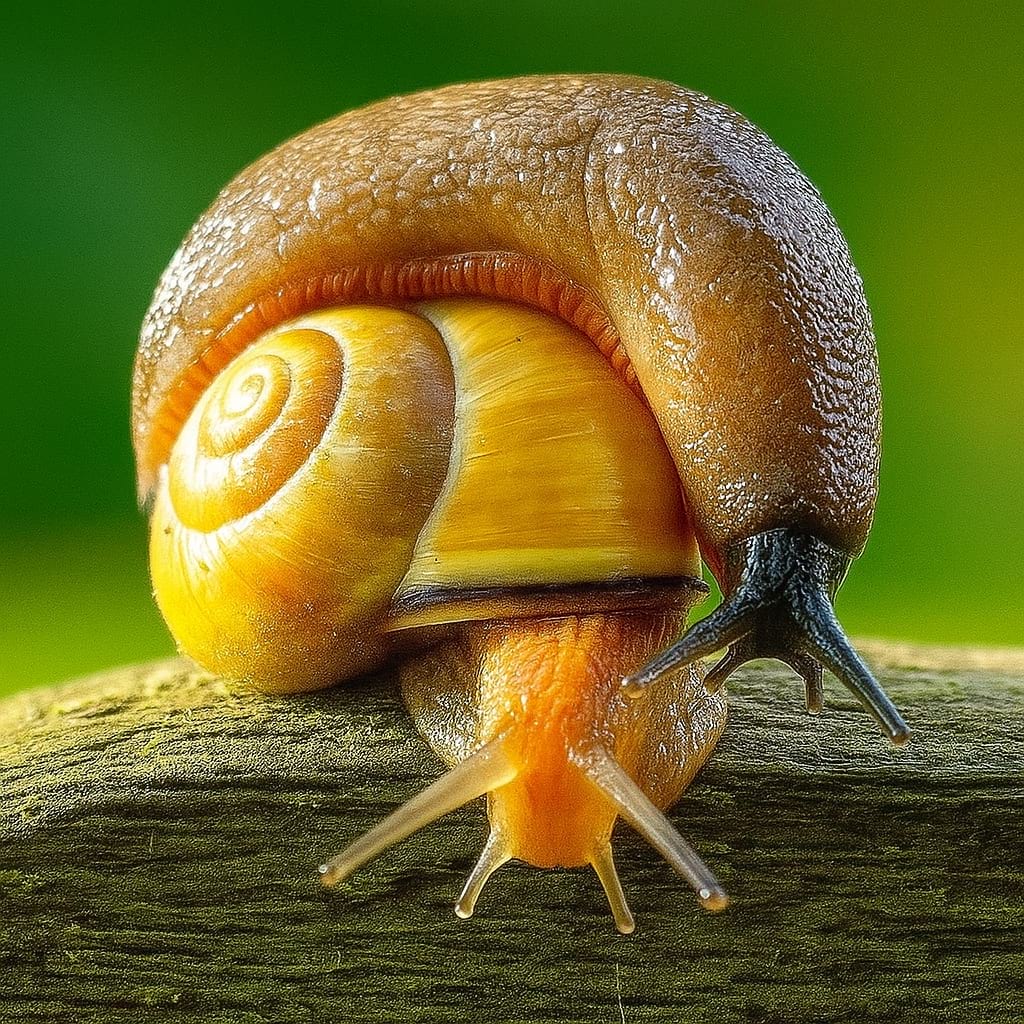
- Slugs and Snails: The most common pest by far on garden plants. Ragged holes through unfurling fronds overnight in early spring. Hand-pick at dusk or ring the crown with copper tape.
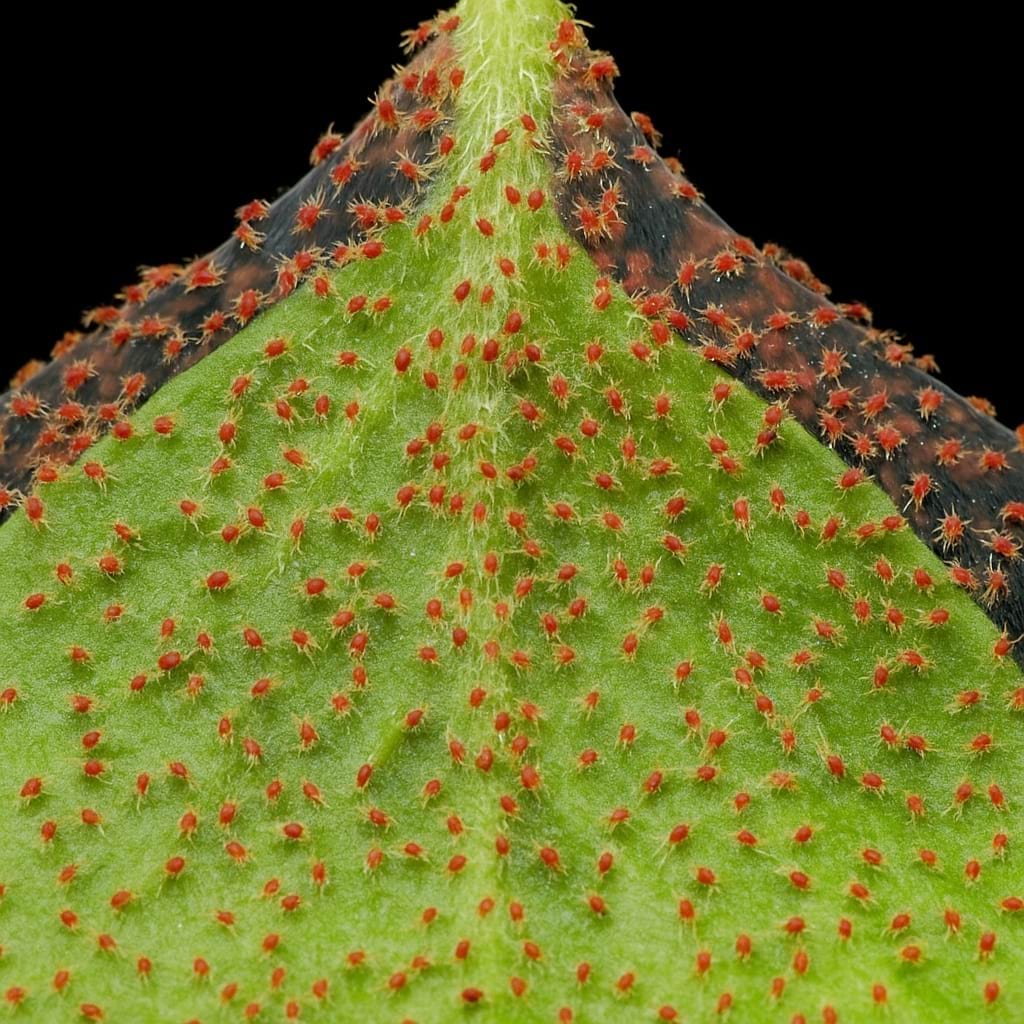
- Spider Mites: Indoor container plants in dry winter air. Fine speckling and faint webbing on the undersides. Bump up humidity and wipe with insecticidal soap every five days for three weeks.
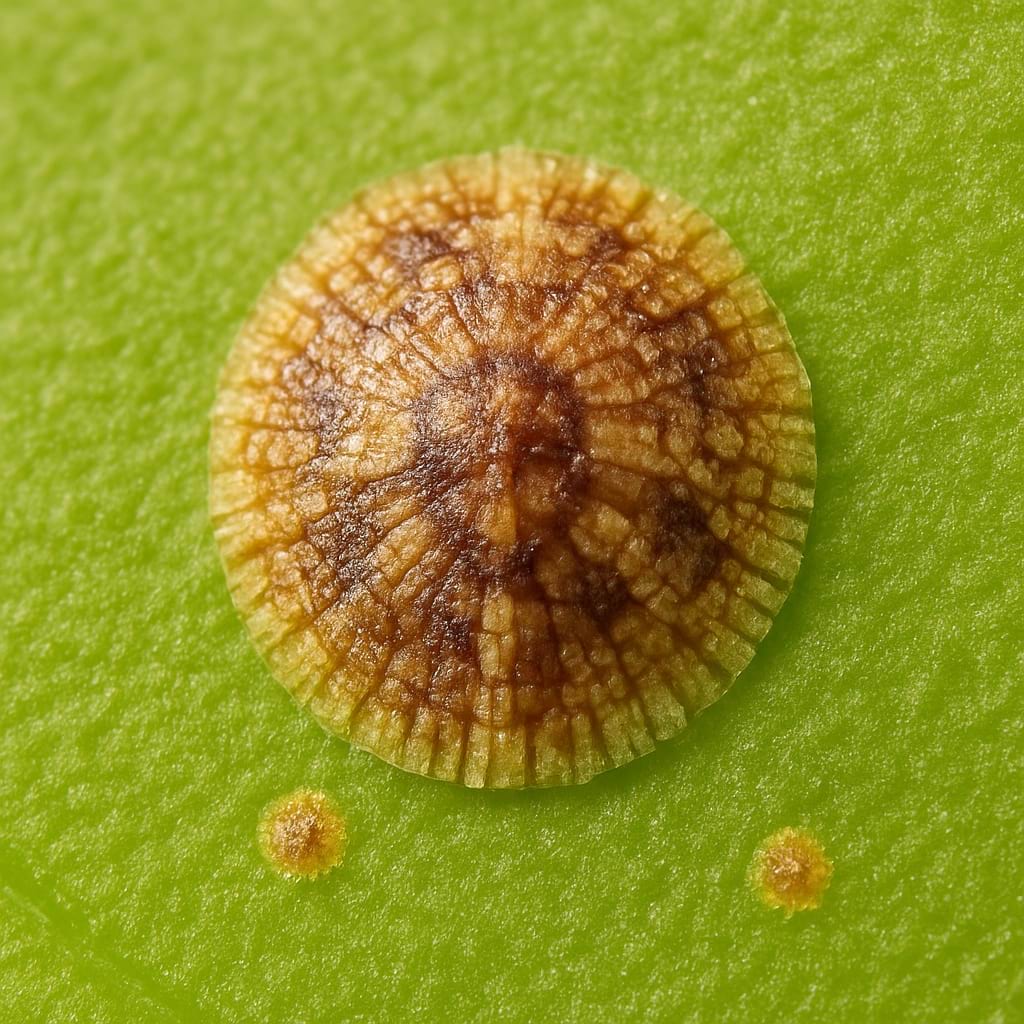
- Scale Insects: Brown bumps along the midribs on stressed container plants. Scrape off and follow up with neem oil.
- Caterpillars: Native moth caterpillars occasionally chew the fronds; the damage is rarely serious. Hand-pick if a plant is being eaten back faster than it can grow.
Catching a pest in the first week is the difference between five minutes of treatment and three weeks of it.

🩺 Common Cinnamon Fern Problems
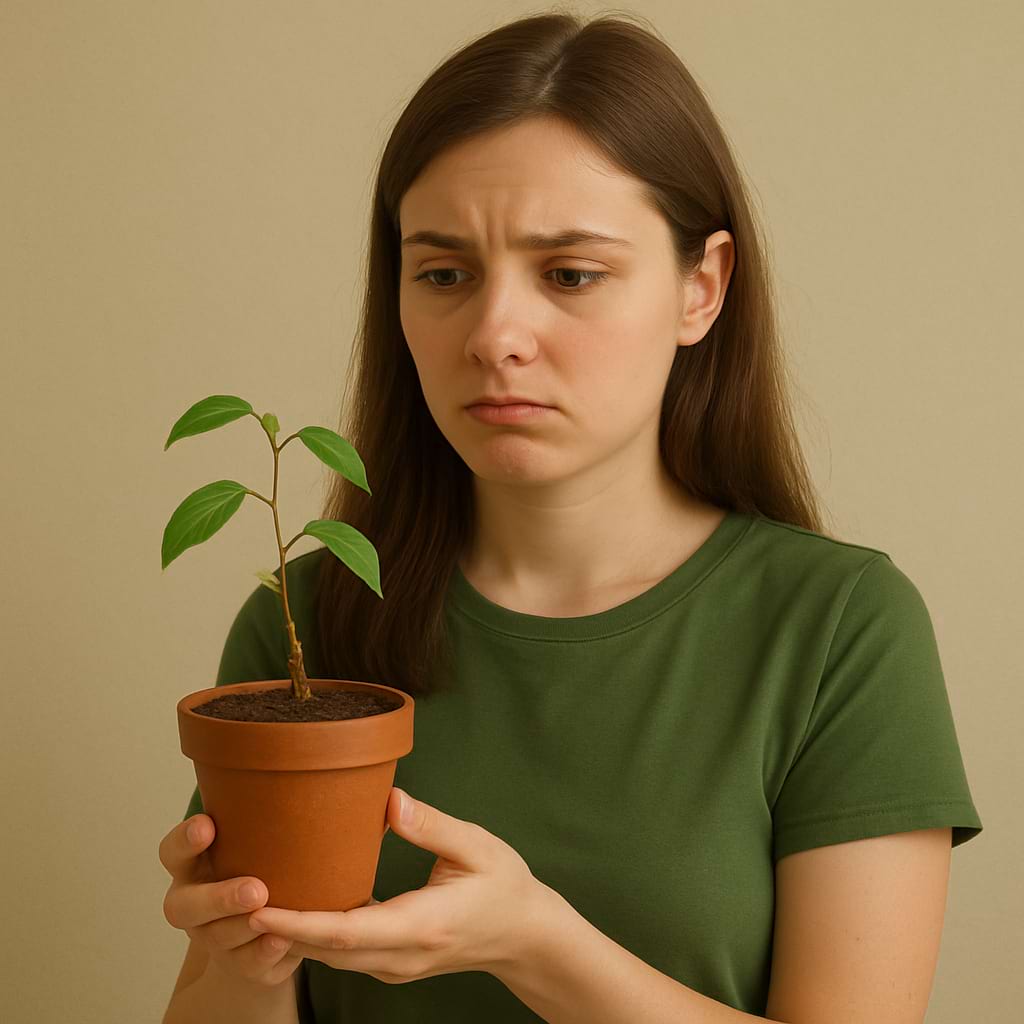
Almost every problem with this fern traces back to one of three causes: not enough water, too much sun, or a soil pH that is too alkaline.
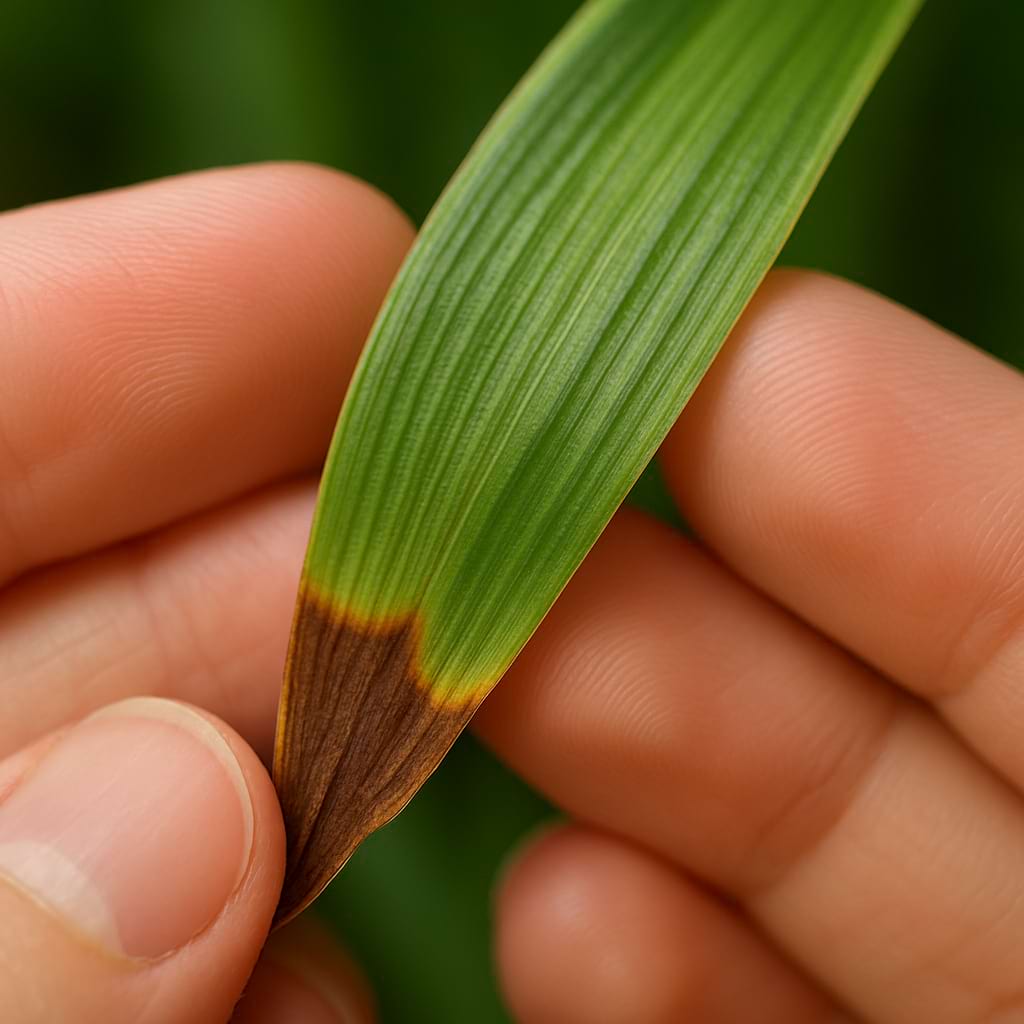
- Brown crispy edges: Dry air or dry soil. Soak the rootball, mulch the surface, and run a humidifier nearby for indoor plants.
- Yellowing fronds: Late summer yellowing is normal turnover ahead of dormancy. Mid-season inner yellowing usually means dried-out soil or a pH that has drifted alkaline. Top-dress with composted pine bark or peat.
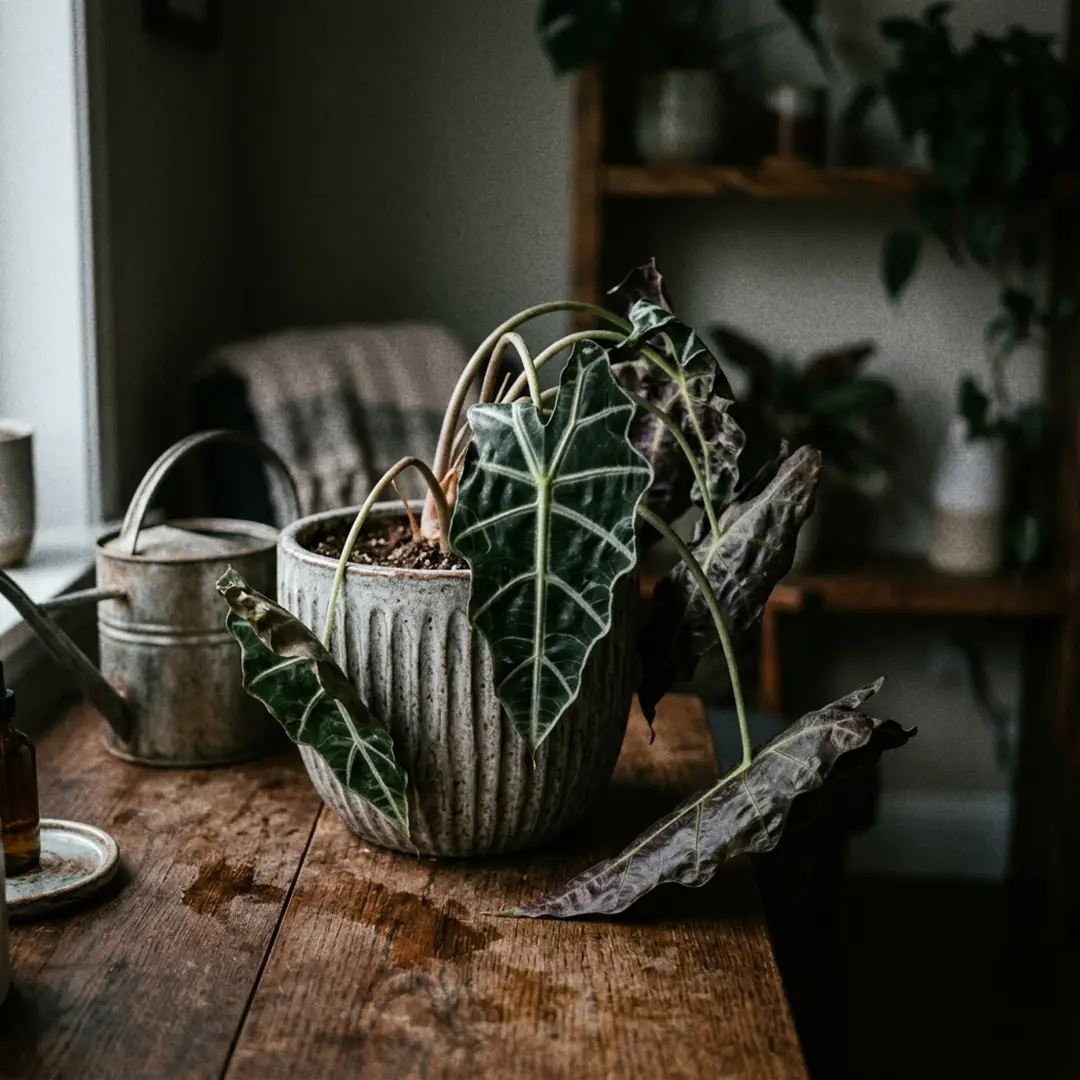
- Wilting and drooping: A deep soak revives the plant overnight if you catch it early; let it dry too long and the current season's fronds are a loss.
- Root rot and mushy crown: Rare, but possible in warm stagnant indoor conditions. Unpot, trim soft roots and rhizome back to firm pale flesh, dust with cinnamon, and repot in fresh damp acidic mix.
- Sunburn: Tan scorch patches within a day of too much sun. Move to deep shade; damaged fronds do not recover.
- Stunted growth: Young division settling in, a plant kept too dry, or alkaline soil. Mulch heavily and top-dress with composted leaves.
- Brown black spots and fungal leaf spotting: Stagnant air or wet fronds in warm weather. Improve airflow and water at the soil rather than from overhead.


🖼️ Cinnamon Fern Display and Styling Ideas
Cinnamon Fern is one of the most architectural ferns in cultivation. The tall green vase with rust-cinnamon spikes in the middle is a sculpture; treat it like one.
Solo Setups
A single mature clump in a half-barrel or a wide 15-gallon glazed container, set on a shaded north porch or beside a pond, is the most striking solo display. The container needs to be wide and heavy; a tall narrow pot tips over once the fronds reach full size. Choose a matte stone, deep green, or dark charcoal pot to throw the cinnamon-colored fertile fronds into contrast; pale terracotta swallows the color.
Grouped Arrangements
In a shaded garden bed, plant Cinnamon Fern as the centerpiece of a layered fern composition. The classic combination is Cinnamon Fern in the middle, Ostrich Fern at the back for height, Lady Fern for lacy texture, Japanese Painted Fern for silver foliage at the front, and the evergreen Christmas Fern and Autumn Fern to carry the bed through winter. The cinnamon fertile fronds read most clearly against a dark backdrop: a stained wooden fence, a mossy boulder, or a shaded evergreen hedge.
Where Not to Put It
Skip dry sunny exposed spots, hot south-facing rooms, and any garden bed that bakes in afternoon sun. Skip narrow tall pots that cannot hold enough water for a plant this size. Skip warm dry living rooms and alkaline soils, especially limestone clays and freshly limed lawns.
🌟 Cinnamon Fern Pro Care Tips
✅ Lean acidic. Top-dress with composted leaves or pine-bark fines every spring. Avoid lime, wood ash, and concrete debris near the root zone; alkaline soil is the slow killer for this plant.
💧 Water before it droops. Cinnamon Fern does not bounce back from a deep dry-out the way most houseplants do. The current season's fronds are usually a loss once they crisp.
❄️ Let it go dormant. A cold winter rest is what triggers reliable fertile fronds the next spring. A plant kept warm year-round skips the cinnamon show.
🌲 Mulch heavily. Two to three inches of leaf mold, pine straw, or composted bark over the root zone keeps moisture in and pH happy.
🪣 Use big pots. A 5-gallon minimum for a mature plant; bigger is better. Small pots dry out faster than this fern can drink.
✂️ Cut everything back after frost. Leave the rhizome alone, but clear all the spent fronds so wet leaves do not sit on the crown all winter.
🦌 Plant it where deer roam. Cinnamon Fern is one of the few large statement plants deer almost never browse, which makes it gold in suburban shade gardens.
🐦 Leave the fiddlehead wool alone. The silvery fuzz is harvested by yellow warblers and hummingbirds for nest lining; a clump in a wildlife garden earns its keep beyond the foliage.
🌧️ Rainwater whenever possible. Hard tap water slowly nudges the soil alkaline.
🌱 Divide rarely. A clump left undisturbed for a decade looks far better than one shuffled every two years.
❓ Frequently Asked Questions
Is Cinnamon Fern toxic to pets?
No. Cinnamon Fern is non-toxic to cats and dogs. The fronds are leathery and unappealing to chew, and the silvery wool on emerging fiddleheads is mildly irritating but not poisonous. As with any plant, a curious pet that gnaws on a frond may get a stomach upset, but there is no real toxicity to worry about.
Can I grow Cinnamon Fern as a houseplant indoors?
Only with effort. A warm dry centrally heated living room kills it within a season. A cool shaded sunroom, an unheated bright porch, or a covered patio that stays above freezing all work well in containers. For most growers, this is an outdoor plant first and an indoor plant second.
Why are the cinnamon-colored fronds in the middle going brown and collapsing?
That is the normal lifecycle. The cinnamon-colored fertile fronds release their spores in late spring to early summer and then dry up and collapse by midsummer. The green sterile fronds in the surrounding vase carry the plant through the rest of the season. New cinnamon fronds appear again the following spring.
Are Cinnamon Fern fiddleheads safe to eat?
This is the wrong fern to forage from. Modern sources discourage eating Cinnamon Fern fiddleheads; the Ostrich Fern is the preferred edible fiddlehead species and is much easier to identify positively. Leave the cinnamon ones for the warblers.
How big does a Cinnamon Fern get?
A mature plant reaches 3 to 5 feet tall and 2 to 3 feet wide per crown, occasionally 6 feet in deep wet shade. The clump expands slowly outward by rhizome and can fill a large area over 10 to 15 years. This is a statement-sized fern; plan for the space when you plant.
What is the difference between Cinnamon Fern and Ostrich Fern?
Both are large native deciduous ferns with separate fertile fronds. Cinnamon Fern carries upright cinnamon-rust spikes in the middle of the green vase, while Ostrich Fern carries smaller dark-brown fertile fronds at the base of the clump. Ostrich Fern fiddleheads are the preferred edible spring fiddleheads; Cinnamon Fern fiddleheads are not. Ostrich Fern also spreads more aggressively by runners, where Cinnamon Fern stays in a tight slow clump.
Why is my Cinnamon Fern not producing the cinnamon-colored fronds?
Three possible reasons. The plant is too young (the first fertile fronds usually appear in year three or four), the plant did not get a proper cold winter dormancy, or the plant dried out last summer. A mature plant in a damp shaded spot with a cold winter rest produces fertile fronds reliably every spring.
Can I grow Cinnamon Fern in a regular garden bed instead of a bog?
Yes, as long as the bed stays shaded and you can keep the soil consistently moist. Cinnamon Fern tolerates standing water but does not actually require it. A shaded woodland bed amended with peat and leaf mold, mulched heavily, and watered through dry spells works well. The plant simply grows slower and a little shorter in a regular bed than it does in a true bog.
Why are my Cinnamon Fern's fiddleheads covered in white fuzzy fluff?
That is the natural silvery-white wool (tomentum) that protects emerging fiddleheads from cold spring nights. It is not a pest, fungus, or problem. The wool falls away as the frond unfurls, and warblers and hummingbirds gather it to line their nests.
ℹ️ Cinnamon Fern Info
Care and Maintenance
🪴 Soil Type and pH: Rich, humusy, consistently moist to wet, acidic pH 4.0-6.5; thrives in boggy soil that drowns most other plants.
💧 Humidity and Misting: Loves 60 percent and above; struggles in dry indoor air.
✂️ Pruning: Cut back spent fronds to the ground after the first hard frost in autumn.
🧼 Cleaning: No cleaning needed; outdoor rain washes fronds; indoor container plants tolerate a soft rinse of the sterile fronds.
🌱 Repotting: Container plants every 2-3 years in early spring before new fiddleheads unfurl.
🔄 Repotting Frequency: Every 2-3 years for container plants
❄️ Seasonal Changes in Care: Strongly seasonal; goes fully dormant in winter and dies back to the rhizome, then sends up cinnamon-colored fertile fronds in early spring followed by tall green sterile fronds.
Growing Characteristics
💥 Growth Speed: Slow to Moderate
🔄 Life Cycle: Deciduous perennial fern
💥 Bloom Time: Does not bloom; fertile fronds appear and release spores in late spring to early summer
🌡️ Hardiness Zones: 3-9 outdoors; survives almost any North American winter without protection
🗺️ Native Area: Eastern North America from Newfoundland to Florida and west to Minnesota and Texas, with disjunct populations in parts of East Asia and South America
🚘 Hibernation: Yes, fully deciduous; dies back completely after the first hard frost and resprouts in spring
Propagation and Health
📍 Suitable Locations: Shaded damp garden borders, bog gardens, pond and stream edges, woodland gardens, cool shaded sunrooms, sheltered north-facing porches, large containers in shade
🪴 Propagation Methods: Division of mature clumps in early spring, or from spores for very patient growers.
🐛 Common Pests: Slugs Snails, Spider Mites, Scale Insects, Caterpillars
🦠 Possible Diseases: Generally disease-free; occasional rust spots and crown rot in stagnant warm conditions
Plant Details
🌿 Plant Type: Large deciduous clump-forming fern with dimorphic fronds (separate sterile and fertile fronds)
🍃 Foliage Type: Deciduous
🎨 Color of Leaves: Bright fresh green sterile fronds turning yellow then bronze in autumn; cinnamon-rust colored fertile fronds in spring
🌸 Flower Color: N/A
🌼 Blooming: Non-flowering; reproduces by spores
🍽️ Edibility: Young fiddleheads are reportedly edible when fully cooked but are not the preferred fiddlehead fern; the silvery wool must be rubbed off first and many sources advise against eating them.
📏 Mature Size: 3-5 feet tall (occasionally 6 feet in deep wet shade)
Additional Info
🌻 General Benefits: Native habitat plant, supports nesting birds with frond wool, ornamental statement fern, thrives in wet spots where almost nothing else does
💊 Medical Properties: Used in traditional Indigenous medicine as a poultice for joint pain and rheumatism; no documented modern medical use.
🧿 Feng Shui: A grounding water-element plant that brings stillness and the calm of a forest floor into a corner of the garden or sunroom.
⭐ Zodiac Sign Compatibility: Cancer, Pisces
🌈 Symbolism or Folklore: Endurance, ancient lineage, shelter; one of the oldest plant families on Earth, with fossil ancestors going back 200 million years.
📝 Interesting Facts: Cinnamon Fern was recently moved out of the genus Osmunda into a genus of its own, Osmundastrum, after DNA work showed it had branched off from its cousins more than 70 million years ago. Despite the move, the species name cinnamomeum and the common name still come from the cinnamon-rust color of the fertile fronds, not from any scent or culinary use. The silvery-white wool covering young fiddleheads is harvested by yellow warblers and ruby- throated hummingbirds to line their nests. Cinnamon Fern fossils have been found in rocks dating back to the late Cretaceous, which means the same plant in essentially the same form watched the dinosaurs disappear.
Buying and Usage
🛒 What to Look for When Buying: Pick a plant in early spring with at least one fat fiddlehead just pushing up from the crown and no soft brown patches at the base; container plants should feel heavy and the soil should never have been allowed to dry out completely on the nursery bench.
🪴 Other Uses: Native woodland and bog gardens, pond and stream-edge planting, rain garden centerpiece, large container shade specimen, cool sunroom or shaded conservatory accent
Decoration and Styling
🖼️ Display Ideas: A statement clump beside a shaded garden pond, a backdrop in a damp woodland border, a tall vase-shaped centerpiece in a large outdoor container, an architectural focal point on a cool shaded north porch
🧵 Styling Tips: The cinnamon-colored fertile fronds in the middle of a green vase only stand out against a darker backdrop; plant against a dark stained fence, mossy boulder, or shaded evergreen hedge to make the rust color read clearly.
🪴 See also 🪴
Complete Guide to East Indian Holly Fern Care and Growth
Complete Guide to Silver Lace Fern Care and Growth
Complete Guide to Silver Lady Fern Care and Growth
Complete Guide to Squirrel's Foot Fern Care and Growth
Complete Guide to Tassel Fern Care and Growth
Complete Guide to Mother Fern Care and Growth
Complete Guide to Delta Maidenhair Fern Care and Growth
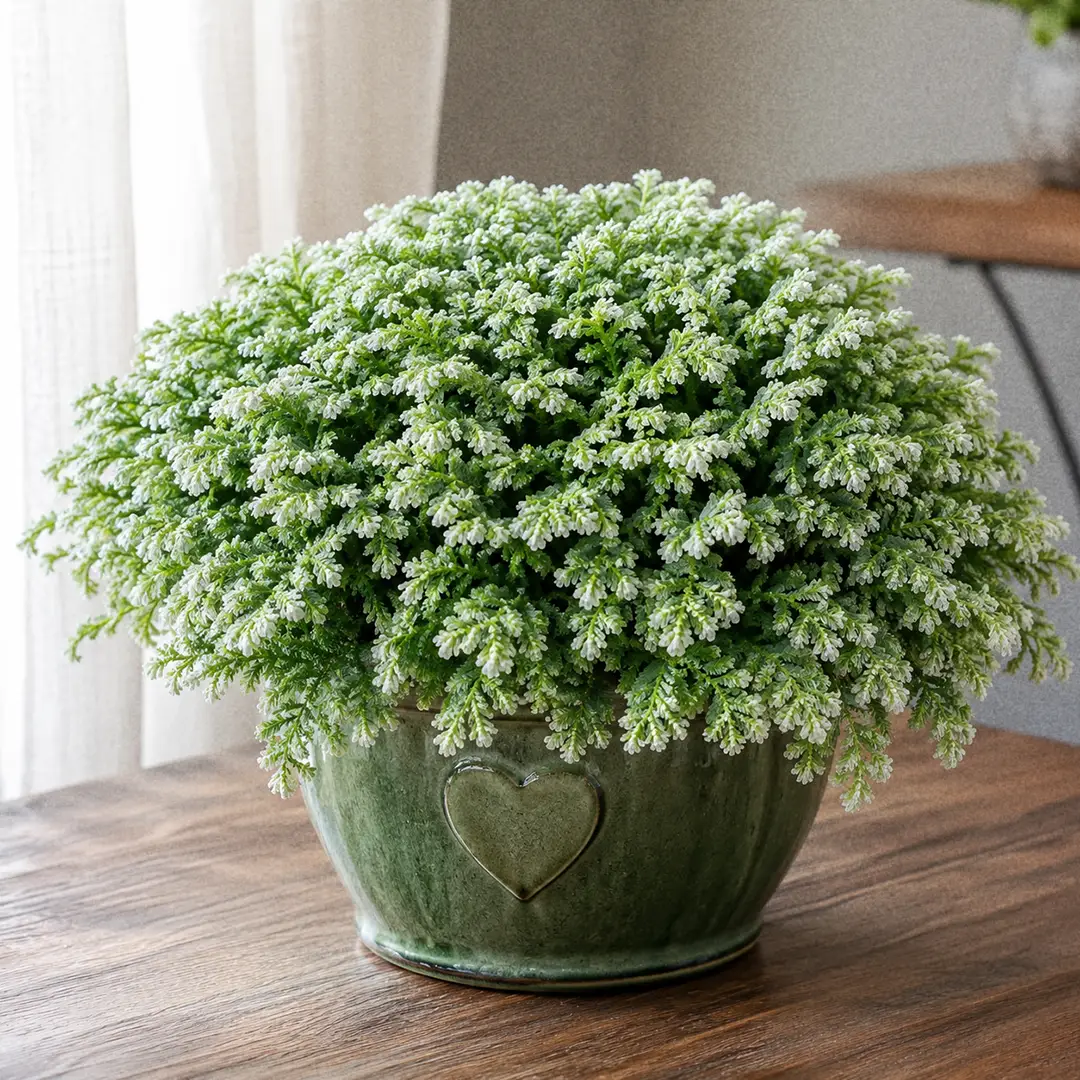
Complete Guide to Frosty Fern Care and Growth
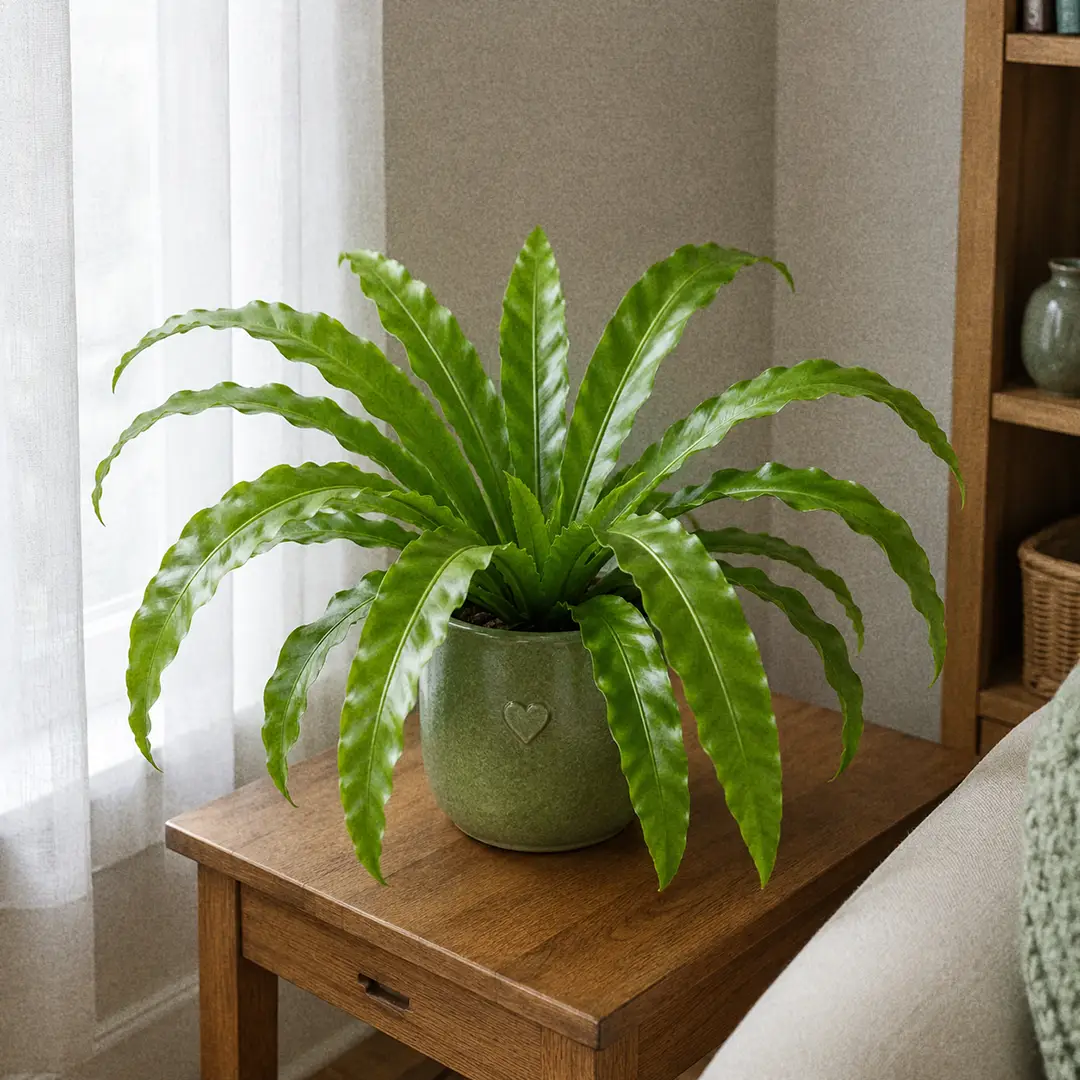
Complete Guide to Hart's Tongue Fern Care and Growth
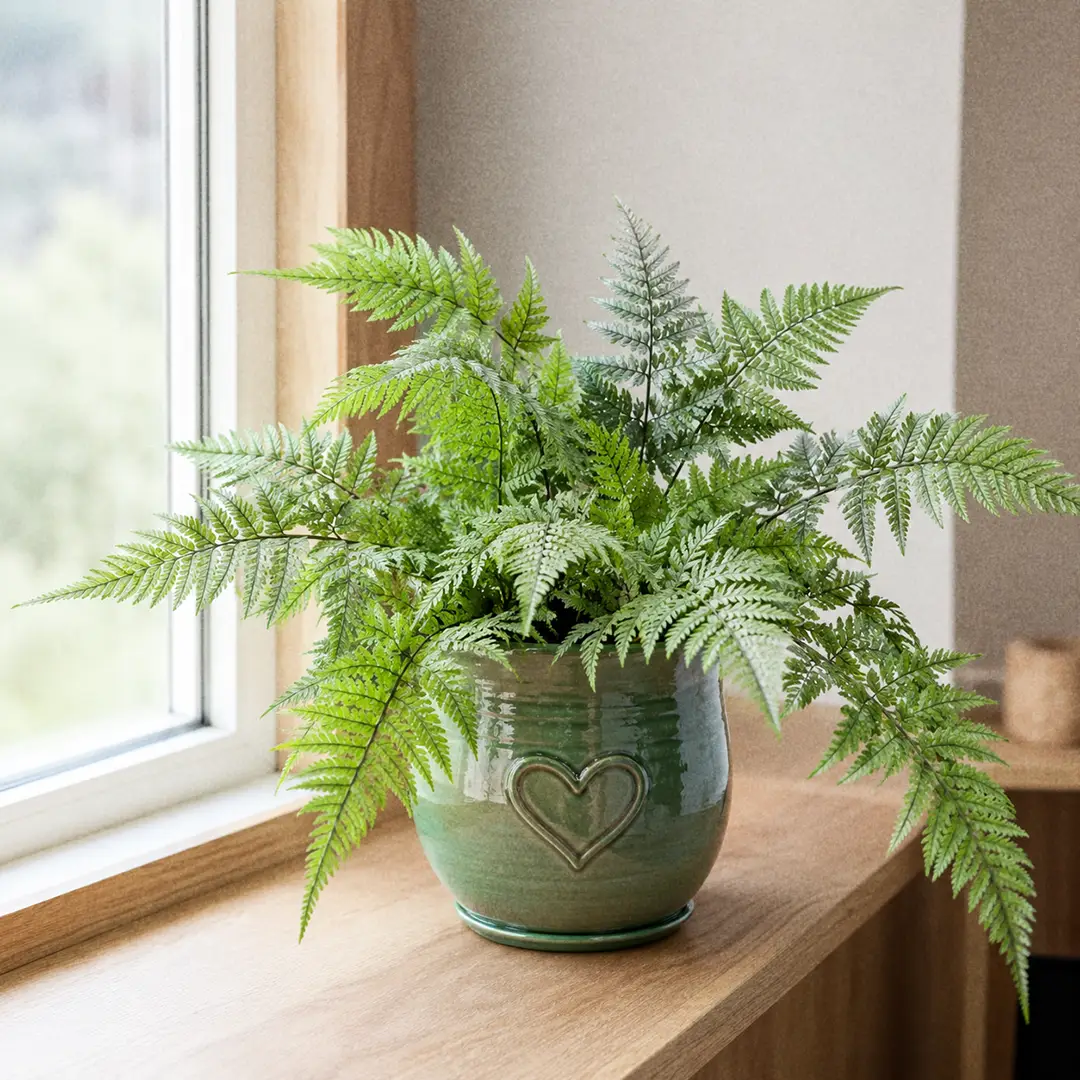
Complete Guide to Korean Rock Fern Care and Growth

Houseplant101 Forum
Questions & Comments
Ask a question, share your plant experience, or help other plant owners.
Comments are temporarily unavailable.
Open the Houseplant101 ForumNo comments yet
Be the first to ask a question or share your experience about this page.
Log in or create an account
Comments use your Houseplant101 Forum account, but you can stay on this page.
Create a new account