
Korean Rock Fern
Polystichum tsus-simense
Tsusima Holly Fern, Tsushima Holly Fern, Rock Shield Fern


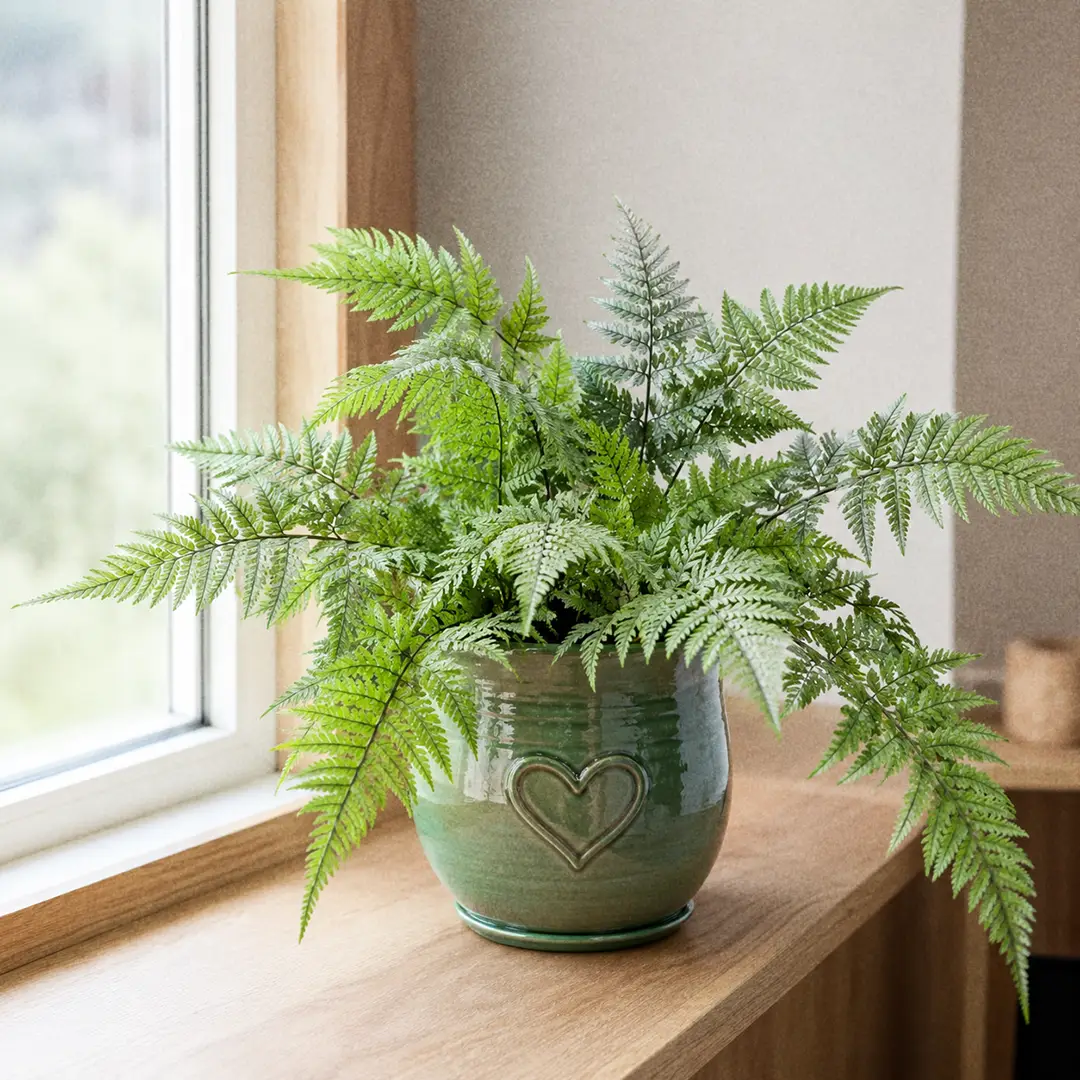
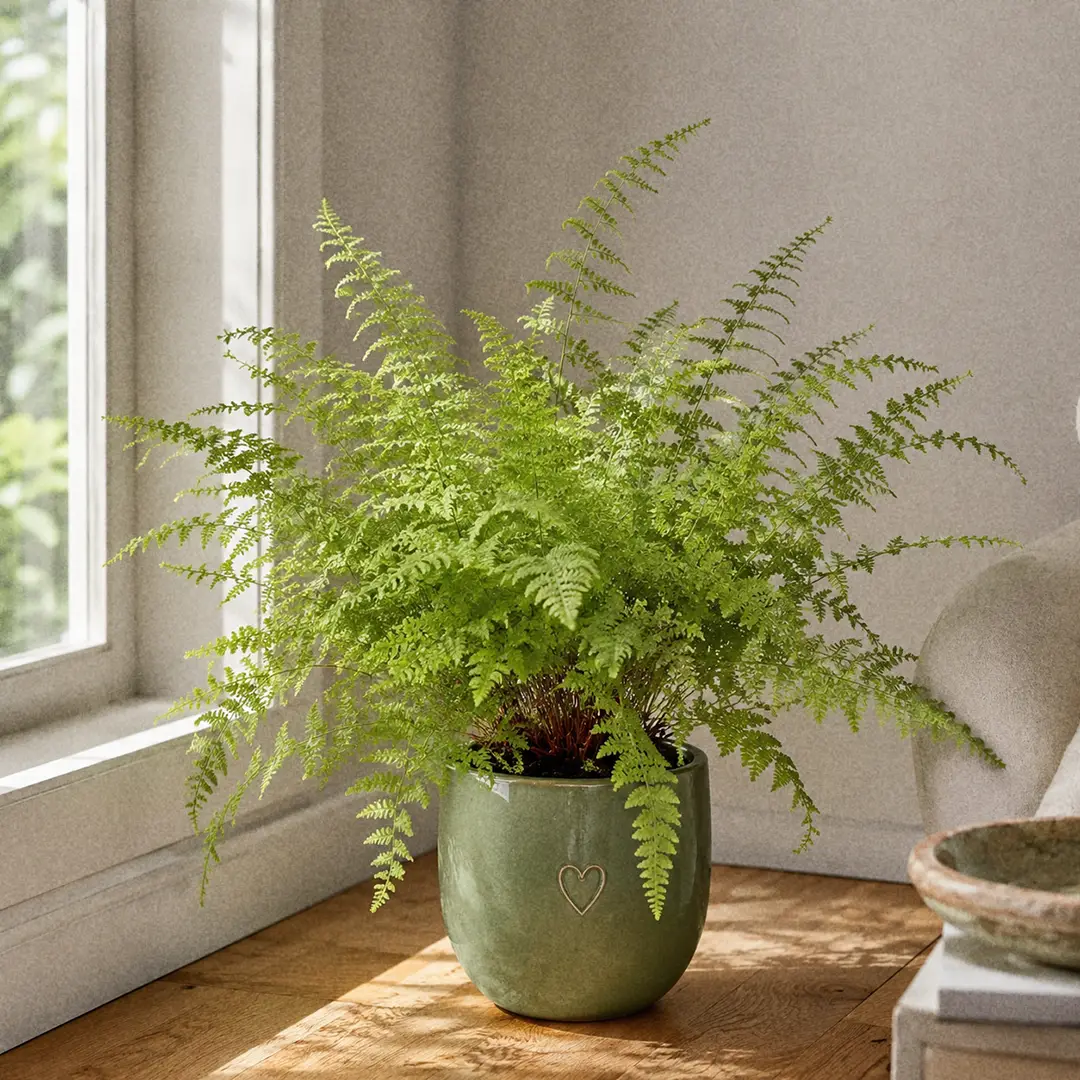
The Korean Rock Fern (Polystichum tsus-simense) is a small, tidy evergreen fern with lacy dark green fronds held on nearly black stems, rarely growing past a foot tall. It shrugs off average household humidity better than most ferns, fits on a windowsill or inside a terrarium, and keeps its polished look all year with very little fuss.
📝 Korean Rock Fern Care Notes
🌿 Care Instructions
⚠️ Common Pests
📊 Growth Information
🪴 In This Guide 🪴

📺 Korean Rock Fern Video Guide
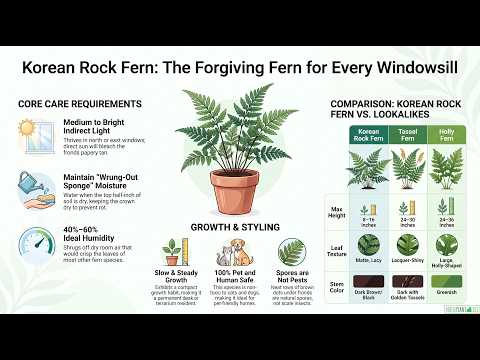
☀️ Korean Rock Fern Light Requirements (Medium to Bright Indirect)
In the wild this fern grows in the shade of rock faces and streambank boulders, catching bright reflected light but almost never a direct beam. Recreating that indoors is easy: give it good ambient light and keep the sun off the fronds.
The Sweet Spot
A north-facing windowsill is the classic home for a Korean Rock Fern, right up against the glass with no curtain needed. An east window works well too if the pot sits a foot or two back, so the gentle morning sun slides past rather than landing on the fronds. In a south or west room, keep the plant four to six feet from the window or behind a sheer curtain. If the fronds look deep green with a slight sheen and new fiddleheads keep appearing through the warm months, the light is right. For help judging your rooms, see our guide to light for houseplants.

Too Little Light
This is one of the more shade-tolerant small ferns, so it survives dim corners that defeat most houseplants. Survive is not the same as thrive, though. In deep shade the clump thins out and new fronds come up smaller and paler. If the plant sits more than seven or eight feet from a window, move it closer or add a small daylight lamp for eight to ten hours a day.
Too Much Light
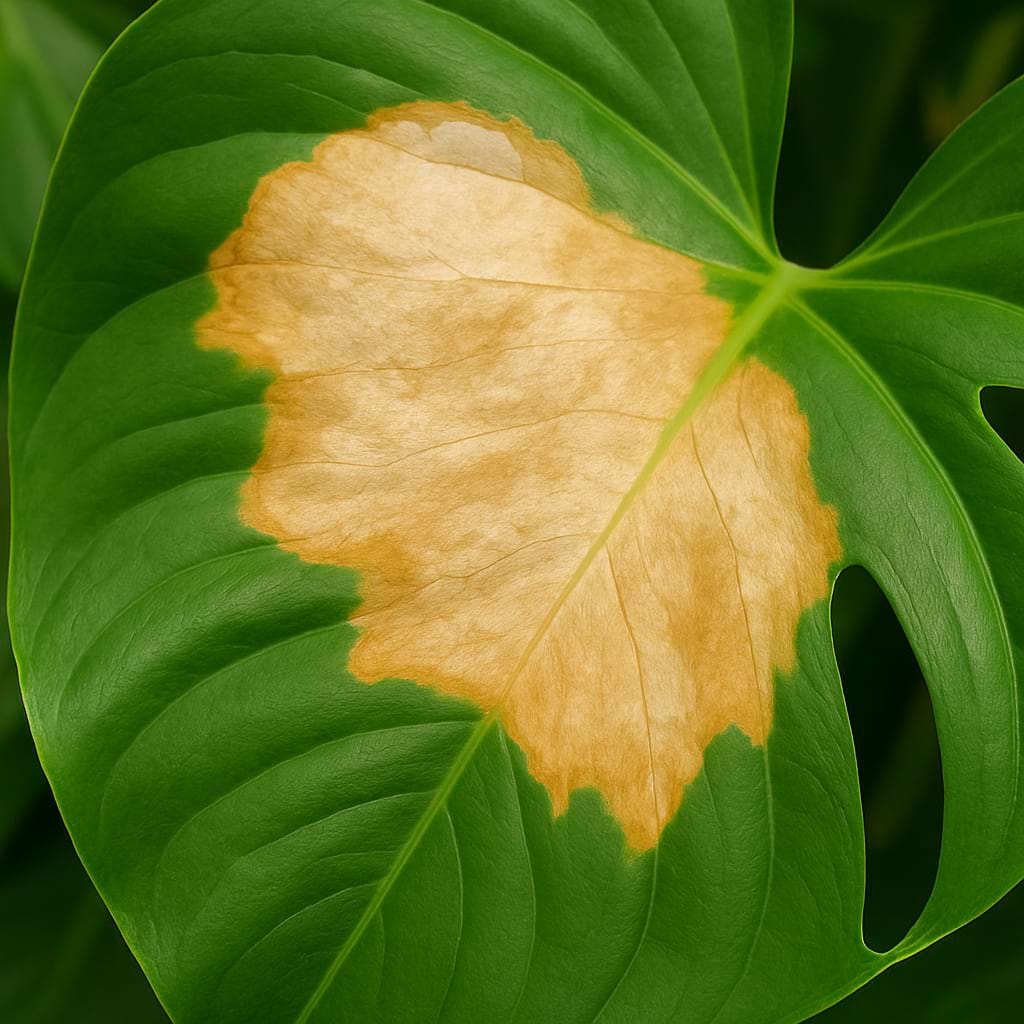
Direct sun is the one thing this fern truly cannot take. Even an hour of midday sun through glass bleaches the fine pinnae to a papery tan, and the damage stays until you remove the frond. Summer sun through a west window is the usual culprit. If you spot pale, dry patches on the sun-facing side of the clump, pull the plant back from the glass and trim the scorched fronds at the base once new growth replaces them.
💧 Korean Rock Fern Watering Guide (Evenly Moist, Never Soggy)
Ferns have a reputation for being thirsty drama queens. The Korean Rock Fern is calmer than most, thanks to its slightly leathery fronds and its rock-crevice origins, but it still wants steady moisture at the roots. The goal is soil like a wrung-out sponge: damp all the way through, never dripping.
Watering Frequency
Water when the top half-inch of soil feels dry to a fingertip. In a warm, bright room that is usually every four to six days in summer and every eight to twelve days in winter. Small pots dry faster than you expect, so check twice a week rather than trusting a calendar. A terrarium-grown plant needs far less, sometimes only a light watering every few weeks. The full technique is covered in our watering guide.
How to Water
Pour room-temperature water slowly around the edge of the pot until it runs from the drainage hole, wait a few minutes, then empty the saucer. Keep water out of the center of the clump, since a wet crown is the fastest route to rot in this species. Bottom watering suits it well: set the pot in an inch of water for fifteen minutes and the soil wicks up what it needs while the crown stays dry. If your tap water is very hard, rainwater or filtered water keeps the frond tips cleaner.
Signs of Trouble
A thirsty Korean Rock Fern telegraphs it early: the fronds lose their gentle arch and the tips of the oldest ones go crisp. Caught within a day or two, a thorough drink brings it back with little damage. Overwatering is sneakier. Yellowing fronds from the base of the clump outward, soil that stays wet for a week, and a sour smell all point to too much water, and at that stage you should check the roots rather than reach for the watering can.
🪴 Best Soil for Korean Rock Fern
Picture the plant's natural home: a pocket of leaf litter wedged in a rock crack, wet after rain and drained minutes later. The right potting mix copies that, holding moisture in a loose, airy structure that never turns to mud.
What the Soil Needs
Three things matter. The mix must hold even moisture between waterings, drain fast enough that no water pools around the rhizome, and stay light enough for the fine roots to run through. A pH anywhere from slightly acidic to neutral, roughly 5.5 to 7.0, is fine, which gives this fern more wiggle room than fussier species.
DIY Soil Mix
Blend two parts peat moss or coco coir, one part perlite, and one part fine orchid bark or leaf mold. The bark keeps air channels open, the peat holds the moisture, and the perlite lets excess water escape. A pinch of horticultural charcoal is a nice extra in terrarium plantings, where drainage holes do not exist and the soil has to stay fresh on its own.
Pre-Made Options
A bagged fern mix or African violet mix works out of the bag with an added handful of perlite per pot. A quality general-purpose houseplant mix is also fine with a third of its volume swapped for perlite and bark. Skip dense outdoor topsoil, moisture-control mixes with water crystals, and anything that dries into a hard cake.
🍼 Fertilizing Korean Rock Fern
A small, slow-growing fern needs very little food, and overdoing it burns the fine roots long before it produces a bigger plant.
When and How Often
Feed once a month from March through September, while new fiddleheads are actively unrolling. Skip feeding entirely from October to February. A terrarium plant needs even less: two or three feedings a year at quarter strength is plenty, since nutrients have nowhere to drain away. The general rules live in our fertilizing guide.
What to Use
A balanced liquid fertilizer, something like 10-10-10 or 20-20-20, diluted to half the label strength, is all this fern ever needs. Always apply it to soil that is already damp. Pouring fertilizer onto a dry root ball is the quickest way to scorch it.
Over-Fertilizing Signs
Brown, burnt-looking frond tips on otherwise healthy growth, a white crust on the soil surface, and limp new fronds that never firm up all point to salt build-up. Flush the pot with plain water equal to three times its volume, let it drain fully, and hold off feeding for six to eight weeks.
🌡️ Korean Rock Fern Temperature Range
This is a temperate mountain fern, so it prefers the cooler side of what a home offers and takes an ordinary living room in stride.
Ideal Range
Aim for 55 to 75°F (13 to 24°C) during the day, with cooler nights welcome. It tolerates brief warmth above 80°F (27°C) if the soil stays moist, though extended heat makes the fronds limp and dull. Outdoors it is hardy in USDA zones 6 to 9. Indoors, a slightly cooler winter room in the 55 to 65°F range gives the plant a natural rest and a stronger spring.
Drafts and Heat Sources
A cool draft from a window does no harm; this fern shrugs off chills that would drop a tropical plant. Hot, dry air is the real enemy. Keep it at least three feet from radiators, heat vents, and fireplaces, and off the top of electronics that vent warm air. Sudden blasts from an air conditioner pointed straight at the fronds will brown the tips, so angle vents away.
💦 Korean Rock Fern Humidity Requirements
Here is this fern's superpower: it does not demand the greenhouse air most ferns cry for. Growing out of exposed rock in the wild taught it to cope with drier air than its forest-floor cousins ever see.
Ideal Humidity
Anything from 40 to 60 percent keeps it happy, and that is the range most homes already sit in. Below 35 percent for weeks, usually in the depths of heated winter, the frond tips start to brown even with good watering. Compare that with a Maidenhair Fern, which sulks below 60 percent, and you see why this species earns its easy-care label.
Easy Humidity Boosters
If winter air runs dry, a small humidifier nearby is the most dependable fix. A pebble tray under the pot adds a little, and grouping the fern with other plants raises the local average. Or plant it in an open terrarium, where humidity manages itself. Skip daily misting as a strategy; droplets sitting on the dense fronds overnight invite fungal spots. More ideas in our humidity guide.
🌸 Does Korean Rock Fern Bloom?
No, and it never will. Ferns predate flowers by a couple hundred million years, so the Korean Rock Fern reproduces the ancient way, with spores.
Spores Instead of Flowers
In summer, mature fronds develop tidy rows of small round dots on their undersides. These are sori, clusters of spore cases, and they ripen from pale green to rusty brown. They are completely normal and often get mistaken for scale insects by worried new owners. The test is the pattern: sori sit in neat, evenly spaced rows, while scale scatters at random.
The Real Show
What this plant offers instead of flowers is contrast. New fiddleheads rise with a silvery-gray cast, unrolling against the deep green of the older fronds, and every stem and midrib is a dark chocolate-black that makes the lacy foliage pop. It reads like a botanical ink drawing, and unlike a bloom, it looks that way all year.
If You Want Baby Ferns
Spores can be collected and sown, though it is a slow hobby project rather than a practical way to multiply the plant. The propagation section covers both spores and the much faster division method.
🏷️ Korean Rock Fern Types and Lookalikes
Polystichum tsus-simense is sold as the straight species, with no named cultivars in the houseplant trade. What you will meet instead is a tangle of lookalikes and label mix-ups, since several small dark-stemmed ferns share shelf space at garden centres.
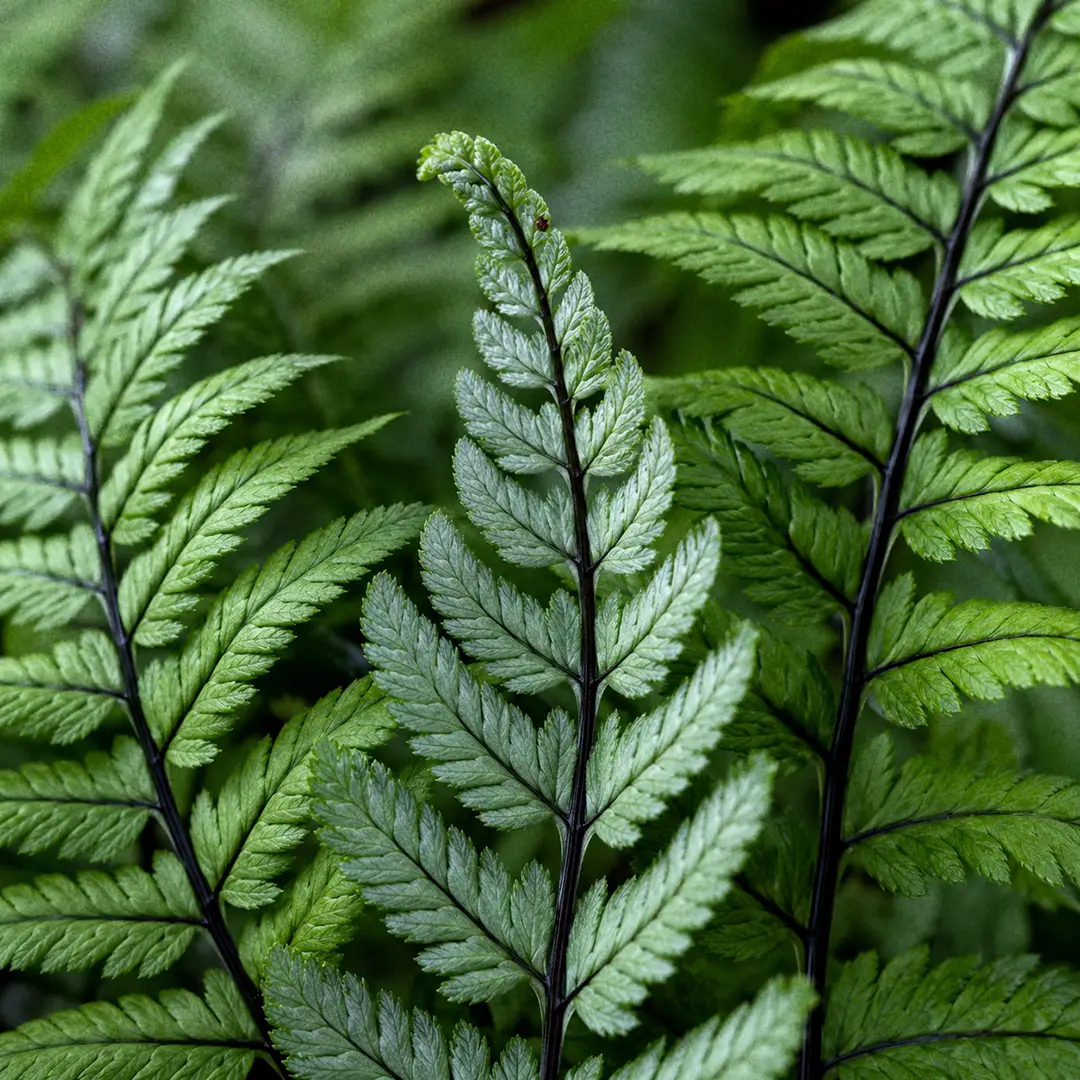
Polystichum tsus-simense (The True Korean Rock Fern)
The real thing is small, rarely past 16 inches, with lance-shaped, twice-cut fronds, a stiff upright habit, and those signature dark stems. New growth carries a brief silvery tint. If the label says "terrarium fern" on a small dark-stemmed plant, this is very likely what you are holding.
Polystichum polyblepharum (Tassel Fern)
The Tassel Fern is the big glossy cousin from the same genus. It grows twice the size, its fronds are lacquer-shiny rather than matte, and each spring fiddlehead wears a golden-bronze tassel of hairs. Care is nearly identical, so if you like one, the other is an easy next step.
Polystichum acrostichoides (Christmas Fern)
The Christmas Fern is the North American relative, with simpler once-cut fronds and green stems rather than black. It is far hardier outdoors but coarser-looking indoors. Choose it for a shade garden, and the Korean Rock Fern for the windowsill.
Holly Fern Confusion
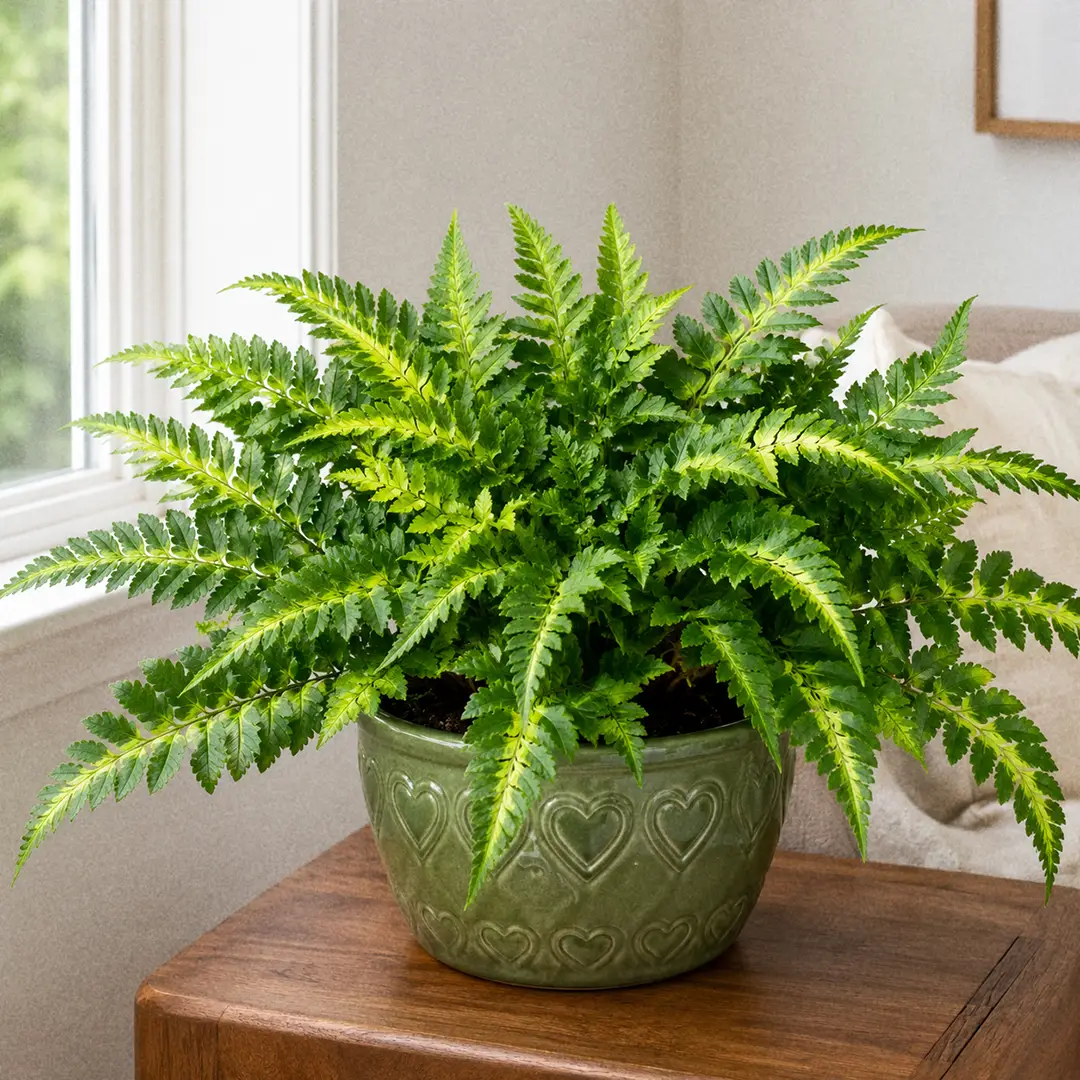
The name "Tsusima Holly Fern" causes regular mix-ups with the true Holly Fern (Cyrtomium falcatum). They are different genera and easy to tell apart: Holly Fern has large, glossy, holly-shaped leaflets, while the Korean Rock Fern's leaflets are small and finely divided. The Holly Fern also grows two to three times larger. A third plant wears the same name, the East Indian Holly Fern (Arachniodes simplicior 'Variegata'), and it is the only one of the three with variegation: a chartreuse stripe runs down the center of every leaflet, which makes it the one to choose if you want color rather than the Korean Rock Fern's quiet dark green.
🪴 Potting and Repotting Korean Rock Fern
A rock-crevice plant is used to cramped quarters, so this fern is genuinely content in a small pot and resents being swamped in a big one. Repotting is an occasional chore, not an annual one.
When to Repot
Every two to three years is typical. The signals: roots circling out of the drainage hole, water racing through without soaking in, or the clump pressing against the rim. Early spring, just as the first new fiddleheads appear, is the ideal moment. Our repotting guide covers the general craft.
Choosing a Pot
Move up a single size, from a 4 inch pot to a 5 inch, never a dramatic jump. Drainage holes are non-negotiable. A shallow pot actually suits the short rhizome better than a deep one, which is part of why this fern does so well in dish gardens and terrarium plantings. Terracotta helps chronic overwaterers; glazed ceramic holds moisture longer in dry homes.
Step-by-Step Repotting
- Water the day before so the root ball slides out intact.
- Tip the pot and ease the plant free, teasing away loose old soil from the edges.
- Trim any dark, mushy roots with clean scissors; leave firm pale ones untouched.
- Set the plant in the new pot so the crown sits right at the soil surface, then backfill with fresh fern mix.
- Water lightly, keep it in bright shade for a week, and hold fertilizer for a month.
Never bury the crown. The point where the fronds emerge should stay visible above the soil line, exactly as it grew before.
✂️ Pruning Korean Rock Fern
Pruning here means grooming. The plant keeps its own tidy shape, so your job is just removing what has finished its useful life.
When to Prune
Snip individual yellow or browned fronds any time of year. The bigger tidy-up belongs to early spring: cut the oldest, scruffiest fronds at the base just before the new flush, and the clump refreshes itself within weeks. Avoid removing more than a third of the foliage at once, since the plant feeds itself through those fronds.
How to Prune
Use clean, sharp scissors and cut each spent frond at the bottom of its stalk, close to the crown but never into it. Do not cut fronds in half to "neaten" them; a half frond dies back anyway and browns along the cut. If only the tip is crisp, trim just above the green, following the frond's natural taper.
🌱 How to Propagate Korean Rock Fern
Division is the practical route, and a mature clump makes it easy. Spores work for the patient, but you will wait a year or more for anything that looks like a fern.
Best Method (Division)
Over a few years the short rhizome branches into several growing points, each pushing up its own fan of fronds. Once you can see two or more distinct crowns, the clump can be split. Early spring, right before growth resumes, gives divisions the whole season to establish.
Step-by-Step Division
- Water the plant the day before, then tip it out of its pot.
- Brush or rinse soil off the rhizome so you can see where the crowns separate.
- Cut between crowns with a clean, sharp knife, making sure every piece keeps a chunk of rhizome, healthy roots, and at least two or three fronds.
- Pot each division into a small container of fresh mix, crown at the surface.
- Keep the pots in bright shade with evenly moist soil, and expect new fiddleheads within four to six weeks.
Tips for Success
Small divisions sulk, while a generous piece barely notices the surgery, so err on the side of fewer, larger pieces. High humidity during recovery helps, and a clear plastic bag propped loosely over the pot for the first two weeks works as a mini greenhouse.
Growing From Spores
Collect fronds when the sori turn brown, dry them on white paper for a few days, and the spores fall like fine dust. Sow onto damp, sterile peat under a clear cover in bright indirect light at around 68°F (20°C). Green film appears in weeks, heart-shaped prothalli in a couple of months, and tiny true ferns after six months to a year. It is a fascinating windowsill science project, just not a fast one.
🐛 Korean Rock Fern Pests and Treatment
Pests are rare on a healthy Korean Rock Fern. The slightly leathery fronds are less appetizing than soft tropical foliage, and most infestations trace back to a stressed plant or a hitchhiker from a new purchase.
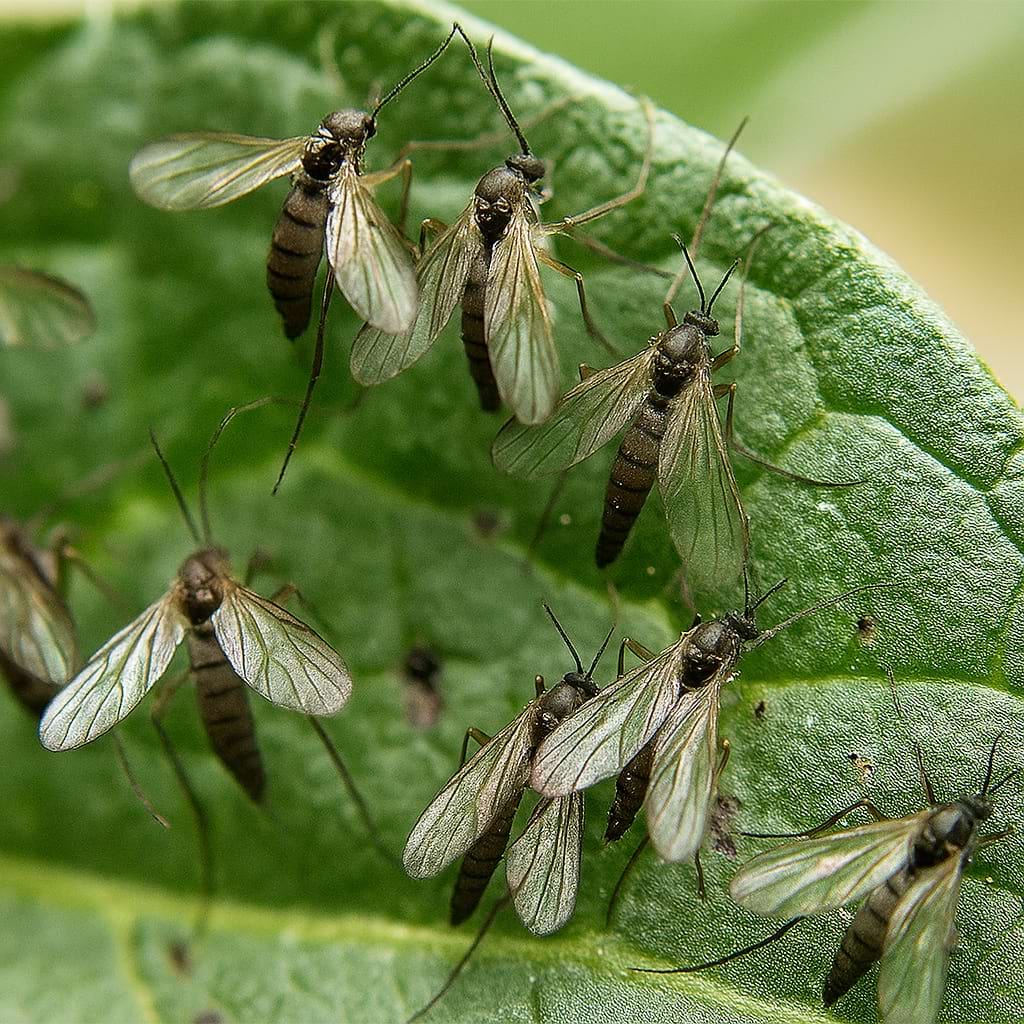
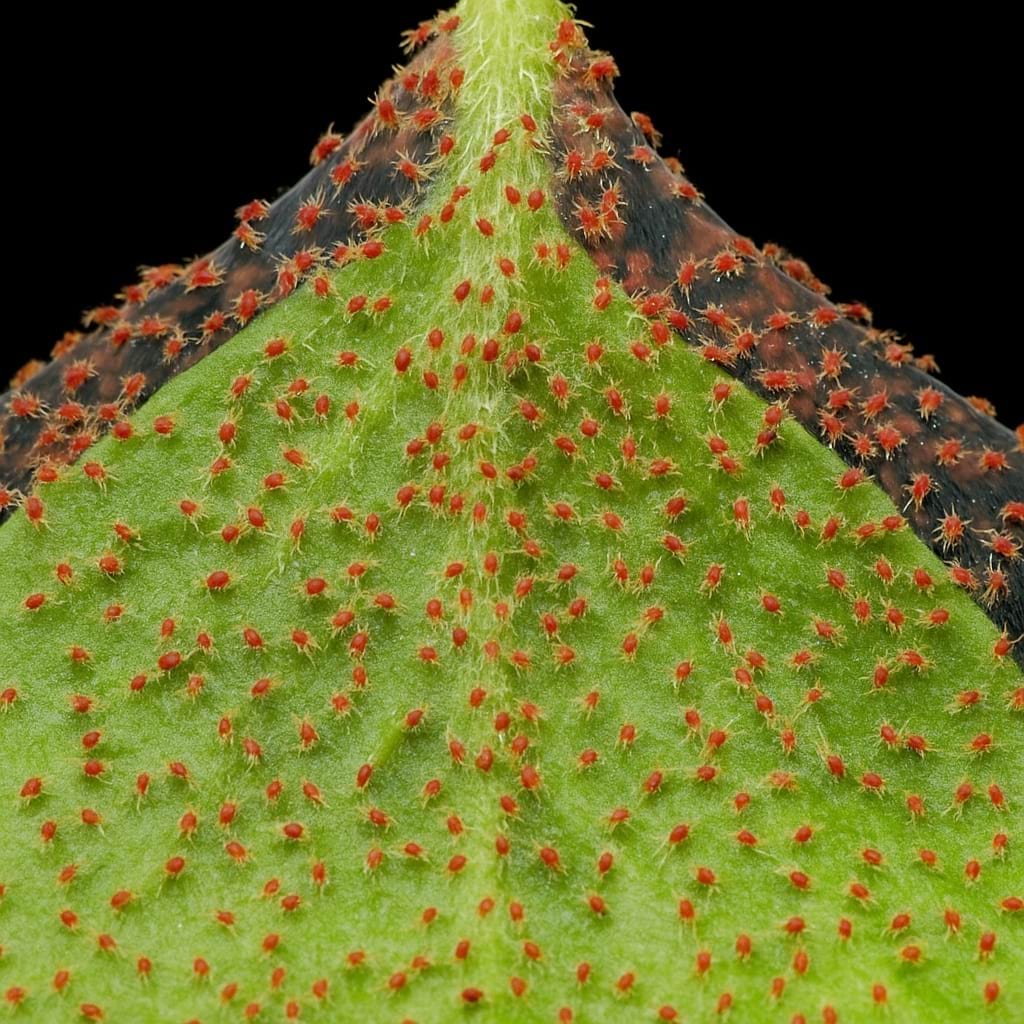
Fungus gnats are the most common annoyance, breeding in constantly wet soil. Let the top inch dry between waterings and use yellow sticky traps to knock down the adults. Spider mites show up when winter air gets very dry, leaving fine webbing and a dusty stippling on the fronds; a thorough shower and better humidity usually ends them.
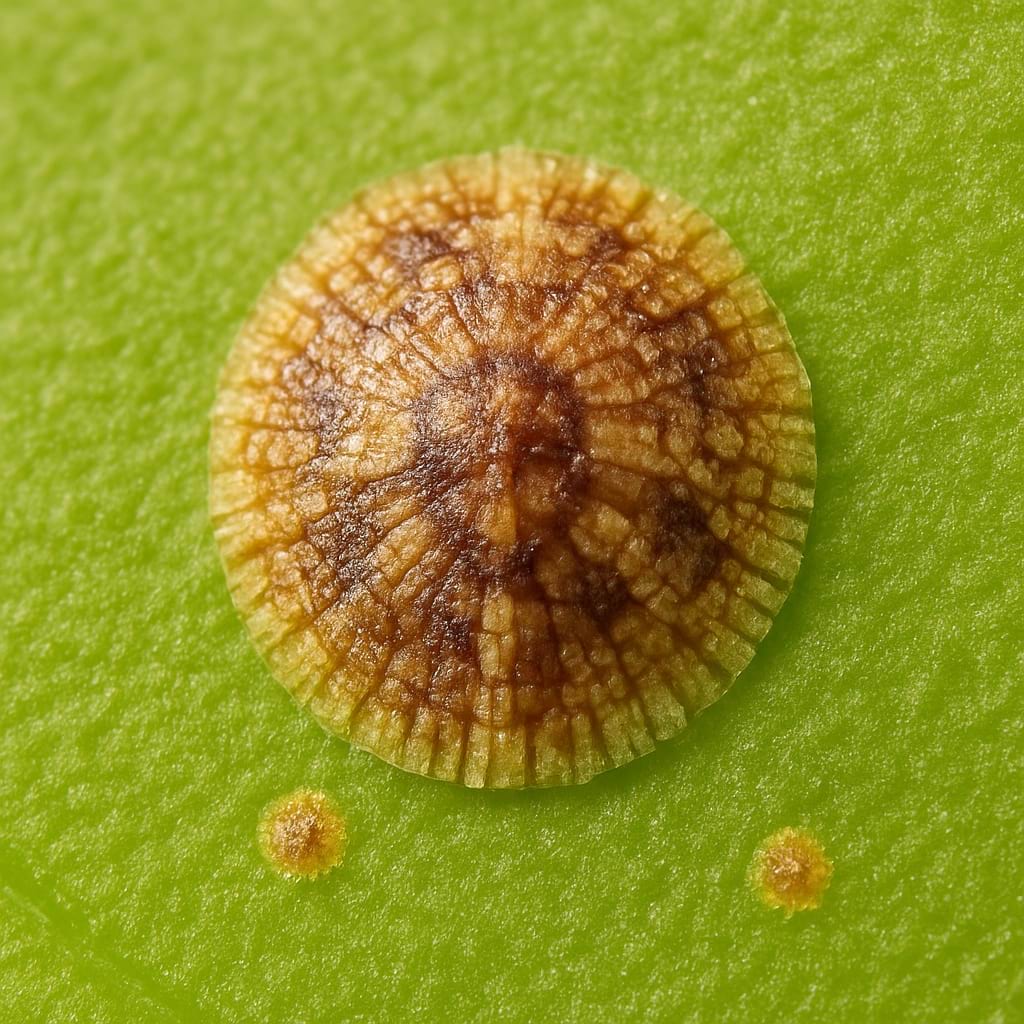
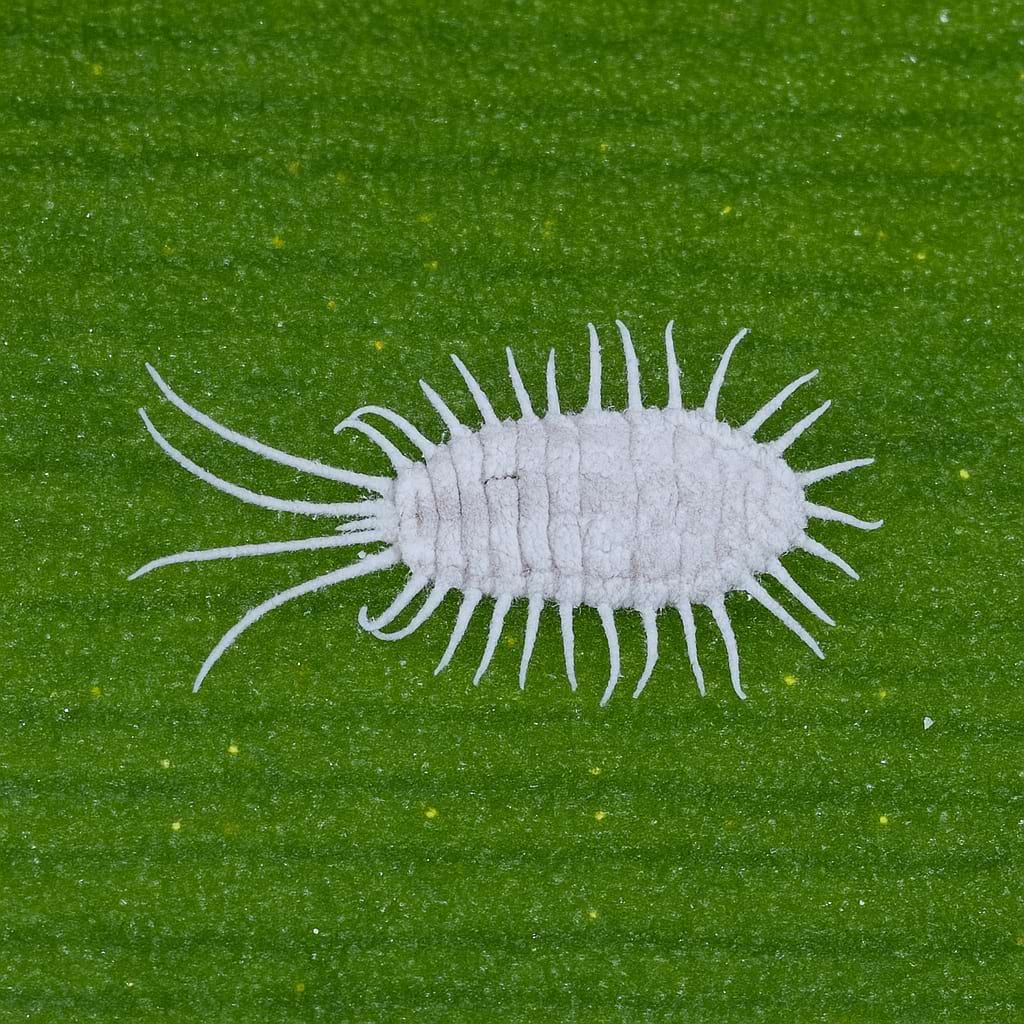
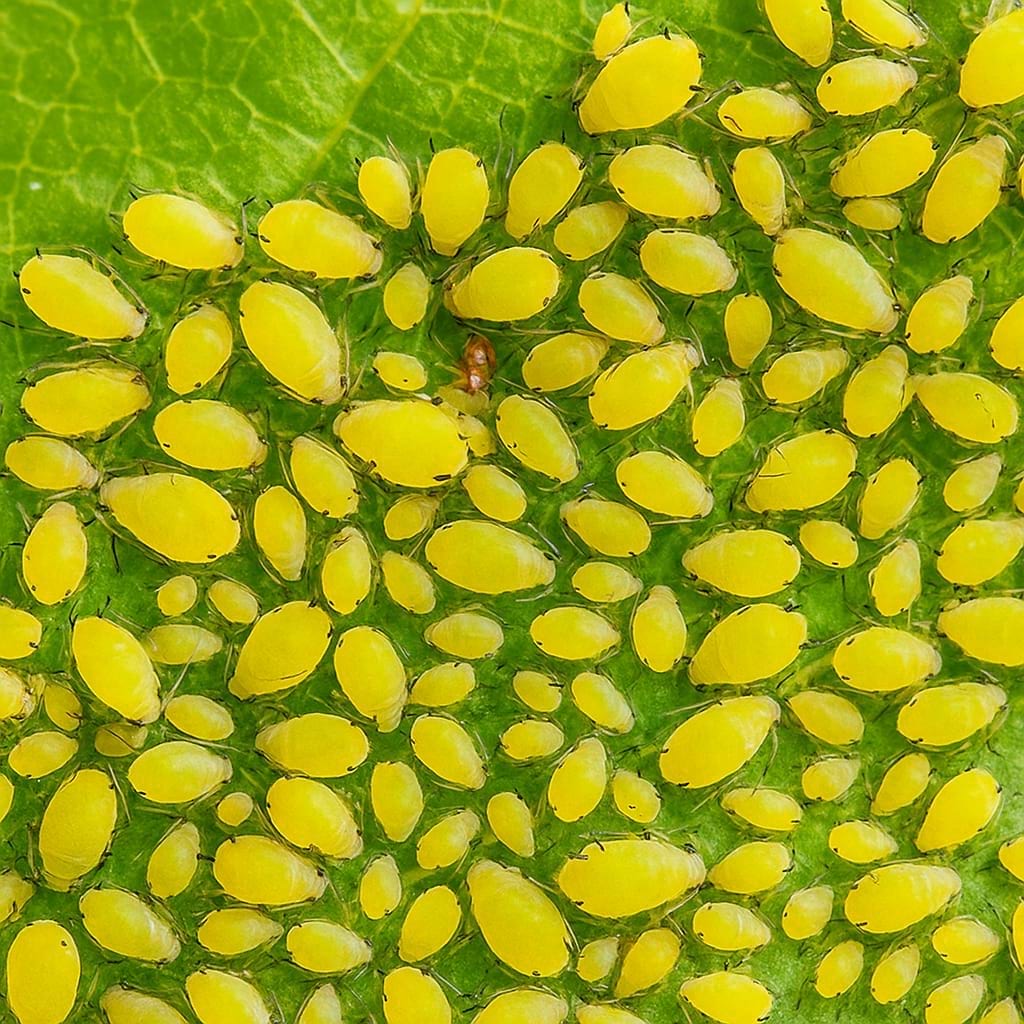
Scale insects appear as random brown bumps along the stems (spores sit in neat rows under the fronds, so check the pattern) and lift off with a cotton swab of 70 percent alcohol. Mealybugs hide as white fluff in the crown and get the same alcohol treatment. Aphids occasionally cluster on tender fiddleheads in spring and rinse away under a gentle stream of water. For anything persistent, weekly insecticidal soap sprays for three weeks break the cycle. Avoid oil-heavy sprays on ferns; the fine fronds burn easily, so test one frond first.
🩺 Common Korean Rock Fern Problems
When this fern struggles, water is behind it more often than anything else. Run through moisture, light, and air dryness in that order and you will find the cause nine times out of ten.
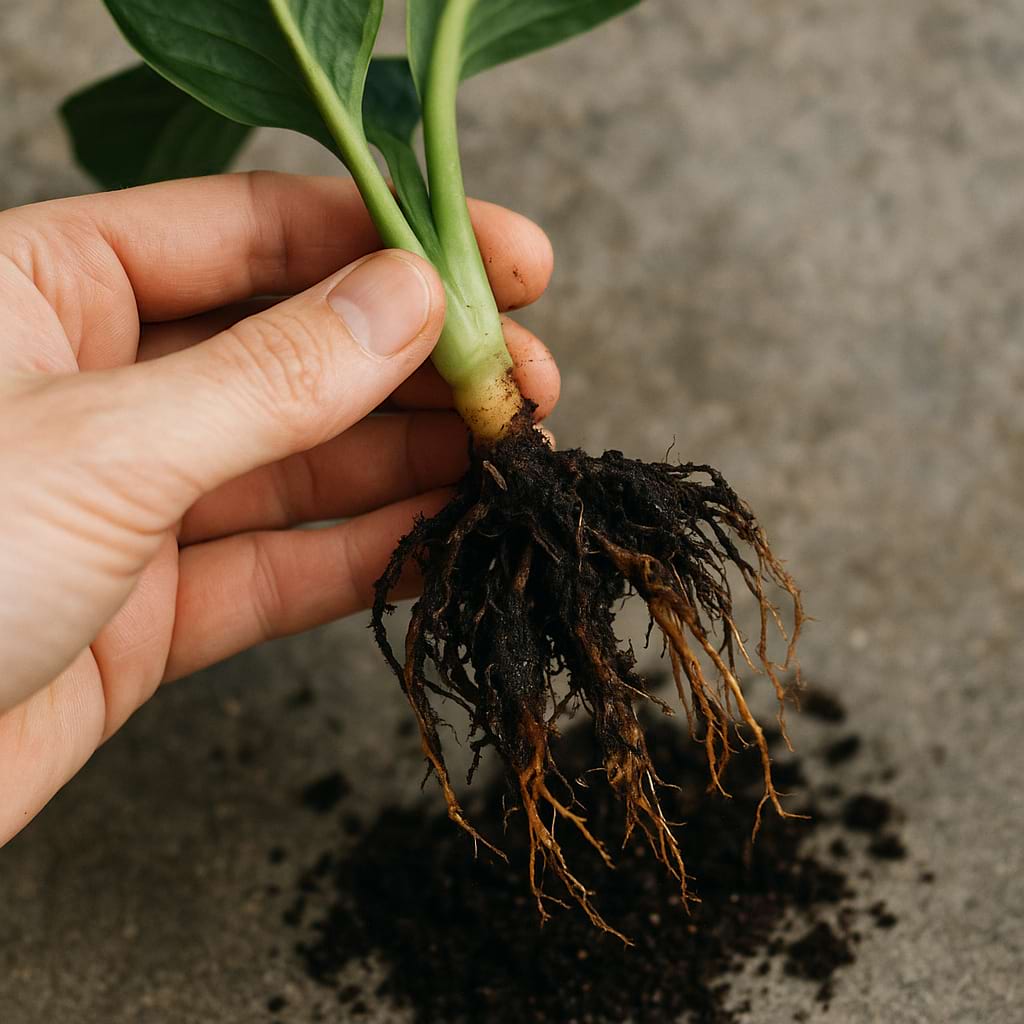
Root rot is the one genuine killer. Constantly soggy soil suffocates the roots, fronds yellow from the base, and the crown softens. Unpot, cut away brown mushy roots, repot in fresh airy mix, and water more carefully.
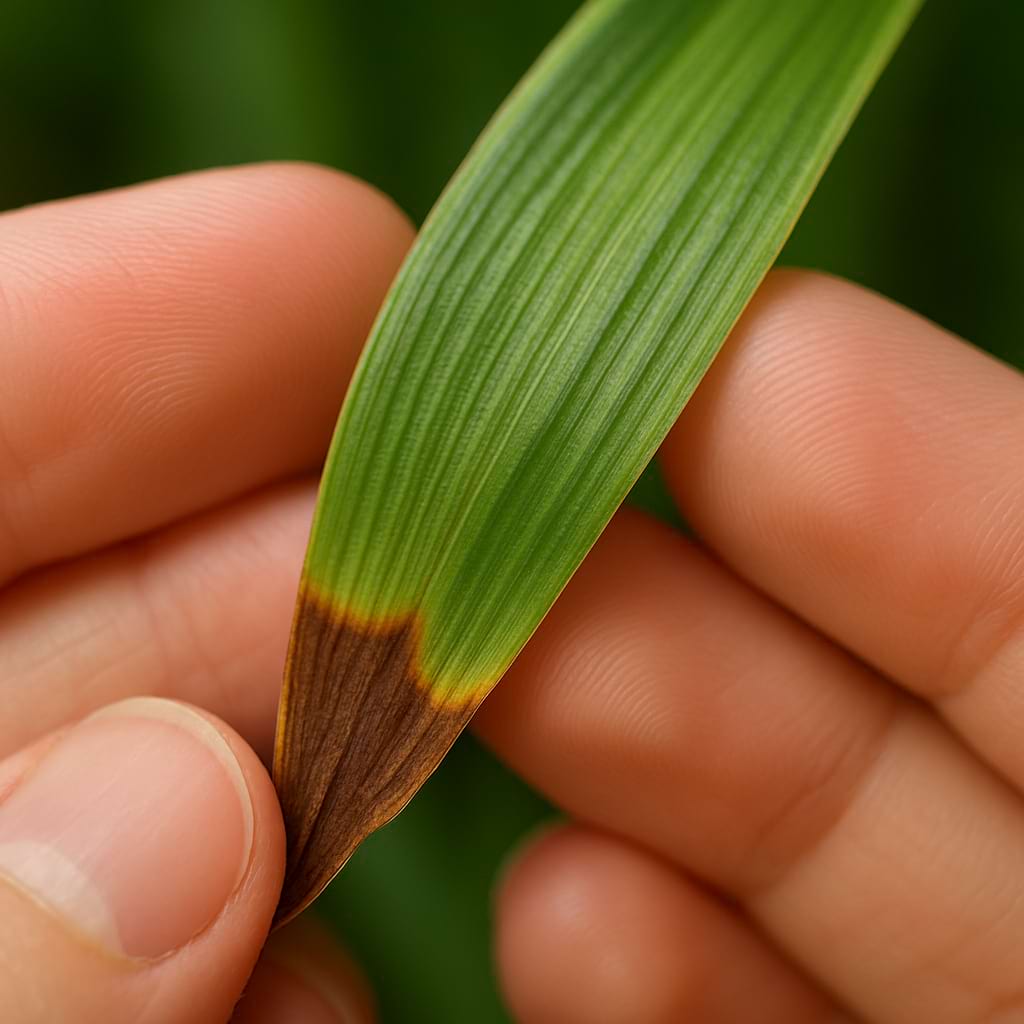
Brown crispy edges mean dry air or missed waterings, usually in winter near a heat source. Move the plant away from heat, steady the watering, and boost humidity.
Yellowing leaves on the oldest one or two fronds is normal turnover. Yellowing across the clump means overwatering, or occasionally hunger in a plant that has not been fed for years.
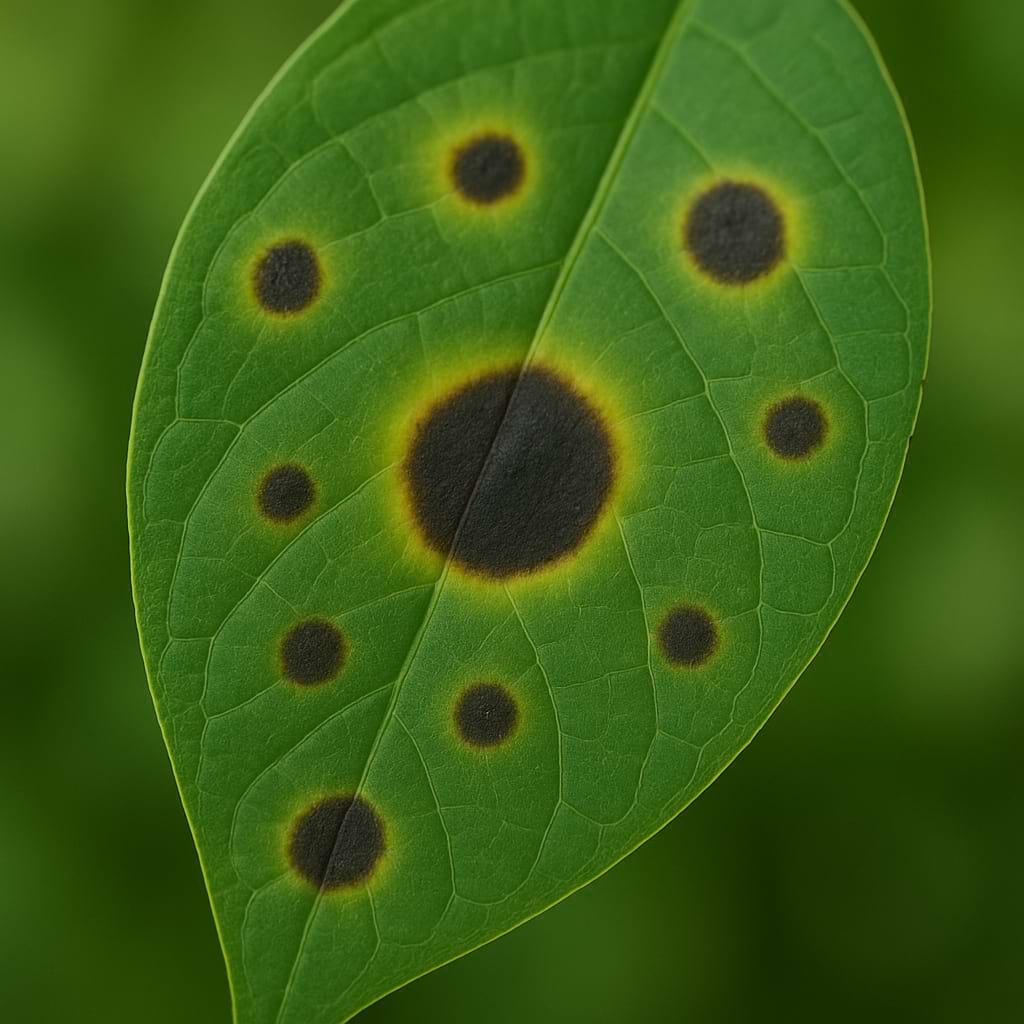
Brown-black spots with a soft feel point to fungal leaf spot from water sitting on the fronds in still air. Stop misting, improve airflow, and remove affected fronds at the base.
Stunted growth through spring and summer suggests the light is too dim or the pot is exhausted. Brighten its spot and refresh the soil if it has been more than three years.
Sunburn or leaf scorch shows as pale bleached patches on the side facing the window. Move the plant out of direct sun; the scorched fronds will not recover, but new growth comes in clean.

🖼️ Korean Rock Fern Display and Styling Ideas
Small, dark, and architectural, this fern styles more like a bonsai companion than a jungle plant. Its scale is the asset: it fits where a Boston Fern simply cannot.
Terrariums and Dish Gardens
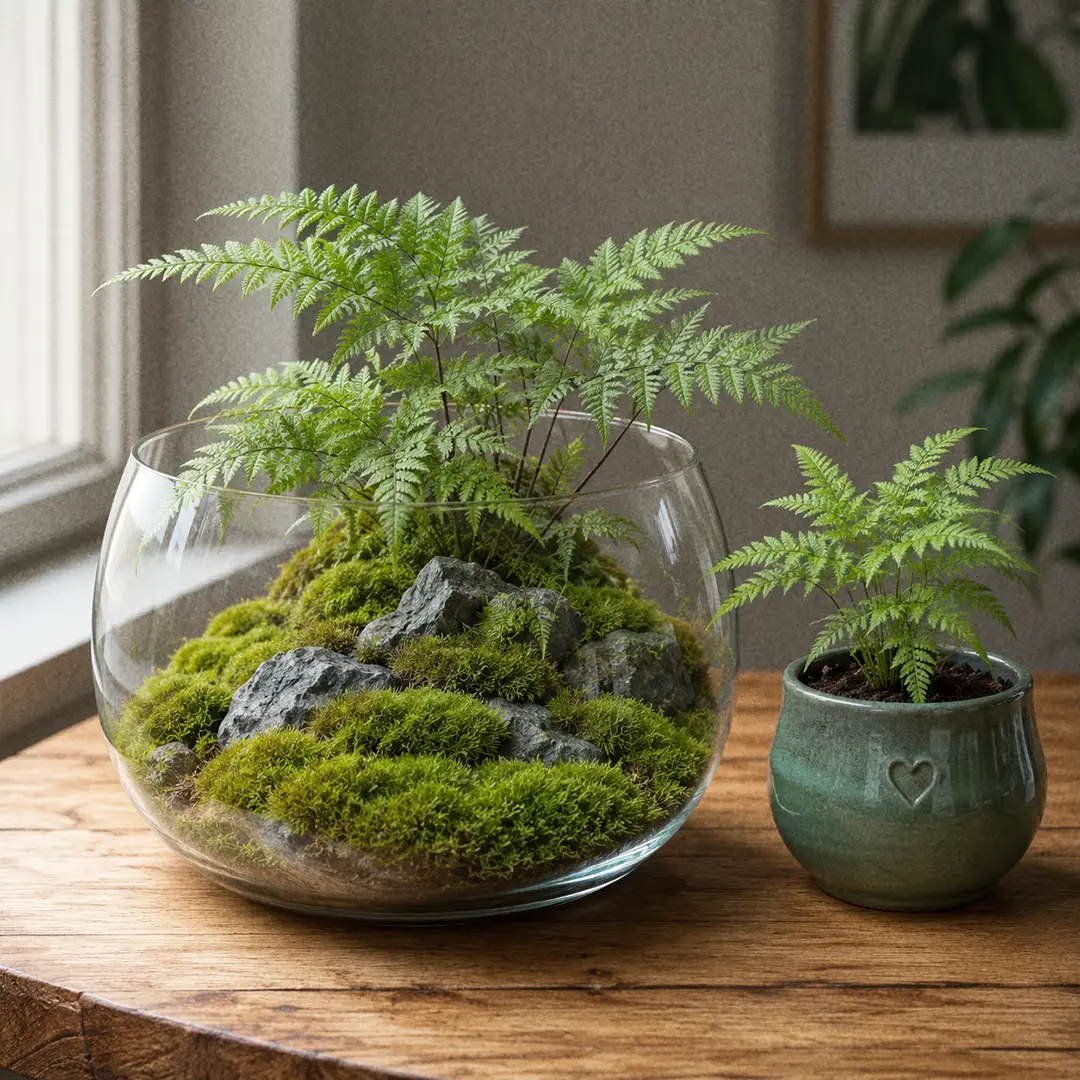
This is one of the best terrarium ferns in the trade. It stays small for years, loves the humidity, and its upright dark-stemmed fronds give height and structure among low mosses and creeping plants. In a dish garden, pair it with stones and moss for a miniature cliff-side scene that matches how it actually grows in the wild.
Windowsills and Desks
On a north or east windowsill, a single plant in a small pot reads crisp and calm, especially against a pale wall where the black stems show. It is also one of the few plants genuinely happy on an office desk a few feet from a window.
Grouped Arrangements
In a fern collection, use the Korean Rock Fern as the fine-textured front-row plant. It sits beautifully below a coppery Autumn Fern or beside the silvery fronds of a Japanese Painted Fern, and its dark stems echo the black midribs of a Button Fern at the same small scale. Keep it out of hot south-facing plant shelves and away from radiators, however handsome the spot looks.
🌟 Korean Rock Fern Pro Care Tips
✅ Keep the crown above the soil. Whether potting, repotting, or dividing, the point where fronds emerge must stay at the surface. A buried crown rots quietly and quickly.
💧 Water the edges, not the center. Pouring into the middle of the clump leaves water sitting in the crown. Circle the pot rim instead, or bottom-water and skip the risk entirely.
🪨 Top-dress with gravel. A thin layer of fine gravel or small stones looks right on a rock fern, slows evaporation, and blocks fungus gnats from laying eggs in the soil.
❄️ Let winter be cooler and drier. A bright room at 55 to 65°F with slightly longer gaps between waterings gives the plant a proper rest and a fuller spring flush.
🔍 Learn the spore pattern. Neat rows of dots under the fronds are spores, not pests. Check the pattern before you reach for any spray.
🚿 Shower it monthly. A lukewarm rinse cleans dust from the dense fronds, discourages spider mites, and perks up the whole plant in five minutes.
🌱 Divide generously. When propagating, take fewer and larger divisions. Big pieces establish in weeks; tiny ones can sulk for a season.
🐝 Skip the leaf shine and oil sprays. Fine fern fronds burn under oils and shine products. Water and a soft touch are all the grooming this plant wants.
❓ Frequently Asked Questions
Is the Korean Rock Fern safe for cats and dogs?
Yes. Like other Polystichum species, it is non-toxic to cats, dogs, and humans. A pet that chews a frond may get a mild tummy upset from the fibrous material, but there is no poison involved, which makes it a safe pick for households with curious animals.
How big does a Korean Rock Fern get?
Small, and that is the point. Indoors it typically tops out between 8 and 16 inches tall with a spread of 12 to 18 inches. It reaches that size slowly over a few years and then simply maintains it, which is why it works so well in terrariums and on windowsills.
Why are the tips of my Korean Rock Fern turning brown?
Brown tips almost always mean dry air, dry soil, or both, and winter heating is the usual trigger. Move the plant away from radiators and vents, keep the soil evenly damp, and add a humidifier or pebble tray if your air sits below about 35 percent humidity.
What are the black dots under the fronds?
If they sit in neat, evenly spaced rows on the underside of the frond, they are sori, the fern's natural spore clusters, and completely harmless. If they are scattered randomly along stems and both leaf surfaces, suspect scale insects and treat with an alcohol-dipped cotton swab.
Can I grow a Korean Rock Fern in a closed terrarium?
An open terrarium is the better home. The fern loves terrarium humidity, but a fully sealed vessel can turn stagnant, and still, saturated air encourages fungal spots on the dense fronds. If you use a lidded container, air it out for a few hours a couple of times a week.
Does the Korean Rock Fern need a grow light?
Not if it sits within a few feet of a window. In a windowless office or a very dark corner, a small full-spectrum desk grow light running eight to ten hours a day keeps it full and dark green. It needs far less light intensity than flowering plants, so even a modest bulb does the job.
Can I plant my Korean Rock Fern outside?
In USDA zones 6 to 9, yes. Give it a shaded, sheltered spot with humusy, well-drained soil, and it stays evergreen through most winters. In colder zones, treat it as a houseplant that can summer outdoors in full shade and come back in before frost.
Why is my Korean Rock Fern not growing?
First check light: more than seven or eight feet from a window is too dim for real growth. Then check the calendar, since the plant naturally pauses from late autumn through winter. If it is bright, warm, and growing season and the plant still sits still, the pot may be root-bound or the soil exhausted; repot into fresh mix one size up.
Is the Korean Rock Fern the same as the Holly Fern?
No, despite the confusing "Tsusima Holly Fern" nickname. The true Holly Fern (Cyrtomium falcatum) is a much larger plant with big, glossy, holly-shaped leaflets. The Korean Rock Fern is half the size with finely divided, lacy fronds on dark stems. Their care is similar, but they look nothing alike up close.
ℹ️ Korean Rock Fern Info
Care and Maintenance
🪴 Soil Type and pH: Loose, humusy, well-draining mix rich in organic matter; pH 5.5-7.0.
💧 Humidity and Misting: Happy at 40 to 60 percent; one of the most forgiving ferns for ordinary room air.
✂️ Pruning: Snip tired or damaged fronds at the base; tidy the whole clump in early spring before new growth.
🧼 Cleaning: Rinse the fronds under a gentle lukewarm shower every month or two; avoid wiping, since the fine pinnae tear easily.
🌱 Repotting: Move up one pot size when roots circle the base or the clump crowds the rim, usually every 2 to 3 years.
🔄 Repotting Frequency: Every 2-3 years
❄️ Seasonal Changes in Care: Grows from spring through autumn; slows in winter, when it likes slightly less water and a cooler room.
Growing Characteristics
💥 Growth Speed: Slow to Moderate
🔄 Life Cycle: Long-lived evergreen perennial
💥 Bloom Time: Does not bloom; produces spores on the undersides of mature fronds in summer
🌡️ Hardiness Zones: 6-9 outdoors; grown as a houseplant everywhere else
🗺️ Native Area: Rocky slopes, cliff crevices, and shaded streambanks across Korea, Japan, China, Taiwan, and the Himalayan foothills
🚘 Hibernation: Rests in winter; a cool, bright room and lighter watering set up a strong spring flush
Propagation and Health
📍 Suitable Locations: North or east windowsills, terrariums, bathrooms, shaded desks and shelves, sheltered shade gardens
🪴 Propagation Methods: Divide the clump in early spring; spore-growing is possible but slow.
🐛 Common Pests: Fungus Gnats, Spider Mites, Scale Insects, Mealybugs, Aphids
🦠 Possible Diseases: Root rot in soggy soil, crown rot from water sitting in the center, fungal leaf spots in stagnant humid air
Plant Details
🌿 Plant Type: Small evergreen terrestrial fern with a short rhizome and a neat, vase-shaped clumping habit
🍃 Foliage Type: Finely cut, twice-pinnate, lance-shaped evergreen fronds with a leathery feel; leaf stalks and midribs are dark brown to nearly black
🎨 Color of Leaves: Deep green mature fronds with a silvery-gray cast on new growth; stems and veins nearly black
🌸 Flower Color: N/A
🌼 Blooming: Does not bloom; small round sori form on the undersides of fertile fronds in summer
🍽️ Edibility: Not edible
📏 Mature Size: 8-16 inches indoors
Additional Info
🌻 General Benefits: Pet-safe, terrarium-friendly, tolerates ordinary room humidity, evergreen structure for dim corners
💊 Medical Properties: None that matter for indoor growers
🧿 Feng Shui: A small grounding accent for a desk or east-facing shelf; its steady evergreen habit is read as quiet, stable energy
⭐ Zodiac Sign Compatibility: Virgo
🌈 Symbolism or Folklore: Endurance in hard places; a plant that grows out of rock crevices reads as quiet persistence
📝 Interesting Facts: The species name tsus-simense refers to Tsushima, the Japanese island between Korea and Japan where the fern was first collected. In the wild it grows straight out of rock cracks and stone walls, which is why it handles drier air and shallower pots better than most forest ferns. Despite the delicate lace-like look, the fronds are evergreen and hold their color through winter down to USDA zone 6.
Buying and Usage
🛒 What to Look for When Buying: Pick a plant with a full, upright clump, dark glossy-green fronds, and visible new fiddleheads at the center. Avoid plants with browned tips across the whole clump, matted or sour-smelling soil, or webbing under the fronds.
🪴 Other Uses: Terrariums, fairy gardens, dish gardens, shaded rock gardens, underplanting for larger indoor trees
Decoration and Styling
🖼️ Display Ideas: Solo on a north windowsill, tucked into an open terrarium with mosses, or grouped with silvery and coppery ferns for a layered woodland shelf
🧵 Styling Tips: Top-dress with fine gravel or small stones instead of moss; the rocky finish suits the plant's cliff-dwelling character and keeps the crown dry.
🪴 See also 🪴
Complete Guide to East Indian Holly Fern Care and Growth
Complete Guide to Silver Lace Fern Care and Growth
Complete Guide to Silver Lady Fern Care and Growth
Complete Guide to Squirrel's Foot Fern Care and Growth
Complete Guide to Tassel Fern Care and Growth
Complete Guide to Mother Fern Care and Growth
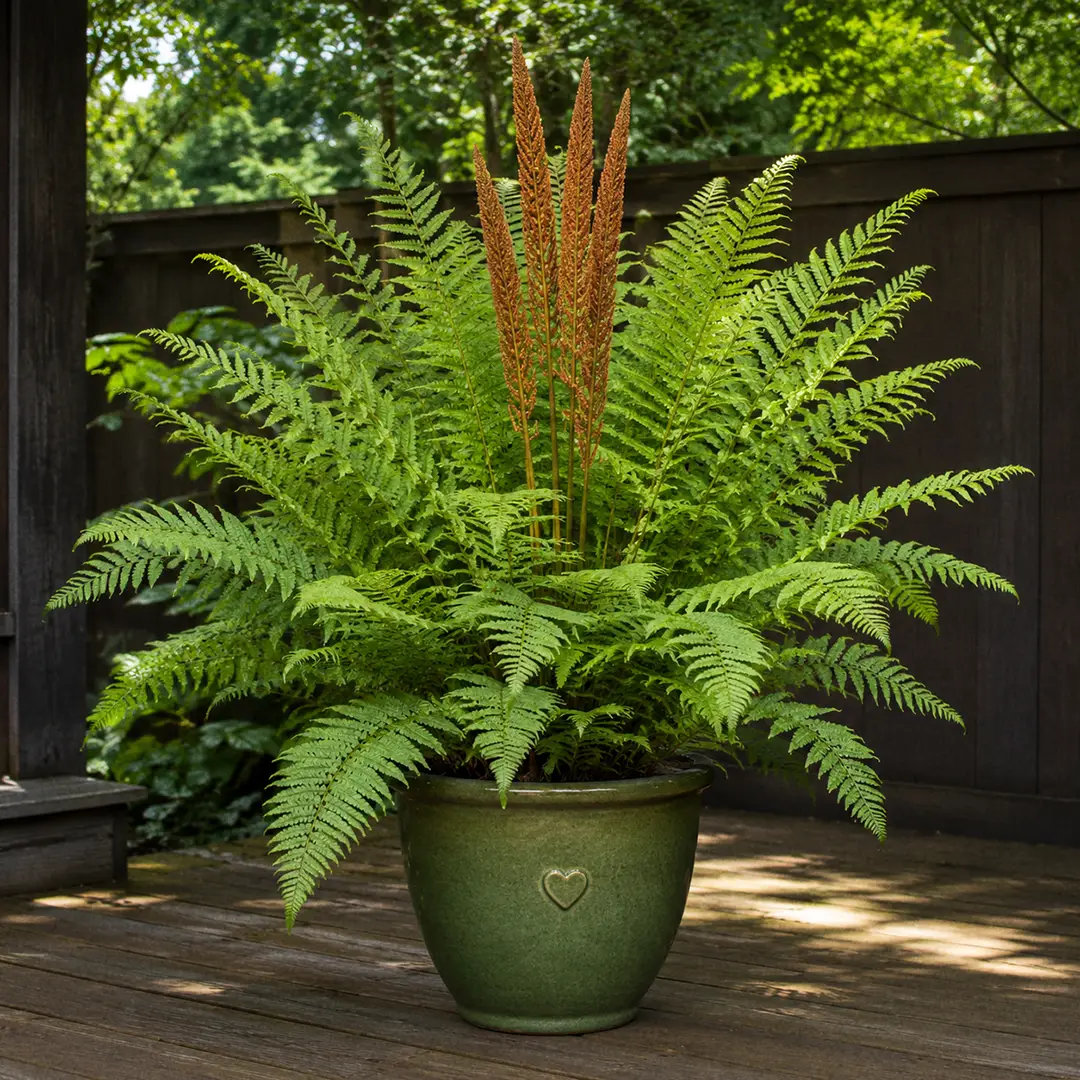
Complete Guide to Cinnamon Fern Care and Growth
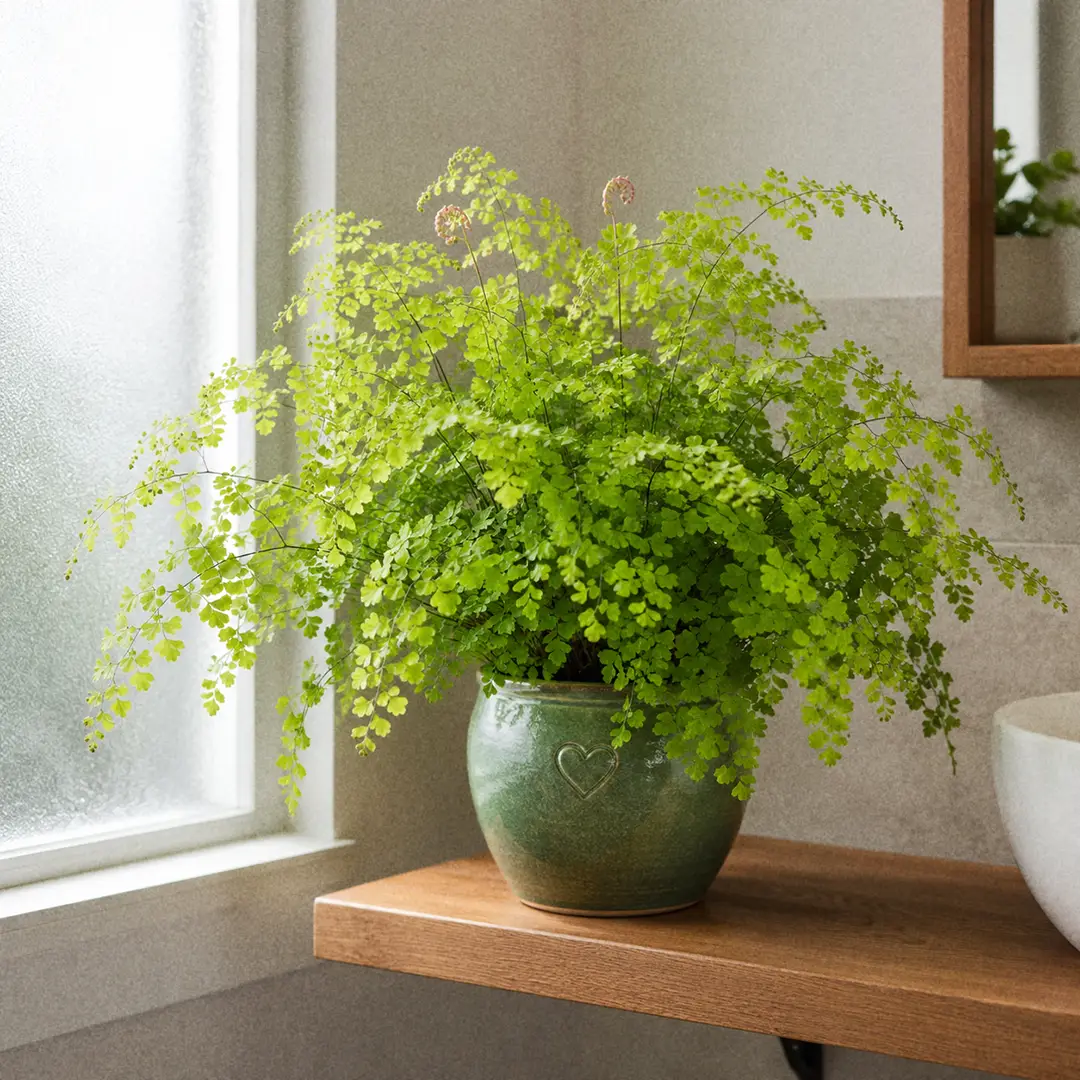
Complete Guide to Delta Maidenhair Fern Care and Growth
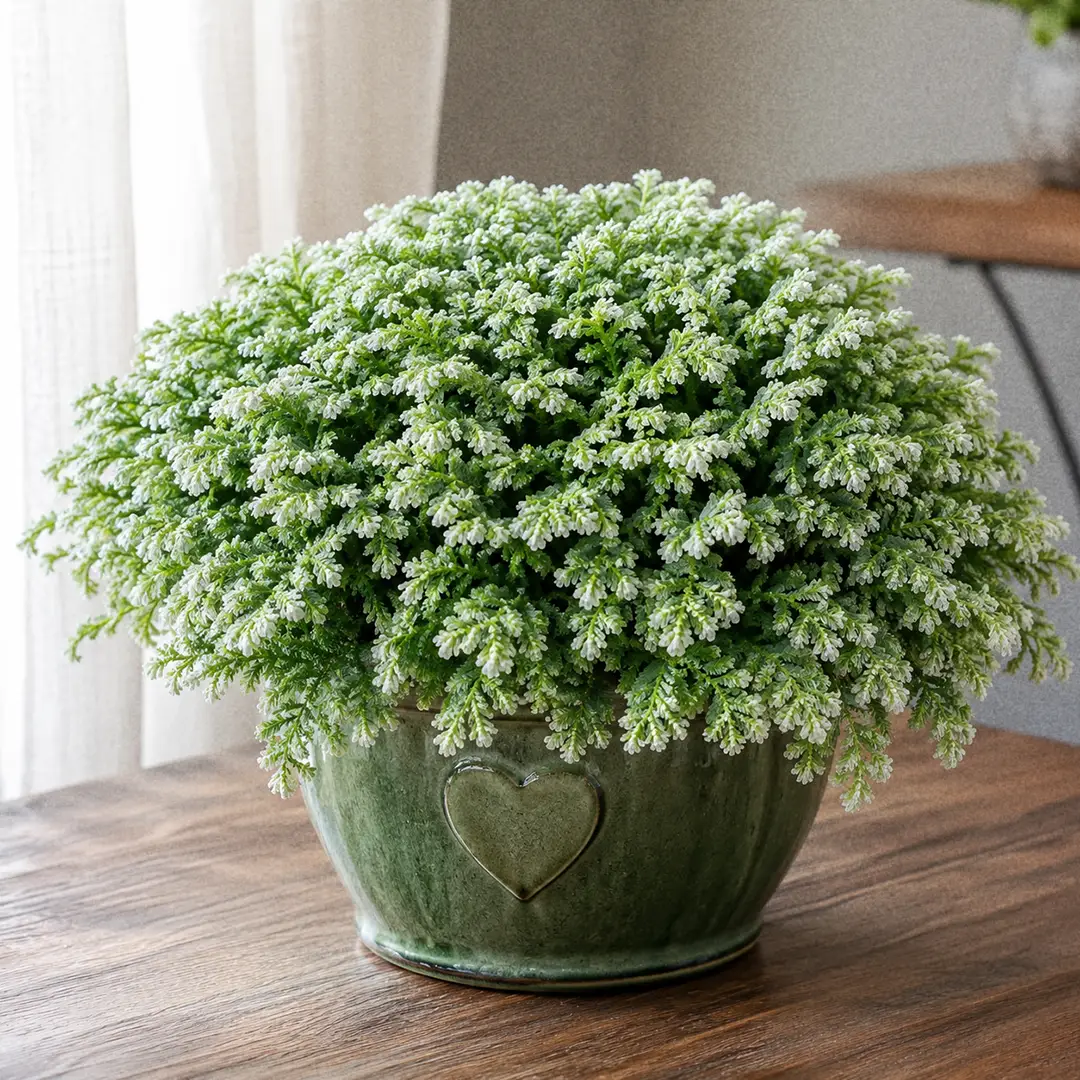
Complete Guide to Frosty Fern Care and Growth
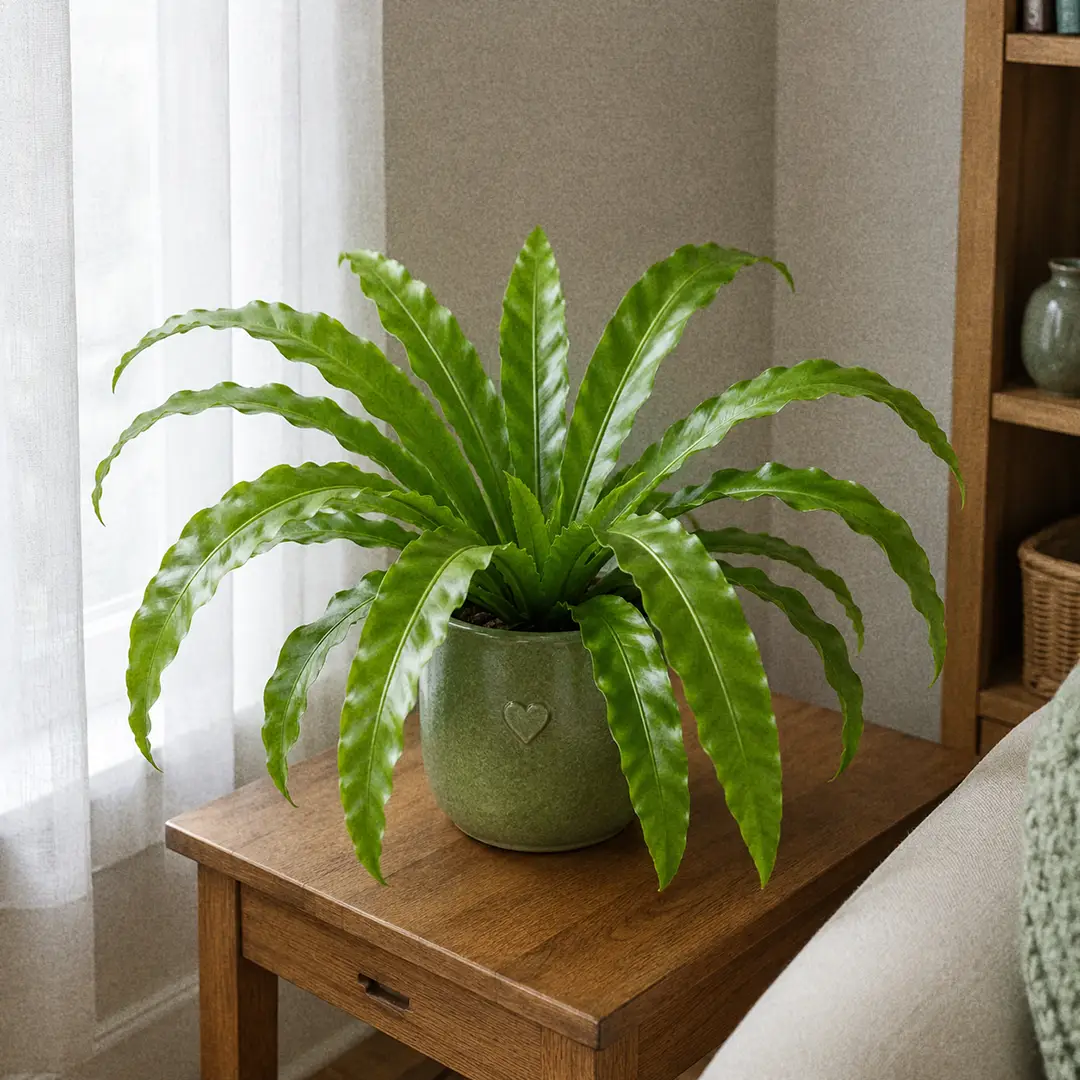
Complete Guide to Hart's Tongue Fern Care and Growth

Houseplant101 Forum
Questions & Comments
Ask a question, share your plant experience, or help other plant owners.
Comments are temporarily unavailable.
Open the Houseplant101 ForumNo comments yet
Be the first to ask a question or share your experience about this page.
Log in or create an account
Comments use your Houseplant101 Forum account, but you can stay on this page.
Create a new account