
Mother Fern
Asplenium bulbiferum
Hen and Chicken Fern, Mouku, Pikopiko, Parsley Fern


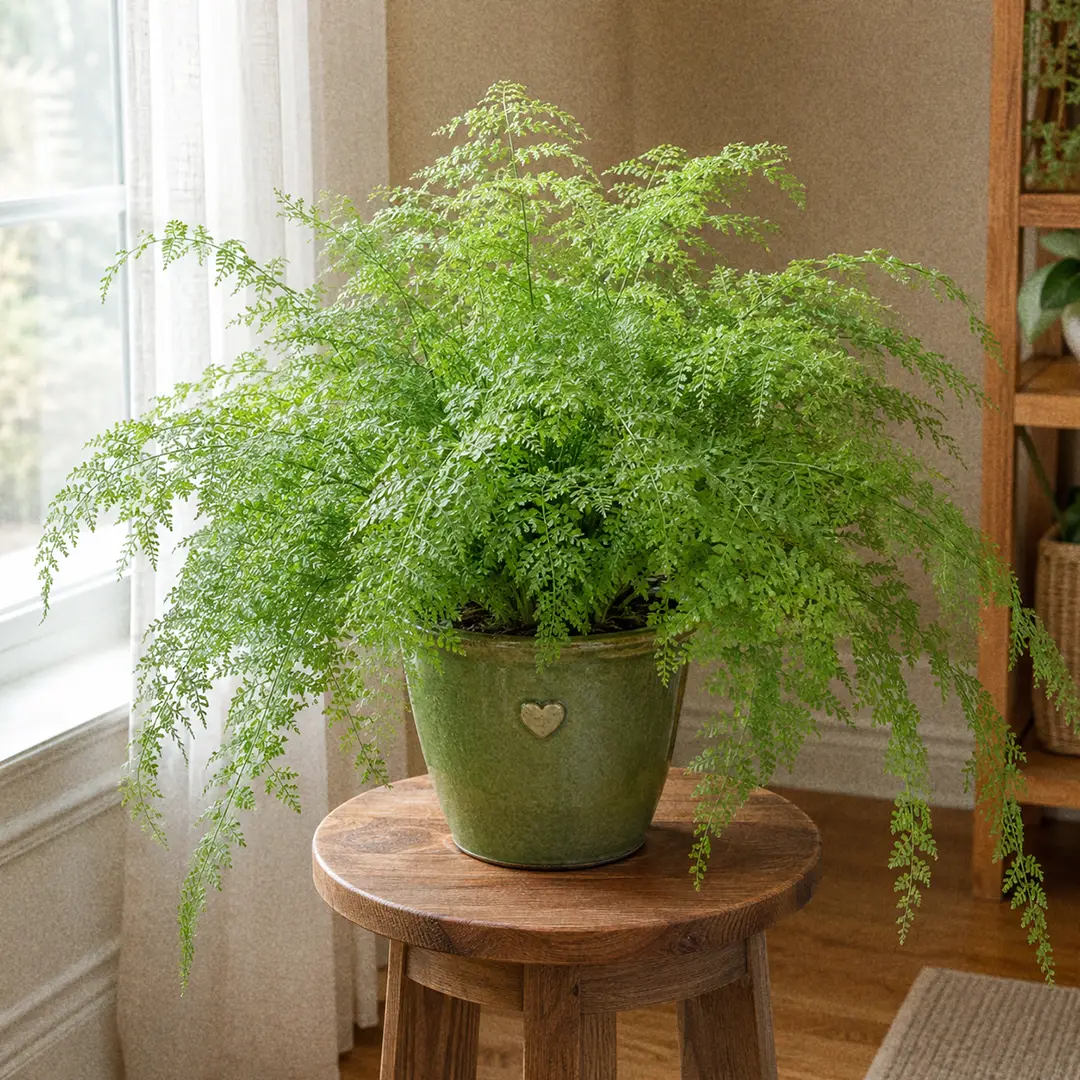
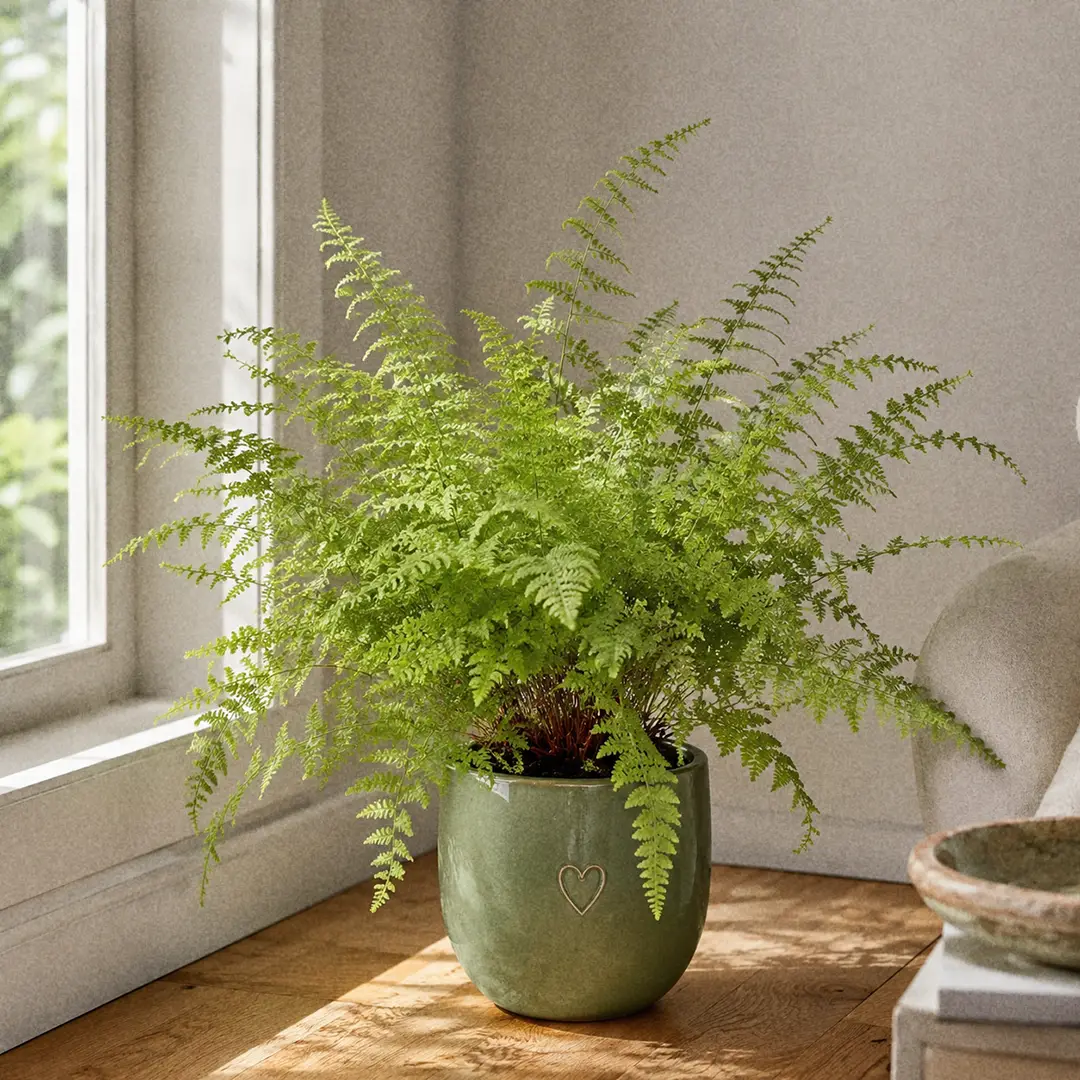
The Mother Fern (Asplenium bulbiferum) is a soft, lacy New Zealand native with a party trick no other houseplant fern can match: it grows tiny live baby plantlets right on the upper surface of its mature fronds. Cool, humid, and forgiving, it is one of the easiest large ferns for shaded rooms.
📝 Mother Fern Care Notes
🌿 Care Instructions
⚠️ Common Pests
📊 Growth Information
🪴 In This Guide 🪴

📺 Mother Fern Video Guide

☀️ Mother Fern Light Requirements (Low to Medium Indirect)
The Mother Fern grew up in the deep, dappled shade of New Zealand forest floors, so light for this plant means soft, filtered, and never direct. That low-light tolerance is exactly what makes it such a good plant for rooms that would starve most other houseplants.
The Sweet Spot
A spot about three to five feet from a north-facing or east-facing window is ideal. A south or west window also works as long as a sheer curtain stands between the plant and the glass. The fronds want the kind of light you can read by but not the kind that warms your skin. Under good light the fronds stay a fresh, lively green and new growth comes in dense and full.
Too Little Light
True low light is the one place this fern still struggles. Deep corners with no window in sight, hallways with only artificial light, and rooms that only get filtered daylight for an hour a day will slow growth to a crawl. New fronds come in smaller, paler, and more stretched. A small grow light on a timer fixes the problem in days.
Too Much Light
Direct sun is the single fastest way to ruin this plant. The lacy fronds scorch within hours, leaving crispy, papery patches and bleached tips that never recover. If you see fronds going pale or yellowing on the side closest to the window, move the plant back a foot or two and add a sheer curtain.

💧 Mother Fern Watering Guide (Keep It Evenly Moist)
This fern is built around moisture. Its fine, lacy fronds dry out from the tips inward within a day of the soil drying, and once a frond browns it does not come back. Steady watering is the single most important habit for keeping it lush.
Watering Frequency
Check the soil every two or three days with your finger. Water as soon as the top half-inch feels dry, well before the rest of the pot dries out. In a warm summer room that usually means twice a week; in a cool winter room you can stretch to once a week. The soil feel matters more than the schedule.
How to Water
Pour water all the way around the crown, not just on one side, until it runs freely from the drainage holes. Bottom watering works beautifully here: set the pot in a tray of water for fifteen minutes, then lift it out and let it drain. Never leave the pot sitting in standing water afterwards. Soggy roots turn to root rot fast.
Signs of Trouble
Drooping, soft fronds usually mean the soil dried out. Soak the pot in the sink, let it drain, and the plant usually bounces back within a day. If wilting comes with mushy crown tissue and dark, smelly soil, the opposite is happening and the roots are rotting. The plant is also sensitive to chlorinated tap water; if brown tips appear on an otherwise well-cared-for plant, switch to filtered, rain, or distilled water.
🪴 Best Soil for Mother Fern (Light and Moisture-Holding)
The right soil for a Mother Fern walks the same tightrope as for most ferns: it must hold moisture so the roots stay damp, but it must drain well enough that the roots never sit in water. Heavy garden soil, dense bagged mixes, and compacted soils are all wrong.
What the Soil Needs
A loose, airy, slightly acidic mix that holds moisture without going soupy. Peat or coco coir gives moisture retention, perlite or pumice gives airflow, and a little bark or compost adds structure and slow nutrition. Aim for pH 5.5 to 6.5.
DIY Soil Mix
Two parts peat moss or coco coir, one part perlite, and one part fine orchid bark or composted leaf mold. Mix loose; never pack it down. If you only have plain houseplant mix on hand, cut it with about a third perlite by volume and you are most of the way there.
Pre-Made Options
A bagged African violet mix is a near-perfect off-the-shelf choice. A peat-based houseplant mix labeled "moisture control" also works if you add extra perlite to keep it from compacting. Avoid succulent and cactus mixes; they drain too fast for a fern.
🍼 Fertilizing Mother Fern (Light and Steady)
Mother Fern is a light feeder. Overfeeding burns the delicate root tips and the symptoms (brown frond edges, stunted growth) look almost exactly like the symptoms of underwatering, which leads a lot of beginners to add even more fertilizer and make things worse. Less is more.
When and How Often
Feed once every four to six weeks from early spring through the end of summer. Stop completely from late autumn through winter; growth slows and unused fertilizer builds up as salts. Always water the plant first, then apply fertilizer to already-moist soil so you do not shock the roots.
What to Use
A balanced liquid houseplant fertilizer (10-10-10 or 20-20-20) diluted to half the recommended strength is ideal. Fish emulsion and worm-casting tea both work beautifully and are even gentler. Avoid slow-release pellets in a small pot; they release too unevenly and can sit and burn one part of the root system.
Over-Fertilizing Signs
White crust on the soil surface or around the rim of the pot is salt buildup from too much fertilizer. Brown, crispy frond tips on a plant that is otherwise getting good humidity and steady watering usually point to the same thing. Flush the pot with plain water two or three times in a row, let it drain fully, and skip the next feeding cycle.
🌡️ Mother Fern Temperature Range
This is one of the few houseplant ferns that genuinely tolerates cool rooms. New Zealand forests are damp, shaded, and rarely hot, so the plant evolved for moderate temperatures rather than tropical heat. That makes it a great match for cool sunrooms and shaded entryways where most ferns would sulk.
Ideal Range
Aim for 55-72°F (13-22°C) year-round. The plant is happy across that whole window and copes with brief dips to 40°F (4°C) without complaint, which is a wider range than almost any other indoor fern can handle. Sustained heat above 75°F crisps the fronds quickly, especially if humidity drops at the same time.
Drafts and Heat Sources
Sudden temperature change matters more than absolute numbers. Spots above radiators, beside AC vents, or next to a frequently opened winter door dry the fronds out fast. Pick a place with stable, gentle air. If a sweater feels right where you are standing, the fern is comfortable too.
💦 Mother Fern Humidity Requirements
Mother Fern is forgiving on a lot of things but not on dry air. Once the relative humidity drops below 40%, the lacy frond tips brown out almost immediately and no amount of careful watering will hide it. The plant tolerates a bit less humidity than a Maidenhair, but it still wants a damp atmosphere.
Ideal Humidity
Target 50-65% relative humidity. The plant will grow at lower numbers, but you will fight brown tips constantly. Most heated indoor air sits at 25-35% in winter, which is why so many ferns struggle through the cold months. Even a small bump up makes a visible difference within a week.
Easy Humidity Boosters
In rough order of how well they actually work:
- Cool-mist humidifier: a small humidifier running a few hours a day creates a stable 50-60% pocket around the plant. This is the single most effective upgrade.
- Bathroom or kitchen placement: daily showers and stovetop steam keep these rooms naturally damper than the rest of the house.
- Pebble tray: a shallow tray of pebbles and water with the pot resting on top raises local humidity by about 10-15%. Helpful but rarely enough alone in a dry winter room.
- Group with other plants: shared transpiration from two or three humidity lovers creates a small humid microclimate.
- Closed terrarium (young plants only): a small Mother Fern thrives in a sealed glass container until it outgrows the space.
Misting feels useful but evaporates within minutes and is not a real solution. Use it to supplement, not as your main strategy.
🏷️ Mother Fern Types and Varieties
Asplenium bulbiferum is the species sold simply as Mother Fern in most garden centers, but there are a couple of close relatives and a famous hybrid worth knowing.
Asplenium bulbiferum (The Classic)
The standard Mother Fern, native to New Zealand. Fresh light green, bipinnate to tripinnate (twice or three times divided) fronds, fine and lacy in texture. Mature plants reach 24-36 inches tall and wide indoors, sometimes larger in a humid sunroom. The defining feature is the tiny live plantlets (bulblets) that form on the upper surface of mature fronds, especially toward the tips. This is the variety you want if propagation and Maori heritage are part of the appeal.
Asplenium x lucrosum (Hen and Chicken Fern)
A hybrid often sold under the same common name as Mother Fern, and frequently confused with it. A. x lucrosum is a cross between A. bulbiferum and A. dimorphum. It produces sterile spores but still grows the live plantlets, so the propagation method is the same. The fronds are a little darker green, the leaflets slightly broader, and the overall plant is sturdier and more tolerant of average household air. Many "Mother Ferns" sold in the US and Europe are actually this hybrid.
Asplenium dimorphum (Norfolk Island Spleenwort)
A relative from Norfolk Island, larger and coarser than the classic Mother Fern, with two distinct frond shapes on the same plant. Less common as a houseplant but sometimes shows up in collector nurseries. Treat it like a Mother Fern if you find one.
Asplenium ×dimorphum 'Austral Gem' (also sold as 'Parvati')
The other hybrid built on A. dimorphum, and the easiest of the group by a distance. The Austral Gem Fern is compact, slow, and carries thick glossy leathery fronds that cope with ordinary dry room air where a Mother Fern starts crisping. It grows no plantlets and no viable spores at all, so division is the only way to propagate it. Worth knowing about if you love the divided-frond look but keep losing plants to a heated living room in winter.
Watch the labels on this one. European sellers list it as Asplenium 'Parvati', its registered cultivar name, and a good number of them also call it "Mother Fern", which is how people end up on the wrong care page. If the fronds are thick, waxy, and glossy and the undersides carry no spores, you have a Parvati rather than a true A. bulbiferum.
Asplenium antiquum (Japanese Bird's Nest Fern)
The opposite end of the genus, and worth a look if the plantlet trick is not what drew you in. The Japanese Bird's Nest Fern grows as one glossy rosette of undivided, wavy-edged straps rather than a clump of lacy fronds, and it cannot be divided at all. It also handles ordinary room humidity far better than a Mother Fern does.
Close Cousins to Compare
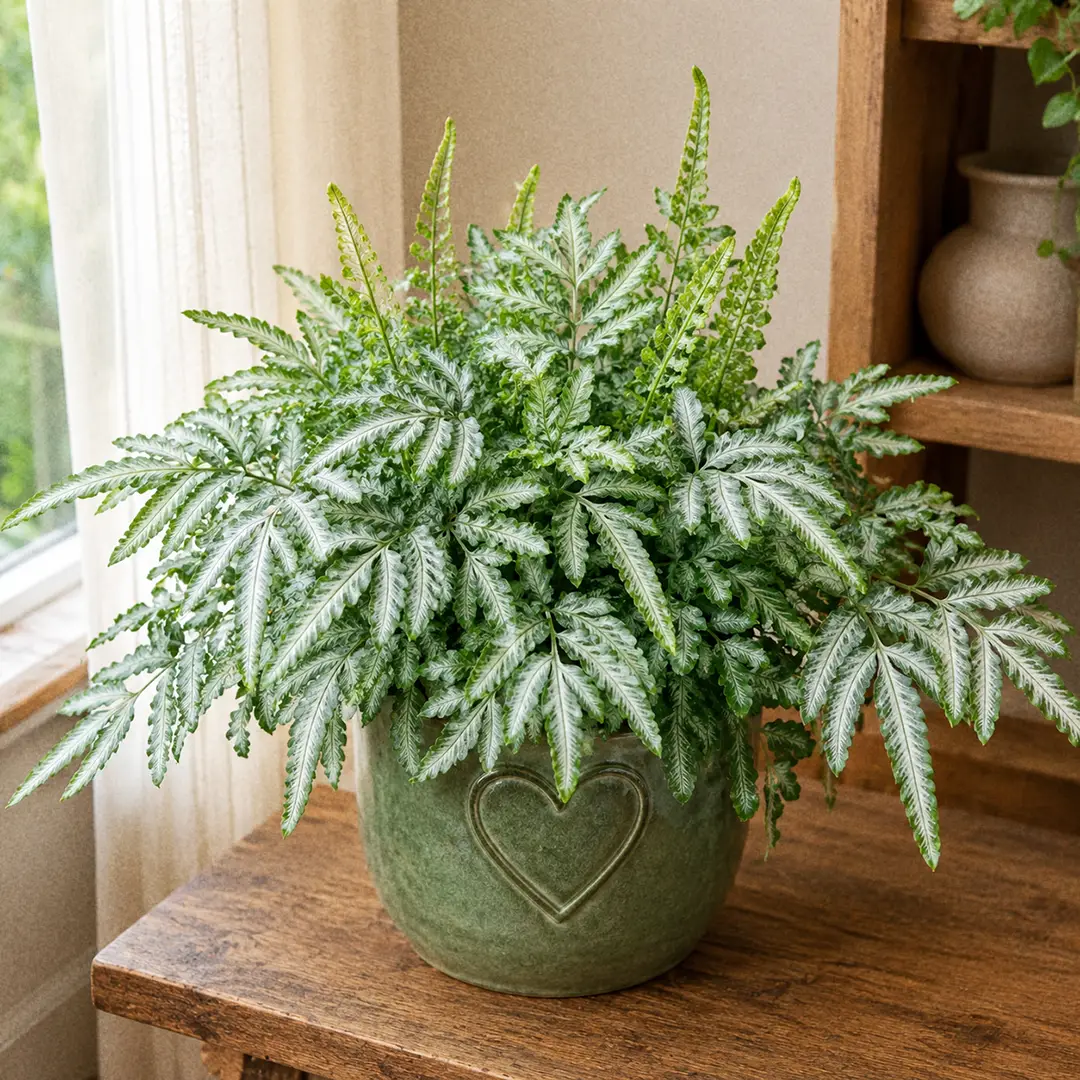
If you like the lacy look but want something smaller, the Silver Lace Fern has the same fine texture in a tabletop size with bold silver stripes. The Maidenhair Fern has even finer foliage but is much pickier about humidity, and its most common species, the Delta Maidenhair, will not forgive a single dry-out the way a Mother Fern does. The Brake Fern is broader and bolder with larger leaflets.
🪴 Potting and Repotting Mother Fern
Mother Fern is a moderate grower with a fibrous, shallow root system, so repotting is a once-every-two-years job. Resist sizing up just because the plant has been in its pot for a while; this fern actually prefers to be a little snug.
When to Repot
Repot when you see roots circling the bottom of the pot, growing out of the drainage holes, or when water runs straight through without soaking in (a sign the root mass has crowded out the soil). Early spring, just as new fronds start to push, is the best time. Avoid repotting in autumn or winter.
Choosing a Pot
Size up by only one inch in diameter. Too much pot holds too much wet soil around too few roots and leads straight to rot. Glazed ceramic and plastic both work well; terracotta wicks moisture away faster than this plant likes. Drainage holes are non-negotiable.
Step-by-Step Repotting
- Water the plant the day before so the root ball slides out cleanly.
- Slide the fern out. Loosen the bottom of the root ball with your fingers; do not break it up.
- Add an inch of fresh peat-based mix to the new pot.
- Set the fern in, keeping the crown at the same depth as before. Do not bury the crown.
- Fill around the sides, tapping the pot to settle the soil. Do not pack it down.
- Water thoroughly and return the plant to its usual spot. Skip fertilizer for a month.
✂️ Pruning Mother Fern
Pruning a Mother Fern is mostly maintenance, not shaping. The plant forms a graceful arching mound on its own; what it needs from you is regular cleanup of spent fronds to keep the plant looking fresh and to redirect energy into new growth.
When to Prune
Whenever you spot a yellow, brown, or shriveled frond, take it out. This is a once-a-week glance and a quick snip, not a seasonal task. A clean, fresh plant looks twice as good as one with three or four browning fronds sagging at the base.
How to Prune
Use sharp, clean scissors. Cut the dying frond at its base, as close to the soil as possible without nicking neighboring stems. Never just trim the brown tips off a frond; the frond will not regrow the missing tissue, and you will be left with a blunt stub that looks worse than what you started with.
Leave the Plantlet-Bearing Fronds
Older fronds carrying live plantlets are worth keeping even when they start to look a little tired. Remove them too early and you lose the babies. Once the plantlets are large enough to detach, the parent frond can come off.
🌱 How to Propagate Mother Fern
This is where the Mother Fern earns its name and becomes the single most fun fern in any houseplant collection. No other common indoor fern propagates this easily; you do not need cuttings, root divisions, or sterile spore-sowing trays. The plant literally grows new babies on its own fronds.
Best Method: The Bulblets (Plantlets)
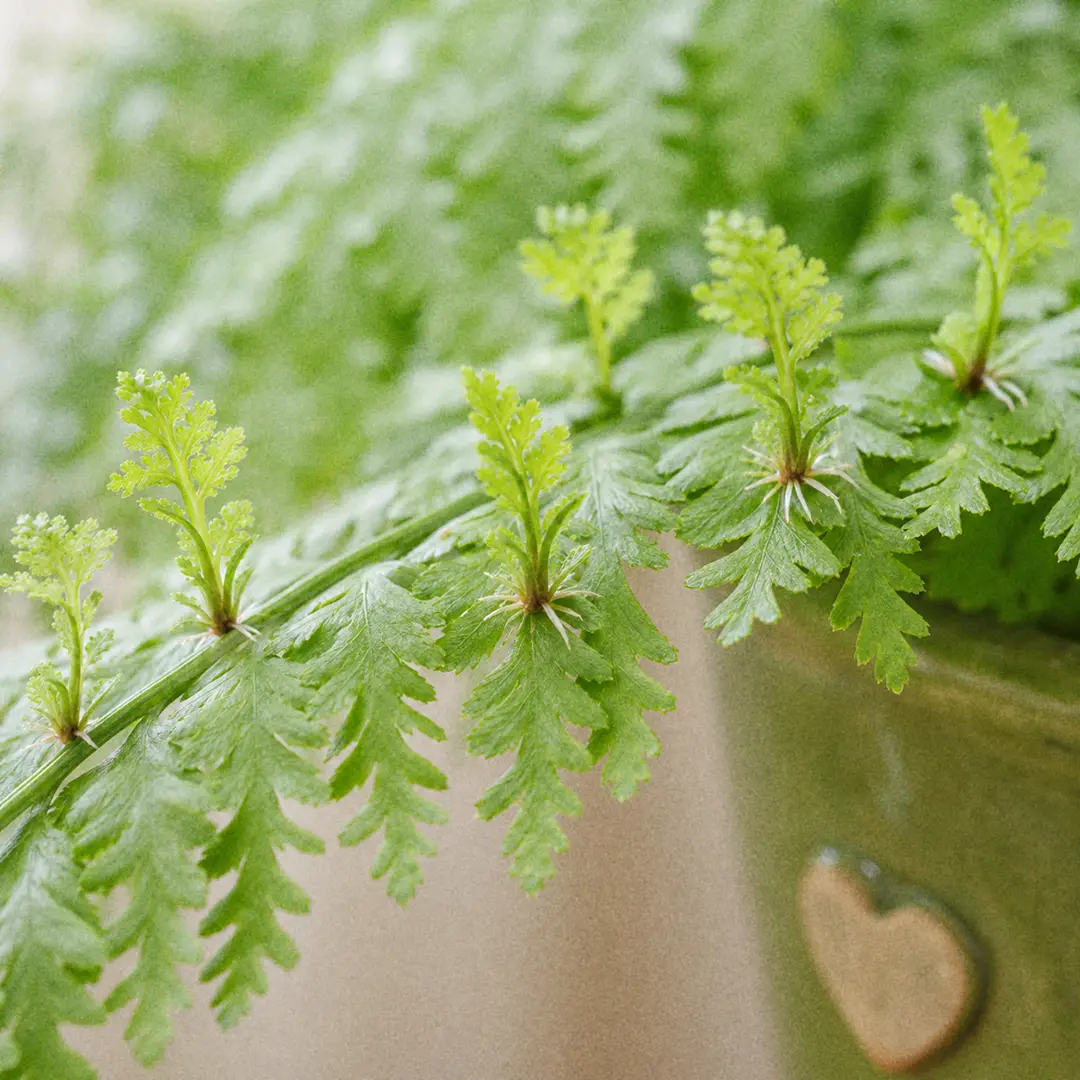
Mature fronds sprout tiny live plantlets, called bulblets, along the upper surface of the leaflets. Each bulblet starts as a small green bump, grows a tiny set of true miniature fronds (often two or three leaflets), and eventually develops its own thread-like roots. When the parent frond bends down to the soil under their weight, the plantlets touch the soil and root in place. You can let nature take its course or harvest the babies yourself, which is faster.
Step-by-Step Plantlet Propagation
- Wait for the bulblets to develop at least two or three real frondlets and visible white threadlike roots. Tiny green bumps with no roots are too young.
- Pinch the plantlet off the parent frond with your fingers, taking care to keep the small roots intact.
- Press it gently into a small pot of moist peat-based seed-starting mix. Keep the roots in contact with the soil but do not bury the crown.
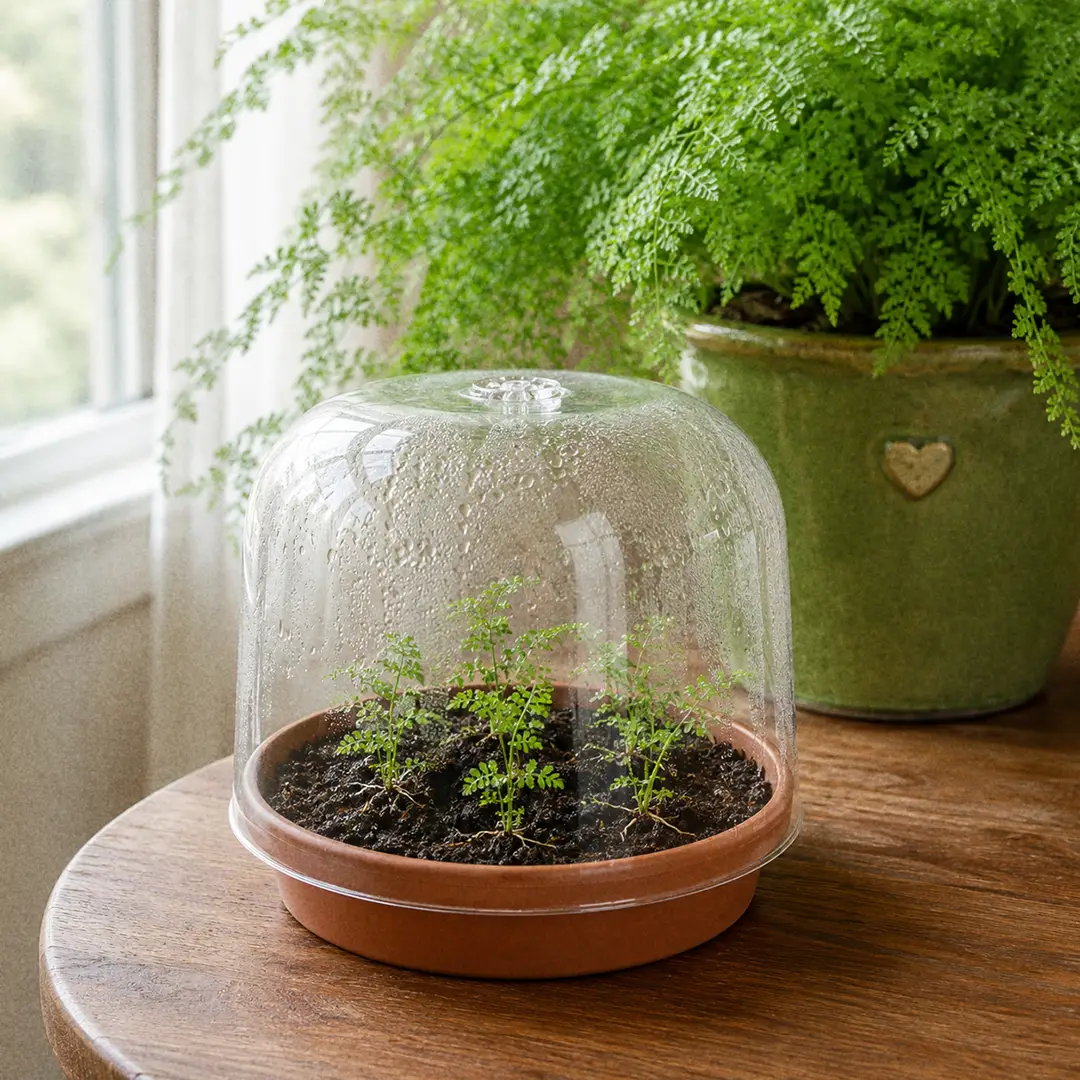
- Cover the pot with a clear plastic bag, a glass cloche, or the lid of a propagation tray to hold humidity at near 100%.
- Place it in bright indirect light at a steady 65-75°F. No direct sun.
- Keep the soil consistently moist. Vent the cover for a few minutes daily to prevent fungal growth.
- After three to six weeks the plantlet will start pushing new fronds. Gradually open the cover over a week to harden it off, then care for it like an adult plant.
Tips for Success
- Only harvest from a healthy, mature parent. A stressed plant will not give you viable babies.
- Multiple plantlets can share one pot; separate them later if needed.
- Spring and early summer are best. Winter-harvested plantlets root slowly and damp off more easily.
- Lazy method: lay a plantlet-bearing frond on damp soil in a nearby pot, weigh it down with a small stone, and the babies root themselves in place. Works almost every time.
🐛 Mother Fern Pests and Treatment
Mother Fern is not a pest magnet, but its dense lacy foliage gives insects plenty of hiding places. Inspect the underside of the fronds and the crown every couple of weeks. Catching trouble early is the difference between a wipe-down and a rescue.
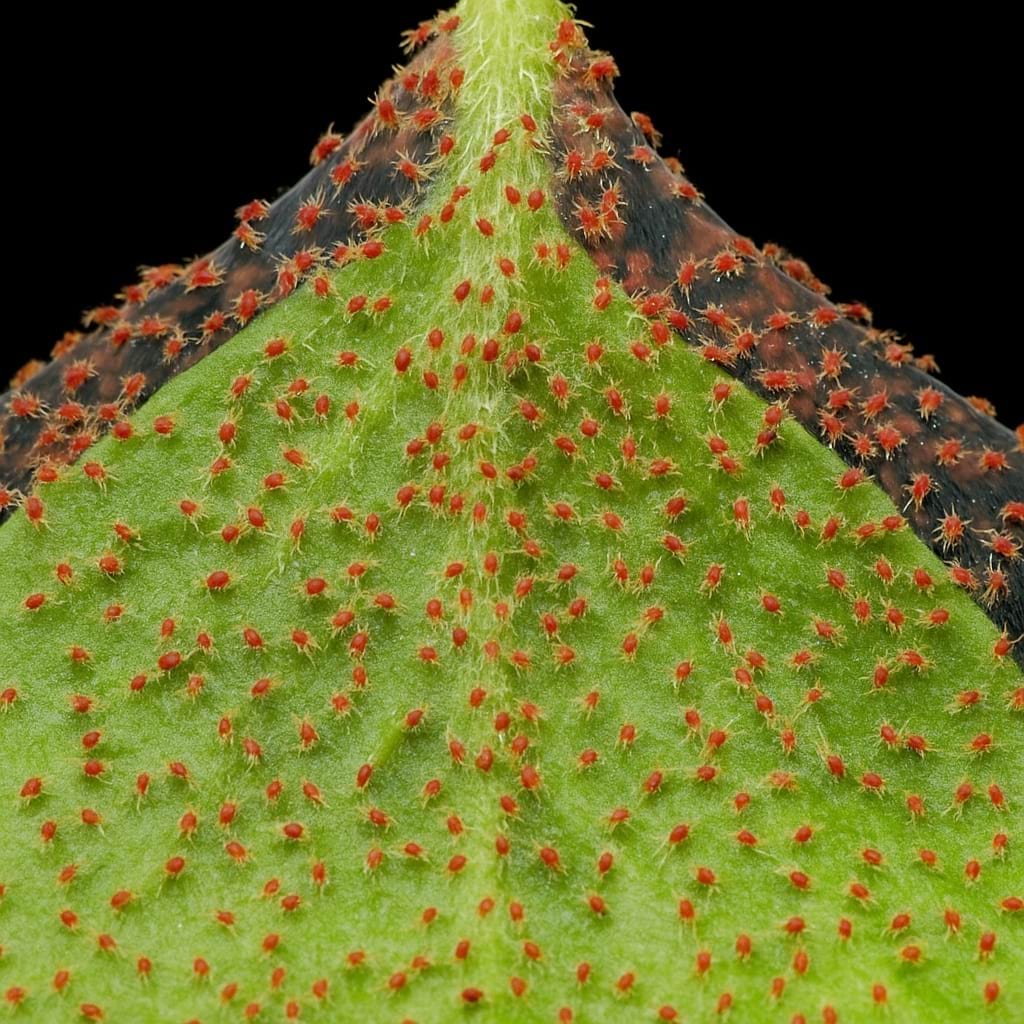
Spider mites are the most common problem in dry indoor air. Look for fine webbing in the crown and a stippled, dusty look across the fronds. Raise humidity and rinse the plant in the shower.
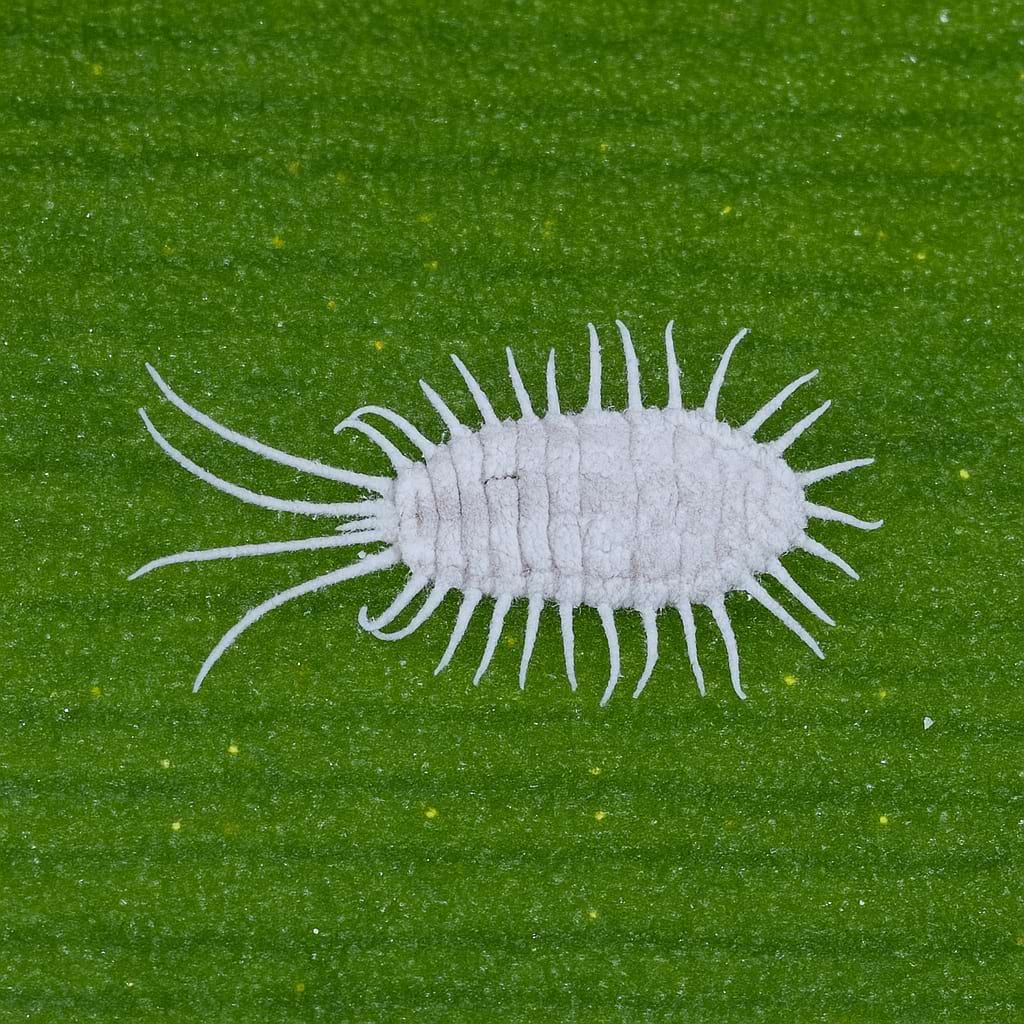
Mealybugs show up as small white cottony tufts where fronds meet the stem. Dab each one with a cotton swab dipped in 70% rubbing alcohol.
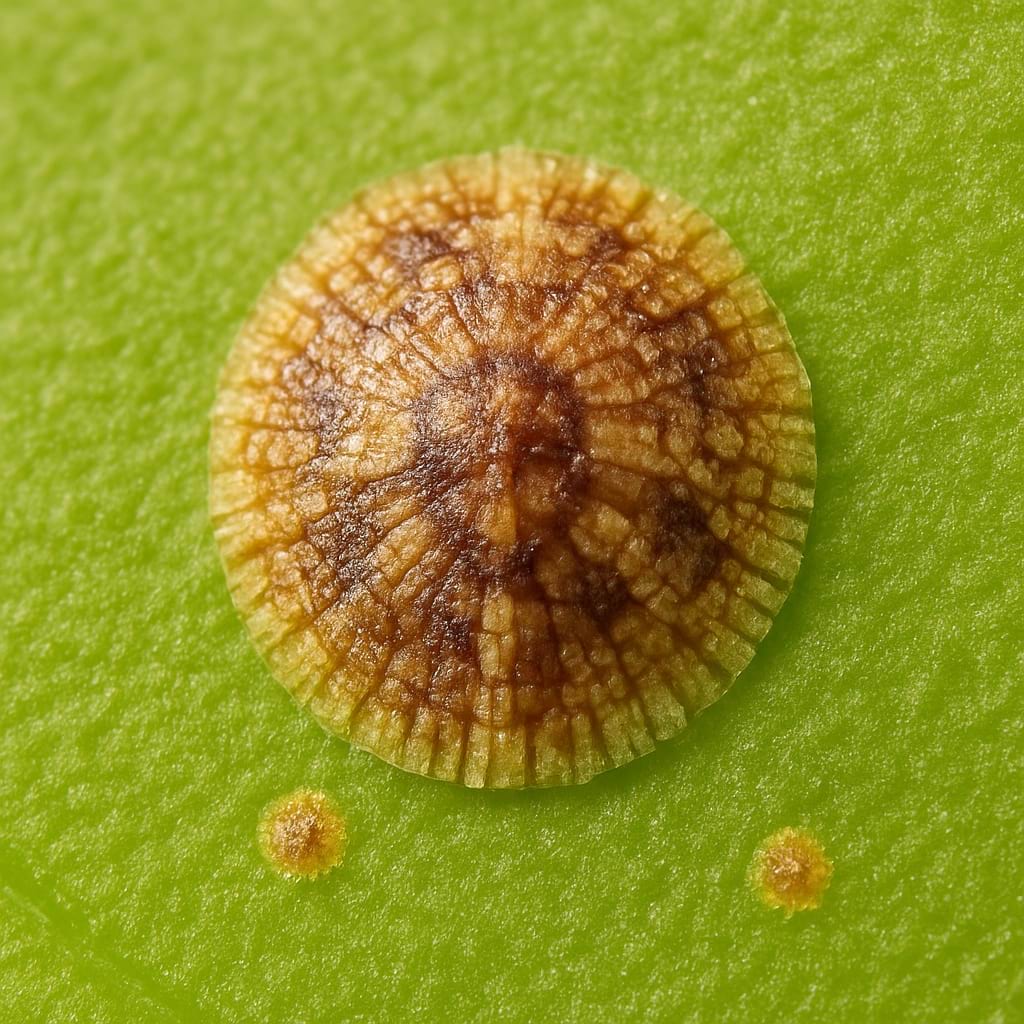
Scale insects appear as small brown bumps on stems and frond undersides. Scrape gently with a fingernail or soft brush, then wipe with insecticidal soap.
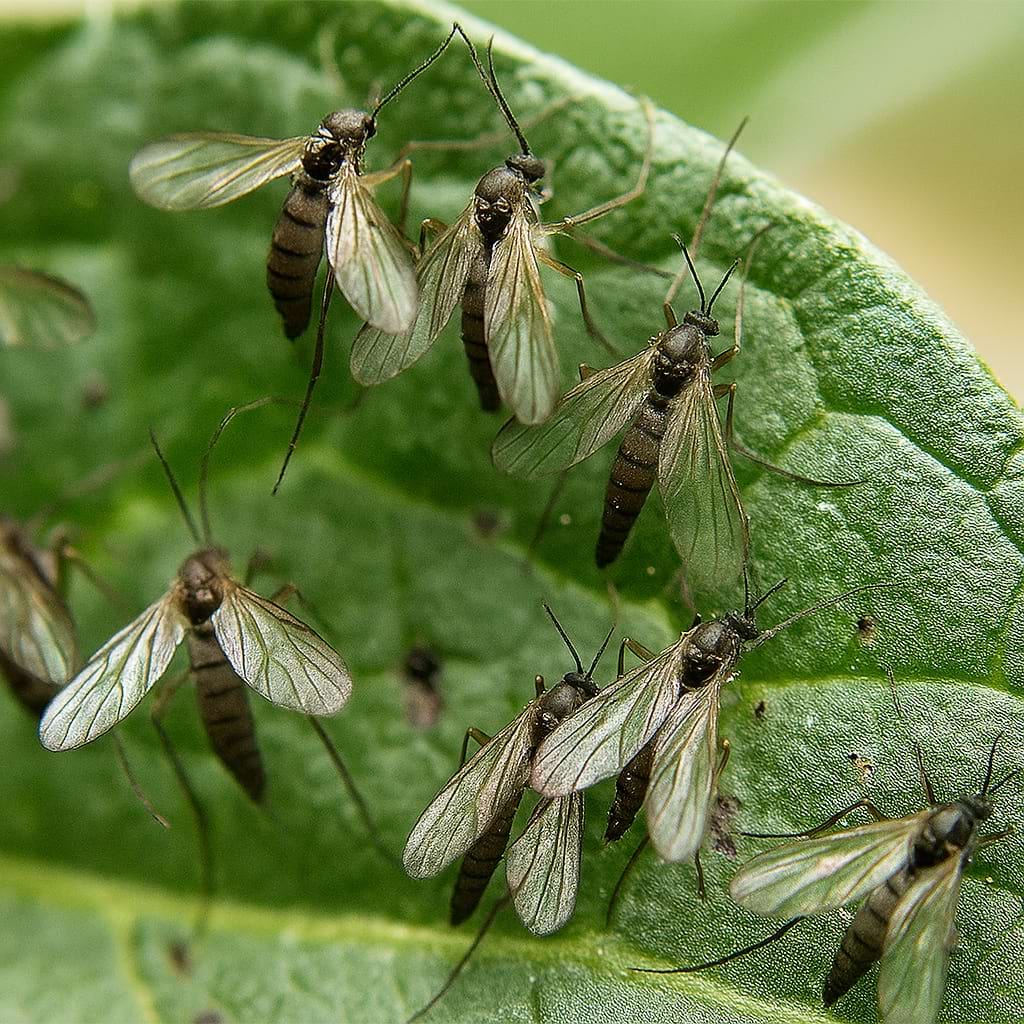
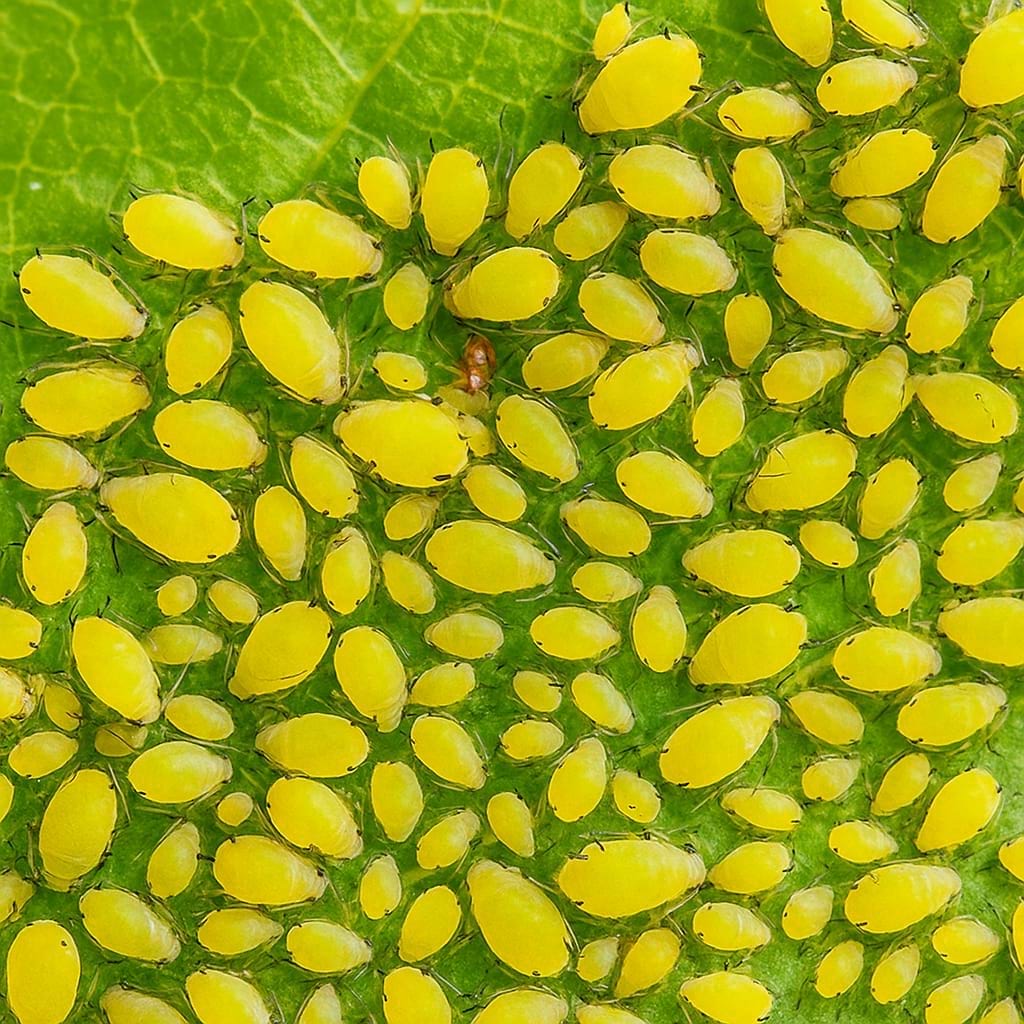
Aphids cluster on new fronds and rinse off easily before they multiply. Fungus gnats breed in constantly damp soil; let the top layer dry between waterings and top-dress with horticultural sand to break the cycle.
Avoid chemical sprays; the fine fronds burn easily. Weak insecticidal soap, tested on one frond first, is as harsh as you should go.
🩺 Common Mother Fern Problems
Most problems trace back to three things: dry air, irregular watering, or too much direct light. Read the fronds and you can usually pinpoint which one.
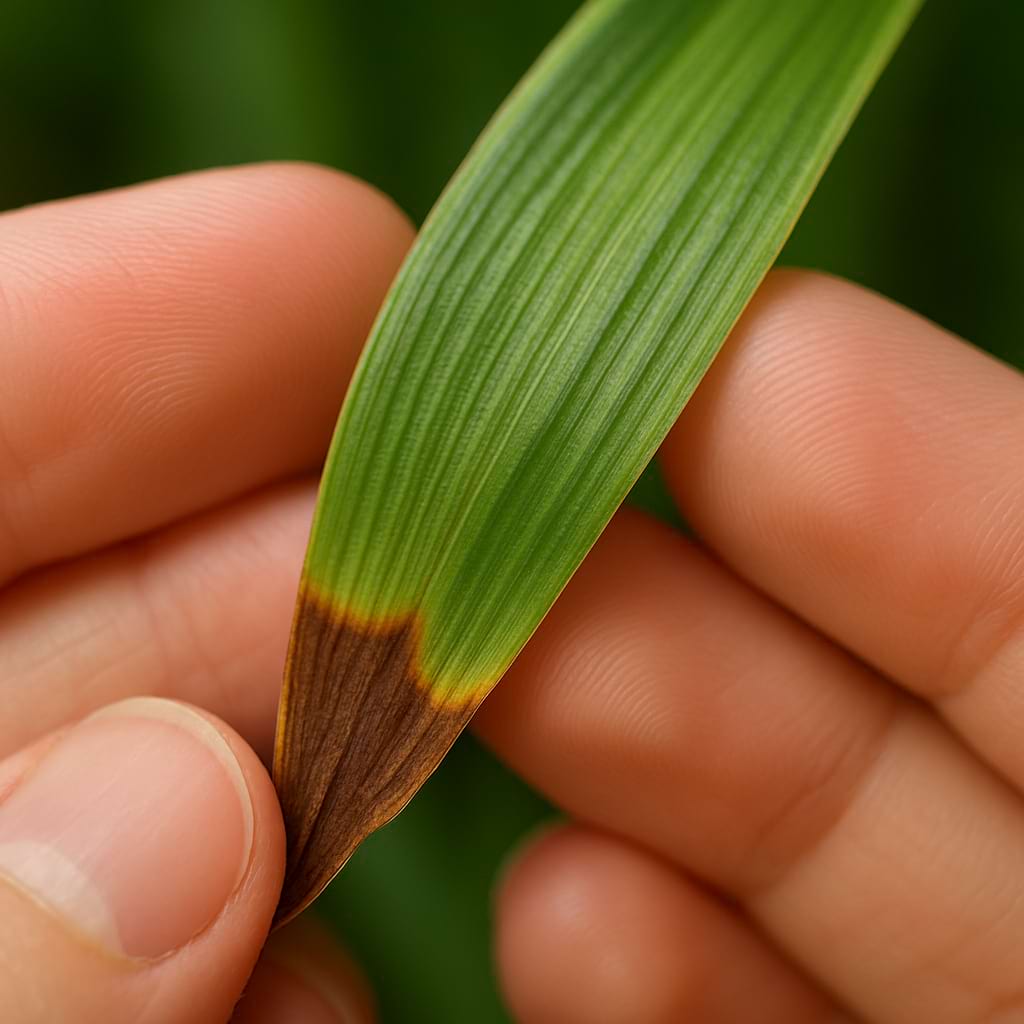
- Brown, crispy edges: almost always low humidity, sometimes hard tap water. Raise humidity and switch to filtered water if the problem persists.
- Yellowing fronds: usually overwatering or a sudden temperature swing. Check the soil with a finger before each watering and move the plant away from drafts or vents.
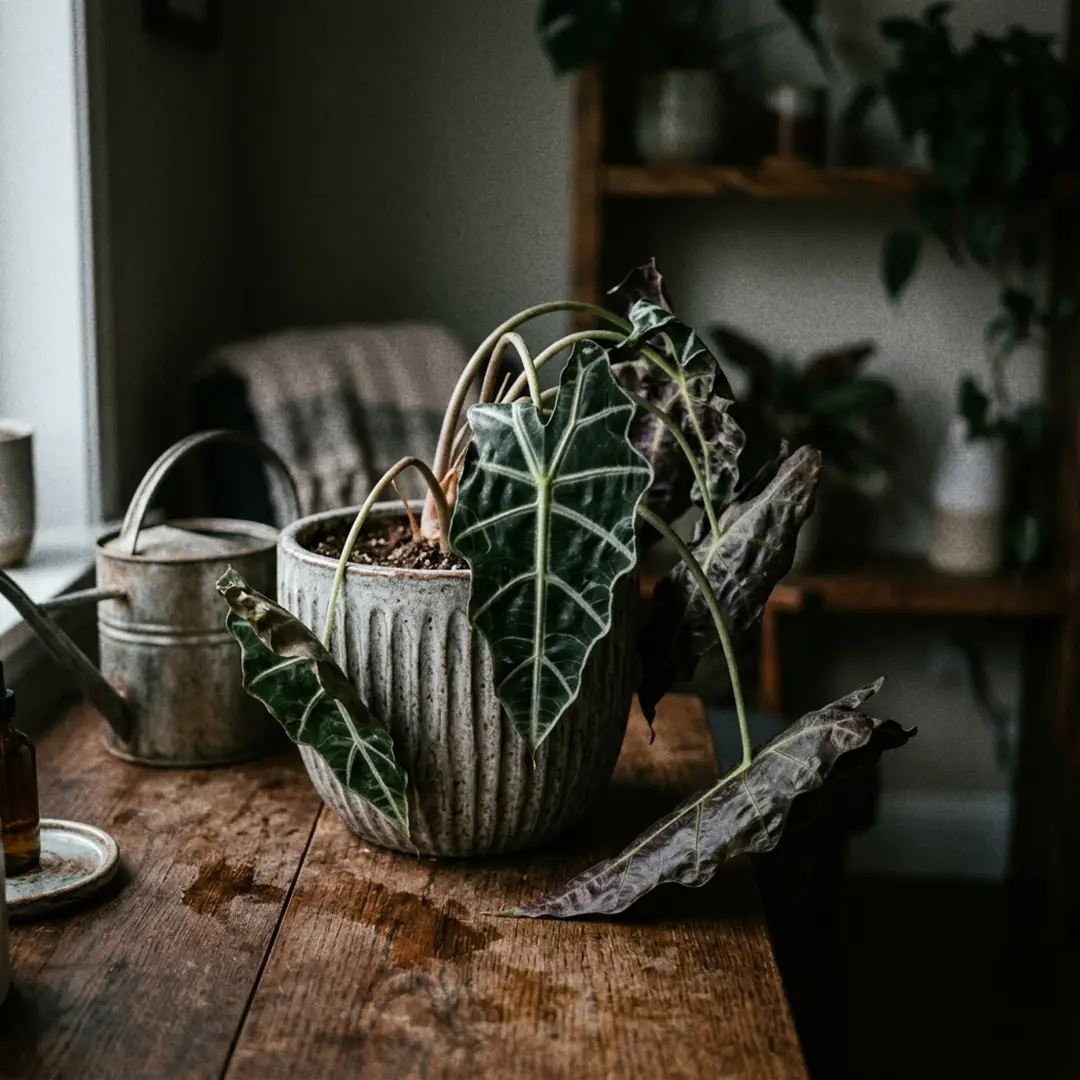
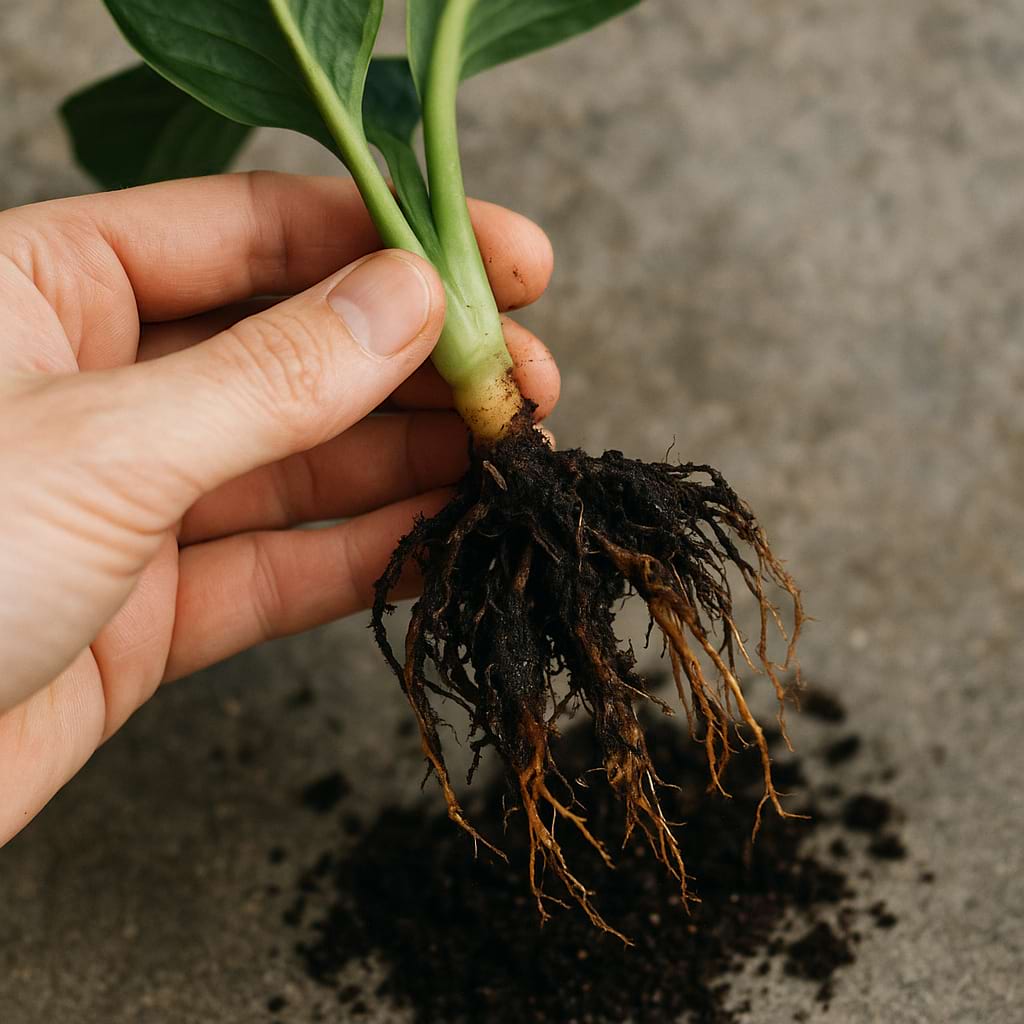
- Wilting and drooping: typically the soil dried out. A thorough soak usually revives the plant within a day. If wilting persists in damp soil, unpot and check for root rot.
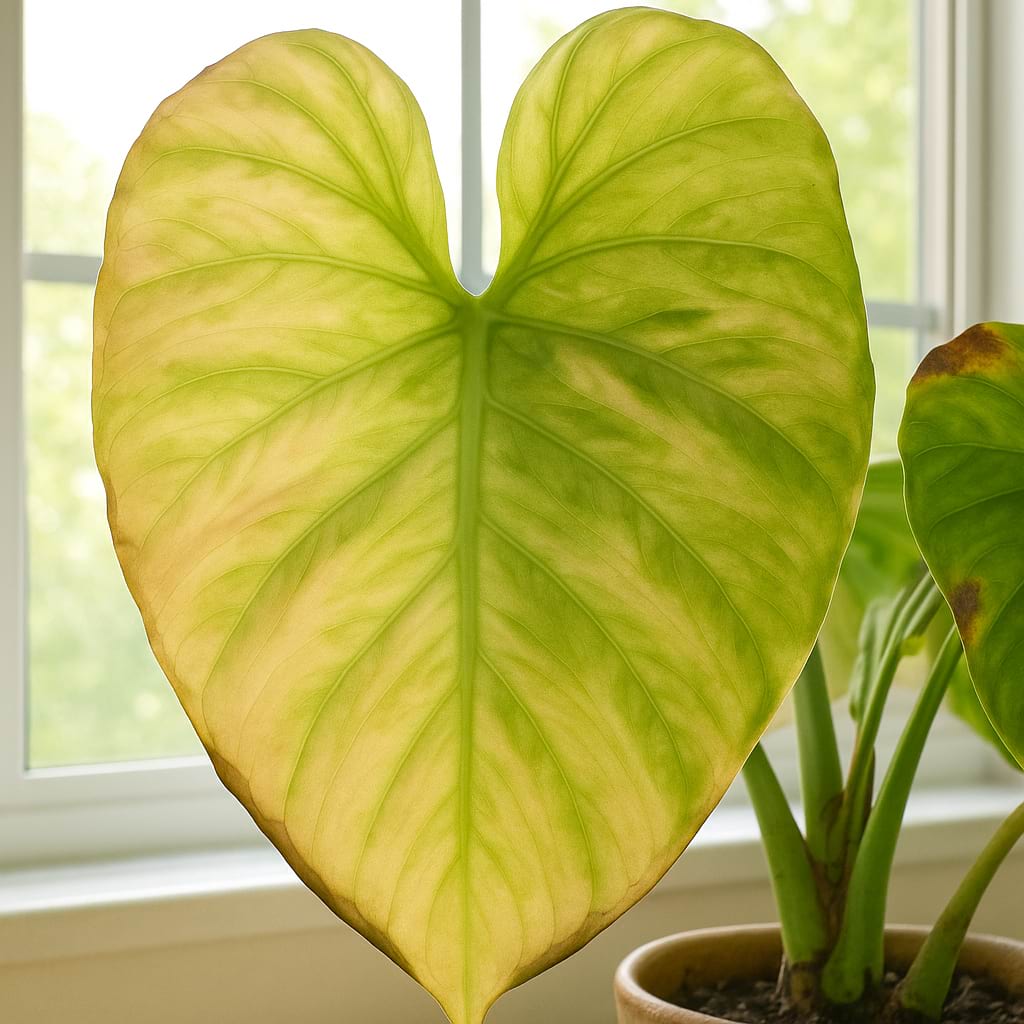
- Pale or faded fronds: too much direct light is bleaching the foliage. Move the plant back from the window or add a sheer curtain.
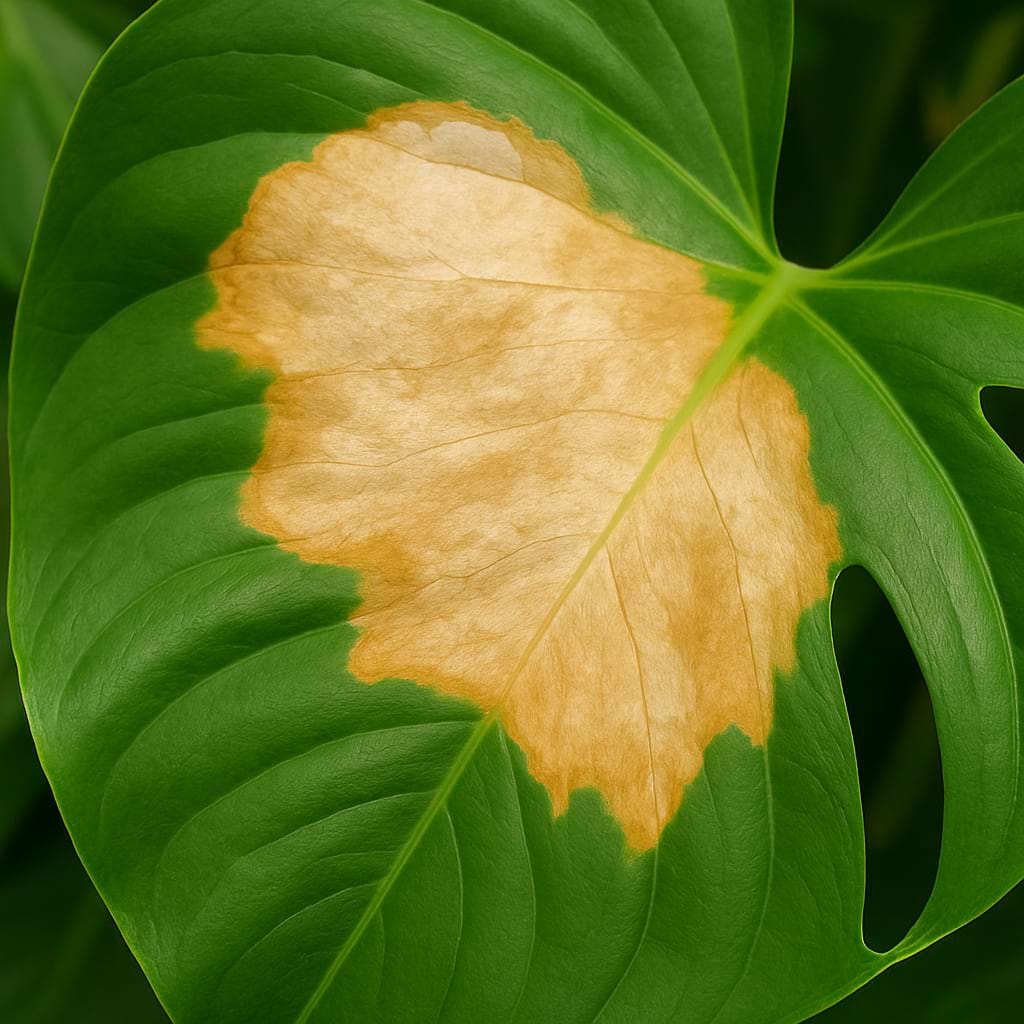
- Sunburn or leaf scorch: papery, dry patches from direct sun. Filter the light or relocate.
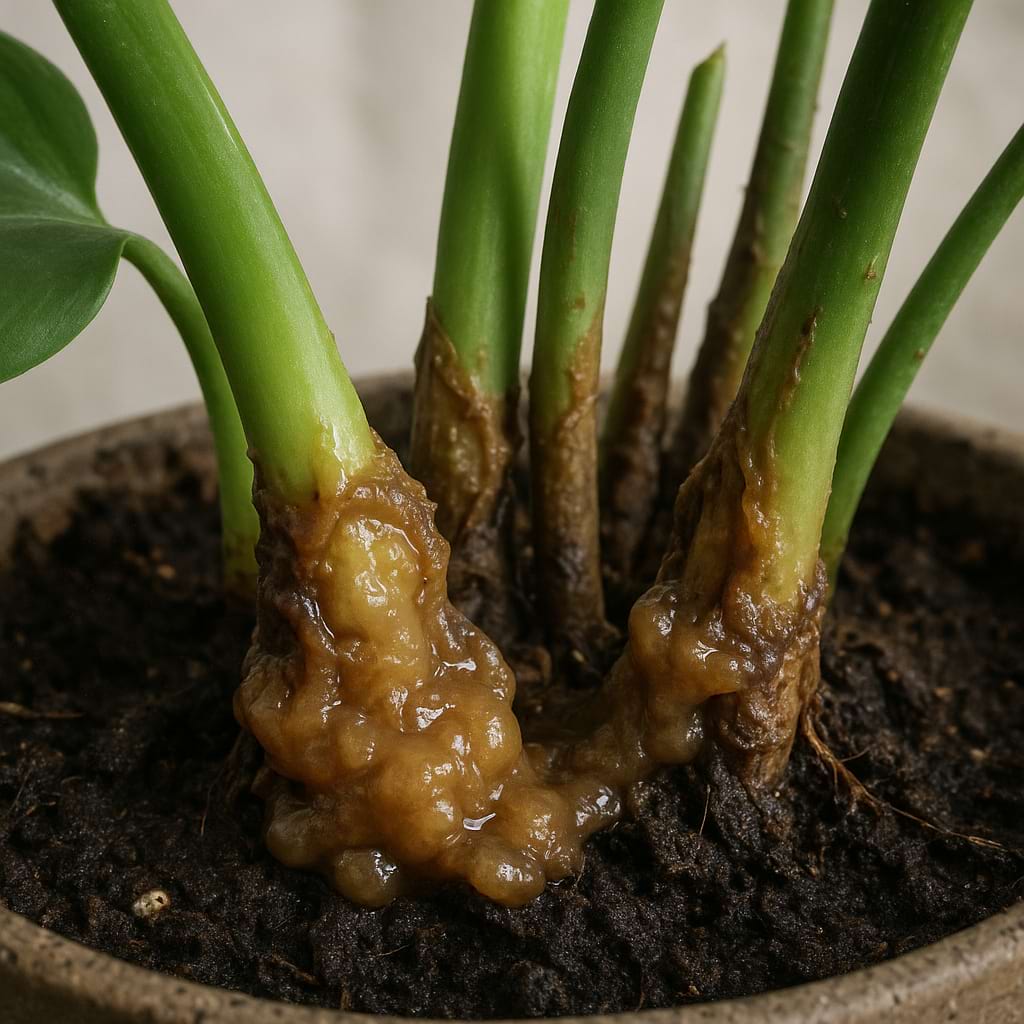
- Mushy crown or stems: crown rot from water sitting in the center of the plant. Always water the soil around the base, not into the crown.

🖼️ Mother Fern Display and Styling Ideas
This is a soft, flowing, mid-size fern, so it looks best in displays that let its arching fronds spill outward and downward. The lacy texture pops hardest against solid backgrounds and broad-leaved companions.
Solo Setups
A mature Mother Fern in a hanging basket near a north or east window is one of the prettiest sights in any home: the fronds arch up first, then cascade gracefully outward as they age, sometimes carrying visible plantlets on their tips. A plant stand in a shaded bathroom or a tall ceramic floor planter in a cool entryway also works beautifully.
Grouped Arrangements
The Mother Fern's fine, fluttery foliage is the perfect counterpoint to broad, solid leaves. Pair it with the spear-like, vase-shaped fronds of a Bird's Nest Fern, the dark rounded leaflets of a Button Fern, or the glossy paddles of a Peace Lily for high-contrast plant groupings. A trio of ferns on a low wooden tray, with the Mother Fern as the soft tall one in the back, makes a stunning shaded-window scene.
Where Not to Put It
Skip sunny south-facing windowsills, spots above radiators or air vents, and dry hallways with forced-air heating. The plant tolerates a lot but it will not survive desert-dry air with constant warm drafts.
🌟 Mother Fern Pro Care Tips
💧 Touch the soil before you water. This fern has no drought tolerance but it also rots easily. The finger test is more reliable than any schedule.
💦 Humidity is the easiest big upgrade. A small humidifier or a bathroom location fixes most fern problems in one move.
🍼 Feed gently. Half-strength fertilizer every four to six weeks is plenty. Overfeeding looks just like underfeeding.
🌱 Let the babies grow first. Wait until plantlets have real roots before harvesting. Tiny green bumps detached too early will not root.
✂️ Snip browned fronds at the base. Trimming brown tips off a frond leaves an ugly stub. Removing the whole frond keeps the plant looking fresh.
🌡️ Cool rooms are fine. Unlike most ferns, this one is happy in a cool sunroom or unheated bathroom. Just keep it above 40°F.
🚿 Use soft water when possible. Heavy chlorine and fluoride show up as brown tips. Rainwater, filtered, or distilled is gentler.
🐱 Pet-safe and child-safe. Asplenium bulbiferum is non-toxic, so put it where the family can enjoy it without worrying.
❓ Frequently Asked Questions
What are the little plants on the leaves of my Mother Fern?
Those are bulblets, also called plantlets, and they are the reason the plant is called the Mother Fern. Mature fronds grow tiny live offspring on their upper surface, each with its own miniature fronds and (eventually) roots. Once those bulblets have real roots, you can pinch them off and plant them in small pots to grow new ferns for free. This is the easiest propagation in the houseplant world.
Is Mother Fern safe for cats and dogs?
Yes. Asplenium bulbiferum is non-toxic to both cats and dogs, so it is a safe choice for households with curious pets. As with any plant, a lot of nibbling can cause mild stomach upset, but there is no toxic risk.
How often should I water my Mother Fern?
Most homes need to water two or three times a week in spring and summer and once a week in winter, but the exact frequency depends on light, temperature, and pot size. Touch the soil every two days and water as soon as the top half-inch starts to feel dry. Never let the whole pot dry out and never let it sit in standing water.
Why are the tips of my Mother Fern turning brown?
Brown frond tips almost always come down to low humidity. This fern wants 50% relative humidity or higher, and most heated indoor air sits below that. Add a humidifier, move the plant to a bathroom, or group it with other humidity-loving plants. If humidity is already high and the tips still brown, switch to filtered or rain water.
Can Mother Fern handle low light?
Yes, more than most ferns. It evolved on shaded forest floors and grows well in north-facing rooms and a few feet back from east-facing windows. True low light (a deep corner with no daylight) will slow growth, but moderate shade is fine and even preferred.
How big does a Mother Fern get indoors?
A mature plant tops out around 24-36 inches tall and roughly the same width, with arching fronds that can spread well past the edge of the pot. It is a moderate grower, so a young plant takes a year or two to reach full size. The arching habit makes mature specimens look much bigger than the pot suggests.
What is the difference between Mother Fern and Hen and Chicken Fern?
The names are often used interchangeably because both produce live plantlets on the fronds. Strictly, Mother Fern is Asplenium bulbiferum (the native New Zealand species), while many plants sold as Hen and Chicken Fern in the US and Europe are actually Asplenium x lucrosum, a hybrid. Care is essentially identical for both.
Can I leave the plantlets on the parent frond?
Yes. If you let nature handle propagation, the parent frond eventually arches down under the weight of the babies and the plantlets root themselves wherever they touch soil. This is how the plant spreads in the wild. Indoors, you will end up with a thicker, fuller pot over time, which looks beautiful.
Why is my Mother Fern dropping fronds from the bottom?
The occasional lower frond yellowing and dying back is normal as the plant matures. Sudden or widespread frond loss usually points to overwatering, low humidity, or a cold draft. Check the soil for sogginess and the room for vents before changing anything else.
ℹ️ Mother Fern Info
Care and Maintenance
🪴 Soil Type and pH: Peat-based houseplant mix with perlite and a small amount of bark.
💧 Humidity and Misting: Moderate to high, 50% or more.
✂️ Pruning: Snip browned or spent fronds at the base whenever you spot them.
🧼 Cleaning: Mist the fronds with soft water or rinse gently in the sink.
🌱 Repotting: Every 2 years in spring, or when roots fill the pot.
🔄 Repotting Frequency: Every 2 years
❄️ Seasonal Changes in Care: Cut back feeding and watering through winter; the plant rests but does not go dormant.
Growing Characteristics
💥 Growth Speed: Moderate
🔄 Life Cycle: Perennial
💥 Bloom Time: Does not flower; reproduces by spores and by live plantlets on the fronds.
🌡️ Hardiness Zones: 9-11 (outdoors)
🗺️ Native Area: New Zealand, eastern Australia, Norfolk Island, parts of India
🚘 Hibernation: No (growth slows in winter)
Propagation and Health
📍 Suitable Locations: Bathrooms, kitchens, shaded living rooms, north-facing windows, cool sunrooms, terrariums when young
🪴 Propagation Methods: Very easy by detaching the small plantlets that form on mature fronds.
🐛 Common Pests: Spider Mites, Mealybugs, Scale Insects, Fungus Gnats, Aphids
🦠 Possible Diseases: Root rot, leaf spot, crown rot
Plant Details
🌿 Plant Type: Fern
🍃 Foliage Type: Evergreen
🎨 Color of Leaves: Fresh light to medium green
🌸 Flower Color: N/A
🌼 Blooming: Does not bloom
🍽️ Edibility: Young fronds (koru) are traditionally eaten in New Zealand; treat as not edible at home
📏 Mature Size: 24-36 inches indoors
Additional Info
🌻 General Benefits: Pet-safe, cool-tolerant, easy propagation, soft texture
💊 Medical Properties: None for home use
🧿 Feng Shui: Soft, grounding energy ideal for bedrooms and quiet corners
⭐ Zodiac Sign Compatibility: Cancer, Pisces
🌈 Symbolism or Folklore: Motherhood, family, generosity, new growth
📝 Interesting Facts: The Mother Fern earns its name from the way mature fronds sprout tiny live plantlets (bulblets) on their upper surface. When the parent frond eventually bends down to the soil, the plantlets root in place and grow into new ferns. In Maori tradition the plant is known as mouku or pikopiko, and the curled young fronds (koru) are a traditional food.
Buying and Usage
🛒 What to Look for When Buying: Pick a plant with fresh, bright green fronds and no browned tips. If you can find one with visible plantlets on the older fronds, that is a bonus: free babies on day one. Lift the pot and check that water drains freely.
🪴 Other Uses: Excellent in shaded patio containers in mild climates, large terrariums, and as a centerpiece in a fern-only display.
Decoration and Styling
🖼️ Display Ideas: Looks beautiful in a hanging basket where the arching fronds spill softly downward, on a plant stand in a bathroom, or grouped with other ferns in a shaded corner.
🧵 Styling Tips: Its fine, lacy texture is the perfect counterpoint to broad, glossy foliage. Pair it with a Bird's Nest Fern, a Peace Lily, or a Heart-Leaf Philodendron for striking textural contrast.
🪴 See also 🪴
Complete Guide to East Indian Holly Fern Care and Growth
Complete Guide to Silver Lace Fern Care and Growth
Complete Guide to Silver Lady Fern Care and Growth
Complete Guide to Squirrel's Foot Fern Care and Growth
Complete Guide to Tassel Fern Care and Growth
Complete Guide to Cinnamon Fern Care and Growth
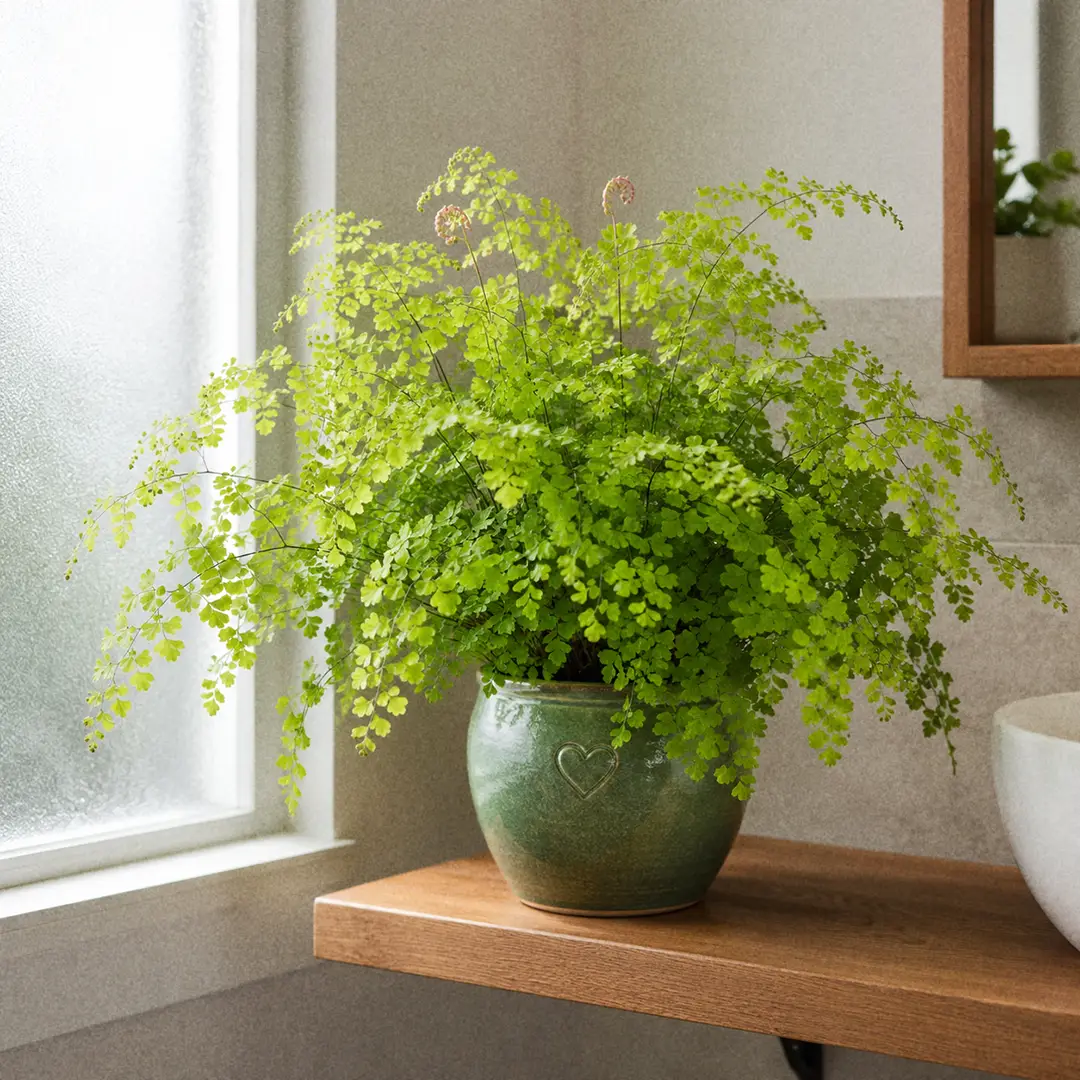
Complete Guide to Delta Maidenhair Fern Care and Growth
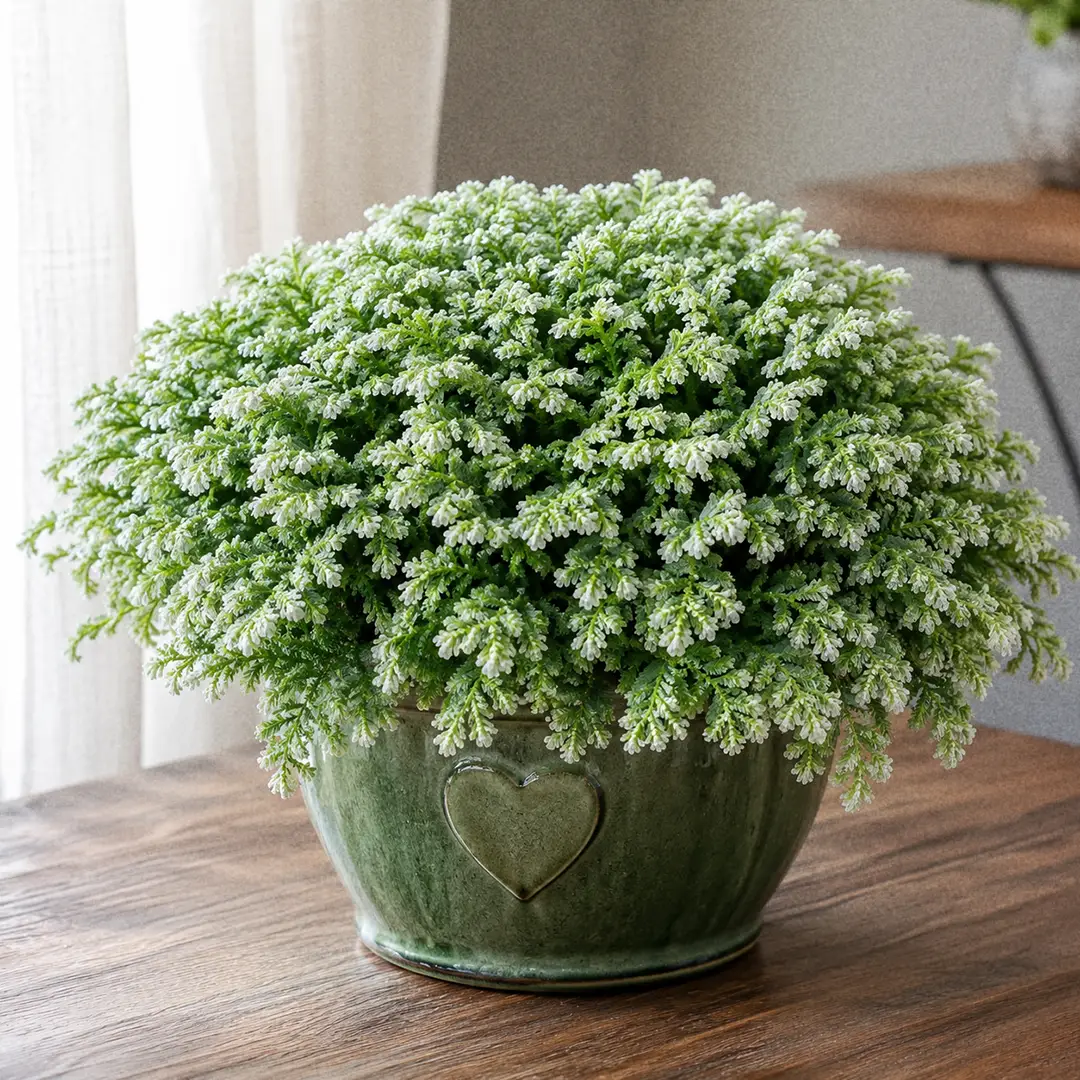
Complete Guide to Frosty Fern Care and Growth
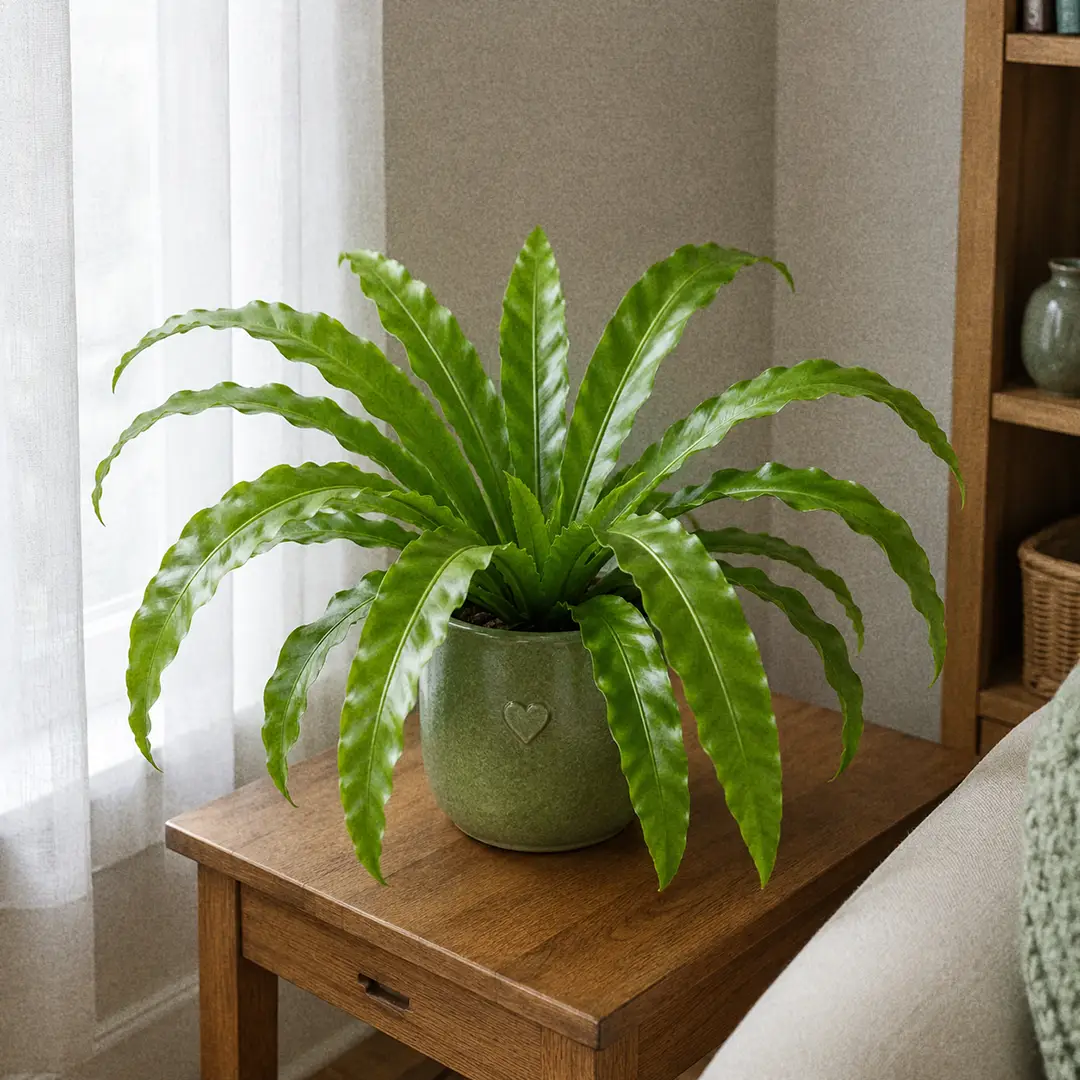
Complete Guide to Hart's Tongue Fern Care and Growth
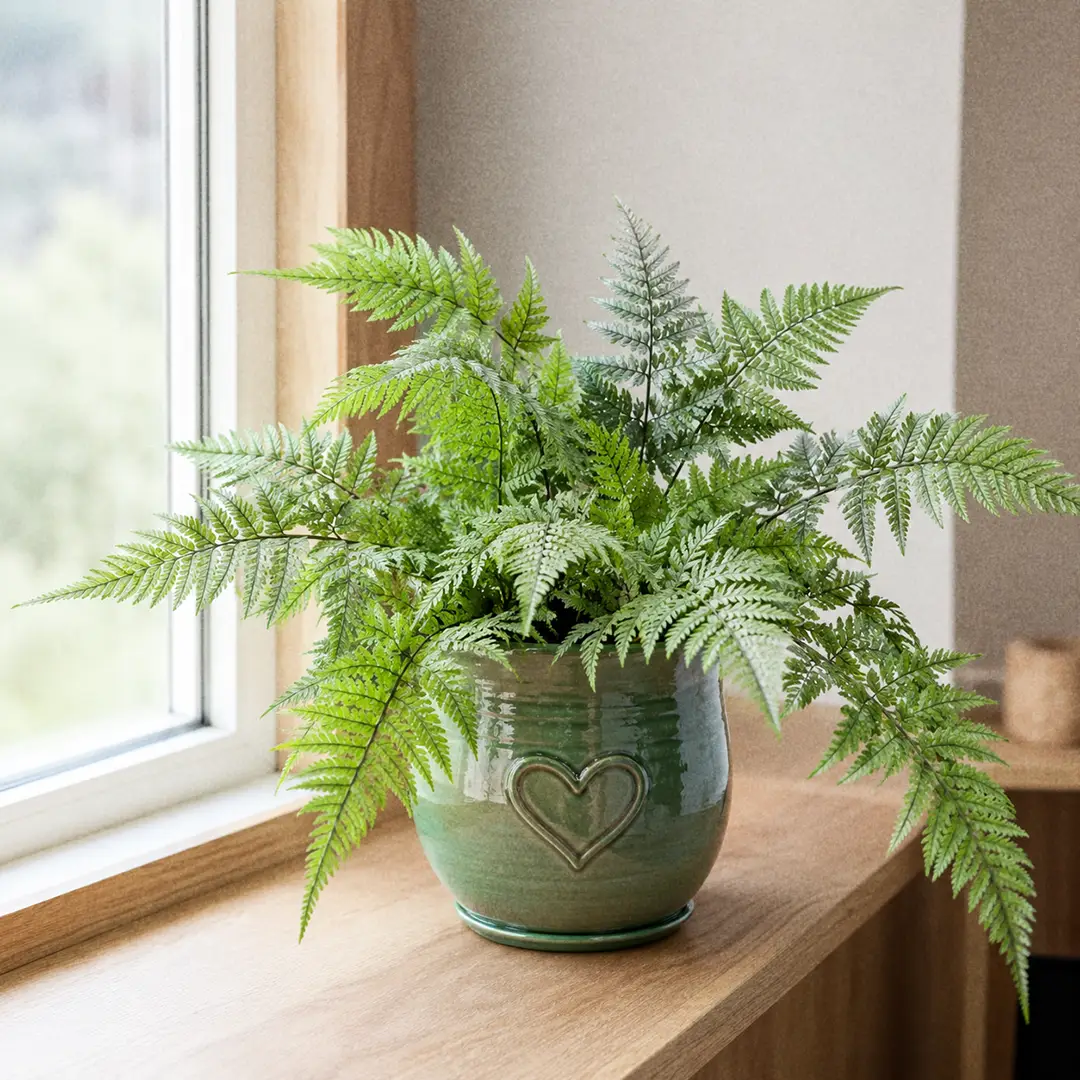
Complete Guide to Korean Rock Fern Care and Growth

Houseplant101 Forum
Questions & Comments
Ask a question, share your plant experience, or help other plant owners.
Comments are temporarily unavailable.
Open the Houseplant101 ForumNo comments yet
Be the first to ask a question or share your experience about this page.
Log in or create an account
Comments use your Houseplant101 Forum account, but you can stay on this page.
Create a new account