
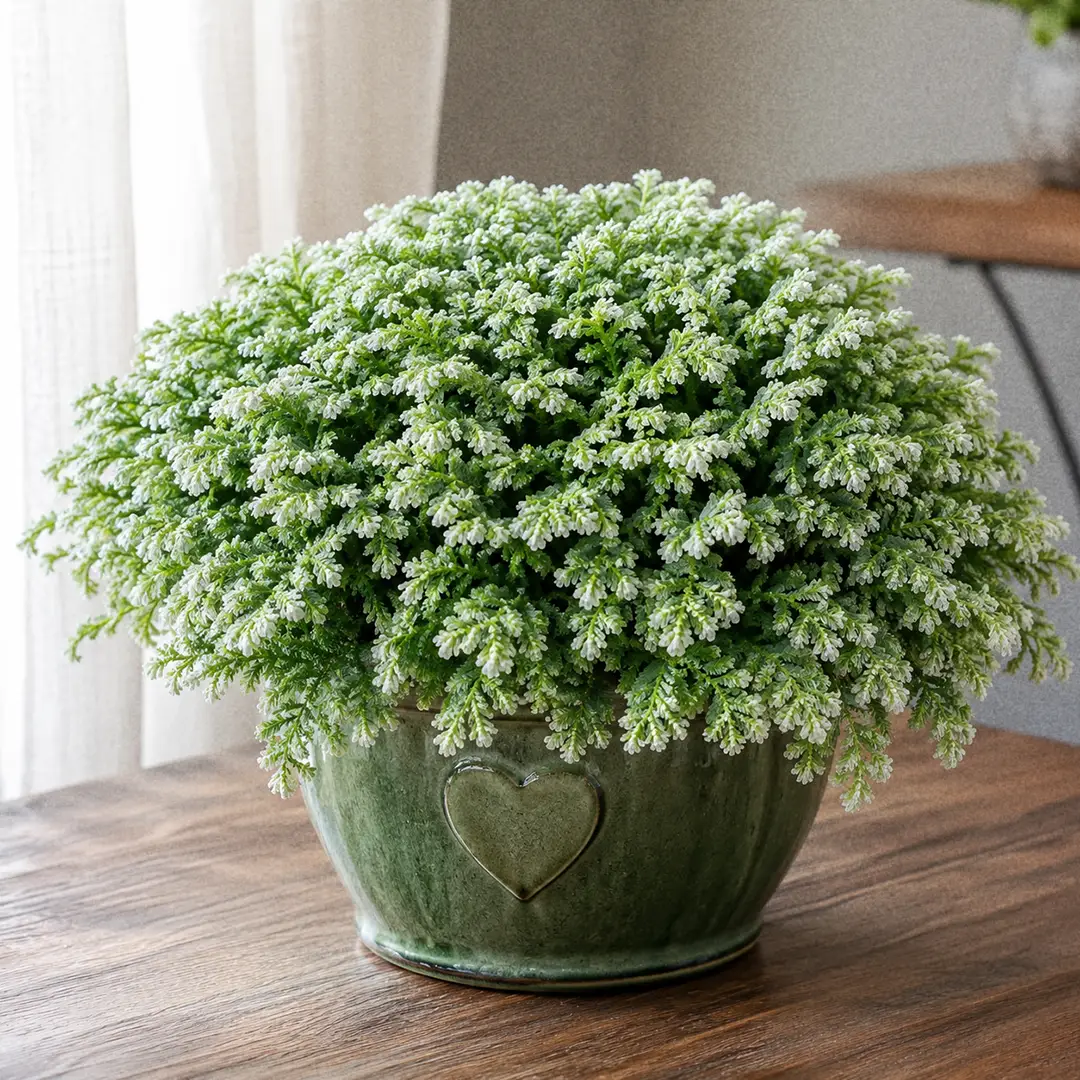
Frosty Fern
Selaginella kraussiana 'Frosty'
Frosty Spikemoss, Krauss's Clubmoss, Frosty Clubmoss, Snow Fern, Variegated Spikemoss


The Frosty Fern (Selaginella kraussiana 'Frosty') is a low, feathery spikemoss tipped with silver-white new growth that looks dusted in snow, which is why it turns up everywhere at Christmas. It is not hard to please, just impossible to fool: give it constant moisture and high humidity and it thrives, let the air dry out and it browns in days.
📝 Frosty Fern Care Notes
🌿 Care Instructions
⚠️ Common Pests
📊 Growth Information
🪴 In This Guide 🪴

📺 Frosty Fern Video Guide

☀️ Frosty Fern Light Requirements (Bright Indirect to Low)
Frosty Fern grew up on shaded forest floors and damp rock faces, tucked under taller plants where sun never lands directly. That woodland history tells you everything about its light needs indoors. It wants brightness without a single beam of direct sun.

The Sweet Spot
Aim for bright, indirect light. An east-facing window that gets gentle morning light, or a spot a few feet back from a brighter south or west window behind a sheer curtain, suits it perfectly. It also handles genuinely low light better than most plants, so a north window or a dim bathroom corner can work. If your space is dark, a small grow light on a timer keeps the foliage full and the frosted tips coming. For more on reading light in your home, our light guide walks through it.
Too Little Light
In deep shade the plant survives but slows almost to a stop. New growth thins out, the stems stretch and go leggy reaching for light, and you see far fewer of those bright white tips, since the frosting is really just fresh growth. If your Frosty Fern looks sparse and dull rather than dense and springy, nudge it somewhere brighter.
Too Much Light
Direct sun is the fast way to ruin this plant. Even an hour of afternoon sun through glass will scorch the fine foliage, bleaching it pale and then crisping it brown at the tips. Combined with the drop in humidity that sunny spots bring, direct light can flatten a healthy plant in a day or two. If the foliage looks faded or washed out, move it away from the window before you do anything else.
💧 Frosty Fern Watering Guide (Keep It Constantly Moist)
Water is where most Frosty Ferns live or die. This is not a plant you let dry out between drinks. Its shallow roots want soil that stays evenly damp all the time, closer to a wrung-out sponge than anything you would call "dry on top."
Watering Frequency
Check the soil daily at first until you learn your plant's rhythm. Water the moment the surface starts to feel even slightly less than damp, which in an open pot indoors can mean every two or three days. In a closed terrarium, the enclosed moisture means you might water only every week or two, so there you go by what the soil actually looks like rather than a schedule. Growth slows a little in winter, but the soil should never dry out, whatever the season.
How to Water
Water gently at the base until it runs from the drainage holes, then let the excess drain fully so the roots are never sitting in a puddle. Bottom watering works beautifully here, since it wets the soil evenly without battering the delicate fronds. Use room-temperature rainwater, distilled water, or filtered water if you can. Spikemoss is sensitive to the chlorine, fluoride, and mineral salts in some tap water, which show up over time as browning tips.
Signs of Trouble
Dry, crispy, brown foliage almost always means the plant went too dry, or the air did, or both. Once a section fully crisps it rarely greens back up, so you trim it and fix the conditions. On the other side, foliage that wilts and goes mushy while the soil sits soggy points to root rot from waterlogged soil with no air. The target sits in the narrow band between those two: always moist, never swampy. Our full watering guide covers the balance in more depth.
🪴 Best Soil for Frosty Fern
The right soil holds water like a sponge but still lets air reach the roots. Get this wrong in either direction, too dense or too free-draining, and you will fight the watering forever.
What the Soil Needs
Frosty Fern wants a light, humus-rich, moisture-retentive mix that stays damp without turning to mud. Slightly acidic is ideal, around pH 5.5 to 6.5, which most peat and coir-based mixes land in naturally. The soil should feel airy in your hand, not heavy and packed, so the fine roots can breathe even while they stay wet.
DIY Soil Mix
An easy blend is roughly two parts coco coir or peat moss for moisture, one part quality potting mix for body, and one part perlite for air. Some growers add a handful of fine bark or a little sphagnum moss to hold even more water. In a closed terrarium, a drainage layer of gravel or LECA topped with a thin charcoal layer under the soil helps keep the root zone from going stagnant.
Pre-Made Options
If mixing your own is a hassle, a bagged mix made for African violets or ferns works well straight from the bag, since both are formulated to stay moist and slightly acidic. You can lighten a standard mix by stirring in extra coir and perlite. Avoid heavy, water-logging garden soil and avoid gritty cactus or succulent mixes, which drain far too fast for this plant.
🍼 Fertilizing Frosty Fern
Frosty Fern is a modest eater. It builds its slow, low mound on very little, and heavy feeding does more harm than good to its fine root system.
When and How Often
Feed only during active growth in spring and summer, and skip it entirely through fall and winter when the plant coasts. Once a month is plenty. If your plant lives in fresh, rich soil, you can often go a whole season with no feeding at all and it will not miss it.
What to Use
Reach for a balanced liquid houseplant fertilizer and dilute it hard, to a quarter or at most half the strength on the label. A gentle, well-diluted feed suits its delicate roots far better than anything full-strength. Our fertilizing basics explain how to read an NPK ratio if you want the background.
Over-Fertilizing Signs
Too much feed shows up as scorched brown tips, a crusty white salt film on the soil surface, or sudden wilting. If you spot any of these, flush the pot thoroughly with plenty of clean water to rinse the excess salts out, then hold off feeding for a couple of months. When in doubt with this plant, feed less.
🌡️ Frosty Fern Temperature Range
This is a plant of mild, stable, forest-floor temperatures. It has no interest in extremes and reacts badly to sudden swings in either direction.
Ideal Range
Keep Frosty Fern between about 60 and 75°F (15 to 24°C), which happens to match a comfortable home. It is not frost-hardy as a houseplant, so protect it from anything below 50°F (10°C). Outdoors in mild, damp, shaded gardens it can survive in USDA zones 6 to 9, sometimes dying back in a cold snap and pushing out fresh growth when it warms.
Drafts and Heat Sources
The real danger indoors is dry, moving air. Keep the plant away from heating vents, radiators, space heaters, and the top of the fridge, all of which bake the humidity right out of its foliage. Cold drafts from a frequently opened door or a leaky winter window stress it just as much. A stable, draft-free spot does more for this plant than any fancy feeding routine.
💦 Frosty Fern Humidity Requirements
Here is the whole ballgame. If you remember one thing about Frosty Fern, make it this: the plant lives or dies on humidity, and ordinary room air is nowhere near enough.
Ideal Humidity
Frosty Fern wants 60 to 70 percent humidity or higher, the kind of moist air you feel in a greenhouse or a rainforest. Most homes sit around 30 to 40 percent, and in winter with the heat running it can drop below 20. That gap is exactly why so many of these plants brown out within a week of coming home. The fine, scale-like foliage has no way to hold moisture against dry air, so it simply dries and dies back.
Easy Humidity Boosters
The single most reliable fix is to grow it enclosed. A closed terrarium, a covered glass bowl, or even a cloche over the pot traps moisture and holds humidity high with almost no effort from you. If you want it out in the open, run a humidifier right beside it, cluster it with other humidity-loving plants, and stand the pot on a wide pebble tray filled with water. A steamy bathroom with indirect light is another honest option. For the winter stretch, our guide to boosting humidity in winter has more tactics.
Why Misting Is Not Enough
Plenty of new owners try to save a Frosty Fern with a spray bottle, and it almost never works. Misting lifts humidity for a few minutes, then the air dries out again long before the next misting. To keep a spikemoss happy you need humidity that stays high around the clock, which only enclosure or a running humidifier really delivers. Treat misting as a small extra, not the plan.
🌸 Frosty Fern Spores and Reproduction
Do not wait for flowers on this one, because they never come. Frosty Fern is a spikemoss, an ancient fern ally, and it reproduces the old-fashioned way its lineage has used for hundreds of millions of years.
Why It Never Flowers
Selaginella predates flowering plants entirely. Instead of blooms and seeds, it makes spores, so there is no bud, no petal, and no fragrance to look forward to. The whole appeal of the plant is its foliage, especially those frosted tips, not any kind of flower show.
How Spores Work
Spores form inside tiny cone-like structures called strobili at the tips of the stems, usually too small to notice without looking closely. When they ripen, the plant releases them, and in a suitably wet spot they can germinate into a new generation. It is a fascinating process, but a slow and finicky one that specialists handle in controlled conditions.
What This Means for You
For home growing, ignore spores completely. Every practical way to make more Frosty Fern is vegetative, through division or cuttings, which are faster, easier, and far more reliable. The Propagation section below covers exactly how.
🏷️ Frosty Fern Types and Varieties
"Frosty Fern" is a nickname for one particular cultivar, but it helps to know its close relatives so you know what you are actually buying and what pairs well with it.
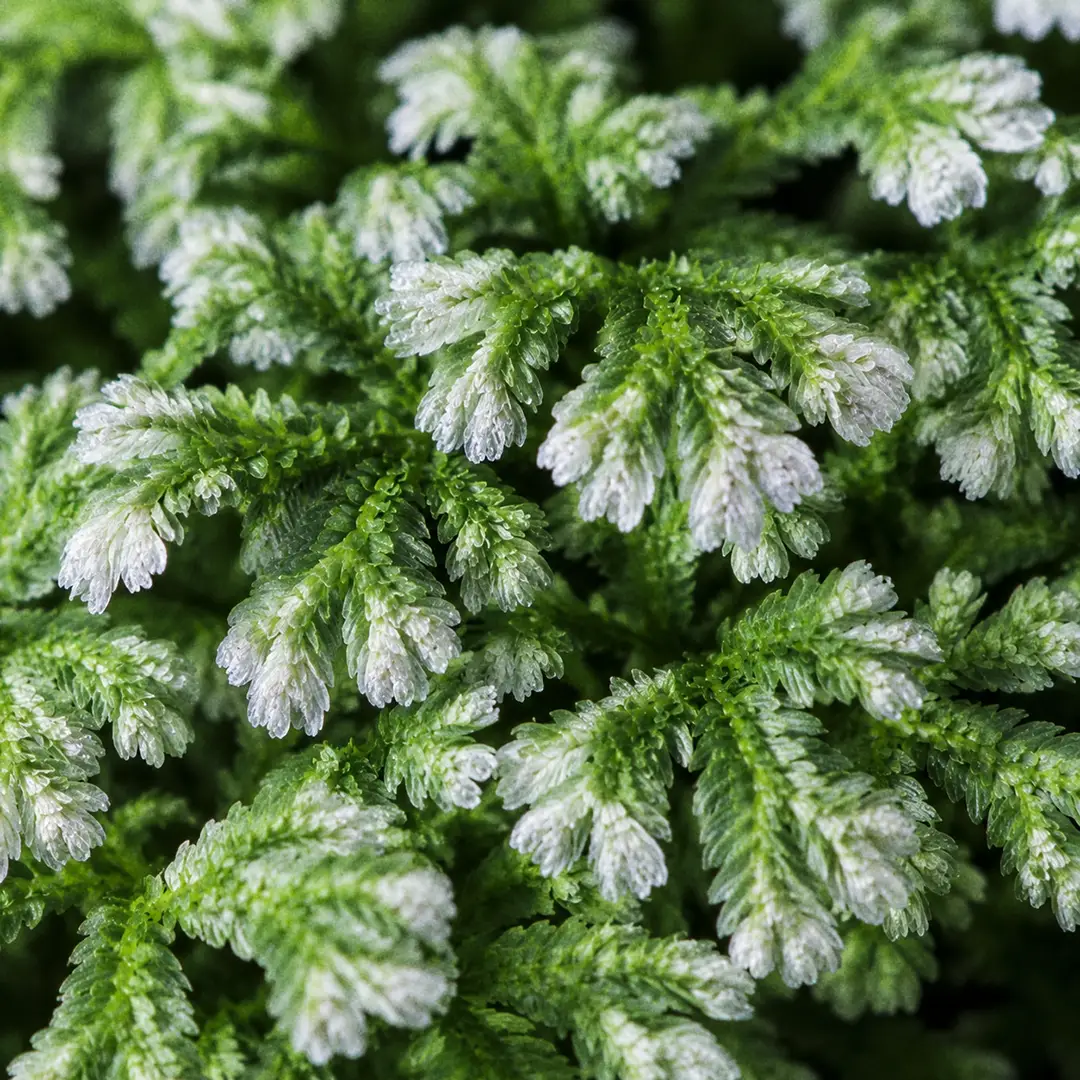
This is the plant itself: Krauss's spikemoss in its frosted form, bright green with silver-white to cream tips on the newest growth. The frosting is not variegation baked into every leaf, it is fresh growth, so the "snow" is heaviest when the plant is growing well in cool, bright conditions. Grow it hard and dry and the white tips are the first thing you lose.
'Aurea' and 'Brownii'
The same species gives us a couple of other popular forms. 'Aurea', the golden clubmoss, glows a soft chartreuse-yellow instead of frosted white and brings the same low, spreading habit. 'Brownii' grows in tight little emerald cushions, almost like a green pincushion, and is a favorite for miniature terrarium scenes. All three share the identical care needs, so you can mix them in one humid display without any conflict.
Frosty Fern vs Peacock Fern
The most common mix-up is with the Peacock Fern, Selaginella uncinata, its shimmering blue-green cousin. Both are spikemosses with the same thirst for humidity and shade, but Peacock Fern trades white frosting for an iridescent metallic-blue sheen. If you love the fine texture of Frosty Fern but want a different color in the same terrarium, that is the plant to reach for.
🪴 Potting and Repotting Frosty Fern
Repotting is low-stakes here, since Frosty Fern is a slow, shallow grower with a modest root system. The main goal is a container that helps you hold moisture rather than fight it.
When to Repot
Refresh the plant every one to two years, or whenever roots start crowding the pot or the soil breaks down and stops holding water evenly. Spring, as growth picks up, is the gentlest time. Because the roots are fine and delicate, handle the root ball loosely and avoid teasing it apart more than you need to.
Choosing a Pot
Pick a shallow, wide pot rather than a deep one, since the roots spread sideways more than down. Plastic or glazed ceramic holds moisture far better than porous terracotta, which wicks water away and dries this plant out too fast. Whatever you choose needs drainage holes, unless it is a sealed terrarium built with a proper drainage layer underneath the soil.
Step-by-Step Repotting
Water the plant the day before so the root ball holds together. Ease it out, settle it into fresh moist mix at the same depth it sat before, and firm the soil just lightly around it. Water it in, then, and this matters more than usual, put it straight back into high humidity, whether that is a terrarium, a cloche, or beside the humidifier, so it never feels a dry moment during recovery.
✂️ Pruning Frosty Fern
Pruning a Frosty Fern is mostly light housekeeping. There is no hard cutting back, just tidying and gentle shaping as it creeps.
When to Prune
Trim whenever you spot browned, dried, or damaged sections, any time of year. Removing the tired bits keeps the plant looking fresh and stops dead material from sitting damp against healthy growth, which can invite fungal problems in a closed setup.
How to Prune
Use clean, sharp scissors or small snips and cut carefully, since the foliage is dense and layered and it is easy to nick healthy stems by accident. If the plant creeps beyond its pot or terrarium boundary, simply trim the wandering stems back to shape. Do not throw those trimmings away, because they are your free propagation material.
🌱 How to Propagate Frosty Fern
Making more Frosty Fern is genuinely easy, which is a relief given how easily the plant sulks over humidity. Both methods below work best in spring and summer, and both need one thing above all: high humidity while the new plants root.
Best Method: Division
Division is the simplest and most reliable route. Because the plant grows as a spreading mat of rooted stems, you can lift the whole thing and gently pull it into two or three clumps, each with its own roots and foliage. Pot each division into fresh moist mix, water it in, and keep it enclosed. You essentially get instant new plants with none of the waiting.
Step-by-Step Stem Cuttings
For cuttings, snip healthy stems about two to three inches long, ideally ones already showing tiny roots along the stem. Lay them flat on the surface of moist soil and press them in so they make firm contact, or tuck the cut ends just under the surface. Cover the container with a clear dome, a plastic bag, or a terrarium lid to lock in humidity, and set it in warm, bright, indirect light. Roots usually form within a few weeks. Keep the soil constantly moist the whole time.
Tips for Success
The plant also layers itself naturally, so any creeping stem that touches moist soil will often root on its own, ready to be snipped free and potted up. Whatever method you use, do not let the young plants dry out or drop out of humidity even once. A single dry spell at this stage undoes all the progress, so keep everything covered until the new growth is clearly established.
🐛 Frosty Fern Pests and Treatment
The high humidity that Frosty Fern demands actually deters many common pests, since dry-air lovers like spider mites struggle in its moist microclimate. Still, no plant is bulletproof, and the damp, enclosed conditions bring a pest or two of their own. Inspect the dense foliage regularly, because early spotting makes everything easier.
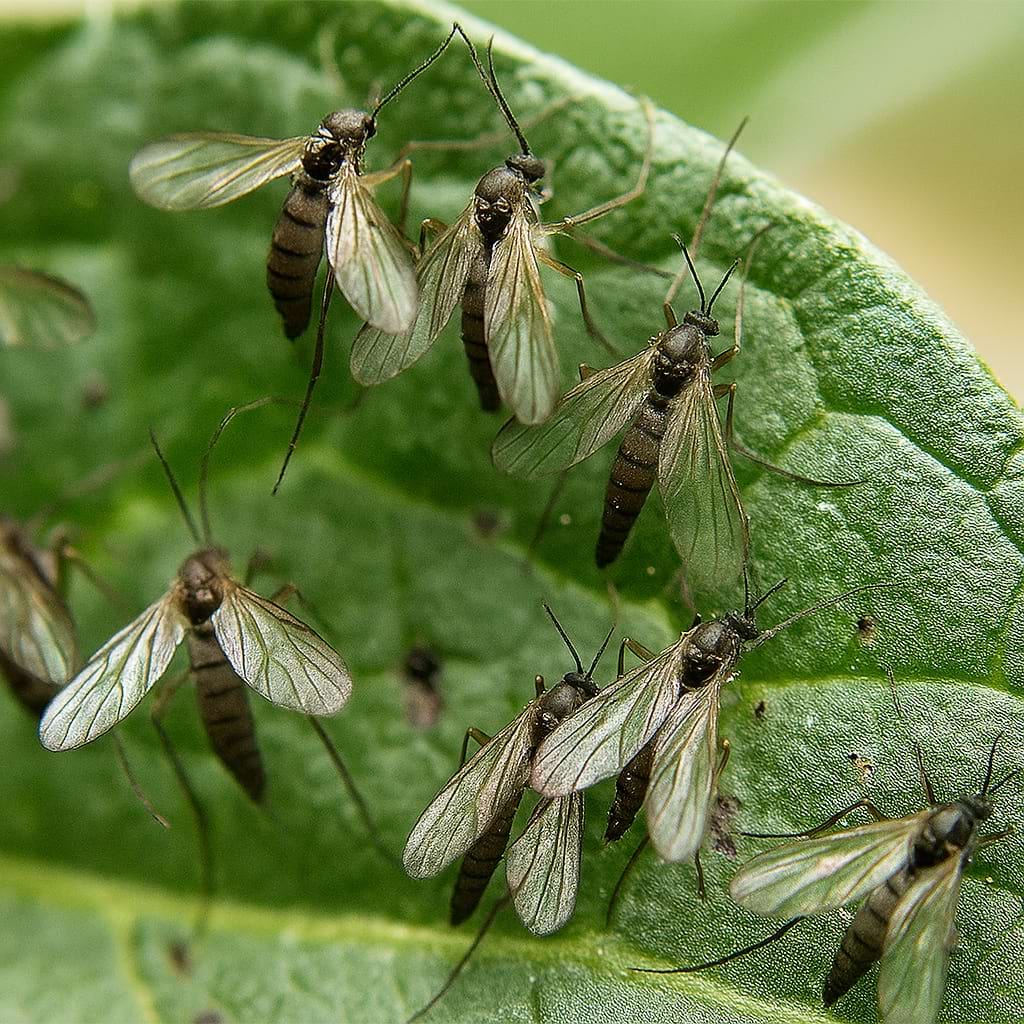
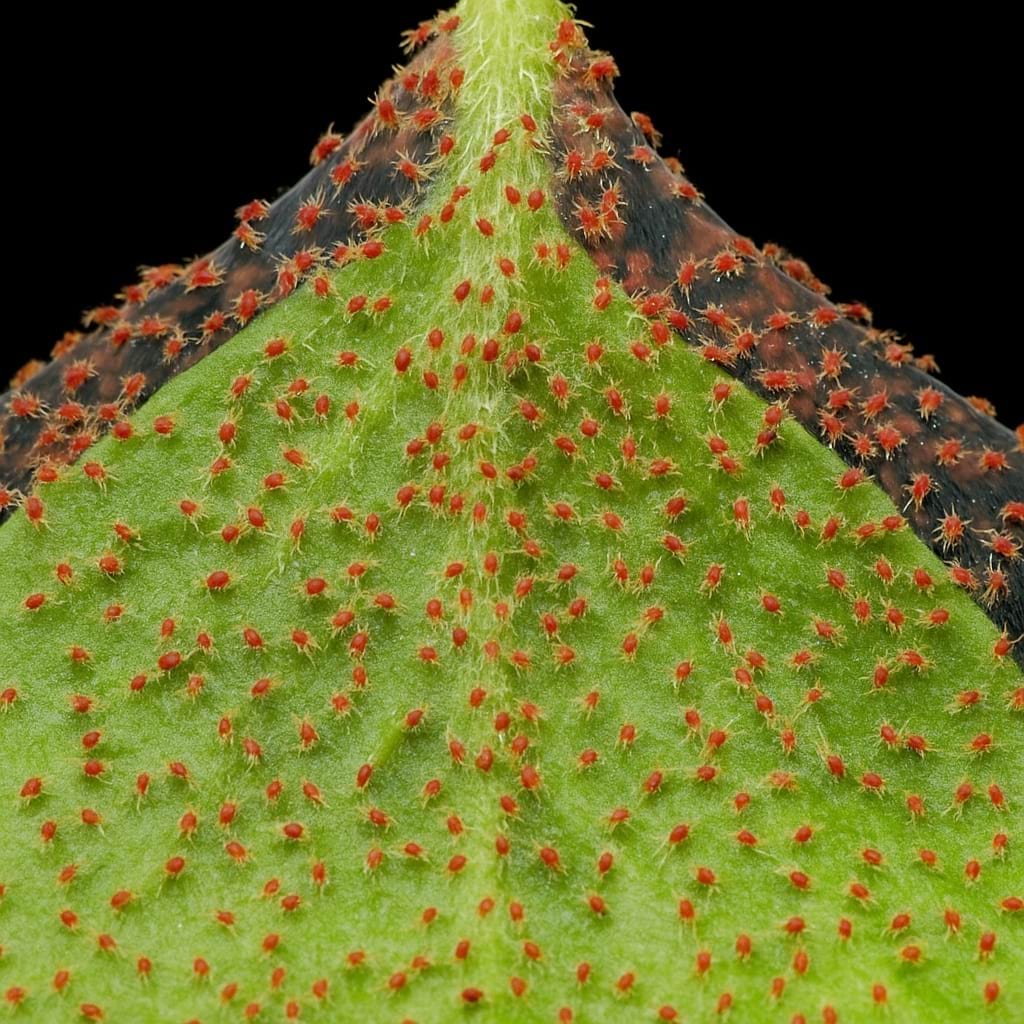
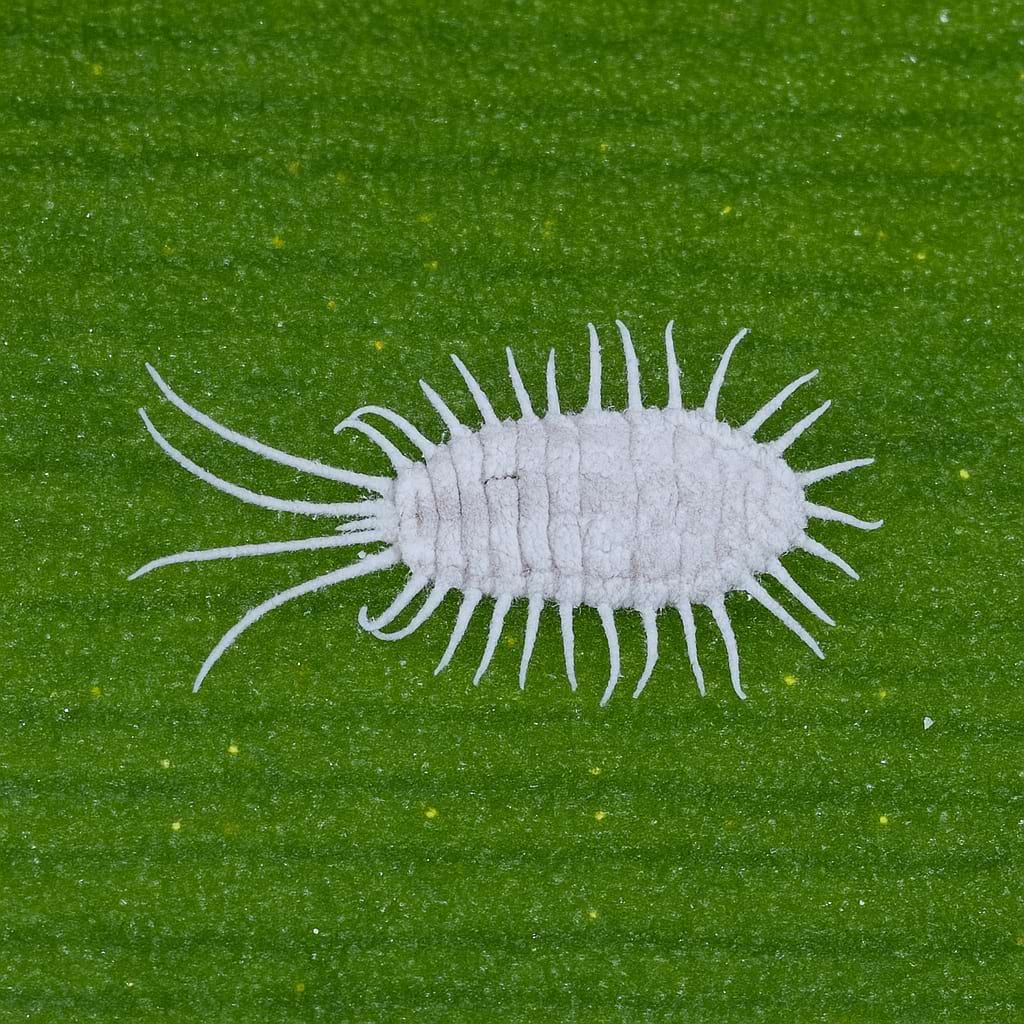
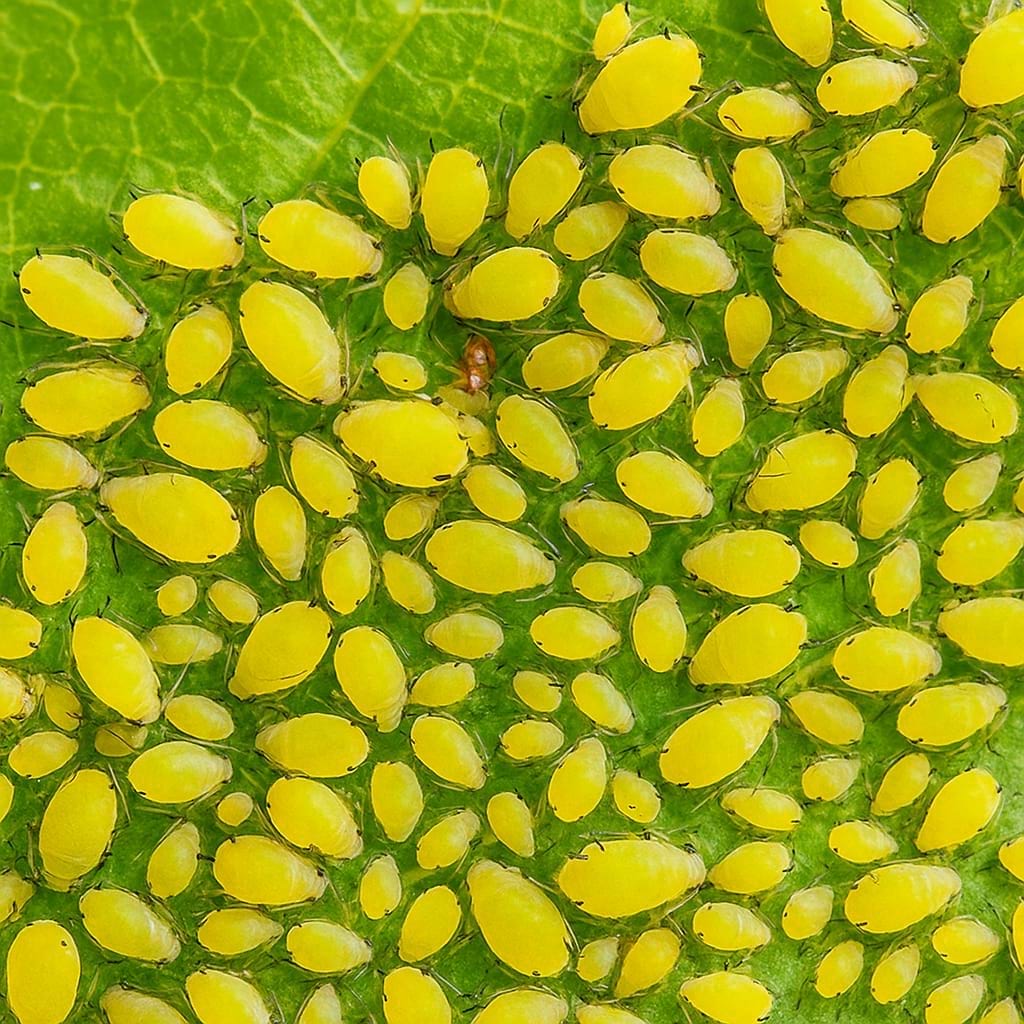
Watch first for fungus gnats, the little dark flies that love constantly moist soil. The adults are mostly a nuisance, but their larvae nibble fine roots, so let the very top of the soil dry a touch if you can without stressing the plant, and avoid true waterlogging. Spider mites turn up only when the air dries out, causing fine stippling and webbing, which is one more reason to keep humidity high. Mealybugs hide as small white cottony specks in the dense growth and stem junctions, and can be dabbed off with a cotton swab dipped in diluted rubbing alcohol. Aphids occasionally attack soft new growth and rinse off easily or yield to insecticidal soap.
🩺 Common Frosty Fern Problems
Nearly every problem with this plant traces back to the same two things: not enough humidity, or soil that is too wet and stagnant. Diagnose in that order and you will usually land on the cause quickly.
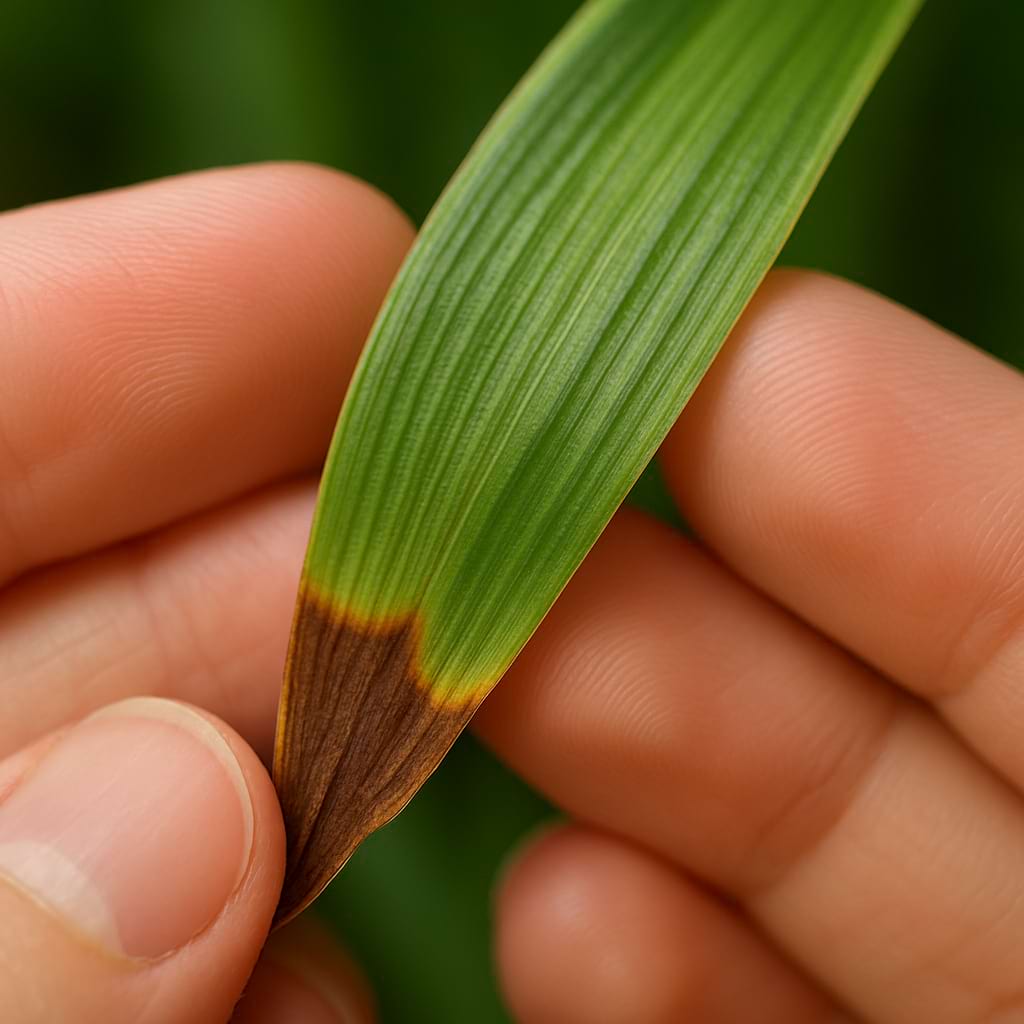
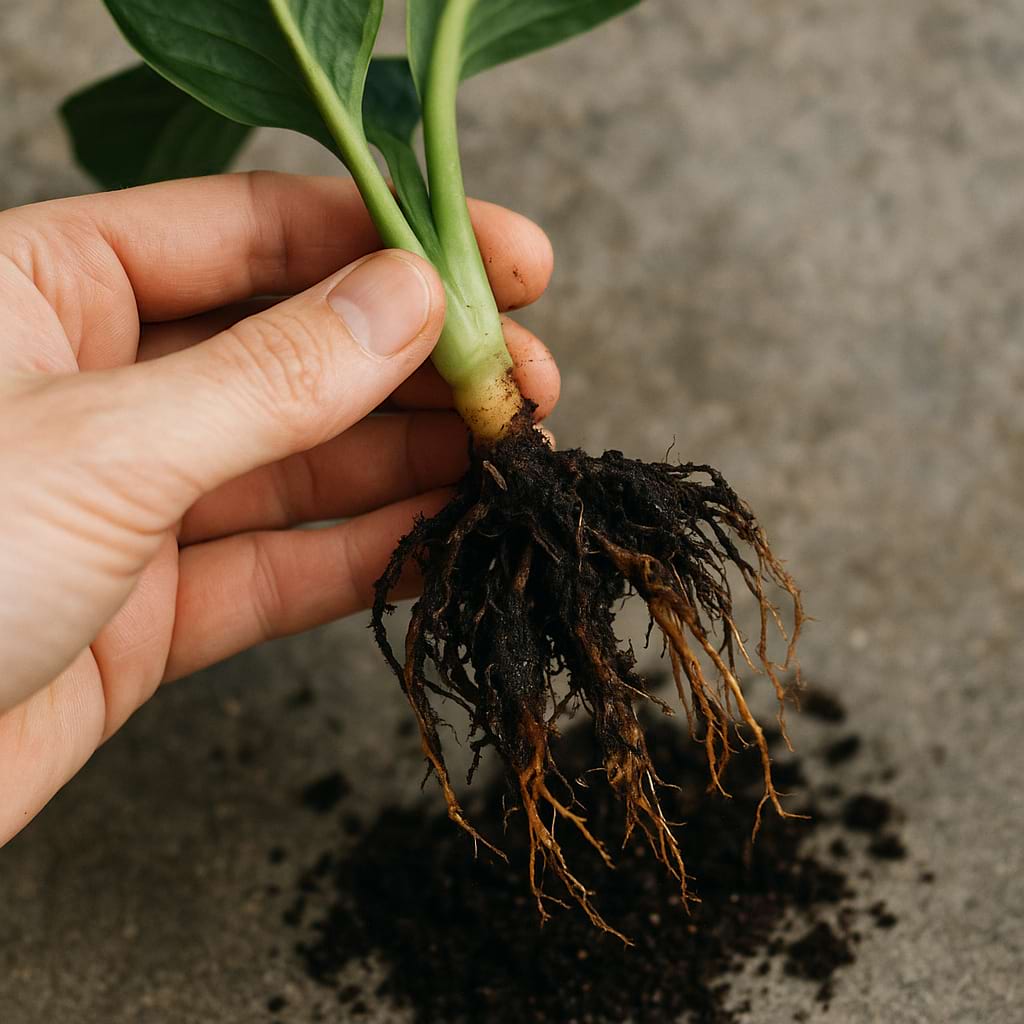
The classic complaint is brown, crispy foliage, which is almost always the air being too dry, or the soil having dried out. Raise humidity right away, keep the soil evenly moist, and trim the ruined sections since they will not recover. Root rot comes from the opposite mistake, soil left waterlogged with no air, and shows as wilting despite wet soil plus mushy, darkened stems at the base. Wilting or drooping can mean either extreme, bone-dry soil or rotted roots, so always check moisture and root health before acting. Pale, faded foliage with lost white tips usually means too much direct light or a plant stressed by dryness. Stunted growth points to conditions being generally off, most often low humidity or inconsistent moisture. Finally, fungal or bacterial rot can appear in an overly wet, stagnant terrarium, so allow a little air exchange and avoid water pooling on the foliage.

🖼️ Frosty Fern Display and Styling Ideas
Frosty Fern is a plant you display and provide for at the same time, because the setups that show off its frosted carpet are the very ones that keep the humidity high. That overlap is what makes it such a rewarding terrarium plant.
Terrariums and Closed Bowls
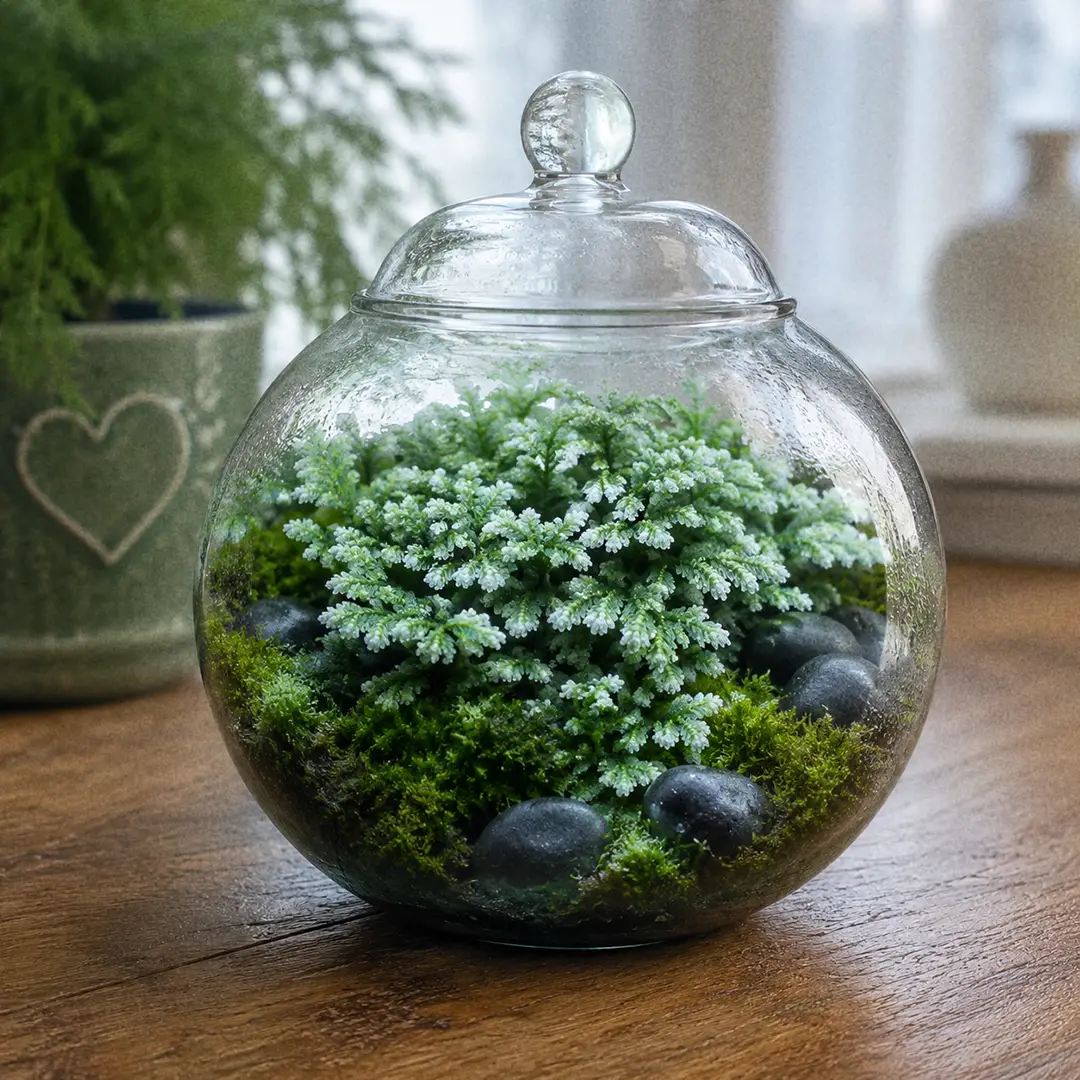
A closed glass terrarium is the ideal home, full stop. The enclosed air stays humid, the plant forms a lush frosted groundcover, and the whole thing becomes a self-sustaining little scene. Covered glass bowls, jars, and cloches do the same job at smaller scale. Pair the frosted foliage with the shimmering blue Peacock Fern or the pink-veined Nerve Plant for a humidity-matched trio that reads beautifully together.
Grouped Arrangements
Out in the open, Frosty Fern shines as a low front-of-group plant, its bright tips catching the eye against taller, darker foliage behind it. Cluster it with other moisture lovers so the plants share a humid microclimate and support each other. A shallow bowl of mixed spikemoss forms, 'Frosty' beside golden 'Aurea', makes a striking living mosaic.
Where Not to Put It
Skip the sunny windowsill, the mantel above a fireplace, the shelf over a radiator, and any breezy hallway. Those spots are dry-air traps that will brown the plant fast. If a location is bright, warm, and open to moving air, it is wrong for a Frosty Fern no matter how good the plant looks there on day one.
👍 Frosty Fern Pro Care Tips
- Grow it enclosed. A terrarium or covered bowl solves the humidity problem permanently and turns a fussy plant into an easy one.
- Never let it dry out. Constant, even moisture is non-negotiable; a single hard dry spell can brown the plant beyond recovery.
- Use clean water. Rainwater, distilled, or filtered water spares the foliage the salt and chemical burn that tap water can cause over time.
- Keep the sun off it. Bright indirect light only; direct sun scorches the fine foliage in hours.
- Chase the white tips. More frosting means more fresh growth, so if the "snow" fades, improve light, moisture, and humidity together.
- Mind the air, not just the soil. Dry, moving air from vents and heaters harms this plant faster than almost anything else.
- Take cuttings as insurance. It roots so easily that keeping a backup division going costs nothing and saves you if the parent falters.
❓ Frequently Asked Questions
Why is my Frosty Fern turning brown and crispy?
Dry air is the usual culprit, sometimes combined with soil that dried out. This plant needs high humidity and constantly moist soil, and it browns fast when it gets neither. Move it into a terrarium or beside a humidifier, keep the soil evenly damp, and trim off the crisped sections, which will not green back up.
Is Frosty Fern a real fern?
No. Despite the name, Selaginella kraussiana 'Frosty' is a spikemoss, an ancient fern ally in the lycophyte group rather than a true fern. It shares ferns' love of shade and moisture and reproduces by spores, but botanically it sits on a much older branch of the family tree.
Do I have to grow Frosty Fern in a terrarium?
Not strictly, but it is by far the easiest way to succeed. A terrarium or covered container holds the high humidity this plant demands with no daily effort from you. Out in the open you can manage with a running humidifier, a pebble tray, and grouping, but you will work harder for the same result.
Is Frosty Fern toxic to cats and dogs?
No, Frosty Fern is considered non-toxic to pets, which makes it a safe choice for homes with curious cats and dogs. It is not meant to be eaten, though, and a nibbling pet could still get a mild upset stomach, so it is best kept out of reach anyway, ideally inside a terrarium.
Why is my Frosty Fern losing its white frosted tips?
The frosting is simply new growth, so fewer white tips means the plant has slowed down or is stressed. Too little light, dry air, or inconsistent watering all reduce fresh growth. Improve all three, give it bright indirect light with steady moisture and humidity, and the snowy tips return with the new flush.
How often should I water a Frosty Fern?
Keep the soil moist at all times rather than following a fixed schedule. In an open pot indoors that often means watering every two or three days, while a closed terrarium may need water only every week or two. Check the soil and water the moment the surface feels less than damp; never let it dry out.
Can Frosty Fern recover once it has gone brown and dried out?
Partly. Fully browned, crispy sections are dead and will not recover, so trim them away. If any green remains at the base, though, there is real hope. Cut back the dead growth, restore high humidity and steady moisture, and the plant will often push fresh growth from the surviving crown over the following weeks.
Why is Frosty Fern sold as a Christmas plant?
Its frosted white tips look like a light dusting of snow, and that snowy effect peaks in the cool, bright conditions of winter. Garden centers lean into the look and sell it as a festive mini plant around the holidays, alongside seasonal favorites like the Christmas Cactus. The nickname Snow Fern comes from the same resemblance.
ℹ️ Frosty Fern Info
Care and Maintenance
🪴 Soil Type and pH: Moisture-retentive, humus-rich, slightly acidic (pH 5.5-6.5) peat or coir-based mix
💧 Humidity and Misting: Very high, 60 to 70 percent or more; a terrarium or covered container is the reliable way to provide it.
✂️ Pruning: Trim off browned sections and snip back spreading stems anytime to keep the mound tidy; the trimmings root easily.
🧼 Cleaning: Mist gently to rinse dust; never wipe the delicate fronds by hand
🌱 Repotting: Refresh into a shallow, wide pot when roots fill the container or the soil breaks down, usually every 1-2 years
🔄 Repotting Frequency: Every 1-2 years
❄️ Seasonal Changes in Care: Keep humidity and moisture high year-round; growth slows in winter but the plant never truly rests indoors
Growing Characteristics
💥 Growth Speed: Slow to Moderate
🔄 Life Cycle: Perennial
💥 Bloom Time: Never; reproduces by spores, not flowers
🌡️ Hardiness Zones: 6-9 outdoors in mild, damp, shaded gardens; grown as a houseplant or terrarium plant elsewhere
🗺️ Native Area: Parent species from the Azores, Macaronesia, and the mountains of southern and eastern Africa
🚘 Hibernation: No true dormancy indoors; may die back and regrow outdoors in cold zones
Propagation and Health
📍 Suitable Locations: Closed terrariums, covered bowls, humid bathrooms with indirect light, kitchen windowsills away from direct sun
🪴 Propagation Methods: Easiest by division or by laying short stem cuttings on moist soil under a cover; both root in a few weeks.
🐛 Common Pests: Fungus Gnats, Spider Mites, Mealybugs, Aphids
🦠 Possible Diseases: Root rot and fungal stem or leaf rot in stagnant, waterlogged conditions
Plant Details
🌿 Plant Type: Spikemoss (lycophyte, a fern ally), not a true fern
🍃 Foliage Type: Evergreen feathery scale-like foliage with frosted white new-growth tips
🎨 Color of Leaves: Bright green with silver-white to cream tips on the newest growth
🌸 Flower Color: None
🌼 Blooming: Does not flower; produces spores in tiny cone-like strobili at stem tips
🍽️ Edibility: Not edible, but not toxic
📏 Mature Size: 4-6 inches (10-15 cm), low and mounding
Additional Info
🌻 General Benefits: Adds fine texture and unusual frosted color to terrariums and small humid spaces; pet-safe groundcover
💊 Medical Properties: No significant recognized medicinal use
🧿 Feng Shui: Linked to the water element and a calm, nurturing energy owing to its love of moisture
⭐ Zodiac Sign Compatibility: Cancer, Pisces
🌈 Symbolism or Folklore: Renewal, quiet resilience, and the hidden magic of ancient plants
📝 Interesting Facts: Selaginella is one of the oldest lineages of vascular plants on Earth, with relatives dating back over 300 million years to the coal forests of the Carboniferous. The frosted white tips of 'Frosty' are simply the newest growth, so a happy, actively growing plant shows the most "snow." Because the snow-dusted look peaks in winter light and cool rooms, garden centers sell it as a mini Christmas plant, which is where the Snow Fern nickname comes from.
Buying and Usage
🛒 What to Look for When Buying: Choose a plant with plump, springy green foliage and plenty of bright white tips, ideally one that has been kept under a dome or in a humid display. Avoid any with brown, flat, or crispy patches, since spikemoss rarely recovers browned sections. A plant sold loose on a dry open shelf has often already started to decline.
🪴 Other Uses: Living groundcover in vivariums and paludariums, fairy-garden carpet, humidity-loving underplanting for larger terrarium plants
Decoration and Styling
🖼️ Display Ideas: Star groundcover in a closed glass terrarium, a frosted carpet spilling over a shallow bowl, or a solo specimen under a glass cloche
🧵 Styling Tips: Set the bright frosted foliage against dark stone, wood, or deep-green plants so the white tips pop; keep it low and forward where the snow-dusted texture reads at a glance.
🪴 See also 🪴
Complete Guide to East Indian Holly Fern Care and Growth
Complete Guide to Silver Lace Fern Care and Growth
Complete Guide to Silver Lady Fern Care and Growth
Complete Guide to Squirrel's Foot Fern Care and Growth
Complete Guide to Tassel Fern Care and Growth
Complete Guide to Mother Fern Care and Growth
Complete Guide to Cinnamon Fern Care and Growth
Complete Guide to Delta Maidenhair Fern Care and Growth
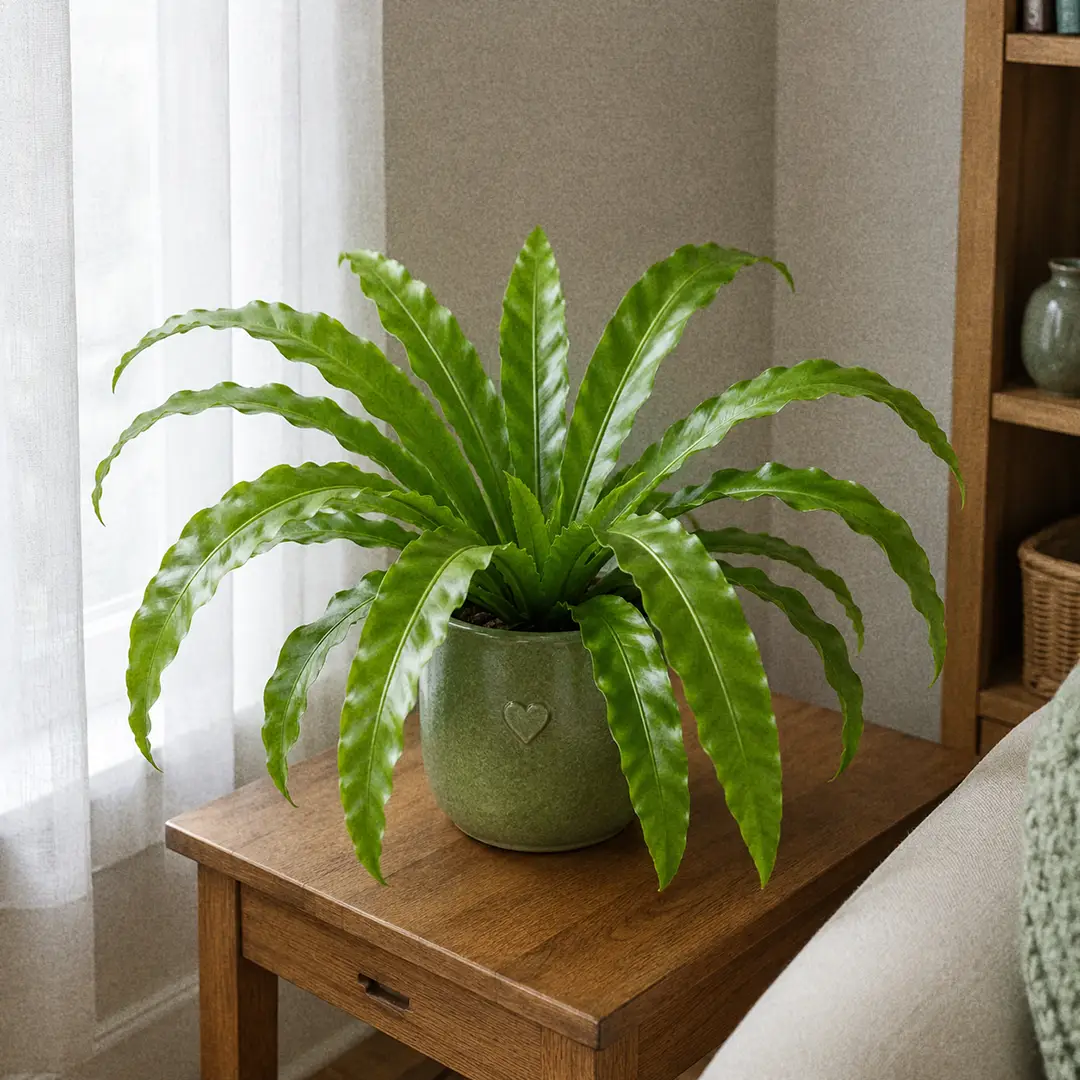
Complete Guide to Hart's Tongue Fern Care and Growth
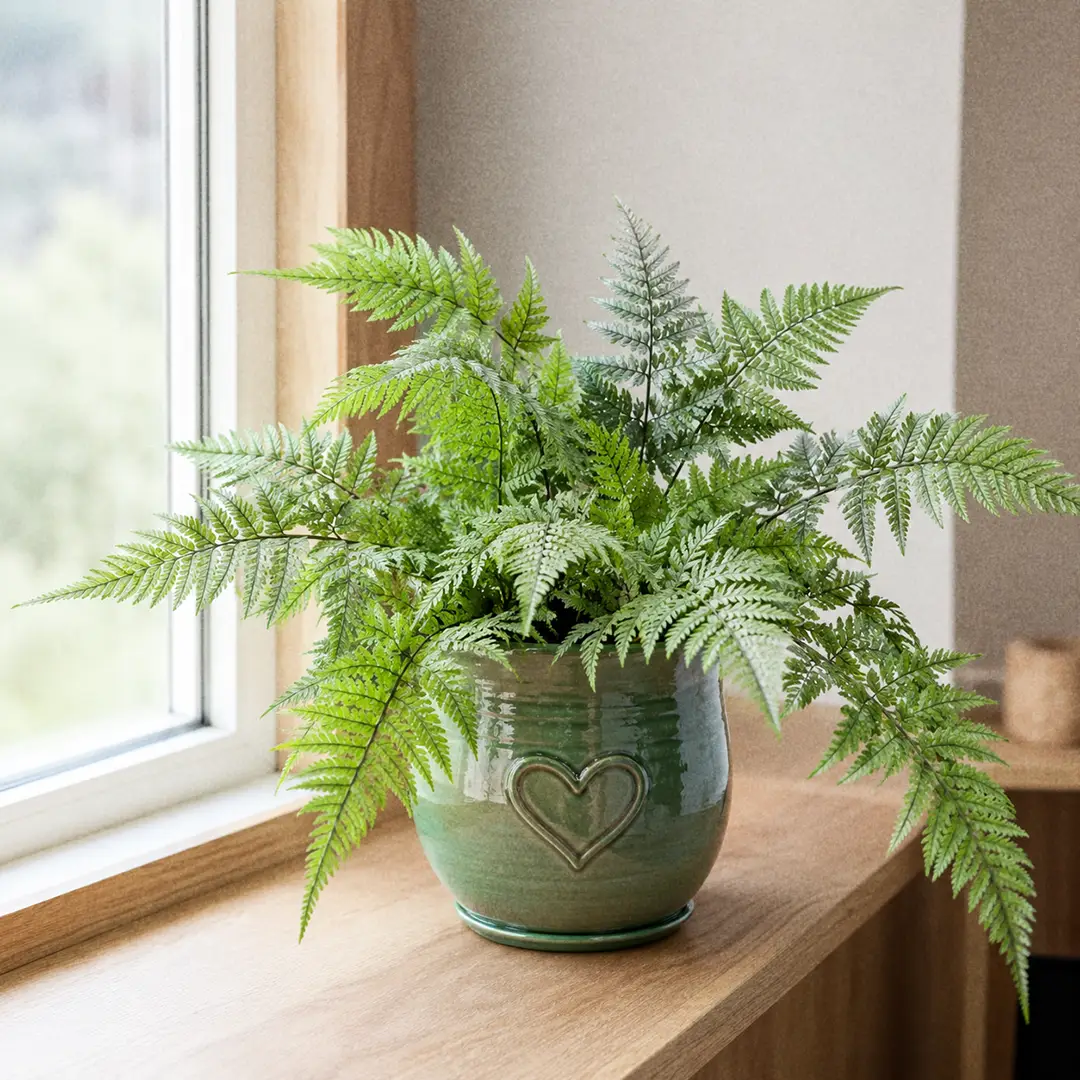
Complete Guide to Korean Rock Fern Care and Growth

Houseplant101 Forum
Questions & Comments
Ask a question, share your plant experience, or help other plant owners.
Comments are temporarily unavailable.
Open the Houseplant101 ForumNo comments yet
Be the first to ask a question or share your experience about this page.
Log in or create an account
Comments use your Houseplant101 Forum account, but you can stay on this page.
Create a new account