
East Indian Holly Fern
Arachniodes simplicior 'Variegata'
Variegated East Indian Holly Fern, Variegated Shield Fern, Variegated Holly Fern, Arachniodes aristata Variegata


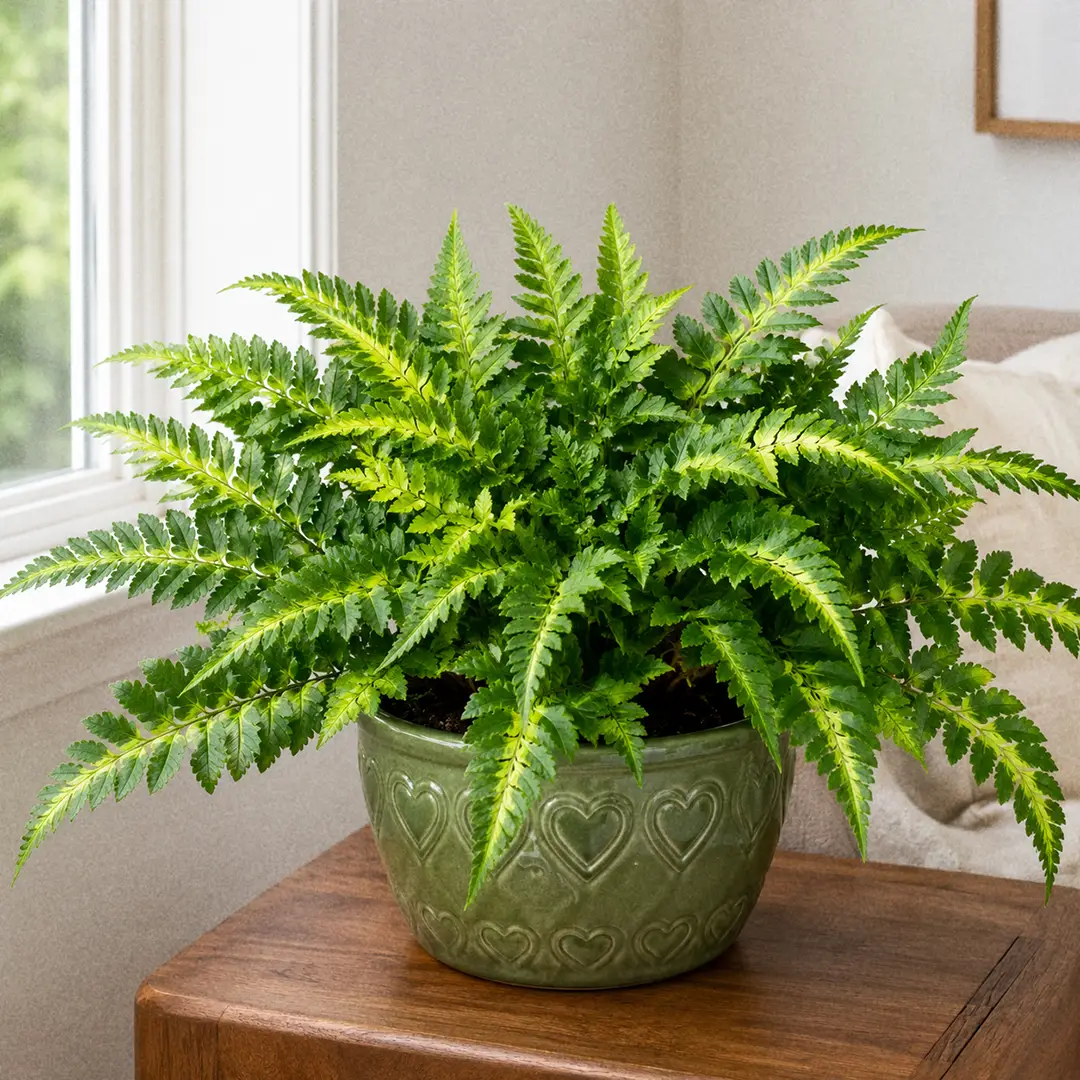
The East Indian Holly Fern (Arachniodes simplicior 'Variegata') is an evergreen fern with broad triangular fronds, glossy holly-toothed leaflets, and a bright chartreuse stripe running down the center of every pinna. It is slower and tougher than it looks, keeps its color all year, and asks for shade and steady moisture rather than constant fussing.
📝 East Indian Holly Fern Care Notes
🌿 Care Instructions
⚠️ Common Pests
📊 Growth Information
🪴 In This Guide 🪴

📺 East Indian Holly Fern Video Guide

☀️ East Indian Holly Fern Light Requirements (Shade to Bright Indirect)
On a Japanese woodland floor this fern lives under a closed canopy, lit by whatever filters through the leaves above. That is a genuinely dim environment, which is why it is one of the few variegated plants worth putting in a shady room.
The Sweet Spot
A north window is the natural home, pot close to the glass. East works beautifully too, set back a foot or so, where early sun arrives weak and leaves by mid-morning. In a south or west room, put the plant five or six feet back or behind a sheer curtain. You will know the light is right when the fronds hold a glossy finish and the yellow band stays crisp rather than washed out. Our houseplant light guide has a method for judging any room.

Too Little Light
This fern tolerates real shade, and it will hang on in a corner where a Pothos gives up. What suffers first is the variegation. In very dim conditions the plant makes new fronds with a narrower, muddier stripe, and eventually with almost none at all, because pale tissue that cannot photosynthesize is expensive to run when light is scarce. If the last two or three fronds came in noticeably greener than the older ones, move the plant closer to a window before the whole thing reverts.
Too Much Light
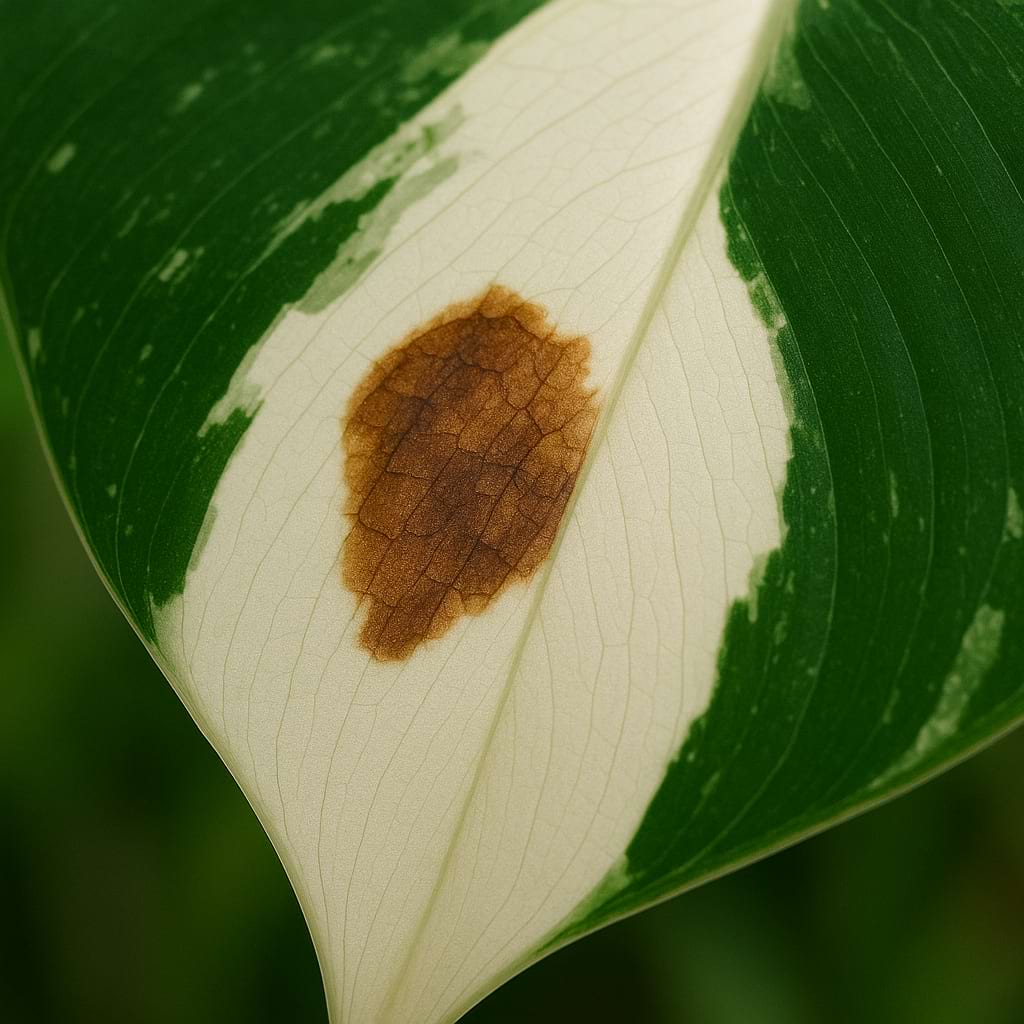
Direct sun is the fastest way to ruin this plant. The pale variegated tissue has no protective pigment, so it burns before the green parts do, going papery and bone-white within hours. A single afternoon on a sunny west windowsill can permanently mark half the fronds. Damaged tissue never recovers, so pull the plant back at the first sign of pale dry patches.
💧 East Indian Holly Fern Watering Guide (Evenly Moist)
Leathery fronds give this fern a bit more drought tolerance than a Maidenhair, but do not read too much into that. It still wants soil that stays consistently damp, closer to a wrung-out sponge than to anything you would call dry.
Watering Frequency
Check the top half-inch of soil with a fingertip and water when it feels dry. In an ordinary warm room that works out to every five to seven days from spring through autumn, stretching to every ten to fourteen days in winter when growth stops. Slow-growing plants drink slowly, so resist topping up on schedule. A moisture meter takes the guesswork out if you tend to overdo it.
How to Water
Pour room-temperature water slowly around the rim until it runs from the drainage hole, then tip out the saucer. Because the rhizome creeps just under the surface, avoid blasting water onto it; a gentle circle around the edge is kinder. Bottom watering suits wide shallow pots, where soil can dry unevenly. Set the pot in an inch of water for fifteen minutes and let the mix wick up what it needs.
Signs of Trouble
Thirst shows up as fronds that lose their glossy sheen and droop from the tips inward, oldest ones crisping first. A deep watering fixes it if you catch it quickly. Overwatering looks quite different: fronds yellowing from the base of the plant outward, soil still wet a week later, and a musty smell from the pot. That combination means check the roots, not water again.
🪴 Best Soil for East Indian Holly Fern
Think of leaf litter on a forest floor, spongy and full of air, soaked after rain and drained within the hour. That is the texture to aim for, and it matters more here than the exact ingredients.
What the Soil Needs
The mix has to hold steady moisture, drain fast enough that water never stands around the shallow rhizome, and stay loose so the fine roots can run. Slightly acidic is ideal, around pH 5.5 to 6.5, which most peat-based or coir-based mixes already deliver. Organic matter is the key ingredient, since this is a leaf-mold plant by nature.
DIY Soil Mix
Two parts peat moss or coco coir, one part leaf mold or fine composted bark, and one part perlite gives almost exactly the right structure. The bark and leaf mold keep the mix open as it ages, the coir holds moisture, and the perlite gives excess water somewhere to go. A handful of horticultural charcoal helps keep pots that stay damp from going sour.
Pre-Made Options
A bagged fern or African violet mix is a good starting point; stir in an extra handful of perlite per pot and you are done. General-purpose houseplant compost works too if you swap about a third of the volume for perlite and bark. Skip dense garden soil, moisture-crystal mixes, and anything heavy enough to set like clay. More in our soil guide.
🍼 Fertilizing East Indian Holly Fern
Slow growth means small appetite. This is not a plant you can push, and heavy feeding does far more harm than good on a fern with fine roots.
When and How Often
Feed once a month from April through September, while new fronds are unrolling. Stop completely from October to March, when the plant is resting and cannot use the nutrients. Skipping a month does no damage; an overfed fern takes a whole season to recover. See our fertilizing guide for the wider picture.
What to Use
A balanced liquid fertilizer such as 10-10-10 or 20-20-20, diluted to half the label strength, covers everything this fern needs. Apply it to soil that is already damp, never to a dry root ball, or you risk scorching the roots. High-nitrogen formulas are worth avoiding, since they push soft growth with weaker variegation.
Over-Fertilizing Signs
Brown, burnt-looking tips on new growth, a whitish crust on the soil surface, and fronds that stay floppy all point to salt build-up. Flush the pot with about three pot-volumes of plain water, let it drain completely, and hold off feeding for a couple of months.
🌡️ East Indian Holly Fern Temperature Range
A temperate woodland fern is comfortable in the same range most people keep their homes, and it appreciates a cooler winter more than a warm one.
Ideal Range
Between 55 and 75°F (13 to 24°C) suits it well, with a winter dip to 50 or 60°F actively welcome. It survives short spells above 80°F (27°C) if the soil stays damp, but sustained heat dulls the fronds and stalls growth for months. Outdoors it is hardy in USDA zones 6 to 9, staying evergreen through most winters.
Drafts and Heat Sources
Cold drafts are not a problem here; this fern handles chills that would flatten a tropical plant. Dry heat is what does the damage. Keep it three feet or more from radiators, vents, and wood stoves, since warm moving air crisps the frond edges faster than any temperature reading suggests. Air conditioning blowing straight at the plant does the same.
💦 East Indian Holly Fern Humidity Requirements
The thick, waxy frond surface is this plant's insurance policy against dry air, and it makes the East Indian Holly Fern noticeably easier to live with than the ferns that need a bathroom or a case.
Ideal Humidity
Anywhere from 40 to 60 percent keeps it comfortable, which is where most homes already sit for three seasons of the year. Winter is the pinch point. Once central heating drops indoor humidity below about 35 percent for weeks at a stretch, the frond tips brown even when you are watering properly. Compare that with a Maidenhair Fern, which starts complaining below 60 percent, and the difference in temperament is obvious.
Easy Humidity Boosters
A small humidifier running near the plant through the heating season is the most reliable answer. A pebble tray helps a little, and grouping the fern with other plants raises humidity in that pocket of the room. A shaded bathroom with a window is close to ideal. Skip daily misting as your main strategy, since water sitting in the leaflet crevices overnight invites fungal spots. Our humidity guide has more options.
🌸 Does the East Indian Holly Fern Bloom?
It does not, and no amount of care will change that. Ferns were around long before flowering plants existed, and they reproduce with spores instead.
Spores, Not Flowers
From late summer, mature fronds develop small round spore clusters on their undersides, each under a kidney-shaped flap called an indusium. They ripen from pale green to rusty brown. New owners regularly mistake them for scale insects and panic. The giveaway is the arrangement: spore clusters sit in tidy rows either side of each leaflet's midvein, while scale scatters at random.
What You Get Instead
What you get instead of flowers is a plant that looks the same in February as it does in June. The chartreuse band down each pinna reads as color from across a room, and it lasts all year rather than for two weeks. On a shady shelf that will never support a flowering plant, that is the more useful trait. If you want to try raising ferns from those spores, the propagation section covers it.
🏷️ East Indian Holly Fern Types and Lookalikes
This plant sits at the center of one of the messiest naming tangles in the fern world. It is not from the East Indies, and it is not a true holly fern. Sorting out what you actually own is worth five minutes.
Arachniodes simplicior 'Variegata'
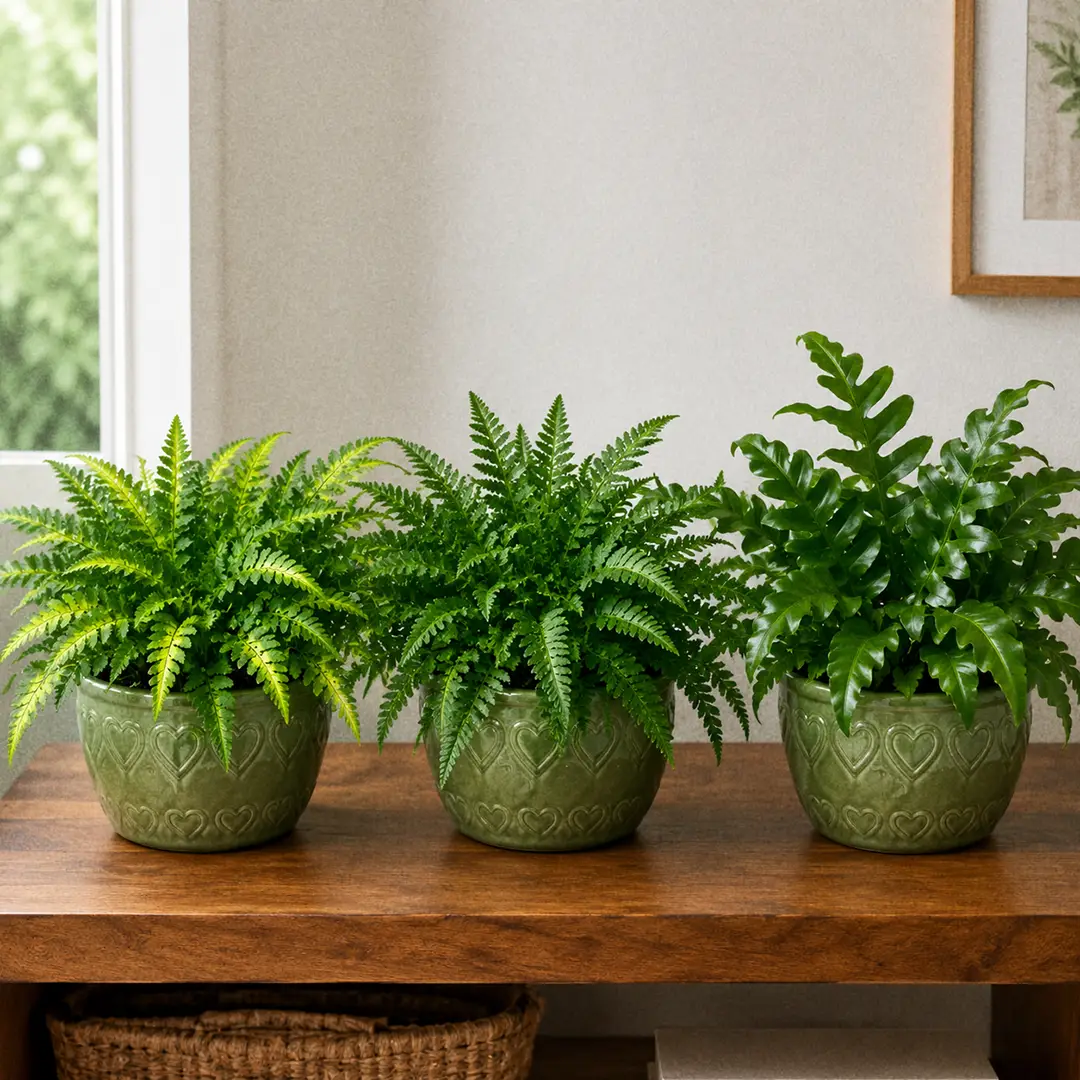
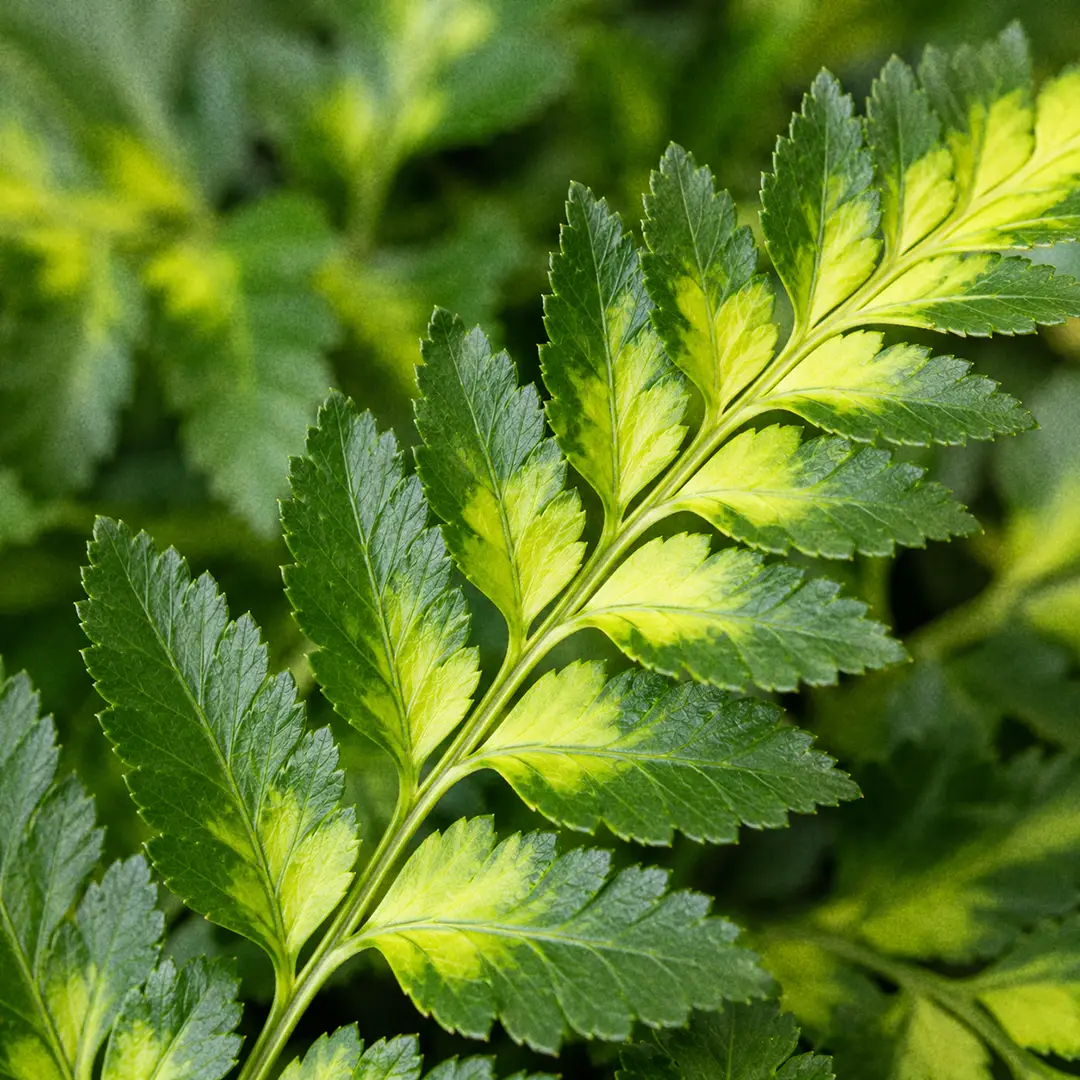
The variegated cultivar is what nearly everyone means by East Indian Holly Fern. Broad triangular fronds, leathery and glossy, with sharply toothed leaflet edges and a wide yellow-green stripe down the central axis of each pinna. It reaches 12 to 24 inches and spreads sideways on a creeping rhizome rather than forming a tight clump.
The Plain Green Species
Arachniodes simplicior without the cultivar name is the same plant minus the stripe: identical frond shape, same toothed edges, same habit, just solid dark green. It occasionally turns up mislabeled as 'Variegata', so check the fronds rather than the tag. A fully green plant will never develop variegation later.
Arachniodes standishii (Upside-Down Fern)
The other Arachniodes you might meet indoors is lacier and far more finely divided, with no variegation. It gets its odd name because the spore clusters sit near the tips of the leaflet segments, appearing inverted compared with other ferns. Care is the same.
The Holly Fern Confusion
The true Holly Fern is Cyrtomium falcatum, a different genus entirely. Its leaflets are large, sickle-shaped, and genuinely holly-like, six or seven pairs down a frond, with no variegation. The East Indian Holly Fern has far smaller, more numerous leaflets on a broad triangular frond. Both earn the "holly" name from spiny margins, and there the similarity ends. The Korean Rock Fern gets swept into the same confusion.
🪴 Potting and Repotting the East Indian Holly Fern
The creeping rhizome changes the usual potting advice. Fronds do not all rise from one central crown; they push up along a stem that travels sideways just below the soil surface. Give that stem somewhere to go.
When to Repot
Every two to three years is plenty for such a slow grower. The signal is not roots out of the drainage hole so much as fronds appearing right at the pot rim, meaning the rhizome has run out of room. Early spring, as the first fiddleheads appear, is the moment. Our repotting guide covers the technique.
Choosing a Pot
Go wide rather than deep. A shallow bowl suits the surface-running rhizome far better than a tall container, where the extra depth just holds cold wet soil the roots never reach. Move up two inches in width and keep the same depth. Drainage holes are essential. Terracotta helps if you water generously; glazed ceramic holds moisture longer in a dry home.
Step-by-Step Repotting
- Water thoroughly the day before so the root ball holds together.
- Ease the plant out and loosen the soil around the outside, leaving the center undisturbed.
- Trim soft brown roots with clean scissors; leave the firm pale ones alone.
- Set the plant off-center in the new pot, with the rhizome's growing tip facing the empty side so it has room to travel.
- Backfill with fresh mix, water lightly, and keep it in shade for a week.
The rhizome should sit at or just under the surface. Bury it two inches down and it rots.
✂️ Pruning the East Indian Holly Fern
There is no shaping to do here. Pruning is simply removing fronds that have finished their working life, and the plant handles its own architecture.
When to Prune
Cut off individual yellowed or damaged fronds whenever you notice them. The bigger tidy-up happens in early spring: go through the plant just before new growth starts and take out the oldest, most battered fronds at the base. Evergreen ferns keep last year's foliage through winter and it earns its keep until the new flush arrives, so resist stripping the plant in autumn.
How to Prune
Use clean, sharp snips and cut each spent frond at the very bottom of its stalk, close to the soil but without nicking the rhizome. Never take more than a third of the fronds at once. If only the tips are crisp, trim just into the green following the leaflet's natural taper rather than cutting straight across, which leaves a flat edge that browns again.
🌱 How to Propagate the East Indian Holly Fern
Division is the practical method, and the creeping rhizome makes it easier than dividing a clump-forming fern. There is no wrestling with a dense knot of crowns; you simply cut a length of stem.
Best Method: Rhizome Division
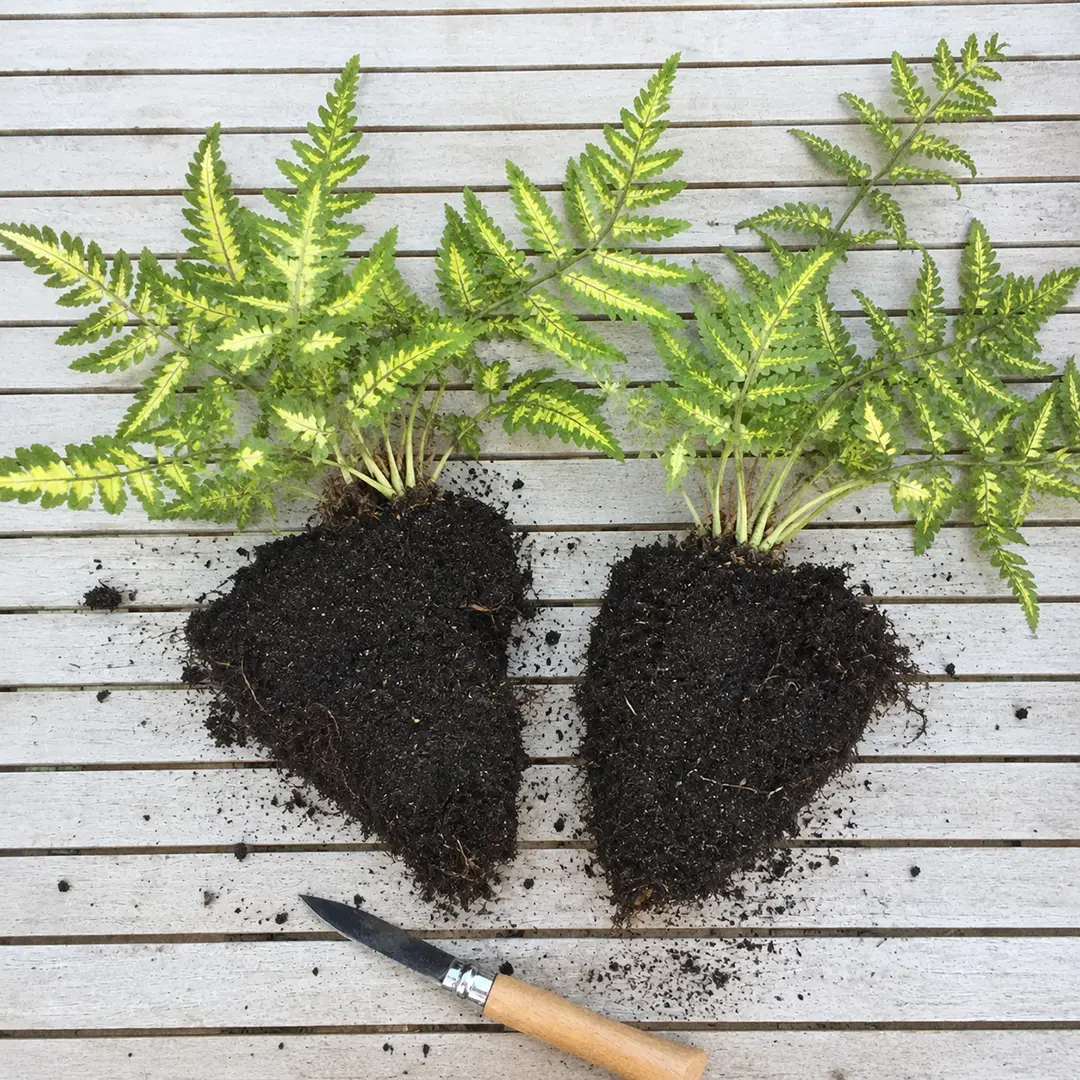
Once the plant has filled its pot, the rhizome will have branched into two or more growing tips, each with its own fronds and roots. Early spring is the right moment. Every division needs a piece of rhizome with a growing tip, its own roots, and two or three healthy fronds. Our plant division guide covers the general approach.
Step-by-Step Division
- Water the plant the day before, then slide it out of its pot.
- Wash or brush enough soil off the rhizome that you can see where it branches.
- Cut cleanly between growing tips with a sharp knife, keeping roots attached to each piece.
- Pot each division into a wide, shallow container of fresh fern mix, with the rhizome just level with the surface.
- Water lightly, keep the pots in shade with steady moisture, and expect the first new frond in six to ten weeks.
Tips for Success
Bigger divisions establish faster. A piece with three or four fronds barely notices the move, while a single-frond fragment can sulk for a season. A clear plastic bag propped loosely over the pot for the first fortnight holds humidity while the cut roots recover. Hold back fertilizer for two months.
Growing From Spores
Sow ripe brown spores onto damp sterile peat, cover with a clear lid, and keep it in bright shade at around 68°F (20°C). A green film appears within weeks, then heart-shaped prothalli, then recognizable little ferns after six months to a year. Variegation does not come reliably true from spores, though, so expect plain green seedlings. Division is the only way to guarantee the stripe.
🐛 East Indian Holly Fern Pests and Treatment
Pest problems are uncommon here. The tough waxy fronds are unappealing to most sap-suckers, and trouble almost always arrives on a new plant or follows a spell of stress.
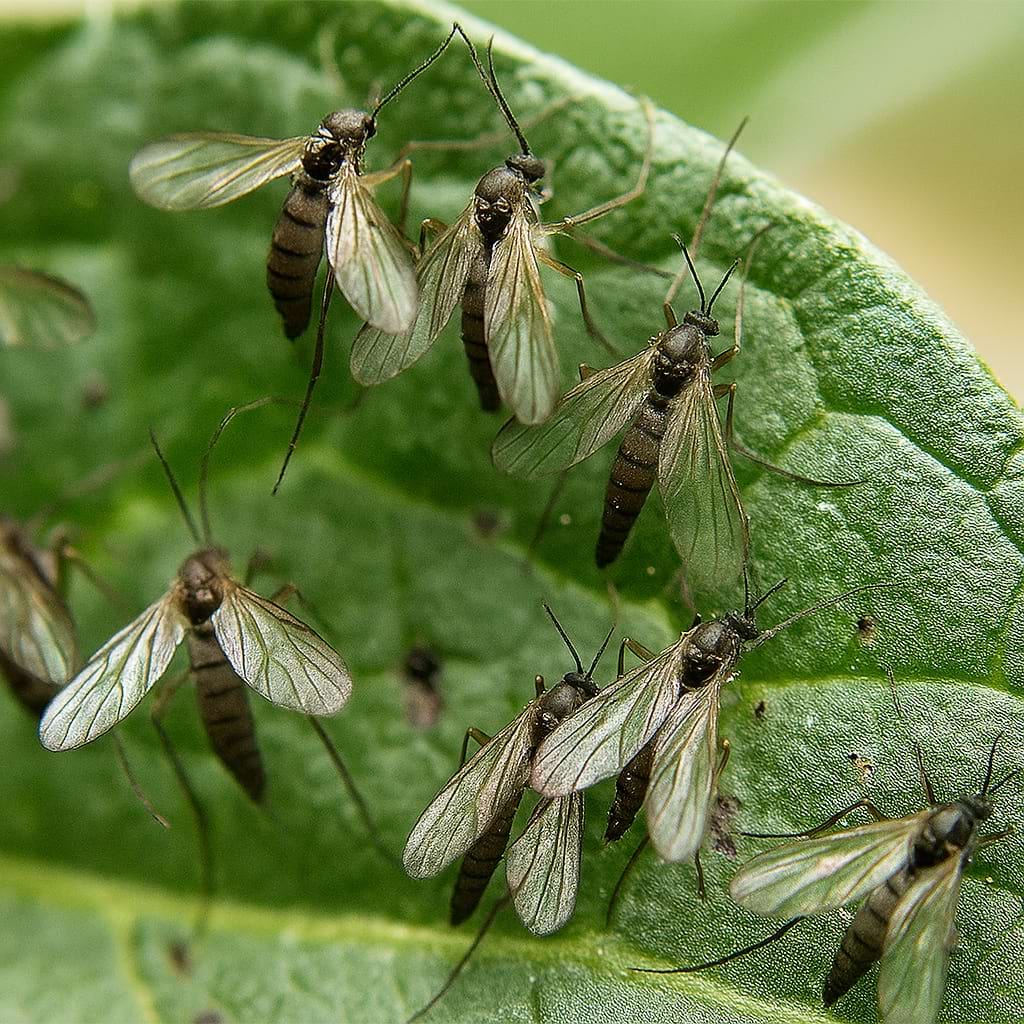
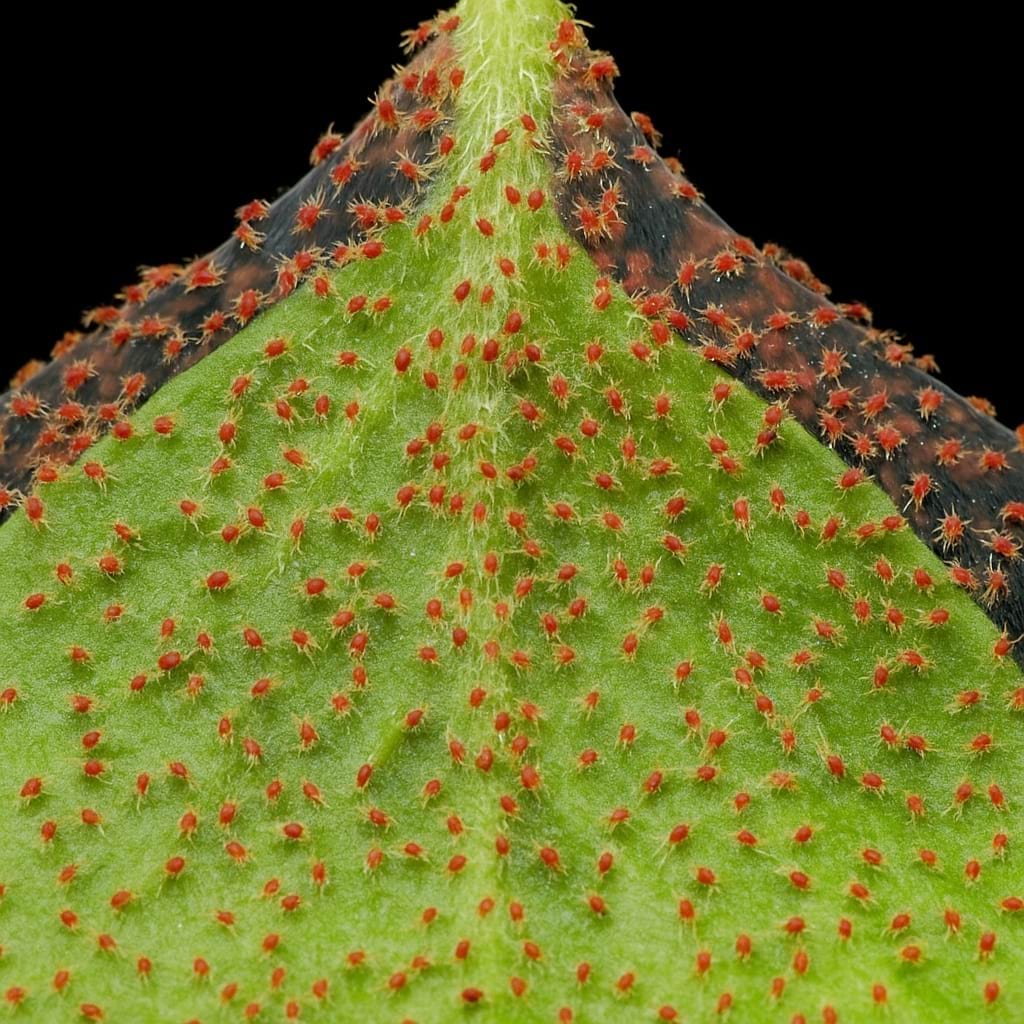
Fungus gnats are the usual complaint, breeding in soil kept permanently damp. Let the surface dry slightly between waterings and put out yellow sticky traps. Spider mites turn up in dry winter air, leaving fine webbing between the leaflets and a dull stippled look; a thorough shower plus better humidity usually clears them.
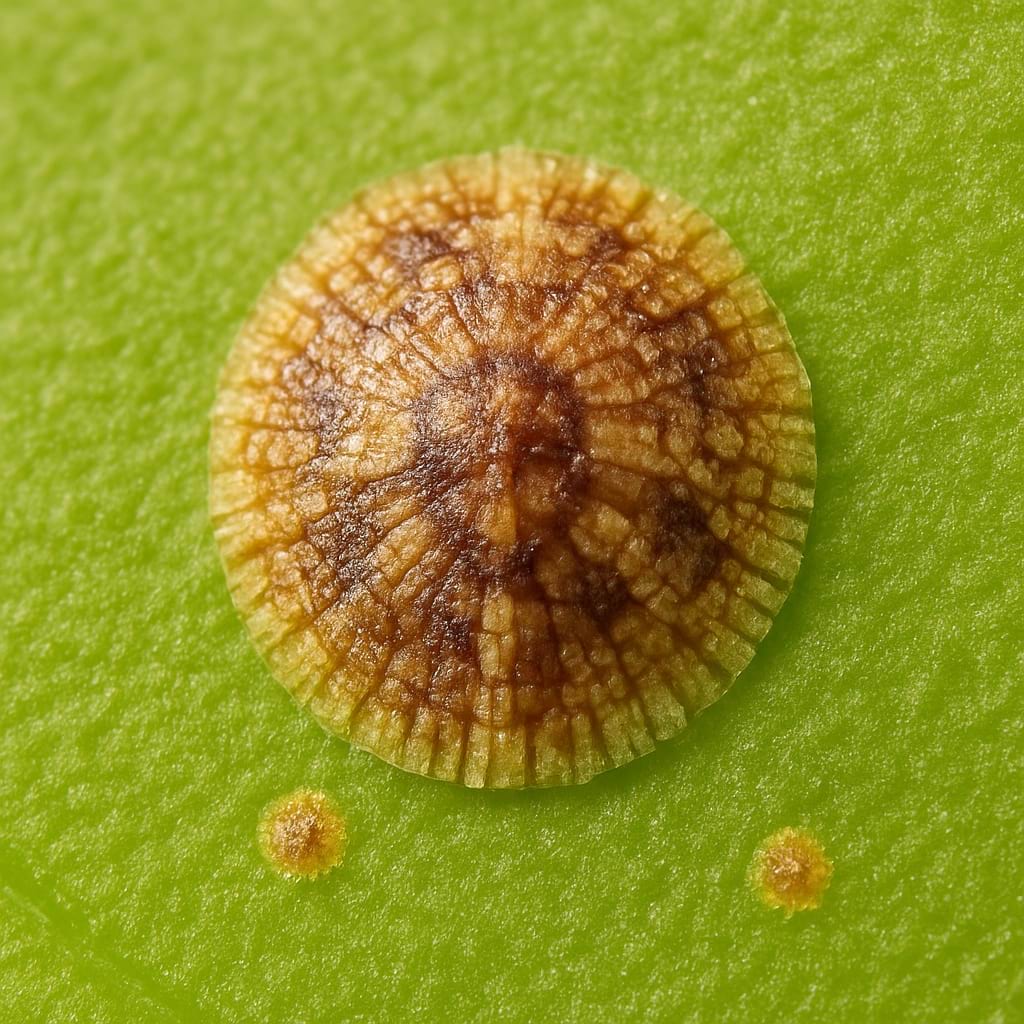
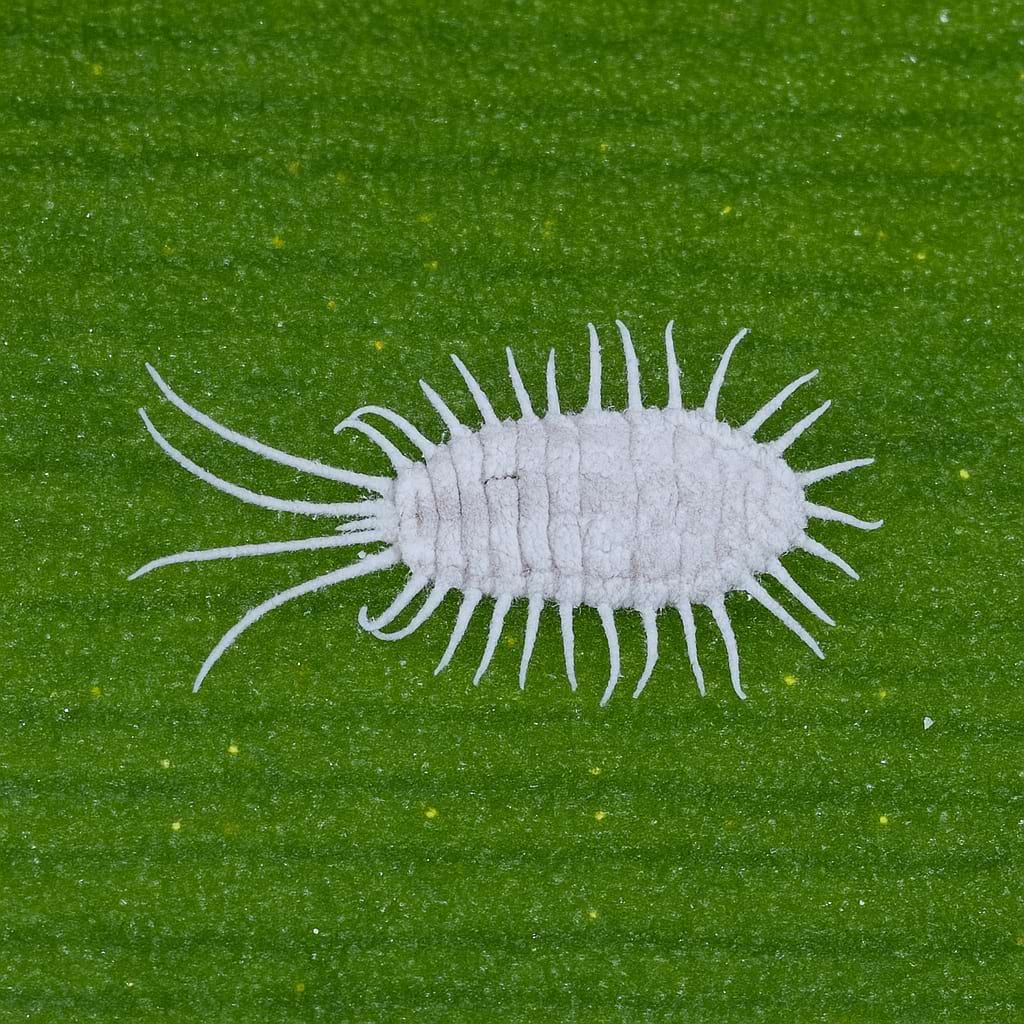
Scale insects show as brown bumps scattered along the stalks and leaflets, and lift off with a cotton swab dipped in 70 percent alcohol. Check the pattern first, since spore clusters sit in neat rows and scale does not. Mealybugs hide as white fluff where fronds meet the rhizome and take the same treatment. If the plant summers outdoors, slugs and snails chew ragged holes overnight, so check under the pot rim. Avoid oil-based sprays on fern foliage; test any spray on one frond first.
🩺 Common East Indian Holly Fern Problems
Most trouble with this fern traces back to water or light. Work through moisture first, then light, then air dryness, and you will land on the cause most of the time.
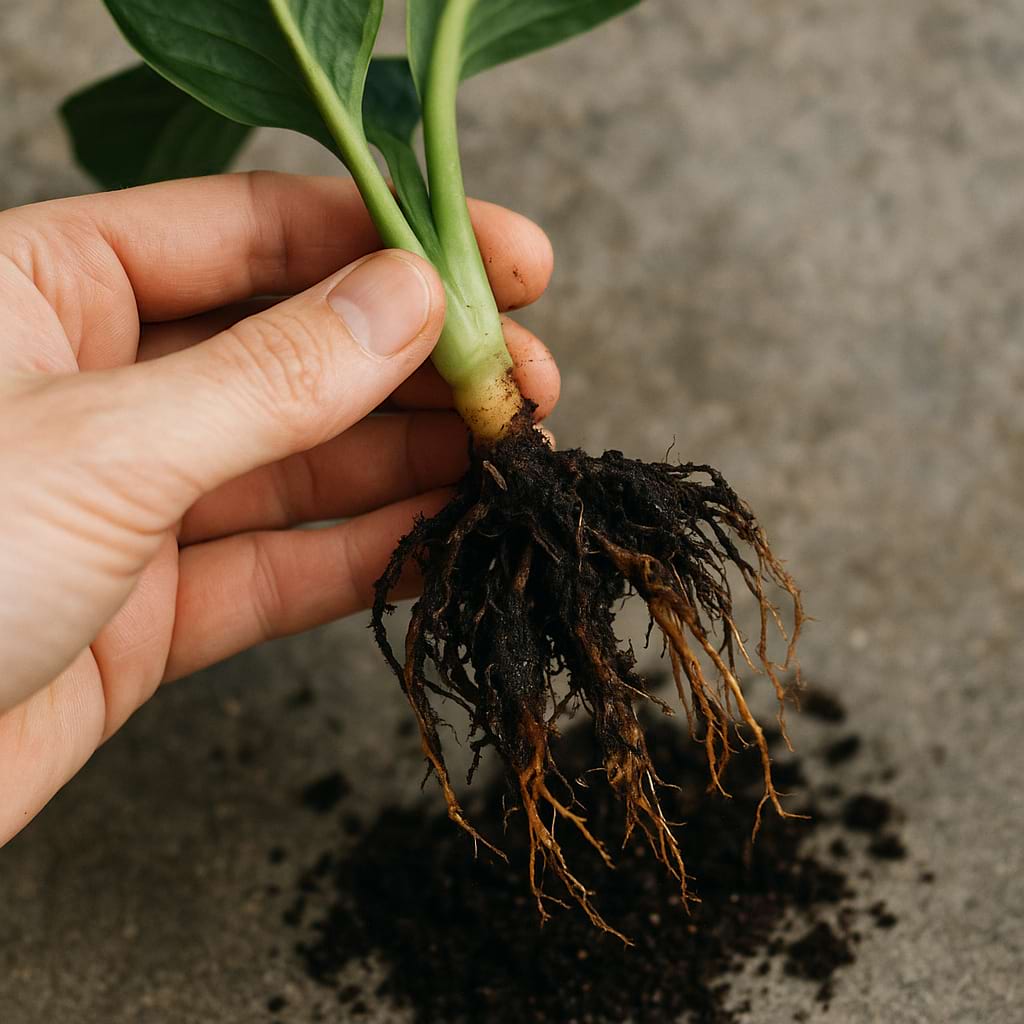
Root rot is the one that actually kills. Soil that stays wet suffocates the roots, fronds yellow from the base outward, and the rhizome turns soft. Unpot immediately, cut away every brown mushy root, repot in fresh airy mix, and water more sparingly.
Browning variegation is common on this plant. Pale striped tissue burns before green tissue does, so brown patches along the yellow band mean too much direct light, water sitting on the fronds in sun, or fertilizer salts. Get the plant out of any direct beam first.
Reversion shows as new fronds coming in solid green, which is the plant's answer to insufficient light. Move it closer to a north or east window and cut the green fronds at the base so they do not shade the variegated growth.
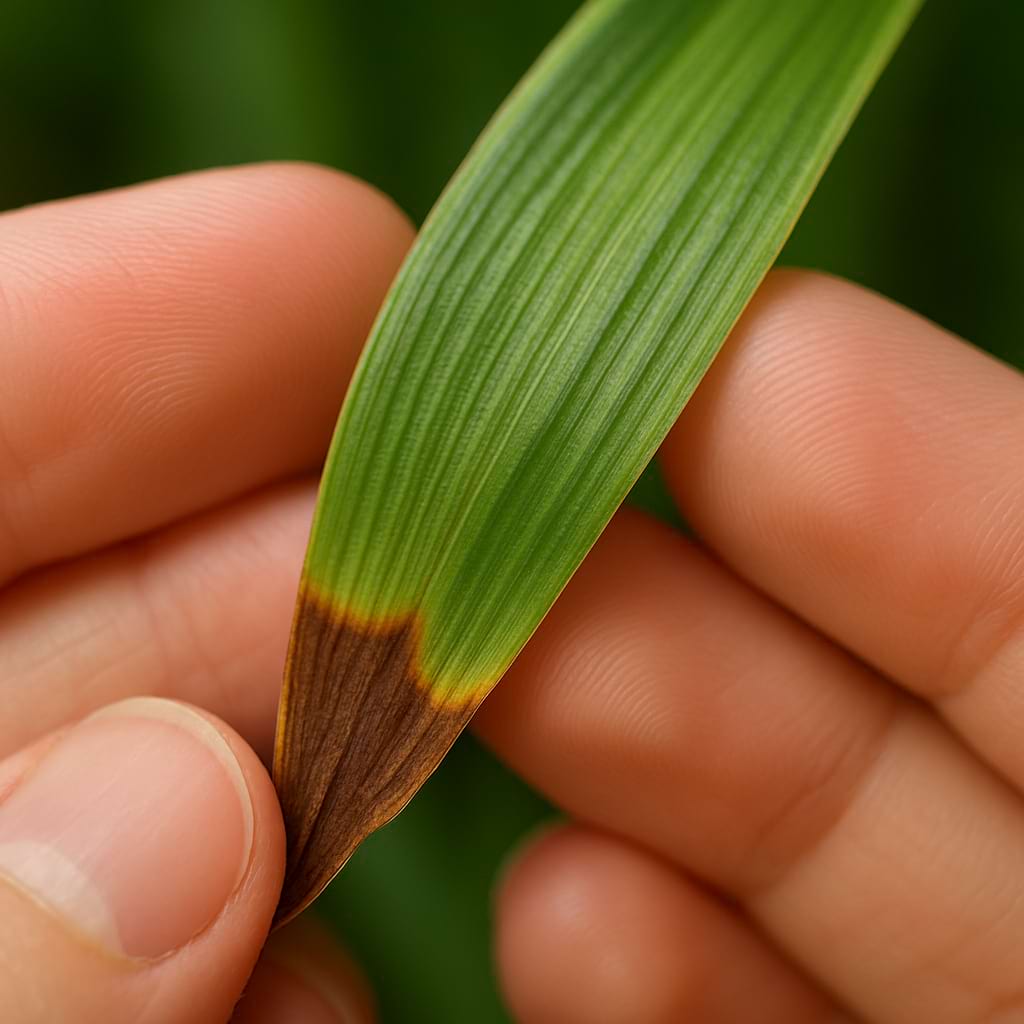
Brown crispy edges point to dry air or missed waterings, usually in winter near a heat source. Move it away from the heat, keep the soil evenly damp, and raise humidity.
Yellowing leaves on the oldest one or two fronds is ordinary turnover. Yellowing throughout the plant means overwatering nine times out of ten.
Stunted growth is hard to judge on a genuinely slow fern. If nothing new appears through a whole spring and summer, check whether the pot is full, the light is too dim, or the plant has gone years unfed.
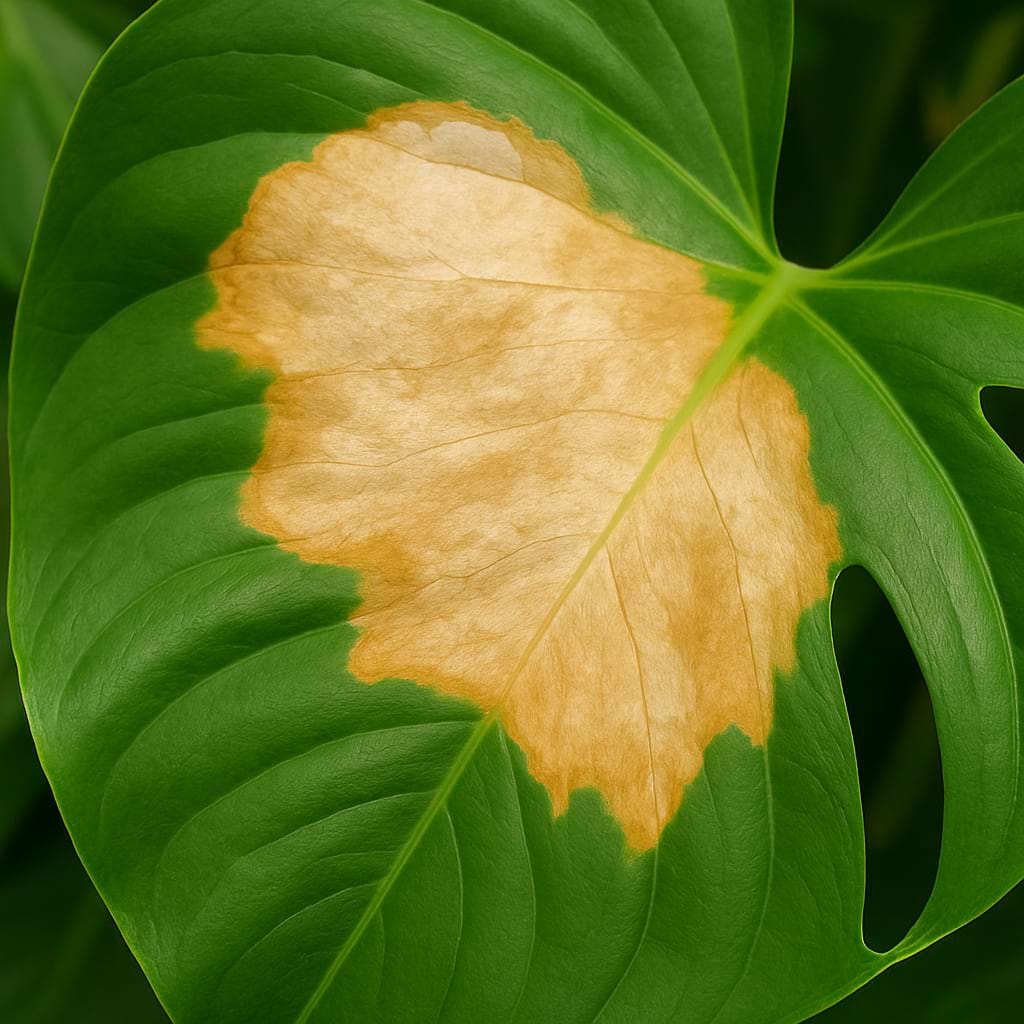
Sunburn and leaf scorch shows as bleached white or tan patches on the window-facing side. Those fronds will not recover, but new growth comes in clean once the plant is out of the sun.
🖼️ East Indian Holly Fern Display and Styling Ideas
The shape here is low and spreading rather than upright and fountaining, so this fern works best where you can look down onto the fronds and see the striping.
Solo Setups
A wide shallow bowl on a low table shows the plant off properly, fronds arching outward and the rhizome free to travel. Choose a plain container in a dark matte finish; the striped fronds are busy enough on their own. On a north windowsill against a pale wall, the yellow band reads from across the room.
Grouped Arrangements
Contrast is what this fern is for. Set it beside the near-black stems of a Korean Rock Fern or the deep green of a Tassel Fern and the chartreuse stripe jumps forward. It pairs well with the silver-and-burgundy fronds of a Japanese Painted Fern too. Avoid crowding it against other variegated plants, which flattens the effect.
Where Not to Put It
Keep it off sunny south and west windowsills, away from radiators, and out of the airflow from heating vents. A dim corner more than eight feet from a window keeps it alive but slowly bleeds the variegation out of it, which defeats the point of growing this fern.
🌟 East Indian Holly Fern Pro Care Tips
✅ Keep the rhizome at the surface. The creeping stem should sit level with or barely under the soil. Buried deep, it rots quietly and the plant declines with no obvious cause.
🪴 Choose wide over deep. A shallow bowl matches how this fern actually grows and avoids the cold, soggy layer of soil that a tall pot leaves under the roots.
🌗 Watch the newest fronds for light feedback. They are the plant's report card. Crisp yellow banding means the light is right; fading stripes mean move it closer to the window.
✂️ Cut reverted green fronds out. Solid green fronds photosynthesize more efficiently and will gradually dominate if you leave them. Remove them at the base.
❄️ Give it a cool winter. A bright room at 50 to 60°F with longer gaps between waterings gives the plant a proper rest and a much stronger spring flush.
🔍 Learn the spore pattern before you spray. Neat rows of brown dots under the fronds are reproduction, not infestation.
🚿 Rinse it monthly. A lukewarm shower clears dust from the glossy fronds, discourages spider mites, and takes two minutes.
🐌 Inspect it before it comes back indoors. If the plant summers outside, check under the pot and along the frond undersides for slugs and their eggs first.
❓ Frequently Asked Questions
Is the East Indian Holly Fern toxic to cats and dogs?
No. Like other true ferns in the Dryopteridaceae family, it is not considered toxic to cats, dogs, or people, and it does not appear on the ASPCA's toxic plant list. A pet that chews a frond may get a mild upset stomach from the fibrous tissue, but there is no poison involved.
Why is my East Indian Holly Fern losing its variegation?
Almost always light. The plant drops the yellow banding when there is not enough light to justify running tissue that cannot photosynthesize. Move it closer to a north or east window, cut out any fully green fronds at the base, and new growth should come back striped within a season.
Is this fern actually from the East Indies?
No, and that is the oddity of its name. Arachniodes simplicior is native to Japan, China, Korea, and Taiwan. The common name came from an old mix-up with the related Arachniodes aristata, whose range does reach into South and Southeast Asia. It stuck in the nursery trade and never got corrected.
How fast does the East Indian Holly Fern grow?
Slowly, and there is no way to hurry it. Expect a handful of new fronds each spring and summer and very little else. A young plant can take two to three years to look full, which is why buying a decent-sized specimen is usually money well spent.
Can I grow it outdoors?
Yes, in USDA zones 6 to 9. Give it a shaded, sheltered spot with rich, well-drained soil and it stays evergreen through most winters, browning only in a hard freeze. In colder zones, keep it as a houseplant that can spend summer outdoors in full shade and come back in before the first frost.
What are the brown dots under the fronds?
They are sori, the fern's spore clusters, and they are normal on a mature plant from late summer onward. Look at the arrangement: sori sit in orderly rows on either side of the leaflet midvein. Scale insects scatter randomly and can be scraped off; spores cannot.
Why are the tips of my fronds turning brown?
Dry air, dry soil, or both, and winter heating is the usual culprit. Move the plant away from radiators and vents, keep the soil evenly damp rather than swinging between wet and bone dry, and add a humidifier if your room drops below about 35 percent humidity.
Is the East Indian Holly Fern the same as a regular Holly Fern?
No. The true Holly Fern is Cyrtomium falcatum, a different genus with large, sickle-shaped, glossy leaflets and no variegation. The East Indian Holly Fern has smaller, more numerous leaflets on a broad triangular frond, plus the yellow stripe. They share a common name only because both have spiny-toothed leaflet margins.
ℹ️ East Indian Holly Fern Info
Care and Maintenance
🪴 Soil Type and pH: Rich, humusy, freely draining mix with plenty of organic matter; pH 5.5-6.5.
💧 Humidity and Misting: Comfortable at 40 to 60 percent; the leathery fronds handle ordinary room air better than most ferns.
✂️ Pruning: Cut spent fronds at the base as they tire; tidy the whole plant in early spring before new growth pushes up.
🧼 Cleaning: Rinse the fronds under a lukewarm shower every month or two; the leathery surface takes a soft cloth wipe if you prefer.
🌱 Repotting: Move to a wider pot when fronds start pushing up against the rim, usually every 2 to 3 years.
🔄 Repotting Frequency: Every 2-3 years
❄️ Seasonal Changes in Care: New fronds unroll from spring into midsummer; growth stalls in winter, when the plant wants less water and a cooler room.
Growing Characteristics
💥 Growth Speed: Slow
🔄 Life Cycle: Evergreen perennial fern
💥 Bloom Time: Does not bloom; kidney-shaped spore clusters form under mature fronds in late summer
🌡️ Hardiness Zones: 6-9 outdoors; a houseplant everywhere colder
🗺️ Native Area: Shaded woodland floors and stream valleys in Japan, China, Korea, and Taiwan, despite the misleading common name
🚘 Hibernation: Rests through winter; a cooler room and lighter watering set up a stronger spring flush
Propagation and Health
📍 Suitable Locations: North and east windows, shaded bathrooms, low-light corners near a window, shade borders and woodland gardens
🪴 Propagation Methods: Divide the creeping rhizome in early spring; spores are possible but slow.
🐛 Common Pests: Fungus Gnats, Spider Mites, Scale Insects, Mealybugs, Slugs Snails
🦠 Possible Diseases: Root rot in soggy soil, fungal leaf spot in still humid air, occasional crown rot where water pools
Plant Details
🌿 Plant Type: Evergreen terrestrial fern with a slowly creeping rhizome and broad triangular fronds
🍃 Foliage Type: Leathery, glossy, once- to twice-pinnate triangular fronds with sharply toothed holly-like leaflet edges
🎨 Color of Leaves: Deep green with a broad chartreuse to butter-yellow band running along the center of each pinna
🌸 Flower Color: N/A
🌼 Blooming: Does not bloom; produces spores in kidney-shaped sori on the undersides of fertile fronds
🍽️ Edibility: Not edible
📏 Mature Size: 12-24 inches indoors
Additional Info
🌻 General Benefits: Pet-safe, year-round variegated color without flowers, thrives in shade too dim for most houseplants
💊 Medical Properties: None of any relevance to indoor growers
🧿 Feng Shui: A soft, spreading shape for a dim north corner; the yellow stripe brings warmth to spaces that get no sun
⭐ Zodiac Sign Compatibility: Pisces
🌈 Symbolism or Folklore: Quiet resilience and old lineage; ferns have carried associations with shelter and endurance for centuries
📝 Interesting Facts: The name is a botanical accident. This fern is native to East Asia, not the East Indies, and picked up its common name through an old mix-up with the related Arachniodes aristata. It is also not a true holly fern, which is Cyrtomium; the shared name comes purely from the spiny-toothed leaflets. The variegation is unusual among hardy ferns, which is why 'Variegata' is one of the few evergreen ferns grown specifically for foliage color.
Buying and Usage
🛒 What to Look for When Buying: Look for fronds with a clear, well-defined yellow band and a firm glossy surface. Skip plants where the variegation has faded to plain green across most fronds, where fronds are limp, or where the soil smells sour.
🪴 Other Uses: Shade borders, woodland underplanting, cut foliage for arrangements, container groupings on shaded porches
Decoration and Styling
🖼️ Display Ideas: Wide low bowls where the creeping rhizome can spread, dim north corners, grouped with dark-leaved ferns that make the yellow stripe pop
🧵 Styling Tips: Give it a wide shallow pot rather than a deep one, and choose a plain dark container; a busy pot fights with the striped fronds.
🪴 See also 🪴
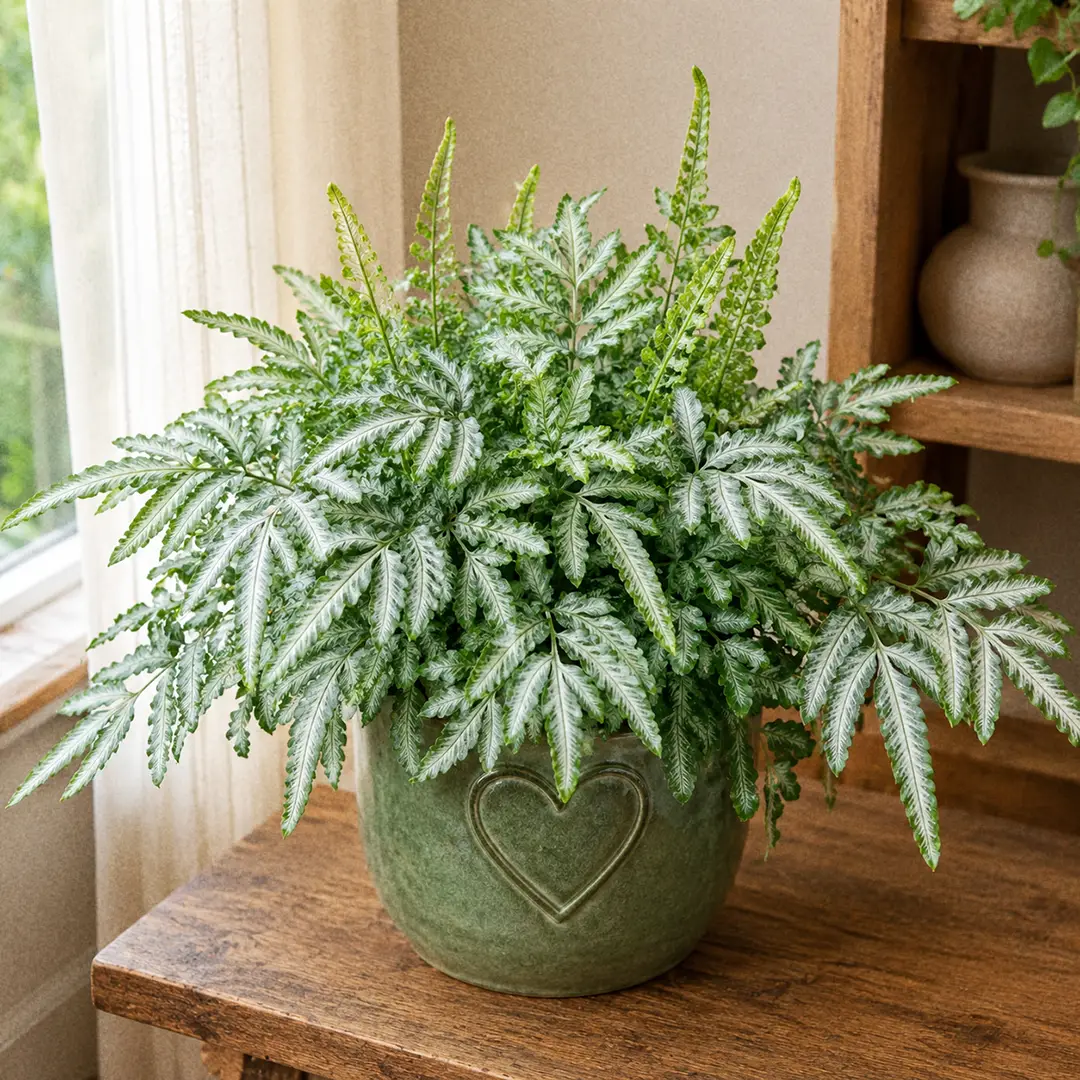
Complete Guide to Silver Lace Fern Care and Growth
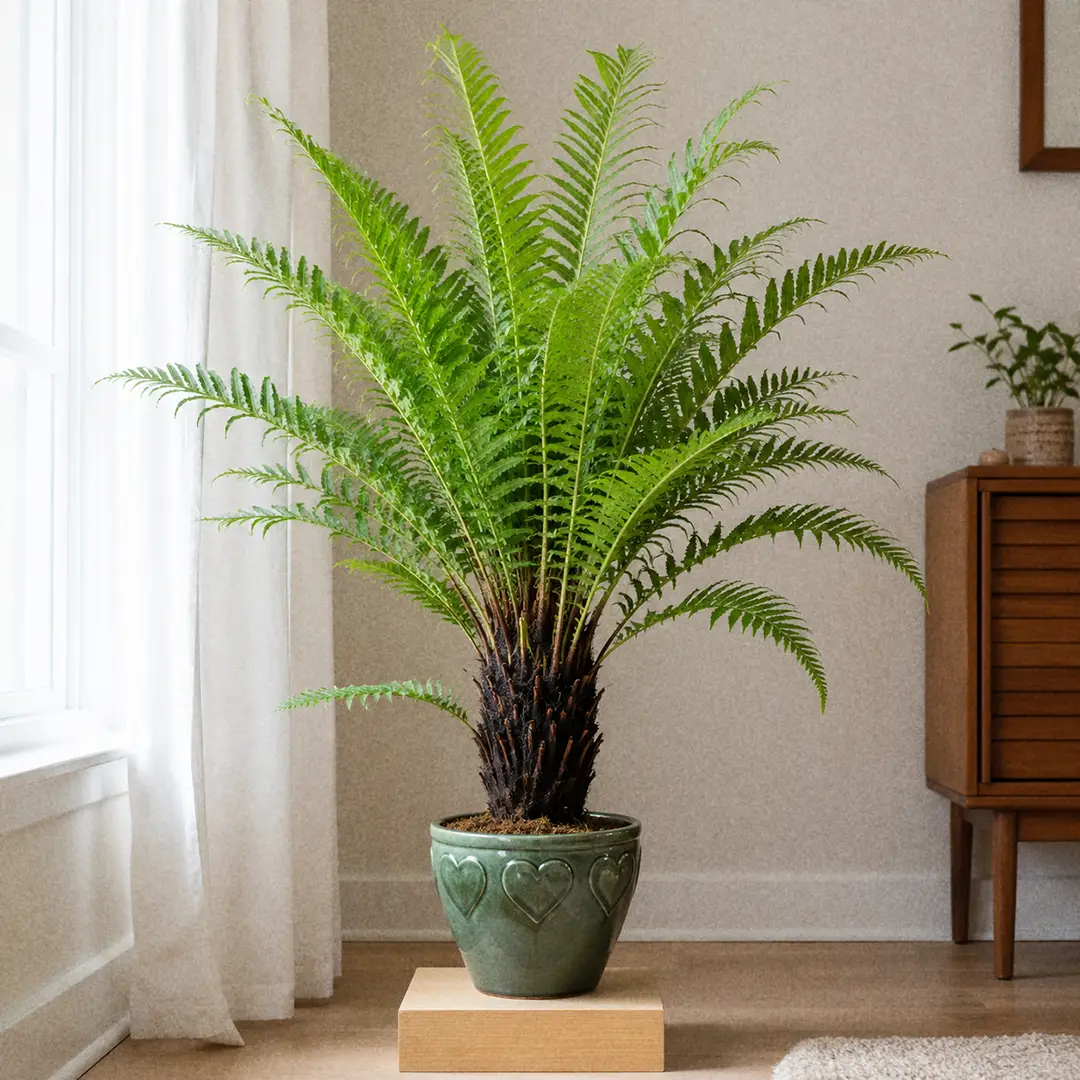
Complete Guide to Silver Lady Fern Care and Growth
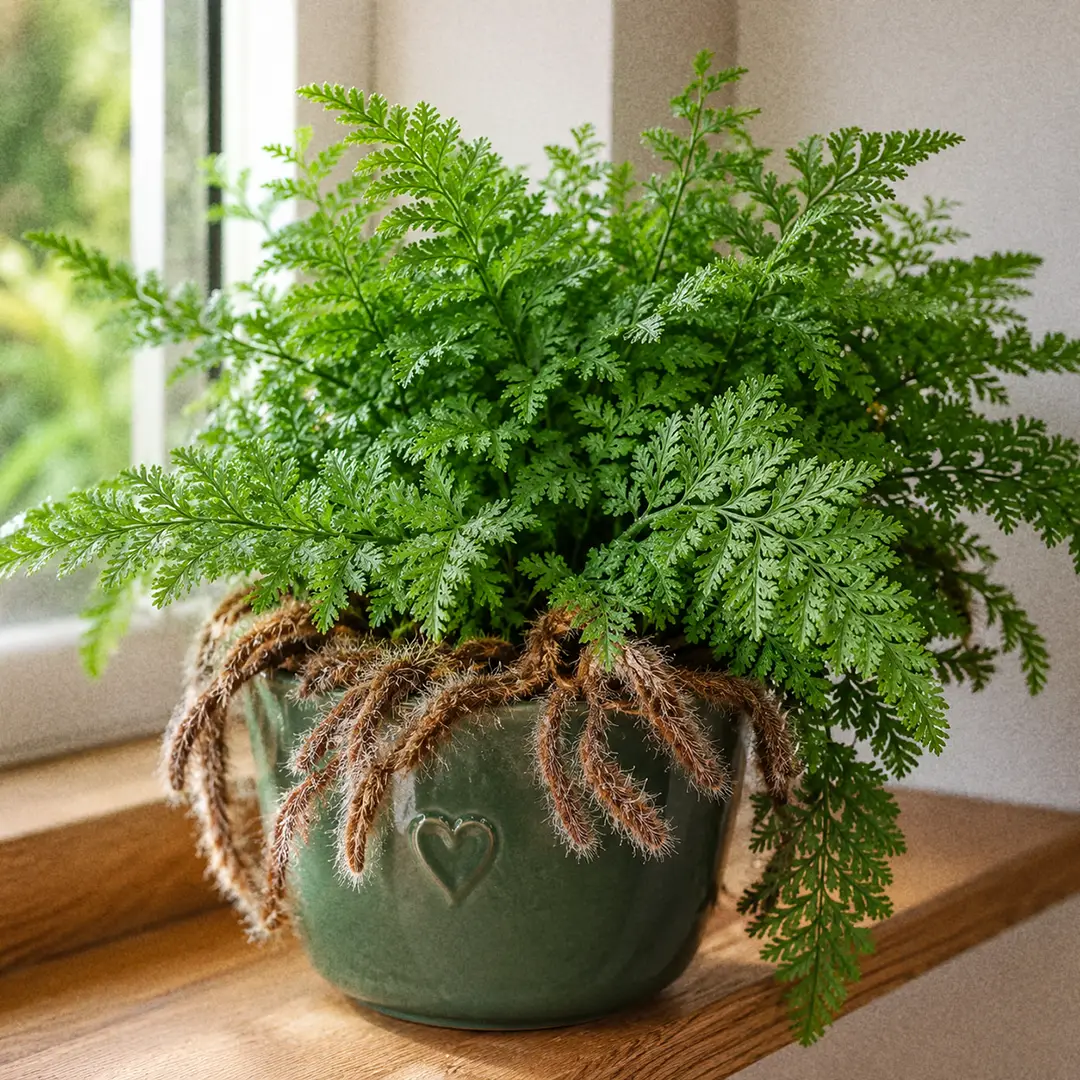
Complete Guide to Squirrel's Foot Fern Care and Growth
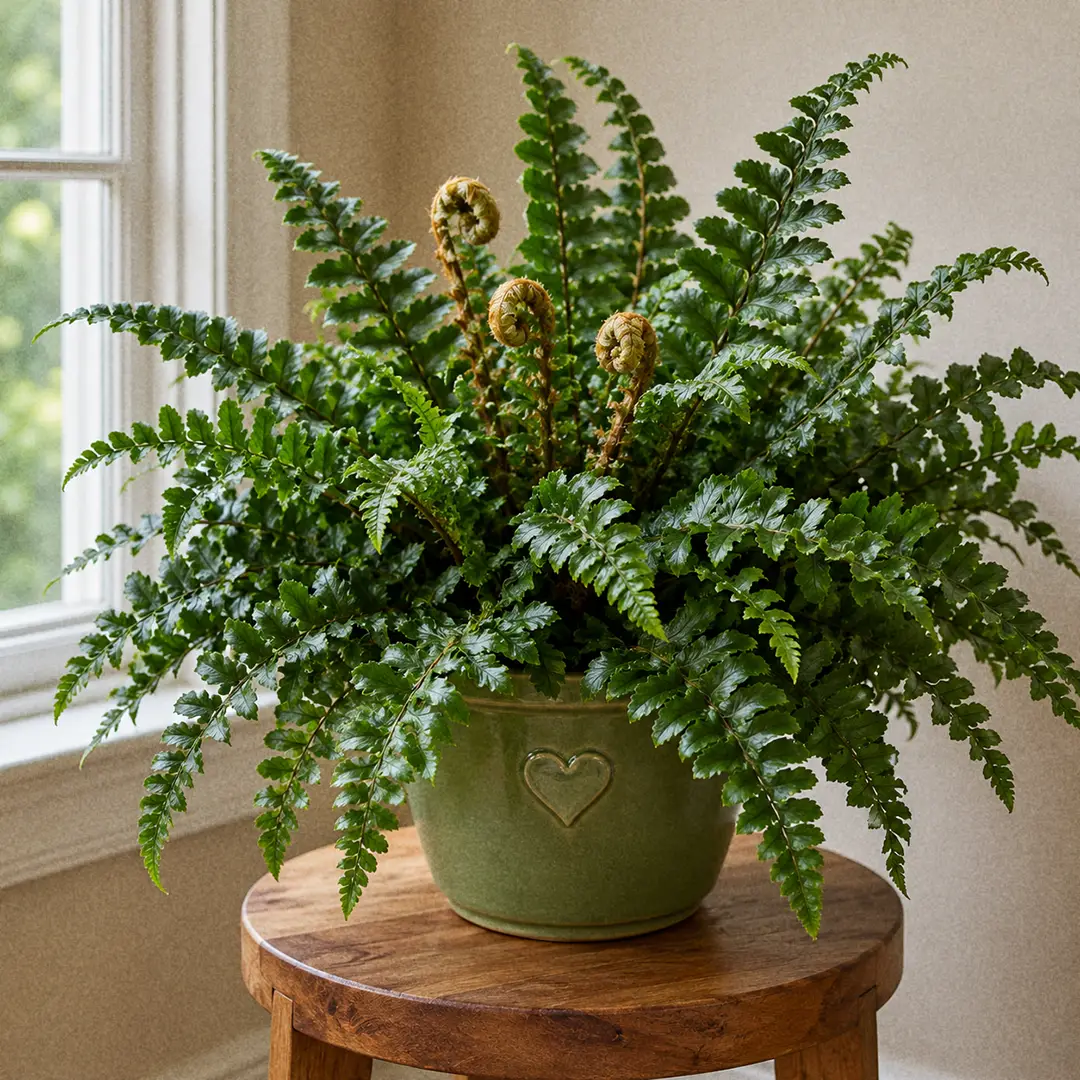
Complete Guide to Tassel Fern Care and Growth
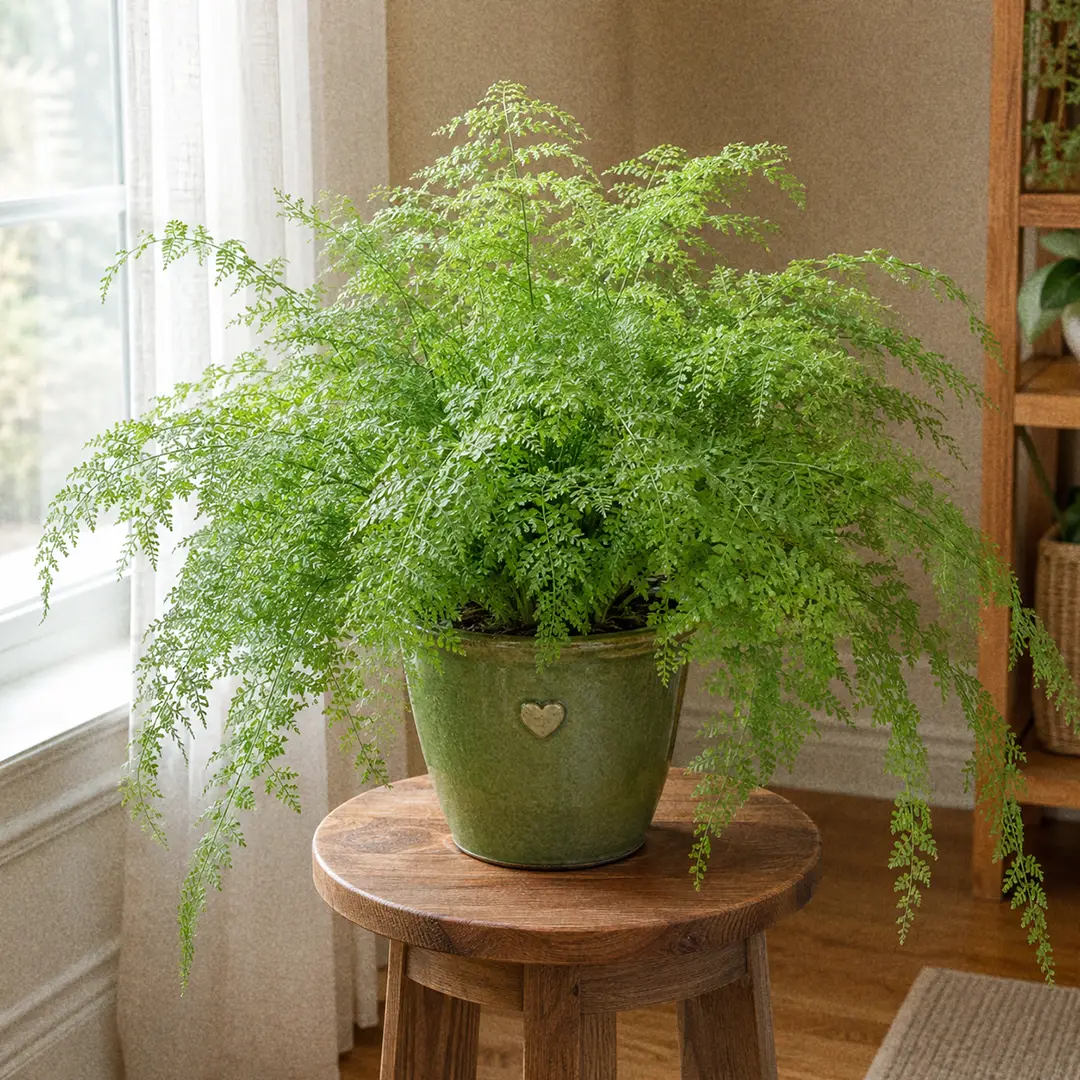
Complete Guide to Mother Fern Care and Growth
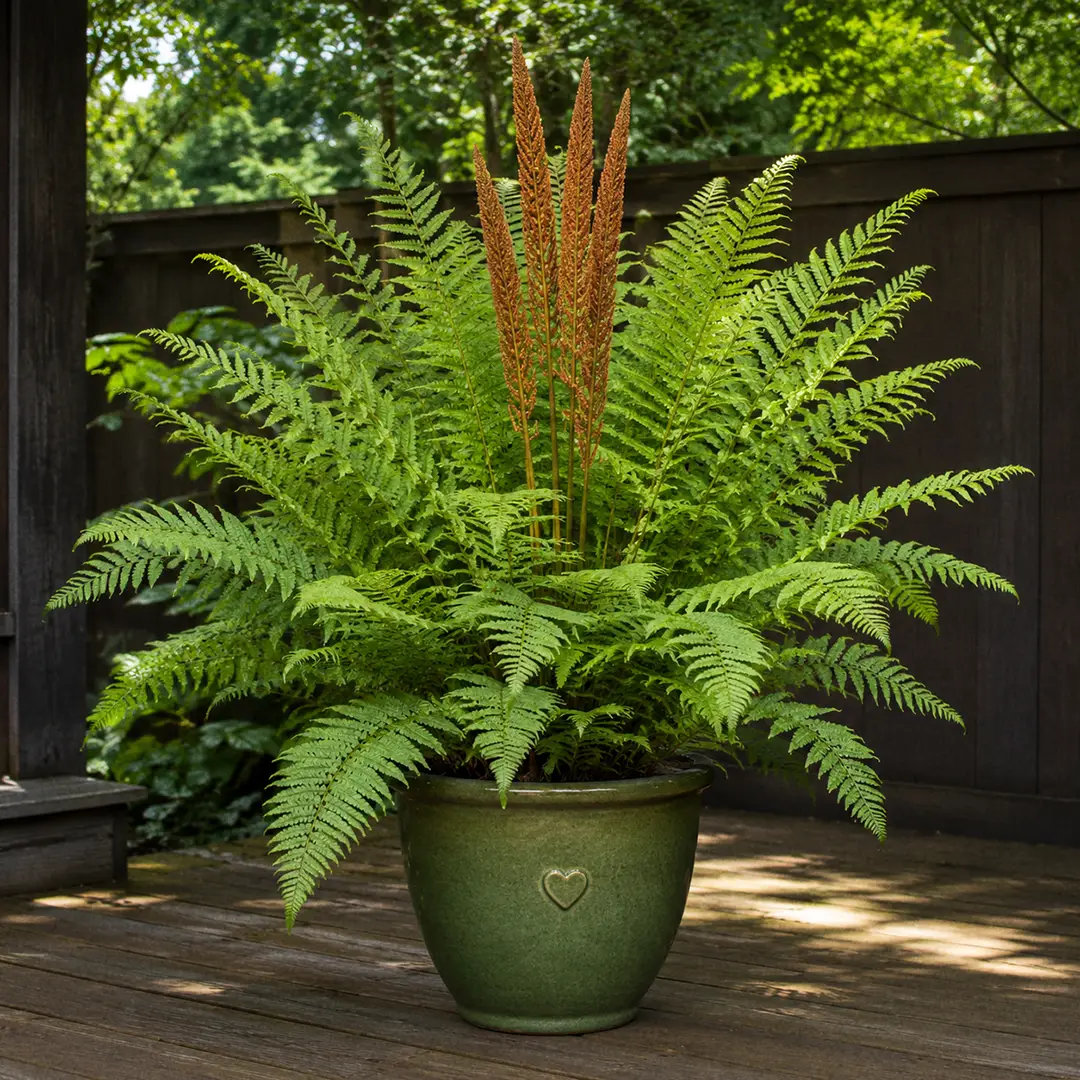
Complete Guide to Cinnamon Fern Care and Growth
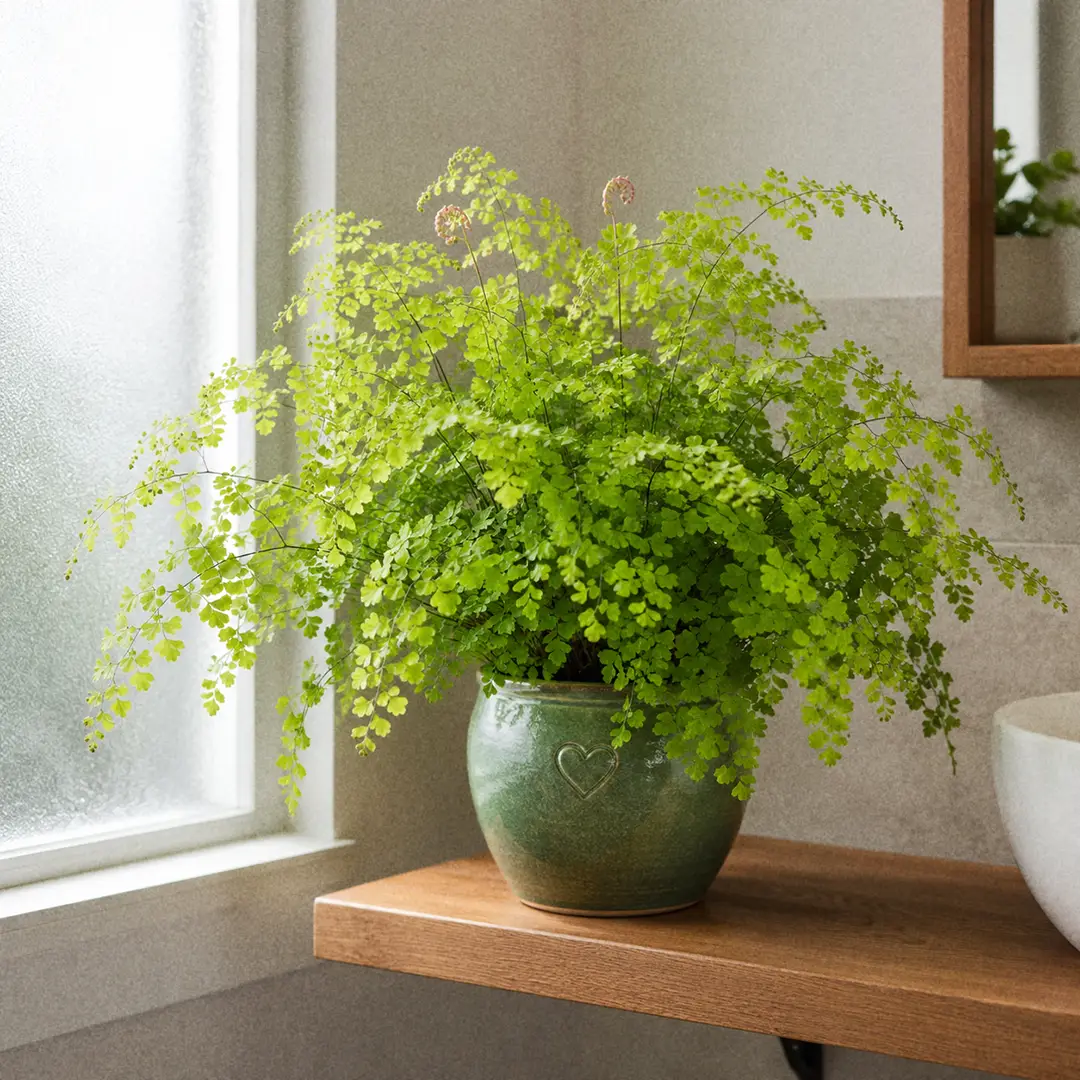
Complete Guide to Delta Maidenhair Fern Care and Growth
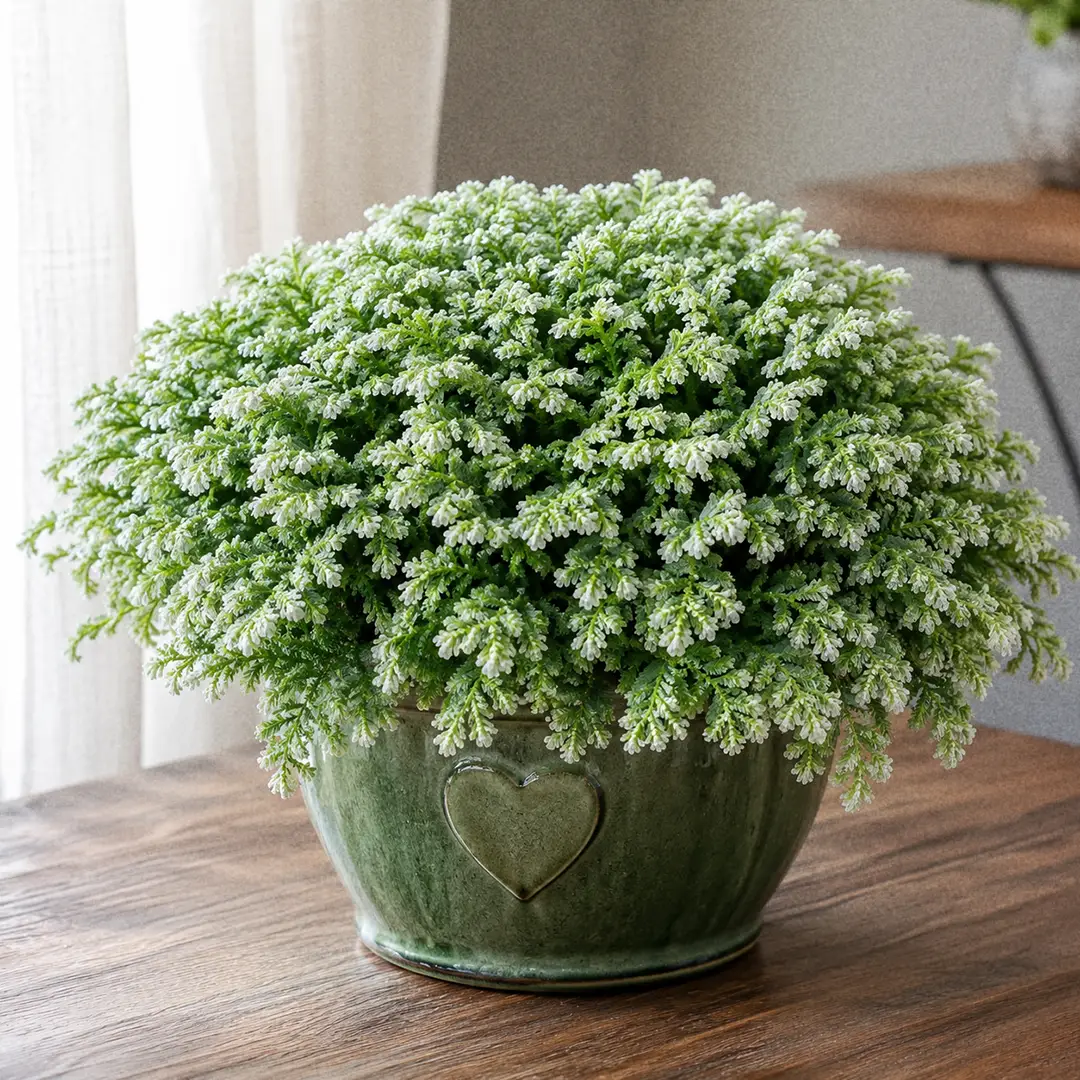
Complete Guide to Frosty Fern Care and Growth
Complete Guide to Hart's Tongue Fern Care and Growth
Complete Guide to Korean Rock Fern Care and Growth

Houseplant101 Forum
Questions & Comments
Ask a question, share your plant experience, or help other plant owners.
Comments are temporarily unavailable.
Open the Houseplant101 ForumNo comments yet
Be the first to ask a question or share your experience about this page.
Log in or create an account
Comments use your Houseplant101 Forum account, but you can stay on this page.
Create a new account