
Silver Lady Fern
Blechnum gibbum
Dwarf Tree Fern, Miniature Tree Fern, Silver Lady, Lomaria gibba, Lomariocycas gibba


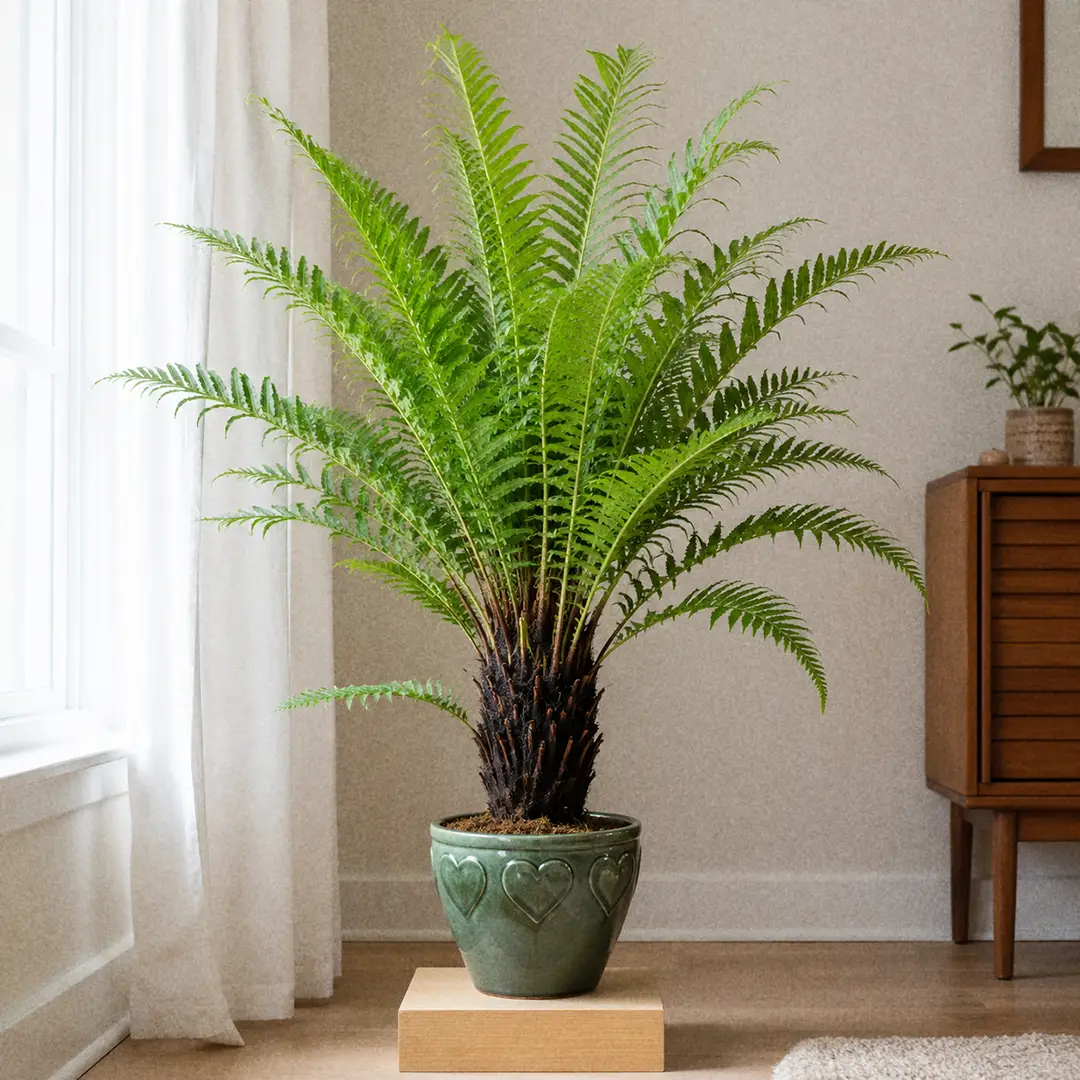
The Silver Lady Fern (Blechnum gibbum) is a true tree fern scaled down to fit a living room, building a slender black trunk under a perfectly symmetrical rosette of arching fronds. It gives you the architecture of a rainforest tree fern at about three feet tall, provided you keep the soil damp and the air from getting too dry.
📝 Silver Lady Fern Care Notes
🌿 Care Instructions
⚠️ Common Pests
📊 Growth Information
🪴 In This Guide 🪴

📺 Silver Lady Fern Video Guide

☀️ Silver Lady Fern Light Requirements (Bright Indirect)
This fern grows on the forest floor in Fiji and New Caledonia, under a canopy that filters everything before it arrives. It wants plenty of light, just none of it direct. That catches people out when they read "shade plant" and pick an actually dark corner.
The Sweet Spot
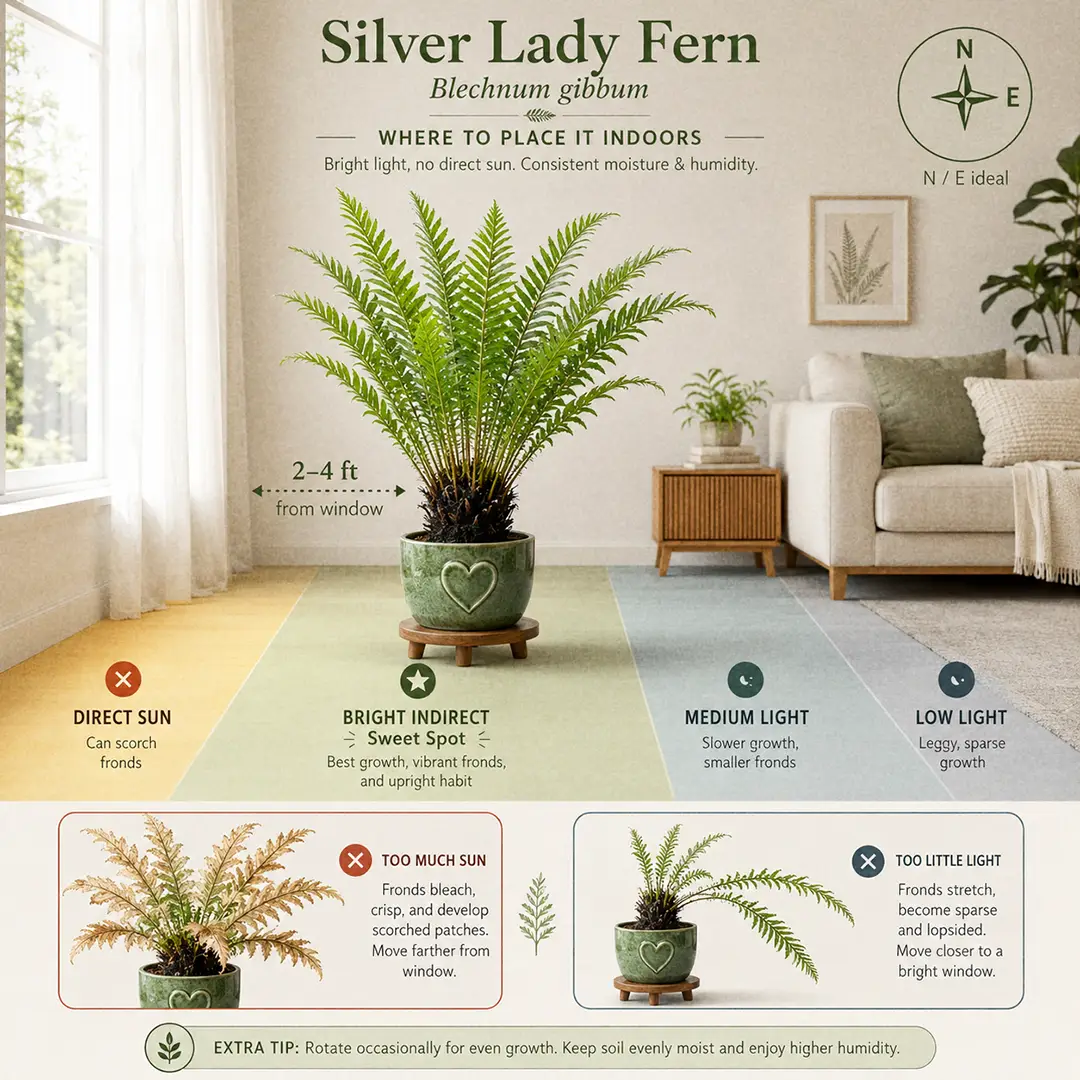
An east window is the easy answer: a couple of hours of weak morning sun, then bright shade all day. North windows work year round and carry no scorch risk at all. In a south or west room, sit the plant four to six feet back from the glass or behind a sheer curtain. You have it right when new fronds come up as long as the old ones. See our light guide.
Too Little Light
A dim corner does not kill this fern, it takes it apart slowly. New fronds come up on long stretched stalks with fewer leaflets, leaning toward whatever light there is until the rosette goes lopsided. Crown growth drops to two or three fronds a year rather than eight or ten. More than seven feet from a window, move it closer or add a grow light on a ten hour timer.
Too Much Light
Direct sun through glass ruins this plant faster than anything else. An hour of summer afternoon sun bleaches the exposed fronds to a papery tan, and those leaflets never green up again. Fern tissue is thin with no waxy armour, so damage takes hours rather than days. A corner fully shaded in December can catch two hours of low sun in March.
💧 Silver Lady Fern Watering Guide (Evenly Moist)
Water is where this plant is won or lost. It comes from a habitat that gets rain most weeks of the year and has no drought strategy at all, so a bone-dry root ball is not a setback, it is damage.
Watering Frequency
Aim for soil that feels like a wrung-out sponge: damp when you press a finger in, never wet enough to squeeze water out. In a warm bright room that means every three to five days in summer and every seven to ten in winter. Check by touch rather than by calendar, since pot size and room temperature shift the interval more than you would guess. A moisture meter helps if damp is hard to judge in a peaty mix.
How to Water
Pour slowly onto the soil around the base of the trunk until water runs from the drainage holes, then empty the saucer. Never pour into the middle of the rosette. Water sitting in the crown in a cool room is how crown rot starts, and once the growing point goes soft the plant cannot make another one.
Bottom watering suits this fern well: stand the pot in two inches of water for twenty minutes, then lift and drain. It wets the root ball evenly and keeps the crown dry.
Water Quality Matters
Ferns are sensitive to what is in the water. Fluoride and chlorine build up in the leaflet tips and show as fine brown edging even when your routine is perfect. If your tap water is hard and the tips keep browning, switch to rainwater, filtered water, or tap water left standing overnight. Softened water is the worst choice, since it swaps calcium for sodium and the salt stays in the pot.
Signs of Trouble
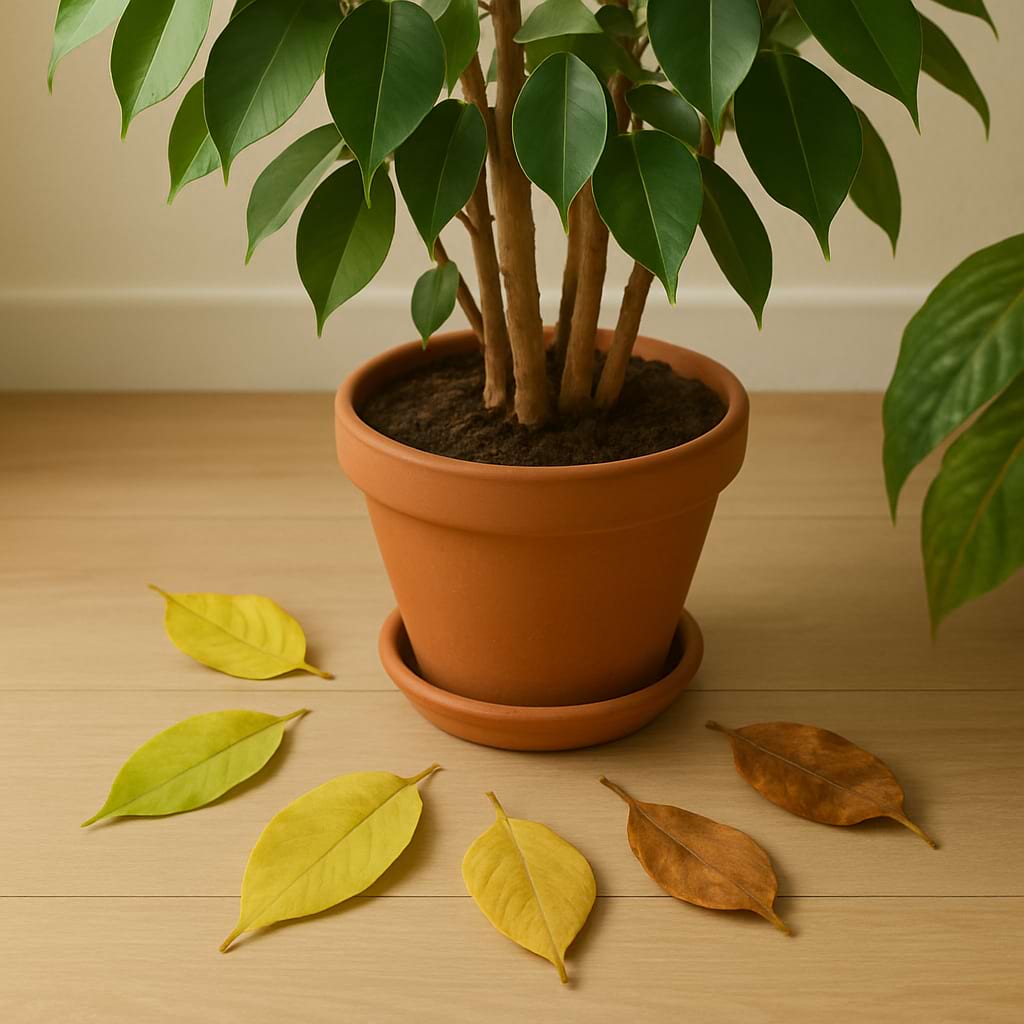
Underwatering shows within a day: fronds go limp and droop over the pot edge, then the tips crisp. Water immediately and the limp fronds recover, but the crisped parts do not. Overwatering runs slower, yellowing from the oldest fronds inward, with soil that stays wet for over a week. More in our watering guide.
🪴 Best Soil for Silver Lady Fern (Acidic and Airy)
Getting the soil right is what makes the watering easy. The mix has to hold moisture without turning into a swamp, a balance bagged compost does not strike on its own.
What the Soil Needs
Three things. It must hold water, since drying out is the main risk. It must stay open enough for air to reach the roots, since ferns rot fast in dense wet soil. And it should be acidic, roughly pH 5.0 to 6.5, because Blechnum ferns dislike lime. Skip any mix with added lime or dolomite.
DIY Soil Mix
Two parts coco coir or peat, one part fine orchid bark, one part perlite, and one part leaf mould if you have it. The coir carries the moisture, the bark and perlite hold the structure open, and the leaf mould brings the woodland character this fern grew up with. A tablespoon of horticultural charcoal keeps a long-damp pot sweet.
Pre-Made Options
A bagged houseplant or fern compost works once you cut it with a third perlite and a third fine bark. Ericaceous compost makes a good base too, since the acidity suits it. What fails is multipurpose compost straight from the bag: within a season it packs into an airless block that holds water at the bottom and sheds it off the top. Our soil guide covers reading a mix by hand.
🍼 Fertilizing Silver Lady Fern (Little and Weak)
Ferns are light feeders with fine, salt-sensitive roots. Underfeeding gives you a slightly slower plant. Overfeeding gives you scorched frond tips, which is the harder problem to undo.
When and How Often
Feed once a month from April through September, while new croziers are unrolling from the crown. Stop entirely from October through March, when the plant is barely growing and unused salts just sit in the mix. Skip feeding for two months after a repot. Always water first, so nothing concentrated touches dry roots.
What to Use
A balanced liquid houseplant fertilizer at half the label strength is all it wants. A 10-10-10 or 20-20-20 is fine, and dilute seaweed suits it particularly well because it feeds gently. Slow-release pellets are risky on ferns, since you cannot dial them back once they are in the pot. See our fertilizing guide and fertilizer roundup.
Over-Fertilizing Signs
The first sign is brown scorching on the tips of the newest fronds, easy to mistake for dry air. A white crust on the soil surface or pot rim tells them apart. Flush the pot with three pot volumes of plain water and skip the next two feeds.
🌡️ Silver Lady Fern Temperature Range
Warm and steady, with no sudden swings. This is a tropical island plant with none of the cold tolerance hardy garden ferns take for granted.
Ideal Range
Aim for 60 to 75°F (16 to 24°C) year round, which is ordinary room temperature in most homes. Growth stops below about 55°F (13°C), and under 50°F (10°C) you risk damage to the fronds and the crown. There is no frost tolerance at all. Above 80°F (27°C) the plant loses water faster than the roots supply it, so heat and dry air together brown the tips even in damp soil.
Drafts and Heat Sources
A radiator under a plant stand is the classic winter mistake. The heat itself is not really the problem. What does the damage is the column of bone-dry air rising past thin fern fronds all evening. Air conditioning vents are worse: cold and dryness at once. Move the plant in autumn before the heating goes on, not in December after the tips have turned.
💦 Silver Lady Fern Humidity Requirements (60 Percent Plus)
If watering is the first thing that makes this plant work, humidity is the second. It decides whether you get clean green edges or a permanent brown fringe.
Ideal Humidity
Sixty to eighty percent is the target, well above what a heated home offers in winter. Fifty percent is workable and most plants look fine there. Below forty the frond edges start browning, and below thirty they brown fast. A cheap hygrometer is worth buying, because dry-air damage and underwatering damage look nearly identical and the fix for each is different.
Easy Humidity Boosters
A room humidifier is the only method that reliably moves the reading in a dry home, and for this plant in winter I would call it close to essential. Grouping plants raises the local air a few points at no cost. A bright bathroom beats all of it, since the shower does the work twice a day. See our humidity guide.
Why Misting Is Not Enough
Misting raises humidity for about ten minutes, then the water evaporates. Twice a day still leaves the plant in dry air for twenty-three hours out of twenty-four. It also wets the fronds and crown, which in still cool air invites fungal leaf spot. Mist the air around the plant rather than the foliage.
🌸 Does the Silver Lady Fern Bloom?
No, and no fern does. Ferns predate flowering plants by roughly two hundred million years and reproduce by spores, so there is no bloom to wait for and nothing to trigger.
Spores Instead of Flowers
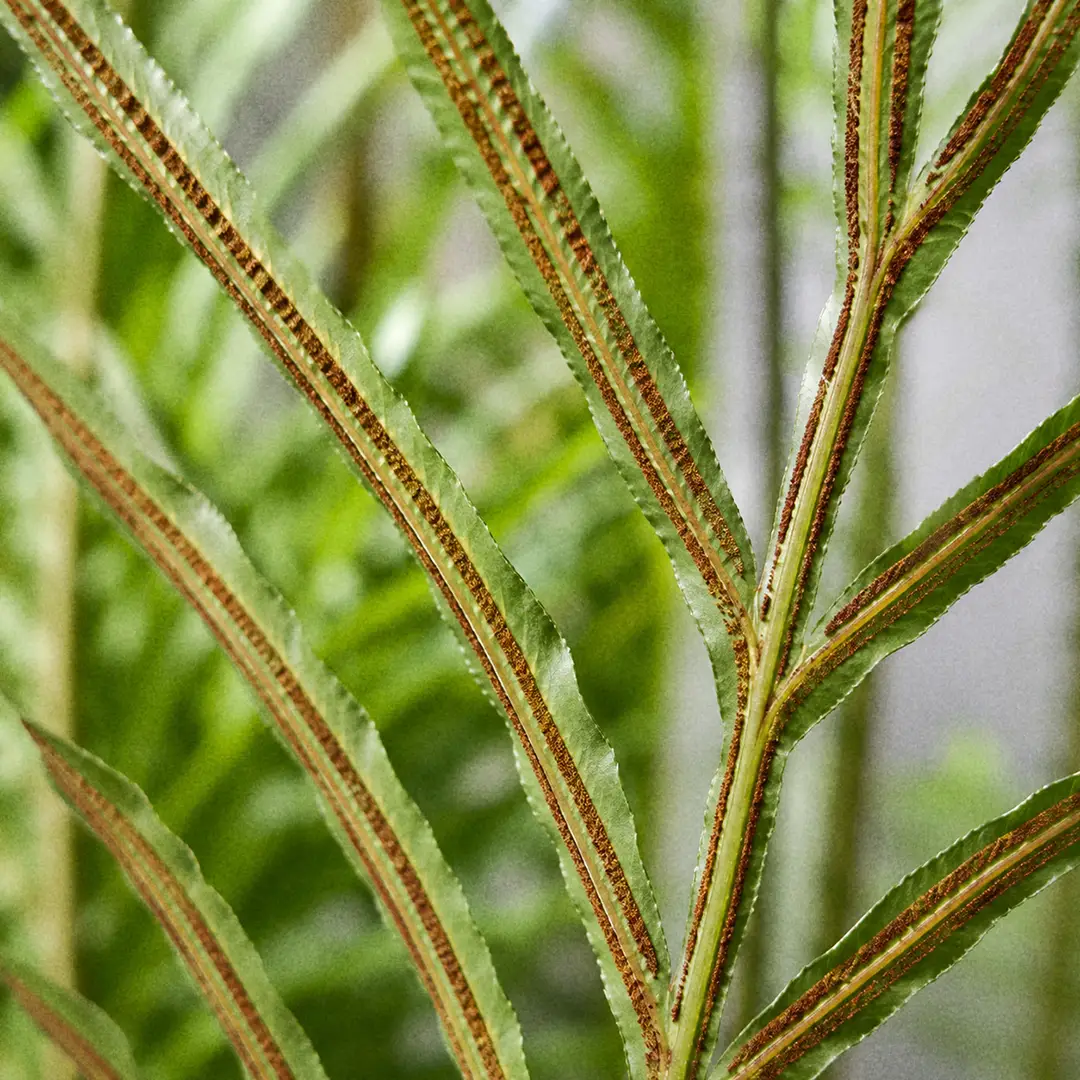
Blechnum ferns carry their spores in a way worth knowing about, because it looks alarming the first time. Instead of scattered brown dots, the sori form two unbroken lines running the length of each leaflet, one either side of the midrib. They start pale, ripen to rust brown, and eventually release a fine dust onto the shelf below.
The Two Kinds of Fronds
This fern makes two shapes of frond, and they look like they belong to different plants. Nothing confuses new owners more. The sterile fronds are the ones you bought it for: broad, arching, glossy, with wide leaflets. The fertile fronds stand upright in the centre of the rosette with leaflets narrowed almost to threads, which makes them look starved. They are not. Narrow leaflets are simply what a Blechnum grows when the job is releasing spores.
Spores or Scale Insects?
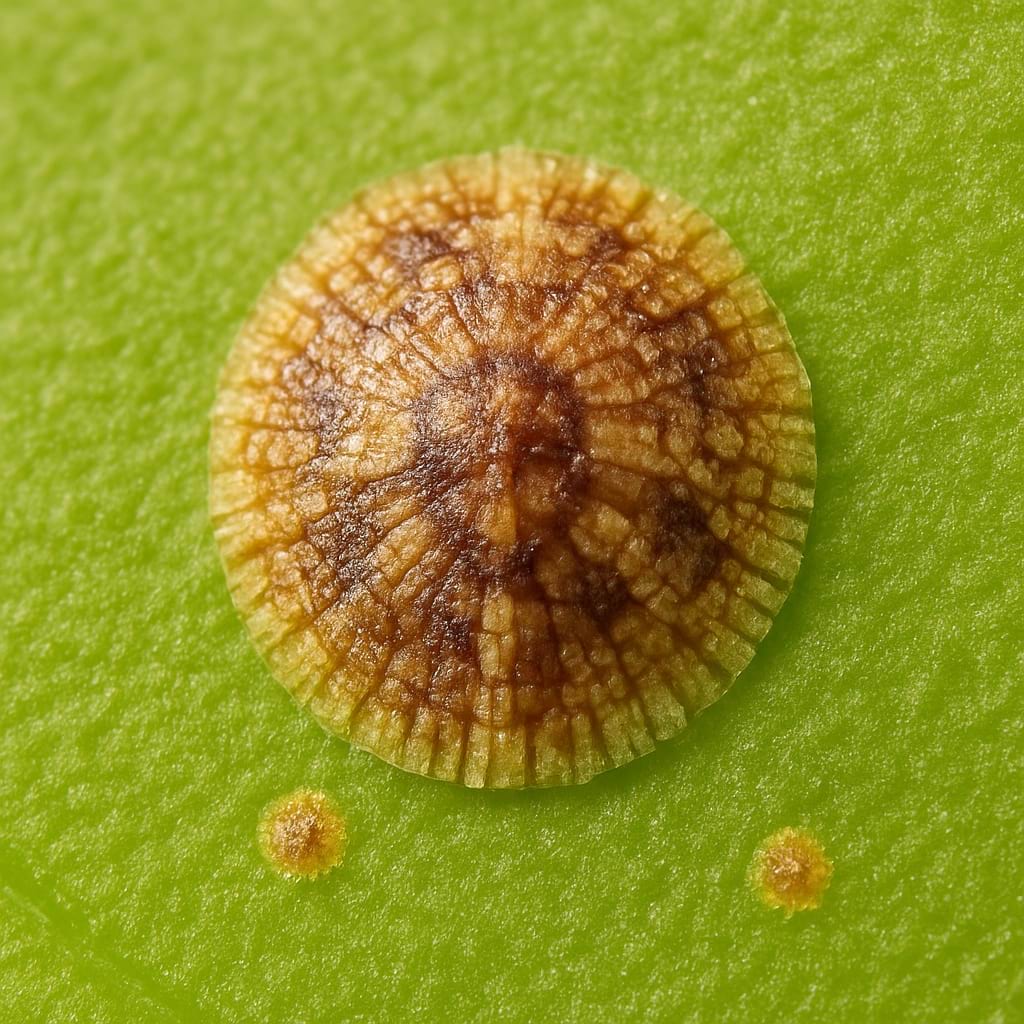
New owners see brown lines on the undersides and reach for the pest spray. Check the pattern first. Sori sit in even lines parallel to the midrib, repeat identically on every fertile frond, and cannot be scraped off. Scale insects are scattered and irregular, favour the stalks and midribs, and lift away with a fingernail.
🏷️ Silver Lady Fern Types and Lookalikes
Almost every Silver Lady Fern sold is the same plant under a pile of labels, and most of the confusion is with unrelated ferns that share a word in their name.
Blechnum gibbum 'Silver Lady'
The named cultivar, and almost certainly what you have. It was selected as a compact, faster-establishing form that tops out around two to three feet indoors with a very even rosette. The straight species grows taller over many years, but young plants of either are hard to tell apart and the care is identical. Older nursery labels say Lomaria gibba, while recent botanical sources use Lomariocycas gibba.
That Trunk Is Not Wood
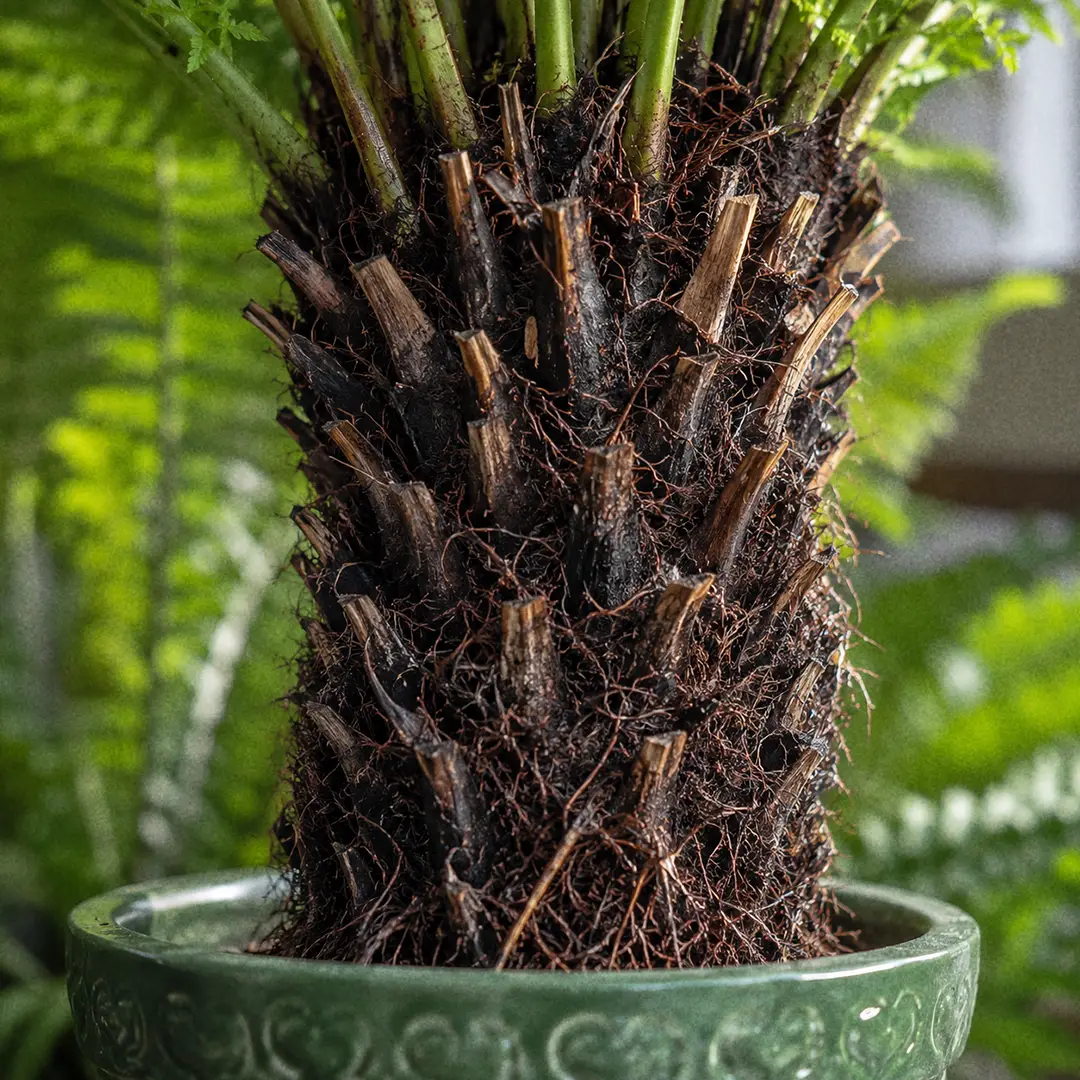
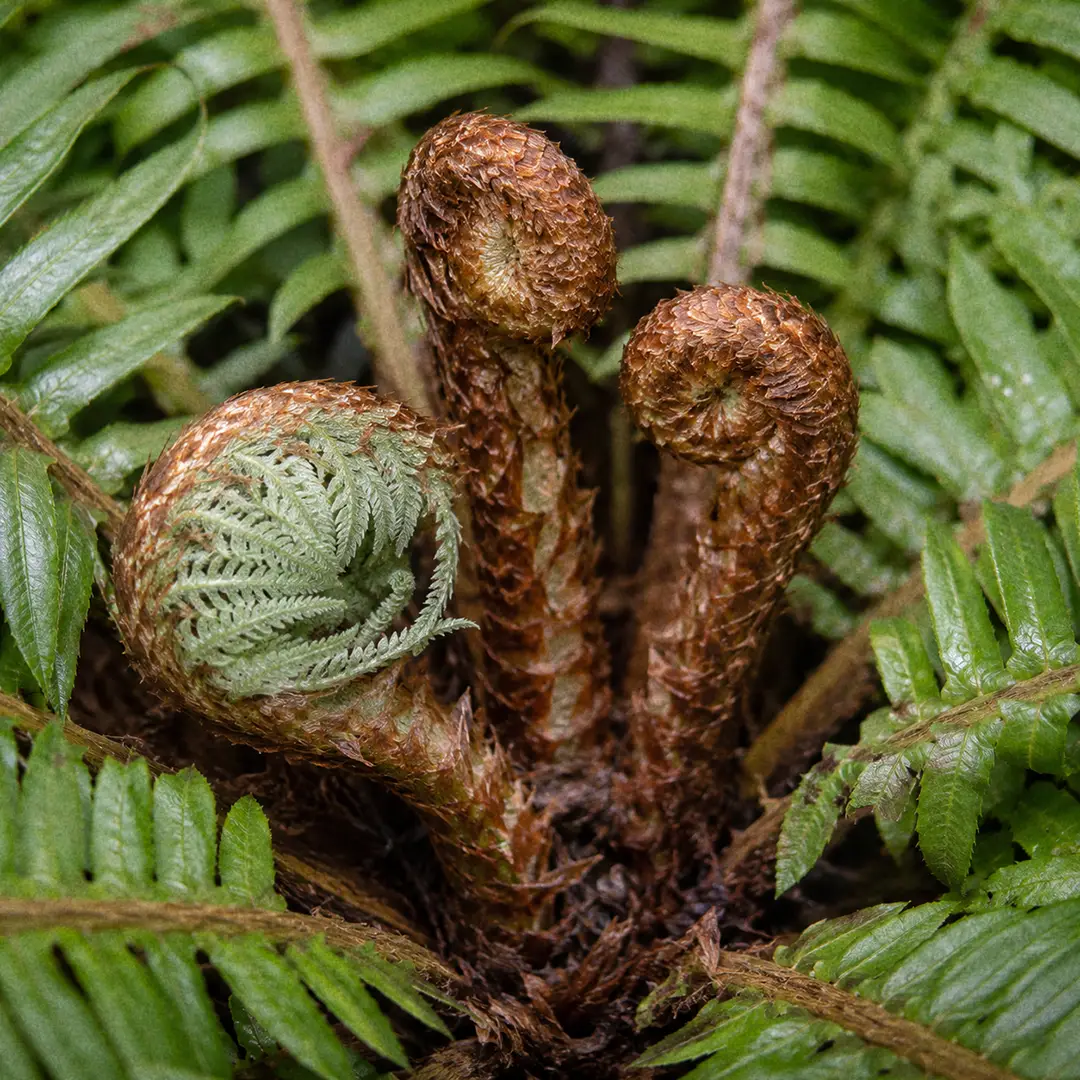
The trunk of a tree fern is a vertical rhizome, not a woody stem. Every frond the plant has ever grown leaves a hard black base behind as it dies, and those bases stack into a scaly column wrapped in a felt of fine roots. This matters for care: it grows from the top only and cannot heal a wound. It climbs about an inch a year, which is why a specimen with a foot of trunk costs what it does.
Not the Same as a Lady Fern
Two names collide here and the plants have nothing in common. The Lady Fern (Athyrium filix-femina) is a hardy deciduous woodland fern with lacy twice-cut fronds and no trunk, and it dies back to the ground every winter. Silver Lady is a tropical evergreen tree fern with simple once-cut fronds. The Silver Lace Fern is a third unrelated plant, a small variegated Pteris, and the Scindapsus Silver Lady is a vine that shares the trade name and nothing else.
Other Tree Ferns Compared
For the same look at a larger scale, the Australian Tree Fern (Cyathea cooperi) has lacy twice-cut fronds and reaches ten feet indoors given a conservatory, though it is harder to please. Blechnum gibbum is the sensible choice for a normal ceiling. For a different shape in the same conditions, the Bird's Nest Fern gives you broad undivided paddles in a similar rosette.
The closest relative of all is the Volcano Fern (Blechnum brasiliense 'Volcano'), which builds the same trunk and rosette at the same scale but unfurls its new fronds burgundy red before they harden to green. If your Silver Lady's new growth has never come up anything but pale silvery green, that is the difference between the two species rather than a care problem.
🪴 Potting and Repotting Silver Lady Fern
One rule governs everything here: the trunk sits at exactly the depth it grew at. Burying it deeper to steady a top-heavy plant is the worst thing you can do to it.
When to Repot
Every two or three years in spring, as new fronds start unrolling. The signs are roots circling out of the drainage holes, water running straight through, and a mix broken down into dark airless crumbs. This fern dislikes disturbance, so do not repot on a schedule if the plant looks content. Our repotting guide covers the general method.
Choosing a Pot
Go one size up, no more. An oversized pot holds wet soil the roots cannot reach, and that is where rot begins. Weight matters more than usual, because a three-foot canopy on a slim trunk catches every draught and knock: heavy glazed ceramic or thick terracotta beats light plastic. Depth beats width, and drainage holes are not optional.
Step-by-Step Repotting
- Water thoroughly the day before, so the root ball holds together and slides out cleanly.
- Lay the plant on its side and ease it out by the pot, supporting the trunk rather than the fronds.
- Leave the root ball largely intact. Tease out only the roots circling the outside and trim anything dark and mushy.
- Set it into fresh mix at the same depth as before, matching the old soil line on the trunk exactly.
- Firm gently, water, and keep it out of direct light in slightly higher humidity for a fortnight. One or two older fronds yellowing after the move is normal.
✂️ Pruning Silver Lady Fern
There is no shaping to do. The rosette builds its own symmetry, and your whole job is removing what has finished.
When to Prune
Whenever a frond has fully browned or yellowed, at any time of year. Old fronds die off from the bottom of the rosette continuously, and that is the plant working normally. Two or three lost fronds a year on a mature plant is ordinary. A dozen at once is a signal to check watering and humidity instead.
How to Cut a Spent Frond
Use clean sharp snips and cut the stalk near its base, leaving a short stub against the trunk. That stub hardens into part of the trunk, so do not try to pull it away. Never rip a frond off by hand, since tearing damages the growing point and can strip the trunk's root felt. Take whole fronds only: trimming a half-brown frond leaves a cut edge that browns further.
Never Cut the Crown
Every future frond comes from the single growing point at the top of the trunk. Cut it, crush it, or let it rot, and there is no second crown in reserve. Keep scissors and watering cans out of the centre of the rosette, and leave the tightly coiled croziers alone until they unroll on their own.
🌱 How to Propagate Silver Lady Fern
Honest answer first: this is not a plant you multiply casually. No cutting method works, and most owners will only ever have the one plant.
Why Cuttings Do Not Work
A frond taken off the plant is a dead end: no growing tissue, no roots. The trunk grows from a single point at the top and cannot be cut into sections the way a cane or a creeping rhizome can. Every attempt that starts with "I put a piece in water" ends the same way.
Offsets Are the Easy Route
Older, well-grown plants sometimes push a small offset from the base of the trunk, a miniature rosette on its own short stem. This is the only realistic route for a home grower. Wait until it has three or four fronds of its own, then in spring unpot the parent, cut the connection with a clean blade keeping as many roots on the offset as you can, and pot it into the same mix. Keep it warm, damp, and under a loose clear bag for a fortnight. Not every plant offsets. See our plant division guide.
Spores, Step-by-Step
The proper method, and it takes patience rather than skill. It works at home if you are willing to wait about a year.
- In late summer, cut a fertile frond whose lines of sori have turned rust brown and look dusty.
- Lay it spore-side down on clean paper in a warm dry room for a day or two, then lift it off. The brown dust left behind is the spores.
- Sprinkle them thinly onto damp sterilized seed compost. Do not cover them, since they need light.
- Seal the pot in a clear bag at 65 to 75°F (18 to 24°C) in bright indirect light.
- A green film appears over six to twelve weeks. Those are prothalli, the fern's intermediate stage, and they must stay wet for fertilization to happen.
- Tiny fronds follow over the next few months. Pot the strongest ones on individually at about an inch tall, venting the bag gradually over a fortnight first.
🐛 Silver Lady Fern Pests and Treatment
This fern is not especially pest-prone, but its structure gives insects excellent hiding places, and its thin foliage rules out most of the sprays you would normally reach for.
Scale insects are the pest I see most on tree ferns. They look like small brown limpets on the frond stalks and midribs, and the fibrous trunk shelters them unnoticed. Check monthly with a torch, scrape what you find with a cotton swab of 70 percent alcohol, and repeat weekly until nothing returns. Confirm the pattern first, since ripening sori read similarly at a glance.
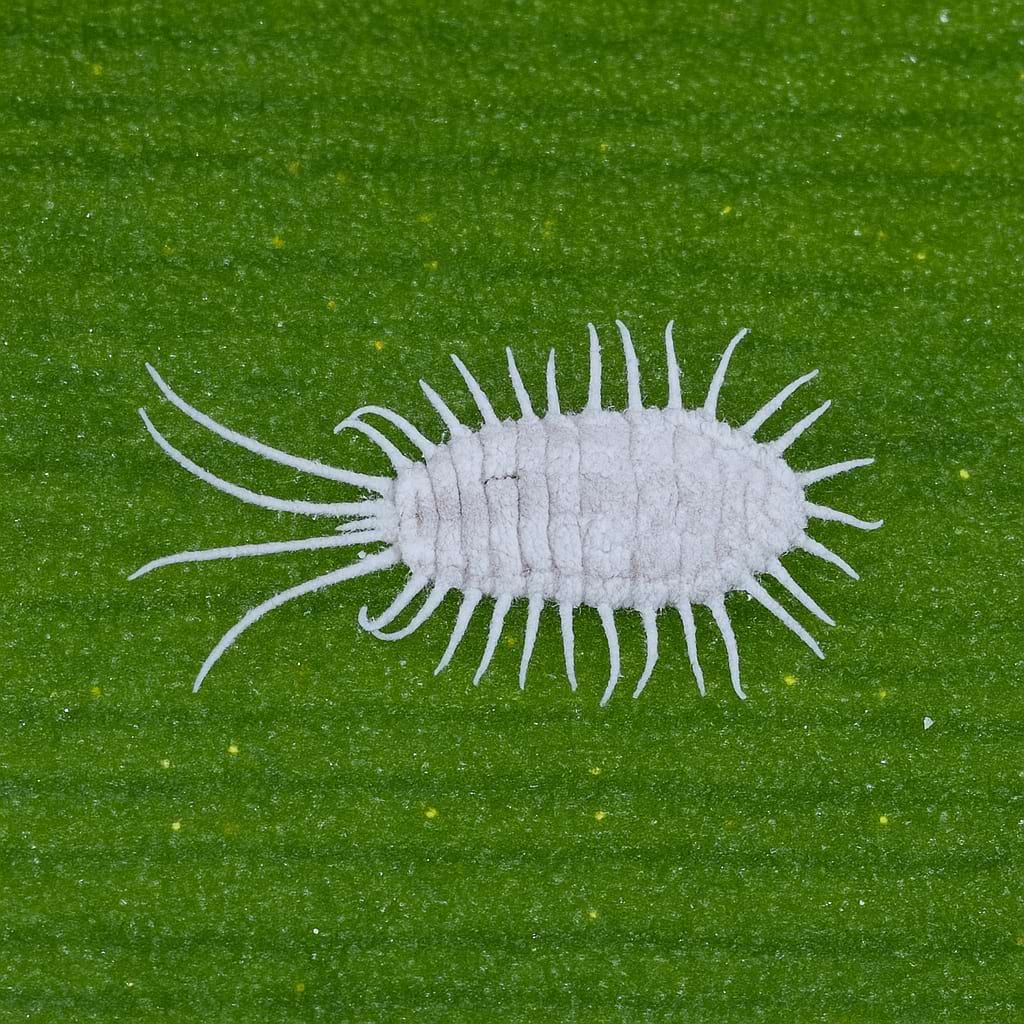
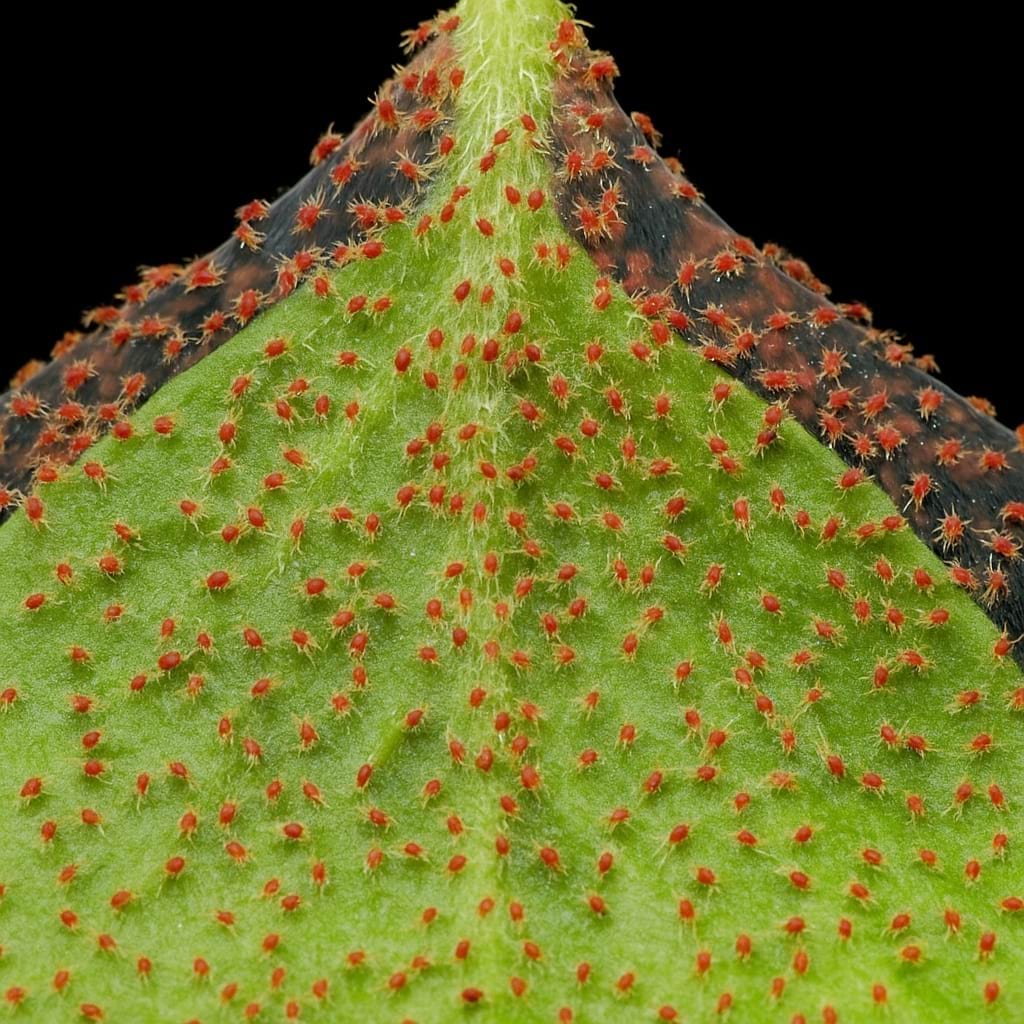
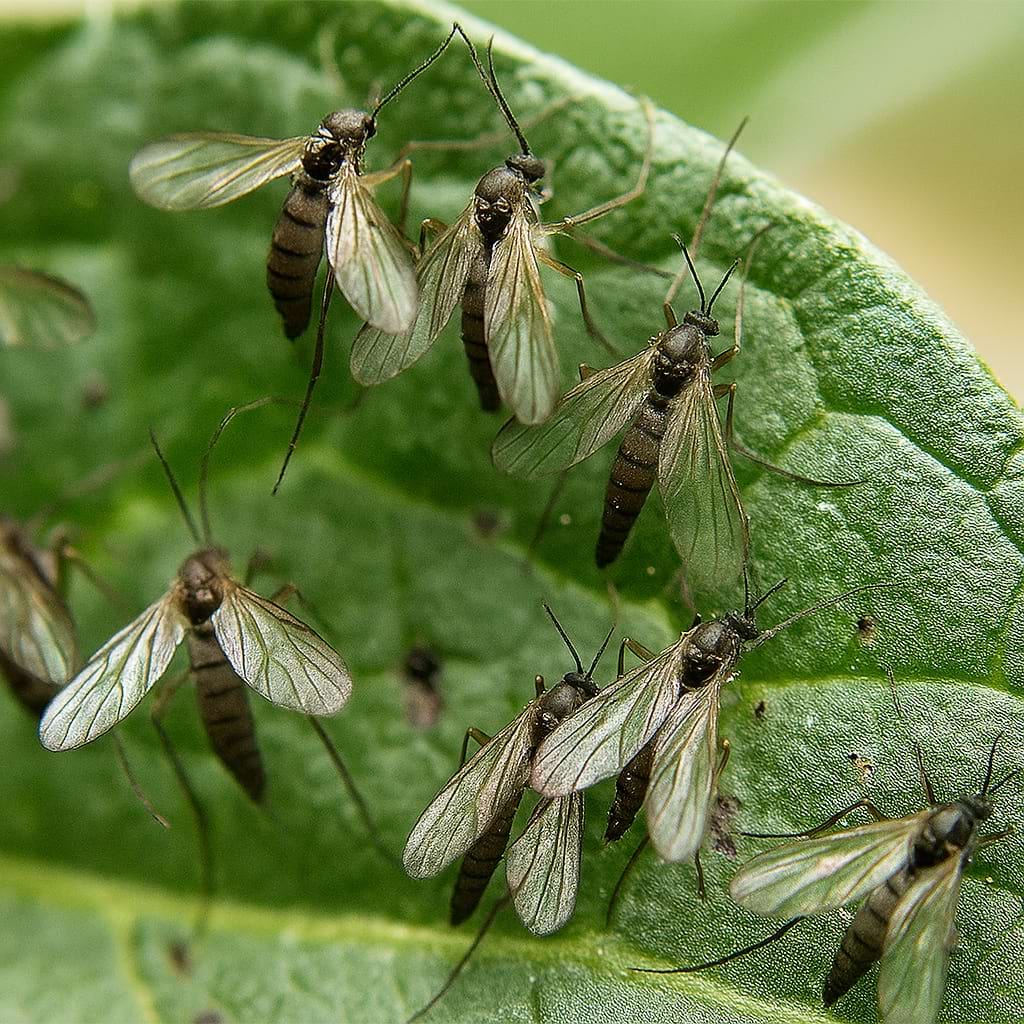
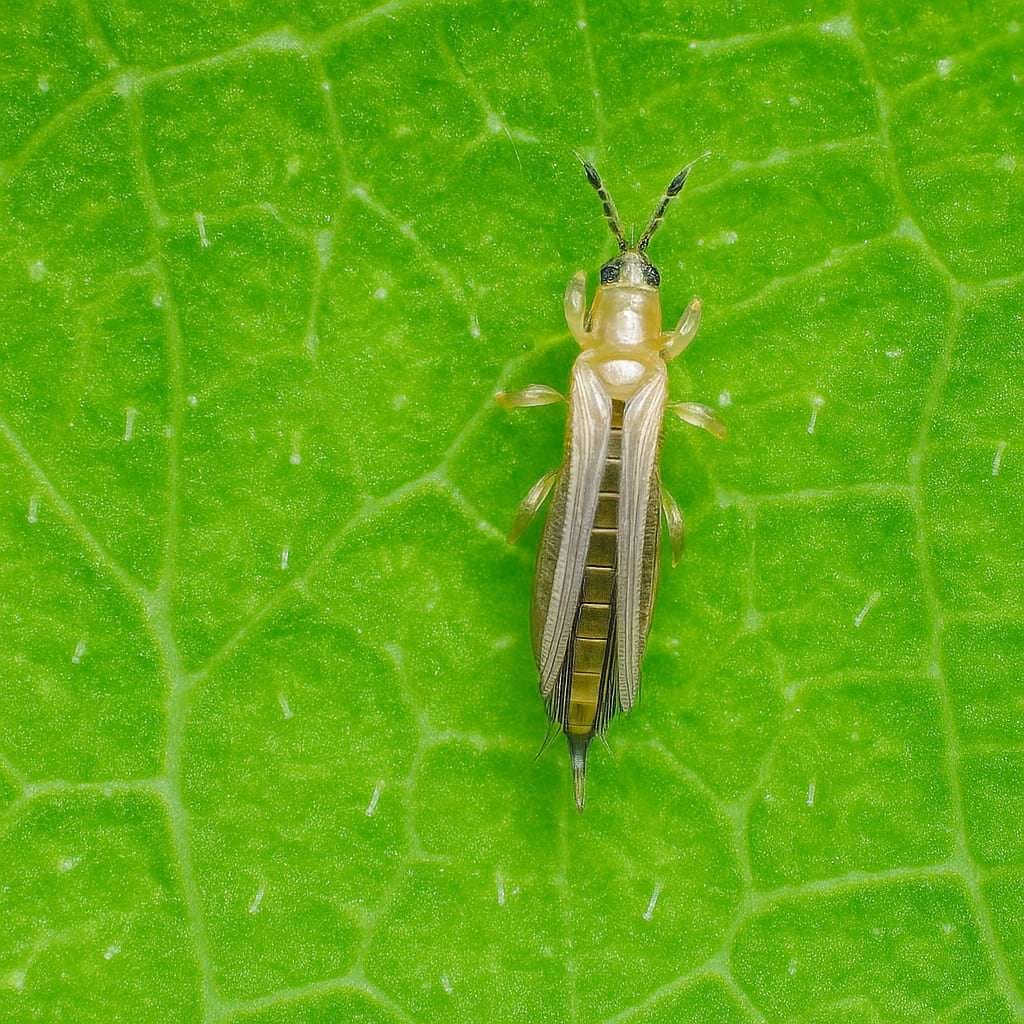
Mealybugs hide in the crown and among the crozier scales, where the white fluff blends with the plant's own rust-and-cream scaling. Dab them with alcohol on a swab rather than flooding the crown. Spider mites arrive when winter air goes dry, showing as fine webbing between leaflets and a dusty stippled look. Raise humidity and rinse the plant weekly for three weeks. Fungus gnats are almost inevitable on a permanently damp pot; they are harmless to a healthy fern, and sticky traps plus a grit topping keep numbers down. Thrips leave silvery streaks and black specks on new fronds.
One warning before you spray. Ferns are more chemically sensitive than most houseplants: neat neem oil, full-strength insecticidal soap, and every leaf shine product I have tried will scorch or clog these fronds. Use half the recommended concentration and test a single frond first.
🩺 Common Silver Lady Fern Problems
Nearly every problem here traces back to water, either too little in the soil or too little in the air. Work through those two before anything else.
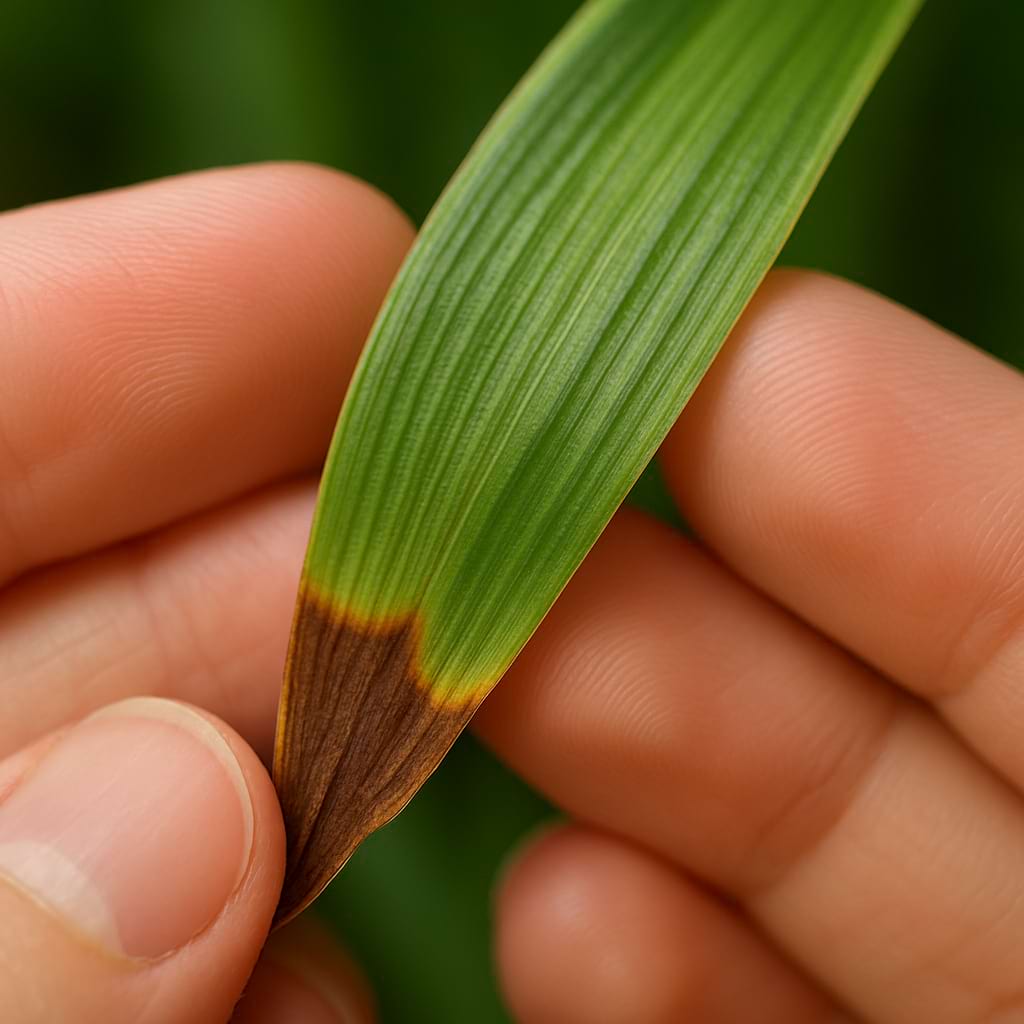
Brown crispy edges are the signature complaint. Dry air is the usual cause, a missed watering the second, fluoride or salt from tap water the third. Damaged tissue never greens up, so judge your fix by whether the newest fronds come in clean.
Yellowing leaves spreading up from the oldest fronds usually means the soil has stayed too wet. One or two yellow fronds a year at the bottom is the plant retiring old growth. Half the canopy at once is not.
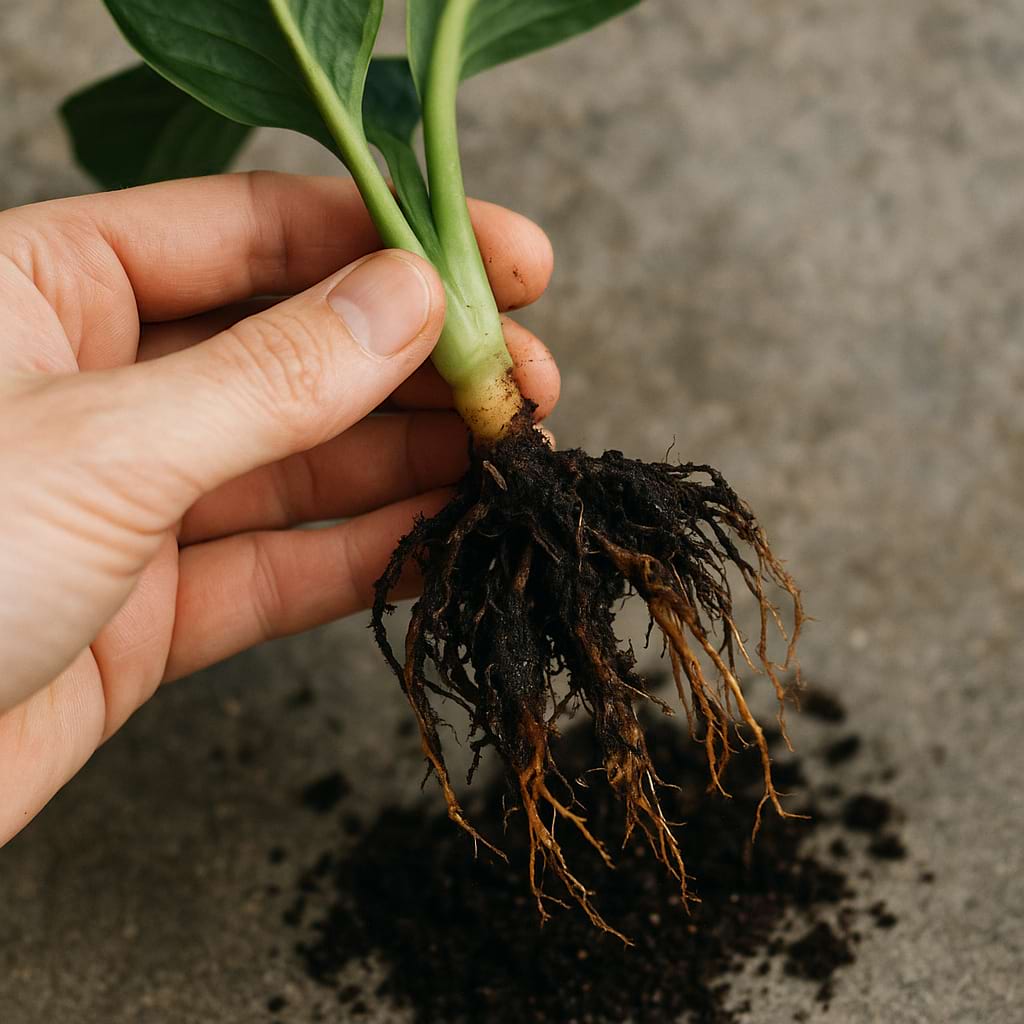
Root rot shows as fronds collapsing while the soil stays wet, a sour smell, and brown mushy roots. Unpot the day you suspect it, cut back to firm white root, and repot into fresh airy mix. Crown rot is the one to fear: a soft dark patch at the growing point, usually from water poured into the rosette, and generally fatal because there is no spare crown.
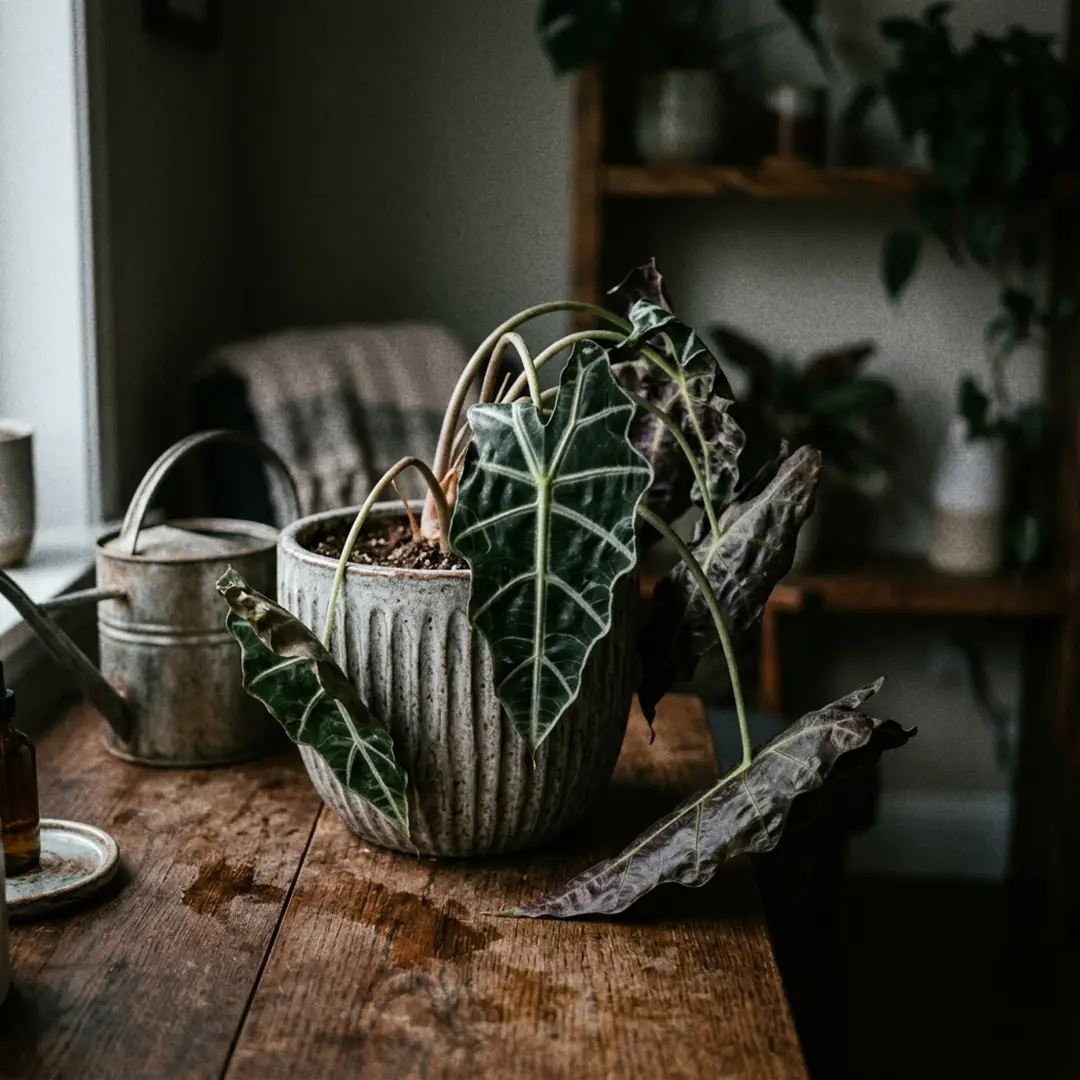
Wilting and drooping with dry soil means the plant needs water now, and it usually recovers within hours. The same droop with wet soil means the roots have failed, which is rot rather than thirst.
Leaf drop, several fronds browning off in quick succession, follows a shock: a cold draught, a dry-out, a move to a drier room, or a repot that buried the trunk. Stunted growth through spring and summer, with light and water in order, usually means an exhausted mix rather than a need for fertilizer. Fungal leaf spot shows as dark rings on the leaflets and follows wet foliage in still air, so water the soil and improve the airflow.

🖼️ Silver Lady Fern Display and Styling Ideas
This plant has a shape most ferns do not, and where you put it decides whether anyone notices.
Lift It Off the Floor
A tree fern standing directly on the floor reads as a shrub, because the trunk disappears behind the pot rim. Put it on a low plinth, a plant stand, or a sturdy stool so the trunk sits at knee height and the canopy at chest height. Keep the floor around the base clear. That empty space is what tells the eye it is looking at a tree.
Bathrooms and Conservatories
A bright bathroom is close to ideal, since the daily shower does the humidity work no gadget can match. A conservatory works as well if you keep the winter temperature above 55°F (13°C) and shade the glass in summer. In an ordinary living room, group it with other humidity lovers near a humidifier rather than standing it alone.
Plants to Pair It With
Contrast in leaf shape does the most. The broad paddles of a Bird's Nest Fern at its feet, or the wavy fronds of a Crocodile Fern, play against the fine repeating leaflets overhead. A Boston Fern on a shelf above adds cascade at a second height. Keep companions low and in separate pots so the trunk stays visible.
🌟 Silver Lady Fern Pro Care Tips
🚿 Never water into the crown. Pour at the soil around the trunk, or bottom-water. Water sitting in the growing point causes crown rot, and there is no second crown.
🌡️ Do not bury the trunk deeper when you repot. Match the old soil line exactly. If the plant feels unstable, fix it with a heavier pot, not with more soil up the trunk.
💧 Buy a hygrometer before a humidifier. Dry-air browning and thirst browning look identical, and the number tells you which one you have.
🌿 Leave the skinny fronds alone. The narrow, starved-looking fronds in the middle of the rosette are the fertile ones. They are meant to look like that.
🧴 No leaf shine, ever. It clogs fern foliage and leaves permanent marks. Rinse the fronds under a lukewarm shower instead.
❓ Frequently Asked Questions
Why are my Silver Lady Fern's frond tips turning brown?
Almost always dry air, with a missed watering as the runner-up. This fern wants 60 percent humidity or more, and most heated homes sit near 30 in winter. Fluoride or salt in tap water is the third possibility. Brown tissue does not recover, so raise the humidity, keep the soil damp, and judge the fix by the new fronds.
How big does a Silver Lady Fern get indoors?
Two to three feet tall and about as wide, occasionally four on an old plant with a well-developed trunk. The canopy reaches full size within a couple of years, while the trunk climbs roughly an inch a year, so the tree-like look builds slowly.
Is the Silver Lady Fern toxic to cats and dogs?
No. Blechnum gibbum is considered non-toxic to cats, dogs, and people, like most true ferns. A pet that chews a frond might get a mild stomach upset from the fibre, but no poison is involved.
Can I cut off the ugly skinny fronds in the middle?
You can, but there is no reason to. Those are the fertile fronds, and their thread-like leaflets are the normal shape for spore-bearing growth in this family. They are not diseased or starved, and cutting them costs the plant energy for nothing.
Why is my Silver Lady Fern dropping fronds all at once?
Sudden loss of several fronds points to a shock rather than a slow decline: a root ball that dried out completely, a cold draught, a move to a much drier room, or a repot that set the trunk too deep. Fix the cause and watch the crown. If new croziers keep appearing there, the plant is recovering.
Can I propagate a Silver Lady Fern from a cutting?
No. The plant grows from one point at the top of the trunk and fronds carry no growing tissue, so there is nothing to root. Your options are separating a basal offset if your plant makes one, or sowing spores, which takes about a year to reach a potted seedling.
Can a Silver Lady Fern live in a low-light corner?
Not really. It takes lower light than most houseplants but needs bright indirect light to keep making full-sized fronds. In a dim corner it produces fewer, thinner fronds, leans toward the light, and loses its symmetry. Seven feet from a window is the practical limit without a grow light.
Can I put my Silver Lady Fern outside in summer?
Yes, and it usually enjoys it, as long as the spot is fully shaded and sheltered from wind. Outdoor humidity and rainfall suit it better than indoor air. Move it out gradually over a week or two and bring it back well before nights approach 55°F (13°C).
ℹ️ Silver Lady Fern Info
Care and Maintenance
🪴 Soil Type and pH: Rich, moisture-retentive, free-draining and acidic; pH 5.0-6.5, no lime
💧 Humidity and Misting: Wants 60 percent or more; below 40 the frond tips brown and stay brown.
✂️ Pruning: Cut fully browned fronds at the base of the stalk, close to the trunk, and leave the crown alone.
🧼 Cleaning: Rinse the fronds under a lukewarm shower or take the plant outside in warm rain. Never use leaf shine.
🌱 Repotting: Every 2-3 years in spring, one pot size up, with the trunk set at exactly the same depth it grew before.
🔄 Repotting Frequency: Every 2-3 years
❄️ Seasonal Changes in Care: Active from spring through early autumn; growth slows in winter when it wants less water, no fertilizer, and more humidity than the heating leaves you.
Growing Characteristics
💥 Growth Speed: Moderate for the fronds, slow for the trunk, which takes years to show
🔄 Life Cycle: Evergreen perennial
💥 Bloom Time: Does not bloom; sori ripen in continuous brown lines along the narrow fertile fronds in late summer
🌡️ Hardiness Zones: 10-11 outdoors; a houseplant everywhere colder
🗺️ Native Area: Understorey of humid forest in Fiji, New Caledonia, and neighbouring Pacific islands
🚘 Hibernation: No true dormancy, though frond production nearly stops between November and February
Propagation and Health
📍 Suitable Locations: Bright bathrooms, conservatories, east and north rooms, plant-filled corners with a humidifier, shaded patios in summer
🪴 Propagation Methods: Spores only for most growers; occasional basal offsets on mature plants can be separated in spring.
🐛 Common Pests: Scale Insects, Mealybugs, Spider Mites, Fungus Gnats, Thrips
🦠 Possible Diseases: Root rot in waterlogged mix, crown rot from water sitting in the growing point, fungal leaf spot in still damp air
Plant Details
🌿 Plant Type: Small tree fern with an upright trunk-like rhizome topped by a rosette of pinnate fronds
🍃 Foliage Type: Once-pinnate fronds to 3 feet long, dimorphic, with broad sterile fronds and narrow fertile ones
🎨 Color of Leaves: Glossy mid-green, with new fronds unrolling pale silvery green over a rust-scaled crozier
🌸 Flower Color: N/A
🌼 Blooming: Does not bloom; reproduces by spores carried in unbroken lines either side of the leaflet midrib
🍽️ Edibility: Not edible
📏 Mature Size: 2-3 feet indoors, occasionally 4 with a well-developed trunk
Additional Info
🌻 General Benefits: Pet-safe architecture for a shady room, and one of the few tree ferns that stays a sensible size indoors
💊 Medical Properties: None widely recognized
🧿 Feng Shui: The upright trunk under a soft canopy reads as steady, sheltered growth; suits an east or southeast corner
⭐ Zodiac Sign Compatibility: Pisces
🌈 Symbolism or Folklore: Patience and quiet endurance, in the way of a plant family older than flowers
📝 Interesting Facts: The trunk is not wood. It is a vertical rhizome wrapped in the black bases of old fronds and a felt of wiry roots, which is why you can sometimes squeeze it. Blechnum ferns carry their spores in unbroken lines rather than dots, running parallel to the midrib on narrowed fertile fronds that look nothing like the rest of the plant. The trade name Silver Lady comes from the pale, almost silvered cast of unfurling new growth against the darker mature canopy.
Buying and Usage
🛒 What to Look for When Buying: Look for a full, even rosette with a firm trunk and no soft or blackened patch at the crown. Lift the pot: dry and light means it has already been stressed, and a fern that has crisped once carries those brown tips for months. Skip plants with more brown frond bases than green fronds.
🪴 Other Uses: Focal floor plant, shaded patio container in summer, conservatory and atrium planting
Decoration and Styling
🖼️ Display Ideas: A single specimen on a low plinth or plant stand in a bright bathroom or a north-facing corner, lifted just enough that the trunk is visible
🧵 Styling Tips: Keep the area around the base clear so the trunk reads as a trunk. Crowding smaller plants around the pot turns a tree fern into an ordinary shrubby fern.
🪴 See also 🪴
Complete Guide to East Indian Holly Fern Care and Growth
Complete Guide to Silver Lace Fern Care and Growth
Complete Guide to Squirrel's Foot Fern Care and Growth
Complete Guide to Tassel Fern Care and Growth
Complete Guide to Mother Fern Care and Growth
Complete Guide to Cinnamon Fern Care and Growth
Complete Guide to Delta Maidenhair Fern Care and Growth
Complete Guide to Frosty Fern Care and Growth
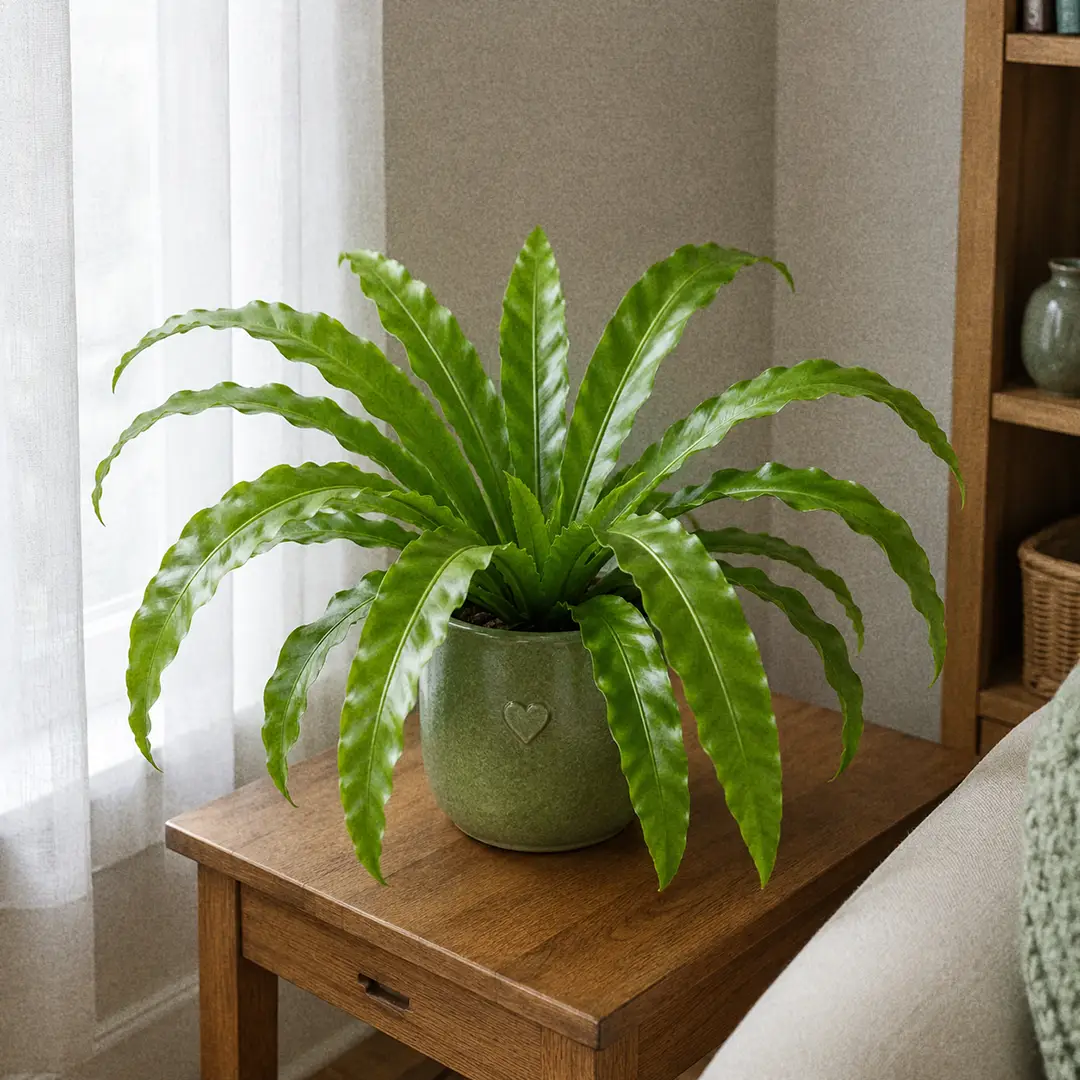
Complete Guide to Hart's Tongue Fern Care and Growth
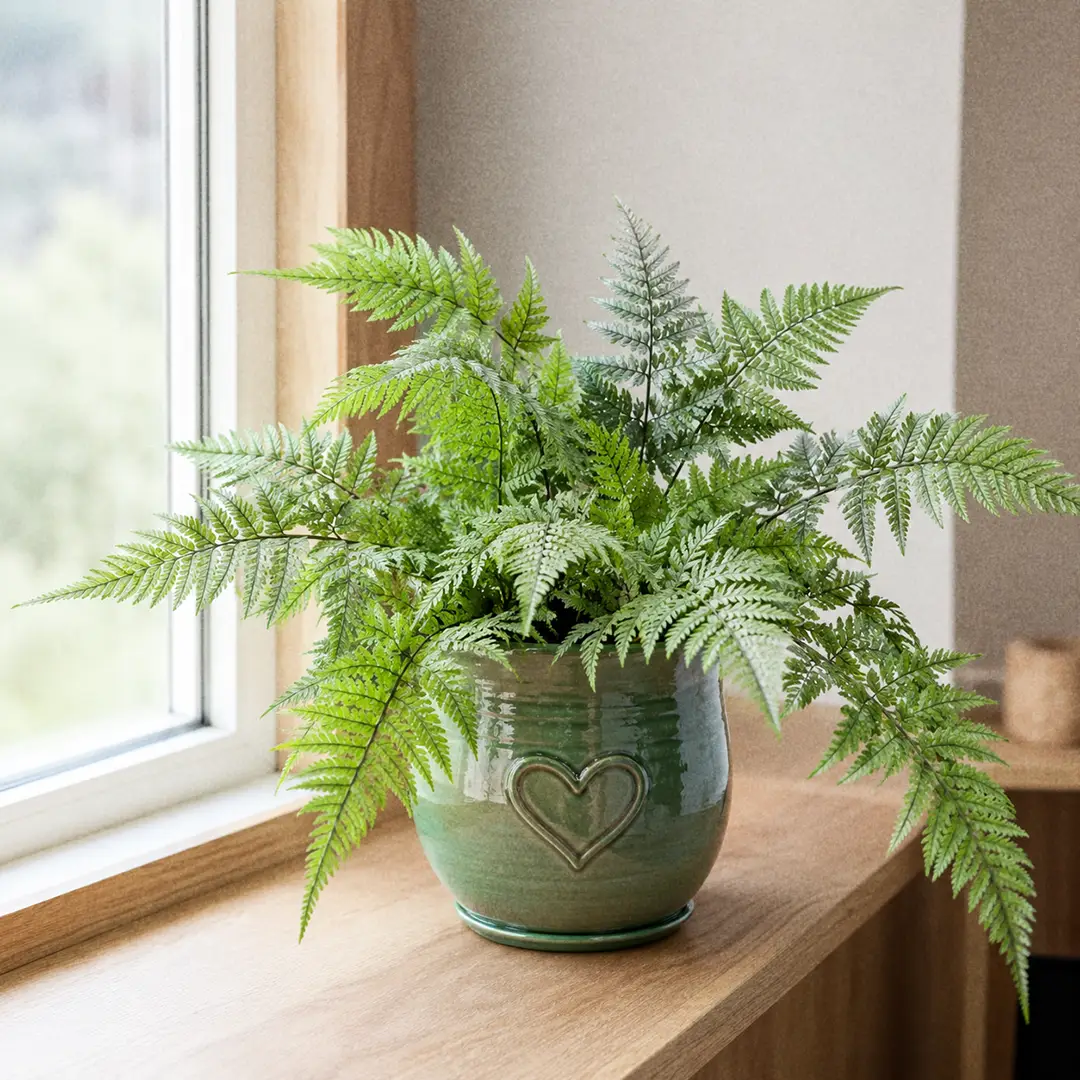
Complete Guide to Korean Rock Fern Care and Growth

Houseplant101 Forum
Questions & Comments
Ask a question, share your plant experience, or help other plant owners.
Comments are temporarily unavailable.
Open the Houseplant101 ForumNo comments yet
Be the first to ask a question or share your experience about this page.
Log in or create an account
Comments use your Houseplant101 Forum account, but you can stay on this page.
Create a new account