
Ginseng Ficus
Ficus microcarpa
Ficus Ginseng, Indian Laurel Fig, Chinese Banyan, Curtain Fig


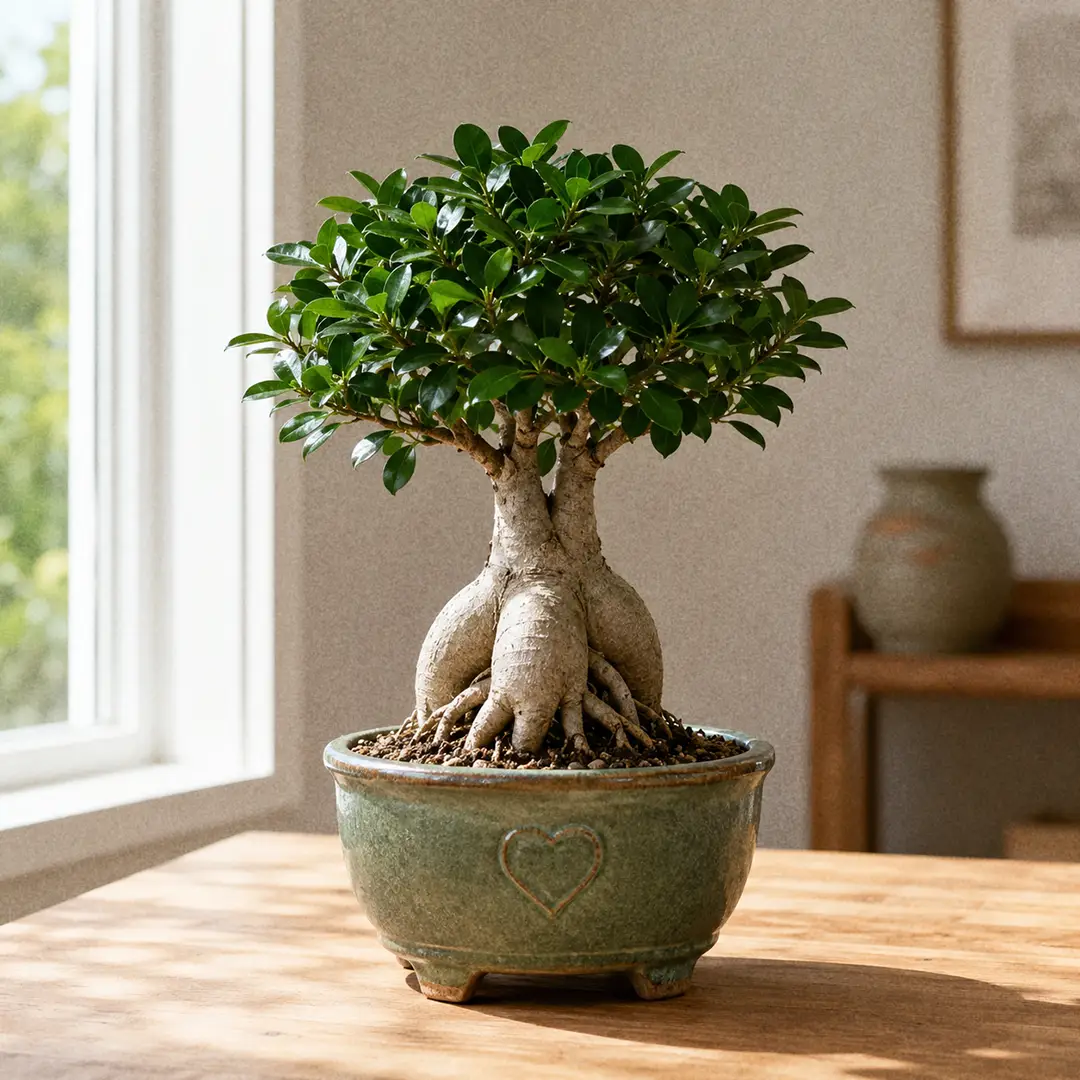
Ginseng Ficus is the potbellied little tree sold as beginner bonsai in every garden center, and it is genuinely tough once you understand its two halves. This guide covers the grafted trunk, the leaf drop, the pruning, and how to keep those swollen roots looking good for decades.
📝 Ginseng Ficus Care Notes
🌿 Care Instructions
⚠️ Common Pests
📊 Growth Information
🪴 In This Guide 🪴

☀️ Ginseng Ficus Light Requirements (Bright Indirect)
The Sweet Spot
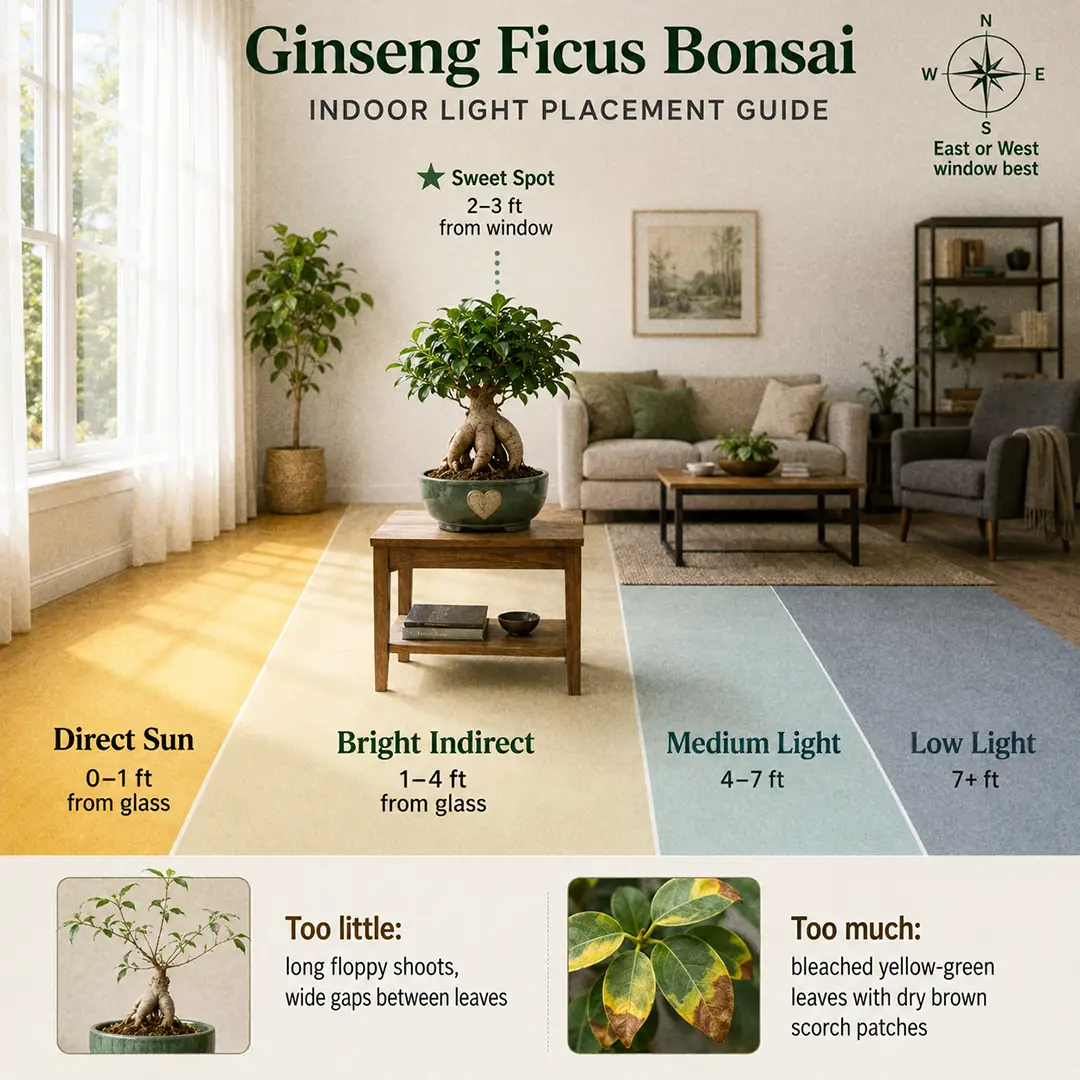
Give this tree the brightest indirect light you have. An east window where it catches an hour or two of gentle morning sun is close to ideal. A west window works too, as long as the tree sits two or three feet back from the glass so the hot afternoon rays land on the floor instead of the leaves. South windows are fine behind a sheer curtain.
Ficus microcarpa is a full sun tree outdoors in the tropics, so it will happily take more sun than most houseplants once it has adjusted. The trick is that indoor glass concentrates heat, and a tree that spent months in a shady garden center cannot jump straight onto a sunny sill. Move it closer over two or three weeks.
Too Little Light
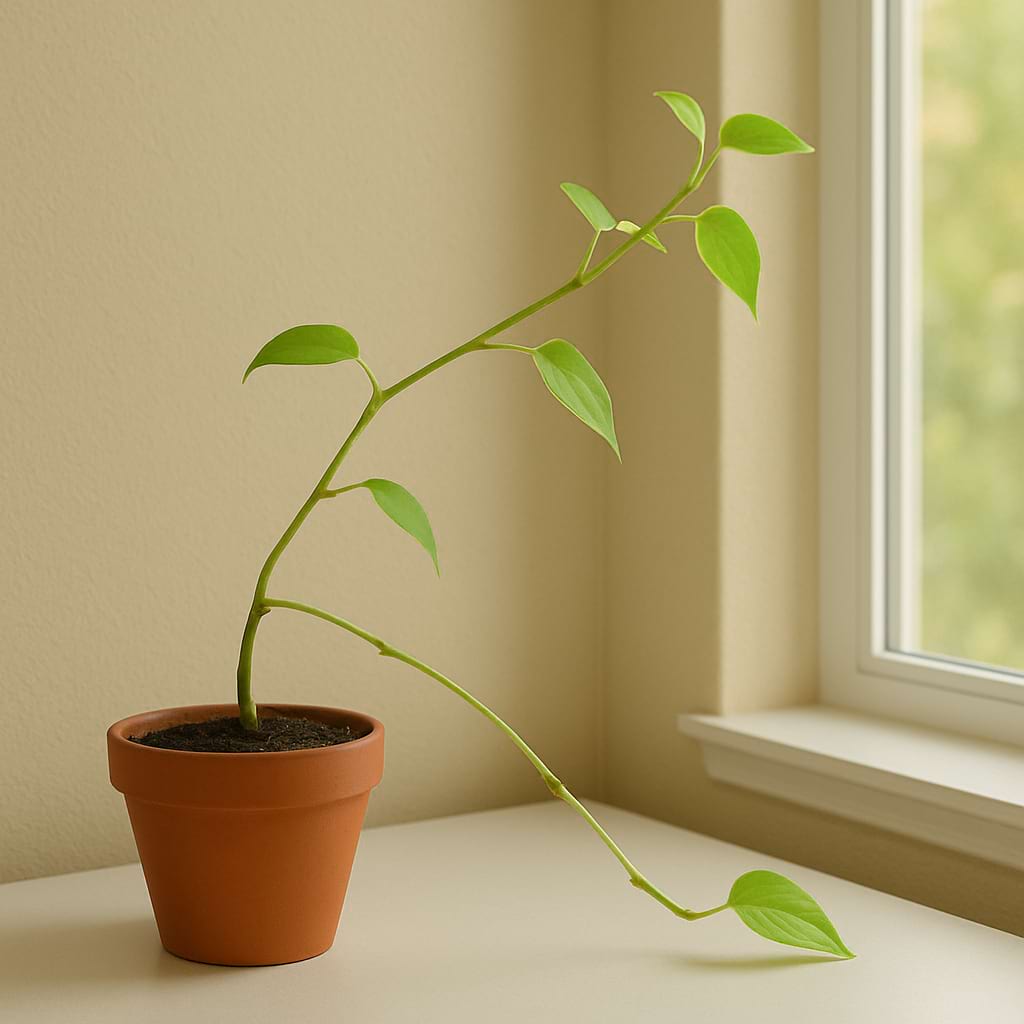
In a dim corner the tree does not die, it just stretches. New shoots come out long and floppy, the space between leaves widens, and the tidy rounded canopy turns into a handful of straggly branches. Leaves also thin out from the inside as the tree quietly abandons its shaded growth. If your bonsai is going leggy, the fix is light, not fertilizer.
North windows rarely give enough. If that is all you have, a small grow light running ten hours a day about a foot above the canopy keeps growth compact. Our light guide covers how to judge a spot by eye.
Too Much Light
Direct midday sun through glass bleaches the leaf surface to a washed out yellow green, then scorches dry brown patches in the centre of the worst leaves. This is leaf scorch, and the damaged leaves never recover. Pull the tree back a foot or add a sheer curtain, and the next flush comes in clean.
💧 Ginseng Ficus Watering Guide (Top Inch Dry)
Watering Frequency
Water when the top inch of soil is dry to the touch. In a warm bright room during spring and summer that usually lands somewhere between every four and eight days. In winter it can stretch to once every two or three weeks, because a tree in low light and cool air uses very little.
Do not put this on a schedule. Bonsai pots are shallow and dry unevenly, and the same tree can need water twice in one week during a heatwave and not at all for a fortnight in January. Poke a finger in, or use a moisture meter if you want a second opinion.
How to Water
Take the tree to the sink and water slowly over the whole soil surface until it runs freely from the drainage holes. Wait a minute, then do it again. Shallow bonsai soil can turn water repellent and shed it down the sides, so the second pass is what actually wets the root ball.
Let it drain completely before it goes back on its saucer. Standing water is the one thing this tree will not tolerate. If the surface is covered in decorative pebbles or moss, lift them off occasionally so you can feel the real soil underneath.
Signs of Trouble
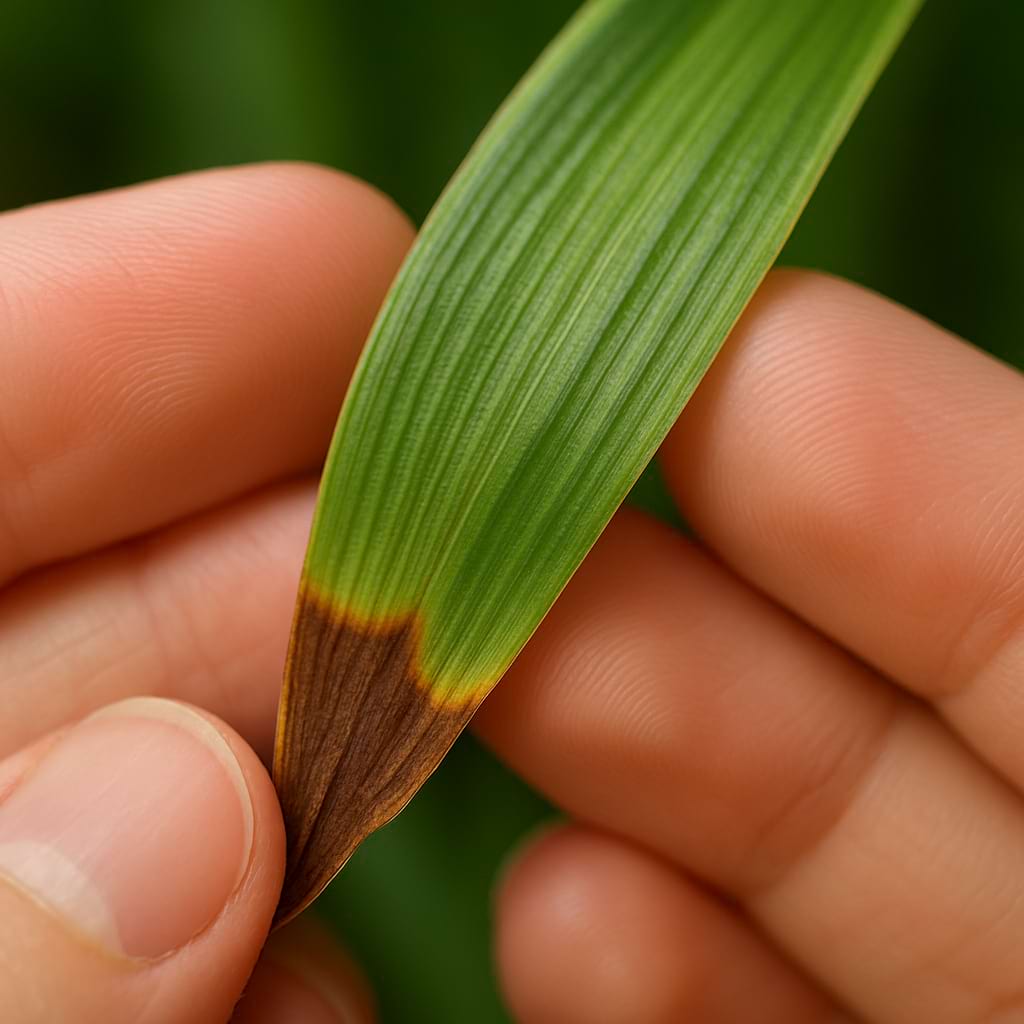
Underwatering shows up as dull, slightly limp leaves and crispy brown edges, usually followed by a scatter of dropped leaves from inside the canopy. Give it a thorough soak and it bounces back.
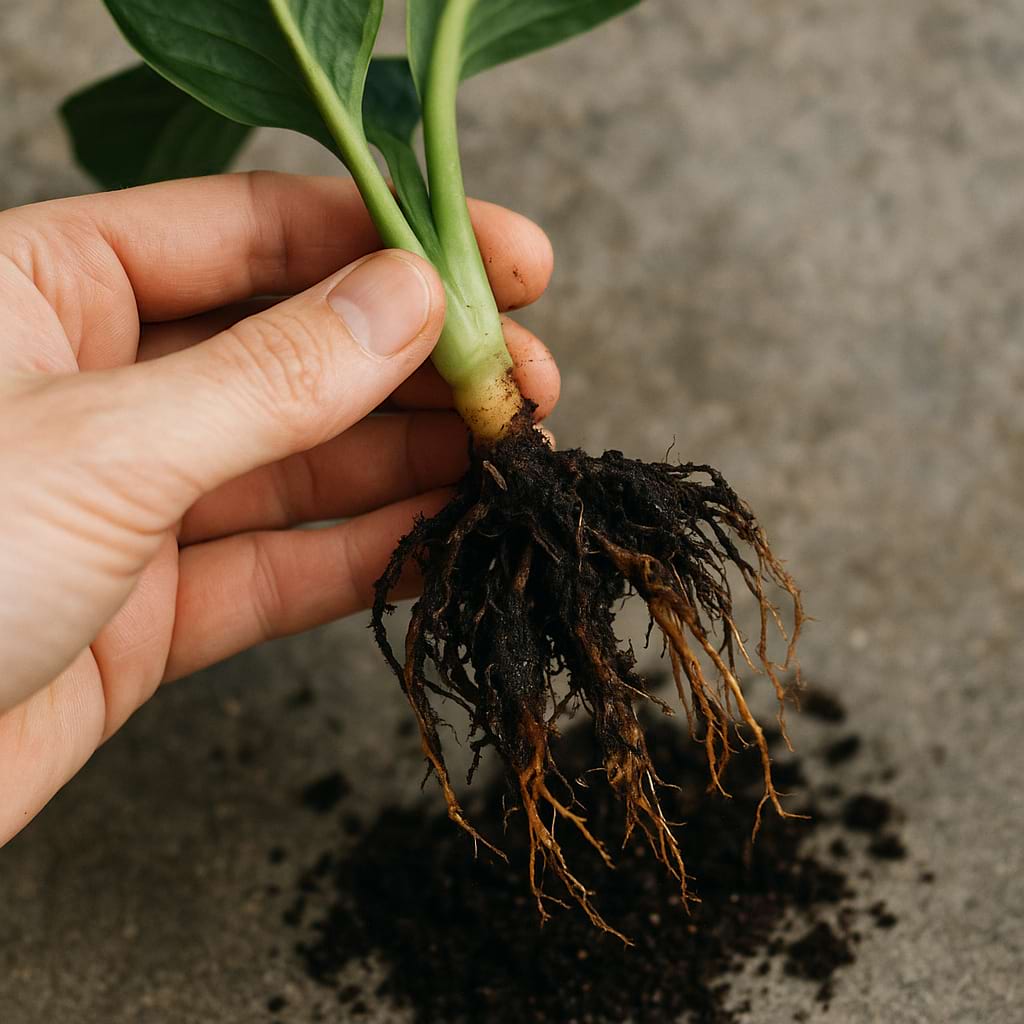
Overwatering looks different: yellowing leaves that drop while still soft and heavy, soil that stays dark for days, and a sour smell from the pot. That is root rot starting, and it is the most common way these trees die. See our watering guide for the full method.
🪴 Best Soil for Ginseng Ficus (Fast Draining)
What the Soil Needs
The whole job of the soil here is to hold a little moisture and let the rest run straight through. Ficus roots want air. Standard potting compost on its own packs down in a shallow bonsai pot and holds water against the root base, which is exactly where rot begins.
Aim for something gritty enough that water disappears through it in a few seconds rather than pooling on top.
DIY Soil Mix
A mix that works well and costs very little:
- 2 parts quality potting soil
- 2 parts pumice, perlite, or fine lava rock
- 1 part orchid bark or coarse coir chips
Traditional bonsai growers use akadama, pumice, and lava in equal parts instead. That mix drains beautifully but dries fast, so only take it on if you can water reliably.
Pre-Made Options
Bagged bonsai soil from a specialist supplier is a fine shortcut and already sized correctly. Avoid the fine, dusty blends sold in supermarket bonsai kits, which are usually just sieved compost. Cactus and succulent mix with a handful of bark added is a decent middle ground. Our soil guide explains the reasoning.
🍼 Fertilizing Ginseng Ficus
When and How Often
Feed every two to four weeks from early spring through to the end of summer, while the tree is pushing new leaves. Taper off in autumn and stop through winter. A bonsai lives in a small volume of fast-draining soil, so nutrients wash out quickly, but that is a reason to feed lightly and often rather than heavily.
What to Use
A balanced liquid houseplant fertilizer at half the label strength is all it needs. Something close to 10-10-10 or 20-20-20 keeps both the canopy and the root base growing. Slow-release bonsai pellets sitting on the soil surface work well too, and they take the decision out of your hands.
Always water first, then feed. Fertilizer salts on dry roots burn them.
Over-Fertilizing Signs
Too much feed gives you fast, soft, oversized leaves that ruin the tree's proportions, along with a white crust on the soil and brown leaf tips. Flush the pot with plain water three or four times and skip a month. Our fertilizing guide has more on reading the symptoms.
🌡️ Ginseng Ficus Temperature Range
Ideal Range
Normal room temperature suits it: 60 to 80°F (15 to 27°C) year round. It keeps growing at the warm end and simply idles at the cool end. Do not let it sit below 55°F (13°C) for long, and treat 50°F as the hard floor. Cold roots plus wet soil is the fastest route to trouble.
Drafts and Heat Sources
This is the fussy part. Ficus microcarpa dislikes sudden change far more than it dislikes any particular temperature. A tree parked next to a front door in winter, above a radiator, or in the blast of an air conditioner will shed leaves within days.
If you summer it outdoors, which it loves, bring it back in before nights drop below 55°F and give it a shaded spot for a week first so the light change is gradual.
💦 Ginseng Ficus Humidity Requirements
Ideal Humidity
Average household humidity of 40 to 50 percent is enough. Push it toward 60 percent and you get faster growth, glossier leaves, and a much better chance of the tree throwing aerial roots, which is the fun part.
Easy Humidity Boosters
Group it with other plants, stand the pot on a pebble tray with the base clear of the water, or run a small humidifier nearby in winter when heating dries the air out. Misting looks appealing but the effect lasts minutes. A bathroom with a bright window is a genuinely good home for one of these. See our humidity guide for what actually moves the needle.
🌸 Ginseng Ficus Flowers (What to Expect)
What the Flowers Look Like
You will almost certainly never see them, and that is not a failure on your part. Figs do not flower the way other plants do. The blooms are tiny and sit sealed inside a small round structure called a syconium, which is the little fig itself. From the outside there is nothing to look at.
Why It Will Not Fruit Indoors
Each fig species depends on its own species of tiny wasp to crawl inside and pollinate the hidden flowers. Ficus microcarpa has one across its native range in southern Asia and Australia. Your living room does not. Mature trees growing outdoors in warm climates do set small figs that ripen from green to dark red, but an indoor bonsai kept pruned and small will not.
Grow It for the Trunk Instead
Treat this as a foliage and structure plant. The reason to own one is the swollen root base, the branching, and the glossy canopy you shape yourself. Nothing you do with light or feed will trigger blooms here, so a failure to bloom on this species is simply normal behaviour rather than a problem to solve.
🏷️ Ginseng Ficus Types and Varieties
Ginseng Is a Style, Not a Species
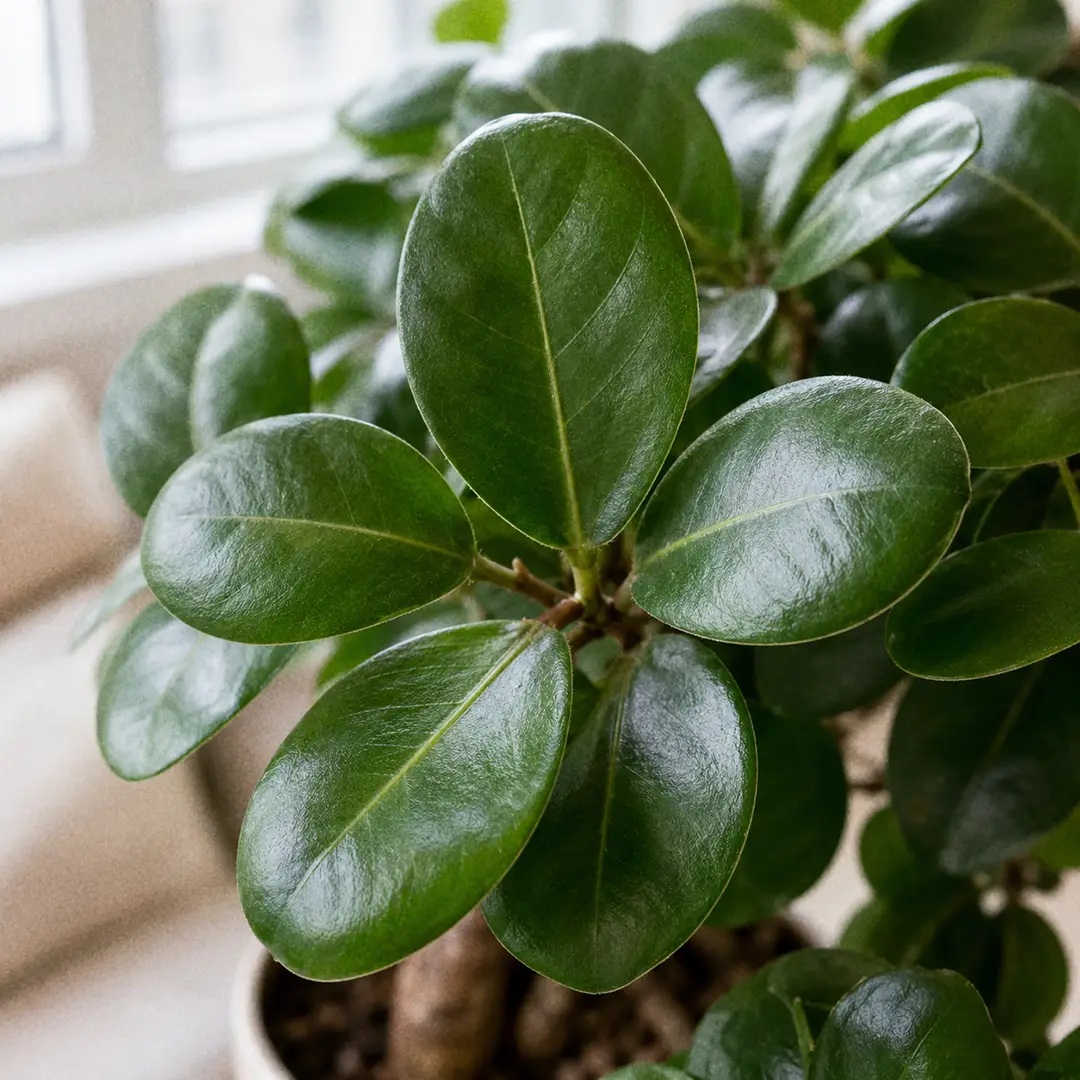
Worth clearing up first: there is no botanical variety called Ficus microcarpa 'Ginseng'. The name describes the look. Nurseries grow young plants with their roots buried deep for several years until those roots swell into a potbellied shape, then lift them and replant with the swollen roots exposed above the soil. The resemblance to a ginseng root is where the name comes from.
The Graft on Top
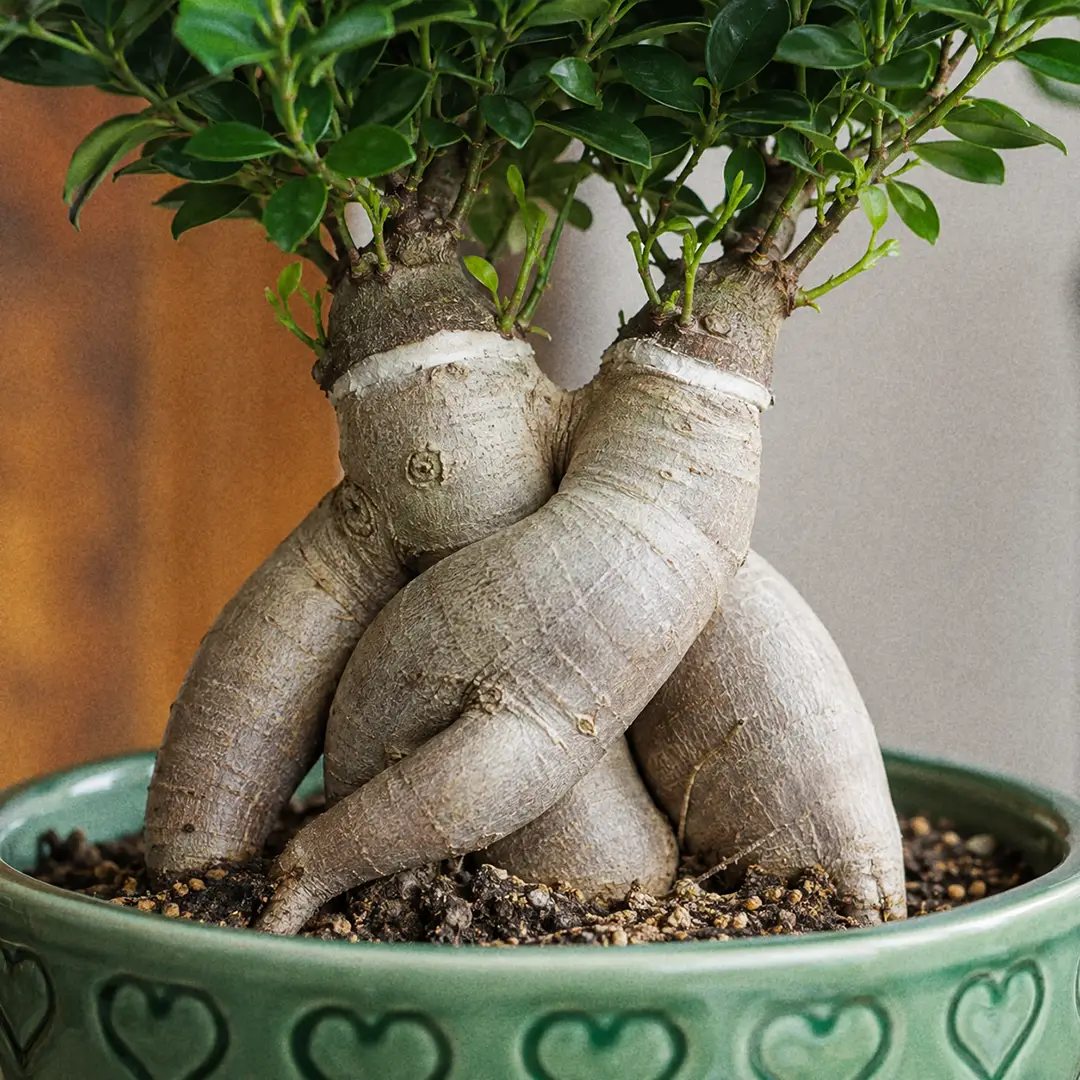
Most trees you buy are grafted. The fat base is one plant, and a small-leaved cultivar has been spliced onto the top so the canopy stays in proportion. Look closely at the stubby trunk and you can usually find the graft scars: slightly raised, paler circles or seams where the joins were made. This matters in practice, because shoots that sprout from below the graft carry different, often larger leaves.
Tiger Bark
Also sold as Kinmen, Golden Gate, or Kingman, all names for the same cultivar. It carries pale mottled banding on the bark and exposed roots, which gives an aged look to a young tree. The markings fade as the bark thickens with age. Medium leaves, and a long-standing favourite as a bonsai subject.
Green Island
A dwarf cultivar with small, thick, almost circular leaves in a deep glossy green. It is slower and denser than the standard form, which makes it popular for small canopies. Sometimes sold under its older name, 'crassifolia'.
The Ficus Retusa Mix-Up
Plenty of these trees are labelled Ficus retusa in shops. Ficus retusa is a genuinely different species, and true retusa is uncommon in the trade. If the tag says retusa on a ginseng-style bonsai, you almost certainly have microcarpa. Care is identical either way, so there is nothing to fix.
🪴 Potting and Repotting Ginseng Ficus
When to Repot
Every two to three years, in spring, when the tree is about to push new growth. Signs it is time: water sits on the surface instead of soaking in, roots circle out of the drainage holes, or growth has slowed while everything else about the care is unchanged.
Choosing a Pot
Shallow is fine and traditional, but it must drain. Look for at least one generous hole, and mesh over it to keep soil in. Only step up one size at a time. A big pot holds a lot of wet soil the small root system cannot use, which is a slow route to rot. Our pot guide compares materials.
Step-by-Step Repotting
- Water lightly the day before so the root ball holds together.
- Slide the tree out and comb the outer roots loose with a chopstick or root rake.
- Trim up to a third of the outer and downward-growing roots with clean shears. Leave the fat surface roots alone, they are the display.
- Set the tree slightly higher than before if you want more of the base showing.
- Work fresh mix in around the roots, tapping the pot to settle it. No air pockets.
- Water thoroughly, then keep it out of direct sun for two weeks.
Some leaf drop after repotting is normal. Do not feed for a month. Our repotting guide covers the general technique in more detail.
✂️ Pruning Ginseng Ficus
When to Prune
Light pruning works any time the tree is actively growing, which indoors means most of the year. Save harder structural cuts for spring so the tree can respond quickly. A bonsai that never gets pruned stops being a bonsai within two seasons.
How to Prune
The standard rule is simple: let a new shoot extend to six or ten leaves, then cut it back to two. Do this across the whole canopy and the tree branches instead of running. Cut just past a leaf, and remember that ficus buds sit at the leaf joints, so the direction a leaf points is the direction your new branch grows.
Expect white latex to bleed from every cut. It stops in a few minutes. Wear gloves, keep it off furniture and away from pets, and do not touch your eyes.
Shaping and Aerial Roots
Remove branches that cross, shoot straight down, or grow inward toward the trunk. Thinning the interior lets light reach the inner leaves and keeps the canopy from hollowing out.
If your tree sends down thin aerial roots from the branches, leave them. Guide them into the soil and over a few years they thicken into extra trunks, which is how these trees become banyans in the wild. High humidity makes them far more likely.
🌱 How to Propagate Ginseng Ficus
Best Method
Stem cuttings, taken in late spring or summer. They root readily and quickly. One thing to understand before you start: a cutting will never grow the swollen ginseng base. That shape comes from years of root development underground in a nursery. What you get from a cutting is a normal small ficus tree, which is a perfectly good plant, just a different look.
Step-by-Step
- Choose a healthy shoot with three or four leaves and cut just below a leaf node with clean, sharp shears.
- Strip the lower leaves. If the remaining leaves are large, cut each in half to reduce water loss.
- Rinse the cut end under water for a moment to stop the latex flow, then dab it dry.
- Dip in rooting hormone, optional but it speeds things up.
- Push into damp, gritty mix, or stand it in a jar of water.
- Keep warm, bright, and out of direct sun. Cover with a bag or dome to hold humidity.
Roots usually appear in three to six weeks. Water-rooted cuttings move to soil once the roots are an inch long. Our propagation guide covers both routes.
Air Layering
For a thicker trunk faster, air layer a branch instead. Ring the bark, wrap the wound in damp sphagnum moss and plastic, and wait two or three months for roots to fill the moss before cutting the branch free. Ficus are among the easiest plants to layer. Our air layering guide walks through it.
🐛 Ginseng Ficus Pests and Treatment
Glossy ficus leaves are a magnet for sap suckers, especially on a tree standing in dry winter air. Check the undersides and the leaf joints whenever you water.
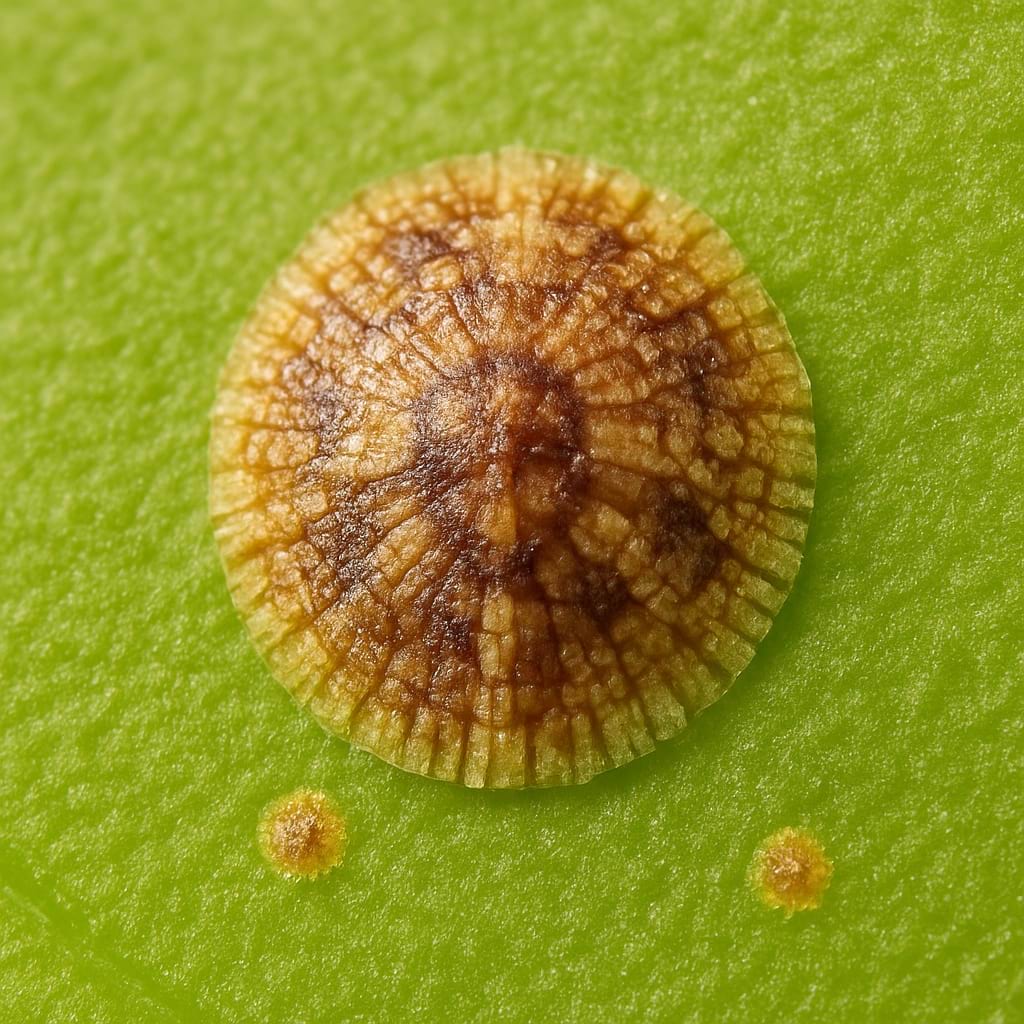
- Scale insects are the classic ficus problem. Small brown lumps on stems and leaf undersides that do not brush off. They leave sticky honeydew, which then grows black sooty mold. Scrape them off with a fingernail or a cotton bud dipped in rubbing alcohol, then treat with horticultural oil.
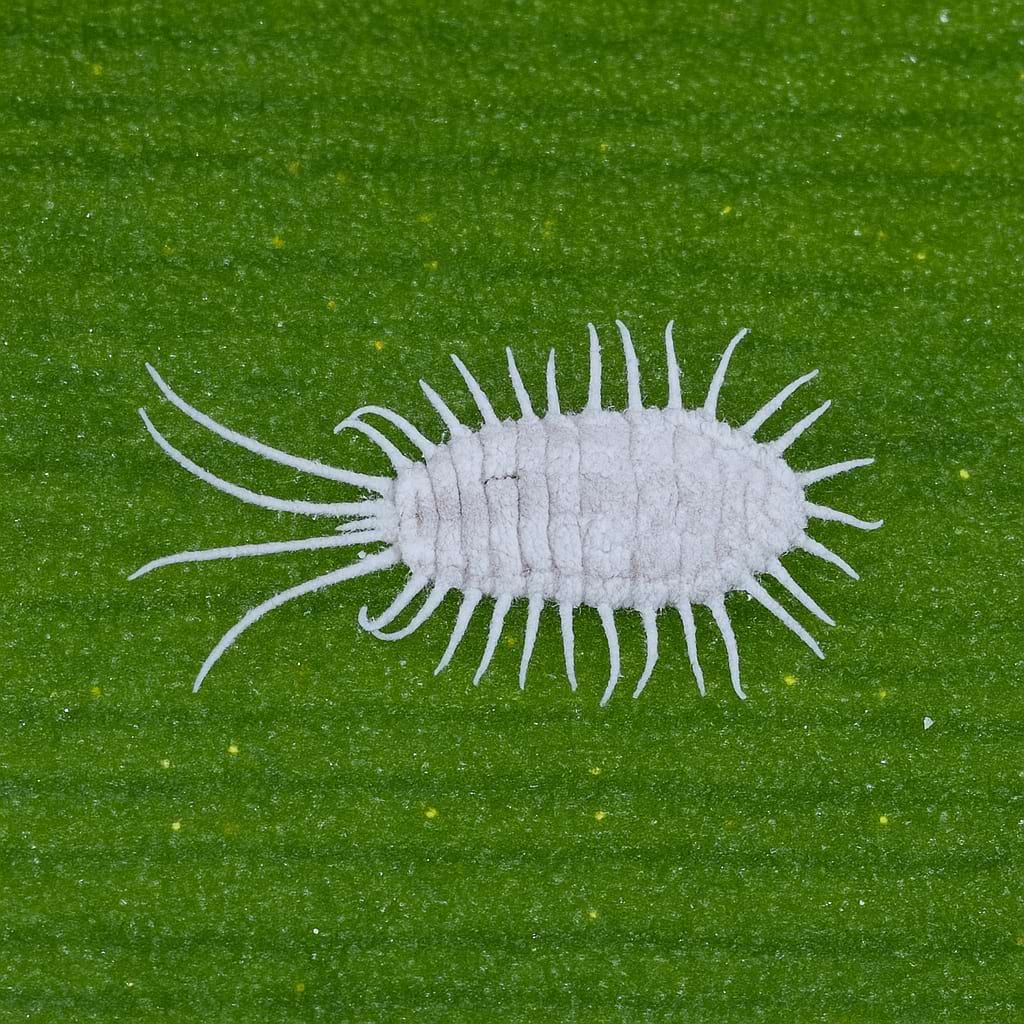
- Mealybugs show up as white cottony fluff tucked into branch crotches and around the root base. Dab each one with alcohol, then follow with insecticidal soap weekly until they stop reappearing.
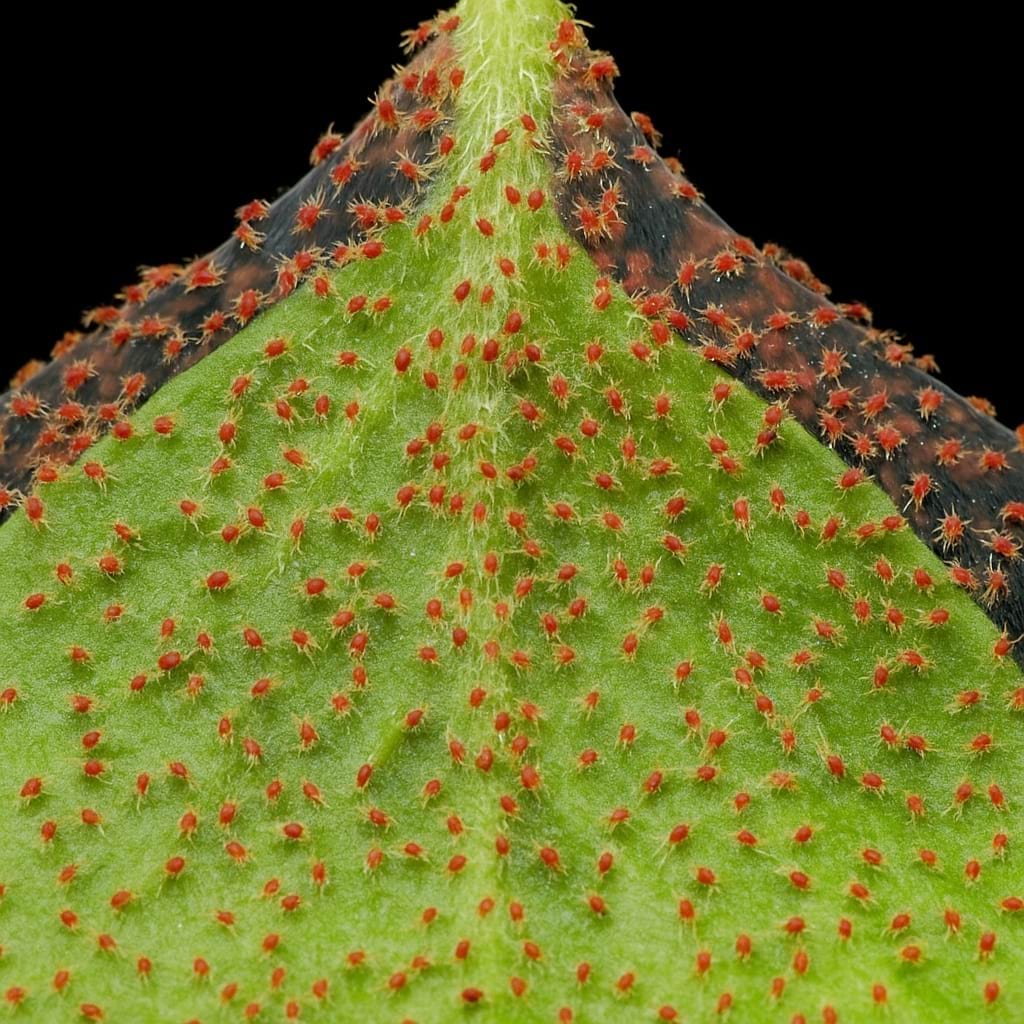
- Spider mites thrive in warm dry rooms. Look for fine speckling on the leaves and faint webbing at the shoot tips. Raise humidity, rinse the whole canopy in the shower, and repeat every five days.
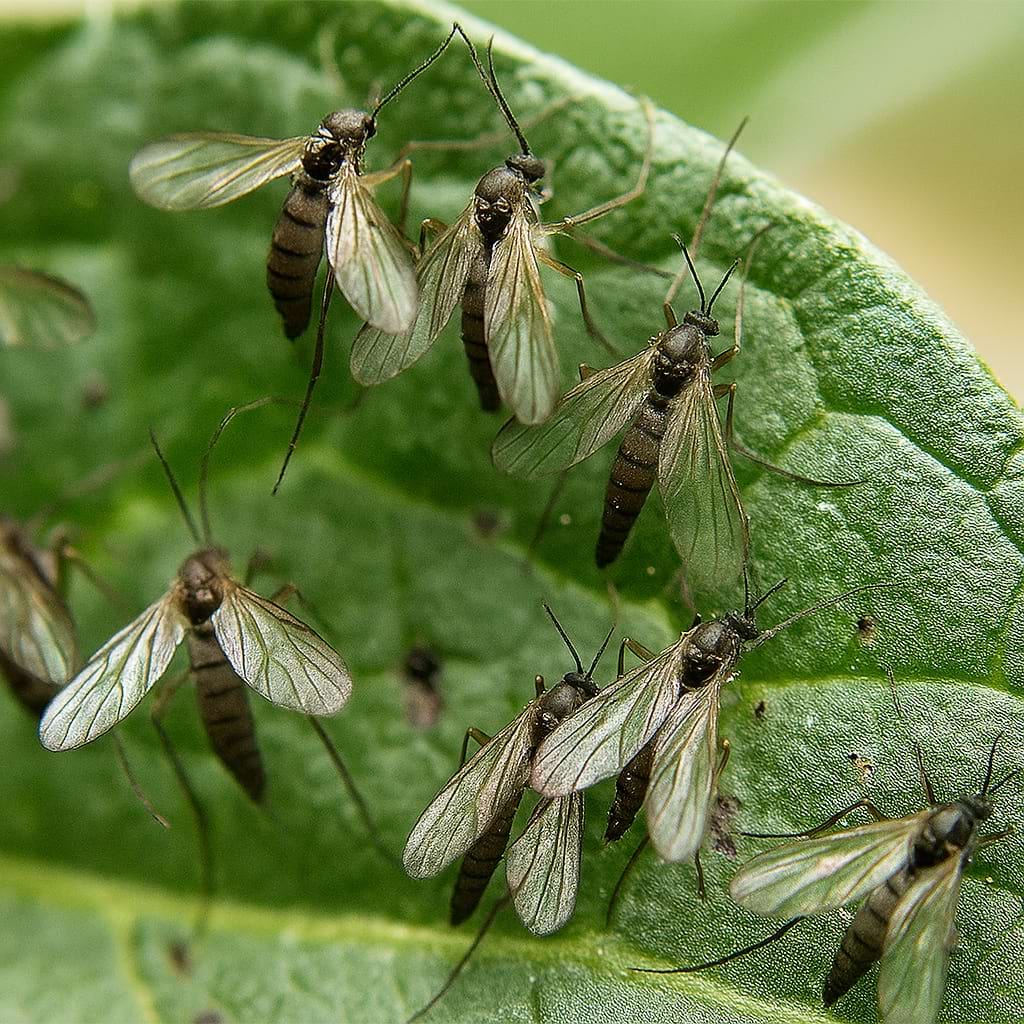
- Fungus gnats are a symptom rather than a disease. Little black flies mean the soil is staying too wet. Let it dry further between waterings and they leave.
Isolate any new tree for a couple of weeks before it joins your other plants. Garden center ficus arrive carrying scale more often than not.
🩺 Common Ginseng Ficus Problems
The Famous Leaf Drop
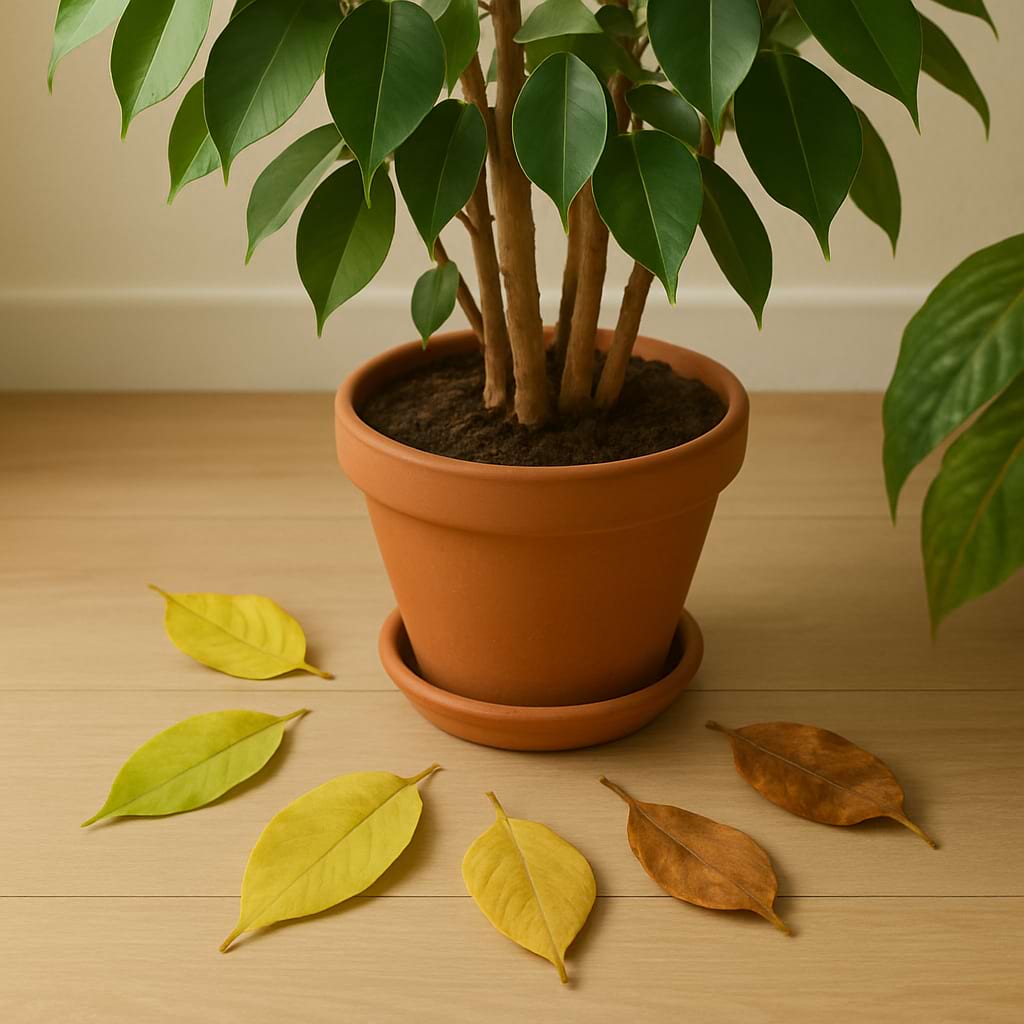
This is the complaint that brings most people looking for a guide, so start here. Leaf drop on a ficus is a stress response to change, not necessarily a sign of damage. A new tree that just came home, got repotted, or moved rooms will often shed a load of leaves in the first fortnight and then releaf.
The cure is patience and consistency. Pick a bright spot, water on the top-inch rule, and stop moving it. Leaves return within four to eight weeks. Panicking and adding more water or fertilizer makes it worse.
The Other Regulars
- Root rot from a pot that never dries. Soft yellow leaves, dark soggy soil, sour smell. Unpot, cut away black mushy roots, repot in gritty mix, water sparingly.
- Yellowing leaves scattered through the canopy usually point to overwatering. A few old yellow leaves at the base each month is normal shedding.
- Brown crispy edges mean the tree dried out too far, or the air is very dry, or fertilizer salts have built up. Flush the pot and water more evenly.
- Leggy growth with long gaps between leaves is a light problem. Move it brighter and prune back to two leaves per shoot.
- Black sticky coating on the leaves is sooty mold growing on scale honeydew. Deal with the scale and wash the leaves.

🖼️ Ginseng Ficus Display and Styling Ideas
Show the Base
Everything about displaying this tree comes down to one rule: keep the swollen roots visible. Do not bury them under a mound of soil, and do not smother them in decorative gravel. A shallow glazed pot in a plain colour lets that pale, muscular base do the work.
Where to Put It
Eye level beats floor level. A low table, a bright shelf, or a wide windowsill all let people see the trunk rather than looking down onto the canopy. Give it around a foot of clear space on each side so the silhouette reads properly. Bathrooms with a decent window are a strong choice thanks to the humidity.
Grouping
It pairs well with soft, low foliage that contrasts with its hard woody trunk. A Chinese Money Plant or a small Baby Rubber Plant alongside makes the bonsai look older and more sculptural. Keep pot heights varied and colours quiet.
Where Not to Put It
Not by a front door, not over a radiator, not in the path of an air conditioner. Not on a dim bookshelf across the room from the window, however good it looks there. And keep it off low tables if you have a cat that chews.
🌟 Ginseng Ficus Pro Care Tips
- Rotate the pot a quarter turn every time you water so the canopy fills out evenly instead of leaning toward the glass.
- Wipe the leaves with a damp cloth monthly. Clean leaves gather more light, and you spot scale early.
- Summer it outdoors in dappled shade once nights are reliably above 55°F. A season outside does more for trunk thickness than a year on a windowsill.
- Keep a small bowl of water nearby while pruning so you can rinse latex off your shears between cuts.
- Prune to two leaves consistently for a full season before judging the shape. Branching is cumulative.
- If you want aerial roots, raise the humidity and stop wiping the branches. They form in still, damp air.
- Never repot and hard prune in the same month. Pick one, then wait a season.
❓ Frequently Asked Questions
Why is my Ginseng Ficus dropping leaves?
Almost always a reaction to change: a new home, a move to a different room, a repot, or a swing in temperature. Ficus microcarpa protests first and adjusts later. Keep it in one bright spot, water only when the top inch is dry, and expect new leaves within a month or two.
Is Ginseng Ficus toxic to cats and dogs?
Yes. The ASPCA lists Ficus species as toxic to both. The milky sap contains ficin and psoralen, which cause mouth and stomach irritation, drooling, vomiting, and skin reactions on contact. Keep the tree out of reach and wear gloves when pruning.
Is my tree grafted, and does it matter?
Most sold in shops are. Look for pale raised scars or seams on the stubby trunk where the canopy was joined. It matters in one way only: if a shoot appears from below those scars with noticeably different leaves, remove it, or it will take over.
Can I grow the fat root base from a cutting?
No. Cuttings root easily but grow a normal thin trunk. The ginseng shape comes from plants whose roots were left buried for years to swell, then lifted and exposed. Nurseries do this deliberately over a long stretch of time.
How often should I water it in winter?
Far less than in summer. Once every two to three weeks is common in a cool, dimly lit room. Always check the top inch first instead of following the calendar. Winter overwatering is what kills most of these trees.
Does it need a special bonsai pot?
No. Any well-draining pot works, and a deeper pot actually grows the tree faster. A shallow bonsai pot is a styling choice that restricts growth and keeps the tree small, so choose based on the look you want.
Why is my new growth so much bigger than the old leaves?
Usually low light, generous feeding, or a growth surge after a hard prune. Brighter light and lighter feeding shrink the leaves back. Consistent pruning to two leaves also encourages smaller, denser foliage over time.
Can it live in a room with no window?
Not long term. It will hold on for a while in low light, then go leggy and thin out. If the room has no natural light at all, a grow light on a ten hour timer keeps it healthy.
How big does a Ginseng Ficus get indoors?
Kept in a bonsai pot and pruned, most stay between 8 and 24 inches tall for their whole life. In a larger pot without pruning it will keep going and become a full sized indoor tree over many years.
Do aerial roots mean something is wrong?
The opposite. Thin roots dangling from the branches mean the tree is happy and the air is humid. Let them reach the soil and they thicken into extra trunks, which is exactly what happens to banyans in the wild.
ℹ️ Ginseng Ficus Info
Care and Maintenance
🪴 Soil Type and pH: Free-draining bonsai mix, or potting soil amended with pumice and bark
💧 Humidity and Misting: Happy at average room humidity, better above 50 percent.
✂️ Pruning: Cut back new shoots to two leaves once they reach six to ten leaves.
🧼 Cleaning: Wipe the glossy leaves with a damp cloth every few weeks to keep them shiny and pest free.
🌱 Repotting: Lift, trim the outer root mass by up to a third, and return to fresh mix.
🔄 Repotting Frequency: Every two to three years in spring
❄️ Seasonal Changes in Care: Grows hard in spring and summer, slows in winter. Cut water back sharply in the cold months.
Growing Characteristics
💥 Growth Speed: Moderate
🔄 Life Cycle: Evergreen woody perennial
💥 Bloom Time: Rarely indoors. Flowers are hidden inside tiny fig structures.
🌡️ Hardiness Zones: 9-11 outdoors
🗺️ Native Area: Southern China, India, Southeast Asia, northern Australia
🚘 Hibernation: No true dormancy indoors, just slower winter growth
Propagation and Health
📍 Suitable Locations: Bright east or west window, sunroom, well-lit desk or side table
🪴 Propagation Methods: Stem cuttings root easily, though they never form the swollen ginseng base.
🐛 Common Pests: Scale Insects, Mealybugs, Spider Mites, Fungus Gnats
🦠 Possible Diseases: Root rot, sooty mold following scale, leaf spot in stagnant damp air
Plant Details
🌿 Plant Type: Tree grown as indoor bonsai
🍃 Foliage Type: Evergreen, glossy, oval
🎨 Color of Leaves: Deep green
🌸 Flower Color: Not visible. Enclosed inside the fig.
🌼 Blooming: Almost never indoors
🍽️ Edibility: Not edible. The sap is an irritant.
📏 Mature Size: 8-24 inches indoors in a bonsai pot
Additional Info
🌻 General Benefits: Adds real tree structure to a small space, tolerates pruning, long lived
💊 Medical Properties: None. The milky latex irritates skin and eyes.
🧿 Feng Shui: Associated with steady growth and stability. Often given as a housewarming gift.
⭐ Zodiac Sign Compatibility: Taurus
🌈 Symbolism or Folklore: Endurance, patience, and long life
📝 Interesting Facts: The bulbous base is grown underground for years, then lifted and exposed once it swells.
Buying and Usage
🛒 What to Look for When Buying: Check the graft scars on the trunk, look under the leaves for scale, and skip any tree sitting in soggy, bark-covered soil.
🪴 Other Uses: Street and shade tree across the tropics, where it becomes a huge banyan
Decoration and Styling
🖼️ Display Ideas: A shallow glazed pot on a low table, a bright shelf at eye level, or a windowsill grouping with smaller foliage plants
🧵 Styling Tips: Keep the canopy rounded and open so the swollen roots stay the star of the show
🪴 See also 🪴
Complete Guide to Ficus Altissima Care and Growth
How to Propagate Fiddle Leaf Fig (Cuttings, Air Layering and the Leaf Myth)
Complete Guide to Variegated Fiddle Leaf Fig Care and Growth
Ficus Care Indoors: Full Guide and 12 Types We Grow

Complete Guide to Rubber Plant Care and Growth
Complete Guide to Ficus Alii Care and Growth
Complete Guide To Creeping Fig Care and Growth

Complete Guide to Ficus Burgundy Care (Rubber Plant)
Complete Guide to Ficus Ruby Care (Ficus elastica 'Ruby')
Complete Guide To Ficus Shivereana Care and Growth
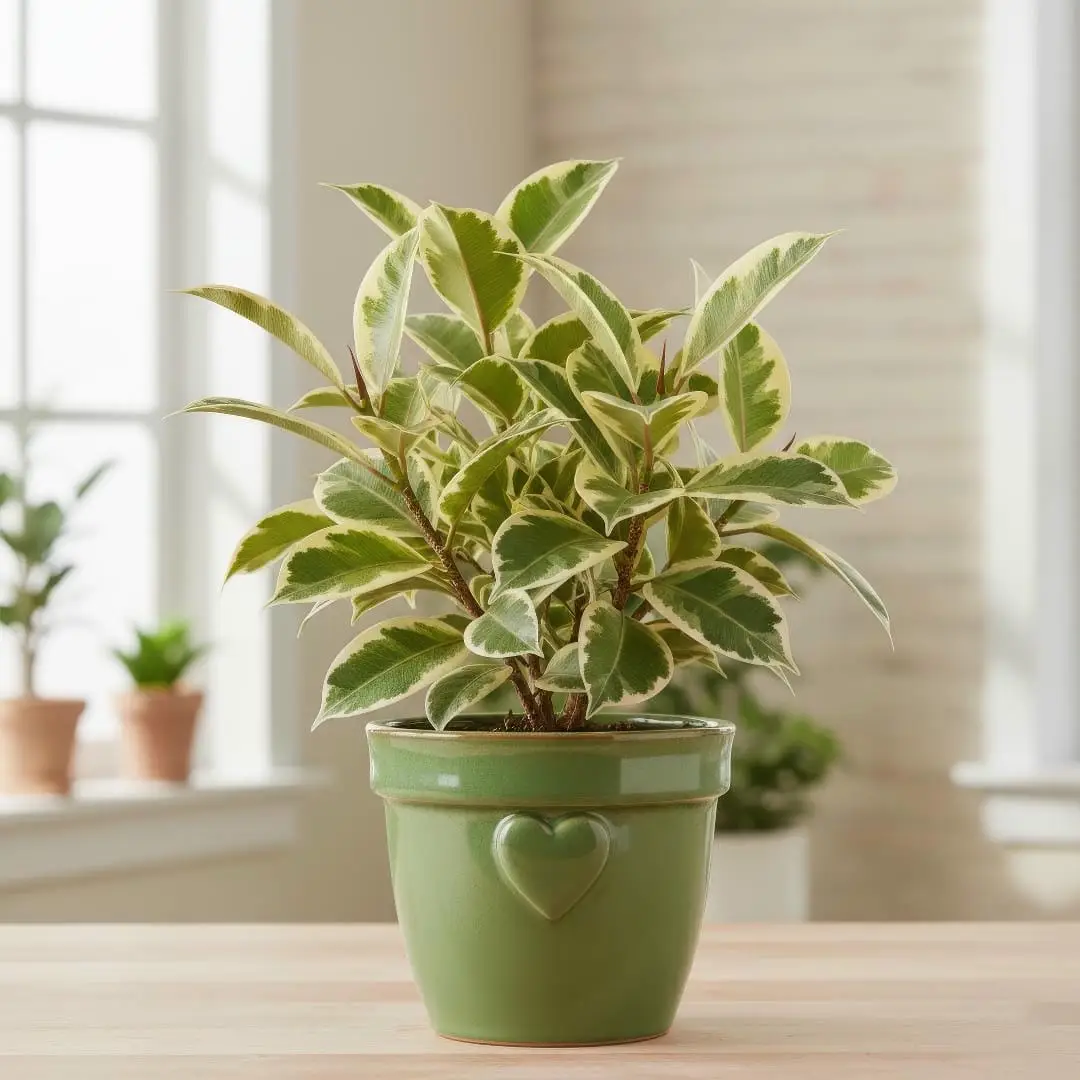
Complete Guide To Ficus Tineke Care and Growth
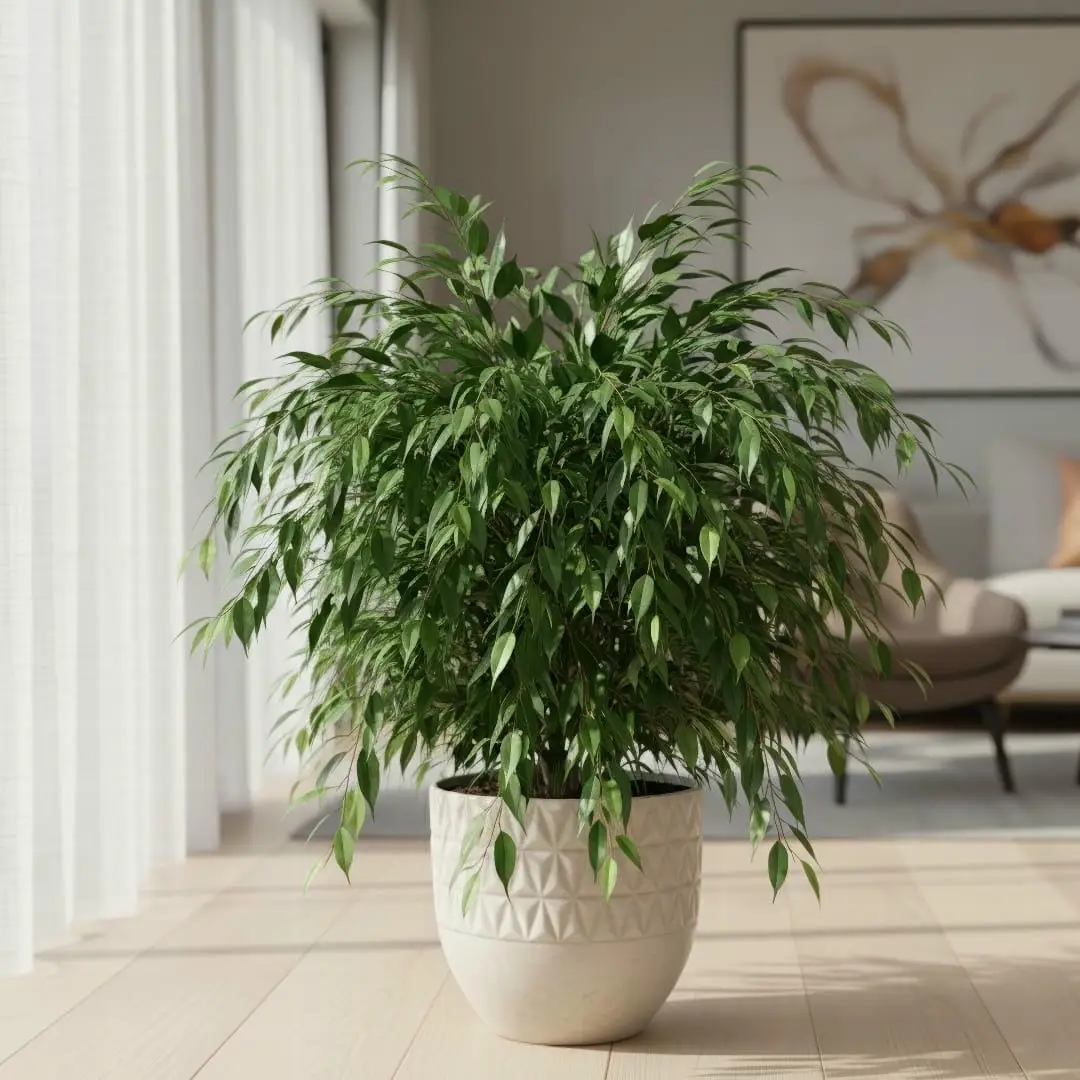
Complete Guide To Weeping Fig Care and Growth
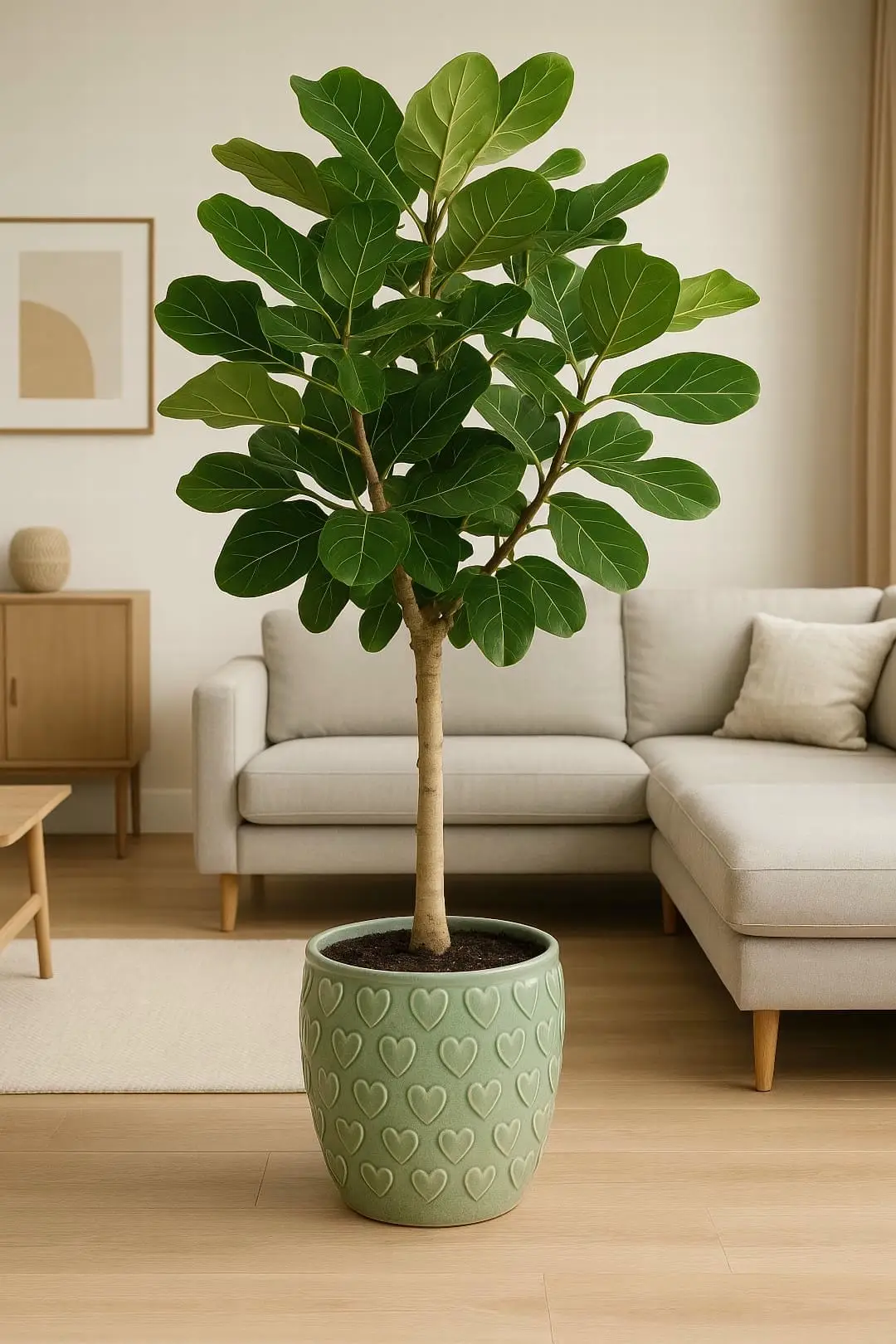
Complete Guide to Ficus Audrey Care and Growth

Houseplant101 Forum
Questions & Comments
Ask a question, share your plant experience, or help other plant owners.
Comments are temporarily unavailable.
Open the Houseplant101 ForumNo comments yet
Be the first to ask a question or share your experience about this page.
Log in or create an account
Comments use your Houseplant101 Forum account, but you can stay on this page.
Create a new account