
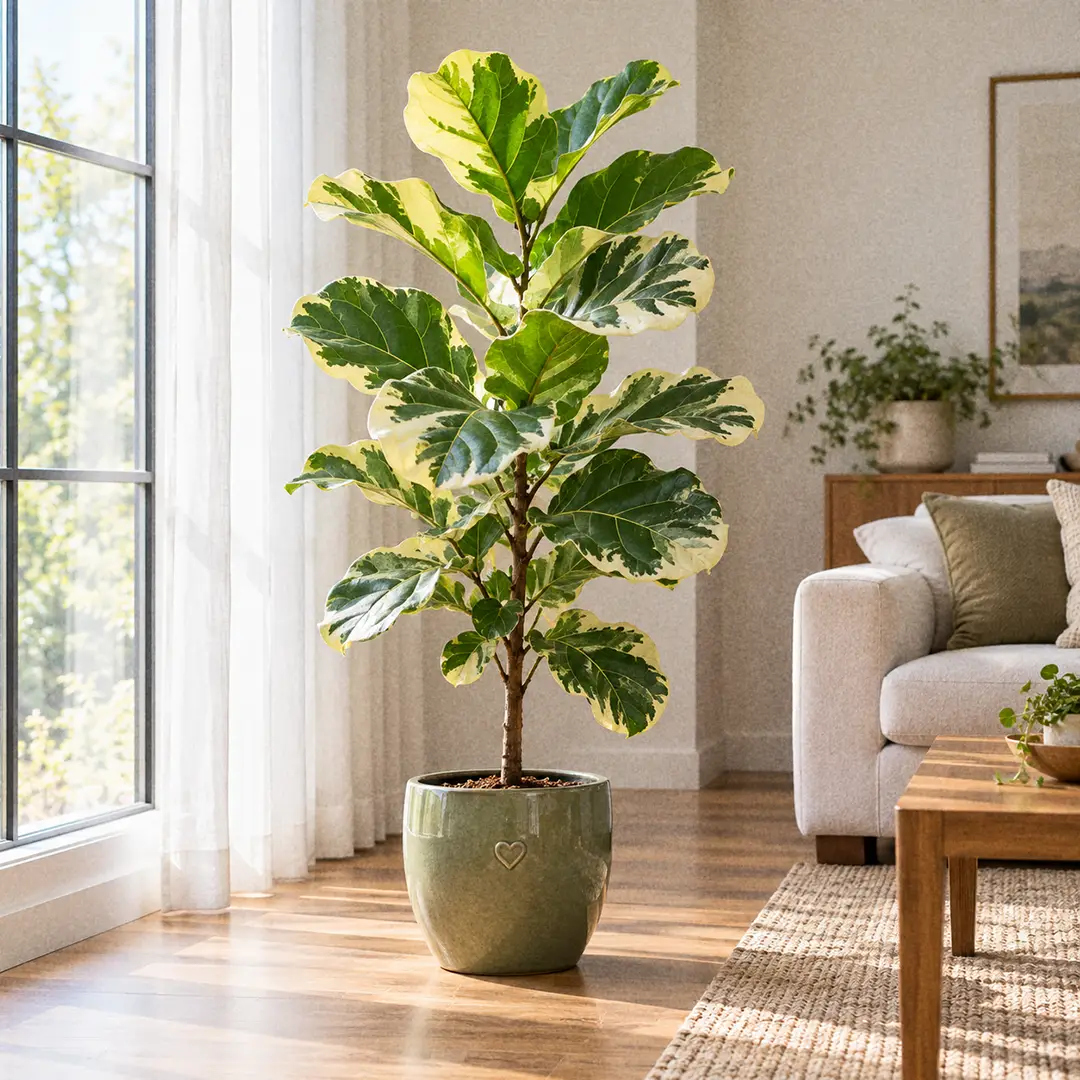
Variegated Fiddle Leaf Fig
Ficus lyrata 'Variegata'
Variegated Ficus Lyrata, Variegated FLF, Ficus lyrata Variegated


Variegated Fiddle Leaf Fig care is a balancing act nobody warns you about at the checkout. The cream sections carry no chlorophyll, so the plant needs more light than a green fiddle leaf fig while burning in less of it. This guide covers the light window, the slower watering rhythm, and what to do when it pushes an all-green shoot.
📝 Variegated Fiddle Leaf Fig Care Notes
🌿 Care Instructions
⚠️ Common Pests
📊 Growth Information
🪴 In This Guide 🪴
We may earn a commission when you buy through these links. How we choose products →

☀️ Variegated Fiddle Leaf Fig Light Requirements
Light is the whole plant, and every other section here is downstream of it. The cream tissue changes how much light this ficus needs and how much it can survive.
Why It Needs More Light Than a Green One
Chlorophyll turns light into sugar, and the cream sections have none. On a well-marked plant a third to half of the leaf area does no photosynthetic work at all, so the green parts feed the whole tree on their own by catching more light per square inch than a green fiddle leaf fig ever needs to.
The plant is hungrier for light and weaker at using it. That is why it grows slowly, why it recovers at a crawl, and why a spot that keeps a green fiddle leaf fig in good shape slowly starves this one.
The Sweet Spot
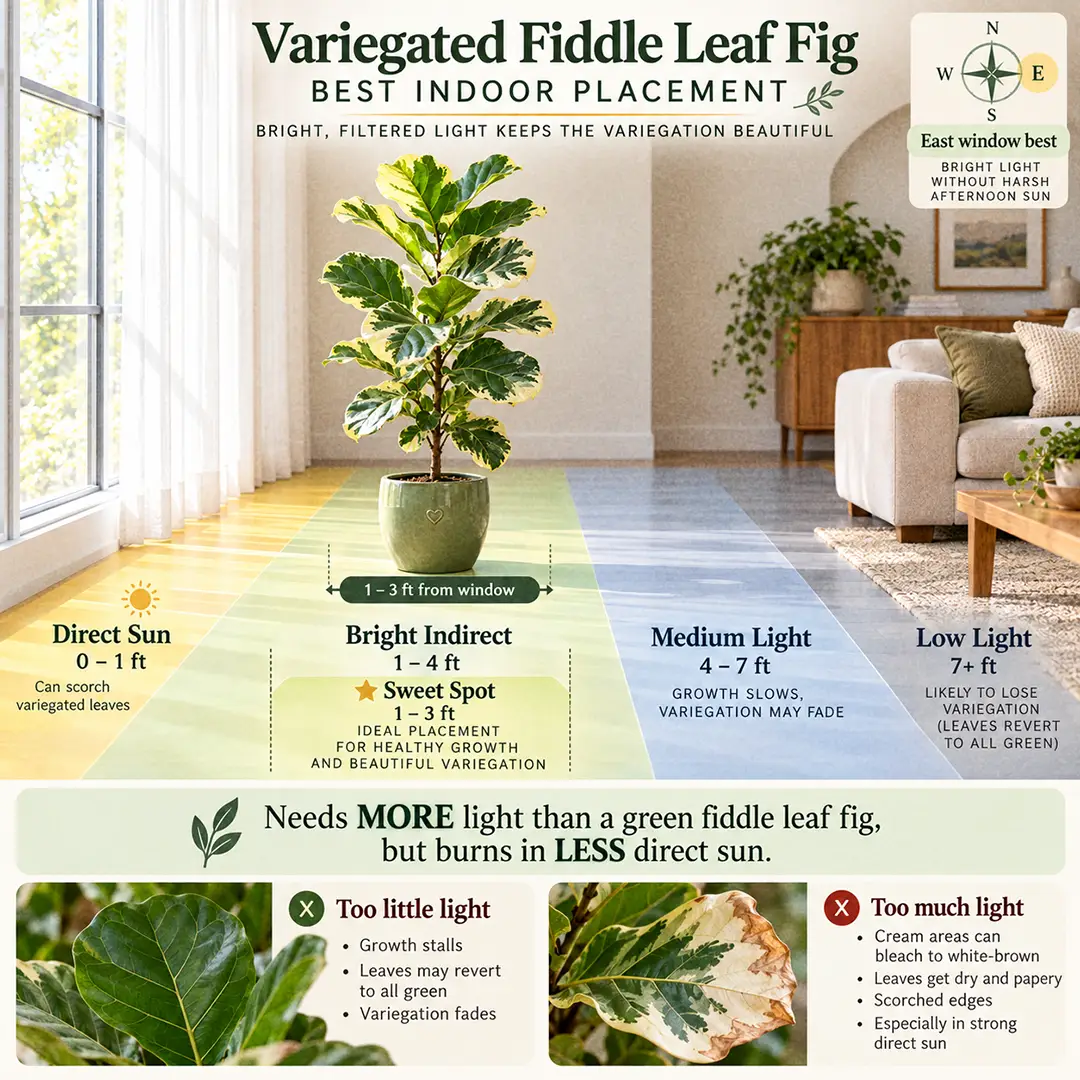
Directly in front of an unobstructed east window, or one to three feet back from a south or west window with a sheer curtain across the glass. Six to eight hours of bright indirect light a day is the target, and the plant should see a large piece of open sky rather than a slice of it past a neighbouring building.
A couple of hours of gentle early morning sun is fine. Midday and afternoon sun through glass is not. If your brightest window still reads dim, a grow light on an eight-hour timer, set back far enough that you feel no warmth at leaf level, does the job. Our light guide covers reading a room.
Too Much Light Burns the Pale Tissue First
This is the tension that defines the plant. It wants more light and it burns at a lower threshold than a green fiddle leaf fig. Cream tissue has no pigment shielding it and no chlorophyll using the energy up, so an hour of hard afternoon sun bleaches it to paper while the green sections beside it look untouched. Those burnt patches never heal. Watch the newest leaves: cream going papery and translucent means pull the plant back a foot or hang a sheer panel.
Too Little Light
Low light does not kill this plant quickly. It does something more annoying: it makes the plant push green. Growth stalls, new leaves come in smaller, and the plant starts favouring shoots with more chlorophyll because those are the ones paying their way. That is reversion, covered properly in the pruning section below.
💧 Variegated Fiddle Leaf Fig Watering Guide
The single most common way people kill this plant is watering it like a green fiddle leaf fig. It does not use water at the same rate, and the difference is not small.
It Drinks Less Than the Green One
Water moves through a plant to feed photosynthesis and to cool the leaf. Cream tissue does neither job at anything like full rate, and the plant grows more slowly on top of that, so a variegated specimen uses noticeably less water than a green one of the same size in the same pot.
Put the two side by side on one weekly schedule and the variegated plant will be sitting in damp soil while the green one is ready for a drink. Over a couple of months that ends in root rot.
Watering Frequency
Check the soil, never the calendar. Push a finger in to the second knuckle and water only when the top two inches are properly dry. In spring and summer that usually lands every ten to fourteen days in a bright room, and in winter it can stretch to three or four weeks. That is normal rather than neglect.
Pot size, light and room temperature all move that number, which is why a moisture meter earns its place here more than on most plants. A big pot can be dry on top and soaking six inches down.
How to Water
Use room-temperature water and pour slowly all the way around the soil surface until it runs freely from the drainage hole, then let it drain and empty the saucer. Half-watering a big pot leaves the bottom third of the roots permanently dry while the top stays wet, the worst of both problems at once.
Signs You Got It Wrong
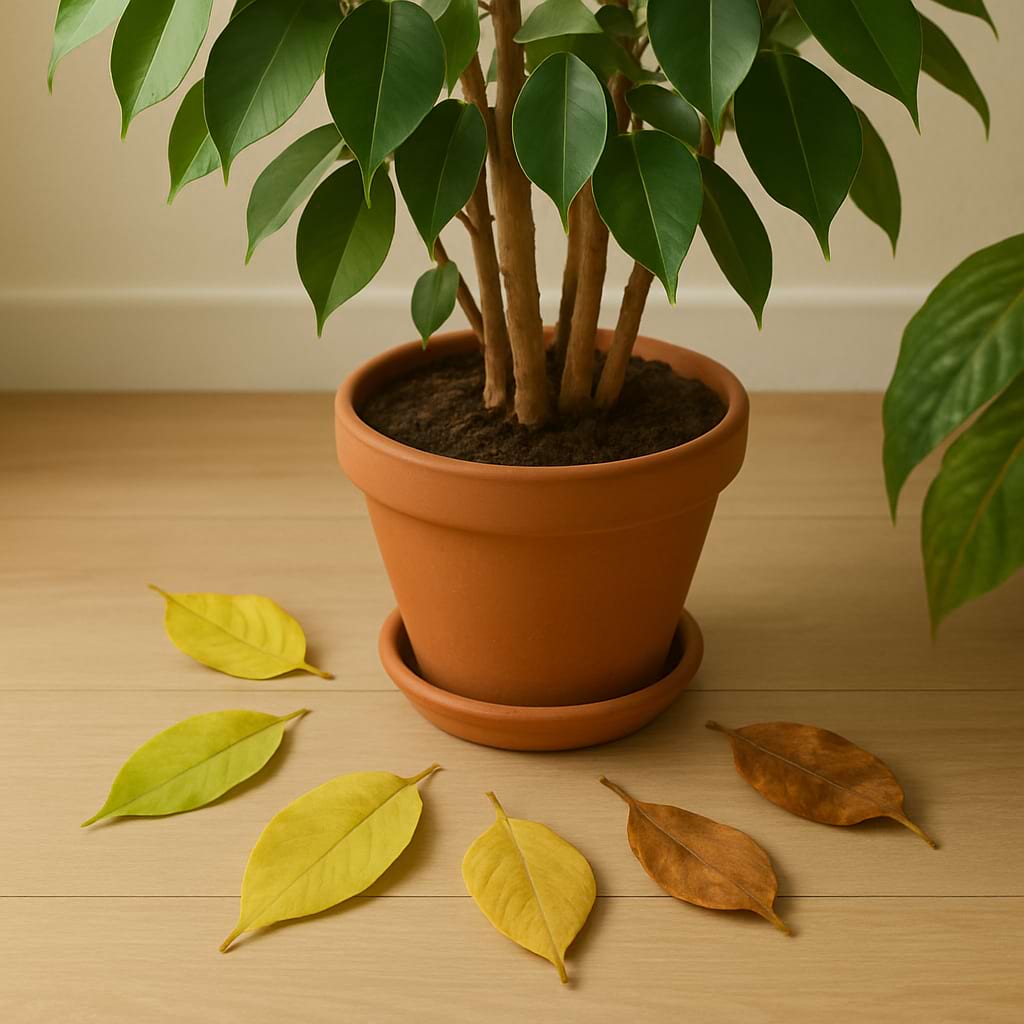
Too much water shows as dark soft brown patches spreading from the base or centre of a leaf, lower leaves yellowing then dropping, and soil still damp two weeks on. Too little shows as dry crisp edges, drooping, and soil pulling away from the pot wall. Bottom watering will rewet a root ball that has gone hydrophobic; the watering primer covers the rhythm.
🪴 Best Soil for Variegated Fiddle Leaf Fig
A slow plant in dense soil has wet roots for weeks at a time. The mix has to do the drying the plant is too slow to do for itself.
What the Mix Needs to Do
Drain fast, hold air, and dry out in the top two inches within roughly a fortnight. Bagged potting compost does none of that in a large pot. Aim for a mix chunky enough that you can see individual pieces of bark in it.
A Mix That Works
- 2 parts quality indoor potting soil
- 1 part medium orchid bark
- 1 part perlite or pumice
- A handful of horticultural charcoal
Squeeze a damp fistful. It should clump loosely and break apart when poked. If it holds a tight ball, add bark and perlite. Our soil guide explains each ingredient.
Buying a Premix
Bags labelled ficus mix, tropical mix or chunky aroid mix are close enough, especially with a couple of extra handfuls of perlite stirred through. Skip anything sold as moisture control or water retaining. Those are built for plants that dry out too fast, the opposite of your problem.
🍼 Fertilizing Variegated Fiddle Leaf Fig
Feed it like a small plant, not the tree it looks like. A slow grower with reduced leaf area cannot use a full-strength dose, and the leftovers sit in the pot as salt.
When and How Often
Once a month from March through September with a balanced liquid houseplant feed at quarter to half the label strength. Stop completely from October to February. Always water first, then feed, so the fertiliser never hits dry roots. The fertilizing guide explains why dilution matters more than frequency.
Feeding Will Not Make It More Variegated
People do try it. The pattern is genetic, decided in the growing tip before a leaf unfurls. Nitrogen builds green tissue, so if anything a heavy feeding schedule nudges the plant greener. Light decides how well the pattern holds; fertiliser only decides how many leaves you get.
Signs of Overfeeding
A white crust on the soil surface, brown crisp tips on otherwise healthy leaves, and burn showing on the cream margins first because that tissue is the weakest on the plant. Flush the pot with plain water until it runs clear and skip the next two feeds.
🌡️ Variegated Fiddle Leaf Fig Temperature Range
Ideal Range
Warm and steady, 65 to 80°F (18 to 27°C). Nothing below 55°F (13°C), ever. This plant is less able to rebuild after a setback than a green fiddle leaf fig, so a cold night costs it more.
Drafts and Vents
Cold draughts from a leaky window or a front door, and hot dry air from a heating vent, both trigger leaf drop within a week or two. Air conditioning blowing across the canopy does the same. Hold a hand where the plant sits on a cold evening. If you feel moving air, so does the plant.
Seasonal Adjustments
Pull it a step back from the glass for winter, where night-time chill pools against the window. Water far less. If you summer it outdoors, acclimatise it to brighter light over two weeks rather than putting it straight into an open position, because the cream tissue sunburns much faster outside than in.
💦 Variegated Fiddle Leaf Fig Humidity Requirements
Ideal Humidity
Fifty to sixty percent is ideal and forty is workable. Below thirty, which is where a heated room sits in midwinter, the pale margins start crisping before anything else on the plant shows stress.
Easy Boosters
A small humidifier near the plant is the only method that reliably moves the number in a whole room. Grouping plants together helps a little. Misting does not, and leaving large leaves wet overnight invites bacterial leaf spot, which is a genuine problem on this species. Our humidity guide has the detail.
🌸 Variegated Fiddle Leaf Fig Flowers
It Does Not Flower Indoors
No indoor fiddle leaf fig flowers, green or variegated. In West Africa Ficus lyrata produces figs, which in this genus are inverted flower structures pollinated by a specific wasp that does not live in your living room. Nobody grows this plant for bloom.
The Sap Instead
What the plant does produce is milky white latex, which leaks from any cut or snapped leaf. It stains, it irritates skin, and it is genuinely unpleasant in eyes. Gloves for pruning, and wipe drips off the trunk before they dry.
Where the Interest Comes From
No two leaves on this plant are patterned alike. One leaf can carry a green centre, a wide cream margin, and a marbled band where the two meet. That beats a flower, and it lasts all year.
🏷️ Variegated Fiddle Leaf Fig Types and Varieties
There is no cultivar tree under this plant. It is sold as Ficus lyrata variegated, sometimes tagged 'Variegata', and the pattern varies from plant to plant rather than by named clone. What matters at the shop is which plant you pick and what you are comparing it against.
How to Pick One
Look at the balance. A plant somewhere near half green is the one that lives. Heavy cream coverage looks spectacular on a shelf and struggles to feed itself for years. Check the growing tip in particular: if the newest leaves at the top are plain green, the plant is already reverting and you are paying rare-plant money for a green fiddle leaf fig.
Against the Green Fiddle Leaf Fig
The Fiddle Leaf Fig is the same species, the same shape, and the same set of moods about being moved. It grows two to three times faster, costs a fraction as much, forgives a watering mistake, and will reach six to ten feet indoors where the variegated form is slow to pass eight. If you have never kept one alive, start there and come back.
Against the Variegated Rubber Plants
Most people shopping for a variegated ficus end up choosing between this and the elastica group. Ficus Tineke is the forgiving one, with cream margins and a pink midrib on thick leathery leaves that buffer a missed watering. Ficus Ruby runs pink through the same cream sections and sits in a similarly narrow light window. Ficus Shivereana speckles cream across round leaves instead of edging them. All three are easier than this plant and none has leaves this size.
🪴 Potting and Repotting Variegated Fiddle Leaf Fig
Root disturbance costs a slow plant more than a fast one, because it recovers at the speed it grows. Repot only when it genuinely needs it.
When to Repot
Every two to three years, and only in spring. Signs: roots out of the drainage hole, water running straight through in seconds, growth stalled when light and feeding are right. Slightly snug dries faster, which suits this plant.
Choosing a Pot
Go up one size, two inches of diameter at most. An oversized pot leaves a wide collar of wet soil no root reaches for months, and on a plant this slow that is a direct route to rot. Terracotta is a good default because it dries through the walls, and a heavy pot stops a top-heavy specimen going over. Drainage holes are not negotiable.
Step-by-Step Repotting
- Water lightly the day before so the root ball holds together.
- Slide the plant out by supporting the trunk base, never by pulling the canopy.
- Leave the root ball mostly intact. Tease only the outer inch loose.
- Trim any black or mushy roots back to firm pale tissue.
- Set it at the same depth as before on a bed of fresh mix.
- Backfill, tap the pot to settle the soil, and do not compact it.
- Water thoroughly, put it straight back in its old spot, and do not feed for six weeks.
Expect a sulk. A few dropped leaves after repotting is normal for any ficus. See the repotting guide for timing.
✂️ Pruning Variegated Fiddle Leaf Fig
Pruning does two jobs on this plant. One is shaping, same as any fiddle leaf fig. The other is holding the variegation, and that one has no equivalent on a green plant.
Cutting Out All-Green Shoots
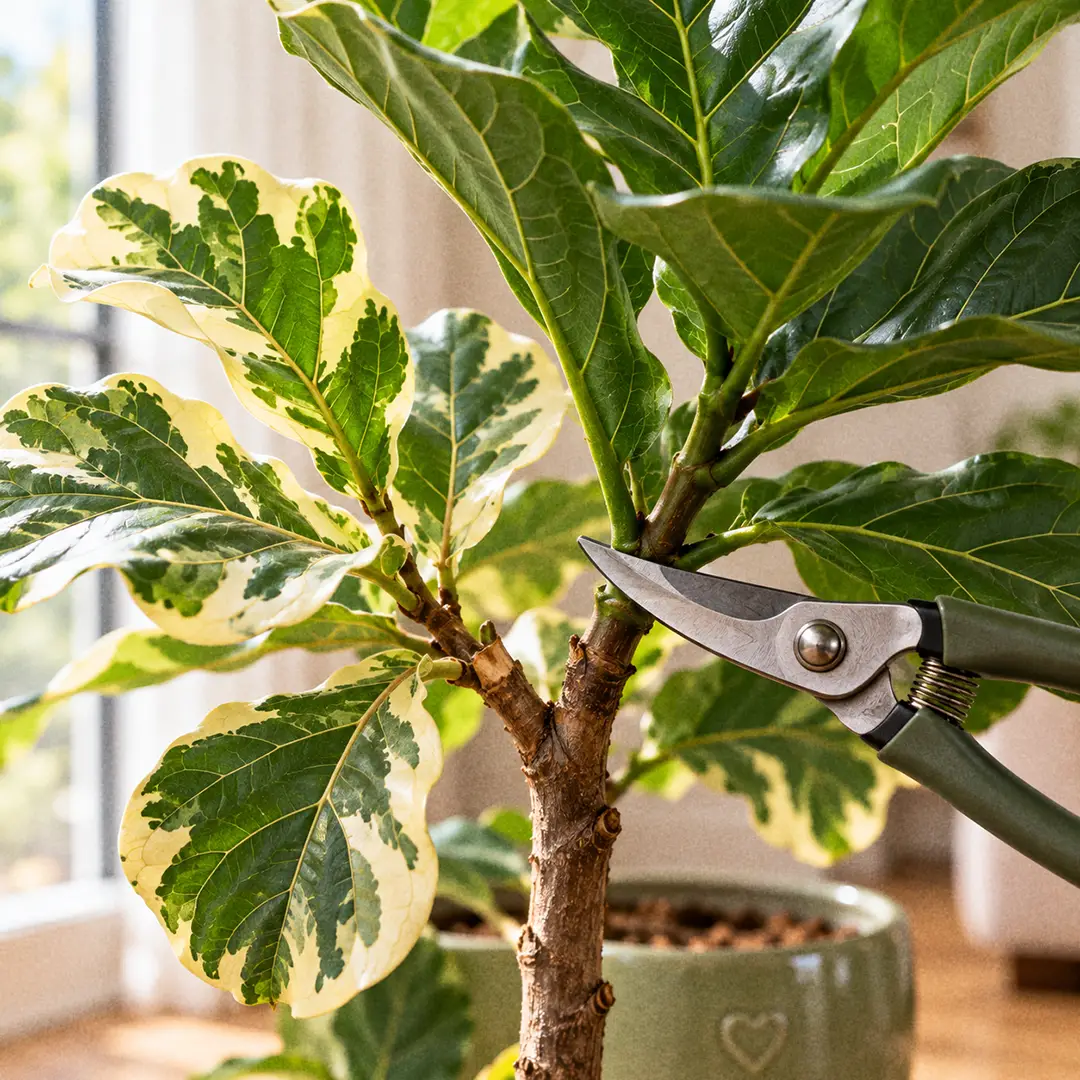
An all-green shoot has full chlorophyll and no dead weight, so it grows faster and stronger than every variegated branch on the plant. The energy goes where the growth is, the variegated branches stall, and within a couple of seasons you own a green fiddle leaf fig with an interesting history.
Cut it out as soon as you are sure. Follow the green shoot back to where it joins variegated wood and cut just above that junction, so nothing green is left to push again. Do it the week you notice it.
All-White Shoots Are the Opposite Problem
Occasionally the plant pushes a branch with no green at all. It looks incredible and it cannot survive, because nothing on it makes sugar. It lives on what the rest of the tree sends it, then browns off and dies. Leave it to run its course or cut it off to stop the plant subsidising it. More light does not help, since light without chlorophyll is just heat.
Shaping and Branching
Topping works the same as on a green plant: cut the main stem just above a leaf once it reaches the height you want, and it pushes branches from the nodes below. Regrowth takes months rather than weeks, and there is no guarantee the new branches carry the same balance of cream. Prune in spring with clean sharp secateurs, wear gloves for the latex, and take out no more than a quarter of the plant at once.
🌱 How to Propagate Variegated Fiddle Leaf Fig
This is one of the harder houseplants to propagate. People try anyway because a rooted cutting is worth real money.
Why Cuttings Are Hard Here
A cutting has to stay alive on stored energy until it grows roots, and a variegated cutting has less working leaf area to fund that with. Green fiddle leaf fig cuttings already root slowly and unreliably. Variegated ones are worse, and a cutting from a heavily cream section often rots before it does anything.
Air Layering Is the Method
Roots form while the branch is still attached and still being fed by the parent, which removes the problem above. This is the technique to use.
- Pick a healthy variegated stem at least pencil thick, in spring or early summer.
- Cut a shallow ring of bark about an inch wide, or make an upward slanting nick a third of the way through. Blot the latex.
- Dust the exposed wood with rooting hormone.
- Wrap a fist-sized handful of damp sphagnum moss around the wound.
- Cover with clear plastic film and tape both ends so it holds moisture but you can still see in.
- Wait. Roots usually show through the moss in six to twelve weeks, sometimes longer on a variegated plant.
- Once the moss is full of roots, cut below the ball, unwrap the plastic, leave the moss, and pot into a small pot of chunky mix.
Our air layering guide has the general technique.
If You Try a Cutting Anyway
Take a top cutting with two or three leaves and a good share of green in them. Blot the latex, let it callus an hour, then root it in water on a heat mat in bright indirect light, changing the water weekly. Expect two to three months and expect failures. Our water propagation notes cover the routine.
The Variegation Carries Over
Anything taken from variegated wood comes back variegated, though the exact balance shifts. A layer off a mostly green branch gives you a mostly green plant, so choose the branch by the pattern you want.
🐛 Variegated Fiddle Leaf Fig Pests and Treatment
A stressed plant attracts more pests than a healthy one, and this one sits closer to stressed most of the time. Check both leaf surfaces and the leaf joints every fortnight.
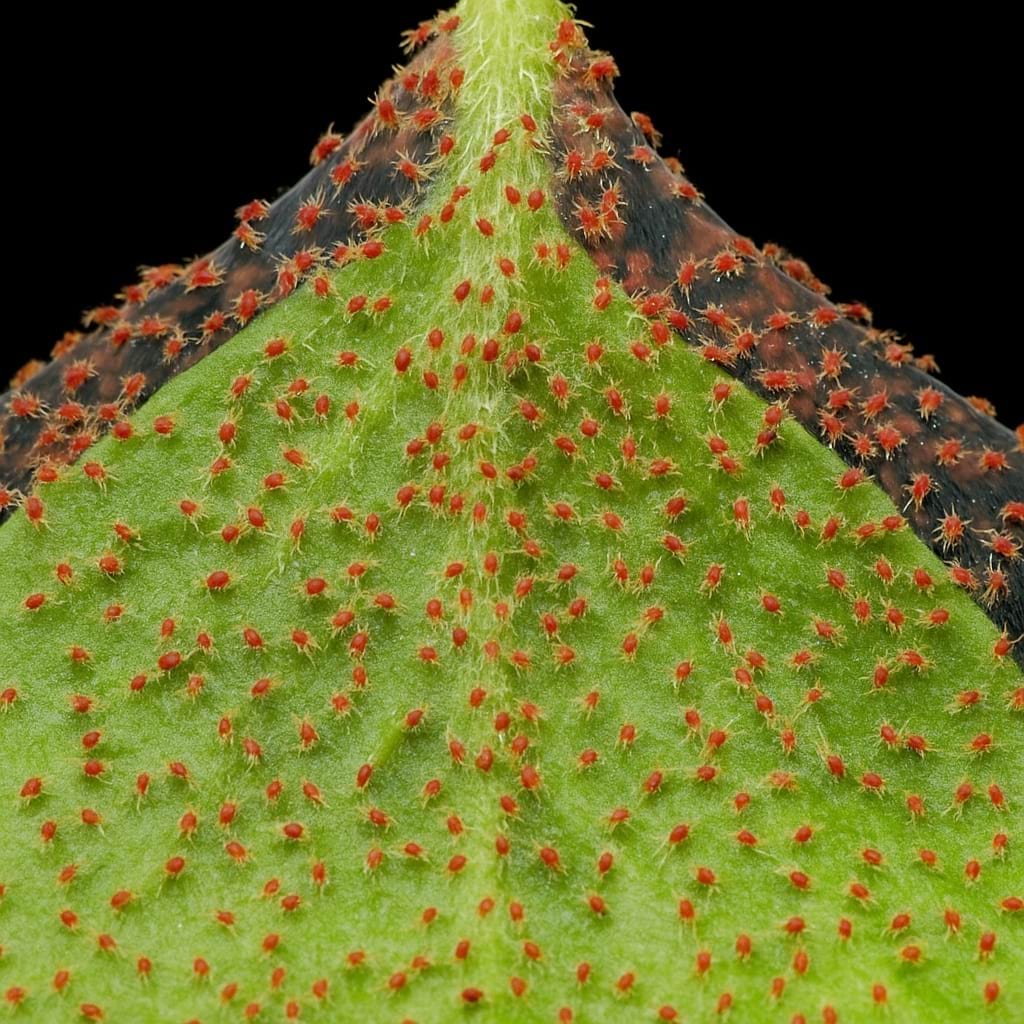
Spider mites are the usual offender in dry heated rooms: fine webbing in the leaf joints and a dull stippled haze that is easiest to miss on cream tissue. Wipe the leaves, raise humidity, and treat weekly with insecticidal soap or neem oil until two checks come back clean.
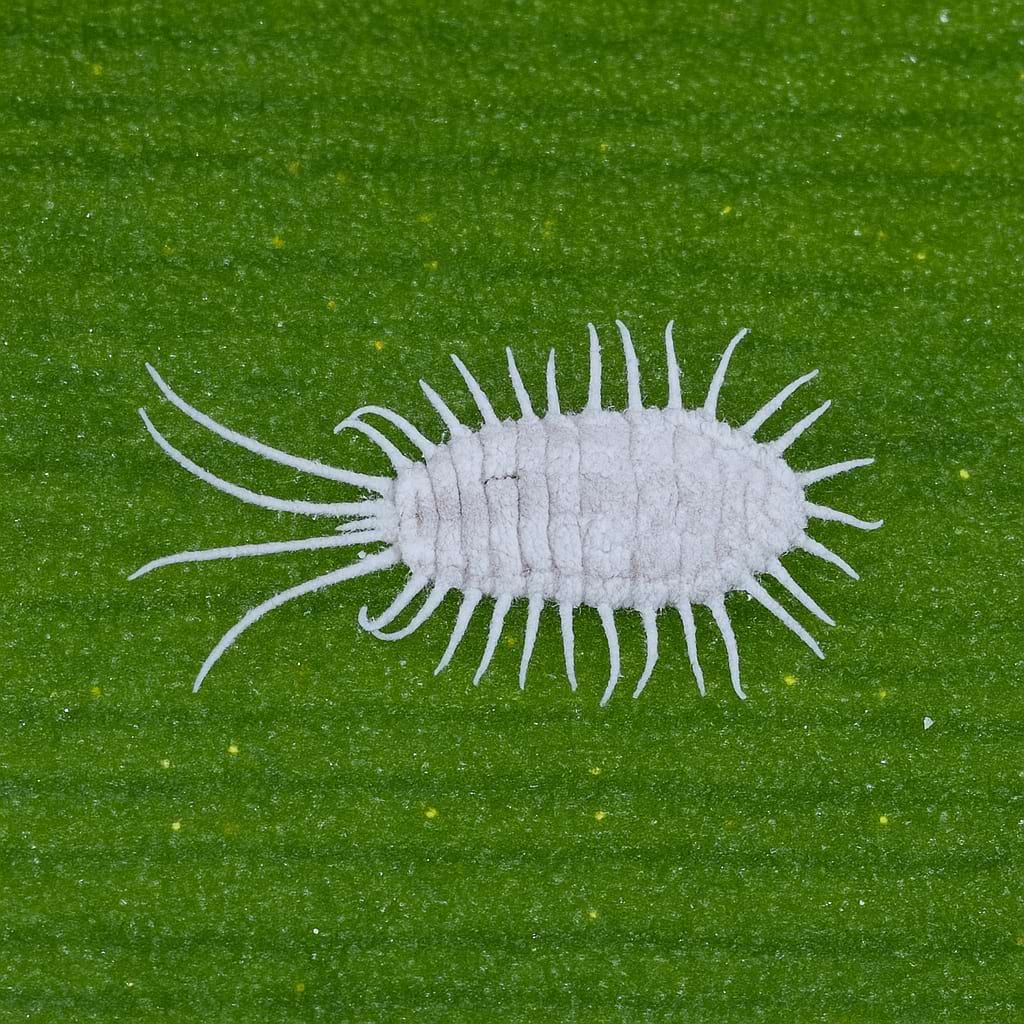
Mealybugs look like small white cotton tufts tucked where the leaf stalk meets the trunk. Dab each one with a cotton swab dipped in 70 percent isopropyl alcohol, then re-check in five days.
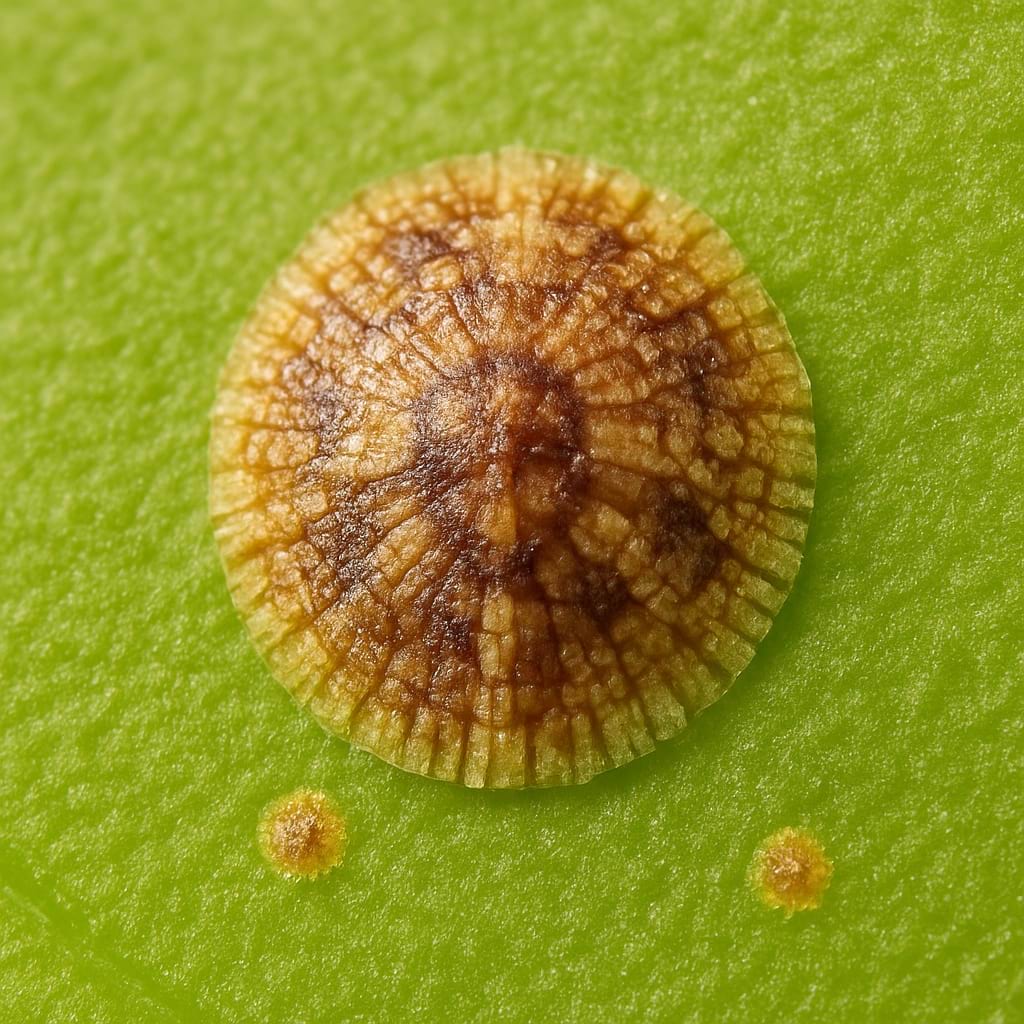
Scale insects show as hard brown bumps on stems and leaf undersides. Scrape them off with a fingernail and follow with weekly neem oil.
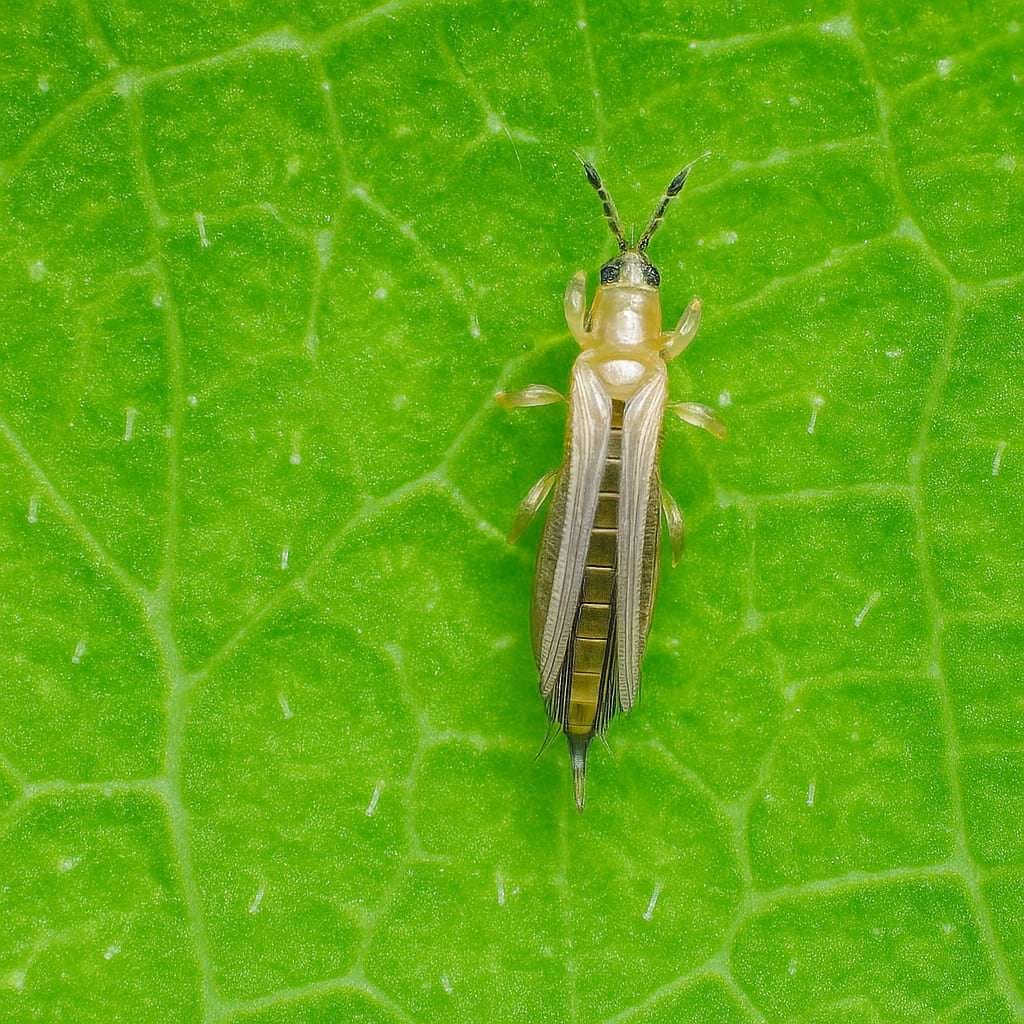
Thrips scar new leaves with silvery streaks and deform them as they open, which on a plant this slow means a damaged leaf you look at for a year. Isolate and treat weekly for three clean weeks.
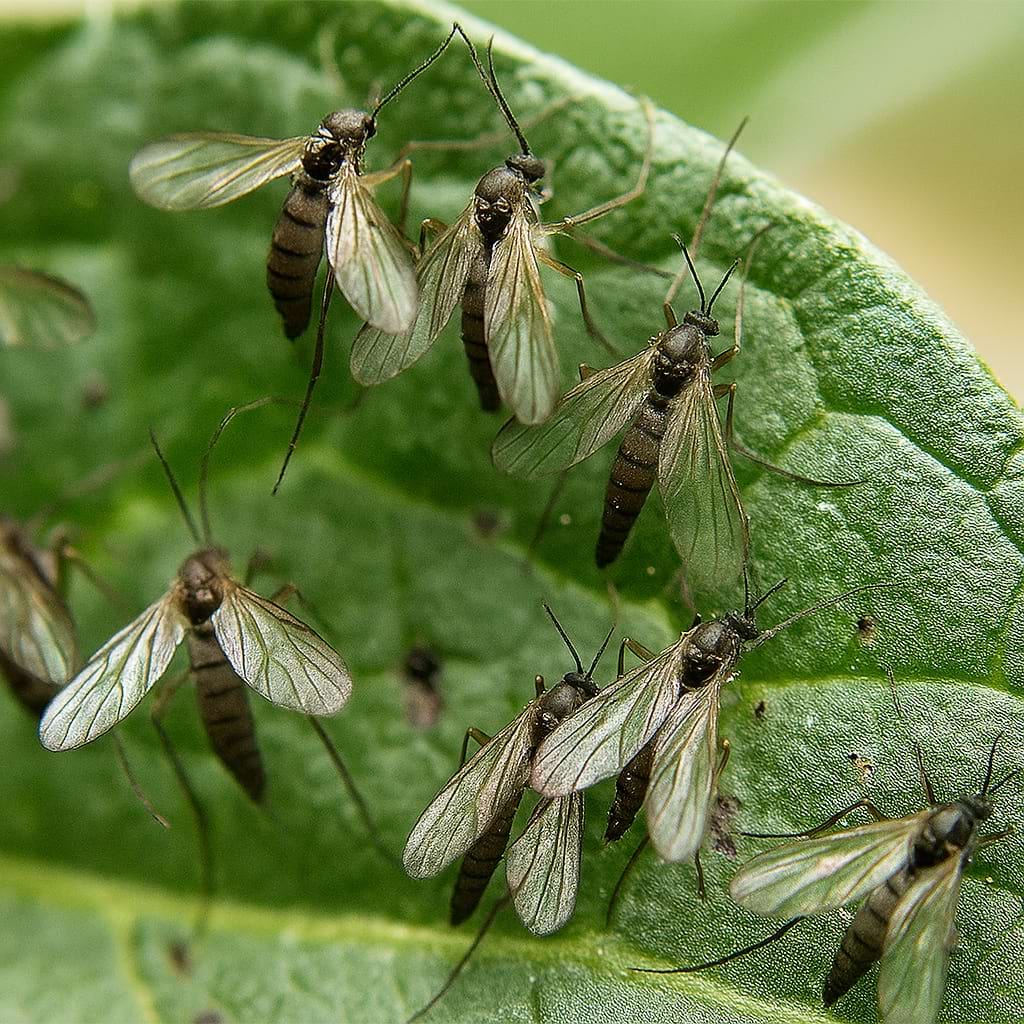
Fungus gnats mean the soil is staying wet too long, which on this plant is a warning worth heeding. Let the top two inches dry properly and put out yellow sticky traps.
Quarantine anything new for two weeks before it goes near this one.
🩺 Common Variegated Fiddle Leaf Fig Problems
This is mostly the same list as the green plant, with one addition that dominates the mailbag.
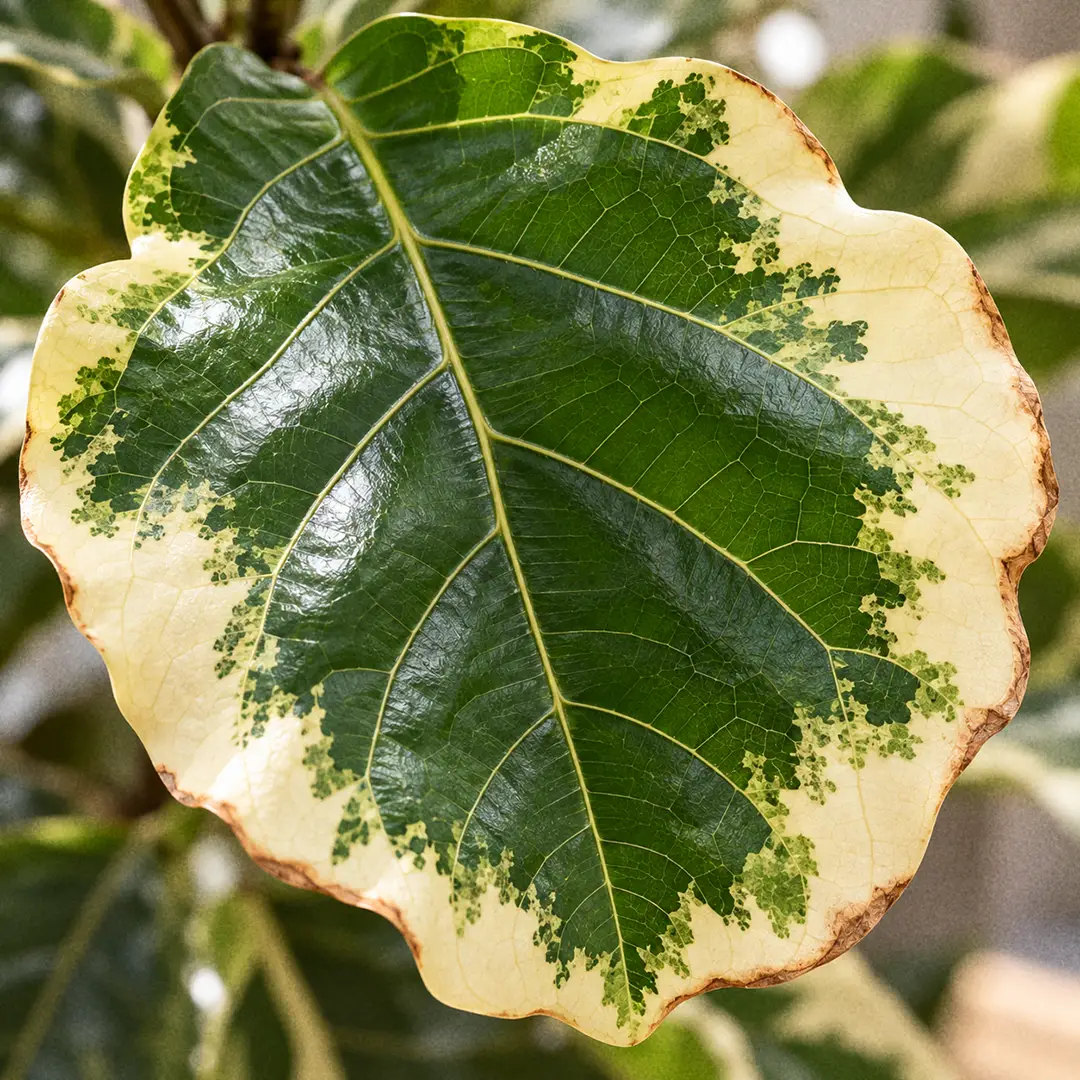
Browning cream margins is the number one complaint here, and the one thing to understand about this plant. Pale tissue has no chlorophyll and no pigment protection, so it fails first under every kind of stress: too much sun, dry air, salt buildup, erratic watering, cold. By the time the green sections look unhappy, the cream has been browning for weeks. Treat the pale edges as an early warning system rather than a cosmetic flaw, and see our guide to browning variegation.
Reversion to all-green growth is usually a light problem. Raise the light and cut the green shoots out at the junction with variegated wood.
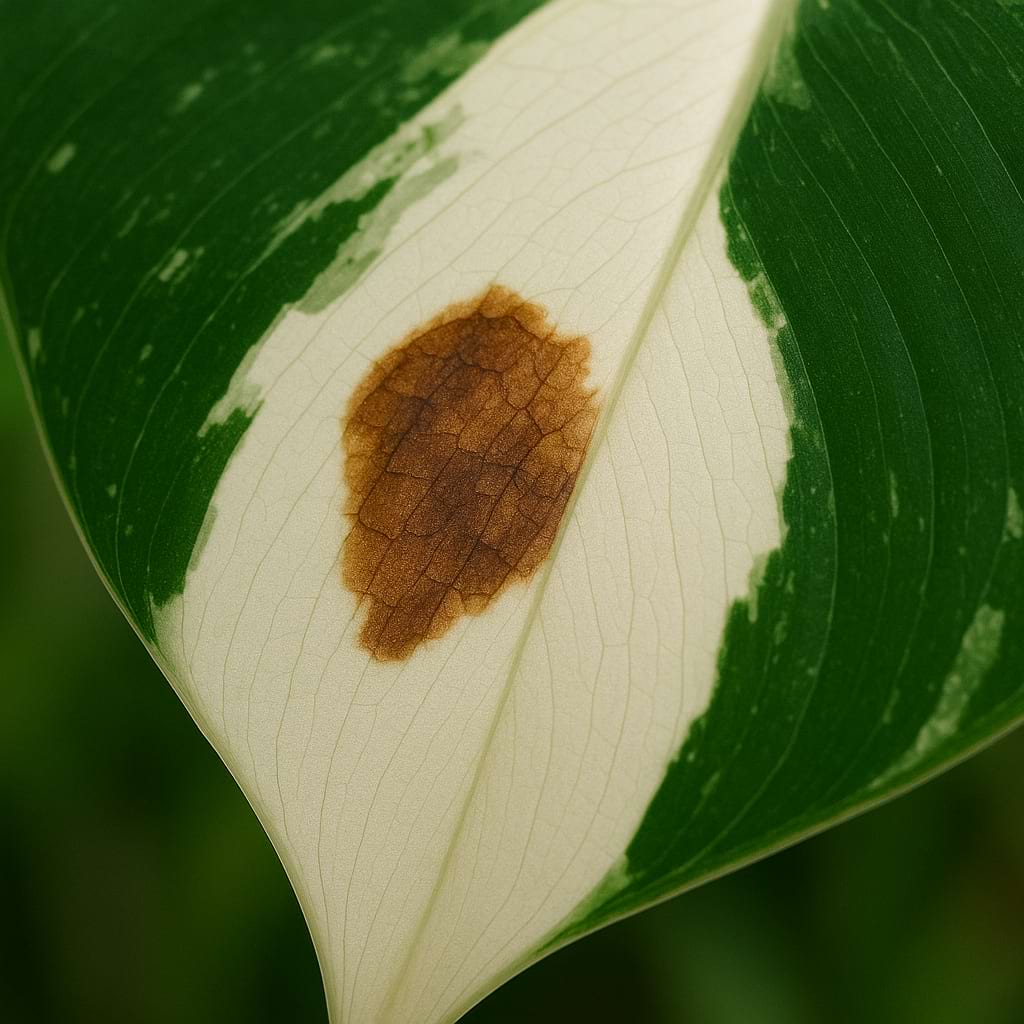
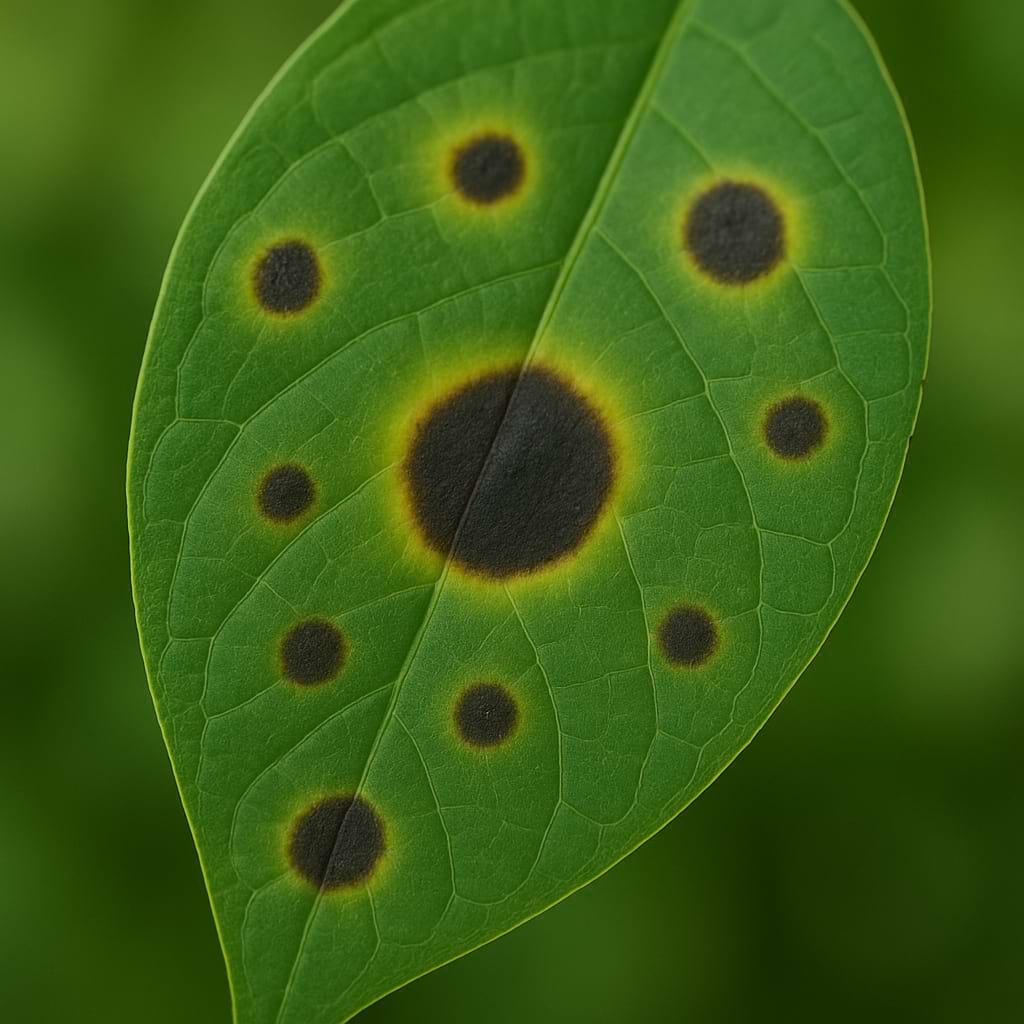
Brown and black spots that are dark and soft, spreading from the leaf base or centre, mean wet roots. Dry crisp brown at the edges means the opposite, or a draught.
Leaf drop is the classic ficus response to change. A move, a repot, a new watering rhythm or a cold snap does it, and the drop often starts one to three weeks after the trigger. Hold everything steady and wait.
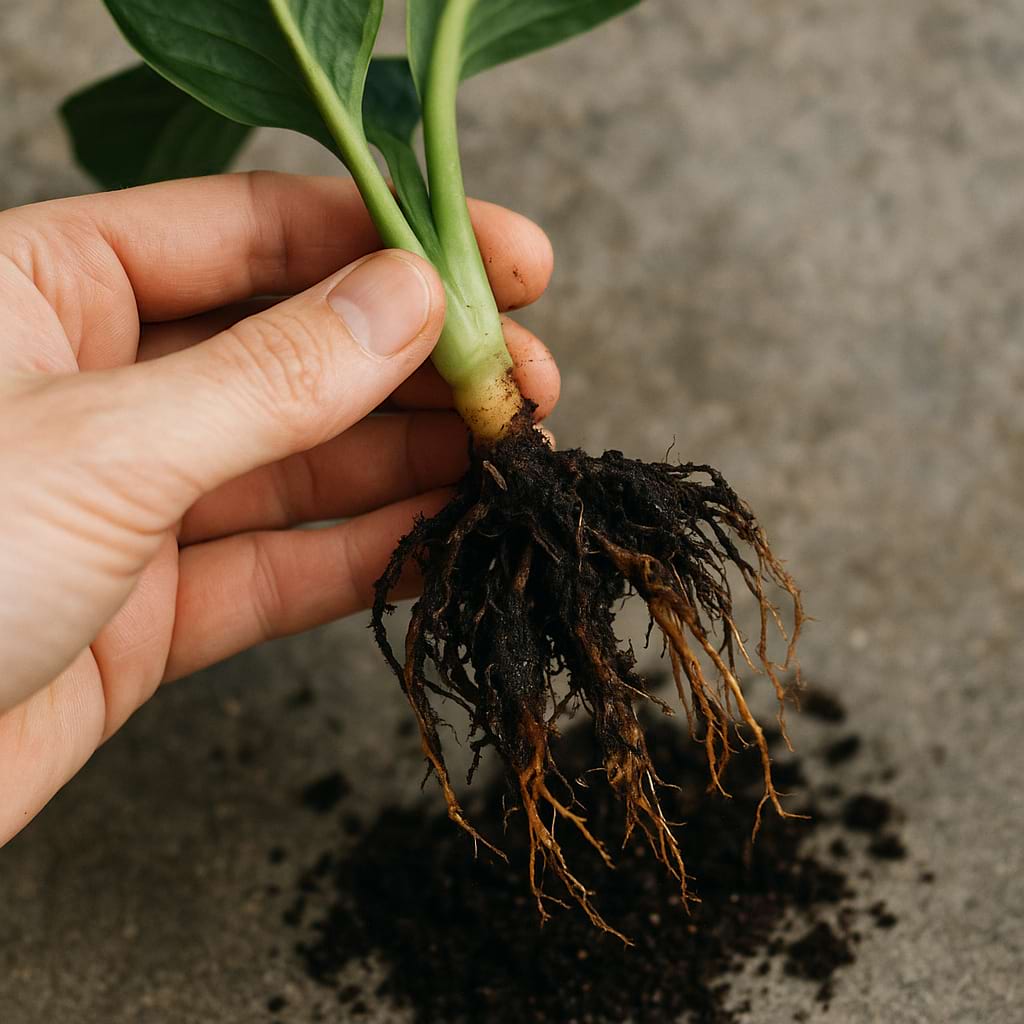
Root rot is the likeliest way to lose this plant, because it drinks less than you expect. Unpot at the first sour smell, cut every soft root back to firm tissue, and repot into fresh chunky mix.
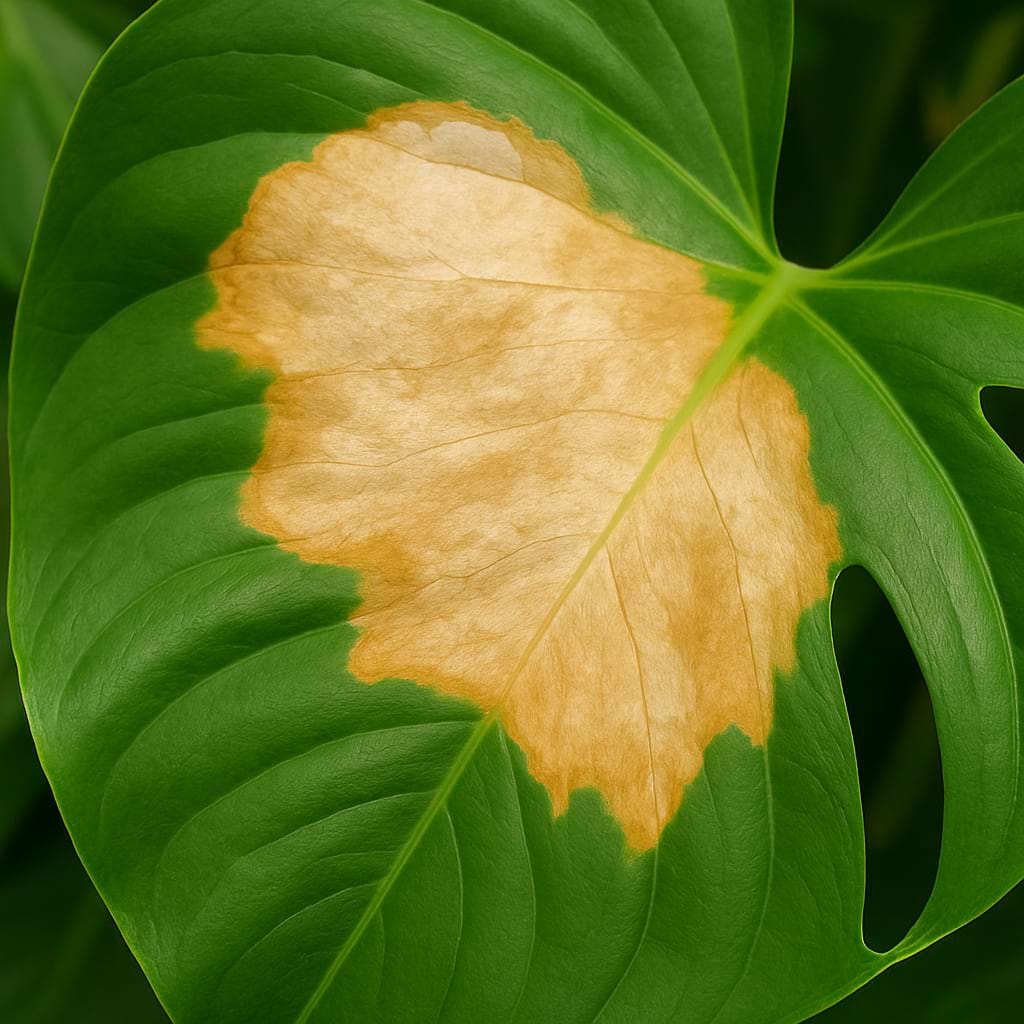
Sunburn leaves bleached papery patches that appear on the cream first. Those never recover.
Yellowing leaves starting at the bottom usually mean overwatering.
Small leaves and stunted growth point at light before anything else, then feeding, then roots.
Edema makes reddish speckles or small blisters on new leaves when watering has been erratic. Even out the routine.


🖼️ Variegated Fiddle Leaf Fig Display and Styling Ideas
Solo Setups
A floor specimen one to three feet from an east window. That is less a styling decision than the same light rule from earlier, and it happens to look good anyway, because the leaves are enormous and the pattern does the work. Angle it so morning light comes through the canopy rather than only onto it. Backlit cream is the best this plant ever looks.
Pot Pairings
Plain and quiet. Matte cream, stone, unglazed terracotta or soft white. The leaves are already a busy pattern and a patterned pot fights them. Pick something heavy, because a five-foot ficus in a light plastic pot goes over the first time a door slams.
Grouped Arrangements
Pair it with plain dark green foliage to make the cream read, rather than with other variegated plants. A Ficus Burgundy behind it gives near-black leaves as a backdrop. A plain Rubber Plant or a Ficus Audrey works the same way at a lower height.
Where Not to Put It
An entryway where the door lets cold air in, above a radiator, in an unfiltered south window, or anywhere you will be tempted to move it seasonally. It hates being moved as much as any fiddle leaf fig and has less in reserve to recover with.
🌟 Variegated Fiddle Leaf Fig Pro Care Tips
- Pick the spot once. The move is what kills ficus, and this one recovers slowest of the lot.
- Read the cream margins daily. They tell you about a problem weeks before the green tissue does.
- Water less than feels right. It drinks noticeably less than a green fiddle leaf fig of the same size.
- Cut green shoots the week you see them, at the junction with variegated wood.
- Let all-white branches go. Nothing saves a shoot with no chlorophyll.
- Buy balanced, not blizzarded. Half green is the plant that lives; mostly cream is the plant that stalls.
- Wipe both leaf surfaces fortnightly. Dust on leaves this big costs light this plant has none to spare of.
- Feed at quarter strength. A slow plant cannot use a full dose and the surplus turns into salt.
- Gloves for any cut. The milky latex irritates skin and eyes.
- Give it a year before judging it. Two or three new leaves in a season is a good year here.
❓ Frequently Asked Questions
Why are the white edges on my variegated Fiddle Leaf Fig turning brown?
Because pale tissue fails first. The cream has no chlorophyll and no pigment shielding it, so direct sun, dry winter air, fertiliser salts, erratic watering and cold draughts all show on the margins before the green centres react. Work through those five in that order, and treat the browning as an early warning rather than a cosmetic flaw.
Is a variegated Fiddle Leaf Fig harder to care for than a normal one?
Yes, clearly harder. A green fiddle leaf fig is fussy about consistency; this one is fussy about consistency and has a much narrower light window on top, needing more light while burning at a lower threshold. It also grows slowly, so every mistake takes months to grow out.
Why is my variegated Fiddle Leaf Fig growing all-green leaves?
That is reversion, and low light is the usual trigger: green tissue photosynthesises and cream tissue does not, so in dim conditions the plant favours shoots that pay their way. Move it brighter and cut the green shoot back to where it joins variegated wood, because left alone it outgrows every variegated branch and takes over.
What do I do about an all-white branch?
Nothing will save it. A shoot with no chlorophyll cannot make sugar, so it lives off the rest of the tree until it browns and dies, and more light only cooks it faster. Cut it off at the base, or leave it and enjoy it while it lasts.
How fast does a variegated Fiddle Leaf Fig grow?
Slowly, and much slower than the green form. Two to four new leaves in a good season is realistic in the right light, against a green fiddle leaf fig that can put on a foot or more. Heavier variegation means slower still, and growth stops almost entirely from October to February.
How often should I water a variegated Fiddle Leaf Fig?
Roughly every ten to fourteen days in spring and summer, stretching to three or four weeks in winter, but check the soil and water when the top two inches are dry. It uses less water than a green fiddle leaf fig of the same size, so a schedule copied from a green plant keeps this one too wet.
Is the variegated Fiddle Leaf Fig toxic to cats and dogs?
Yes. Like the rest of the genus it bleeds a milky latex that irritates skin and eyes, and the ASPCA lists Ficus as toxic to cats and dogs, naming the enzyme ficin and the psoralens as the toxic principles. Chewing leaves causes mouth irritation, drooling and vomiting. Keep it out of reach and call your vet if a pet chews one.
Can I make my Fiddle Leaf Fig variegated?
No. Variegation is genetic and present in the growing tip from the start, not something light, feeding or any treatment produces, so a plain green fiddle leaf fig stays green for life. Anything sold as a spray that promises otherwise is not doing what it claims.
Can I propagate a variegated Fiddle Leaf Fig from a cutting?
You can try, but air layering is the method that works. Roots form while the branch is still attached and still fed by the parent, which gets around a variegated cutting having too little working leaf area to fund roots on its own. Expect six to twelve weeks. Variegated wood does come back variegated.
ℹ️ Variegated Fiddle Leaf Fig Info
Care and Maintenance
🪴 Soil Type and pH: Loose, bark-heavy, fast-draining tropical mix
💧 Humidity and Misting: Happiest at 50-60 percent, tolerates 40 percent.
✂️ Pruning: Cut out all-green reverted shoots as soon as you spot them.
🧼 Cleaning: Wipe both leaf surfaces with a soft damp cloth every two weeks.
🌱 Repotting: Every 2-3 years, one pot size up, in spring only.
🔄 Repotting Frequency: Every 2-3 years
❄️ Seasonal Changes in Care: Cut watering back hard in winter and stop feeding entirely.
Growing Characteristics
💥 Growth Speed: Slow
🔄 Life Cycle: Perennial evergreen tree
💥 Bloom Time: Does not flower indoors
🌡️ Hardiness Zones: 10-12 outdoors
🗺️ Native Area: Parent species native to lowland West Africa; the variegated form is a cultivated selection
🚘 Hibernation: No, but growth stalls almost completely in winter
Propagation and Health
📍 Suitable Locations: Bright living rooms, east-facing windows, rooms with a clear view of the sky
🪴 Propagation Methods: Air layering is the reliable method; stem cuttings root poorly.
🐛 Common Pests: Spider Mites, Mealybugs, Scale Insects, Thrips, Fungus Gnats
🦠 Possible Diseases: Root rot, bacterial leaf spot
Plant Details
🌿 Plant Type: Evergreen tree
🍃 Foliage Type: Evergreen, large violin-shaped leathery leaves
🎨 Color of Leaves: Deep green centres with cream to pale yellow margins and marbling
🌸 Flower Color: N/A
🌼 Blooming: No
🍽️ Edibility: Not edible; the milky latex is an irritant
📏 Mature Size: 4-8 feet indoors
Additional Info
🌻 General Benefits: Rare statement foliage with no two leaves patterned alike
💊 Medical Properties: None; the sap irritates skin and eyes
🧿 Feng Shui: Upward-growing wood energy, same as the green fiddle leaf fig
⭐ Zodiac Sign Compatibility: Sagittarius
🌈 Symbolism or Folklore: Rarity, patience, slow abundance
📝 Interesting Facts: The cream sections of the leaf contain no chlorophyll at all, so a heavily variegated plant is working with a fraction of the leaf area a green fiddle leaf fig uses. That single fact explains the slow growth, the lower water use, and the higher light requirement.
Buying and Usage
🛒 What to Look for When Buying: Buy in person if you can. Look for balanced variegation across the whole plant, check that the growing tip is variegated rather than green, and walk away from anything with more cream than green.
🪴 Other Uses: Interior design specimen, collector plant
Decoration and Styling
🖼️ Display Ideas: Floor specimen close to an east window where the pattern is backlit
🧵 Styling Tips: Plain cream, stone or matte white pots keep the leaf pattern as the only busy thing in the frame.
🪴 See also 🪴
Complete Guide to Ficus Altissima Care and Growth
How to Propagate Fiddle Leaf Fig (Cuttings, Air Layering and the Leaf Myth)
Ficus Care Indoors: Full Guide and 12 Types We Grow
Complete Guide to Ginseng Ficus Care and Growth
Complete Guide to Rubber Plant Care and Growth
Complete Guide to Ficus Alii Care and Growth
Complete Guide To Creeping Fig Care and Growth

Complete Guide to Ficus Burgundy Care (Rubber Plant)
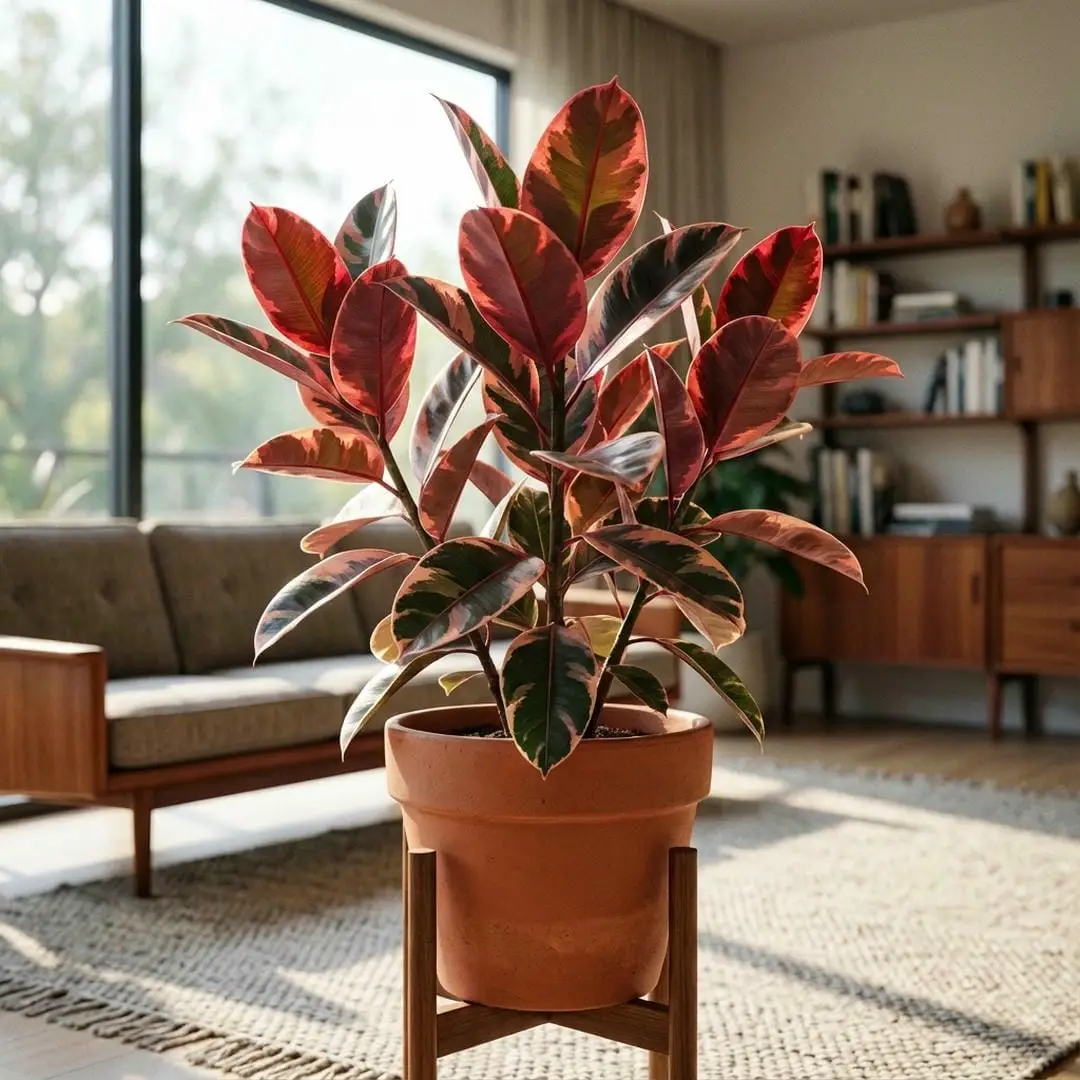
Complete Guide to Ficus Ruby Care (Ficus elastica 'Ruby')
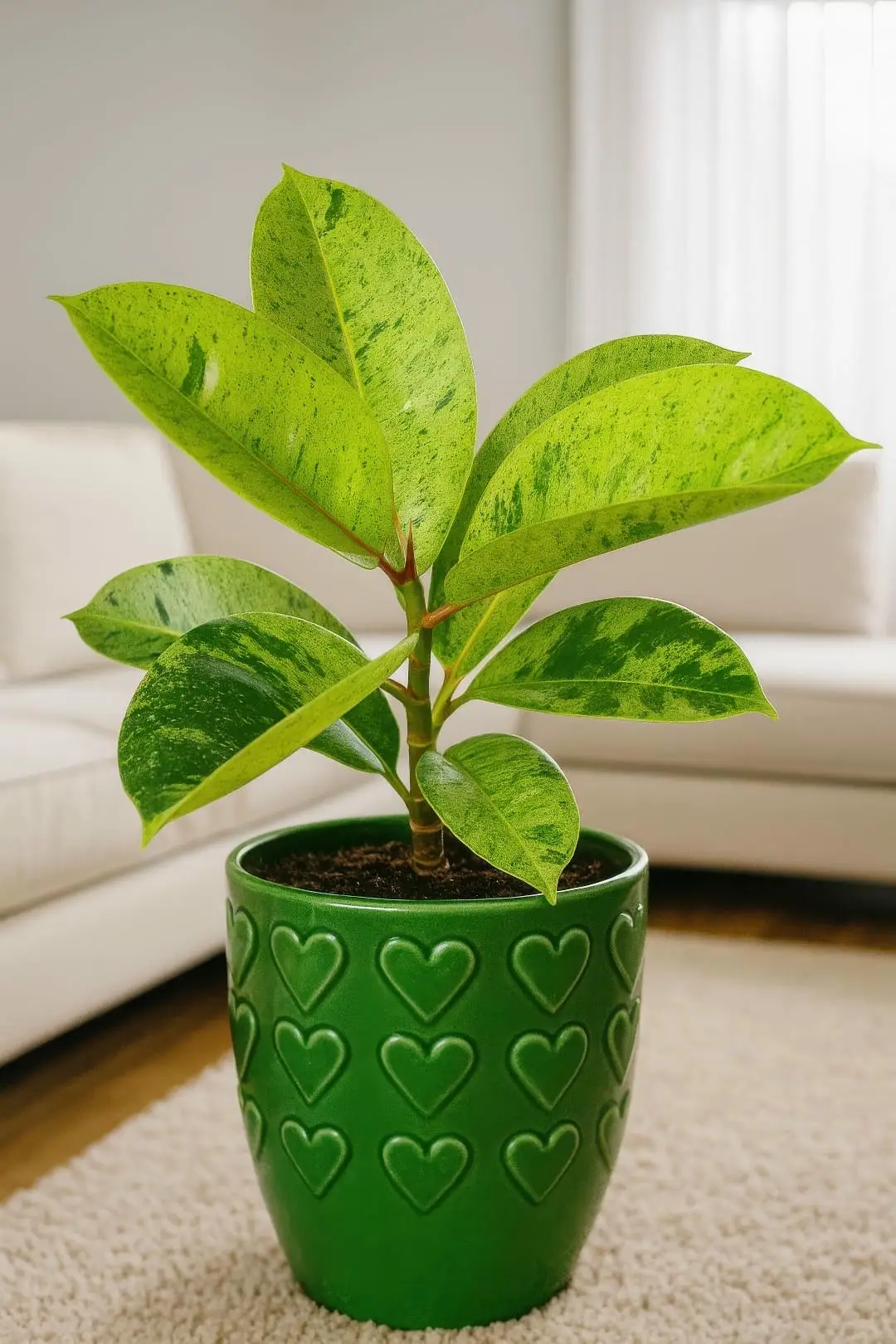
Complete Guide To Ficus Shivereana Care and Growth
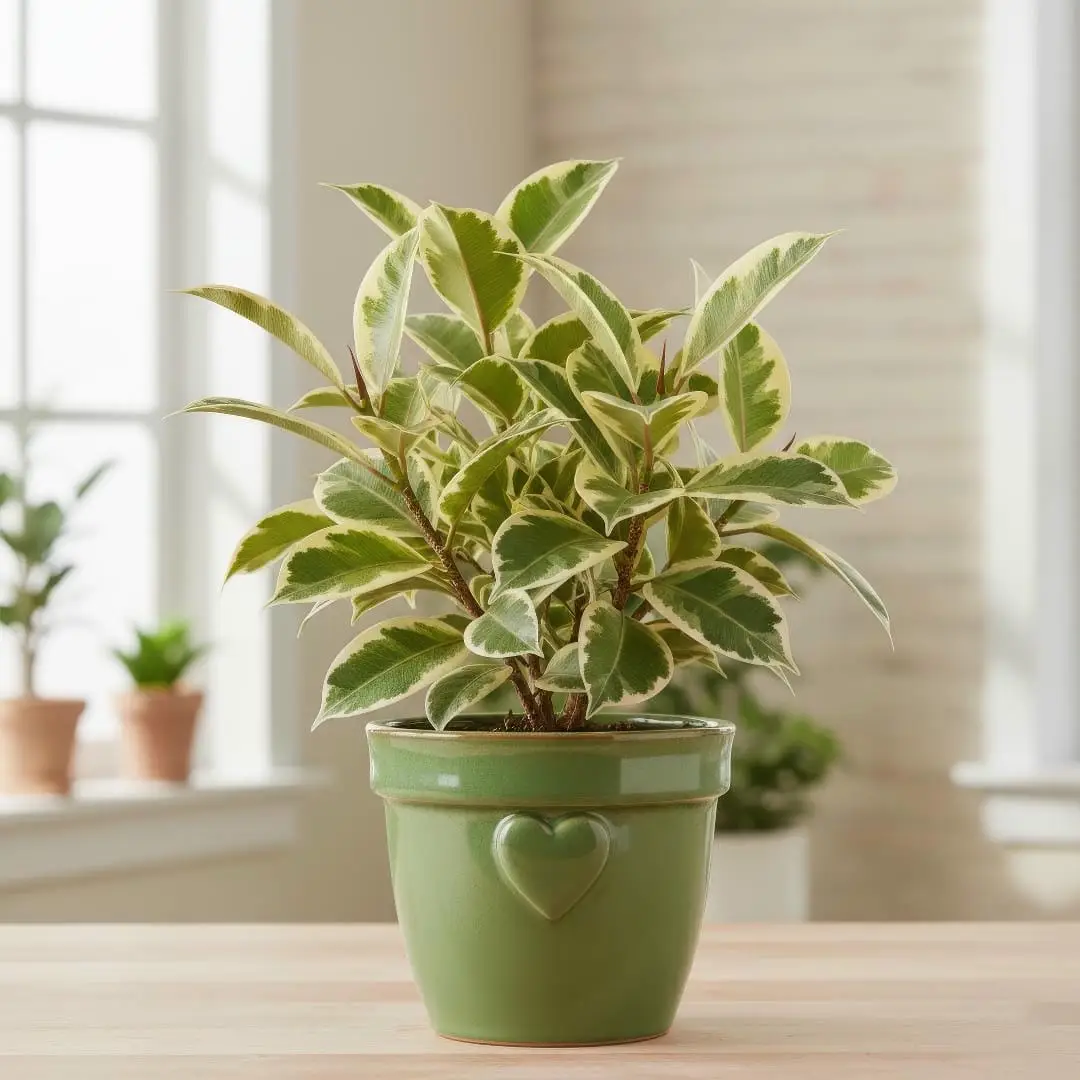
Complete Guide To Ficus Tineke Care and Growth
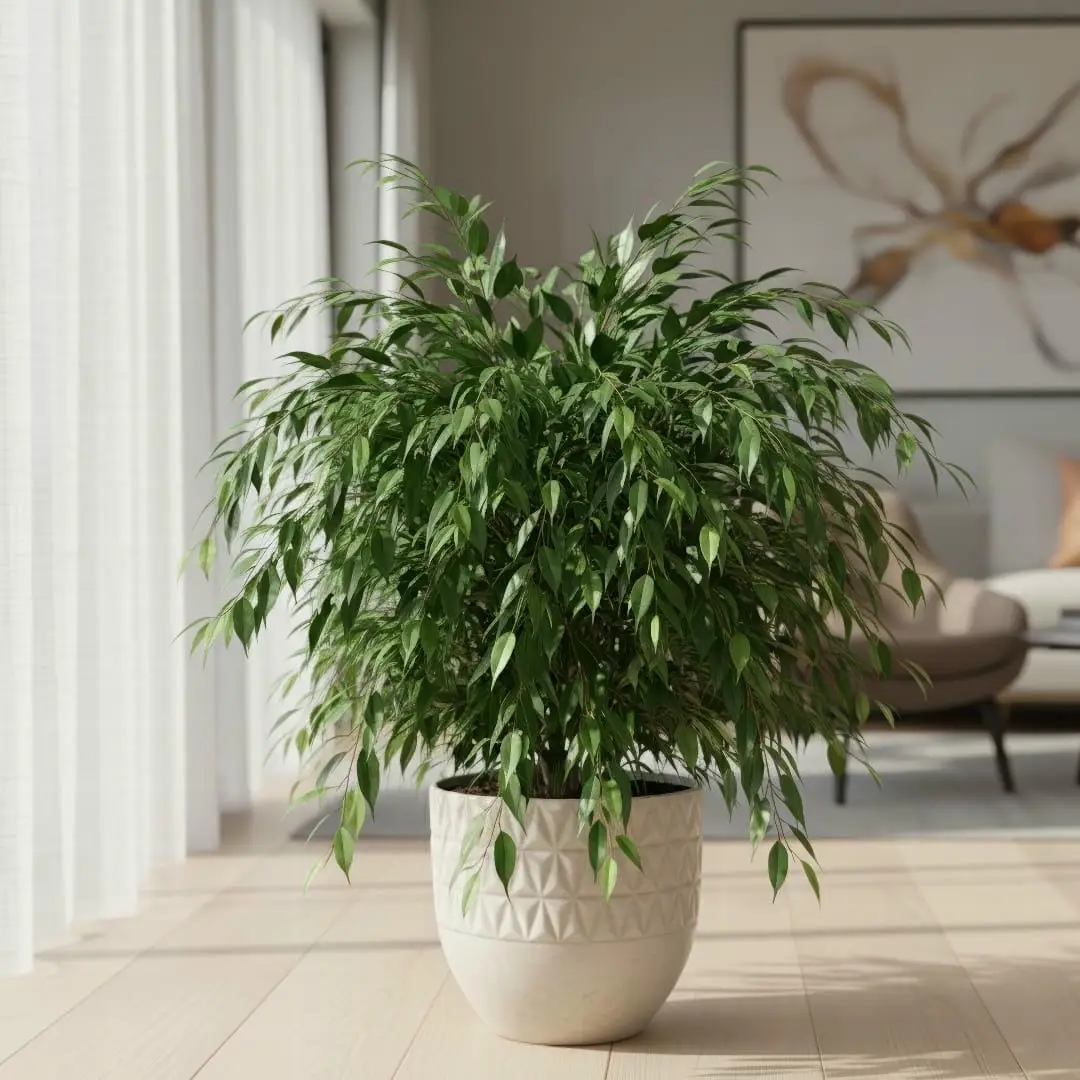
Complete Guide To Weeping Fig Care and Growth
Complete Guide to Ficus Audrey Care and Growth

Houseplant101 Forum
Questions & Comments
Ask a question, share your plant experience, or help other plant owners.
Comments are temporarily unavailable.
Open the Houseplant101 ForumNo comments yet
Be the first to ask a question or share your experience about this page.
Log in or create an account
Comments use your Houseplant101 Forum account, but you can stay on this page.
Create a new account