
 AI Overview
 🪴 In This Guide 🪴

A Note From Our Plant Expert
Anastasia here. Every ficus on this page is easy to keep alive and difficult to keep happy, and the difference is entirely about how much you fiddle with it. These plants drop leaves when anything changes: a new house, a new window, a colder corner, a different watering day. Most people read that shedding as death and start intervening, which changes more things and causes more shedding. Pick the spot, water on a rhythm, and leave the plant alone.
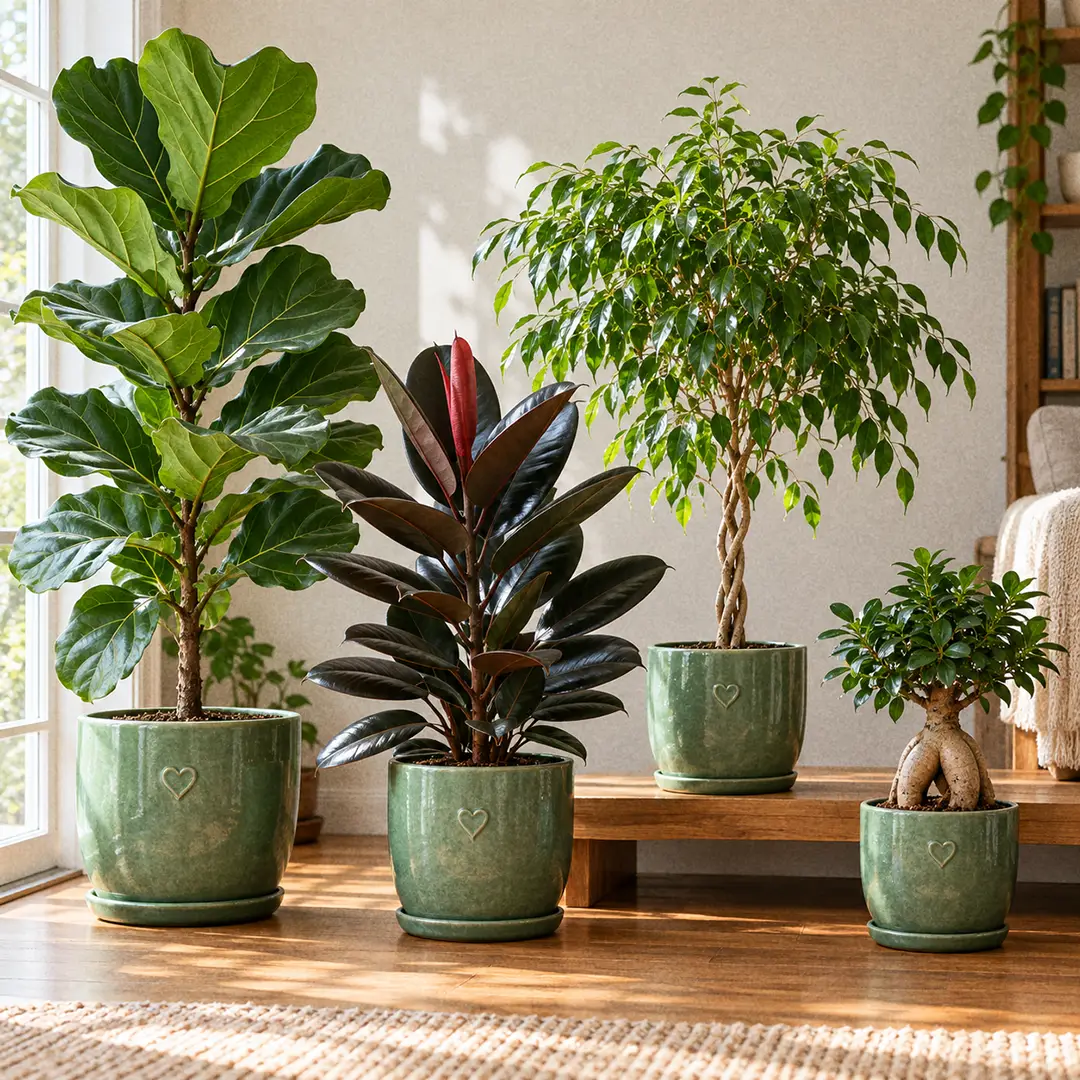
🍂 The Ficus Problem: Leaf Drop After Any Change
If you only read one section of this guide, read this one. Leaf drop is the thing that sends people to Google about ficus plants, and it is the thing most guides bury under a list of ten equal-weight care factors.
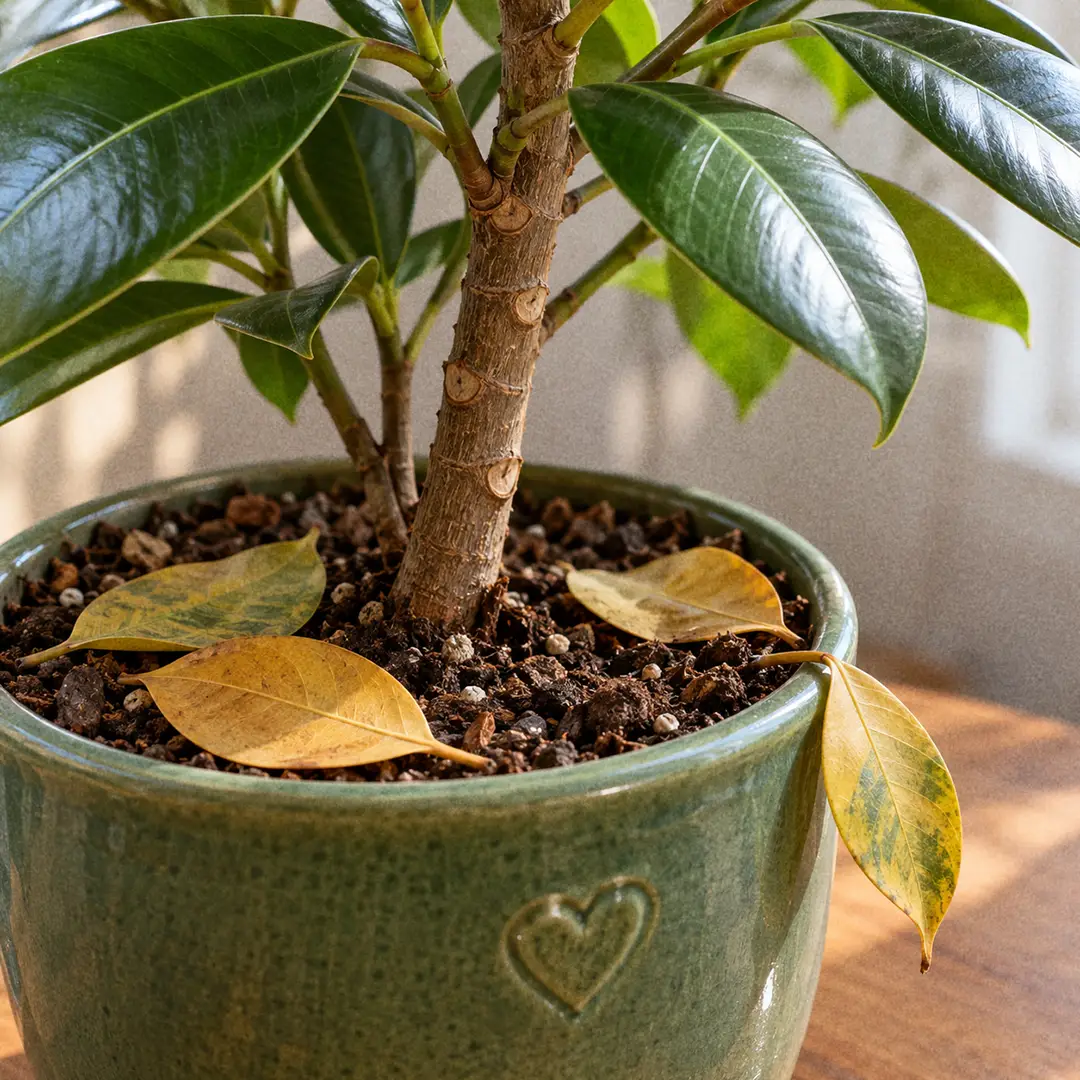
Why a Ficus Sheds
A ficus builds each leaf for a specific light level. The chloroplast density, the leaf thickness and the angle are all set when the leaf unfurls, and they cannot be adjusted afterward. When the light changes, those leaves become the wrong tool, and the plant does the economical thing: it pulls the nutrients back out of them, drops them, and builds a new set matched to the new conditions.
That is why a plant from a bright commercial greenhouse sheds heavily in a normal living room. It is not sulking and it is not dying. It is re-equipping.
What Counts as a Change
More things than you expect. Moving house or bringing a plant home from the shop. Rotating the pot, or shifting it three feet to a different corner. A cold night when someone leaves a window open. The first day the heating comes on. Repotting. Switching from thorough soaks to small frequent sips. A ficus registers every one of these and answers the same way.
The response is also delayed. The drop usually starts one to three weeks after the change, which is long enough that most people have forgotten what they did and go looking for a pest or a disease instead.
How to Settle a New Ficus
Choose its permanent spot before you unwrap it, based on light rather than on where it looks best. Put it there and do not move it again, including during cleaning. Water it when the soil tells you to and not on a fixed day. Skip fertiliser for the first six weeks, because a stressed plant cannot use it. Then leave it for a month or two.
You are looking for one signal: new growth. A small green bud swelling at a stem tip means the plant has finished re-equipping, no matter how thin it looks by then. Bare lower stems fill back in slowly, and a plant that has shed half its leaves usually looks ordinary again within a season.
When Leaf Drop Is Actually a Problem
Shedding that keeps going past six to eight weeks, or that comes with soft mushy stems and a heavy sour-smelling pot, is root rot rather than acclimation. Scratch a stem with a fingernail: green underneath means the plant is alive and adjusting, brown and dry means that section is gone. Our leaf drop guide works through the full list of causes.
☀️ Ficus Light Requirements Indoors
The Sweet Spot
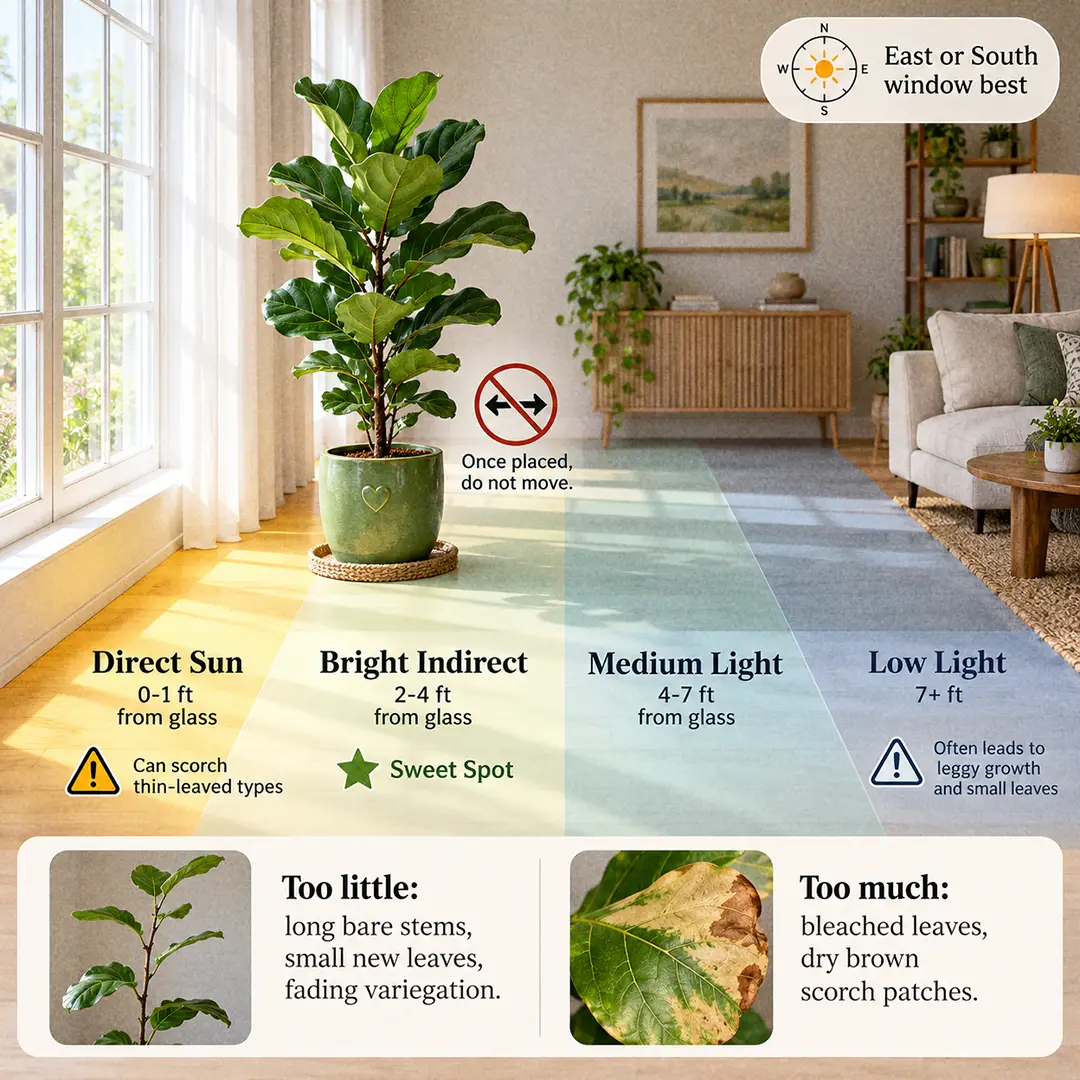
Bright indirect light, two to four feet from an east or south window, is where every plant on this page performs best. These are canopy and sub-canopy trees from tropical Asia and Africa, so they are used to strong overhead light filtered through leaves above them. A sheer curtain on a south window reproduces that almost exactly.
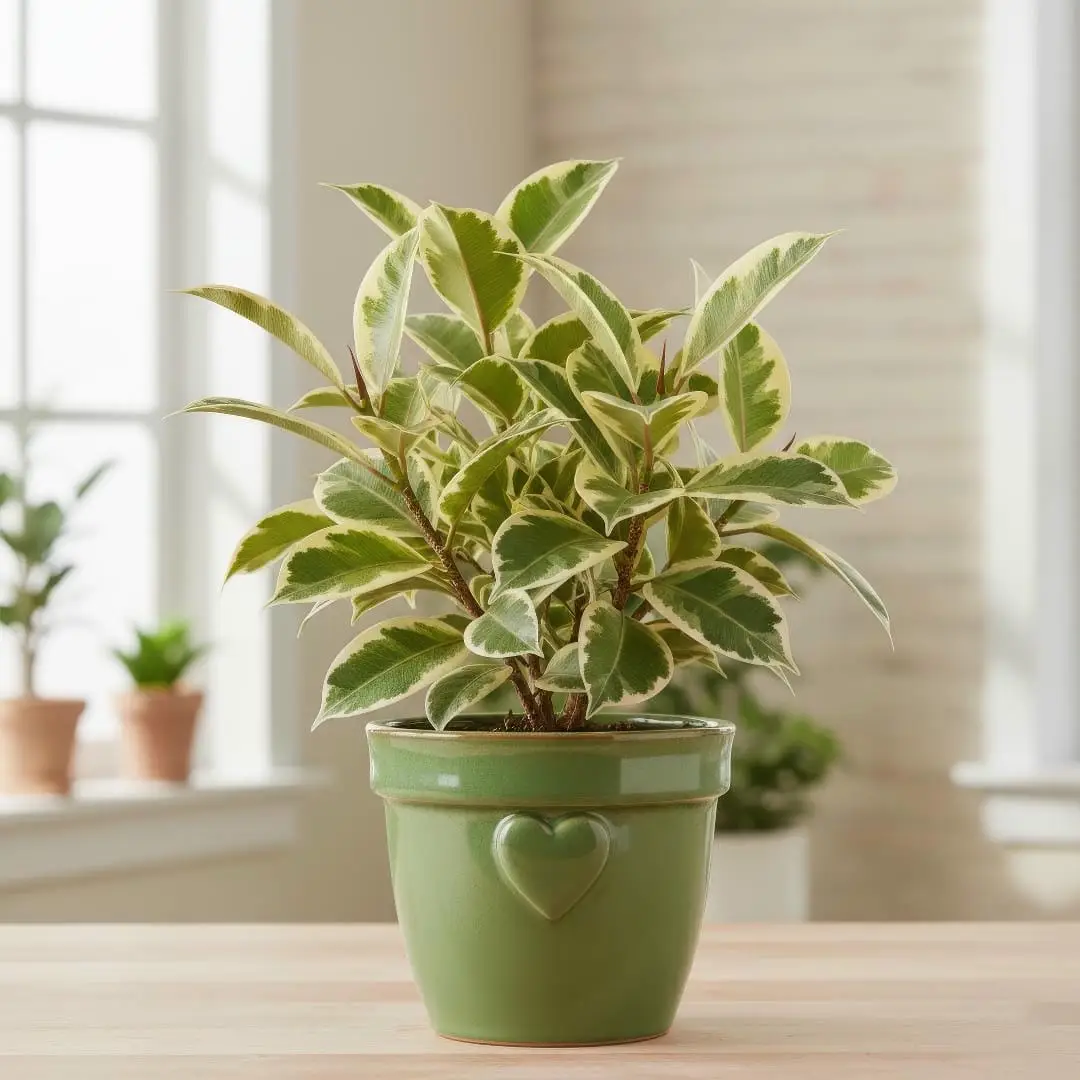
Variegated cultivars like Tineke and Ruby want the bright end of that range, because the cream and pink sections carry little or no chlorophyll and the green parts have to feed the whole leaf. The plain green and dark-leaved types cope with noticeably less.
Too Little Light
A ficus in a dim corner does not die dramatically. It stretches. The gaps between leaves lengthen, new leaves come in smaller than the old ones, the stem leans toward the window, and the lower leaves yellow and drop one at a time until the plant is a bare stick with a tuft at the top. Variegation fades toward plain green in the process. See leggy growth and reversion for the two halves of that.
The fix is more light, introduced gradually. A plant moved straight from a dark corner into a sunny window will scorch and shed at the same time. Shift it partway for two weeks, then the rest of the way. A grow light on a timer is the steadier option in a genuinely dark room.
Too Much Light
Hours of unfiltered midday sun through glass bleaches ficus leaves to a washed yellow-green and burns dry brown patches into the sun-facing surfaces, which never recover. This hits the thinner-leaved types hardest: weeping fig and creeping fig scorch faster than a rubber plant, whose thick leathery leaves take a surprising amount of direct sun once they are used to it. Our light guide and the sunburn guide cover it further.
💧 Watering a Ficus
Watering Frequency
Water when the top two inches of the mix are dry, which in a bright warm room usually lands somewhere between every seven and fourteen days in summer and every two to three weeks in winter. Pot size, room temperature and light level move that number far more than the calendar does, so check rather than schedule. A finger pushed into the soil works. So does lifting the pot and learning the difference between its wet and dry weight, or using a moisture meter if the pot is too big to lift.
The rhythm matters as much as the amount. A ficus that has settled into a two-week cycle and then gets switched to small sips twice a week will drop leaves at the change even though the total water is similar.
How to Water
Water thoroughly and let it run out of the drainage holes, then empty the saucer. Half-measures that only wet the top layer leave the deep roots permanently dry and push the plant into the shallow rooting that makes big ficus trees topple. Use room-temperature water. Ficus plants are not fussy about tap water chemistry the way a calathea is, so ordinary tap water is fine unless yours is extremely hard.
Tip a dusty ficus into the shower every couple of months instead of wiping leaf by leaf. It cleans the foliage, flushes accumulated fertiliser salts, and knocks back early spider mites in one go. Our watering guide has the full method.
Overwatering and Underwatering
Overwatering is the common killer and it looks deceptively like thirst: yellowing lower leaves, general droop, leaves dropping while still green or yellow. The giveaway is a pot that stays heavy and soil that is damp days after watering. Underwatering shows as crisp brown edges, curled leaves and a very light pot, and the plant firms back up within hours of a proper soak.
Never leave a ficus standing in a saucer of water. These are tree roots, they want air, and a permanently wet pot rots them within a season.
🌡️ Temperature, Drafts and Vents
Ideal Range
65 to 80°F (18 to 27°C) suits every ficus in this guide. Below 55°F (13°C) they stop growing and start shedding, and cold damage shows up as blackened leaf sections that do not recover. None of these plants tolerate frost, so a summer holiday outdoors has to end well before the first cold night.
Drafts Cause More Damage Than Dry Air
This is the part people miss. A ficus beside a front door that opens forty times a day, or under a ceiling vent, or on the windowsill of a single-glazed window in January, is getting a temperature change every few minutes. That is exactly the kind of instability the genus responds to by dropping leaves, and no amount of humidity fixes it.
Before you buy a humidifier for a shedding ficus, stand next to the plant for a minute and feel for moving air. Radiators, heating vents, air conditioning and drafty doorways account for most winter leaf drop.
Humidity
40 to 60 percent is the preference, which is moderate by tropical plant standards. Most ficus cope with ordinary room air, and the thick-leaved rubber plant types barely notice dry conditions at all. Creeping fig is the exception on this page and genuinely wants damp air. Grouping plants together or running a small humidifier helps in a dry winter room, and our humidity guide covers the options.
🪴 Best Soil and Repotting for Ficus
What the Mix Needs
Fast drainage, and enough structure that it does not compact into mud. Bagged potting compost on its own holds too much water around tree roots, which is where most ficus root rot begins. Aim for a mix that drains within seconds of watering and still feels slightly damp two days later.
A Mix That Works
Three parts quality potting soil, two parts perlite or pumice, one part orchid bark, plus a handful of horticultural grit for a large plant that needs ballast. A ready-made chunky houseplant mix does the same job out of the bag. Our soil guide has alternatives.
Pot choice matters more than usual with the tree forms. A tall fiddle leaf fig in a light plastic pot falls over the first time a door slams, so heavy glazed ceramic or terracotta earns its cost here. Drainage holes are not negotiable.
Repotting Without Triggering a Sulk
Repot every two to three years in spring, when roots circle the drainage holes, not on a schedule. Go up one pot size only. A ficus moved into a pot several sizes too big sits in wet soil its roots cannot reach and rots.
Expect some leaf drop afterward regardless of how careful you are, because repotting is exactly the kind of change this genus objects to. Disturb the roots as little as you can, keep the plant in the same spot, water it in once and then let it dry down normally. If the plant is too large to repot, scrape off the top two inches of soil each spring and replace it with fresh mix instead. Our repotting guide covers the technique.
🍼 Feeding a Ficus
When and How Often
Once a month from early spring to late summer, then stop entirely until growth restarts. These are fast growers in the right light and they will use the food, but a plant that is not pushing new leaves cannot, and the unused fertiliser accumulates in the soil as salt.
What to Use
A balanced liquid houseplant fertiliser at half the label strength. Half, not full. The label is written for outdoor plants in open ground with rain flushing the excess away, and a pot has neither. A slow-release granular feed worked into the top of the soil each spring is a reasonable alternative for a large tree you would rather not carry to the sink.
Signs You Overdid It
A white crust on the soil surface, brown tips on new leaves, and growth that comes in small or distorted. Flush the pot with several volumes of plain water at the sink, skip the next two feeds, and the plant recovers. Never feed a ficus that is mid leaf drop or newly repotted. Our fertilizing guide has the schedule.
🧤 The Milky Latex Sap and Pet Safety
What the Sap Is
Cut or snap any ficus and it bleeds a thick milky white latex. This is the same family of compounds that once made Ficus elastica a commercial rubber crop, and it is the genus signature. It seals the wound within a few minutes and stains fabric, carpet and pale wood permanently.
Skin and Eye Irritation
The latex irritates skin on contact, causing redness and itching, and it is worse on repeated exposure. Wear gloves when pruning or taking cuttings, keep your hands away from your face while you work, and wash up afterward. People with a known latex allergy should be particularly careful with this genus, since the proteins are related.
Toxicity to Cats and Dogs
The ASPCA lists ficus species as toxic to cats, dogs and horses. A chewed leaf causes mouth and throat irritation, drooling, vomiting and sometimes skin irritation around the muzzle. It is rarely serious, but it is genuinely unpleasant for the animal.
The practical risk is not the plant itself so much as the leaf drop. A shedding ficus puts chewable leaves on the floor at cat height for weeks, so sweep them up rather than leaving them. If you want a tall plant and a cat that eats things, our pet-safe plants collection has better options.
🌳 Tree-Form Ficus: The Statement Plants
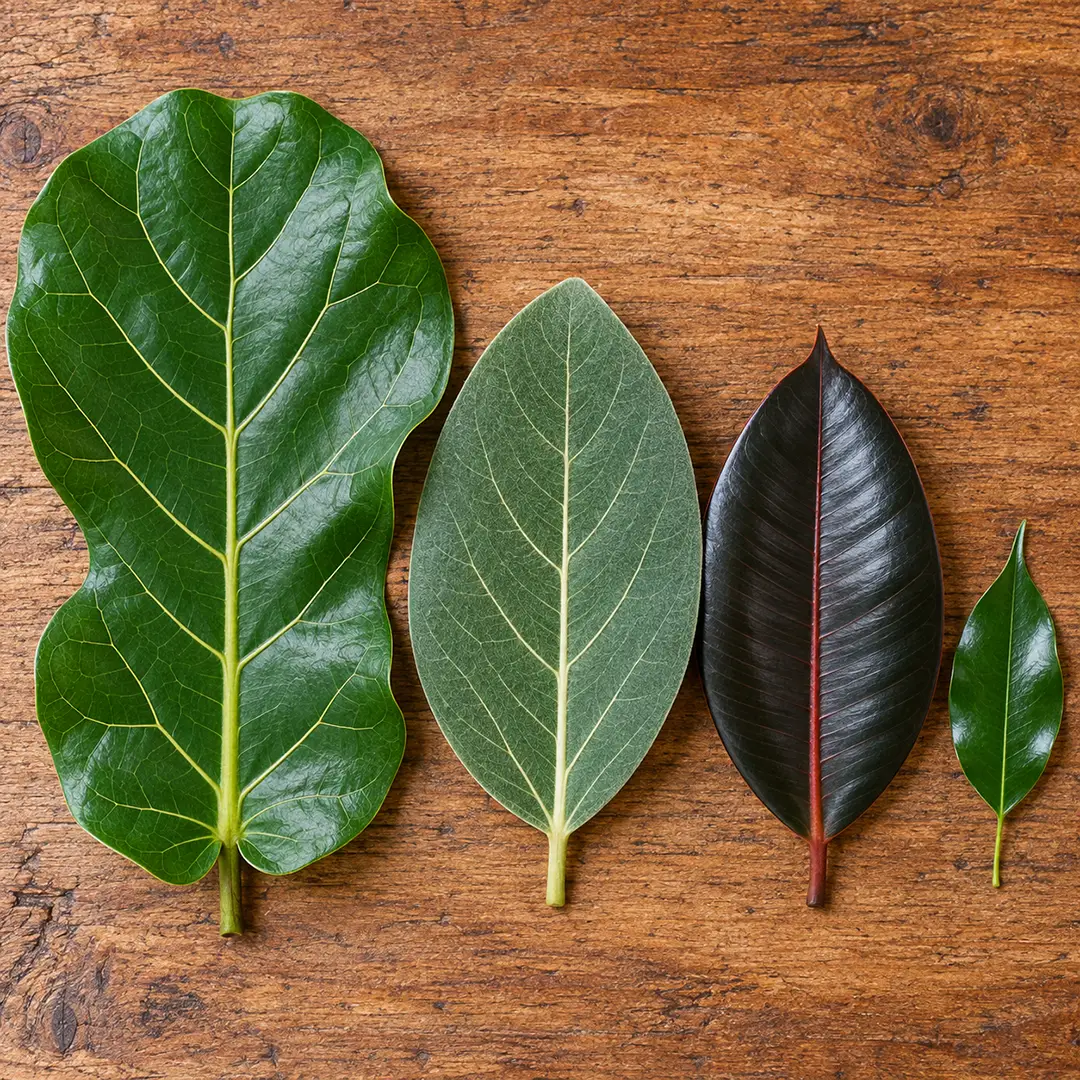
Fiddle Leaf Fig (Ficus lyrata)
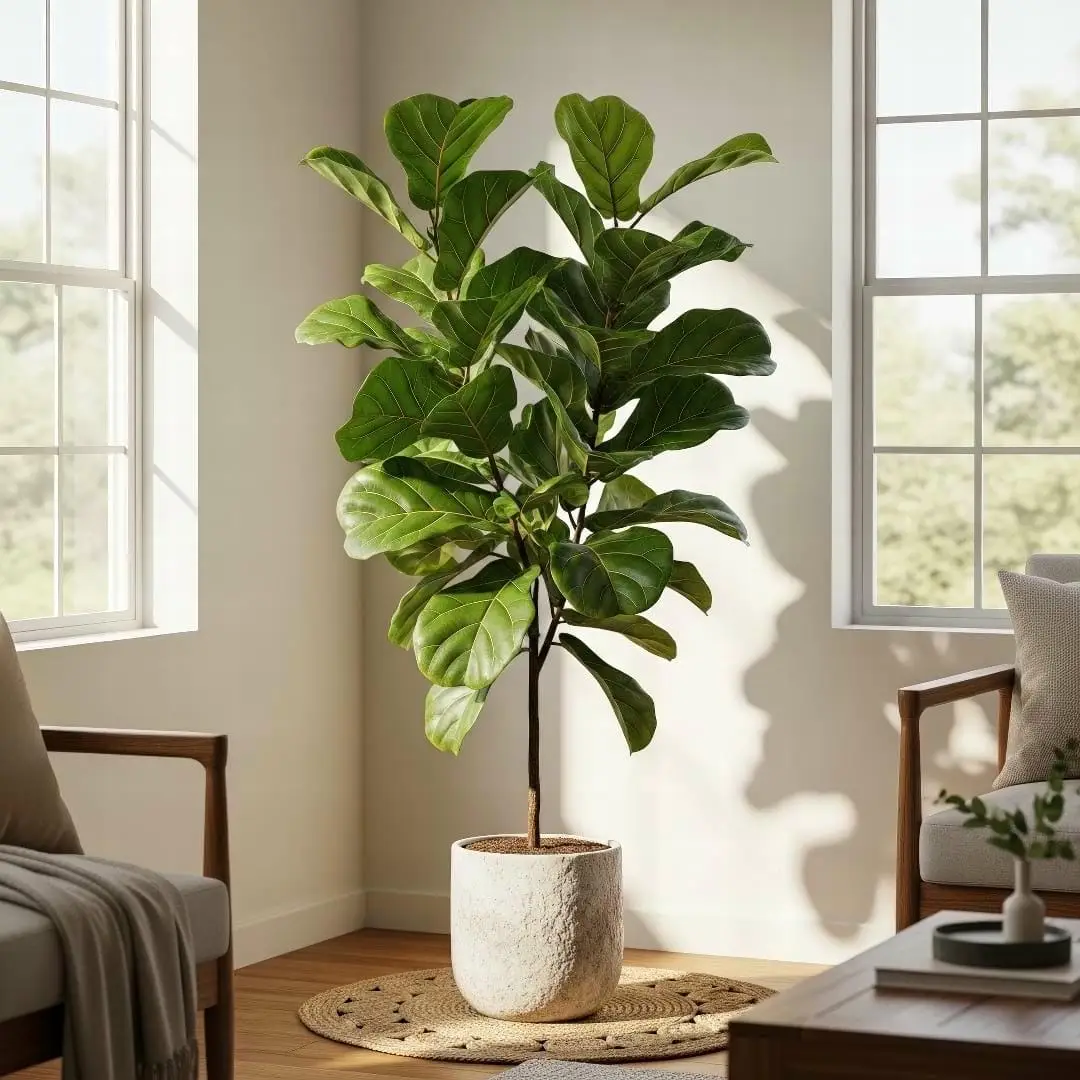
The famous one, and the most reactive plant in the genus. Enormous leathery leaves shaped like violin bodies, held on an upright trunk that reaches six to ten feet indoors. It wants the brightest indirect light you can give it, hates wet feet, and announces every mistake as brown spots. Worth it if you have the window and the patience. Full details in our 👉 Fiddle Leaf Fig care guide.
Ficus Audrey (Ficus benghalensis)
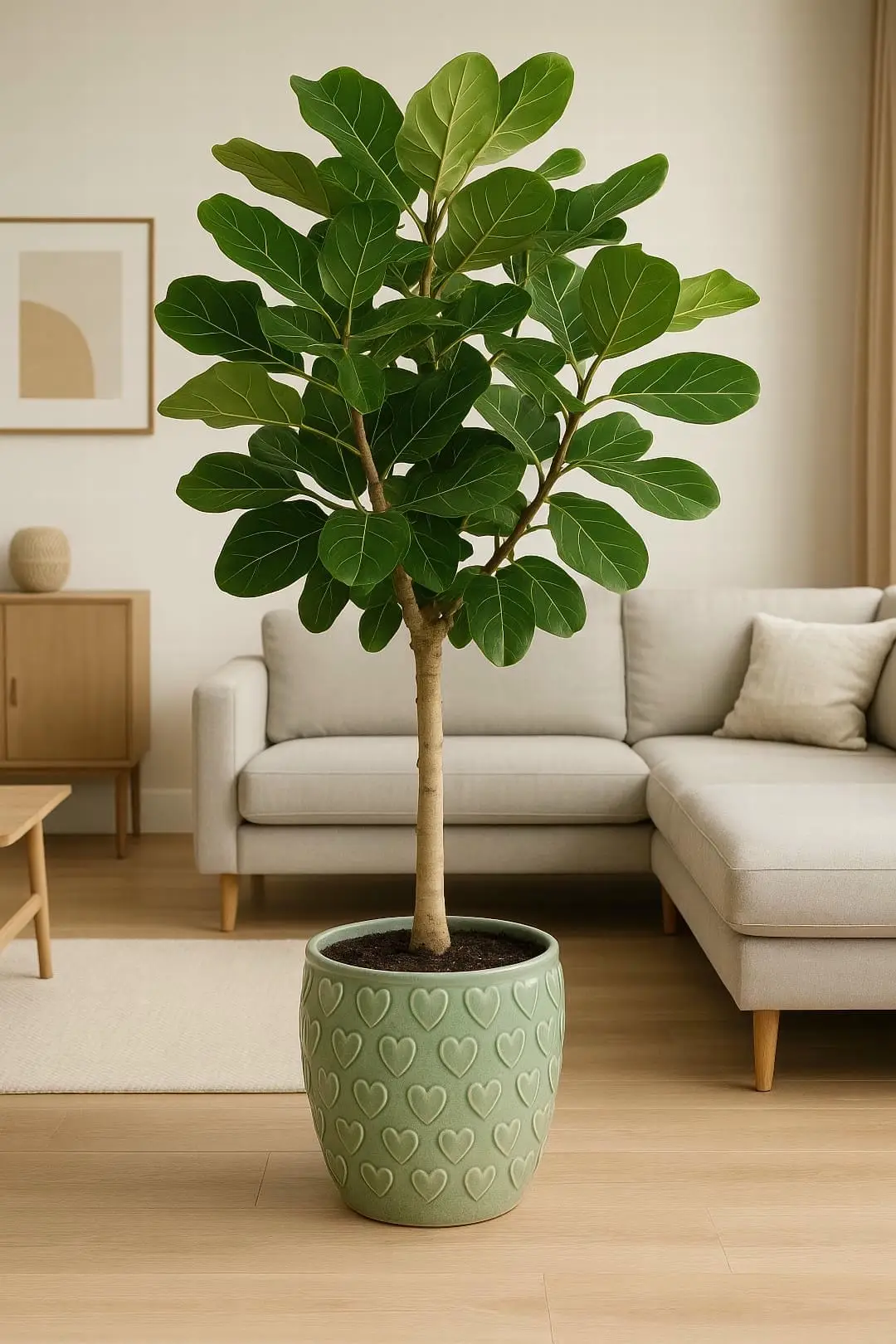
The sensible alternative to a fiddle leaf fig and, in my experience, the better plant. Soft matte sage-green leaves with pale cream veins on a pale trunk, growing to about six feet indoors. It tolerates a wider range of light, forgives inconsistent watering, and sheds less dramatically. This is the Indian banyan, which strangles whole buildings in the wild and behaves impeccably in a pot. Full details in our 👉 Ficus Audrey care guide.
Weeping Fig (Ficus benjamina)
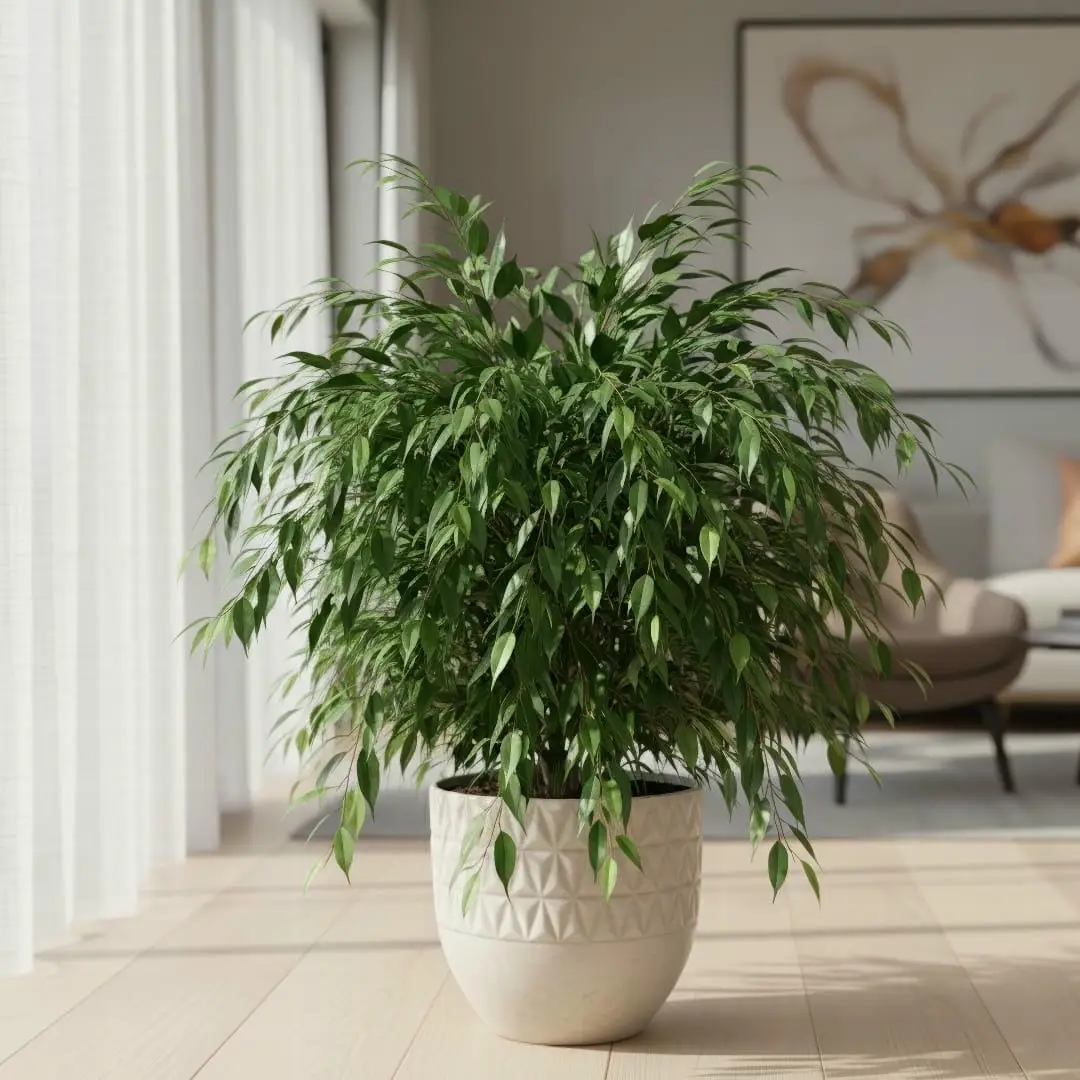
The classic mall tree: a slim trunk, often braided, carrying an airy canopy of small pointed glossy leaves. It is the most notorious leaf-dropper of the whole genus and will carpet your floor after a move. It is also long-lived, cheap, and elegant once settled, and it takes pruning better than any other ficus here. Full details in our 👉 Weeping Fig care guide.
Ficus Alii (Ficus maclellandii)
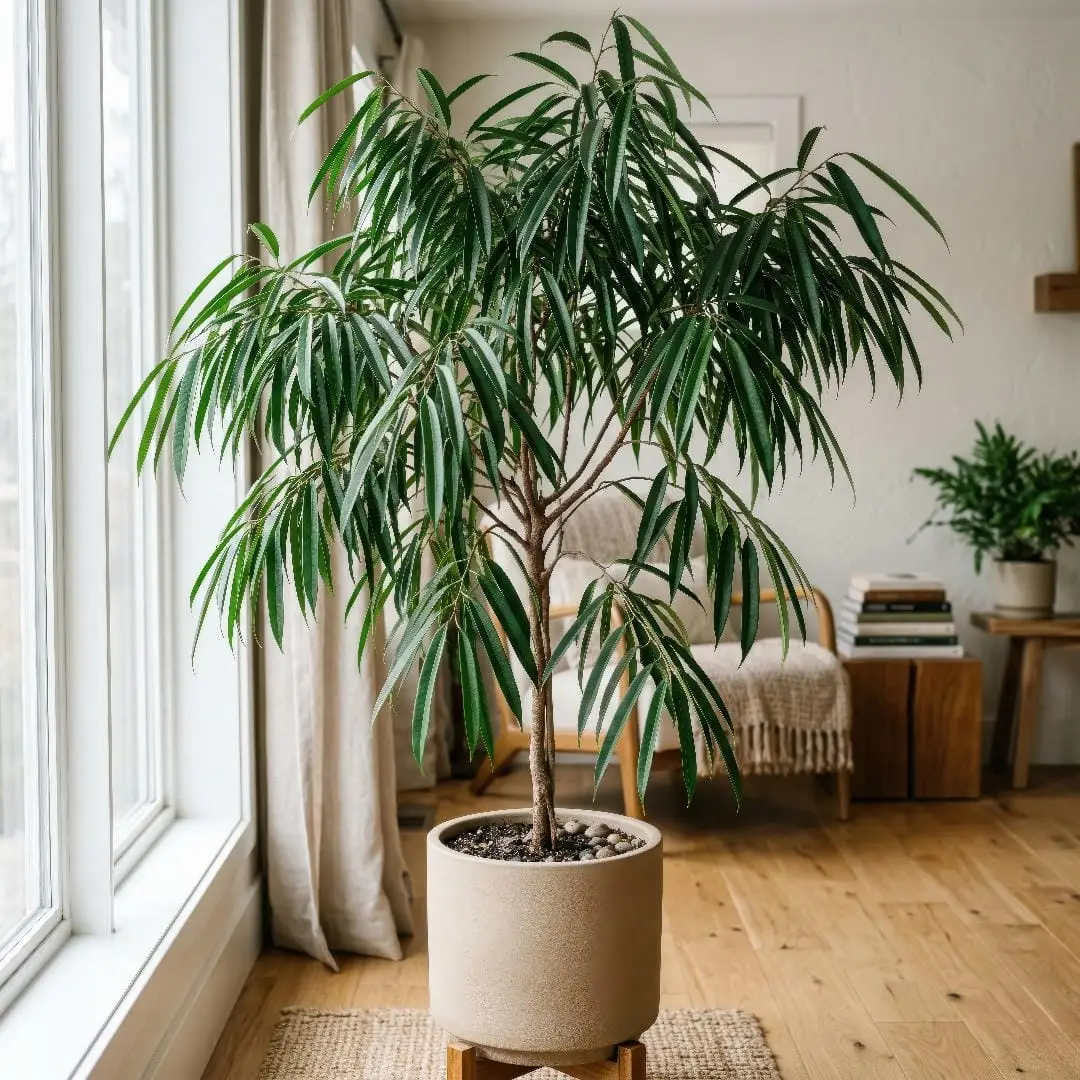
Long narrow willow-like leaves on a slender upright tree, sometimes sold as the banana-leaf fig. Its selling point is temperament: Alii settles into a new house with much less drama than a benjamina, which makes it the one to buy if you liked the weeping fig look and lost the last one to shedding. Reaches six to eight feet indoors. Full details in our 👉 Ficus Alii care guide.
Variegated Fiddle Leaf Fig (Ficus lyrata 'Variegata')
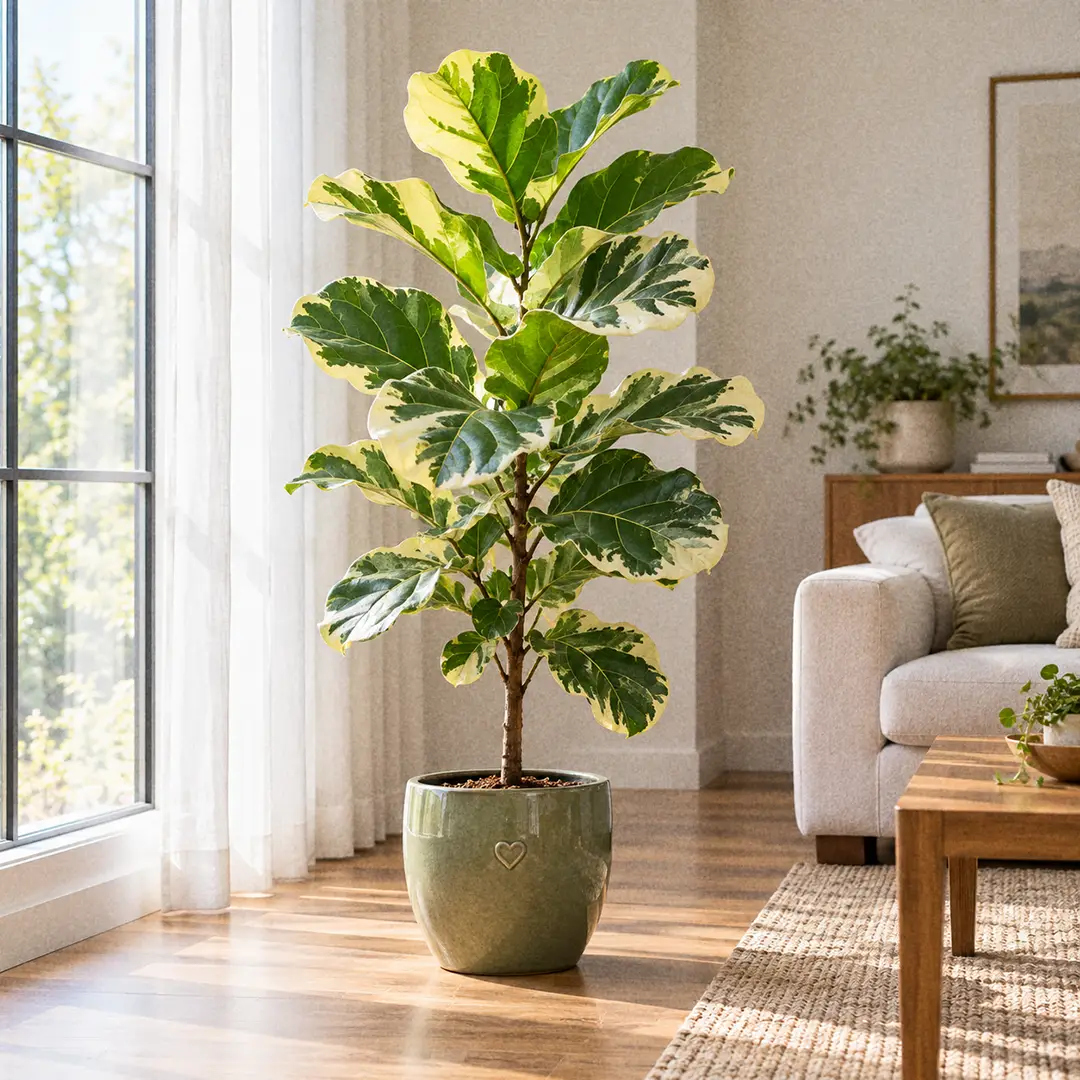
The same violin-shaped leaves as the plain fiddle leaf fig, edged and marbled in creamy white. The pale sections carry no chlorophyll, so the plant works with a fraction of the usable leaf area: it needs brighter light than a green lyrata while scorching in less direct sun, it grows slowly, it drinks noticeably less, and the cream margins brown off before the green tissue shows any stress at all. It will also push all-green shoots that must be cut out before they take over. The hardest plant on this page and the most expensive. Full details in our 👉 Variegated Fiddle Leaf Fig care guide.
🌿 Rubber Plants: The Ficus elastica Group
Everything in this section and the next is the same species, Ficus elastica, selected for leaf colour. They share one care routine, they are the thickest-leaved plants in the genus, and they are the ones I hand to beginners.
Rubber Plant (Ficus elastica)
The species itself. Thick glossy oval leaves in deep green, new growth emerging wrapped in a pink or red sheath that peels away. It grows fast in good light, reaches six to eight feet indoors, and its leathery leaves buffer it against a missed watering better than anything else on this page. The easiest ficus to own. Full details in our 👉 Rubber Plant care guide.
Ficus Burgundy (Ficus elastica 'Burgundy')
The dark one, sold everywhere as Black Prince or Burgundy. Leaves so deep a green-black that they read as maroon in decent light, with a red midrib and bright red new-growth sheaths. It needs strong light to hold that colour and fades to ordinary green in a dim corner. Otherwise it is as tough as the plain species. Full details in our 👉 Ficus Burgundy care guide.
💎 Variegated Rubber Plants
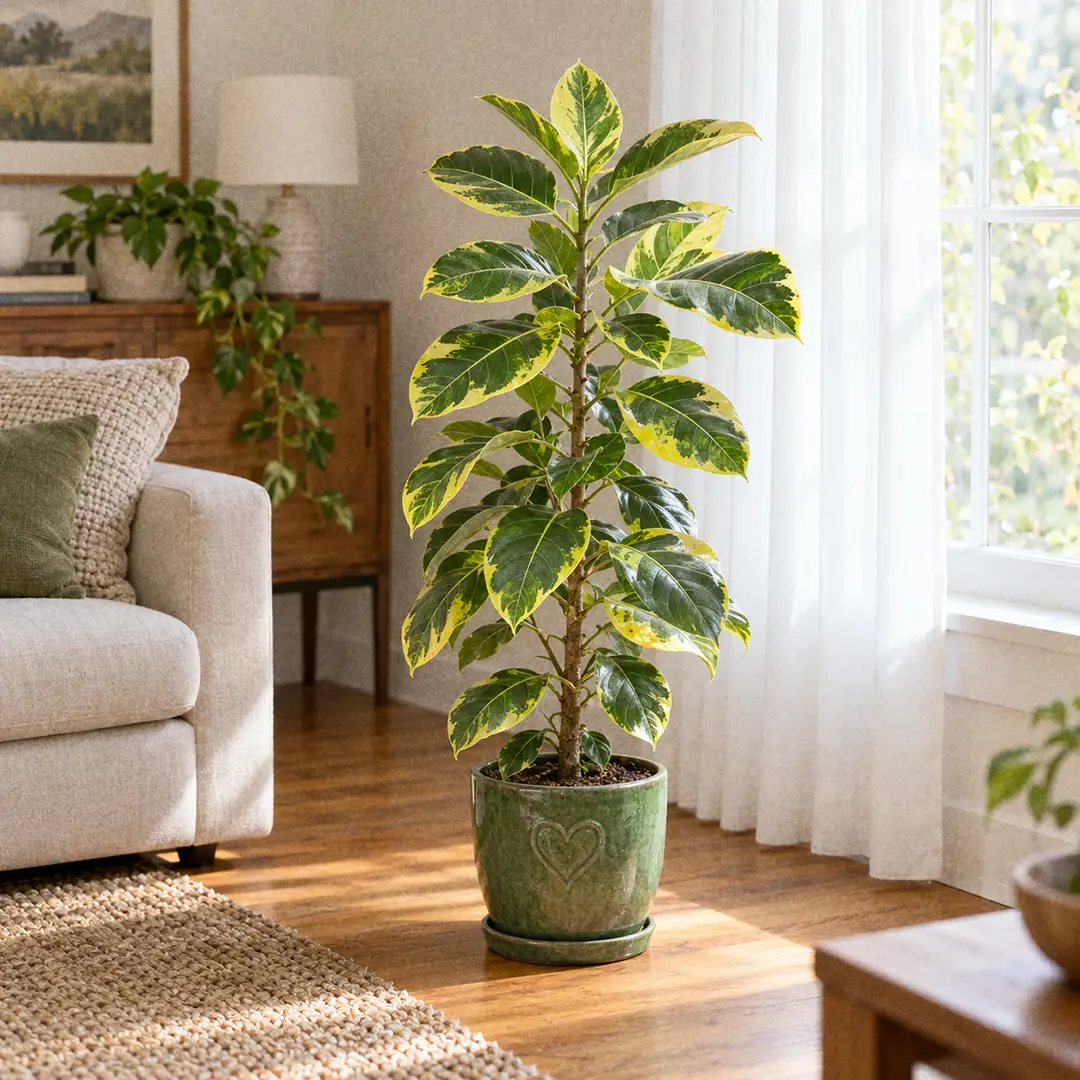
Ficus Tineke (Ficus elastica 'Tineke')
The standard variegated rubber plant: deep green leaf centres, irregular cream and pale green margins, and a pink midrib and stem. It is the most widely sold variegated ficus and the most forgiving of the three here, though it still wants brighter light than a plain rubber plant and will revert to green if it does not get it. Full details in our 👉 Ficus Tineke care guide.
Ficus Ruby (Ficus elastica 'Ruby')
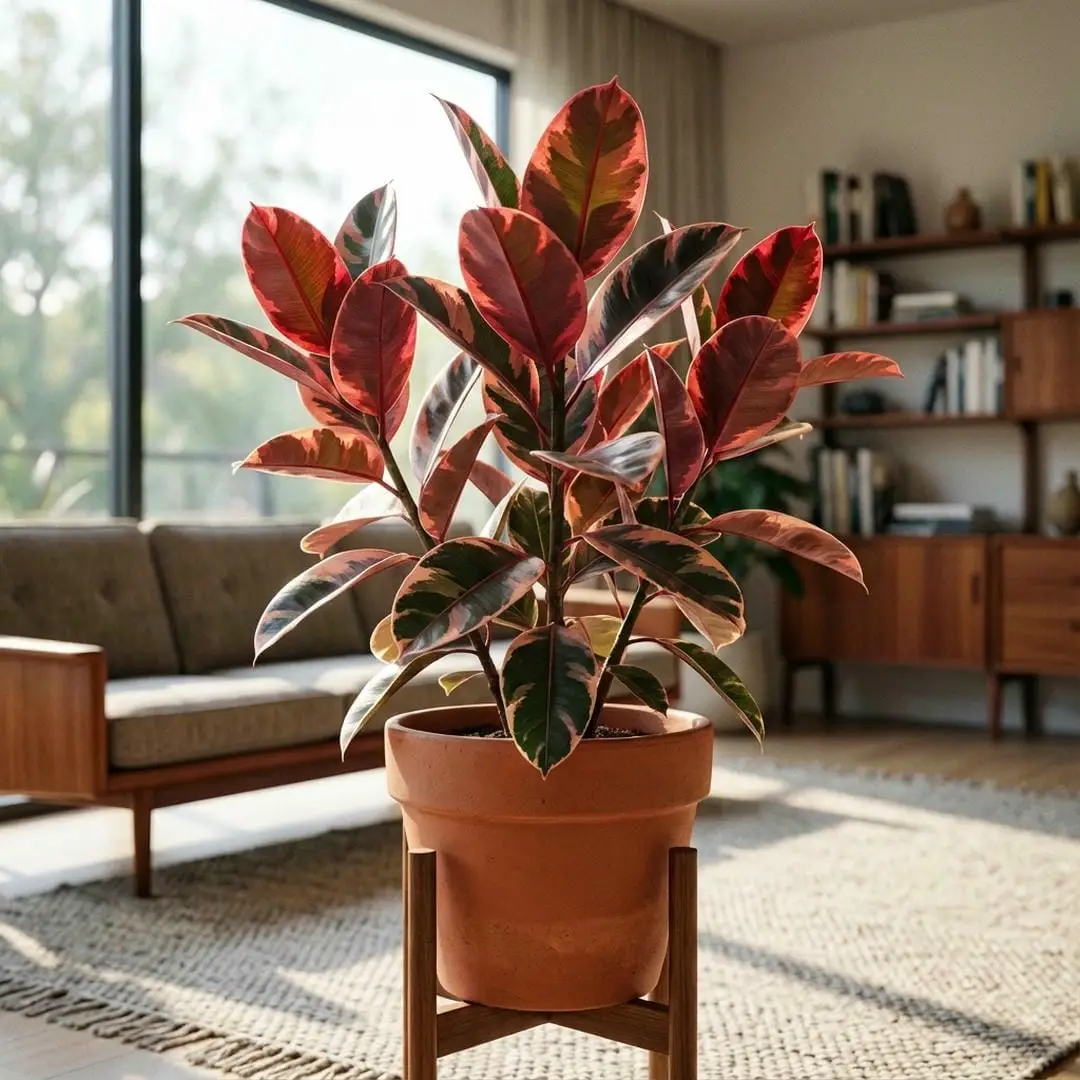
Tineke's pink version, and a real one rather than a chemically treated plant. Cream margins flush deep pink, especially on new growth and in bright light, over a green centre. The pink sections carry no chlorophyll at all, so they scorch in direct sun and vanish in shade, which puts Ruby in a narrower light window than any other rubber plant. Full details in our 👉 Ficus Ruby care guide.
Ficus Shivereana (Ficus elastica 'Shivereana')
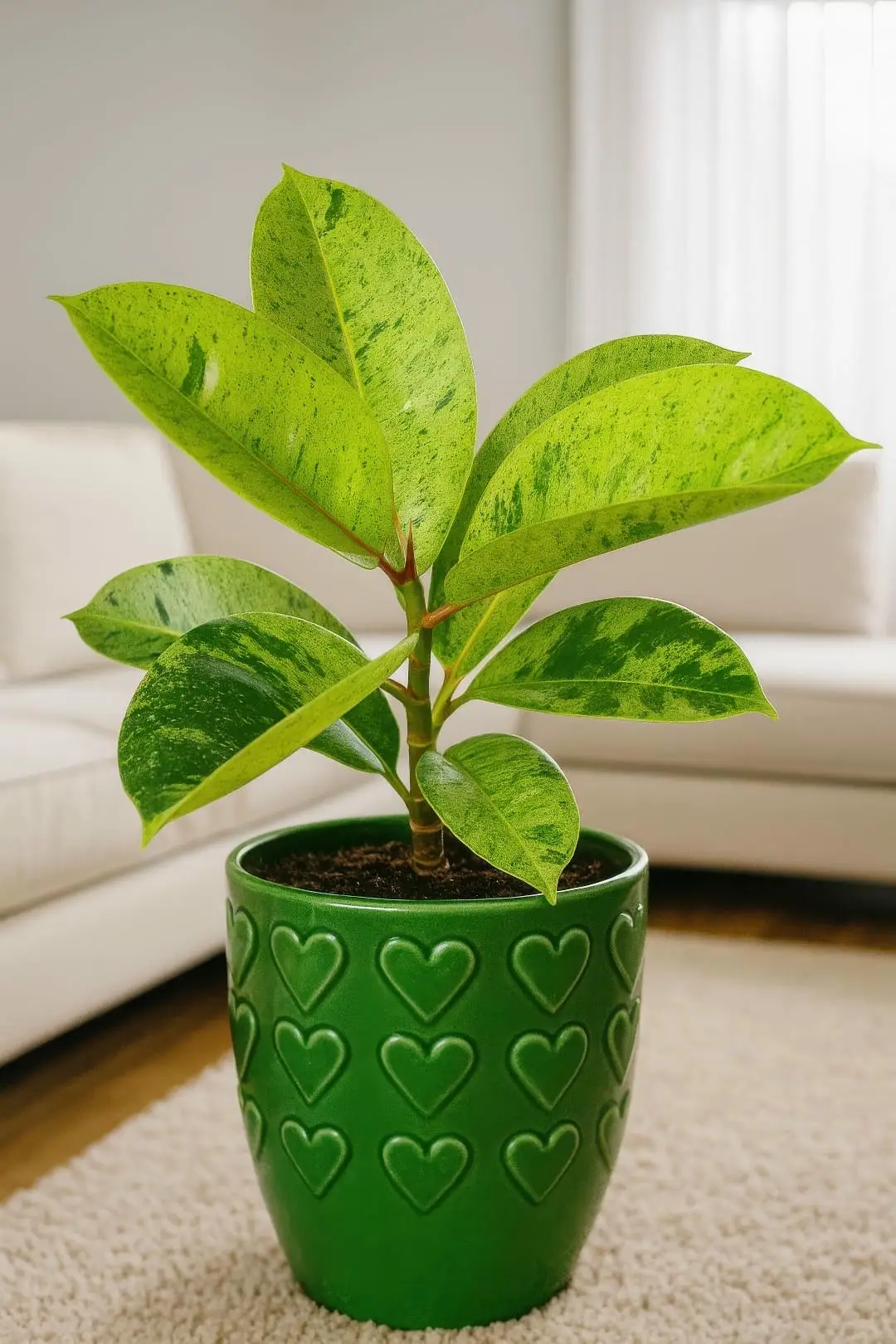
The strange one, sold as Moonshine. Instead of variegated margins it carries splashes and speckles of cream and pale green scattered across the middle of unusually round, thick leaves, with no two alike. Less common in shops and priced accordingly, and slower growing than Tineke. Full details in our 👉 Ficus Shivereana care guide.
🎋 Bonsai and Small-Leaf Ficus
Ginseng Ficus (Ficus microcarpa)
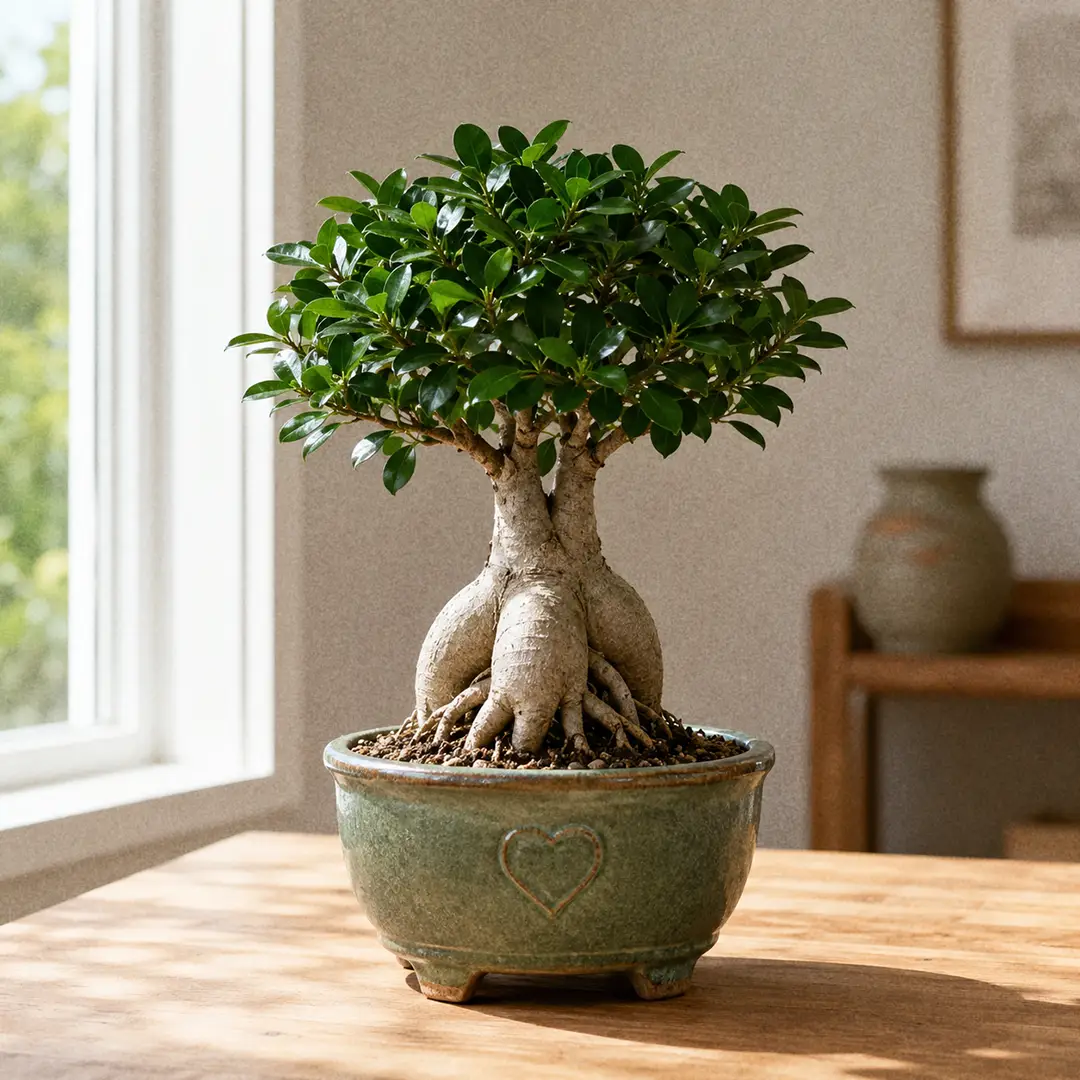
The bonsai you see in supermarkets, with a swollen bulbous trunk that looks like a ginseng root and a small canopy of glossy dark leaves. The fat trunk is a grafted root system rather than a natural trunk, which is worth knowing before you pay bonsai prices for one. It takes pruning constantly, tolerates low humidity, and lives for decades on a windowsill. Full details in our 👉 Ginseng Ficus care guide.
Creeping Fig (Ficus pumila)
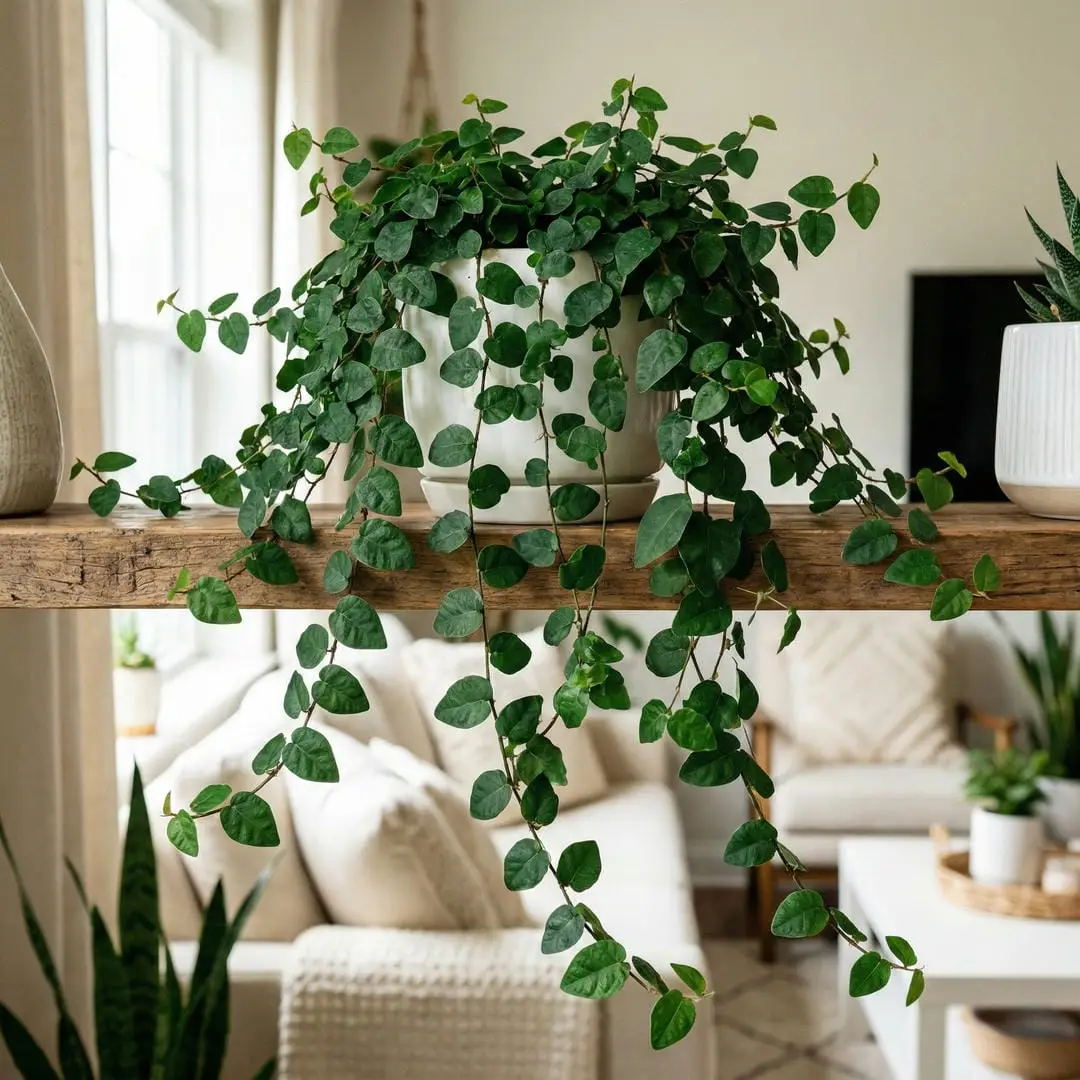
The genus outlier. Rather than a tree, this is a fine-stemmed climber with small heart-shaped leaves that clings flat to any surface it touches by aerial rootlets. It works in a hanging pot, on a moss pole, in a terrarium, or trained across a shaded wall. It is the one ficus that genuinely wants humidity, and the one that dries out fastest in a small pot. Full details in our 👉 Creeping Fig care guide.
✂️ Pruning and Shaping a Ficus
When to Prune
Early spring, just before the growing season, so the plant heals and rebranches quickly. Avoid pruning a plant that is mid leaf drop or newly moved, since you would be adding one more change to a plant already objecting to the last one.
How to Cut
Use clean sharp secateurs and cut just above a leaf node or a leaf scar, at a slight angle. The plant branches from the buds below your cut, so a cut at the height you want branches is a cut in the right place. Gloves on: this is where the latex turns up. Dab the weeping cut with a damp cloth after a few minutes and it stops.
Remove no more than a quarter of the plant in one session. A bare-stemmed ficus can be cut hard back to a stump and will usually resprout, but that is a spring job on a healthy plant, not a rescue for a struggling one.
Shaping and Branching
Pinching the growing tip of a single-stemmed ficus forces side shoots and turns a pole into a tree. Weeping fig and ginseng ficus take this best and can be clipped into a defined canopy. Fiddle leaf figs branch reluctantly and often need notching, a small cut above a dormant bud, to force one. Rubber plants branch readily from a topped stem.
🩺 Common Ficus Problems
Leaf Drop
The signature complaint, covered at the top of this page. Run the causes in order: a recent move or repot first, a draft or heating vent second, a change in watering rhythm third, and a genuine watering failure fourth. If the plant is new, it is almost certainly acclimation, and the treatment is to change nothing for a month.
Brown Spots on the Leaves
Location tells you the cause. Dark brown or black spots starting at the leaf base, in the centre, or spreading outward from the midrib generally mean the roots are too wet, and this is the classic fiddle leaf fig complaint. Dry crisp brown patches on the edges and tips mean the opposite: the plant went too dry, or a draft or vent is drying that side of it. Bleached tan patches on the sun-facing surfaces are sunburn. See brown and black spots and brown crispy edges.
Yellowing Leaves
One yellow lower leaf occasionally on an otherwise healthy plant is normal ageing. Several at once, especially with a heavy pot and damp soil, is overwatering heading toward root rot, and the plant needs tipping out and the roots inspected. Uniform pale yellowing across the whole plant in a plant that has not been fed for a year is nutrient deficiency. More at yellowing leaves.
Dropping After Repotting
Expected, and not a sign you did it wrong. Root disturbance costs the plant water uptake for a few weeks while it regrows fine roots, so it sheds leaves to reduce demand. Keep the plant in the same spot, water once when you repot and then only when the top two inches dry, and skip fertiliser for six weeks. Do not repot again to "fix" it.
Sticky Leaves and Pests
Sticky residue on the leaves or the floor below is honeydew, which means sap-feeding insects. Scale insects are the classic ficus pest and look like small brown limpets on stems and leaf undersides. Mealybugs show as white cotton in leaf joints, and spider mites leave fine stippling and webbing in dry warm rooms. Wipe the plant down thoroughly, treat with neem oil every seven days for a month, and check new plants before they join the shelf.
❓ Frequently Asked Questions
How do you care for a ficus indoors?
Bright indirect light near an east or south window, water only when the top two inches of soil have dried, and a chunky fast-draining mix in a pot with holes. Keep the room between 65 and 80°F and away from vents and drafts, and feed monthly at half strength through spring and summer. The hardest part of ficus care is restraint: pick the spot once and stop rearranging the plant.
Why is my ficus dropping leaves?
Because something changed. A new house, a new window, a cold draft, a repot or a different watering rhythm all trigger shedding, and the drop usually starts one to three weeks later rather than immediately. If you recently bought, moved or repotted the plant, that is your answer. Hold everything steady and wait for new growth.
How long does ficus leaf drop last after moving it?
Two to six weeks on an otherwise healthy plant. It sheds the leaves built for its old light and grows a set suited to the new spot. As long as the stems stay green under a scratched bit of bark, it is adjusting rather than dying, and moving it again restarts the whole process.
Is ficus sap poisonous?
The milky white latex irritates skin on contact and causes mouth irritation, drooling and vomiting if a pet eats leaves or sap. The ASPCA lists ficus species as toxic to cats, dogs and horses. Wear gloves when pruning, and sweep up dropped leaves rather than leaving them on the floor where an animal will find them.
Which ficus is easiest for a beginner?
The Rubber Plant. Thick leathery leaves hold water, so it forgives a missed watering, and it reacts far less to being moved than a fiddle leaf fig or a weeping fig. Buy that one first and a fiddle leaf fig second.
Why does my fiddle leaf fig get brown spots?
Dark spots starting at the leaf base or centre point at roots that are too wet, which is the common cause. Dry brown patches on the edges and tips point at a plant that went too dry or sits in a draft. Check the pot weight and the drainage holes before anything else.
Do ficus plants need high humidity?
They prefer 40 to 60 percent, which is moderate. Most ficus cope with ordinary room air, and the thick-leaved rubber plants barely notice dry conditions. Creeping fig is the exception and wants damp air. Before blaming humidity for leaf drop, check whether a vent or a drafty door is blowing on the plant, because that is usually the real cause.
🪴 See also 🪴
Complete Guide to Ficus Altissima Care and Growth
How to Propagate Fiddle Leaf Fig (Cuttings, Air Layering and the Leaf Myth)
Complete Guide to Variegated Fiddle Leaf Fig Care and Growth
Complete Guide to Ginseng Ficus Care and Growth

Complete Guide to Rubber Plant Care and Growth
Complete Guide to Ficus Alii Care and Growth
Complete Guide To Creeping Fig Care and Growth

Complete Guide to Ficus Burgundy Care (Rubber Plant)
Complete Guide to Ficus Ruby Care (Ficus elastica 'Ruby')
Complete Guide To Ficus Shivereana Care and Growth
Complete Guide To Ficus Tineke Care and Growth
Complete Guide To Weeping Fig Care and Growth
Complete Guide to Ficus Audrey Care and Growth

Houseplant101 Forum
Questions & Comments
Ask a question, share your plant experience, or help other plant owners.
Comments are temporarily unavailable.
Open the Houseplant101 ForumNo comments yet
Be the first to ask a question or share your experience about this page.
Log in or create an account
Comments use your Houseplant101 Forum account, but you can stay on this page.
Create a new account