
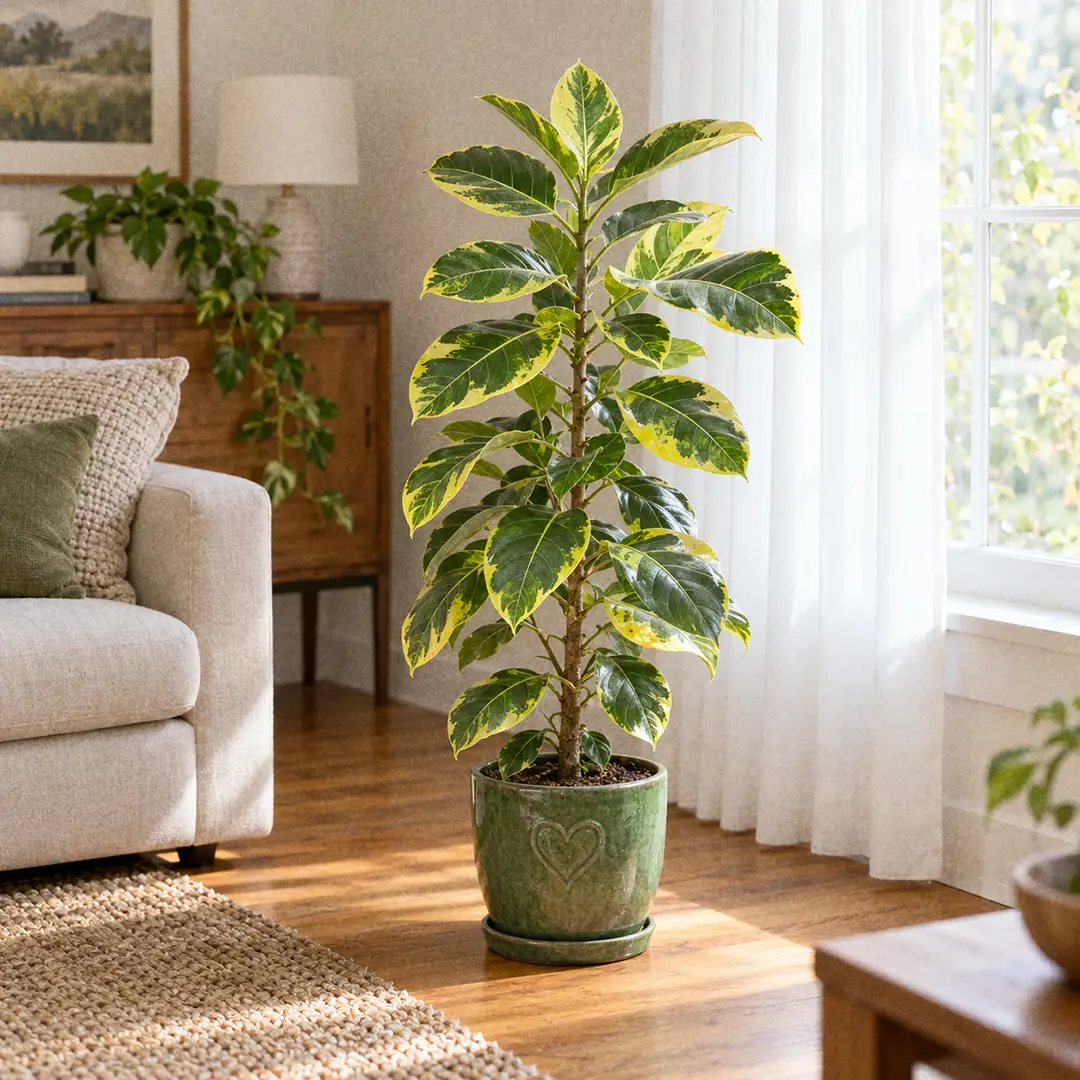
Ficus Altissima
Ficus altissima
Council Tree, Lofty Fig, Yellow Gem Ficus, Ficus Yellow Gem


Ficus Altissima is a glossy indoor fig tree, best known as the lime and gold variegated 'Yellow Gem'. Learn the light that keeps its color strong, how to water it, and how to stop the leaf drop that follows a move.
📝 Ficus Altissima Care Notes
🌿 Care Instructions
⚠️ Common Pests
📊 Growth Information
🪴 In This Guide 🪴

☀️ Ficus Altissima Light Requirements (Keeping Yellow Gem Bright)
The Sweet Spot
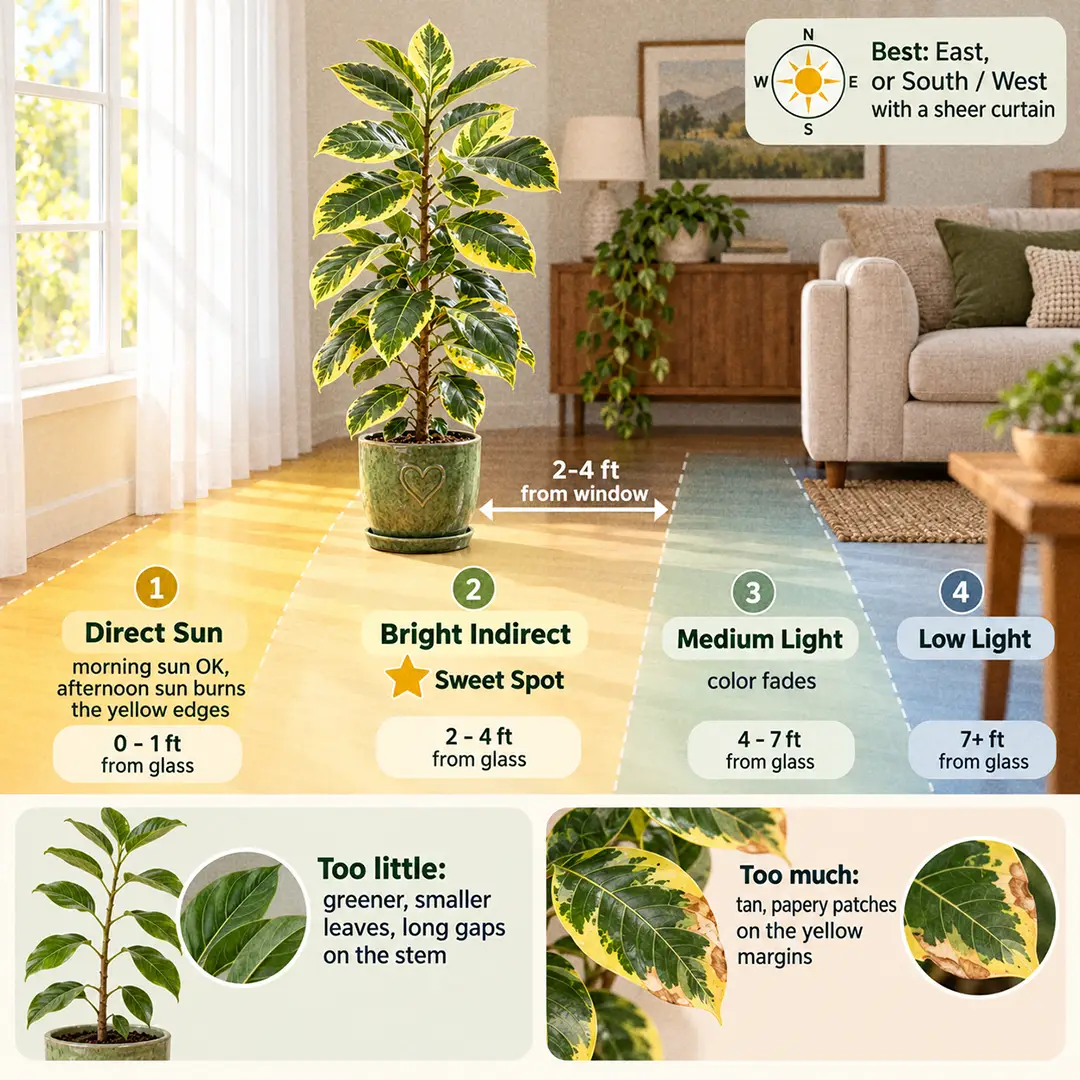
Ficus Altissima wants bright, indirect light for most of the day. The best seat in the house is right beside an east window, where it gets an hour or two of soft morning sun, or 2-4 feet back from a south or west window with a sheer curtain in between.
The variegated 'Yellow Gem' needs more light than a plain green ficus, and the reason is simple. The yellow parts of each leaf hold very little chlorophyll, so the green centers do nearly all the work of feeding the tree. Less green means the plant needs more light to make the same amount of energy. Our Indoor Lighting Guide shows how to judge a spot without a meter.
Too Little Light
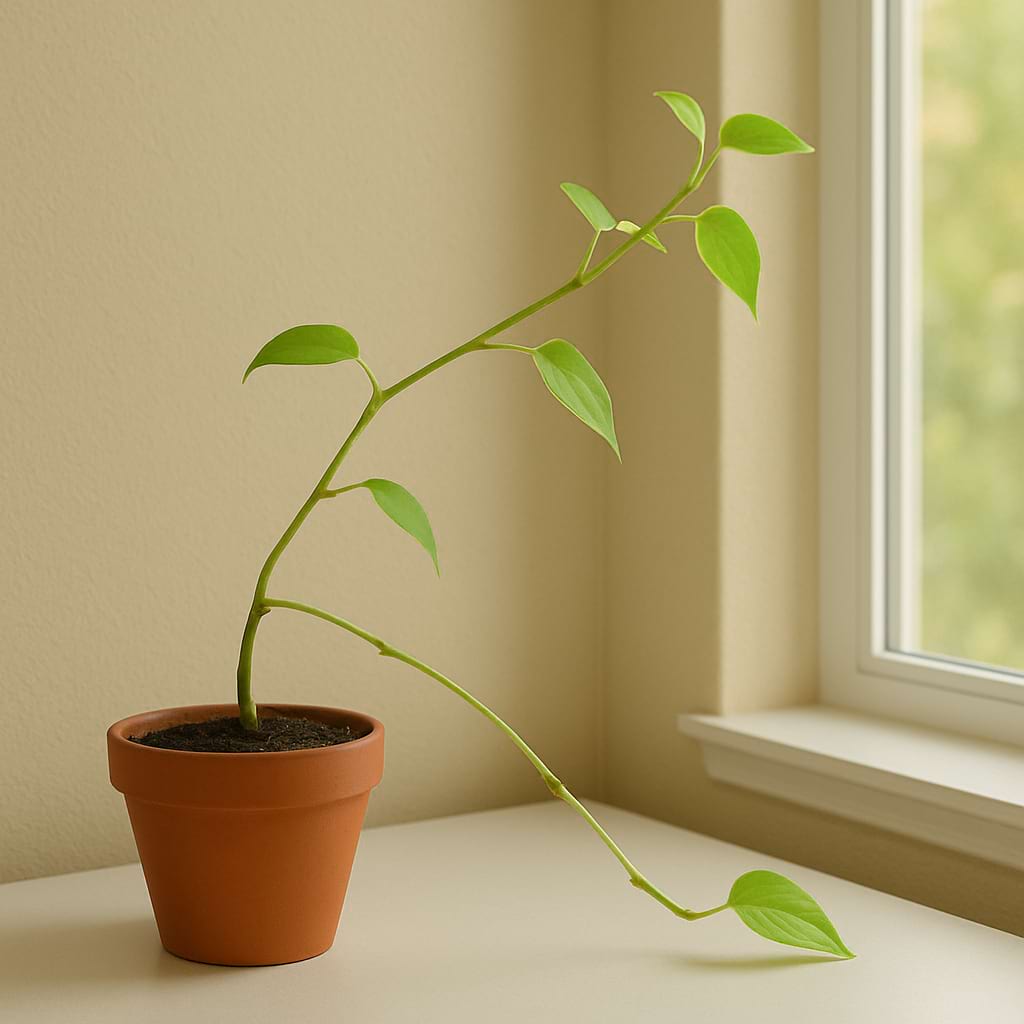
In a dim room the first thing to go is contrast. New leaves come in smaller and greener, the gold edges turn a flat pale green, and the gaps between leaves on the stem get longer. That stretched look is leggy growth, and it usually arrives together with slow drying soil and a few dropped lower leaves.
North windows and spots more than 6 or 7 feet from glass are rarely enough on their own. If that is all you have, a grow light positioned above the tree for 10-12 hours a day keeps the color and the leaf count.
Too Much Light
Gentle morning sun is welcome. Hot afternoon sun through bare glass is not. The yellow margins have the least pigment to protect them, so they burn first, turning tan and papery while the green center still looks fine. That is sunburn, and the marks stay for the life of the leaf.
If you want to move the tree closer to a sunny window, or outdoors to a shaded patio for summer, do it over two weeks, a little closer every few days.
💧 Ficus Altissima Watering Guide (How Often to Water)
Watering Frequency
Water when the top 2 inches of soil are dry. Push a finger in to the second knuckle; if it comes out clean and dry, water. In a bright room in summer that tends to be about once a week. In winter it stretches to every two weeks or longer, because the tree is growing slowly and using far less.
Go by the soil and not the calendar. A big tree in a small pot by a sunny window can dry in five days, while a small one in a large pot may take three weeks. A moisture meter helps with deep floor pots where a finger cannot reach the middle of the root ball.
How to Water
Water slowly over the whole soil surface until it runs from the drainage holes, wait a few minutes, then empty the saucer or cachepot. A ficus that sits in runoff ends up with a permanently wet bottom third, which is where rot begins. Our watering guide covers the method in more detail.
Use room-temperature water. Cold water on warm roots is one of the small shocks that can make a ficus shed a few leaves.
Signs of Trouble
Too much water shows as lower leaves that turn yellow all over, lose their pattern, and fall while the soil is still damp. That is the early stage of root rot, so let the pot dry further between waterings and check that the drainage holes are clear.
Too little water looks different. The leaves droop and feel thin, the edges crisp, and the soil pulls away from the pot wall. One thorough soak usually has the tree upright again by the next day.
🪴 Best Soil for Ficus Altissima (Potting Mix & Drainage)
What the Soil Needs
The roots want a mix that holds some moisture but lets air back in within a day or two of watering. Straight bagged potting soil is usually too dense for a tree that will live in the same pot for a couple of years. It compacts, drains slower each season, and keeps the lower roots wet.
In the wild, this species often begins as a seedling lodged in the crook of another tree, with its roots in open air and leaf litter. It is used to oxygen around its roots, which is the reason drainage matters more than richness. The Soil Guide explains how the common ingredients behave in a pot.
DIY Soil Mix
A dependable recipe is 2 parts indoor potting mix, 1 part perlite or pumice, and 1 part fine orchid bark. The perlite keeps water moving through, and the bark adds chunky air pockets that last longer than peat alone.
If your home is cool or dim, add a little more perlite. If it is hot and bright and the pot dries in three or four days, hold back on the bark so you are not watering constantly.
Pre-Made Options
A bagged aroid mix or any "chunky" houseplant blend works straight from the bag. A standard indoor mix is fine too, as long as you cut it with about a third perlite. Skip anything sold as moisture control, which is designed to stay wet longer. Our potting soil guide compares the common bags.
🍼 Fertilizing Ficus Altissima
When and How Often
Feed once a month from spring through late summer, when the tree is pushing new leaves. Stop in autumn and give nothing through winter. A ficus that is not growing cannot use fertilizer, and the unused salts build up in the soil.
Hold off for four to six weeks after repotting, since fresh mix already carries nutrients, and for the first month after you bring a new plant home.
What to Use
A balanced liquid houseplant fertilizer at half the label strength is all it needs. Apply it to soil that is already moist, never to a dry root ball. The Fertilizing Guide covers the numbers on the bottle, and the fertilizers guide covers which products are worth buying.
Extra feeding will not make the yellow brighter. Leaf color on this tree is set by light, so fertilizer is there to support growth and nothing more.
Over-Fertilizing Signs
Look for a white crust on the soil surface, brown tips on otherwise healthy leaves, or leaves dropping soon after a feed. Flush the pot with plain water, three or four times the pot's volume run through and drained, then skip the next two feedings.
🌡️ Ficus Altissima Temperature Range
Ideal Range
Normal room temperatures suit it: 65-85°F (18-29°C). It comes from the warm lowland and hill forests of Southeast Asia and has no cold tolerance to speak of. Growth slows below 60°F (15°C), and the nurseries that sell it list 50°F (10°C) as the minimum.
If the tree spends summer outside, bring it back in before nights drop under 55°F. Check it for pests on the way in.
Drafts and Heat Sources
Steady matters as much as warm. A ficus reacts to sudden swings by dropping leaves, so keep it away from exterior doors that open onto cold air, air conditioning vents, radiators, and fireplaces.
In winter, watch the window itself. Leaves pressed against cold glass can develop dark patches overnight, and the air right at the sill may be 10 degrees cooler than the rest of the room. Pulling the pot back a foot is usually enough.
💦 Ficus Altissima Humidity Requirements
Ideal Humidity
Ficus Altissima is not fussy here. It grows well in ordinary household air and looks its best at 40-60% humidity. The thick, waxy leaves lose water slowly, which is why this tree copes with dry rooms better than thin-leaved tropicals do.
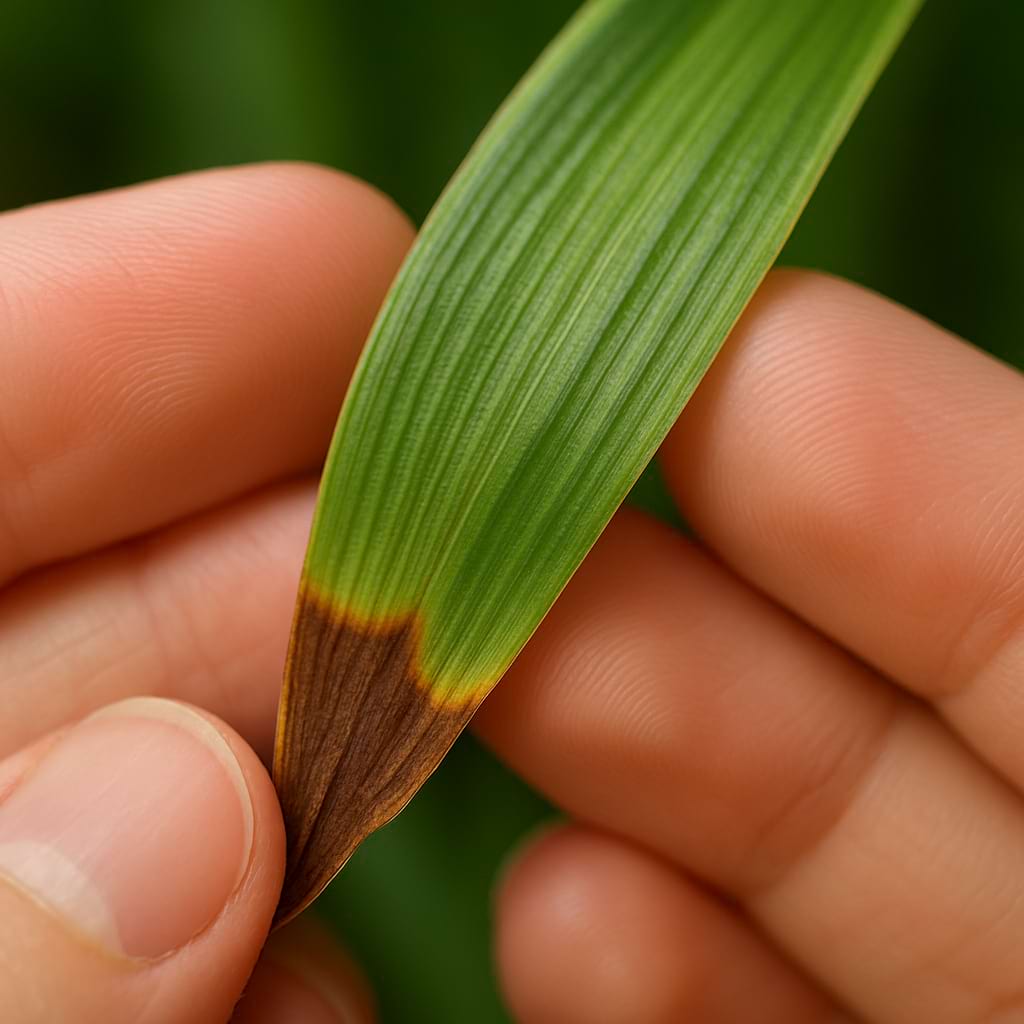
The weak point is the variegated edge. In very dry winter air, especially near a heater, the yellow margins can develop brown, crispy edges.
Easy Humidity Boosters
If you see those crisp edges, a small humidifier a few feet away is the fix that works. Grouping plants together helps a little. Misting does not raise humidity for more than a few minutes and leaves water spots on glossy leaves, so skip it. The humidity guide has more options.
🌸 Ficus Altissima Flowers and Figs
Does It Flower Indoors?
No. Like every fig, this species hides its tiny flowers inside a hollow structure that later becomes the fruit, and it needs one particular species of fig wasp to pollinate them. Indoor trees stay too small to fruit, and the wasp is not in your living room anyway.
What the Figs Look Like Outdoors
Mature trees in the tropics carry small orange-red figs, roughly an inch long, in pairs along the branches. In southern Florida, where the species was planted as a shade tree, it only began setting viable seed after its pollinating wasp arrived, and it is now spreading on its own there.
Indoors, treat it as a foliage plant. If a listing promises flowers, it is describing a different plant.
🏷️ Ficus Altissima Types and Lookalikes
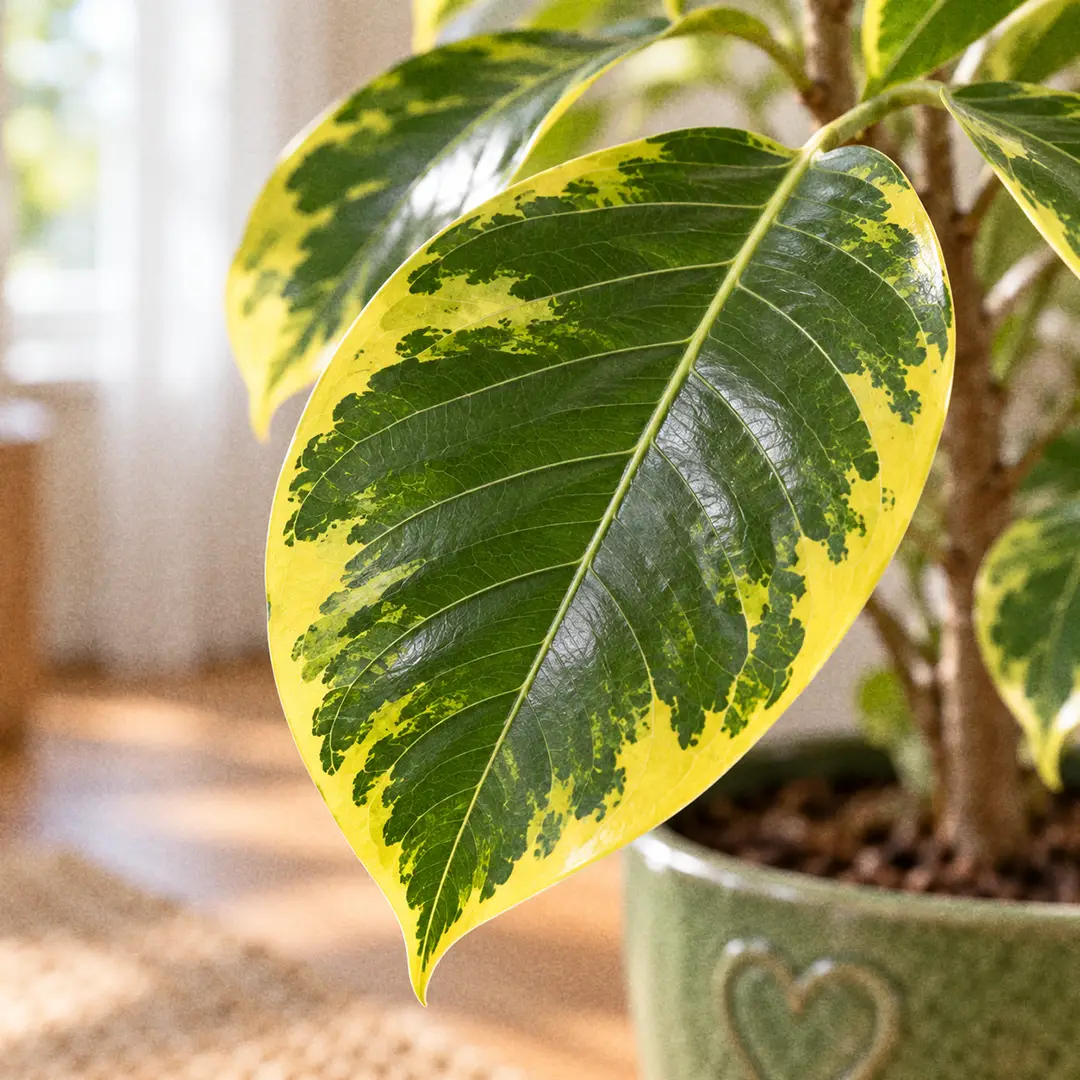
Ficus altissima 'Yellow Gem'
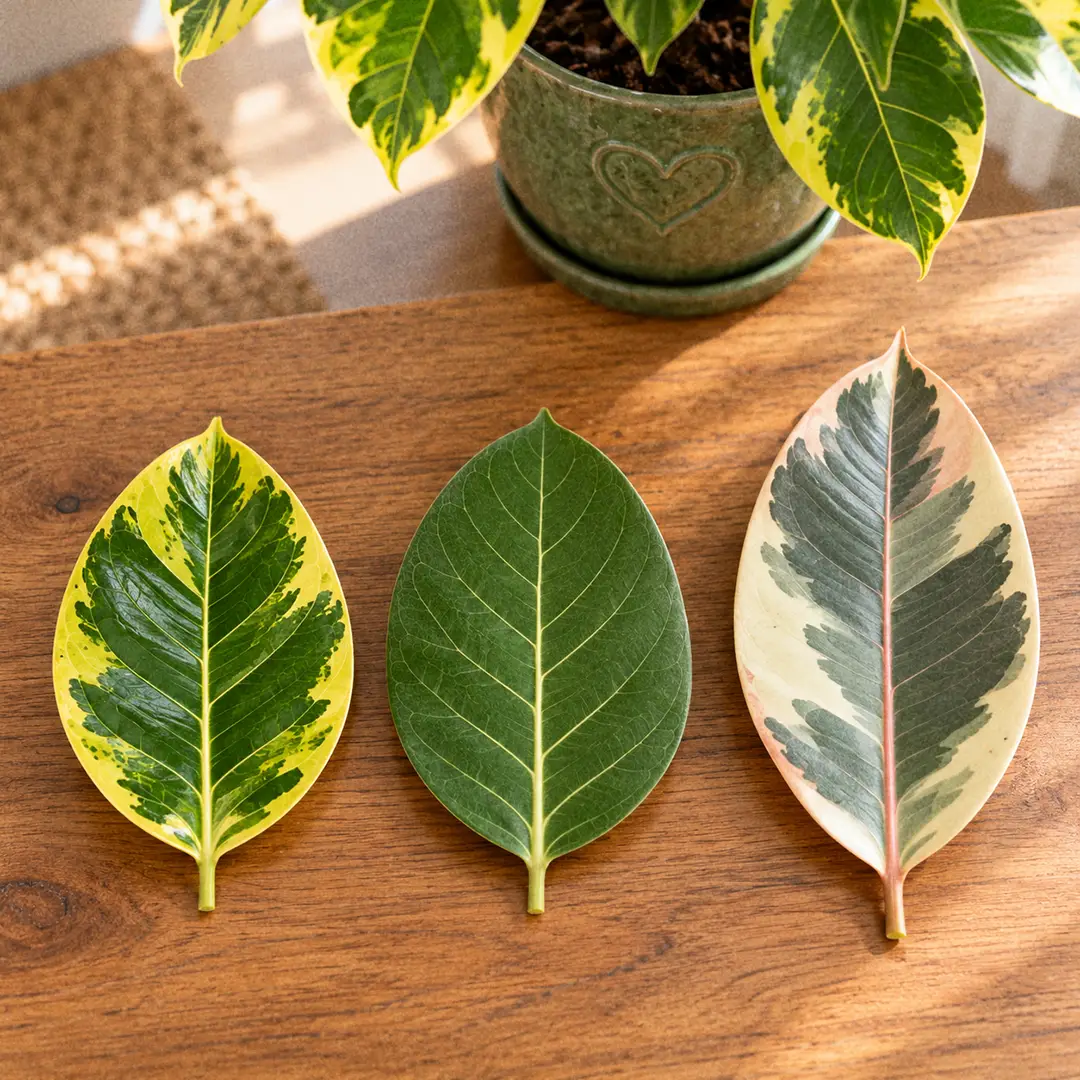
This is the plant nearly everyone means by "Ficus Altissima". The leaves are broad ovals with a short point, glossy and leathery, with a deep green center, pale veins, and irregular margins in lime and golden yellow. No two leaves match.
New leaves open pale green at the edges and turn yellow as they mature, so a fresh leaf that looks washed out is not a problem. Give it a few weeks. You will sometimes see this plant labeled as a "variegated rubber tree" or "Ficus Yellow Gem" with no species name; it is the same thing.
Plain Green Ficus altissima
The original species has solid green leaves with the same pale veining and the same gloss. It is sold far less often than 'Yellow Gem'. Care is identical, and it is slightly more forgiving of medium light because the whole leaf is working.
Ficus Altissima vs Ficus Audrey
These two are close relatives and get mixed up constantly. The quick test is to touch a leaf. Ficus Audrey has matte, slightly velvety leaves in a single shade of green. Ficus Altissima leaves are thicker, shinier, more pointed at the tip, and (in 'Yellow Gem') edged in yellow.
Ficus Altissima vs Rubber Plant
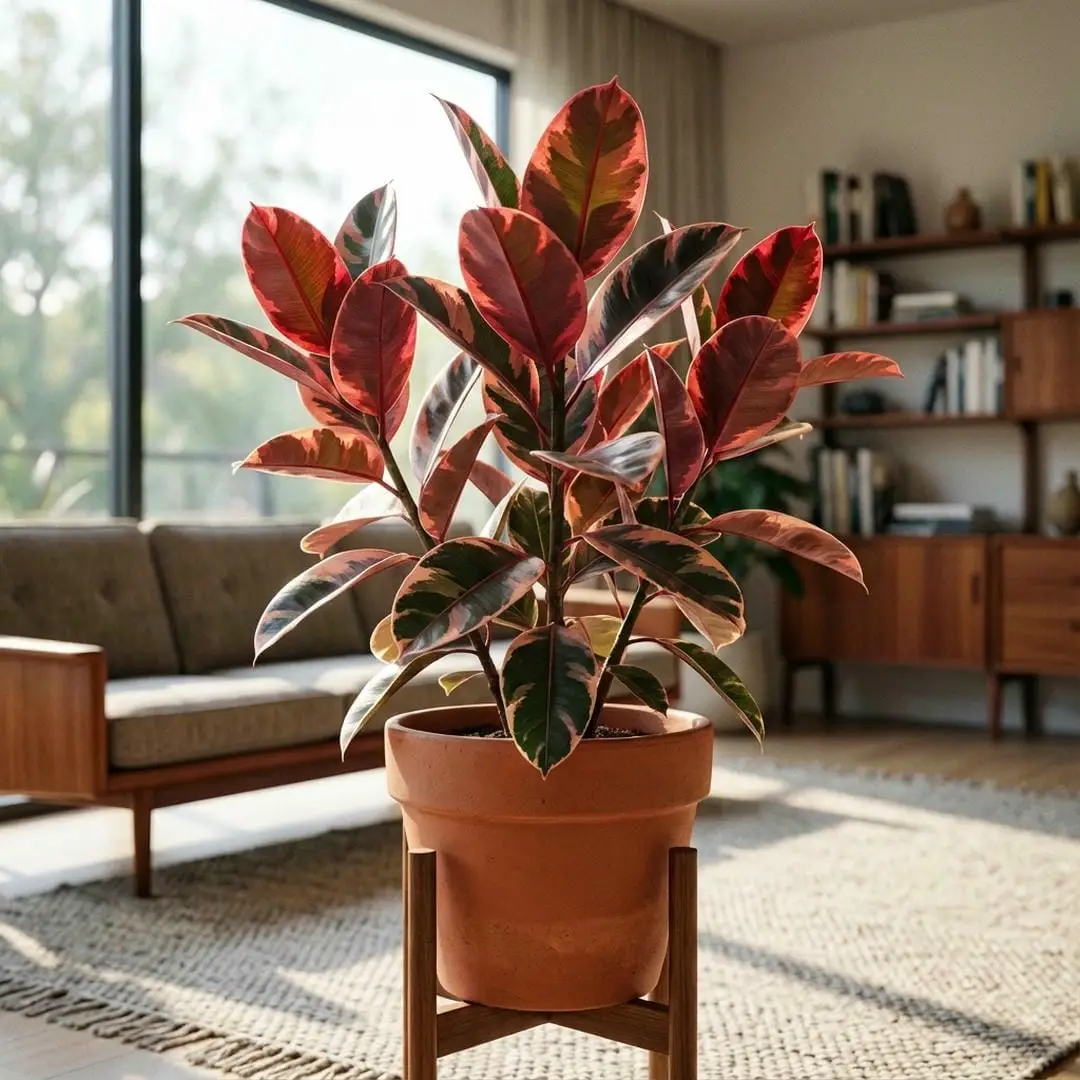
A Rubber Plant has larger, heavier leaves with a single strong midrib, and each new leaf emerges from a red or pink sheath. Its variegated forms run to cream, grey-green, and pink, as on Ficus Tineke and Ficus Ruby, where 'Yellow Gem' stays in the lime and gold range with obvious side veins. Our ficus varieties collection puts them all on one page.
🪴 Potting and Repotting Ficus Altissima
When to Repot
Young trees grow quickly in good light and often need a new pot every year or two. The signs are roots circling the inside of the pot or poking out of the drainage holes, water running straight through without soaking in, and soil that dries out in two or three days.
Repot in spring or early summer so the roots have a full growing season to settle. Once the tree is as big as you want it, stop sizing up. Replace the top 2 inches of soil each spring and leave the roots alone.
Choosing a Pot
Go up 1-2 inches in diameter, no more. A pot that is much too large holds a wide ring of wet soil the roots cannot reach, and that is the most common route to rot after a repot.
Drainage holes are required. For a tree that will reach 5 feet or more, weight matters too, so a heavy ceramic or terracotta pot is steadier than light plastic. Our plant pots guide compares the materials.
Step-by-Step Repotting
Water the tree the day before so the root ball slides out in one piece. Tip the pot, ease the plant out, and loosen the outer roots with your fingers. Trim anything brown and mushy.
Set it in the new pot at the same depth as before, fill around it with fresh mix, firm lightly, and water well. Then put it back in exactly the same spot. A repot and a move at the same time is two stresses at once, and that is when the leaves come off. The repotting guide walks through the general process.
✂️ Pruning Ficus Altissima
When to Prune
Prune in spring or early summer, when the tree recovers fastest and new buds break within a few weeks. Dead or damaged leaves can come off at any time of year.
Most Altissimas are sold as a single upright stem. Left alone, that stem keeps heading for the ceiling and gradually sheds its lowest leaves. Pruning is how you get a branched tree in place of a pole.
How to Prune for Branching
Decide how tall you want the first fork to be, then cut the main stem cleanly just above a leaf at that height. Removing the growing tip wakes up the buds below the cut, and one to three of them will usually grow out as side branches. Once those branches are 8-12 inches long, you can tip them the same way for a fuller crown.
Do not remove more than about a third of the foliage in one go.
Handling the Sap
Every cut bleeds white, milky latex. It irritates skin, can trigger a reaction in people with a latex allergy, and stains floors and fabric. Wear gloves, put an old sheet under the tree, and press a damp paper towel on each cut for a minute until the flow stops. Wipe any drips off the leaves before they dry.
🌱 How to Propagate Ficus Altissima
Best Method: Stem Cuttings
Stem cuttings are the simplest route, and your spring pruning supplies them for free. Take cuttings in late spring or summer, when warmth and long days speed up rooting. The propagation hub covers the basics if this is your first attempt.
Step-by-Step Cuttings
- Cut a 4-6 inch piece from the tip of a healthy stem, just below a leaf, with two or three leaves on it.
- Remove the lowest leaf and rinse the cut end under cool water until the sap stops.
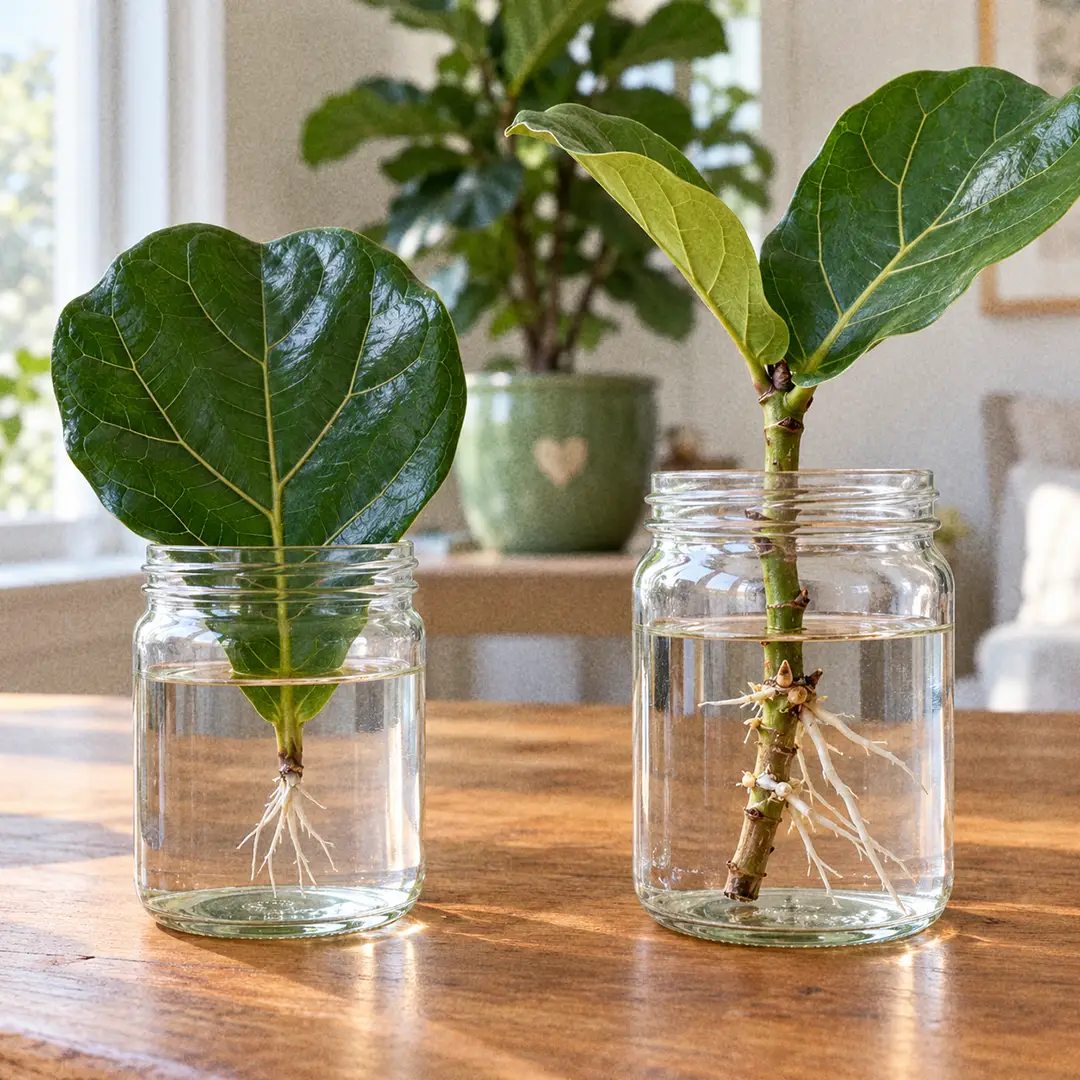
- Dip the end in rooting hormone, then set it in a small pot of moist, half-perlite mix. A jar of water also works; see water propagation.
- Cover the pot loosely with a clear bag and keep it warm and bright, out of direct sun.
- Expect roots in roughly four to eight weeks. New leaf growth is the sign that it has taken.
Air Layering a Tall Stem
For a tree that has gone bare at the bottom, air layering is the better choice, because the top stays attached and fed while it roots. Make a shallow upward cut in the stem below the leafy section, wedge it open with a toothpick, wrap the area in damp sphagnum moss, and seal it in plastic.
When roots show through the moss, usually after a couple of months, cut below them and pot the top as a new, shorter tree. The old stump normally resprouts. Our air layering guide has the full method.
Tips for Success
Warmth does more than anything else: cuttings root far faster at 75°F than at 65°F. Keep the mix damp, not wet, and do not tug at the cutting to check on it. If you root in water, pot the cutting up once the roots are 1-2 inches long, before they get too used to water.
🐛 Ficus Altissima Pests and Treatment
Common Pests
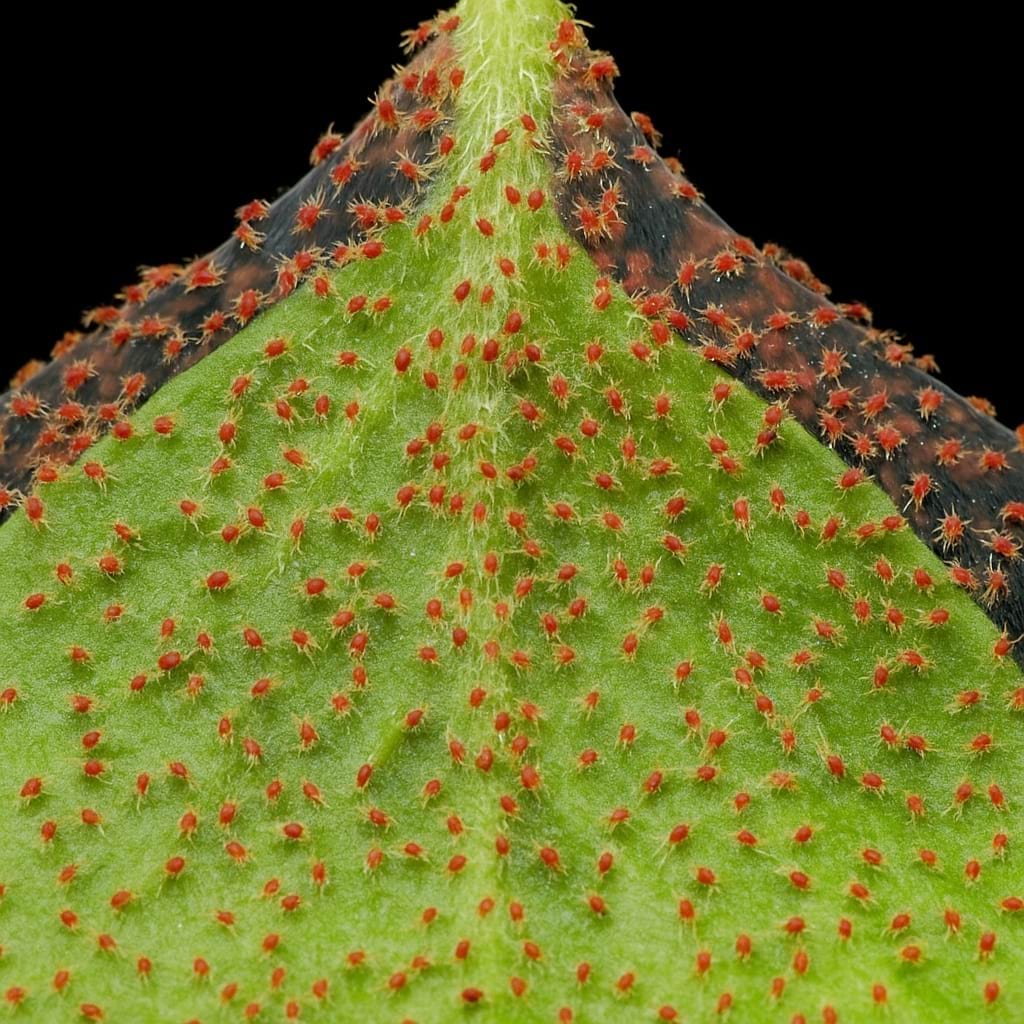
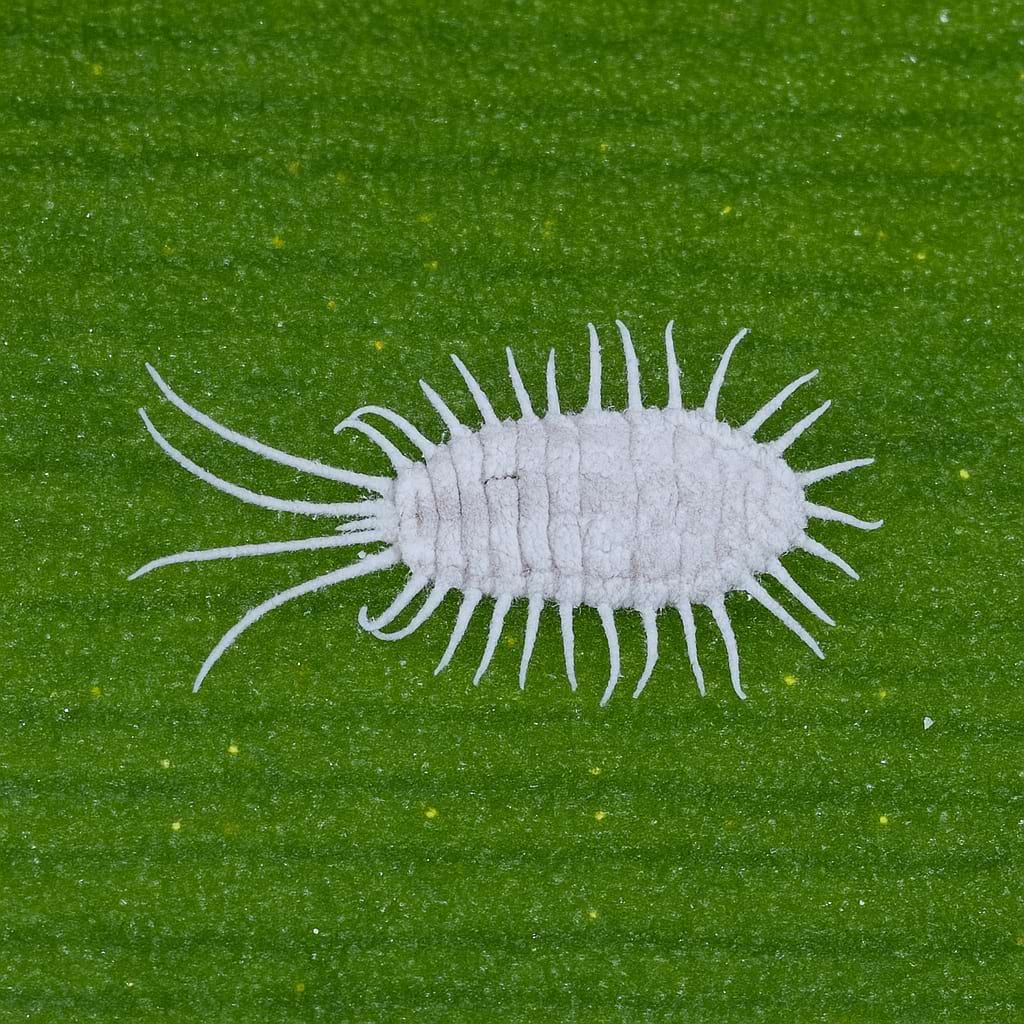
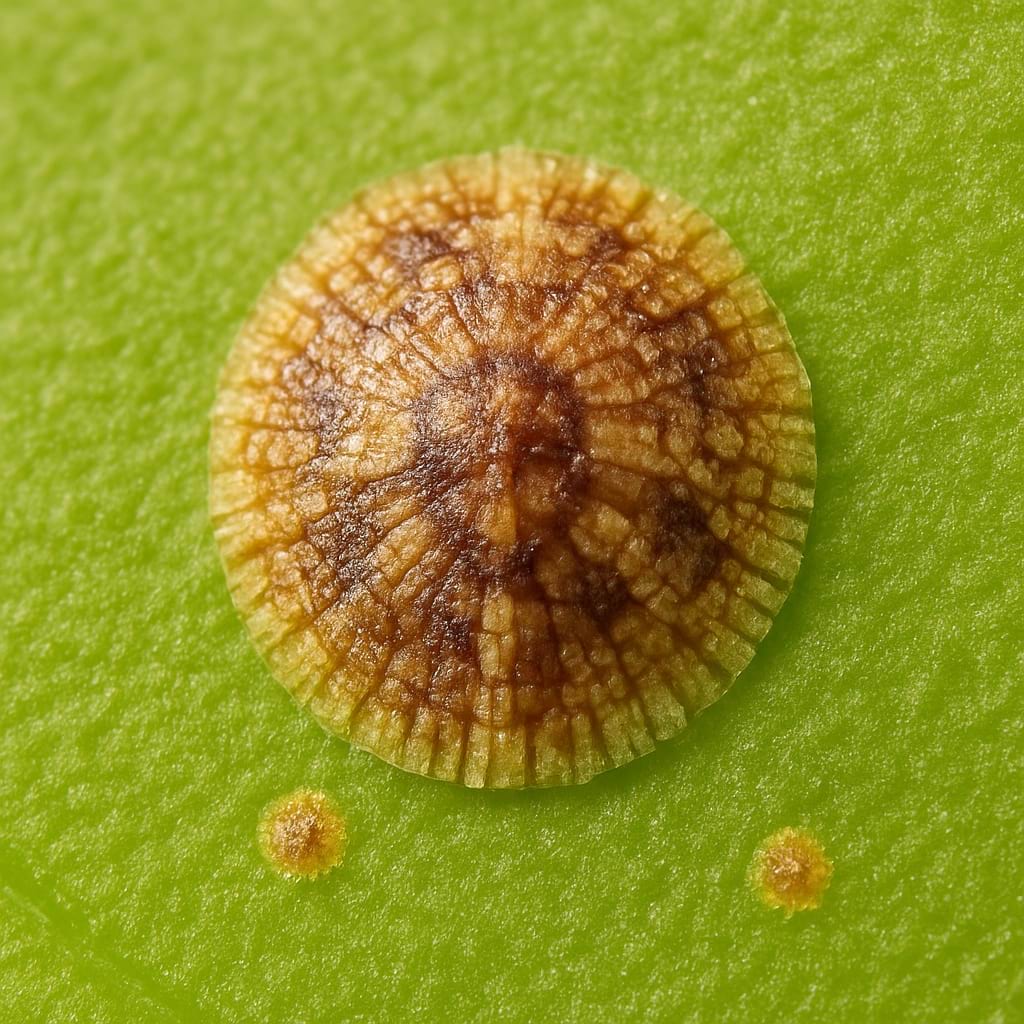
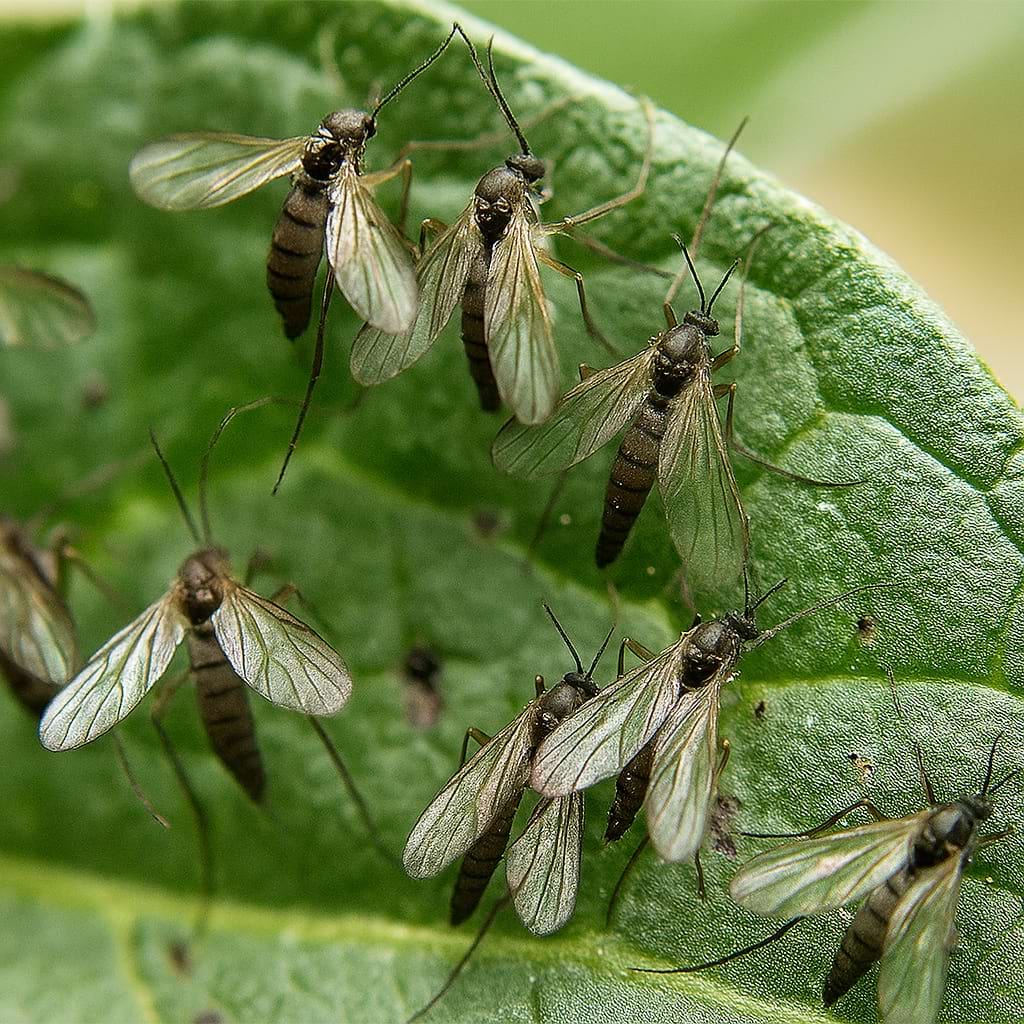
Spider mites are the most likely visitor, especially in dry, heated rooms. Look for fine pale speckling on the leaves and faint webbing where the leaf stalk meets the stem. Scale insects show up as small brown bumps along the stems and the underside of the midrib, often with sticky residue on the leaves below. Mealybugs look like bits of white cotton tucked into the joints.
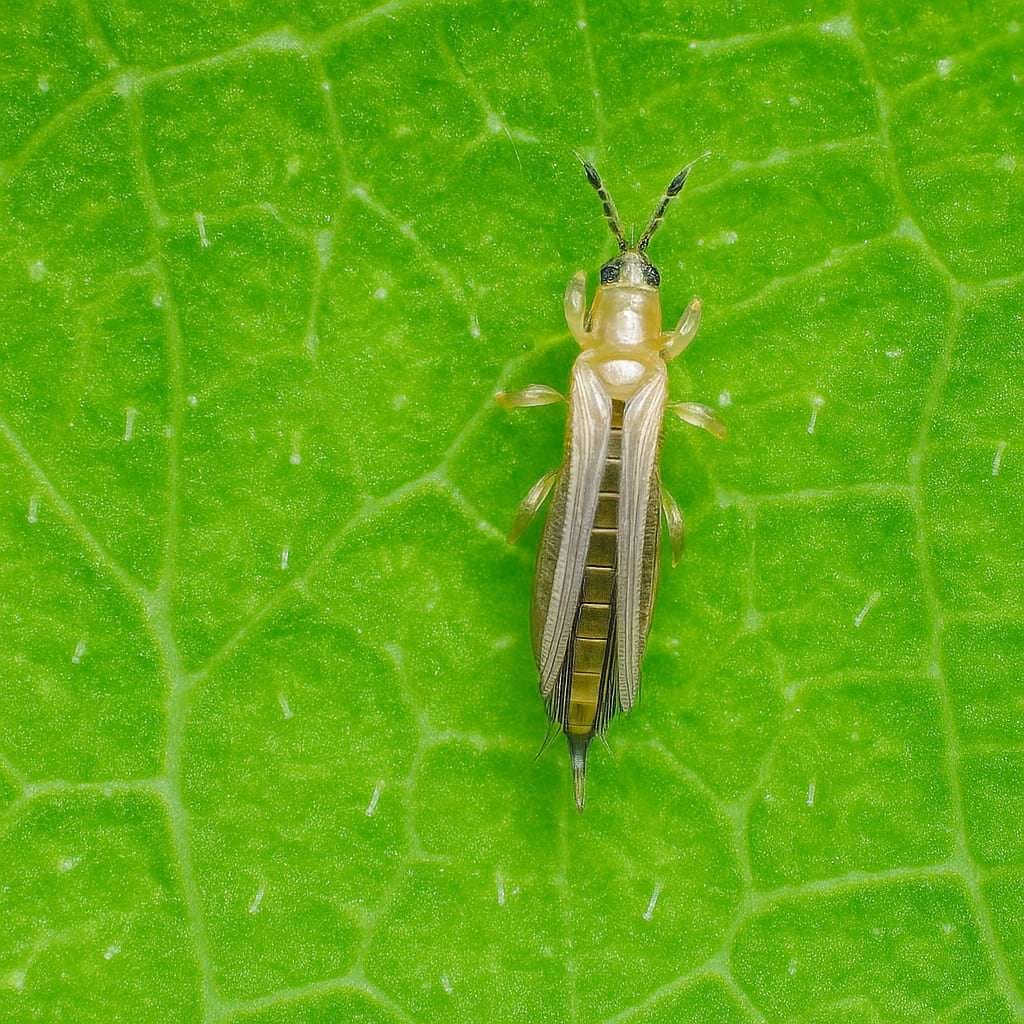
Thrips leave silvery scars and tiny black dots, and they tend to go for new growth. Fungus gnats do little harm to the tree itself, but a cloud of them means the soil is staying wet for too long.
Treatment and Prevention
Start by wiping every leaf, top and bottom, with a damp cloth, then spray with insecticidal soap or neem and repeat weekly for three or four weeks. Scale needs to be rubbed off by hand with a cotton pad and rubbing alcohol first, because the shell protects it from sprays.
The regular leaf wipe that keeps this tree glossy is also your best early warning. Quarantine new plants for two weeks before they join the group.
🩺 Common Ficus Altissima Problems
Leaf Drop After a Move
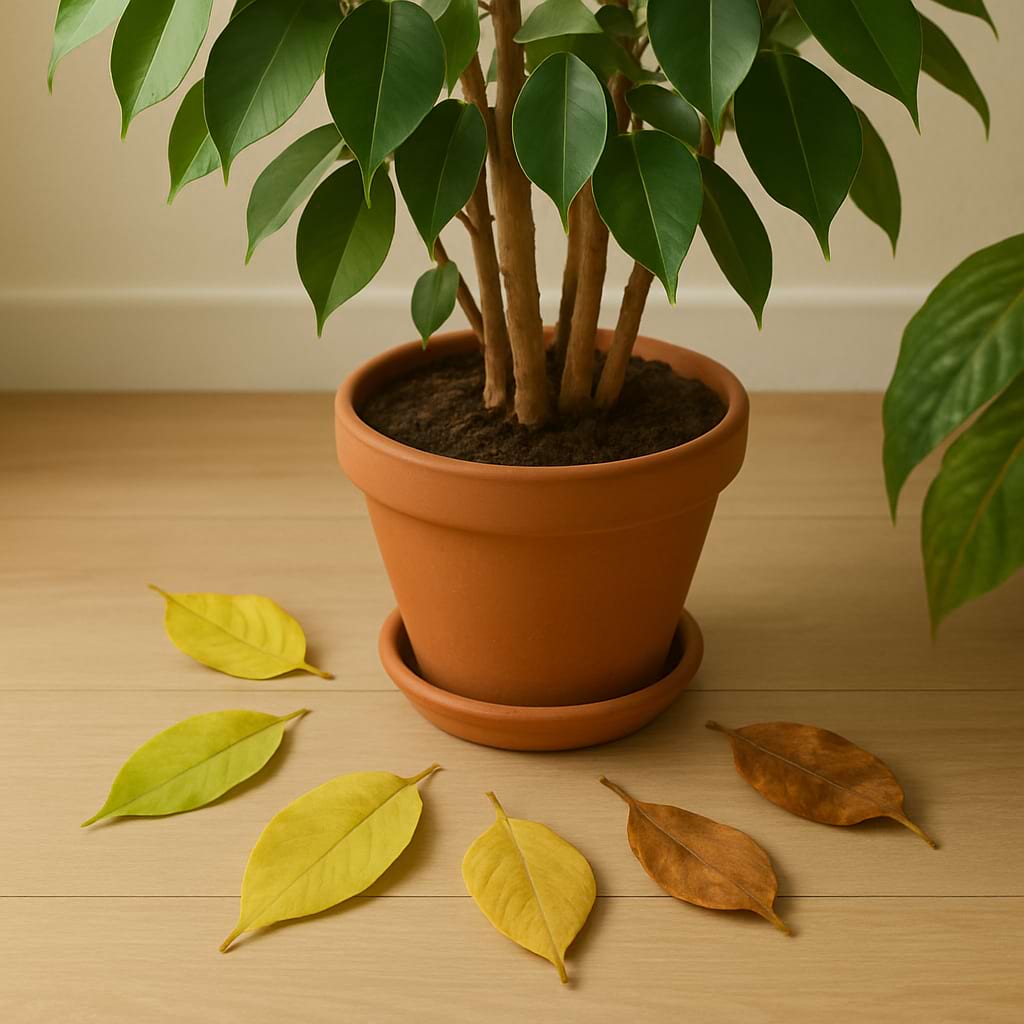
This is the one that worries people most. You bring the tree home, or shift it to another room, and within a week or two it starts shedding leaves, sometimes a dozen at once. Leaf drop after a change of place is a normal ficus reaction. The leaves were built for the light they grew in, and when conditions change, the tree lets go of the ones it can no longer support.
The fix is patience. Put it in the brightest suitable spot, water only when the top 2 inches are dry, do not feed, do not repot, and do not move it again. New growth normally starts within four to eight weeks.
Yellow Leaves and Root Rot
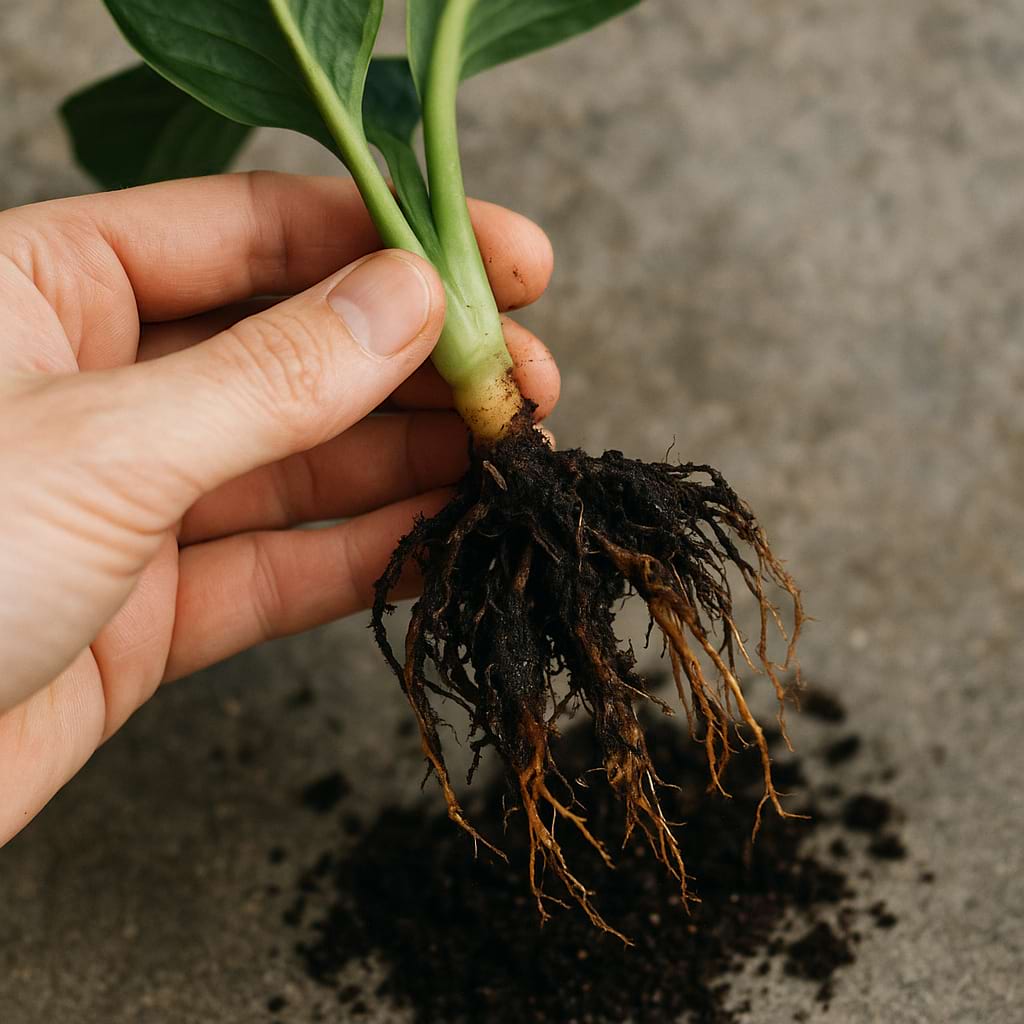
Yellowing leaves that fall while the soil is wet point to overwatering. If the soil also smells sour or the base of the stem feels soft, slide the tree out and look at the roots. Healthy ones are pale and firm. Rotten ones are brown and mushy, and they need to be cut away before you repot into fresh, airy mix.
One old leaf at the bottom yellowing now and then is just age.
Brown Patches on the Yellow Edges
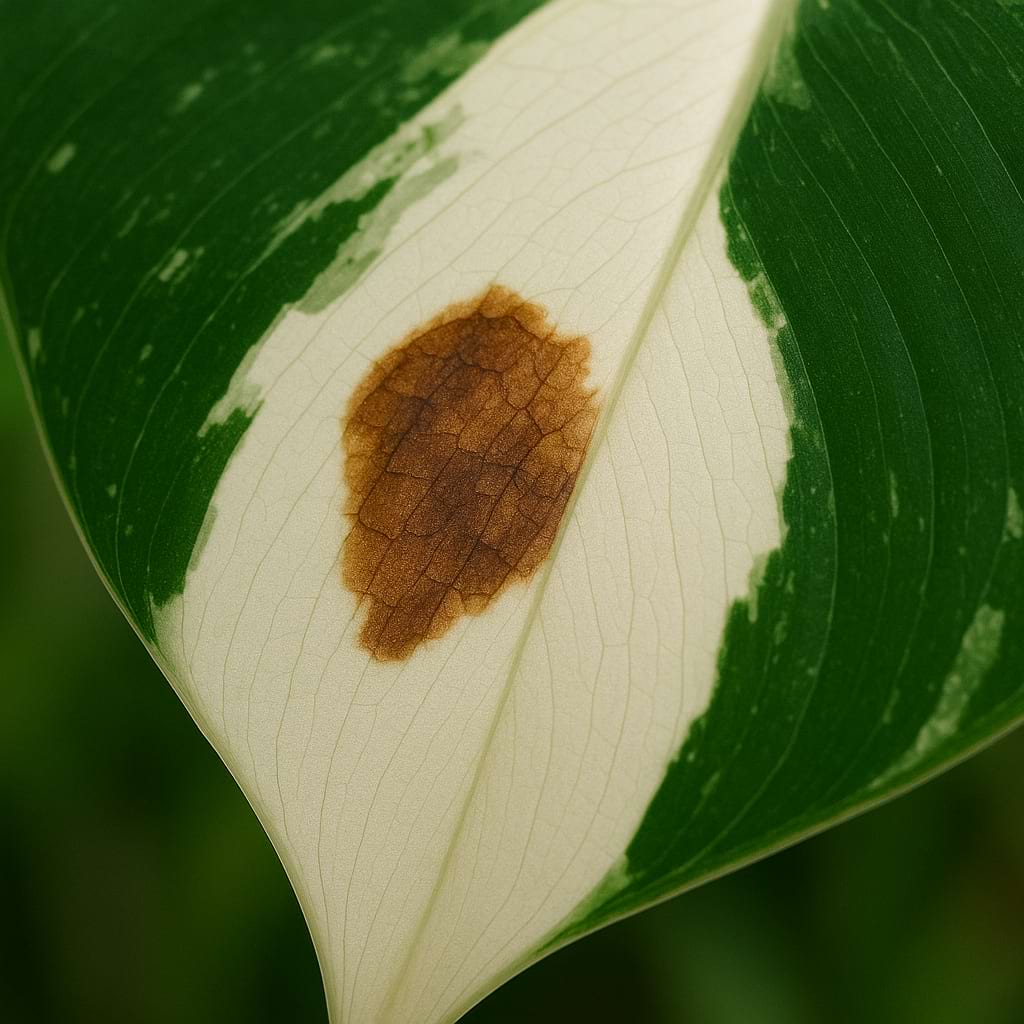
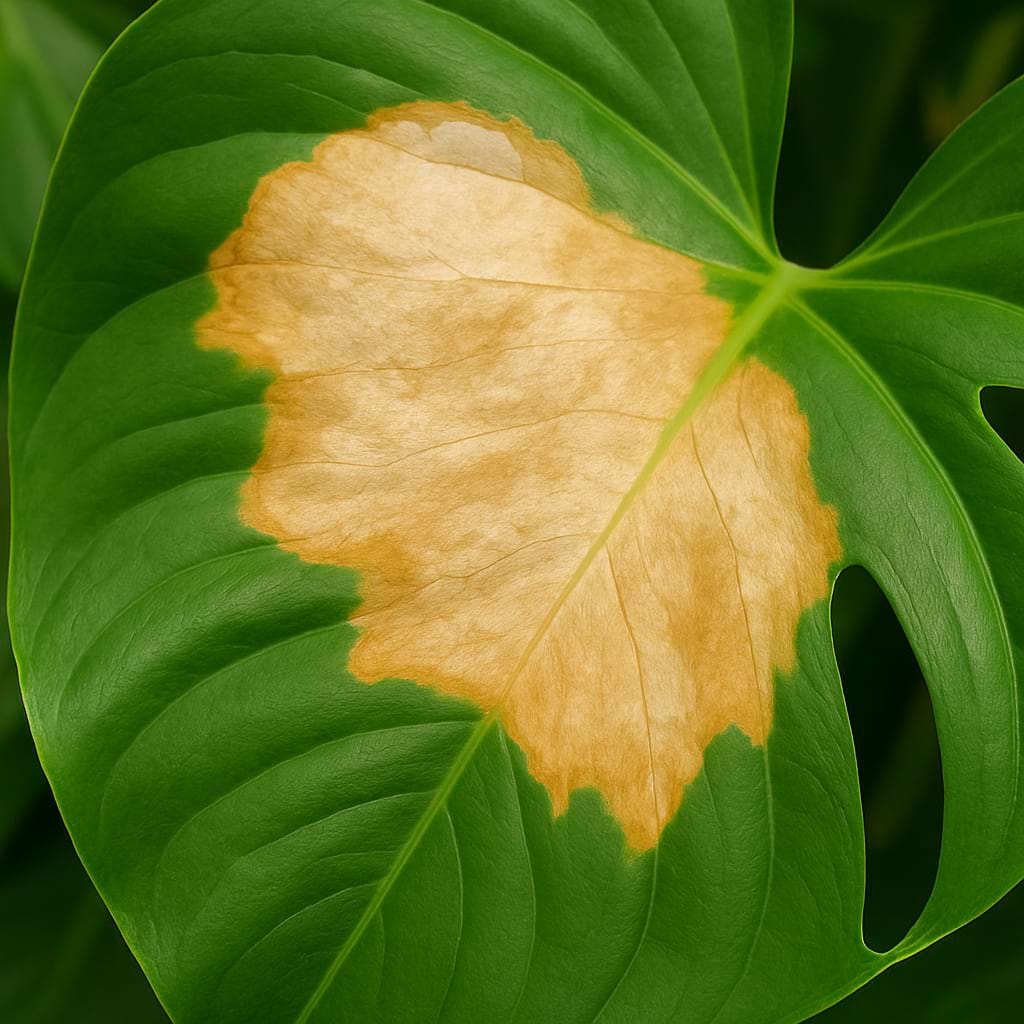
Brown, dry areas that appear only in the yellow parts of the leaf are browning variegation. The pale tissue is the weakest part of the leaf, so it shows damage first, whether from hot sun, dry air, missed waterings, or fertilizer salts. Work out which of those applies and correct it. The existing marks will not heal, but new leaves will come in clean.

🖼️ Ficus Altissima Display and Styling Ideas
Solo Setups
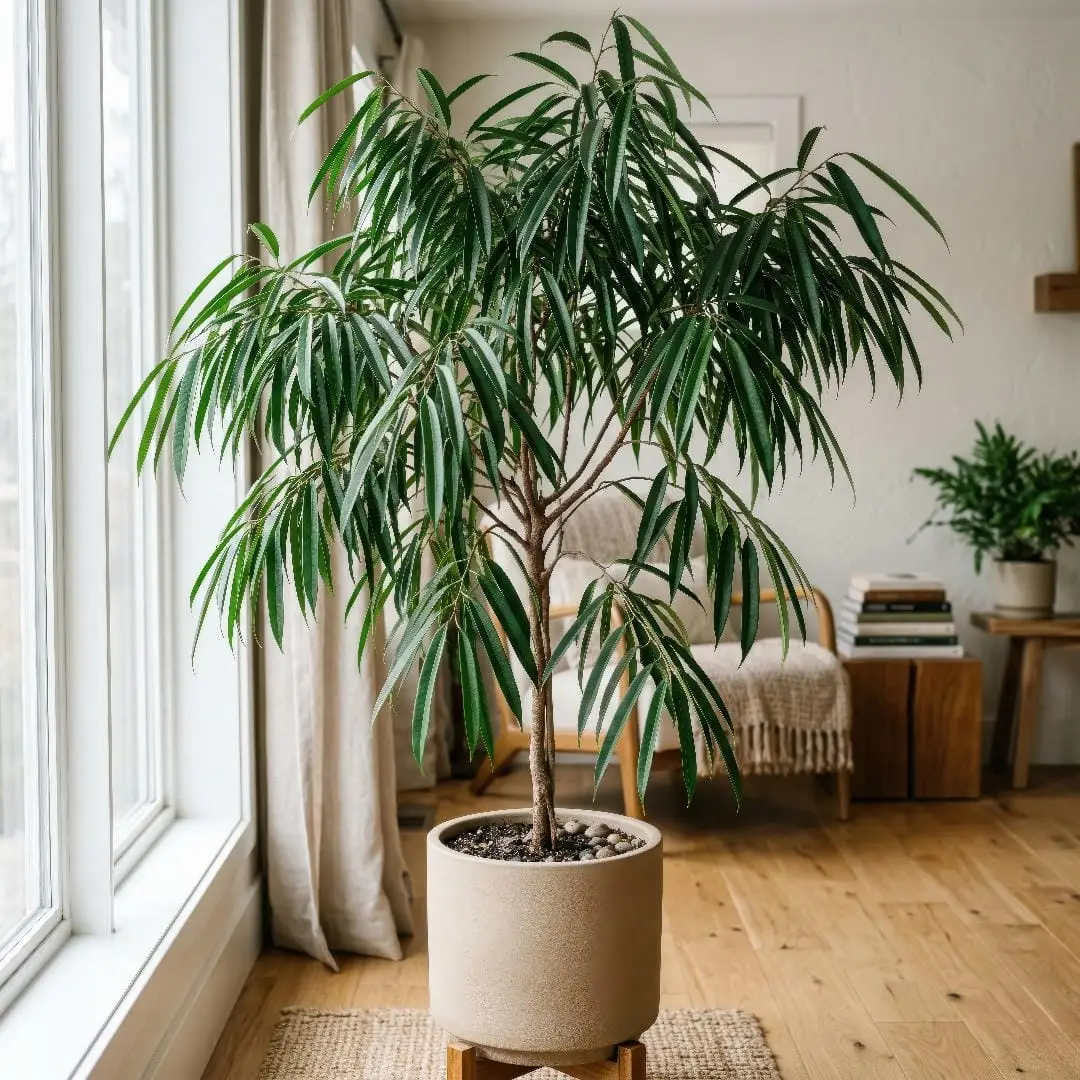
A single tree beside a bright window is the classic placement, and it needs nothing else around it. While the plant is under 3 feet tall, raise it on a low stand so the leaves sit at window height and catch the light. Once it grows up, set the pot directly on the floor.
Turn the pot a quarter turn every week or two so the tree does not lean toward the glass. That small rotation does not count as a move.
Grouped Arrangements
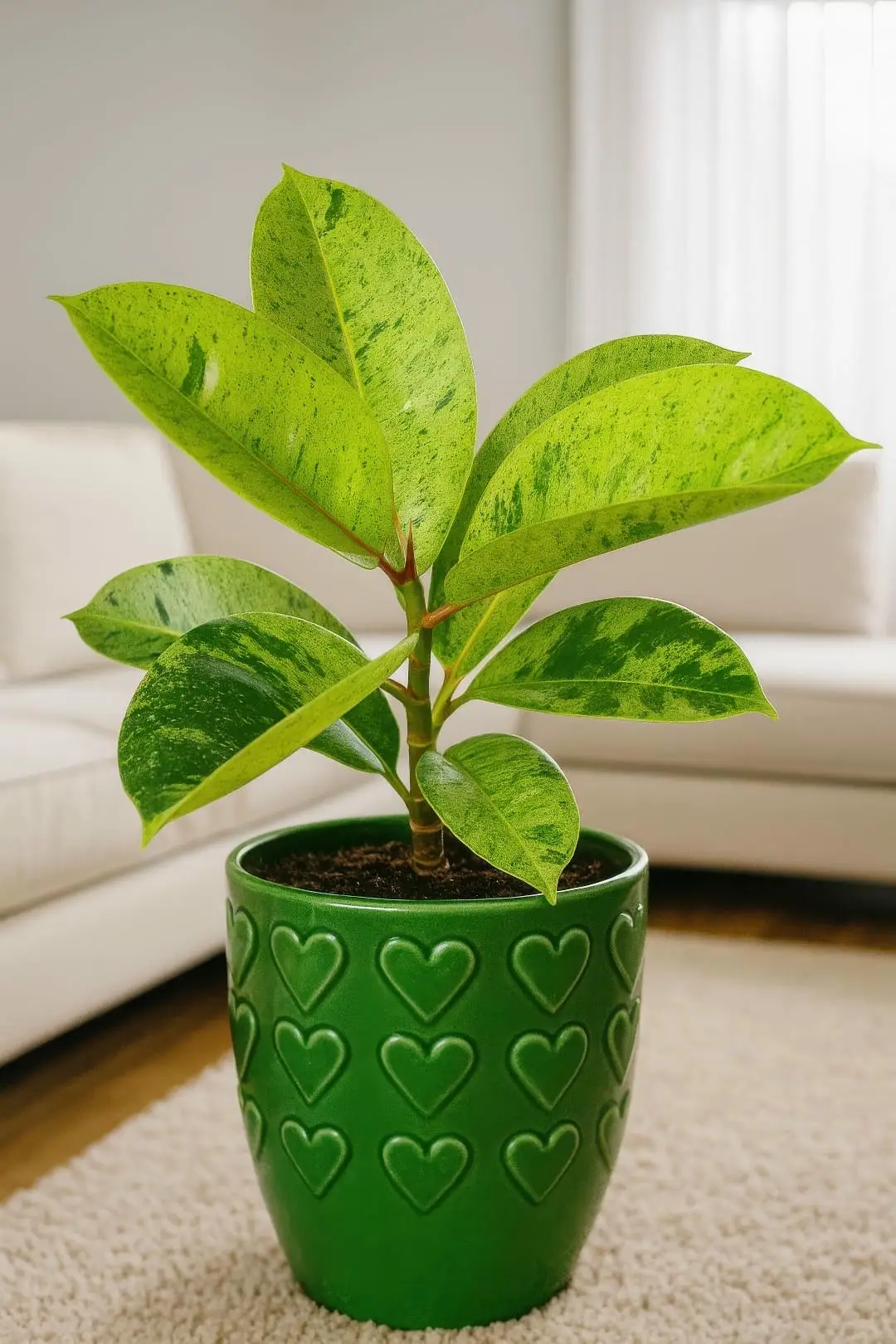
The yellow edges look best against something dark. A Ficus Burgundy beside it gives you near-black leaves next to lime and gold, with identical care for both pots. A Fiddle Leaf Fig adds a much larger leaf shape at the same height, and a Weeping Fig brings fine, small foliage for contrast. The speckled Ficus Shivereana is a good match if you like a collection of patterned figs.
Where Not to Put It
Avoid hallways and entryways with cold drafts, spots directly under or over an air vent, and any corner far from a window. In homes with cats, dogs, or small children, keep it where leaves cannot be chewed, since the sap is an irritant.
🌟 Ficus Altissima Pro Care Tips
Everyday Habits
📍 Pick one spot and commit. Most leaf drop traces back to a tree that keeps getting relocated.
☀️ More light means more yellow. If the edges are fading to green, the tree is asking for a brighter position.
🧽 Wipe the leaves monthly. Dust blocks light, hides pests, and dulls the gloss that sets this ficus apart.
💧 Empty the saucer every time. Ten minutes in standing water is fine. Overnight is not.
Seasonal Habits
🌱 Do the big jobs in spring. Repotting, pruning, and propagation all go best in the same few weeks.
✂️ Top it early. Cutting the tip at 3-4 feet gives you branches at a useful height.
❄️ Pull it back from cold glass in winter. A foot of distance prevents dark cold patches on the leaves.
🧤 Glove up before any cut. The sap is sticky, irritating, and hard to get out of fabric.
❓ Frequently Asked Questions
Is Ficus Altissima toxic to cats and dogs?
Yes, treat it as toxic. The ASPCA does not list Ficus altissima by name, but it lists other figs as toxic to cats and dogs because of their irritating sap, and this species has the same milky latex. Chewing leaves can cause drooling, vomiting, and a sore mouth, and sap on skin can cause a rash.
Why is my Ficus Altissima dropping leaves?
The usual cause is a recent change: a new home, a different room, a repot, or a cold draft. Check that the soil is not staying wet, then leave the tree where it is. It should stop shedding and begin growing again within a month or two.
Why is my Yellow Gem losing its yellow color?
It needs more light. In medium or low light the tree produces greener leaves to make up for the shortfall. Move it nearer to a bright window in stages, and the next set of leaves should come in with stronger margins. Also remember that brand-new leaves start out pale green and turn yellow later.
How big does Ficus Altissima get indoors?
Most indoor trees reach 5-8 feet over several years, and you can hold one at any height by pruning the top. Outdoors in the tropics the species grows to around 100 feet, which is where the name "lofty fig" comes from.
Can Ficus Altissima take direct sun?
A little, yes. An hour or two of morning sun from an east window is good for the color. Strong midday or afternoon sun through glass can scorch the yellow margins, so filter it with a sheer curtain.
Is Ficus Altissima the same as Ficus Audrey?
No. They are separate species that look alike. Ficus Audrey is Ficus benghalensis, with matte, velvety, solid green leaves. Ficus Altissima has glossy, thicker leaves, and its common form, 'Yellow Gem', is variegated.
How fast does Ficus Altissima grow?
In bright light it is a reasonably quick grower in spring and summer, adding a foot or more of height in a good year, then nearly stopping in winter. In low light it may produce only a handful of leaves in a year.
Can I put my Ficus Altissima outside in summer?
Yes, in a spot with bright shade or morning sun only, once nights stay above 55°F. Move it out gradually over two weeks to avoid sunburn, and expect a few dropped leaves when it comes back indoors in autumn.
Is Ficus Altissima easier than a Fiddle Leaf Fig?
Most growers find it so. It tolerates slightly lower light and the occasional late watering better. It still dislikes being moved, which is true of nearly every indoor fig.
ℹ️ Ficus Altissima Info
Care and Maintenance
🪴 Soil Type and pH: Loose, well-draining indoor potting mix
💧 Humidity and Misting: Fine in average household air; 40-60% keeps leaf edges clean.
✂️ Pruning: Cut back the top in spring to control height and encourage side branches.
🧼 Cleaning: Wipe the glossy leaves with a damp cloth every few weeks so dust does not dull the variegation.
🌱 Repotting: Repot in spring when roots circle the pot or grow from the drainage holes, moving up one pot size.
🔄 Repotting Frequency: Every 1-2 years while young
❄️ Seasonal Changes in Care: Water less in autumn and winter, stop feeding, and keep the tree away from cold glass and heating vents.
Growing Characteristics
💥 Growth Speed: Moderate to fast in good light
🔄 Life Cycle: Evergreen perennial tree
💥 Bloom Time: Does not flower or fruit indoors
🌡️ Hardiness Zones: 10-12
🗺️ Native Area: Southeast Asia, from Myanmar, Thailand, Vietnam and Laos to southern China and Malesia
🚘 Hibernation: No, but growth slows in winter
Propagation and Health
📍 Suitable Locations: Bright living rooms, beside east windows, a few feet from south or west windows, bright offices
🪴 Propagation Methods: Root stem cuttings in soil or water, or air layer a tall, bare stem.
🐛 Common Pests: Spider Mites, Mealybugs, Scale Insects, Thrips, Fungus Gnats
🦠 Possible Diseases: Root rot, fungal leaf spot
Plant Details
🌿 Plant Type: Evergreen fig tree
🍃 Foliage Type: Evergreen
🎨 Color of Leaves: Deep green with lime to golden yellow margins ('Yellow Gem')
🌸 Flower Color: N/A
🌼 Blooming: No, grown for foliage
🍽️ Edibility: Not edible. The sap is an irritant.
📏 Mature Size: 5-8 feet indoors
Additional Info
🌻 General Benefits: Year-round color from foliage alone, a tree shape in a modest footprint, and easier care than a Fiddle Leaf Fig
💊 Medical Properties: None for houseplant use. The milky sap irritates skin.
🧿 Feng Shui: An upright tree with rounded leaves, often placed in a bright corner for steady, growing energy.
⭐ Zodiac Sign Compatibility: Sagittarius
🌈 Symbolism or Folklore: Shelter, gathering, steady growth
📝 Interesting Facts: The species name altissima means "tallest", and wild trees reach about 100 feet. In nature it often starts life as a seedling perched on another tree and sends roots down to the ground, the classic strangler fig habit.
Buying and Usage
🛒 What to Look for When Buying: Pick a plant with leaves all the way down the stem, clear lime and gold edges, and no brown patches. Check leaf undersides and stem joints for scale and mealybugs.
🪴 Other Uses: Shade tree in frost-free climates
Decoration and Styling
🖼️ Display Ideas: Floor plant beside a bright window, on a low plant stand while young, or paired with a dark-leaved rubber plant
🧵 Styling Tips: A plain pot in a muted color lets the yellow edges do the work. Dark walls and dark-leaved neighbors make the variegation stand out.
🪴 See also 🪴
Complete Guide to Ficus Alii Care and Growth

Complete Guide to Ficus Burgundy Care (Rubber Plant)
Complete Guide to Ficus Ruby Care (Ficus elastica 'Ruby')
Complete Guide To Ficus Shivereana Care and Growth
Complete Guide To Ficus Tineke Care and Growth
How to Propagate Fiddle Leaf Fig (Cuttings, Air Layering and the Leaf Myth)
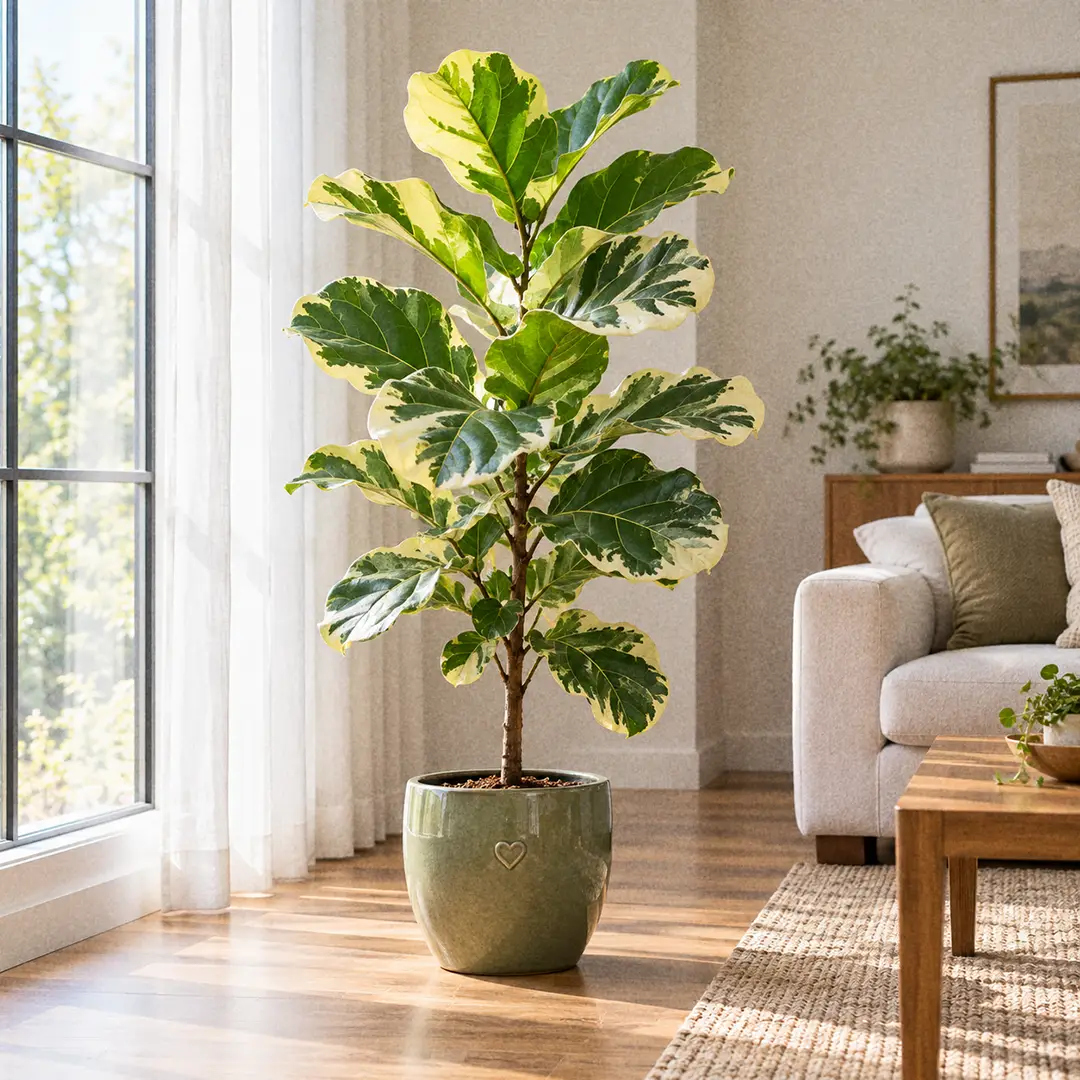
Complete Guide to Variegated Fiddle Leaf Fig Care and Growth
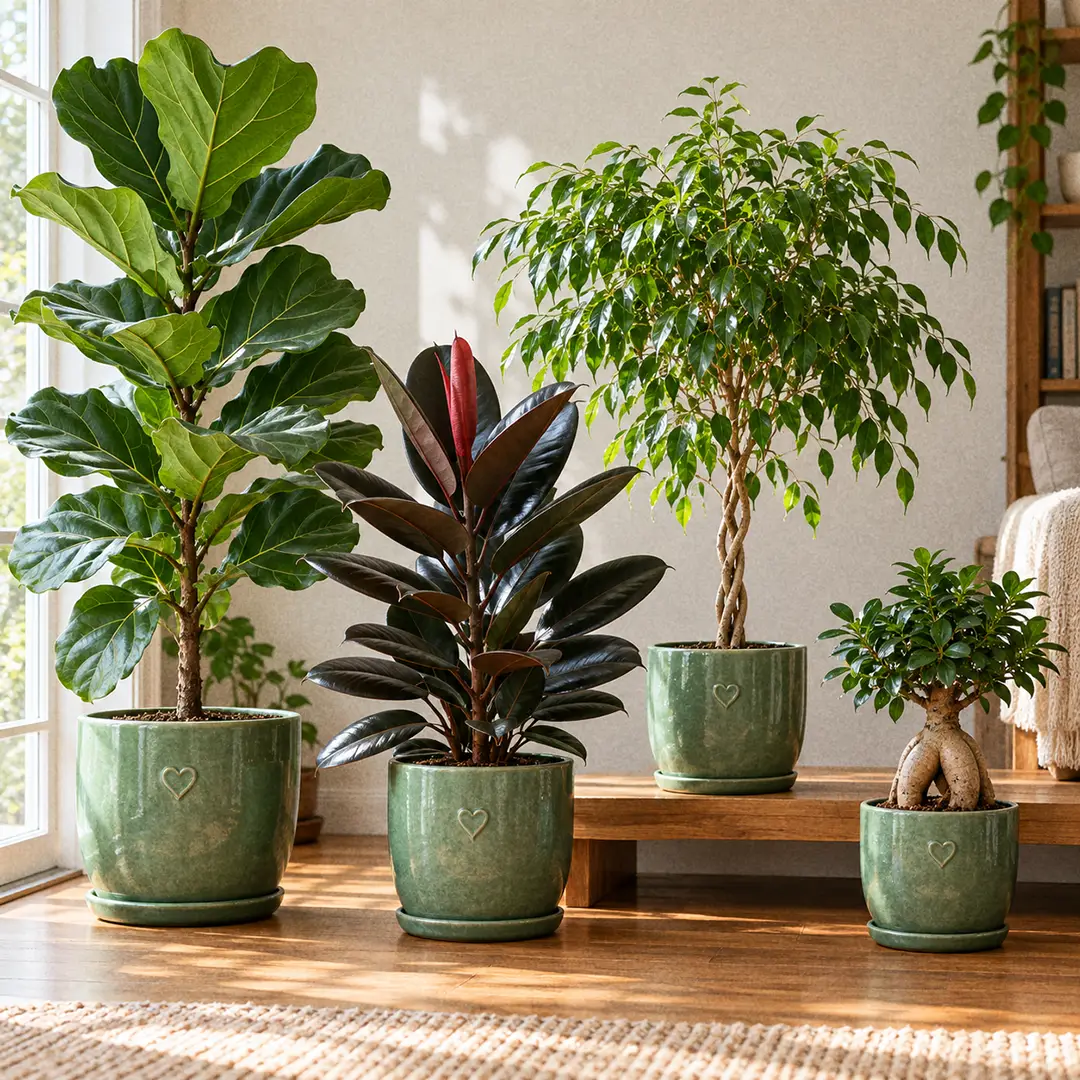
Ficus Care Indoors: Full Guide and 12 Types We Grow
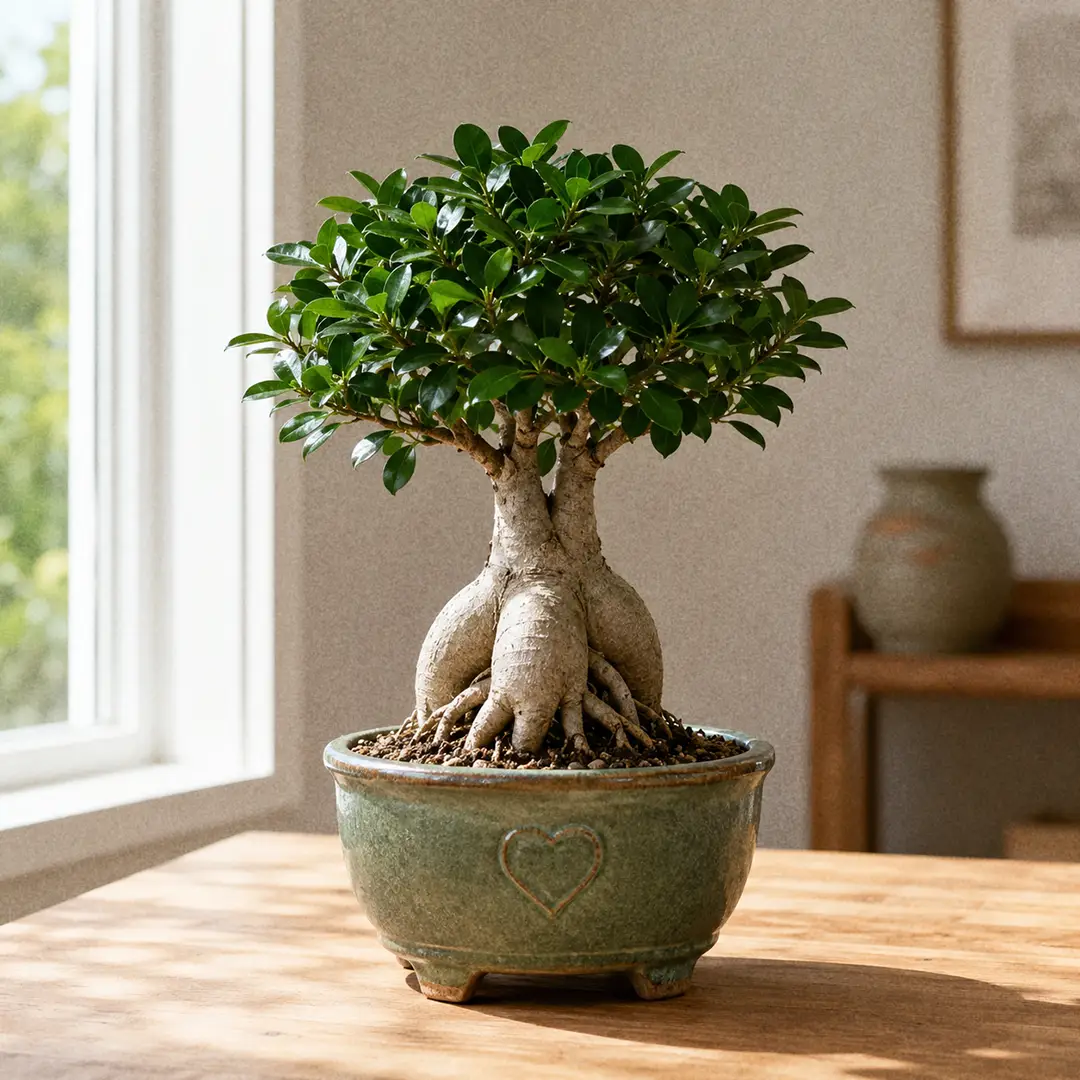
Complete Guide to Ginseng Ficus Care and Growth

Complete Guide to Rubber Plant Care and Growth
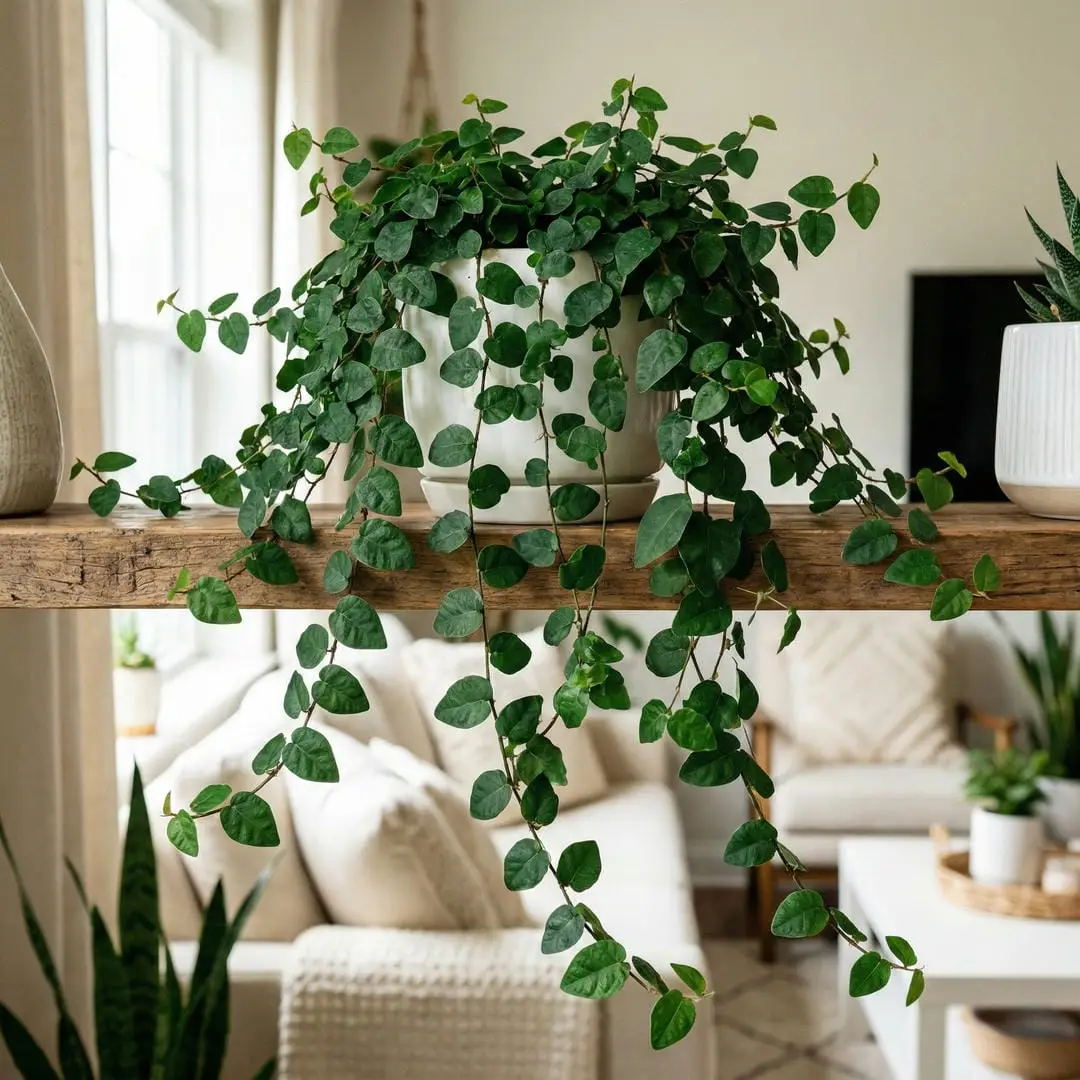
Complete Guide To Creeping Fig Care and Growth
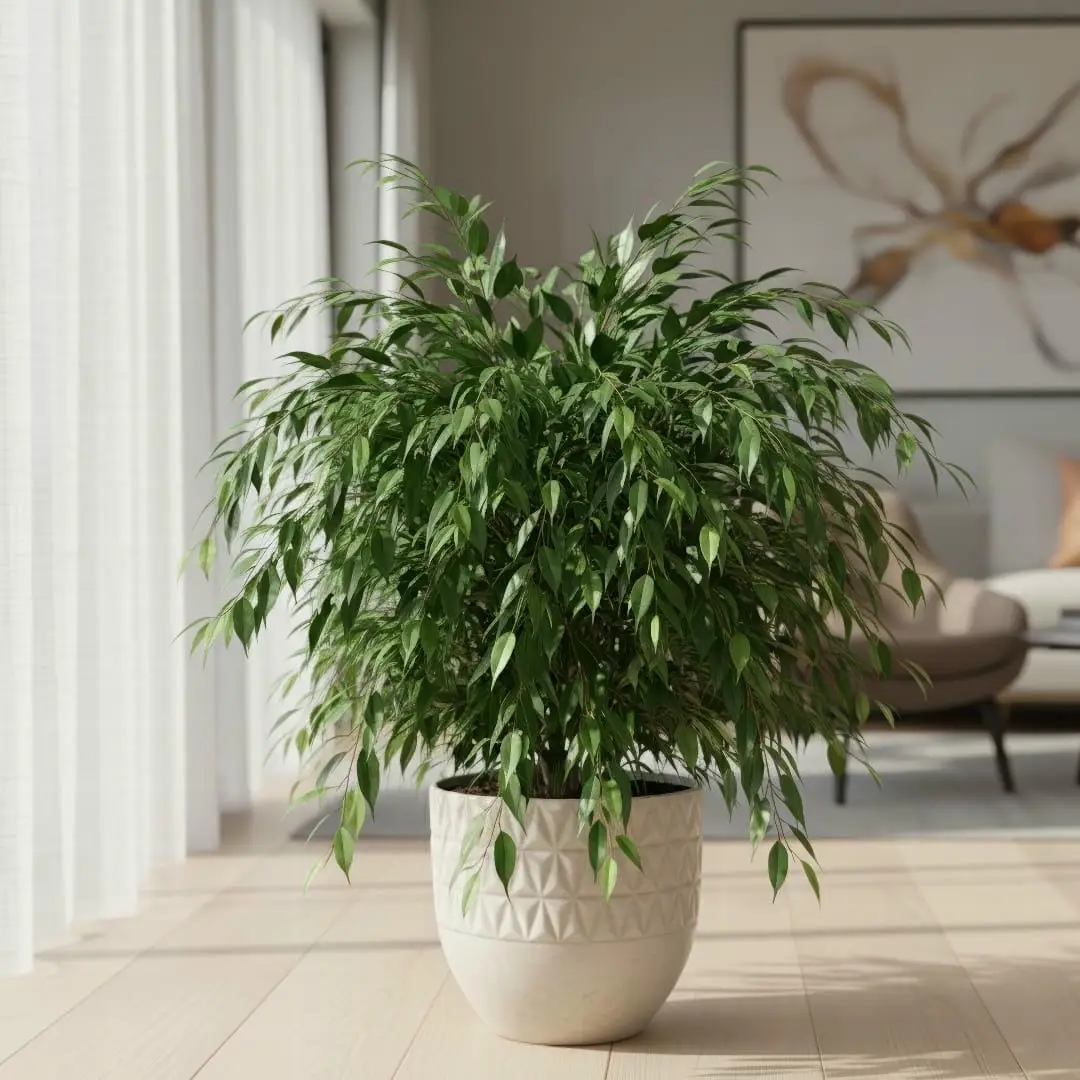
Complete Guide To Weeping Fig Care and Growth
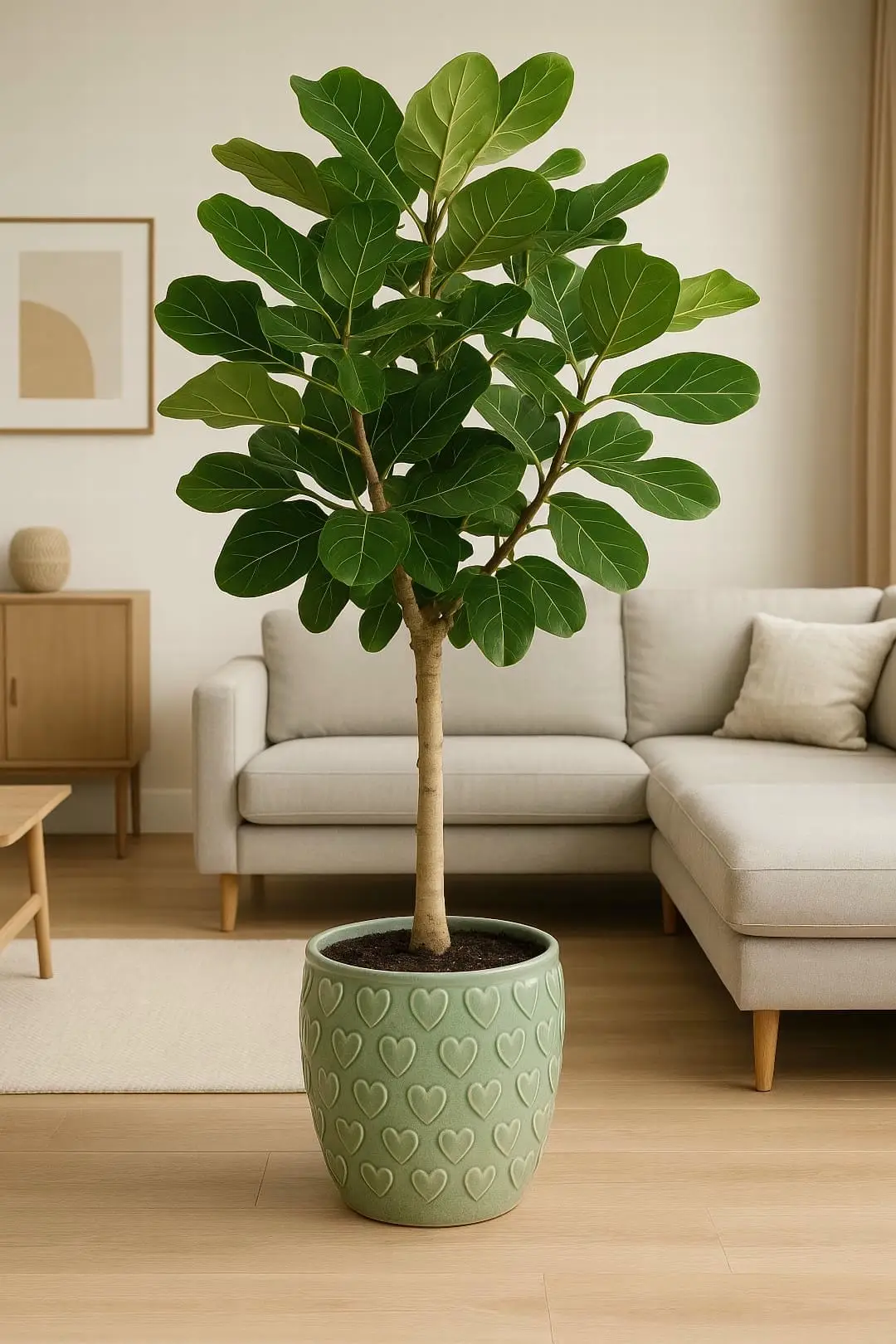
Complete Guide to Ficus Audrey Care and Growth


Houseplant101 Forum
Questions & Comments
Ask a question, share your plant experience, or help other plant owners.
Comments are temporarily unavailable.
Open the Houseplant101 ForumNo comments yet
Be the first to ask a question or share your experience about this page.
Log in or create an account
Comments use your Houseplant101 Forum account, but you can stay on this page.
Create a new account